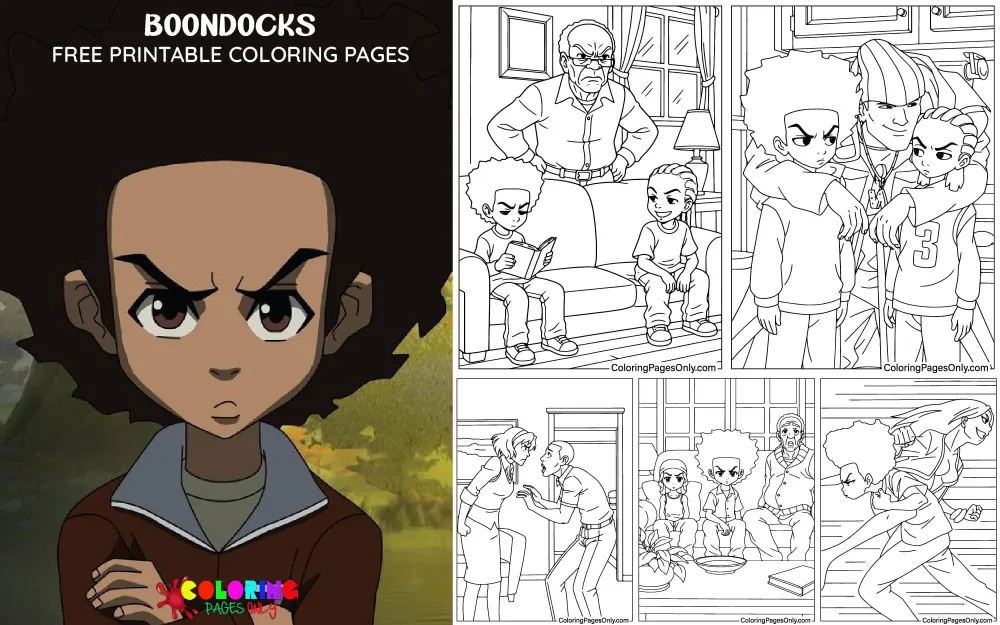
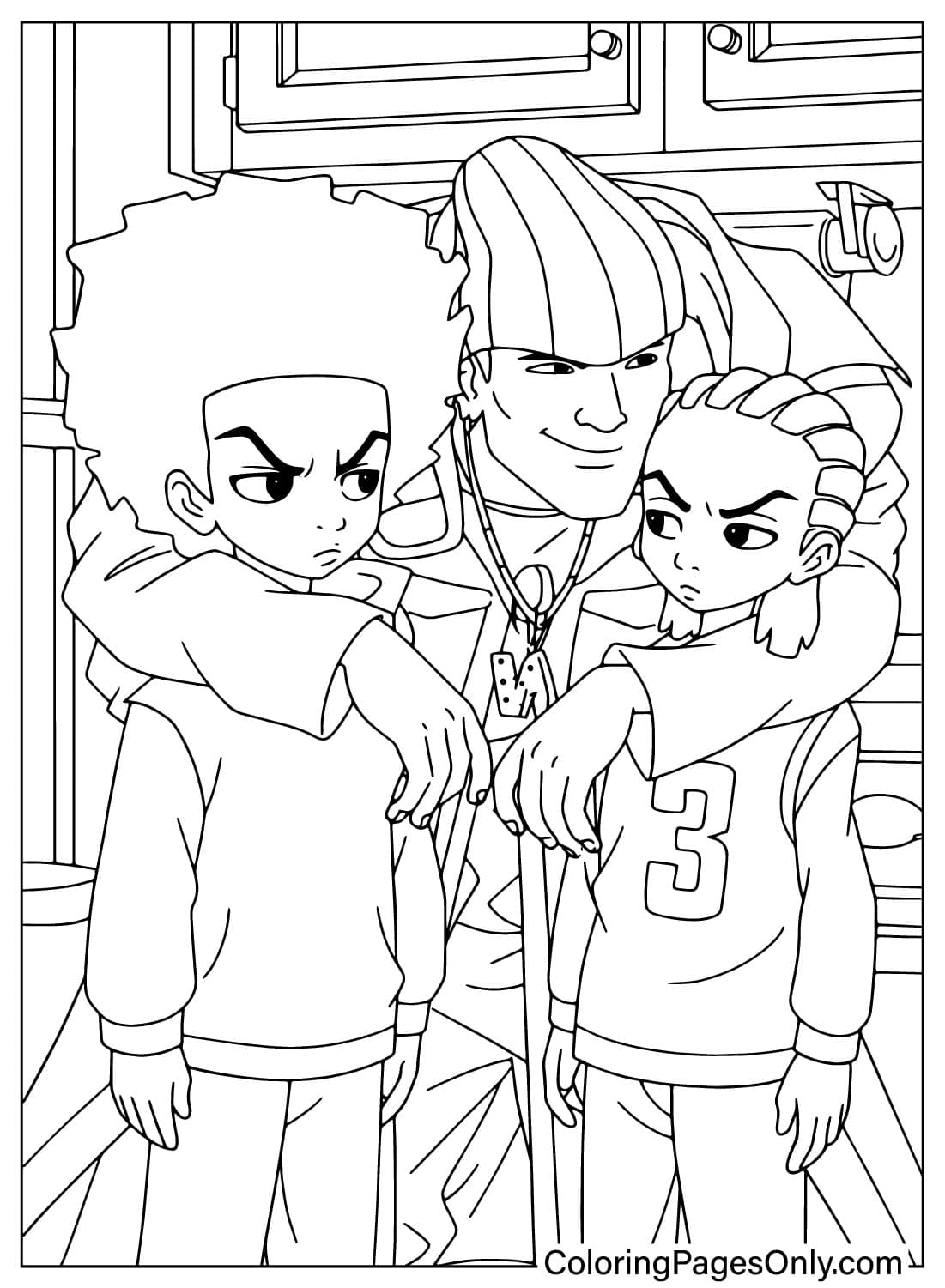
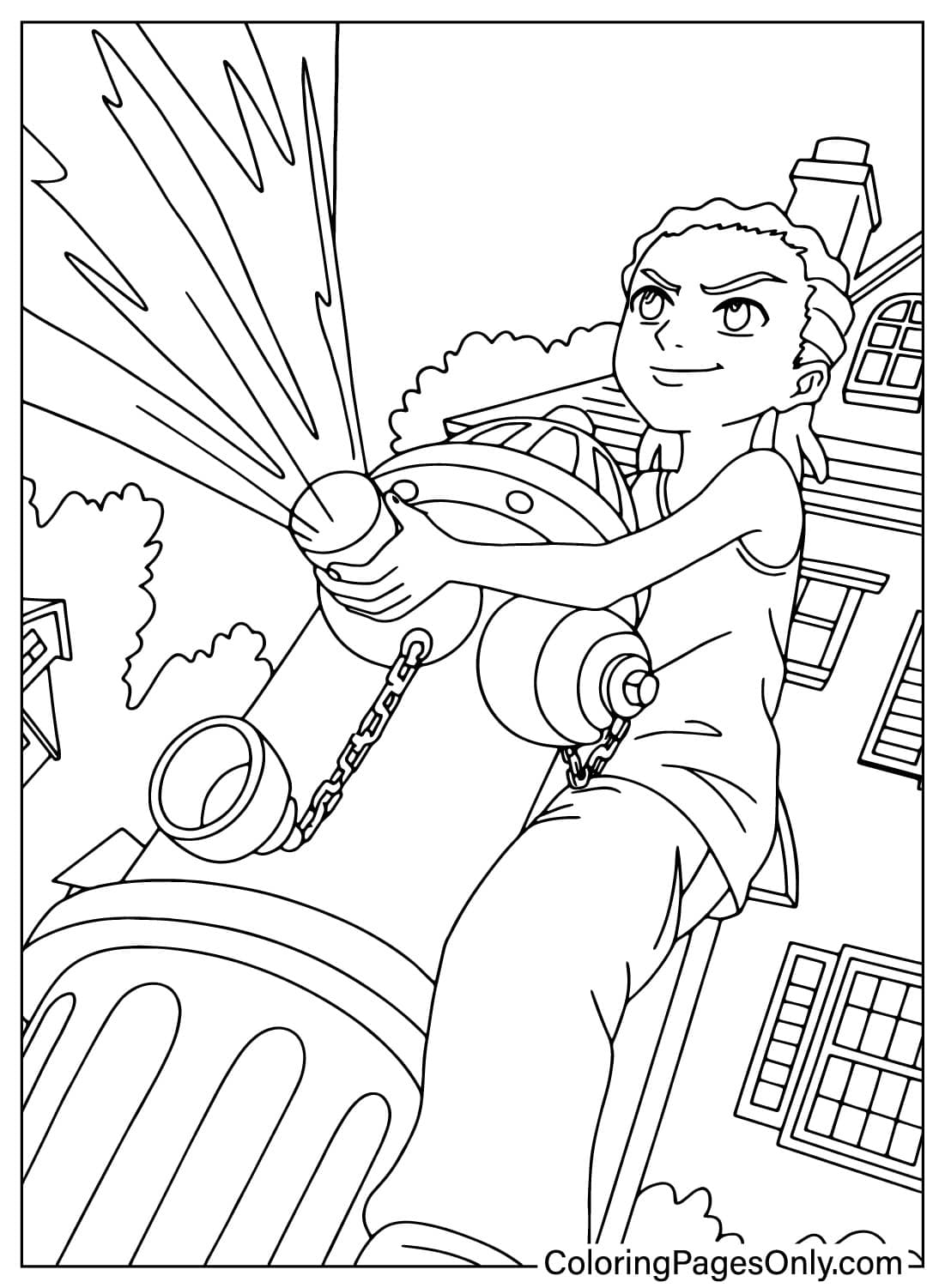
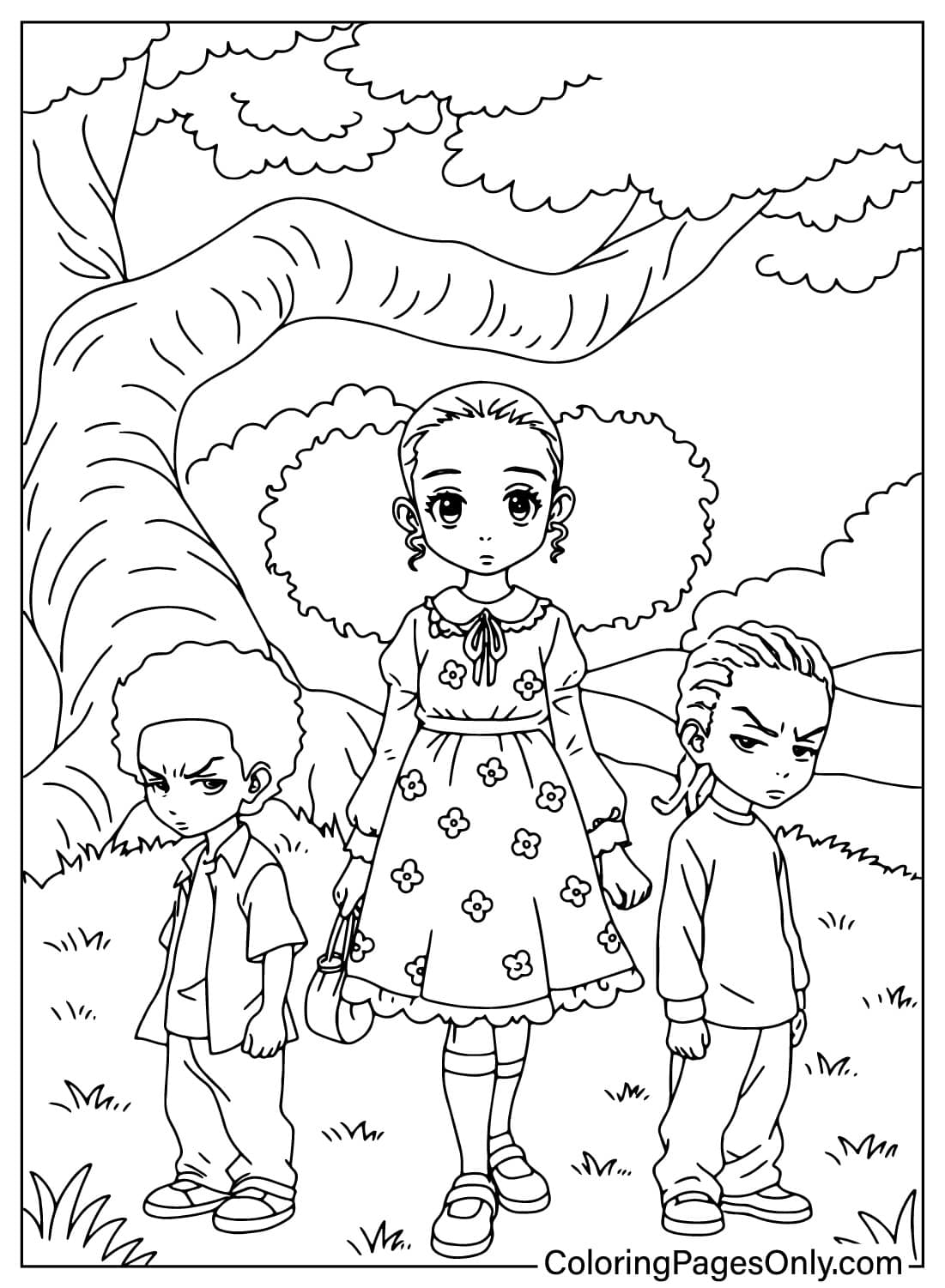
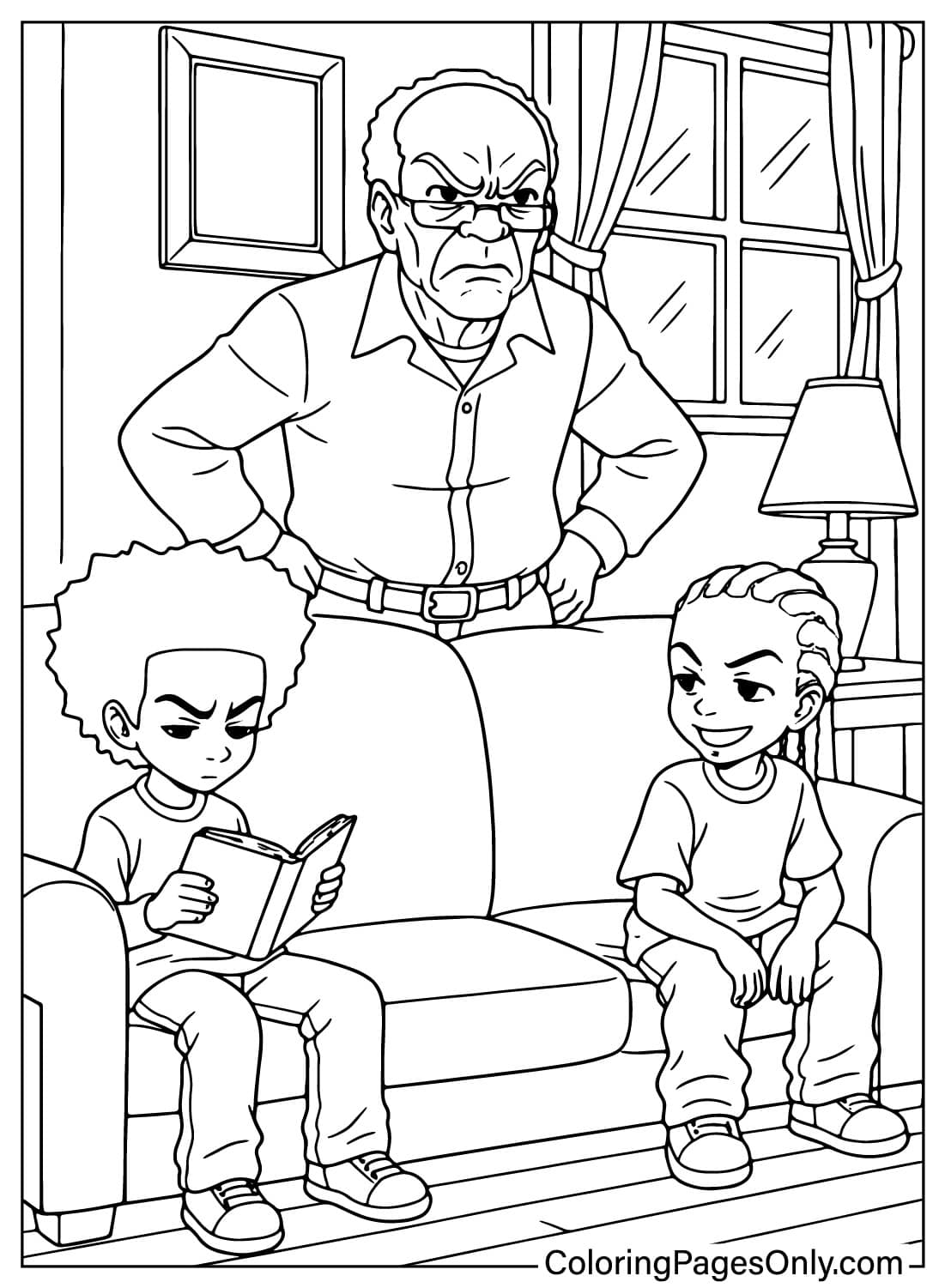
Boondocks Coloring Pages at ColoringPagesOnly.com brings together 50+ free pages based on Aaron McGruder’s animated series – Huey and Riley Freeman in solo and paired pages, Granddad Freeman in domestic and chaotic scenes, Jazmine DuBois, Cindy McPhearson, Uncle Ruckus, Gin Rummy, Ed Wuncler, and the DuBois family. Download any page as a PDF to print, or color online in your browser. The full Cartoons collection is at Cartoons Coloring Pages.
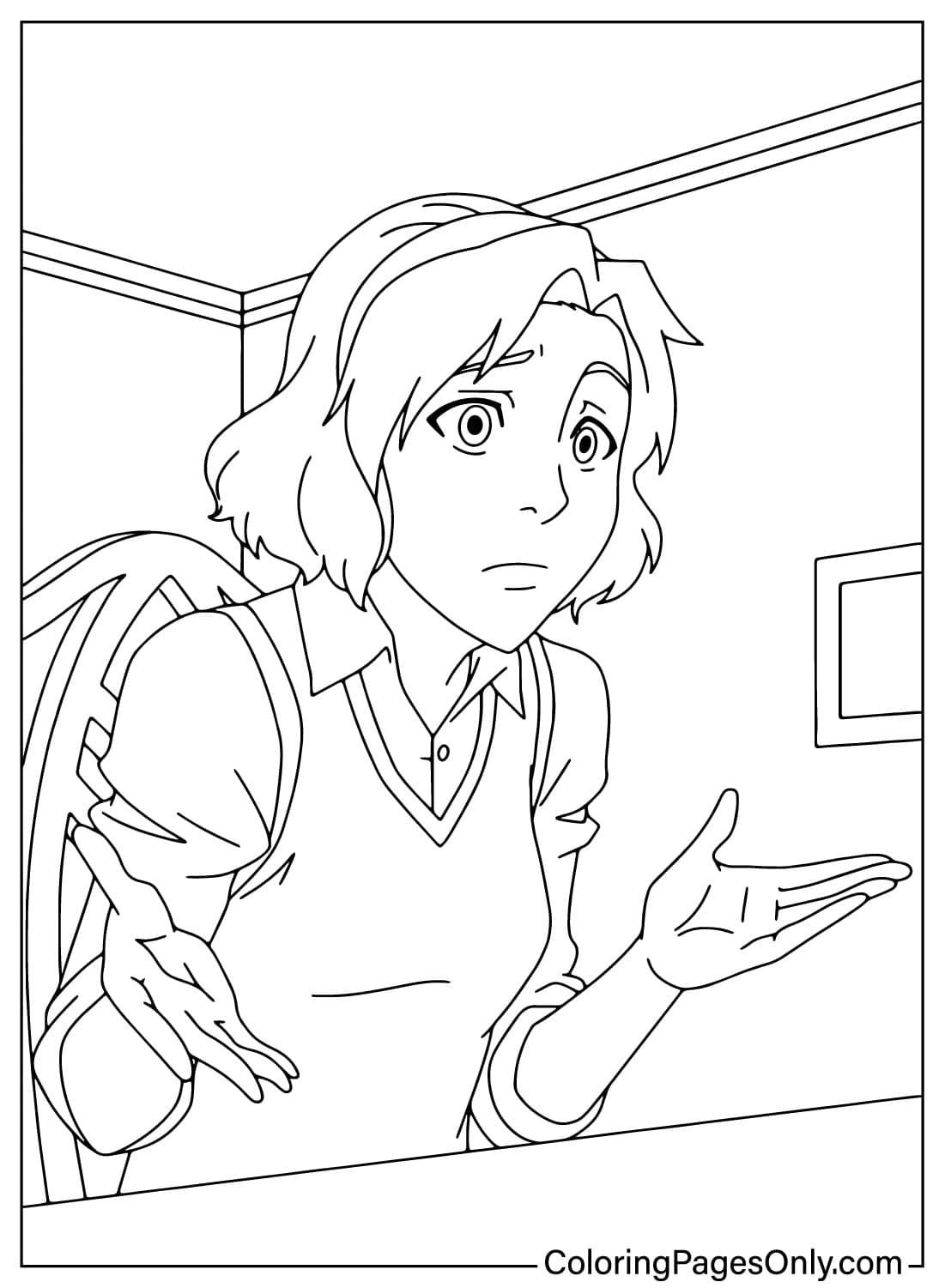
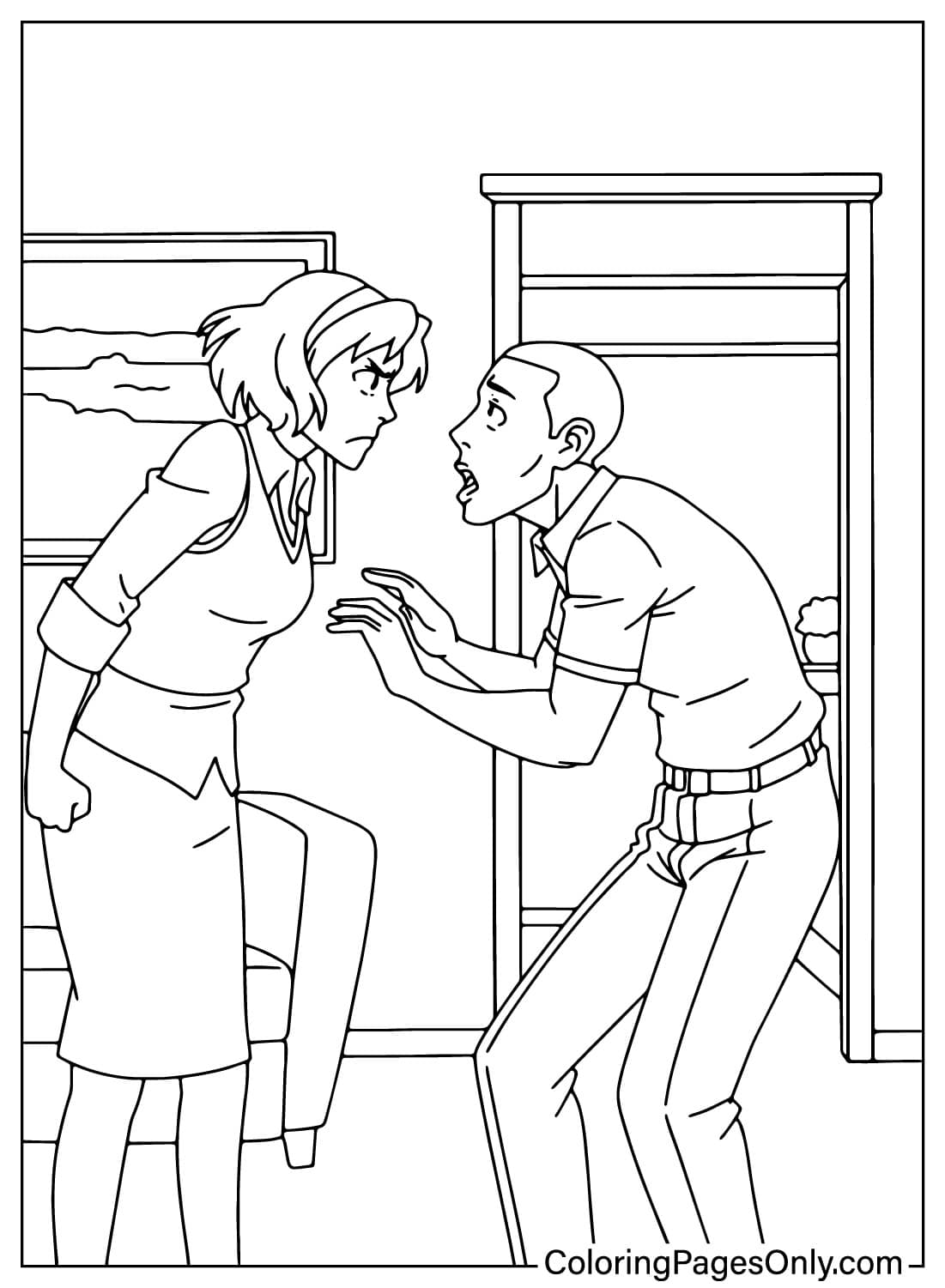
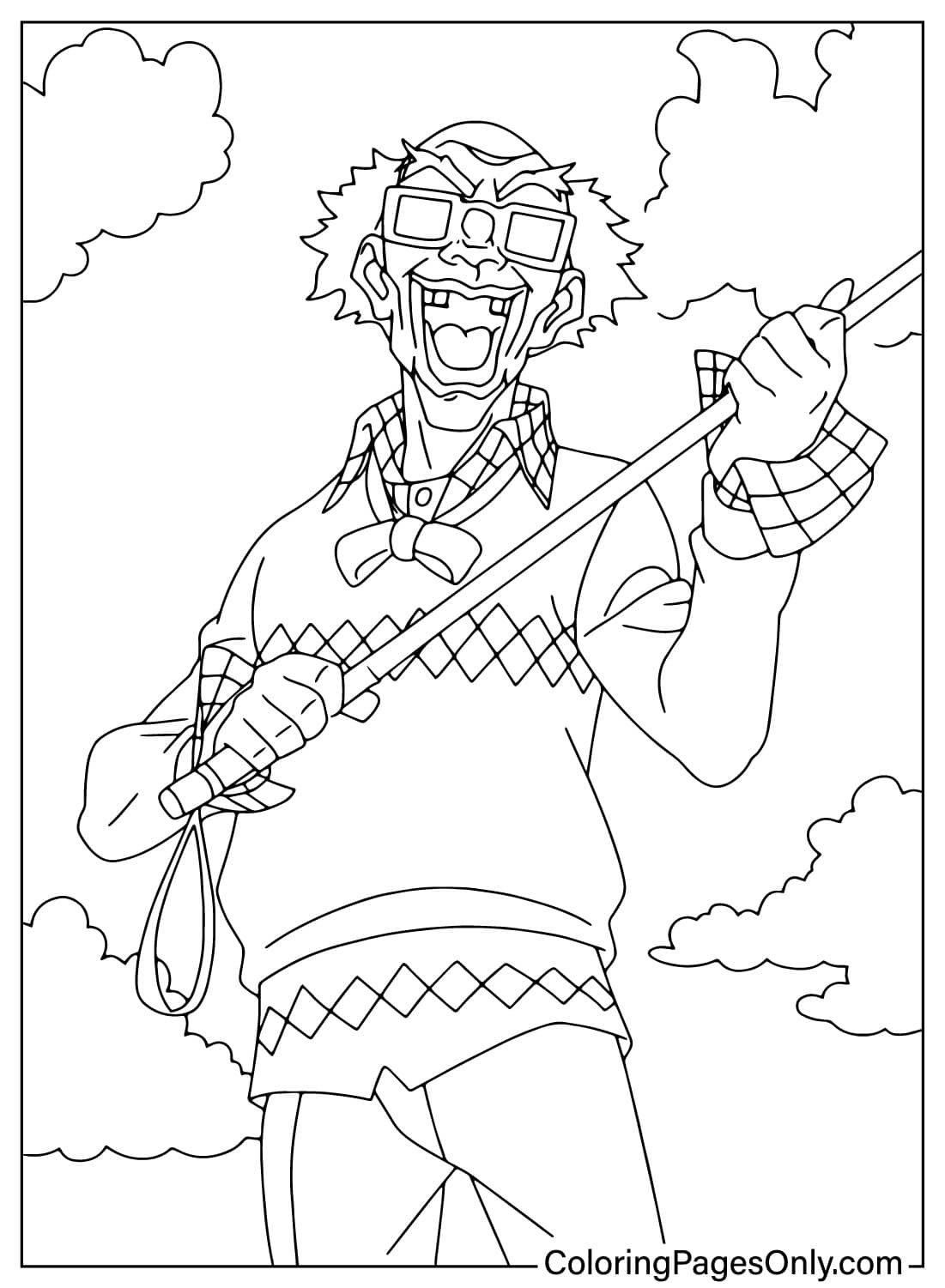
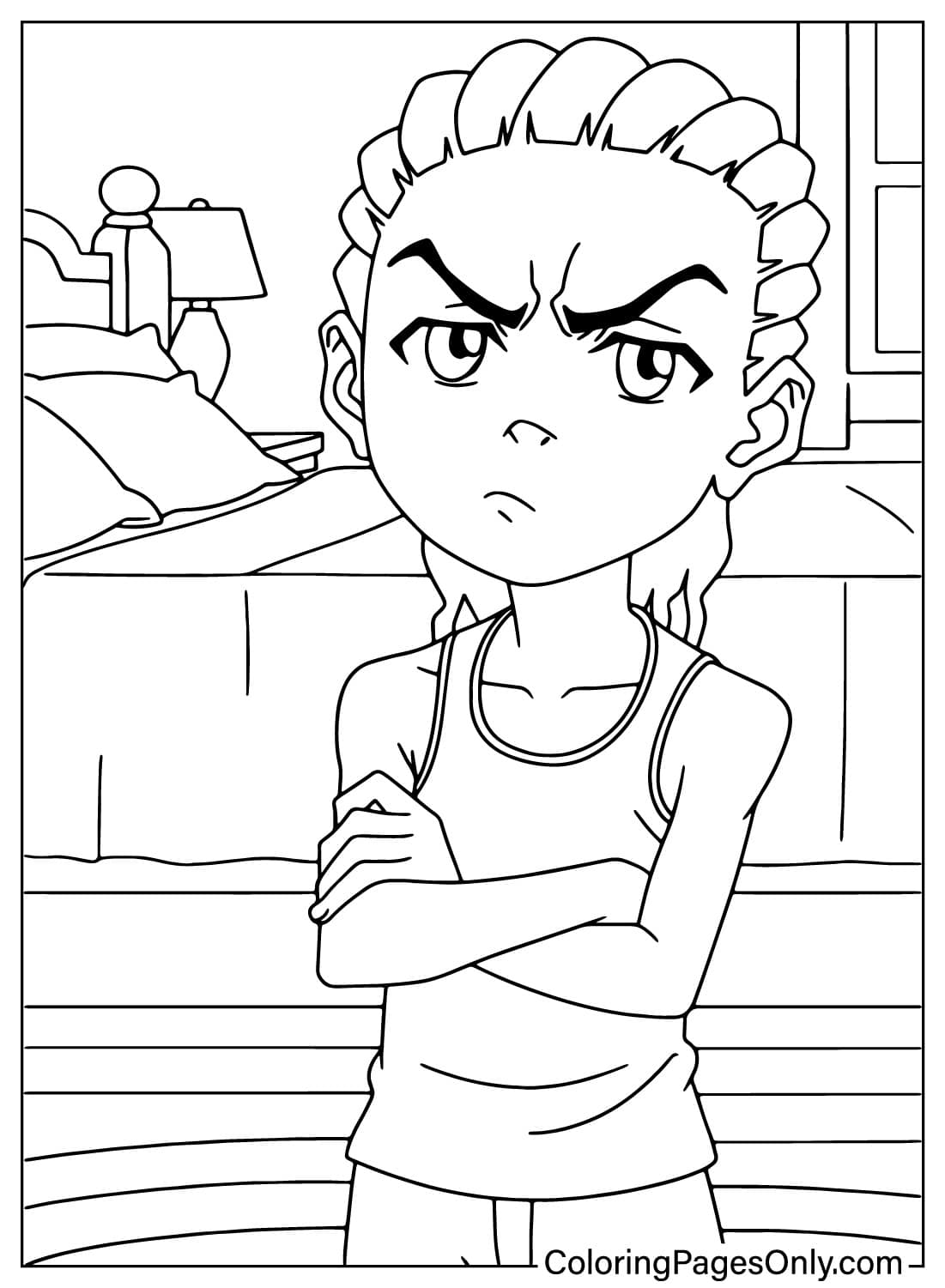
What is The Boondocks?
The Boondocks is an American animated series created by Aaron McGruder, based on his newspaper comic strip of the same name. It aired on Cartoon Network’s Adult Swim block from 2005 to 2014 across four seasons. The show follows Huey Freeman (age 10) and his younger brother Riley (age 8), two brothers from Chicago’s South Side who move to the fictional predominantly white suburb of Woodcrest, Maryland, to live with their grandfather Robert “Granddad” Freeman.
The show’s central tension comes from the collision between the Freemans – particularly Huey’s radical political consciousness and Riley’s hip-hop-derived worldview – and the mostly white, mostly oblivious suburban environment they’ve been placed in. The Boondocks is a satirical comedy that uses its characters and their conflicts to comment on race, class, media culture, assimilation, and the contradictions of American life.
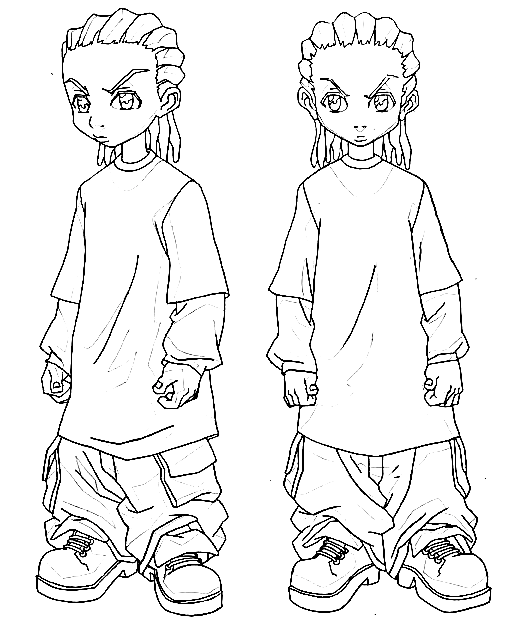
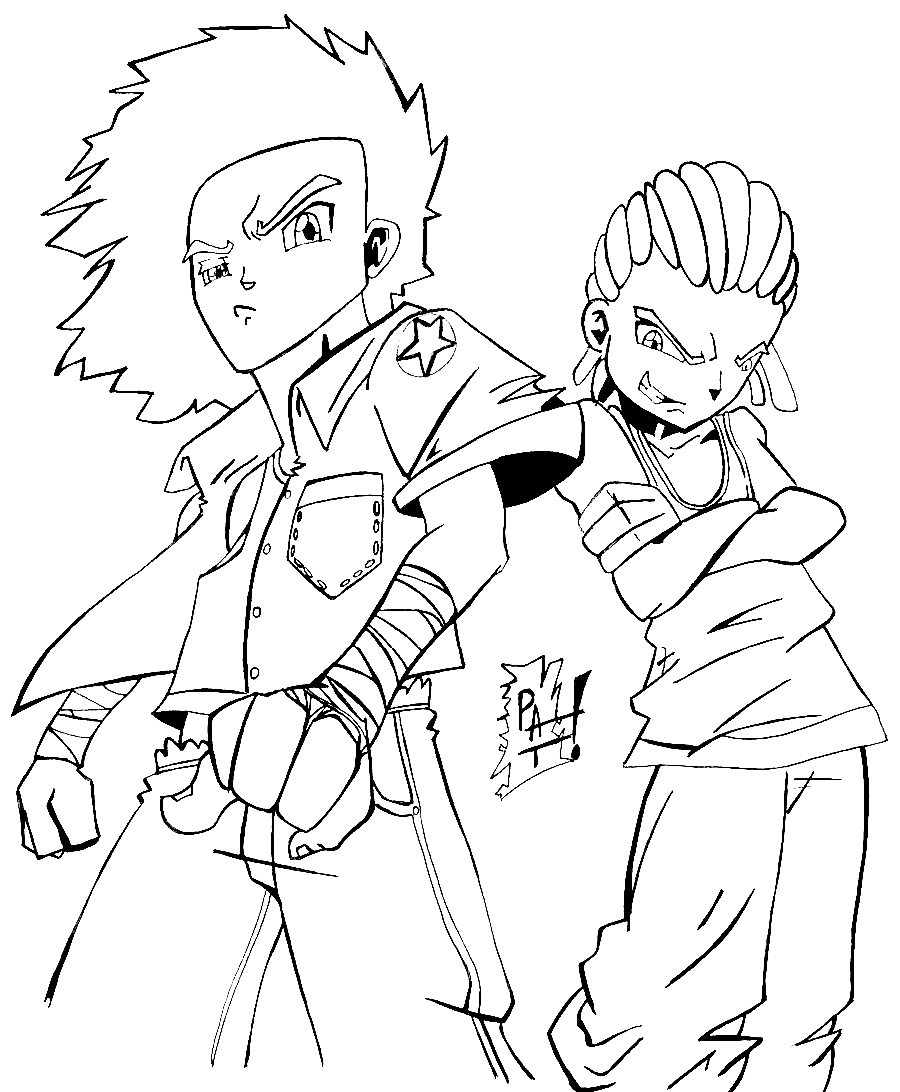
The show’s visual style was deliberately influenced by Japanese animation – Huey and Riley’s character designs have the large eyes, clean lines, and dynamic action poses of anime aesthetics applied to an American cartoon context. This visual language, combined with the show’s sharp writing, gave The Boondocks a look that was immediately distinctive from anything else on television when it premiered.
Note: The Boondocks is an adult animated series rated TV-14 to TV-MA. The coloring pages are character and scene illustrations suitable for all ages, but the show itself contains strong language and adult themes.
Character Guide
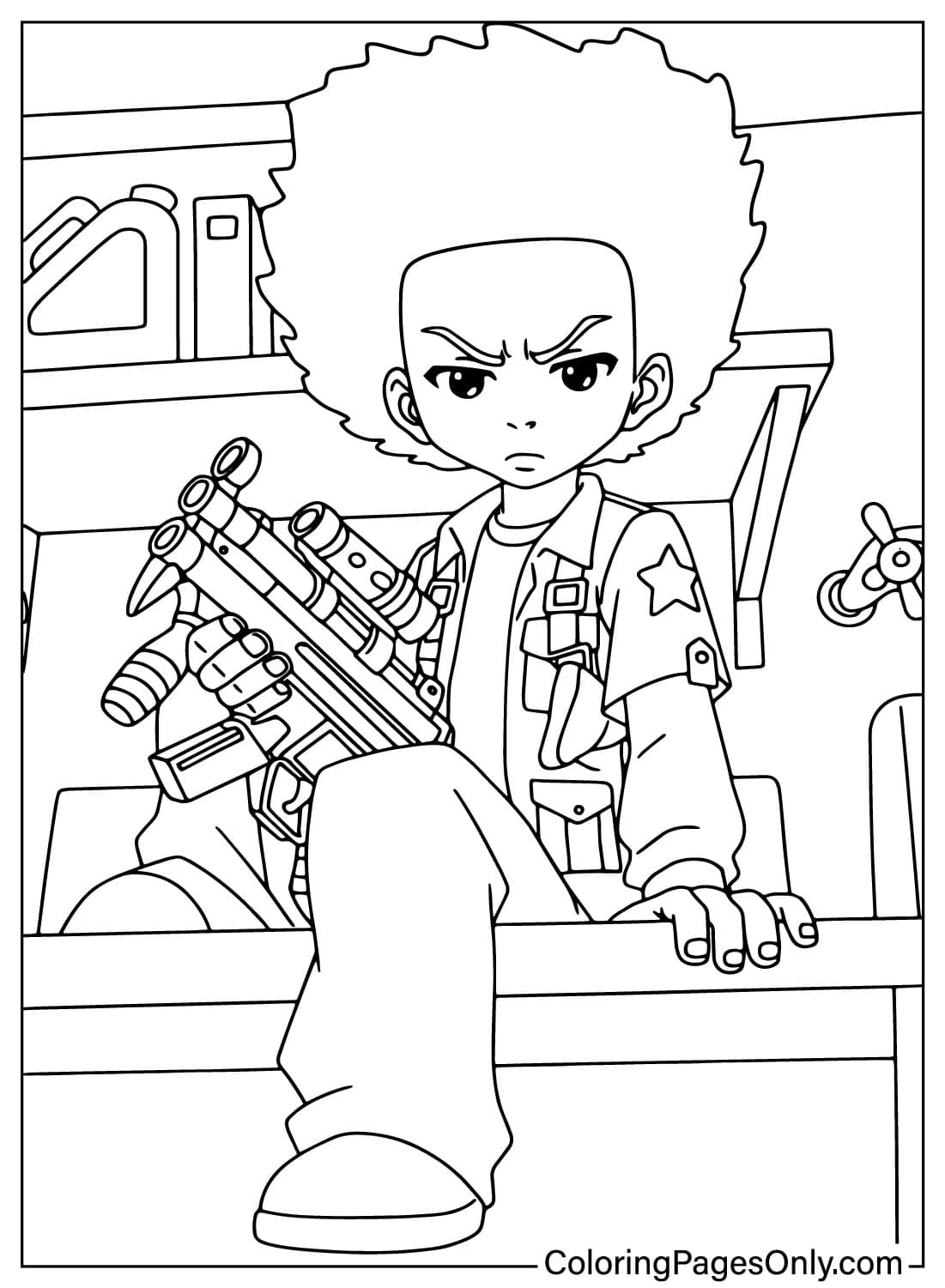
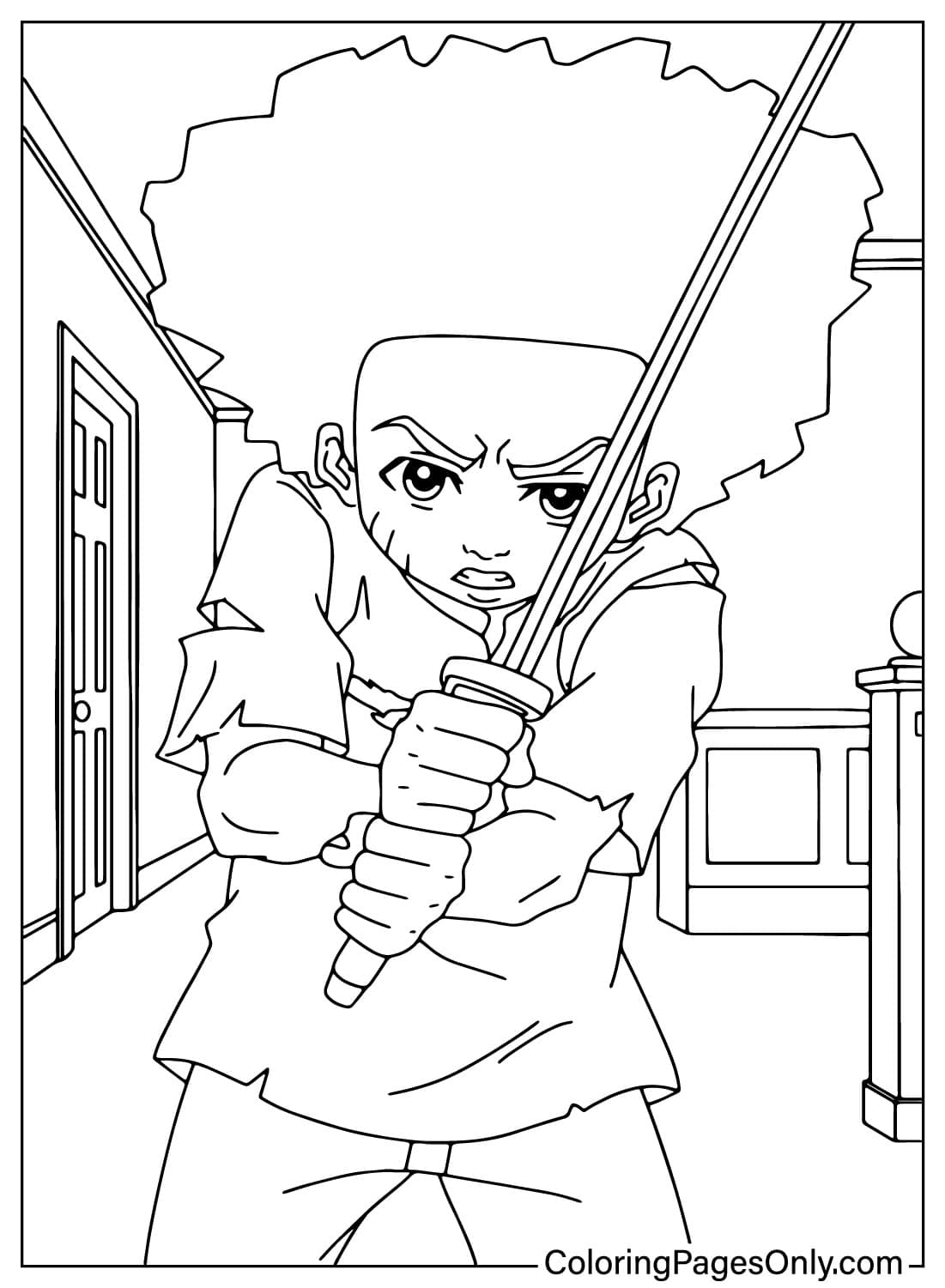
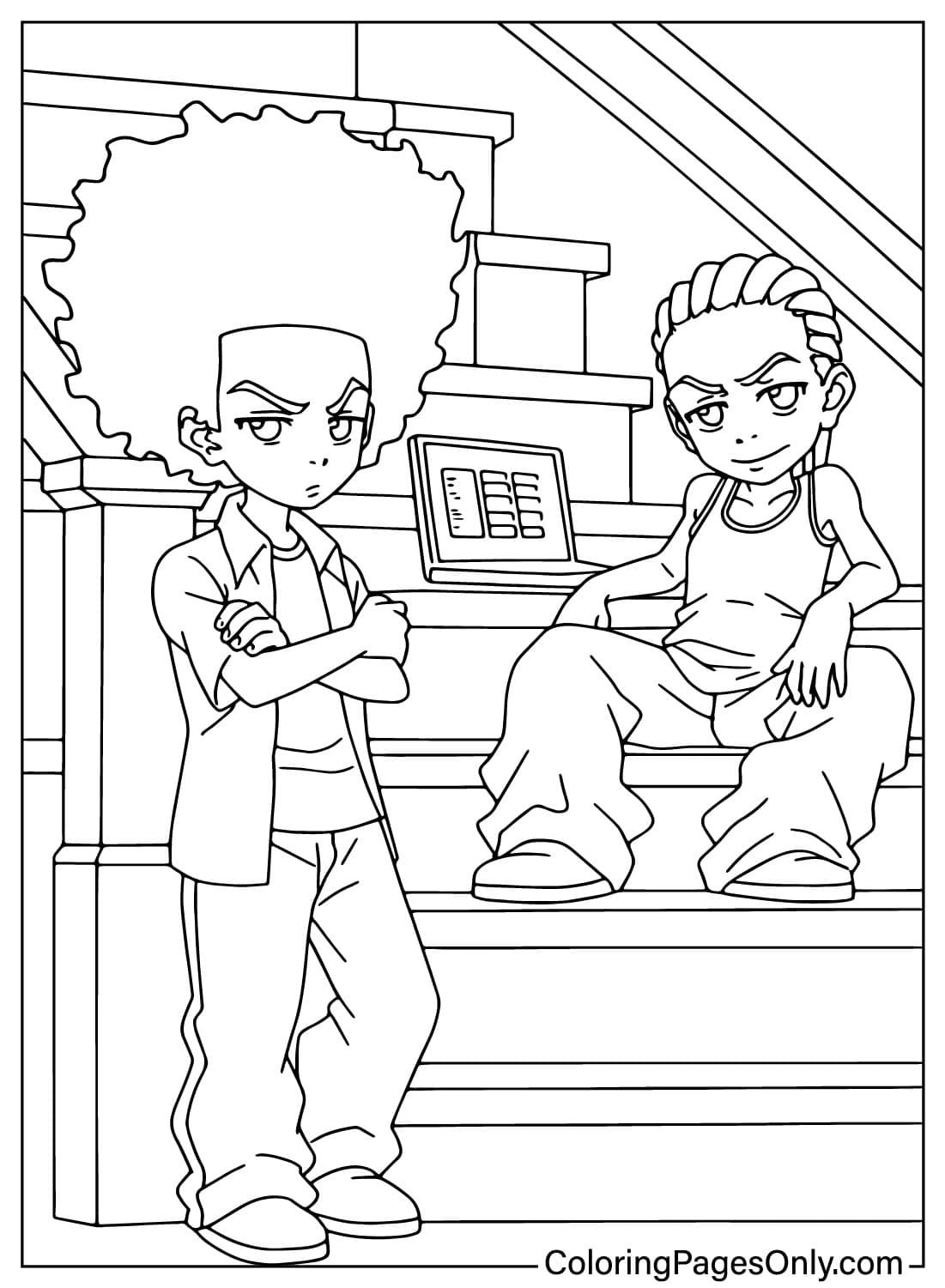
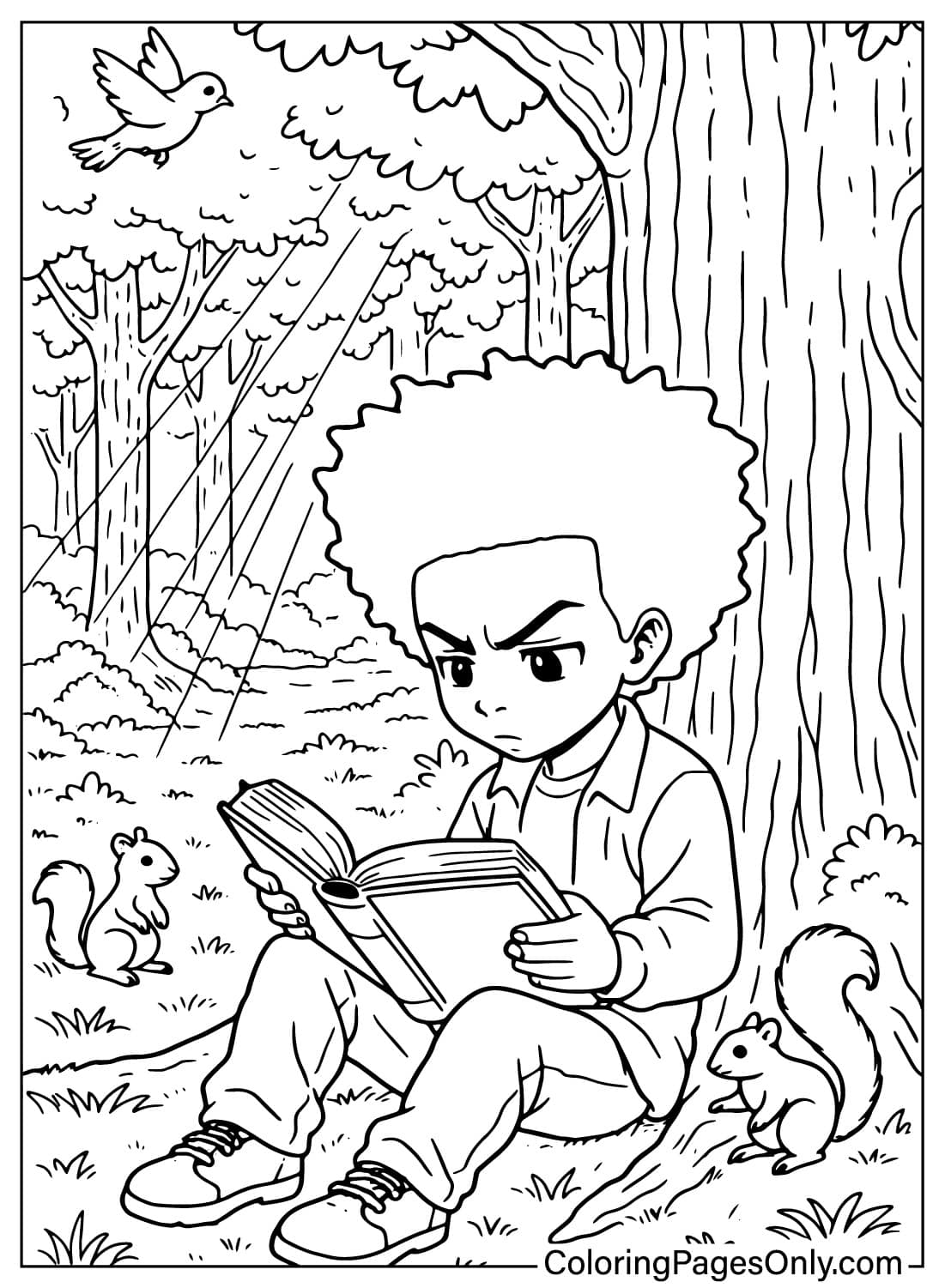
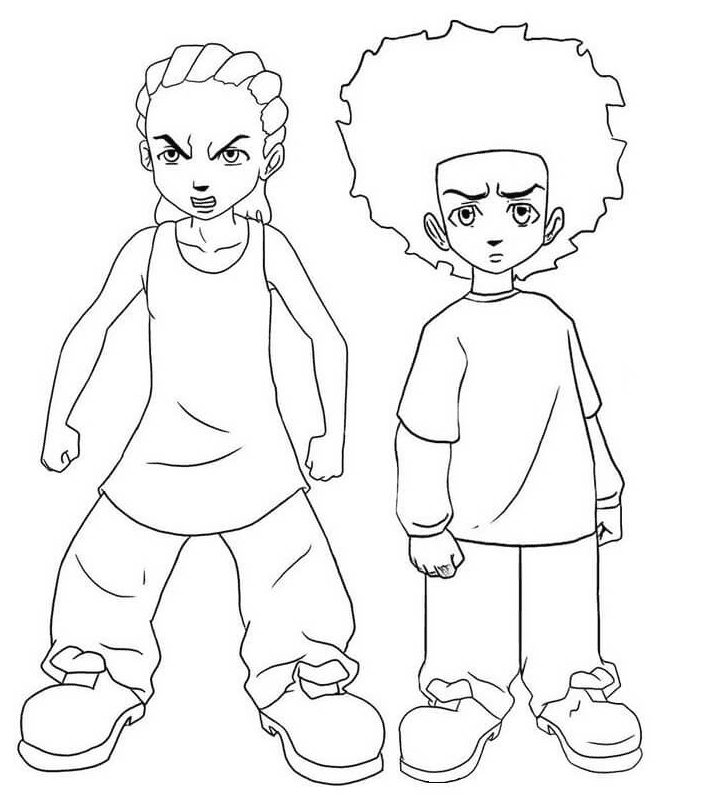
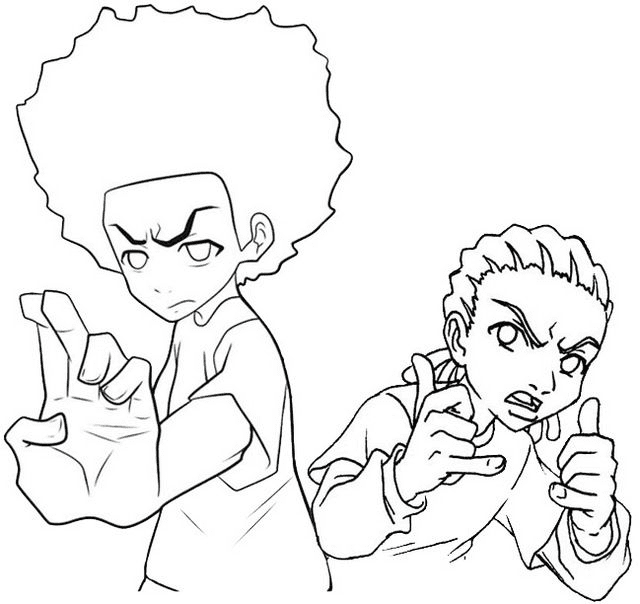
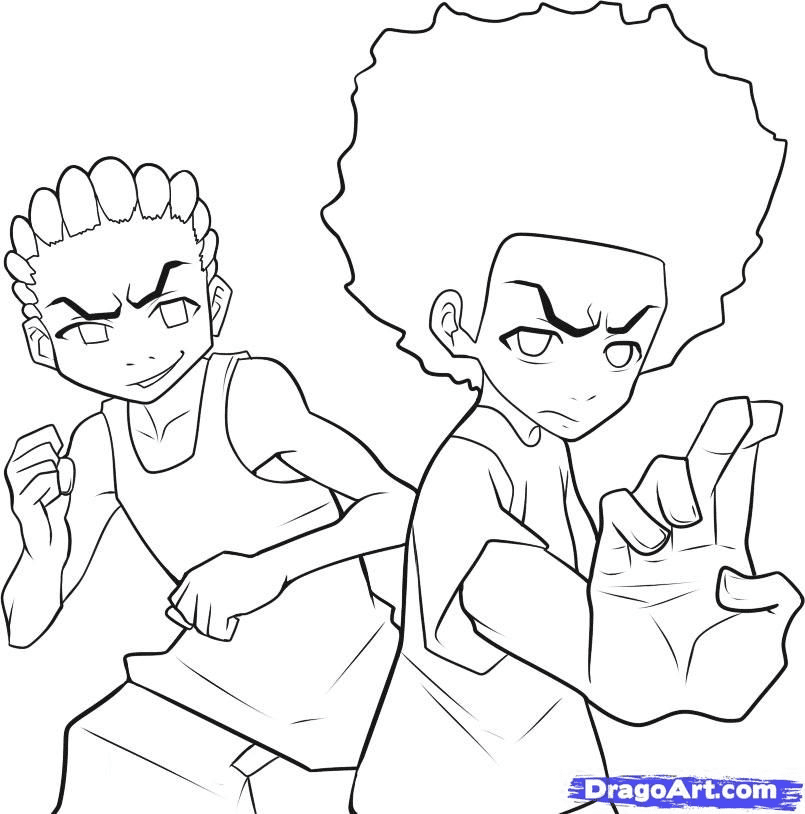
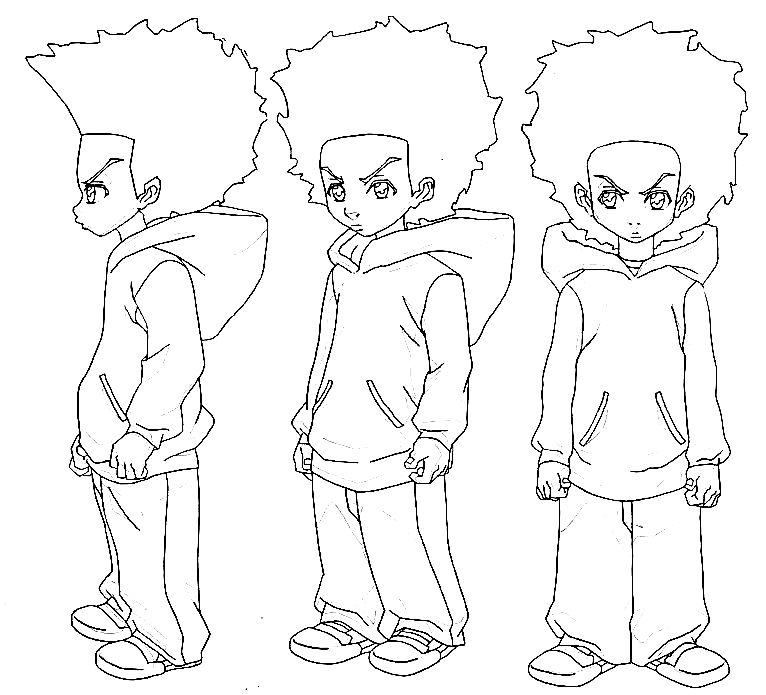
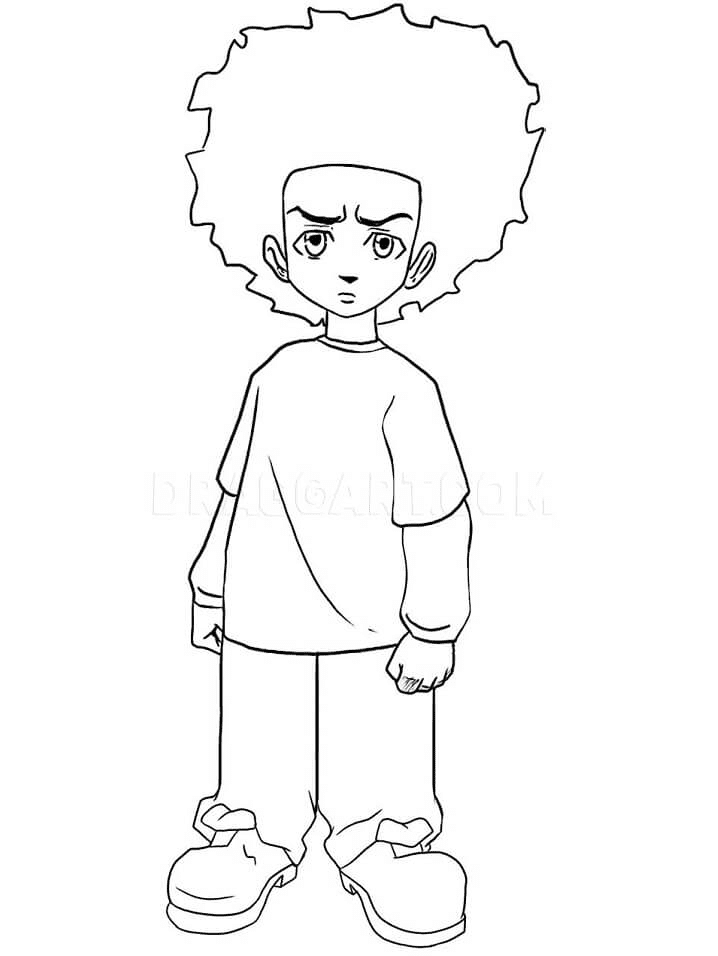
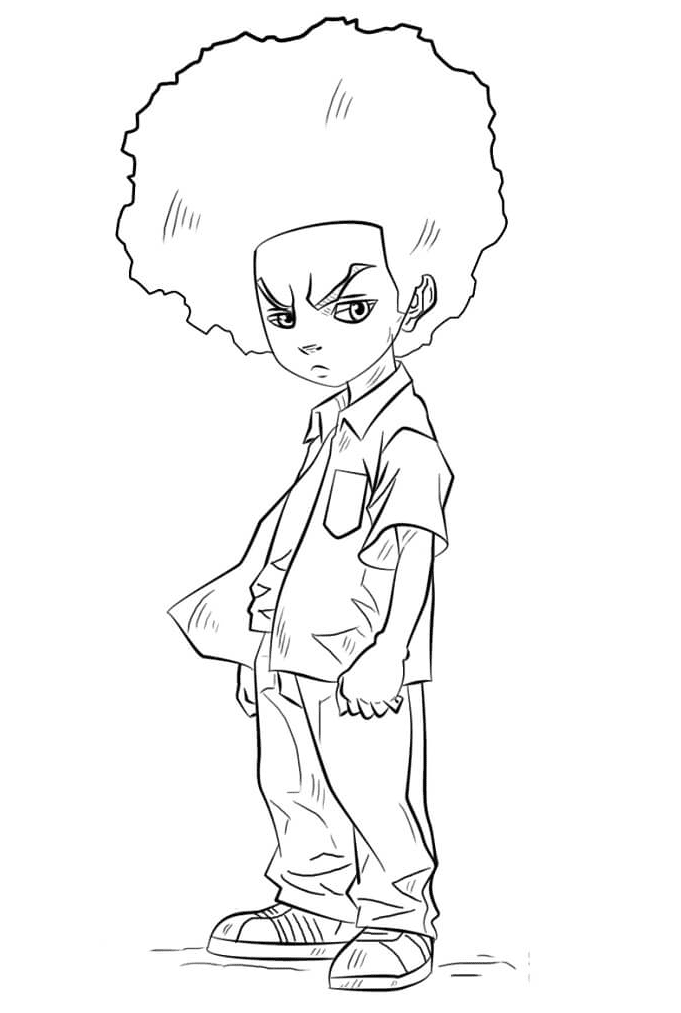
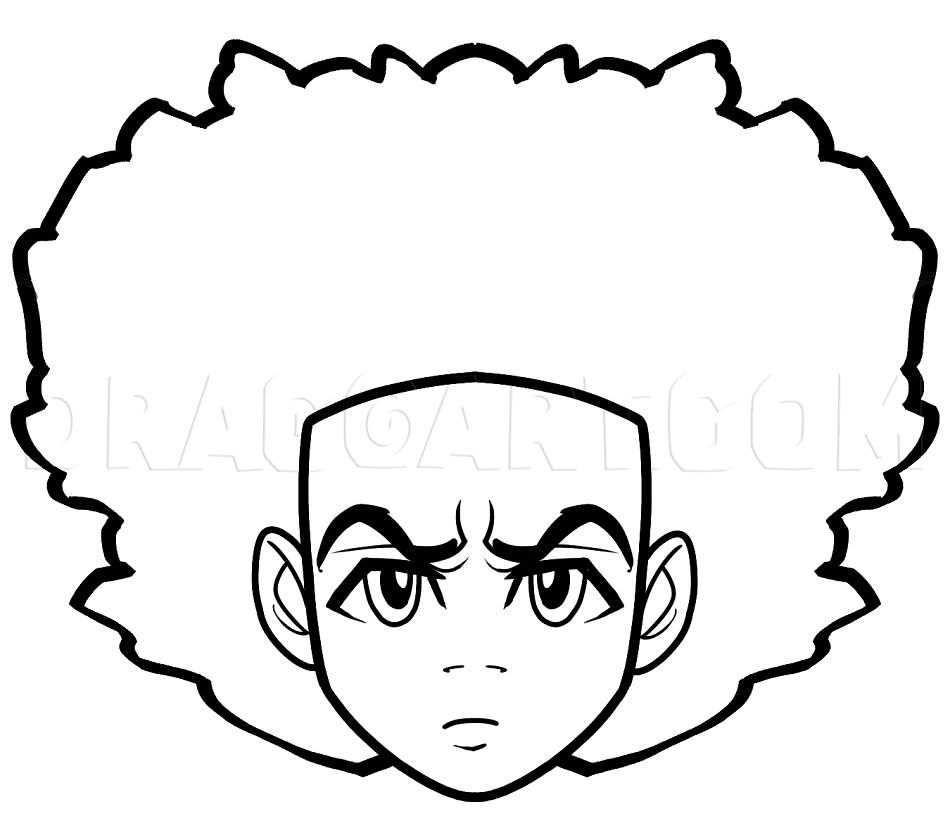
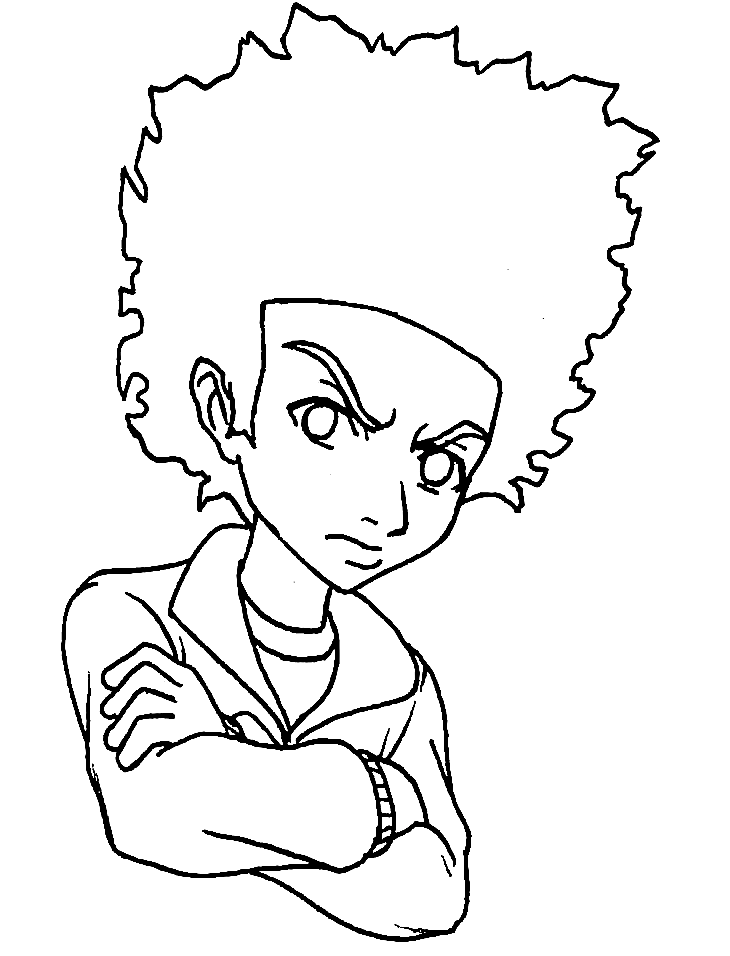
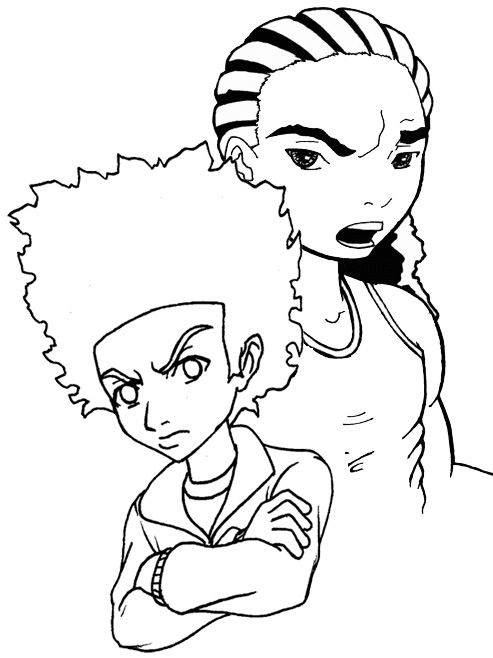
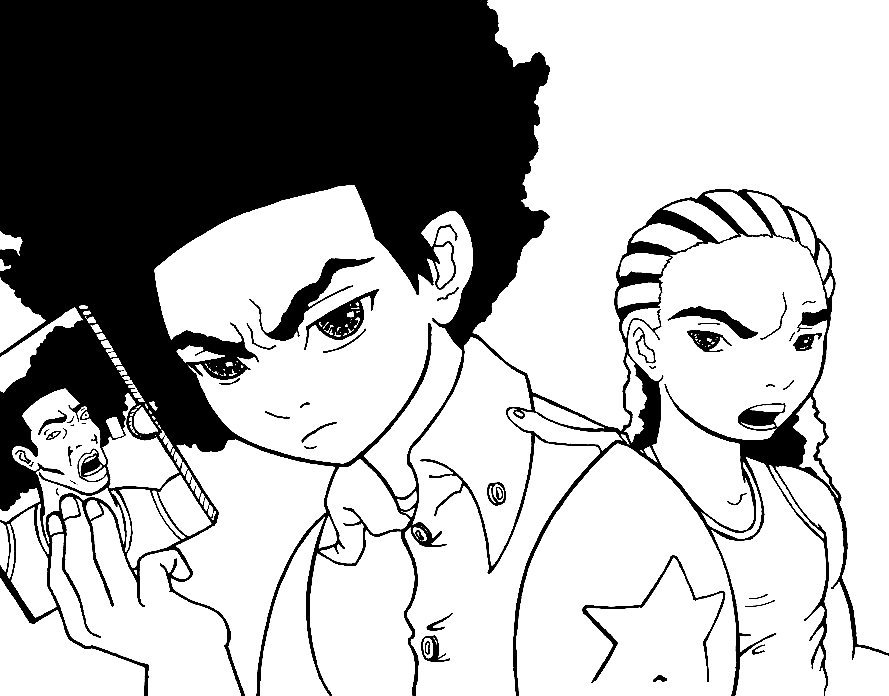
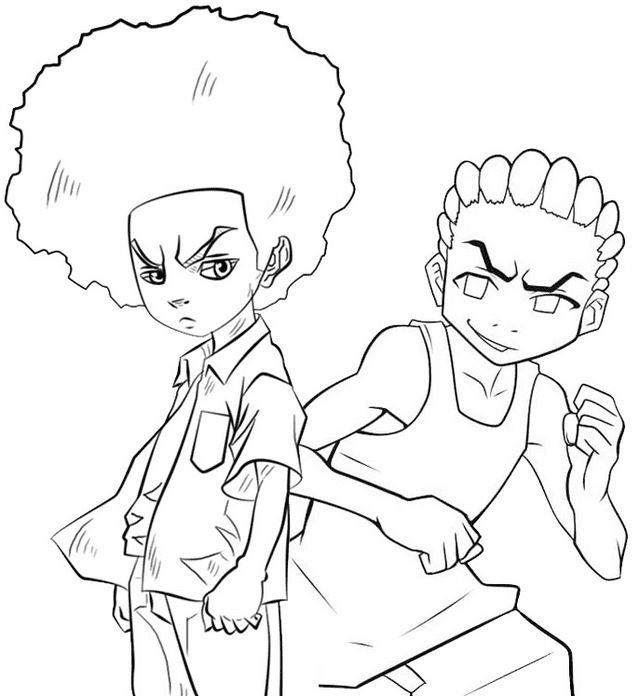
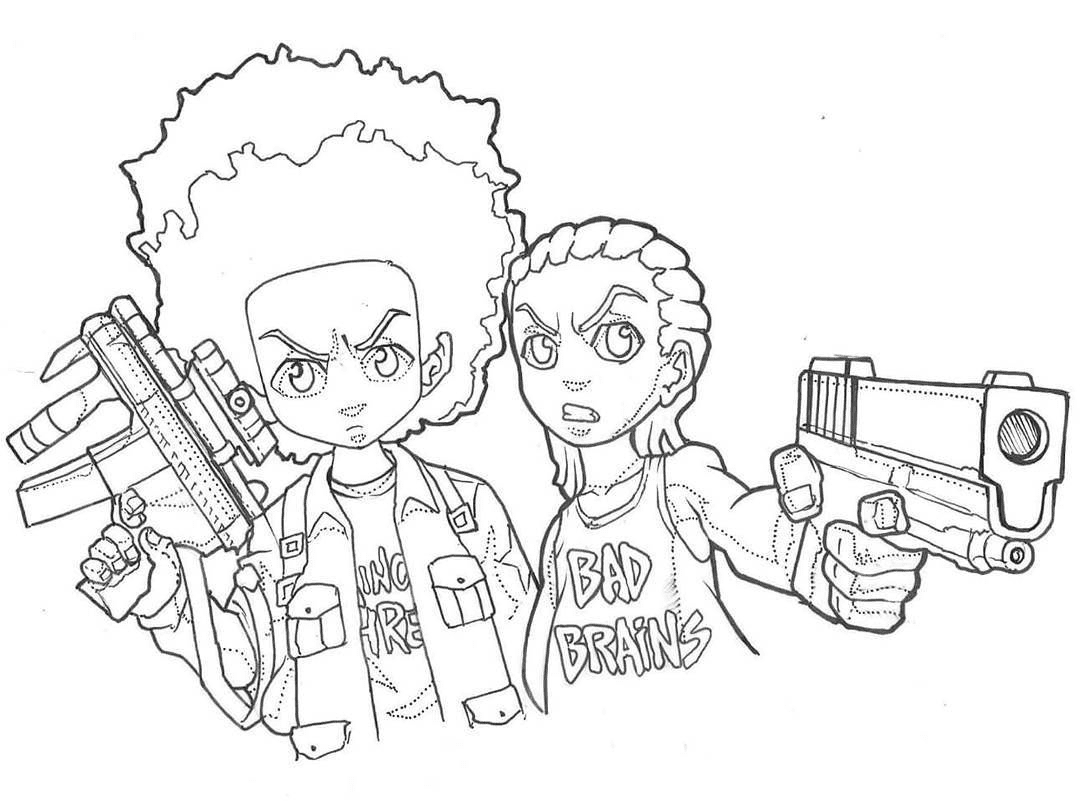
Huey Freeman is the older brother and the show’s moral and intellectual center – a ten-year-old radical named after Huey Newton of the Black Panther Party. His visual signature is his large natural afro, worn full and rounded, and his standard outfit of a red turtleneck and brown pants. His expression is almost always serious, measured, or alarmed. He practices martial arts and is frequently the only person in any scene who understands what is actually happening. His character design sits entirely in cool, serious tones: the warm red of his shirt against his dark skin and the near-black of his hair.
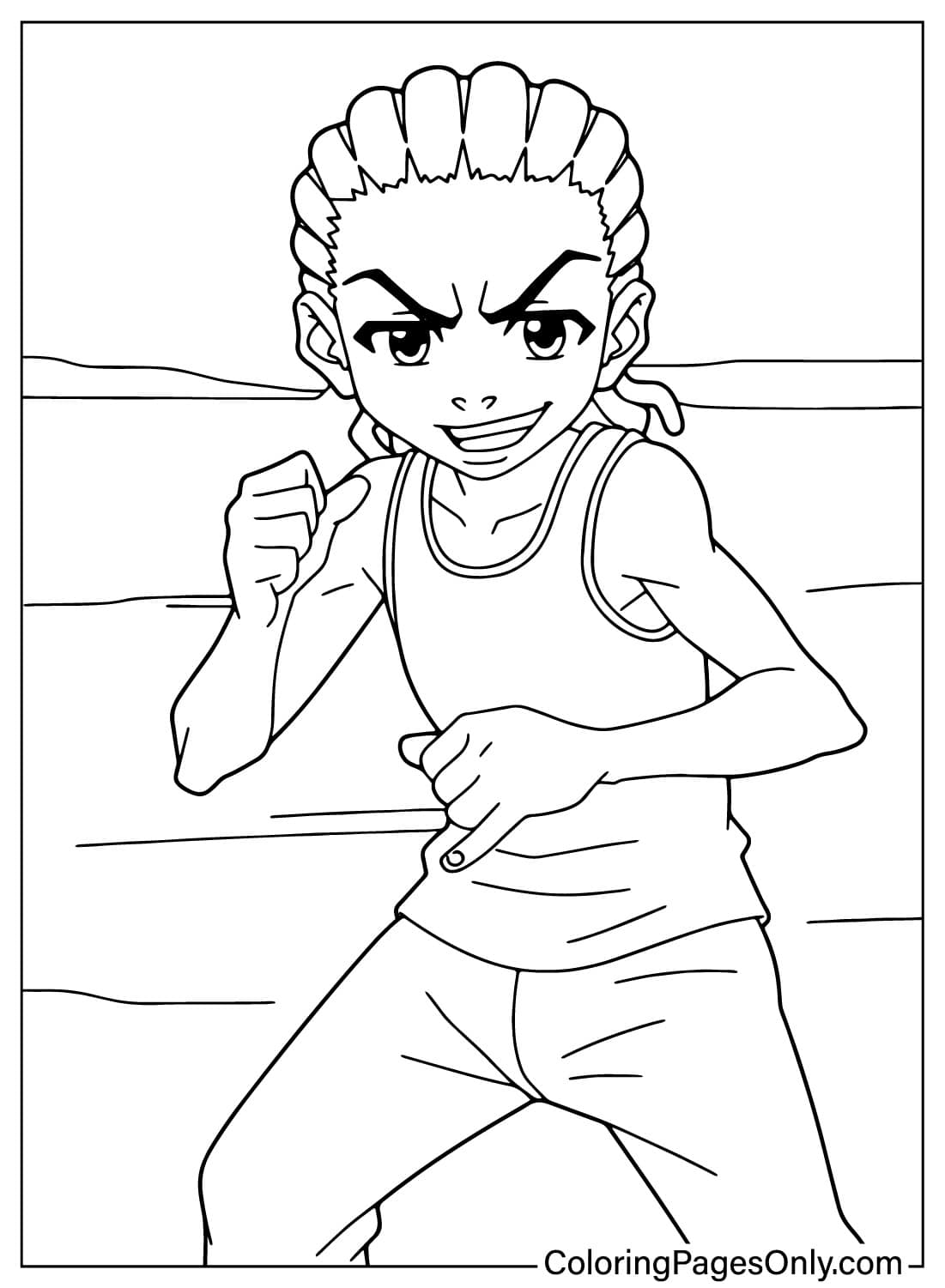
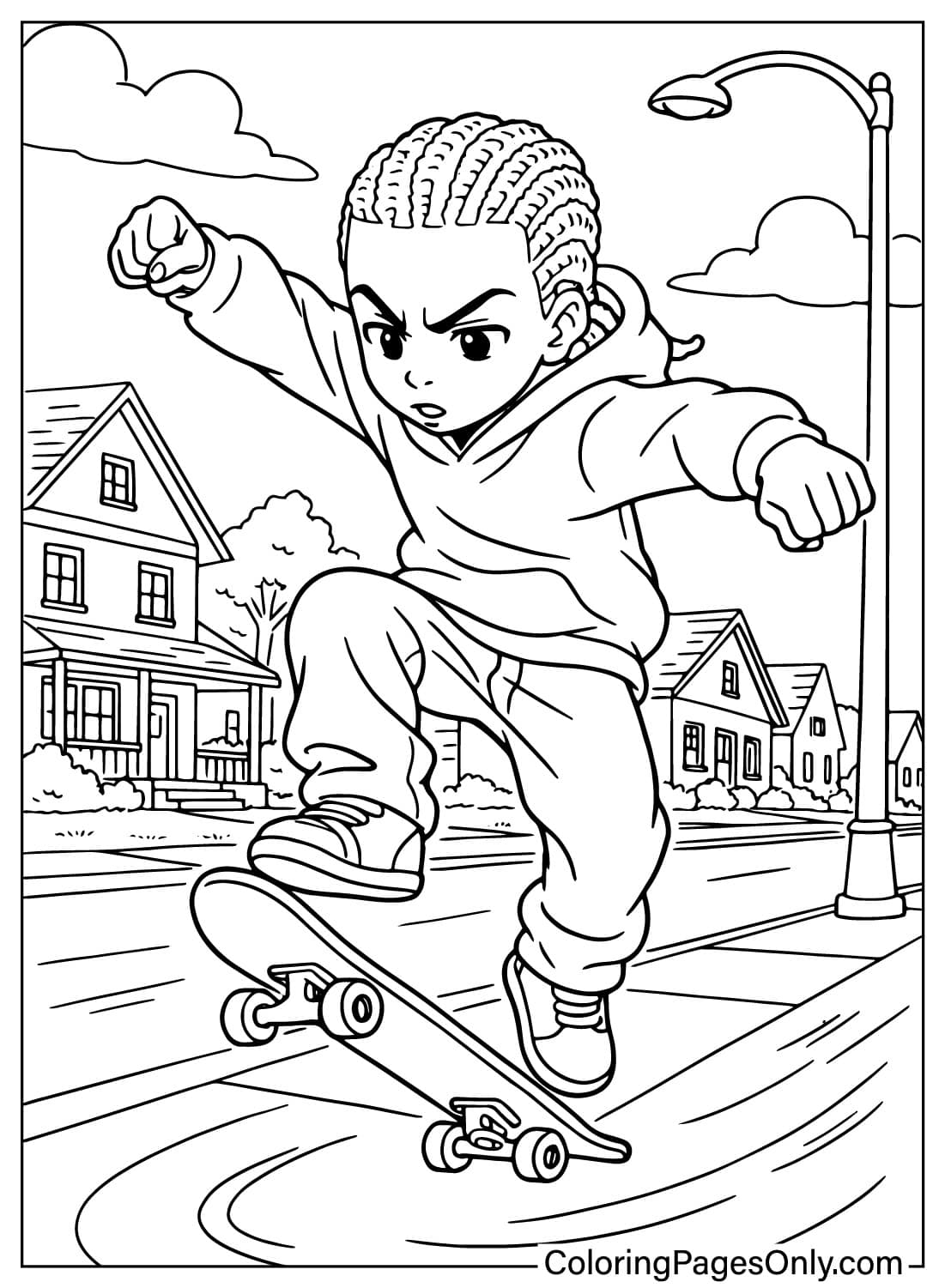
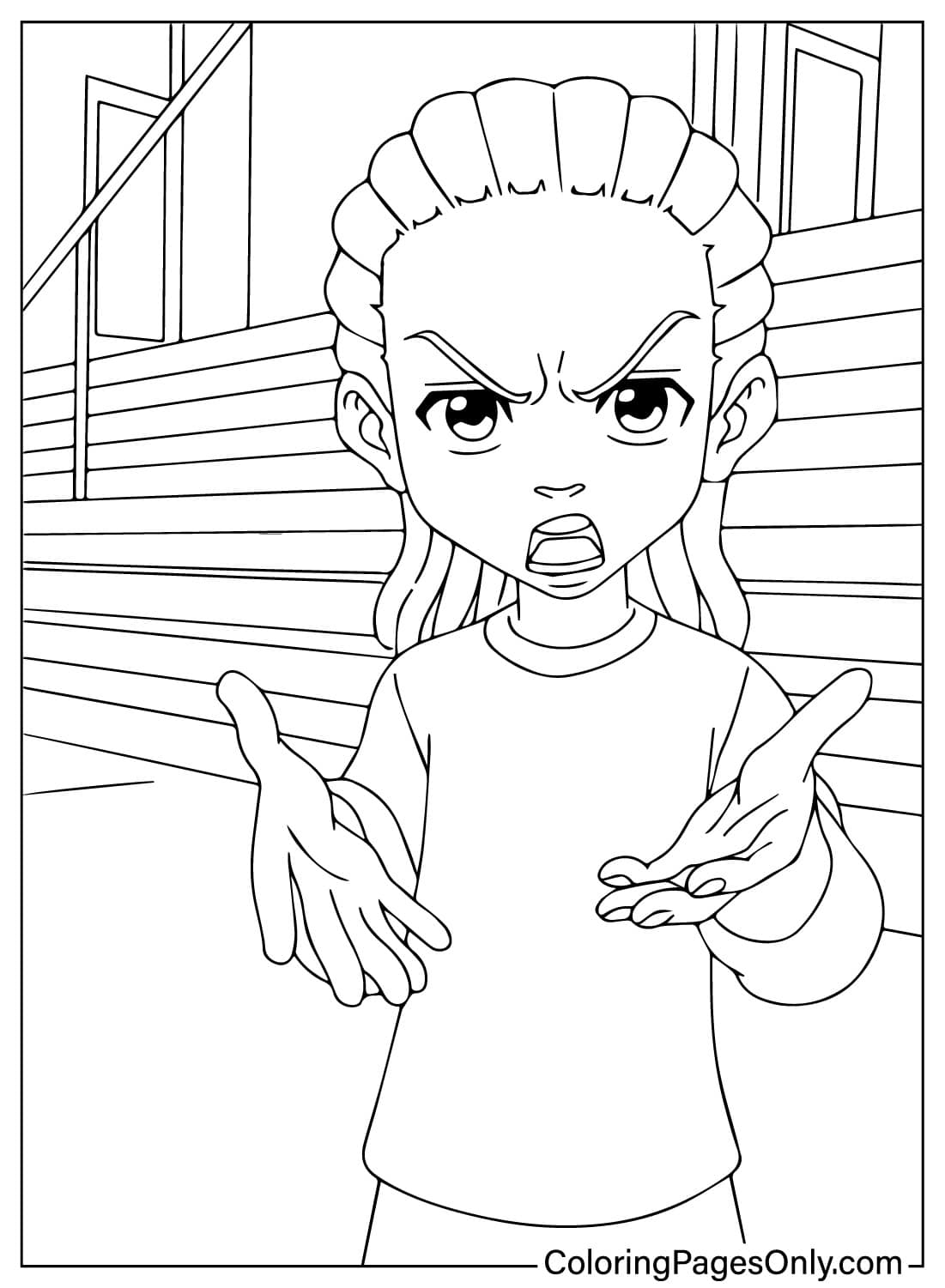
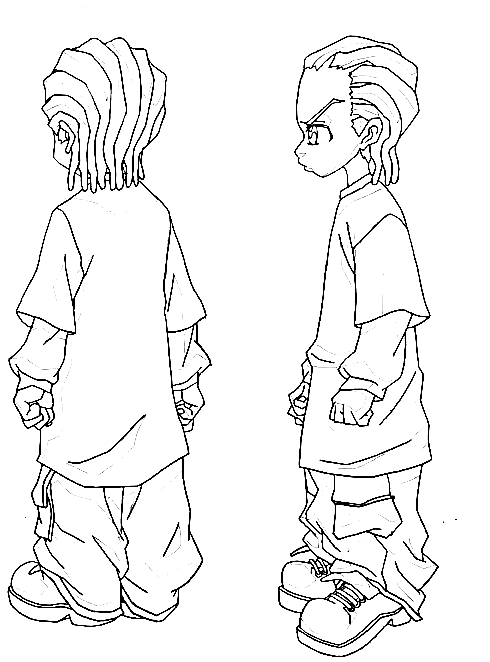
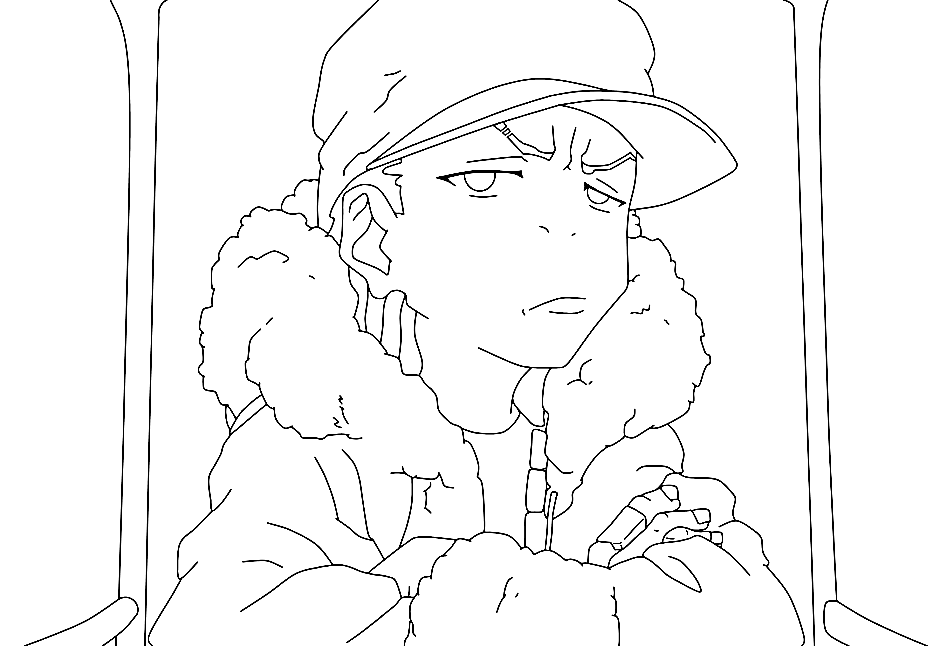
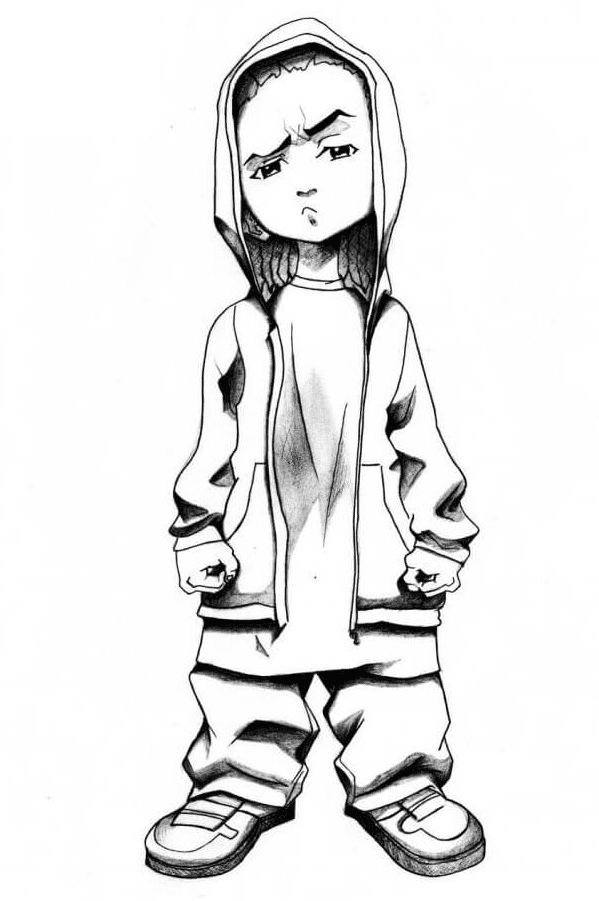
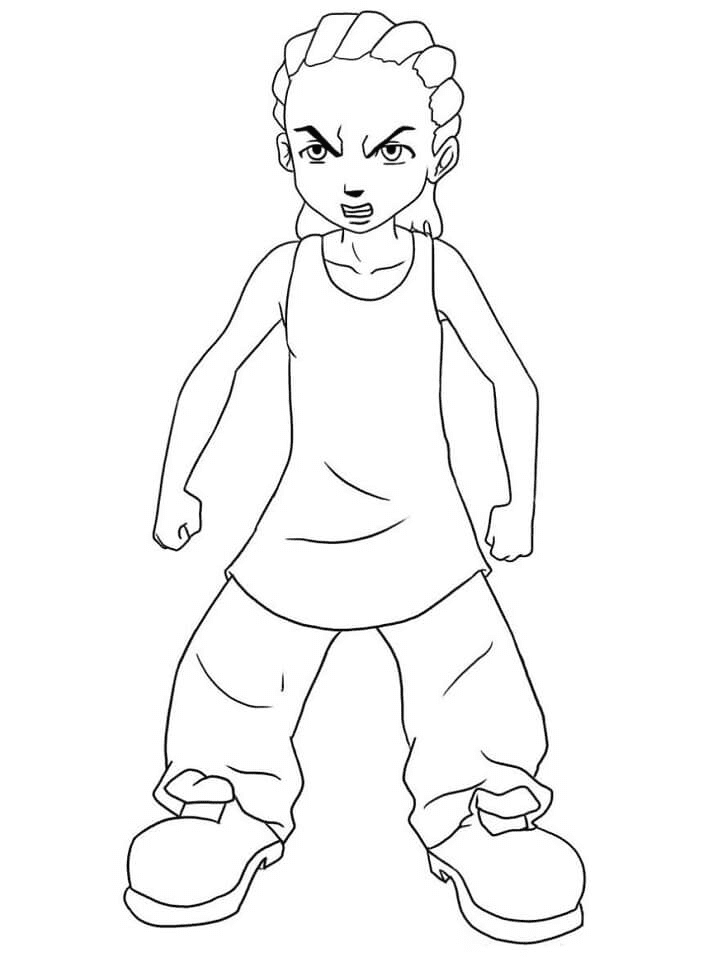
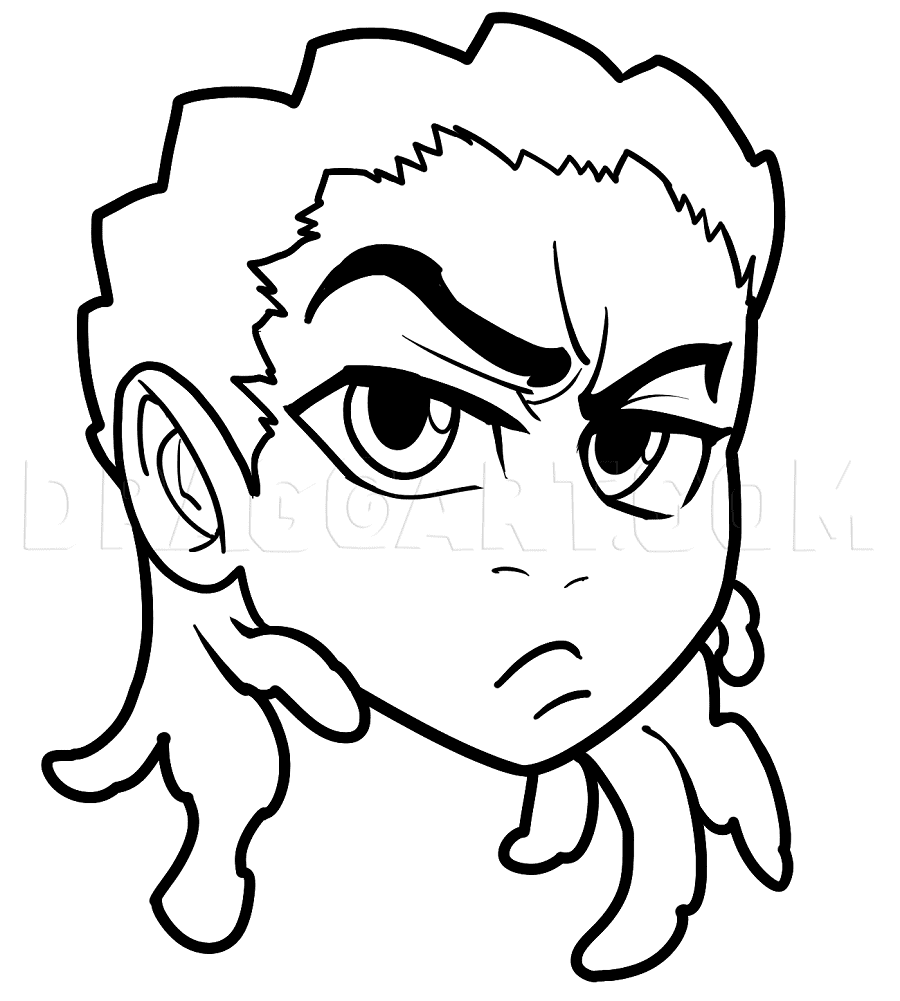
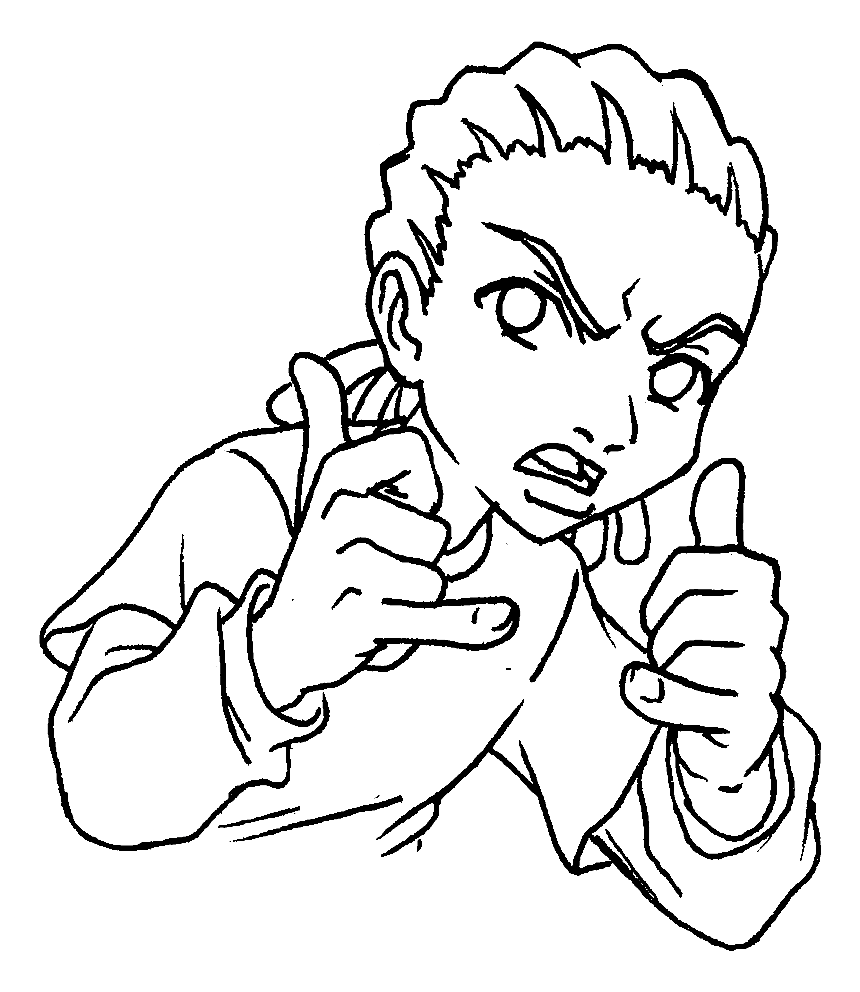
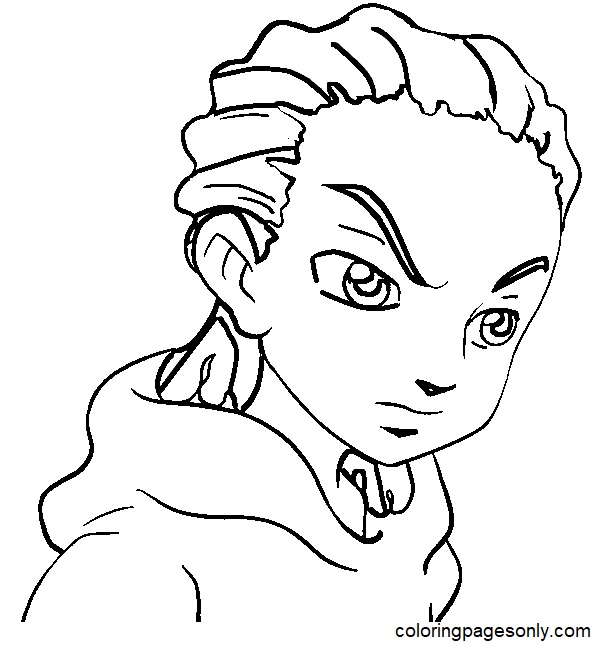
Riley Freeman is the younger brother – eight years old, hip-hop-obsessed, and determined to be as street as possible despite living in a comfortable suburb. His hair is in cornrows, he wears oversized hoodies and baggy jeans, and his default expression is a combination of confidence and mild irritation. Riley is the show’s comic engine: most of the show’s physical humor and chaotic situations are generated by Riley’s decisions. His color palette is more casual and varied than Huey’s – whatever the specific outfit, it reads as streetwear, with earth tones and urban color combinations.
Robert “Granddad” Freeman is the brothers’ grandfather who moved them to Woodcrest seeking a better life. He is in his 70s, large in frame, and frequently involved in romantic misadventures and parenting crises that he handles with a combination of old-school authority and complete misjudgment. His character design conveys both dignity and exasperation. He wears a button-down shirt in most scenes and has a white mustache.
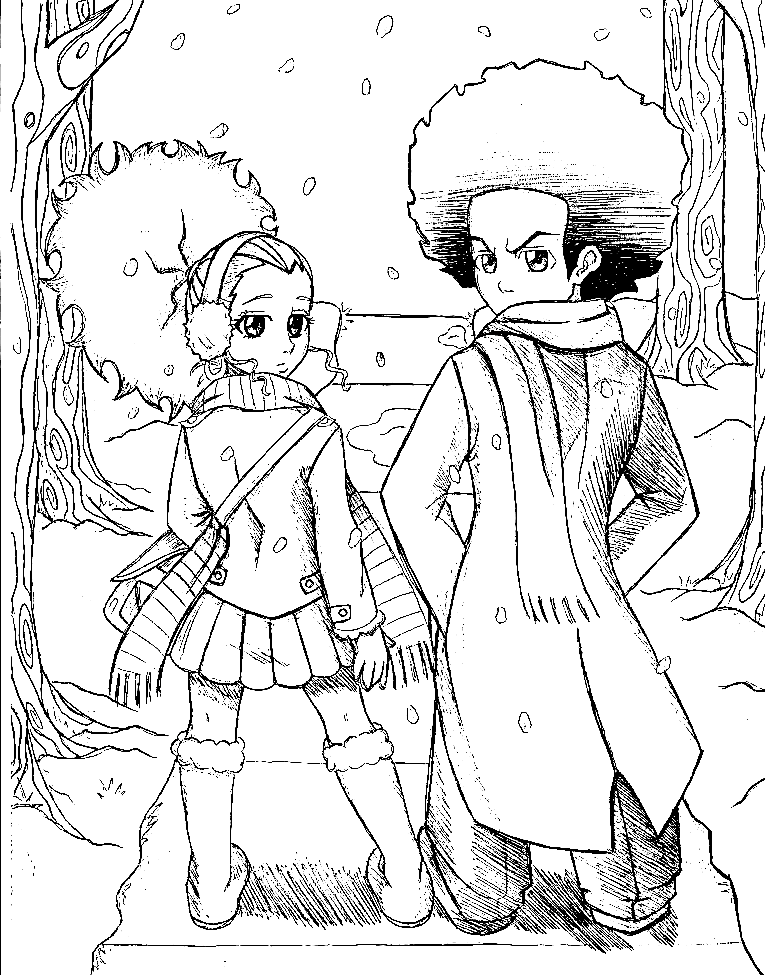
Jazmine DuBois is Huey’s classmate and the show’s most emotionally earnest character – a biracial girl with a Black father (Tom DuBois) and a white mother (Sarah DuBois) who has large, curly reddish-brown hair and a perpetually hopeful expression. She is frequently confused about questions of identity and culture that Huey addresses without patience. Her design is softer and warmer in palette than the Freeman brothers’.
Cindy McPhearson is a white girl in the neighborhood who has adopted hip-hop culture as her own, dresses in streetwear, and uses the slang and mannerisms of the culture she grew up adjacent to. She is a friend and rival of Riley. Her design is lean and energetic, with blonde hair usually in a ponytail or bun.
Tom DuBois is Jazmine’s father – a Black assistant district attorney married to a white woman, living in the Woodcrest suburbs, and perpetually caught between his professional identity and his genuine anxieties. His standard expression is worried.
Uncle Ruckus is the show’s most polarizing character – an elderly Black man who openly despises Black people and idolizes white culture, used throughout the series as a satirical device to expose and critique self-hatred and internalized racism. He is large, dark-skinned, and frequently shown laughing loudly or carrying a belt.
Gin Rummy is a mercenary and associate of Ed Wuncler III, voiced in the series by Samuel L. Jackson. He is lean, intense, and given to elaborate speeches. Ed Wuncler III is the reckless, dangerous grandson of the wealthy Ed Wuncler Sr., who treats violence and criminality as entertainment.
Coloring Tips
Huey’s red turtleneck is his most visually important feature after his afro. It is a specific red – a warm, medium-value red that sits between orange-red and true crimson. Not scarlet, not burgundy, not fire-engine red, but a confident, saturated mid-red that reads immediately as the character. The turtleneck’s red against the dark skin tone creates the character’s strongest contrast point, which is why almost every canonical Huey image is organized around this contrast. His pants are a medium warm brown, and his shoes are dark.
Huey’s afro is the show’s most iconic visual element. It should be very dark – near-black – and rendered with a slight atmospheric quality at the outer edges. The afro is not drawn with individual hairs but as a silhouette form, and coloring it as a solid very dark brown (near black, slightly warmer than pure black) captures the character correctly. Leaving a thin lighter rim at the outermost edge of the afro suggests the light catching on the hair mass and prevents it from merging with dark backgrounds.
Riley’s skin tone matches Huey’s exactly – the brothers are the same shade, which is important to maintain in pages where they appear together. The show uses a consistent warm medium-brown that reads clearly as a specific skin color without being either too light or too dark. Both brothers have the same face structure; the afro vs. cornrows is the primary visual differentiator between them at a distance.
For Riley’s streetwear pages – Riley Arms Crossed, Riley Angry Reaction, Riley Ready to Fight – his clothing color is yours to choose, but the choices should cohere with streetwear aesthetics: navy, grey, black, olive green, burgundy, white, or the occasional bright accent color (a red hoodie, orange sneakers). Avoid pastels or formal colors – they are immediately out of character.
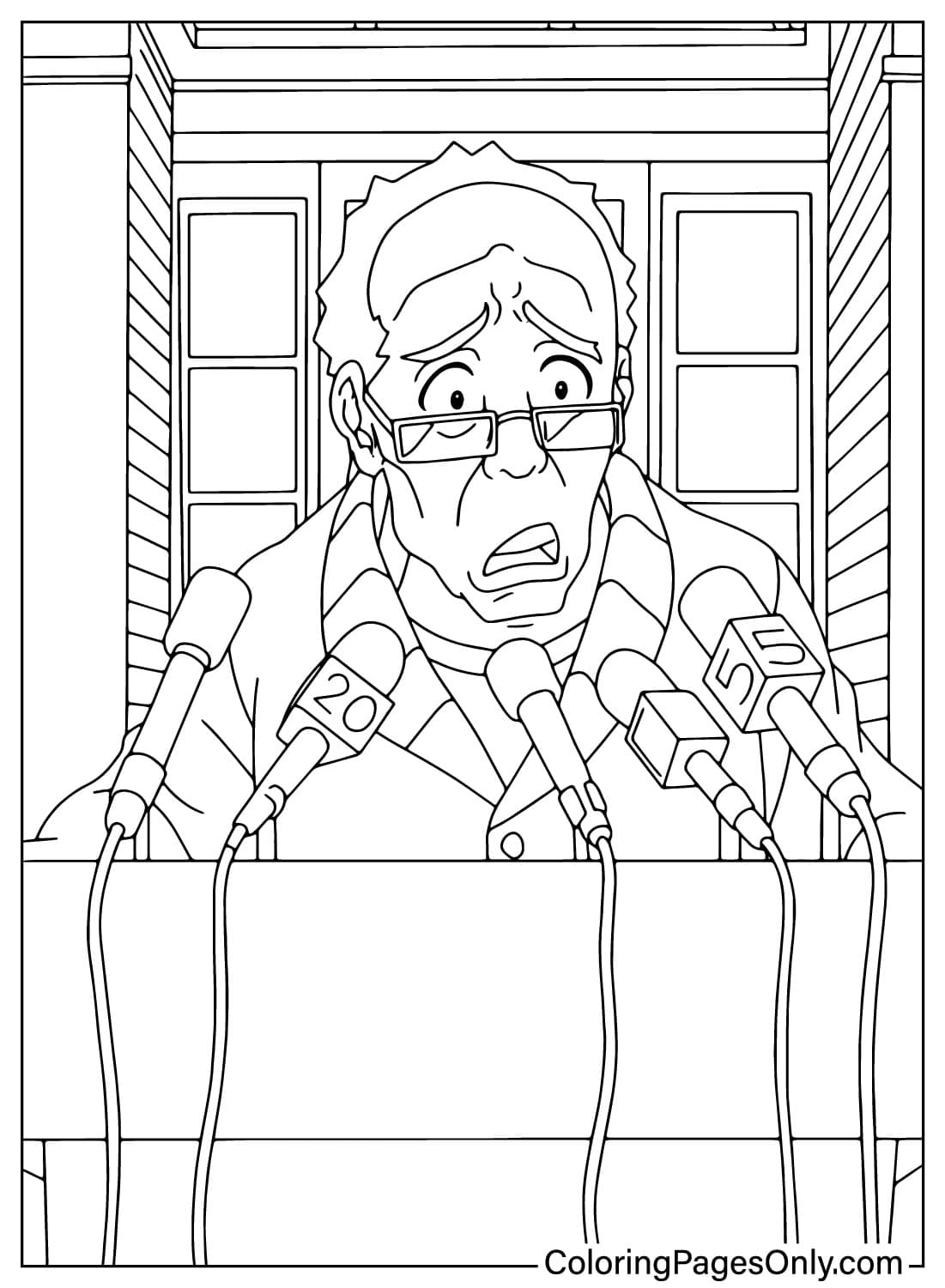
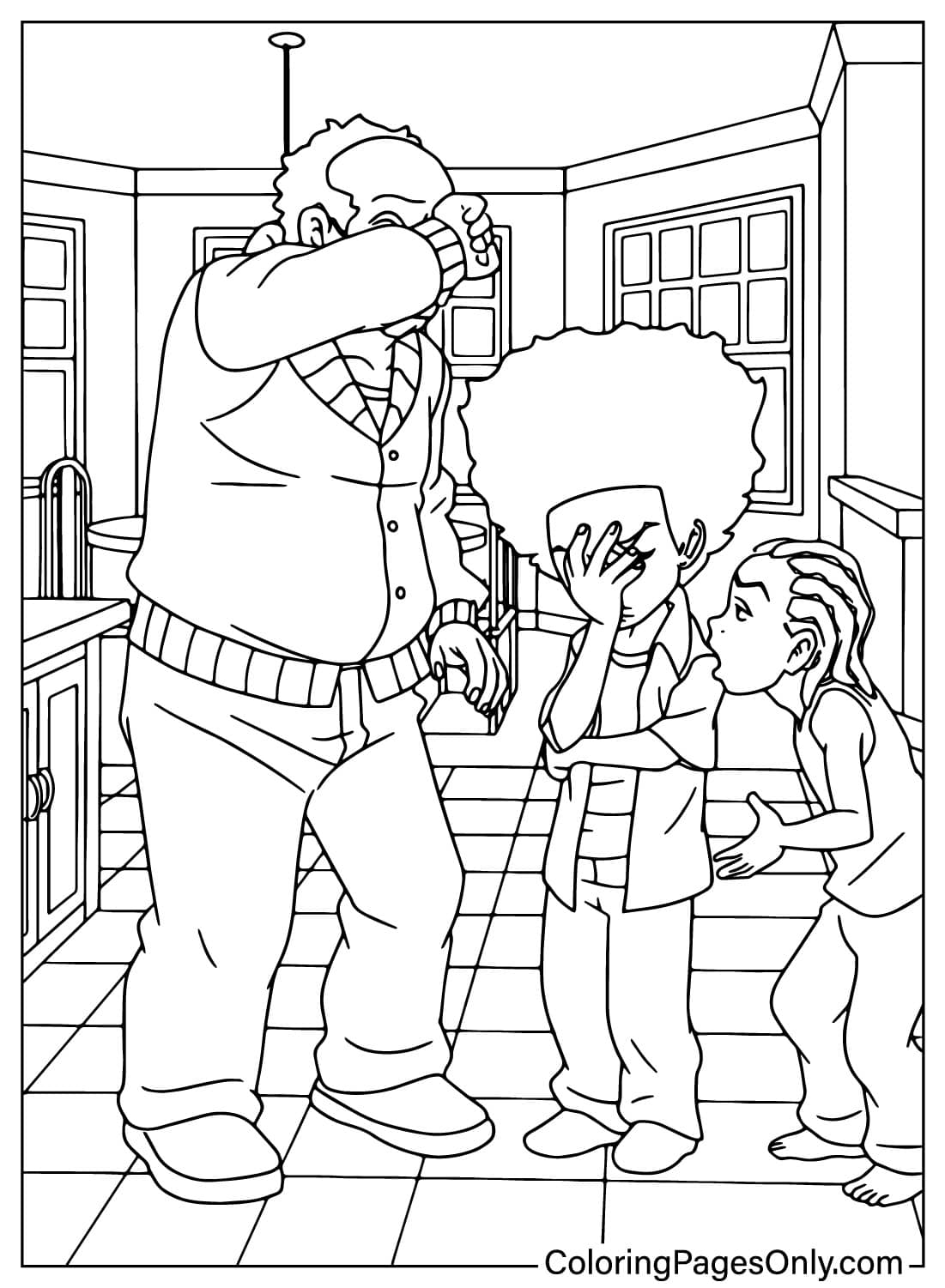
For Granddad’s pages – Grandpa Scolding Huey and Riley, Grandpa Freeman at Press Conference, Freeman Family Facepalming – his shirt should be a neutral, dignified color (light blue, white, cream, or grey button-down), his skin warm brown, and his expression the defining element of the page. His expression carries more of the page’s emotional content than any other element, so spending time on the facial area is worthwhile.
For Jazmine, the most important color decision is her hair. The show renders it as a large, full mass of curly red-brown or reddish-auburn hair – warmer in tone than Huey’s dark afro, with more visible color variation. The contrast between her warm auburn hair and her lighter caramel-brown skin defines her character design visually.
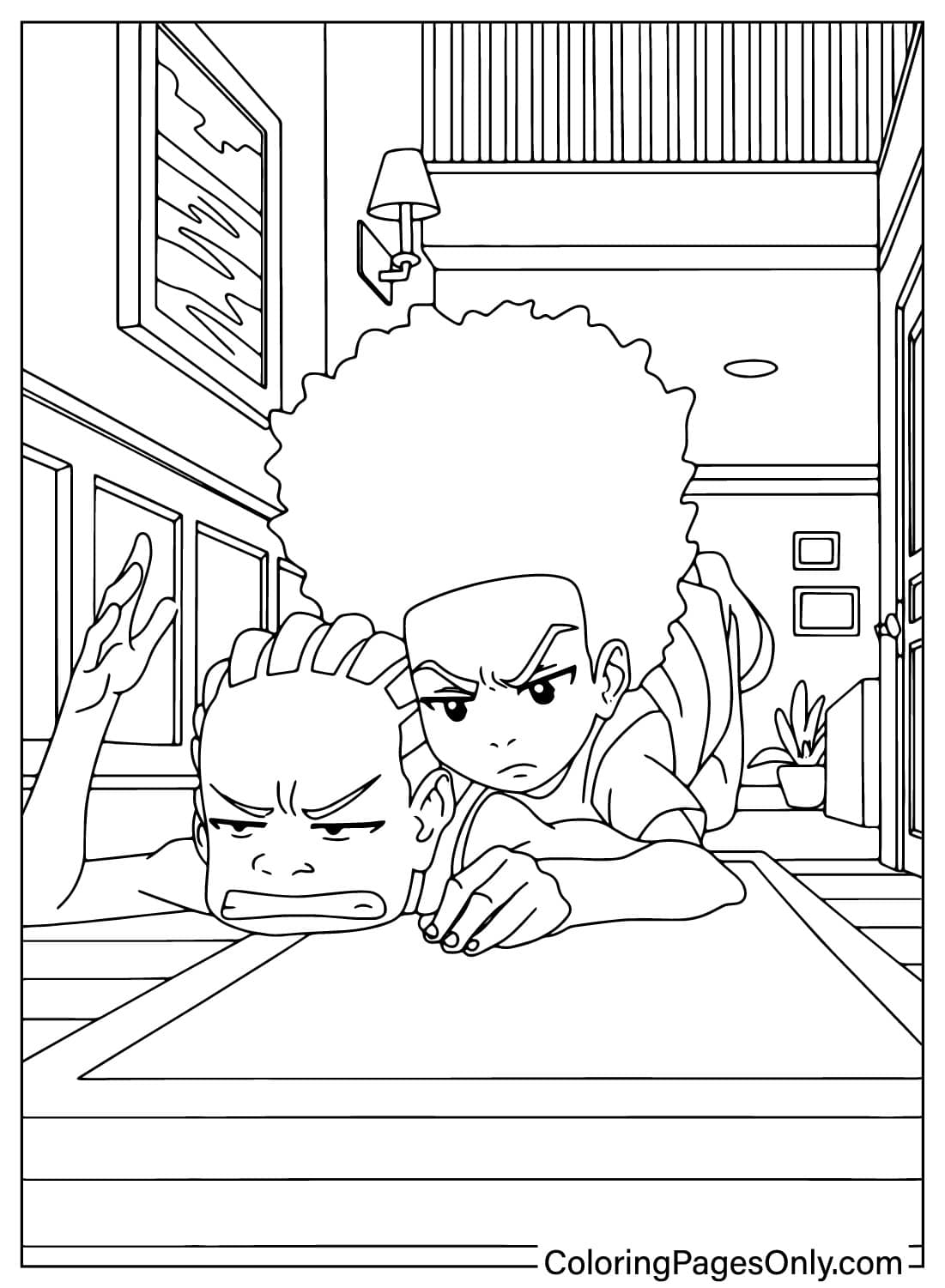
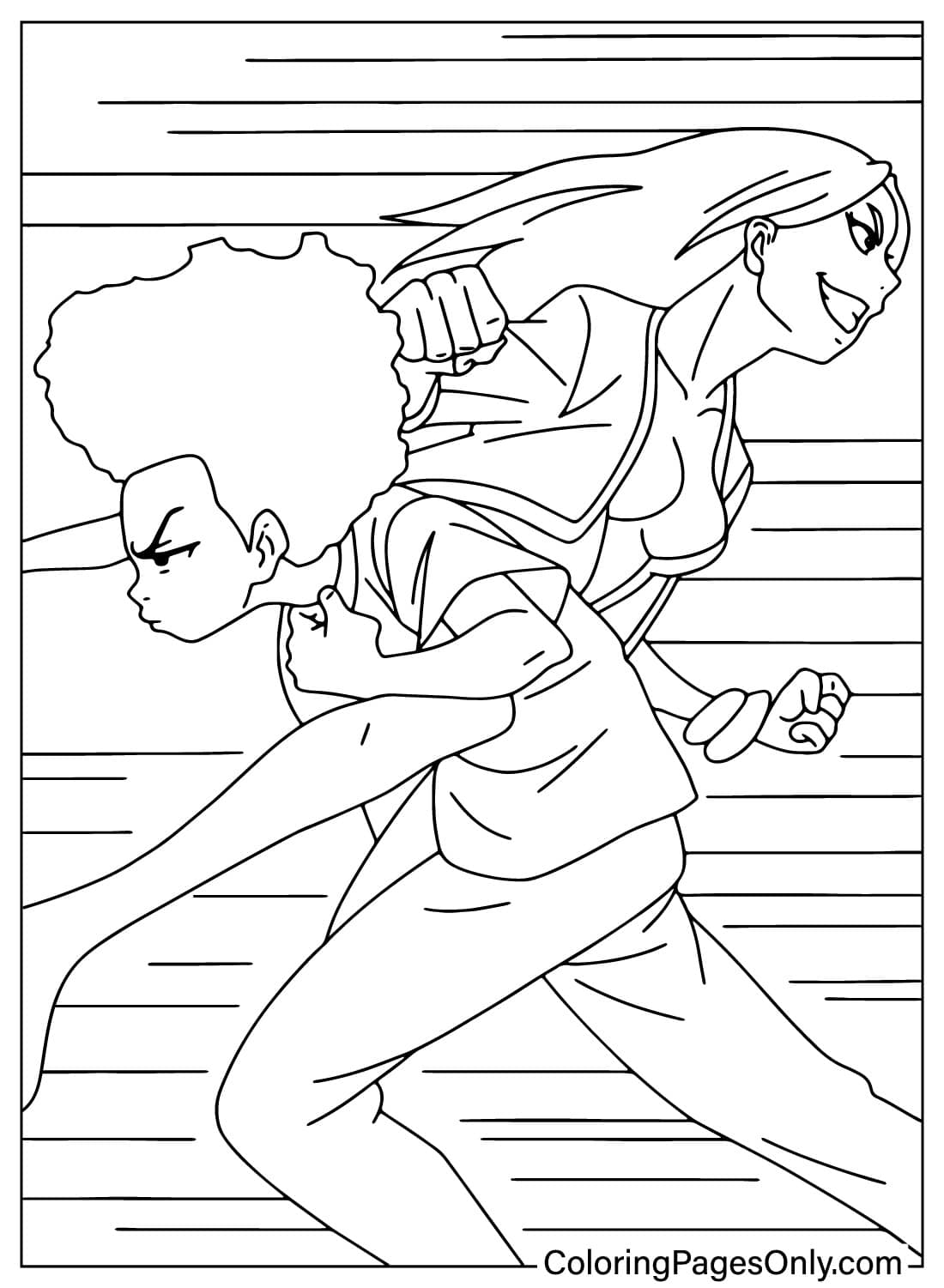
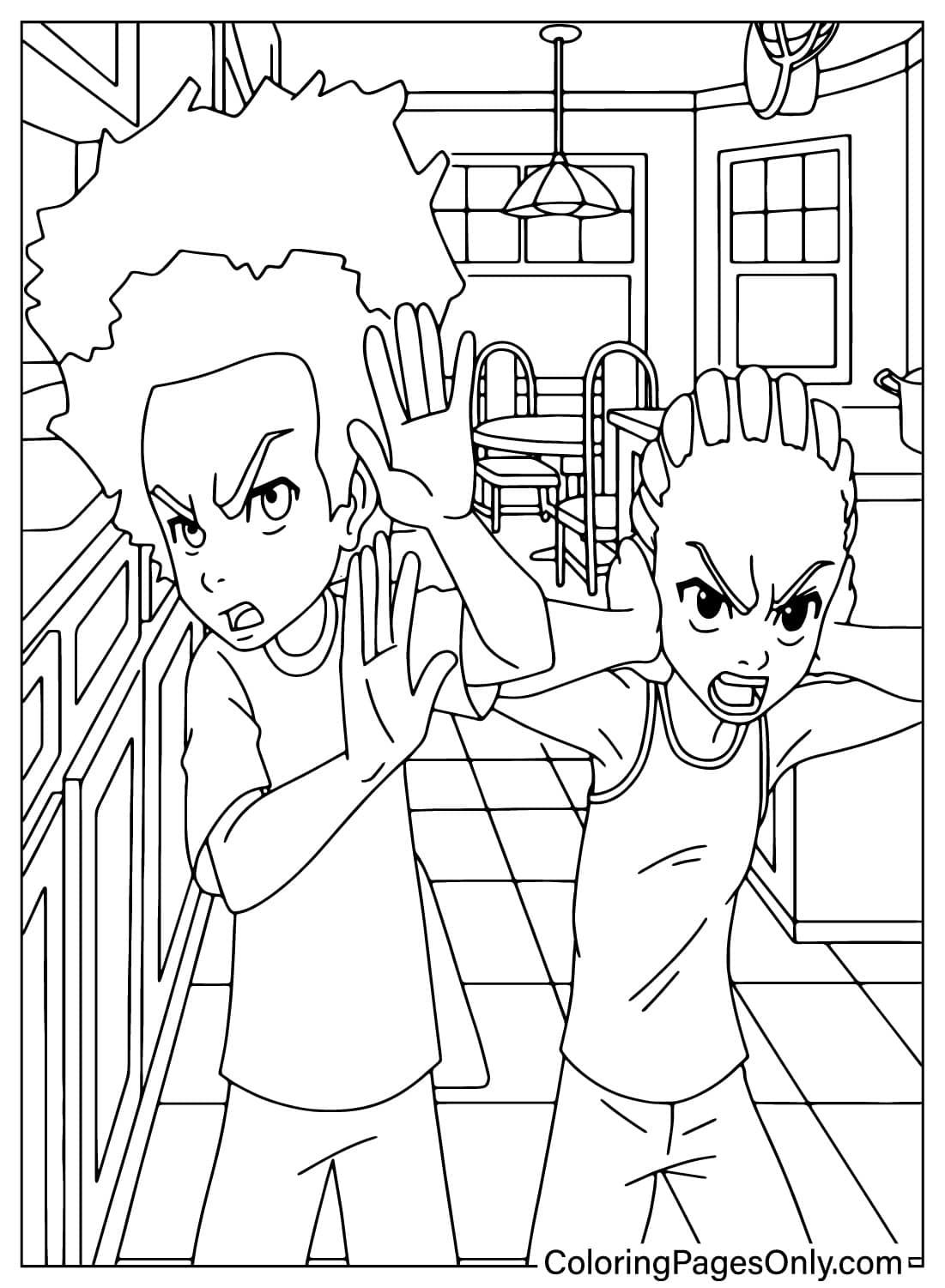
For the action and scene pages – Huey with Samurai Sword, Riley Ready to Fight, Huey and Riley Defending in the Kitchen, Huey Tackling Riley – these pages have strong diagonal energy in the figure poses. The background elements in action pages should be rendered slightly lower in value and saturation than the figures to push the characters forward visually. A darker, more muted background makes the figures pop without requiring additional outline work.
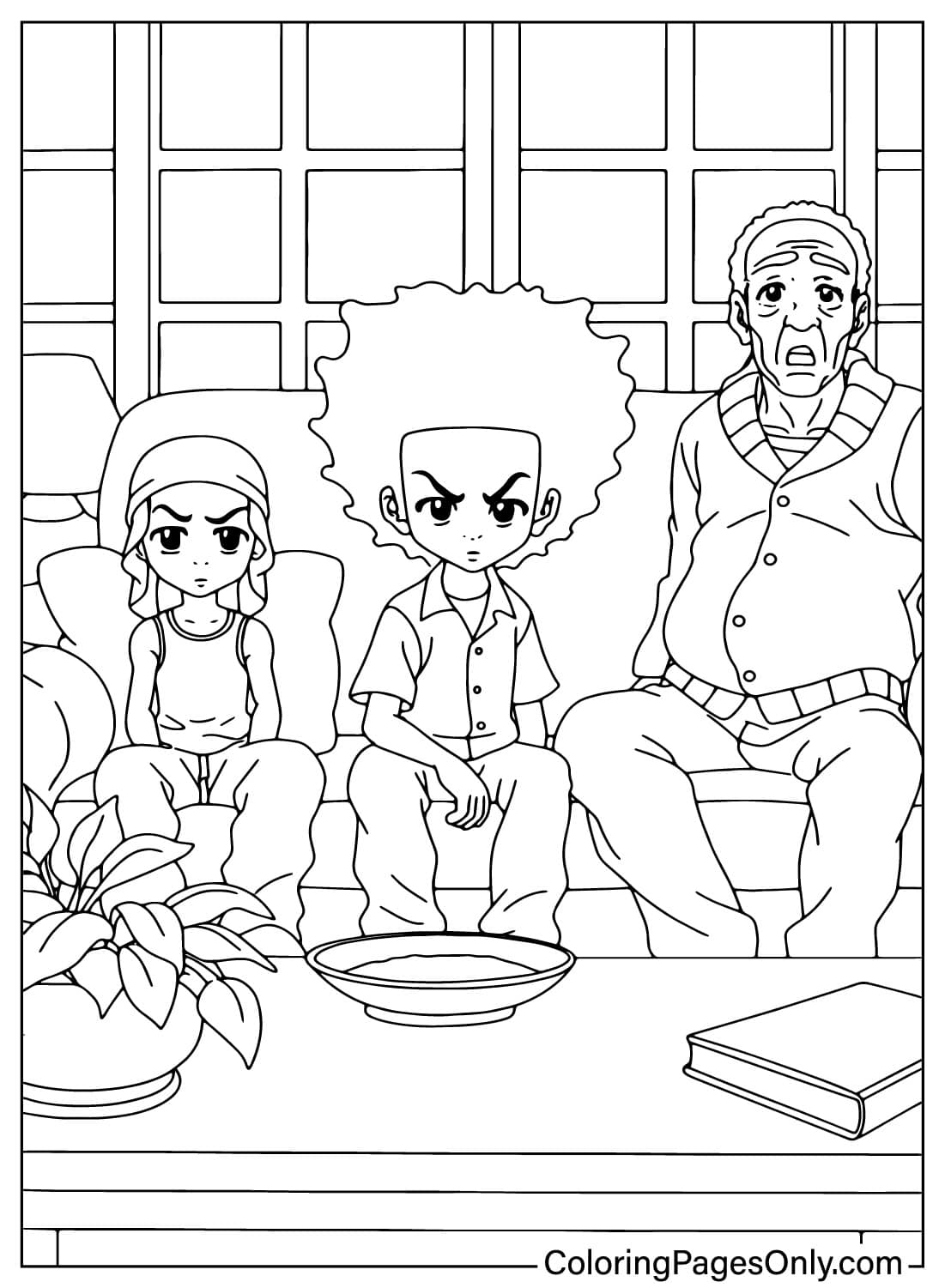
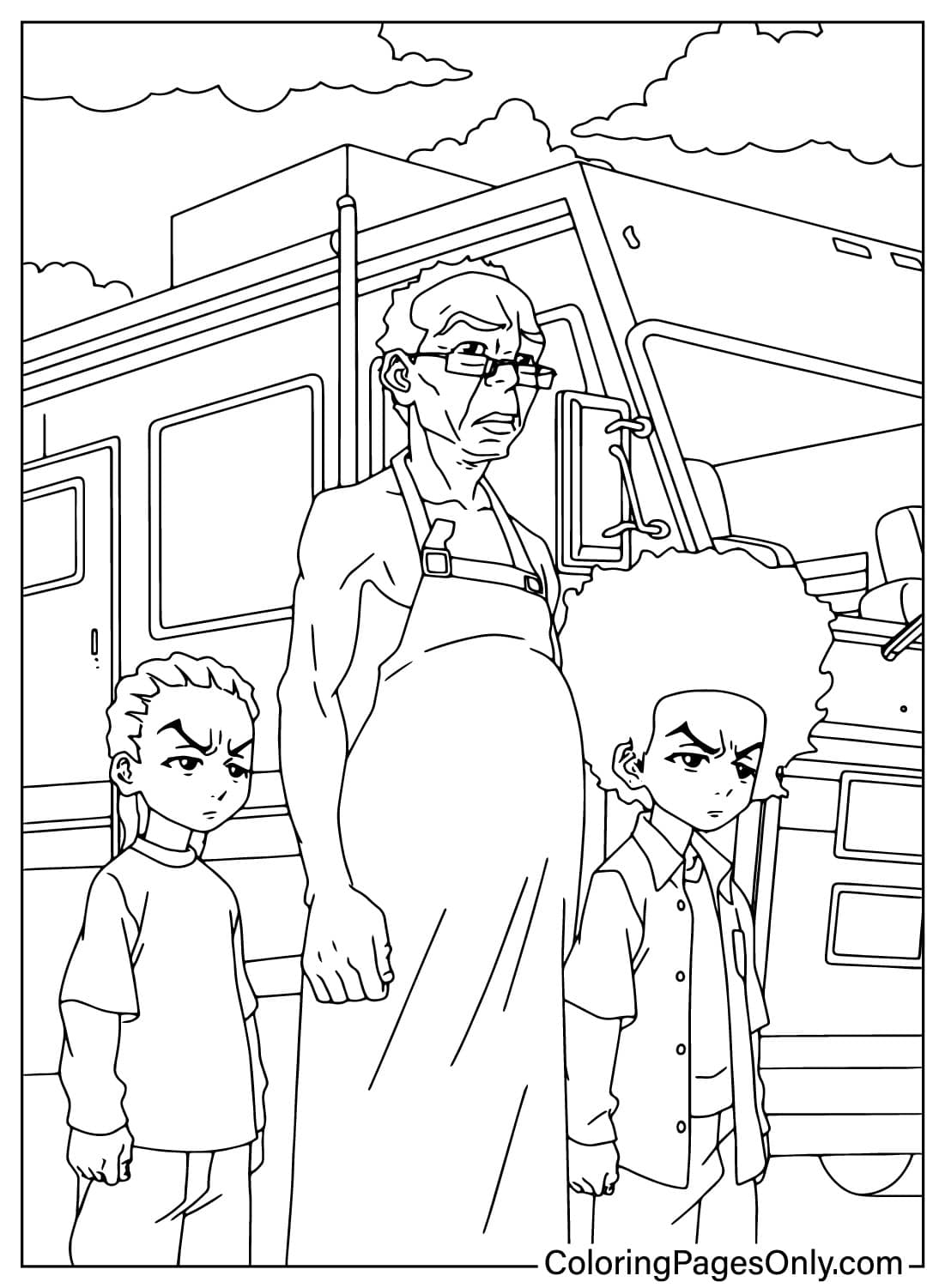
For the Freeman Family pages – Freeman Family on Couch, Freeman Family Facepalming, Freeman Family by the Truck – keeping the three characters at consistent skin tones relative to each other is more important than matching any single canonical reference. The show establishes that all three Freemans have the same warm-brown family skin tone. Variation in shade from character to character breaks the family’s visual unity.
5 Activities with Your Boondocks Pages
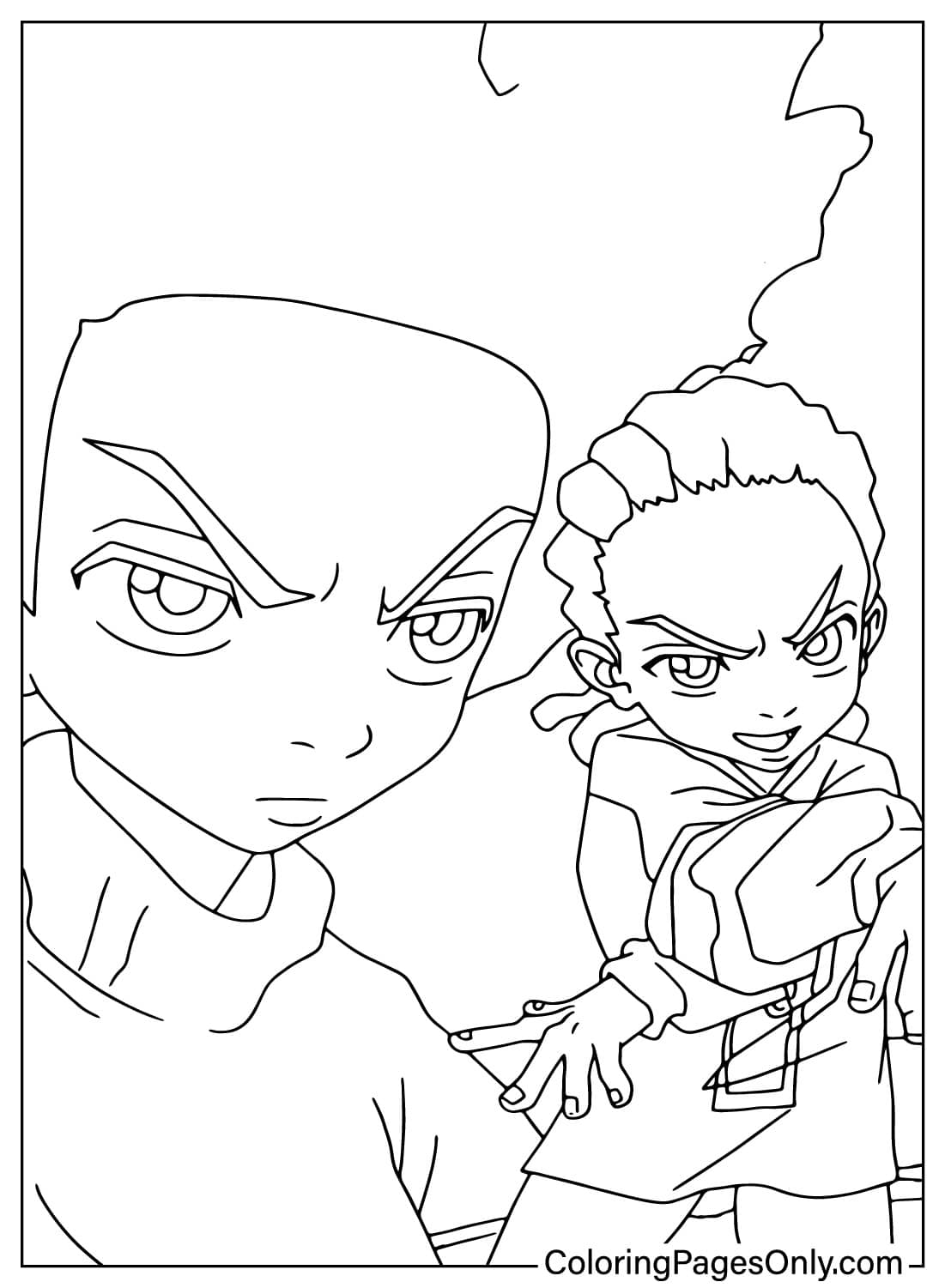
Color Huey and Riley as a visual contrast study. Print Huey Freeman Face and Riley Freeman Face – the two close-up face pages that show each character at the same scale. Color both using each character’s canonical palette, paying specific attention to maintaining identical skin tones across both pages. Then add the backgrounds: Huey’s background should be cool and serious – a dark blue-grey or deep forest green that reflects his personality. Riley’s background should be more energetic – graffiti tags, warm orange, or a vivid street-scene color. Display the two finished faces side by side. The exercise shows how the same face structure in the same skin tone communicates entirely different personalities through expression, hair, and background color alone.
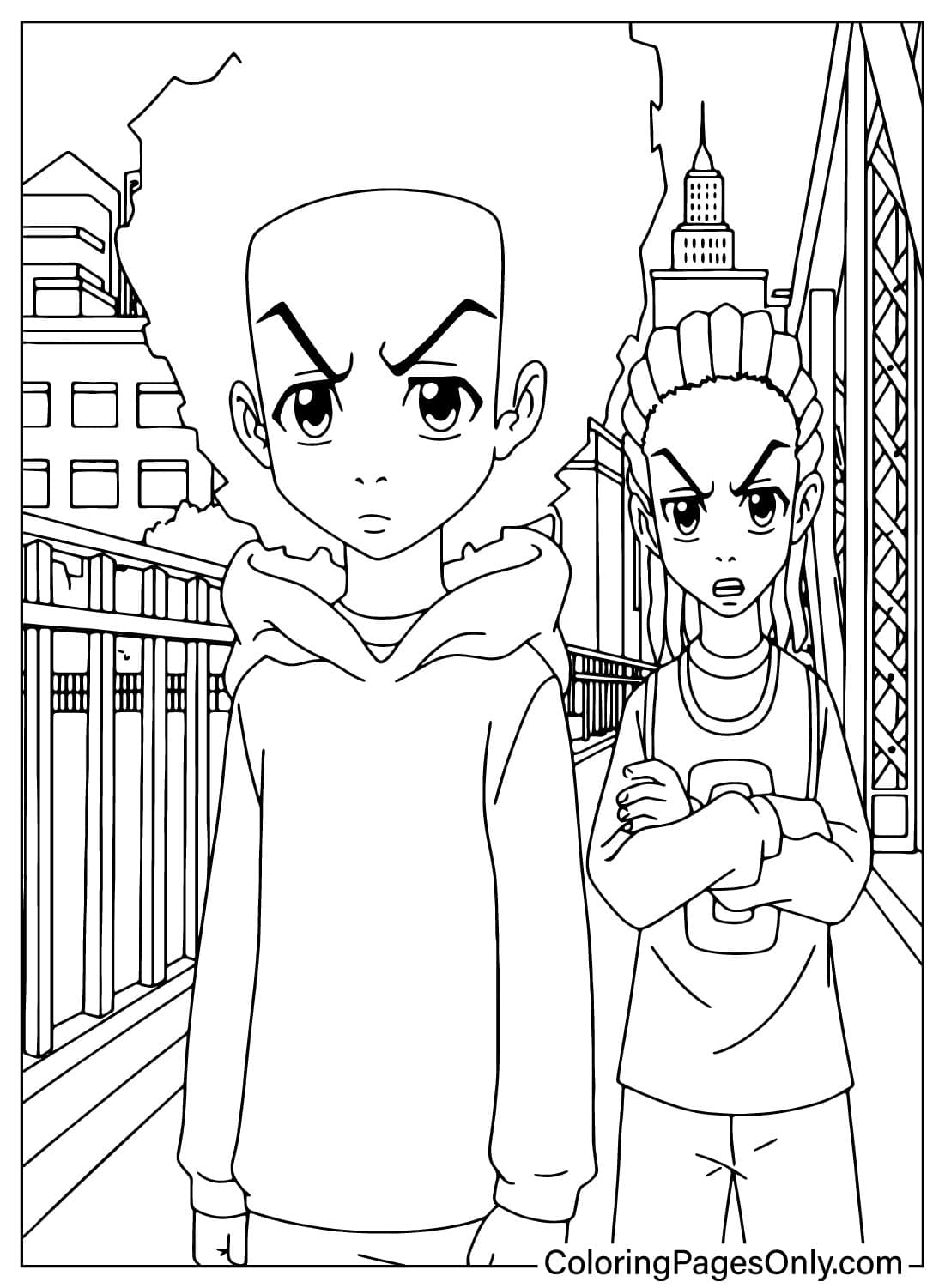
Color the action sequence. Print Huey Tackling Riley, Huey and Riley Defending in Kitchen, and Huey and Riley on City Bridge in that order. Color all three pages with the brothers in consistent colors throughout – same red turtleneck on Huey, same hoodie color on Riley. Treat the three pages as three frames from a continuous sequence and add a caption line at the bottom of each page describing the situation in one sentence. The three finished pages displayed together function as a visual story strip from the show’s physical comedy tradition.
The Granddad expression study. Print Grandpa Scolding Huey and Riley, Freeman Family Facepalming, and Grandpa Freeman at Press Conference. Color all three with Granddad in the same palette – the same shirt, same skin tone – across all three pages. The exercise focuses attention on how much his expression changes the emotional register of each scene: in the scolding page, he’s authoritative; in the facepalming page, he’s exhausted; in the press conference page, he’s nervous. Three identical color palettes; three completely different moods.
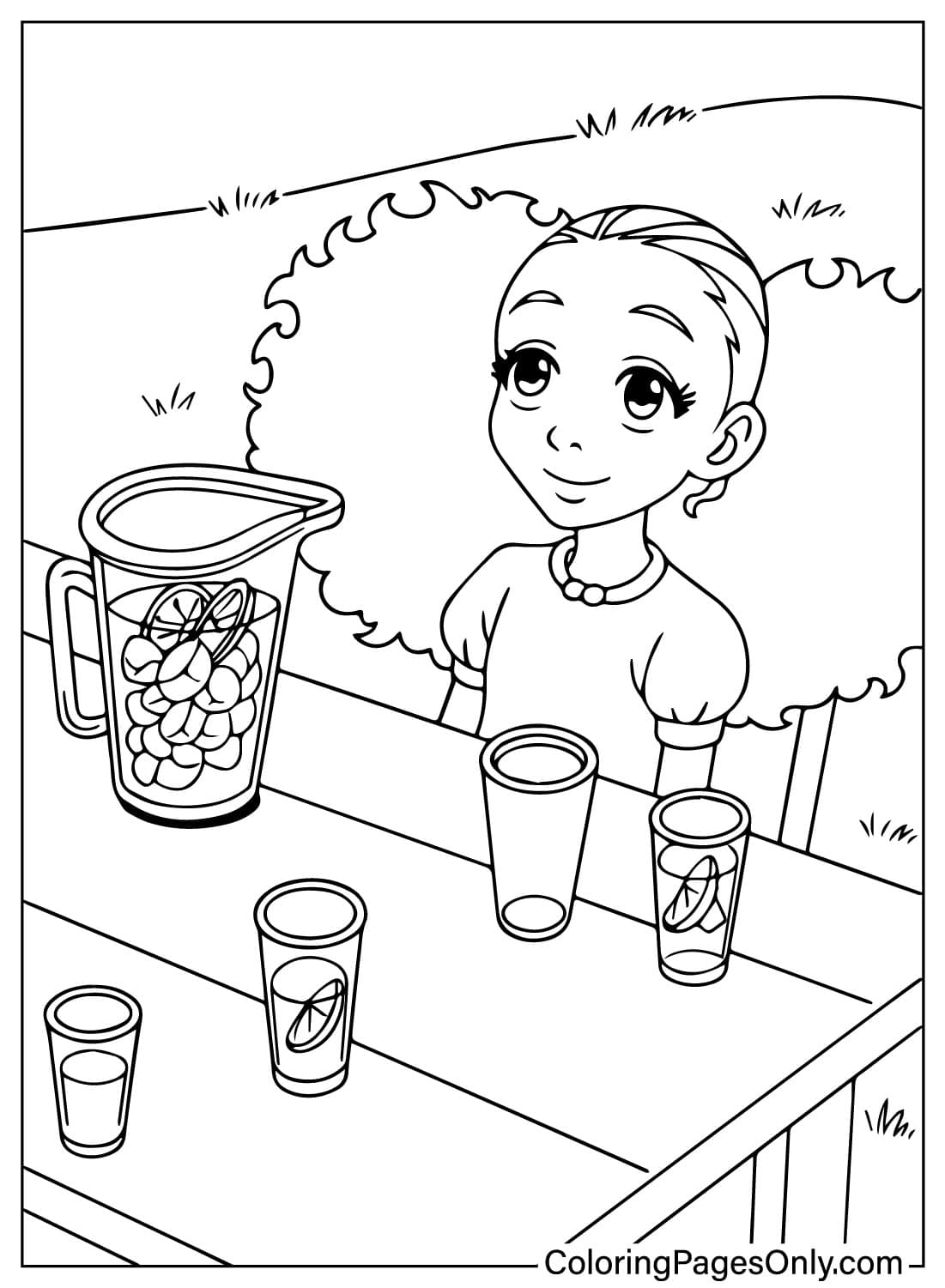
Color the full Woodcrest neighborhood scene. Print Huey Riley and Cindy in the Park and Cindy at Lemonade Stand as companion pages. Color both in the outdoor suburban setting palette – green grass, blue sky, leafy trees, the beige and cream of suburban architecture visible in the background. On the park page, focus on how the three characters with their different aesthetics (Huey’s red turtleneck, Riley’s streetwear, Cindy’s hip-hop-influenced outfit) look in the same outdoor suburban environment. On the lemonade stand page, make the lemonade pitcher and cups the color accent that brings the page to life: a vivid yellow-gold for the lemonade itself, condensation implied by lighter patches on the pitcher surface.
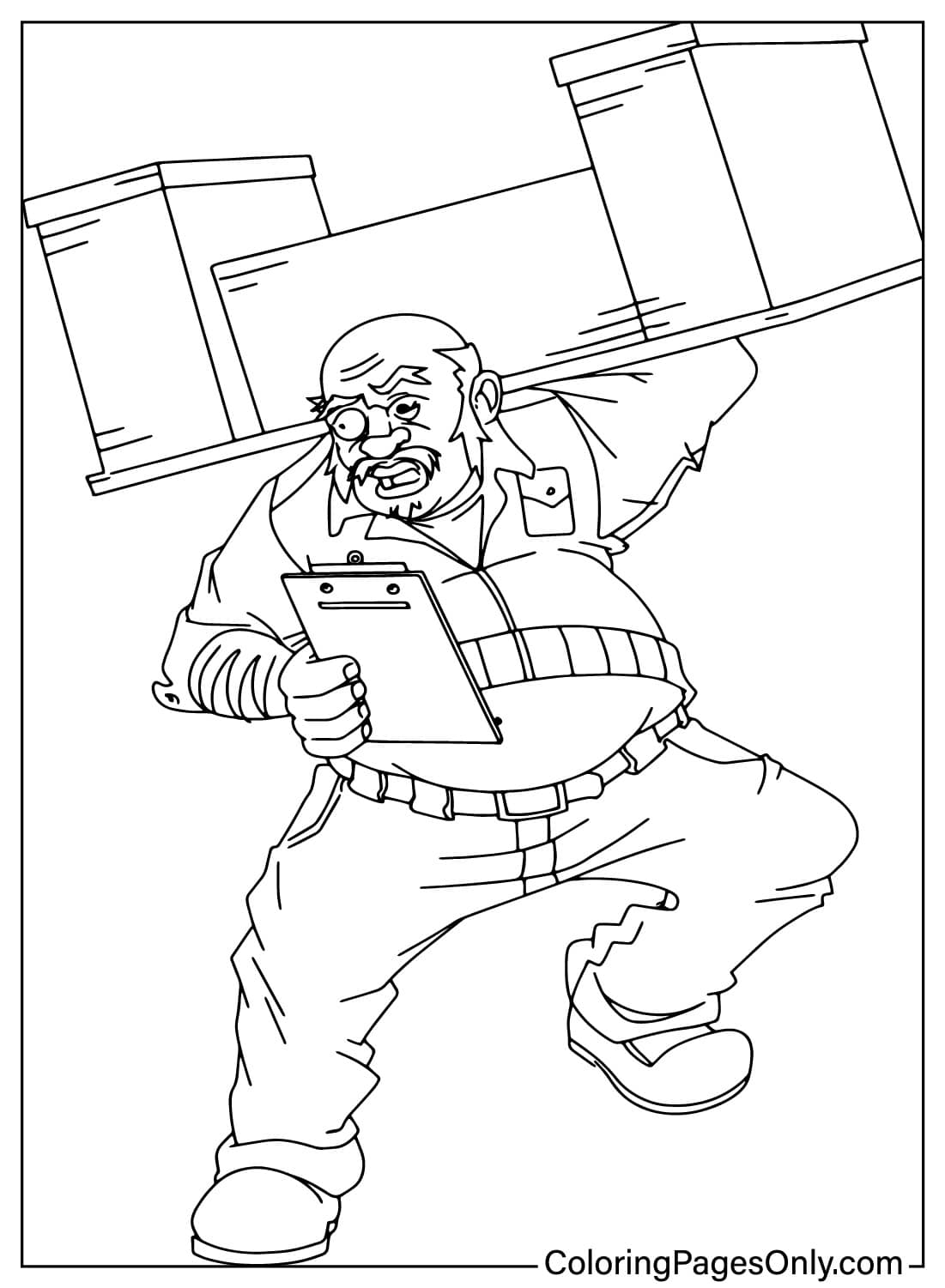
Color the villain roster. Print Uncle Ruckus Laughing with Belt, Gin Rummy (Huey Riley and Gin Rummy page), and Ed Wuncler Lifting Bench. These are the show’s most morally complex characters – the antagonists and chaos agents of the Boondocks universe. Color each in a palette that reflects their character: Uncle Ruckus in faded, slightly washed-out colors (a character whose worldview has bleached his own vitality); Gin Rummy in sharp, high-contrast military or street tones; Ed Wuncler in the casual, preppy colors of inherited wealth and unearned confidence. After finishing, write one sentence per character describing what they represent in the show’s satirical world. The exercise connects the visual coloring choices to the show’s themes.