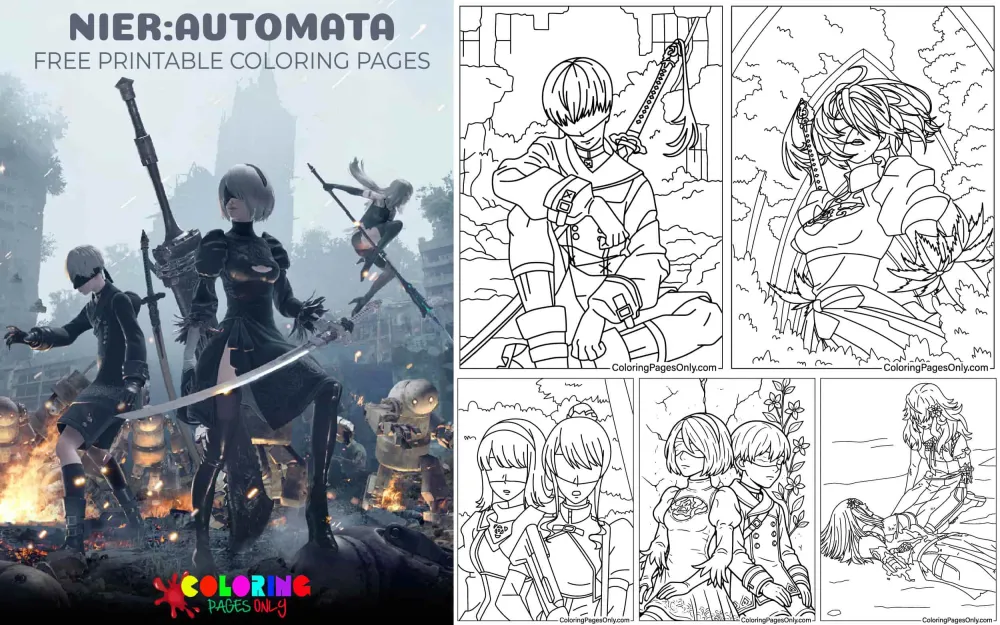
NieR: Automata Coloring Pages bring one of the most visually and philosophically distinctive action RPGs of the past decade to your coloring table – and this collection of 20+ free pages at ColoringPagesOnly.com covers the key characters of the game and its 2023 anime adaptation: 2B in her iconic black combat dress, 9S in his lighter YoRHa uniform, A2 in her more ragged, rogue android look, Pascal, and the broader cast of androids and machines that populate the game’s haunted post-apocalyptic world. For fans of anime and game illustration art, this collection sits in a space that rewards careful, deliberate coloring – the game’s visual design is built on striking contrasts and carefully chosen color relationships that translate exceptionally well to coloring page work. The full anime collection on this site is available through our Anime Coloring Pages hub alongside this one.
Every page is completely free – download as PDF to print or color online in your browser. No sign-up, no cost.
What Is NieR: Automata?
NieR: Automata is an action role-playing game developed by PlatinumGames and published by Square Enix, released in February 2017 for PlayStation 4 and PC, with later ports to Xbox One and Nintendo Switch. It is a sequel to the 2010 game NieR (itself a spin-off from the Drakengard series) and was directed by Yoko Taro – a game director known for unconventional narrative structure, philosophical themes, and a willingness to interrogate the player’s assumptions about what a video game is allowed to do.
The game is set in a distant future where Earth has been invaded by alien-created machines. What remains of humanity lives on the moon and has sent android soldiers called YoRHa to fight the machines on their behalf and eventually reclaim the planet. The three playable characters – 2B, 9S, and A2 – are all YoRHa androids of different models and different relationships to the war, to each other, and to the questions of consciousness, purpose, and what it means to be alive that the game explores through multiple playthroughs and endings.
NieR: Automata became one of the defining games of its era, praised for its combat, its music (composed by Keiichi Okabe), its layered narrative, and its philosophical ambition – the game engages seriously with existentialist philosophy, questions of mortality and memory, and the strange dignity of beings who know they were manufactured for a purpose. It has sold over 8 million copies and maintains one of the most devoted fanbases in gaming.
In January 2023, an anime adaptation titled NieR: Automata Ver1.1a began airing, produced by A-1 Pictures, which brought the game’s visual style and story to a television format and introduced the characters to a new audience familiar with anime rather than gaming.
Meet the Characters
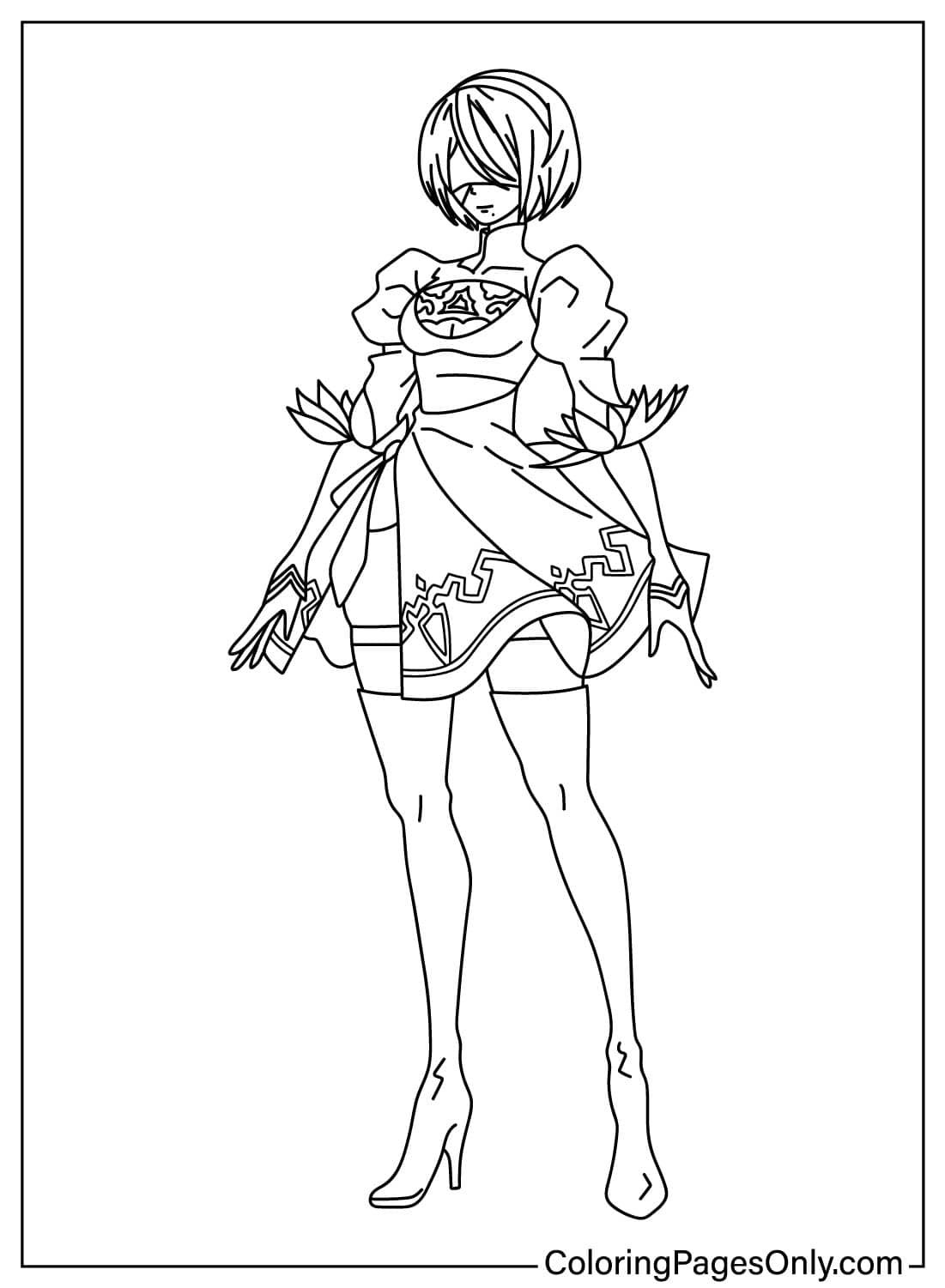
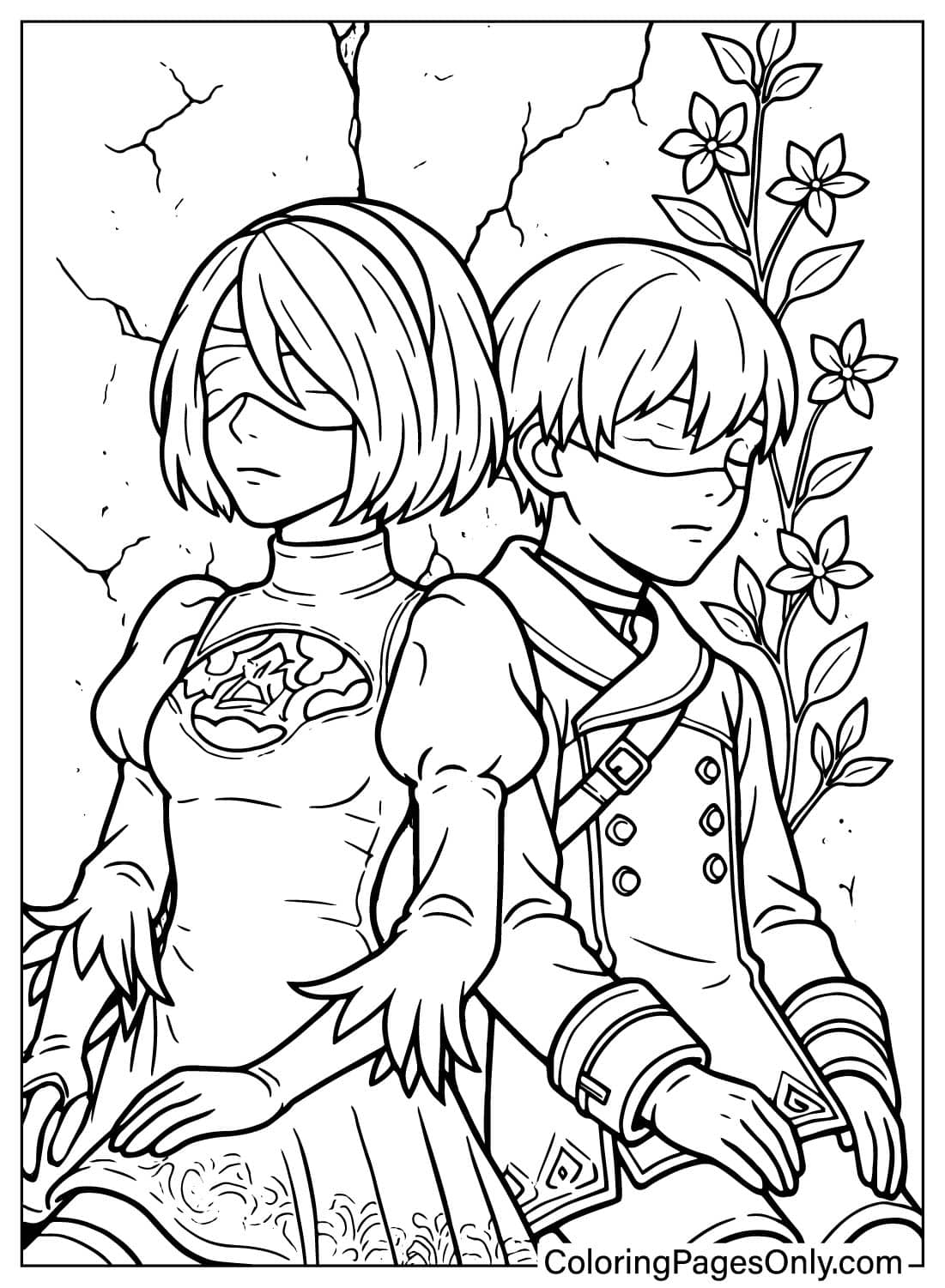
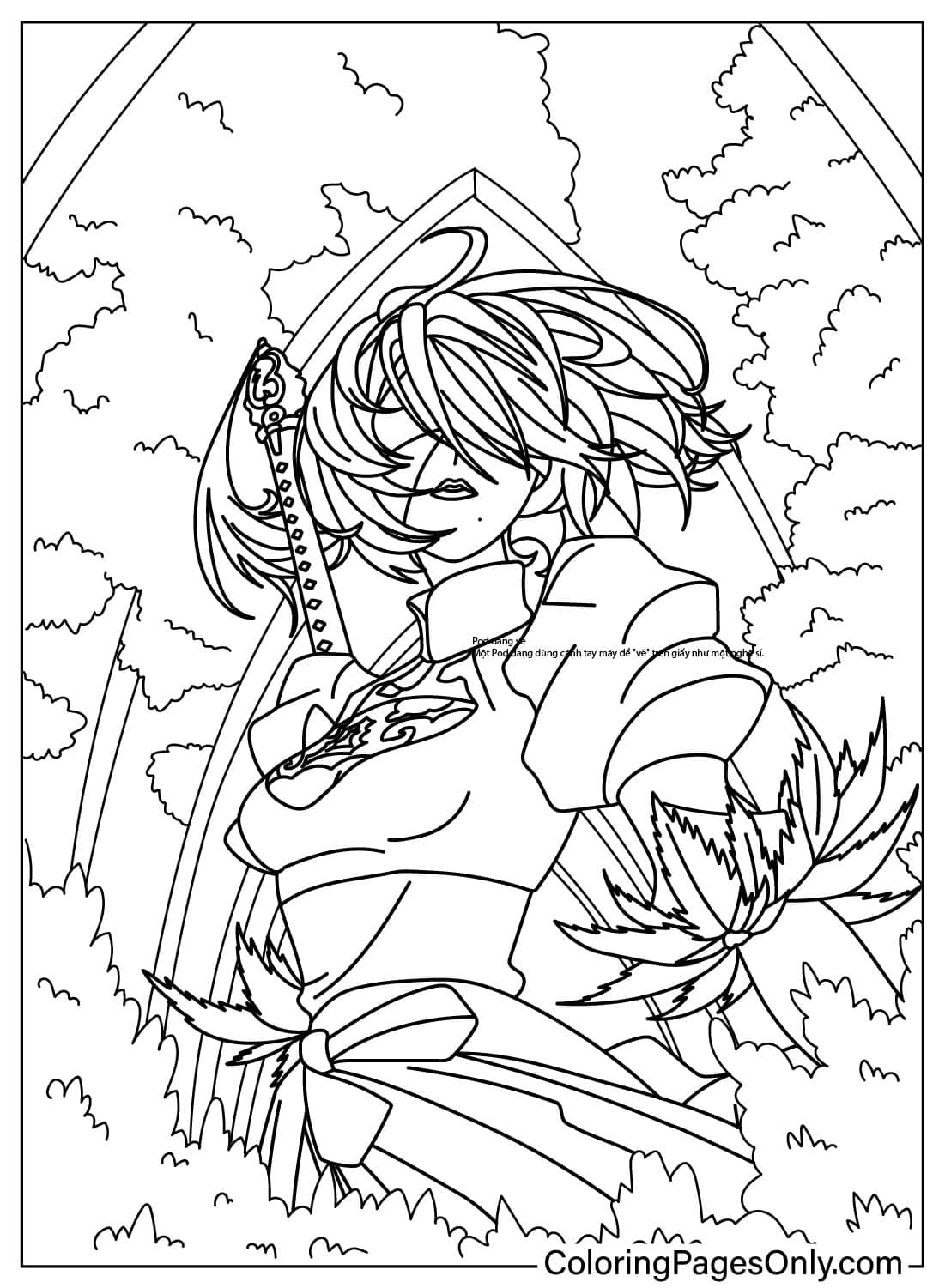
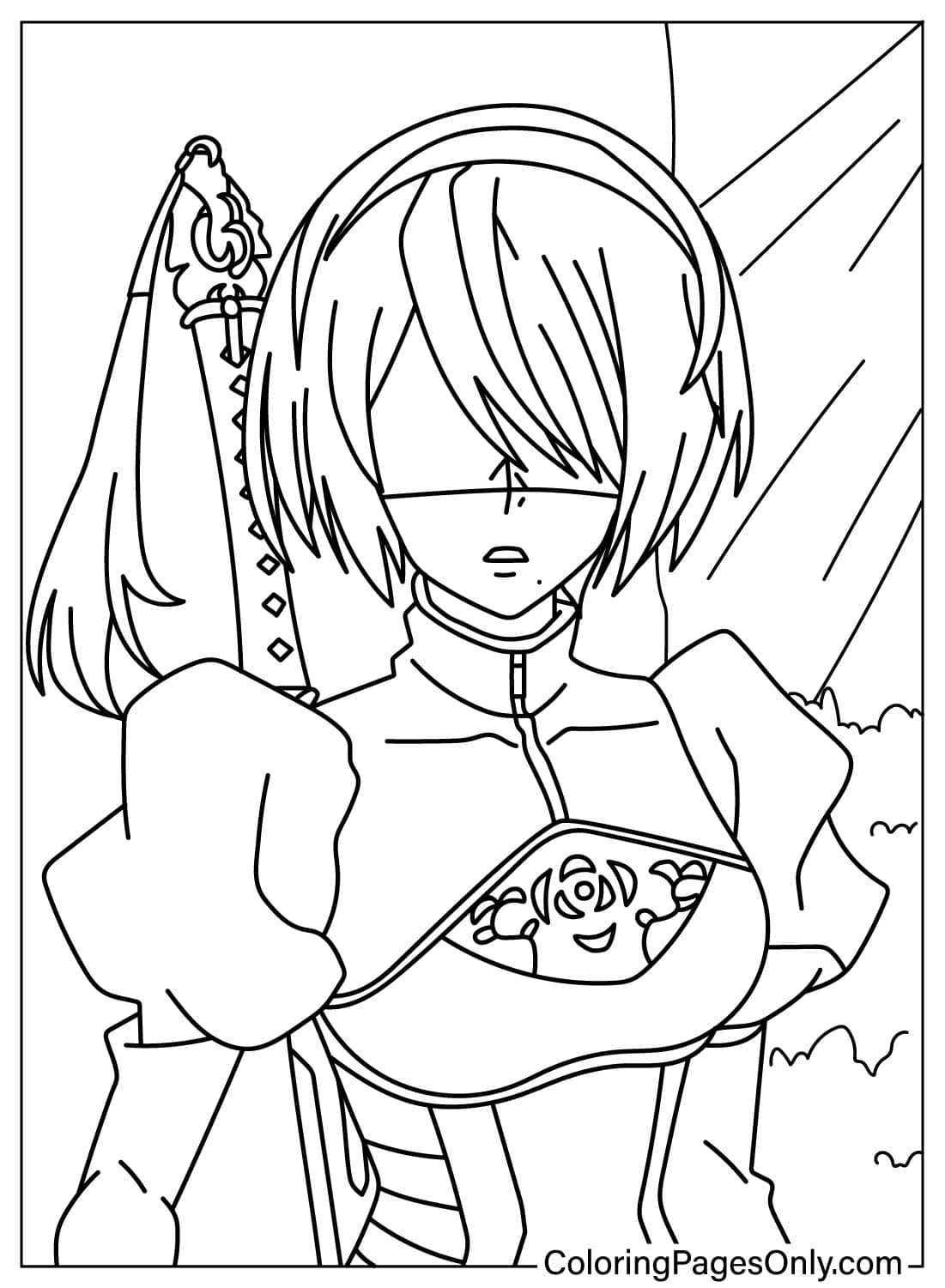
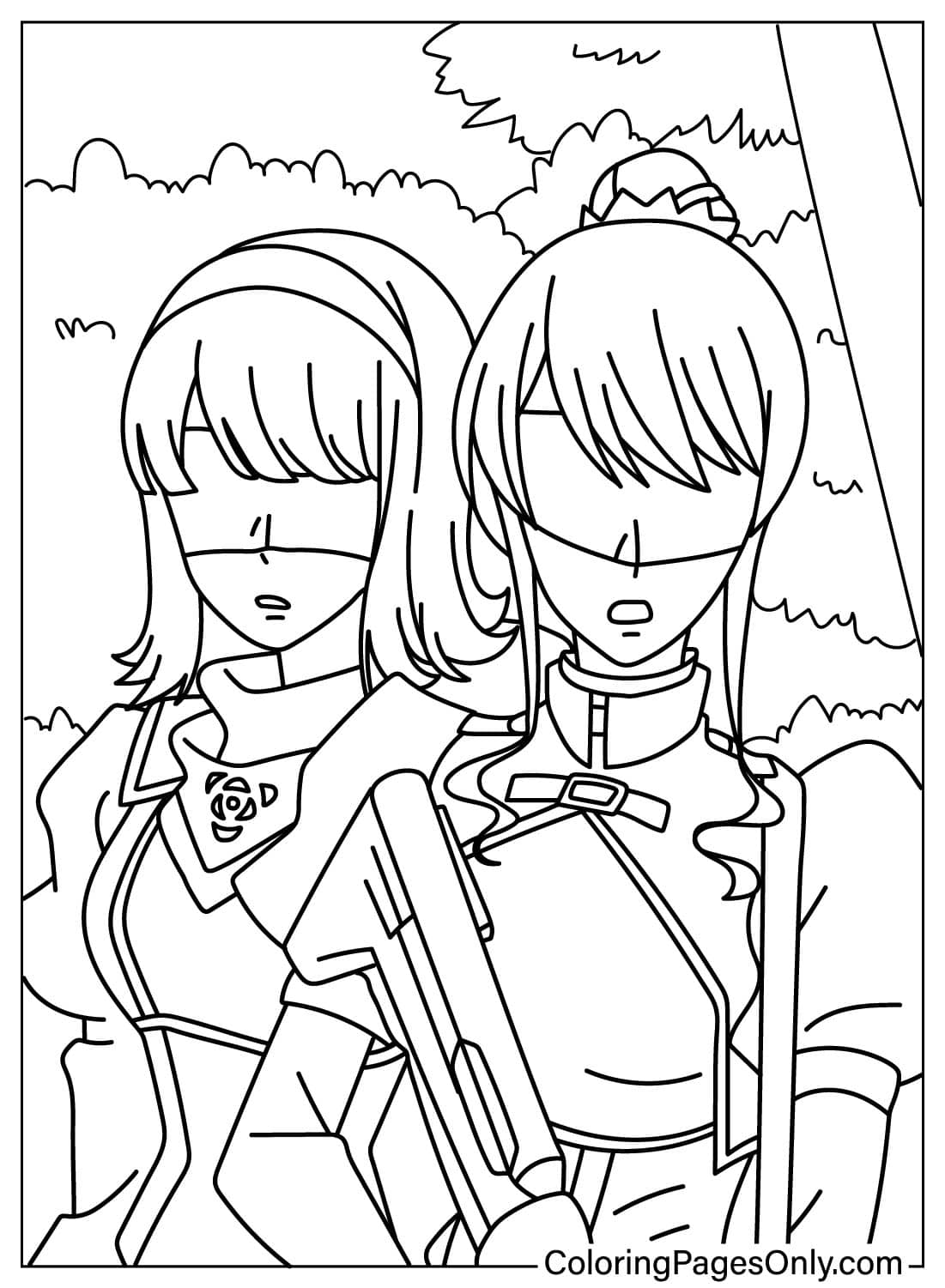
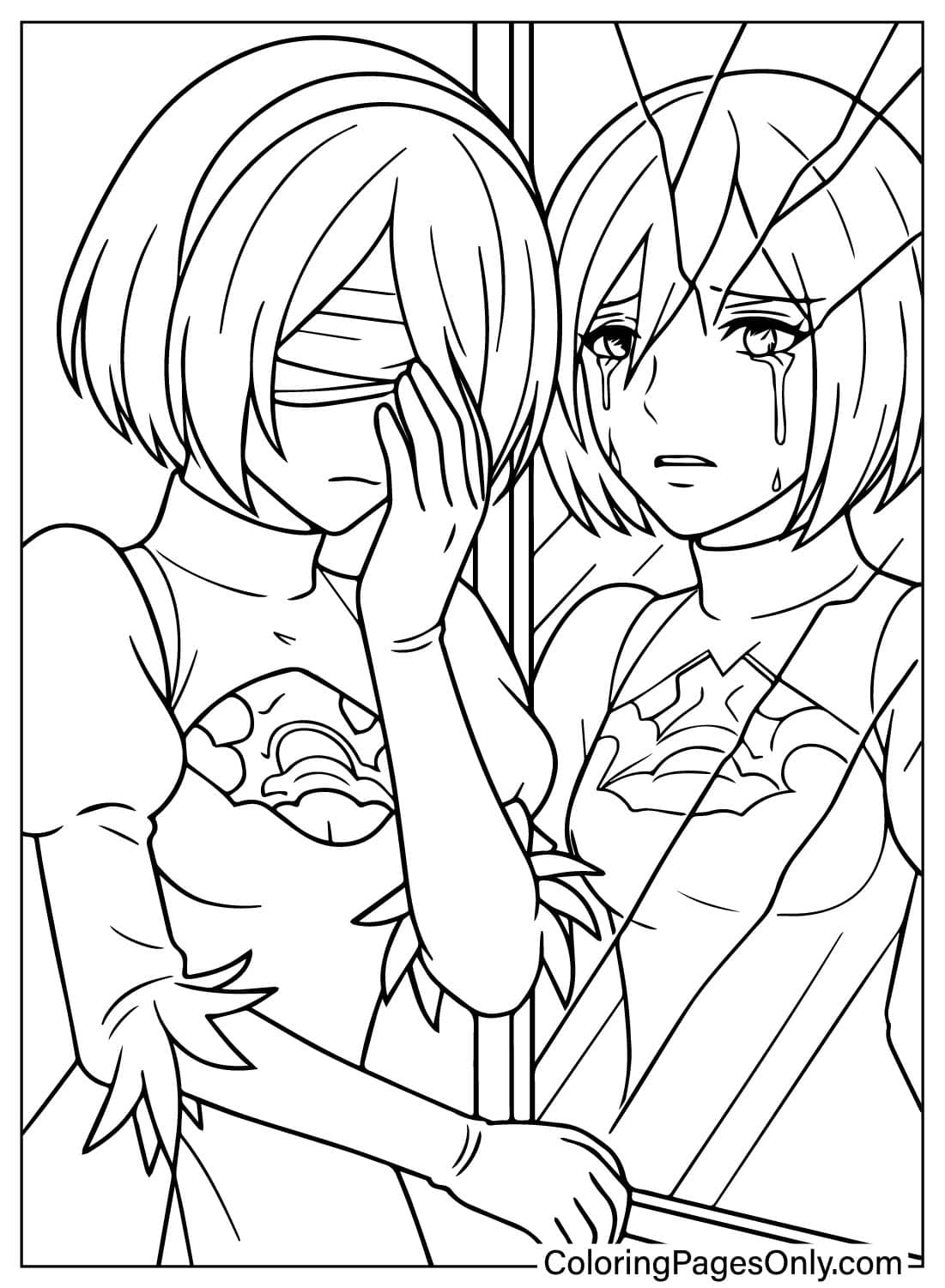
2B (YoRHa No.2 Type B) is the primary protagonist of the game and the most recognizable character in the NieR: Automata visual identity. She is a combat android – YoRHa’s designation “Type B” stands for Battle – and her design reflects this: a short black dress in a gothic lolita style with a high collar, long black gloves, black heeled boots with thigh-high length, and a black blindfold that covers her eyes. Her hair is white, cut in a short, asymmetrical style with longer strands framing her face. The combination of black costume and white hair is her most immediately recognizable visual element, and the contrast it creates – cold, formal, almost funereal – is entirely intentional to her character design. She carries dual swords and a floating weapon unit called a Pod (Pod 042) that hovers nearby as a combat support system.
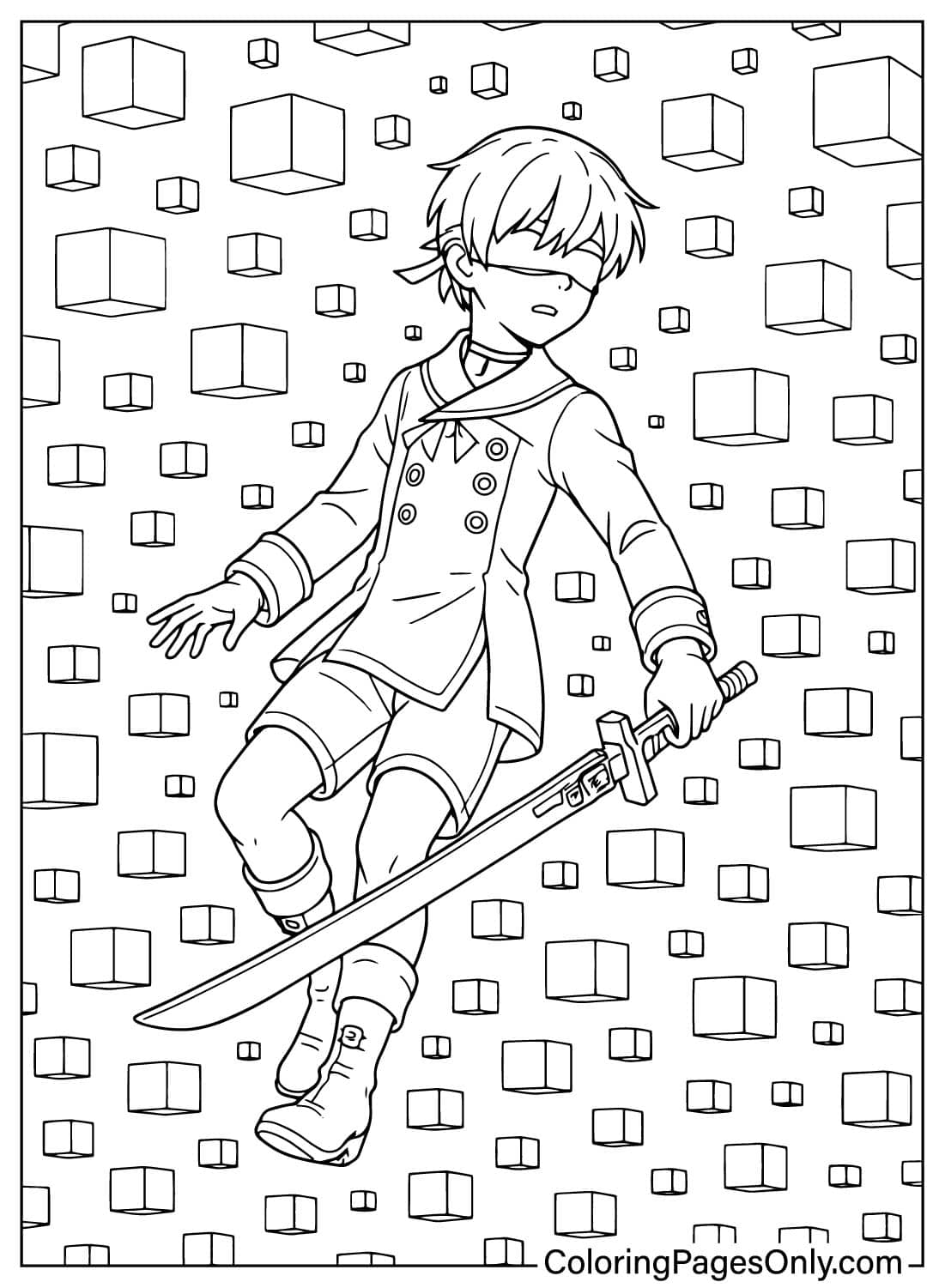
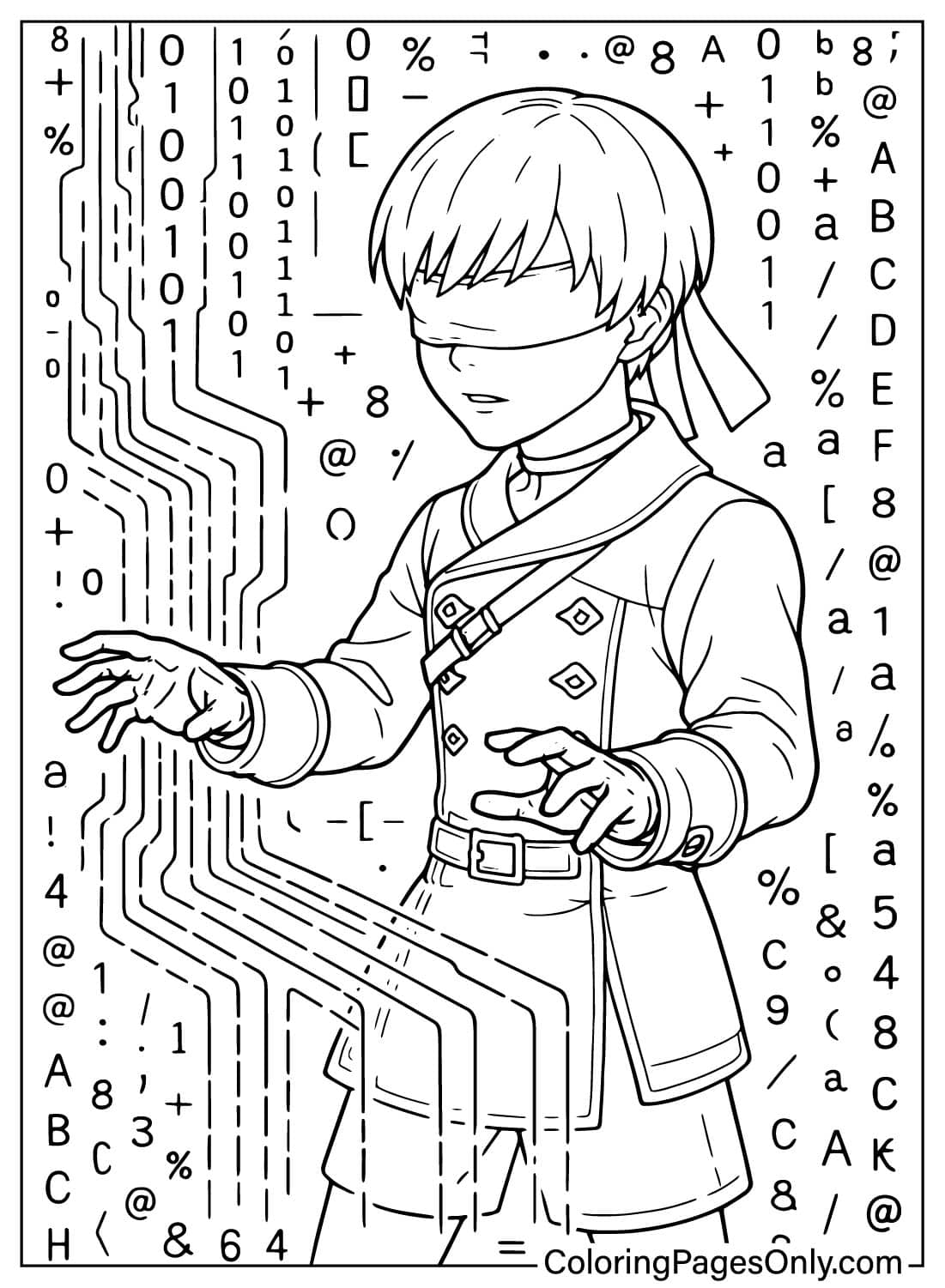
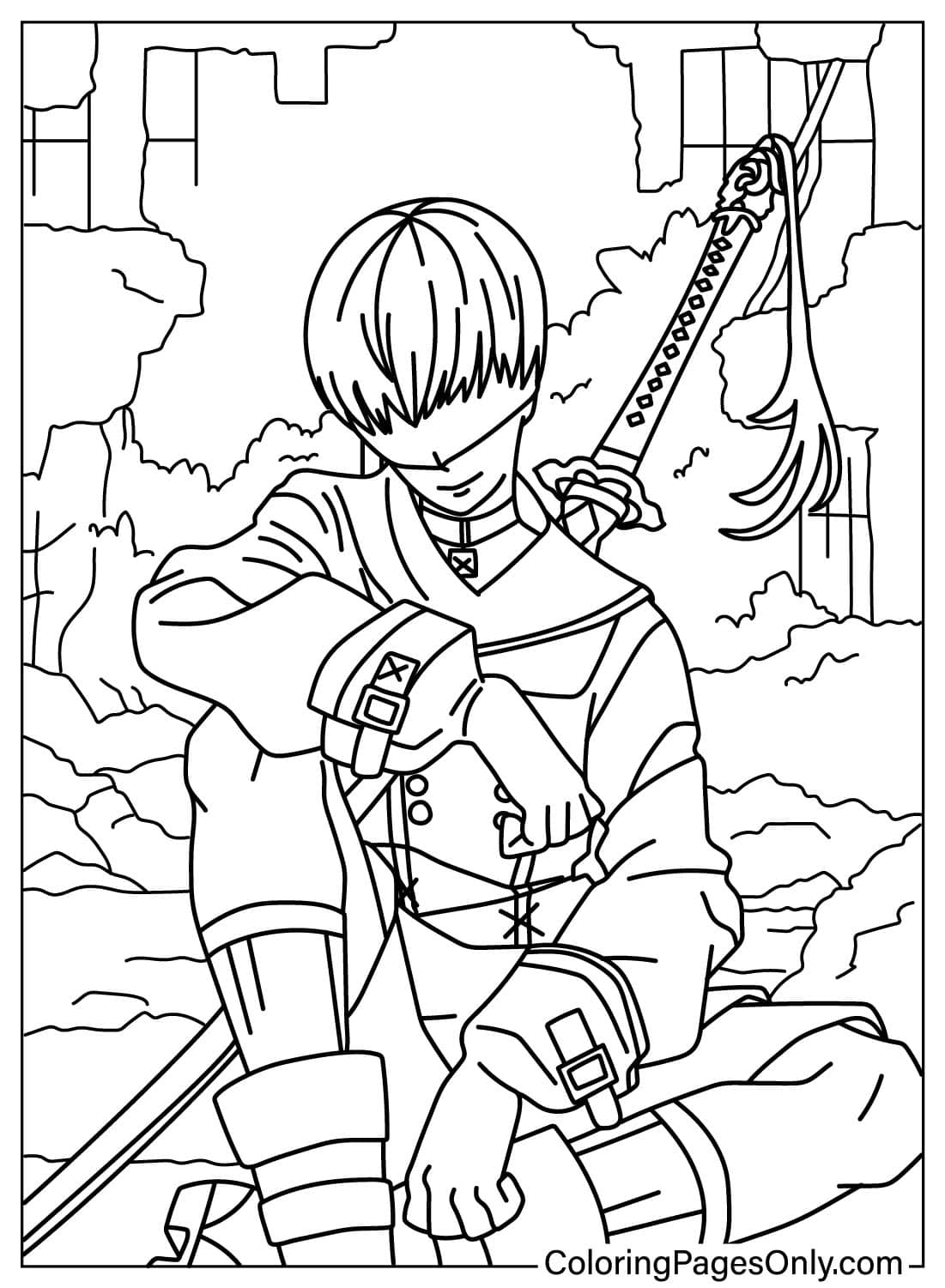
9S (YoRHa No.9 Type S) is the secondary protagonist and 2B’s partner. His YoRHa designation stands for “Scanner” – he is an intelligence-gathering model rather than a combat android, which is reflected in his slightly lighter, more boyish design. He wears a white YoRHa uniform (in contrast to 2B’s black), with shorts rather than a skirt, and also wears a black blindfold. His hair is white like 2B’s but cut in a shorter, rounder style that reads as younger and more openly curious. His weapon of choice is a short sword, though he also carries hacking tools and relies more on his Pod (Pod 153) for combat support.
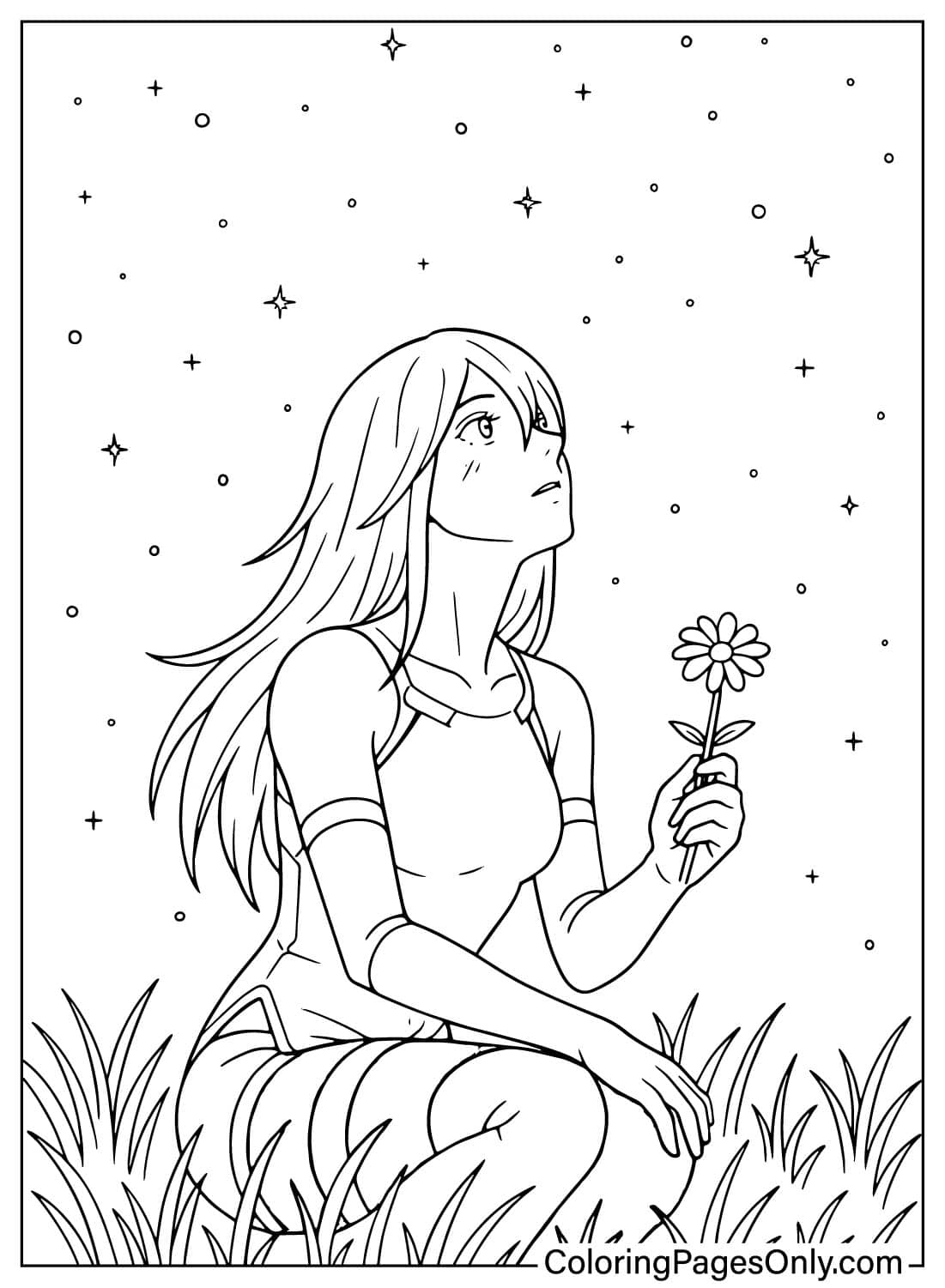
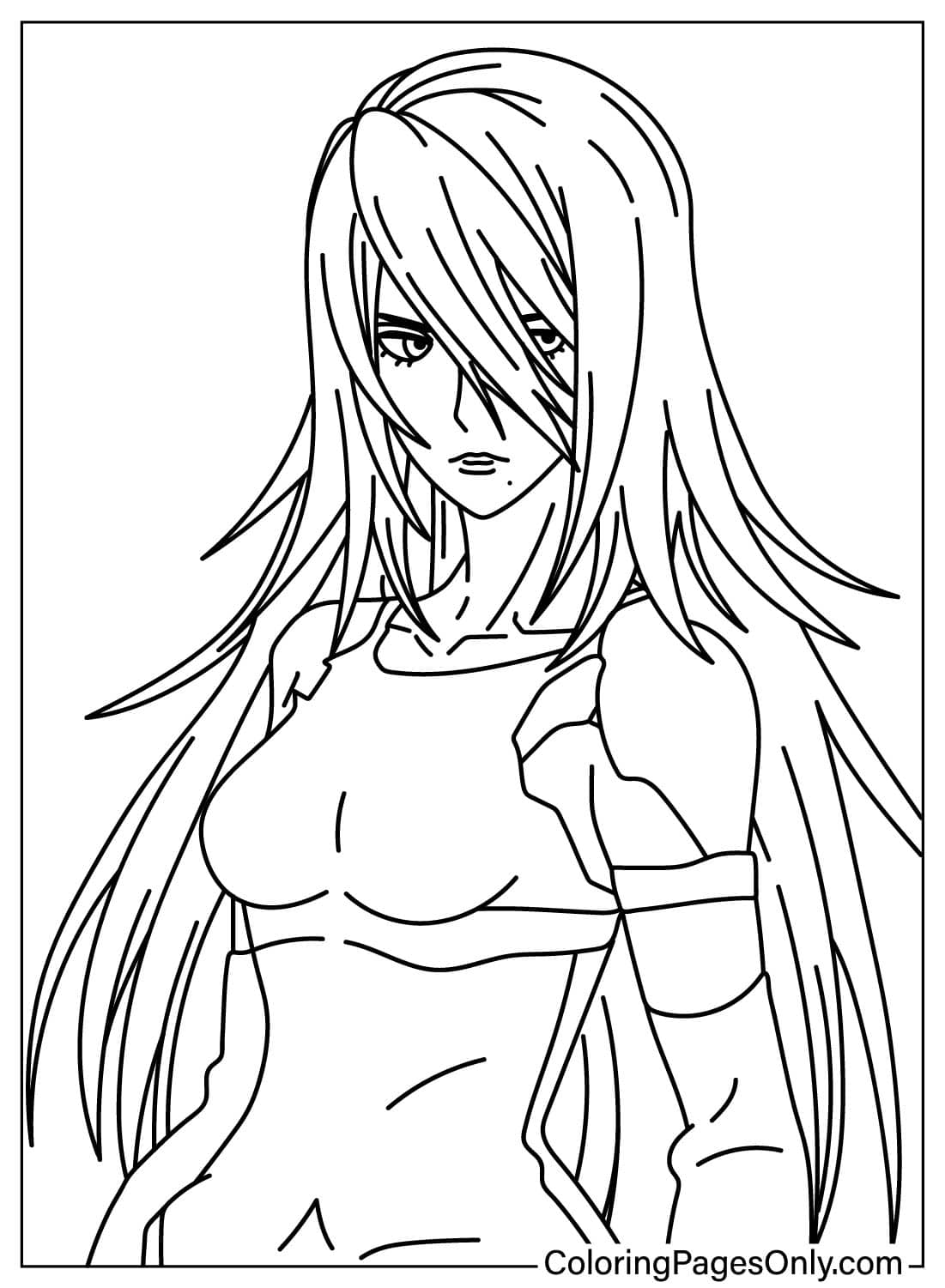
A2 (YoRHa Type A No.2) is a rogue android – a prototype YoRHa model who abandoned the organization and operates independently. Her design reflects her outsider status: she wears a white outfit that is visibly more worn and incomplete than 9S’s uniform, with bare arms and a rawer, less finished aesthetic. Her hair is white and longer than either 2B or 9S, worn loose rather than in their more formal styles. Where 2B and 9S wear their blindfolds consistently, A2 does not. She is angrier, more openly emotional, and more physically direct than either of the primary androids.
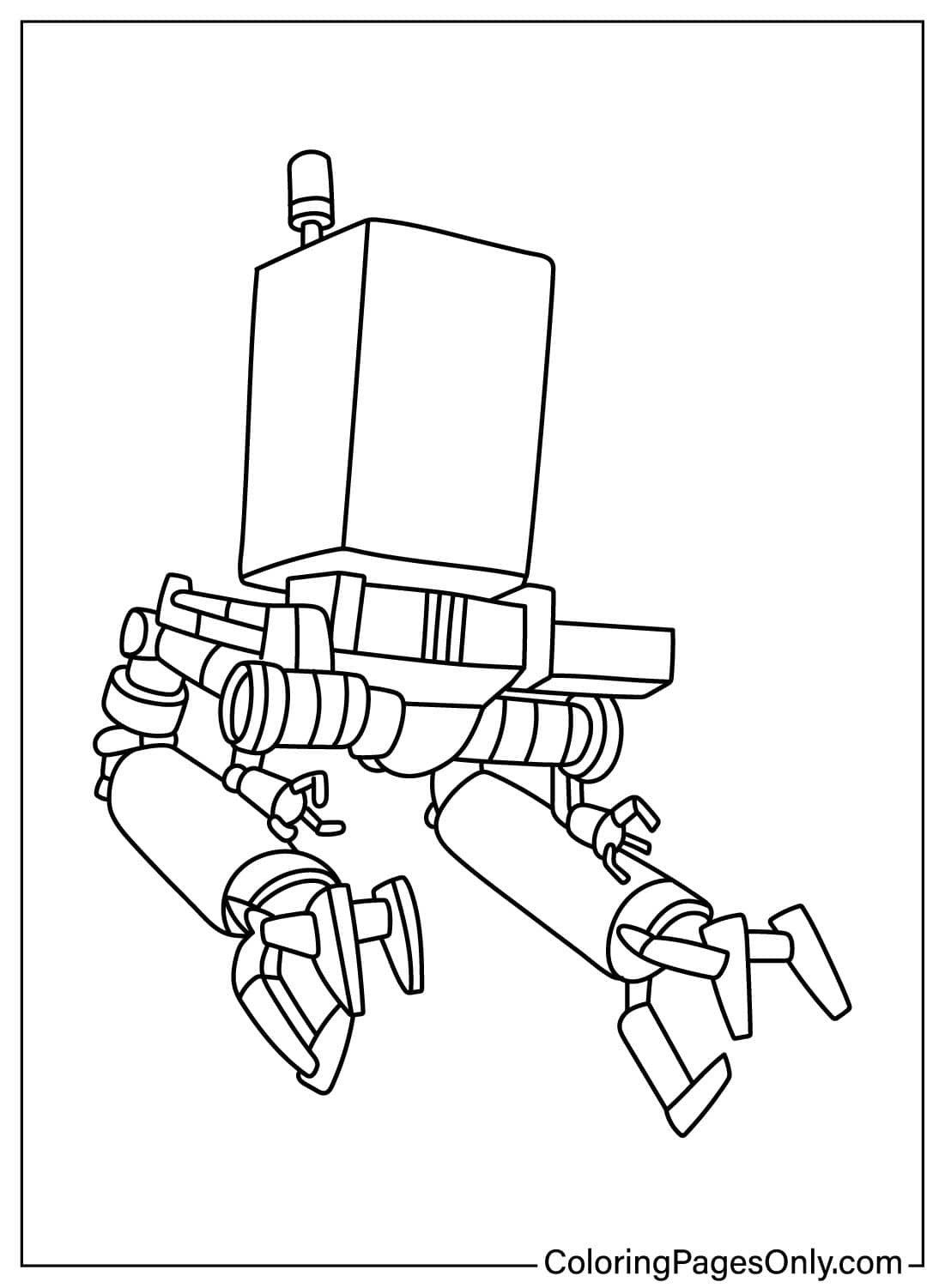
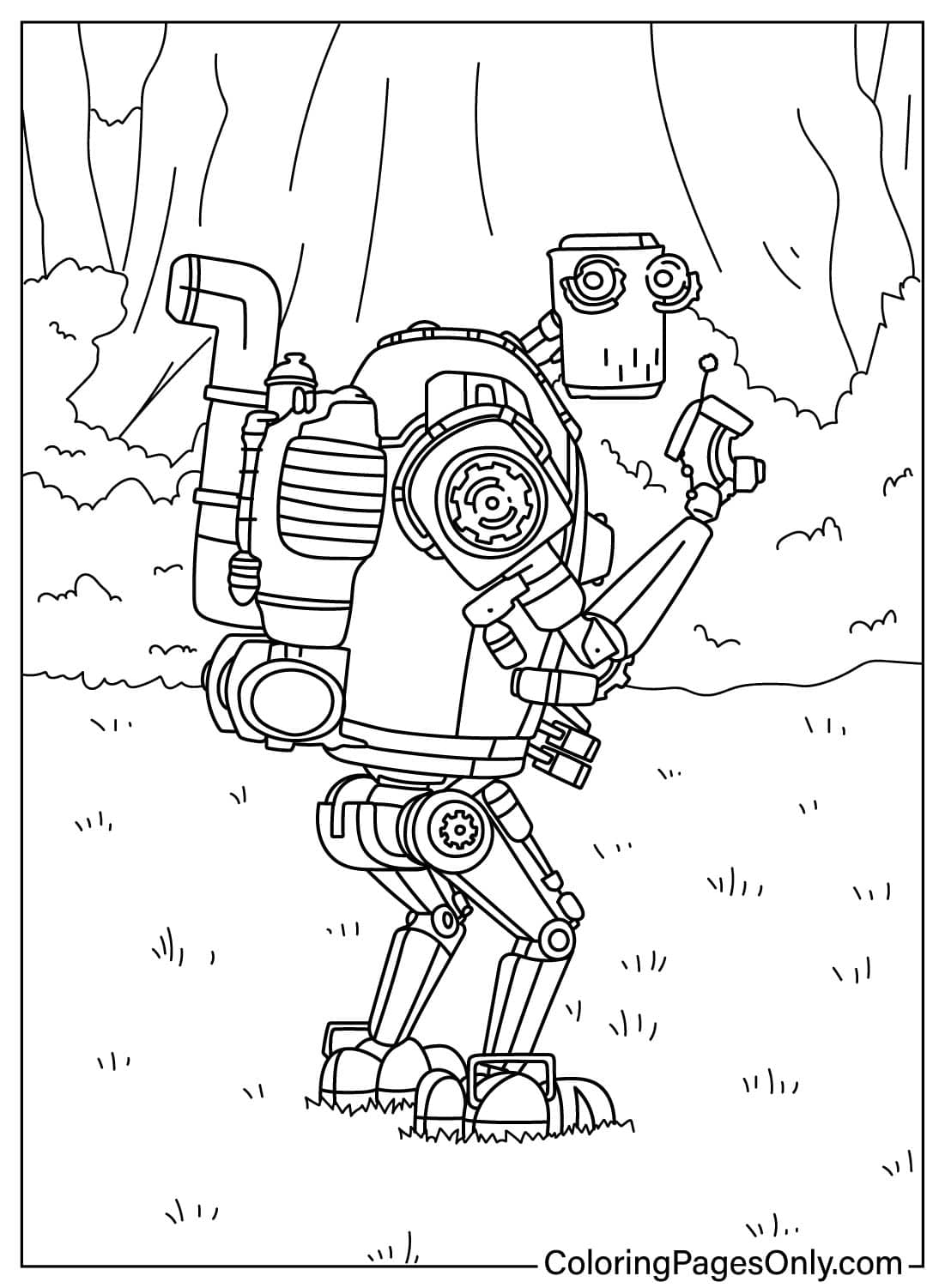
Pascal is a peaceful machine lifeform – one of the antagonistic Machine Network’s androids – who has rejected violence and established a village of pacifist machines. He is visually distinct from the YoRHa androids: rather than the humanoid figure and gothic fashion of 2B and 9S, Pascal has the spherical, multi-limbed machine design aesthetic – a round white body with expressive limb movements and a childlike quality despite his philosophical depth. He is one of the game’s most emotionally affecting characters.
What’s Inside the NieR: Automata Coloring Collection
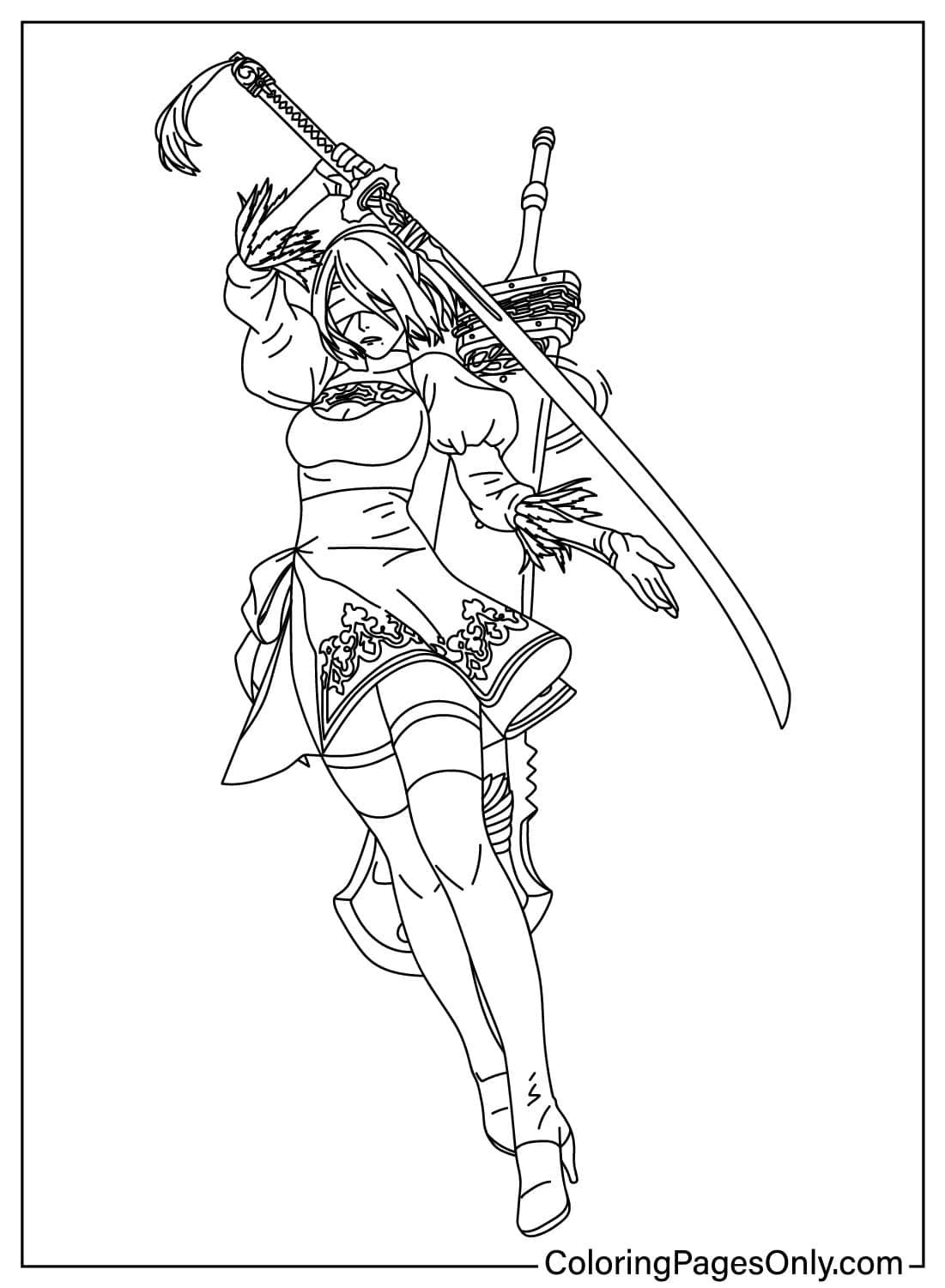
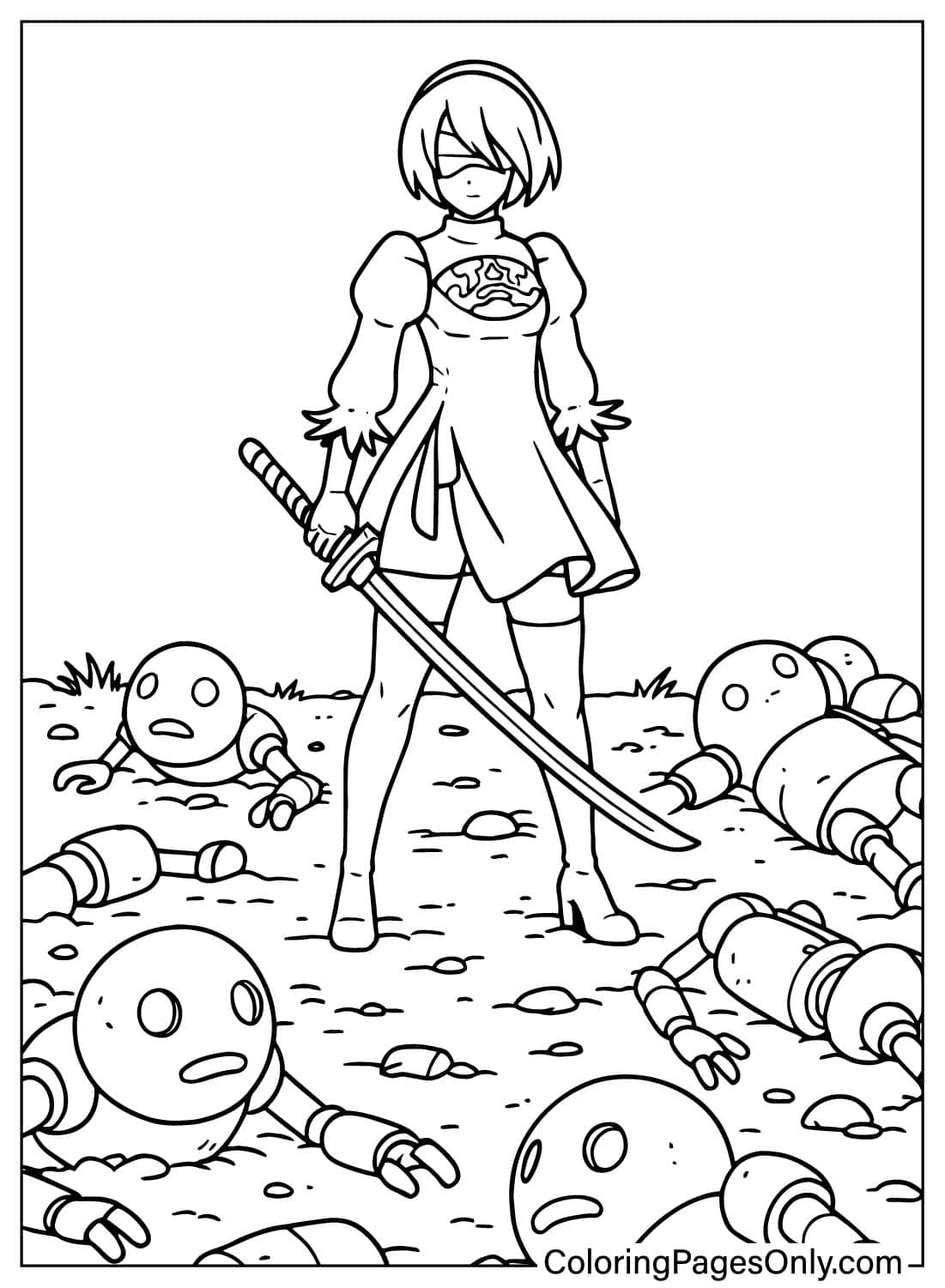
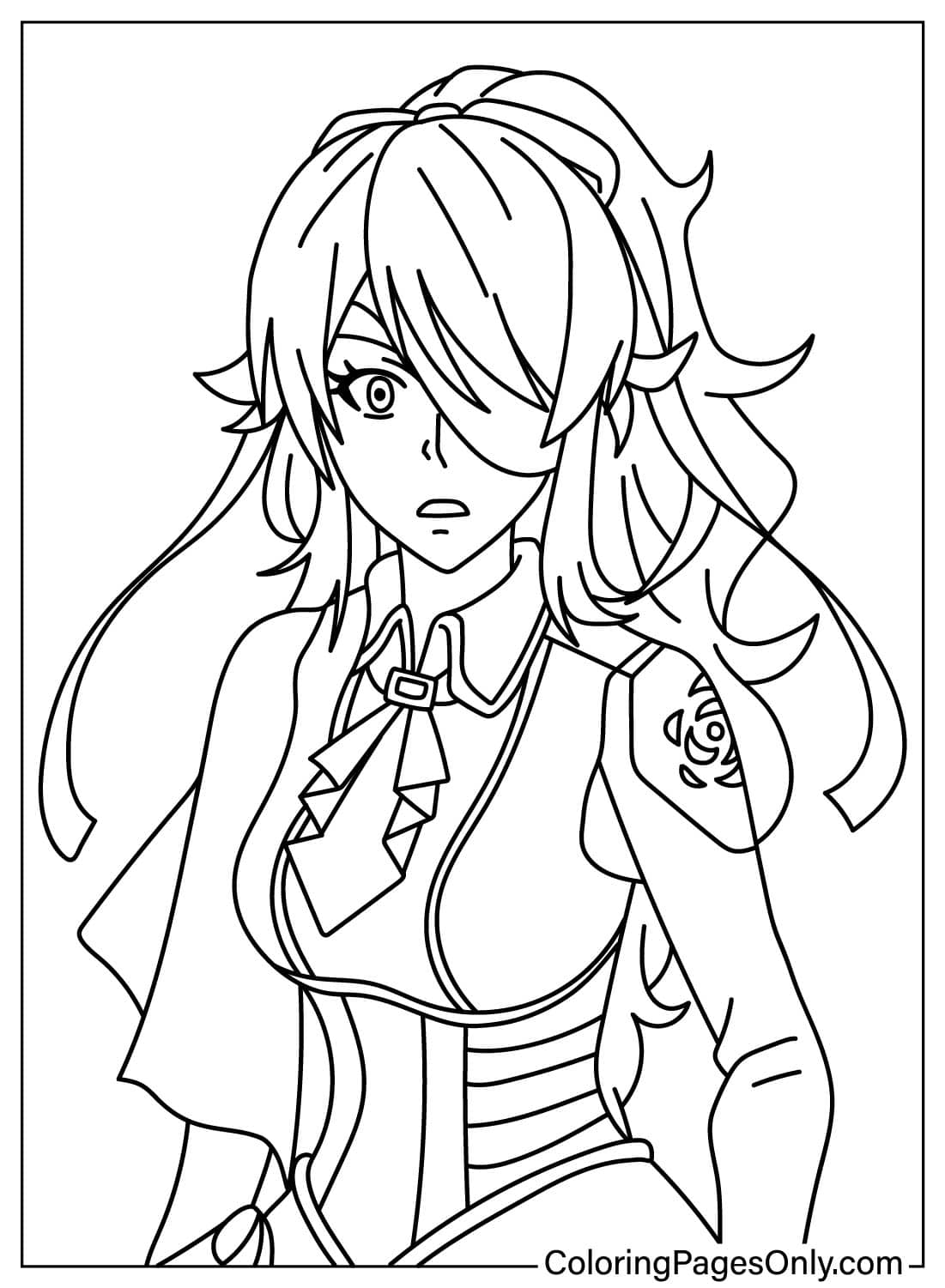
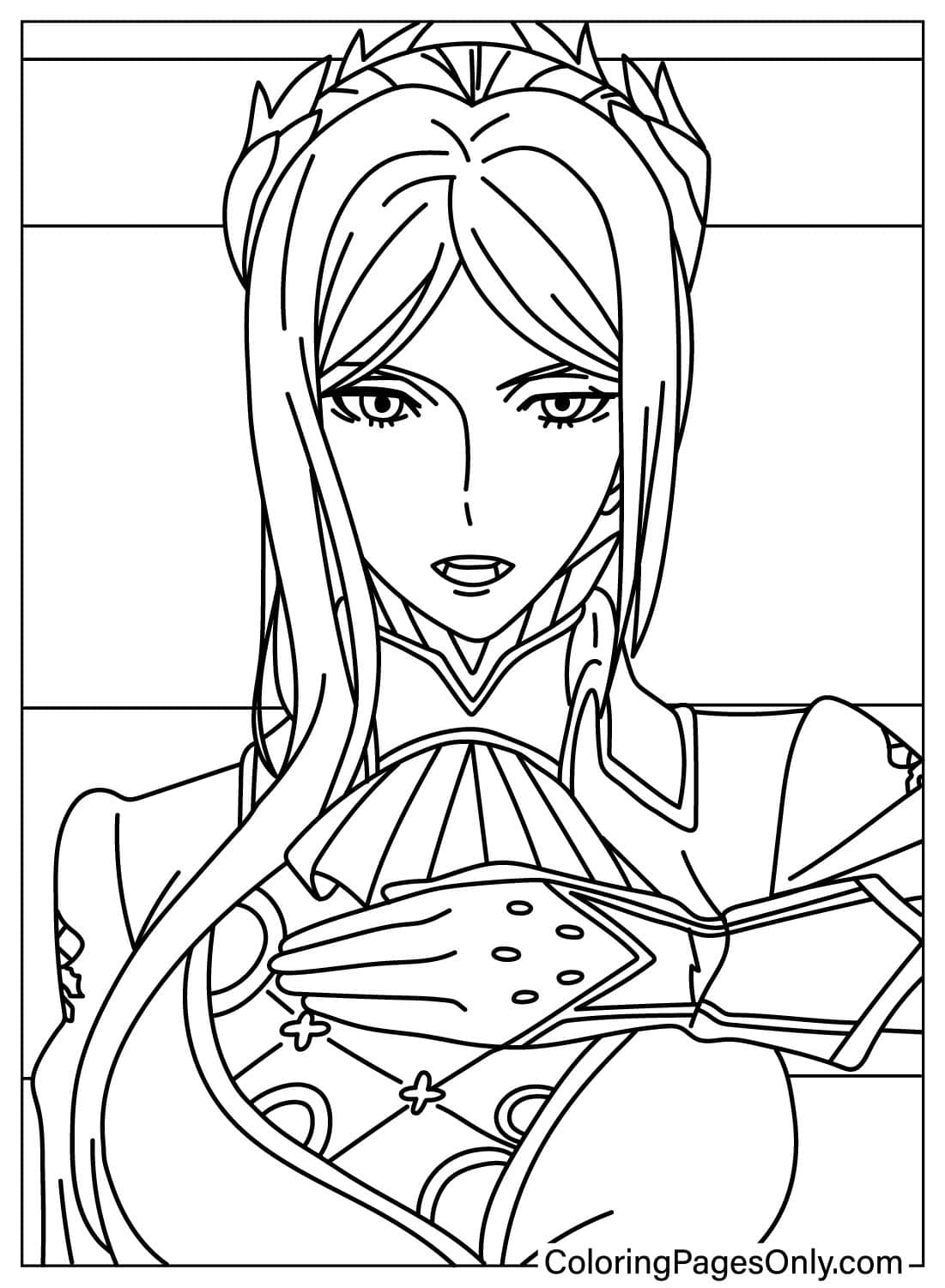
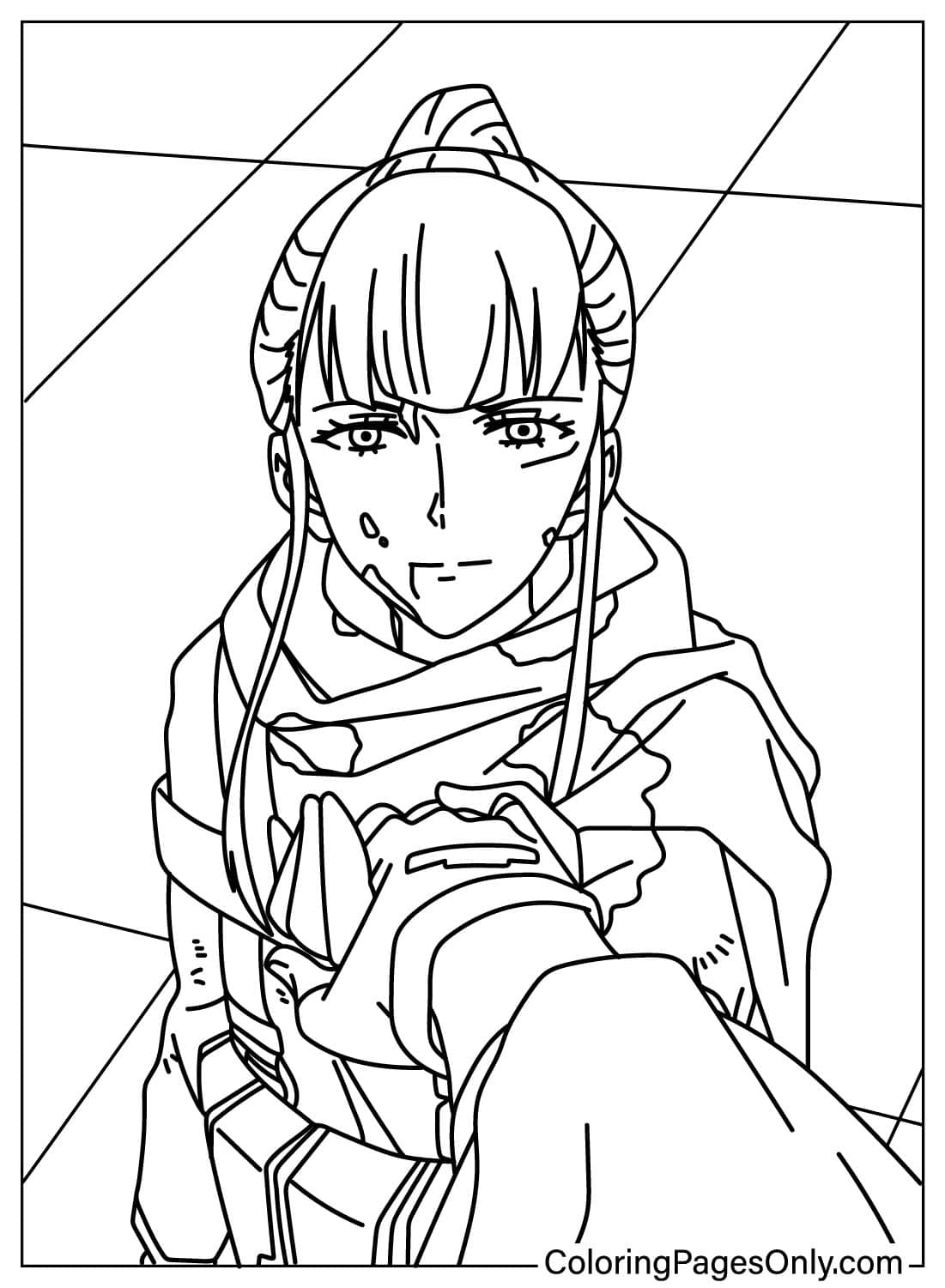
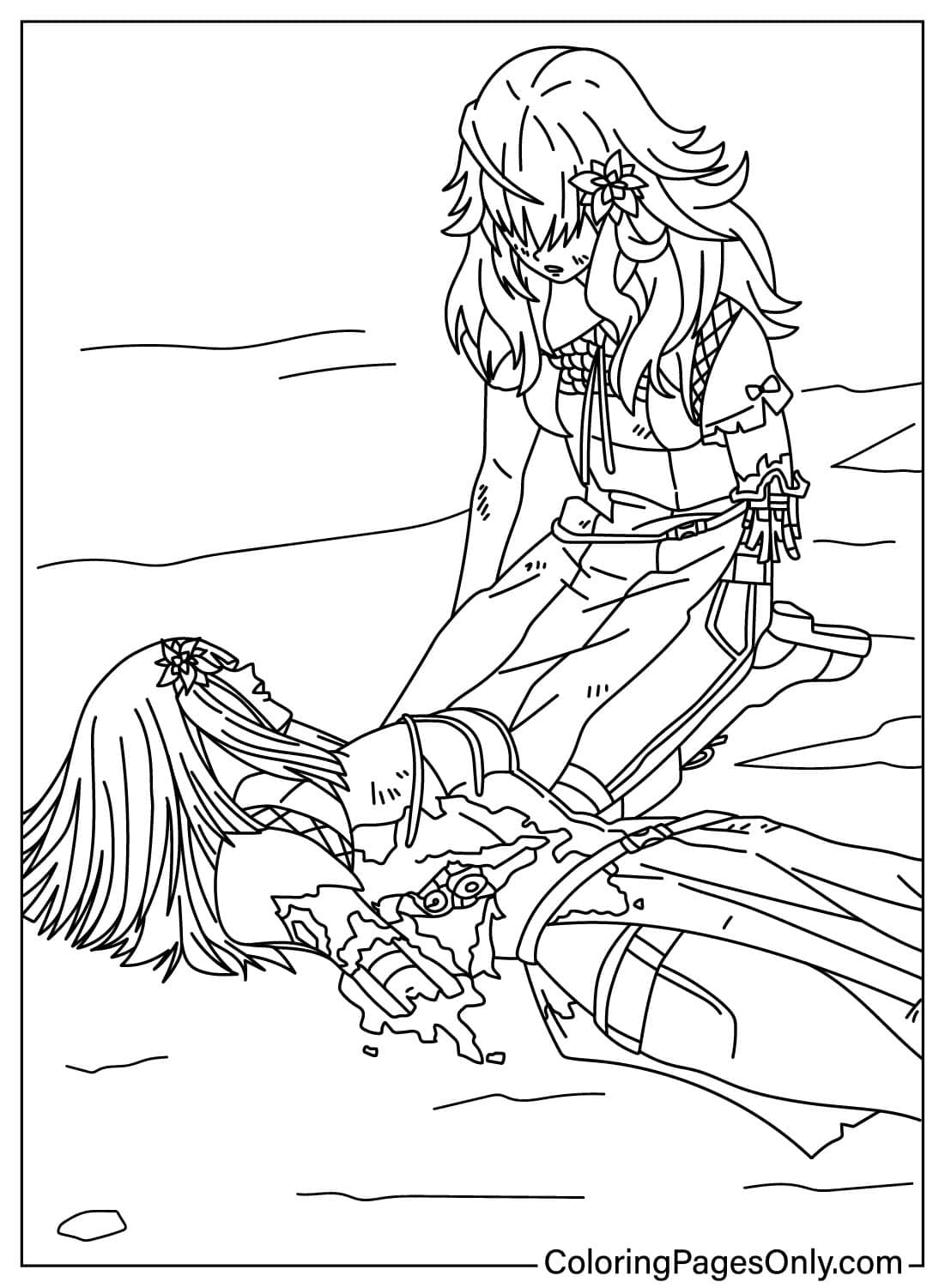
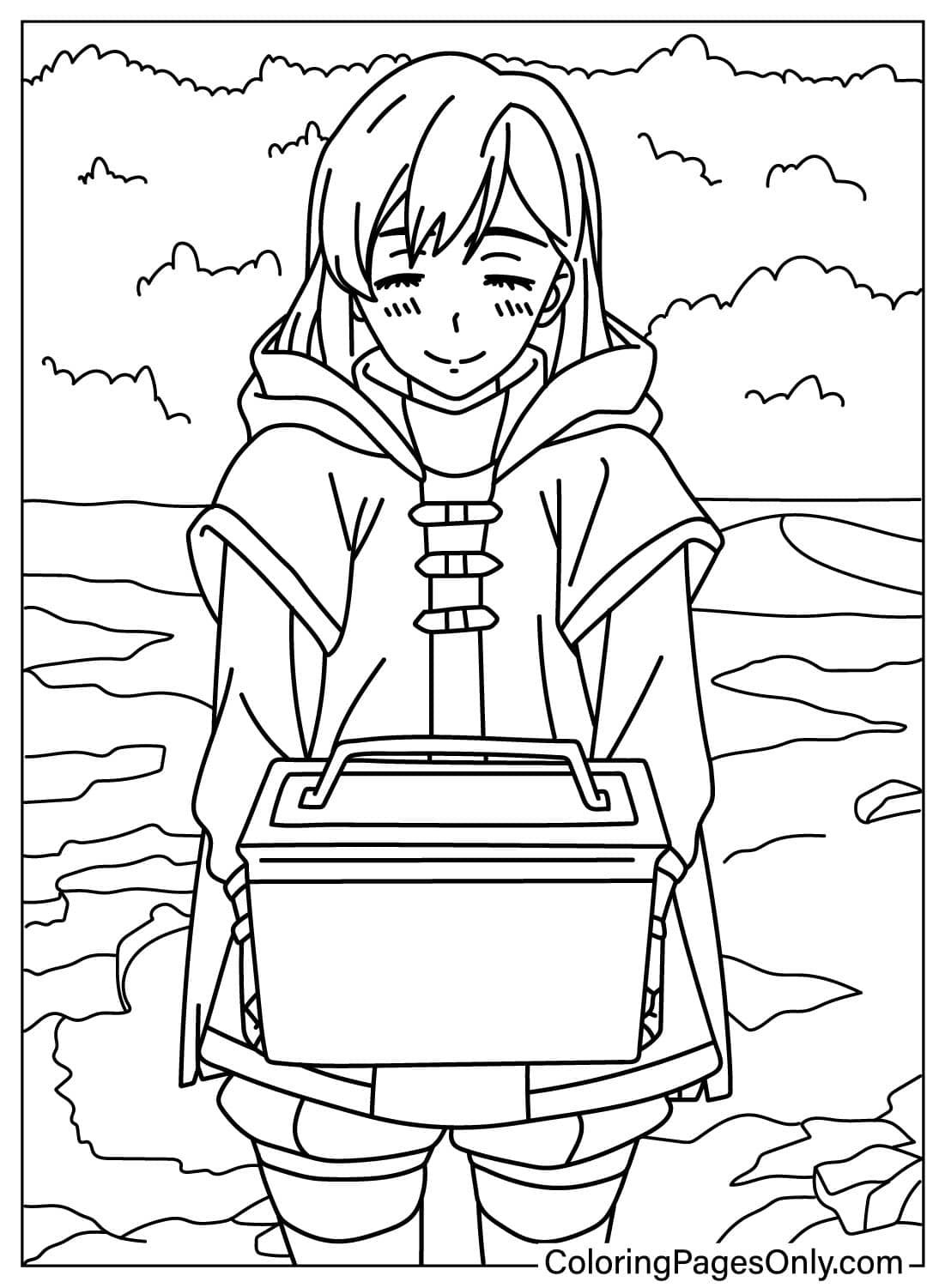
The 2B pages – Pretty 2B of NieR Automata, 2B in NieR Automata, 2B Image of NieR Automata Anime, NieR Automata and 2B’s Power, Pretty Girl in NieR Automata, Girl Character of NieR Automata, Girls in NieR Automata – form the largest cluster in the collection and cover 2B in portrait poses, action compositions, and her anime adaptation’s visual style. The power pose page captures her in a combat stance, which is compositionally very different from the more formal portrait pages. The anime-style pages reflect A-1 Pictures’ slightly softer rendering of the game’s character designs.
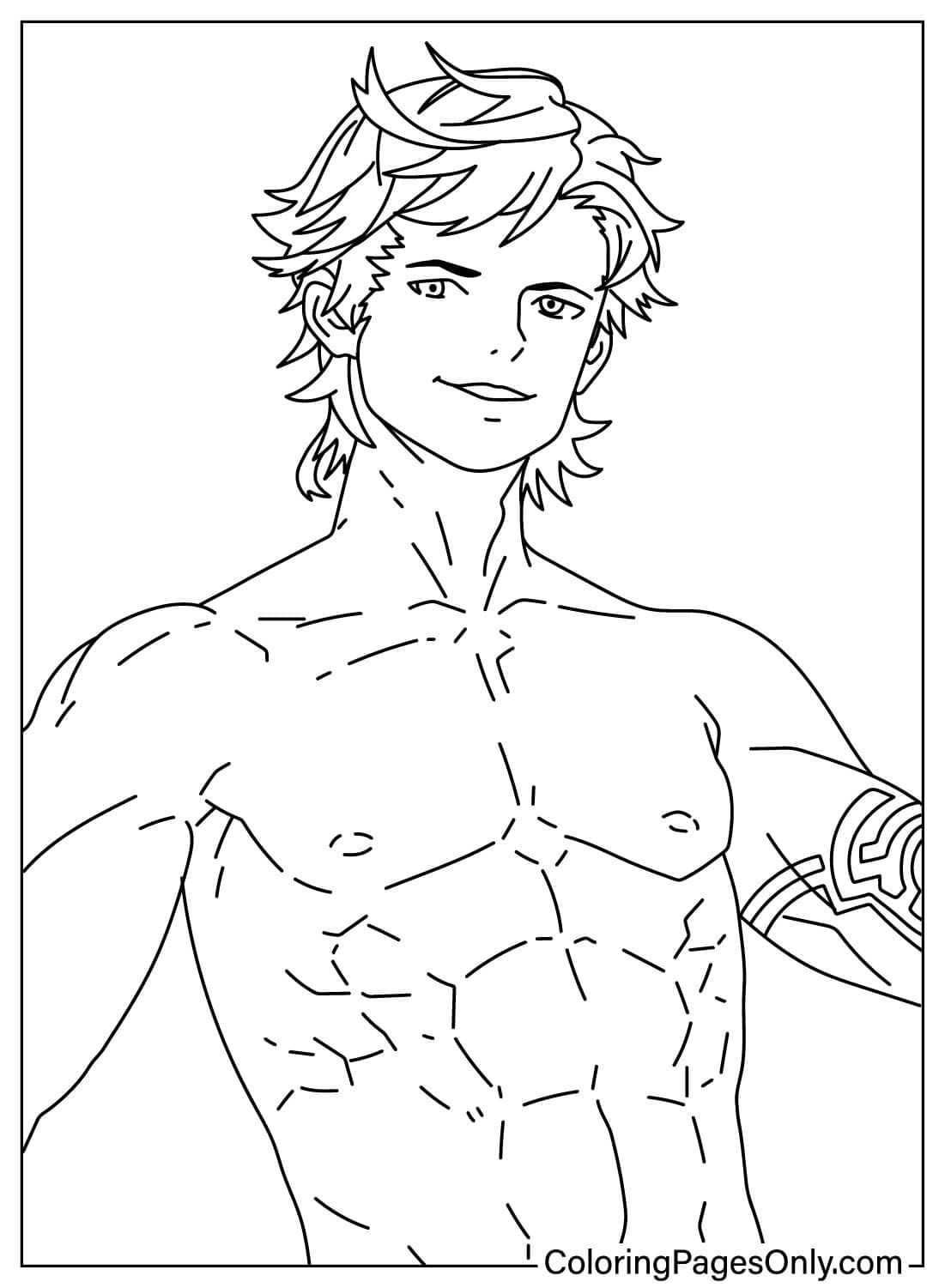
The 9S pages – Boy Character of NieR Automata – represent the male lead in his white YoRHa uniform. The contrast between 9S’s white and 2B’s black is one of the most visually striking pairings in the game’s design language, and pages that show both characters together allow this visual duality to be fully expressed.
The A2 page – A2 of NieR Automata – shows the rogue android in her more ragged, independent look. The opportunity to use a slightly dirtier, more worn treatment of the white in her costume – suggesting weathering and improvisation rather than YoRHa precision – makes A2 pages distinctly different in approach from the cleaner 2B and 9S pages.
The Pascal page – Pascal in NieR Automata – brings the game’s most unusual character design into the collection: a machine rather than a YoRHa android, with a form that is more round and mechanical than humanoid. Pascal’s machine design is an opportunity to work with the rust-brown, gray, and weathered-white palette of the Machine Network rather than the black-and-white of YoRHa.
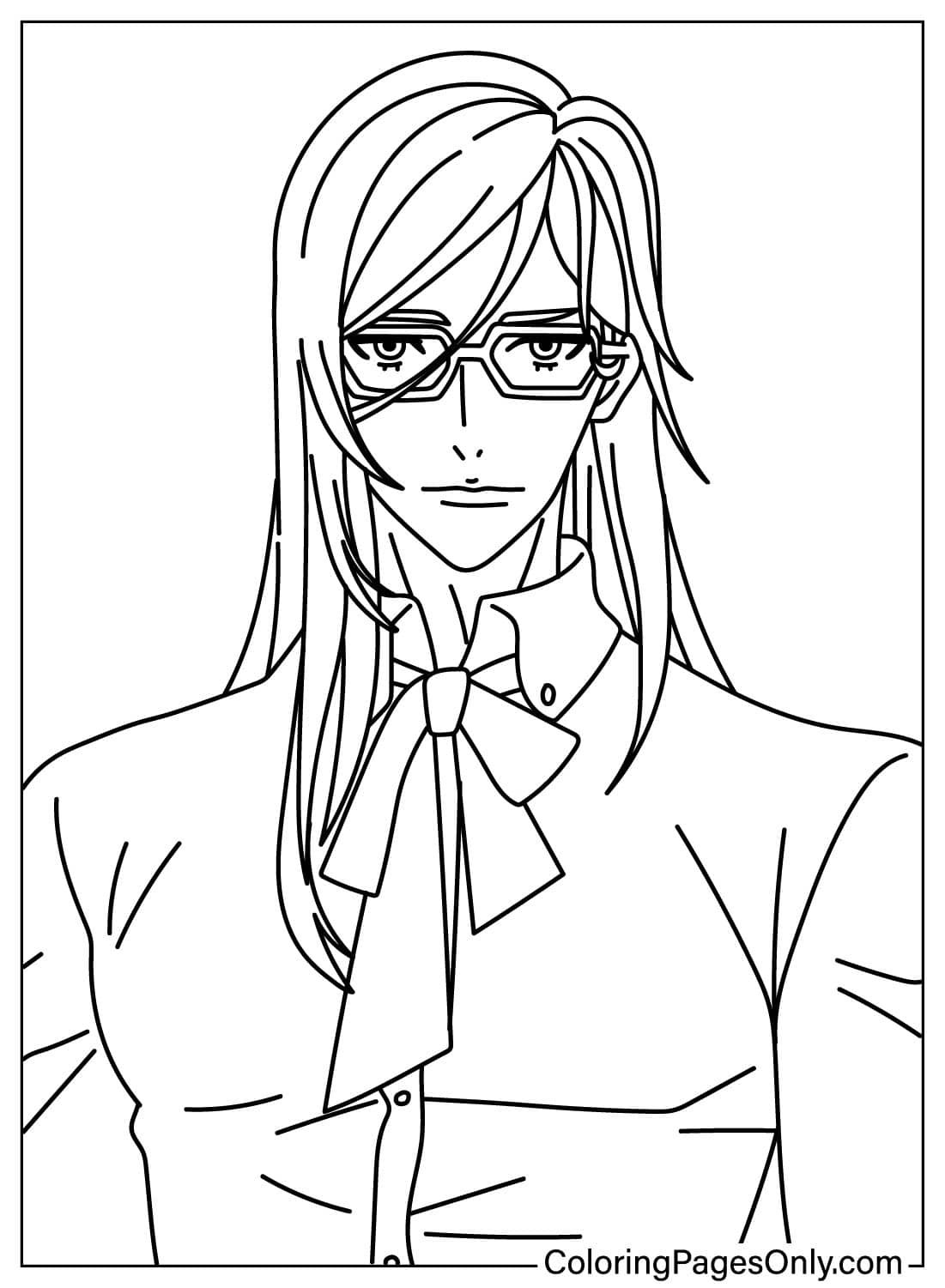
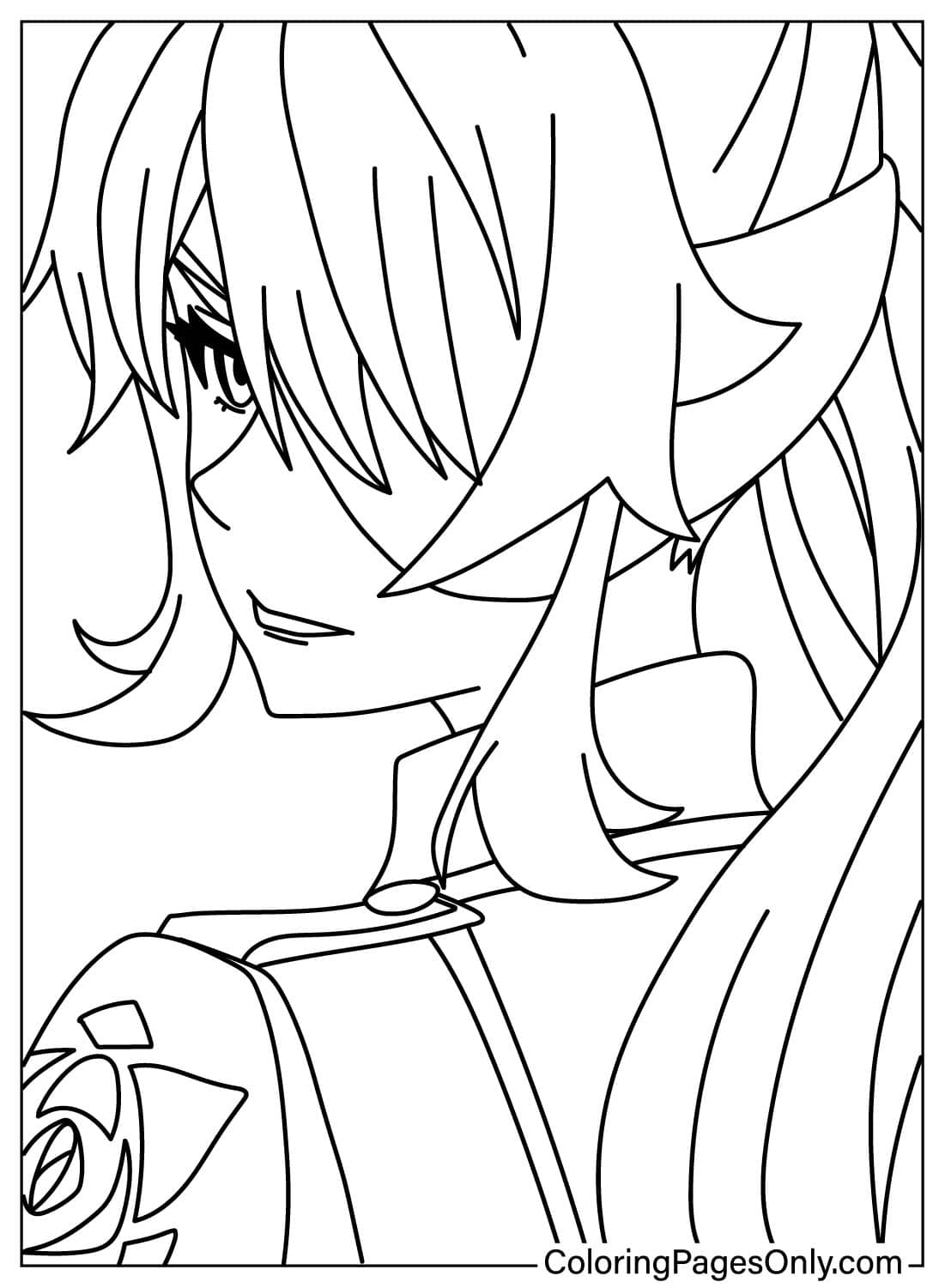
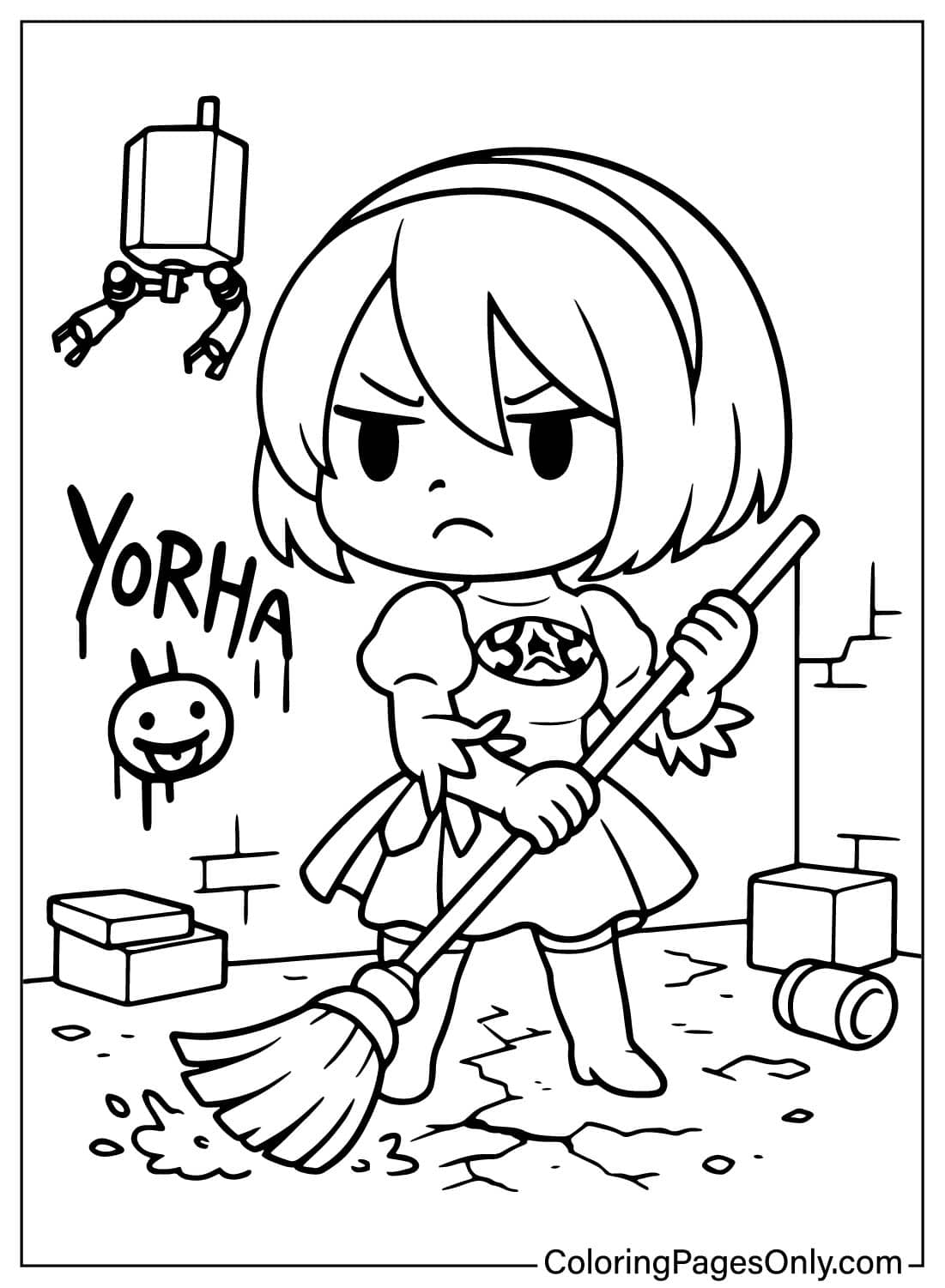
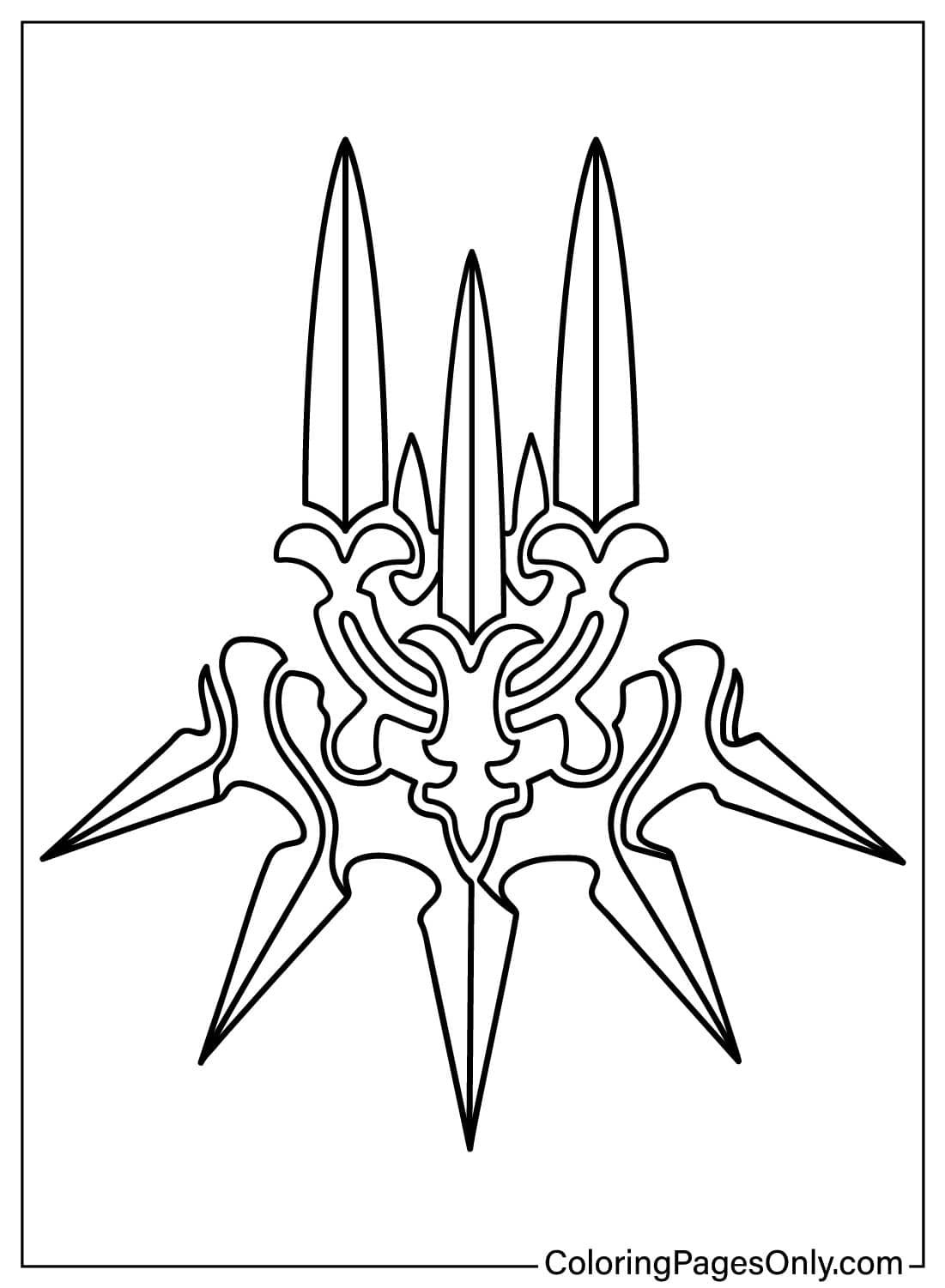
The general and ensemble pages – Character of NieR Automata, NieR Automata Character, NieR Automata Anime, Coloring NieR Automata, NieR Automata Color Picture, Chibi NieR Automata, and the various format-named pages – provide a range of additional compositions, including the chibi version, which reimagines the characters in the simplified, rounded proportions of chibi fan art style.
Coloring Tips for NieR: Automata Pages
The game’s visual palette is one of the most distinctive in gaming and is built on three dominant color relationships that define the entire world: the black of YoRHa against the white of the ruined world, the rust-and-gray of the Machine Network, and the rare, specific moments of vivid color – deep blue sky, white flowers, red blood – that punctuate the otherwise muted palette with emotional weight. Understanding these relationships before coloring any page gives the finished work the same atmospheric quality as the game’s own visual design.
2B’s canonical palette is built entirely around deep black. Her dress, gloves, and boots should all be rendered in a genuine, deep near-black – not dark gray, not navy, but black. The challenge with black as a coloring is making it read as three-dimensional rather than flat: the best approach is to use a very dark gray for the deepest shadow areas, a true black for the main body of the garment, and a slightly warmer near-black with blue or purple undertones for the areas where fabric would catch ambient light. This three-value approach within the black range gives her costume depth and fabric texture. Her white hair should be kept clean and bright – a pure white with the lightest possible cool-gray shadow in the recessed areas. The contrast between the white hair and the black costume is the entire visual identity of the character, and any compromise of either – graying the white, lightening the black – reduces that contrast and makes the page feel less like 2B.
Her blindfold is also black, but in a slightly different black than the dress – the blindfold is a fabric with less structure and sheen than the dress material, which in rendering terms means slightly less reflected light and a more matte, even application. The Pod 042 weapon system, if shown, is a mechanical floating unit that should be rendered in white and pale gray – a clean, mechanical white distinct from the organic softness of 2B’s hair.
9S’s canonical palette is the visual inverse of 2B’s: his uniform is white, which creates an immediate contrast with her black in any pages that show them together. His white should be rendered in the same way as her hair – clean, bright, with cool-gray shadow areas – but applied across a garment with more structural complexity (uniform jacket, shorts, straps, and accessories). Where her black has occasional highlights, his white has occasional shadows. The black blindfold is the only black element in his design, which makes it read with particular emphasis. His Pod 153 is also white and pale gray, matching his uniform’s palette.
A2’s palette is the most complex of the three: her white is explicitly more worn and imperfect than 9S’s. This is one of the few cases in coloring where deliberately applying a slightly warmer, slightly less bright white – with cream or light tan tones in the more weathered areas – produces a more accurate result than using a clean bright white. Her costume should look like it has been in the field for a long time, and the color can suggest that history even without visible damage marks in the line art.
Pascal’s palette follows the Machine Network’s design language: rust-brown, warm gray, and weathered off-white – the palette of old metal rather than YoRHa’s precision materials. Where the YoRHa androids’ costumes are clean and intentional, Pascal’s machine body is warm-toned and slightly oxidized. Use warm browns and oranges for the rust elements, mid-range grays for the mechanical components, and a slightly greenish or yellowish gray for areas of the Machine Network where the technology has aged.
For environment and background elements – ruined cityscapes, overgrown buildings, the lunar teardrops of white flowers that appear throughout the game – the palette is consistently muted and desaturated: pale grays, washed-out browns, faded whites. The game’s world is beautiful precisely because of its restraint with color. When a vivid color does appear – a blue sky behind ruined buildings, or a specific flower – it is most effective when the surrounding area has been kept deliberately understated.
For the chibi page, apply the canonical character palettes (2B black, 9S white, A2 worn white) in the simplified, flat-color approach appropriate to chibi style. The exaggerated proportions of chibi illustration make the blindfolds particularly large relative to the face, which actually emphasizes one of the most distinctive aspects of the YoRHa character designs.
5 Activities to Do With Your NieR: Automata Pages
Color the YoRHa duality study. Print a 2B page and a 9S page and color both with rigorous attention to their canonical palette contrast – 2B in deep black with white hair, 9S in white with black blindfold. Use the same technique and the same paper for both, and then place them side by side. The finished pair should read immediately as visual opposites that belong to the same world: same hair color, inverse uniform colors, same blindfold, same mechanical precision in the character design. This exercise in palette inversion through two characters is a specific kind of color study that games with designed visual systems rarely enable as clearly as NieR: Automata does.
Create a three-android portrait series. Print the 2B page, the 9S page, and the A2 page and color all three in their canonical palettes with particular attention to the differences between the three whites: 2B’s hair white (clean, cool, carefully maintained), 9S’s uniform white (clean, structured, precise), and A2’s worn white (warmer, less bright, suggesting field use and history). Mounted together, the three portraits tell the story of the three playable perspectives in the game through color alone – the unity of the YoRHa world (white hair, black blindfold) alongside the clear distinctions between models and histories.
Render the Machine Network palette through Pascal. Print the Pascal page and color it entirely within the rust-brown, warm gray, and aged-white palette of the Machine Network, using no element of the YoRHa black-and-white palette at all. This forces a complete palette separation between the two factions of the game – YoRHa’s cold, precise black and white versus the Machine Network’s warm, oxidized rust and gray – and makes the philosophical distance between the two sides of the war legible through color rather than narration.
Make a white flower memorial. Print any page from the collection that shows environmental elements alongside the character – and color the background elements in the muted, desaturated palette of the game’s ruins: pale gray buildings, faded brown earth, white or near-white flowers against the quiet devastation of the world. Use the character’s canonical palette (2B’s black, for example) as the single focused element of contrast against the muted background. The visual logic of this exercise – one vivid element against a deliberately understated world – mirrors the game’s own approach to color and emotional weight.
Design a YoRHa unit concept. After coloring several pages to understand the YoRHa design language – black uniform for combat types (Type B), white uniform for scanner types (Type S), blindfolds for all YoRHa, white hair as a consistent trait, a floating Pod unit as a companion – design your own YoRHa android on a blank sheet of paper. Choose a designation (what is the third letter of the alphabet? What does “Type C” mean? What is their function?), decide on their uniform color within the black-white-gray palette of the organization, and sketch and color their design following the same visual grammar as 2B and 9S. This creative extension engages directly with the character design system that makes the game’s cast so visually coherent as an ensemble.
Download Your Free NieR: Automata Pages Today!
All 20+ NieR: Automata Coloring Pages are completely free – download as PDF to print or color online with one click. No sign-up, no cost. Whether you’re here as a player who has seen all the endings and still thinks about the game, or as an anime fan who discovered 2B through Ver1.1a – we hope this collection gives you the right pages and the right information to make the most of them.
Share your finished pages with us on Facebook and Pinterest at ColoringPagesOnly.com!