Tyrannosaurus Coloring Pages

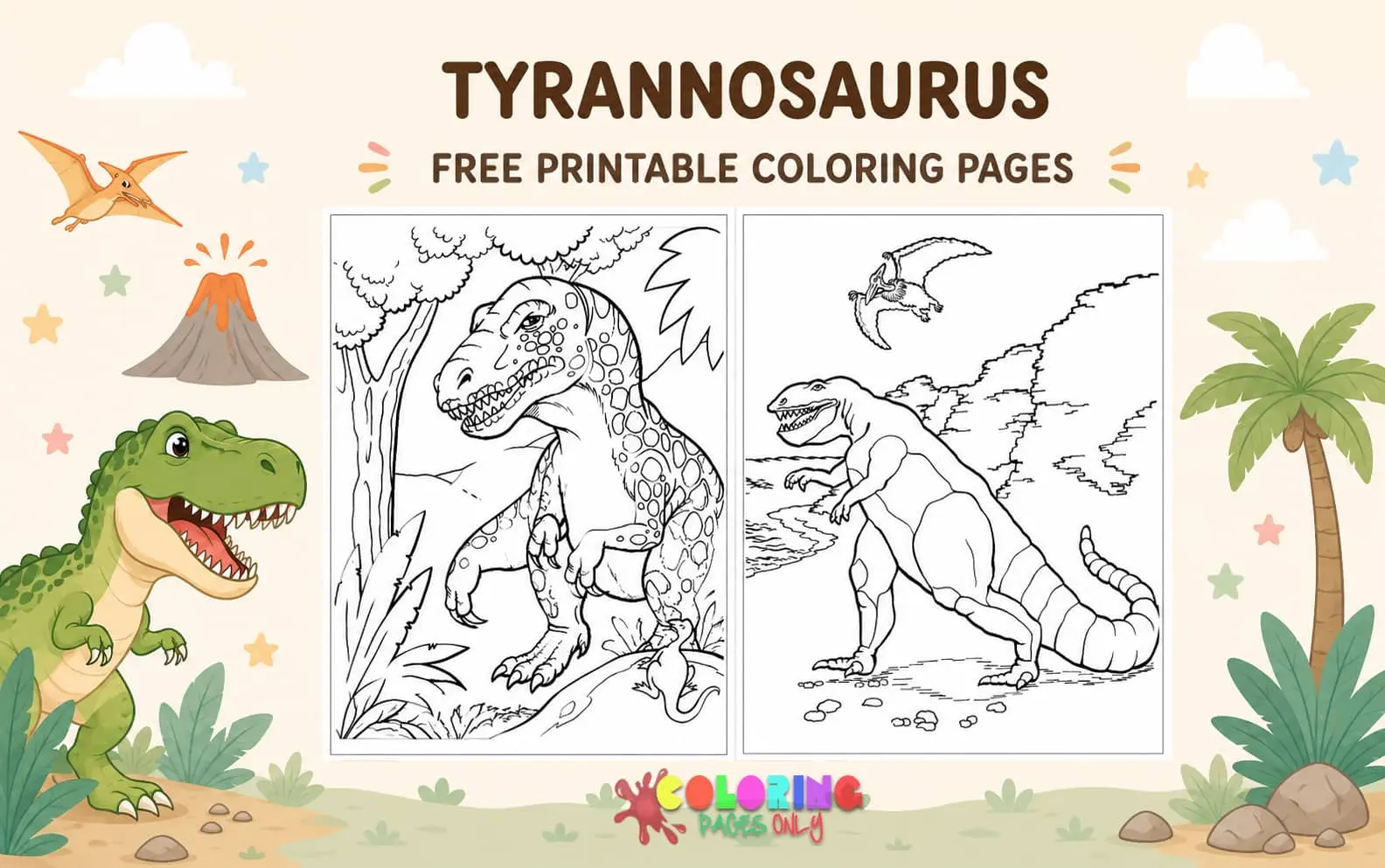
Free Tyrannosaurus Coloring Pages: 30+ pages featuring happy T. rex, terrifying Tyrannosaurus, baby T. rex, T-Rex family scenes, roaring dinosaur heads, full-body Tyrannosaurus poses, T. rex running and chasing scenes, city-destroying dinosaur action, Triceratops and Tyrannosaurus, Stegosaurus and Tyrannosaurus, Tarbosaurus, Gorgosaurus, tyrannosaurid relatives, prehistoric habitats, cute dinosaur designs, battle scenes, and printable T. rex coloring pages for kids, parents, teachers, classrooms, homeschool lessons, dinosaur parties, and prehistoric art projects. All free, printable PDFs, JPGs, PNGs, and online coloring pages are ready for home coloring, dinosaur units, science lessons, classroom activities, travel folders, party tables, craft time, and screen-free learning.
Tyrannosaurus rex, often called T. rex, is one of the most recognizable dinosaurs in the world because its shape is so easy to read: a huge skull, powerful jaws, sharp teeth, tiny arms, strong back legs, a heavy tail, and a forward-leaning predator body. T. rex lived during the Late Cretaceous period, which makes it a strong subject for simple dinosaur timelines, fossil discussions, and prehistoric classroom activities. Its instantly recognizable silhouette also makes it a powerful coloring theme because children can identify it quickly, teachers can use it for body-part observation, and dinosaur fans can turn the same basic shape into something cute, scary, realistic, funny, or dramatic through color.
This collection is designed to be more than a set of roaring dinosaur pictures. It includes friendly T. rex pages for young children, baby dinosaur pages for cute coloring, T. rex family scenes for storytelling, roaring head pages for face and teeth practice, full-body designs for body-shape learning, battle scenes for predator and plant-eater comparison, city action pages for fantasy play, and tyrannosaurid relatives for older dinosaur fans who want to compare similar prehistoric predators. All free, PDF, JPG, or PNG, print or color online.

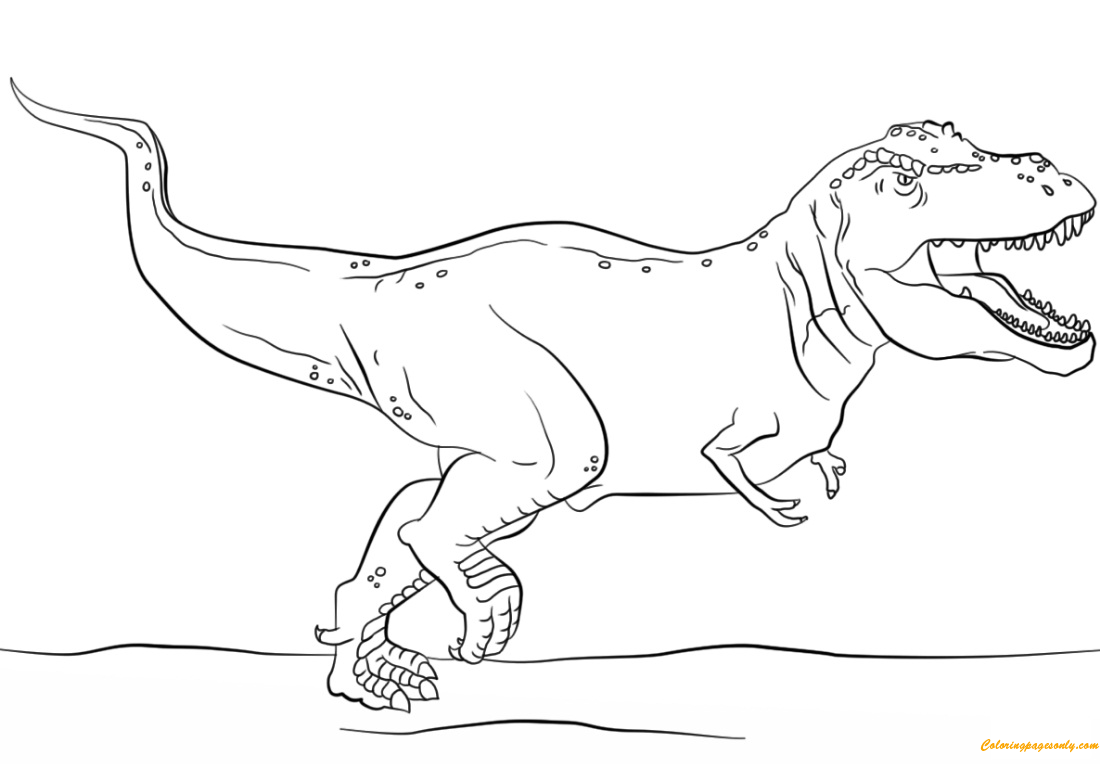
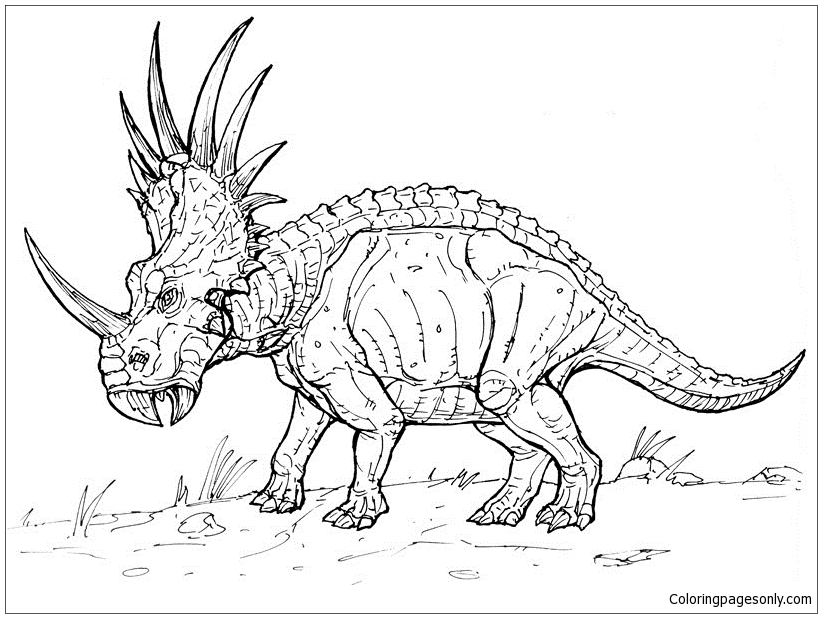
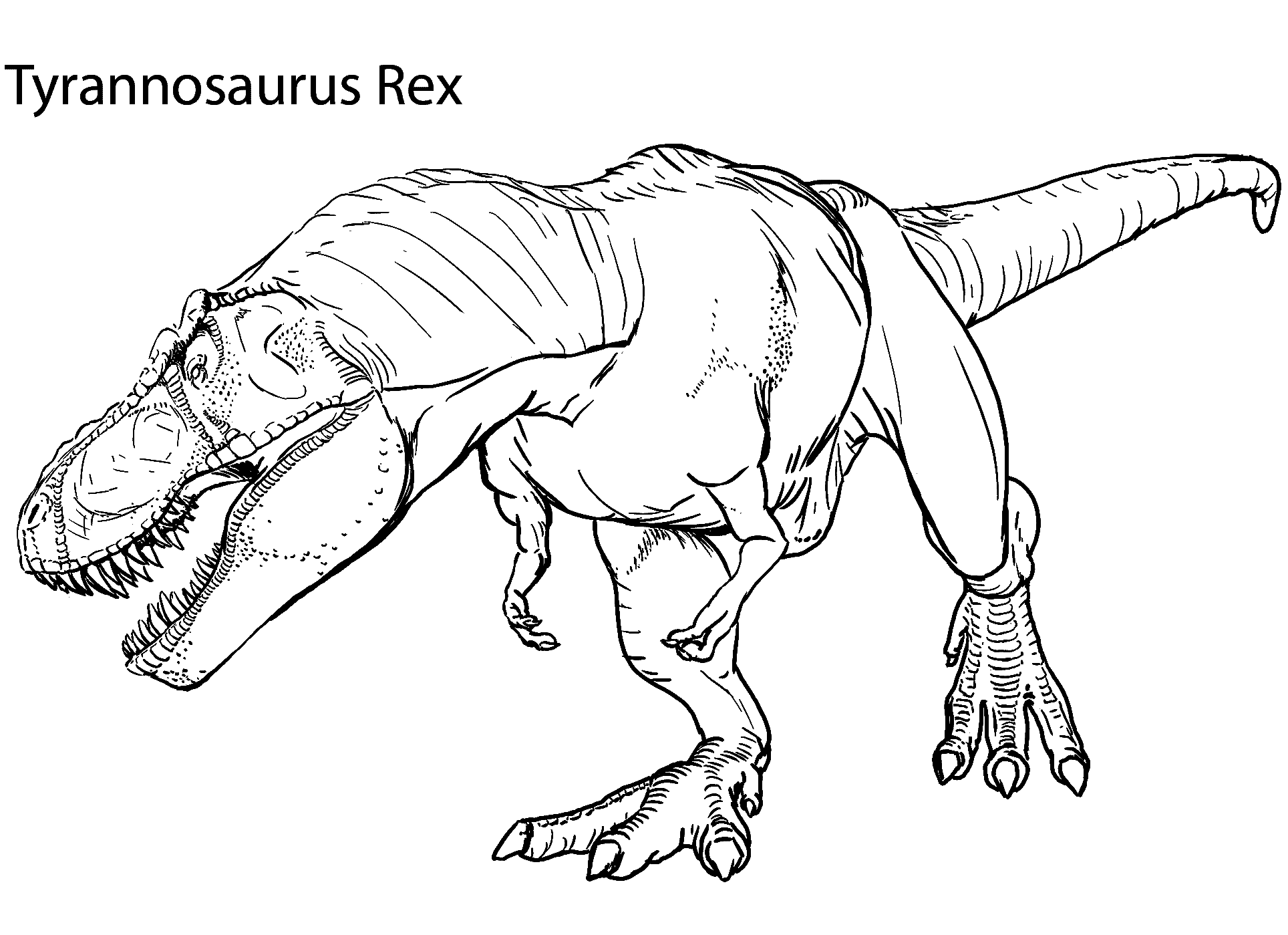
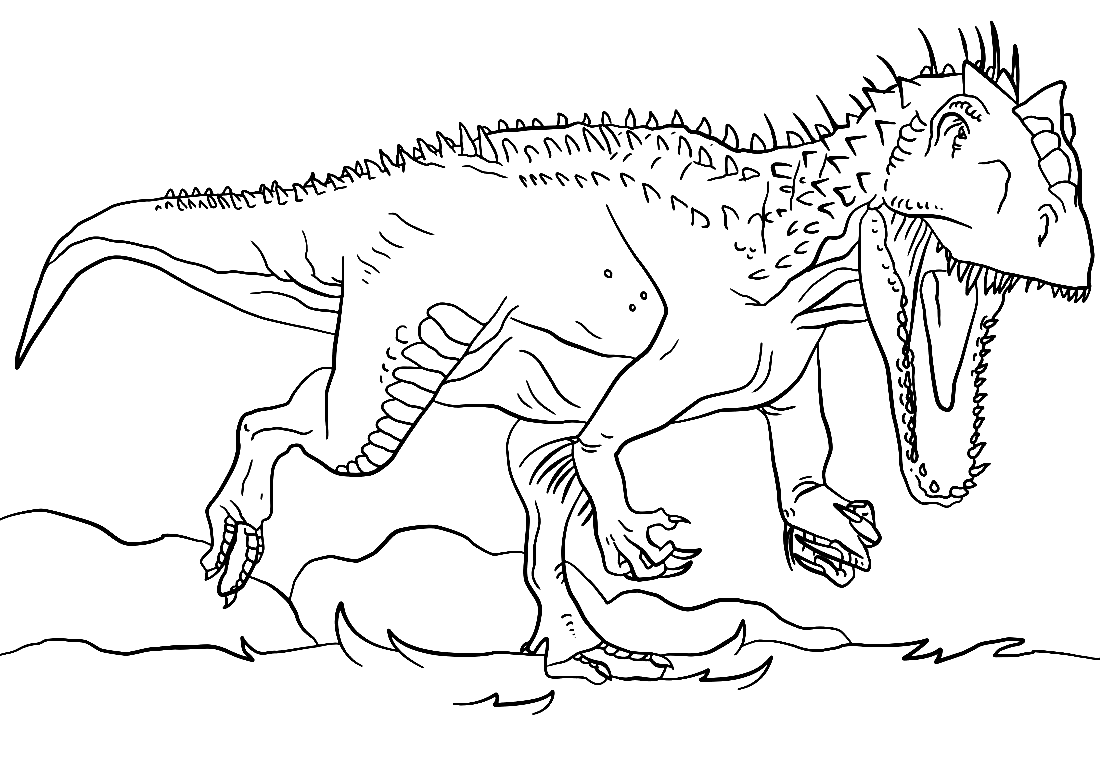
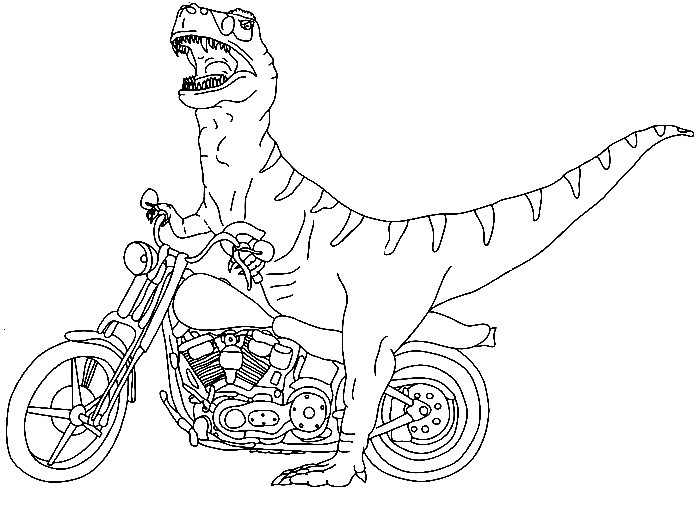
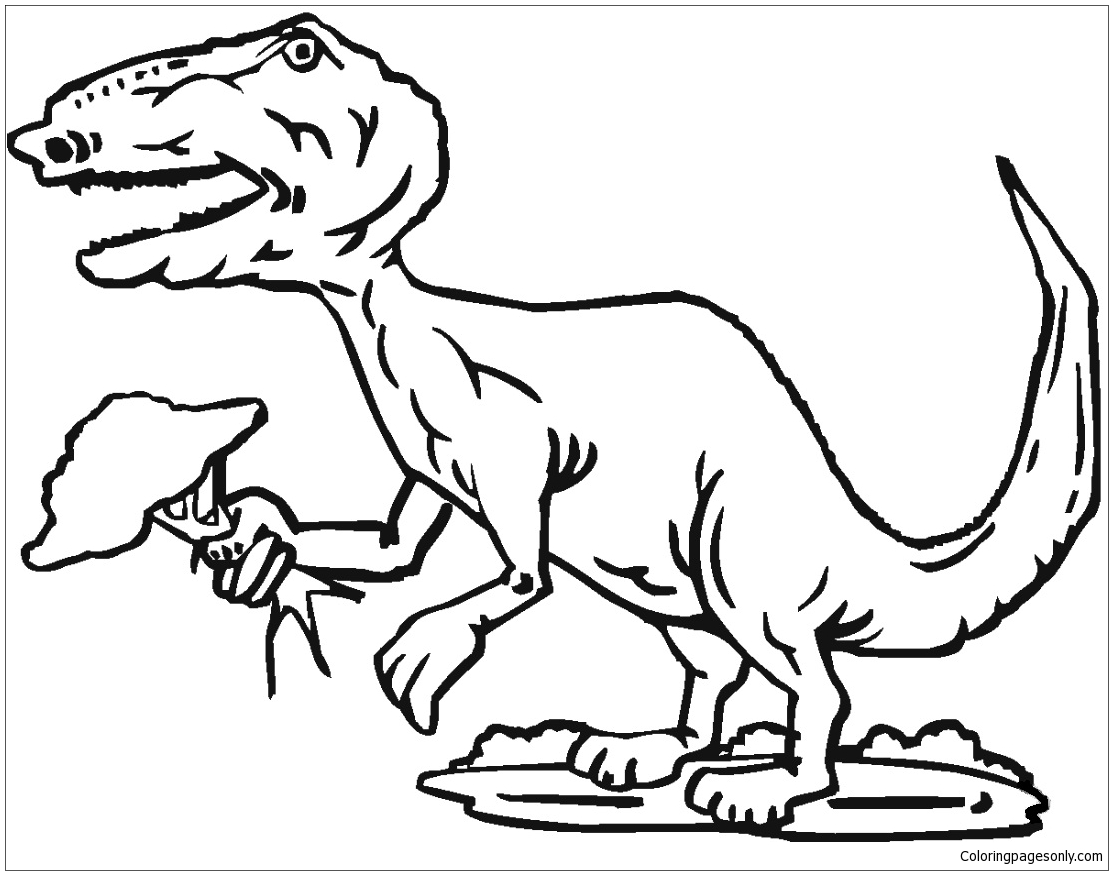
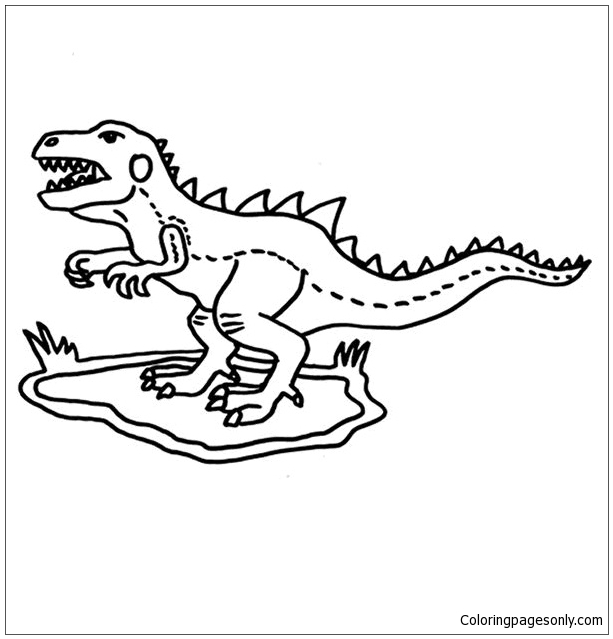
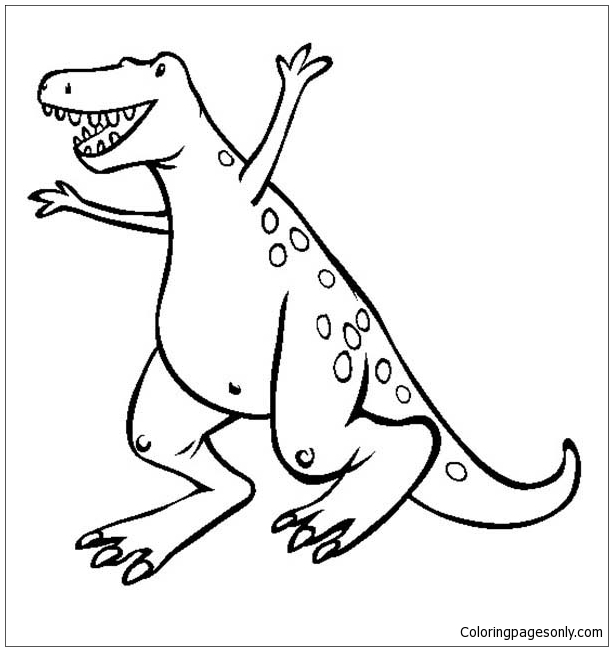
What’s Inside
Happy T. Rex Coloring Pages
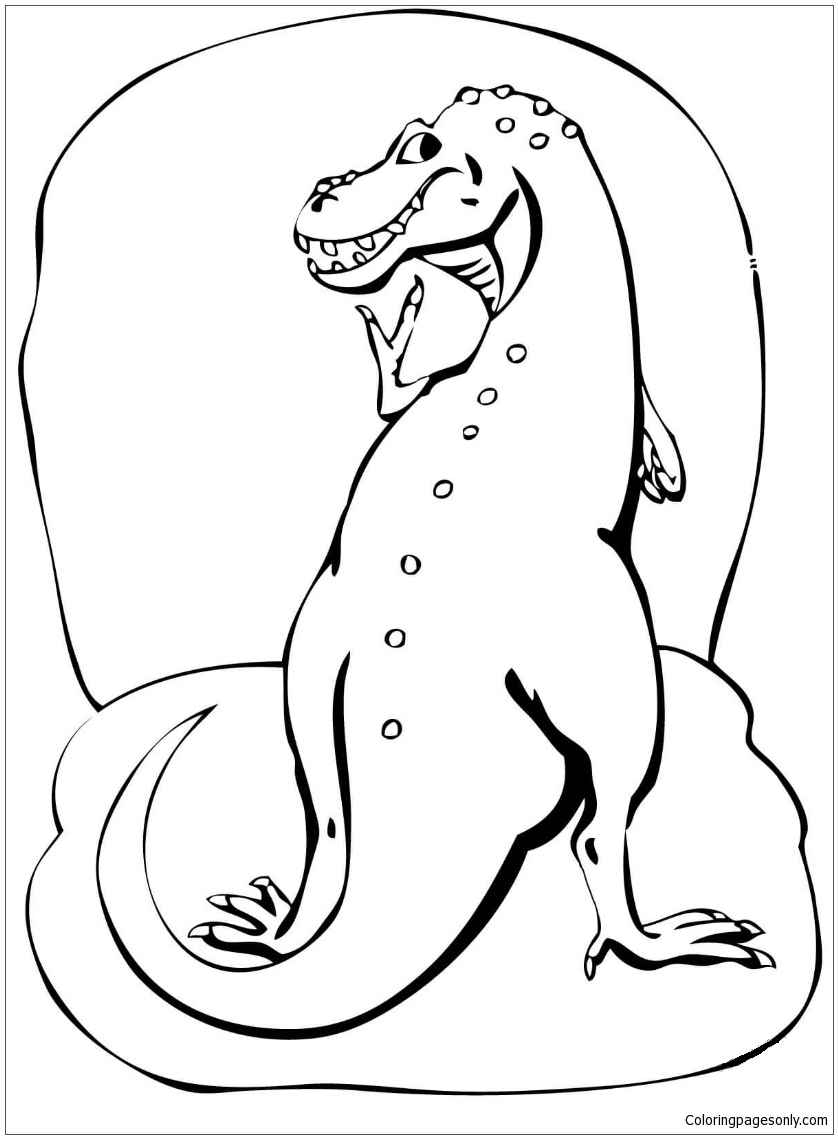
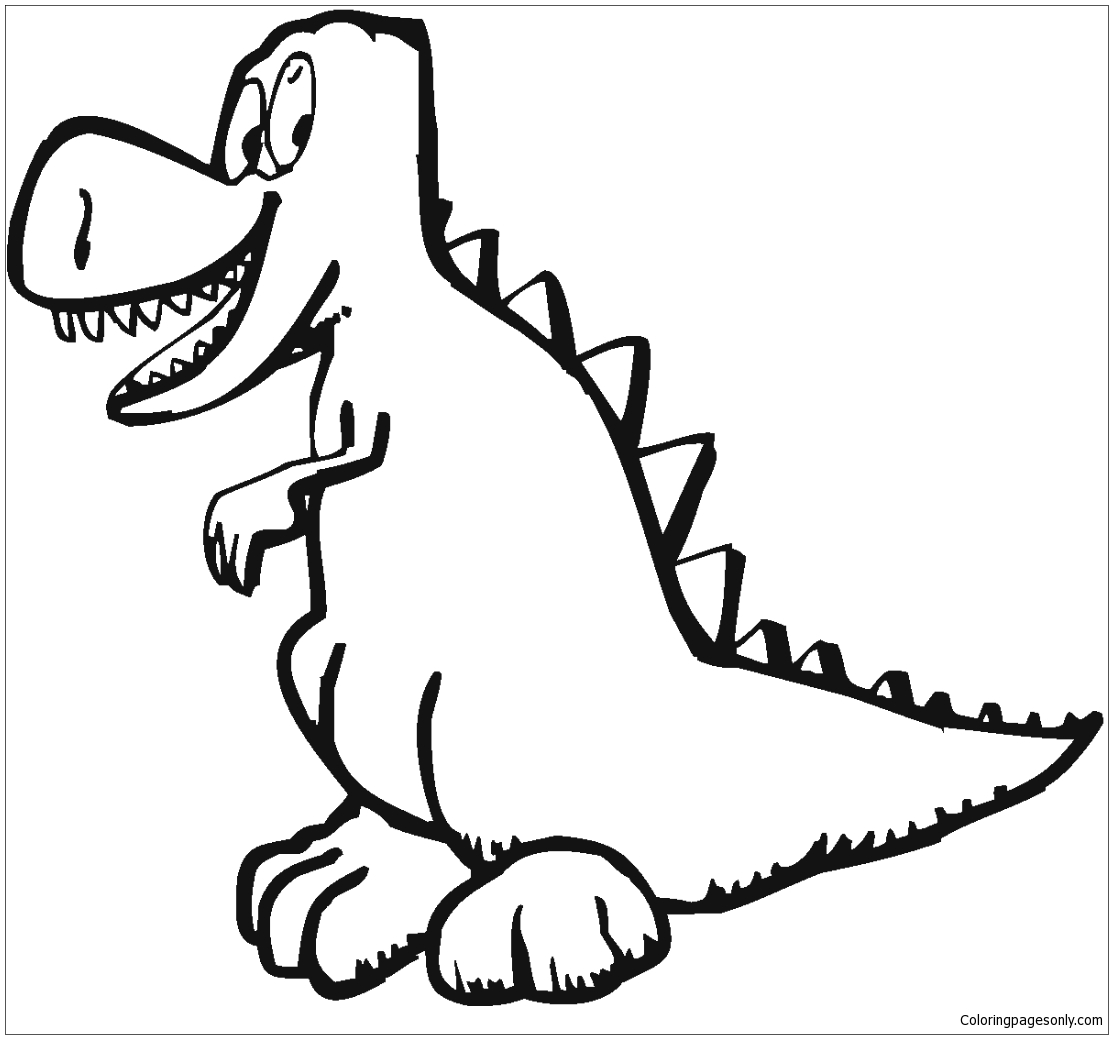
Happy T. rex pages show a lighter, friendlier version of a dinosaur that is usually known as a fierce predator. These designs may include smiling faces, rounder shapes, simple poses, playful expressions, and easy backgrounds. They are especially helpful for young children who love dinosaurs but may not want a scary predator page with sharp teeth, dark shadows, or roaring action.
The value of happy T. rex pages is emotional comfort. A friendly dinosaur lets children enjoy the famous shape of Tyrannosaurus without feeling overwhelmed. These pages can also support simple storytelling: Is the T. rex walking to meet a friend? Is it playing in a prehistoric field? Is it smiling after finding food or seeing another dinosaur?
Coloring happy T. rex pages: Use cheerful colors such as green, yellow, orange, blue, light brown, or purple. Keep the teeth simple and avoid making the mouth too dark if the page is meant to feel friendly. Add bright grass, soft clouds, flowers, rocks, or a sunny sky. Younger kids can use crayons or washable markers with broad color areas, and do not need realistic dinosaur colors.
Terrifying Tyrannosaurus Coloring Pages
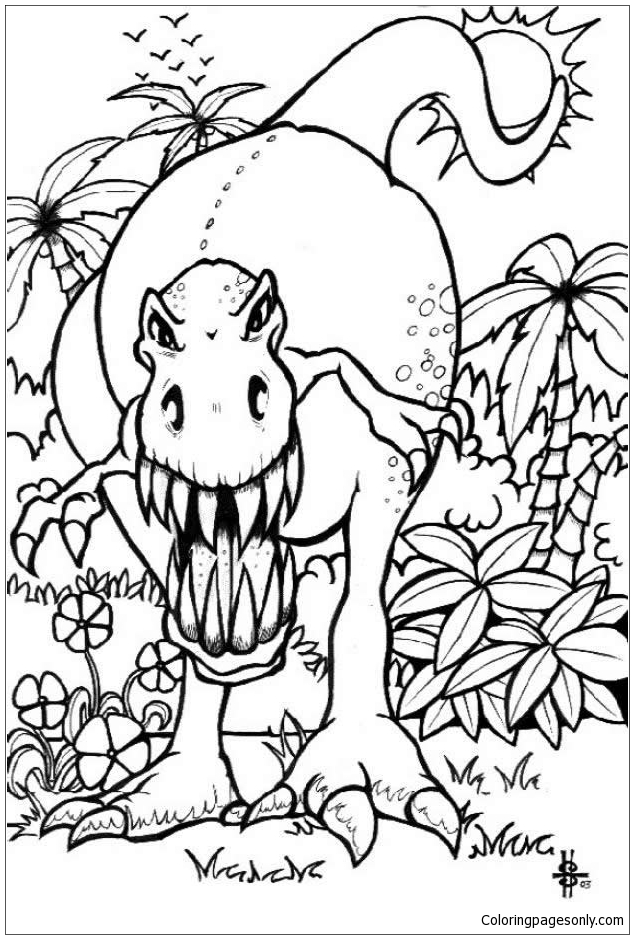
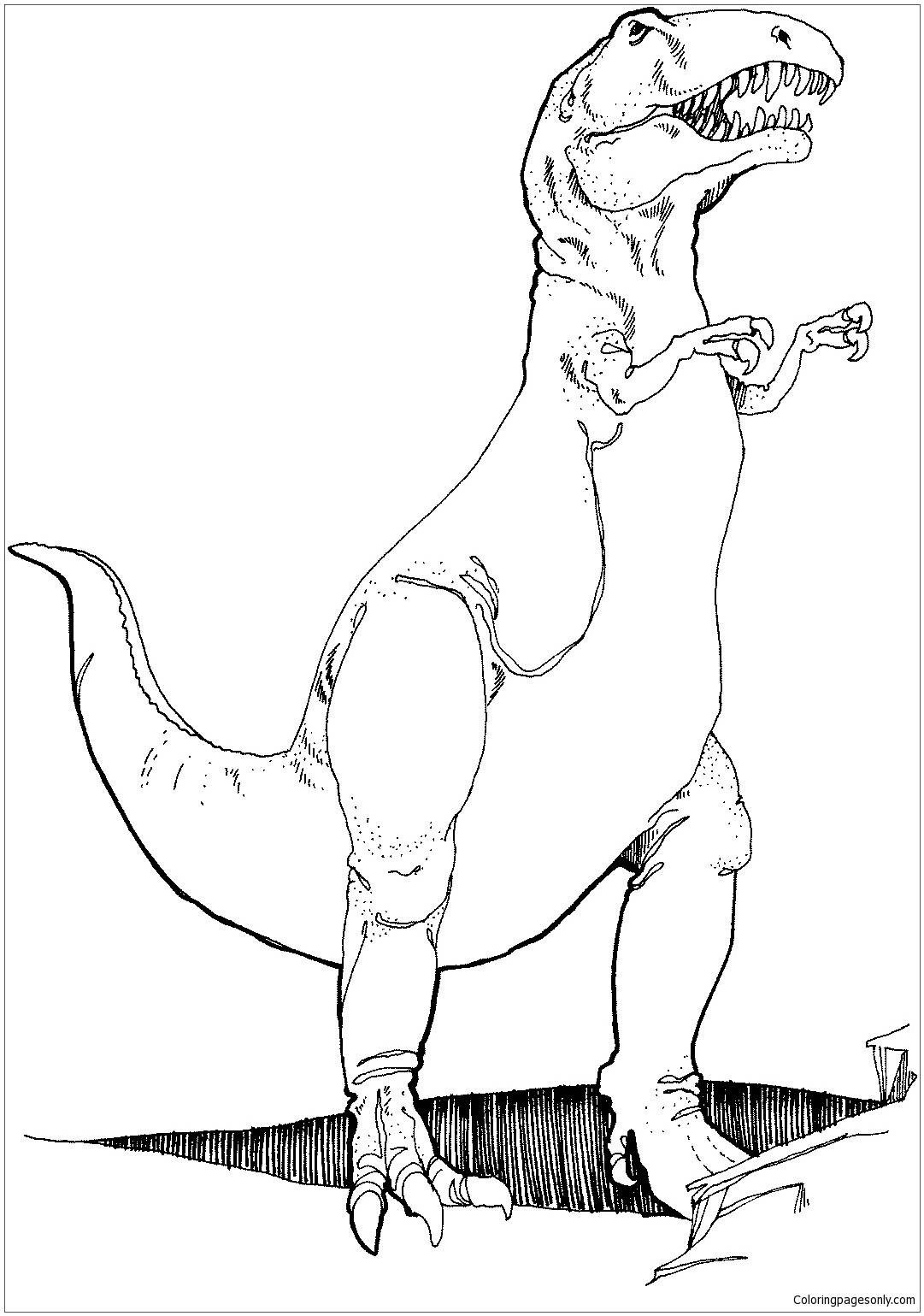
Terrifying Tyrannosaurus pages focus on the powerful side of T. rex. These designs may show open jaws, sharp teeth, heavy shadows, strong legs, claws, and dramatic poses. They are exciting for older kids and dinosaur fans because they show why T. Rex became such a famous prehistoric predator.
The key is to make the page dramatic without losing clarity. A scary T. rex page should still be readable: the teeth should stand out, the eye should be visible, the mouth should have depth, and the body shape should not disappear into a dark background. The strongest scary pages use contrast, not just darkness.
Coloring terrifying T. rex pages: Use deeper colors such as dark green, gray, brown, olive, rust, muted red, or dark orange. Add shadows under the jaw, along the belly, behind the legs, and near the tail. Keep the teeth white, cream, or pale yellow so the mouth stays clear. A stormy sky, rocky ground, dark forest, dust cloud, or sunset background can create drama while keeping the dinosaur readable.
Baby T. Rex Coloring Pages
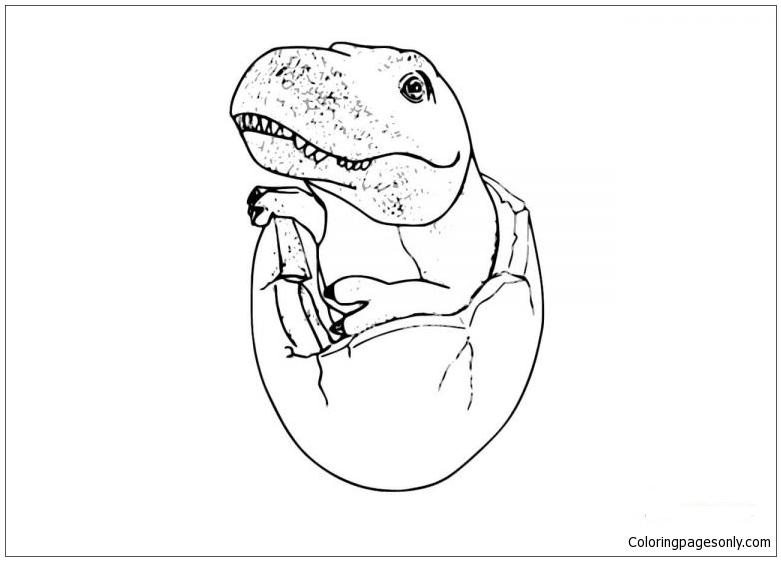
Baby T. rex pages bring cuteness, curiosity, and personality into the collection. These pages may show a small dinosaur with a big head, tiny arms, round eyes, short legs, or a playful pose. They are useful for younger children because they soften the fierce image of T. rex and turn the dinosaur into a character children can imagine, name, and describe.
Baby T. rex pages also create strong storytelling opportunities. A child can imagine the baby dinosaur learning to walk, following a parent, exploring a nest, chasing a butterfly, or making its first tiny roar. These pages work well for preschool, early elementary, dinosaur parties, and beginner coloring activities.
Coloring baby T. rex pages: Use softer colors than adult T. rex pages. Light green, sandy yellow, pale brown, mint, peach, or soft orange can make the baby dinosaur feel gentle and friendly. Add small spots or stripes if the body has enough space. Keep the eyes bright and the background light. A nest, a small plant, an egg shell, a flower, or a simple rock can make the baby T. rex scene feel complete.
T-Rex Family Coloring Pages
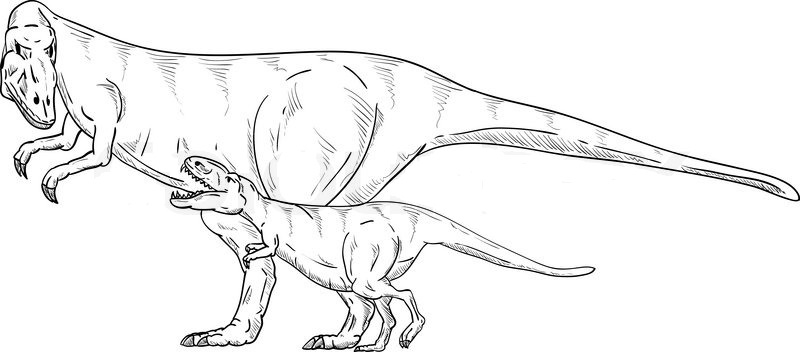
T. rex family pages add warmth and story to a dinosaur that is often shown alone. These sheets may show a parent and baby, two adult dinosaurs, a group walking together, or a family scene in a prehistoric setting. They are strong for children who enjoy emotional scenes, parent-child stories, and dinosaur adventures that are not only about roaring or fighting.
Family pages help children think about size, relationship, and protection. A large T. rex beside a baby dinosaur shows contrast. A parent walking with a baby can suggest care, travel, or learning. A family scene can also become a short writing prompt after coloring: Where are they going? What does the baby T. rex see? Is the adult protecting the young dinosaur?
Coloring T. rex family pages: Give each dinosaur a slightly different shade so the family members do not blend. One adult can be olive green, another brown, and the baby a lighter tan or yellow-green. Add gentle shadows under their feet to connect them to the ground. A soft forest, nest area, riverbank, or sunset background can make the scene feel warm instead of aggressive.
Roaring Tyrannosaurus Head Pages
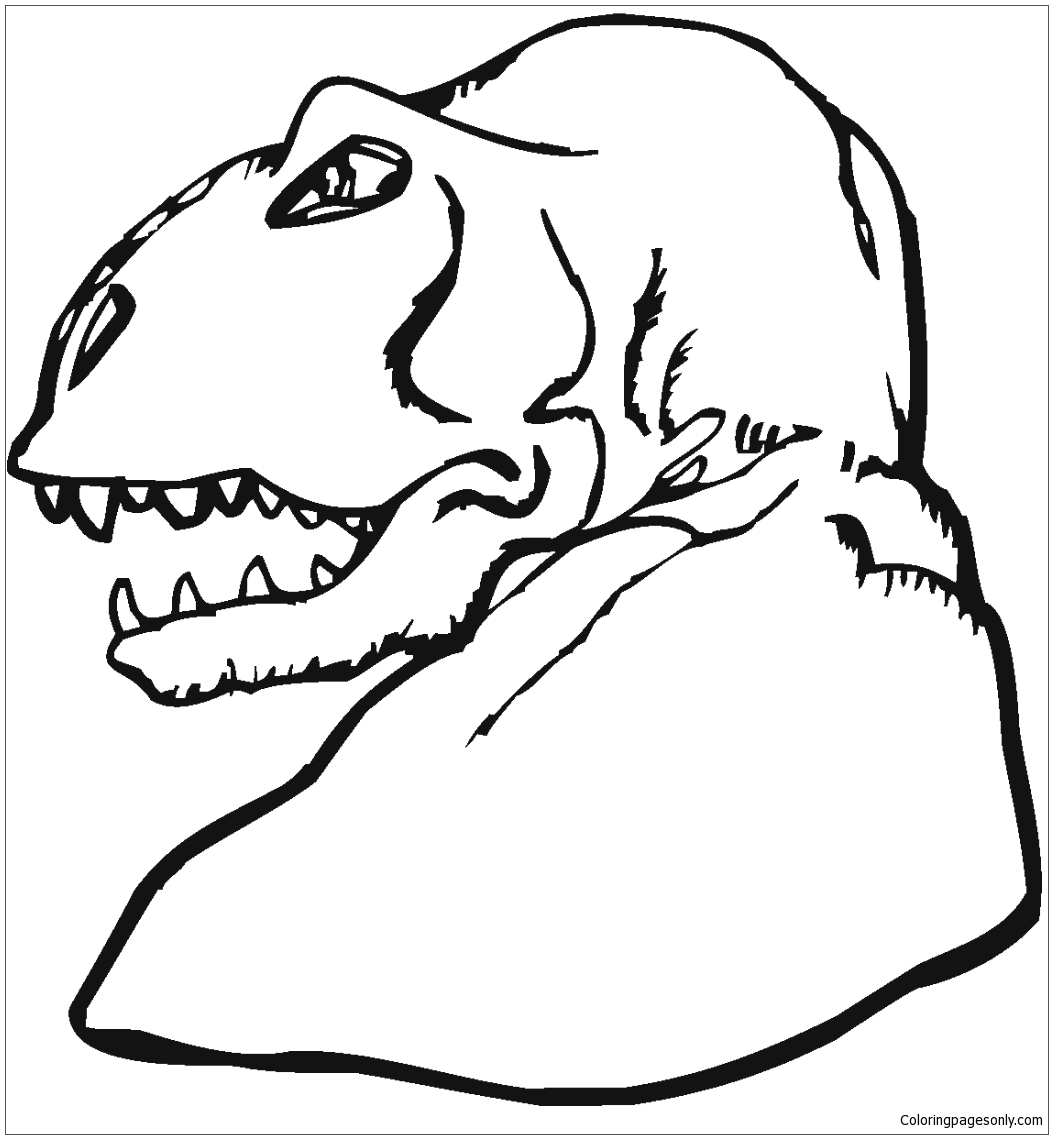
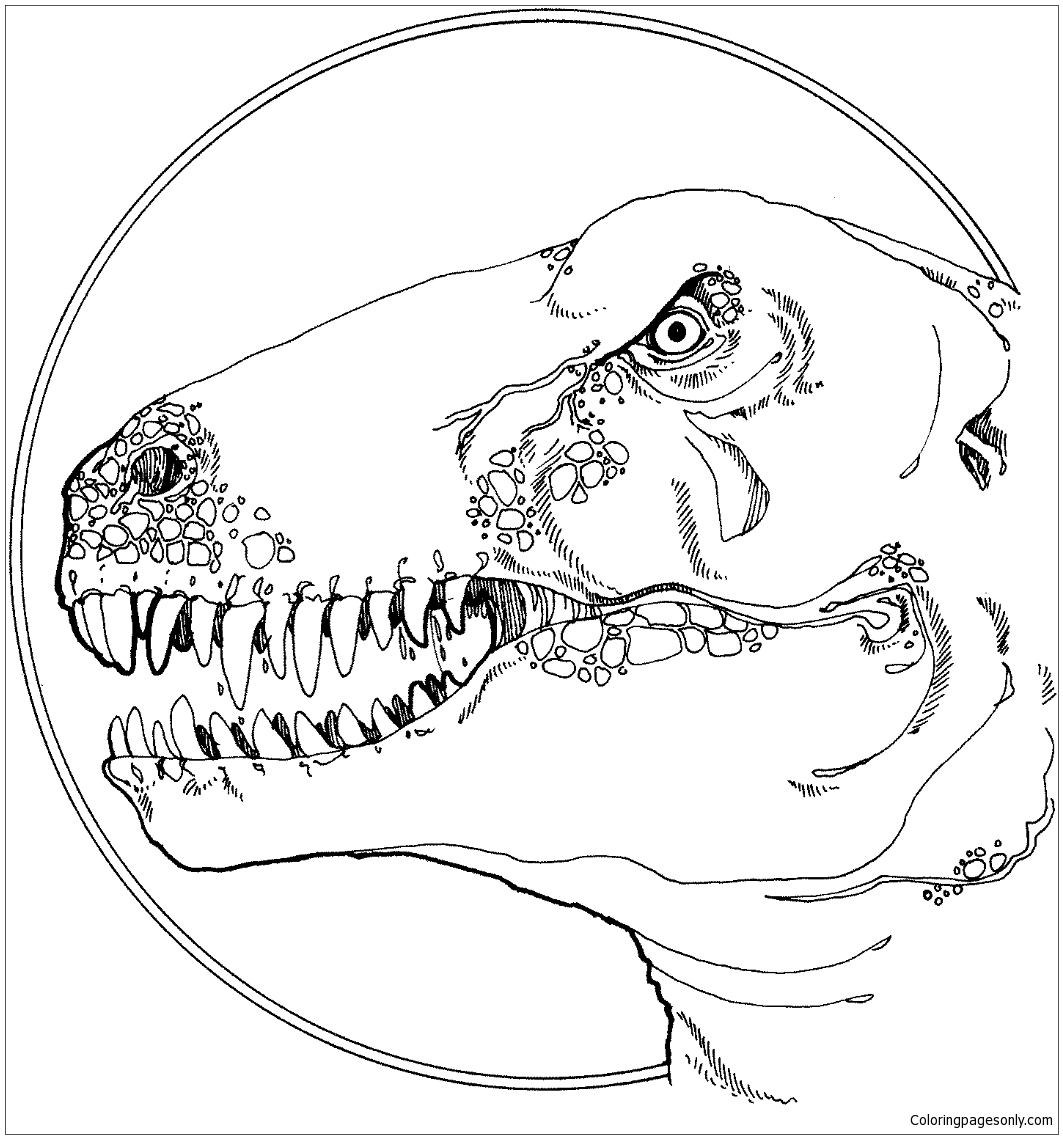
Roaring Tyrannosaurus head pages are among the most important designs in a T. rex collection because the head carries the dinosaur’s strongest identity. The skull shape, jaw size, teeth, nostrils, eye position, and mouth opening all help children recognize T. rex quickly. These pages are excellent for practicing close-up detail and learning how expression changes a picture.
A T. rex head page is not just about coloring teeth. It teaches visual focus. The eye can make the dinosaur look angry, alert, curious, or powerful. The jaw shadow creates depth. The teeth and gums create contrast. The skin around the head can show texture through stripes, dots, small shadows, or rough shading.
Coloring roaring T. rex head pages: Start with the eyes, teeth, and mouth because they define the expression. Use cream, white, or pale yellow for the teeth. Use dark red, brown, deep purple, or black-brown inside the mouth, but keep the teeth clean. Add darker shading under the jaw, around the nostrils, behind the eye, and at the back of the skull. Use small strokes or dots for skin texture so the head feels powerful but not messy.
Tyrannosaurus Rex Full-Body Pages
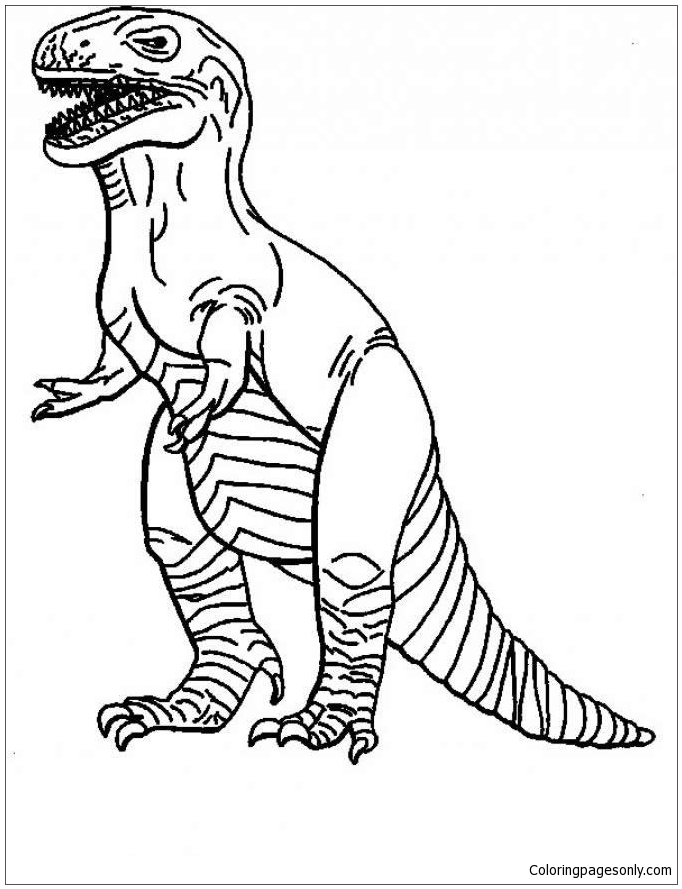
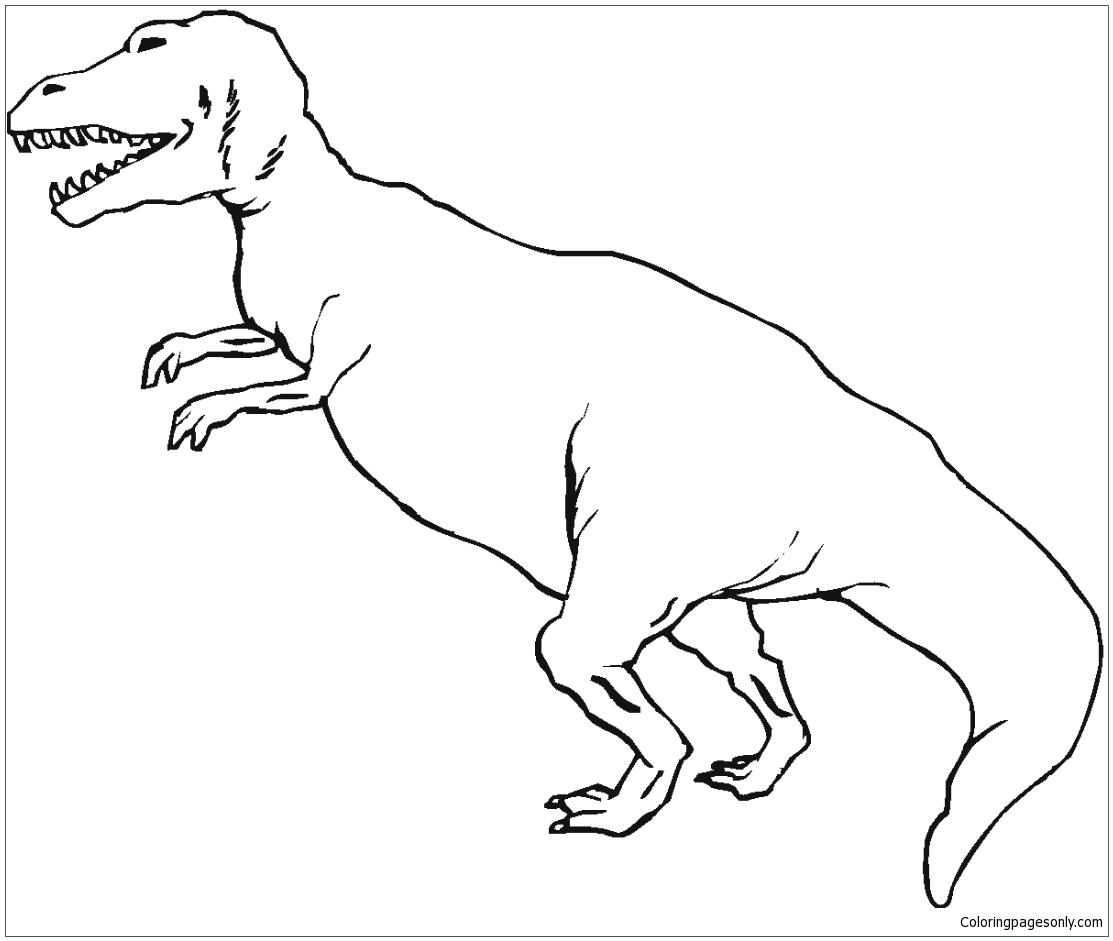
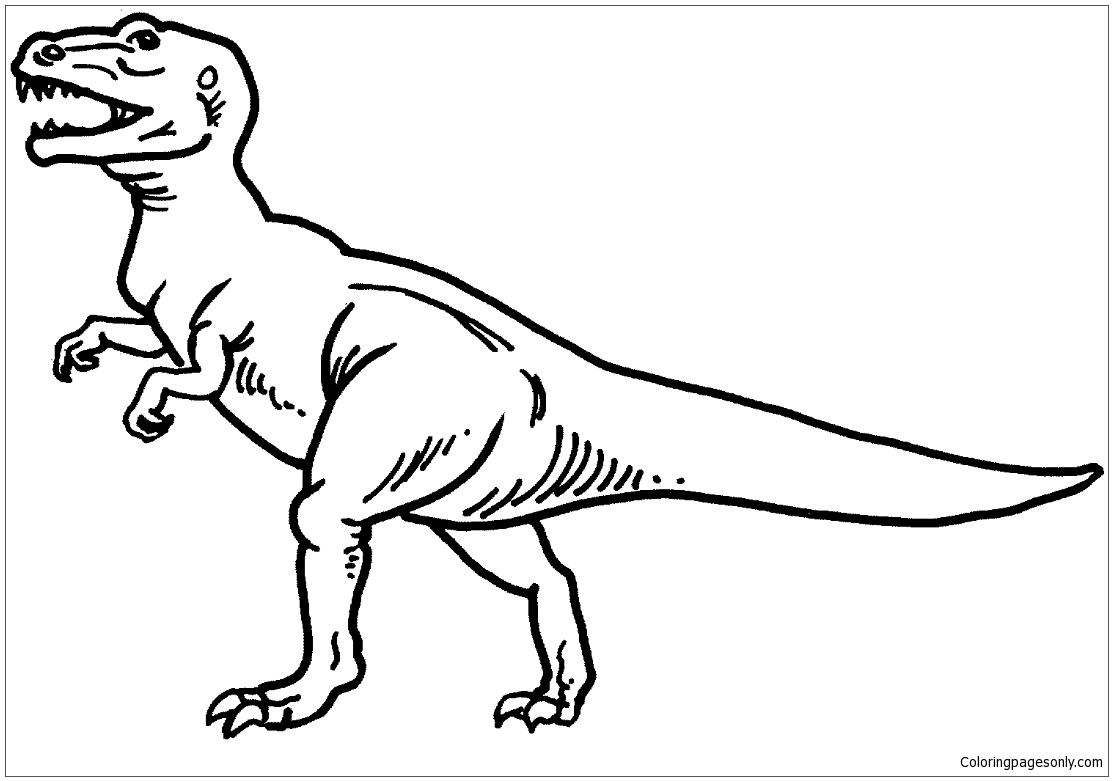
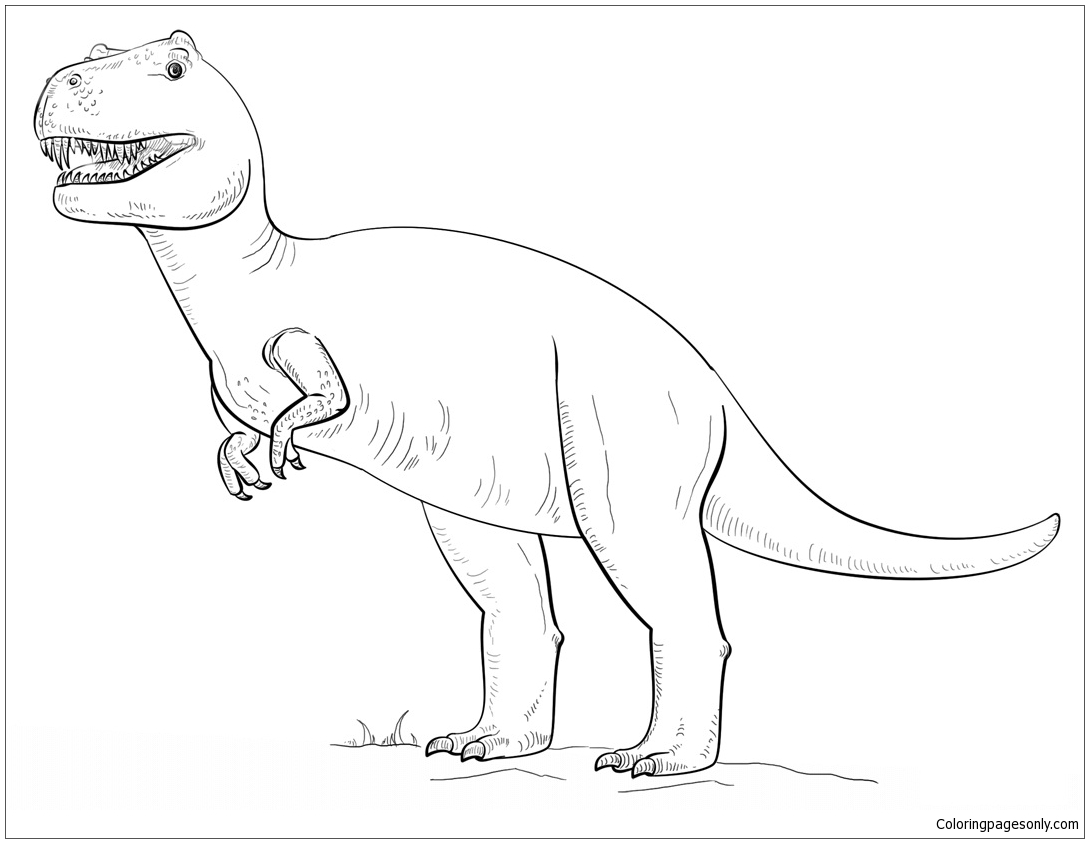
Full-body Tyrannosaurus pages show the complete dinosaur shape: huge head, small arms, strong legs, long tail, heavy body, and balanced posture. These pages are useful for children who are learning to recognize dinosaur body parts and understand how the T. rex’s shape works as a whole.
The tail is especially important. Many children focus only on the teeth, but the tail helps balance the dinosaur’s large head and body. Strong legs show weight and movement. Tiny arms make T. rex easy to identify. A full-body page can become a simple body-part labeling activity after coloring.
Coloring full-body Tyrannosaurus pages: Choose one base body color first. Then add darker shading along the back, tail, belly, and legs. Use a lighter color on the chest, throat, or underside if the page has space. Keep the arms, feet, and tail clear. Add a shadow under the feet so the dinosaur feels grounded instead of floating on the page.
Tyrannosaurus from the Back Pages
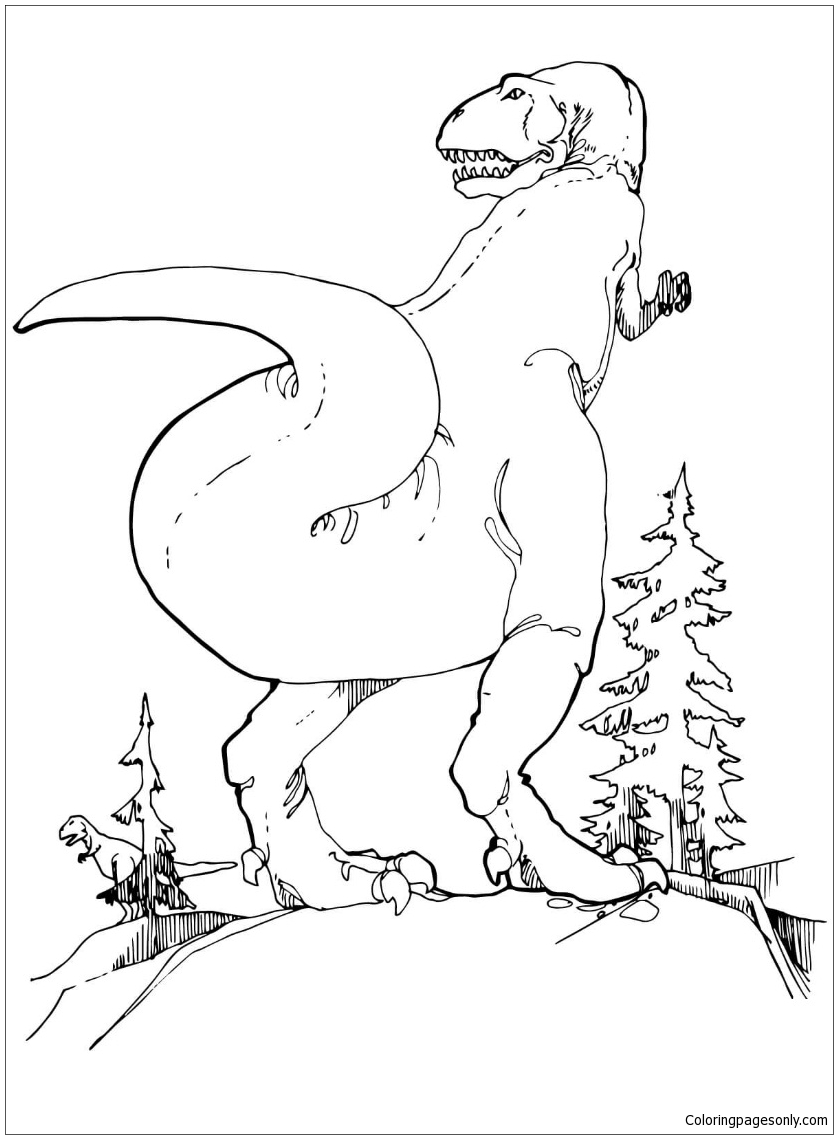
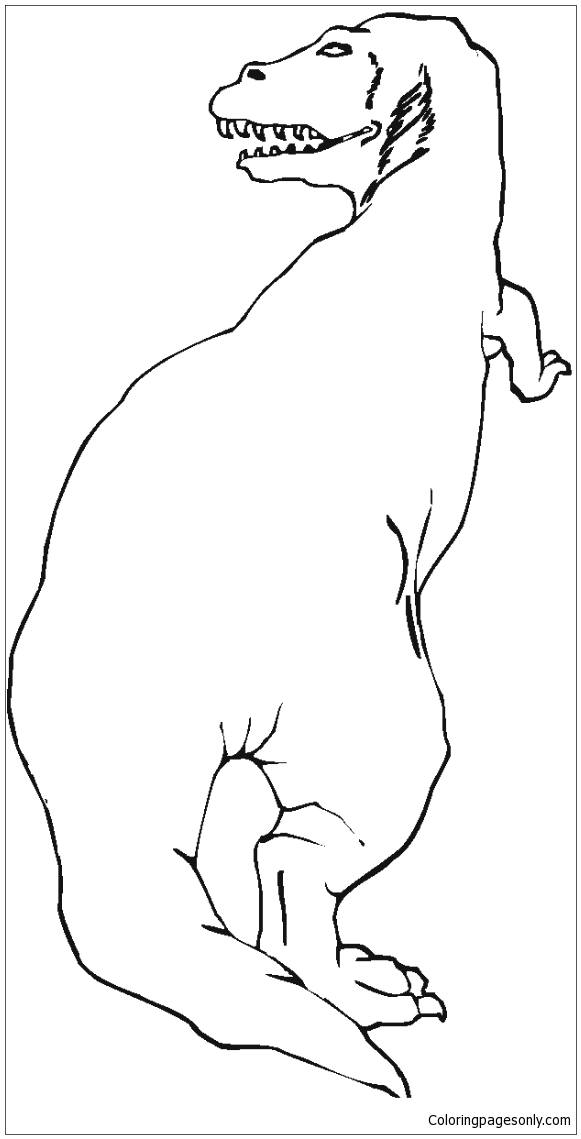
Back-view T. rex pages feel fresh because they show the dinosaur from a less common angle. Instead of focusing on the teeth and face, these pages draw attention to the spine, back, tail, legs, and body movement. A back-view page can make the dinosaur feel like it is walking into a prehistoric world.
These pages are valuable because they teach children that a dinosaur can be recognized by its shape, not only by its face. The tail direction, back curve, leg position, and head turn all help create movement. They are also good for storytelling because the viewer wonders where the T. rex is going.
Coloring back-view Tyrannosaurus pages: Focus on the back ridge, tail direction, and leg shadows. Use darker tones along the spine and tail, then lighter tones on the sides of the body. Add a path, forest opening, distant mountain, or sunset sky to make the dinosaur look like it is moving through a scene. Keep the tail and legs clear because they carry the movement.
Tyrannosaurus Destroys City Pages
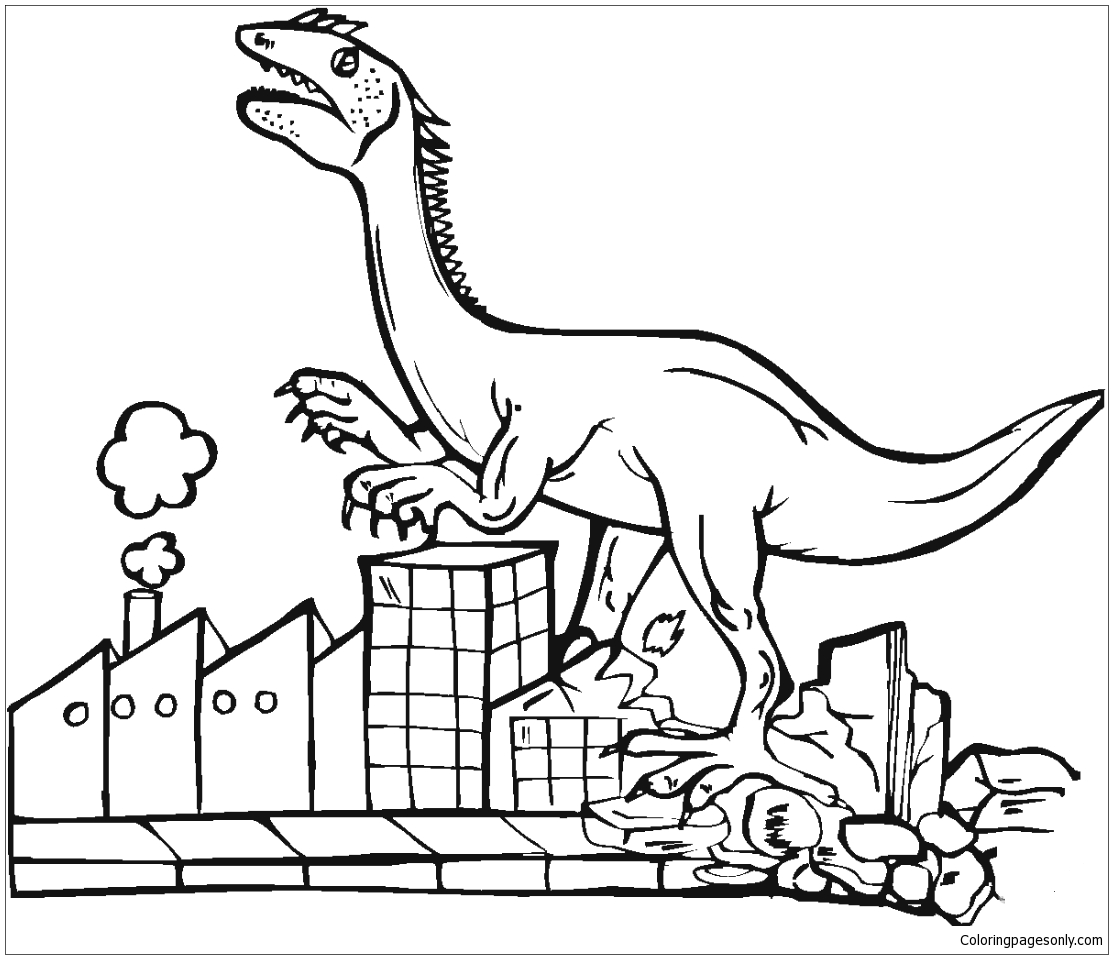
City-destroying T. rex pages bring fantasy action into the collection. These are not realistic paleontology pages, but they are highly engaging for children who enjoy big scenes, broken buildings, dramatic movement, and movie-like energy. This type of page works well for imaginative coloring and storytelling.
The main challenge is balance. A city scene can become visually busy because it may include buildings, roads, dust, windows, smoke, and a large dinosaur. The T. rex should remain the main subject. The background should support the action, not swallow it.
Coloring city-destroying T. rex pages: Make the T. rex either brighter or darker than the city so it stands out. Buildings can use gray, blue-gray, beige, brown, or muted brick tones. Dust clouds can use tan or light gray. Keep windows and broken edges simple. Add stronger color to the dinosaur’s face, claws, and tail so the action remains easy to understand.
T. Rex Battle Coloring Pages
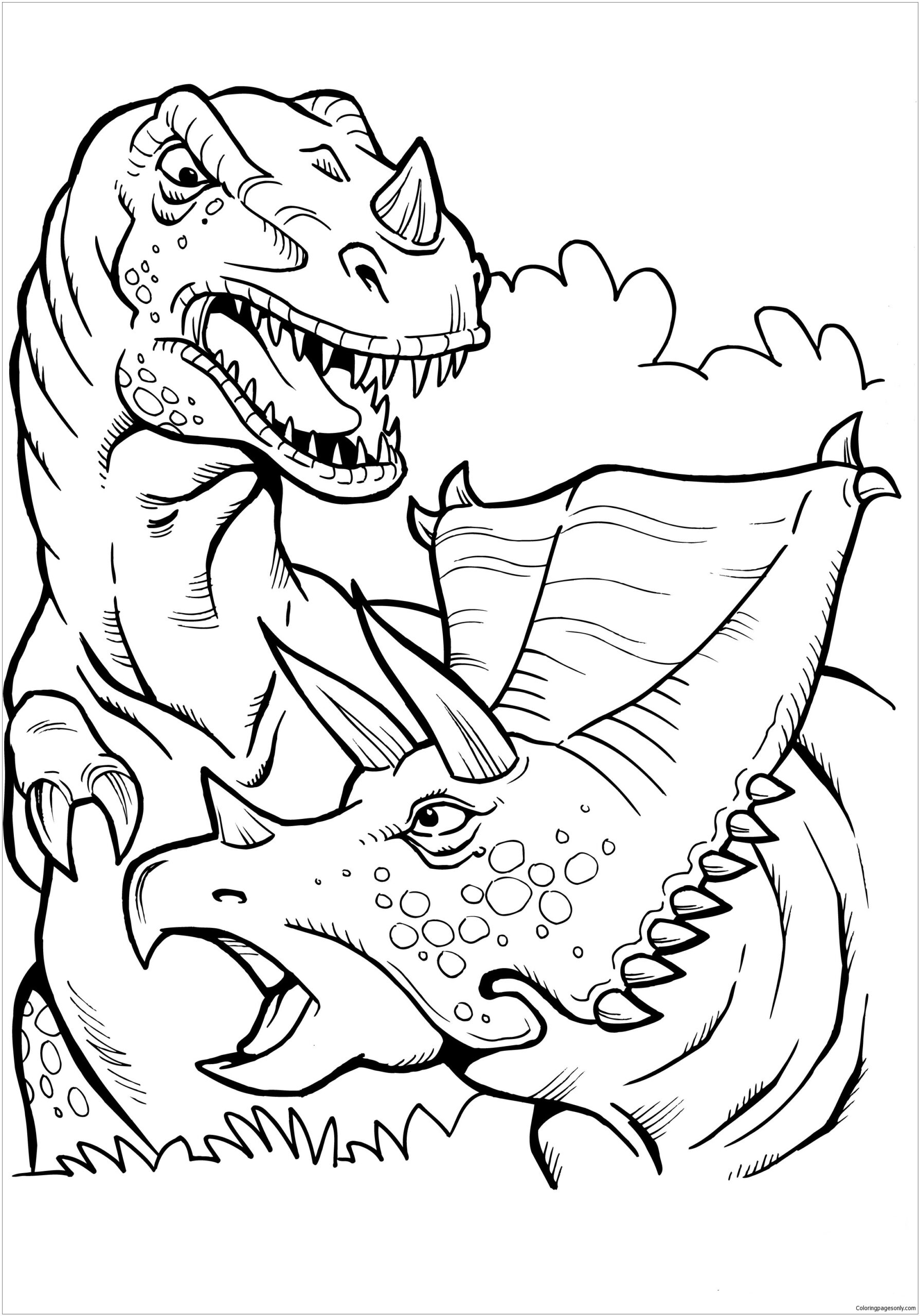
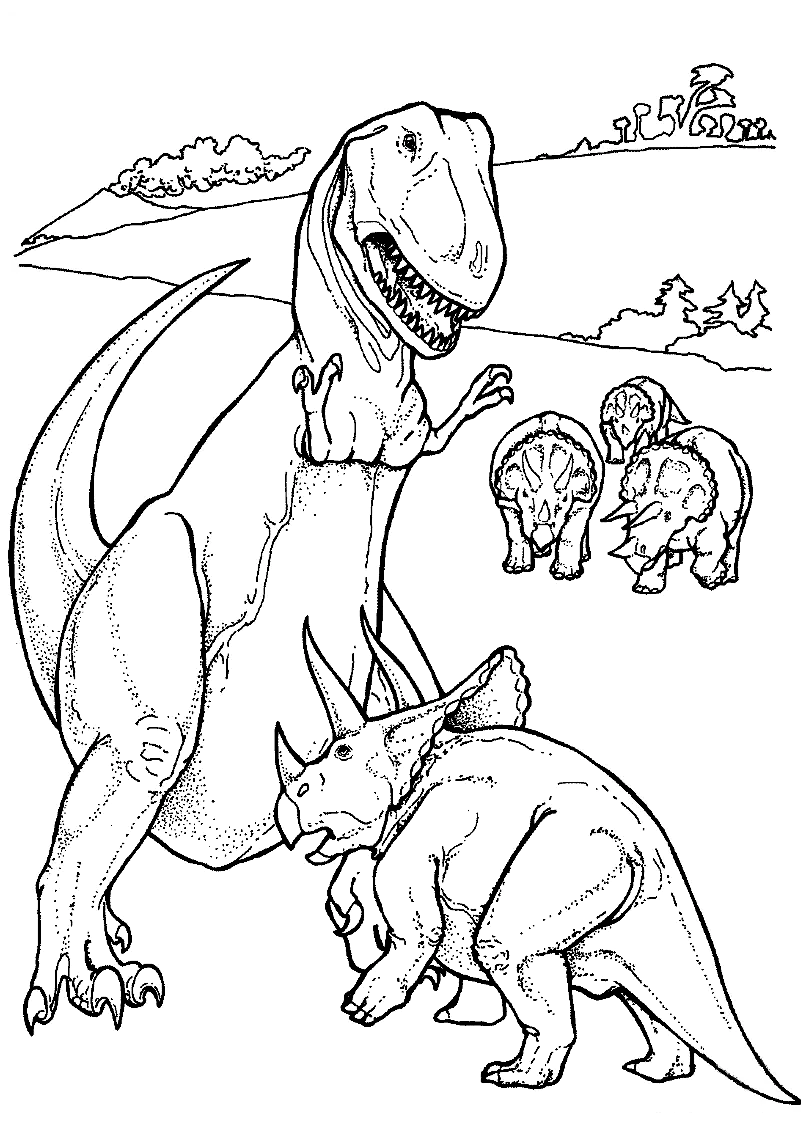
- rex battle pages create an instant story. They may show a chase, a face-off, a roar, a defensive moment, or a dramatic meeting between dinosaurs. These pages are exciting, but they can also be used in a learning-focused way when adults guide children to compare shapes instead of only focusing on fighting.
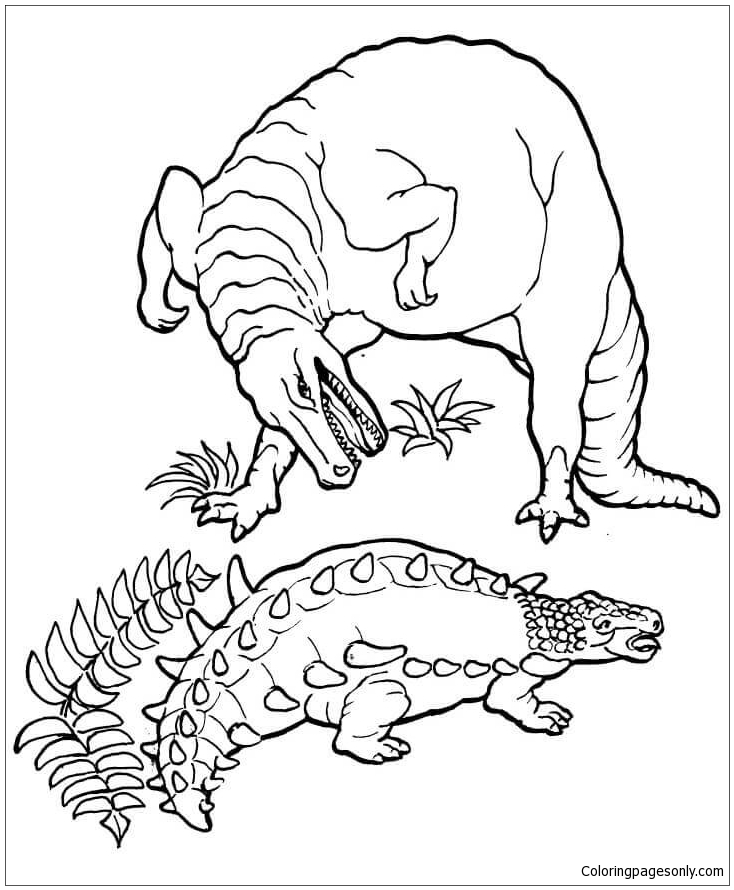
A battle page can help children notice how dinosaurs are built differently. T. rex may have teeth, jaws, tiny arms, strong legs, and a heavy tail. Another dinosaur may have horns, plates, spikes, armor, or a different body posture. This turns action coloring into visual comparison.
Coloring T. rex battle pages: Color the main dinosaur first, then the second dinosaur, then the ground and sky. Use different palettes for each dinosaur so they are easy to tell apart. Add dust, rocks, shadows, or grass movement near the feet. Do not make the background too crowded if both dinosaurs already have many details.
Triceratops and Tyrannosaurus Pages
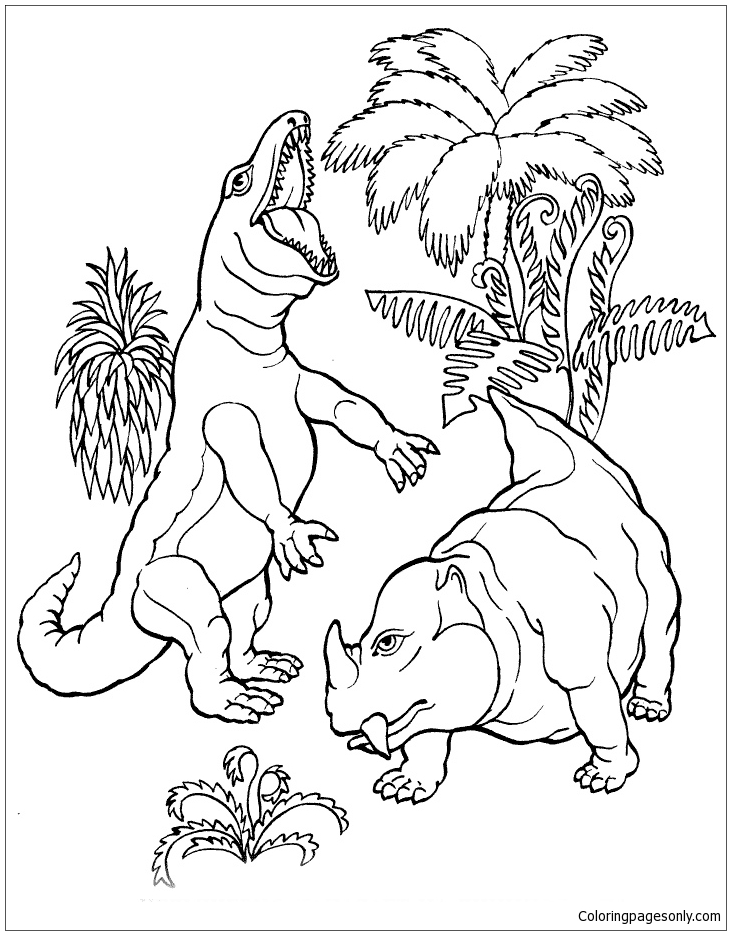
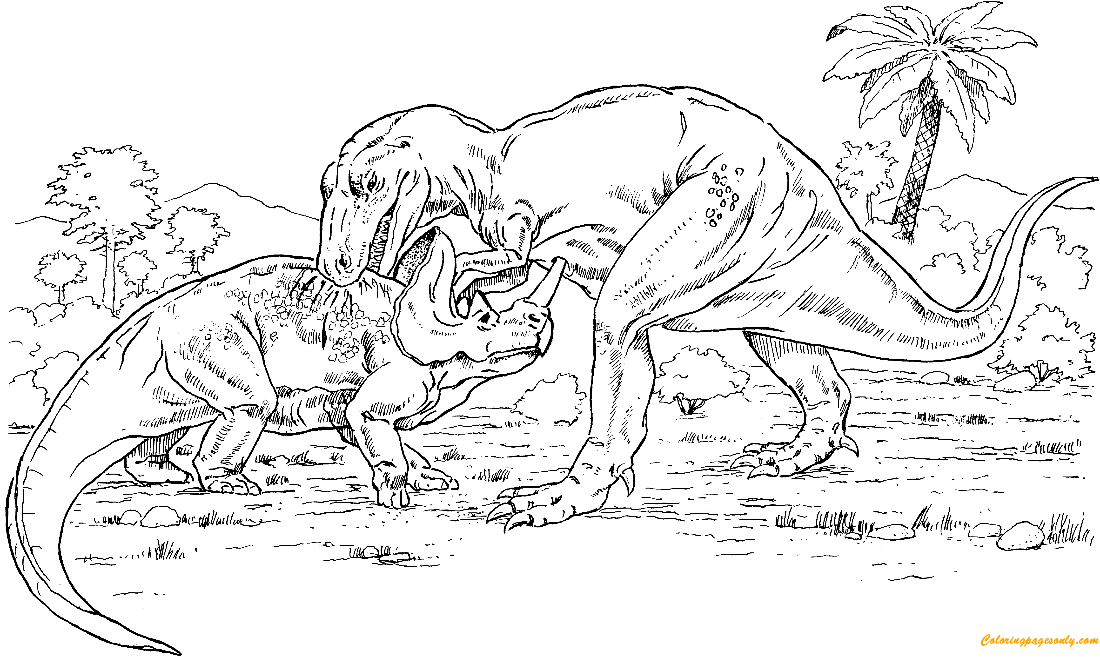
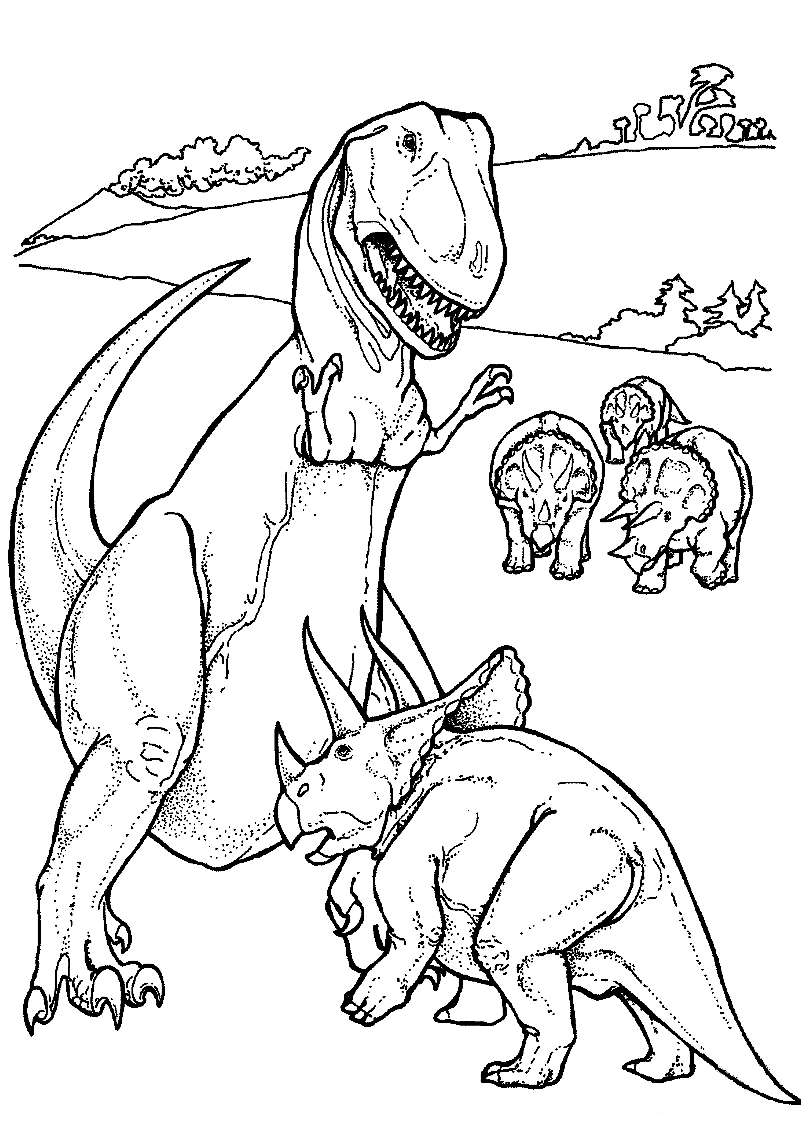
Triceratops and Tyrannosaurus pages are classic dinosaur comparison sheets. T. rex represents a large predator shape with jaws and teeth, while Triceratops represents a heavy plant-eater shape with horns, frill, and a low, strong body. These pages are excellent for classroom discussion because children can compare body parts directly.
This type of page can support simple questions: Which dinosaur has horns? Which one has sharper teeth? Which one has a frill? Which one stands taller? Which one looks heavier? Which one might defend itself with horns? These questions make the coloring activity more educational.
Coloring Triceratops and T. rex pages: Give T. rex one color family and Triceratops another. For example, use olive, brown, or rust for T. rex and gray, tan, or muted green for Triceratops. Highlight Triceratops horns and frill with lighter tones. Keep the ground simple so the two large dinosaurs remain clear and easy to compare.
Stegosaurus and Tyrannosaurus Pages
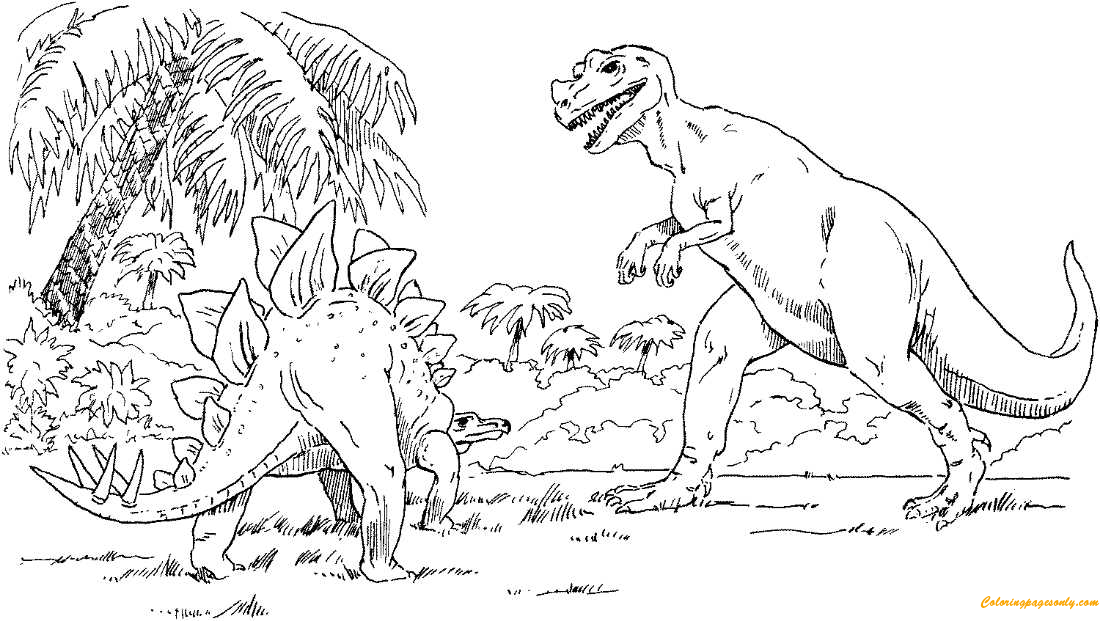
Stegosaurus and Tyrannosaurus pages give children another strong body shape comparison. Stegosaurus has back plates, a smaller head, and a spiked tail, while T. rex has a huge head, teeth, tiny arms, and strong legs. These pages show how different dinosaurs can look even when they share a prehistoric setting.
The plates on Stegosaurus give colorists a special design feature, while the T. rex head and teeth create a different type of focus. This makes the page useful for both art and observation. Children can compare defensive features, body height, tail shape, and posture.
Coloring Stegosaurus and T. rex pages: Use the Stegosaurus plates as a color feature. The body can be gray-green, tan, or brown, while the plates can be orange, red, yellow, or purple. T. rex can use deeper green, olive, brown, gray, or rust. Keep both dinosaurs different enough in color so their shapes stay readable.
Tarbosaurus and Gorgosaurus Coloring Pages
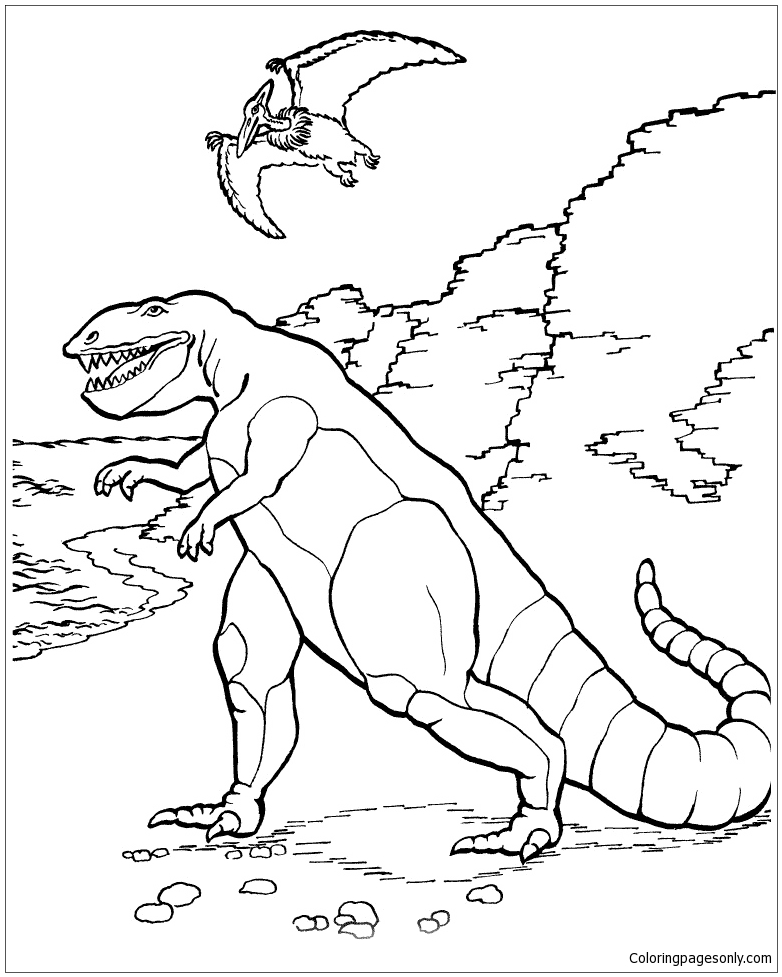
Tarbosaurus and Gorgosaurus pages introduce tyrannosaurid relatives, which makes the collection more interesting for older children and dinosaur fans. These dinosaurs may look T. rex-like because they share large predator features, but they are not simply copies of T. rex. Their pages help children understand that dinosaur families can include related animals with similar body plans.
This section adds depth to the collection because it moves beyond the most famous dinosaur name. A child can compare T. rex, Tarbosaurus, and Gorgosaurus by head shape, body size, posture, markings, and coloring choices. This is useful for dinosaur folders, classroom displays, and more advanced dinosaur learning.
Coloring tyrannosaurid relative pages: Use natural palettes similar to T. rex, but change the markings. If T. rex is green, make Tarbosaurus brown or gray and Gorgosaurus tan, olive, or rust. Add different stripes, spots, darker backs, or lighter bellies. These pages are ideal for a comparison project because each dinosaur can have its own visual identity.
T. Rex Running and Chasing Pages
Running and chasing pages show movement. A T. rex may step forward, turn its body, chase another dinosaur, run through a plain, or roar while moving. These pages are strong for children who enjoy action because the dinosaur feels alive rather than posed.
Movement depends on the legs, tail, and ground. If the feet, dust, and shadow are colored well, the page looks more dynamic. If the whole background is too busy, the motion can become hard to read.
Coloring running T. rex pages: Keep the legs and tail clear because they show direction and speed. Add shadow under the feet, dust near the ground, or grass bending behind the dinosaur. Use darker shading on the back leg and underside of the tail to create depth. A simple, open plain, rocky path, or low grassland background helps the movement stand out.
T. Rex with Trees and Prehistoric Plants
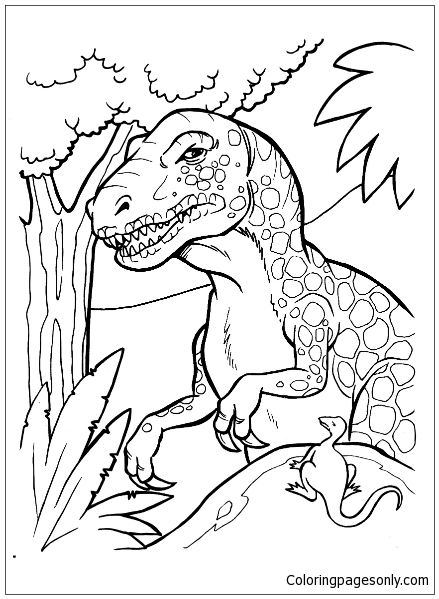
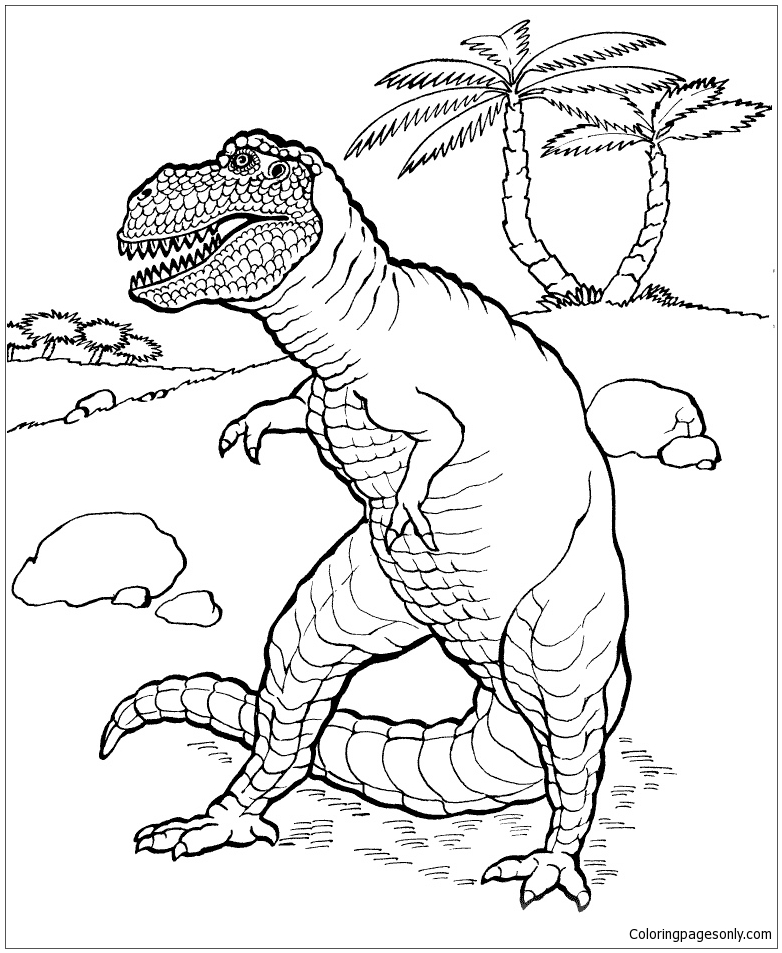
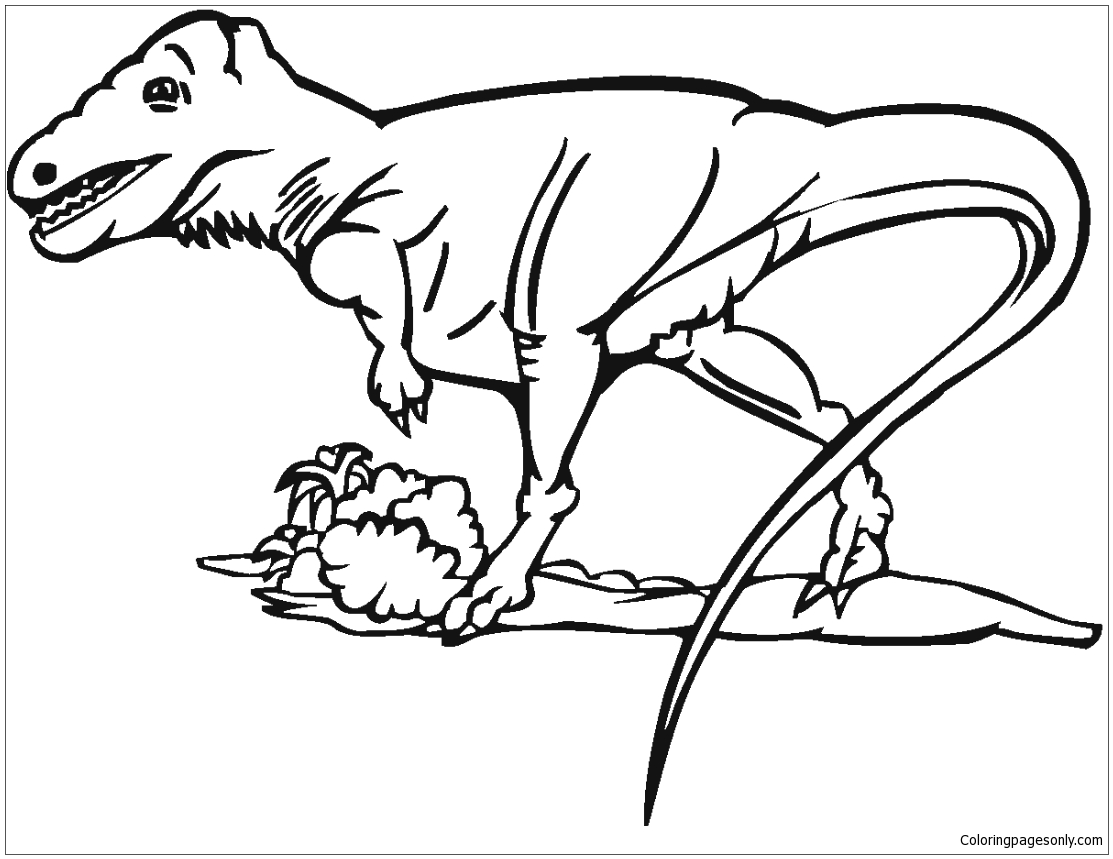
Habitat pages help move Tyrannosaurus from a single dinosaur outline into a prehistoric world. These pages may include trees, rocks, ferns, bushes, mountains, rivers, or sky. They are useful because children can learn to think about where the dinosaur is, not just what it looks like.
A strong habitat page has balance. The dinosaur should stay clear, while the plants and rocks support the setting. If the background is too bright or detailed, the T. rex may become hard to see. If the background is too empty, the page may feel unfinished.
Coloring T. rex habitat pages: Color the dinosaur first, then the ground, then the trees and plants. Use different greens for ferns, bushes, and background trees. Use lighter colors for distant mountains or sky and darker colors near the dinosaur’s feet. A blue, orange, gray, or cloudy sky can change the mood of the whole scene.
Funny T. Rex Coloring Pages
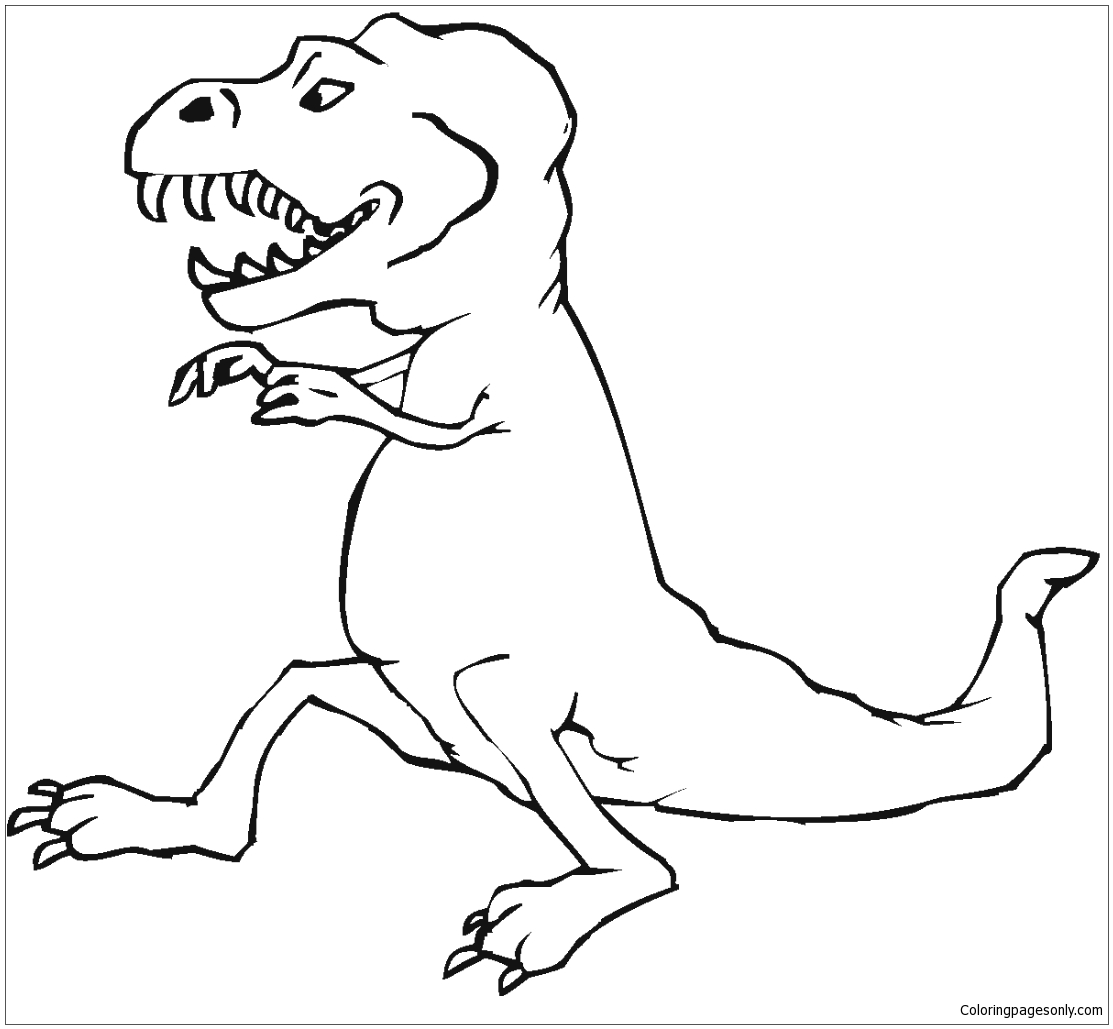
Funny T. rex pages bring humor into the collection. These designs may show silly expressions, exaggerated poses, playful action, or a big dinosaur acting unexpectedly. They are useful because they make T. rex approachable for children who prefer fun over realism.
Humor also encourages creative coloring. A funny T. rex does not need to follow natural colors. Children can use bright palettes, add decorations, or imagine the dinosaur doing something silly. This is especially helpful for early learners who need confidence more than technical accuracy.
Coloring funny T. rex pages: Use bright colors and playful backgrounds. A funny T. rex can be green, blue, orange, purple, pink, or rainbow-colored. Add speech bubbles, hearts, stars, footprints, or simple decorations if the page has space. The goal is personality and fun.
Cute Tyrannosaurus Pages for Younger Kids
Cute Tyrannosaurus pages usually have simple outlines, large shapes, friendly faces, and fewer small details. They are ideal for preschoolers, early elementary students, quick home coloring time, party tables, and beginner dinosaur activities.
These pages help young children practice basic skills: staying inside large outlines, choosing colors, naming body parts, and finishing a page. The page does not need complex shading to be successful. A simple, confident finished dinosaur is the goal.
Coloring cute Tyrannosaurus pages: Use crayons or washable markers with simple color blocks. Choose one body color, one belly color, and one background color. Use cheerful colors and avoid making the mouth too dark. Add a sun, cloud, grass, or simple tree if the page has space.
Detailed Tyrannosaurus Pages for Older Kids
Detailed T. rex pages may include more teeth, claws, skin texture, shadows, rocks, trees, other dinosaurs, and action backgrounds. These pages are better for older children, dinosaur fans, homeschool activities, and science-themed art lessons.
Detailed pages can teach patience and planning. The colorist needs to decide what to color first, how to separate the dinosaur from the background, where to place shadows, and how much texture to add. These pages look best when the dinosaur’s head, body, and tail remain readable.
Coloring detailed Tyrannosaurus pages: Use colored pencils for texture, stripes, scales, shadows, claws, teeth, rocks, and plants. Work in layers: base body color first, body shadows second, small details third, background last. Use strong contrast only where it helps the dinosaur stand out.
Printable T. Rex Pages for Crafts
Printable Tyrannosaurus pages can become more than finished coloring sheets. They can be used for dinosaur fact cards, classroom labels, party decorations, notebook covers, dioramas, comparison boards, and creative writing pages.
Craft use changes how a page should be colored. If the dinosaur is cut out, the edges need to be bold and clean. If the page becomes a poster, the colors should be strong. If it will become a science folder page, labels and body parts should stay readable.
Coloring printable craft pages: If you plan to cut out the dinosaur, keep the outer edges clear. Use colors that stand out from the background. For posters and party decorations, markers can make the image bold. For science folders, labels, and detailed pages, colored pencils give more control.
What These Pages Do
Tyrannosaurus coloring pages give children and dinosaur fans a focused way to explore one of the most recognizable prehistoric animals through shape, movement, expression, and story. A T. rex page can become a friendly dinosaur, a roaring predator, a baby character, a family scene, a science lesson, or an action adventure, depending on the drawing and the colors.
The first major value is shape recognition. Children can learn to identify T. rex by looking at the large skull, sharp teeth, tiny arms, strong legs, heavy tail, and forward-leaning body. These features make Tyrannosaurus different from many other dinosaurs. Coloring slows the child down and encourages observation: Where are the teeth? How small are the arms? Which part of the body looks strongest? What helps the dinosaur balance?
The second value is comparison. Pages with Triceratops and Tyrannosaurus help children compare horns, frills, teeth, and body weight. Pages with Stegosaurus and T. rex show plates, tails, and predator shape. Tarbosaurus and Gorgosaurus pages can introduce the idea that some dinosaurs are related and share similar body plans. These comparisons make the collection stronger for classrooms, homeschool lessons, and dinosaur-themed learning.
The third value is storytelling. A happy T. rex page tells a different story from a roaring head page. A baby T. rex page can become a story about learning, exploring, or following a parent. A family scene can show protection or movement. A city-destroying page becomes fantasy action. A habitat page can show a dinosaur walking through a forest, resting near rocks, or moving under a sunset sky. Each finished page can become a short oral or written story.
The fourth value is skill development. Simple pages give younger children large shapes and clear outlines. Detailed pages invite older children to work carefully around teeth, claws, eyes, skin texture, shadows, rocks, plants, dust, and background scenes. T. rex pages are especially useful for fine motor control because they combine large body areas with small, high-focus details such as teeth and claws.
For parents and teachers, Tyrannosaurus pages can turn coloring into short learning conversations. Adults can ask: What body part tells you this is T. rex? Is the dinosaur moving, roaring, resting, or protecting something? What colors make it look realistic, friendly, or dramatic? The American Academy of Pediatrics often emphasizes play as a way children build communication, emotional understanding, problem-solving, and social connection. With T. rex coloring pages, that idea fits naturally through naming, describing, comparing, and storytelling.
Coloring can also provide a structured, quiet break. A 2005 study in the Art Therapy Journal reported that coloring organized designs was associated with anxiety reduction compared with a less structured art task. Tyrannosaurus coloring pages are not therapy and should not be described as medical treatment, but their clear outlines, strong shapes, repeated dinosaur features, and focused details can make them useful for calm art time, classroom transitions, dinosaur units, party activities, and screen-free creative breaks.
These pages also help build science and art vocabulary. Children can talk about theropod, predator, fossil, skull, jaw, tooth, claw, tail, tiny arms, strong legs, footprint, habitat, forest, rocks, battle scene, baby dinosaur, family group, shading, texture, pattern, and prehistoric landscape. A finished page becomes more meaningful when the child can explain what the Tyrannosaurus is doing and what kind of world it is standing in.
How to Color Tyrannosaurus Pages Well
Start with the T. rex shape. Before choosing colors, look at the page. Is the dinosaur happy, roaring, running, fighting, standing with family, or shown in a close-up head view? The pose should guide the colors and background. A baby T. rex should not be colored with the same mood as a terrifying roaring T. rex.
Use natural colors for realistic pages. Green, brown, gray, tan, olive, rust, sandy yellow, and muted red all work well for T. rex. Exact dinosaur colors are not always known, so that children can use natural tones for a science-inspired look or brighter colors for cute and funny pages.
Build the body in layers. Start with one base color. Add darker shading along the back, under the belly, behind the legs, under the jaw, and along the tail. Add a lighter color on the chest, belly, or side of the face if the page has enough space. This prevents the dinosaur from looking flat.
Use the jaw shadow to create power. The jaw is one of the most important parts of T. rex. Add a darker color under the lower jaw, inside the mouth, and behind the teeth. This makes the head feel heavier and more dramatic.
Keep teeth and claws readable. Teeth should stand out from the mouth. Use white, cream, or pale yellow. Claws can be dark gray, brown, or black. If the mouth is open, use a darker color inside the mouth so the teeth stay clear.
Make the eye small but important. A tiny eye can change the whole mood of a T. rex page. Yellow, amber, green, orange, or brown eyes work well. Add a small dark pupil and leave a tiny light highlight. A bright eye can make the dinosaur feel alert even when the rest of the page is dark.
Create skin texture without covering the shape. Use small dots, short strokes, soft stripes, or light scale-like marks along the back, neck, legs, and tail. Keep texture controlled. Too many marks can make the body messy and hard to read.
Use stripes and spots with purpose. Stripes along the back, neck, tail, or legs can make T. rex look more textured or camouflaged. Spots can make baby or cute pages more playful. Do not cover every part of the body; leave open areas so the dinosaur shape remains strong.
Use the tail for balance. The tail is not just a background detail. It helps the dinosaur look balanced. Add shading along the underside of the tail and keep the tail outline clear, especially on running or action pages.
Color baby T. rex softer. Baby dinosaur pages look better with lighter colors, rounder shadows, and friendly backgrounds. Use pale green, light brown, sandy yellow, mint, or soft orange. Keep the face bright and gentle.
Make scary pages dramatic but not too dark. For terrifying T. rex pages, use stronger shadows around the jaw, claws, feet, and background edges. Keep the face and teeth visible. A page becomes more powerful when the contrast is clear, not when everything is dark.
Separate dinosaurs in comparison scenes. If T. rex appears with Triceratops, Stegosaurus, or another dinosaur, give each one a different palette. This helps children see the body shapes clearly and compare predator features with plant-eater features.
Use dust and ground shadows for action. Running, chasing, and battle pages look better when the ground reacts to the dinosaur. Add soft brown dust near the feet, darker shadows under the legs, and small rocks or grass movement behind the body.
Use backgrounds to support the story. Forests, rocks, plains, rivers, dust clouds, city shapes, and sunset skies can all work. If the T. rex is detailed, keep the background simple. If the T. rex is simple, add more setting details.
Build prehistoric habitats in layers. Color the ground first, then plants, rocks, trees, mountains, and sky. Use lighter colors in the distance and darker colors near the dinosaur. This creates depth without hiding the main subject.
Use colored pencils for texture. Colored pencils are helpful for scales, skin folds, stripes, shadows, teeth, claws, rocks, and plants. Markers are good for bold, simple pages, especially cute T. rex pages.
Adapt the page to the colorist’s age. Younger children can use bright colors and large areas. Older kids and dinosaur fans can add patterns, shadows, texture, realistic habitats, and more careful details.
The common mistake is making the mouth or background too dark. T. rex pages often have teeth, shadows, and action, but the dinosaur should still be easy to see. Keep the teeth, eyes, claws, tail, and body outline clear.
5 Creative Craft Ideas
T. Rex Fact Cards
Turn finished Tyrannosaurus coloring pages into dinosaur fact cards. Color one T. rex, cut it into a card shape, and glue it onto cardstock.
Add the name “Tyrannosaurus rex,” then write simple labels such as “large skull,” “sharp teeth,” “tiny arms,” “strong legs,” and “long tail.” Children can also add a habitat idea, a food idea, and one observation about the pose. This craft works well for classroom dinosaur units, homeschool science folders, and dinosaur fan collections.
T. Rex Roar Poster
Choose a roaring T. rex head page or a dramatic full-body page and turn it into a bold poster. Color the dinosaur first, then add a large title such as “ROAR,” “T. REX,” or “KING OF THE CRETACEOUS.”
Glue the finished page onto black, brown, green, or orange cardstock. Add paper claw marks, footprints, rocks, jungle leaves, or a speech bubble around the border. This craft is great for dinosaur parties, classroom walls, bedroom displays, and dramatic art projects.
Predator vs. Plant-Eater Comparison Board
Use a T. rex page and a Triceratops, Stegosaurus, or long-neck dinosaur page to make a comparison board. Place the predator on one side and the plant eater on the other.
Add labels such as “sharp teeth,” “horns,” “plates,” “tail,” “claws,” “strong legs,” “frill,” or “plant eater.” Children can draw arrows to body parts and write one sentence about how the dinosaurs are different. This craft turns coloring into a simple science comparison activity.
T. Rex Footprint Story Page
After coloring a Tyrannosaurus page, create a story scene with footprints. Cut small dinosaur footprints from brown or gray paper and place them around the page.
Children can write a short story: Where is the T. rex going? Is it chasing, exploring, protecting a baby, or walking through a forest? This craft connects coloring with creative writing, sequencing, and prehistoric storytelling.
Tyrannosaurus Habitat Diorama
Color and cut out a T. rex, then glue it onto a folded cardboard base. Build a prehistoric habitat around it using paper trees, rocks, grass, clouds, mountains, or a volcano shape.
Add labels such as “forest,” “rocks,” “river,” “footprints,” and “T. rex.” This craft turns one printable page into a 3D dinosaur world. It works well for homeschool projects, classroom science displays, dinosaur-themed craft time, and party tables.
Frequently Asked Questions
Are Tyrannosaurus Coloring Pages free?
Yes. These Tyrannosaurus coloring pages are free for personal, classroom, homeschool, and creative use. Kids, parents, teachers, and dinosaur fans can print them for home coloring, dinosaur units, science lessons, party activities, travel folders, craft projects, or screen-free learning.
Users can also use available online coloring options when they want to color directly on a device without printing first.
Can I print Tyrannosaurus coloring pages as PDF files?
Yes. The printable PDF option is useful when you want clean outlines and easy home or classroom printing. PDF pages work well for dinosaur folders, science centers, homeschool lessons, art stations, party tables, and craft projects.
Some pages may also be available as JPG or PNG files, which are helpful for saving, sharing, or using with digital coloring tools.
Can I color Tyrannosaurus pages online?
Yes. When online coloring is available, kids and dinosaur fans can color directly on a computer, tablet, or mobile device without printing first. This is helpful for quick creative time, digital color testing, travel, or paper-free coloring.
Online coloring also lets users test T. rex body colors, teeth, claws, stripes, spots, backgrounds, and sky colors before saving or printing.
What are Tyrannosaurus Coloring Pages?
Tyrannosaurus Coloring Pages are printable and online coloring sheets featuring T. rex and related dinosaur scenes. They may include happy T. rex, scary Tyrannosaurus, baby T. rex, T. rex family pages, roaring heads, battle scenes, city action pages, full-body poses, and prehistoric habitats.
They are useful for children and dinosaur fans who enjoy big dinosaur shapes, sharp teeth, strong legs, long tails, action scenes, and creative prehistoric coloring.
How many Tyrannosaurus Coloring Pages are in this collection?
This collection includes 30+ free Tyrannosaurus coloring pages. The pages range from simple, cute T. rex designs to more detailed scenes with roaring dinosaurs, baby T. rex, T. rex family pages, dinosaur battles, close-up heads, running poses, and prehistoric backgrounds.
Because the collection includes different difficulty levels, younger children can choose easier pages, while older kids and dinosaur fans can enjoy more detailed designs.
Why do kids love T. rex coloring pages?
Kids love T. rex coloring pages because Tyrannosaurus is big, easy to recognize, and full of personality. It can look scary, funny, cute, powerful, or heroic depending on the page.
The large head, sharp teeth, tiny arms, strong legs, and long tail make T. rex exciting to color and easy to turn into a story.
What kinds of T. rex pages are included?
The collection includes friendly T. rex pages, terrifying Tyrannosaurus designs, baby T. rex sheets, T. rex family scenes, head close-ups, full-body pages, action pages, battle scenes, city scenes, and T. rex with other dinosaurs such as Triceratops or Stegosaurus.
Some pages feel cute and simple, while others are more dramatic, detailed, or adventure-inspired.
What colors should I use for Tyrannosaurus?
Natural T. rex colors can include green, brown, gray, tan, olive, rust orange, sandy yellow, muted red, or dark blue-gray. Cute pages can use brighter colors such as blue, purple, orange, pink, or rainbow shades.
For a realistic-looking dinosaur, use one base color, one darker shadow color, and one lighter highlight color. Add stripes or spots only where they make the body more interesting.
Can teachers use these pages in dinosaur lessons?
Yes. Teachers can use Tyrannosaurus coloring pages for dinosaur units, fossil lessons, predator and plant-eater comparisons, body-part labeling, vocabulary practice, art centers, quiet transitions, and classroom displays.
Students can color a T. rex, label the skull, teeth, claws, arms, legs, and tail, write one fact, or compare T. rex with another dinosaur.
Tyrannosaurus coloring pages turn one famous dinosaur shape into many creative experiences: friendly coloring for younger kids, roaring head details for older fans, family scenes for storytelling, comparison pages for classroom learning, and action scenes for prehistoric imagination.
Browse the full collection at ColoringPagesOnly.com. All 30+ pages are free, available as PDF, JPG, or PNG, ready to print at home or color online.
These T. rex pages are created for personal, classroom, homeschool, and creative coloring use. They fit naturally into home coloring time, science lessons, dinosaur units, classroom art stations, homeschool folders, travel activities, party tables, craft projects, and screen-free breaks.
For the final pass, keep the T. rex body shape clear, make the teeth, claws, eyes, tiny arms, strong legs, and long tail readable, use natural shading or creative color patterns, and keep the background supportive instead of too crowded. A clear dinosaur outline, strong facial expression, and thoughtful habitat can make the whole Tyrannosaurus page feel complete.
Share your work on Facebook and Pinterest and tag #Coloringpagesonly. We especially want to see your T. Rex Fact Cards, T. Rex Roar Poster, and Tyrannosaurus Habitat Diorama.