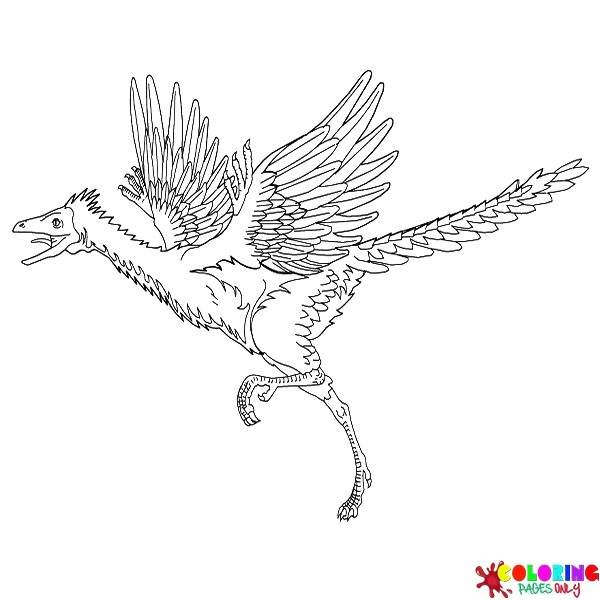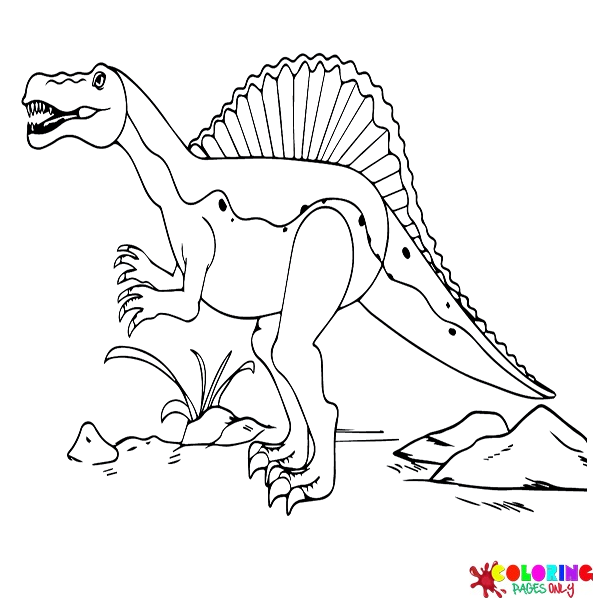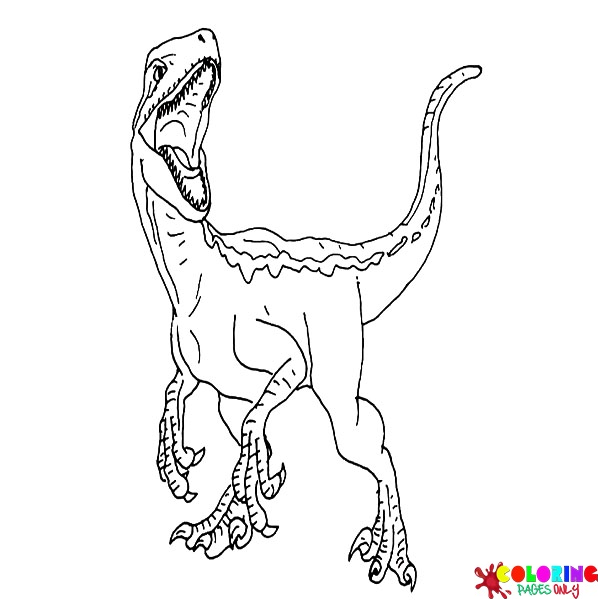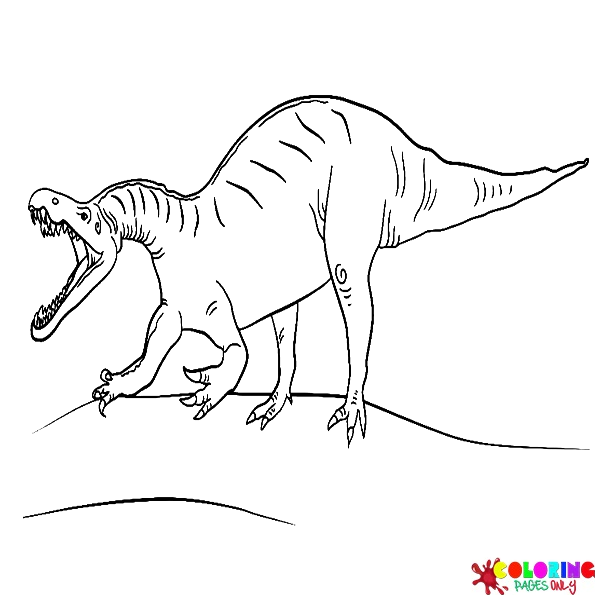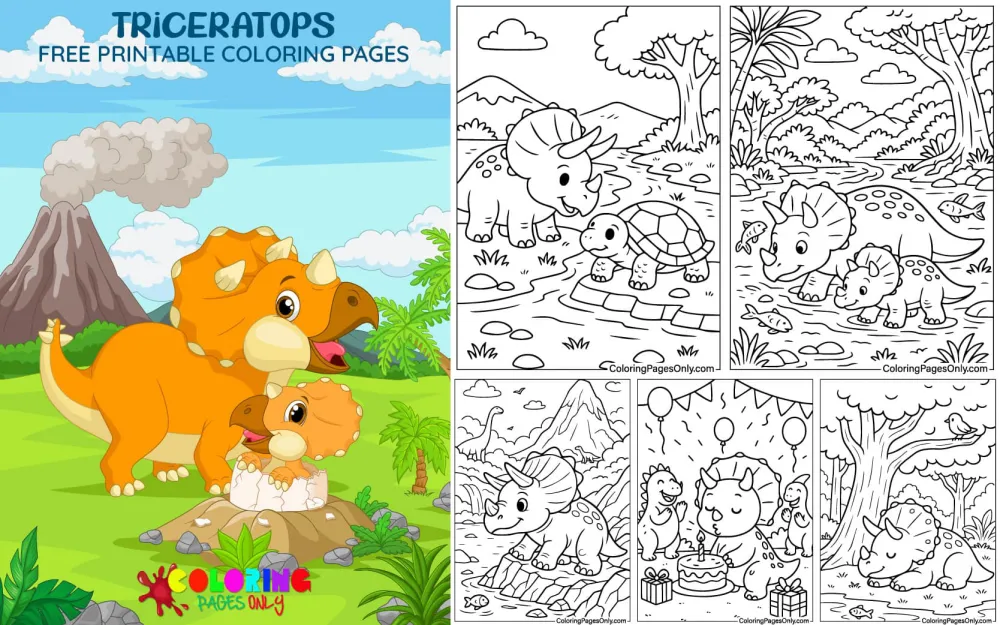
Free Triceratops coloring pages: 74 printable PDF designs featuring simple portraits, playful activity scenes, prehistoric landscapes, and pages showing Triceratops alongside other dinosaurs. Each page can be downloaded as a PDF to print or colored online in the browser.
Triceratops takes its name from Greek words meaning three-horned face, a direct description of its two long brow horns and shorter nose horn. It lived in what is now western North America during the final few million years of the Cretaceous period, roughly 68 to 66 million years ago, making it one of the last dinosaurs before the extinction event that ended the age of dinosaurs. This set works for a classroom building a dinosaur unit, a family with a paleontology-obsessed kid, and anyone who wants a page detailed enough to color slowly.
A Triceratops page is really three separate coloring decisions stacked into one head: the frill, the horns, and the beak-like mouth, each of which reads differently depending on the color and shading choice. Treating those three sections as distinct parts, rather than one continuous head shape, is what separates a page that looks like a real Triceratops skull from one that reads as a generic dinosaur outline.
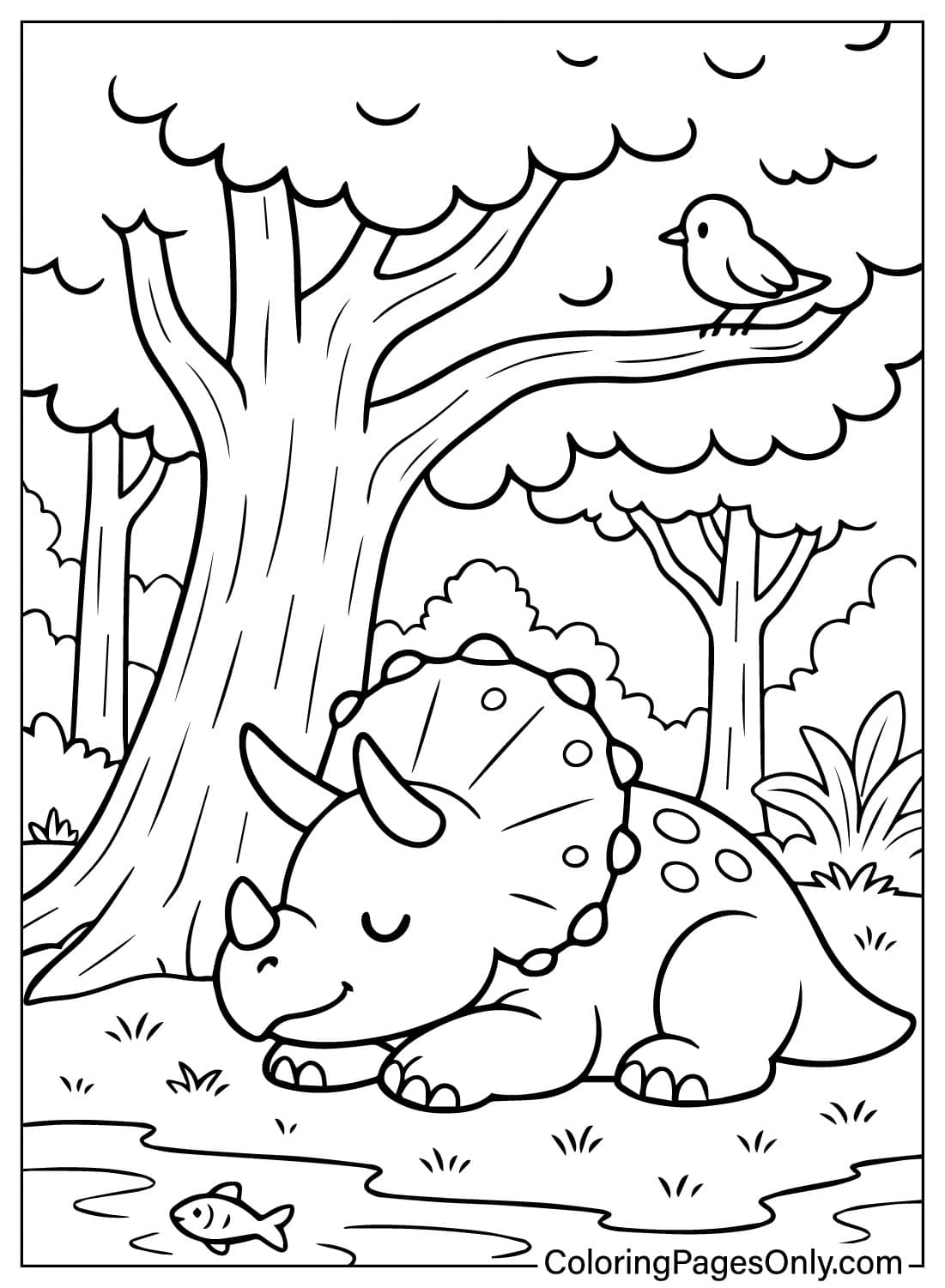
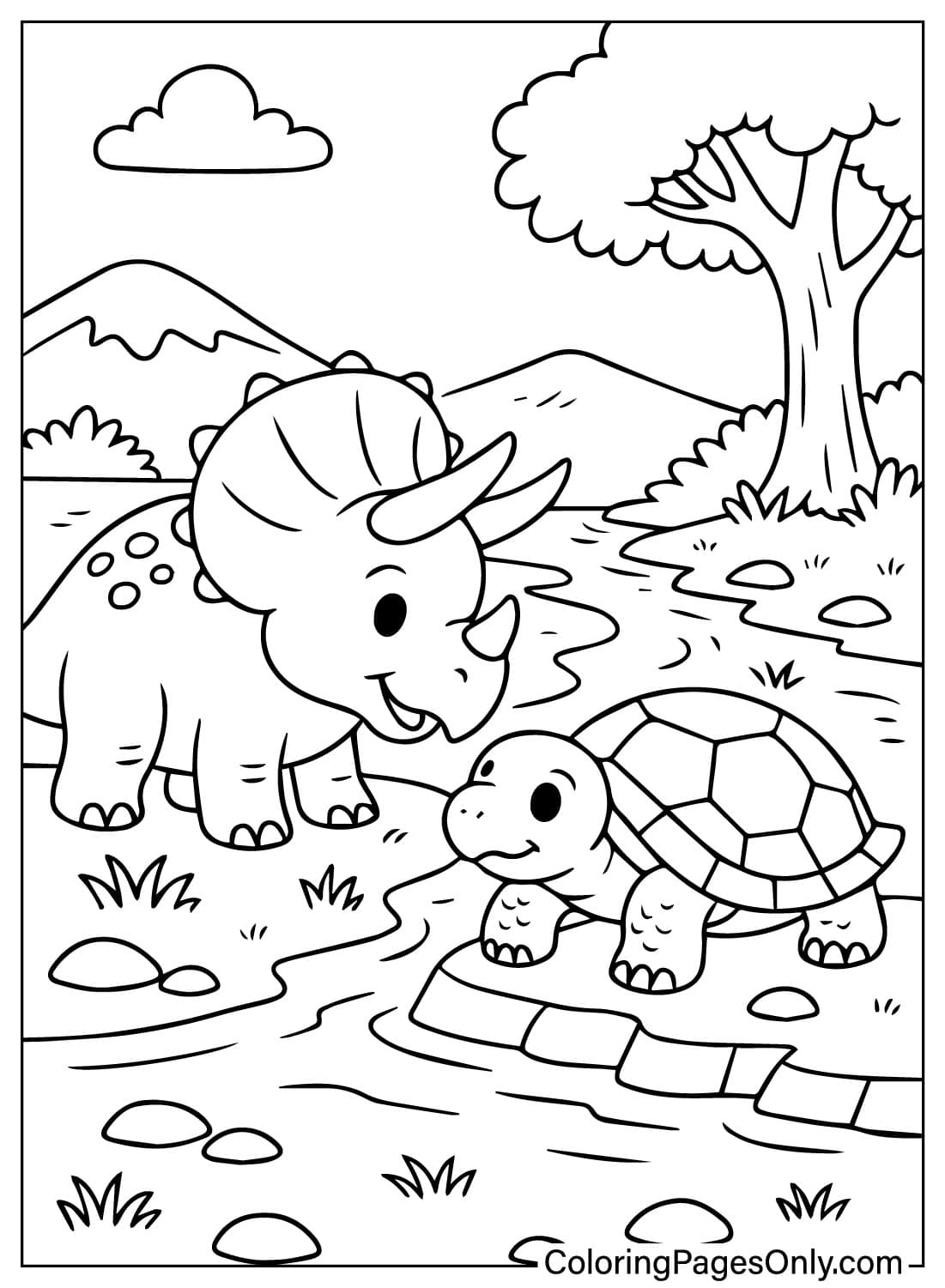
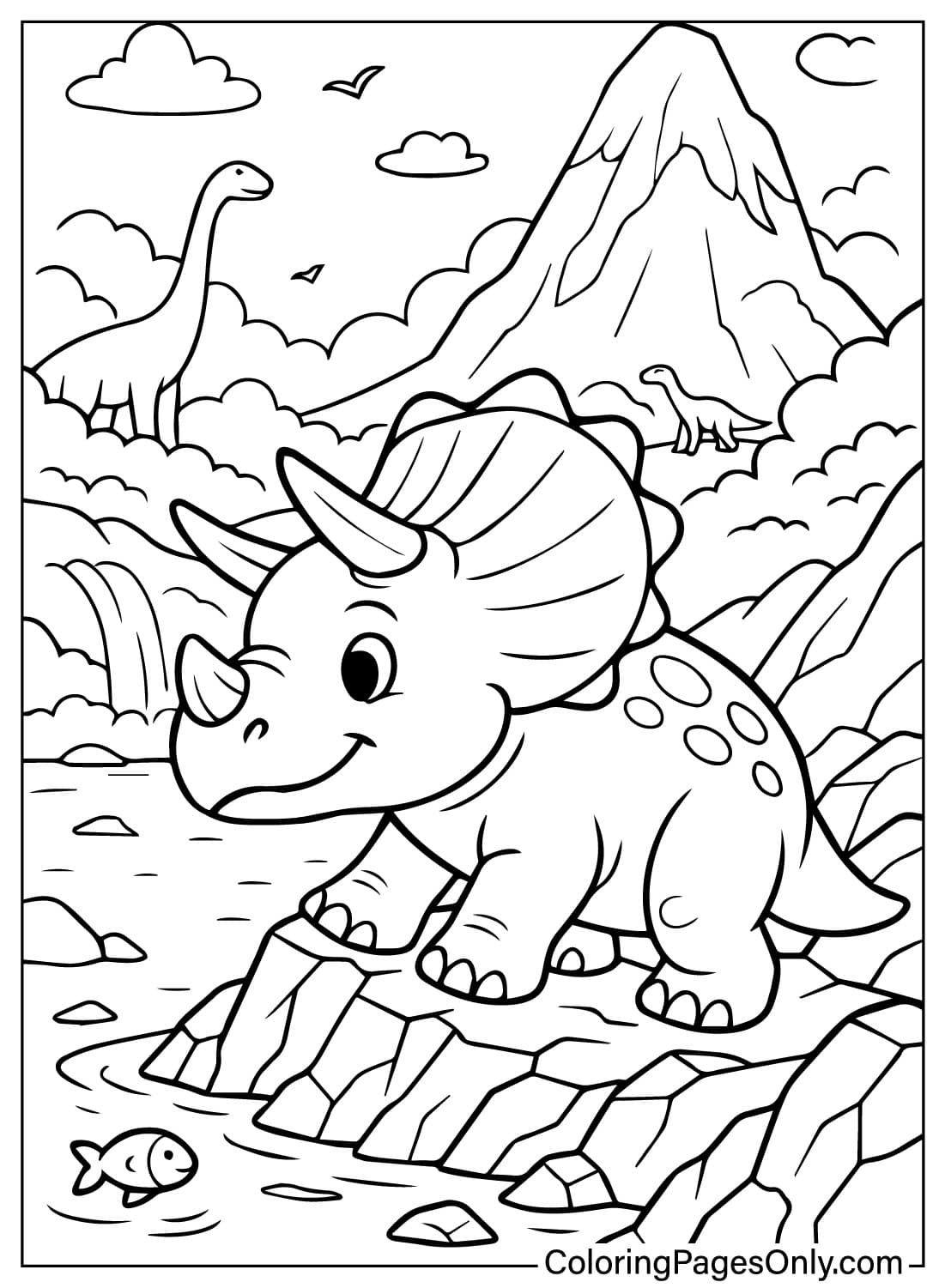
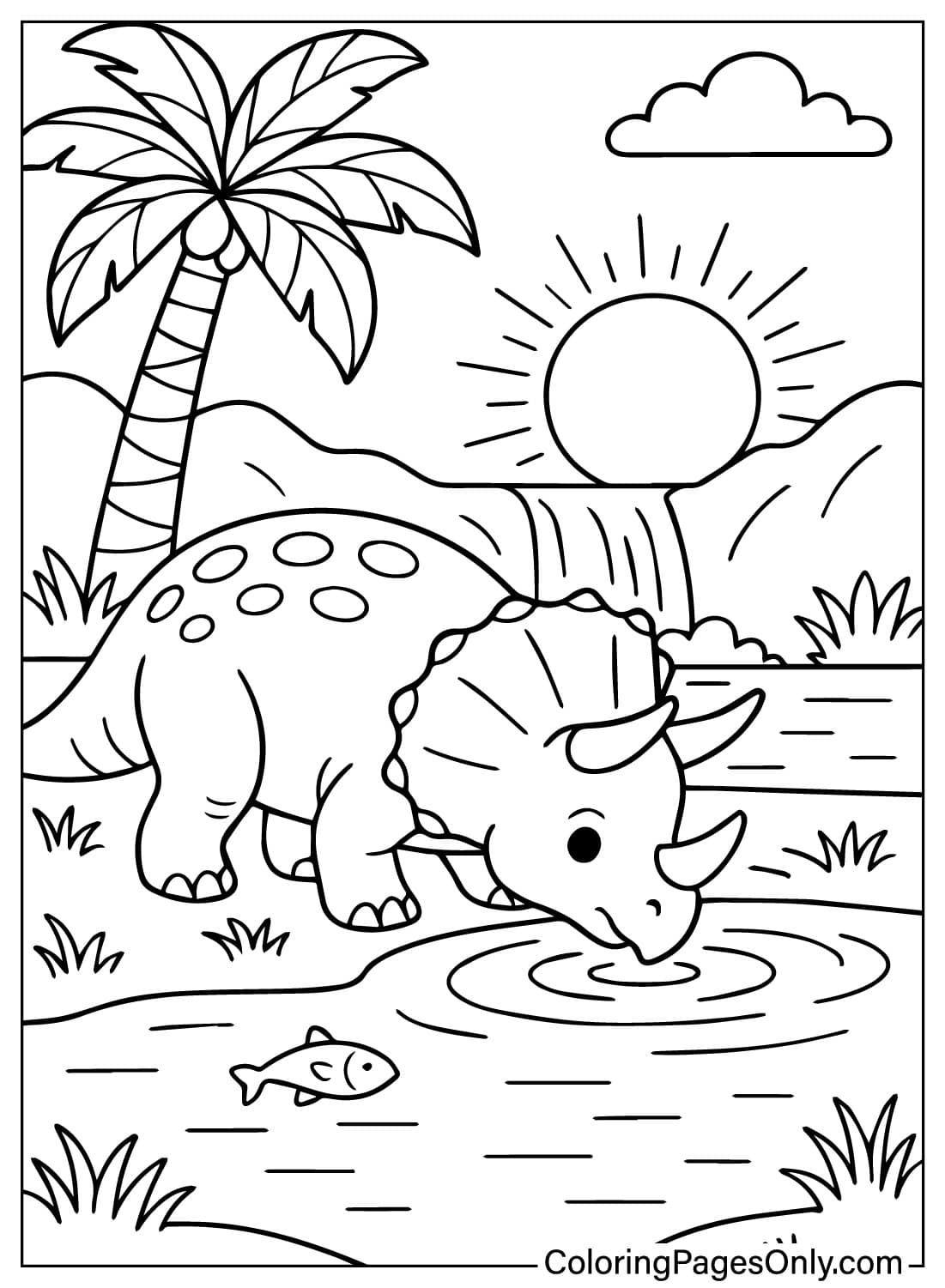
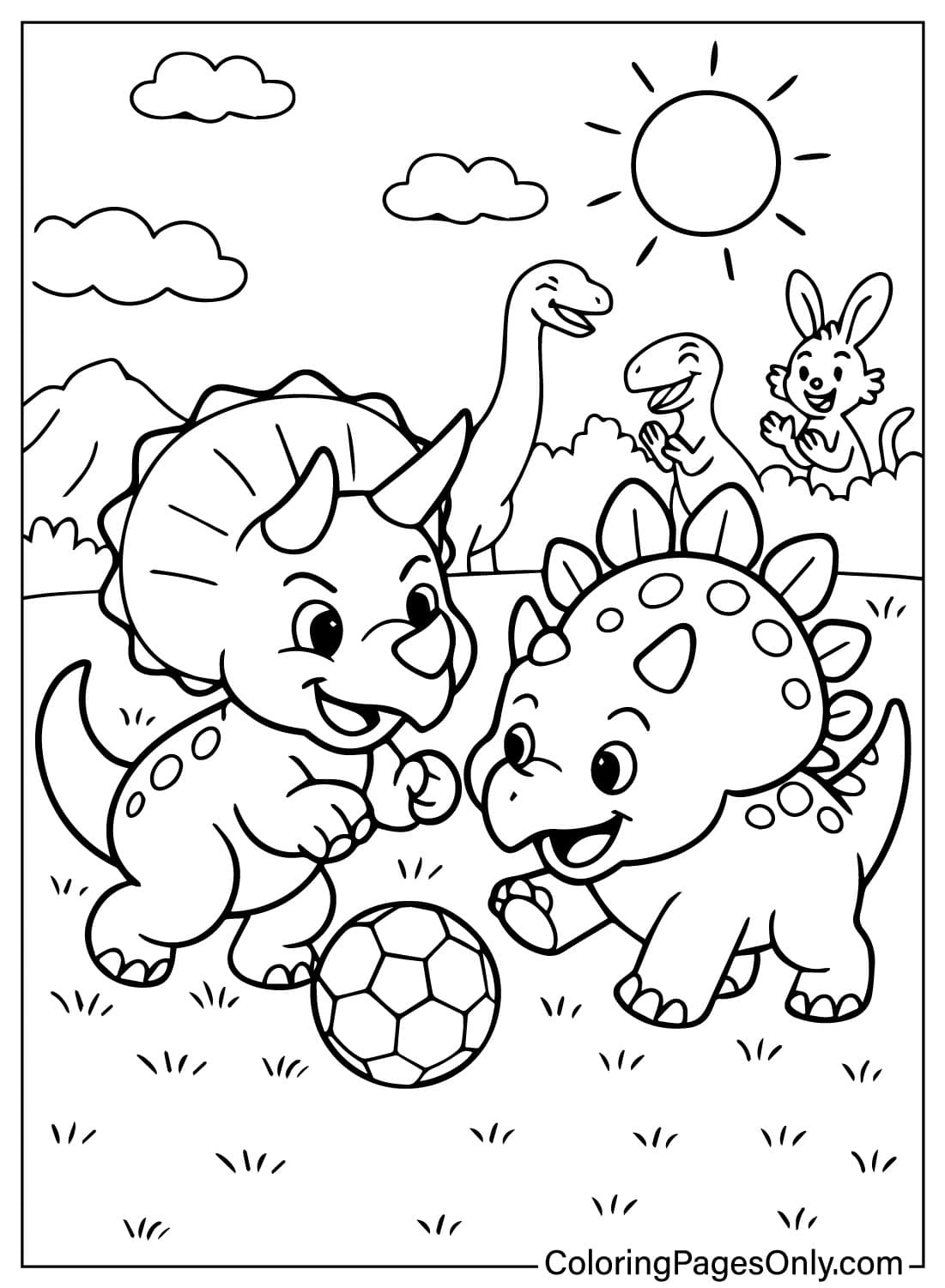
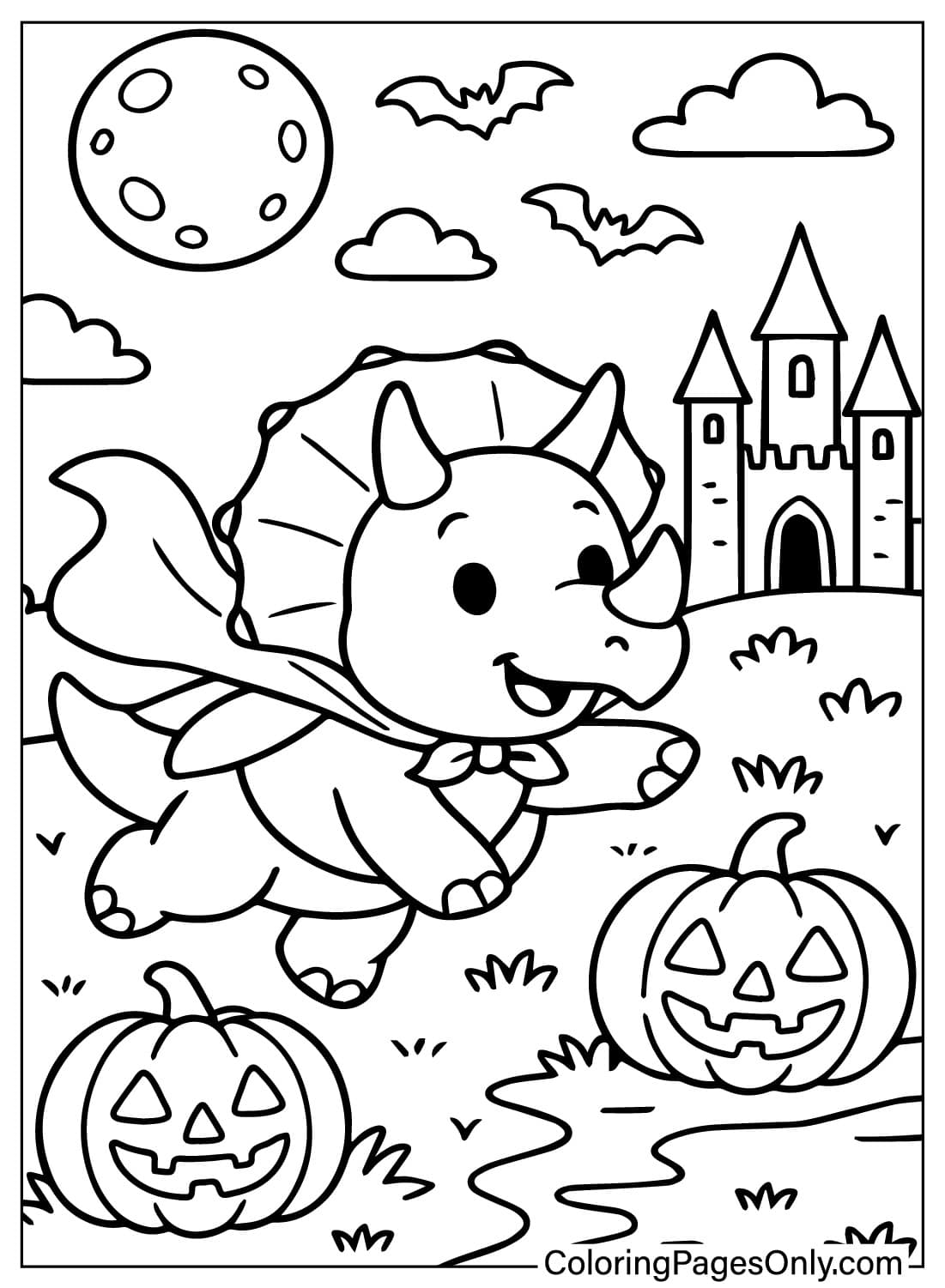
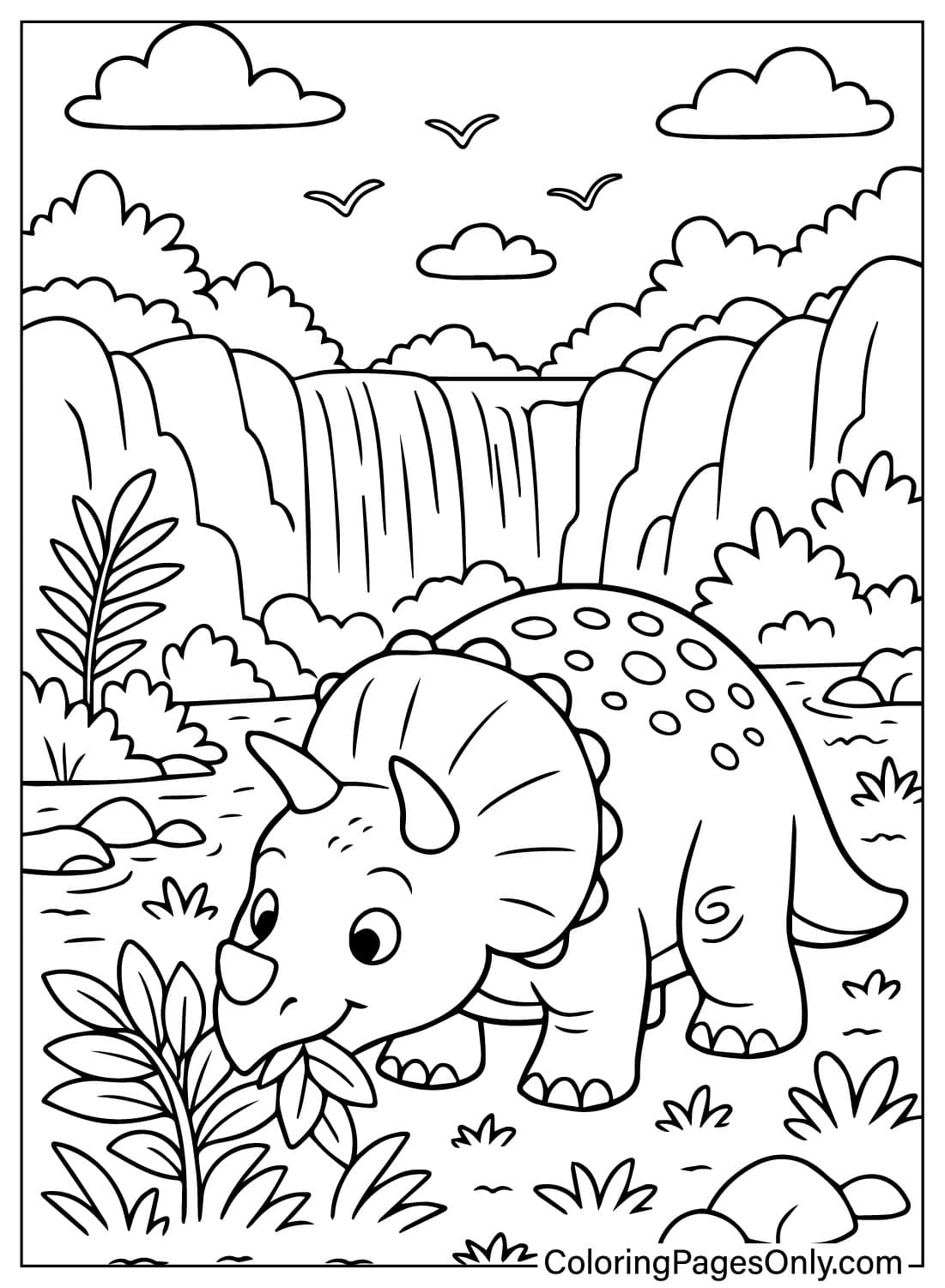
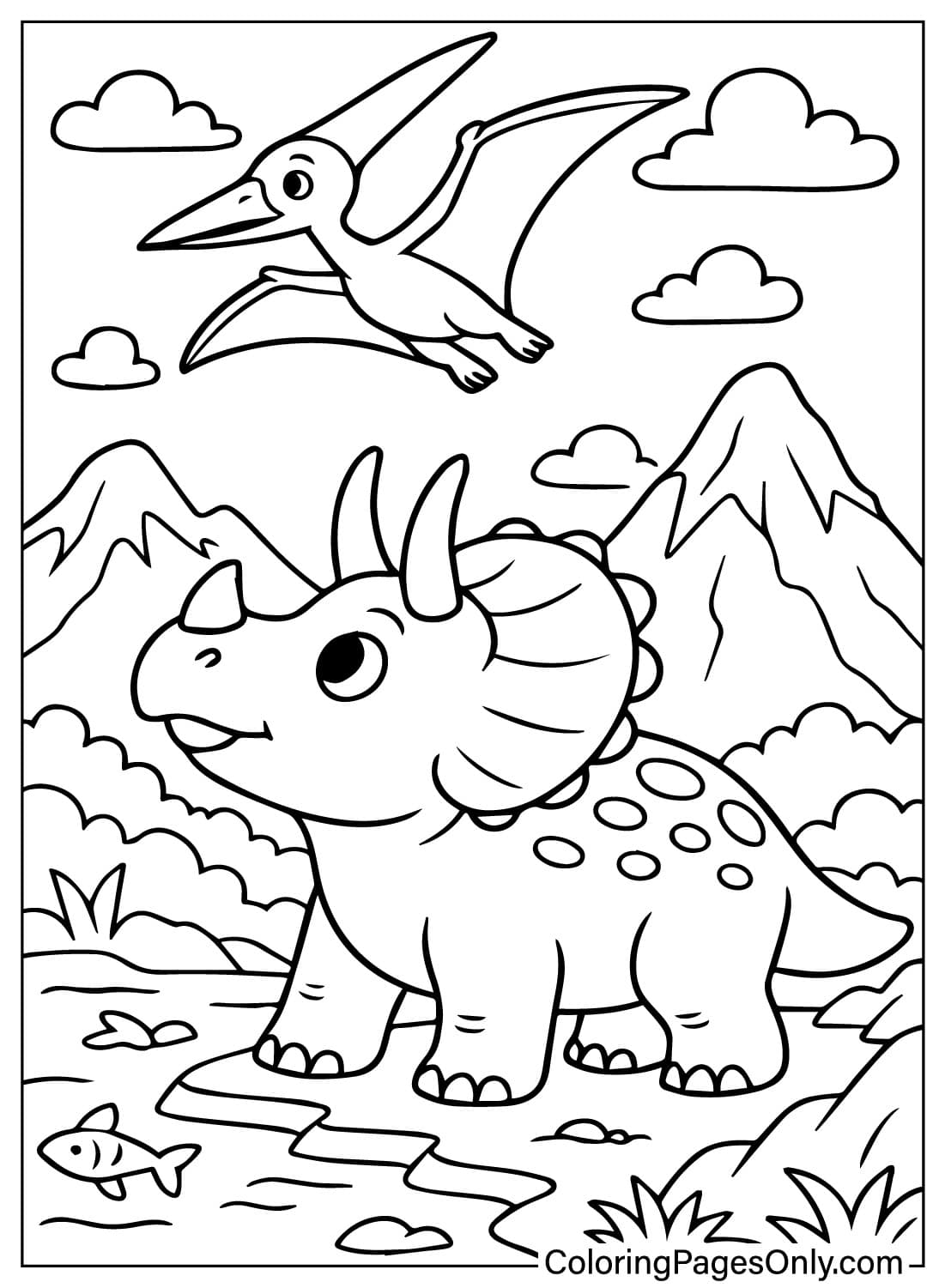
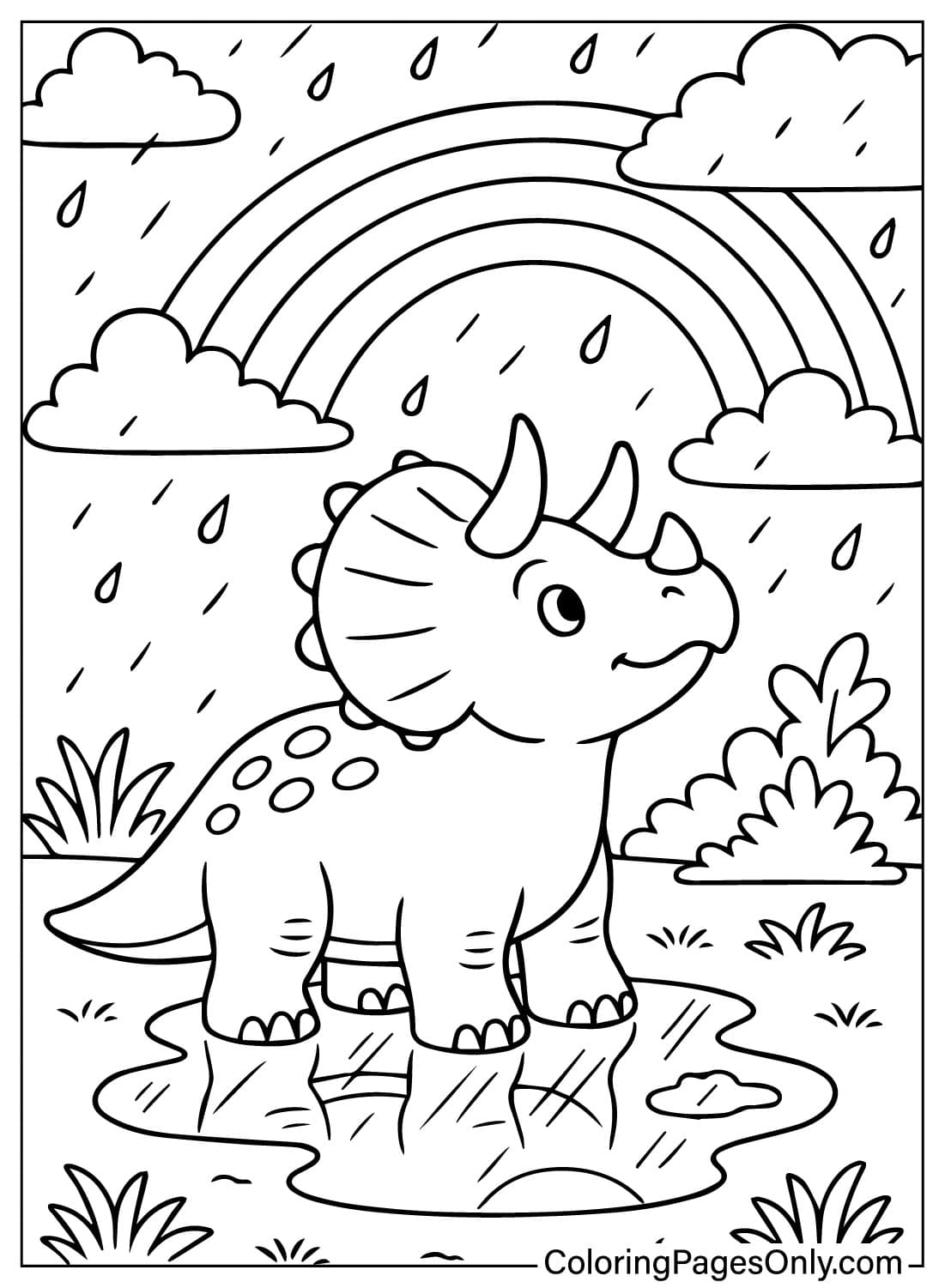
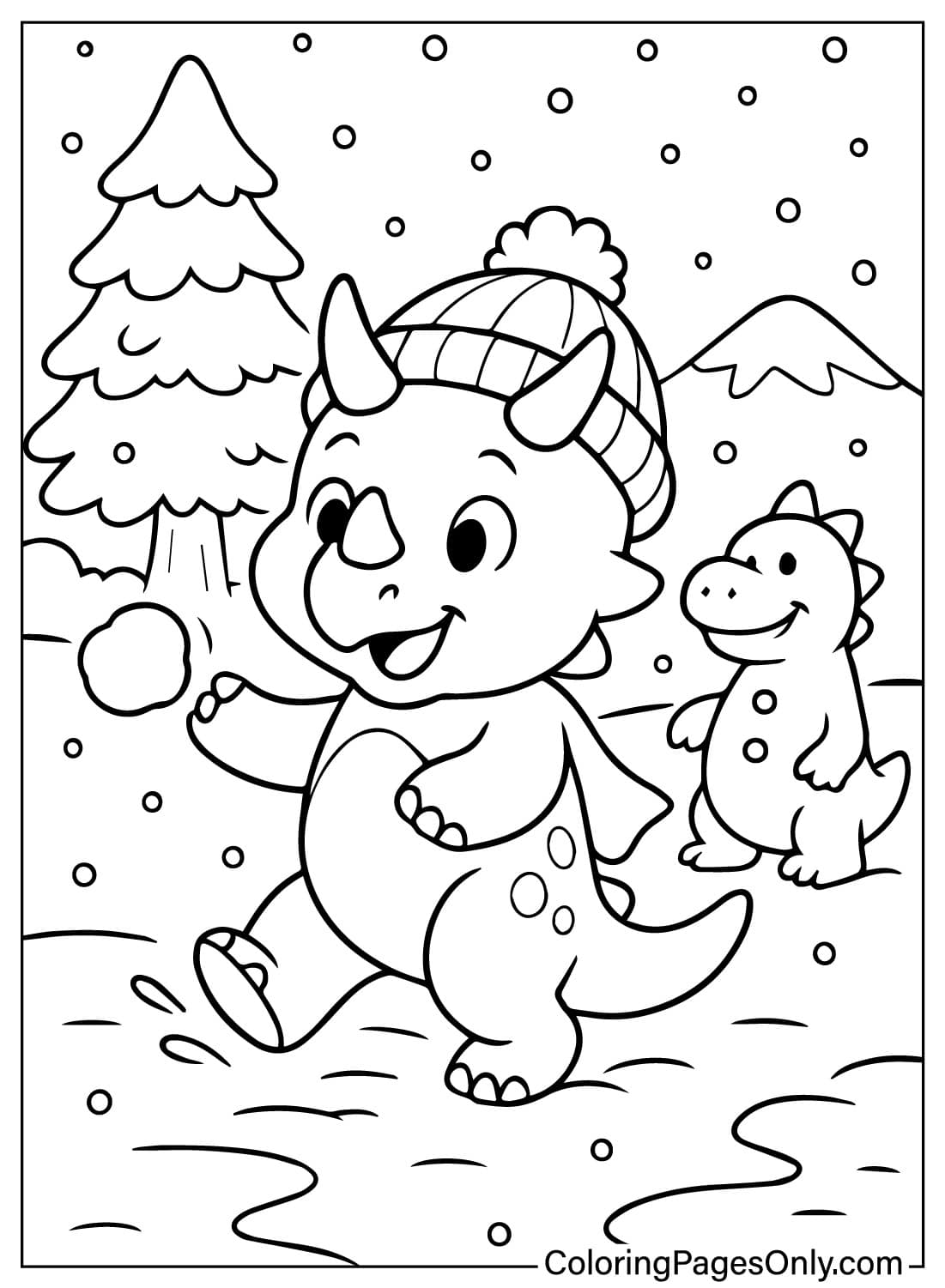
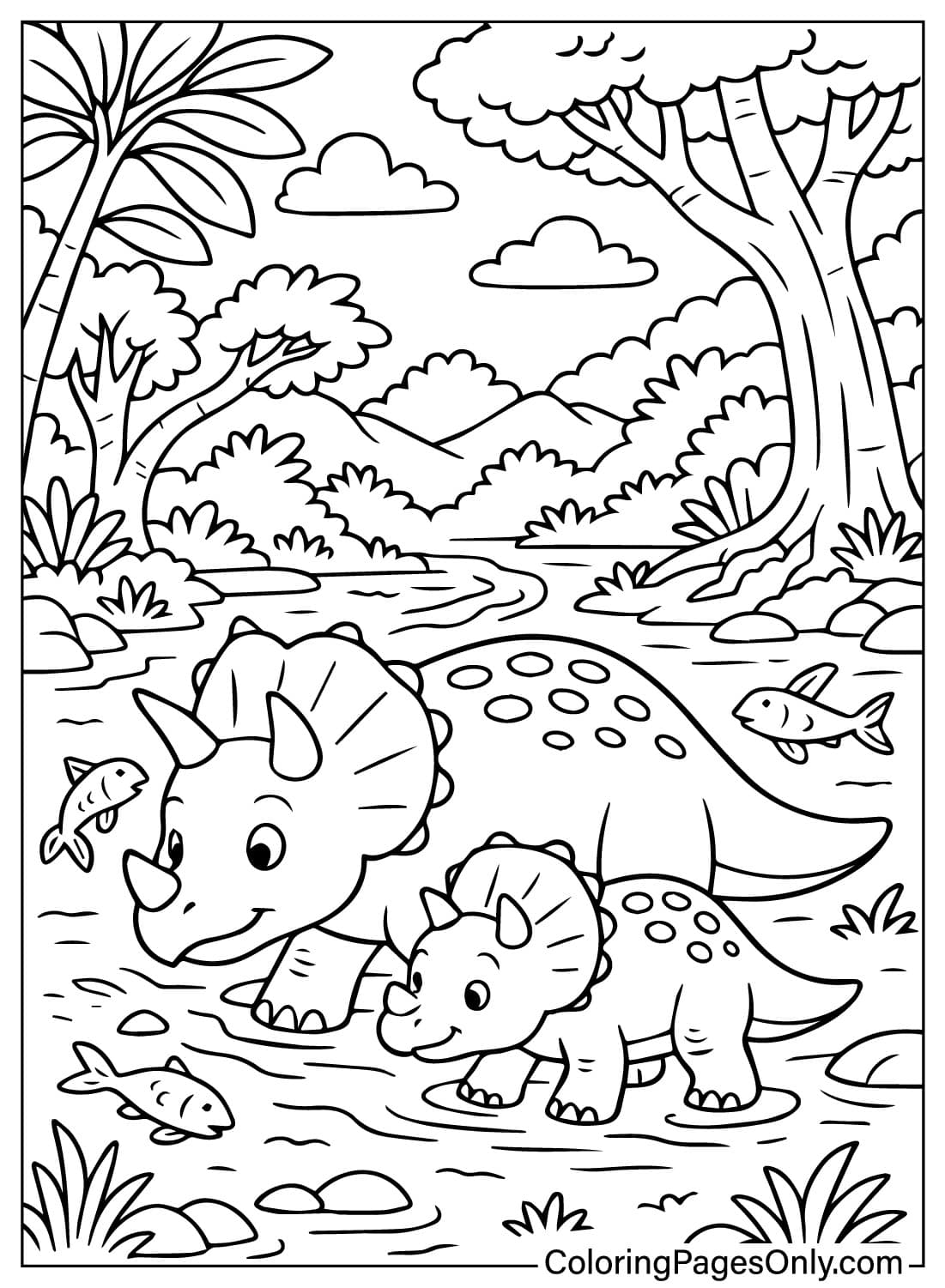
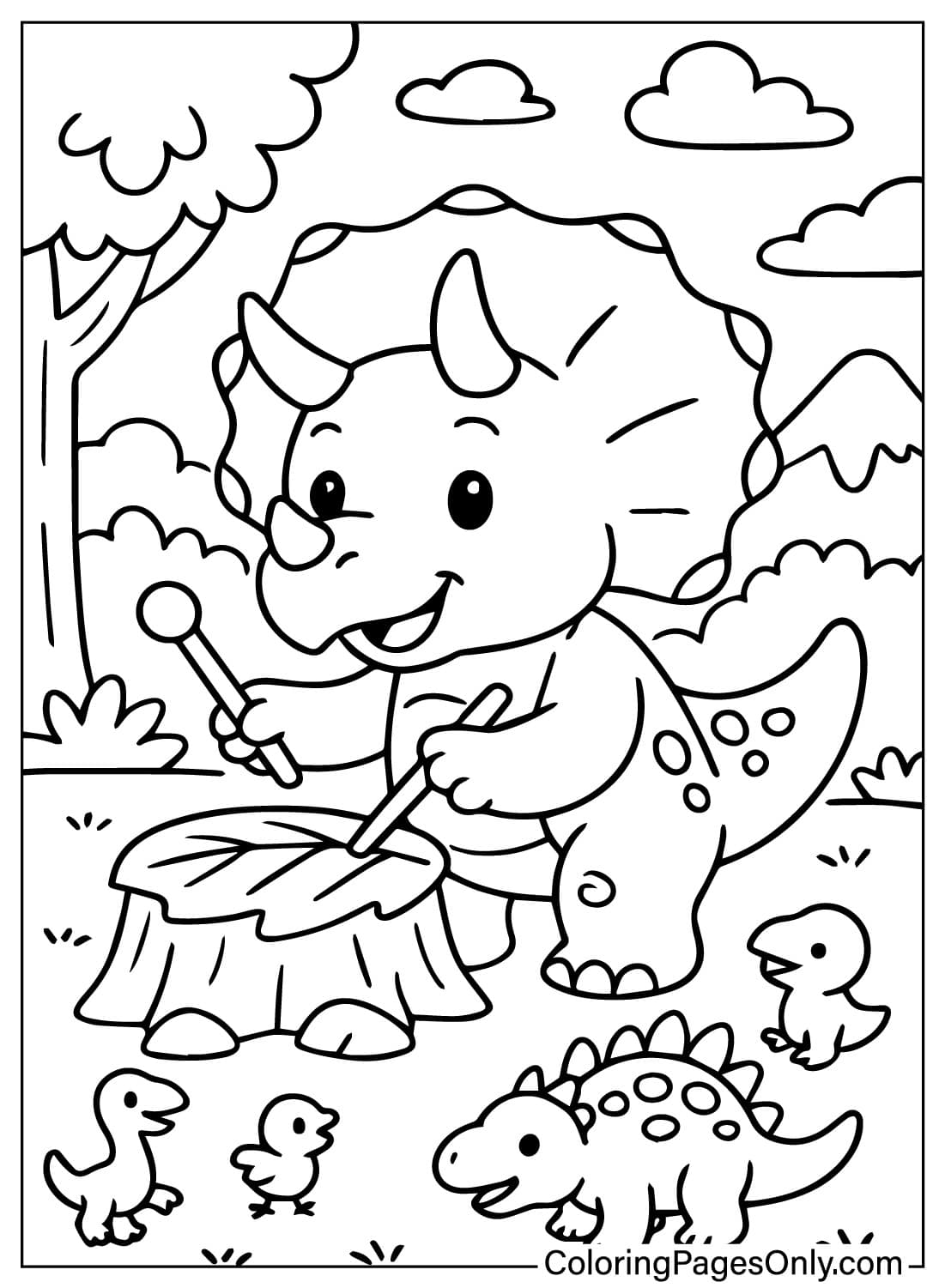
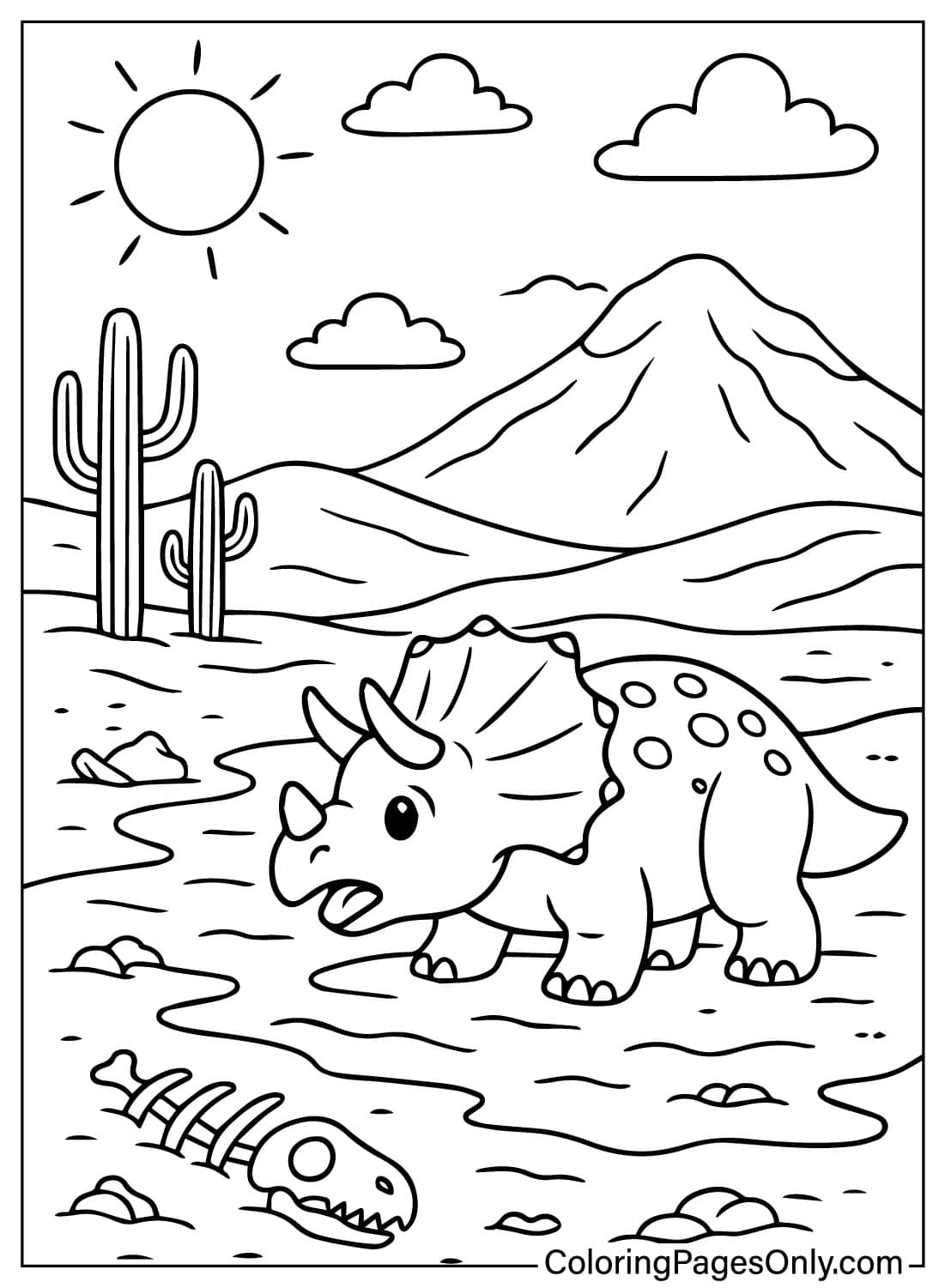
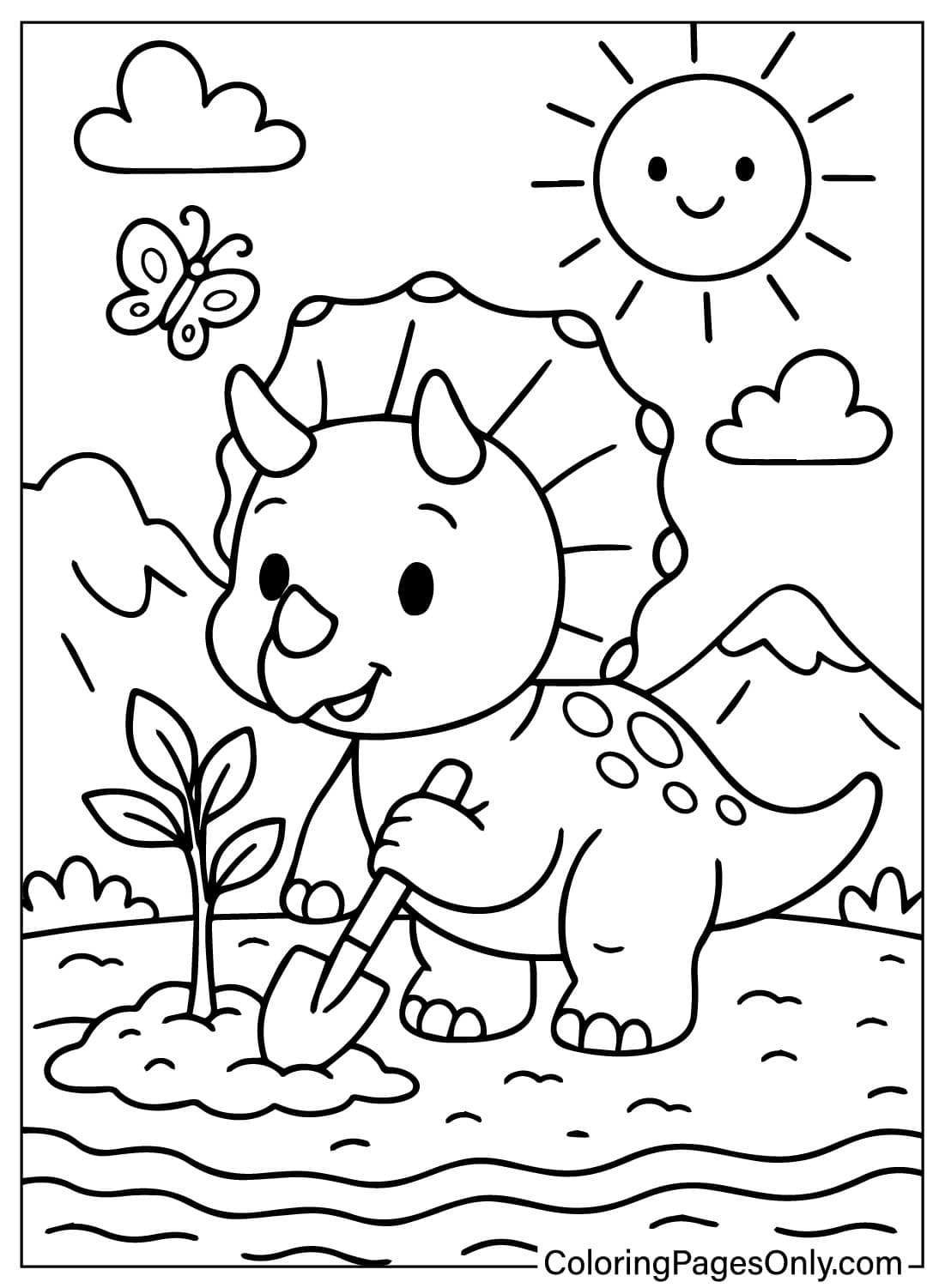
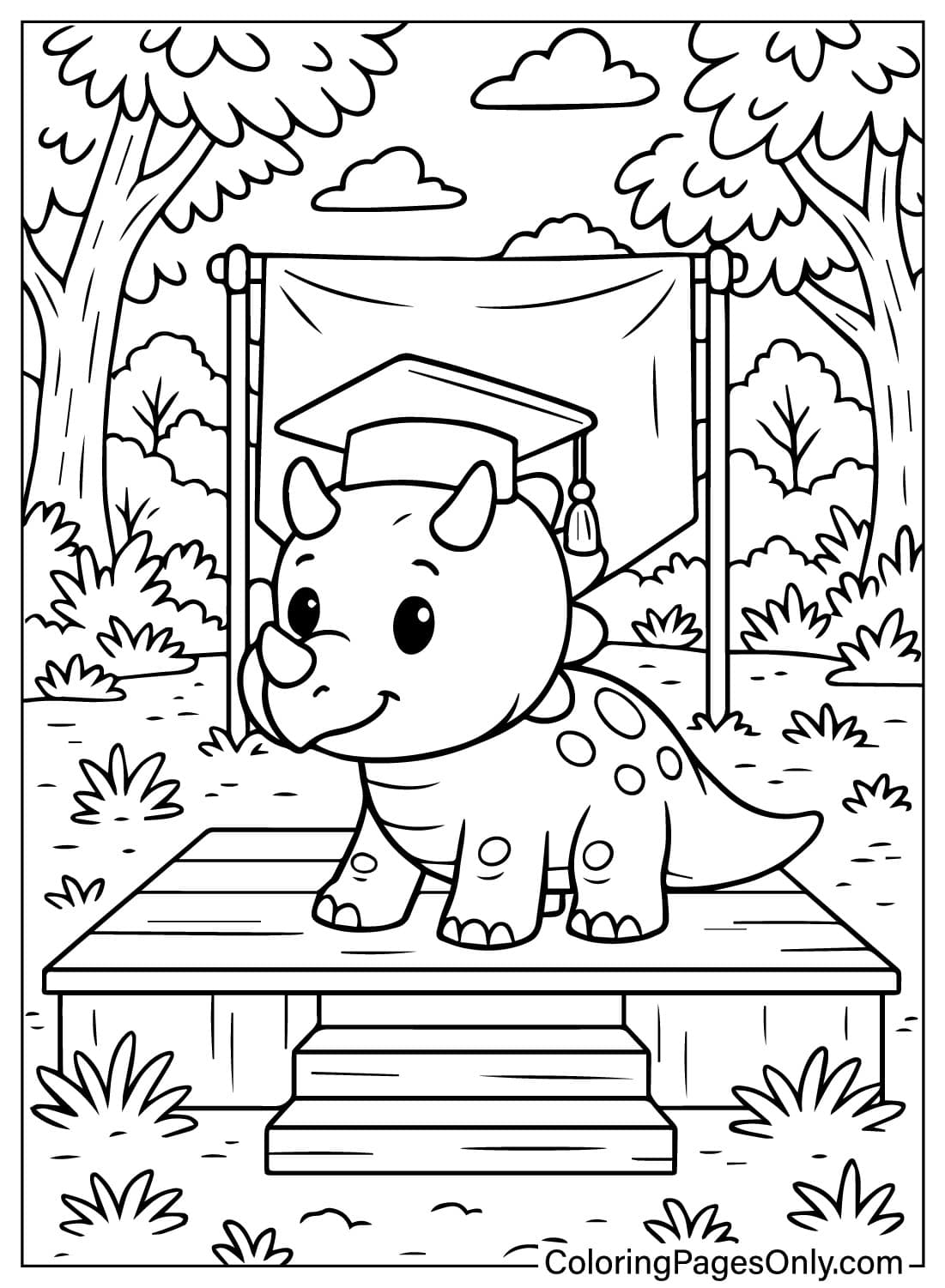
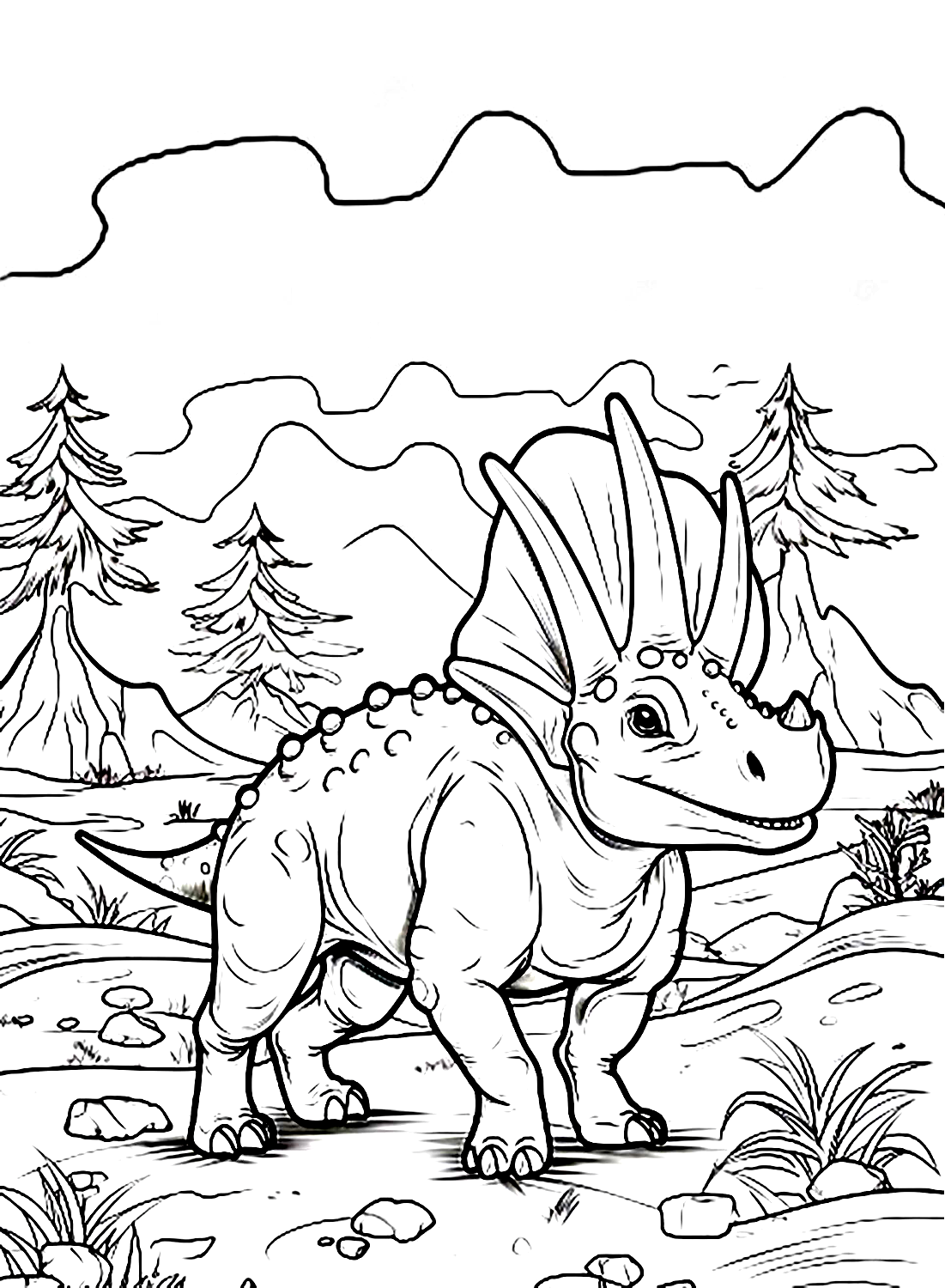
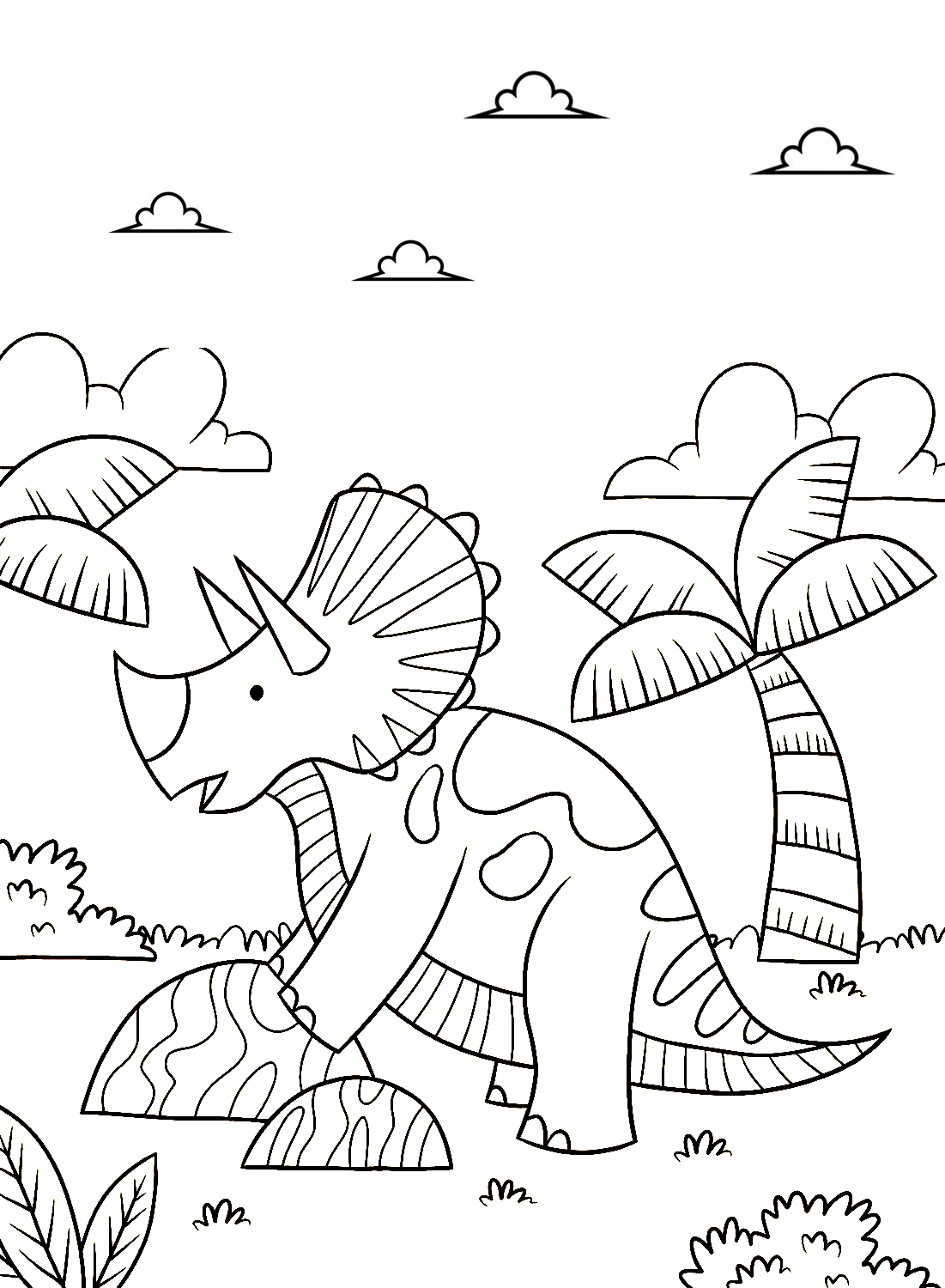
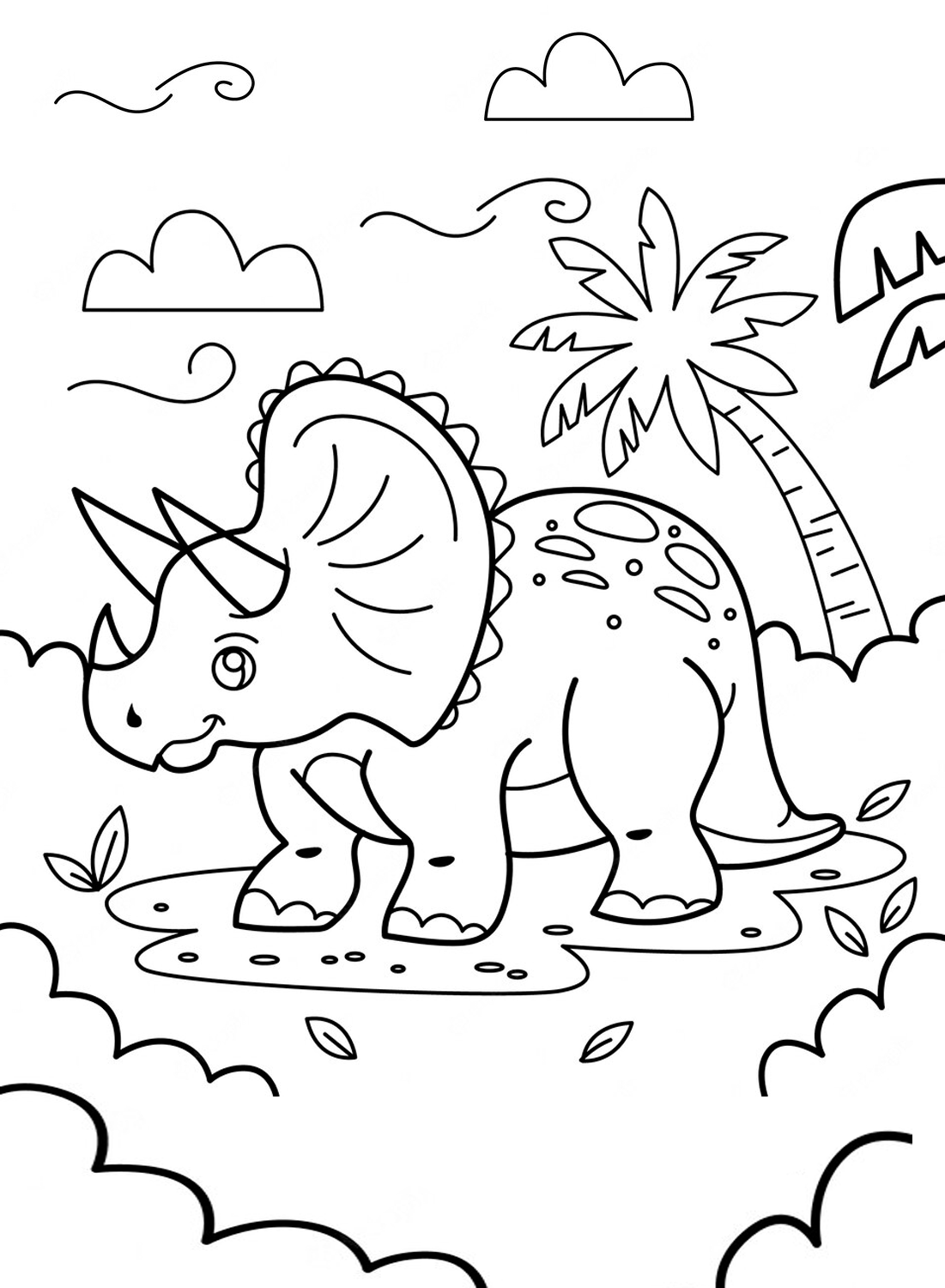
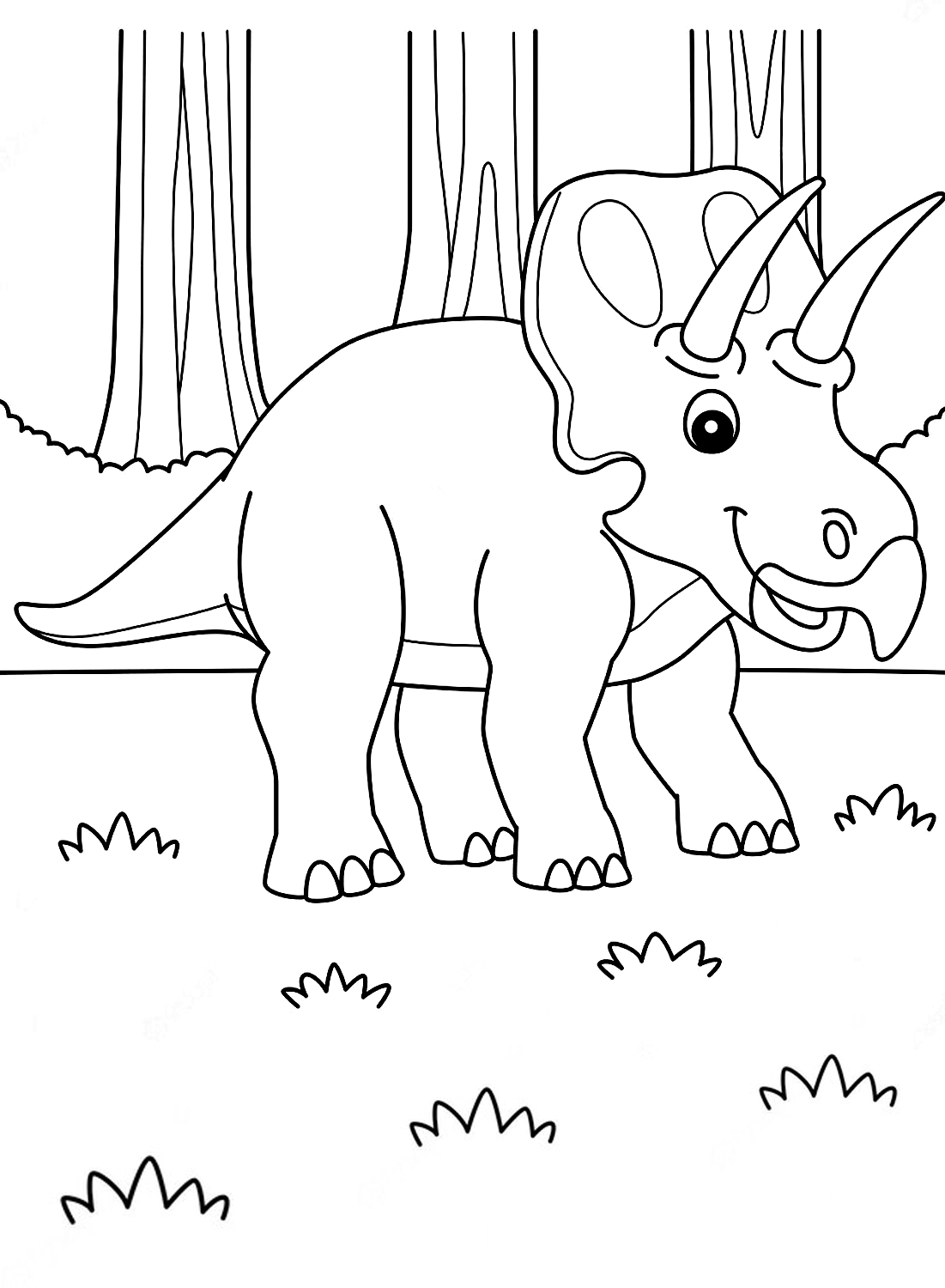

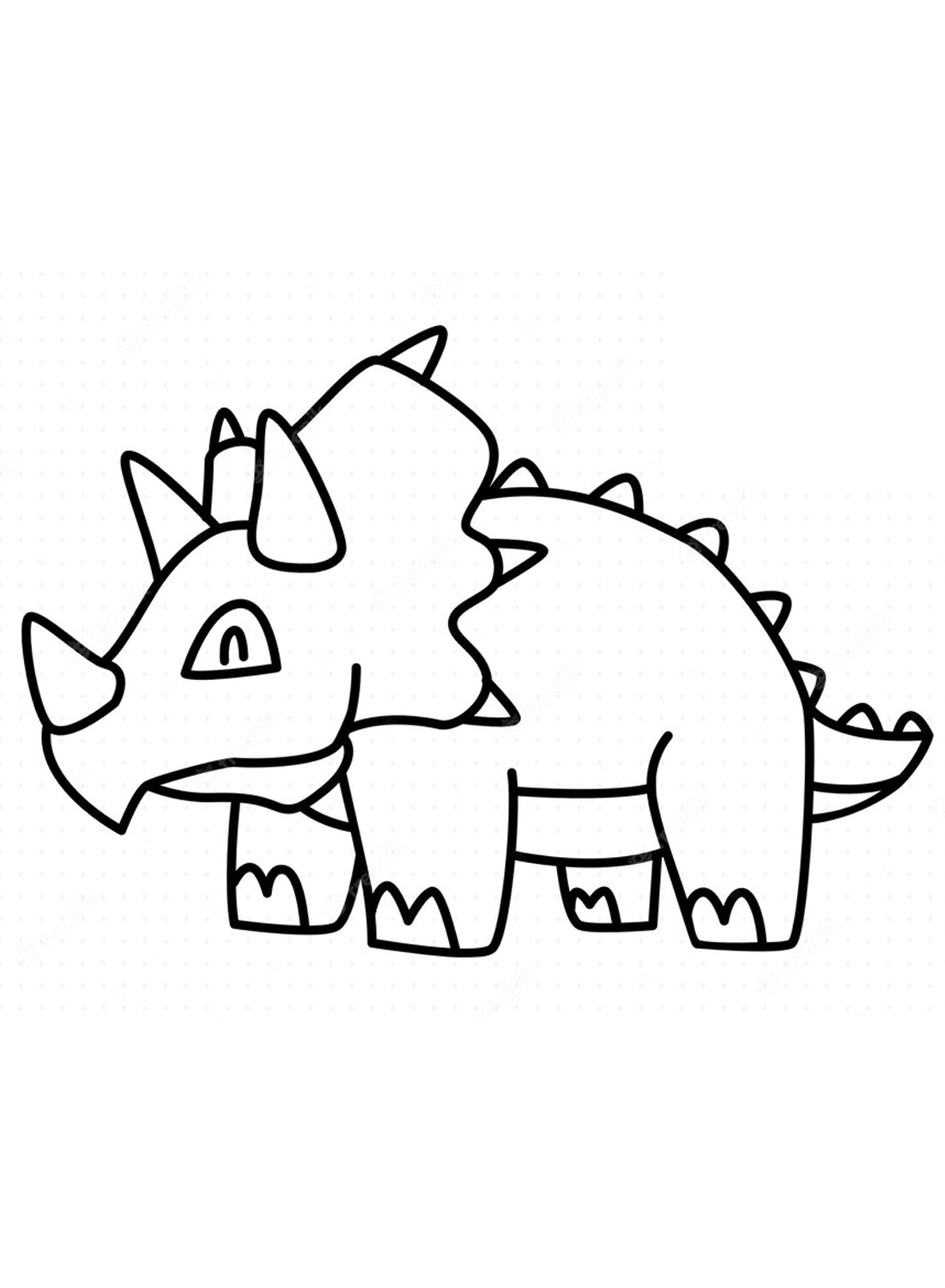
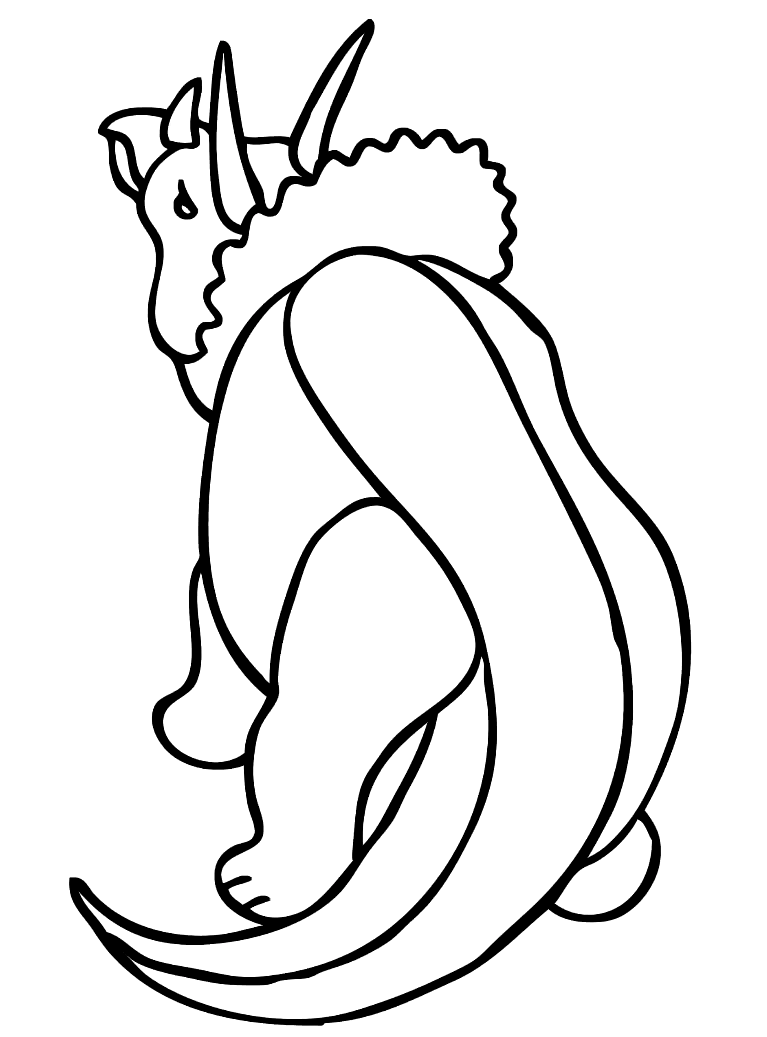
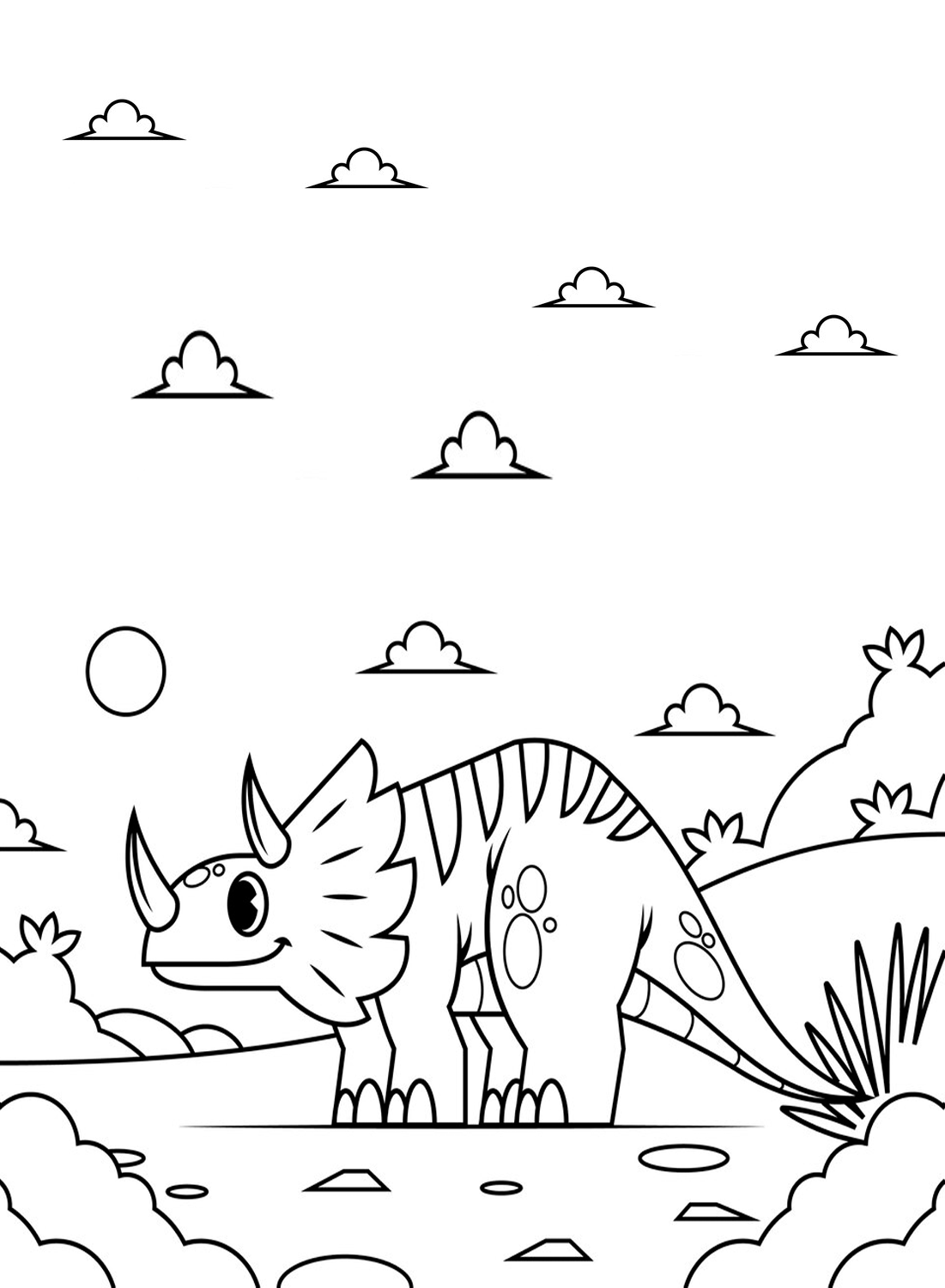
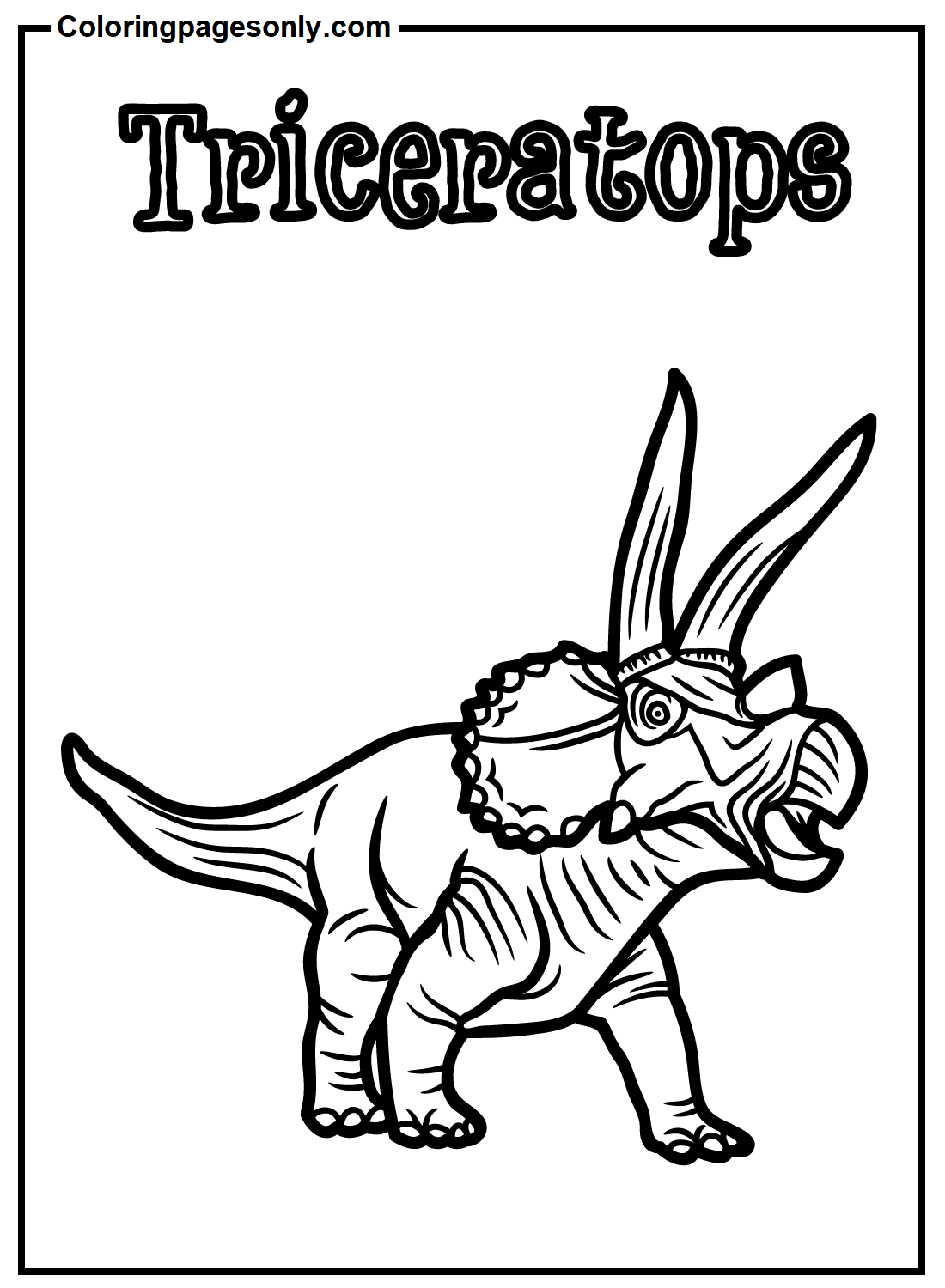
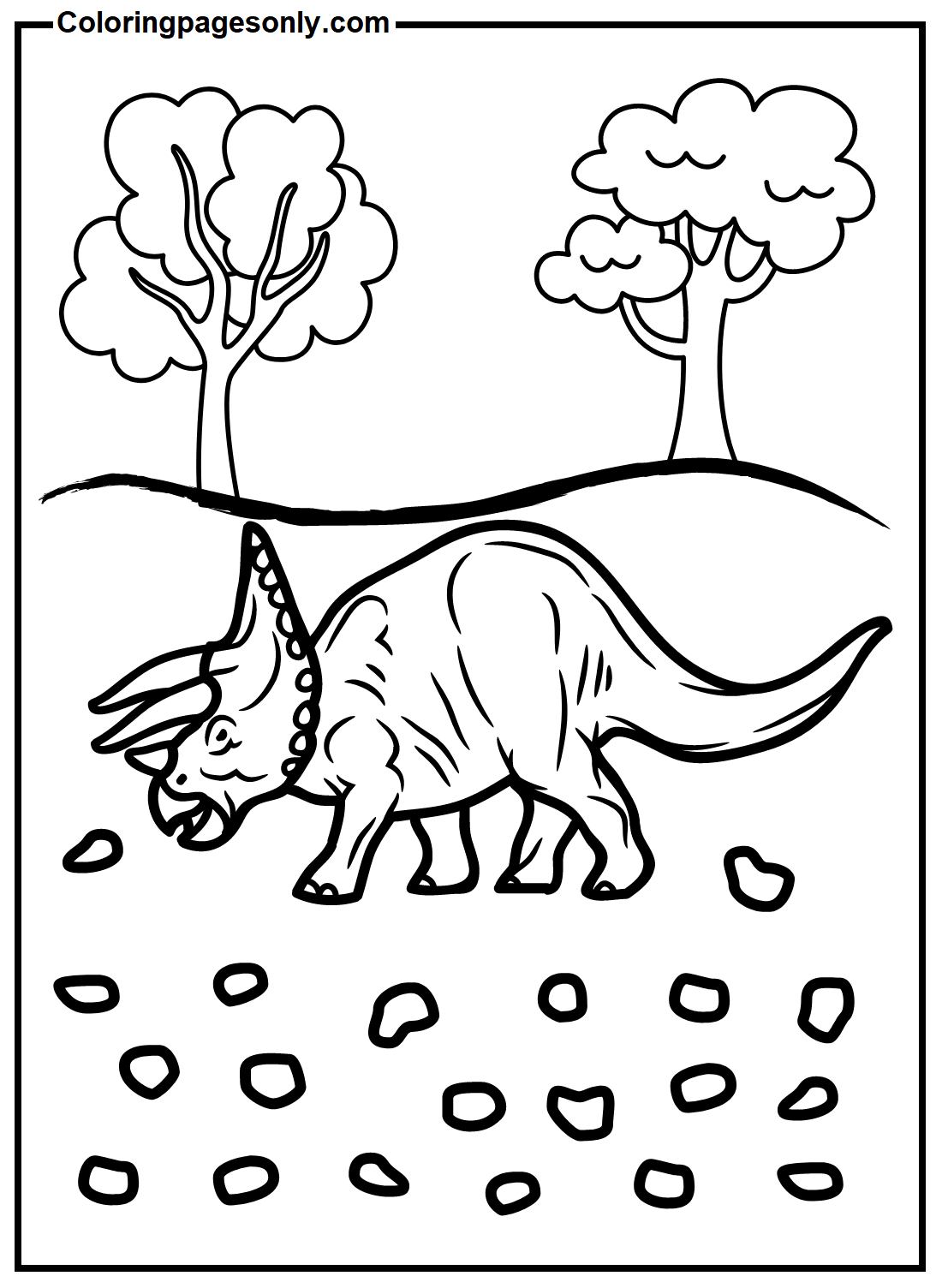
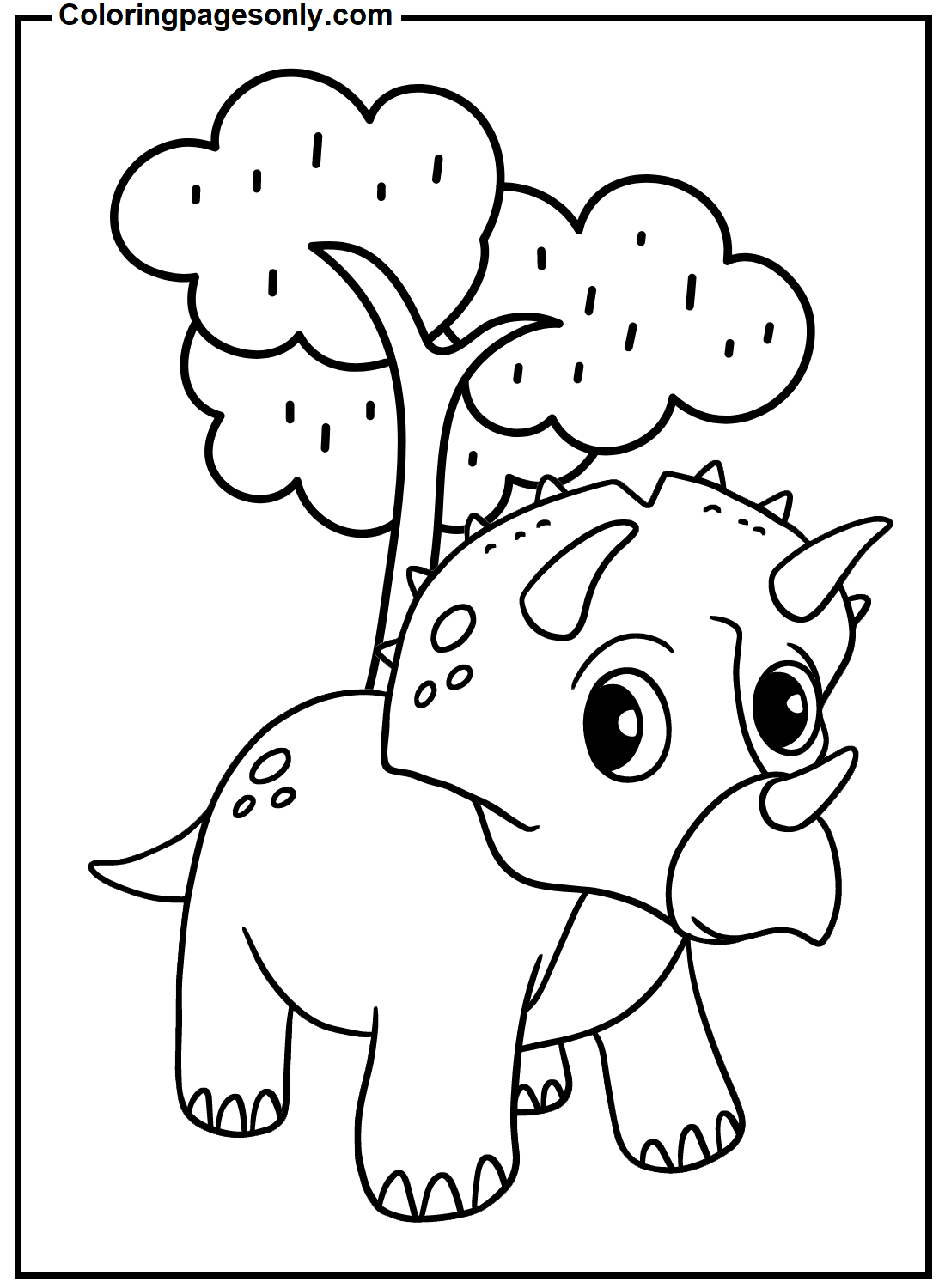
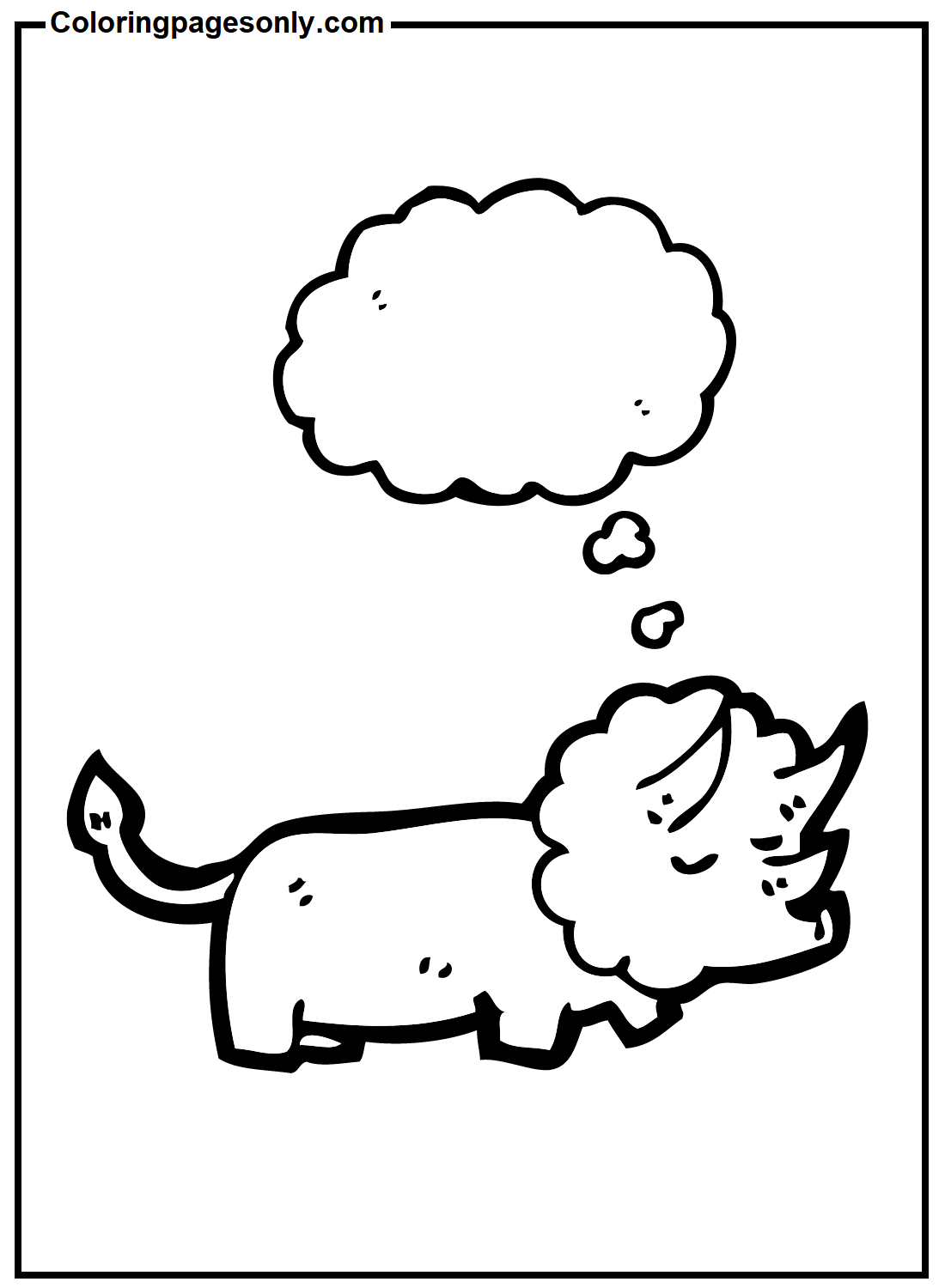
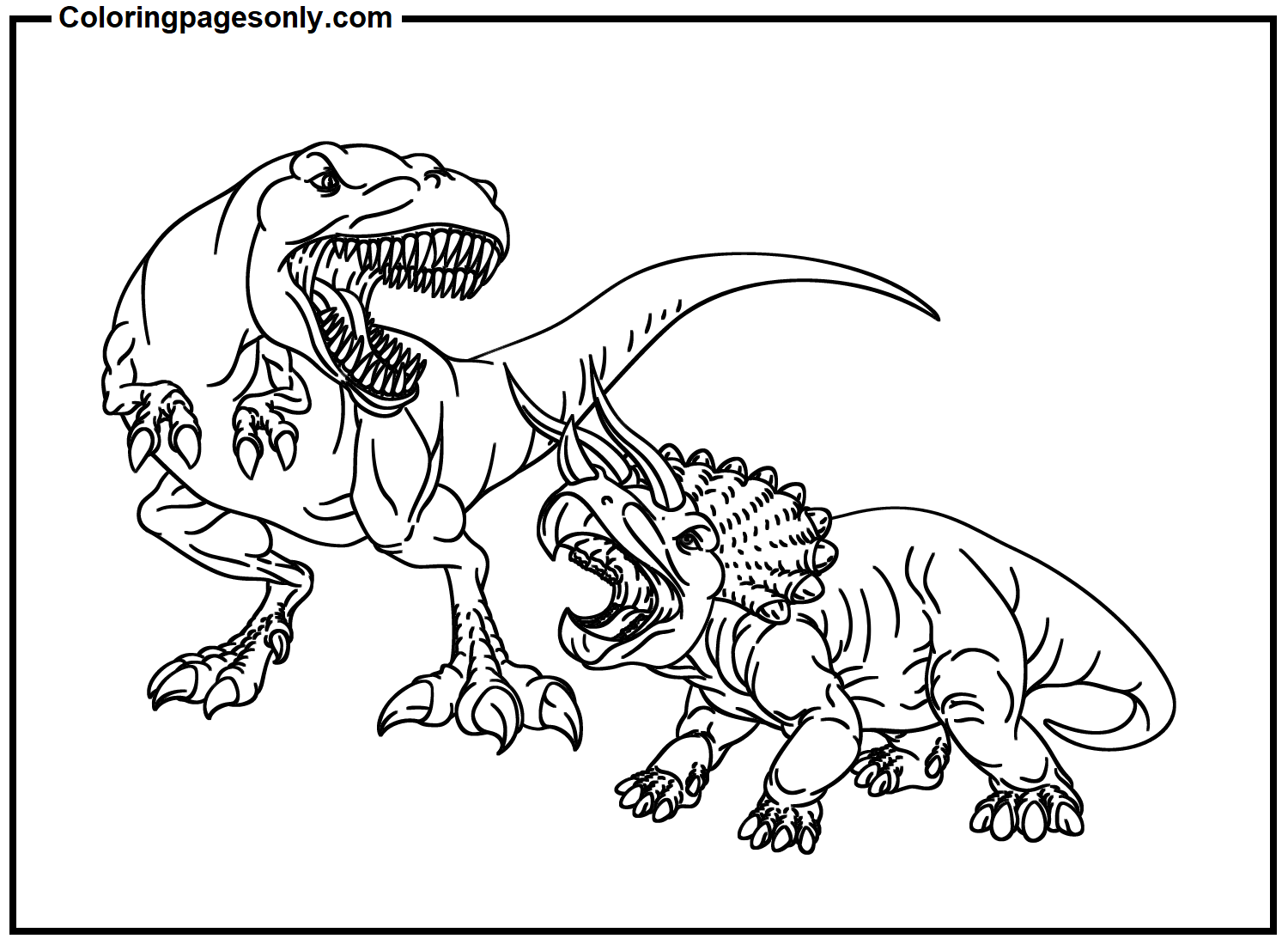
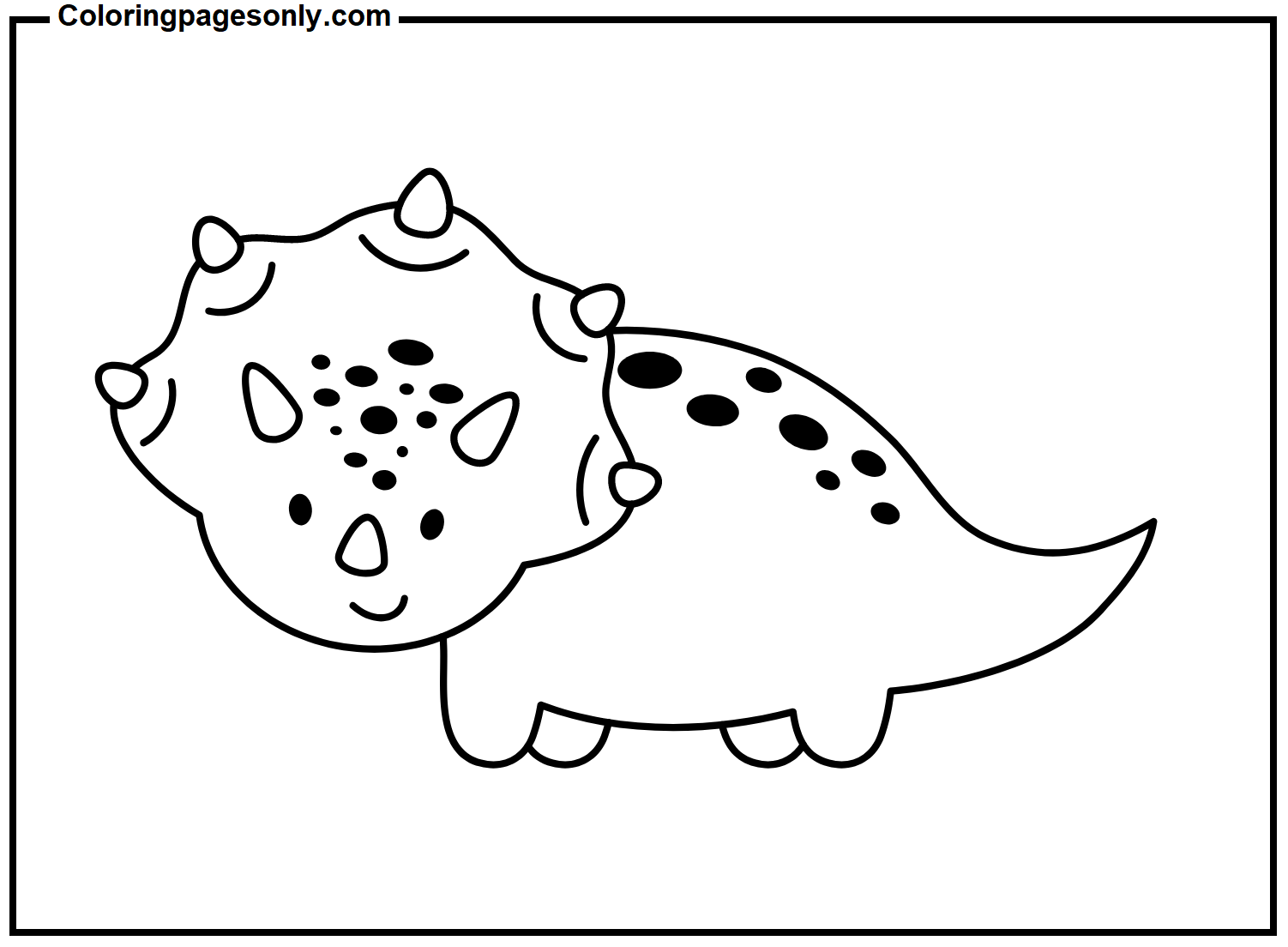
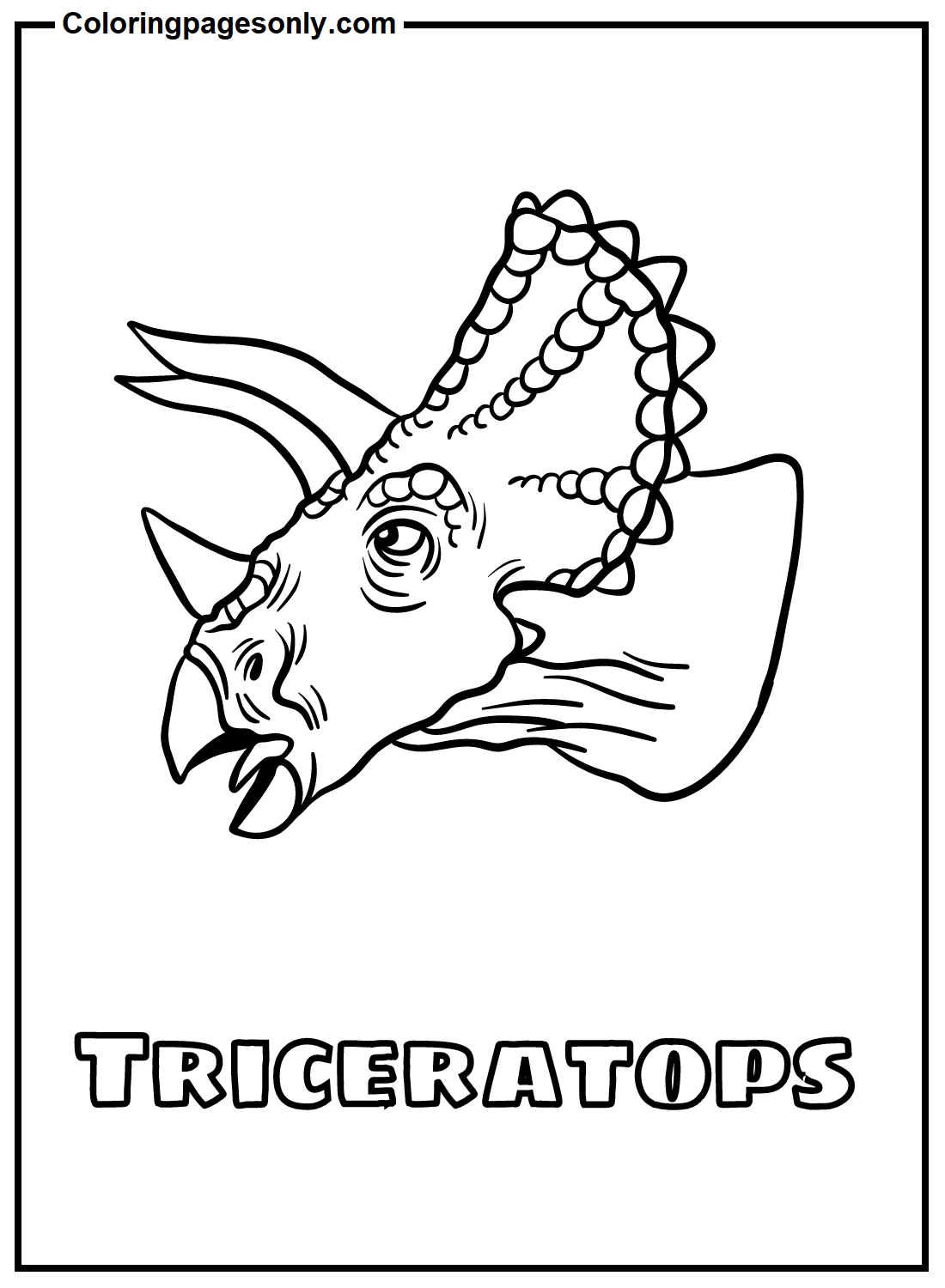
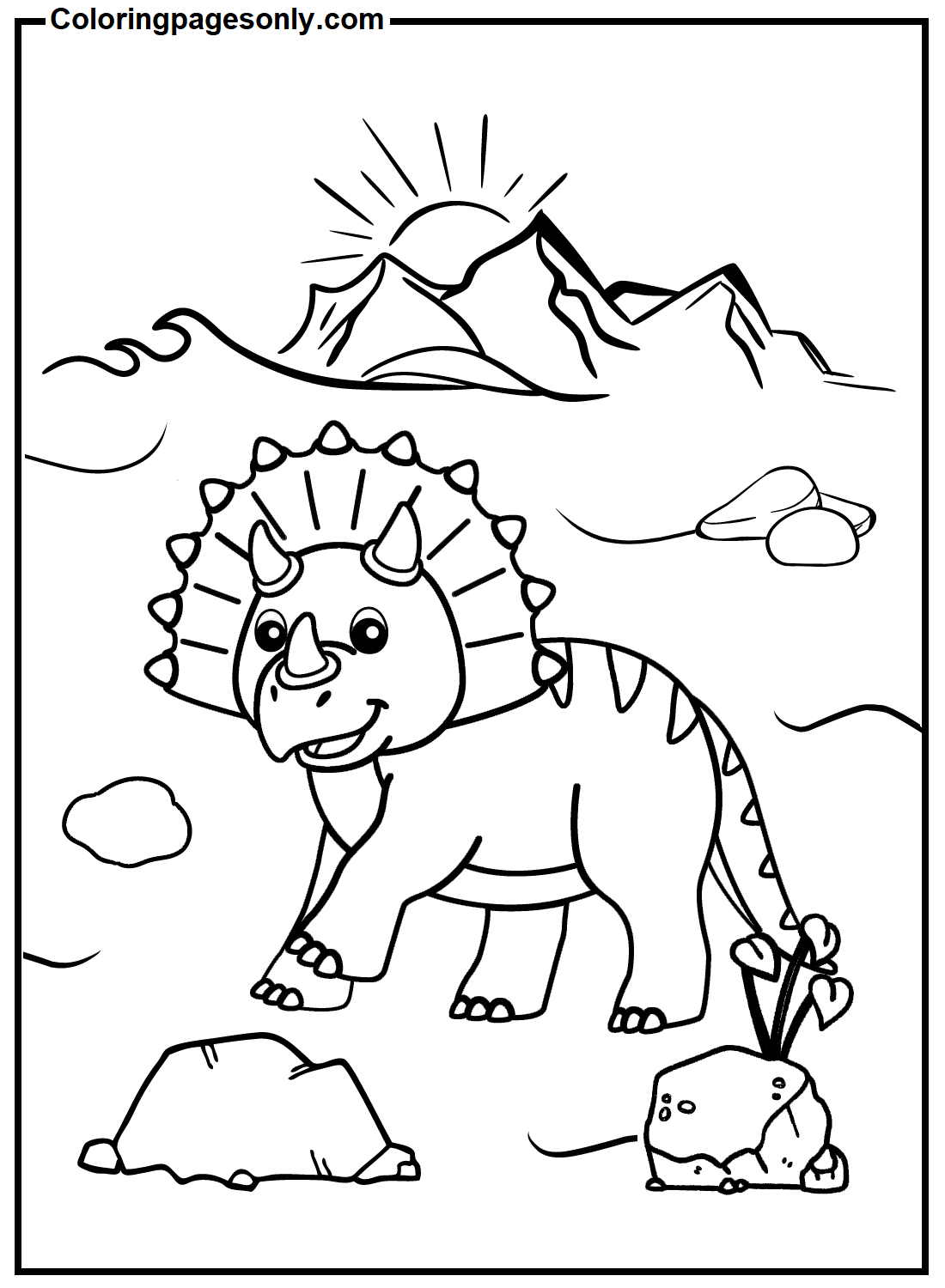
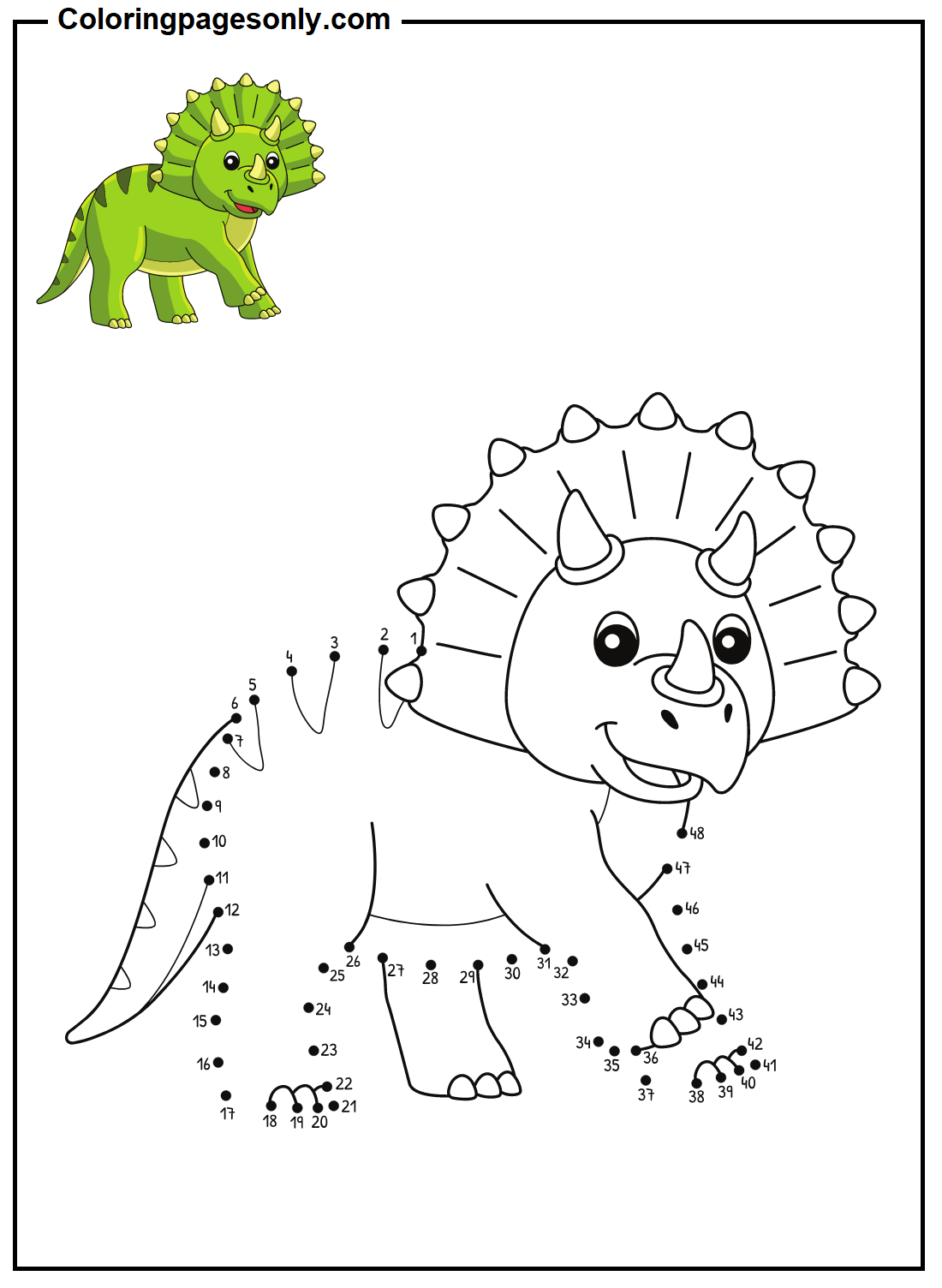
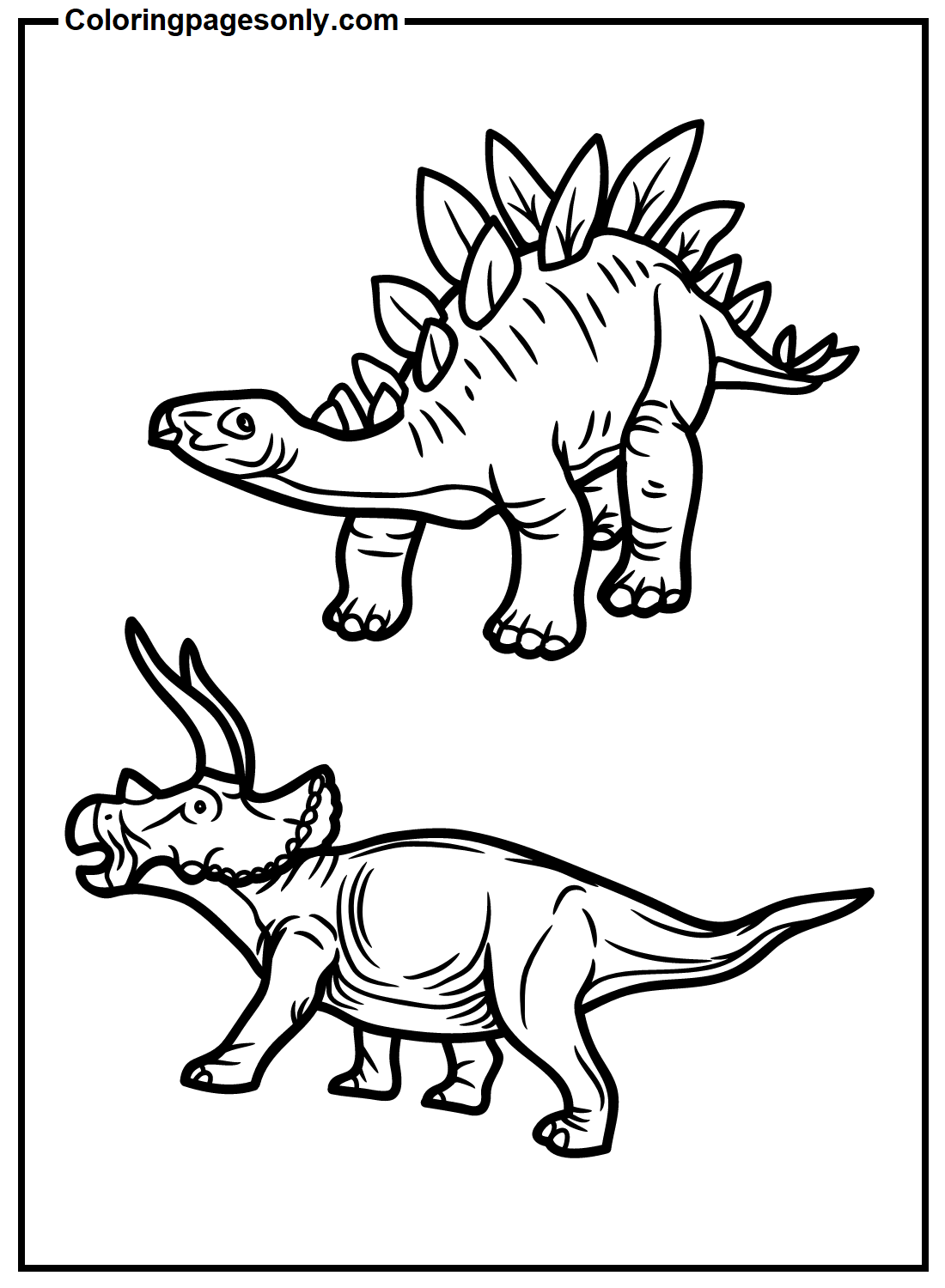
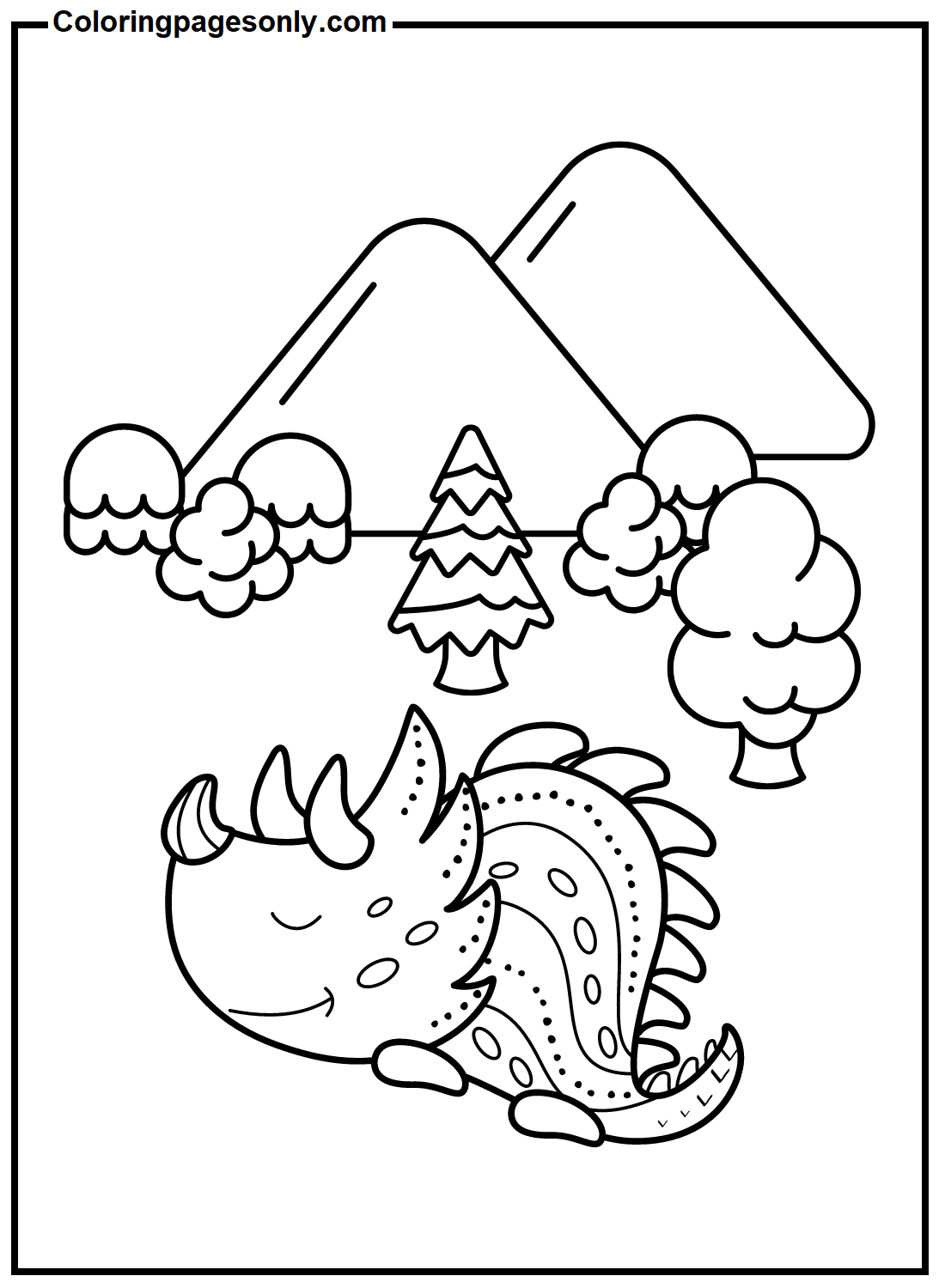
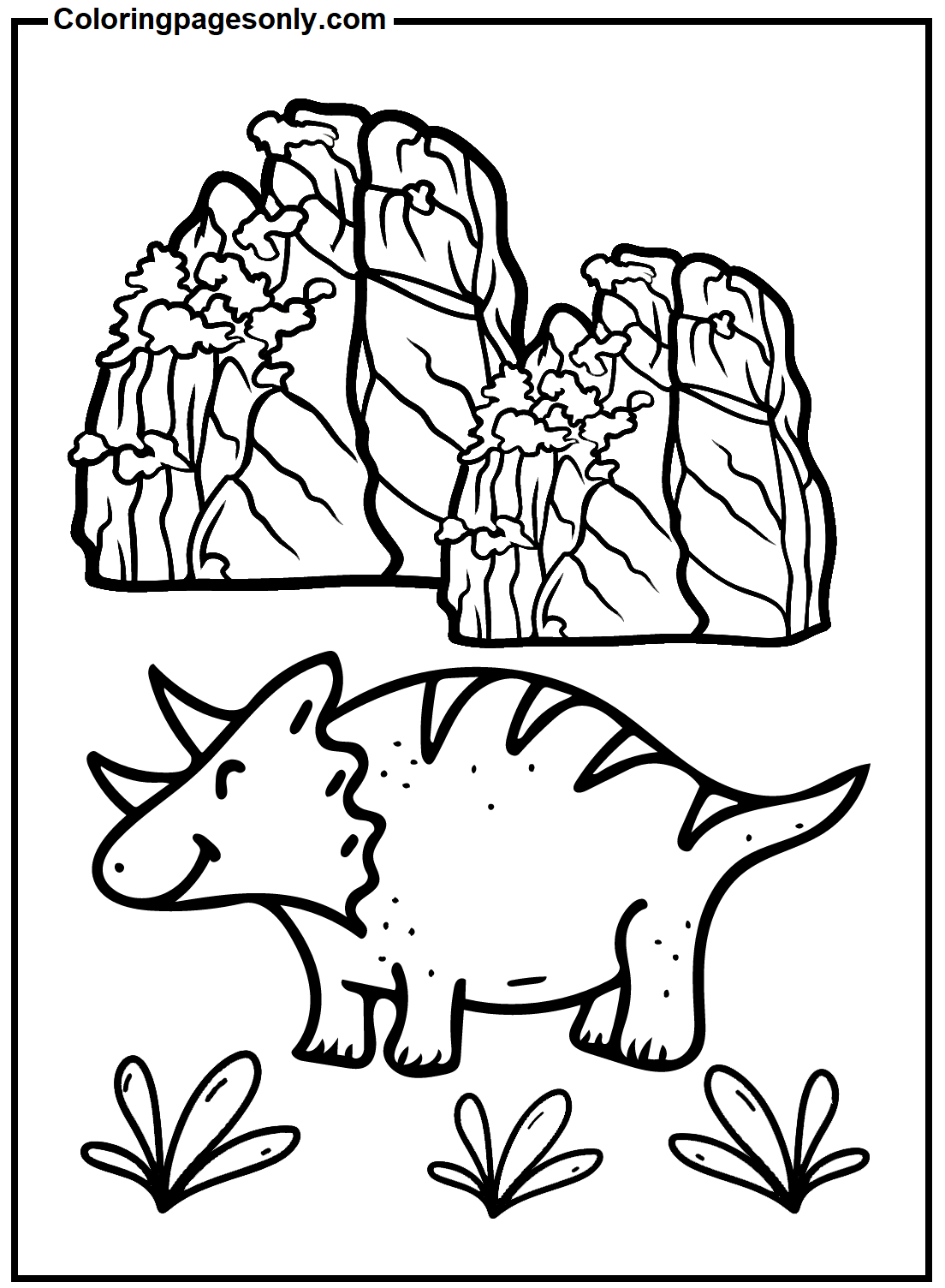
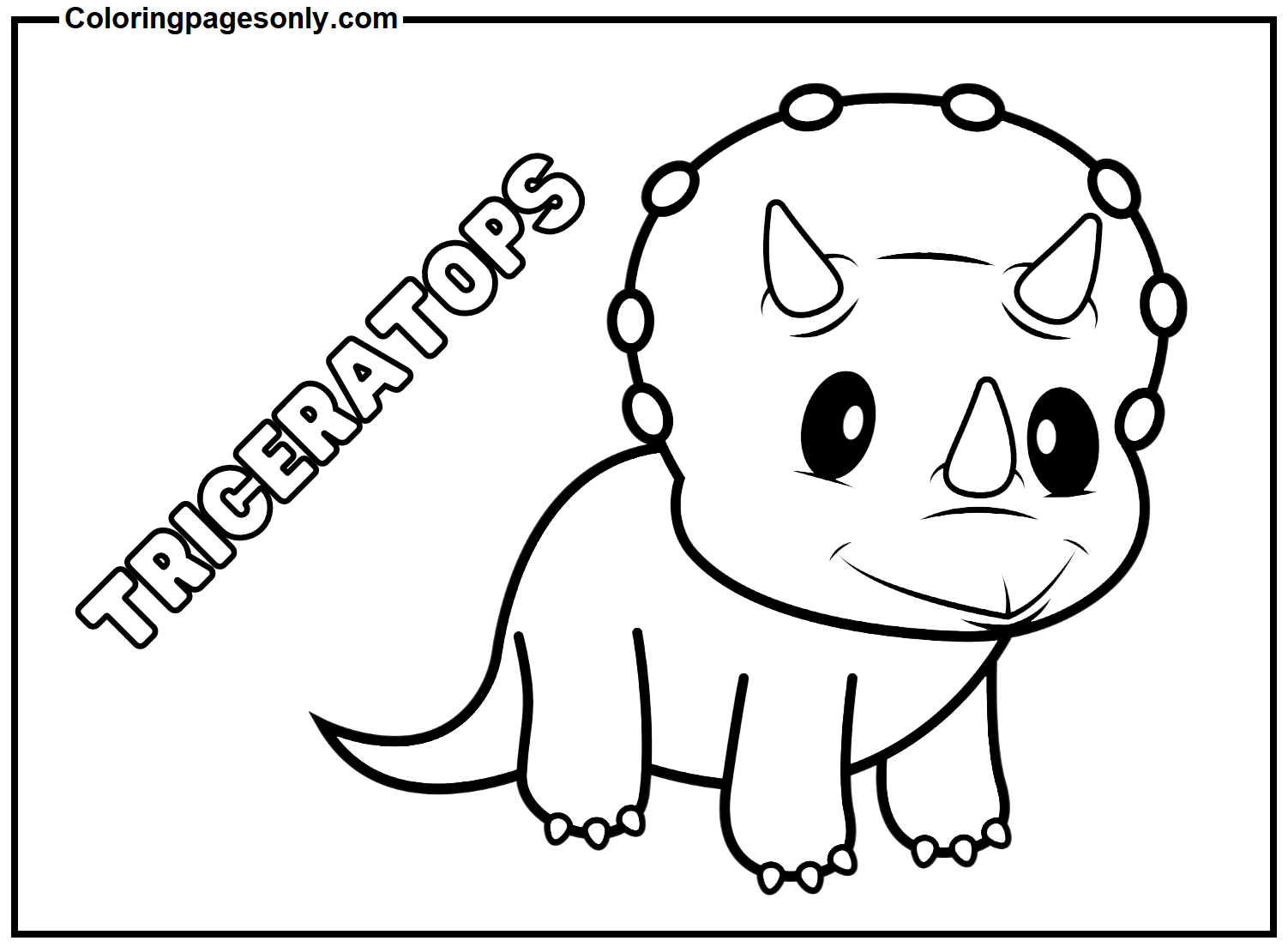

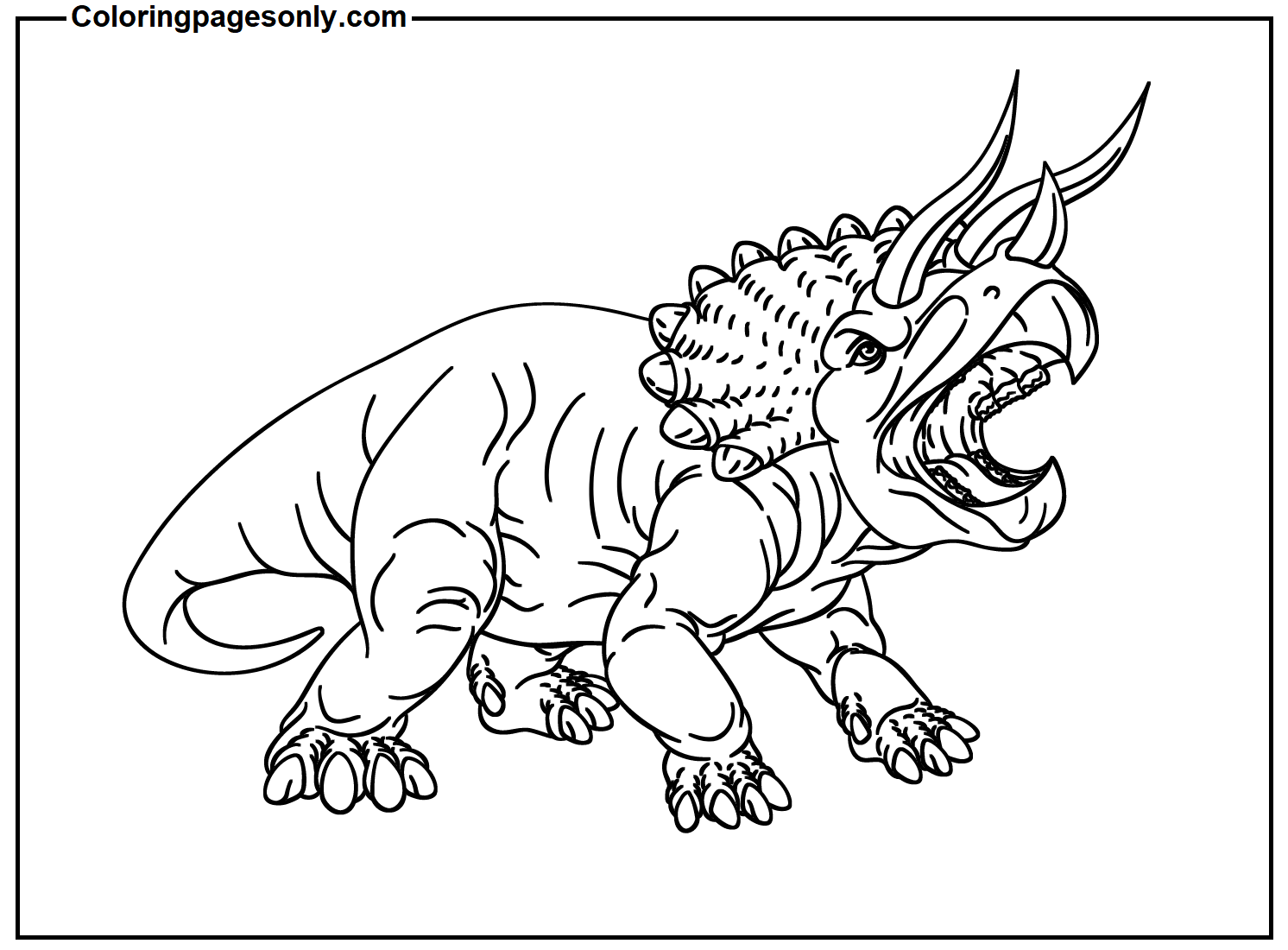
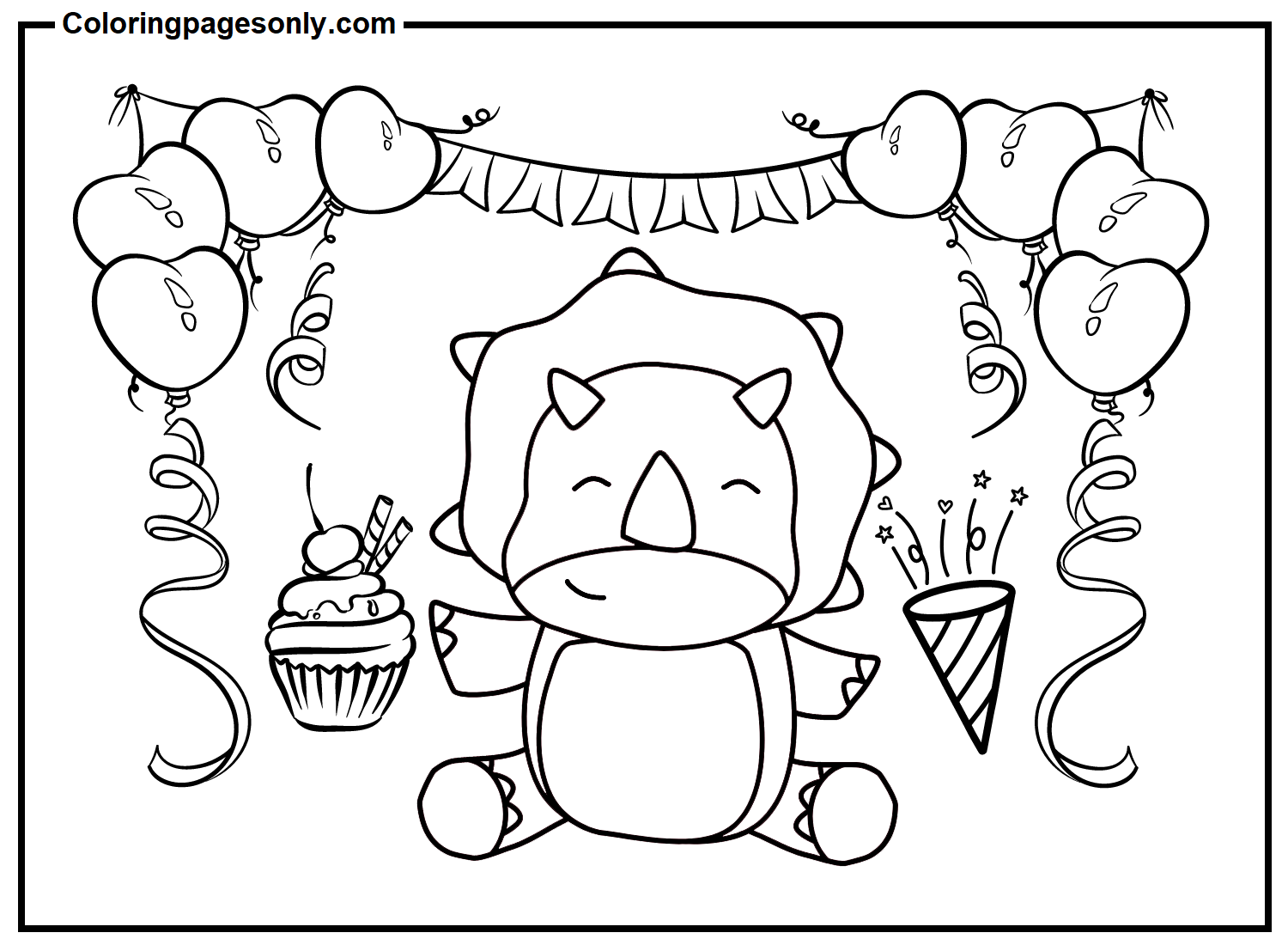
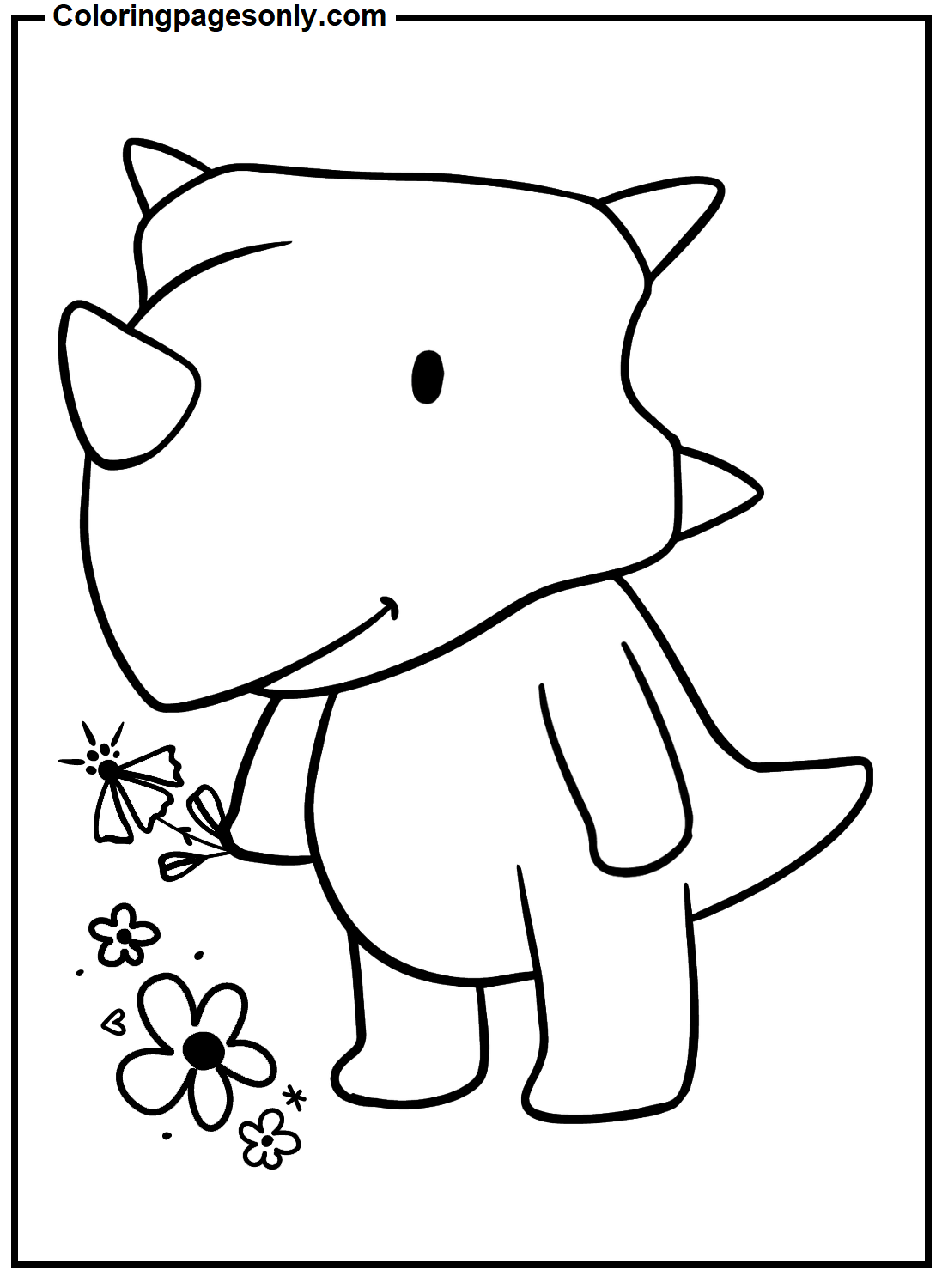
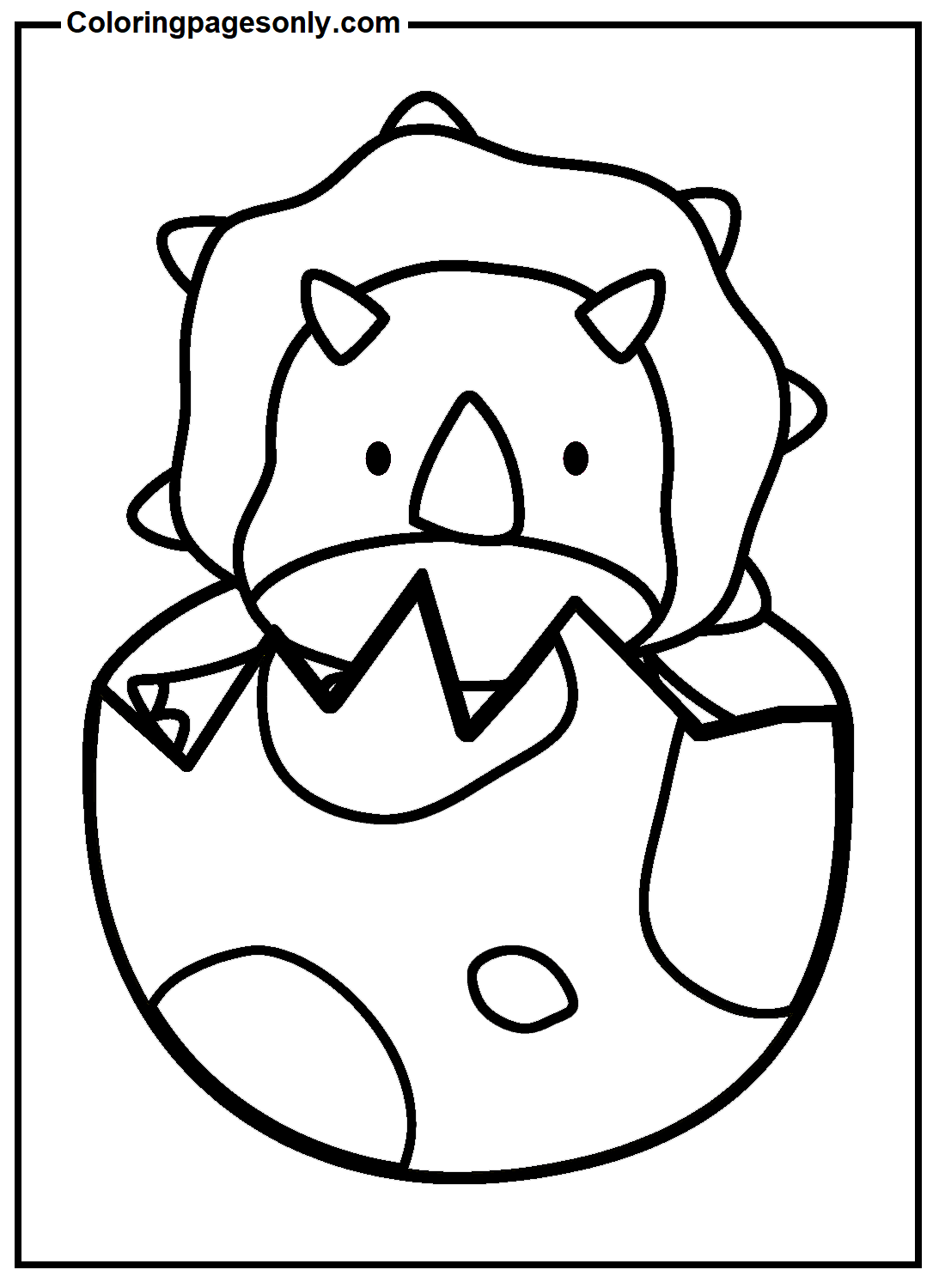
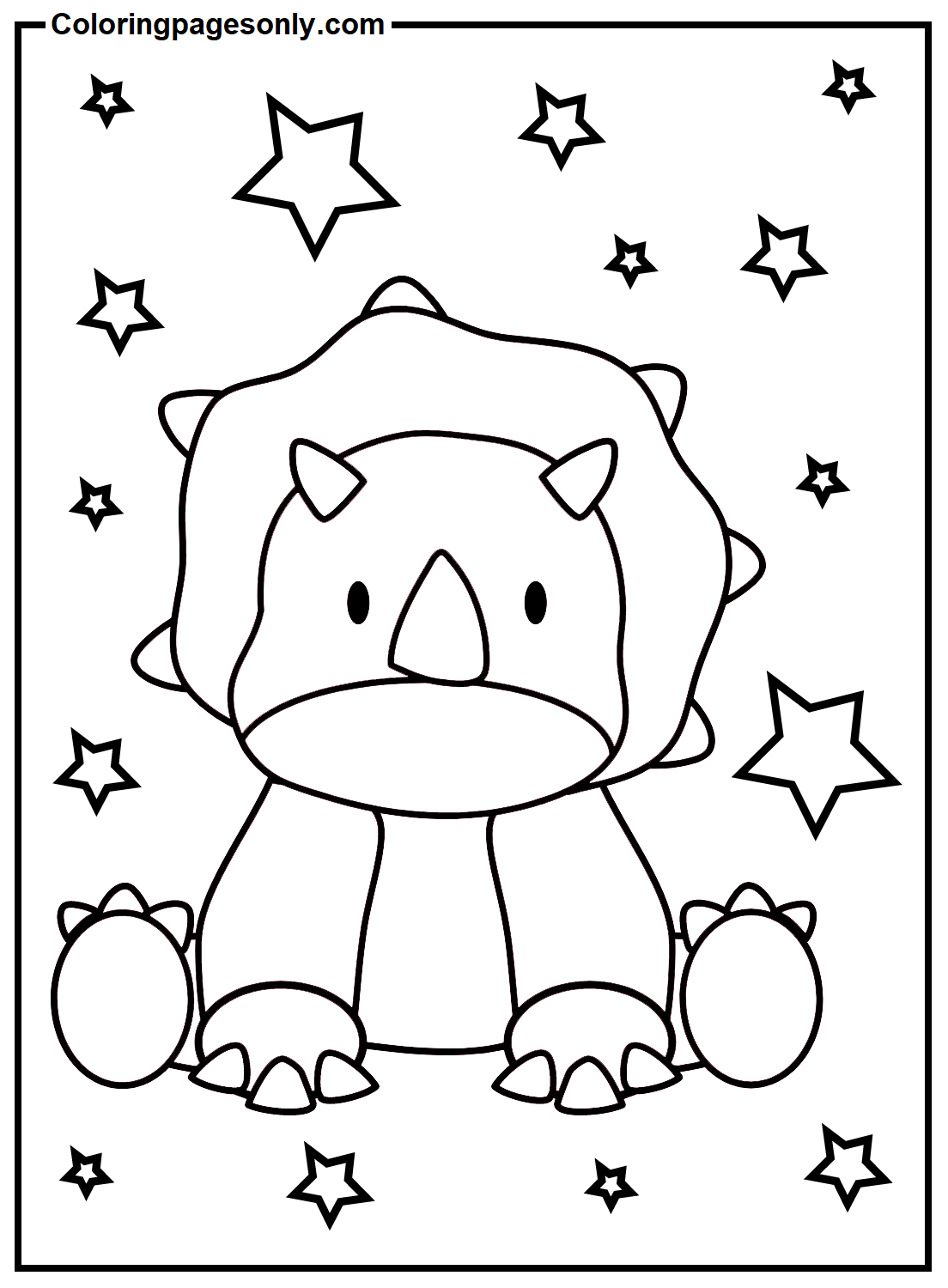
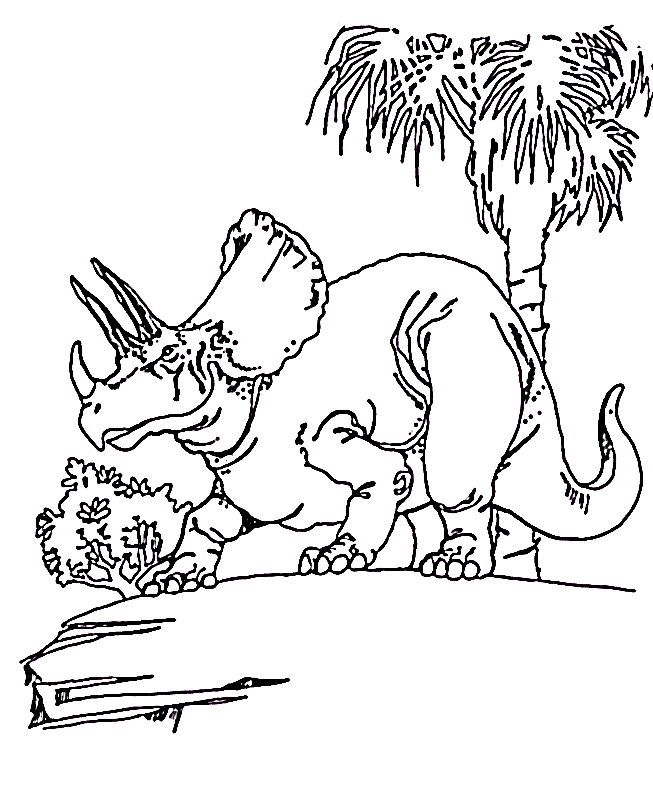
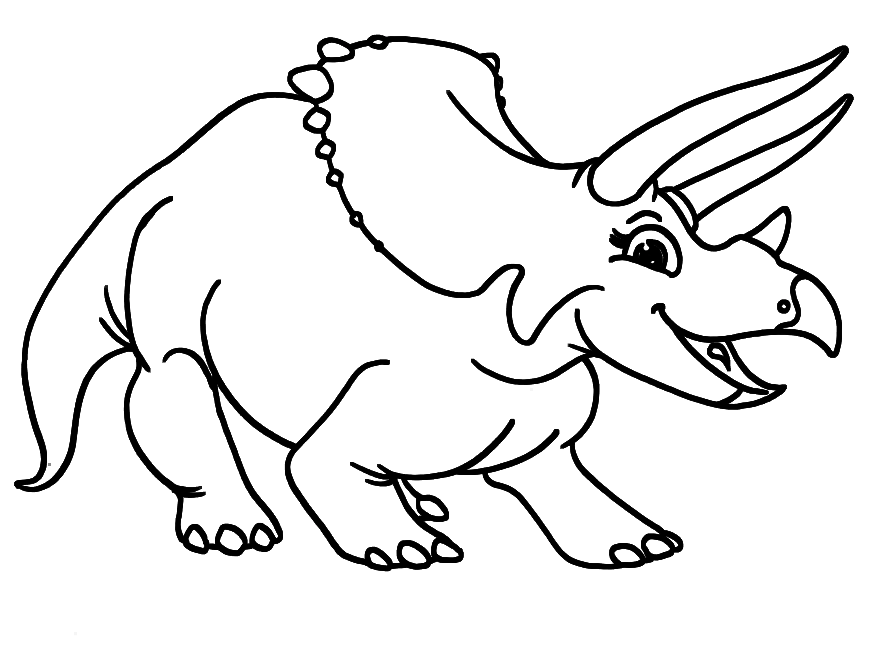
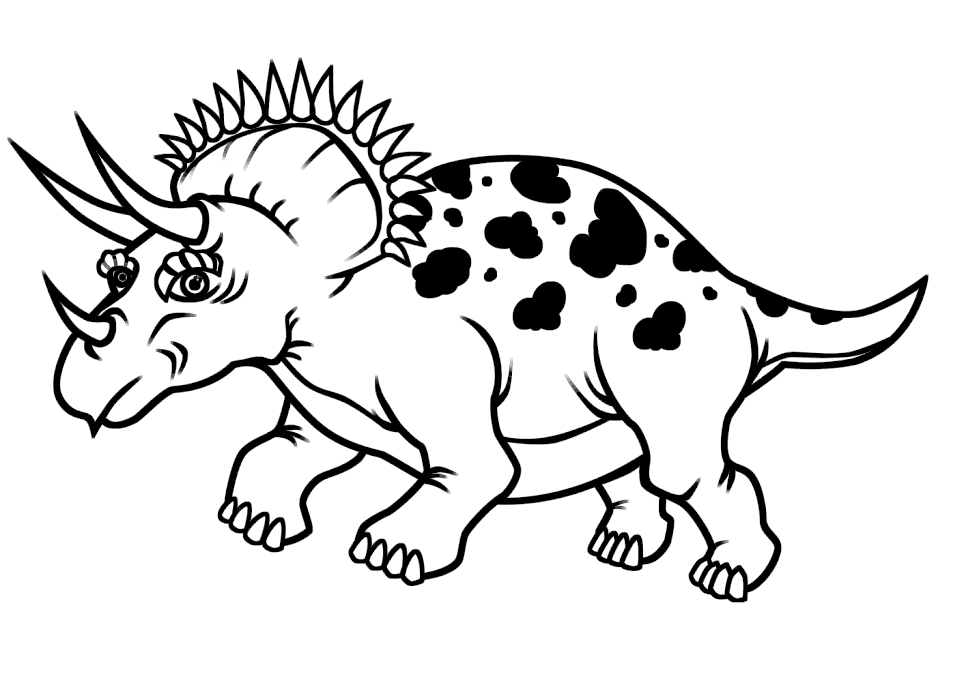
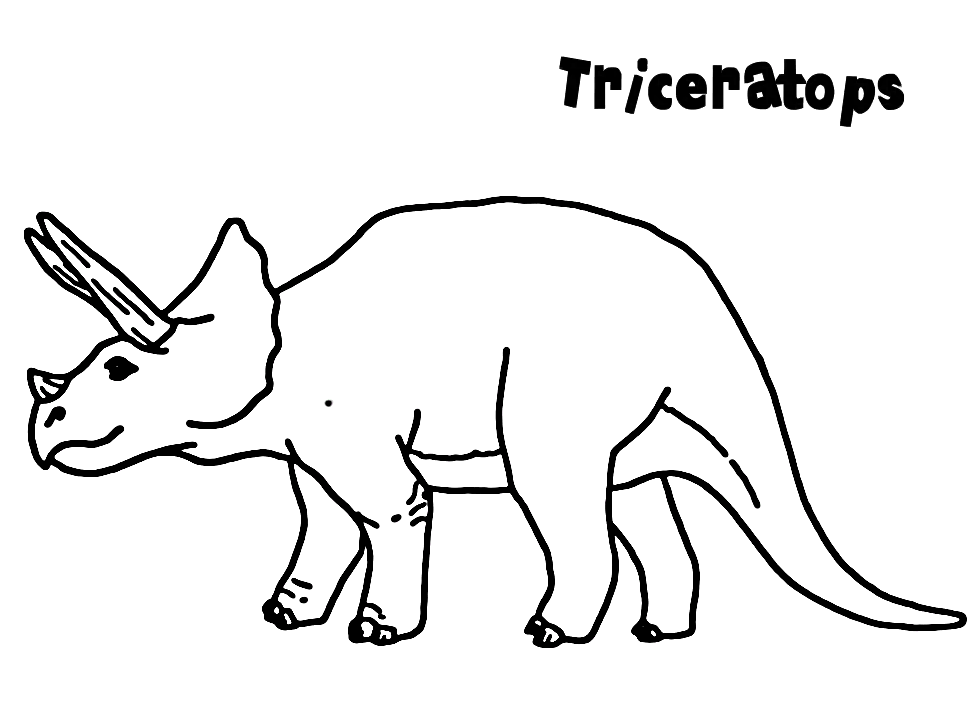
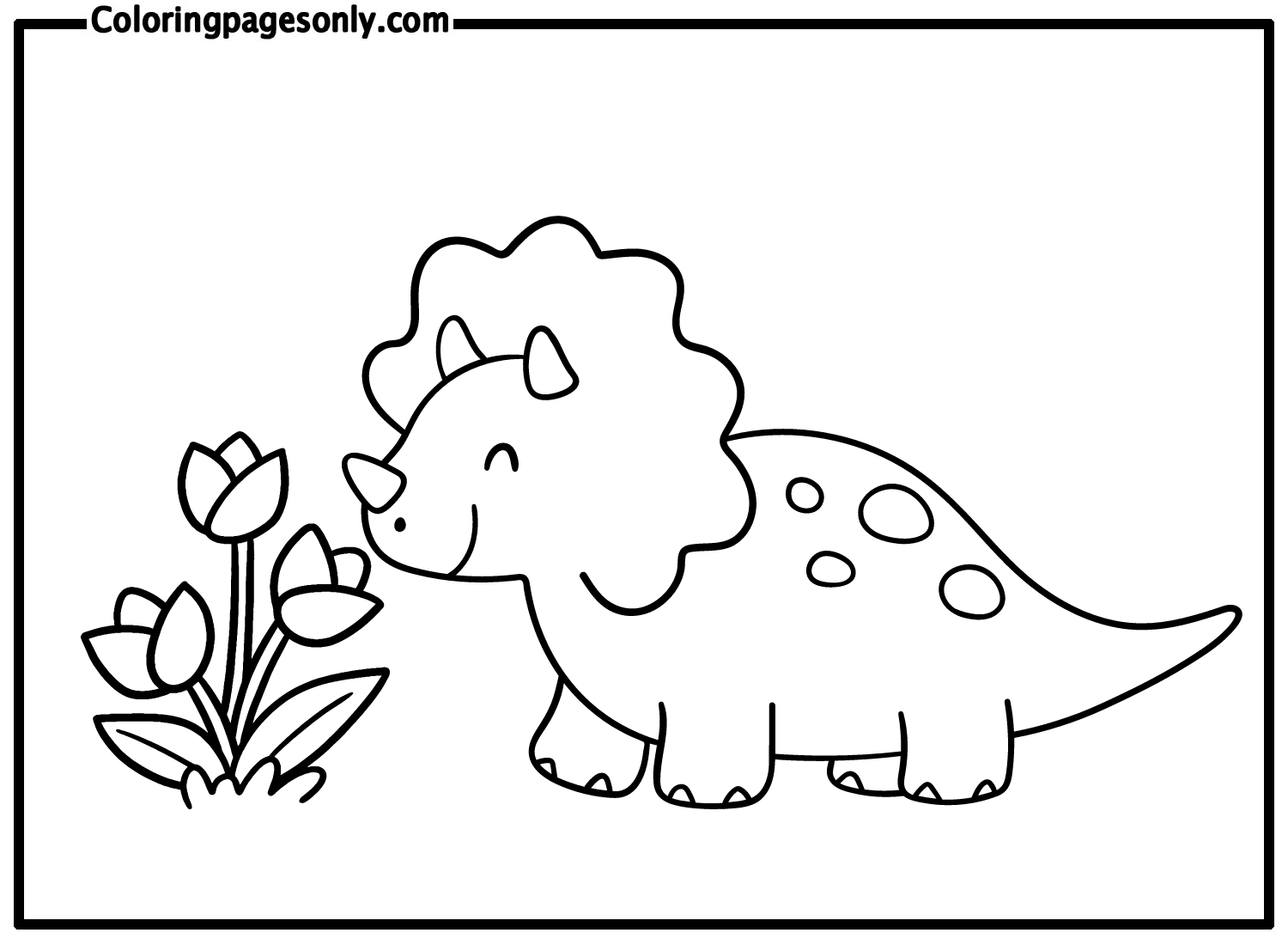

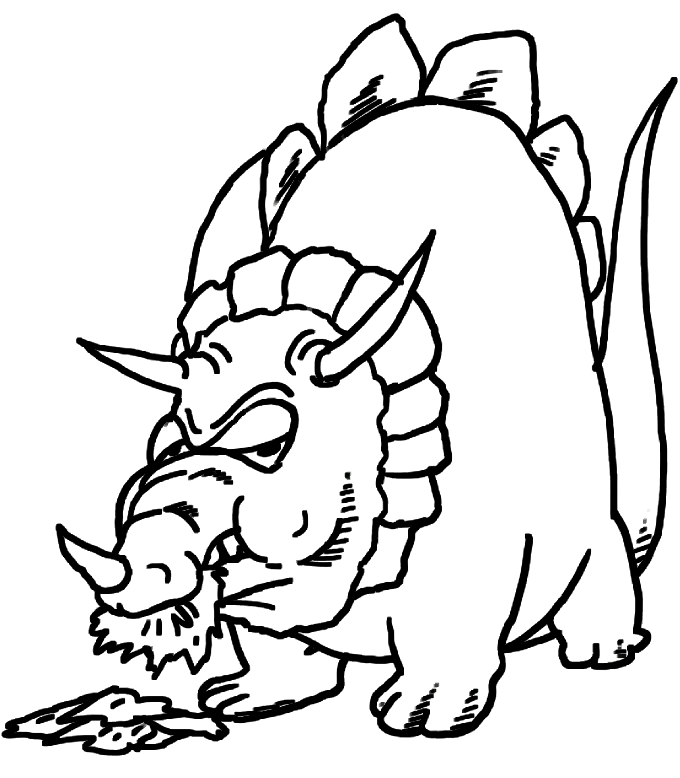
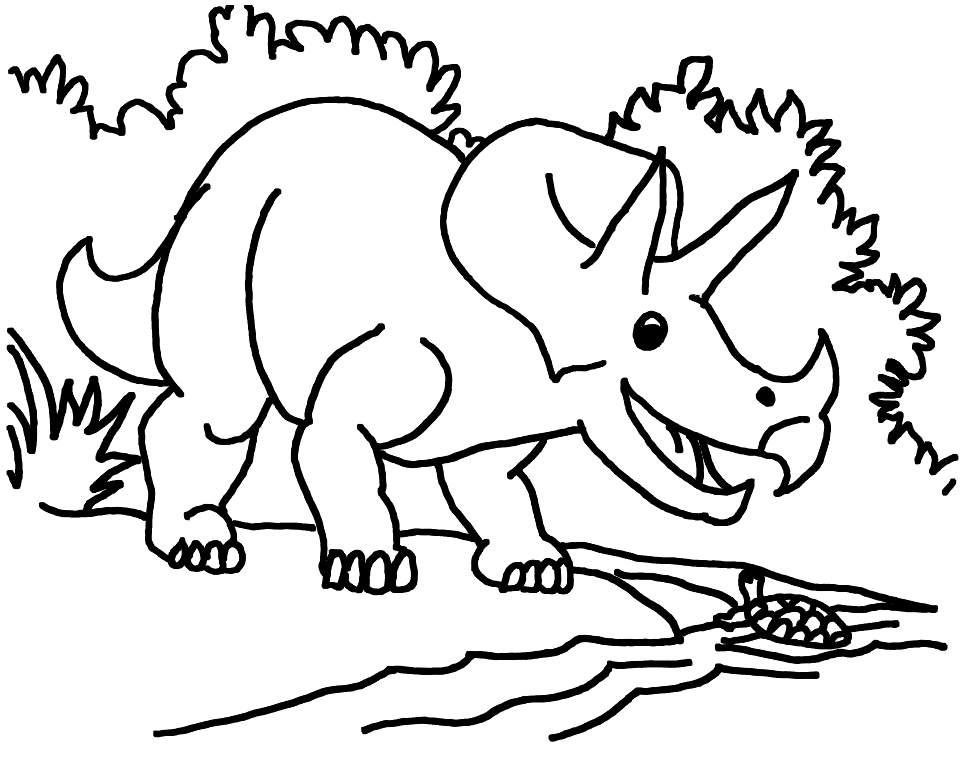
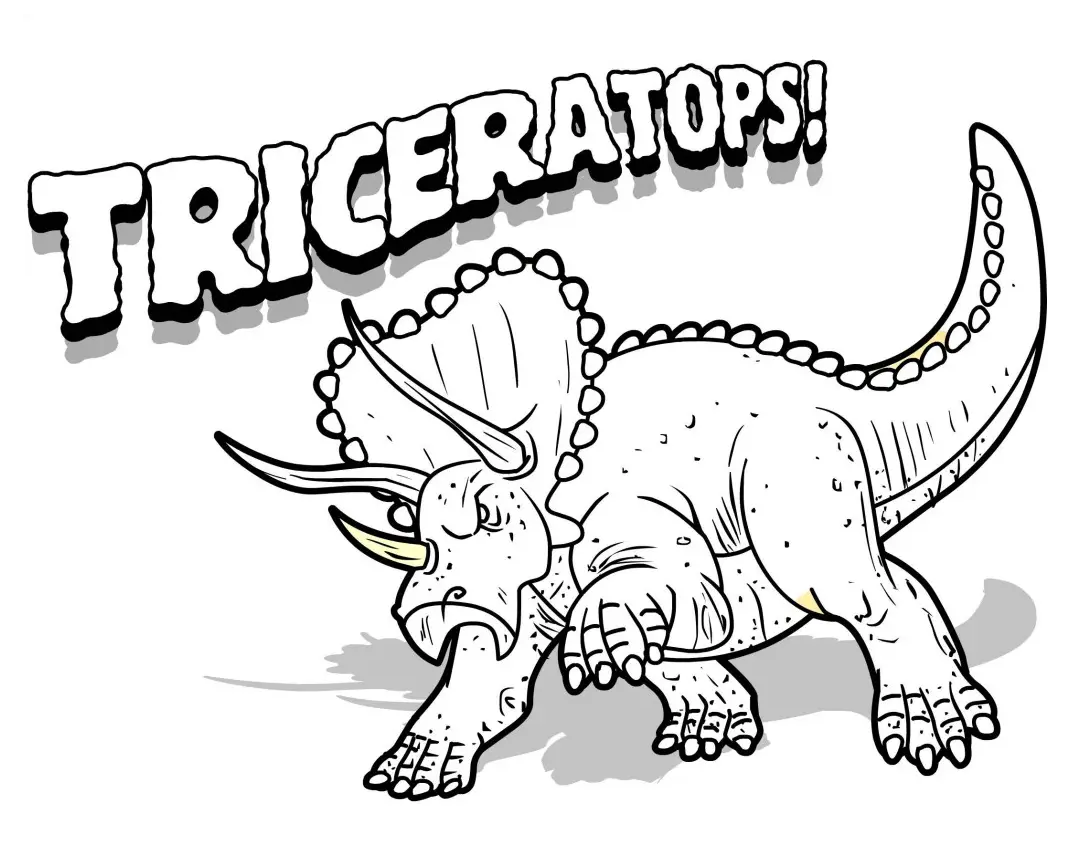
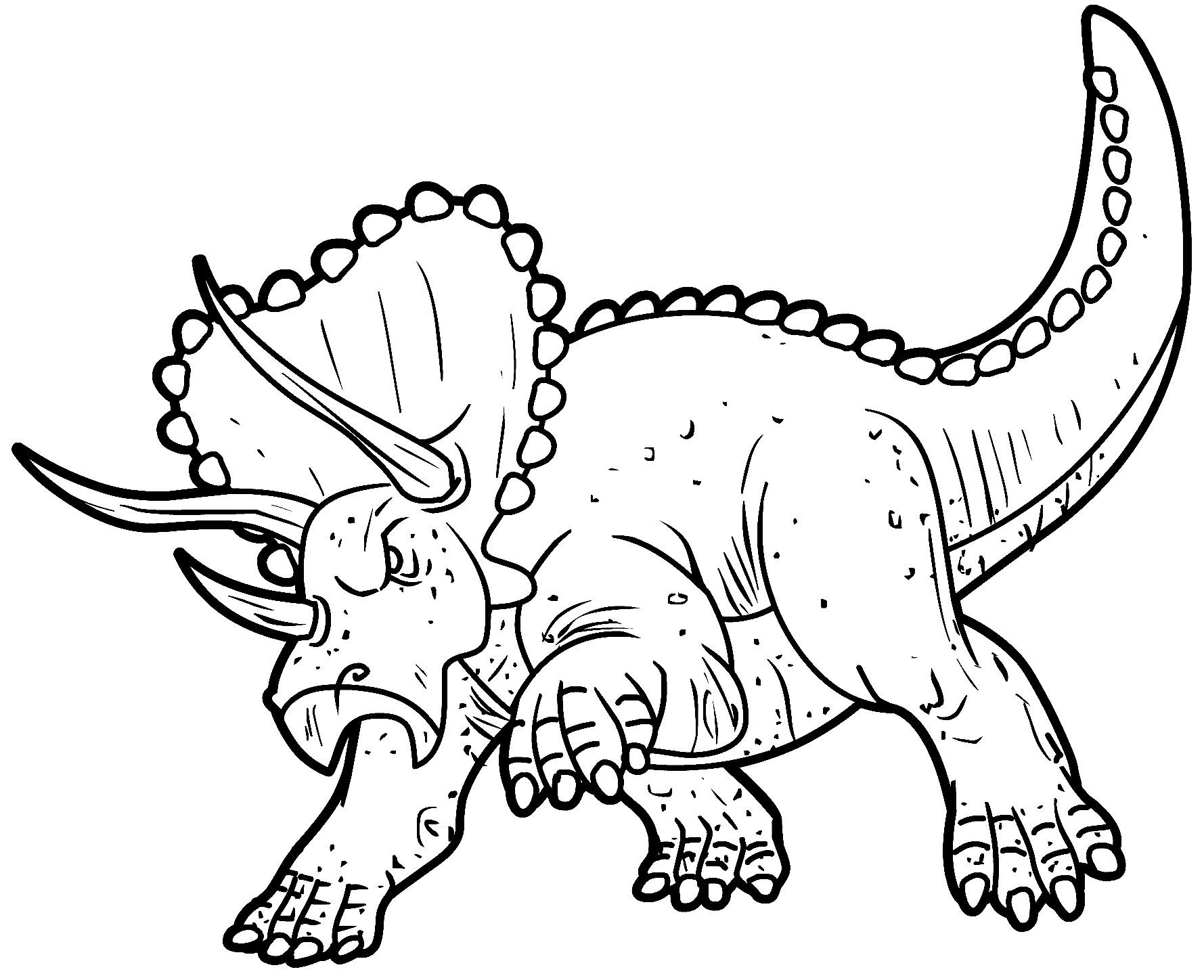
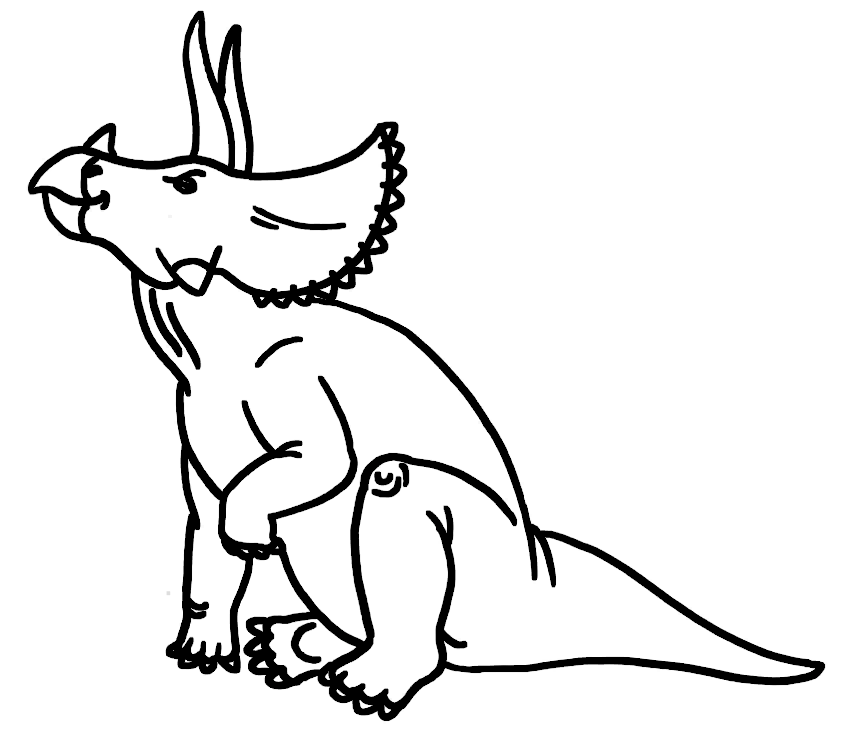
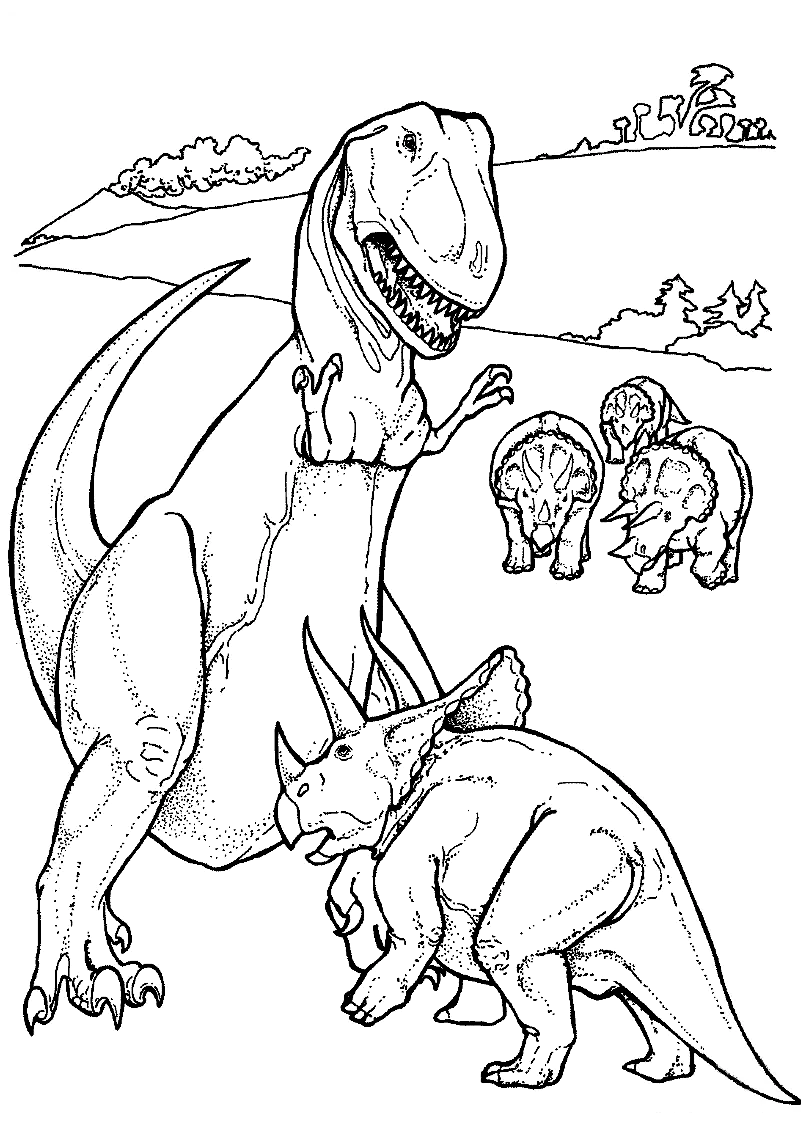
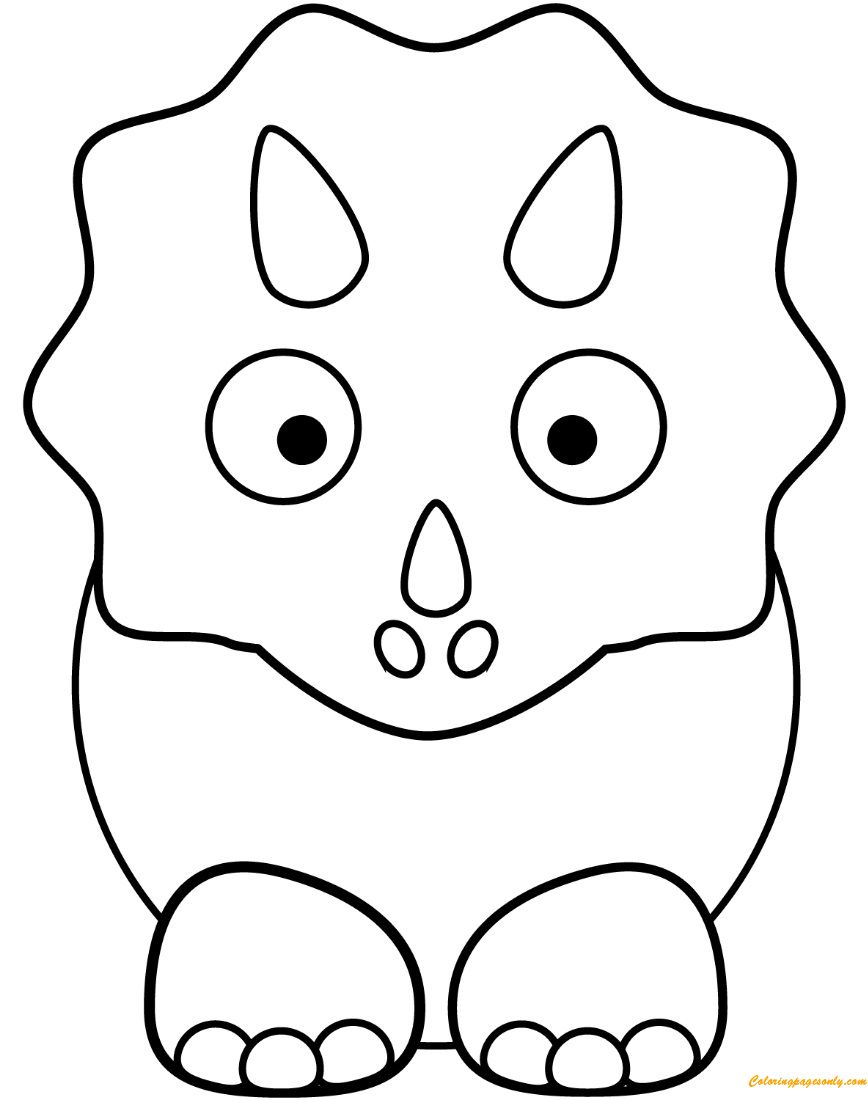

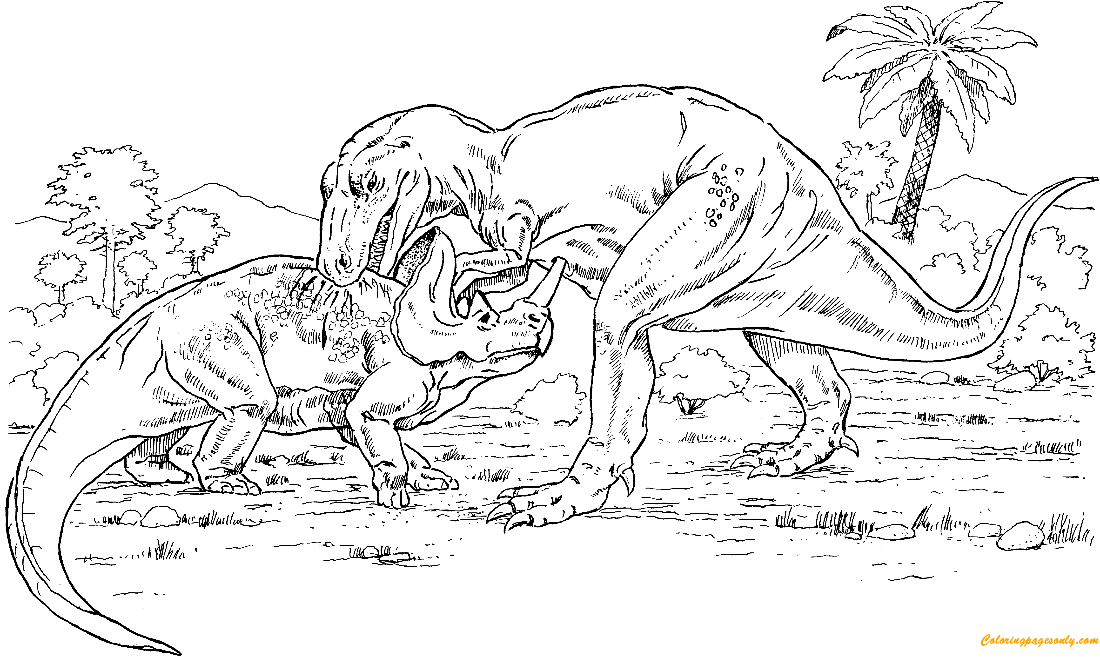
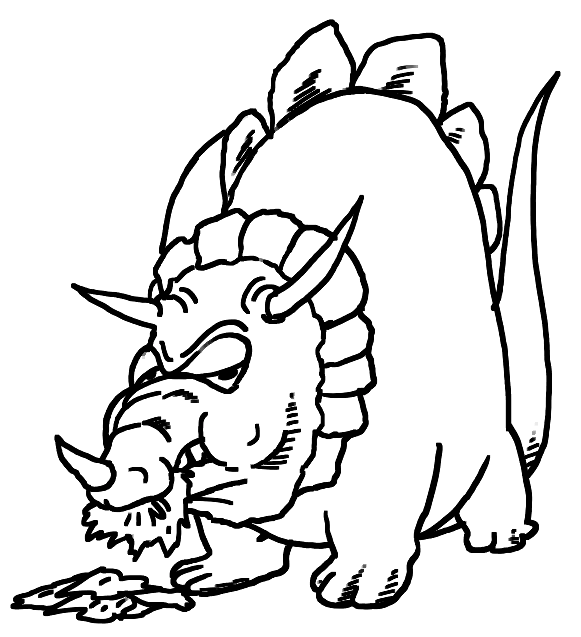
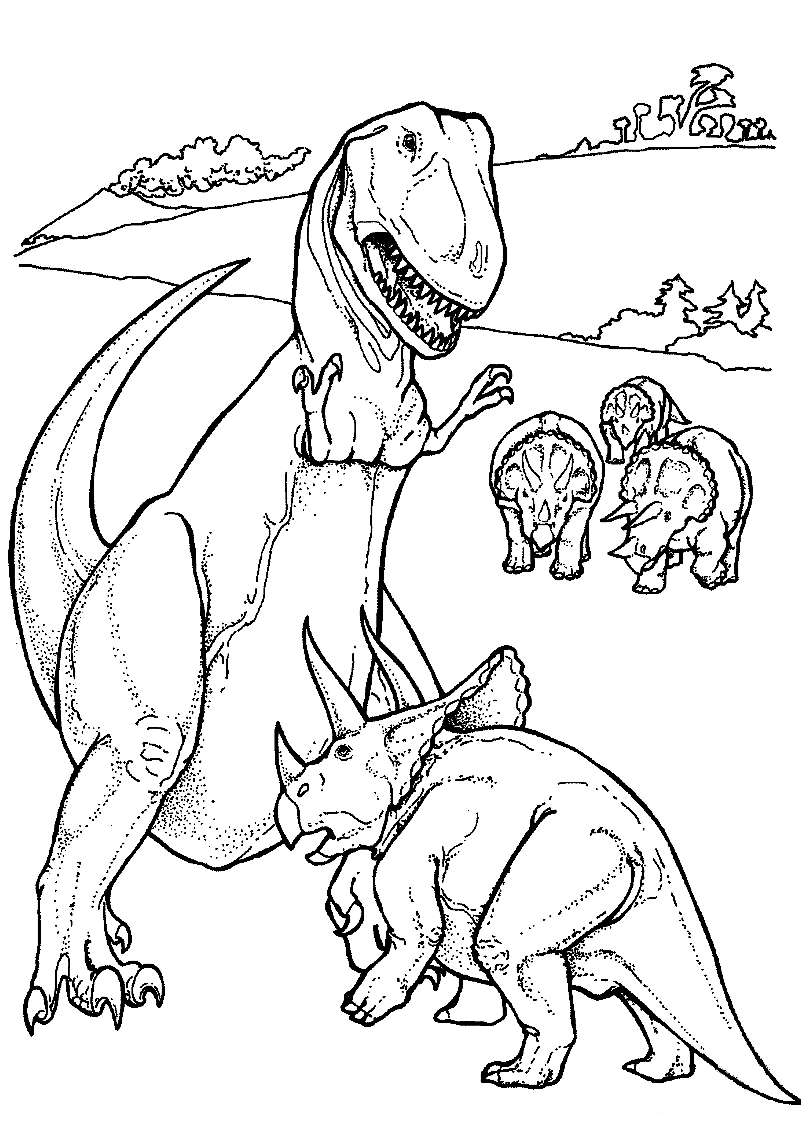
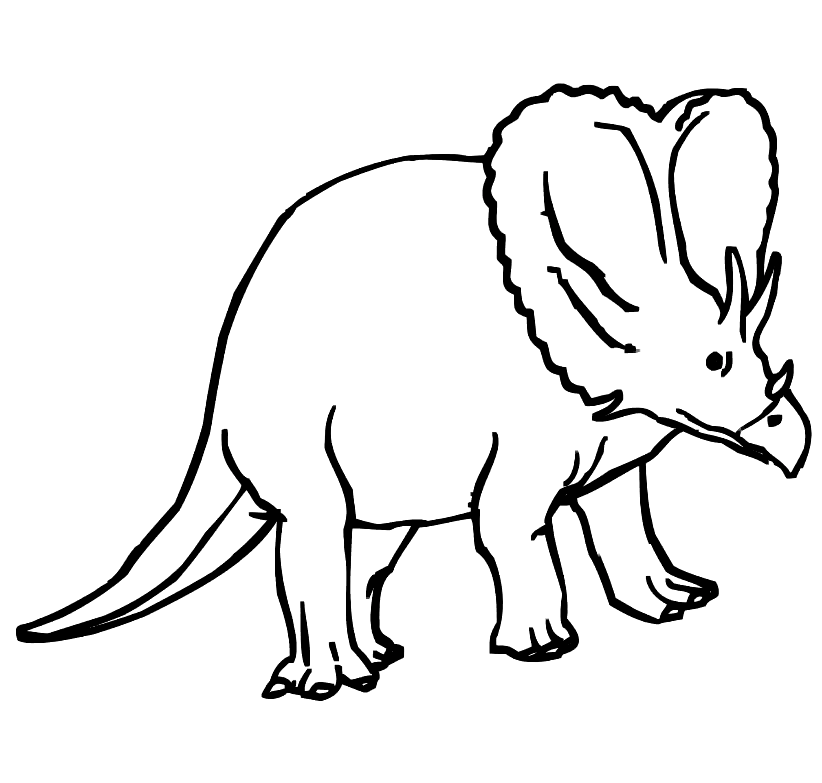
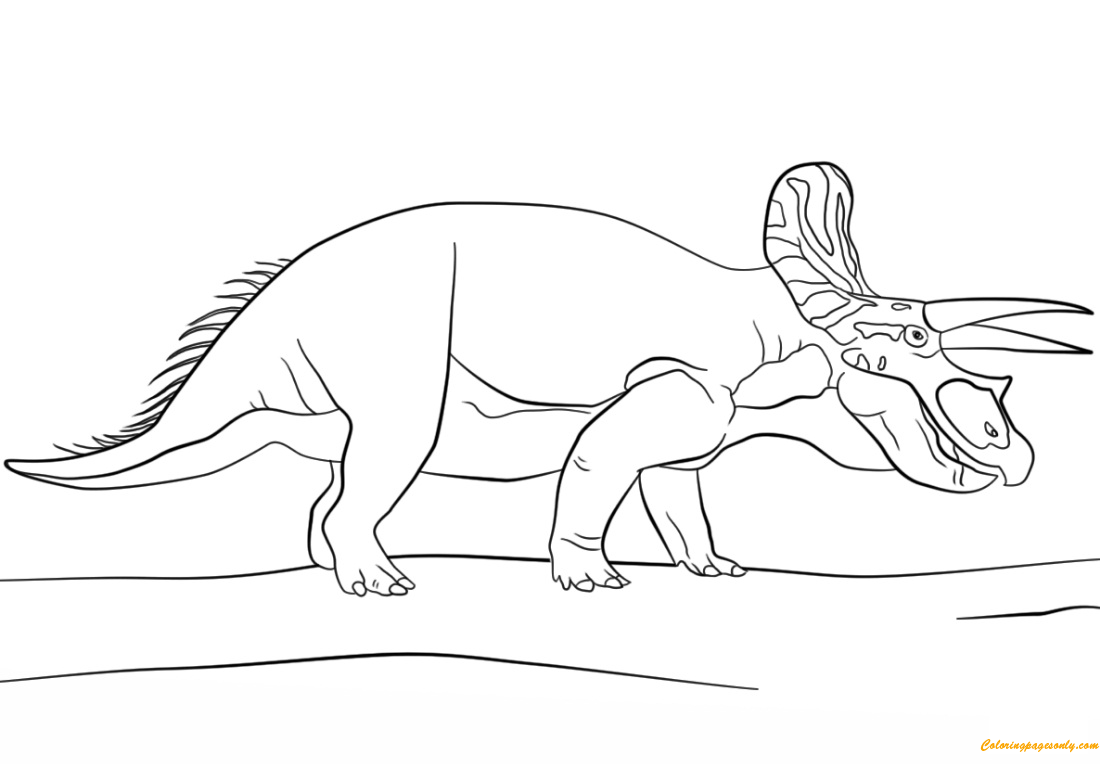
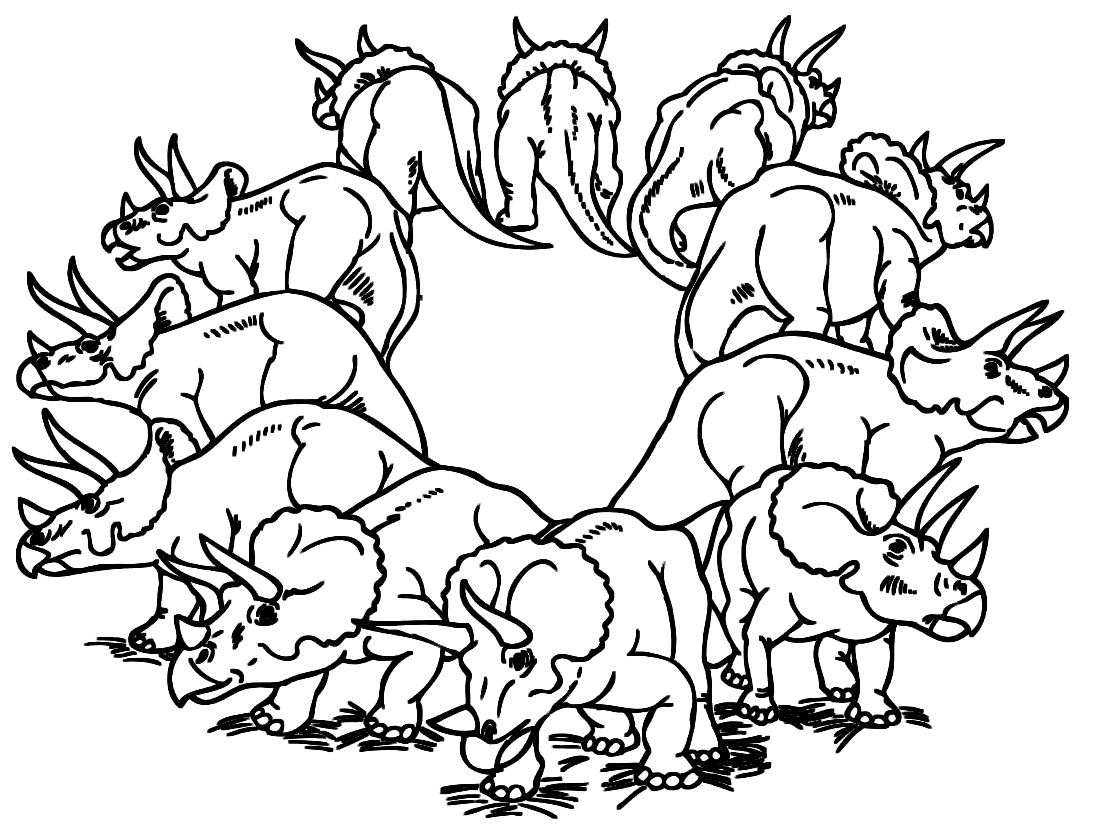
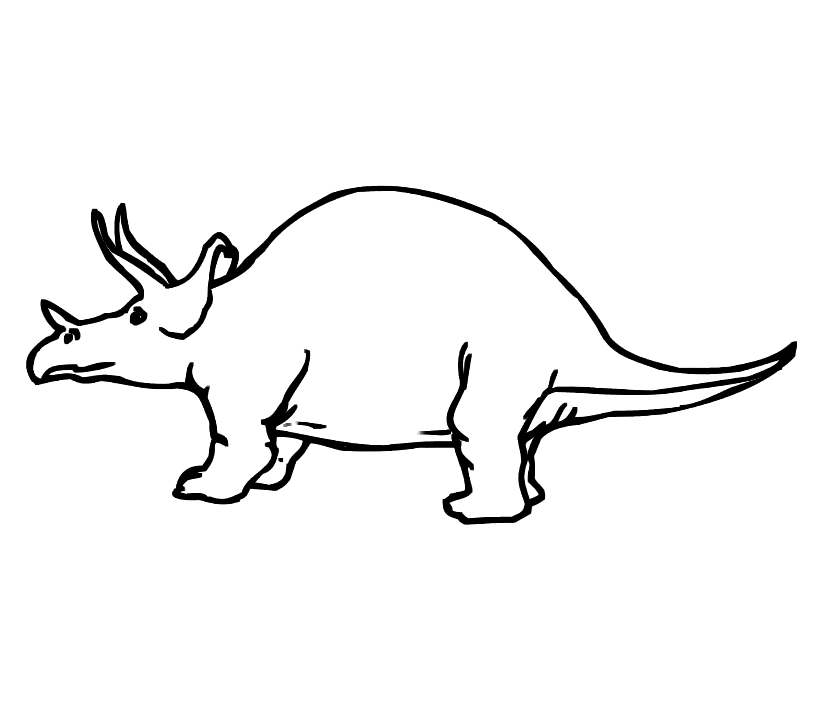
What Is Inside This Collection
The 74 pages fall into a few clear groups, built around simple portraits, activity scenes, prehistoric environments, and pages with other dinosaurs.
Simple and Generic Portraits
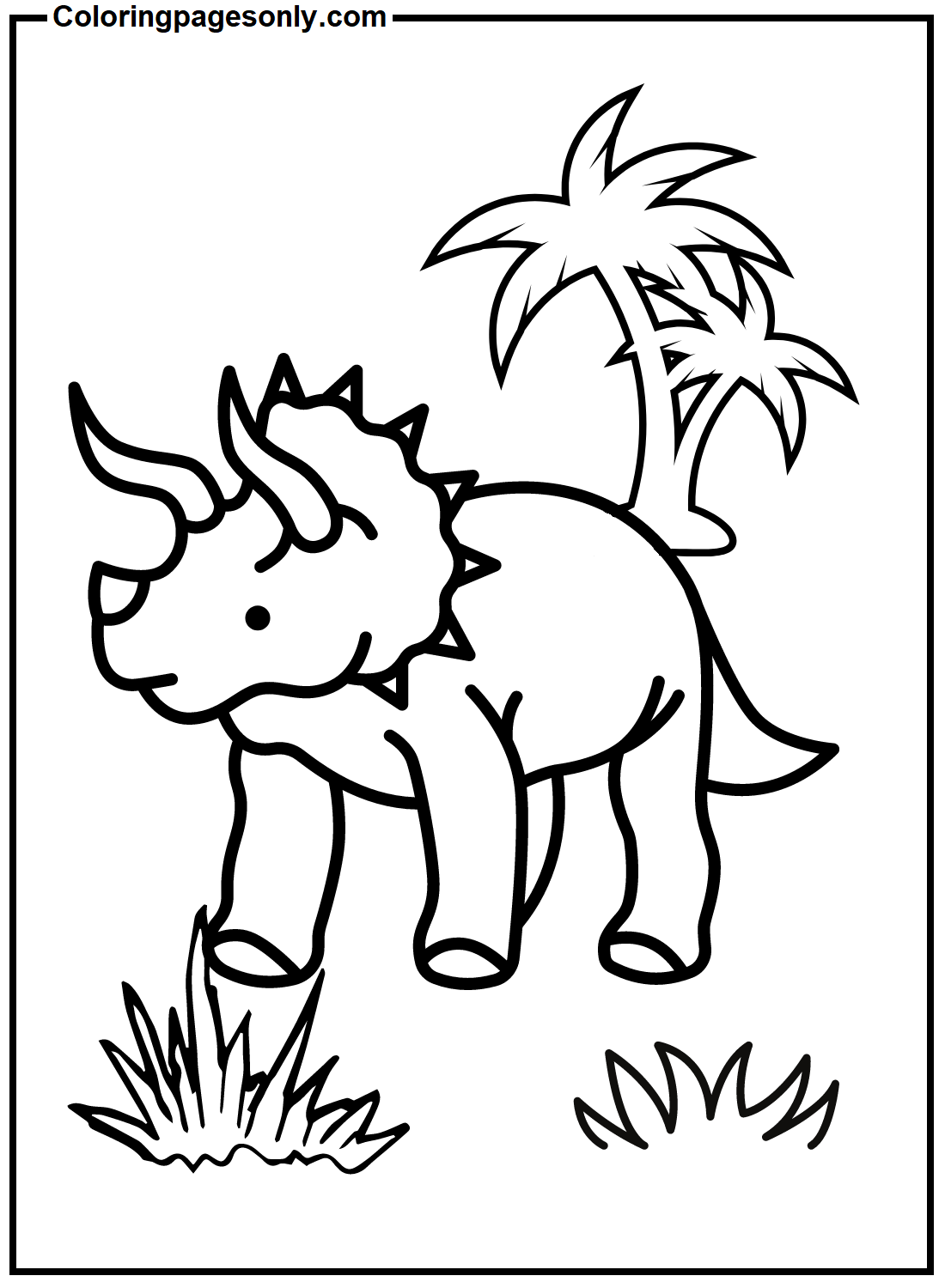
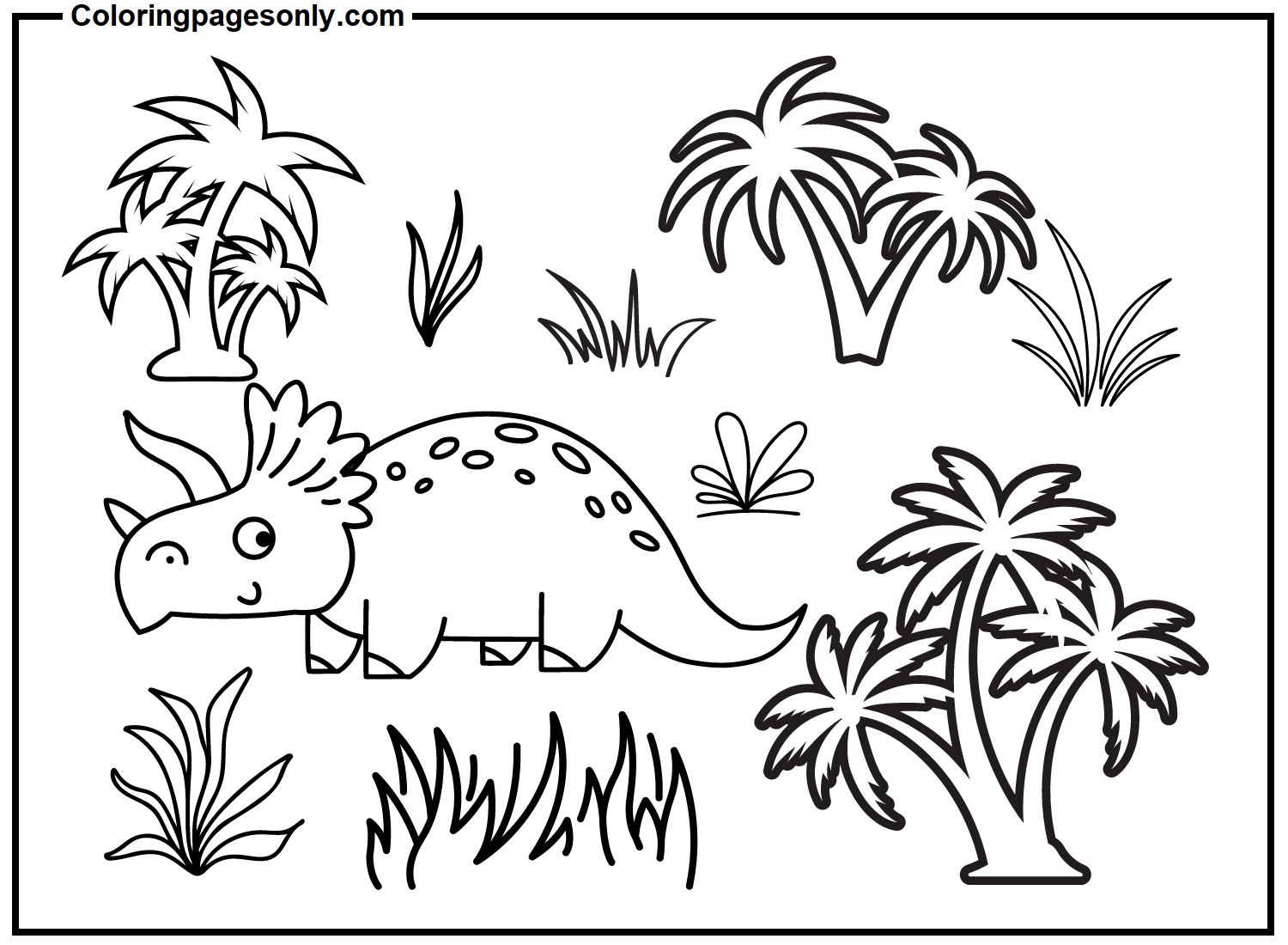
Twenty-six pages are solo Triceratops portraits without a specific scene, ranging from a basic outline to a fuller cartoon design, plus a dot-to-dot page for younger colorers. These work well as a fast classroom handout or a first attempt at the animal. A single earthy color, Olive Green or Brown, is enough to complete most of these quickly.
Activity and Character Scenes
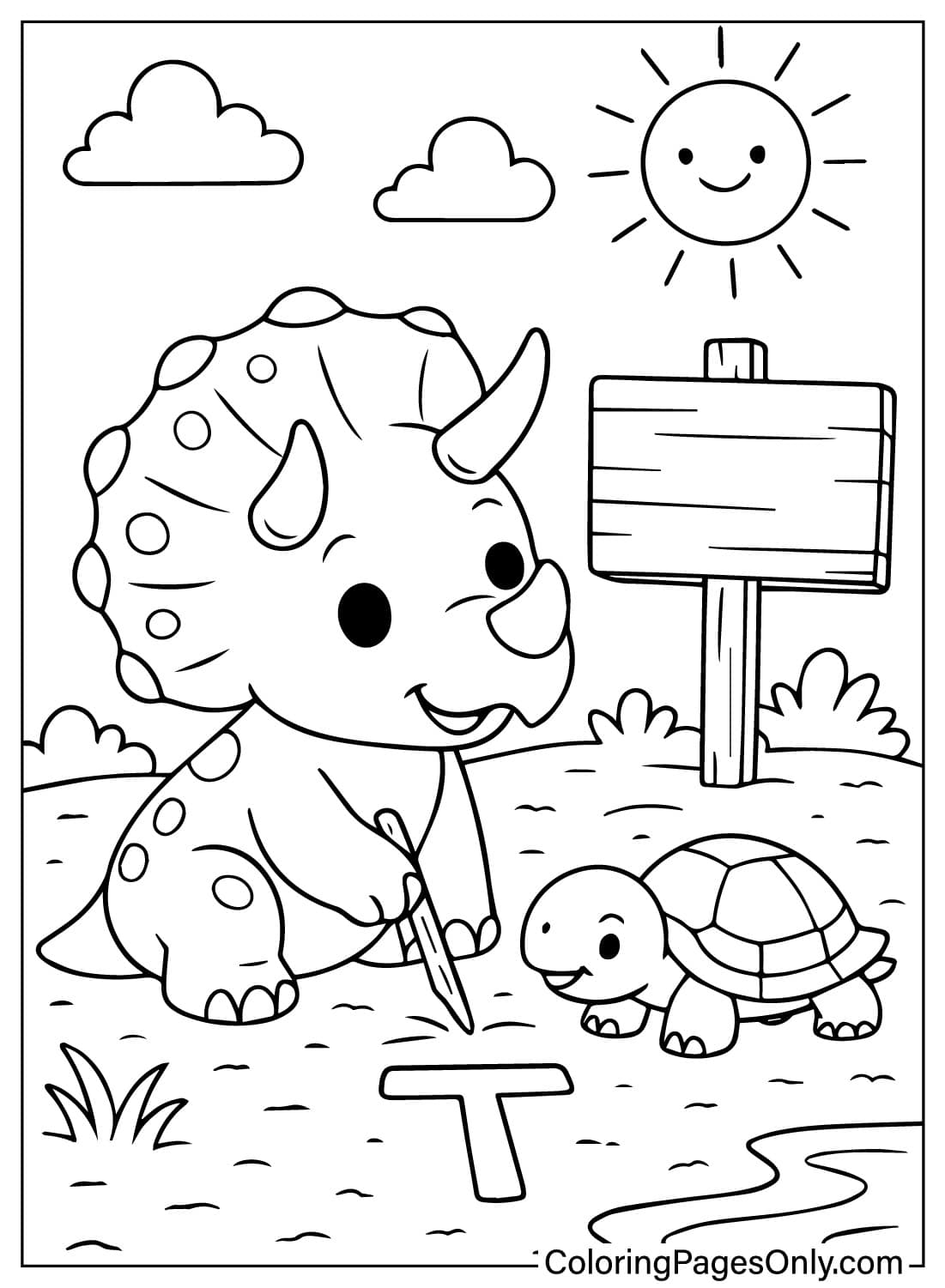
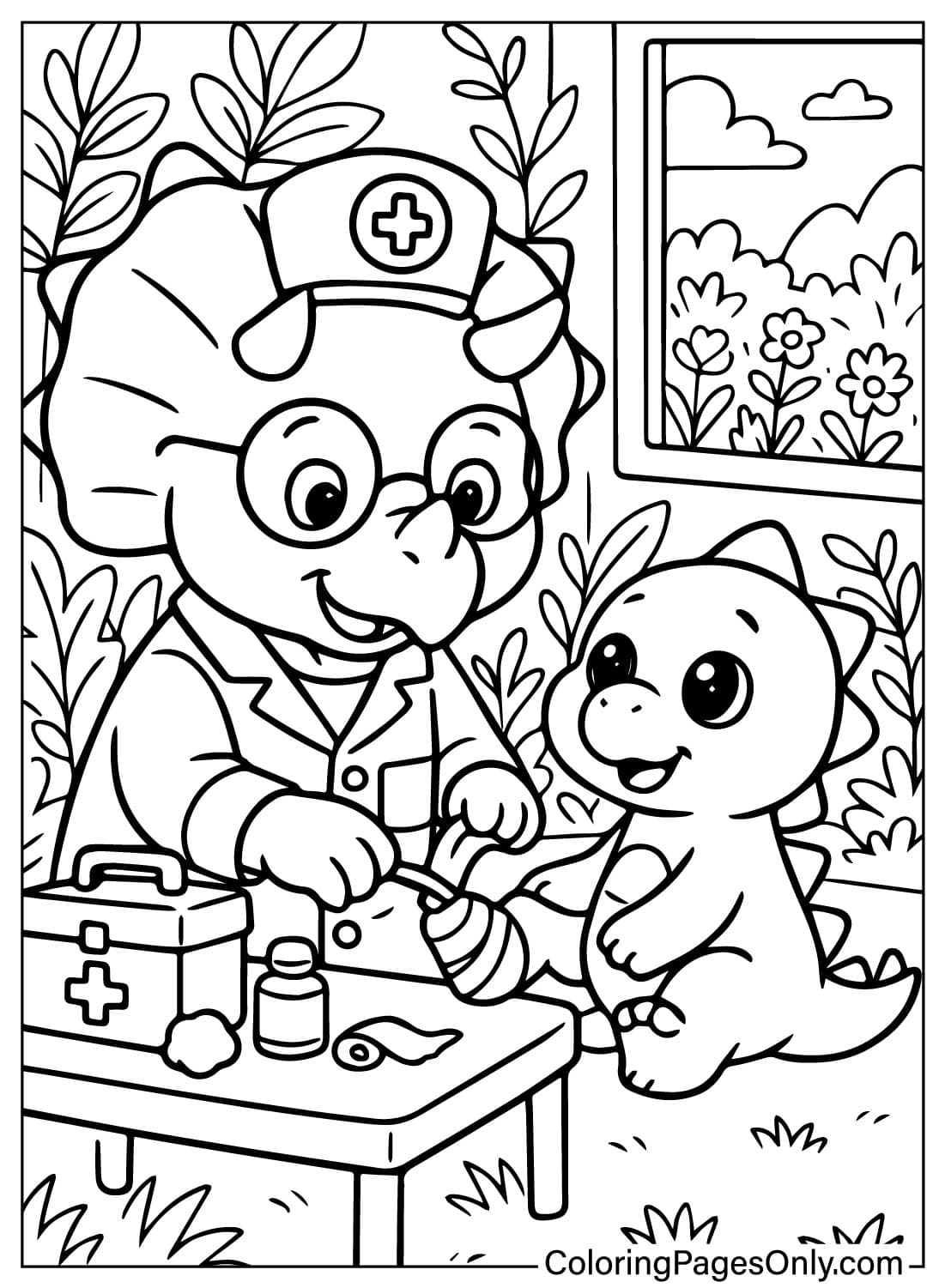
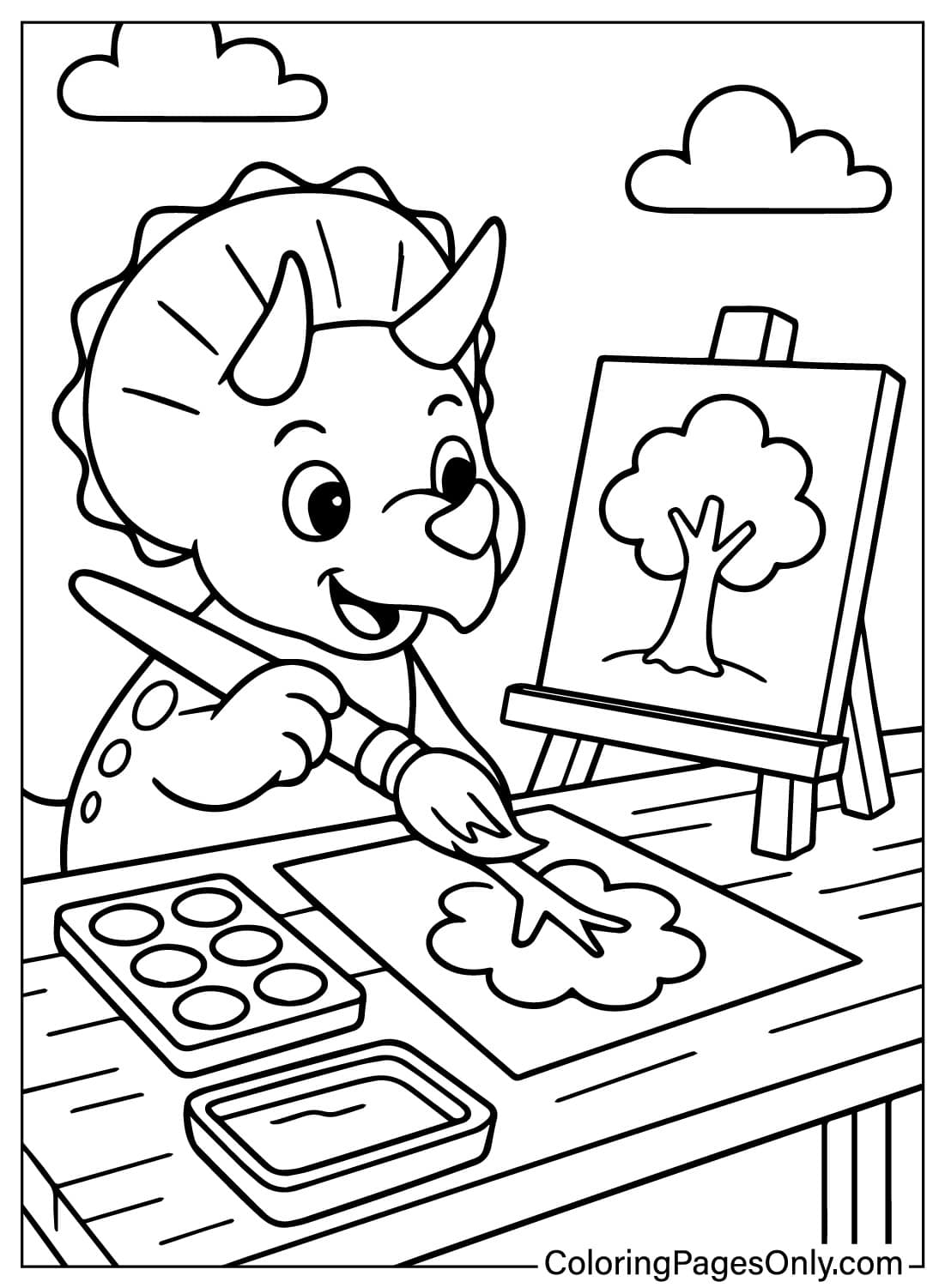
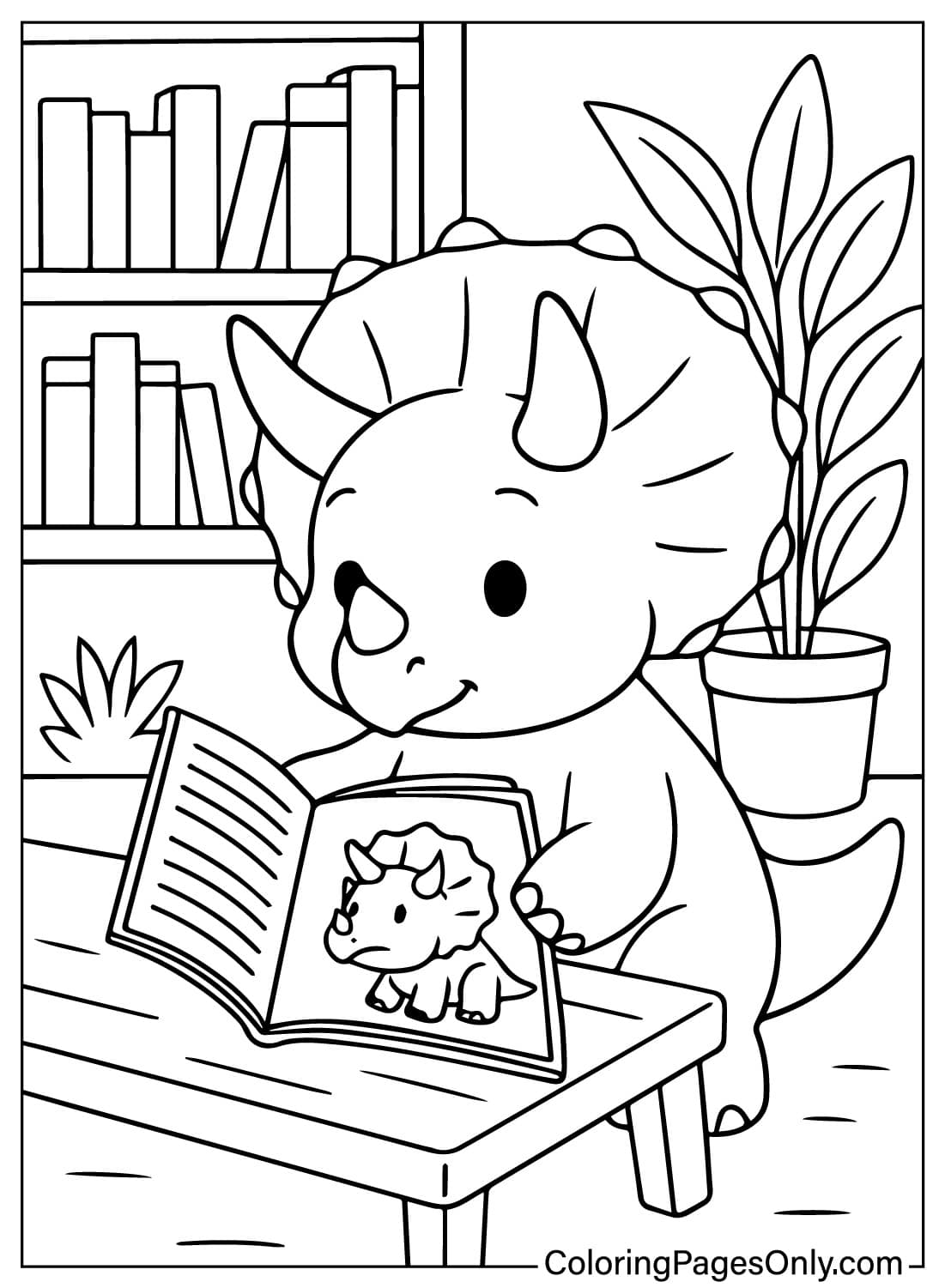
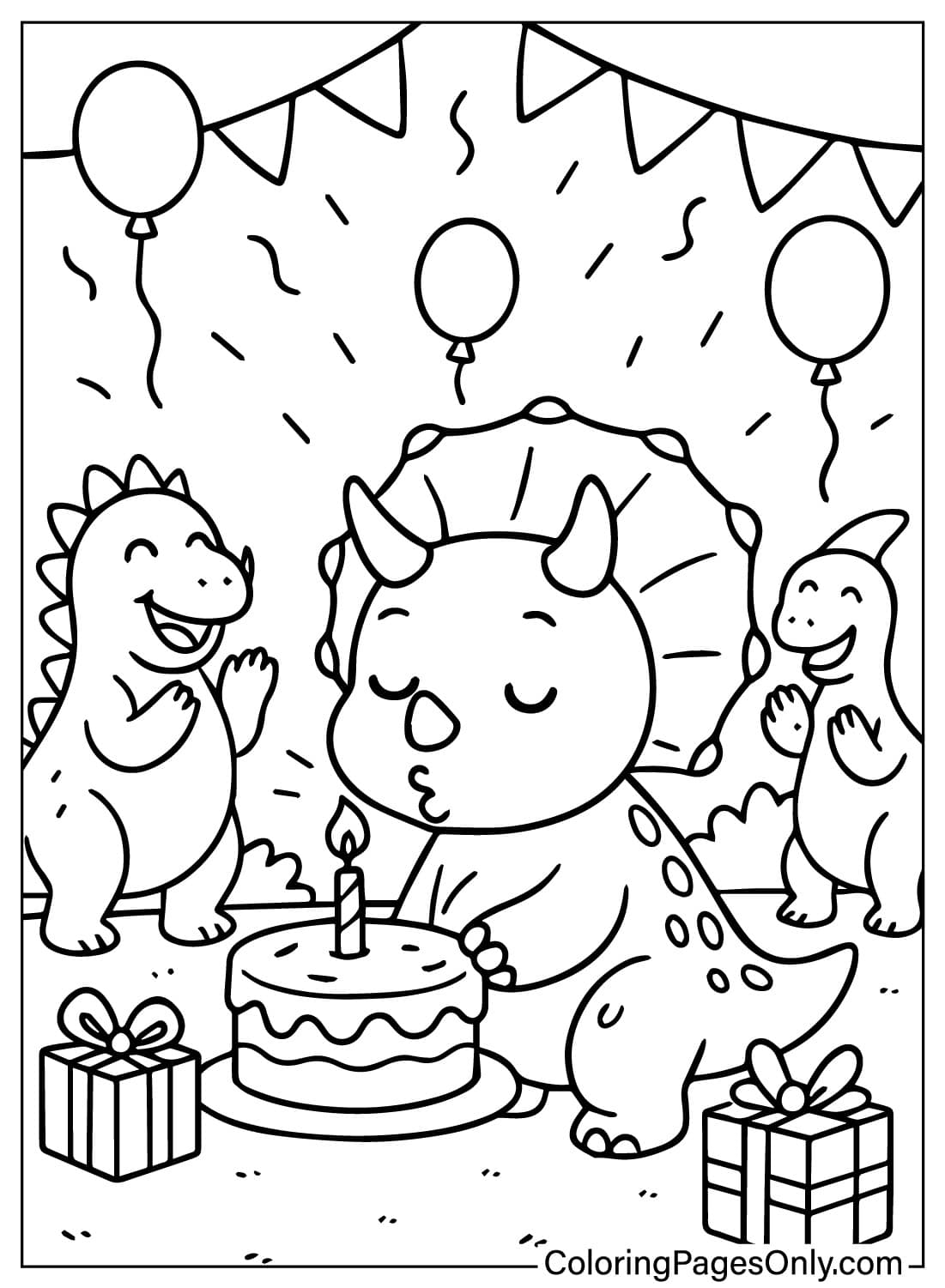
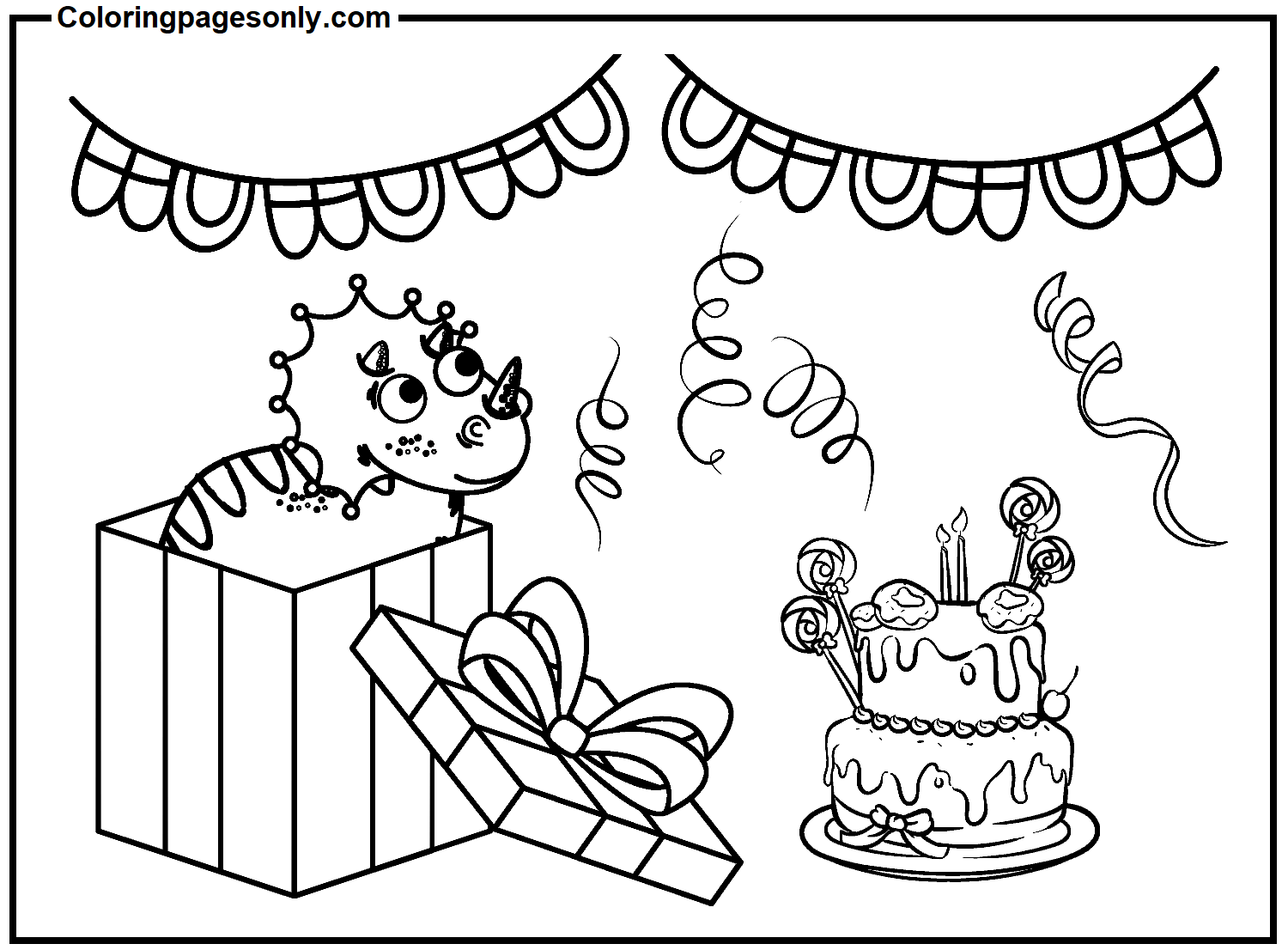
Nine pages put a Triceratops into a specific activity or role: reading, drawing, working as a doctor, sleeping, eating, or celebrating a birthday. These are the most playful pages in the set, since a Triceratops in a lab coat or party hat leans on costume color rather than anatomical accuracy.
Prehistoric Environments
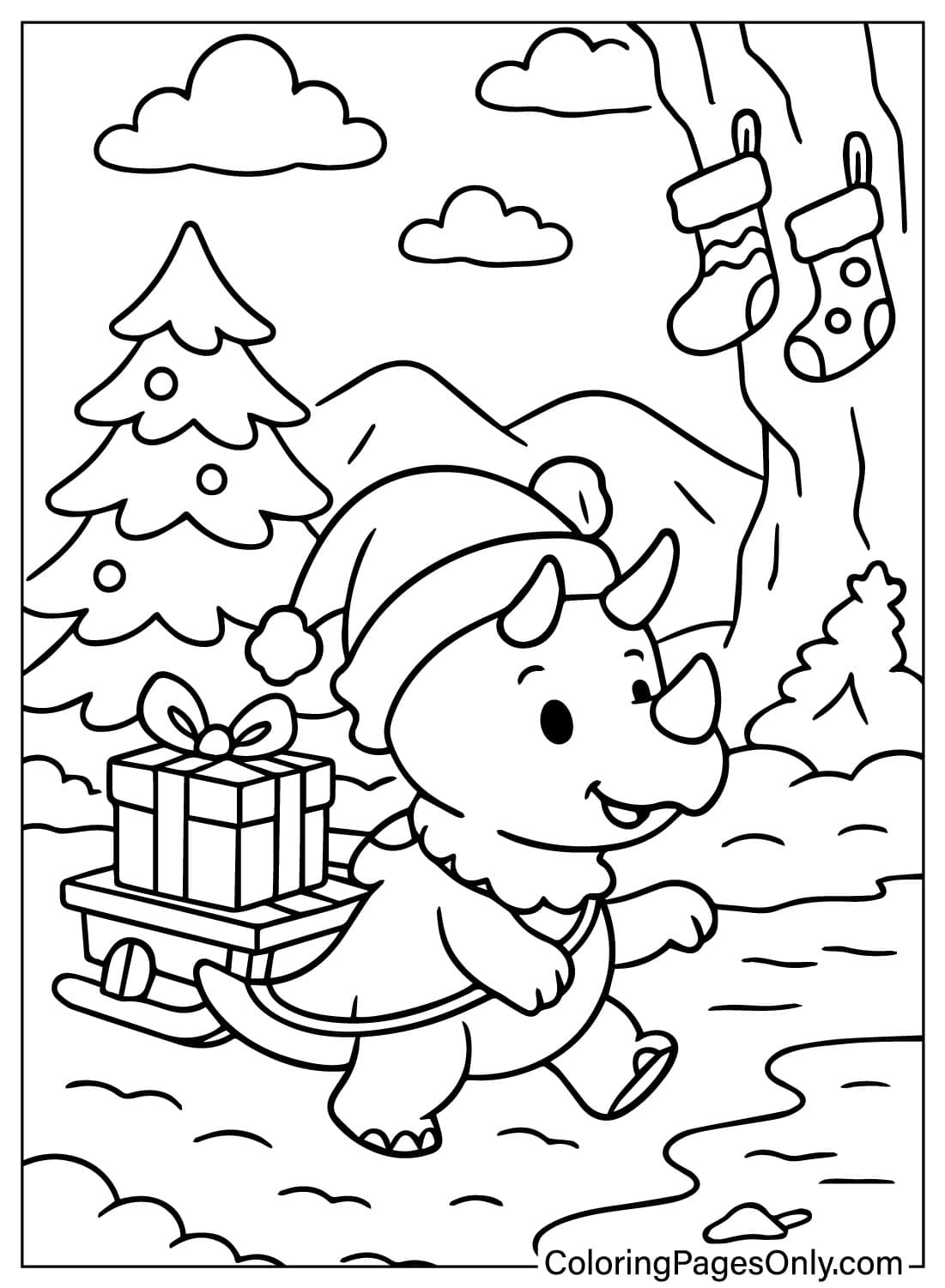
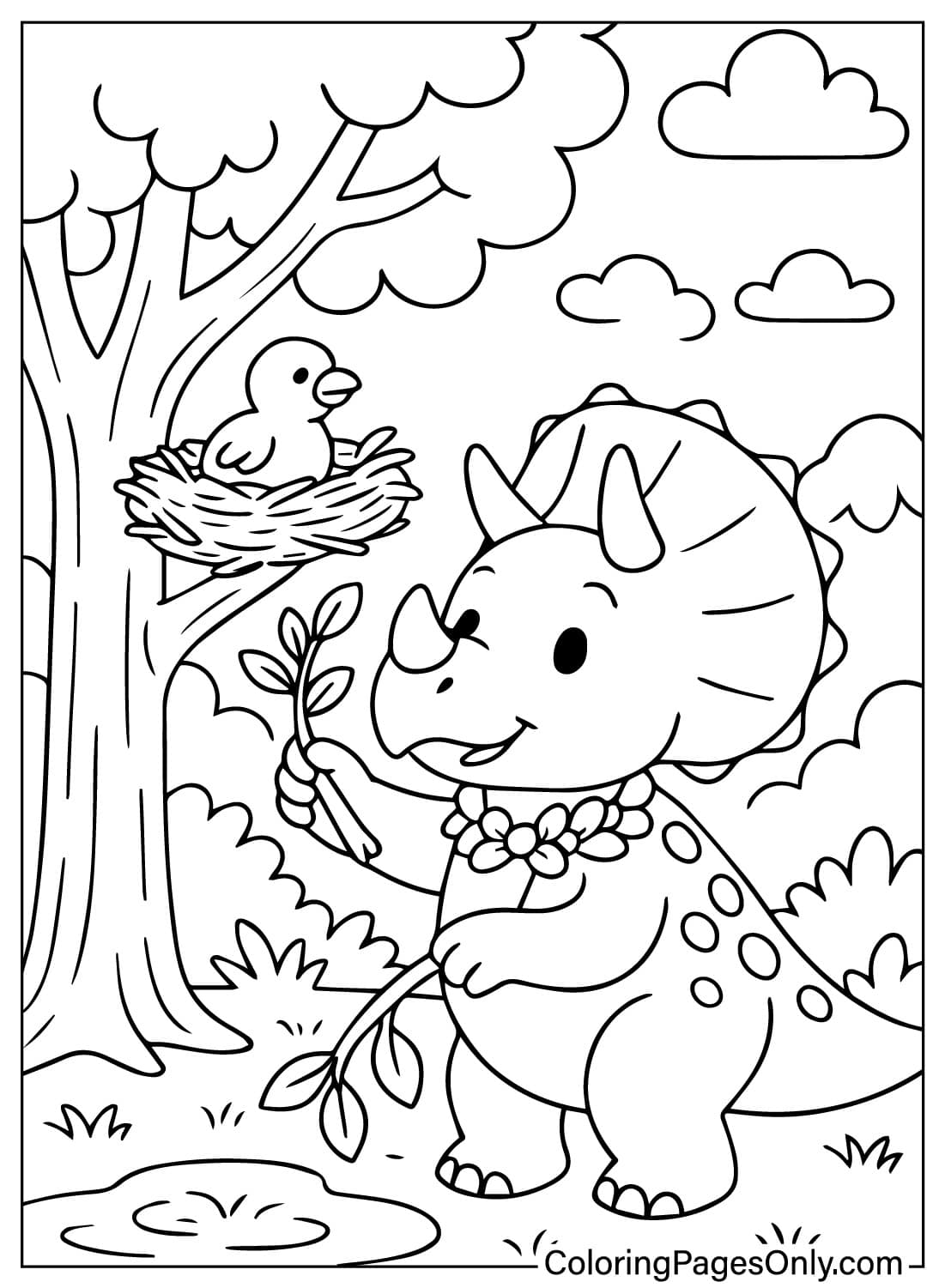
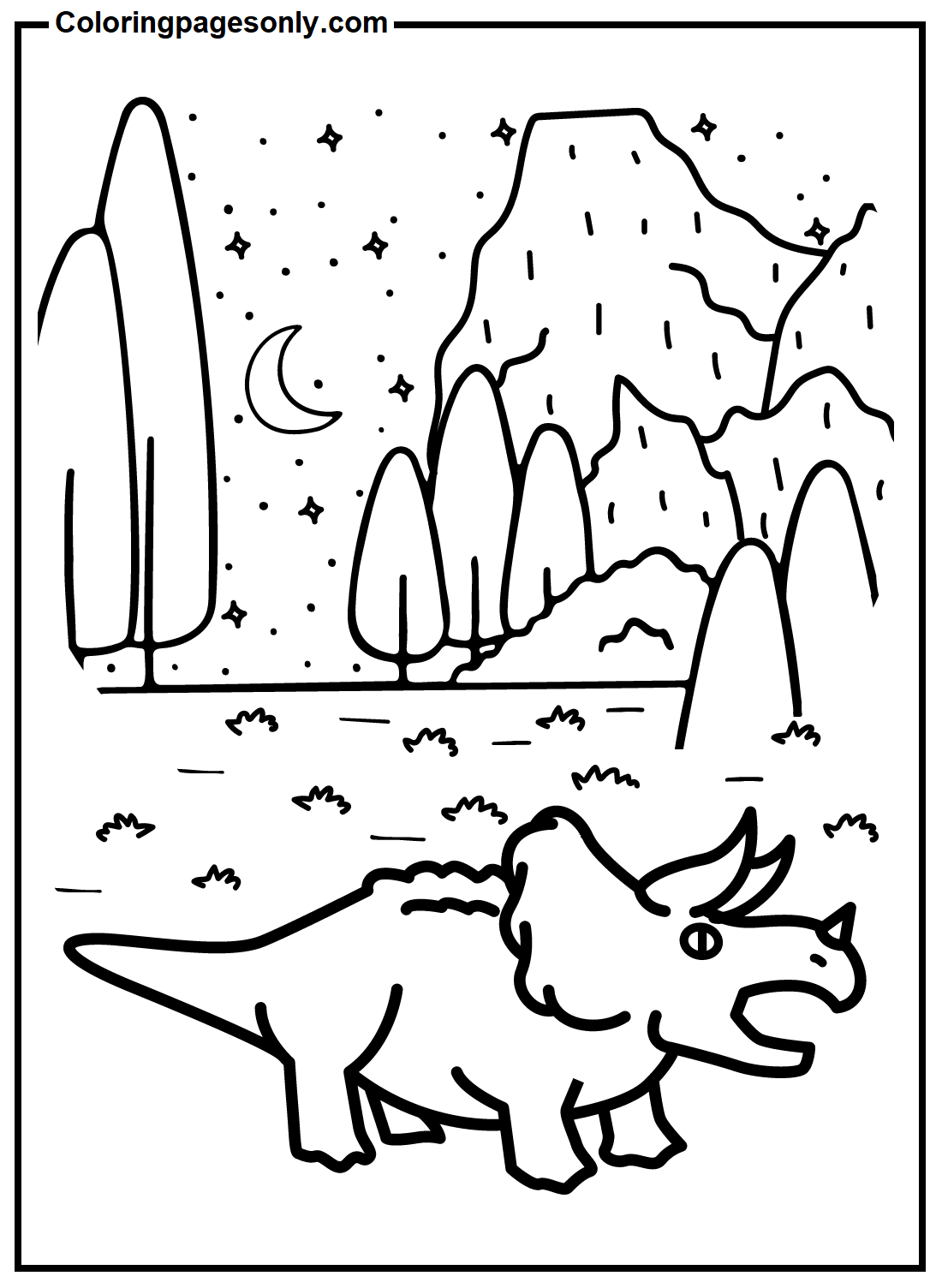
Sixteen pages place a Triceratops in a specific setting: a jungle, a desert, a snowy landscape, a rainstorm, near a volcano, or at sunrise. These pages carry the most background detail in the set. Match the season or weather in the background, Blue-Gray for rain, White for snow, before finishing the Triceratops itself.
Other Dinosaurs and Paleontology
Twenty-four pages, the largest group, show a Triceratops alongside other dinosaurs, a full skeleton, a herd, or a scene referencing the animal’s Cretaceous period and classification. Several pair it with a Tyrannosaurus, the predator most associated with Triceratops in popular imagination. These pages suit an older child already comfortable naming several dinosaur species.
What These Pages Do
Three textures, one head. A Triceratops skull is not a single smooth shape: the bony frill, the sharp horns, and the beak-like mouth each call for a different color treatment, so a child ends up practicing three separate small decisions on one page instead of one large one.
Hand control, one horn at a time. The American Academy of Pediatrics names this detailed, contained coloring work as useful for building fine motor skills in kids between two and seven years old, and staying inside a narrow, curved horn shape without drifting outside its edge is a fair test of exactly that control.
A name that explains itself. Triceratops means three-horned face in Greek, and once a child hears that, the horns on the page stop being decoration and become the reason the animal is named what it is, a small piece of language learning riding along with the coloring.
The repetition underneath the roar. A 2005 study published in the Art Therapy Journal found that people who colored inside defined shapes reported less anxiety afterward than people who drew without guidance, and the frill’s repeated bony ridges give a colorist plenty of that defined, repeatable shape to settle into.
How to Color Triceratops Pages Well
- Separate the frill from the body: Color the bony frill a lighter or contrasting shade, Tan against an Olive Green body, so it reads as its own structure rather than blending into the neck.
- Give the horns a harder, lighter finish: Color the brow horns and nose horn a pale Bone or Ivory shade, distinct from the skin color, since horns are made of a different material than the surrounding hide.
- Shade the beak separately: Color the beak-like mouth a darker Gray or Brown than the rest of the face, since a real Triceratops beak was a hard, distinct structure used for clipping tough plants.
- Add texture to the skin with mottled patches: Dab small patches of a second, related color, Forest Green over Olive, across the body instead of one flat fill, since ceratopsian skin likely had a varied, scaly texture.
- Match environment pages to their real weather or setting: Use Blue-Gray for a rainstorm page, White and pale Blue for snow, and Burnt Orange for a desert scene, so the background color logic matches what the page is actually showing.
- Keep other dinosaurs in their own accurate colors: On pages showing a Tyrannosaurus or Stegosaurus alongside the Triceratops, give each animal its own distinct palette rather than matching colors across species, so every dinosaur on the page stays easy to tell apart.
5 Creative Craft Ideas With Triceratops Coloring Pages
- Triceratops Fossil Fact Poster. Materials: several colored Triceratops pages, a poster board, glue, and a marker. Glue the colored pages onto the poster board, then write one fact under each, such as the meaning of the name or when the animal lived.
- Dino Bookmark Set. Materials: two or three colored Triceratops pages, scissors, clear contact paper, and a hole punch. Cut each colored page into a bookmark-sized strip, cover both sides with contact paper, and punch a hole for a ribbon.
- Prehistoric Scene Diorama. Materials: colored environment pages, scissors, glue, and a shallow box. Cut out the colored Triceratops and any background elements, arrange them inside the box, and build a small prehistoric landscape scene.
- Triceratops Birthday Card. Materials: a colored Triceratops page, folded cardstock, scissors, and glue. Trim the colored page to fit the card front, glue it in place, and write a birthday message inside for a dinosaur-loving friend.
- Dinosaur Timeline Garland. Materials: several colored Triceratops and other dinosaur pages, scissors, twine, and clear tape. Cut out each colored dinosaur, tape it to the twine, and hang the finished garland to decorate a dinosaur-themed room or party.
Frequently Asked Questions
What are Triceratops coloring pages?
Triceratops coloring pages are printable designs featuring simple portraits, activity scenes, prehistoric environments, and pages showing Triceratops alongside other dinosaurs. This collection includes 74 free designs available as printable PDFs or online coloring pages.
What does the name Triceratops mean?
Triceratops comes from Greek words meaning three-horned face, a direct reference to its two long brow horns and shorter nose horn.
When did Triceratops live?
Triceratops lived in what is now western North America during the final few million years of the Cretaceous period, roughly 68 to 66 million years ago, making it one of the last dinosaurs before the mass extinction event.
Was Triceratops a meat-eater or a plant-eater?
Triceratops was a herbivore. Its beak-like mouth and rows of cheek teeth were built for clipping and grinding tough, low-growing plants.
Who discovered Triceratops?
Paleontologist Othniel Charles Marsh formally described Triceratops in 1889, after initially mistaking an earlier horn fossil find for the remains of an ancient bison.
Why is Triceratops often shown with Tyrannosaurus rex?
Both animals lived in the same place and time period, the Late Cretaceous of western North America, which is why they appear together so often in dinosaur art and this collection’s paired pages.
Are Triceratops coloring pages suitable for young children?
Yes. The simple portrait and dot-to-dot pages suit ages 3 and 4. The detailed environment and multi-dinosaur scenes, with more background work, suit ages 6 and up.
What is a frill, and why does Triceratops have one?
The frill is the large, bony plate extending from the back of a Triceratops skull. It likely played a role in species recognition, display, or occasional head-to-head combat between individuals.
Start Coloring
Download any page by clicking the design. No account, email, or payment is required. Pages print directly from the browser at full resolution or open in the online coloring tool for screen use. Share finished pages on Facebook or Pinterest with the share buttons at the top of each design page.