
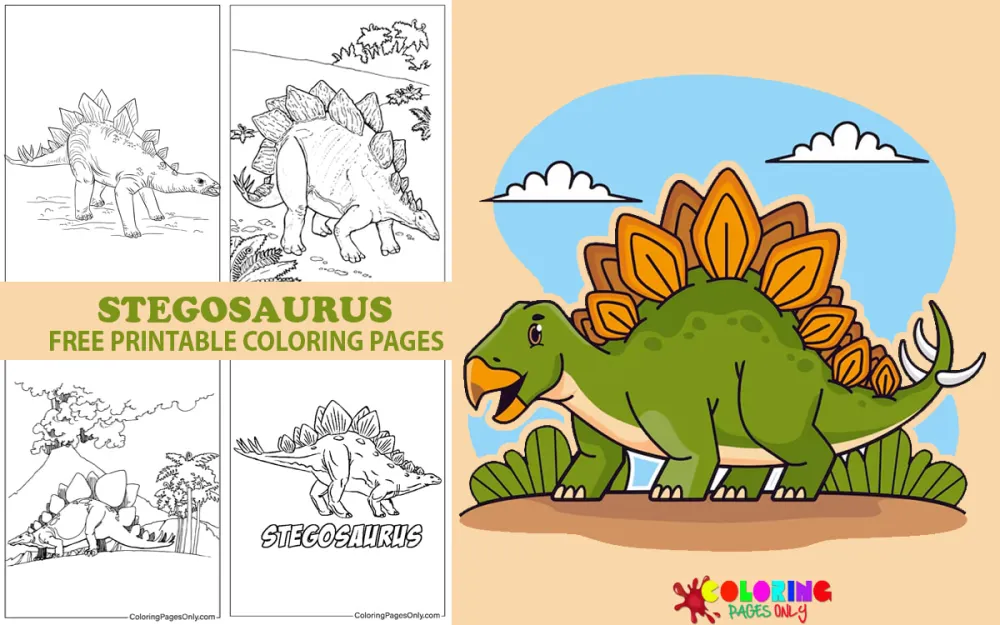
Free Stegosaurus coloring pages: 23 printable PDF designs spanning the plated dinosaur itself, its fossil relatives, and general prehistoric scenes. Every page can be downloaded as a PDF to print or colored online in the browser.
Stegosaurus was named by paleontologist Othniel Charles Marsh in 1877, based on fossils found near Morrison, Colorado. The name means roof lizard, since Marsh initially believed the animal’s bony back plates lay flat like roof tiles rather than standing upright, an idea later corrected as more complete skeletons were studied. Stegosaurus lived during the Late Jurassic period, roughly 155 to 145 million years ago, in what is now western North America. Its four tail spikes are informally known as a thagomizer, a name coined in a 1982 Far Side comic strip that paleontologists later adopted for lack of a formal scientific term.
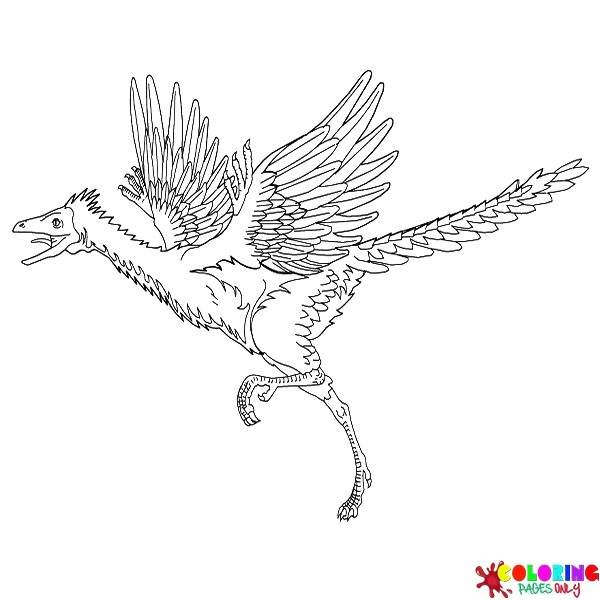
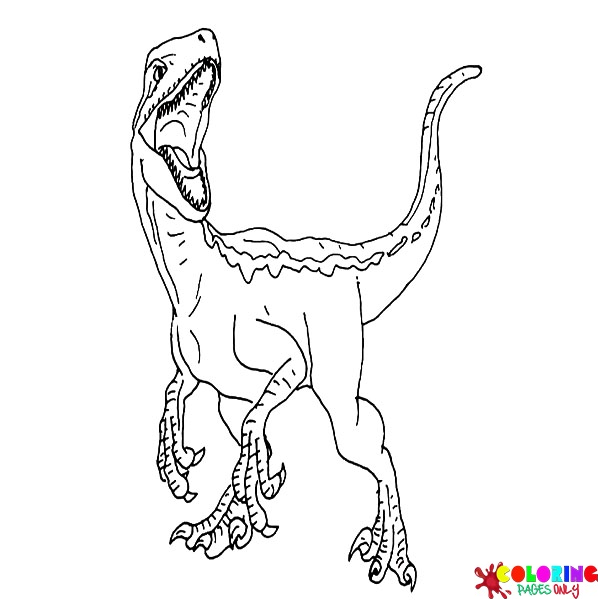
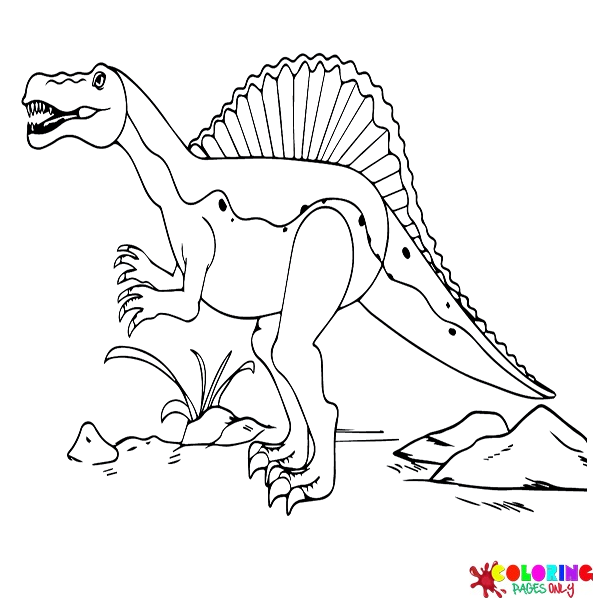
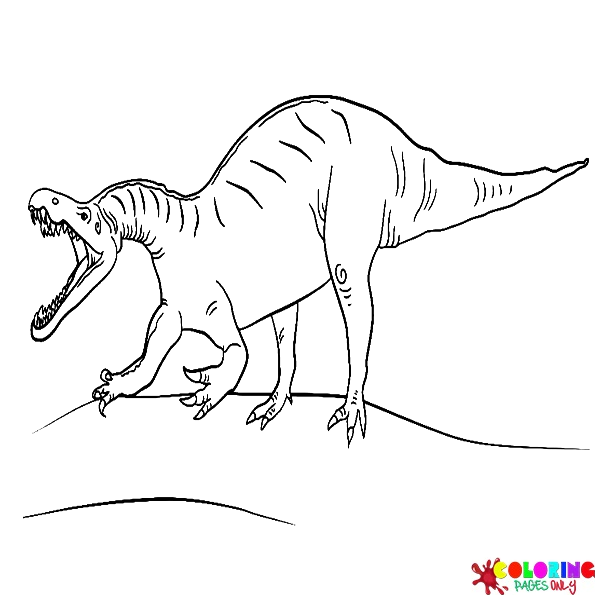
Not every page in this collection depicts Stegosaurus itself. A dozen pages show Stegosaurus directly, two feature closely related stegosaurid dinosaurs, and the rest are general dinosaur and prehistoric scenes without a specific species identified.
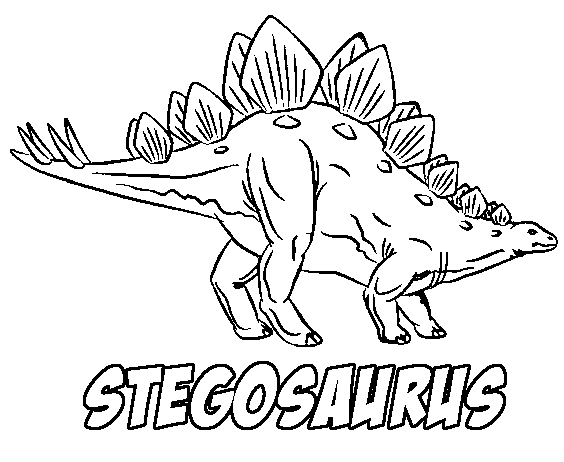
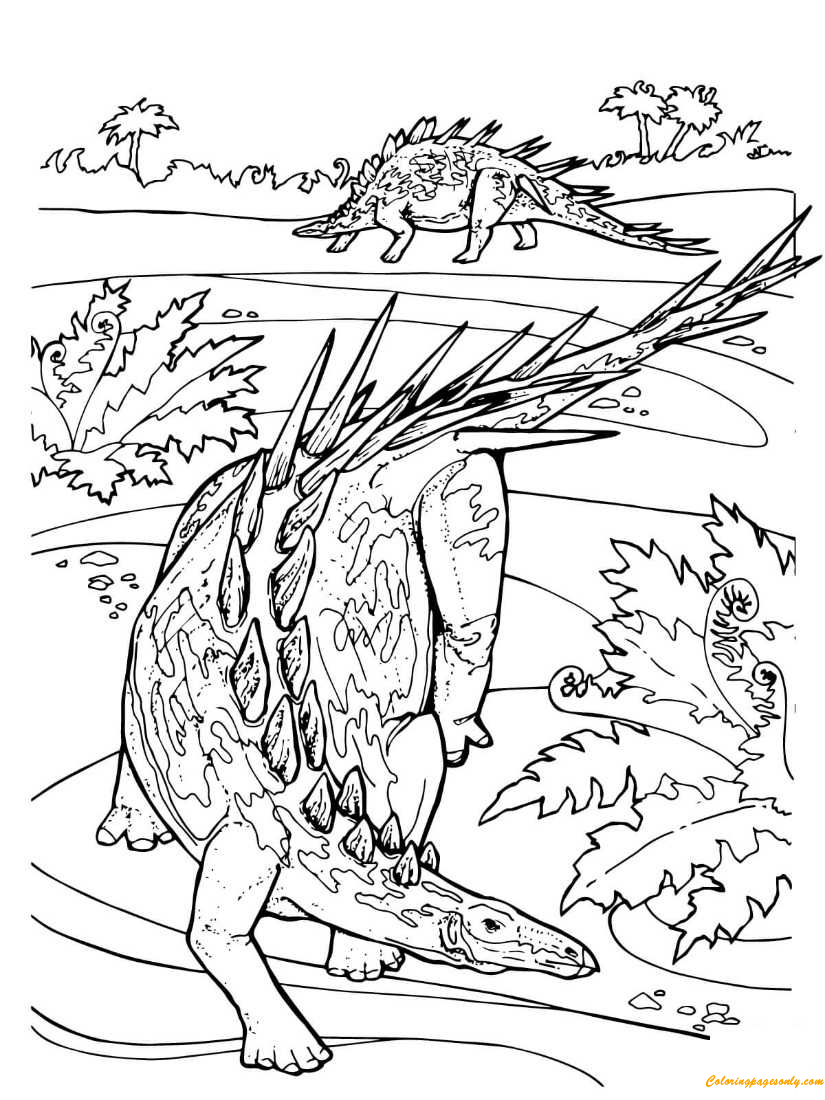
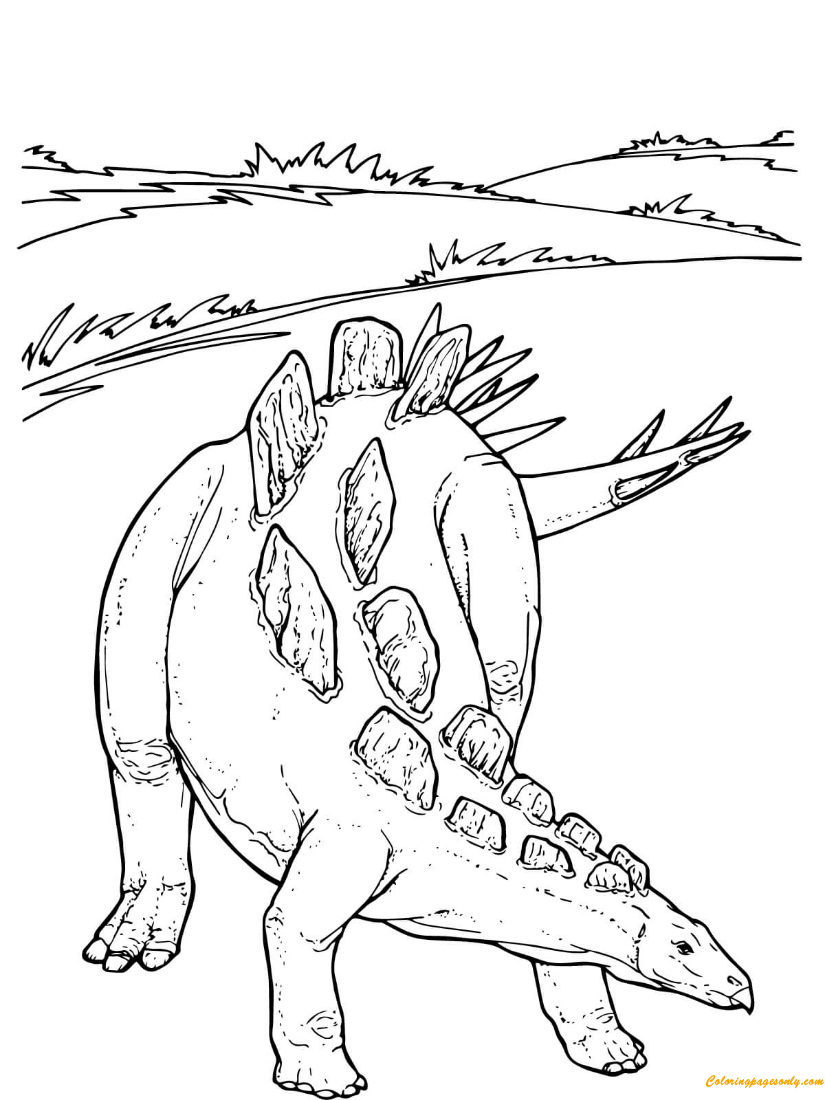

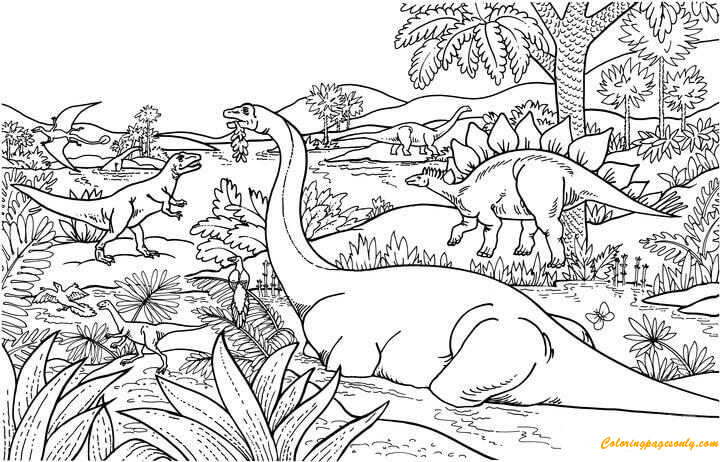
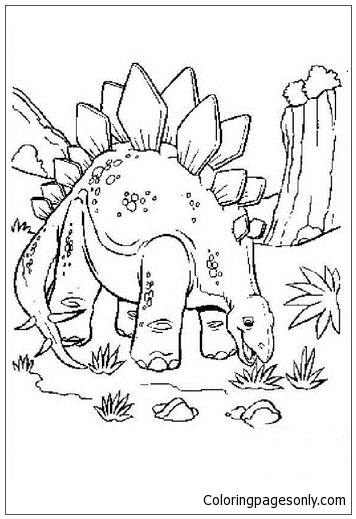
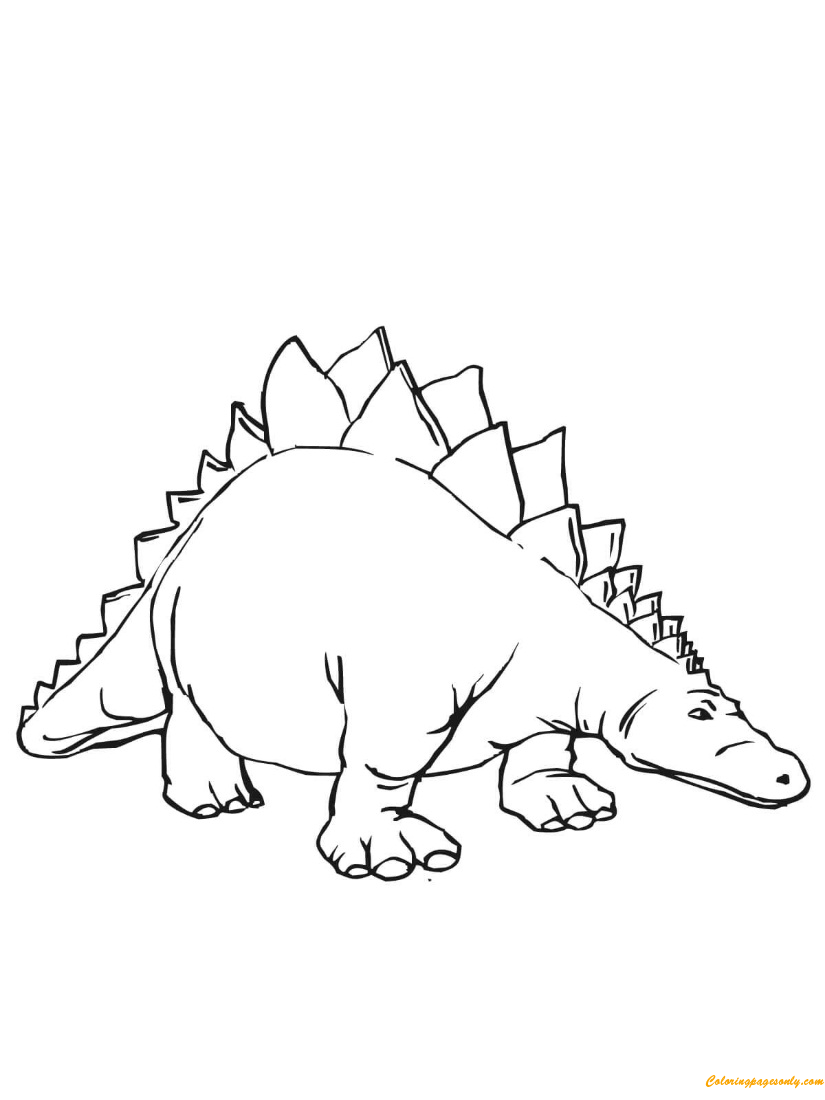
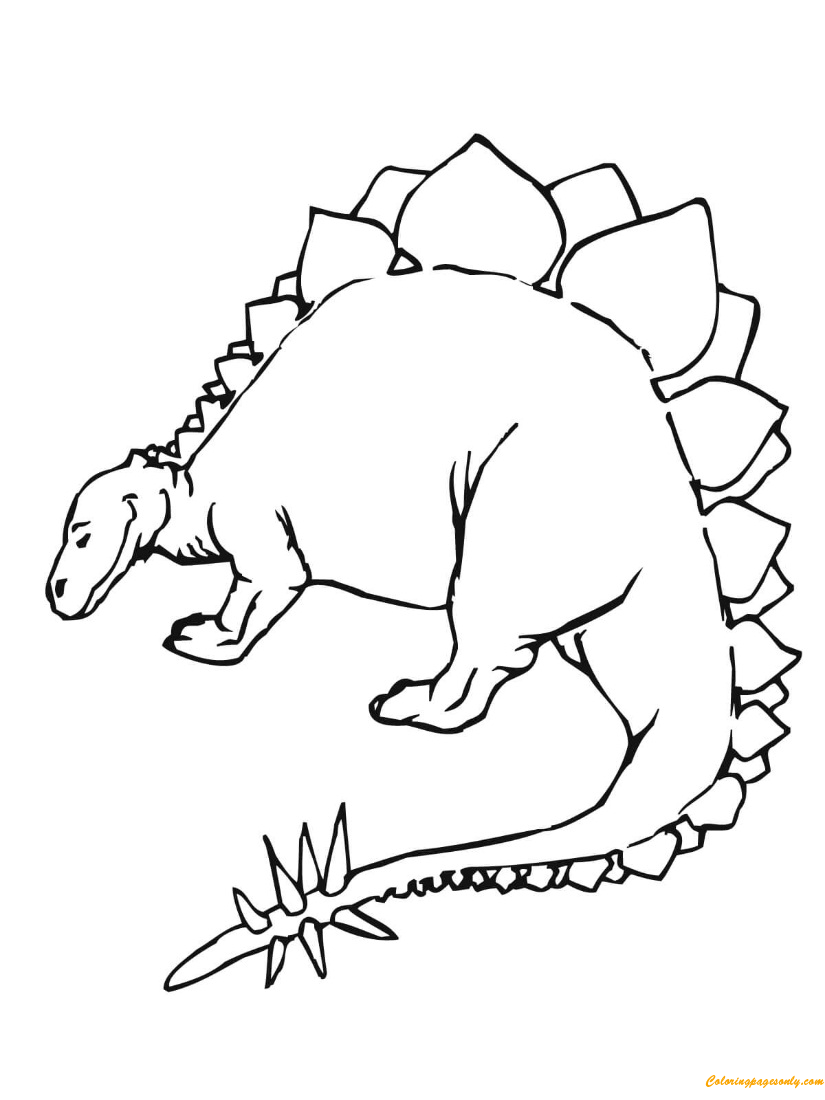
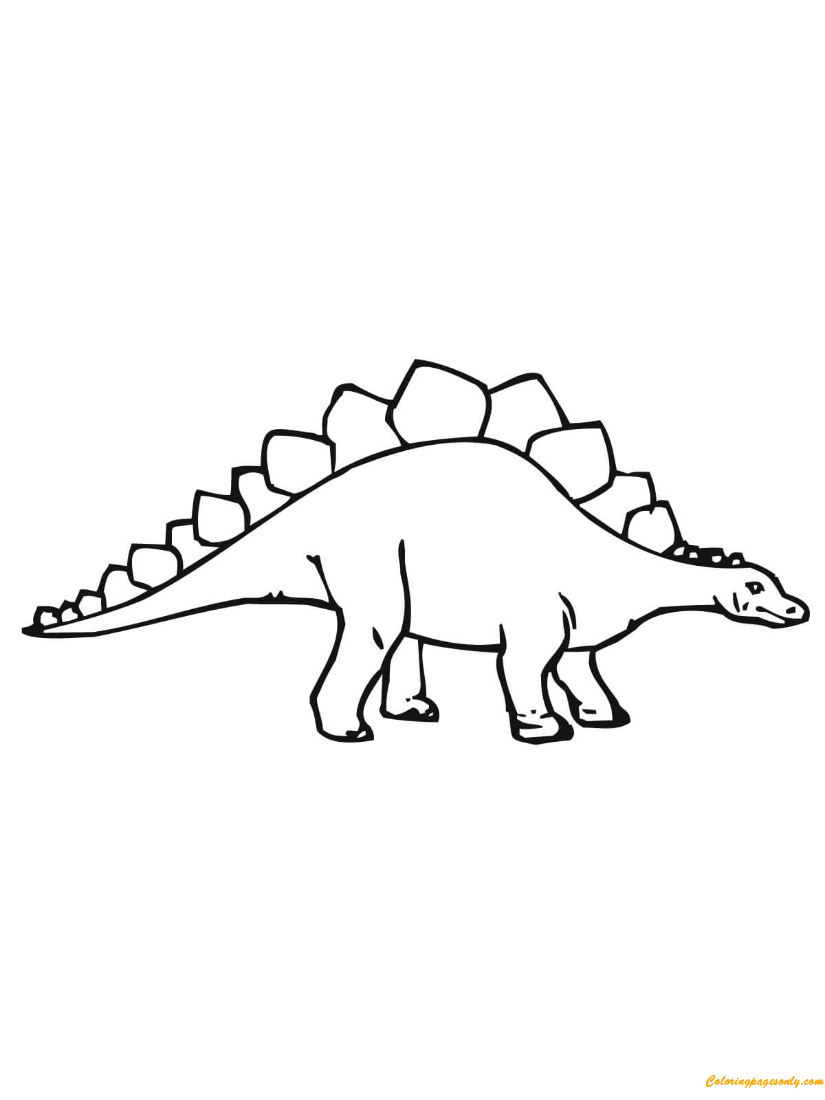
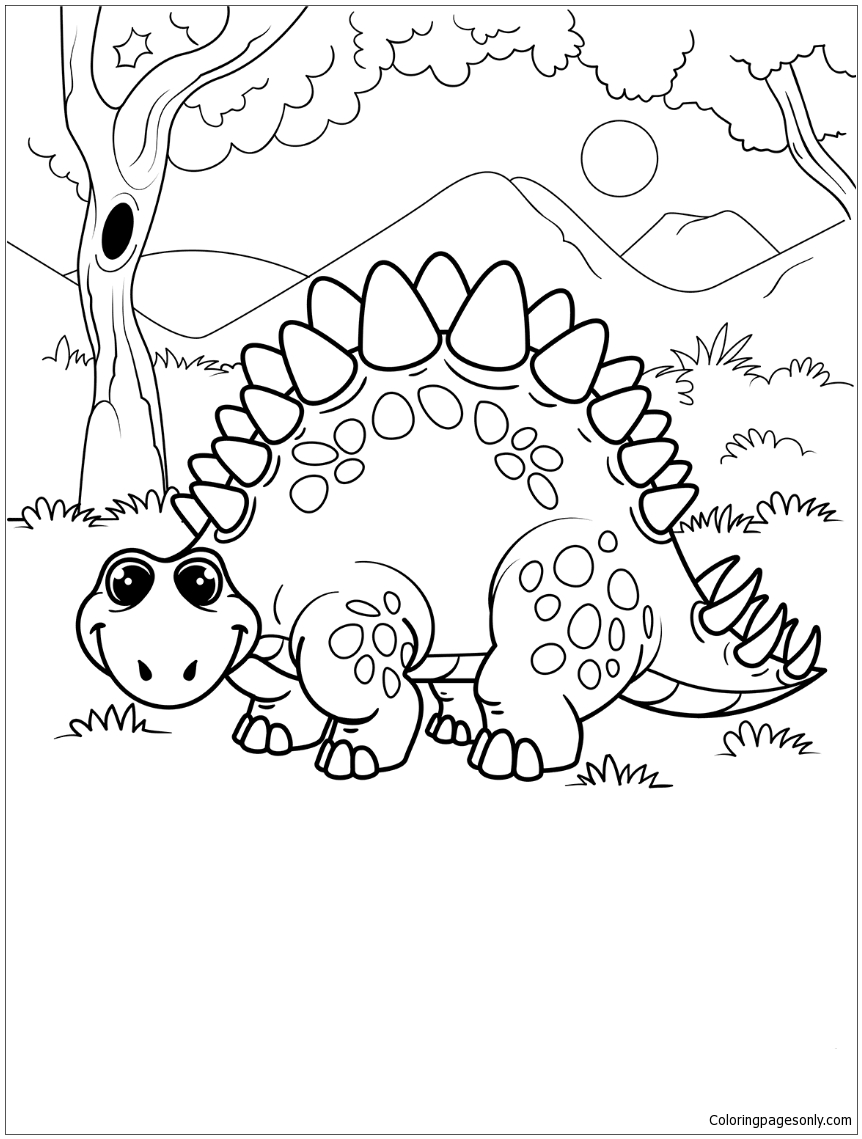
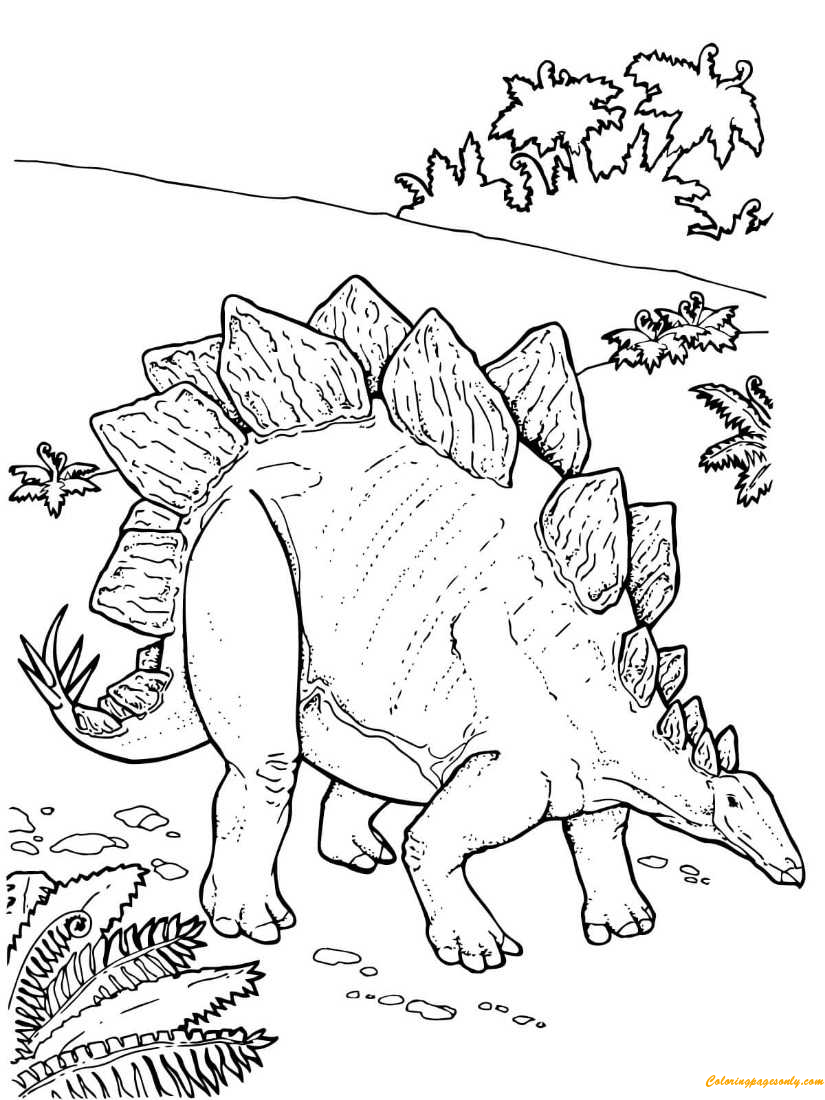
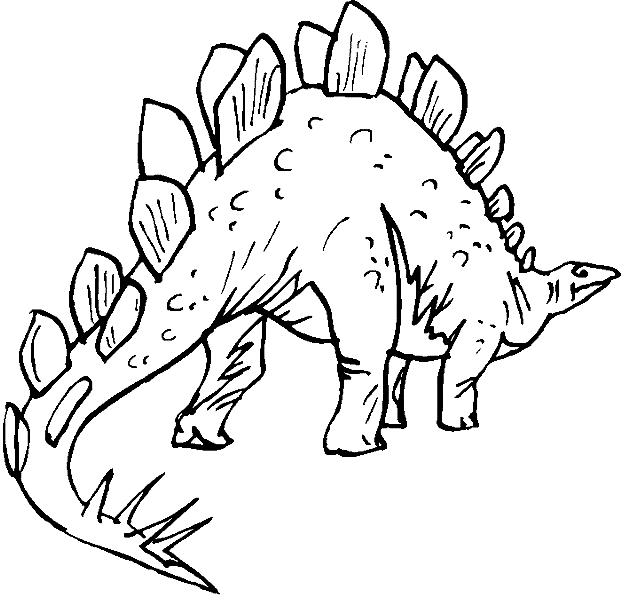
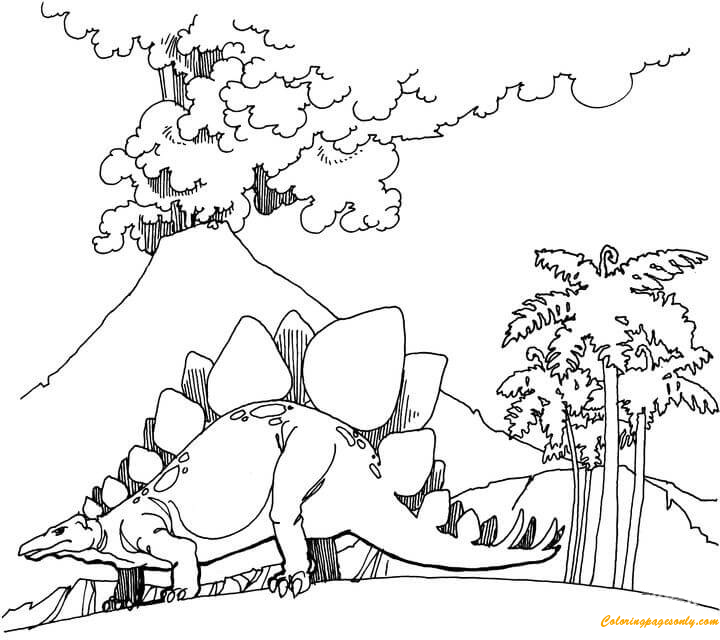
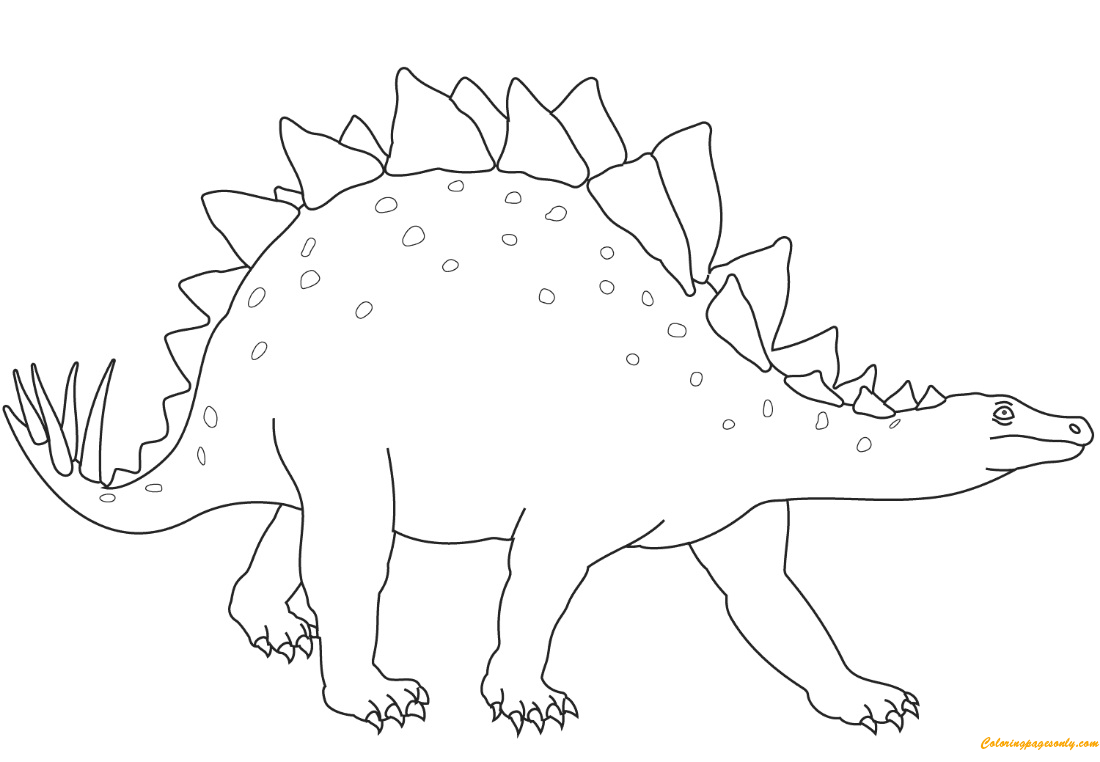

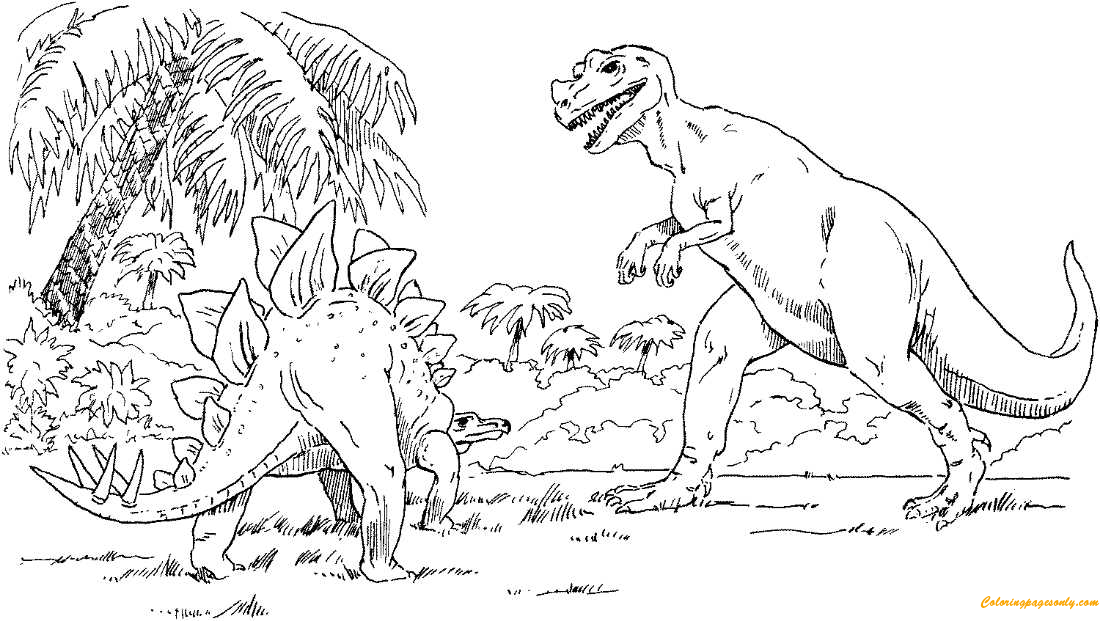
What Is Inside This Collection
The 23 pages are divided into three groups: Stegosaurus in its prehistoric world, Stegosaurus’s fossil relatives, and general dinosaur scenes.
Stegosaurus in Its Prehistoric World
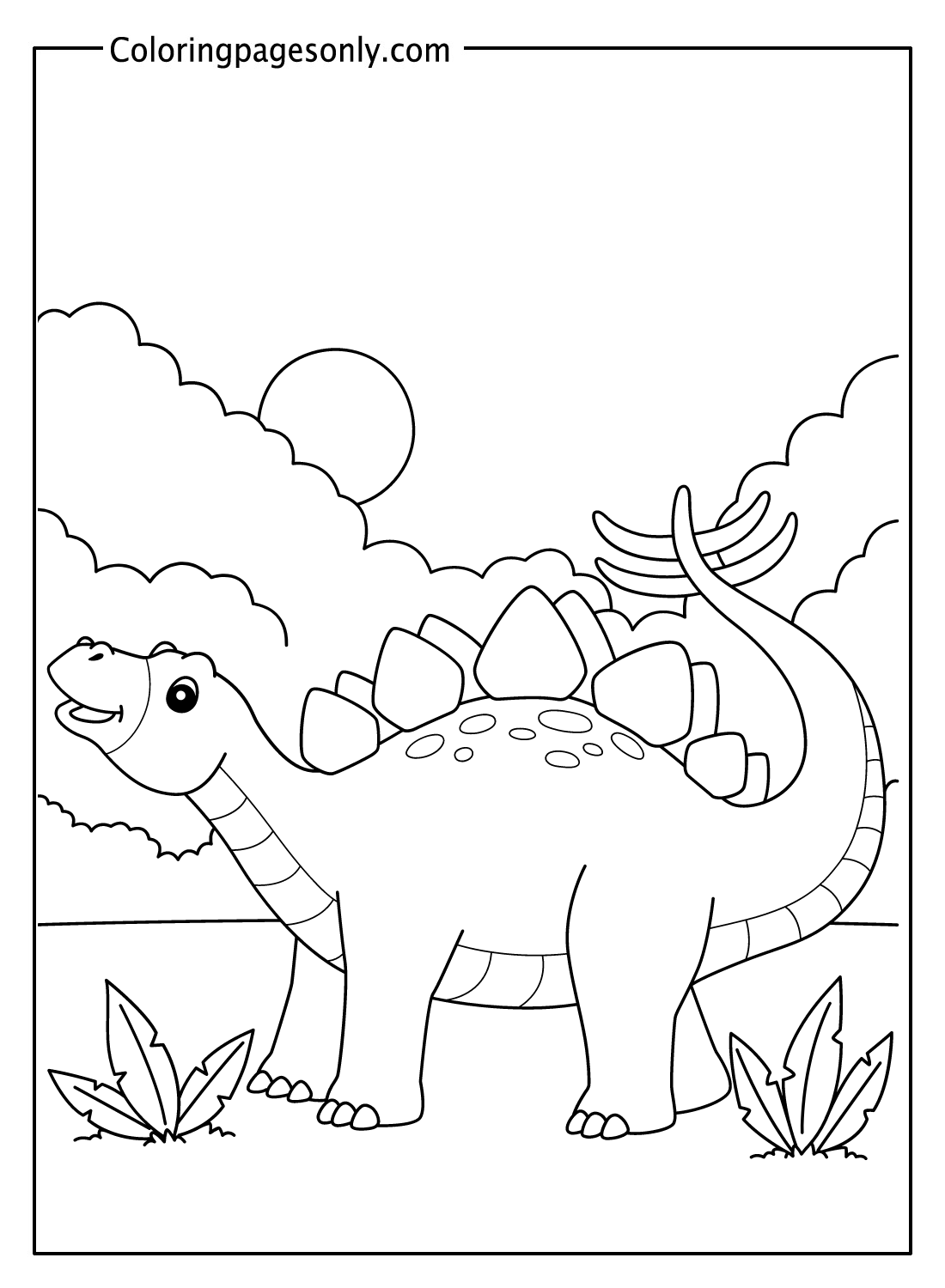
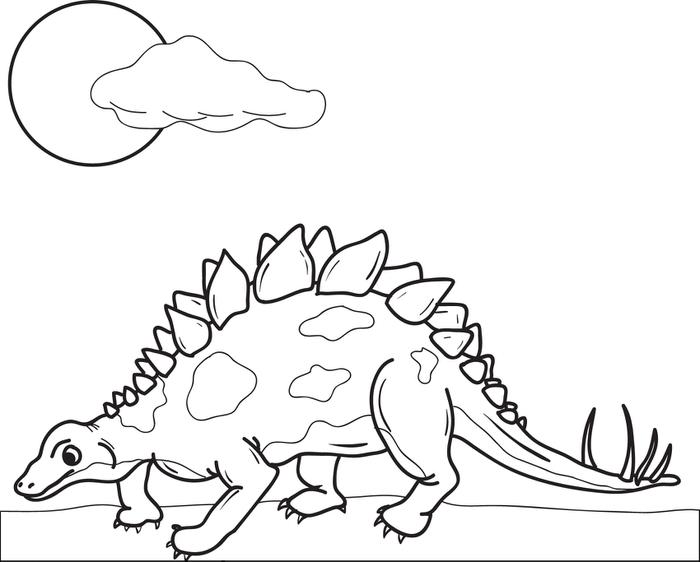
Twelve pages specifically depict Stegosaurus, shown grazing, in armored profile, alongside a Tyrannosaurus, and in both cute and more scientifically detailed styles. This group is the core of the collection and the best starting point for a colorist who wants the plated dinosaur specifically, rather than a general prehistoric scene, and the mix of styles means both younger and older fans have a page suited to them.
Stegosaurus’s Fossil Relatives
Two pages feature Kentrosaurus and Wuerhosaurus, both members of the wider stegosaurid family but distinct genera from Stegosaurus itself. Kentrosaurus was smaller and had more numerous spikes than plates, while Wuerhosaurus lived tens of millions of years later in what is now China. These pages are a useful way to introduce the idea that Stegosaurus had close fossil relatives rather than existing in isolation, giving an older dinosaur fan a reason to look beyond the single best-known species.
General Dinosaur Scenes
Nine pages show general dinosaur designs without a specific species named in the page title, including simple cartoon dinosaurs, a volcano scene, and a couple of pages built around holidays or gift-giving rather than paleontology. These pages work well for a younger colorist who wants a dinosaur-themed page rather than an anatomically specific one, and they round out the collection for a broader audience beyond dedicated Stegosaurus fans.
What Stegosaurus Coloring Pages Do
Fine motor development. The American Academy of Pediatrics lists structured coloring among the activities that build fine motor control in children ages 2 through 7, and the double row of back plates on a Stegosaurus page gives a child a series of small, distinct shapes to color one at a time.
Correcting a persistent science myth. Because Stegosaurus is one of the dinosaurs most associated with the debunked “second brain” idea, coloring a page is a natural opening to explain that the enlarged space once thought to house a second brain in the hips is now understood to have likely stored glycogen instead.
Anxiety reduction through focus. A 2005 study in the Art Therapy Journal found that structured coloring sessions produced measurably lower anxiety than unstructured drawing, and the repetitive, patterned plates of a Stegosaurus page suit a calm, methodical coloring session well.
Species identification practice. Because this collection mixes Stegosaurus with a related genus and general dinosaur scenes, sorting pages by which group they belong to is a simple, low-stakes classification activity for a young dinosaur fan.
How to Color Stegosaurus Coloring Pages Well
- Body and skin: use a muted Olive Green or Gray-Green as a base, since most modern reconstructions favor duller, camouflage-friendly tones over bright colors for a large herbivore.
- Back plates: Use a contrasting Reddish Brown or Rust for the plates themselves, a popular choice among paleoartists who suggest the plates may have been flushed with blood for display purposes.
- Tail spikes: keep the thagomizer a darker, harder-looking Gray or Bone White to visually separate it from the softer body coloring, emphasizing its role as a defensive weapon.
- Kentrosaurus and Wuerhosaurus: vary the base body color slightly from the Stegosaurus pages, a cooler Blue-Gray for Kentrosaurus works well, to help a colorist visually keep the different genera apart across the set.
- Prehistoric backgrounds: use deep Forest Green and Fern Green for Jurassic-era plant life, since ferns, cycads, and conifers dominated the landscape Stegosaurus actually lived in.
Creative Craft Ideas With Stegosaurus Coloring Pages
1. Dino Diorama. Color a Stegosaurus page and a background scene, cut them out, and arrange them inside a shoebox with paper plants to build a small prehistoric diorama.
2. Thagomizer Fact Card. Color a Stegosaurus page, then write a few verified facts about the plates or tail spikes on the back to make a simple study card.
3. Stegosaurid Family Poster. Color the Stegosaurus, Kentrosaurus, and Wuerhosaurus pages, arrange them together on a poster, and label each with its real name to show how the three relate.
4. Dinosaur Standee. Color a solo Stegosaurus page, glue it to cardboard or a cereal box, and cut around the outline to make a standing figure for a shelf or desk.
5. Prehistoric Bookmark. Color a small dinosaur page, trim it into a narrow strip, and laminate it or cover it with clear tape for a durable bookmark.
Frequently Asked Questions
What are Stegosaurus coloring pages?
A free set of 23 printable PDFs and online coloring sheets, twelve of which specifically depict Stegosaurus, alongside pages of related dinosaurs and general prehistoric scenes.
Who named Stegosaurus and when?
Paleontologist Othniel Charles Marsh named Stegosaurus in 1877 based on fossils found near Morrison, Colorado, initially believing its back plates lay flat rather than standing upright.
What is a thagomizer?
It is the informal name for the four spikes at the end of a Stegosaurus’s tail, a term that originated in a 1982 Far Side comic strip and was later adopted by paleontologists.
Did Stegosaurus really have two brains?
No. This is a persistent myth. The enlarged space once thought to house a second brain near the hips is now understood to have most likely stored glycogen rather than nervous tissue.
Are Kentrosaurus and Wuerhosaurus the same as Stegosaurus?
No. Both are separate genera within the same broader stegosaurid family as Stegosaurus, but they are distinct species with their own names and features.
Do all the pages in this collection show Stegosaurus specifically?
No. Twelve pages depict Stegosaurus directly, two show related stegosaurid genera, and the remaining nine are general dinosaur scenes without a specific species identified.
Are these pages suitable for young children?
Yes. The simpler cartoon dinosaur pages suit young children, while the more detailed Stegosaurus and stegosaurid pages work well for older kids interested in paleontology.
Are these free to download and print?
Yes. Every page is free, with no account, email, or payment required, and can be downloaded as a PDF or colored online in the browser.
Start Coloring
Download any page by clicking the design. No account, email, or payment is required. Pages print directly from the browser at full resolution or open in the online coloring tool for screen use. Share finished pages on Facebook or Pinterest with the share buttons at the top of each design page.