A World Food Tour Coloring Pages
 By:
Jennifer Thoa - Content Editor & Designer
Updated:
By:
Jennifer Thoa - Content Editor & Designer
Updated:
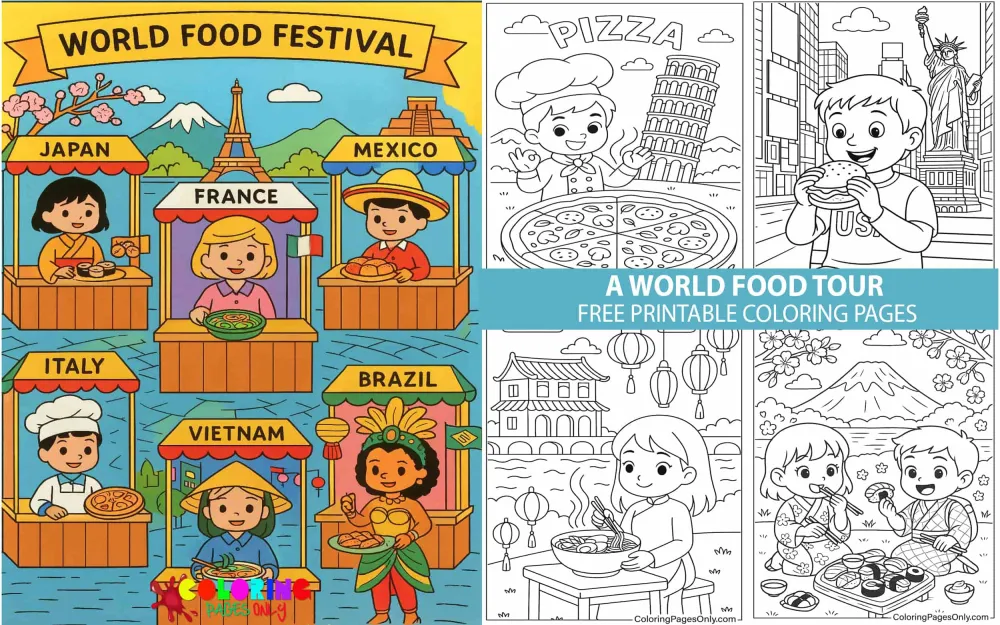
Free A World Food Tour Coloring Pages: 22 printable PDF designs pairing a well-known dish from a different country with one of that country’s famous landmarks. Both a PDF download and an online coloring version are ready on every page, and neither one requires an account.
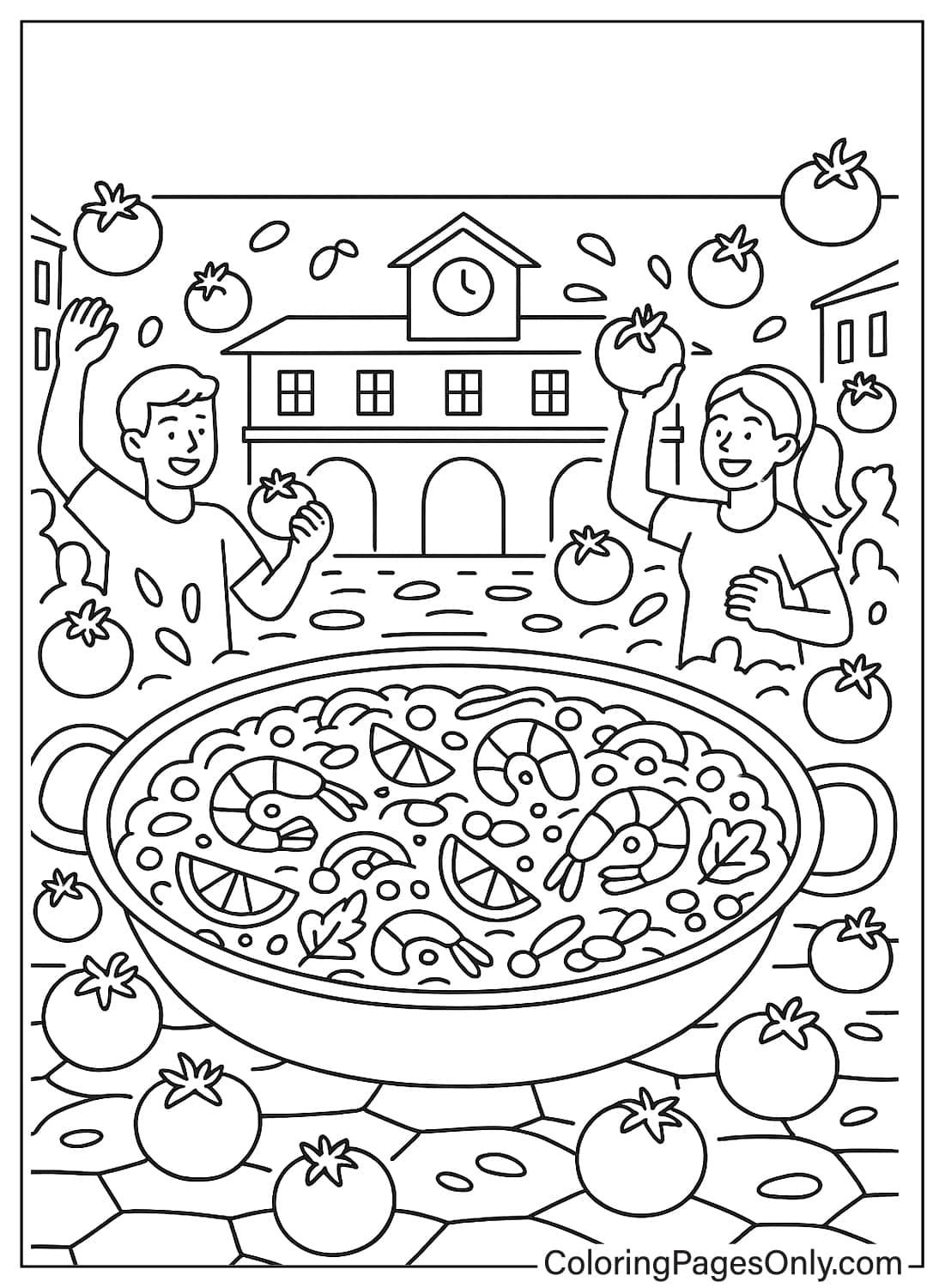
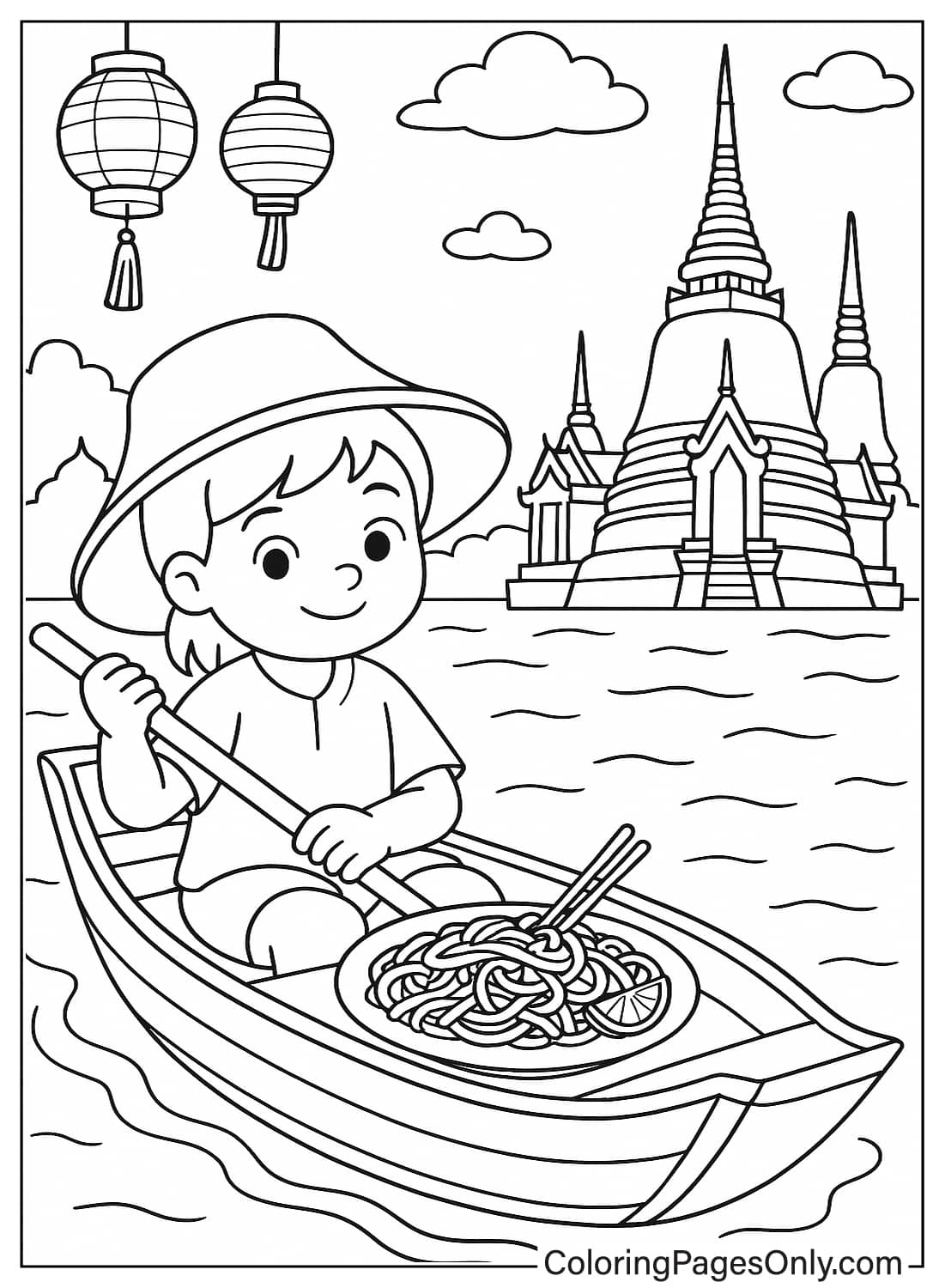
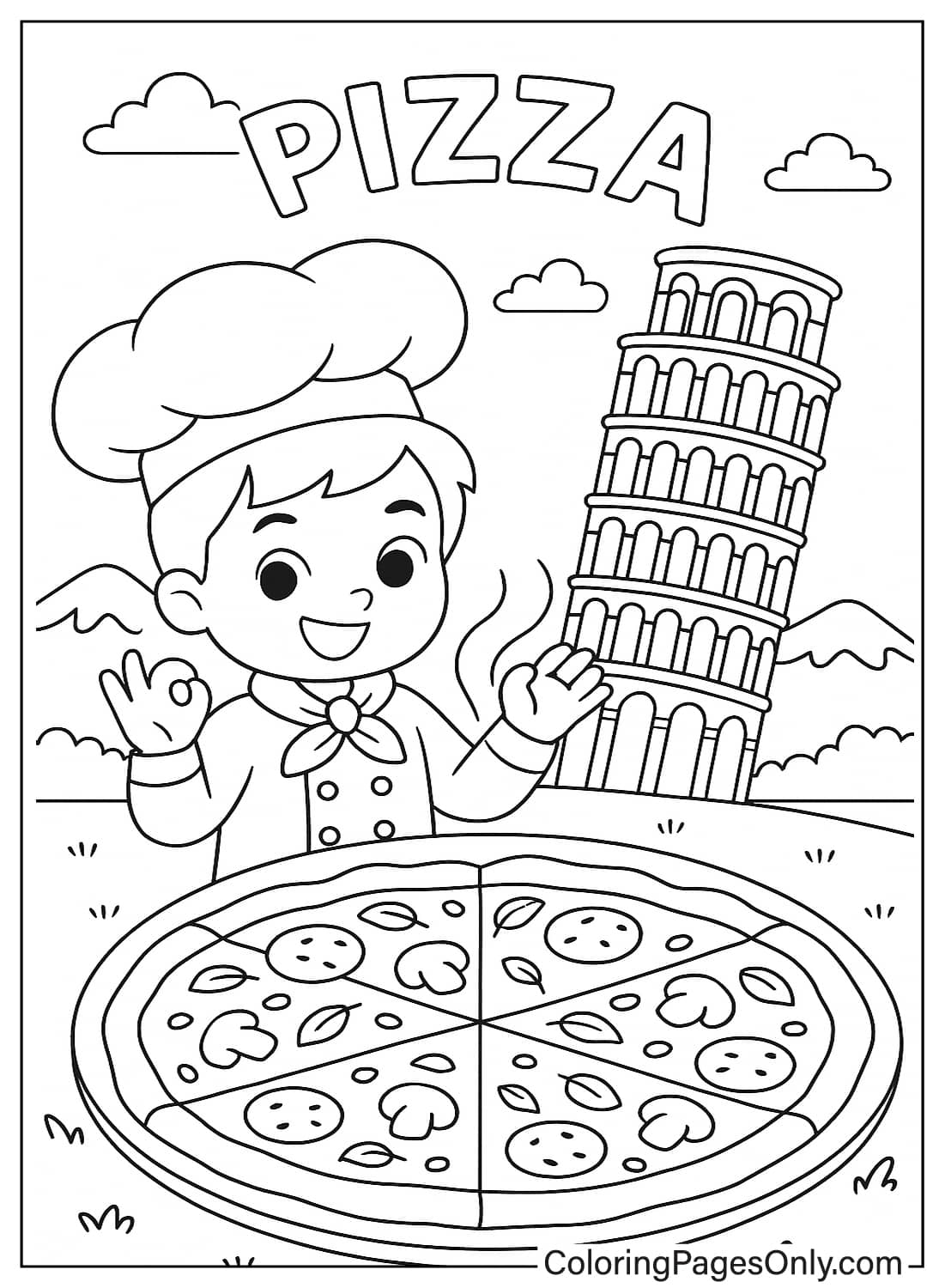
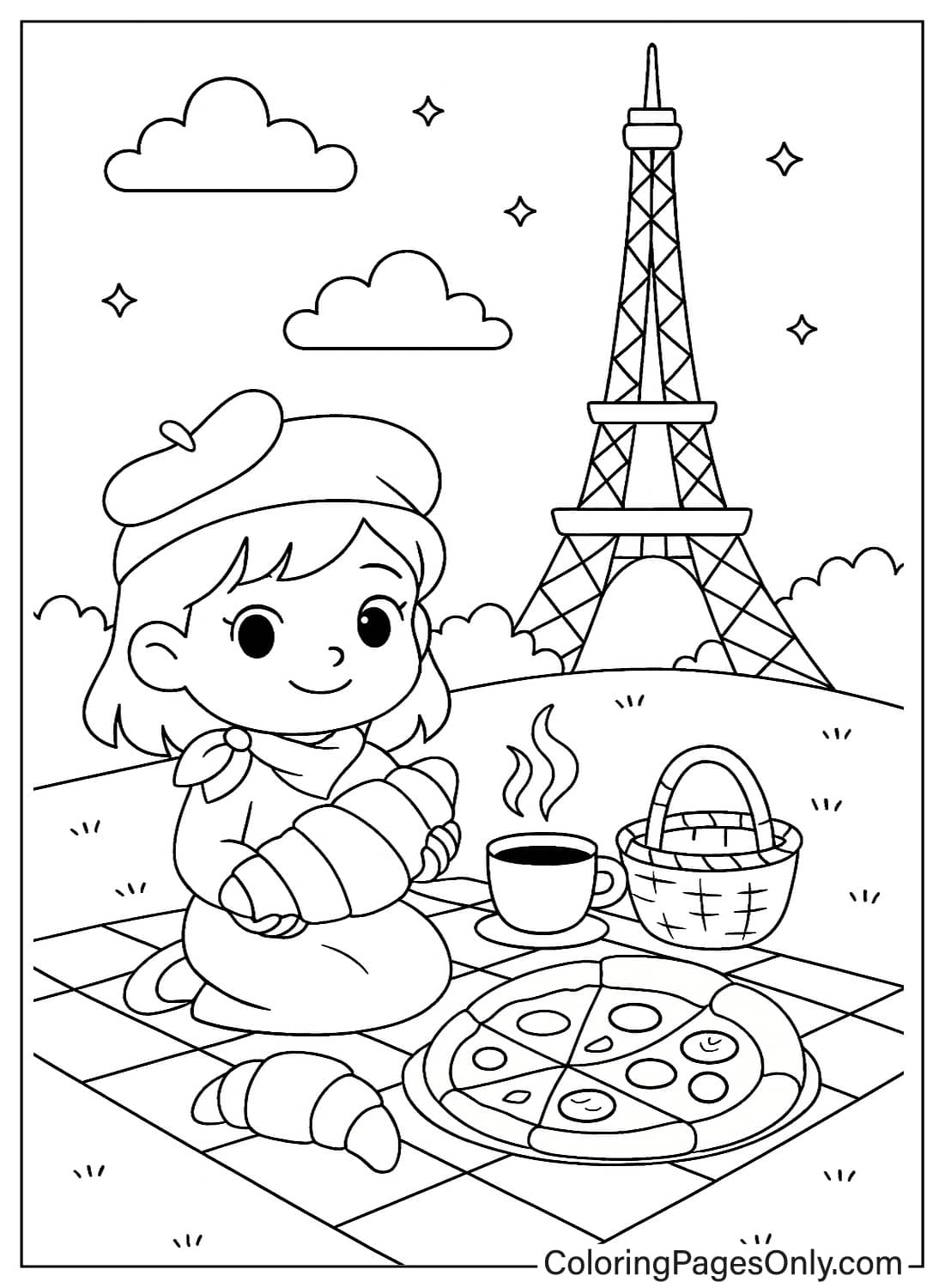
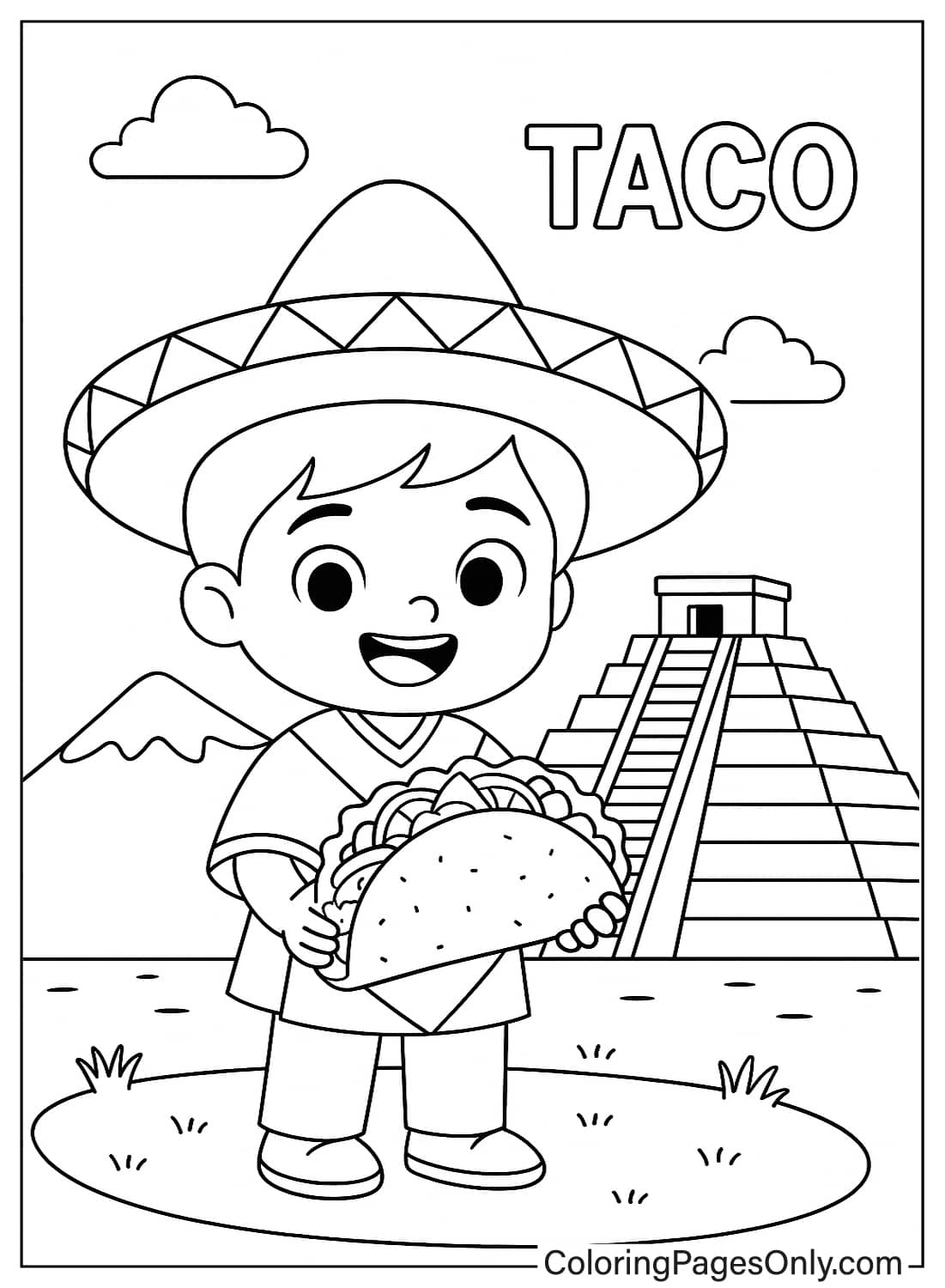
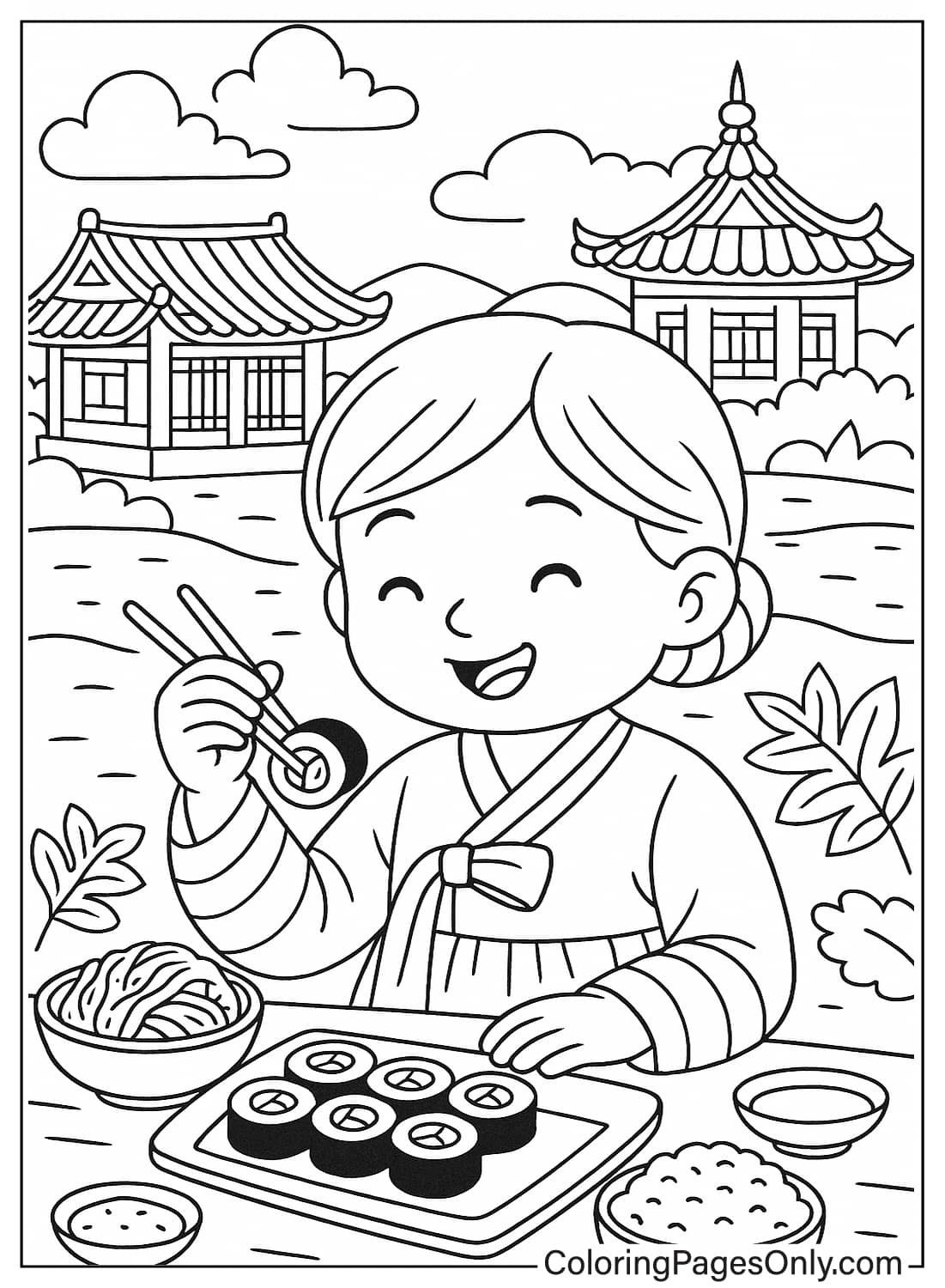
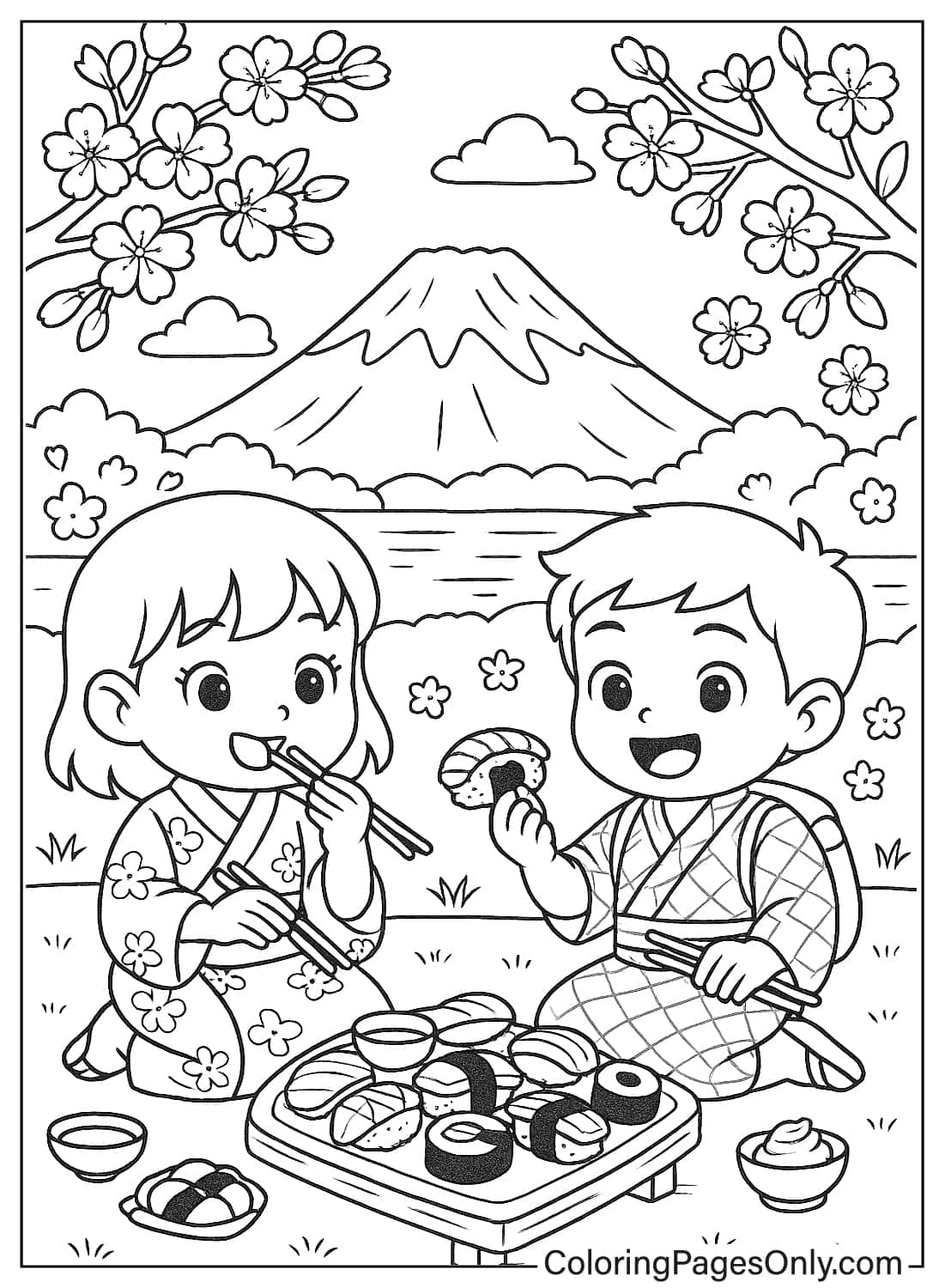
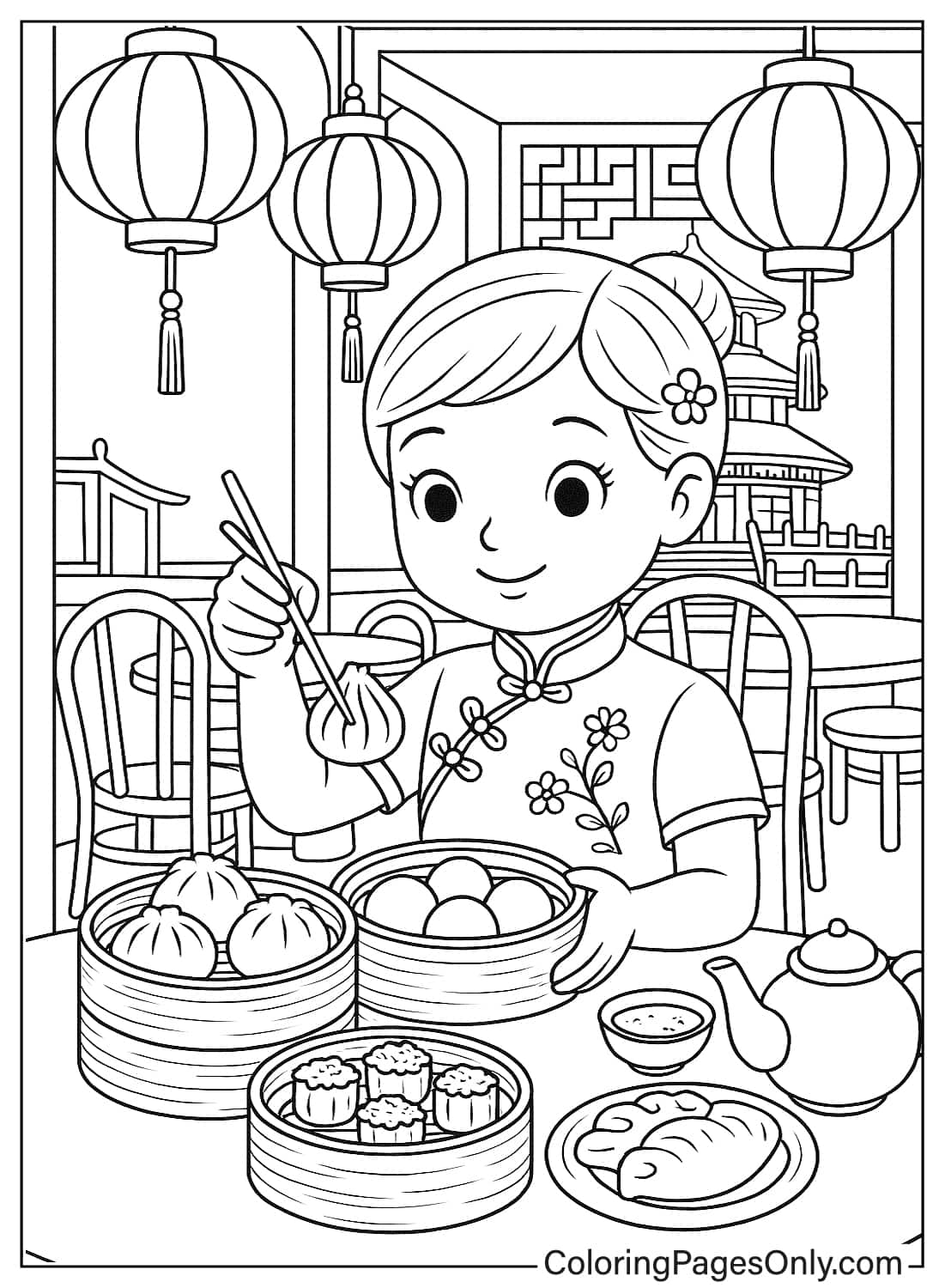
Each page pairs a dish with a country and a landmark: Italian pizza by the Leaning Tower of Pisa, Japanese sushi near Mount Fuji, and Mexican tacos by a Mayan pyramid. Most of these pairings reflect widely recognized associations, though a few food origins, like falafel, are genuinely debated among historians rather than tied to one single country. The collection spans 16 countries across several continents, plus one general world food festival scene.
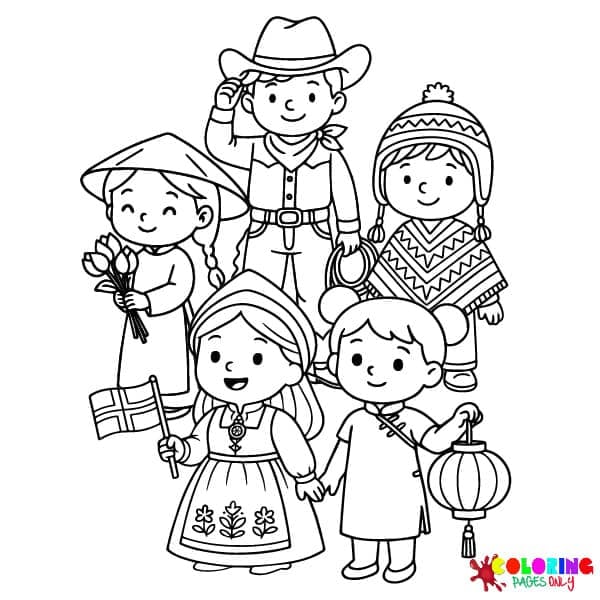
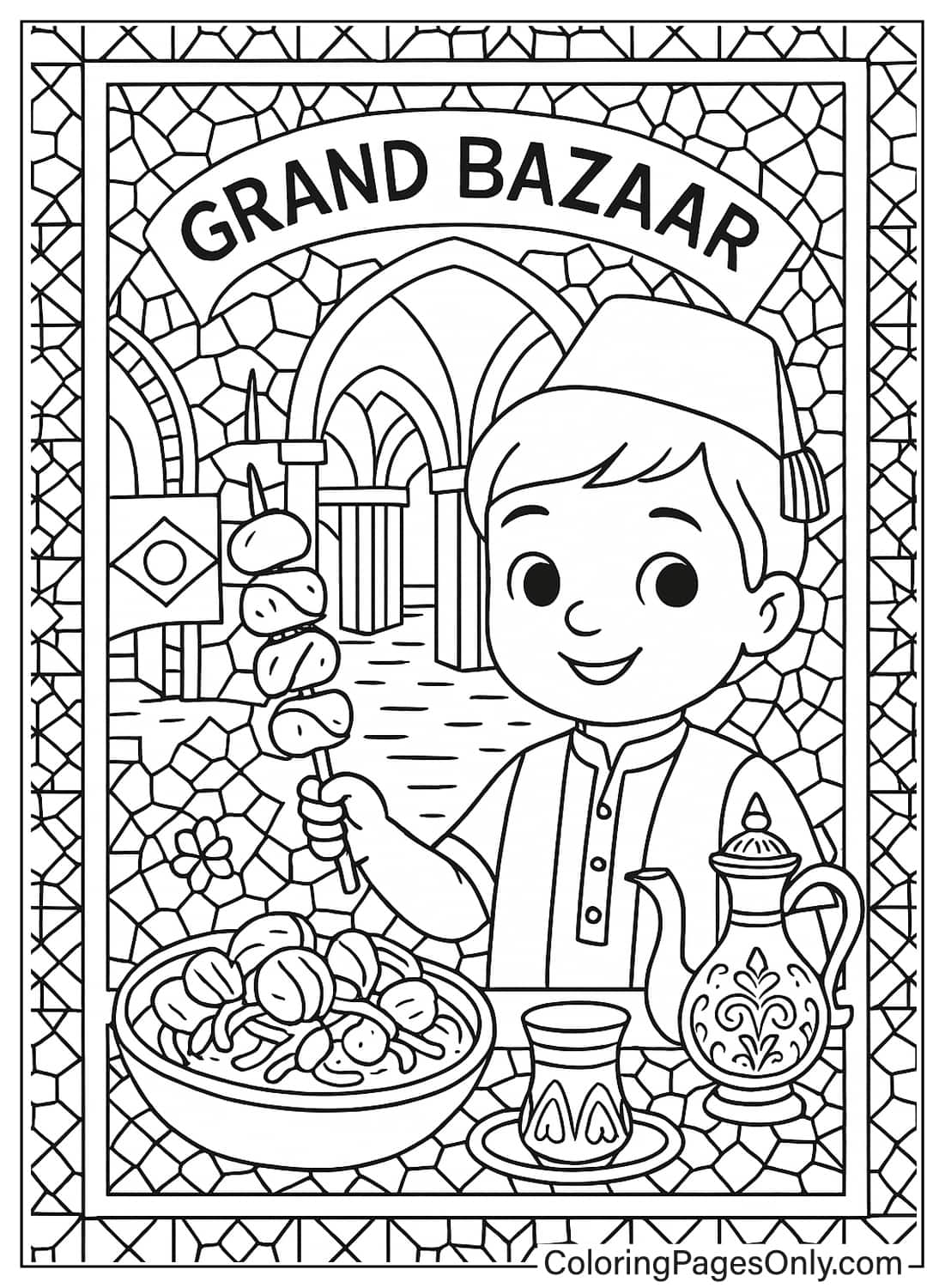
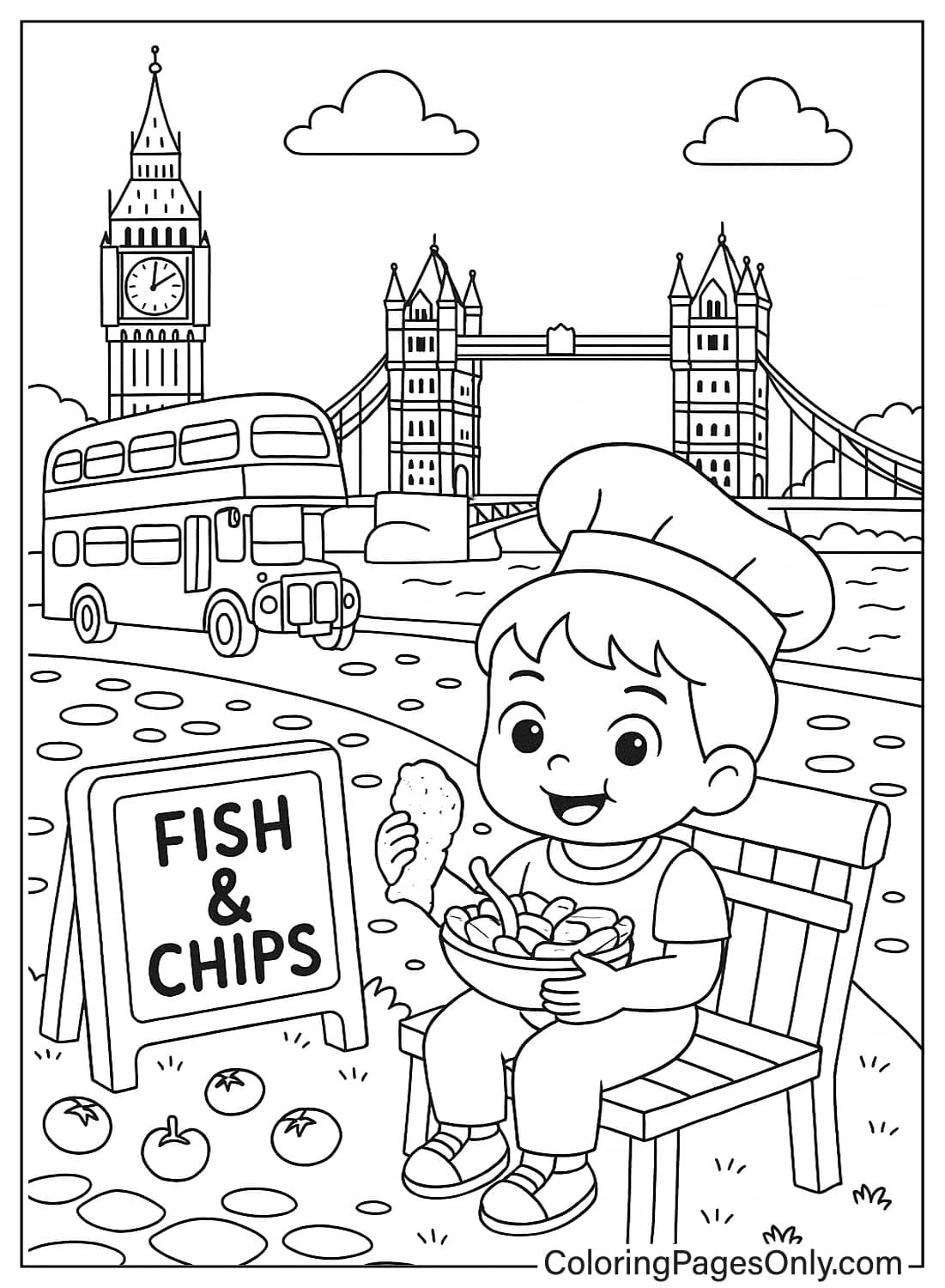
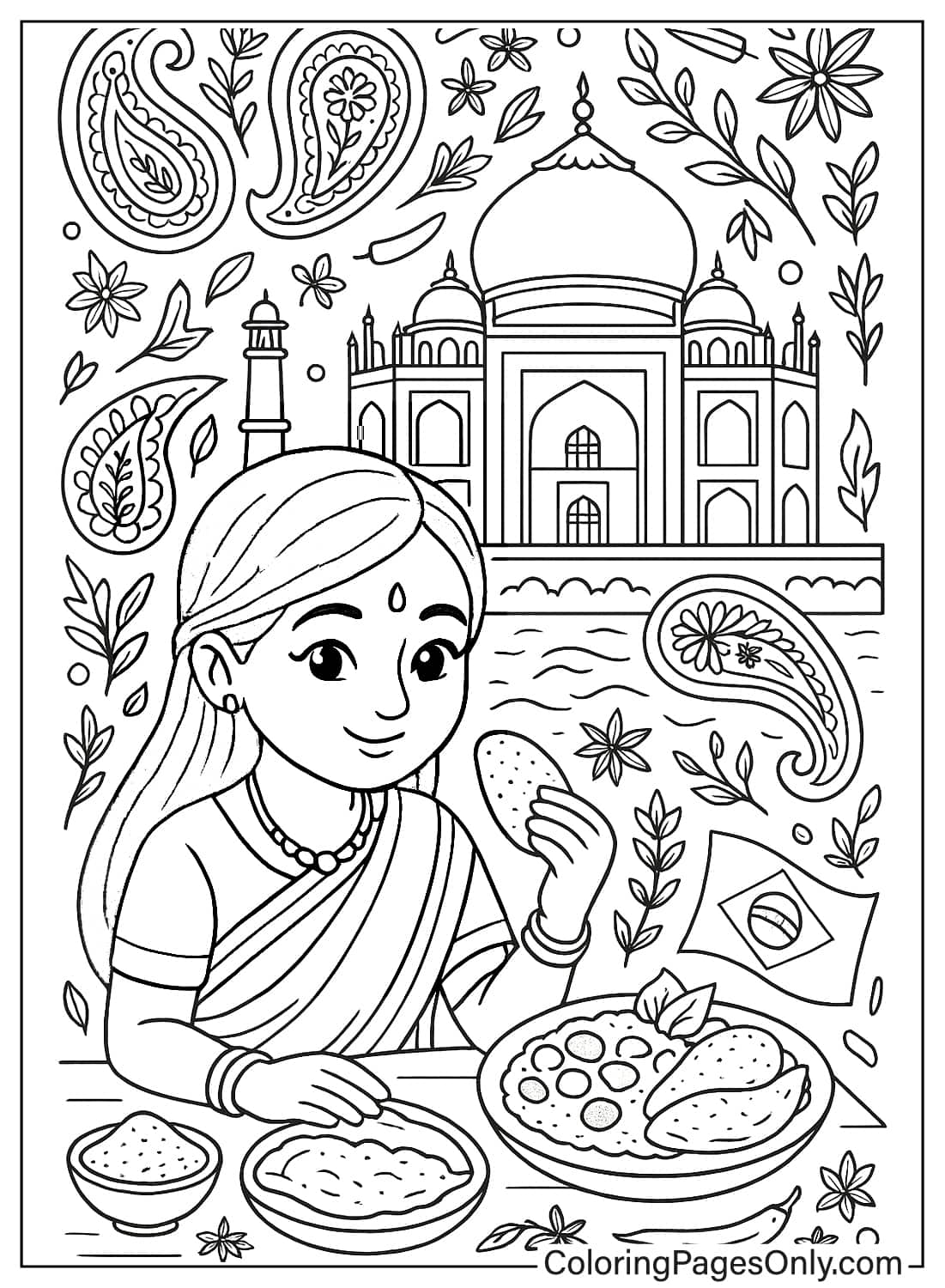
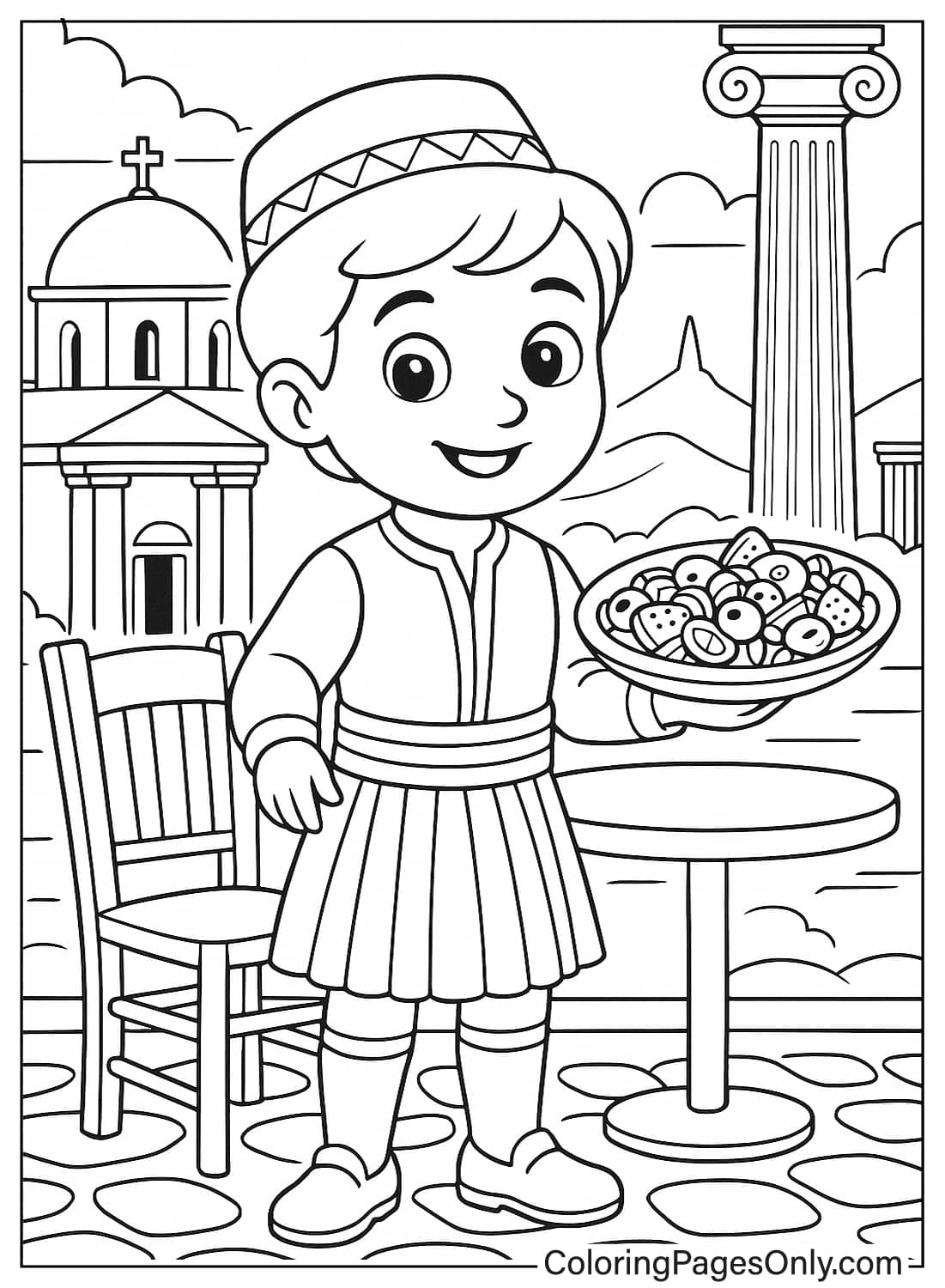
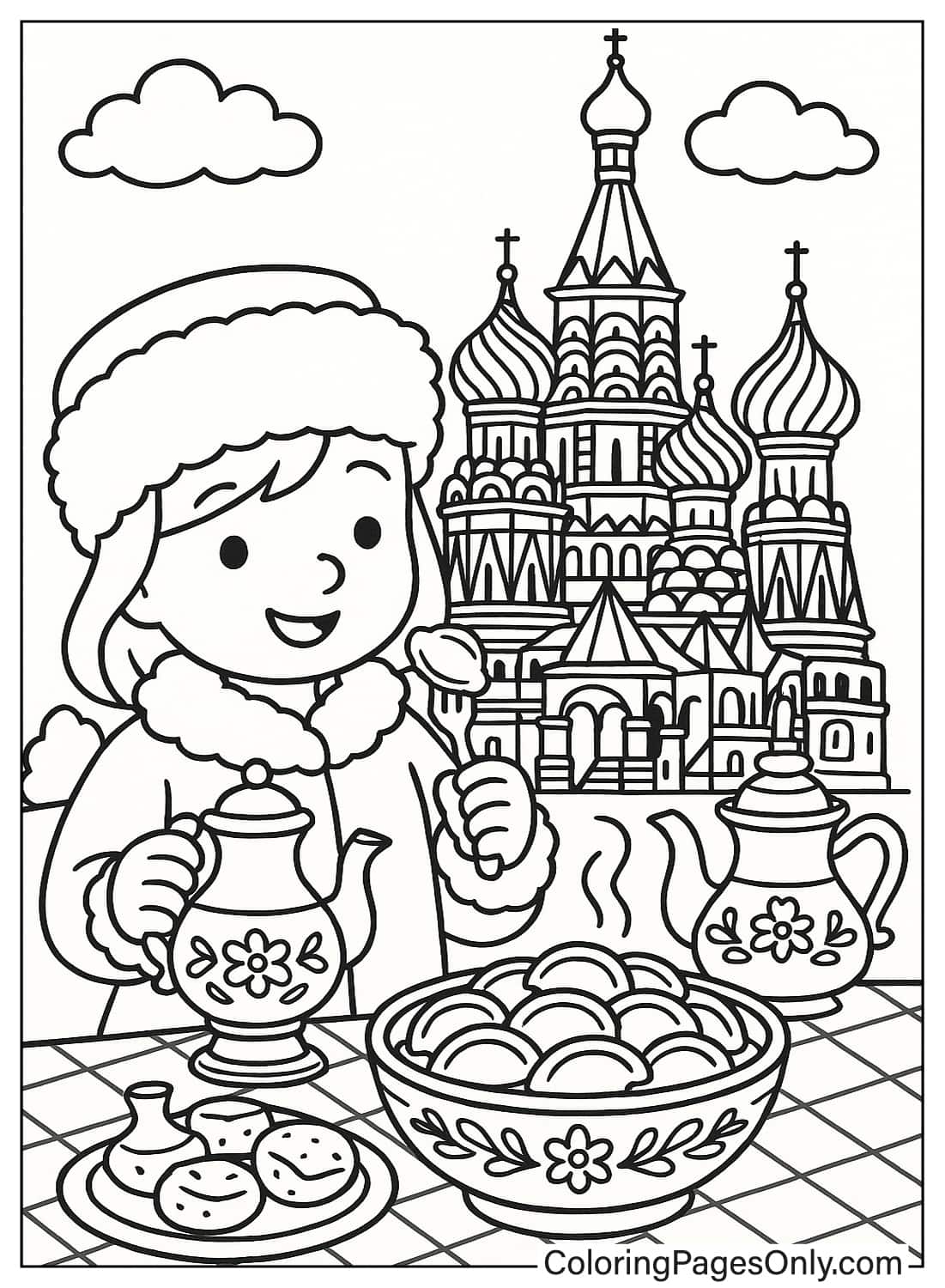
The 22 pages sort into four regional groups: Asia, Europe, the Americas, and a smaller group covering the Middle East, Africa, and a general festival scene. Traditional dress appears on most pages alongside the food and landmarks, giving each one three separate cultural details to color rather than just one.
What Is Inside This Collection
Sixteen countries and one general festival scene make up the 22 pages, organized here by region rather than by dish, since geography groups these more naturally than cuisine type does.
Asia
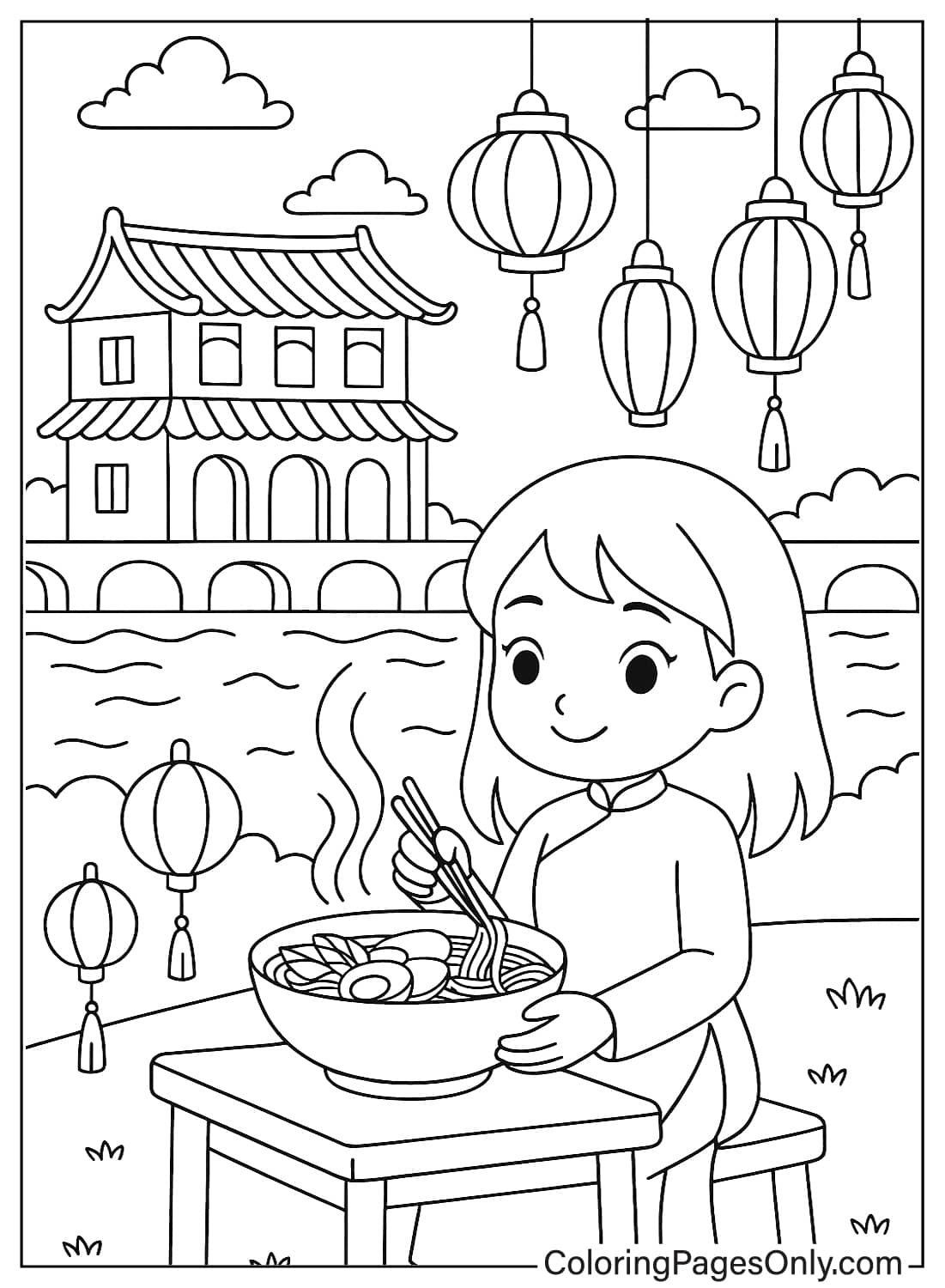
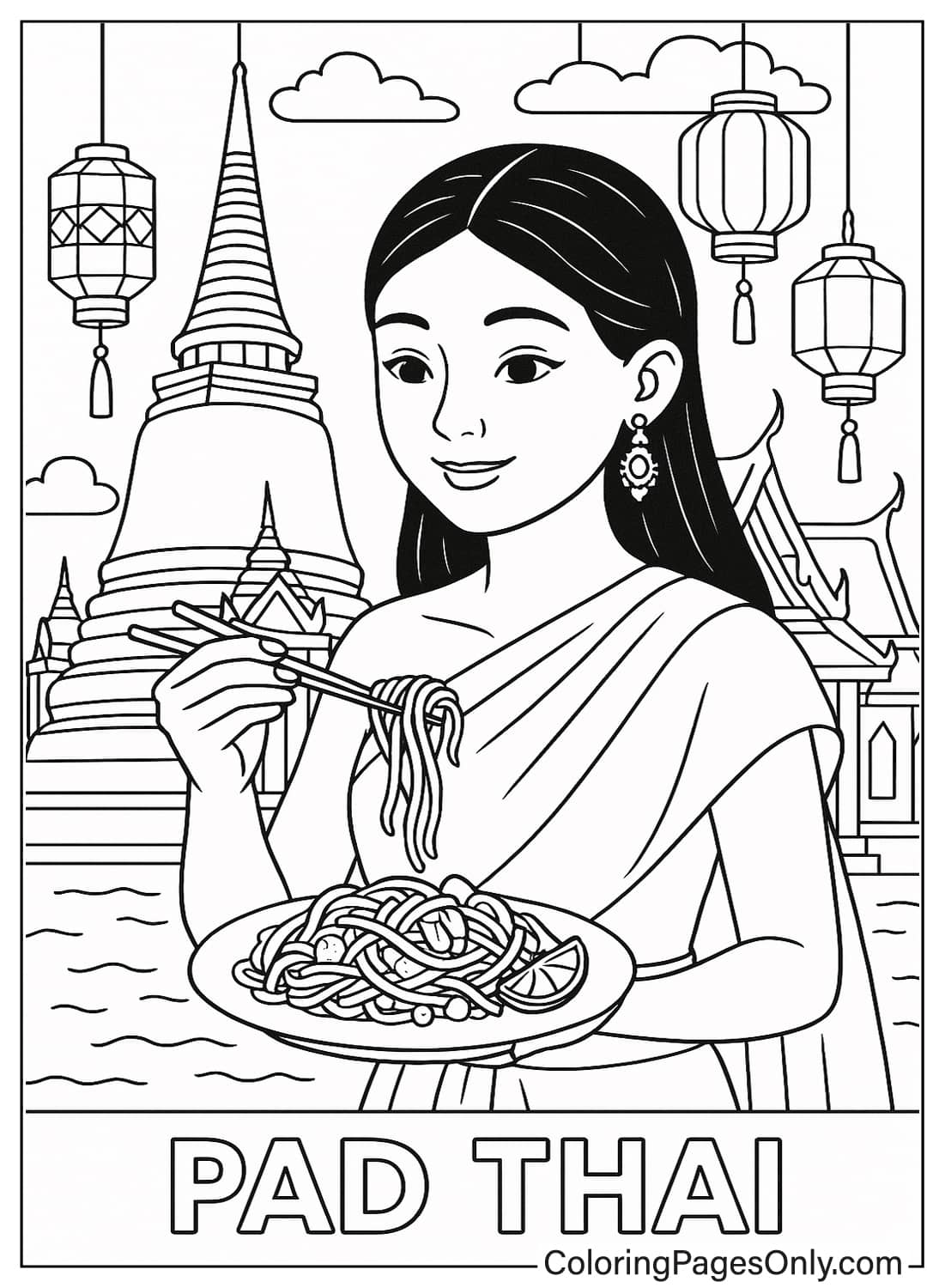
This group covers Vietnam, Thailand, Japan, Korea, China, and India, each pairing a dish, pho, pad Thai, sushi, kimbap, dim sum, curry, with traditional dress and a recognizable landmark or setting. Coloring suggestion: research each country’s traditional dress before coloring rather than guessing, since fabric patterns and colors vary meaningfully by culture and are worth getting right.
Europe
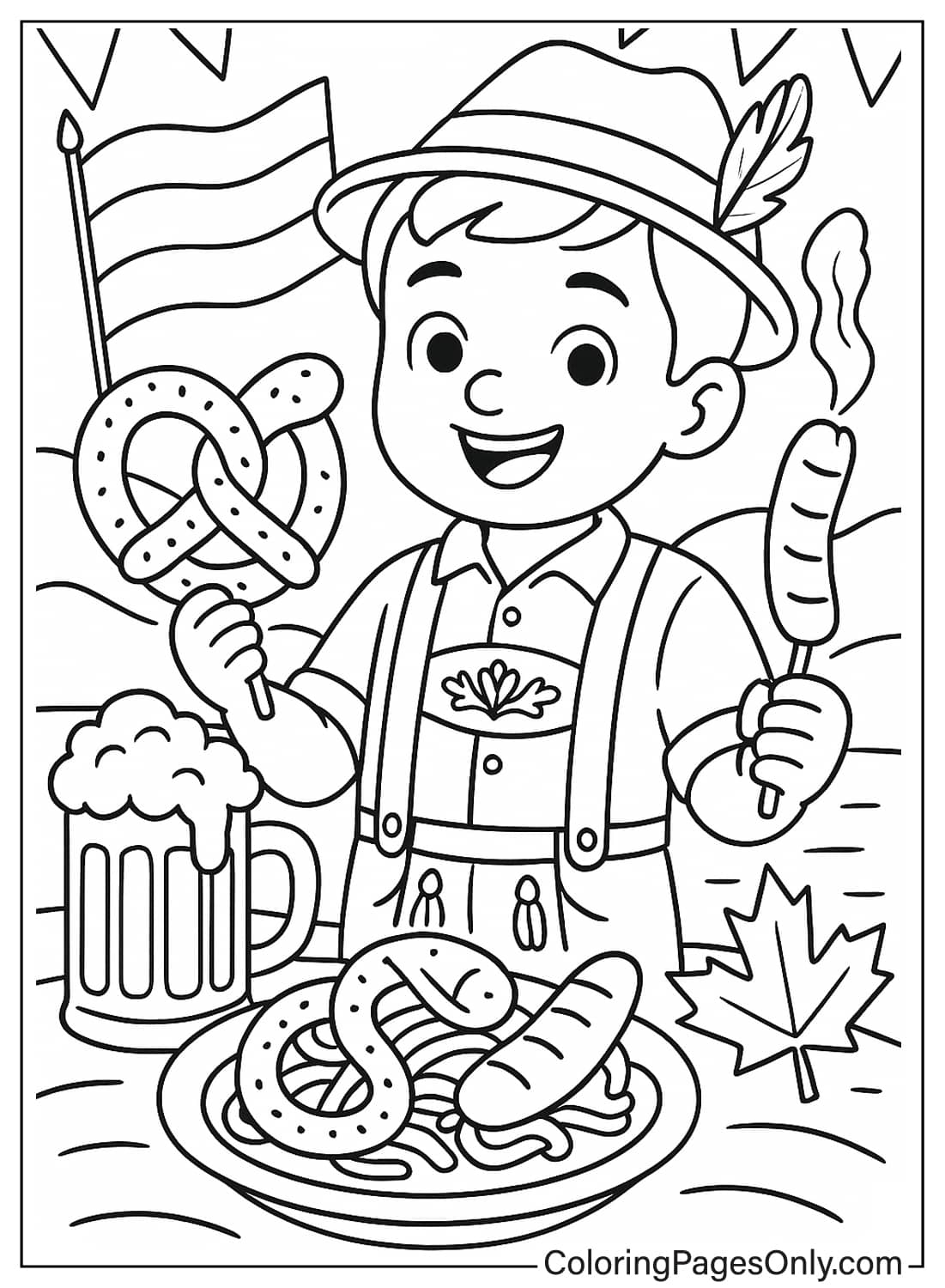
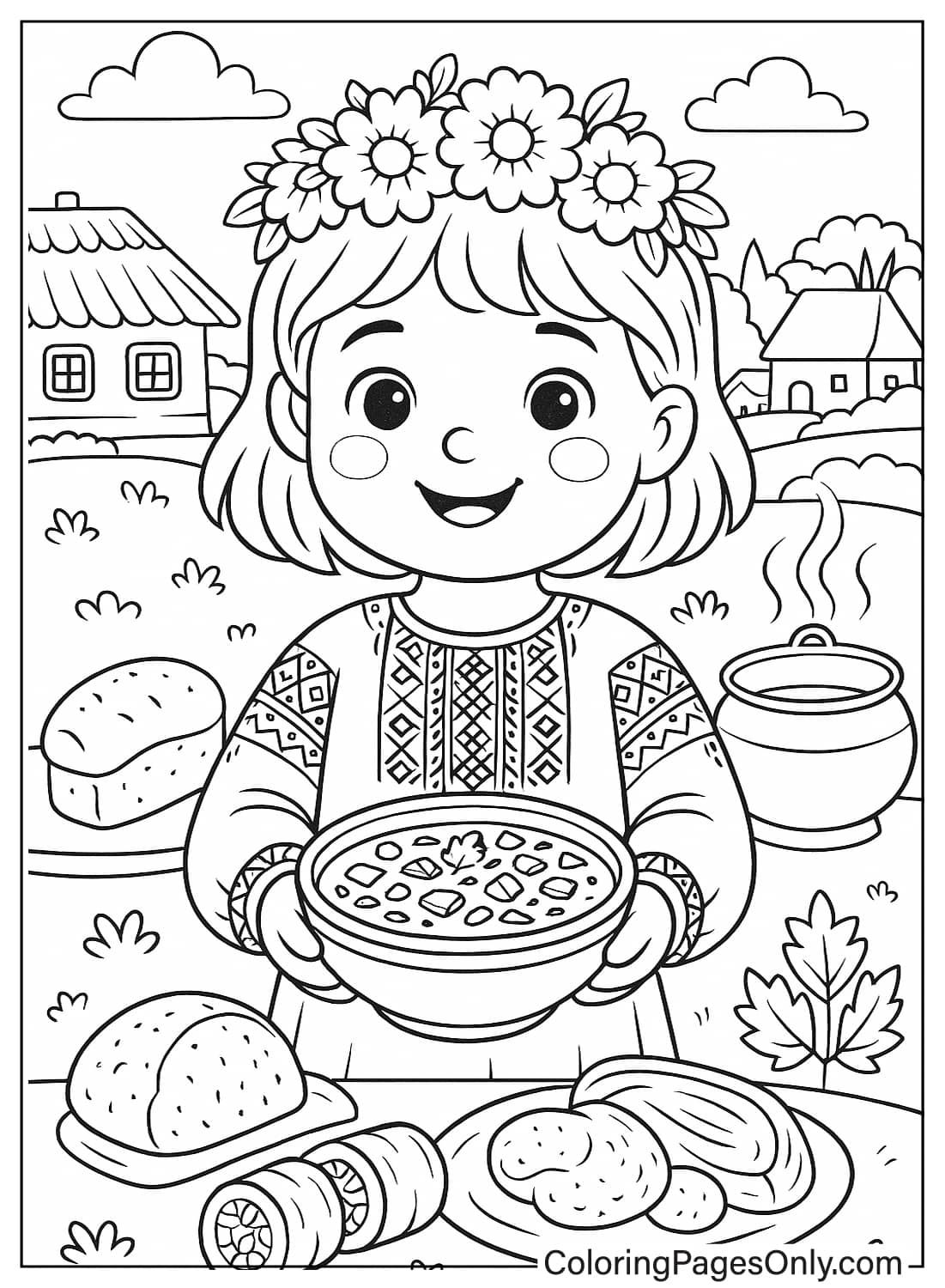
This is the largest group, spanning Italy, France, the UK, Spain, Greece, Russia, Germany, and Ukraine, each built around a dish, landmark, and cultural detail specific to that country. Coloring suggestion: keep landmark architecture in realistic stone grays and tans, saving brighter colors for the food and clothing so the buildings read as backdrop rather than competing for attention.
The Americas
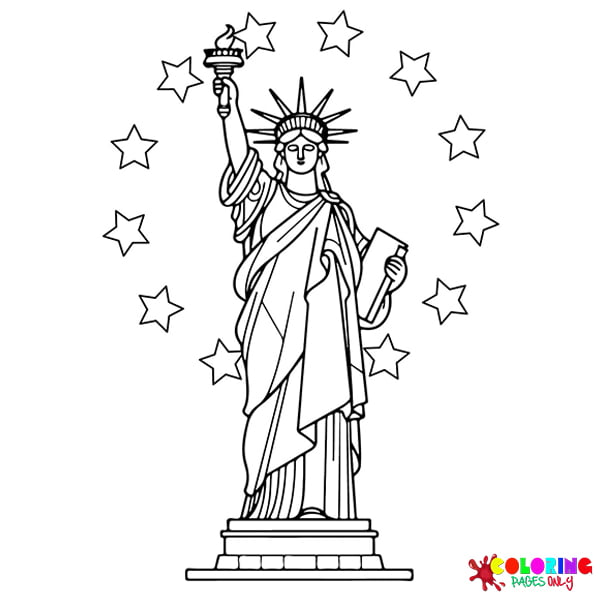
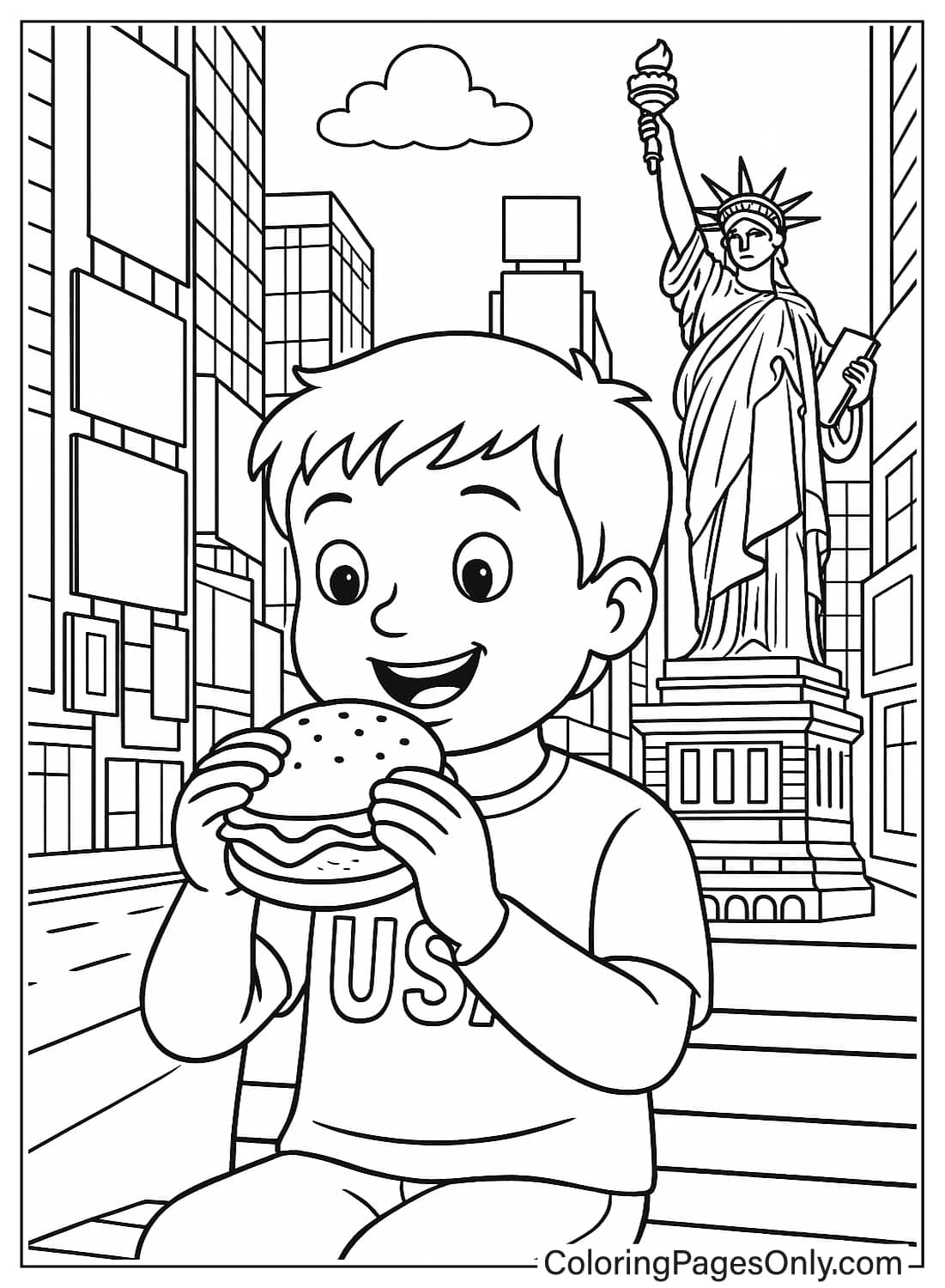
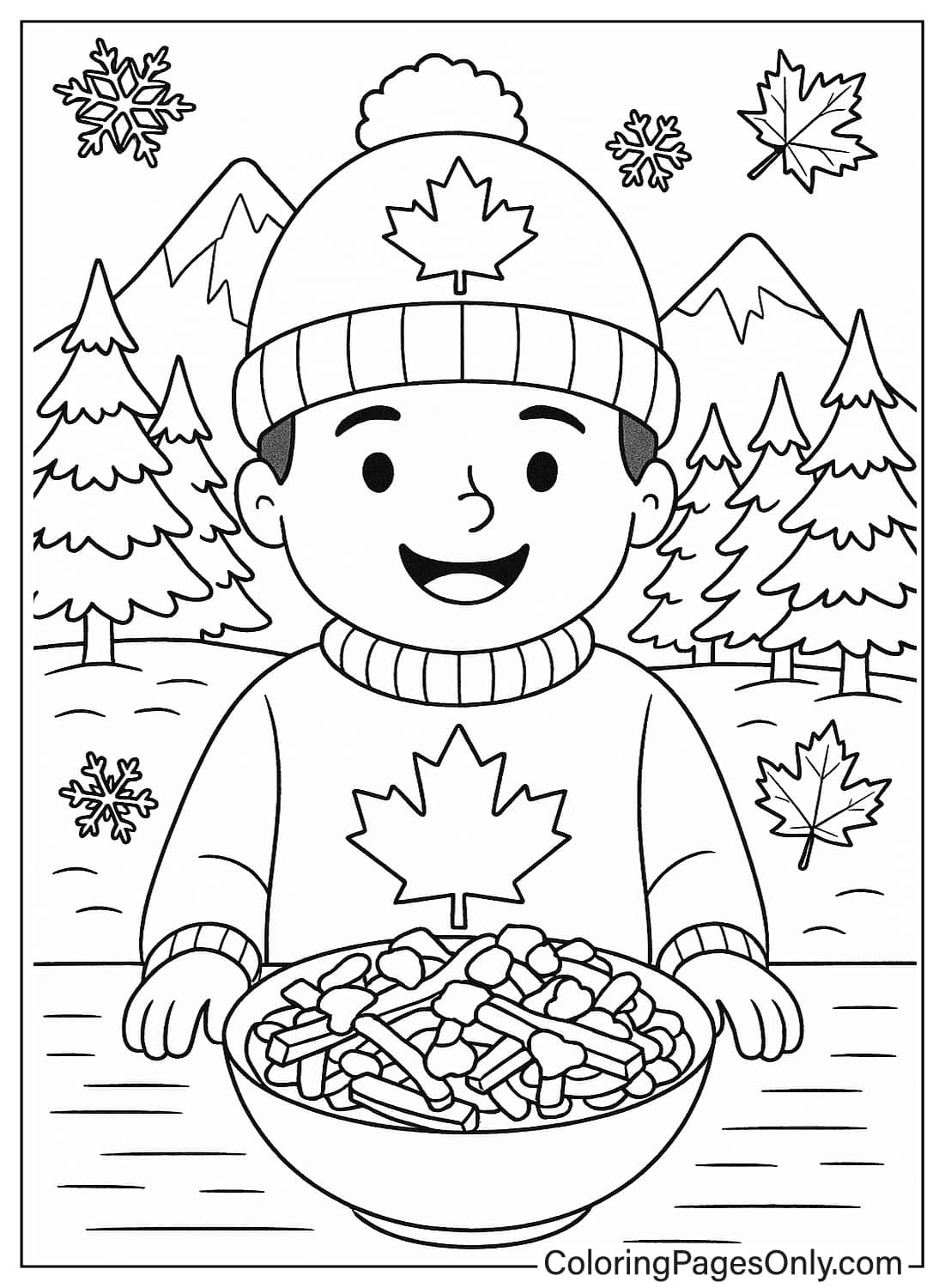
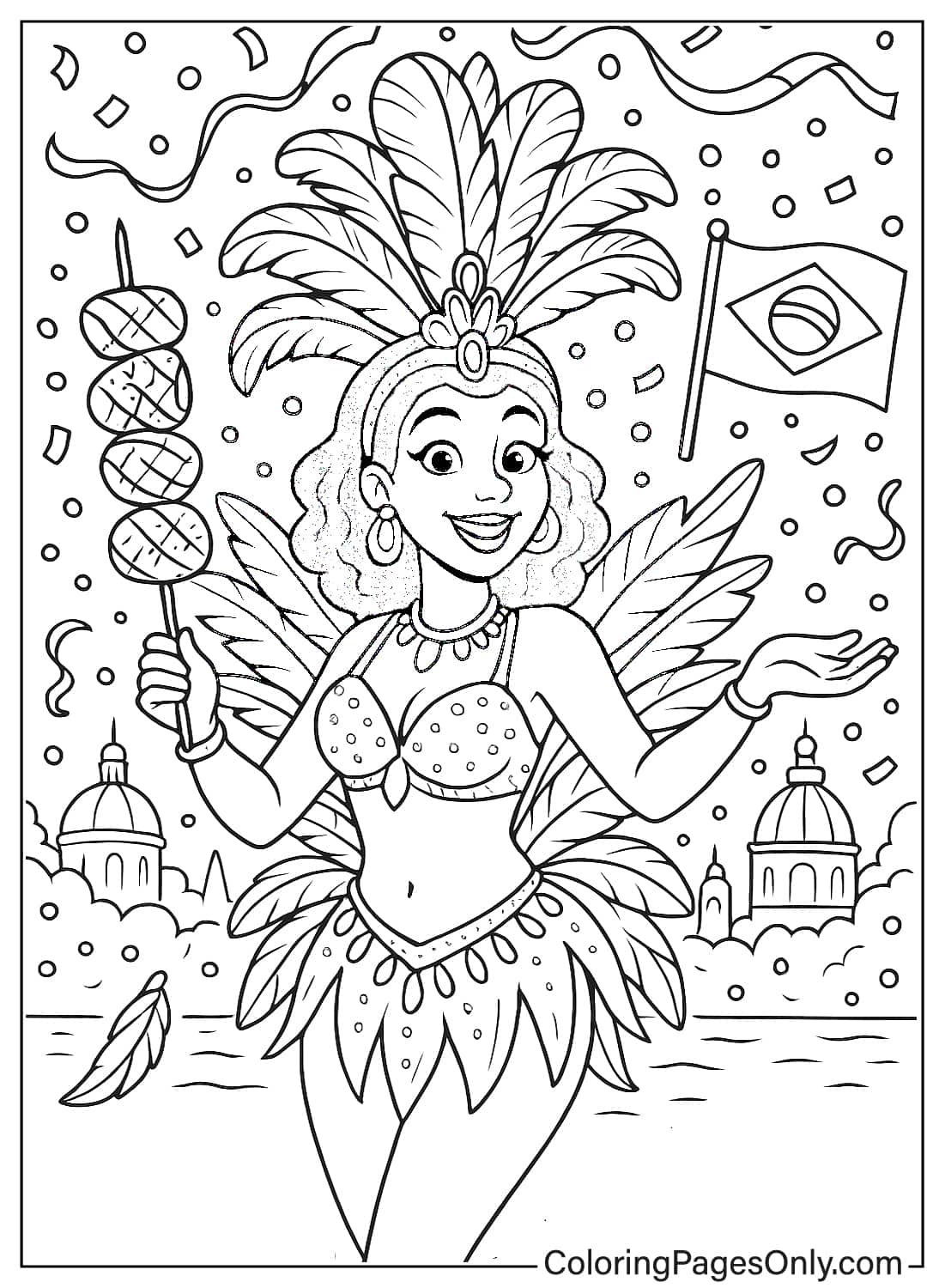
Mexico, the USA, Canada, and Brazil each get a page built around a well-known dish and a recognizable setting, from a Mayan pyramid to the Statue of Liberty. Coloring suggestion: this group has the widest range of climates and settings shown, so let the background color shift accordingly, warm tones for Mexico, cooler tones for a snowy Canadian scene.
Middle East, Africa, and General Scenes
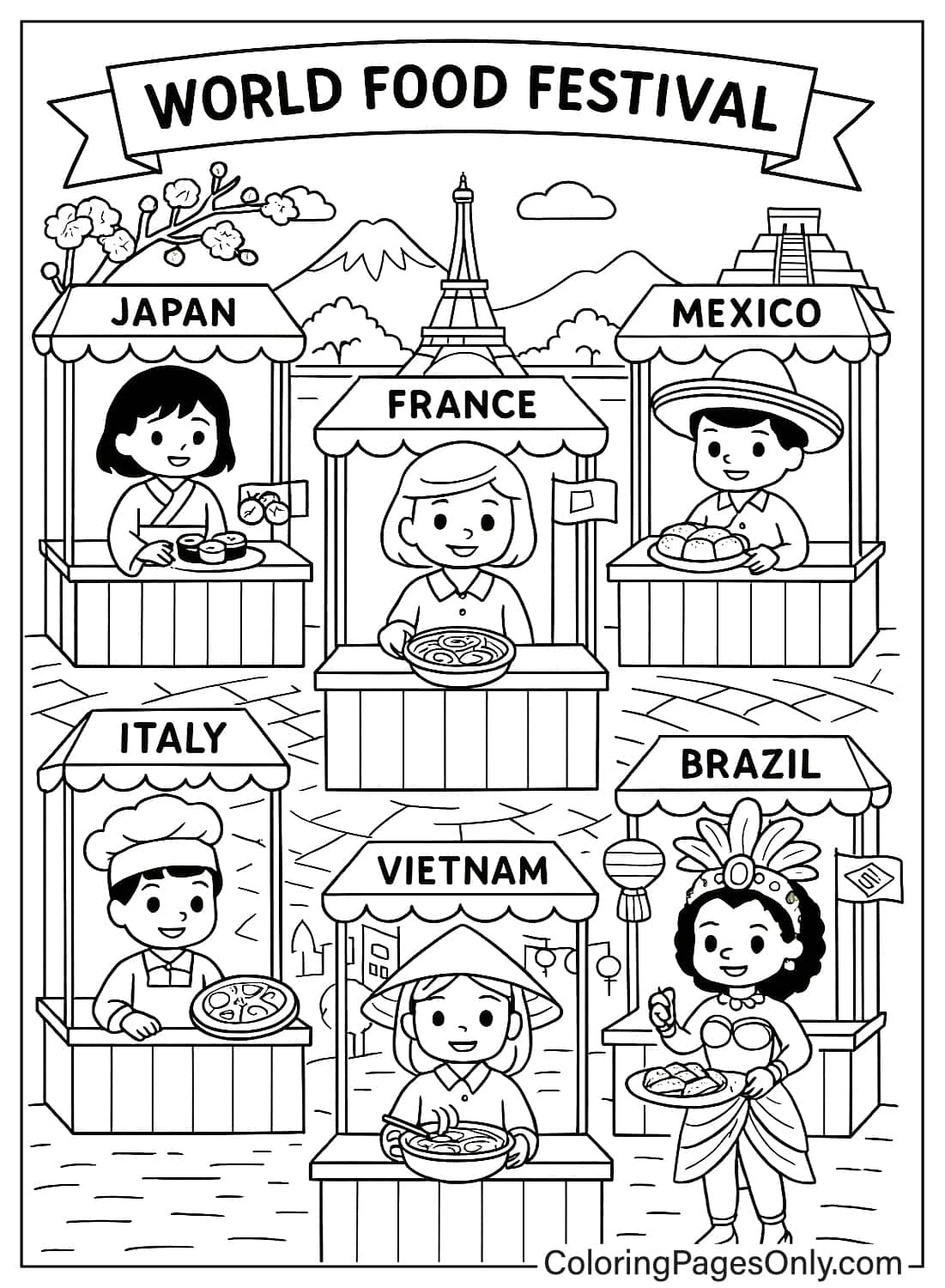
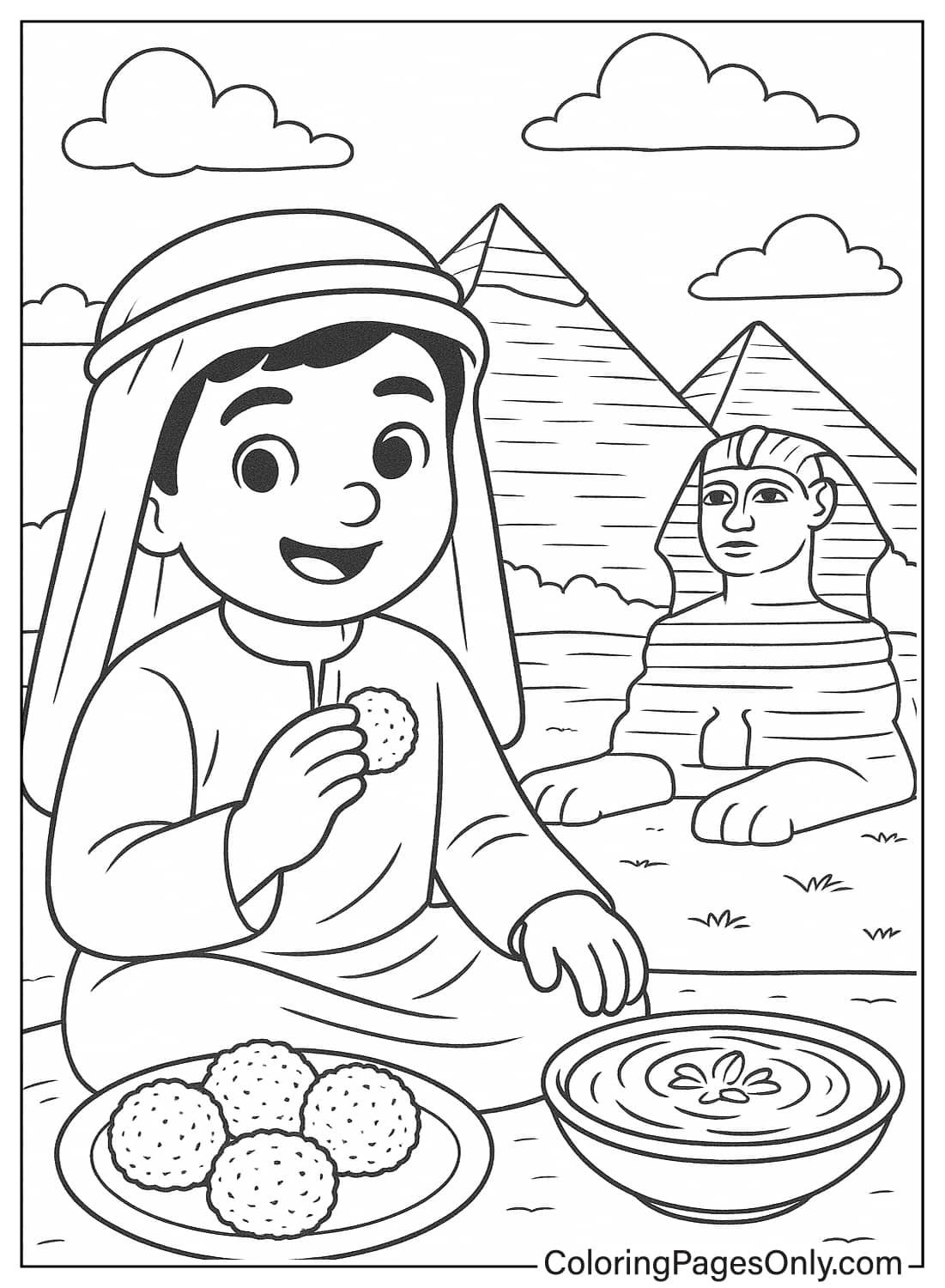
A smaller group includes Turkey and Egypt, alongside one general world food festival page not tied to a specific country. Coloring suggestion: since falafel’s exact origin is genuinely debated among food historians rather than settled, this page works well as a starting point for a conversation about how food history isn’t always simple or single-origin.
What A World Food Tour Coloring Pages Do
Small patterned details, careful strokes. Traditional dress often includes embroidery, patterned trim, or layered fabric, small repeating details that ask for careful, controlled strokes rather than one broad color fill, the kind of fine motor practice the American Academy of Pediatrics ties to structured coloring in children ages two through seven.
Three facts per country, not just one. Each page pairs a dish, a landmark, and a piece of traditional dress, which means coloring one page touches on food, geography, and culture at the same time, rather than teaching just one fact in isolation.
Low-cost mental travel. Coloring a page set somewhere a child has never actually been offers a kind of low-cost mental travel, and that same unhurried, exploratory activity lines up with the structured coloring sessions a 2005 Art Therapy Journal study connected to reduced anxiety in adult participants.
A reminder that food history isn’t always simple. A few dishes in this set, falafel among them, have genuinely disputed origins among food historians rather than a single settled country of origin, and that’s worth treating honestly with a child rather than assigning tidy ownership a dish’s real history doesn’t actually support.
How to Color A World Food Tour Pages Well
- Traditional dress: look up a real reference image for each country’s traditional clothing before coloring, since patterns like Vietnamese Ao Dai, Ukrainian floral wreaths, or Indian sari borders carry real cultural detail worth getting right rather than guessing.
- Landmarks: keep famous buildings and monuments in realistic stone tones, Crayola Gray or Tan, so they read as recognizable backdrops rather than competing with the food in the foreground.
- Food accuracy: match each dish’s real colors where possible, golden-brown pho broth, red paella rice, white and pink sushi, since getting the food right is part of what makes each page recognizable.
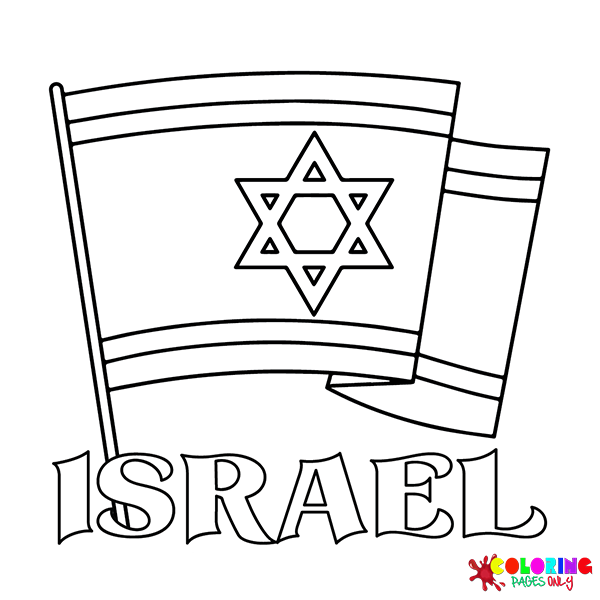
- Flags and symbols: if a page includes a flag or national symbol, keep its colors accurate to the real flag rather than an approximation, since flag colors are precise and easy to look up.
- Sky and setting: shift the sky and background tone by region, warm and golden for Mediterranean scenes, cooler and grayer for northern European ones, snowy white for the Canadian page, to reflect each setting’s real climate.
- Festival scenes: for the more chaotic pages, like the tomato-throwing festival or the carnival scene, use bright, saturated colors throughout rather than a controlled palette, since these two pages are meant to feel energetic rather than calm.
5 Creative Craft Ideas With A World Food Tour Coloring Pages
1. World Food Passport Book
Color a few pages, punch holes, and bind them into a small book with a “passport” cover to track countries as they’re colored.
2. Country Fact Cards
Color a page and write one real fact about that country’s food or culture on the back to build a simple set of fact cards.
3. Global Snack Night
Color a page and try a small taste of that country’s featured dish the same evening, pairing the coloring with an actual food experience.
4. World Map Pairing
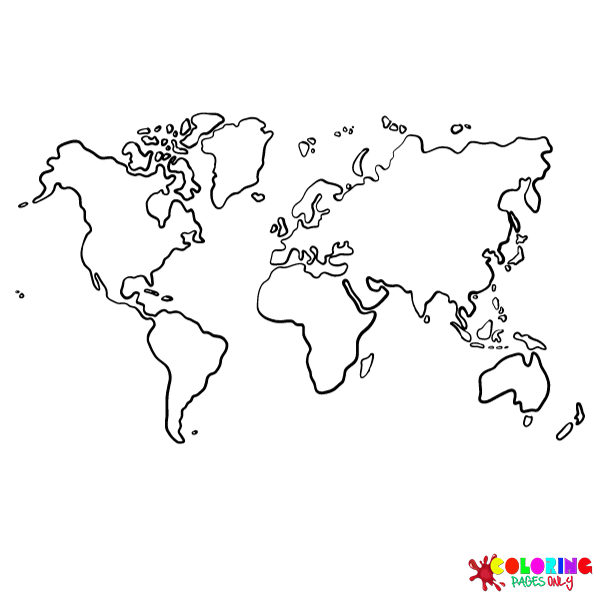
Color a page alongside a blank world map and mark where that country is located, connecting the illustration to real geography.
5. Flag and Landmark Matching Game
Color a few pages, cut out just the landmark from each, and match them to a separate set of printed country flags.
Frequently Asked Questions
What are the A World Food Tour coloring pages?
A free set of 22 printable designs pairing a well-known dish from a different country with a famous landmark and, on most pages, traditional dress. Every page downloads as a PDF or opens in the online coloring tool without an account.
How many countries are included in the collection?
Sixteen countries appear across the 22 pages, spanning Asia, Europe, the Americas, and the Middle East, plus one general world food festival scene not tied to a specific country.
Are all the dish-and-country pairings historically accurate?
Most reflect widely recognized associations, but a few dishes have genuinely debated origins among food historians. Falafel, for example, is most often traced to Egypt, though its history involves several countries across the region.
Do the pages show real landmarks?
Yes. Each page features a real, recognizable landmark, such as the Eiffel Tower, Mount Fuji, or the pyramids at Giza, paired with that country’s featured dish.
Is the collection focused only on well-known countries?
The set covers a broad mix, from frequently featured countries like Italy and Japan to less commonly represented ones like Ukraine and Egypt, giving it a wider geographic range than a typical food-themed collection.
Can these pages be colored without printing them?
Yes. Every page in the set opens directly in the site’s browser-based coloring tool, so a page can be finished on screen before deciding whether to print it.
Are the World Food Tour coloring pages suitable for young children?
Most pages include several distinct elements, a figure, a dish, a landmark, which makes them a better fit for a child who already has some coloring experience, rather than a very young first-time colorist.
Why does one page pair France with both a croissant and a pizza?
That pairing appears to be a mix-up, since pizza is associated with Italy, which already has its own dedicated page in this collection; the croissant and Parisian café setting are the accurate French elements on that particular page.
Start Coloring
Feel free to download any page above as a PDF, or start coloring it right in your browser – it’s completely free, and you don’t need to sign up. When you’re done, just hit the Facebook or Pinterest button at the top of the page to share your creation.