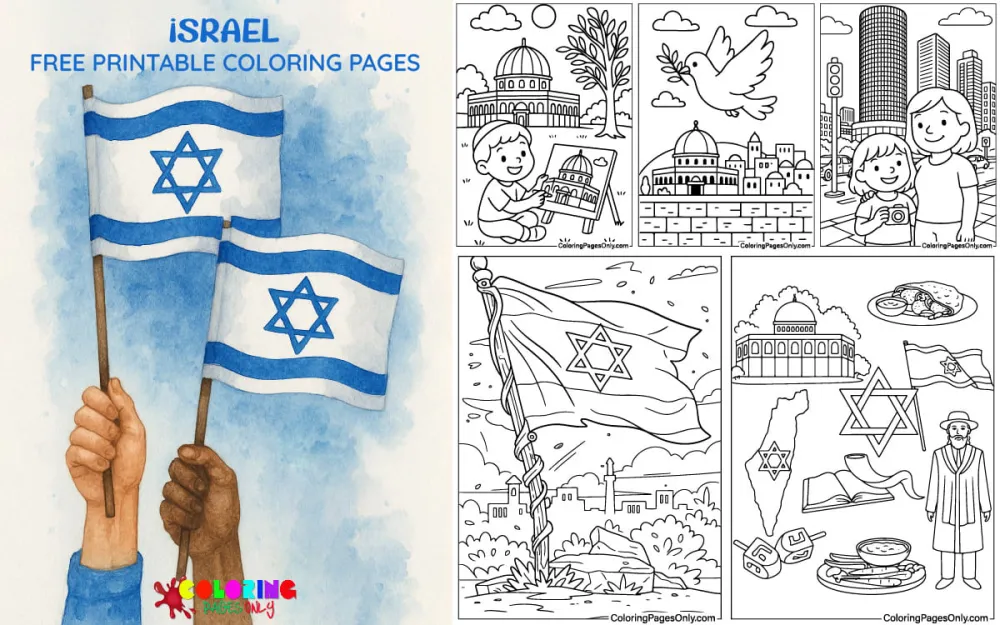
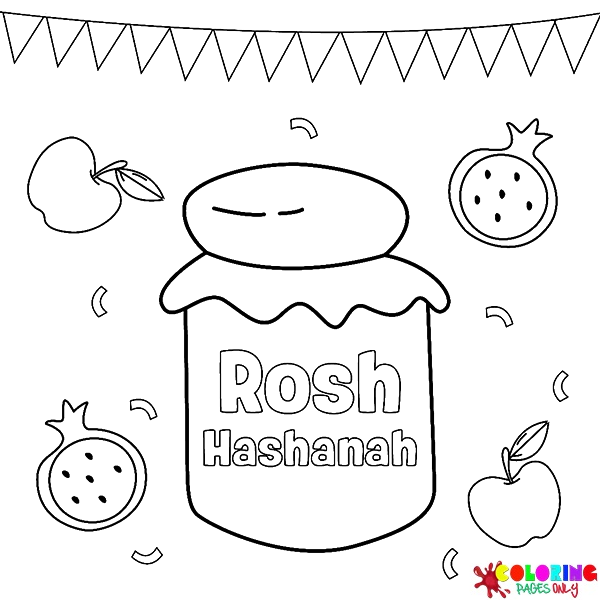
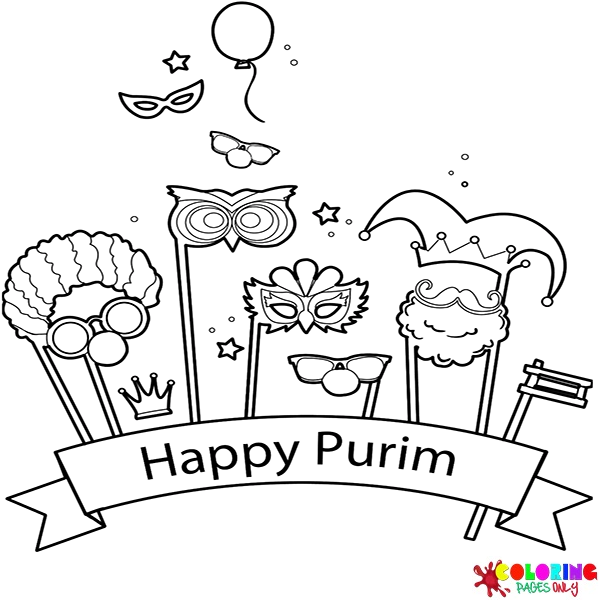
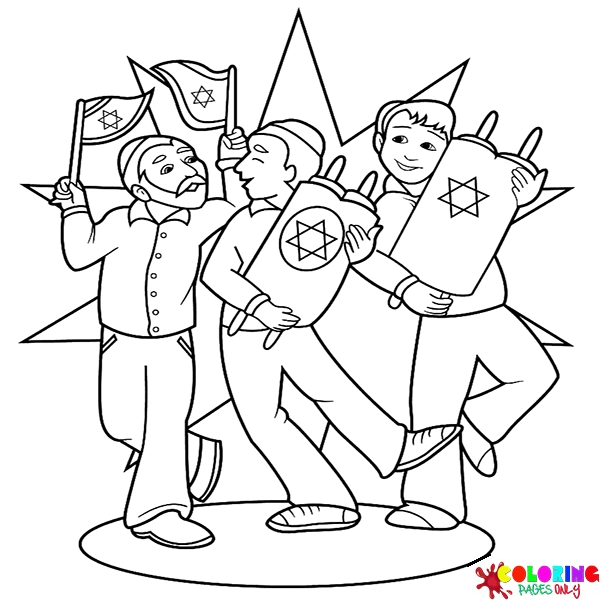
Israel Coloring Pages at ColoringPagesOnly.com brings together 40+ free printable pages exploring one of the world’s most historically significant and culturally layered countries. The collection covers Israel’s iconic landmarks and architecture – the Western Wall, the Dome of the Rock, Masada fortress, the Bahai Gardens in Haifa, the ancient stone streets of Jerusalem’s Old City – alongside Jewish cultural traditions including Shabbat dinner, Hanukkah, Torah study, challah and matzo preparation, and the symbols that define Israeli national and religious identity. A dedicated cluster of peace-themed pages – children painting “Shalom,” planting hope trees, drawing doves over Jerusalem – gives the collection a distinct emotional dimension, well suited to classroom and family use. The full Countries & Cultures collection is available through our Countries & Cultures Coloring Pages hub.
Every page is completely free – download as PDF to print or color online in your browser. No sign-up, no cost.
About Israel
Israel is a country in the Middle East, located at the eastern end of the Mediterranean Sea, bordered by Lebanon to the north, Syria to the northeast, Jordan to the east, Egypt to the southwest, and the Mediterranean coast to the west. It covers approximately 20,770 square kilometers – roughly the size of New Jersey – making it one of the smaller countries in the region, but one whose historical, religious, and cultural significance is vastly disproportionate to its size.
Israel was established as a modern state on May 14, 1948, though the land itself has continuous human habitation and a recorded history spanning more than 3,000 years. The country’s population is approximately 9.8 million, with Jewish citizens constituting the majority alongside Arab citizens, Druze, Bedouin, and other communities. The official languages are Hebrew and Arabic. The capital is Jerusalem, one of the oldest cities in the world and a site of profound religious significance for Judaism, Christianity, and Islam. Tel Aviv, on the Mediterranean coast, is the country’s commercial, technological, and cultural center – a modern, cosmopolitan city that contrasts sharply with Jerusalem’s ancient stone architecture.
Israel is home to some of the most visited archaeological and religious sites on Earth. More than three million tourists visit the region annually, drawn by the historical depth of its landscape – every layer of soil here contains evidence of civilizations stretching back to the Bronze Age.
Landmarks and Places in This Collection
Jerusalem – The Old City
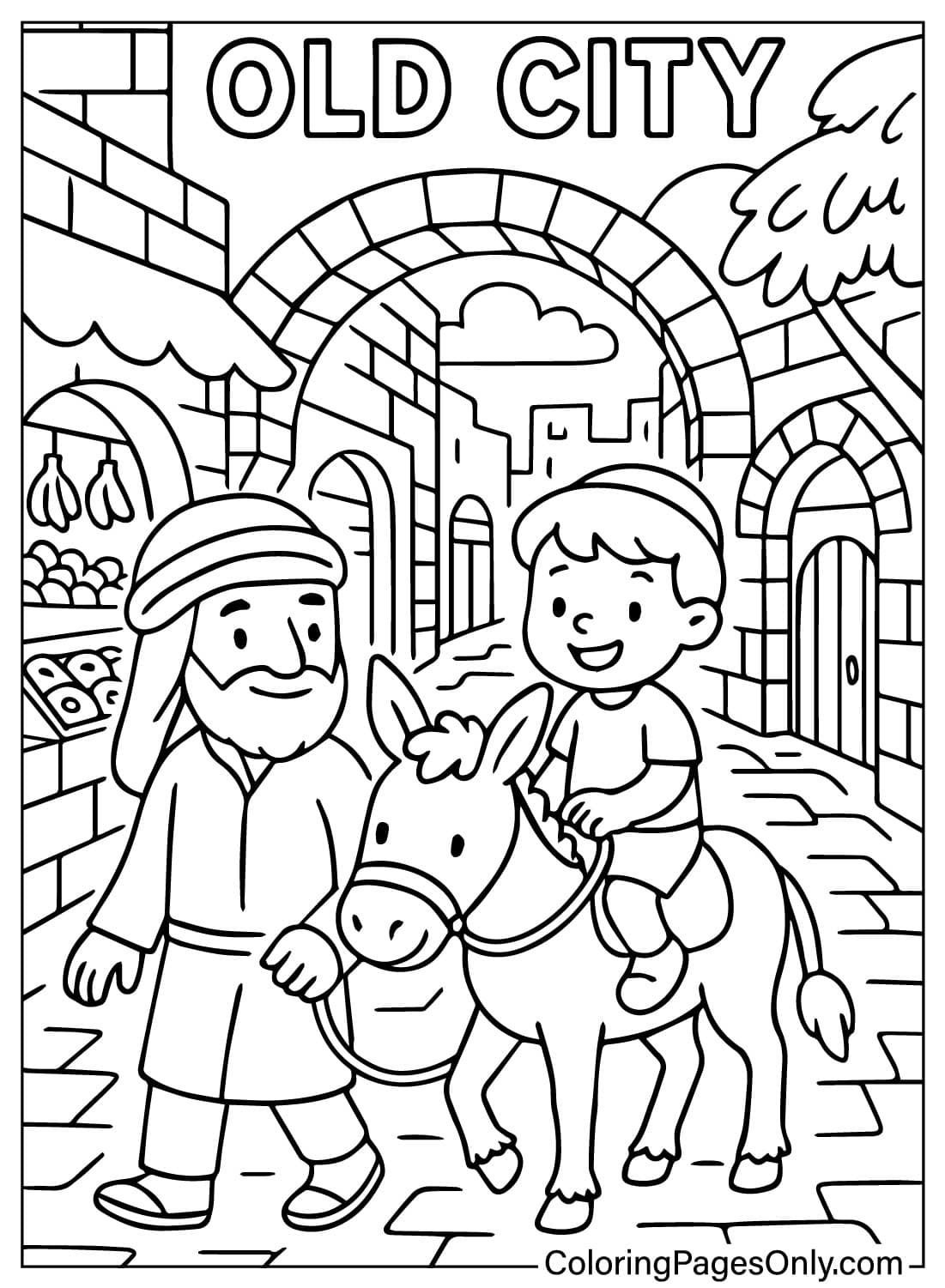
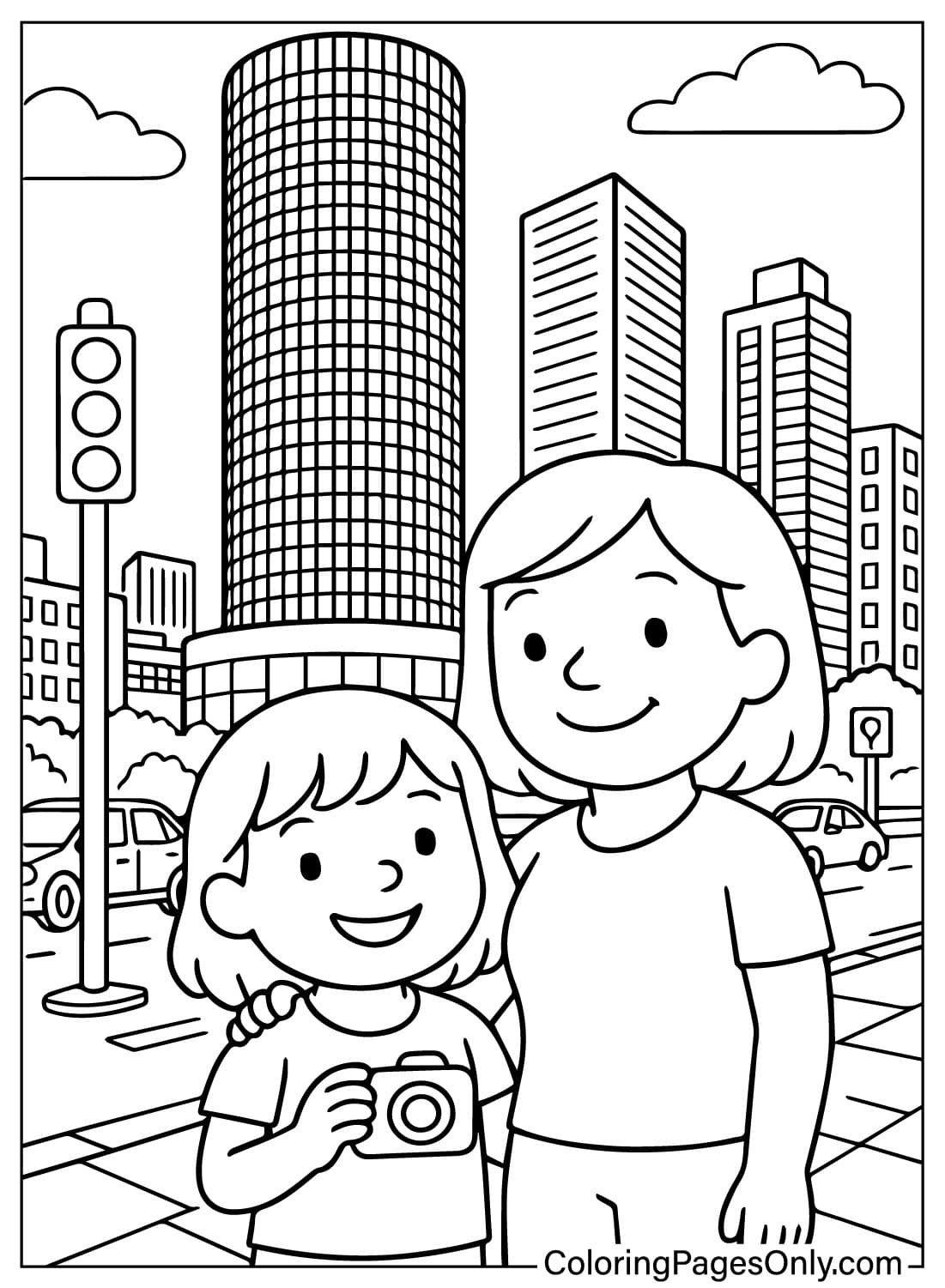
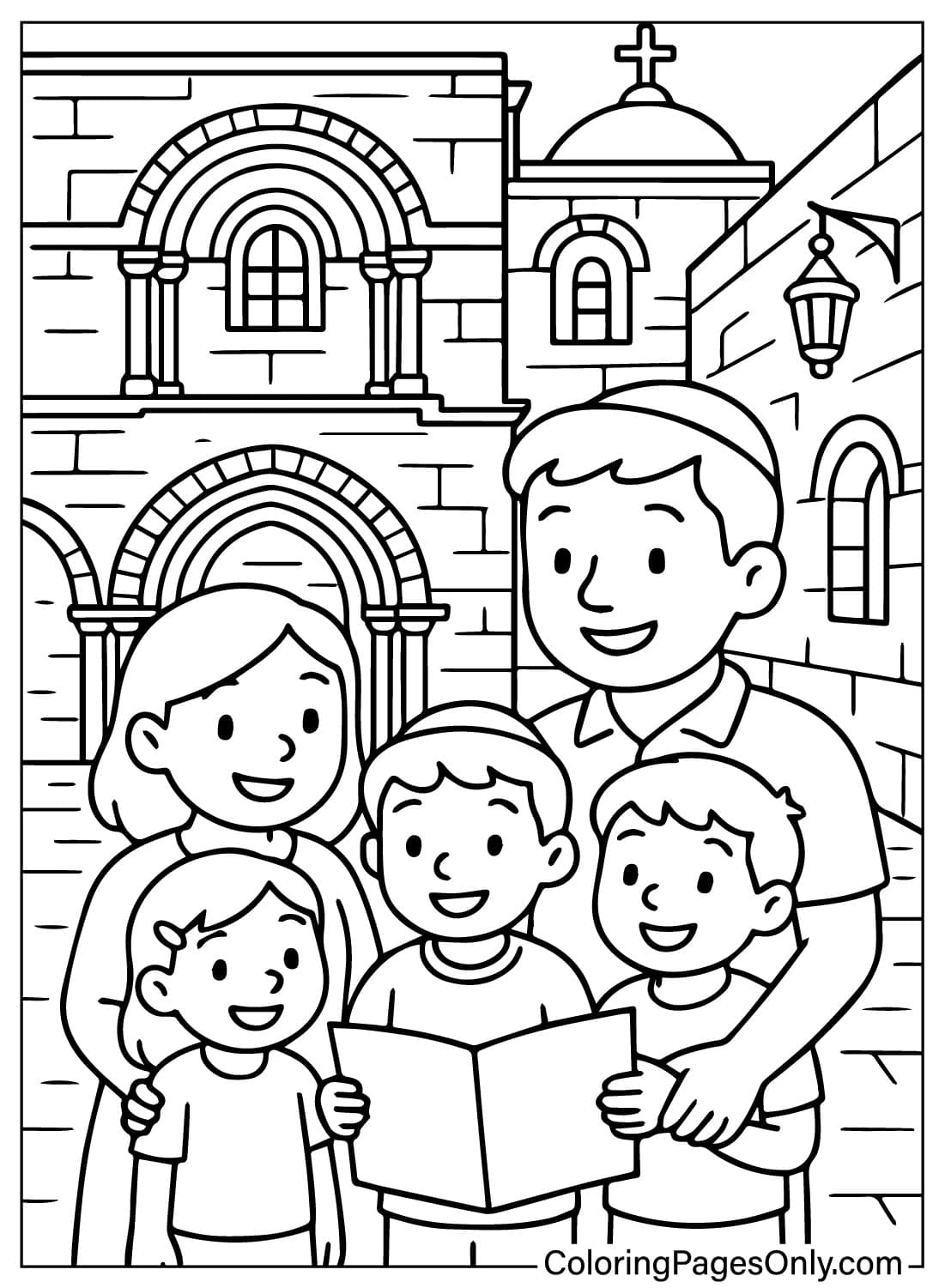
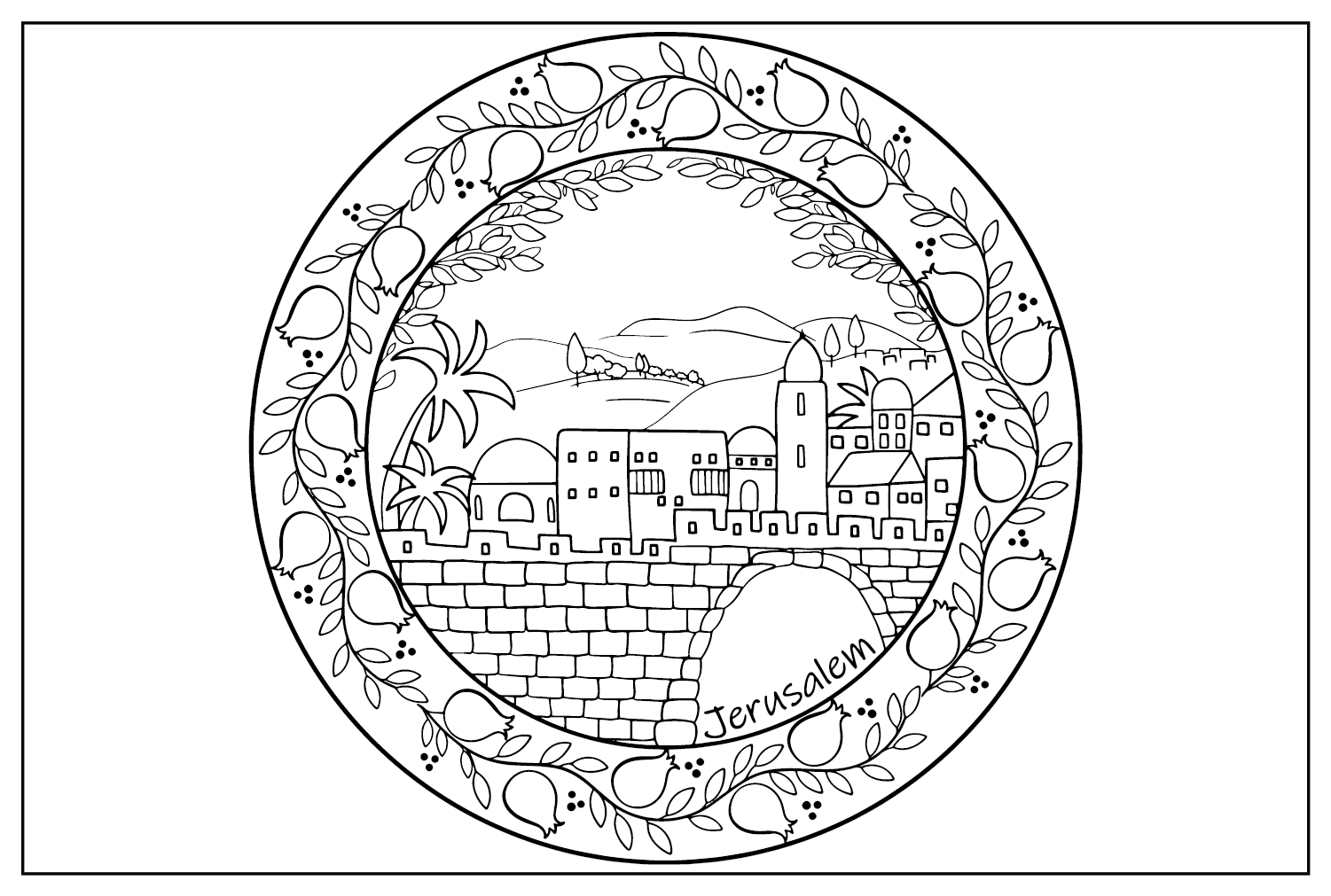
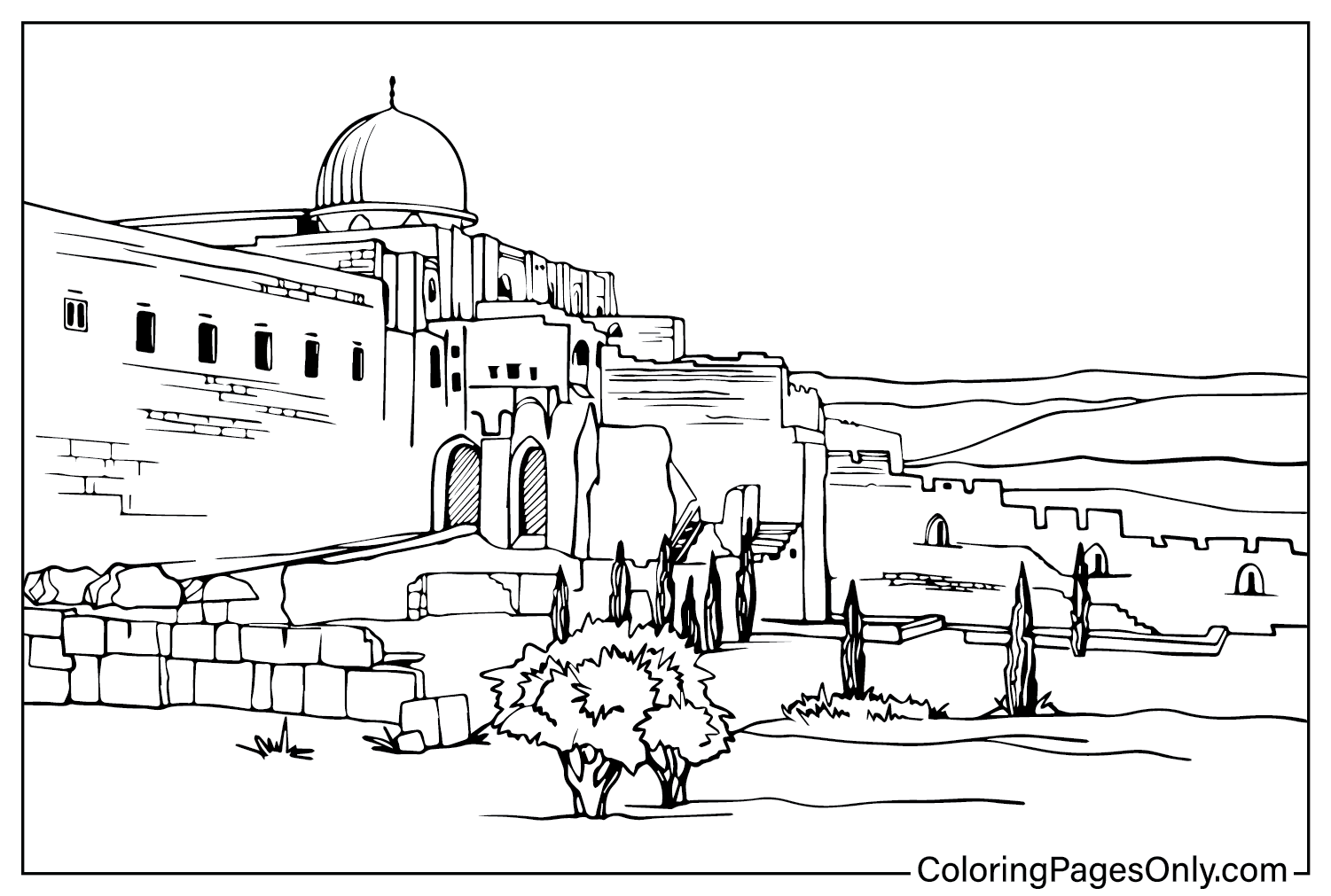
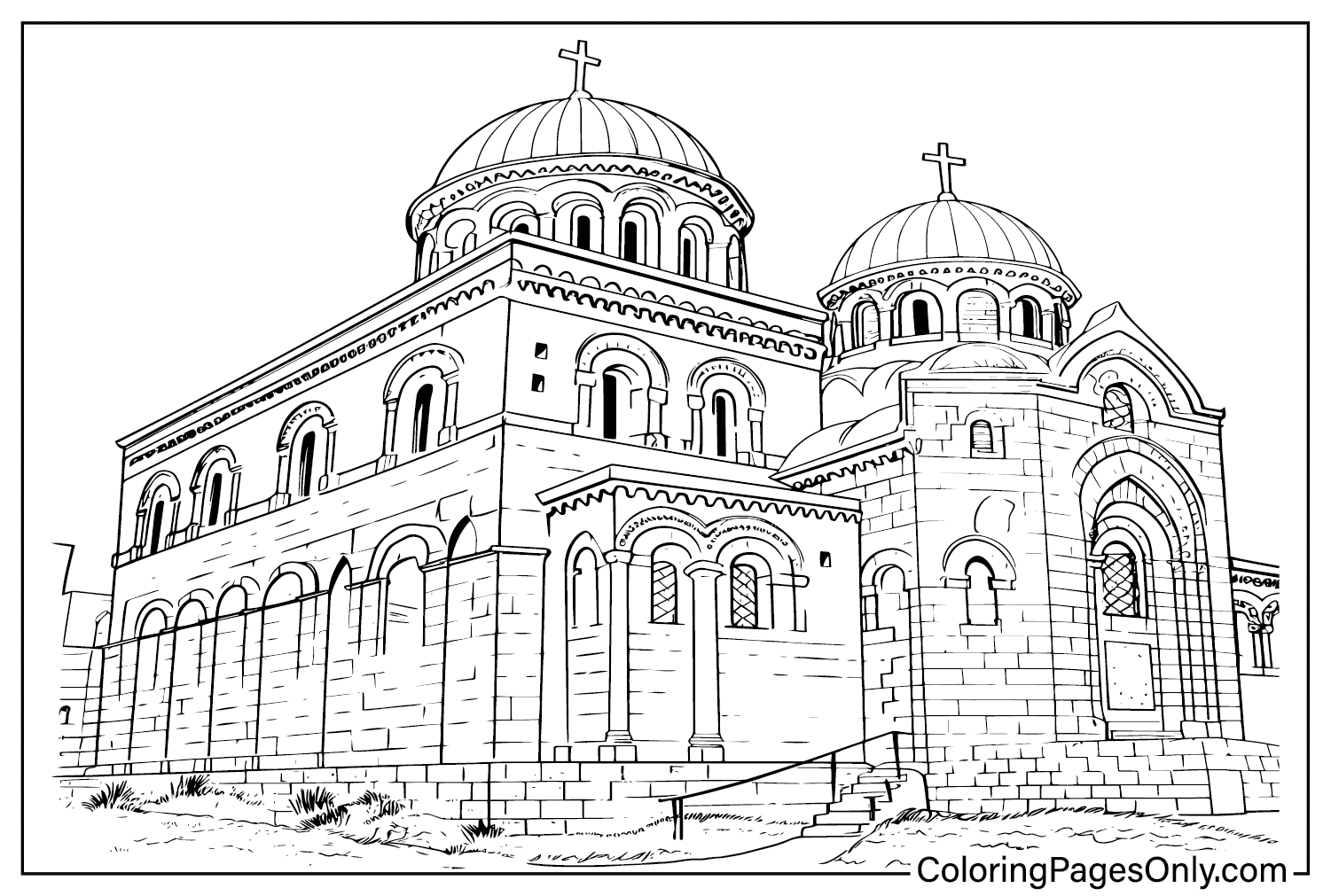
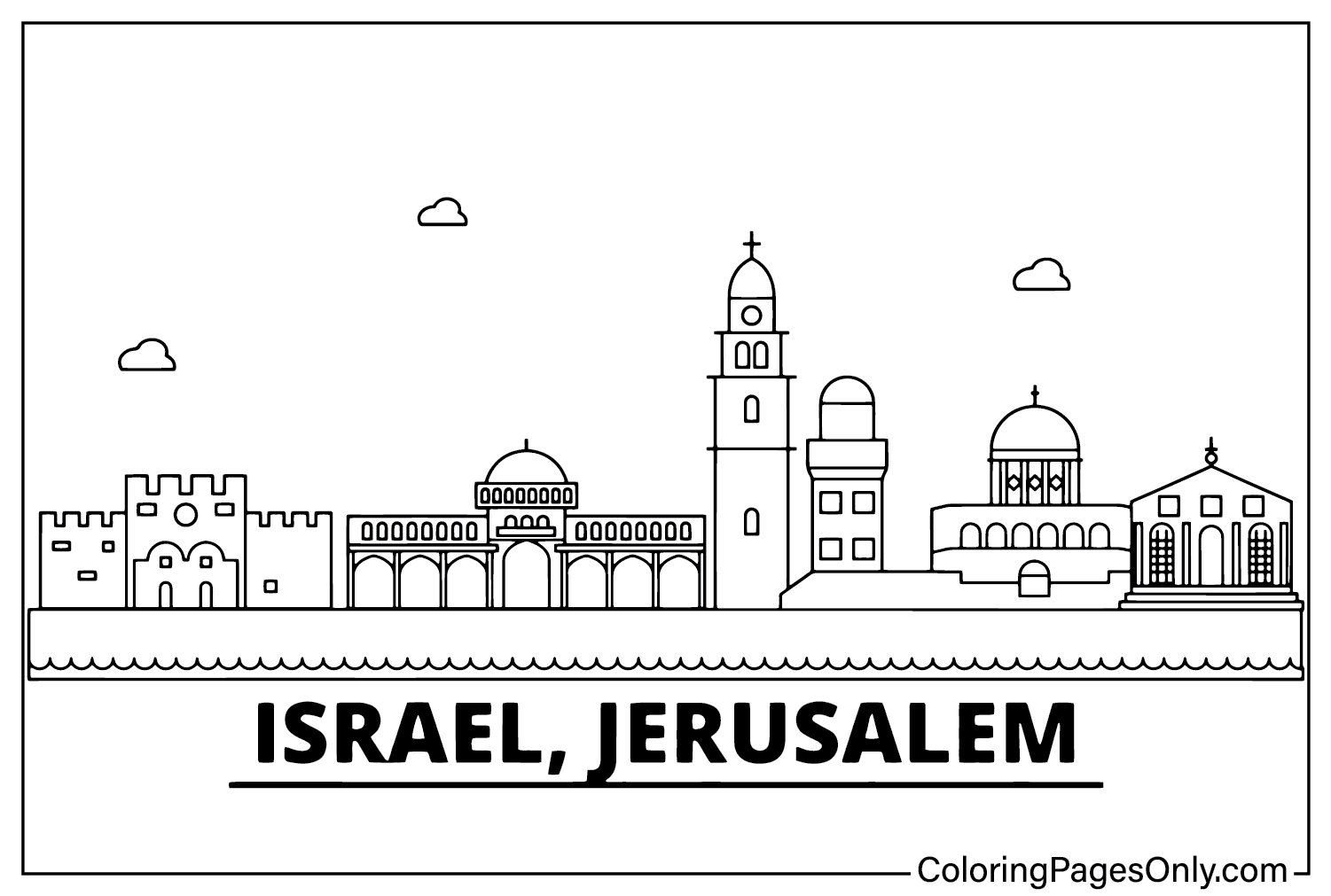
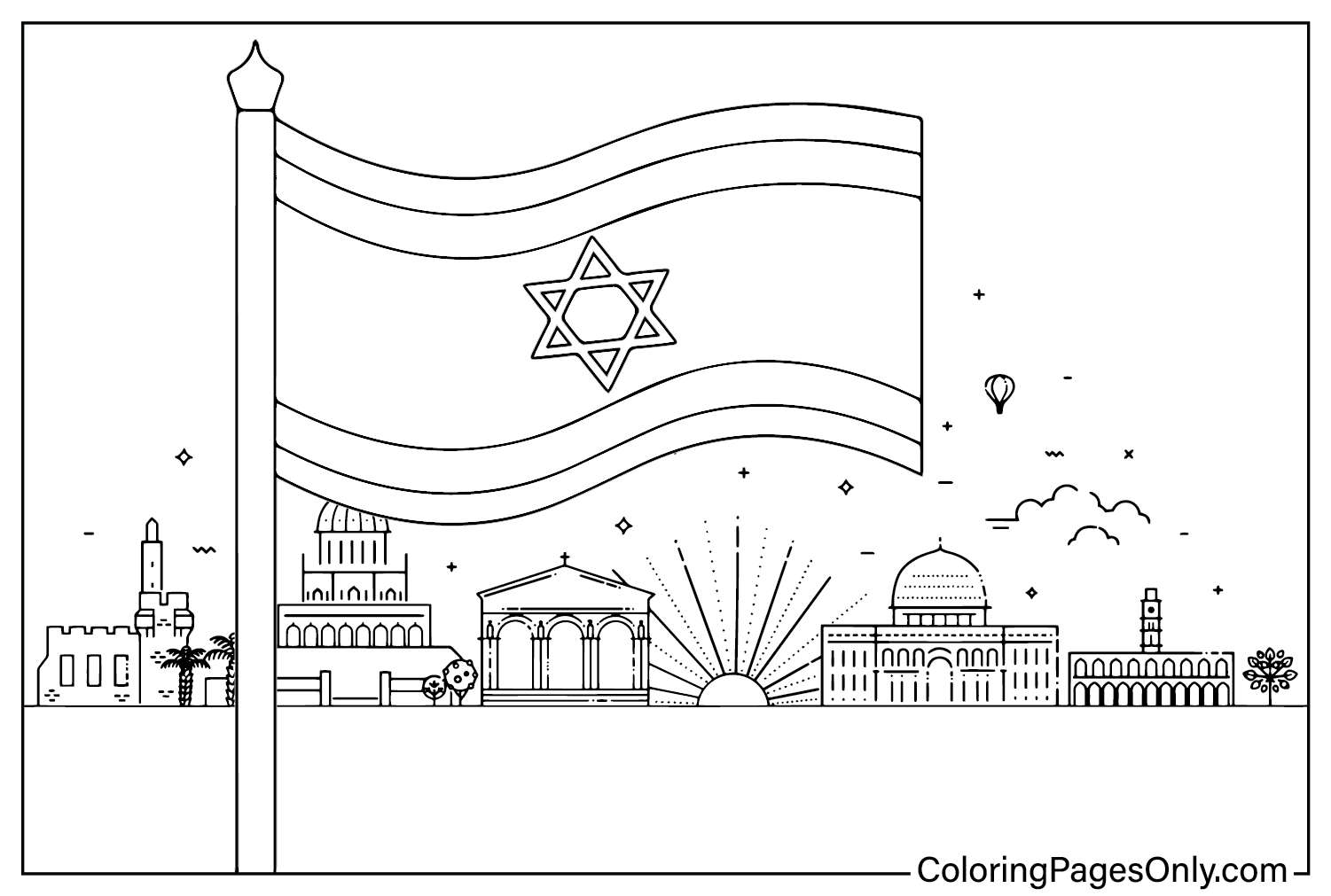
Jerusalem’s Old City is a walled urban area of approximately 1 square kilometer that contains some of the world’s most significant religious and historical sites, all within walking distance of each other. The Old City is divided into four traditional quarters – Jewish, Muslim, Christian, and Armenian – each with its own distinct architecture, street life, and religious atmosphere. The Jerusalem Coloring Page, Jerusalem Israel Coloring Page, Israel Jerusalem Coloring Page, and Family in Old City Jerusalem tiles capture the city’s distinctive visual character: ancient limestone buildings, arched stone gates, narrow flagstone streets, and the skyline defined by domes and minarets.
The Western Wall
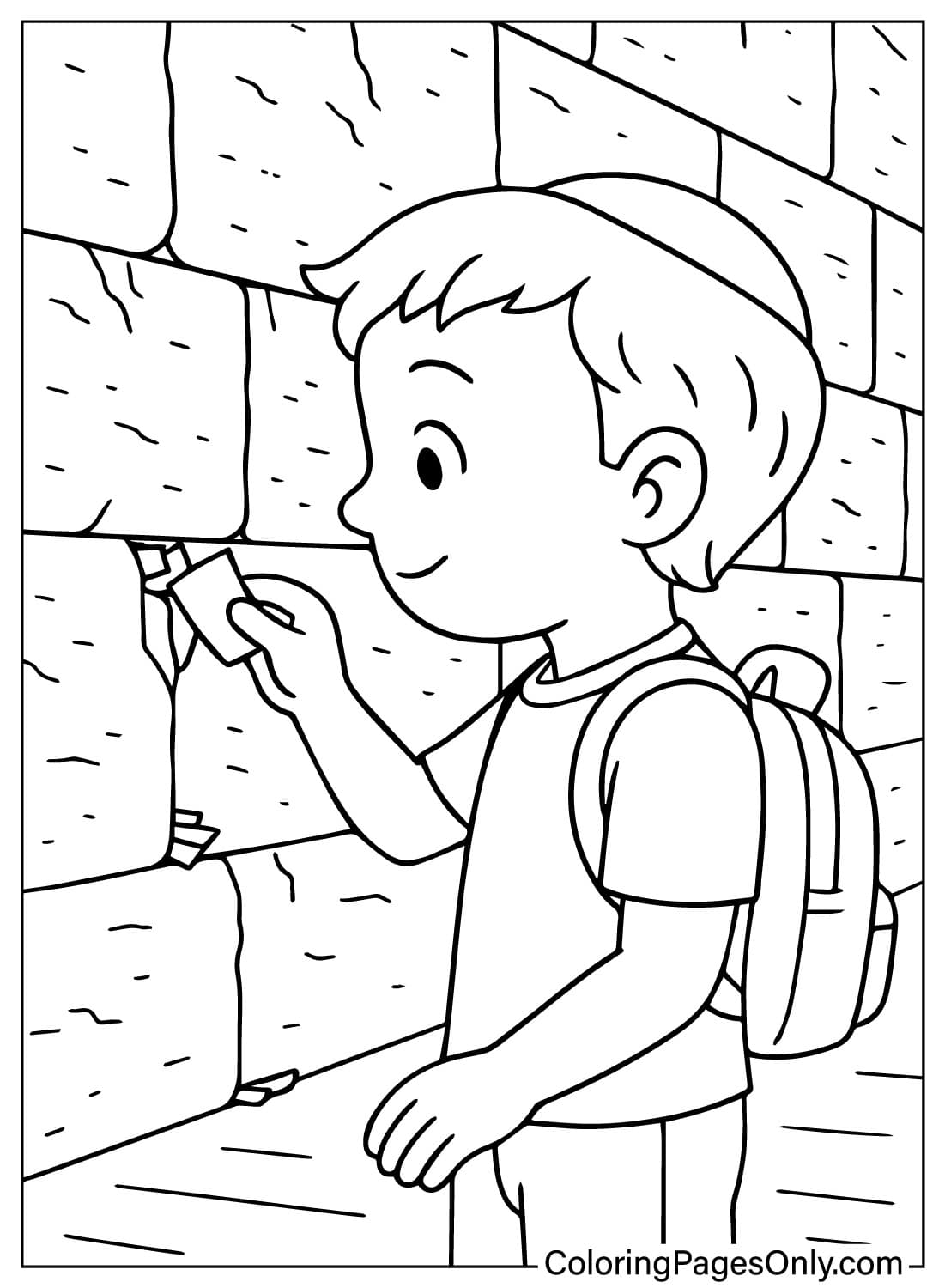
The Western Wall (Ha-Kotel HaMa’aravi in Hebrew) is the most sacred site in Judaism accessible for prayer – a surviving section of the retaining wall built around the Second Temple Mount by King Herod in the first century BCE. The Second Temple itself was destroyed by Rome in 70 CE; the Western Wall is what remains. It stands approximately 19 meters high at the plaza level, built from massive limestone blocks quarried in the Jerusalem hills. Worshippers stand at the Wall to pray, and the tradition of inserting written prayer notes into the Wall’s cracks – depicted in the Boy Praying at Western Wall tile – is practiced by millions of visitors of all faiths annually.
Coloring the Western Wall: Jerusalem limestone has a distinctive warm color – a pale golden-cream with slight honey undertones in direct sunlight, cooling to pale gray in shadow. This color is so characteristic of the city that Jerusalem has an informal regulation requiring exterior walls of buildings in the Old City to be faced with this local stone. For coloring tiles depicting the Wall, a warm cream-tan base with slightly deeper warm gray in the mortar lines between blocks captures the stone’s authentic appearance.
The Dome of the Rock
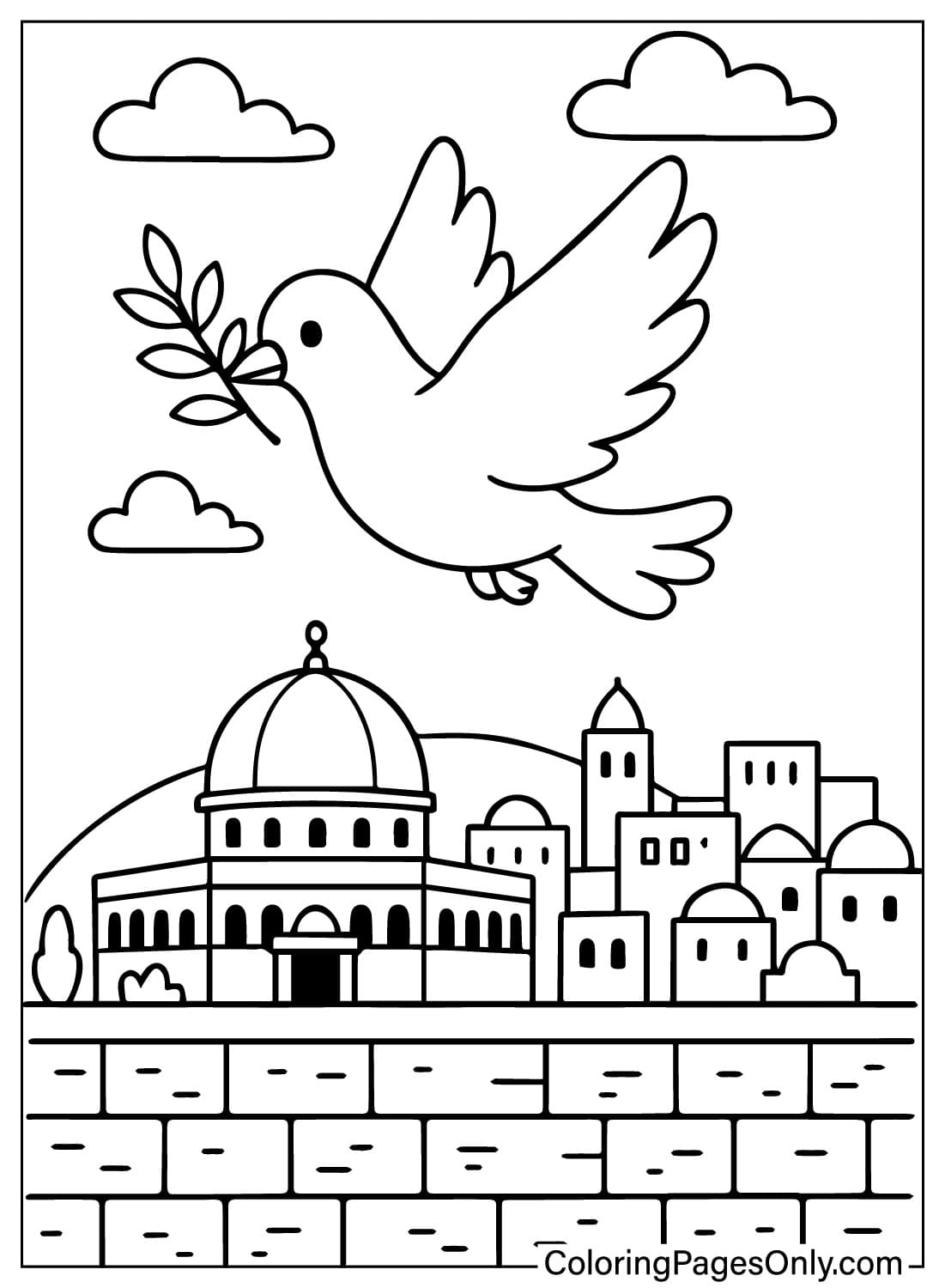
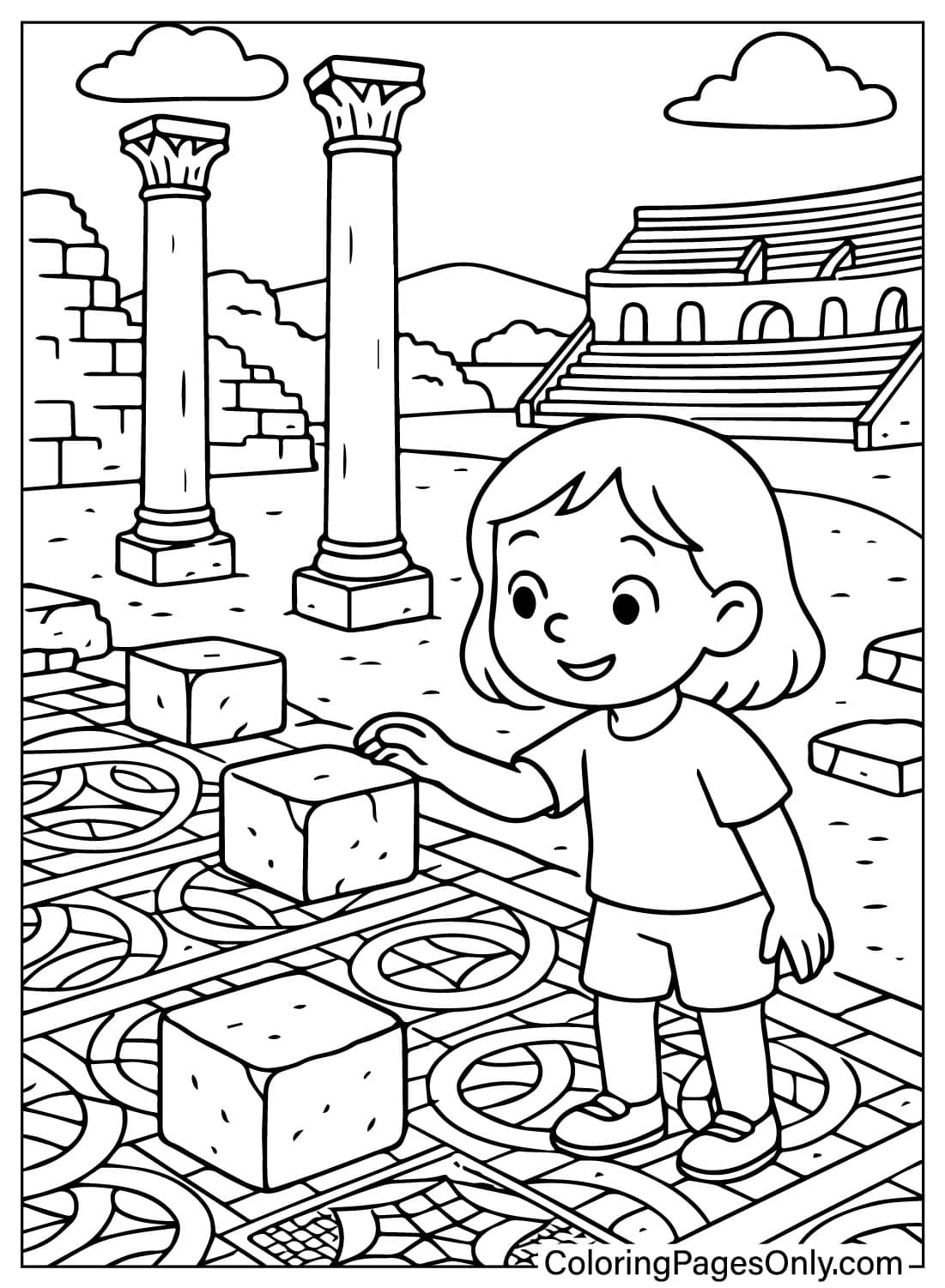
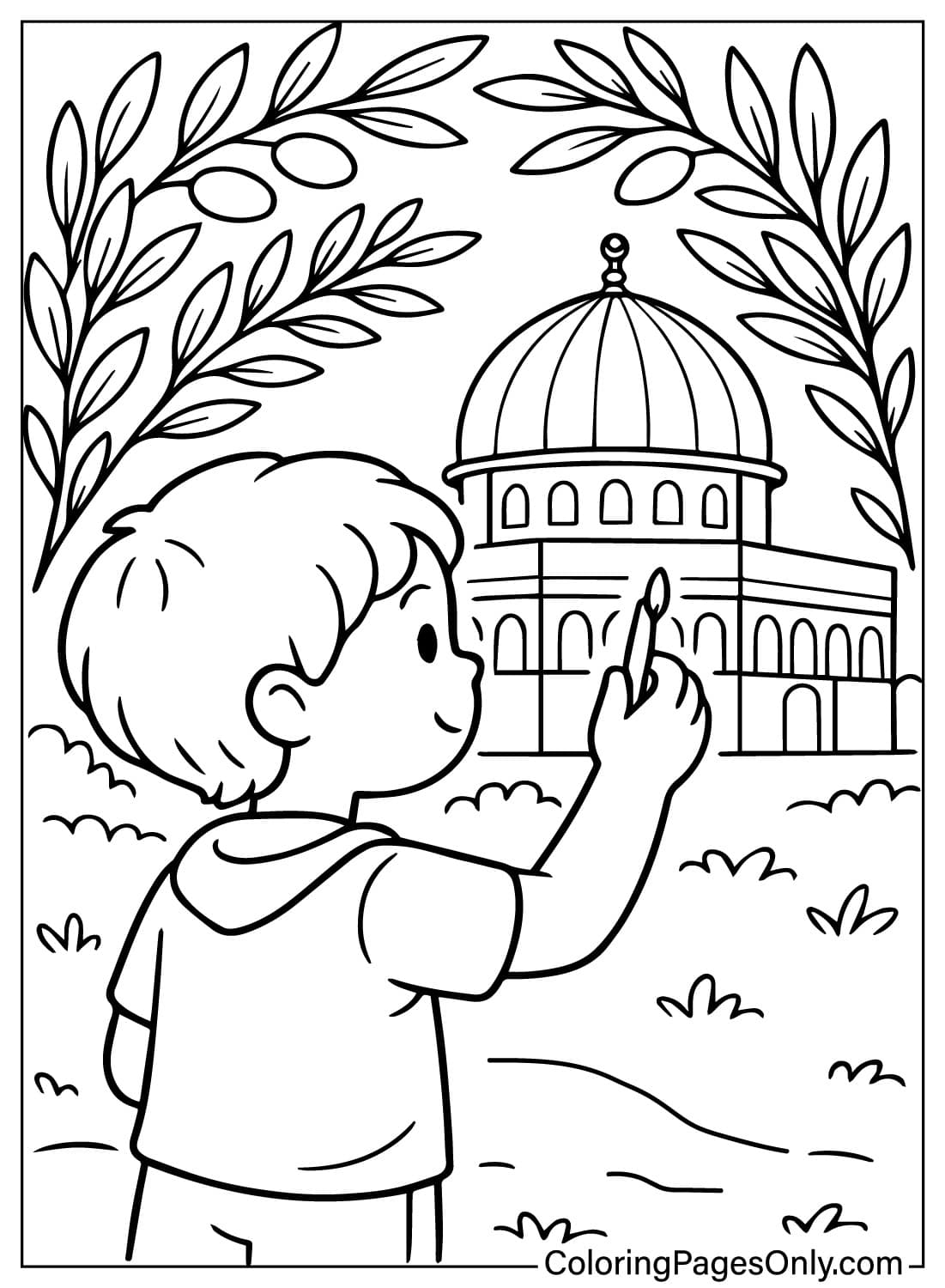
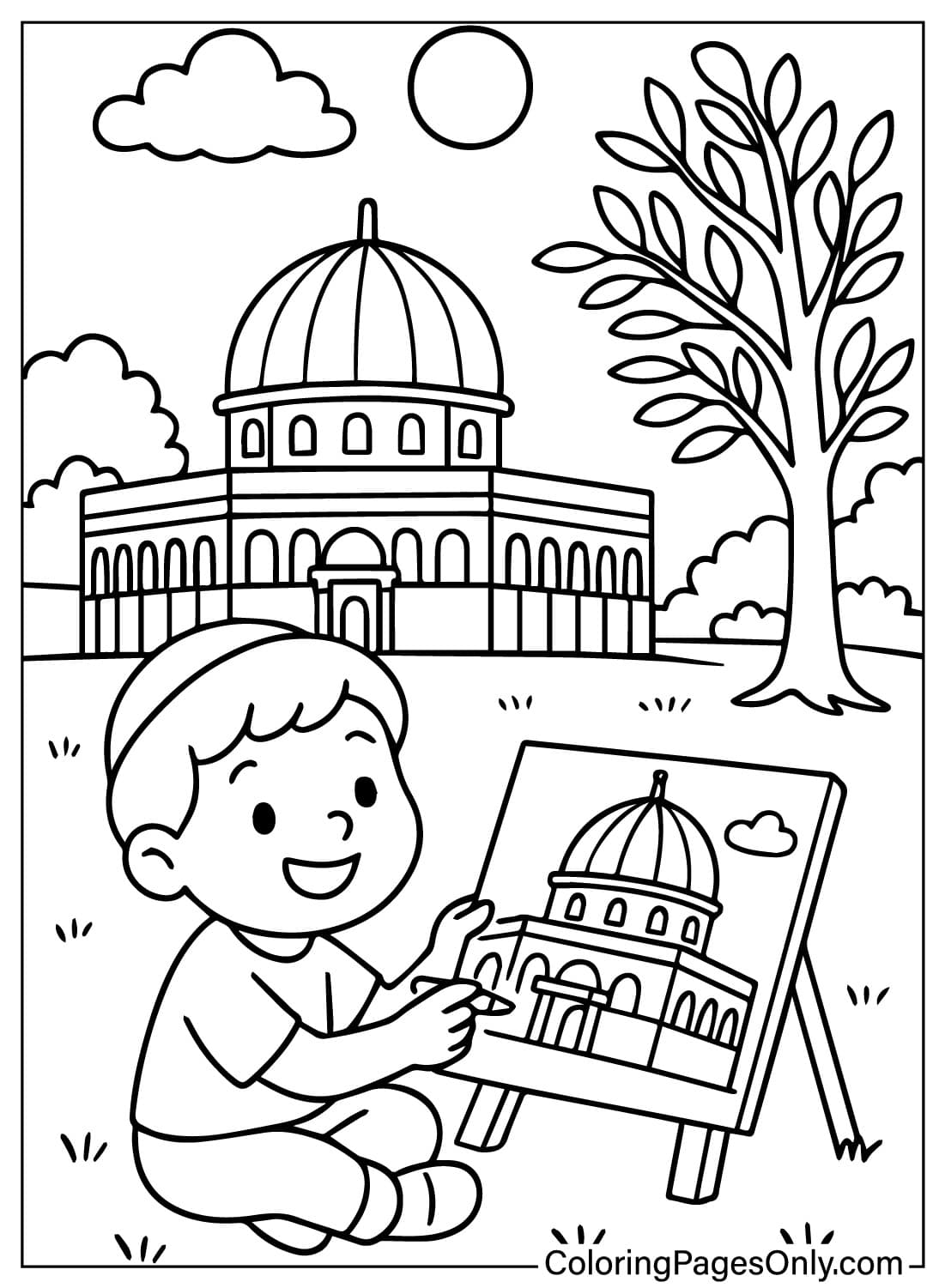
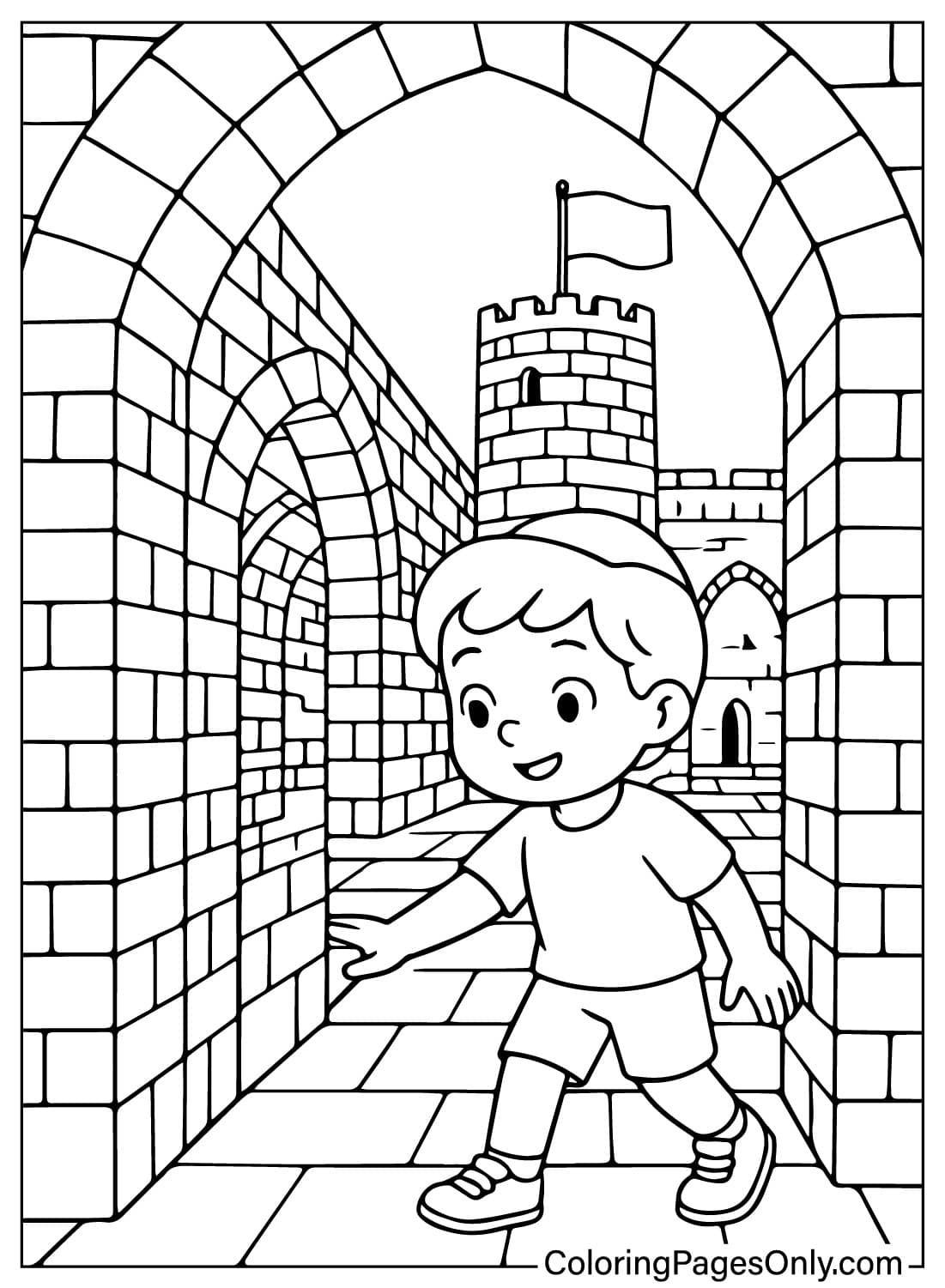
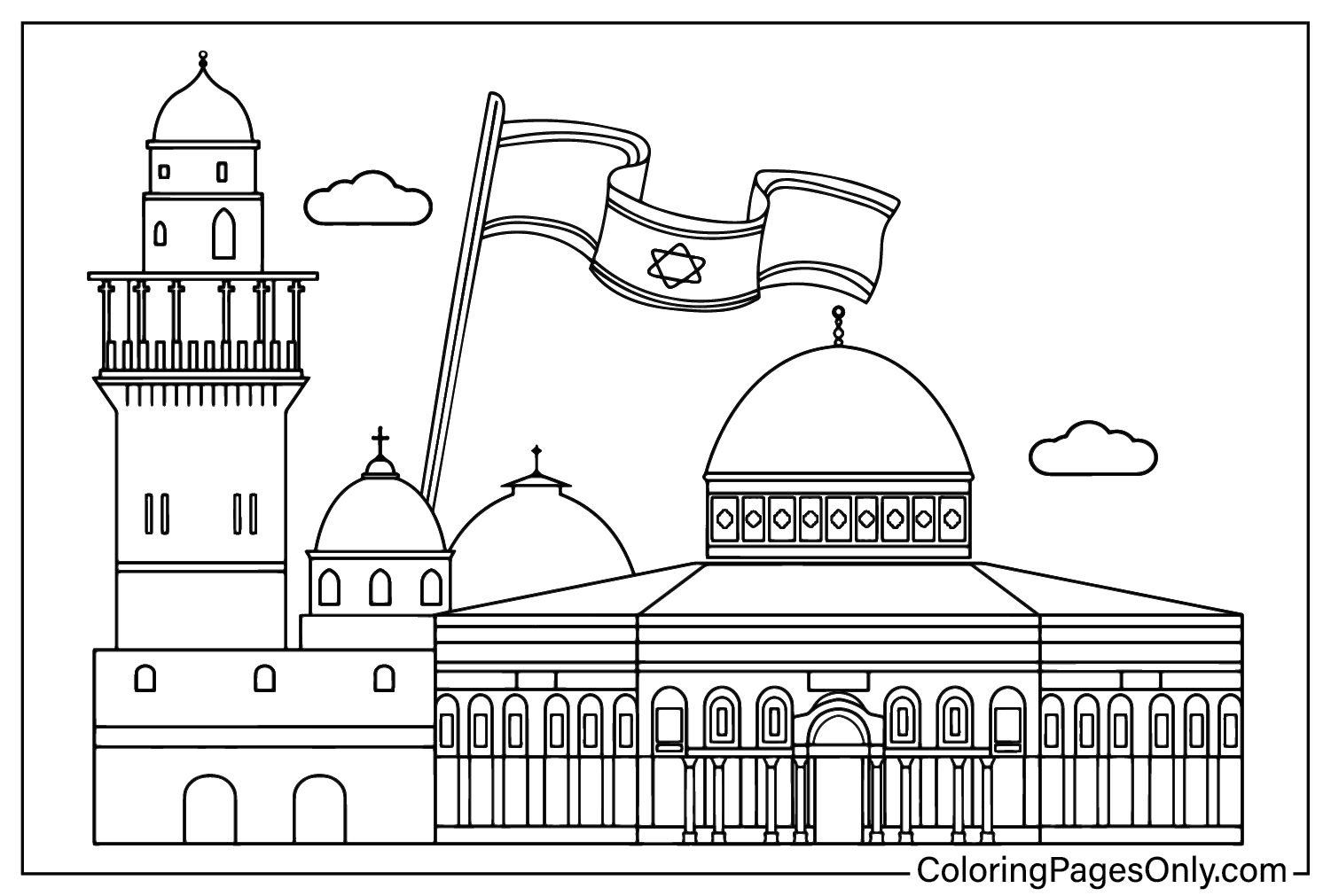
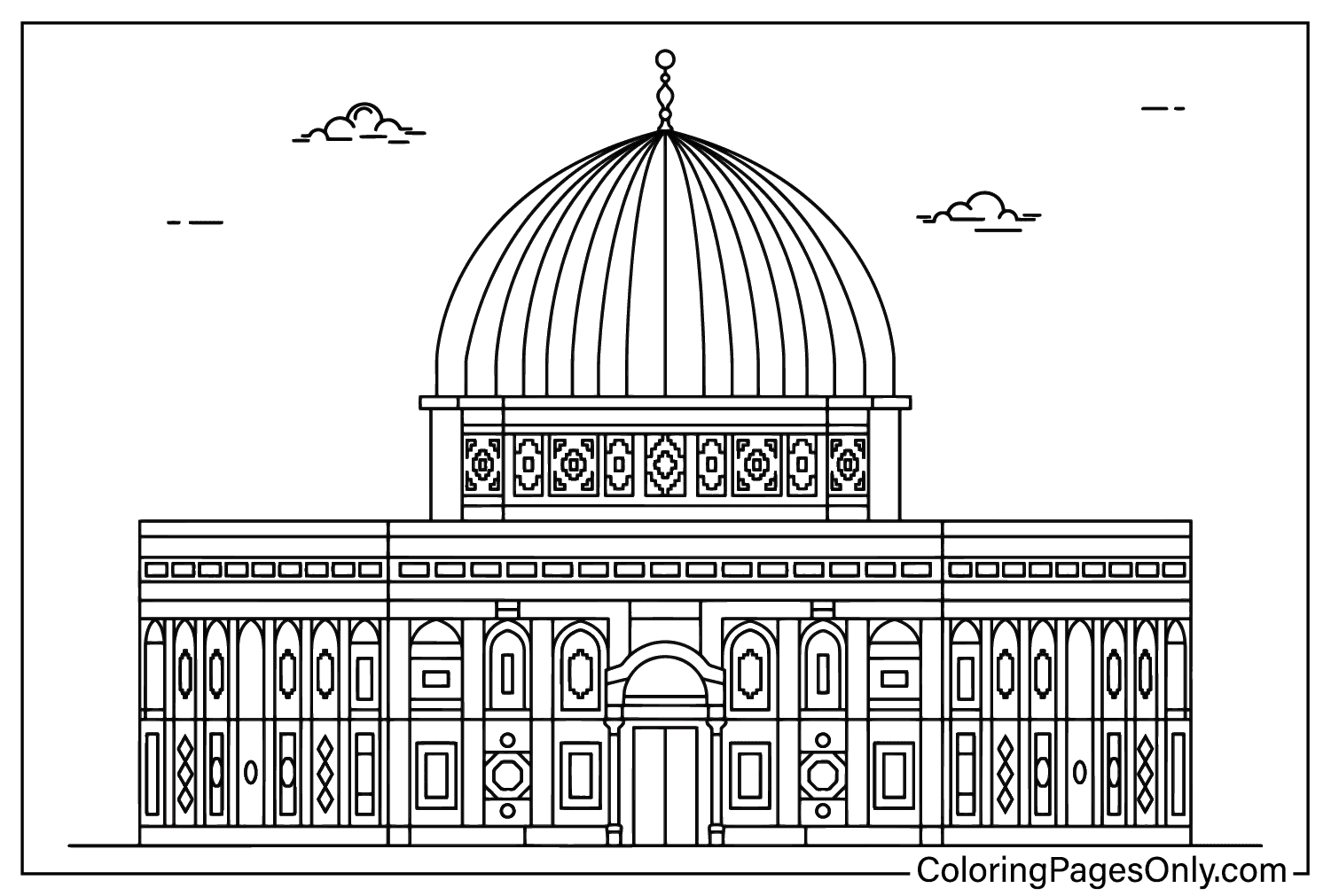
The Dome of the Rock (Qubbat al-Sakhrah) is an Islamic shrine on the Temple Mount in Jerusalem, completed in 691 CE, and is one of the oldest works of Islamic architecture. Its gilded dome – currently covered in gold-leaf-coated aluminum – is the defining element of Jerusalem’s skyline. The structure’s octagonal body is covered in blue and turquoise tilework and white marble, with elaborate geometric and calligraphic inscriptions running in bands around the upper walls. Multiple tiles in this collection depict the Dome of the Rock, including the Dove of Peace over Jerusalem, the Child Painting Dome of the Rock, the Boy Painting Dome of the Rock Outdoors, and the Boy Exploring Ancient Archway.
Coloring the Dome of the Rock: The dome itself is gold – a warm, fully saturated metallic gold rather than dull yellow. The octagonal drum below the dome features rich blue and turquoise tilework in intricate geometric patterns – a combination of cobalt blue and teal-turquoise with white tile accents. The lower walls are pale cream marble. The total color effect – gold dome over blue-and-white decorated walls against a blue sky – is one of the most visually striking architectural compositions in the world.
Masada Fortress
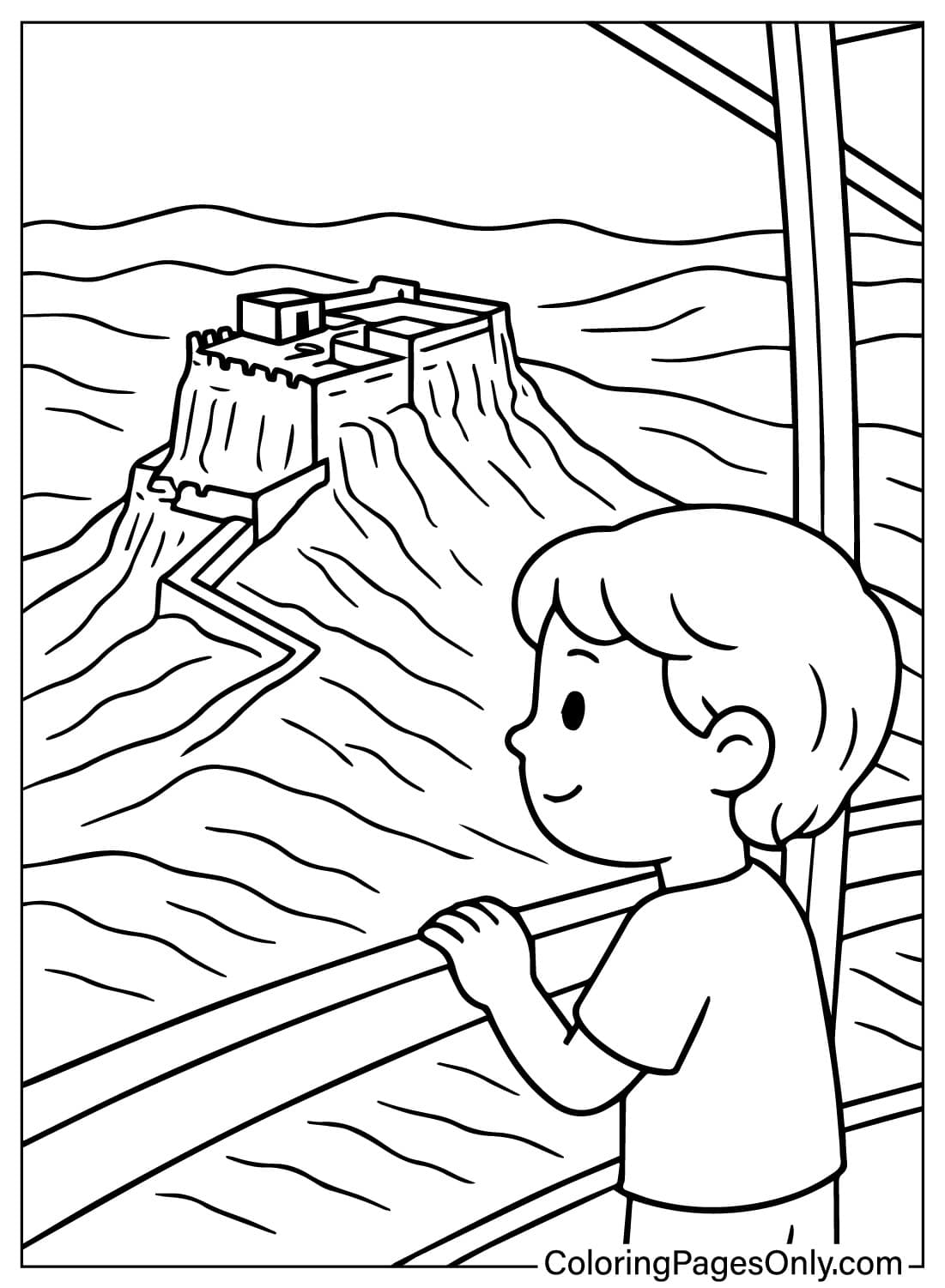
Masada is an ancient fortress complex built atop an isolated rock plateau in the Judean Desert, overlooking the Dead Sea. King Herod built a palace complex there between 37 and 31 BCE; it later became the site of one of the most famous last stands in ancient history, in 73 CE. Masada is a UNESCO World Heritage Site and one of Israel’s most visited archaeological destinations. The Child Looking at Masada Fortress tile depicts a child gazing out from a vantage point at the fortress’s dramatic plateau rising from the desert landscape.
Coloring Masada: The desert landscape around Masada uses a warm, desaturated palette – pale sandy tan for the desert floor, slightly deeper ochre for the rocky hillsides, and the warm golden-beige of the ancient stone walls that have survived two thousand years of desert climate. The Dead Sea in the background appears as a flat, hazy blue with almost no wave texture – the high mineral content gives its surface an unusually smooth, reflective quality.
Bahai Gardens, Haifa
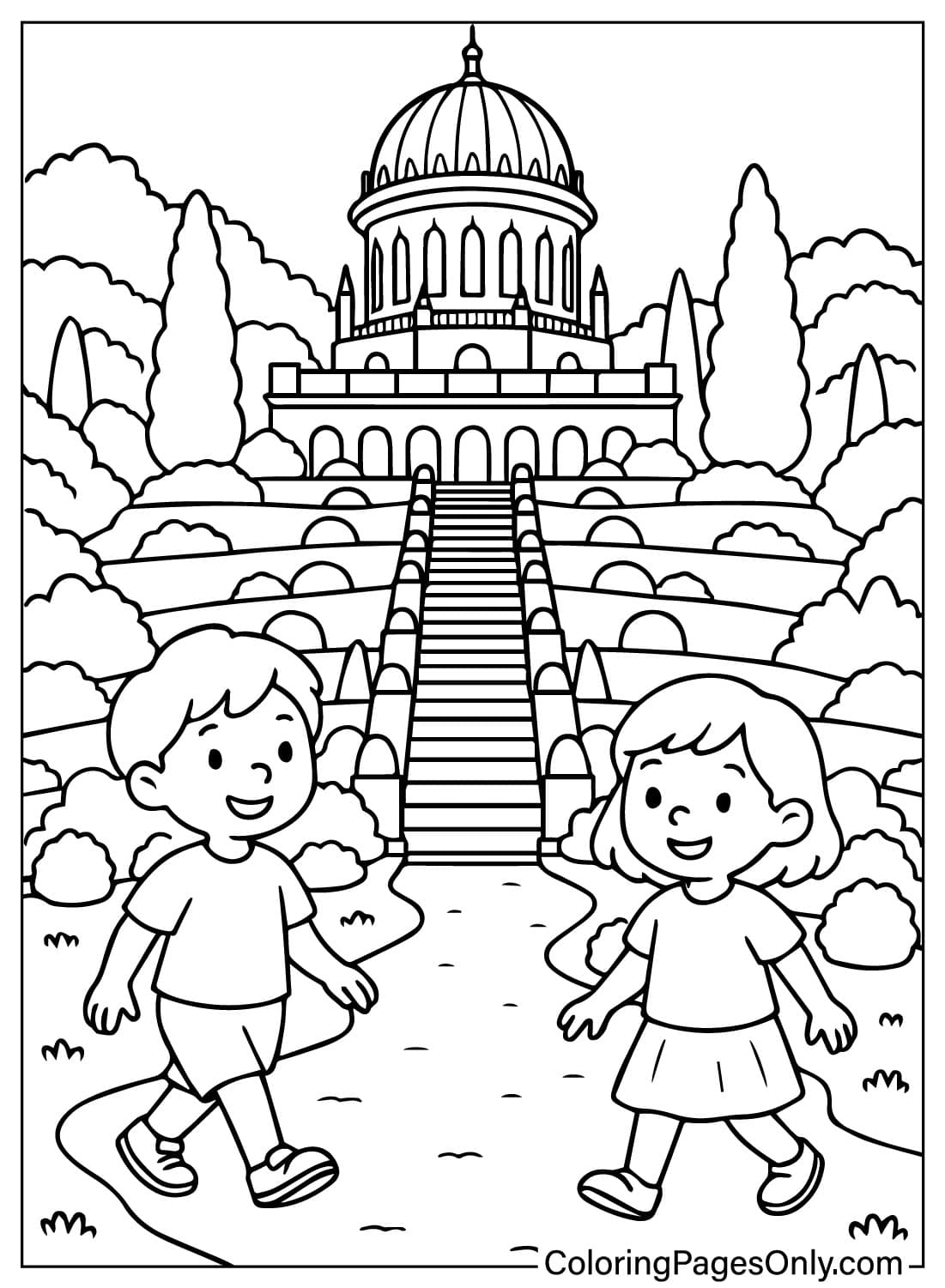
The Bahai Gardens in Haifa (officially the Terraced Gardens of the Bahai Faith) are a UNESCO World Heritage Site and one of Israel’s most visually spectacular modern landmarks. Nineteen terraces of precisely maintained gardens descend the slope of Mount Carmel in a perfectly symmetrical arrangement, centering on the gold-domed Shrine of the Bab. The gardens extend over approximately one kilometer of the mountain’s slope. The Children at Bahai Gardens Haifa tile depicts two children in front of the grand terraced arrangement.
Coloring the Bahai Gardens: The gardens are maintained in vivid, formally arranged plantings – the hedges are clipped to geometric precision, the flower beds are symmetrically arranged, and the stairways are flanked by carefully maintained lawns. The gold dome of the Shrine at the center matches the warm gold of the Dome of the Rock.
Jewish Cultural Traditions in This Collection
Shabbat
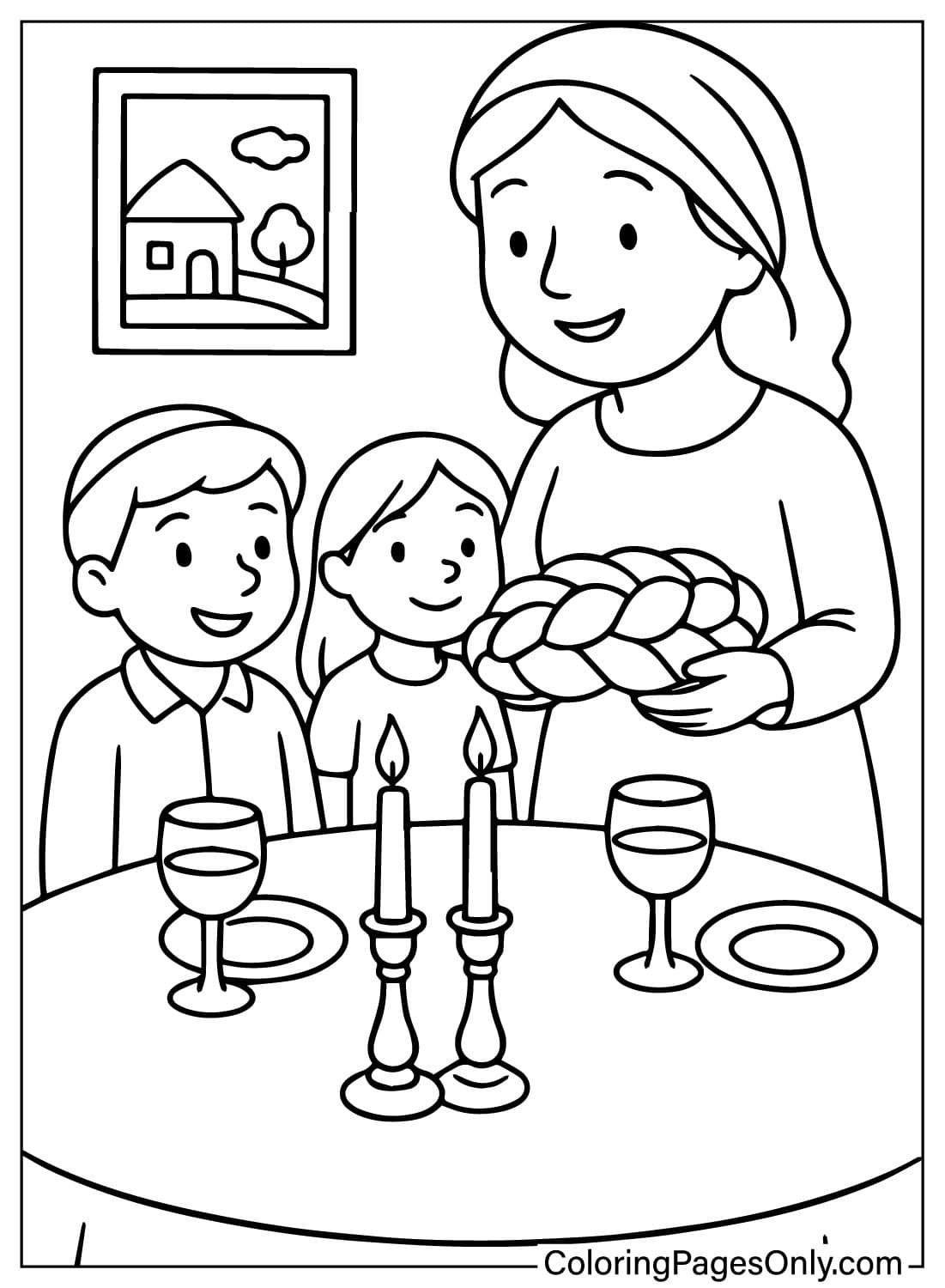
Shabbat (the Jewish Sabbath) is the weekly day of rest observed from Friday evening to Saturday night. The Shabbat table is set with two challah loaves (braided egg bread), candles, and a cup of wine. The Family Shabbat Dinner tile depicts a family gathered around a table with challah, lit candles, and wine glasses – the three central elements of the Shabbat table setting.
Coloring Shabbat elements: Challah bread is a deep golden-brown on the braided exterior – the characteristic dark color from an egg-wash glaze applied before baking – with a warm golden-yellow interior visible at any cut edge. Shabbat candles produce a warm, yellowish flame. The wine cup typically holds red wine – a deep burgundy-red.
Hanukkah
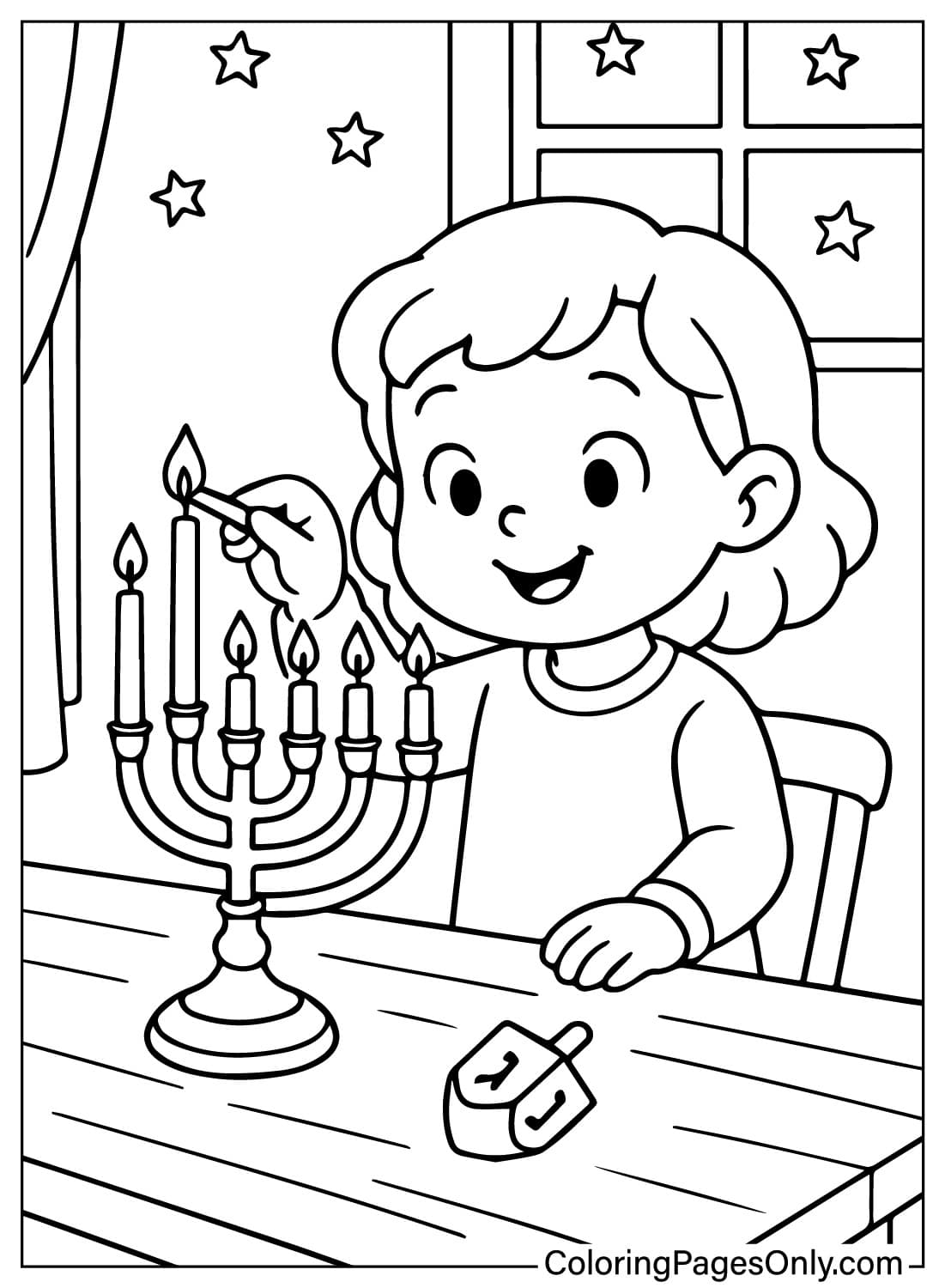
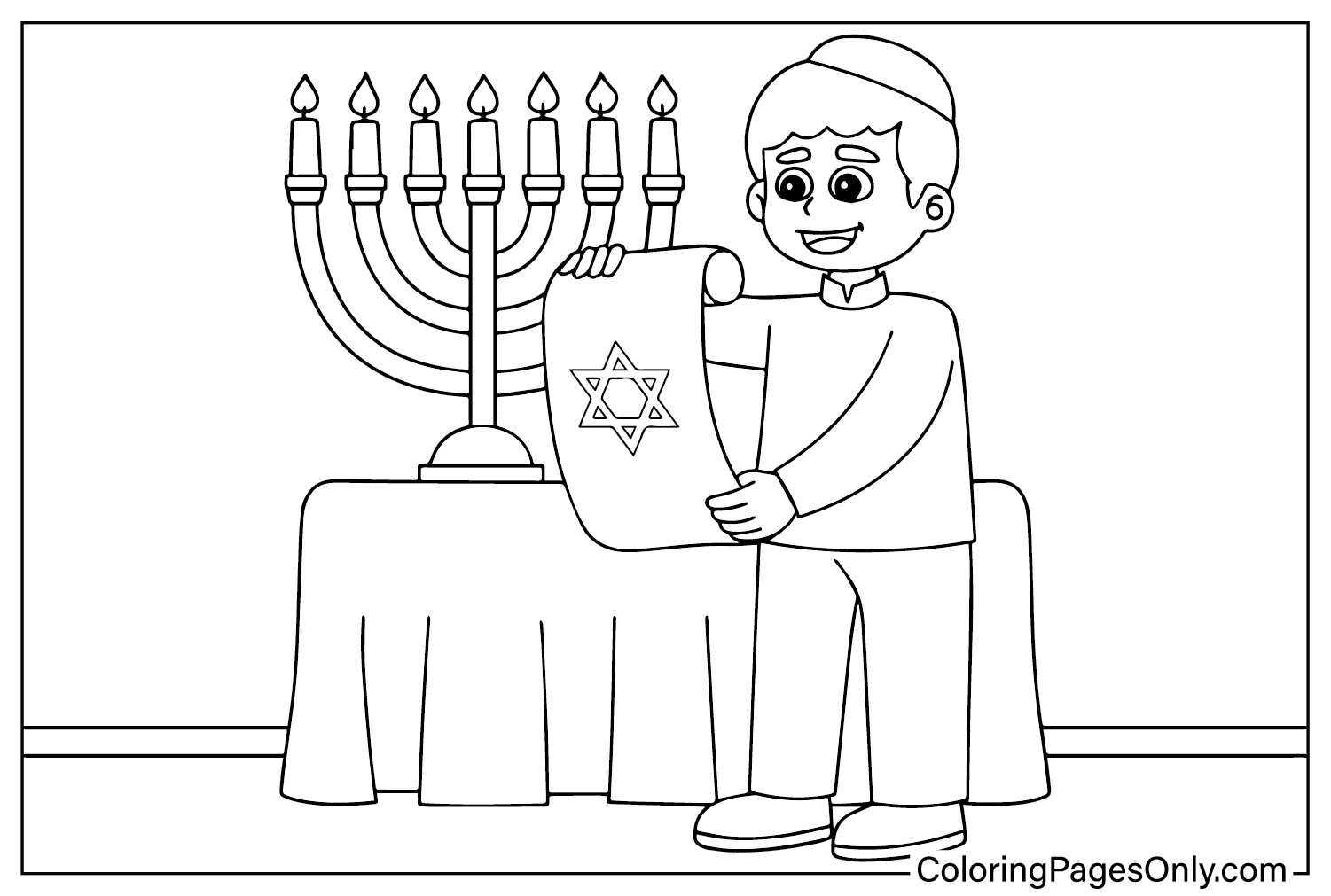
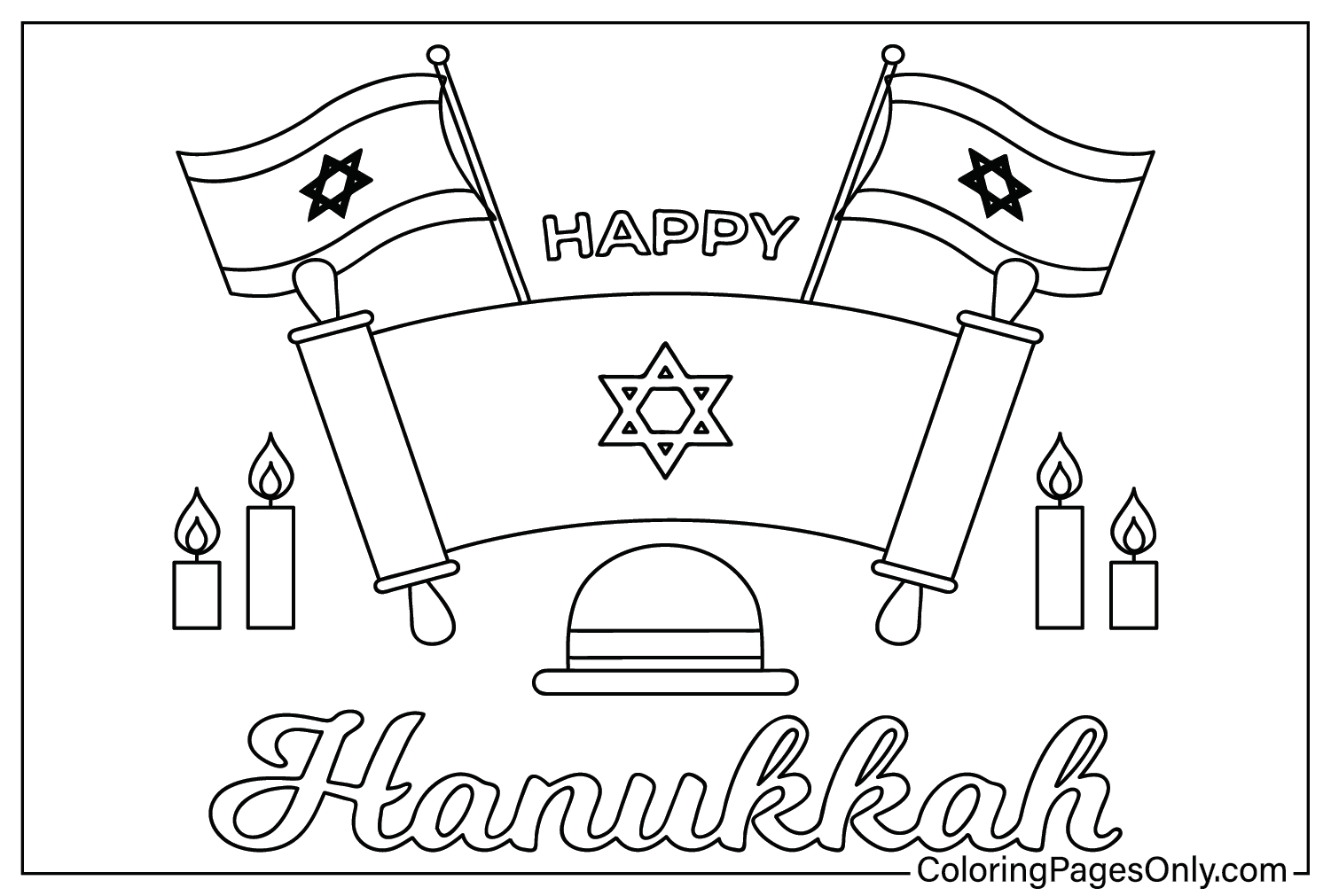
Hanukkah is an eight-day Jewish festival of lights, celebrated with the lighting of the menorah (specifically the Hanukkah menorah, called a chanukiah) – a nine-branched candelabrum with one candle lit on the first night and an additional candle added each subsequent night. The Happy Hanukkah Coloring Page and Girl Lighting Menorah tiles cover this holiday. Hanukkah is also associated with the dreidel – a four-sided spinning top used in a traditional game – depicted alongside the menorah in the Girl Lighting Menorah tile.
Coloring Hanukkah elements: Traditional menorahs are made of silver or gold metal. Blue and white are Hanukkah’s associated colors, echoing the colors of the Israeli flag. The dreidel is traditionally a simple wooden or plastic top – any color is appropriate, but blue, white, and silver are most associated with the holiday’s visual tradition. Hanukkah gelt (gold foil-wrapped chocolate coins) adds warm gold accents.
Torah Study
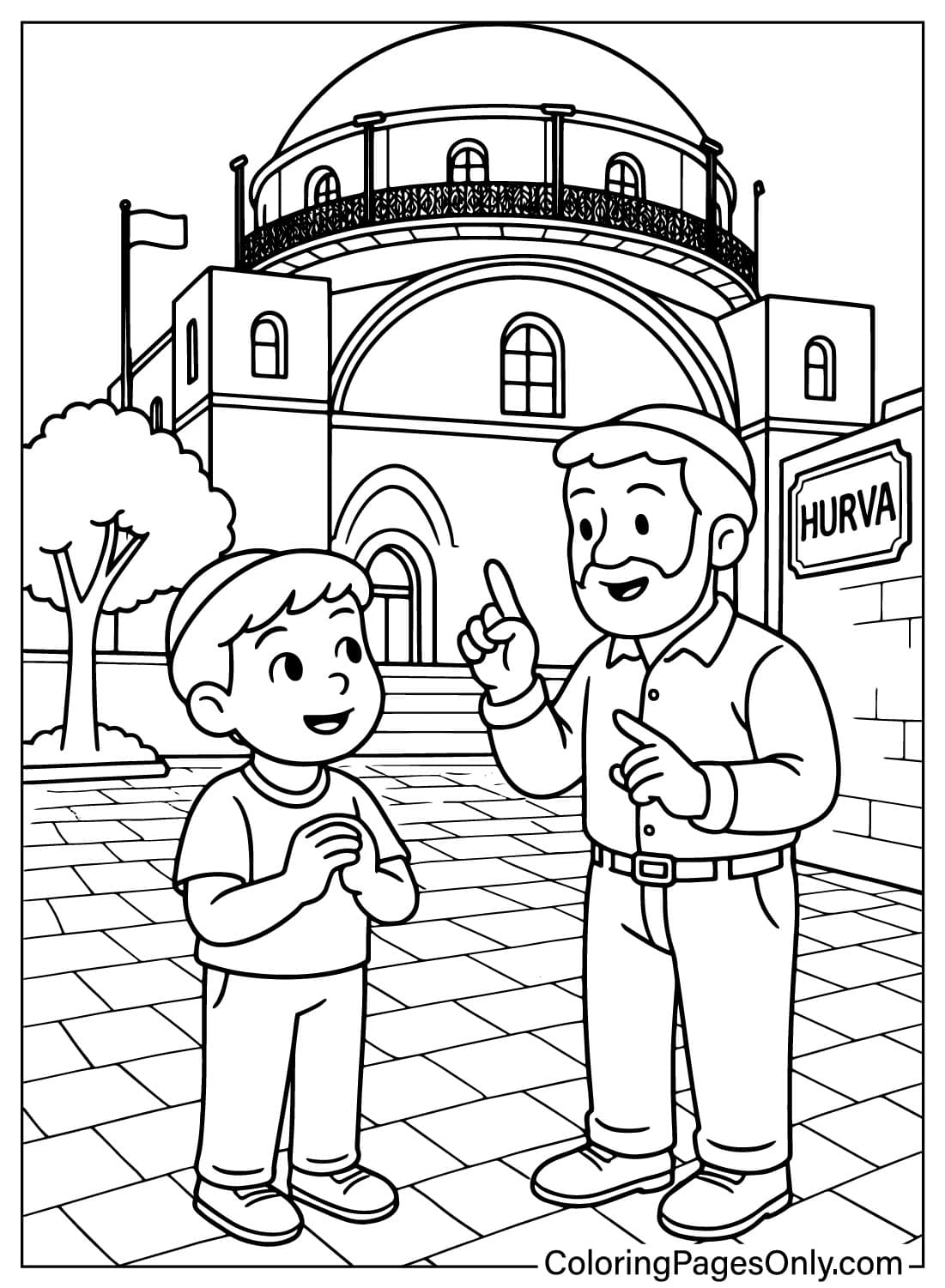
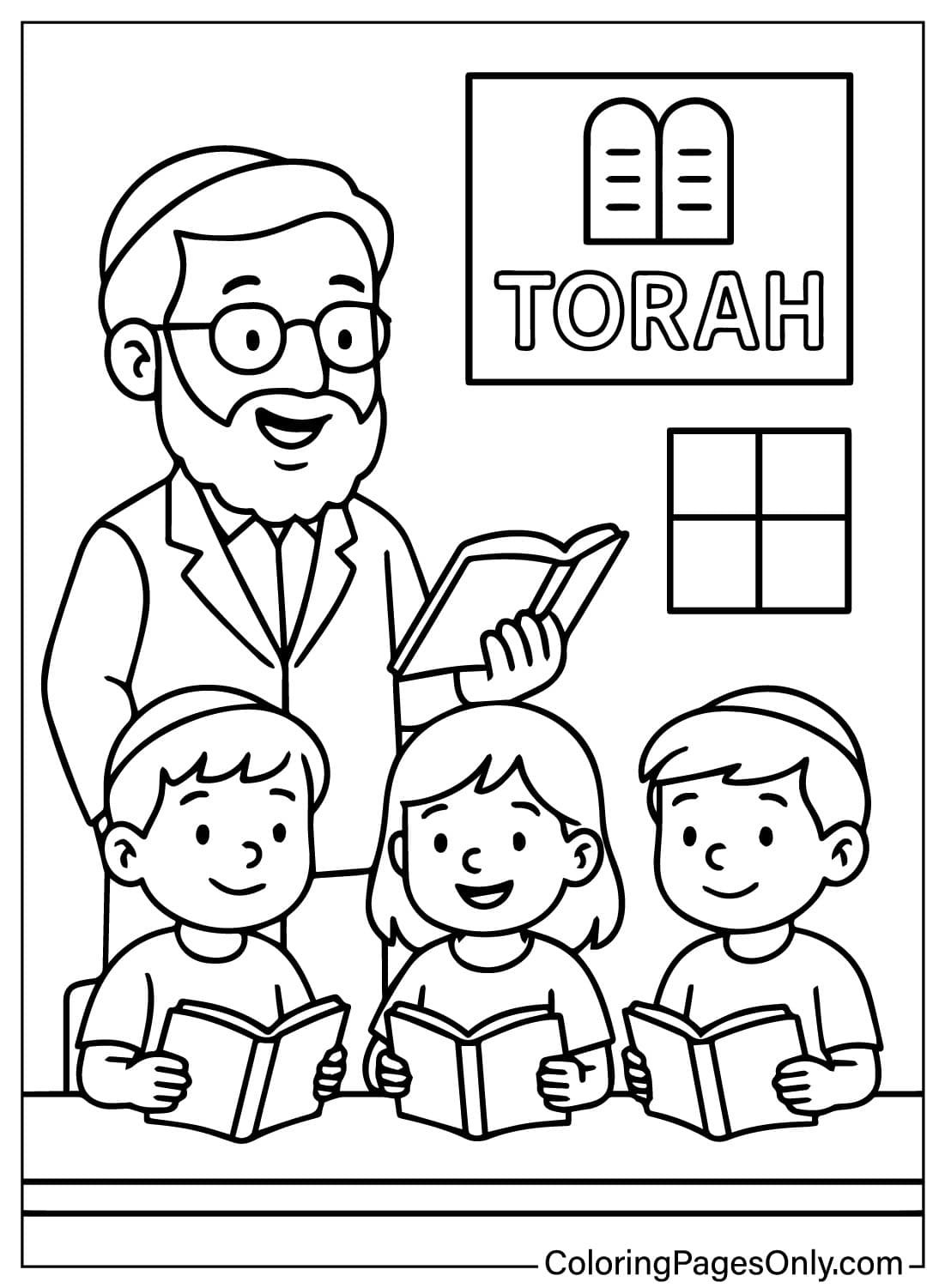
The Torah is the central text of Judaism – the first five books of Moses, handwritten on parchment scrolls and housed in an embroidered or velvet cover with silver ornaments when not in use. Rabbi Teaching Torah to Children and Rabbi and Boy at Hurva Synagogue depict the tradition of Torah study and religious education. The Hurva Synagogue depicted in the second tile is one of Jerusalem’s most historically significant synagogues, rebuilt and reopened in 2010.
Challah and Matzo
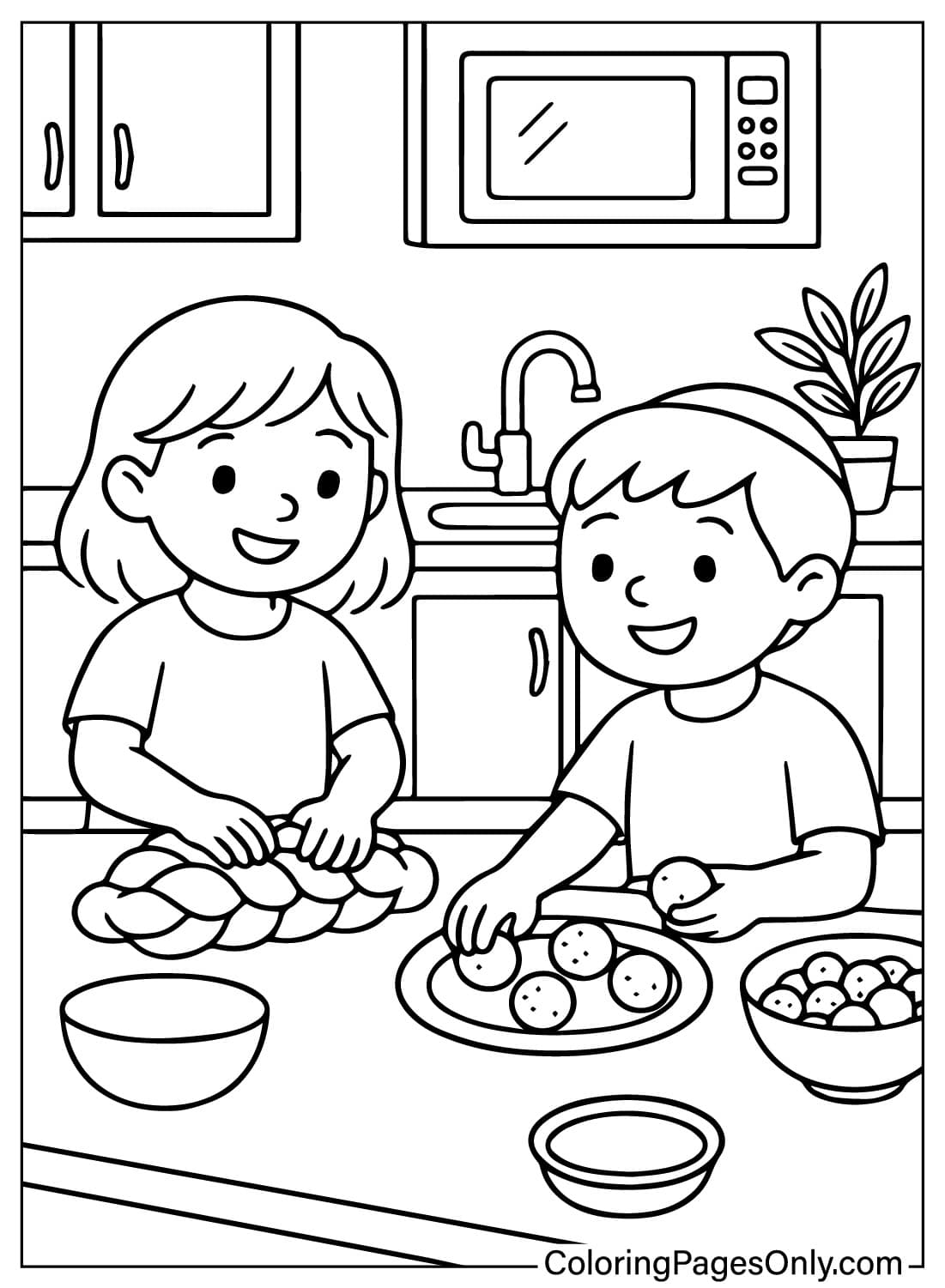
Kids Preparing Challah and Matzo Balls depicts two children engaged in traditional food preparation – challah braiding and matzo ball making. Challah is the braided egg bread central to Shabbat and holiday celebrations. Matzo balls are dumplings made from matzo meal (ground unleavened cracker), typically served in chicken broth during Passover.
Shalom and Peace Symbols
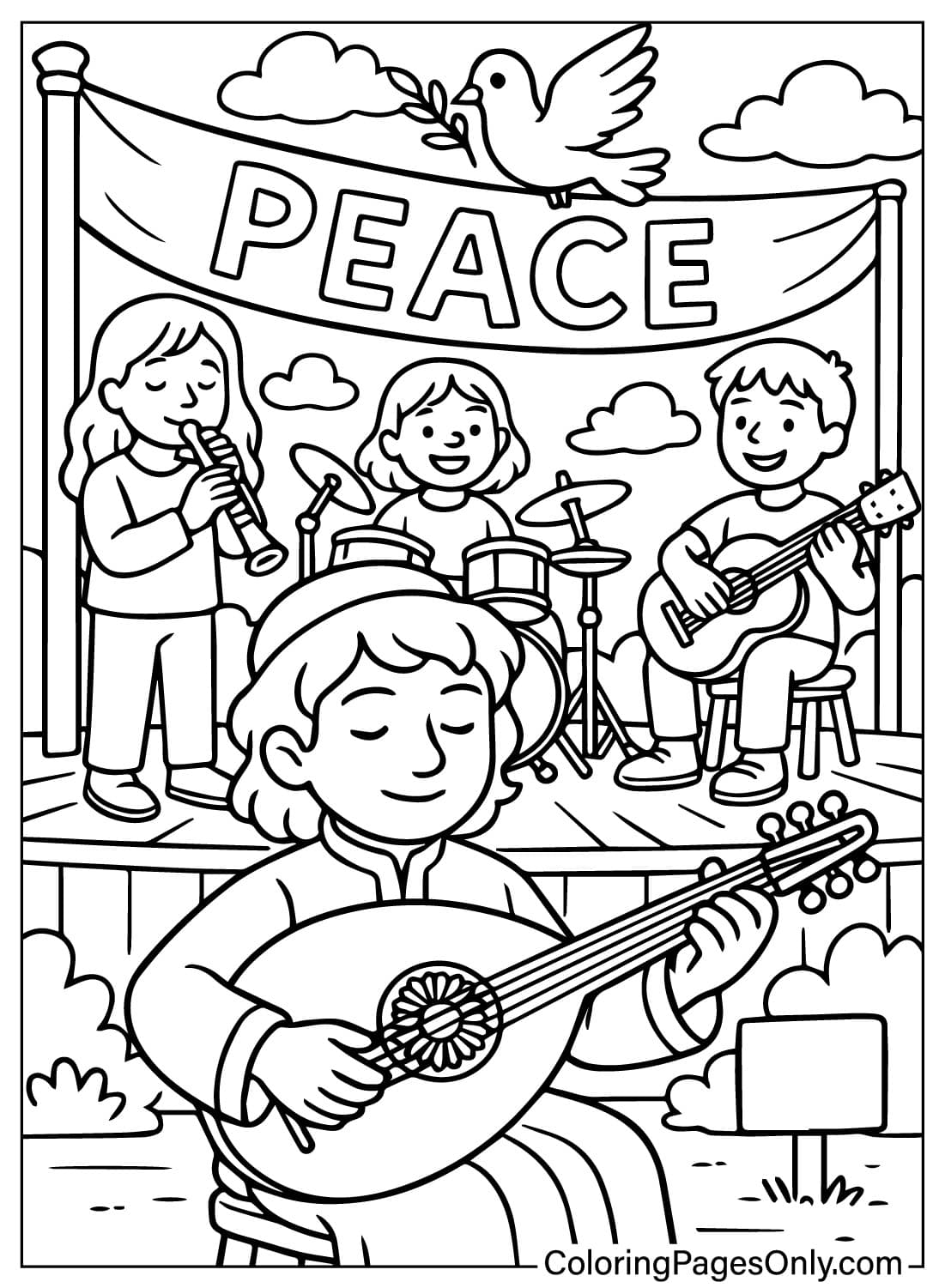
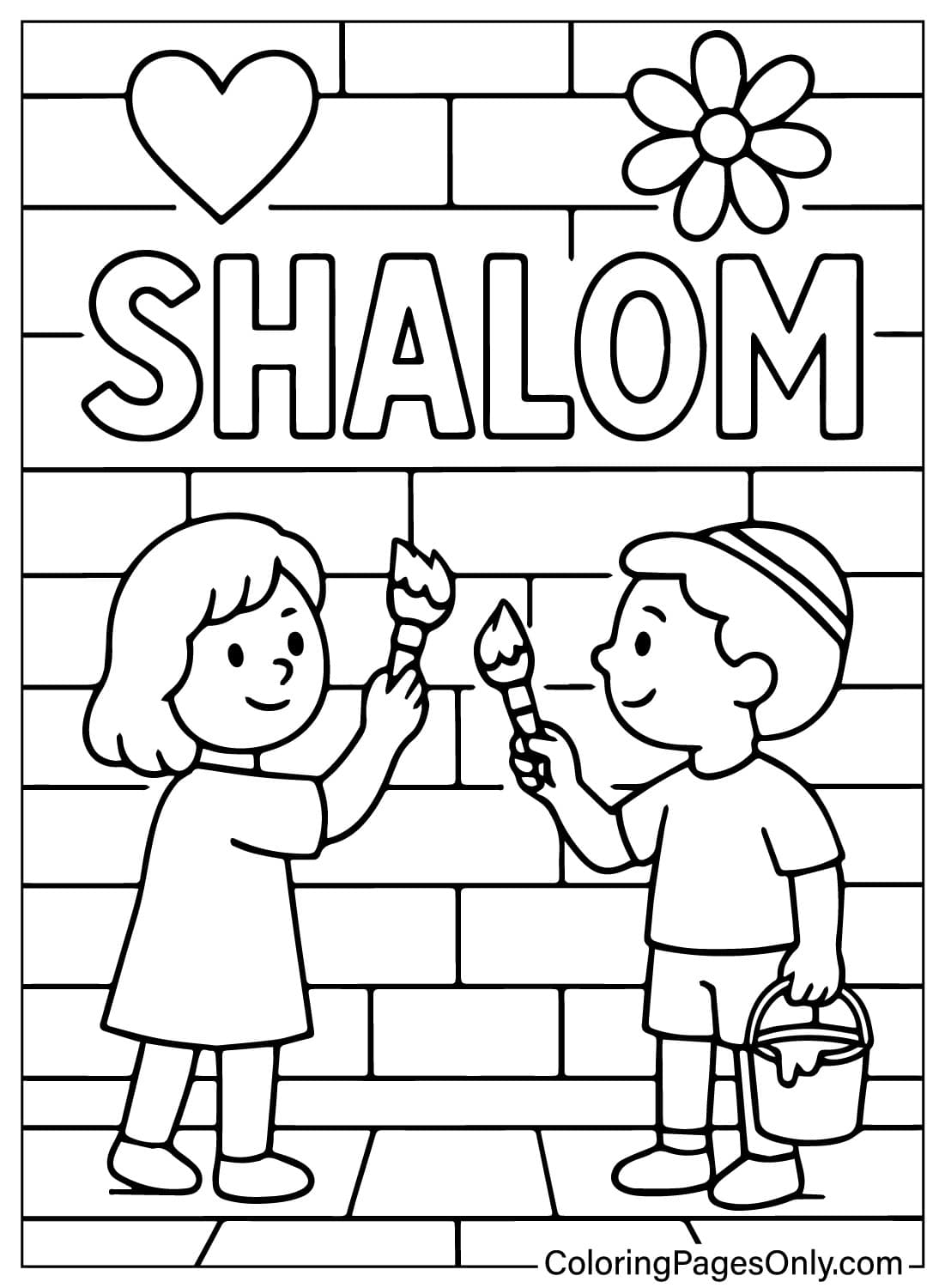
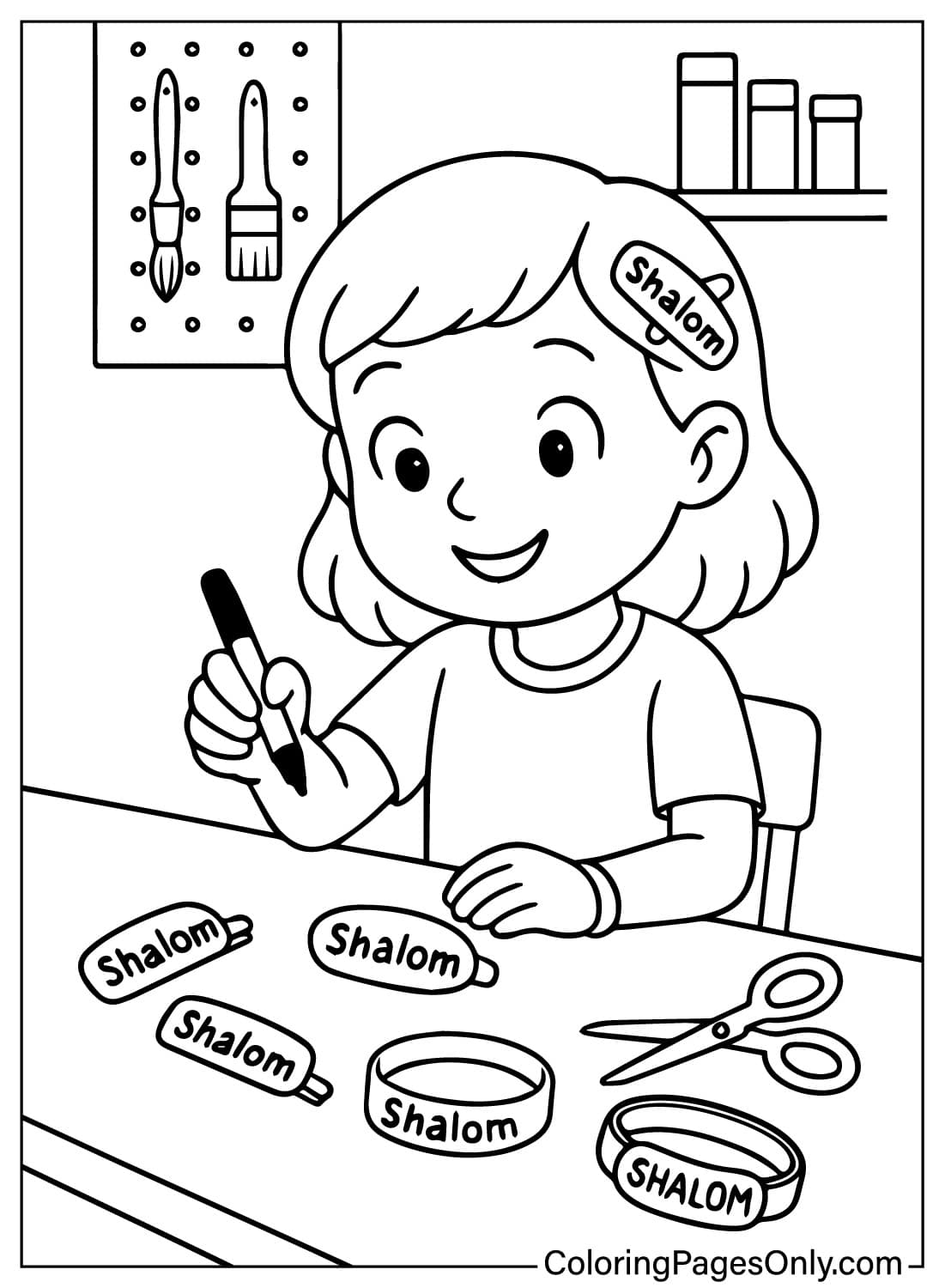
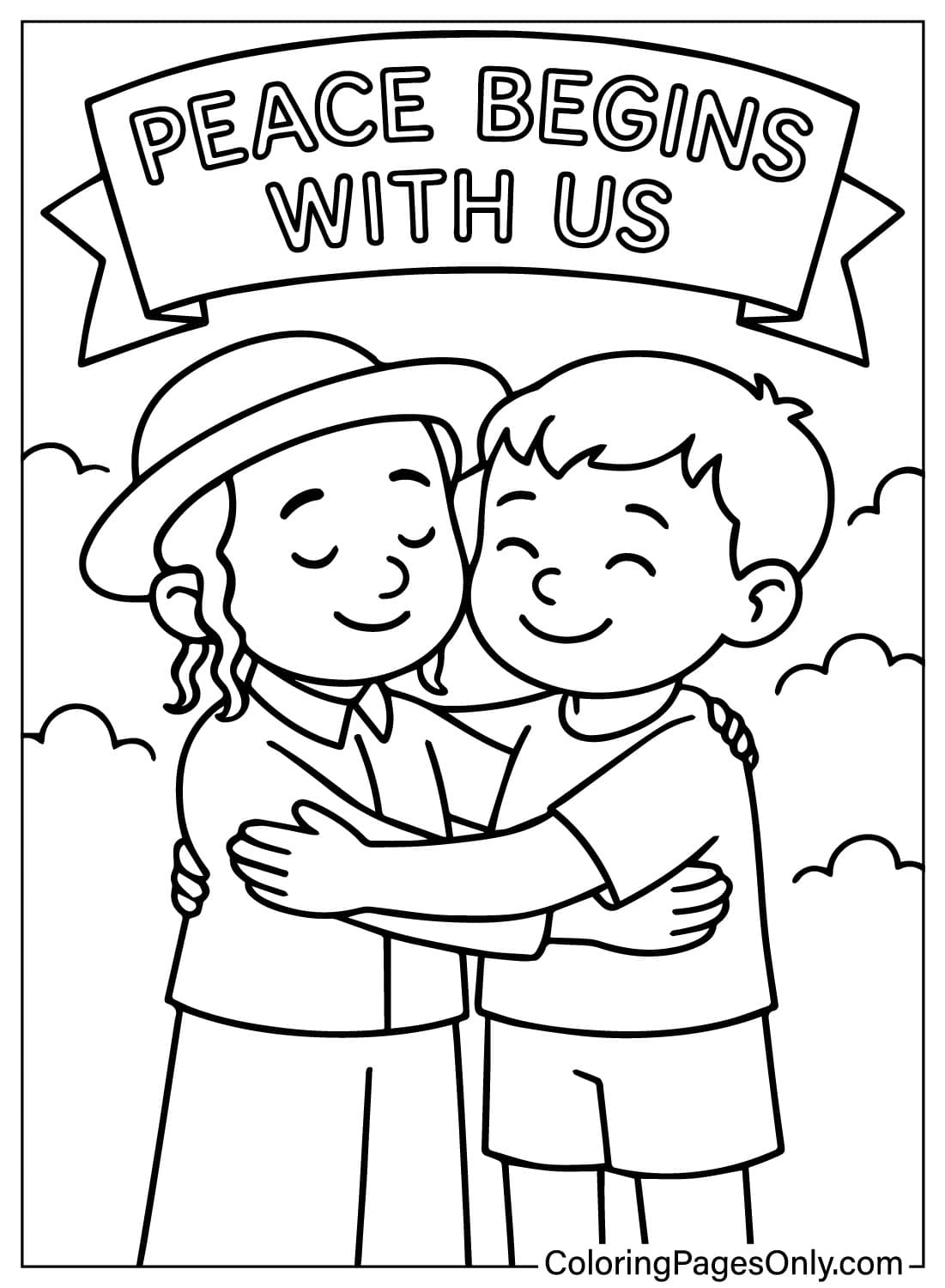
Shalom (שָׁלוֹם) is the Hebrew word for peace, completeness, and well-being – used as both a greeting and a farewell. The Kids Painting Shalom on Wall, Girl Writing Shalom, and Children Embracing for Peace tiles all center on this word and its visual expression. The Dove of Peace – a white dove carrying an olive branch – is a universal peace symbol with particularly deep roots in the Hebrew Bible (Genesis, the dove sent out from Noah’s ark returning with an olive branch).
The Israeli Flag
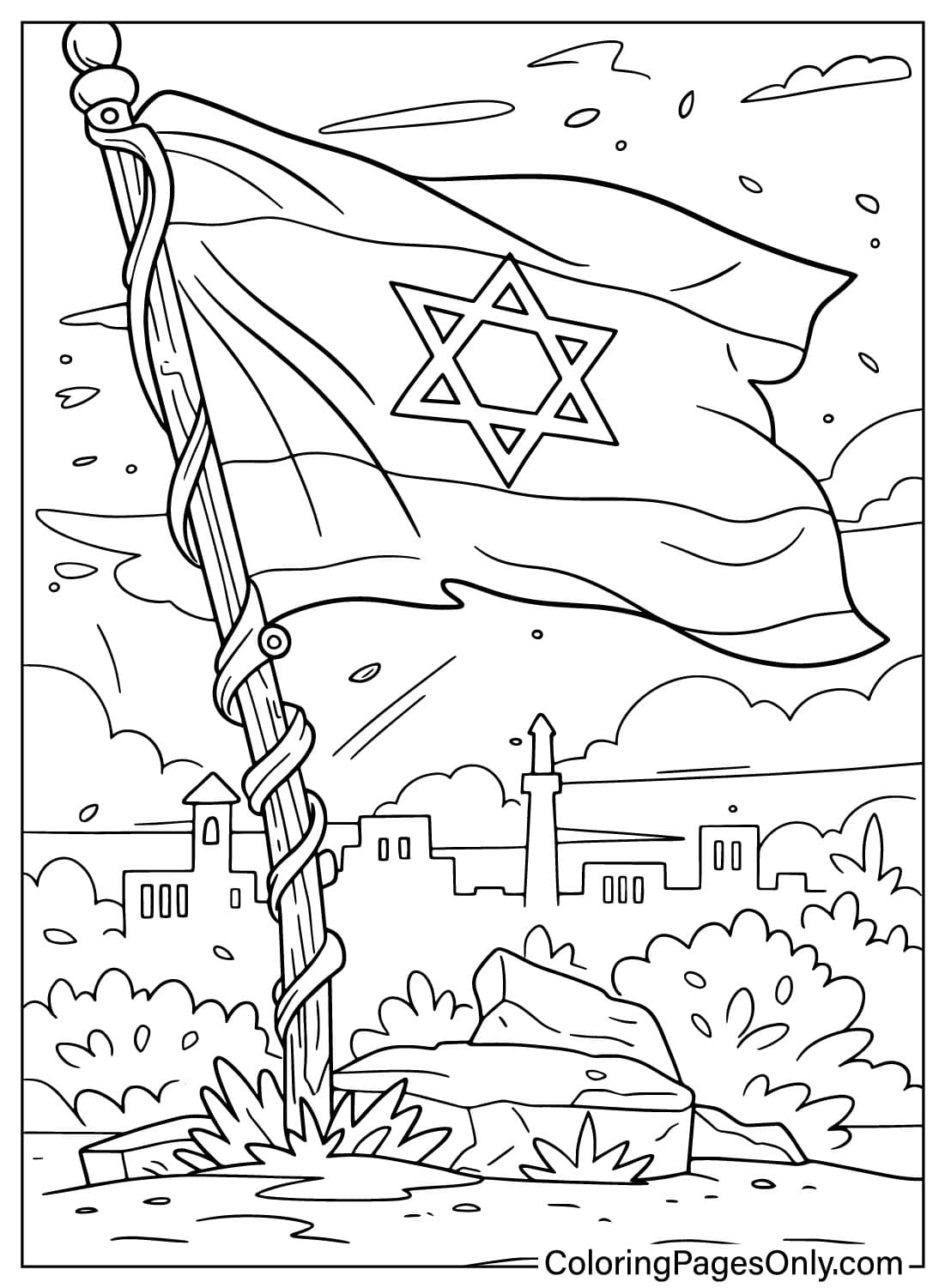
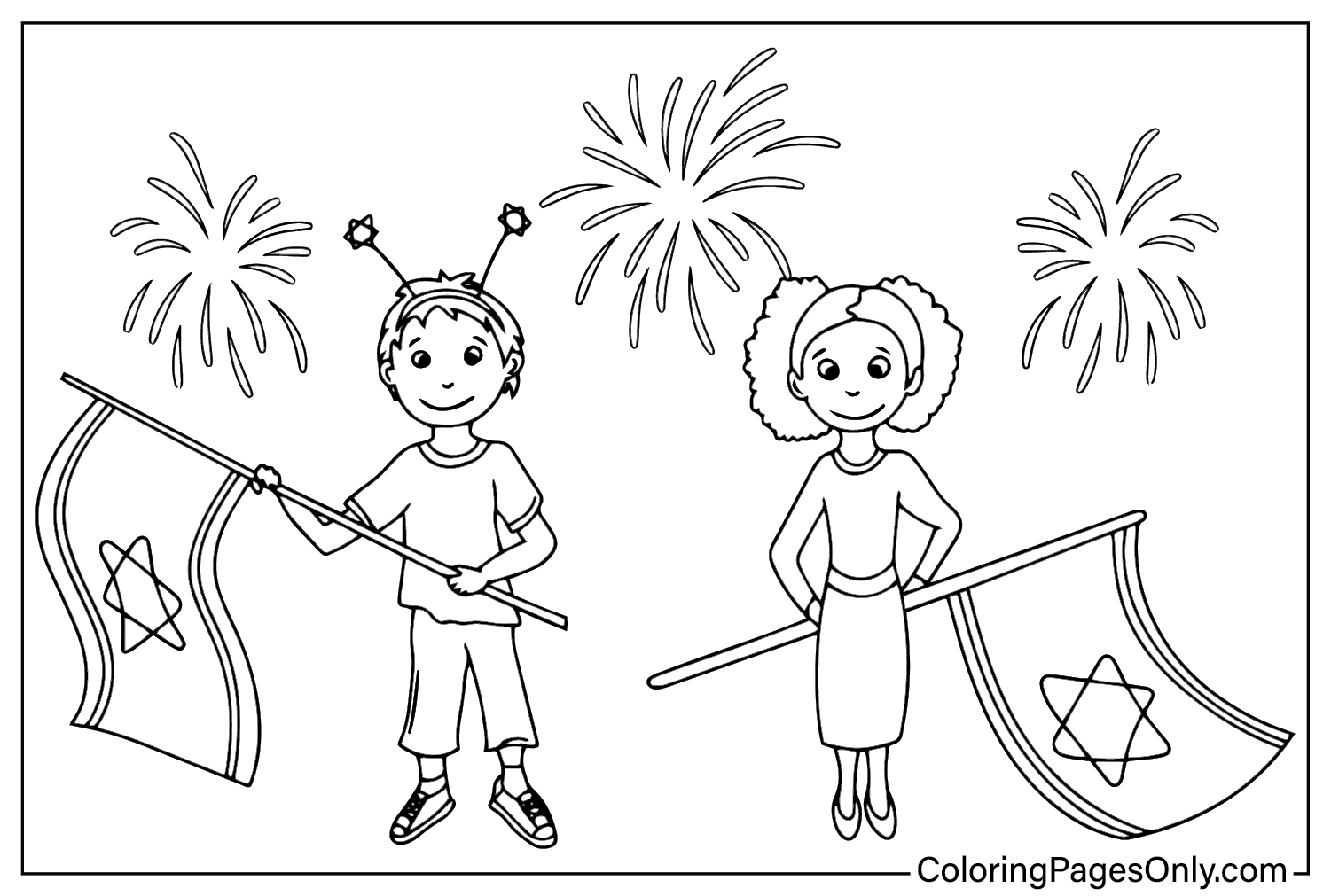
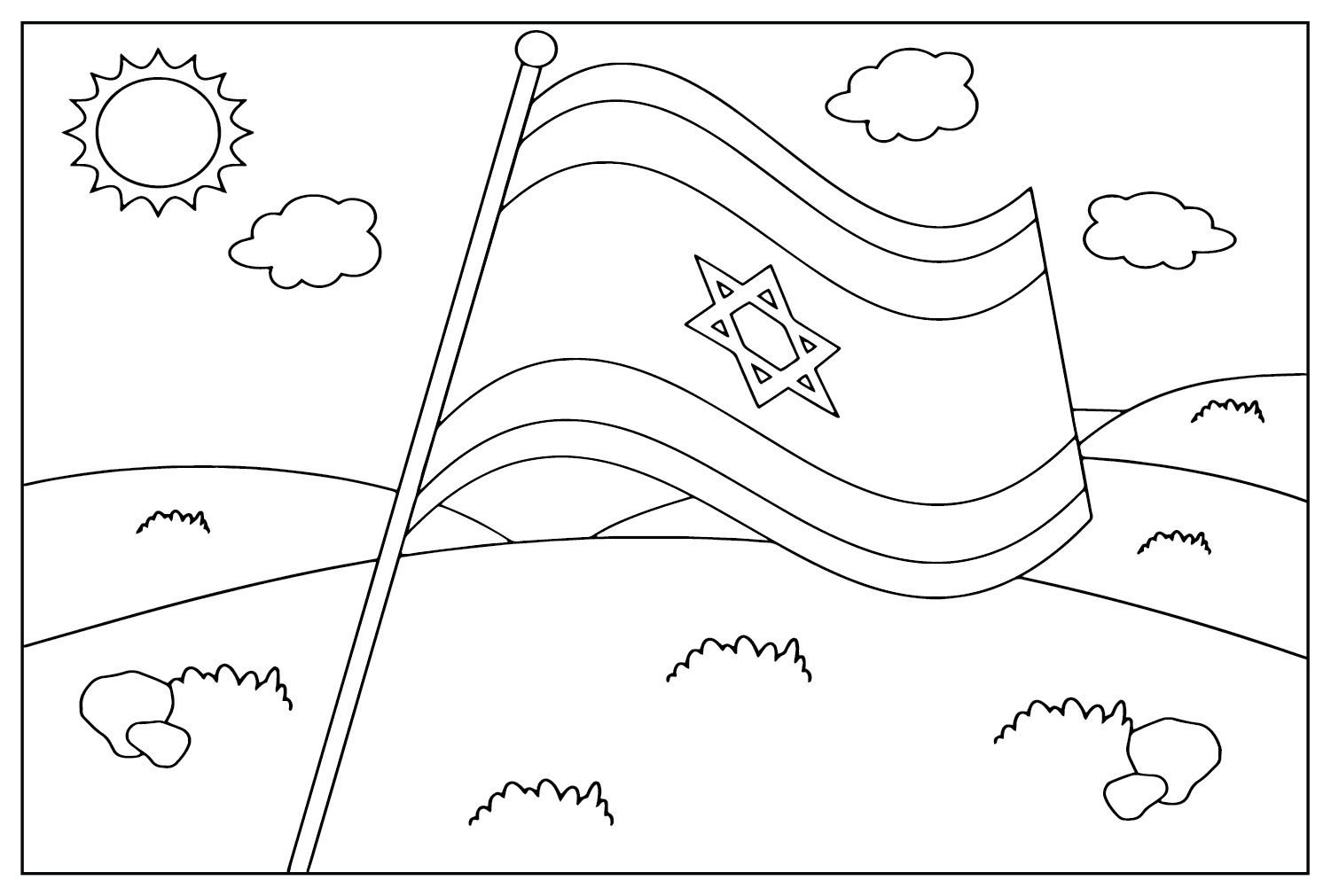
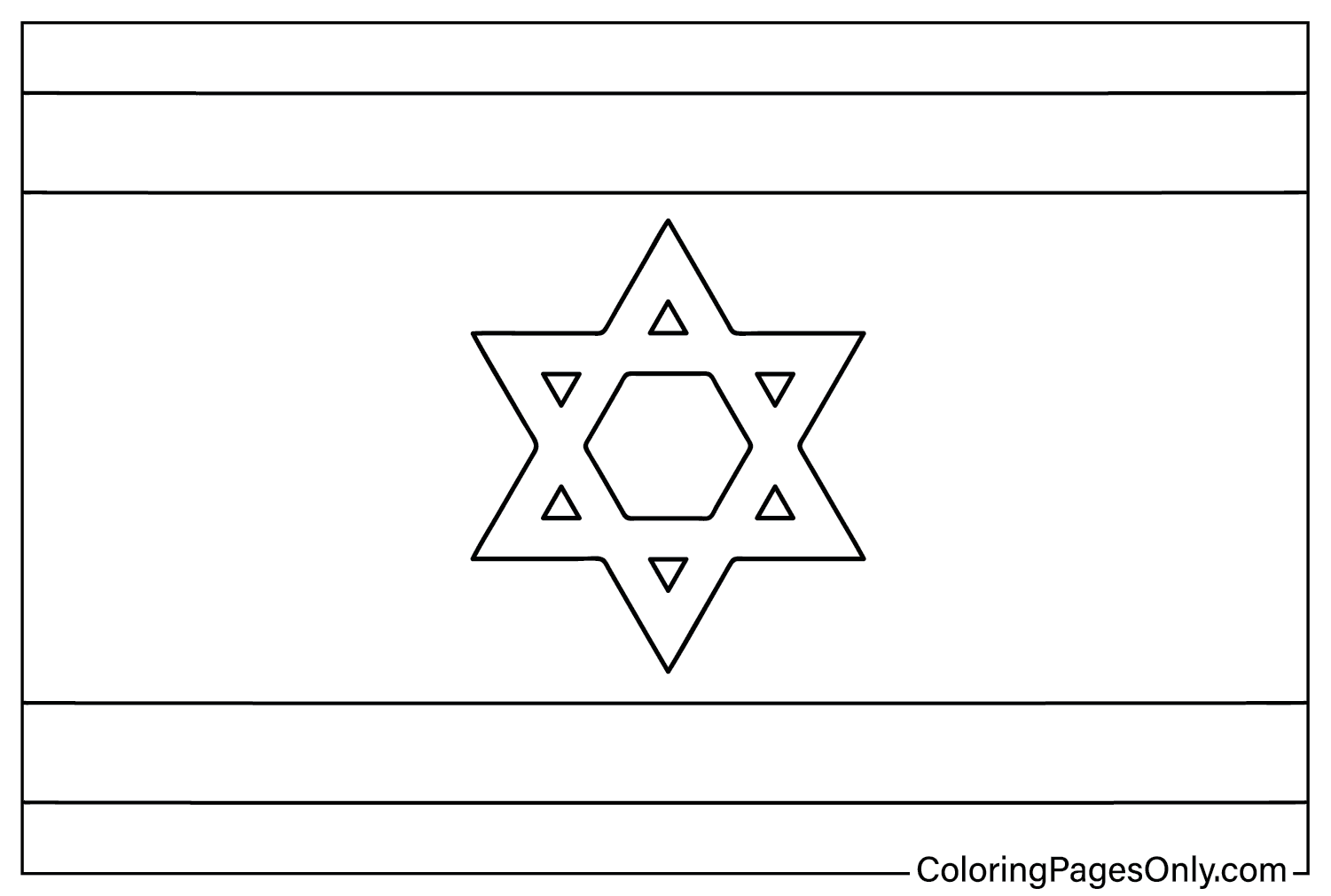
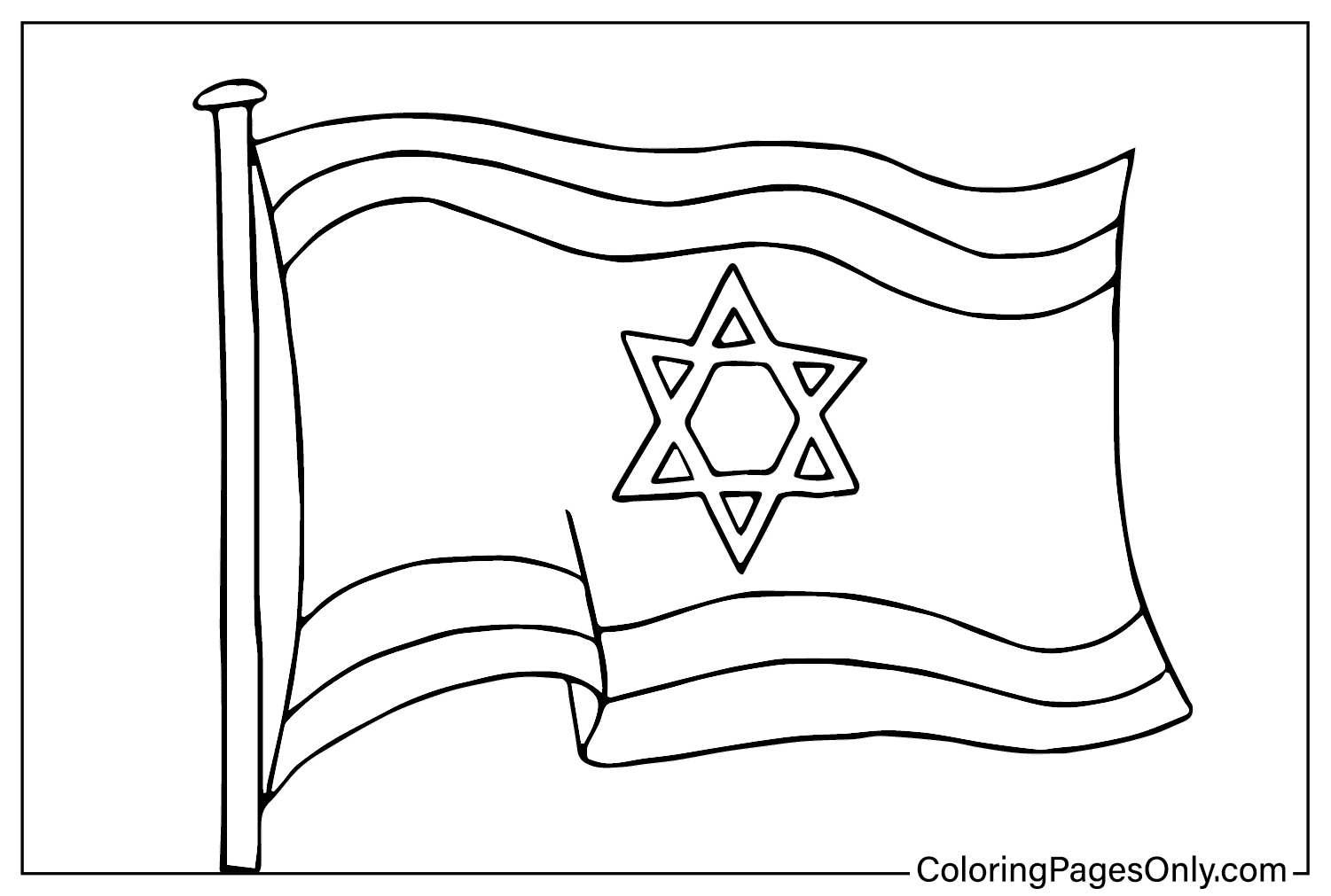
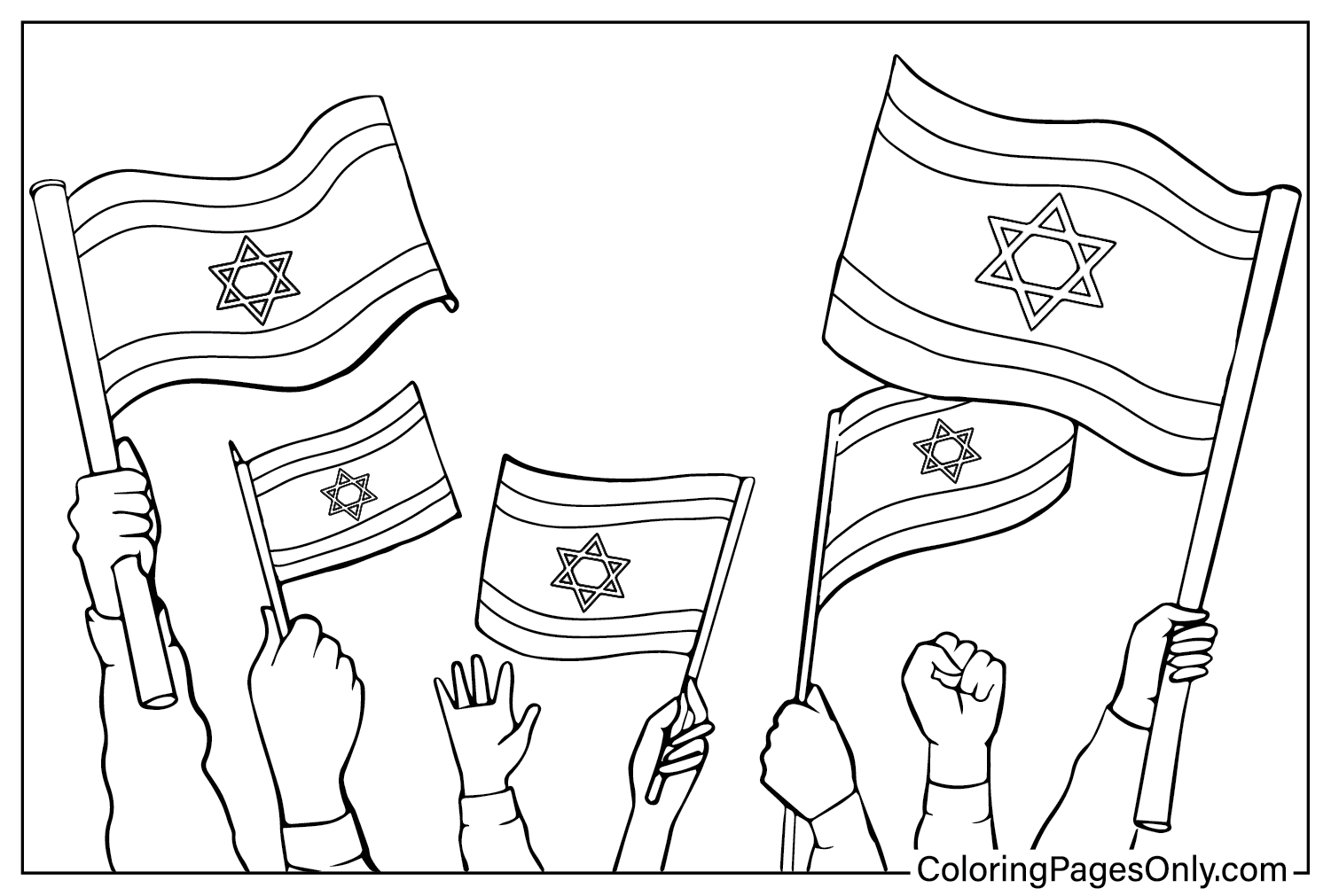
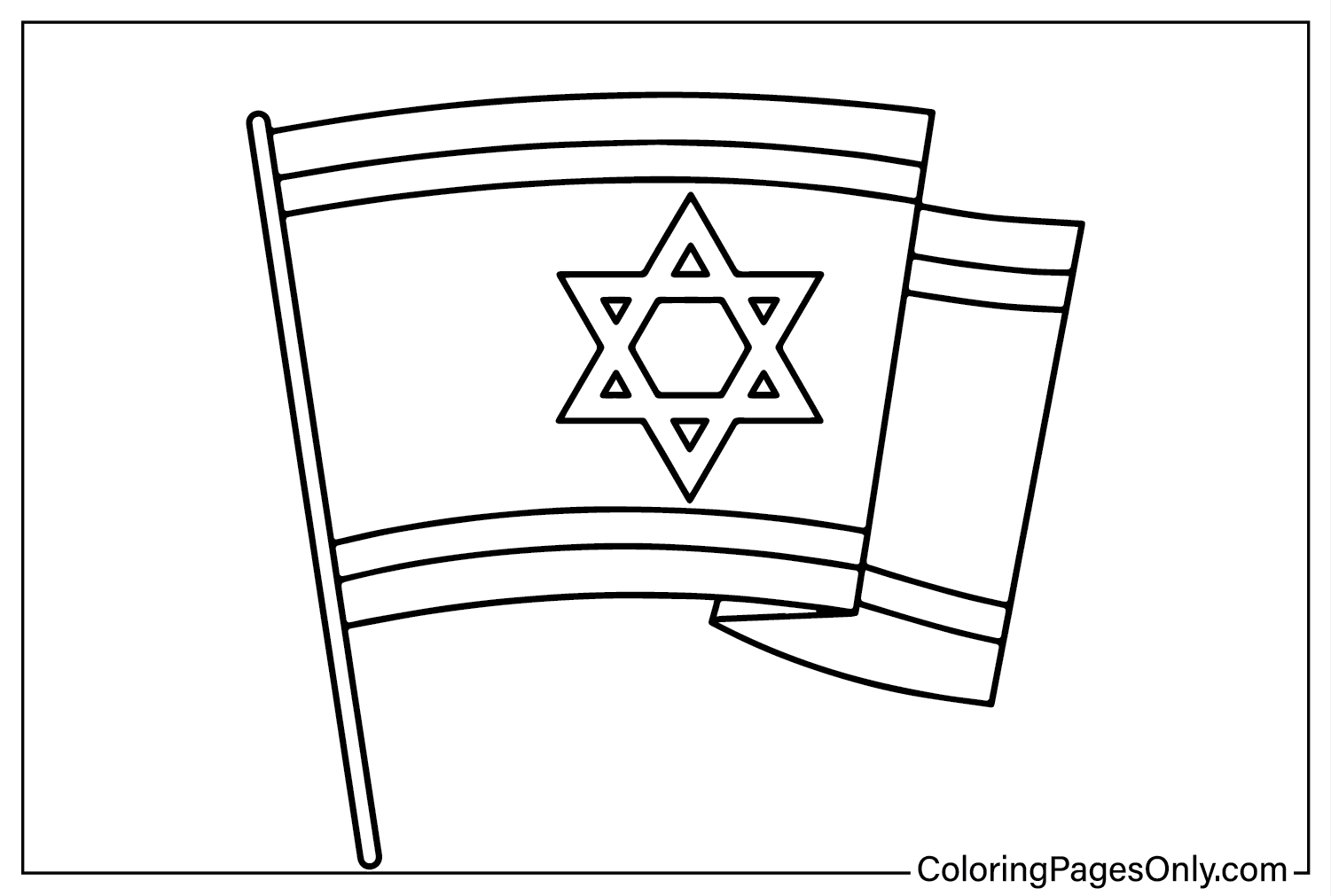
The Israeli flag features two horizontal blue stripes on a white background, with the Star of David (Magen David) centered between the stripes. The design is modeled on the traditional Jewish prayer shawl (tallit), which has a white field with blue stripes. The Star of David – a six-pointed star formed by two overlapping equilateral triangles – has been a symbol of Jewish identity since the medieval period and became a formal symbol of the Zionist movement in the late 19th century.
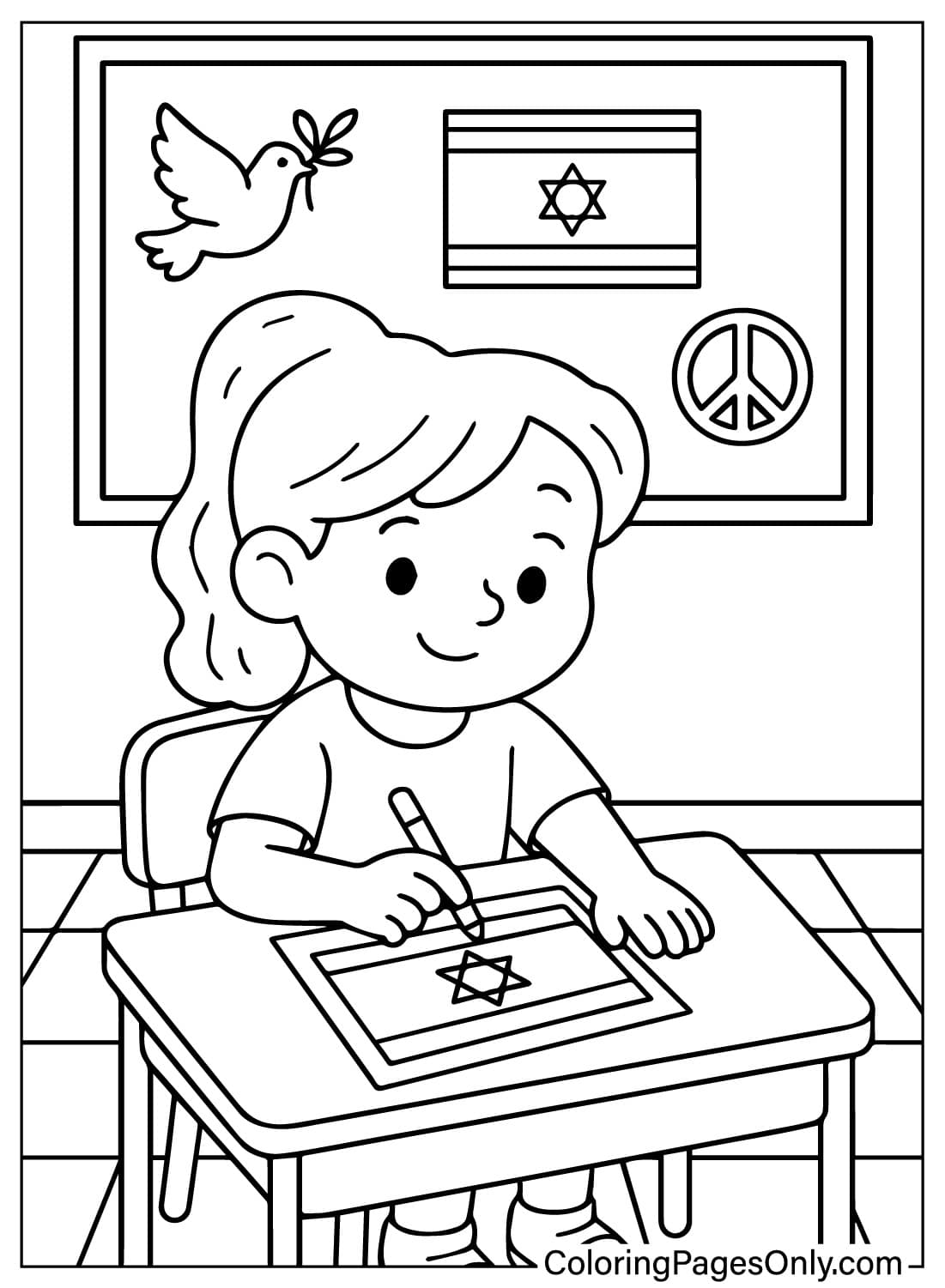
Flag colors: The blue is a specific shade called techelet – a medium, slightly bright blue with no significant green or purple bias. It is the same blue used throughout Israeli national imagery. The white field is pure white. The Star of David uses the same blue as the stripes. The flag coloring pages – Israeli Flag Waving Over City, Israel Flag Coloring Page, Coloring Page Flag Israel, Flag Israel Coloring Page, Girl Drawing Israeli Flag in Classroom – all require only two colors: this specific medium blue and white.
Coloring Guide: The Israel Palette
Jerusalem stone – the warm cream-golden limestone used throughout the Old City – is the single most important color for the architecture tiles. It is a warm pale cream with a slight honey or golden undertone, cooling to pale gray-beige in shadow. This stone, called “Jerusalem stone” or “meleke,” has been quarried in the Jerusalem hills for 3,000 years and gives the city its characteristic golden appearance in late-afternoon sunlight.
Desert tones appear in the Masada and outdoor landscape tiles – warm sandy tan, ochre, and pale terracotta for the Judean Desert’s rocky terrain. These desaturated warm tones contrast effectively with the vivid blue of a Mediterranean or desert sky.
Olive trees – Israel’s most iconic agricultural plant, cultivated in the region for over six thousand years – appear in landscape and symbol tiles. Olive tree foliage is distinctive, silver-green; the undersides of olive leaves are silvery-pale, giving an entire olive grove a shimmering, cool-toned quality unlike any other tree. The olive branch in dove-of-peace imagery should use this specific silver-green rather than the warmer greens of other plant types.
The Mediterranean Sea, appearing on coastal tiles, uses a clear, bright medium blue with a stronger green bias than the Israeli flag’s blue. The Mediterranean at Tel Aviv in summer has a distinctly teal-blue quality under strong sunlight.
Night sky over Jerusalem – appearing in the Dove of Peace over Jerusalem and nighttime scene tiles – uses a deep, slightly warm navy. The famous Jerusalem night sky, as depicted in countless paintings and photographs, has a slightly purple-tinged darkness from the interplay of moonlight and warm-toned city illumination against the ancient stone.
4 Creative Activities
Peace Mosaic
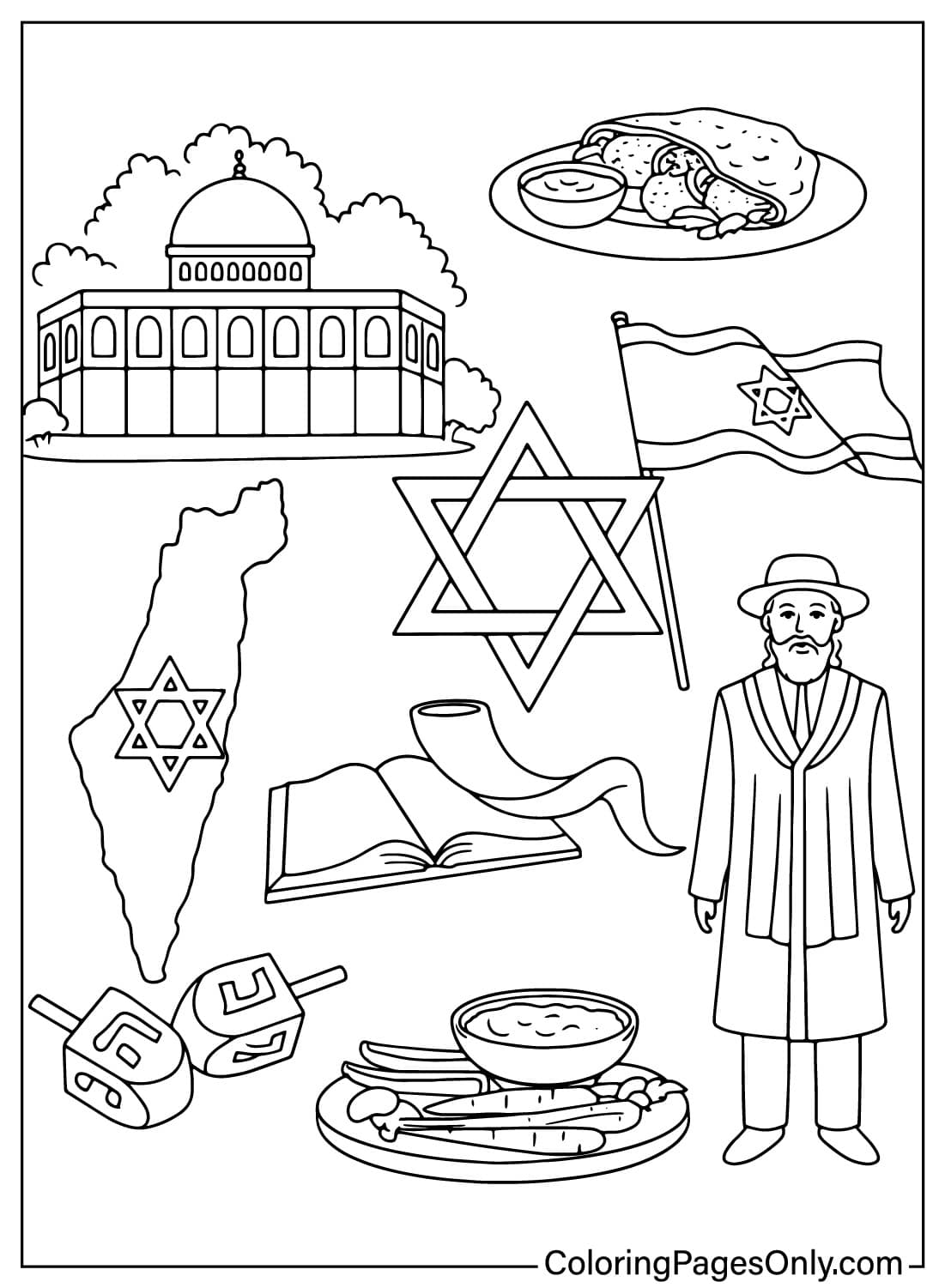
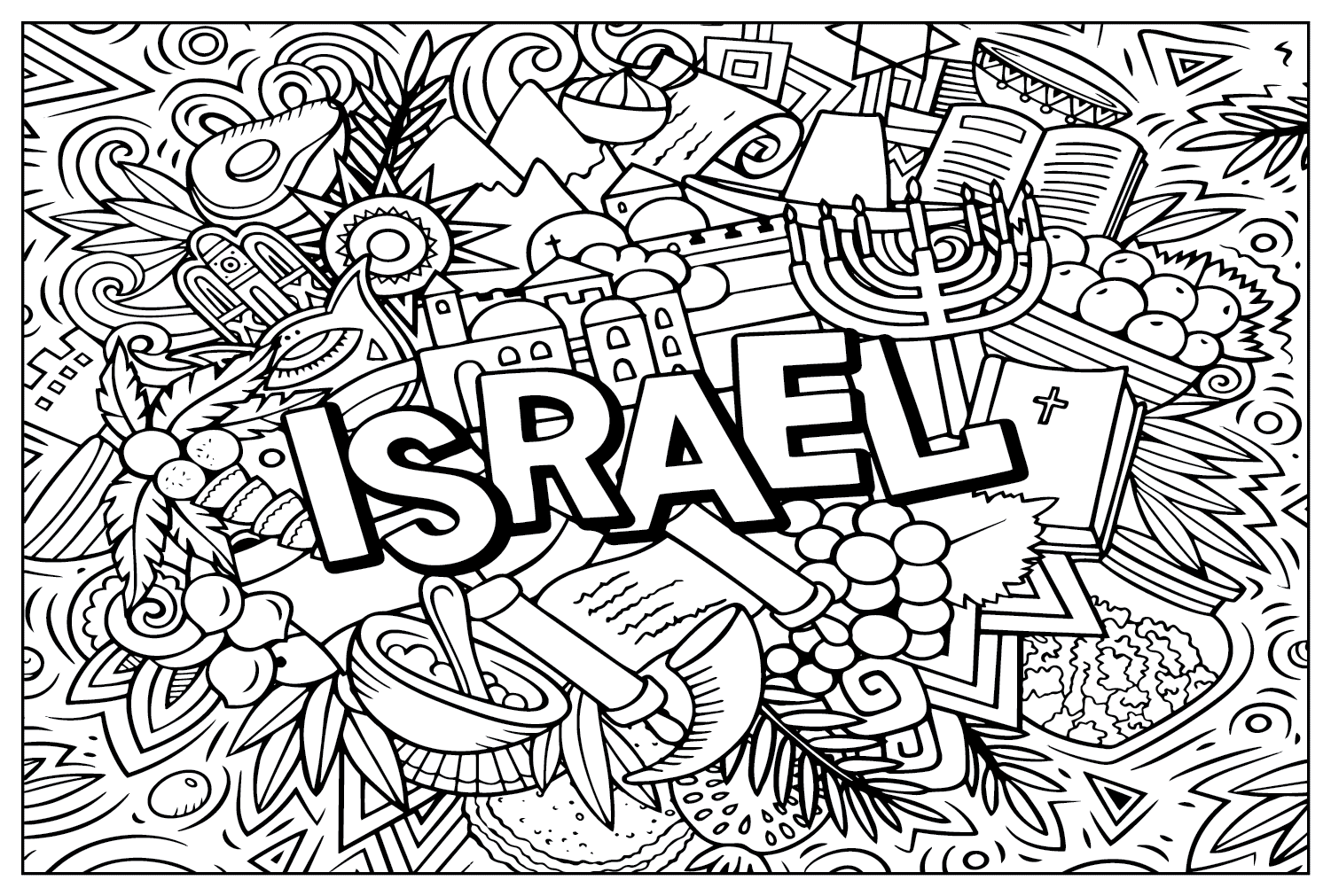
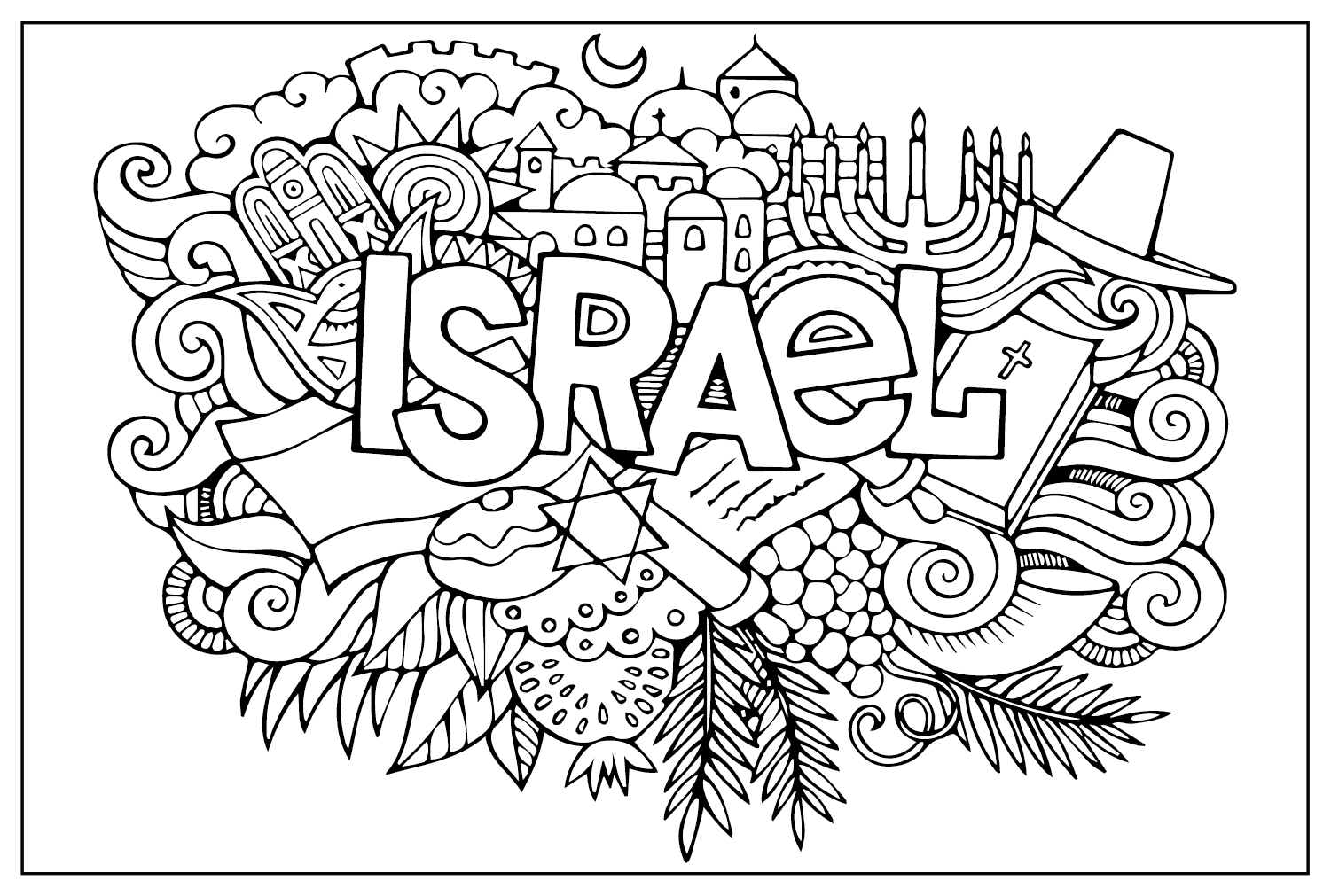
Israel has a rich tradition of mosaic art stretching back to the Byzantine and Roman periods – mosaic floors from this era are still being uncovered by archaeologists across the country. Using completed coloring pages, children cut or tear small pieces and reassemble them onto cardboard to create a mosaic composition. The Israel Symbols and Traditions tile – which depicts the full range of Israeli cultural symbols, including the Dome of the Rock, Star of David, Israeli flag, falafel, matzo balls, dreidels, a shofar, and a Torah scroll – works especially well as a mosaic source, since each symbol has a clear outline and distinct color zone.
Shalom Banner
Print and color multiple copies of the Kids Painting Shalom on Wall or Girl Writing Shalom tiles. Write the word “Shalom” in large letters across each, using the blue-and-white color scheme of the Israeli flag. Cut them out and string them together to create a banner suitable for display in a classroom, home, or community setting during a cultural studies unit on Israel or the Middle East.
Landmark Study
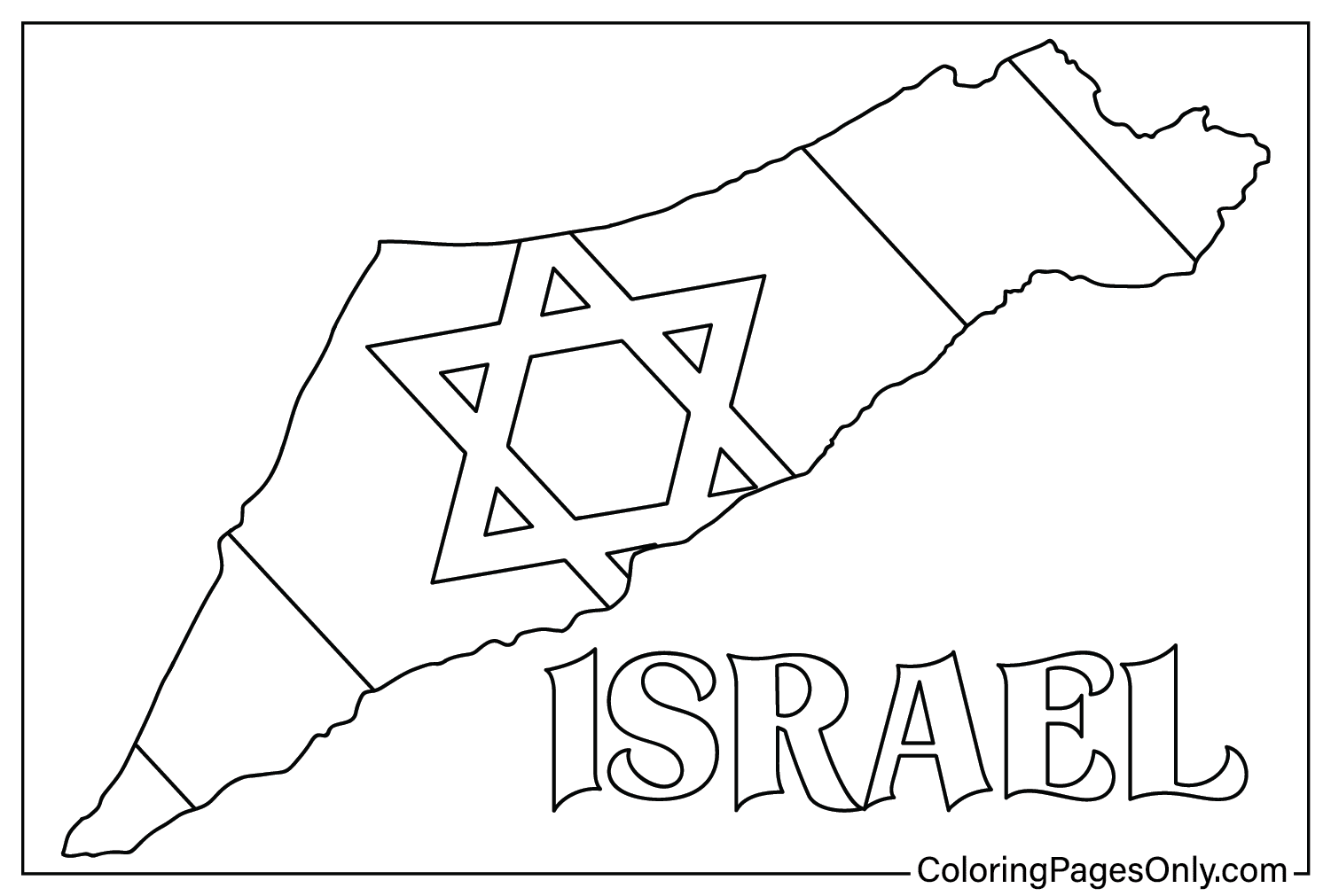
Print the Famous Landmarks of Israel Coloring Page and Israel Symbols and Traditions tiles alongside a physical or digital map of Israel. As children color each landmark or symbol, they identify its location on the map and its historical significance. This connects the coloring activity to geography and history learning, making the collection suitable for a social studies or world cultures unit. The Israel Map Coloring Page tile provides a geographic base map of Israel for labeling and reference.
Peace Tree
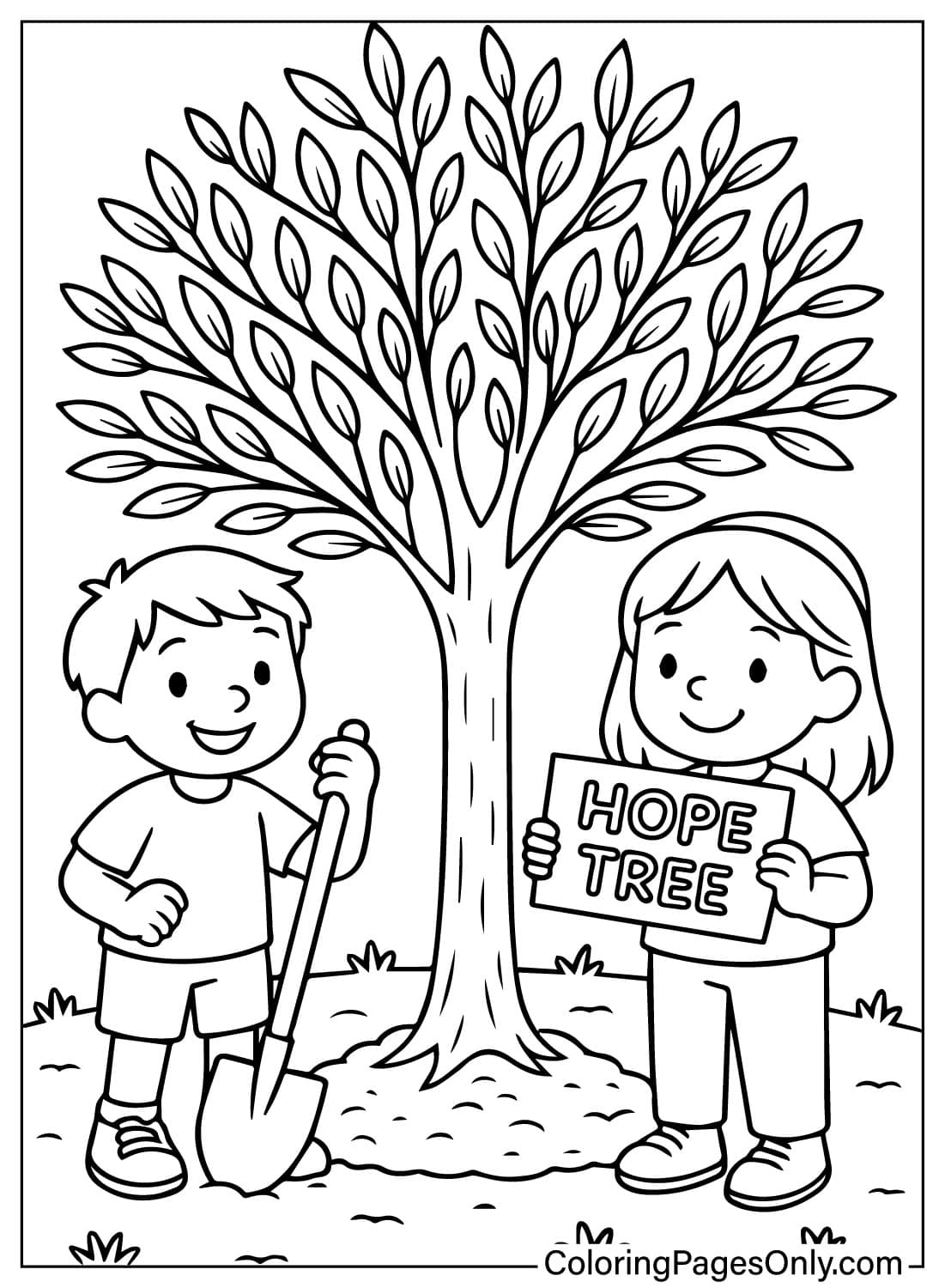
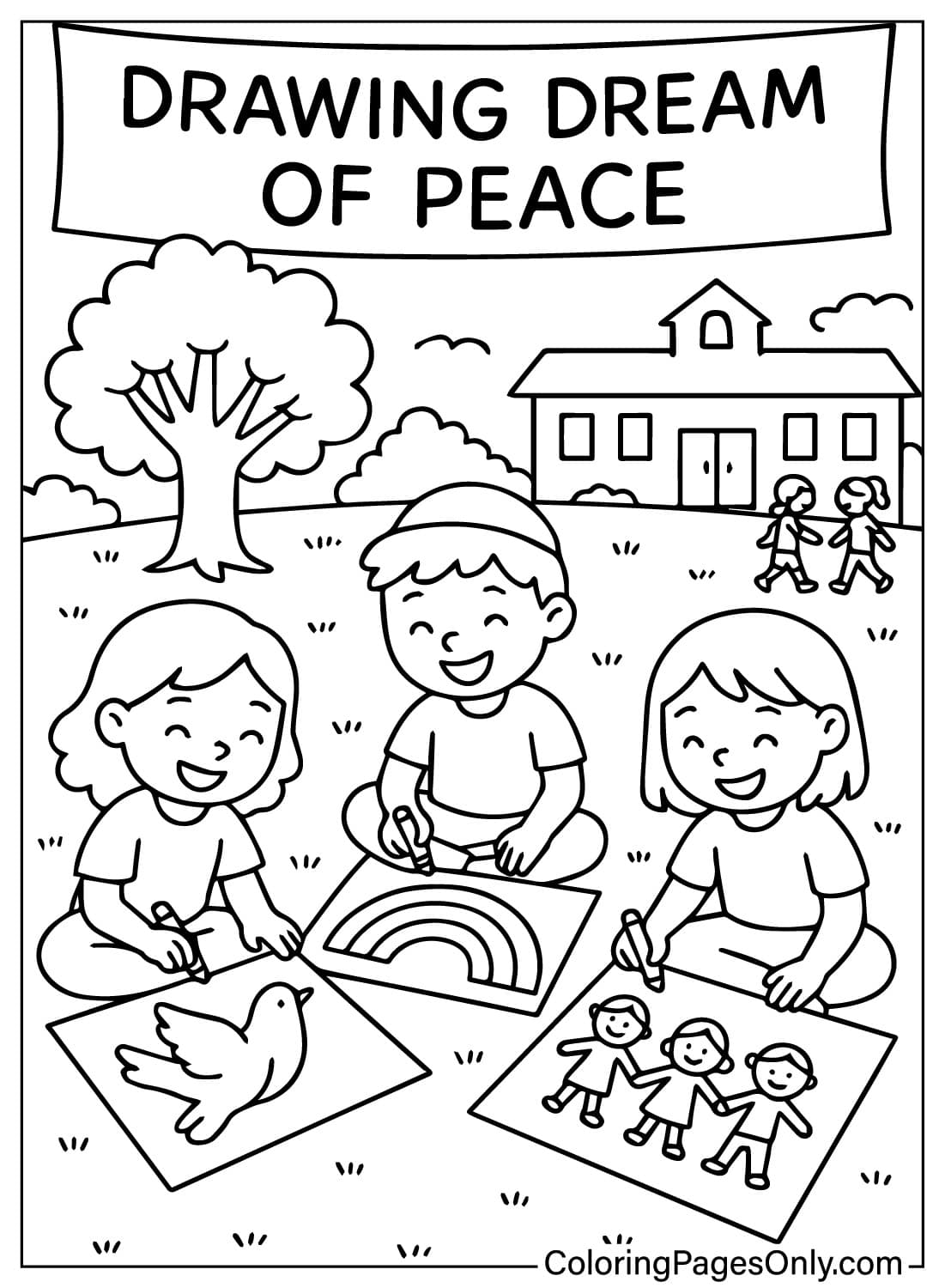
Color the Kids Planting Hope Tree tile, then extend the activity beyond the page: cut leaf shapes from green paper, write peace wishes or gratitude notes on each leaf, and attach them to a tree shape drawn on a large sheet of butcher paper or bulletin board. Each leaf represents one child’s contribution to a collaborative peace display. The Children Drawing Dream of Peace tile – showing children drawing a rainbow, a dove, and holding hands under a “Drawing Dream of Peace” banner – provides additional inspiration for the display.
FAQs
What language is spoken in Israel? Israel has two official languages: Hebrew and Arabic. Hebrew is the primary language of the Jewish majority population and is used in government, education, and most daily life. Arabic is the primary language of Arab citizens of Israel, approximately 20% of the population. English is widely spoken as a second language, particularly in Tel Aviv and in tourist and business contexts.
What is the Star of David? The Star of David (Magen David, meaning “Shield of David” in Hebrew) is a six-pointed star formed by two overlapping equilateral triangles. It has been associated with Jewish identity since the medieval period and became the central symbol of the Zionist movement in the late 19th century, appearing on the Israeli flag when the state was established in 1948.
What is Shalom? Shalom (שָׁלוֹם) is a Hebrew word meaning peace, completeness, harmony, and well-being. It is used as both a greeting when meeting someone and a farewell when parting – a single word that expresses the hope for another person’s complete wellbeing in both arrival and departure.
What is the Western Wall? The Western Wall is the holiest site in Judaism that is accessible for prayer – a surviving section of the retaining wall built around the Second Temple Mount in Jerusalem during the first century BCE. After the Temple itself was destroyed by Rome in 70 CE, the Wall became the focal point of Jewish prayer and remembrance. Millions of people of all faiths visit annually to pray and place handwritten notes in its ancient stone cracks.
What is Hanukkah? Hanukkah is an eight-day Jewish festival of lights, celebrated in late November or December, commemorating the rededication of the Temple in Jerusalem in the 2nd century BCE and the miracle of a small amount of oil burning for eight days. It is observed by lighting one additional candle on the nine-branched Hanukkah menorah each night, eating foods fried in oil (latkes, sufganiyot), and playing dreidel.
What is challah? Challah is a special braided bread made with eggs, oil, and honey, central to Jewish Shabbat and holiday celebrations. Two loaves of challah are traditionally placed on the Shabbat table, covered with a decorative cloth, and blessed before the Friday night meal. Its distinctive braided appearance and deep golden-brown crust make it one of the most visually recognizable ritual foods in Jewish tradition.
What is Masada? Masada is an ancient fortress complex built by King Herod on an isolated rock plateau in the Judean Desert, overlooking the Dead Sea. It is a UNESCO World Heritage Site and a powerful symbol in Israeli national consciousness. “Masada shall not fall again” is a phrase commonly associated with Israeli national identity, referring to the fortress’s famous last stand in 73 CE.
All 40+ Israel Coloring Pages are free – download as PDF or color online. Share your finished pages on Facebook and Pinterest.