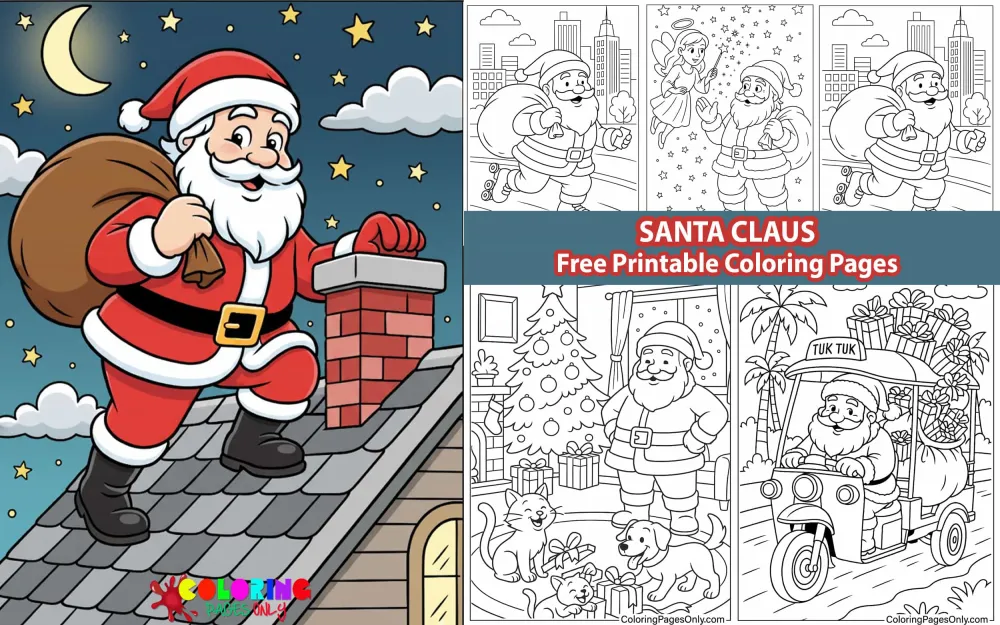
Santa Claus coloring pages: 50+ free printable PDF designs featuring classic Santa portraits, Christmas Eve delivery scenes, reindeer and sleigh flights, the North Pole workshop, Santa’s global adventures, and simple pages for young children.
The figure known today as Santa Claus took shape over roughly seventeen centuries from several distinct sources. Saint Nicholas of Myra (c. 270 to 343 AD) was a fourth-century bishop in what is now Demre, Turkey, renowned for anonymous generosity and documented in accounts of gifts provided to families in need; his feast day, December 6, became the occasion for gift-giving traditions across northern Europe. Dutch settlers brought their Sinterklaas tradition to North America, and the name evolved over generations into Santa Claus. The visual image solidified through the nineteenth and early twentieth centuries: political cartoonist Thomas Nast published Santa illustrations in Harper’s Weekly from 1863 to 1886, establishing the North Pole workshop, the naughty-and-nice list, and the red-suited rotund figure decades before any commercial association reinforced it. Haddon Sundblom, a Swedish-American illustrator, created the Coca-Cola Santa advertisements from 1931 to 1964, working from Nast’s visual conventions and a neighbor named Lou Prentiss as his model.
The collection spans the full range of Santa Claus imagery: classic formal portraits, Christmas Eve delivery scenes, the reindeer and sleigh in flight, the workshop with elves, simple pages for ages 3 and up, and a distinctive group of 2025 additions showing Santa in locations and situations far outside the traditional North Pole setting.
These 50+ free pages at ColoringPagesOnly.com cover Santa Claus across every context, from the Clement Clarke Moore poem to roller skating in a city street. All free, PDF or PNG, print or color online.

What’s Inside
Classic Santa Portraits
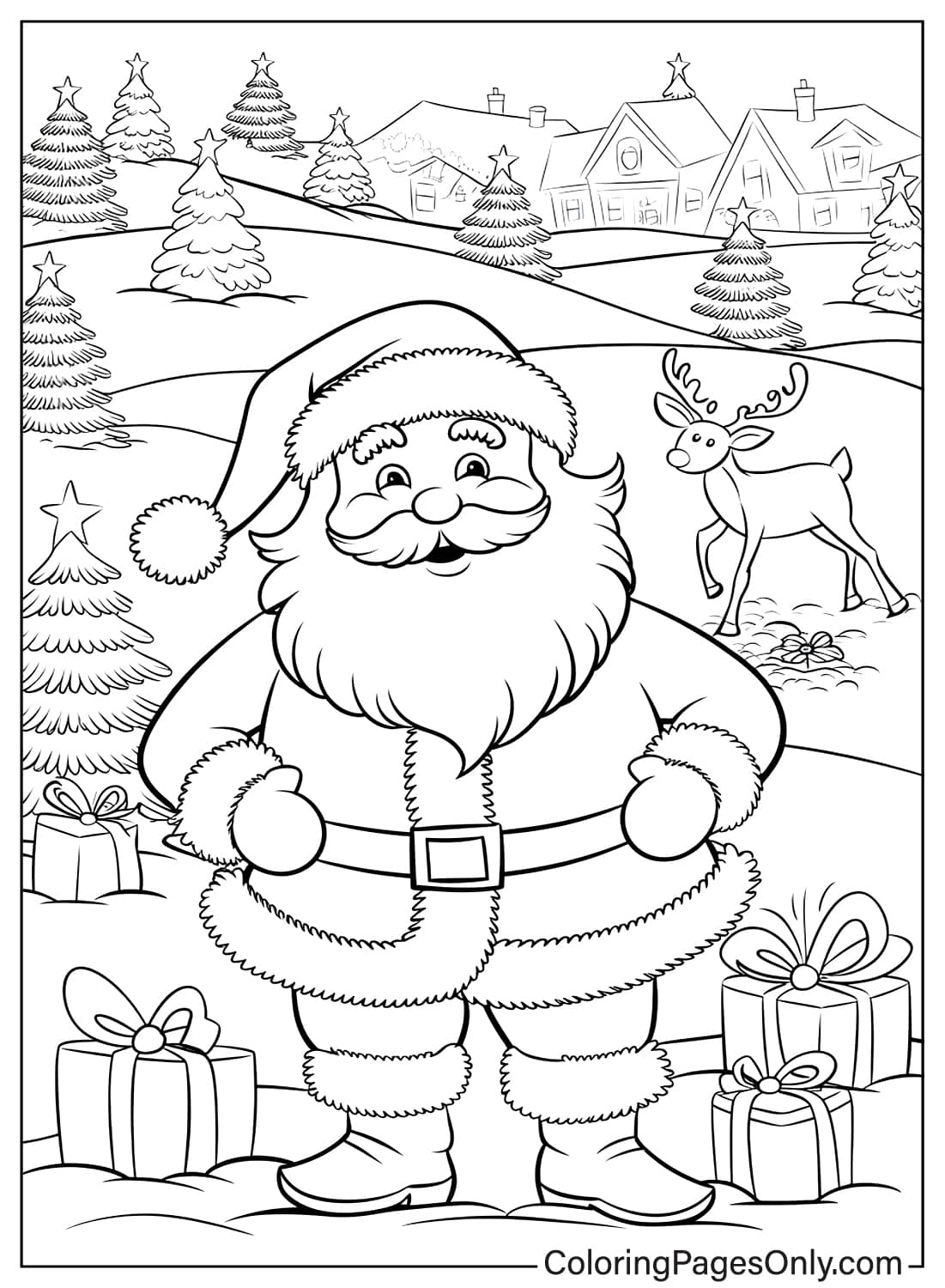
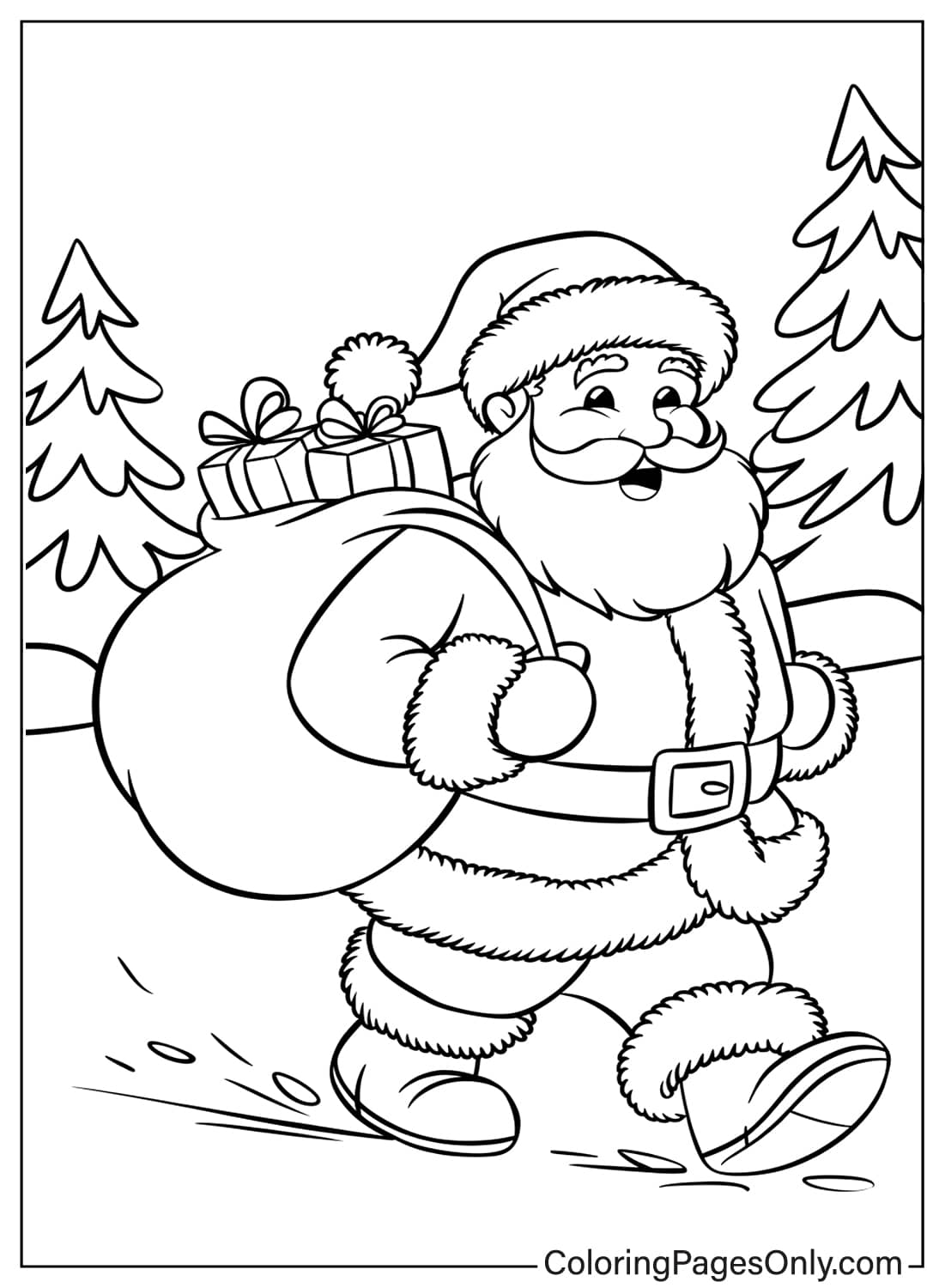
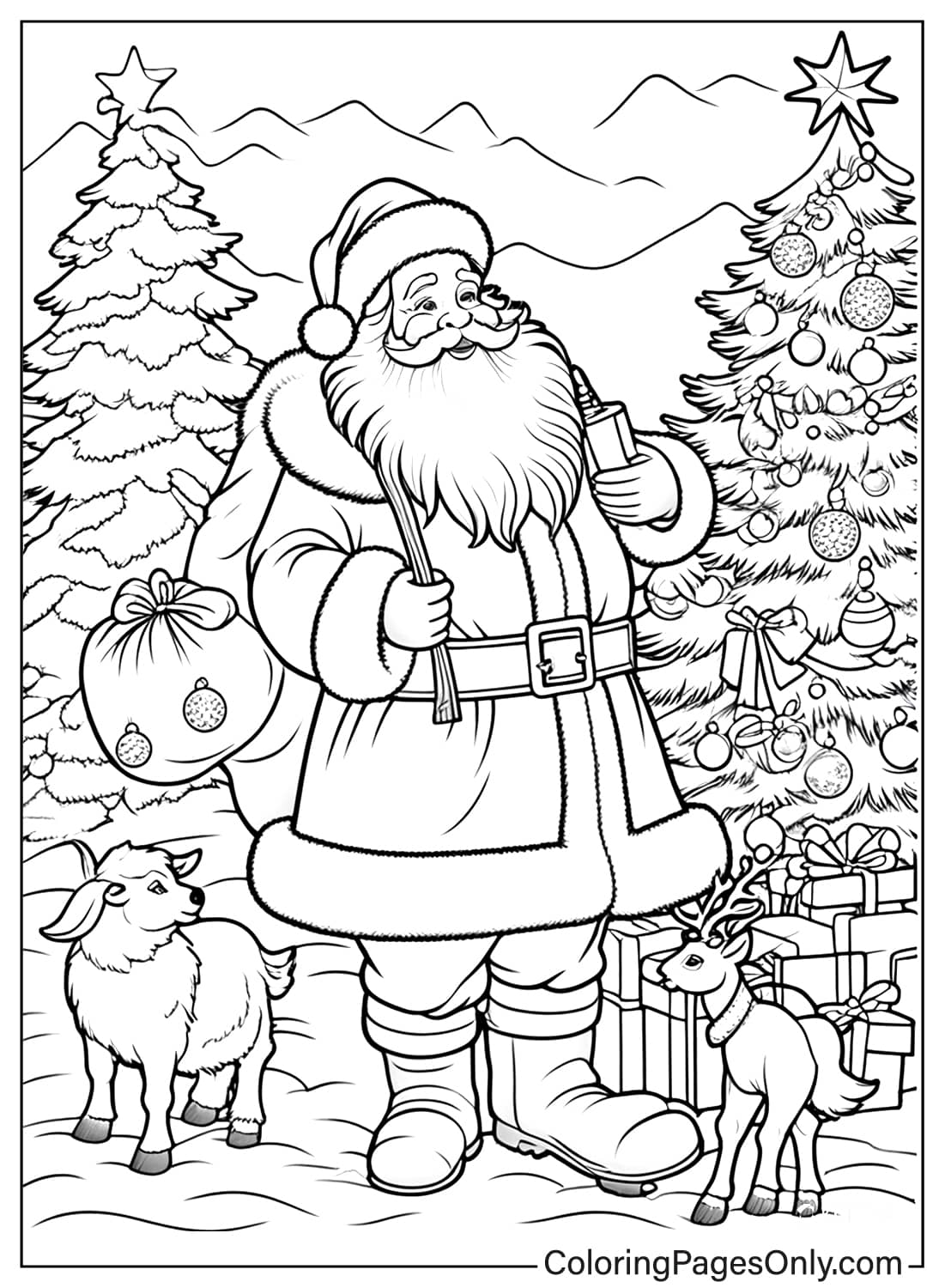
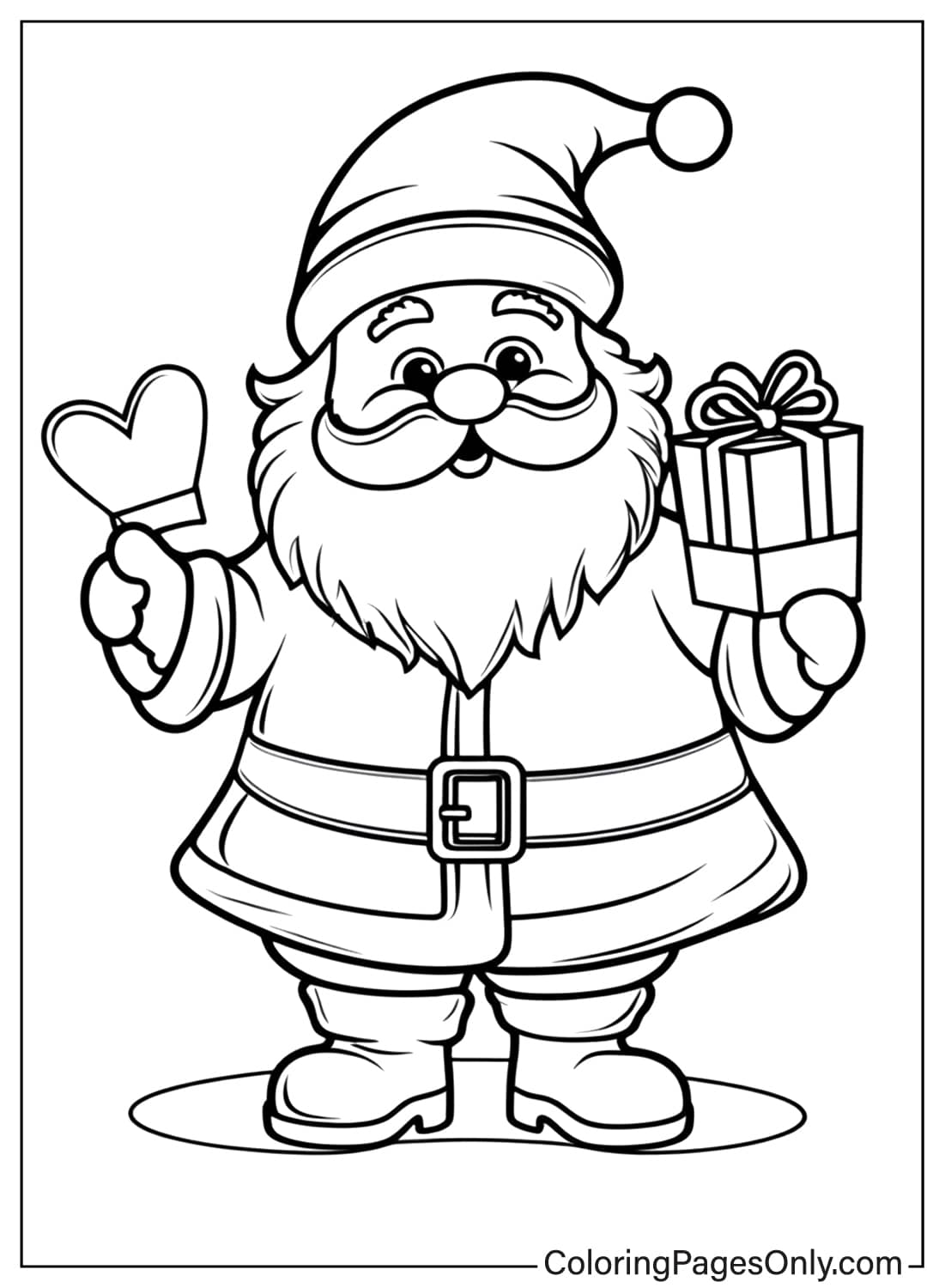
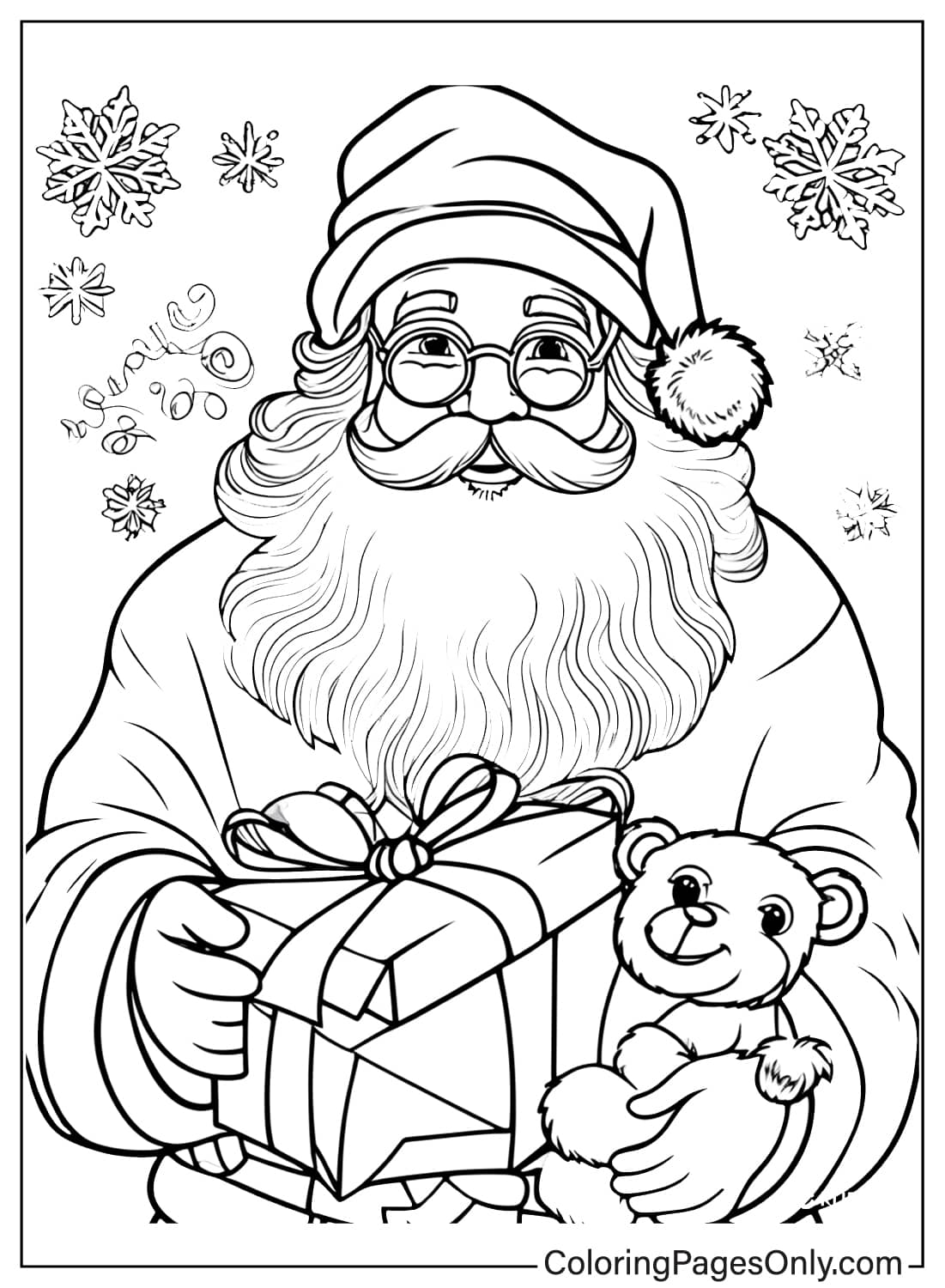
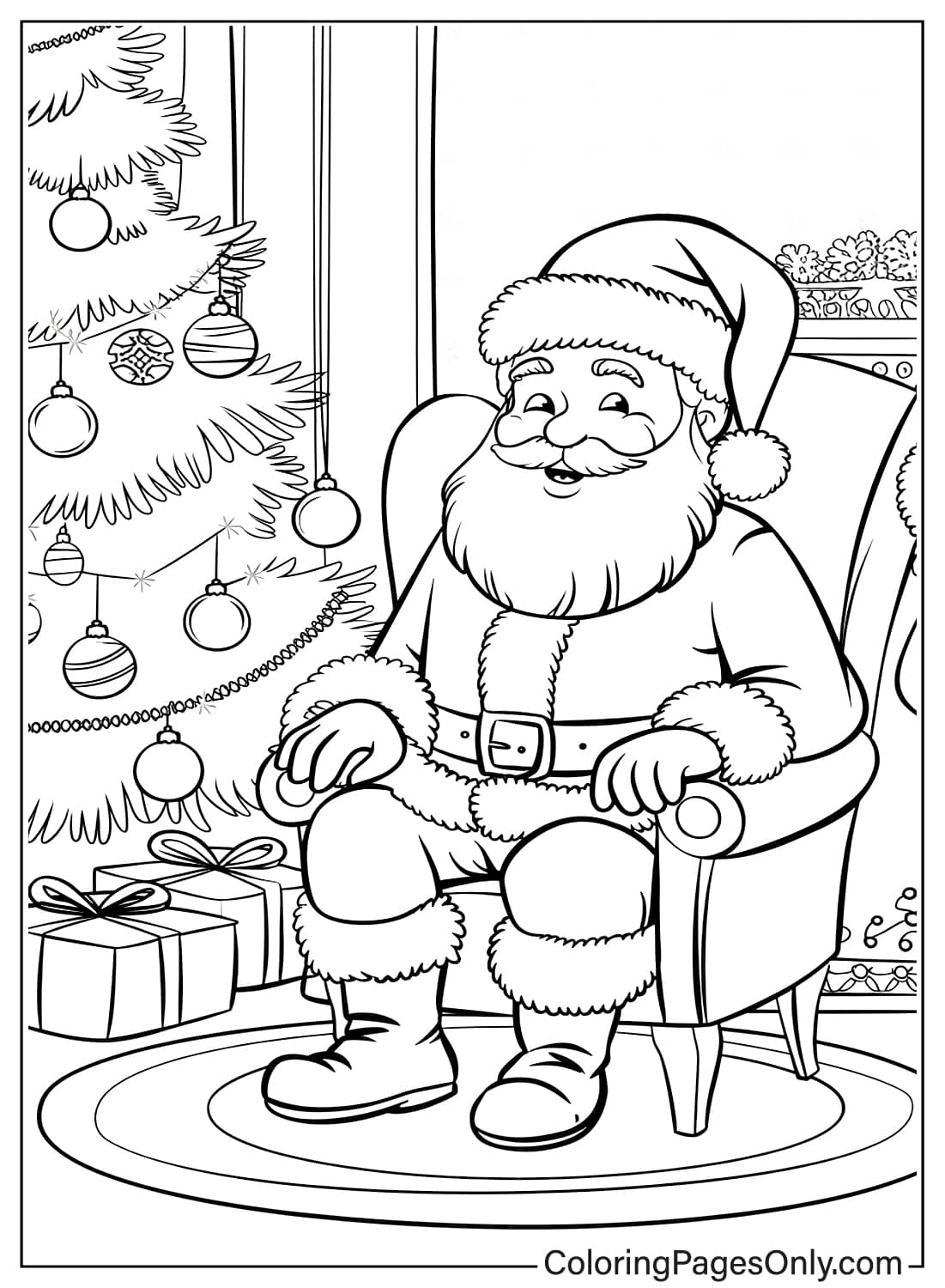
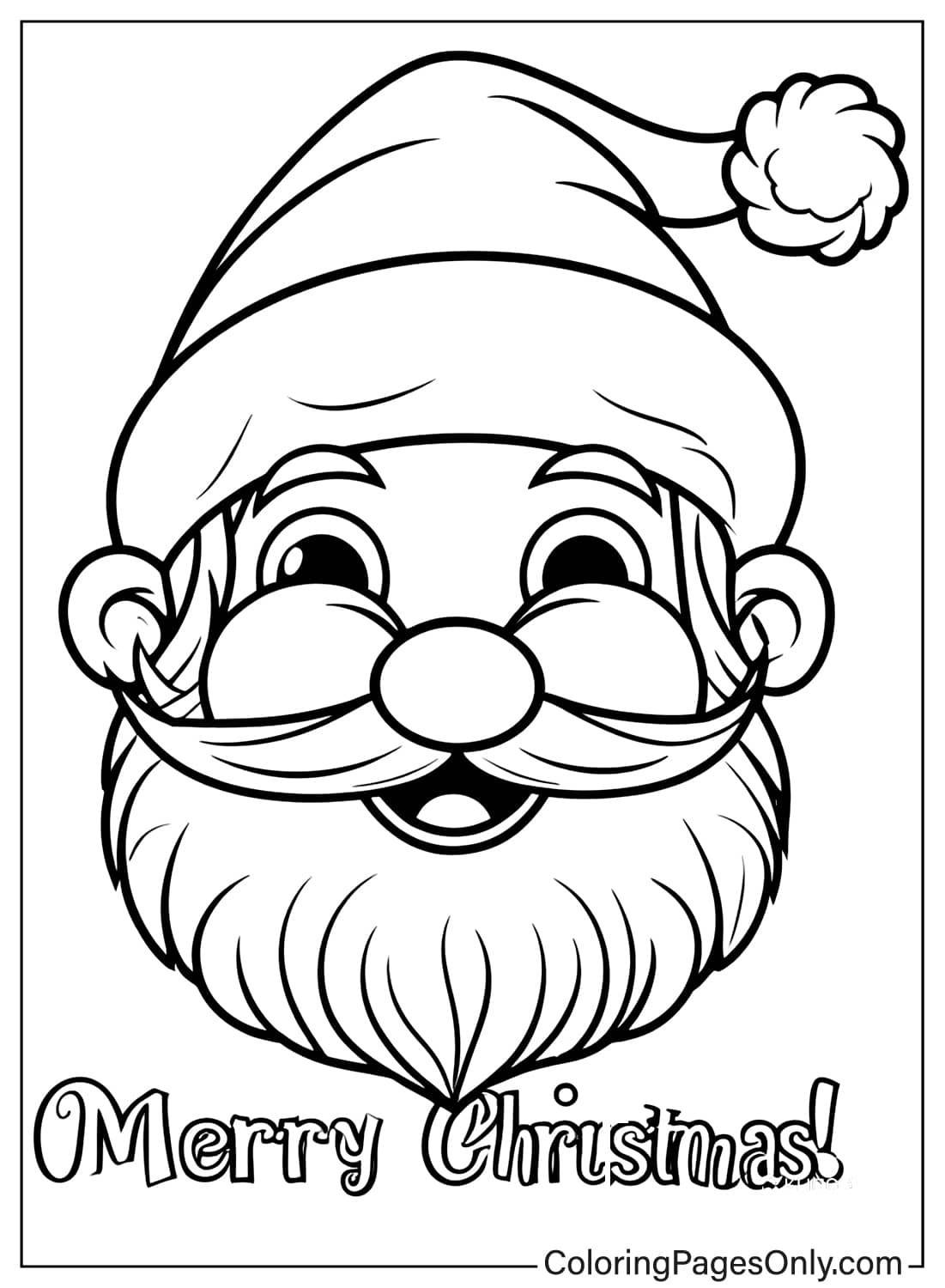
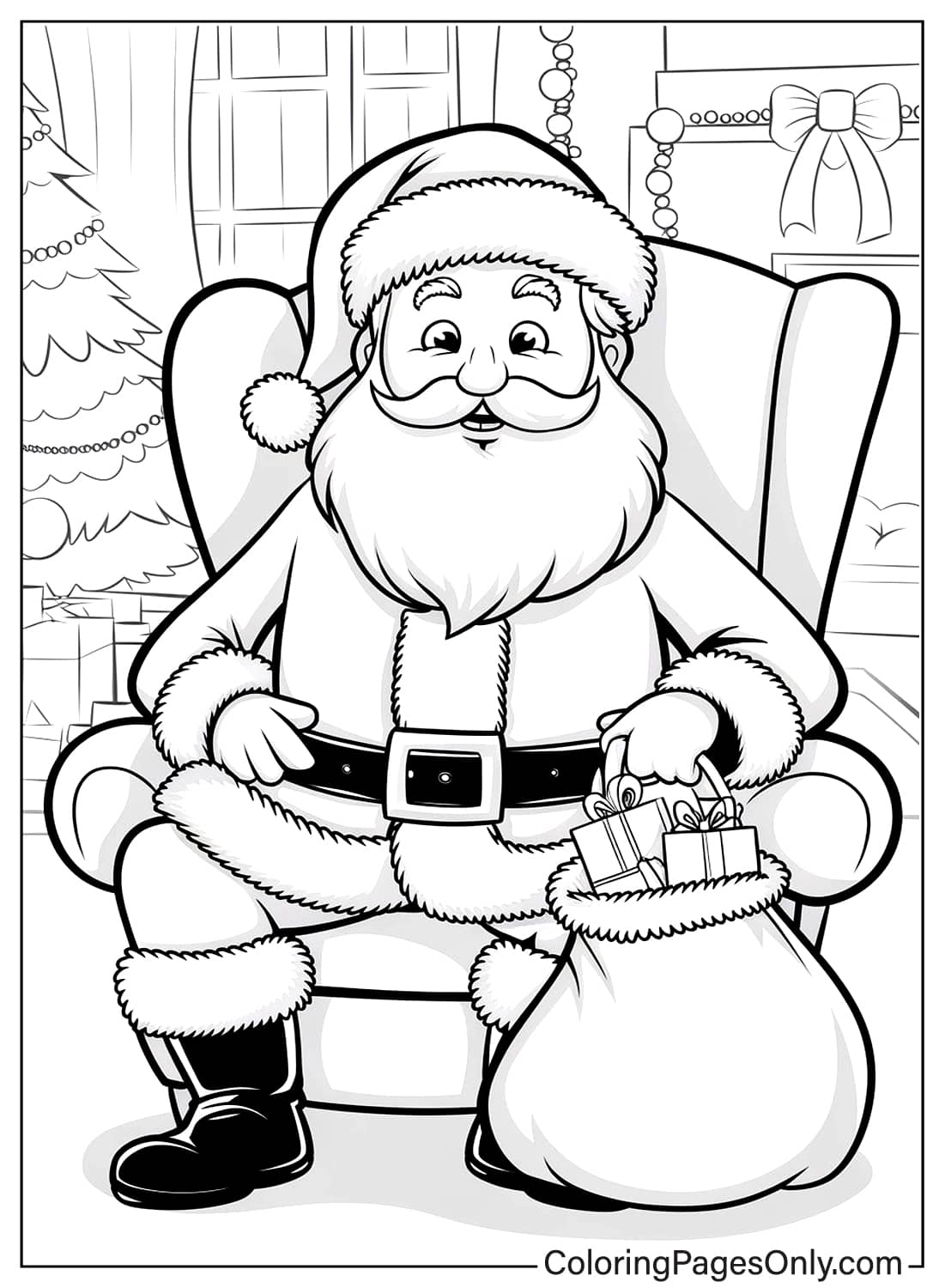
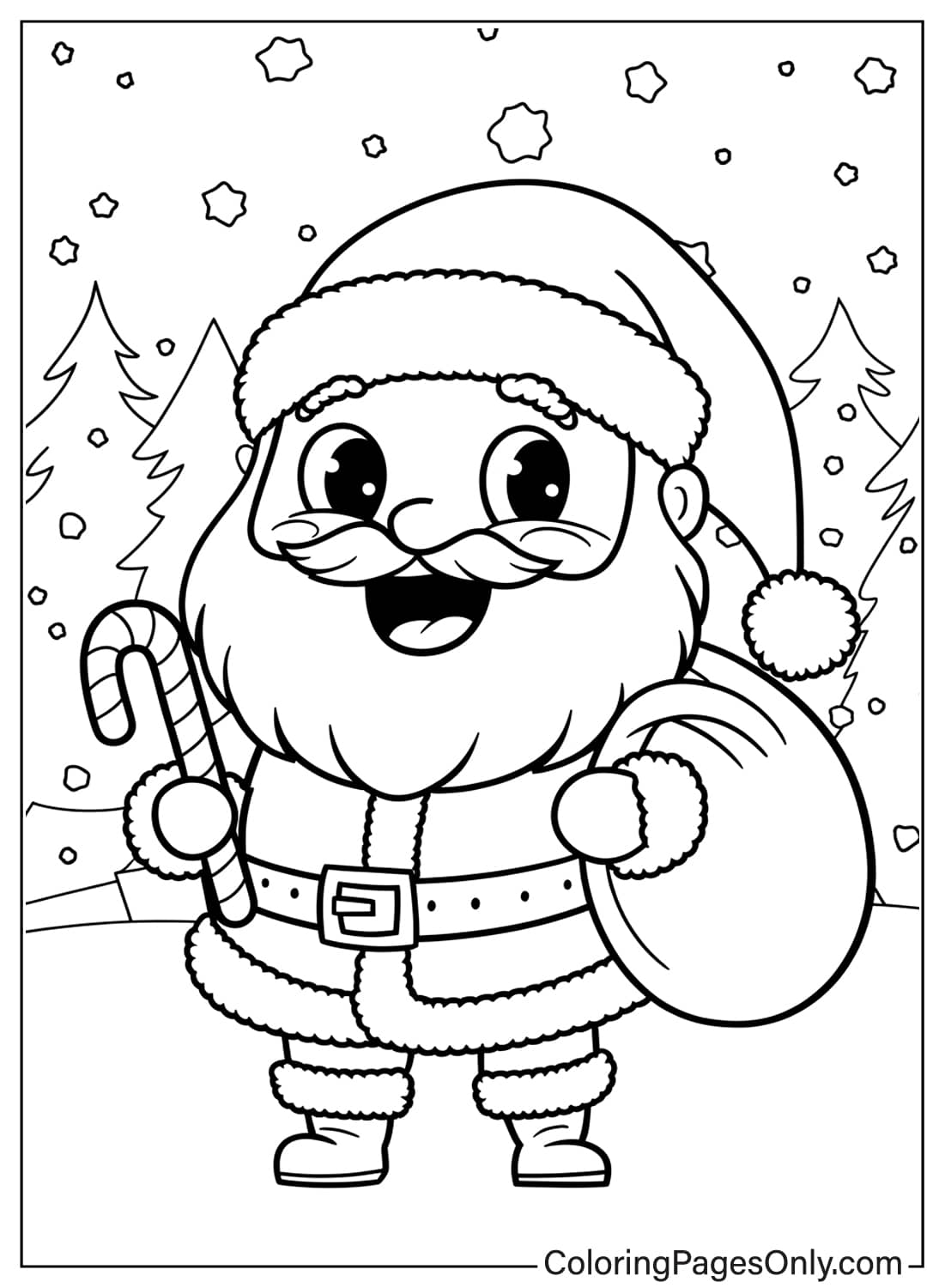
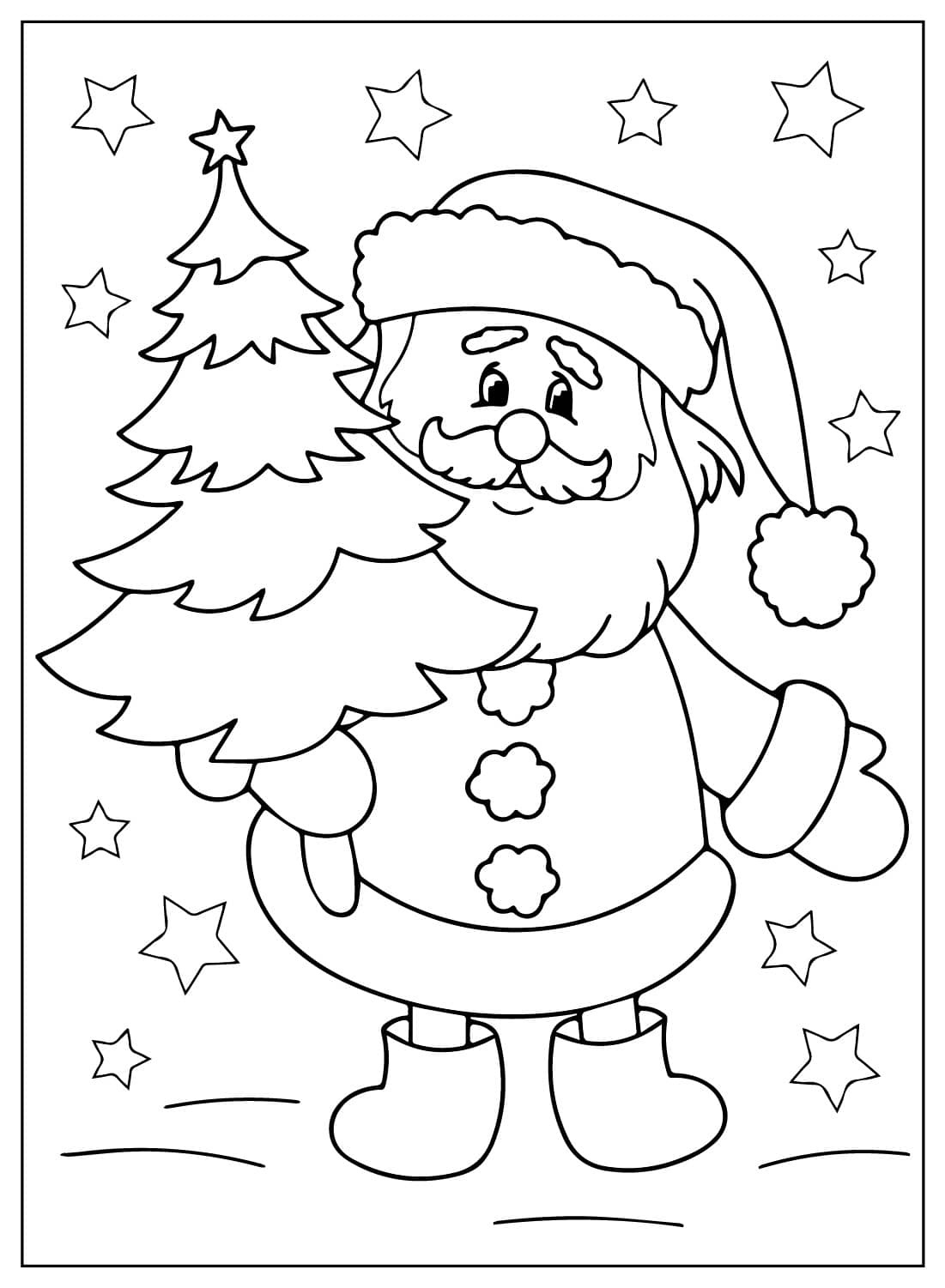
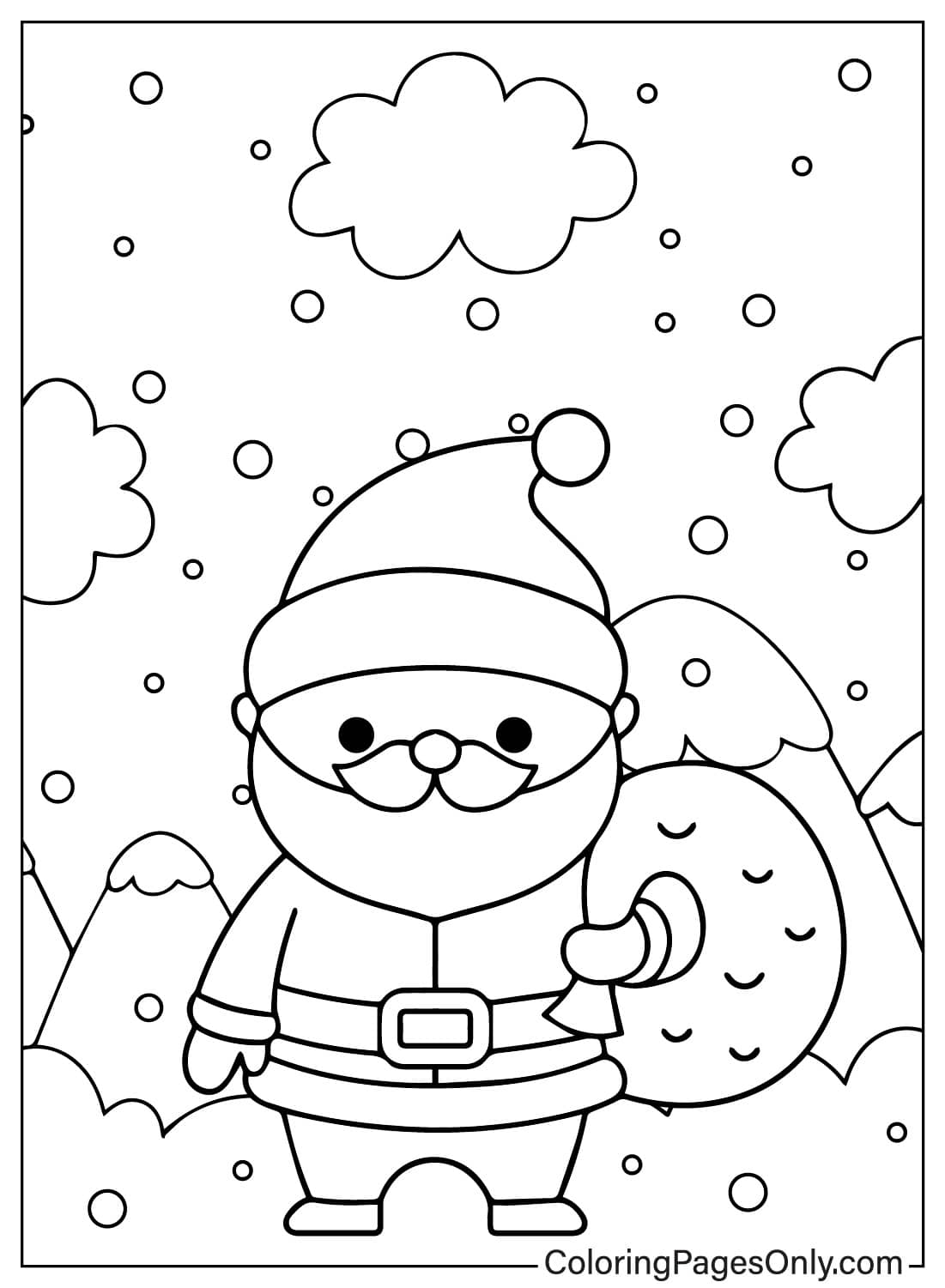
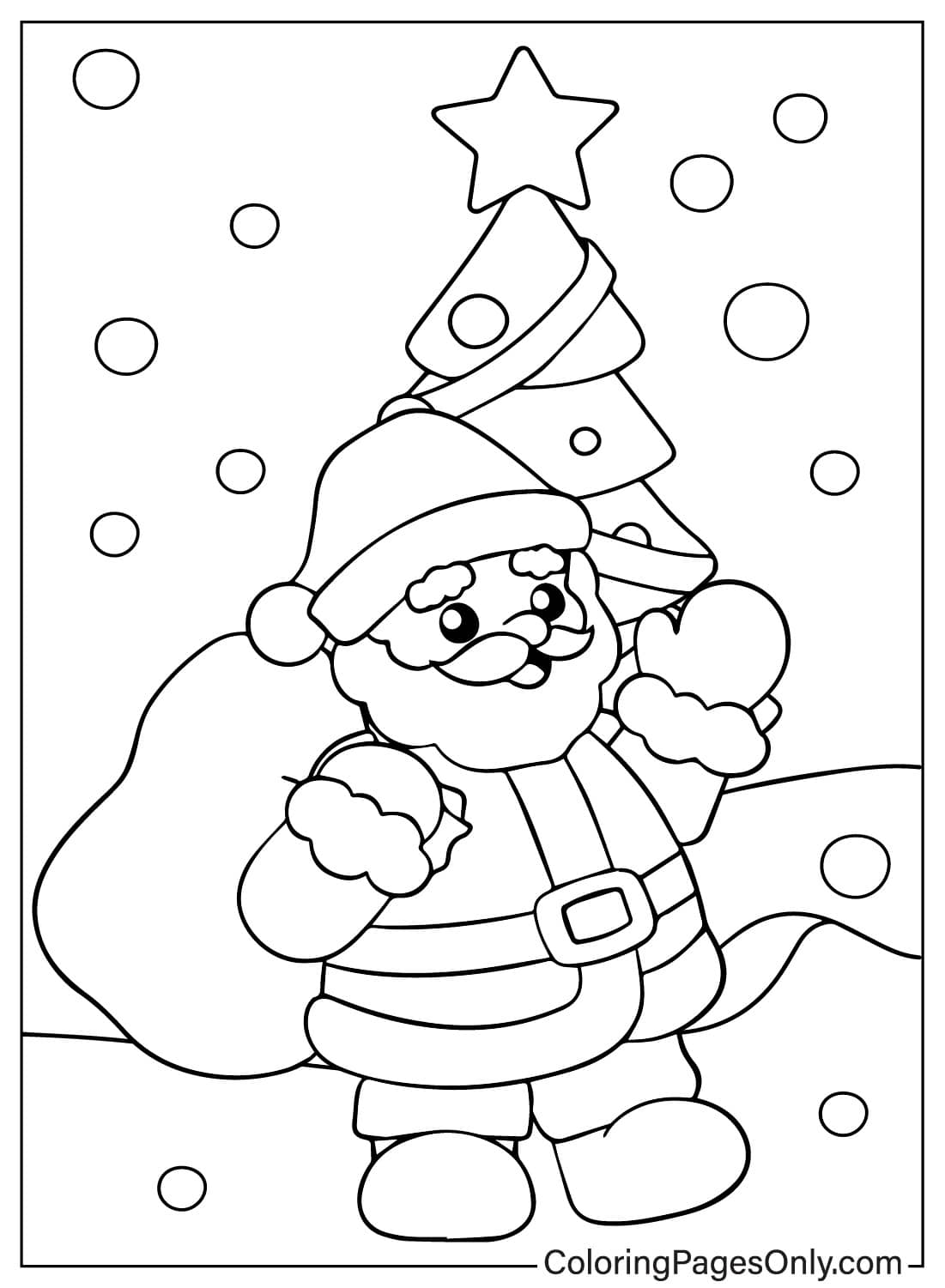
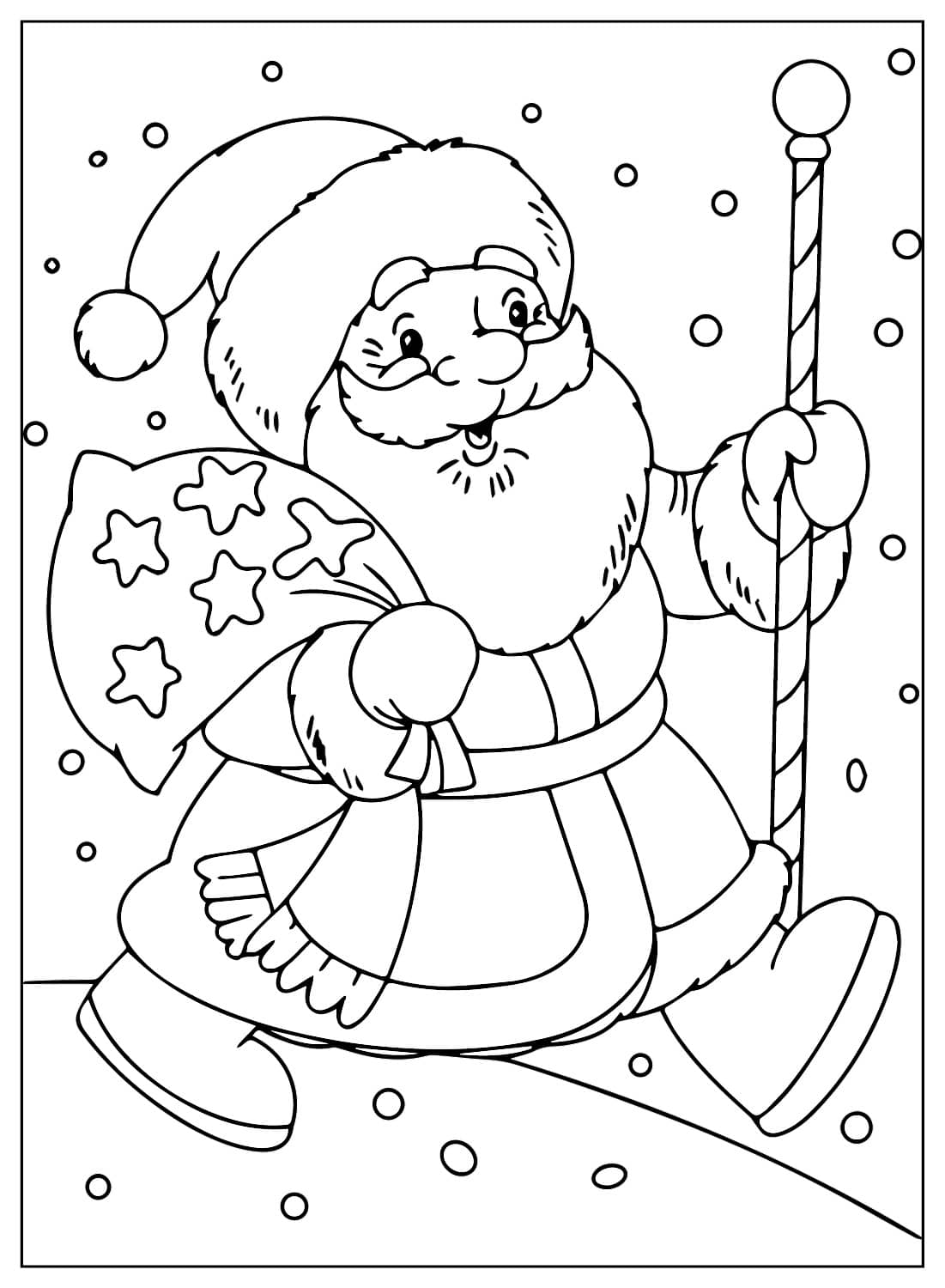
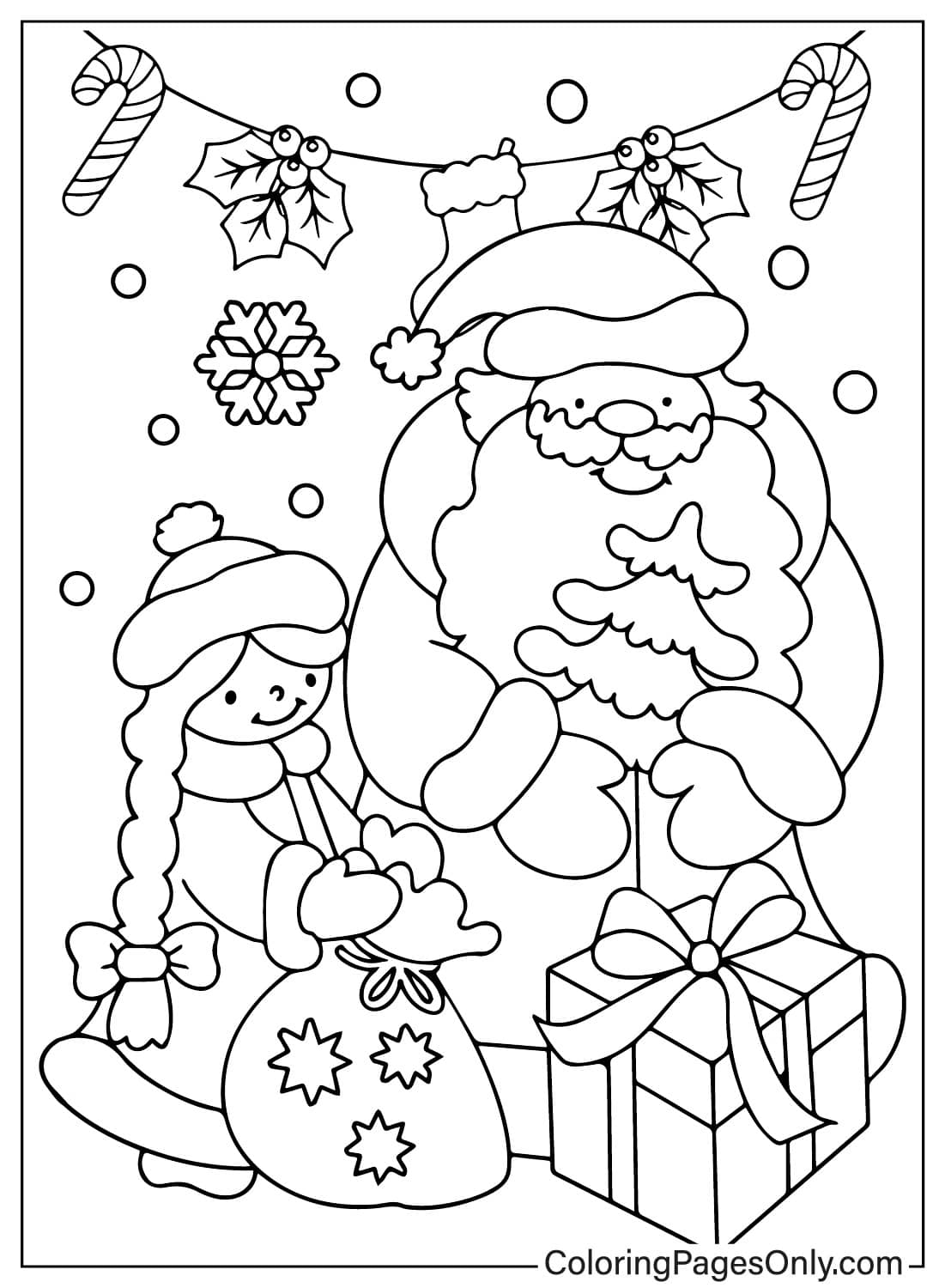
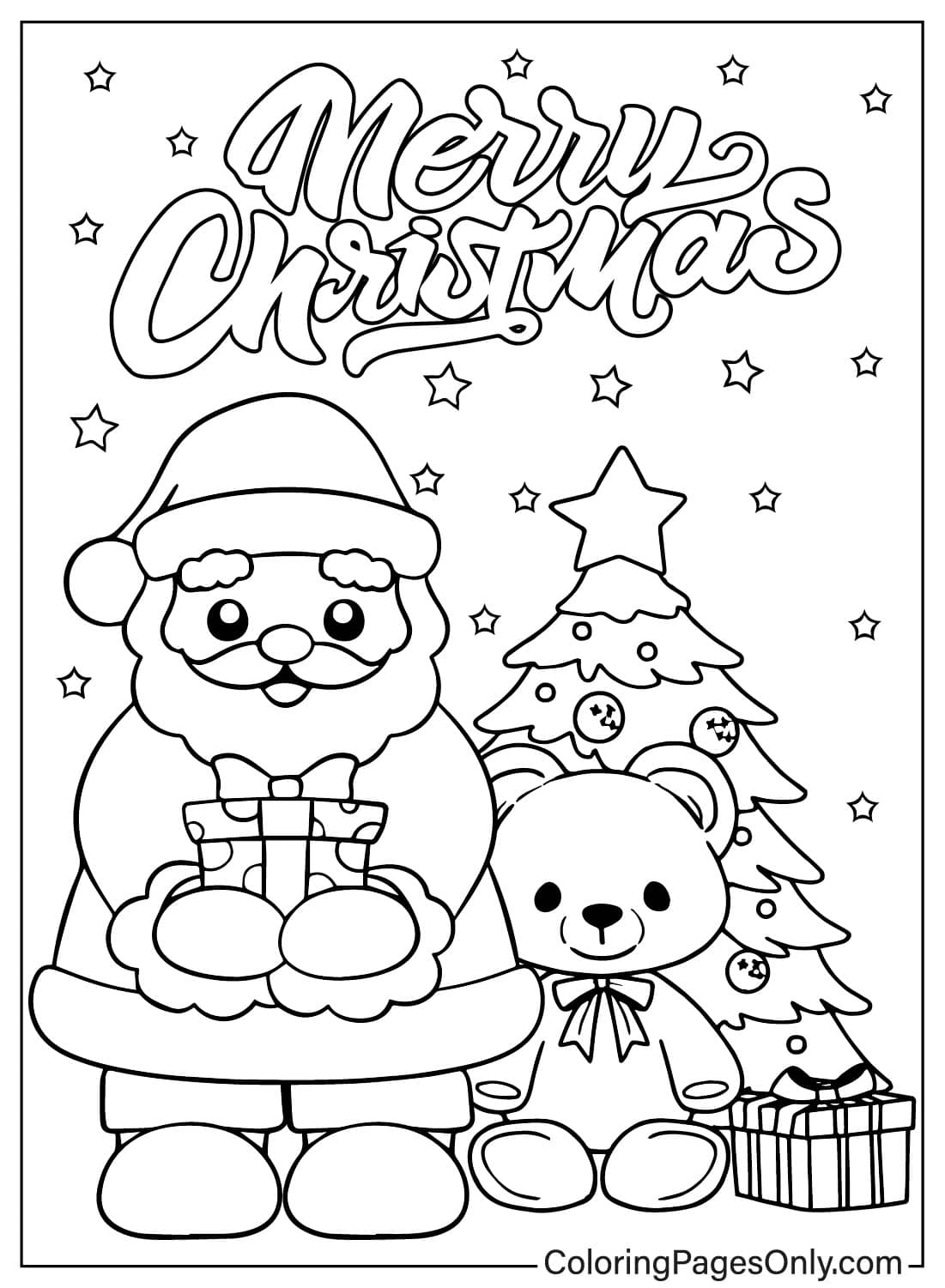
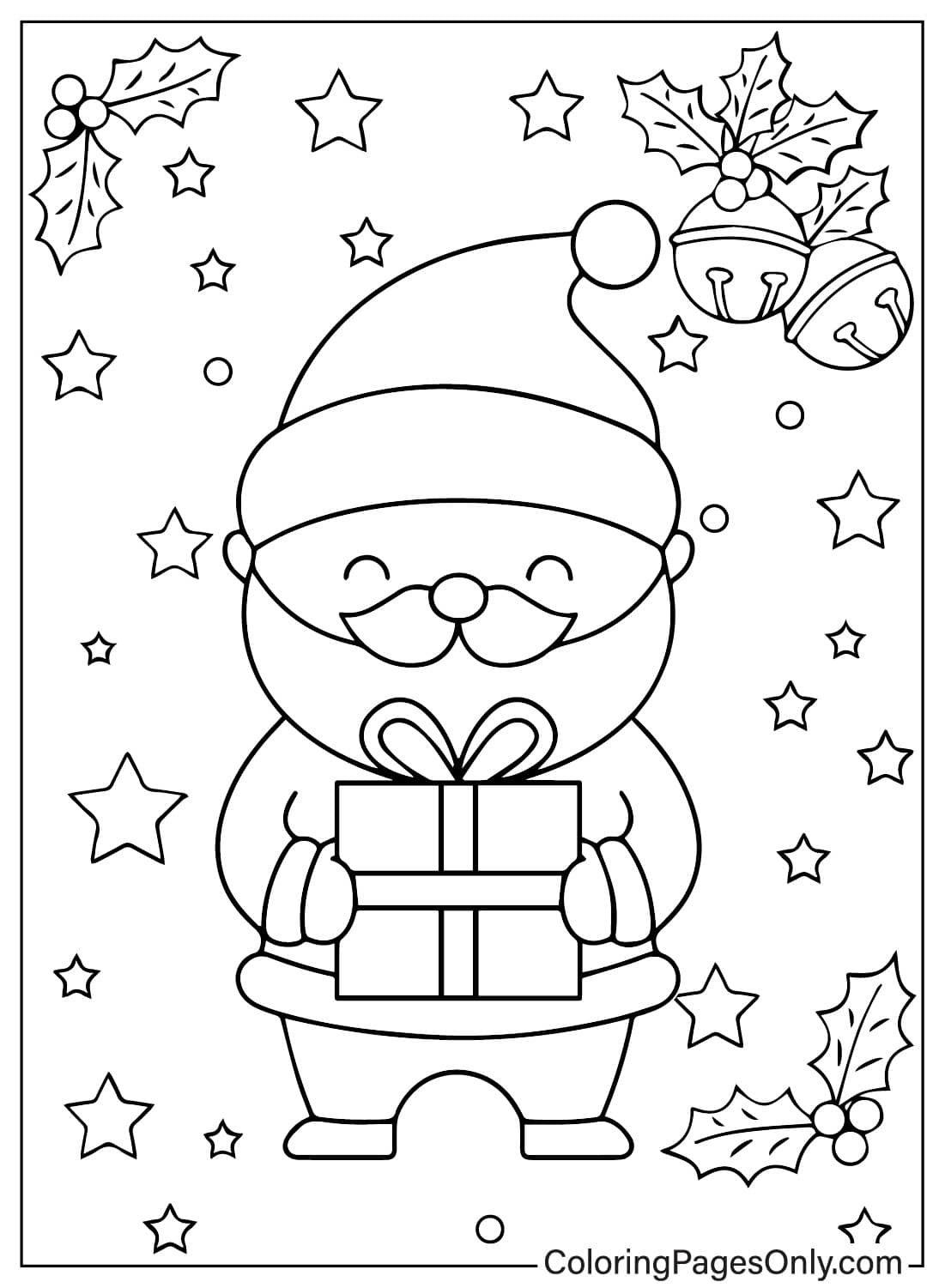
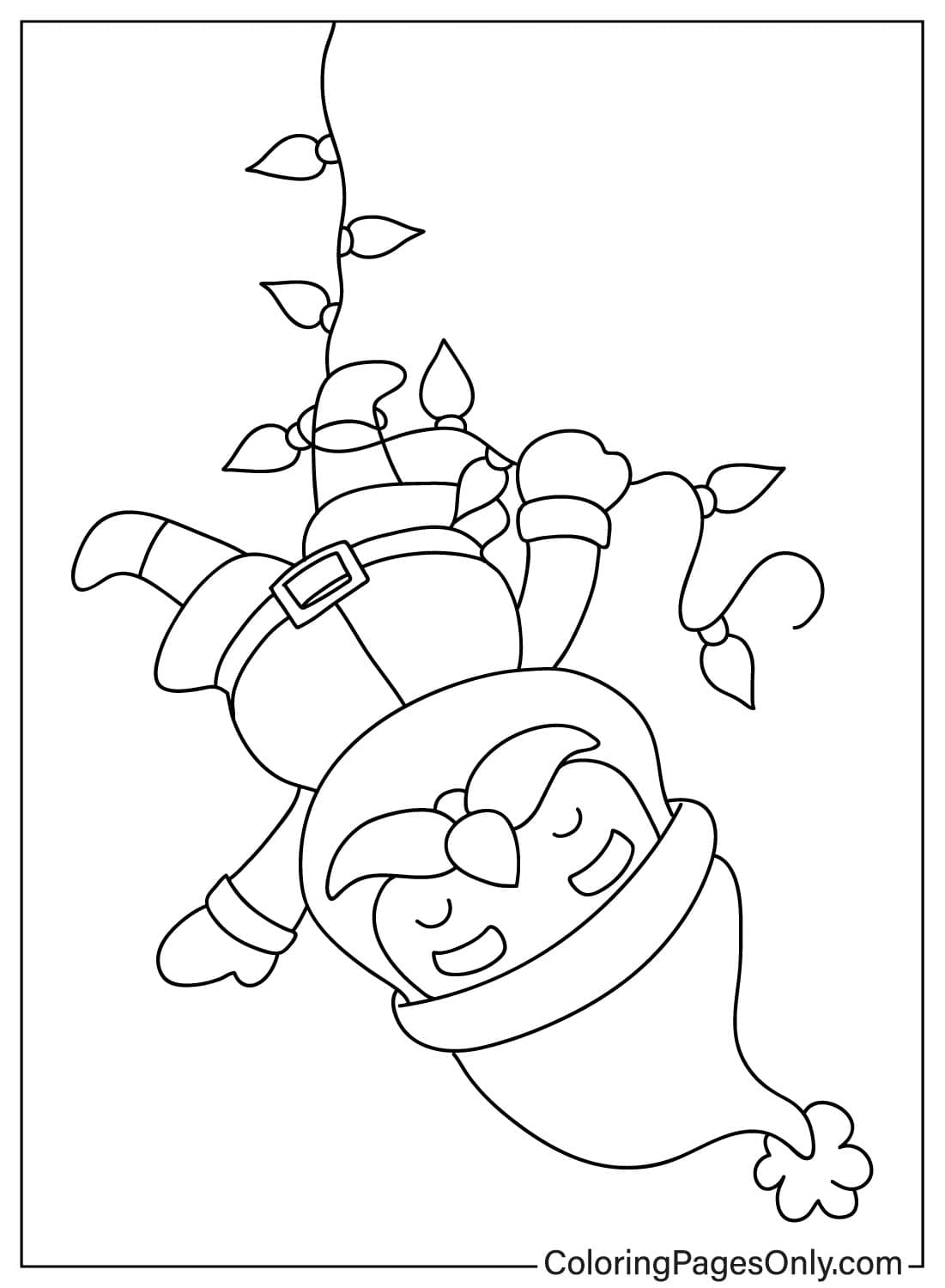
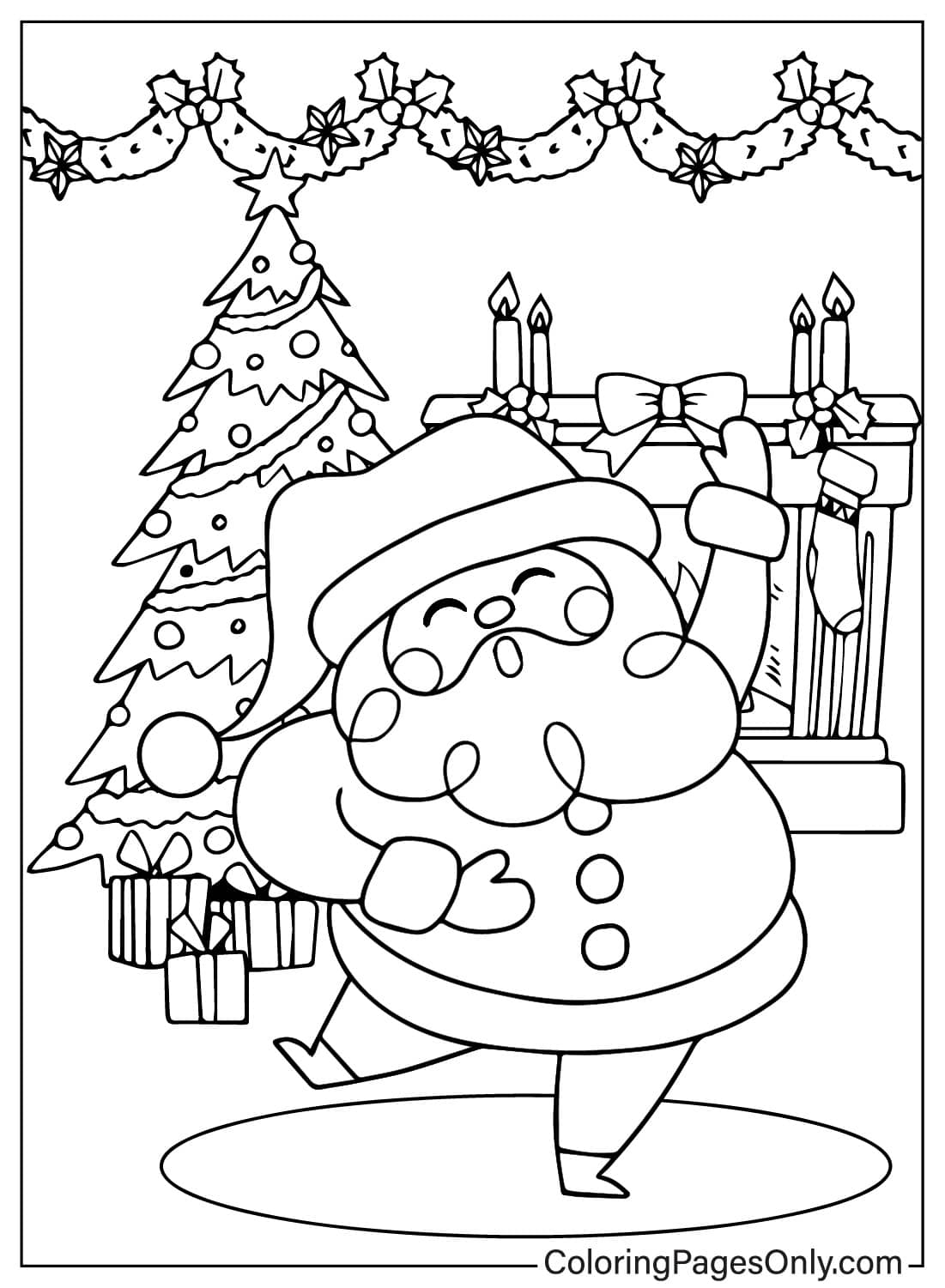
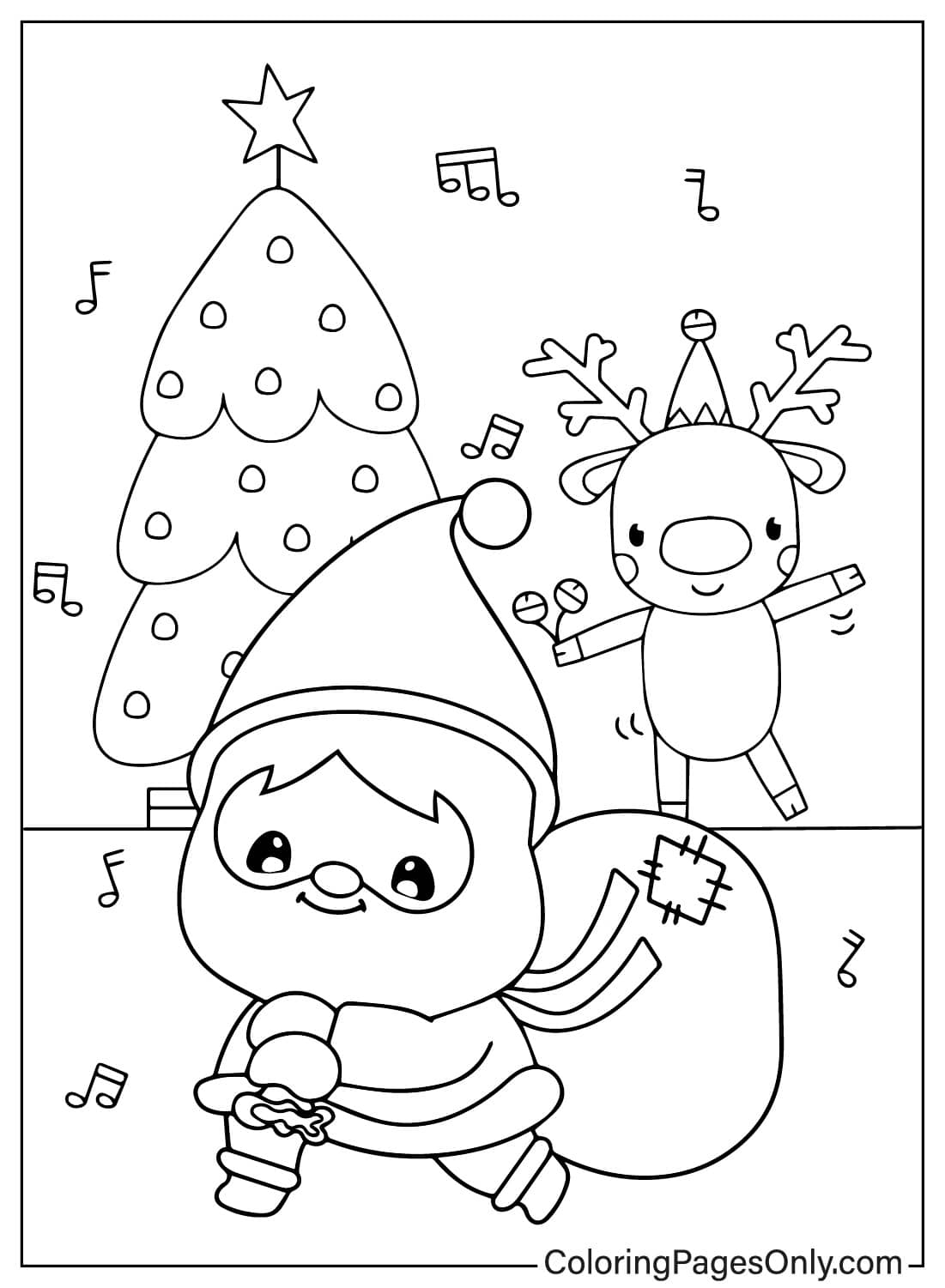
The standalone Santa pages form the collection’s foundation: “Cute Santa Claus,” “Christmas Santa Claus,” “Chibi Santa Claus,” “Cute Printable Santa Claus,” “Printable Santa Claus,” “Happy Santa Claus on Christmas,” and related single-figure designs. These pages focus entirely on Santa’s canonical appearance: the red suit with white fur trim, the black belt and boots, the white beard, and the hat with white pompom. They are the collection’s most direct entry point for any age group.
Coloring the Santa suit: Santa’s suit is red, a deep, slightly warm crimson, not standard fire-engine red. The fur trim is clean white. The belt and boots are black. These three elements define every Santa page in the collection. The technique for building depth and texture across all three is in the How to Color section below.
Christmas Eve Delivery Scenes
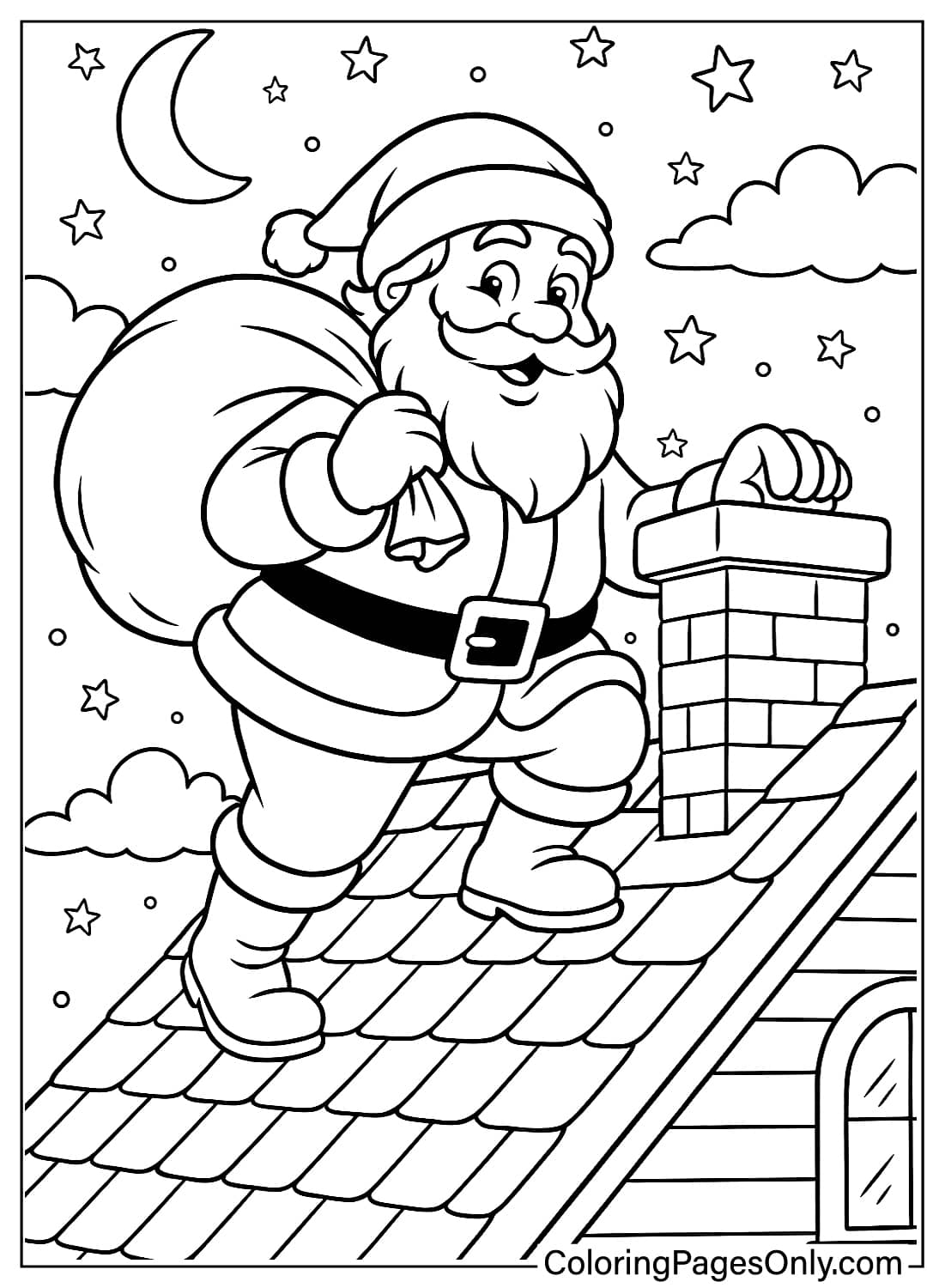
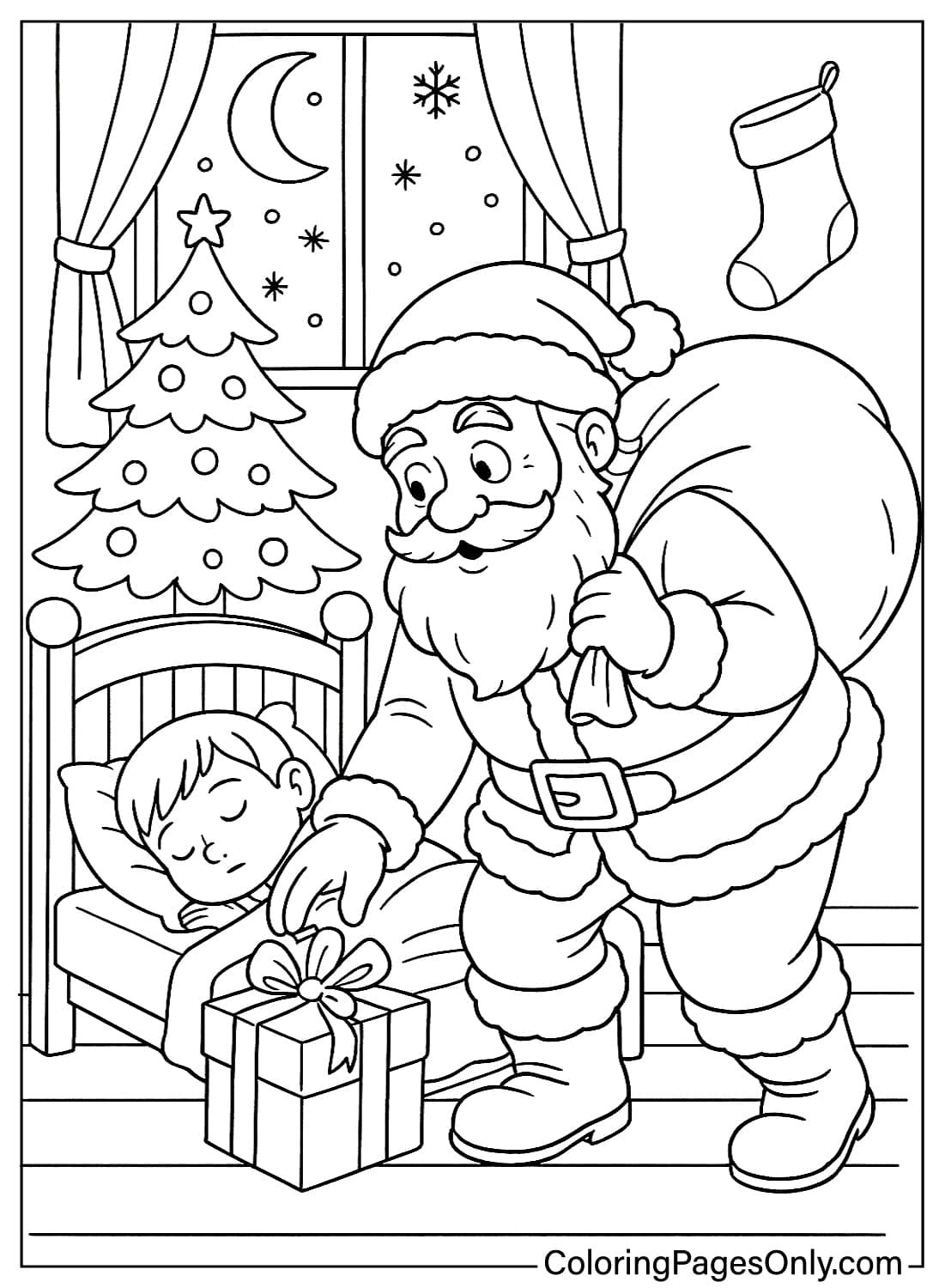
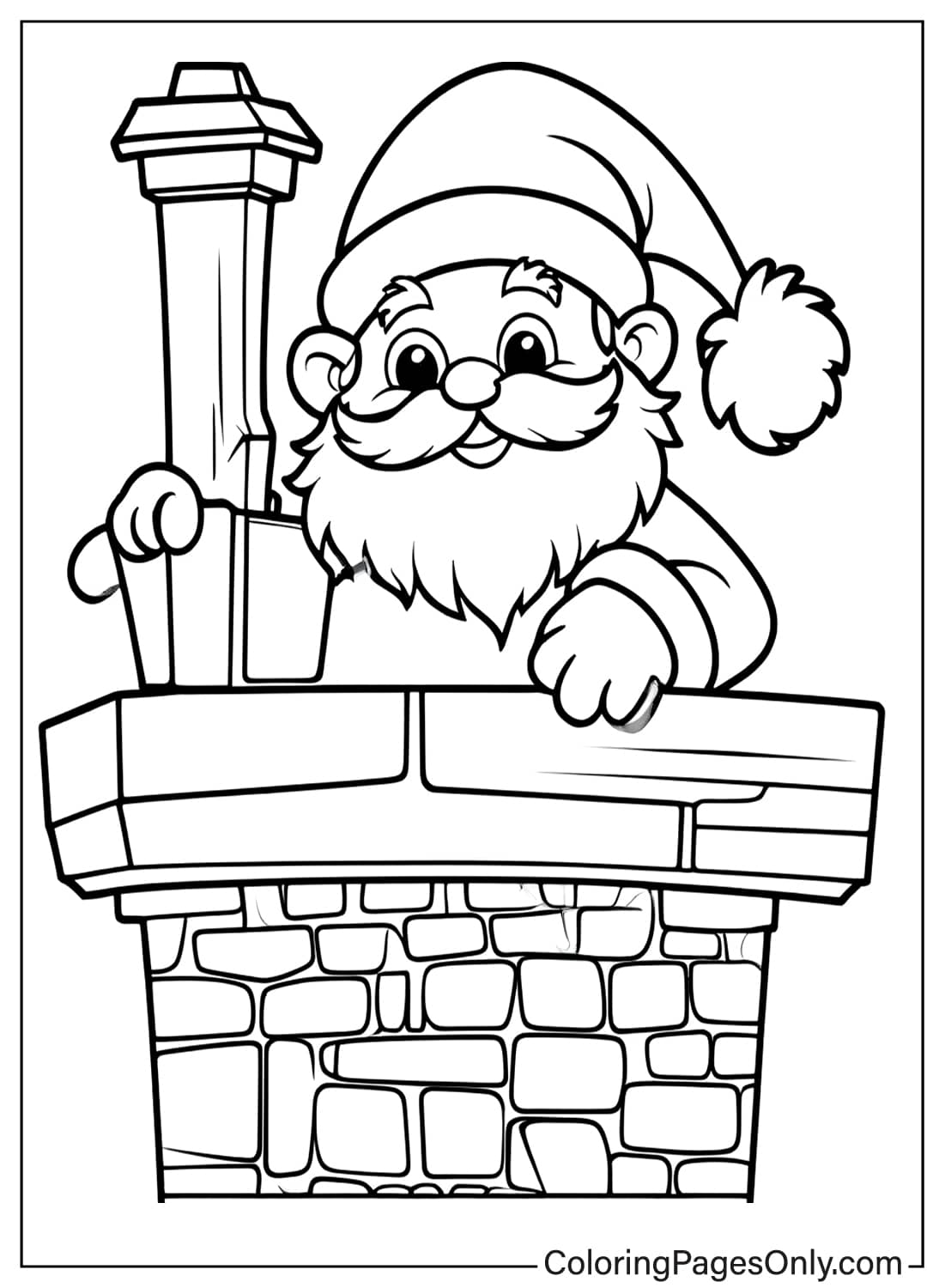
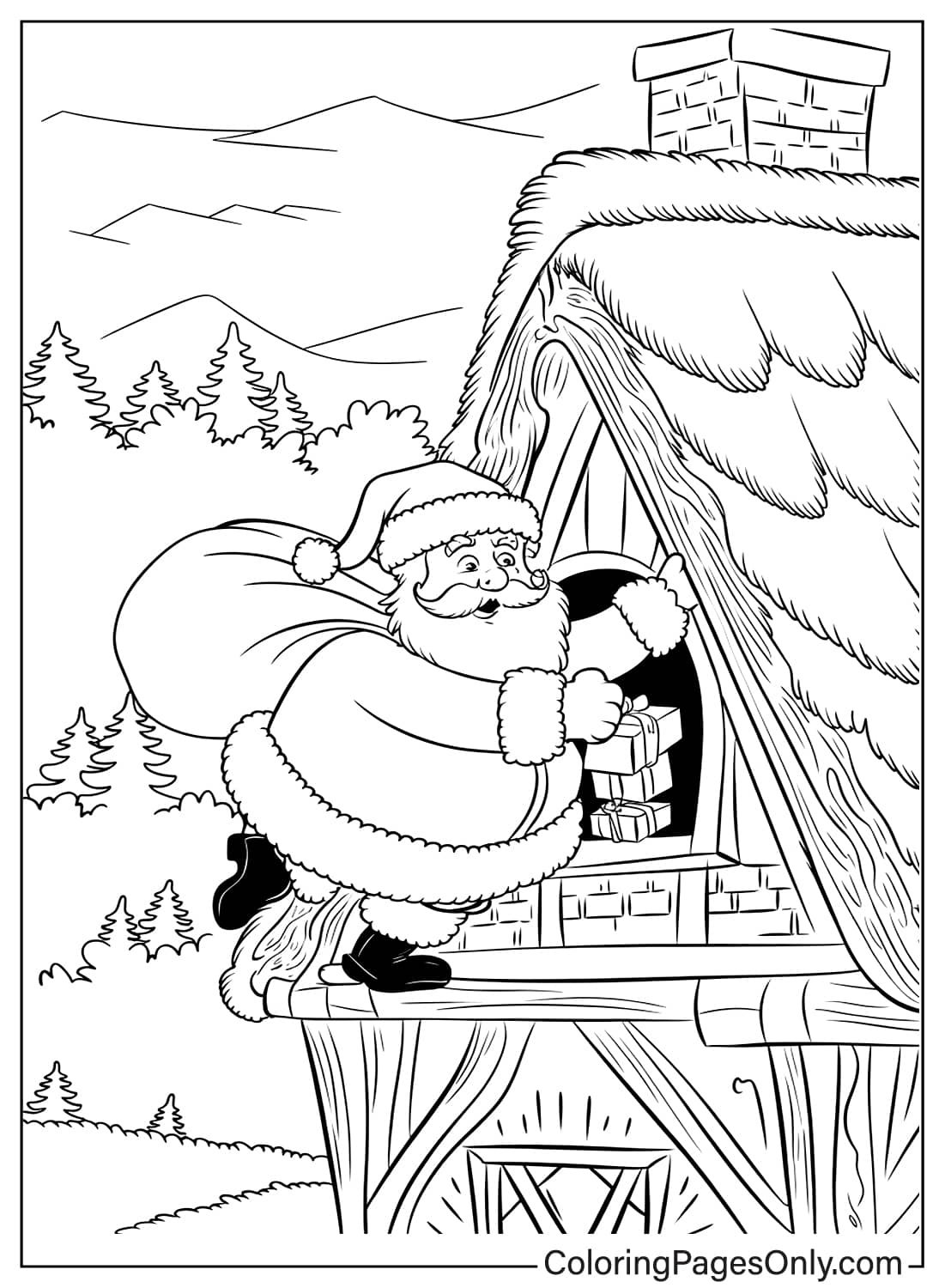
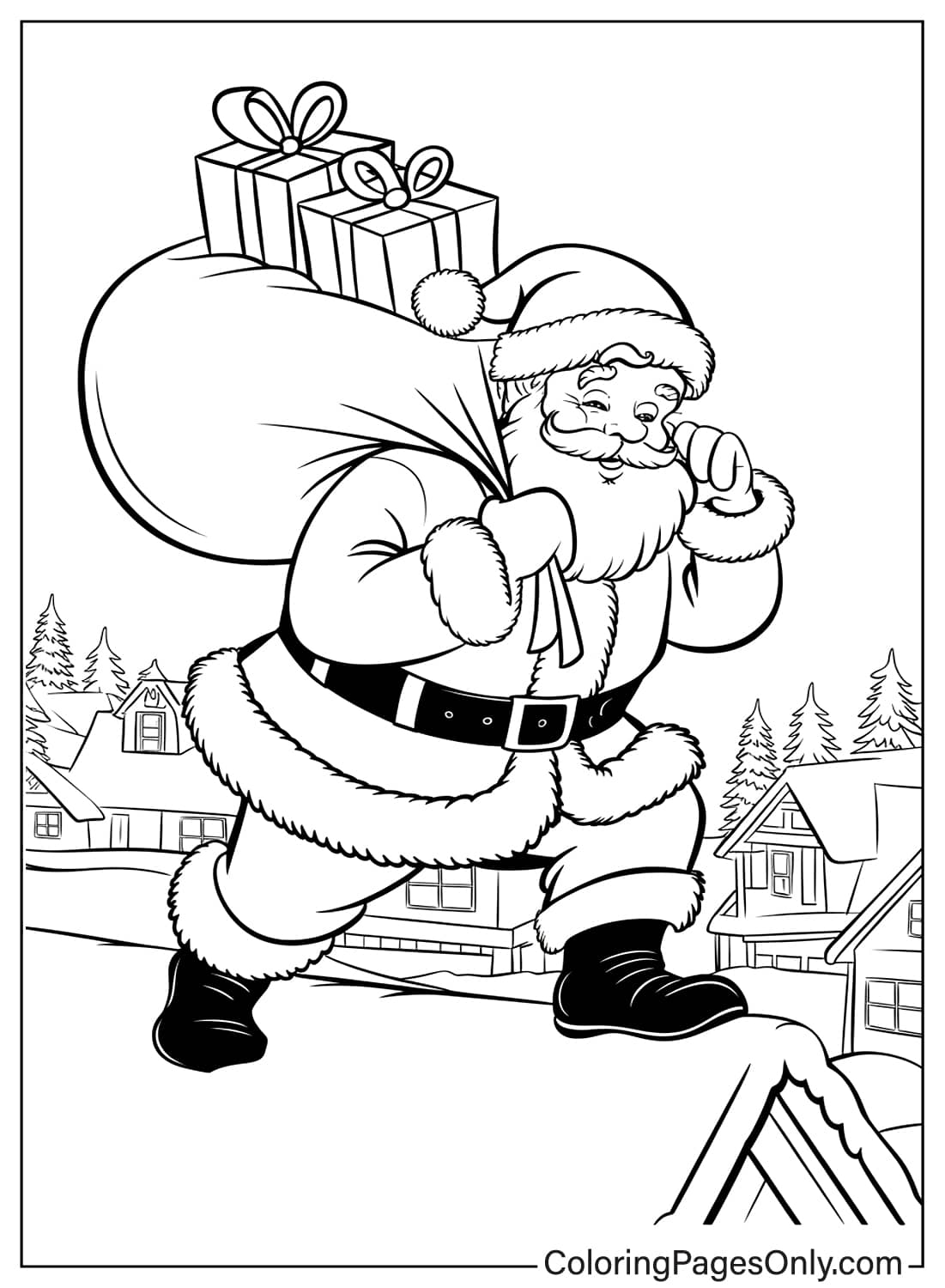
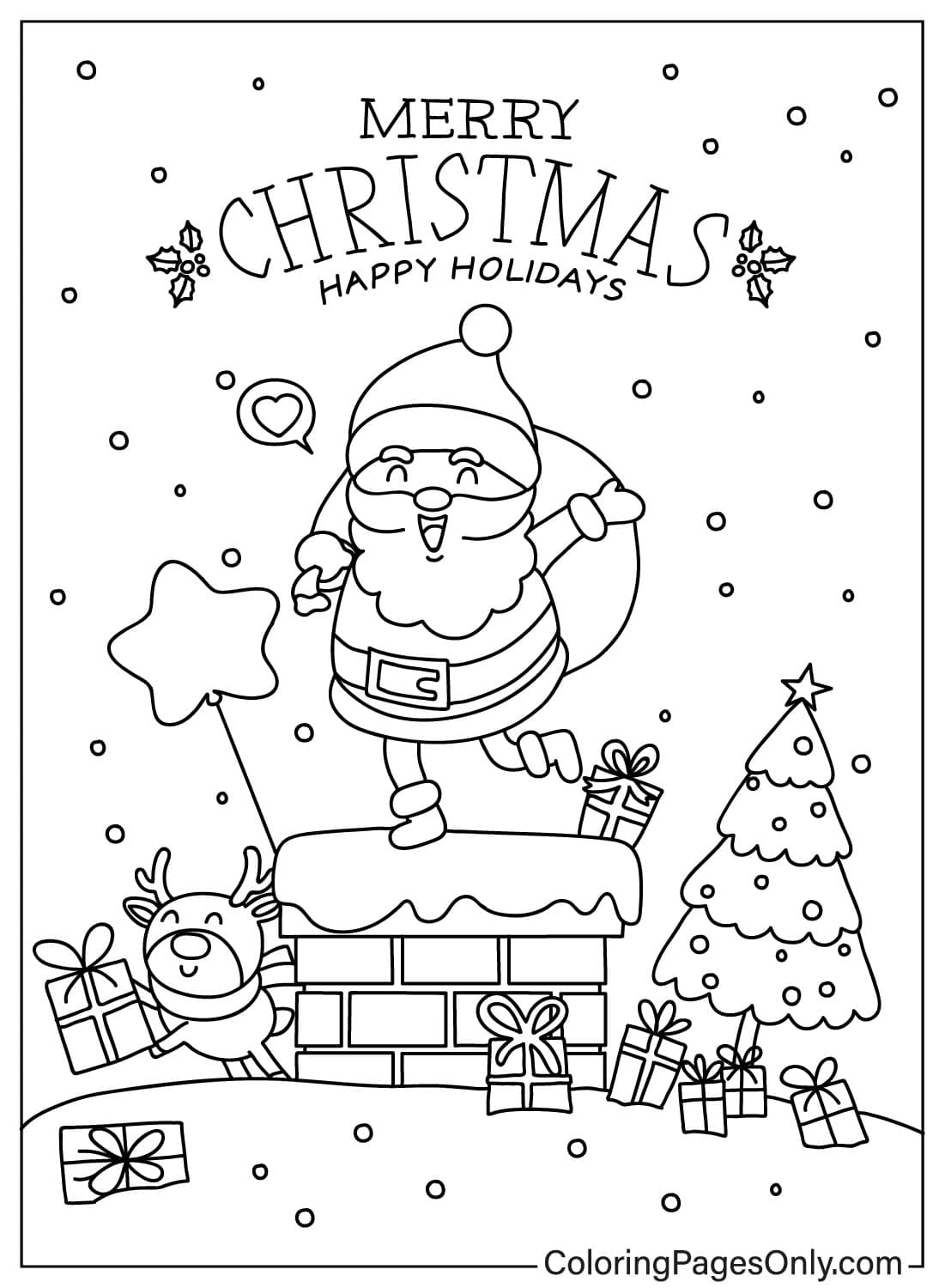
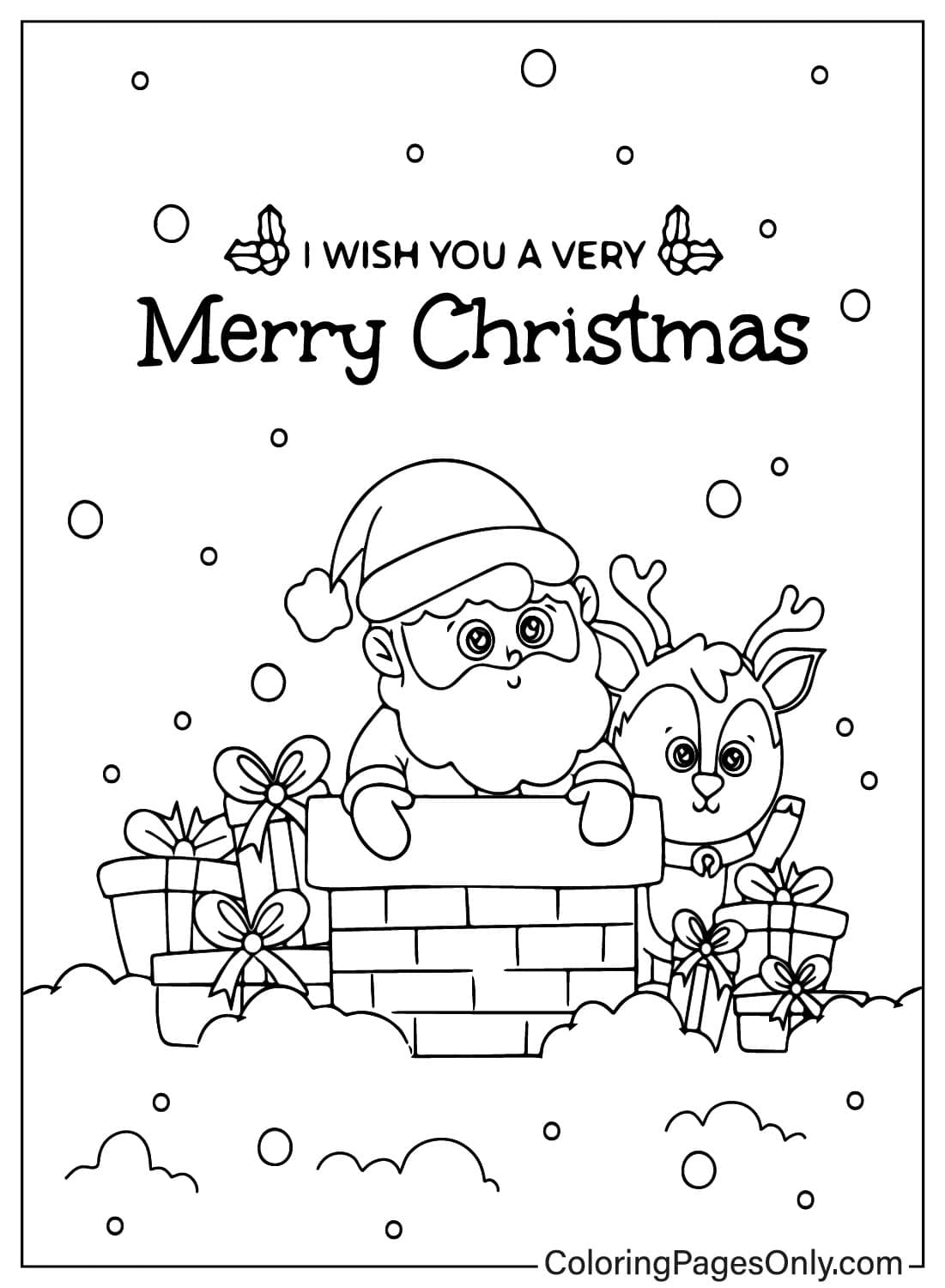
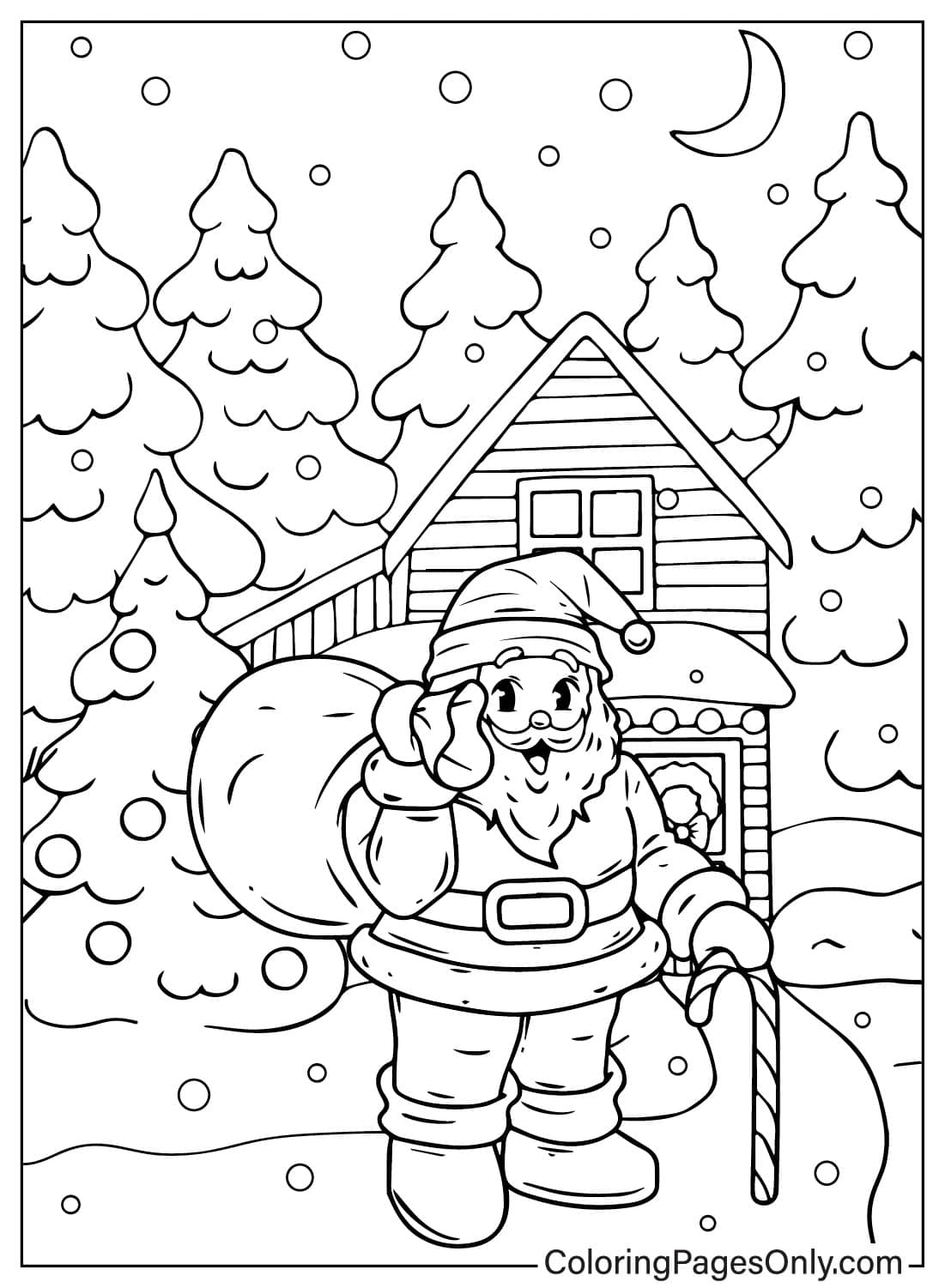
“Santa Claus Delivers Gifts,” “Santa Claus Delivers Gifts on the Roof,” “Santa Claus on Roof Chimney Coloring Page,” “Santa Coming Out of Chimney,” “Santa Claus Giving Gift Sleeping Child Coloring Page,” and “Santa Claus On Christmas Eve” cover the central narrative of December 24: the arrival, the chimney descent, the placement of gifts beside the sleeping household. The chimney tradition appears in the 1823 Clement Clarke Moore poem, which describes Santa coming down the chimney and filling stockings by the fireplace.
Coloring Christmas Eve scenes: Snow on rooftops reads as clean white with very light blue-grey in the deeper shadow areas and the hollows between shingles. The interior light visible through the windows is warm golden-yellow, distinctly different from the cool dark exterior. This warm-cool contrast is what gives night delivery pages their characteristic atmosphere: warm inside, cold outside, Santa arriving from the darkness. The technique for handling the night sky background is covered in the How to Color section below.
Santa with Reindeer and Sleigh
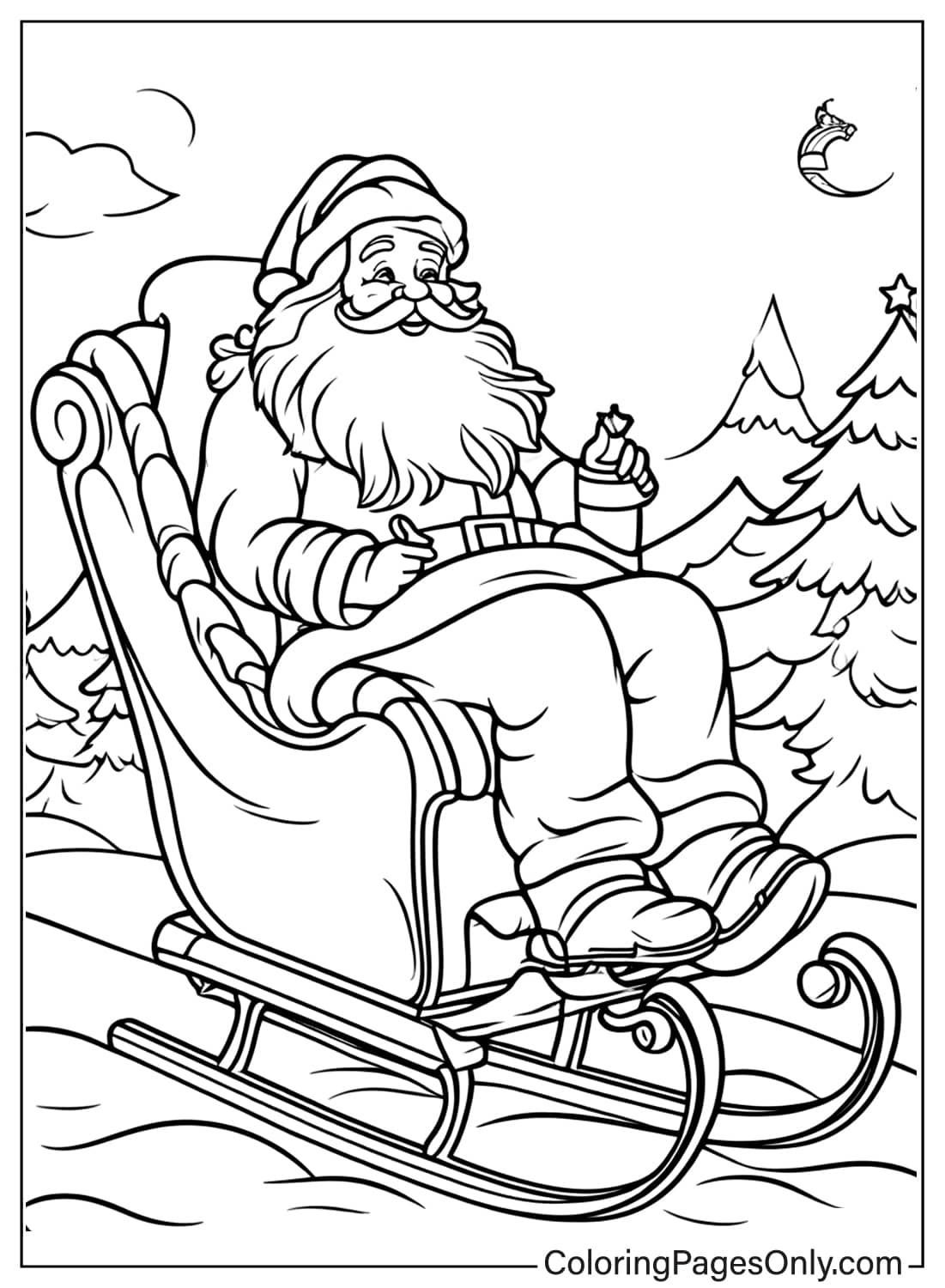
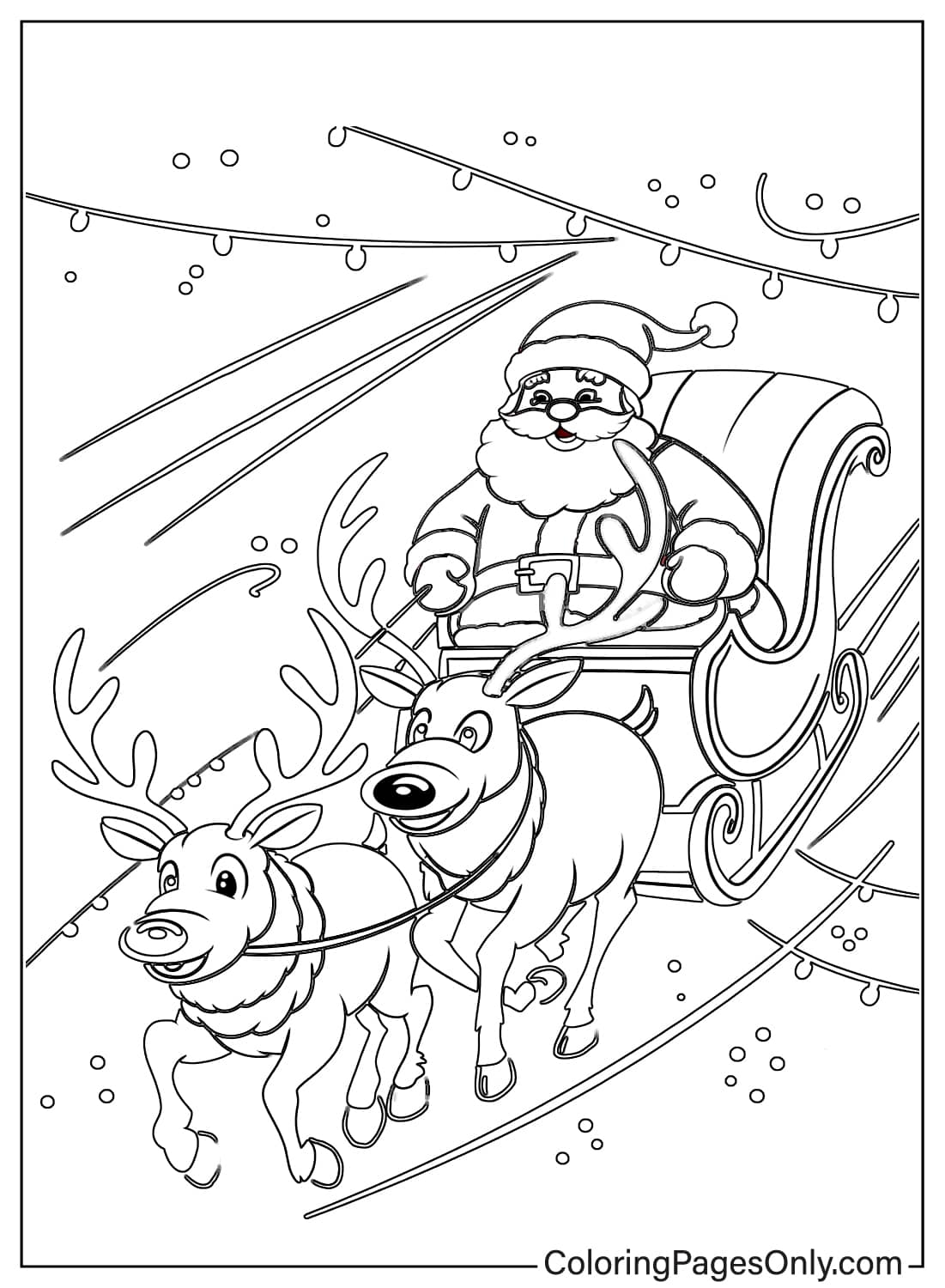
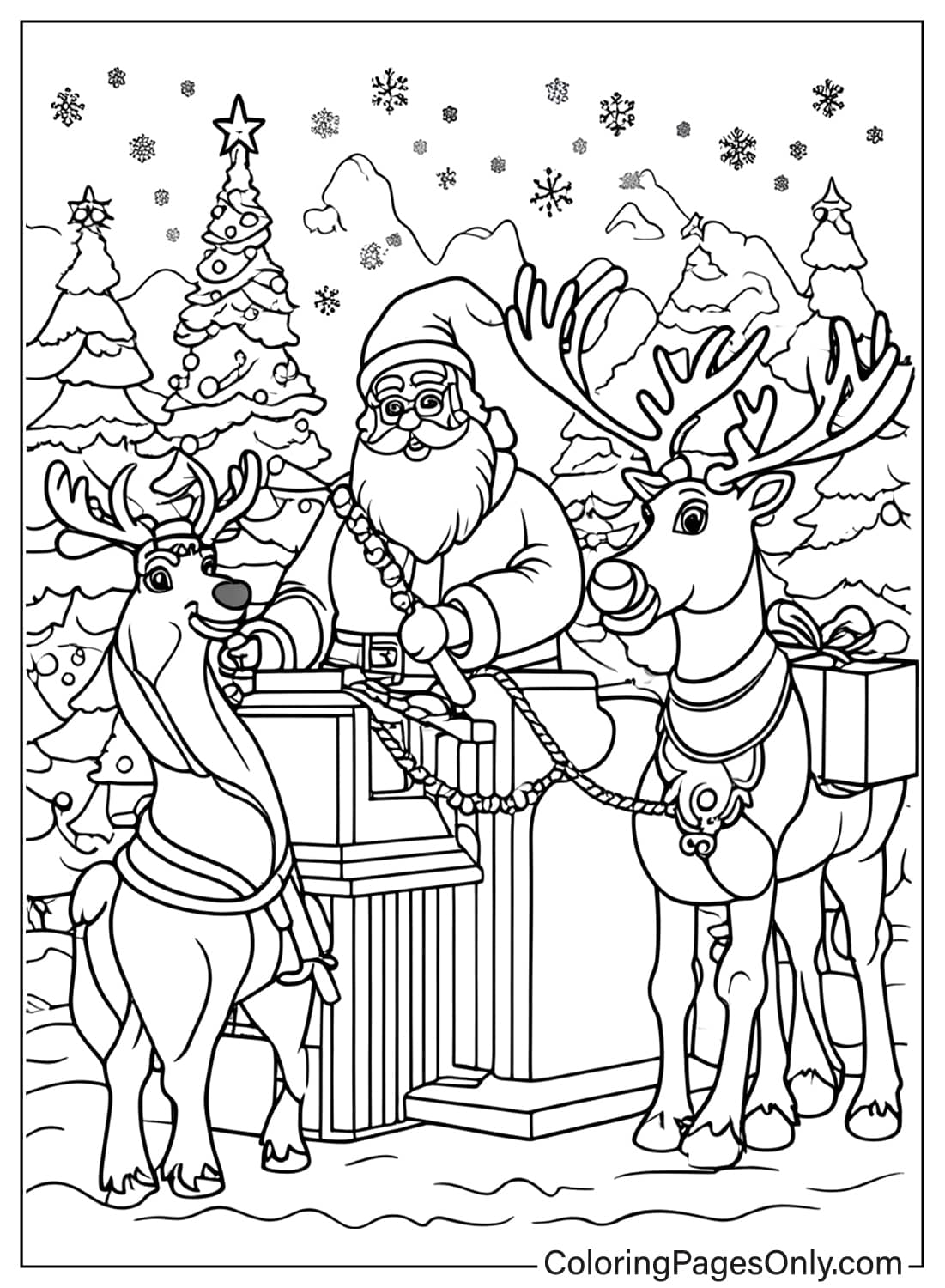
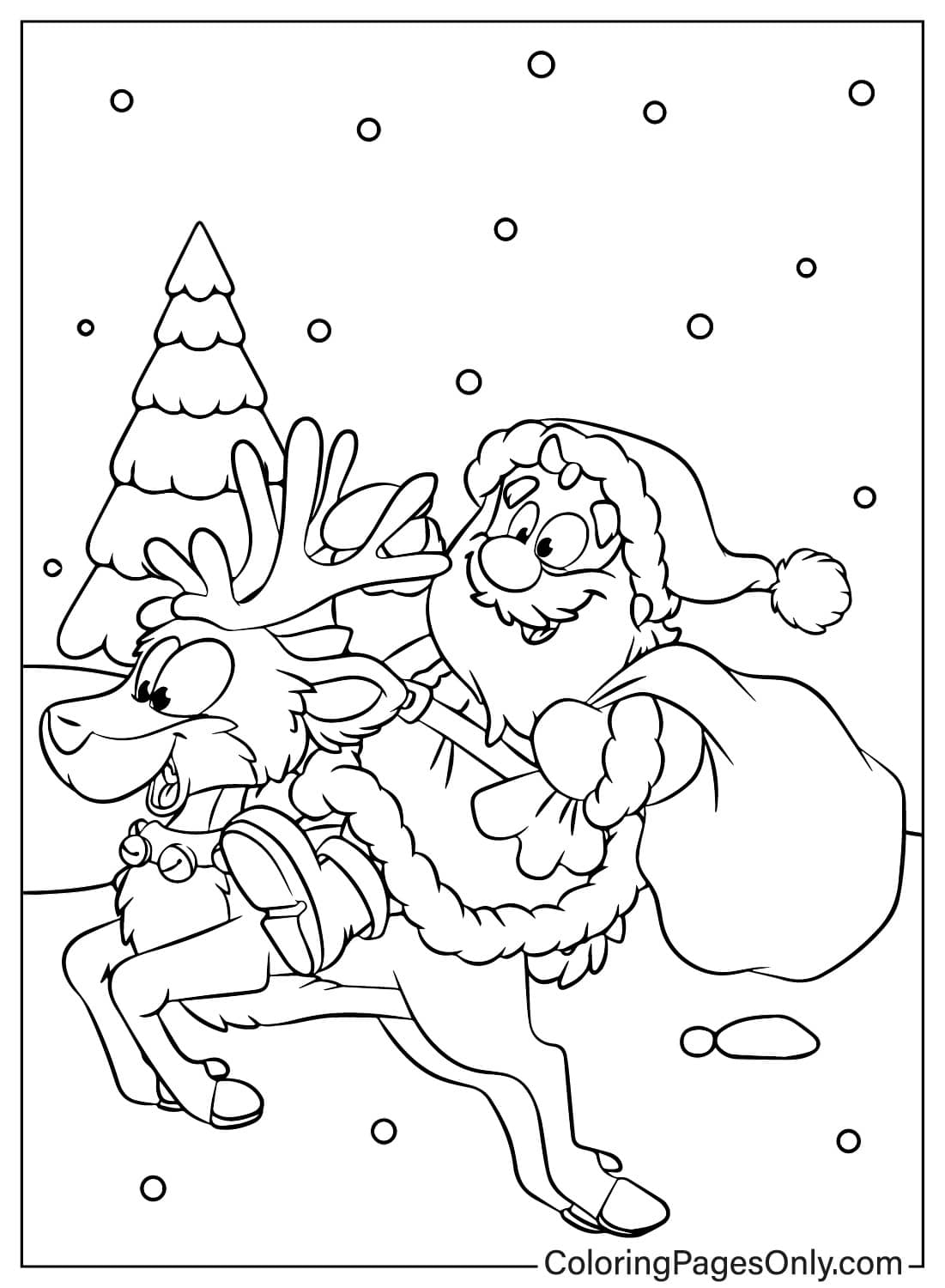
“Santa Claus and His Sleigh,” “Santa Claus and Reindeer,” “Santa Claus Sitting on a Sleigh,” “Santa Claus Riding a Reindeer,” and “Small Santa Claus and Reindeer” place Santa in his traditional mode of transport. The sleigh is conventionally shown in deep red, matching Santa’s suit and establishing visual unity across the image. The flying reindeer who pull it include, since Robert L. May’s 1939 addition, Rudolph at the front.
Coloring sleigh and reindeer pages: The reindeer body color is warm medium brown, consistent across all eight (or nine) animals. The harness connecting them is dark brown leather with warm gold metal fittings. The sleigh, conventionally deep red lacquer, should be kept darker than Santa’s suit: a deeper burgundy, almost maroon, rather than the same mid-red. This subtle difference between suit and sleigh prevents them from reading as a single undifferentiated red mass. The sack of gifts overflowing the sleigh shows colorful wrapped packages: bright primaries against each other, with bows and ribbons providing additional color contrast.
Santa’s Workshop and the Elves
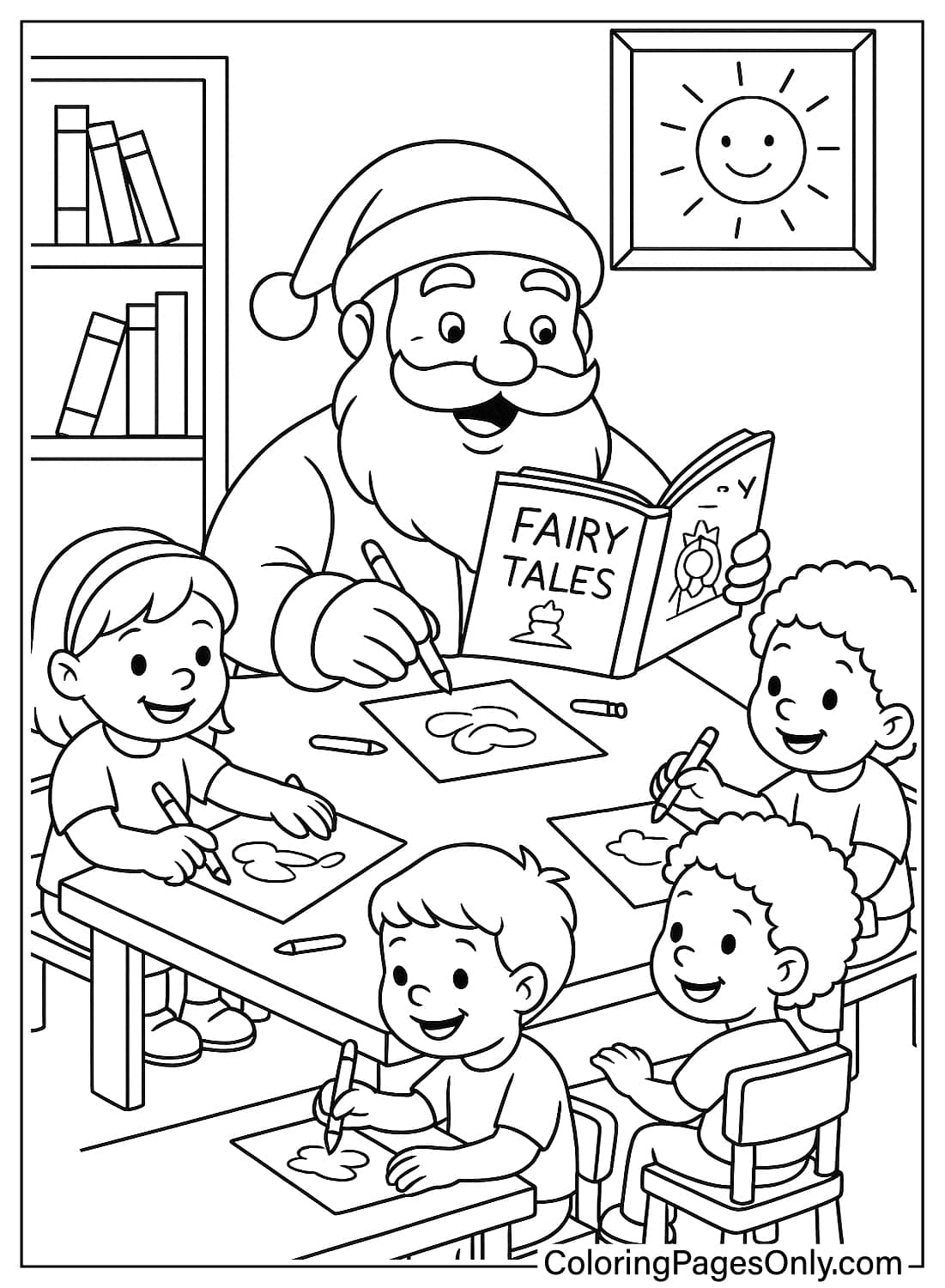
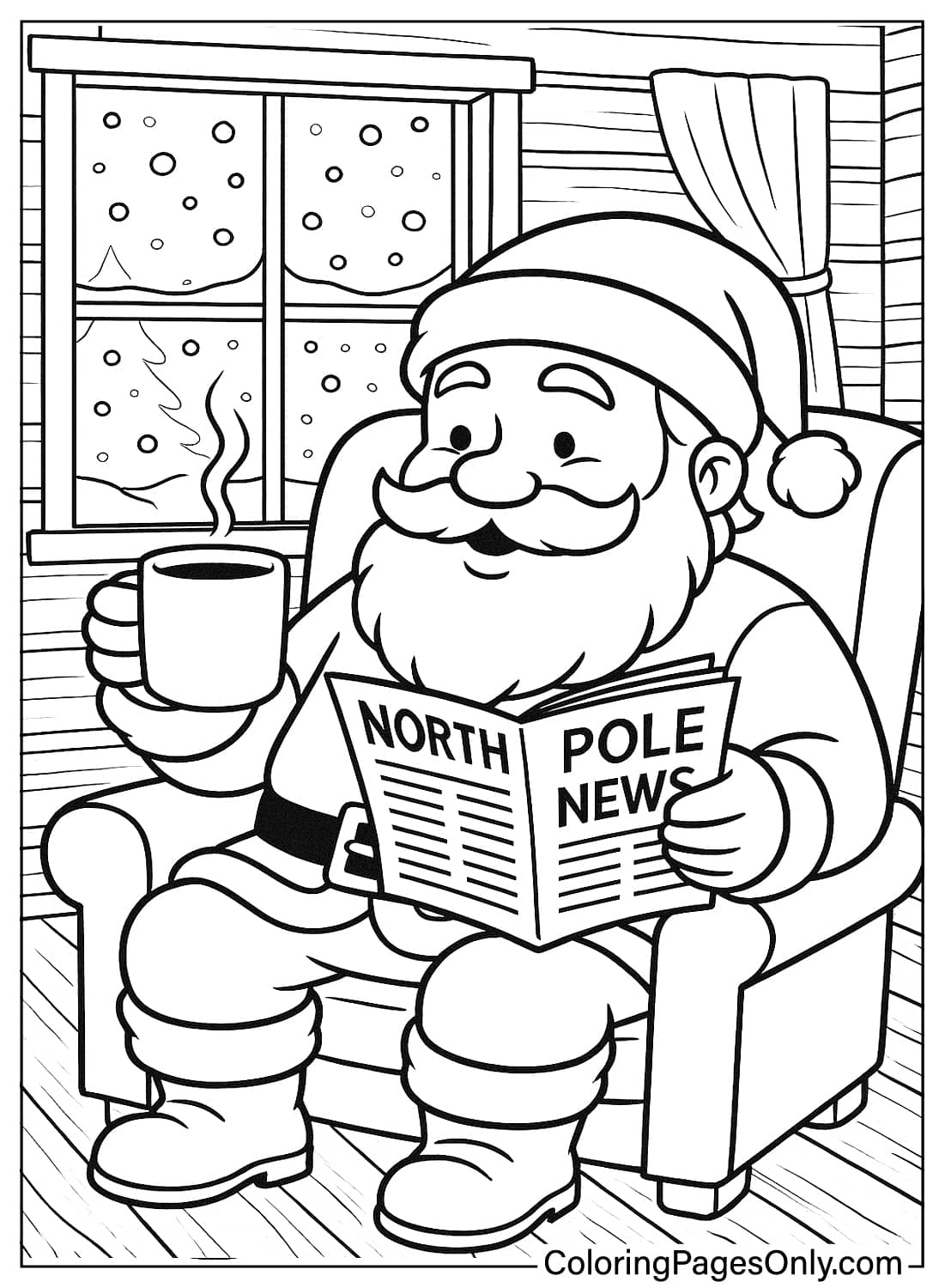
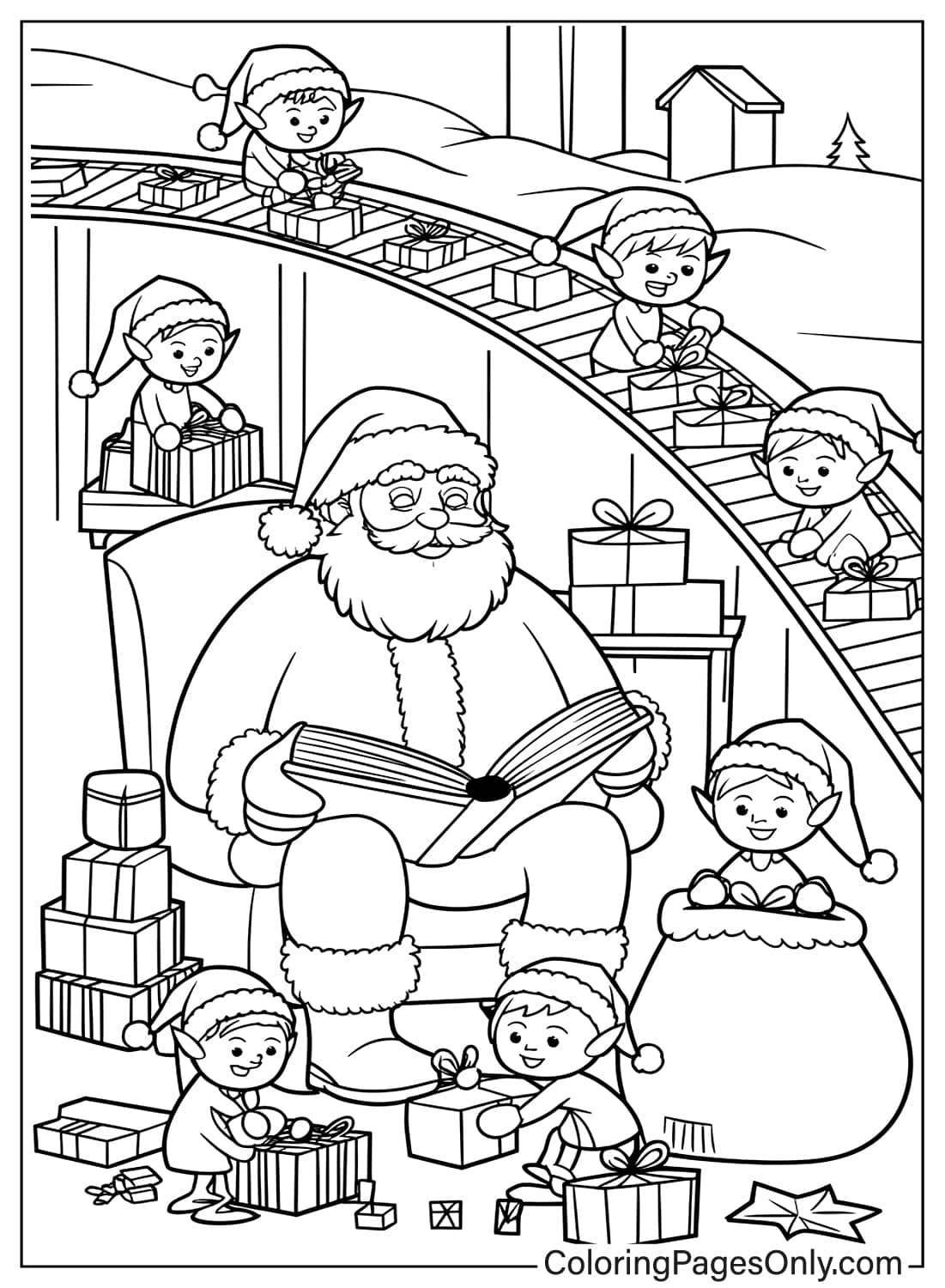
“Santa Claus and the Elves,” “Santa Claus Prepares Gifts for Kids,” “Santa Claus Reading Fairy Tales Children Coloring Page,” and “Santa Claus Reading North Pole News Coloring Page” show the North Pole’s domestic side: gift preparation, reading, resting, and the workshop environment with elves. The workshop setting as part of the Santa mythology traces to Thomas Nast’s nineteenth-century illustrations, which placed Santa in a toy-making environment long before the image became commercially standardized.
Coloring the workshop: The North Pole workshop is conventionally warm and well-lit: wooden walls, warm candlelight or firelight, and shelves of colorful toys. Elves are typically depicted in green with red trim, creating a complementary contrast to Santa’s red and white. The toy-covered shelves in workshop pages provide an opportunity to use the full color spectrum: a yellow duck beside a red fire truck beside a blue train. The armchair pages (“Santa reading”) work best with the chair in deep green or burgundy velvet and the fire in the background providing warm orange-gold light.
Santa’s Global Adventures
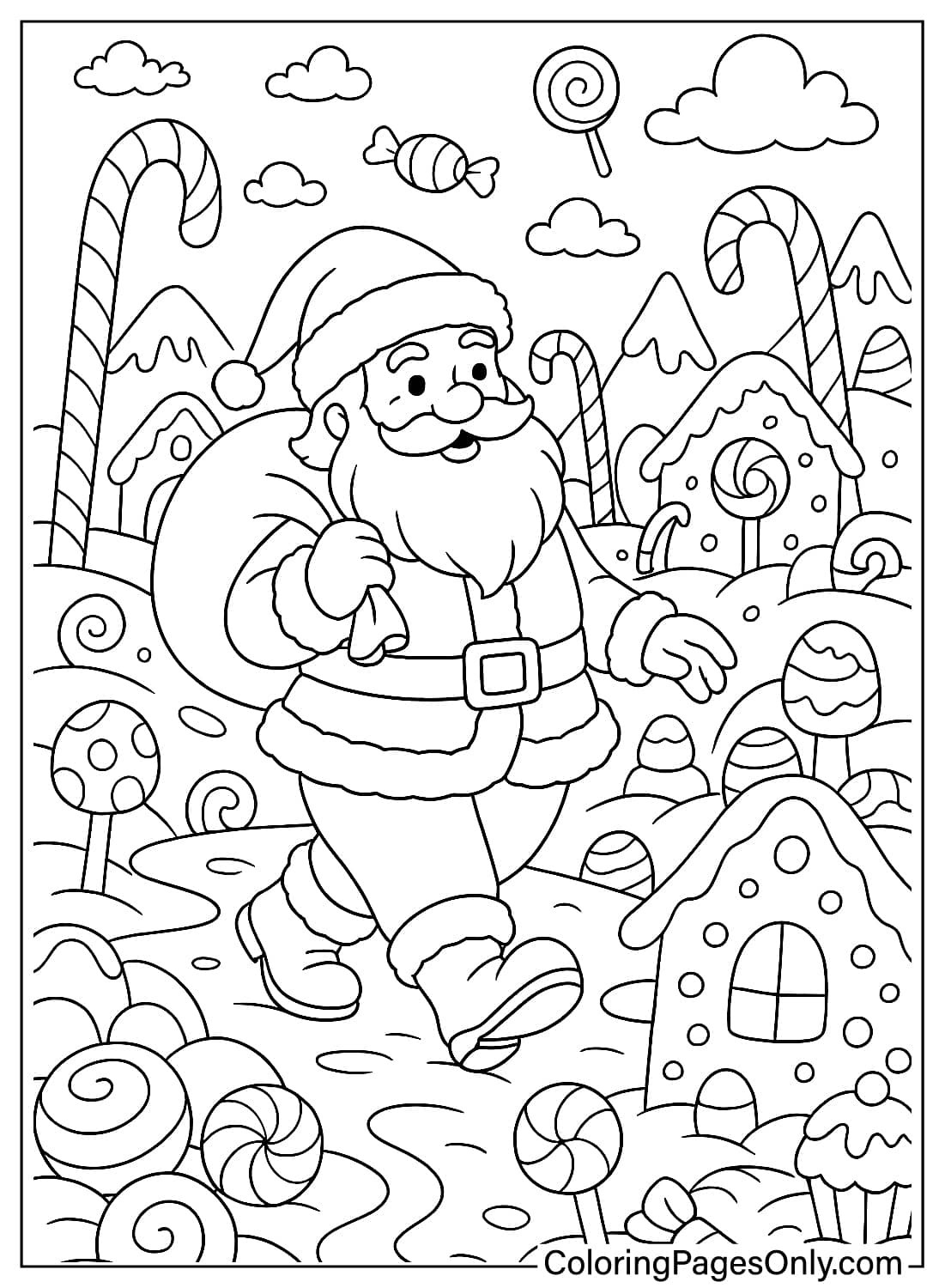
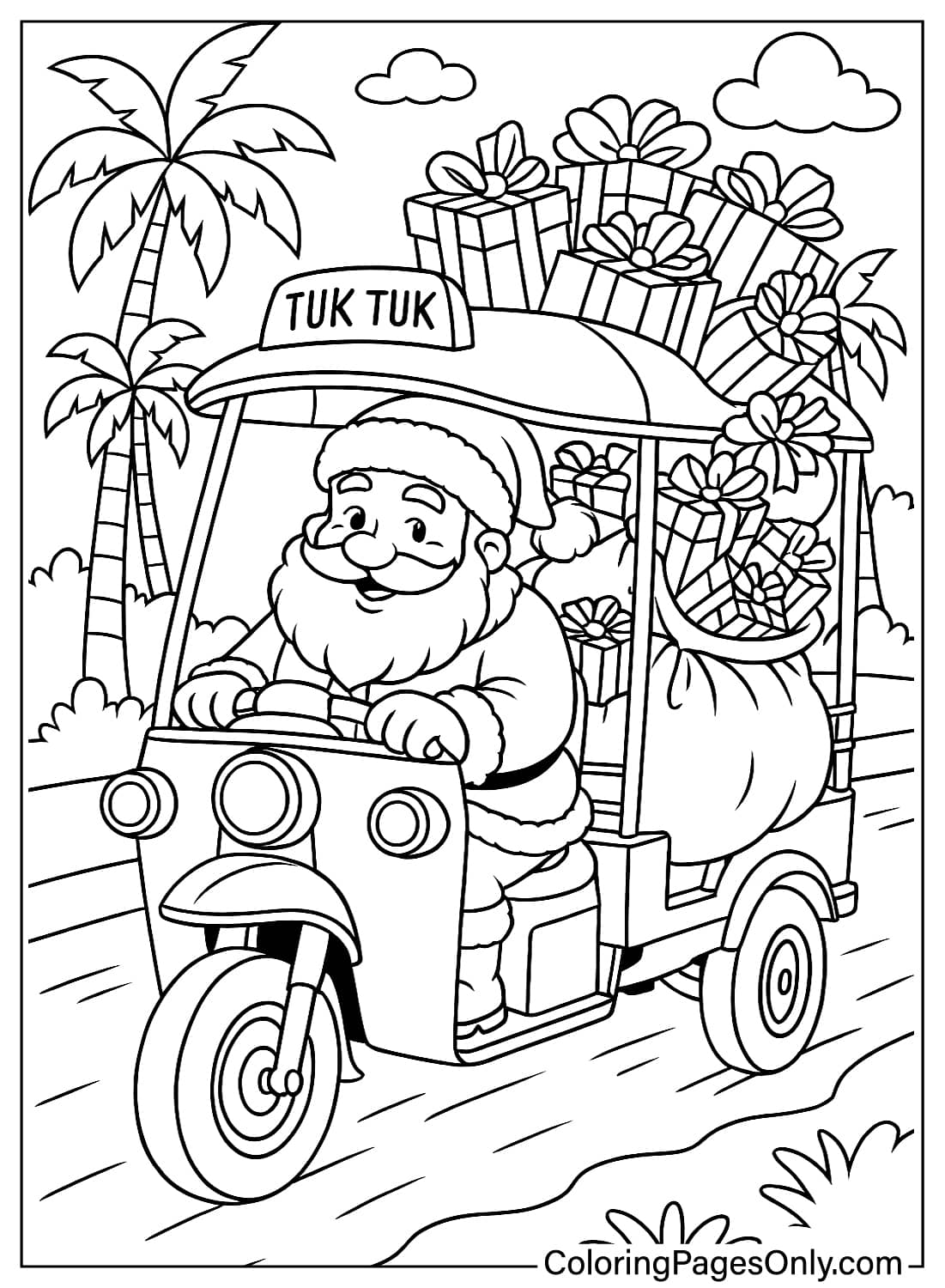
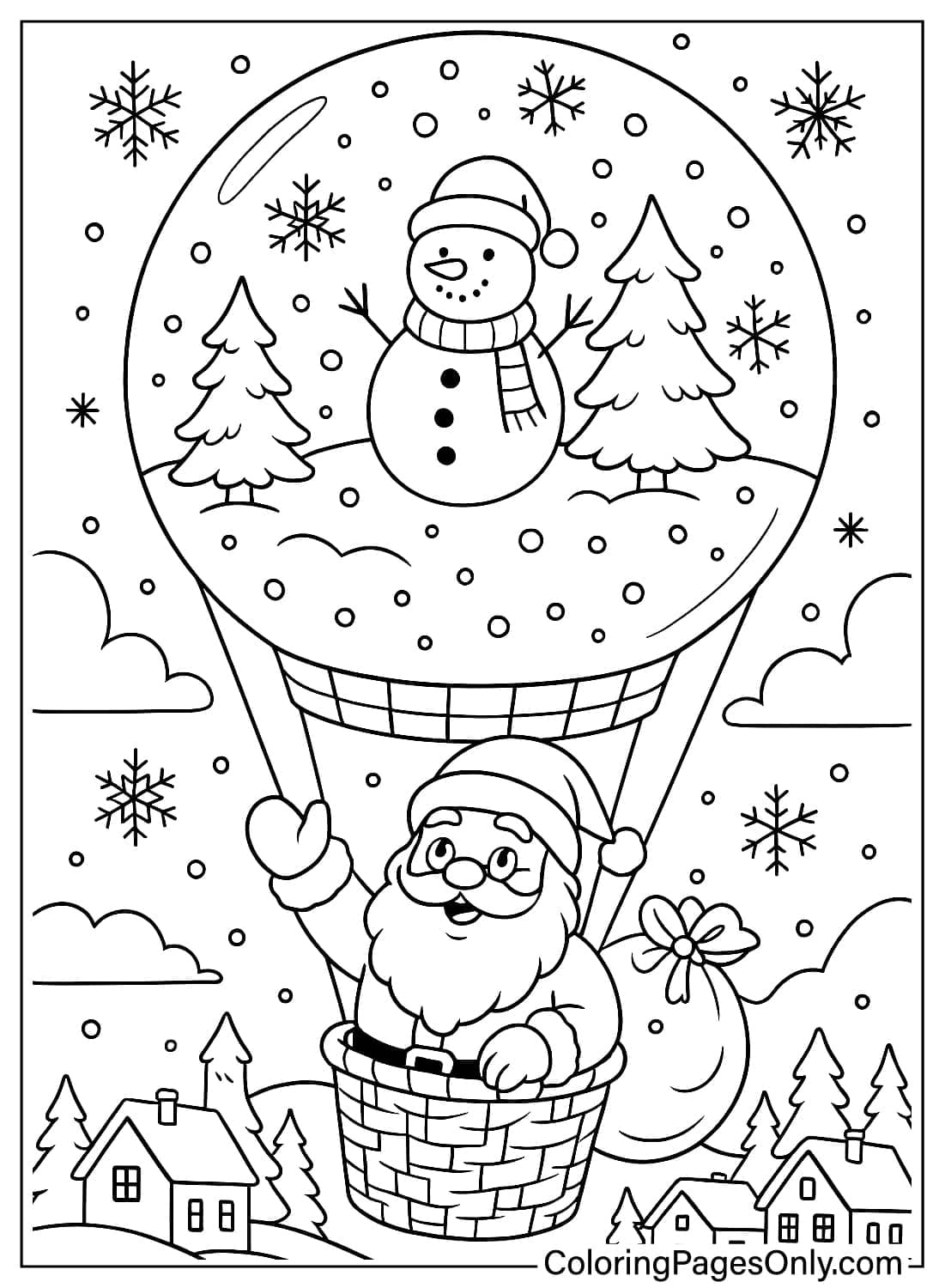
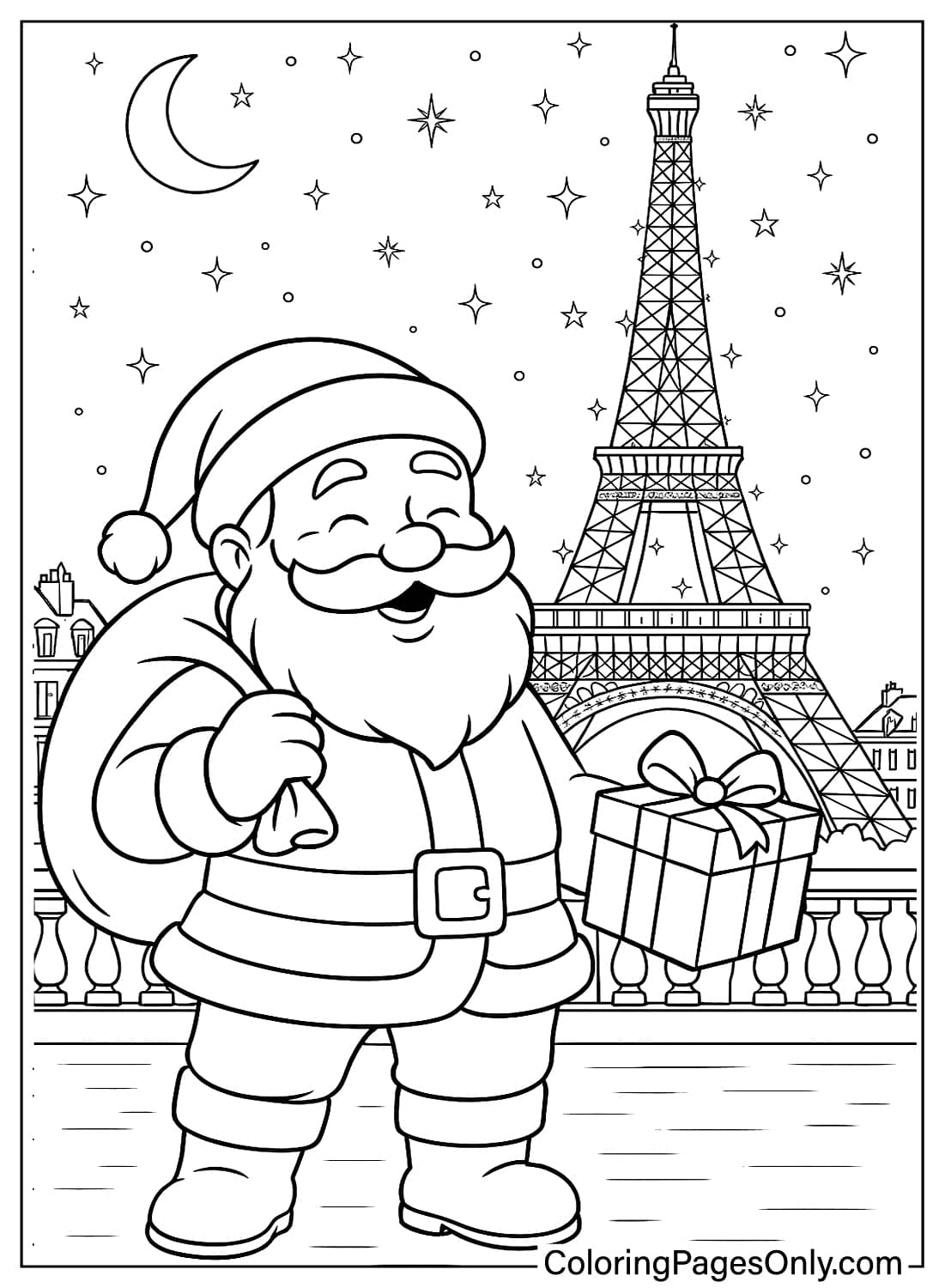
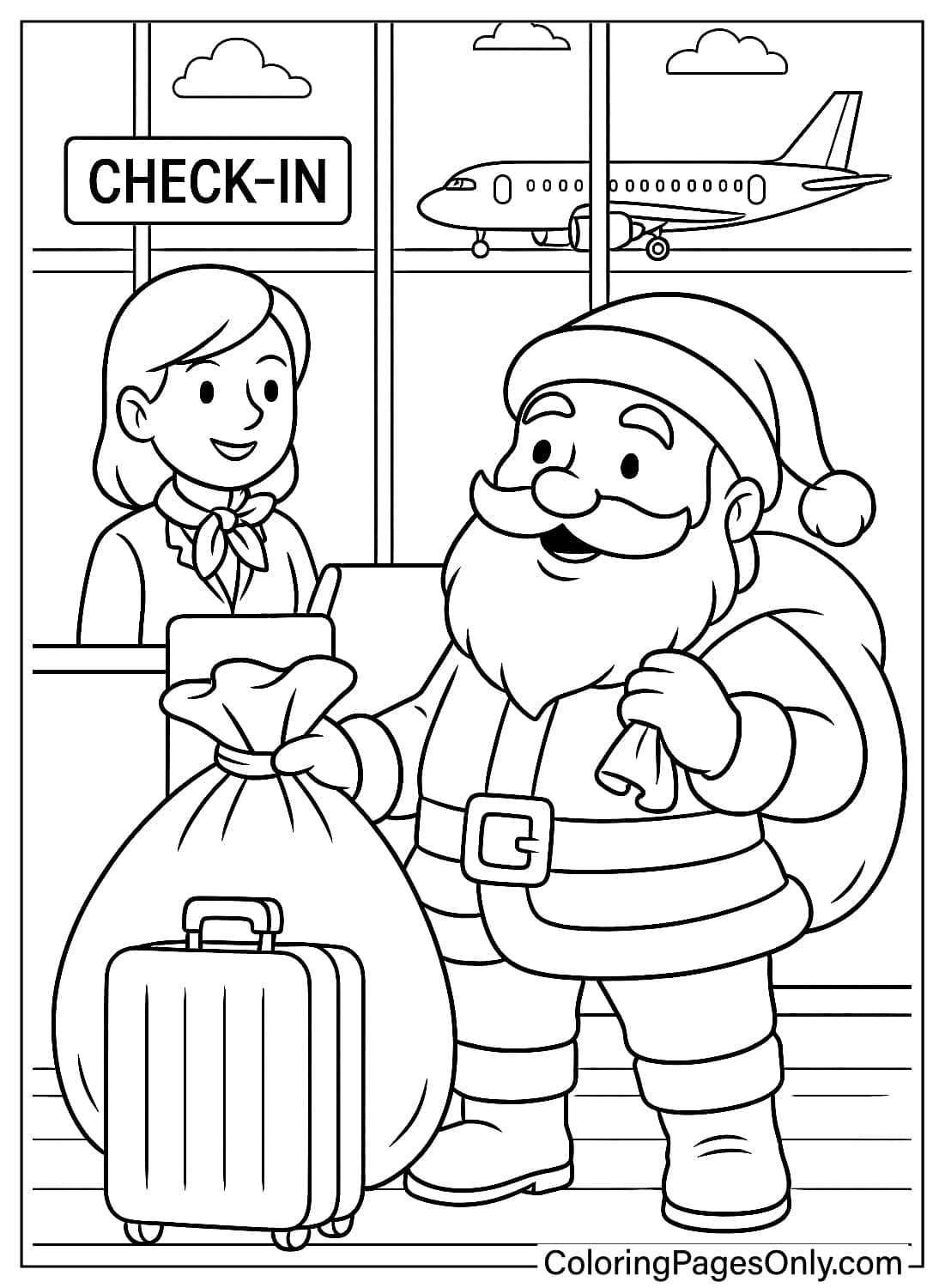
The 2025 additions introduce a Santa who operates beyond the North Pole: “Santa Claus Tuk Tuk Tropical Coloring Page” (Santa driving a tuk-tuk in a tropical setting with palm trees), “Santa Claus Paris Eiffel Tower Coloring Page” (Santa in front of the Eiffel Tower at night), “Santa Claus Airport Check-In Coloring Page” (Santa checking a giant gift sack at an airport counter), “Santa Claus Sweet Candy Land Coloring Page” (Santa in a landscape of gingerbread houses and giant candy), and “Santa Claus Hot Air Balloon Snowman Coloring Page” (Santa in a hot air balloon above snowy houses). These pages share a premise: Christmas operates globally, and Santa adapts to every environment.
Coloring global adventure pages: Each location page requires a different background palette: cool metropolitan tones for Paris, warm tropical greens and sandy yellows for the tuk-tuk, institutional grey-blue for the airport. In every case, Santa’s red suit is the one constant that ties the image to the Christmas tradition, regardless of setting. Location-specific palette guidance is in the How to Color section.
Modern Santa Fun
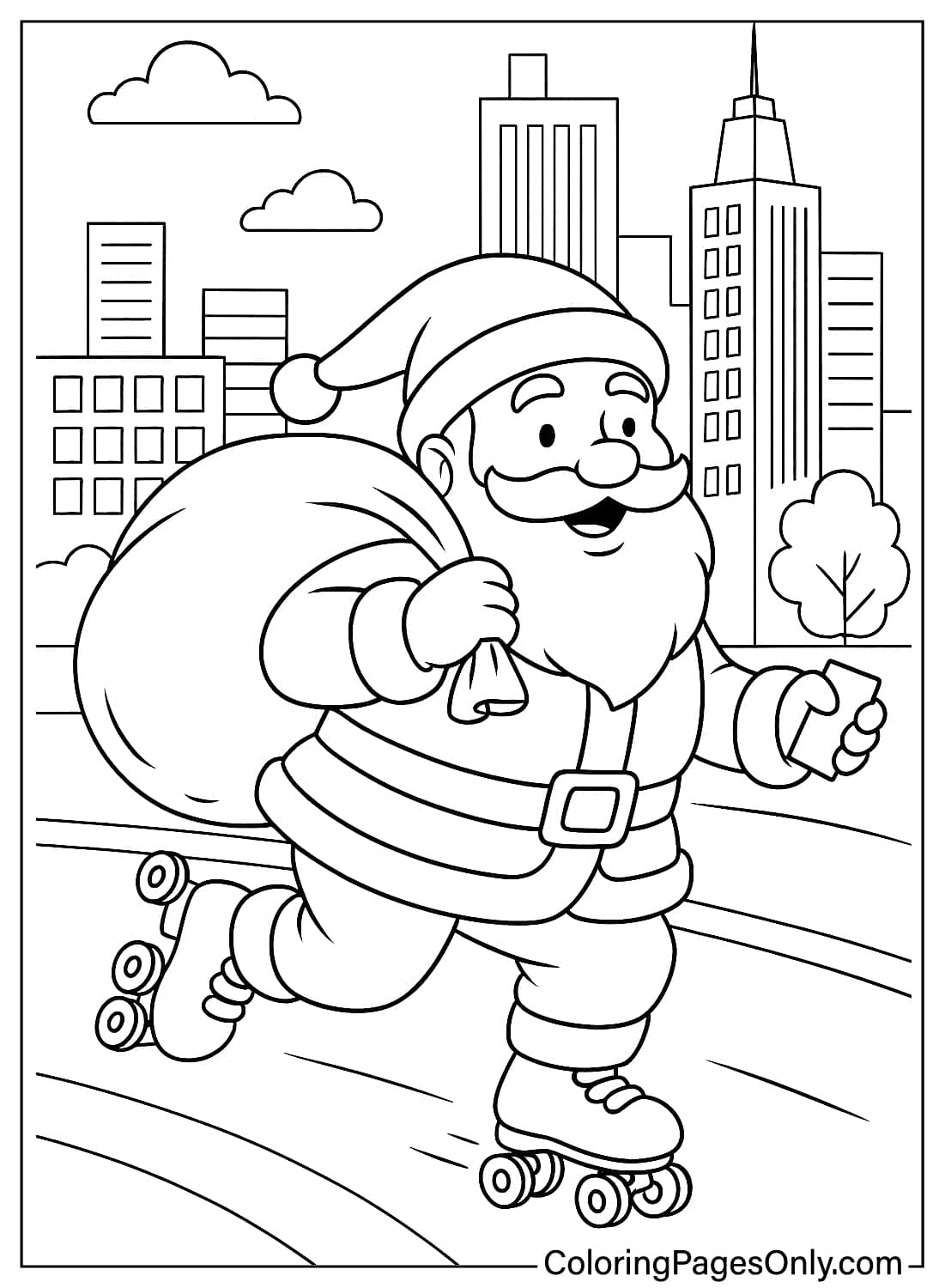
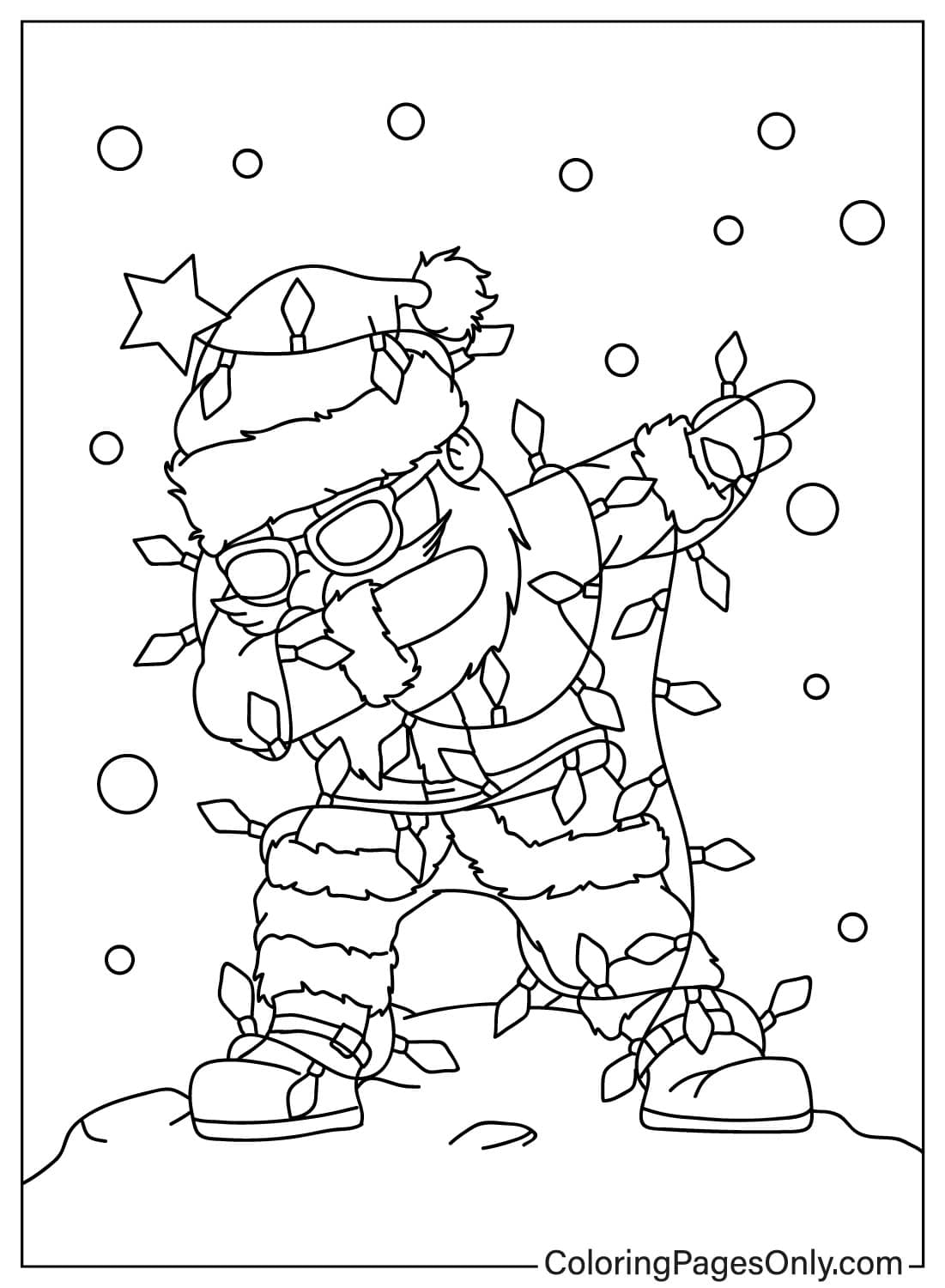
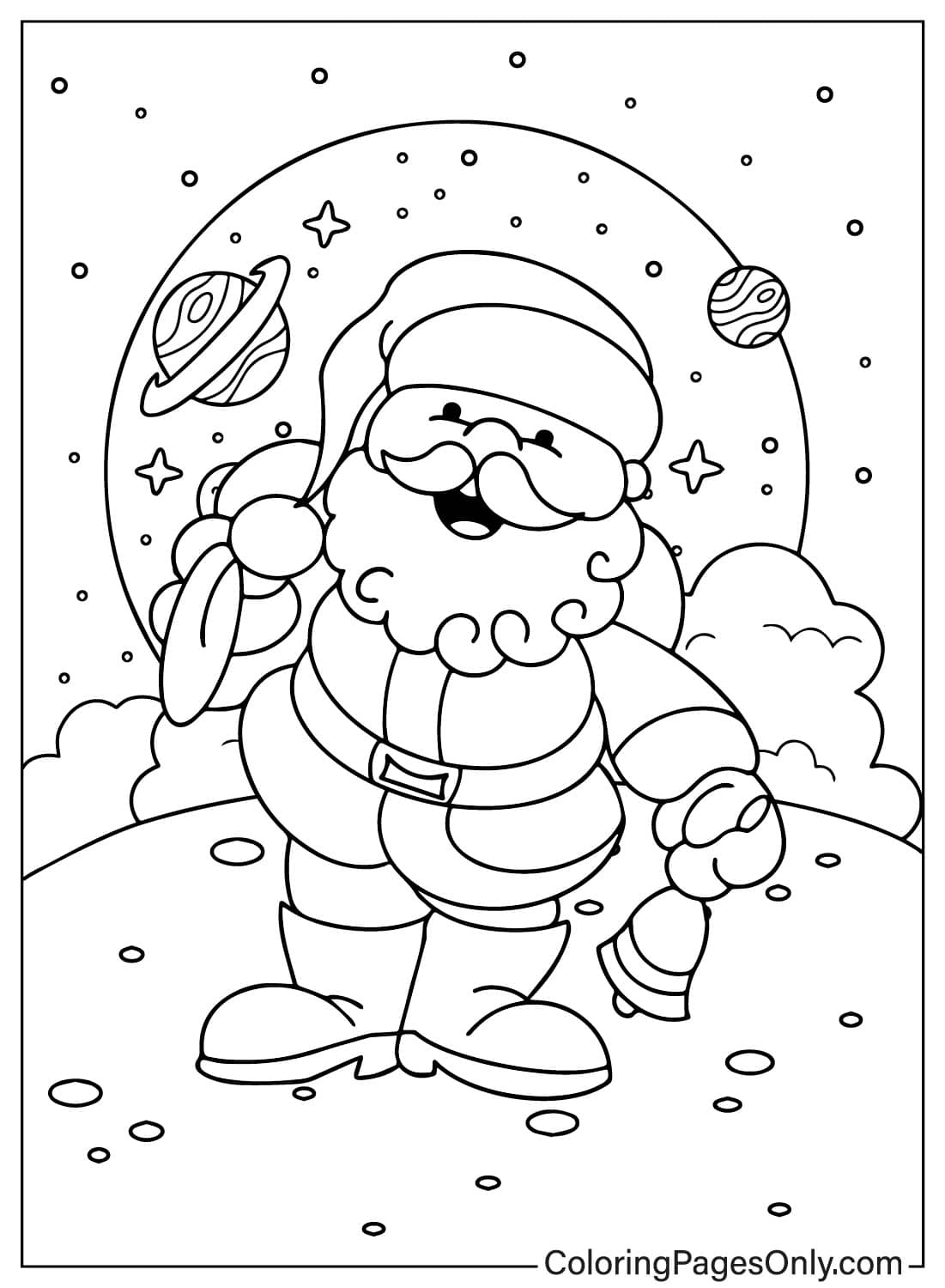
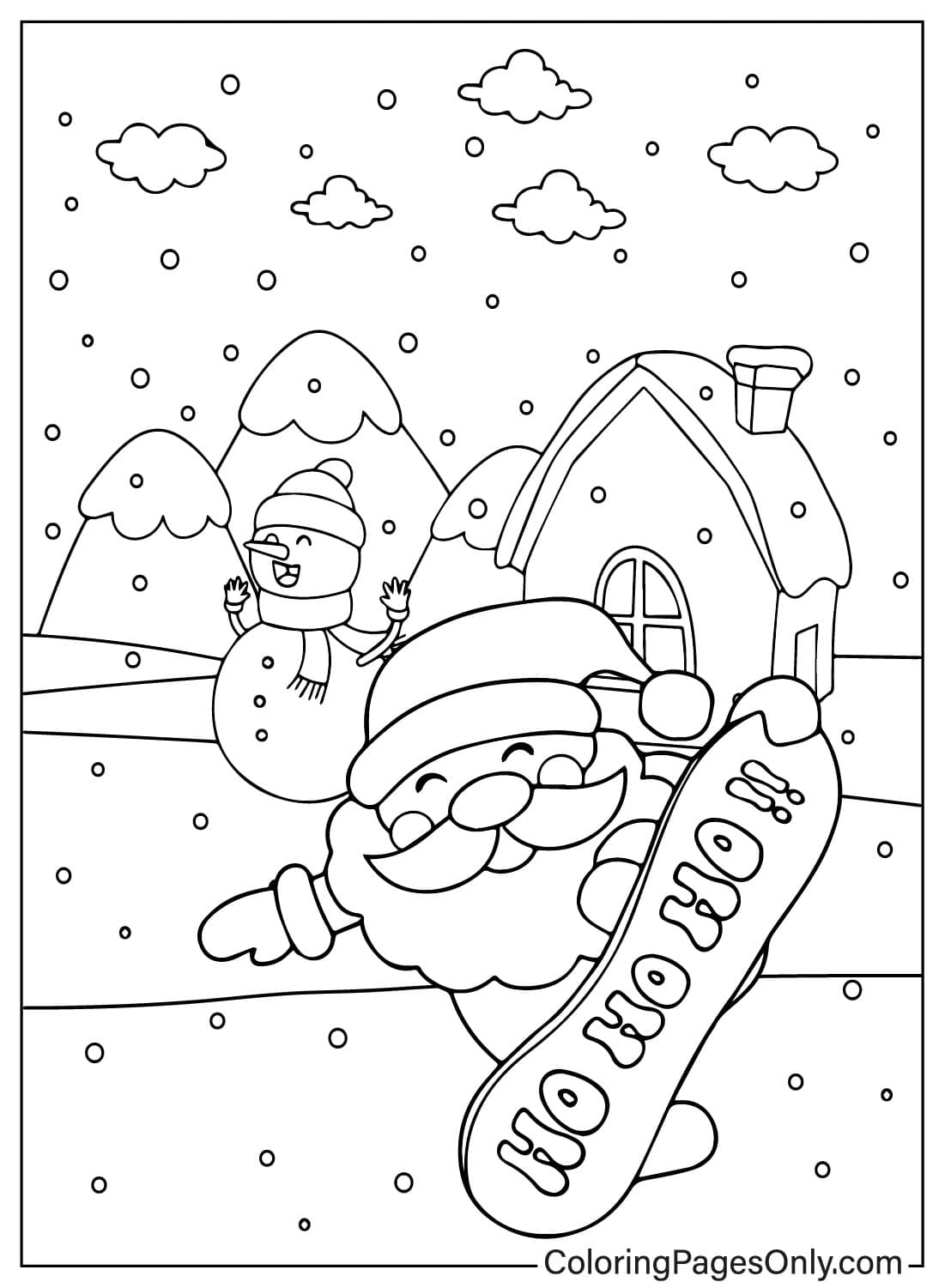
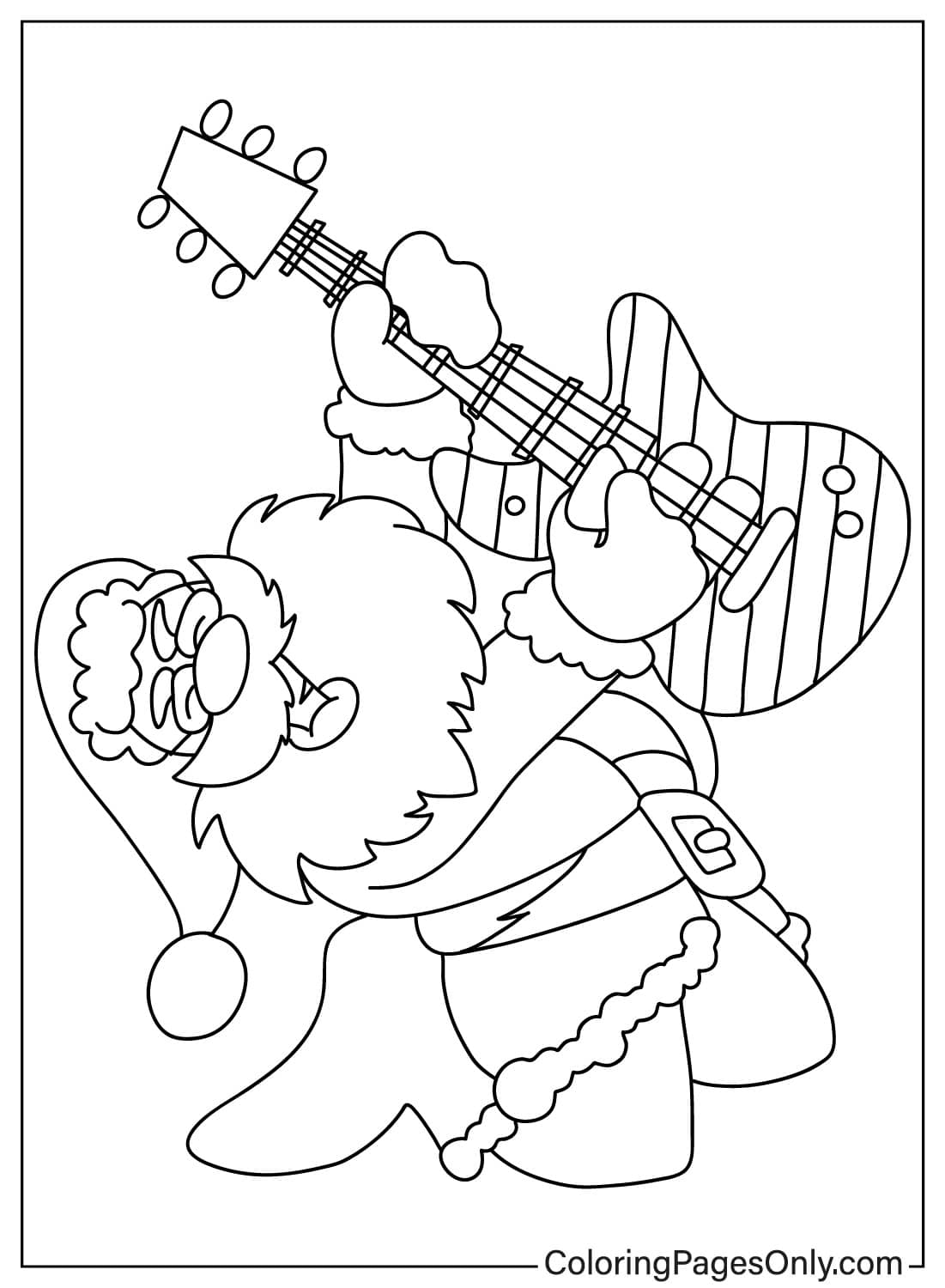
“Santa Claus Hip Hop Dance,” “Santa Claus Is Skiing,” “Santa Claus Jumping,” “Santa Claus Playing Guitar,” “Santa Claus in Space,” and “Santa Claus Roller Skating City Coloring Page” show Santa participating in contemporary activities far outside the traditional December 24 narrative. These pages are the collection’s most playful, treating the character as a presence in modern life rather than solely a Christmas Eve figure.
Coloring action pages: On pages showing Santa in motion (dancing, jumping, roller skating, skiing), the suit’s details shift: the hat may be at an angle, the belt buckle might catch the light differently, and the beard flows with movement. Lean into the action in the coloring: apply slightly darker red in the shadow areas created by motion (the compressed side of a jumping suit, the raised arm), and leave the forward-facing surfaces closer to the base red. The color difference between the in-motion shadow areas and the lit surfaces is what makes active poses read as genuinely dynamic rather than a static figure in a dynamic outline.
Children and Family with Santa
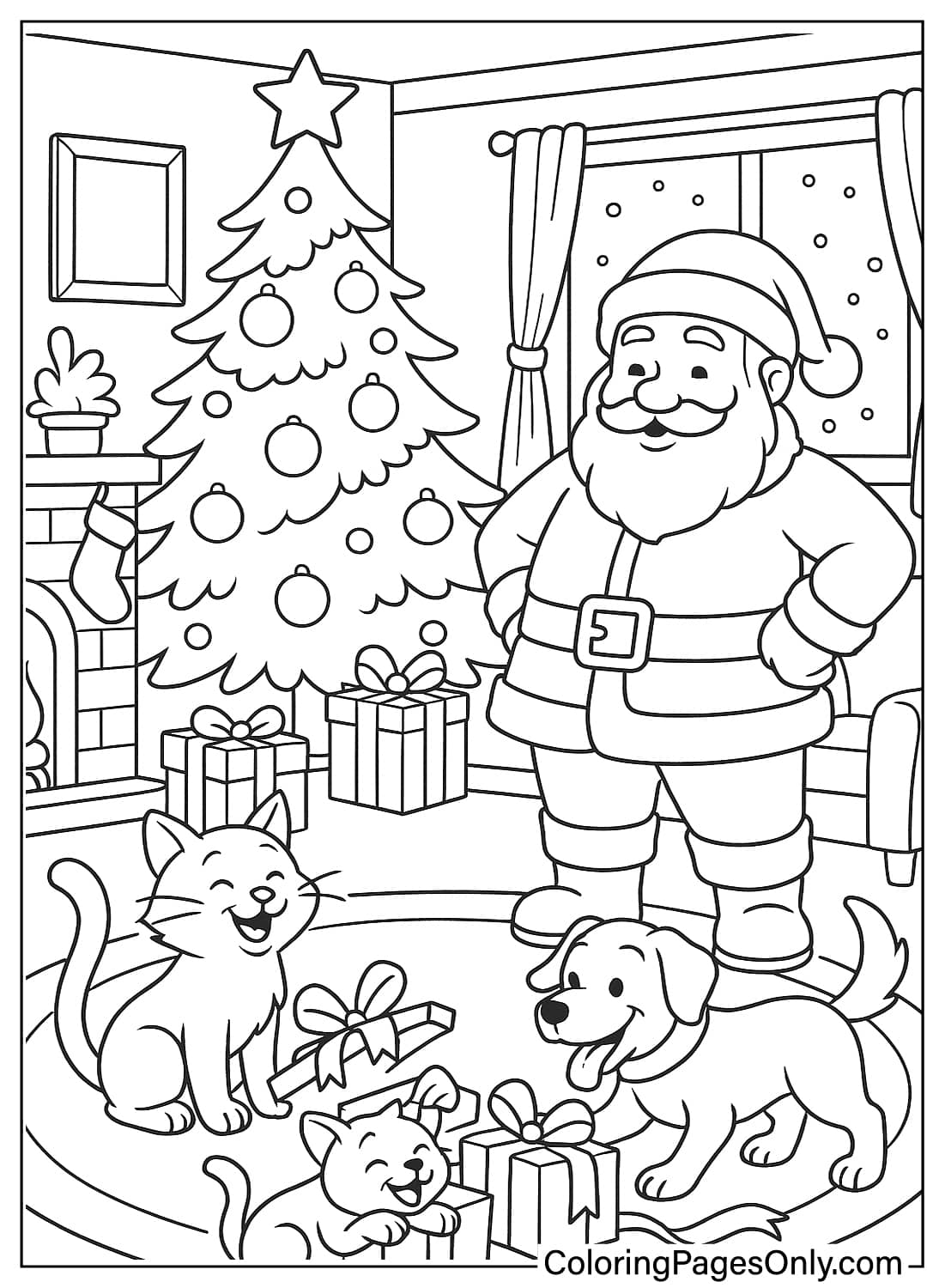
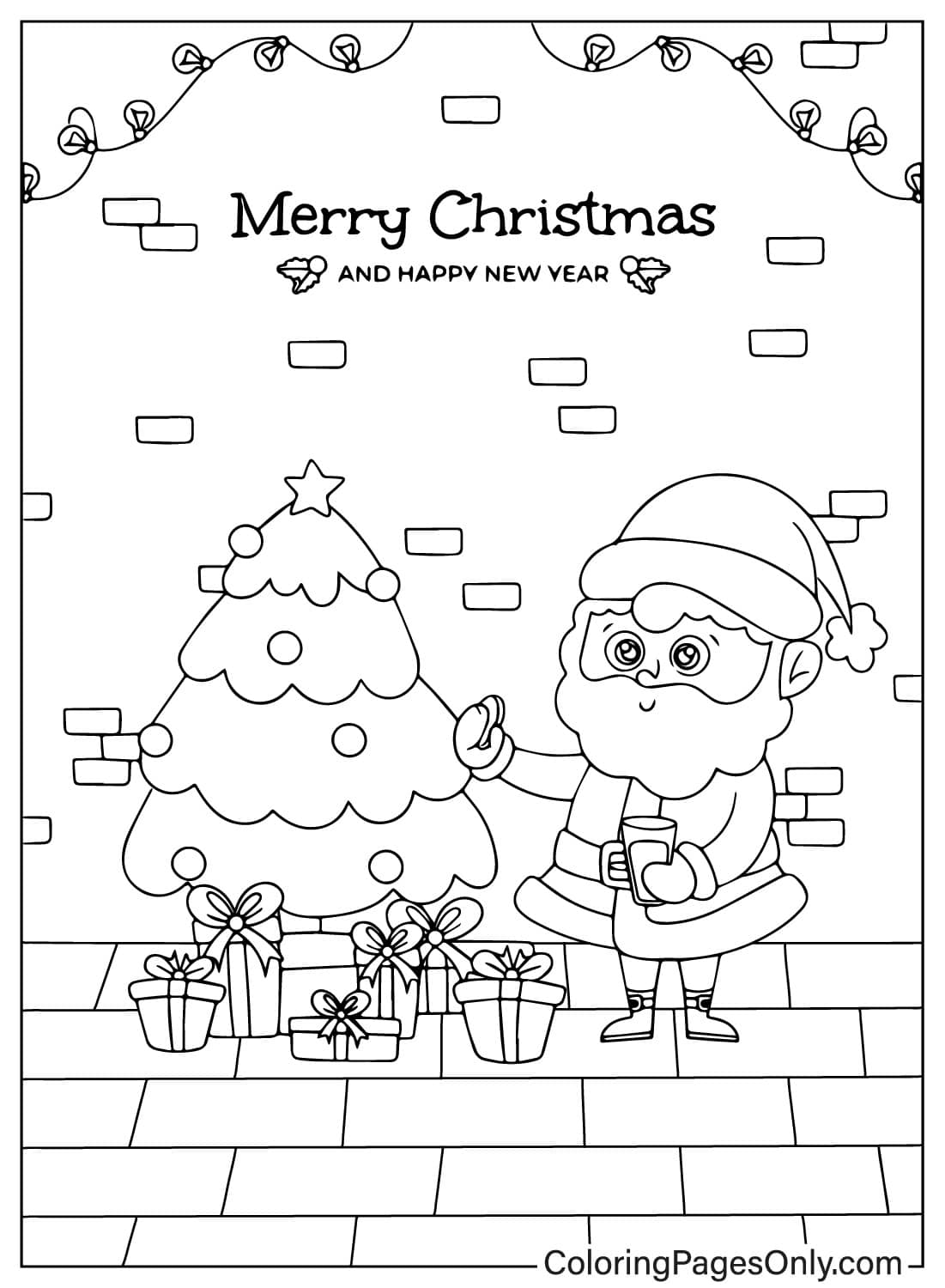
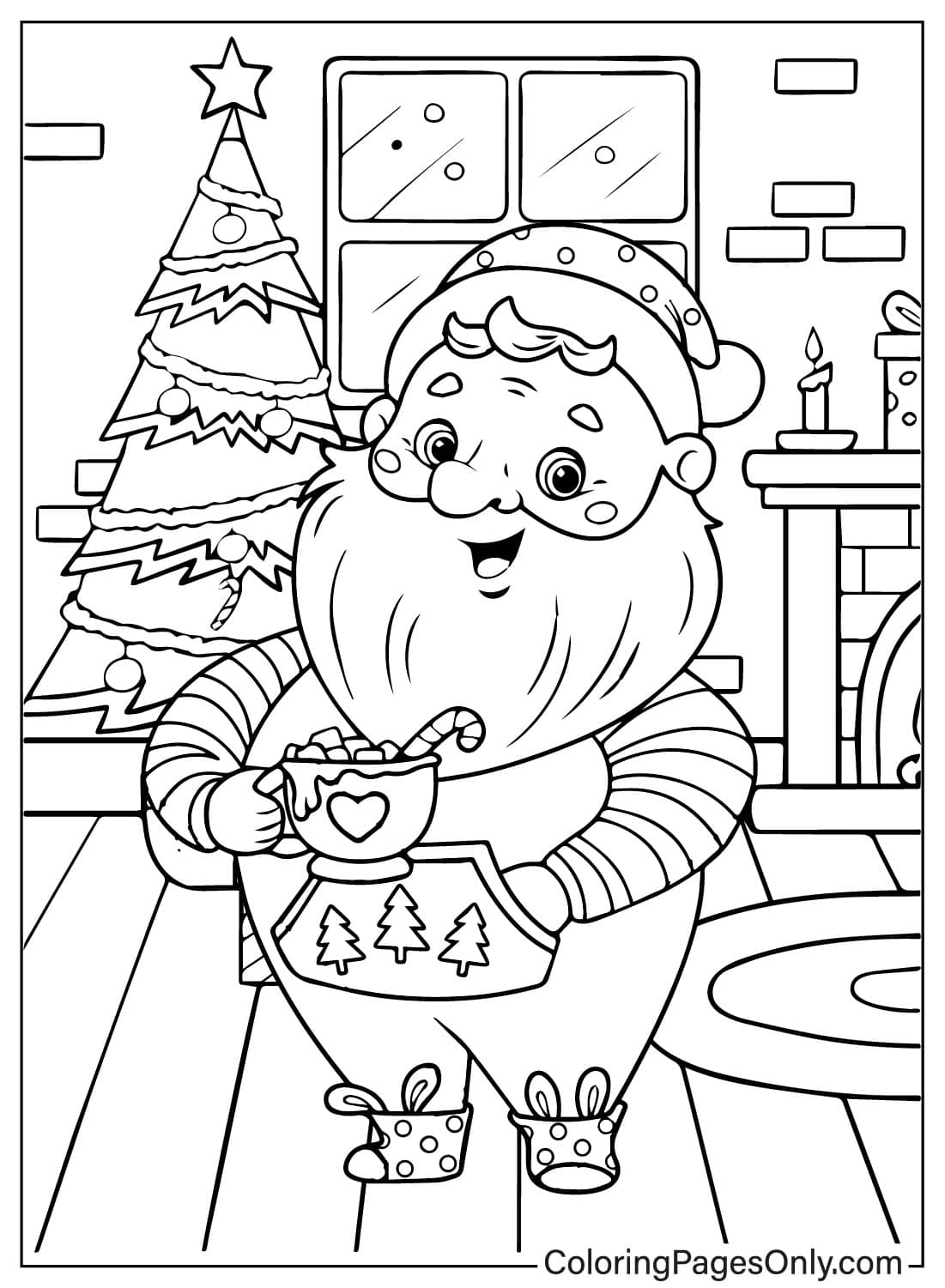
“Santa Claus Giving Gift Sleeping Child Coloring Page,” “Santa and Gift for Baby,” “Santa Claus Christmas Tree Pets Coloring Page,” and related pages show Santa interacting with children and families. These are the collection’s warmest pages in emotional tone: the child asleep, unaware of Santa’s presence; the baby receiving a first gift; the living room with pets watching the Christmas tree.
Coloring sleeping child pages: The key coloring decision on “Santa Giving Gift Sleeping Child” is the light source. The room is lit from within, by the tree or a lamp. The child’s face receives warm light from that interior source. Santa arrives from the darker area of the room, his suit the deepest red on the page. The contrast between Santa’s dark presence and the child’s warmly lit sleeping face is the image’s visual and emotional center. Establish both tones before coloring the surrounding elements.
Licensed Characters in Santa Costumes
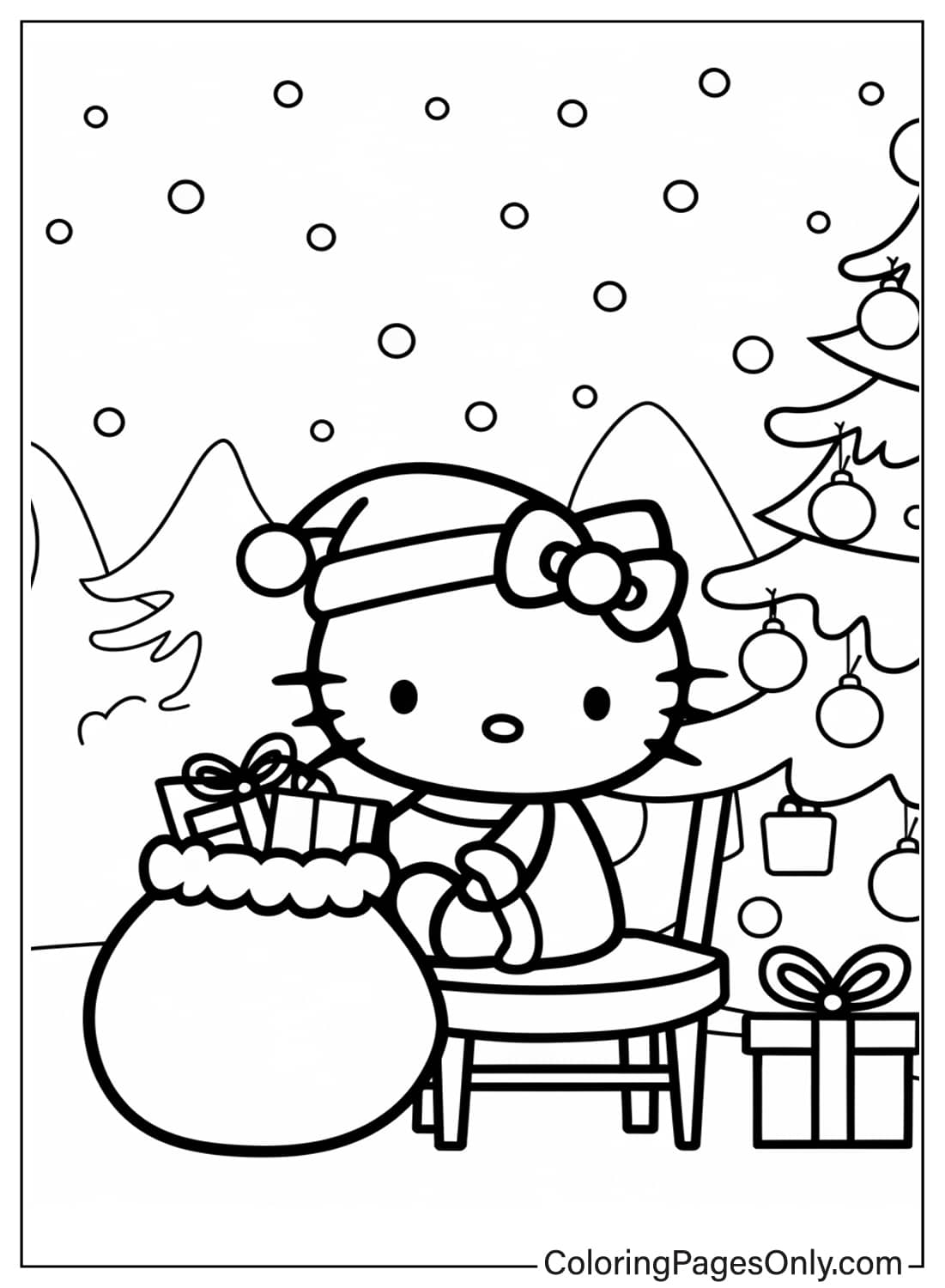
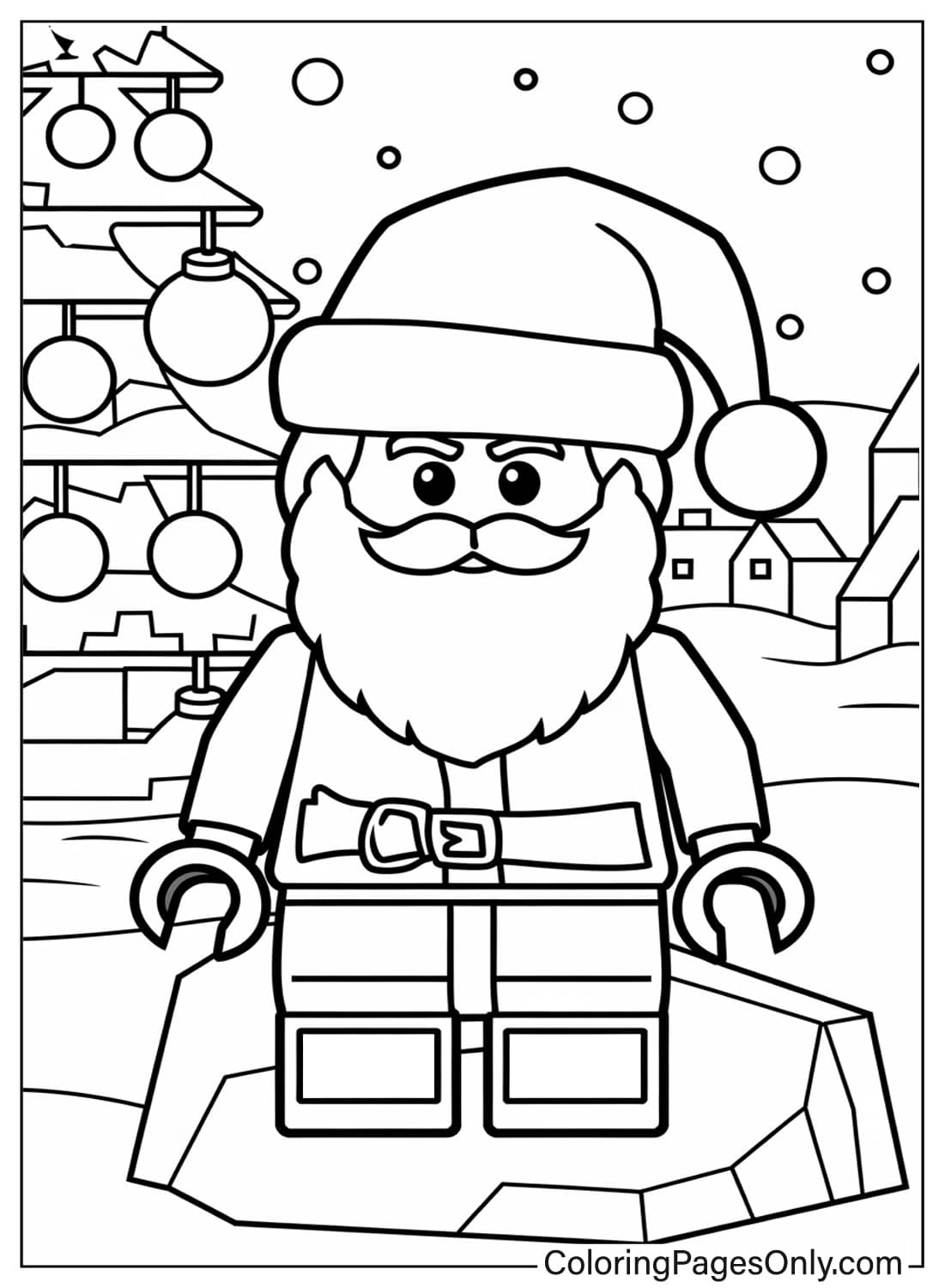
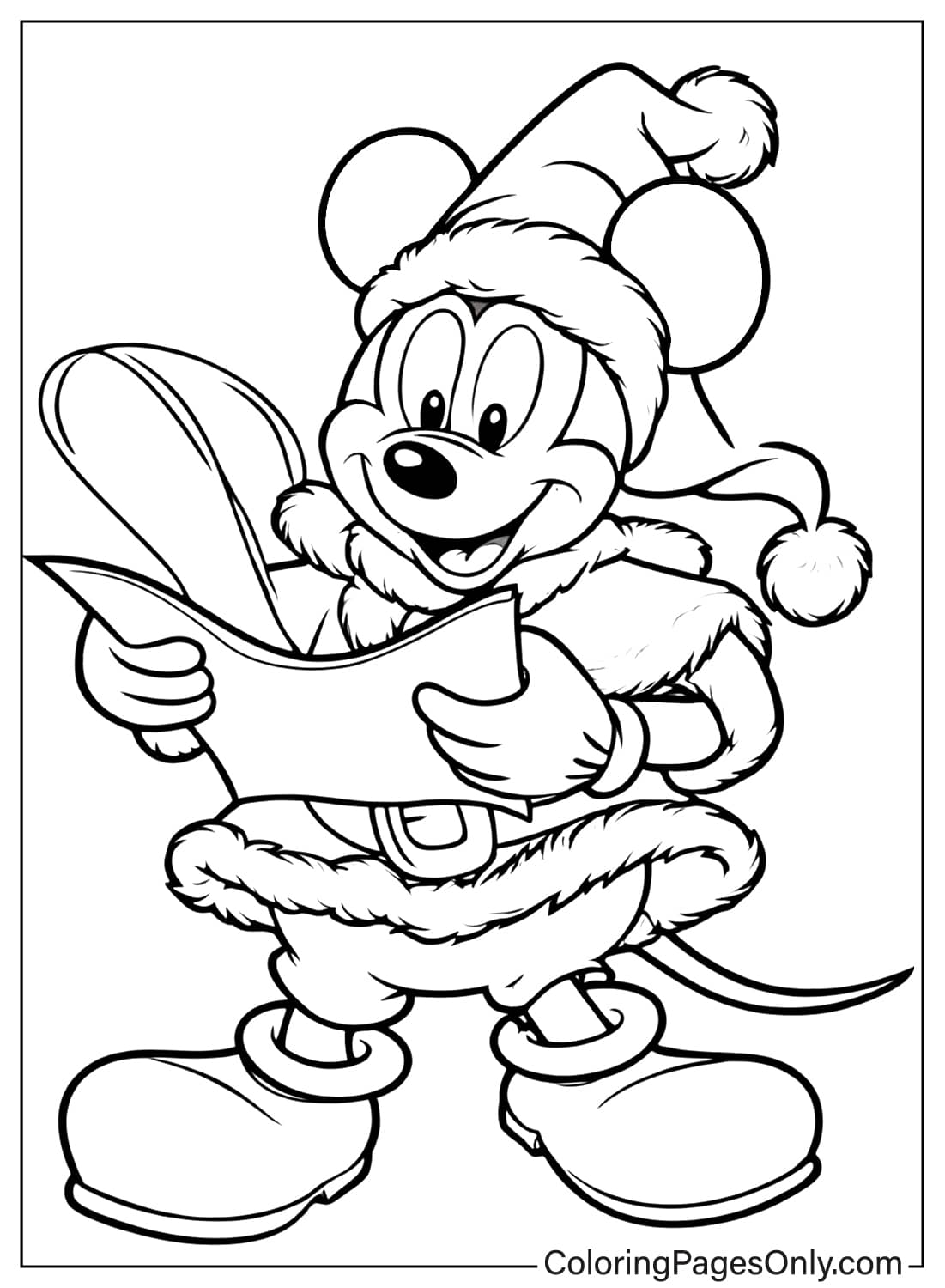
“Hello Kitty Santa,” “Fun Lego Santa,” and “Cute Mickey Santa” place familiar licensed characters in Santa’s costume. These pages serve fans of those franchises who want Christmas-specific content.
Coloring licensed Santa pages: Keep each character’s base colors canonical and apply the Santa costume elements (red suit, white trim, hat, belt) as additions to the familiar character. Hello Kitty’s white body with a yellow star bow under a red Santa hat is the page’s primary visual contrast. The Lego Santa follows Lego’s standard minifigure proportions: flat yellow face, blocky red body. Mickey Mouse’s canonical black-white-red coloring with the Santa hat creates an unusually simple palette: the red suit unifies with the red of his shorts in most interpretations.
What These Pages Do
Santa Claus is one of the few characters in Western culture who has a fully documented visual design history. From Saint Nicholas of Myra in the fourth century through the Dutch Sinterklaas tradition to Thomas Nast’s Harper’s Weekly illustrations and Haddon Sundblom’s 1931 Coca-Cola advertisements, every element of the modern Santa image has a traceable origin. The red suit, the North Pole workshop, the naughty-and-nice list, the chimney descent: each was introduced or established by a specific person at a specific time. Coloring Santa Claus is coloring a composite portrait that has been assembled over seventeen centuries of tradition.
The collection’s diversity of Santa contexts reflects how widely the character has traveled beyond his original December 24 function. The 2025 additions place Santa at the Eiffel Tower, in an airport, on a tuk-tuk in the tropics, roller skating through a city. These images read as coherent rather than absurd because the character’s essential visual identity (the red suit, the white beard, the hat) is strong enough to carry any setting. Children who color these pages are engaging with both the traditional figure and the ongoing process of that figure adapting to new contexts.
The range of complexity in this collection serves fine motor development across multiple age levels. The American Academy of Pediatrics identifies fine motor skill development (controlled grip, directional stroke work, staying within defined spaces) as a key developmental milestone through early and middle childhood. The simple Santa portraits with large open zones serve children as young as 3 with broad markers. The workshop scenes with toy shelves, the global adventure pages with architectural backgrounds, and the Christmas Eve delivery scenes with snow-covered rooftops and window detail serve older children and adults with progressively more demanding controlled work.
Christmas coloring produces measurable developmental benefits beyond the season. The 2005 Art Therapy Journal study on structured coloring documented statistically significant anxiety reduction in participants who worked within defined forms compared to open-ended drawing. The winter holiday period, with its combination of anticipation, disrupted schedules, and social demands, is precisely when the focused, calm attention that detailed coloring requires is most practically useful. Santa pages, with their rich color decisions and familiar subject matter, provide that focus.
How to Color These Pages Well
Santa’s red needs to be built, not applied once. A single pass of standard crayon red looks flat and thin on the large suit zones. Apply a first full pass across the entire suit. Return with a slightly darker red or a warm dark brown in all the fold lines, shadow zones, and the areas under the arms and belt. The contrast between the first-pass red and the darker shadow red is what gives the suit its velvet quality. The white fur trim should be applied last, working around the already-colored red, using very light cool grey only in the deepest creases.
The white beard is not a blank area. Santa’s beard is one of the page’s most prominent white elements, and leaving it blank produces a page that looks unfinished. Apply very light warm grey in the deeper folds and layers of the beard, particularly where it falls over the chest and under the chin. The warm grey (not cool grey) keeps the beard feeling soft and hair-like rather than metallic. A second very light application of cream or warm white in the outer beard layers, if working with colored pencils, suggests the layered texture of a real beard.
Santa’s face deserves more attention than most colorists give it. The conventional Santa face is warm pink-peach, rosier than a standard skin tone, with rosy cheeks that are deeper pink. Apply the base skin tone, then add a second layer of warm pink to both cheeks and the nose tip. The eyes, when shown, are typically a bright, light blue; adding a small white highlight dot inside the pupil makes them read as lively. The eyebrows are white, matching the beard, not grey or brown.
On night flight pages, establish the sky before everything else. The deep midnight navy background that makes Santa’s sleigh and reindeer read as a silhouette against the night sky should be applied first, completely covering the sky area. Once it is dry, Santa and the reindeer in front of the dark sky read as warm and luminous. Coloring the figure first and then trying to fill in the sky around it invariably produces gaps and uneven edges where the sky meets the red suit.
The global adventure pages need location-specific palettes. The Paris page is not the same as the tropical tuk-tuk page. The Paris page works in cool European greys and blues for the city and tower, with Santa’s red as the only warm element. The tropical page inverts this: warm sandy yellows and bright greens dominate, with the red of the Santa suit providing the seasonal color signal in an otherwise summer landscape. Reading each page’s setting before reaching for a color establishes the right overall palette rather than defaulting to the Christmas palette in every context.
Simple Santa pages for young children read best with flat, saturated color. The “Easy Santa Claus for Kids,” “Chibi Santa Claus,” and similar simplified designs use the same broad shapes and clear outlines that work best with even, confident color application rather than shading or blending. Apply colors at full pressure and full saturation. These pages are designed for the developmental stage where confident flat application is the goal; introducing shading or gradient techniques on simple designs works against the page’s design intentions.
Five Creative Craft Ideas
Santa Around the World Display
Print five of the 2025 global adventure pages: Paris, tropical tuk-tuk, airport, candy land, and hot air balloon. Color all five in their location-appropriate palettes. Mount each on a backing sheet with a small flag or label identifying the location.
Arrange all five in a horizontal or grid display with a heading: “Santa Claus Around the World.” The finished piece shows the same character adapted to five different environments, visually demonstrating both the consistency of Santa’s appearance (the red suit persists) and the adaptability of the character. Best suited for ages 7 and up as a discussion piece about how global the Christmas tradition has become; younger children can color while an adult adds the location labels.
Christmas Eve Timeline
Print four pages representing the sequence of Christmas Eve: “Santa Claus Reading North Pole News” (pre-departure), “Santa Claus and His Sleigh” (in flight), “Santa Claus on Roof Chimney” (arrival), and “Santa Claus Giving Gift Sleeping Child” (delivery). Color all four.
Arrange them left to right with a timeline connecting them, labeled with times: “Early Evening,” “Midnight,” “Rooftop,” “Inside.” The finished display shows the Christmas Eve narrative as a four-panel sequence. This craft works well as a classroom story-sequencing activity alongside reading the Moore poem aloud, best for ages 5 and up; the sequencing discussion suits ages 6 and up.
Santa Letter and Envelope
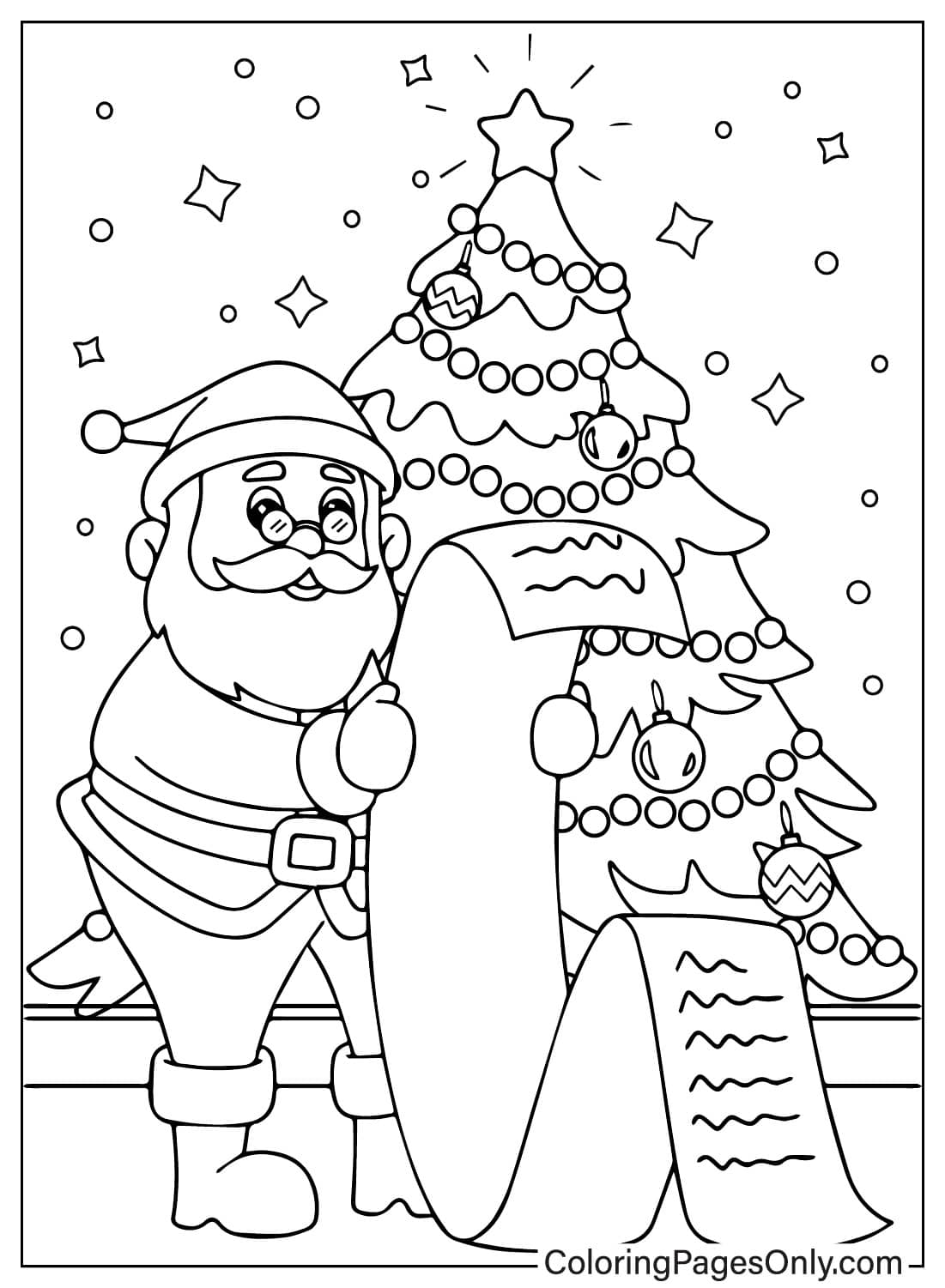
Print the “Santa Claus and His Gift List” page and one simple Santa portrait page. Color both carefully. On the back of the portrait page, write a letter to Santa in the child’s own words, or dictate it to an adult.
Fold the letter page and insert it inside the colored gift list page, folded to envelope size. Address the front to “Santa Claus, The North Pole” and seal with a sticker. The finished item is a colored Christmas card and a written communication in a single keepsake. Best for ages 5 and up for the writing component; younger children can color, and an adult can take dictation.
Santa Portrait Hall of Fame
Print five Santa pages representing different styles in the collection: “Cute Santa Claus” (cartoon), “Chibi Santa Claus” (chibi), “Christmas Santa Claus” (traditional), “Funny Santa Claus” (humorous), and one of the 2025 adventure pages. Color all five in the correct Santa palette.
Mount all five in a row on a long backing strip with a title: “Santa Claus: Five Portraits.” Below each, write one word describing the style: Cartoon, Chibi, Classic, Funny, Modern. The finished display demonstrates how a single character looks across five illustration styles. For older children and adults, this becomes a discussion about how illustration style changes a character’s feel without changing his identity, best for ages 8 and up, for the style observation component.
Workshop Scene
Print “Santa Claus and the Elves,” “Santa Claus Prepares Gifts for Kids,” and one or two simple toy pages from the collection. Color all pages in the warm workshop palette: deep green for elf costumes, warm red for Santa, golden candlelight for the background.
Cut out the elves and Santa figures from the first two pages. On a horizontal backing sheet, draw a simplified workshop background: wooden walls, shelves. Mount the colored figures standing or working at their stations. Add the colored toy pages as if displayed on the workshop shelves. The finished diorama shows the North Pole workshop as a small three-dimensional scene. Most suitable for ages 7 and up; younger children can color the figures with an adult handling the cutting and assembly.
Frequently Asked Questions
Who is Santa Claus? Santa Claus is a figure in the Christmas tradition associated with gift-giving on the night of December 24, Christmas Eve. The modern image shows a rotund, jovial older man in a red suit with white fur trim, a white beard, black belt and boots, and a red hat with a white pompom. He is said to travel by reindeer-drawn sleigh and deliver gifts to children through the chimneys of their homes. The character is celebrated primarily in North America, Western Europe, and countries where Western Christmas traditions have spread.
Where does Santa Claus come from? Santa Claus is a composite figure assembled over many centuries. The origin is Saint Nicholas of Myra (c. 270 to 343 AD), a fourth-century bishop in what is now Turkey, known for anonymous gifts to people in need. His December 6 feast day became the occasion for European gift-giving traditions. The Dutch “Sinterklaas” tradition (derived from “Sint Nikolaas,” Saint Nicholas) was brought to North America by Dutch settlers. The name “Santa Claus” developed from “Sinterklaas” through American pronunciation over several generations.
Who created the modern image of Santa Claus? Two figures are most directly responsible for the modern Santa’s visual appearance. Thomas Nast, a German-American political cartoonist, published Santa illustrations in Harper’s Weekly from 1863 to 1886. Nast established the North Pole workshop, the naughty-and-nice list, the red suit, and the rotund build. Haddon Sundblom, a Swedish-American commercial illustrator, created the Coca-Cola Santa from 1931 to 1964, working from Nast’s conventions and using a neighbor named Lou Prentiss as his model. The widely repeated belief that Coca-Cola invented the red suit is incorrect; Nast had depicted Santa in red decades earlier.
What is NORAD Tracks Santa? NORAD Tracks Santa is an annual event in which the North American Aerospace Defense Command (NORAD) publicly tracks Santa Claus’s journey around the world on Christmas Eve. The tradition began accidentally in 1955, when a Sears department store advertisement in a Colorado Springs newspaper misprinted a phone number for children to call Santa, connecting callers instead to the Continental Air Defense Command (CONAD, the predecessor to NORAD). The duty officer, Colonel Harry Shoup, played along and instructed his staff to answer calls and provide updates on Santa’s location. The tradition has continued every year since, now including an official NORAD website and interactive tracking tools.
Why is Santa Claus associated with December 25 rather than December 6 (Saint Nicholas’s feast day)? Saint Nicholas’s feast day of December 6 remains the primary gift-giving day in several European countries, particularly the Netherlands, Belgium, and Germany. In the United States and much of the English-speaking world, the Sinterklaas tradition shifted to December 24 to 25 as it merged with Christmas celebrations. Clement Clarke Moore’s 1823 poem “A Visit from St. Nicholas” specifically placed Santa’s arrival on December 24, and this timing became dominant in American culture and subsequently influenced Christmas traditions globally.
What are the names of Santa’s reindeer? Eight reindeer were named in the 1823 poem “A Visit from St. Nicholas,” commonly attributed to Clement Clarke Moore: Dasher, Dancer, Prancer, Vixen, Comet, Cupid, Donner, and Blitzen. The names Donner and Blitzen derive from German and Dutch words for thunder and lightning. A ninth reindeer, Rudolph, was created by Robert L. May for Montgomery Ward department stores in 1939. Rudolph leads the team in popular tradition and in the 1964 Rankin/Bass television special.
What age group are these Santa pages best suited for? The simple and chibi pages (including “Easy Santa Claus for Kids,” “Cute Santa Claus,” and “Chibi Santa Claus”) are accessible for children as young as 3, with large open zones suited to broad markers or chunky crayons. The standard portrait and delivery scene pages are most engaging for ages 5 through 8. The global adventure pages with architectural backgrounds (Paris, airport), the workshop pages with multiple characters and toy details, and the night flight pages requiring careful background work suit ages 7 and up. Adult colorists will find the detailed “Santa Claus Reading North Pole News” and “Santa Claus Christmas Tree Pets” pages the most technically satisfying.
Is Santa Claus celebrated internationally? The Santa Claus figure has spread globally through American popular culture and media, though the traditions around him vary considerably. In the United Kingdom, the figure is often called Father Christmas and has slightly different visual traditions, though the two figures have largely merged in popular depiction. In France, Père Noël performs a similar role. In Russia, Ded Moroz (Grandfather Frost) brings gifts on New Year’s Eve rather than Christmas Eve. The Sinterklaas tradition remains distinct in the Netherlands and Belgium, celebrated on December 5 to 6. The pages in this collection reflect the American Santa Claus visual tradition, which has become the most globally recognized version.
Browse and Color
Thomas Nast drew Santa for Harper’s Weekly every Christmas from 1863 to 1886. He was drawing during the Civil War, during Reconstruction, and through the Gilded Age. His Santa was politically pointed in some illustrations and purely celebratory in others. What stayed constant across twenty-three years of December drawings was the figure: red-suited, bearded, jolly, arriving with gifts.
By the time Haddon Sundblom painted the first Coca-Cola Santa in 1931, the image was already sixty years old. Sundblom made it warmer, more photographic, more domestic. His Santa sat in living rooms with families. He looked like someone’s actual grandfather. He used a real person as his model and painted from that. The image that resulted became the most reproduced Santa in the twentieth century, not because it invented anything, but because it perfected what Nast had built.
The pages in this collection cover seventeen centuries of that tradition’s endpoint: the figure as it stands now, in the red suit with the white beard, delivering gifts on December 24. And also roller skating in a city. And checking in at an airport and driving a tuk-tuk somewhere warm, because December 24 now happens everywhere.
Browse the full collection at ColoringPagesOnly.com. All 50+ pages free, no sign-up, PDF or PNG, print at home or color online.
Share your finished pages on Facebook and Pinterest and tag #Coloringpagesonly. We especially want to see the Santa Around the World displays and the Christmas Eve Timelines.
Red suit. White beard. December 24. He is coming.
More from Our Christmas Collections
More from our Christmas collections: