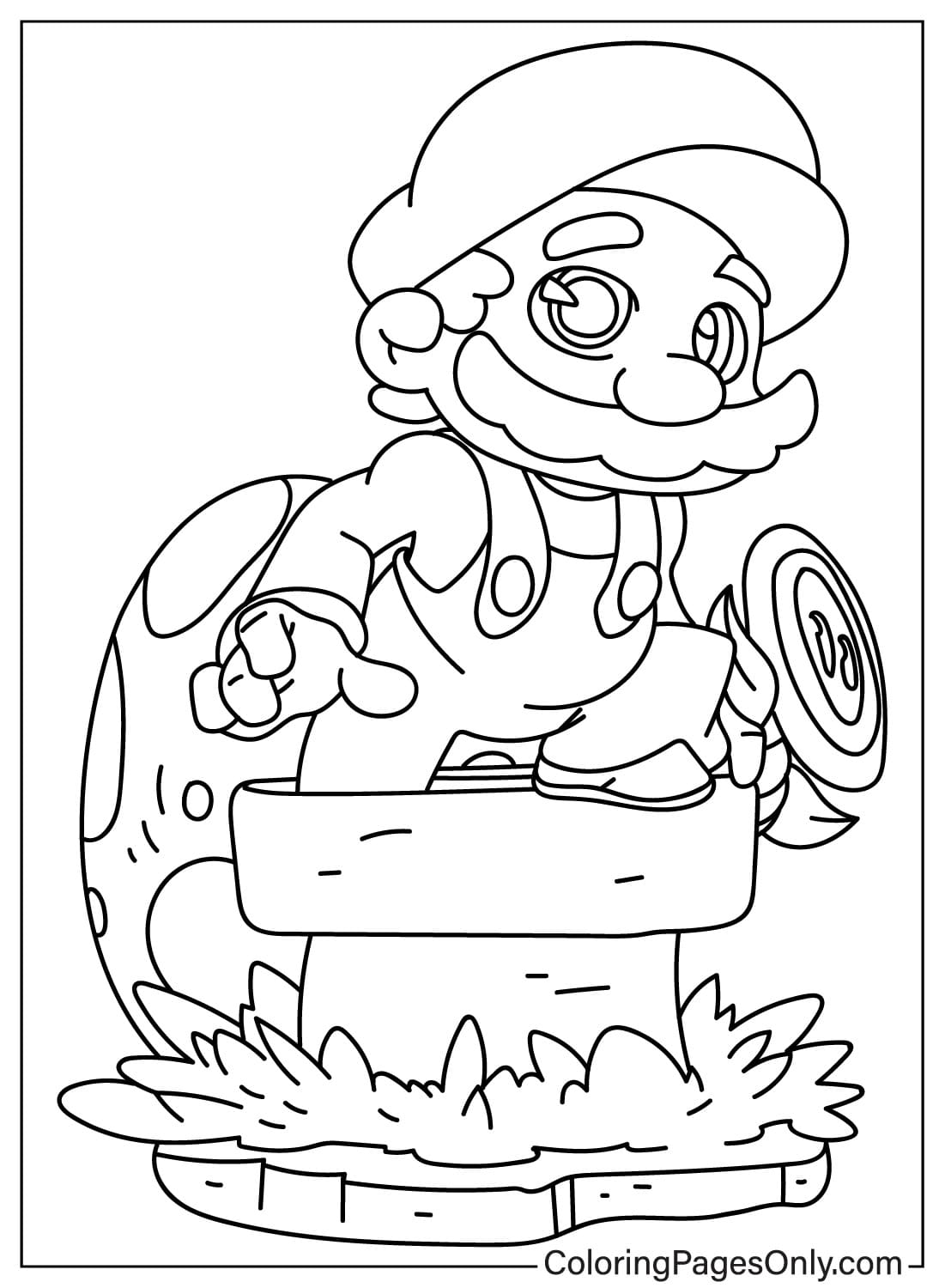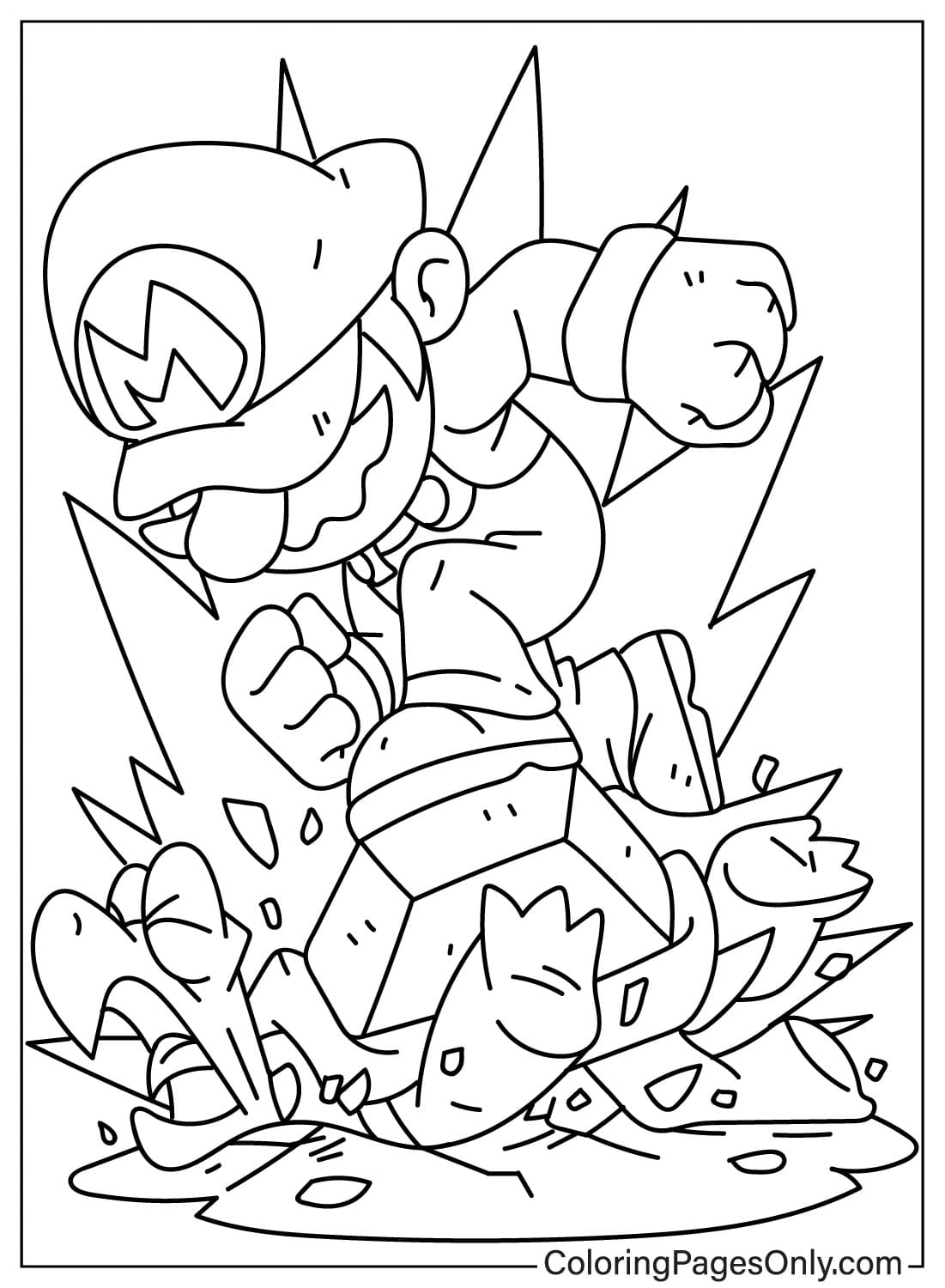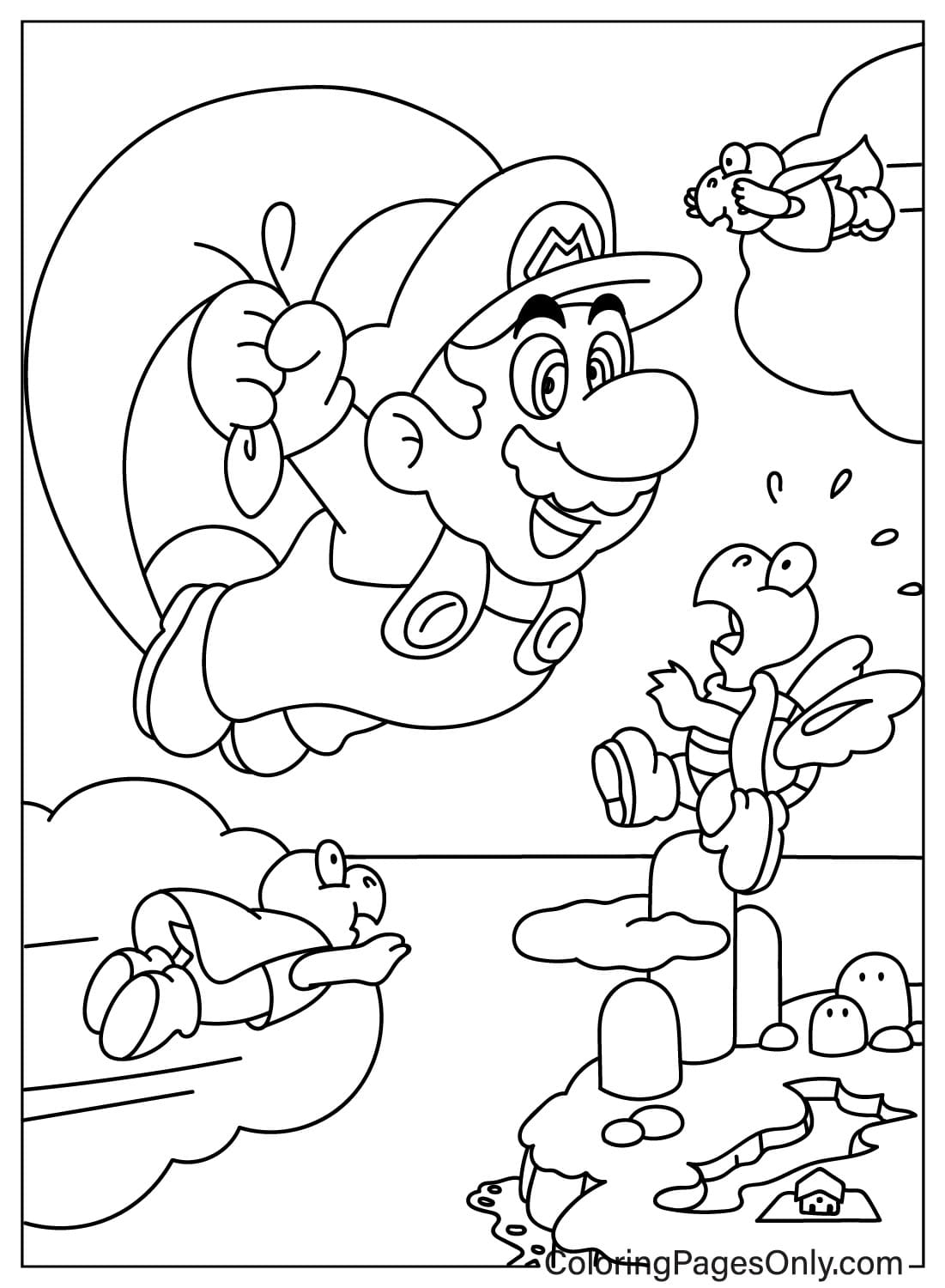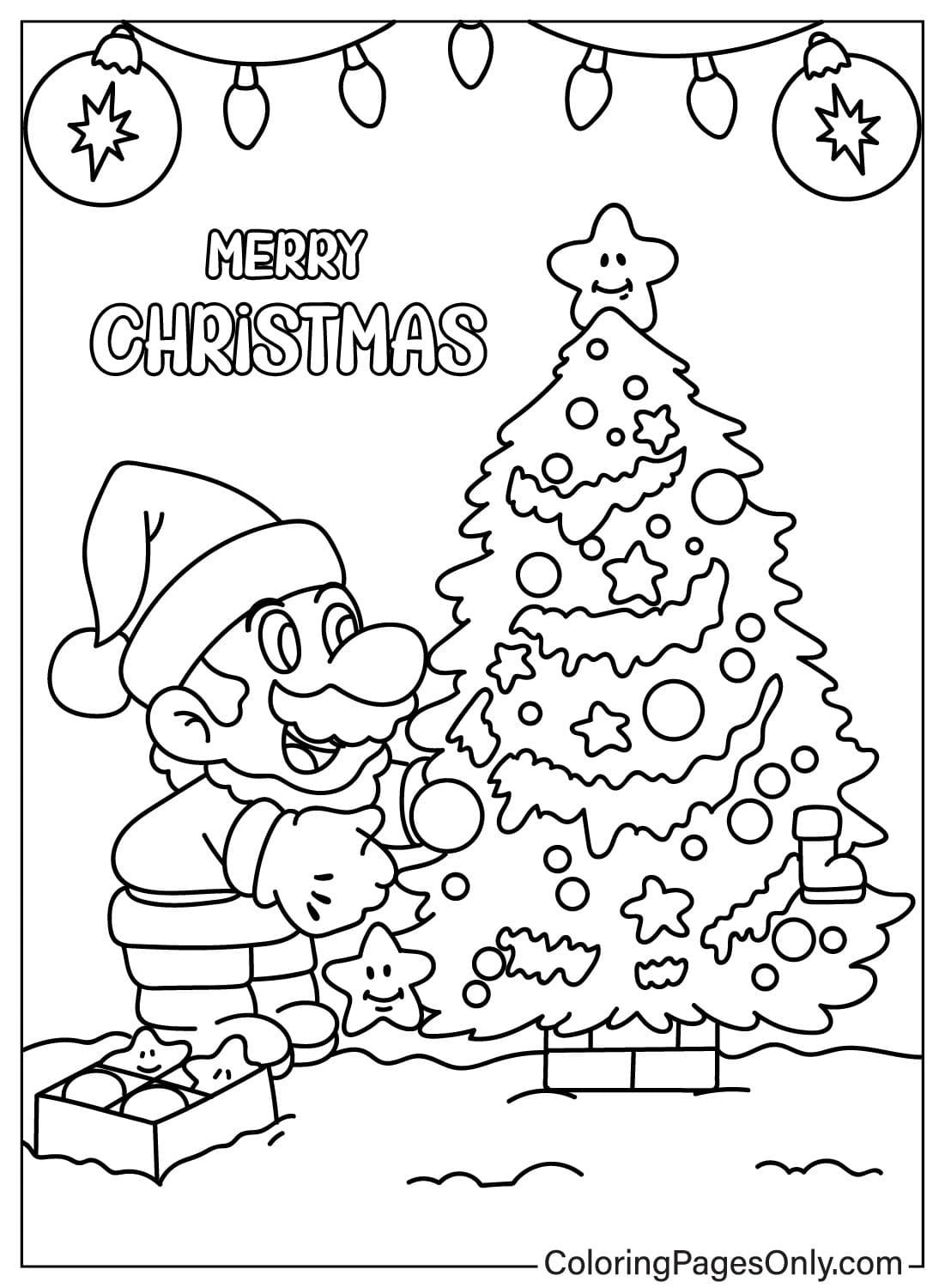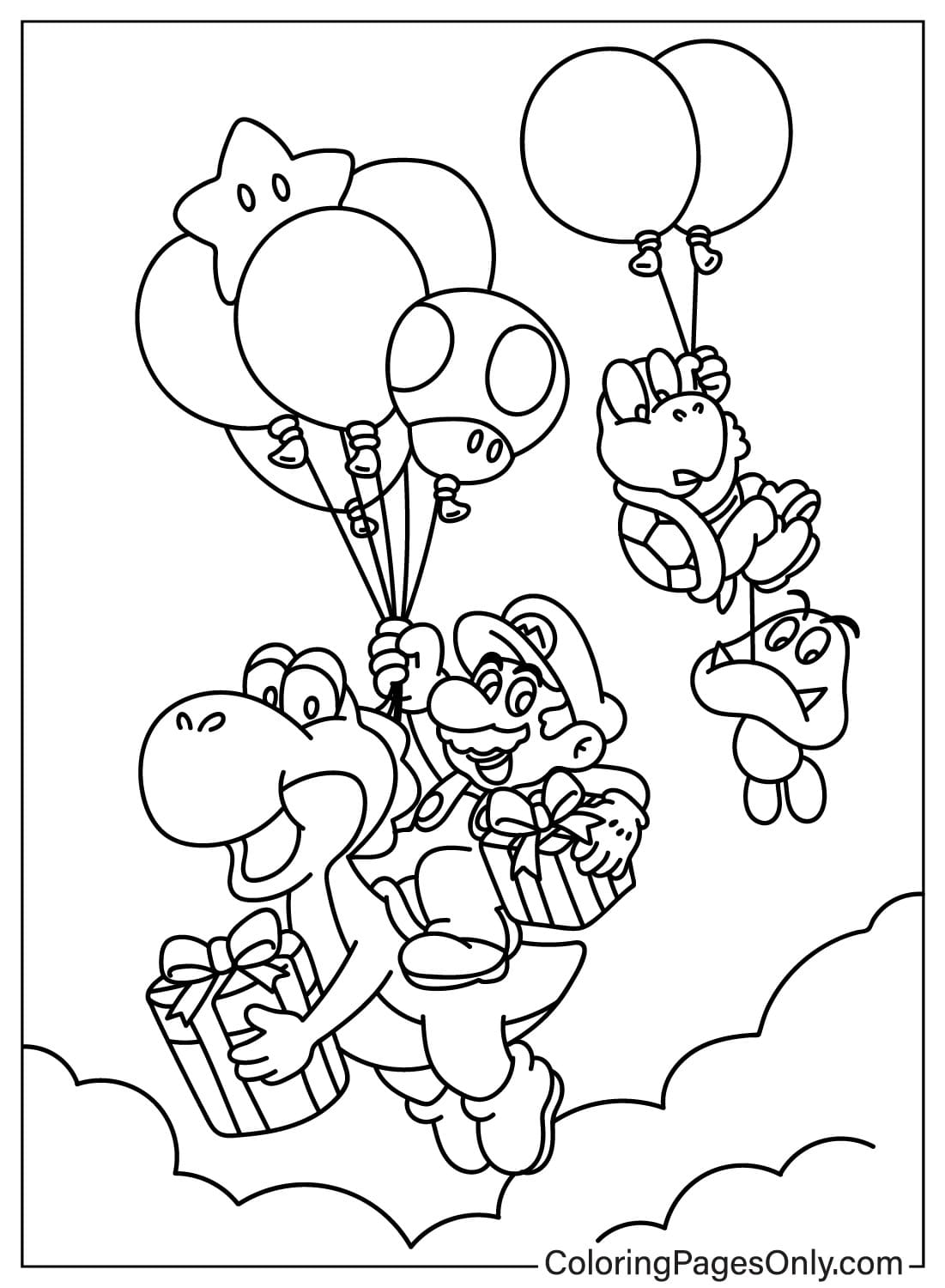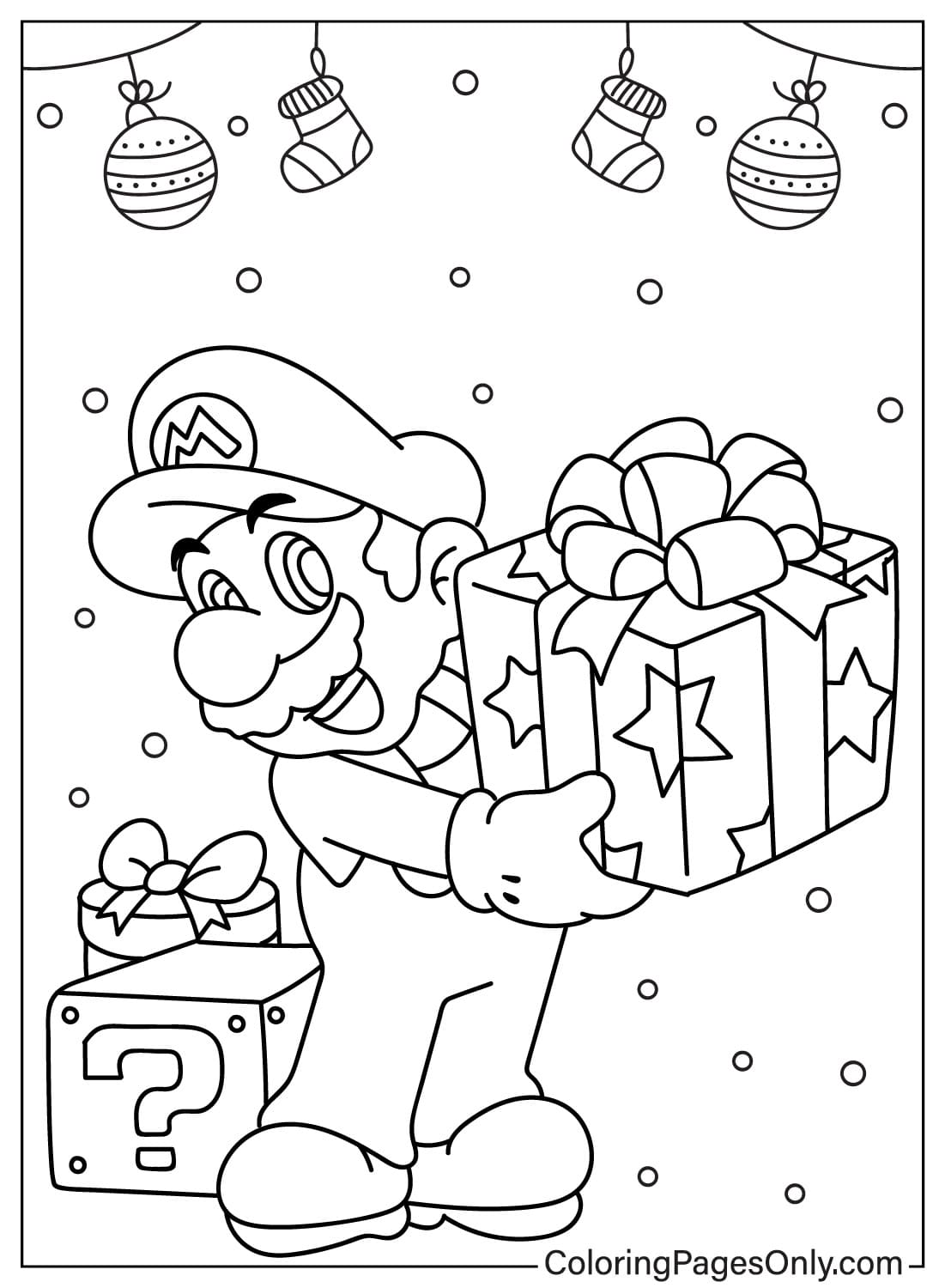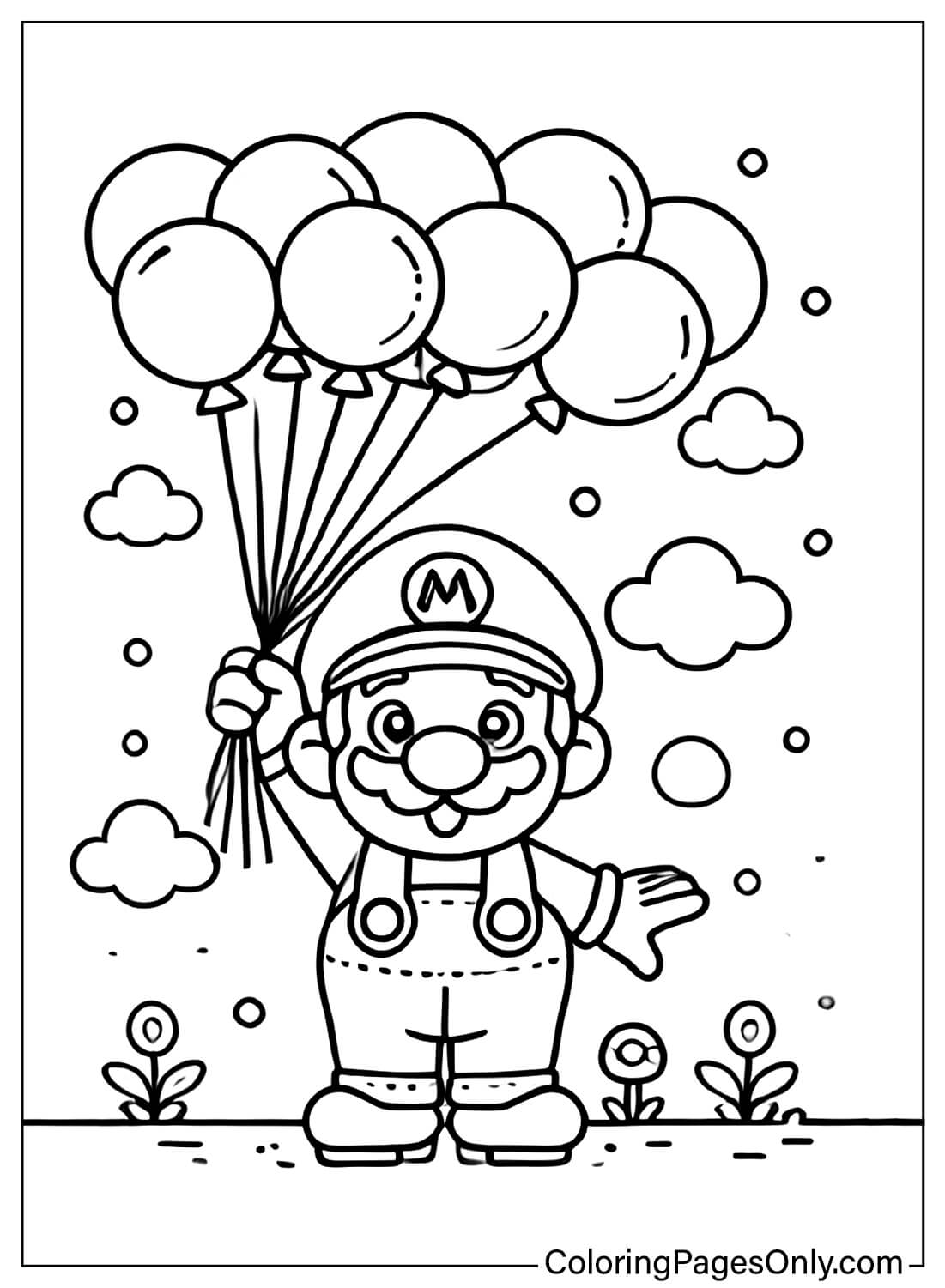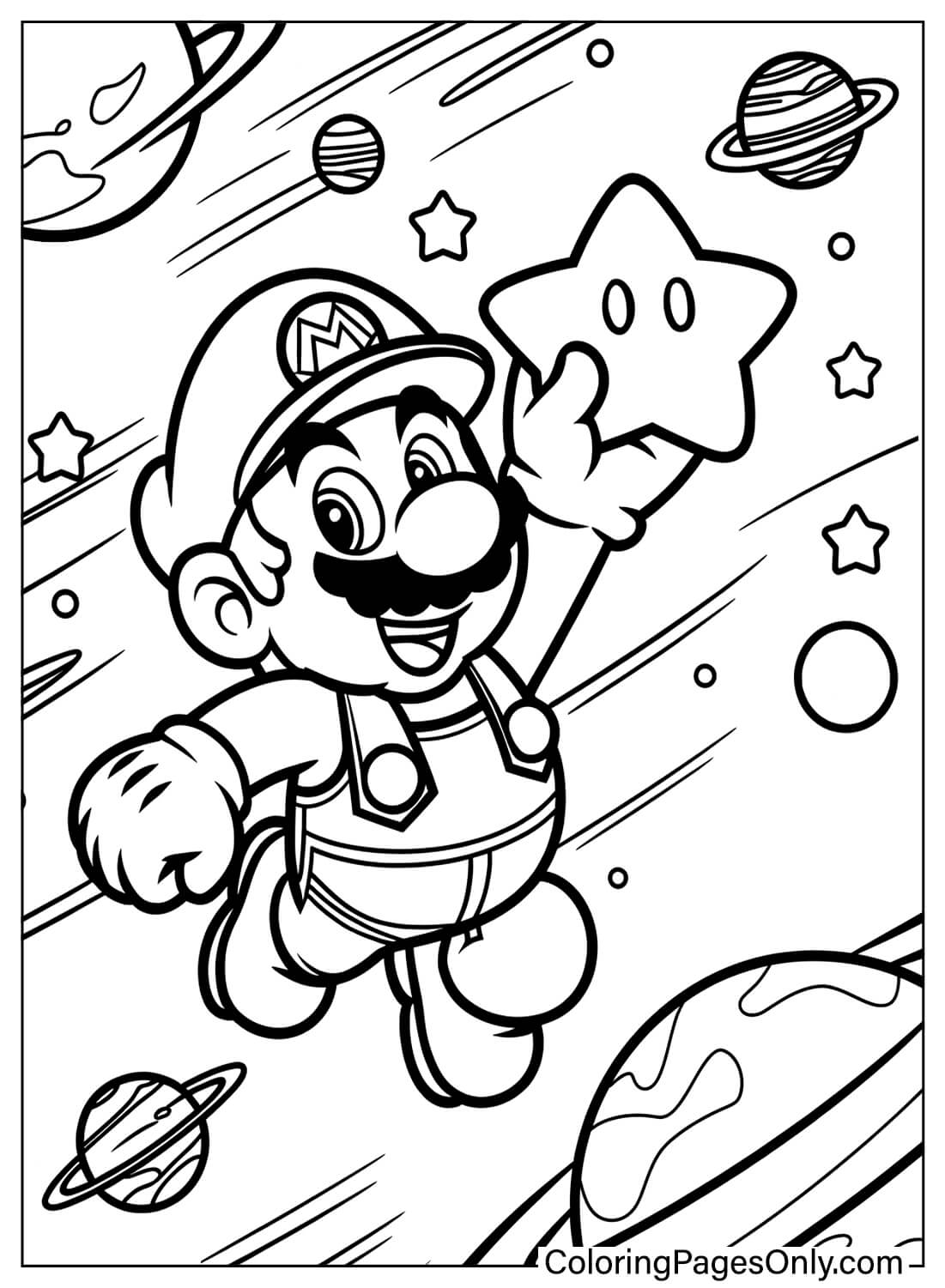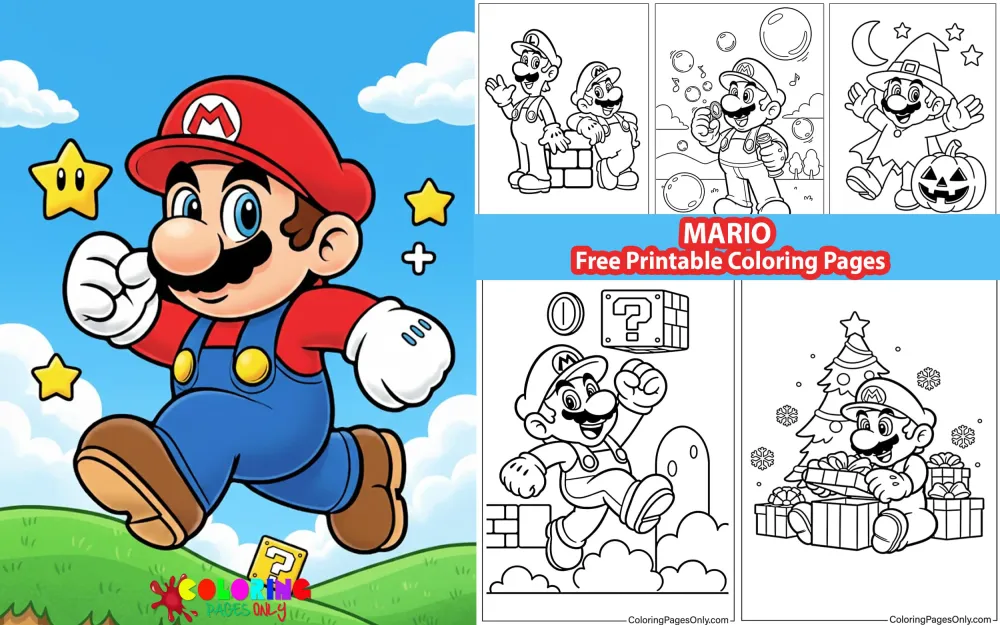
Free Mario coloring pages – 70+ pages featuring classic Mario poses, Luigi, Yoshi, Bowser, Mario Kart scenes, mushrooms, coins, fireballs, platform adventures, holiday pages, sports scenes, and many more printable designs. Download your favorite pages as PDF, print them at home, or color online.
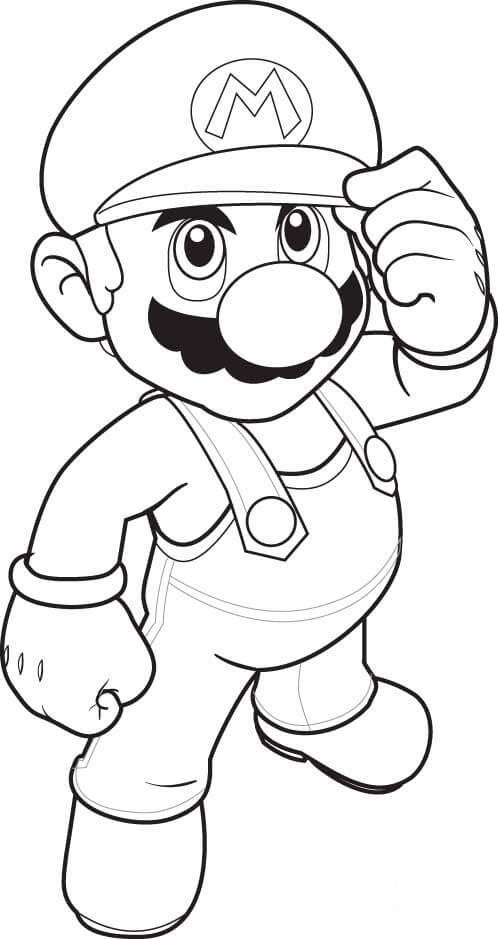
Mario is one of the easiest game characters for children to recognize. His red cap, round nose, mustache, gloves, blue overalls, brown shoes, and cheerful action poses make him stand out even before any color is added. A child can see the hat, the overalls, or the jumping pose and immediately know this is Mario.
Mario coloring pages feel lively because his world is built around movement. Mario jumps, runs, rides, throws fireballs, collects coins, explores pipes, meets friends, avoids enemies, and moves through colorful game-like scenes. That makes the pages fun for young children who want simple character outlines and older kids who enjoy detailed backgrounds, items, vehicles, and action moments.
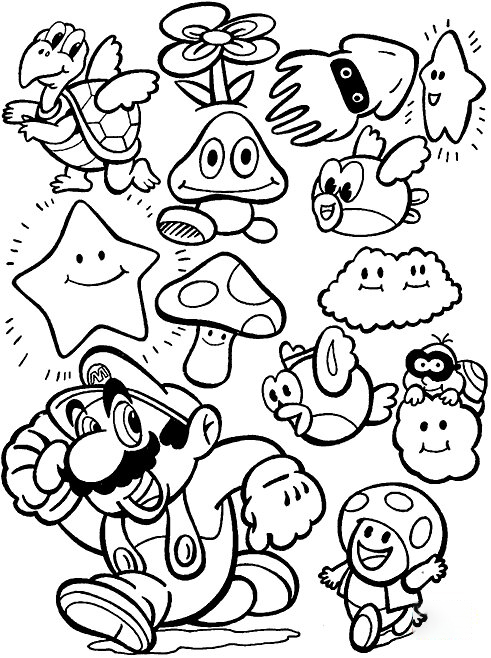
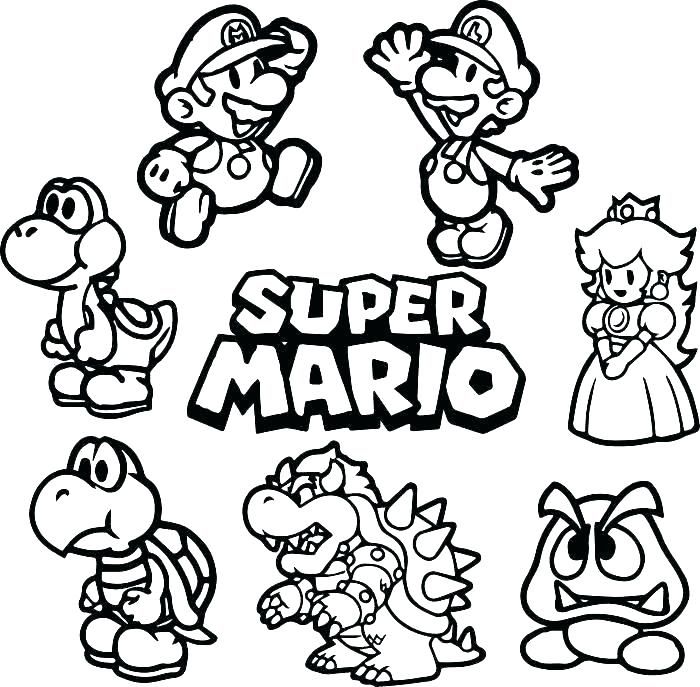
This collection includes many different Mario moods and activities. Some pages show Mario smiling, waving, jumping, or standing in a classic pose. Some include Luigi, Yoshi, Bowser, Toad, Koopa Troopa, Goomba, and other familiar characters. Others bring in mushrooms, coins, bricks, stars, vehicles, holiday details, underwater scenes, sports moments, and Mario Kart-style racing.
A simple Mario page can be finished quickly by younger kids. A detailed page with friends, enemies, power-ups, racing cars, or platform scenes can become a longer art activity. Parents can print pages for quiet time, teachers can use them in class, and Mario fans can color online anytime.
All 70+ pages are free at ColoringPagesOnly.com. Print your favorite Mario page at home or color it online.
What’s Inside
Classic Mario Coloring Pages
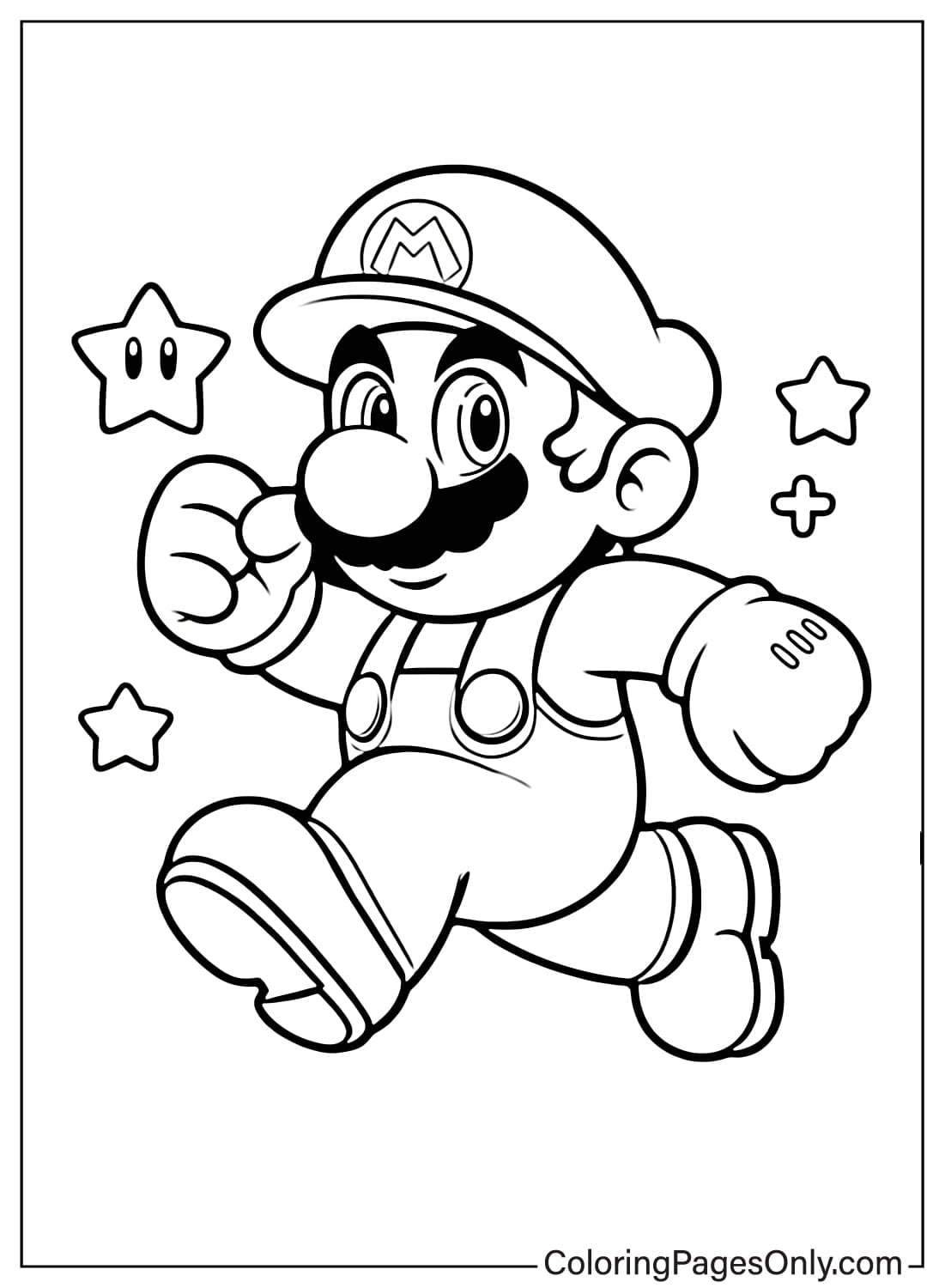
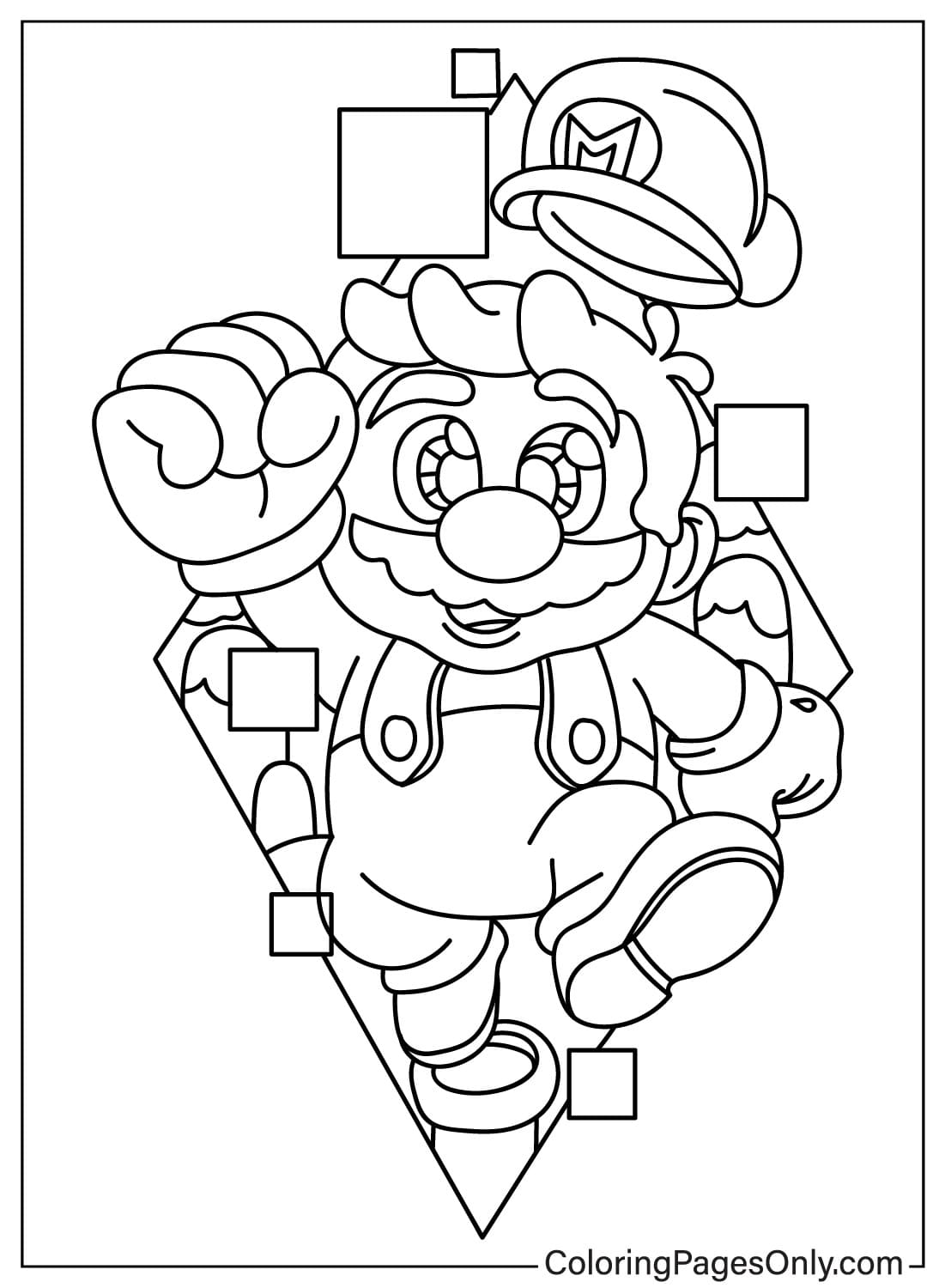
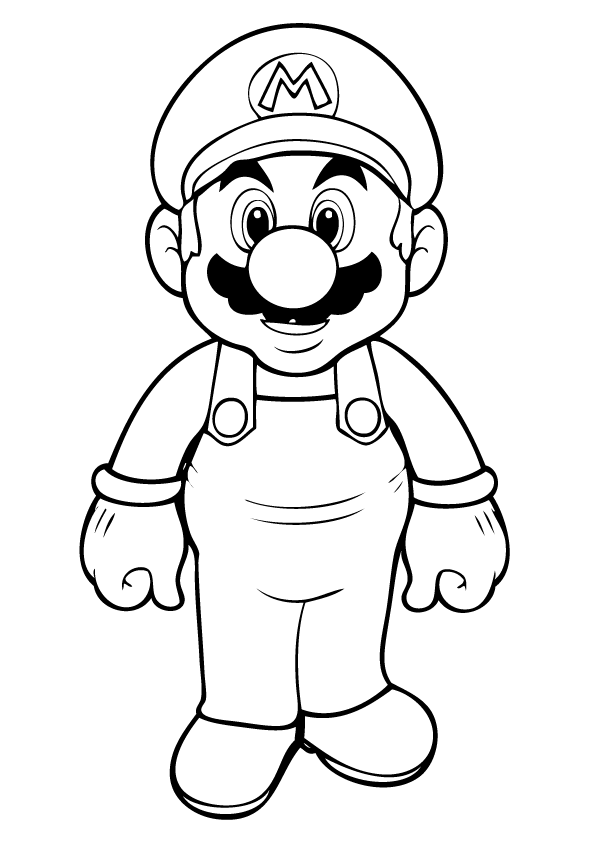
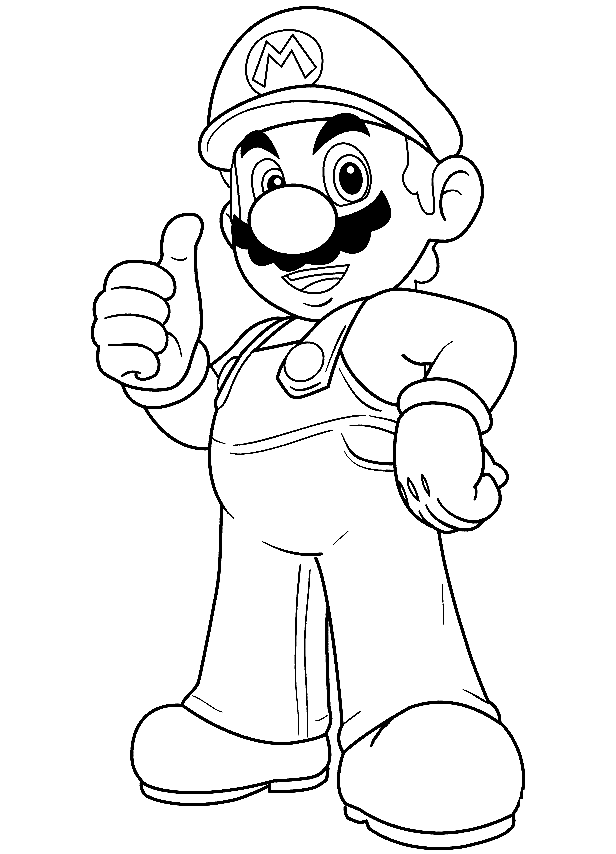
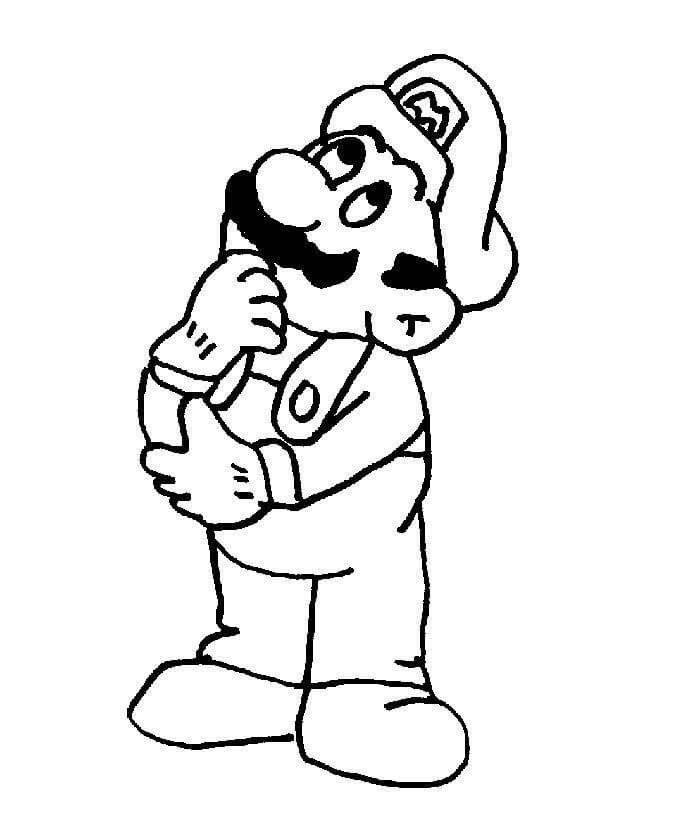
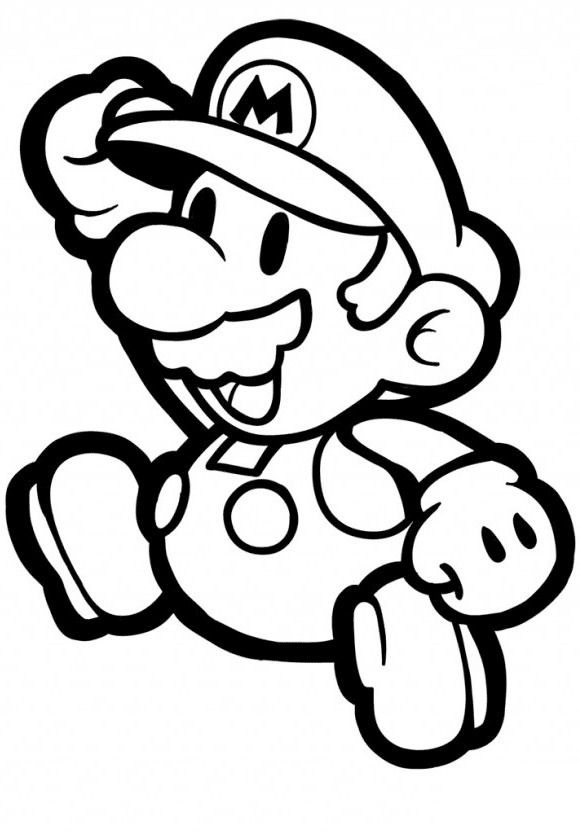
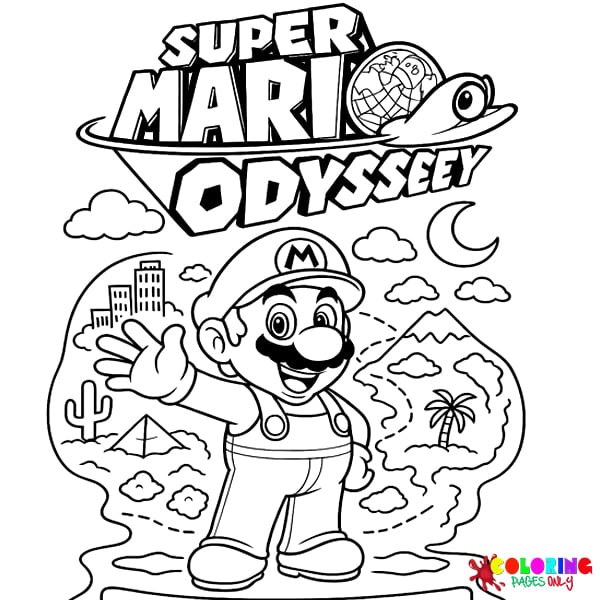
Classic Mario coloring pages focus on the most familiar version of Mario: red cap, mustache, gloves, blue overalls, big shoes, and a confident pose. These pages may show Mario smiling, waving, jumping, standing proudly, saying hello, or getting ready for an adventure.
The strength of a classic Mario page is clear character identity. Children do not need a busy background to understand the picture. The hat, face, overalls, gloves, and shoes already create a strong design. This makes classic Mario pages a good starting point for younger children who are still learning to color inside large shapes.
These pages also help children notice how costume and color make a character memorable. Mario’s red cap and shirt draw attention first, while the blue overalls create a strong contrast. The white gloves and brown shoes add smaller details without making the page too difficult.
For coloring, keep the main outfit clean. The cap and shirt usually work best in bright red. The overalls can be blue or denim blue. The gloves should stay white or very light gray. Shoes can be brown, and skin areas can use peach or light tan.
A classic Mario page is useful before moving into action scenes, Mario Kart pages, power-up pages, or group scenes. Once children understand the main color system, they can color more detailed Mario pages with more confidence.
Mario Jumping and Platform Adventure Pages
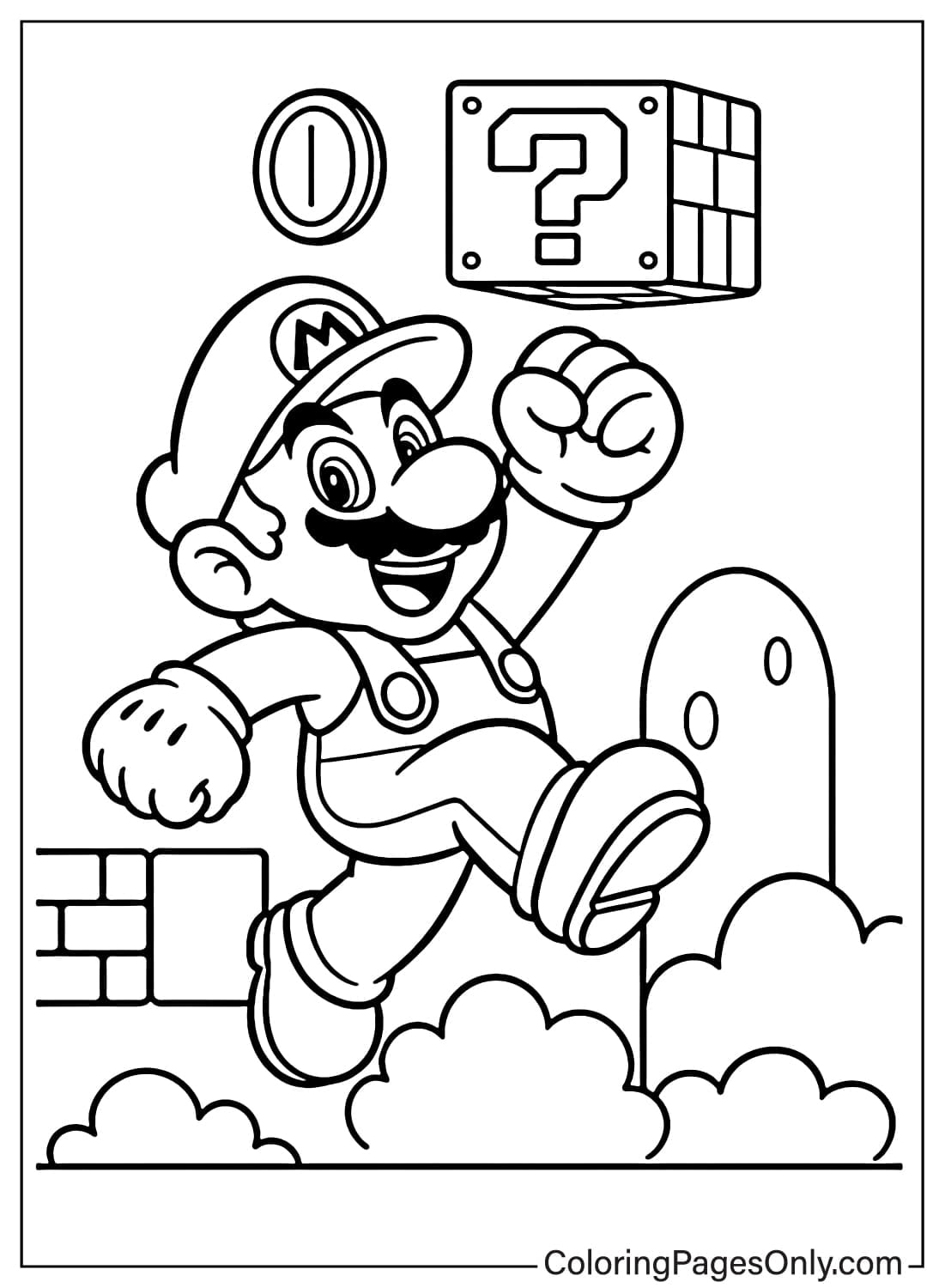
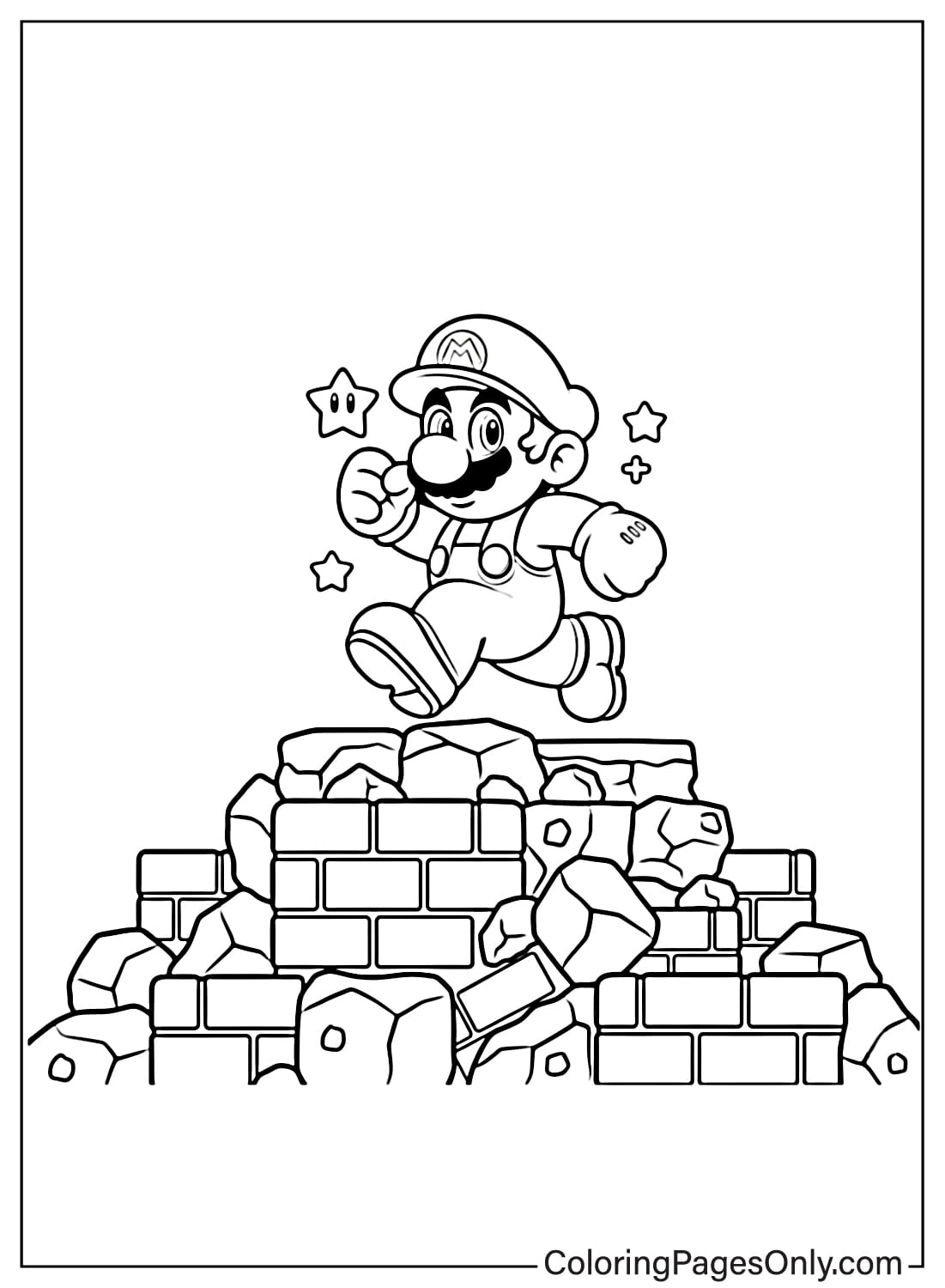
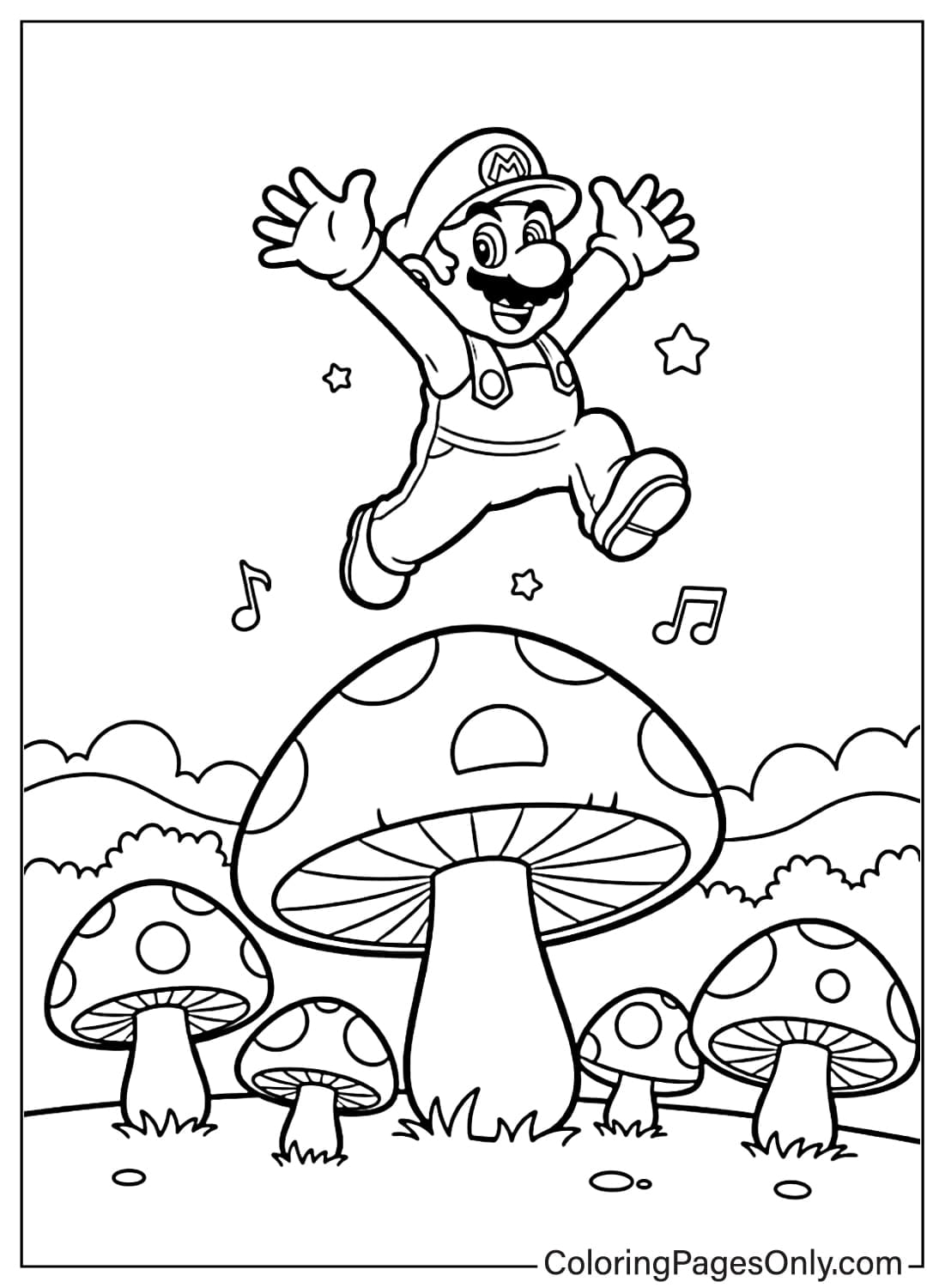
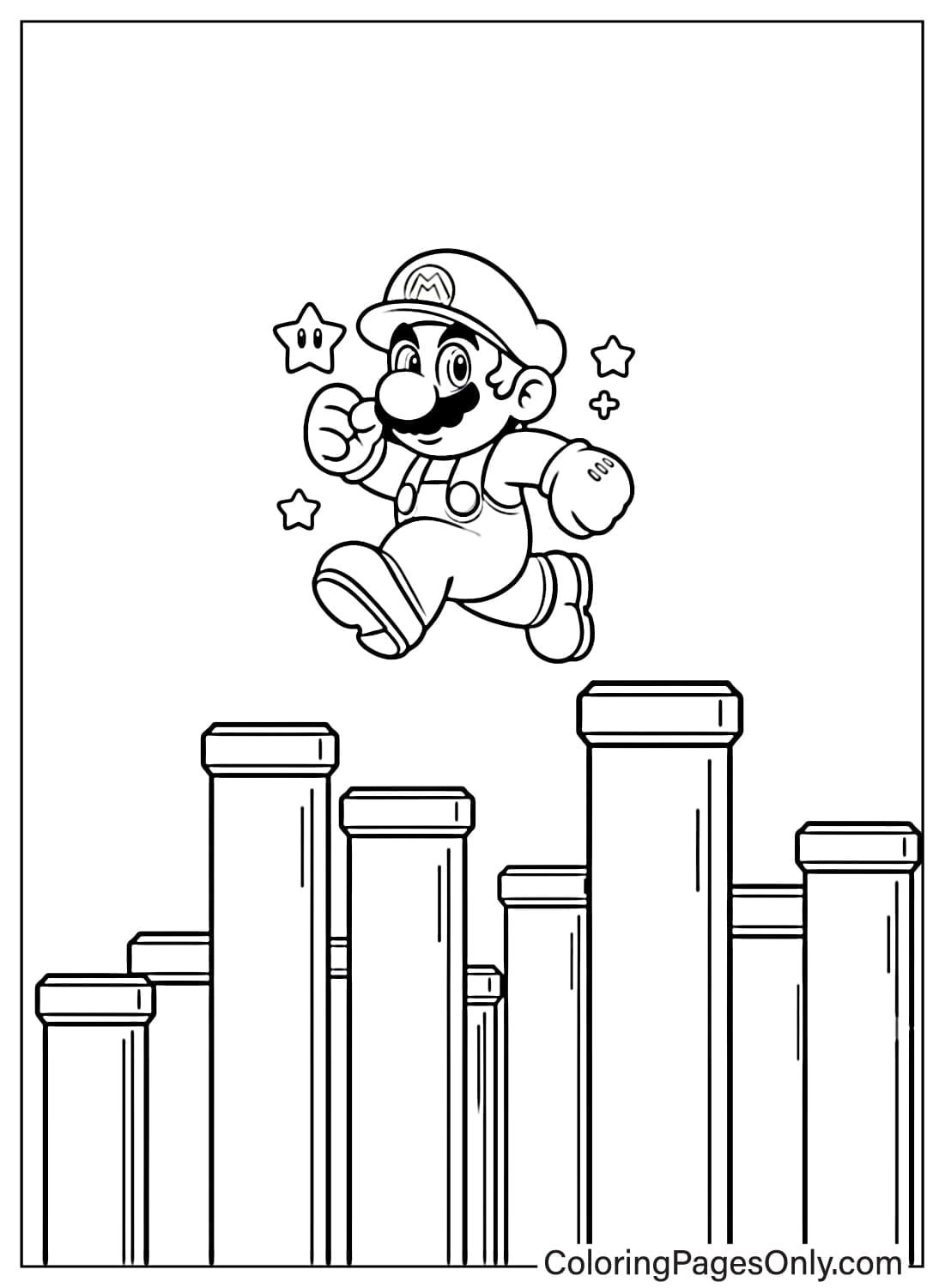
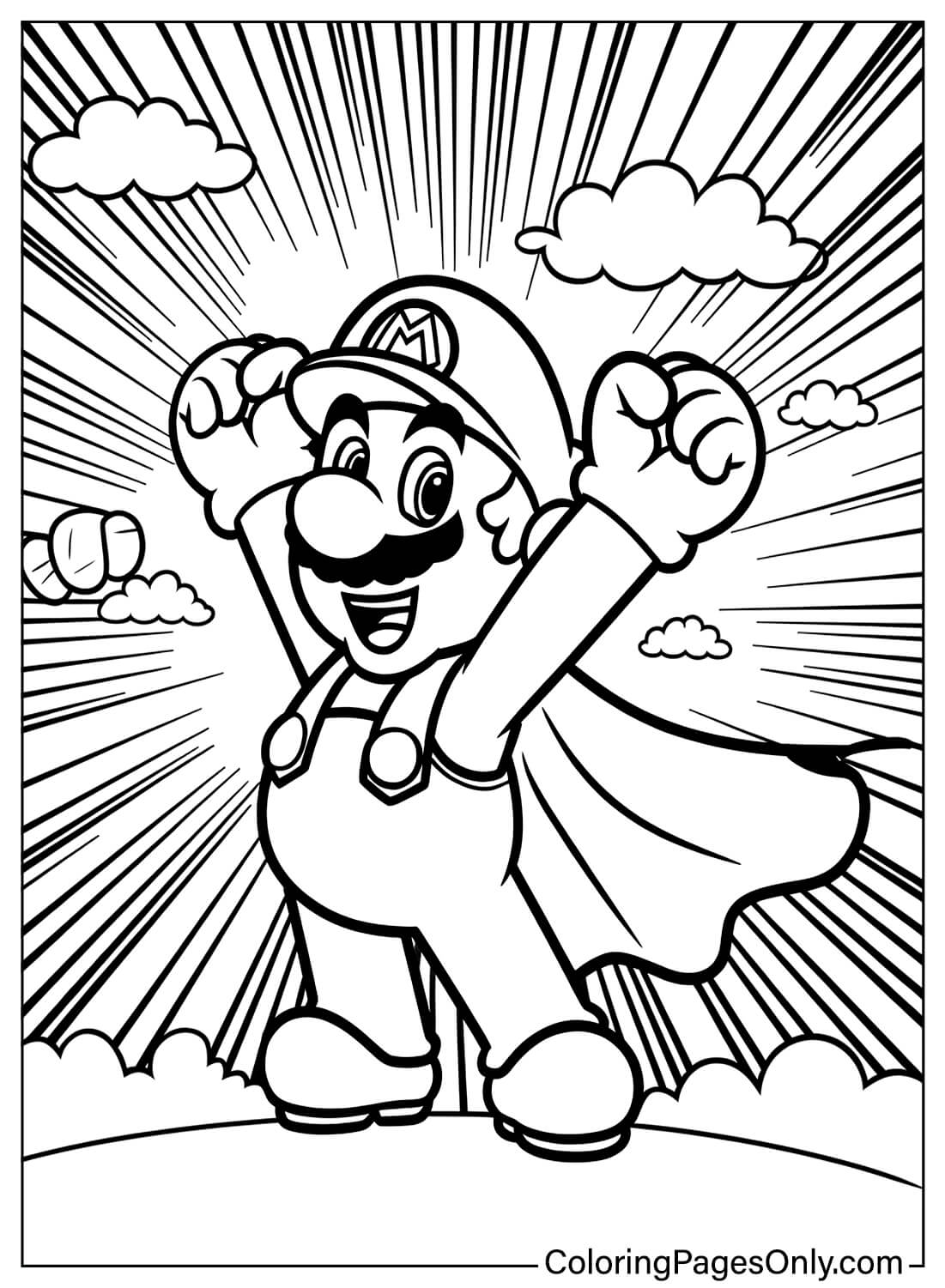
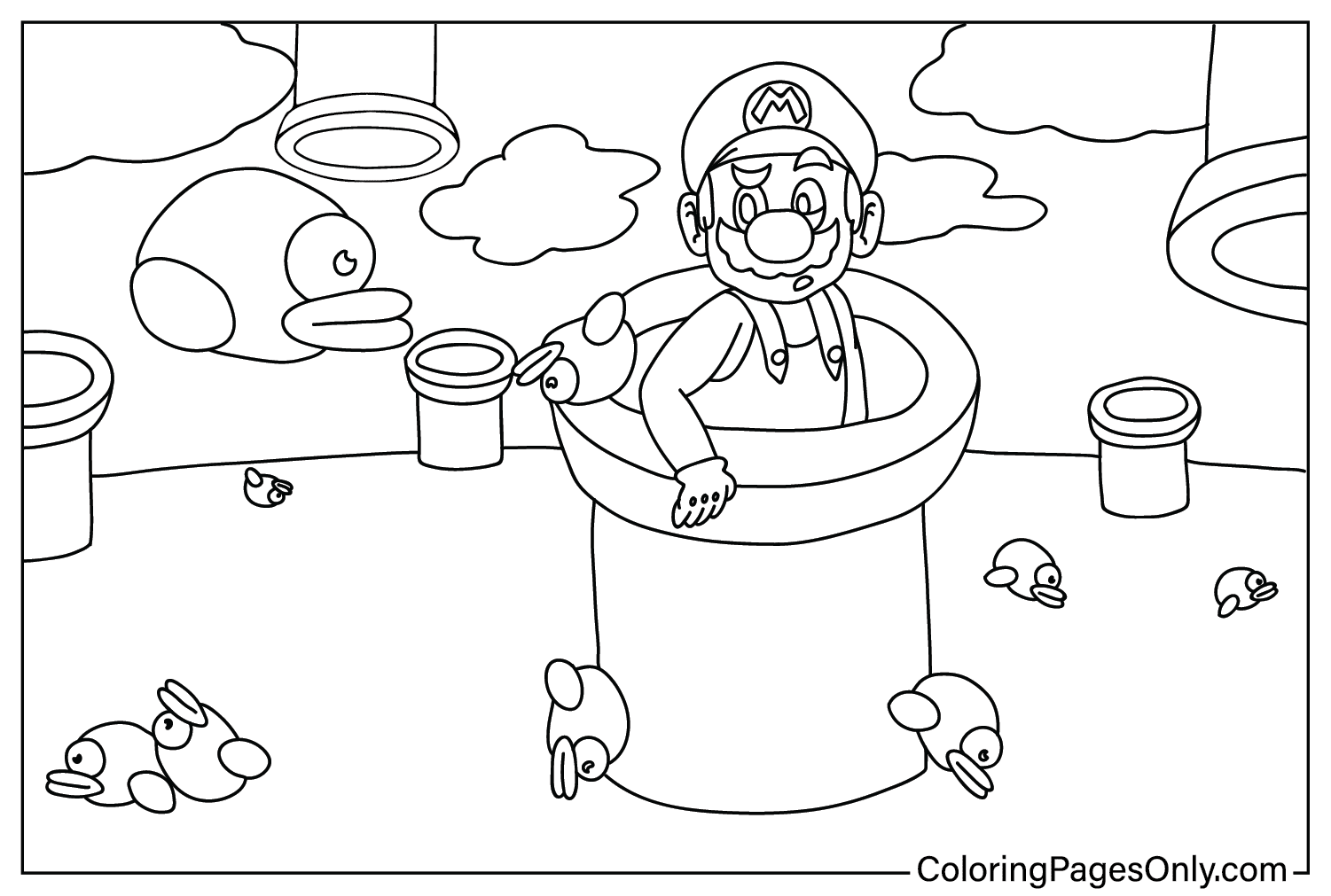
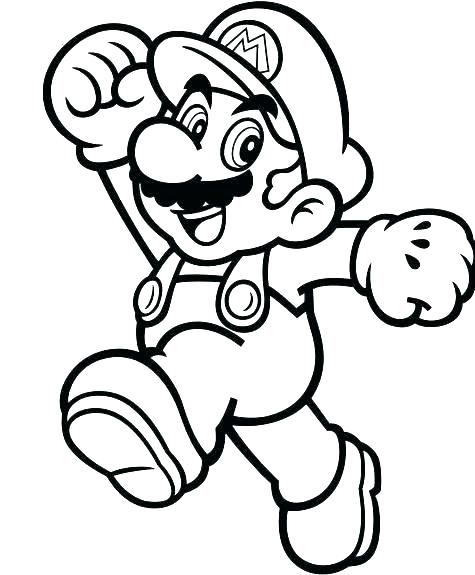
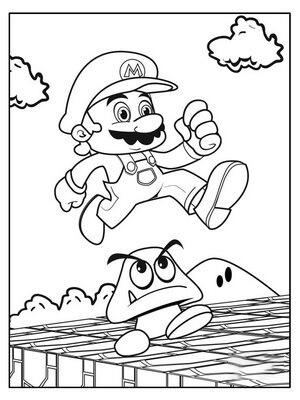
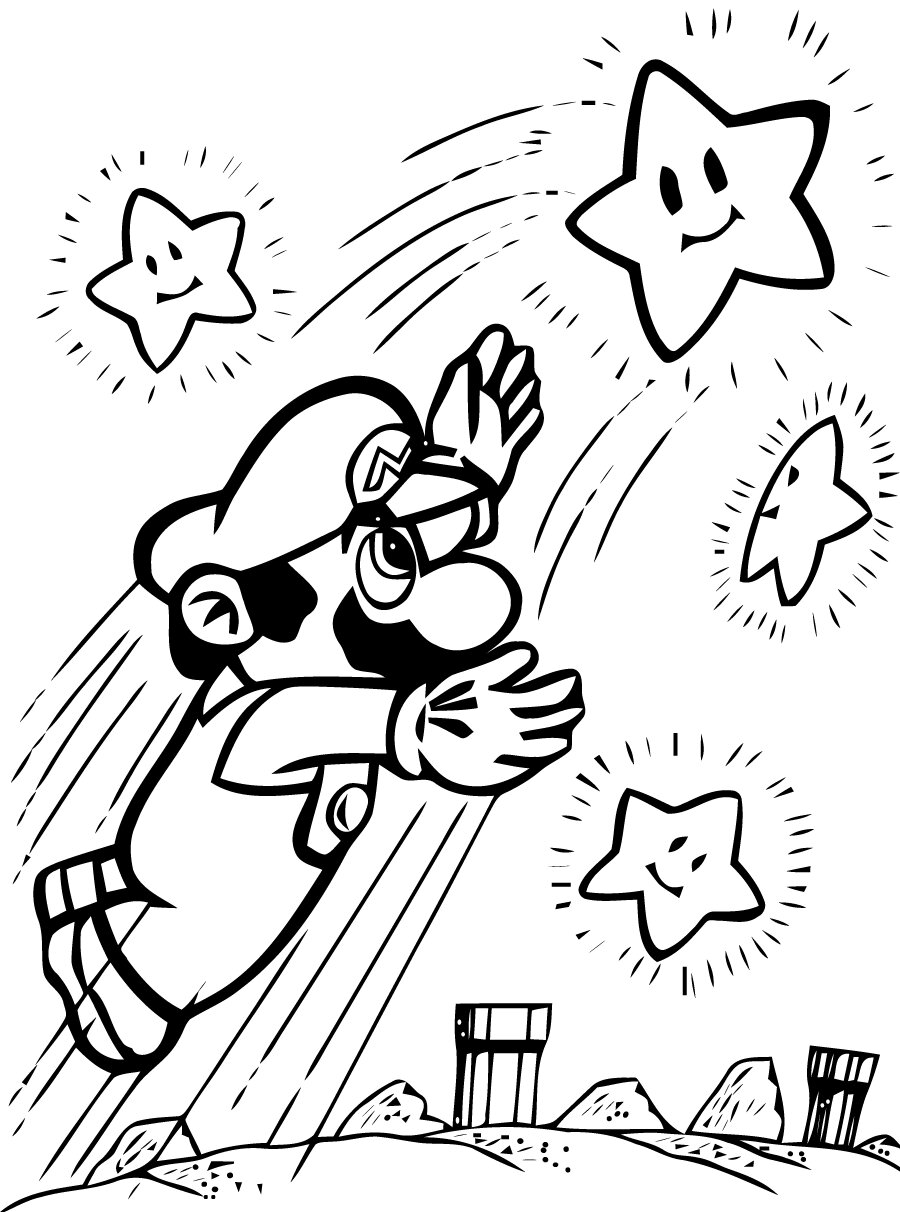
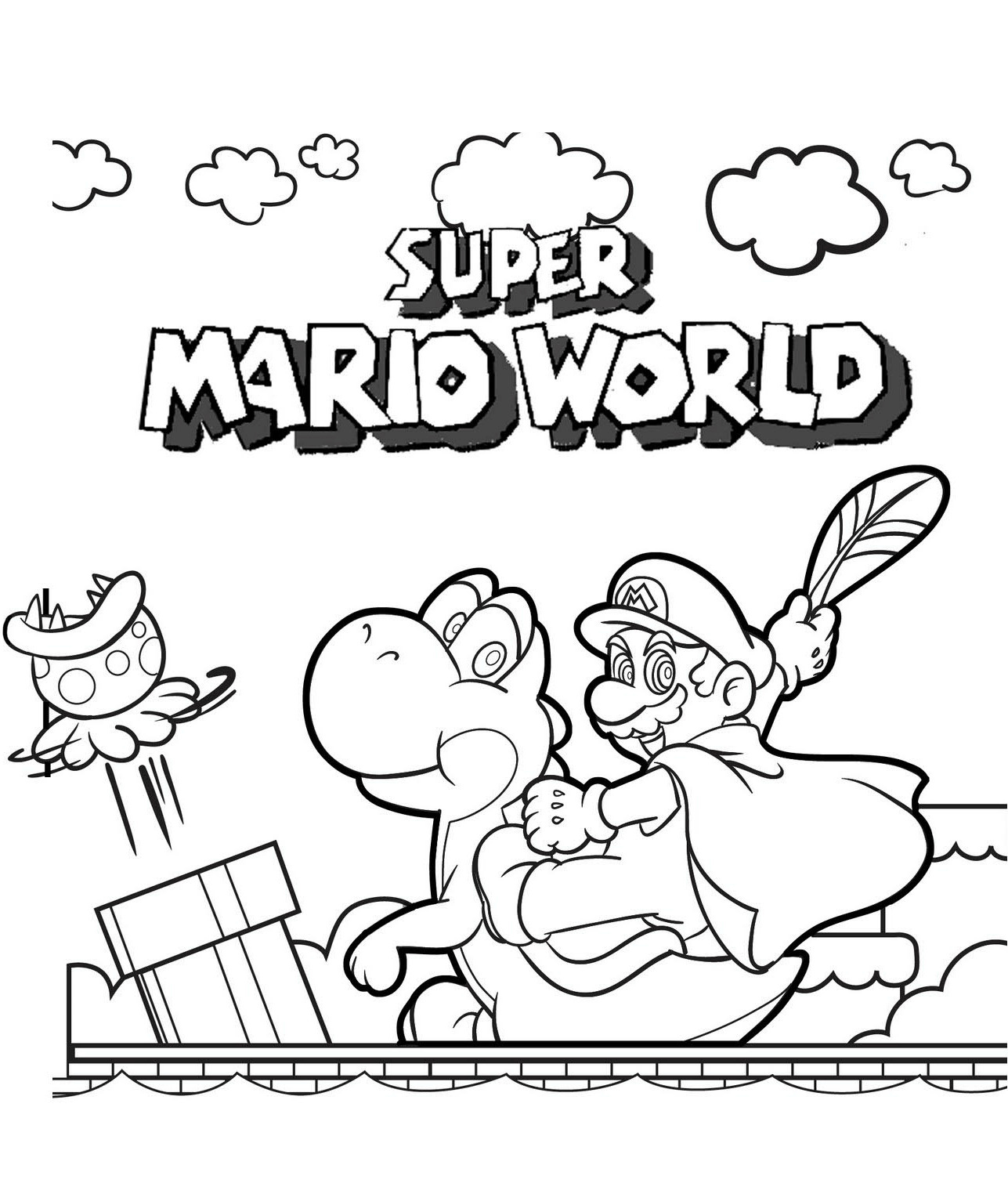
Mario jumping pages show the action that makes Mario’s world feel like a game. These pages may include bricks, platforms, pipes, mushrooms, stars, coins, ladders, fireballs, or Mario jumping over enemies.
The body position matters here. A raised arm, bent knee, open hand, or tilted body can make the whole page feel like it is moving. Mario does not just stand in one place; he jumps toward coins, reaches for blocks, lands on platforms, or avoids enemies.
Platform pages give children more visual structure than a simple portrait. Bricks, pipes, blocks, mushrooms, and coins create separate areas to color. Younger children can enjoy the large shapes, while older kids can add shading to blocks, patterns to pipes, or shadows under Mario’s feet.
Color can help show movement. Mario’s outfit should stay bold, while platforms and blocks can use warm browns, oranges, yellows, and grays. Pipes usually look good in green. Coins can be yellow or gold. Stars and power-up effects can use bright yellow, orange, or white.
These pages are a good choice for kids who like action, simple game scenes, and playful pages with clear objects to color.
Mario, Luigi, Yoshi, and Character Scene Pages
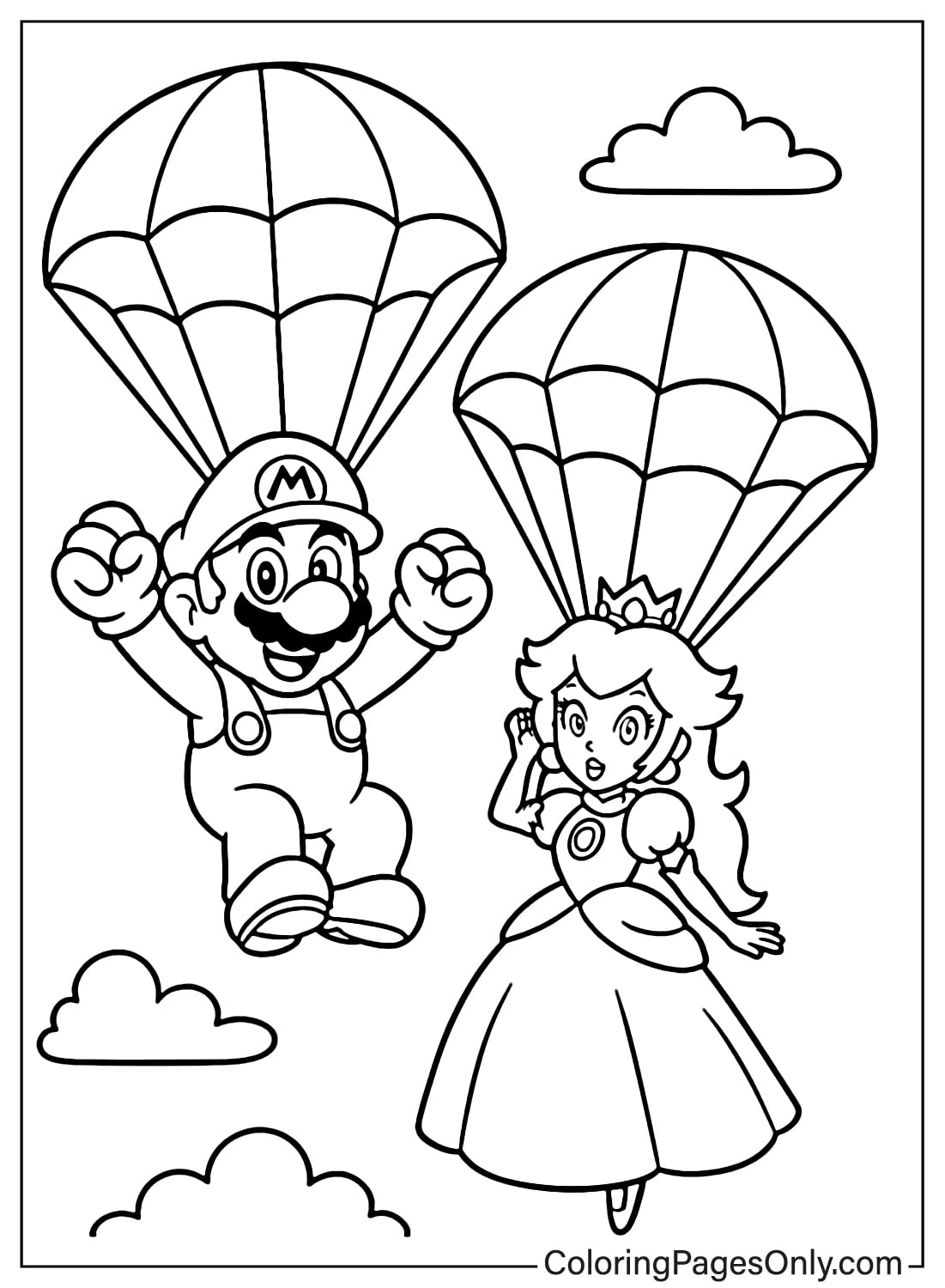
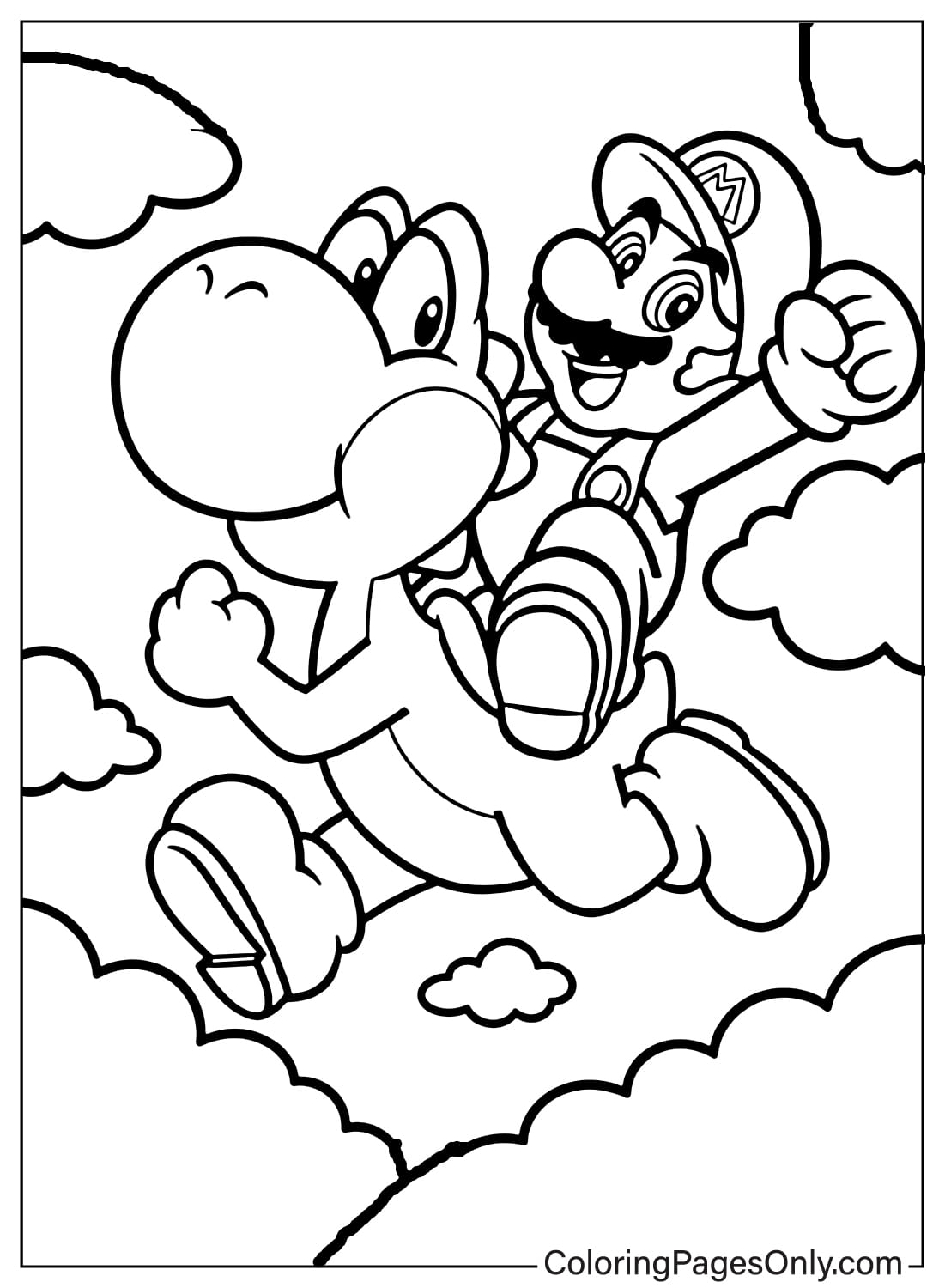
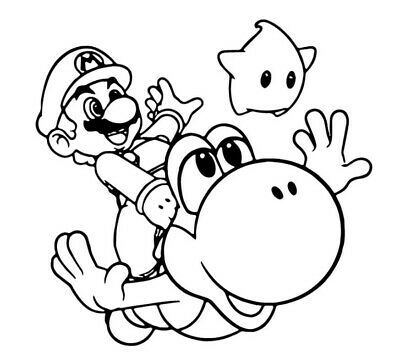
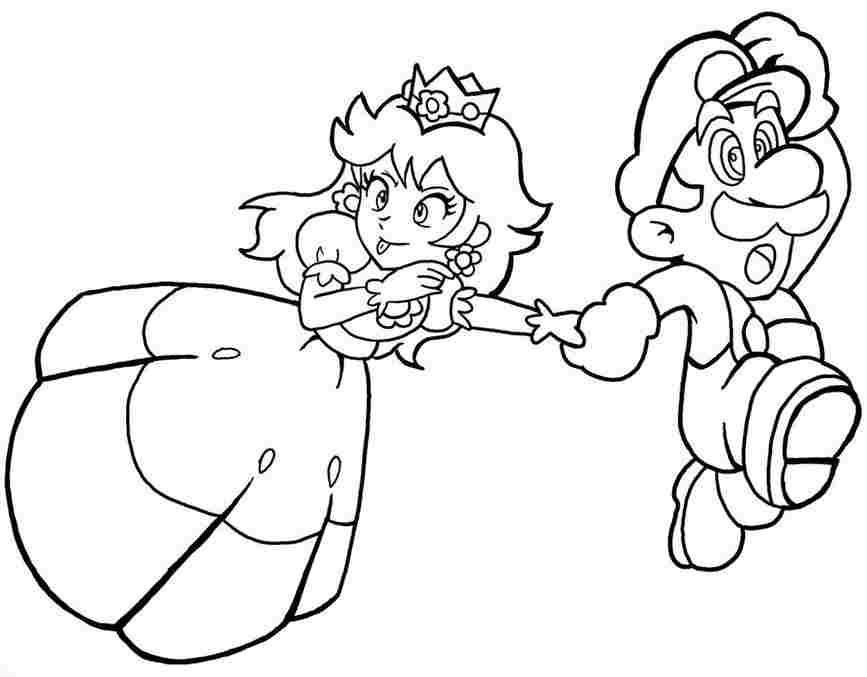
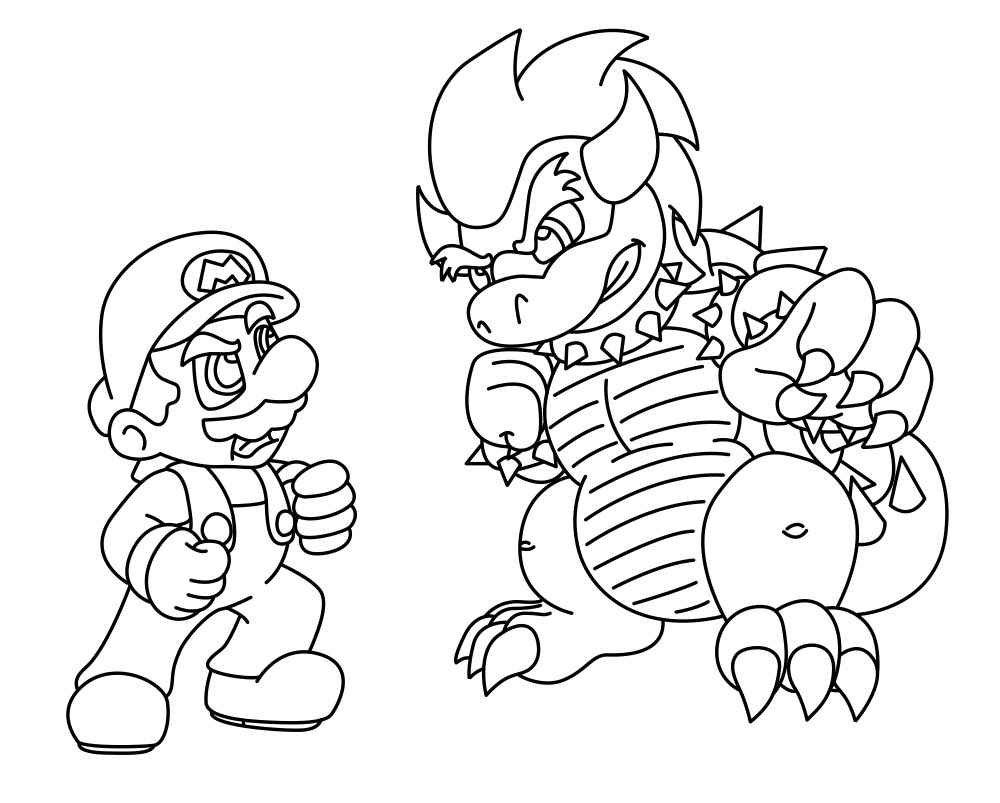
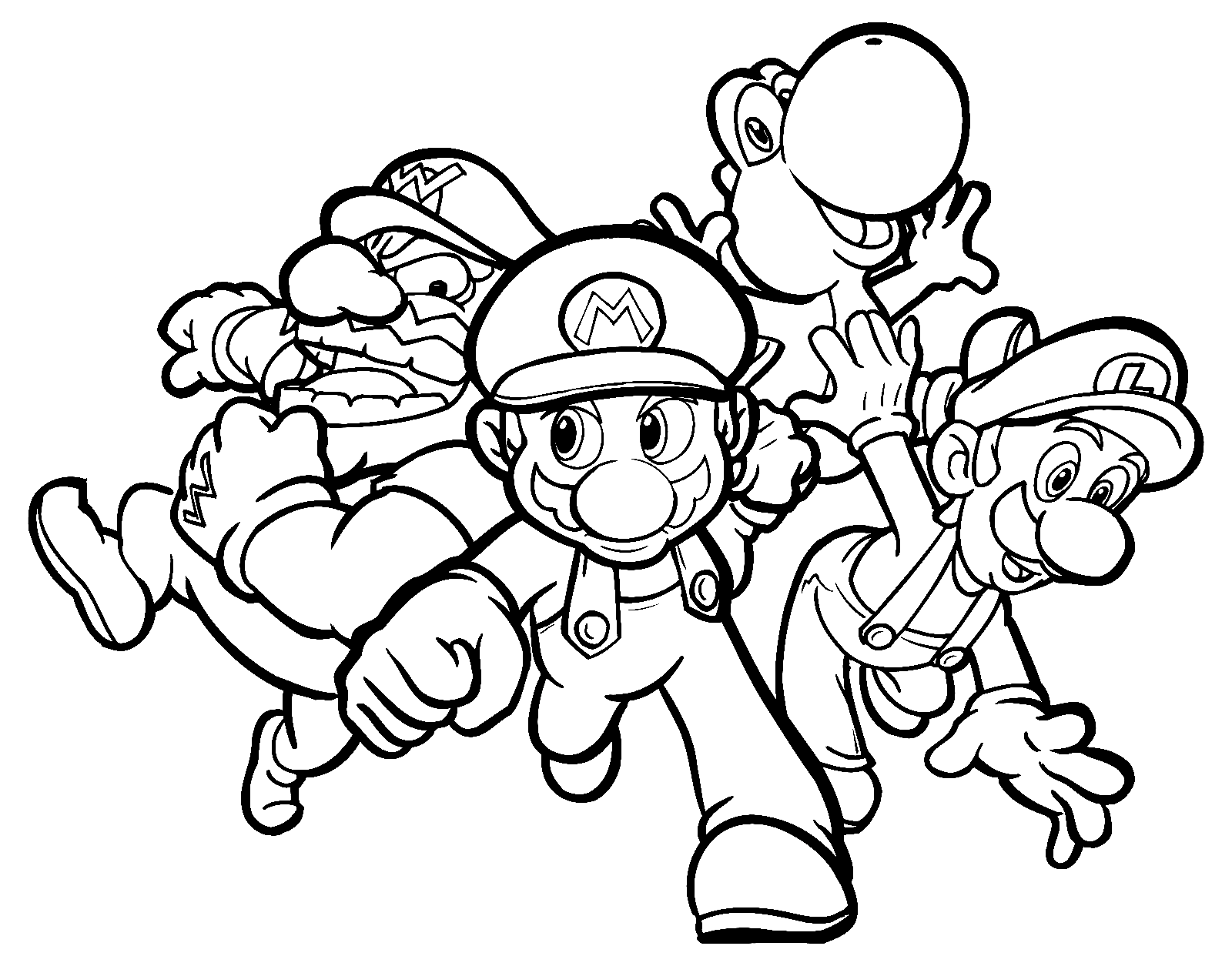
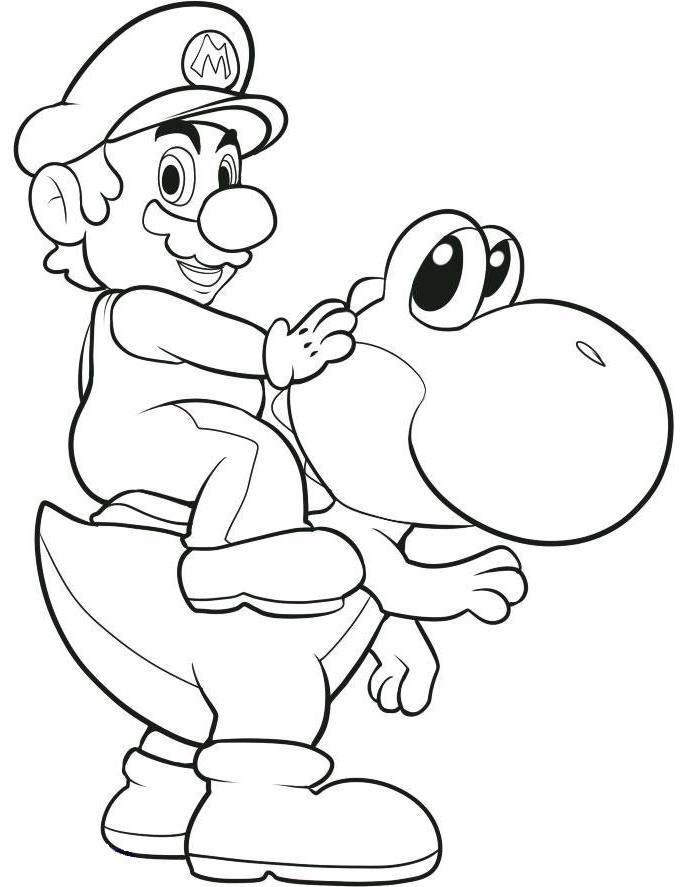
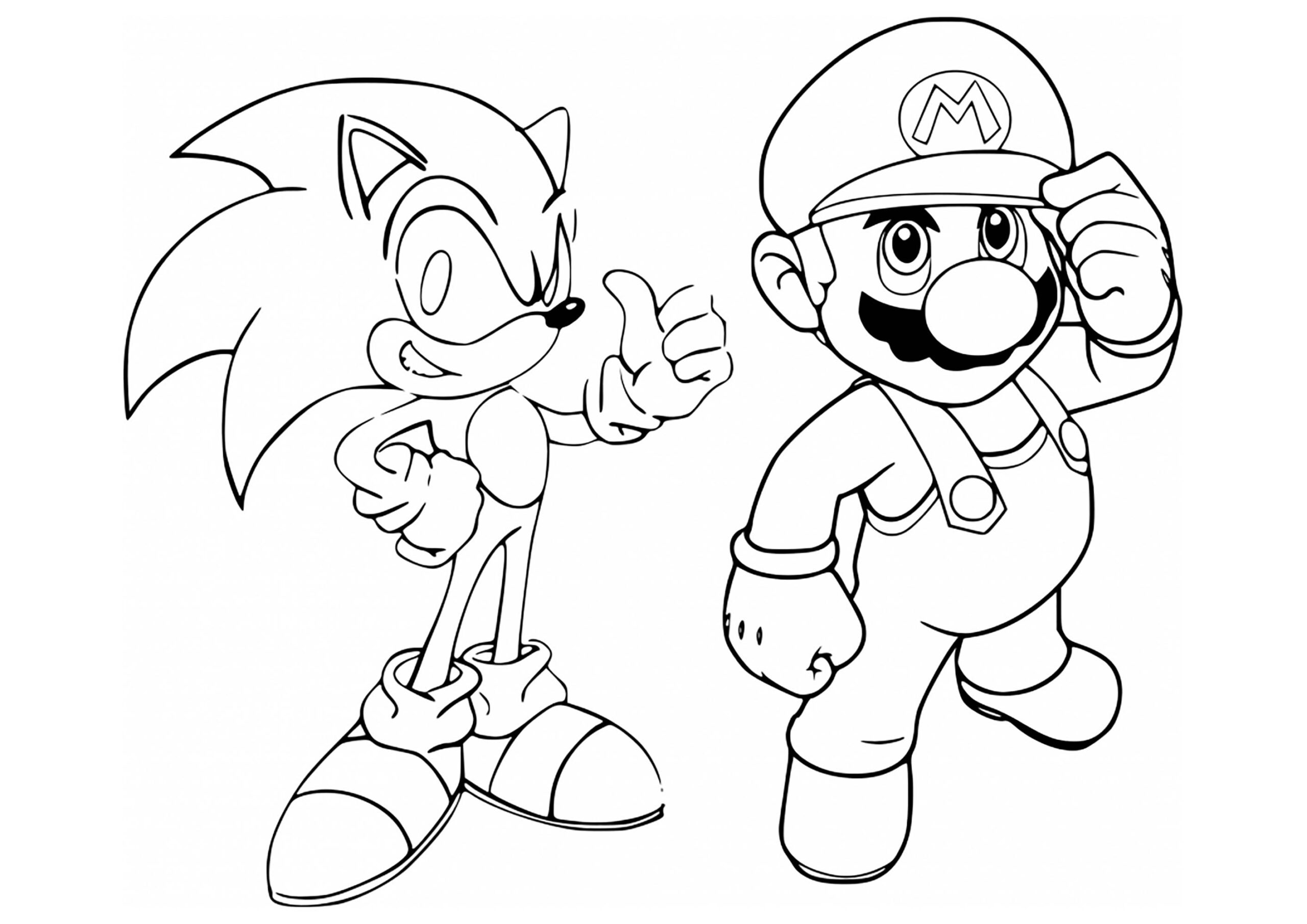
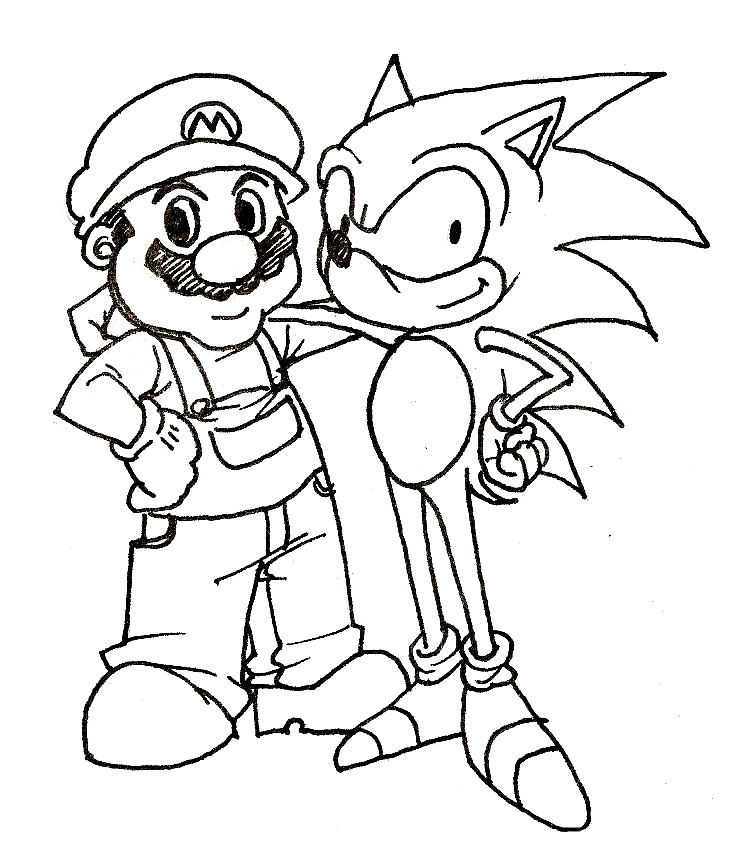
Mario character pages bring more storytelling into the collection. These designs may show Mario with Luigi, Yoshi, Princess Peach, Daisy, Toad, or other familiar characters from his world. Some pages also include Koopa Troopa, Goomba, Bowser, or other enemies that make the scene feel more like an adventure.
The main skill in these pages is color hierarchy. Mario’s red-and-blue outfit usually works as the anchor of the scene. Luigi can bring green and blue, Yoshi adds bright green, Peach and Daisy introduce softer dress colors, and enemies such as Goomba, Koopa Troopa, and Bowser add browns, greens, yellows, oranges, and darker outlines.
When several characters appear together, the page can become busy if everything is colored at the same strength. A good approach is to color Mario first, then the main friend or enemy, then the smaller characters, and finally the background. This helps children decide which parts should be bright and which parts can stay softer.
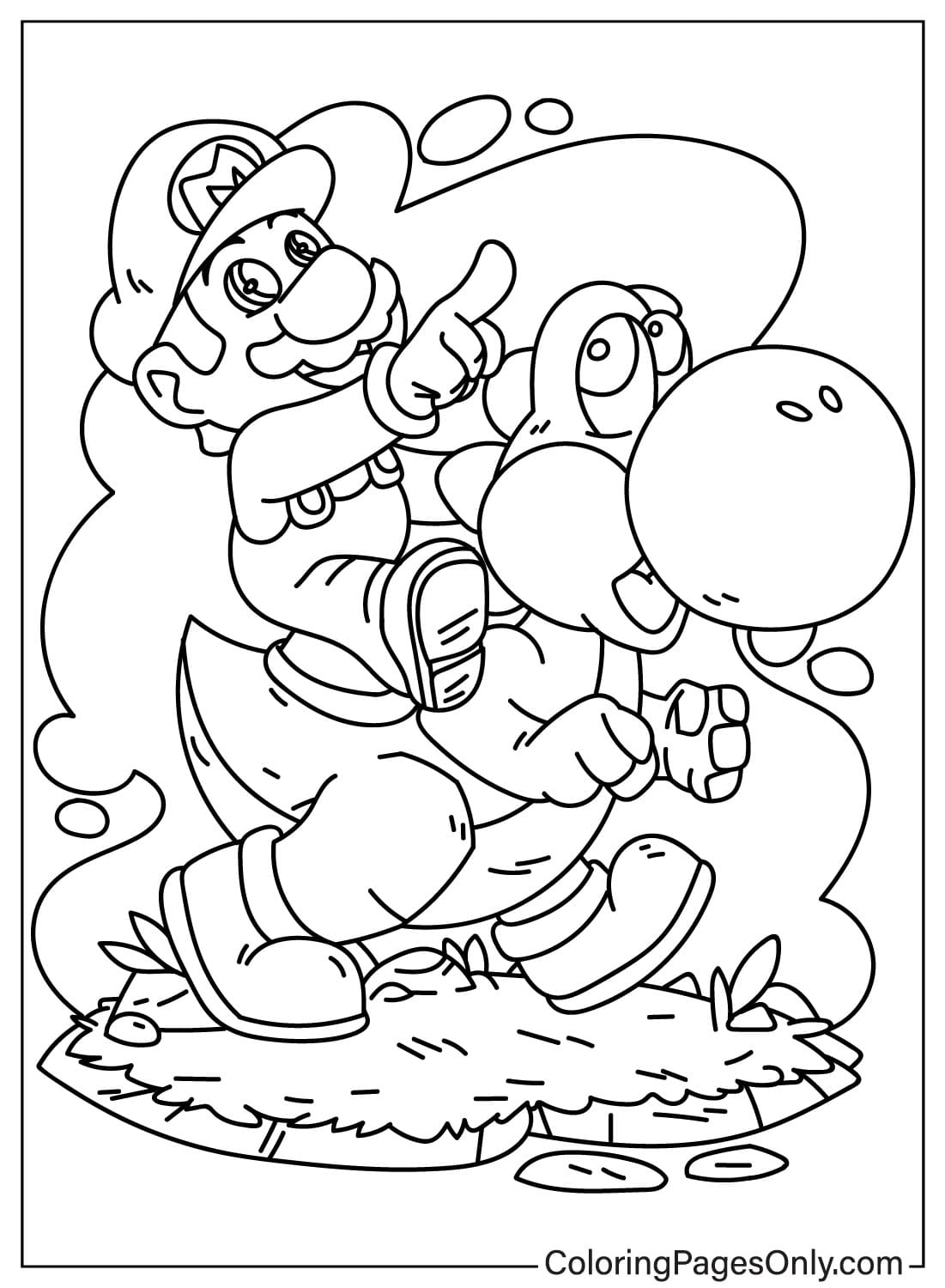
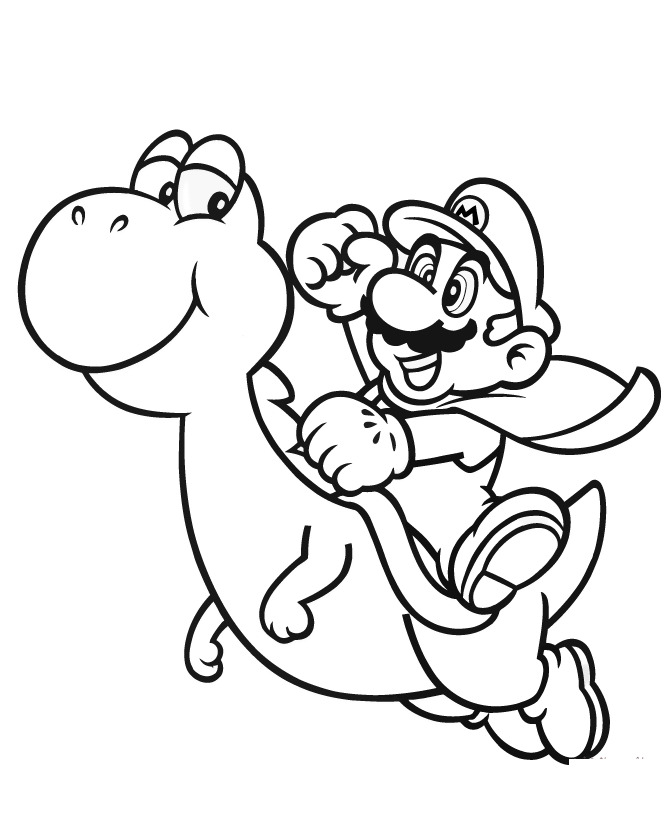
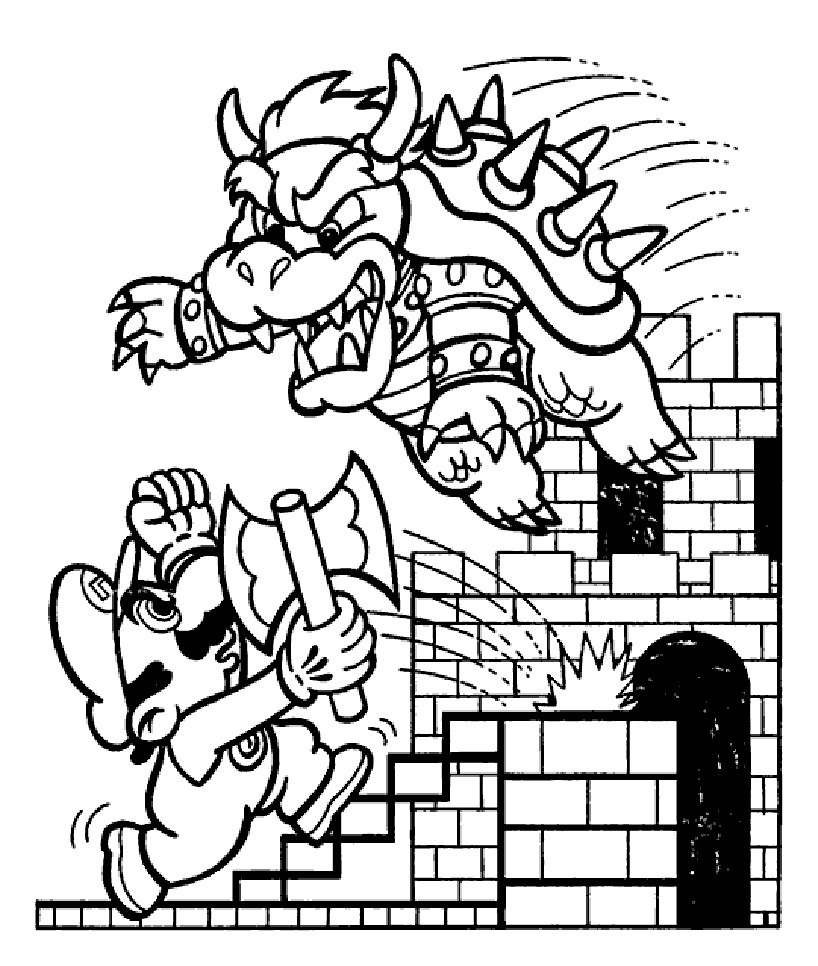
These pages also encourage storytelling. Mario and Luigi can feel like a team. Mario riding Yoshi feels like a journey. Mario facing Bowser feels like a challenge. Mario with Peach or Daisy can feel like a friendly scene. Group pages give children a reason to imagine what happened before and what might happen next.
For younger children, choose group pages with two large characters and simple outlines. Older kids can enjoy pages with several characters, background objects, enemies, and smaller details.
Mario Power-Up and Item Coloring Pages
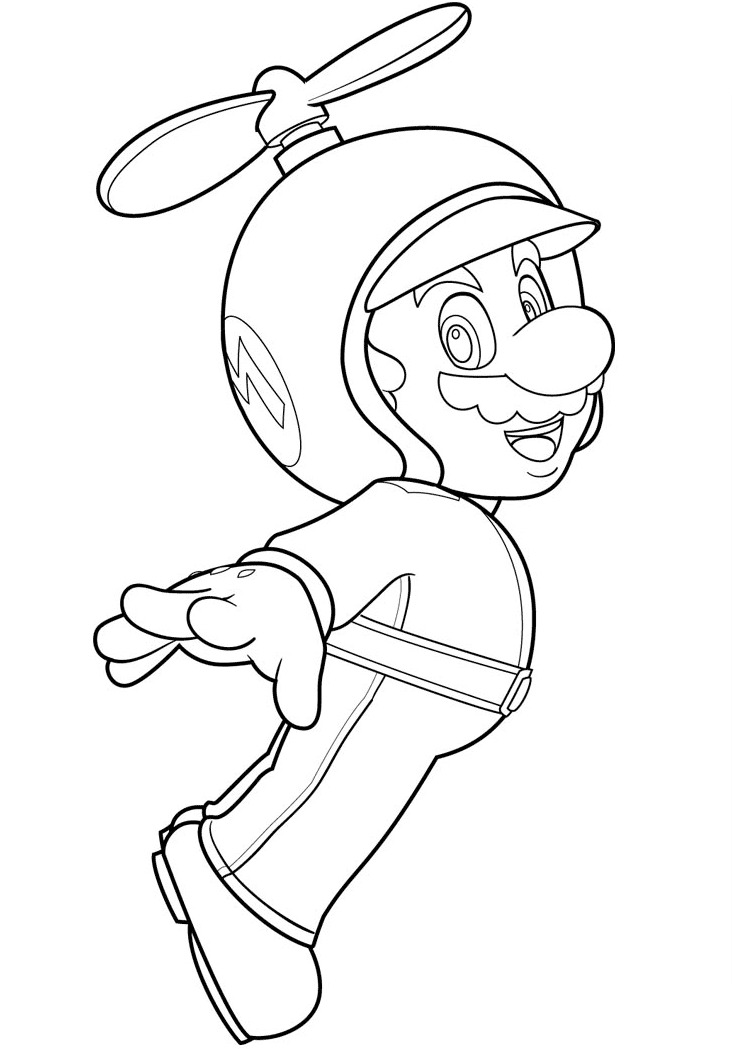
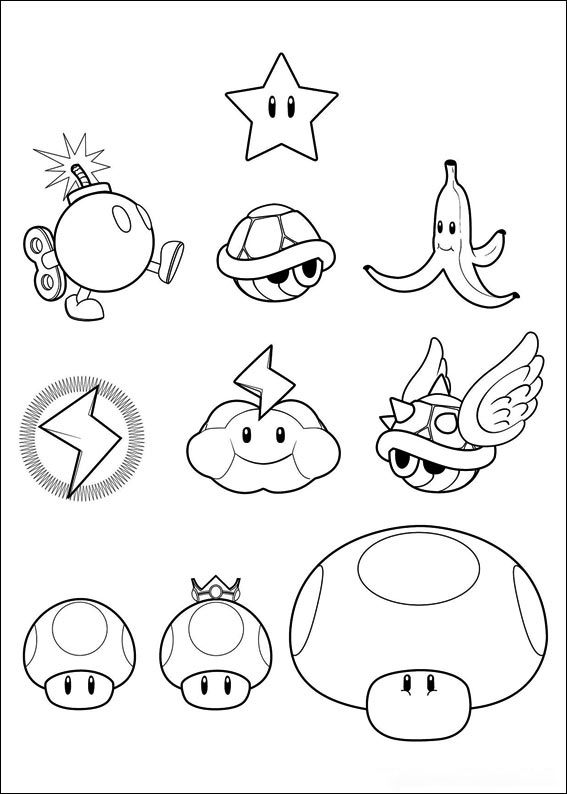
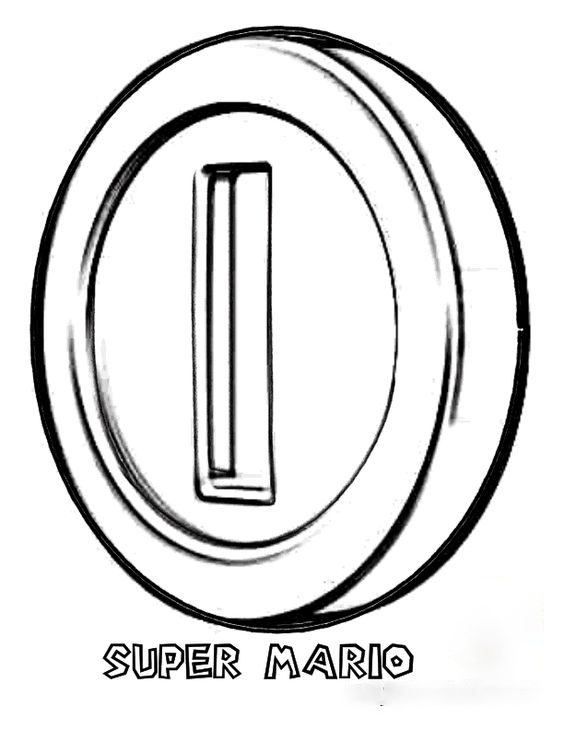
Power-up and item pages focus on the objects that make Mario’s world feel special. These pages may include mushrooms, coins, stars, fireballs, propeller items, badges, blocks, pipes, or collections of game items.
These objects are important because they carry the game’s feeling even when Mario is not the only focus. A mushroom suggests growth or transformation. A coin suggests collecting. A star suggests power and brightness. A fireball suggests action. A pipe suggests travel or a hidden path.
Power-up pages are especially good for children who enjoy small objects and repeated shapes. Coins, bricks, stars, mushrooms, and blocks can be colored in patterns. A page with many items can become a color-sorting activity: yellow for coins, green for pipes, red or green for mushrooms, orange for fireballs, brown for bricks, and bright yellow for stars.
The challenge is keeping the page organized. If every item uses the same bright colors, the picture can feel crowded. Children can choose one or two main colors for the most important items, then use softer tones for smaller details.
These pages are also useful for craft activities. Children can color coins, mushrooms, and blocks, cut them out, and arrange them into their own Mario level or reward chart.
Mario Kart and Vehicle Coloring Pages
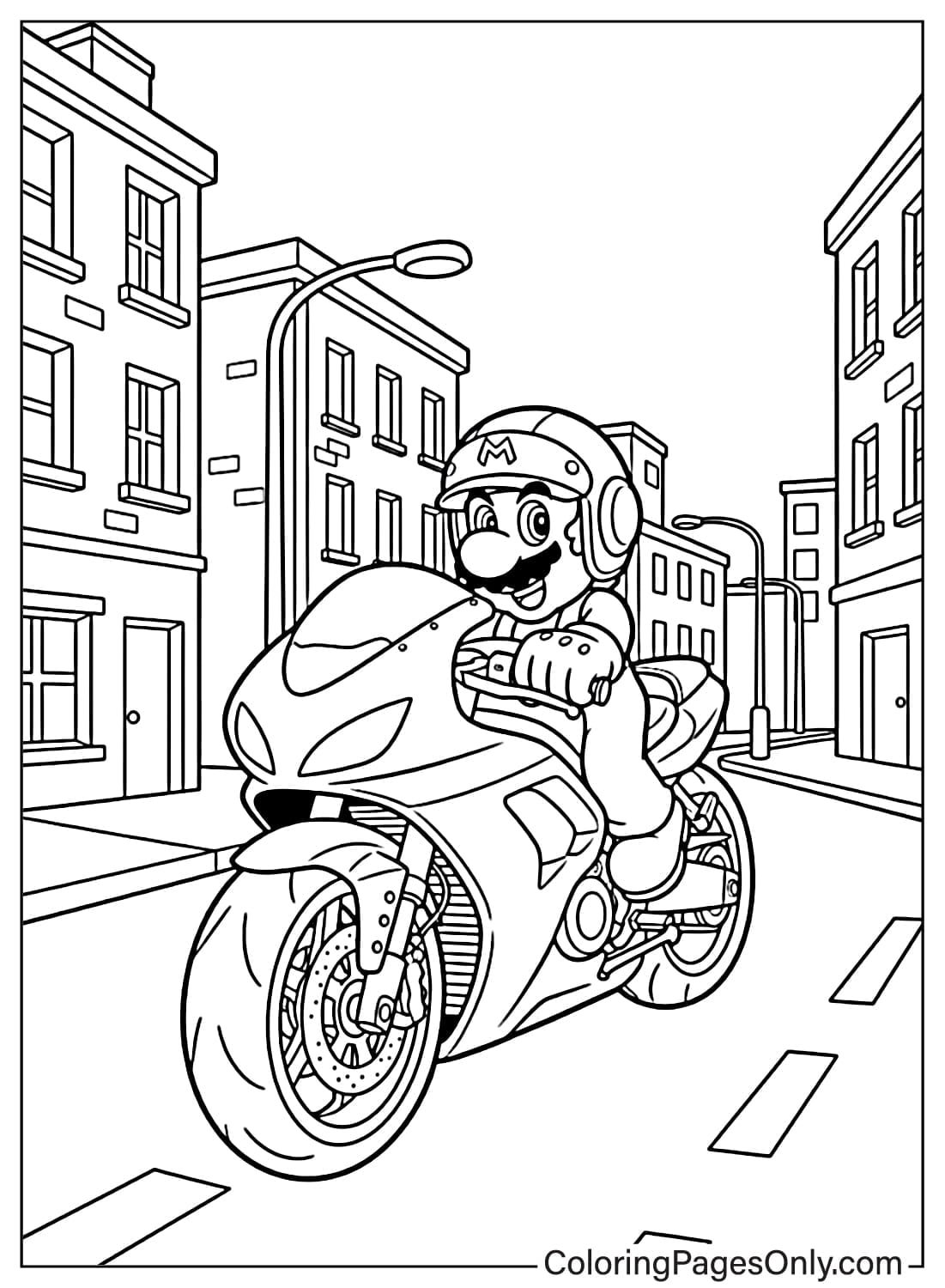
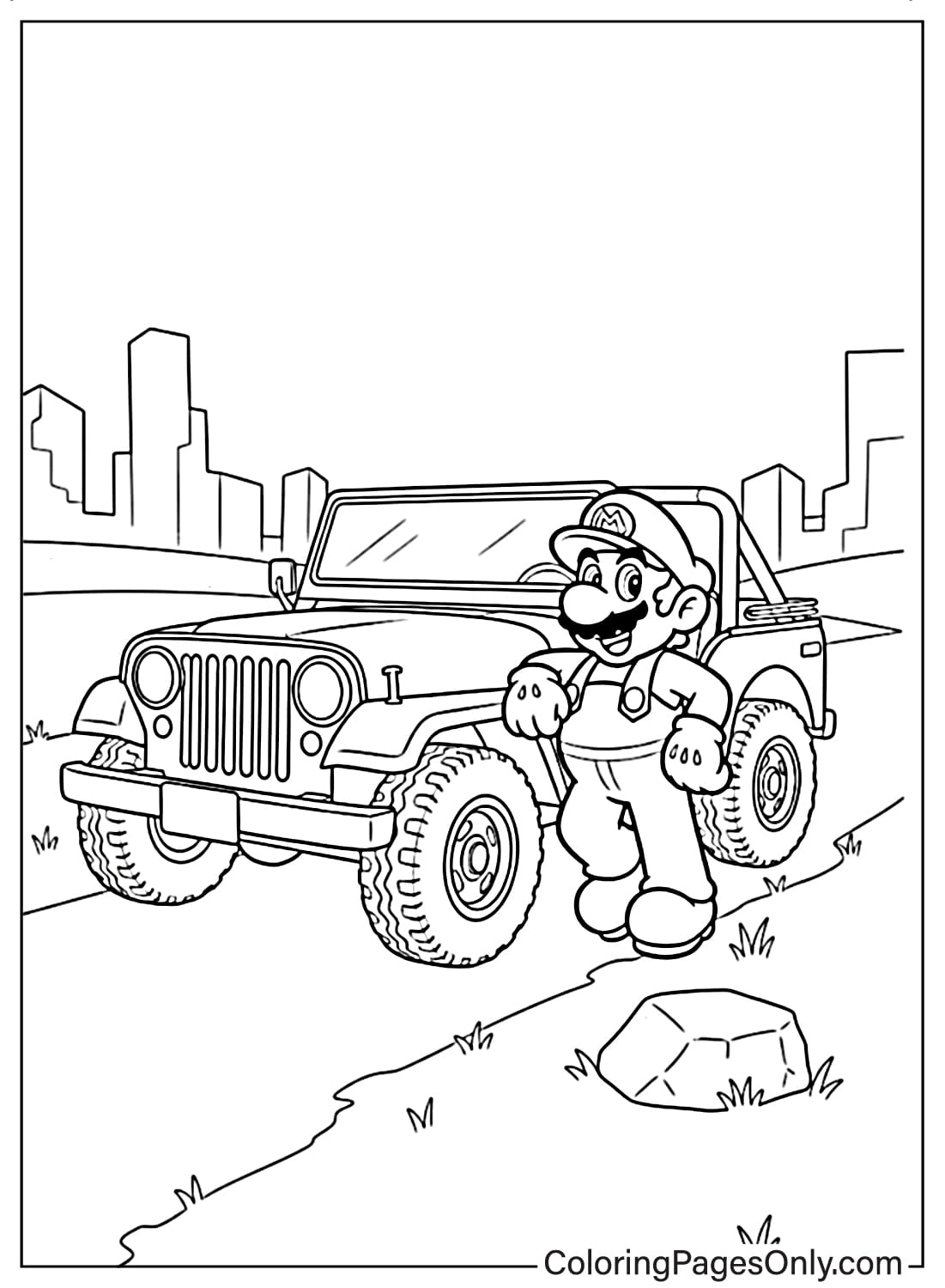
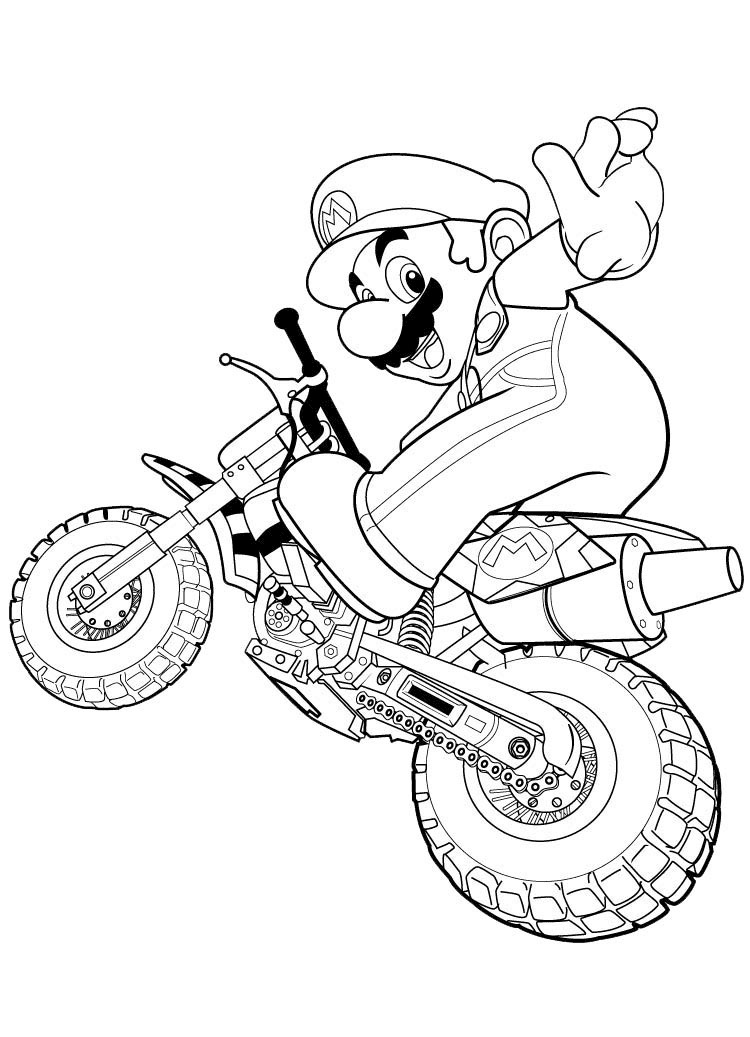
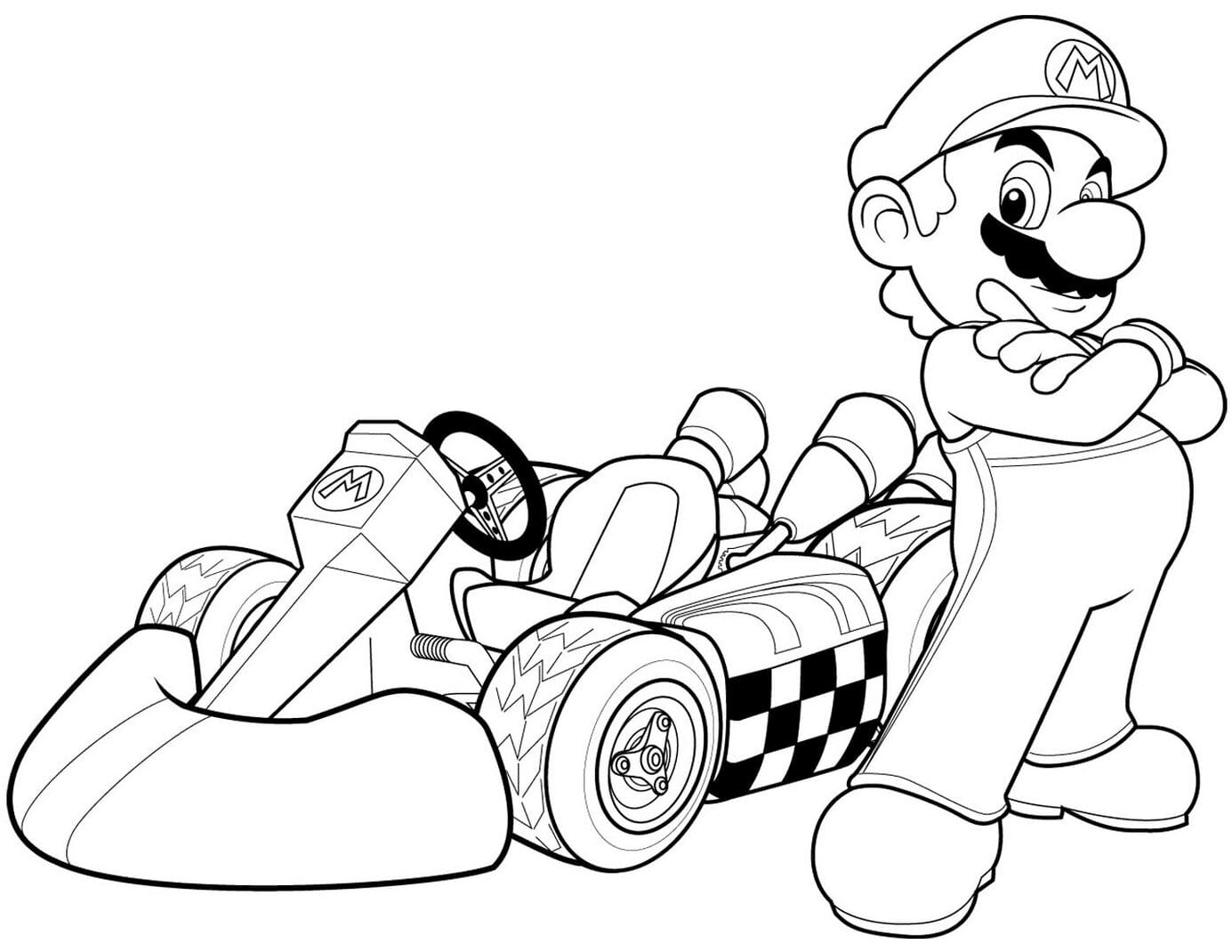
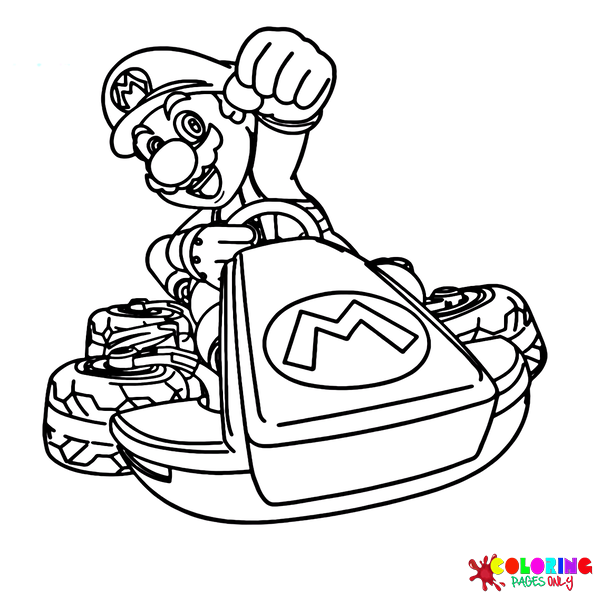
Mario Kart and vehicle pages bring speed into the collection. These designs may show Mario in a racing car, riding a motorbike, driving through a city, riding in a Jeep, or appearing with wheels, roads, tracks, and action lines.
Vehicle pages feel different from jumping pages because the motion comes from the machine. Wheels, tires, steering wheels, headlights, exhaust, road lines, and racing details give children more mechanical shapes to color.
Mario’s outfit should still stay clear, but the vehicle can carry extra color. A kart can use red, blue, black, gray, silver, or yellow details. Tires usually work well in black or dark gray. Metal parts can use gray or silver. Road backgrounds can use light gray, brown, green, or sky blue.
These pages are good for older children who like racing, vehicles, and more detailed scenes. They can add motion lines, dust, clouds, road curves, or checkered flag patterns to make the page feel faster.
For younger children, choose vehicle pages with one large kart or motorbike and fewer background details. For older kids, Mario Kart-style pages with track elements, items, and other characters can become a longer coloring project.
Holiday, Sports, and Everyday Mario Pages
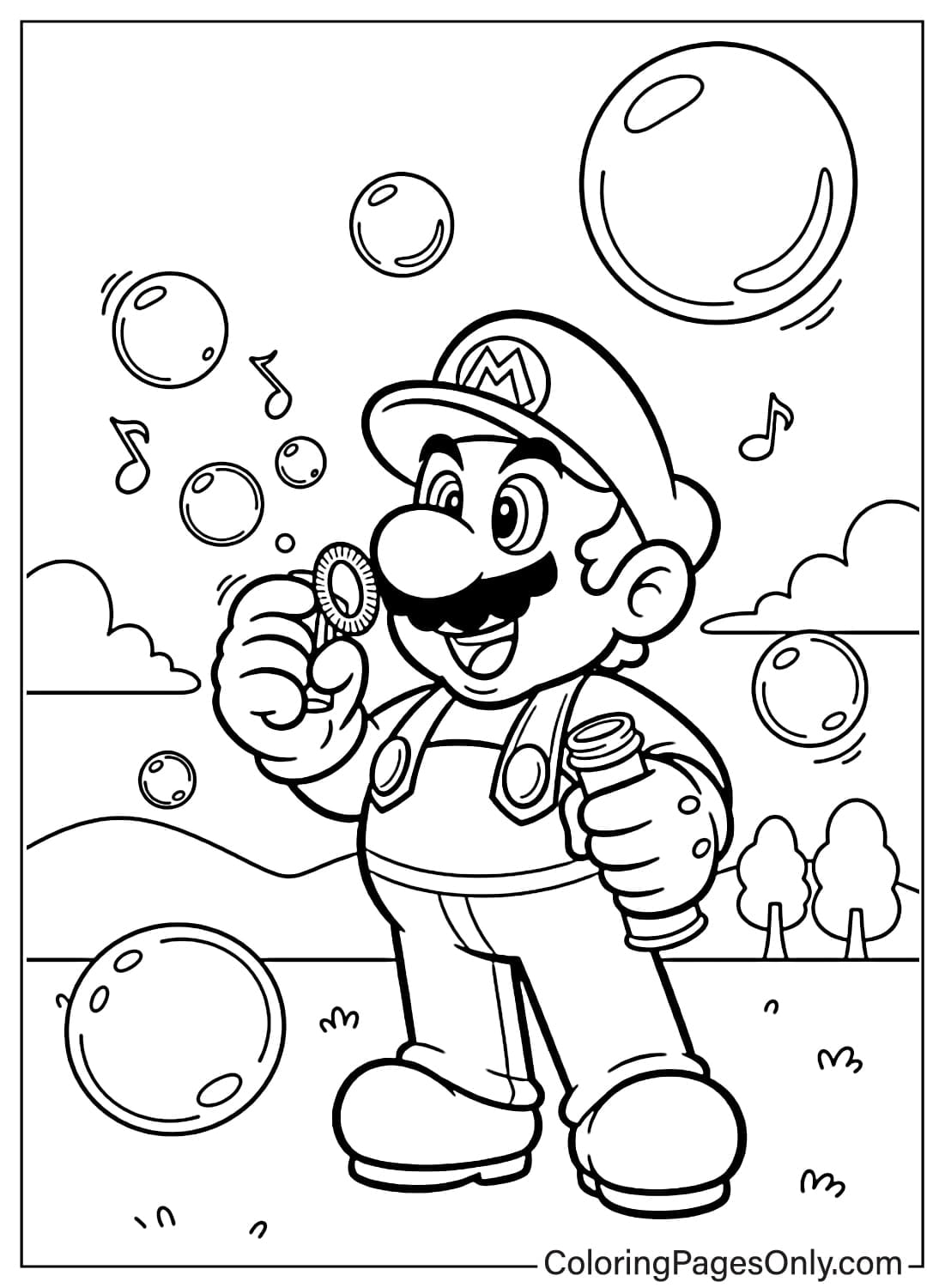
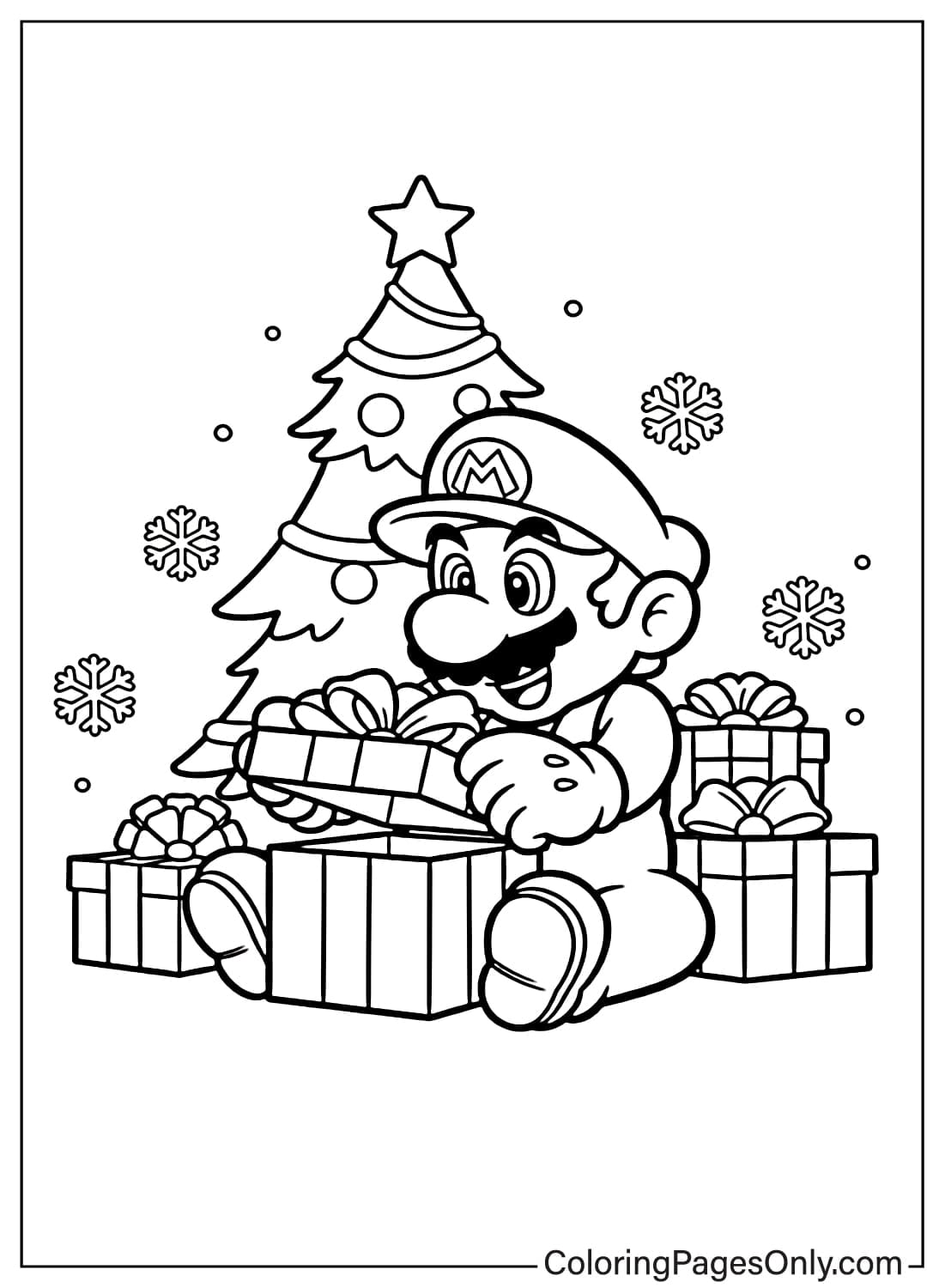
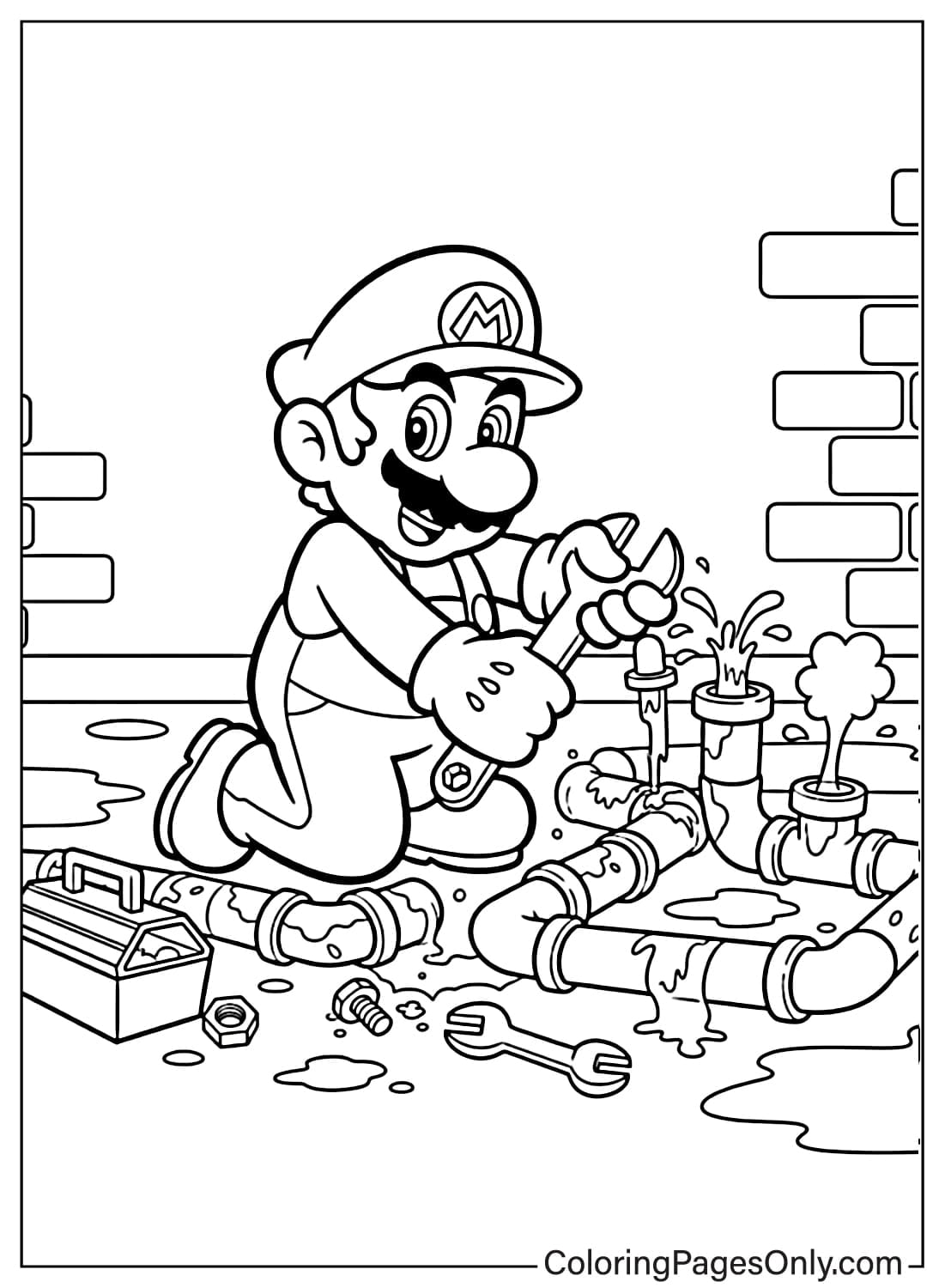
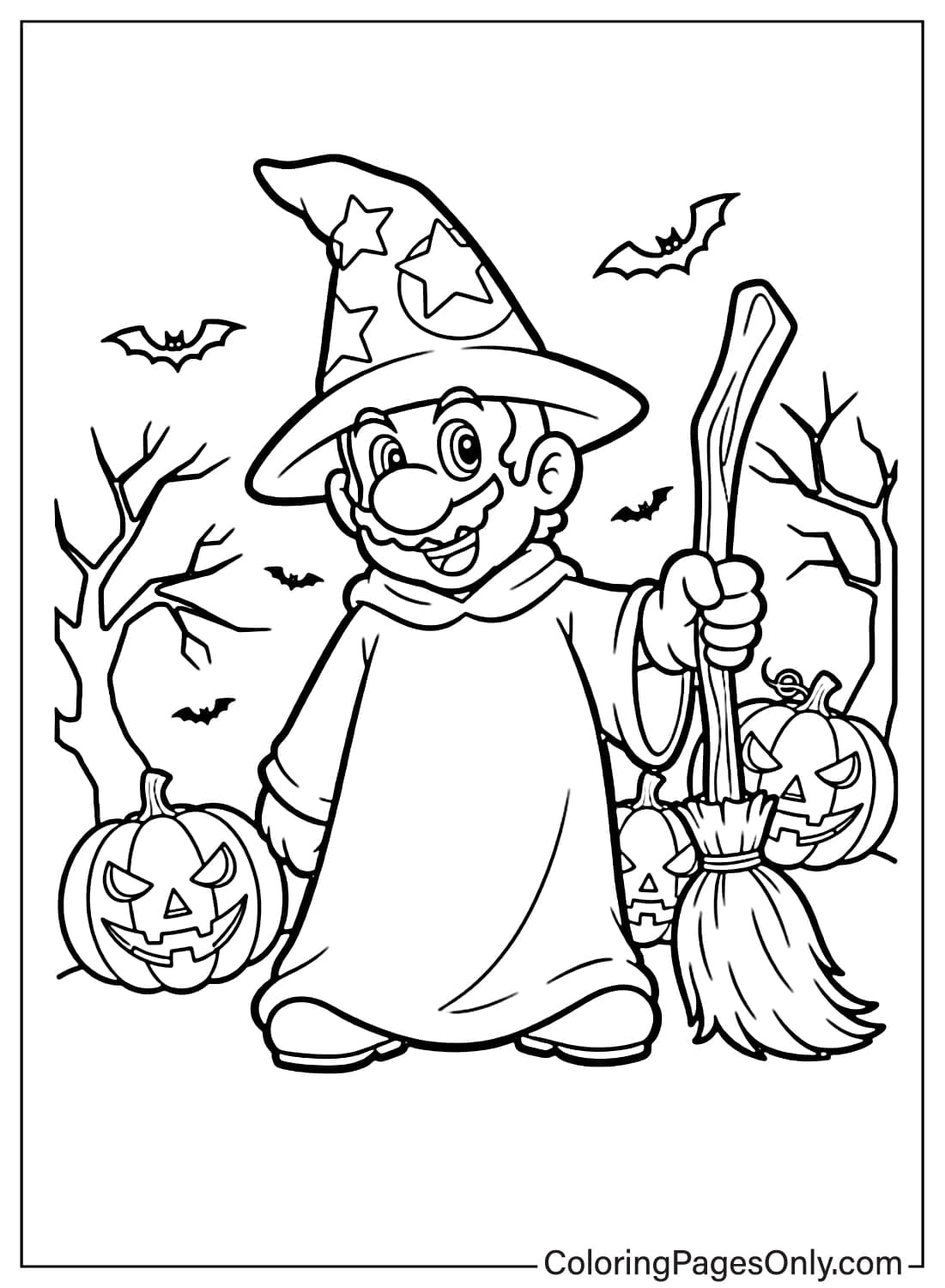
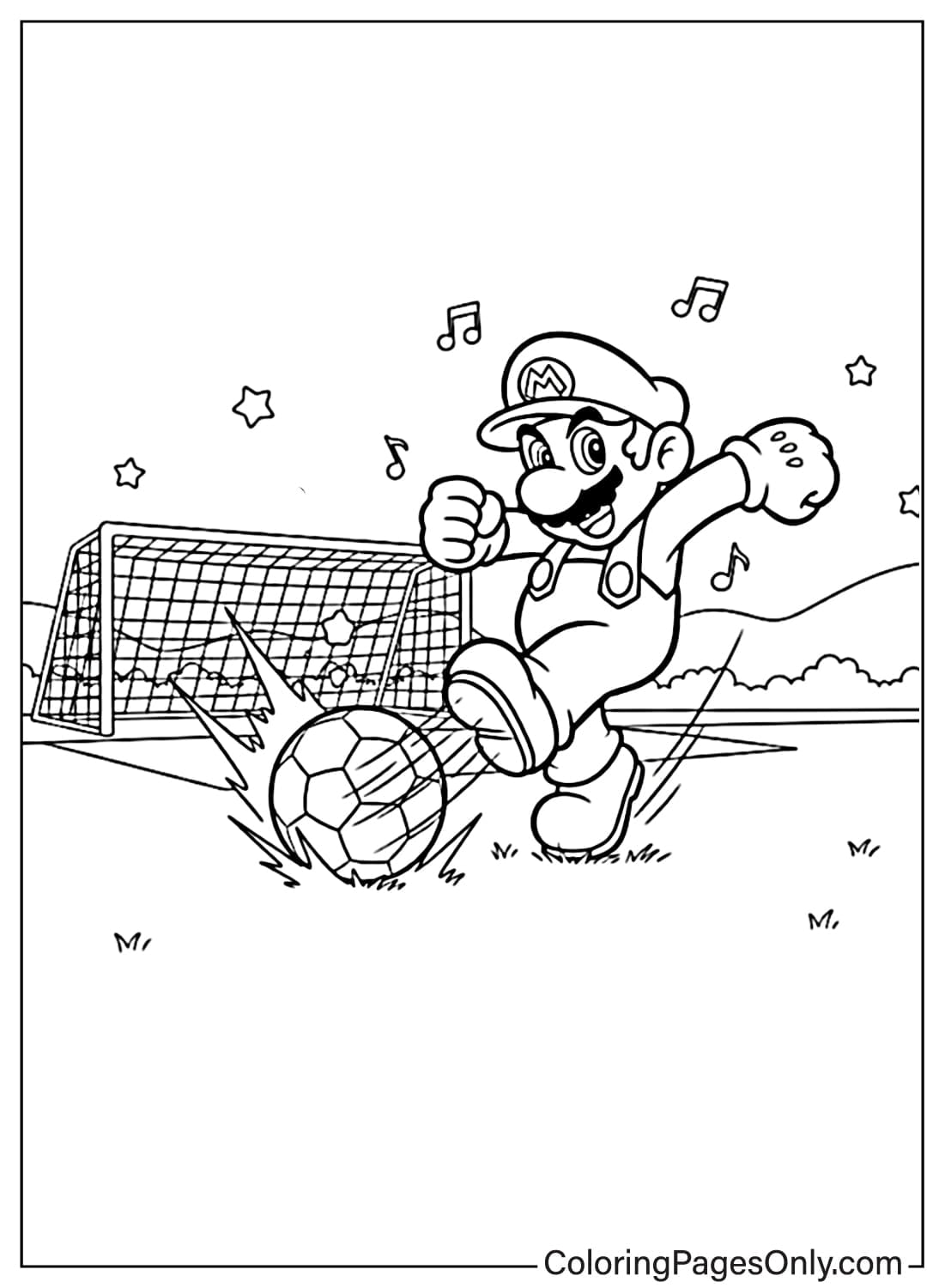
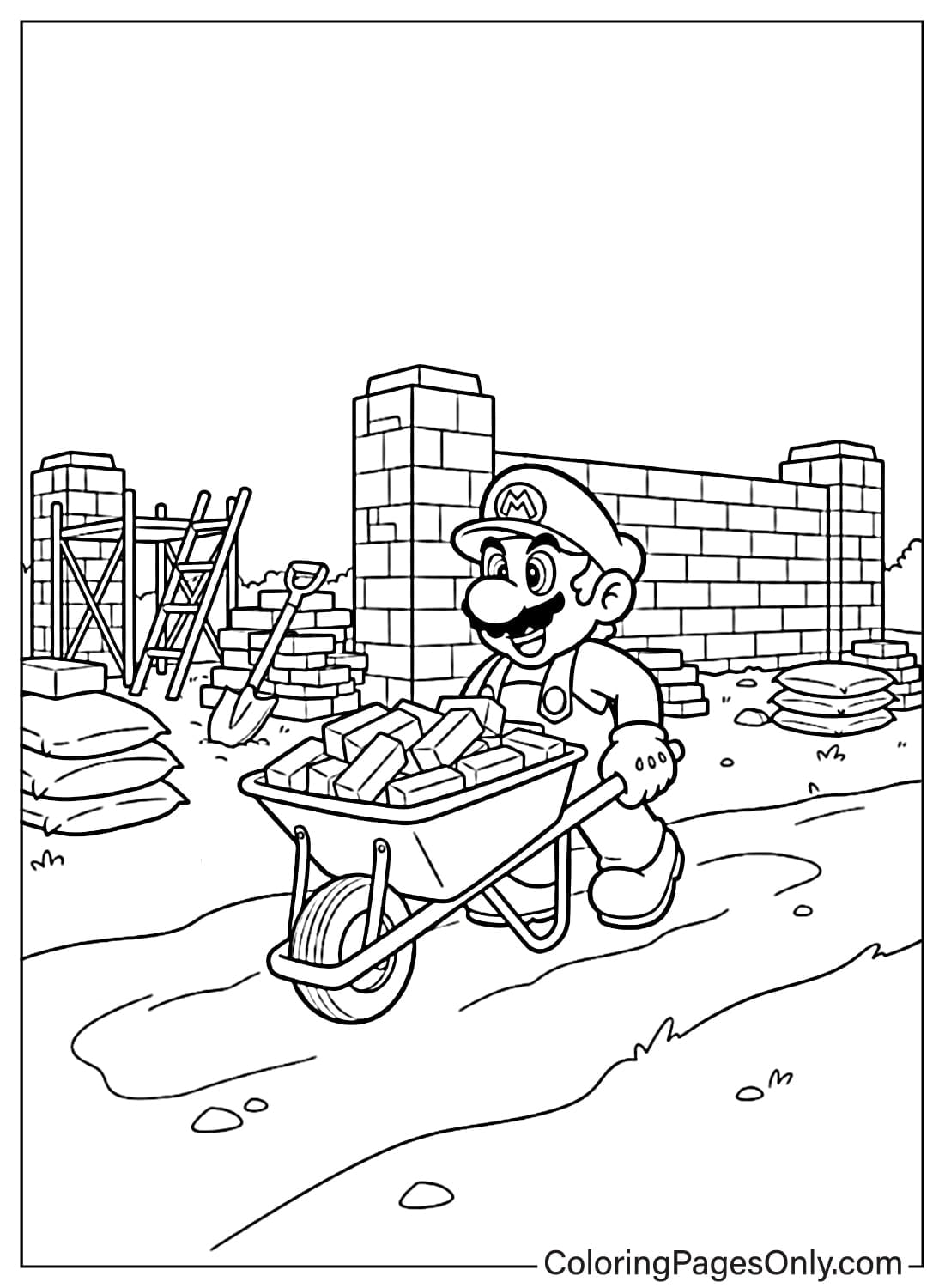
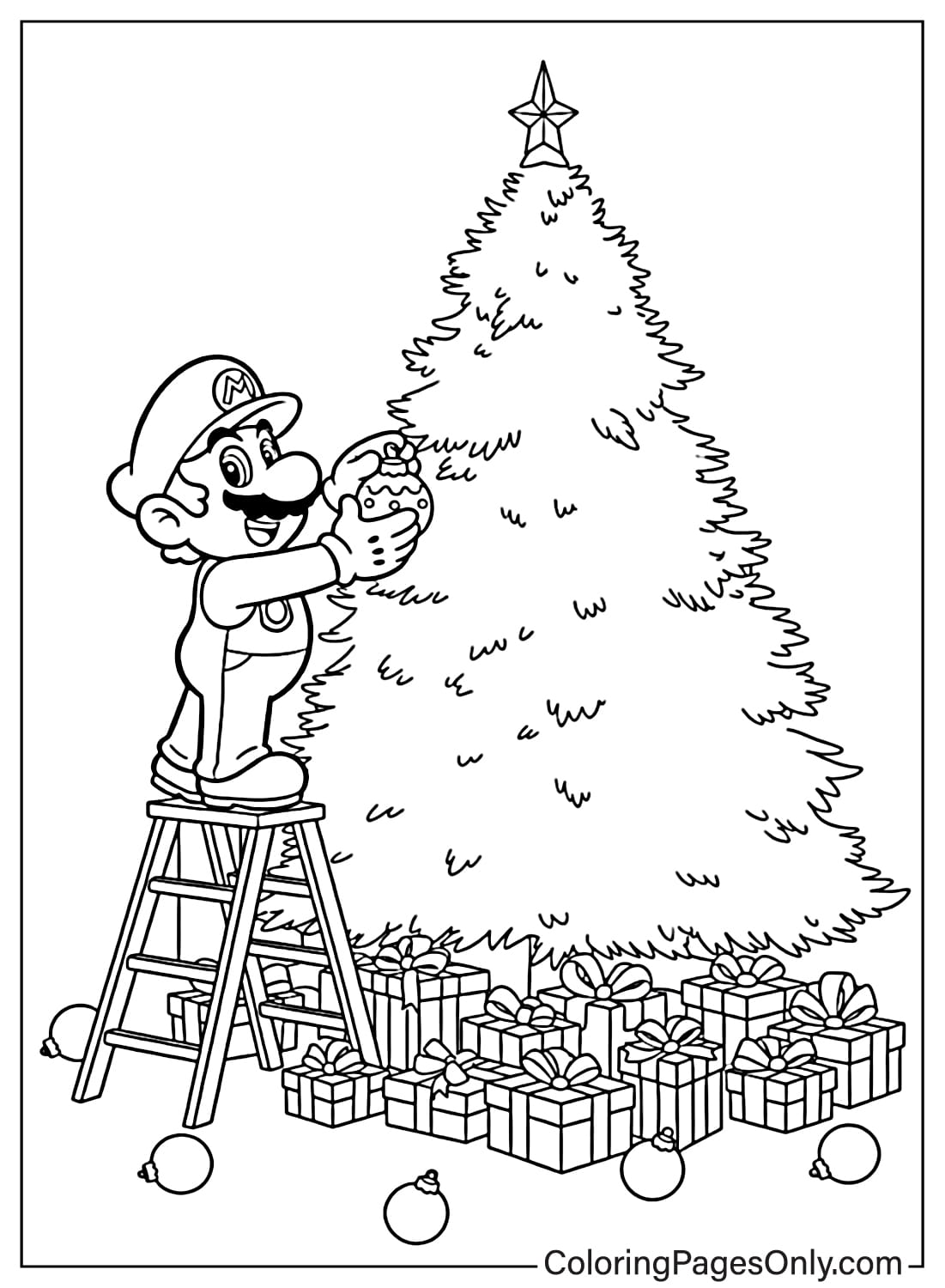
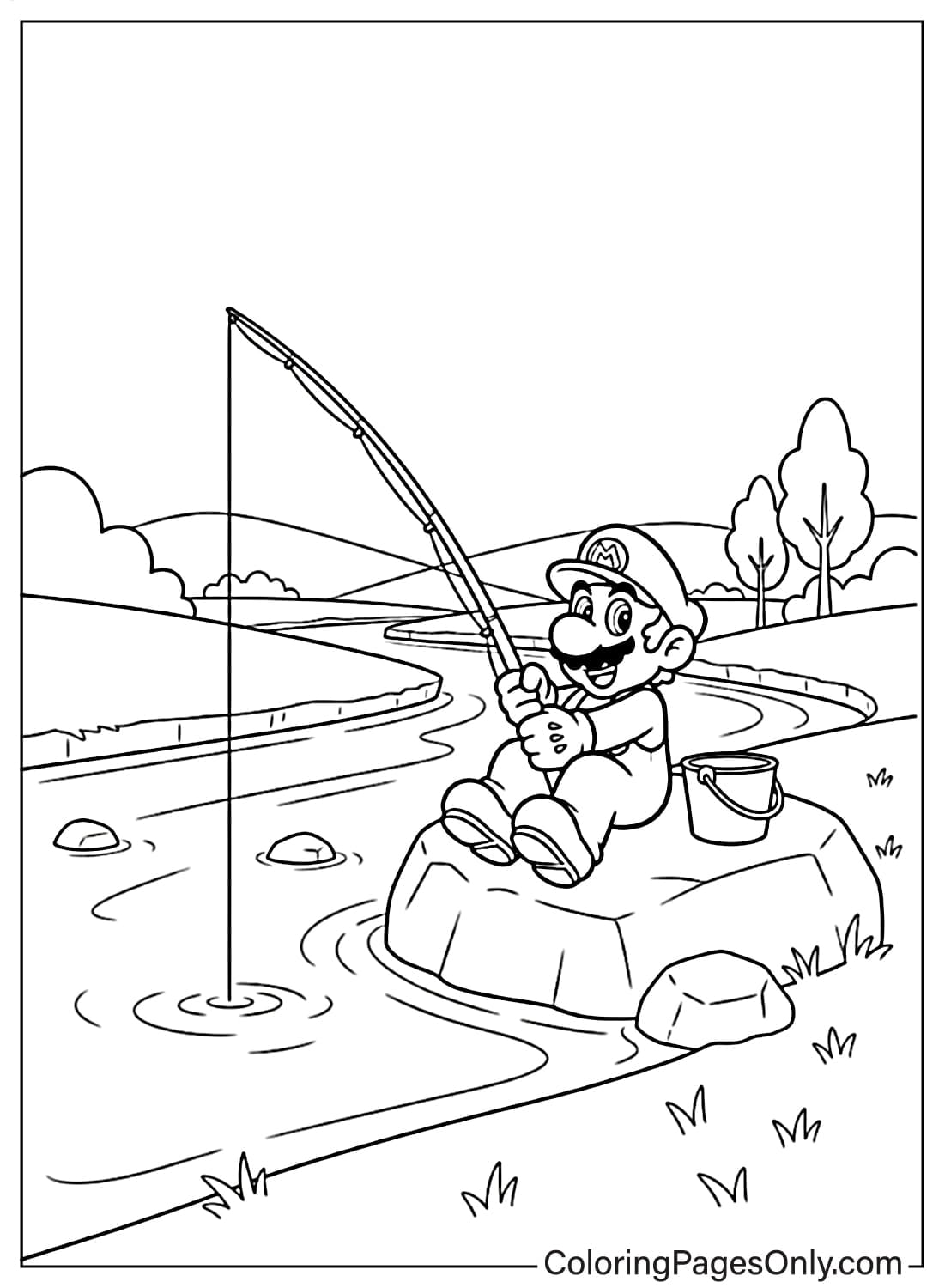
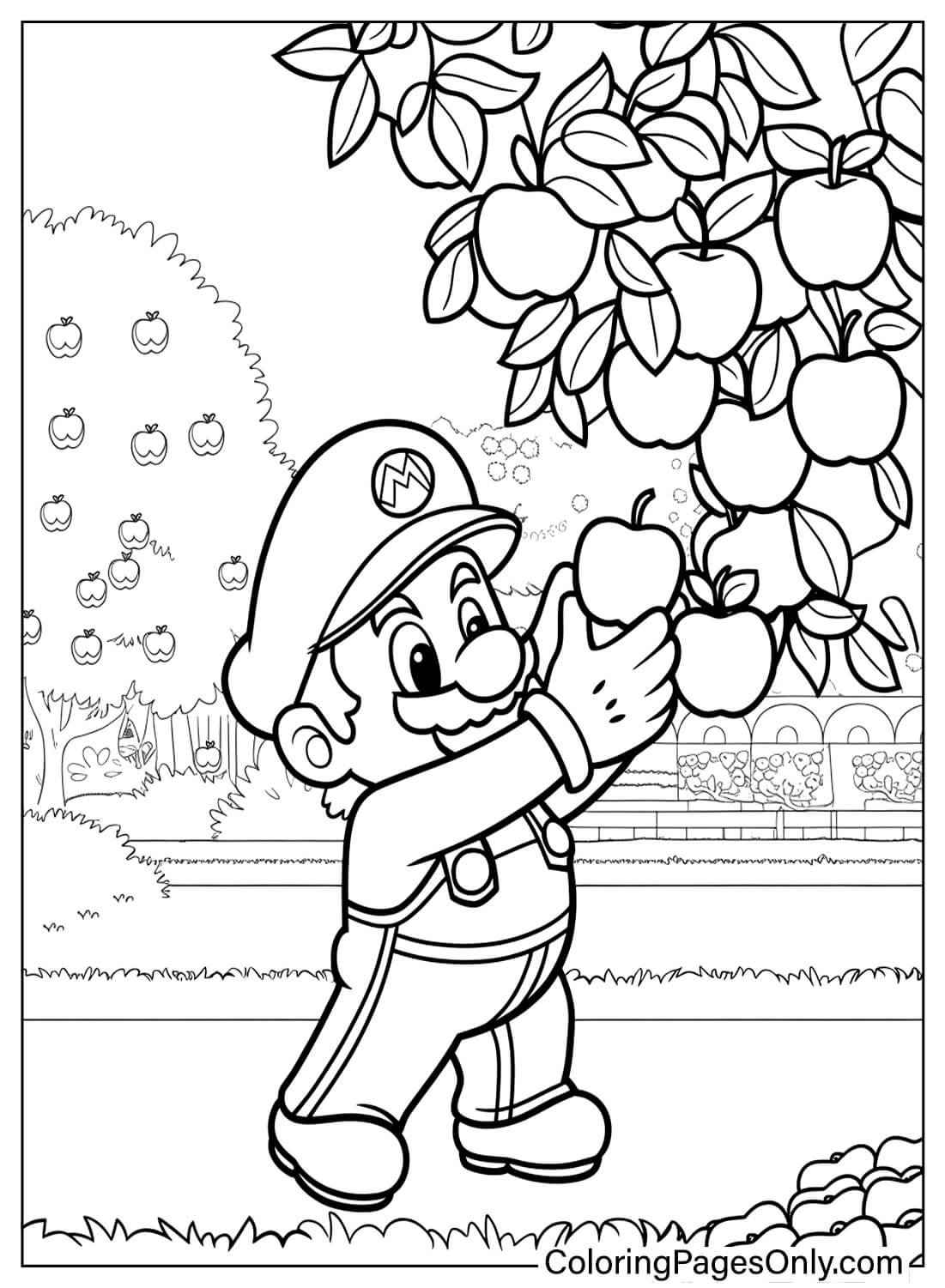
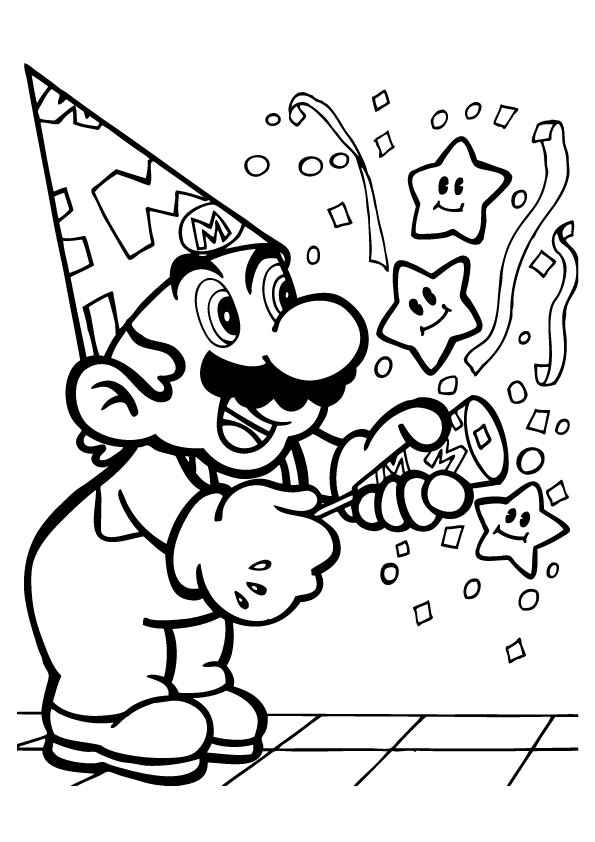
Some Mario pages place the character in seasonal or everyday scenes. These may include Christmas trees, Halloween pumpkins, wizard costumes, balloons, fishing, soccer, harvest scenes, construction work, apple orchards, or other playful activities.
These pages are useful because they show Mario outside the usual platform scene. A Christmas Mario page can become a holiday activity. A Halloween Mario page can feel playful and slightly spooky. A soccer Mario page adds movement and sports energy. A fishing or harvest page gives the scene a calmer outdoor mood.
A theme changes the color language of the whole page. Christmas pages can use red, green, gold, white, and snowy details. Halloween pages can use orange, purple, black, and yellow. Sports pages can use grass green, sky blue, and bold ball colors. Harvest or orchard pages can use warm browns, greens, reds, and yellows.
Here, children are coloring a moment, not just a character. Mario can be celebrating, playing, working, exploring, or enjoying a seasonal scene. That gives the page a clear mood before the first color is added.
For younger children, choose holiday or everyday pages with one main Mario figure and a few large objects. Older kids can enjoy pages with more decorations, tools, background scenery, or themed details.
Fantasy, Galaxy, and Special Mario Pages
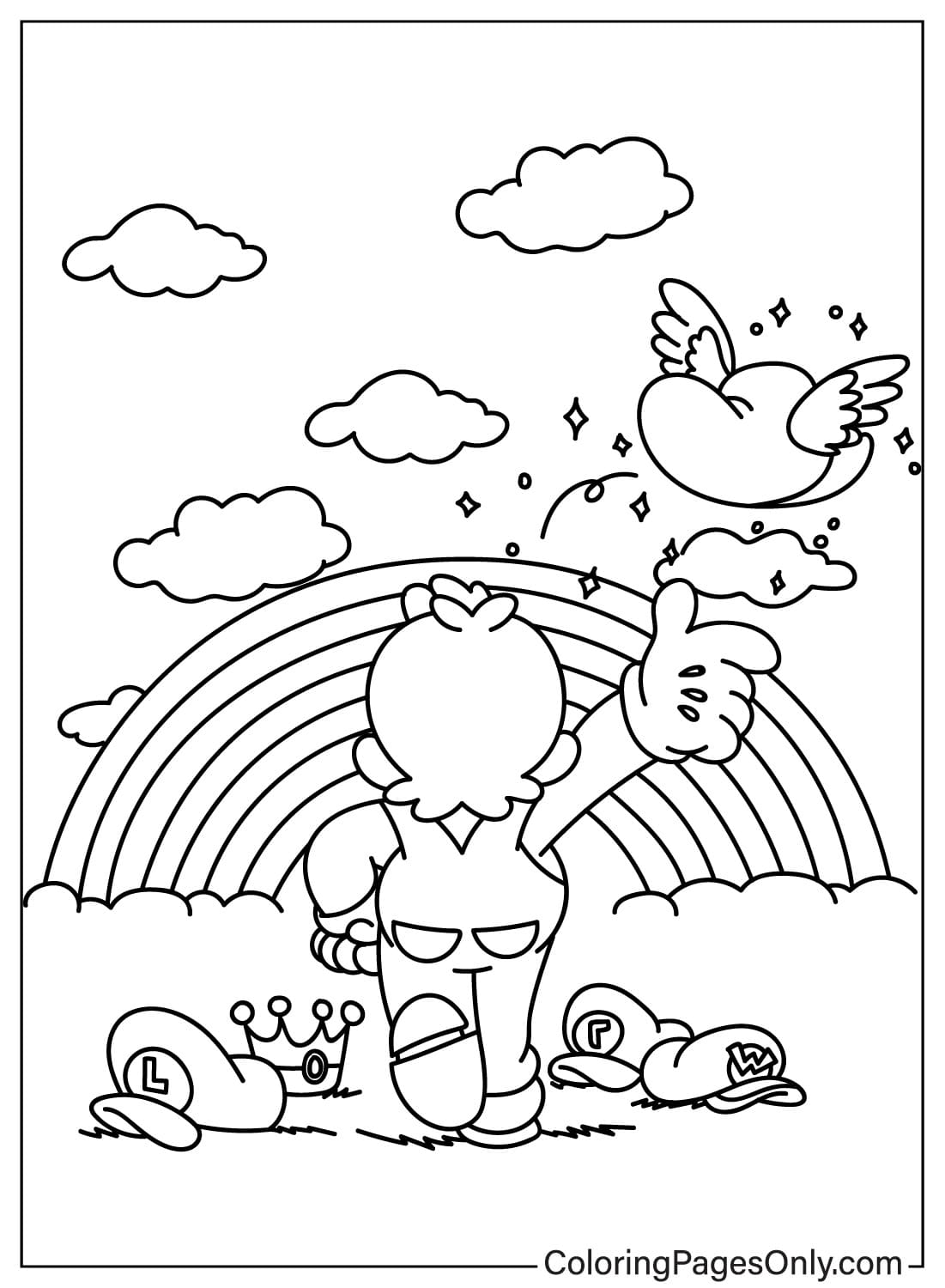
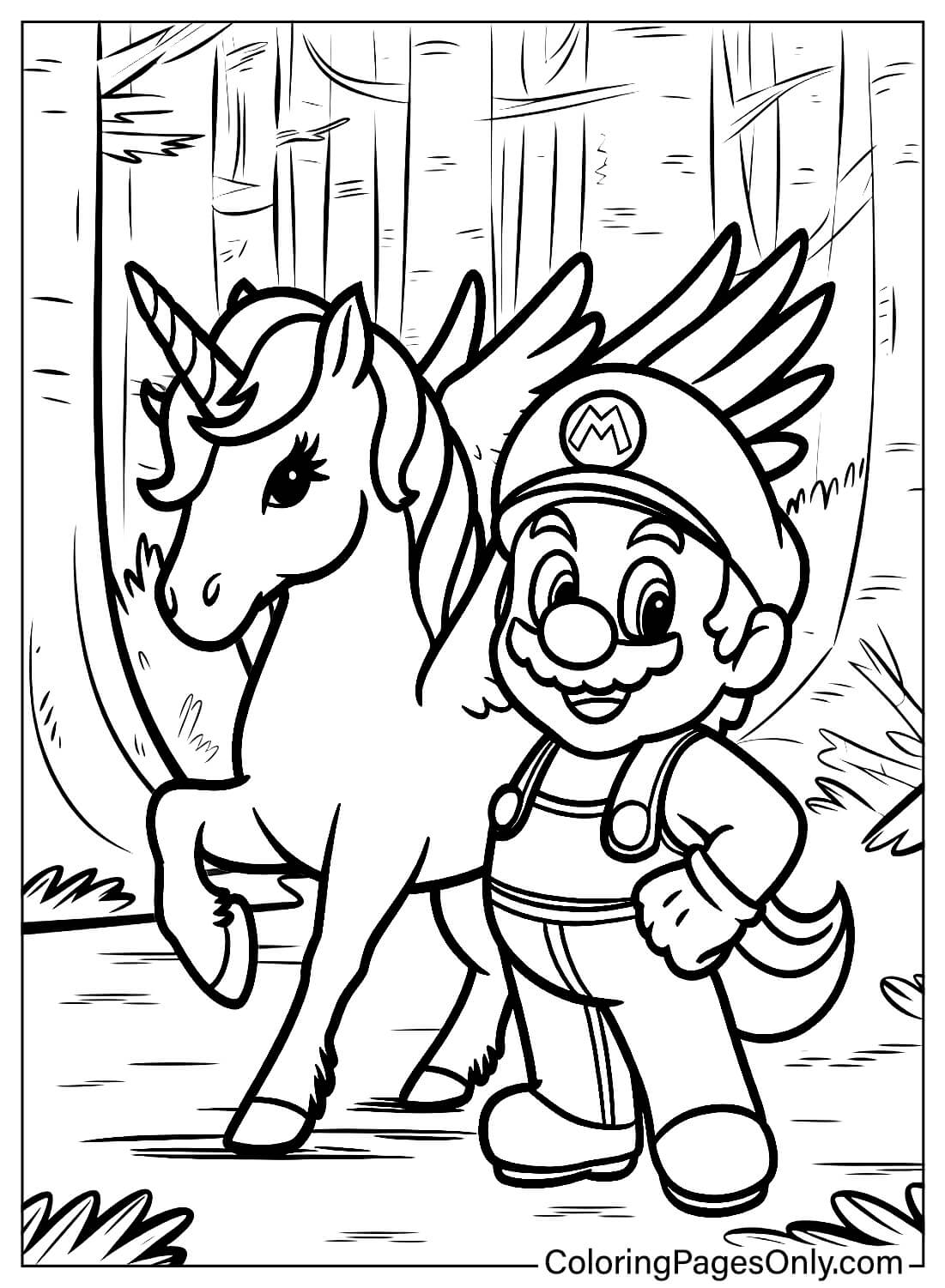
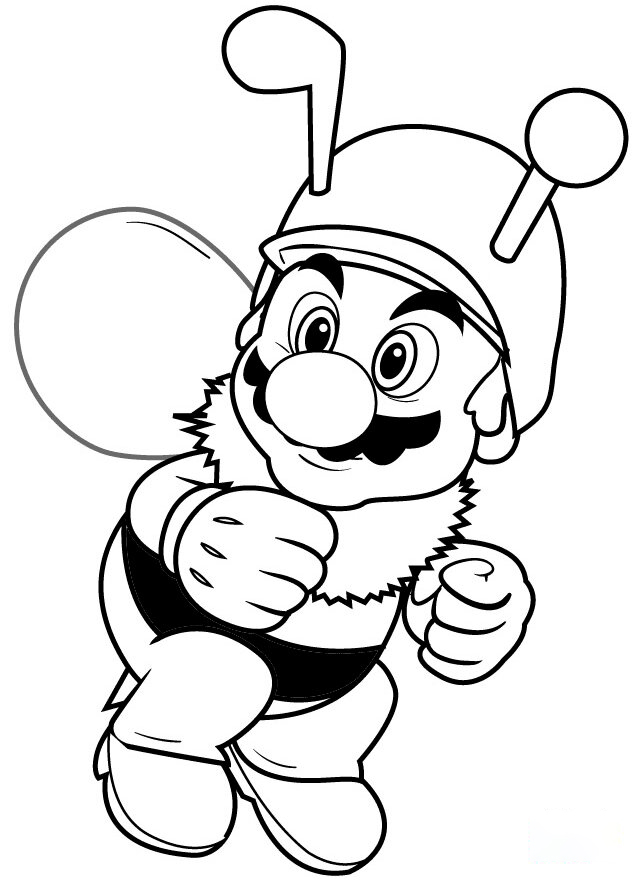
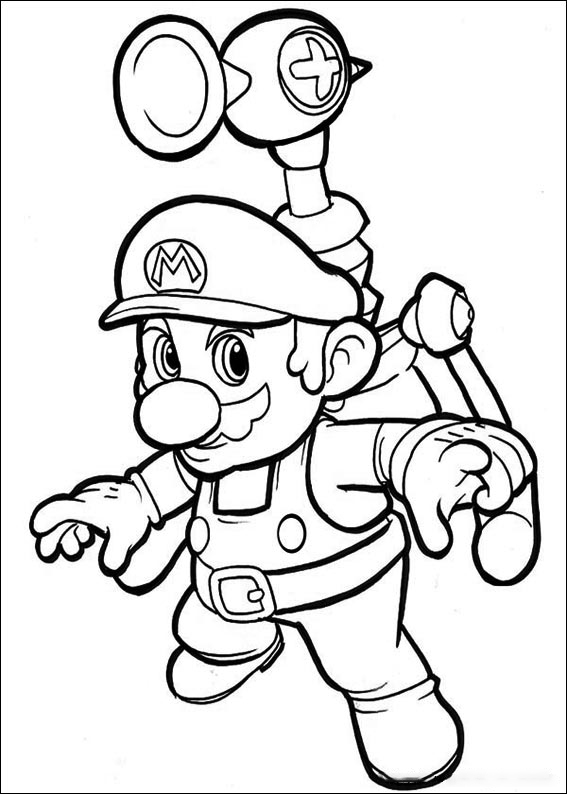
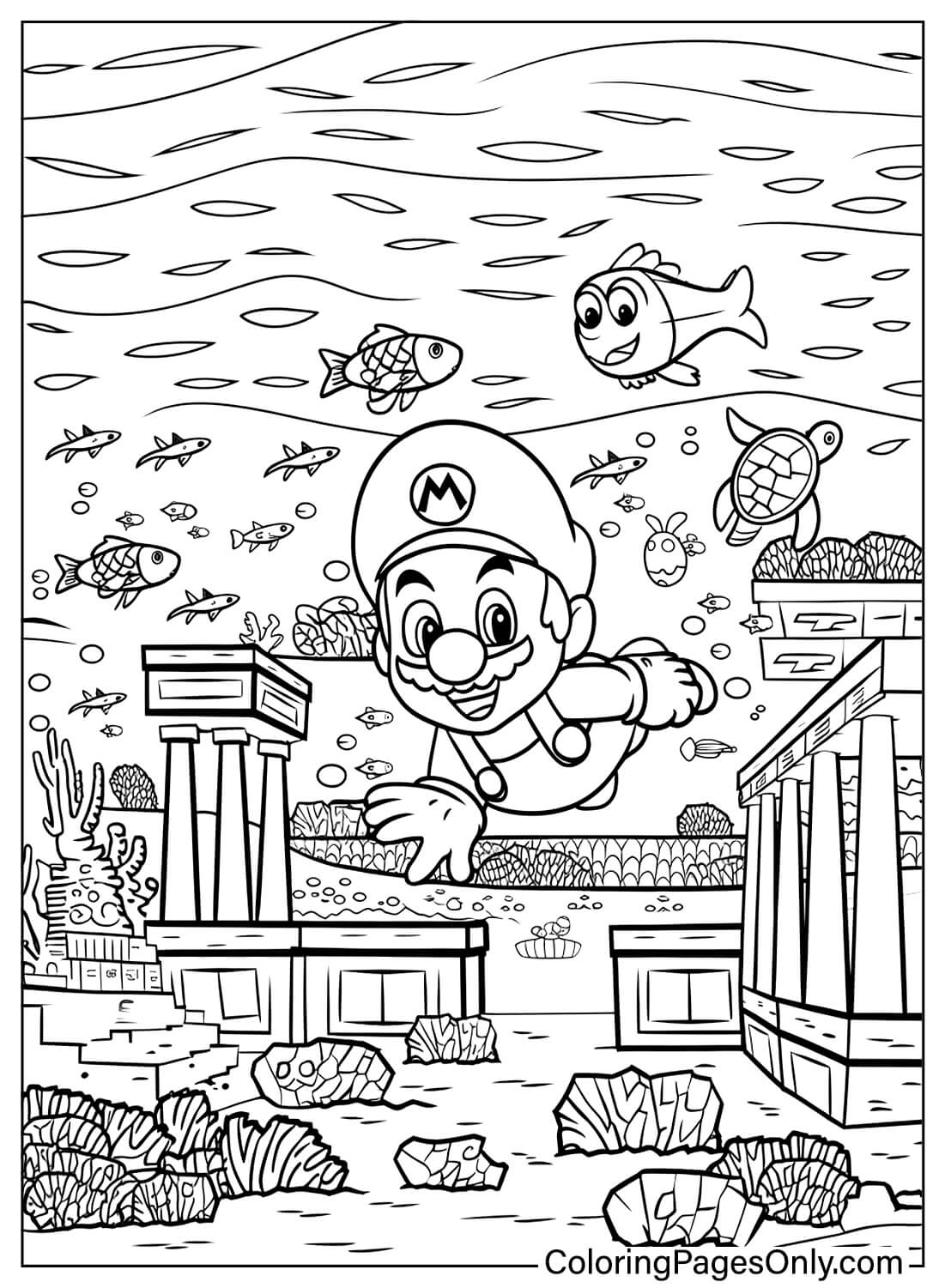
Some Mario pages move into more imaginative scenes: galaxy-inspired pages, underwater scenes, Mario with Luma, Bee Mario, Baby Mario, Chibi Mario, superhero-style designs, or other special adventure settings.
These pages allow more creative coloring than a standard Mario pose. A galaxy scene can use dark blues, purples, stars, and glowing yellows. An underwater scene can use teal, blue, green, coral, and soft light effects. Bee Mario can use yellow, black, white, and soft wing colors. Baby Mario and Chibi Mario can use brighter, simpler colors for a cute look.
The main thing is to keep Mario recognizable while allowing the setting to feel different. His cap, face, gloves, and outfit should stay clear. The fantasy background can bring in extra color, but it should not cover the character.
These pages work especially well for older kids who enjoy adding atmosphere. They can try glow effects, bubbles, stars, clouds, light beams, or patterns. Younger kids can still enjoy simpler special Mario pages if the main character is large and the background is not too crowded.
Special pages are a good place for imagination. Children can color Mario as a space explorer, underwater adventurer, superhero, or tiny cartoon-style character and then create a story around the finished page.
What These Pages Do
Mario coloring pages help children understand character design through action, color, and simple storytelling. Mario is not only recognized by his outfit; he is also recognized by what he does. He jumps, runs, collects, rides, explores, and reacts. Those actions give each page energy.
Coloring Mario teaches children how a familiar character can stay recognizable across many settings. Mario can be in a platform scene, a kart, a holiday page, a sports moment, or a fantasy world, but the cap, face, gloves, overalls, and confident pose still carry the character identity.
For younger children, Mario pages support confidence because the main shapes are clear. The hat, face, gloves, shirt, overalls, and shoes give them large areas to color, while small details such as buttons, coins, blocks, and mushrooms add simple practice.
For older children, the value comes from building scenes. They can shade bricks, separate characters in group pages, color coins and power-ups, add speed to a racing scene, or create atmosphere in a galaxy or underwater page.
The pages also encourage storytelling. Mario can be jumping toward a block, racing through a track, helping a friend, facing Bowser, collecting coins, celebrating Christmas, or exploring a new place. Children can describe the scene, write a short adventure, or create their own game level around the finished picture.
Parents can use these pages for quiet time, birthday activities, game-themed crafts, or screen-free play. Teachers can use them for art breaks, story prompts, reward activities, group coloring, or creative classroom displays.
How to Color These Pages Well
Mario’s color system is simple, but clean color placement makes a big difference. The classic palette uses red for the cap and shirt, blue for the overalls, white for the gloves, brown for the shoes and hair, peach or light tan for the skin, and yellow or gold for buttons and coins.
The red cap is one of the most important details. It should stay bright and clear because it draws attention to Mario’s face. If the cap includes an emblem, color around it carefully so the shape stays readable.
The overalls usually look best in medium blue or denim blue. Younger children can use one flat blue. Older kids can add darker blue near the straps, pockets, buttons, and lower edges to make the clothing look less flat.
Mario’s gloves should stay mostly white. A little light gray along the edges can make them look rounded. If the gloves are colored too dark, the hands may lose their cartoon look.
The shoes and hair can use brown tones. Shoes often look better with a darker brown edge or a small shadow under the foot, especially on jumping pages. Hair and mustache details should stay dark enough to frame the face.
Power-up items need clean color separation. Coins can be yellow or gold, mushrooms can use red, green, or orange caps with light spots, pipes usually work well in green, and bricks can use brown, orange, or tan. Stars should stay bright so they feel magical.
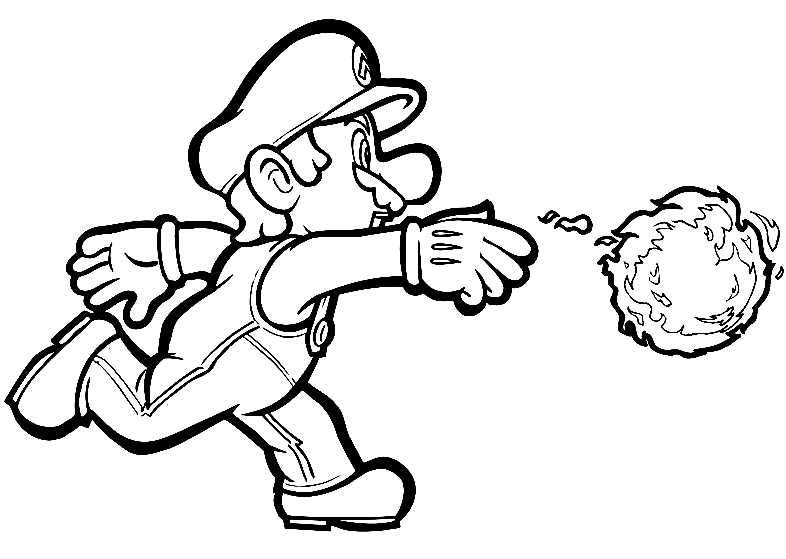
For fireball pages, use yellow near the center, orange around it, and red along the outer edge. For water or underwater scenes, use blue, teal, soft green, and pale highlights. For galaxy pages, dark blue, purple, yellow stars, and white glow effects can make the scene feel deeper.
Mario Kart and vehicle pages need metal, wheels, and motion. Tires can be black or dark gray, metal parts can be gray or silver, and small lights can be yellow, red, or white. Motion lines can stay pale blue or light gray so they do not overpower the character.
Backgrounds should match the scene. Platform pages can use blue sky, green pipes, brown bricks, and gold coins. Holiday pages can use seasonal colors. Sports pages can use grass, sky, and clear ball colors. Fantasy pages can use stronger contrast, glow, or unusual palettes.
For younger kids, the easiest order is face and cap first, shirt and overalls second, gloves and shoes third, items fourth, and background last. Older kids can finish the main character first, then add shadows, item details, background patterns, movement lines, and scene effects.
5 Creative Craft Ideas
Build Your Own Mario Level
Choose a Mario jumping page, a mushroom page, or a page with coins, pipes, and bricks. After coloring, cut out Mario and any items from the page.
Glue them onto a larger sheet of paper and draw a new level around them. Add platforms, pipes, coins, question blocks, clouds, enemies, and a finish flag.
This craft helps children turn a coloring page into a game scene. They can even name the level and explain how Mario gets from the start to the finish.
Mario Power-Up Card
Pick a page with a mushroom, star, fireball, propeller item, or other power-up. Color the item carefully, then cut it out and glue it onto a small card.
Children can write the power-up name and describe what it does. For example: “Fire Flower: helps Mario throw fireballs” or “Star: makes Mario shine.”
This activity works well for older kids because it combines coloring, labeling, and imagination.
Mario Kart Race Poster
Print a Mario Kart, car, motorbike, or vehicle page. After coloring Mario and the vehicle, glue the artwork onto a larger sheet.
Add a race track, speed lines, checkered flags, clouds of dust, coins, or other racers. Children can create a race name such as “Mushroom Cup” or “Rainbow Road Challenge.”
This craft is a strong choice for kids who enjoy racing scenes and action pages.
Mario and Friends Story Scene
Choose a page with Mario and Luigi, Yoshi, Peach, Daisy, Toad, Bowser, Koopa Troopa, or Goomba. After coloring, place the page on a larger sheet and add a short story below it.
Children can answer: Where are they? What is Mario trying to do? Who is helping? What problem appears? What happens next?
This turns a coloring page into a storytelling activity and works well for classrooms, homeschool projects, or group coloring.
Question Block Surprise Craft
Choose a simple Mario page and draw a large question block on a separate piece of paper. Color the question block yellow or gold, then cut three sides like a flap so it can open.
Behind the flap, children can draw a coin, mushroom, star, fire flower, or their own surprise item. Glue Mario beside the block so it looks like he has discovered something.
This craft is simple, playful, and very close to the feeling of a Mario game.
Frequently Asked Questions
What makes Mario easy to recognize on coloring pages?
Mario is easy to recognize because his design has a few clear landmarks: the cap, mustache, gloves, overalls, and a round, friendly face. Even in a simple black-and-white outline, those details make the character easy for children to identify.
This is why Mario works well for both easy and detailed coloring pages. Younger kids can enjoy the main character shape, while older kids can add items, backgrounds, enemies, vehicles, and game-like details.
What colors should I use for Mario?
Start with Mario’s classic outfit if you want the character to stay familiar, then let the items and background bring extra color. A platform page can use green pipes and gold coins, a kart page can use racing colors, and a galaxy page can use darker blues, purples, and star effects.
This approach keeps Mario recognizable without making every page look the same. The main character stays clear, while mushrooms, coins, fireballs, blocks, vehicles, and backgrounds make each design feel different.
Are Mario coloring pages good for young children?
Yes. Many Mario pages are good for young children because the character has large shapes and clear outlines. A simple standing Mario, waving Mario, smiling Mario, or jumping Mario page is usually easy to finish.
For preschool and kindergarten children, choose pages with one large Mario figure and very little background. Pages with too many small coins, enemies, or platform details may be better for older kids.
Which Mario pages are better for older kids?
Older kids may enjoy Mario Kart pages, group scenes, Bowser scenes, platform pages, power-up item pages, and fantasy or galaxy scenes. These pages include more details and give children room to add shading, motion, and background effects.
A detailed Mario page can become a longer project. Children can create a full level, add story captions, color characters separately, or design new items around the original page.
How can I make Mario’s jumping pose look more active?
Use color to show direction and movement. Keep Mario bright, then add lighter background colors behind him. Motion lines, clouds, coins, stars, or a shadow under his shoes can make the jump feel stronger.
If the page has bricks or platforms, color them in a way that shows where Mario came from and where he is going. This turns a simple pose into a small action scene.
How should I color Mario power-ups?
Power-ups should look bright and easy to spot. Coins can be yellow or gold, stars can be bright yellow with white highlights, pipes usually look good in green, and fireballs can use yellow, orange, and red.
Mushrooms can use red, green, orange, or other playful colors depending on the page. Keep the spots or outlines clear so the shape does not become confusing.
Can kids color Mario in different colors?
Yes. Kids can create their own Mario version if they want. They can try Fire Mario, Ice Mario, Rainbow Mario, Space Mario, or a made-up power-up suit.
If they want the character to stay recognizable, it helps to keep the cap, mustache, gloves, overalls, and overall body shape clear. Those details make the page still feel like Mario even when the colors change.
How can teachers use Mario coloring pages in class?
Teachers can use Mario pages for art time, game-themed activities, story prompts, classroom rewards, group coloring, and creative writing. A simple Mario page works well for younger students, while detailed scenes can keep older students engaged longer.
For writing practice, students can color a page and write one sentence about what Mario is doing. For group work, students can color Mario, Luigi, Yoshi, enemies, items, and backgrounds separately, then combine them into a class display.
What paper and coloring tools work best?
Regular printer paper works well for crayons and colored pencils. If children use markers, place a blank sheet underneath to protect the table and the next page. Thicker paper is better for pages with large color areas or craft projects.
Crayons are good for younger children because they are easy to control. Colored pencils work well for small items, shading, coins, mushrooms, and details. Markers create bright colors but should be used slowly around the face, gloves, cap emblem, and small objects.
Are Mario Kart and vehicle pages harder to color?
They can be more detailed because they include wheels, roads, vehicles, tracks, and sometimes extra characters or items. Younger kids can still enjoy simple kart pages with large shapes.
Older kids may enjoy adding tire shadows, metal highlights, track colors, speed lines, and racing backgrounds. These details can make the finished page feel more exciting.
Choose a Mario page you love, print it at home, or color it online anytime. We’d love to see your finished artwork – share it on Facebook or Pinterest and tag #Coloringpagesonly.
More from Our Game Collections
More from our game collections: