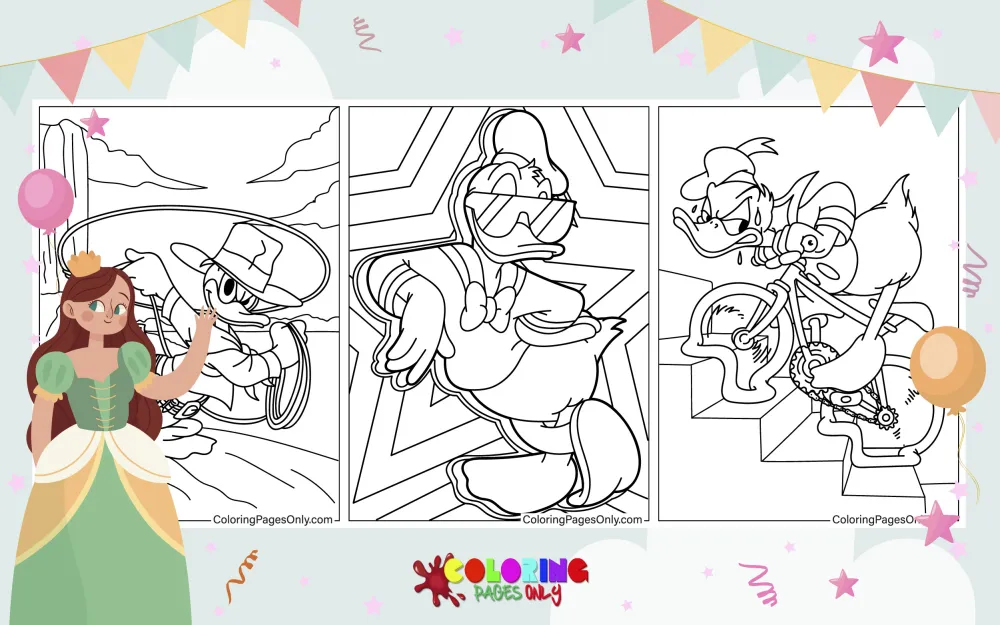
Free Donald Duck coloring pages: 77 printable PDF designs featuring Donald in sports, hobbies, and everyday mishaps, alongside his girlfriend Daisy Duck, his nephews, and his fellow Disney friends. Each page can be downloaded as a PDF to print or colored online in the browser.
Donald made his first screen appearance on June 9, 1934, in the Disney short The Wise Little Hen, voiced from the start by Clarence Nash, whose duck-like vocal impression is what convinced Walt Disney the character should be a duck at all. That same short temper and sailor’s uniform have carried into every design in this set, sorted here into scenes built around Donald’s moods and mishaps rather than one repeated pose.
This collection works across a wider age range than a single-pose character set usually allows, since Donald’s expressive scenes give older children something to color. At the same time, younger siblings stick to his simpler standing portraits. Beyond the coloring itself, several pages double as a natural prompt for talking through feelings: Donald’s exaggerated anger, surprise, or embarrassment give parents and teachers an easy way to name emotions with a preschooler, while the sports and hobby scenes work well as a rainy-day activity that does not need a screen.






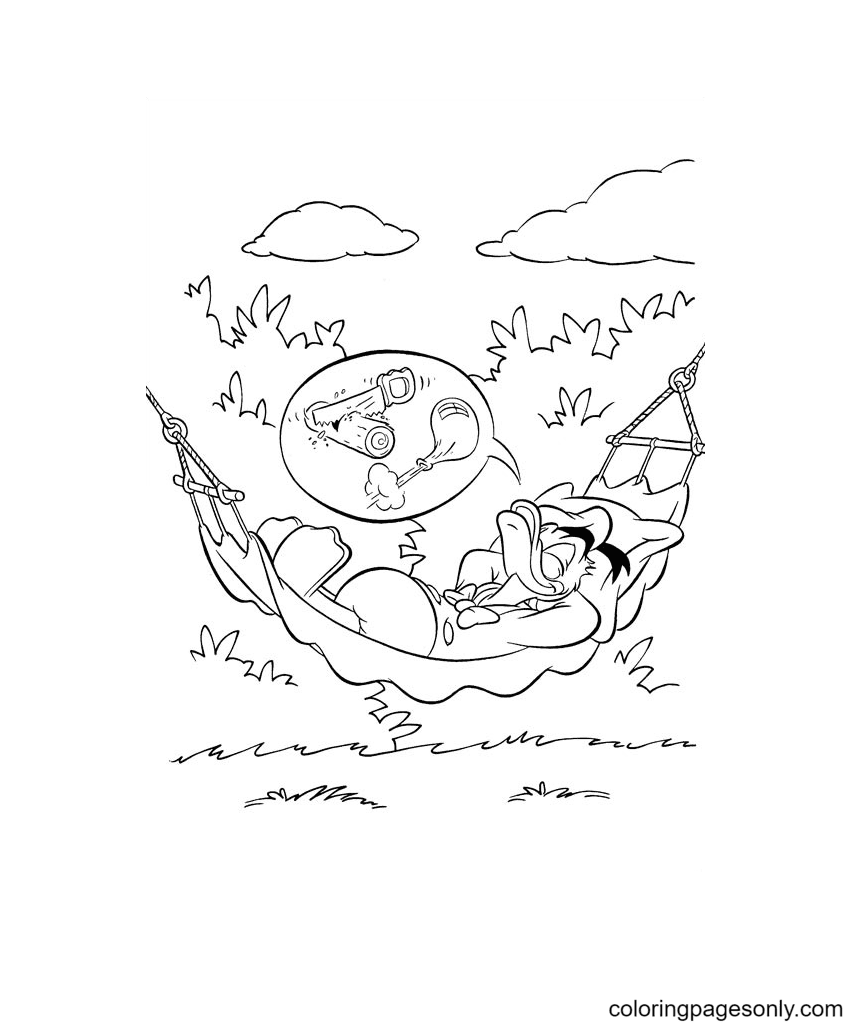
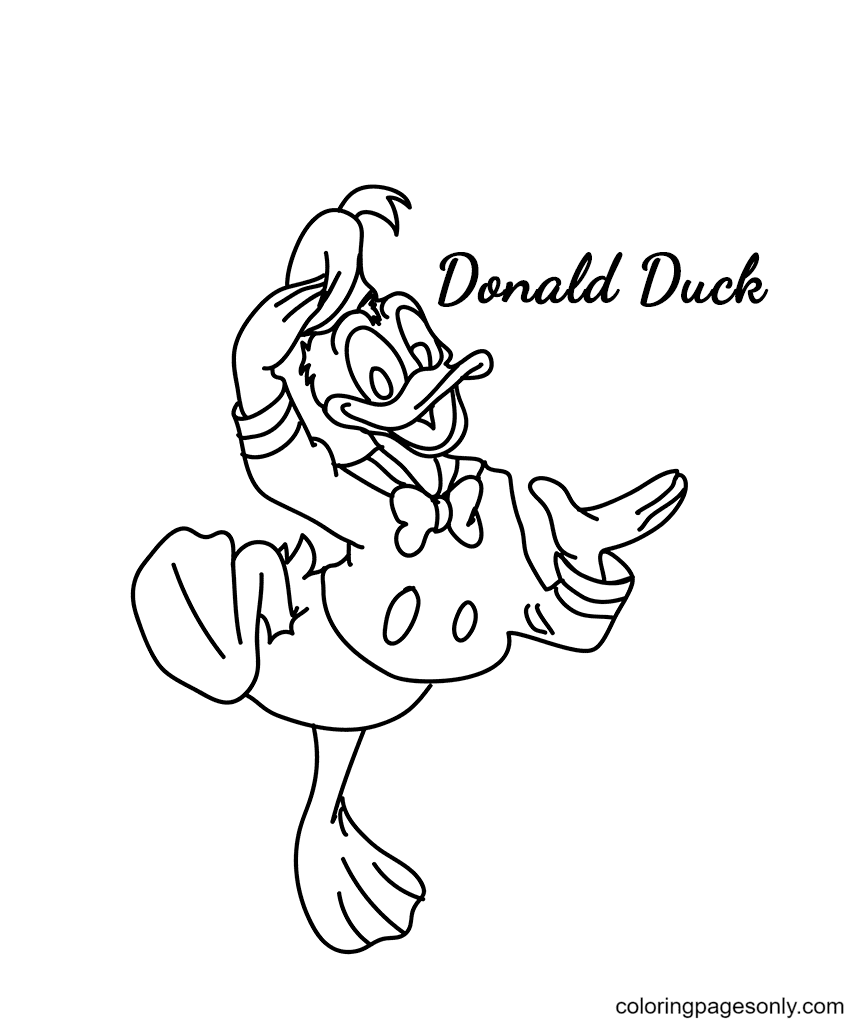
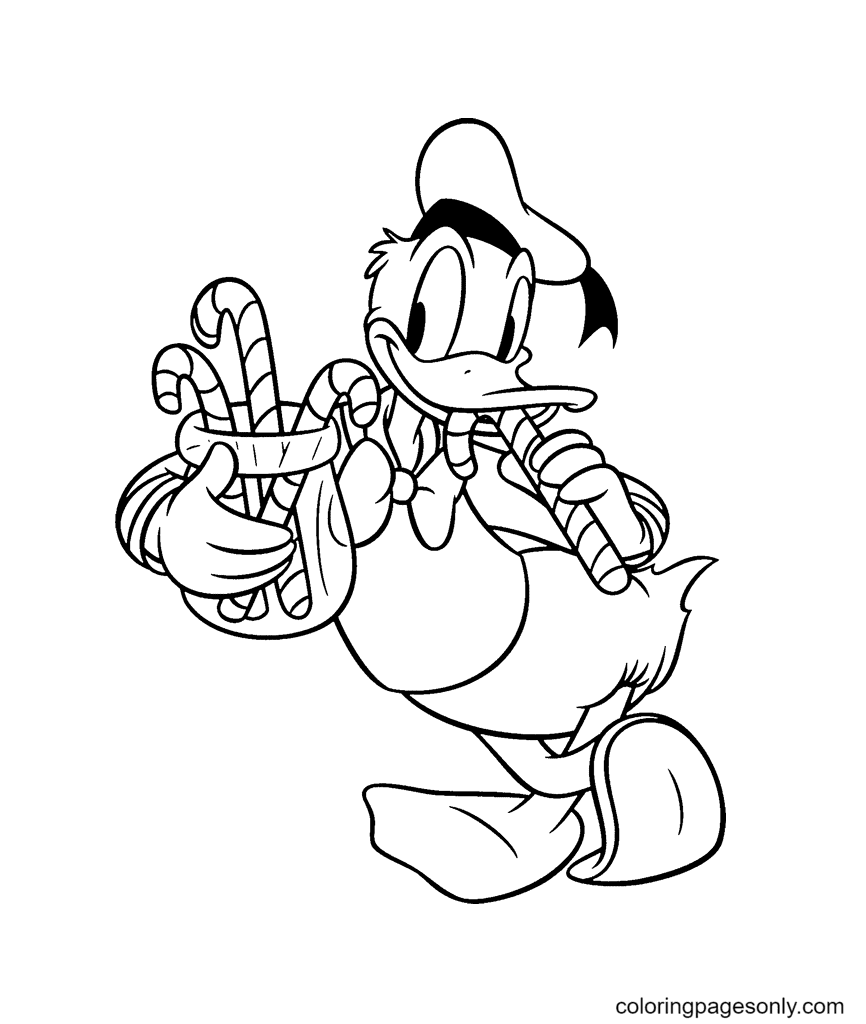
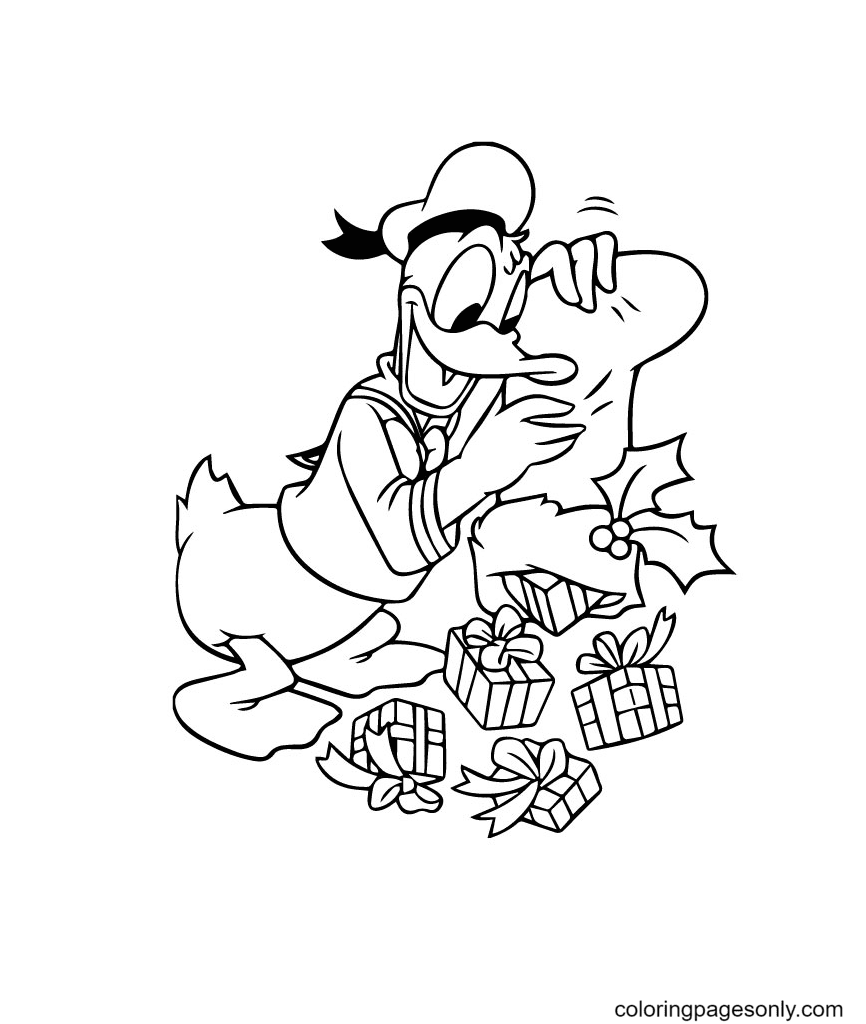


What Is Inside This Collection
The 77 pages fall into a few clear groups, built around Donald’s expressions, his family and friends, his activities, and seasonal or costume themes.
Classic Donald Portraits and Expressions
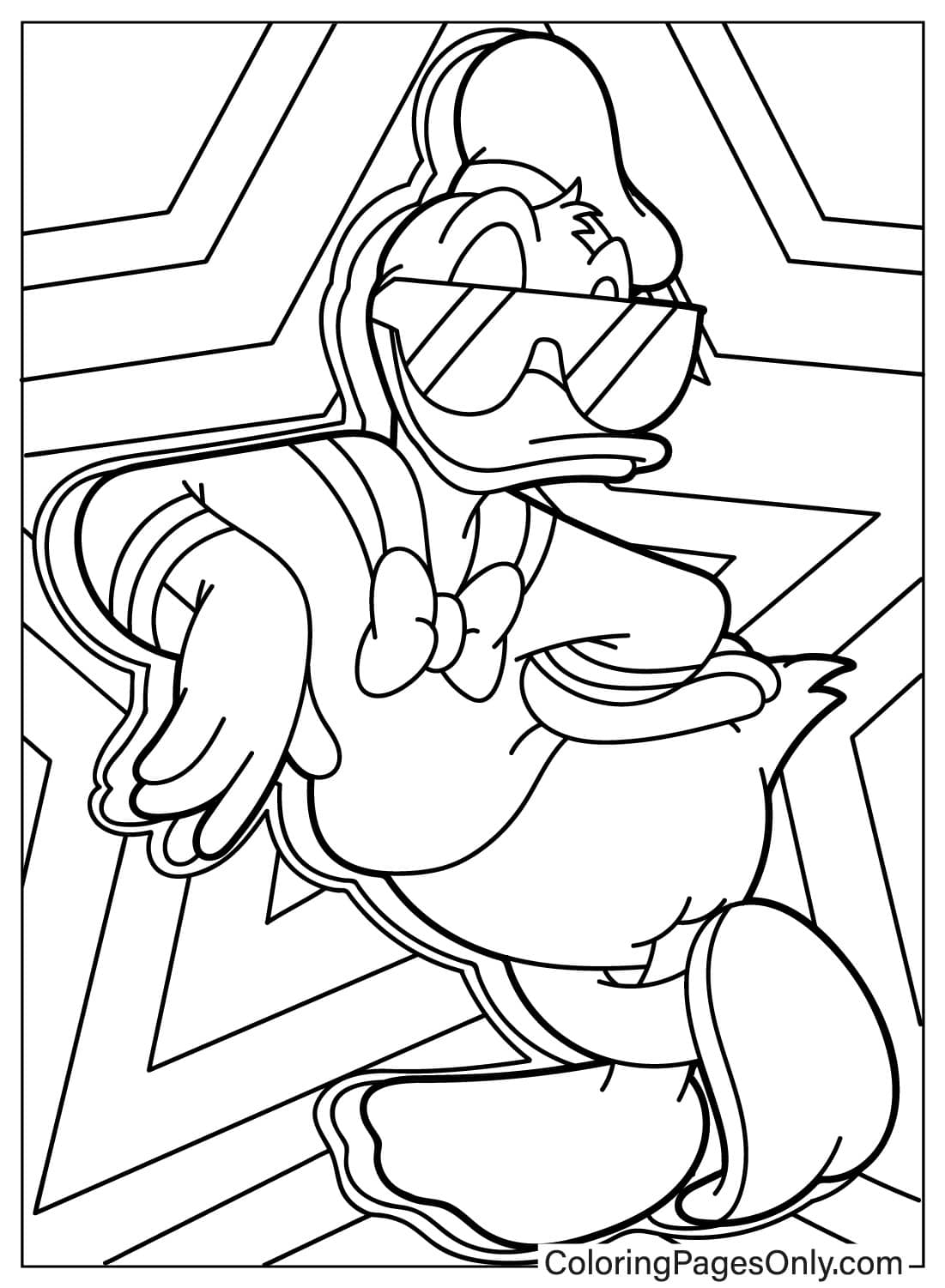
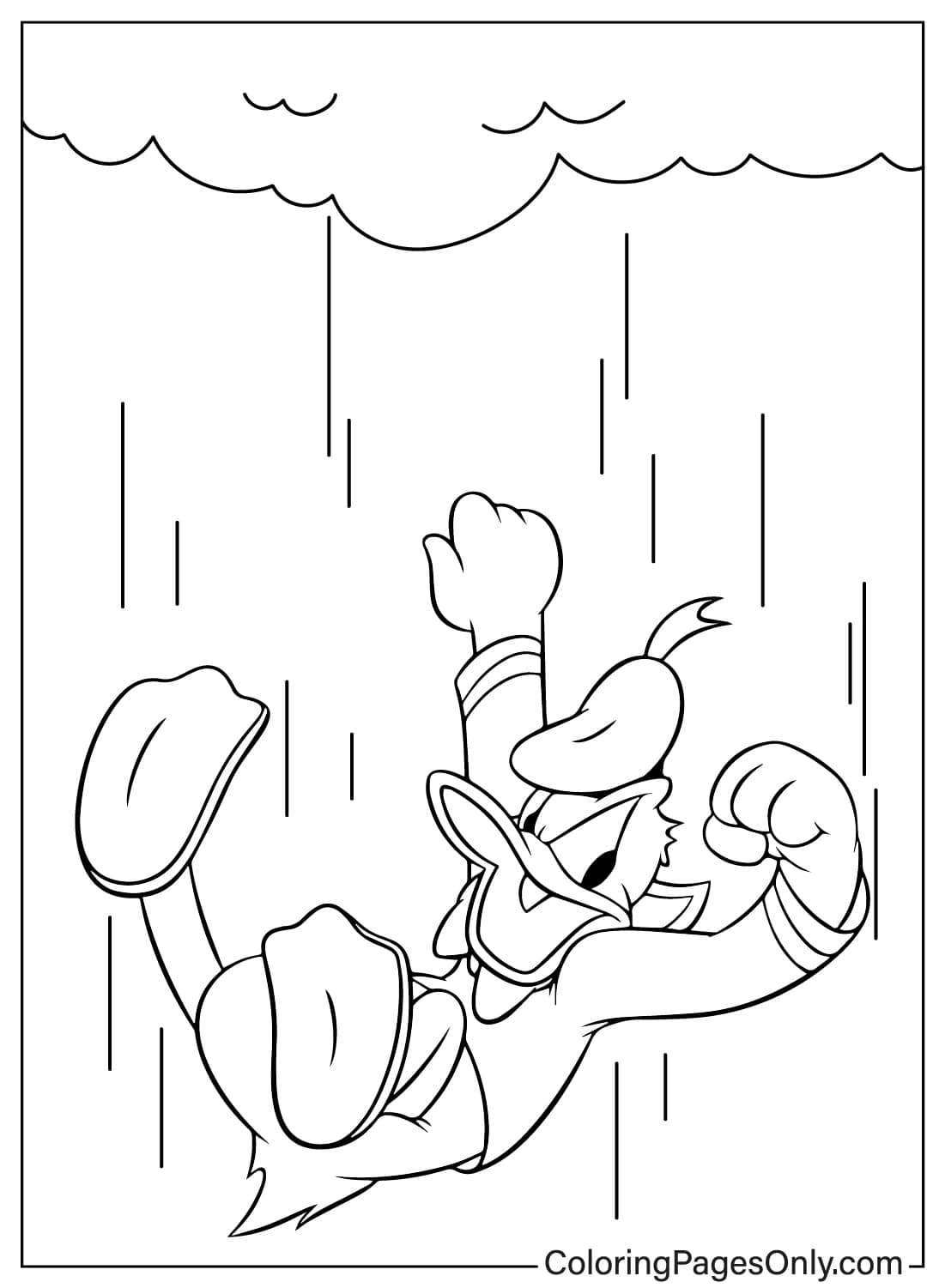
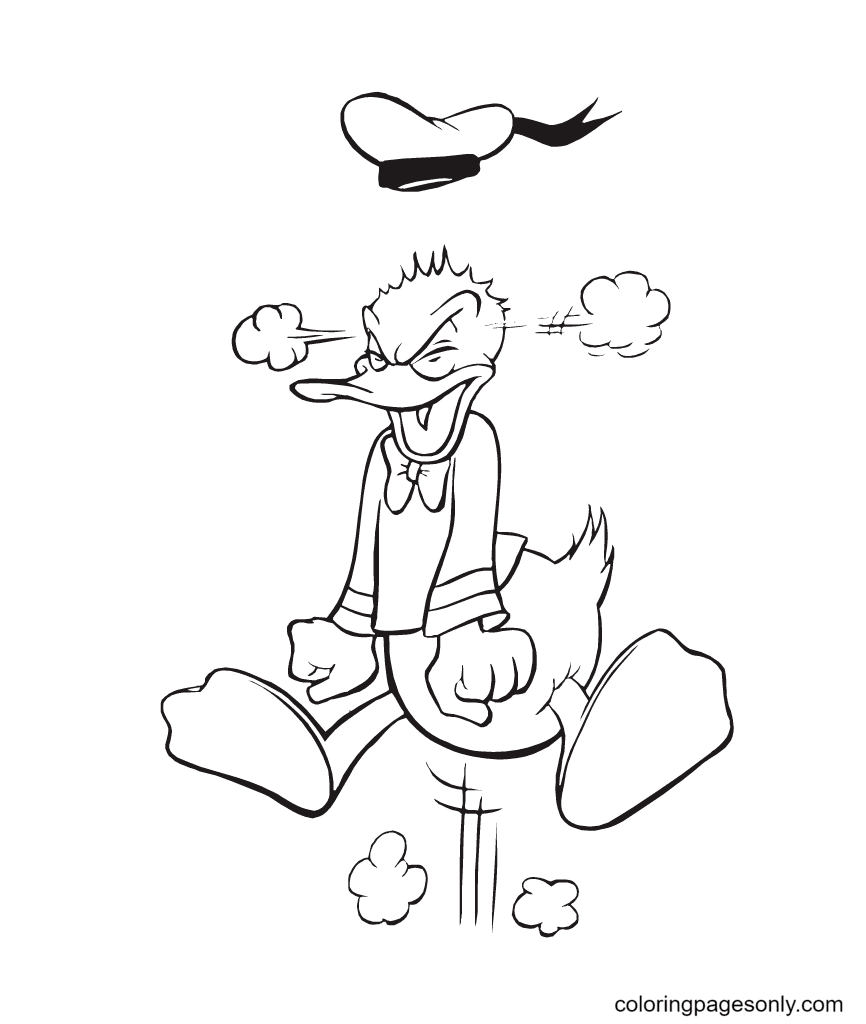
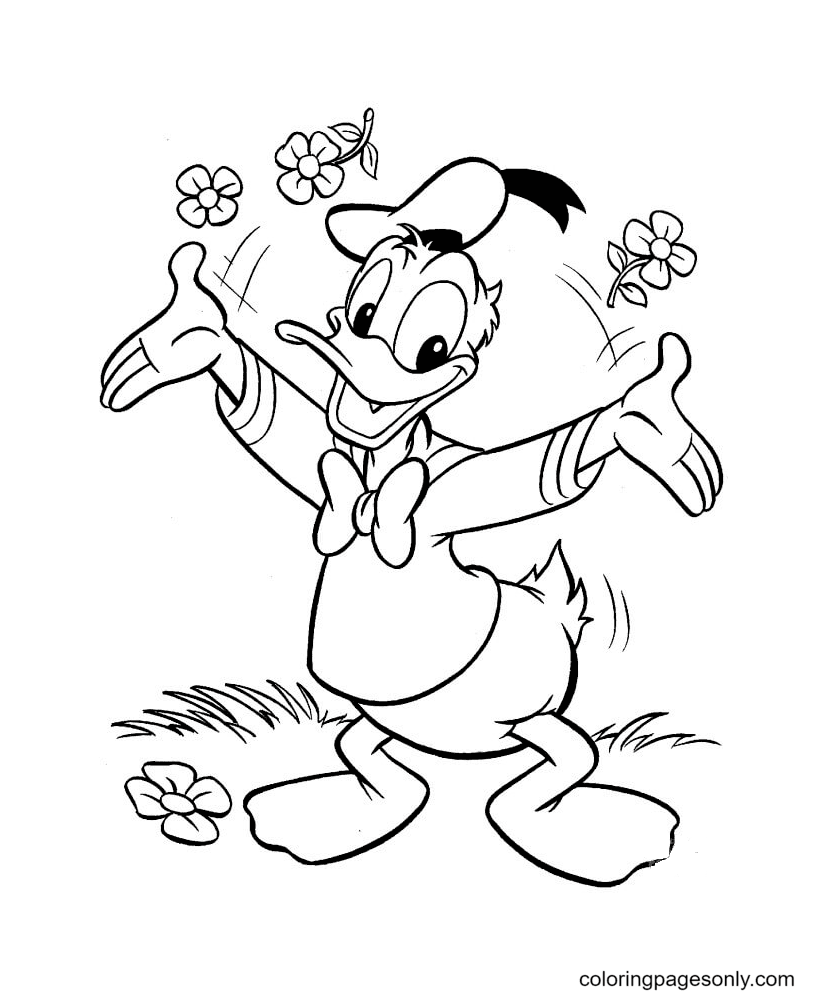
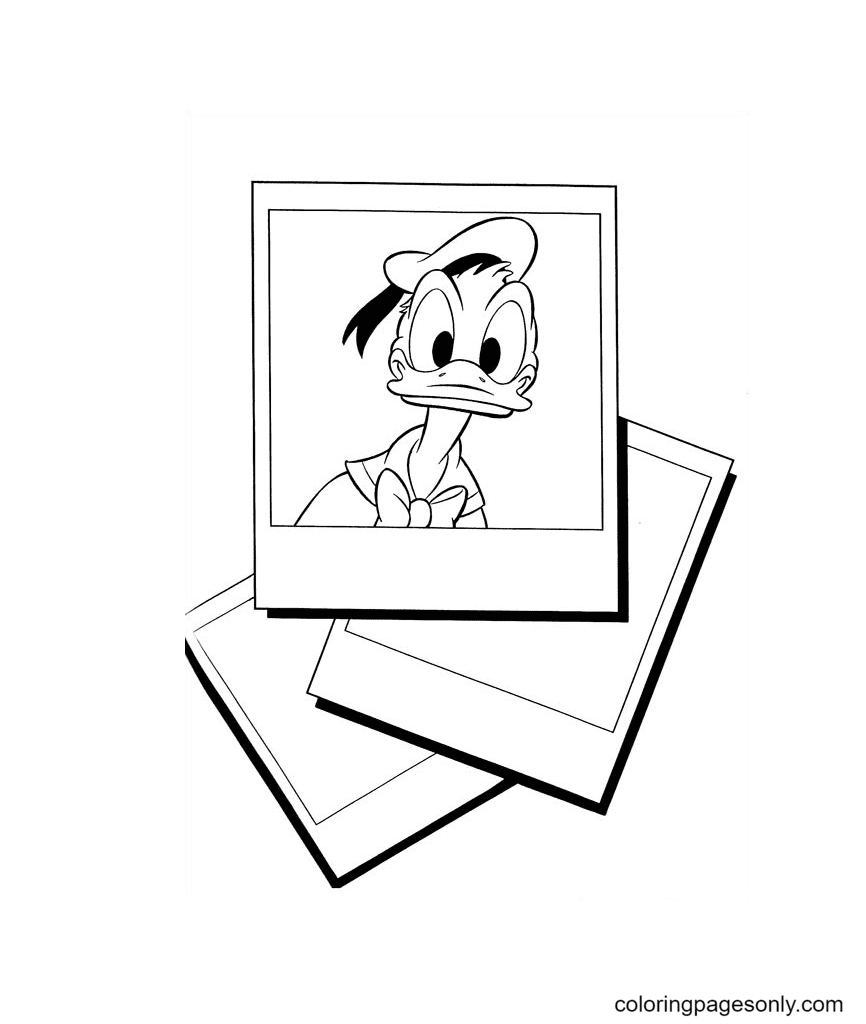
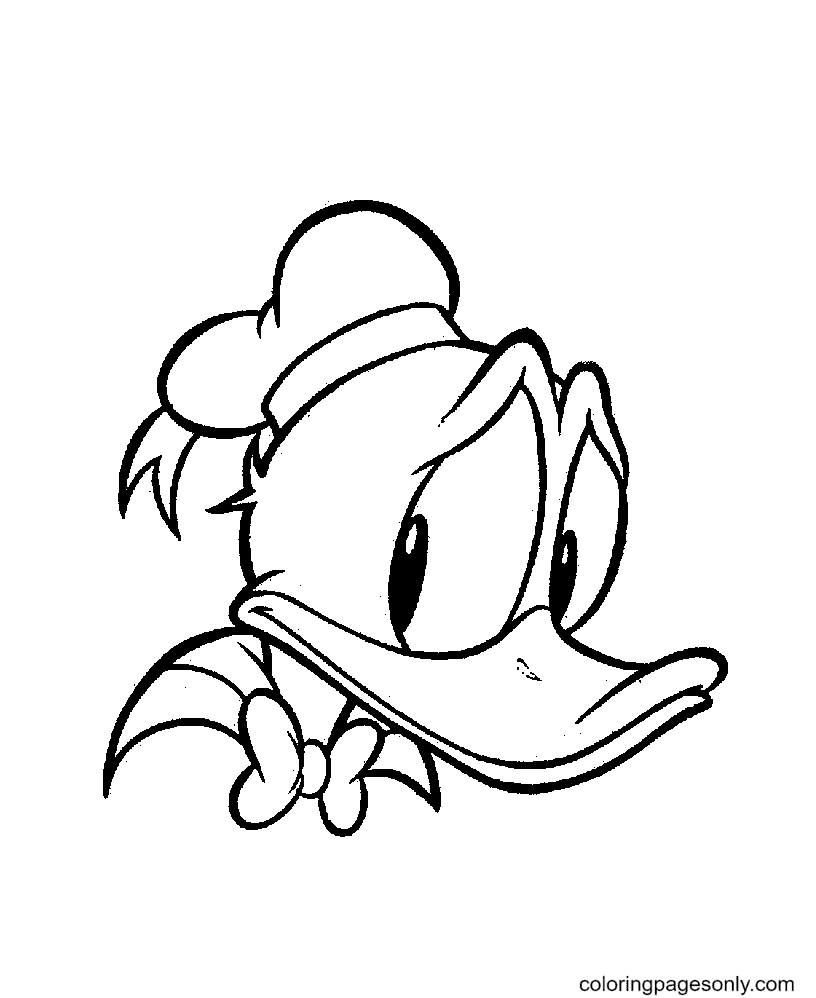
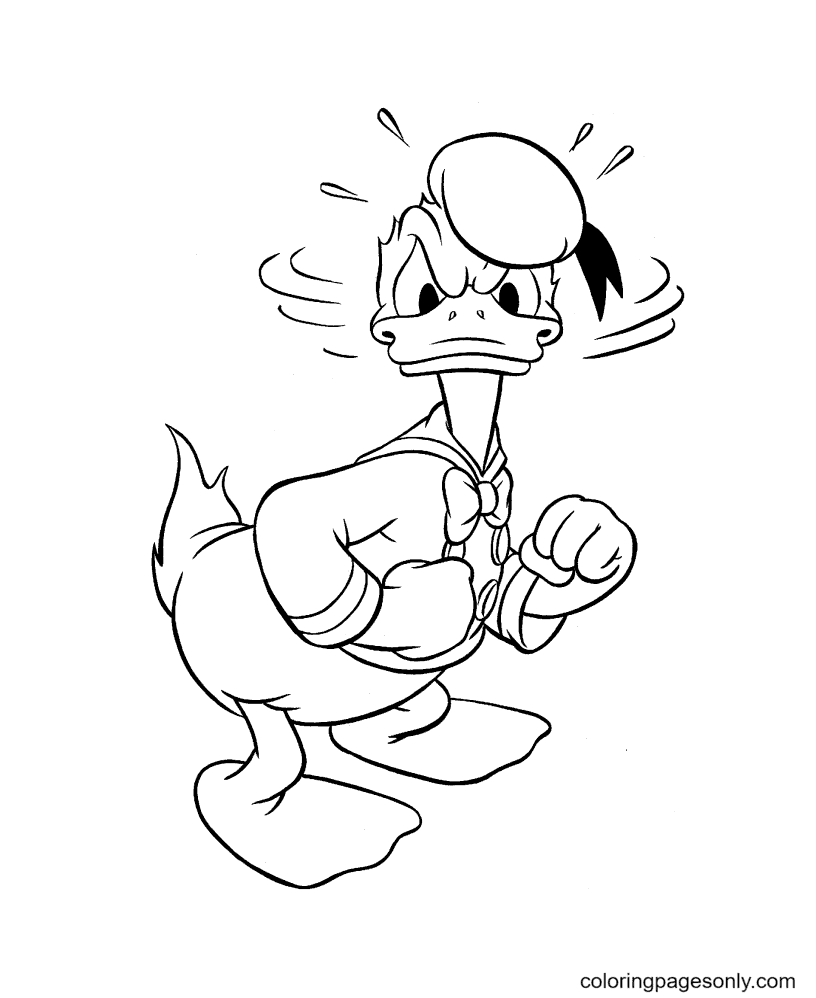
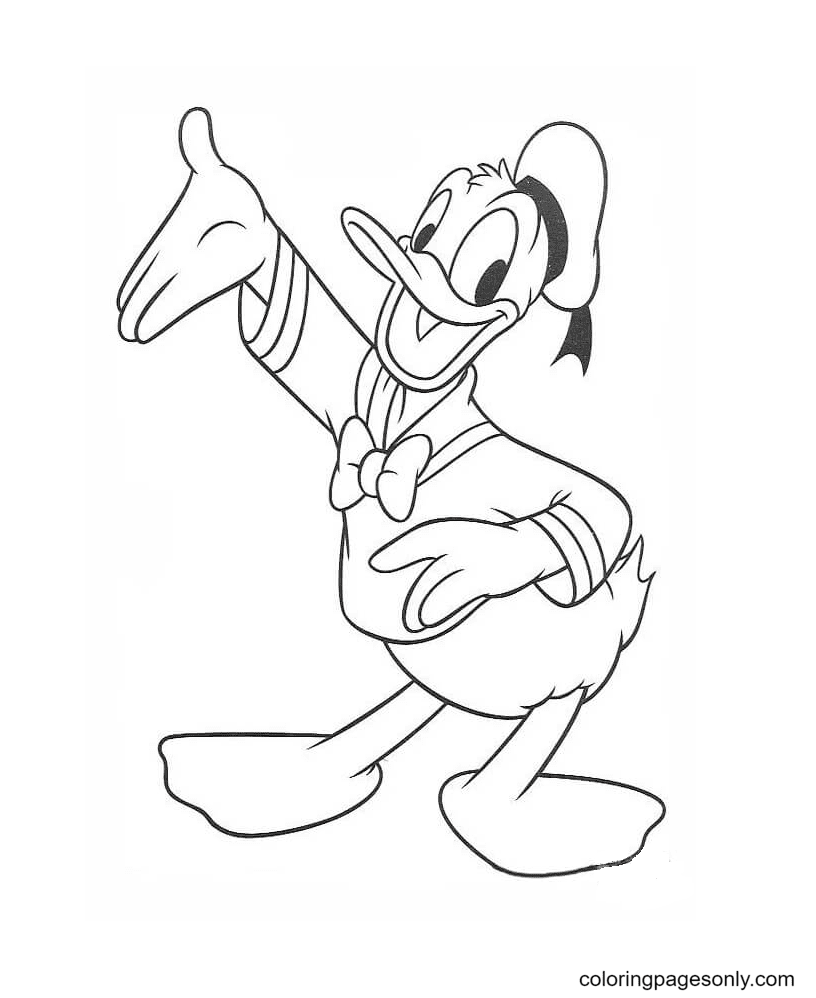
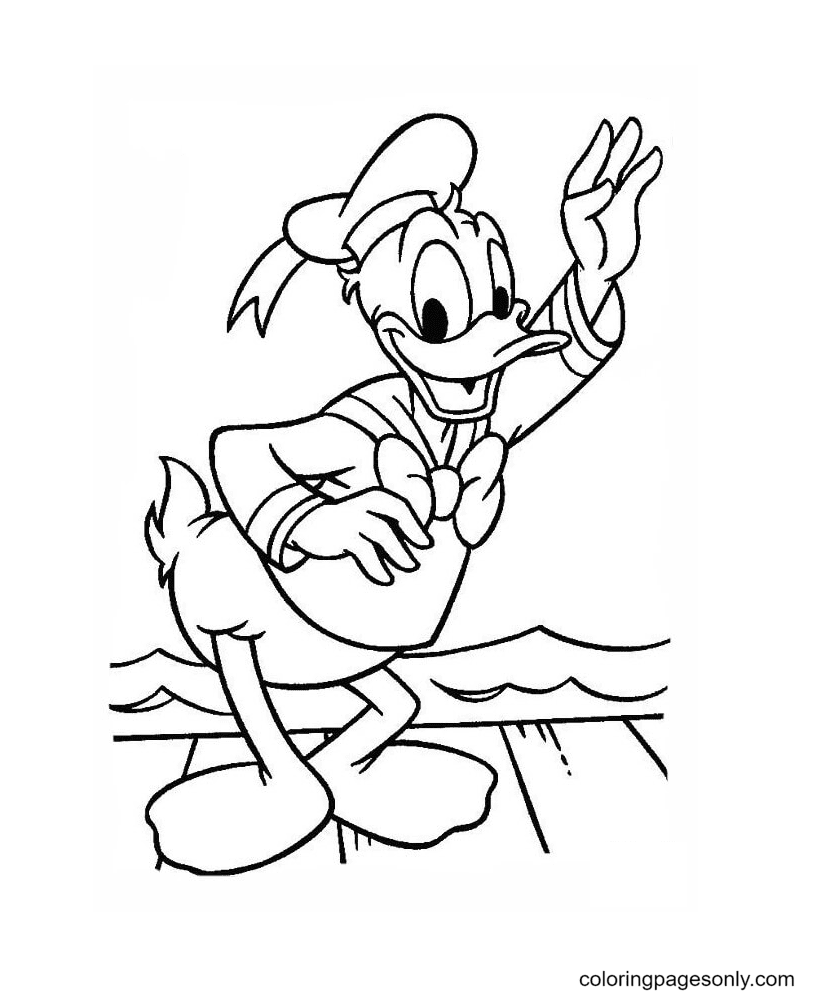
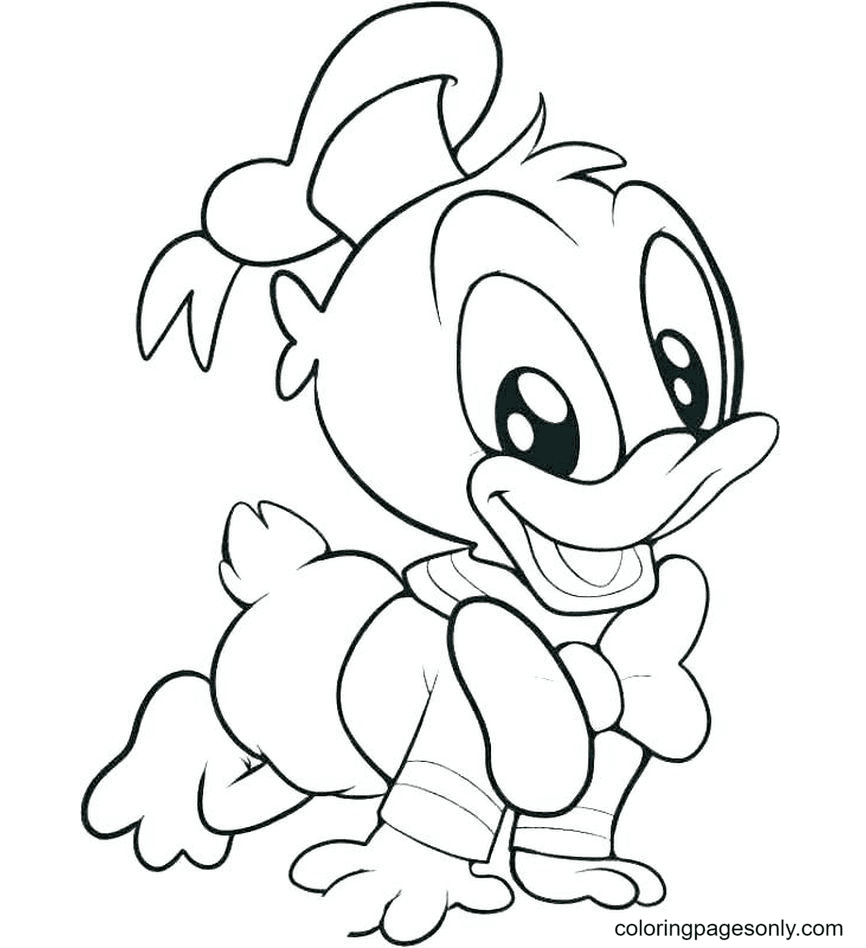
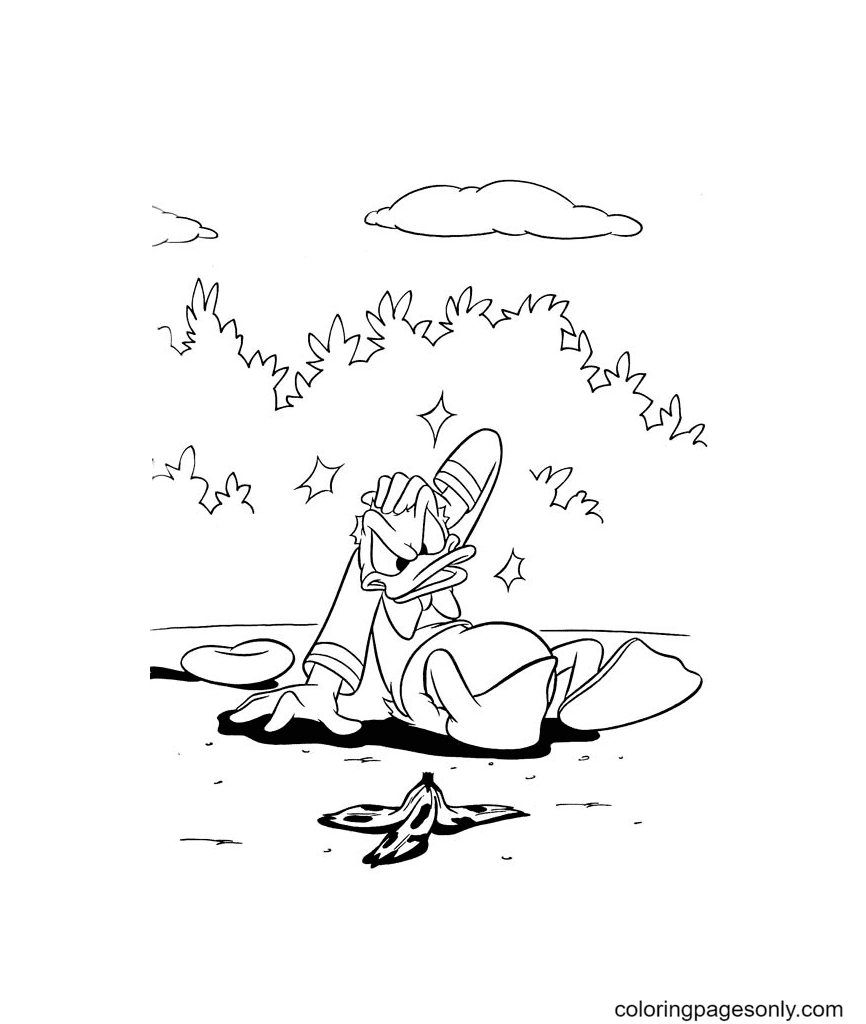
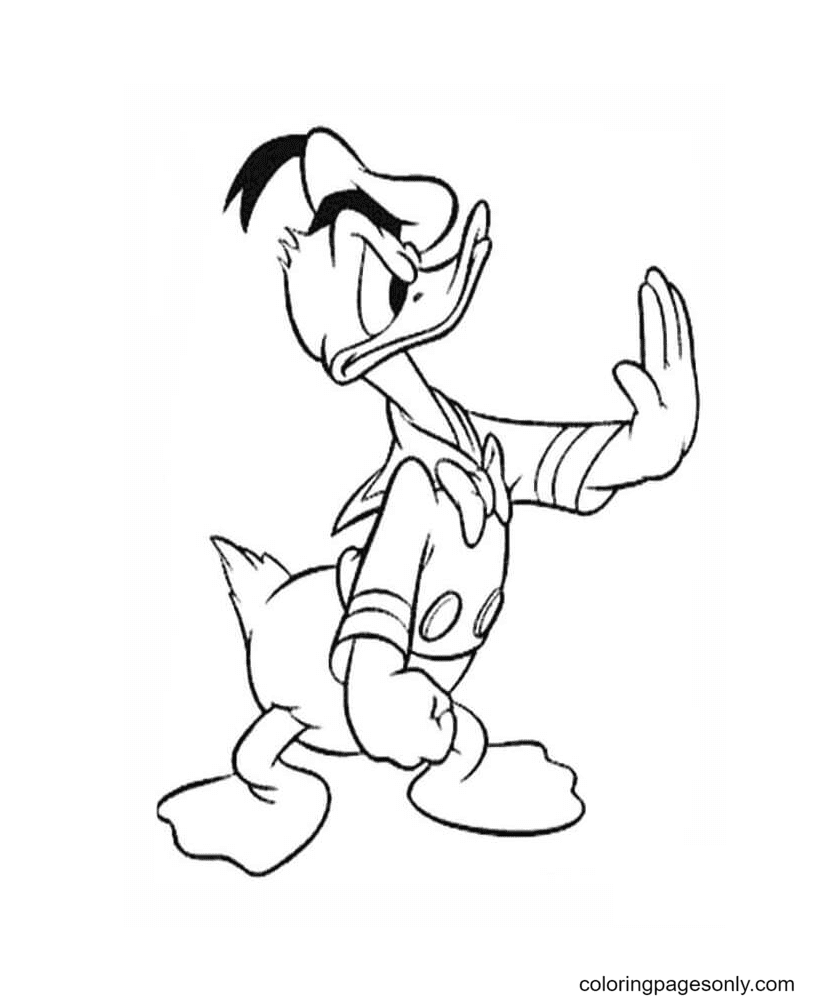
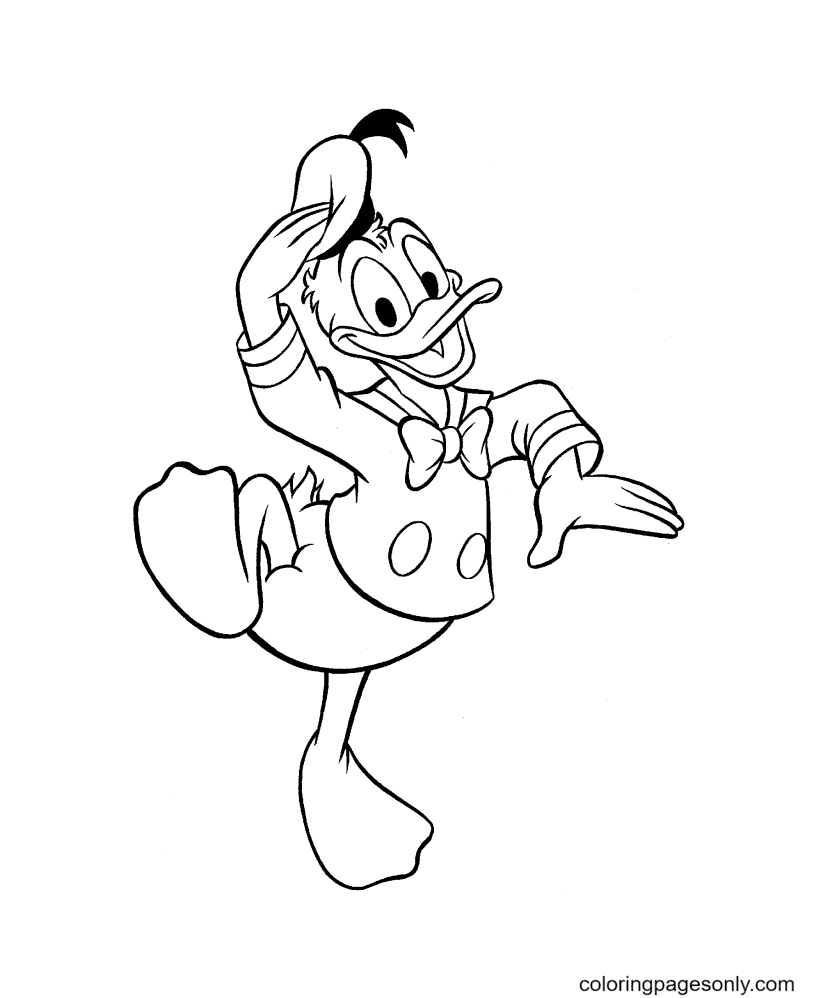
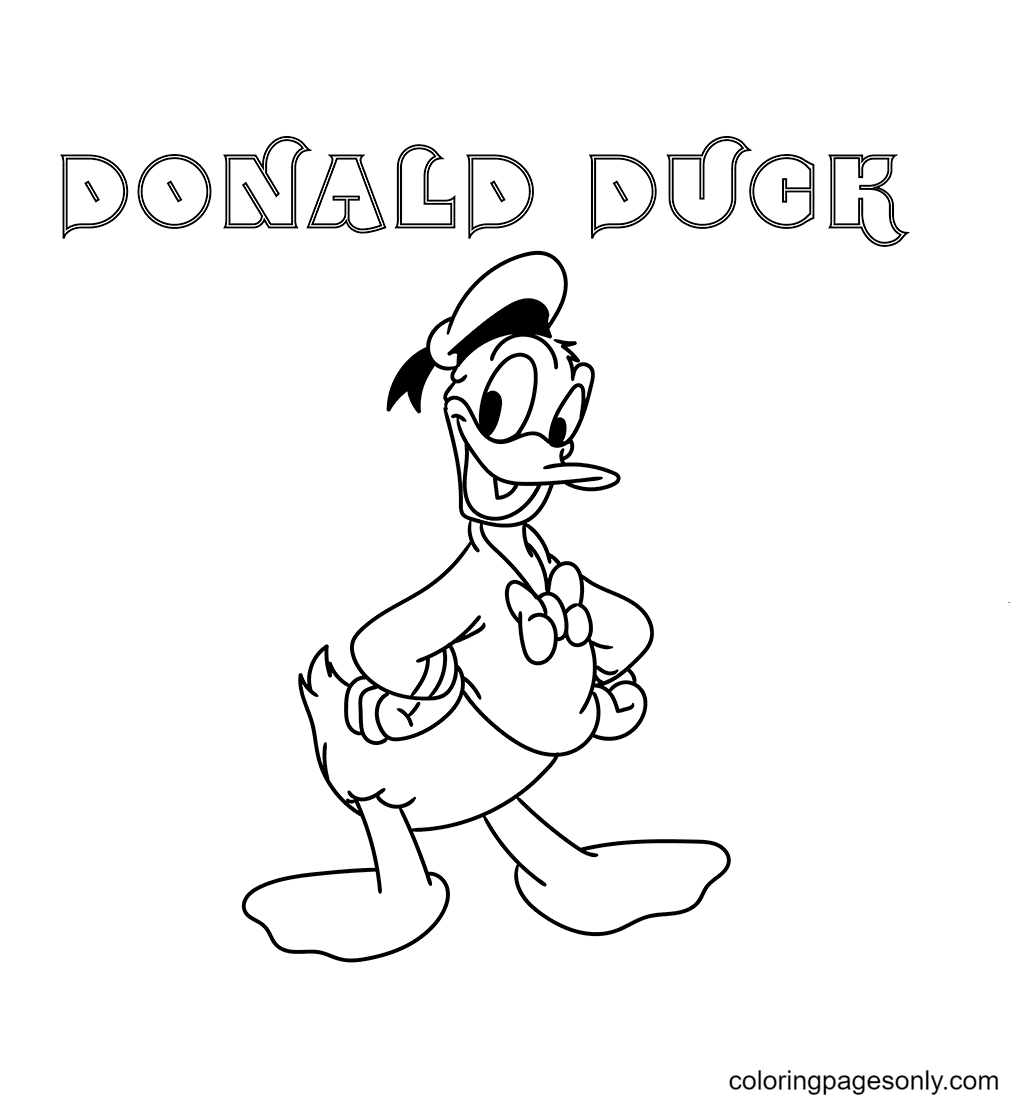
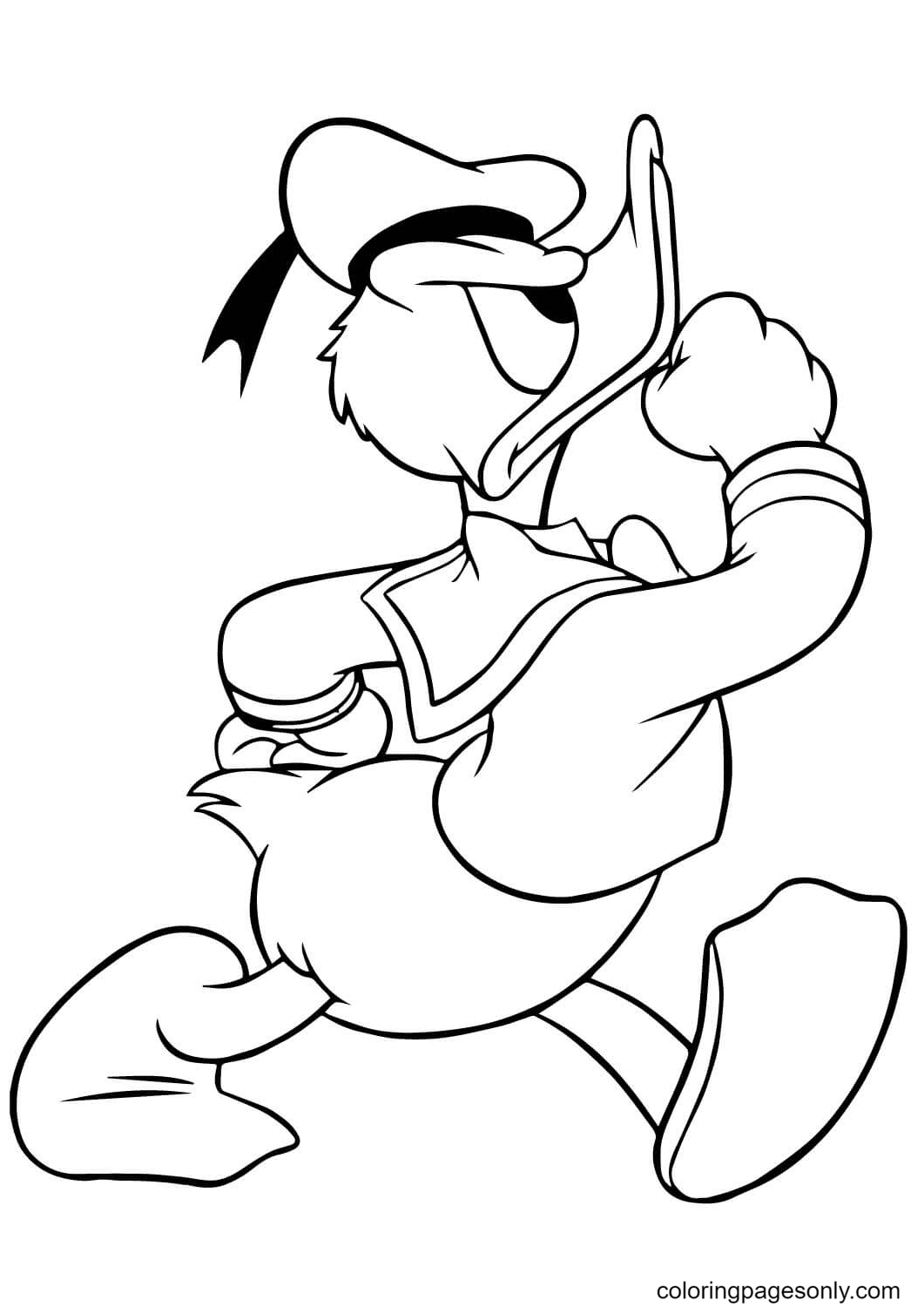
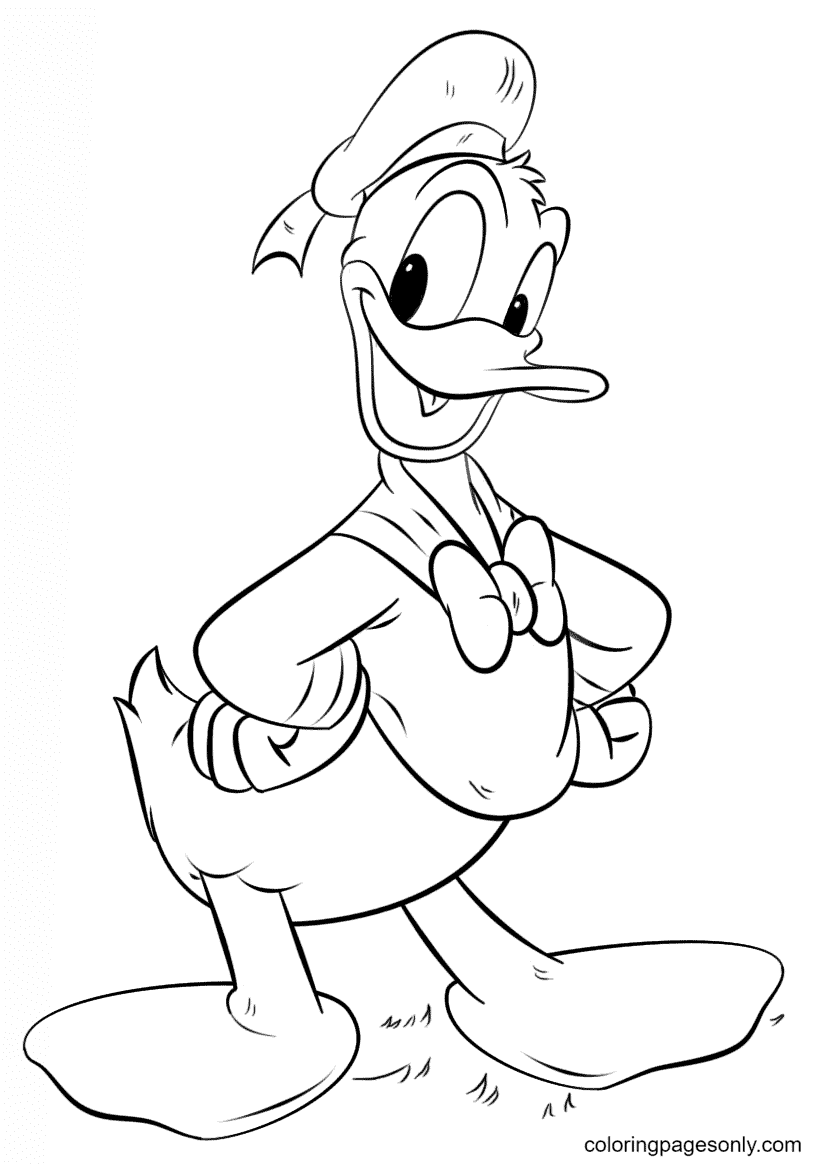
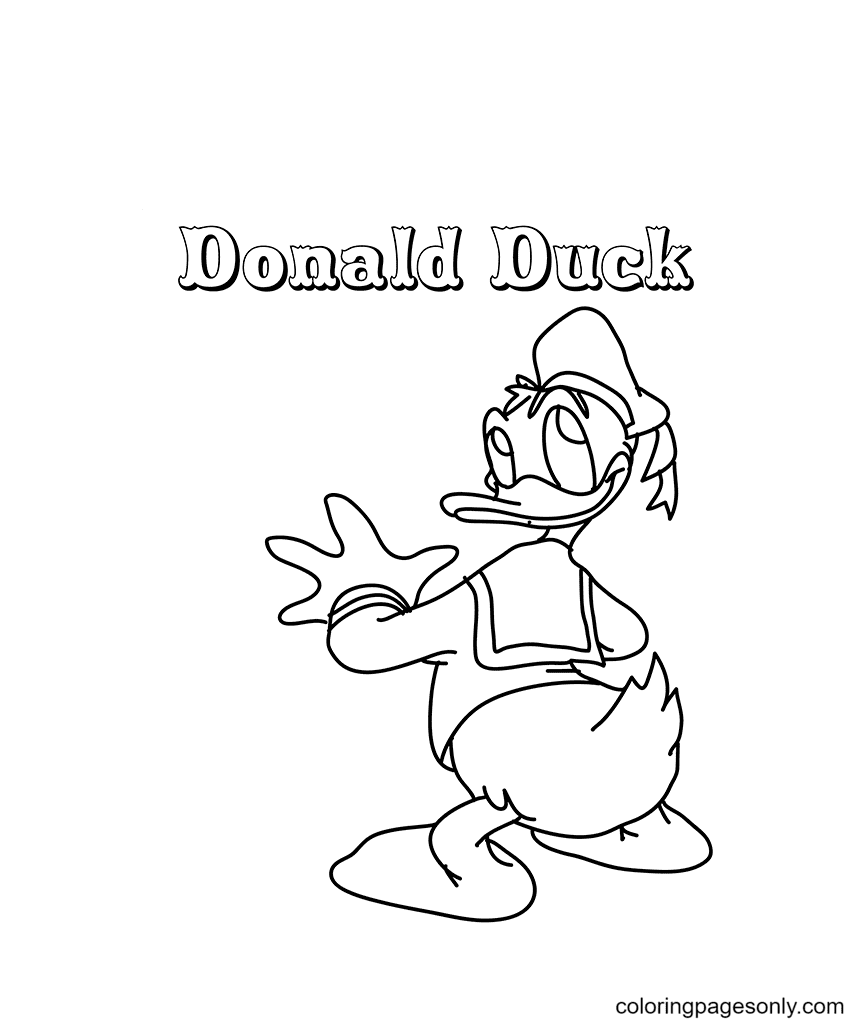
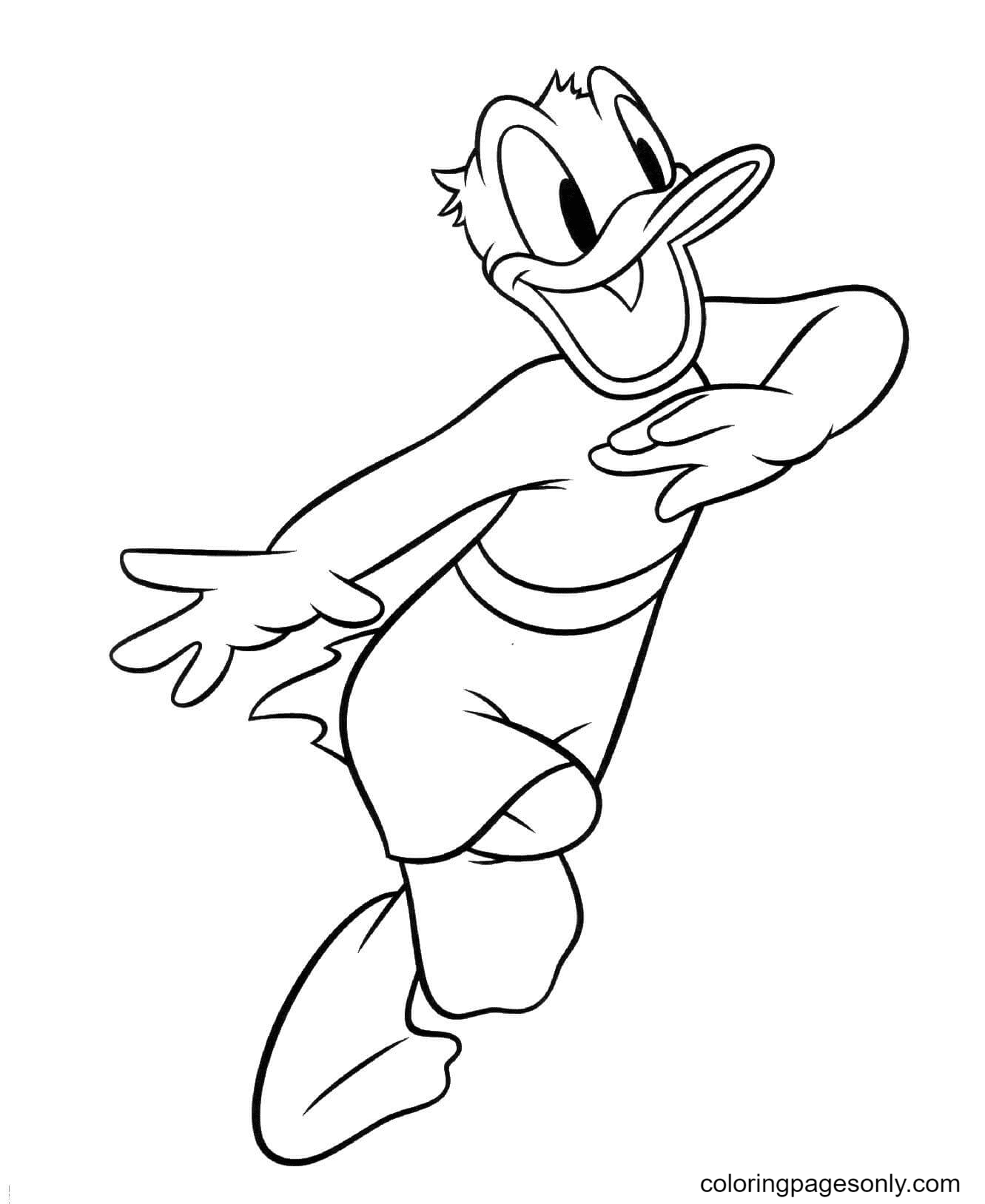
A large share of the set isolates Donald’s face and posture to show a single mood: happy, mad, sad, or laughing. These work well as an early coloring page since the shapes are large and simple. Stick to his standard palette on these pages: White for the feathers, Yellow-Orange for the bill and feet, Blue for the sailor shirt, and Red for the bow tie, so his expression changes, but his colors do not.
Donald with Family and Friends
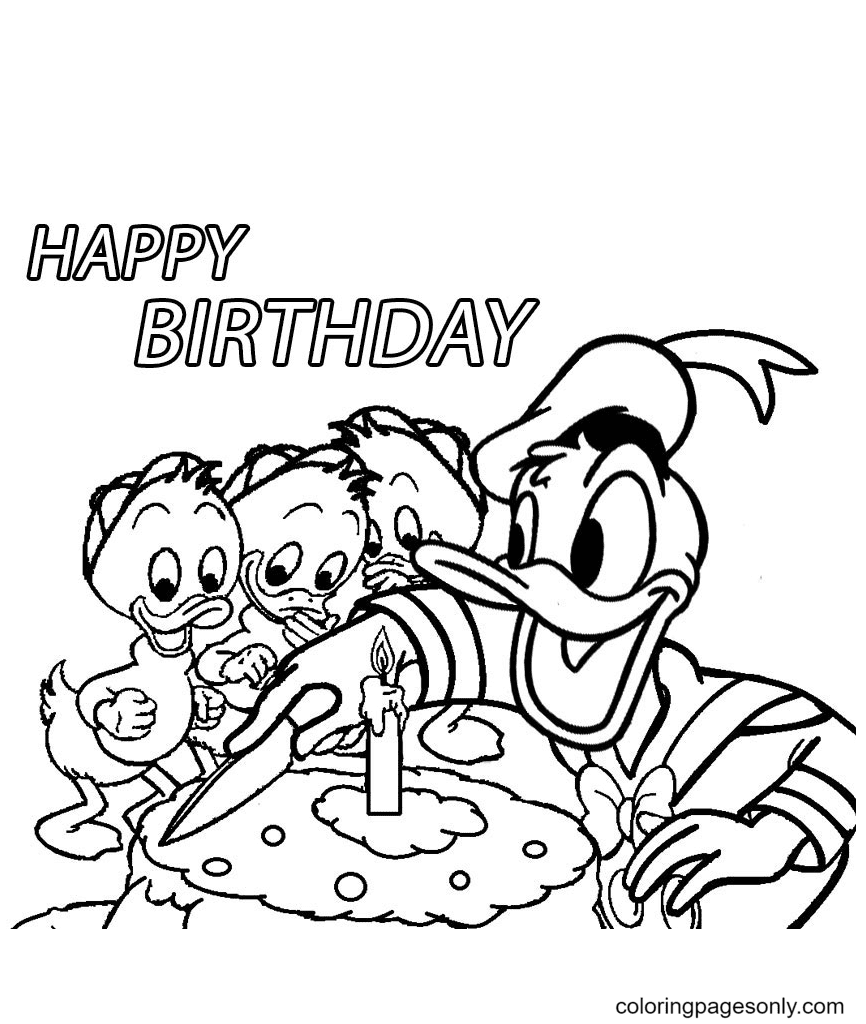
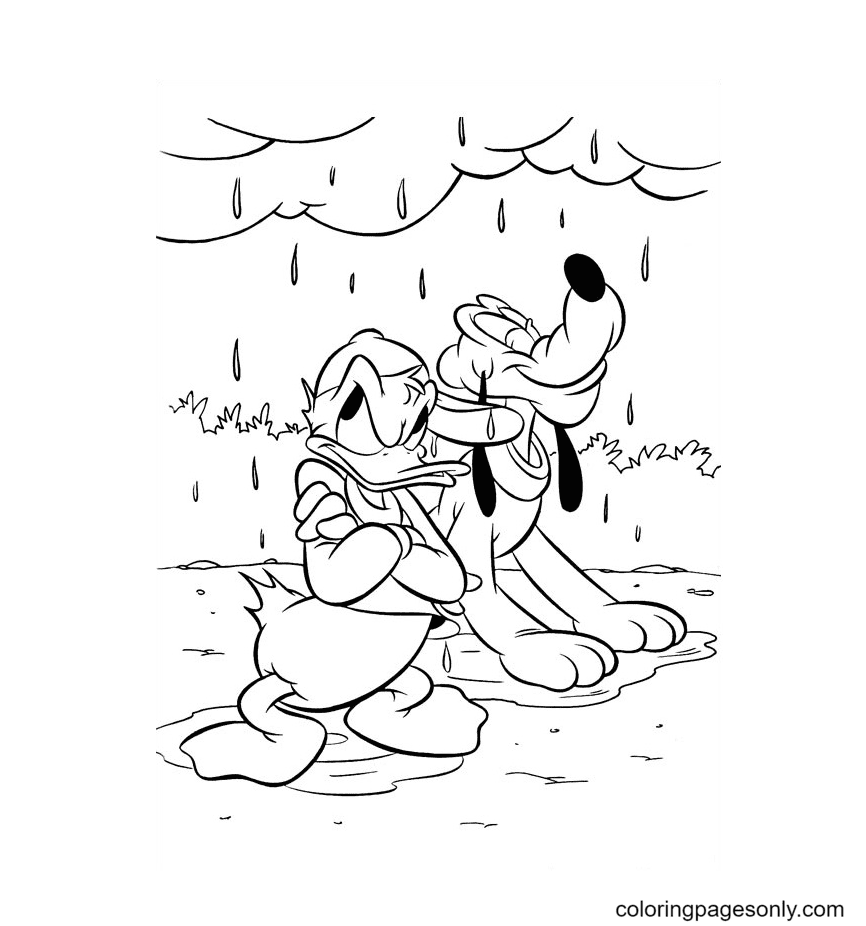
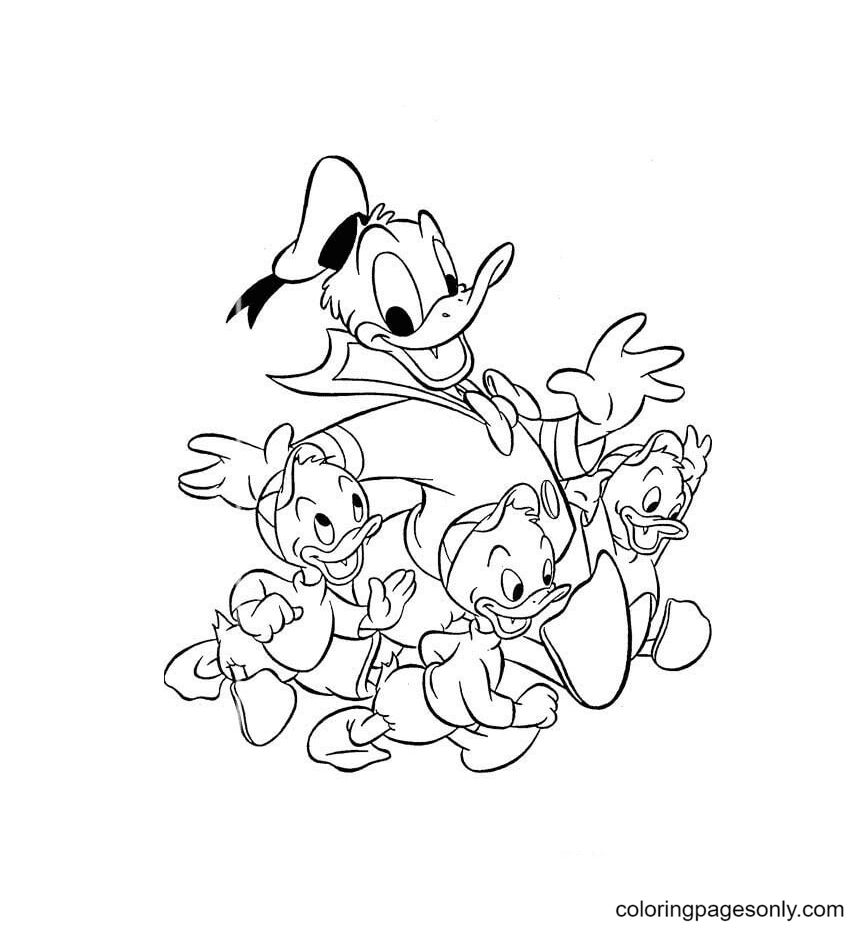
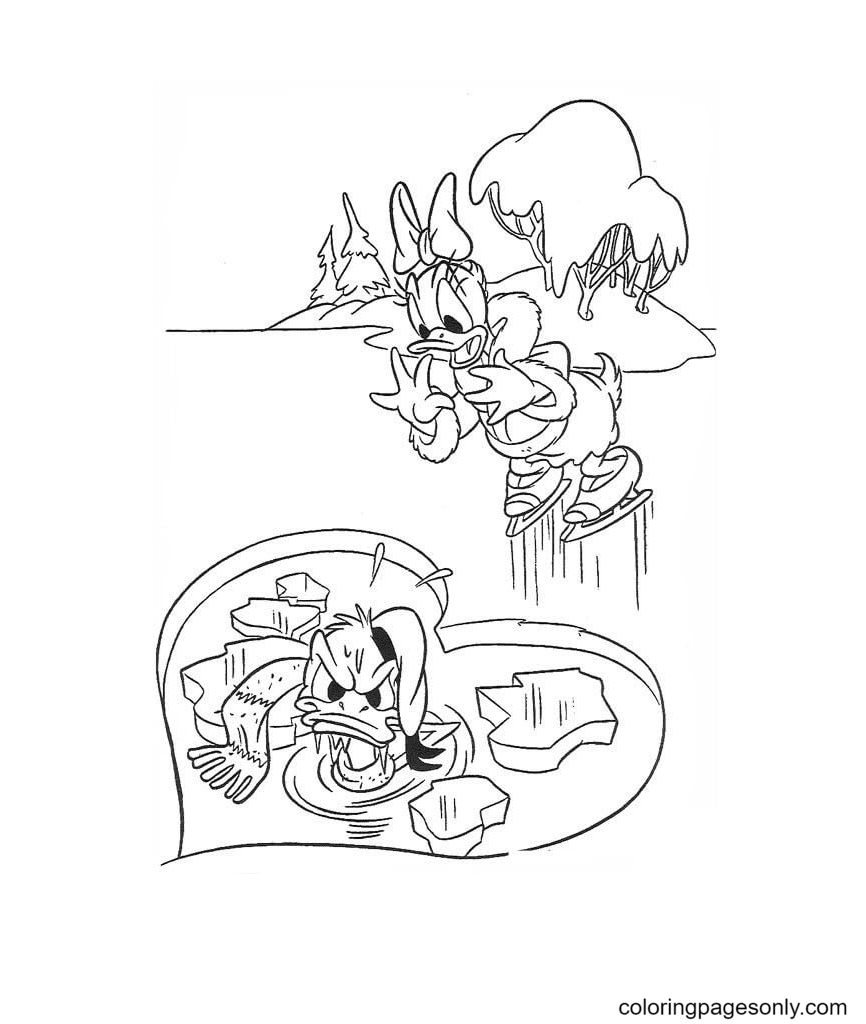
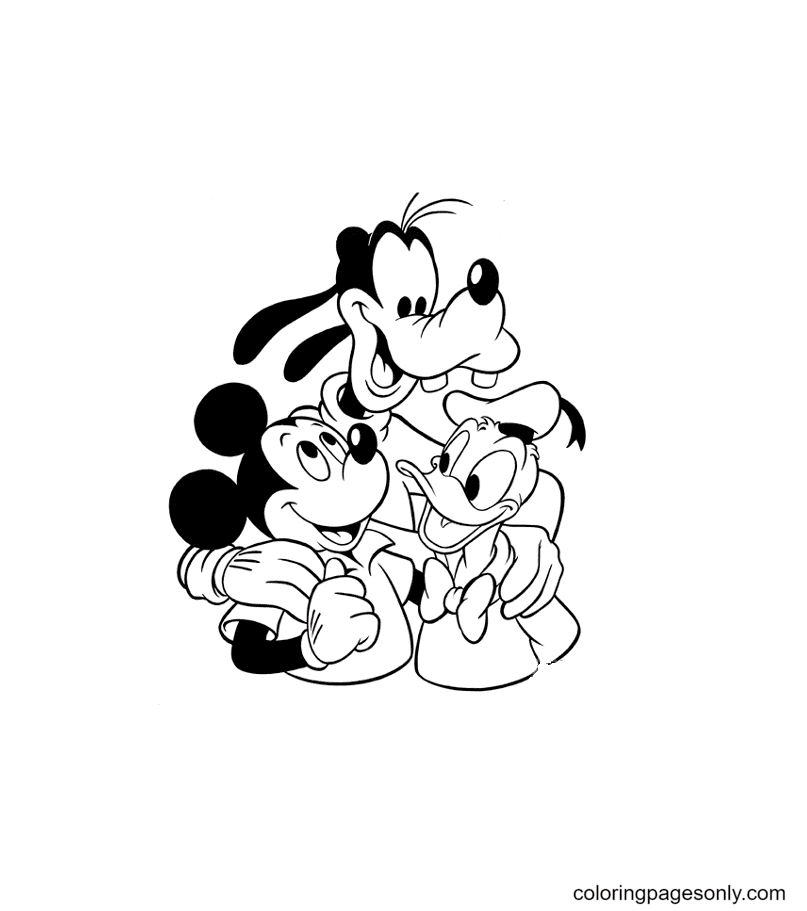
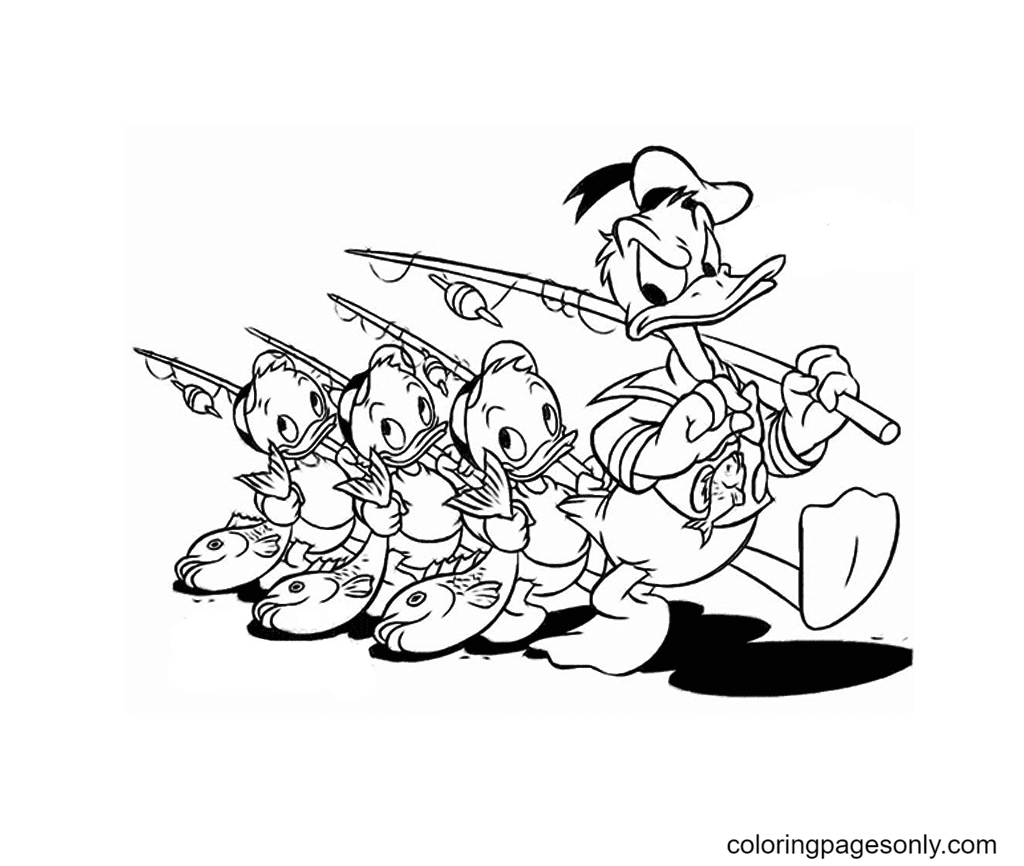
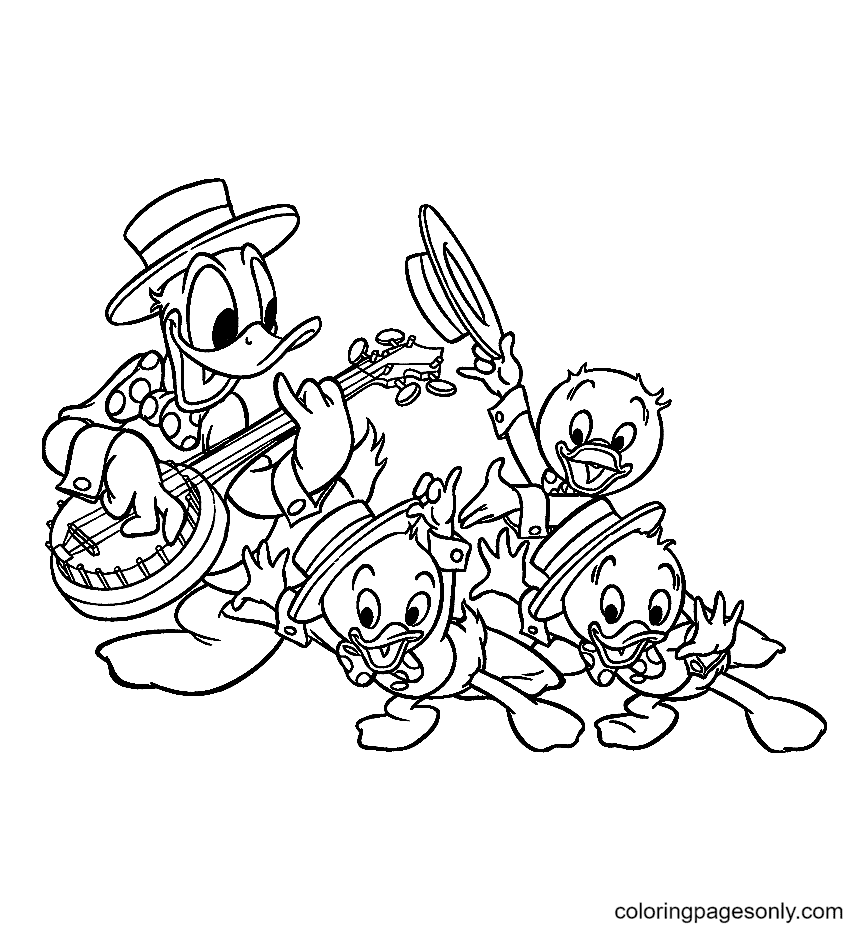
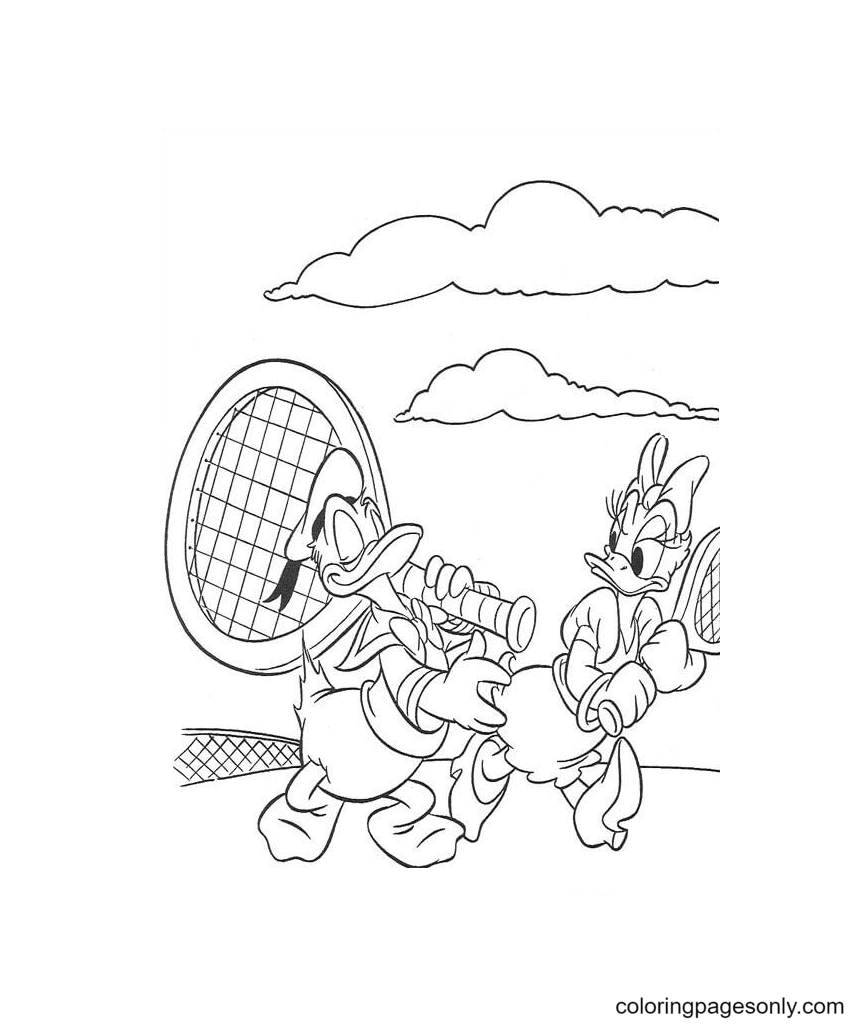
Several pages bring in Daisy Duck, his nephews Huey, Dewey, and Louie, or fellow Disney characters like Mickey, Goofy, and Pluto. When the nephews appear together, give each one his own signature cap color: red, blue, and green in that order, a detail that has told the three apart since their earliest comic strip appearances.
Sports, Hobbies, and Everyday Mishaps
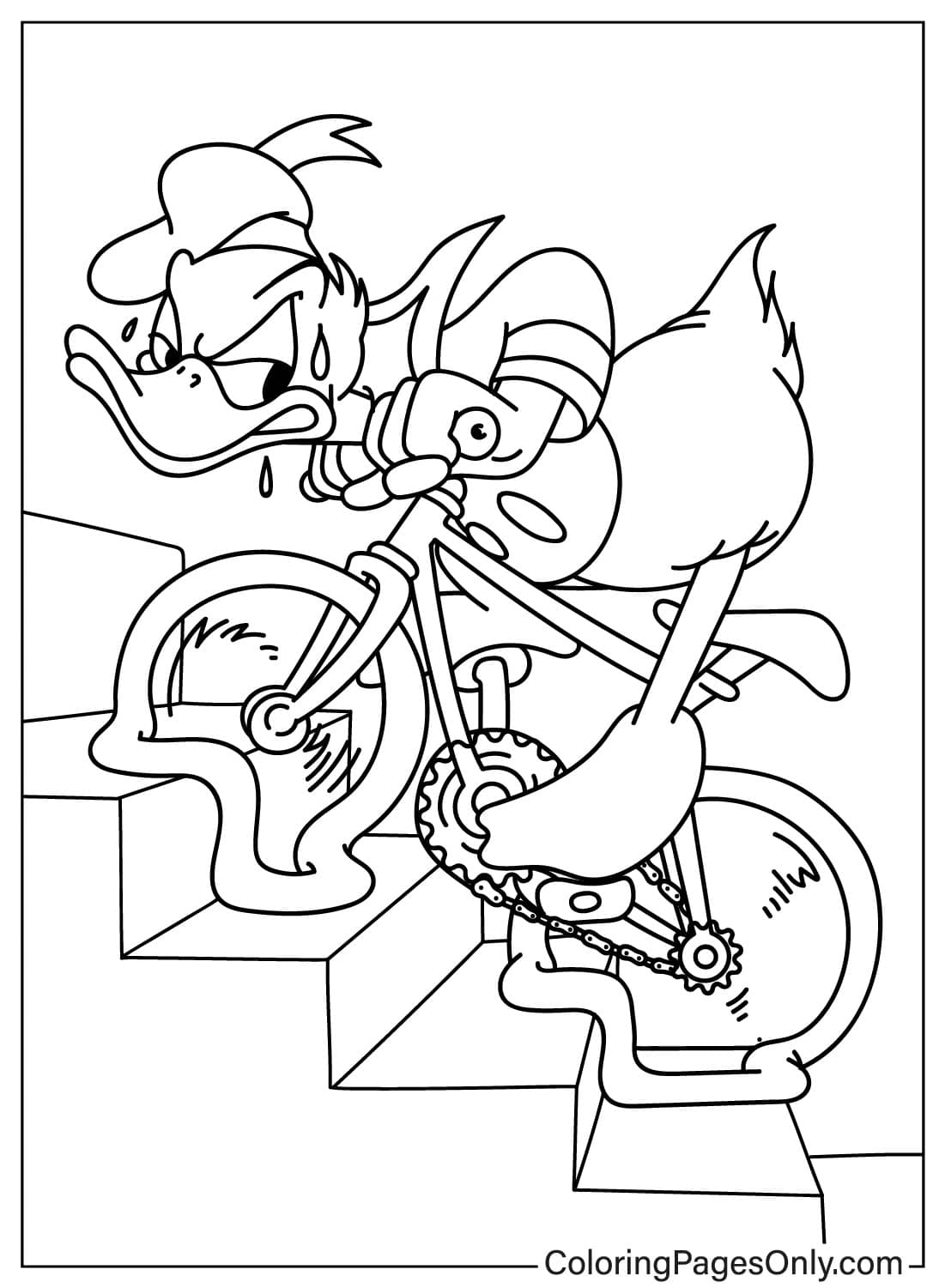
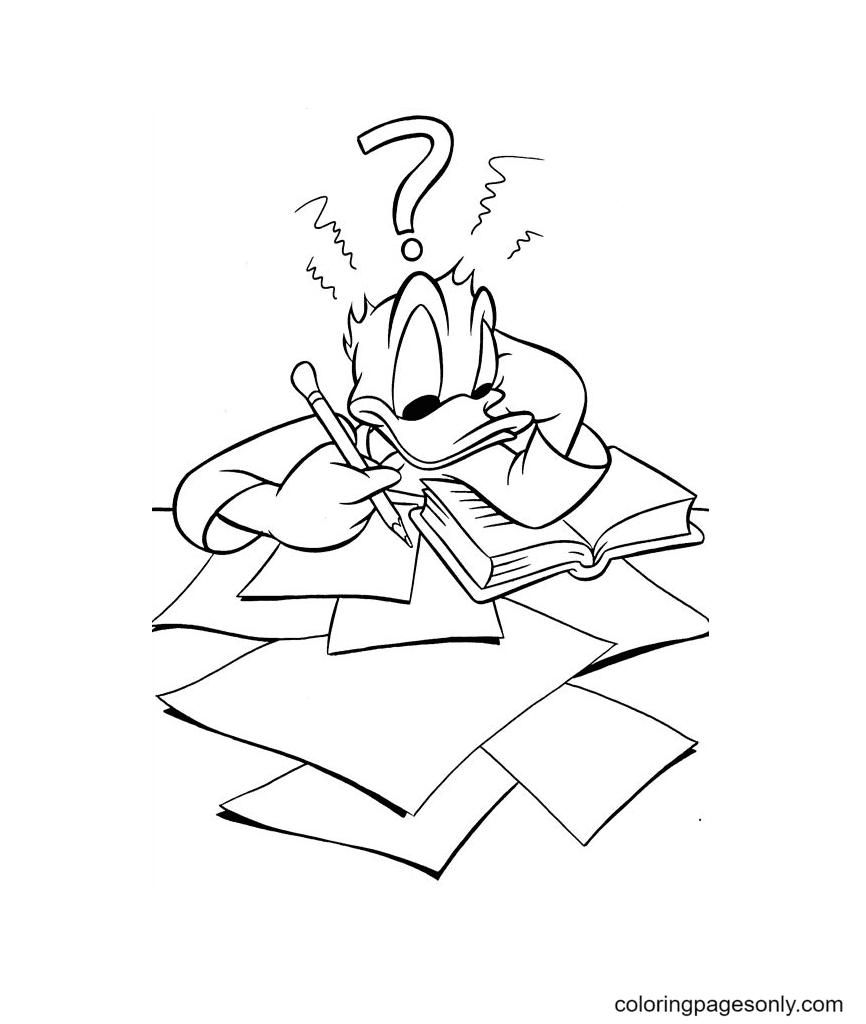
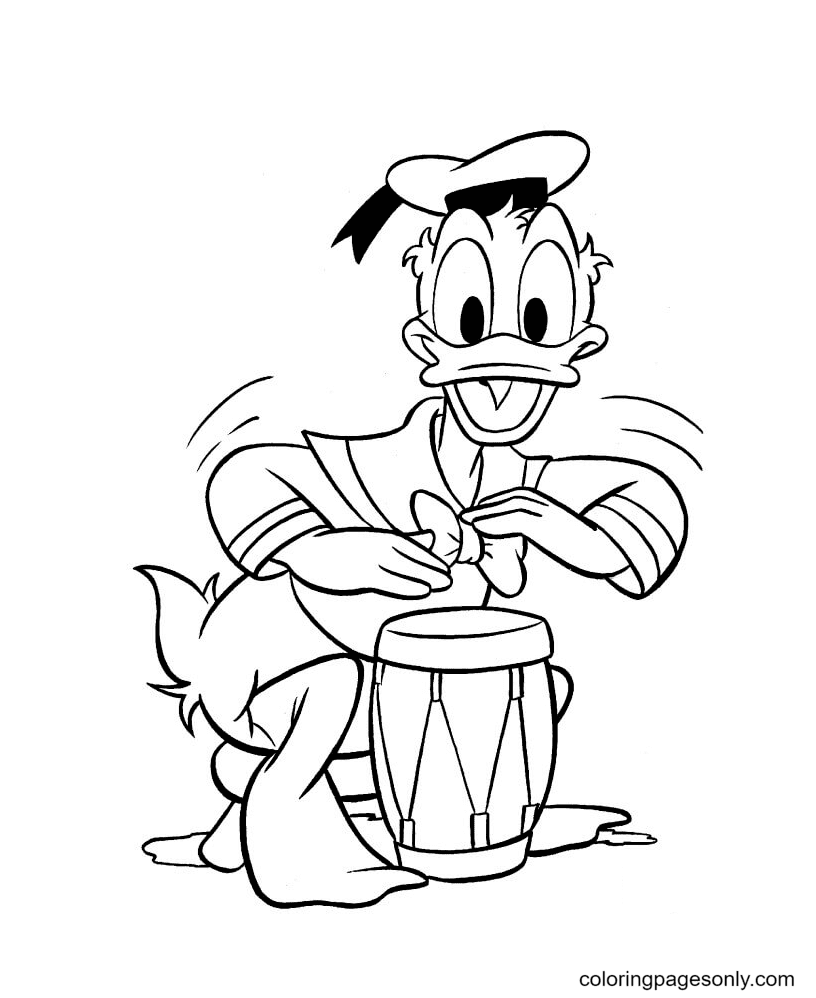
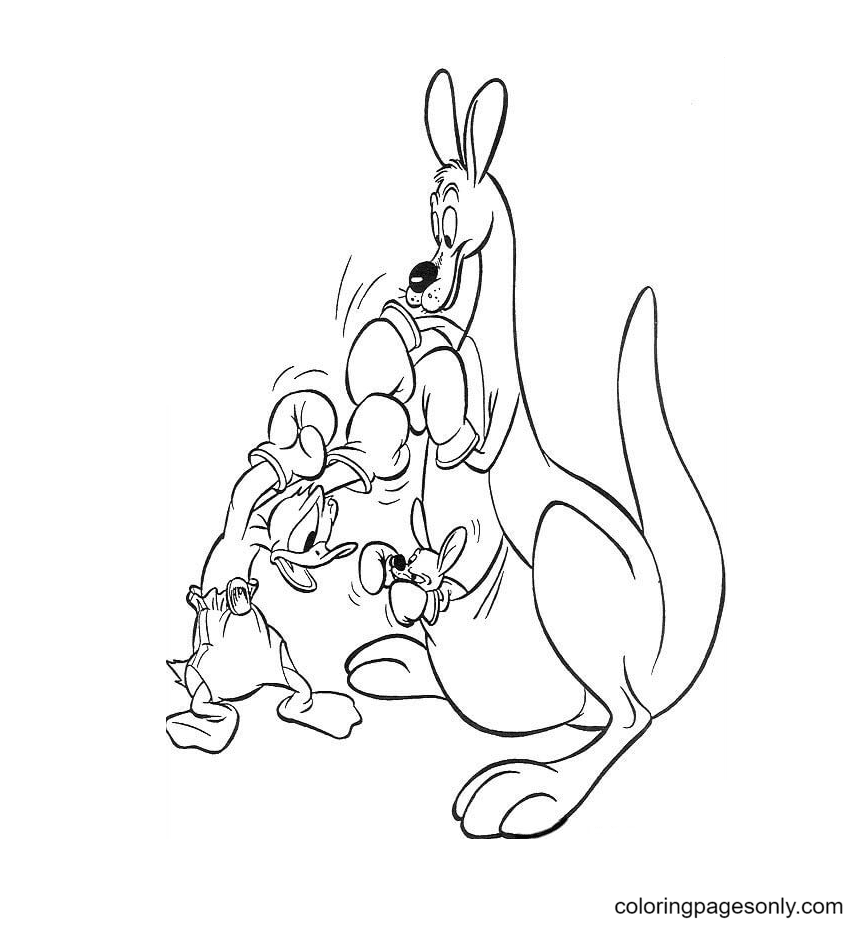
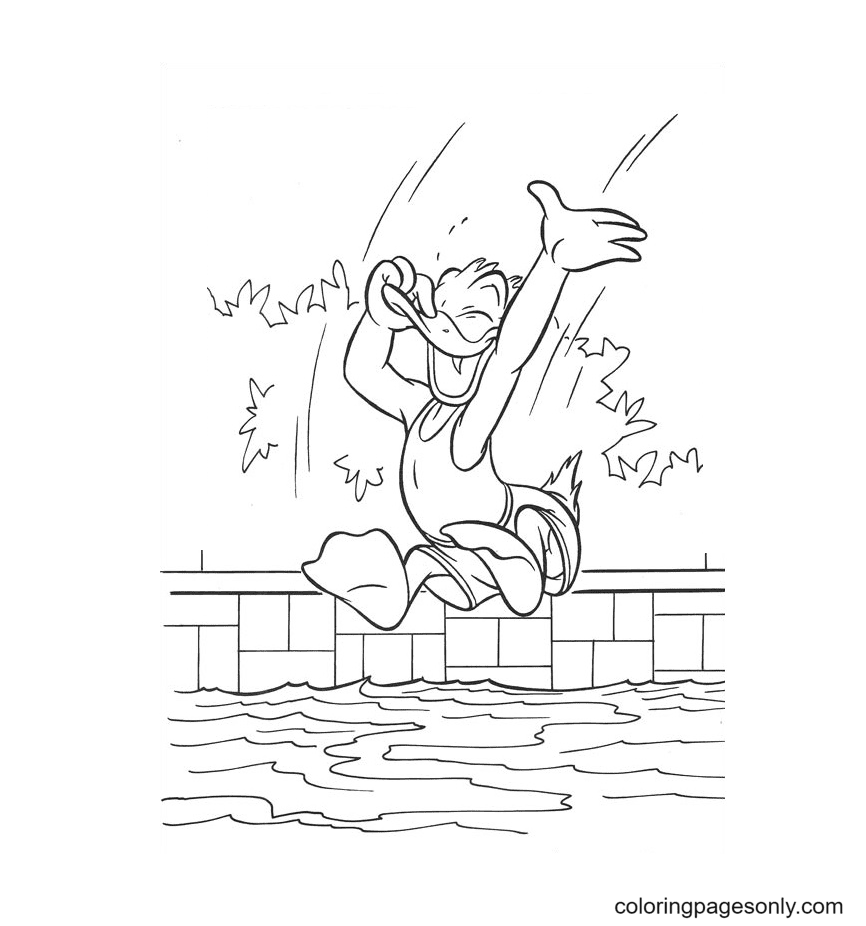
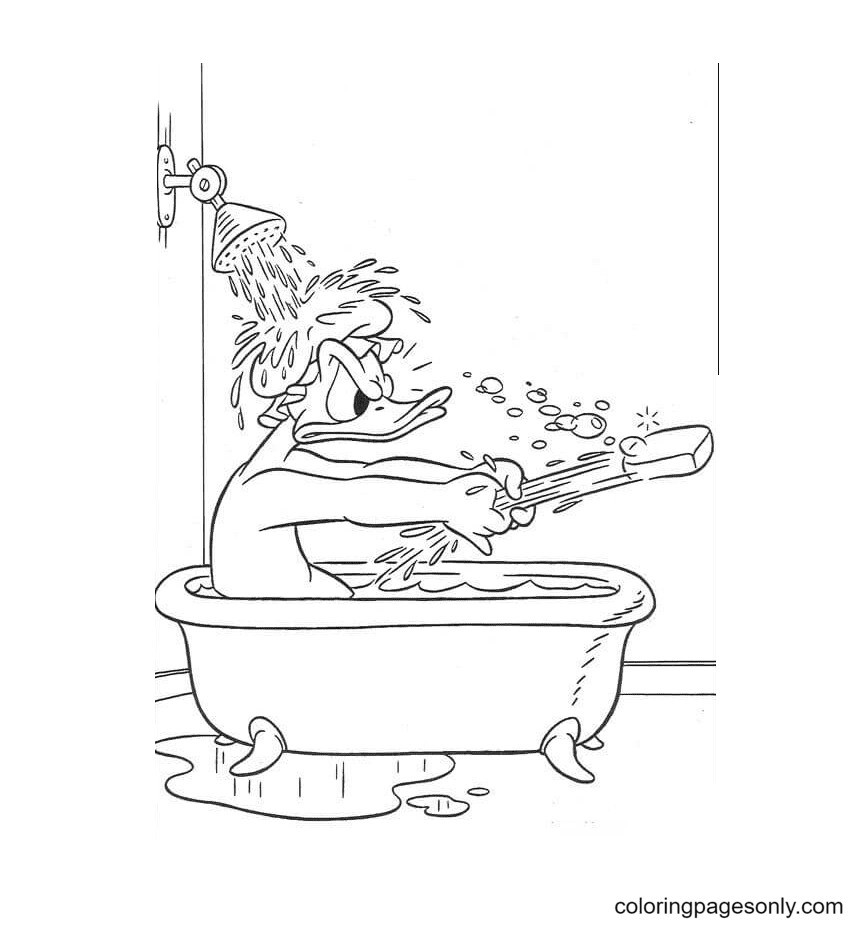
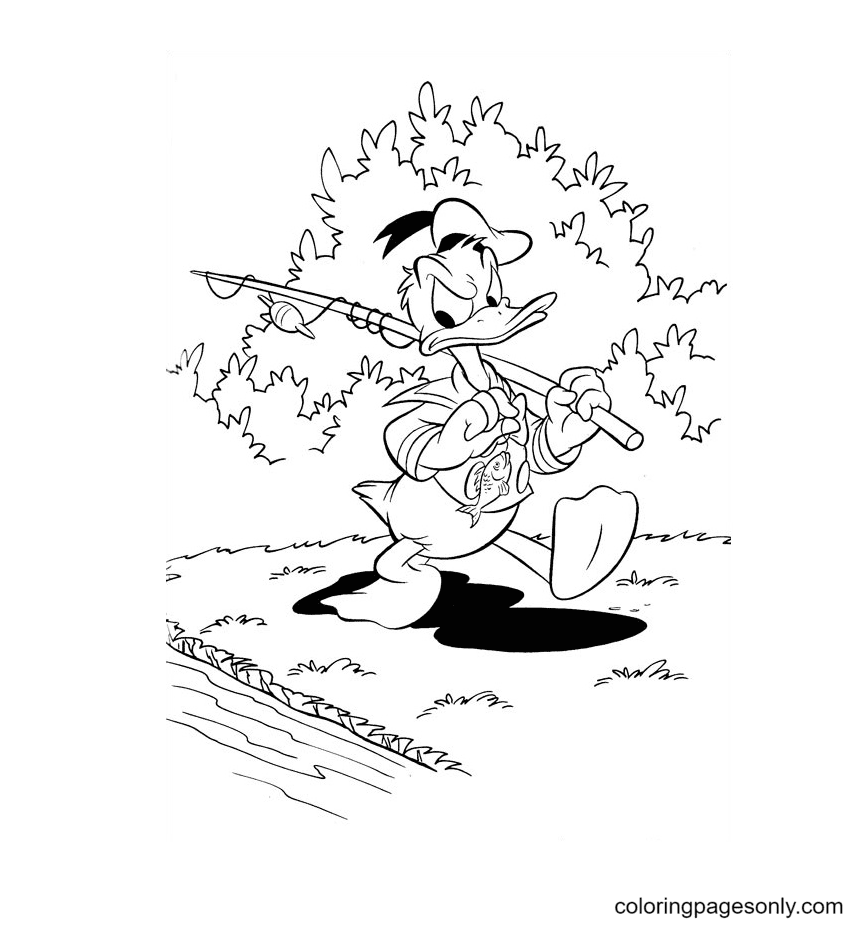
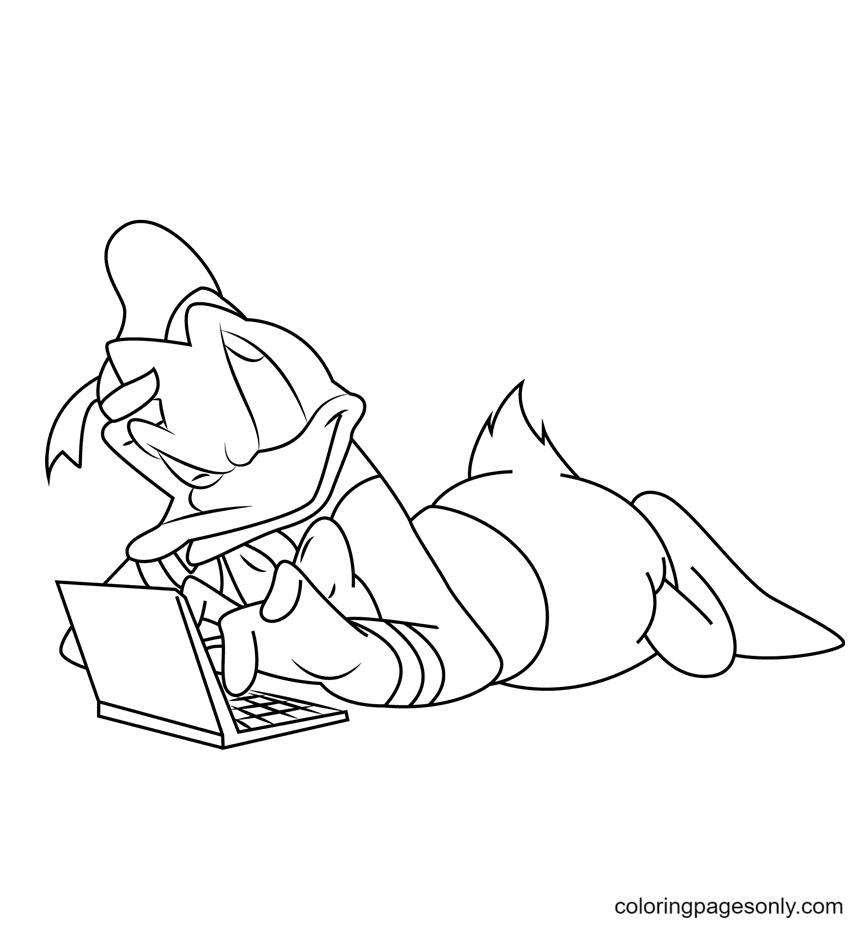
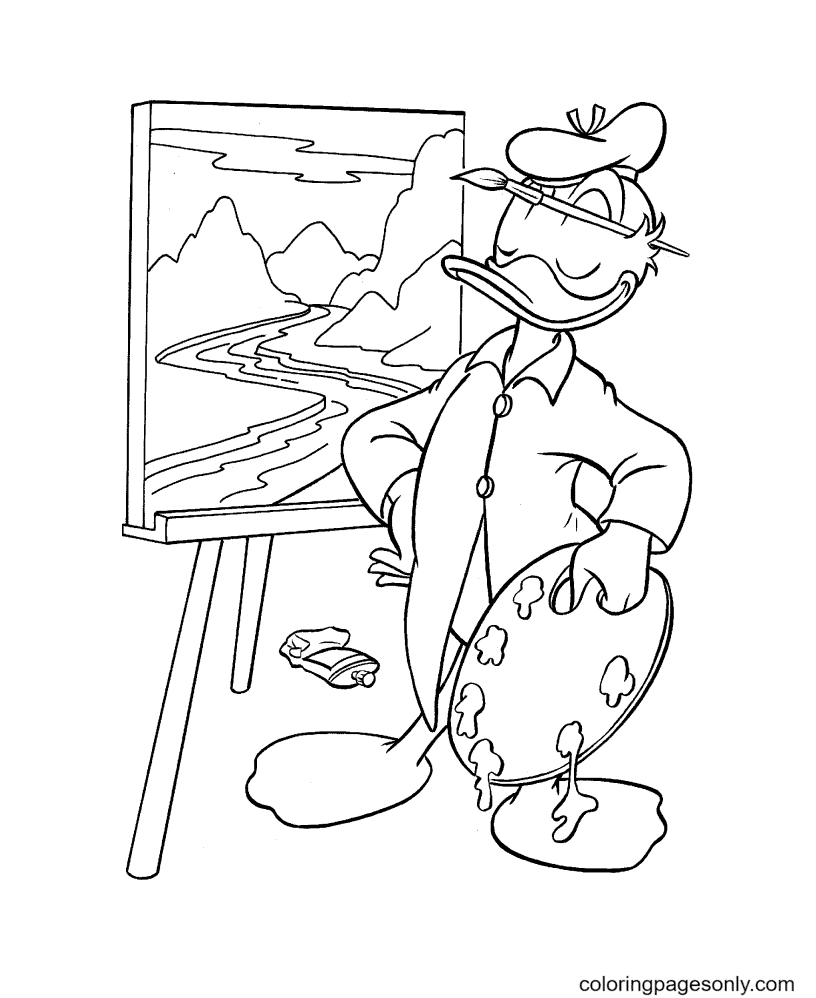
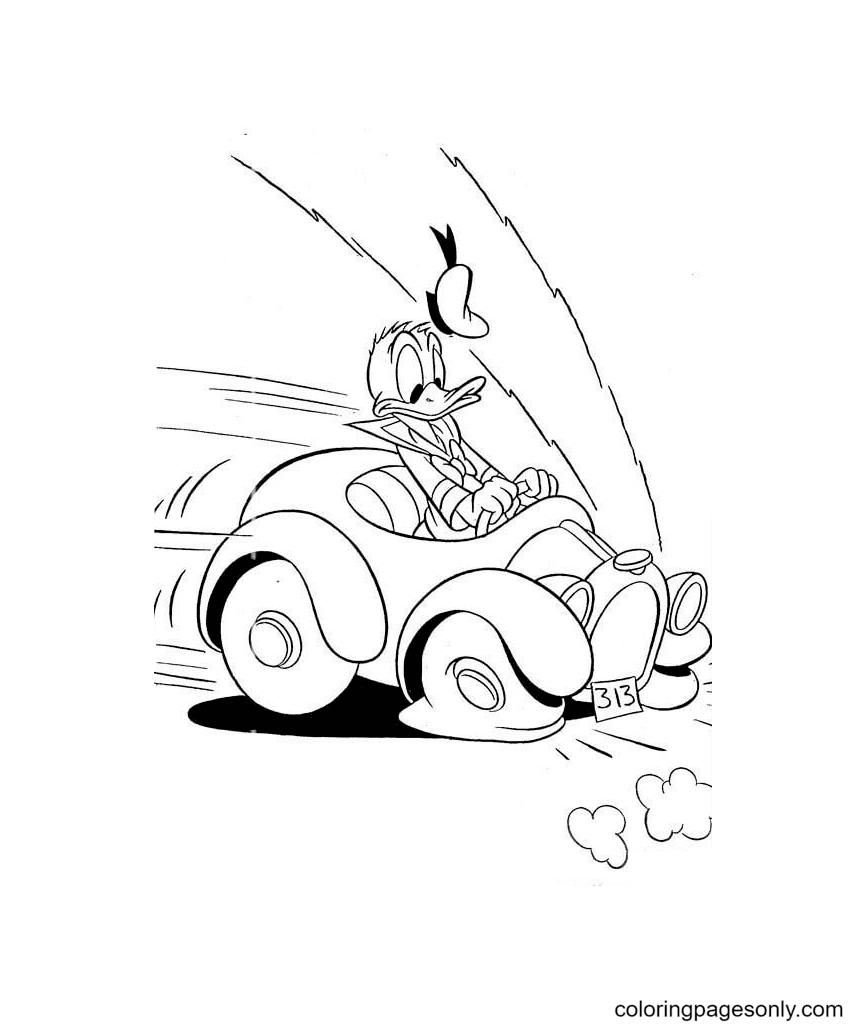
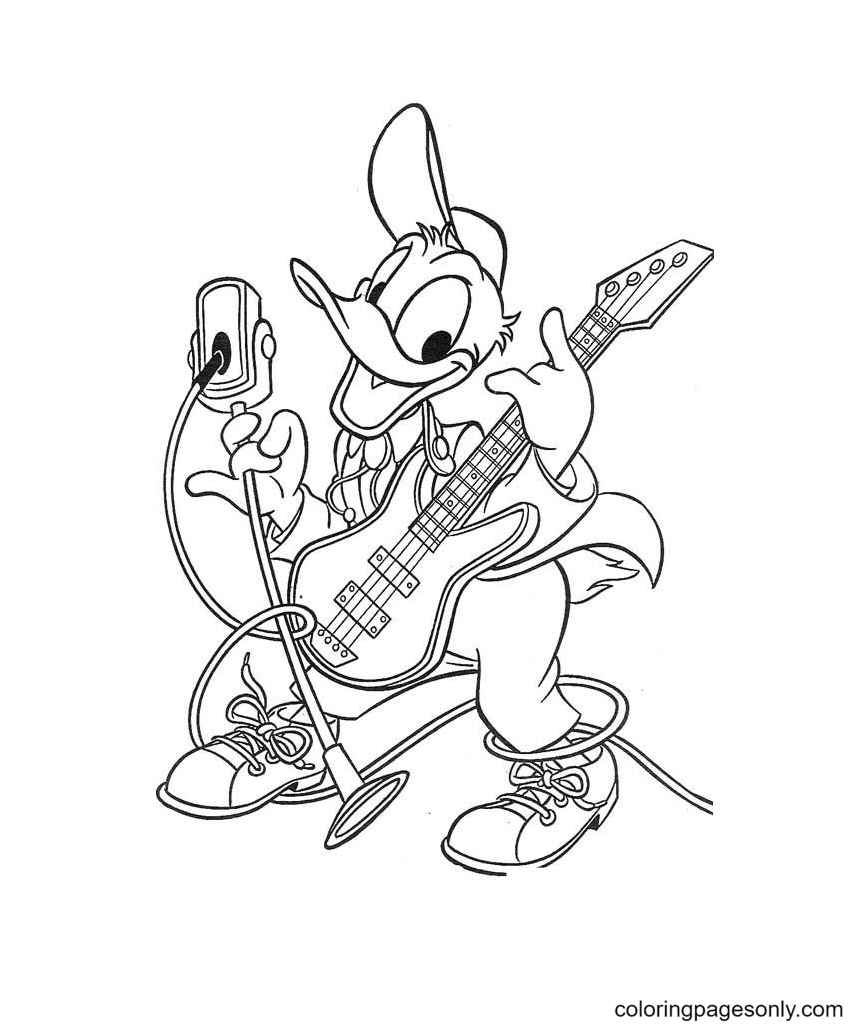
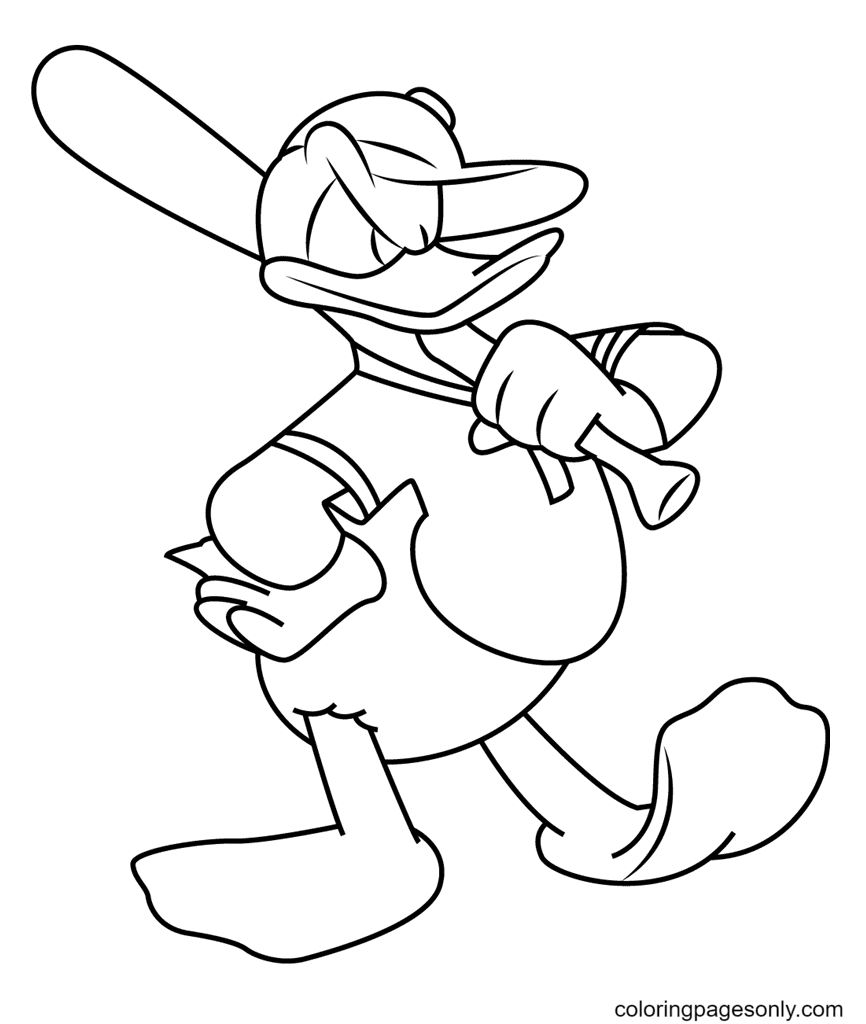
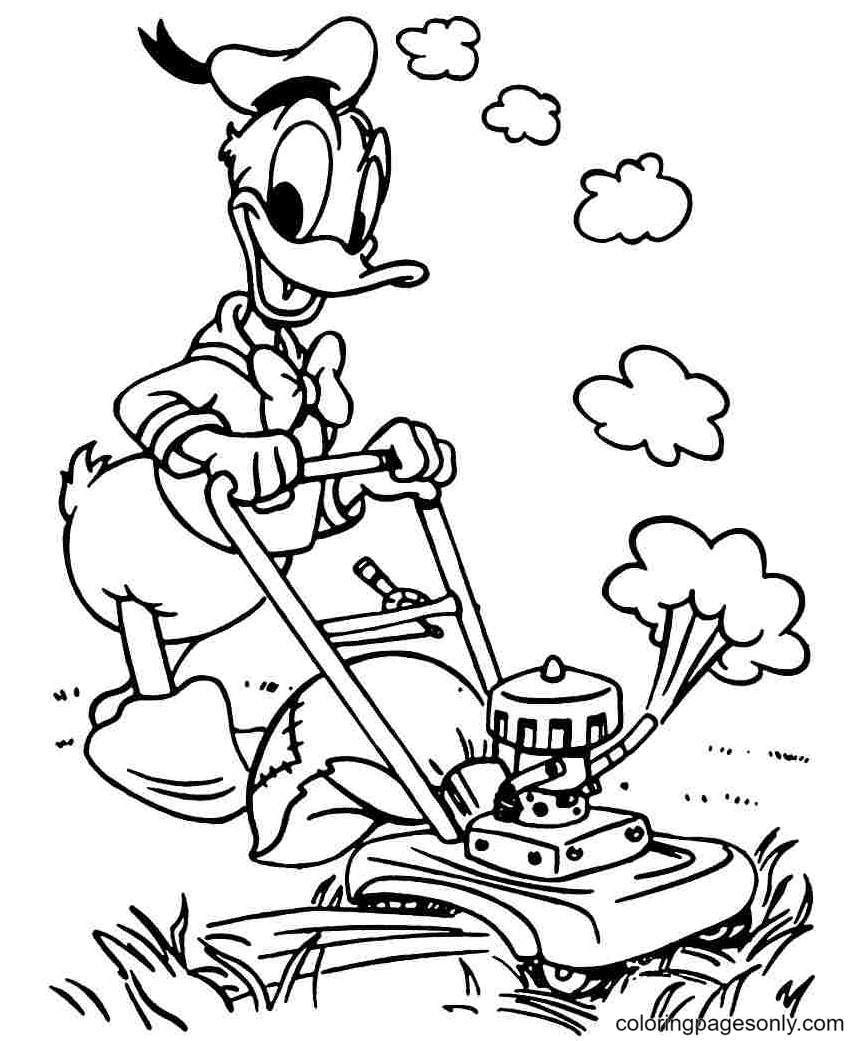
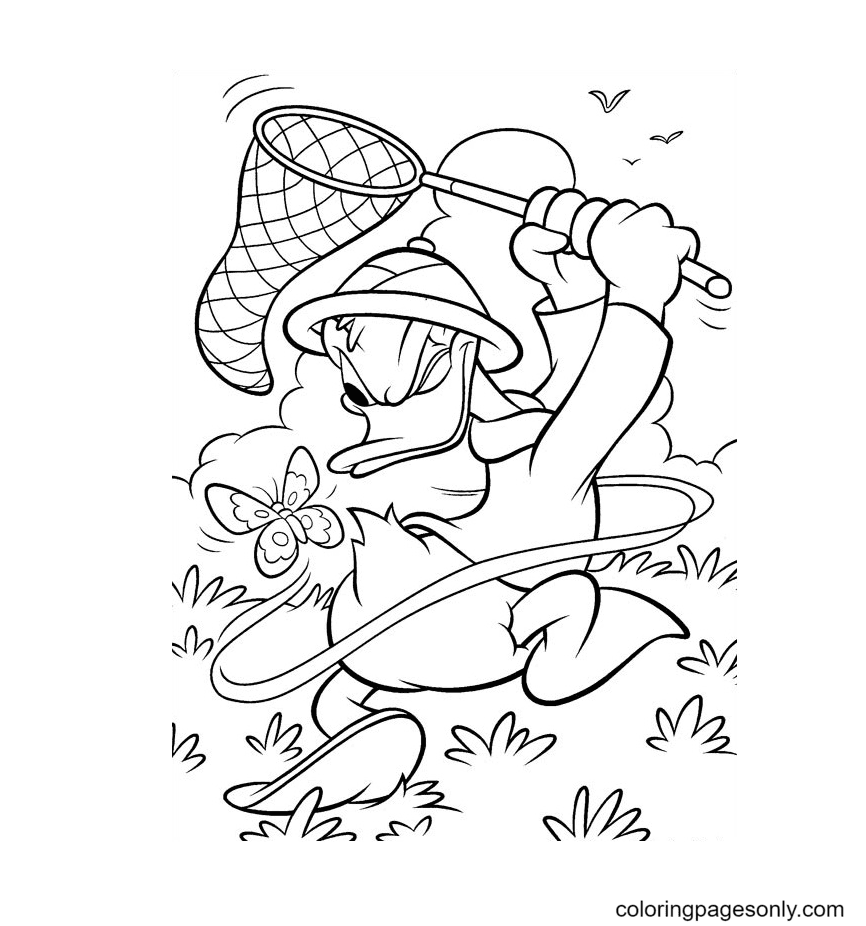
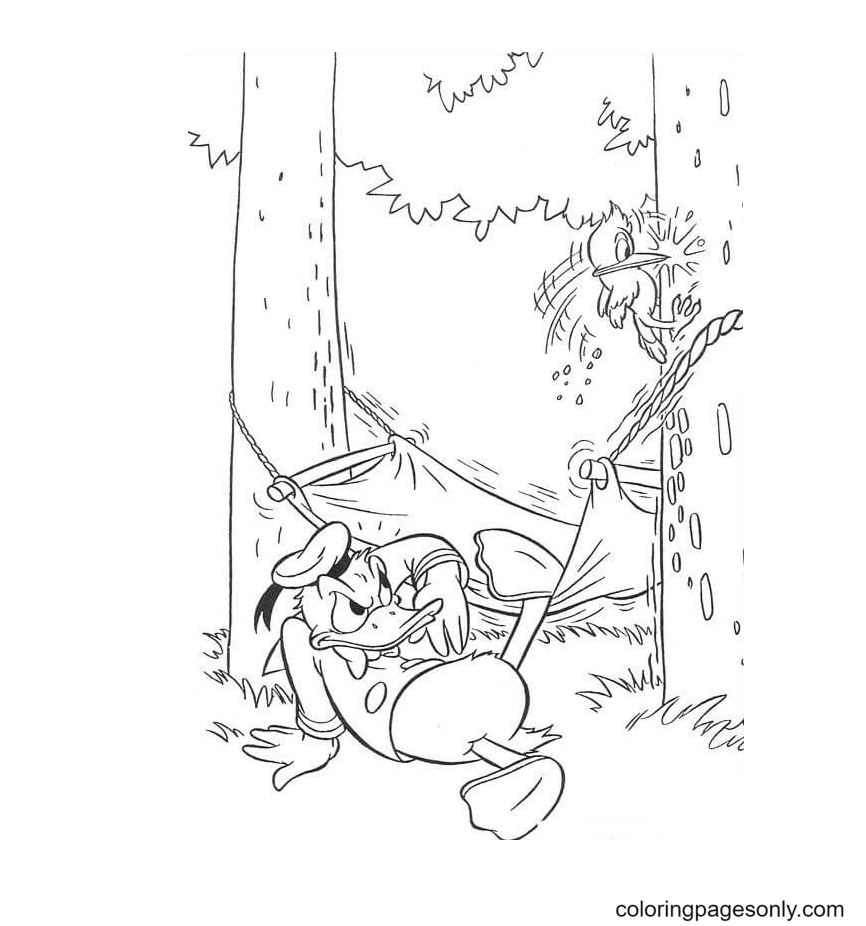
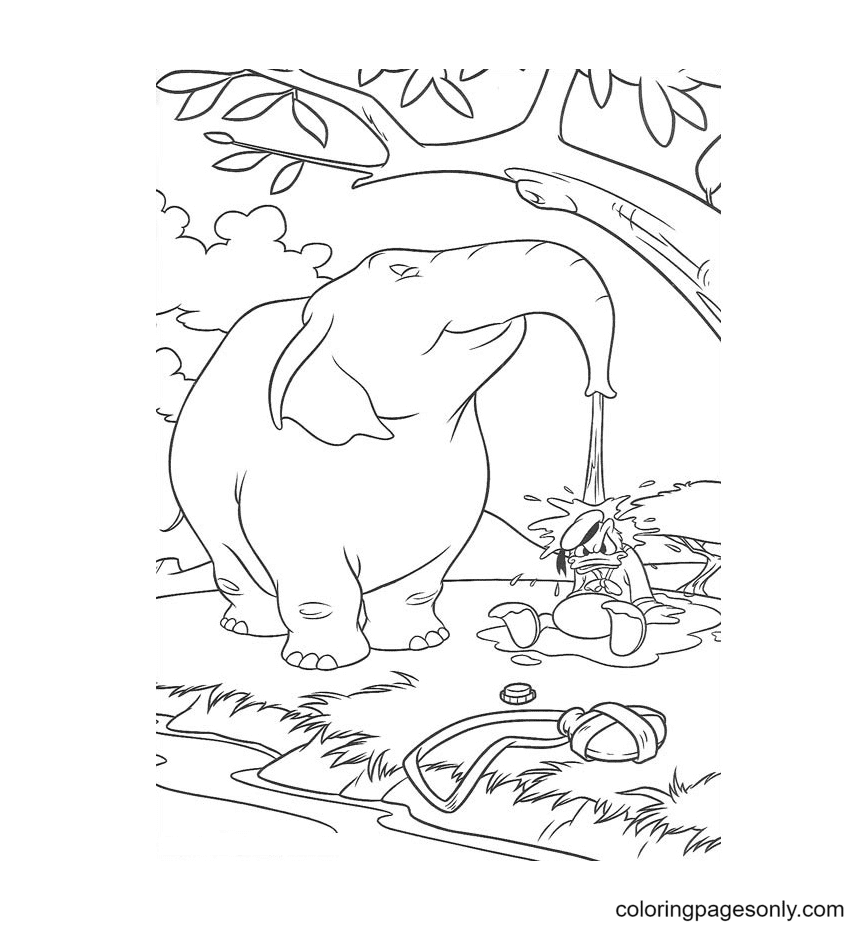
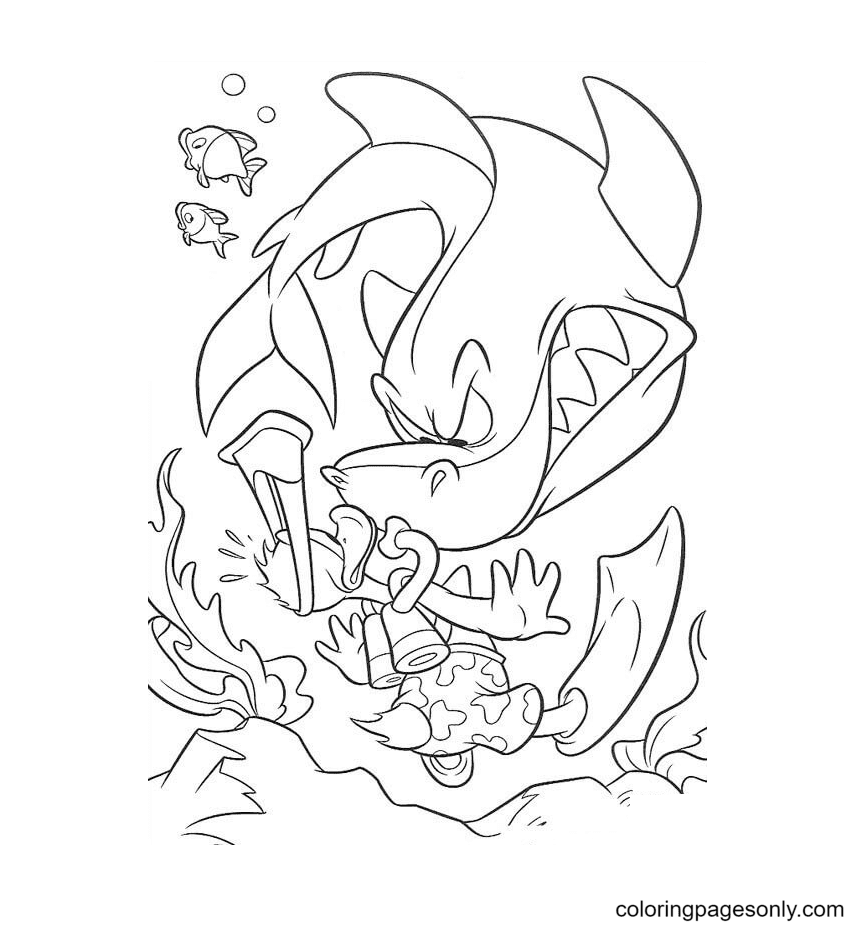
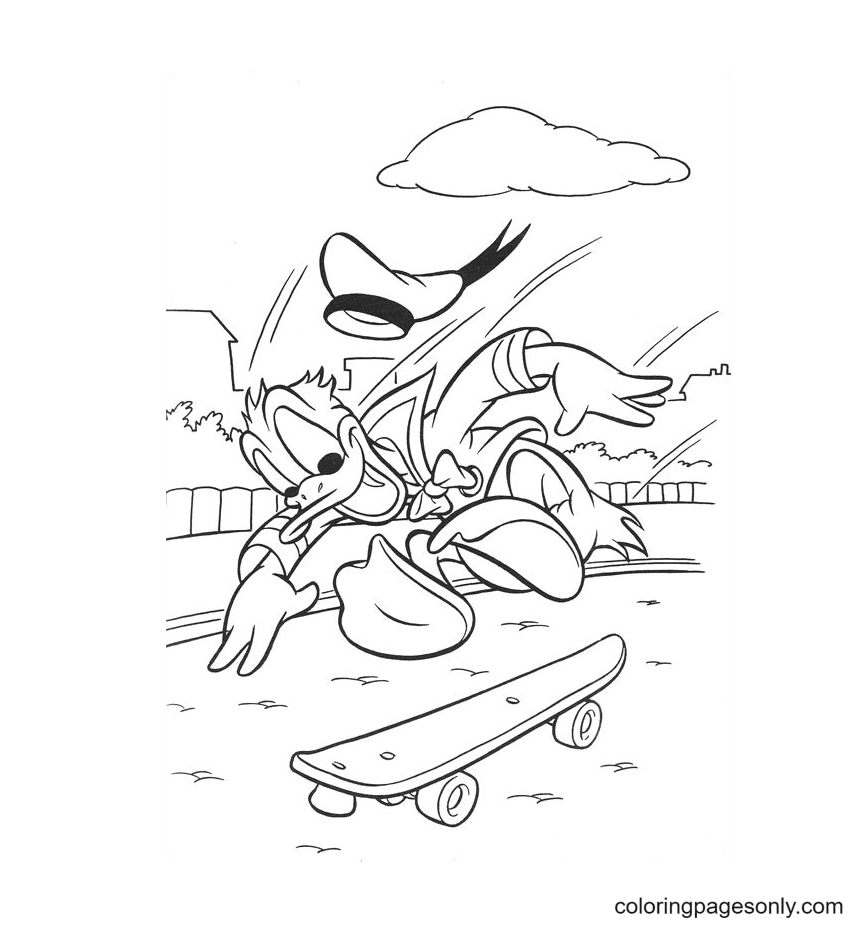
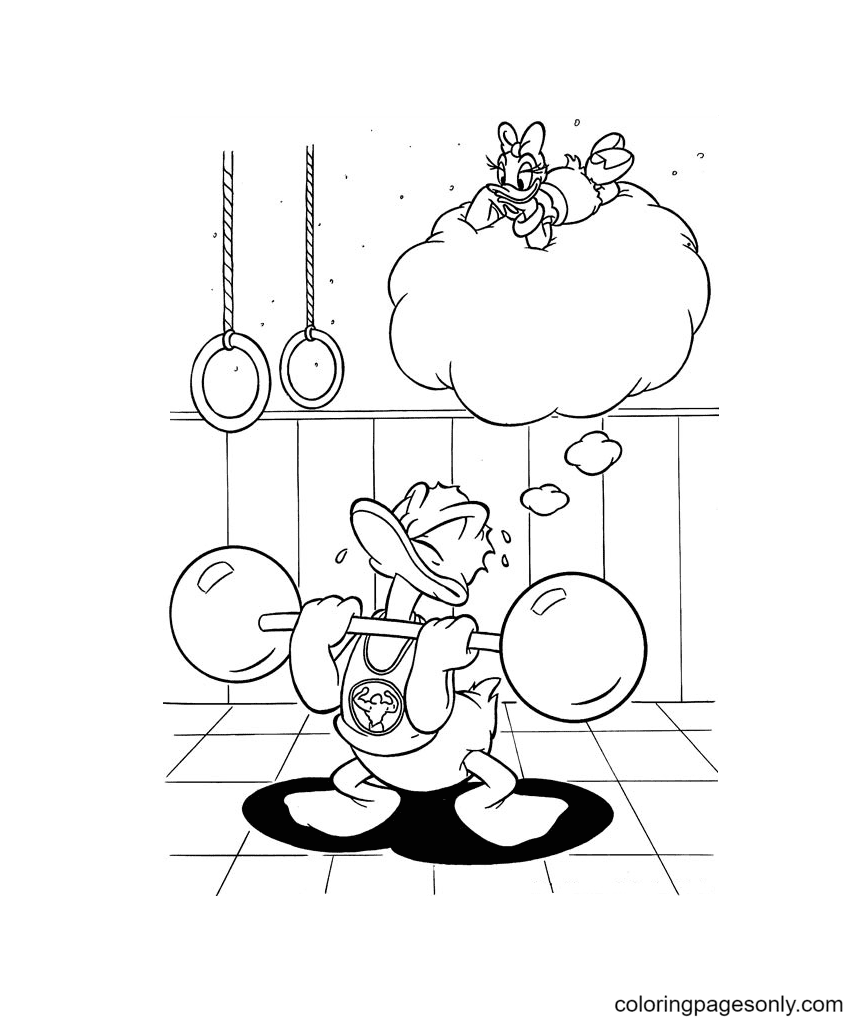
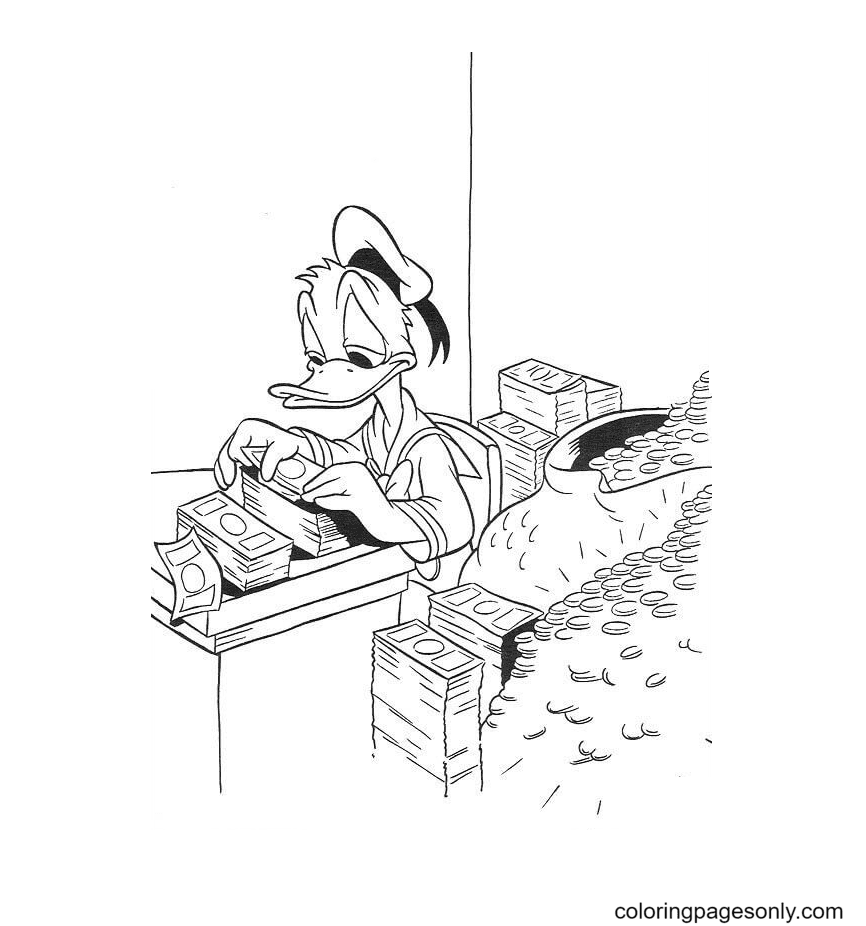
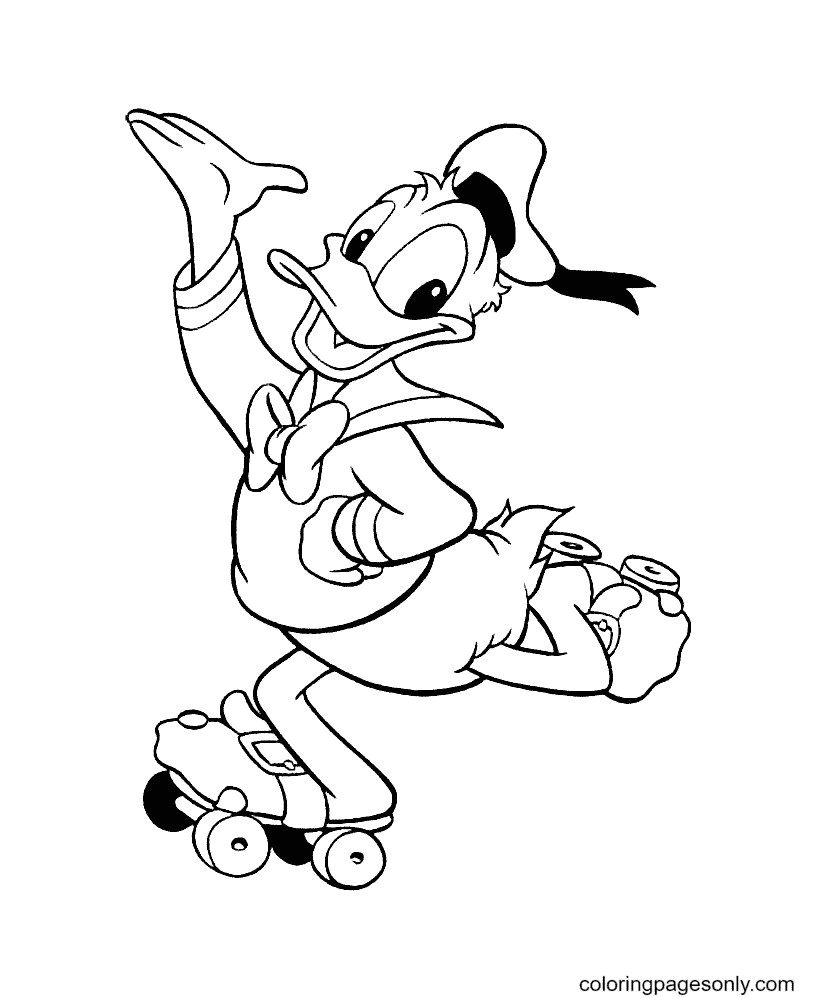
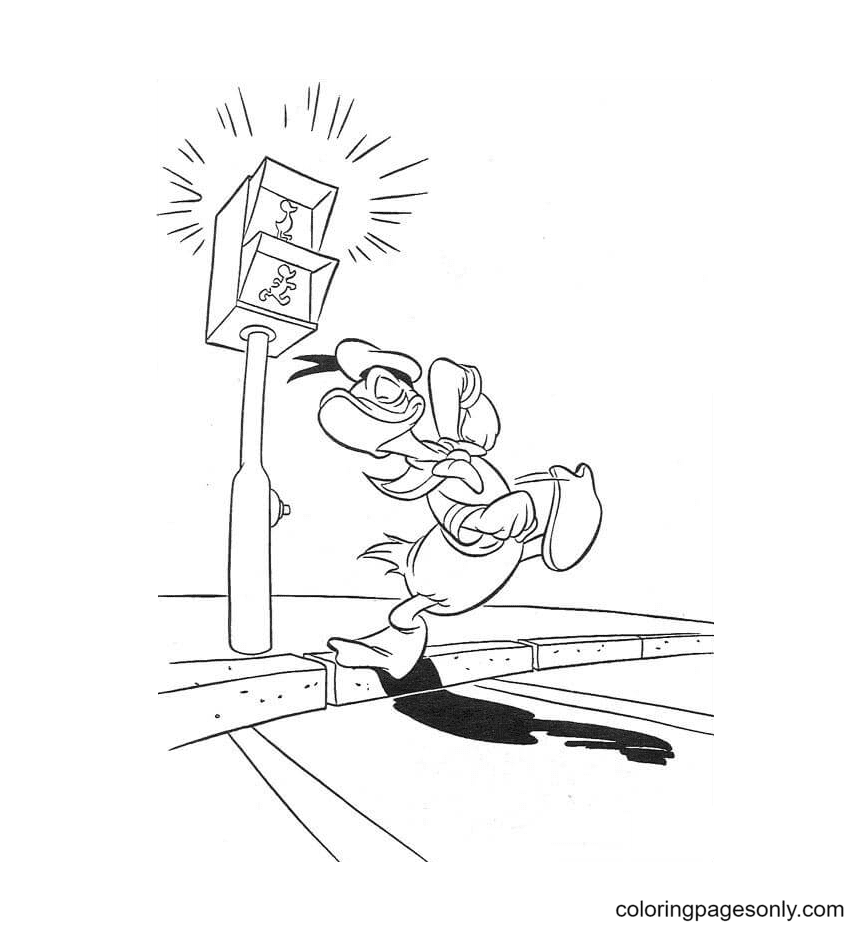
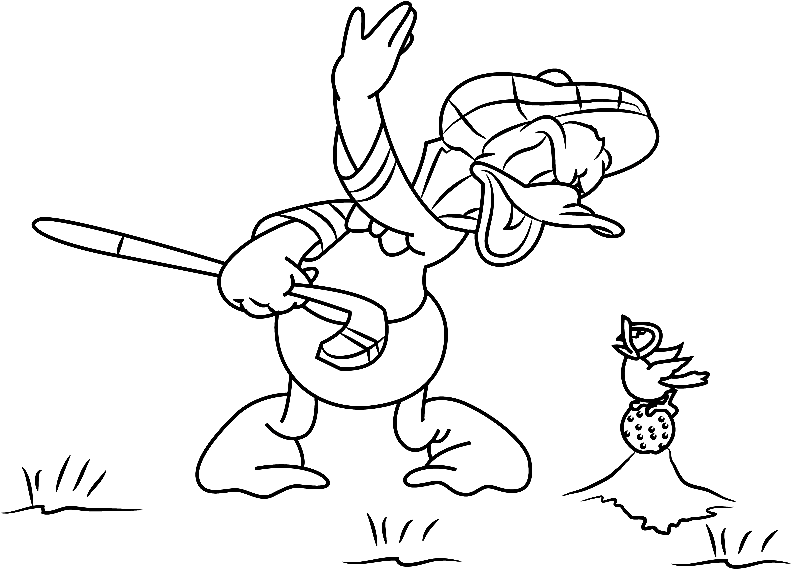
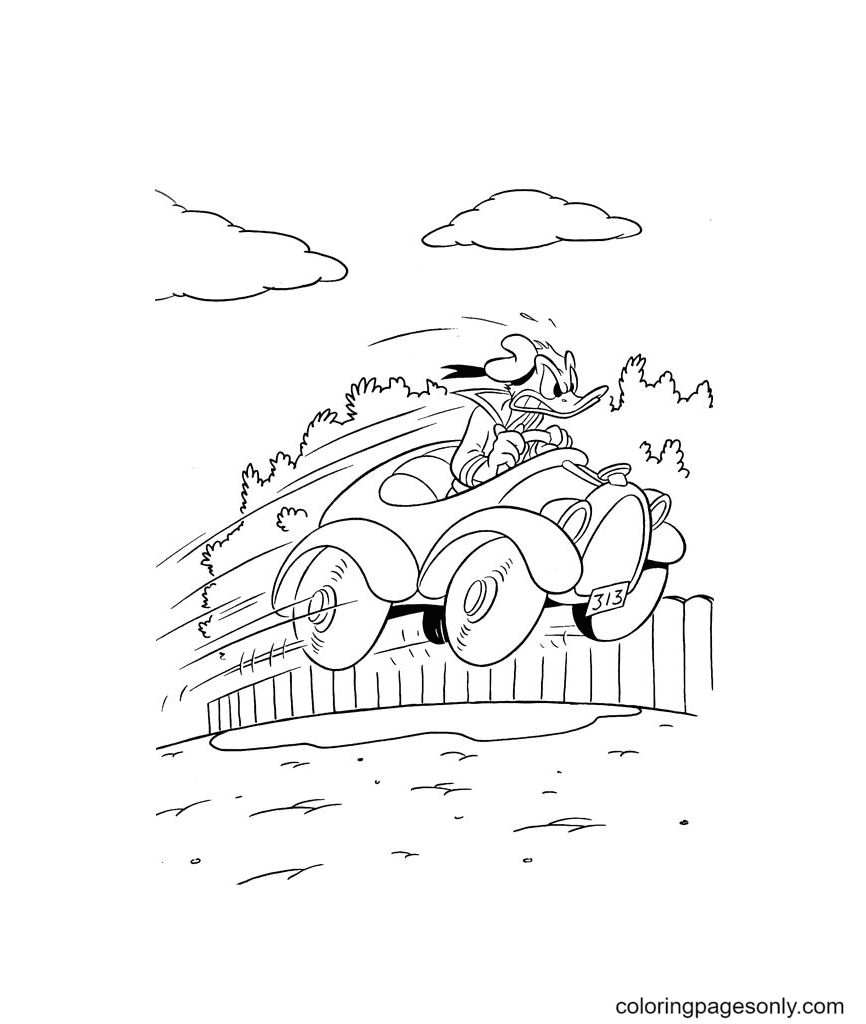
A wide range of pages shows Donald mid-activity: playing guitar or banjo, golfing, roller skating, fishing, mowing the lawn, or wrestling with a bicycle that has a flat tire. Since Donald is often the one having a rough day in these scenes, small red accents on his face for embarrassment or frustration can add character without changing his core color scheme.
Holiday and Costume Pages
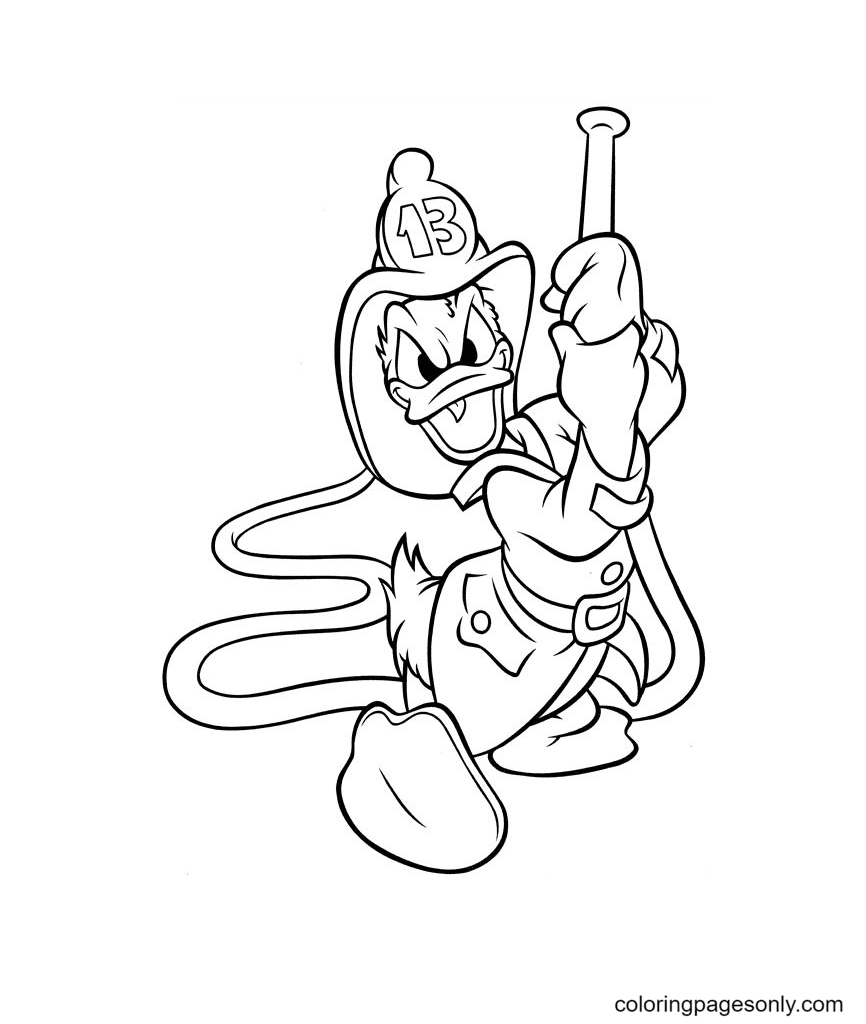
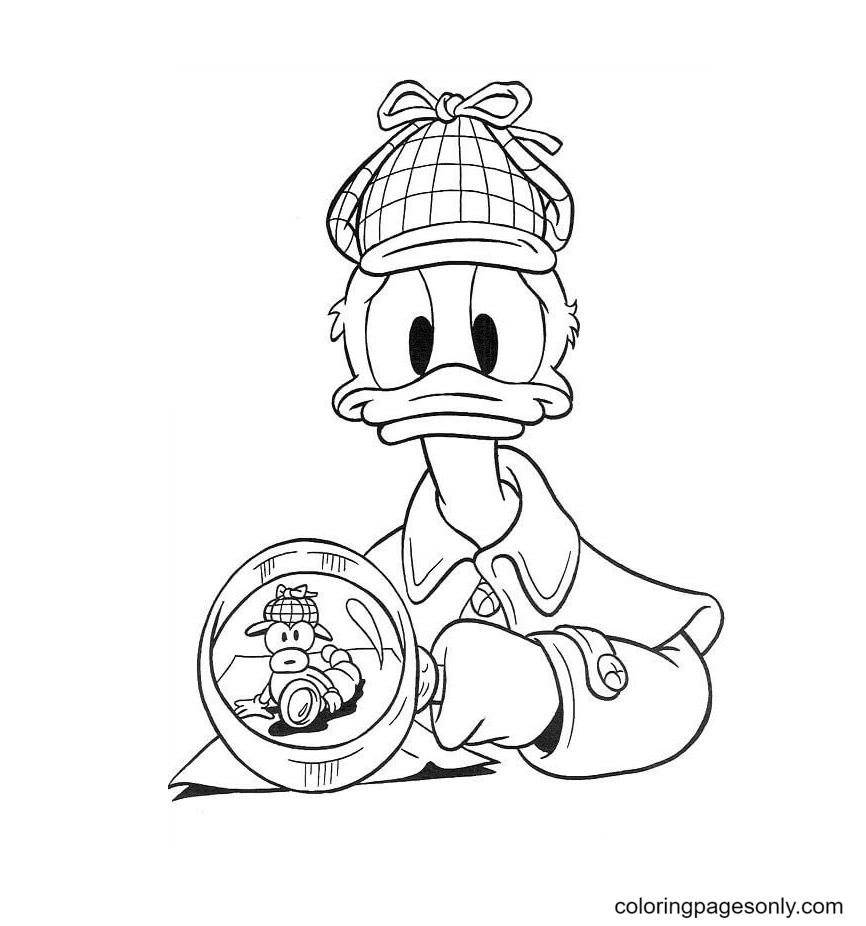
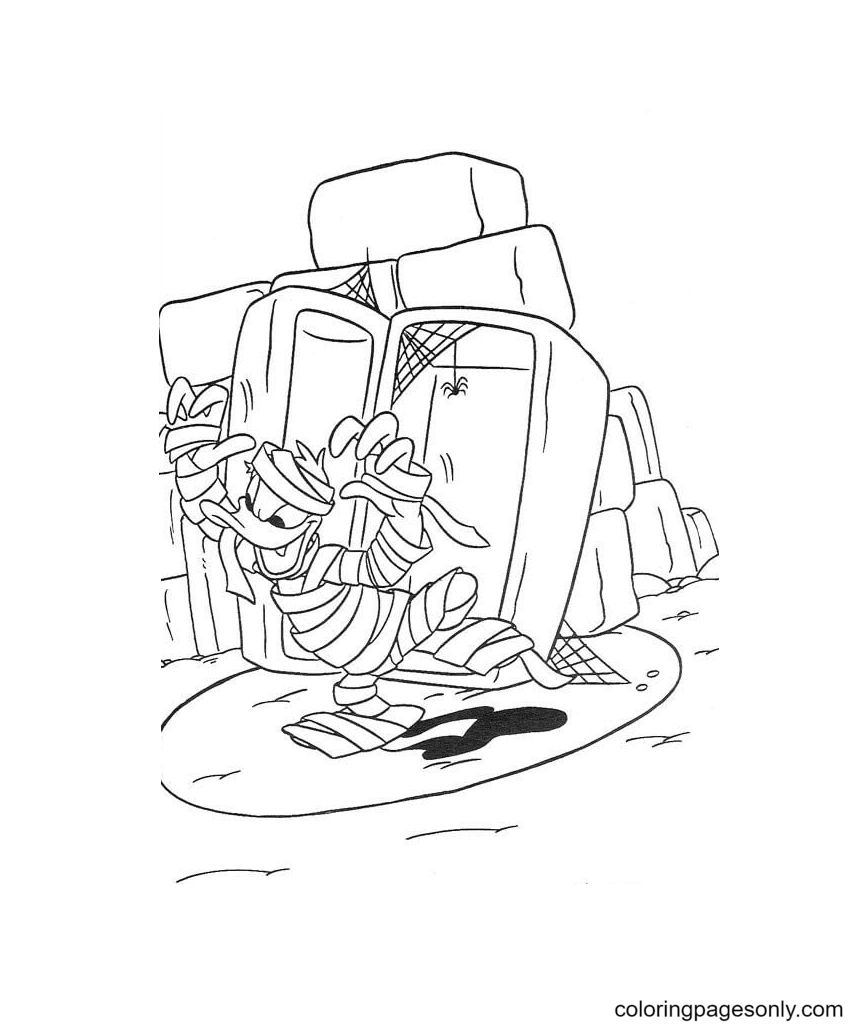
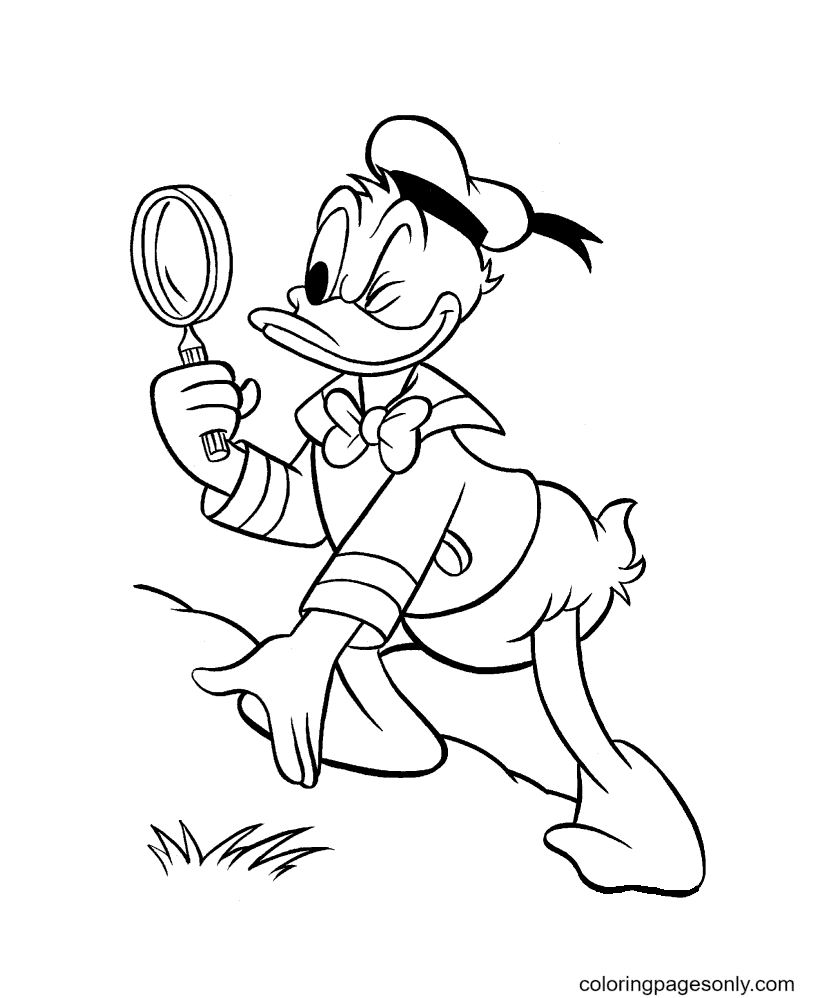
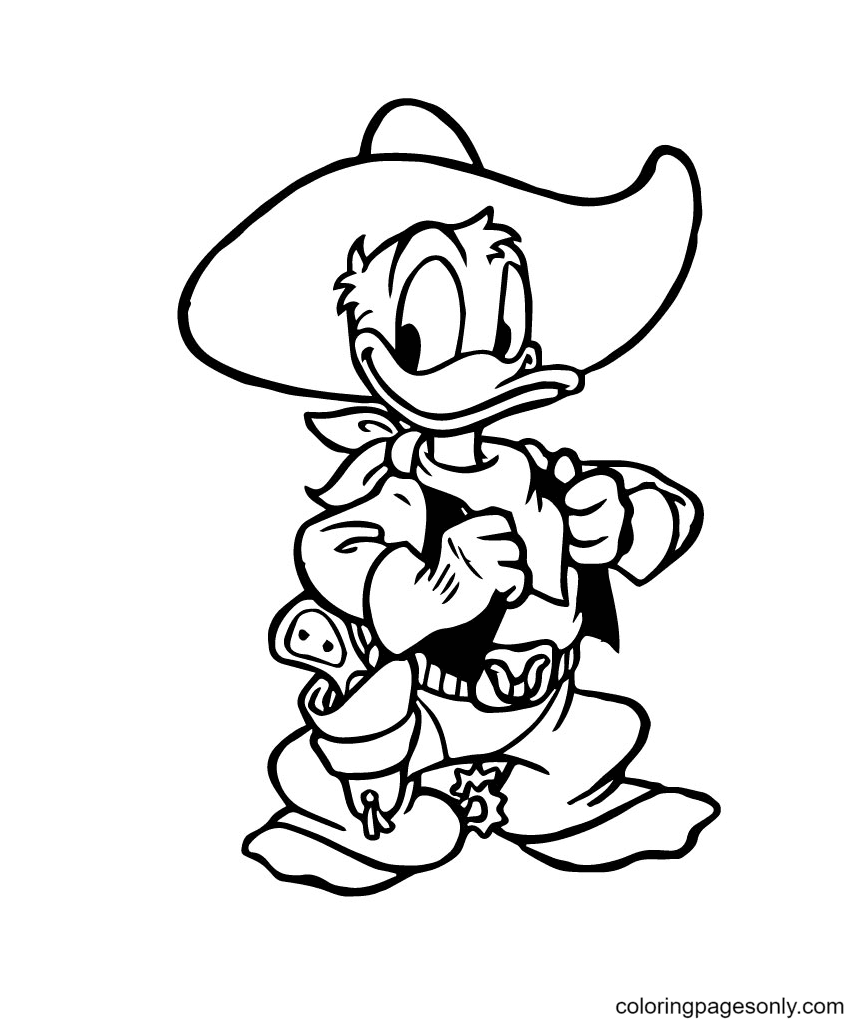
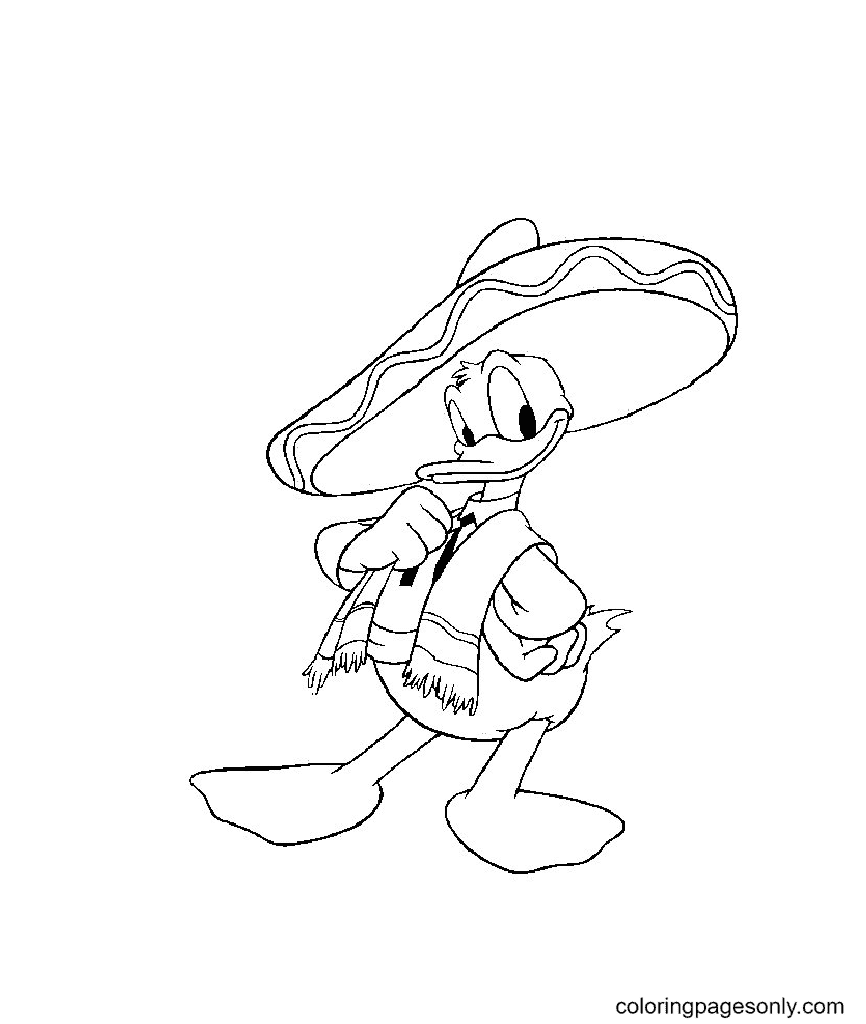
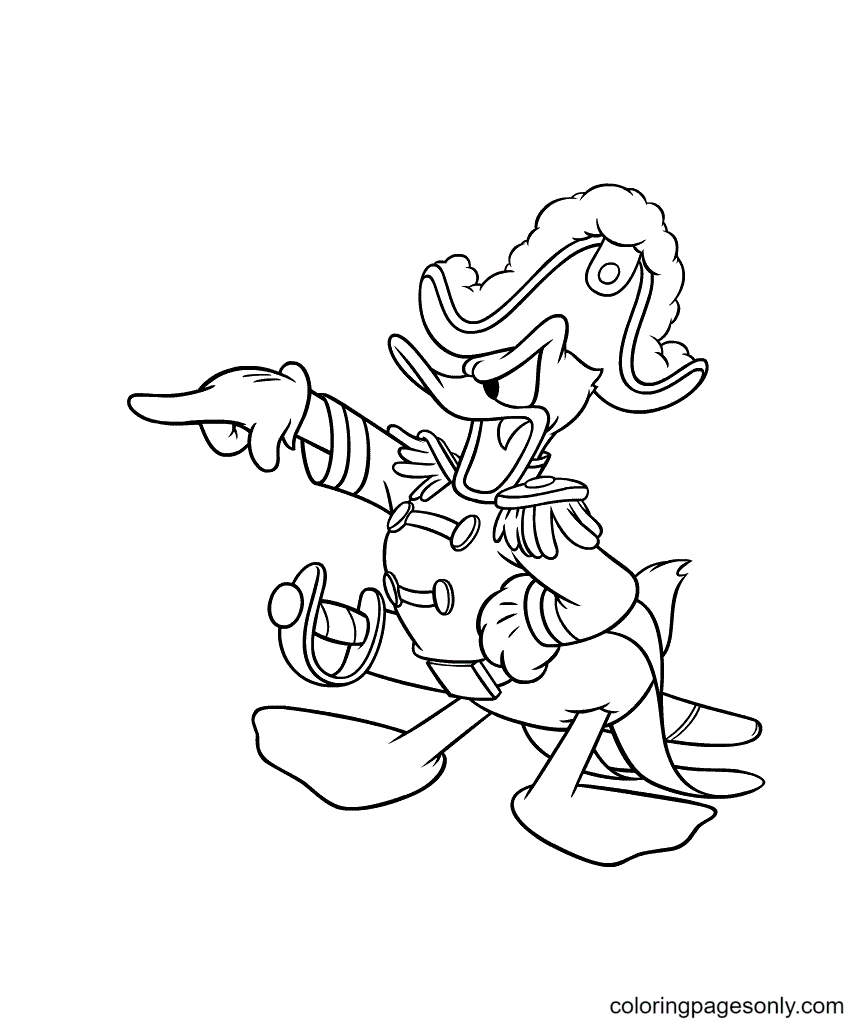
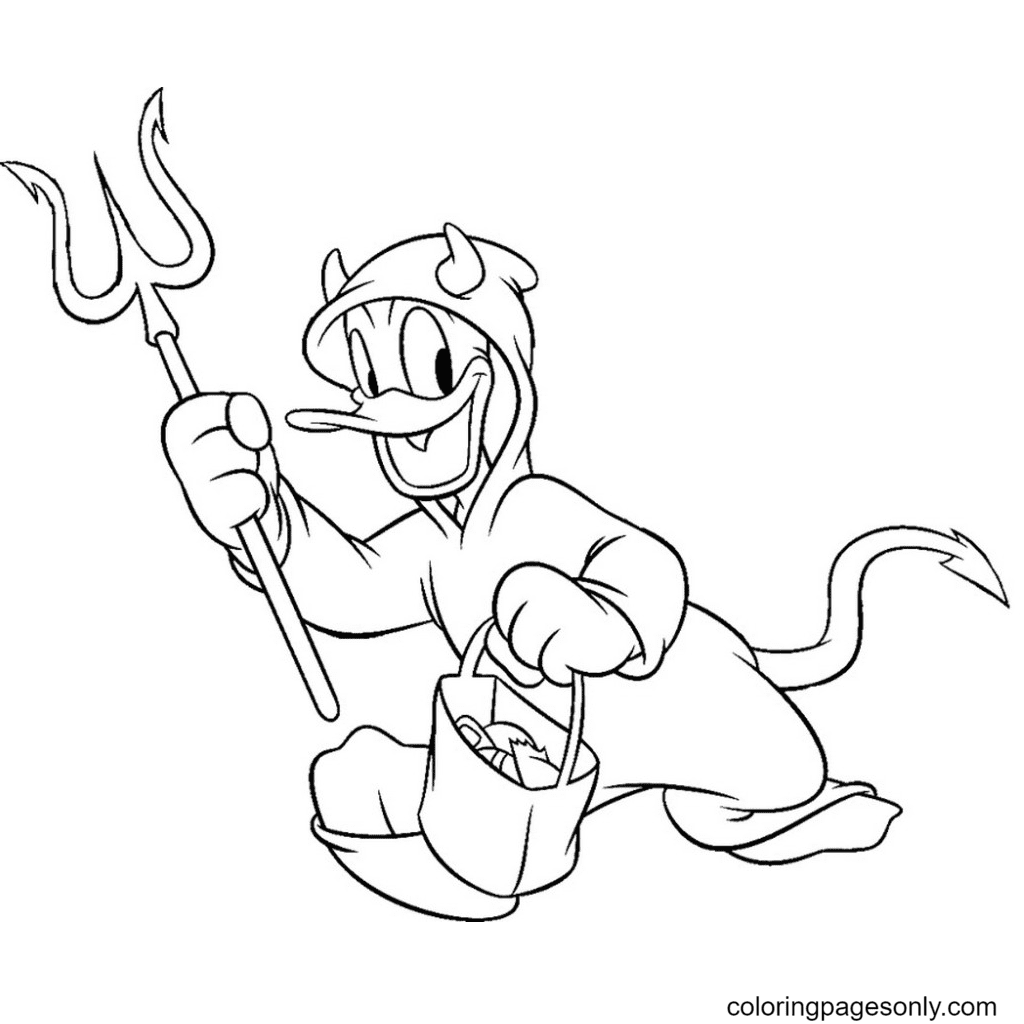
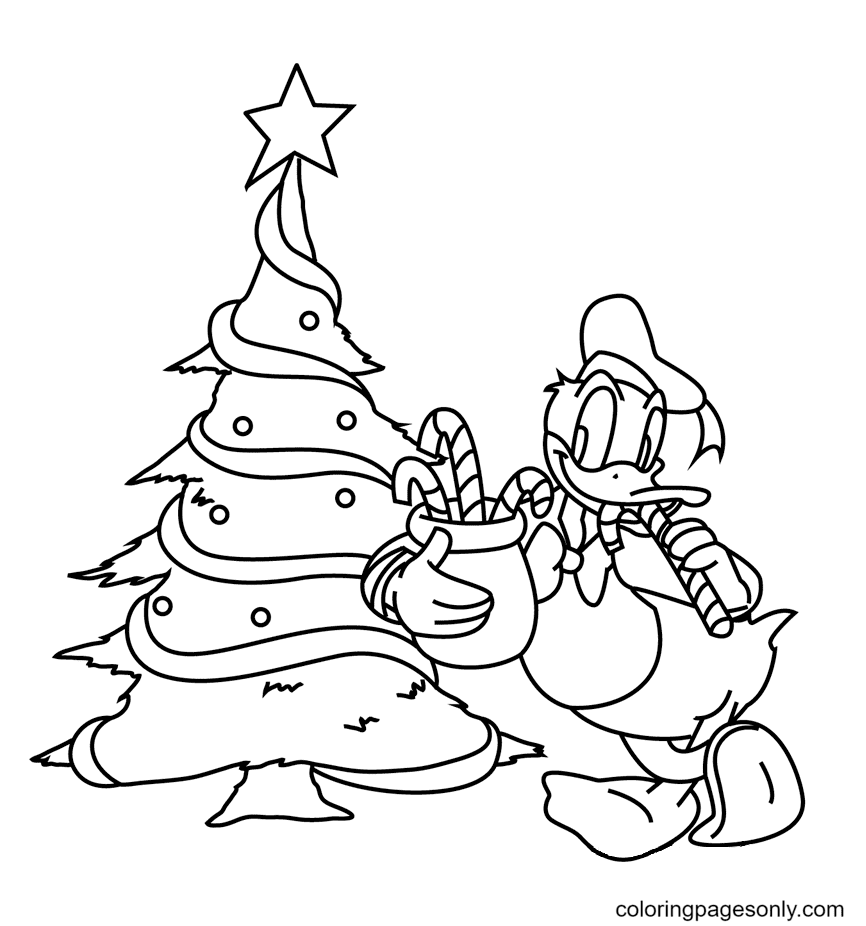
The set also includes Christmas and Halloween designs, along with costume pages showing Donald as a cowboy, a mummy, a detective, and even an emperor. Layer in a costume-appropriate color first, straw yellow for the cowboy hat or gray-white for the mummy wraps, and keep Donald’s own bill and feet colors visible wherever the costume leaves them uncovered.
What Donald Duck Coloring Pages Do
Small shapes, real hand control. Donald’s bill, bow tie, and the buttons on his sailor shirt are all small, separate areas that call for careful, controlled coloring rather than broad strokes. The American Academy of Pediatrics counts exactly this kind of detailed, structured coloring among the core ways young children build fine motor skills between ages 2 and 7.
A face that wears its feelings. Donald’s expressions are drawn broadly on purpose, wide eyes for shock, a scrunched brow for anger, so children can practice naming emotions just by looking at the page. That makes these pages useful for emotional vocabulary building alongside the coloring itself, a benefit few single-character sets offer as directly.
Slower hands, calmer minds. Anxiety researchers have looked directly at what structured coloring does to stress levels: a 2005 Art Therapy Journal study found that people coloring within defined shapes settled into a calmer state faster than those drawing freely on blank paper, the same steady, line-following process a Donald Duck page asks a child to follow.
Recognizing one character across many settings. Because this set puts Donald through so many different situations, gardening, performing, celebrating, upset over a flat tire, children get repeated practice recognizing the same character underneath a changing scene, a skill that carries over directly into reading picture books with a recurring character.
How to Color Donald Duck Pages Well
- White body with warm shading: Use White or a very pale Gray for the body, and add light Blue or Gray shading under the wings and along the tail so the shape does not look flat against a white page.
- Yellow-orange bill and feet, every time: Color the bill and webbed feet Yellow-Orange or Dandelion, keeping the same shade on both so they read as matching parts of the same duck.
- Blue sailor shirt and cap: Use a mid-tone Blue such as Cerulean for the shirt and cap, and if buttons are visible, leave them White or pale yellow to stand out.
- Red bow tie as the accent: Color the bow tie Red or Scarlet, the one bright accent against Donald’s blue-and-white outfit, and keep it the same Red across every page for consistency.
- No pants, and that is correct: Donald’s design famously skips trousers, so there is no need to add any. Leave his lower body bare with just his colored feet, since covering it would change a signature part of the character.
- Give the nephews their own caps: On pages with Huey, Dewey, or Louie, color their caps Red, Blue, and Green in that order, the detail that has told the three apart since their earliest comic strip appearances.
5 Creative Craft Ideas With Donald Duck Coloring Pages
- Emotion Flashcards. Materials: four or five colored Donald portrait pages showing different expressions, scissors, cardstock backing, and a marker. Cut out each expression, glue it onto a cardstock square, and write the emotion word underneath, such as happy, mad, or surprised. Use the finished set as flashcards to name feelings together or as a simple matching game.
- Stick Puppet. Materials: a colored Donald page, scissors, a craft stick, and glue or tape. Cut around the colored figure, leaving a little extra paper at the bottom, and glue or tape it to the top of the craft stick. Once dry, the Puppet is ready for a simple retelling of one of Donald’s activity scenes.
- Family Portrait Collage. Materials: colored pages of Donald, Daisy, and the nephews, scissors, a large sheet of poster board, and glue. Cut out each colored character and arrange them together like a family photo, leaving space to write each character’s name underneath. Display the finished collage on a wall or bulletin board.
- Desk Nameplate. Materials: a small colored Donald portrait, a strip of cardstock folded into a tent shape, glue, and a marker. Glue the colored portrait to one side of the folded cardstock and write a name on the other side. Stand the finished nameplate on a desk, table setting, or cubby to mark a spot as someone’s own.
- Story Sequence Strip. Materials: three or four colored activity pages, scissors, a long strip of paper, and glue. Arrange the colored pages in an order that tells a simple story, such as Donald fishing, then falling in the water, then laughing about it, and glue them in a row. Use the finished strip to practice telling the story out loud from beginning to end.
Frequently Asked Questions
What are Donald Duck coloring pages?
Donald Duck coloring pages are printable designs featuring the Disney character across different moods, activities, and holidays. This collection offers 77 free designs as printable PDFs or online coloring pages, including solo expressions and scenes with Daisy Duck, his nephews, and his Disney friends.
Who created Donald Duck, and when did he debut?
Donald Duck was developed at Walt Disney Productions and made his screen debut on June 9, 1934, in the Silly Symphonies short The Wise Little Hen. His voice actor, Clarence Nash, performed a duck-like vocal impression that helped convince Walt Disney the new character should be a duck.
What colors does Donald Duck wear?
Donald has white feathers with a yellow-orange bill and feet. He wears a blue sailor shirt and a matching cap with a red bow tie, and no trousers except swim trunks. This color scheme has stayed largely consistent since his 1934 debut, with only small shade changes over the decades.
Why doesn’t Donald Duck wear pants?
Donald’s sailor-themed design skips trousers entirely, a choice tied to his character concept as a duck dressed like a sailor, since both ducks and sailors are associated with water. The detail has remained part of his design since his first appearance and is considered a defining trait of the character.
Who are Donald Duck’s family and friends featured in this collection?
This set includes Donald alongside his girlfriend Daisy Duck, his three nephews Huey, Dewey, and Louie, and fellow Disney characters Mickey Mouse, Goofy, and Pluto. The related links below lead to standalone coloring collections for several of these characters.
How can these pages help with recognizing emotions?
Because many pages isolate a single clear expression, happy, angry, surprised, or sad, they give parents and teachers an easy visual to point to when talking through feelings with a young child. Naming the emotion on the page before or during coloring turns the activity into a light vocabulary exercise.
Are Donald Duck coloring pages suitable for young children?
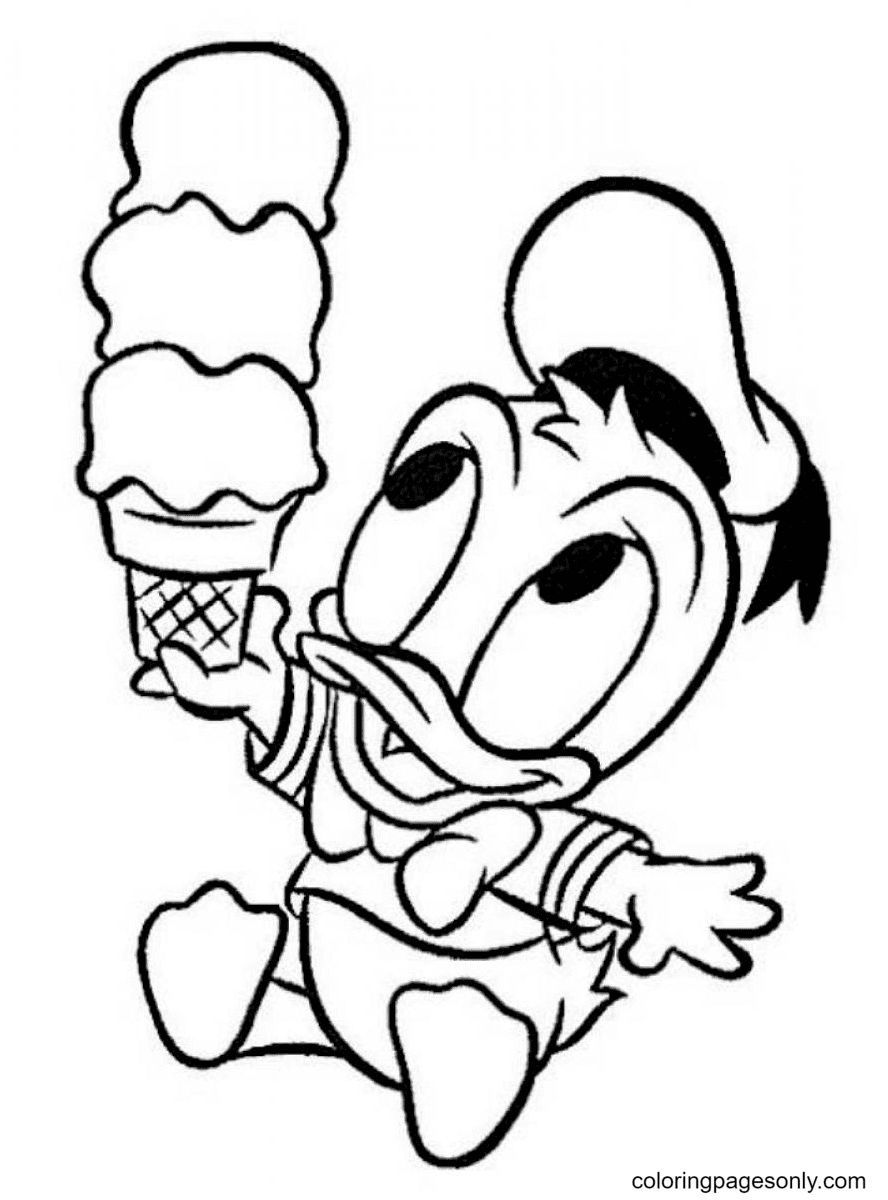
The simple expression portraits suit children around ages 3 and 4 who are just learning to color inside the lines. The activity scenes and multi-character pages, which include more background detail, suit ages 5 and up, and the holiday designs work for any age looking for a seasonal page.
What age group are the activity and mishap pages best for?
Pages showing Donald mid-activity, such as fishing, mowing the lawn, or riding a bicycle with a flat tire, include more small details and background elements than the simple portraits. Hence, they suit children around ages 6 and up who have some coloring experience.
Start Coloring
Download any page by clicking the design. No account, email, or payment is required. Pages print directly from the browser at full resolution or open in the online coloring tool for screen use. Share finished pages on Facebook or Pinterest with the share buttons at the top of each design page.