
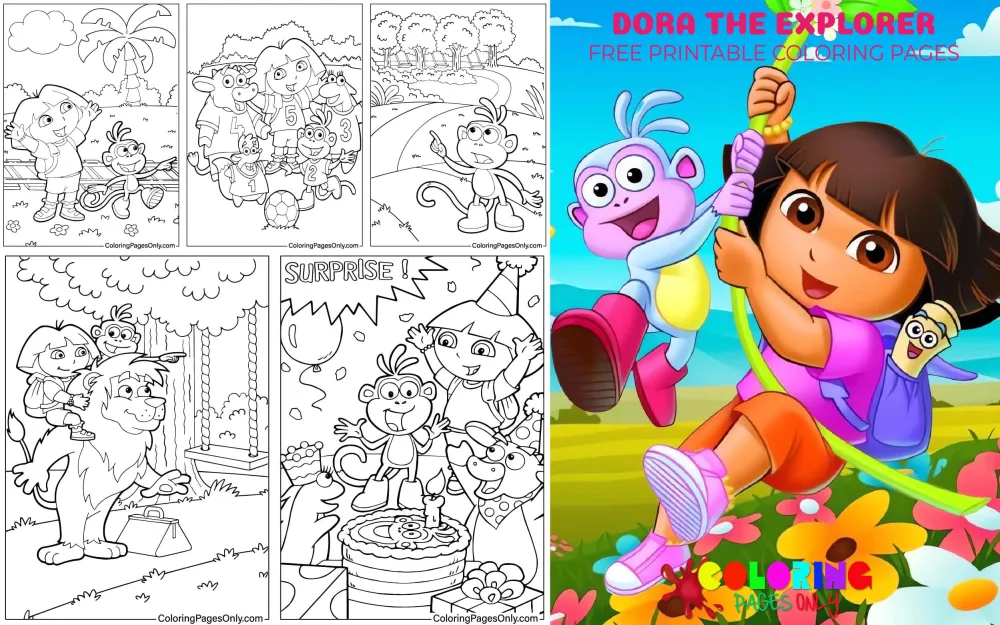
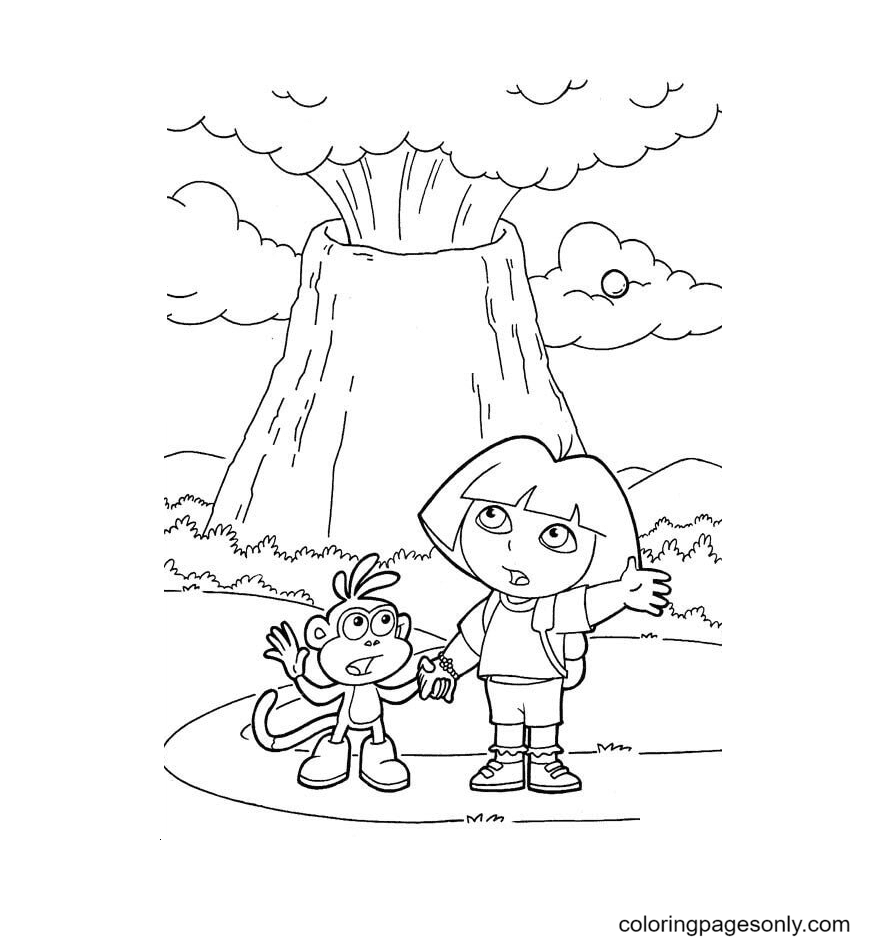
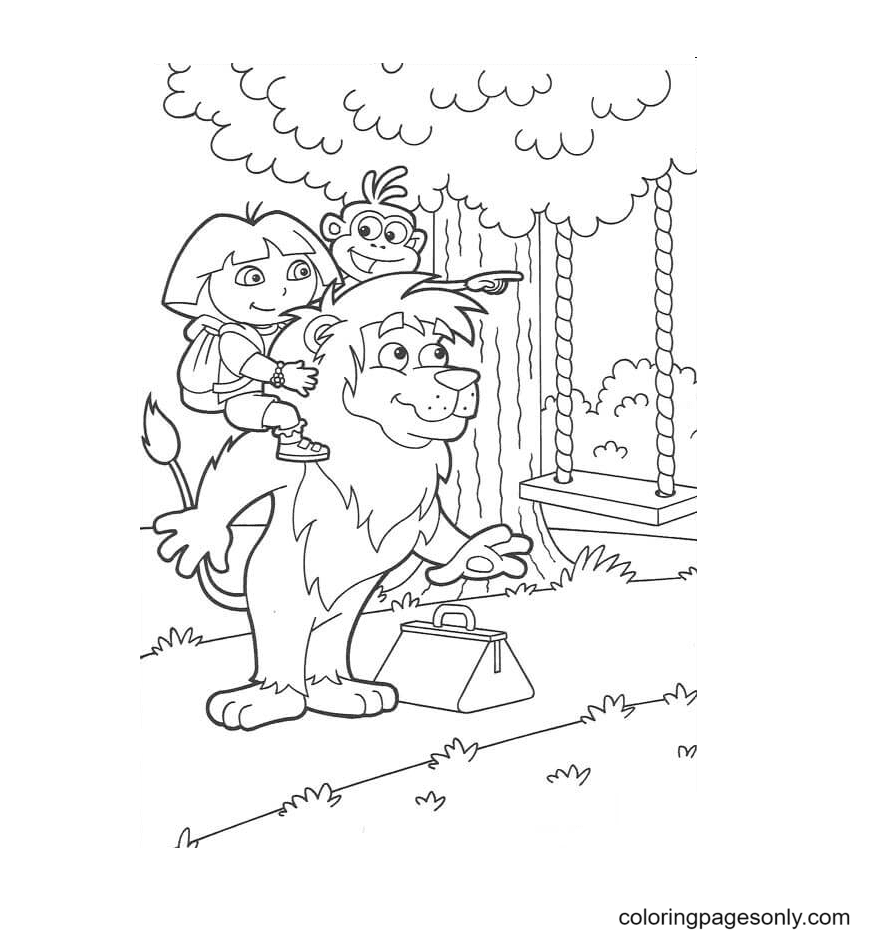
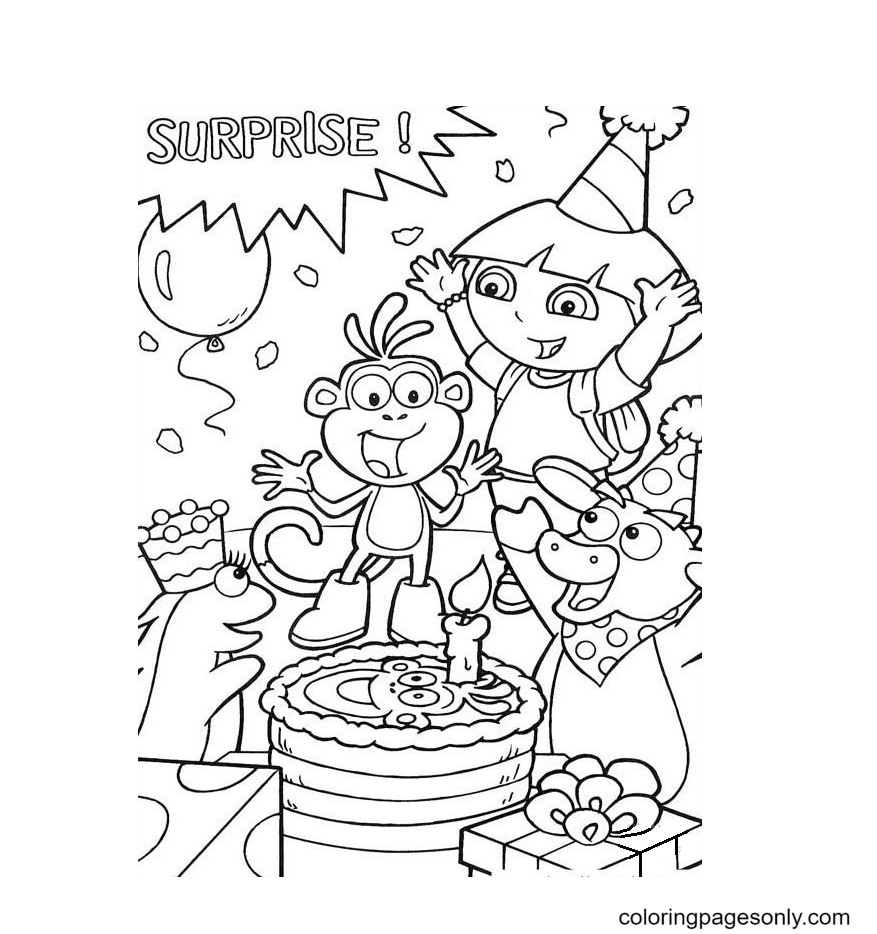
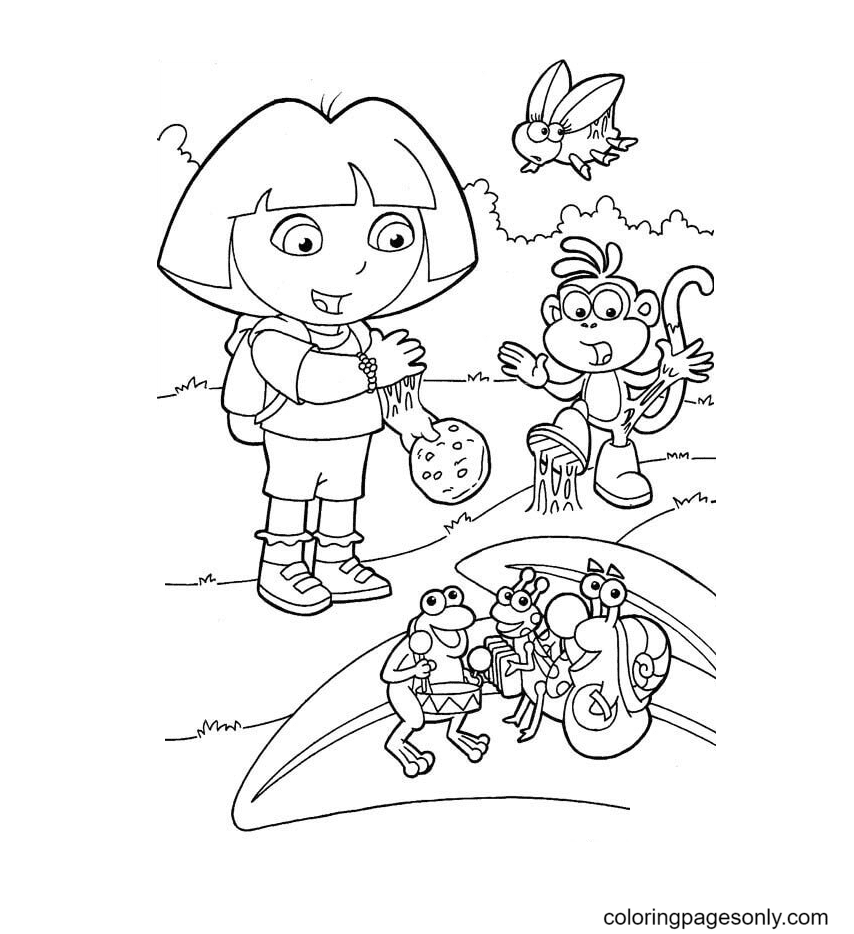
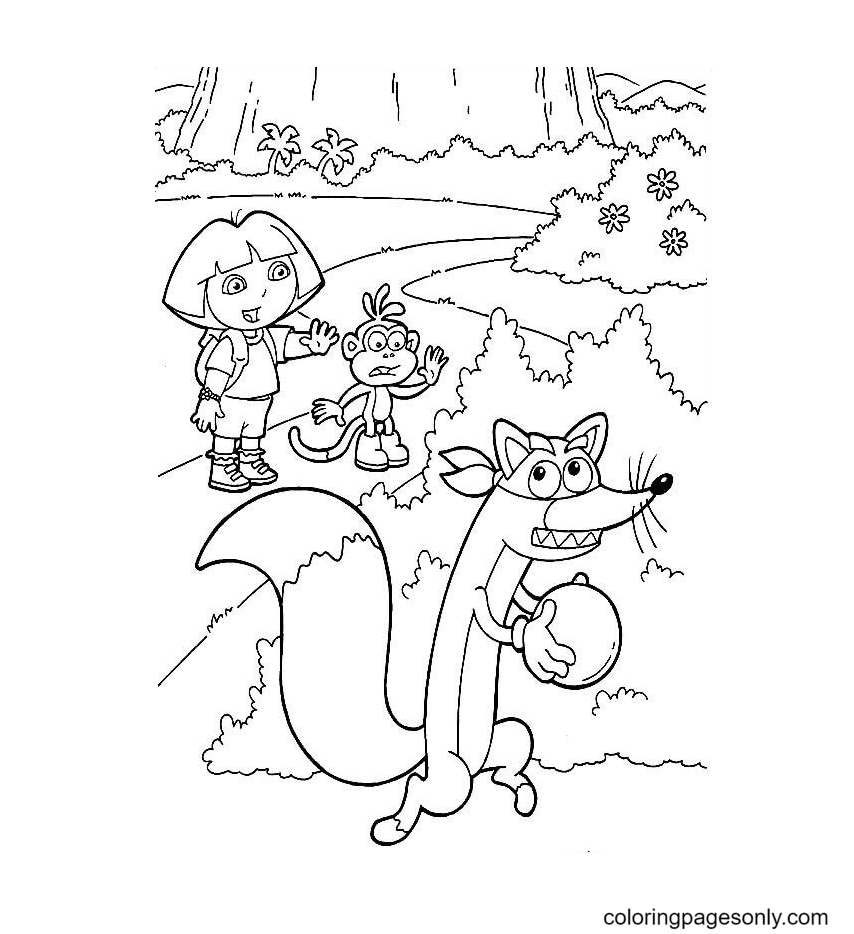
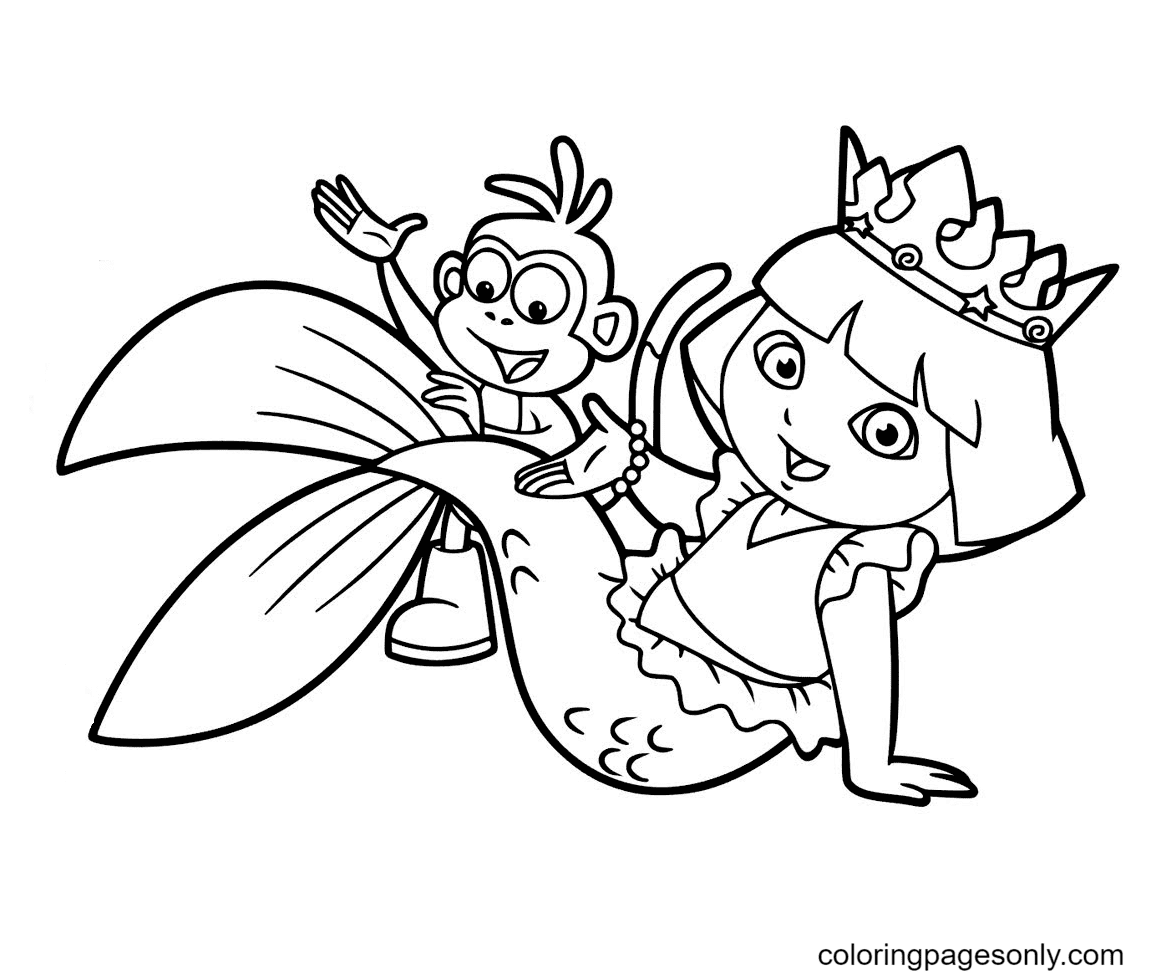
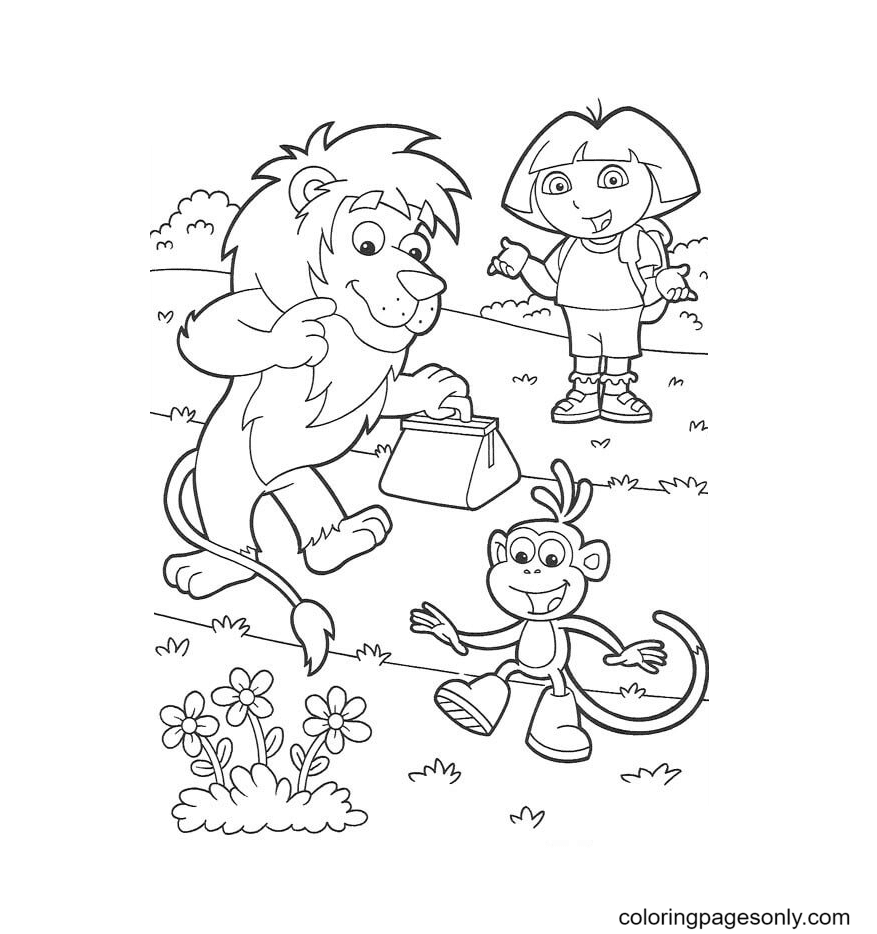
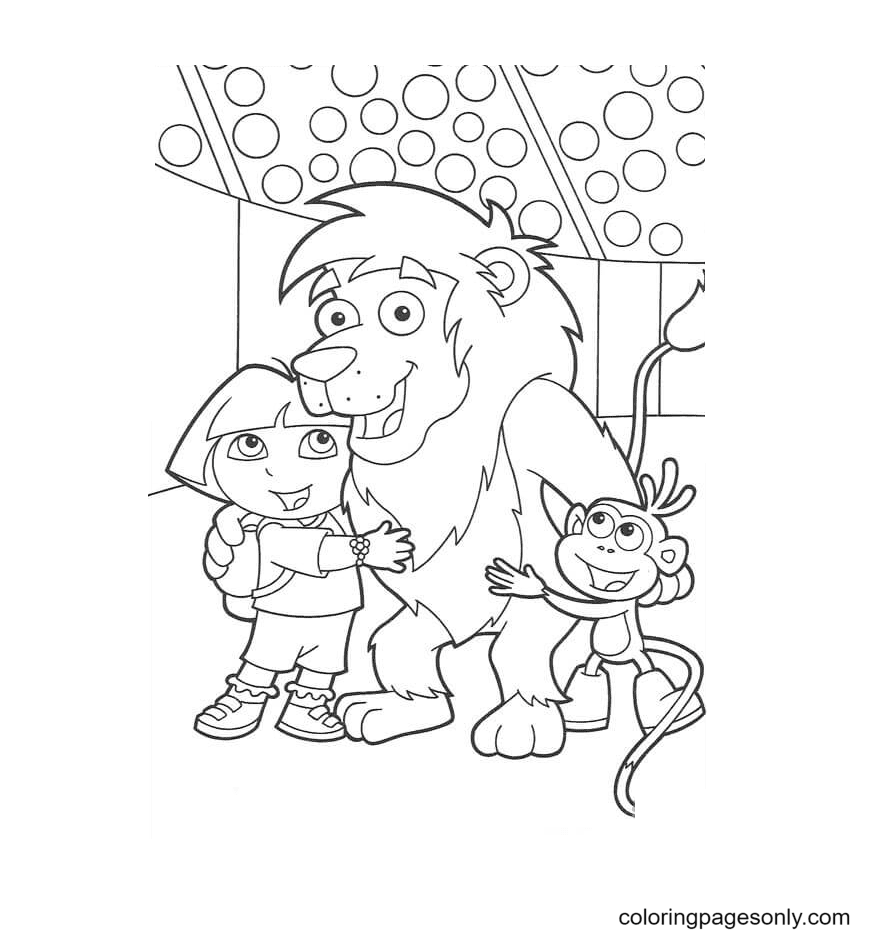
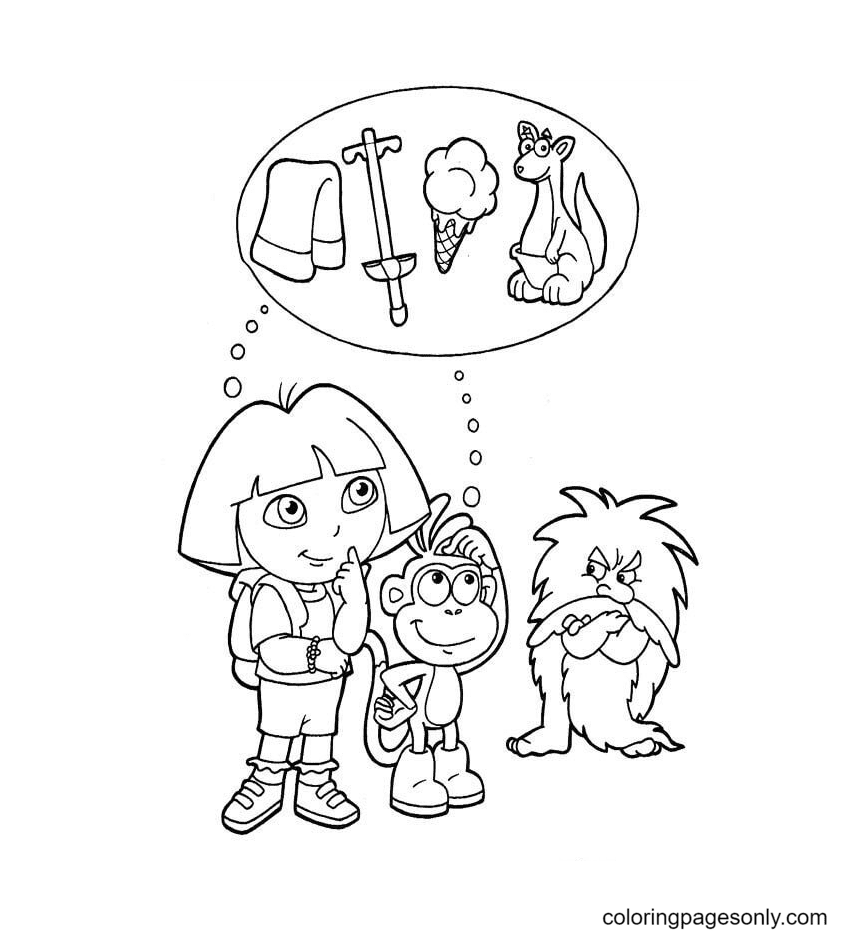
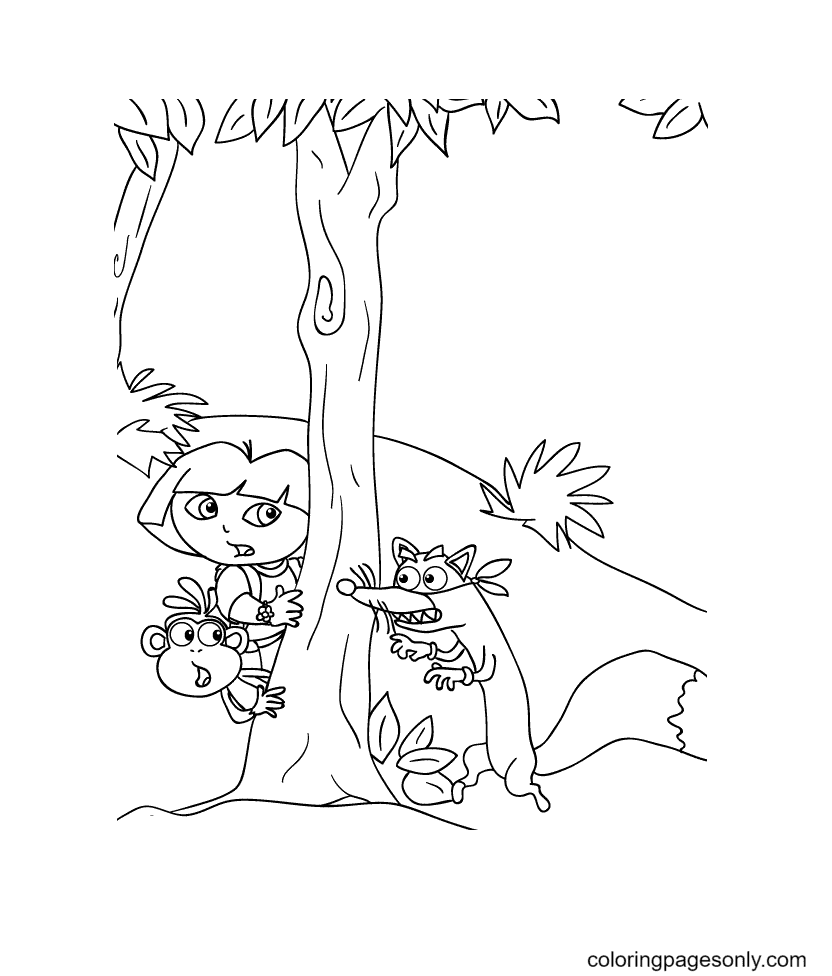
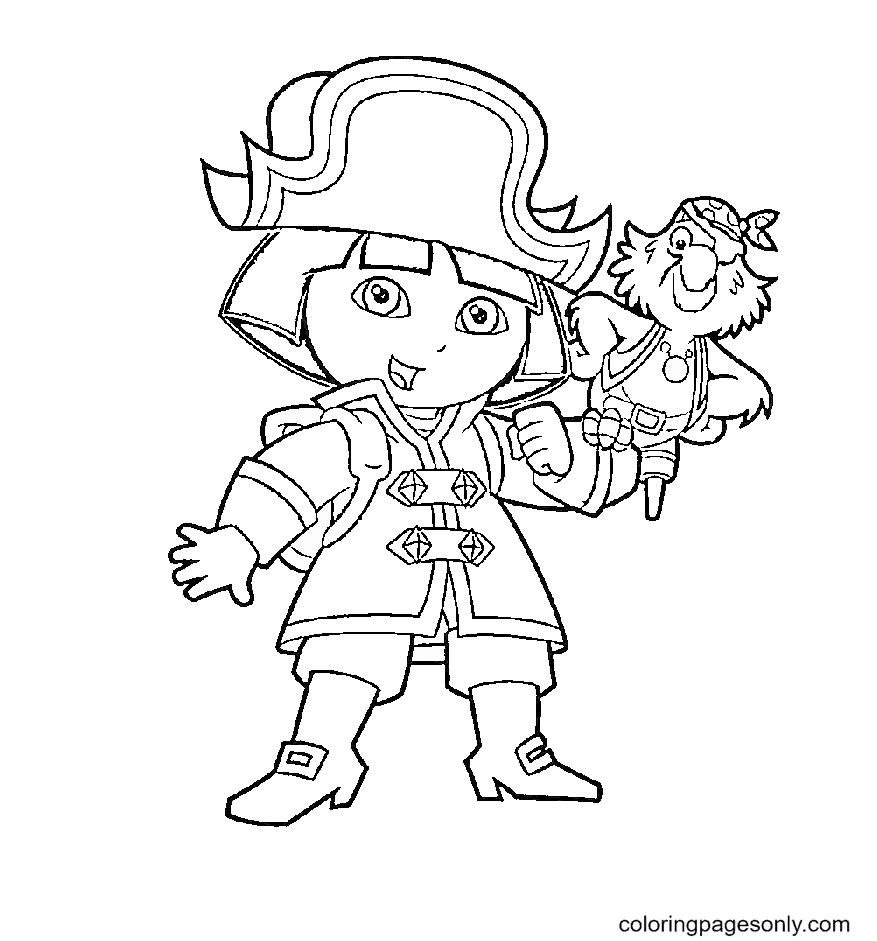
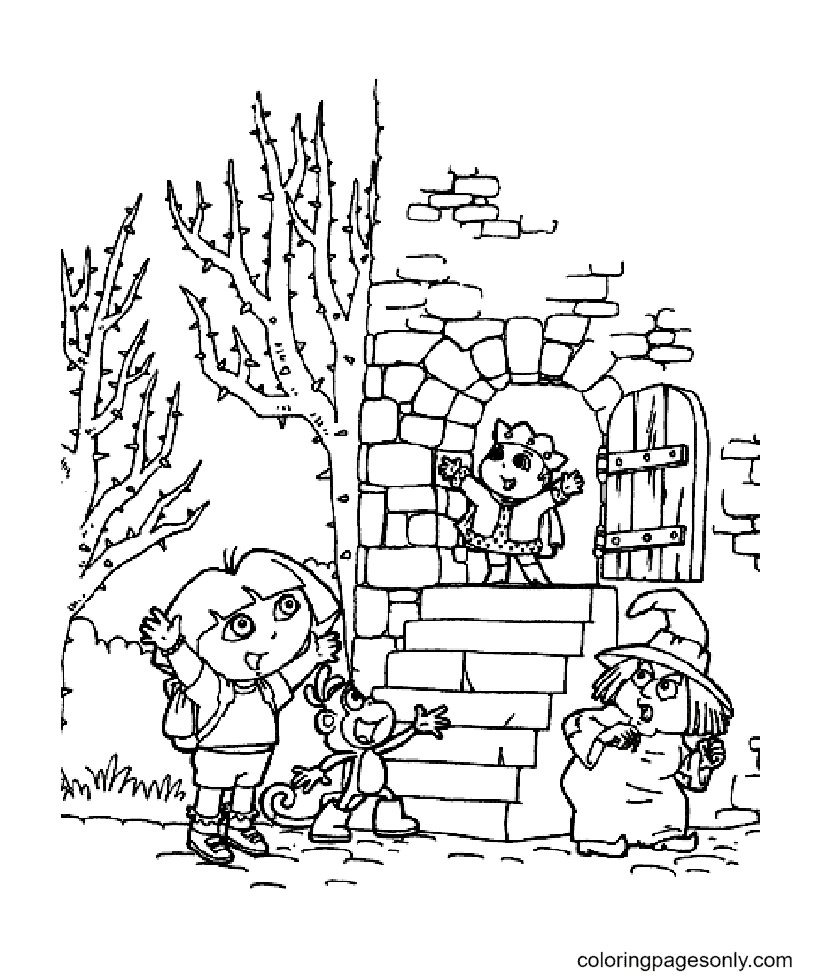
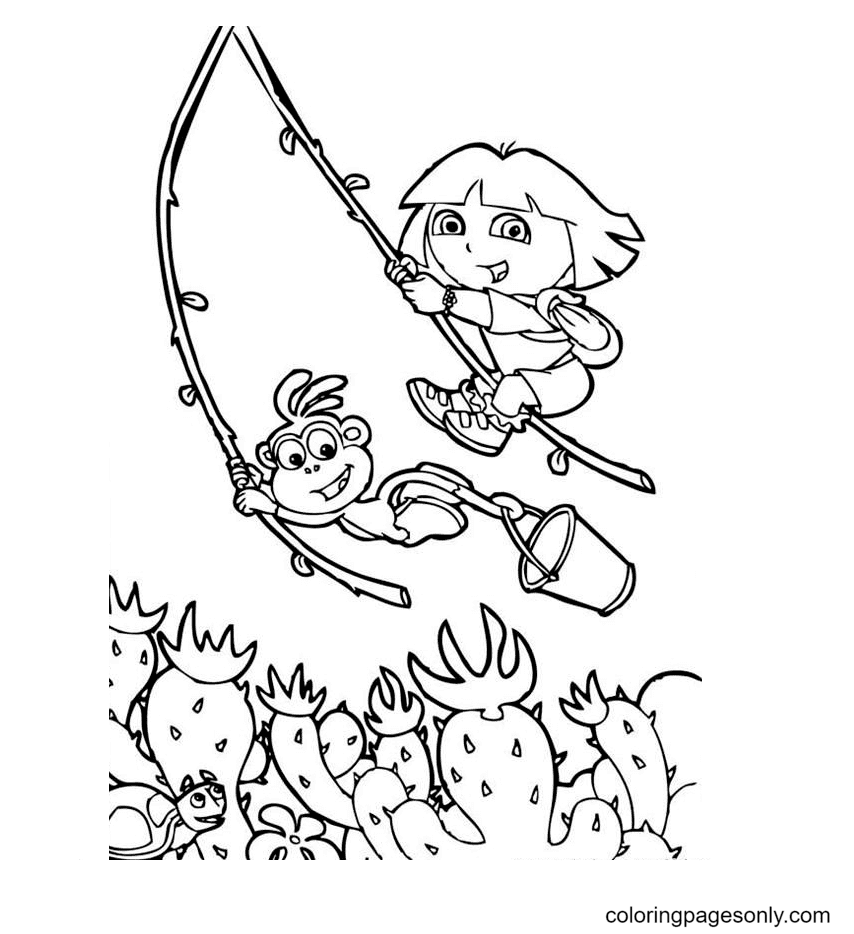
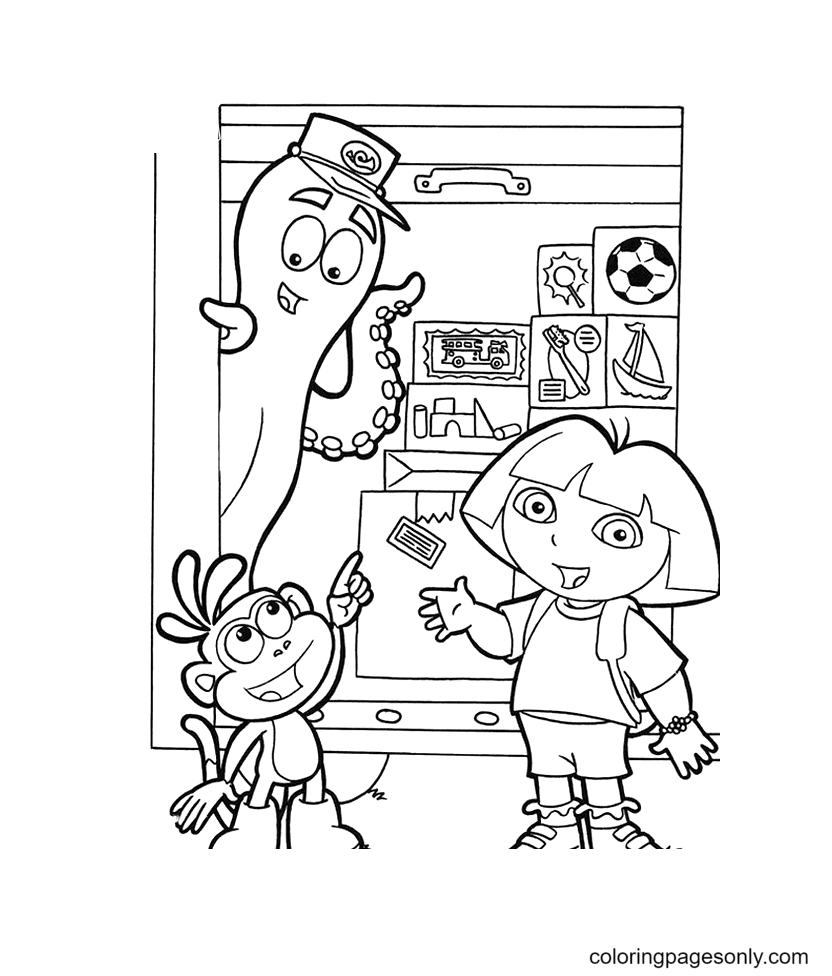
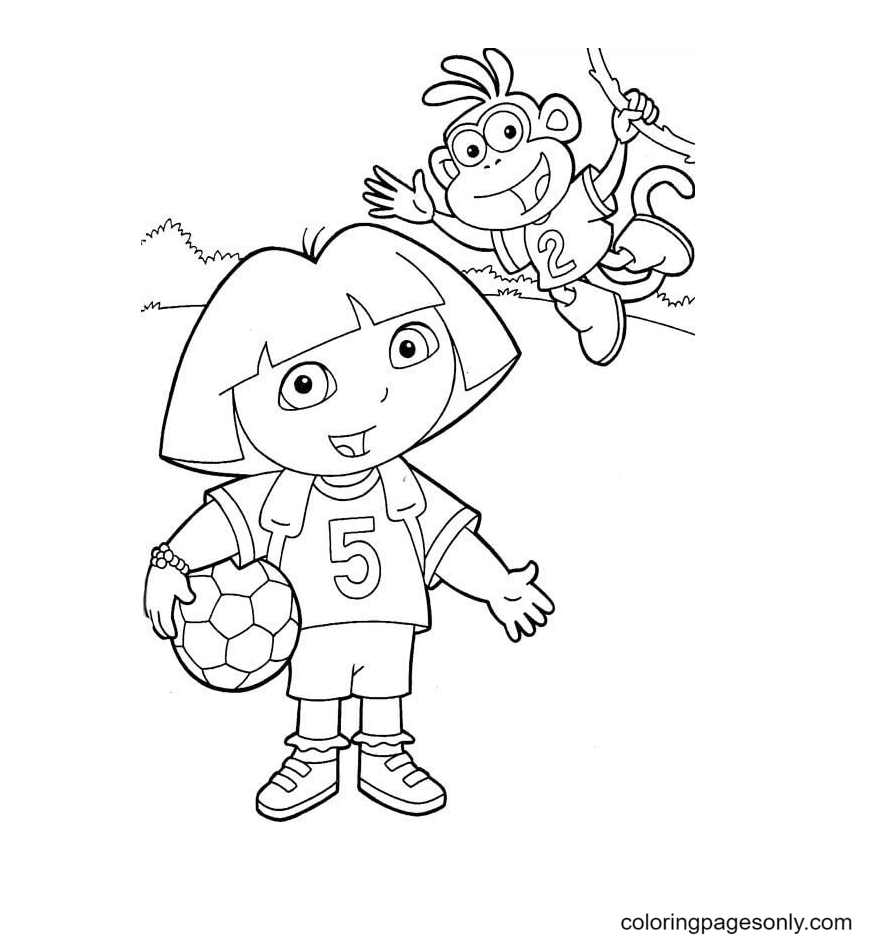
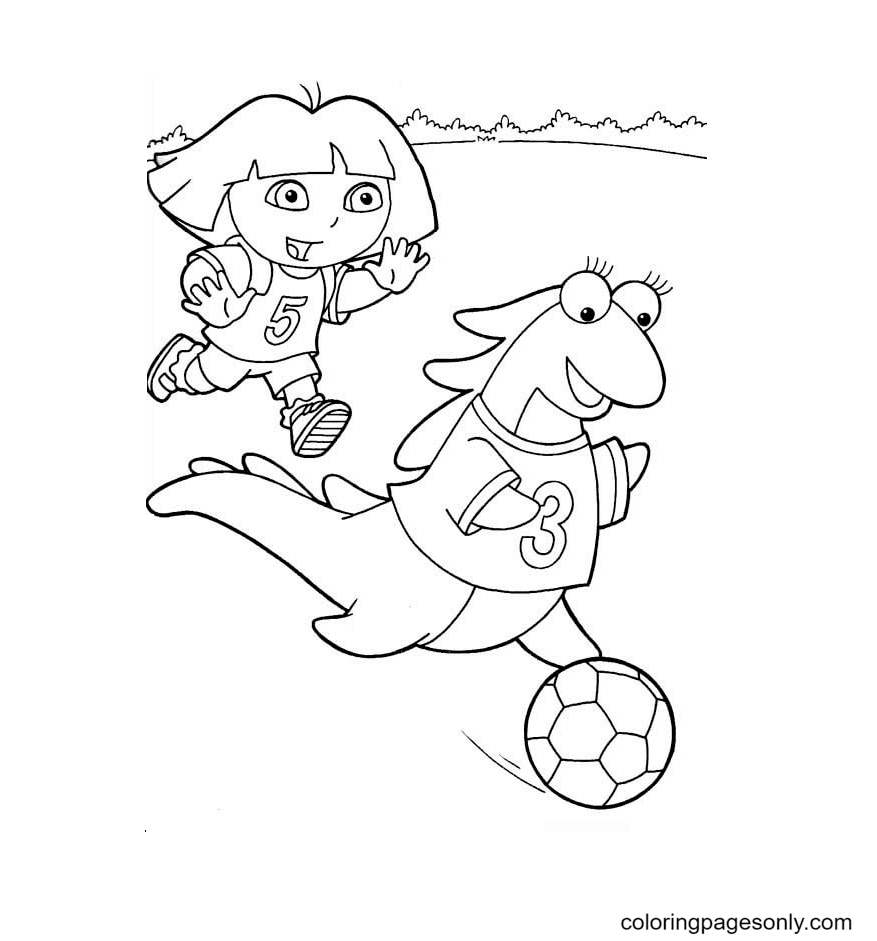
Free Dora The Explorer Coloring Pages: 50+ pages featuring Dora, Boots, Swiper, Map, Backpack, Diego, Dora and Boots choosing a path, Dora reading a book, Dora with her mother, Dora and Benny, Dora with Isa, Boots swinging from vines, Swiper taking the ball, Dora playing soccer, Dora at a toy store, train adventure pages, volcano scenes, jungle paths, flowers, insects, crabs, coconut trees, mermaid Dora, pirate Dora, cowboy Dora, Easter Dora, Christmas Dora, and playful problem-solving scenes. All free, printable PDFs and online coloring pages are ready for home, preschool activities, classroom centers, bilingual vocabulary practice, storytelling prompts, travel-themed crafts, birthday activities, character play, and quiet creative time.
Dora the Explorer is known for adventure, curiosity, friendship, simple problem-solving, and early bilingual learning. Many Dora scenes begin with a question: where should Dora go, what does she need, which path should she follow, and how can Boots, Map, Backpack, or another friend help? That structure makes Dora coloring pages especially useful for young children because each page can become more than a character picture. Children can color Dora’s outfit, Boots’ fur, Map’s path, Backpack’s pockets, jungle plants, soccer balls, trains, flowers, crabs, insects, holiday details, or fantasy costumes while also talking about direction, sequence, teamwork, and discovery.
This fan-friendly collection is designed for personal, classroom, and creative coloring use by children, families, teachers, and Dora fans who want a screen-free way to enjoy familiar cartoon adventure scenes. Younger colorists can start with large Dora and Boots outlines, simple faces, open backgrounds, and easy character poses. At the same time, older children can work on story scenes with Map, Swiper, Diego, vehicles, animals, sports, costumes, holiday details, jungle backgrounds, and multi-character pages. These 50+ free pages at ColoringPagesOnly.com cover Dora the Explorer, Boots, Swiper, Map, Backpack, Diego, adventure paths, jungle scenes, soccer pages, holiday pages, fantasy Dora designs, printable outlines, and online coloring pages. All free, PDF or PNG, print or color online.



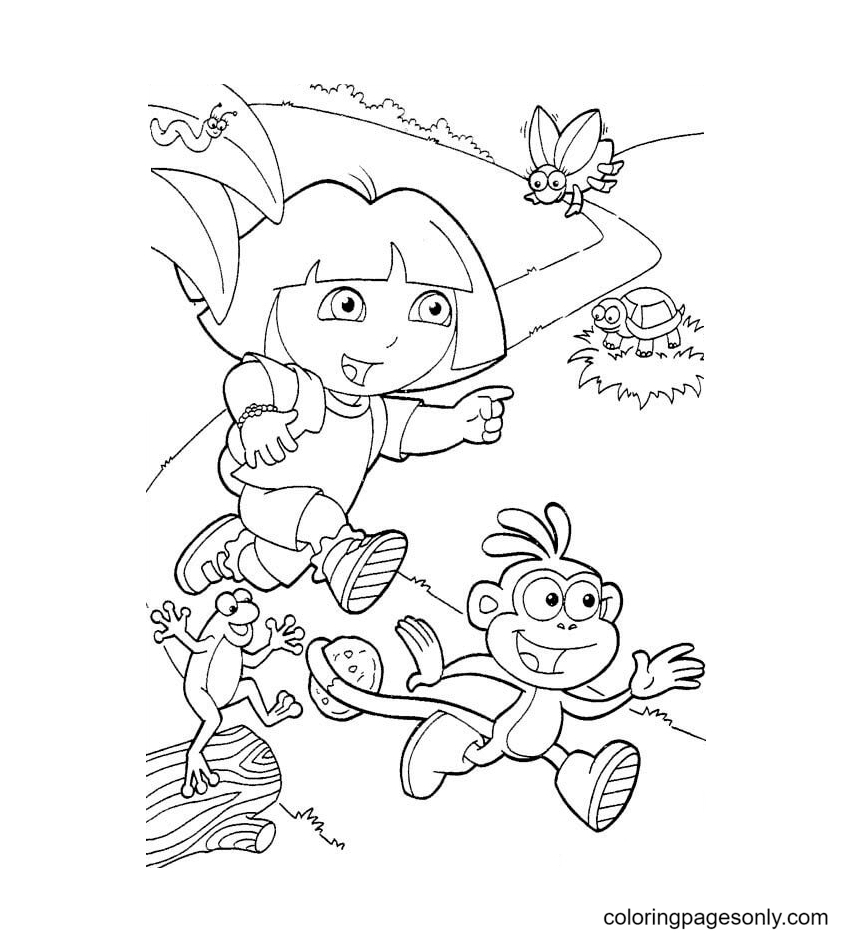
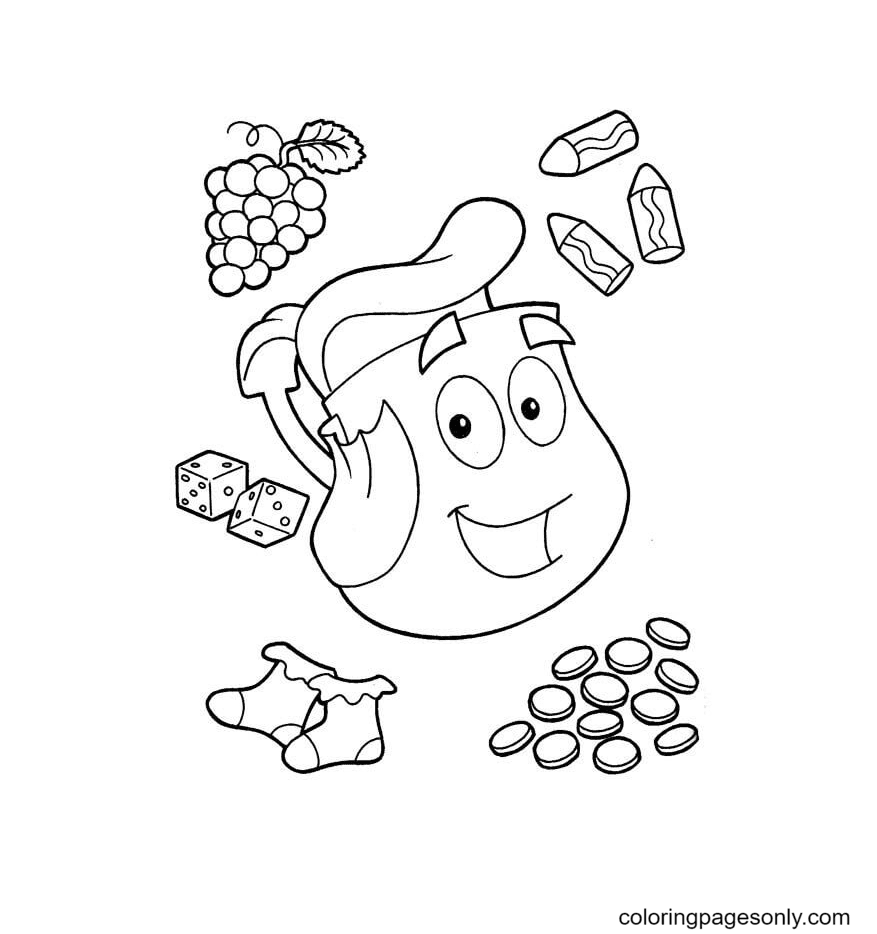
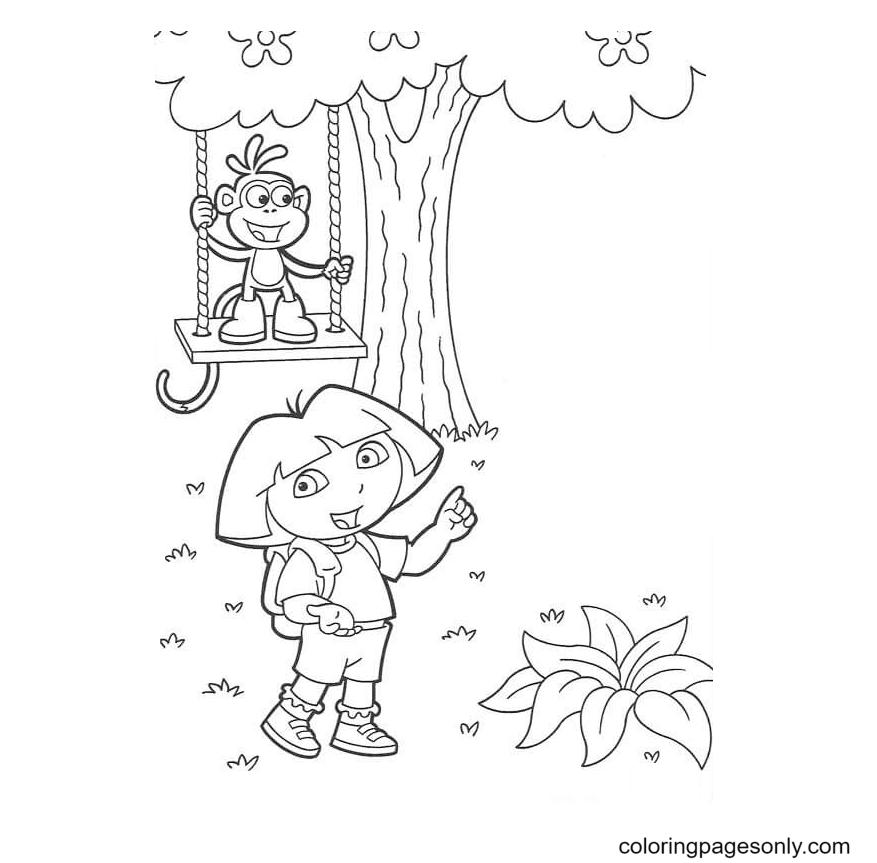
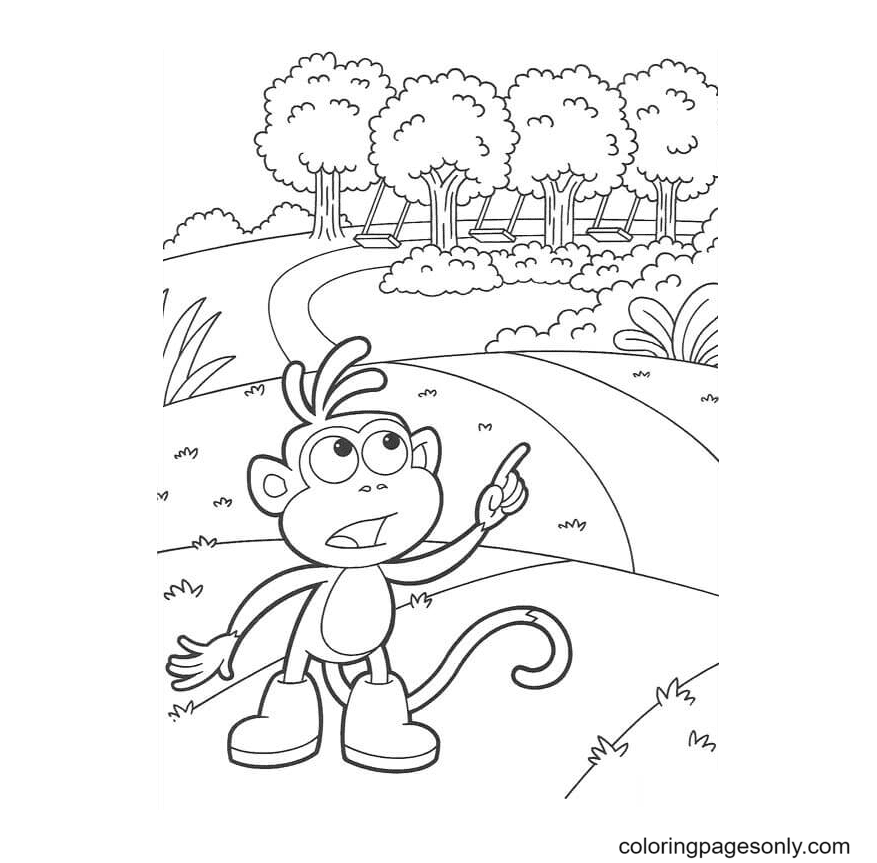






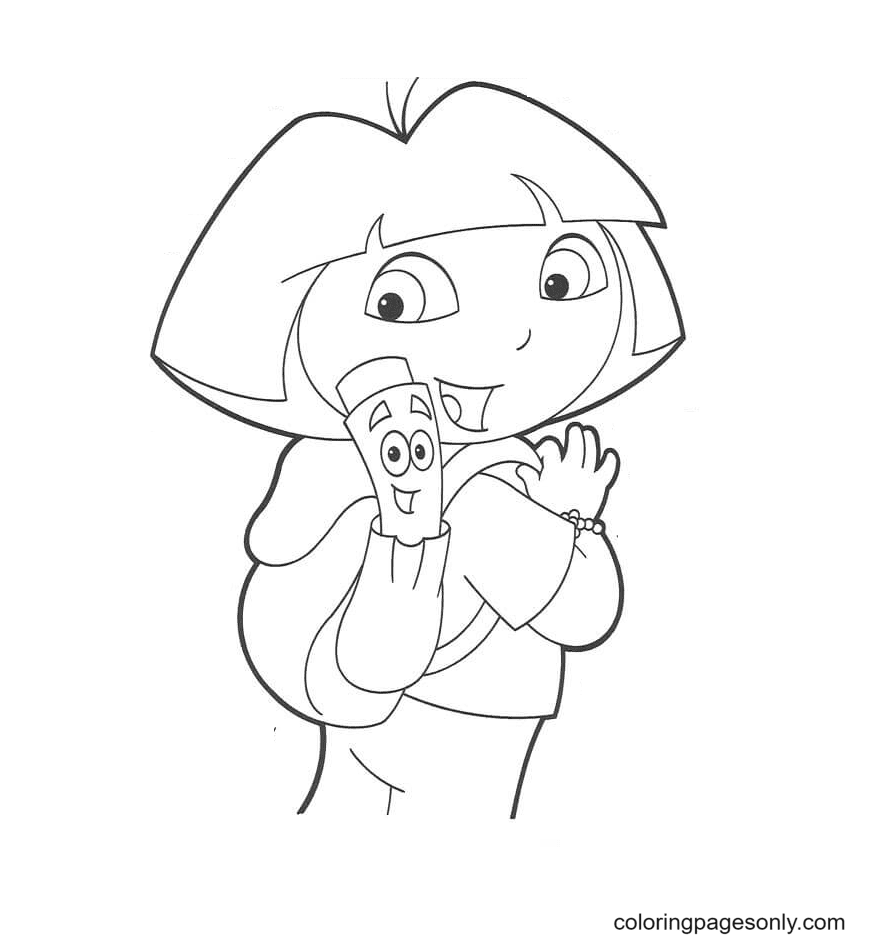
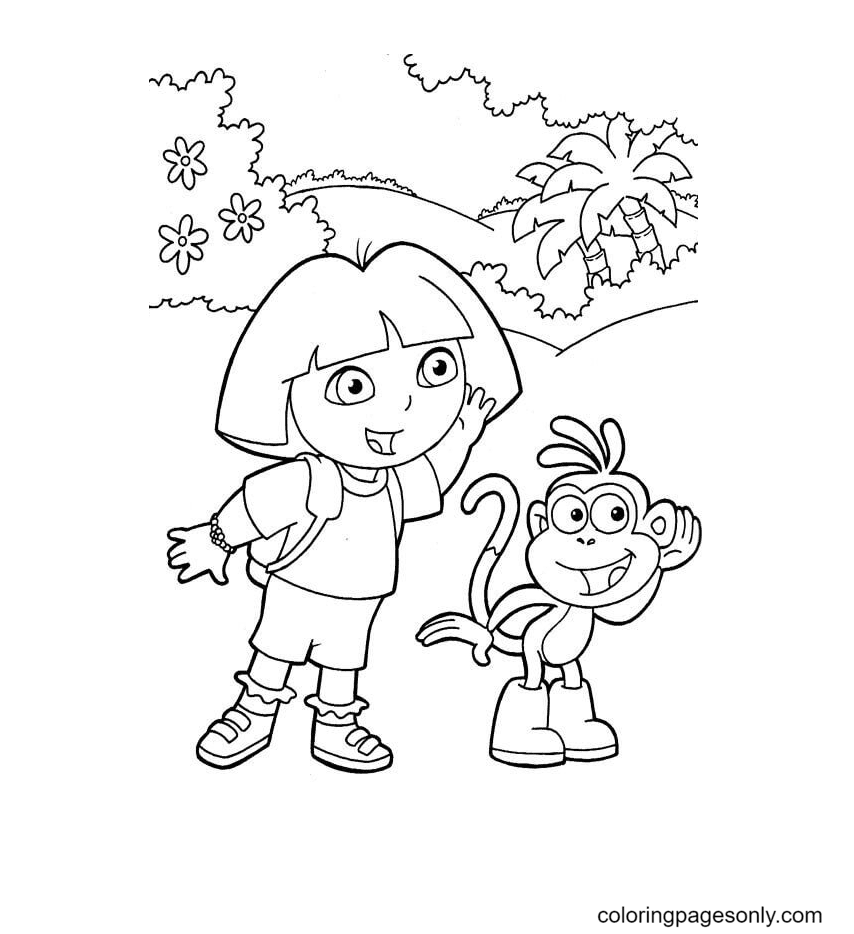
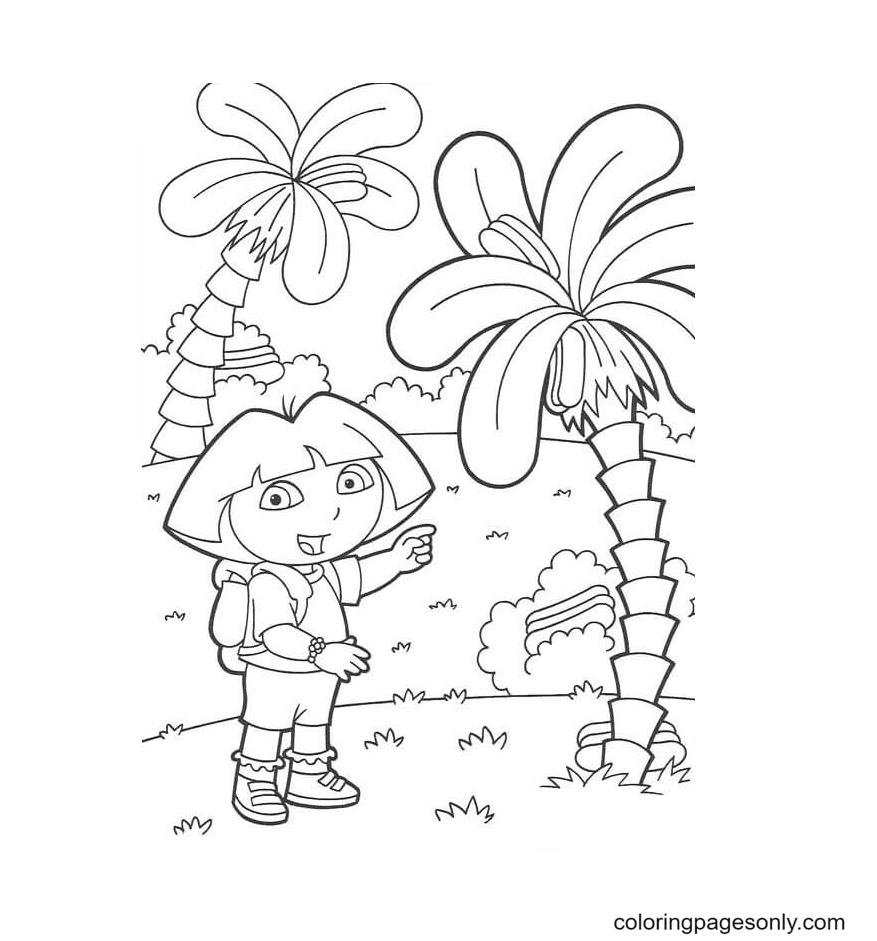

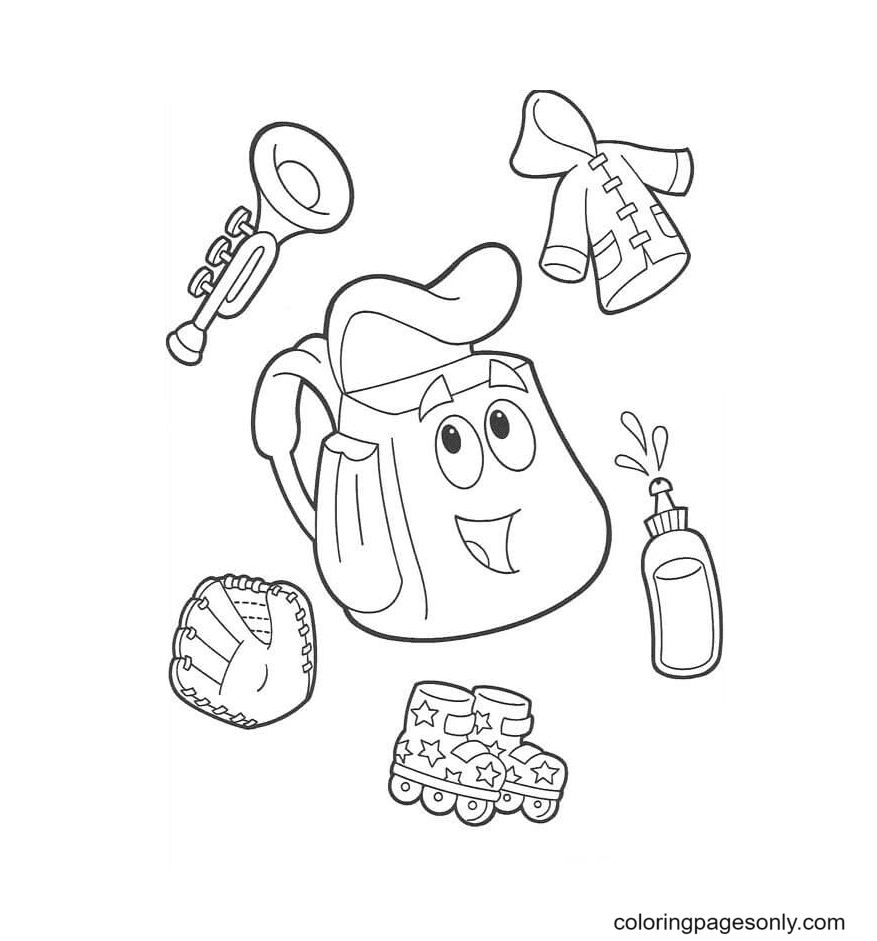
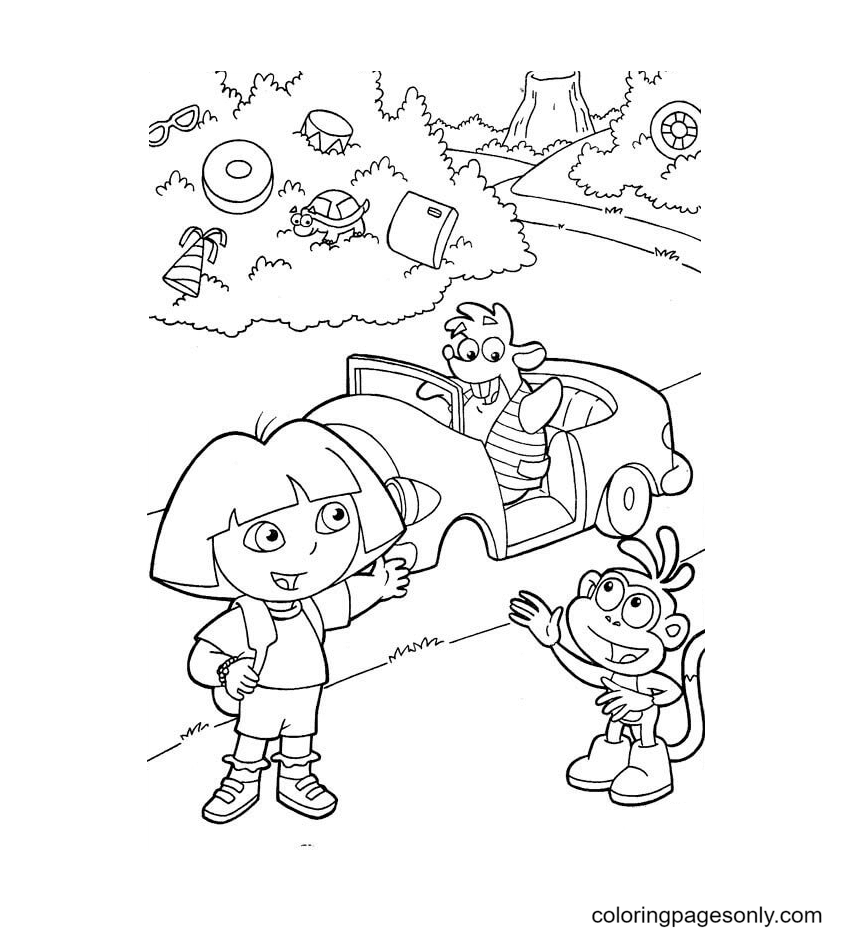
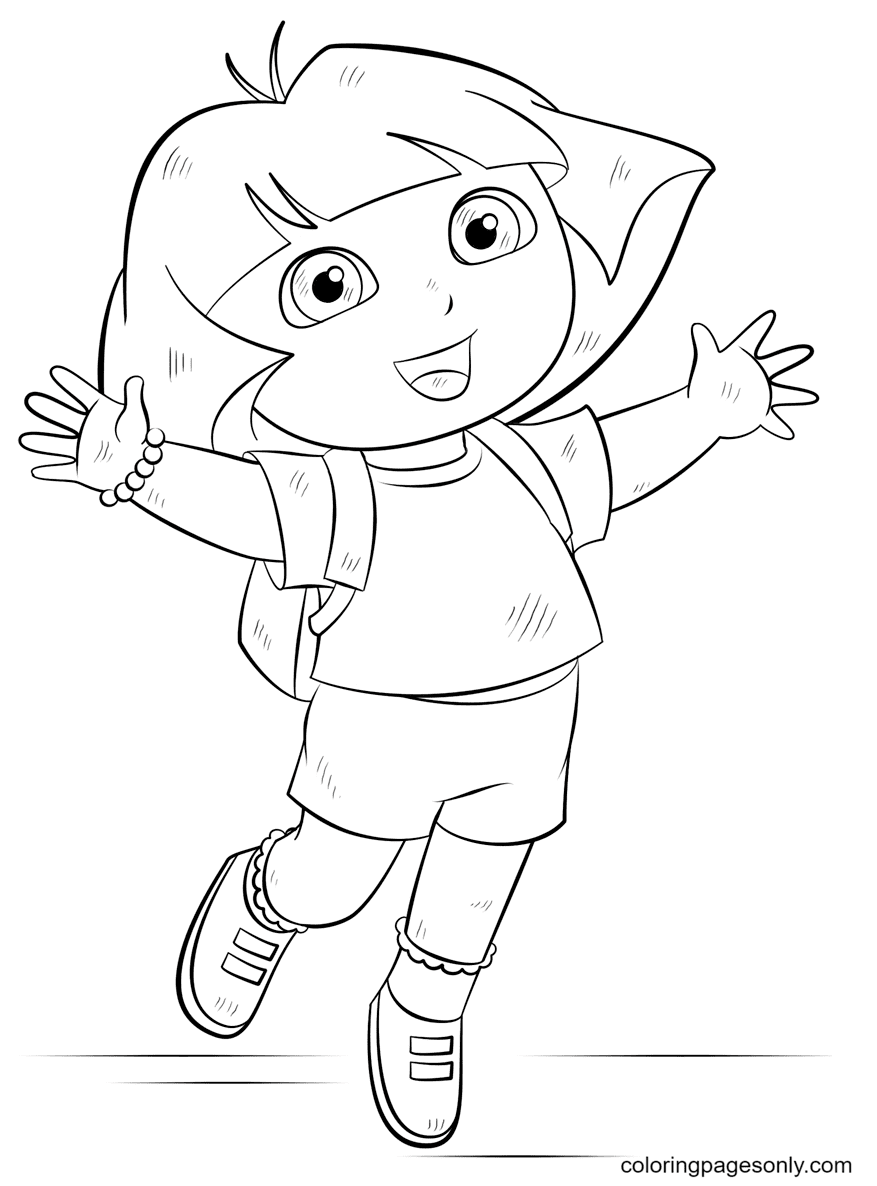
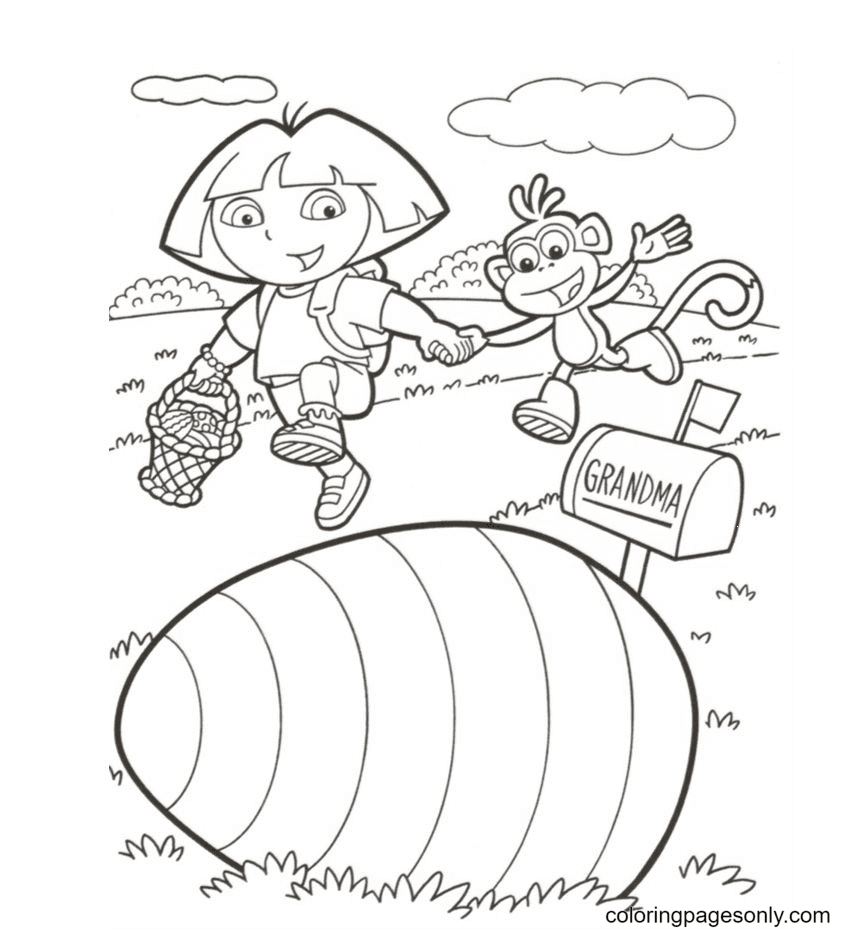
What’s Inside
Dora, Boots, and Friendship Adventure Pages
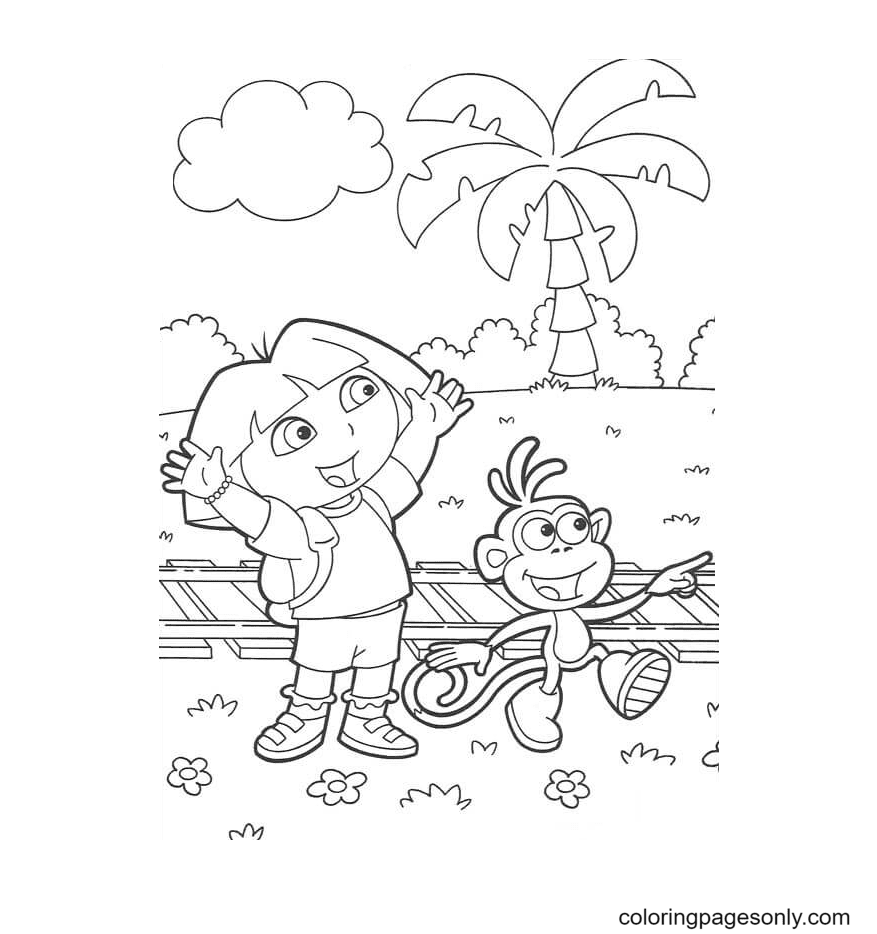
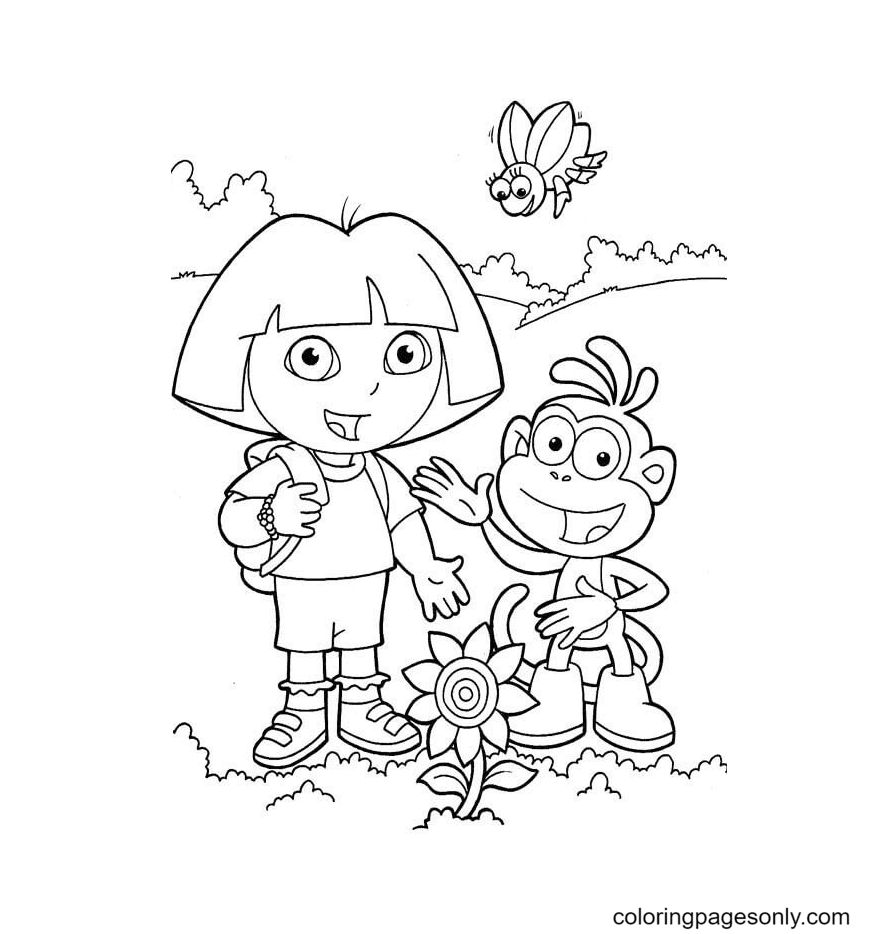
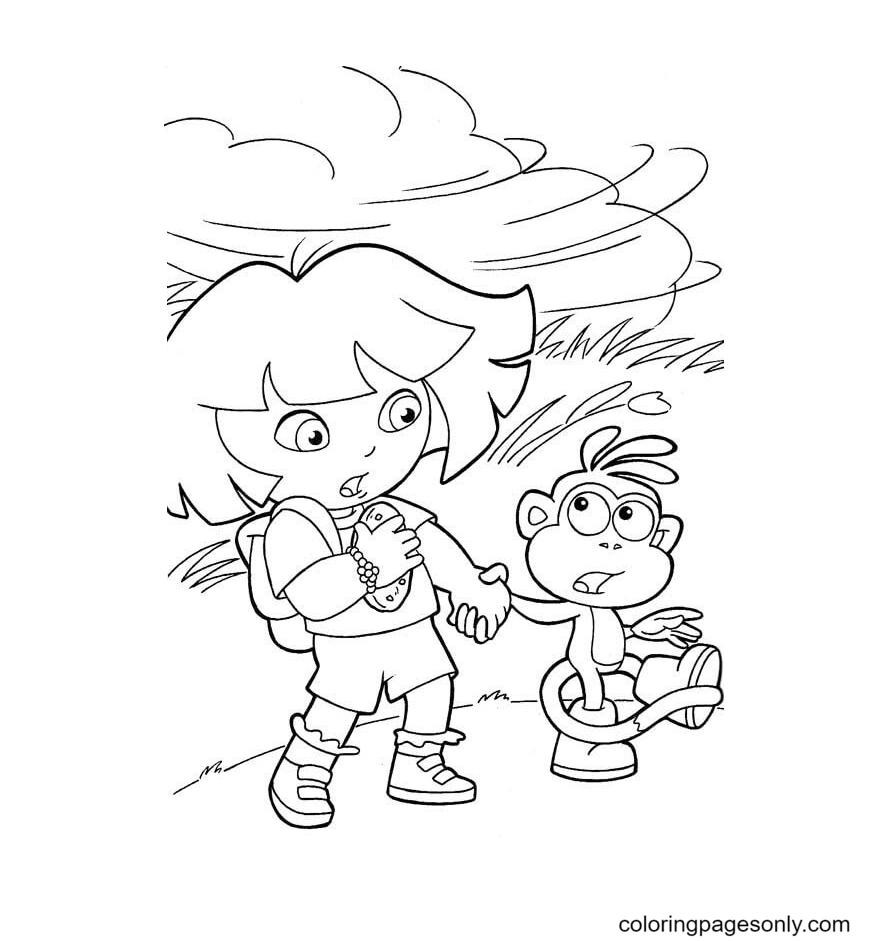
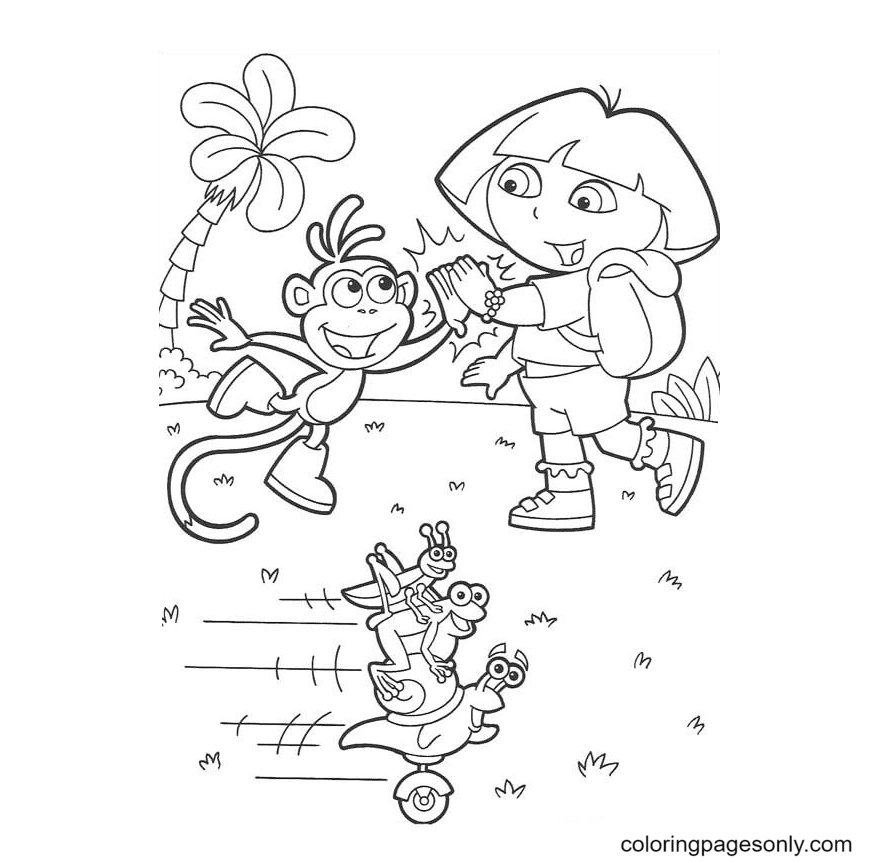
Dora and Boots pages are the heart of the collection because they show the friendship, teamwork, and movement that make the series easy for young children to follow. These pages may include Dora and Boots walking together, holding hands, swinging from vines, thinking about a puzzle, choosing a path, playing, high-fiving, or sharing a happy moment. The best pages in this group are simple enough for young children but still full of story value.
Coloring Dora and Boots pages: Use pink, orange, purple, yellow, brown, blue, and soft green for Dora’s outfit, Boots’ fur, shoes, Backpack, and jungle backgrounds. Color Dora and Boots first, so the characters stay clear before adding trees, paths, flowers, or sky. The common mistake is making the jungle too dark; light greens and pale sky blue help Dora and Boots stand out.
Map, Backpack, Swiper, and Problem-Solving Scenes
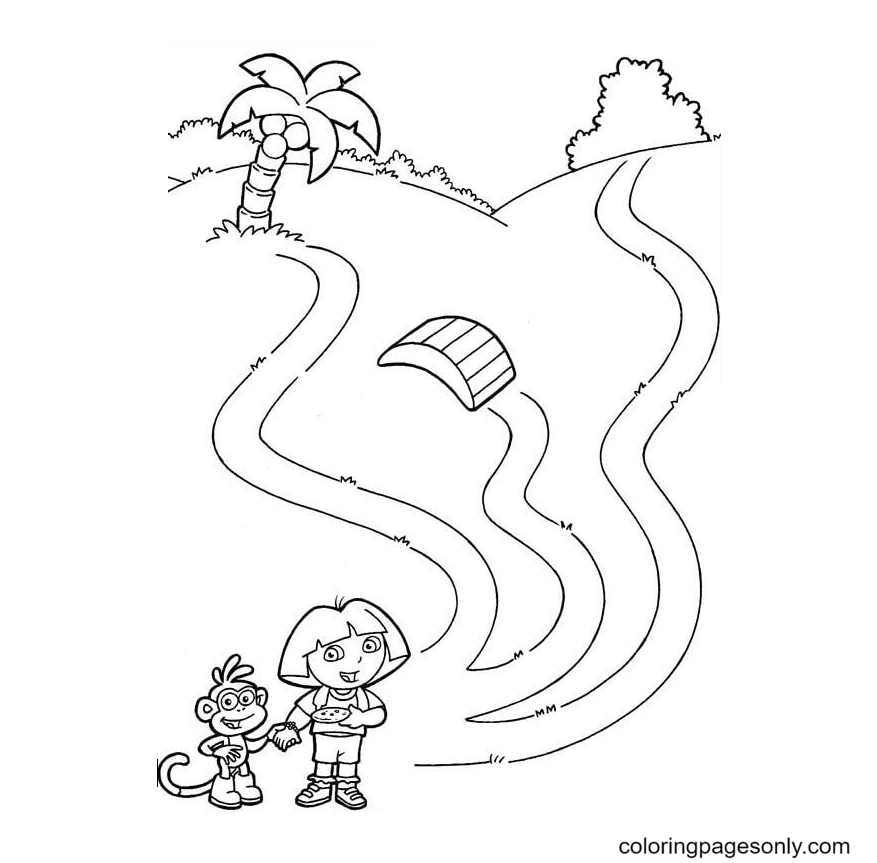
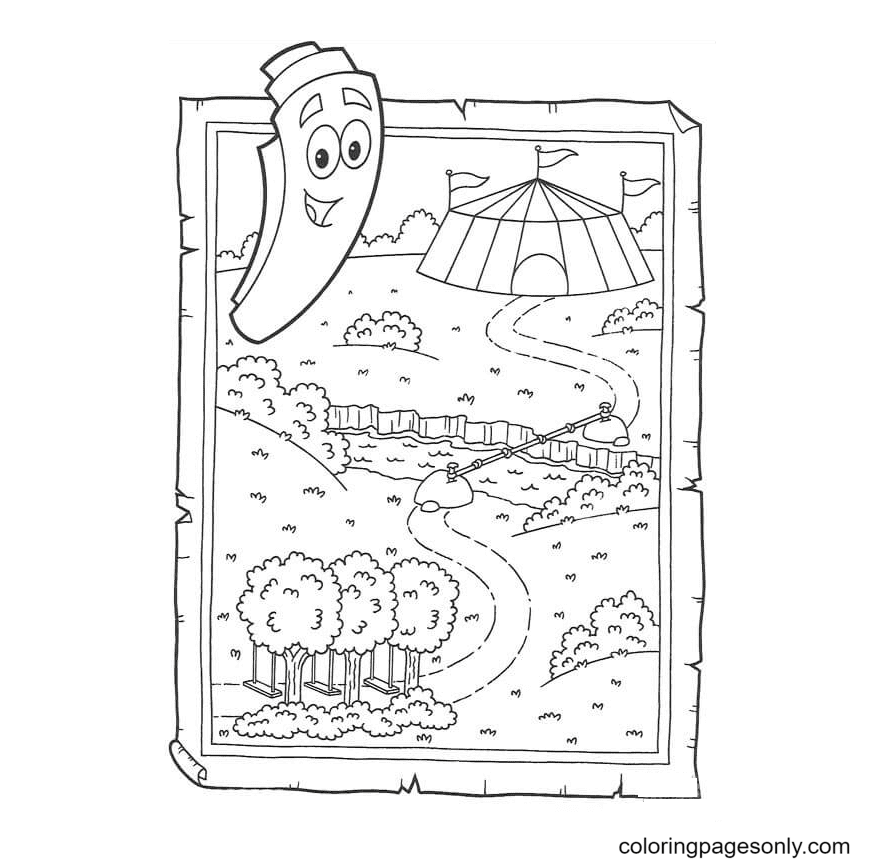
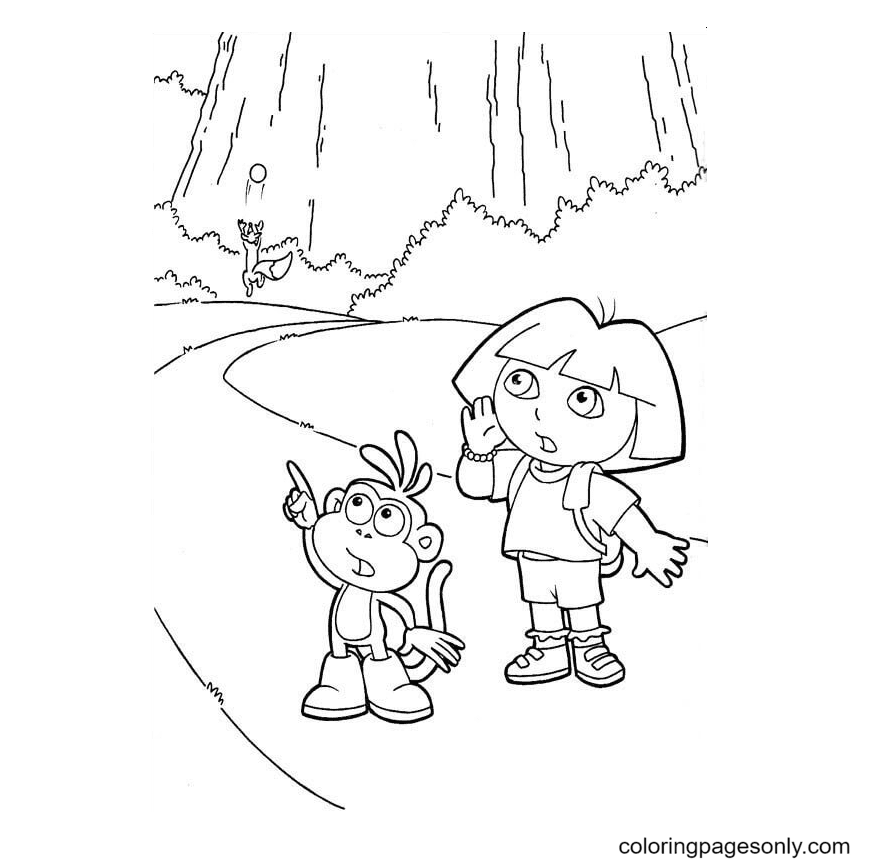
Map, Backpack, and Swiper pages are especially important because they show how Dora’s adventures work. Many scenes follow a simple pattern: Dora needs to reach a place, the Map shows the route, the Backpack carries something useful, and Swiper may create a problem that children can talk through. Pages with Dora running after the Map, Dora and Boots choosing a path, Swiper taking a ball, Backpack helping, or Map pointing the way are strong for sequencing activities.
Coloring Map and problem-solving pages: Use warm tan, yellow, green, blue, red, purple, and orange to keep Map, Backpack, path lines, objects, and landmarks clear. Color the main character first, then the path, object, or problem area. The common mistake is filling every small map section with strong colors; use lighter shades on the Map so the route, arrows, and important items remain visible.
Jungle, Nature, Animals, and Outdoor Discovery Pages
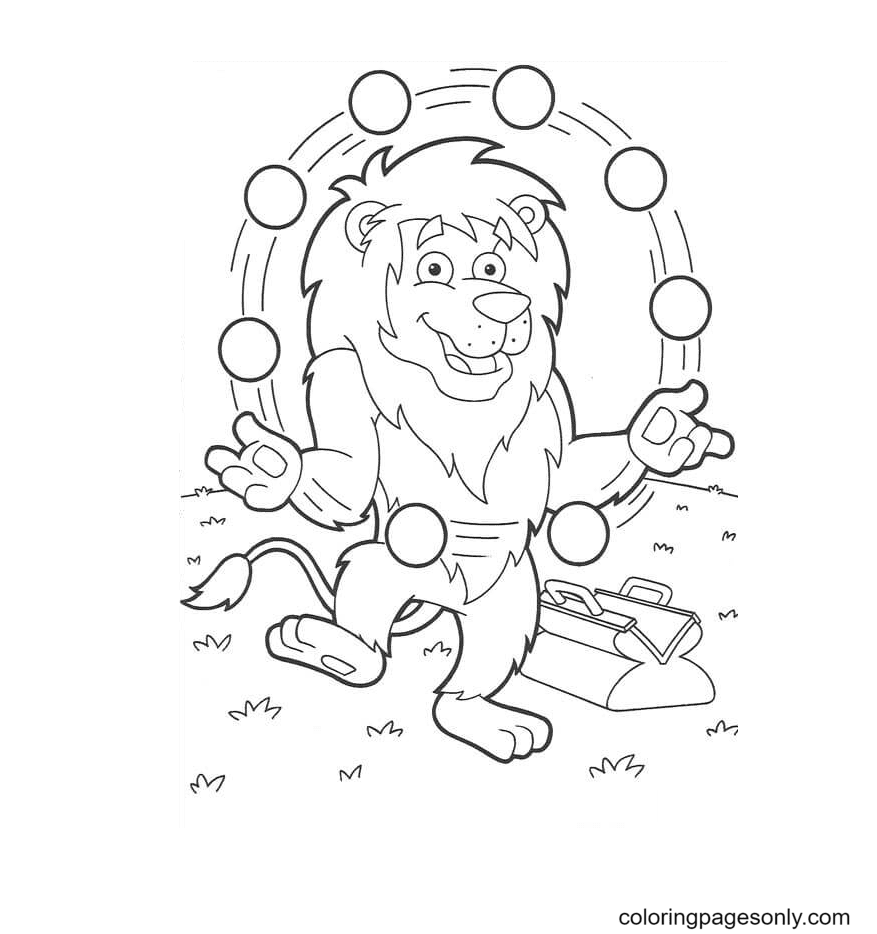
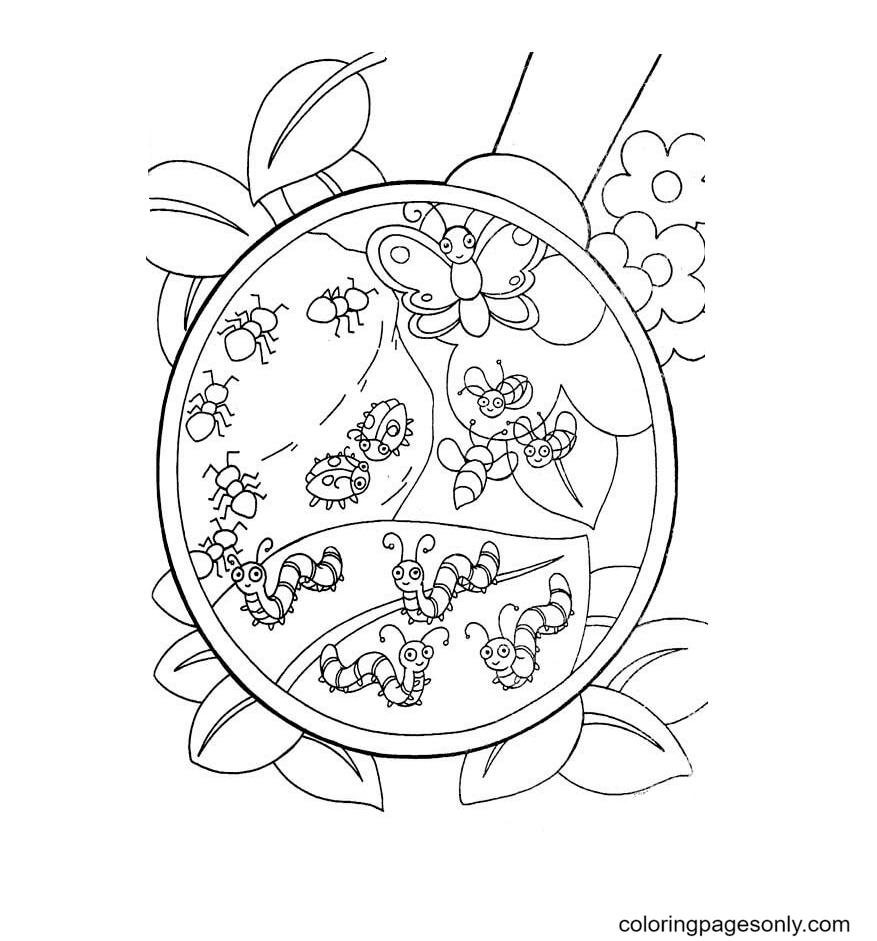
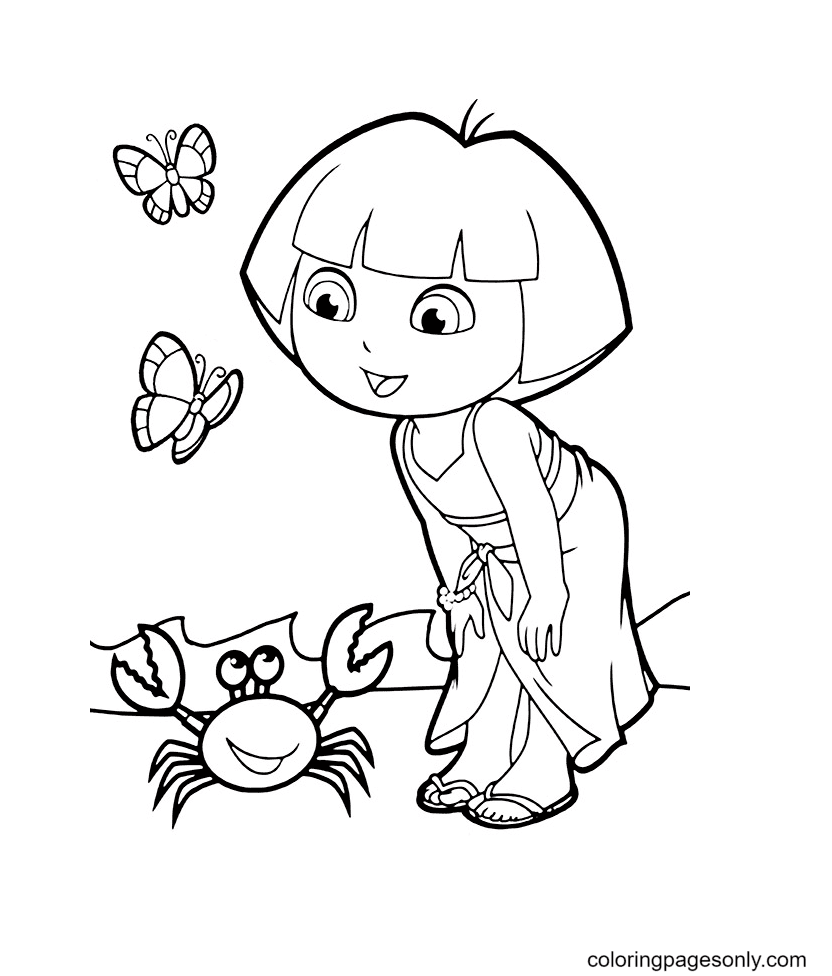
Dora pages often include outdoor settings such as flowers, sunflowers, coconut trees, insects, crabs, lions, vines, windy scenes, forest paths, and tropical backgrounds. These pages work well for preschool and early elementary activities because they combine a familiar character with nature vocabulary. Children can name colors, count flowers, compare animals, follow a path, or describe what Dora sees in the scene.
Coloring jungle and nature pages: Use several greens instead of one flat green: light green for leaves, darker green for vines, yellow-green for grass, and brown for tree trunks. Add bright colors to flowers, insects, and small animals so they stand out from the background. The common mistake is making the whole outdoor scene the same shade; small color changes help the jungle feel alive without becoming messy.
Travel, Vehicles, Sports, and Everyday Adventure Pages
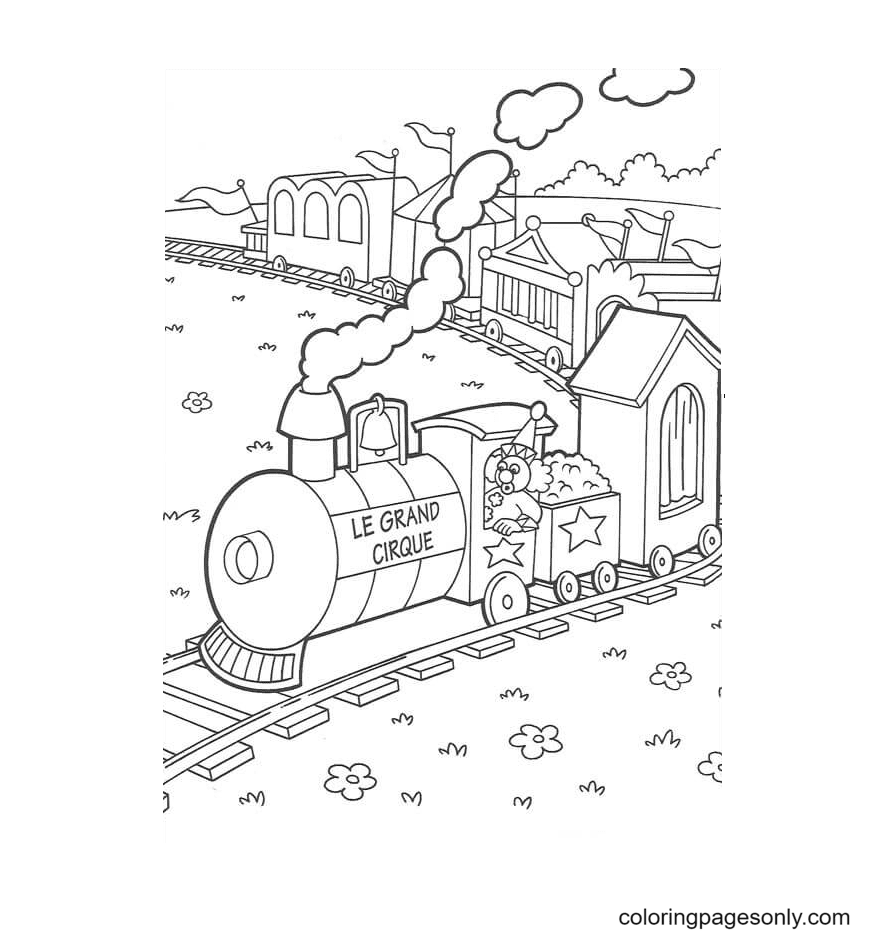
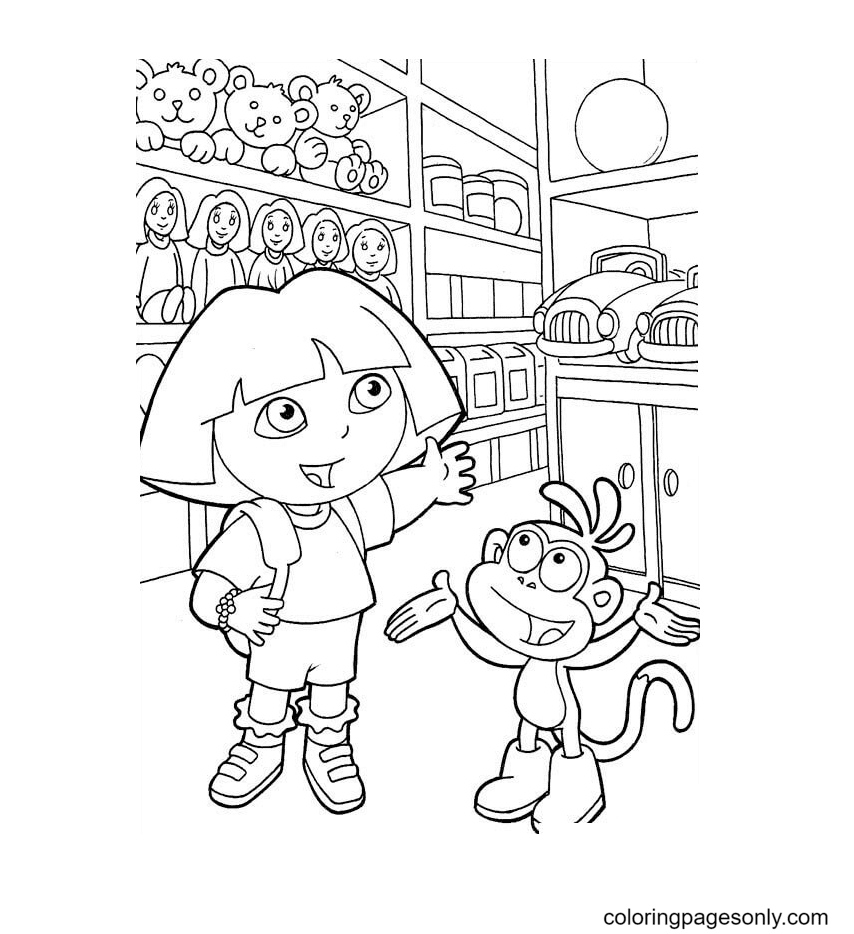
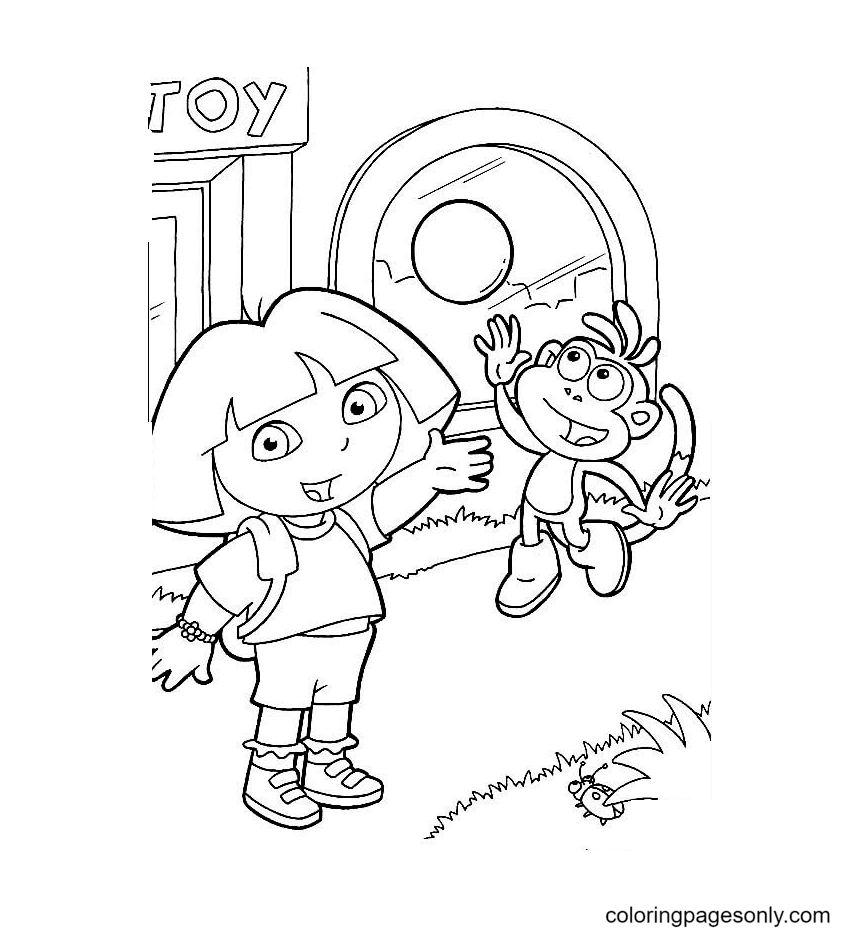
The collection includes pages with trains, a new car, soccer scenes, Dora and Isa playing soccer, Dora and Boots going out, Dora at a toy store, and other everyday adventure moments. These pages are useful because they show Dora outside a single jungle setting. Children can color movement, teamwork, sports objects, transportation, buildings, toys, and playful destinations.
Coloring travel and sports pages: Use bright, clean colors for moving objects: red, blue, yellow, silver, orange, green, and white. Keep balls, wheels, windows, signs, tracks, and paths easy to see. The common mistake is coloring the vehicle or sports object after the background; color the main action object first, so the scene remains focused.
Diego, Family, Friends, and Character Pages
Pages with Diego, Dora’s mother, Benny, Isa, Boots, Swiper, and other friends help the collection feel broader than a single-character page. Diego pages can connect to animals, outdoor rescue themes, and cousin adventure moments, while family and friend pages support cooperation, helping, listening, and sharing. These pages are useful for classroom discussions about friendship, teamwork, and what each character contributes to the story.
Coloring Dora’s friends and family pages: Give each character a clear palette so they do not blend. Use Dora’s familiar pink and orange, Boots’ blue and yellow details, Swiper’s orange tones, and different accent colors for Diego, Isa, Benny, or family members. The common mistake is using the same colors on every character; small palette differences make group pages easier to read.
Mermaid, Pirate, Cowboy, Easter, Christmas, and Special Theme Pages
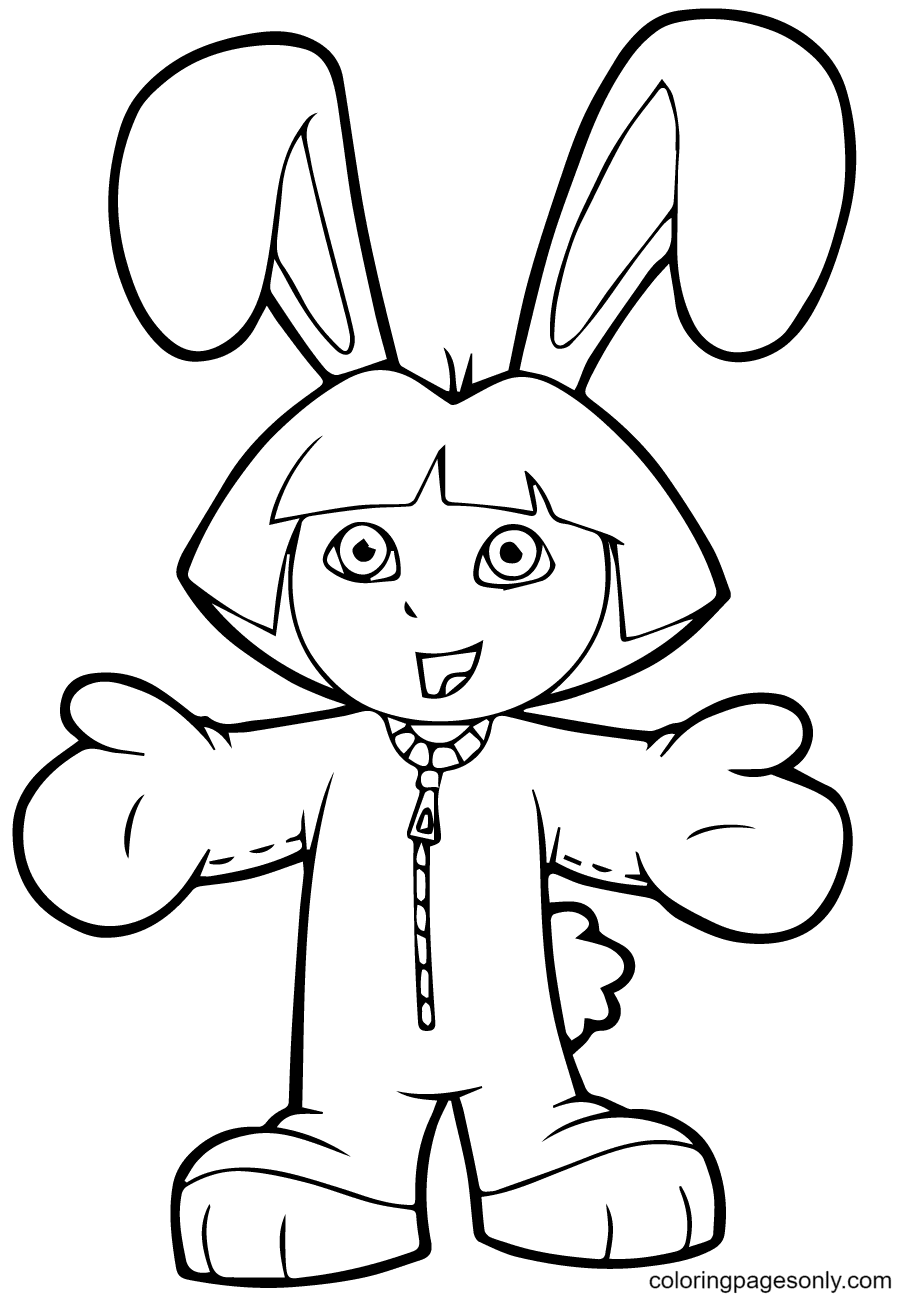
Special theme pages add variety to the collection. Mermaid Dora, pirate Dora, cowboy Dora, Easter Dora, Christmas Dora, and costume-style pages let children imagine Dora in new places and roles. These pages are especially useful for holiday activities, pretend play, party tables, seasonal crafts, and creative writing prompts.
Coloring special theme pages: Match colors to the theme. Use teal, aqua, purple, and pearl tones for mermaid Dora; brown, red, blue, and gold for cowboy or pirate pages; pastel pink, yellow, and green for Easter; and red, green, gold, and white for Christmas. The common mistake is using one default Dora palette for every scene; special pages look stronger when the setting changes the color palette.
What These Pages Do
Dora the Explorer coloring pages give children a familiar cartoon world that supports simple learning, not just decoration. Dora’s adventures often involve a goal, a path, a helper, an obstacle, and a final destination. That structure makes the pages useful for talking about sequence: first Dora checks the Map, next she travels with Boots, then she solves a problem, and finally she reaches the place she needs to go.
These pages also support early language development and bilingual curiosity. A Dora coloring activity can include simple English words such as Backpack, Map, path, bridge, river, tree, flower, soccer ball, train, crab, monkey, fox, friend, and adventure. Parents and teachers can add easy Spanish words when appropriate, such as “hola,” “amigo,” “gracias,” “mapa,” “mochila,” “azul,” “rojo,” and “verde.” The goal is not to turn the coloring page into a formal language lesson; it is to give children light bilingual exposure through familiar objects and scenes.
Dora pages are especially strong for visual storytelling. A page with Dora and Boots near a path can become a route activity. A Swiper page can become a “what happened next?” story. A soccer page can become a teamwork prompt. A train page can become a travel story. A holiday page can become a seasonal card. Children learn to look at the scene, identify the main action, and explain what the character might do next.
The collection also supports preschool readiness skills. Children can practice direction words such as up, down, over, under, near, far, first, next, and last. They can name colors, count objects, compare big and small shapes, retell a simple journey, and identify helpers or obstacles in a scene. These are natural learning moments because Dora pages already include maps, routes, objects, friends, animals, and clear adventure goals.
The American Academy of Pediatrics identifies fine motor skill development as a key milestone throughout early childhood. HealthyChildren.org, the parenting site from the American Academy of Pediatrics, lists coloring with crayons or chalk among quiet-time activities that can help improve a 3-year-old child’s hand abilities. Dora pages support that development through character outlines, hair shapes, backpack straps, map paths, small shoes, soccer balls, flowers, insects, train wheels, animal faces, and costume details.
The 2005 Art Therapy Journal study on structured coloring and anxiety reduction applies well to Dora pages because many designs include repeated paths, leaves, flowers, bubbles, clothing sections, character details, and background objects. Dora pages usually have a clear central figure, while the scene around her gives smaller areas to finish one by one. This kind of structured coloring can help children slow down, choose colors carefully, and complete a page in manageable steps.
Dora pages can also support screen-free cartoon play. Children who know the character can continue the adventure through coloring, cutting, storytelling, craft-building, and pretend play without watching an episode. That makes the collection useful for preschool centers, quiet time, travel bags, birthday tables, family activities, and bilingual classroom corners.
How to Color These Pages Well
- Color Dora and Boots before the background: Start with the main characters so the page keeps its focus. Dora’s outfit, Backpack, hair, shoes, and face should stay clear before adding jungle leaves, paths, flowers, or sky. The common mistake is coloring the whole background first and making the character harder to see.
- Keep the adventure path easy to follow: Many Dora pages include a route, road, bridge, Map, trail, river, or destination. Use a lighter color for the path and stronger colors for key objects or stopping points. The path should guide the eye through the scene without overpowering Dora and Boots.
- Keep the Map and Backpack readable: The Map and Backpack are important story objects, not just background details. Use lighter colors for the Map and stronger colors for the Backpack so each one stands out. Add small lines, pockets, straps, or path marks carefully with colored pencils.
- Use soft greens for jungle scenes: Dora pages often include vines, trees, flowers, and outdoor paths. Use different greens for leaves, grass, vines, and bushes instead of one dark green everywhere. Pale backgrounds help Dora, Boots, and Swiper stay visible.
- Choose a story palette for special theme pages: Mermaid Dora, pirate Dora, cowboy Dora, Easter Dora, and Christmas Dora should not all use the same colors. Let the theme guide the palette: ocean colors for mermaid pages, warm browns for cowboy pages, treasure colors for pirate pages, pastels for Easter, and red-green-gold for Christmas.
- Make Swiper look mischievous, not too dark: Swiper pages work well with orange, rust, peach, cream, blue, and purple accents. Keep the eyes and mask area clear so his expression stays readable. The common mistake is making the Swiper too dark, which can hide the playful cartoon style.
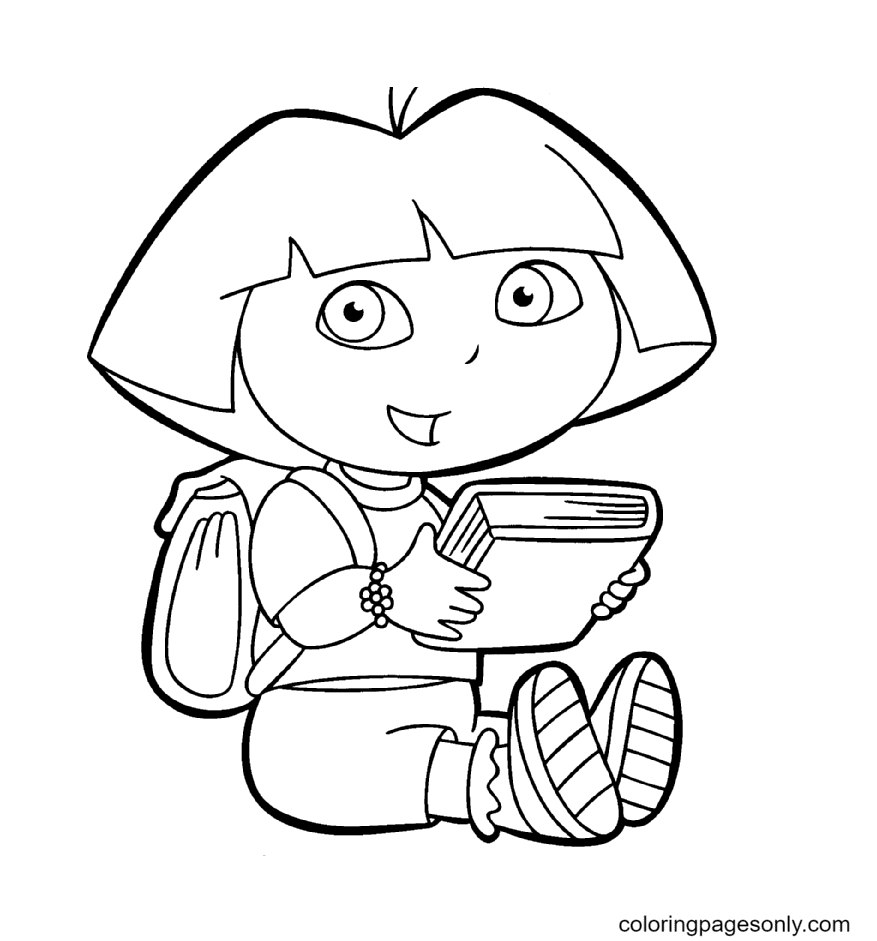
- Use bright colors for action objects: Soccer balls, trains, cars, toys, flowers, books, holiday items, and adventure objects should be easy to notice. Use clean colors and avoid blending them into the background. Action pages work best when the moving object or problem object is visible at first glance.
- Save small details for the final pass: Dora pages can include tiny flowers, insects, book pages, shoe details, backpack pockets, map marks, and holiday decorations. Fill the main shapes first, then return with pencils or fine-tip markers for smaller pieces. That keeps the page neat and helps younger children finish without frustration.
5 Creative Craft Ideas
1. DIY Dora Adventure Journal
Turn a finished Dora coloring page into the cover of a personal adventure journal. Materials include printed Dora pages, folded paper or a blank notebook, crayons or colored pencils, glue, scissors, stickers, and a stapler or ribbon. Children color a Dora, Boots, Map, jungle, train, flower, crab, or adventure scene, then attach it to the front of the journal. Inside, add simple pages such as “My Route,” “Things I Saw,” “New Words,” “My Favorite Colors,” and “My Adventure Story.” Older children can write short sentences about where Dora is going, what she needs, and who helps her along the way. This craft works well for ages 5–10 because it connects coloring with early writing, sequencing, observation, and storytelling. It also fits Dora’s explorer theme better than a simple notebook cover.
DIY Dora Adventure Journal
2. Dora’s Friendship Bracelets
Use small Dora, Boots, Swiper, Map, or Backpack images to create simple friendship bracelets or backpack charms. Materials include printed coloring pages, crayons or colored pencils, scissors, clear tape or laminating sheets, a hole punch, yarn, string, ribbon, or elastic cord, and beads. Children color small character pieces, cut them into circles or mini tags, cover them with clear tape for strength, then punch a hole at the top. Thread the pieces onto a string with beads in Dora-style colors such as pink, orange, purple, yellow, blue, and green. This craft works best for ages 6–10 with adult help for cutting and hole punching. The finished bracelet can represent friendship, teamwork, or a favorite Dora character, making it a small wearable reminder of the adventure.
Dora’s Friendship Bracelets
3. Adventure Maps
Use Dora, Boots, Map, jungle path, train, volcano, flower, coconut tree, or Swiper pages to build a custom Dora-style adventure map. Materials include printed coloring pages, poster paper, crayons or colored pencils, scissors, glue, and markers. Children color Dora and one or two adventure objects, then cut them out and place them on a large map with three clear stops: Start, Challenge, and Finish. Add arrows, bridges, rivers, trees, tunnels, flowers, a toy store, a train track, or a treasure mark. This craft works well for ages 5–9 because it teaches route-following, direction words, sequencing, and problem-solving. The finished map can be used for pretend play, a classroom route activity, or a simple scavenger hunt.
Adventure Maps
4. Story Puppets
Turn Dora, Boots, Swiper, Diego, Map, Backpack, or special theme pages into stick puppets for a mini adventure. Materials include printed pages, crayons, scissors, glue or tape, popsicle sticks or paper straws, and a simple paper background. Children color the characters, cut them out, and attach each one to a stick. Then they create a short story using a Dora-style structure: Dora checks the map, Boots helps, Swiper causes a problem, Backpack provides something useful, and the adventure reaches a final destination. Younger children can act out a simple scene, while older children can add dialogue, direction words, or bilingual words such as “hola,” “amigo,” “mapa,” “mochila,” “rojo,” and “verde.” This craft works well for ages 4–9 because it supports coloring, speaking, sequencing, and pretend play.
Story Puppets
5. Dora’s Adventure Diorama
Build a 3D Dora adventure scene inside a shoebox or shoebox lid. Materials include printed Dora coloring pages, crayons or colored pencils, scissors, glue, folded paper tabs, blue or green background paper, and small paper props. Children color Dora, Boots, Map, Swiper, Diego, a train, jungle plants, flowers, insects, crabs, coconut trees, or holiday details, then cut out the pieces. Glue some parts flat against the background and stand other pieces upright with folded tabs to create depth. The scene can become a jungle path, train station, soccer field, beach, toy store, or holiday adventure. This craft works best for ages 7–12 because it requires planning, cutting, layering, and storytelling. The finished diorama turns a flat coloring page into a small Dora world with a clear setting, characters, and an adventure goal.
Dora’s Adventure Diorama
Frequently Asked Questions
What are Dora The Explorer Coloring Pages?
Dora the Explorer Coloring Pages are printable and online coloring sheets featuring Dora, Boots, Swiper, Map, Backpack, Diego, family members, friends, animals, and adventure scenes. They may include jungle paths, train rides, soccer games, flowers, insects, holiday pages, mermaid Dora, pirate Dora, cowboy Dora, and problem-solving scenes. These pages are useful for children who enjoy cartoon adventures and screen-free creative play. They can be printed as PDFs or colored online.
How many Dora the Explorer Coloring Pages are in this collection?
This collection includes 50+ free Dora the Explorer coloring pages. The pages range from simple Dora and Boots outlines to more detailed scenes with Map, Swiper, Diego, soccer, trains, nature, holidays, and costumes. Because the collection includes many scene types, children can choose by character, adventure, season, or difficulty level. That makes the page useful for home, preschool, classrooms, and birthday activities.
Which Dora characters are included?
The collection includes Dora, Boots, Swiper, Map, Backpack, Diego, Dora’s mother, Benny, Isa, and other adventure friends. Some pages focus on Dora and Boots together, while others include Swiper, Diego, animals, soccer teams, jungle objects, or holiday scenes. This mix gives children different coloring choices: friendship pages, action pages, problem-solving scenes, and special theme pages.
Are Dora coloring pages good for preschoolers?
Yes. Dora pages are especially suitable for preschool and early elementary children because the characters have clear shapes, friendly expressions, and simple story scenes. Younger children can start with large Dora, Boots, and Backpack pages. Older children can choose pages with Map, Swiper, Diego, vehicles, nature details, costumes, or multi-character scenes. Adult help is useful for cutting crafts or using small materials.
Can Dora pages support bilingual learning?
Yes, Dora pages can support light bilingual exposure when parents or teachers add simple words naturally. Children can color familiar objects while hearing or saying words such as “hola,” “amigo,” “gracias,” “mapa,” “mochila,” “azul,” “rojo,” and “verde.” The activity works best when language is connected to the picture: Map, Backpack, colors, friends, or objects in the scene. It should feel playful, not like a formal lesson.
Can Dora pages help with storytelling and early learning?
Yes. Dora pages can support sequencing, vocabulary, color naming, direction words, storytelling, and problem-solving. A child can color a map path, name objects in a scene, describe where Dora is going, or retell what happens first, next, and last. Pages with Swiper, Map, Backpack, vehicles, animals, or holiday details work especially well for simple story prompts.
What colors should I use for Dora the Explorer pages?
Dora pages usually work well with bright, friendly colors. Use pink, orange, purple, yellow, brown, blue, and green for Dora, Boots, Backpack, Map, jungle backgrounds, and adventure objects. For special pages, adjust the palette: teal and purple for mermaid Dora, red and green for Christmas Dora, pastels for Easter Dora, and warm browns for cowboy pages. Keeping the main character bright helps the scene stay easy to read.
Can these pages be used for classroom activities?
Yes. Dora coloring pages can be used for preschool centers, language activities, storytelling, route mapping, bilingual vocabulary, nature observation, and group crafts. Teachers can ask children to color a page, identify the characters, describe the setting, and explain what Dora should do next. Finished pages can become adventure journals, friendship bracelets, adventure maps, story puppets, dioramas, route activities, or classroom displays.
Dora the Explorer coloring pages bring adventure, friendship, maps, backpacks, jungle paths, animals, songs, sports, holidays, and problem-solving into a simple, creative activity. Each page gives children a chance to color a familiar character while thinking about where Dora is going, who is helping her, and what she might discover next.
Browse the full collection at ColoringPagesOnly.com. All 50+ pages free, no sign-up, PDF or PNG, print at home or color online.
These fan-friendly pages are created for personal, classroom, and creative coloring use. They fit many moments: preschool quiet time, bilingual vocabulary practice, a classroom story center, a Dora birthday activity, a travel bag, a family craft table, or a screen-free cartoon break. They also give children a useful challenge because Dora pages look best when the main characters, Map, Backpack, Swiper, and background objects stay clear.
For the final pass, keep Dora and Boots bright, make Map easy to follow, color Backpack as an important story object, and leave small highlights on flowers, toys, balls, train windows, or holiday details. A clean path, a clear character, and a few bright accents can make the whole adventure page feel more complete.
Share your work on Facebook and Pinterest and tag #Coloringpagesonly. We especially want to see your DIY Dora Adventure Journal and Dora’s Adventure Diorama.
Maps to follow / friends to help / adventures in color.