Flower Fairies Coloring Pages
 By:
Jennifer Thoa - Content Editor & Designer
Updated:
By:
Jennifer Thoa - Content Editor & Designer
Updated:
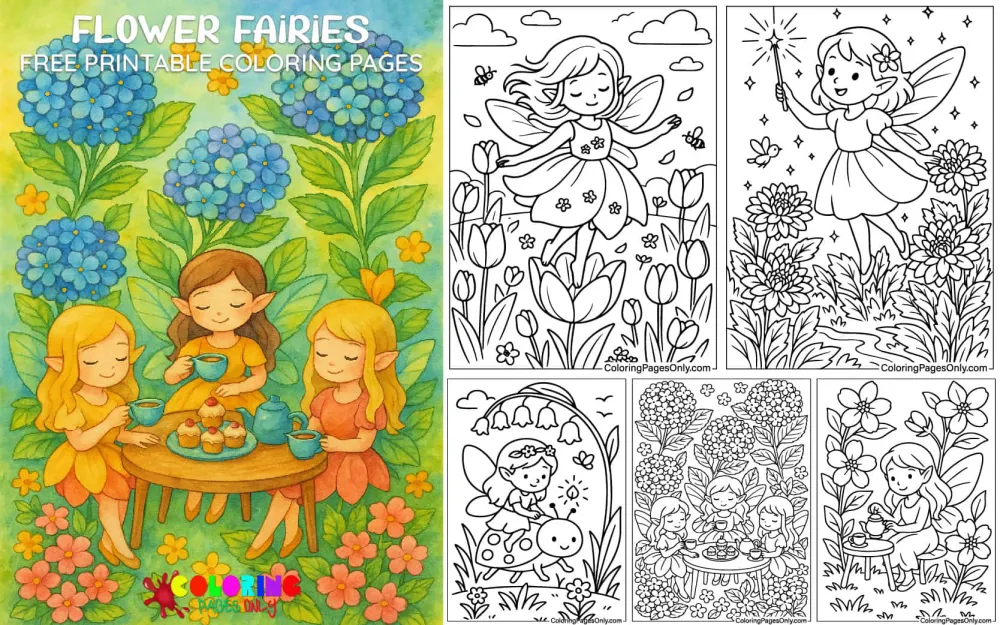
Free Flower Fairies Coloring Pages: 36 printable PDF designs of garden fairies, seasonal scenes, and small woodland friends. No printer is needed to use these, either, since the online coloring tool lets any page be finished directly in the browser.
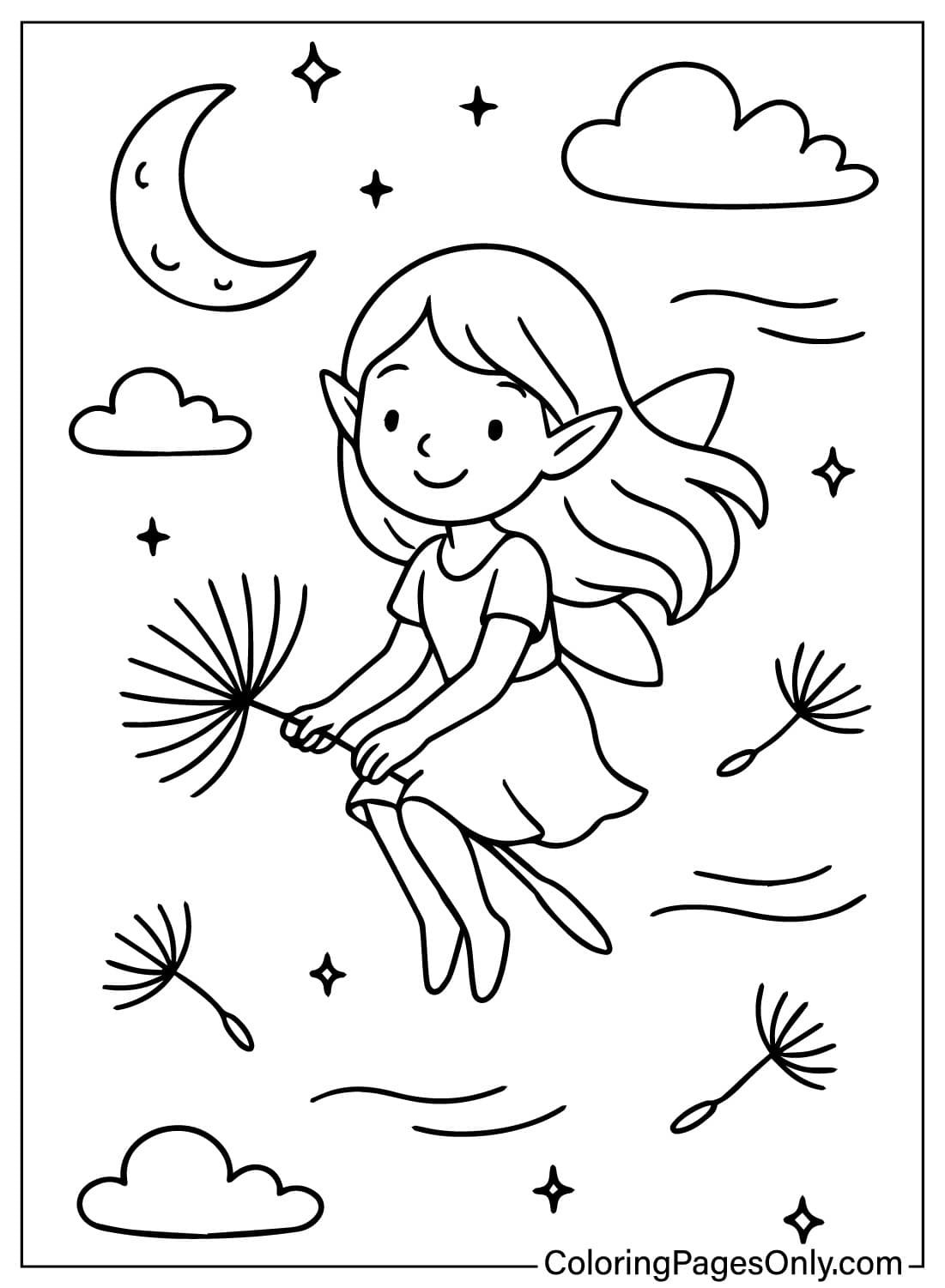
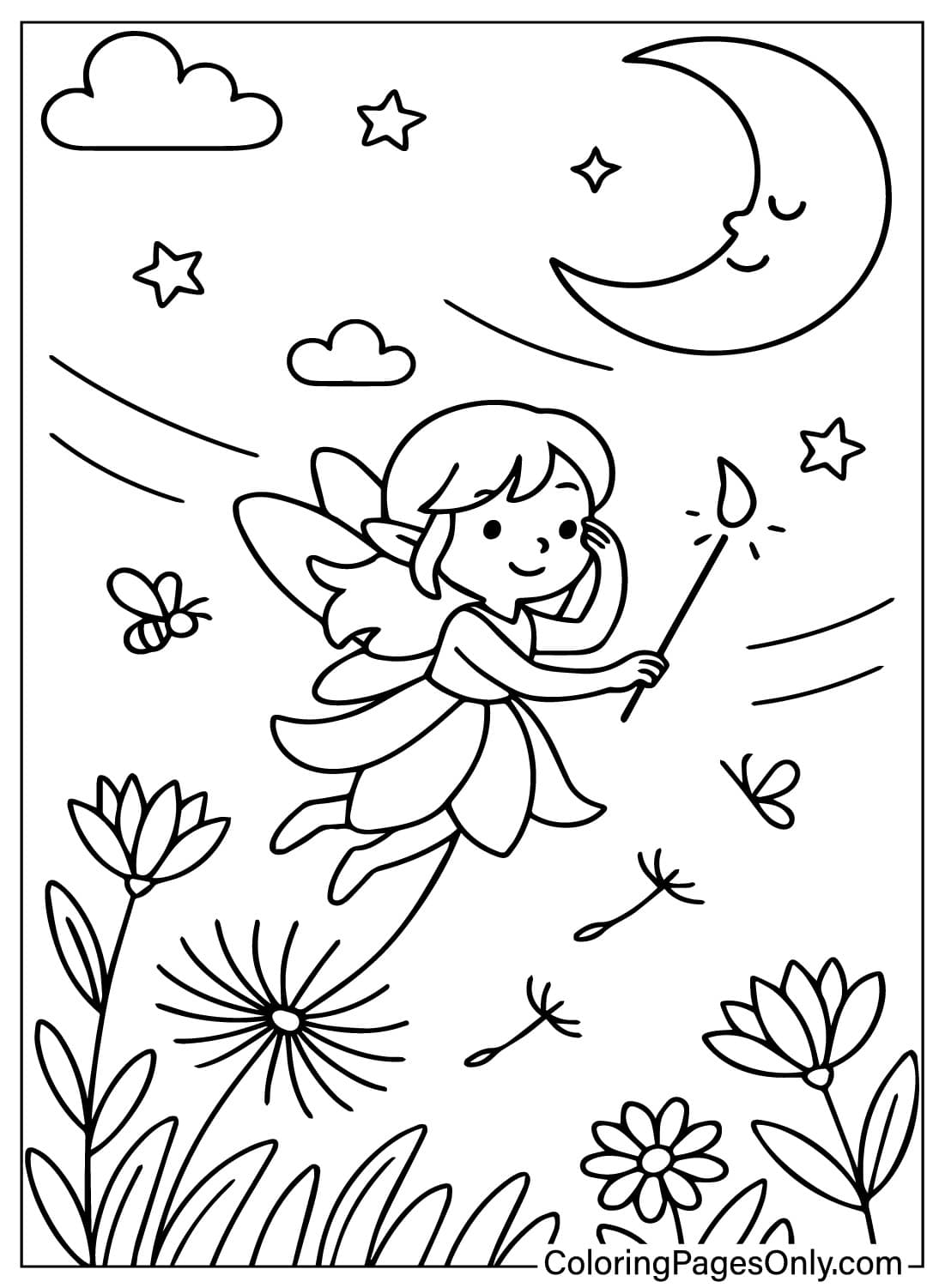
The idea of a fairy tied to a specific flower goes back to English illustrator Cicely Mary Barker, whose first Flower Fairies book appeared in 1923 and whose character designs remain a licensed property today. This collection is an original, fan-inspired take on that same general idea rather than a reproduction of Barker’s specific illustrations, so the fairies here appear in a more modern style, doing everyday things like reading, baking, or flying through a starry sky.
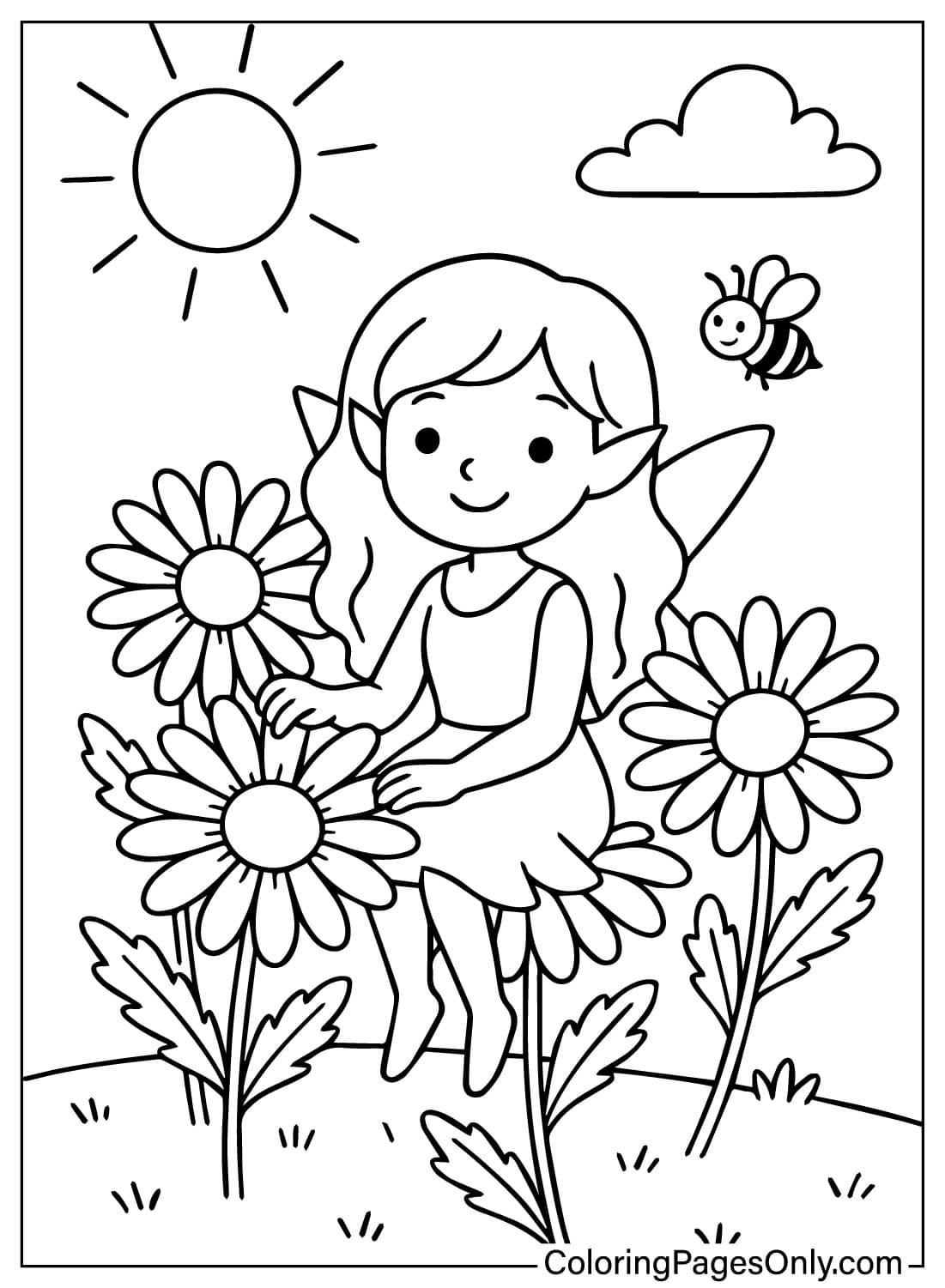
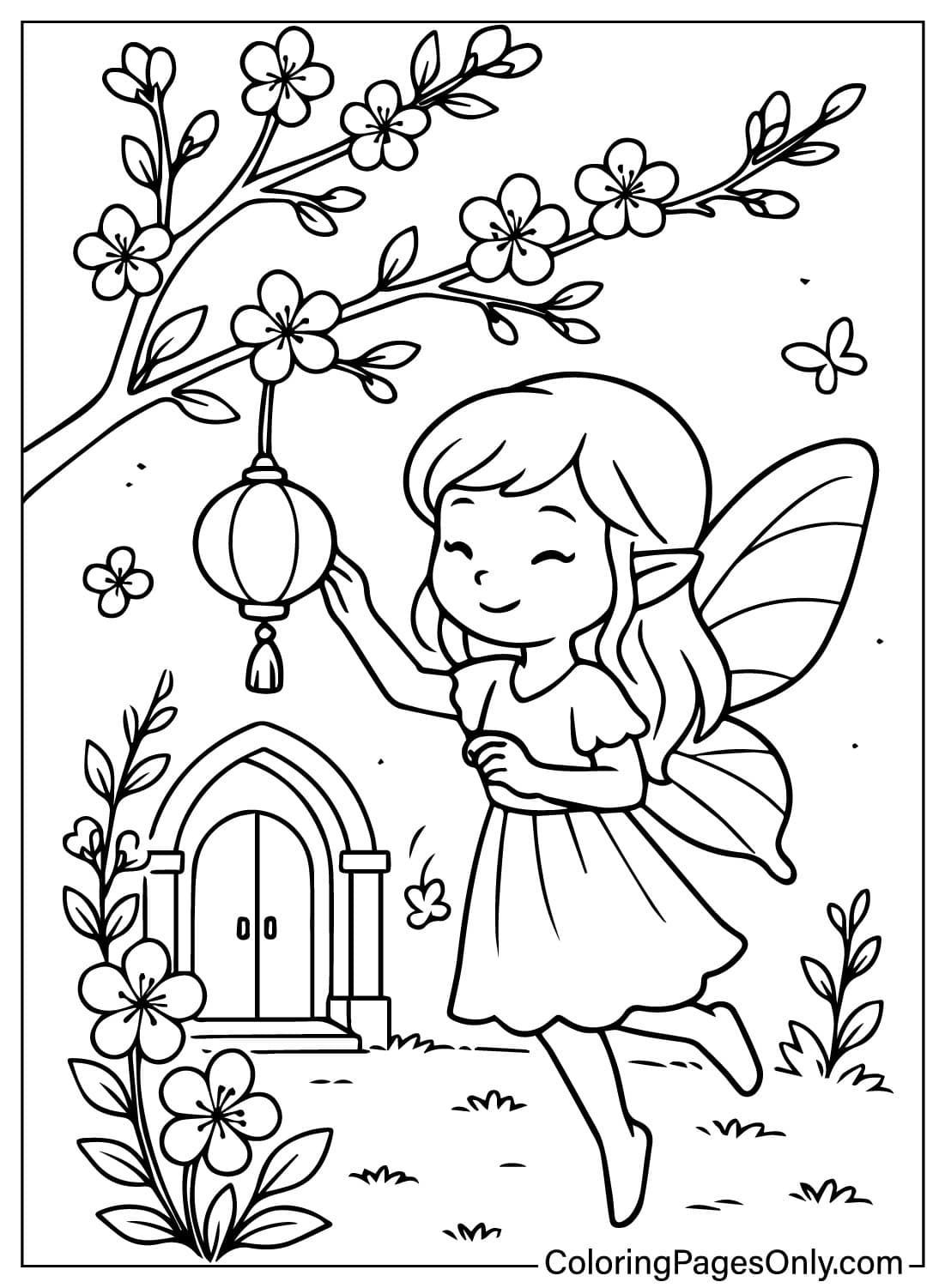
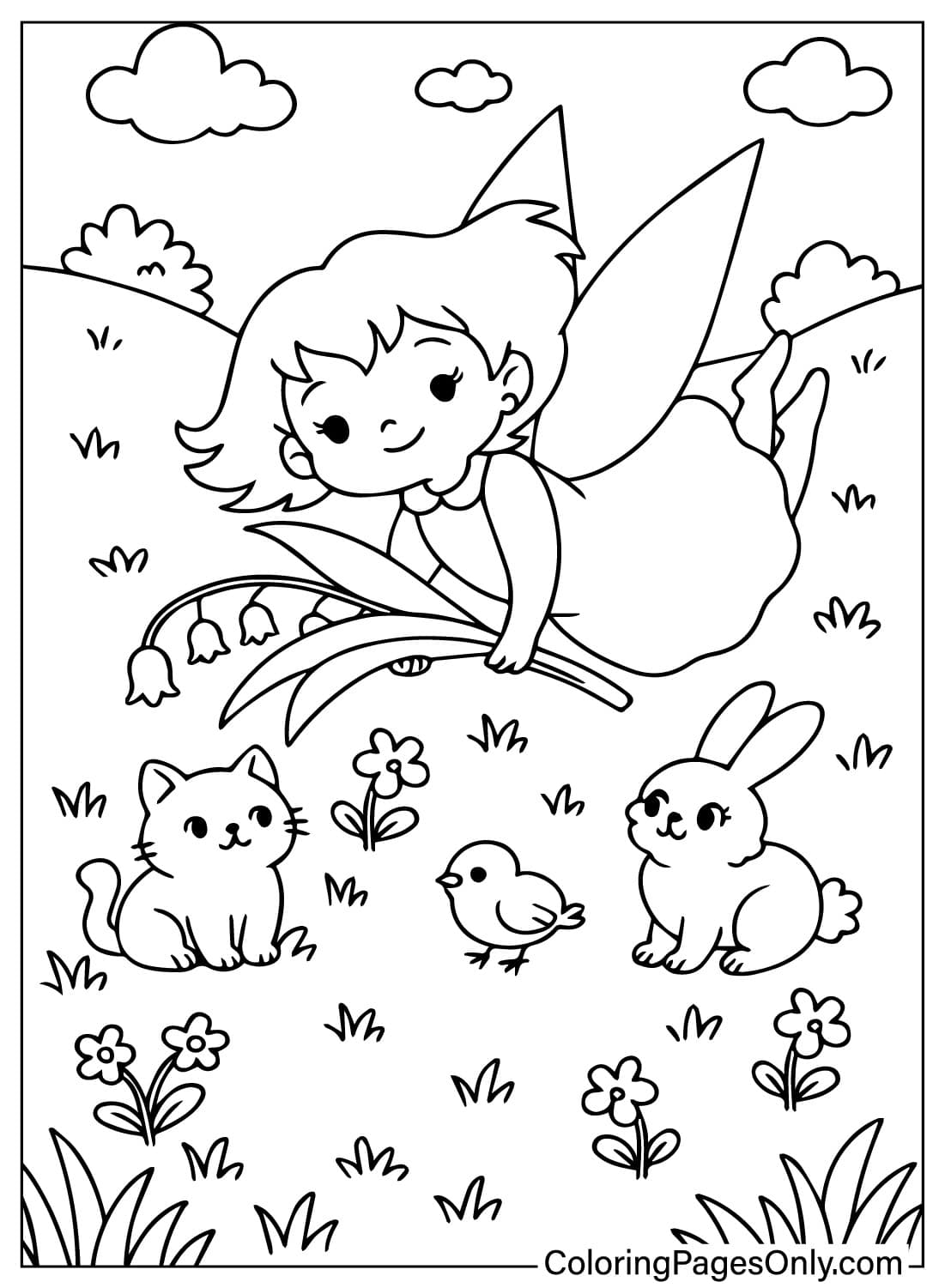
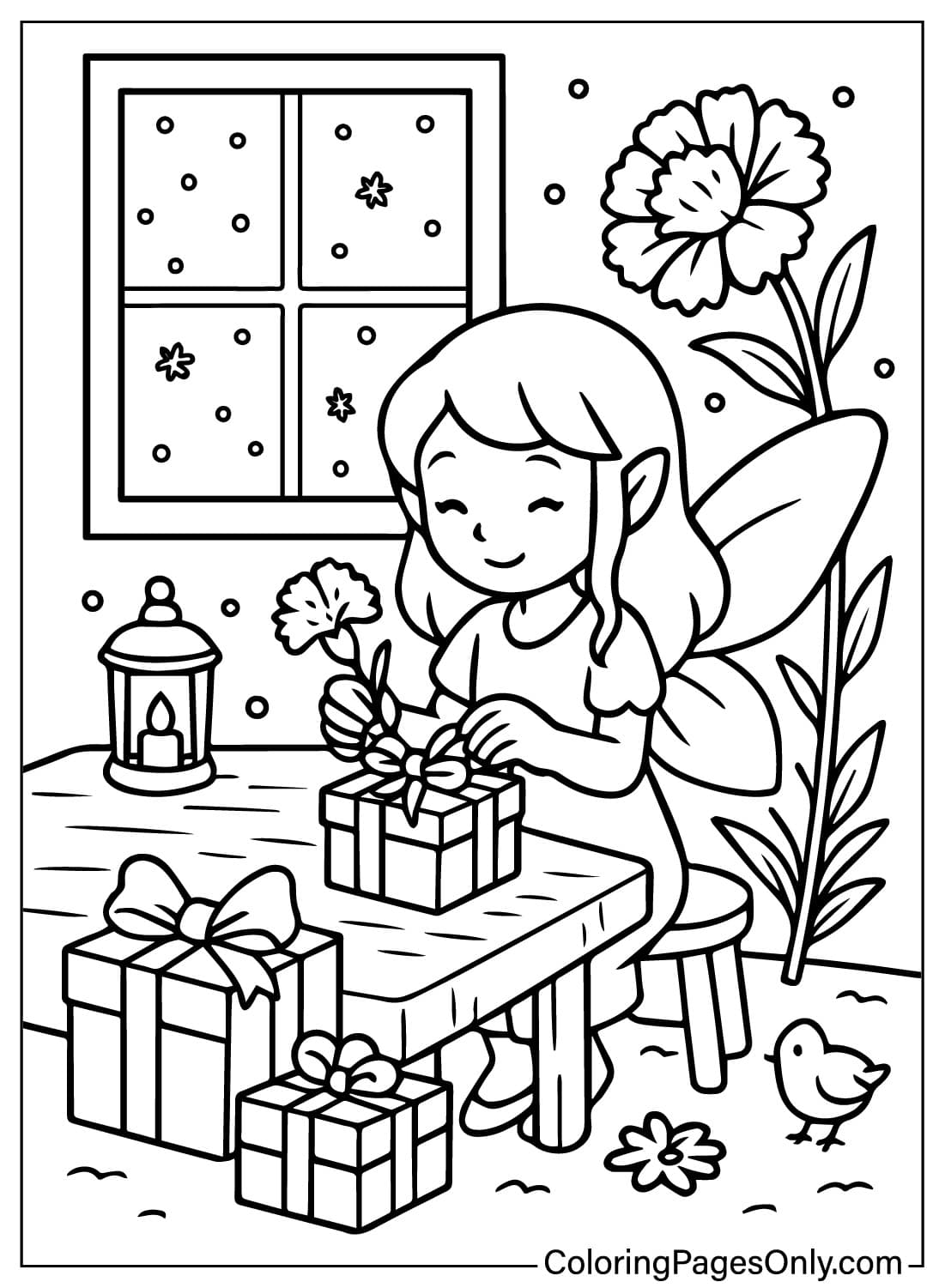
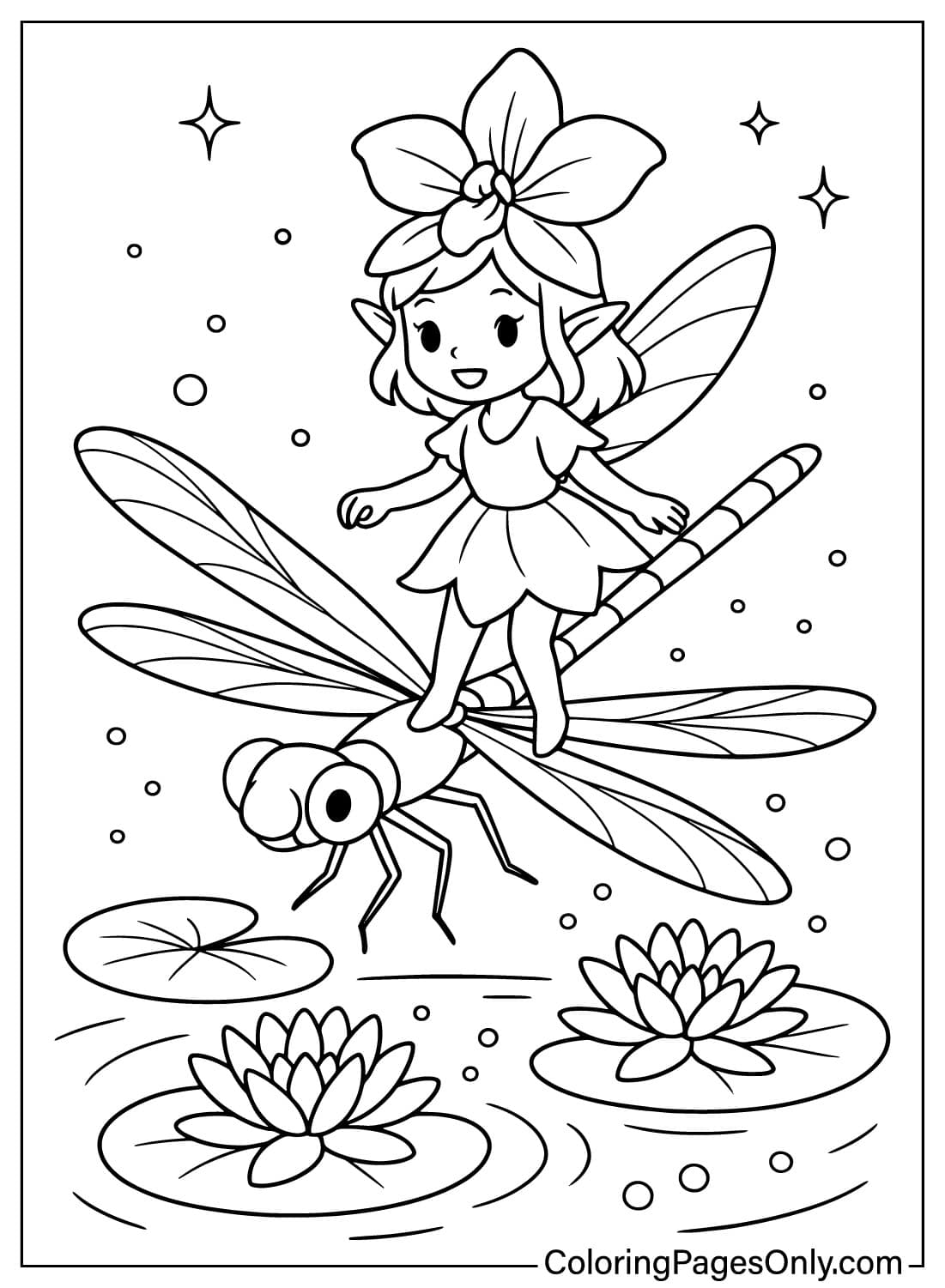
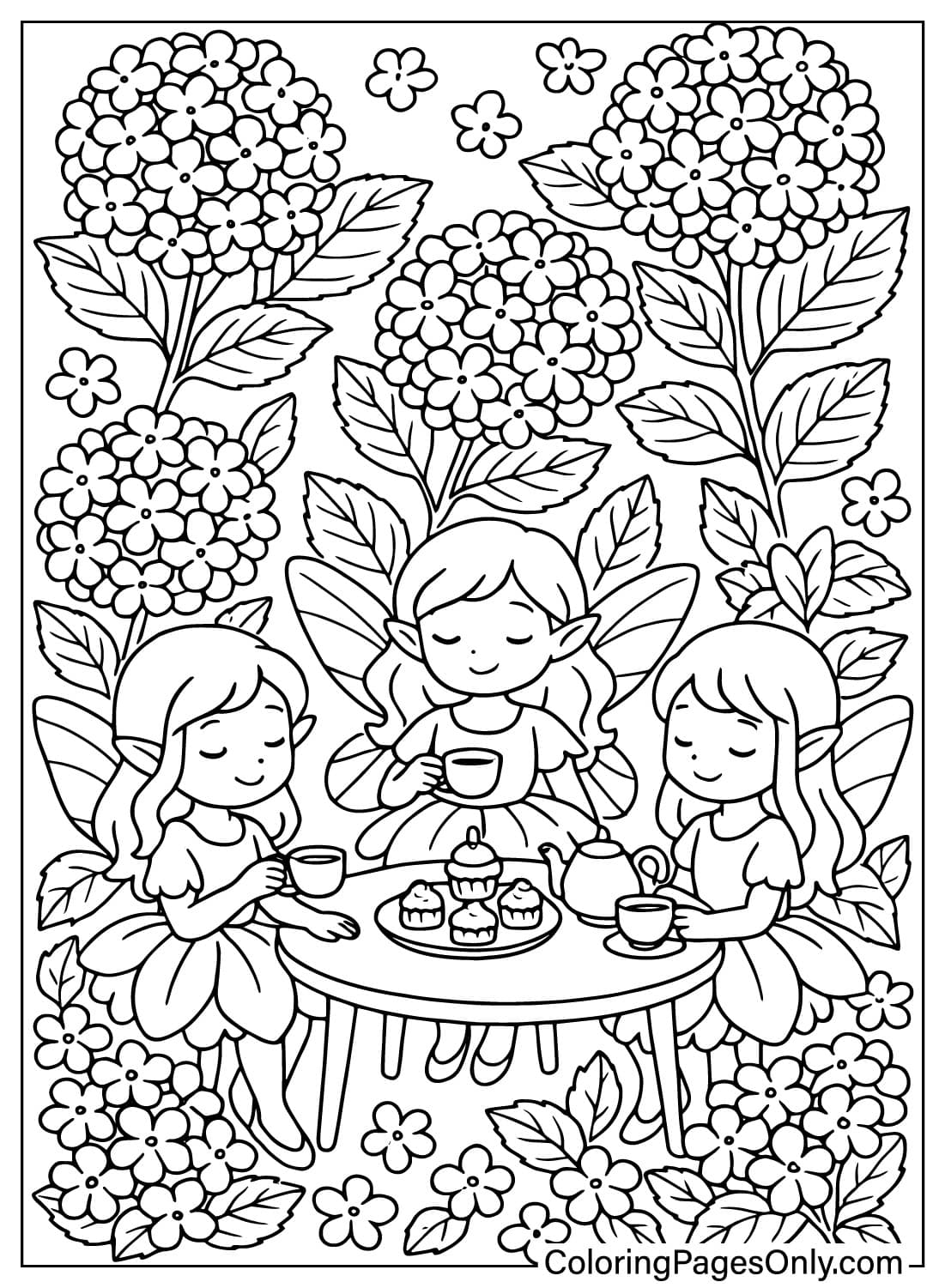
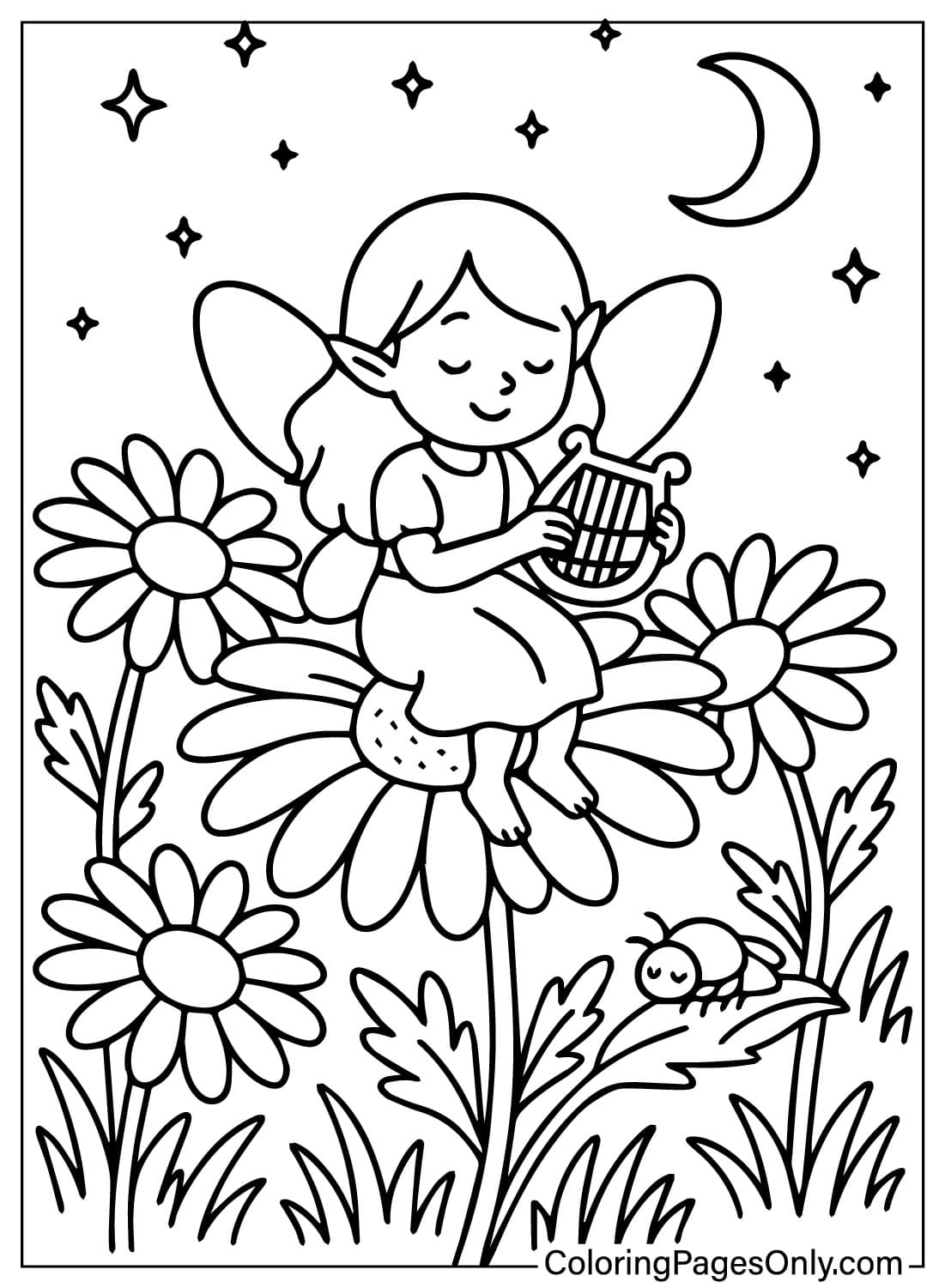
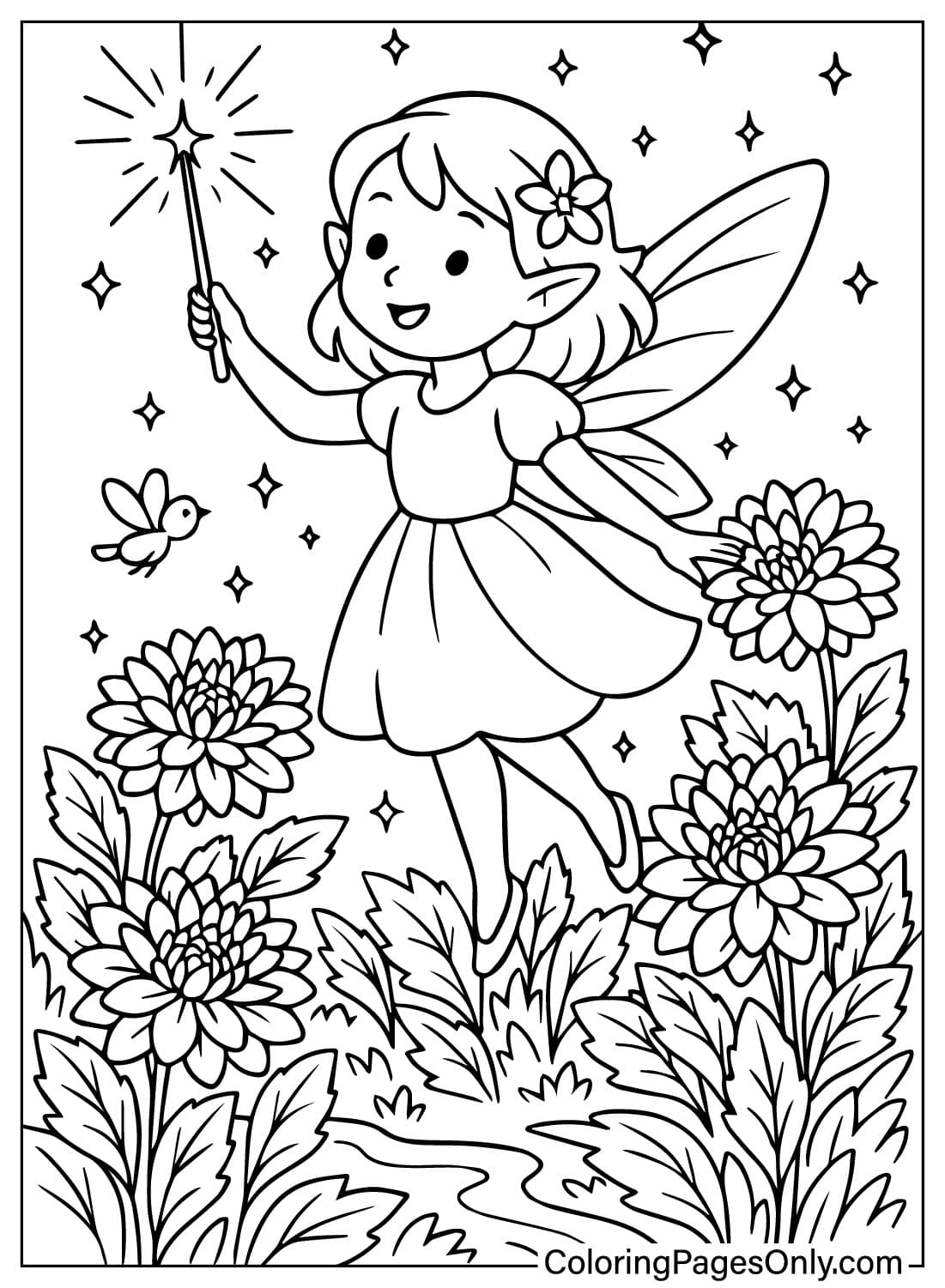
The 36 pages sort into five groups, from fairies paired with garden insects to seasonal and holiday scenes to a large cluster of simple solo portraits. Coloring options range from soft pastel wings and petals to brighter, more saturated seasonal backdrops, giving the set room for both a quick, simple page and a longer, more detailed one.
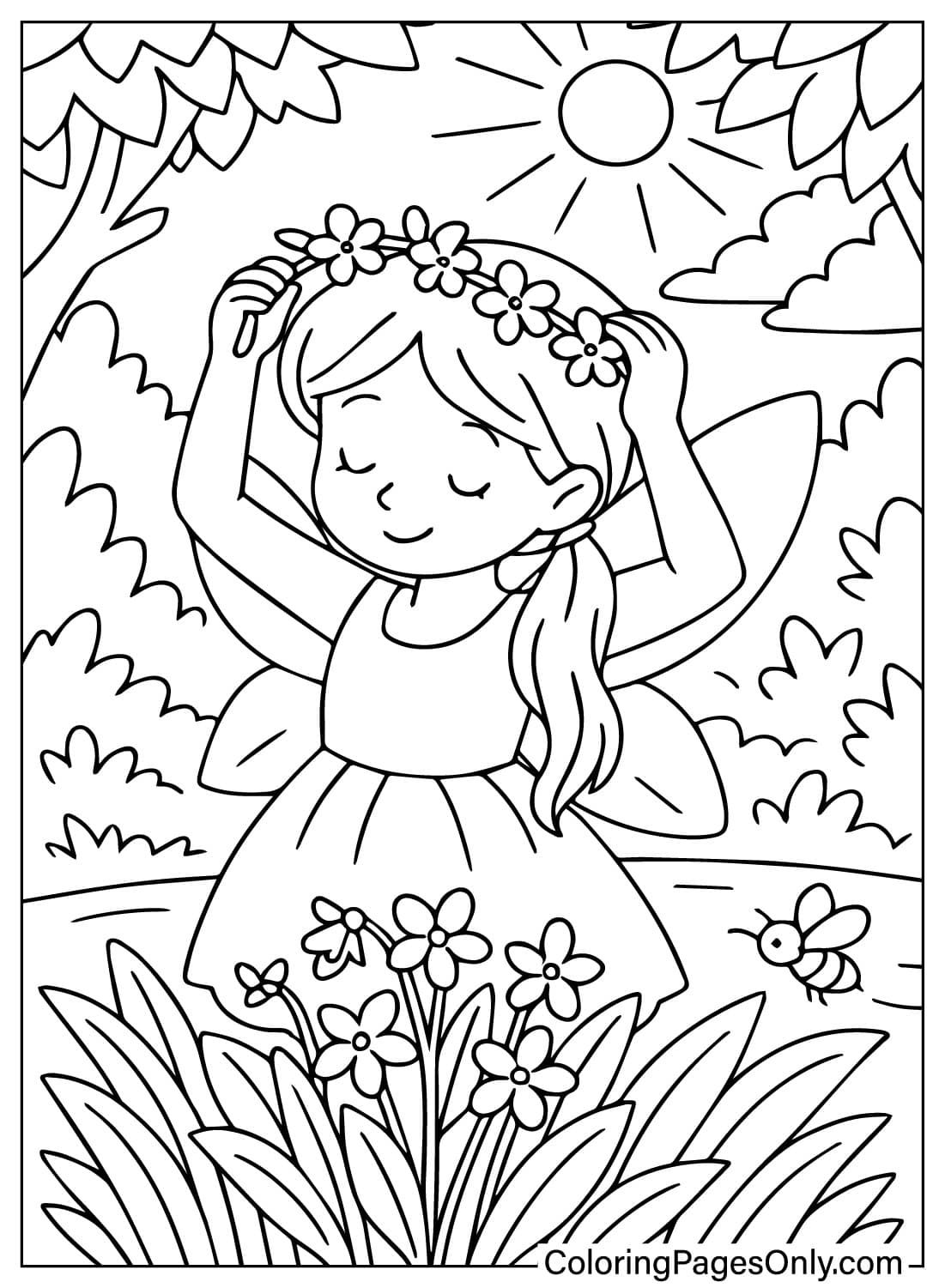
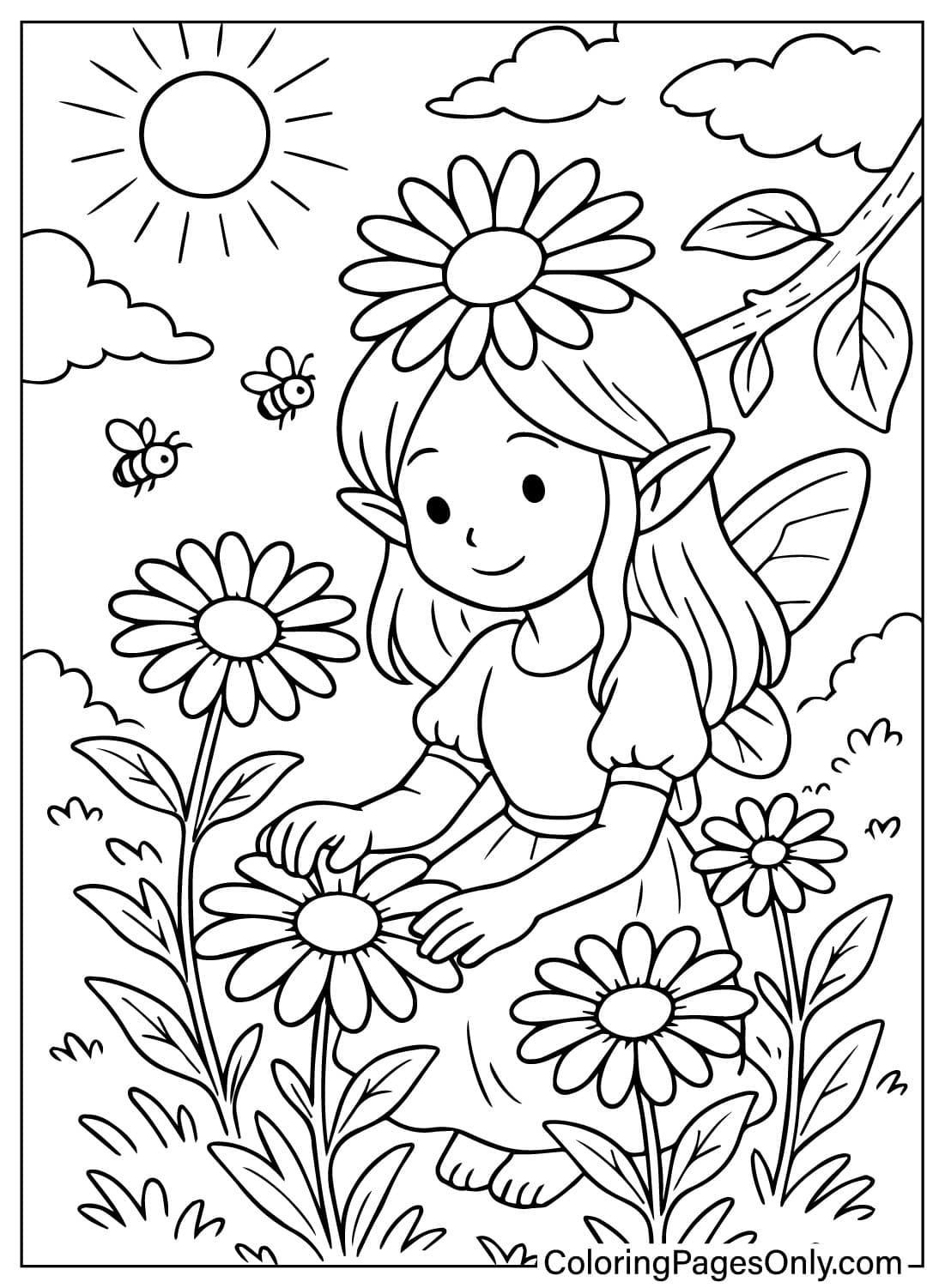
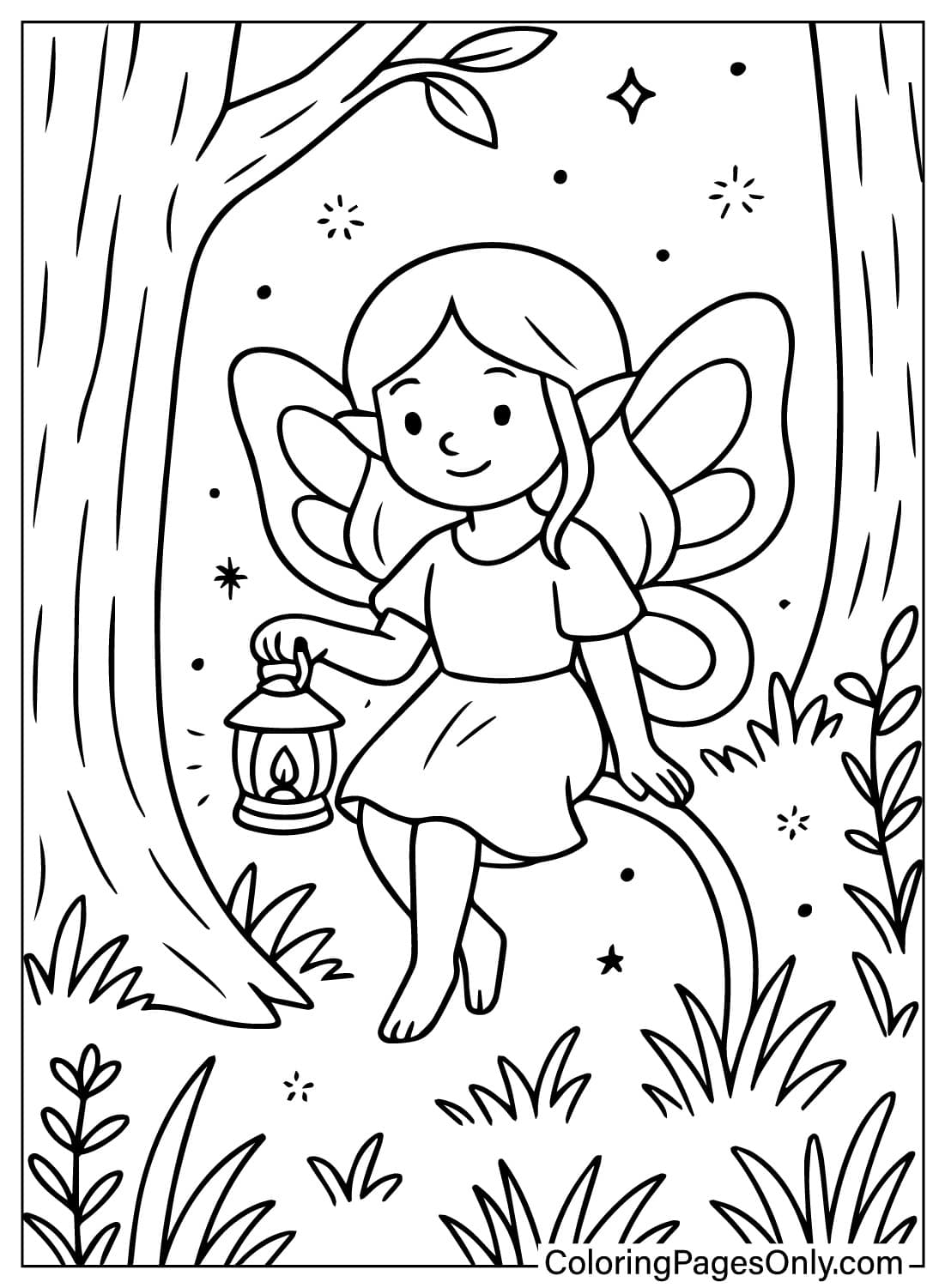



What Is Inside This Collection
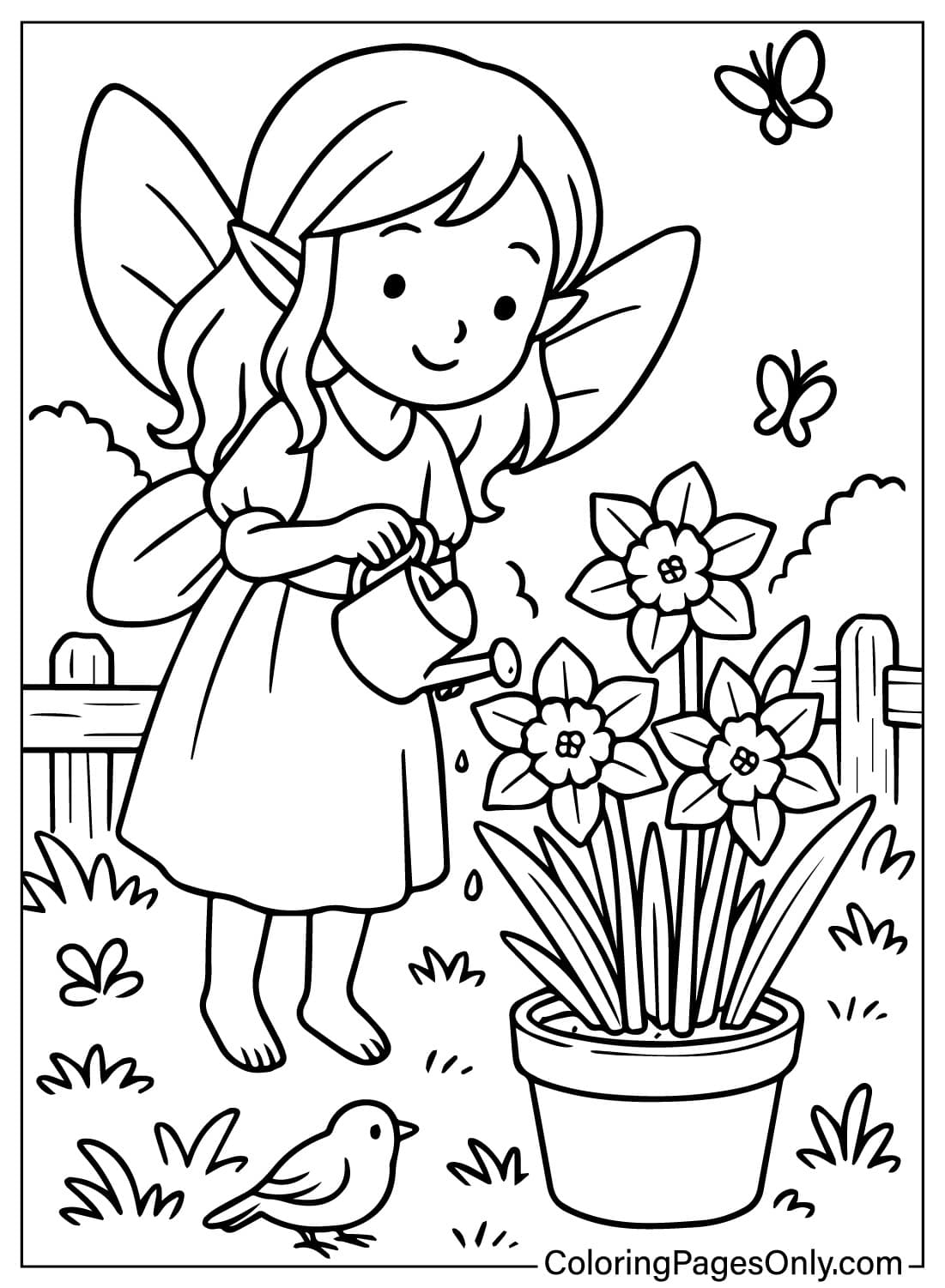
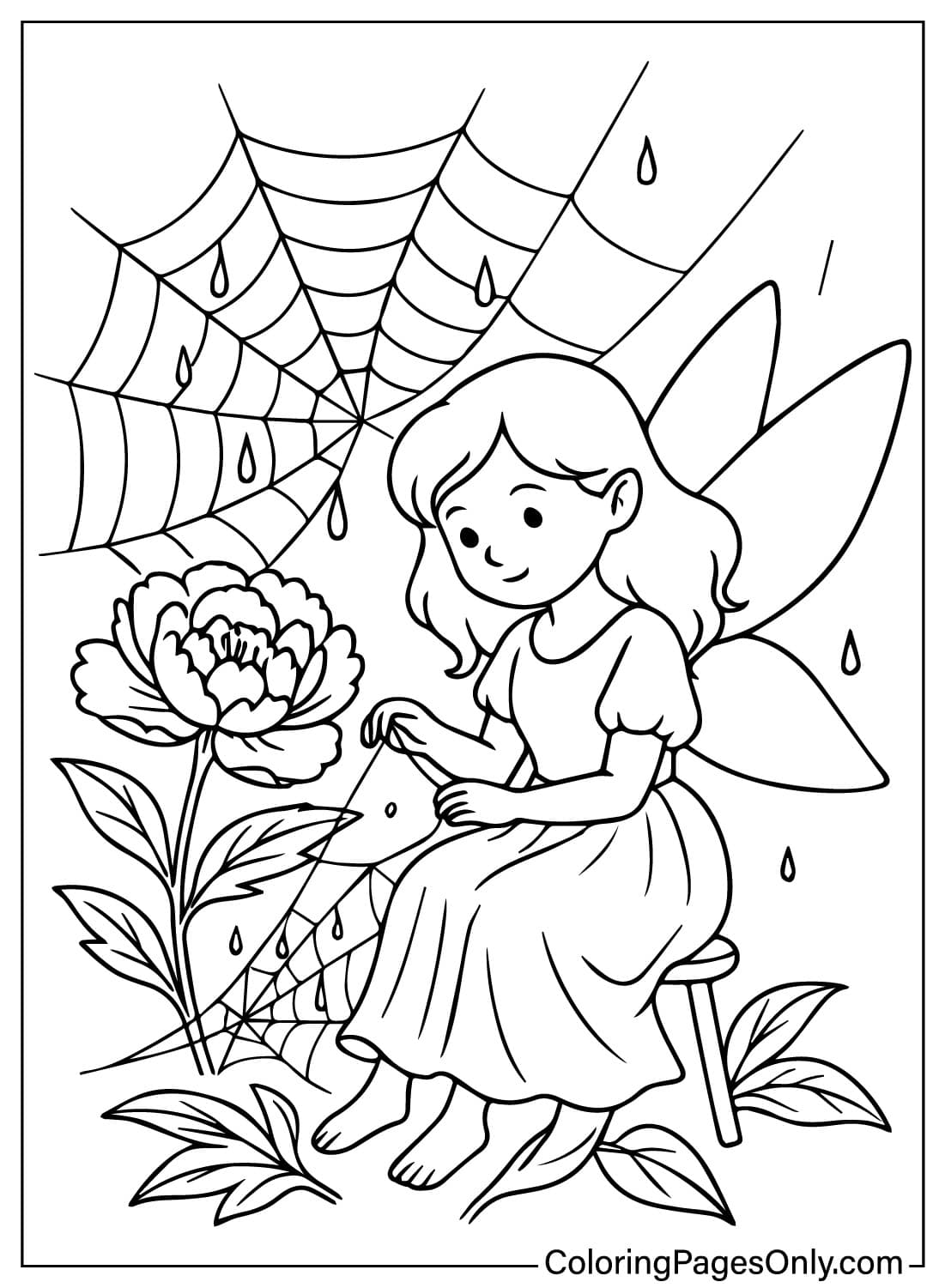
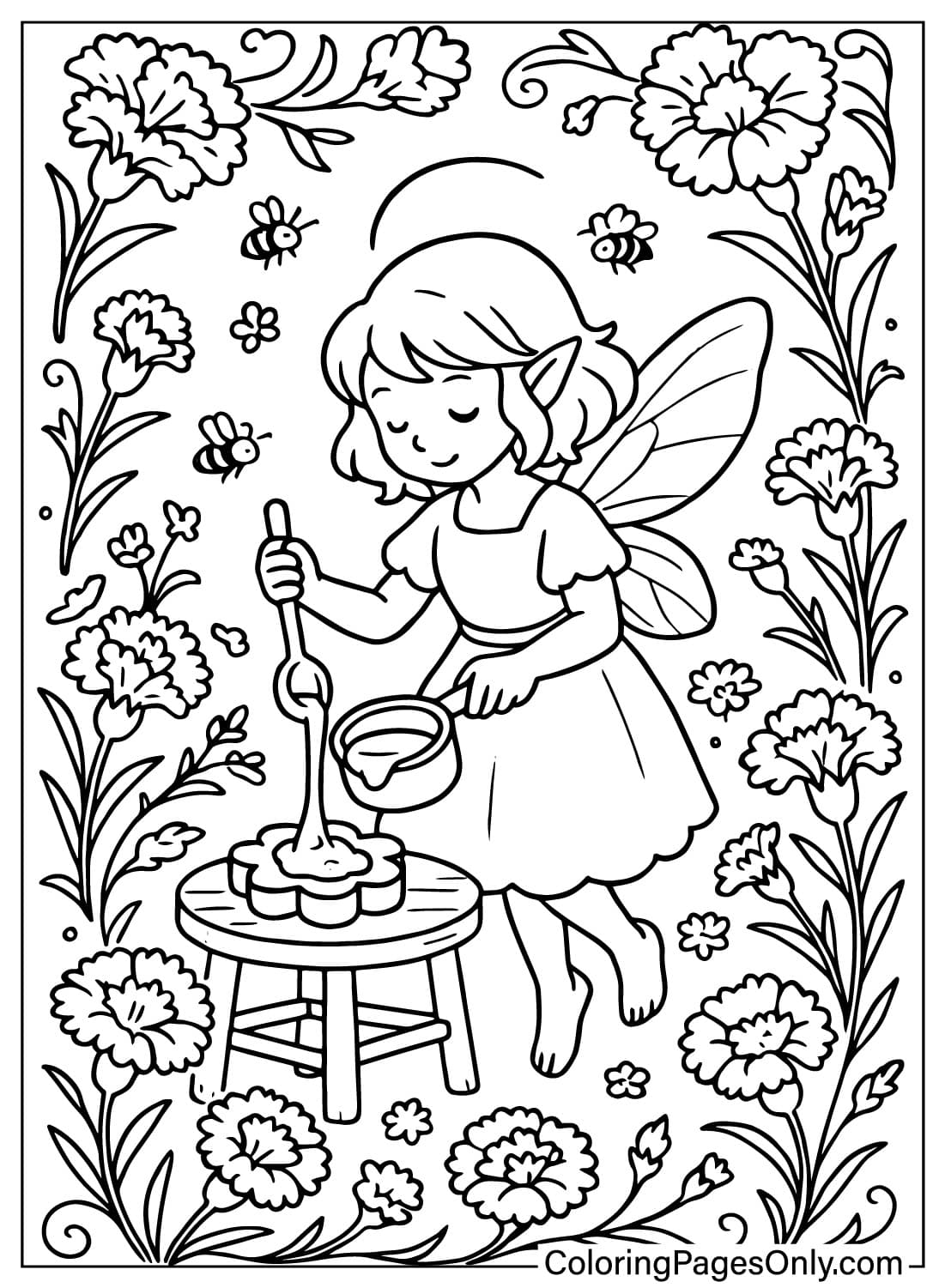
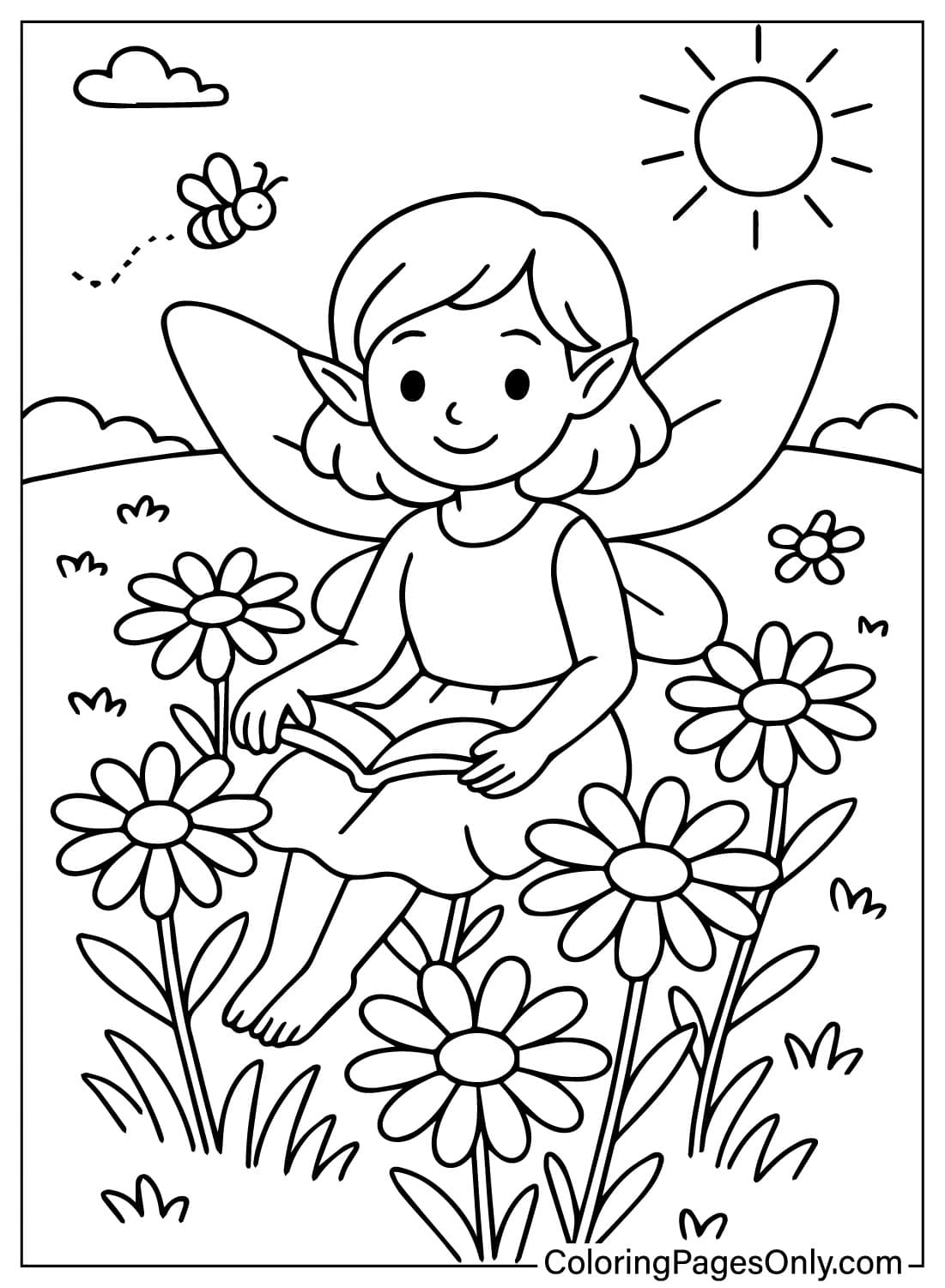
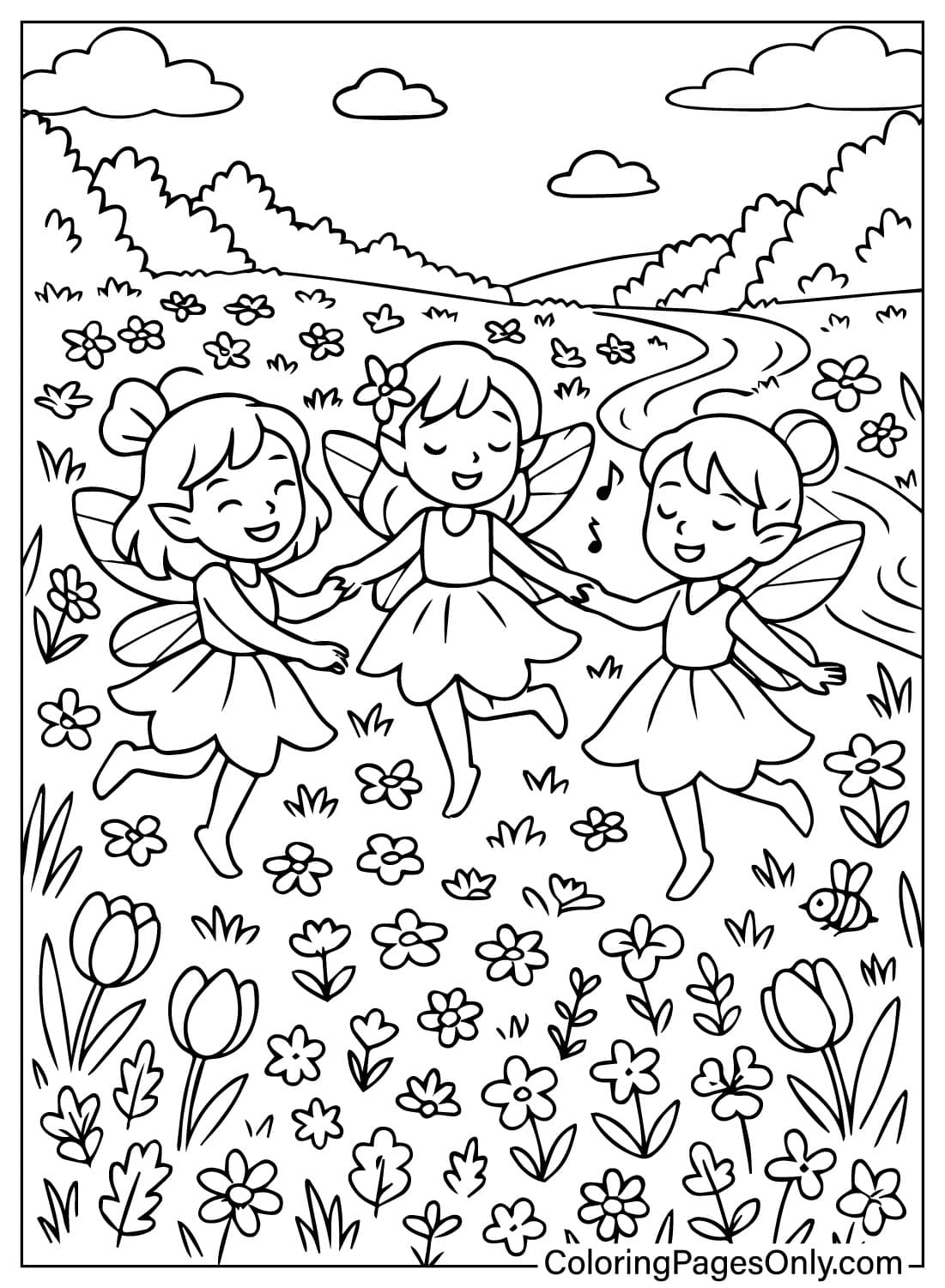
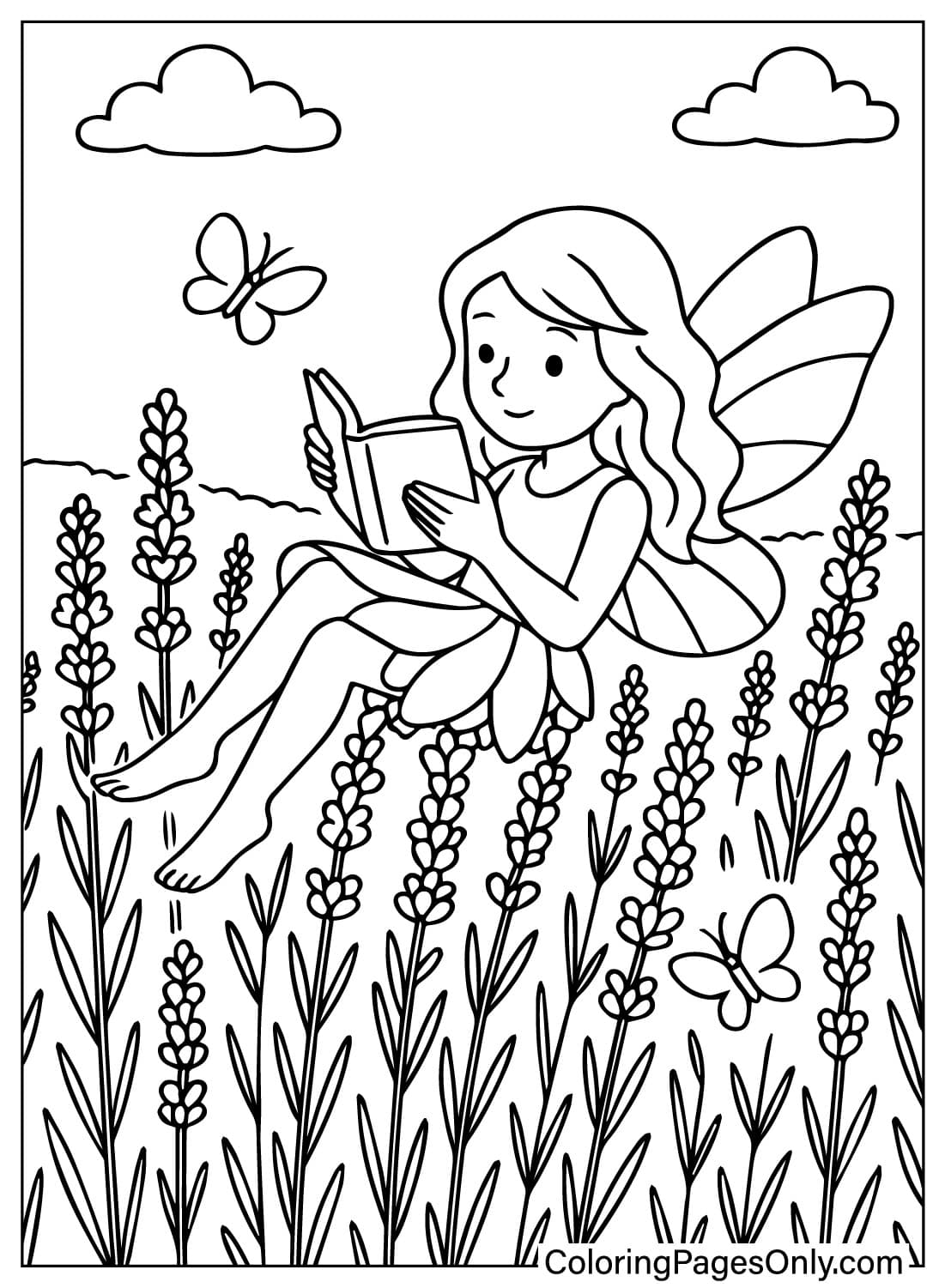
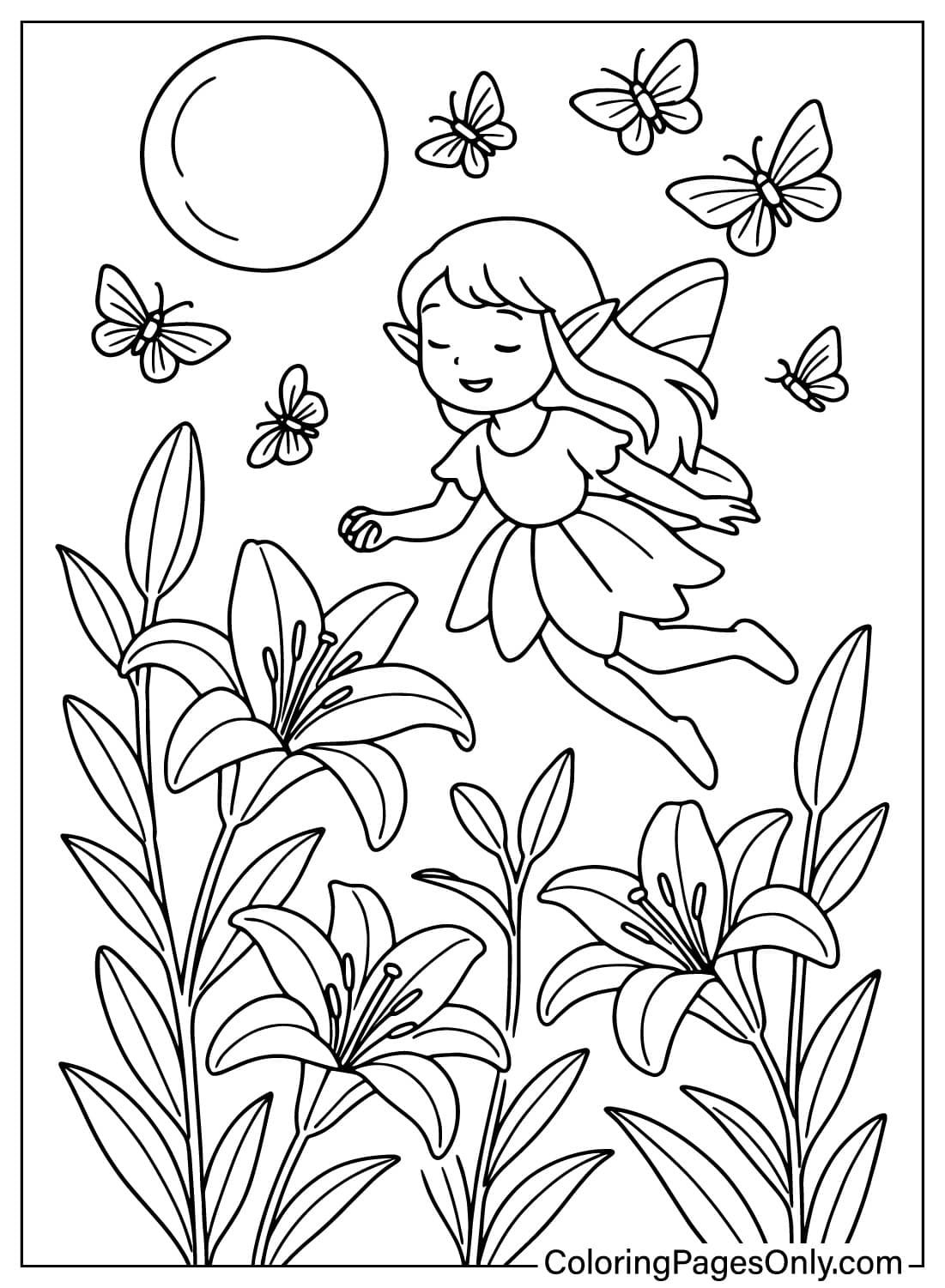
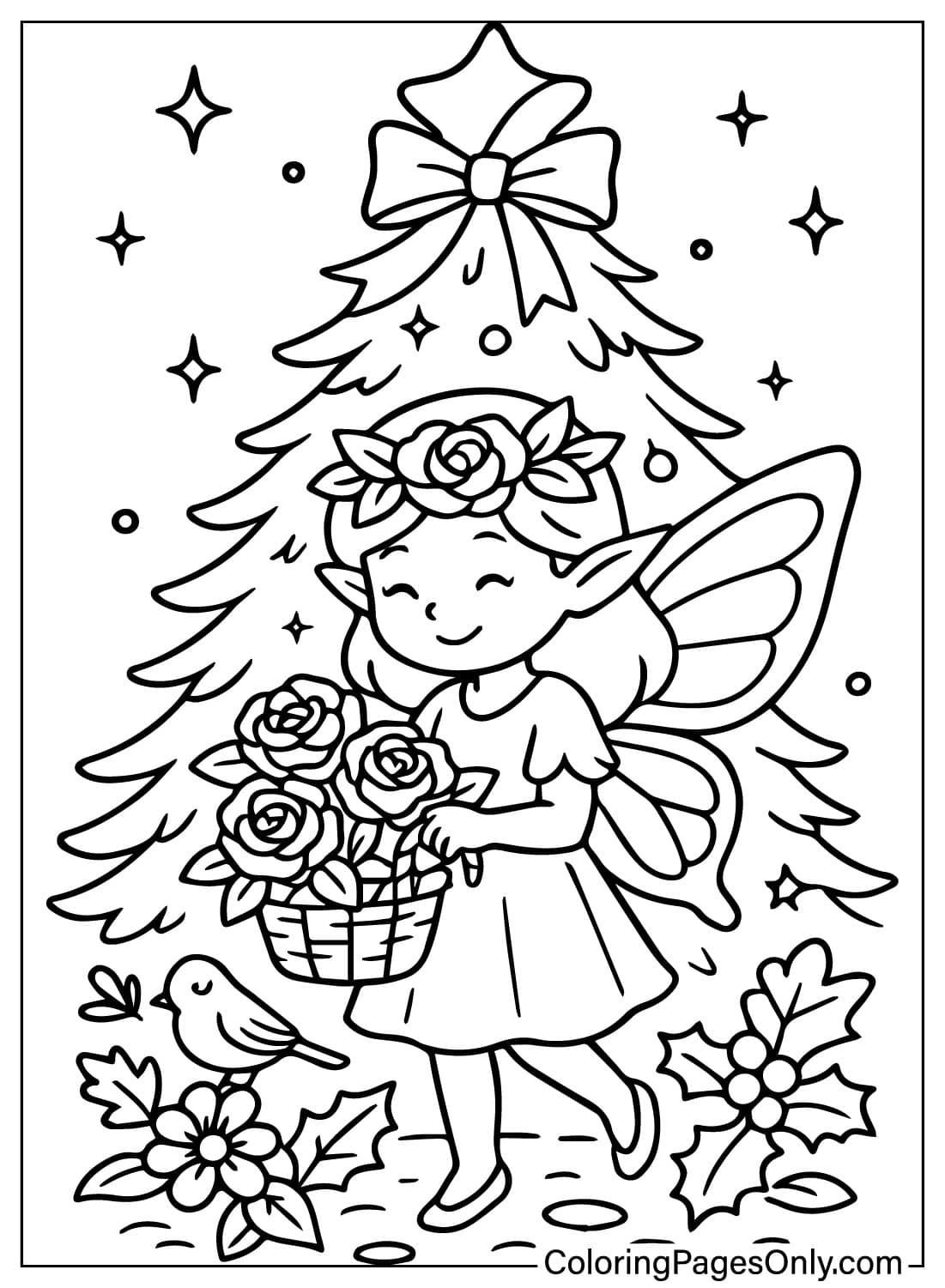
Five groups organize the 36 pages, moving from small garden companions to big seasonal backdrops to a cluster of portraits that barely differ from one another.
Nature and Garden Companions
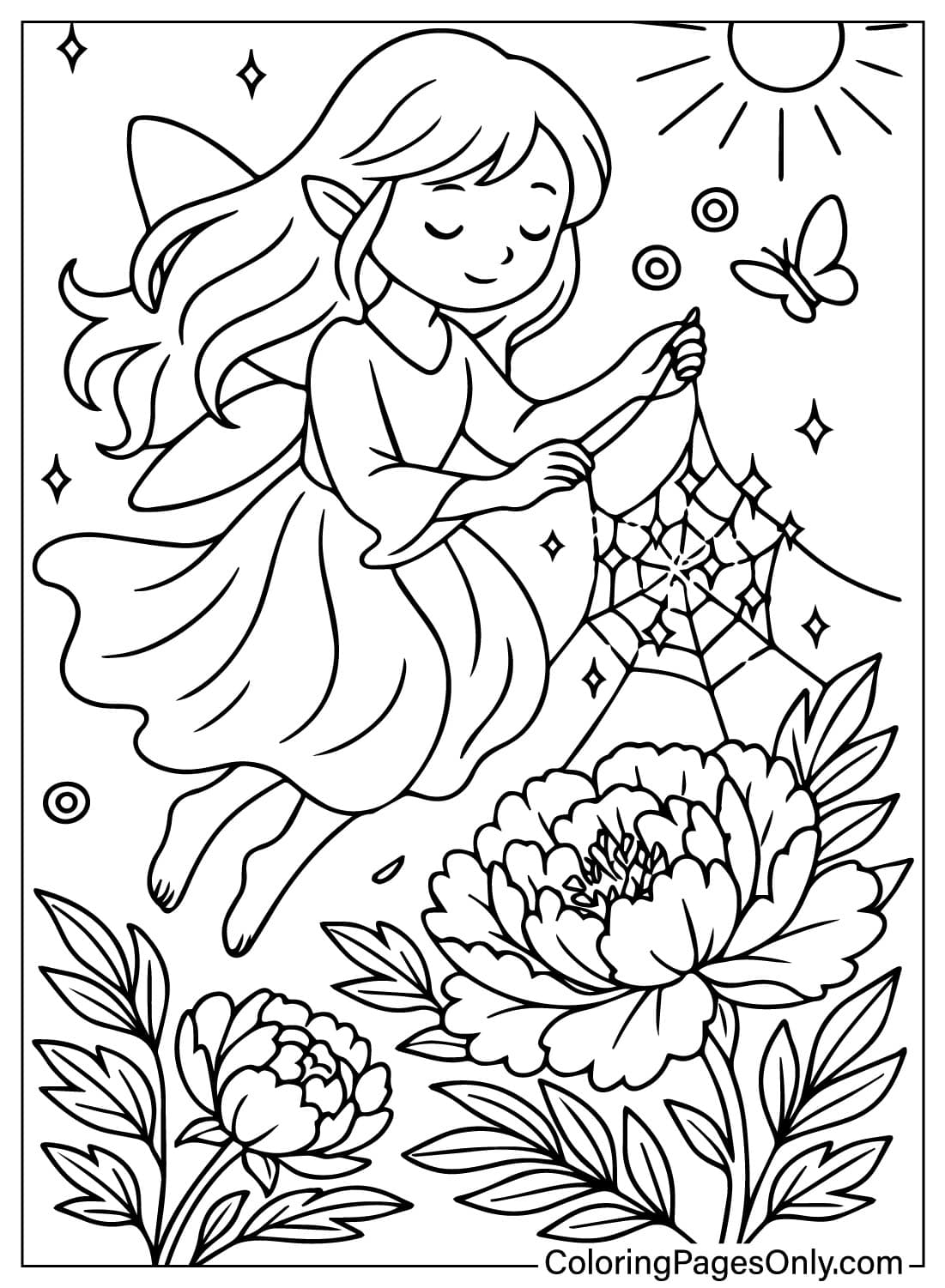
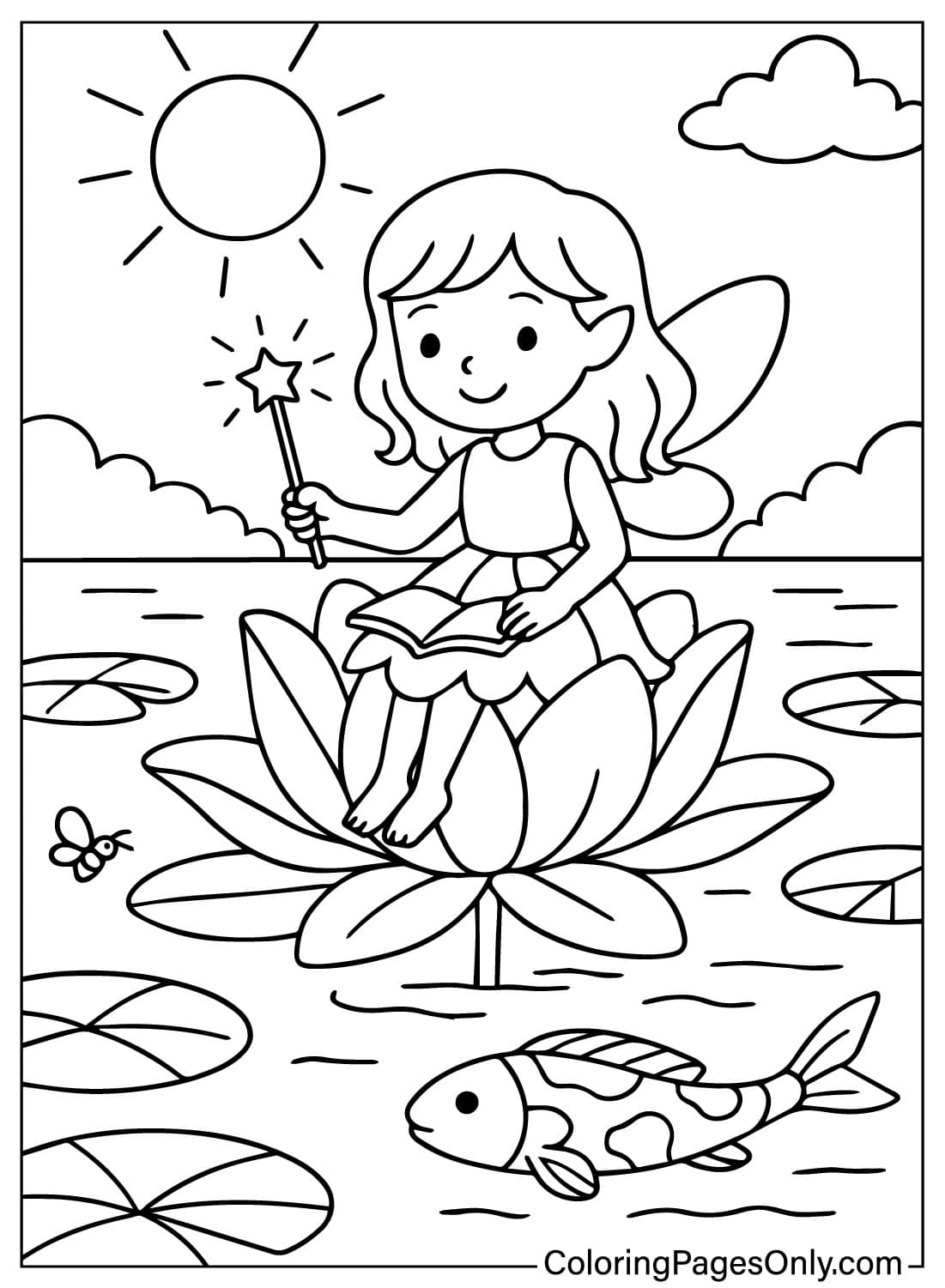
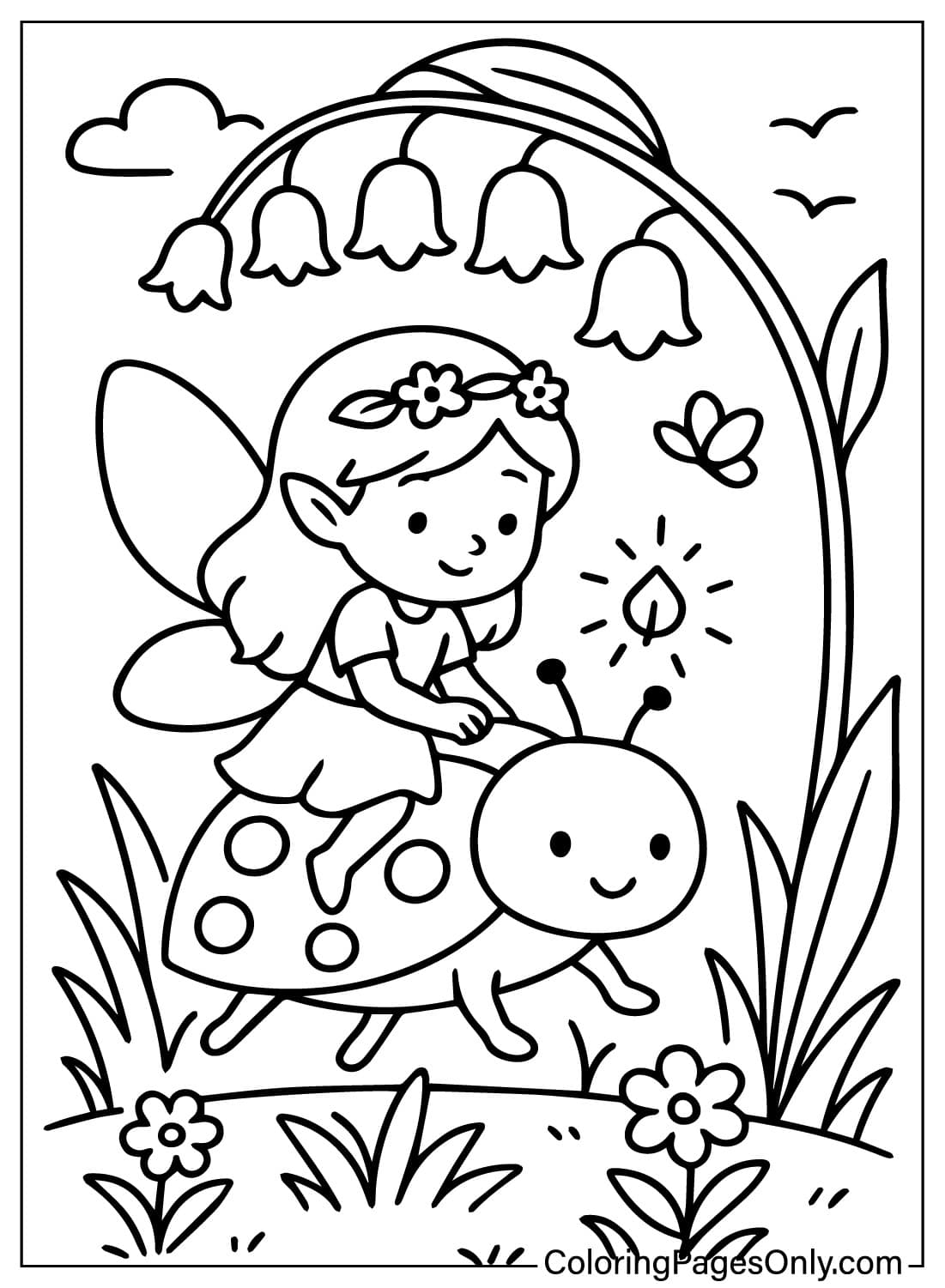
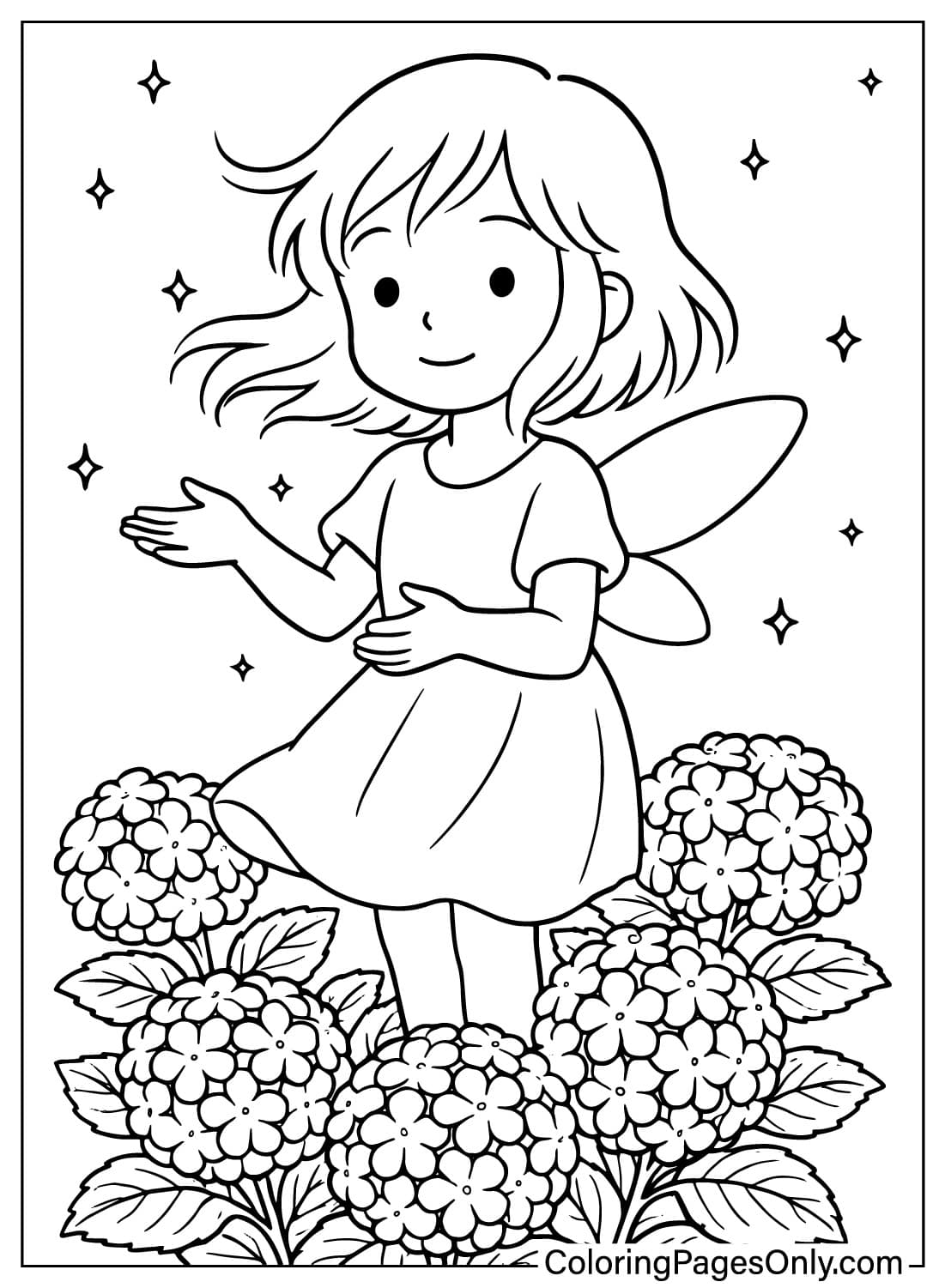
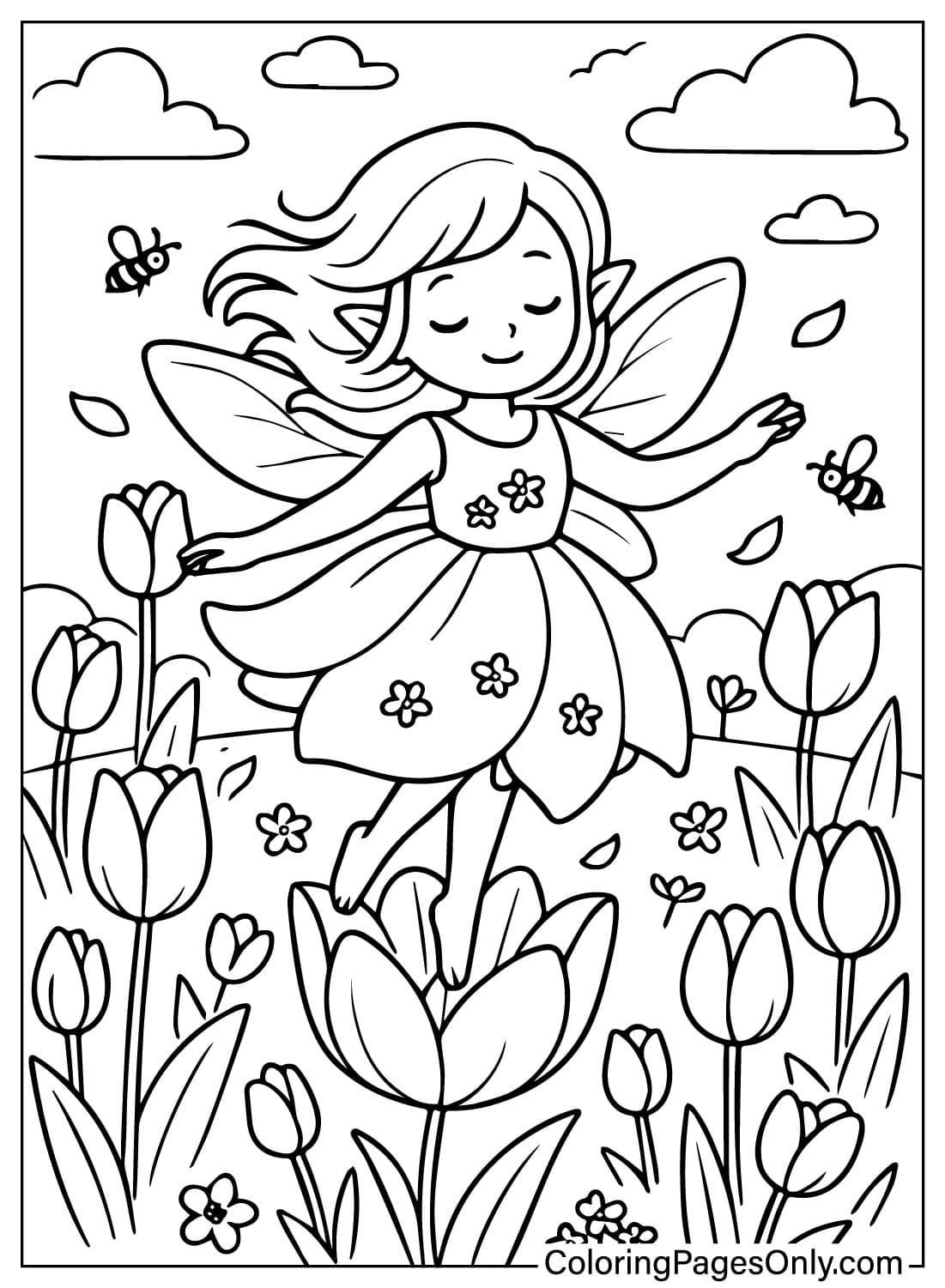
This is the largest thematic group, pairing a fairy with a ladybug, spider web, dragonfly, butterflies, or a specific flower like a lotus or hydrangea. Coloring suggestion: give each insect or flower its own natural, accurate color first, then let the fairy’s wings and outfit pick up one matching accent color from whatever she’s paired with.
Everyday and Whimsical Activities
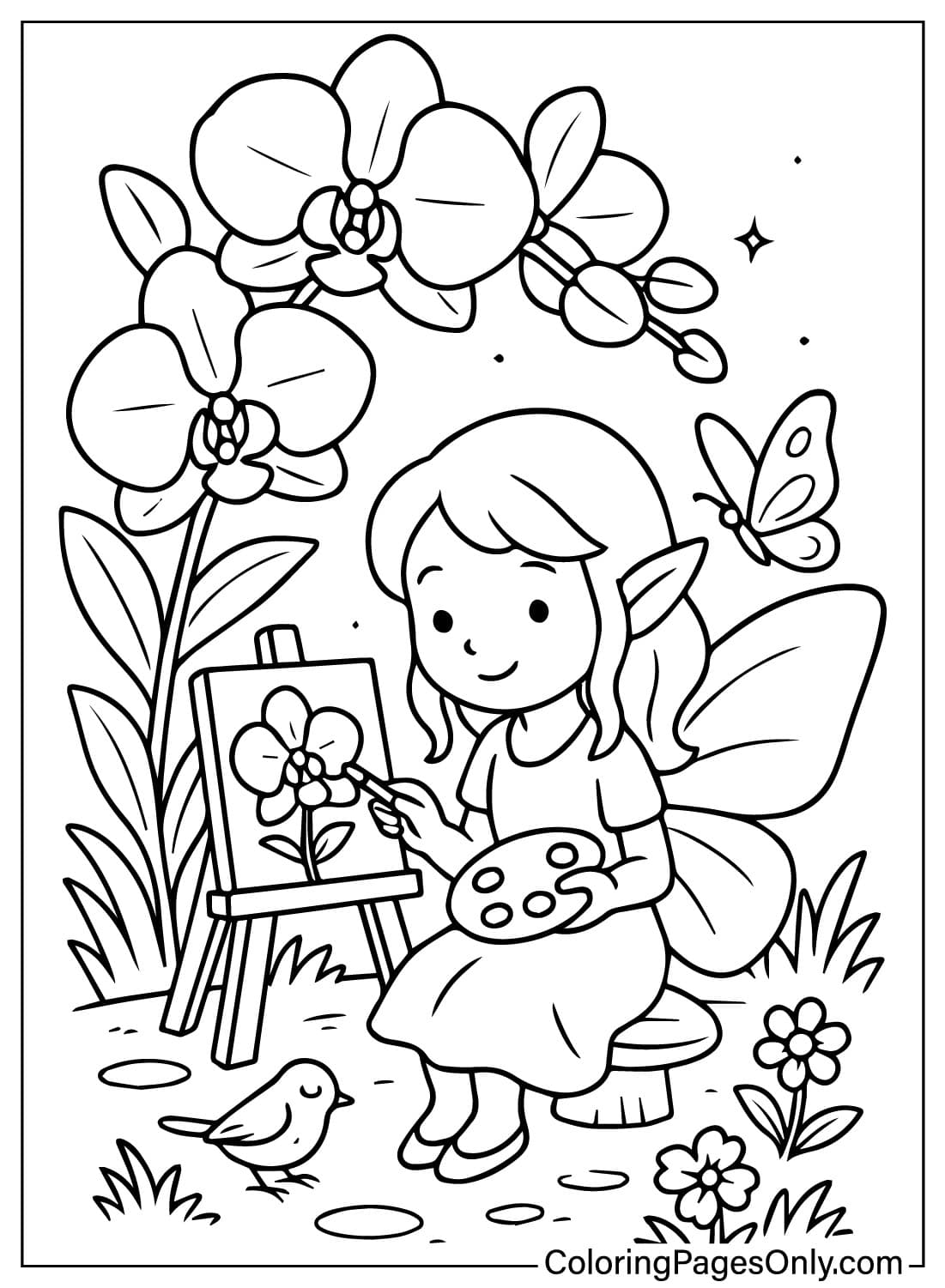
A handful of pages catch a fairy doing an ordinary task, drawing, baking, reading, or flying, rather than posing for a portrait. Coloring suggestion: keep the activity’s props, a book, a cake, and a pencil, in warm, realistic colors so they read clearly next to the fairy’s more fantastical wings and dress.
Seasonal and Holiday Scenes
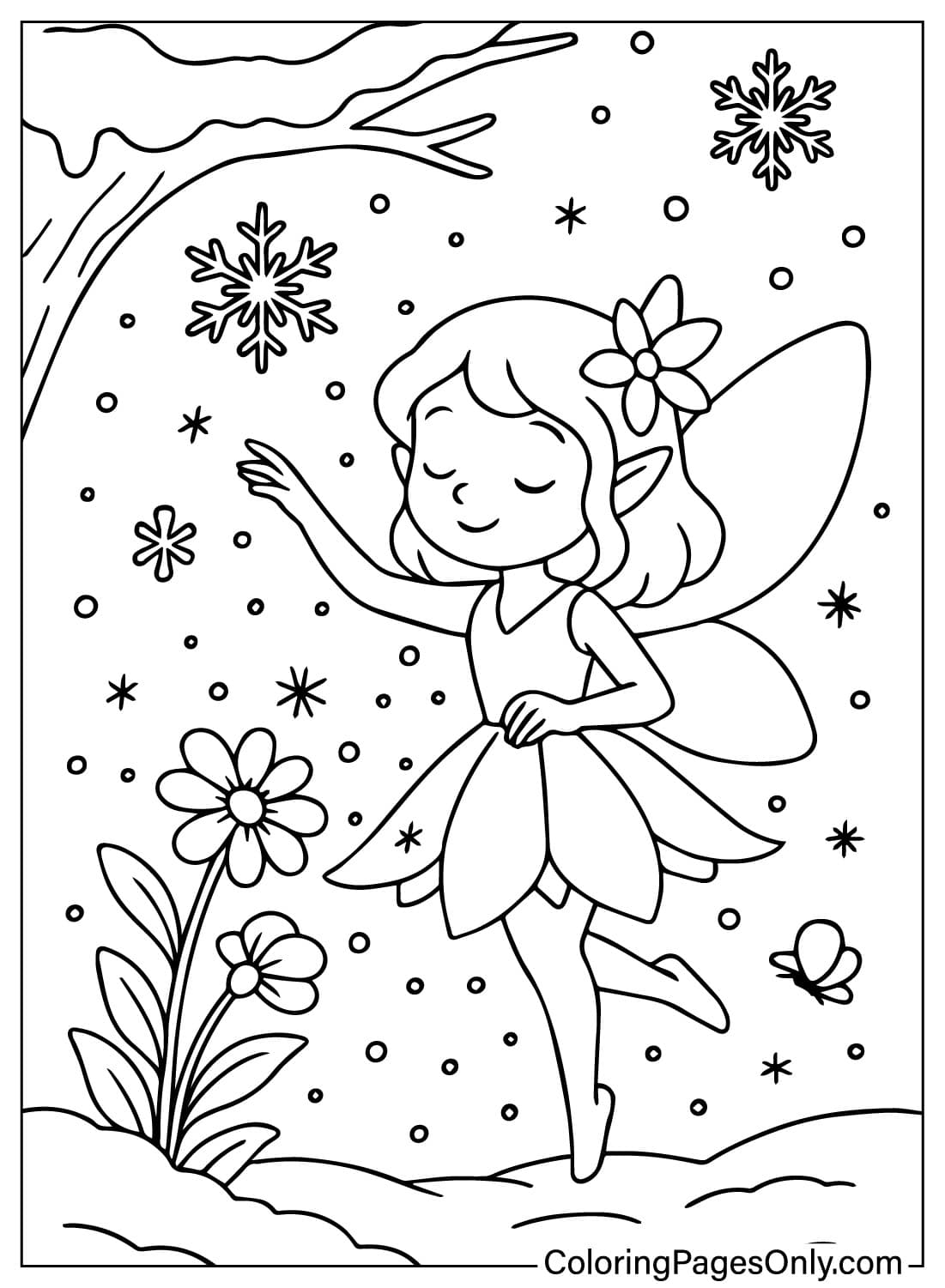
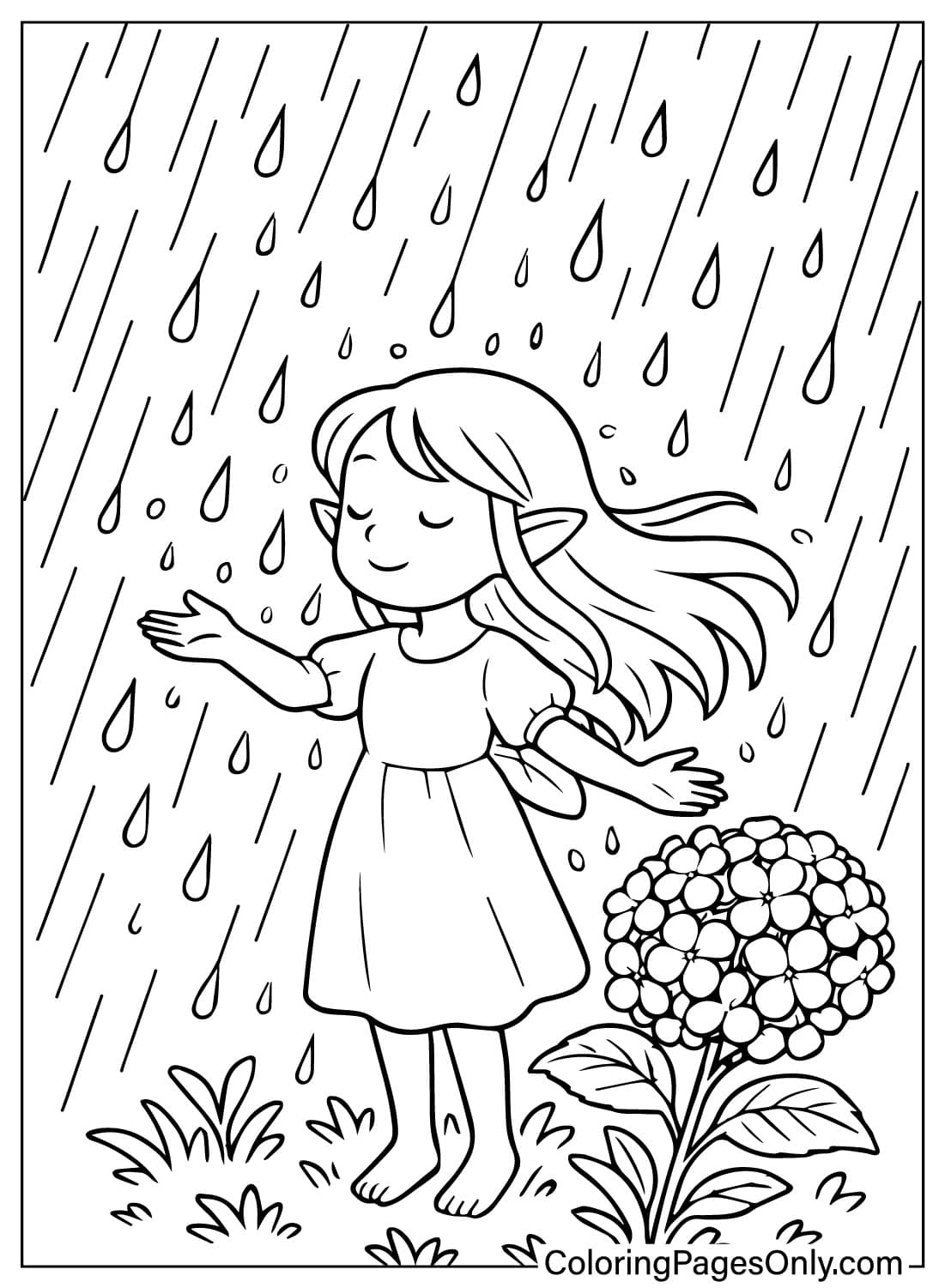
This group moves the fairy through the calendar: a snowy page, a rainy page, a New Year scene, a Christmas tree, and a couple of sunnier spring and summer pages. Coloring suggestion: shift the whole palette by season, rather than just the background, cooler blues and whites for winter pages, warmer yellows and greens for the spring and summer ones.
Garden Gatherings and Group Scenes
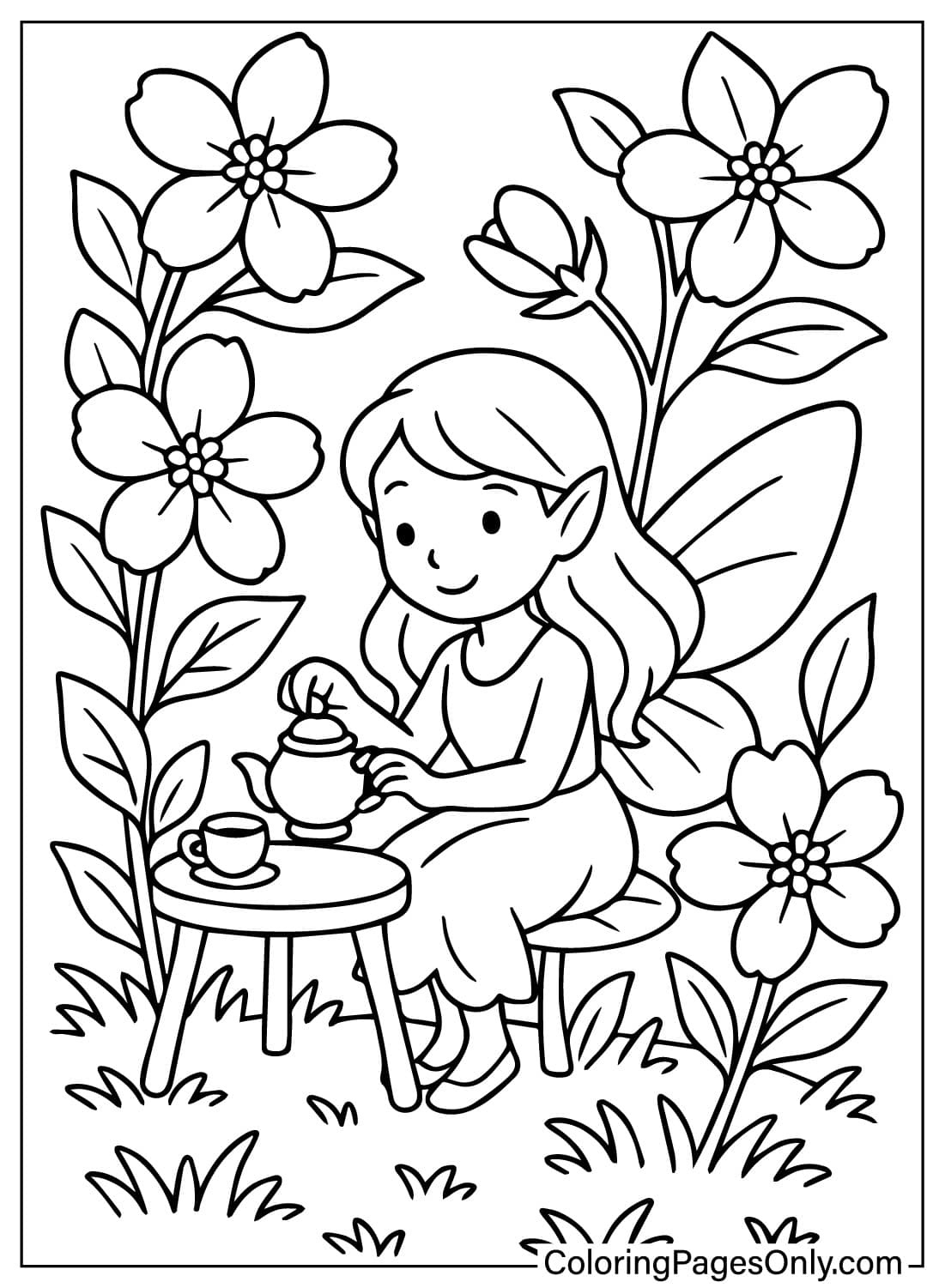
These pages widen out to show fairies together: a tea party, a rose garden, a magical door, or a full garden scene with more than one fairy present. Coloring suggestion: pick one fairy in a group scene to carry the boldest colors, and keep the others a shade softer, which helps a busy multi-fairy page avoid looking flat or evenly colored.
Simple Solo Portraits
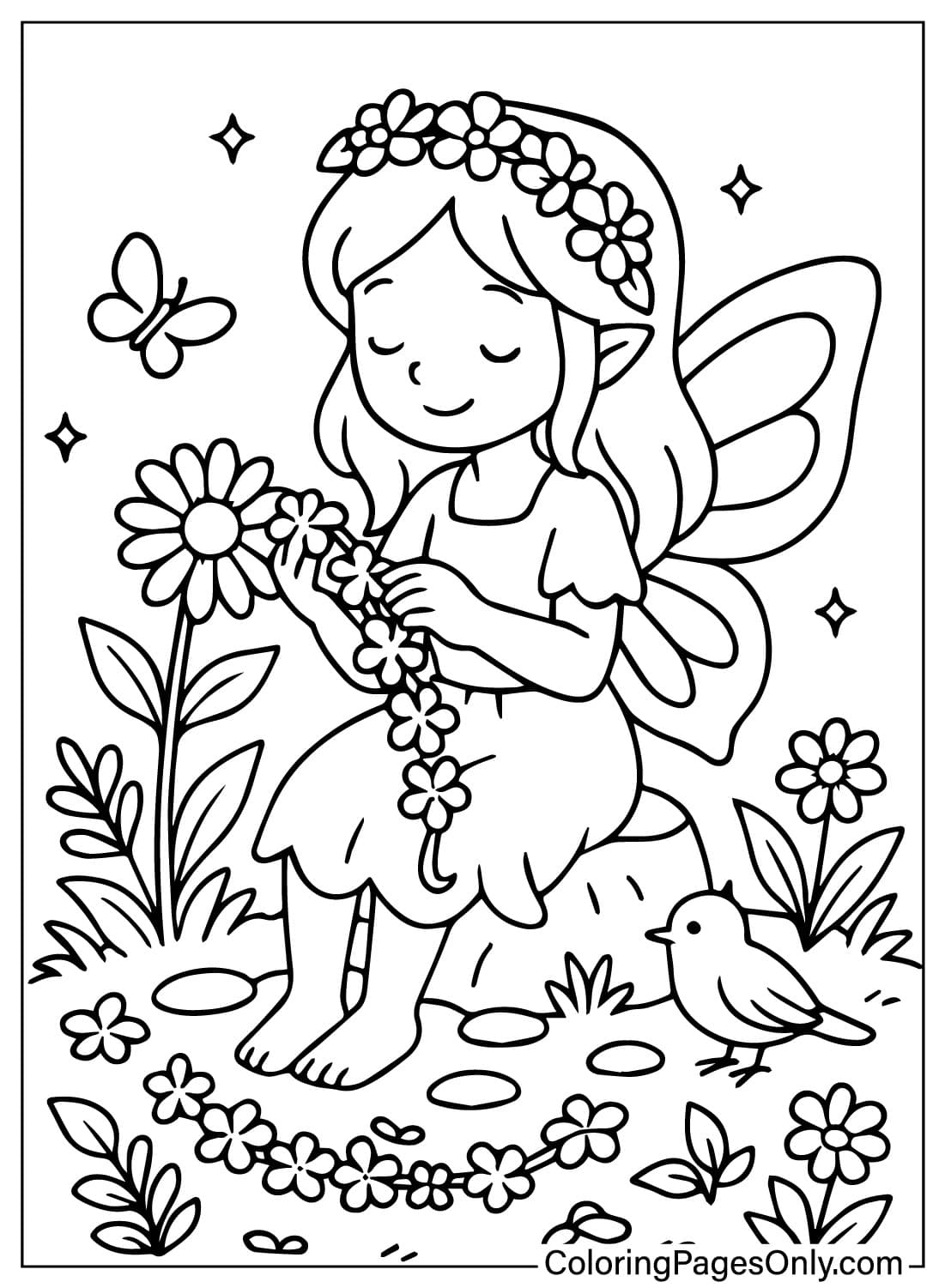
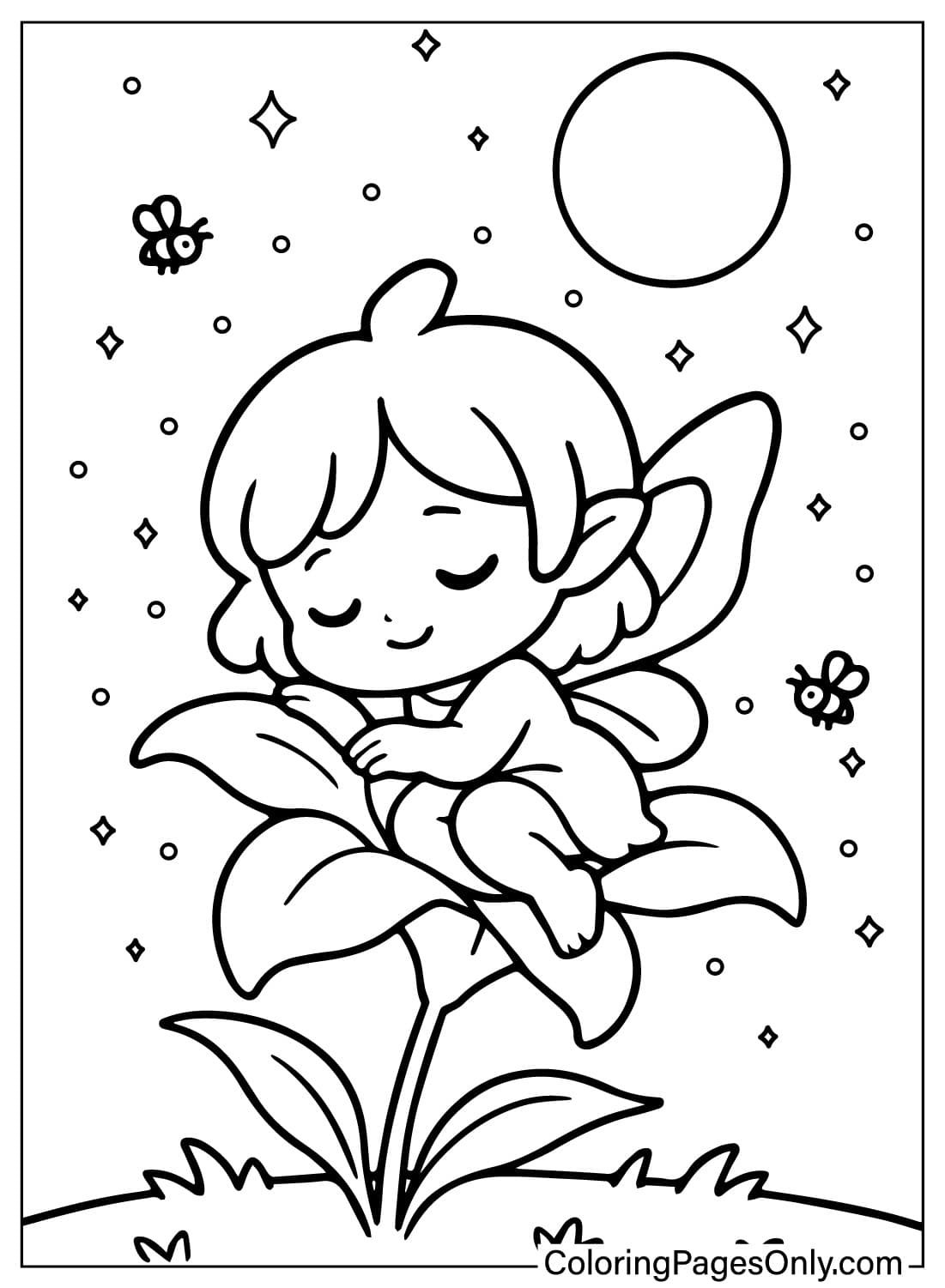
The largest single group by page count is also the most repetitive: single fairy portraits under different names, including a baby fairy, a chibi-style fairy, and several pages distinguished mainly by adjectives like pretty, cute, or adorable rather than by any real difference in scene. Coloring suggestion: Use this group to test out a few different wing-and-dress color combinations before settling on a favorite to reuse across the rest of the collection.
What Flower Fairies Coloring Pages Do
Careful edges around a curved shape. Wings, whether patterned like a butterfly’s or simple and translucent, require the careful outlining around a small, curved edge that the American Academy of Pediatrics counts among the fine motor gains available through structured coloring in children ages two through seven.
A backdoor into real plant and bug names. Because the fairies here are paired with specific, identifiable things, a lotus, a hydrangea, a dragonfly, a ladybug, a coloring session doubles as a low-pressure chance to learn or practice the actual names of garden plants and insects rather than only generic fantasy vocabulary.
Small repeating shapes, a calmer session. Adults who completed structured coloring sessions in a 2005 Art Therapy Journal study showed measurable reductions in anxiety, and a garden scene full of small, repeating natural shapes, petals, leaves, and insect wings gives that kind of session plenty of quiet, low-stakes detail to settle into without any pressure to finish quickly.
Room to invent rather than match a strict look. Since this collection isn’t tied to one licensed character’s fixed color scheme, a child coloring a fairy pink and gold isn’t getting anything wrong the way they might color a strictly recognizable licensed character incorrectly, which opens up more freedom to experiment than a page built around a single, tightly branded design would allow.
How to Color Flower Fairies Pages Well
- Wings: keep wings mostly translucent with a light Crayola Periwinkle or Sky Blue wash rather than a solid fill, and add a thin Crayola Silver outline along the edge to suggest shimmer without covering the whole shape.
- Flower and petal dresses: match a fairy’s dress to whichever flower she’s paired with when one is shown, Crayola Lavender for the lotus page, Crayola Wisteria for the hydrangea page, rather than defaulting to the same dress color on every page.
- Insect companions: color ladybugs in true Crayola Red with black spots, dragonflies in Crayola Turquoise Blue, and butterflies in whatever pattern feels most vivid, since these small creatures are one of the few places in the set built for bold, saturated color.
- Seasonal backgrounds: shift the background by season, Crayola White and Sky Blue for the snow page, Crayola Goldenrod and Green for spring and summer pages, so the calendar-themed group reads as genuinely different scenes rather than the same fairy repeated.
- Hair and skin tones: vary hair color across the collection, Crayola Golden Yellow, Mahogany, Black, rather than repeating the same shade on every fairy, which helps the large solo-portrait group feel less repetitive.
- Group scenes: in the tea party and garden gathering pages, give each fairy a distinct dress color so the group is easy to tell apart at a glance rather than blending into one mass of similar figures.
5 Creative Craft Ideas With Flower Fairies Coloring Pages
1. Pressed Flower Fairy Frame
Color a fairy page, glue a real pressed flower or leaf next to her, and frame the finished piece for a small piece of nature-inspired wall art.
2. Fairy Garden Marker Stakes
Color a few fairy portraits, cover them with clear tape, and glue each one to a wooden skewer to use as decorative markers in a real or pretend garden.
3. Seasonal Fairy Calendar
Color the snow, spring, and holiday pages and arrange them around a simple calendar or bulletin board, swapping which fairy is on display as the seasons change.
4. Fairy and Bug Matching Game
Color the insect-companion pages, cut out the fairy and her paired creature separately, and mix up the pieces for a simple matching game.
5. Wing Cutout Bookmark
Color a fairy page, cut out just the wings, and glue them to a strip of cardstock for a delicate, shimmer-edged bookmark.
Frequently Asked Questions
What are Flower Fairies coloring pages?
A free set of 36 printable designs featuring fairies paired with flowers, garden insects, and seasonal scenes. Every page downloads as a PDF or opens in the online coloring tool without an account.
Are these based on Cicely Mary Barker’s original Flower Fairies books?
No. Cicely Mary Barker created the original flower-fairy concept in her 1923 book Flower Fairies of the Spring, and that specific character art remains a licensed property today. This collection is an original design inspired by the same general idea rather than a reproduction of her illustrations.
Which flowers and insects appear alongside the fairies?
A lotus, a hydrangea, a spider web, a ladybug, a dragonfly, and butterflies each appear paired with a fairy on individual pages, alongside more general garden and rose-garden scenes.
Do the pages follow any specific fairy characters or story?
No. Each page shows an independent scene or portrait rather than following a named character or continuing a story, so that pages can be colored in any order.
What seasonal or holiday scenes are included?
The set includes a snow scene, a rainy-day page, a New Year page, and a Christmas tree page, alongside brighter spring and summer designs.
Can these pages be colored without printing them?
Yes. Every page in the set opens directly in the site’s browser-based coloring tool, so a page can be finished on screen before deciding whether to print it.
Are Flower Fairies coloring pages suitable for young children?
The plain solo portraits suit a wide range of ages on their own, since a young child can fill in the wings and dress with just a few colors, while an older child adds finer shading. The group scenes and garden gatherings, with multiple fairies and background detail, are better suited to a child who already has some coloring experience.
Is it accurate to call this an official Flower Fairies product?
No. This is an independently created coloring collection inspired by the general flower-fairy concept, not a licensed product connected to Cicely Mary Barker’s estate or publisher, and it doesn’t use her specific character designs or verses.
Start Coloring
Opening any page above costs nothing and needs no account, whether the plan is to print it at full resolution or color it right on screen. Once finished, a page can be shared through the Facebook or Pinterest buttons at the top of the design.