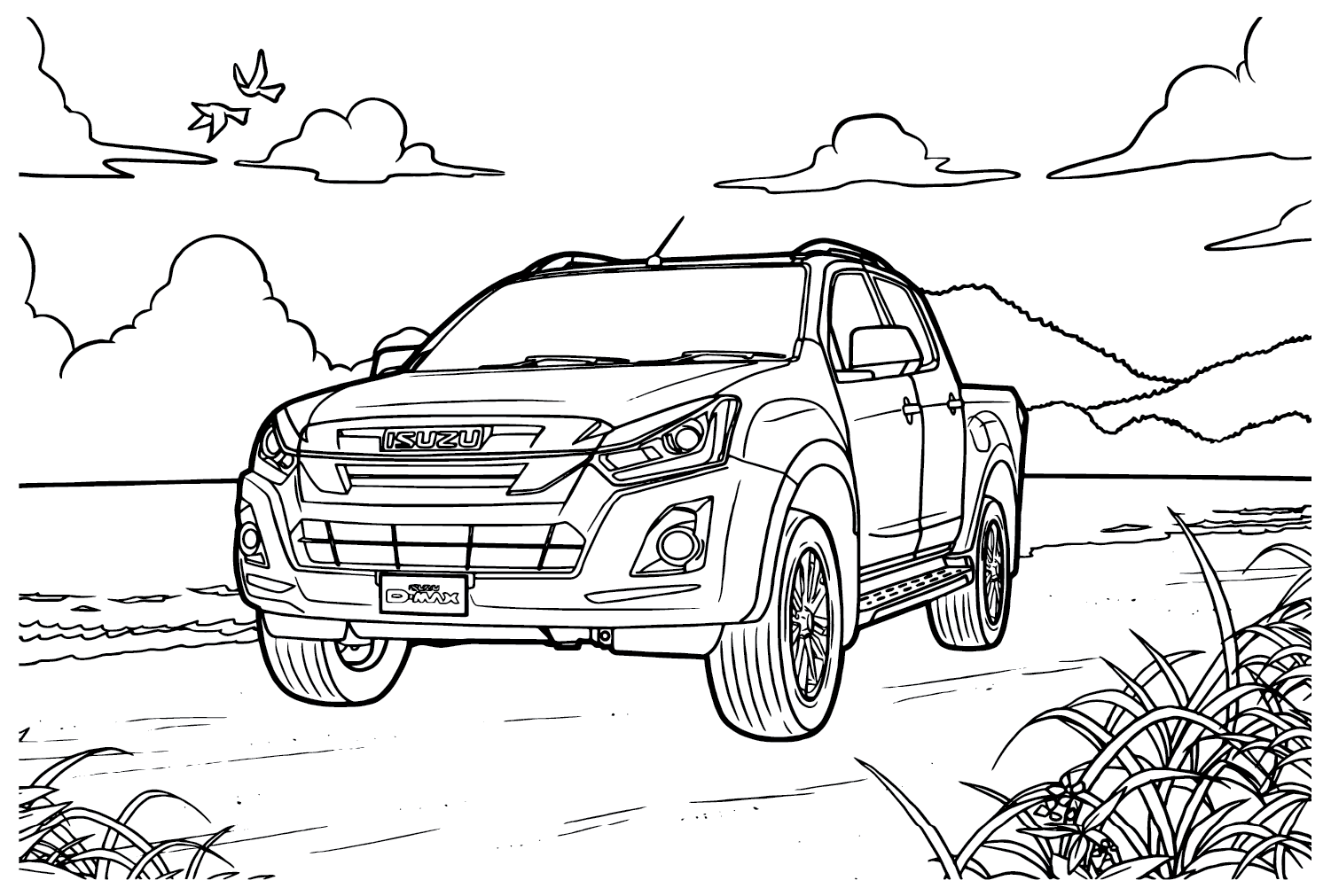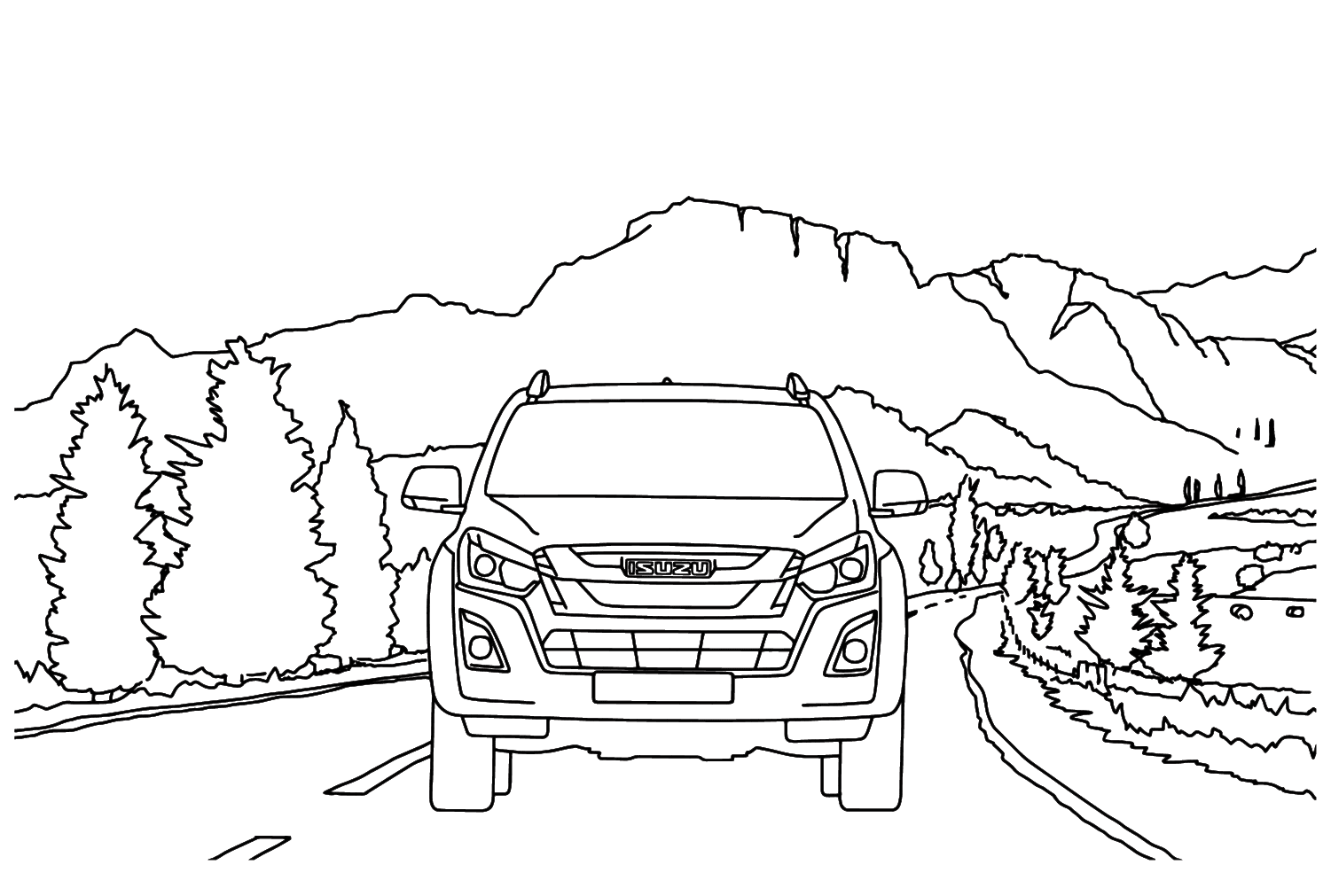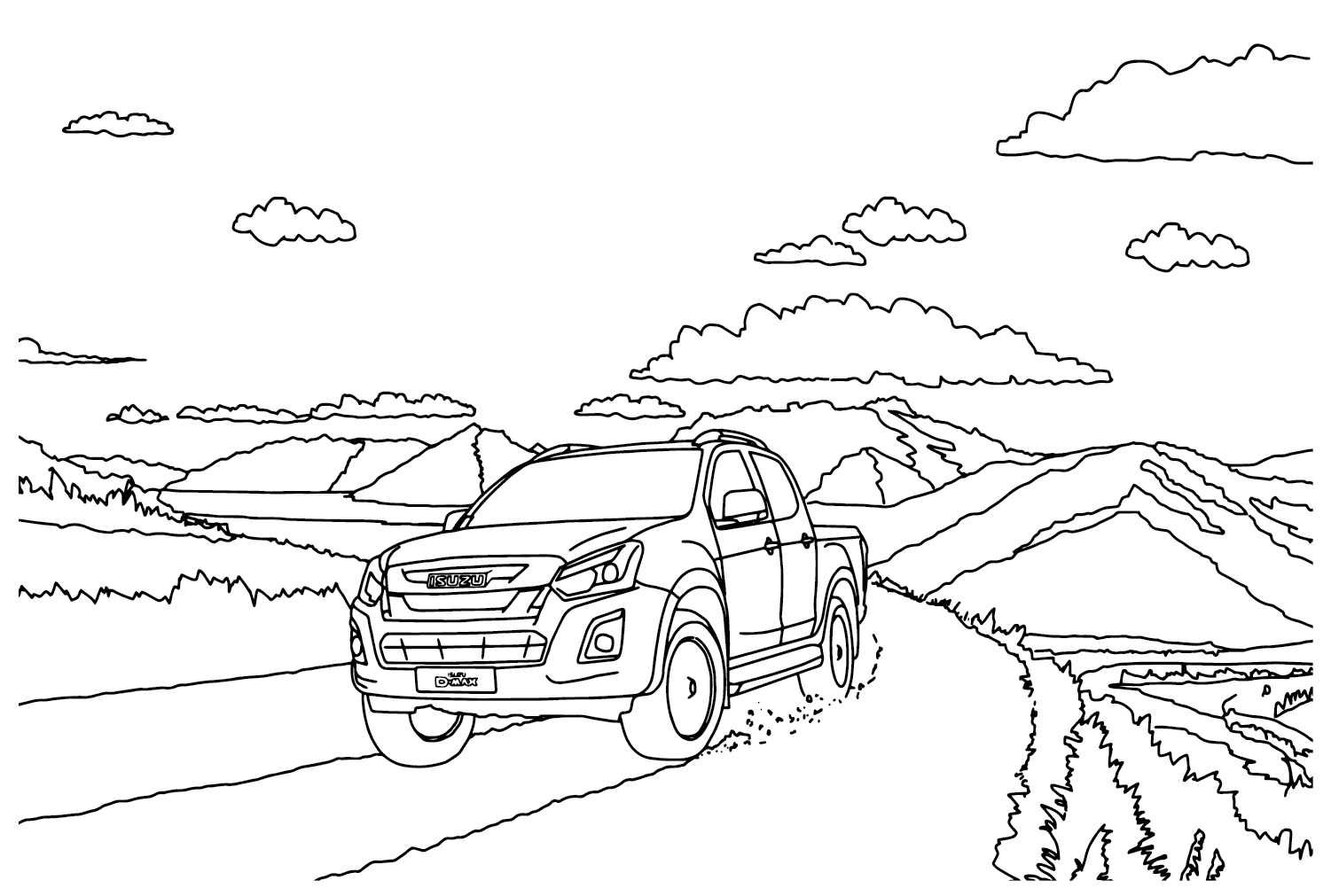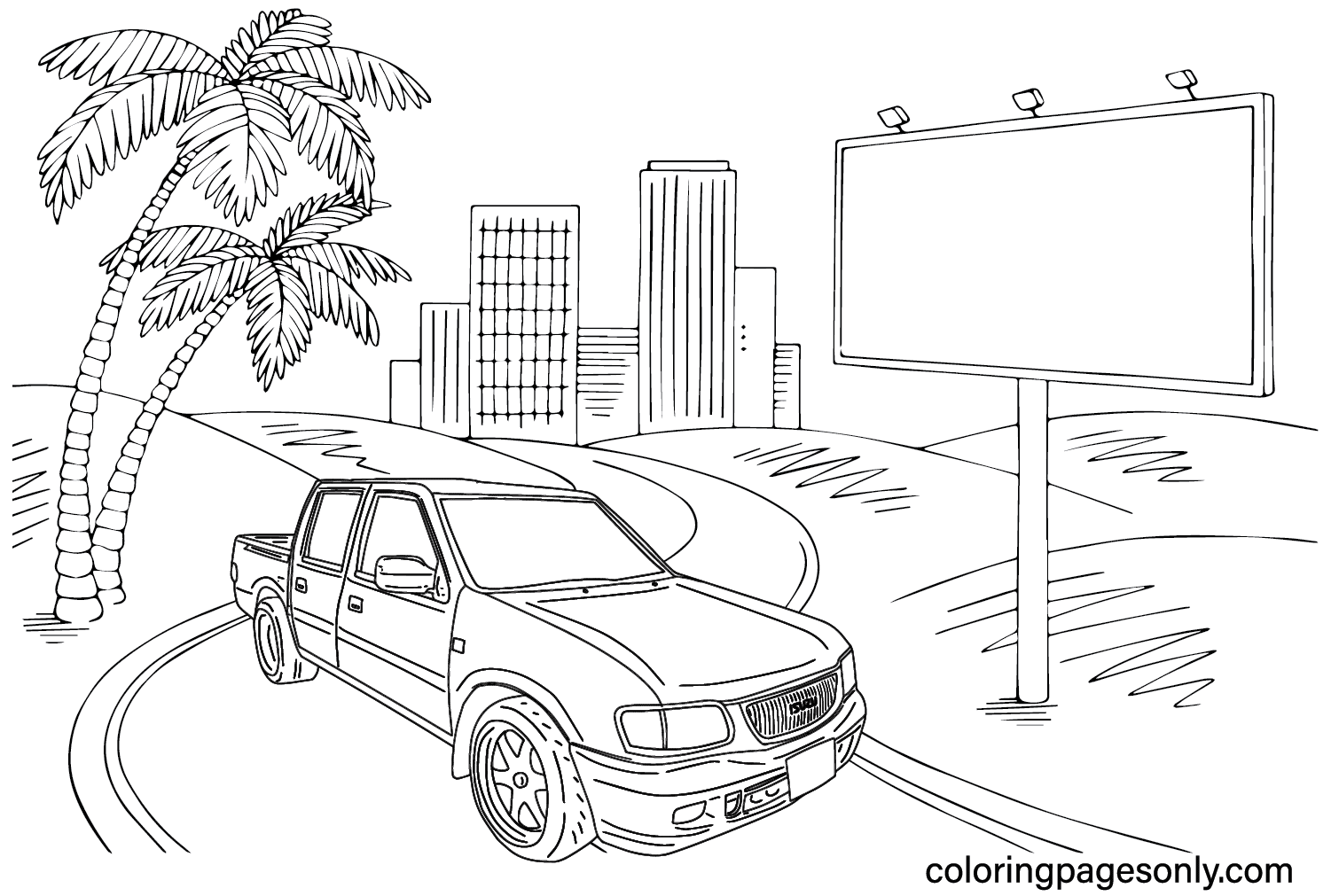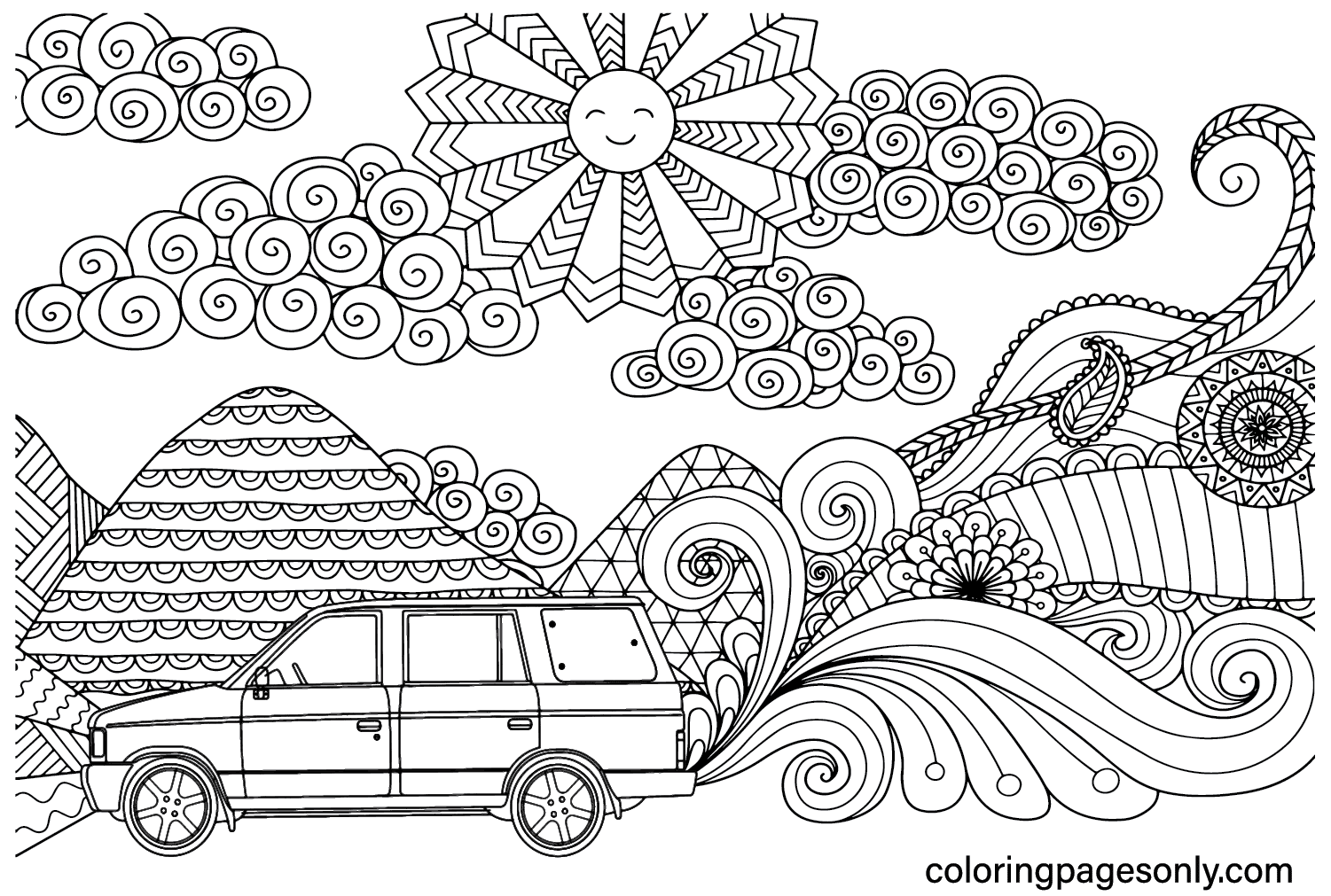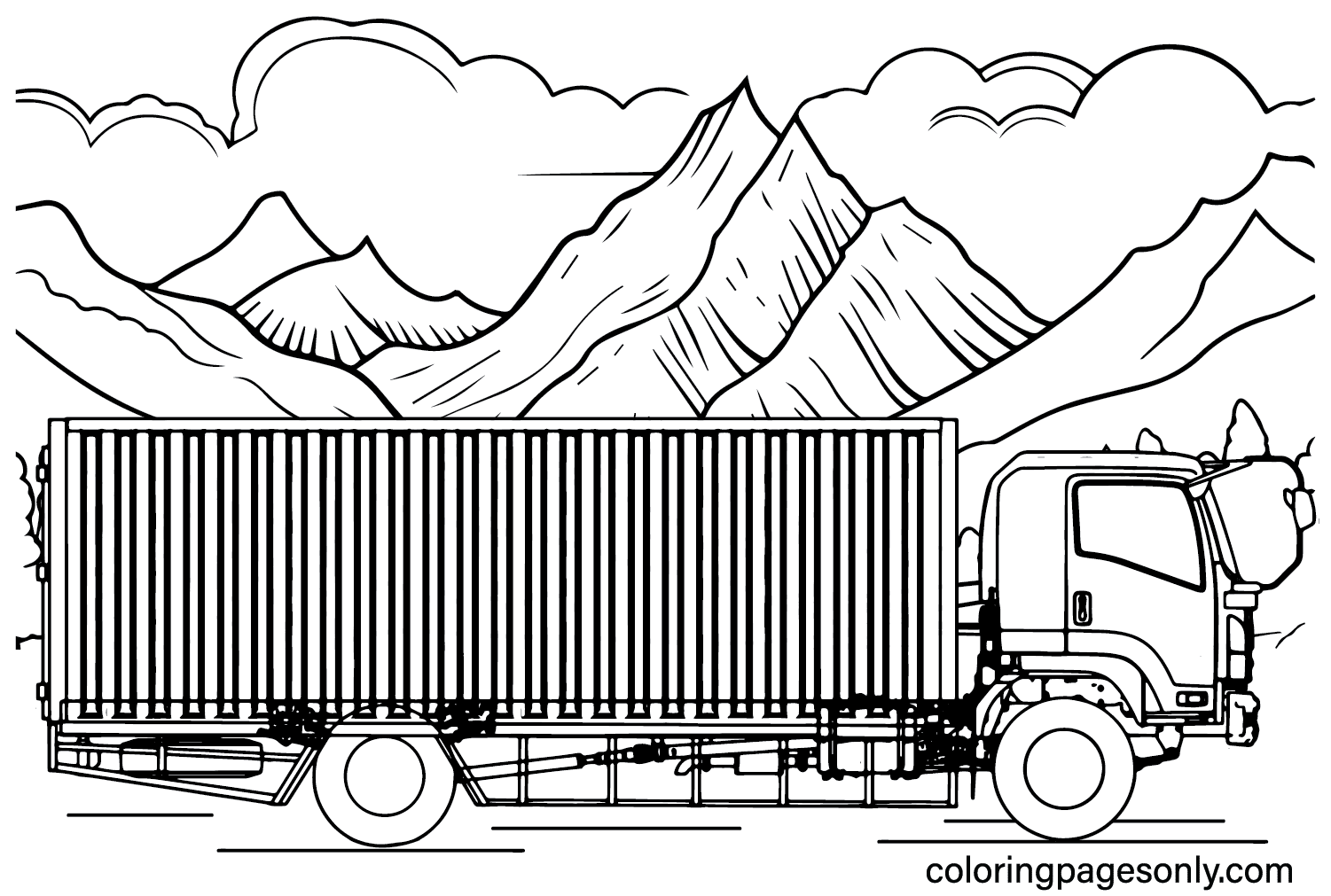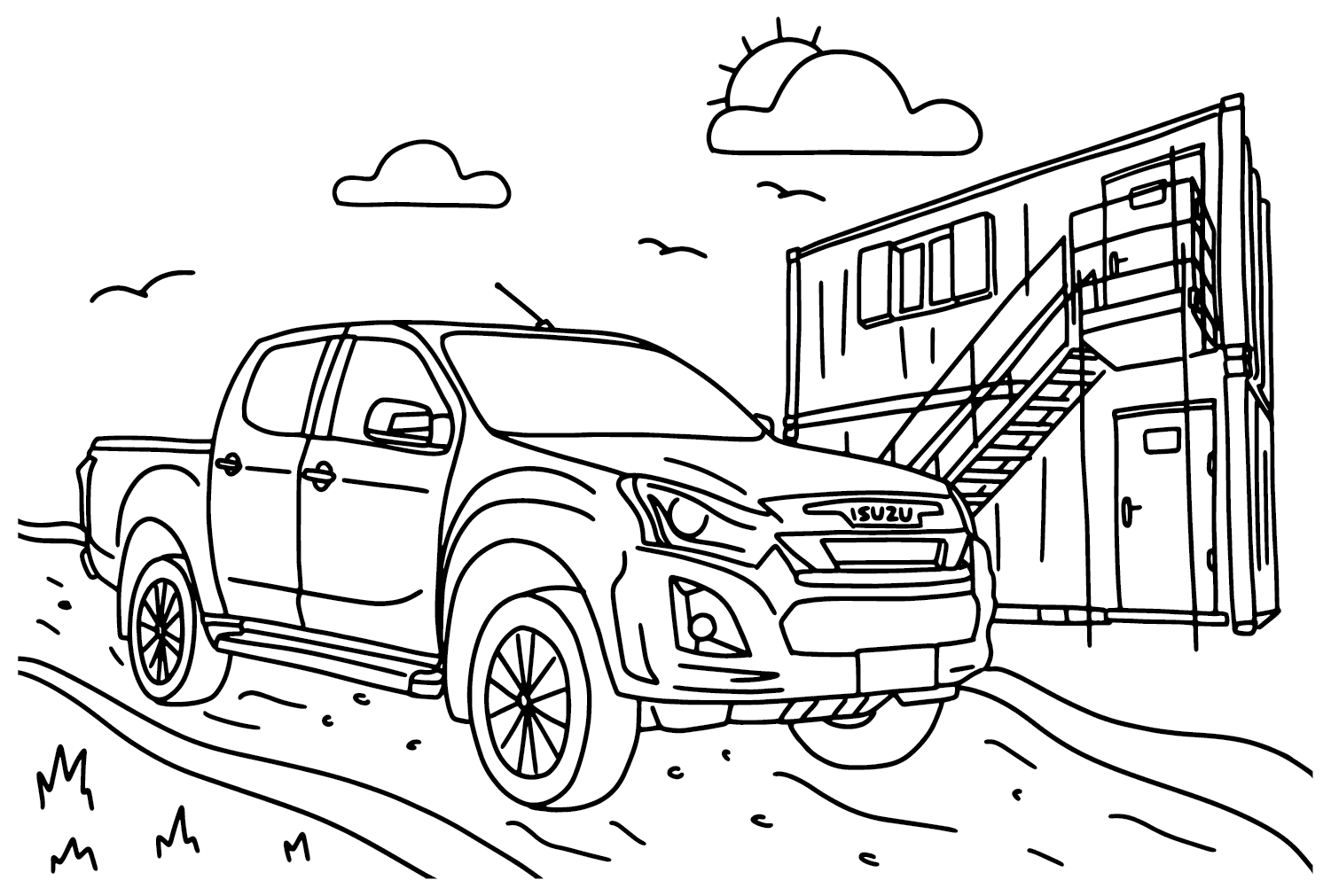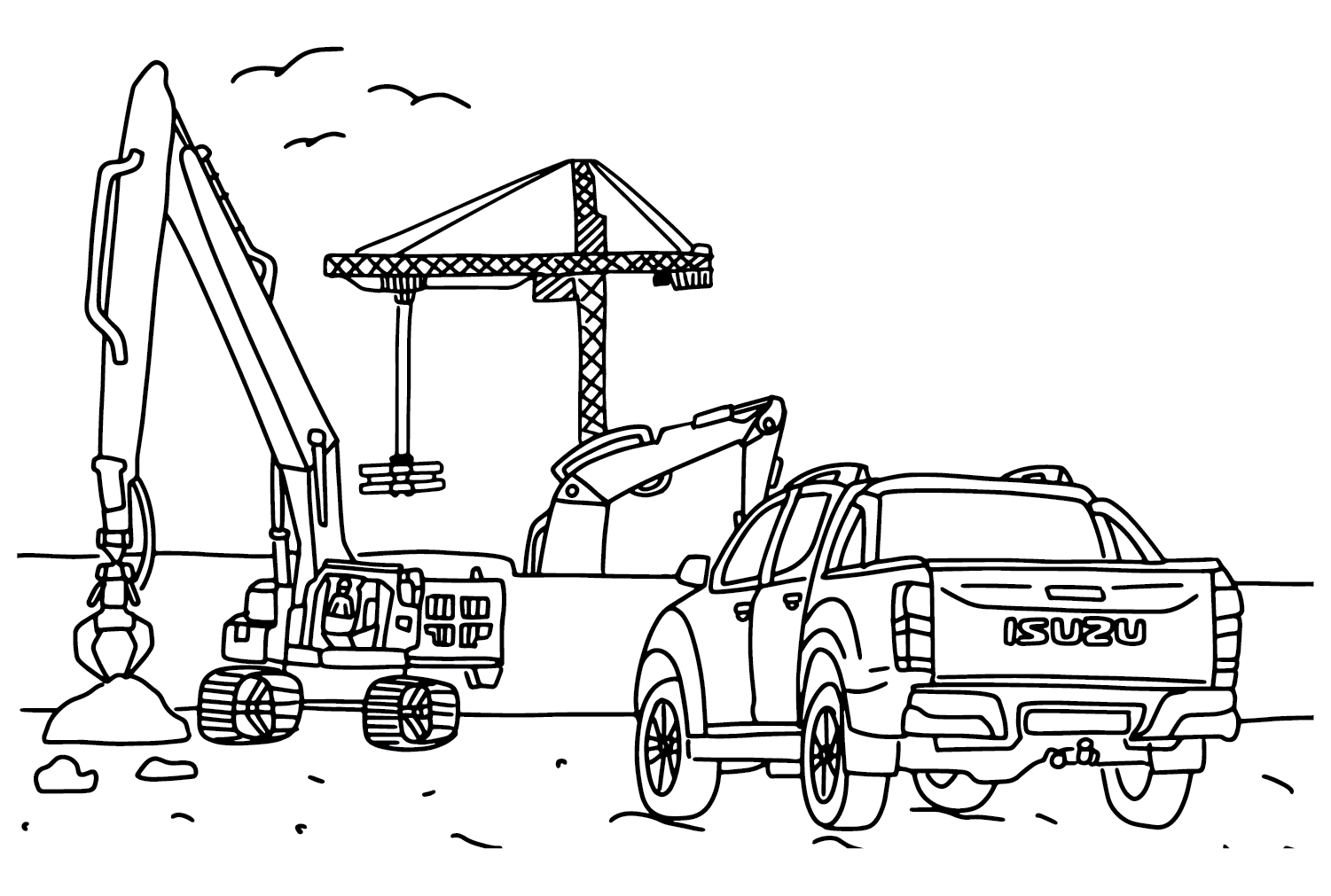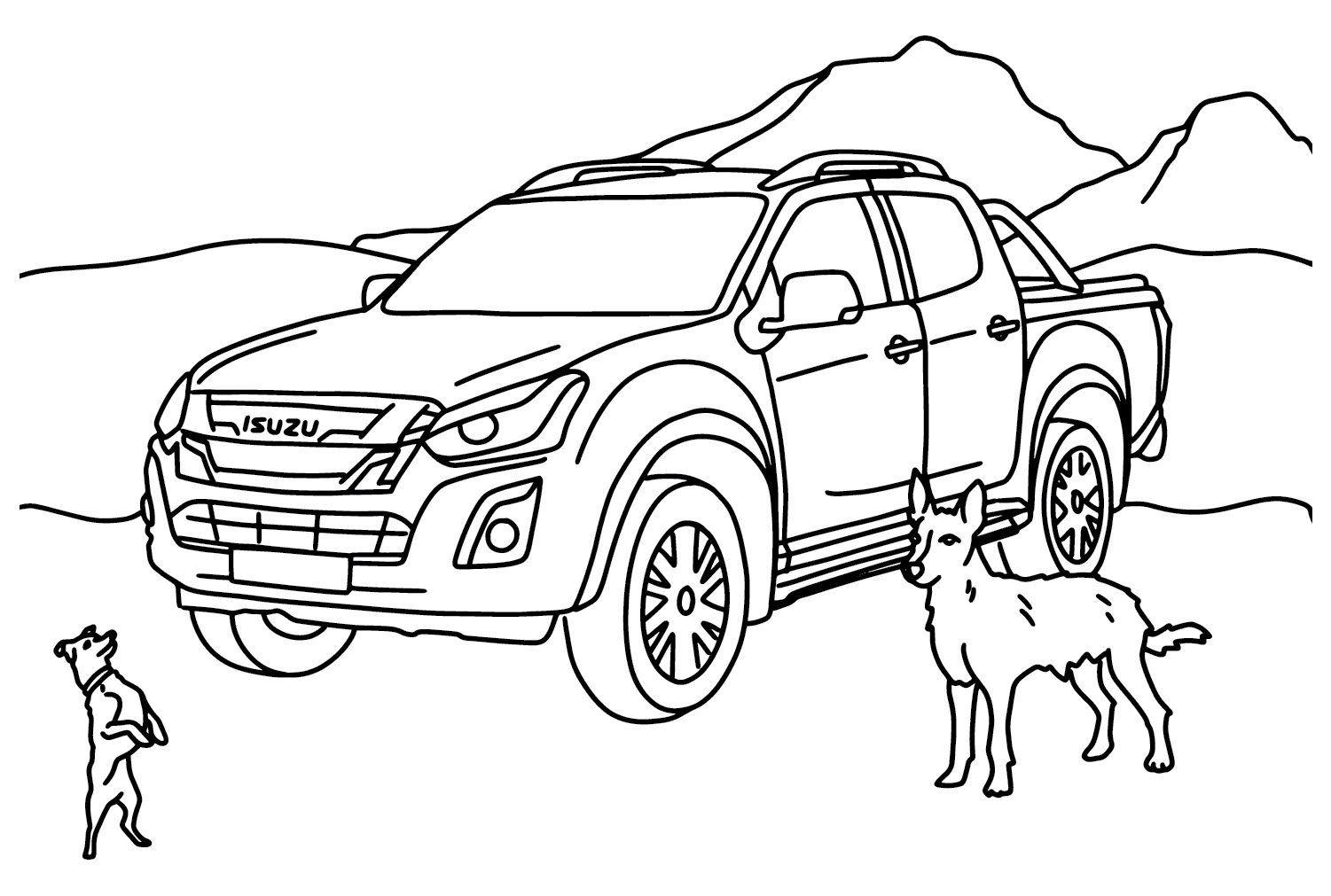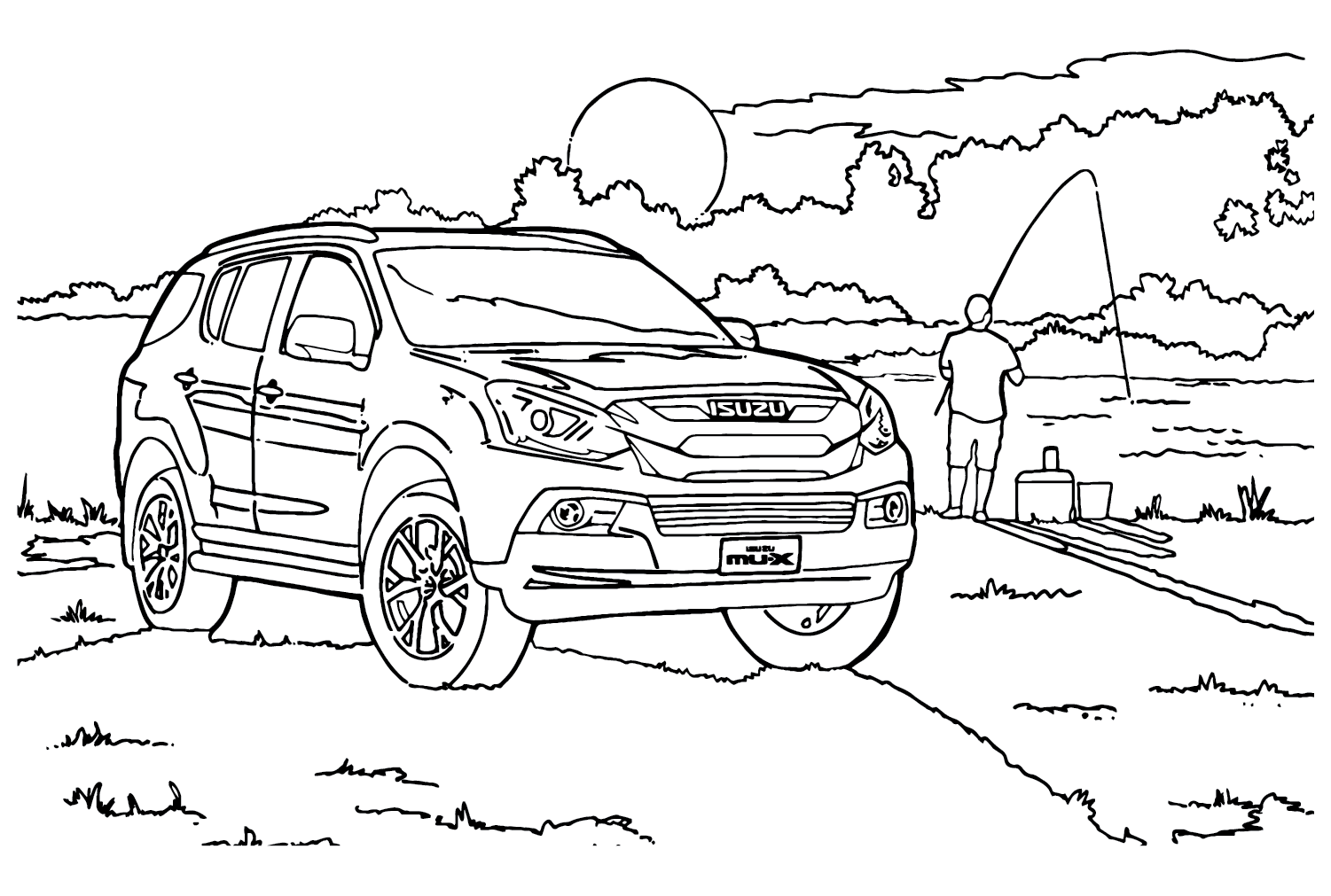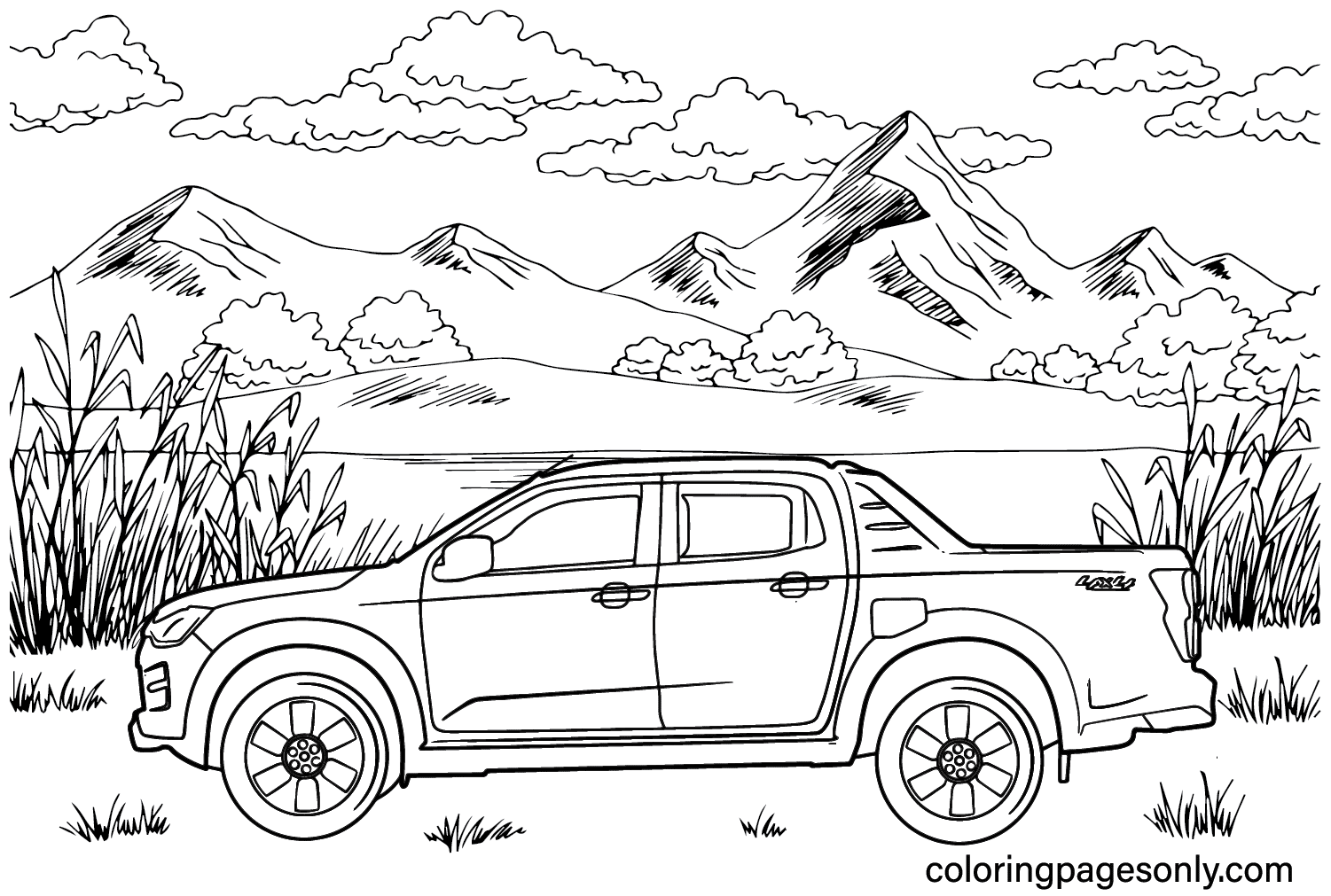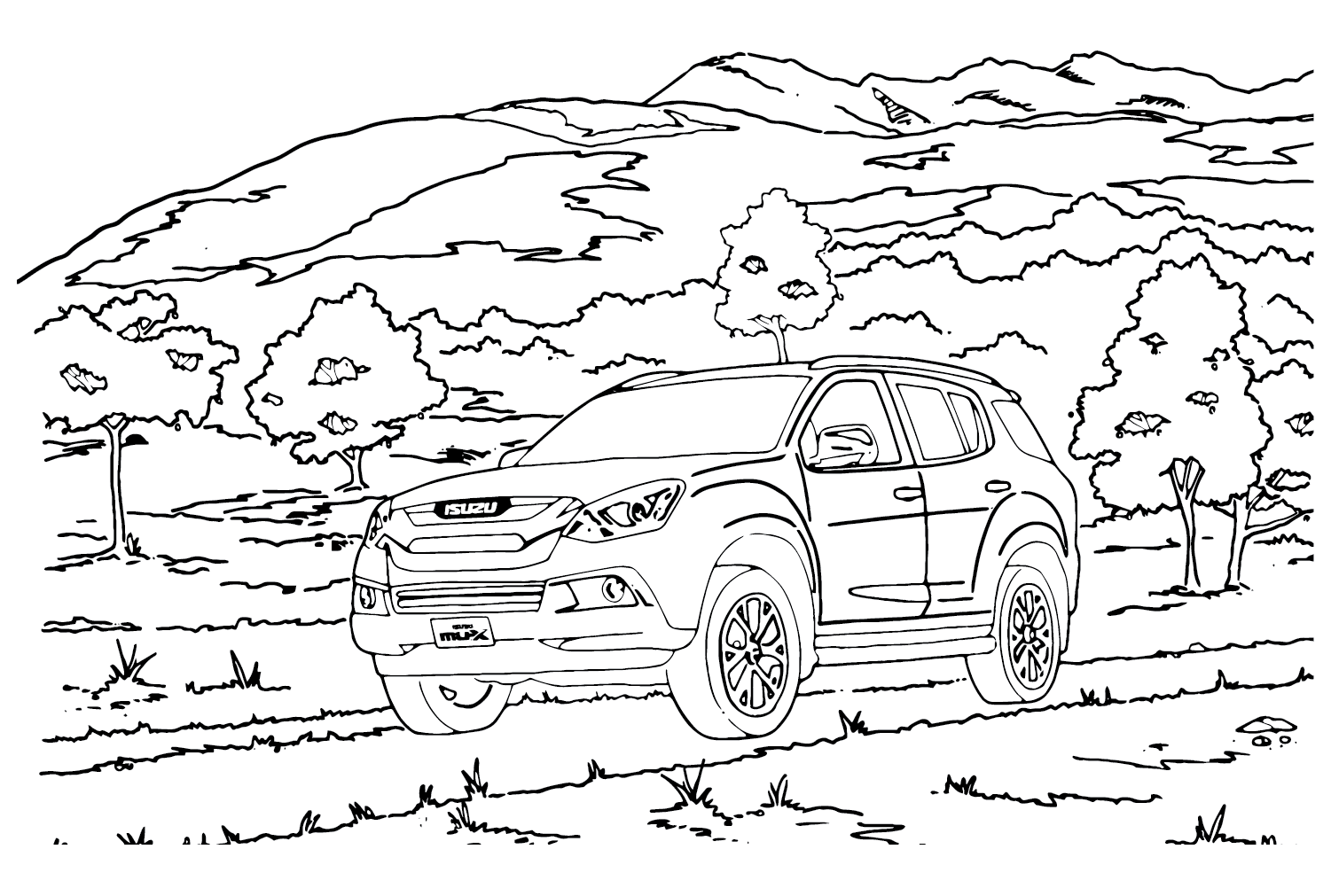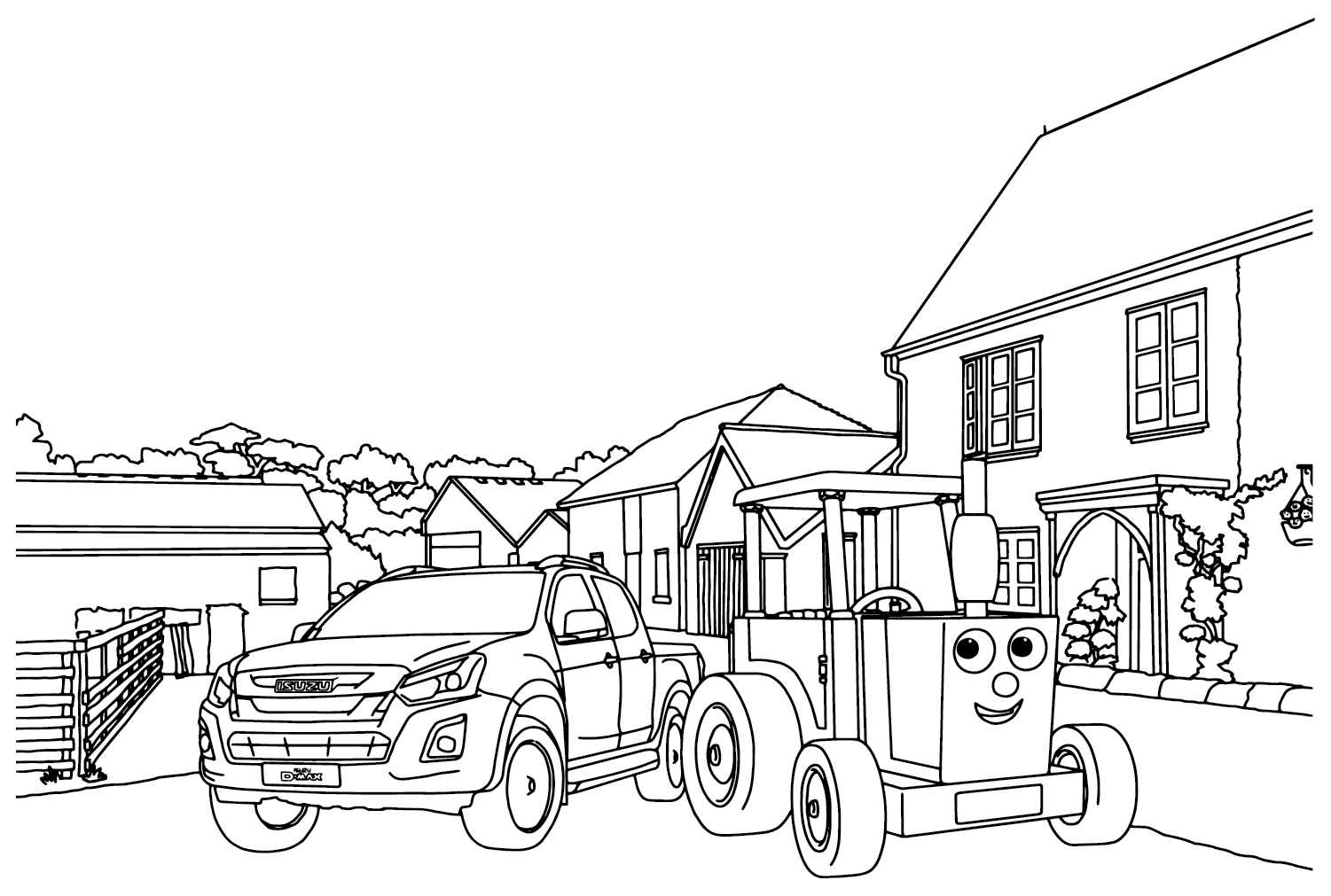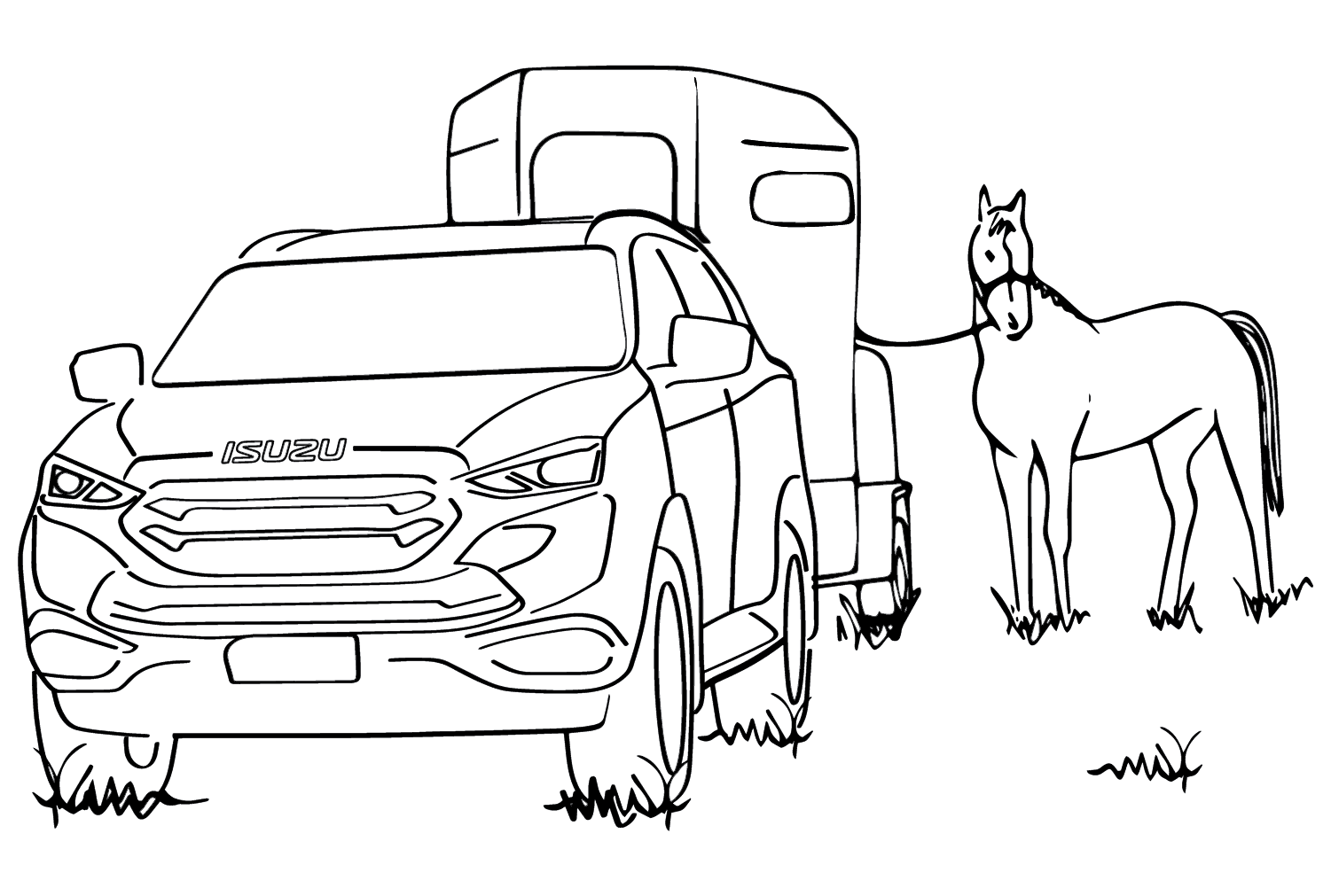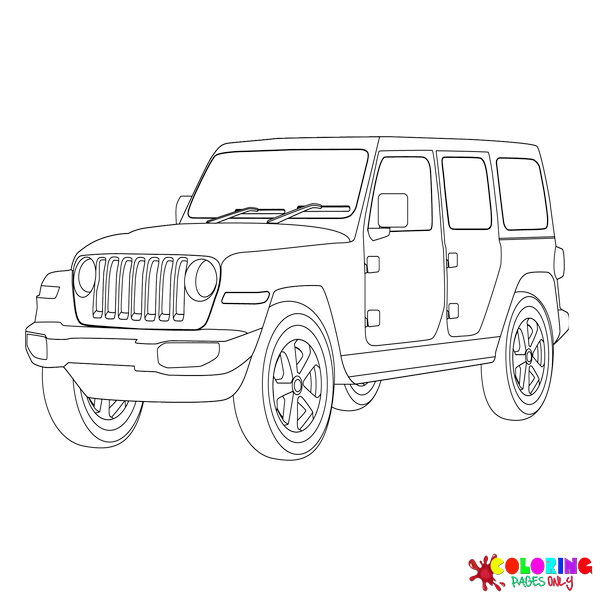
Free Isuzu coloring pages: 20+ pages featuring the Isuzu D-Max pickup truck in double cab and single cab configurations viewed from front, side, and three-quarter angles, Isuzu N-Series cab-over light commercial trucks in delivery and working settings, Isuzu heavy-duty Giga trucks in highway and construction contexts, Isuzu MU-X SUV pages, the Isuzu logo and badge design, truck detail studies showing cab structure and wheel configurations, and the full visual vocabulary of one of the world’s most significant commercial vehicle manufacturers across its core product range. All free, printable PDF and online coloring for truck and commercial vehicle enthusiasts of all ages.

Isuzu Motors Limited (いすゞ自動車株式会社) is a Japanese commercial vehicle and diesel engine manufacturer headquartered in Minato, Tokyo. The company’s origins trace to 1916, when Tokyo Ishikawajima Shipbuilding and Engineering Company and Tokyo Gas and Electric Industrial Company established a joint venture to produce automobiles and trucks. The name “Isuzu” was adopted in 1934, referencing the Isuzu River (五十鈴川), the sacred river that flows through the Ise Grand Shrine (伊勢神宮) in Mie Prefecture: the most sacred Shinto shrine in Japan and the center of Shinto practice.

Isuzu’s first significant commercial product was a 1.5-ton truck produced in 1922. By the postwar period, the company had established itself as a primary manufacturer of commercial trucks and diesel engines, the two product categories that remain its core focus today. While Isuzu produced passenger cars, including the elegantly designed 117 Coupe (designed by Giorgetto Giugiaro in 1968) and a range of SUVs, including the Rodeo and Trooper, it exited the passenger car market in Japan in 2002 and in most global markets by 2008, refocusing entirely on commercial vehicles and powertrains.

General Motors acquired a 34.2% stake in Isuzu in 1971, a relationship that led to shared vehicle platforms and badge engineering arrangements across multiple product lines before GM divested its Isuzu stake in 2006.

These 20+ free pages at ColoringPagesOnly.com cover Isuzu’s main product range. All free, PDF or PNG, print or color online.

What’s Inside

Isuzu D-Max Pickup Truck Pages

The Isuzu D-Max is the company’s most globally successful and most widely recognized vehicle in the consumer market, sold across Southeast Asia, Oceania, Africa, the Middle East, and Europe as a mid-size body-on-frame pickup truck. The third-generation D-Max, introduced in 2019 and 2020 depending on market, represents a significant design advancement over the previous generation: a more sophisticated exterior with sharper lines, a higher-quality interior, and structural engineering improvements, including a redesigned ladder frame.

The D-Max’s strongest markets include Thailand (where Isuzu is consistently one of the top-selling brands and the D-Max competes directly against Toyota Hilux), Australia (where pickup trucks are called “utes” and the D-Max has been among the best-selling vehicles in the country), and numerous markets across Southeast Asia and East Africa where the pickup’s combination of payload capacity, off-road capability, and diesel fuel efficiency makes it the working vehicle of choice for both commercial and personal use.

In Australia specifically, the D-Max competes in the highly competitive ute segment alongside the Toyota HiLux, Ford Ranger, Mitsubishi Triton, and Mazda BT-50, with Isuzu having achieved significant market share through its reputation for diesel engine reliability. The truck’s 3.0-liter diesel engine (producing various power outputs across different specifications) is built on the same technology base as Isuzu’s commercial truck and industrial engine operations, giving it a specific heritage of heavy-duty diesel engineering not shared by all competitors in the segment.

Coloring D-Max pages: The pickup’s primary body color can be any of the wide range of colors available in Isuzu’s market-specific ranges, but the most commonly depicted colors in commercial and promotional imagery are: white (the most popular work truck color across all markets), silver-grey, the deep blue of Isuzu’s own brand imagery in some markets, and various earth tones (silver-blue, dark bronze) in lifestyle-oriented marketing. The wheels use a metallic silver-grey for alloy wheels or near-black for steel wheels with silver-grey hubcaps. Anybody cladding or protective trim uses dark grey or near-black.

Isuzu N-Series Cab-Over Truck Pages

The Isuzu N-Series, marketed as the Isuzu Elf (エルフ) in Japan since 1959, is Japan’s best-selling commercial truck and one of the world’s most successful light-to-medium commercial vehicles. The N-Series uses a cab-over design: the cab sits directly over the engine rather than in front of it, with the flat-faced cab tilting forward to provide access to the engine for maintenance. This configuration maximizes the vehicle’s load-carrying capacity relative to its overall length, making it the preferred design for urban delivery operations and work environments where maneuverability and cargo space are the primary requirements.

The N-Series spans multiple weight classes within the light commercial vehicle category (typically 1.5 to 7.5 tonnes Gross Vehicle Weight depending on specification), making it suitable for a wide range of applications: food delivery, refrigerated goods transport, waste collection, utilities and infrastructure work, and a broad range of other commercial operations where a medium-sized, maneuverable truck is needed.

The cab-over design’s most visually distinctive feature for coloring purposes is its flat-face cab: instead of the conventional forward hood visible on North American-style trucks, the N-Series presents a flat or nearly flat cab face directly at the front of the vehicle, with the windshield rising immediately from the front bumper. The cab corners, the large flat windshield, the prominent headlights, and the low, wide hood section (a shallow structure covering just the front axle area) together create the specific silhouette that makes cab-over trucks immediately recognizable as a different vehicle category from conventional cab trucks.

Coloring N-Series/Elf pages: In Japan and many commercial markets, N-Series trucks appear in corporate fleet colors: white is the dominant commercial truck color globally, used by delivery companies, utilities, food service operations, and government fleets. The flat cab face provides a large, uninterrupted painting surface well-suited to company logos and livery. Any box body or van body mounted on the N-Series chassis uses a consistent color matching the cab. The step-up entry surfaces below the cab doors are typically a slip-resistant black rubber or dark grey composite.

Isuzu Heavy-Duty Truck Pages

The Isuzu Giga (ギガ), the company’s heavy-duty truck range, represents the largest vehicles in Isuzu’s lineup and the ones most directly competing in the long-haul freight and heavy construction transport segments. The Giga is a bonneted (conventional cab) heavy-duty truck in most configurations, with a substantial forward hood covering the large diesel engine, a high-mounted cab for driver comfort and visibility, and the multiple-axle configuration needed to carry the maximum legally permitted gross vehicle weights on public roads.

Heavy-duty truck pages in the collection show the specific visual complexity of large commercial vehicles: the front bumper’s protective structure, the exhaust stacks rising above the cab, the multiple pairs of rear dual wheels, the fifth-wheel plate where a semi-trailer would couple to the tractor unit, the sleeper berth that extends behind the cab on long-haul configured trucks, and the specific profile of a vehicle designed for sustained high-speed highway operation under full load.

The Isuzu F-Series represents the mid-range between the N-Series light trucks and the Giga heavy trucks: medium-duty vehicles used for larger cargo, construction site supply, and urban freight distribution at greater volumes than the N-Series can handle.

Coloring heavy-duty truck pages: Heavy-duty Isuzu trucks in commercial fleet operation appear primarily in white, with metallic silver-grey for chrome and aluminum trim elements. Exhaust stacks are typically polished stainless steel or chrome-plated steel: apply a bright silver-white with subtle warm-grey shadow along the cylindrical stack to suggest the reflective metallic surface. The fifth-wheel plate on a tractor unit is dark grey or black. The sleeper berth behind the cab matches the cab’s primary body color.

Isuzu MU-X SUV Pages

The Isuzu MU-X is a body-on-frame SUV built on the D-Max pickup truck’s platform, sharing the same chassis, powertrain, and much of the engineering of the pickup while presenting a more enclosed, passenger-focused body designed for seven-seat family and commercial transport. The MU-X is sold across Southeast Asia, Oceania, and Africa in markets where body-on-frame SUVs remain popular for their off-road capability and robustness.

The MU-X’s exterior design follows the D-Max’s visual language in its front-end treatment (similar grille, similar headlight design) while the body transitions to an enclosed three-box SUV form from the B-pillar rearward, accommodating the rear seat rows and cargo area in a more wagon-like profile than the pickup’s open bed.

Coloring MU-X pages: The SUV body uses the same color range as the D-Max pickup: white, silver, deep blue, and earth tones are the most common commercial and promotional depictions. The larger glass area relative to the D-Max (the rear quarter windows and rear glass extending the glazing further along the body) requires careful attention to the dark-tinted glass rendering: apply a very dark grey or very dark blue-grey to all glass areas.

Isuzu Logo and Badge Pages

The Isuzu wordmark logo, rendered in bold, square-edged lettering, has been updated throughout the company’s history but maintains the specific weight and directness of industrial design rather than the flowing, organic forms of consumer brand logos. The current Isuzu logo presents the word “ISUZU” in bold block capitals with consistent character weight.

The Isuzu badge, as it appears on vehicle hoods, tailgates, and grilles, shows the wordmark in chrome or body-color rendering depending on the specific vehicle model and position. The corporate color associated with the brand in Japanese domestic market communications uses a specific red.

Coloring logo pages: The Isuzu wordmark uses either the brand’s corporate red or chrome silver, depending on the logo context shown in the page. For the chrome badge version: pale grey-white at the most directly lit character faces, graduating to slightly darker grey-silver at the shadow sides, with a thin bright white line along each character’s uppermost lit edge.

What These Pages Do

Isuzu’s history from its 1916 origins through its current position as a global commercial vehicle manufacturer spans the full development of the Japanese automotive industry from its pre-war beginnings through the postwar economic reconstruction, the Japanese manufacturing quality revolution of the 1970s and 1980s, and the global expansion of Japanese commercial vehicle technology into developing economies across Asia, Africa, and Oceania in the late 20th and early 21st centuries.

The company’s decision to exit the passenger car market in Japan in 2002 and in most global markets by 2008 represents one of the automotive industry’s clearest examples of strategic focus: rather than compete across all vehicle categories against full-line manufacturers, Isuzu concentrated its engineering and manufacturing resources on the specific categories (commercial trucks, diesel engines) where its technical heritage and global distribution network provided the strongest competitive position.

The American Academy of Pediatrics identifies fine motor skill development as a key childhood milestone throughout early childhood. The N-Series cab-over truck’s flat-face cab detail work, the D-Max pickup’s body panel lines and wheel arch rendering, the heavy-duty truck’s exhaust stack and fifth-wheel detail, and the corporate logo’s precise letterform work all provide sustained fine motor challenge across the collection’s age range. The 2005 Art Therapy Journal study on structured coloring and anxiety reduction applies throughout.

Isuzu’s commercial vehicles are among the most frequently encountered trucks in many Asian, Oceanian, and African countries, giving them a specific familiarity for children who grow up in these markets: the white N-Series delivery truck and the D-Max pickup are parts of the daily visual environment in ways that less ubiquitous commercial vehicles are not.

How to Color These Pages Well

Commercial trucks are most commonly white in real-world operations, but any single vivid color reads correctly for a fleet vehicle. White dominates the commercial truck market globally because it reflects heat (important for refrigerated cargo and driver comfort), shows dirt clearly (enabling maintenance monitoring), and accepts corporate decals and livery applications cleanly. In coloring pages, white trucks benefit from a very subtle warm grey applied at minimum pressure on all vertical surfaces facing away from the light source, creating just enough value variation to make the white read as a three-dimensional white vehicle rather than as an uncolored area.

The cab-over truck’s flat face is the composition’s primary visual plane and the most important surface to handle correctly. In the N-Series cab-over design, the cab’s flat front face is the largest single uninterrupted surface on the vehicle. Apply the vehicle’s body color with full, even coverage across the entire flat face, working systematically from one edge to the other. The windshield, which occupies the upper portion of this flat face, uses very dark grey or very dark tinted blue-grey. The lower section below the windshield contains the grille and bumper elements, typically darker than the cab in a contrasting grey or near-black.

Truck wheels require the three-zone metallic technique applied to either round steel wheels or multi-spoke alloy wheels. Steel wheels (common on commercial fleet trucks) are round, flat discs with a central hub cap: apply medium grey across the disc, lighter silver-grey at the most directly lit outer rim edge, and darker grey at the hub area and shadow side. Alloy wheels (common on the D-Max and MU-X in higher specification variants) show multiple spokes: apply the standard metallic three-zone technique along each spoke (lighter on the top-facing surface, mid-tone on the main face, darkest in the gap between spokes).

The D-Max pickup’s three-quarter front view pages show the most complex surface geometry. A three-quarter front view of a pickup shows multiple panels simultaneously: the hood (top, foreshortened), the front fenders (angling back from the headlights), the lower valance (between bumper and fenders), the door panels (receding back), and the wheel arches. Apply the body color consistently across all panels, then identify which panels face directly upward (the hood: lightest, most direct light), which face forward-and-upward (the front fenders: slightly lighter), and which face sideways (the door panels: standard body tone, slightly darker than the fenders).

Chrome and metallic trim elements on commercial trucks use the standard metallic three-zone technique. Bumpers, grille surrounds, exhaust stacks, and mirror housings in chrome use: bright silver-white at the uppermost lit surfaces and sharp leading edges, mid-tone metallic grey on the main faces, and near-black at the deepest recesses. The transition between these three zones should be relatively abrupt on chrome (chrome is highly reflective and shows hard transitions) and slightly more gradual on brushed aluminum or painted metallic surfaces.

5 Creative Craft Ideas

The Isuzu River Origin Study

The name “Isuzu” references the Isuzu River (五十鈴川), the sacred river that flows through the Ise Grand Shrine (伊勢神宮) in Mie Prefecture, Japan. The Ise Grand Shrine is the most sacred Shinto shrine in Japan, dedicated to the goddess Amaterasu-Ōmikami (the sun goddess) and to Toyouke-Ōmikami (the goddess of agriculture). It has been rebuilt in the same form on an adjacent site every 20 years for over 1,300 years, with the most recent rebuilding in 2013.

Print the Isuzu logo page. Color the logo in the brand’s red against a clean white background.

On the backing card: “Isuzu Motors Limited. Founded: 1916 (as Tokyo Ishikawajima Shipbuilding and Engineering Co.). Name ‘Isuzu’ adopted: 1934. Origin of name: the Isuzu River (五十鈴川), the sacred river flowing through Ise Grand Shrine, Mie Prefecture, Japan. Ise Grand Shrine: the most sacred Shinto shrine in Japan, dedicated to Amaterasu-Ōmikami, the sun goddess. The river has flowed through the shrine for over 1,300 years. The truck company: 108 years old as of 2024. The river: older.”

The Cab-Over vs Conventional Cab Study

Two fundamentally different truck cab configurations exist in the global commercial vehicle industry: the conventional cab (or bonneted cab), where the engine sits ahead of the cab under a forward hood; and the cab-over engine (COE) design, where the cab sits directly above the engine, producing a flat-face front end. Isuzu produces both: the N-Series Elf uses the cab-over design for urban delivery operations, while the Giga heavy truck is available in conventional cab configuration for highway operations.

Print one cab-over N-Series page and one conventional cab heavy truck page. Color both in white commercial fleet colors.

Mount both side by side: “Cab-over engine (COE): Isuzu N-Series Elf. The cab sits directly above the engine. The front is flat-faced. Advantage: shorter overall length for the same cargo volume; better urban maneuverability. Used for: city delivery, short-haul operations. Conventional cab: Isuzu Giga heavy truck. The engine sits ahead of the cab under the hood. Advantage: easier engine access; better crash protection; more comfortable for long distances. Used for: highway long-haul freight. Same company. Two different engineering solutions to the same problem.”

The D-Max Global Markets Page

The Isuzu D-Max is one of the world’s best-selling pickup trucks despite being largely absent from the North American market (where Toyota Tundra, Ford F-150, and similar full-size trucks dominate). Its strongest markets are geographically diverse: Thailand, Australia, South Africa, New Zealand, Gulf Cooperation Council countries, and much of Southeast Asia and East Africa.

Print a D-Max side view page. Color it in white (the most common color in both commercial and personal use markets).

Draw a simple world map on the backing sheet. Circle or shade the countries where the D-Max is a market leader: Thailand, Australia, New Zealand, South Africa, Gulf states. Add: “Isuzu D-Max. A global top-selling pickup. Absent from: the North American market. Dominant in: Thailand (market leader), Australia (top-selling ute, 2022-2023), New Zealand, South Africa, Southeast Asia, Gulf states, East Africa. Engine: 3.0L diesel, various power outputs. Platform: shared with the Isuzu MU-X SUV. The global truck that North Americans have mostly not seen.”

The GM Partnership History Page

From 1971 to 2006, General Motors held a significant ownership stake in Isuzu (starting at 34.2%), resulting in a period of extensive vehicle platform sharing and badge engineering. During this period, the same vehicle appeared under multiple brand names in different markets: the Isuzu Rodeo became the Chevrolet Rodeo (later Chevrolet Tracker) and the Honda Passport; the Isuzu Trooper became the Buick Rainier and the Opel Frontera; the Isuzu D-Max/Holden Rodeo formed the basis for the first-generation Chevrolet Colorado.

Print the D-Max or a truck page from the collection. Color in the appropriate color.

On the backing card: “Isuzu Motors and General Motors. GM investment began: 1971 (34.2% stake). Platform sharing: Isuzu Rodeo = Chevrolet/Holden Rodeo = Honda Passport. Isuzu Trooper = Buick/Opel Frontera. Isuzu D-Max/Holden Rodeo = Chevrolet Colorado (1st generation). GM sold its final Isuzu stake in 2006. Lesson: the same vehicle can sell under many names in different countries. The engineering is the same. The badge is different. Isuzu’s diesel engines: also supplied to General Motors for use in GM commercial vehicles during and after the partnership period.”

The Diesel Engine Heritage Page

Isuzu is not primarily a vehicle company: it is one of the world’s largest manufacturers of diesel engines, supplying powertrains to other vehicle manufacturers, construction equipment producers, marine applications, and generator sets. Isuzu’s diesel engines power vehicles and equipment far beyond those wearing the Isuzu badge: they appear in Caterpillar construction equipment, in GM commercial vehicles, in marine workboats, and in industrial generator applications worldwide.

Print the heaviest, most industrial-looking Isuzu truck page in the collection. Color in a commercial fleet scheme.

On the backing card: “Isuzu’s primary business: diesel engines. Annual diesel engine production: millions of units. Customers beyond Isuzu vehicles: Caterpillar (construction equipment), General Motors (commercial trucks), marine, and generator applications worldwide. Engine families: 4JJ1, 4HK1, 6HK1, and others. The engines are used in agricultural equipment, fishing vessels, electric generators, and mining equipment, as well as in Isuzu trucks. The Isuzu D-Max is the most visible consumer product. The diesel engine that powers it also powers a vessel fishing off the coast of Indonesia and a generator providing electricity to a hospital in rural Kenya.”

Frequently Asked Questions

What is Isuzu Motors and what does the company make? Isuzu Motors Limited (いすゞ自動車株式会社) is a Japanese commercial vehicle and diesel engine manufacturer headquartered in Minato, Tokyo, Japan. The company was established in 1916 and adopted the Isuzu name in 1934. Isuzu’s primary products are commercial trucks across multiple weight categories (light, medium, and heavy duty), diesel engines supplied to other manufacturers and for industrial applications, and the Isuzu D-Max pickup truck and Isuzu MU-X SUV for the passenger and light commercial vehicle markets. The company exited the passenger car market in Japan in 2002 and in most global markets by 2008, focusing its resources on commercial vehicles and powertrain development.

What is the Isuzu D-Max and where is it sold? The Isuzu D-Max is a mid-size, body-on-frame pickup truck available in single cab, space cab, and double cab configurations, powered by Isuzu’s diesel engine technology. It is sold across Southeast Asia (including Thailand, where it is one of the market leaders), Oceania (including Australia and New Zealand, where it competes in the highly active ute segment), Africa (including South Africa and various East African markets), the Middle East, and parts of Europe. The third-generation D-Max was introduced in 2019-2020 with improved design, structural engineering, and powertrain refinement. The D-Max is not sold in the North American market, where Isuzu does not currently offer consumer vehicles.

What is the Isuzu N-Series and what is it used for? The Isuzu N-Series, marketed as the Isuzu Elf (エルフ) in Japan since 1959, is a light-to-medium commercial truck using a cab-over-engine (COE) design where the cab sits directly above the engine, producing a distinctive flat-face front end. It is Japan’s best-selling commercial truck and one of the world’s most widely used light commercial vehicles. The N-Series is used for a broad range of commercial applications, including retail and food delivery, refrigerated goods transport, utility and infrastructure work, waste collection, and general cargo transport. The cab-over design maximizes cargo-carrying capacity relative to the vehicle’s total length, making it highly efficient for urban and suburban delivery operations where maneuverability and cargo volume are primary requirements.

What is the difference between a cab-over and a conventional cab truck? A cab-over engine (COE) truck, such as the Isuzu N-Series, positions the cab directly above the engine, producing a flat-face front end with no protruding hood ahead of the cab. This design maximizes the vehicle’s load-carrying length relative to its total length, improves maneuverability in tight urban environments, and provides better forward visibility for the driver. A conventional cab truck (also called a bonneted truck), such as the Isuzu Giga in some configurations, positions the cab behind the engine under a forward hood, in the style familiar from North American trucks. Conventional cabs typically provide easier engine access, more crash protection ahead of the driver, and greater comfort for long-distance driving. Isuzu produces both designs across its commercial vehicle range.

What was Isuzu’s relationship with General Motors? General Motors acquired a 34.2% ownership stake in Isuzu in 1971, beginning a 35-year relationship that significantly shaped both companies’ product ranges. During this period, Isuzu and GM engaged in extensive vehicle platform sharing and badge engineering, where the same vehicle was sold under different brand names in different markets: the Isuzu Rodeo was sold as the Chevrolet/Holden Rodeo and the Honda Passport; the Isuzu Trooper was sold as the Buick Rainier and the Opel Frontera; the Isuzu D-Max/Holden Rodeo platform formed the basis for the first-generation Chevrolet Colorado. GM also used Isuzu diesel engines in various commercial vehicles. GM divested its final Isuzu stake in 2006, ending the formal ownership relationship, though some engineering collaboration continued.

Why did Isuzu exit the passenger car market? Isuzu announced its exit from the passenger car market in Japan in 2002, with the final passenger car model (the Isuzu Bighorn SUV) ending production in 2002. The company cited intensifying competition in the passenger car segment against full-line manufacturers who had significantly greater resources for passenger car development and marketing, combined with the company’s specific strengths in commercial vehicle engineering and diesel engine technology. By focusing resources on commercial vehicles and diesel powertrains, Isuzu could better maintain its competitive position in those categories. In most global markets, Isuzu’s consumer vehicle lineup (Rodeo, Trooper, and other SUVs) ended production by 2008, leaving only the D-Max pickup and MU-X SUV as consumer-facing products in their active markets.

What age group are these pages best suited for? Isuzu coloring pages serve vehicle enthusiasts across a broad age range. The simplest D-Max pickup truck side-view pages with large, clearly defined body panels and minimal complex detail are accessible from ages four and five, where the vehicle recognition and the single-color body surface provide immediately achievable coloring targets. The three-quarter view pages showing multiple panel surfaces simultaneously, the cab-over truck pages with their specific flat-face cab detail, and the heavy-duty truck pages with exhaust stacks, multiple axles, and detailed cab structures are most rewarding for ages seven to twelve. Adult truck enthusiasts, vehicle modelers, and fans of commercial vehicle design find the most detailed pages the most satisfying. The collection is particularly relevant for children and adults in Southeast Asia, Oceania, and Africa, where Isuzu trucks are a familiar and frequently encountered part of the daily environment.

Browse the full collection at ColoringPagesOnly.com. All 20+ pages free, no sign-up, PDF or PNG, print or color online.

The Tokyo Ishikawajima Shipbuilding and Engineering Company formed a joint venture to produce automobiles and trucks in 1916. In 1934, they named the company Isuzu, after the sacred river flowing through the most important Shinto shrine in Japan.

They made their first truck in 1922. They made the Isuzu Elf cab-over truck beginning in 1959. The Elf has been Japan’s best-selling commercial truck since approximately that time.

The D-Max is the best-selling ute in Australia. The N-Series delivers food to restaurants in Tokyo. The Giga hauls freight on highways in Thailand. The diesel engines are in fishing boats and hospital generators.

They exited passenger cars in 2002. They have made trucks for 108 years. They named the company after a river.

Pick up your white for the commercial fleet truck. Apply at full, even coverage across the cab face. The windshield goes very dark grey. The wheels go silver-grey metallic. The grille goes slightly darker than the body.

Share your work on Facebook and Pinterest and tag #Coloringpagesonly. The cab-over vs conventional cab comparison and the diesel engine heritage pages are particularly worth sharing.

Color the flat cab face evenly. Apply the dark windshield. The N-Series has delivered things since 1959. The river for which it is named has been flowing longer than that.

These related coloring collections will help you explore the wonderful world of colors. Let’s choose, be creative, and show us your great pictures!

Bradhallett Bradley – Technology Lead

Hi, I’m Bradhallett, the tech lead at Coloringpagesonly.com. I’m thrilled to invite you to explore our site, where you can effortlessly download a wide variety of coloring pages and unleash your creativity with our interactive live coloring tools. Let’s bring your imagination to life!