Apricot Coloring Pages
 By:
Jennifer Thoa - Content Editor & Designer
Updated:
By:
Jennifer Thoa - Content Editor & Designer
Updated:
Free apricot coloring pages: 25 printable PDF designs featuring realistic apricot branches and baskets, cartoon fruit characters, sketch-style line art, and simple beginner sheets. Each page can be downloaded as a PDF to print or colored online in the browser.
Apricots (Prunus armeniaca) are a stone fruit in the rose family, closely related to peaches, plums, and nectarines. Botanists still debate where the fruit originated, with evidence pointing to both western China and Armenia, and the scientific name reflects the old assumption that Armenia was the source. In the United States, California grows roughly 90 percent of the domestic apricot crop, concentrated in the San Joaquin Valley, where the fruit ripens over a short window from May through July. A ripe apricot has velvety orange-gold skin, sometimes with a red blush on the side that faced the sun, and a single flat, inedible stone at its center. Fresh apricots are also unusually rich in vitamin A for their size, more than most common fruits besides mango.
This collection groups its 25 pages by style, from true-to-life fruit illustrations to cartoon apricot characters with faces, so kids and adults can pick a version that matches their skill level. Each page is available as a downloadable PDF or as an online coloring tool that works directly in the browser.





What Is Inside This Collection
The 25 pages are split into four groups based on style and complexity, ranging from detailed, realistic fruit to simple shapes for younger colorists.
Realistic Apricot Fruit Designs
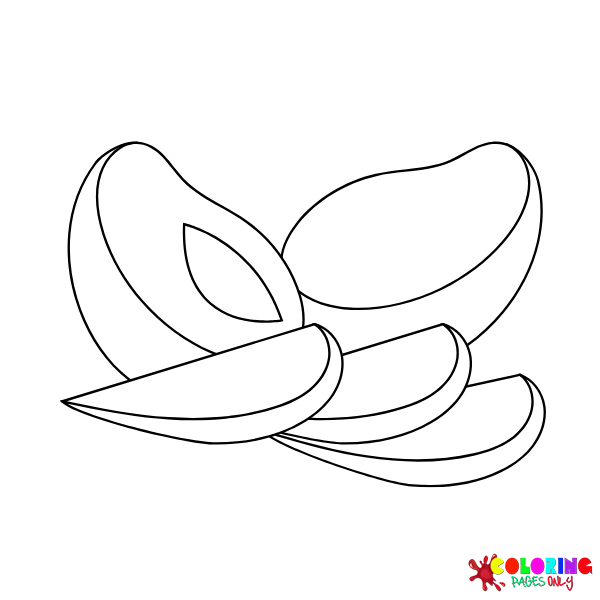
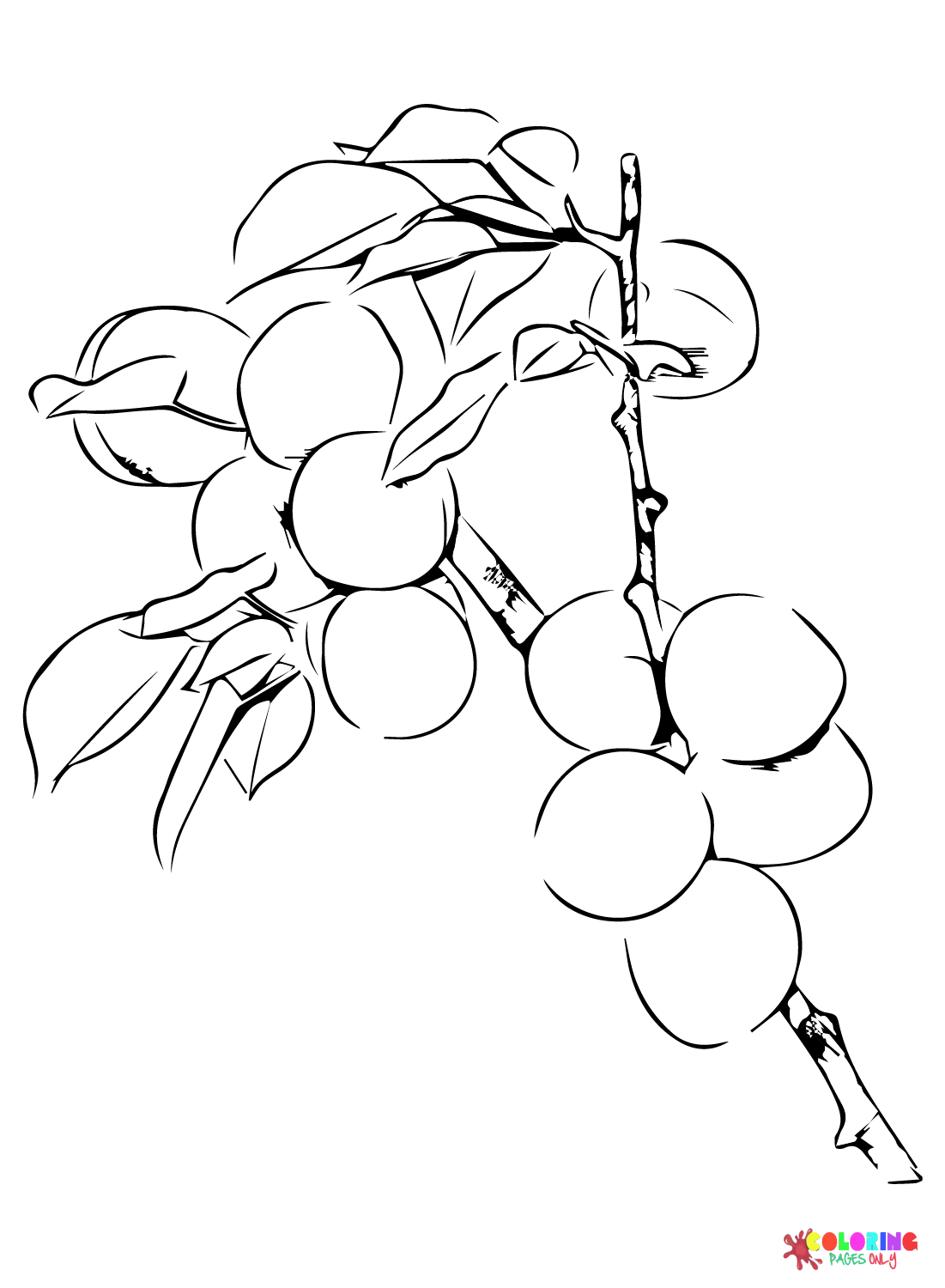
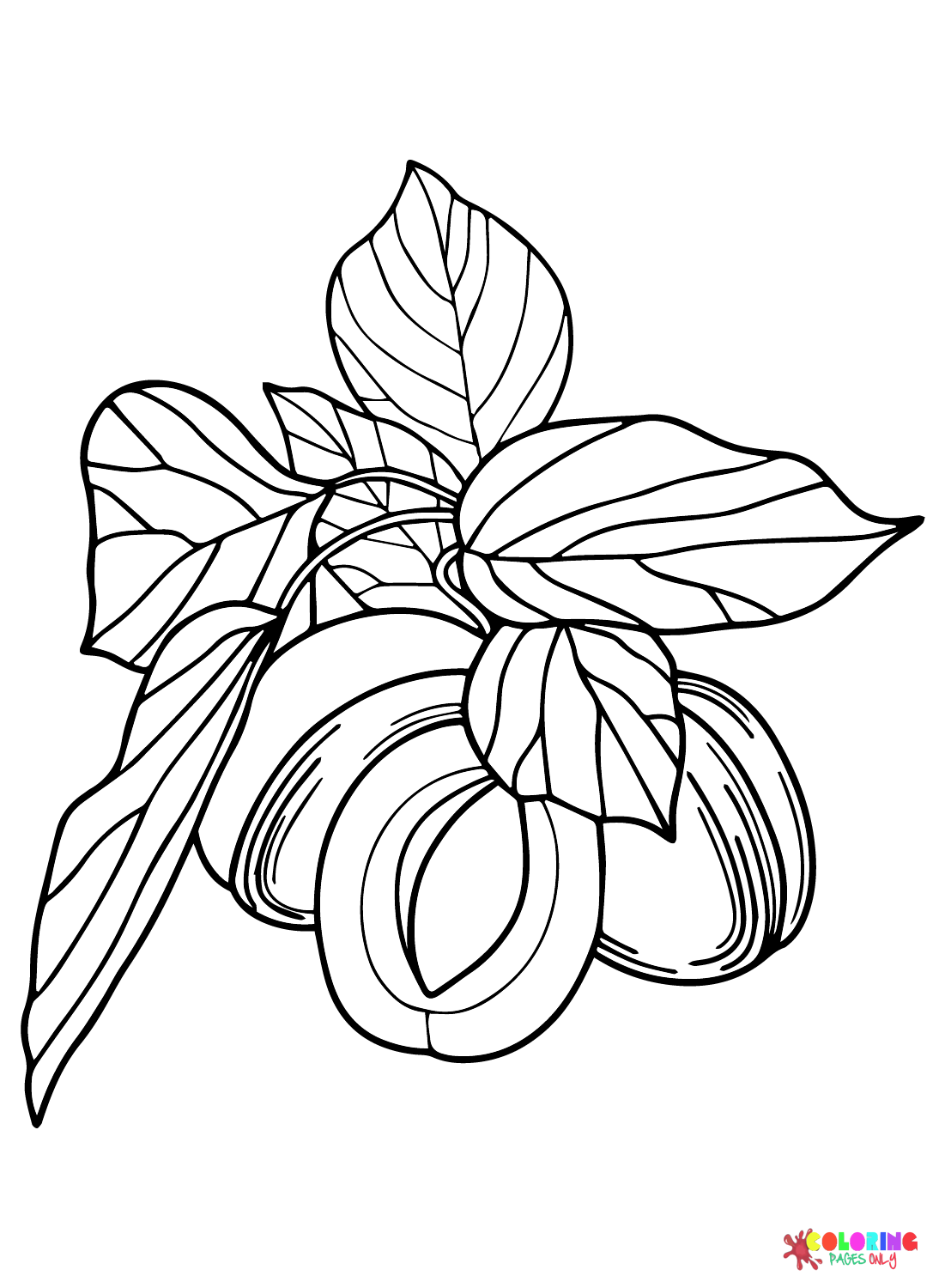
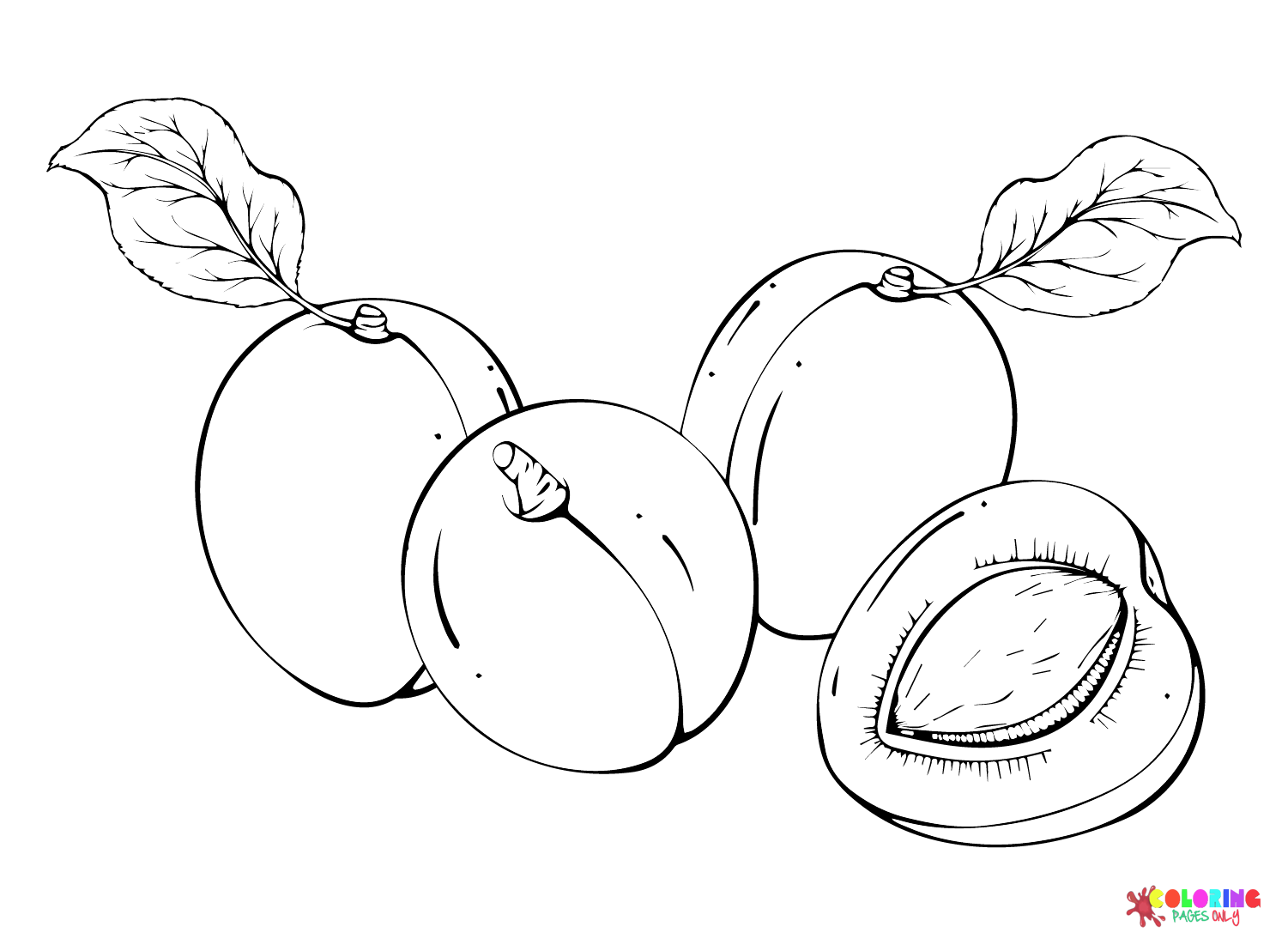
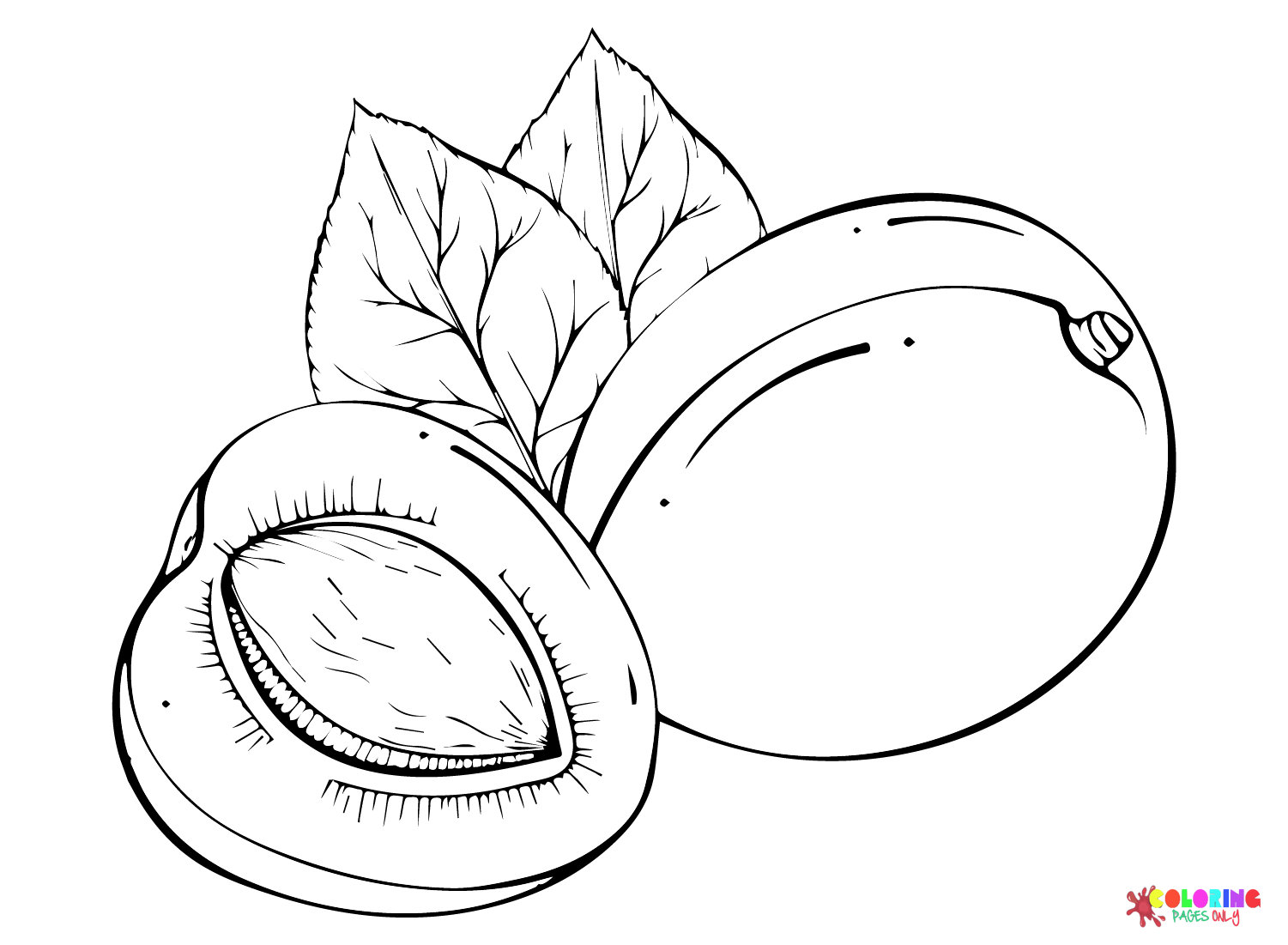
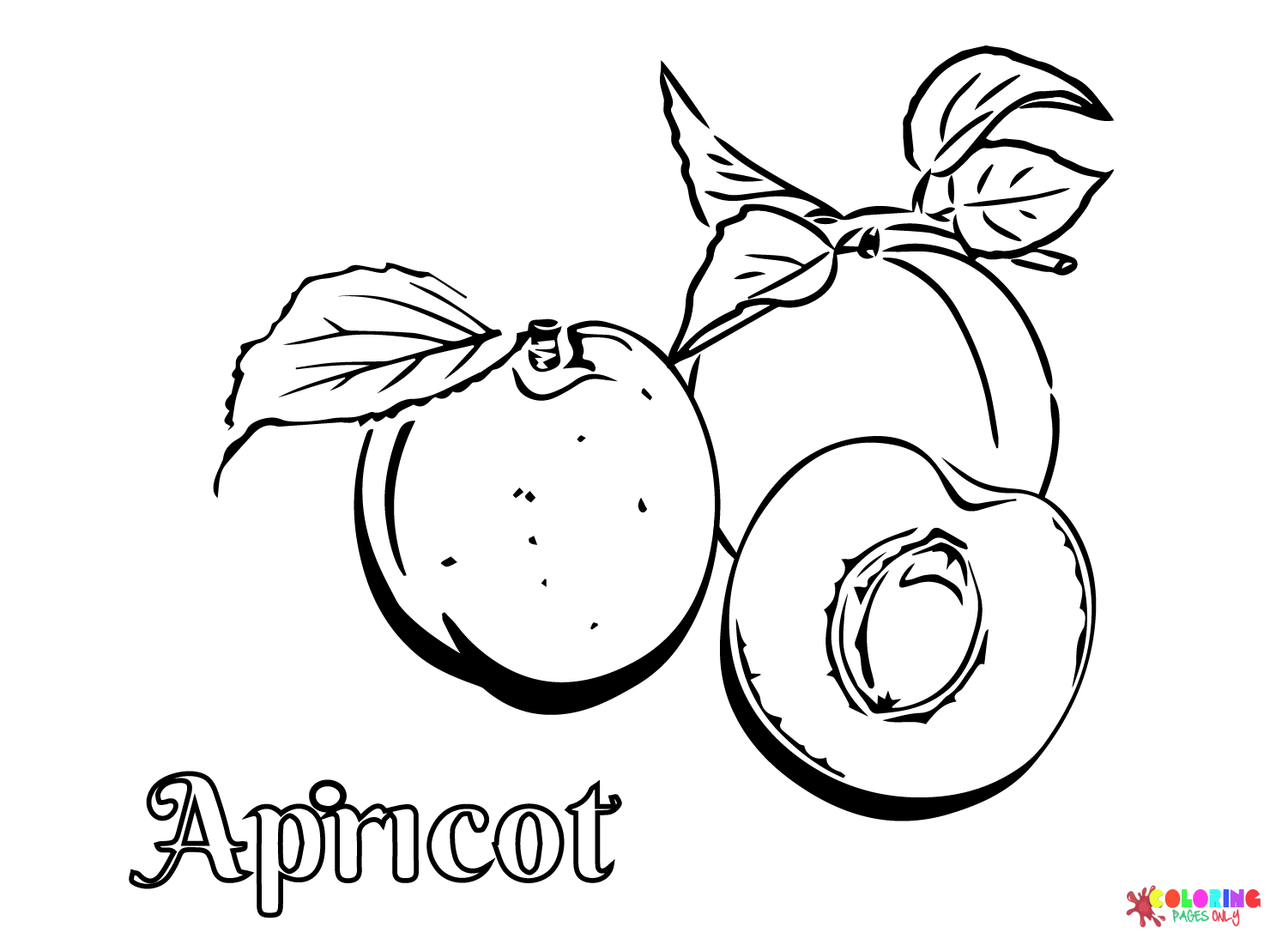
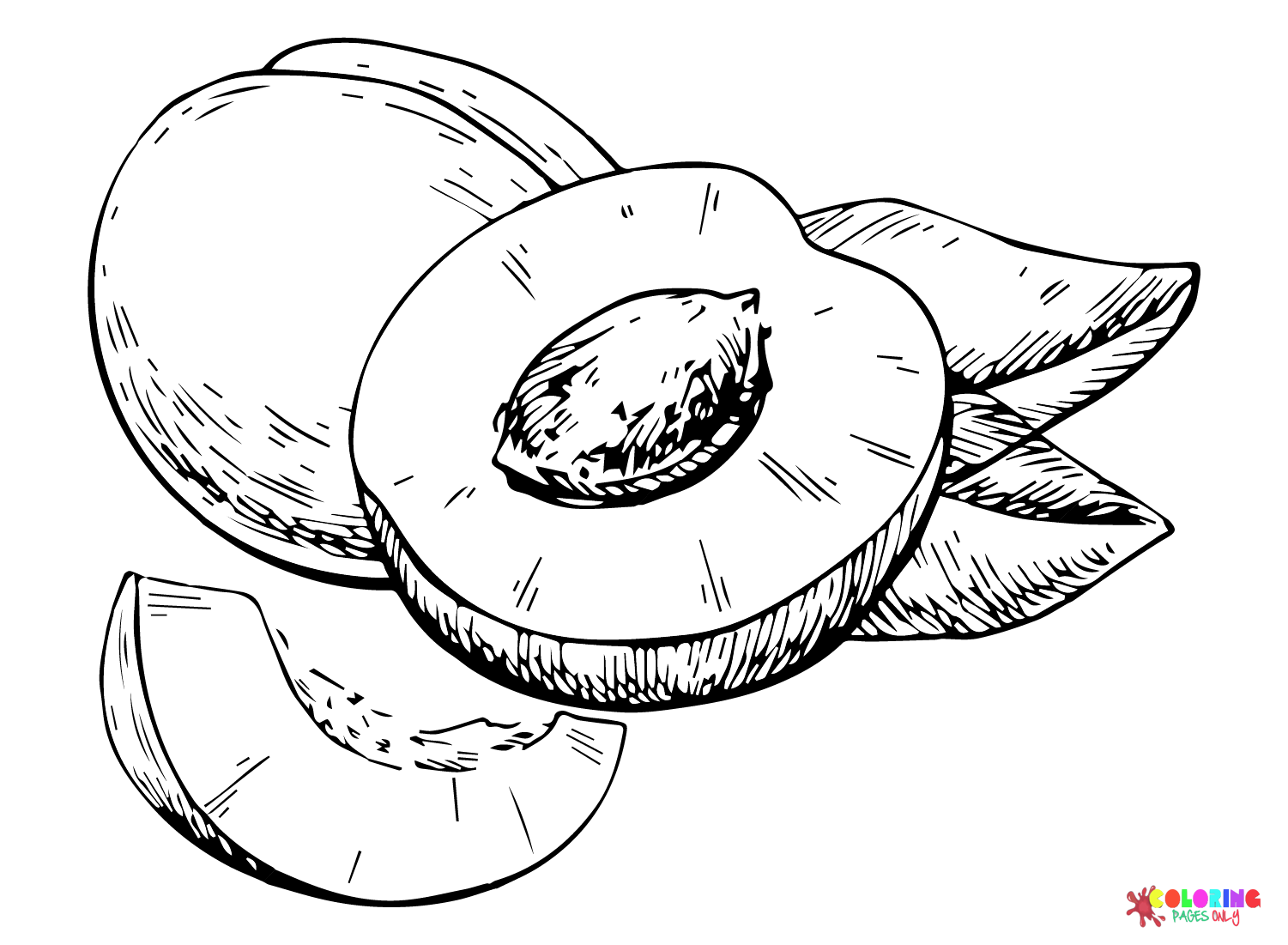
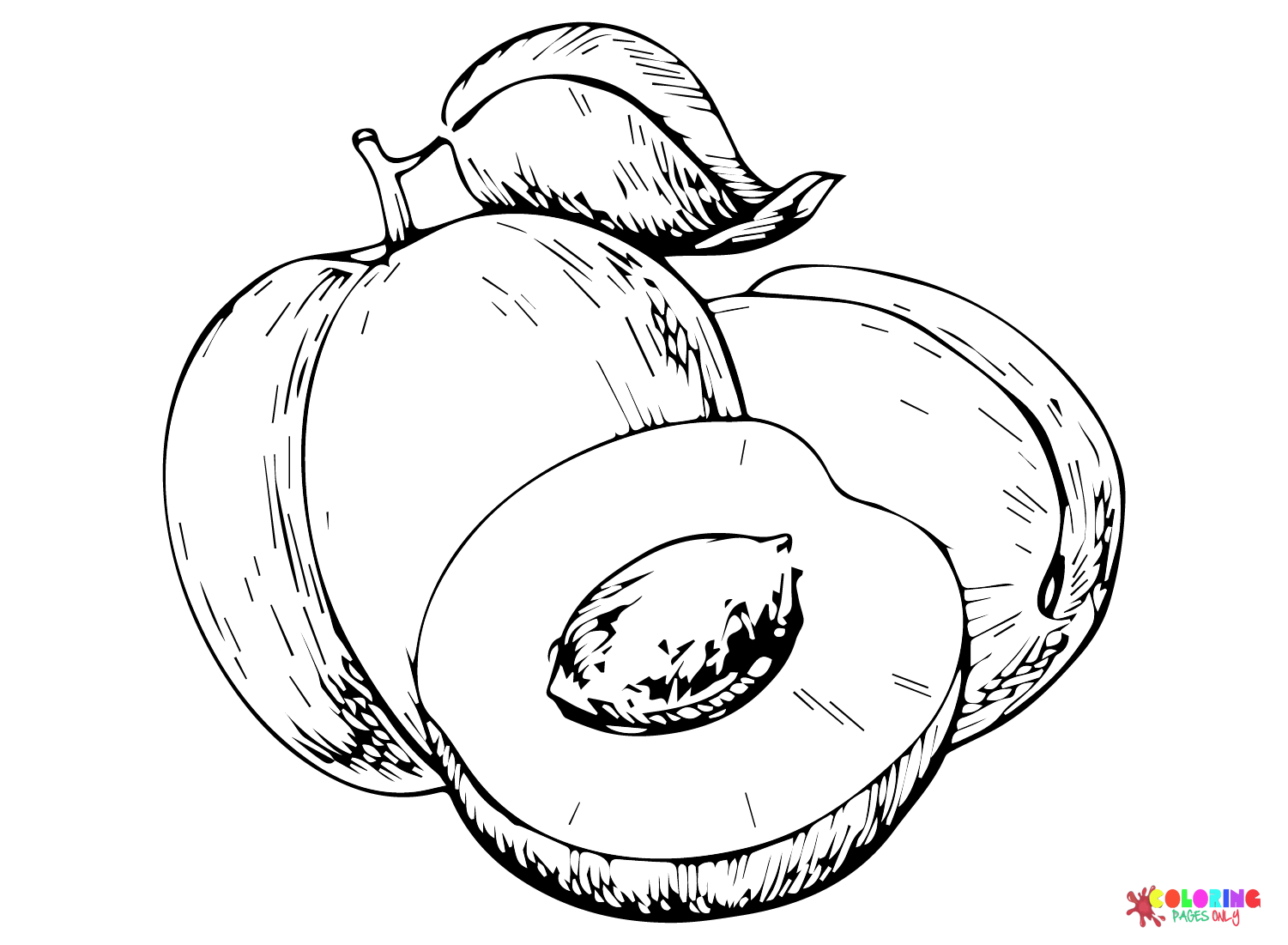
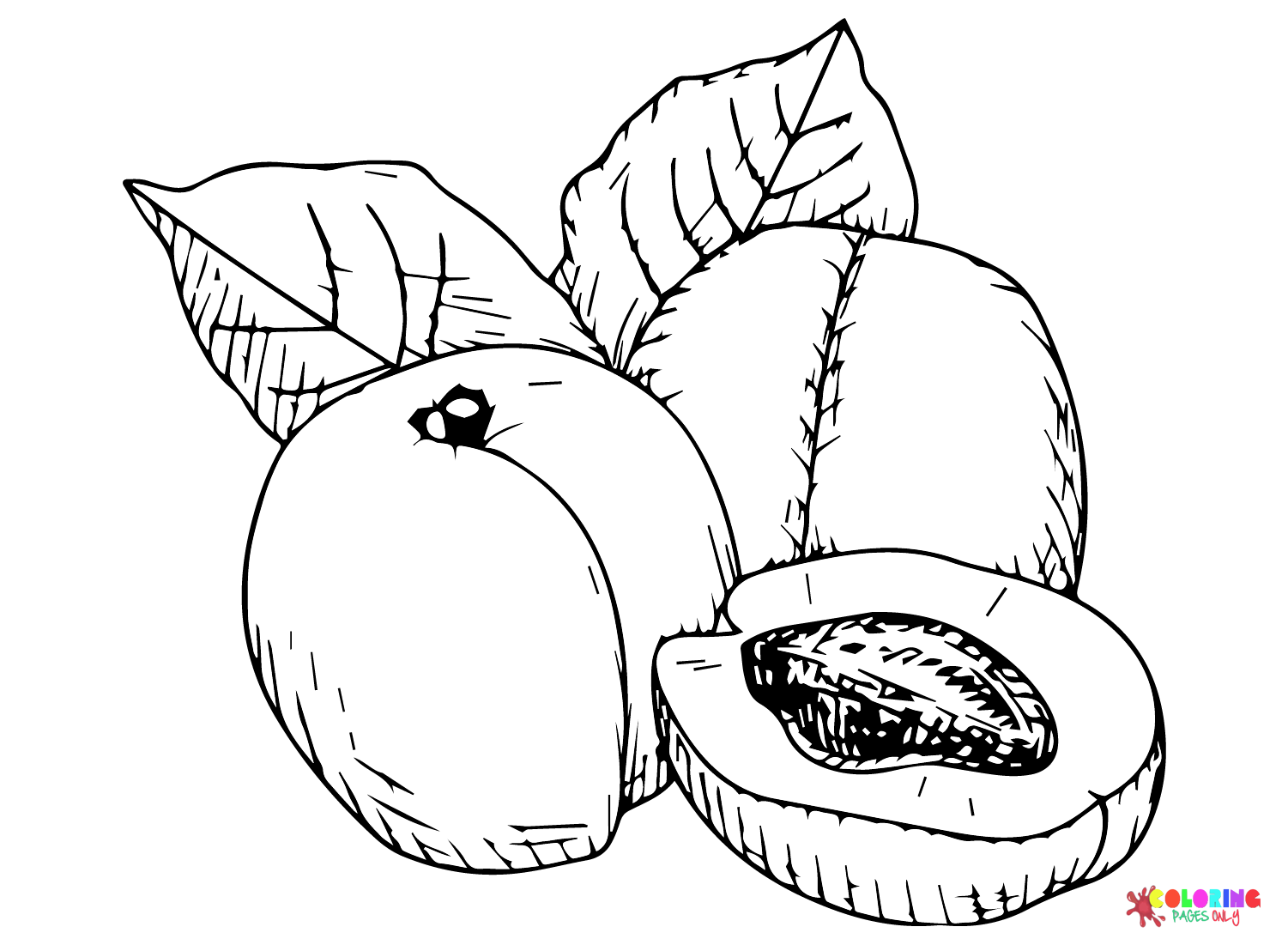
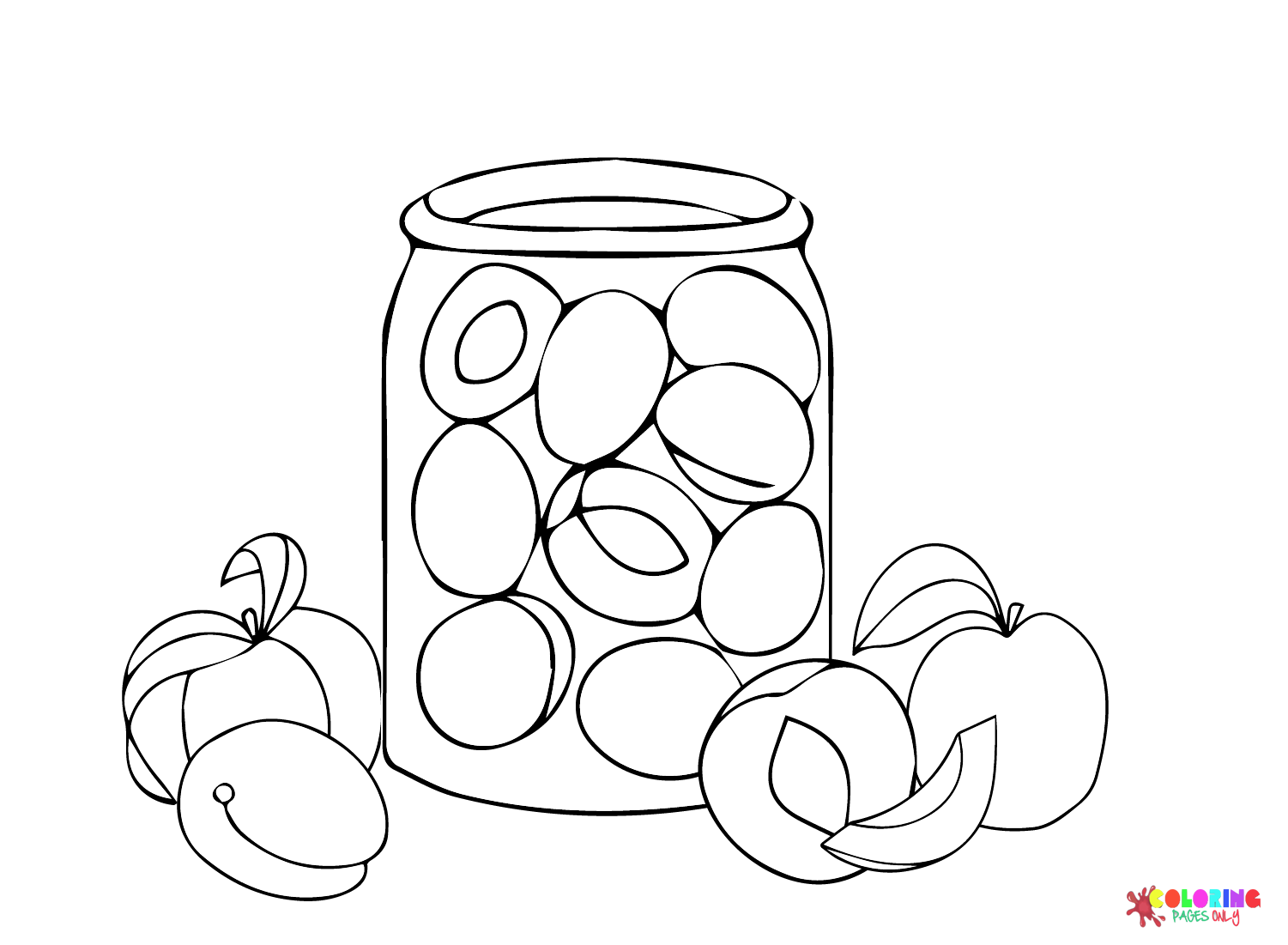
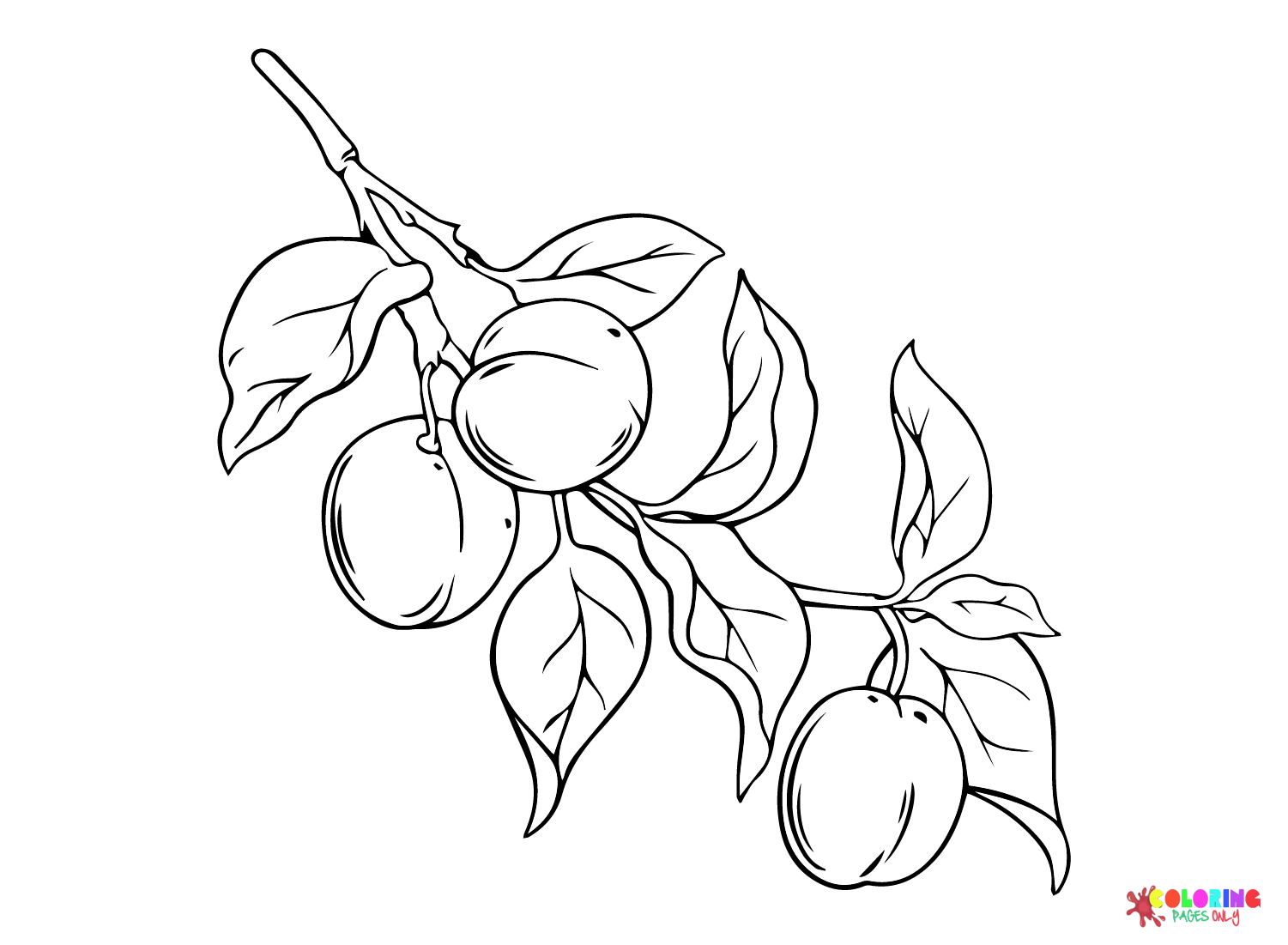
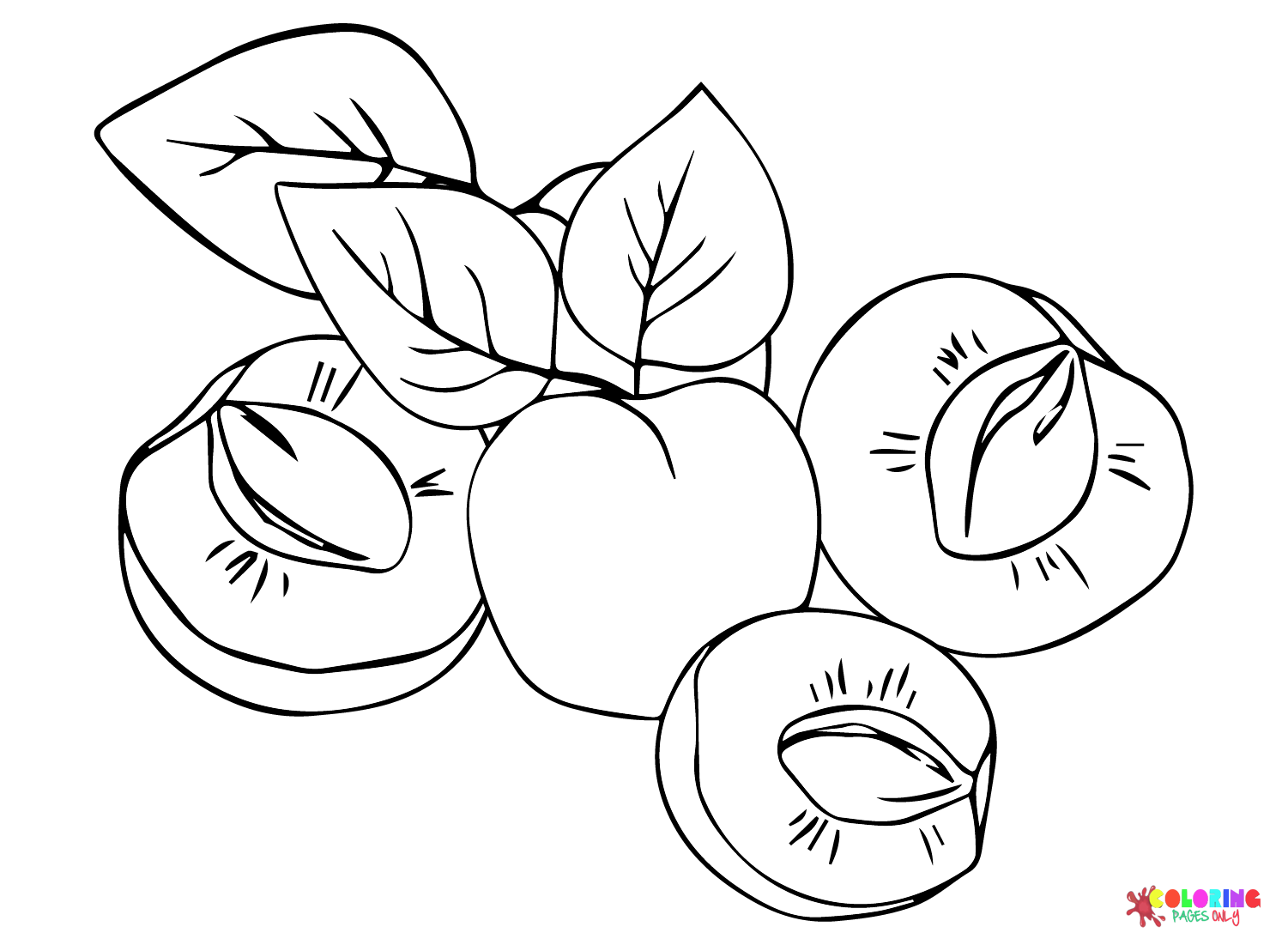
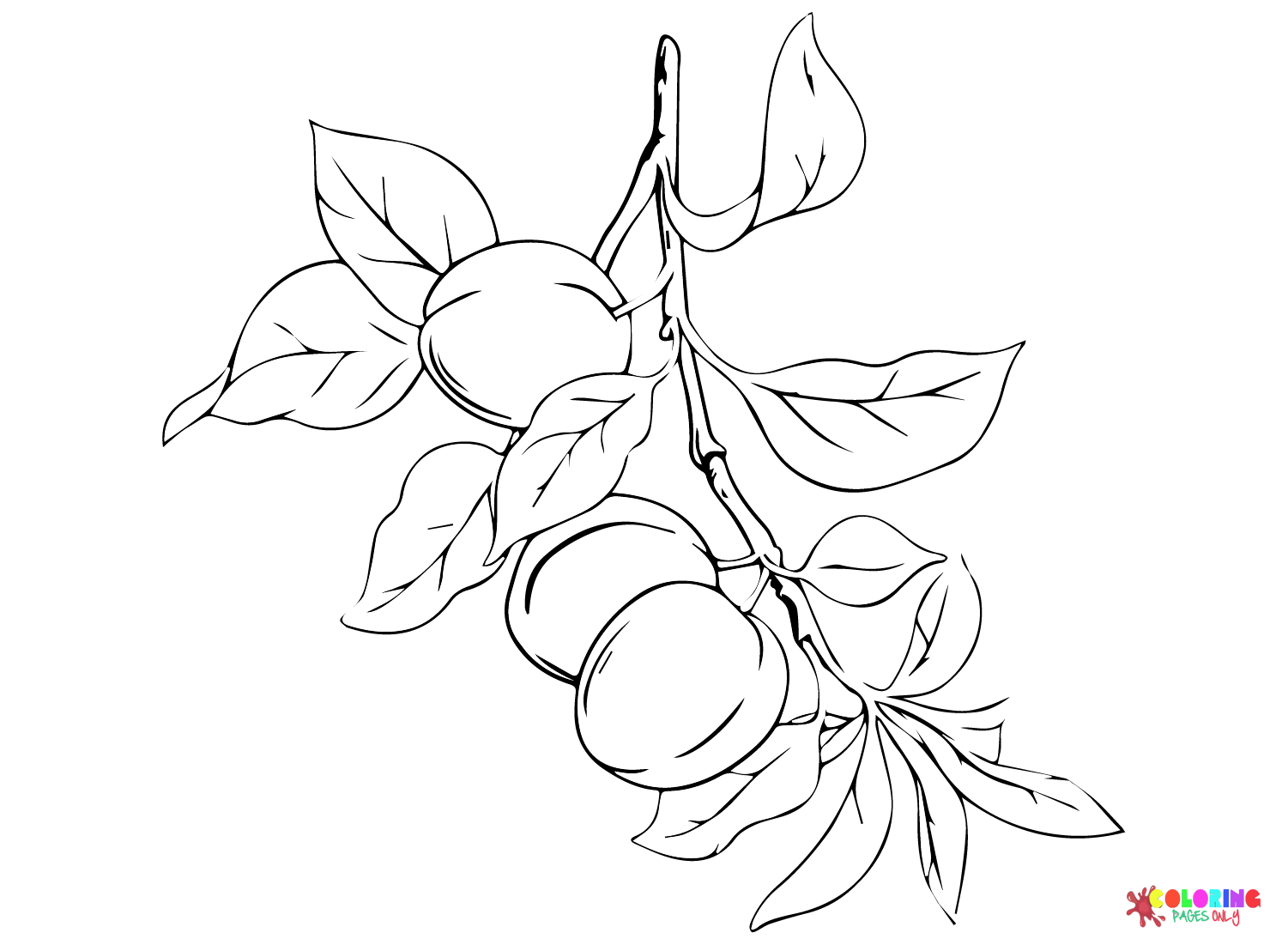
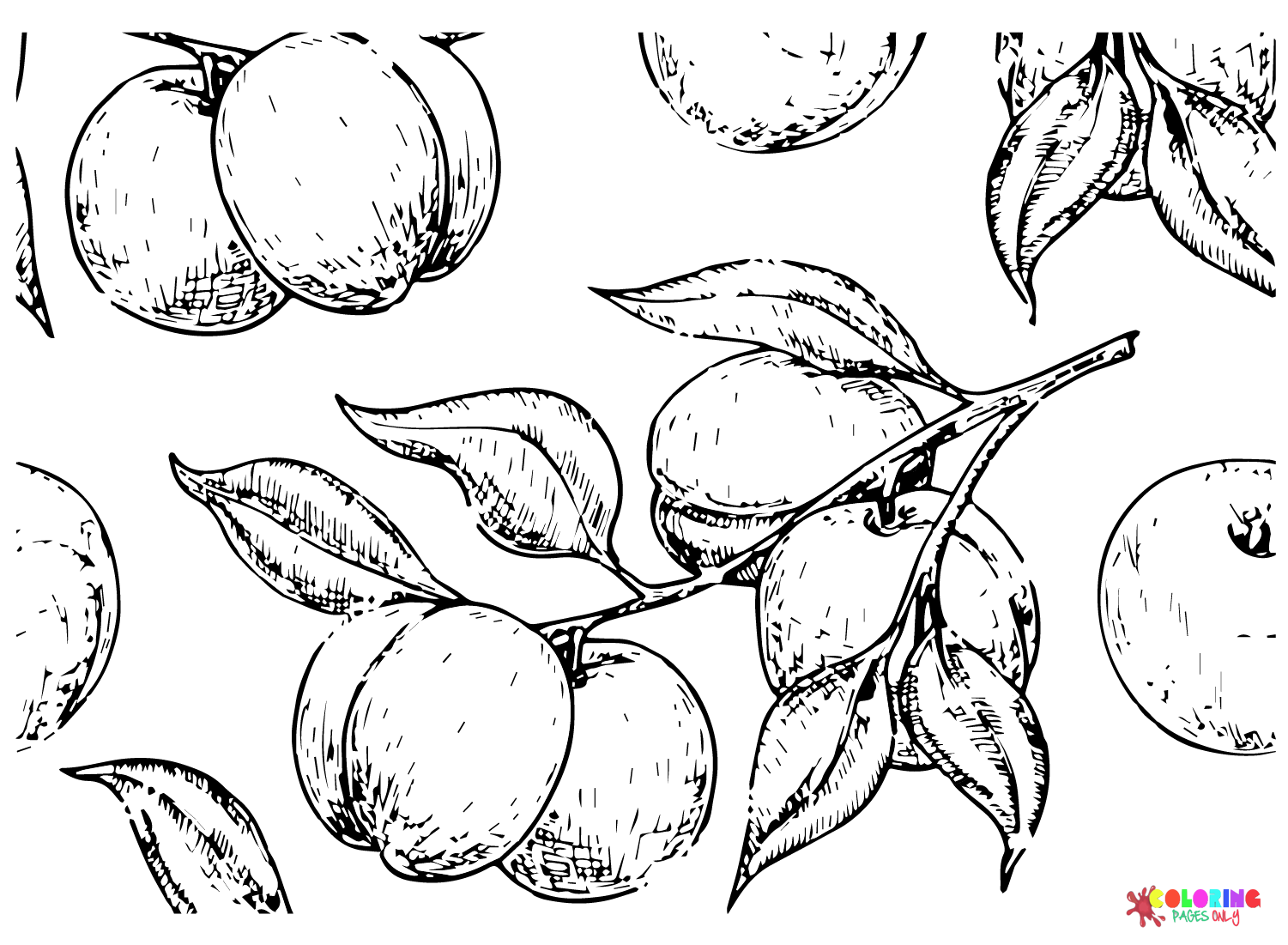
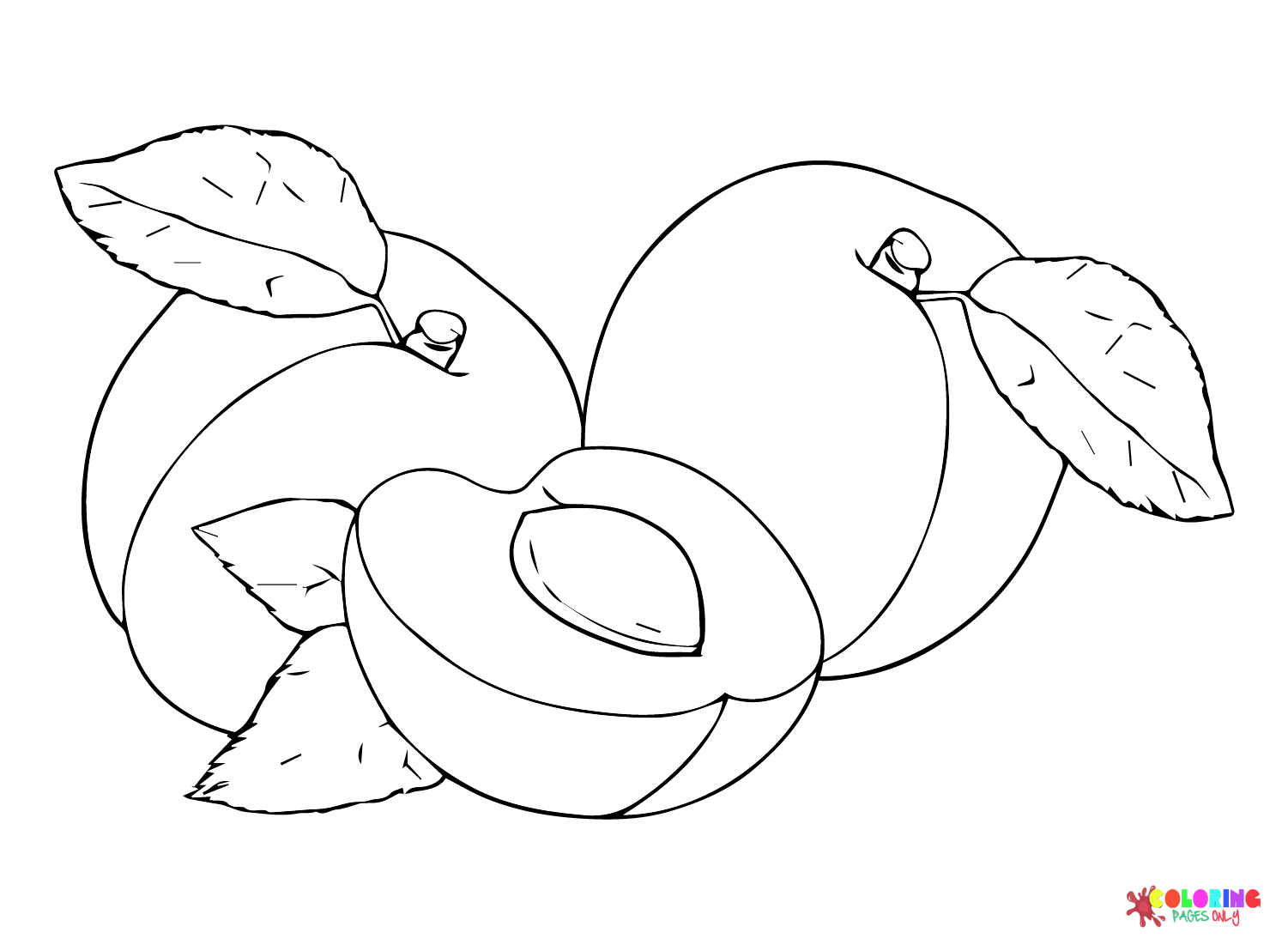
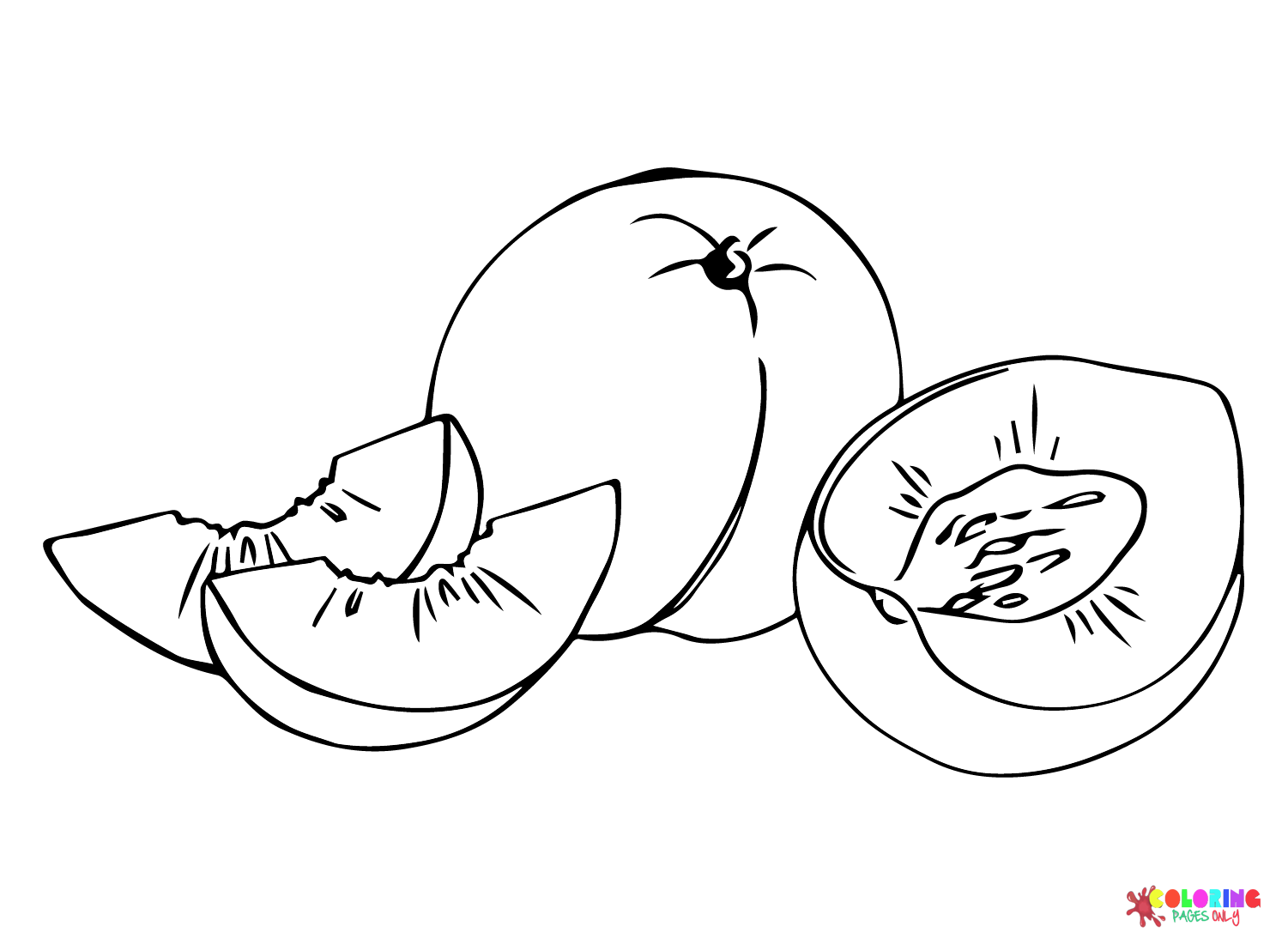
The largest group shows apricots on the branch, sliced in half to reveal the pit, piled in baskets, or set alone against a plain background. Use a soft golden-orange base coat for these, then blend a touch of red along one edge of each fruit to mimic the natural sun blush.
Cartoon and Kid-Friendly Apricots
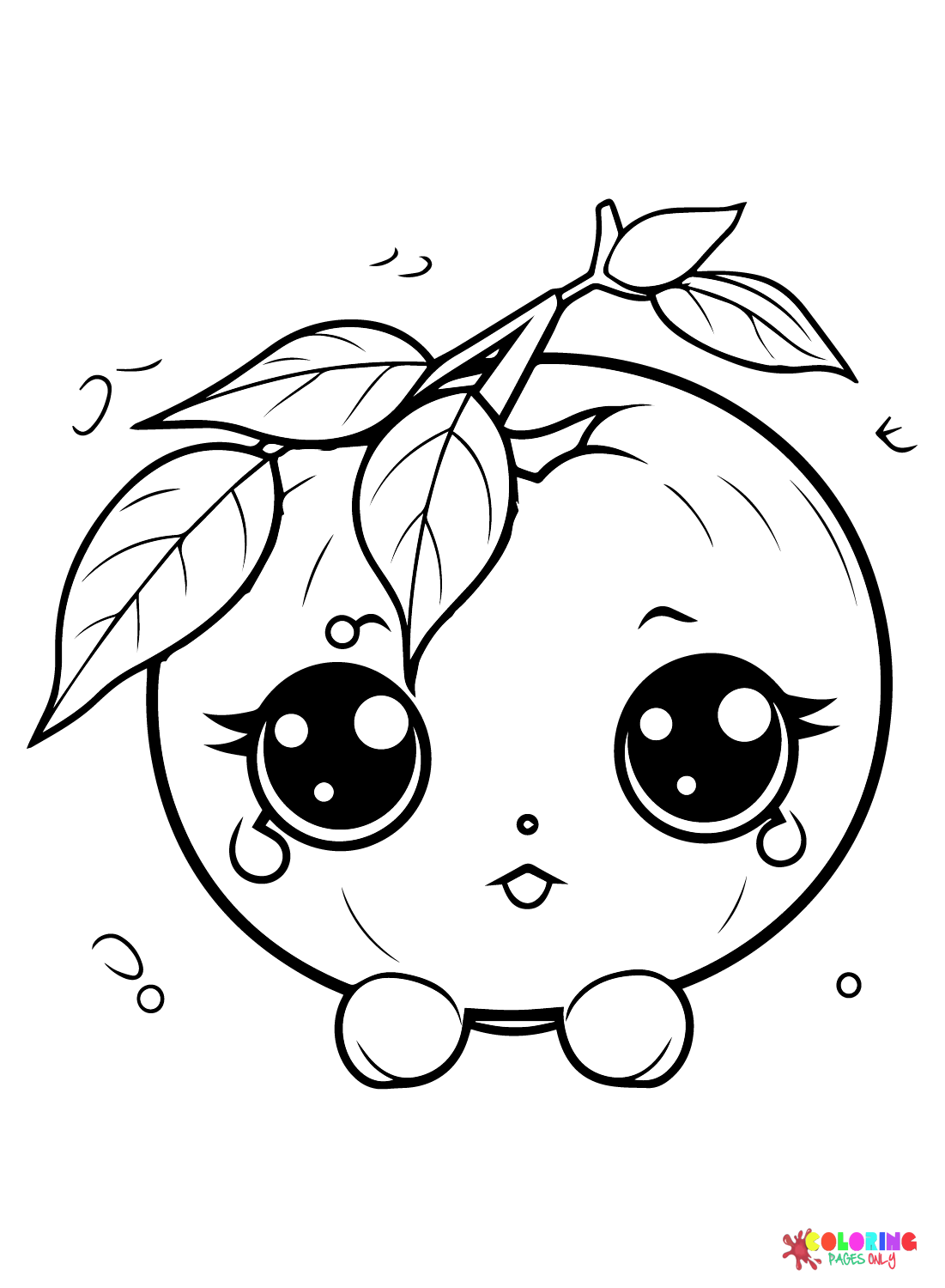
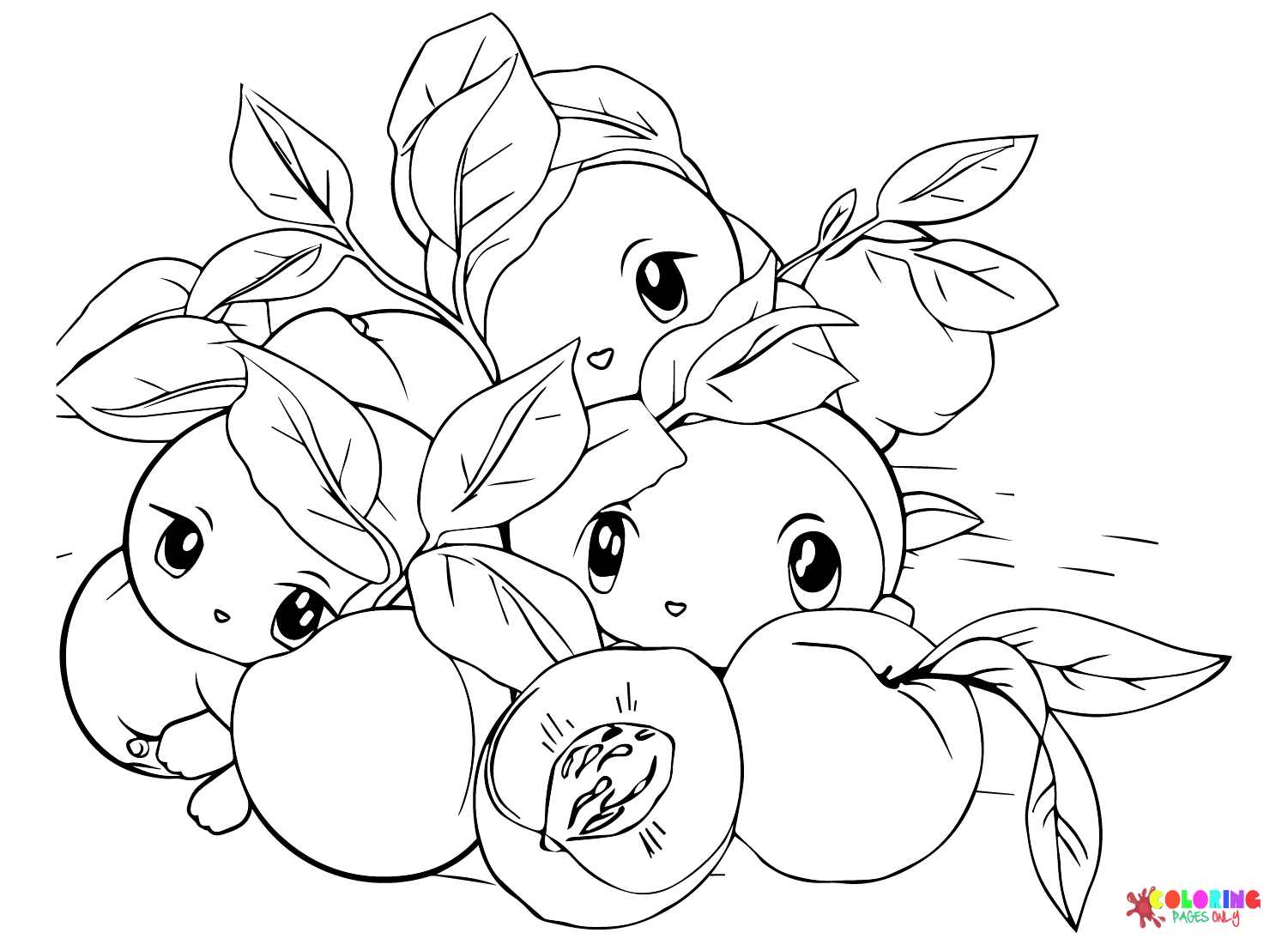
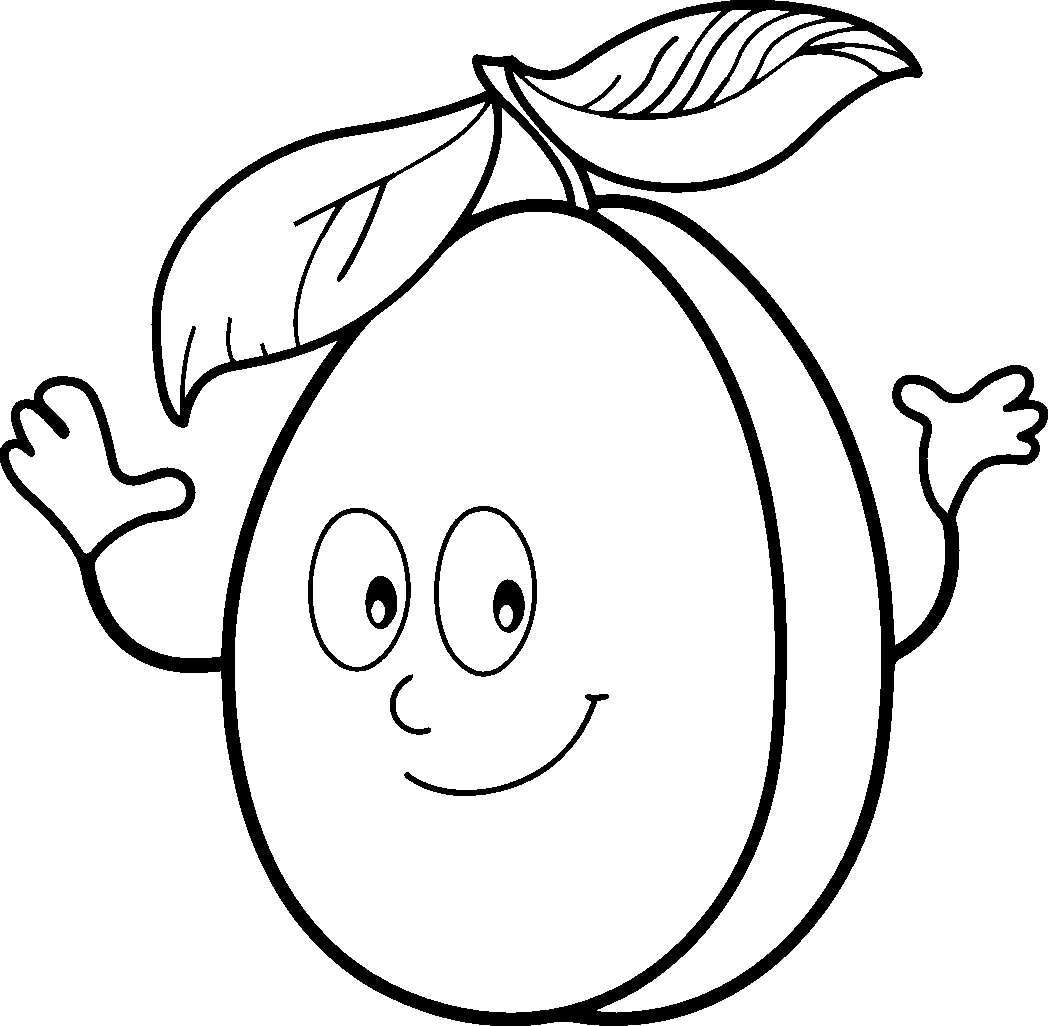
This group gives the fruit a face, arms, or a cheerful expression, including a smiling fruit design and a baby-themed page. Keep these bright and flat with a warm, even orange body, simple black facial details, and a small green leaf on top.
Sketch and Line-Art Styles
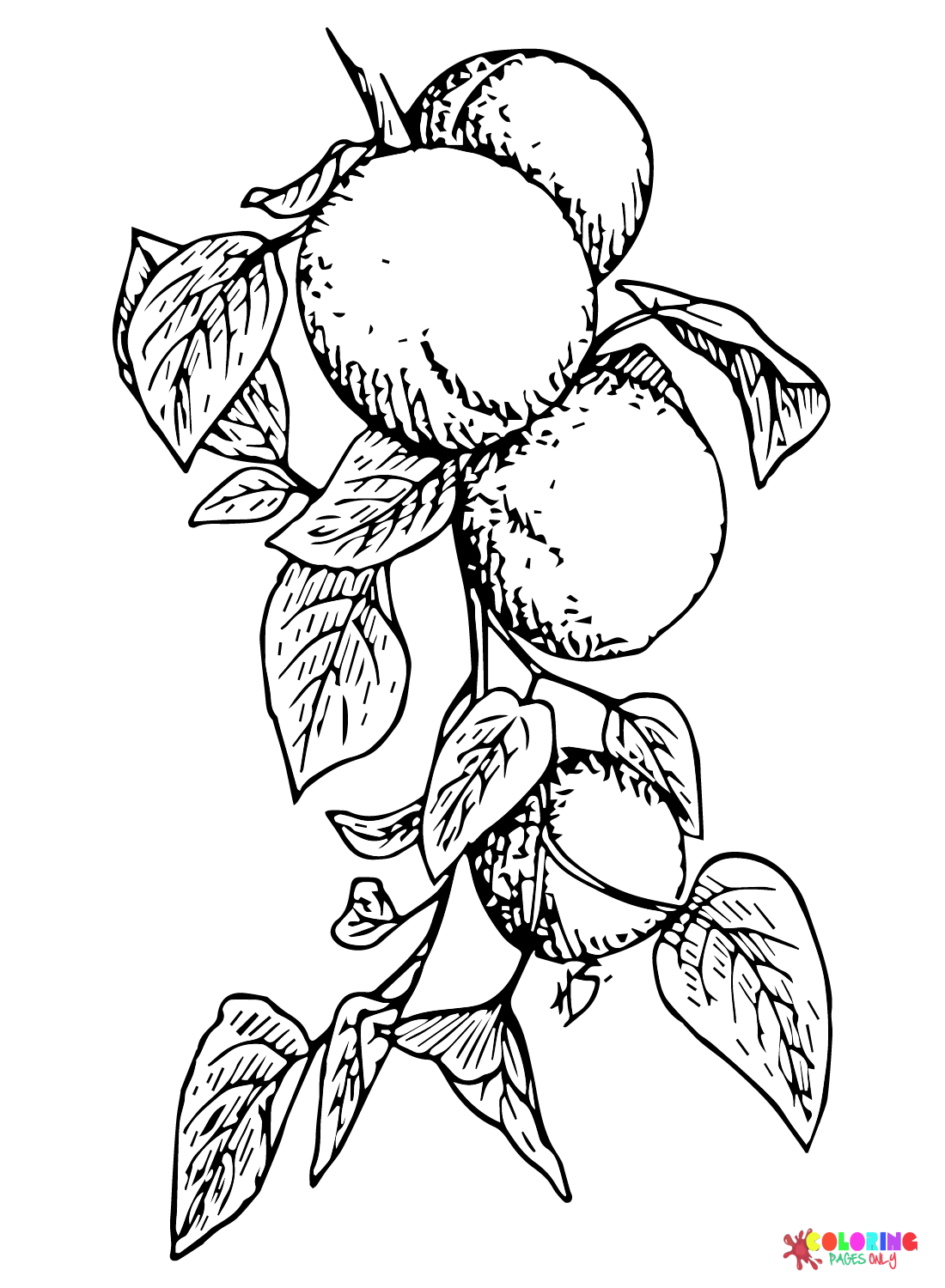
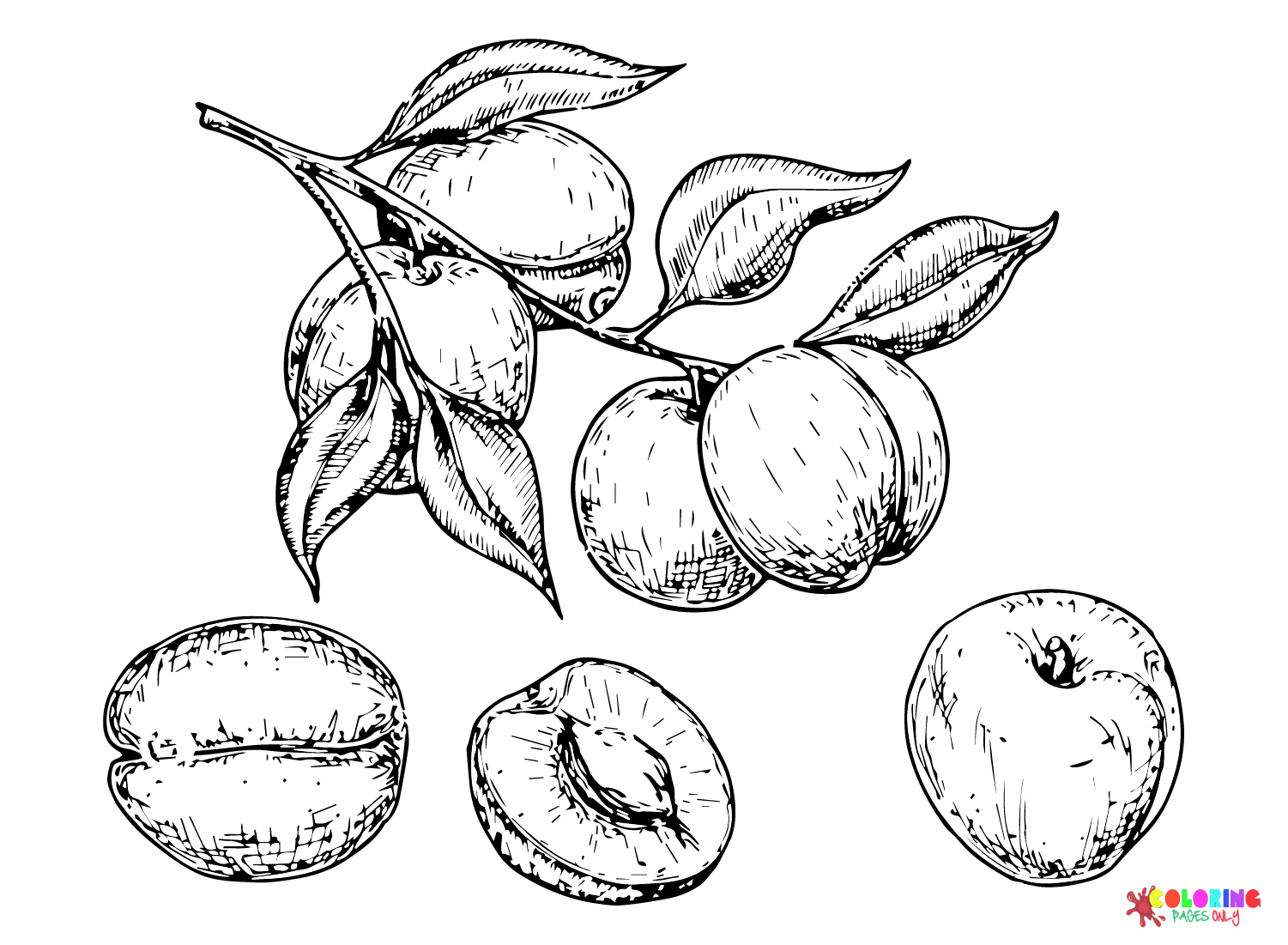
Two pages use a looser, sketch-style outline rather than clean cartoon lines. A light yellow-orange base in colored pencil, with darker Orange added only in the creases, suits this looser style better than a flat marker fill.
Simple Beginner Sheets
The remaining pages use larger, bolder outlines with fewer internal details, making them a good starting point for toddlers and preschoolers who are still building crayon control. A single warm orange, filled in without shading, is enough to complete these designs well.
What Apricot Coloring Pages Do
Practicing an off-center curve. Halved apricot designs ask colorists to trace the fruit’s suture line, the natural seam that runs from stem to tip on one side only, which takes closer hand control than a simple round outline. The American Academy of Pediatrics identifies fine motor skill development as a core benefit of structured coloring for children ages 2 through 7, and a stone fruit shape like this gives that practice a real anatomical reference point instead of an arbitrary curve.
An early lesson in stone fruit anatomy. Several pages in this set show the pit exposed at the center of a halved apricot. Coloring that pit a different shade from the surrounding flesh helps children notice that apricots, like peaches and plums, carry a single hard seed rather than the many small seeds found in berries.
A brief season, extended. A 2005 study in the Art Therapy Journal documented measurable reductions in anxiety following structured coloring sessions, and the repetitive fruit outlines here suit that kind of unhurried session well. Fresh apricots are only in season for eight to ten weeks each summer, so a coloring page can stretch that short harvest window into an activity that lasts well past the last fresh apricot of the year.
Gradient shading practice. An apricot’s skin rarely settles on one shade, shifting from pale yellow near the stem to deep Orange and a reddish blush wherever the sun hits hardest. That natural gradient gives this collection more blending practice than a single-color fruit like a banana or a lime would offer.
How to Color Apricot Coloring Pages Well
- Apricot skin: Blend Crayola Orange and Yellow Orange as a base, then add a light dab of Scarlet on the side that would have faced the sun for a natural blush, using small circular strokes rather than a single flat layer.
- Apricot flesh on halved designs: Color the inner flesh a soft Peach or Apricot crayon shade, and darken the small pit area at the center with Brown or Sepia so it reads as a separate texture.
- Leaves and branches: Use Forest Green for mature leaves and Yellow Green for newer growth, with Sepia or Brown for the woody stem, to keep the branch pages from looking flat.
- Cartoon and kid-friendly characters: Keep the fruit body a warm, even Orange, add simple Black facial features, and finish with a small Green leaf and stem on top for contrast.
- Basket and grouped fruit scenes: Color the basket in Tan or Raw Sienna, and vary each apricot slightly between more yellow and more orange tones so the group looks hand-picked instead of uniform.
- Sketch-style line art: Layer colored pencil rather than marker, starting with a light Yellow Orange base coat and adding Orange shading in the creases, since the loose lines show pencil texture more clearly than a flat fill.
5 Creative Craft Ideas With Apricot Coloring Pages
1. Apricot Branch Diorama
Color several branch and fruit pages, cut them out, and arrange them inside a shoebox turned on its side to build a small orchard scene.
2. Fruit Bowl Collage
Combine colored apricot pages with other fruit coloring pages into one collage, arranged like a full fruit bowl on a paper plate.
3. Apricot Fact Poster
Color a large apricot page and add hand-written facts around it, such as where apricots grow or what a stone fruit is, for a simple classroom science poster.
4. Apricot Bookmark
Color one of the smaller apricot designs, trim it to a bookmark shape, and add a ribbon or paper tassel through a hole punched at the top.
5. Apricot Garland
Color multiple apricot pages, cut around each fruit, and string them together with twine for a kitchen or classroom garland.
Frequently Asked Questions
What are apricot coloring pages?
Apricot coloring pages are printable designs that show the fruit in different styles, including realistic branches and halves, cartoon characters, sketch-style drawings, and simple outlines. This collection includes 25 pages, each downloadable as a PDF or available to color directly online in the browser.
Where do apricots come from?
Apricots are believed to have originated in either western China or Armenia, and botanists still debate the exact source. The scientific name Prunus armeniaca reflects the older belief that Armenia was the origin point. Today, apricots are grown across temperate regions worldwide, with California producing about 90 percent of the crop grown in the United States.
What is the difference between an apricot and a peach?
Apricots and peaches are both stone fruits in the same plant family, but apricots are smaller, have smooth rather than fuzzy skin in some varieties, and carry a slightly tarter flavor. Apricots also contain more vitamin A per 100 grams than peaches, even though peaches are larger and juicier.
What color are ripe apricots?
A ripe apricot is typically golden Orange to yellow-orange across most of the skin, often with a soft red or pink blush on the side that received the most direct sunlight while growing on the tree. Pale, mostly yellow fruit usually means it was picked before it fully ripened.
How many apricot coloring pages are in this collection?
This collection includes 25 apricot coloring pages, split roughly between realistic fruit illustrations, cartoon and kid-friendly characters, sketch-style line art, and simple beginner sheets with bolder outlines.
What nutrients do apricots contain?
Fresh apricots are low in calories, at roughly 17 calories per medium fruit, while providing meaningful amounts of vitamin A, vitamin C, potassium, and fiber. They also contain antioxidants such as beta-carotene, which contribute to the fruit’s orange color.
Are apricot coloring pages suitable for young children?
Yes. The simple beginner sheets and cartoon designs in this collection use bold outlines with few small details, making them appropriate for toddlers and preschoolers. The more detailed, realistic branch and basket pages suit older children and adults who want extra shading practice.
When is the fresh apricot season in the United States?
Fresh apricot season in the United States generally runs from mid-May through early August, with California’s harvest beginning in mid-May and continuing into midsummer as different growing regions come into season.
Start Coloring
Download any page by clicking the design. No account, email, or payment is required. Pages print directly from the browser at full resolution or open in the online coloring tool for screen use. Share finished pages on Facebook or Pinterest with the share buttons at the top of each design page.