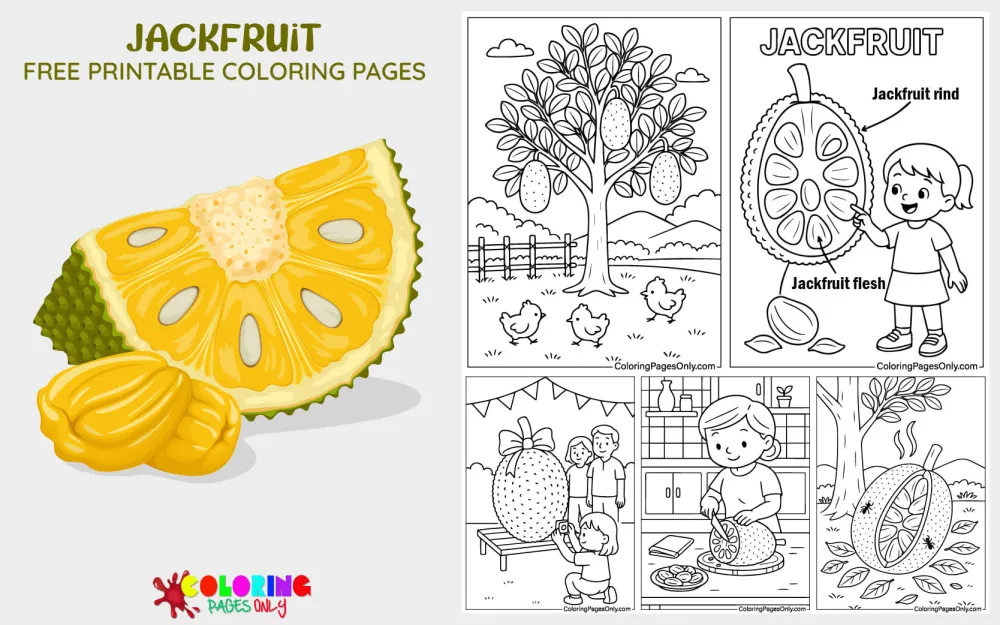
Free Jackfruit Coloring Pages: 46 printable PDF designs featuring realistic jackfruit, trees, and garden scenes, people interacting with the fruit, and cartoon jackfruit characters. Each page can be downloaded as a PDF to print or colored online in the browser.
Jackfruit holds a genuine record: Guinness World Records recognizes it as the largest tree-borne fruit on the planet, with the heaviest one ever weighed coming in at 42.72 kilograms in 2016. It grows natively in the Western Ghats of India and is now the national fruit of Bangladesh, cultivated widely across South and Southeast Asia. One detail that surprises most first-time colorers is where the fruit actually grows. Unlike an apple or an orange hanging from a branch tip, jackfruit grows in a pattern called cauliflory, sprouting directly from the tree’s trunk and thick lower branches, which is why several pages in this set show the fruit attached low on a tree rather than up in the leaves.
This collection reflects that range across 46 pages: realistic whole and ripe jackfruit, trees and garden scenes showing exactly how the fruit grows, everyday scenes of people picking, cutting, and selling it, and lighter cartoon characters for younger colorers. The spiky green rind is the throughline across nearly every page, whether the style is realistic or cartoon.
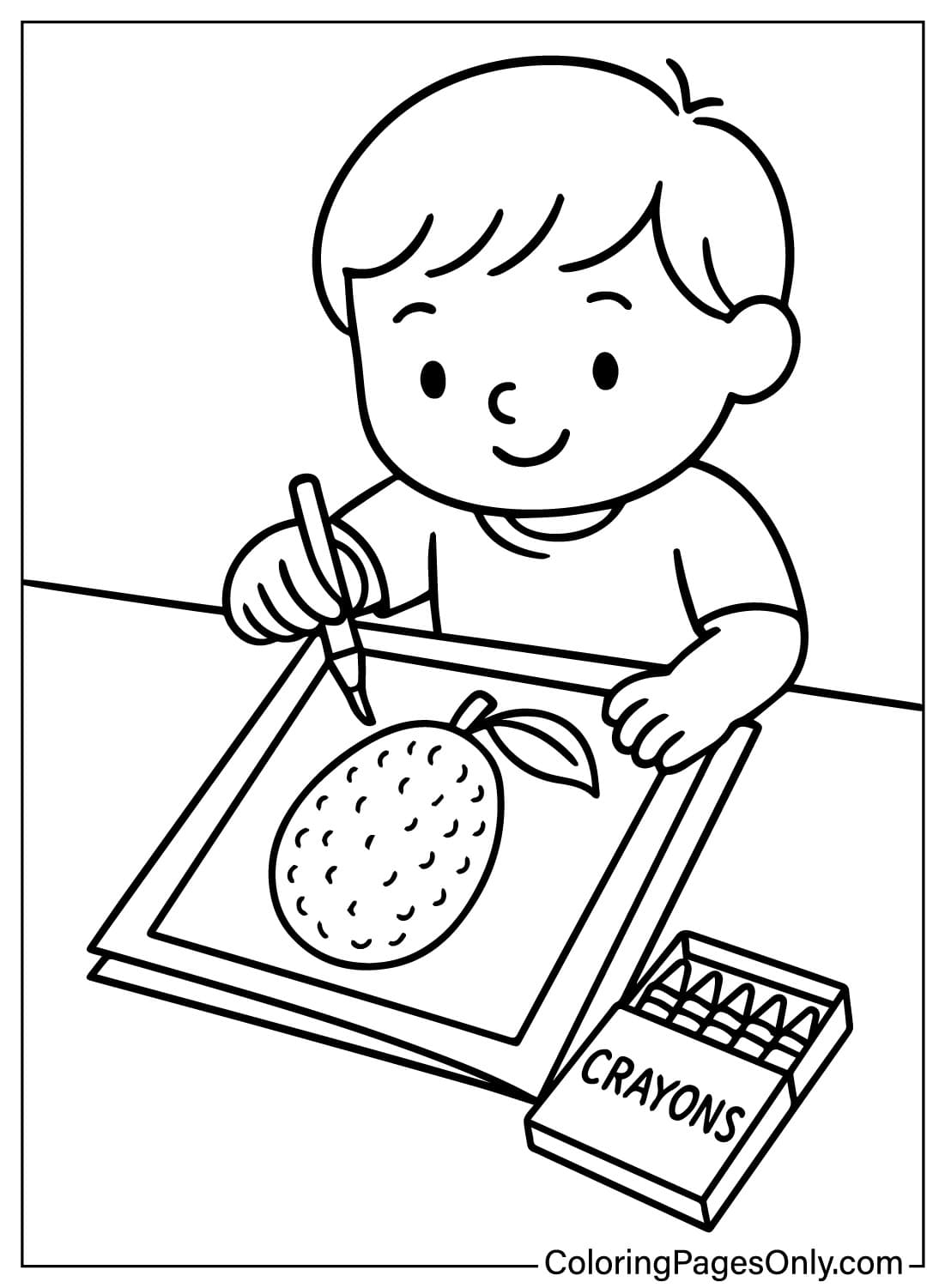
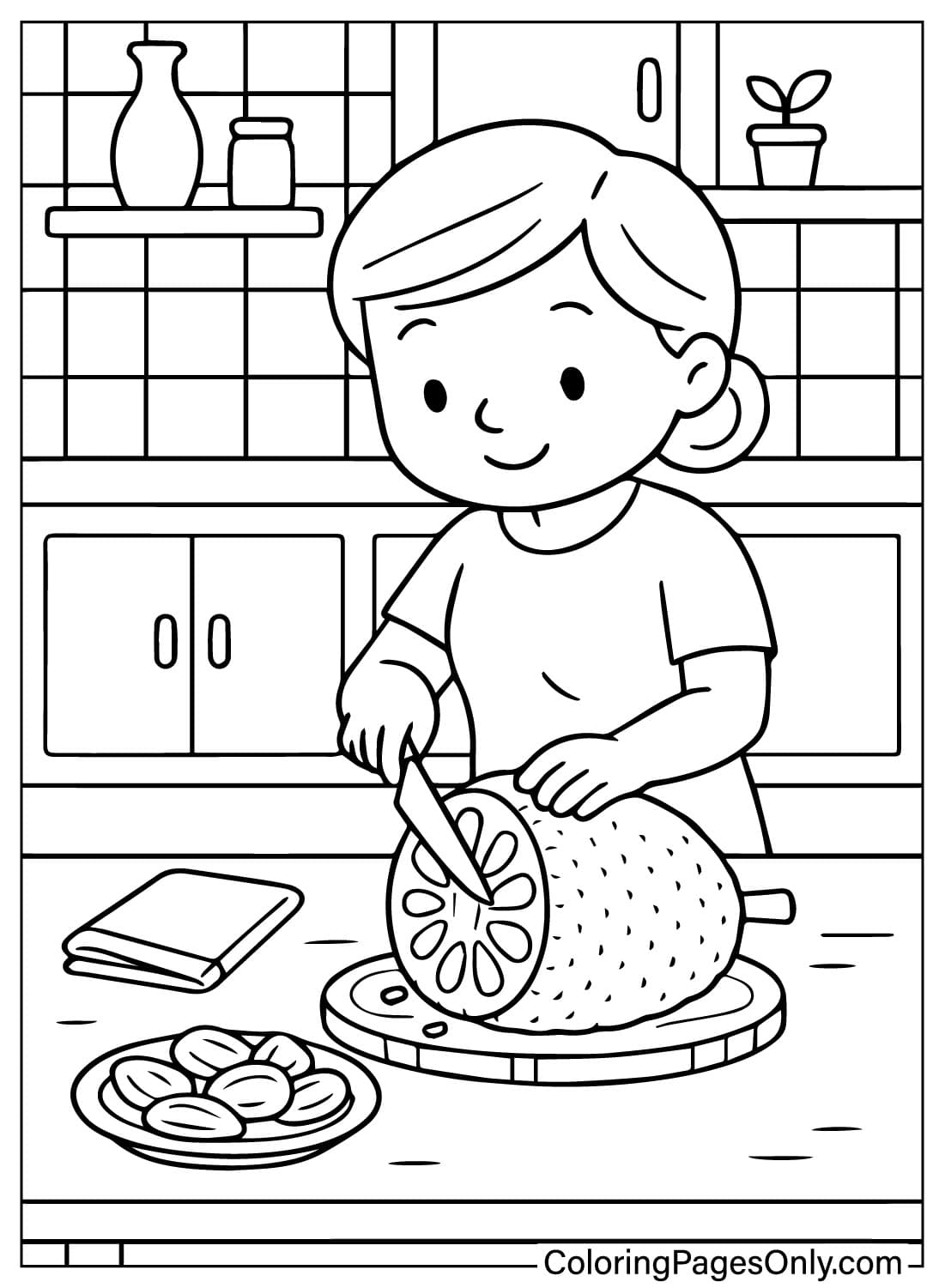
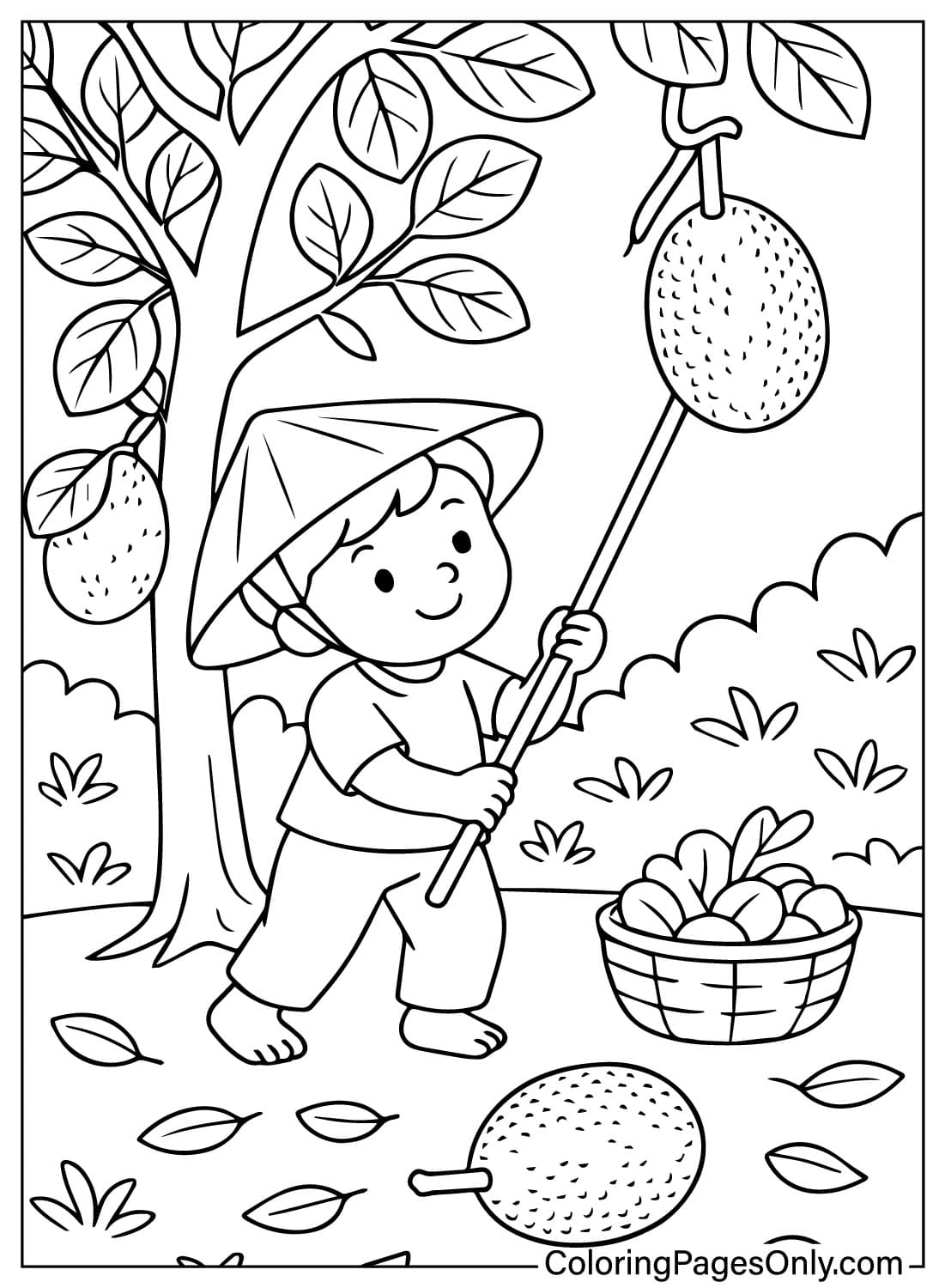
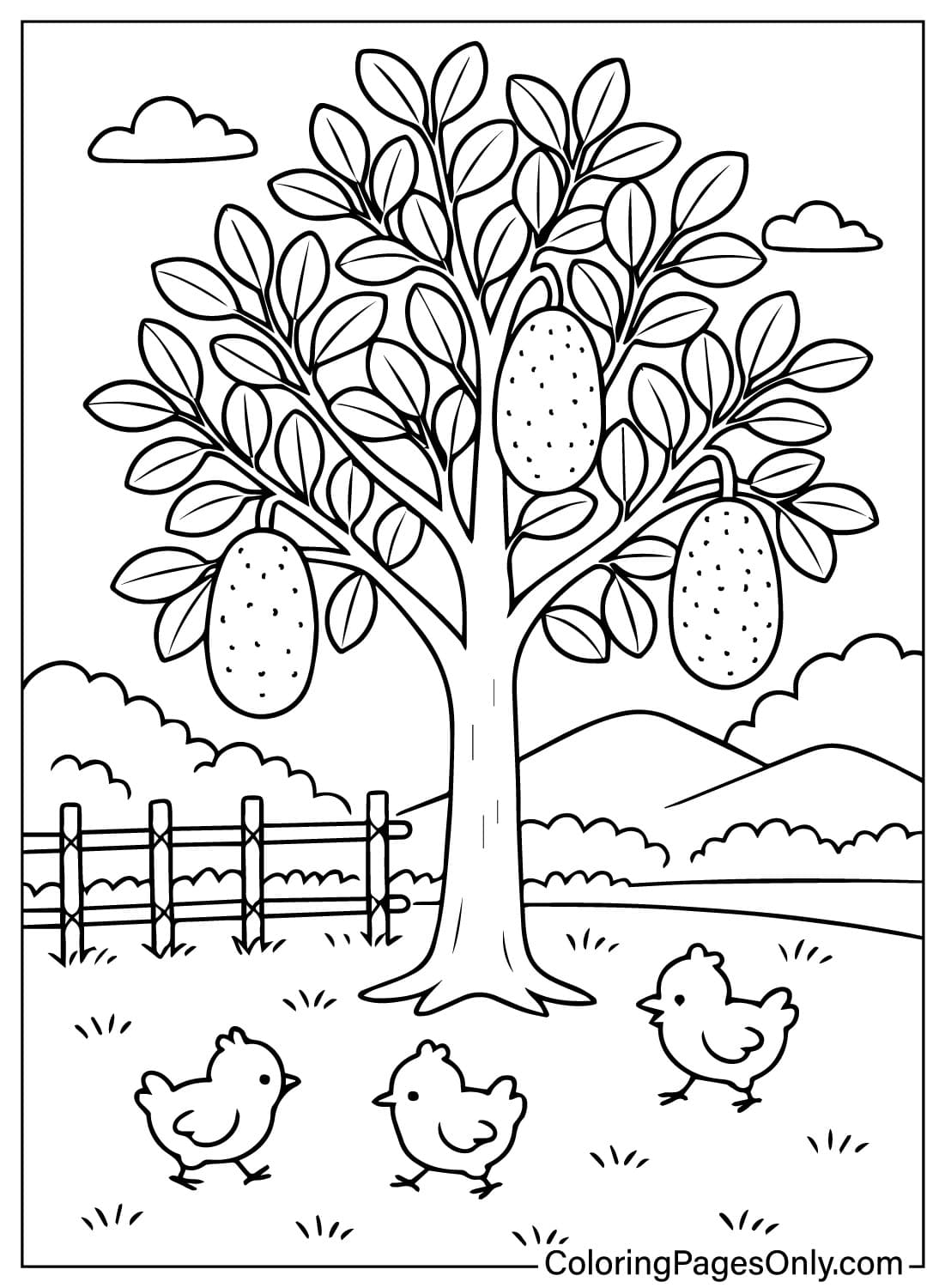
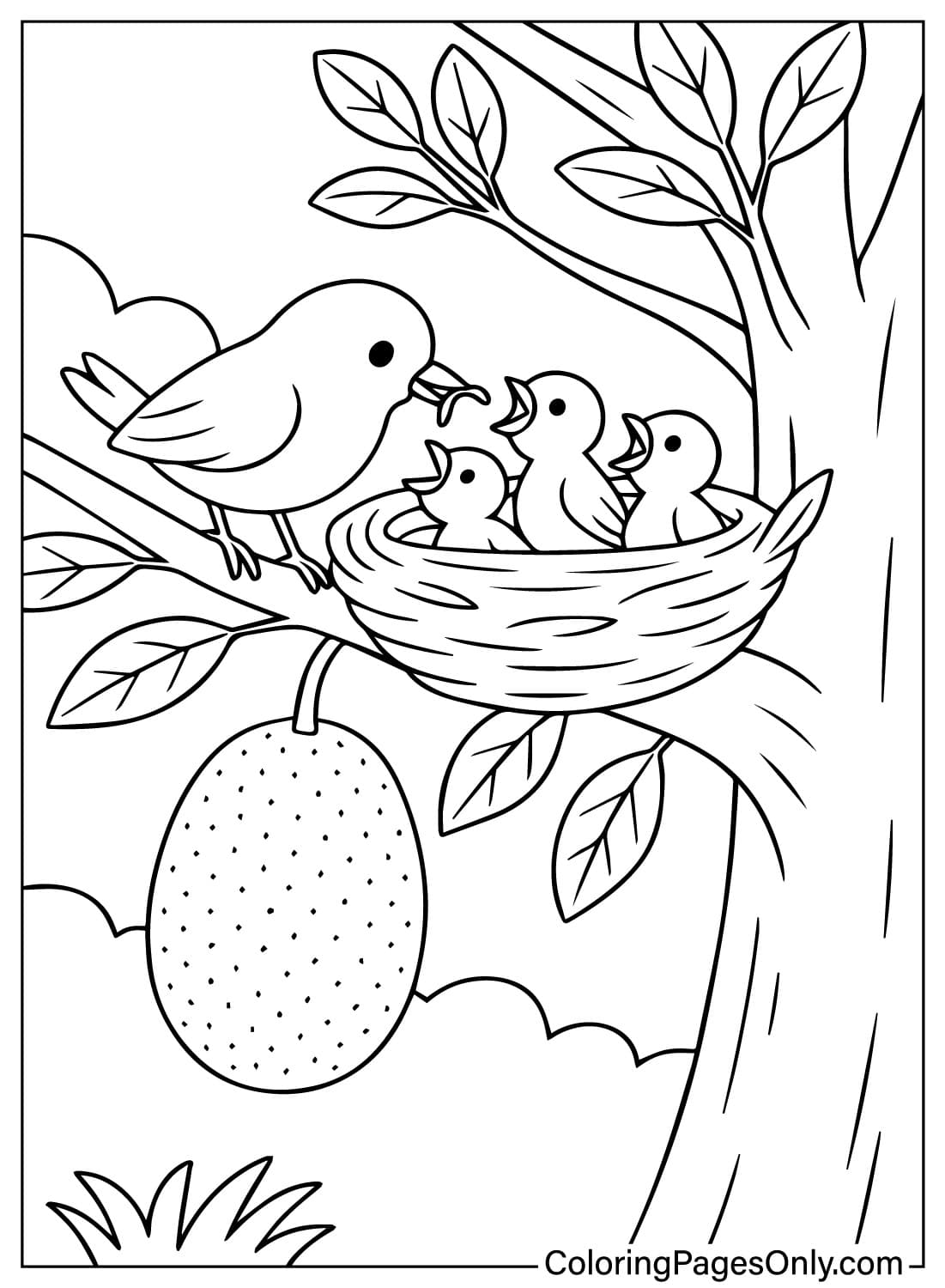
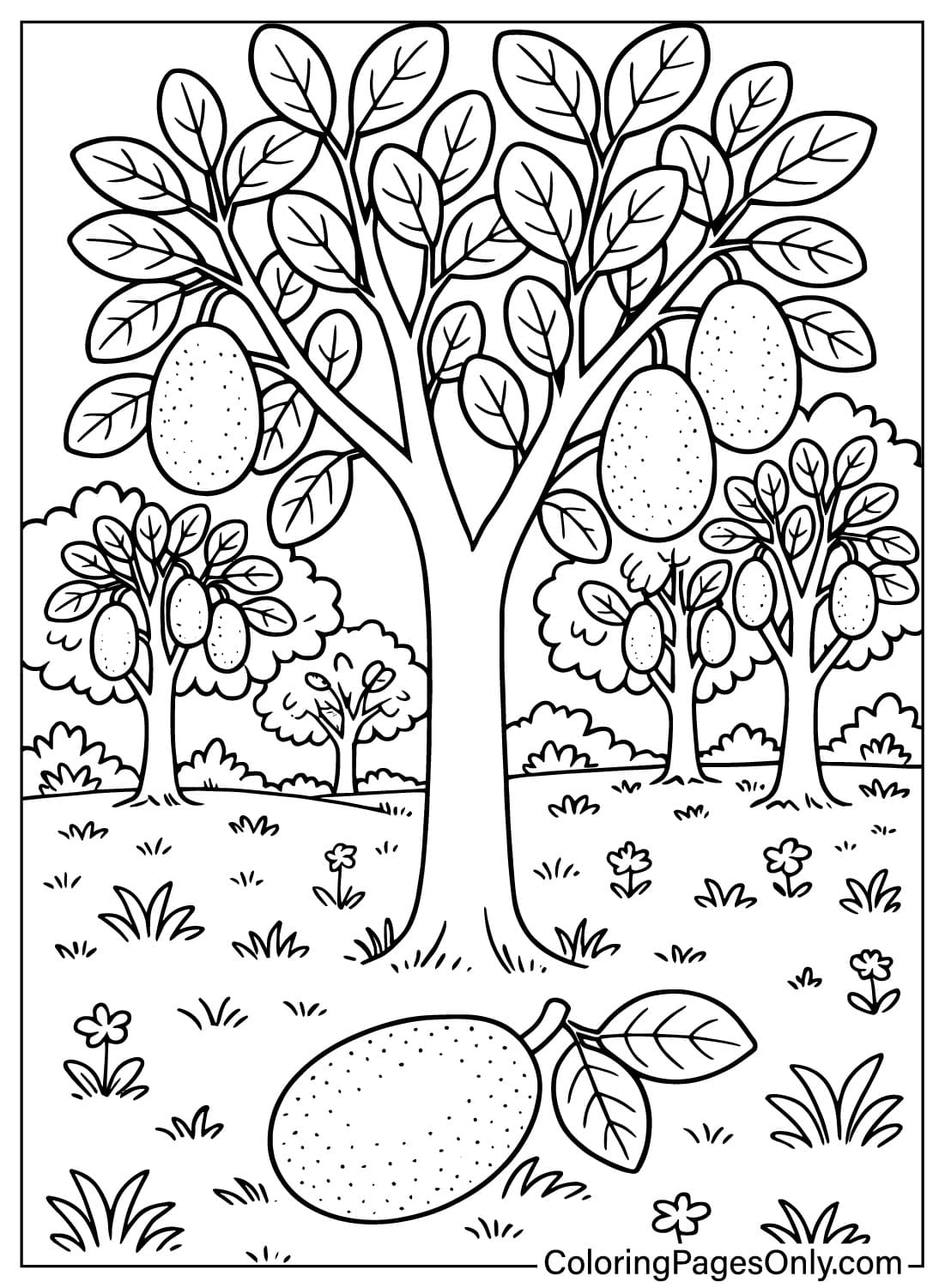
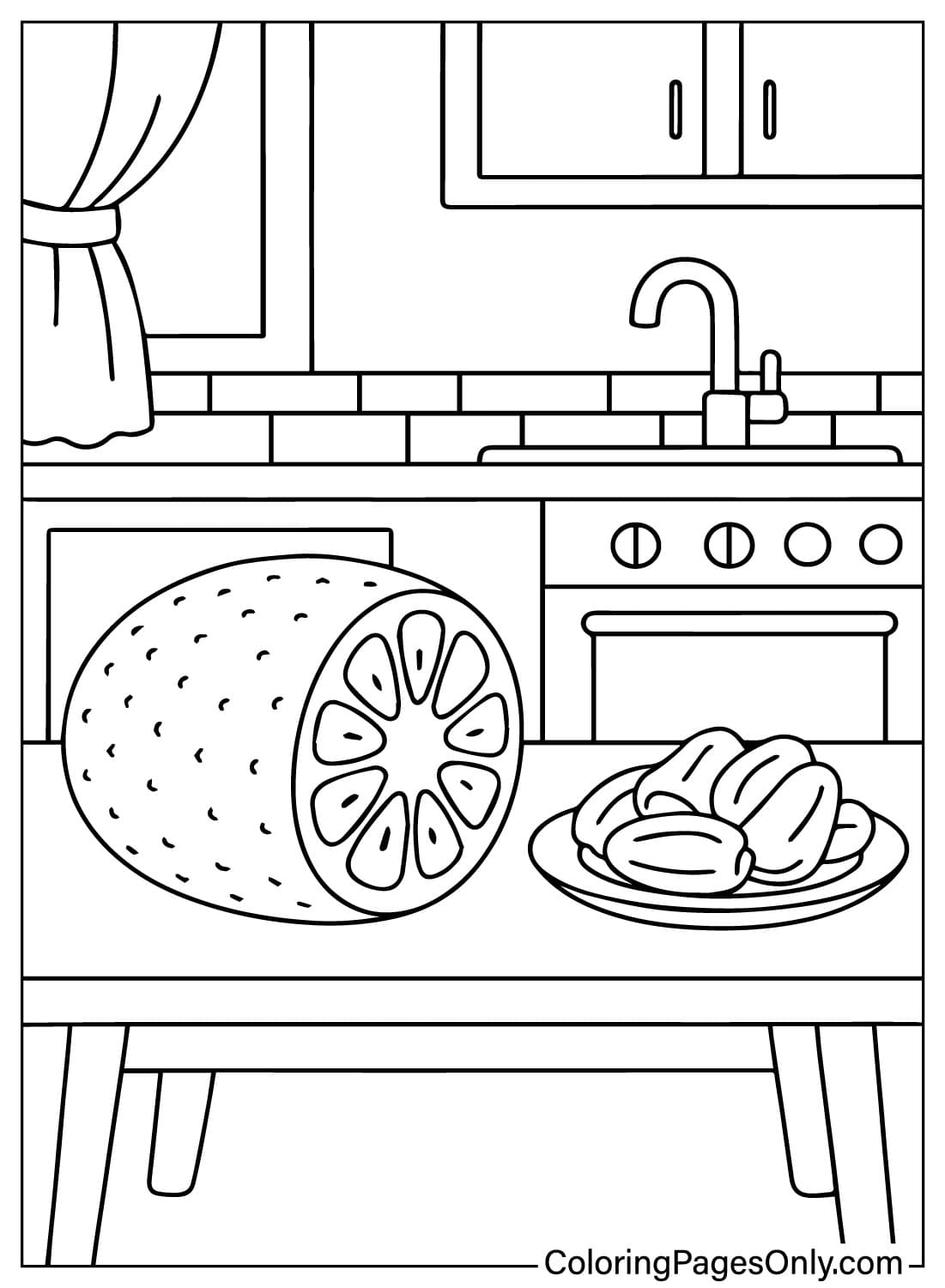
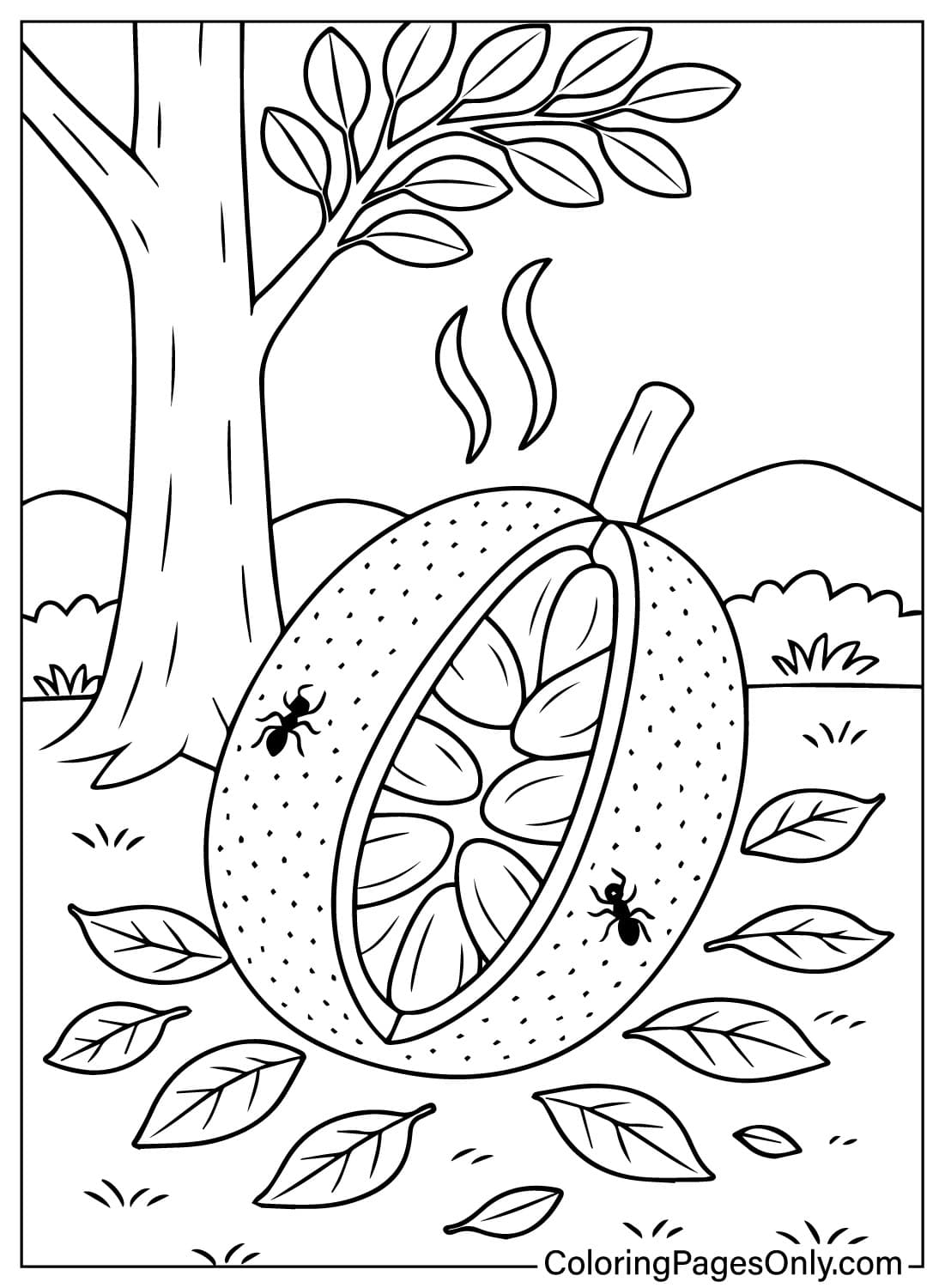
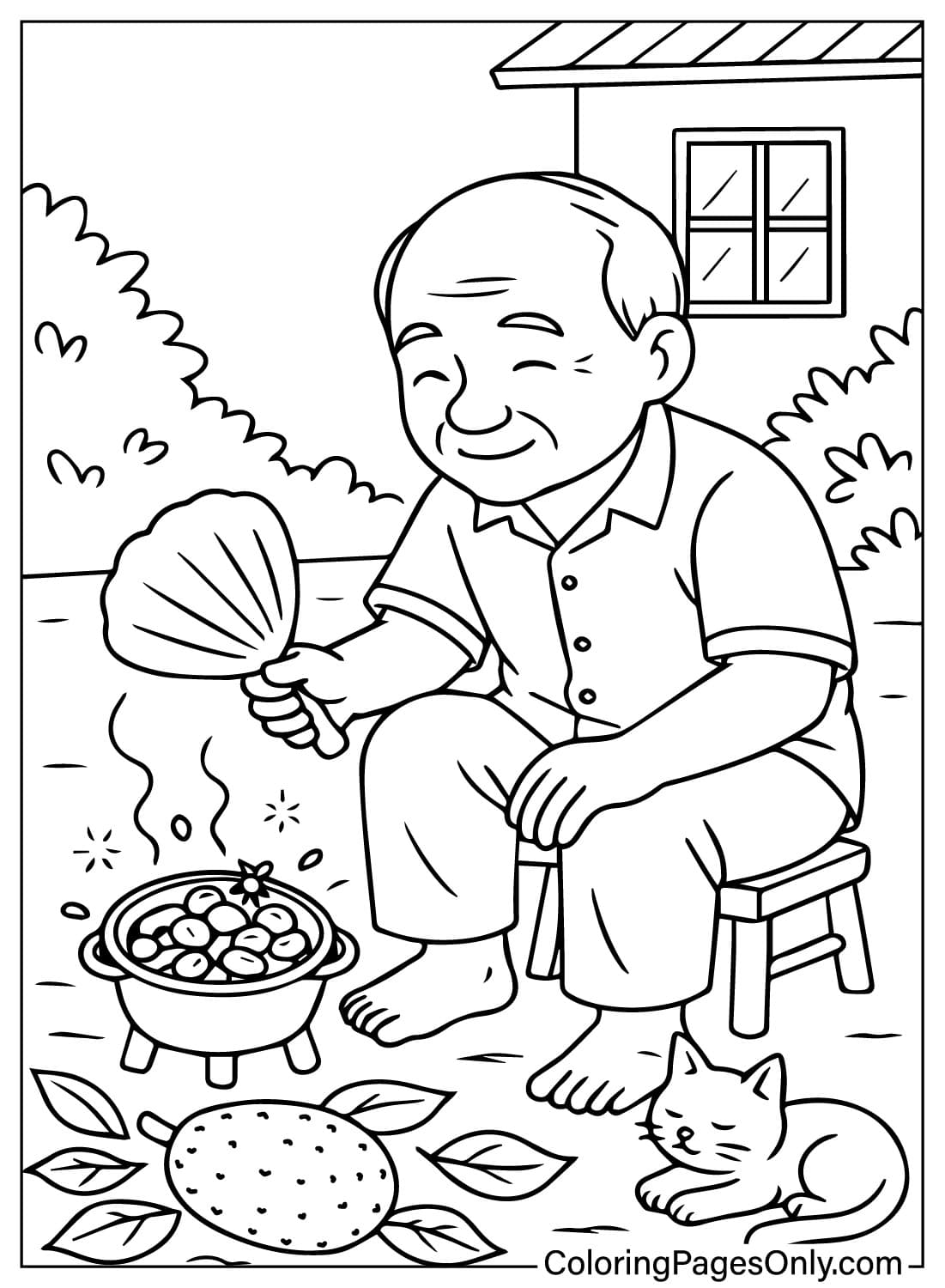
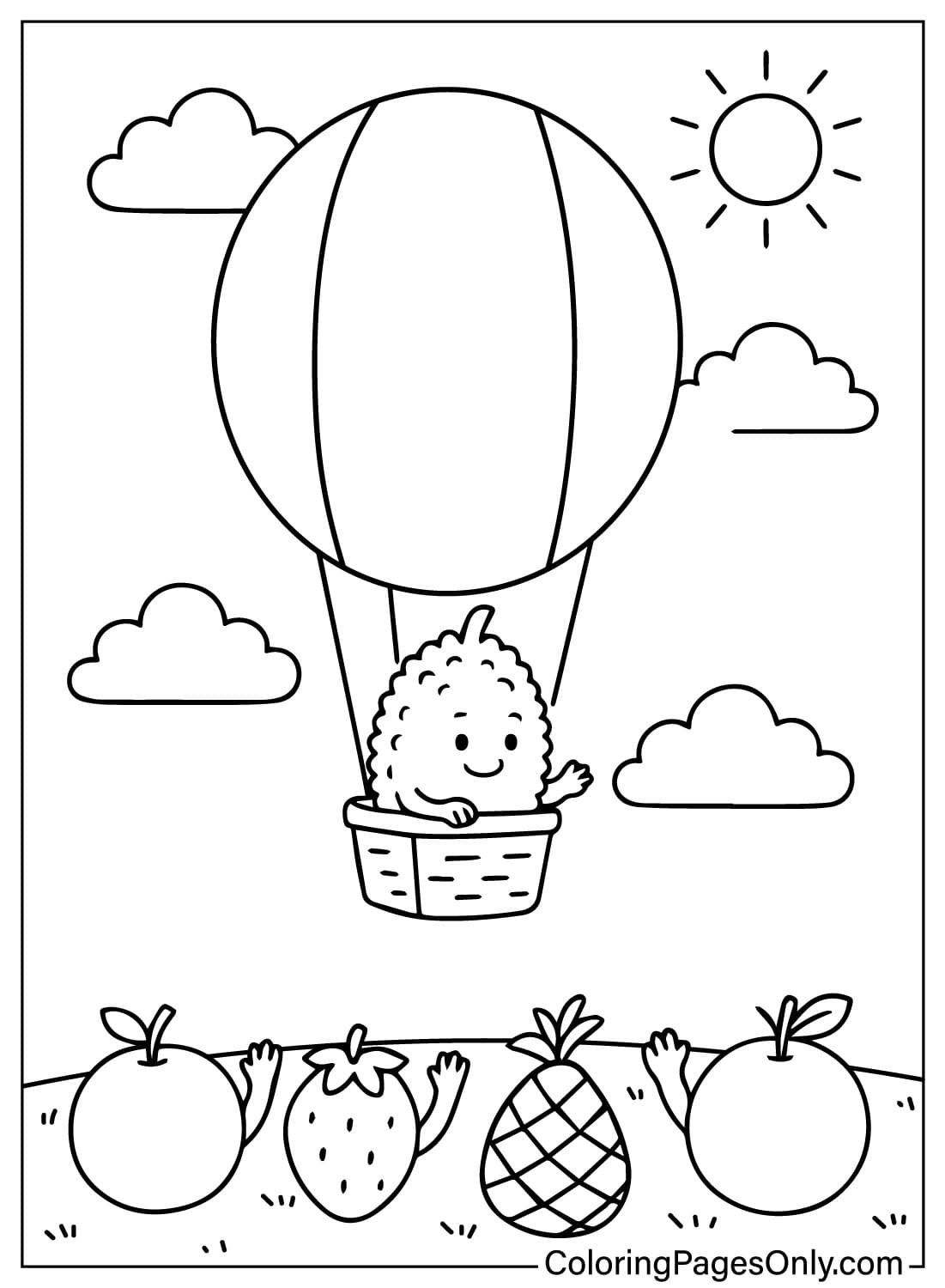
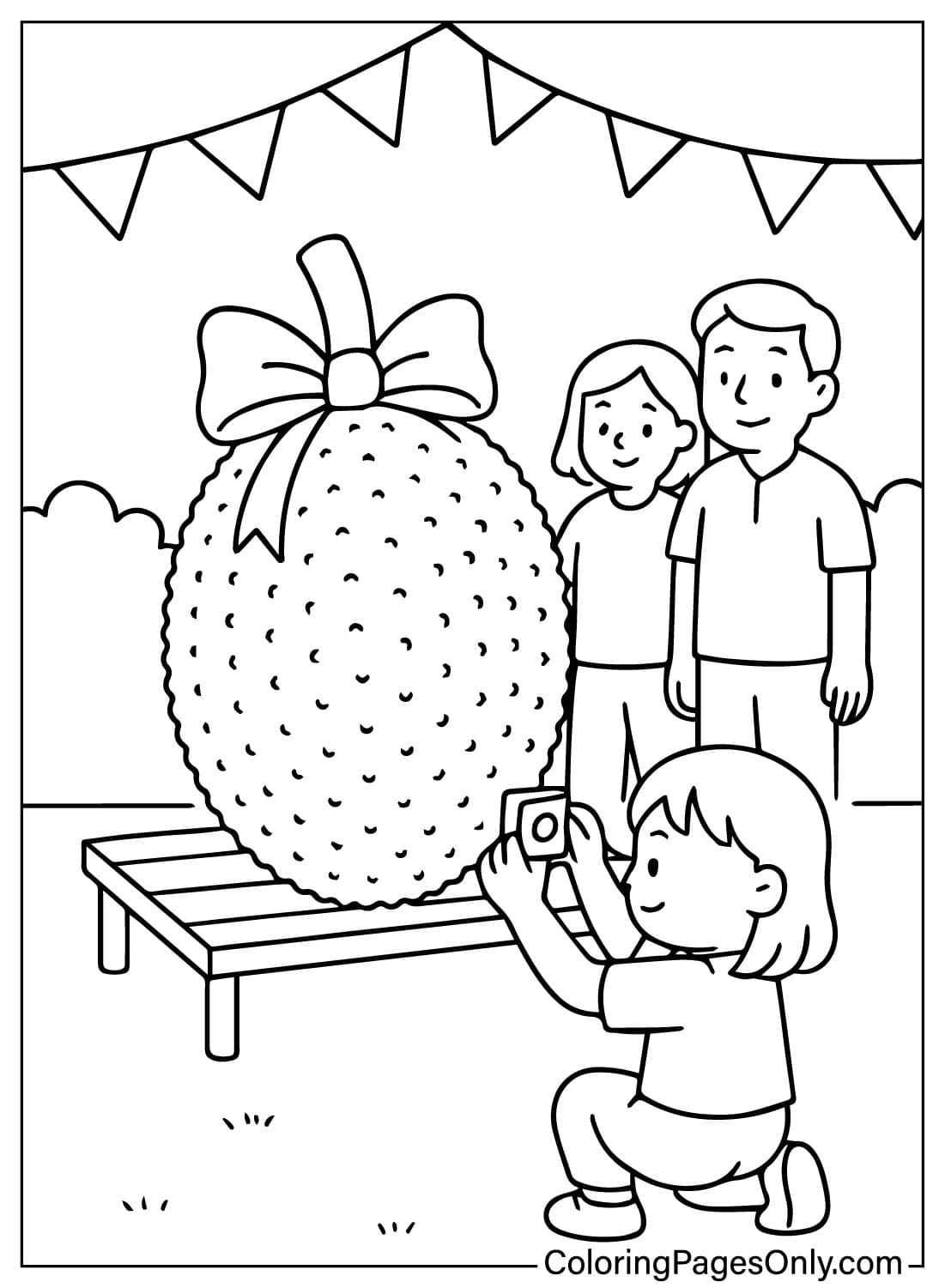
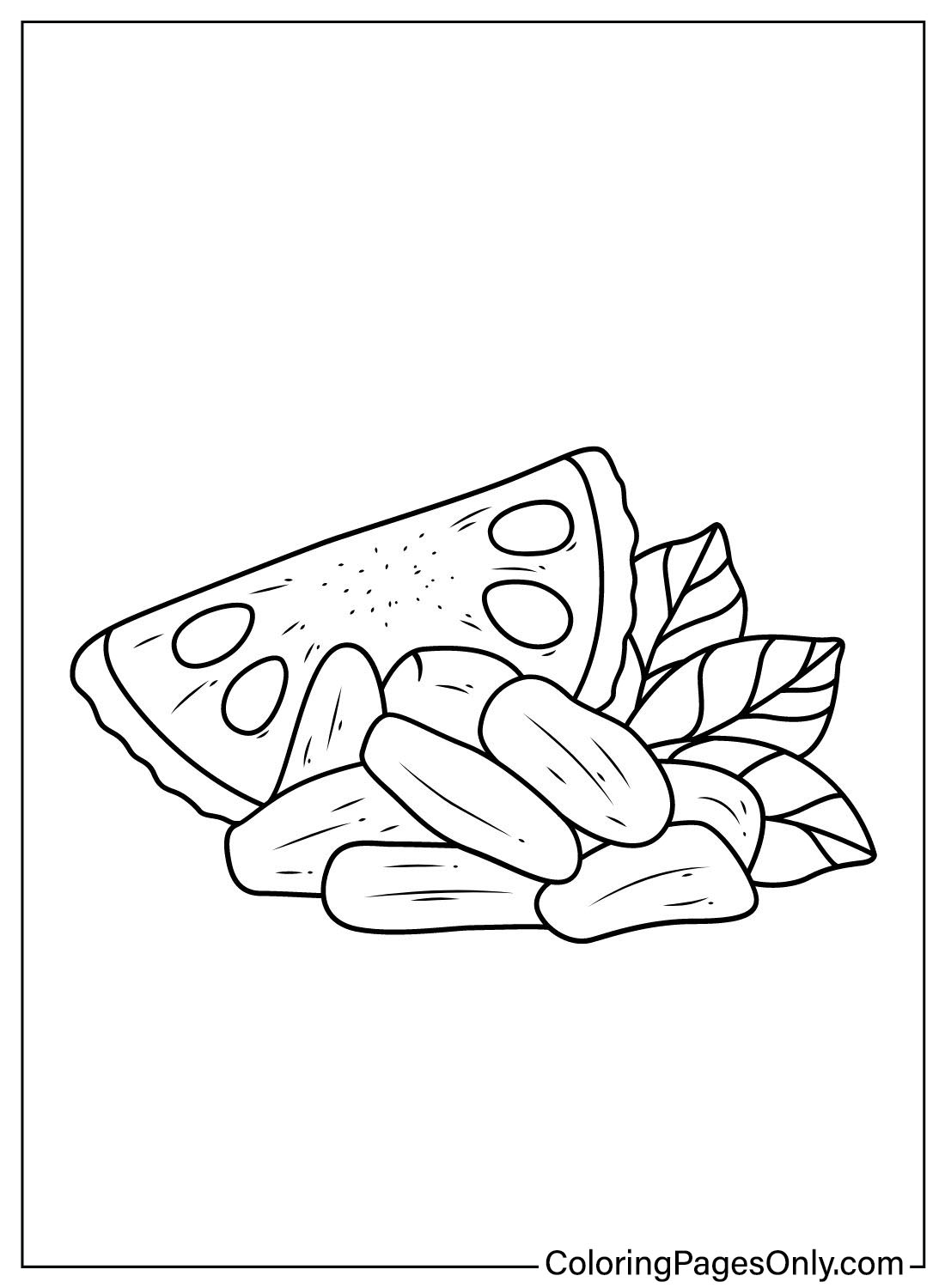

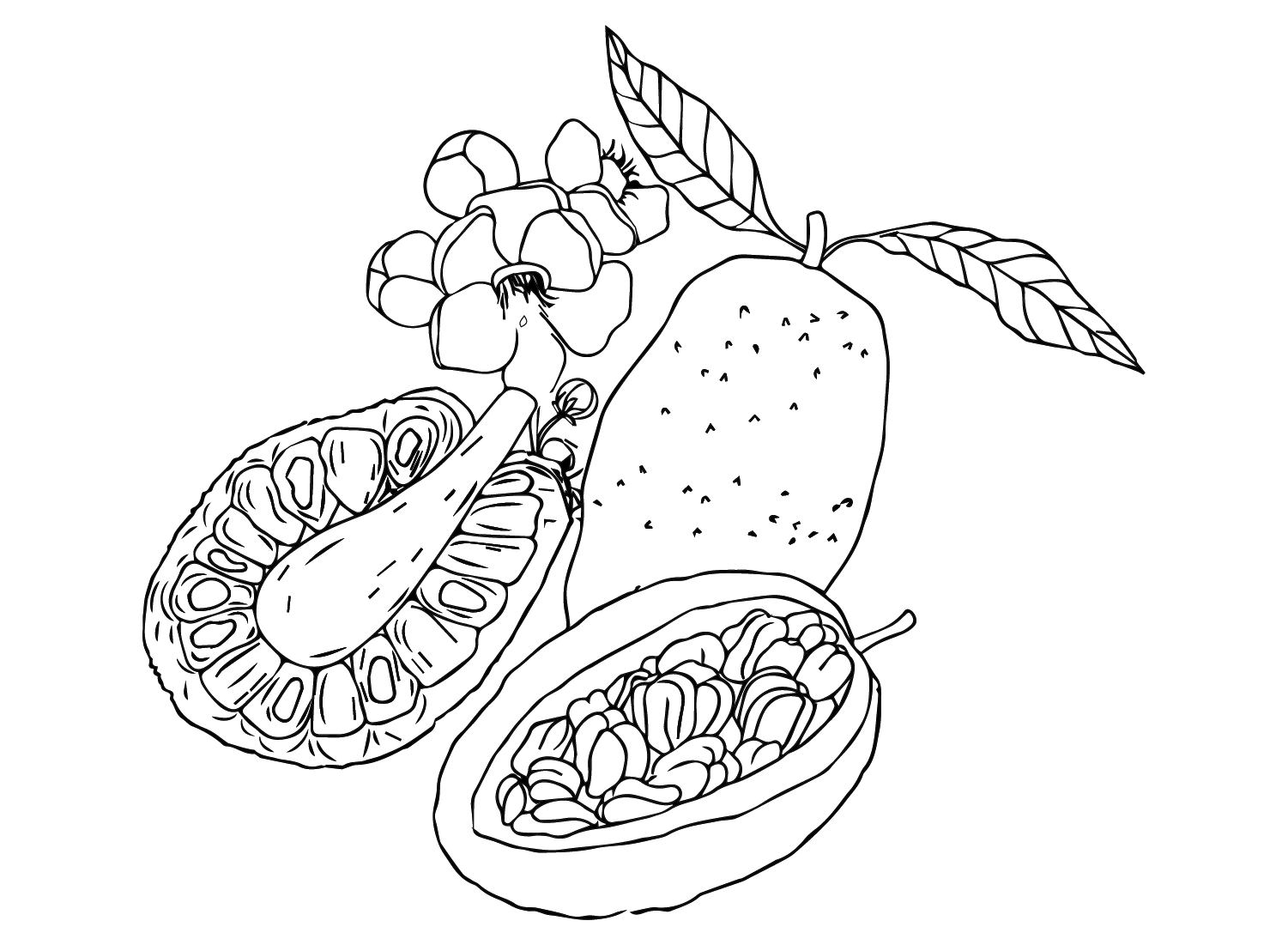
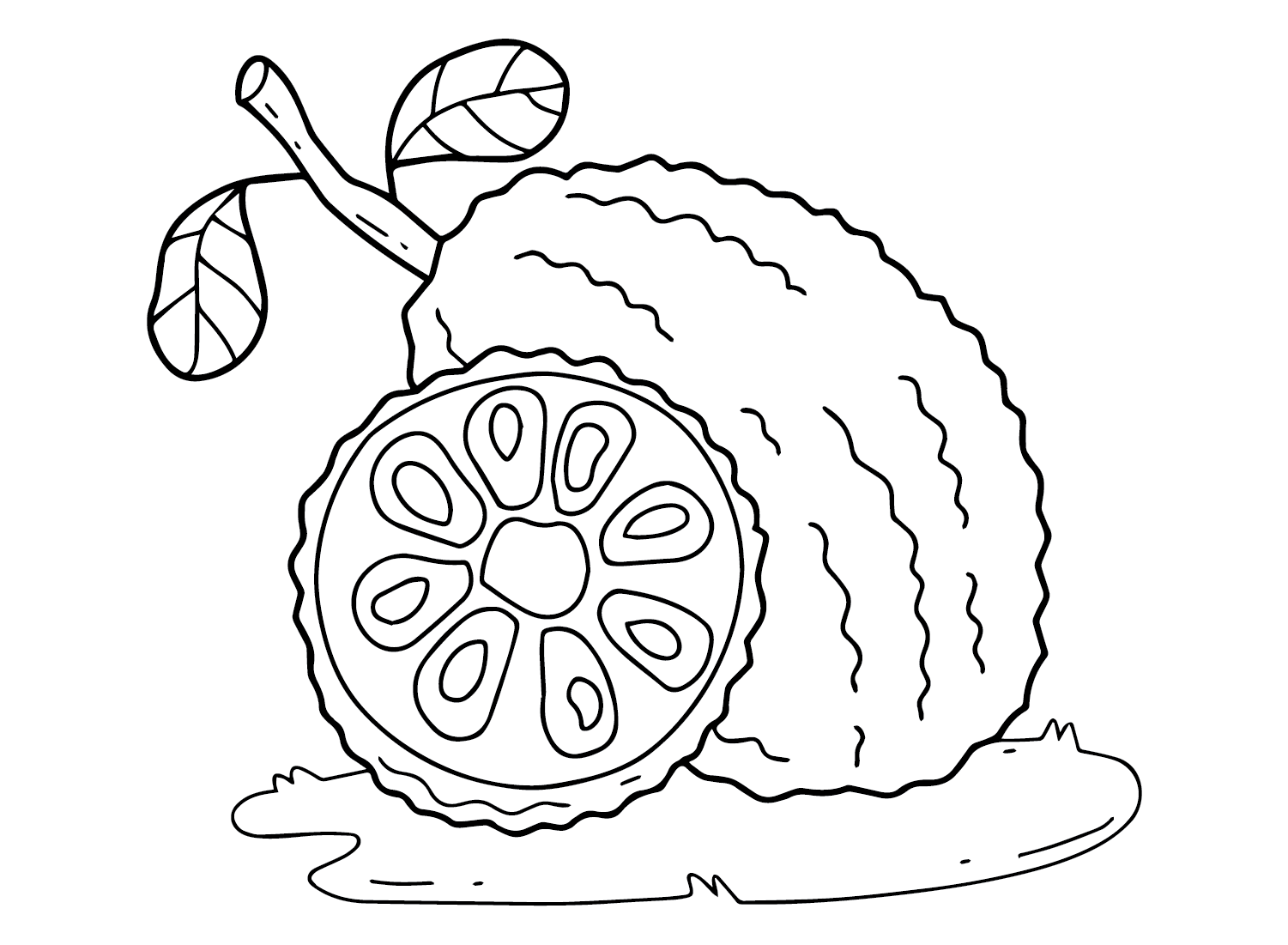
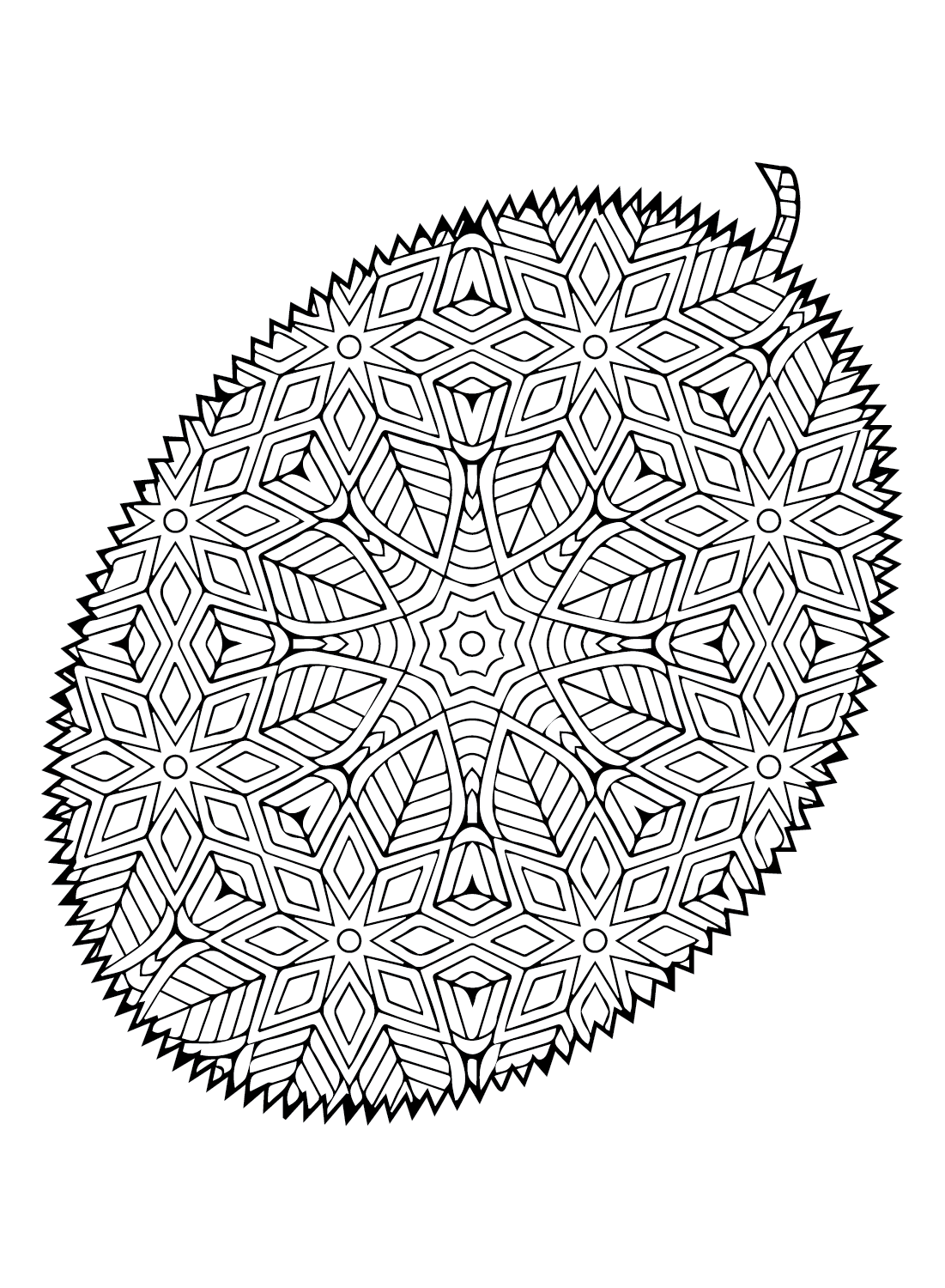
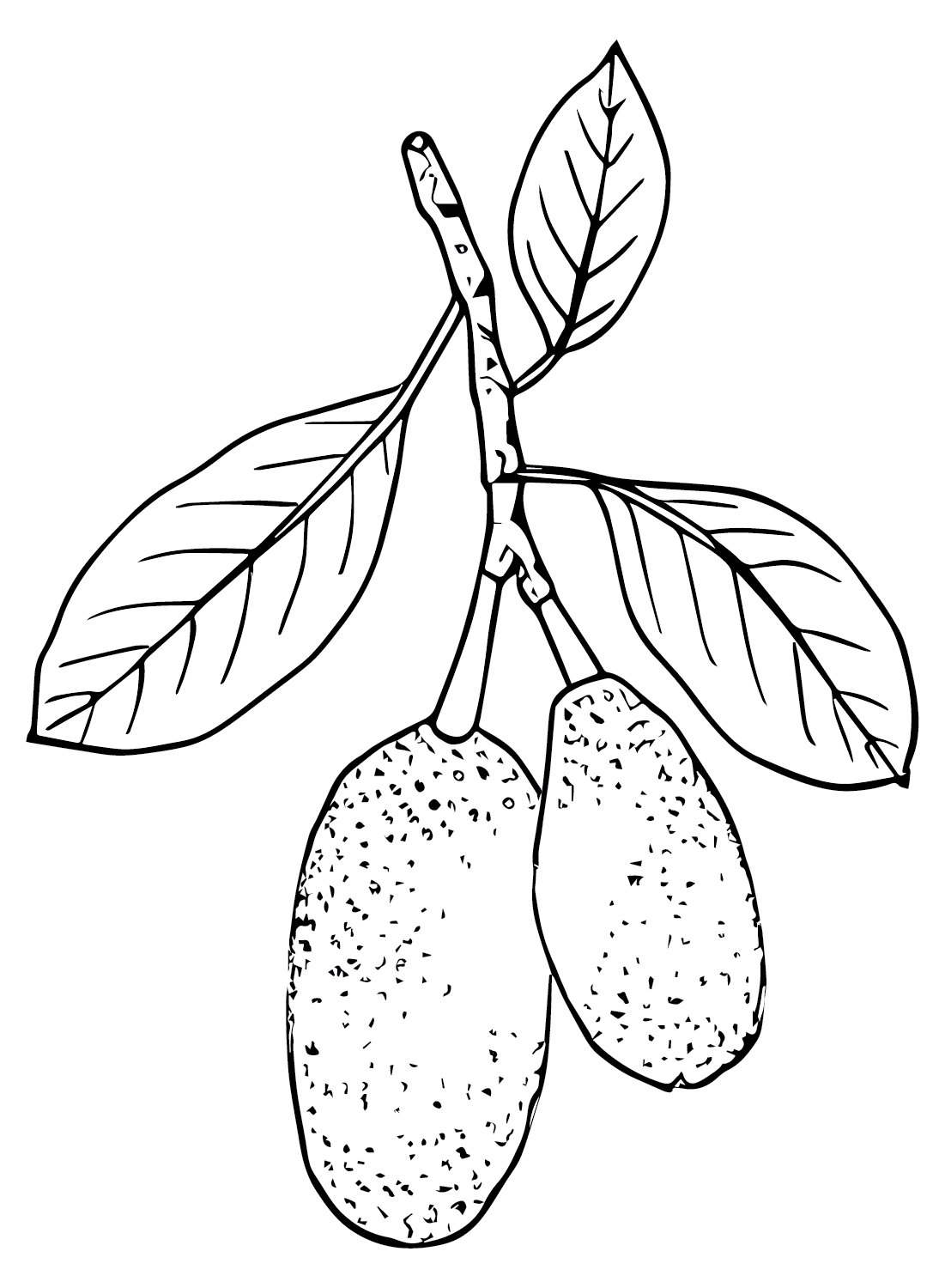

What Is Inside This Collection
The 46 pages break into four groups based on style and setting.
Classic and Realistic Whole Jackfruit
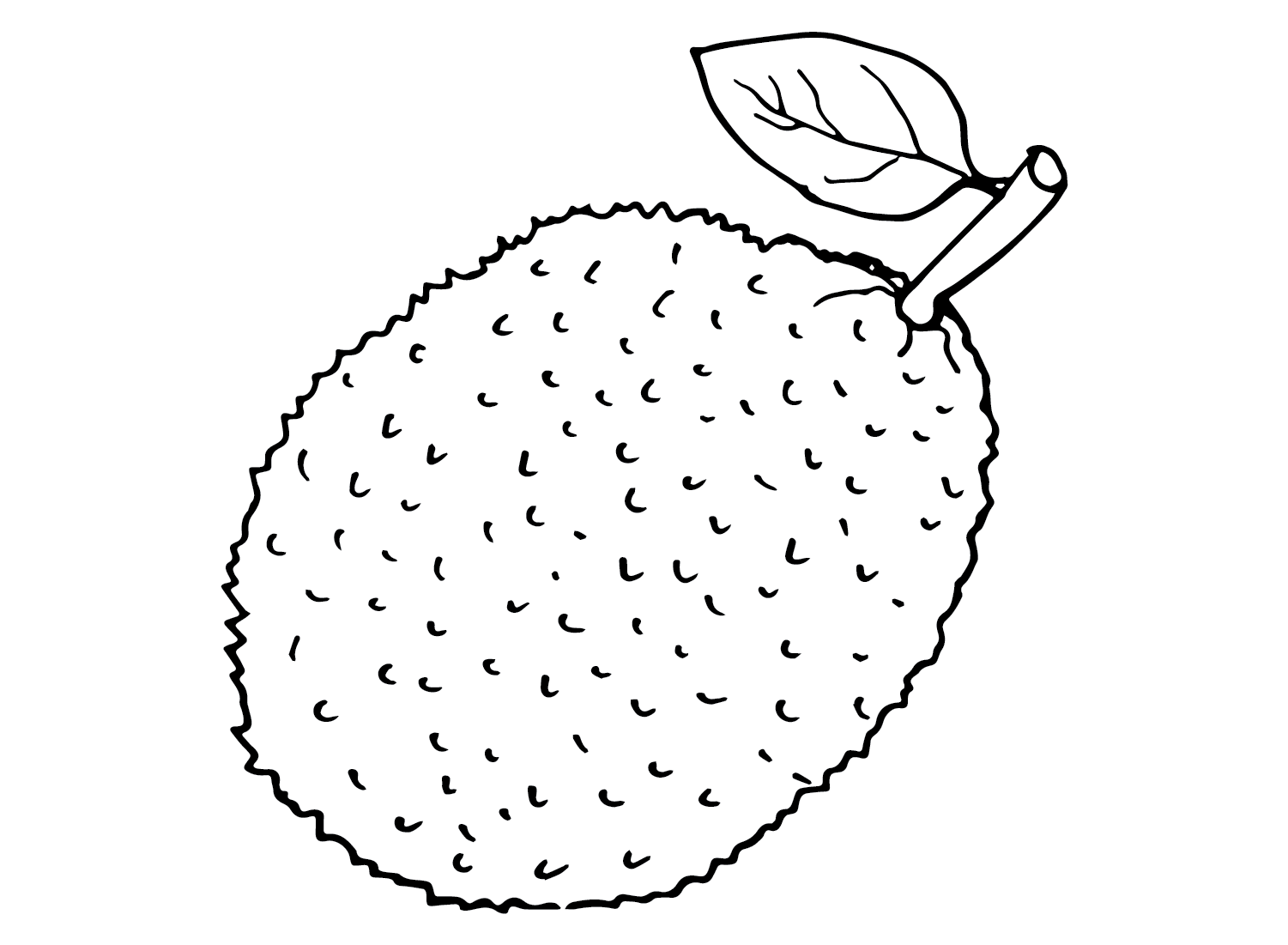
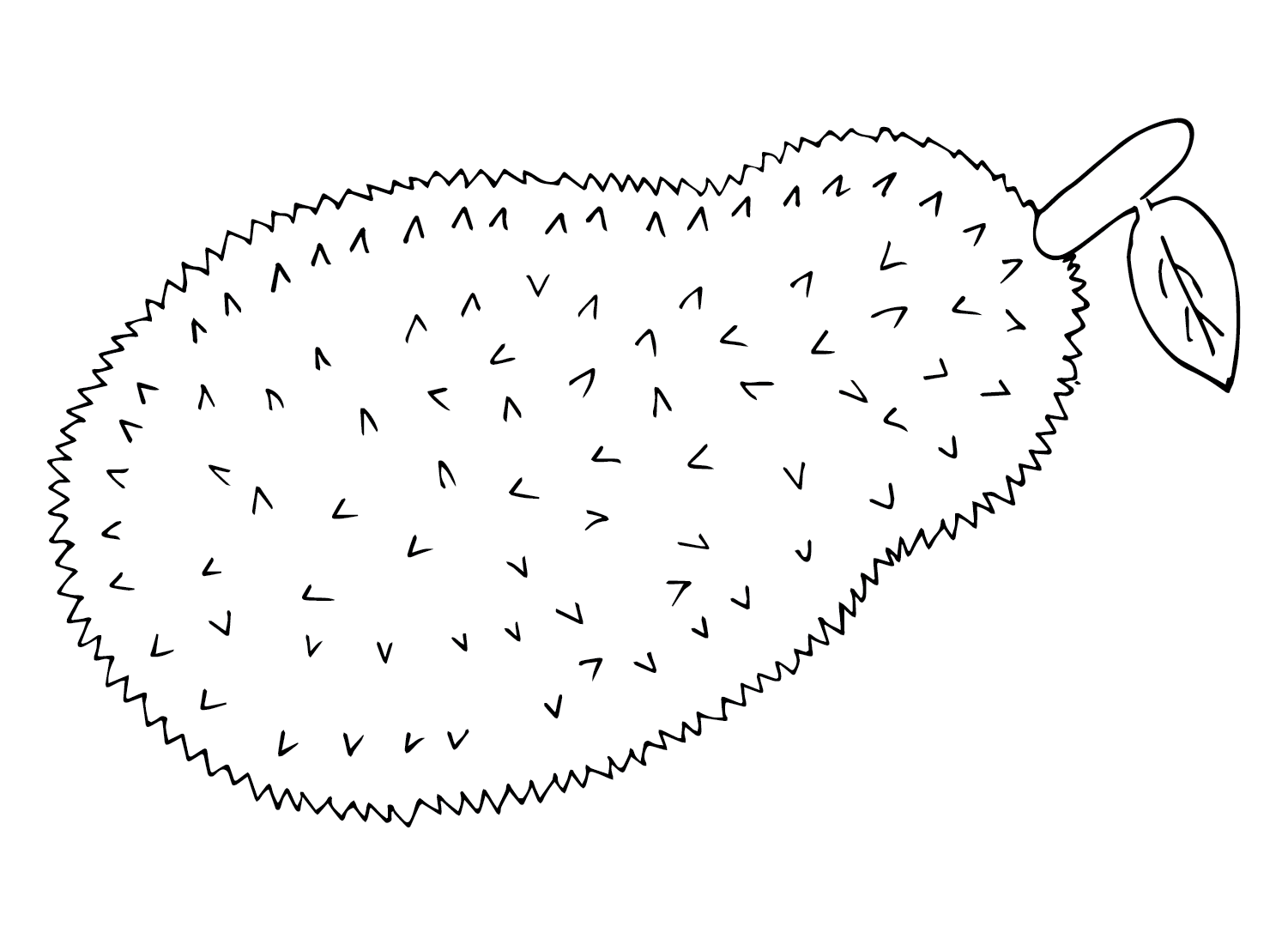
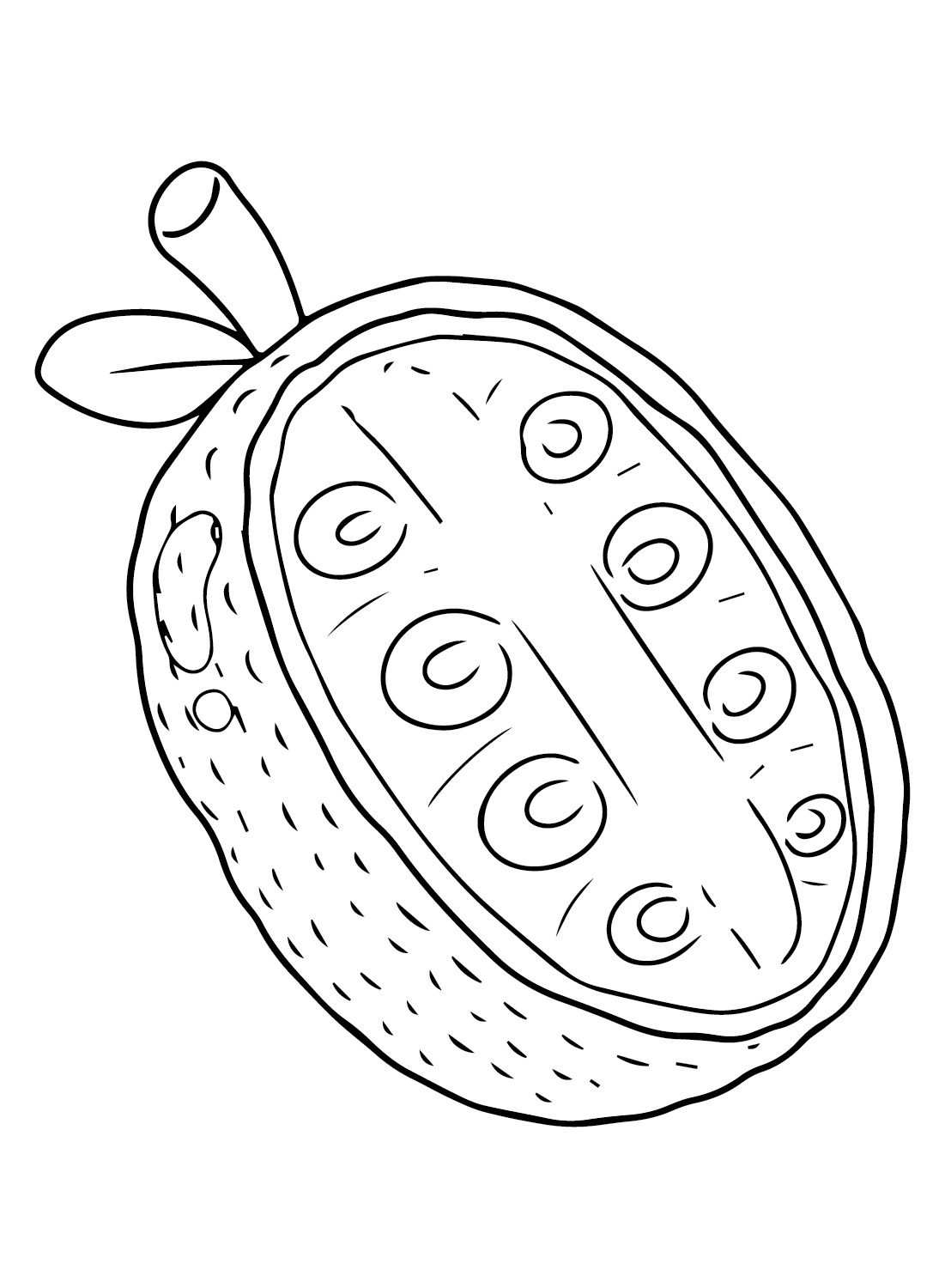
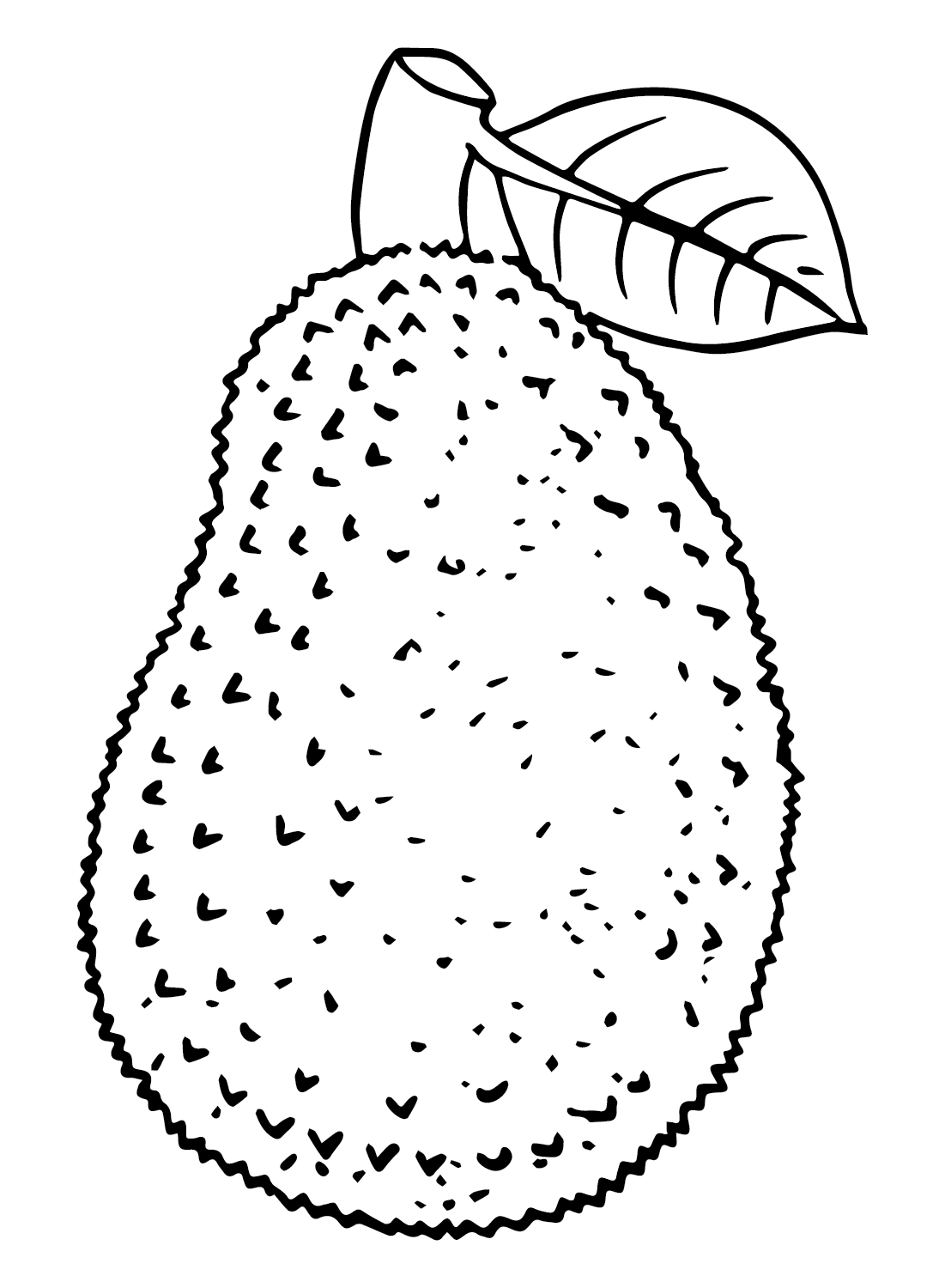
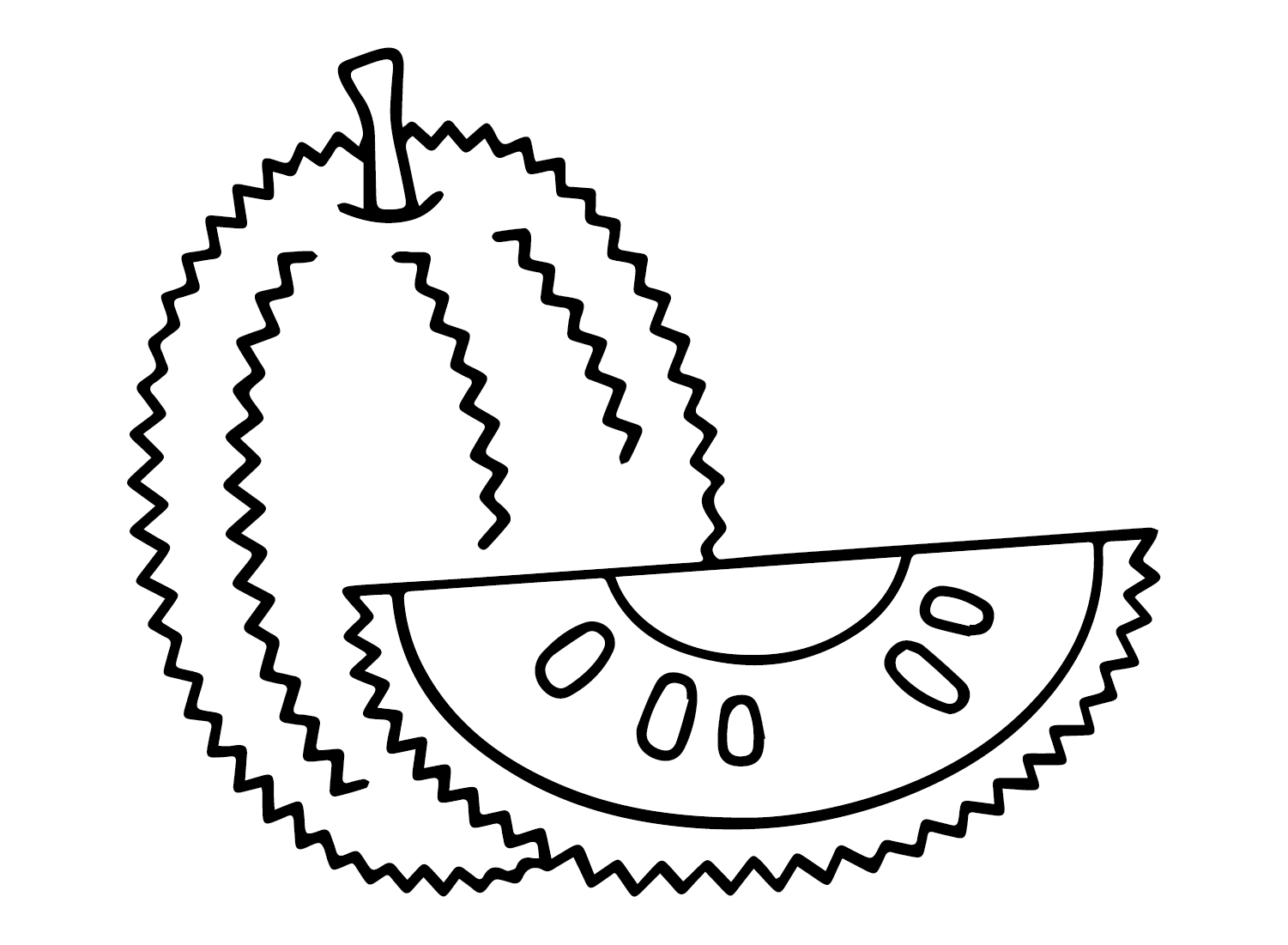
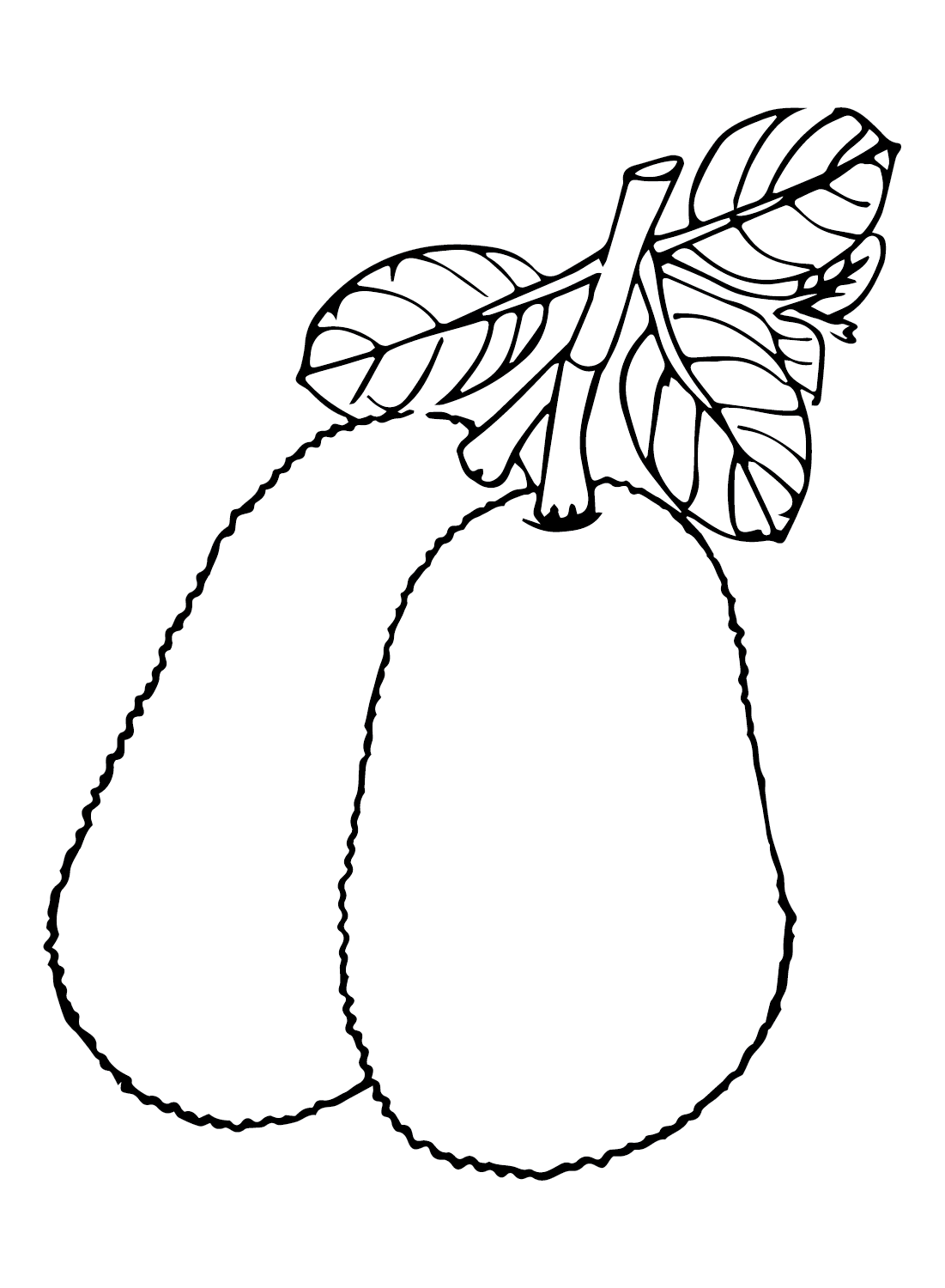
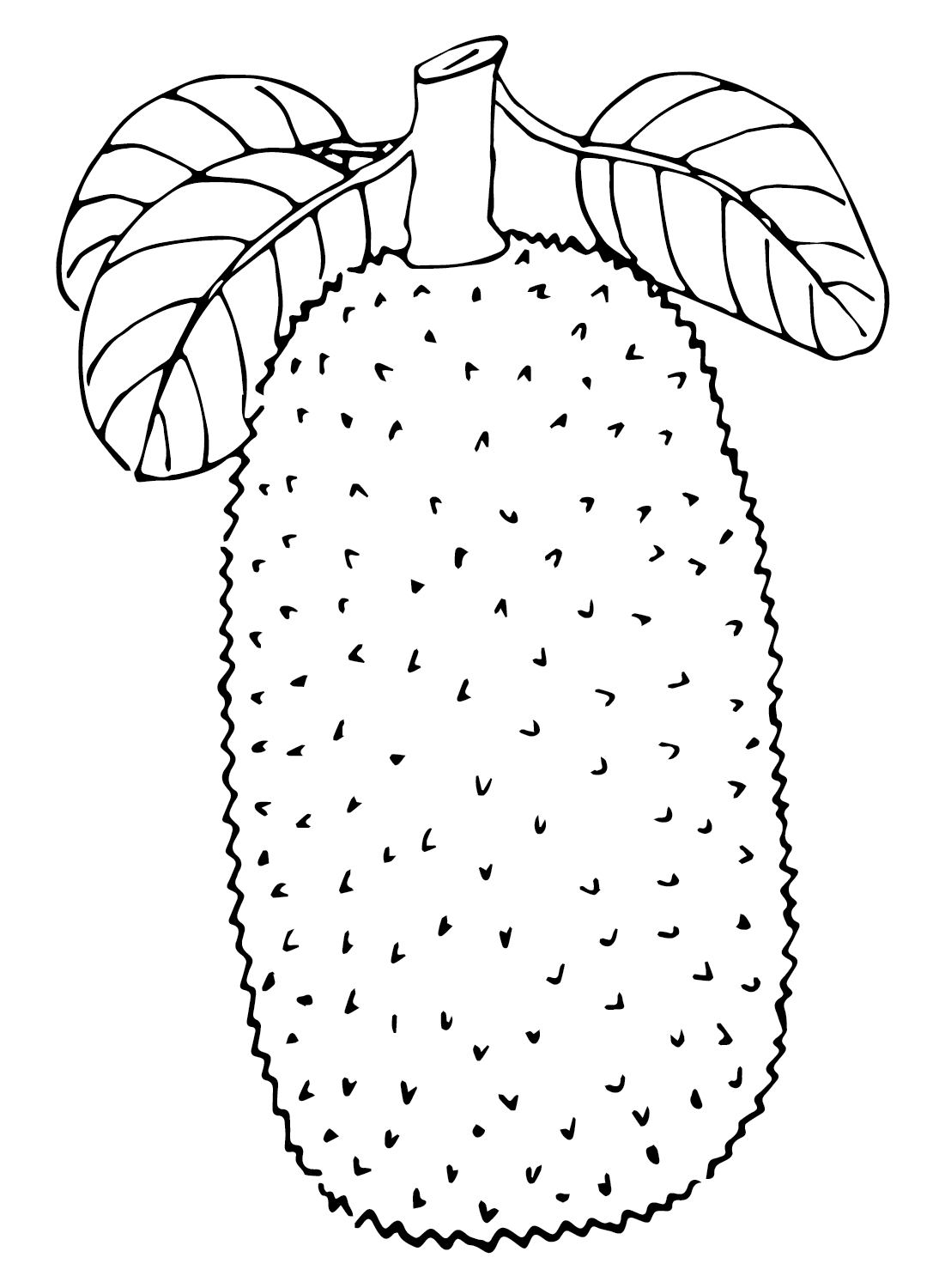
Twenty-one pages show the fruit itself, ripe or unripe, in a realistic style without a face or a scene around it. Color suggestion: base the rind in a muted olive green and add small, darker dots for the bumpy tubercles that cover the surface, rather than leaving the skin flat and smooth.
People and Everyday Life Scenes
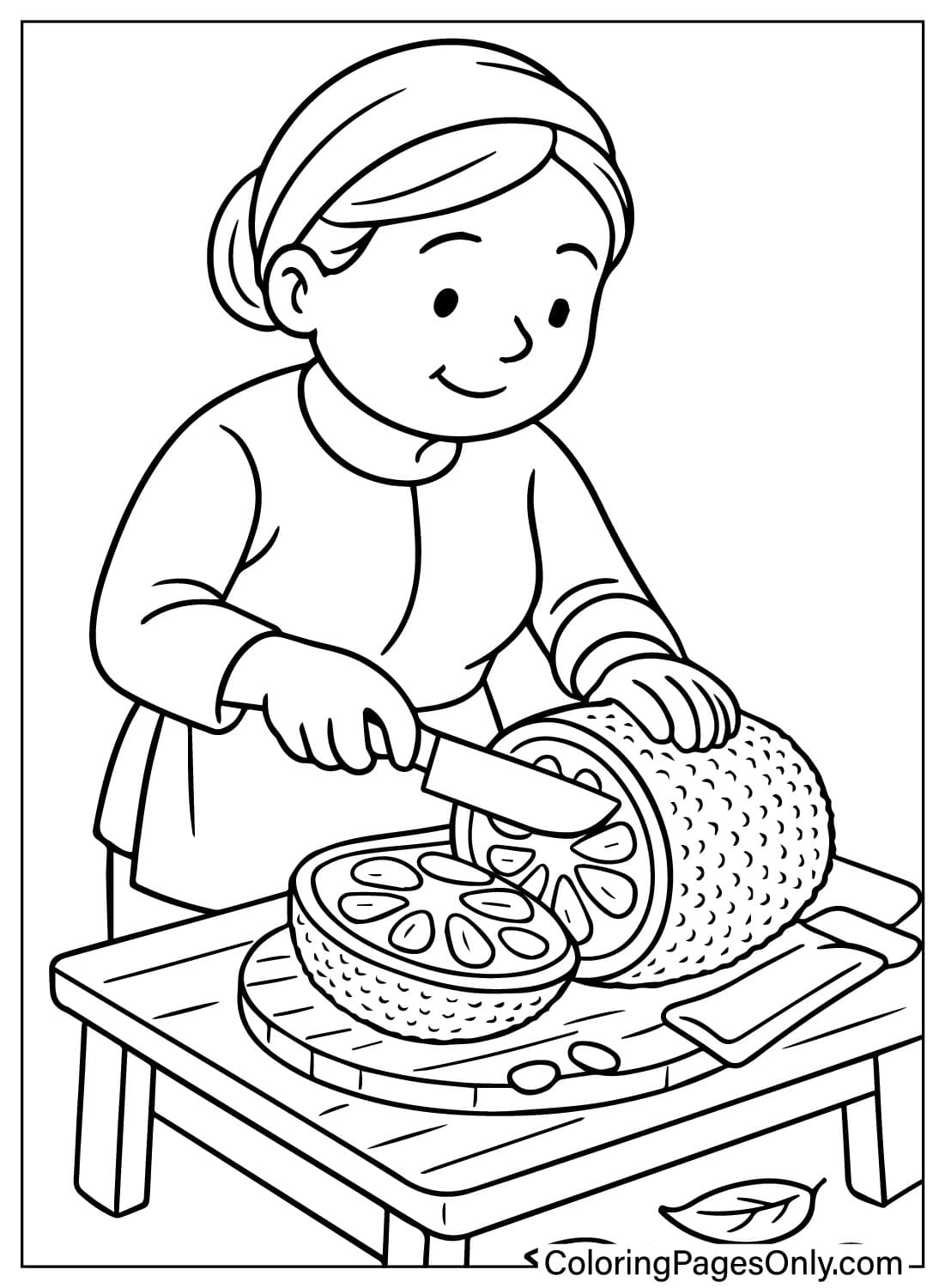
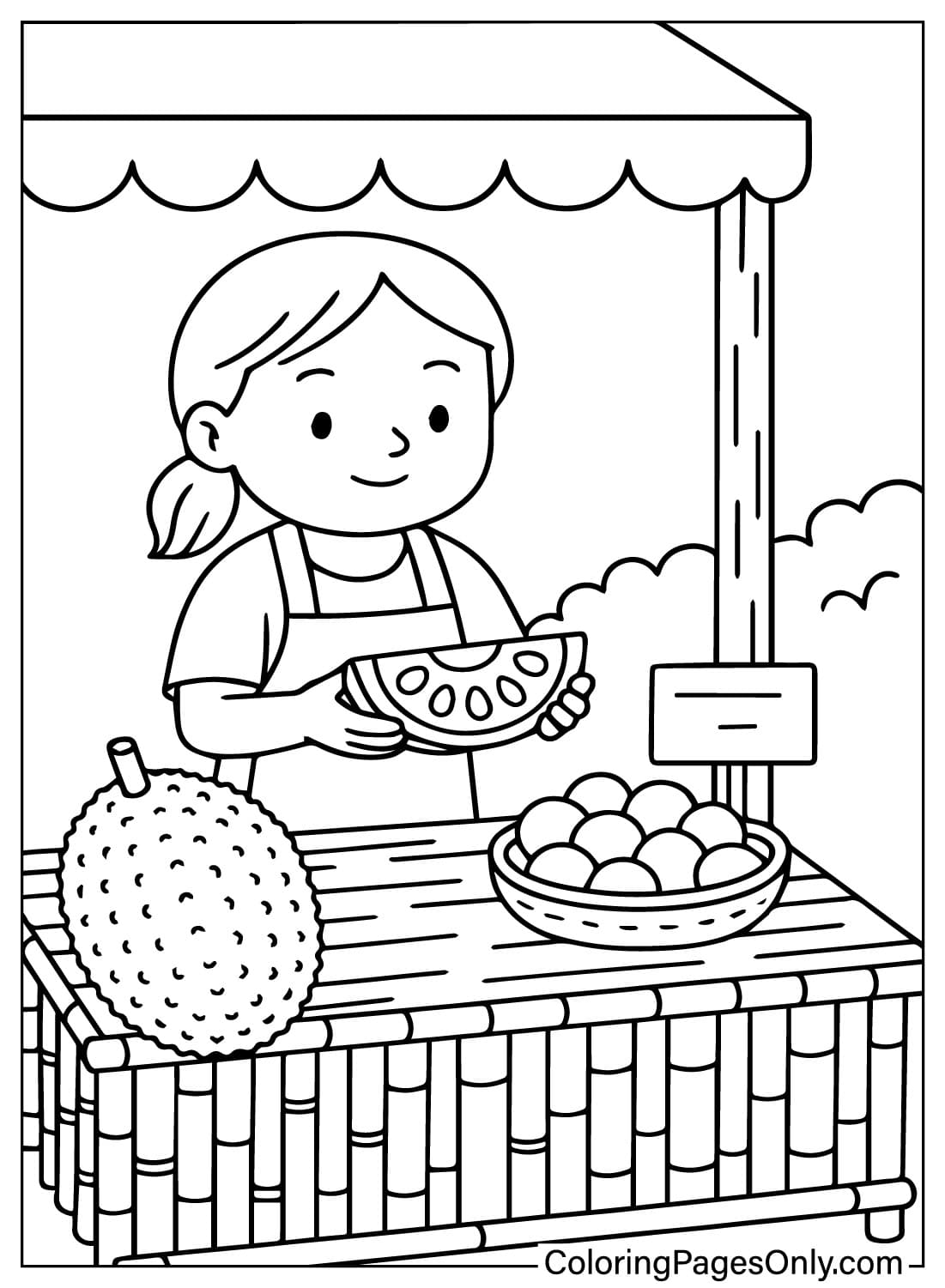
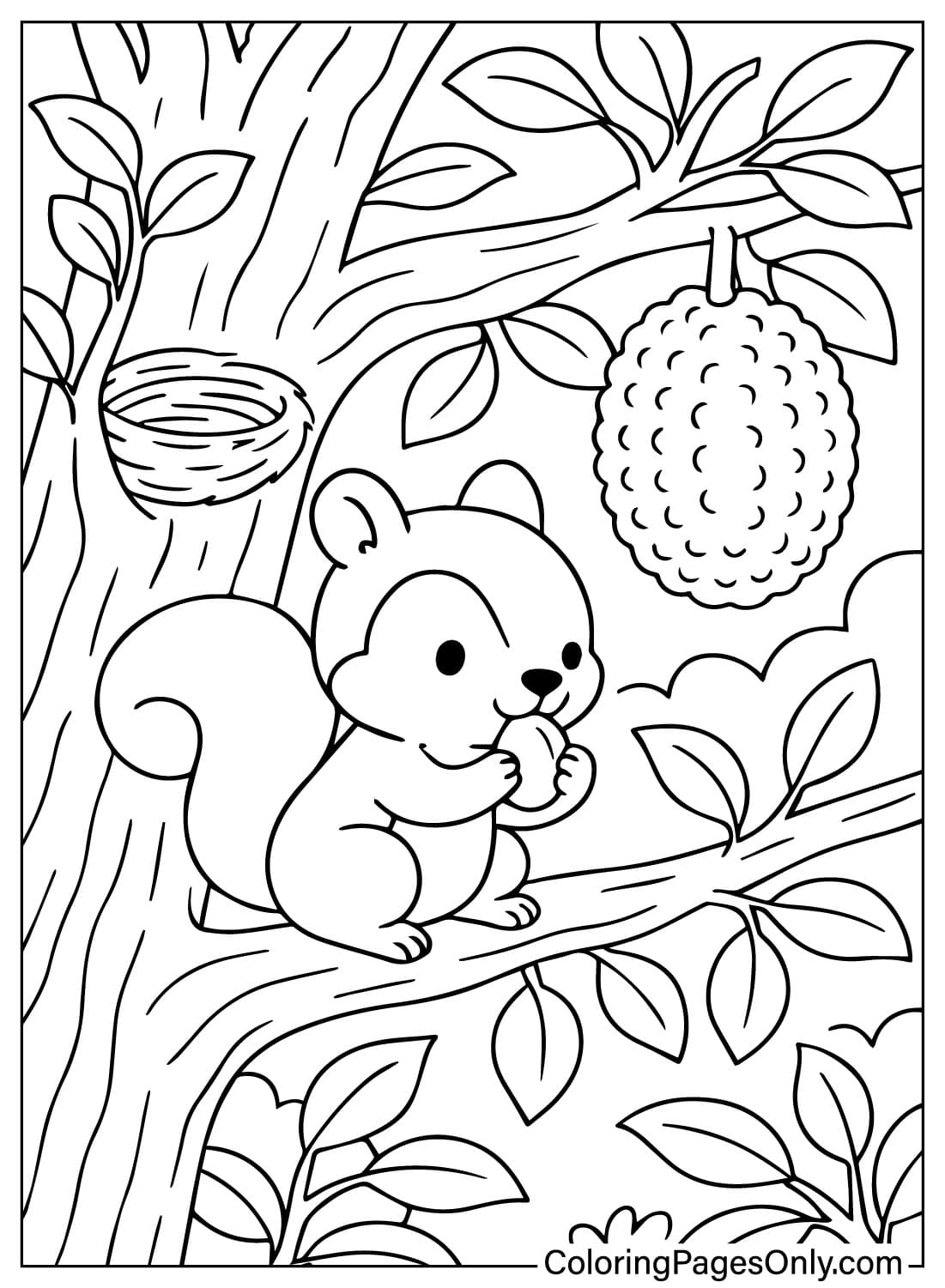
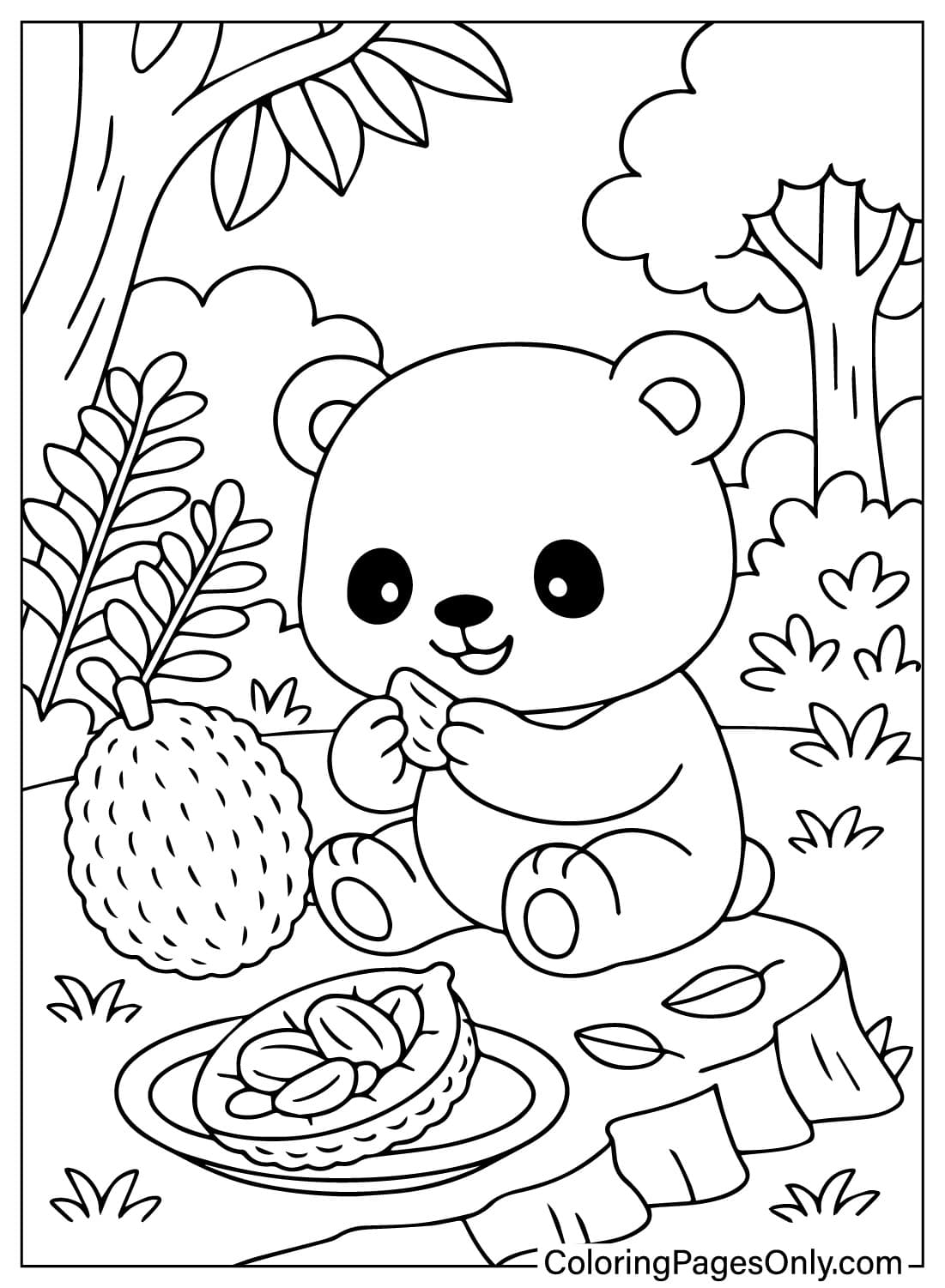
Twelve pages show people, and one squirrel, interacting with jackfruit: picking it, cutting it open, drawing it, or selling it at a market. Color suggestion: keep the human figures in simple, solid-colored clothing so the unusual shape and texture of the fruit itself stays the most eye-catching part of the page.
Jackfruit Trees and Garden Scenes
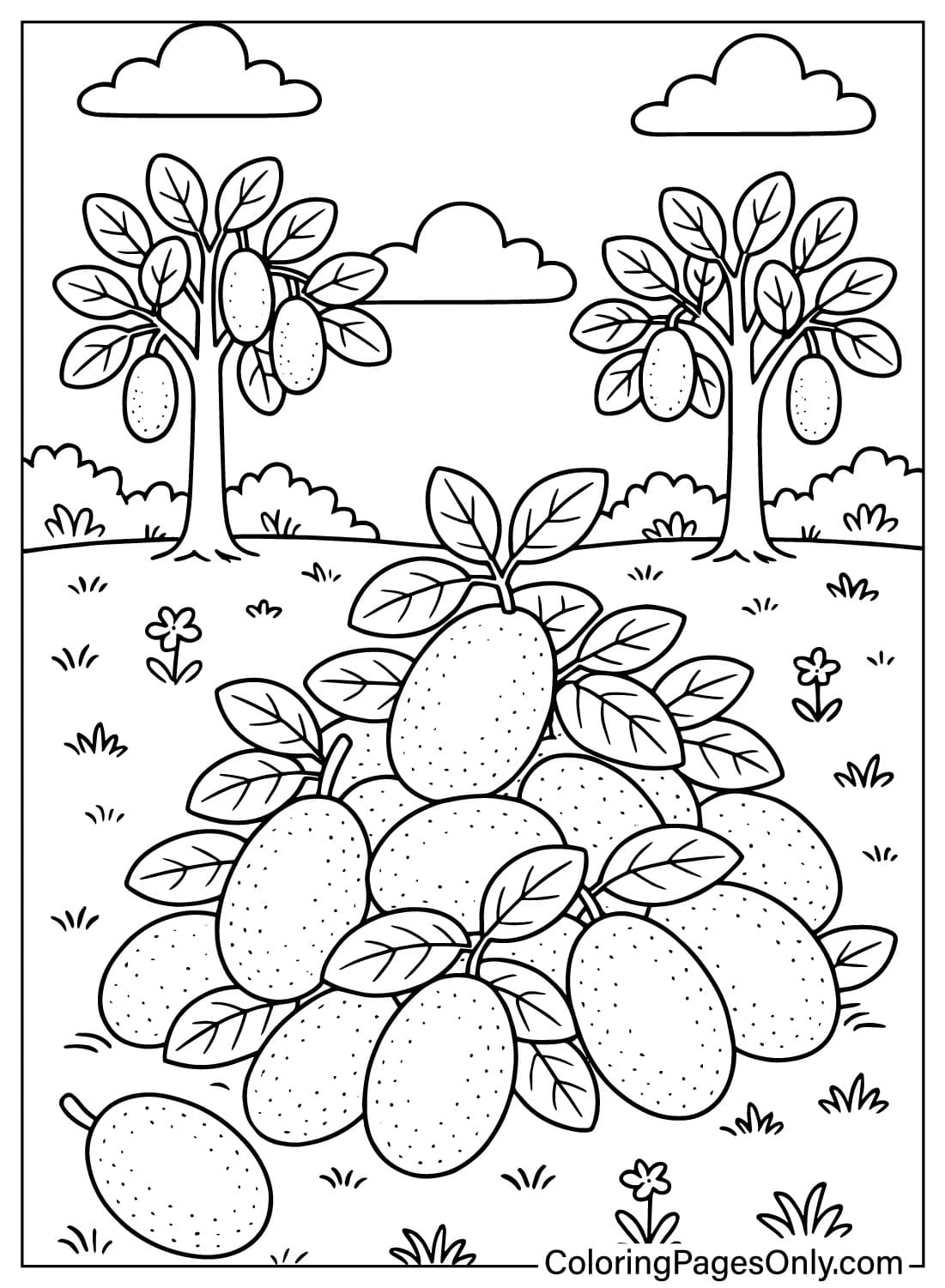
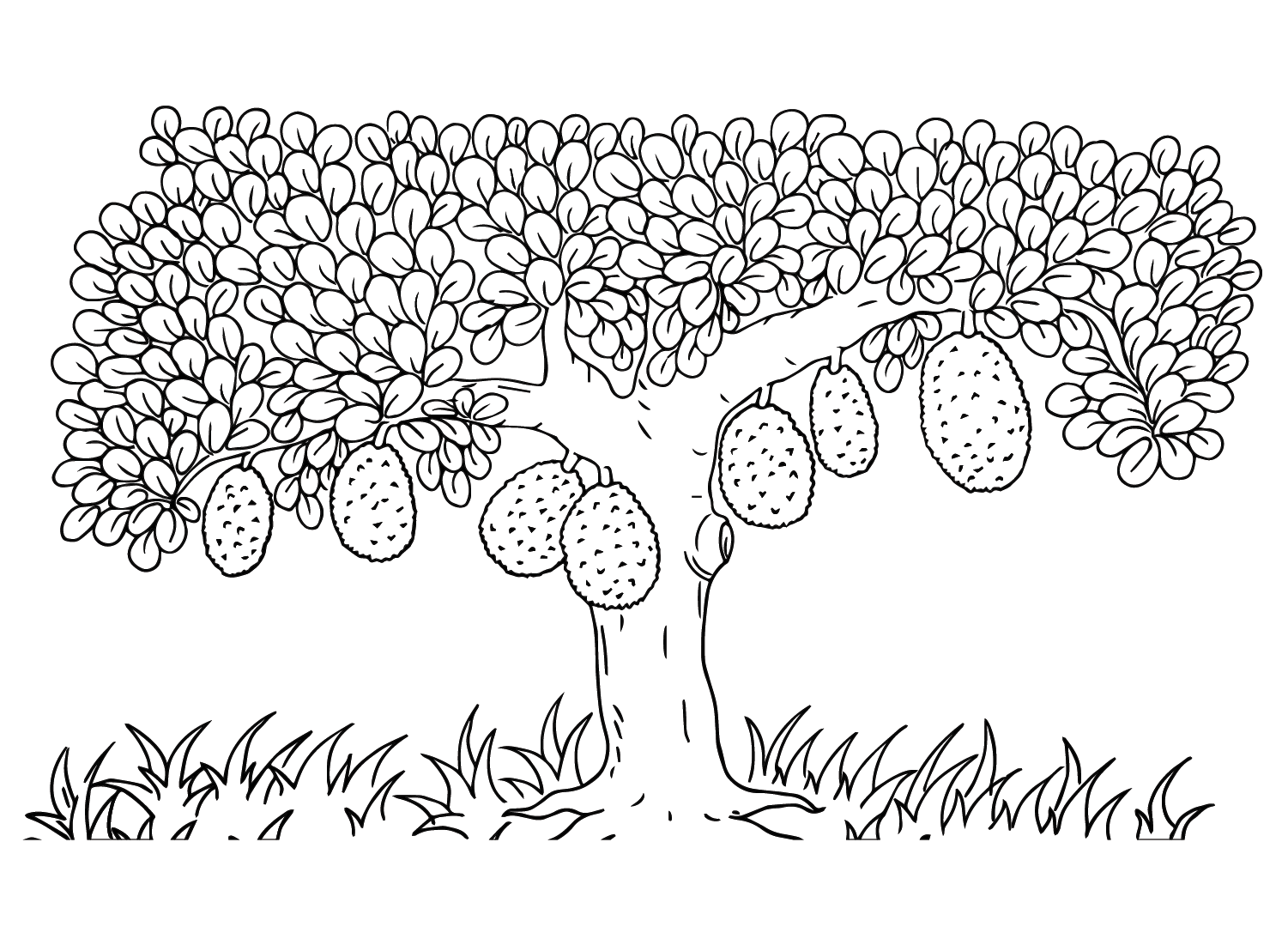
Five pages show the tree itself, often with the fruit visibly attached to the trunk rather than hanging from branch tips. Color suggestion: Use a deeper brown for the trunk section where the fruit grows, which helps visually separate the fruit from the bark and makes the cauliflory growth pattern easier to see.
Cartoon and Whimsical Jackfruit Characters
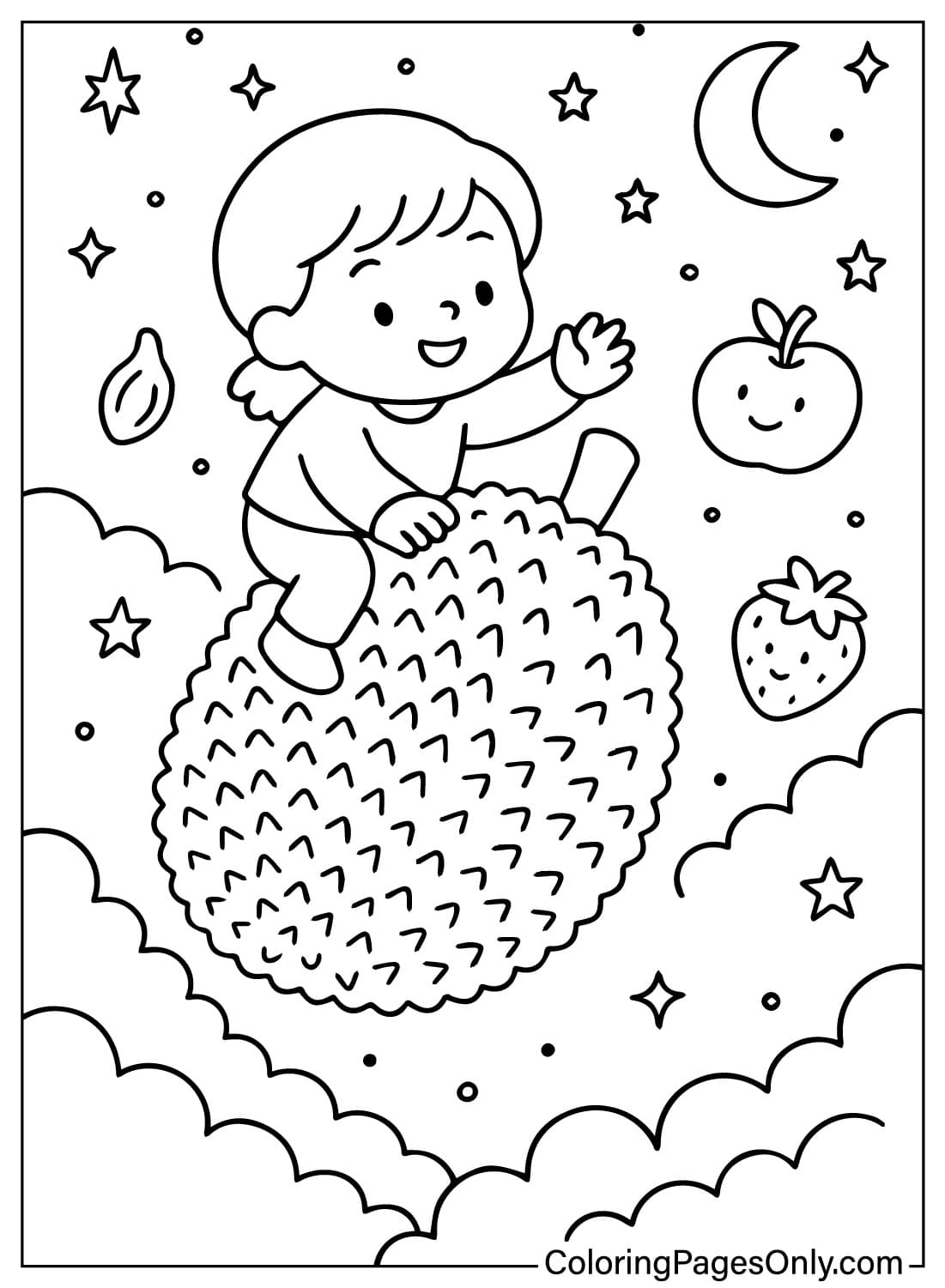
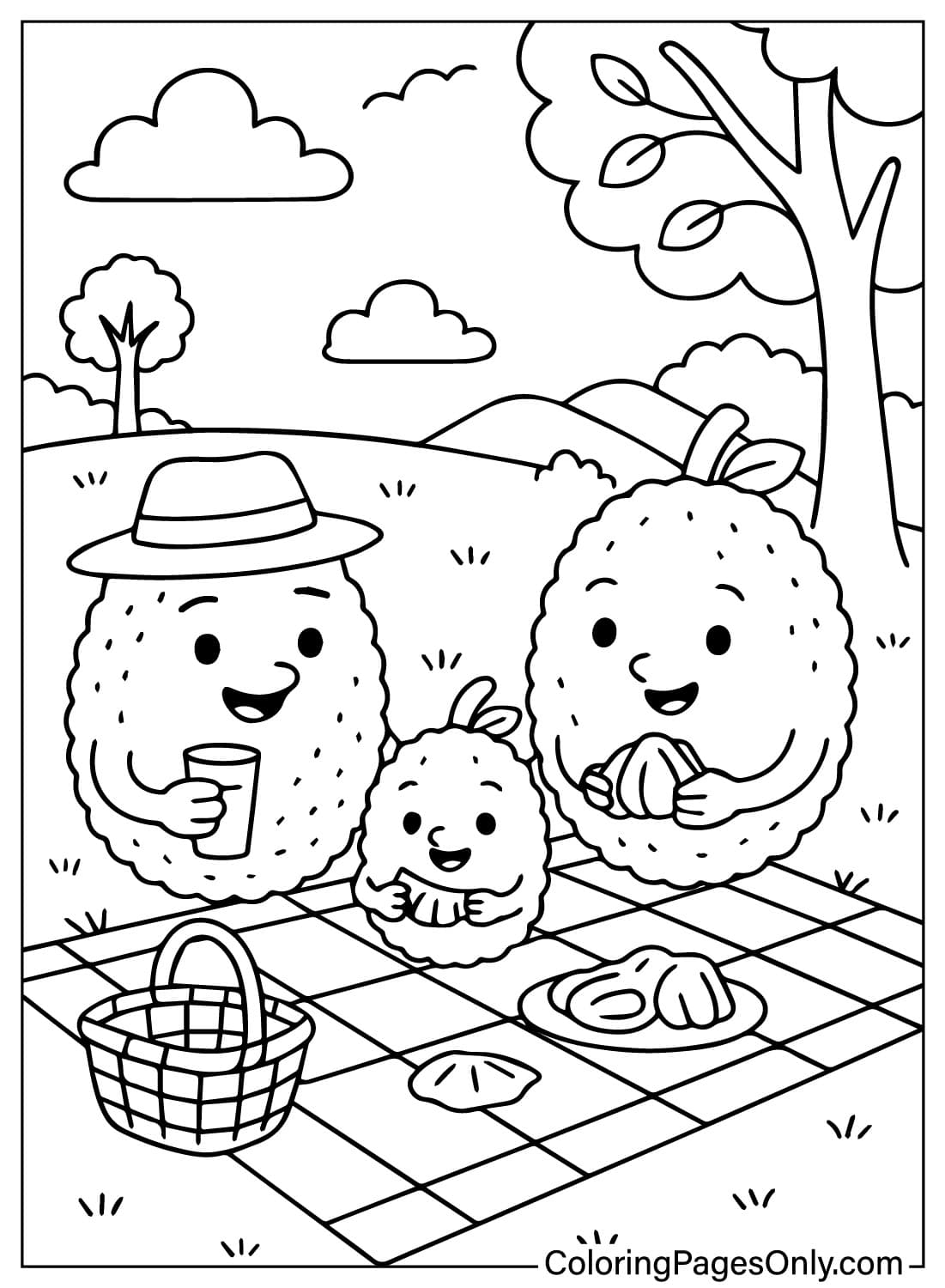
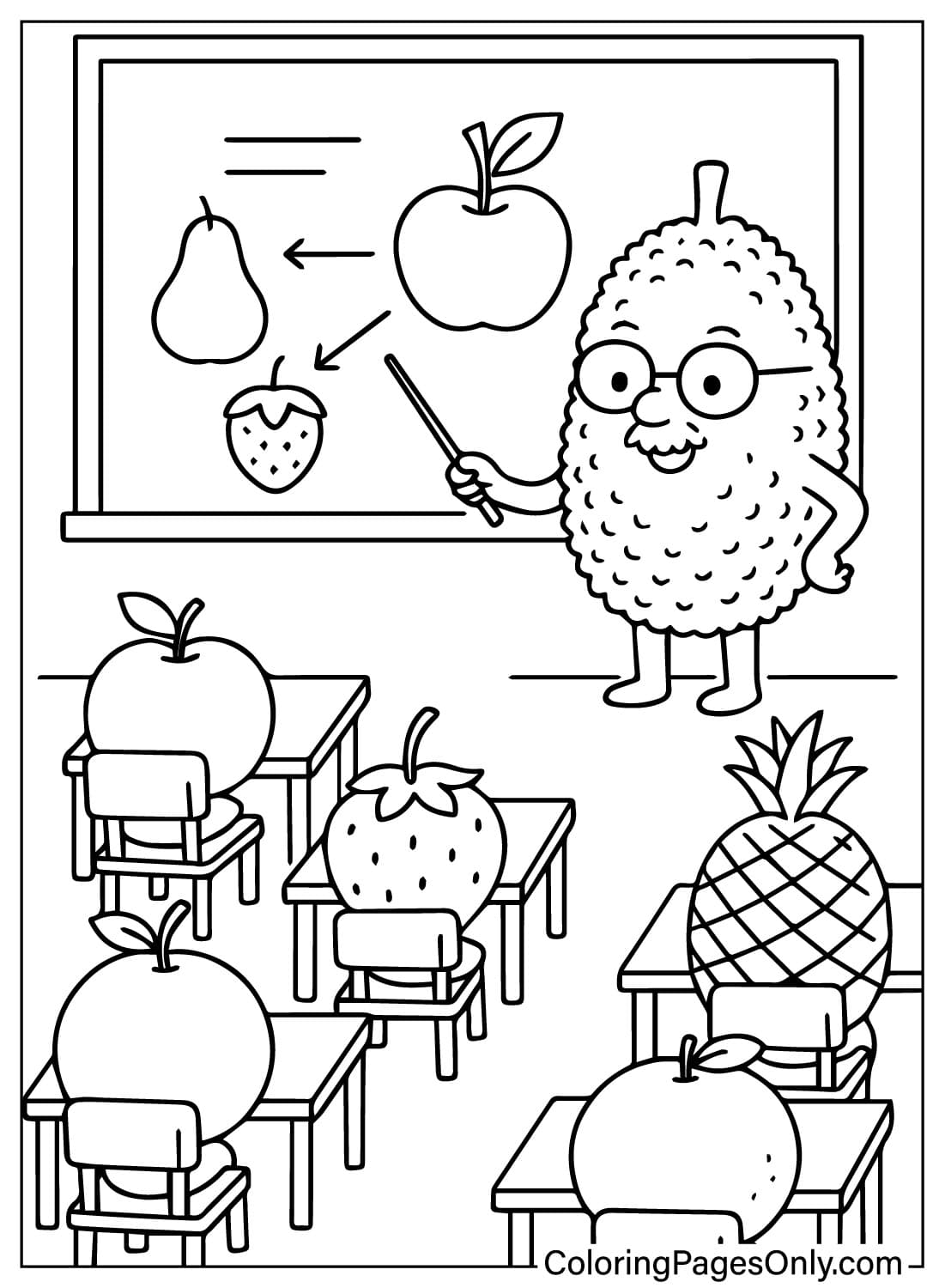
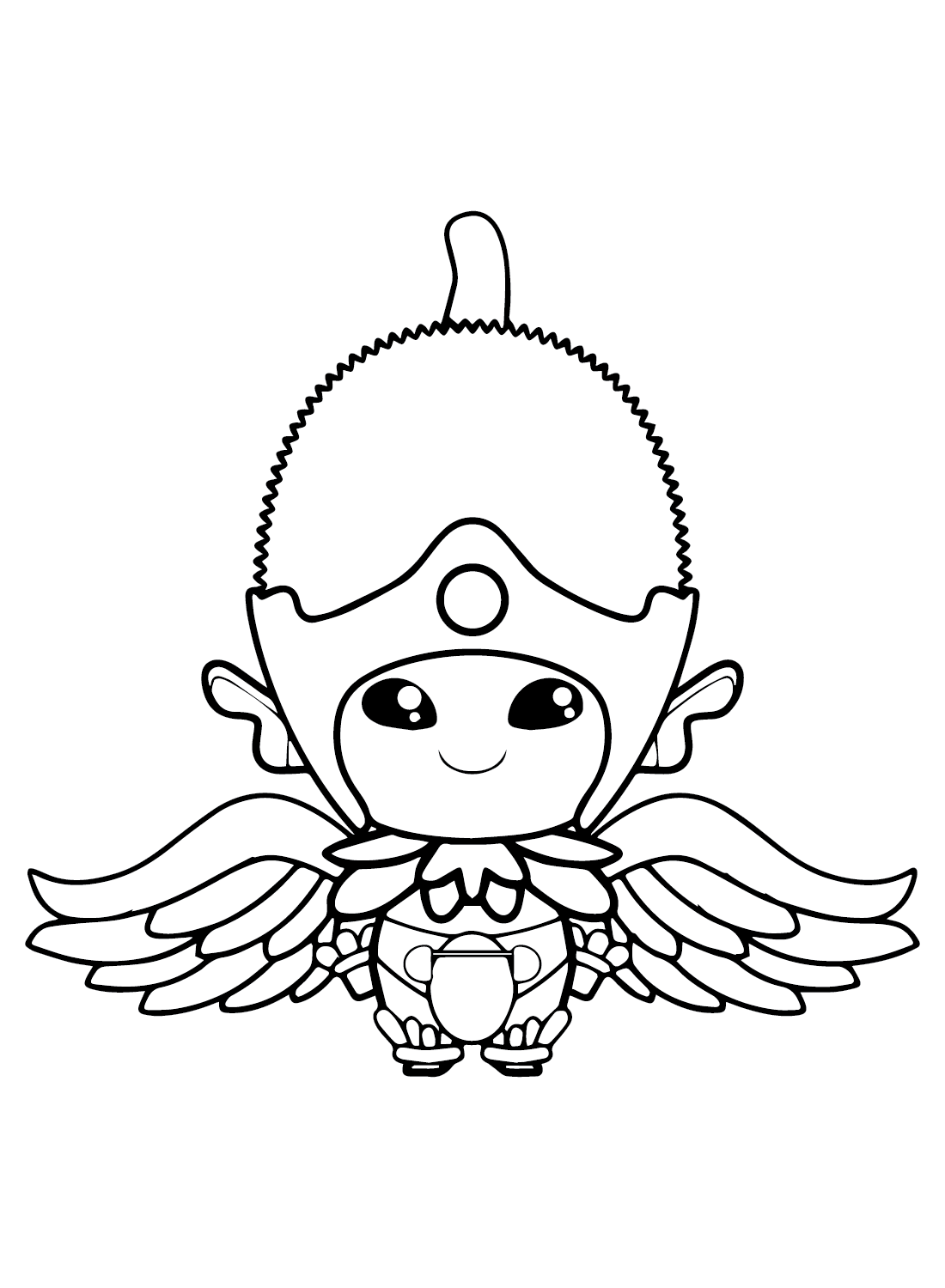
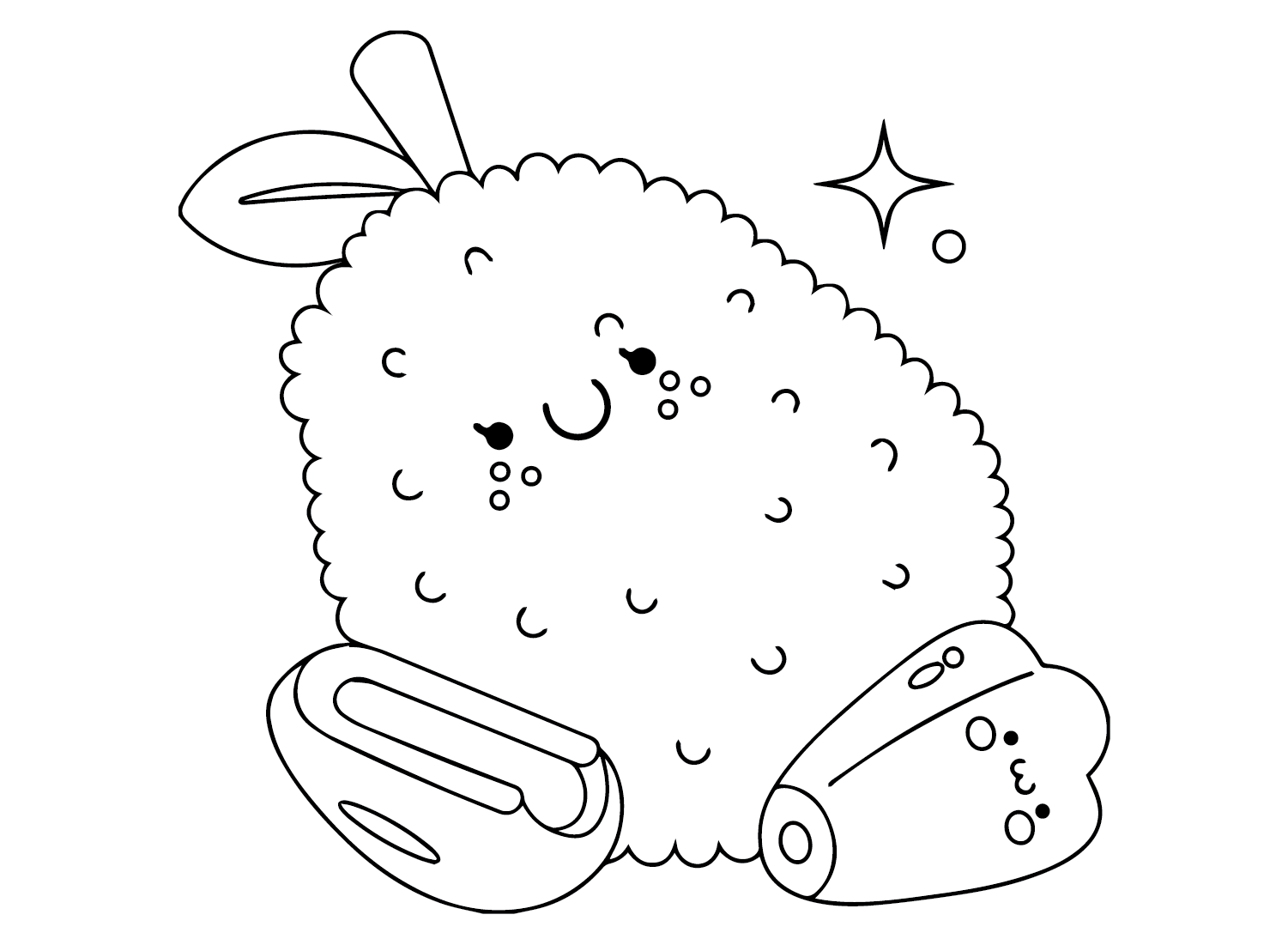
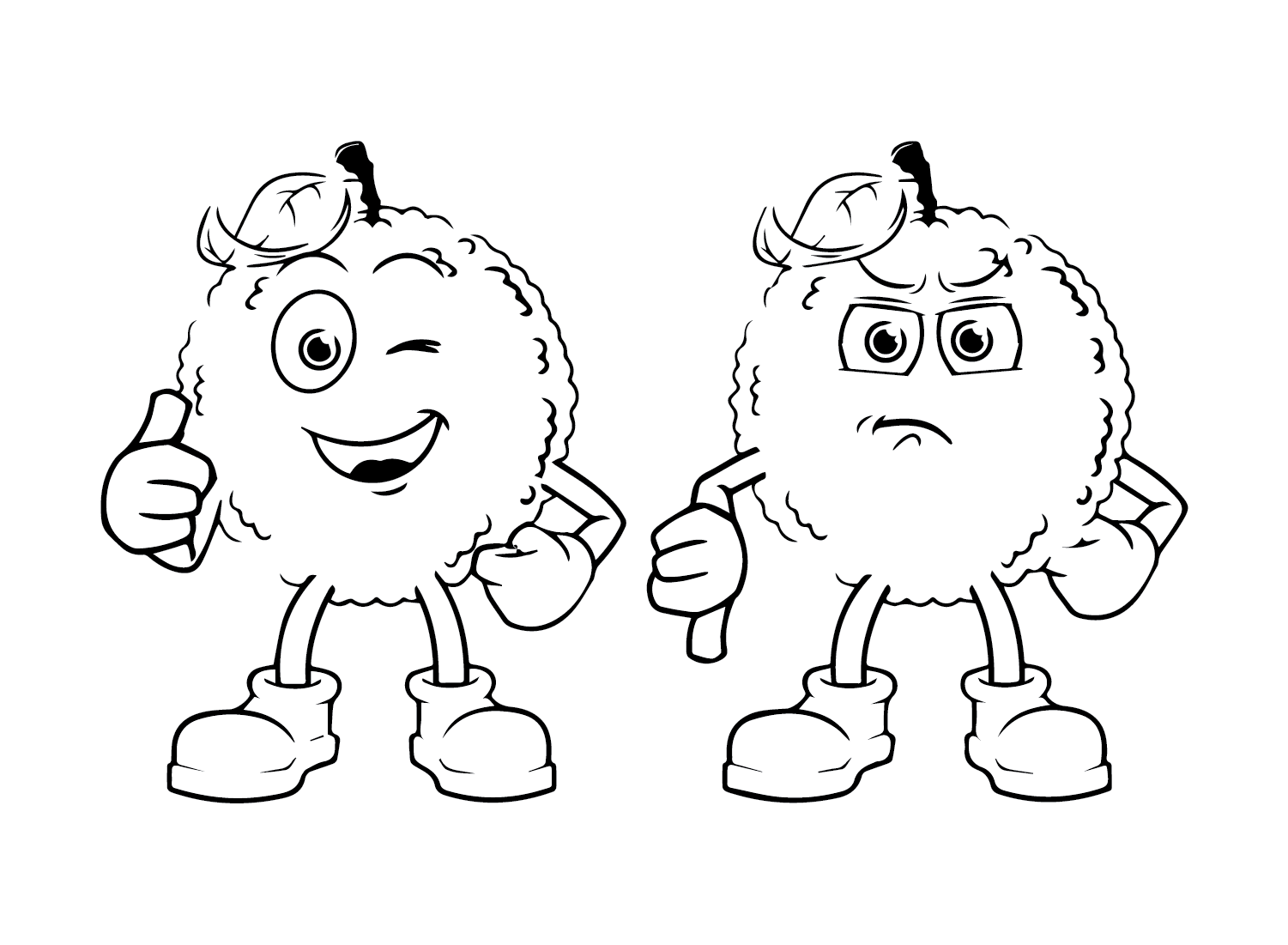
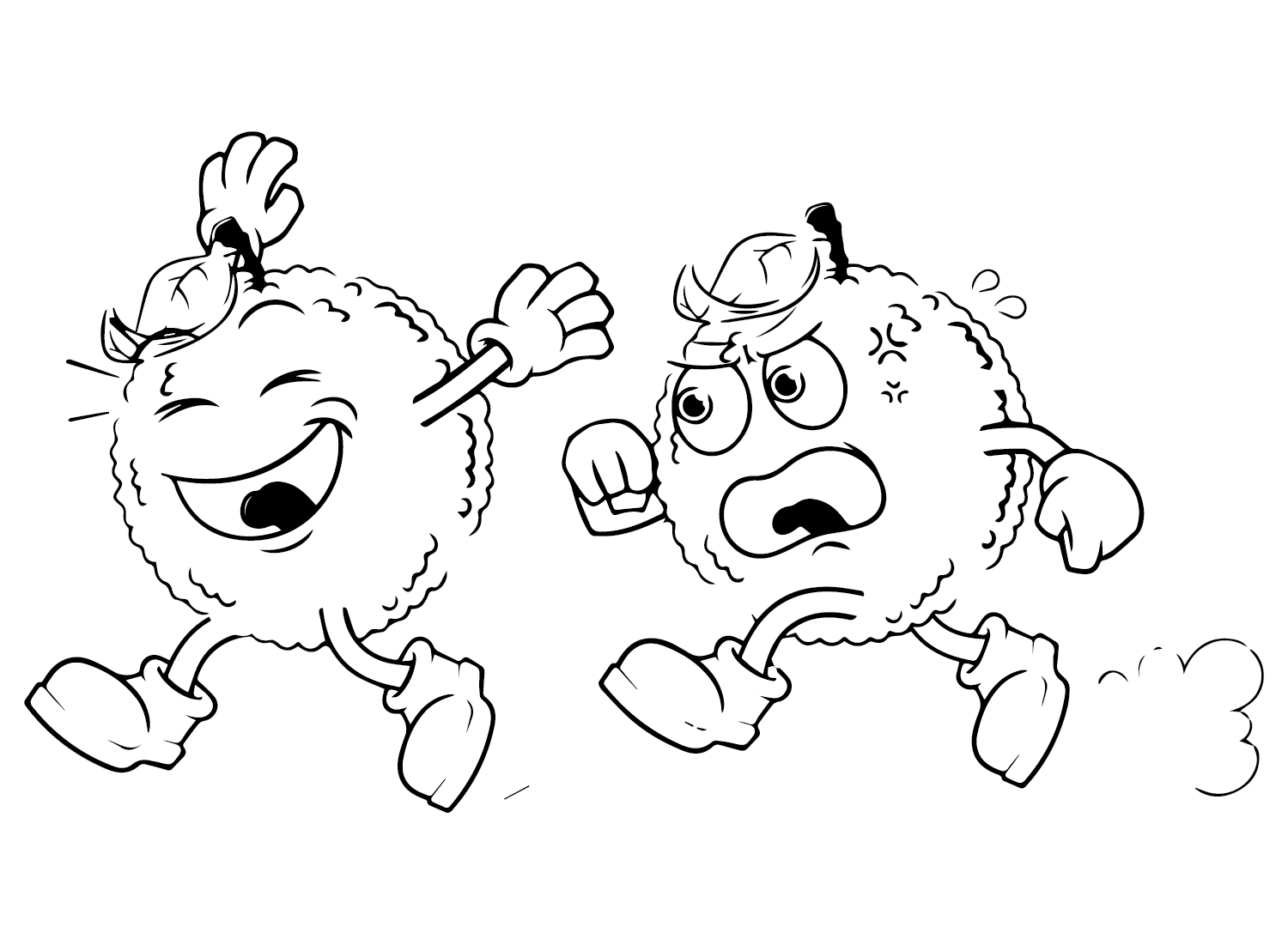
Eight pages give jackfruit a face, a costume, or a whimsical setting, including a classroom scene and a hot air balloon ride. Color suggestion: bright, saturated greens and yellows suit these friendlier designs better than the muted, realistic tones used on the plain fruit pages.
What Jackfruit Coloring Pages Do
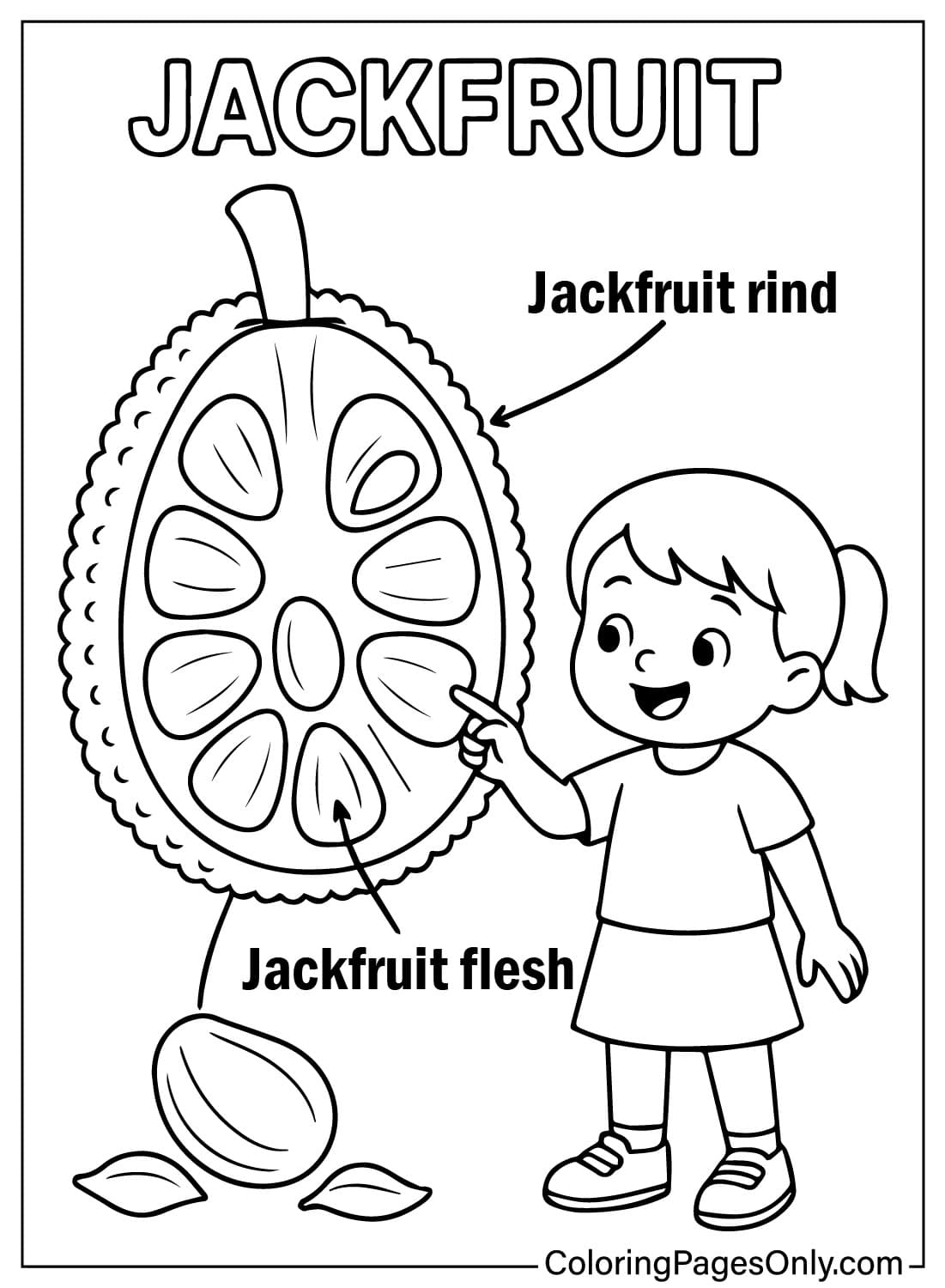
A concrete sense of scale. Because a real jackfruit can weigh more than most kindergarteners, coloring pages that show the fruit next to a person give children a size reference that a photo alone does not always communicate as clearly.
An introduction to an unfamiliar growth pattern. The American Academy of Pediatrics identifies fine motor skill development as a core benefit of structured coloring for children ages 2 through 7, and the tree and garden pages in this set add a botany lesson on top of that: fruit growing directly from a trunk is a detail most children have never seen in person.
Texture practice through pattern repetition. Filling in the small, repeated bumps that cover a jackfruit’s rind gives children practice with a different kind of fine motor control than coloring a smooth, single-colored shape, since each tubercle can be shaded slightly differently.
A low-pressure way into a new food. Research published in the Art Therapy Journal in 2005 found that structured coloring sessions were associated with a measurable reduction in reported anxiety. For children hesitant about trying an unfamiliar fruit, coloring a friendly version of it first, particularly the cartoon character pages, can lower that resistance before it ever reaches the dinner table.
How to Color Jackfruit Pages Well
- Unripe rind: Use Crayola Fern for a young, unripe jackfruit, since the skin starts a cooler green before it matures.
- Ripe rind: Shift toward Crayola Olive Green or Yellow Green as the fruit ripens, since a ready-to-eat jackfruit tends more yellow-green than a young one.
- Rind texture: Add small dots of Crayola Pine Green in the shadowed areas between the bumps to suggest the rough, tubercled surface without covering the whole rind in dark color.
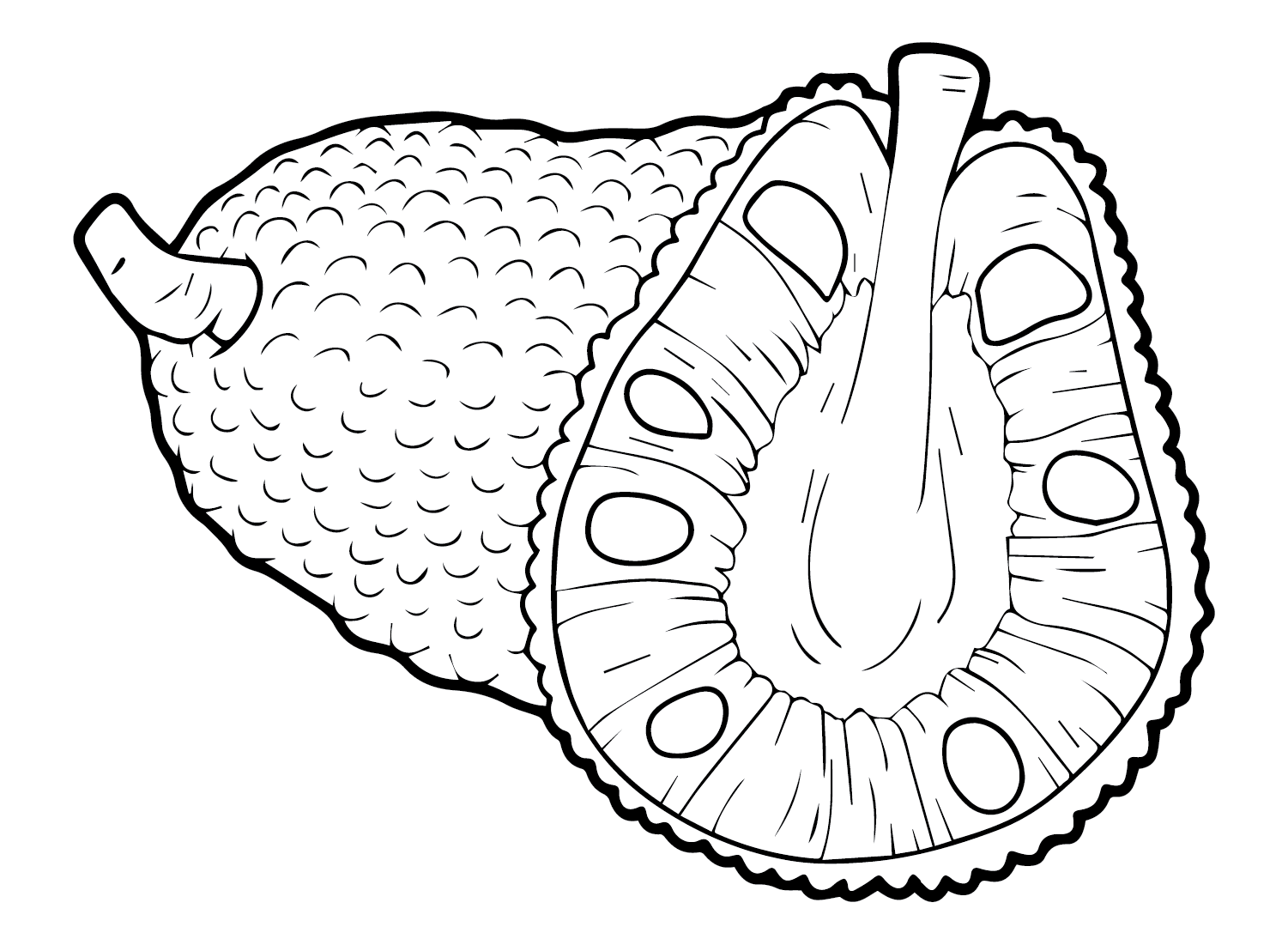
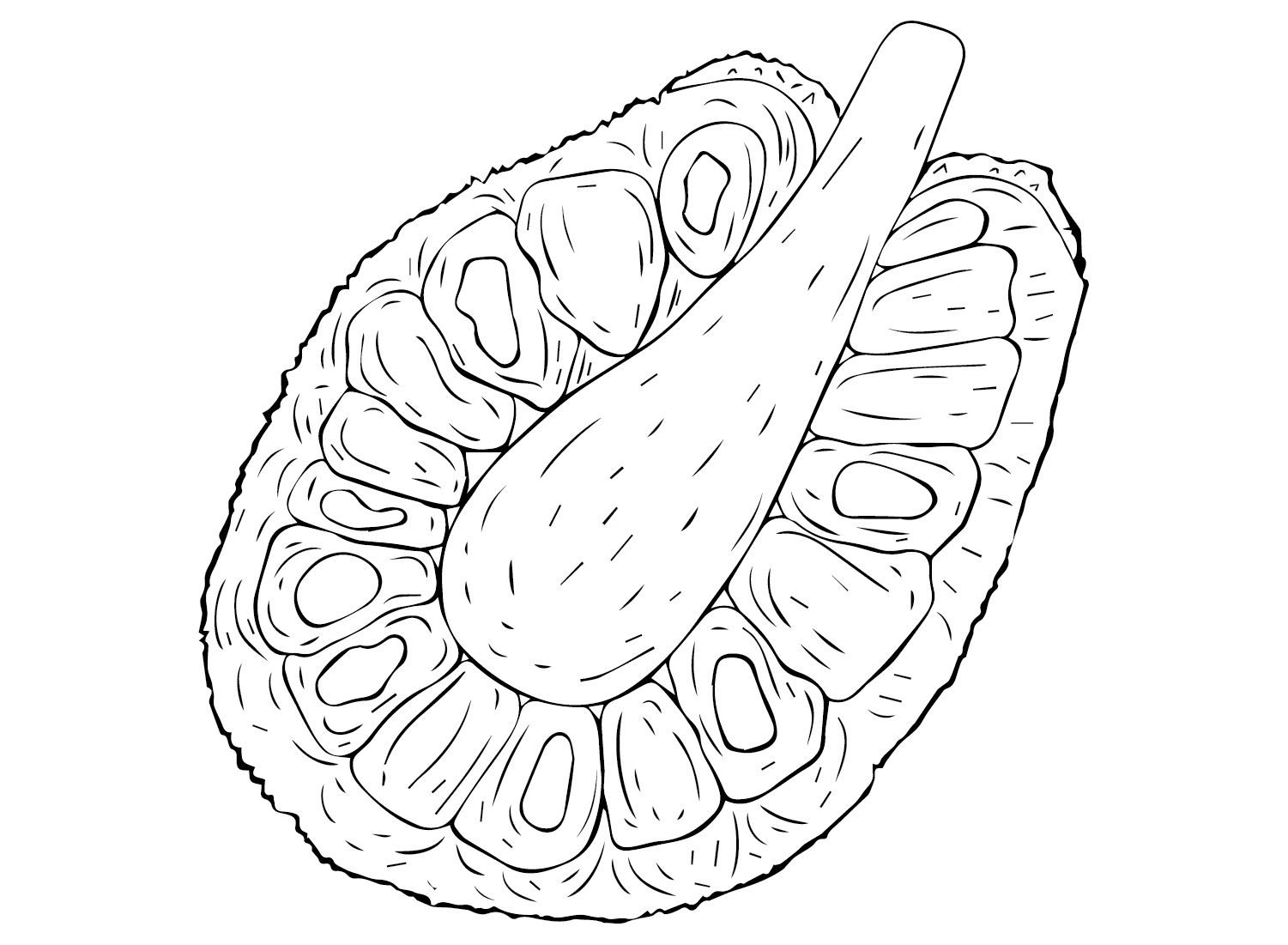
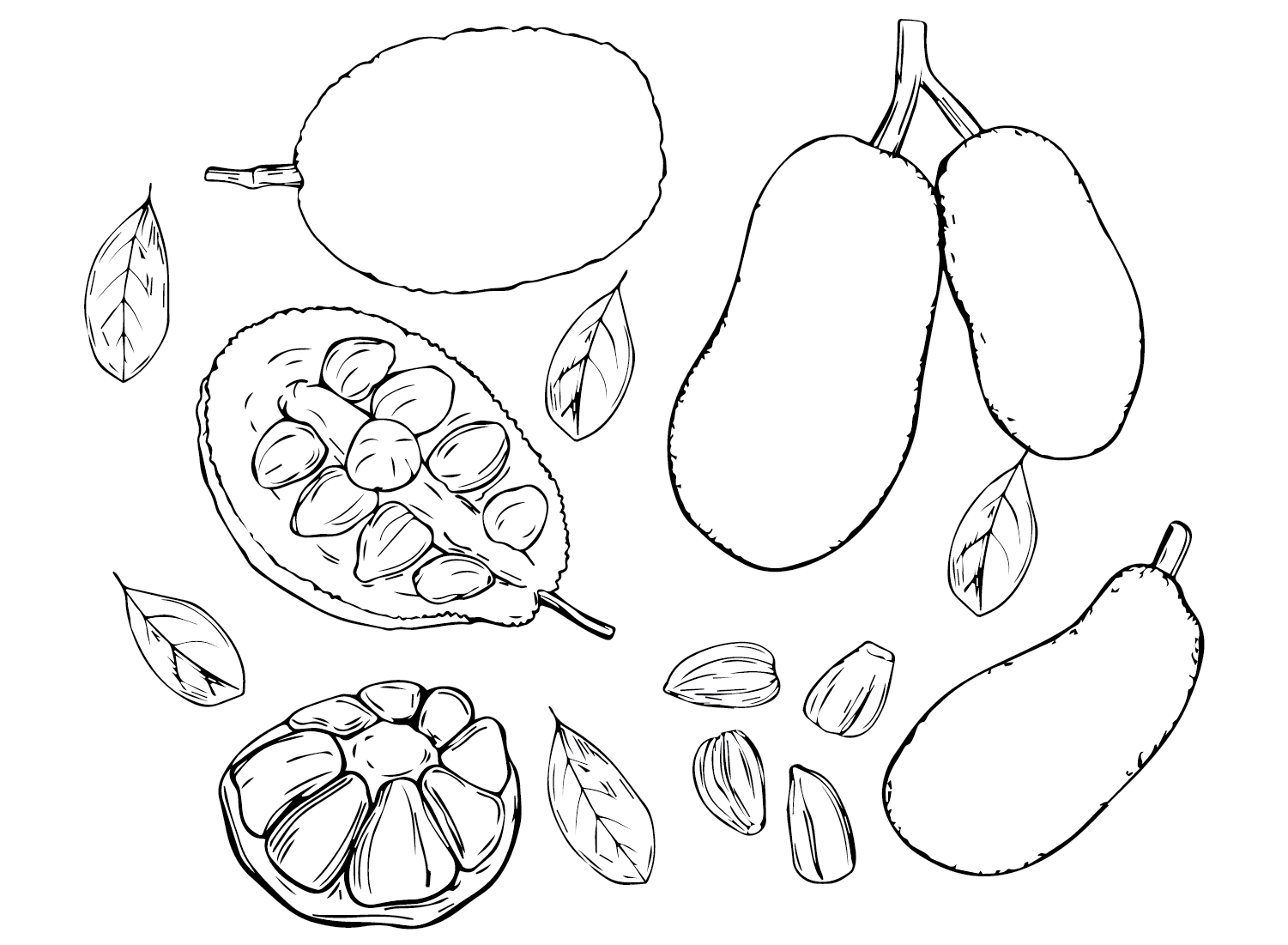
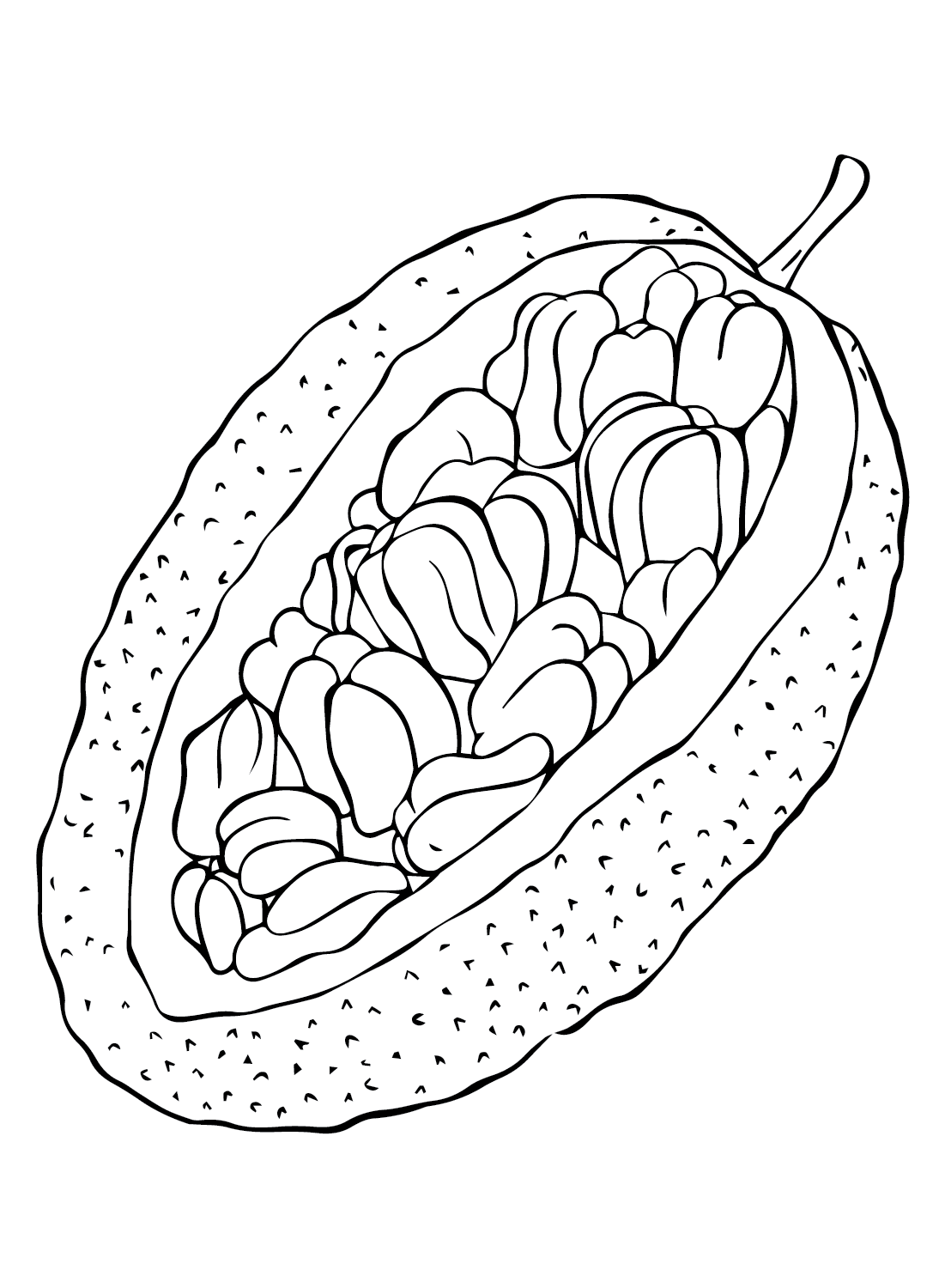
- Inside bulbs: Where a page shows the fruit cut open, color the edible bulbs in Crayola Yellow, Orange, or Banana Mania, since ripe jackfruit flesh is a warm golden yellow.
- Seeds: Use Crayola Tan or Sepia for the large seeds found inside each bulb, keeping them a shade darker than the surrounding flesh.
- Tree trunk and bark: Color the trunk in Crayola Sepia or Burnt Sienna, especially around the spot where the fruit attaches, to help the growth point read clearly against the bark.
5 Creative Craft Ideas With Jackfruit Coloring Pages
1. Outside-Inside Comparison Card
Color one whole jackfruit page and one page showing the fruit or its bulbs up close, then mount them side by side on a card labeled outside and inside to compare the spiky rind with the fruit’s golden interior.
2. Trunk-Growing Fact Poster
Color one of the tree and garden pages, mount it on poster board, and add a simple label pointing to where the fruit grows directly on the trunk, turning the page into a quick botany fact display.
3. Market Stall Diorama
Color the page showing jackfruit being sold at a market, cut it out, and stand it up inside a small box propped on its side to build a simple market stall scene.
4. Cartoon Character Story Cards
Color two or three of the cartoon jackfruit characters, glue each onto an index card, and write a two-line story for each character to practice early storytelling alongside coloring.
5. World Map Fruit Marker
Color a small jackfruit page, cut it out, and glue it onto a printed world map near South and Southeast Asia to mark where the fruit originally comes from.
Frequently Asked Questions
What are jackfruit coloring pages?
Free printable designs of jackfruit in realistic, tree, everyday-life, and cartoon styles. This collection has 46 pages available as PDF downloads or online coloring, with no account required.
What is a jackfruit?
Jackfruit is a large tropical fruit with a spiky green rind and sweet, golden yellow flesh inside, recognized by Guinness World Records as the largest tree-borne fruit in the world.
Where does jackfruit originally come from?
Jackfruit is native to the Western Ghats of India and is now grown widely across South and Southeast Asia, where it is the national fruit of Bangladesh.
How big can a jackfruit get?
The heaviest jackfruit ever officially weighed came in at 42.72 kilograms, about 94 pounds, in 2016, though most fruit sold for eating is considerably smaller.
Why does jackfruit grow directly on the trunk?
Jackfruit grows in a pattern called cauliflory, where flowers and fruit form directly on the trunk and thick lower branches instead of at the tips of new growth.
Is jackfruit the same as durian?
No. Jackfruit and durian are different fruits from different plant families, though both are large, tropical, and covered in a spiky rind, which is a common source of confusion.
What age group are these pages best suited for?
The cartoon and simple whole-fruit pages suit children as young as three. The scenes with more figures and detail, such as the market and cutting scenes, work better for children five and up.
Can these pages be used for a world cultures or nutrition lesson?
Yes. The tree and market scenes connect naturally to a lesson on where food comes from, while the size and growth facts work well in a botany or world geography unit.
Start Coloring
Download any page by clicking the design. No account, email, or payment is required. Pages print directly from the browser at full resolution or open in the online coloring tool for screen use. Share finished pages on Facebook or Pinterest using the share buttons at the top of each design page.