Fruit Coloring Pages
Fruit Coloring Pages at ColoringPagesOnly.com covers over 1,410 pages across 45 sub-categories – the most botanically comprehensive food category on the entire site, and one of the most internationally diverse coloring page collections anywhere. The range here goes far beyond the apple-banana-orange selection that dominates most Western-focused coloring page resources: alongside the universally familiar fruits of temperate agriculture, this collection covers the full spectrum of tropical and subtropical fruits, the berry family in depth unusual for a coloring site, and Southeast Asian and Pacific fruits – durian, rambutan, mangosteen, longan, lychee, jackfruit, dragon fruit, star fruit, breadfruit – that reflect the site’s genuinely global audience. Fruit as a coloring subject occupies a unique position in the coloring page world: most fruits have a known, specific canonical color that makes accurate coloring both satisfying and educational, while at the same time the extraordinary variety of fruit forms (the spiral geometry of a pineapple’s surface, the star-shaped cross-section of a star fruit, the spiky exterior of a rambutan, the dramatic pink-flesh-on-white of a dragon fruit) provides genuine visual interest that goes well beyond simply coloring a round shape in the appropriate color. For young children just beginning to learn about food and color, these pages connect coloring with real-world knowledge. For older children and adults, the tropical and exotic fruit pages offer an encounter with the visual world of fruits that may be unfamiliar and that reward genuine curiosity about what these fruits look and taste like.
Every page in this collection is completely free to download as a PDF and print, or to color online directly in your browser.
The Everyday Fruits: Universal Favorites
The fruits that appear in children’s drawings and on classroom vocabulary charts worldwide – the ones that most people in temperate countries encounter at every supermarket visit – form the foundation of this collection, with each having enough pages and illustration variety to constitute a meaningful sub-category of its own.
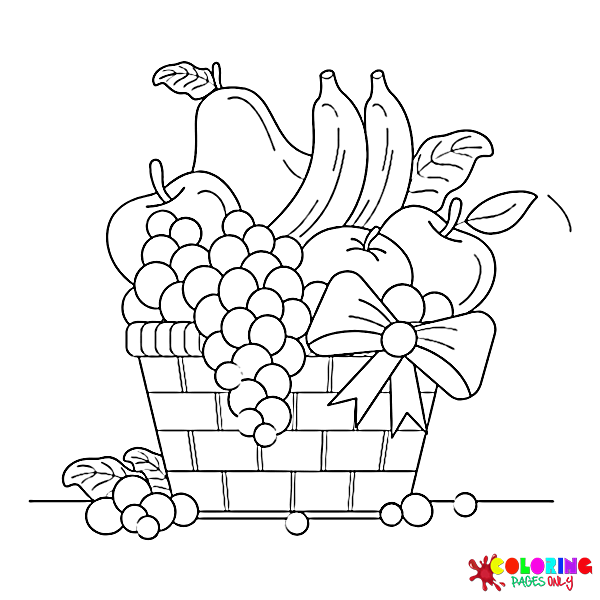
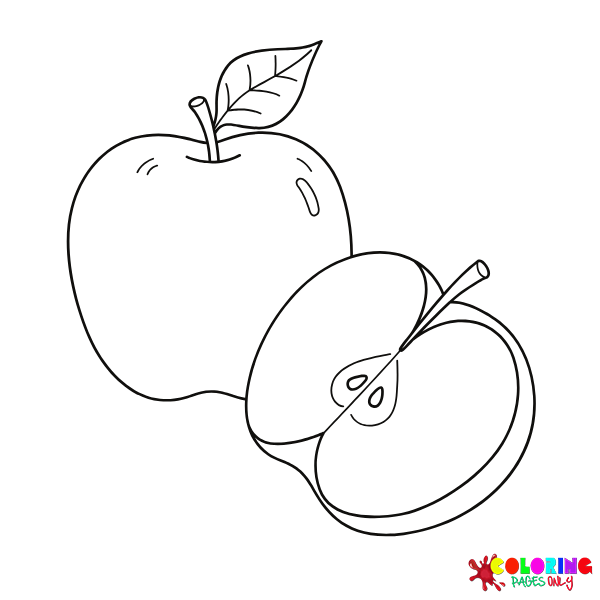
Apple is among the most searched fruit sub-categories on the site and one of the most universally recognized forms in all of natural illustration – the round body with its characteristic dimple at the stem end and calyx at the base, the short, curved stem, and the simple leaf that appears in stylized apple illustrations worldwide. Apple pages cover both the whole fruit in its various commercial varieties (the vivid red of a Red Delicious, the yellow-green of a Granny Smith, the softer pink-red of a Fuji or Gala) and the cut apple – the cross-section showing the five-pointed star pattern of seed chambers around the core, with its white-cream flesh and the darker brown-tan of the seeds in their protective chambers. This cross-section star pattern makes the cut apple one of the most geometrically satisfying of all fruit coloring subjects.
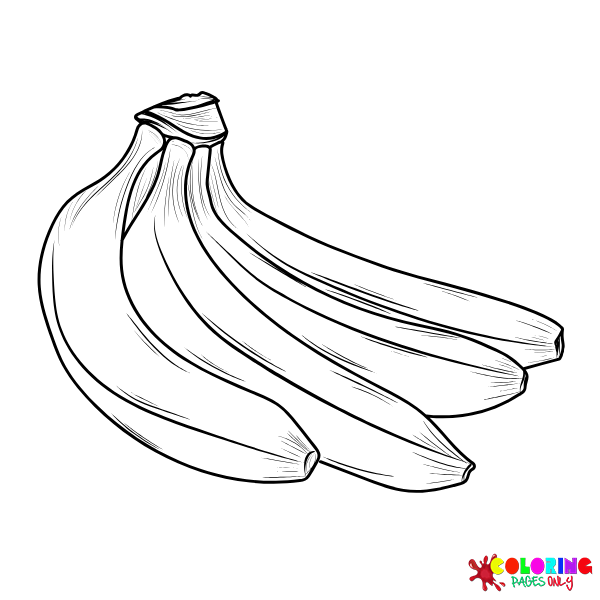
Bananas cover both the single banana and the bunch – the curved cluster of five to fifteen individual fruits attached at a central stalk that is the most familiar form in which bananas are sold and encountered. The banana’s canonical yellow is one of the most specific color identifications in all of nature – the particular vivid, warm, almost tropical yellow of a ripe banana is so precisely associated with the fruit that “banana yellow” functions as an independent color name. Banana pages also cover the color transition story: the green of an unripe banana, the yellow of the ripe fruit, and the brown-spotted yellow of an overripe one tell the story of fruit ripening in color alone.
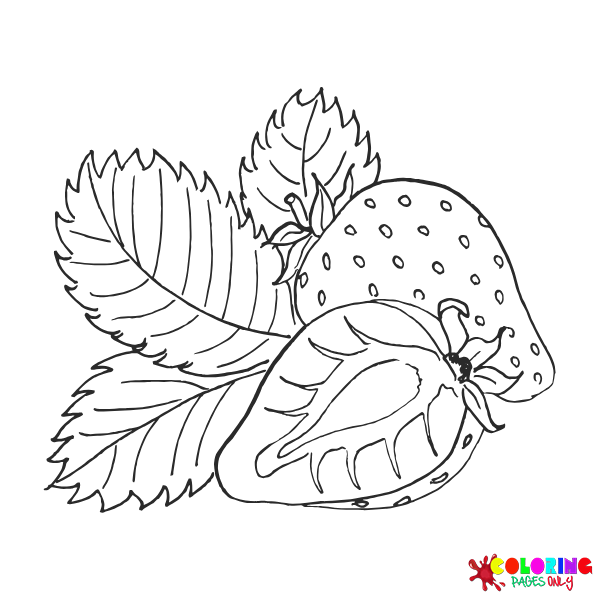
Strawberry is among the most searched individual fruit pages on the entire site – the heart-shaped red fruit with its surface pattern of small yellow seeds (technically the achenes, the true fruits of the strawberry plant with the red flesh being the swollen receptacle) and its green leafy calyx at the stem end is one of the most immediately recognizable and most beloved fruit images in any culture that grows or eats strawberries. The strawberry’s color story is vivid: the deep, slightly blue-tinged red of a very ripe specimen, the lighter, more orange-red of a partially ripe fruit, and the pink-white of an unripe one. The seed pattern on the surface – tiny yellow-tan ovals embedded in the red flesh, each sitting in a slight depression – is the defining surface detail of strawberry pages and the element that most distinguishes a carefully colored strawberry from a generic red shape.
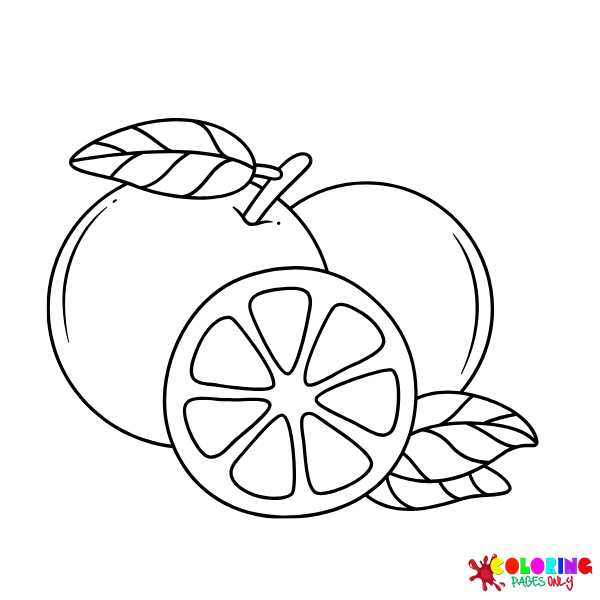
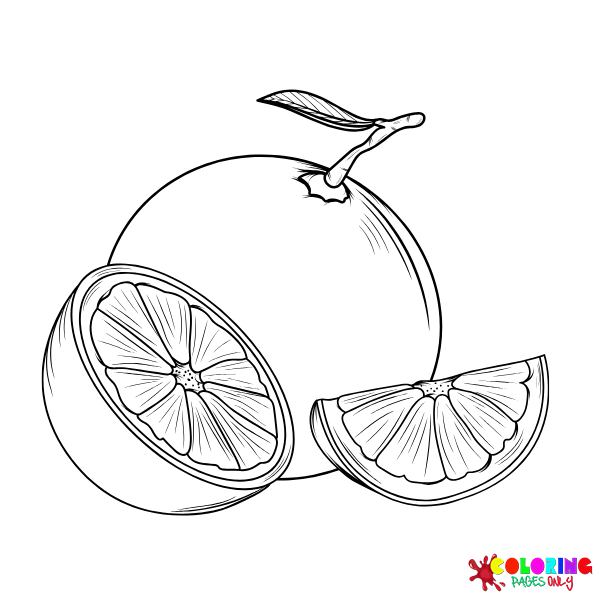
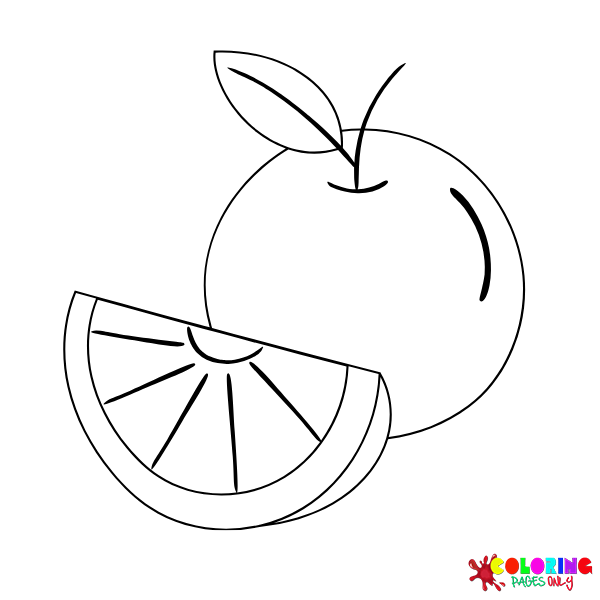
Oranges are the most widely consumed citrus fruit and one of the most globally familiar fruits in any form – fresh, juiced, or processed. Orange pages capture the fruit in its canonical round form with its dimpled, slightly textured peel surface in the vivid orange that has given the color its name (orange, the color is named after orange the fruit, one of the few cases where a natural object has directly named a color category). The peeled orange – segments separated, the membrane-covered wedges arranged in a fan or spiral – provides a more complex coloring composition than the whole fruit alone, with the paler orange-cream of the fruit flesh contrasting with the deeper orange of the peel and the white of the pith.
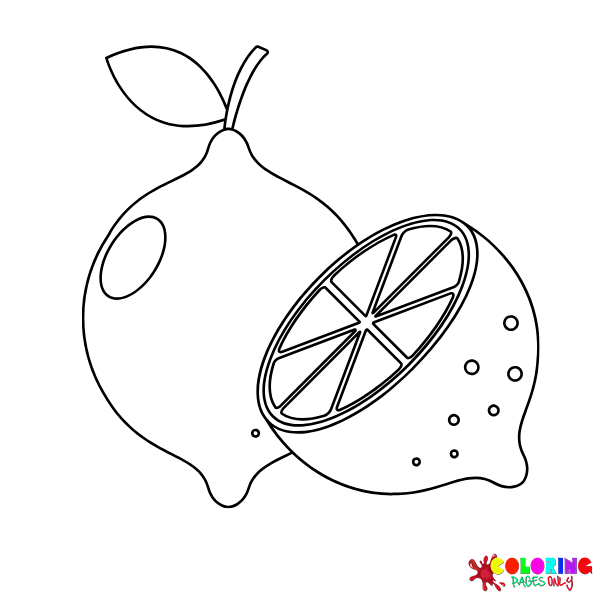
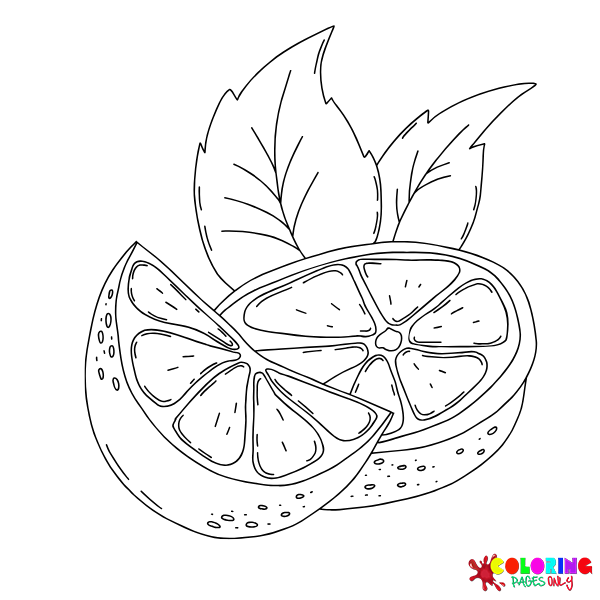
Lemons bring the sharp, vivid yellow of the citrus family’s most sour member – a yellow distinct from the warmer, more orange-influenced yellow of a banana or a mango, with a cooler, brighter, more acid quality that reflects the fruit’s culinary character even in color. Lemon pages cover the whole fruit with its characteristic oval form and pointed ends, the half-lemon with its radially arranged juice segments visible in cross-section, and the lemon slice with its sun-like pattern of segments radiating from the central core. The Citrus-fruits hub sub-category brings together the full citrus family – oranges, lemons, limes (vivid green), grapefruits (yellow-pink), and mandarins and clementines (the smaller, more orange-toned citrus) – in mixed compositions that showcase the color variety within this single botanical family.
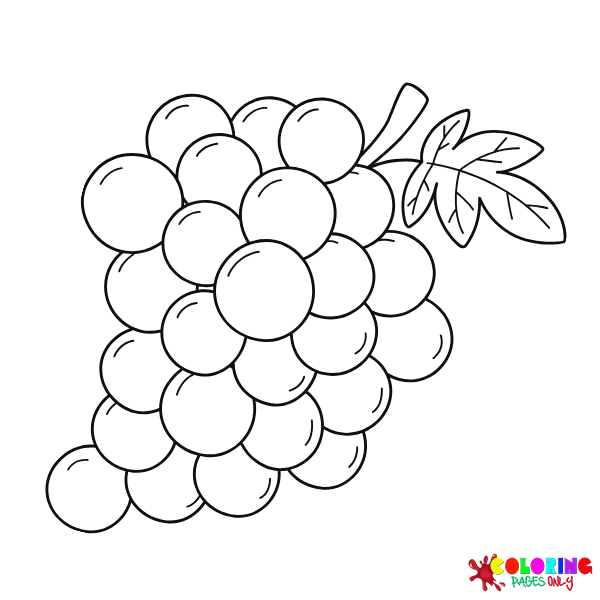
Grapes covers the clustered fruit of the vine – the bunch of individual round berries attached to a central stem in the characteristic grape cluster form that has appeared in art from ancient Greek mosaics to Renaissance still life paintings to contemporary illustration. Grape pages cover the full color range of the fruit: the deep purple-black of Concord and black seedless varieties, the vivid red-purple of red flame grapes, the transparent yellow-green of green seedless varieties, and the dusty blue-purple of traditional wine grapes with their characteristic bloom (the natural waxy coating on the grape skin that gives it its matte, slightly hazy appearance rather than a fully glossy finish). The bunch structure – multiple individual spheres of slightly different sizes and slightly different color intensities depending on their position in the cluster – makes grape pages among the most technically interesting of the round-fruit sub-categories.
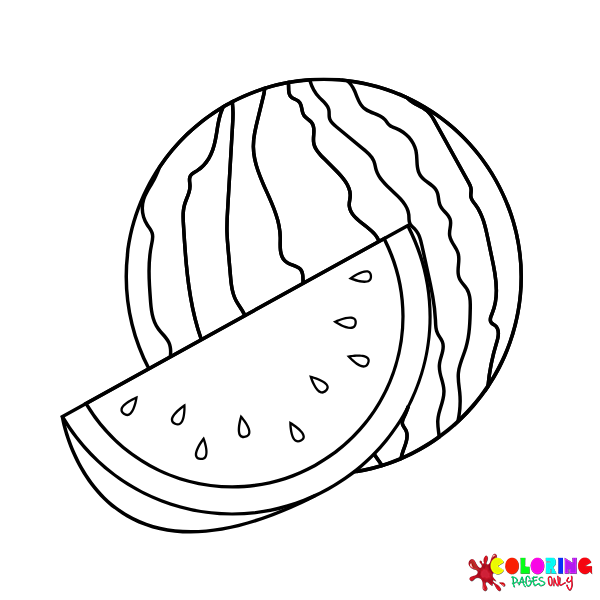
Watermelon is the most visually dramatic of the common summer fruits – the green-striped exterior giving way to the vivid pink-red flesh studded with black seeds that is one of the most colorfully bold of all fruit cross-section compositions. The watermelon cross-section page is the most naturally compelling form for coloring: the outer green rind with its darker green stripes, the thin pale white inner rind layer, and then the vivid red-pink of the flesh with its scattered black oval seeds create a three-zone color composition that is immediately recognizable and visually satisfying. The specific pink-red of watermelon flesh – not the darker red of a tomato or the blue-red of a cherry, but a lighter, warm pink-red with a luminous quality – is one of the most enjoyable fruit colors to render because it is vivid enough to be striking but soft enough to feel fresh and summery.
The Stone Fruits and Tree Fruits
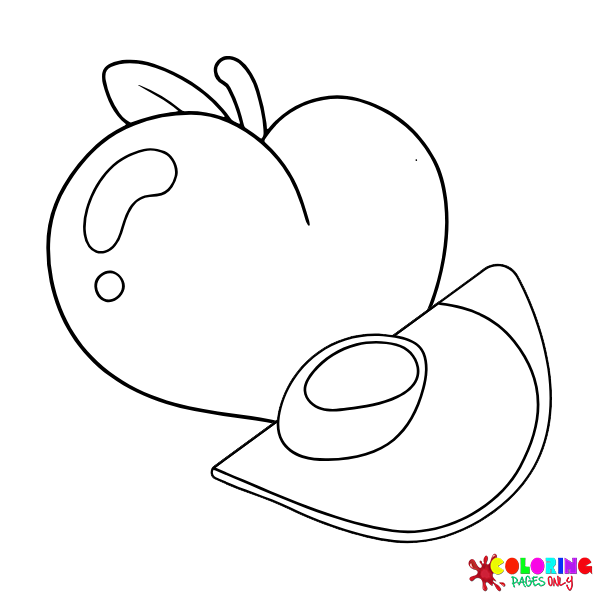
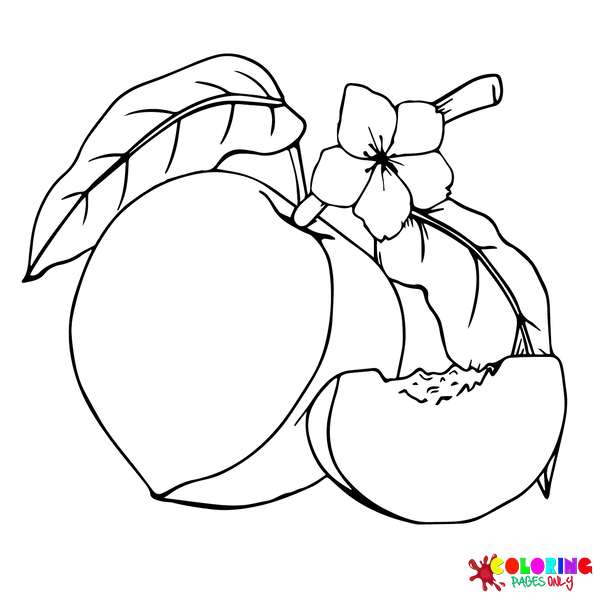
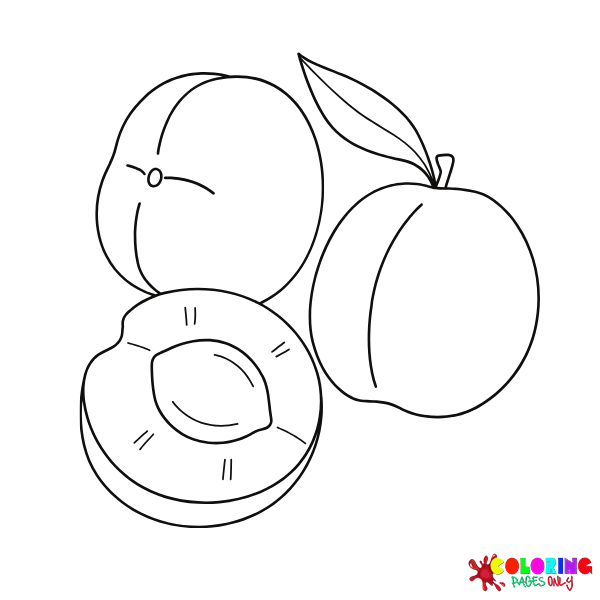
Peaches covers the velvety-skinned summer fruit whose blush coloring – a gradient from pale golden-yellow at the base to pink, coral, and rose-red at the sun-exposed cheek – is among the most nuanced of all common fruit colorations. The peach’s skin color gradient is the defining coloring challenge of peach pages: rendering the smooth transition from the cool golden-yellow of the shaded side through the warm pink of the intermediate zone to the vivid coral-red of the most sun-exposed area produces the specific peach appearance that makes the fruit immediately identifiable. The flesh revealed in a cut peach is a warm, golden-cream to light orange, surrounding the deeply furrowed brown stone at the center. Apricot covers the smaller cousin of the peach – a similar blush coloring but more golden-orange overall, with a smaller stone and a more intense, concentrated flavor that translates to a more deeply saturated golden-orange color in coloring.
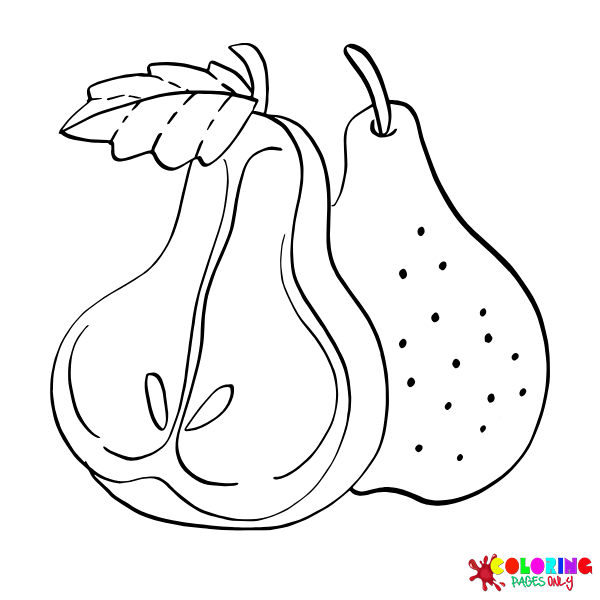
Pears covers the teardrop-shaped fruit whose distinctive silhouette – narrow at the stem end, wider and rounder at the base – is one of the most immediately recognizable fruit forms in illustration. Pear coloring pages present an interesting color challenge because pear varieties span a wider color range than most common fruits: the classic Bartlett (Williams) pear ripens from green to golden yellow, the Bosc pear is brown-russet, the Anjou can be red or green, and the Asian pear is yellow-gold to light brown. Each variety has its own color story, and pear pages can reflect any of these. Plums cover the stone fruit in its dark purple-black or red-purple form – the deep, slightly dusty blue-purple of a ripe plum is one of the richest and most jewel-like colors in the fruit coloring palette, and the contrast between this deep exterior and the bright golden-yellow or red flesh revealed in the cut plum creates a dramatic compositional moment.
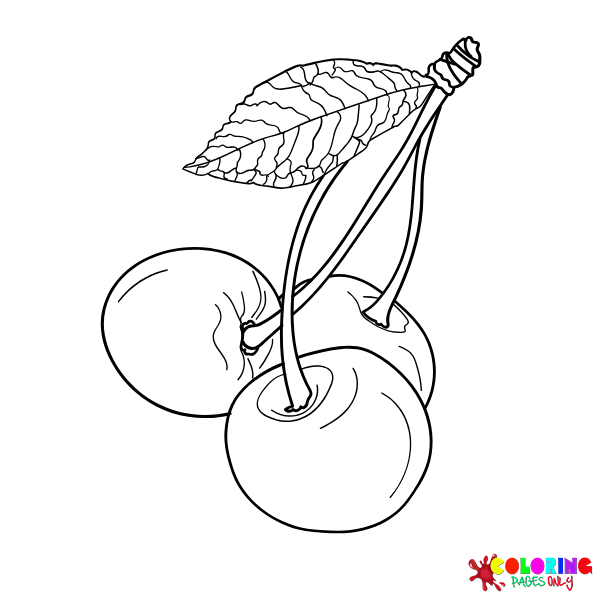
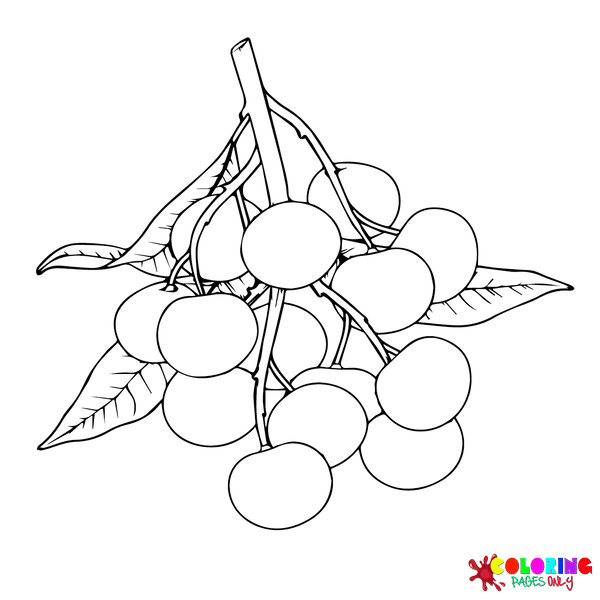
Cherry covers the small, round stone fruit in its vivid red form – the specific bright red of a sweet cherry (Bing, Rainier, or similar varieties) with its long green stem that curves elegantly. Cherry pages frequently show two cherries attached by their stems – a pairing so visually consistent in cherry illustration that it has become a design motif across food illustration, vintage graphic design, and decorative art. The Rainier cherry, with its distinctive yellow-and-red blush coloring, provides an alternative to the all-red canonical cherry that introduces more color variation. Nectarine covers the smooth-skinned variant of the peach – essentially a peach without the characteristic fuzz – with a similar blush coloring but a slightly more vivid, slightly more translucent quality to the skin color.
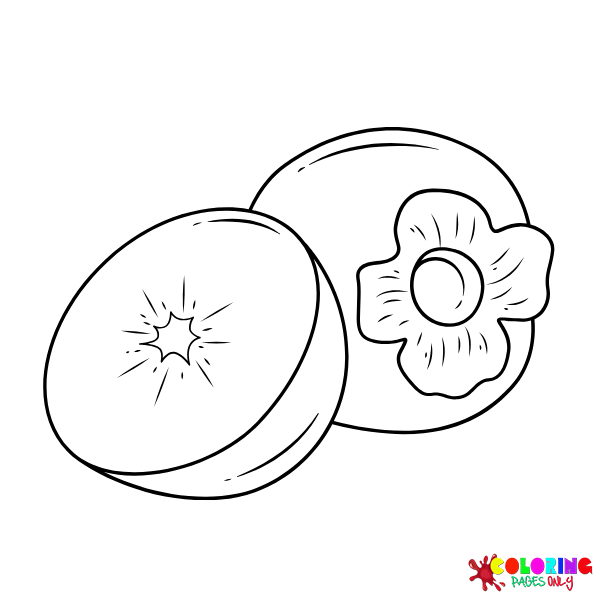
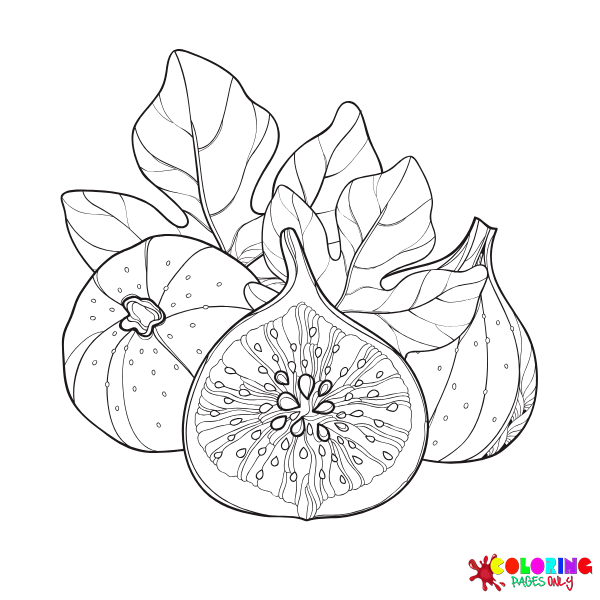
Figs cover one of the oldest cultivated fruits in human history – the teardrop-shaped fruit of the Ficus carica tree, whose exterior ranges from purple-black to dark violet in common varieties, concealing an interior of vivid pink-red flesh packed with tiny edible seeds. The fig cross-section is one of the most visually extraordinary of any fruit: the deep exterior color gives way abruptly to the brilliant warm pink of the interior, which is densely textured with the tiny orange-red seeds that are actually the true fruits of the fig plant (the fleshy exterior is botanically a synconium, a structure that encloses hundreds of tiny flowers and fruits). Persimmon covers the autumn fruit with its characteristic vivid orange-to-red coloring – the specific warm orange of a ripe Hachiya or Fuyu persimmon is one of the most intensely saturated orange tones of any fruit, making persimmon pages among the most colorfully vivid in the stone-and-tree fruit family.
The Berry Family: The Collection’s Most Complete Cluster
The berry sub-categories form the most comprehensively covered botanical grouping in the entire Fruit collection – going significantly deeper into individual species than any comparable coloring page resource. Together, they form a complete field guide to the edible berry world in coloring page form.
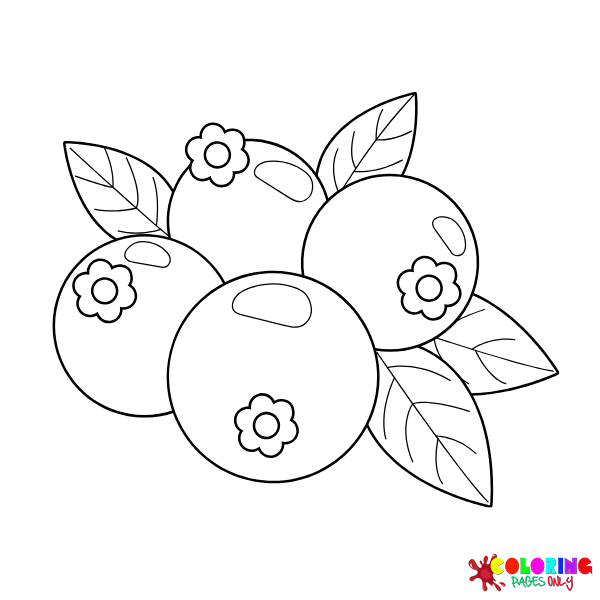
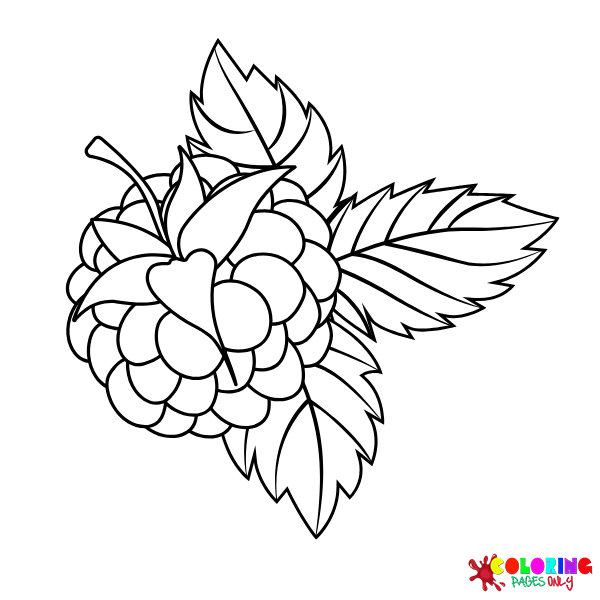
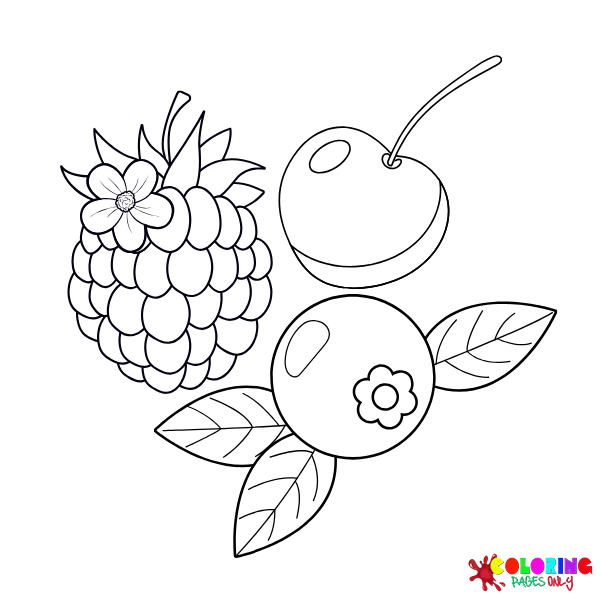
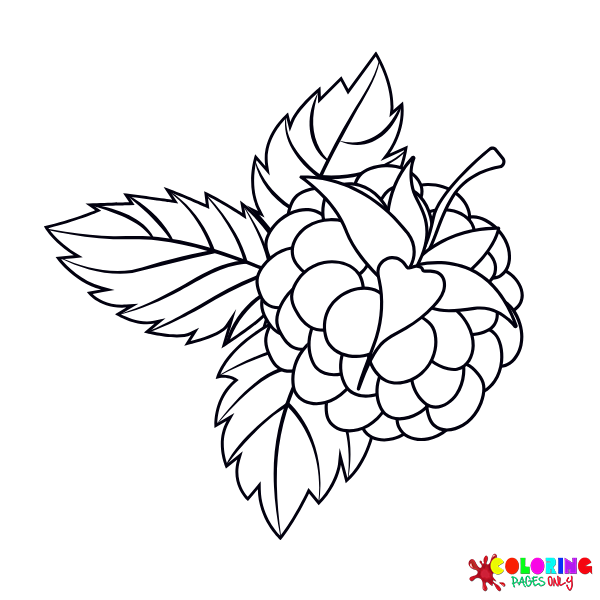
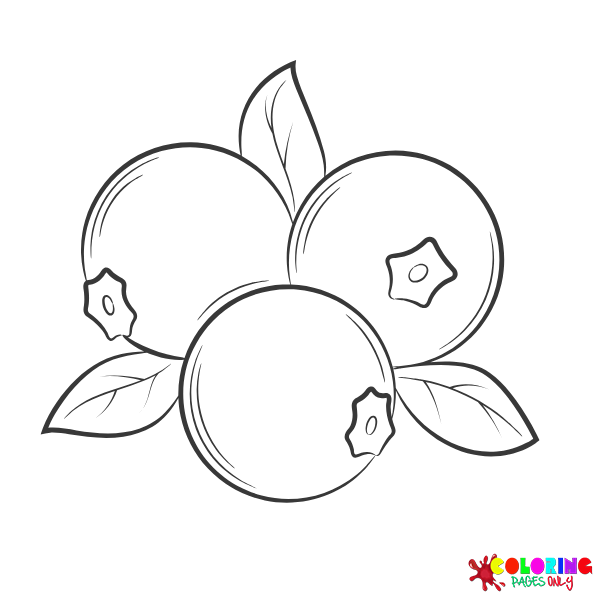
Strawberry leads the berry family as the most commercially significant and most widely illustrated berry worldwide. Blueberry covers the small, round, dusty blue-purple berry of the Vaccinium family – one of the most nutritionally celebrated fruits of recent decades and, visually, one of the most distinctive because of the specific muted, slightly gray-blue of its exterior (the “bloom” or waxy coating that gives blueberries their characteristic dusty appearance rather than a glossy finish) and the tiny star-shaped calyx crown at its apex. Raspberry covers the aggregate berry – the compound fruit made up of many small drupelets clustered around a central core, which gives the raspberry its characteristic bumpy, textured surface that is more visually complex than the smooth-surfaced strawberry or blueberry.
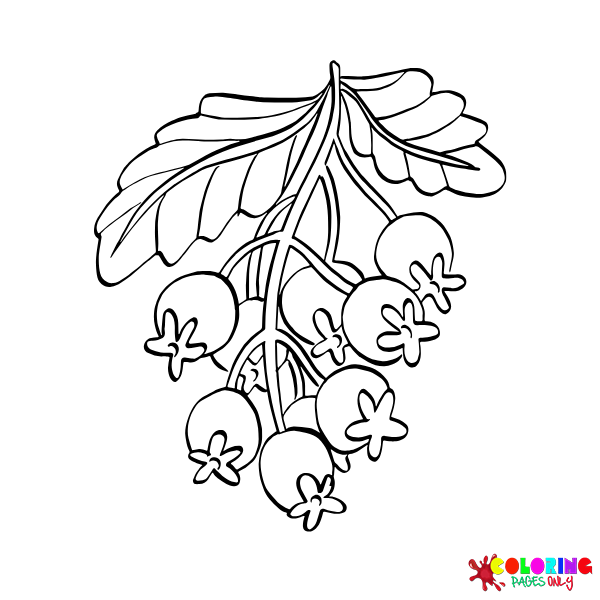
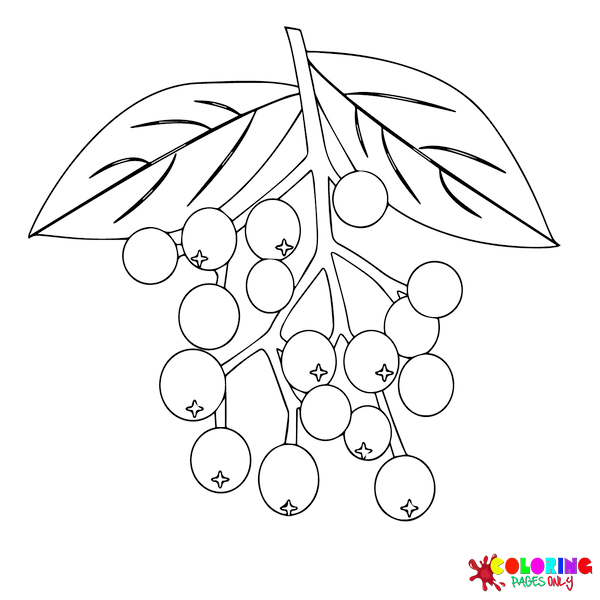
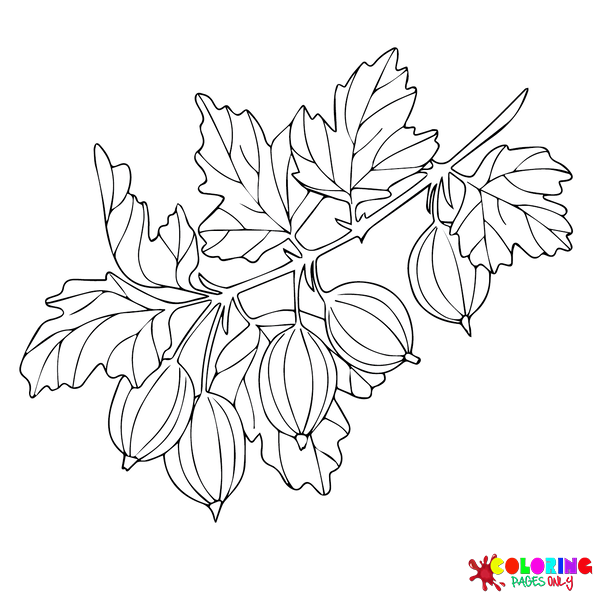
Blackberry covers the deep purple-black aggregate berry – similar in structure to the raspberry but darker, glossier, and with a more intense color that ranges from deep purple in the ripening stage to near-black when fully ripe. Cranberry covers the small, tart red berry of North American bogs – a vivid, fairly translucent red that is distinctly different from the darker, more opaque red of a cherry or the softer red of a strawberry. Gooseberry covers the small, slightly translucent berry in its green, yellow, or reddish form – the veining visible through the semi-transparent skin of a green gooseberry makes it one of the more texturally interesting small berries to render. Elderberry refers to the small, deep purple-black berry of the Sambucus tree, which grows in dense flat-topped clusters of tiny individual berries. Huckleberry covers the wild berry closely related to the blueberry, but with a more intensely flavored, slightly darker, and more truly blue-black coloring. The broader Berries hub sub-category brings together multiple berry types in mixed compositions.
Tropical Fruits: The Collection’s International Strength
The tropical fruit sub-categories represent the most distinctive and internationally ambitious portion of the Fruit collection – covering fruits that are staple foods across Asia, the Pacific, the Caribbean, and tropical Latin America, but that are significantly underrepresented in most coloring page resources focused on Western markets.
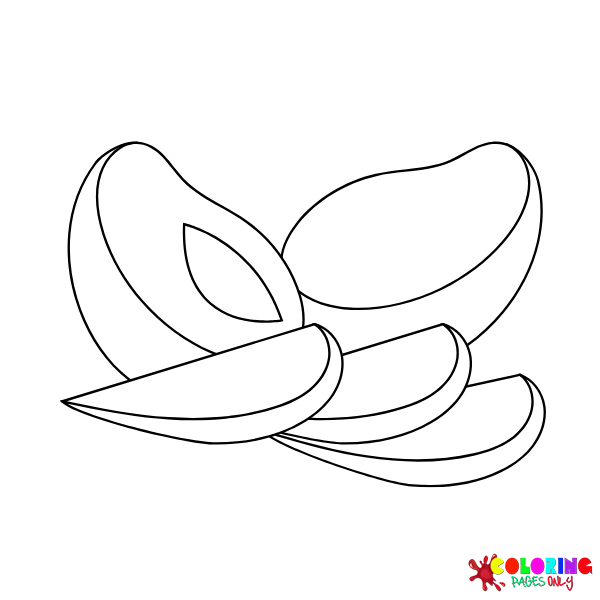
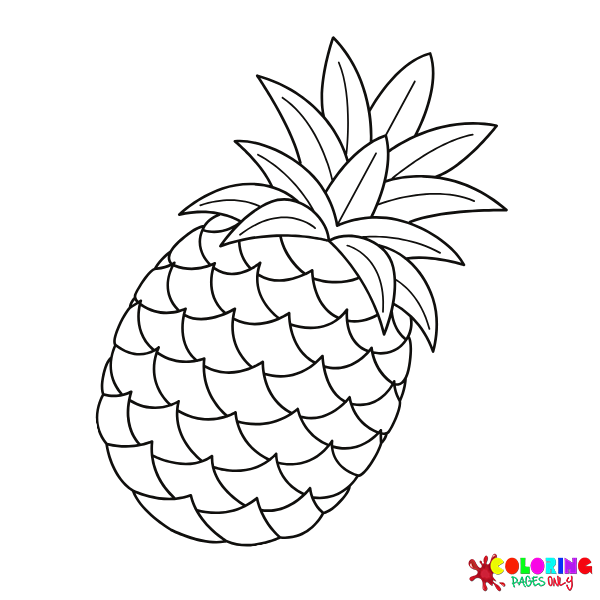
Mango is the world’s most consumed tropical fruit and the national fruit of India, Pakistan, Bangladesh, and the Philippines – a fruit with over 1,000 named varieties whose visual form ranges from the small, round, kidney-shaped common mango to the large, elongated varieties of South Asian cultivation. The mango’s skin color is one of the most beautiful in the tropical fruit world: depending on variety, it transitions through green, yellow, orange, and red-blush in combinations that can be found in almost any warm-spectrum color palette. The flesh – deep golden-yellow, cut away from the central flat stone in the characteristic “hedgehog” or “porcupine” cut familiar to mango eaters – is a specific vivid amber-yellow that is one of the most saturated fruit interior colors of any species. Pineapples cover the most architecturally distinctive tropical fruit – the spiny, diamond-patterned exterior formed by the interlocking hexagonal scales (the “eyes”), the spiky crown of stiff, sword-shaped leaves, and the sweet golden-yellow flesh within. Pineapple pages are among the most geometrically interesting in the entire fruit collection because the hexagonal scale pattern on the exterior is a naturally occurring mathematical structure (a logarithmic spiral arrangement similar to sunflower seeds and pinecones) that rewards systematic, pattern-based coloring.
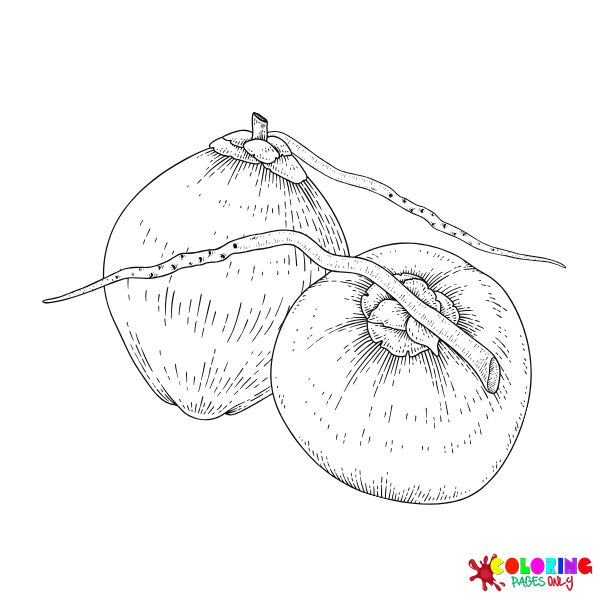
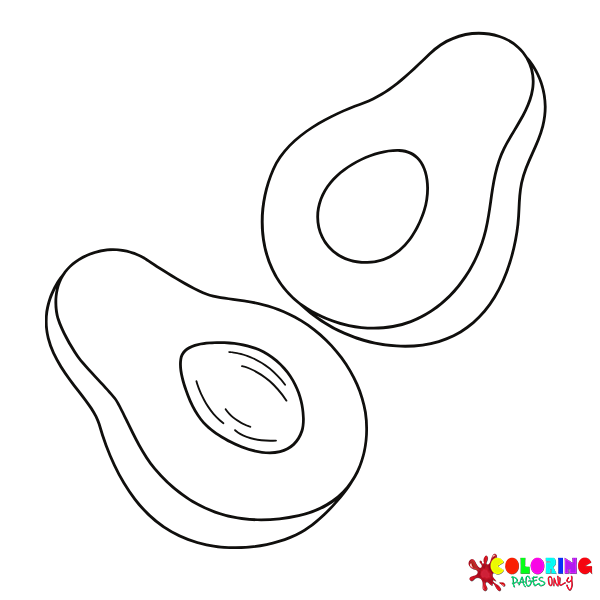
Avocado covers the fruit that has become one of the most culturally significant foods of the early twenty-first century – the creamy, buttery flesh of the Hass avocado surrounding its large central pit, encased in the bumpy dark green to near-black skin of the ripe fruit. The avocado cross-section is one of the most compositionally distinctive of any fruit page: the dark exterior skin, the pale green-cream of the flesh graduated from the lighter outer edge to the deeper green near the pit cavity, and the large smooth brown pit at the center create a three-zone composition with a natural vignette effect. Coconut covers the large, fibrous-husked drupe of the coconut palm – the outer husk in its green (young coconut) or dried brown (mature coconut) form, the hard brown inner shell with its three characteristic “eyes,” and the white coconut flesh with its central cavity of coconut water. The young coconut page – showing the green exterior with a straw inserted for drinking – is the freshest and most tropical-feeling coconut composition; the mature brown coconut cut open to reveal the white flesh is the most gastronomically familiar.
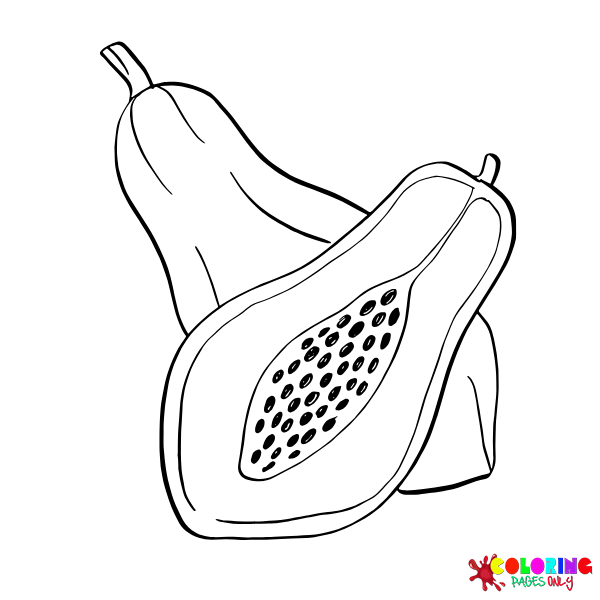
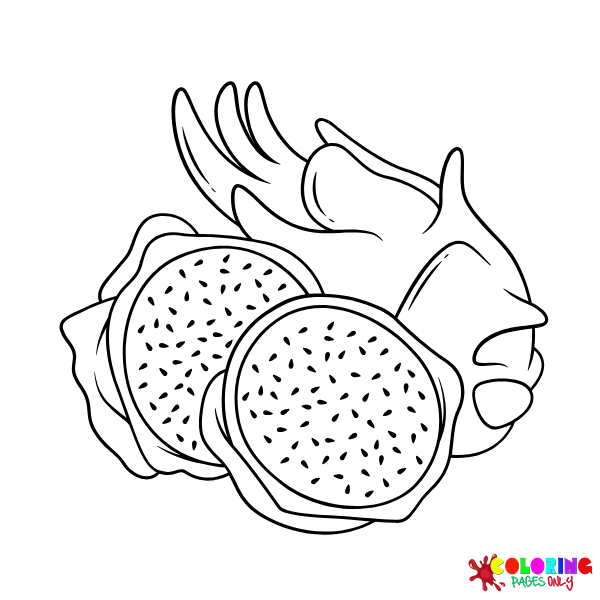
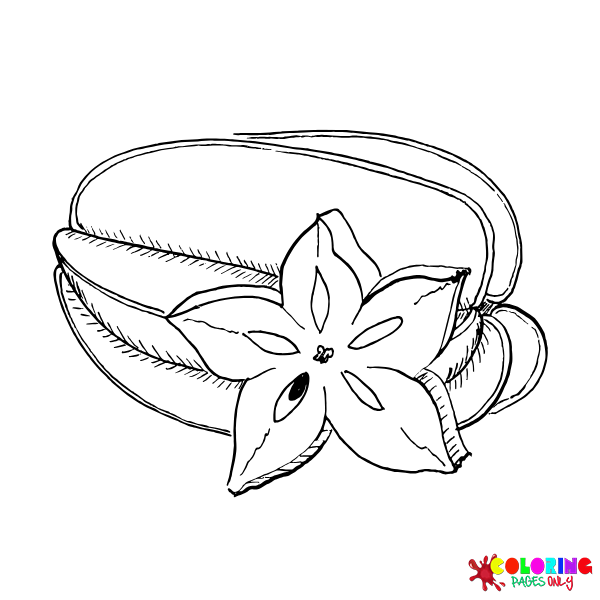
Papaya covers the large, oblong tropical fruit whose exterior ripens from green through yellow-orange, revealing an interior cavity packed with small black seeds and surrounded by vivid salmon-orange to deep orange-red flesh. The papaya cross-section – the oval cavity of small black seeds at the center, surrounded by the brilliant orange flesh, contained in the thin yellow-orange skin – is among the most colorfully dramatic of any tropical fruit cut-open composition. Dragon Fruit covers the cactus fruit of the Hylocereus genus – one of the most visually extraordinary fruits in the entire collection, with its vivid magenta-pink or yellow exterior covered with green-tipped scales (the “dragon scales” that give it its name) and its interior of either white or deep magenta-pink flesh densely scattered with tiny black seeds in a pattern that resembles scattered poppy seeds. The white-fleshed dragon fruit cut in half reveals one of the most visually striking contrasts in any fruit page: the vivid magenta exterior against the pure white interior with its black seed pattern. Star Fruit covers the carambola – a five-ridged fruit whose cross-section reveals a perfect five-pointed star of translucent yellow-green flesh, making it one of the most geometrically precise natural forms in the entire fruit collection and producing perhaps the most immediately visually pleasing cross-section page of any fruit.
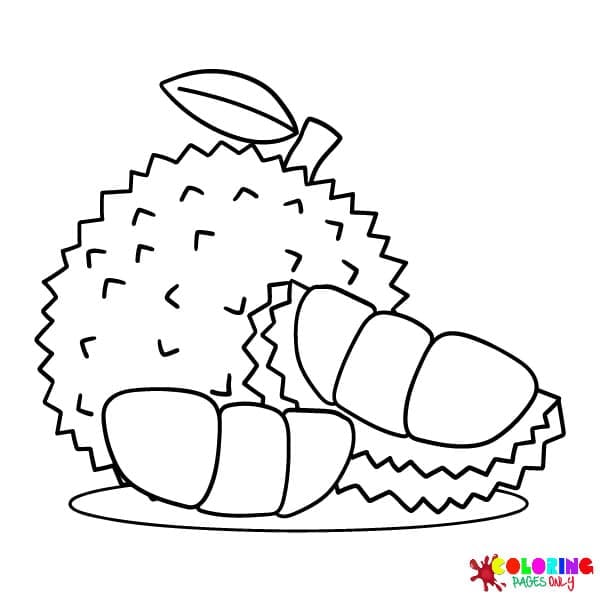
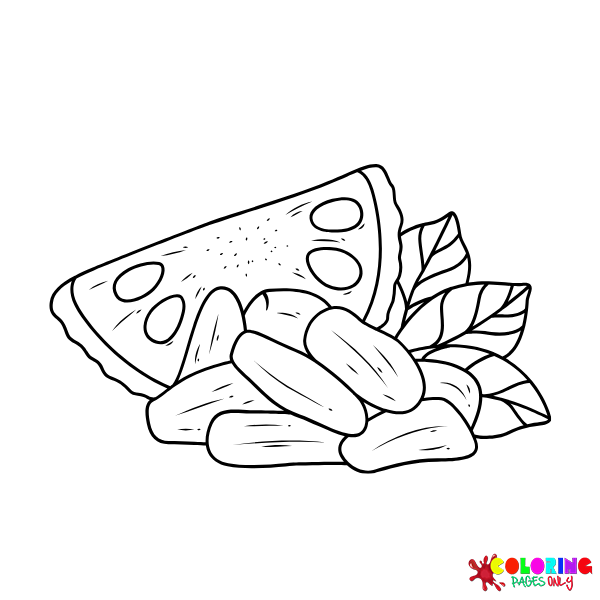
Jackfruit covers the largest tree fruit in the world – the Artocarpus heterophyllus, which can weigh up to 50 kilograms and whose exterior is covered with hundreds of blunt, hexagonal spines in a green to yellow-green surface. The jackfruit’s interior reveals dozens of golden-yellow fruit pods arranged around a central core, with a texture and appearance that makes jackfruit pages among the most elaborate and visually rich of any fruit subject. Durian covers the “King of Fruits” of Southeast Asia – the large, formidably spiny fruit whose exterior is one of the most visually intimidating of any food item (the spines are genuinely sharp enough to draw blood) and whose cream-colored to golden-yellow flesh within has made it the subject of the most extreme culinary opinions of any fruit in the world. The spiny exterior in its green-brown to yellow tones and the creamy golden interior pods make durian pods some of the most compositionally unusual in the tropical fruit sub-categories.
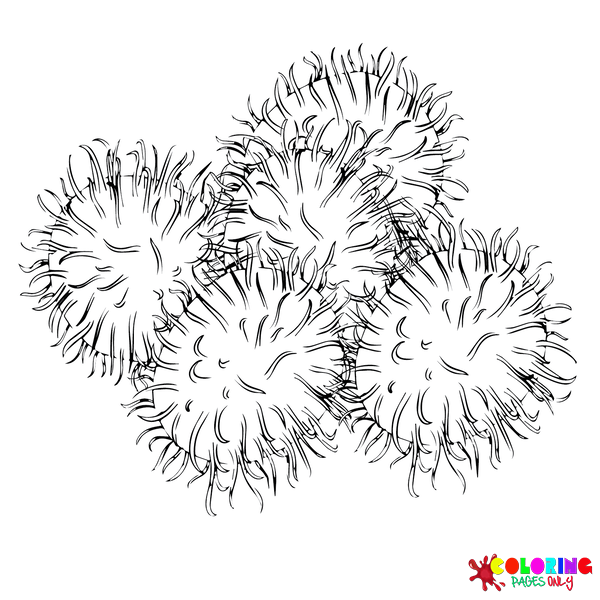
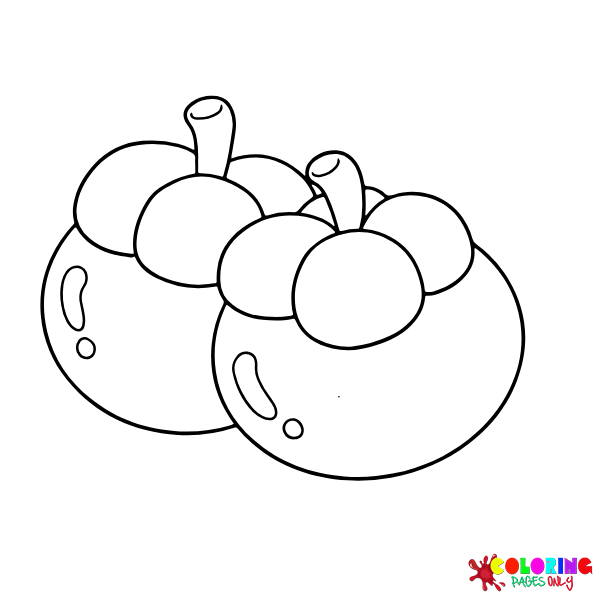
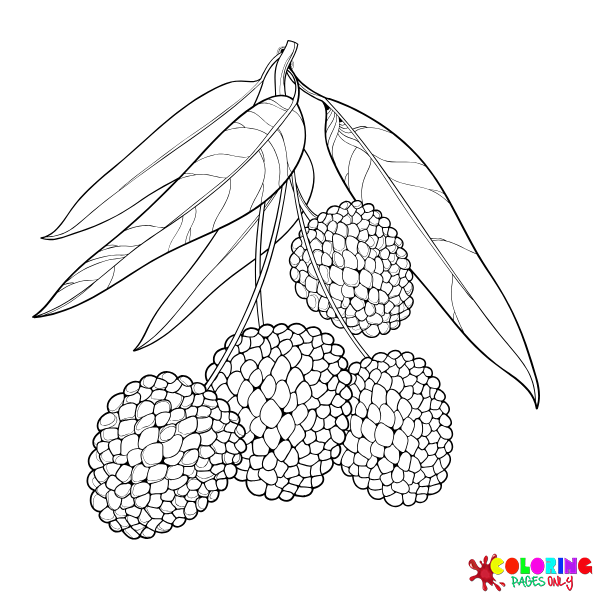
Rambutan covers the small, round fruit of Southeast Asia whose exterior is covered with long, flexible, hair-like spines (the name comes from the Malay word for “hair”) in vivid red with green tips – creating one of the most visually startling fruit appearances of any species in the collection. Inside, the rambutan reveals white translucent flesh surrounding a central seed – very similar in texture and appearance to a lychee, to which it is closely related. Lychee covers the small, rose-red, bumpy-skinned fruit of the Litchi chinensis tree – one of the most beloved fruits in Chinese cuisine and increasingly popular globally. Longan covers the smaller cousin of the lychee with its tan-brown smooth exterior and translucent white flesh around a dark seed, less vivid in color than the lychee but with its own gentle, understated visual character. Mangosteen covers the deep purple-almost-black thick rind of the Garcinia mangostana, which opens to reveal pure white segmented flesh of exceptional sweetness – the dramatic contrast between the darkest exterior and the whitest interior of any fruit in the collection. Pomelo covers the largest citrus fruit – the ancestor of the grapefruit, with a thick spongy white pith beneath its green to yellow exterior and pink or white flesh within.
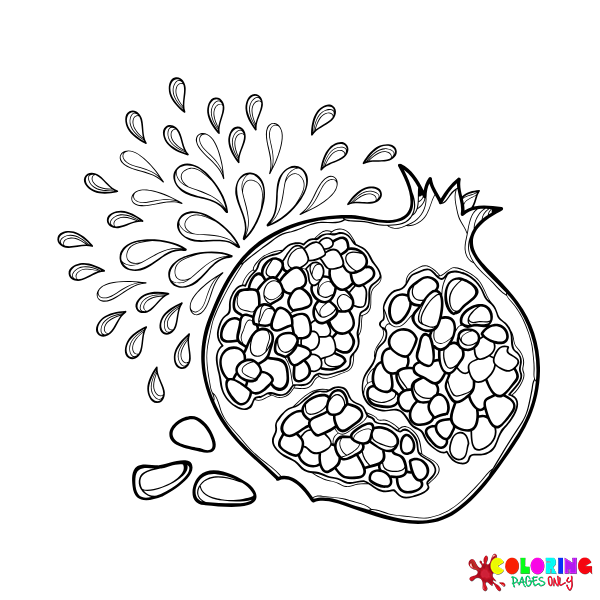
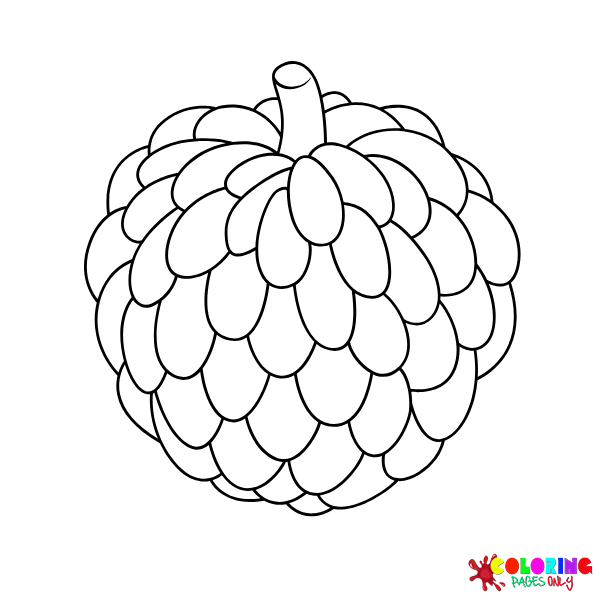
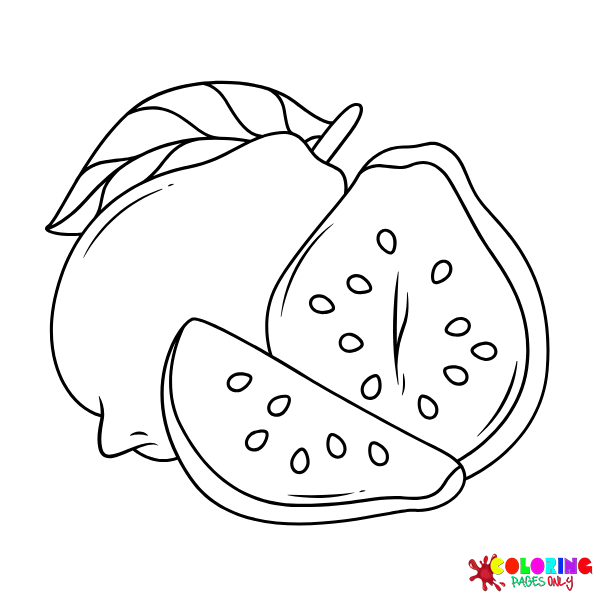
Grapefruit covers the large citrus with its yellow exterior and distinctive pink to deep red interior flesh – the color of the flesh depending on variety, from the white-fleshed varieties through the pink to the vivid ruby-red of the Ruby Red grapefruit. Guavas are tropical fruits with their yellow-green to pink exterior and distinctive pink-red to white interior flesh. Custard Apple covers the Annona fruit with its distinctive bumpy green exterior composed of rounded scale-like sections and its creamy white interior flesh. Pomegranate covers one of the most symbolically rich fruits in human history – the thick, leathery red-orange exterior concealing hundreds of arils (the juice-filled seed sacs) in vivid ruby-red, arranged in honeycomb compartments separated by pale cream membranes. The pomegranate cross-section is among the most visually extraordinary of any fruit page: the geometric arrangement of ruby-red arils against the cream membrane creates a pattern that resembles stained glass.
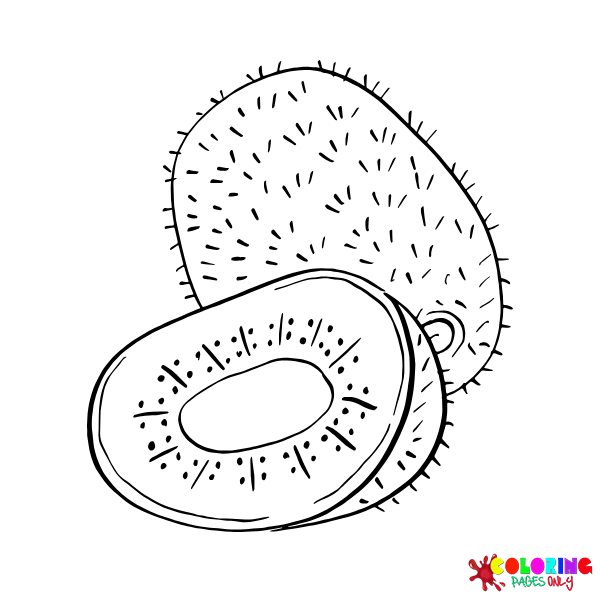
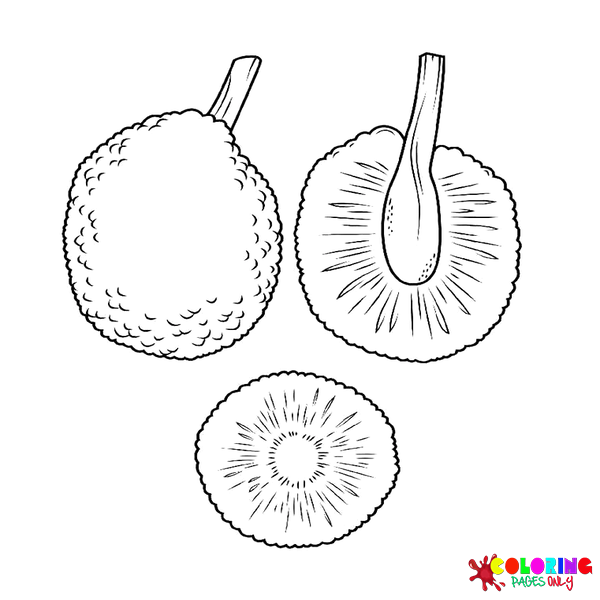
Kiwi Fruit covers the brown, fuzzy-skinned oval fruit of the Actinidia deliciosa whose interior cross-section reveals one of the most distinctively patterned flesh arrangements of any fruit – the vivid green flesh (or golden in the gold kiwi variety) arranged around a white central core with a radial pattern of seeds at the boundary zone, surrounded by the lighter green of the outer flesh just inside the thin edible skin. Breadfruit covers the large, round to oval fruit of the Pacific Islands with its distinctive bumpy green exterior that has provided a staple food for Pacific cultures for thousands of years.
Citrus Varieties, Melons, and the Broader Fruit World
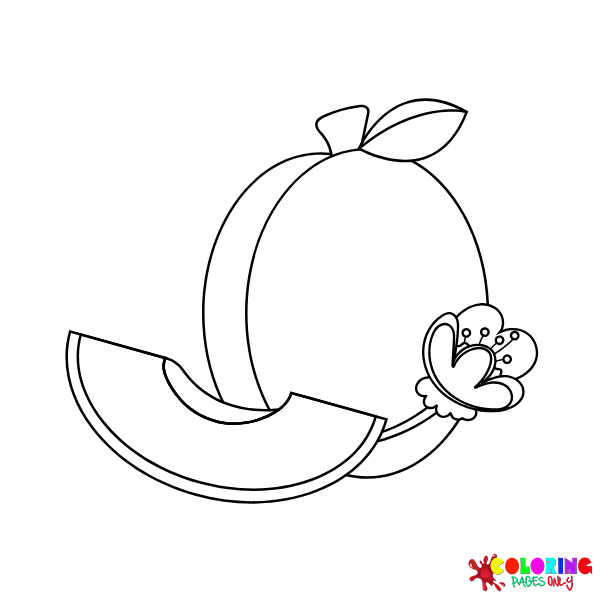
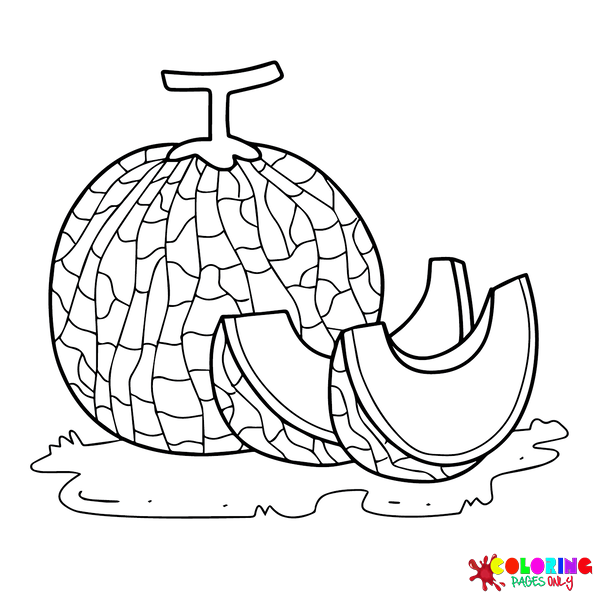
Melons cover the Cucurbitaceae family beyond watermelon – the honeydew (smooth pale green exterior, white to very pale green interior), the cantaloupe or rockmelon (the netted tan exterior with vivid orange interior), and the various other melon varieties whose interior flesh spans from the palest ivory through the vivid golden-orange of a ripe cantaloupe. Each melon type has its own specific color identity that makes the melon family among the most internally varied of any broad fruit category. Coconut, Pineapples, and the Tropical Fruits hub bring together the broader tropical collection in mixed-fruit compositions.
Raspberry, Blackberry, Cranberry, Elderberry, Huckleberry, and Blueberry, together with the broader Berries hub, form what is genuinely the most comprehensive berry coloring collection available online – a resource as useful for botanical illustration enthusiasts as for children learning to color their favorite fruits.