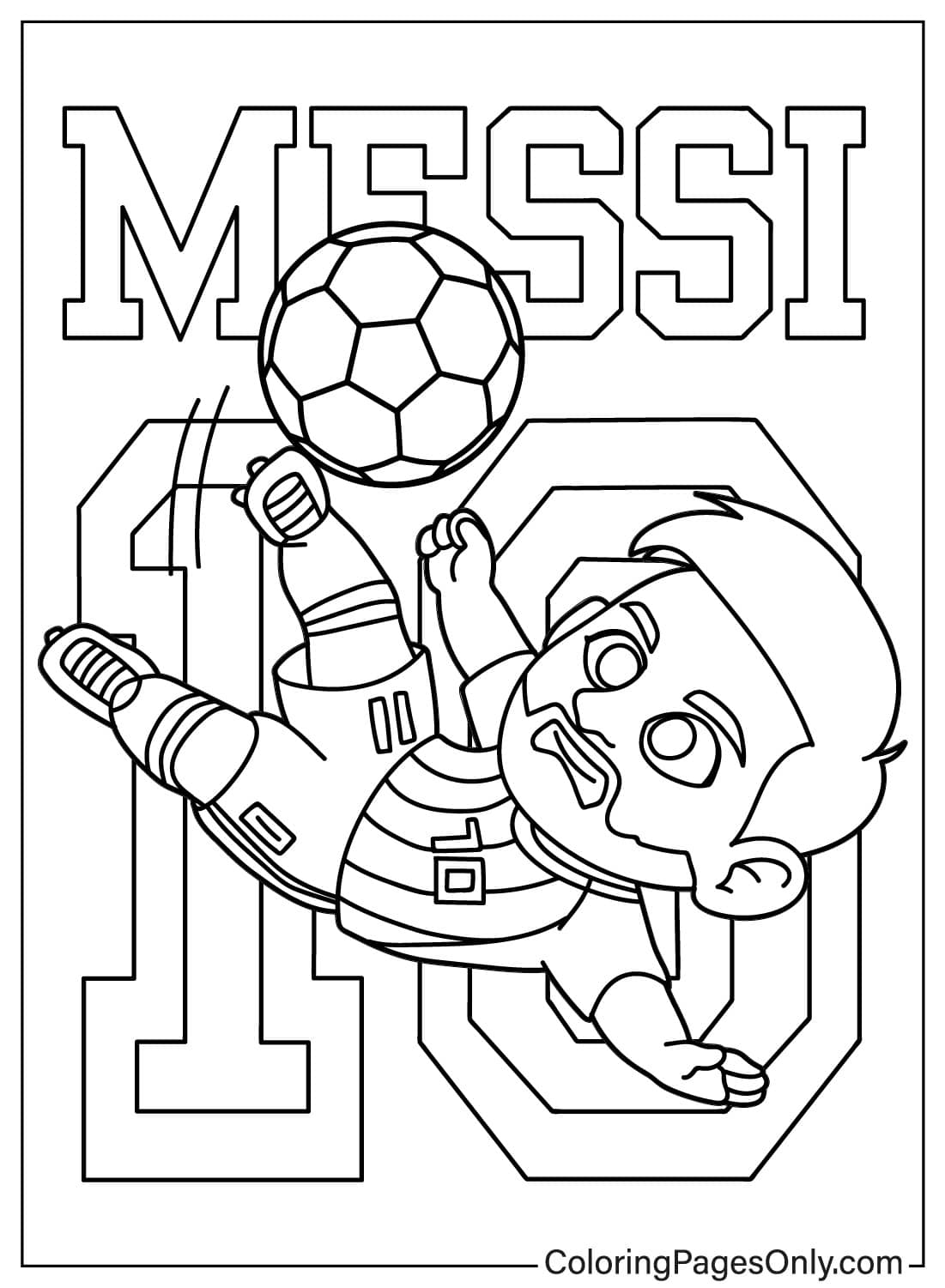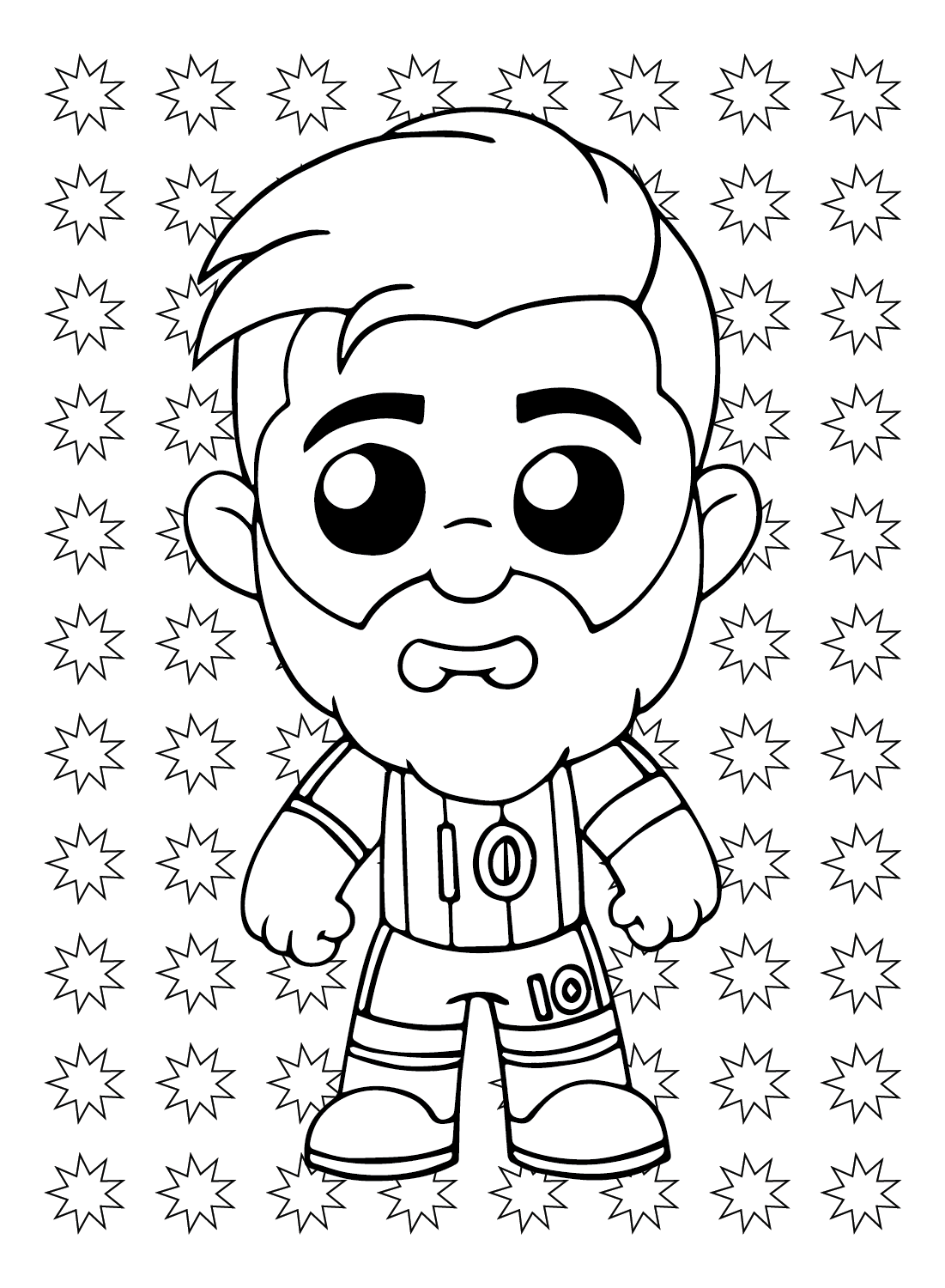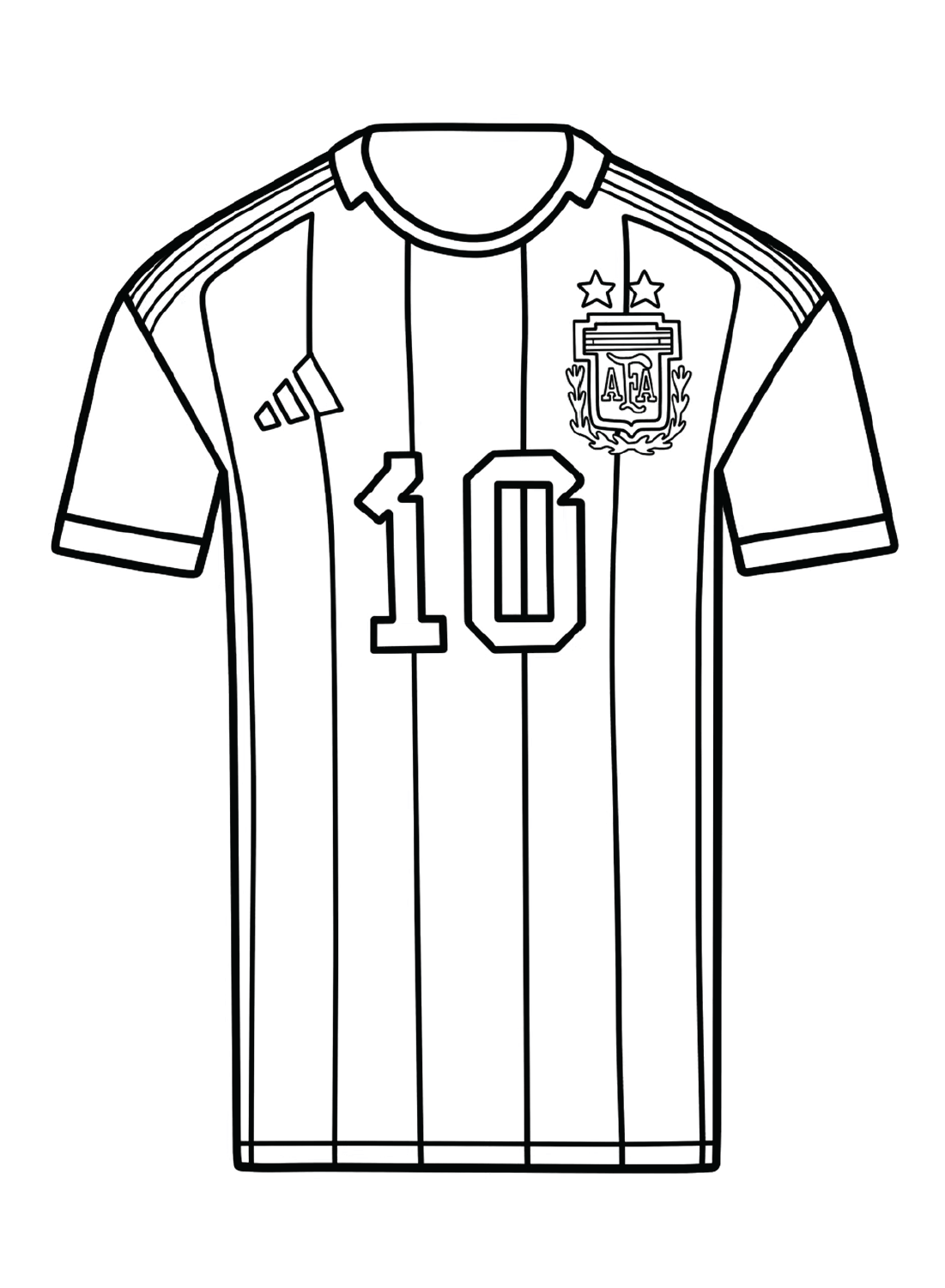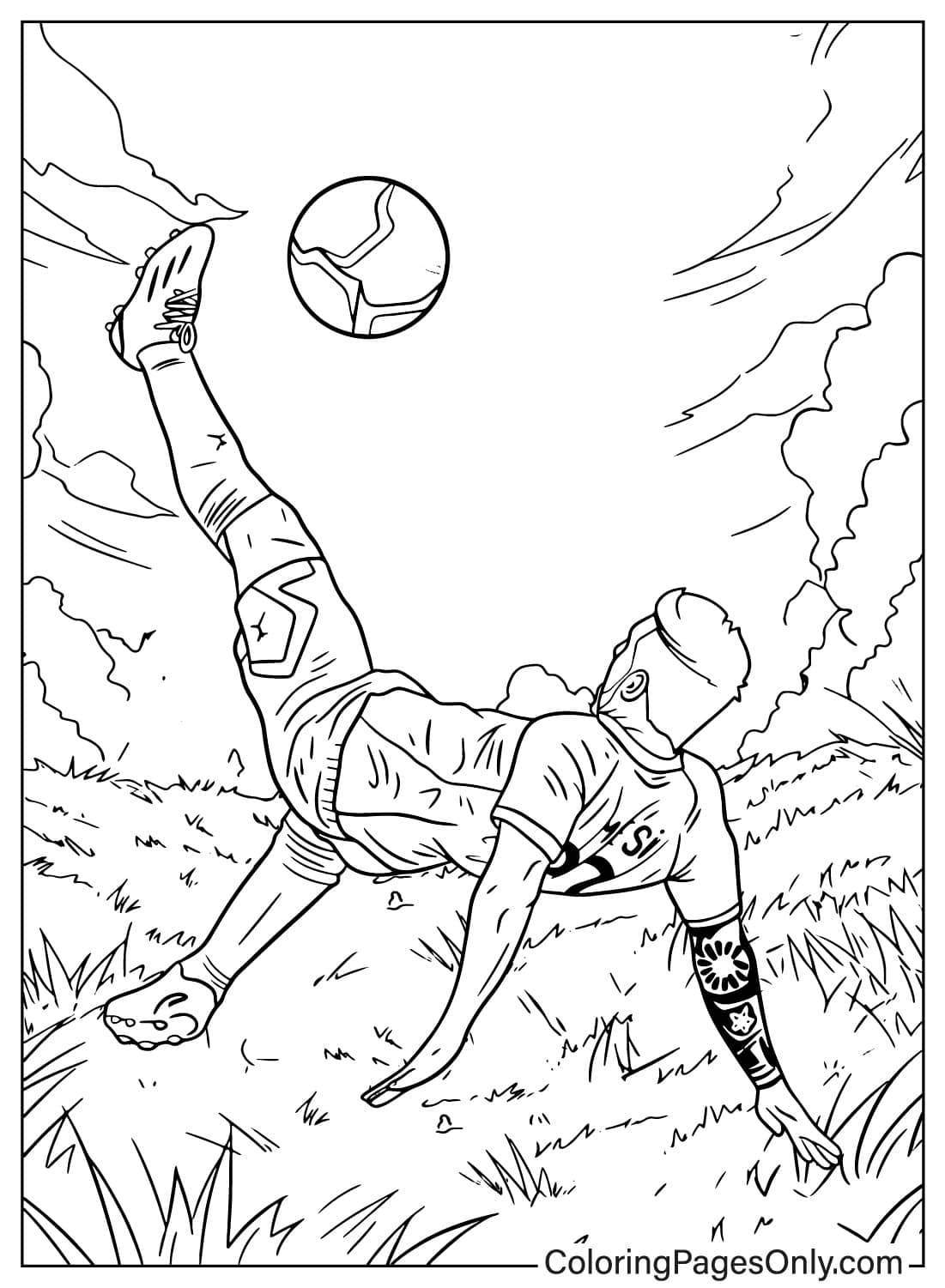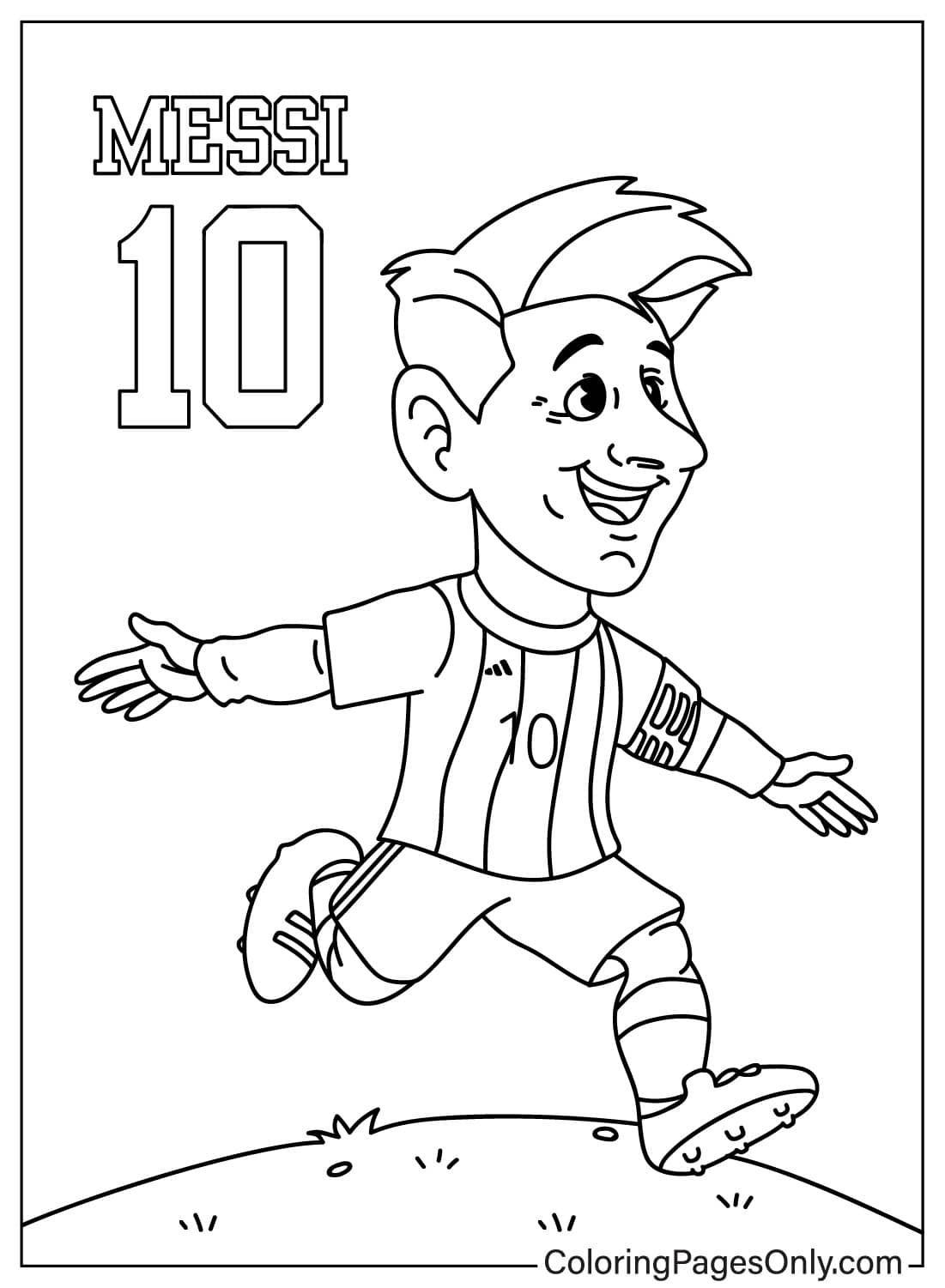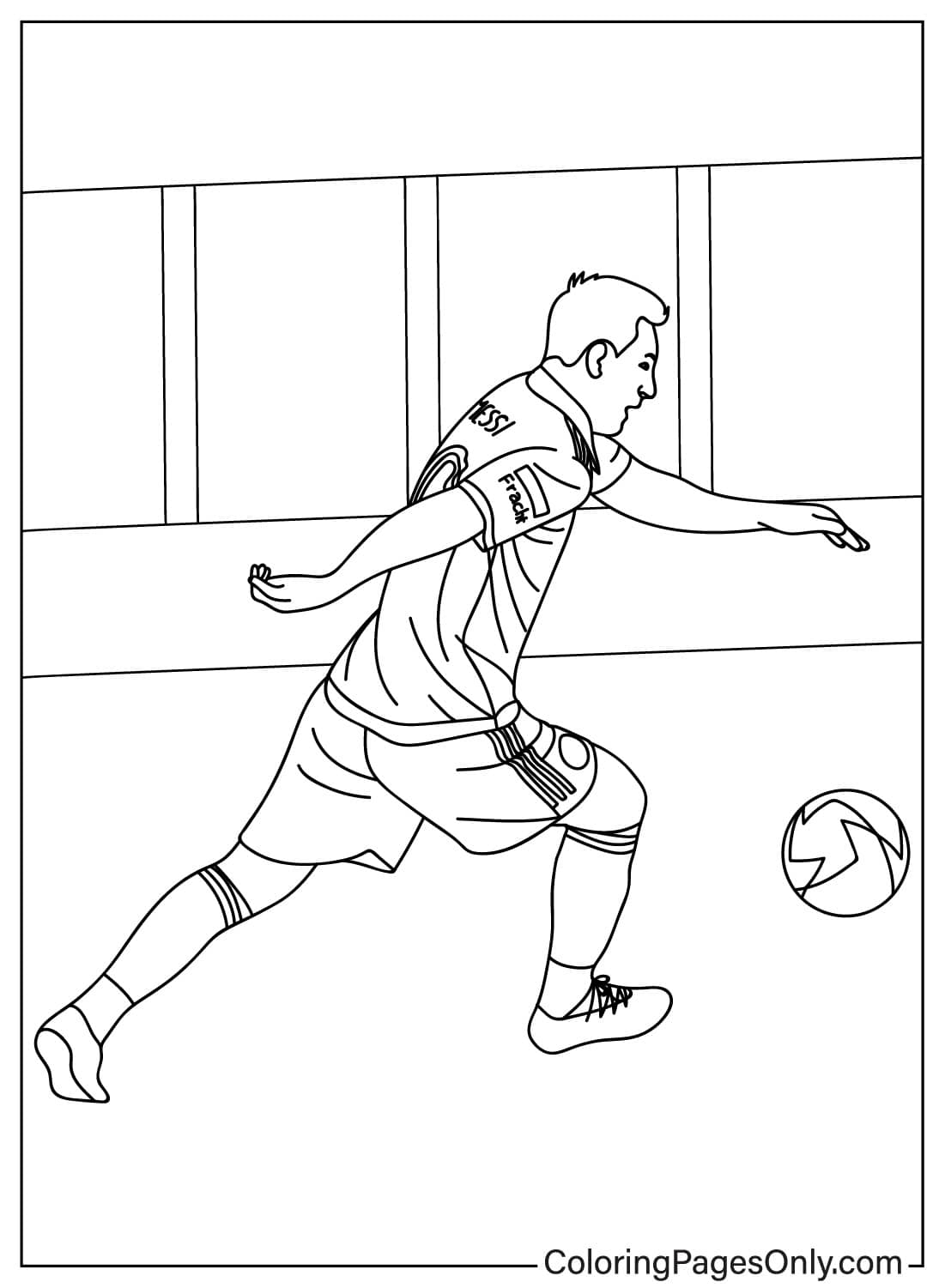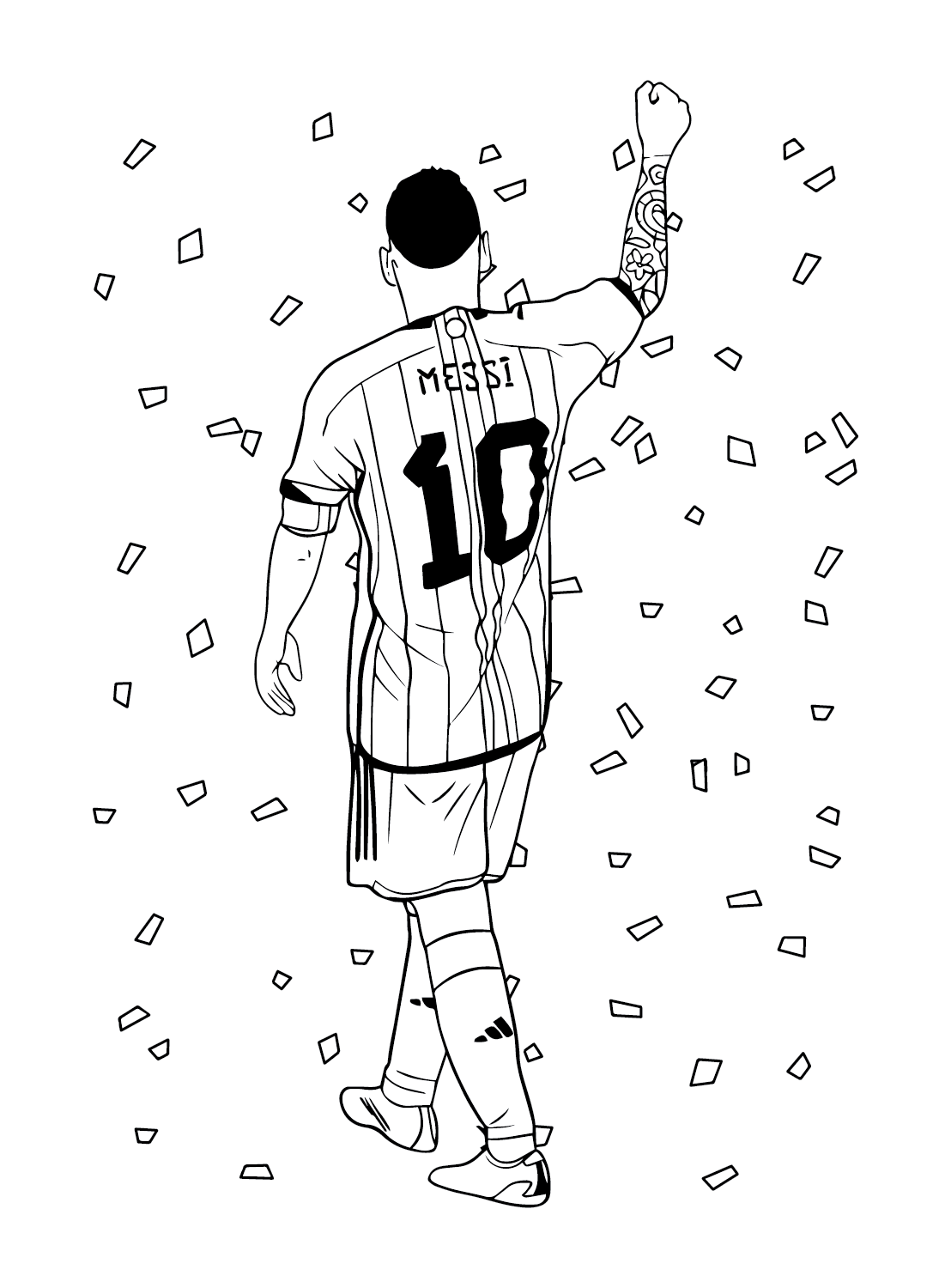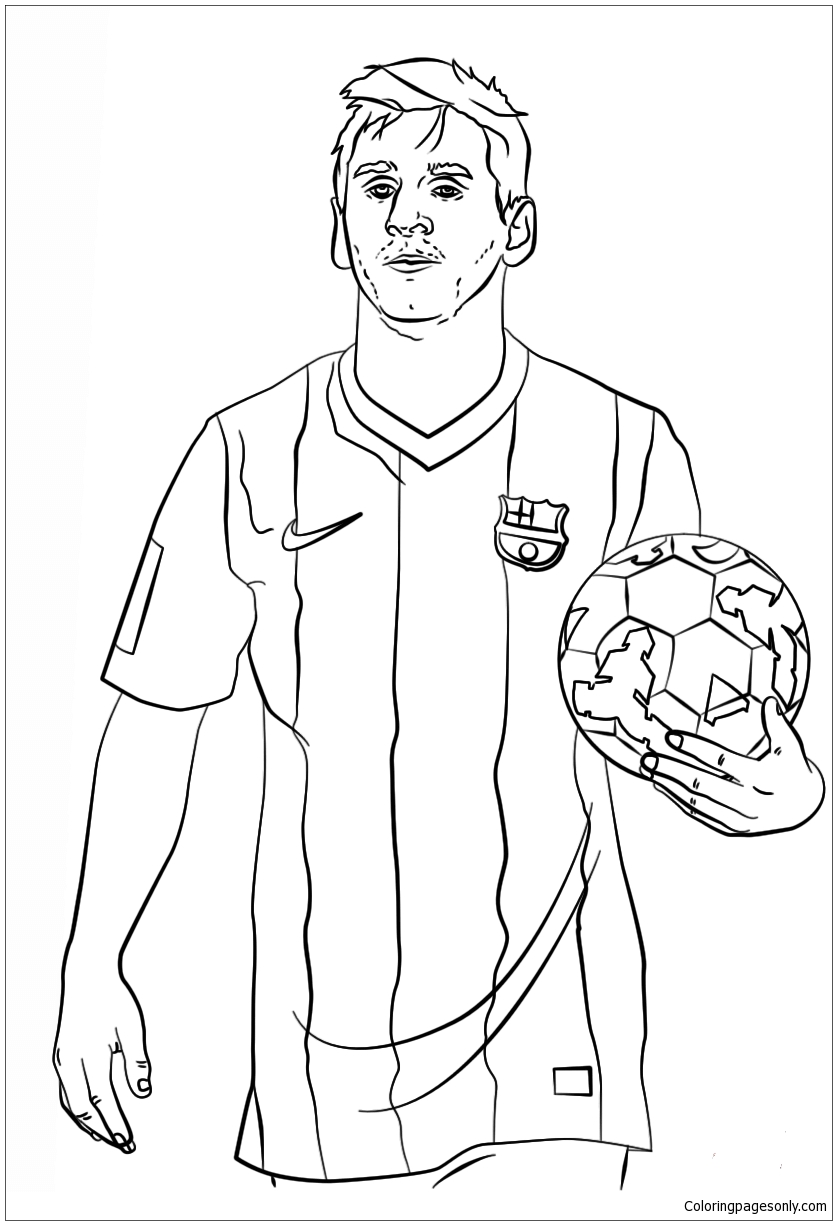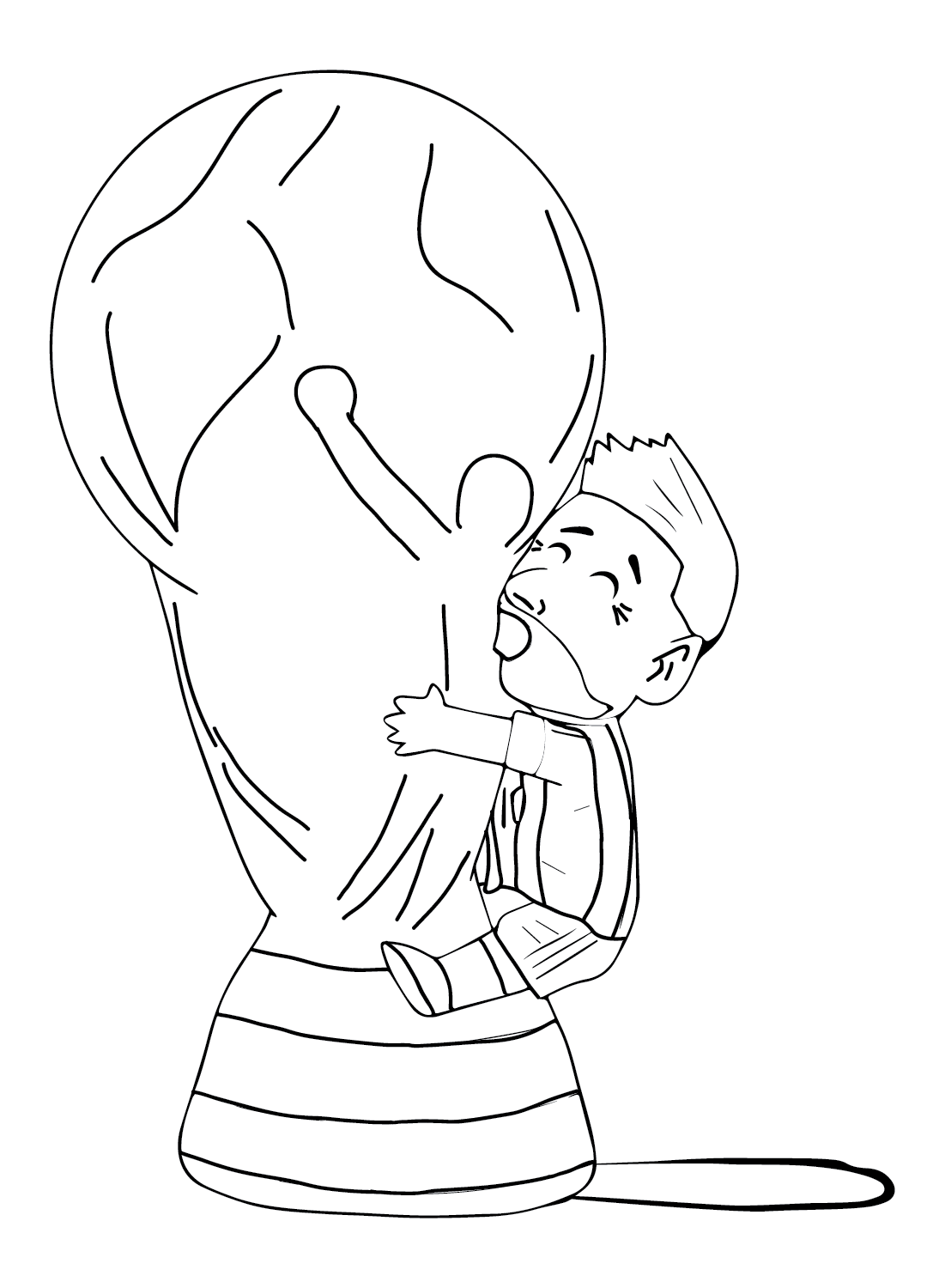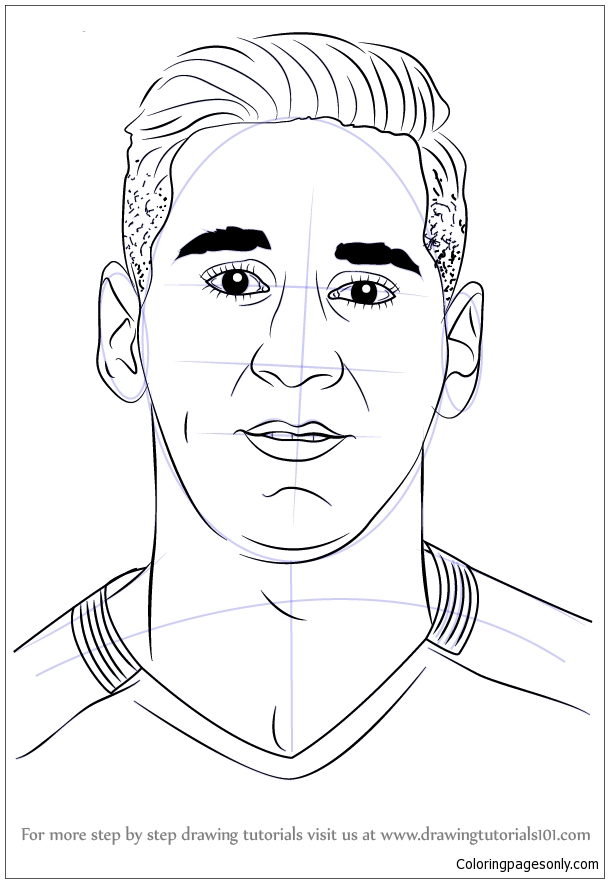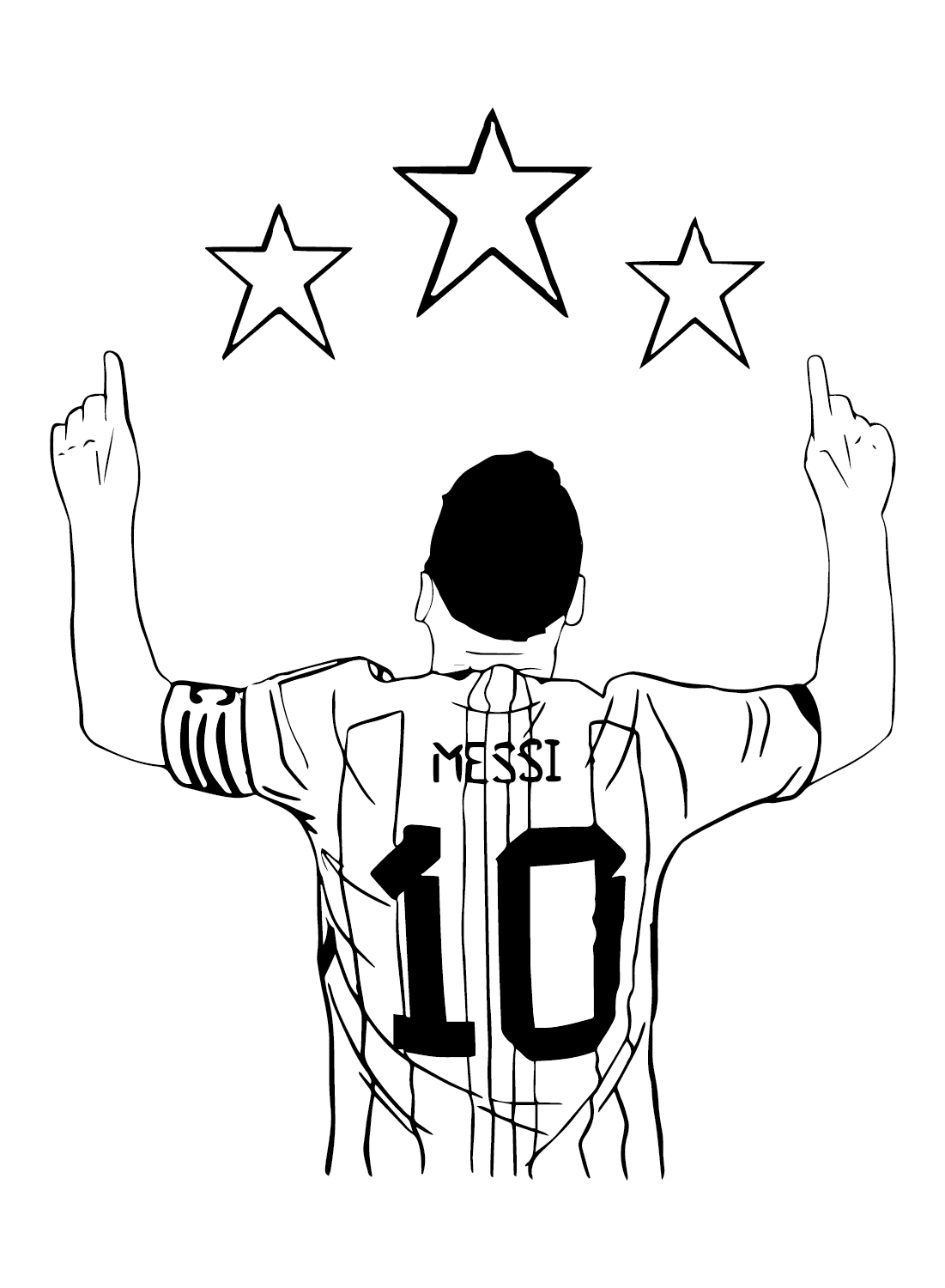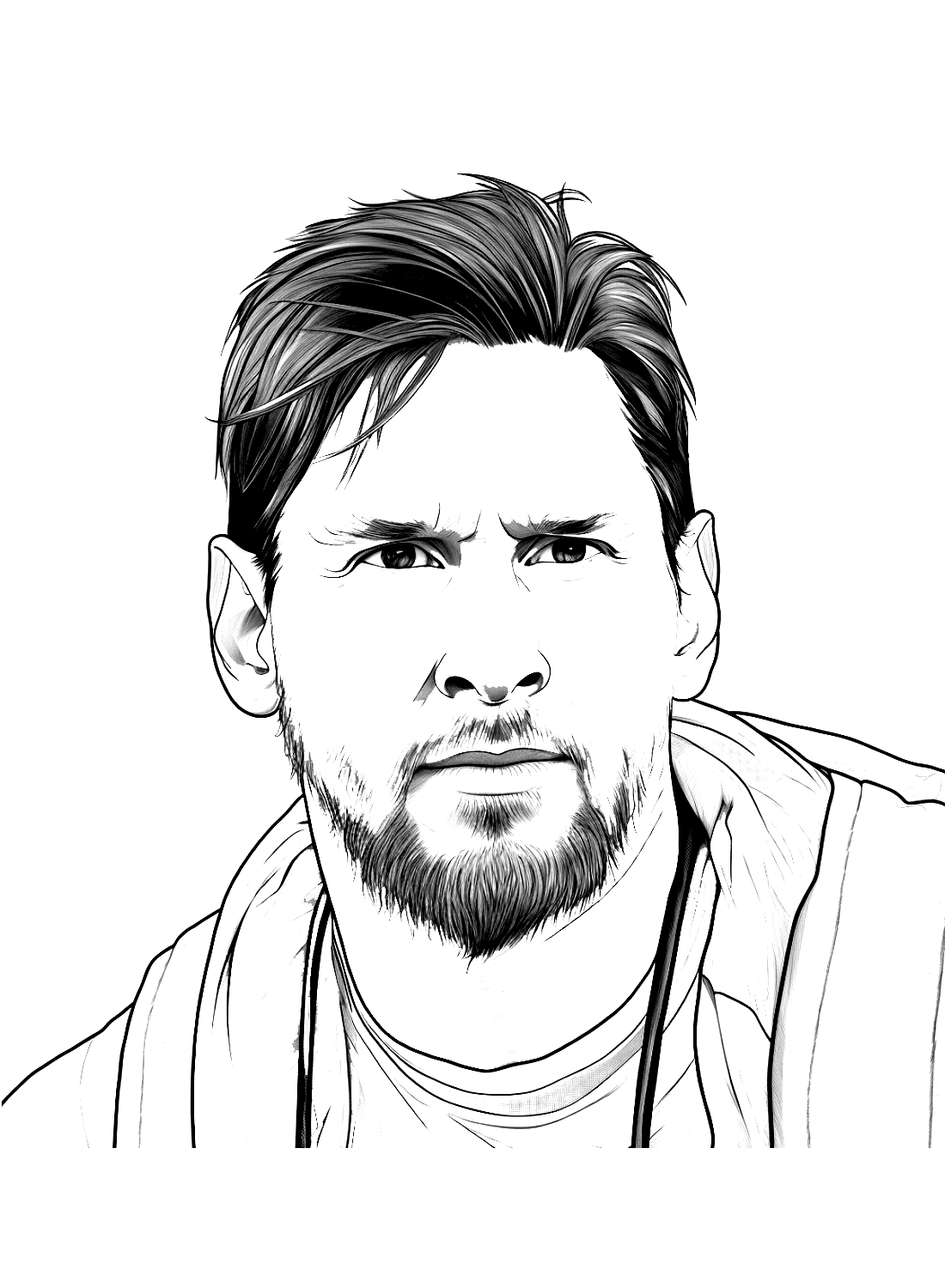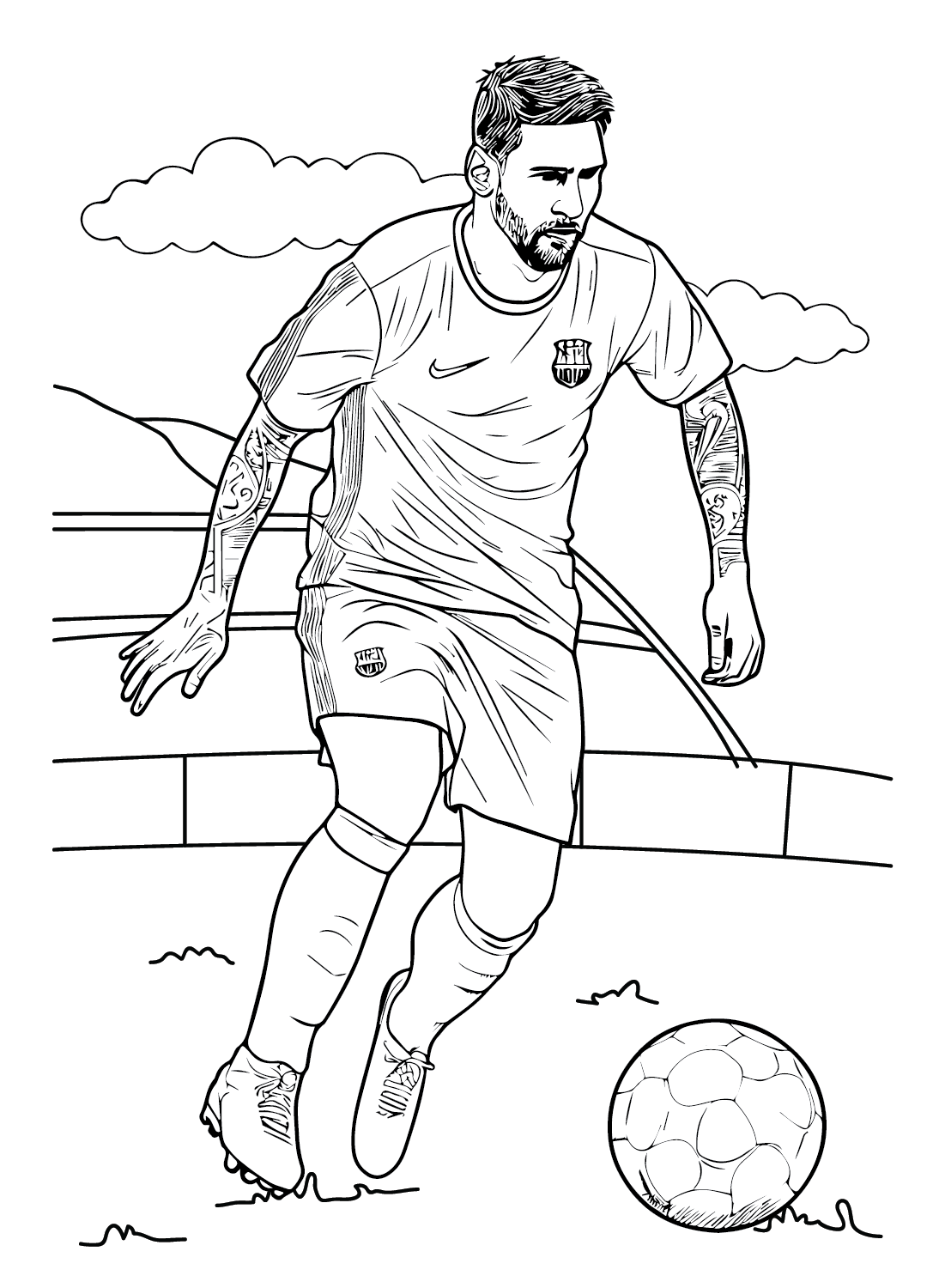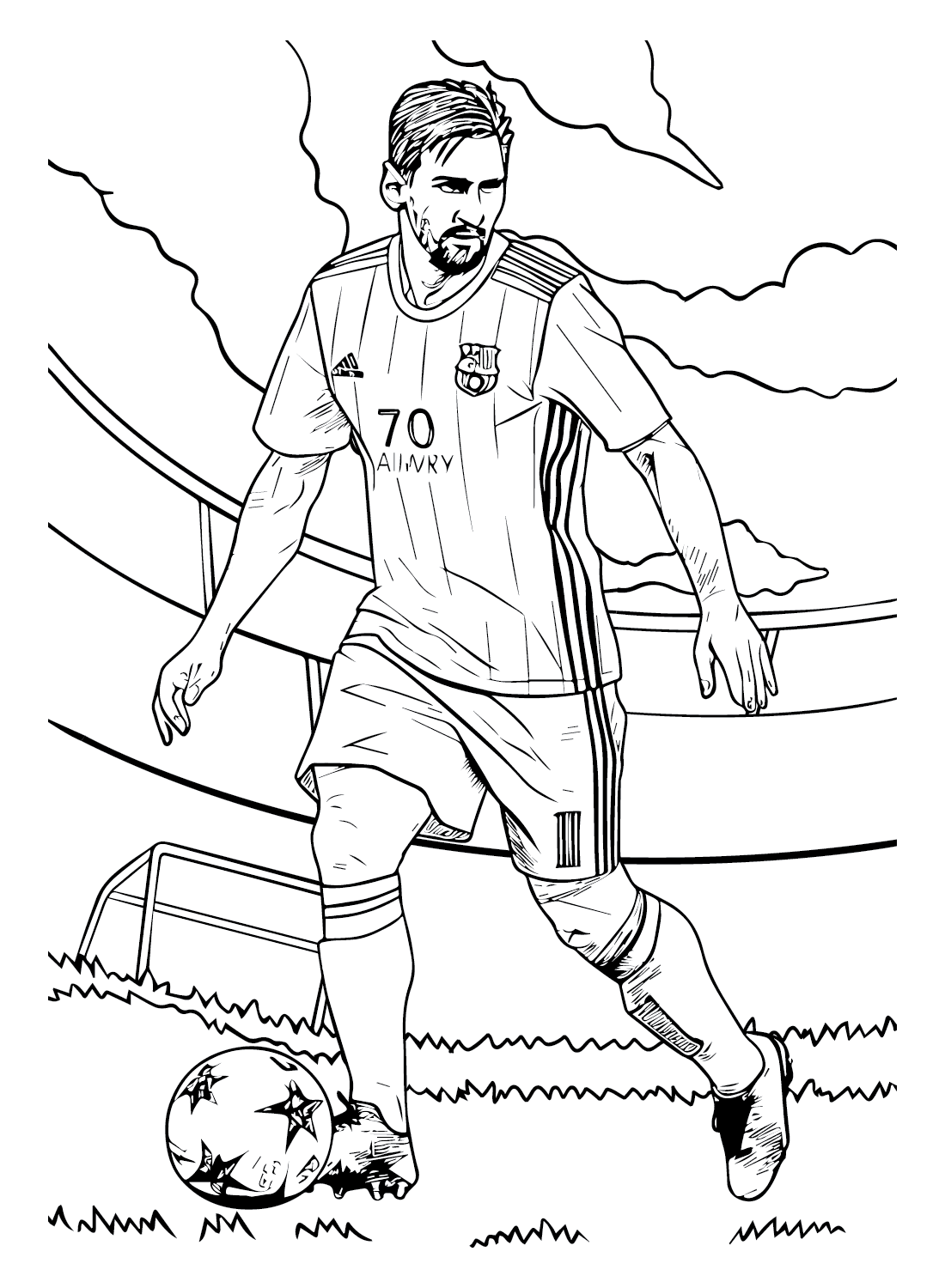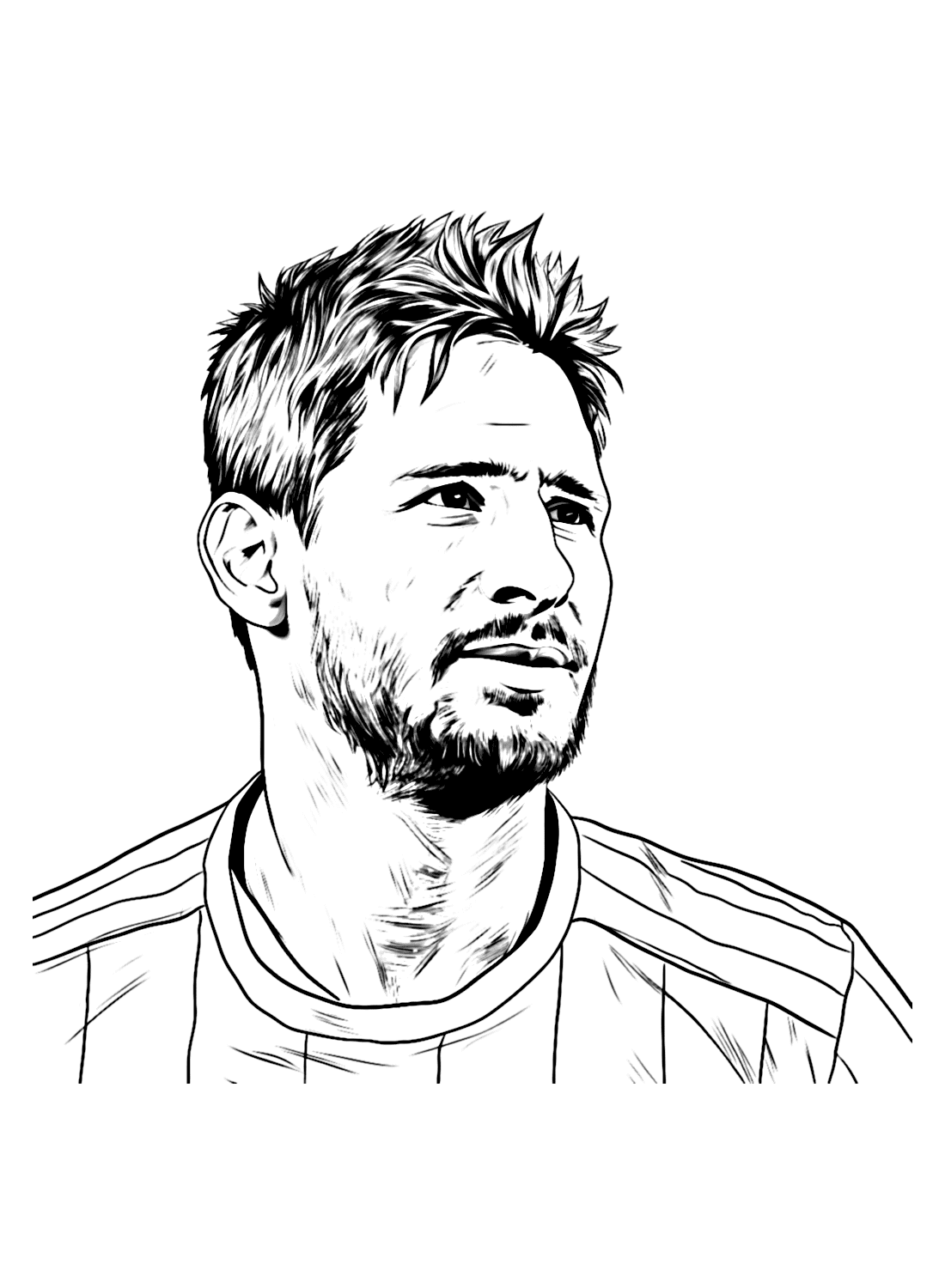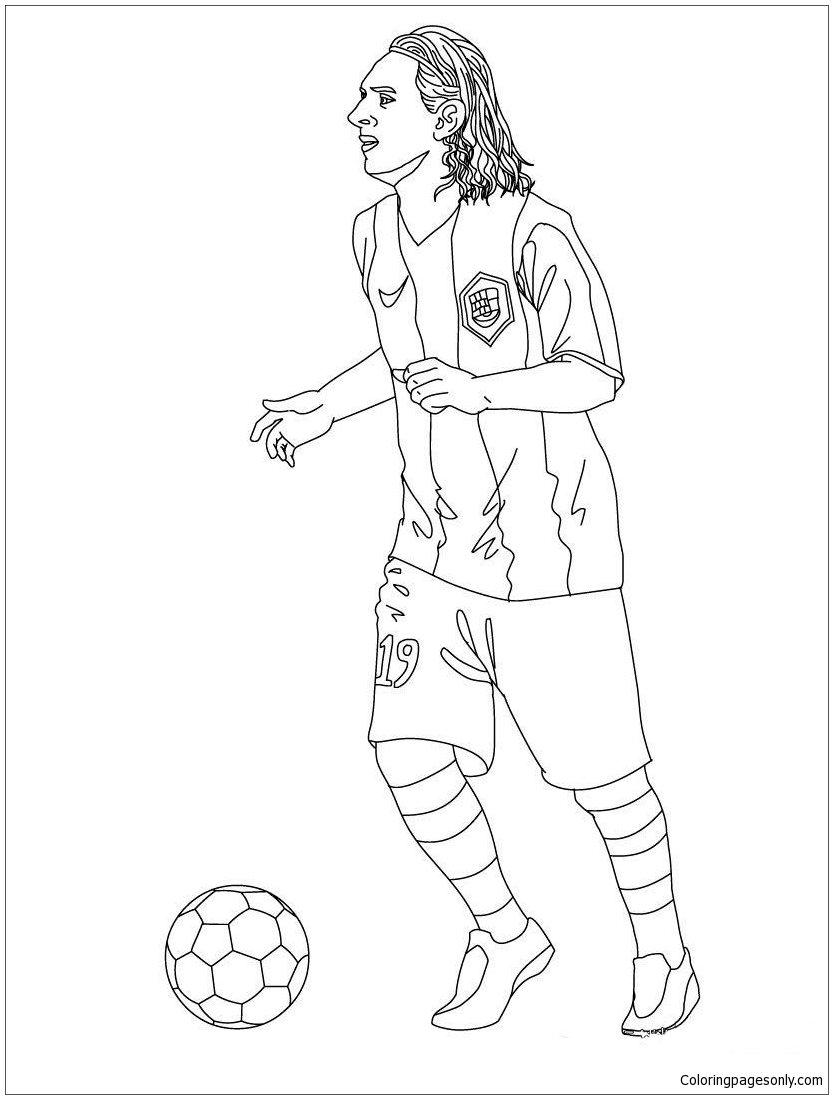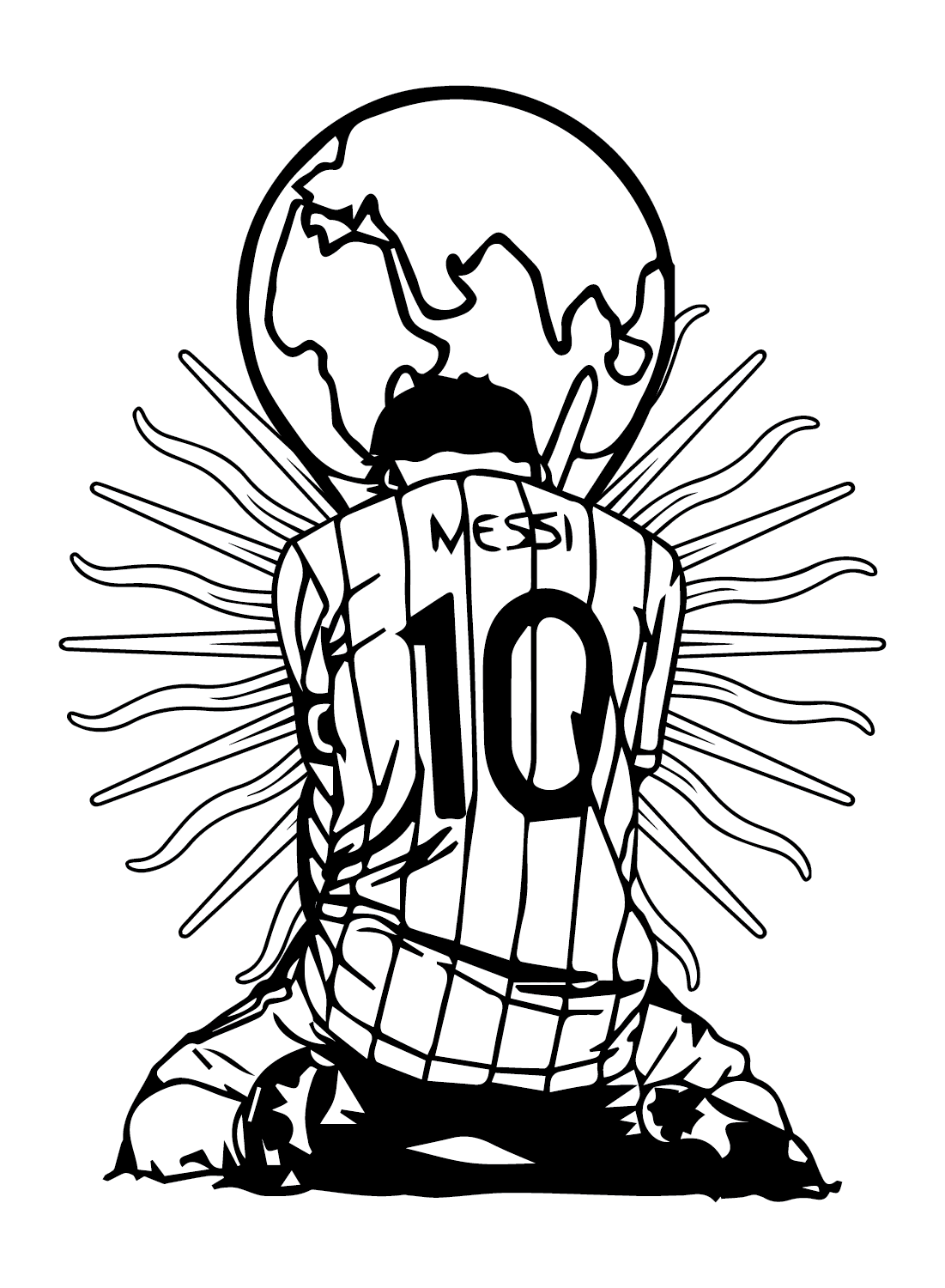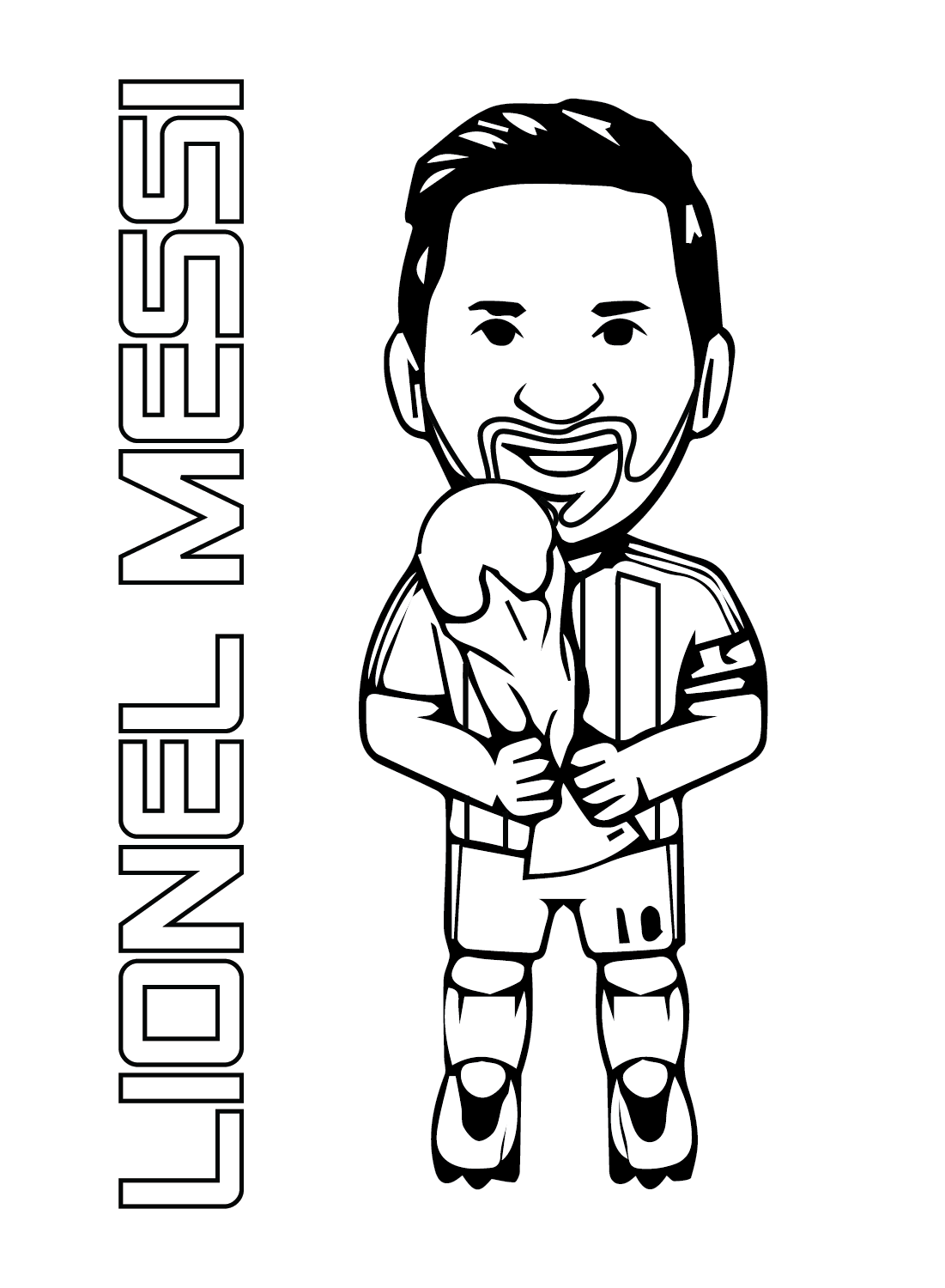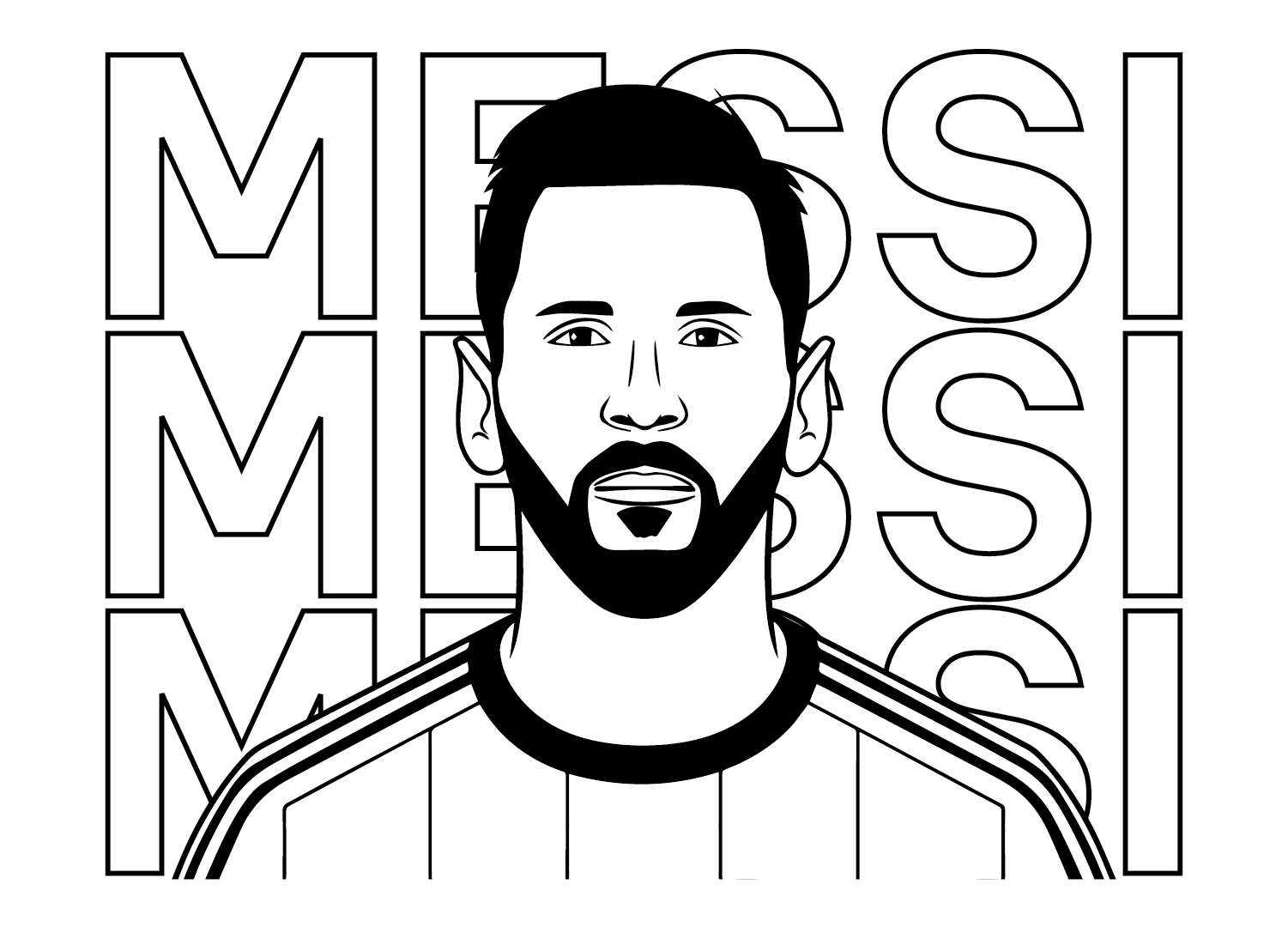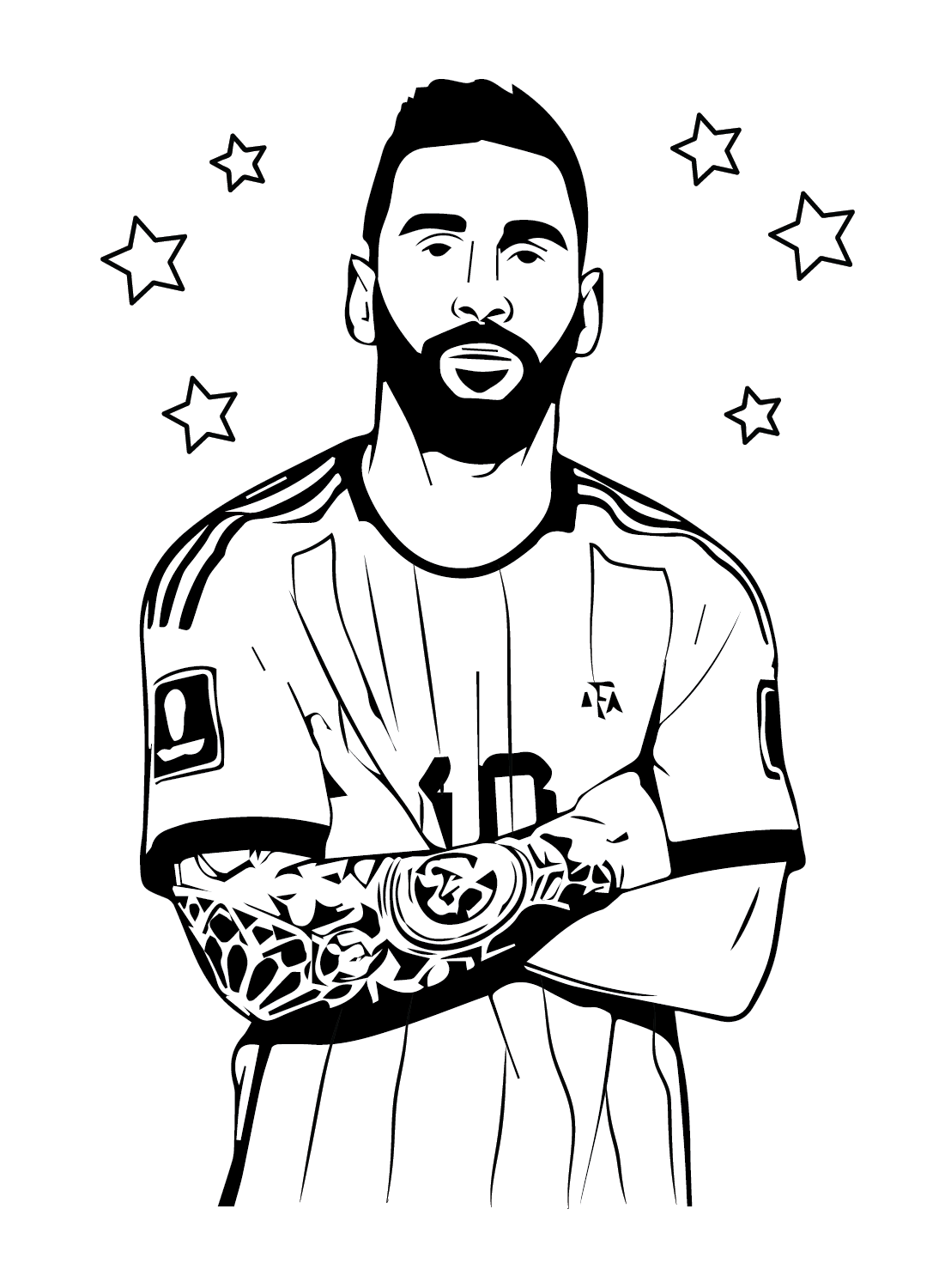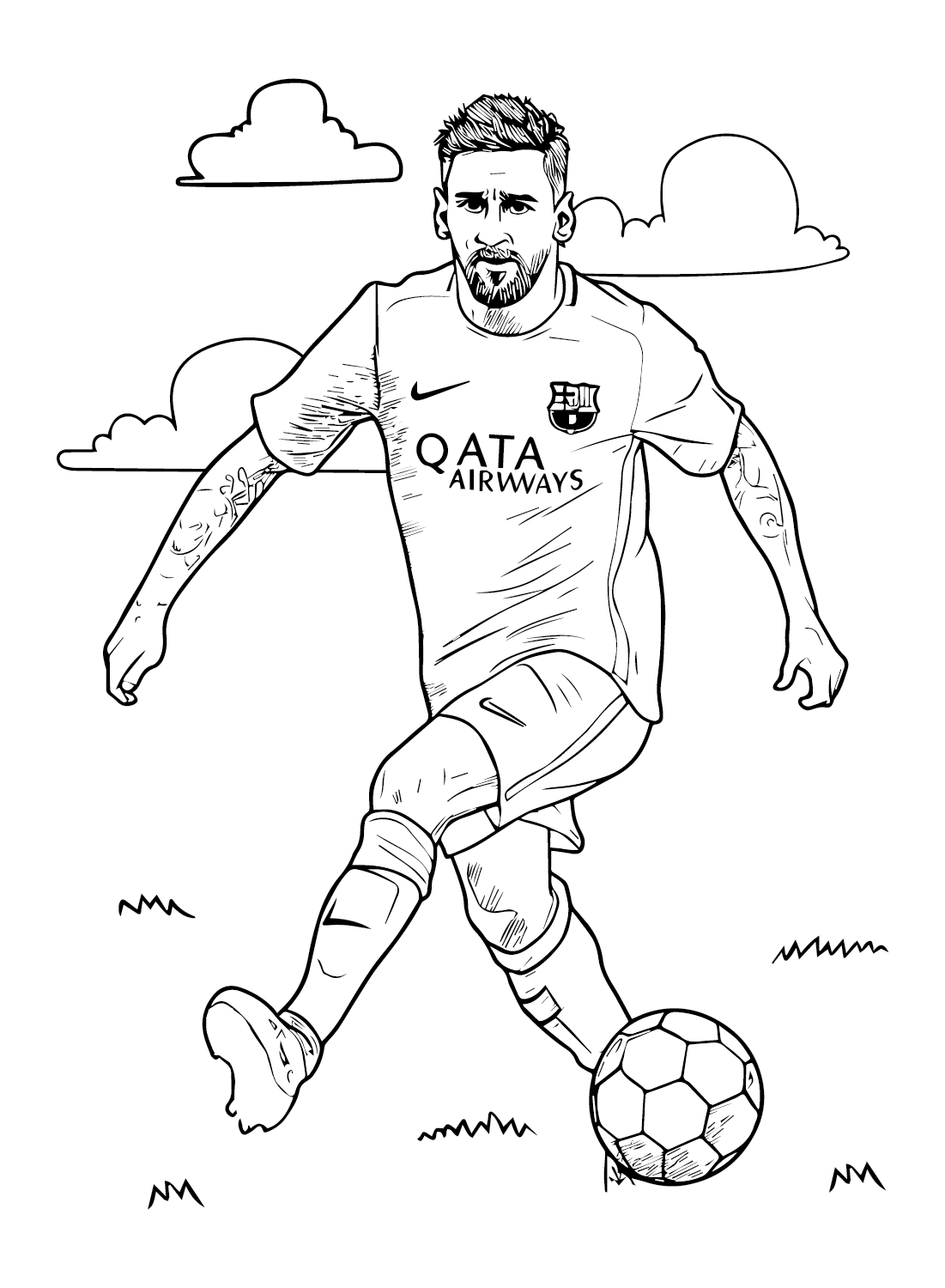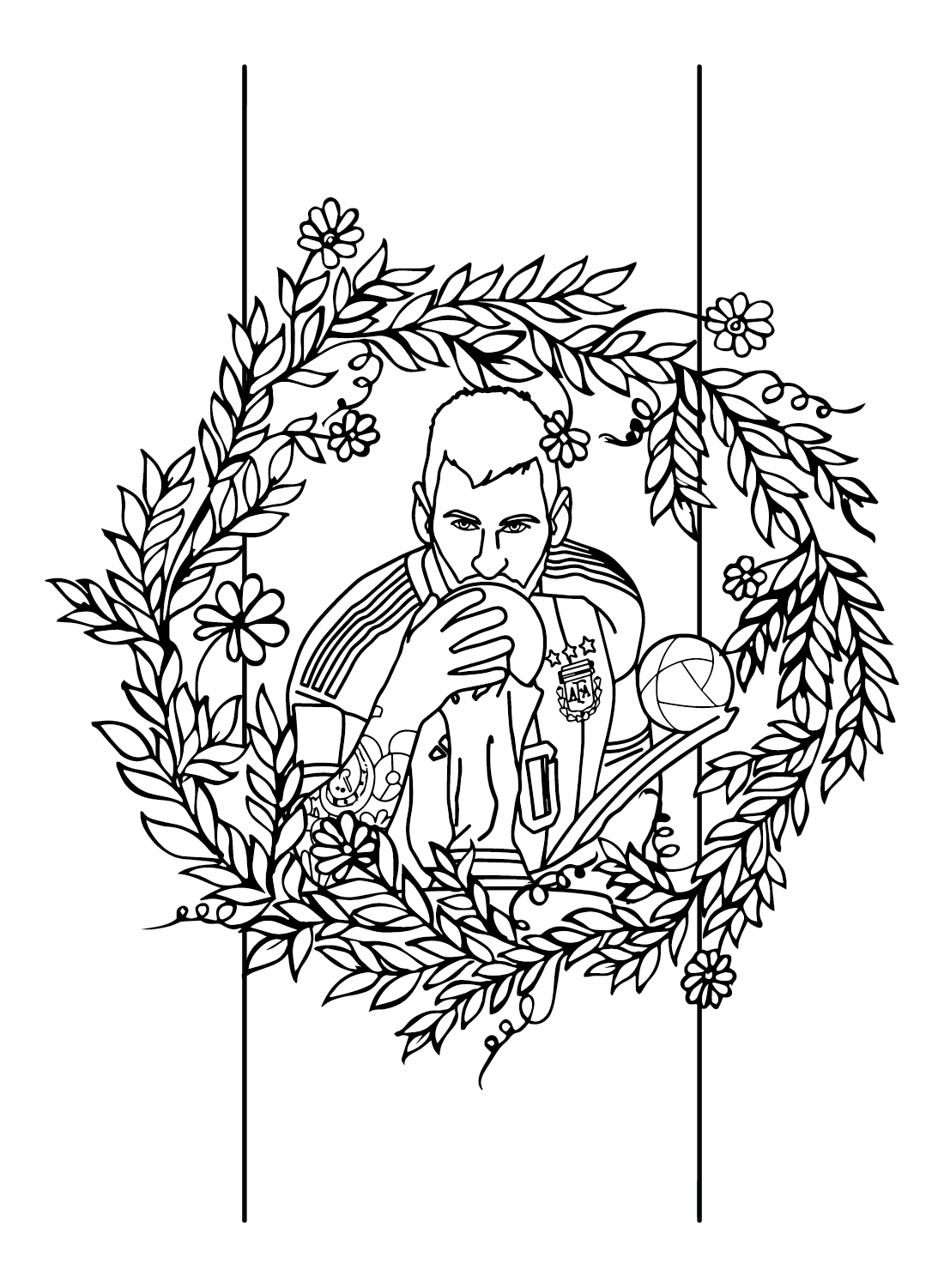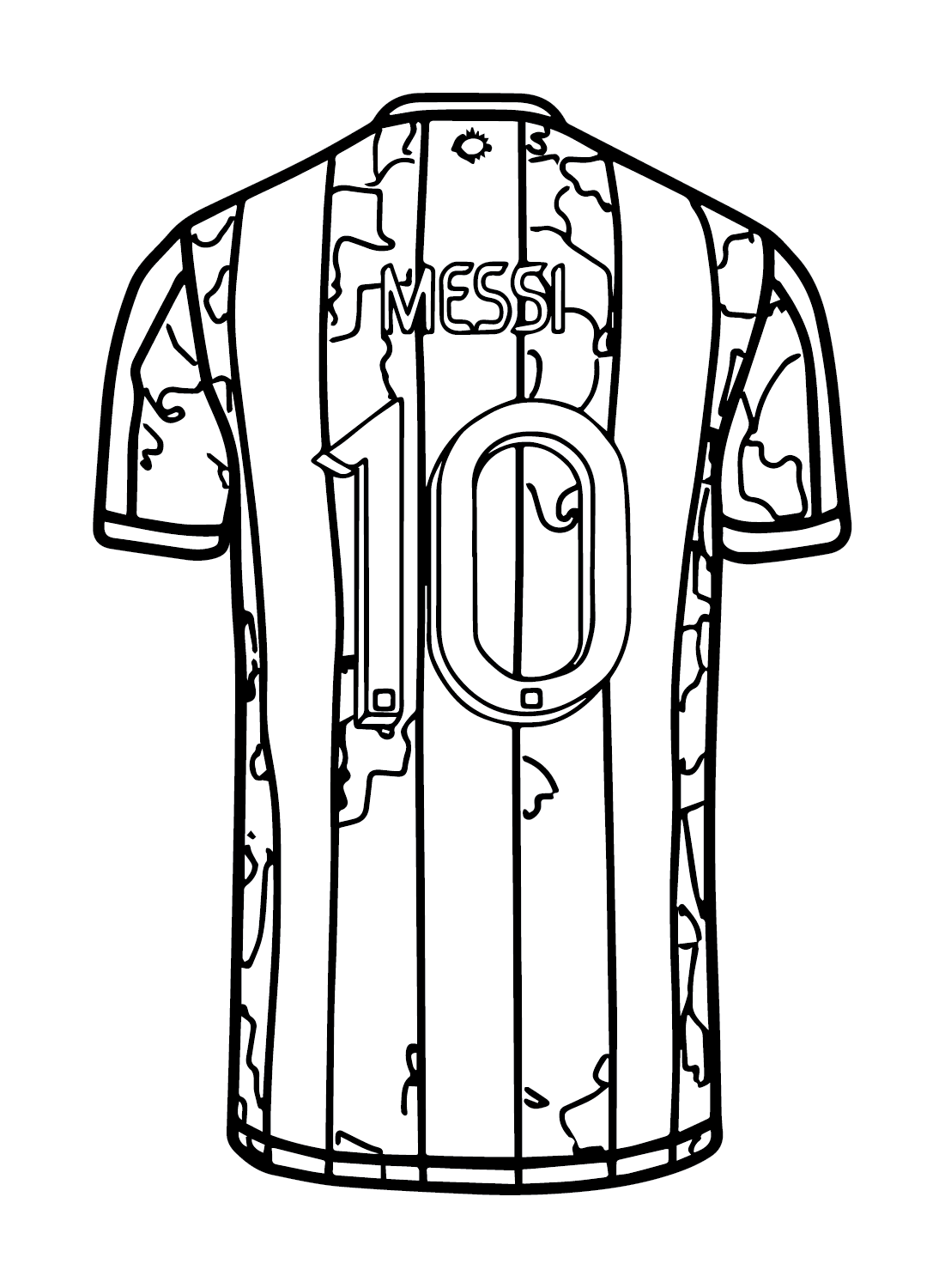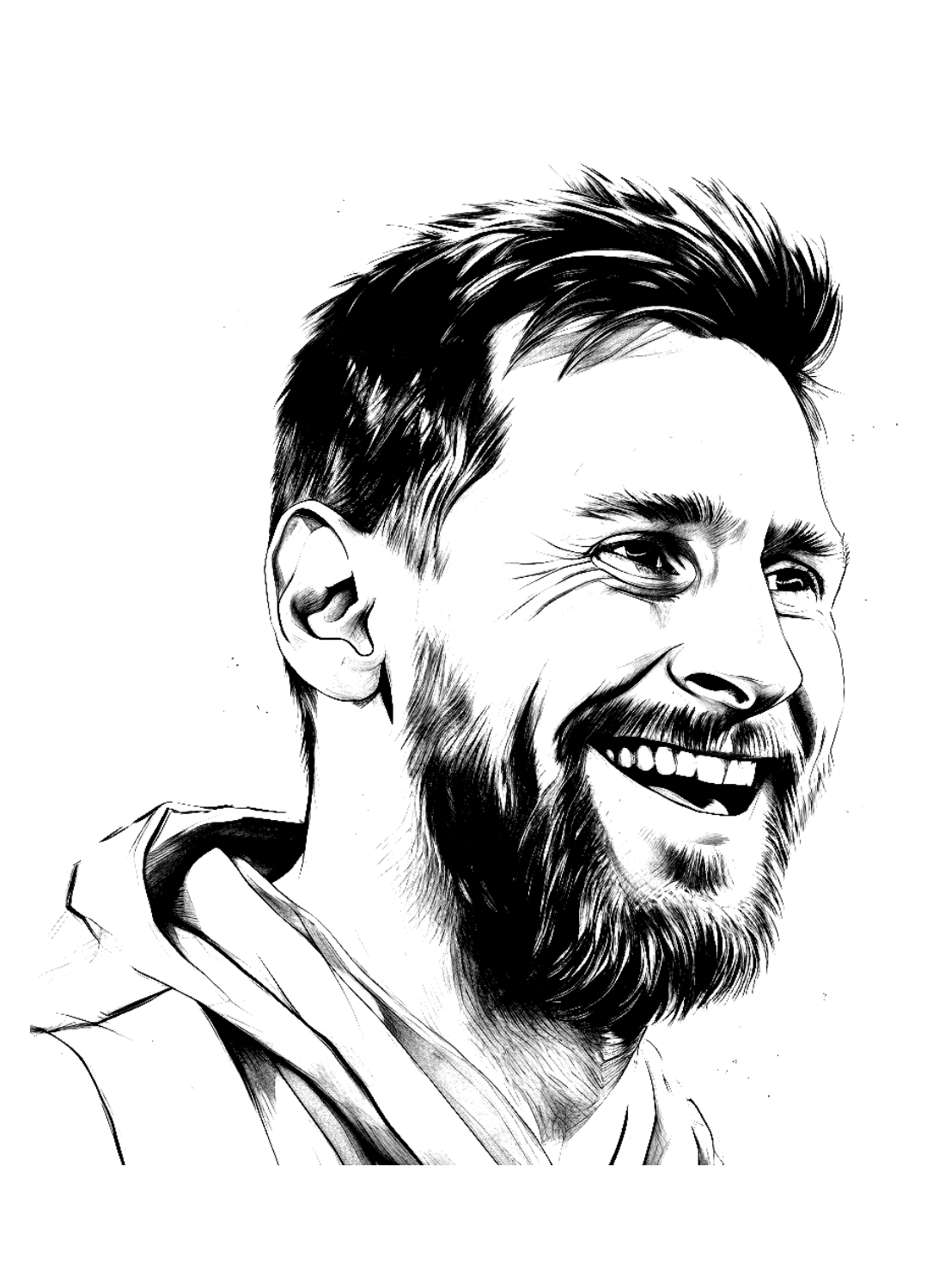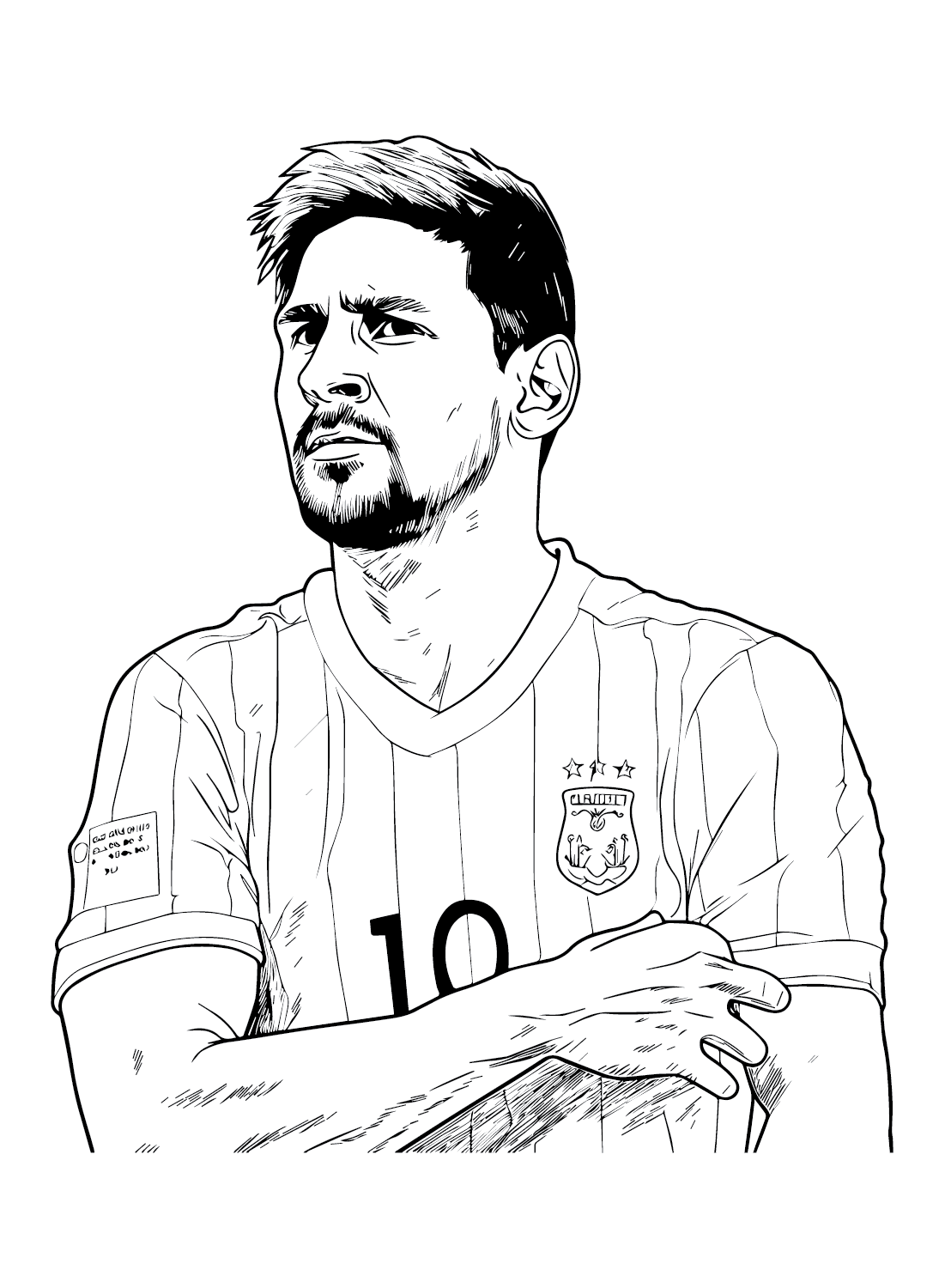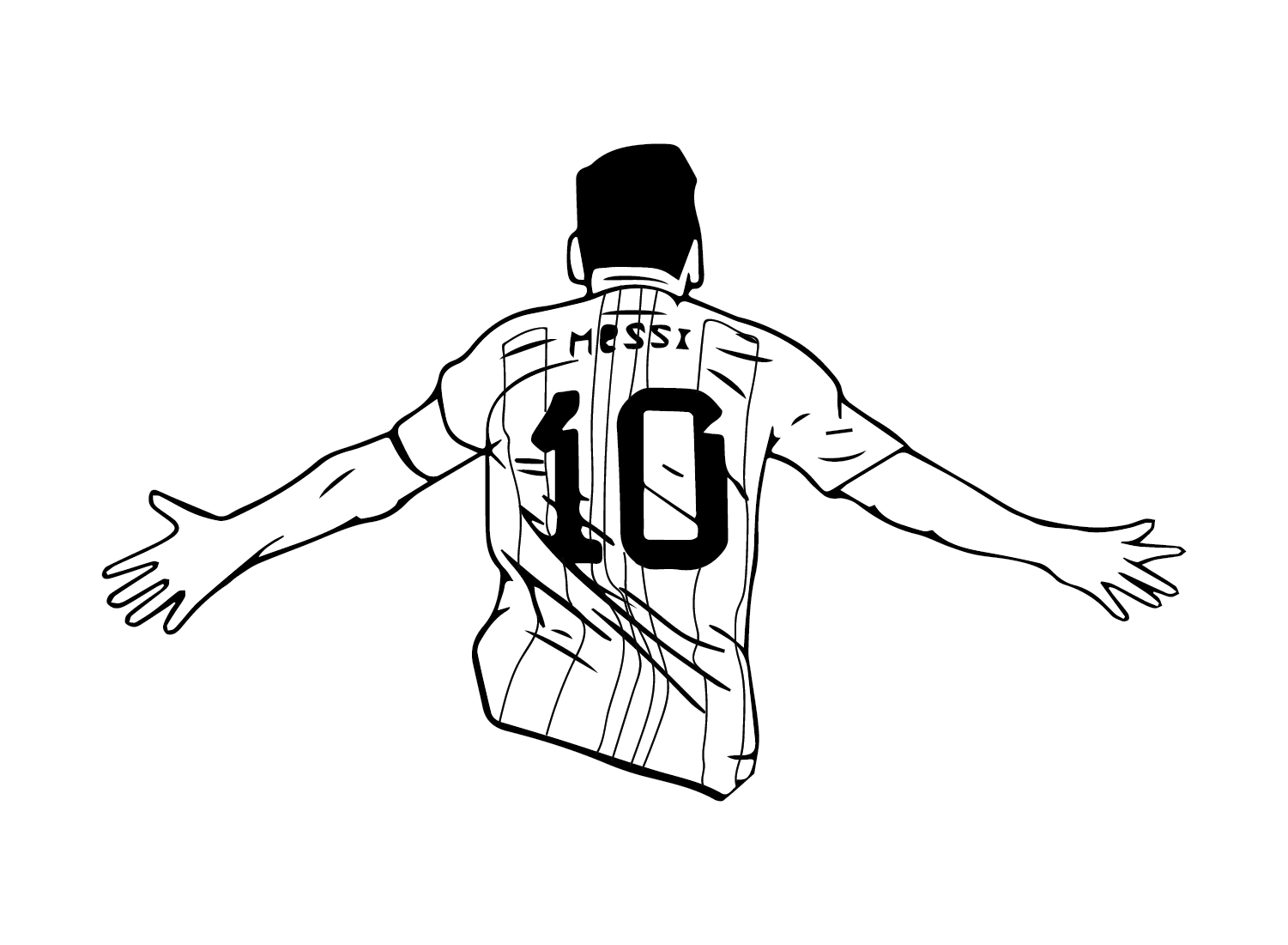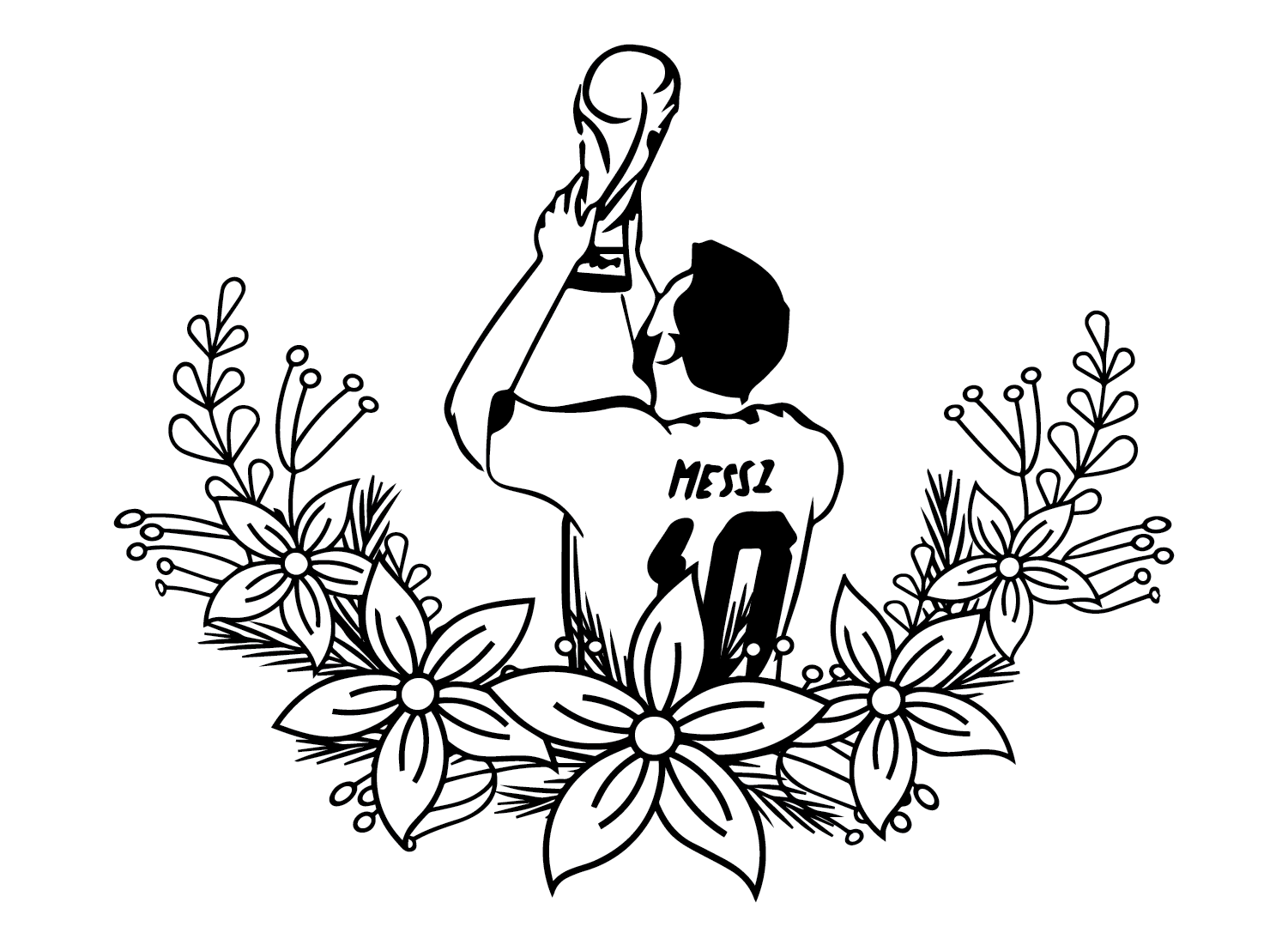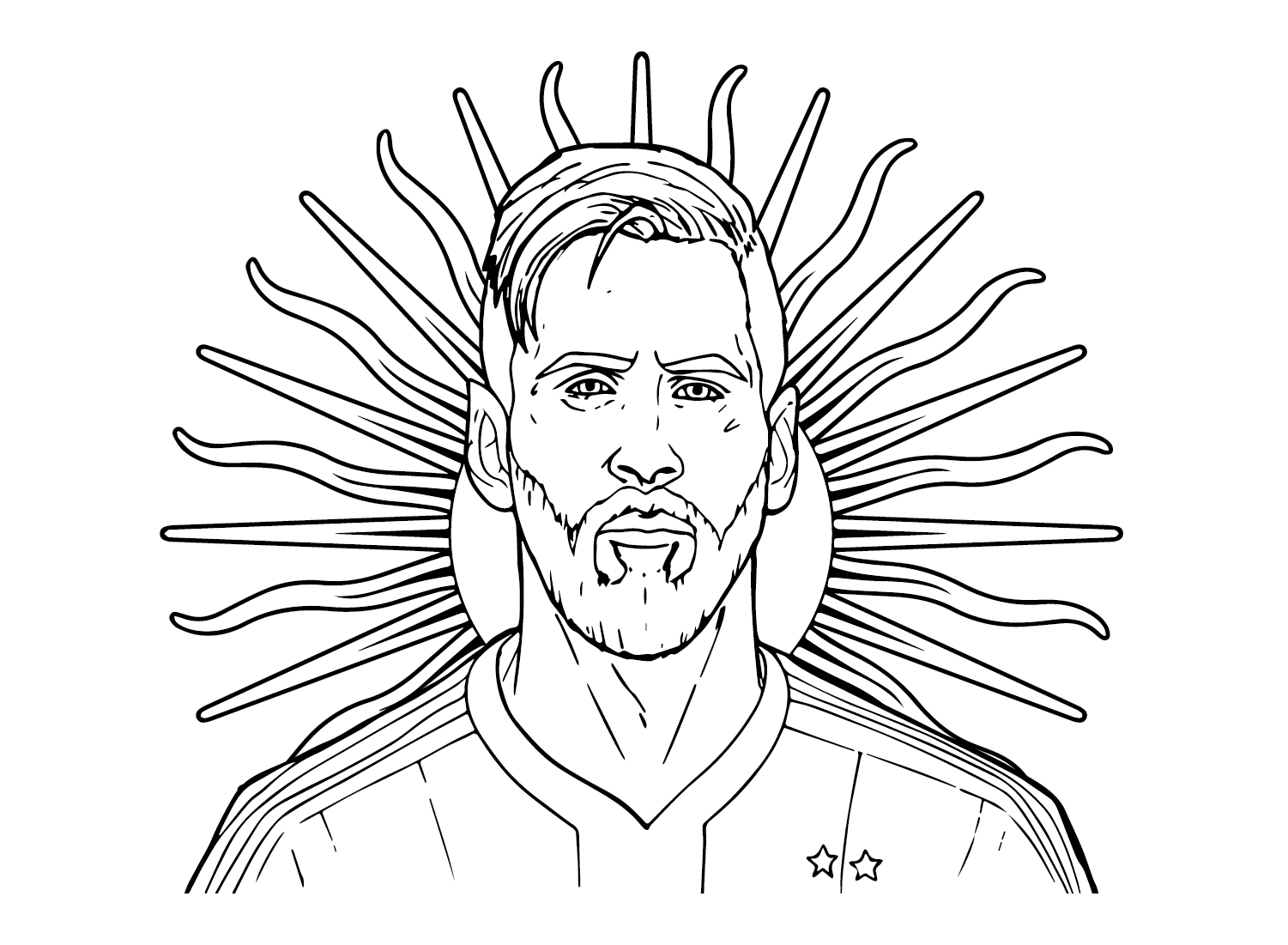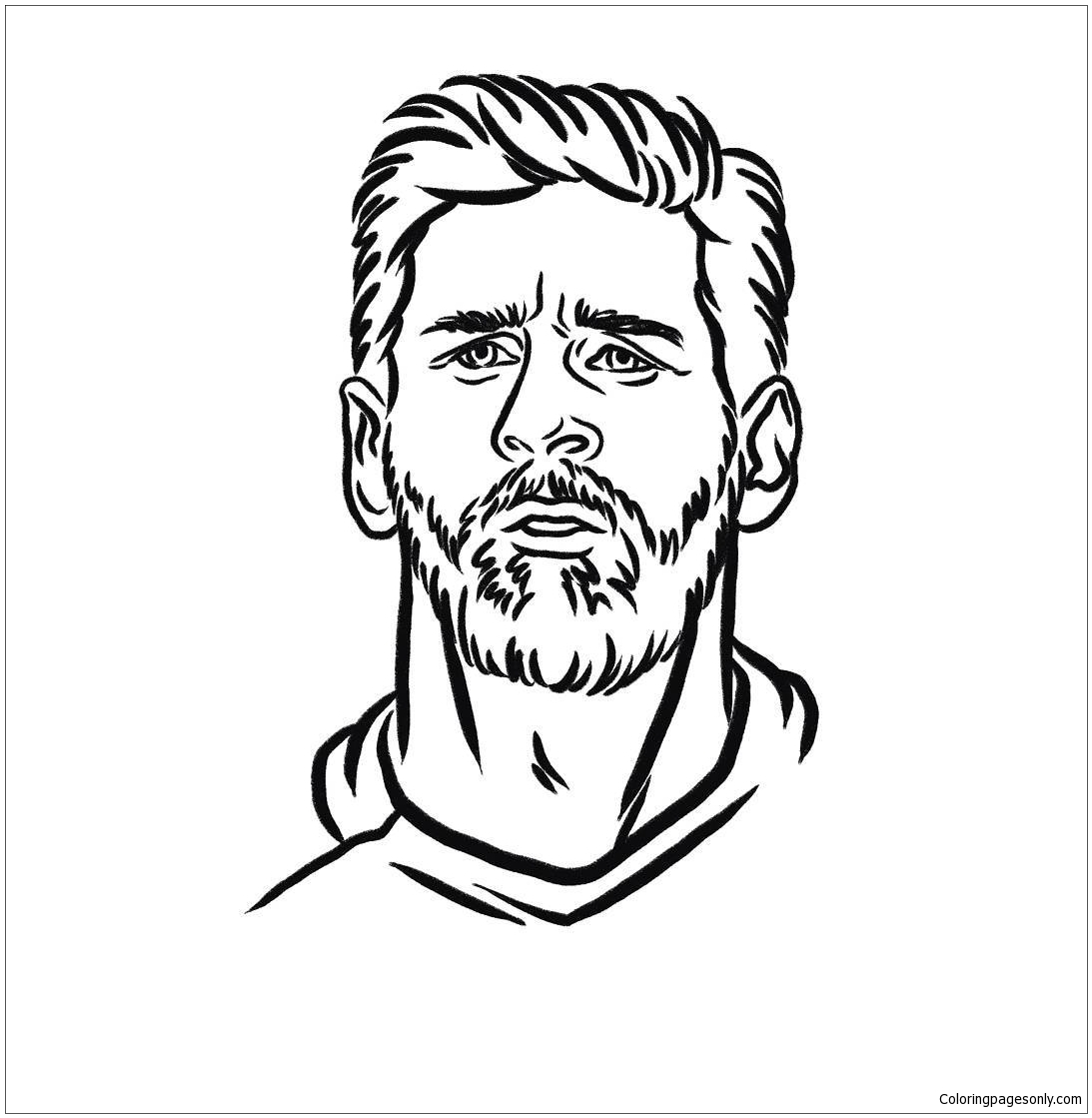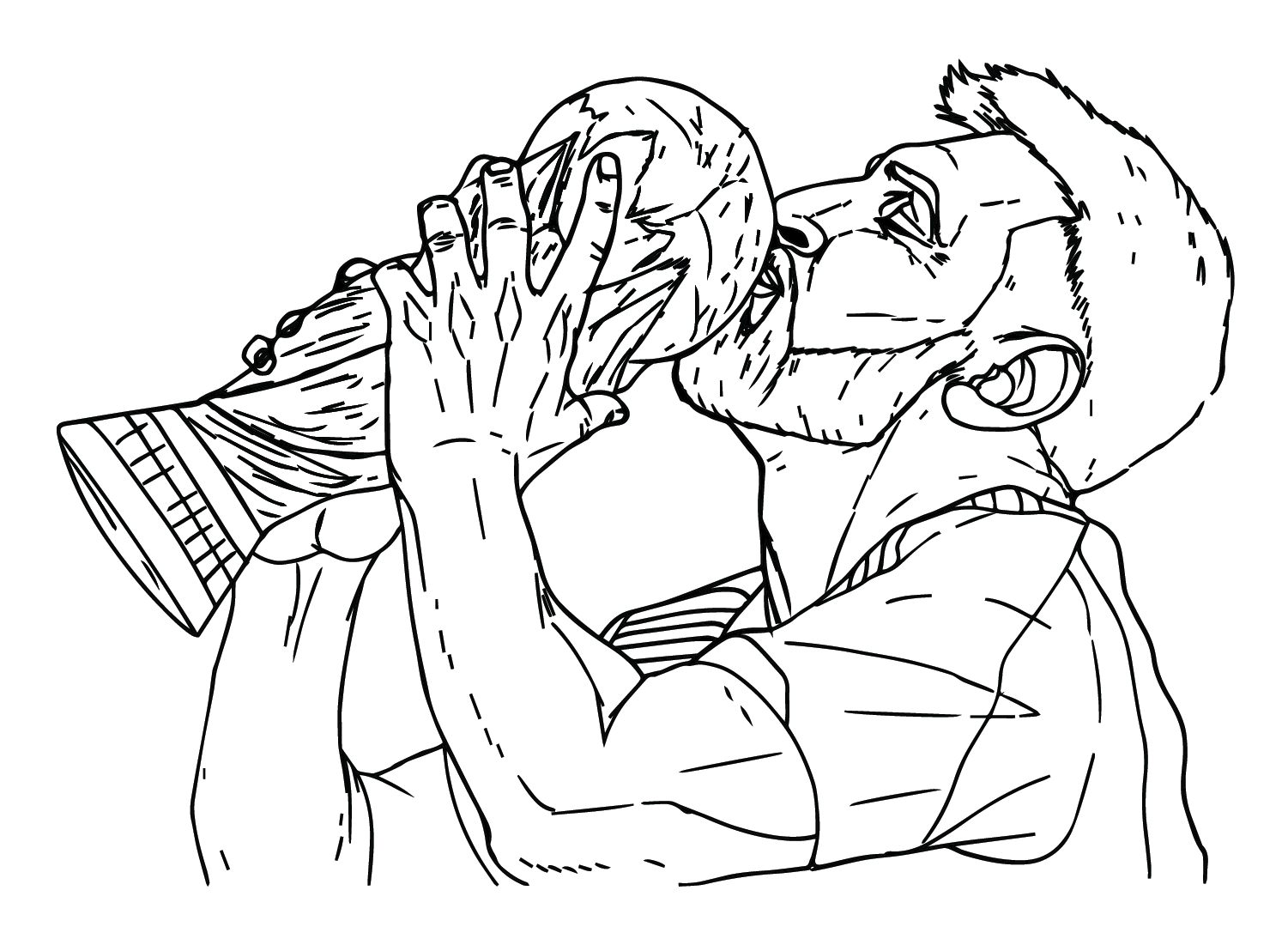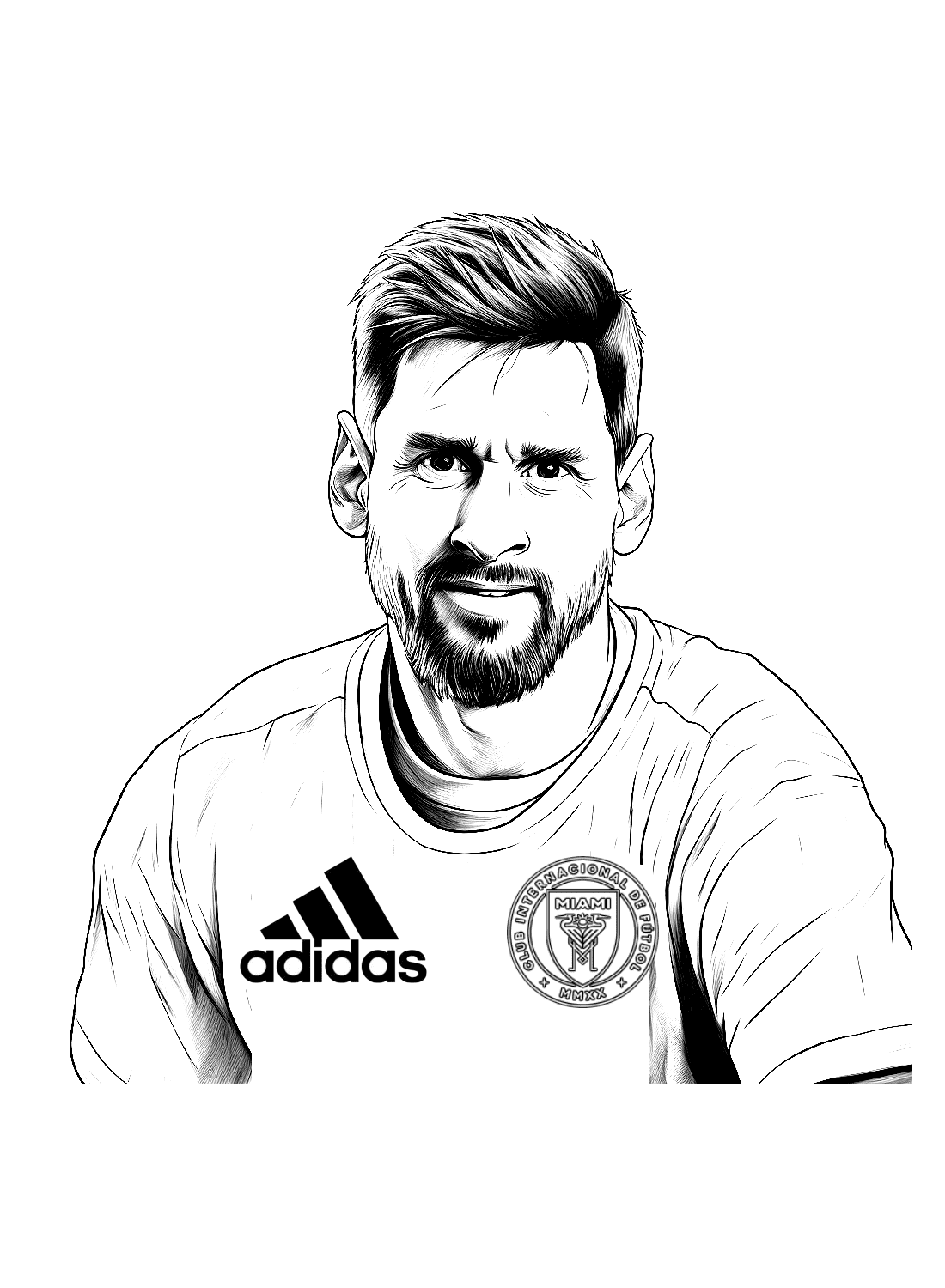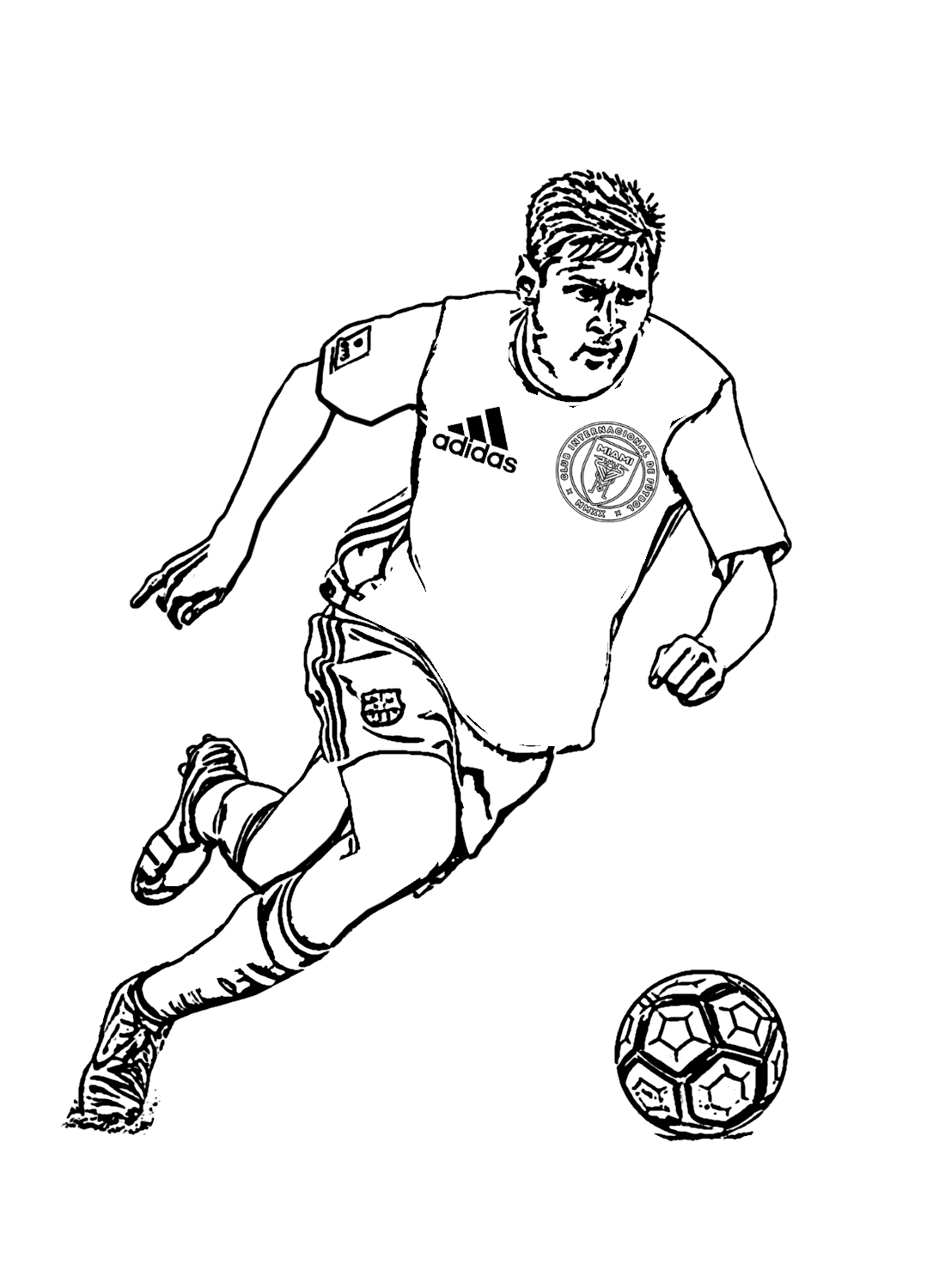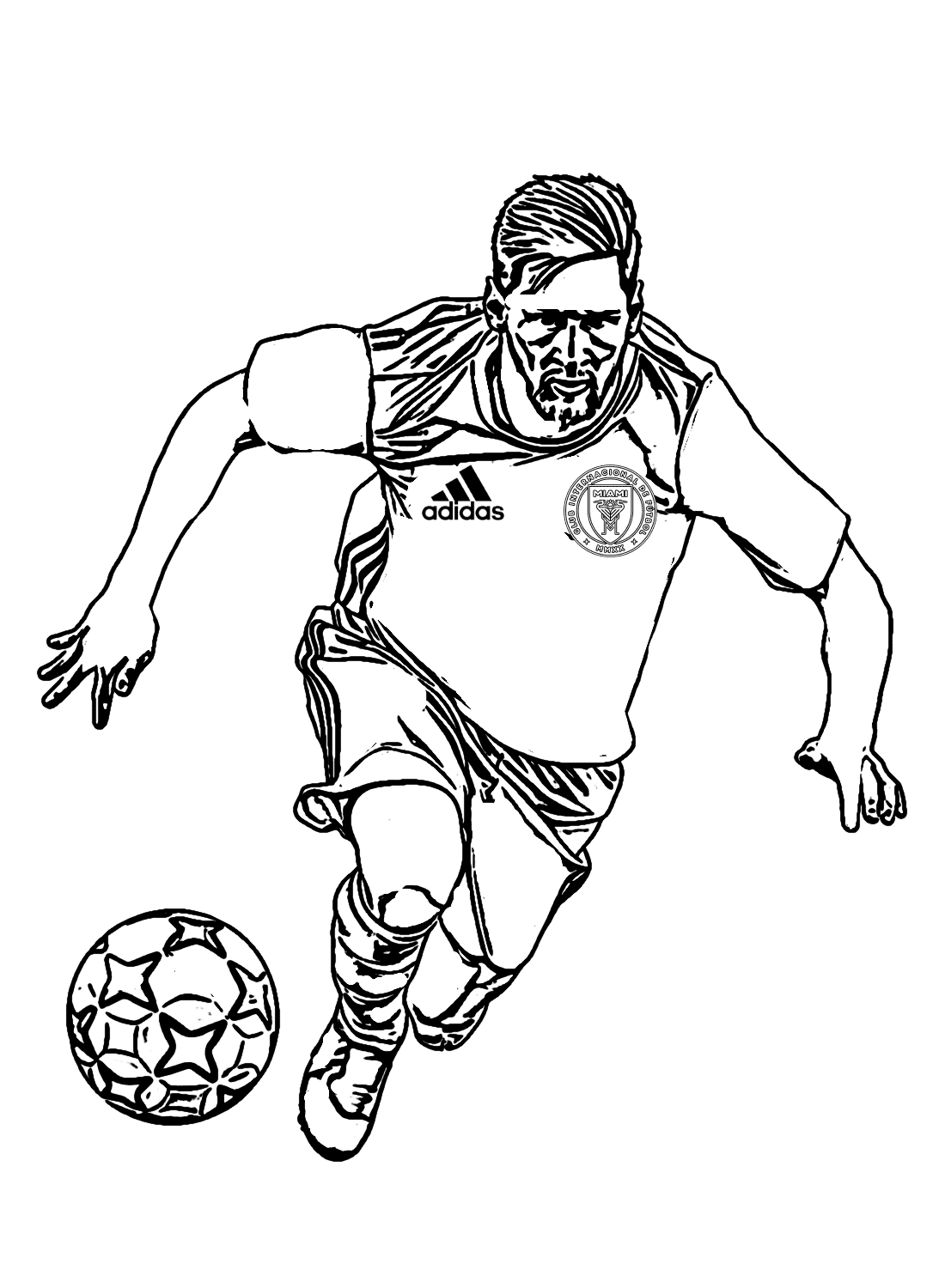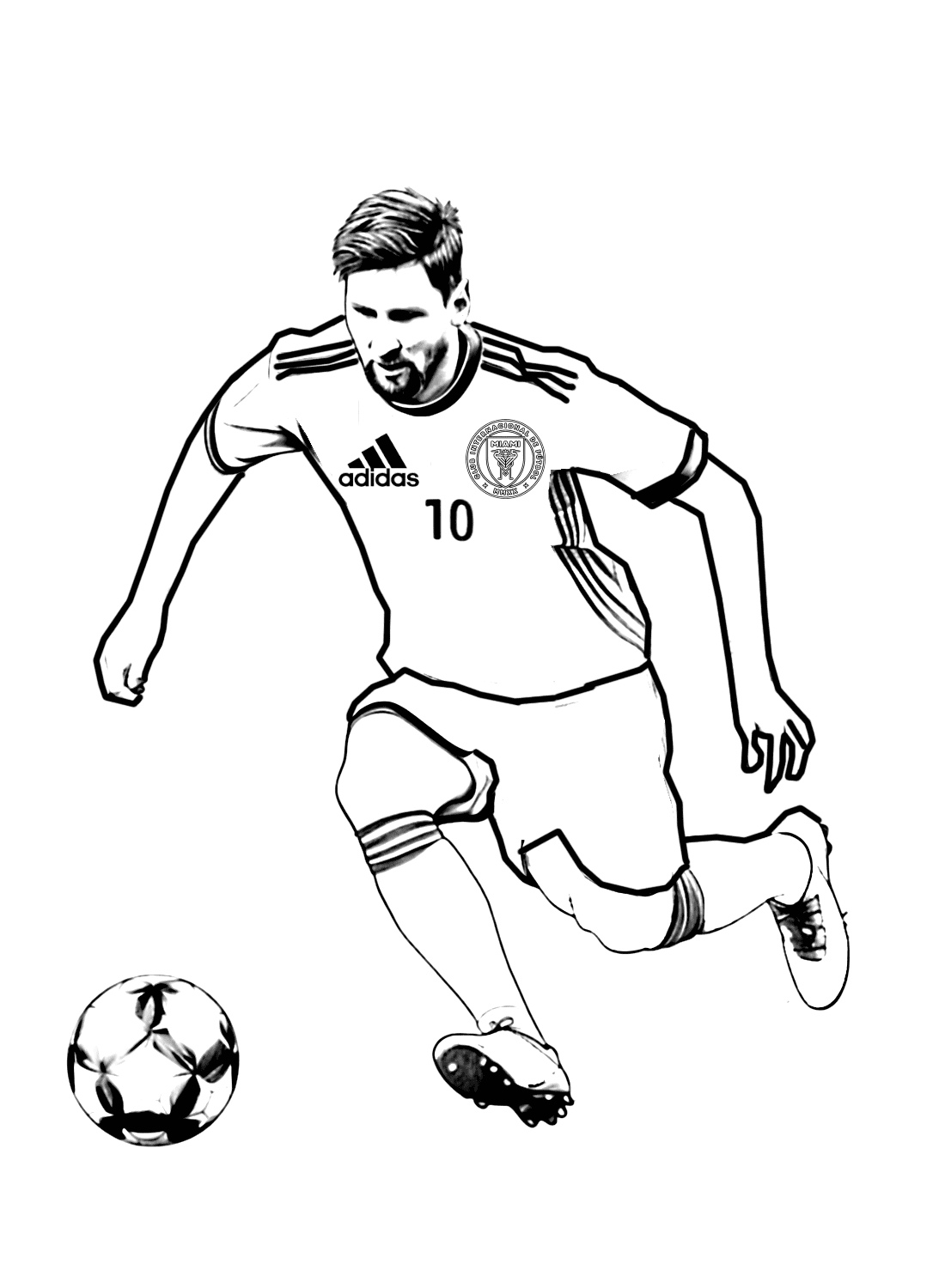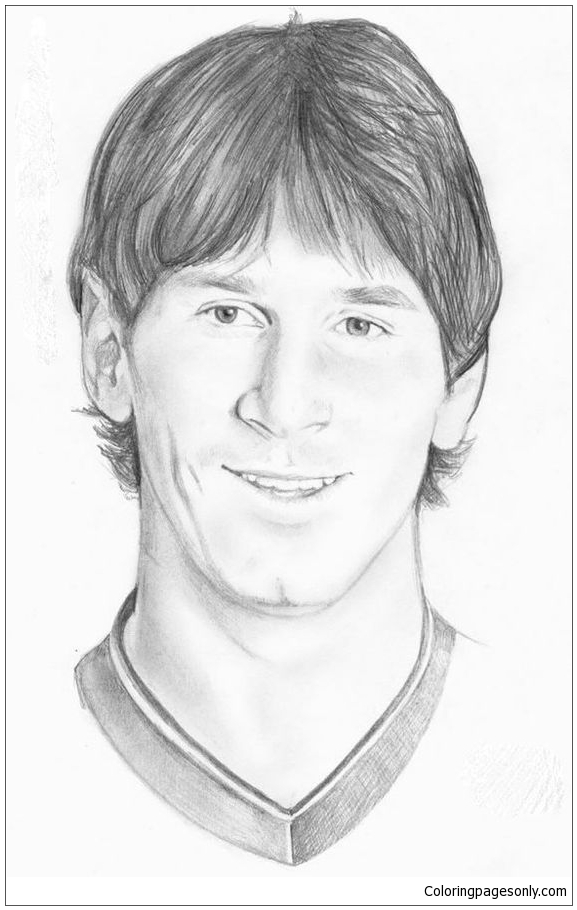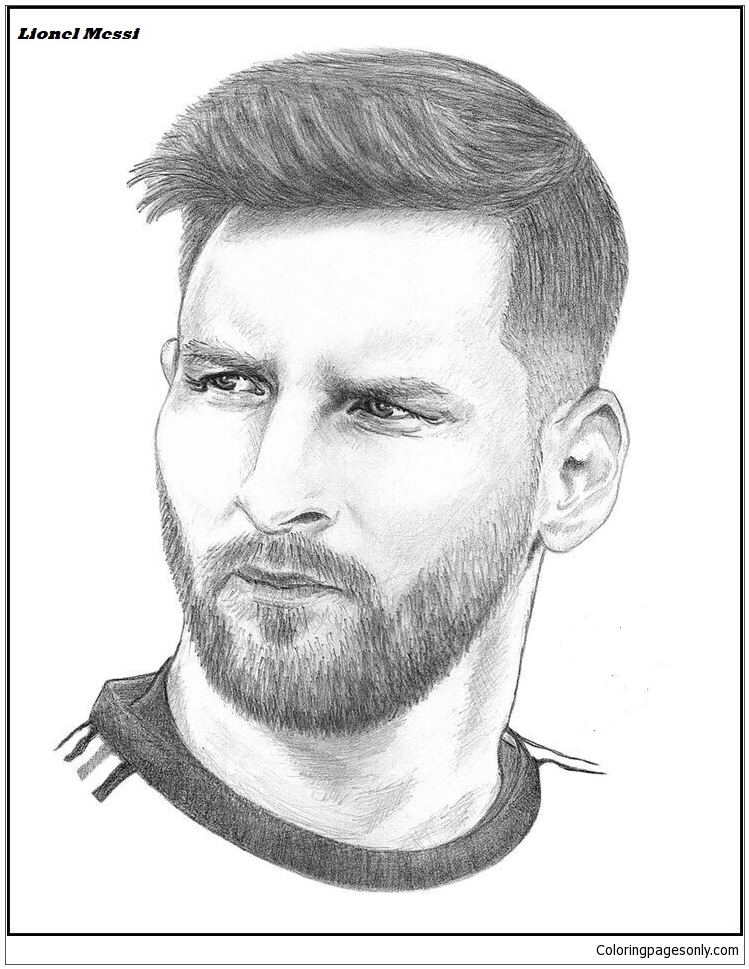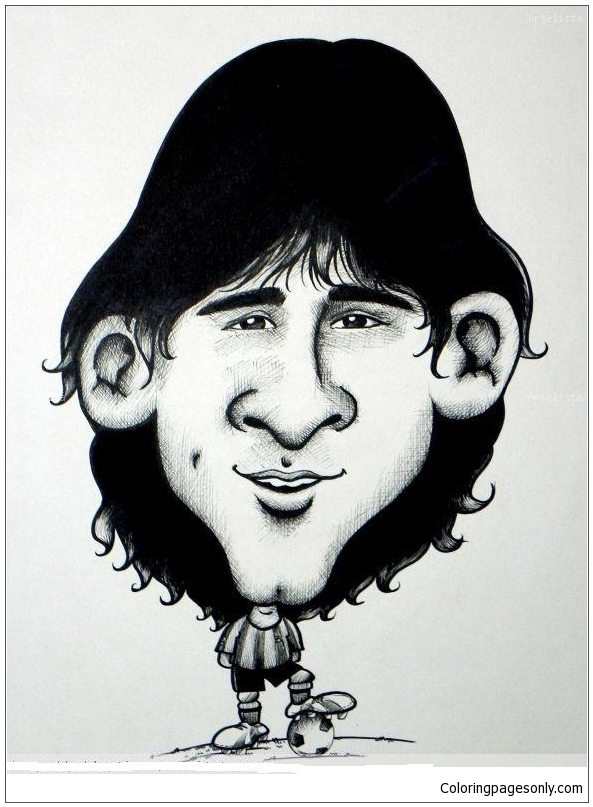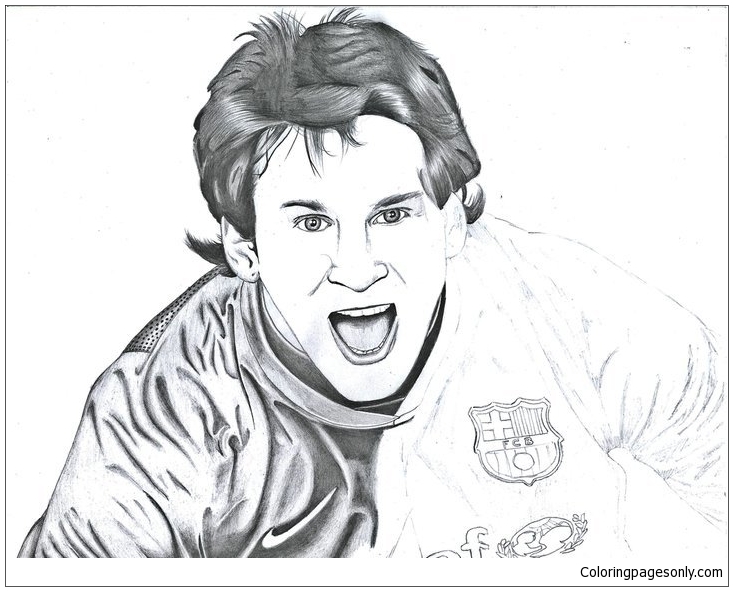
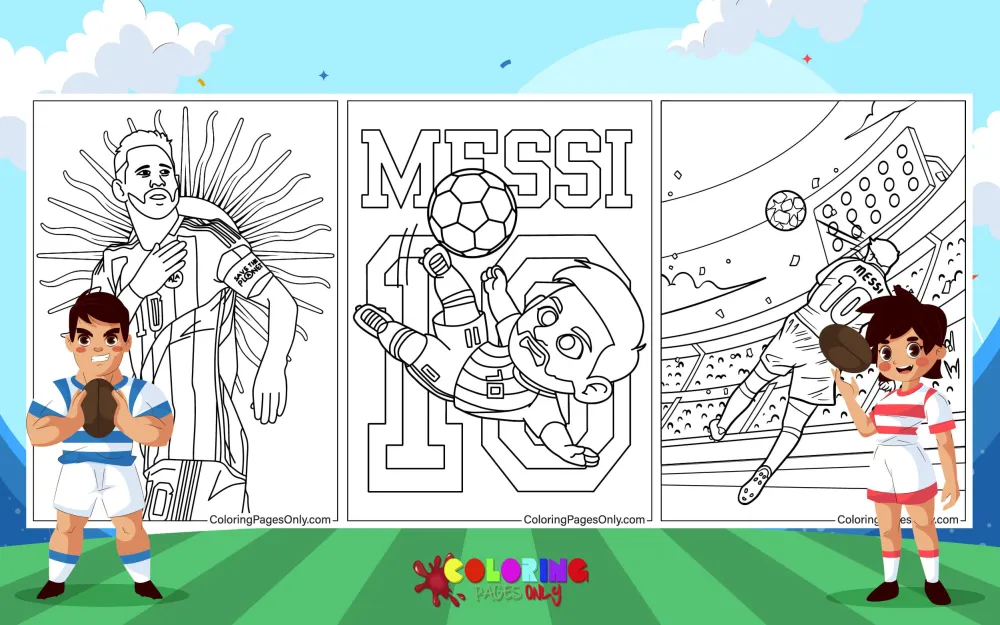
Free Lionel Messi coloring pages – 60+ pages featuring the eight-time Ballon d’Or winner in Argentina blue and white, FC Barcelona blaugrana, PSG blue, Inter Miami pink, World Cup celebration poses, dribbling action sequences, trophy scenes, and portrait pages spanning his twenty-year career – free printable PDF and online coloring for football fans of all ages.
Lionel Andrés Messi was born on June 24, 1987, in Rosario, Santa Fe, Argentina. At age ten, doctors identified a Growth Hormone Deficiency that would prevent him from reaching normal adult height without medical treatment costing approximately $900 per month – a sum his family in Rosario could not sustain. His local club, Newell’s Old Boys, did not fund the treatment. FC Barcelona, through their scout Horacio Gaggioli, offered to do so in exchange for Messi moving to Spain. His family relocated from Rosario to Barcelona in 2000. He was thirteen. When the agreement was reached, no formal contract paper was available – the director of Barcelona’s youth football, Carles Rexach, wrote the terms of the deal on a restaurant napkin, which was then signed. The napkin is preserved.
He made his senior debut for Barcelona on October 16, 2004, aged seventeen. He spent twenty-one years at the club in total. In 672 appearances across seventeen seasons in the first team, he scored 672 goals – the most any player has scored for a single club in football history. He won the Ballon d’Or eight times: 2009, 2010, 2011, 2012, 2015, 2019, 2021, and 2023. He scored 91 goals in the 2012 calendar year, breaking Gerd Müller’s record of 85 set in 1972. On December 18, 2022, in Lusail, Qatar, Argentina defeated France in the FIFA World Cup final – on penalties, after a 3-3 draw – and Messi lifted the trophy he had spent seventeen years trying to win.
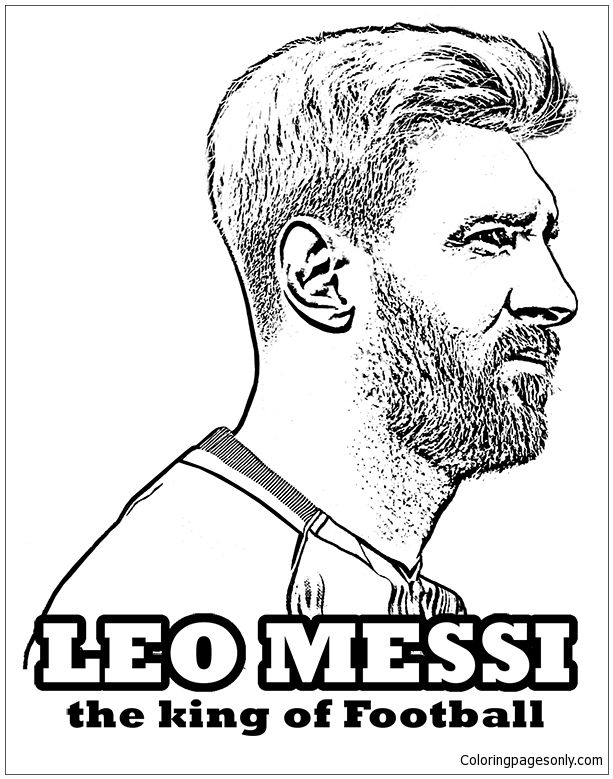
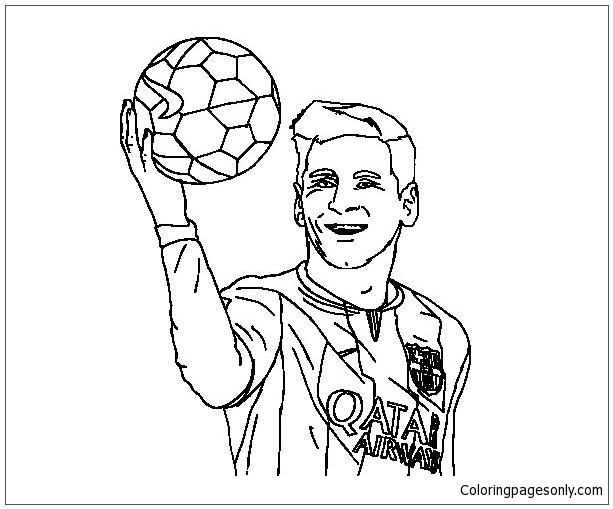
These 60+ free pages at ColoringPagesOnly.com span the full arc of that career. All free, PDF or PNG, print or color online.
What’s Inside
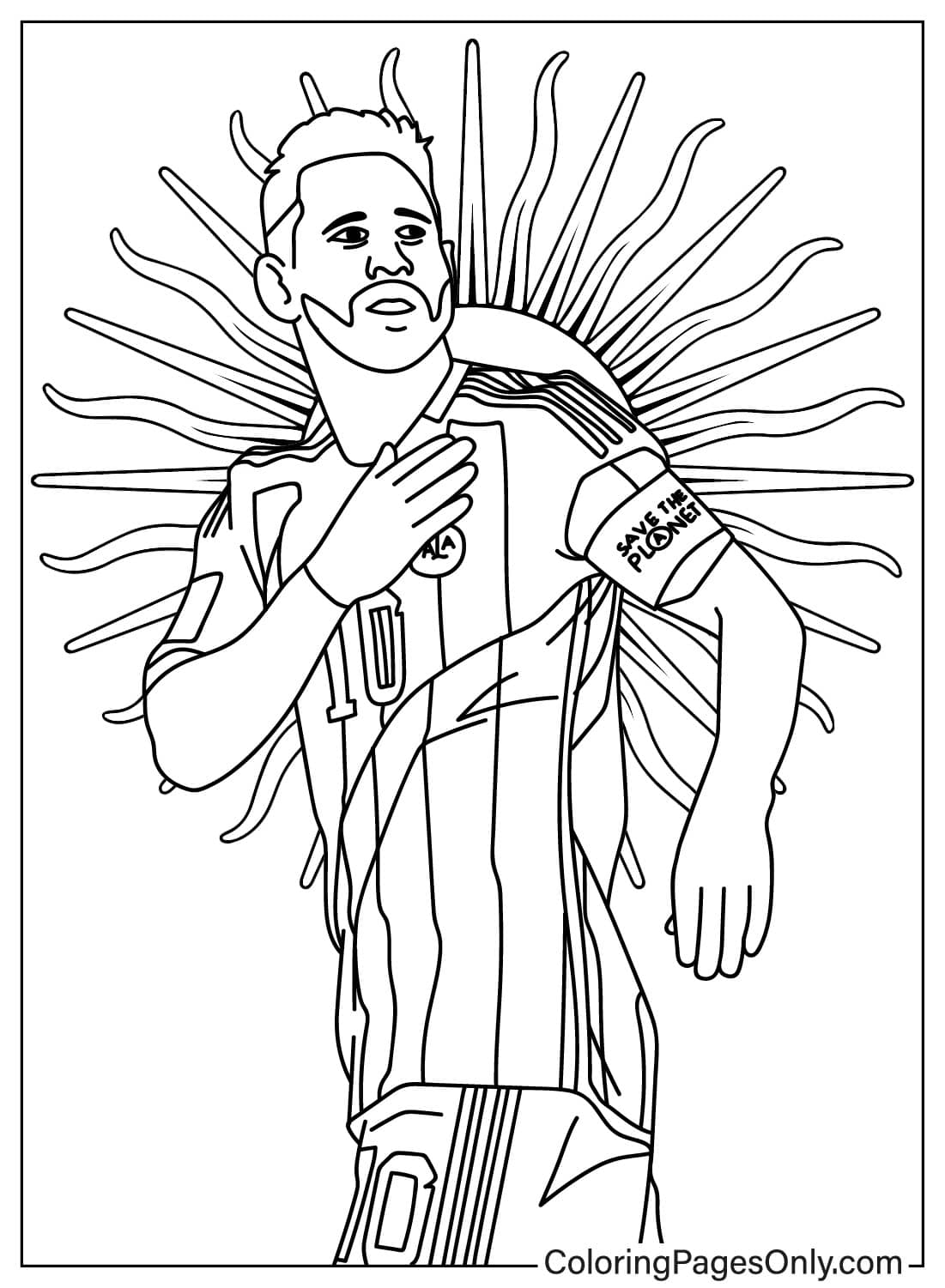
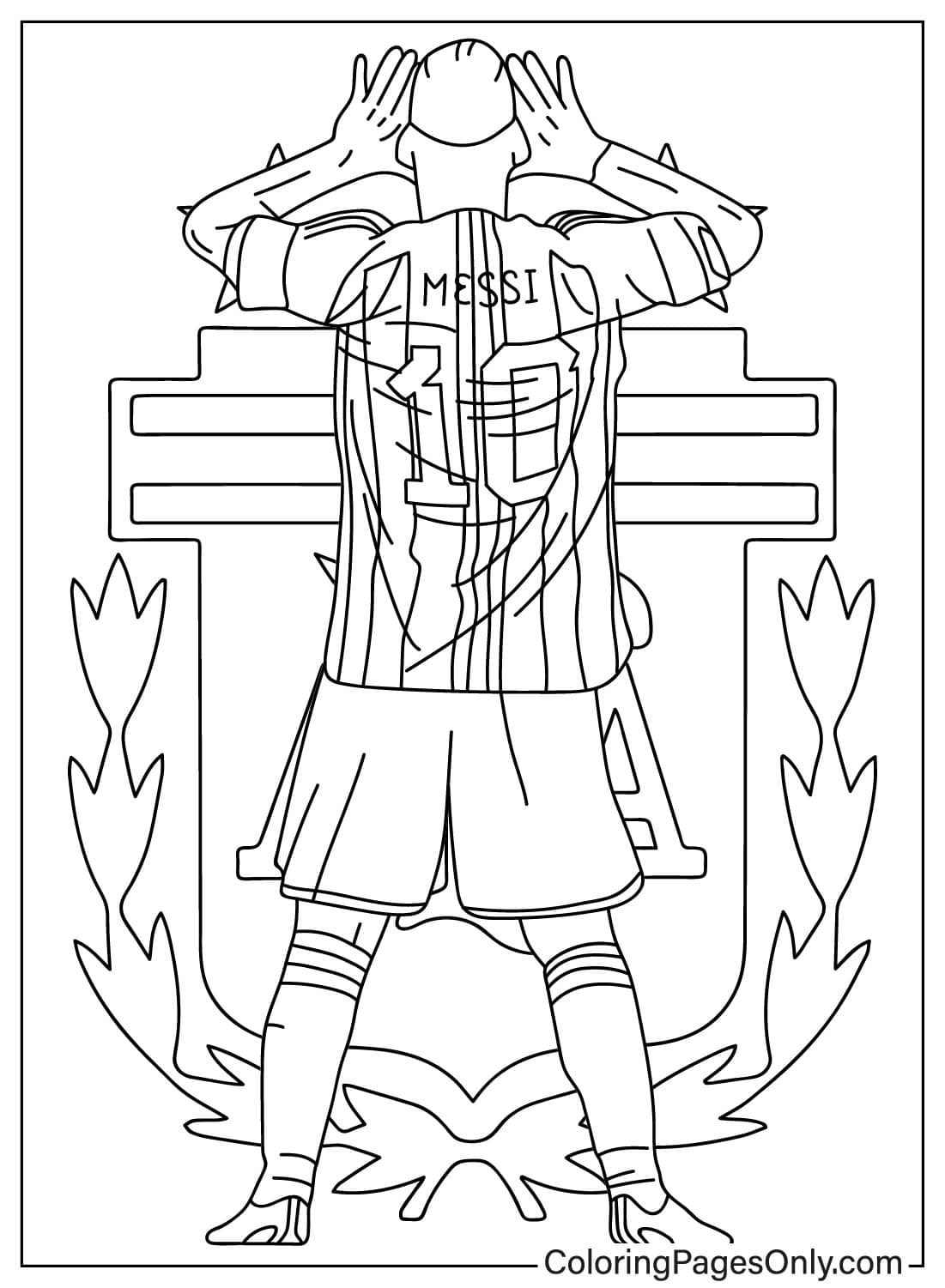
Argentina National Team Pages – The Albiceleste
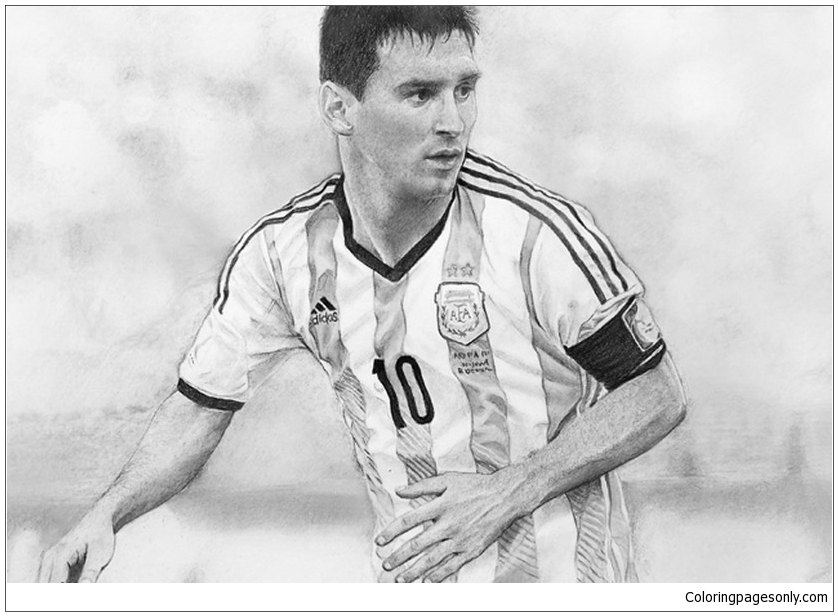
The pages showing Messi in Argentina’s national team jersey carry the weight of the career’s longest unresolved chapter – and, after December 18, 2022, its resolution. Argentina’s jersey is light blue and white vertical stripes, earned the name Albiceleste (white-and-sky), and the specific pale sky blue of those stripes is one of football’s most iconic uniform colors. Messi wore it through six FIFA World Cups – 2006, 2010, 2014, 2018, 2022, and 2026 – and through failures at three Copa América finals before the 2021 Copa América ended the wait.
The 2022 World Cup pages are the collection’s most historically resonant. The final against France – in which Mbappe scored a hat-trick to bring France back from 2-0 to 2-2 in the last ten minutes of normal time, forcing extra time in which Argentina went 3-2 before France equalized again to 3-3 – was a match described by multiple sources as the greatest World Cup final ever played. Argentina won the subsequent penalty shootout 4-2. Messi scored twice in the match, won the Golden Boot as top scorer with seven goals, and won the Golden Ball as the tournament’s best player.
The specific image of Messi with the World Cup trophy – and the image of him wearing the black bisht placed on his shoulders by the Emir of Qatar, Sheik Tamim bin Hamad Al Thani, in a gesture of ceremonial honor before the trophy presentation – became among the most widely shared sports photographs in history.
Coloring the Argentina jersey: The stripes are a specific pale sky blue – lighter than royal blue, cooler and cleaner than navy, the specific blue that reads immediately as Albiceleste. The white stripes are the paper itself, or receive the most minimal possible warm-white treatment. The Argentine Football Association badge features the sun of May – the Inca sun symbol from the Argentine flag – in gold at the top of the shield. Apply this sun element in warm, vivid gold.
FC Barcelona Jersey Pages – The Blaugrana Years
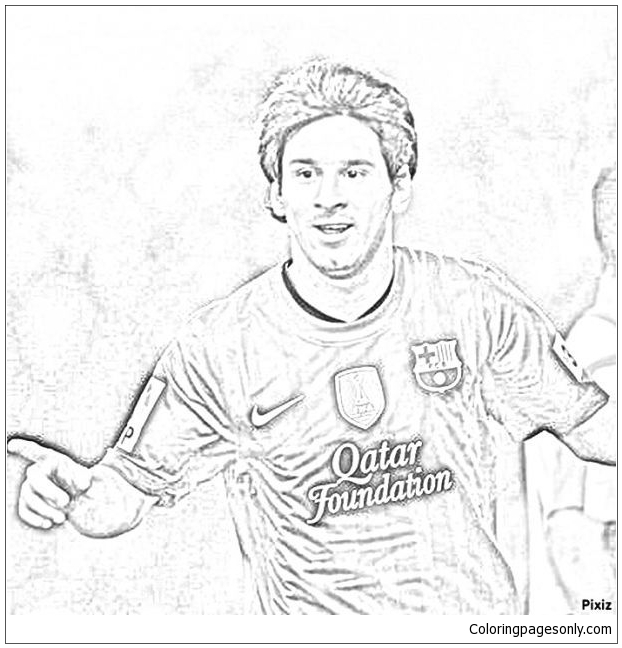
The Barcelona pages cover the longest and most statistically productive chapter of Messi’s career – seventeen seasons in the blaugrana, 672 goals, ten La Liga titles, four Champions League titles. The dark blue and red vertical stripes of the blaugrana are the visual context for virtually every record Messi set at club level.
The Champions League pages from this era – the 2011 Final against Manchester United at Wembley (3-1), the 2015 Final against Juventus in Berlin (3-1), the quarter-final hat-tricks against Arsenal and AC Milan, the goals against Real Madrid in El Clásico – are the individual moments within the broader Barcelona chapter that the action pages may reference.
Coloring the Barcelona jersey: The blaugrana stripes are equal-width bands of deep navy blue and dark red (more crimson than primary red, distinctly cooler than the red of the Argentine national team). The stripe contrast – navy and dark red – is the visual identity, and a consistent stripe width across the jersey is essential. The number 10 in Messi’s Barcelona era was typically rendered in the contrasting color family from the stripe it sat on.
PSG Jersey Pages
The Paris Saint-Germain chapter – two seasons from 2021 to 2023 – is the career’s most complicated. Messi left Barcelona in the summer of 202,1 not by choice but because the club’s financial situation under La Liga’s Financial Fair Play regulations made his contract renewal legally impossible despite both parties’ willingness. He joined PSG on a free transfer. The two seasons in Paris were difficult by the standard of his Barcelona years – he struggled with adaptation and illness in the first season, performed better in the second – but they contained the 2022 World Cup win, which occurred while he was a PSG player.
PSG’s home kit is a deep navy blue with red trim and accents. Messi wore number 30 in his first PSG season, then number 10 in his second.
Coloring the PSG jersey: A deep, cool navy blue across the primary body of the jersey. The red accents – collar, sleeve details, the PSG badge with its Eiffel Tower – provide warm contrast against the cool navy. The PSG crest is one of the more graphically complex in European football, incorporating the Eiffel Tower, a fleur-de-lis, and the club initials.
Inter Miami CF Pages – The Pink Era
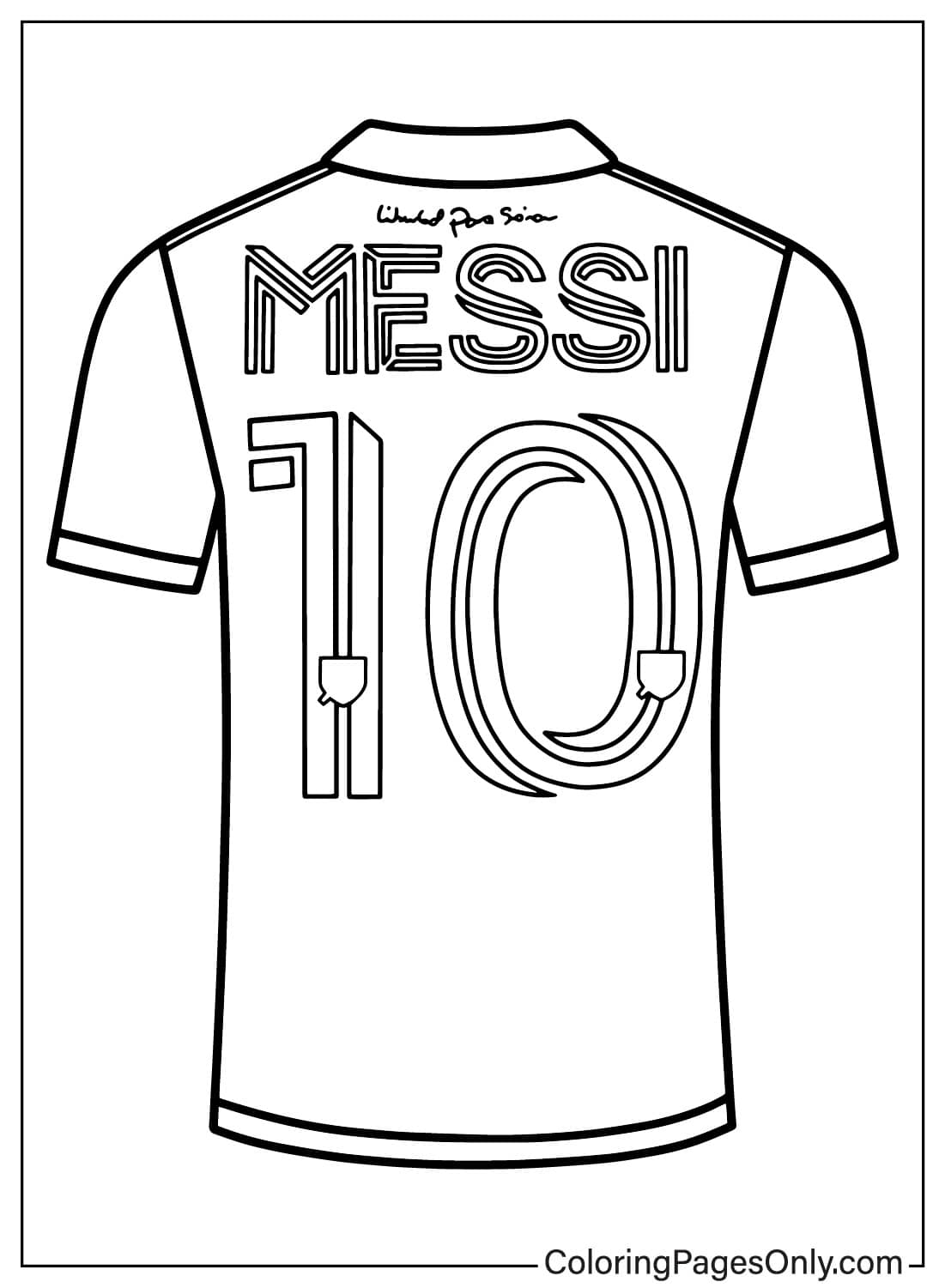
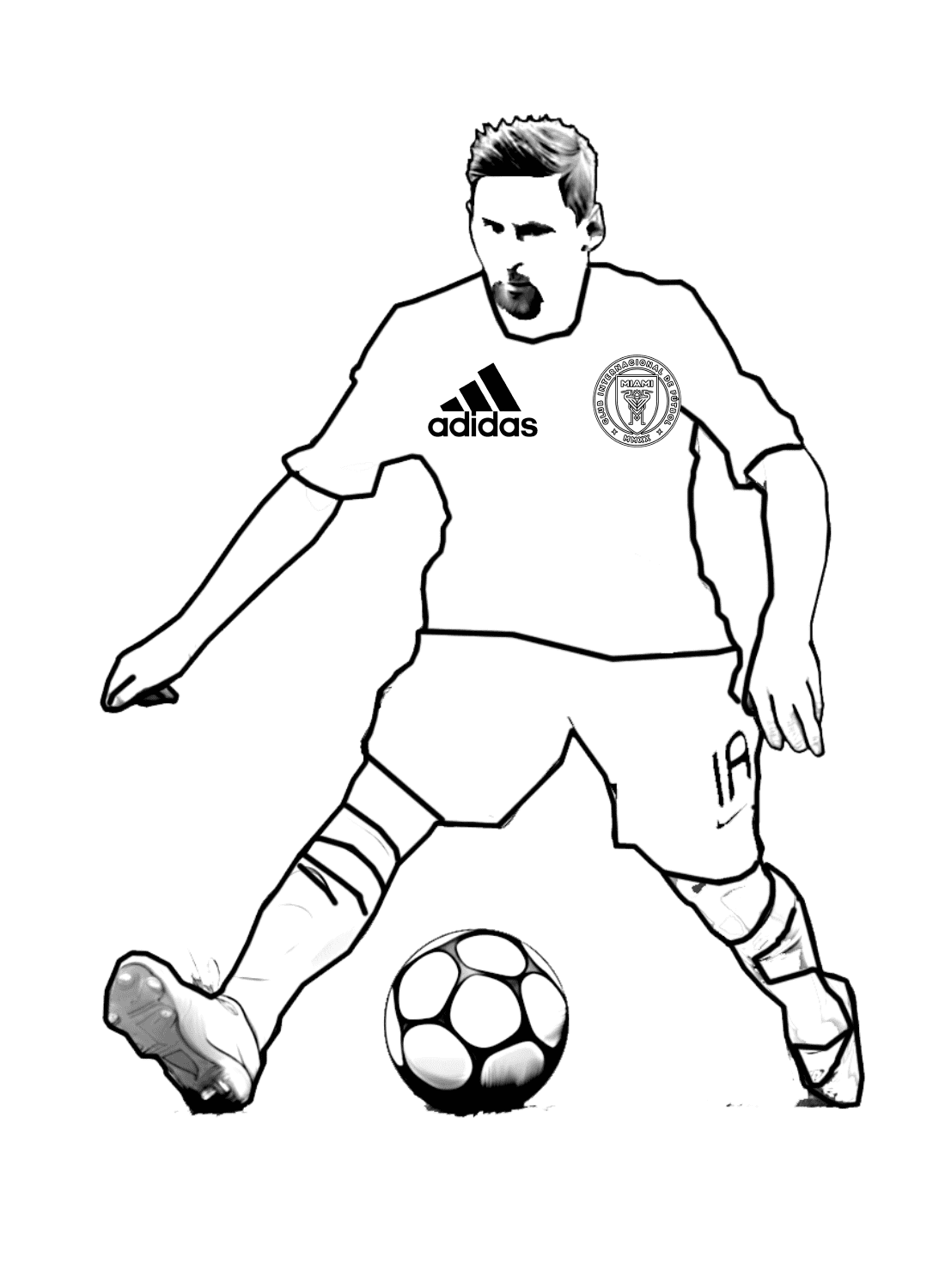
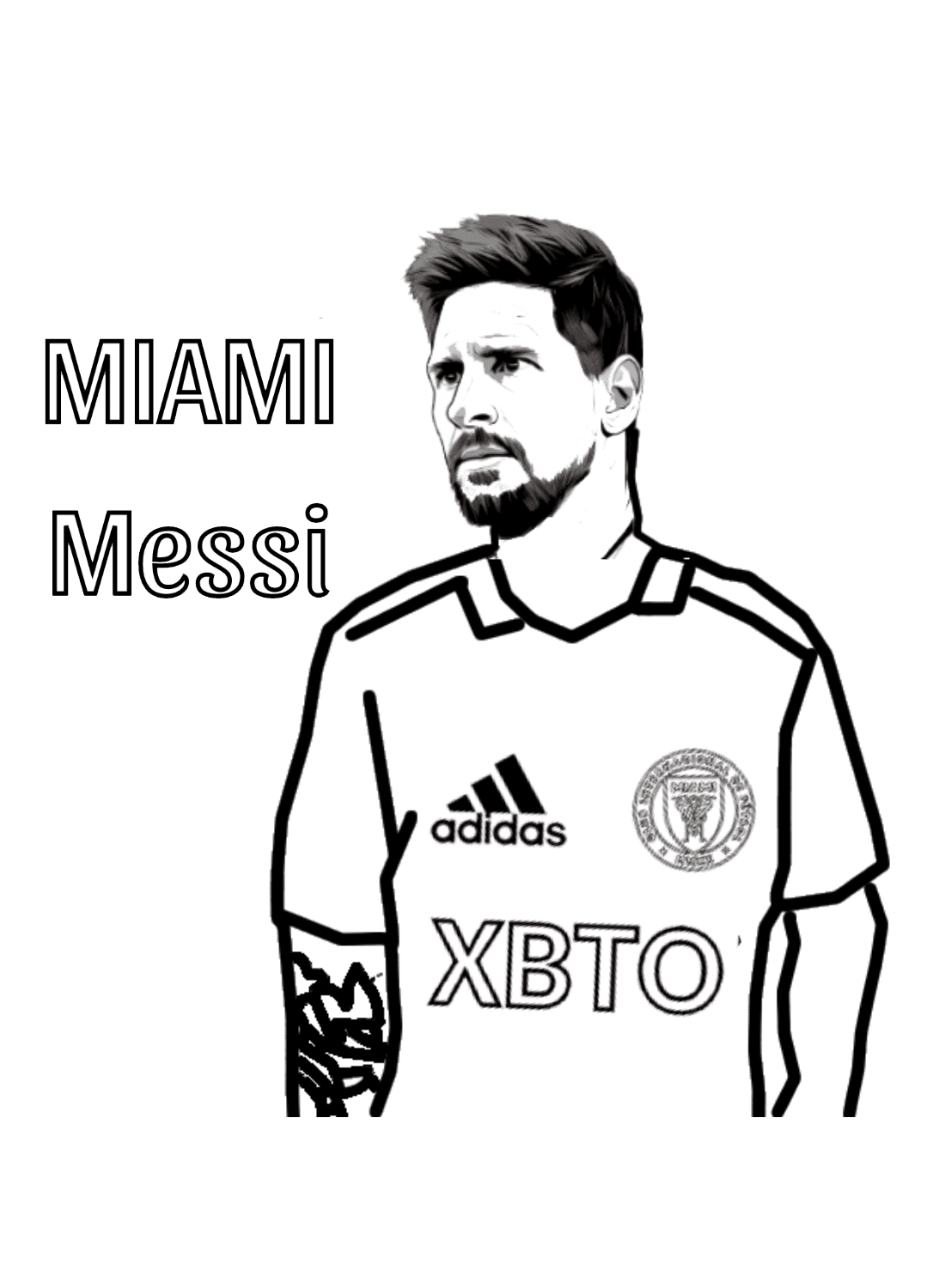
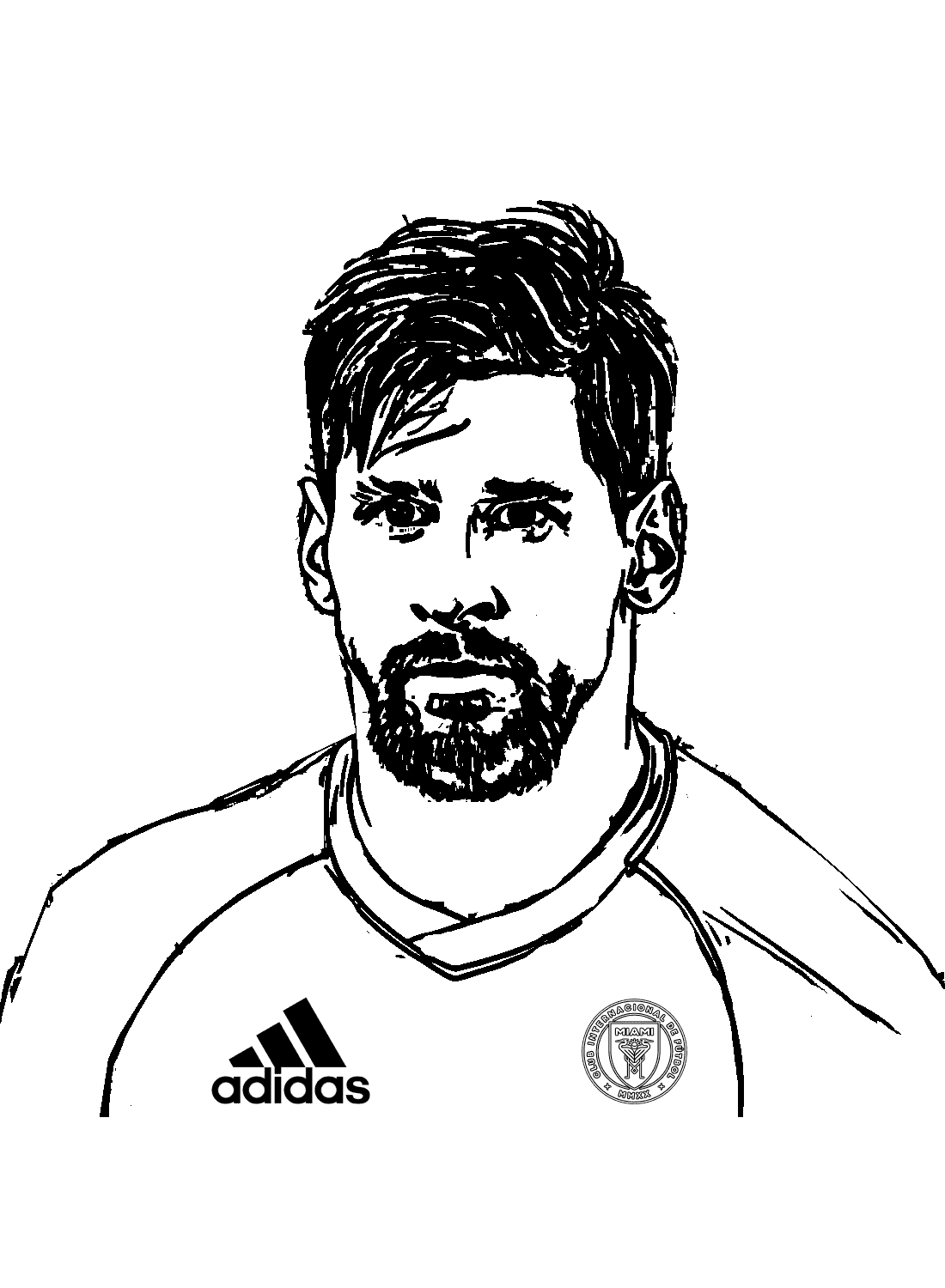
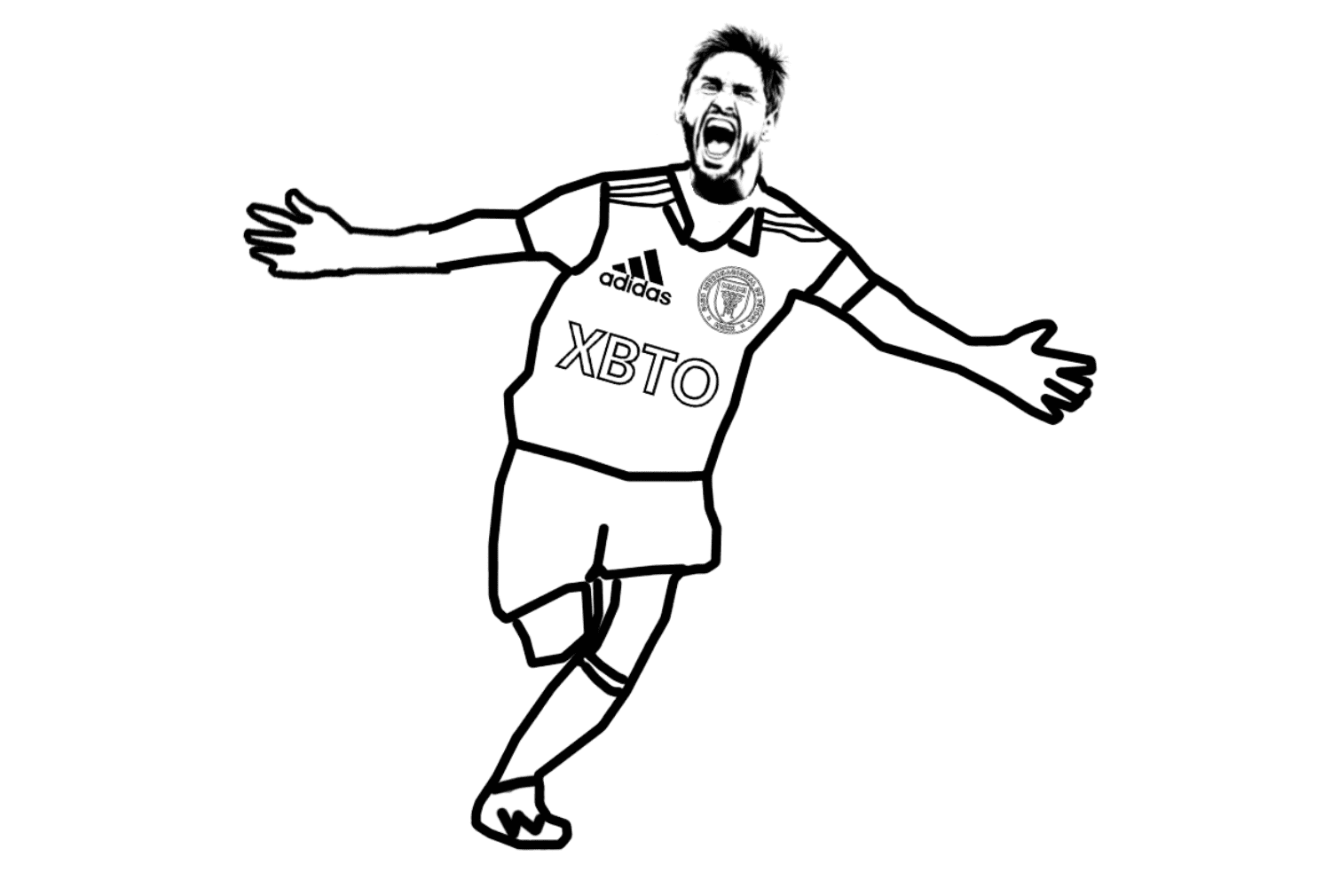
Messi signed for Inter Miami CF of Major League Soccer in July 2023, making what was commercially the most consequential transfer in the history of American professional football. The club’s home jersey is pink – a vivid, warm pink that is immediately distinctive in world football – and Messi’s arrival wearing number 10 in that pink jersey produced images that circulated globally within hours of his first appearance.
Inter Miami won the 2023 Leagues Cup – their first-ever trophy – shortly after Messi’s arrival. His impact on MLS viewership, jersey sales, and the league’s commercial profile was documented in specific data: average MLS viewership increased measurably, Inter Miami games consistently sold out weeks in advance, and pink Inter Miami jerseys sold internationally at volumes the club had not approached in its previous four years of existence.
Coloring the Inter Miami jersey: The pink is a warm, vivid pink – not pastel and not neon but the specific warm pink of the club’s official color. It is sometimes described as coral or salmon, but it reads unambiguously as pink at a normal distance. Apply it at full saturation across the main jersey surfaces. The black sleeves and trim contrast sharply with the pink body. The Inter Miami heron logo – a white stylized heron – appears on the chest in white against the pink.
The World Cup Celebration Pages
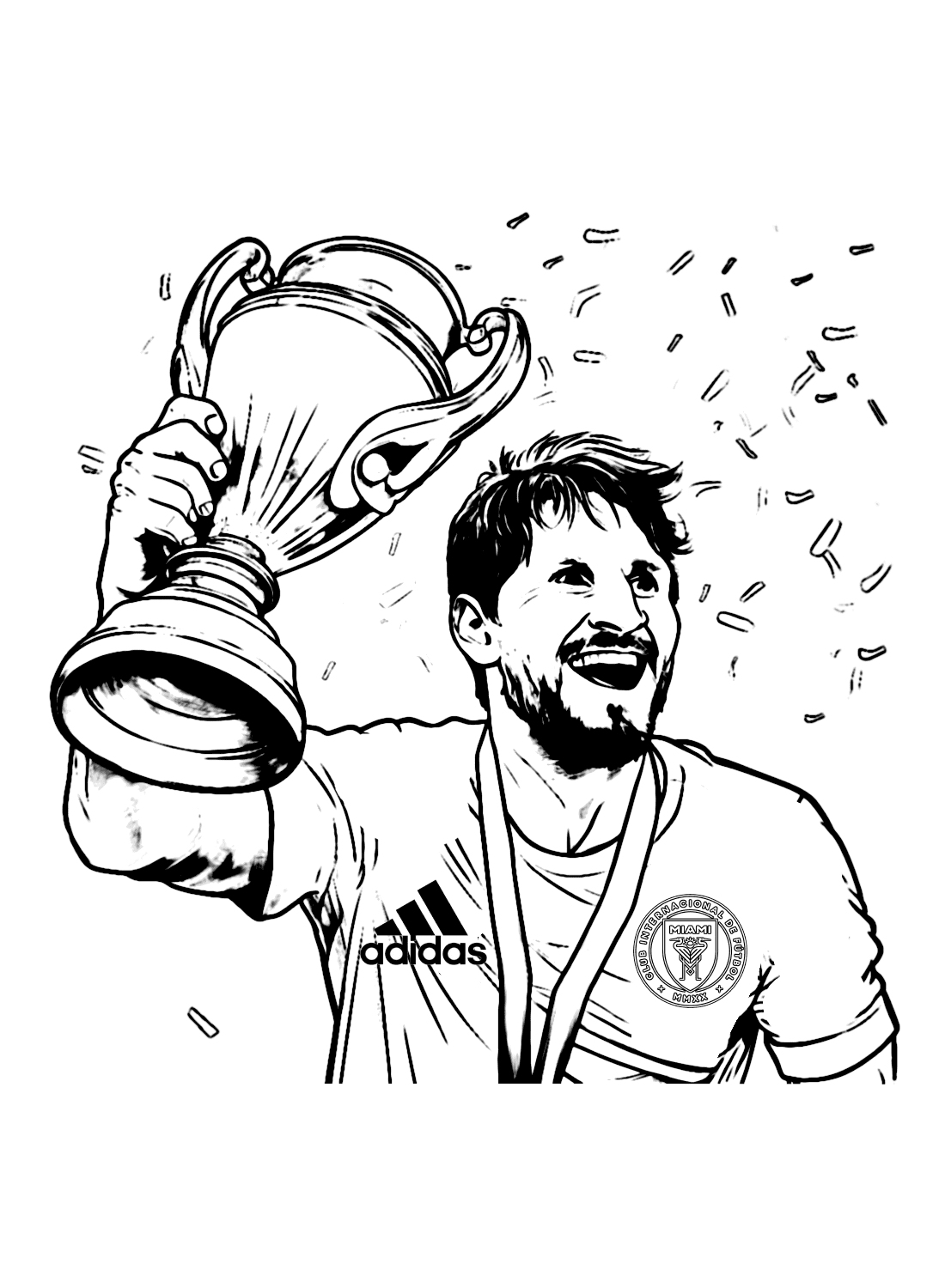
The celebration pages from the 2022 World Cup final capture Messi in the specific emotional register of someone who has achieved the thing the entire narrative of their career has been organized around. His expression in the post-match and trophy-lifting images – a combination of exhaustion, relief, and joy that does not read as the performative celebration of a goal but as something more total – is specifically different from any goal celebration in the collection.
The image of Messi in the white Argentina away jersey, wearing the black bisht, holding the gold World Cup trophy, is the single most reproduced image from his career and one of the most reproduced images in football history.
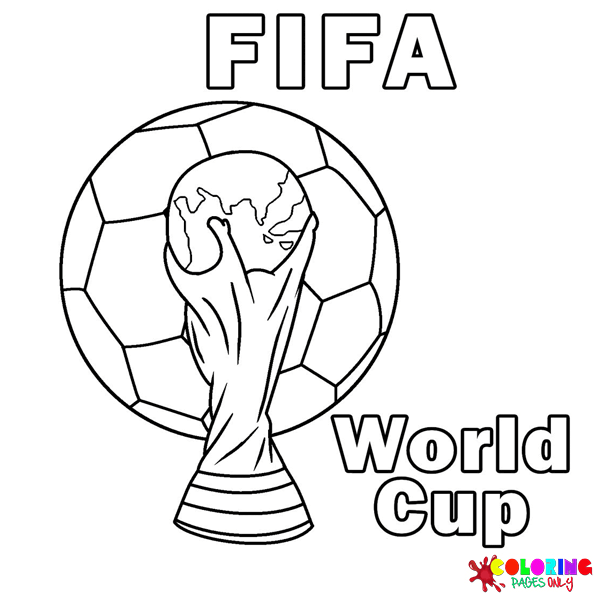
Coloring the World Cup trophy: The FIFA World Cup trophy is 36.8 centimeters tall, made of 18-karat gold (solid gold in the outer layer), and weighs 6.175 kilograms. The figure at its base represents two human figures holding up the Earth. In coloring pages, it renders as the warmest, most vivid gold on the page – brighter than jersey badge gold, brighter than any other element. Apply the trophy in maximum-saturation warm gold, with white or near-white highlights at the very top of each curved surface.
Dribbling and Action Pages
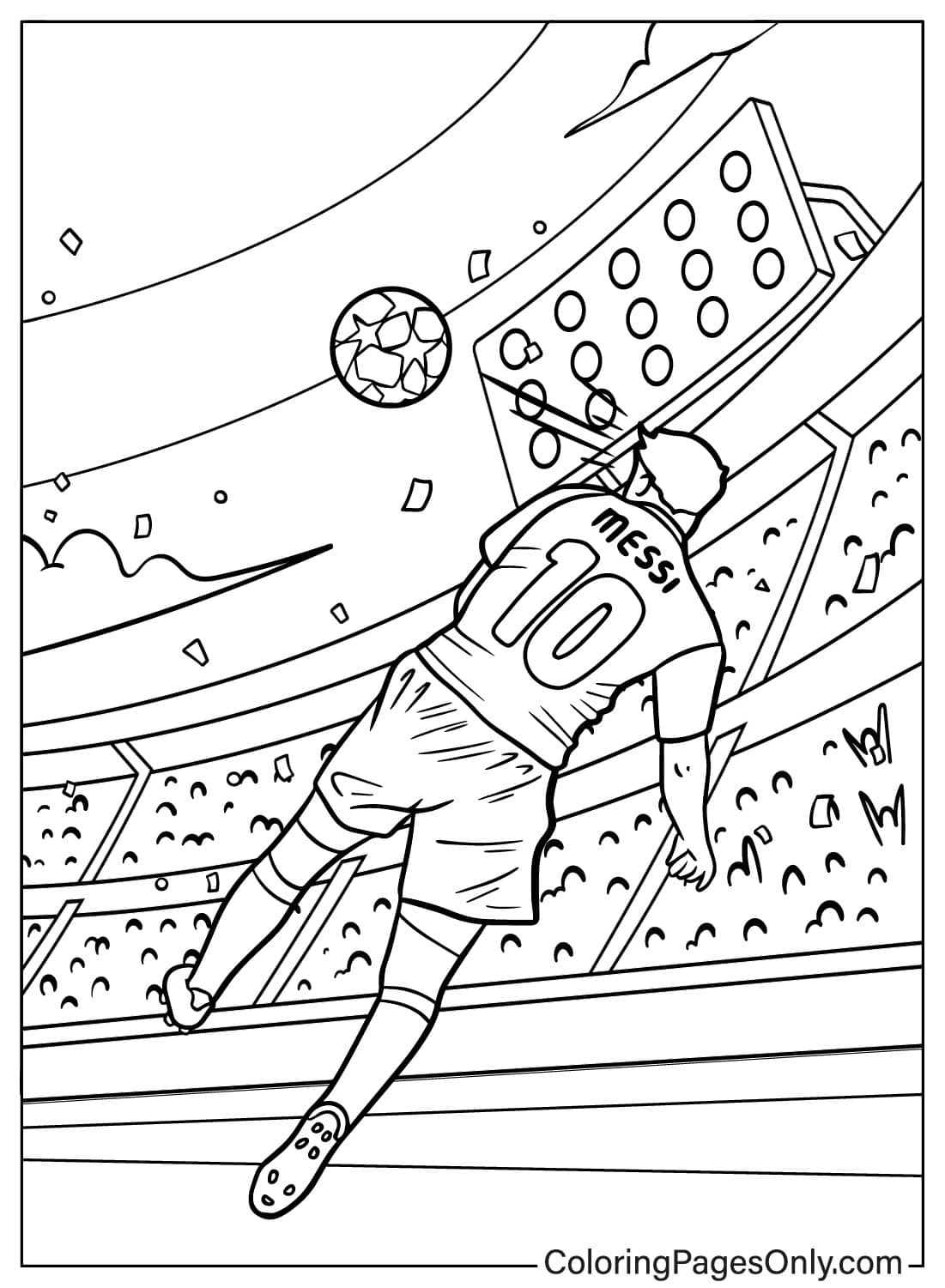
Messi’s dribbling technique – low to the ground, left foot dominant, with the specific balance generated by his relatively short stature (1.70m / 5’7″) and low center of gravity – produces action pages with a distinctive body position: body angled forward, left foot extended or controlling, arms slightly spread for balance, the expression of focused concentration. His physical compact quality – what analysts describe as his ability to change direction faster than taller players because there is less body to redirect – is visible even in the still image of a coloring page.
What These Pages Do
Messi’s career is the most comprehensively documented individual achievement in team sport. Eight Ballon d’Or awards – more than any other player – across fifteen years of sustained elite performance. In the 2012 calendar year, he scored 91 goals, breaking a record that had stood since 1972. The 2022 World Cup, at age 35, completes the career narrative in the manner that the sport requires of its greatest player. These are specific, measured, verifiable facts arranged across twenty years of public record.
The napkin contract is one of sport’s most specific origin stories. A thirteen-year-old boy from Rosario, Argentina, whose growth hormone treatment his family could not afford, signed his first professional agreement on a restaurant napkin in Barcelona because no formal contract paper was available. The gap between that napkin and the eighth Ballon d’Or is the story the collection’s pages represent.
Fine motor development. The American Academy of Pediatrics identifies fine motor skill development as a key milestone throughout early childhood. The blaugrana stripe work, the World Cup trophy gold detail, the Argentina badge complexity, and the portrait precision required to render Messi’s specific facial features provide motivated, sustained fine motor practice at every developmental level. The 2005 Art Therapy Journal study on structured coloring and anxiety reduction applies throughout.
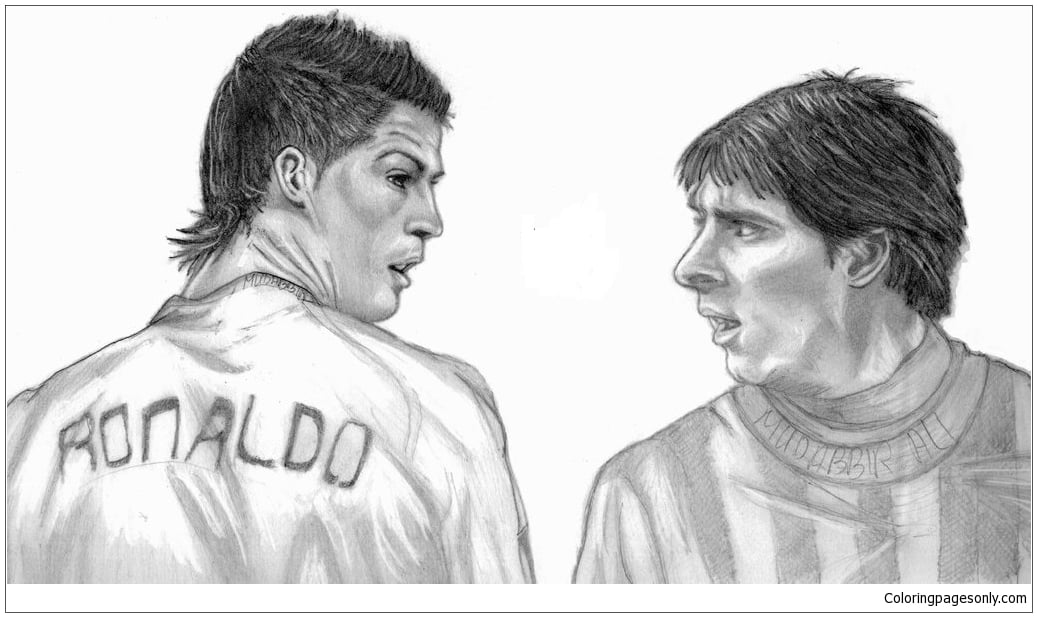
The rivalry with Cristiano Ronaldo has defined football’s conversation for fifteen years. The Ronaldo coloring collection on this site and the Messi collection exist in the same catalog- the two players who have alternately held the Ballon d’Or between them from 2008 to 2023 (with two exceptions: Modric in 2018, Benzema in 2022) represent the sport’s most sustained individual excellence debate. Coloring both collections is the most direct engagement with that debate available through a coloring activity.
How to Color These Pages Well
The Argentina sky blue is the collection’s most specific color decision. The Albiceleste blue is not any blue – it is a specific pale sky blue that sits lighter than royal blue, cooler than cobalt, and distinctly lighter than navy. Test your blue against a known reference: it should read as “the color of a clear sky at noon.” Too dark and it reads as navy or royal blue; too green and it reads as teal. The stripe width should be consistent – the Argentina jersey stripes are equal-width, and inconsistency in stripe width reads immediately as incorrect.
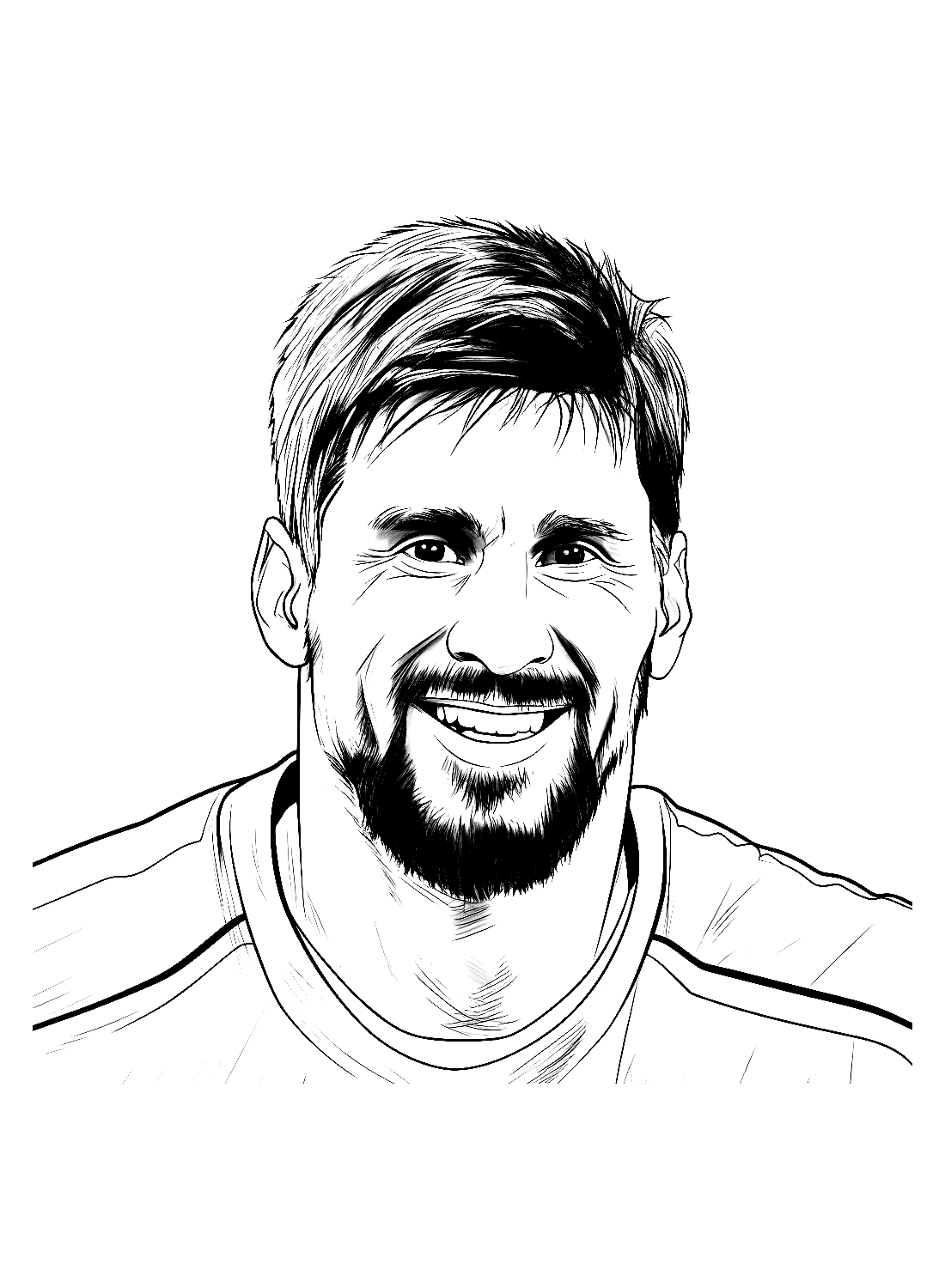
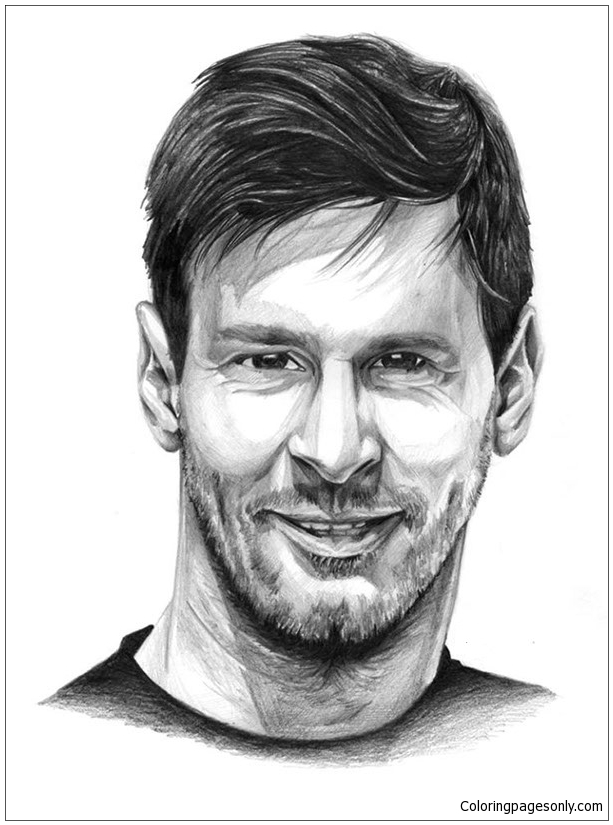
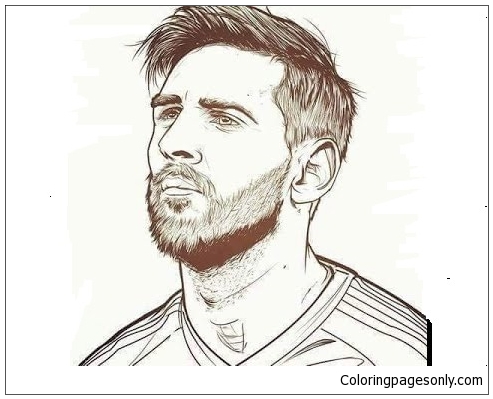
Messi’s beard and hair vary significantly by era. Portrait pages of Messi from different career periods look different primarily because of his facial hair and hairstyle: the young Barcelona Messi (mid-2000s through early 2010s) was typically clean-shaven or with very light stubble; the mature Messi (from approximately 2015 onward) has a fuller, darker beard. Identify the era of the portrait before applying facial hair – a beard on a 2007-era Messi portrait reads as incorrect. The hair has also varied: shorter and lighter in the early years, more textured and sometimes with highlights in the PSG and Miami era.
The pink Inter Miami jersey is the warmest palette in the collection. The pink reads correctly when applied at full saturation – a warm, vivid pink that is neither pale nor neon. The black sleeves and trim provide the maximum cool-warm contrast available on the page. Apply the pink first across the full torso; apply the black second on the sleeves with a clean boundary between the two. The contrast is the design.
The World Cup trophy is the single most important gold element. Any page featuring the World Cup trophy should treat it as the warmest, most vivid element – brighter gold than the jersey badge, brighter than any trim. Three-zone treatment for the trophy: a warm near-white highlight at the very top of each curved surface, a warm vivid gold across the main surfaces, and a warm amber-gold in the deepest recesses. The trophy should read as the page’s most luminous element.
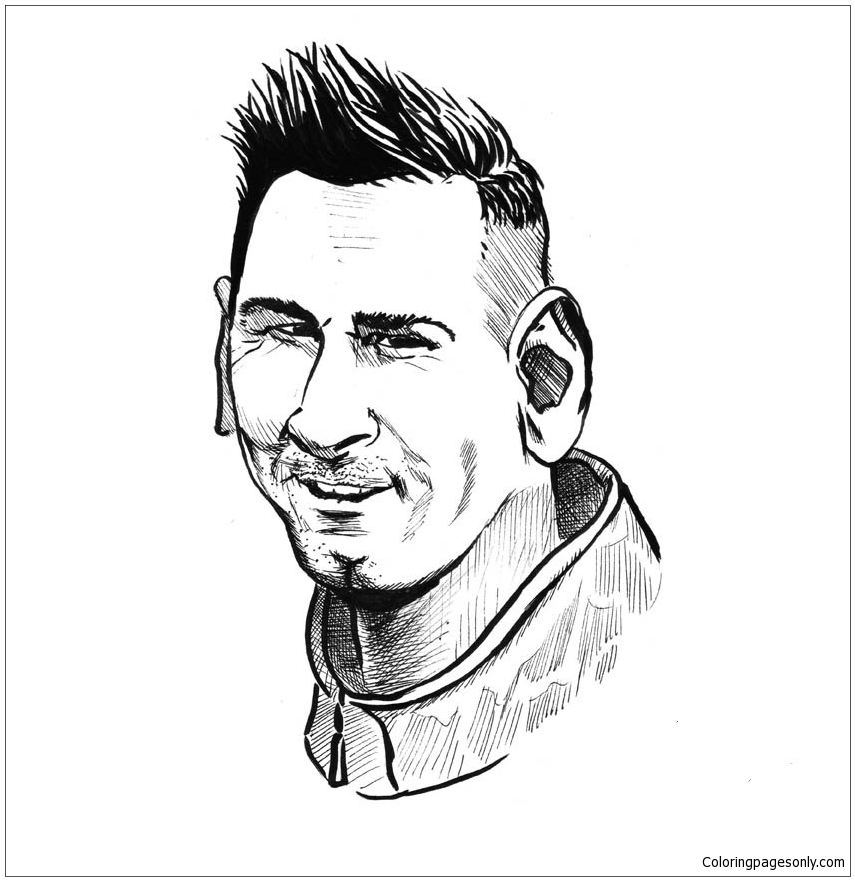
His face has specific proportions – compact and rounded. Messi’s face is slightly rounder and more compact than that of many taller footballers. The features are Mediterranean – dark eyes, dark hair, prominent nose – and the overall impression is of someone who looks slightly younger than his age throughout most of his career. Resist the tendency to add the angular jaw of a generic “football player” portrait – his specific compact quality is what makes a portrait recognizable as him.
5 Creative Craft Ideas
The Ballon d’Or Timeline
Print eight copies of the same simple Messi portrait page. Color each in a different jersey: 2009 (Barcelona), 2010 (Barcelona), 2011 (Barcelona), 2012 (Barcelona), 2015 (Barcelona), 2019 (Barcelona), 2021 (PSG), 2023 (Inter Miami).
Mount all eight in two rows of four on a gold backing sheet. Below each, add the year and a one-line achievement from that year. Add the title: “Eight Ballon d’Or – 2009 to 2023.” The display is the most direct visual representation of sustained excellence in sport.

The Napkin Contract to the World Cup Trophy
Print the most intimate portrait page and the most celebratory World Cup page. Color the portrait in Barcelona blaugrana – the jersey he first wore at thirteen. Color the World Cup page in Argentina Albiceleste with the trophy in maximum vivid gold.
Mount both side by side on a dark backing sheet. Add dates: “Barcelona La Masia, 2000 – Written on a napkin” on the left. “Lusail Stadium, Qatar, December 18, 2022 – Winner” on the right. The display frames the career’s beginning and its defining completion.
The 91 Goals Calendar
In 2012, Messi scored 91 goals across all competitions – a calendar year record that broke Gerd Müller’s 1972 record of 85. Print any dynamic action page showing Messi in Barcelona blue and red. Color it carefully in the blaugrana.
Mount on a backing sheet beside a hand-drawn calendar grid of 2012. Mark 91 dates with a star or dot, working through the year from January to December. The visual density of the marks – 91 individual dates in a calendar year – makes the specific achievement tangible in a way that the number alone does not.
The Bisht Moment
The image of Messi in a white Argentina jersey, wearing the black bisht – the ceremonial Arab cloak placed on his shoulders by the Emir of Qatar – holding the gold World Cup trophy is one of the most visually specific moments in football history. Print a World Cup celebration page.
Color Messi in the white Argentina away jersey (which Spain wore in the final). Add – by hand-drawing or by overlaying with black marker – the bisht over the shoulders as a black-and-gold cloak. Render the World Cup trophy in maximum vivid gold.
Below the image, add: “December 18, 2022. The Emir of Qatar placed a bisht on Messi’s shoulders before he lifted the trophy. He wore it for all the photographs.”
Messi vs. the Eras – Jersey Through Time
Print four pages showing Messi in each of his four clubs: Barcelona blaugrana, PSG dark blue, Inter Miami pink, and Argentina Albiceleste. Color all four with their canonical palettes.
Arrange in a two-by-two grid on a neutral backing sheet. Add club name and years below each. No additional text. The four colors – dark blue and red stripes, navy, pink, sky blue,e and white stripes – tell the career’s geography in palette form: Barcelona for seventeen years, Paris for two, Miami ongoing, Argentina always.

Frequently Asked Questions
Who is Lionel Messi and where is he from? Lionel Andrés Messi is an Argentine professional footballer born on June 24, 1987, in Rosario, Santa Fe, Argentina. He plays as a forward – typically as a right winger or false 9 – and currently plays for Inter Miami CF in Major League Soccer in the United States. He spent seventeen seasons (2004-2021) in FC Barcelona’s first team and holds the record for the most goals scored for a single club in football history with 672. He has won eight Ballon d’Or awards – more than any other player – and won the 2022 FIFA World Cup with Argentina at age 35.
What is the growth hormone story, and how did Messi come to Barcelona? At approximately age ten, Messi was diagnosed with a Growth Hormone Deficiency that required medical treatment costing approximately $900 per month. His local club, Newell’s Old Boys in Rosario, declined to fund the treatment. FC Barcelona’s youth football director, approached by a scout named Horacio Gaggioli, agreed to fund Messi’s medical treatment in exchange for Messi and his family moving to Barcelona. When the agreement was reached, no formal contract paper was available – the director Carles Rexach wrote the agreement on a restaurant napkin, which was signed and is preserved. Messi’s family moved from Rosario to Barcelona in 2000 when he was thirteen.
How many Ballon d’Or awards has Messi won and when? Messi has won eight Ballon d’Or awards – the most of any player in history. His wins: 2009, 2010, 2011, 2012, 2015, 2019, 2021, and 2023. The 2009 through 2012 run was four consecutive awards. The rivalry with Cristiano Ronaldo, who has won five (2008, 2013, 2014, 2016, 2017), defined the award’s most-watched era. The 2023 award was given to Messi largely in recognition of his 2022 World Cup victory with Argentina – the tournament had occurred in December 2022, after the 2022 award had already been given to Karim Benzema.
What happened in the 2022 FIFA World Cup final? The 2022 FIFA World Cup final was played on December 18, 2022, at Lusail Stadium in Qatar. Argentina faced France. Argentina led 2-0 in the second half before France scored twice in three minutes – Kylian Mbappé with two goals – to equalize at 2-2 and force extra time. In extra time, Argentina went 3-2 before Mbappé completed a hat-trick to make it 3-3. Argentina won the subsequent penalty shootout 4-2. Messi scored twice in the match – a penalty and a goal in extra time – and won the Golden Ball as tournament best player and the Golden Boot as top scorer with seven goals. Before the trophy presentation, the Emir of Qatar placed a bisht (a traditional Arab ceremonial cloak) on Messi’s shoulders – an act of cultural honor – and Messi lifted the World Cup while wearing it.
What records did Messi set in 2012? In the 2012 calendar year – January 1 to December 31 – Messi scored 91 goals across all competitions for FC Barcelona and the Argentine national team. On December 22, 2012, he scored his 91st goal of the year, breaking the previous world record of 85 goals in a calendar year set by German footballer Gerd Müller in 1972. The record had stood for forty years. Messi’s 91-goal year included goals in La Liga, the Copa del Rey, the UEFA Champions League, and international matches with Argentina.
Why did Messi leave Barcelona in 2021? Messi left FC Barcelona in the summer of 2021, not by choice but because of the club’s financial situation. Barcelona’s debt – exacerbated by the COVID-19 pandemic’s impact on matchday revenue – meant the club could not register Messi’s renewed contract under La Liga’s Financial Fair Play regulations, which set spending limits based on club revenue and debt. Despite both Messi and Barcelona publicly stating their desire for him to remain, the financial constraints made it legally impossible for the club to register him. He subsequently signed with Paris Saint-Germain on a free transfer.
What age group are these pages best suited for? Simple portrait and standing pose pages work well from ages five to seven for young Messi fans,s developing coloring confidence with a familiar face and recognizable jersey. The Argentina sky blue stripes and the Barcelona blaugrana stripes provide structured color exercises appropriate for this age range. The dynamic action pages – dribbling sequences, goal celebration poses with complex figure positions – are most rewarding from ages seven to ten. The World Cup trophy pages, which require the most careful gold rendering and the most compositionally complex figure poses, are most satisfying for ages nine and up. Adult fans of Messi will find the most detailed and rewarding challenges in the close portrait pages and the World Cup celebration pages.
Browse the full collection at ColoringPagesOnly.com. All 60+ pages free, no sign-up, PDF or PNG, print or color online.
A thirteen-year-old from Rosario signed his first professional agreement on a napkin. Barcelona paid for his growth hormone treatment. He made his debut at seventeen. He scored 91 goals in a calendar year at twenty-five. He turned thirty-five still without the World Cup. And then December 18, 2022, in Lusail – 3-3 after extra time, penalties, 4-2 – and he was wearing the bisht and holding the trophy that the entire narrative of his career had been organized around for fifteen years.
The eight Ballon d’Or awards were always in the record. The 672 Barcelona goals were always in the record. The World Cup was the one that wasn’t.
Now it is.
Pick up your sky blue. The white stripes are the paper. The Argentina badge gold is warm and vivid.
Lift the trophy.
Share your work on Facebook and Pinterest and tag #Coloringpagesonly. We especially want to see the eight Ballon d’Or timelines and the napkin to trophy displays.
Color the ten. Mark the records. December 18, 2022 – it was always going to end here.