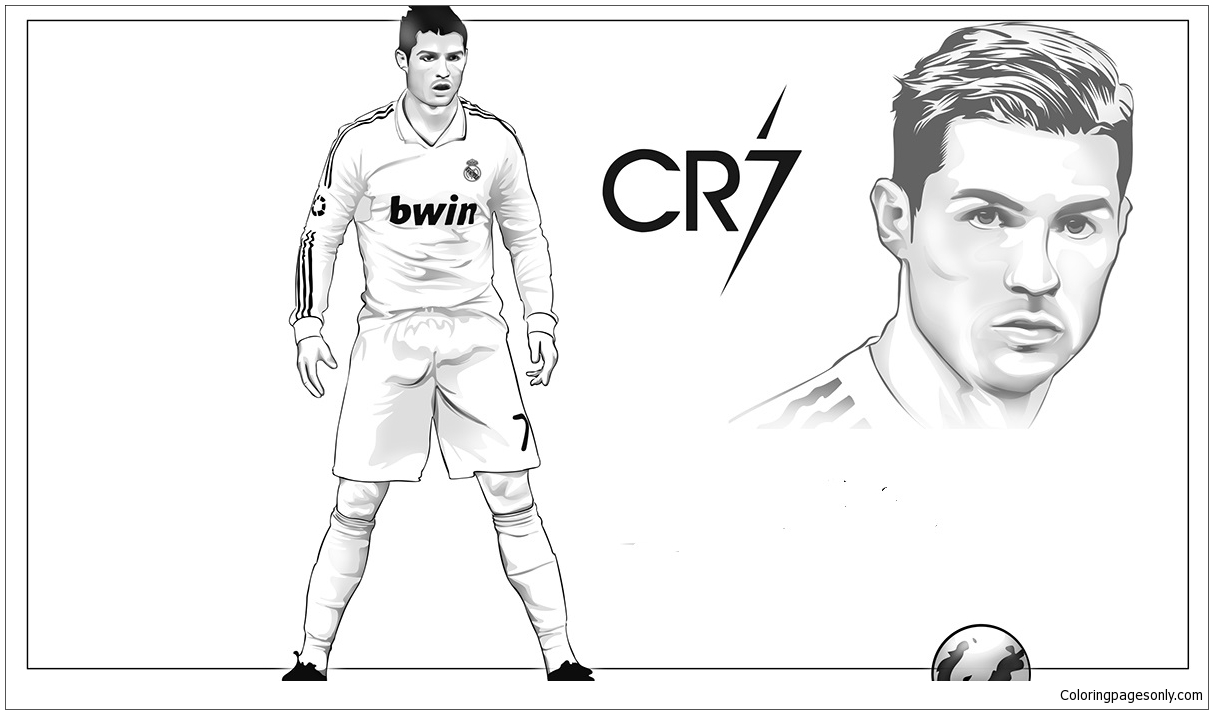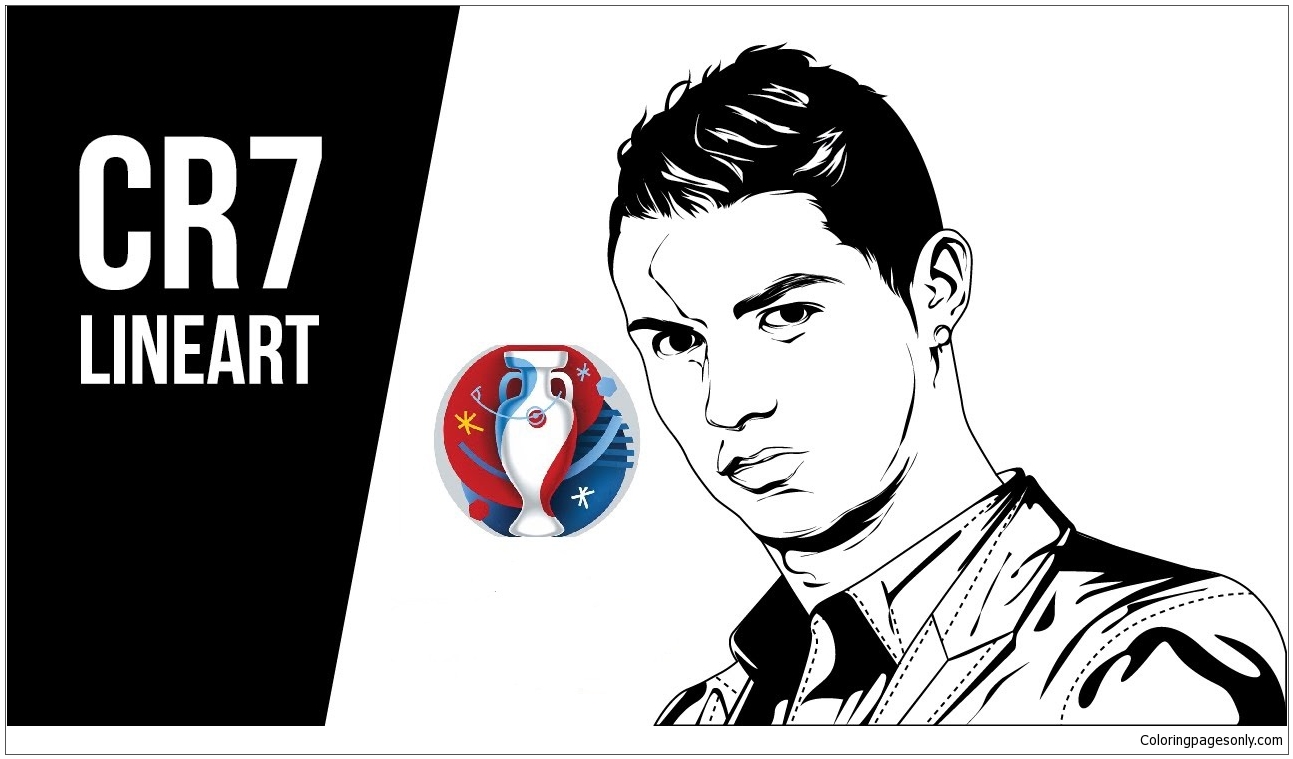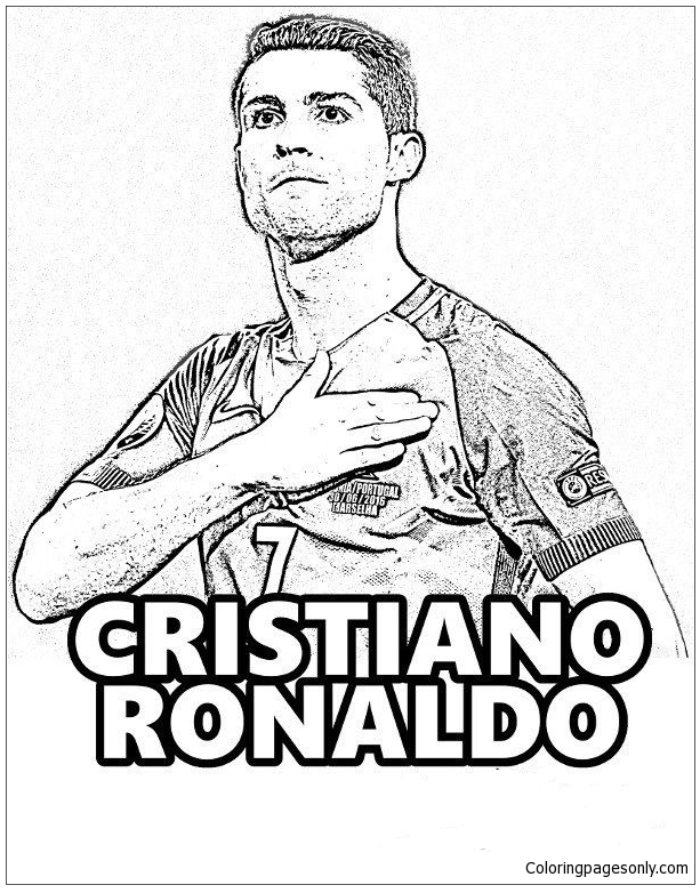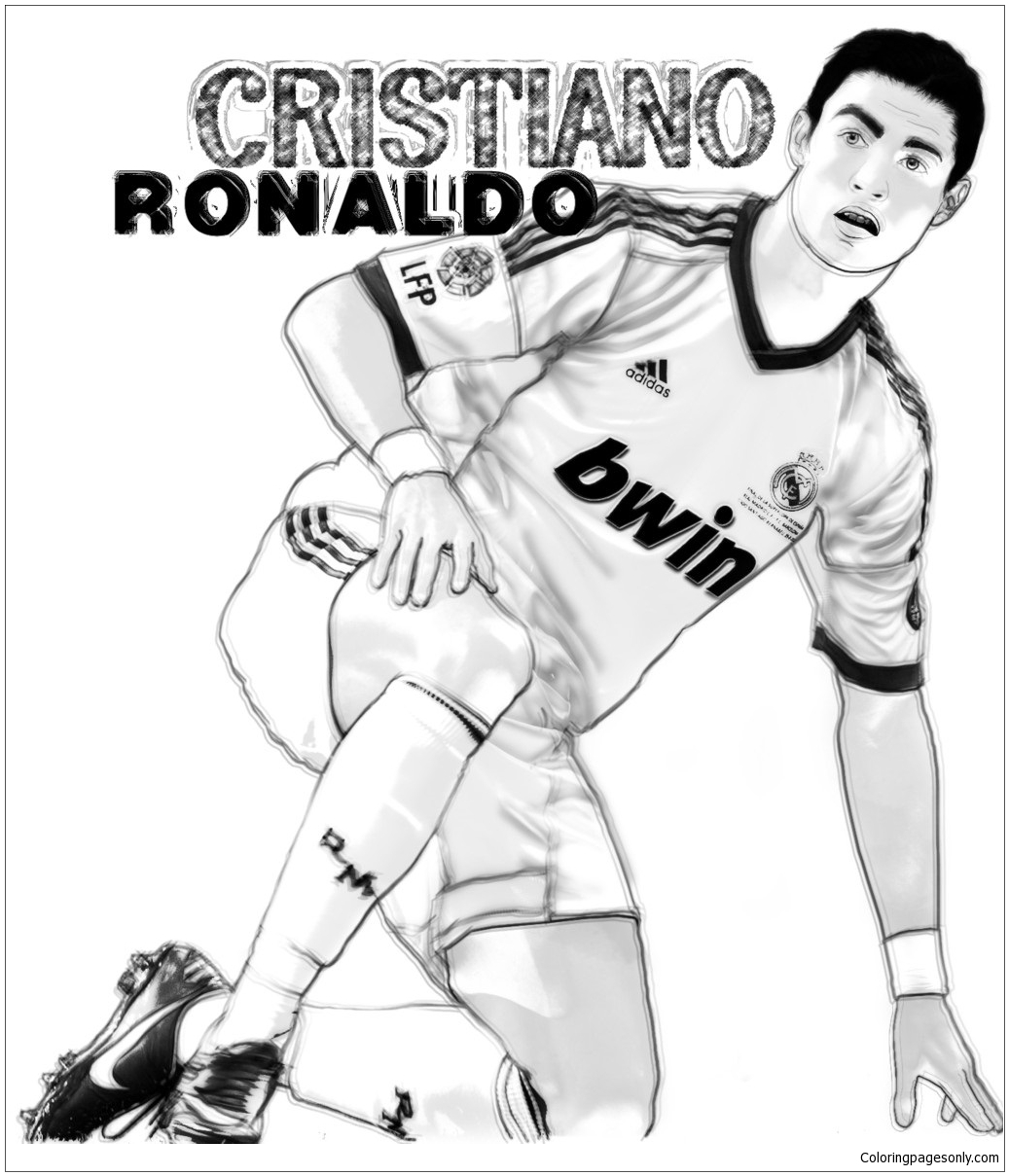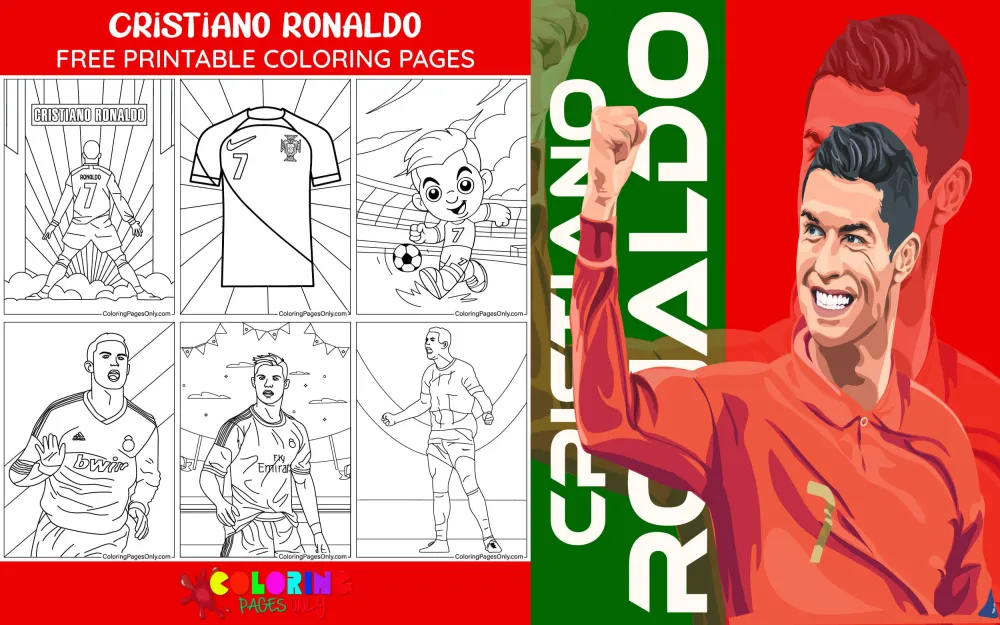
Cristiano Ronaldo Coloring Pages
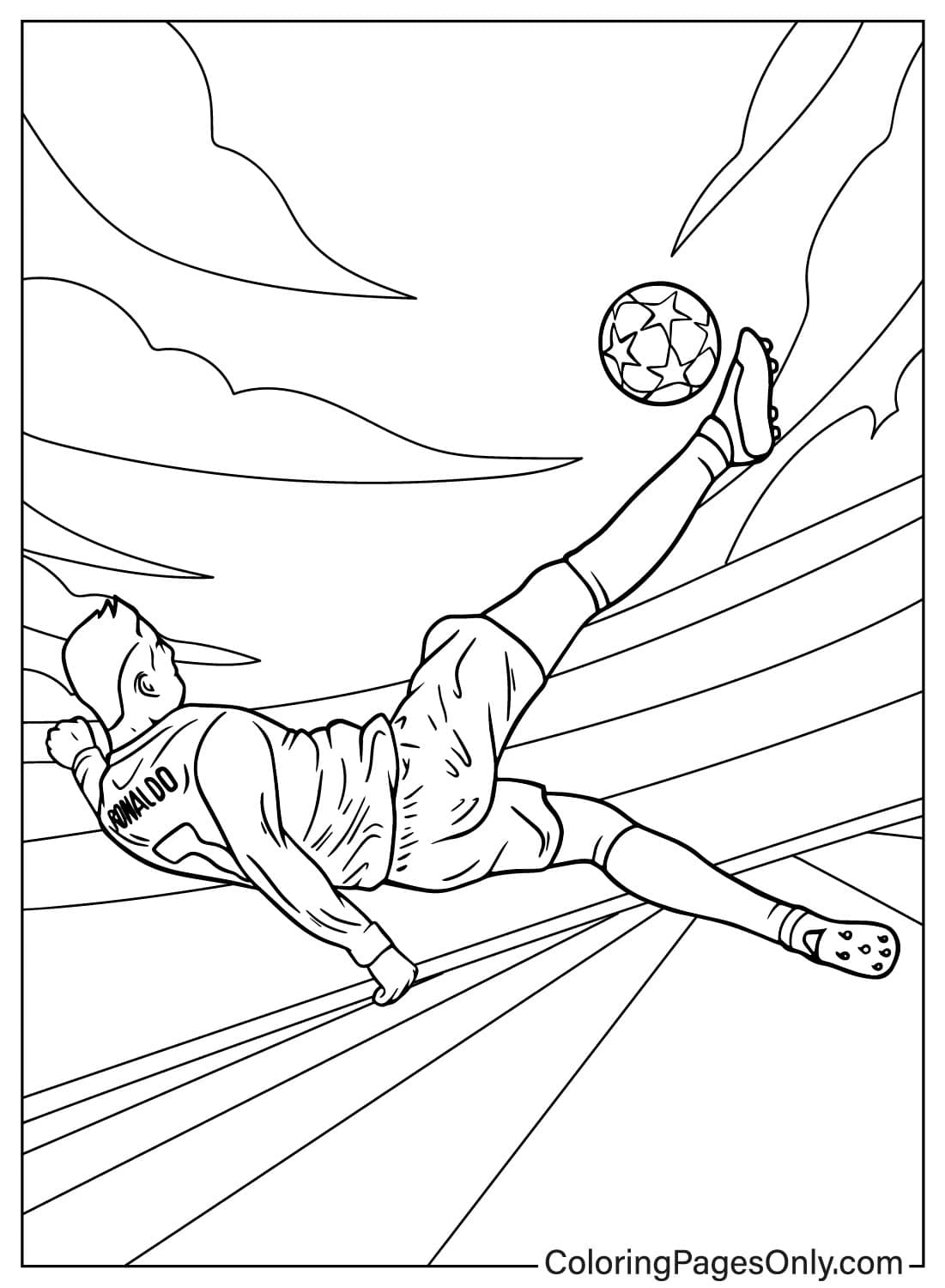
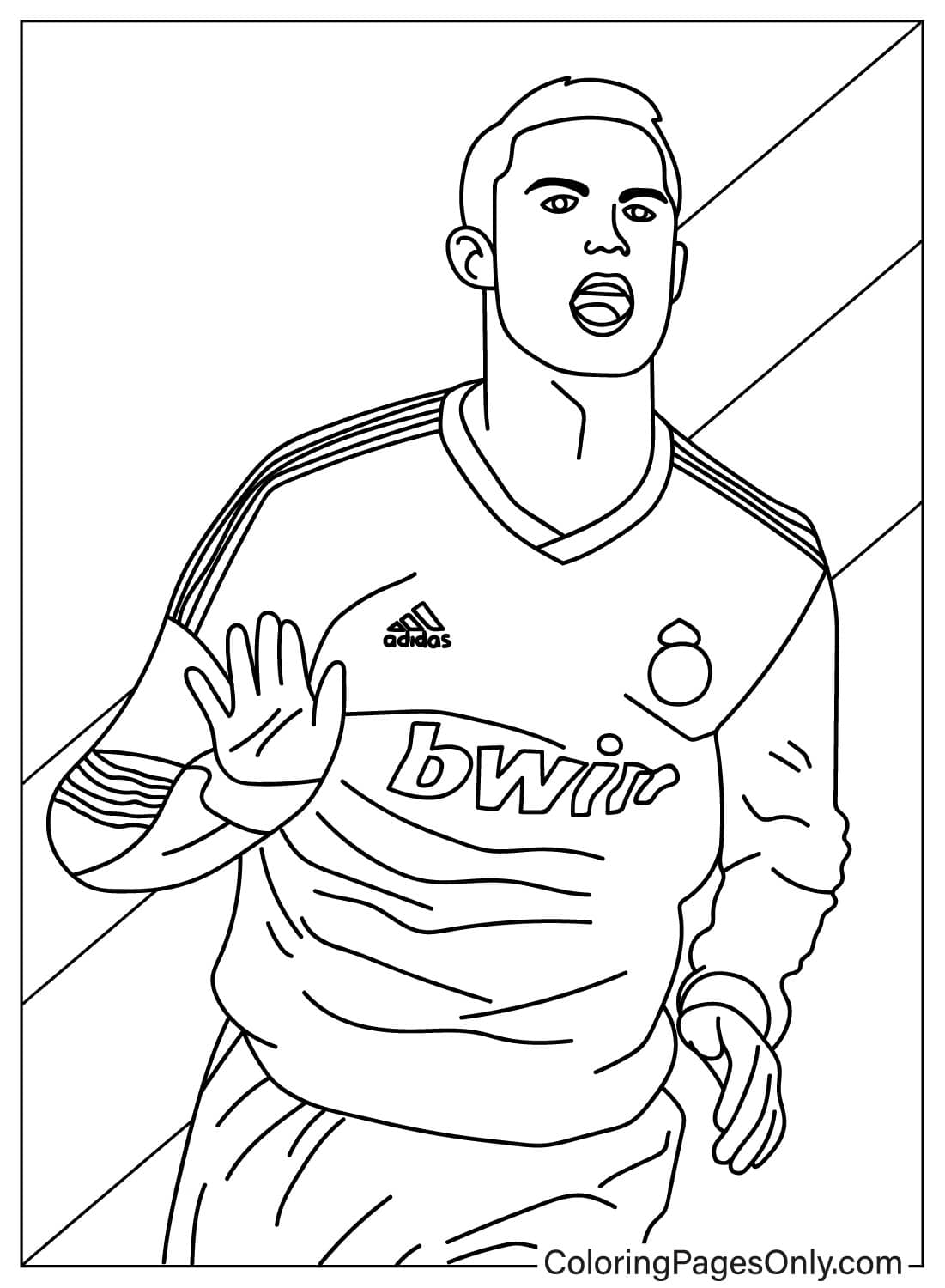
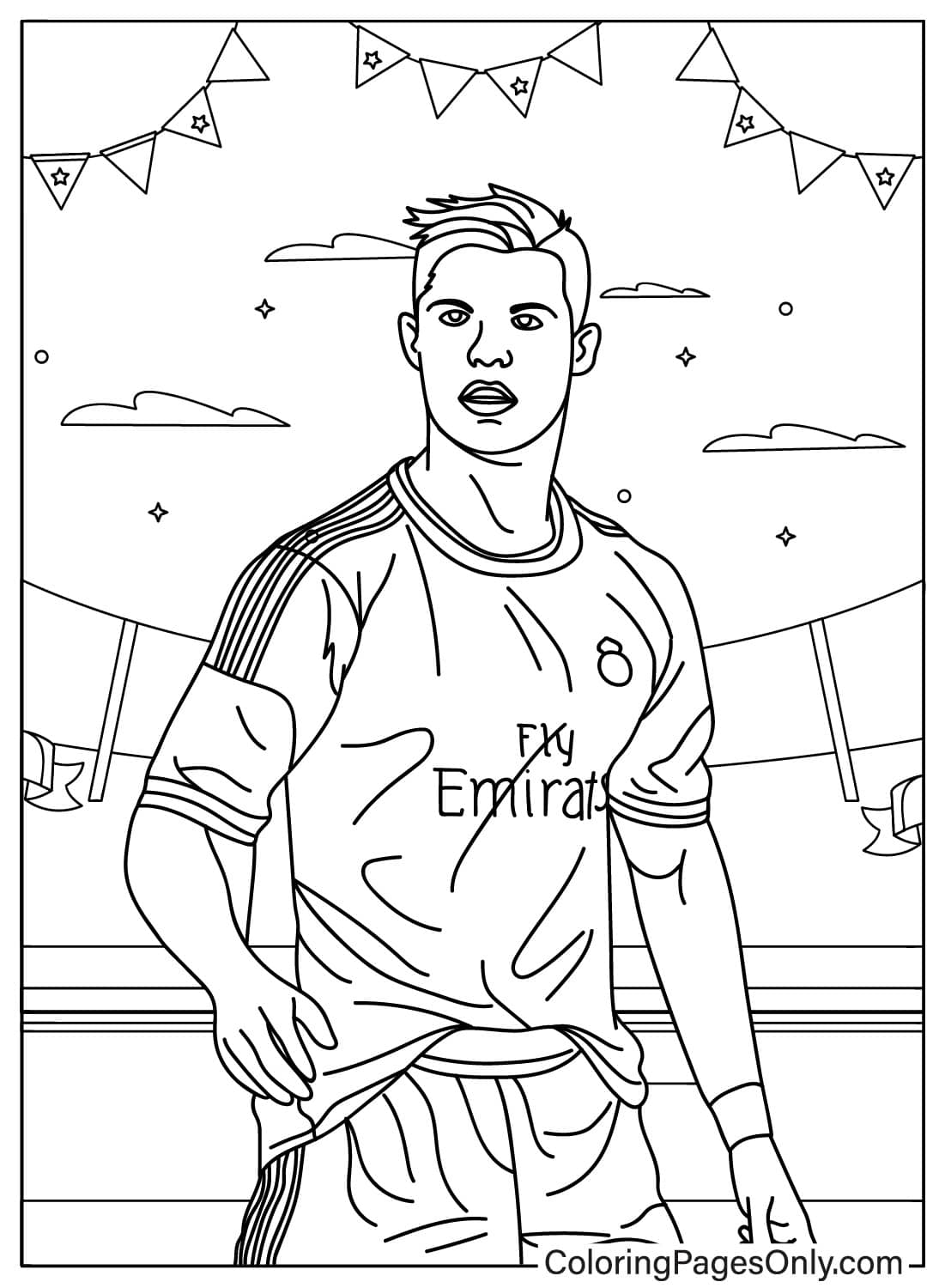
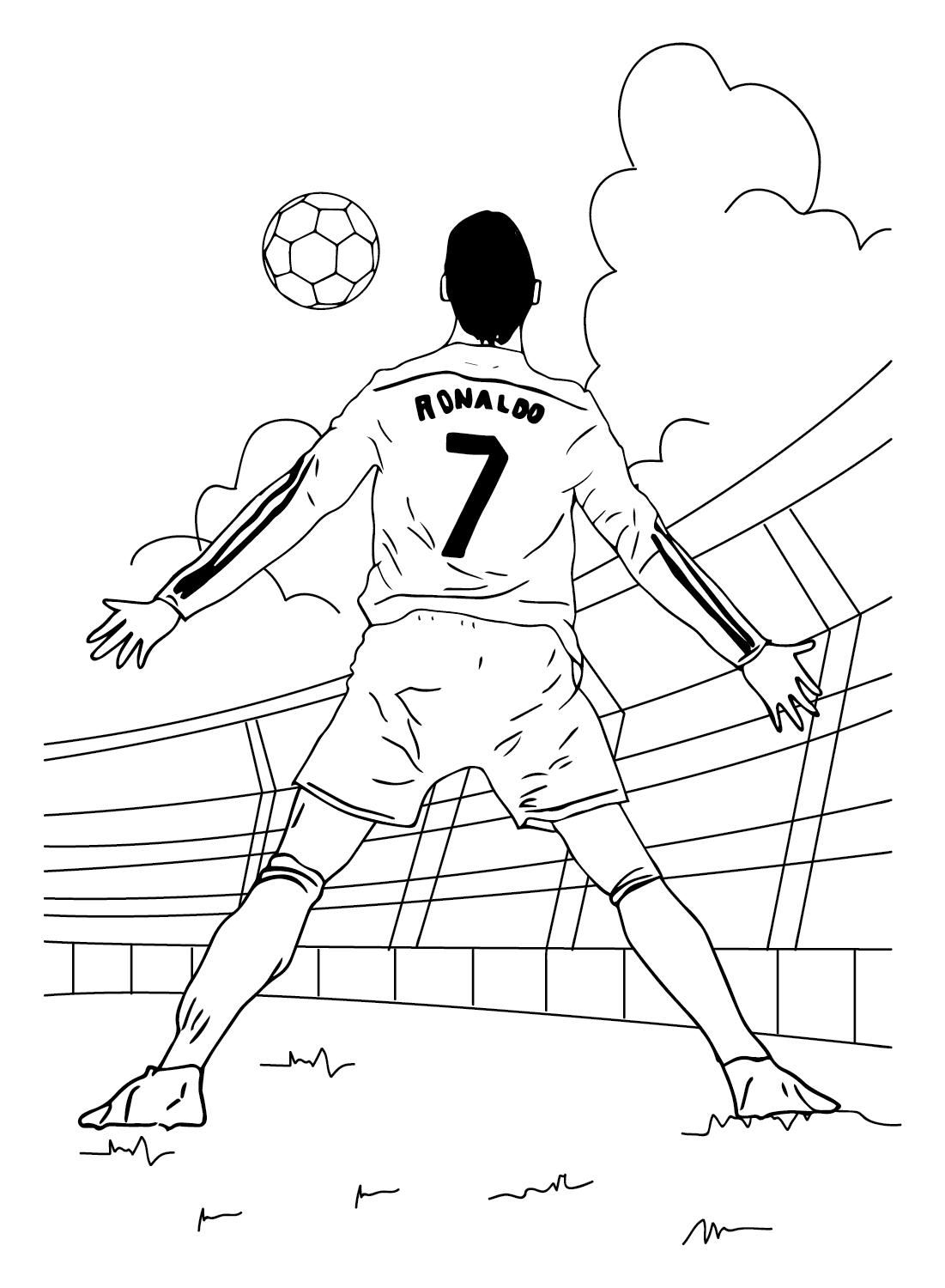
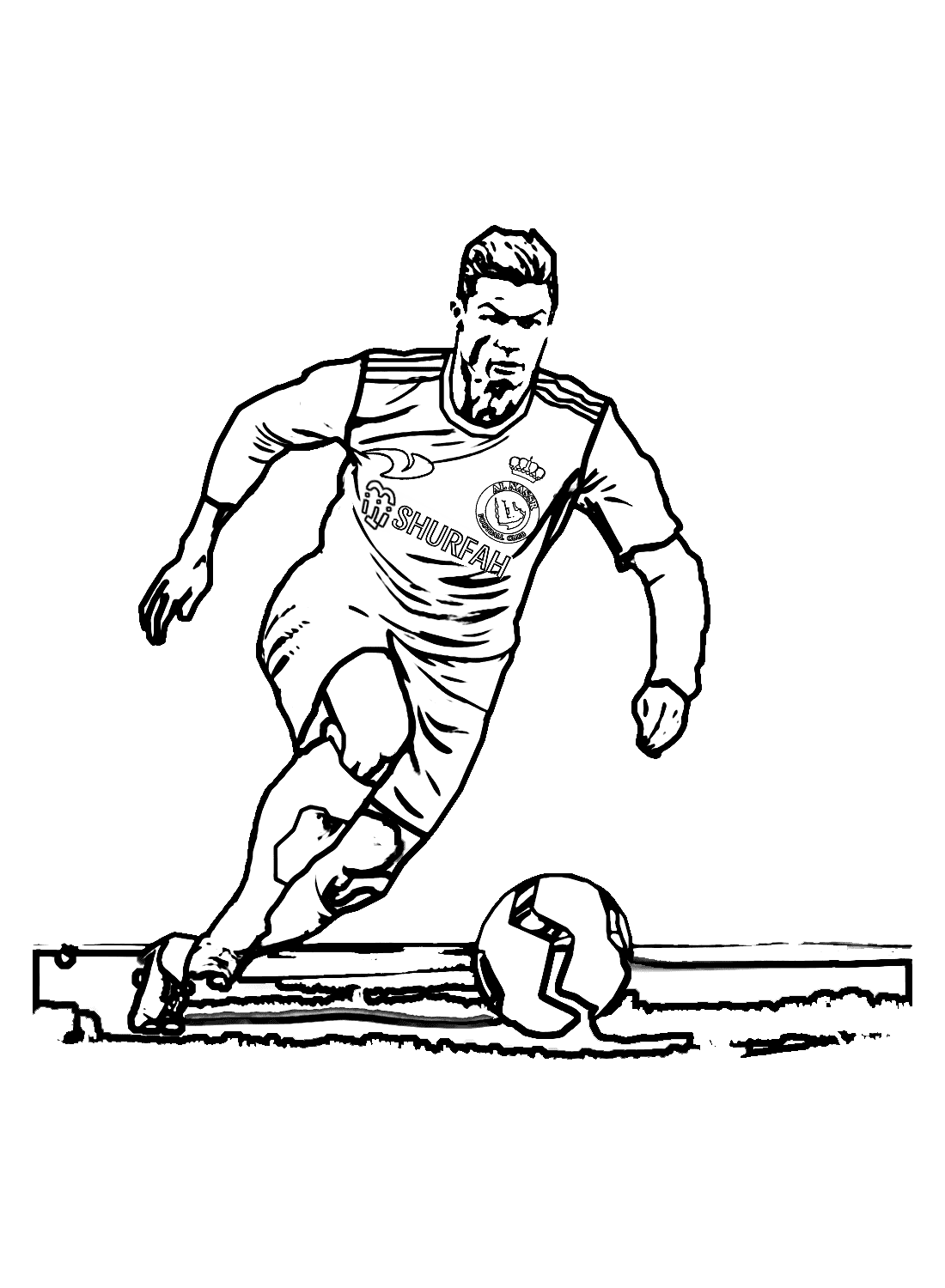
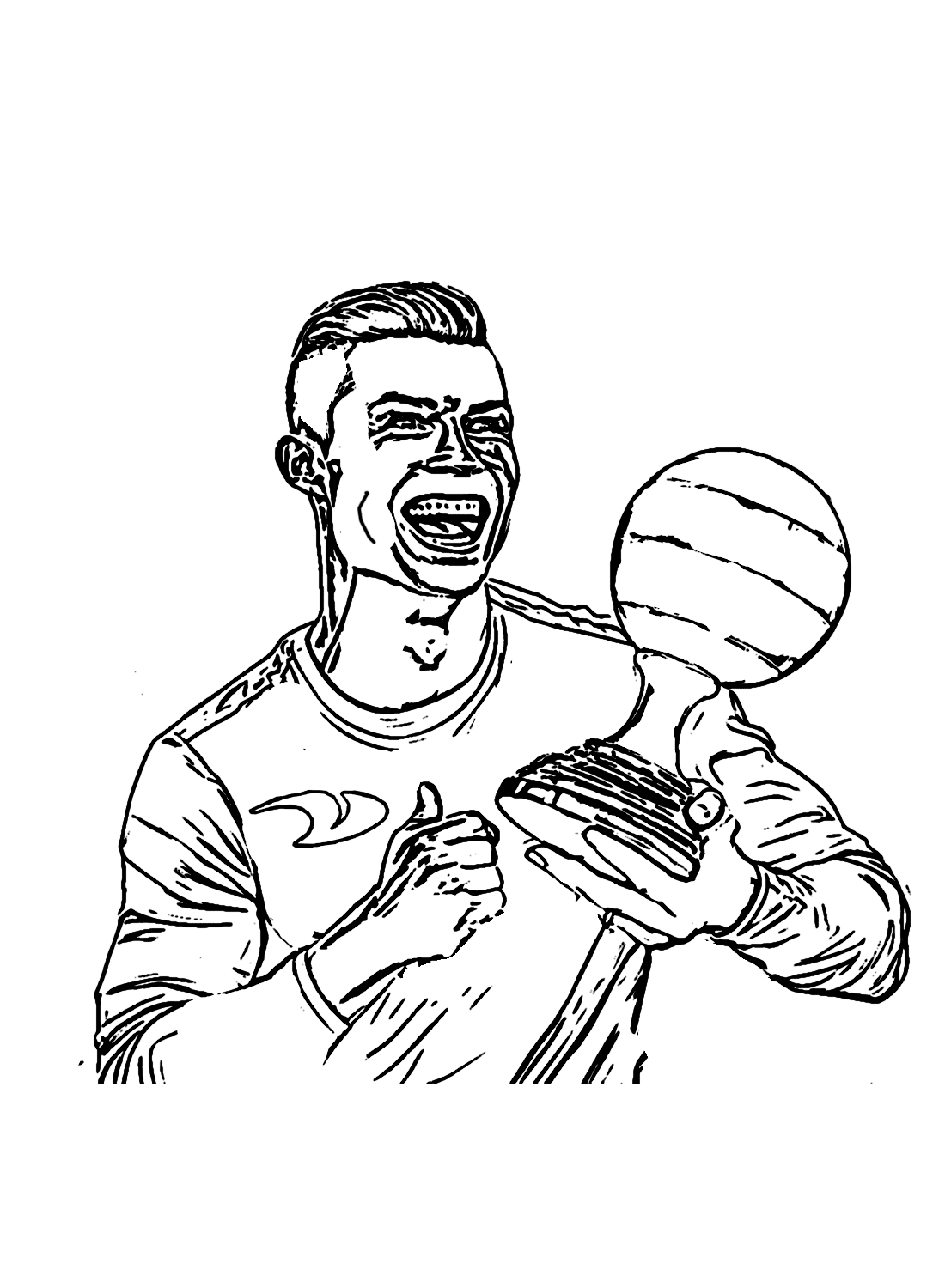
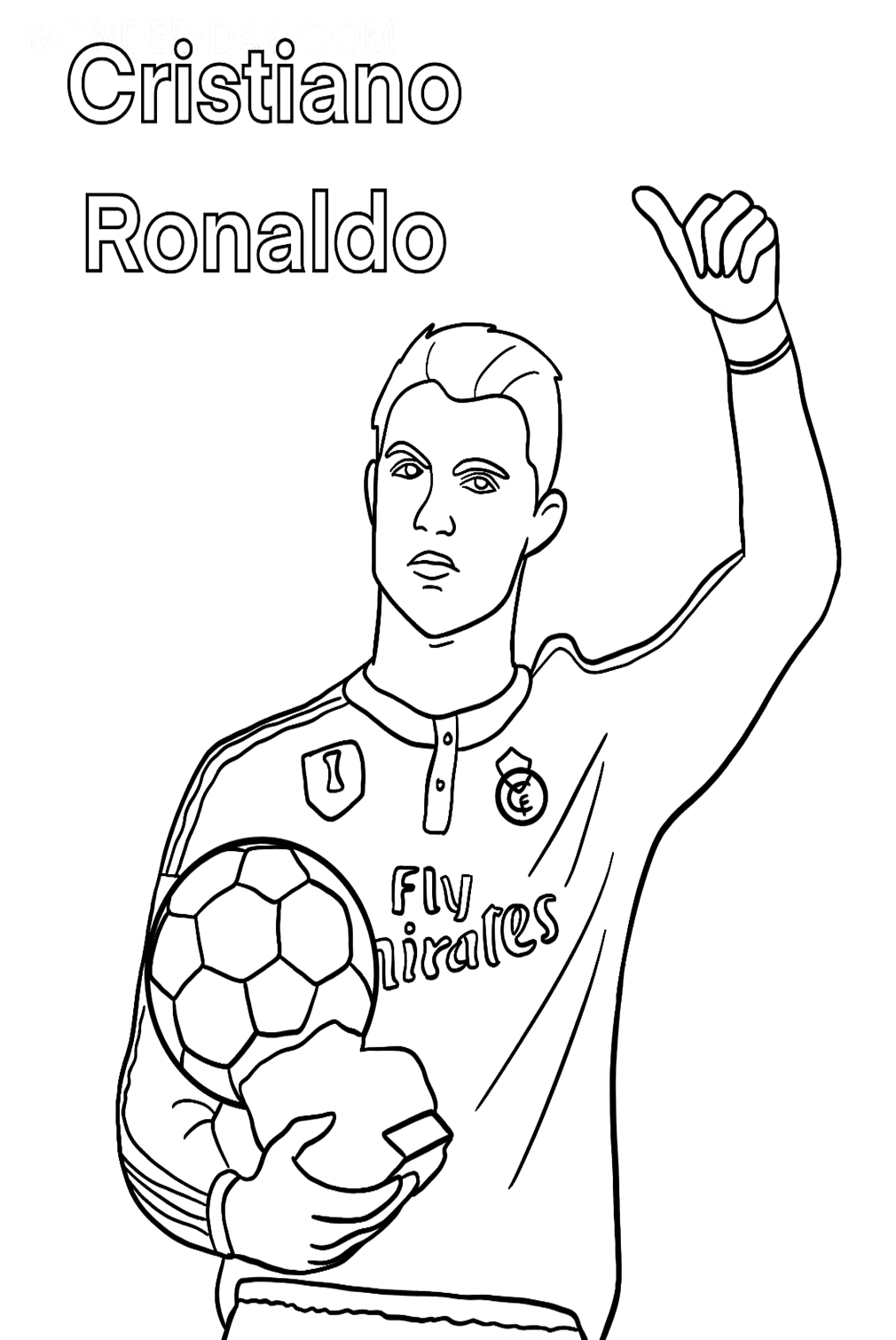
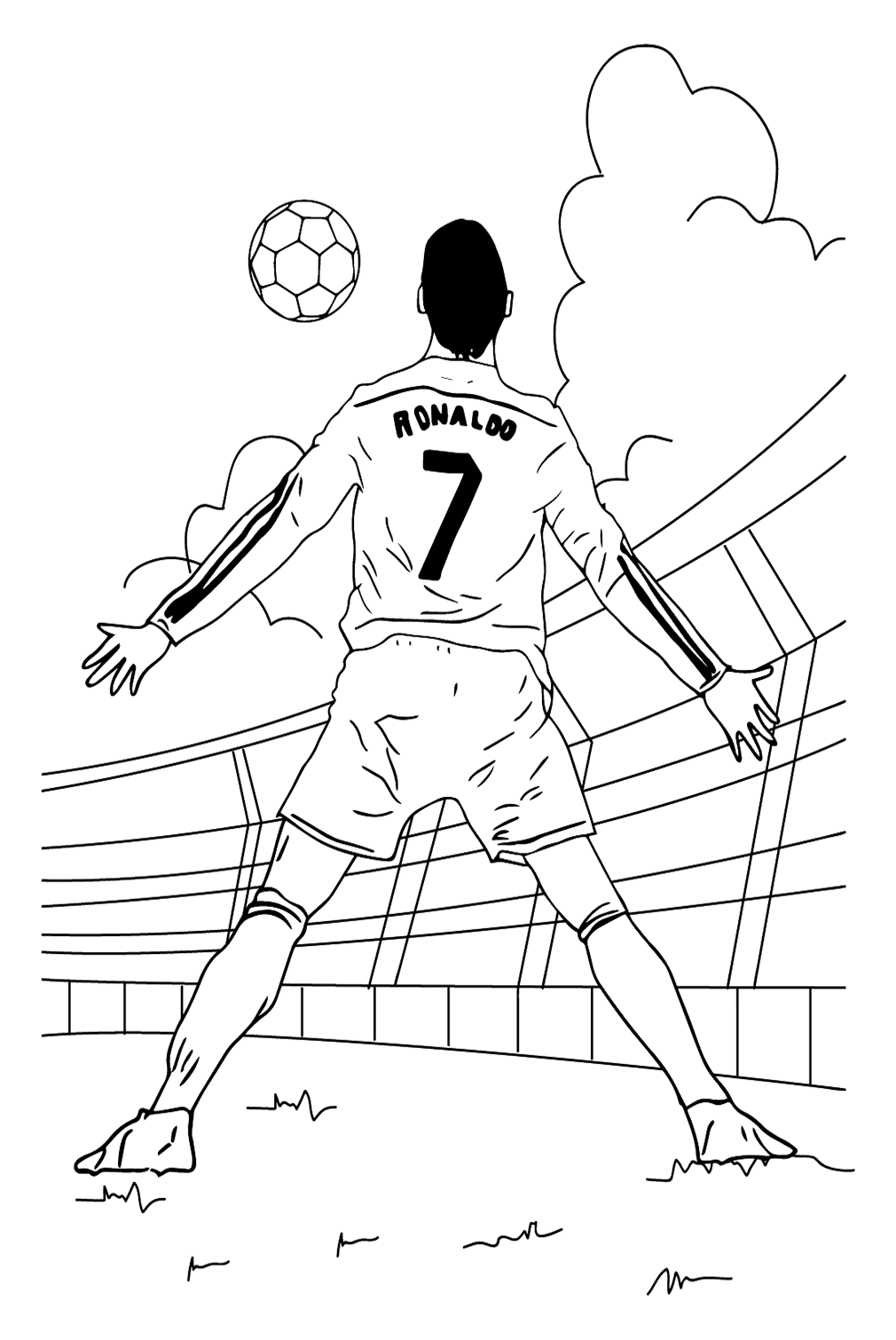
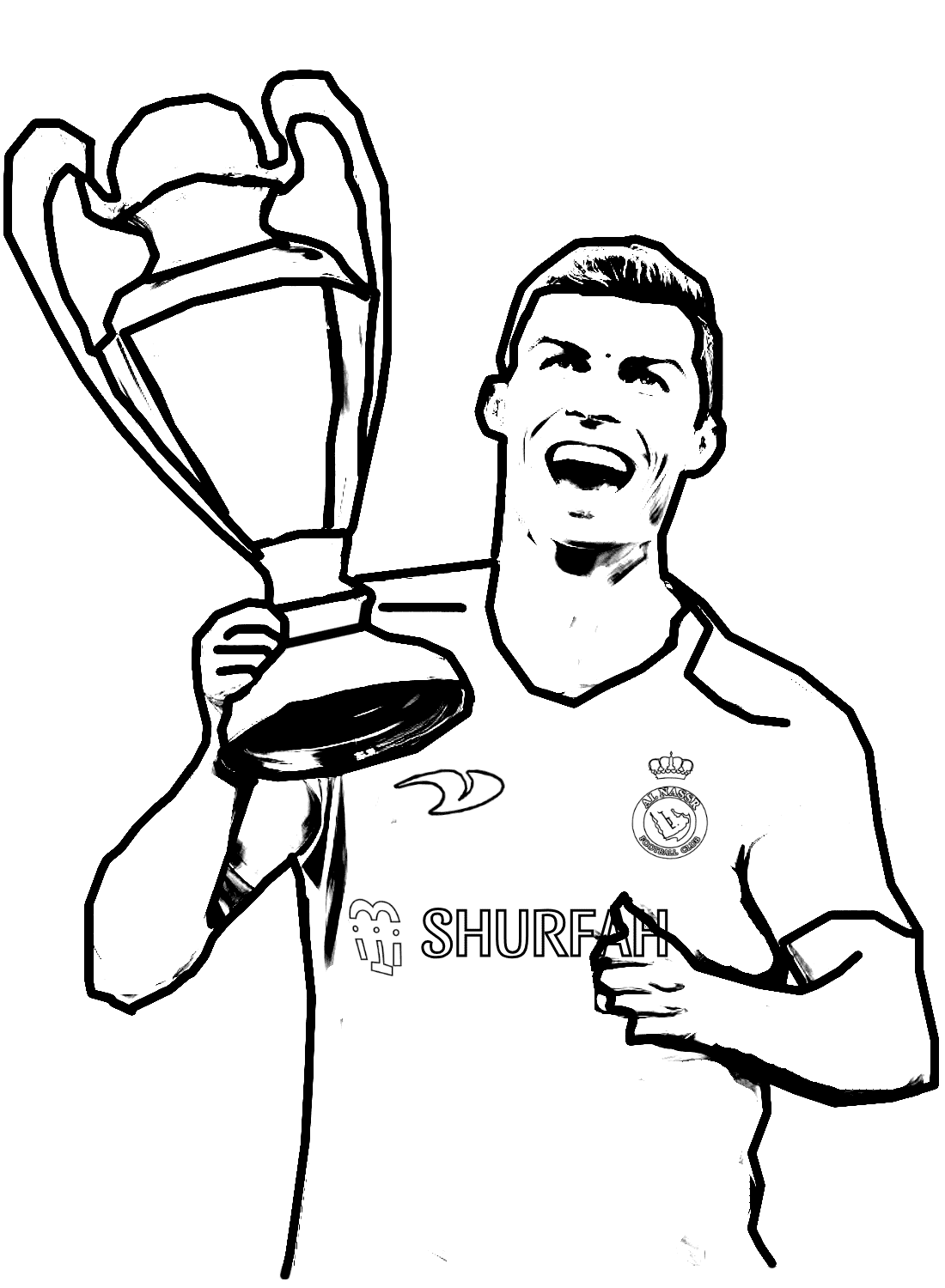
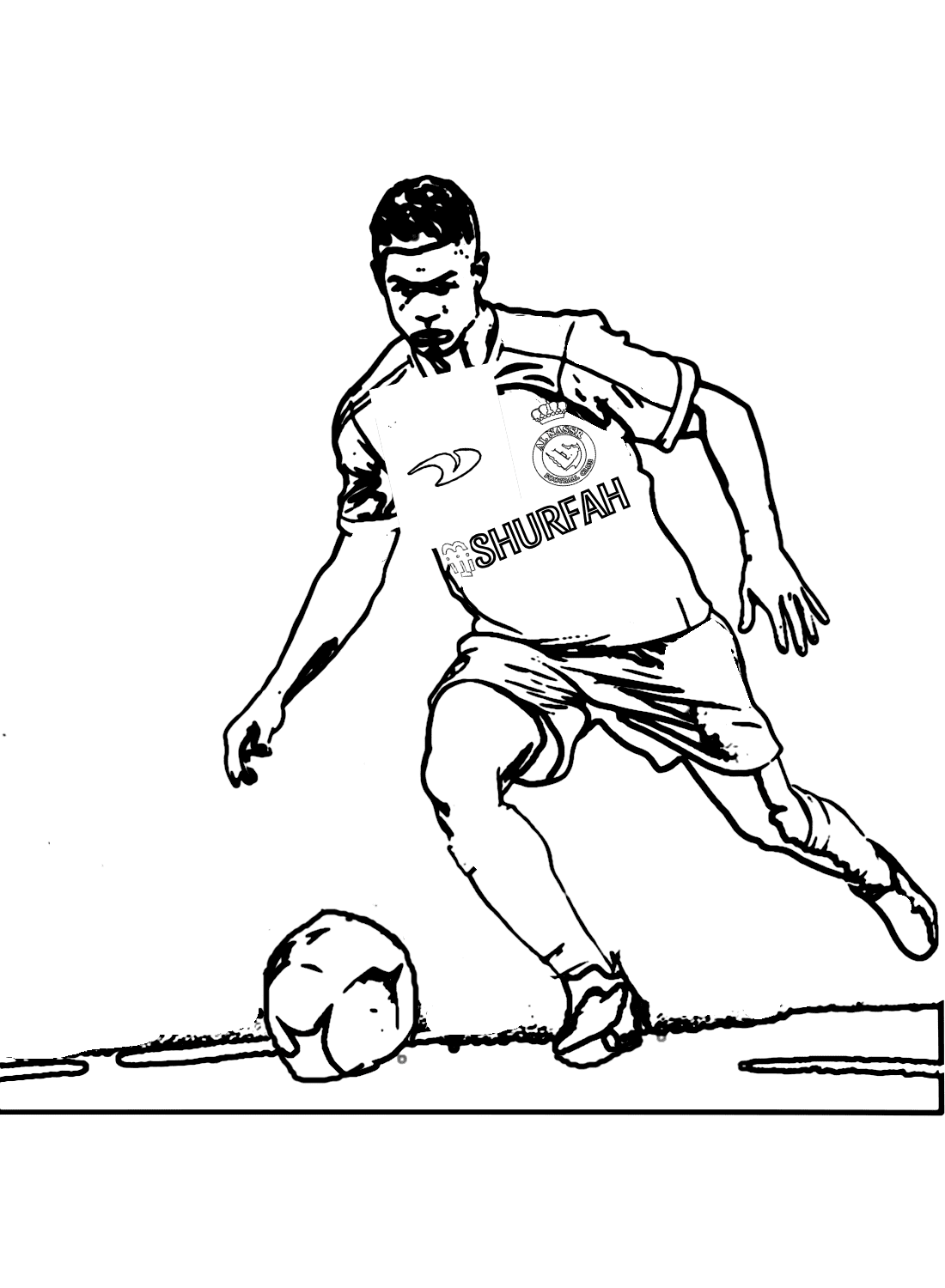
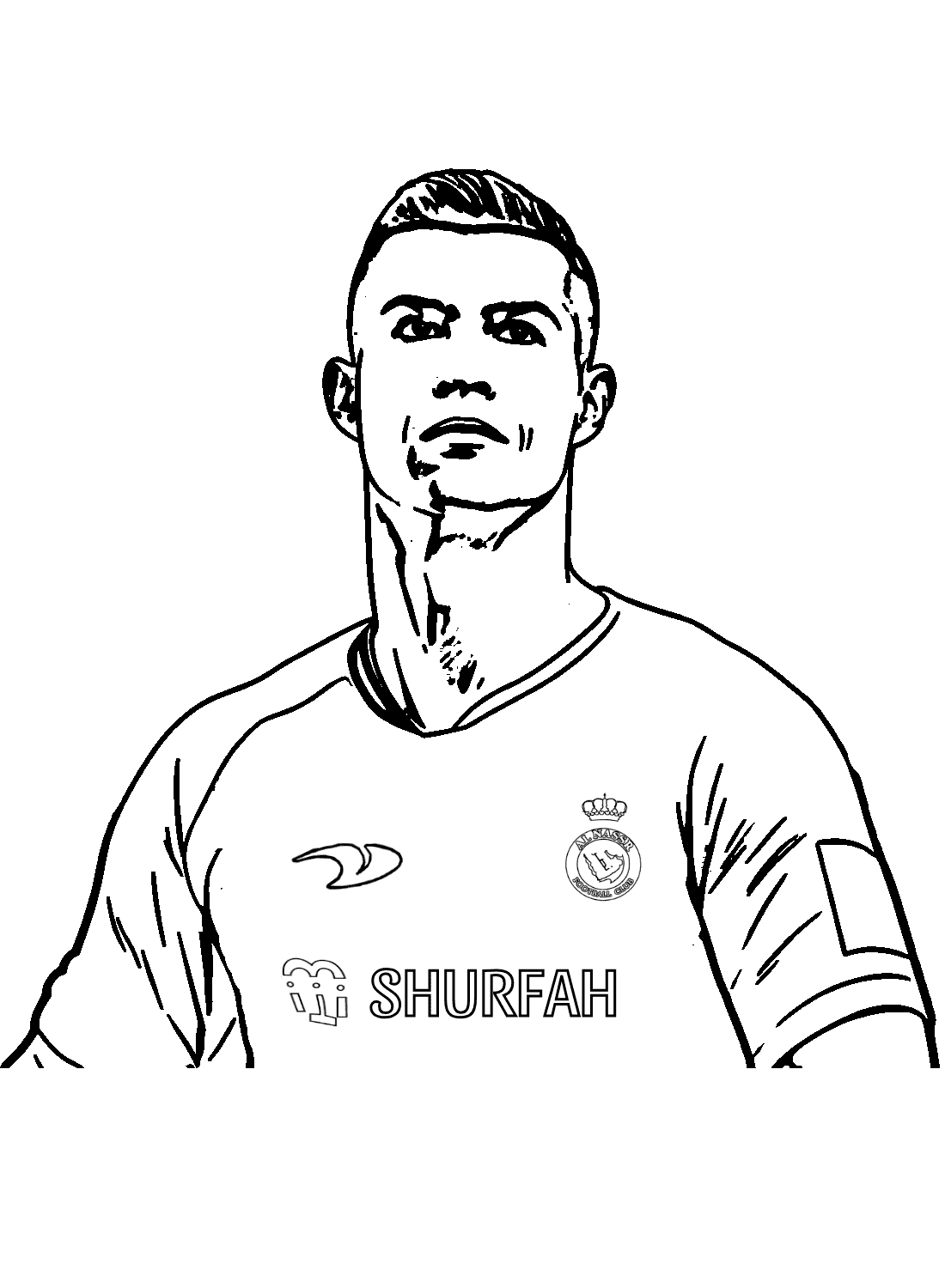
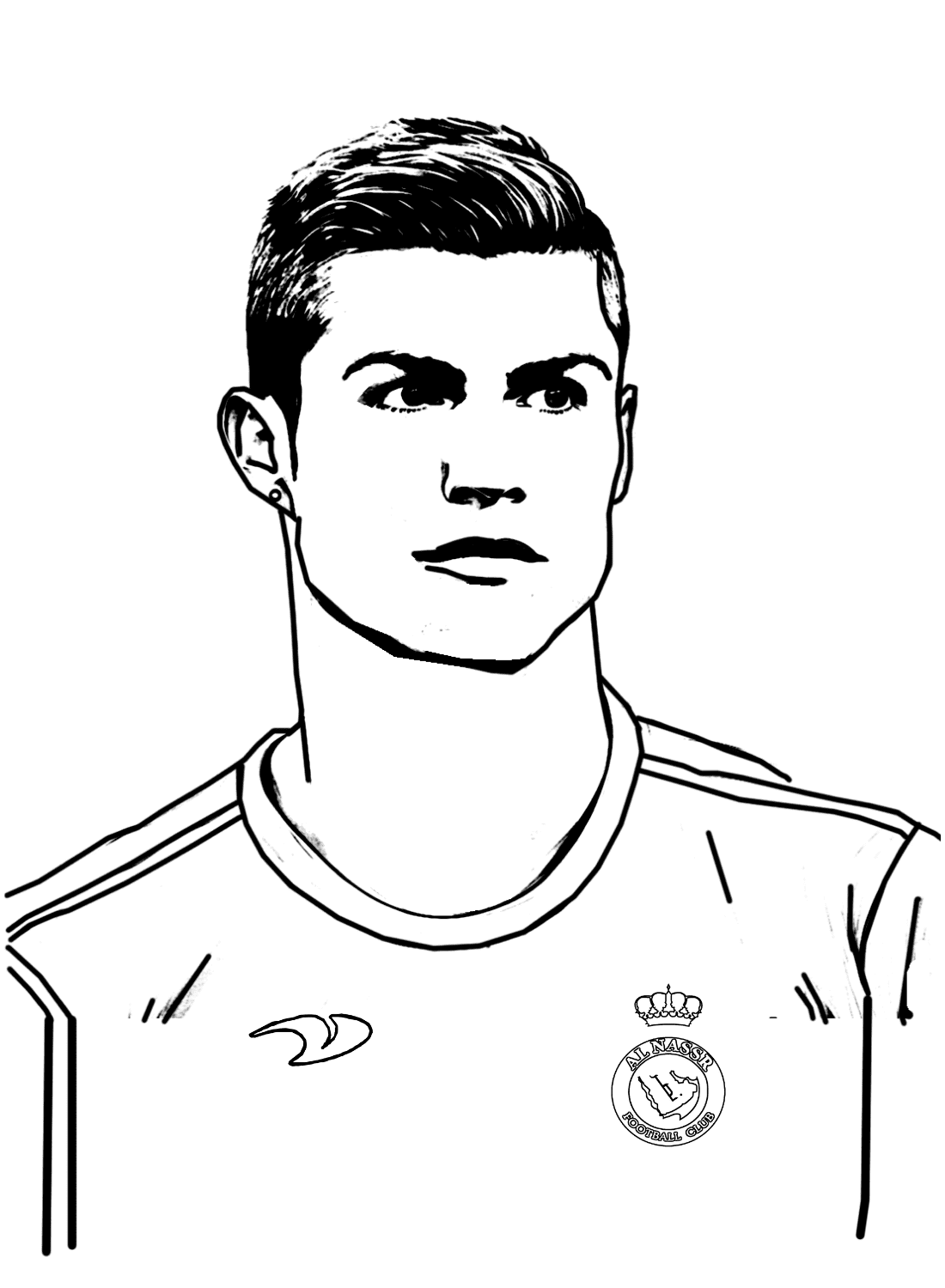
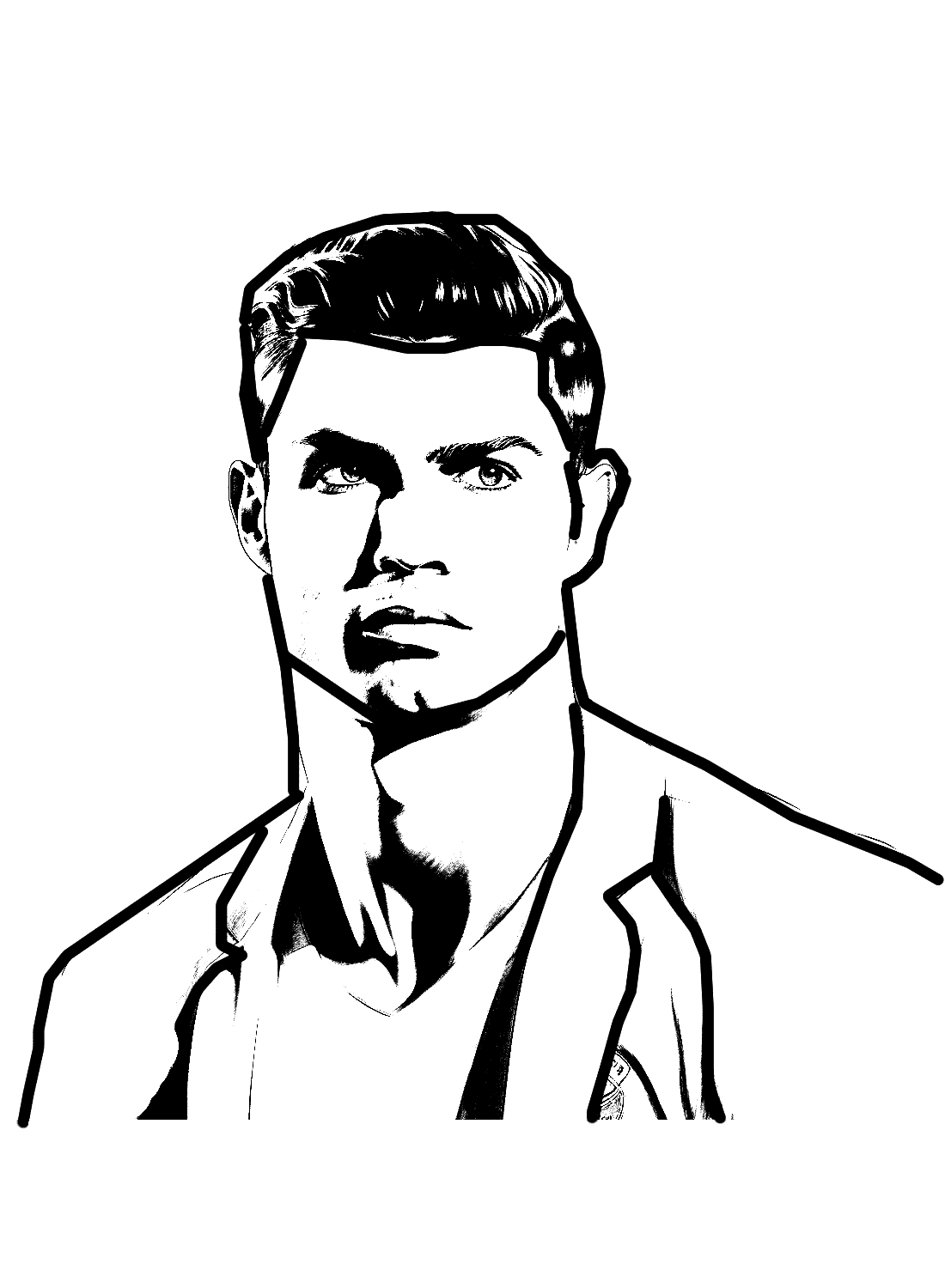
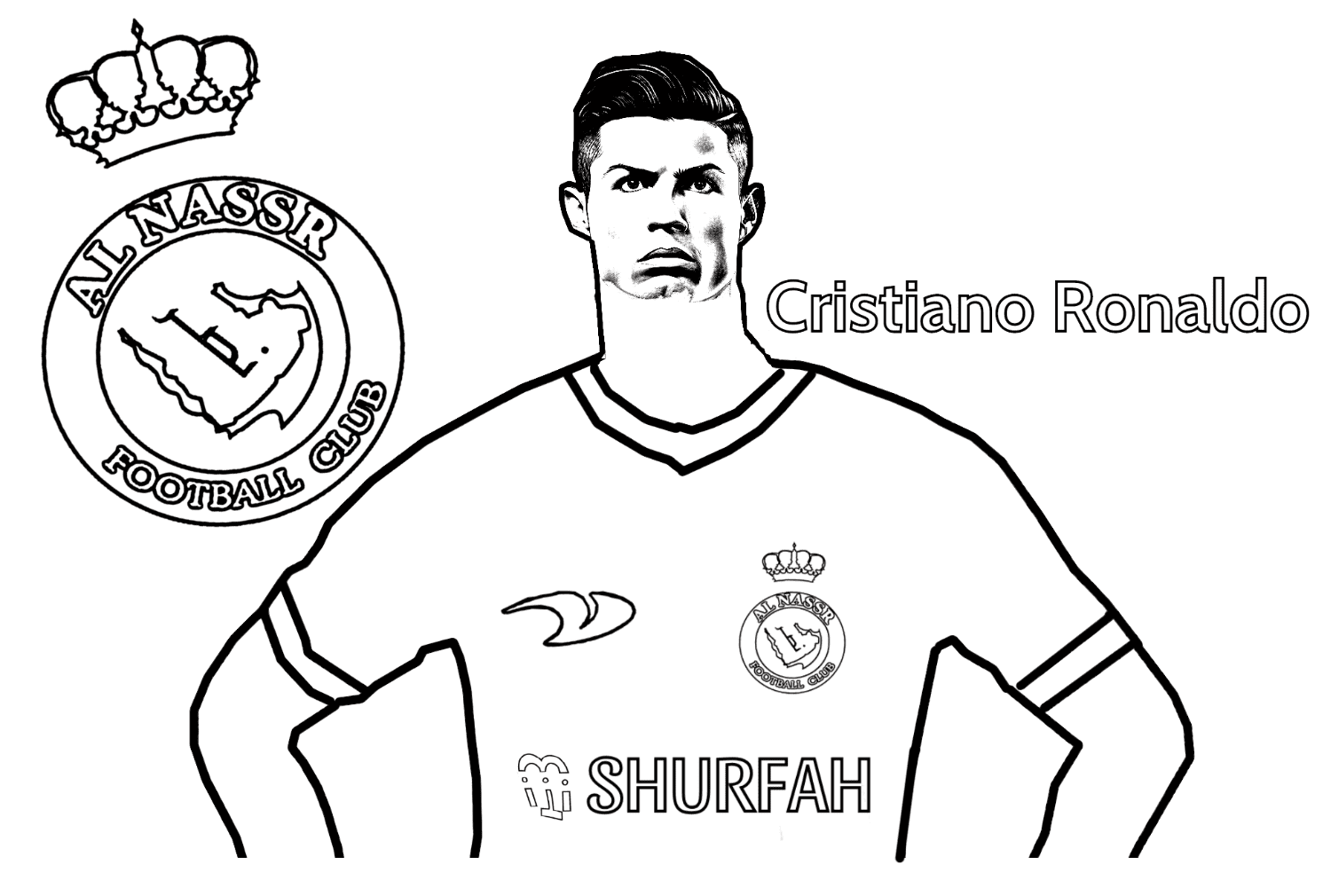
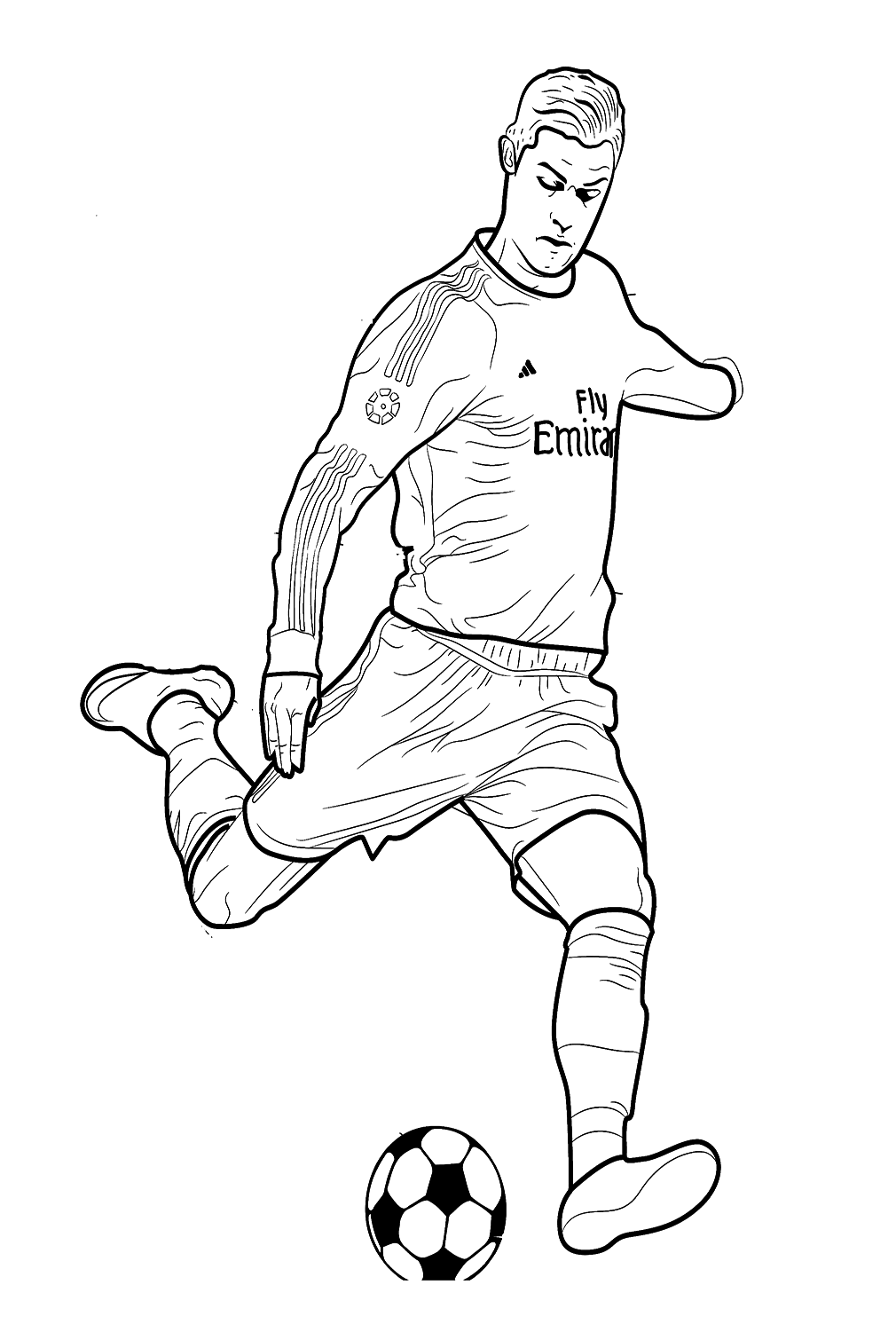
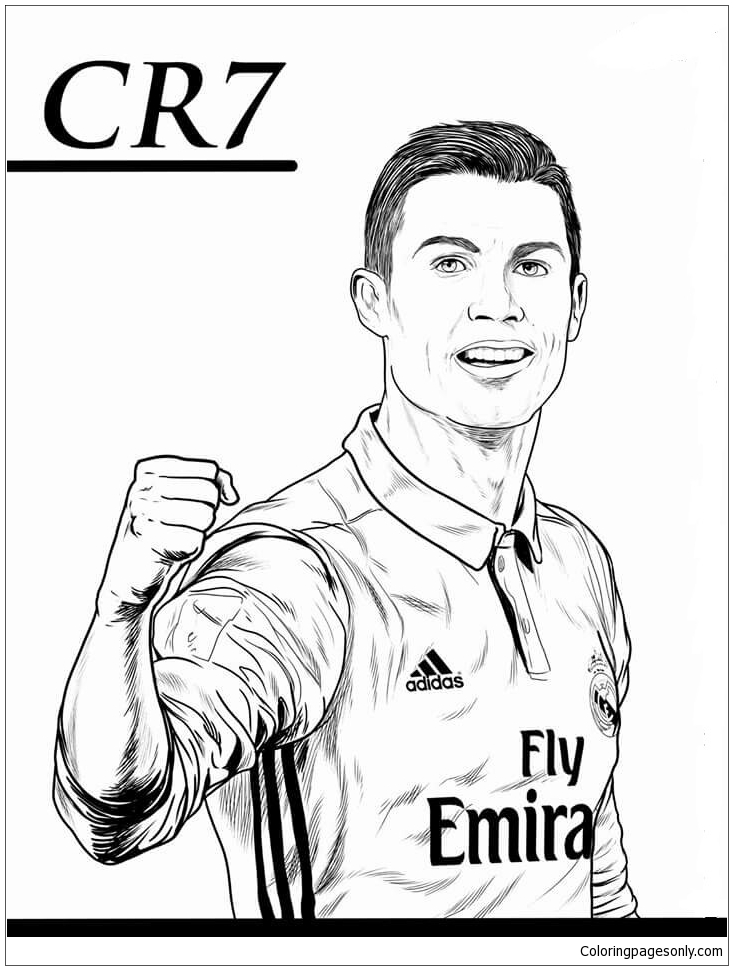
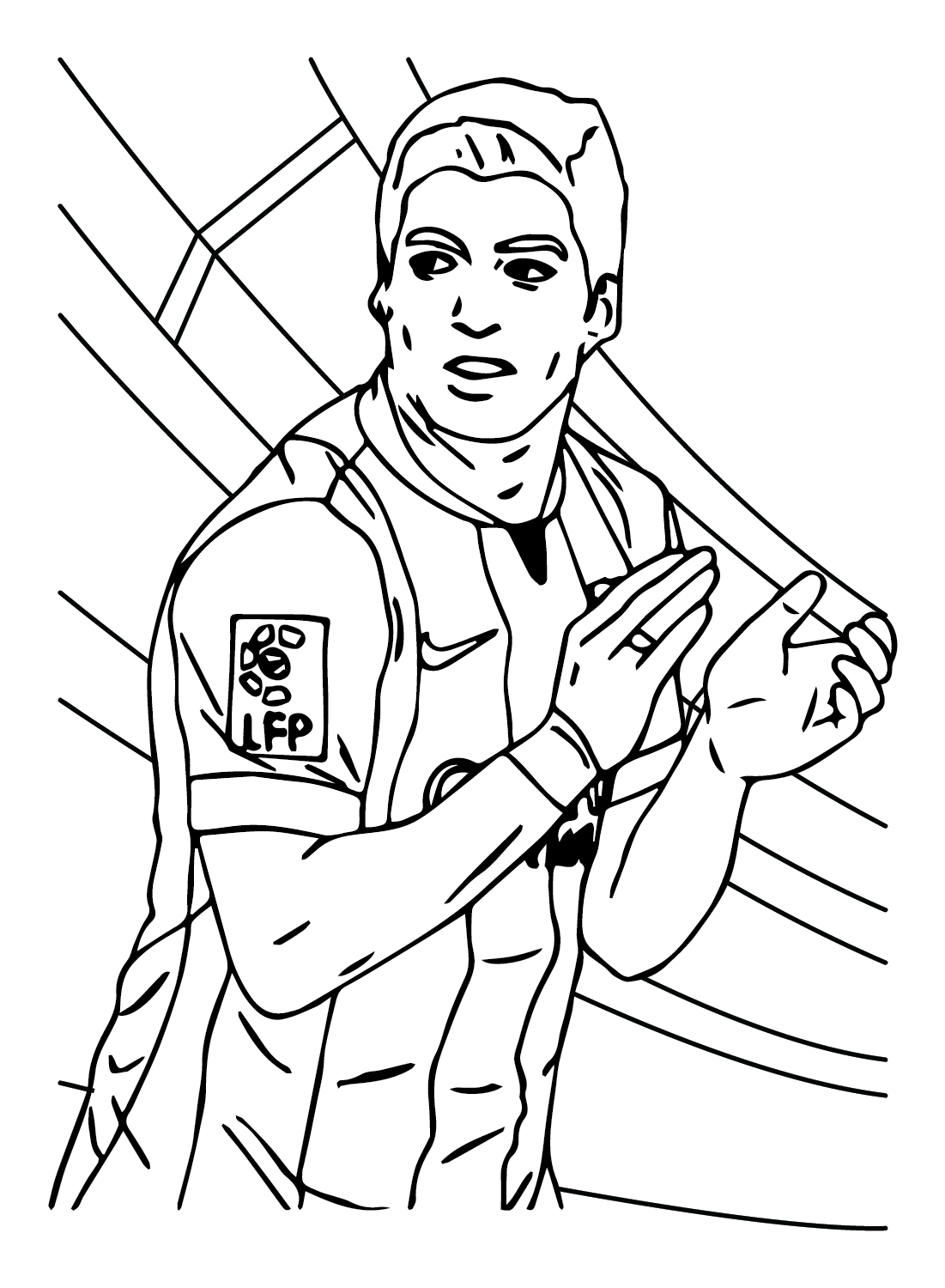
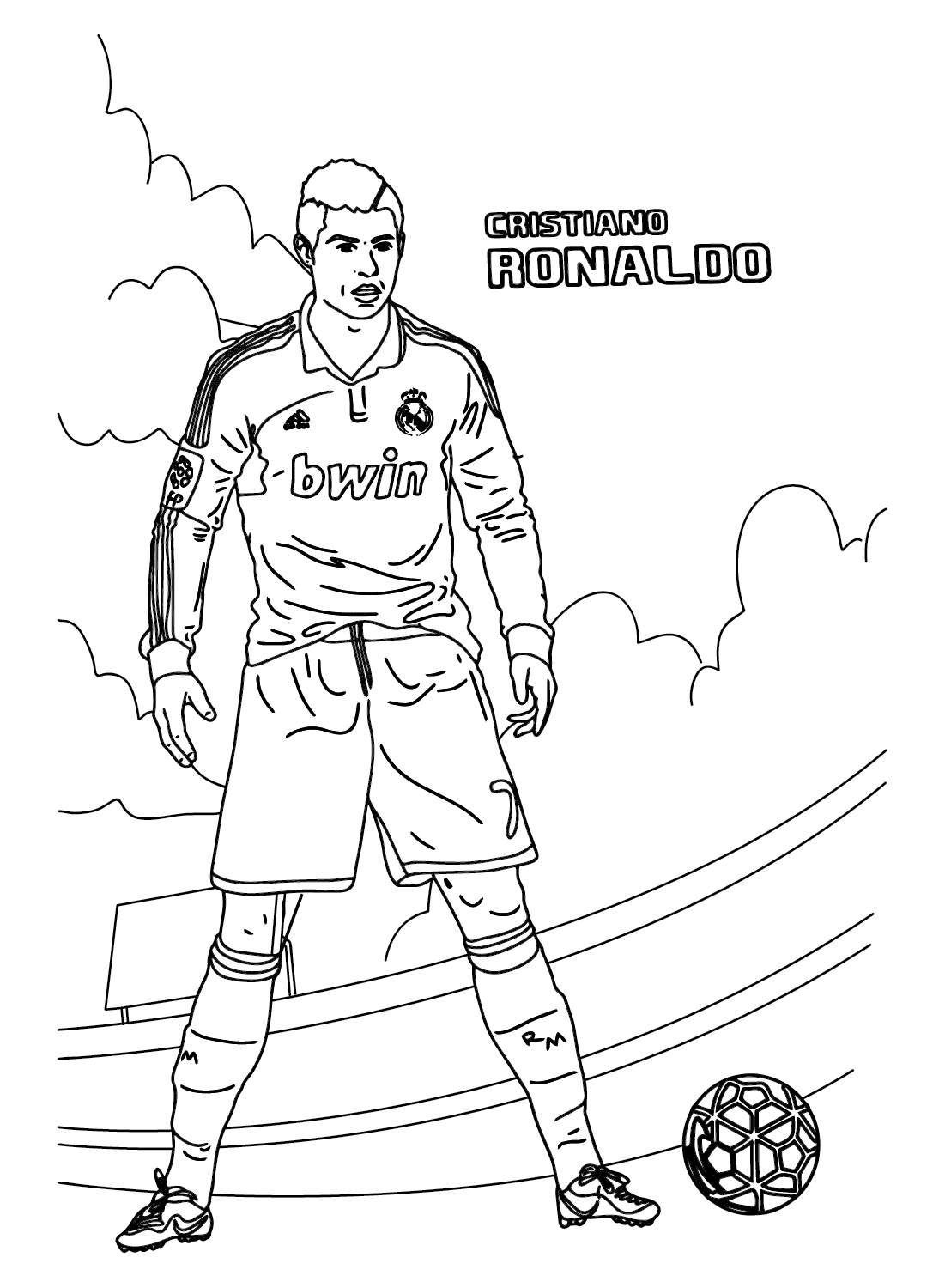
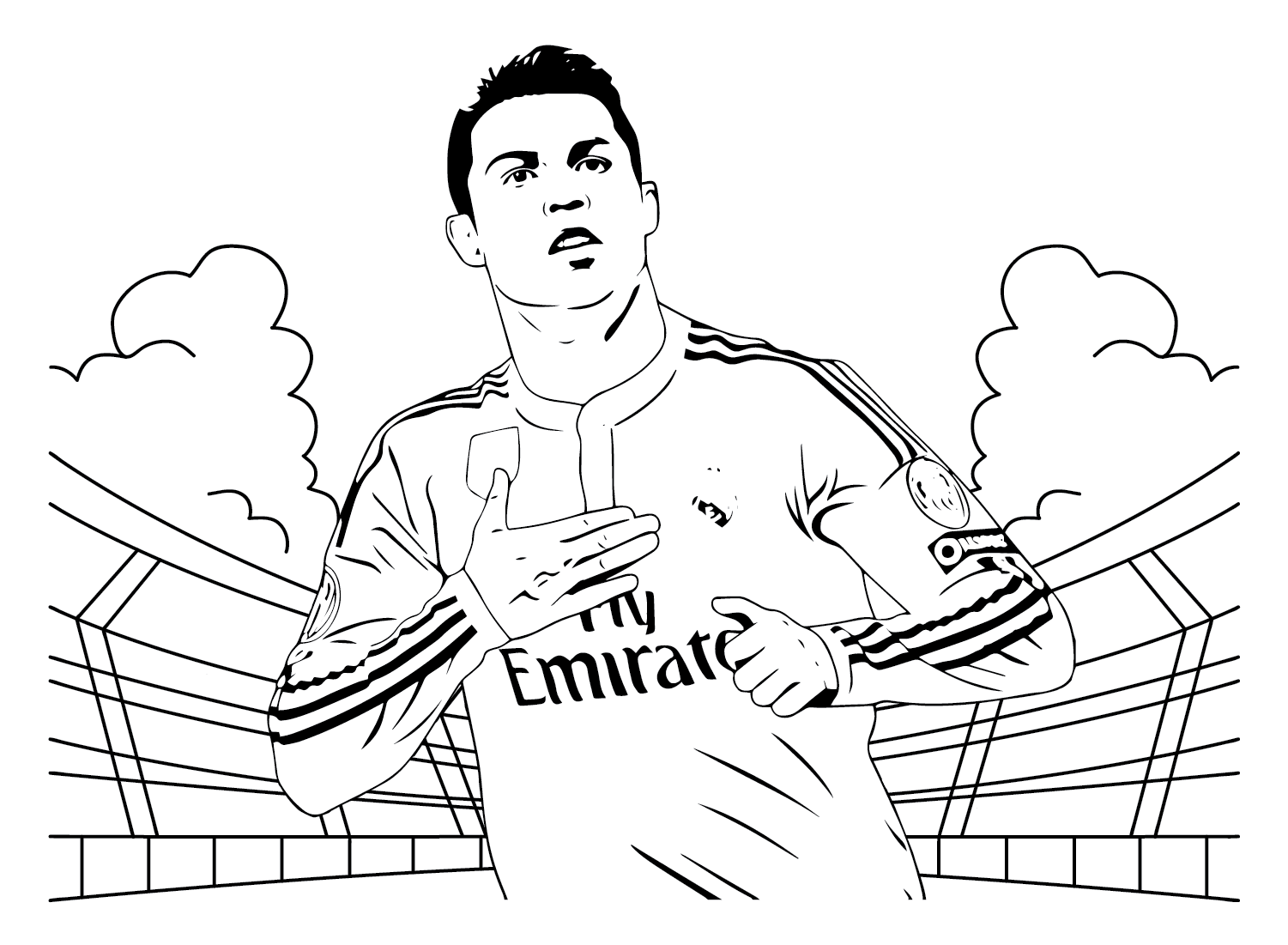
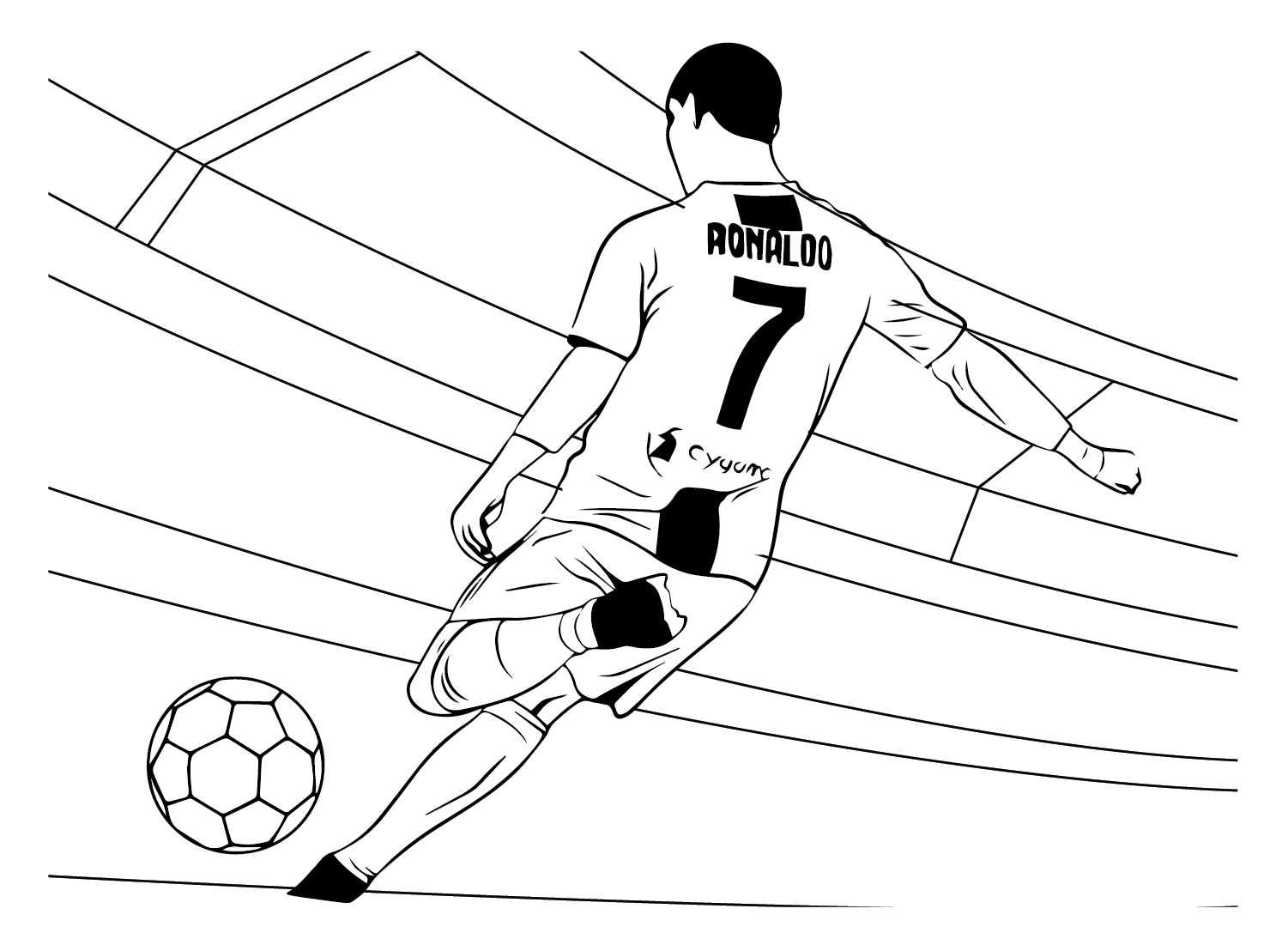
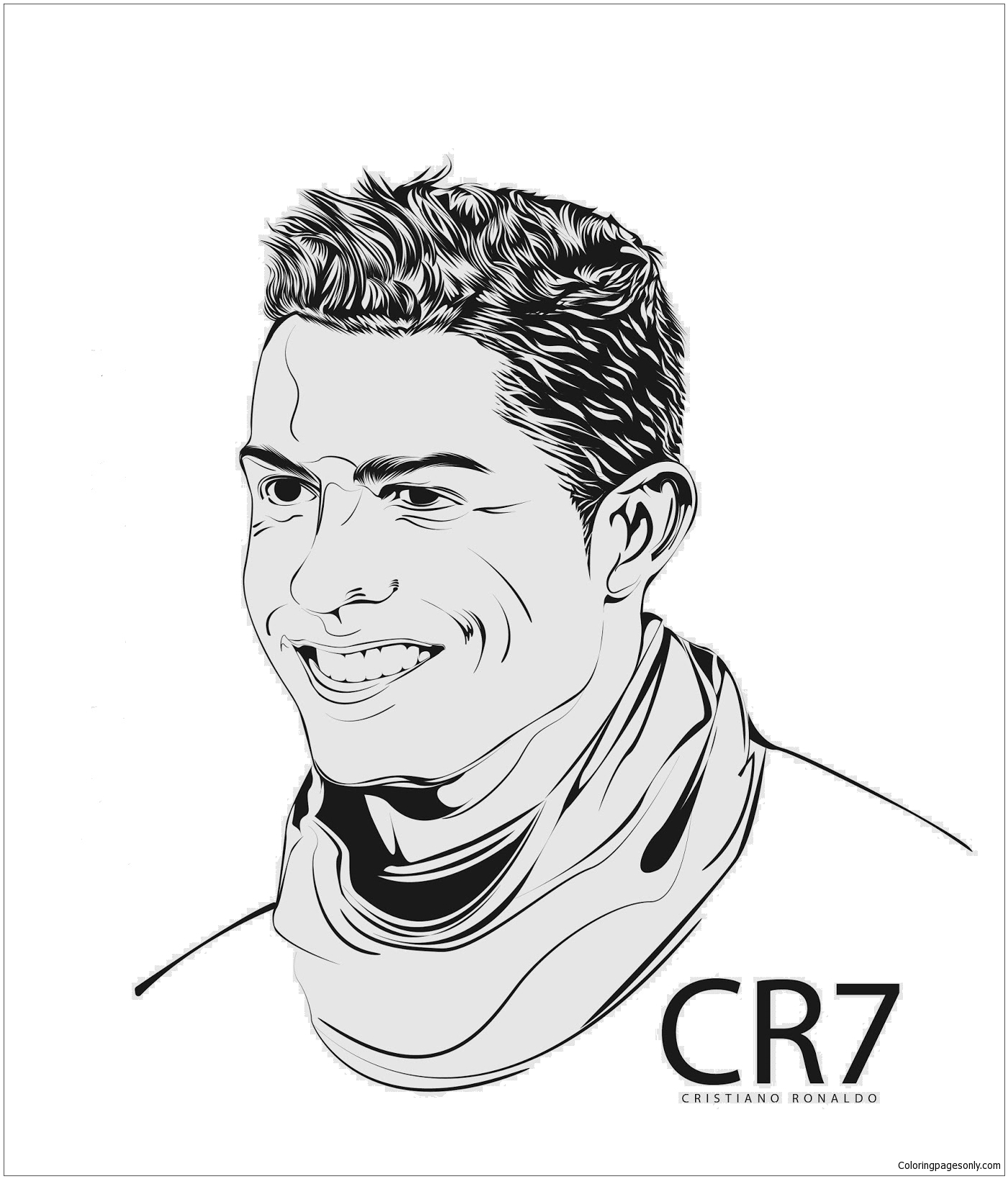
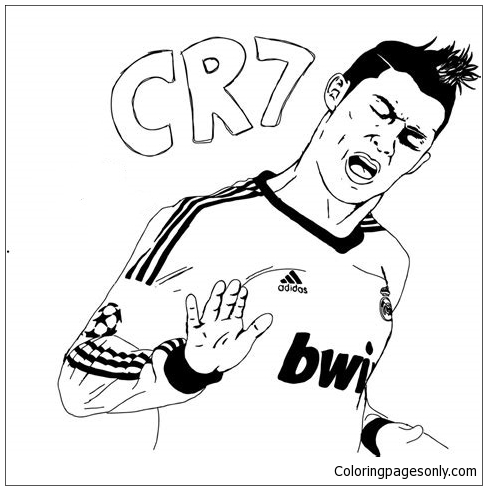
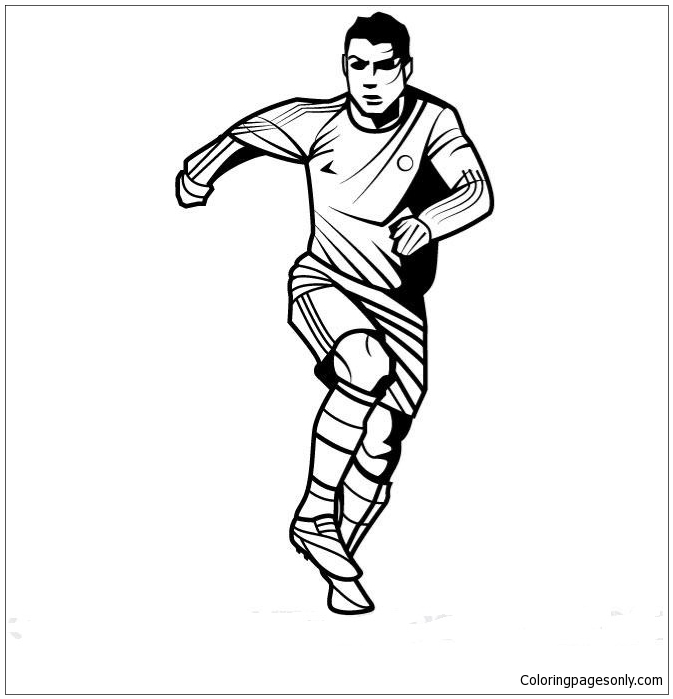
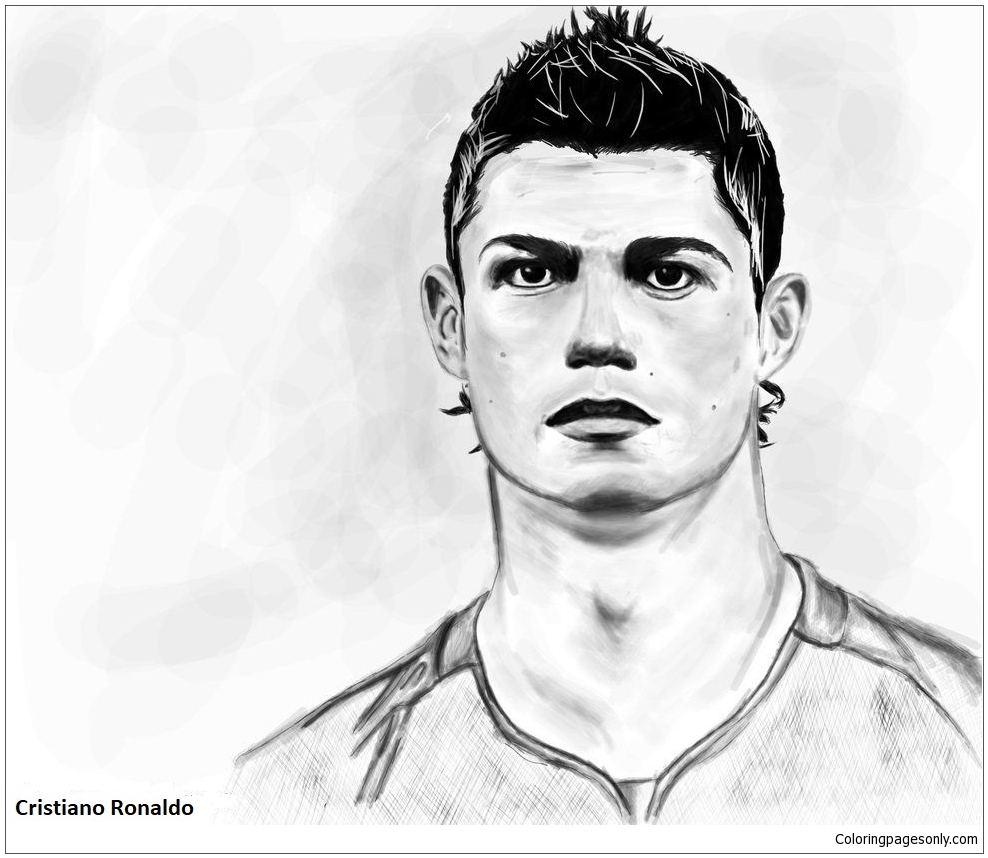
Free Cristiano Ronaldo coloring pages – 60+ pages featuring Portugal’s record scorer in action poses, goal celebrations, jersey close-ups across his Manchester United, Real Madrid, Juventus, and Al-Nassr careers, the iconic SIUUU celebration, portrait pages, and scenes from his twenty-year professional career – free printable PDF and online coloring for football fans of all ages.
Cristiano Ronaldo dos Santos Aveiro was born on February 5, 1985, in Funchal, on the Portuguese island of Madeira. His father, José Dinis Aveiro, worked as a municipal gardener and occasional kit man for a local football club. His mother, Maria Dolores dos Santos Aveiro, worked as a cook and cleaner. His father chose his first name after Ronald Reagan, whom he admired. The family had little money. Madeira was, and remains, one of the more economically modest regions of Portugal.
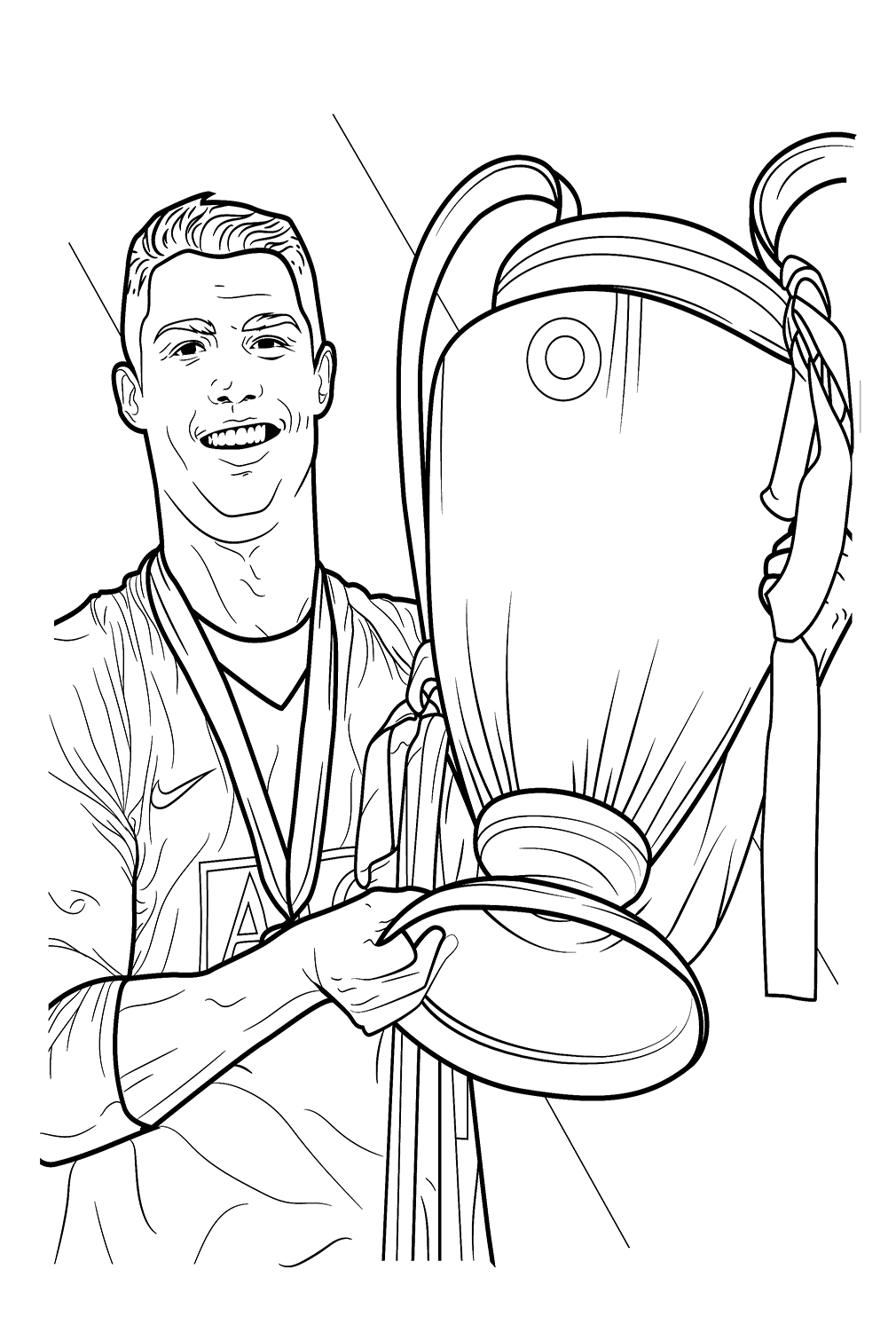
He joined Sporting CP’s academy in Lisbon at age twelve in 1997, leaving Madeira for a city where he knew no one. He made his senior professional debut for Sporting in 2002. In 2003, during a pre-season friendly against Manchester United, he delivered a performance so consistently impressive that United’s players collectively requested the club sign him afterward. The transfer, completed for £12.24 million, brought him to Old Trafford at eighteen.
What followed across twenty-two years of professional football is documented in specific numbers: five Ballon d’Or awards, four Champions League titles, one UEFA European Championship, 130 international goals for Portugal – a record by any player in international football history – and the SIUUU celebration that became the most recognized goal celebration in the sport. He is currently the most followed person on Instagram, with over 640 million followers as of 2025.
These 60+ free pages at ColoringPagesOnly.com span his full career. All free, PDF or PNG, print or color online.
What’s Inside
Portugal National Team Pages
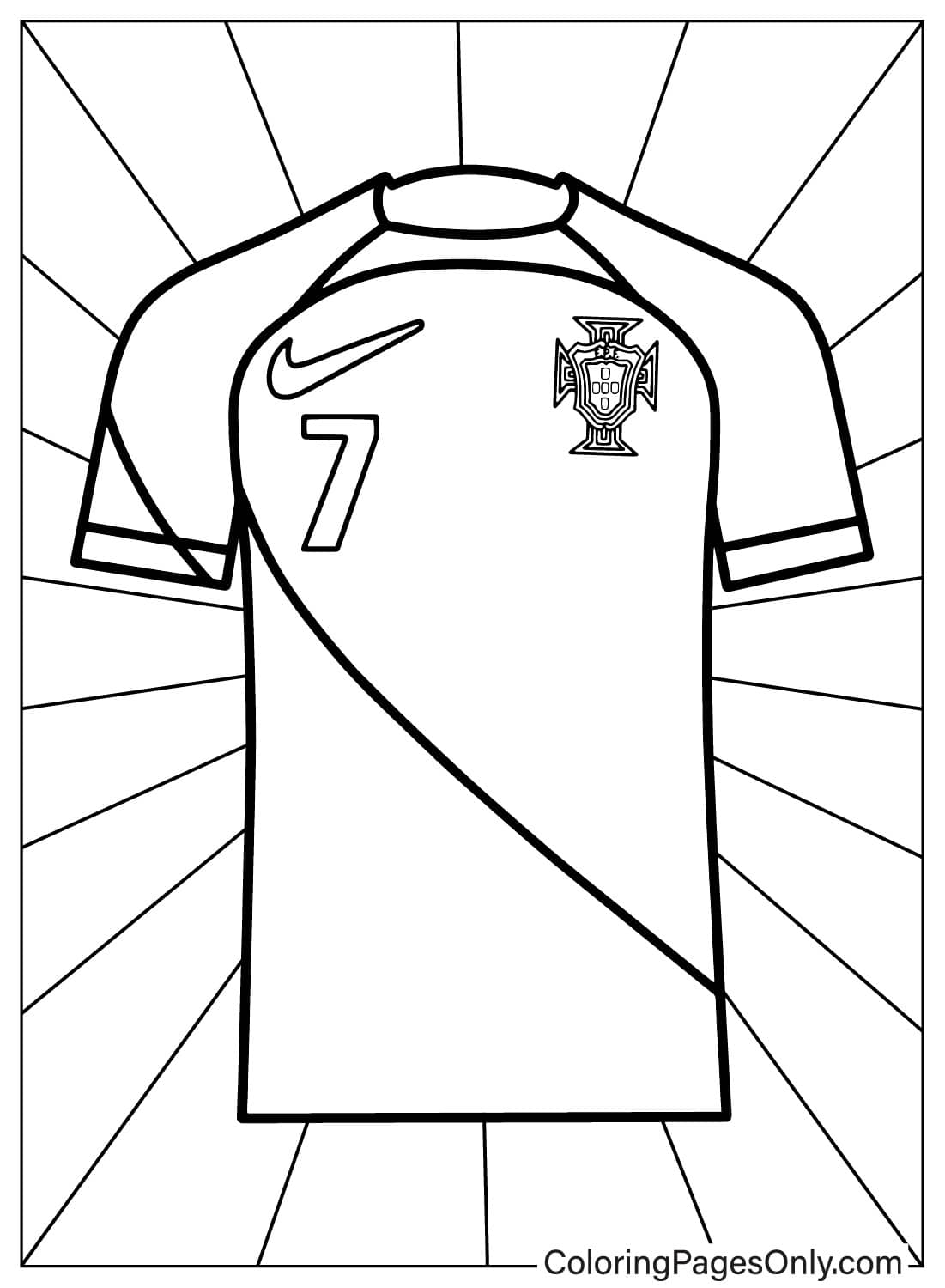
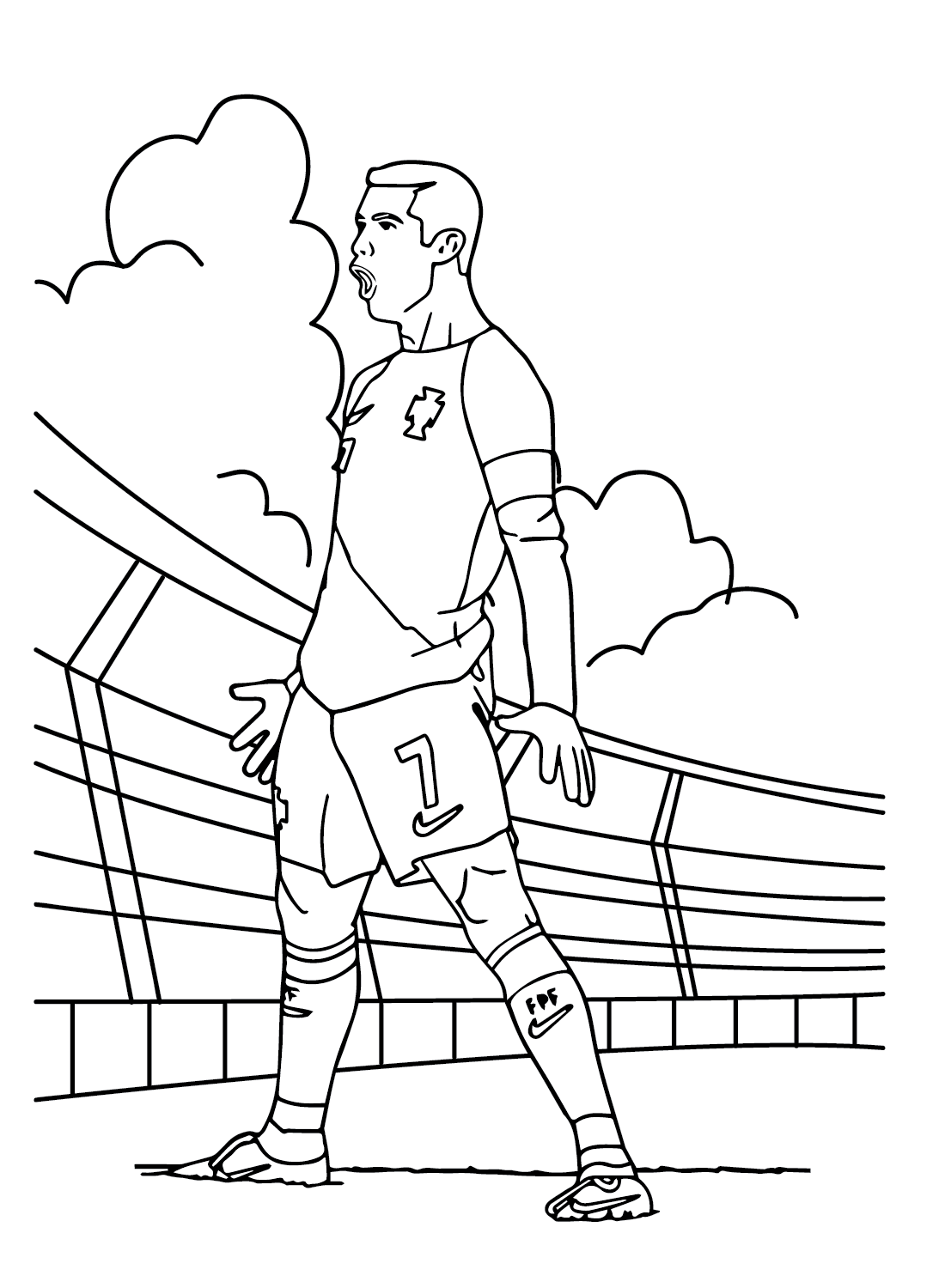
The pages showing Ronaldo in Portugal’s national team jersey carry the most complete version of his story – the shirt he has worn since 2003, the red that he has represented in five FIFA World Cups and across two European Championship victories (2016 UEFA European Championship and 2019 UEFA Nations League). Portugal’s jersey is a vivid, warm red – not the cooler, darker red of Manchester United or the bright crimson of some other national teams, but a specific warm red that photographs and renders as saturated and vivid.
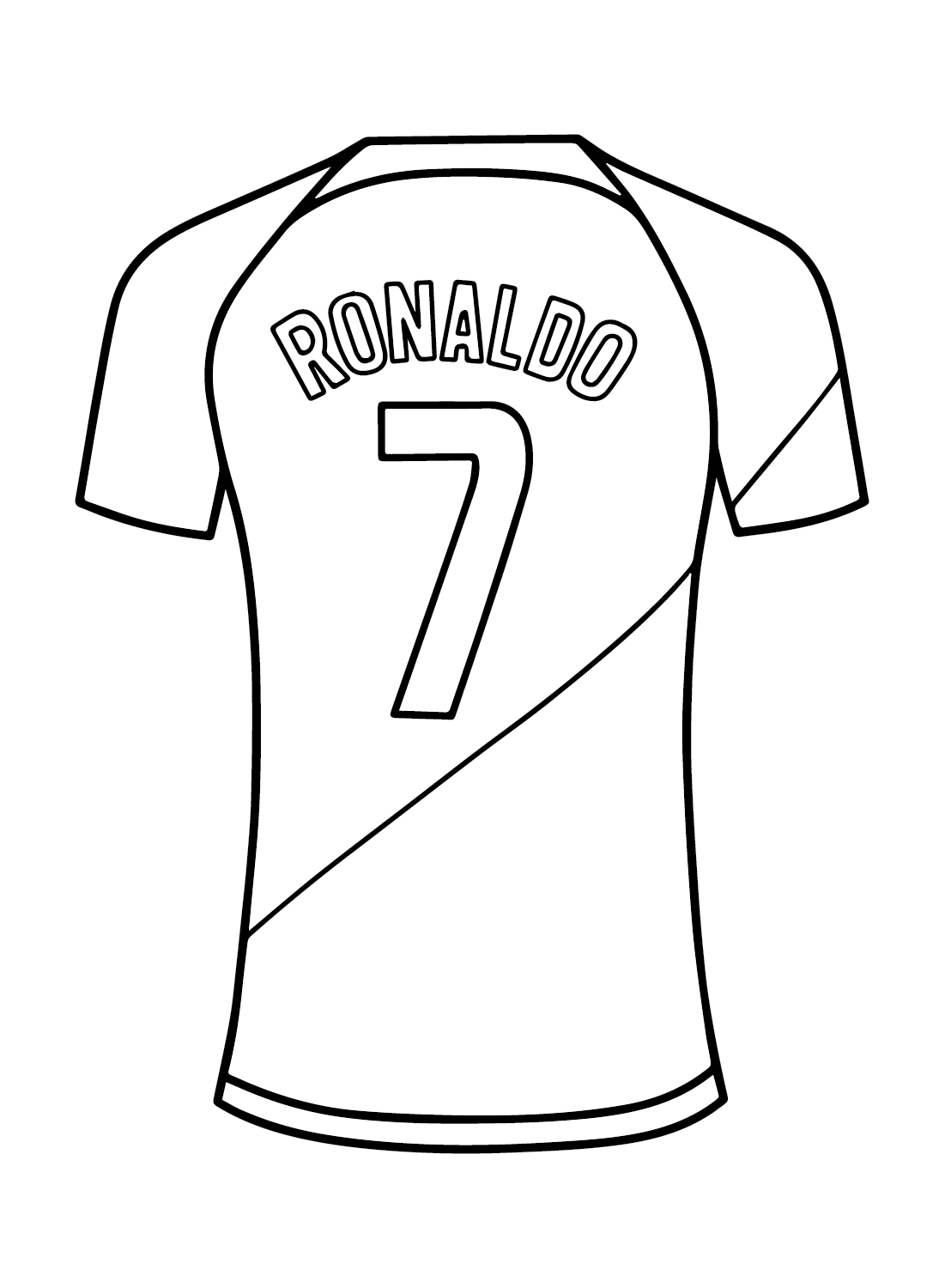
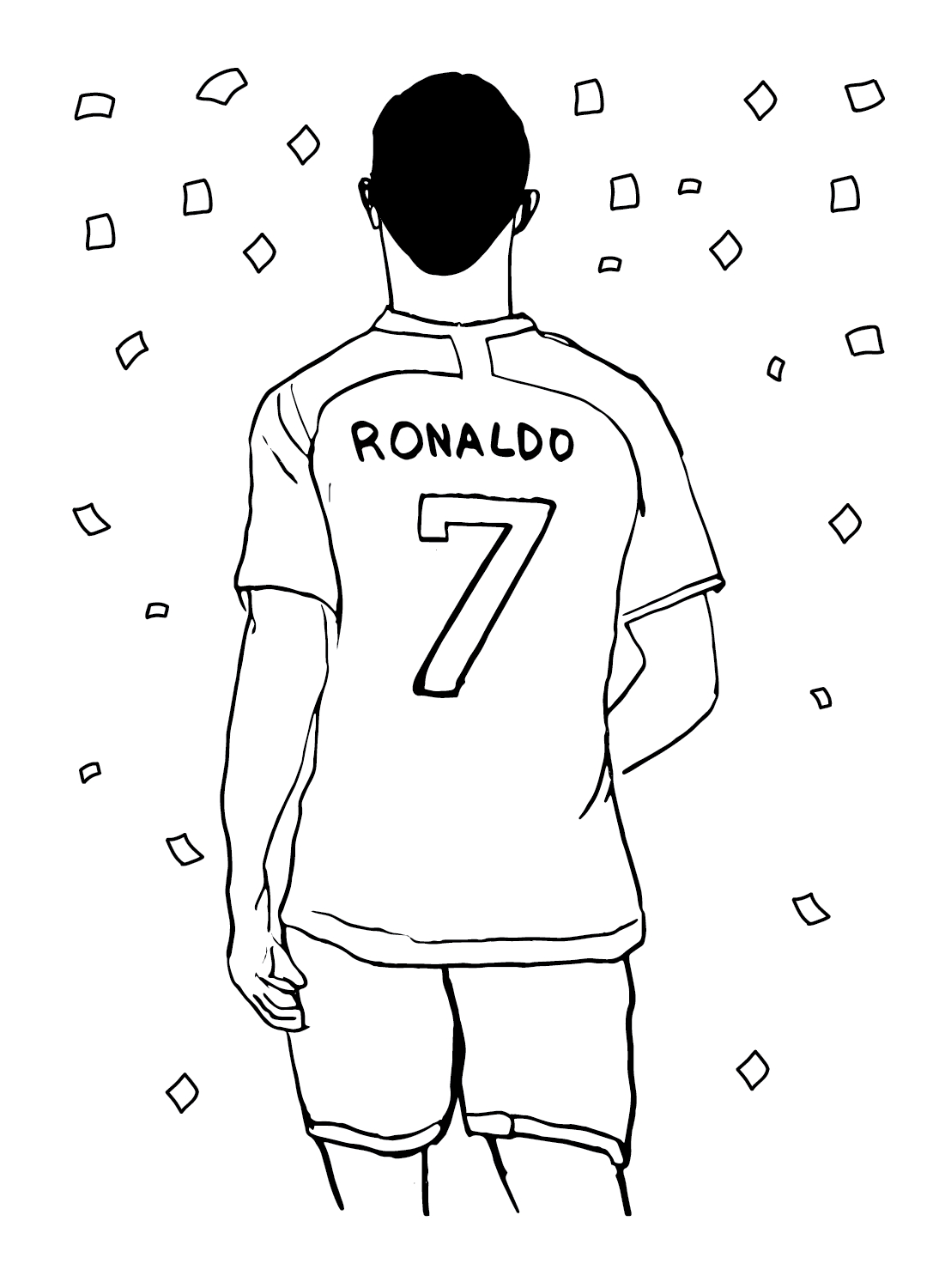
His number 7 for Portugal is the most consistently associated detail of his visual identity – it appears on every national team page. It is the number that has followed him from Manchester United through Real Madrid to Al-Nassr. The Portugal crest – a green shield with red sections and the Quinas (the five blue shields of the coat of arms) – is the most heraldically complex element on these pages.
Coloring the Portugal jersey: The red is warm – add a slight orange shift rather than cooling toward crimson. The green trim at the collar and sleeve edges should be a vivid, medium green. The gold of the badge is warm, not pale – apply it at maximum saturation to read as the gold of a national crest. The number 7 on the back, where visible, should be in the same gold-white that Portugal uses for back numbers – a warm cream-white rather than pure white.
The SIUUU Celebration Pages
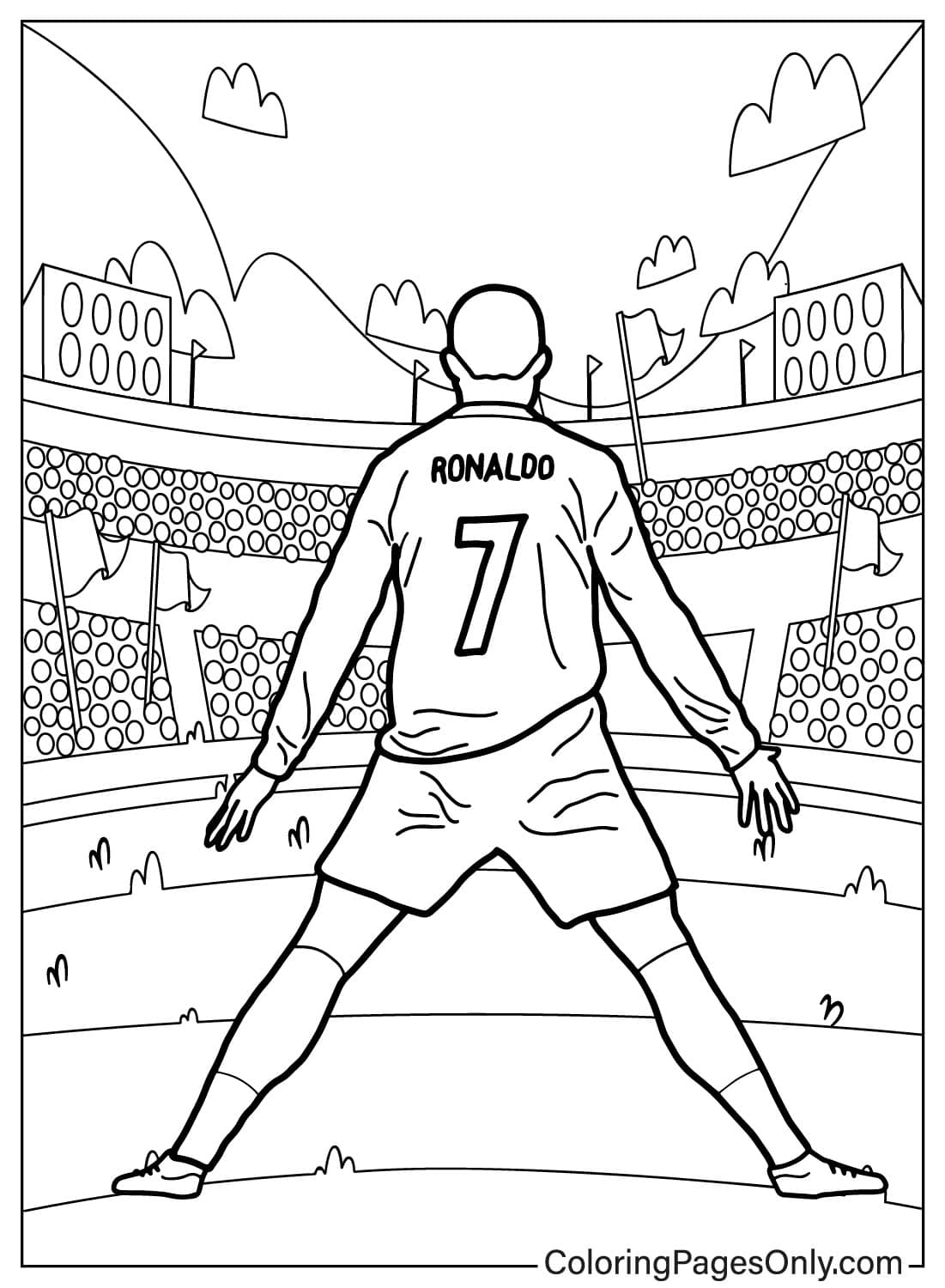
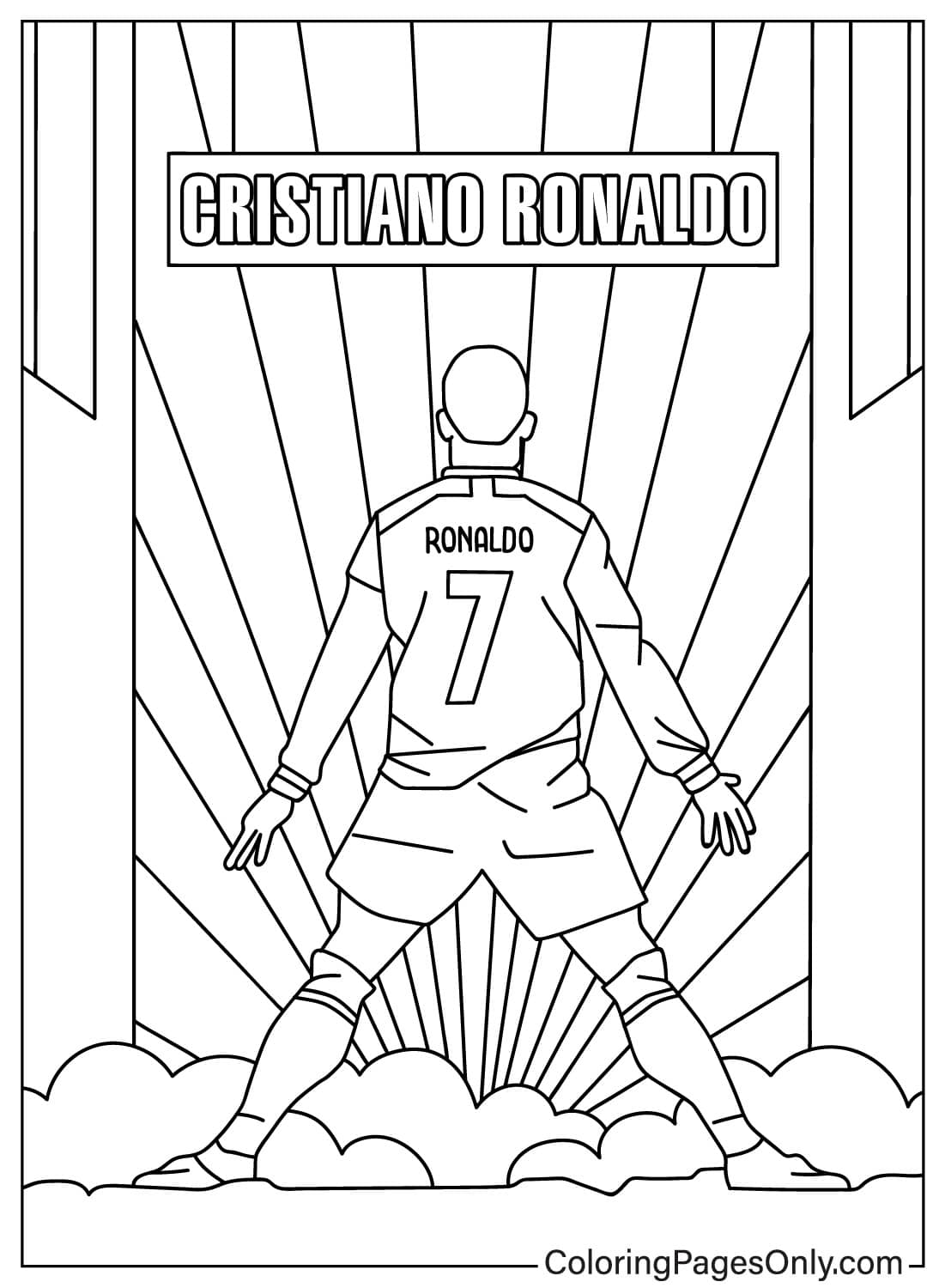
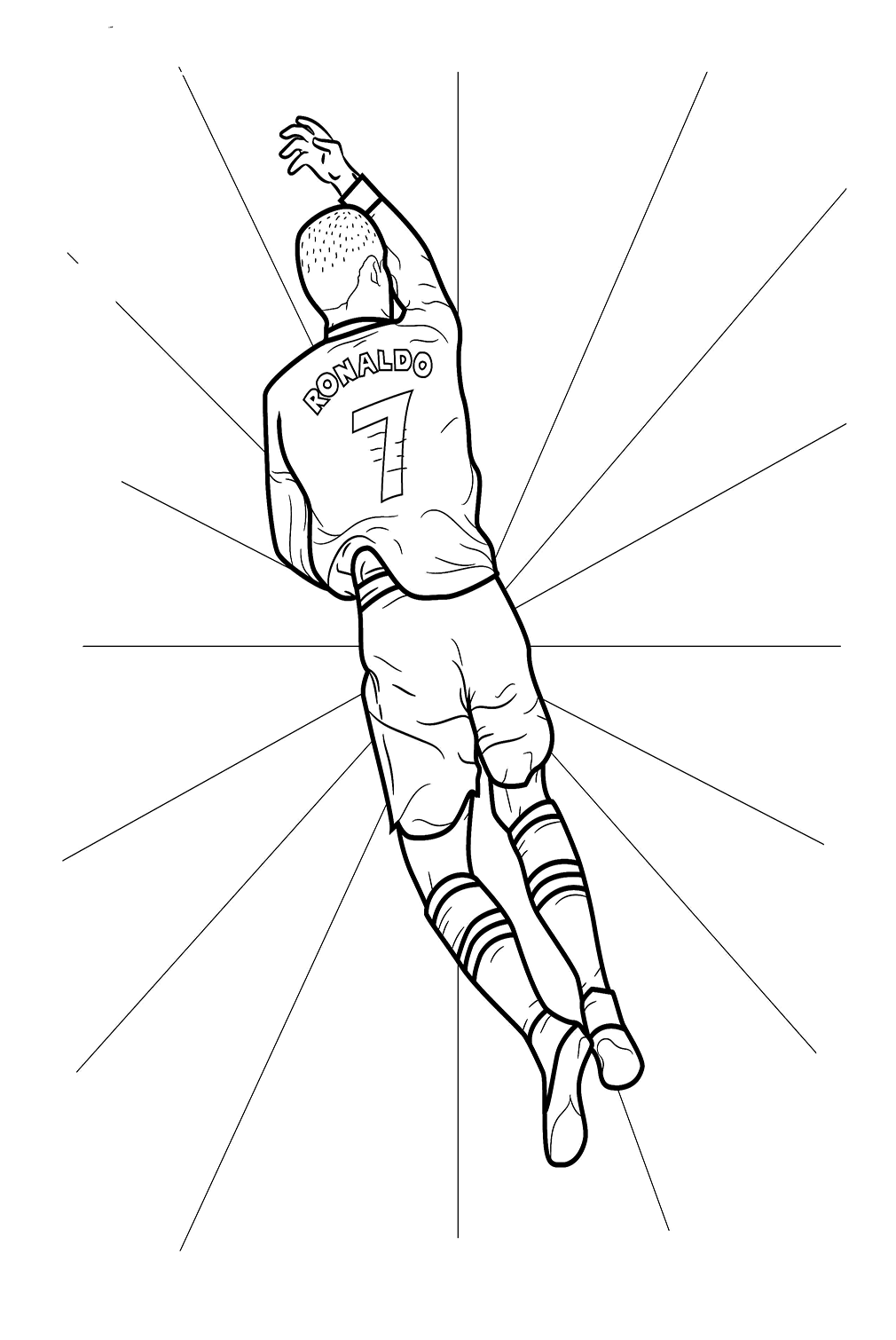
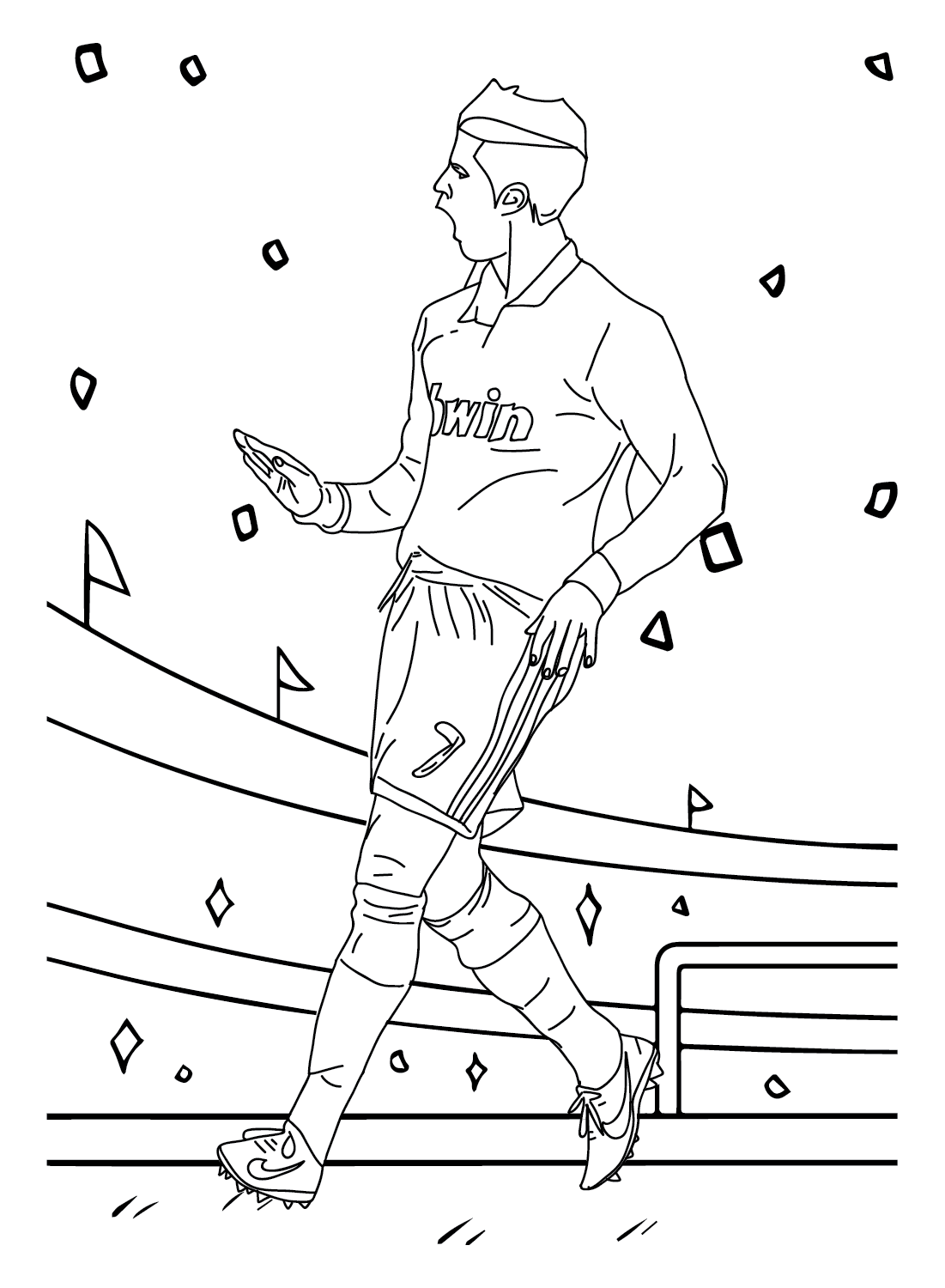
The SIUUU celebration – Ronaldo leaping, rotating in the air, landing with one arm raised and the other angled downward, shouting the sustained “SIUUUU” – is the most globally recognized goal celebration in football. It originated during his Real Madrid years and has been performed in stadiums on six continents. Videos of the celebration have accumulated billions of views. Children who have never watched a full football match recognize the pose.
The celebration pages capture the specific body position at the moment of landing: both feet together or slightly apart, one arm fully extended upward, the other pointing slightly down and back, head tilted upward, expression open and maximally expressive. The posture is unmistakable – the same shape performed in front of 80,000 people and replicated in living rooms worldwide.
Coloring SIUUU pages: The extended arm is the highest point of the figure – apply the lightest skin tone here, where the arm catches overhead light. The raised arm’s sleeve, if he is in a kit, should show the jersey’s colors on a slightly lit surface. The shadow falls across the torso and the underside of the raised arm. His expression in this pose is the most open of any image in the collection – the face is fully committed to the moment, mouth open for the shout, and the eyes are either closed or upward-facing. This expression carries more emotional energy than any other Ronaldo pose and rewards careful eye and mouth rendering.
Manchester United Jersey Pages – Number 7
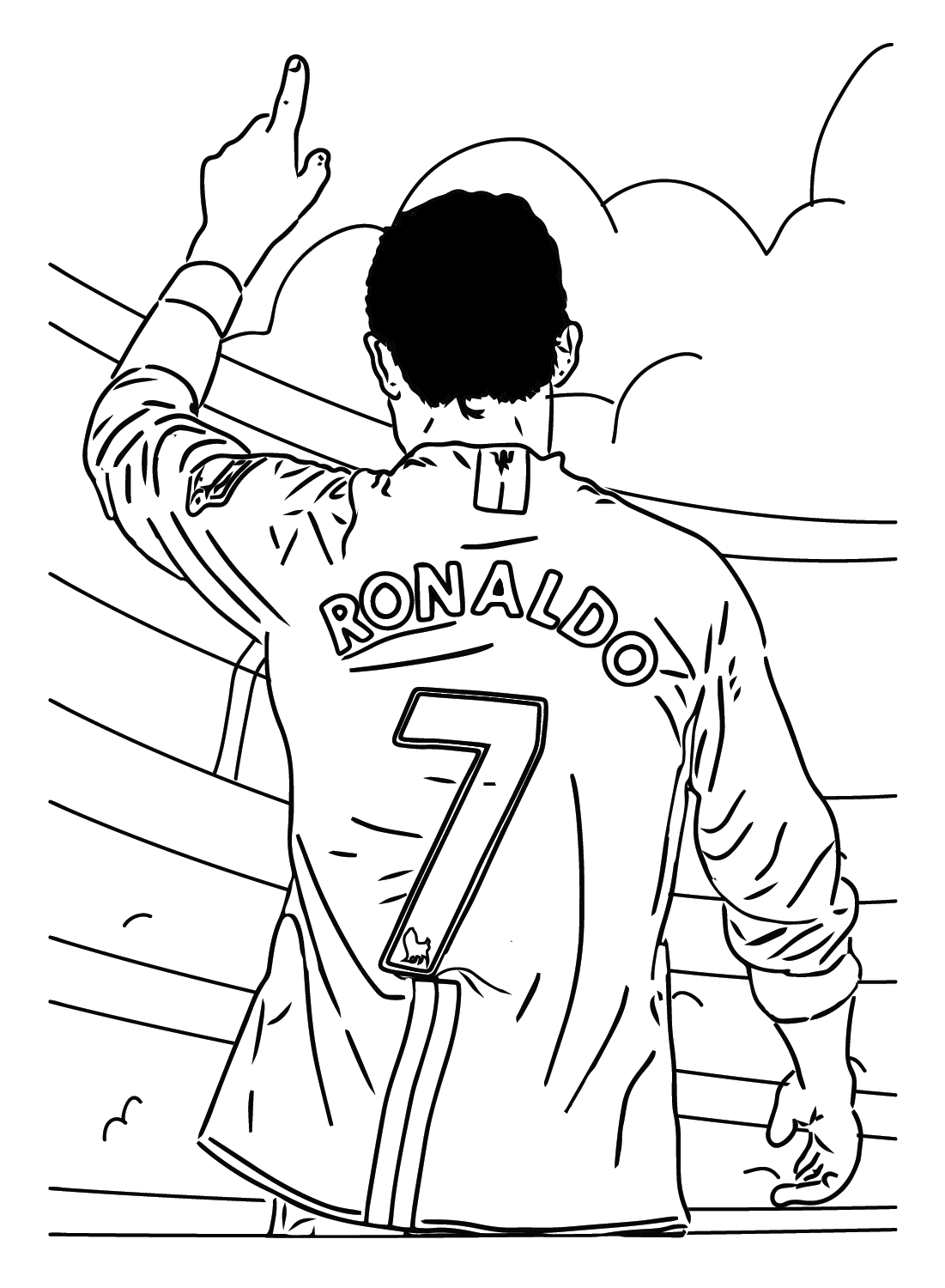
The red Manchester United jersey with the number 7 is where Ronaldo’s global recognition began. He wore it from 2003 to 2009 in his first spell – the six years in which he developed from a talented teenager into the world’s best player – and returned to wear it in a second, shorter spell from 2021 to 2022. The Old Trafford number 7 had been previously worn by Eric Cantona, Bryan Robson, and George Best – a lineage that gave the number a specific weight before Ronaldo arrived and added his own.
The Manchester United home jersey is a deep, warm red – the same family of red as the Portugal national team but with a specific shade associated with Old Trafford that has been consistent across the club’s history. The badge – a red devil, a ship, and the motto “United” – is the most complex heraldic element on these pages.
Coloring the Manchester United jersey: The Manchester United red is a slightly cooler, deeper red than Portugal’s – it sits closer to the true primary red than the warm version. The white trim at the collar and cuffs provides contrast. The number 7 on United kits is typically gold or white, depending on the era – the early 2000s versions (his first spell) used a gold number with white shadow. Apply the shadow element of the number in the darker of the two tones, the main number in the lighter.
Real Madrid Jersey Pages – The White Kit
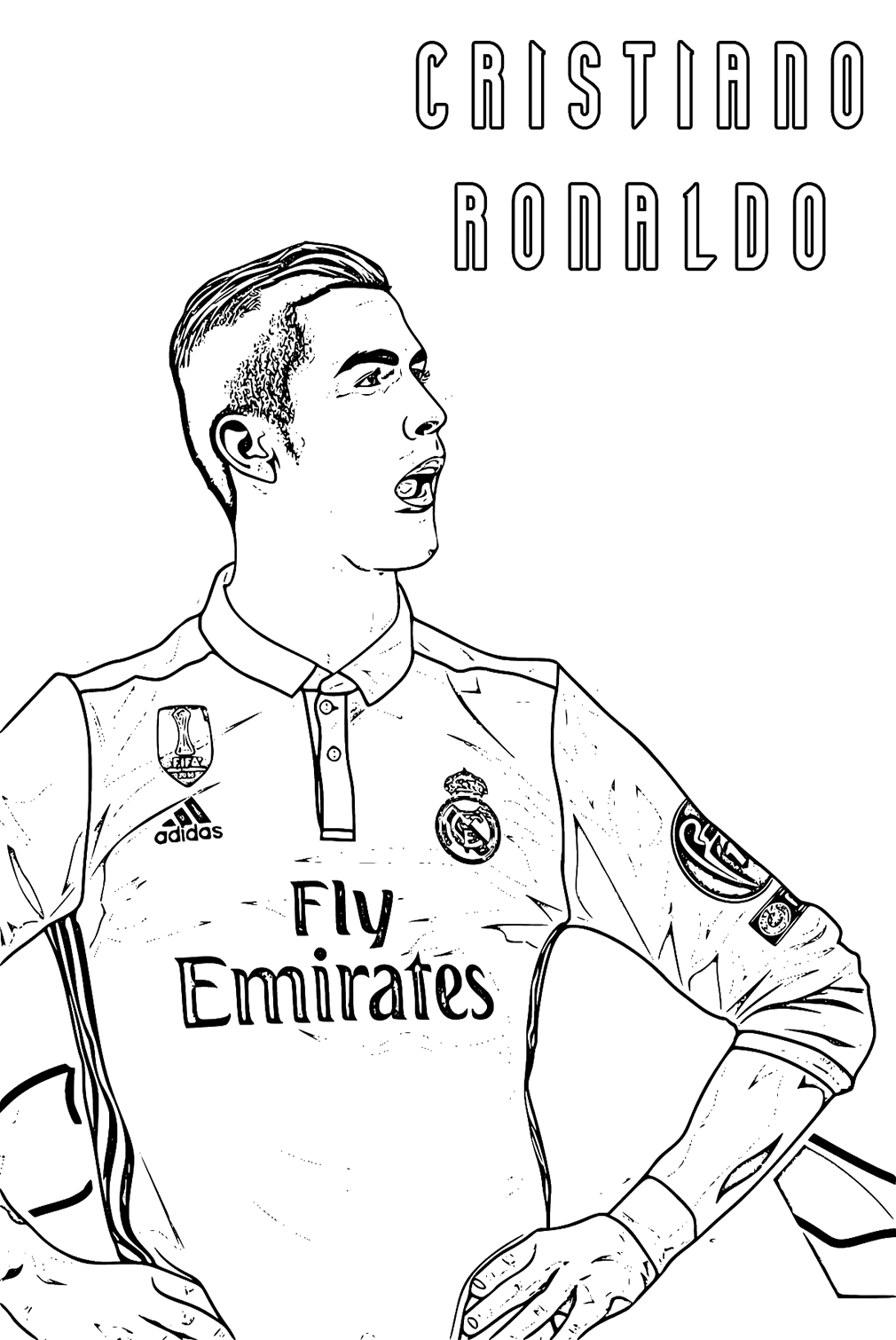
Ronaldo’s Real Madrid period, from 2009 to 2018, produced his most comprehensive trophy collection and the most detailed record of sustained elite performance in the sport. He scored 450 goals for Real Madrid in 438 appearances – the club’s record, achieved in a fraction of the time that previous scoring records took to accumulate. He won the Champions League four times and was central to the unprecedented sequence of three consecutive Champions League titles from 2016 to 2018.
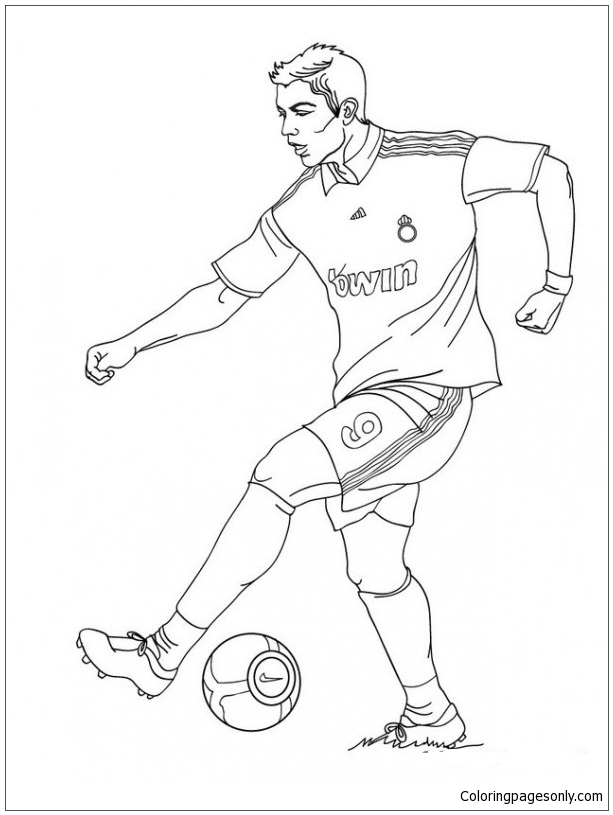
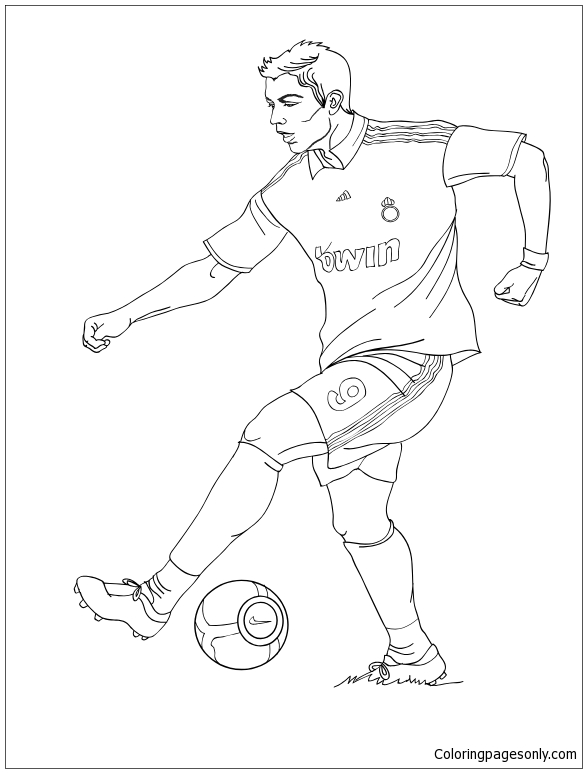
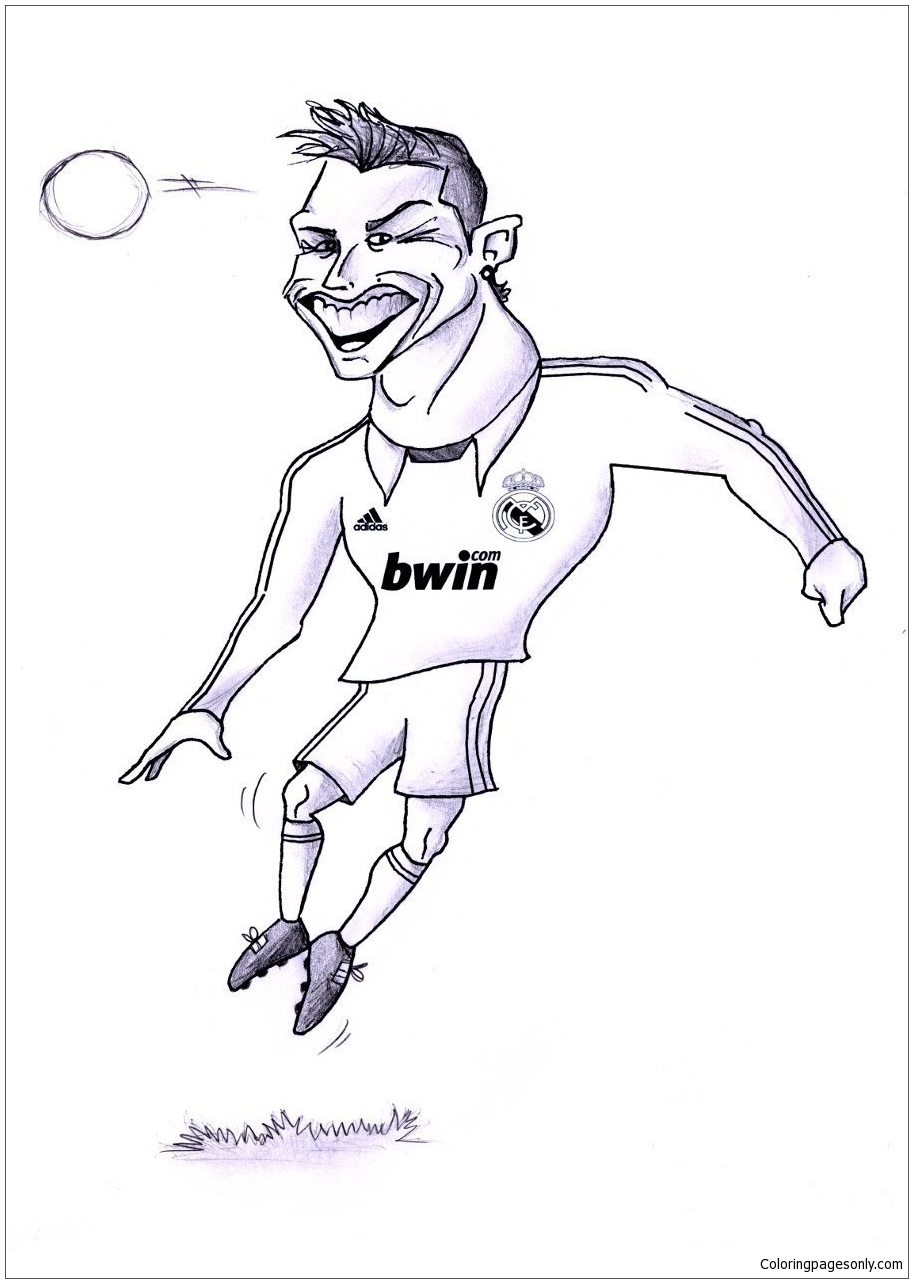
The Real Madrid home jersey is white – completely white, with gold trim for the badge and occasional gold or black accents in the design. Rendering Ronaldo in white is a specific technical challenge: the jersey is white, the skin tones are darker, and the shadow on the jersey must create three-dimensionality without losing the white reading.
Coloring the Real Madrid jersey: Pure white, applied uniformly,y reads as uncolored paper. Apply a very subtle cool grey (blue-grey with minimal saturation) in the deepest fold areas of the white jersey – under the arm, at the waist, in the most deeply recessed creases. Keep the highlight areas as white as possible – the contrast between those tiny shadow zones and the white body makes the jersey read as fabric rather than paper. The gold of the Real Madrid badge and the number 7 should be a warm, vivid gold – the most saturated warm color on an otherwise white page.
Juventus Jersey Pages – Black and White
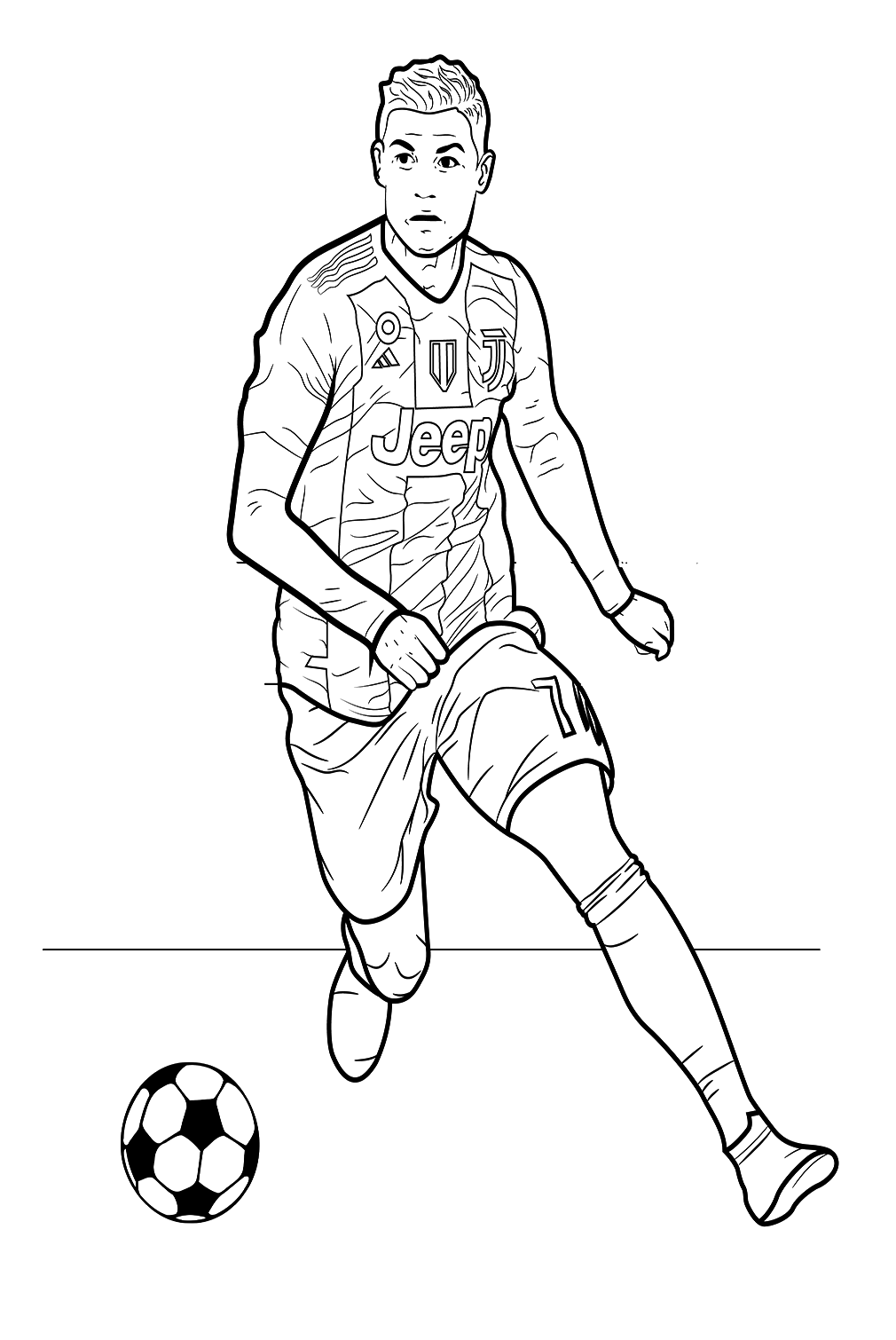
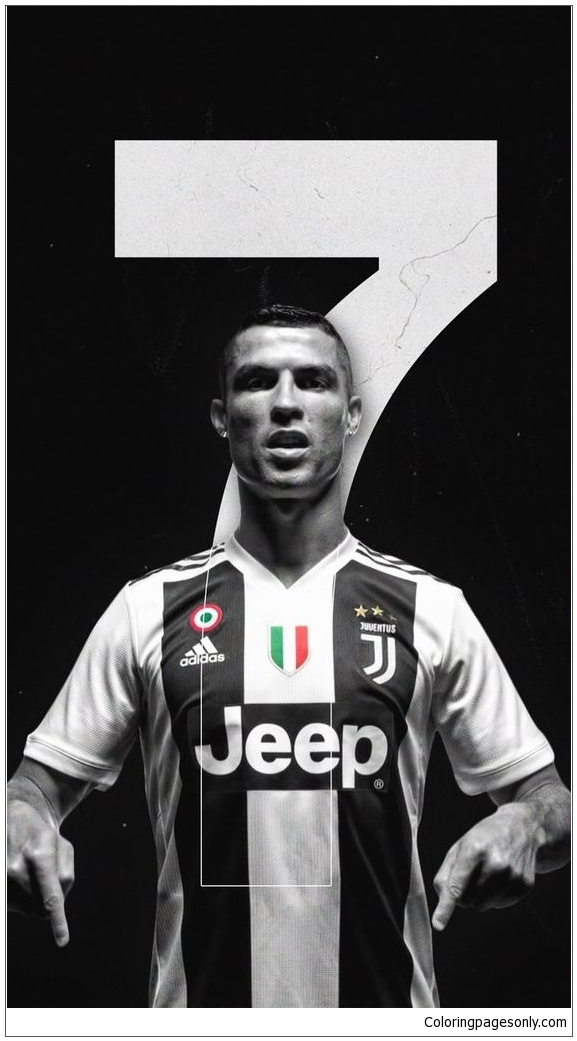
Ronaldo’s three seasons at Juventus (2018-2021) gave him his only Italian football experience and added Serie A titles and Coppa Italia victories to his record. The Juventus jersey – vertical black and white stripes, the bianconeri (black and whites) – is the most graphically striking of his career kits and the most technically demanding to render in a coloring page context.
Coloring the Juventus jersey: The stripes are equal-width vertical bands of black and white. Apply the black stripes first at maximum darkness – true black across each band. The white stripes are the paper itself, but can receive a very faint warm-white treatment to distinguish them from the background. The stripes should be rendered with consistent width – uneven stripe widths are the most immediately visible inaccuracy on a Juventus kit page.
Al-Nassr Jersey Pages
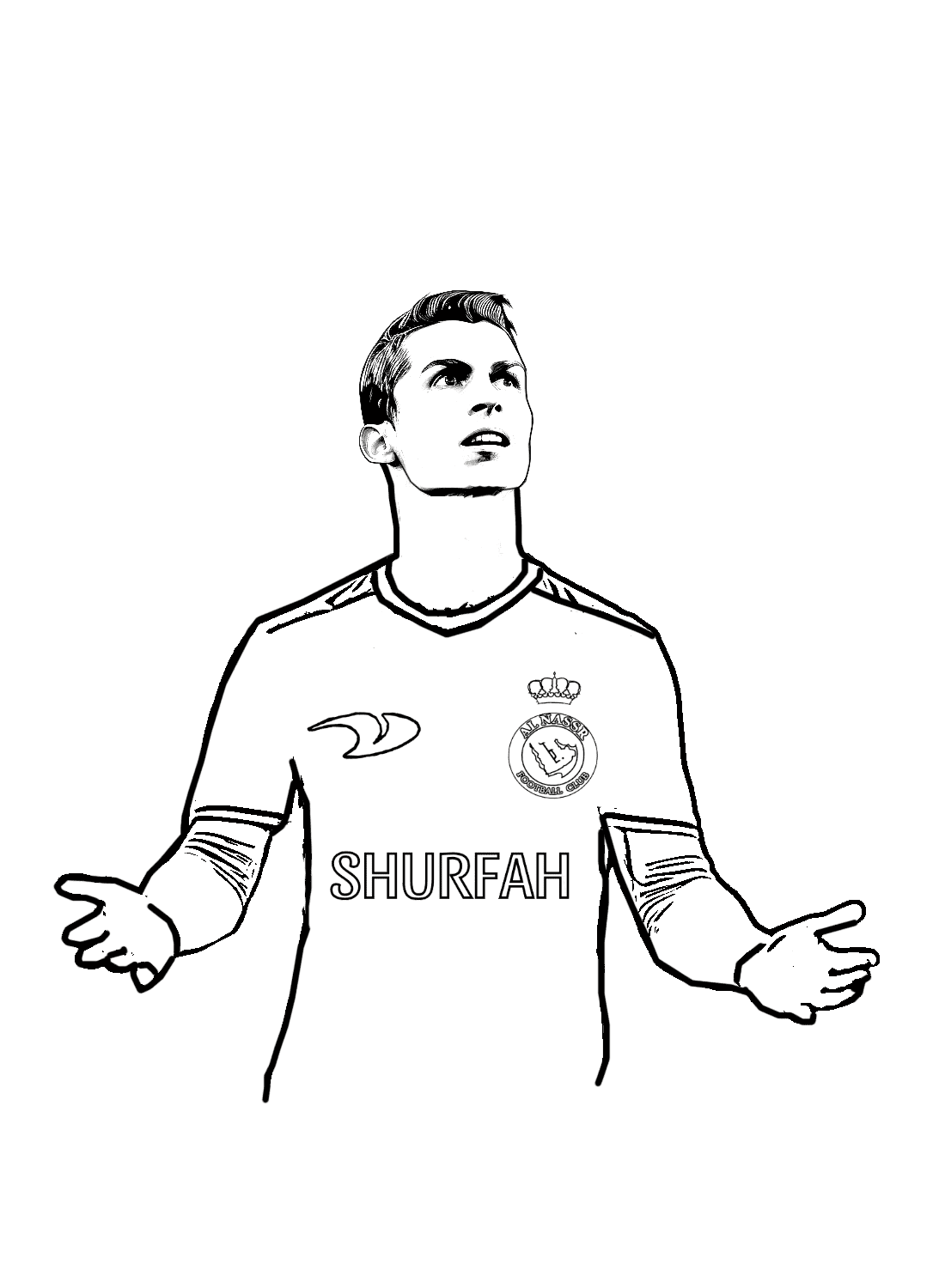
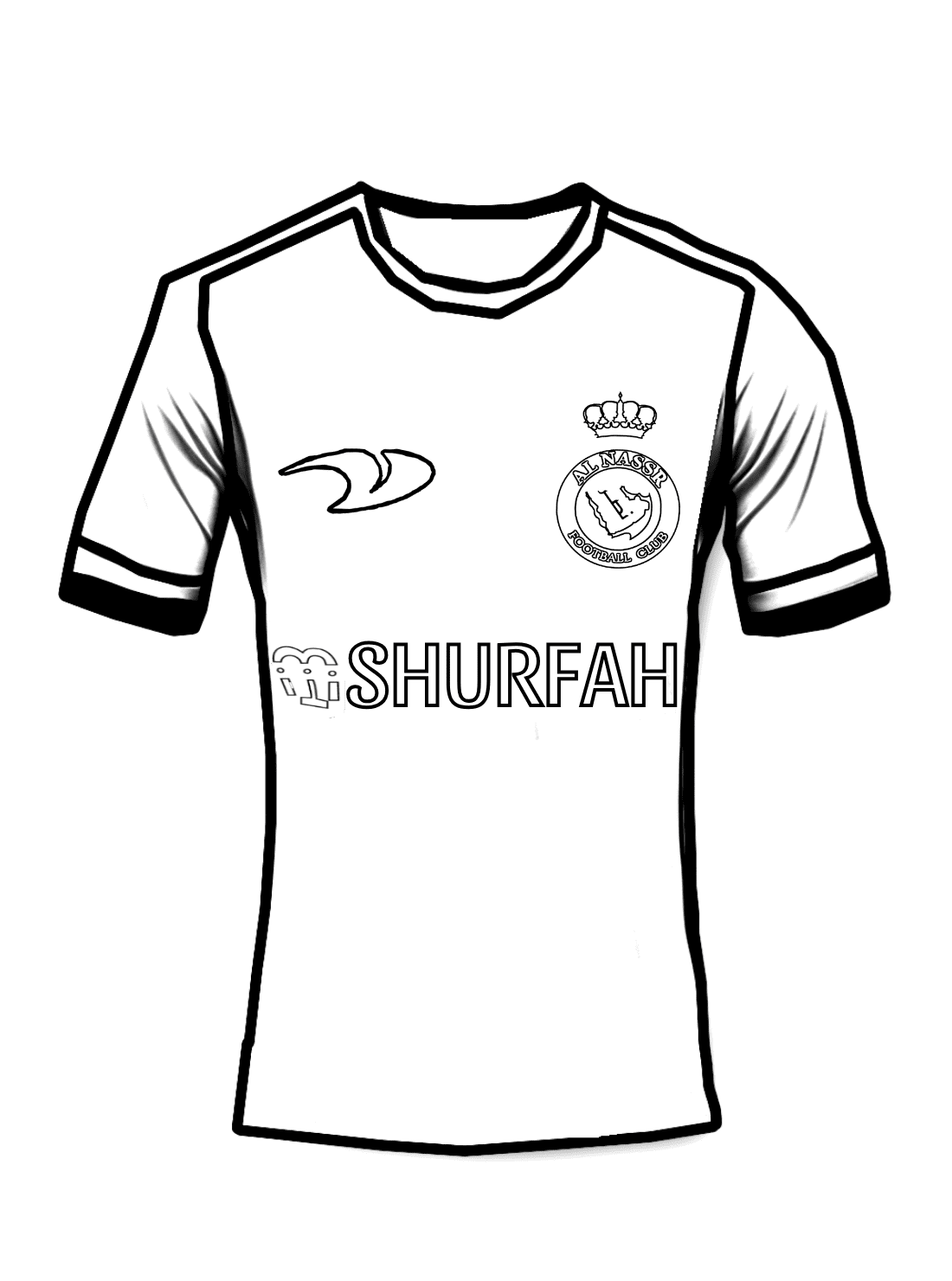
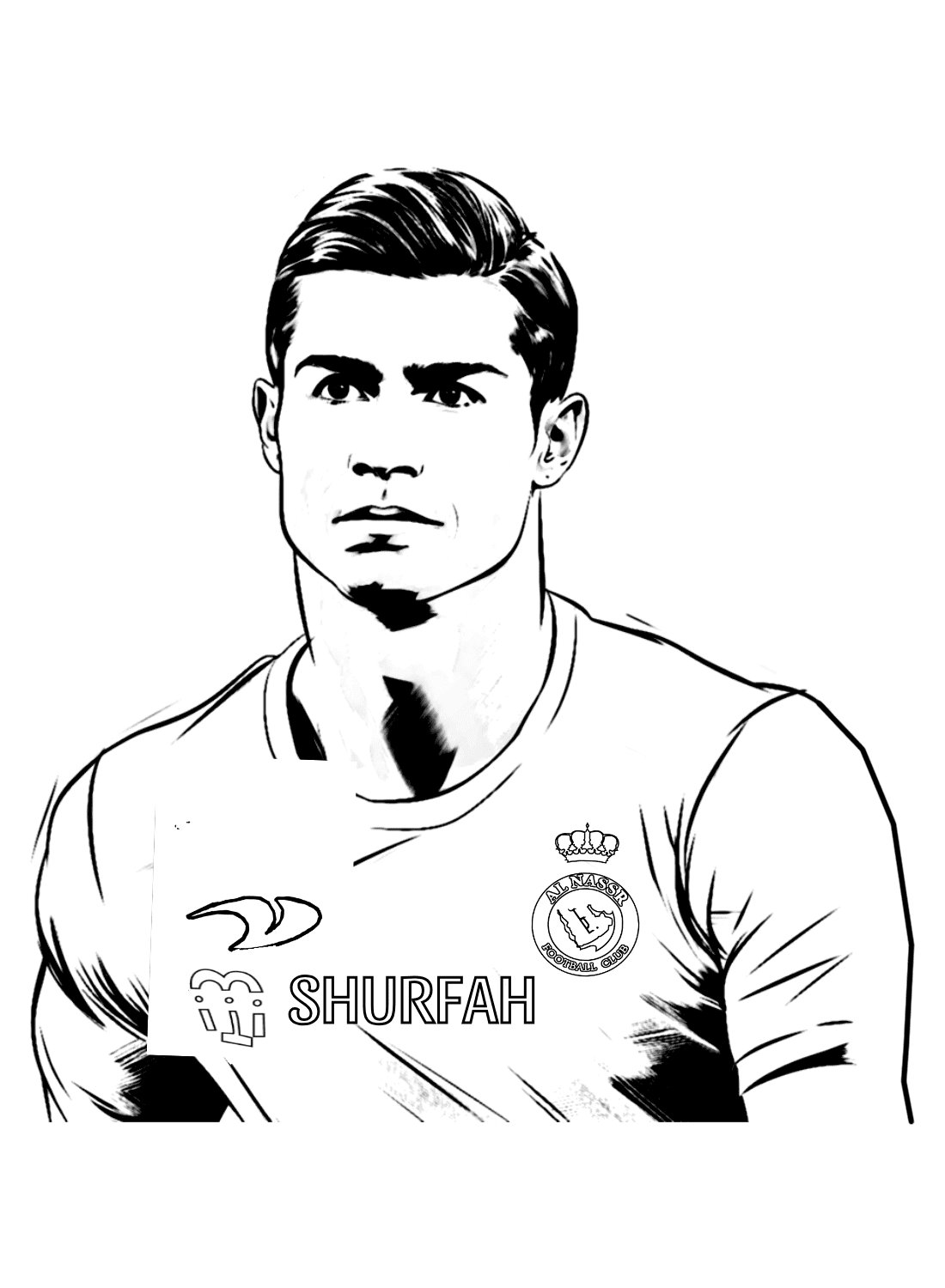
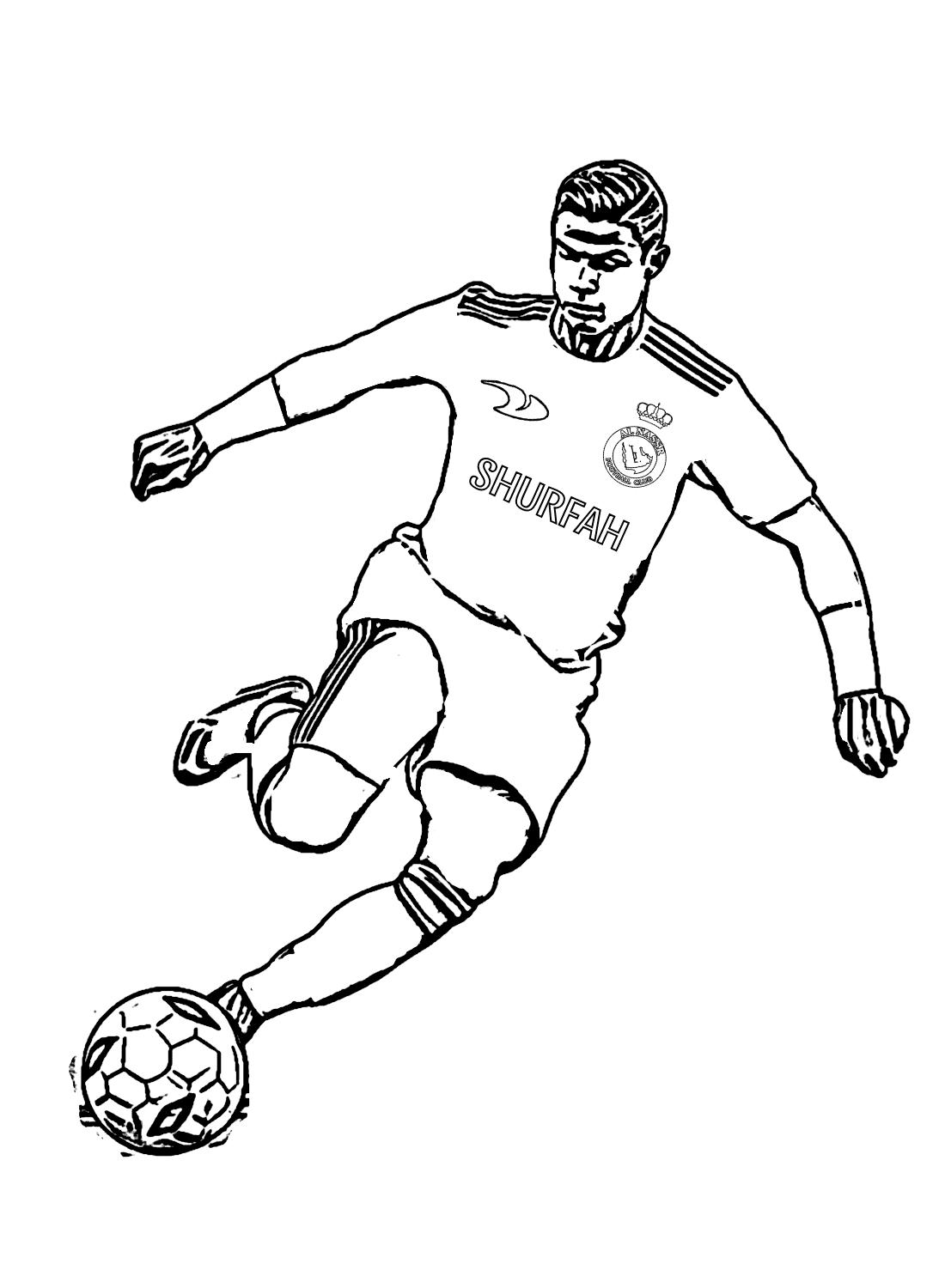
Ronaldo signed with Al-Nassr of the Saudi Pro League in January 2023, making him the highest-paid footballer in history at his reported salary. The Al-Nassr home jersey is yellow and blue – a vivid, warm yellow as the primary color with dark blue trim and accents. His number remains 7.
The Al-Nassr pages are the most recent in the collection and show Ronaldo at an age – 37, 38, 39 – where his physical presence and goal-scoring continue despite the passage from peak European competition to the Saudi league.
Coloring the Al-Nassr jersey: The yellow is warm and vivid – a saturated, warm yellow without significant green shift. The blue accents at the collar, sleeve, and badge are a deep, slightly cool navy blue. The contrast between warm yellow and cool navy is the kit’s visual energy and should be maintained at full saturation in both elements.
Portrait and Character Pages
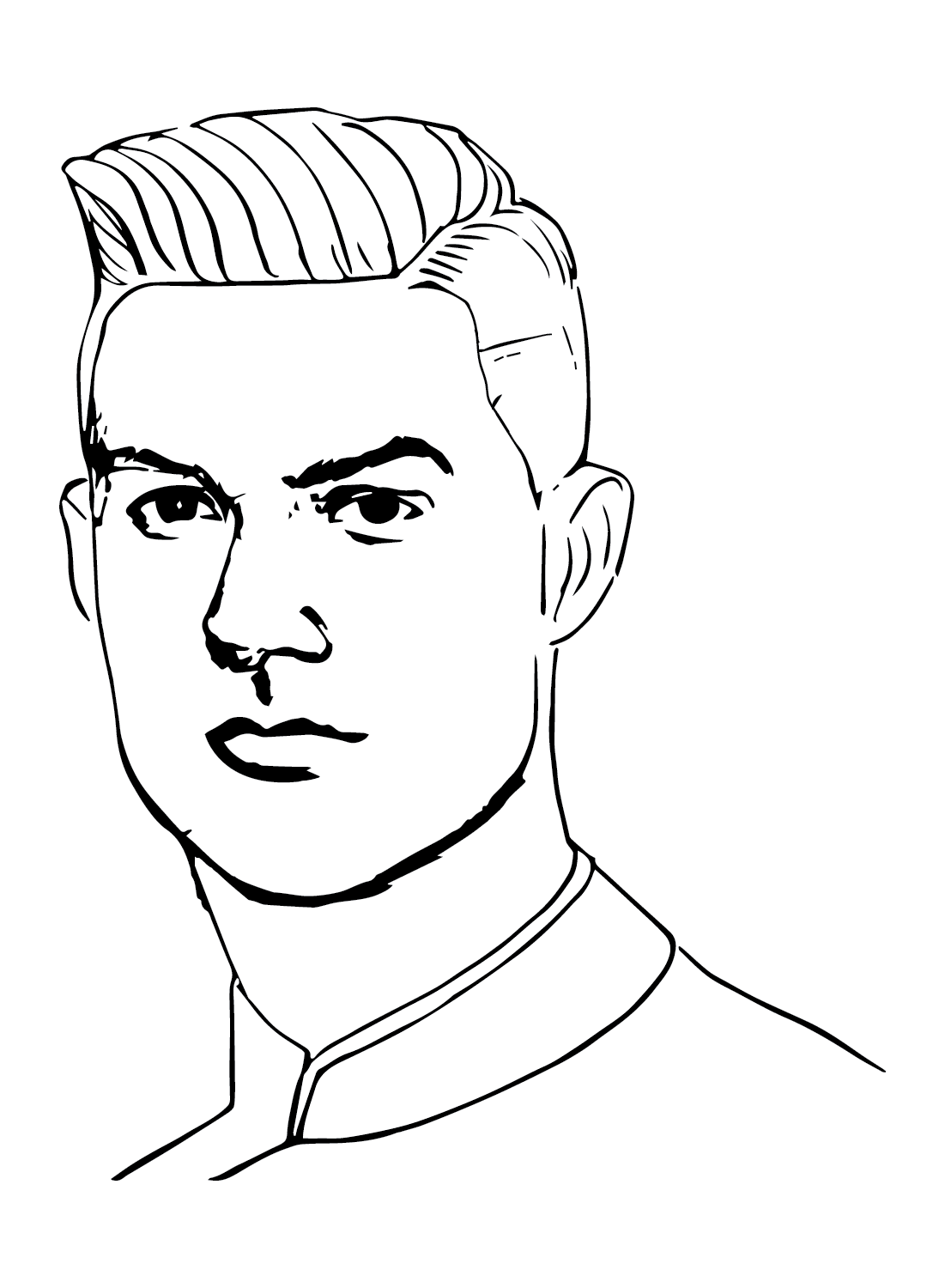
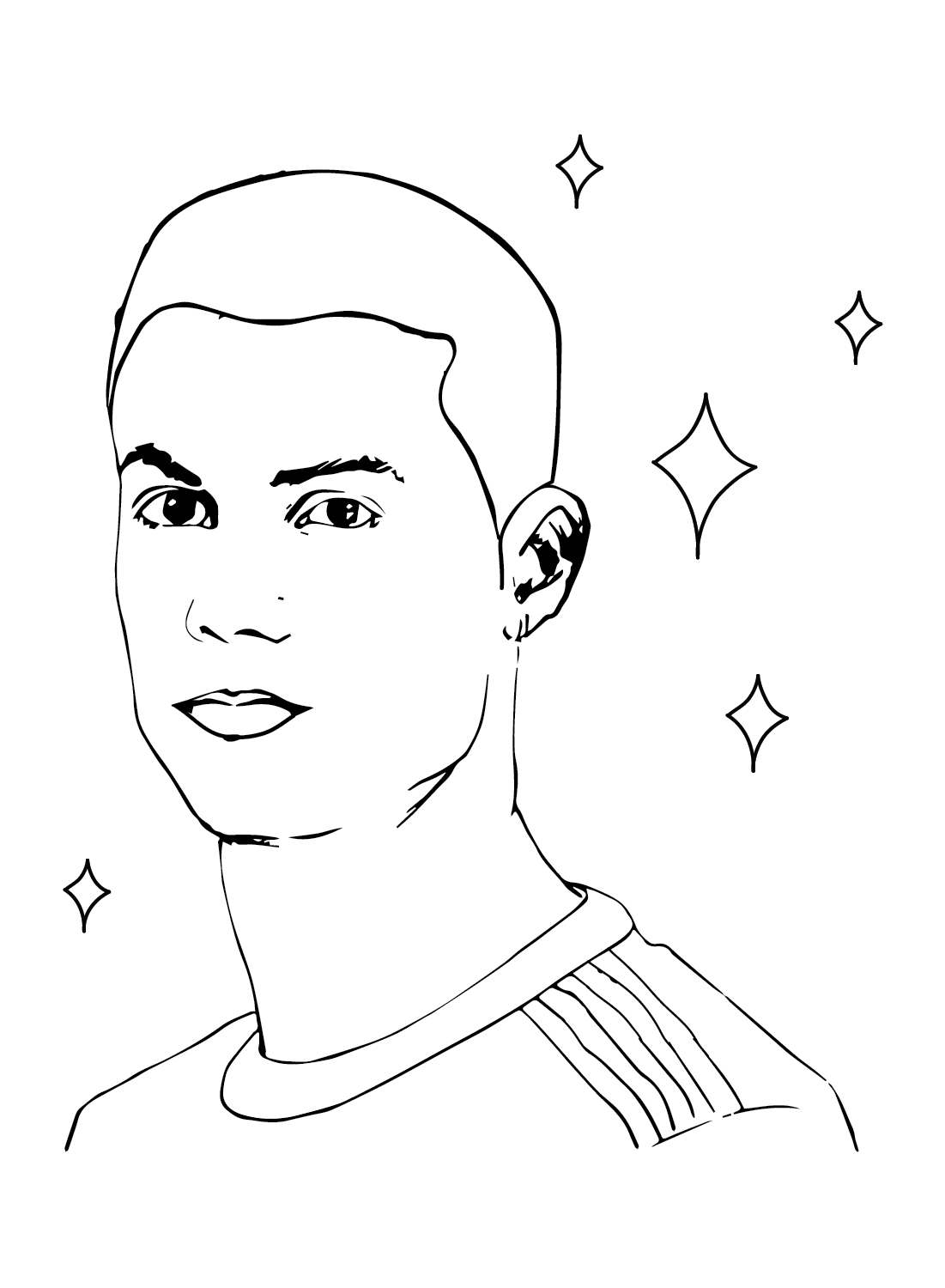
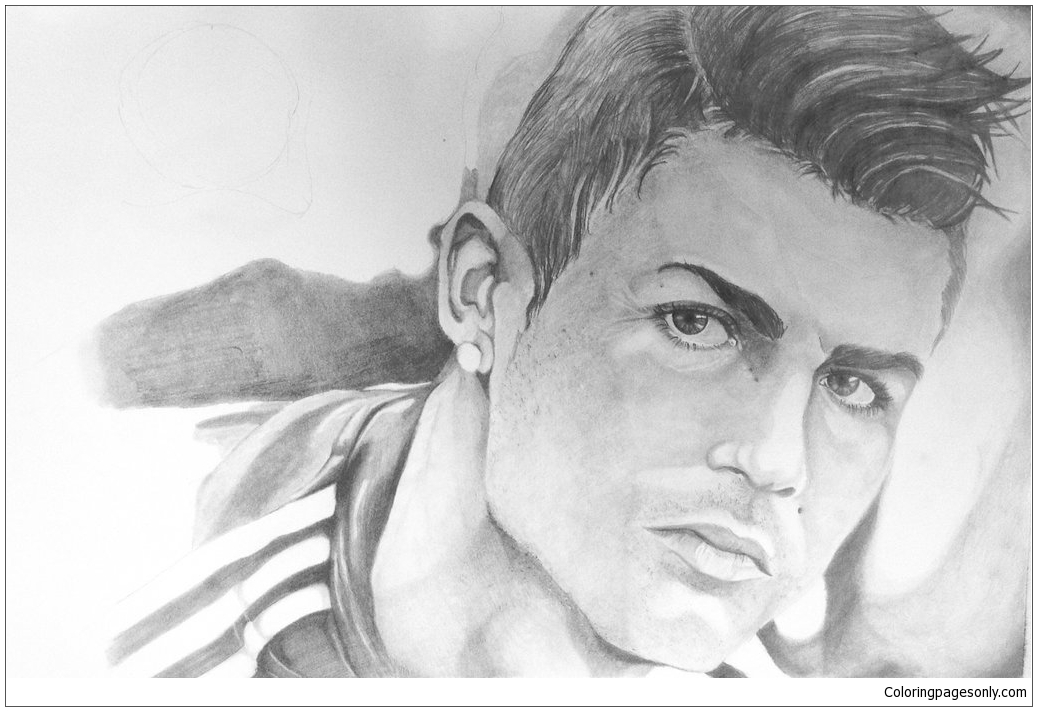
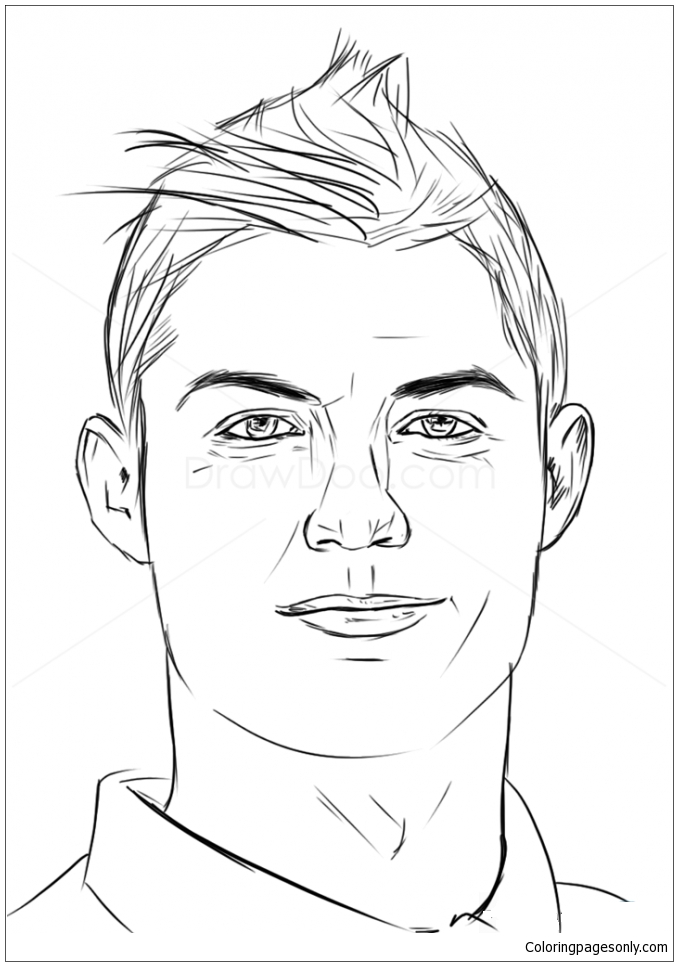
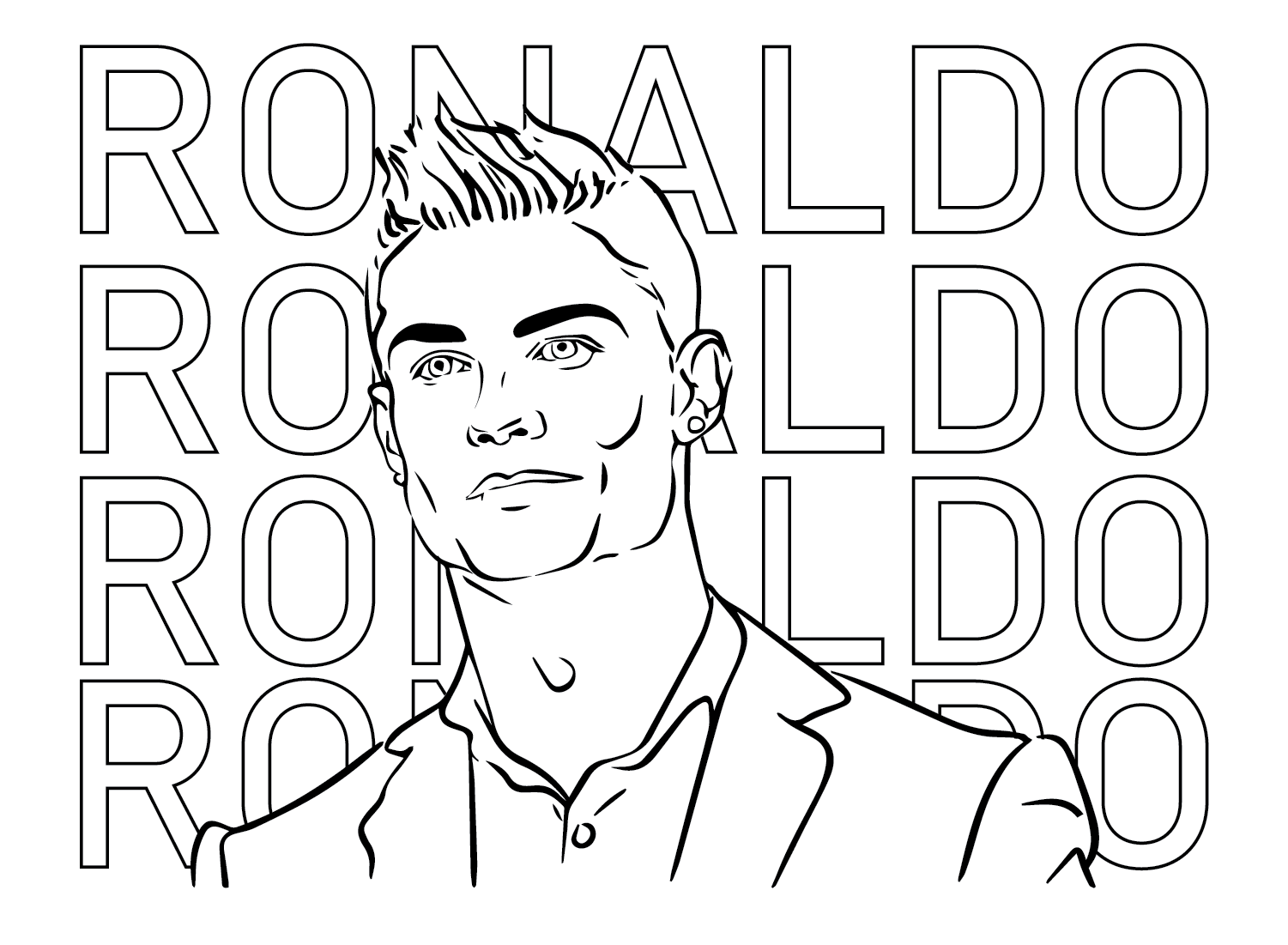
Portrait pages – Ronaldo’s face in profile or facing directly at the viewer, without a specific action context – are the collection’s most intimate. His features are well-documented through global media: dark hair typically styled up or to the side, strong jaw, a specific set to the expression that carries both the confidence of someone who has been at the top of their sport for two decades and the focus of someone for whom physical discipline is a conscious daily commitment.
What These Pages Do
Ronaldo’s career trajectory from poverty in Madeira to the world’s most followed social media account is one of sport’s most specifically documented stories of individual effort. The discipline, physical training, and focused dedication to improvement that observers and former teammates consistently describe as defining qualities of his career are not mythologized abstractions – they are reported in specific detail across thousands of documented accounts. Coloring his pages while understanding this context is engaging with a character study as much as a football portrait.
The SIUUU celebration is a cultural artifact that has crossed every language barrier in the sport. It needs no translation, no commentary, no context. It is performed identically in Manchester, Riyadh, Lisbon, and Madrid. Its global recognition is a specific kind of cultural achievement – a physical gesture that communicates something universally legible about what it feels like to score a goal.
Fine motor development. The American Academy of Pediatrics identifies fine motor skill development as a key childhood milestone throughout early childhood. The jersey detail, badge complexity, number rendering, and portrait precision of these pages provide motivated, sustained fine motor practice. The 2005 Art Therapy Journal study on structured coloring and anxiety reduction applies throughout – young fans of Ronaldo bring the specific motivated attention to these pages that produces the most effective developmental practice.
The multi-jersey collection teaches color identity across club and country. Portugal red, Manchester United red (slightly different), Real Madrid white, Juventus black and white, Al-Nassr yellow – five distinct jersey identities across a single career, each immediately associated with a specific chapter. Coloring through all five teaches color as a way of encoding institutional identity.
How to Color These Pages Well
Skin tone is the collection’s most important consistent decision. Ronaldo’s skin tone is a warm, medium-light Mediterranean complexion – olive-influenced, significantly warmer than Northern European skin tones, with depth that reads as warm in highlight areas and darker warm-brown in shadow. The key decision is warmth: use a warm peach-tan as the base, warm brown in the mid-shadow, and a deeper warm brown (not grey, not cool) in the deepest shadow areas. Any cool grey in the skin tone will look incorrect for this specific complexion.
Hair color requires disciplined dark application. His hair is very dark brown – close enough to black that it should be rendered in near-black rather than in a brown that risks reading as medium-brown. Apply the near-black across the main hair mass, then add very subtle dark brown highlights along the outermost strands where light catches the hair surface. The result reads as dark glossy hair rather than as flat black.
The red jerseys are not the same red. Portugal and Manchester United are both red kits, but in different specific reds. Portugal reads slightly warmer (more orange-adjacent); United reads slightly cooler and deeper (closer to the true primary red). If coloring pages from both within the same session, maintain this distinction – use two different red tools, or adjust the pressure of application to create the tonal separation.
The SIUUU celebration pose has a specific shadow logic. The raised arm is backlit if the celebration is performed in a stadium with overhead lighting, which means the underside of the raised arm and the extended fingers are in shadow, while the shoulder and upper arm face the light. Apply the shadow systematically from the armpit upward along the underside of the raised arm. The standing foot and lower body are in the deepest shadow from the overhead lighting. This light-from-above treatment makes the celebration pose read as the correct environment.
Badge crests require reference before coloring. The Portugal Federação badge, the Real Madrid crest, the Manchester United devil badge, and the Juventus badge are all heraldically complex. The most common coloring error is applying a single gold to entire badge areas that contain multiple distinct elements. Look at the badge’s structure before applying any color – identify each zone separately, then color each zone in the correct tone before moving to the next.
5 Creative Craft Ideas
Career Jersey Timeline
Print one page representing each of Ronaldo’s five major clubs: Sporting CP (green and white), Manchester United (red #7), Real Madrid (white #7), Juventus (black and white stripes), and Al-Nassr (yellow and blue #7). Color each in the exact canonical kit colors.
Mount all five in chronological order on a long backing sheet. Below each: the club name, the years played, and one achievement from that chapter – “3 Premier League, 1 Champions League” for United, “4 Champions League, 450 goals” for Real Madrid. The finished timeline is Ronaldo’s career biography rendered as a jersey collection – each color telling a chapter.


The SIUUU Anatomy
Print two copies of the SIUUU celebration page. Color the first in Ronaldo’s Portugal red. Color the second in Real Madrid white.
Mount both side by side on a dark backing sheet. Add arrows and labels indicating the specific elements of the celebration: “Arm raised – one side,” “Arm angled – other side,” “Feet together,” “Head up,” “SIUUUU.” Below the images, add the note: “Same pose. Every stadium. Twenty years.”
The finished display is a technical diagram of the most recognized goal celebration in football – both as a fan tribute and as a genuine study of the gesture’s components.

Ronaldo vs. Messi – The Comparison Display
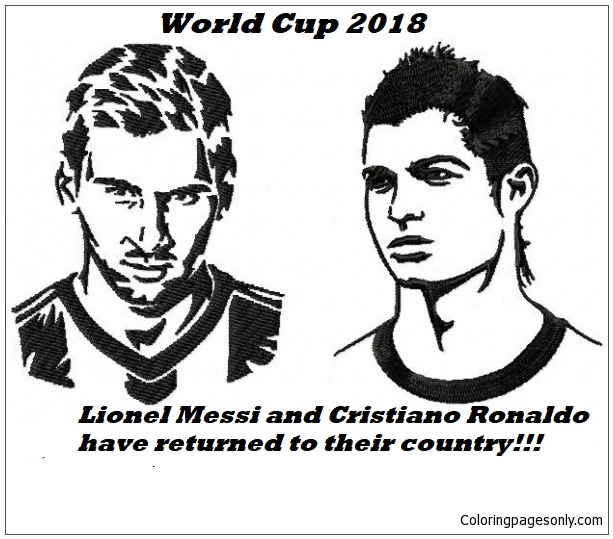
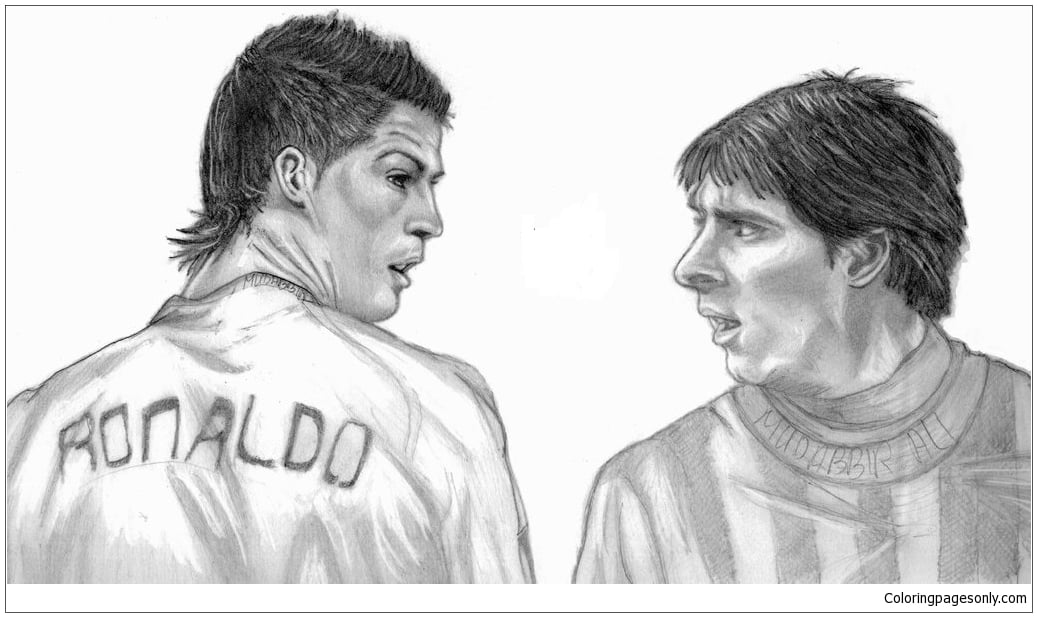
This project requires pages from two collections on this site. Print the most dynamic Ronaldo action page and the most dynamic Messi action page. Color Ronaldo in Portugal red, Messi in Argentina blue and white.
Mount both on a neutral backing sheet, facing each other. Between them, add a simple stat comparison: “Ronaldo – 5 Ballon d’Or, 130 international goals, 5 World Cups” on the left. “Messi – 8 Ballon d’Or, 1 World Cup winner, 1 Copa América winner” on the right.
Below both: “The most debated comparison in football history. No answer required.”
Record-Breaking Moment Card
Ronaldo became international football’s all-time leading scorer on September 1, 2021, when he scored twice against the Republic of Ireland to surpass Iran’s Ali Daei’s record of 109 international goals. He has since extended that record to 130 goals.
Print a Portugal jersey page. Color it carefully in warm Portuguese red with a gold badge. Mount on cardstock. On the back, write: “September 1, 2021. Faro, Portugal vs. the Republic of Ireland. Goals 110 and 111. The record belonged to Ali Daei of Iran since 2003. It was broken on this day, in the stadium closest to his birthplace, by Cristiano Ronaldo dos Santos Aveiro.”
From Madeira to Madrid: The Origin Story
Print one portrait page and one early-career action page – the simplest, most accessible versions of Ronaldo. Color both carefully. Mount the portrait on the left, the action page on the right.
Add a hand-lettered timeline below: “1985 – Born, Funchal, Madeira. 1997 – Joins Sporting CP academy, age 12. 2003 – Signs for Manchester United, age 18. 2008 – First Ballon d’Or. 2021 – International football’s all-time top scorer.”
The display frames the beginning of the story – the island, the academy, the departure – as the context for everything the career pages represent.
Frequently Asked Questions
Who is Cristiano Ronaldo and where is he from? Cristiano Ronaldo dos Santos Aveiro is a Portuguese professional footballer born on February 5, 1985, in Funchal, on the island of Madeira, Portugal. He plays as a forward and is currently at Al-Nassr of the Saudi Pro League, having previously played for Sporting CP (Portugal), Manchester United (England), Real Madrid (Spain), and Juventus (Italy). He holds the record for the most international goals in football history, with 130 goals for Portugal as of 2025, and has won five Ballon d’Or awards (2008, 2013, 2014, 2016, 2017). He wears the number 7 for both club and country.
What are Cristiano Ronaldo’s most significant career achievements? Ronaldo’s documented career achievements include five Ballon d’Or awards; four UEFA Champions League titles (2008 with Manchester United, 2014, 2016, 2017 with Real Madrid); one UEFA European Championship (2016, with Portugal); one UEFA Nations League (2019, with Portugal); three Premier League titles (2007, 2008, 2009); two La Liga titles (2012, 2017); two Serie A titles (2019, 2020); and international football’s all-time leading scorer record of 130 goals for Portugal. He is the all-time top scorer in UEFA Champions League history with 140 goals, the first player to score in five FIFA World Cups, and the most followed person on Instagram with over 640 million followers.
What is the SIUUU celebration, and where did it come from? The SIUUU celebration – in which Ronaldo leaps, rotates, lands with one arm raised and the other angled downward, and shouts a sustained “SIUUUU” – is the most globally recognized goal celebration in football. The celebration originated during Ronaldo’s time at Real Madrid and became increasingly associated with him through viral videos and widespread imitation. It has been performed in stadiums across Europe, Asia, and the Americas, and is recognized independently of any football context by billions of people who follow Ronaldo on social media. The sound “SIUUU” is an expressive shout rather than a word in any language.
What jersey numbers and clubs has Ronaldo been associated with? Ronaldo has consistently worn the number 7 throughout his senior professional career – at Manchester United (2003-2009 and 2021-2022), Real Madrid (2009-2018), Juventus (2018-2021, where he switched from his preferred 7 to jersey number 7 only after the departure of another player), and Al-Nassr (2023-present). He also wears number 7 for the Portugal national team. At Sporting CP, he wore various numbers. The number 7 had significant legacy associations at Manchester United, specifically, previously worn by George Best, Bryan Robson, and Eric Cantona, which gave Ronaldo’s adoption of it a specific weight within that club’s history.
What is Ronaldo’s record for Portugal’s national team? Cristiano Ronaldo became international football’s all-time leading scorer on September 1, 2021, when he scored twice against the Republic of Ireland to surpass the previous record of 109 goals held by Ali Daei of Iran. He has since extended this record to 130 goals in over 210 appearances for Portugal. He has represented Portugal in five FIFA World Cups (2006, 2010, 2014, 2018, 2022) and six UEFA European Championships (2004, 2008, 2012, 2016, 2020, 2024). His most significant international trophy was the 2016 UEFA European Championship, which Portugal won – though Ronaldo himself was substituted off early in the final against France due to injury and watched the remainder from the touchline.
How long has Cristiano Ronaldo been a professional footballer? Ronaldo made his senior professional debut for Sporting CP in 2002 at age seventeen, making his professional career span over twenty-two years as of 2024. His durability at the elite level – maintaining goal-scoring form into his late thirties and sustaining the physical conditioning associated with peak athletic performance well beyond the ages at which most footballers retire – is consistently cited by sports scientists, coaches, and former teammates as the result of exceptional personal discipline in diet, rest, and physical training. He is widely considered one of the most physically dedicated athletes in professional sport.
What age group are these pages best suited for? The simpler portrait and standing pose pages work well from ages five to seven for young football fans who recognize Ronaldo and want to color a familiar face. The jersey detail pages – with badge complexity and number rendering – are most rewarding from ages seven to ten. The dynamic action pages, the SIUUU celebration pages with their complex figure poses, and portrait pages requiring detailed skin tone and hair work are most satisfying for ages ten and up. Adult fans of Ronaldo – and the dedicated global fanbase spans all age demographics – will find the most detail-rewarding pages in the close-up portrait and specific celebration pages.
Browse the full collection at ColoringPagesOnly.com. All 60+ pages free, no sign-up, PDF or PNG, print or color online.
Cristiano Ronaldo left Madeira at twelve years old and knew no one in Lisbon. He had an accent that marked him as from the island. He cried himself to sleep during the first weeks at the academy. He stayed. He trained. He left for Manchester at eighteen. He won the Champions League at twenty-three. He won the Ballon d’Or five times. He scored 130 goals for Portugal. He is the most followed person on Instagram. He still trains as if none of it has happened yet.
That is the version of the story that the pages in this collection represent – not the celebrity, but the trajectory. The work that produced the goals. The goals that produced the records. The records that produced the recognition.
Pick up your red. Portugal red, warm-shifted. Apply number 7 in gold.
SIUUUU.
Share your work on Facebook and Pinterest and tag #Coloringpagesonly. We especially want to see the career jersey timelines and the SIUUU anatomy displays.
Color the seven. Follow the trajectory. From Madeira – everywhere.