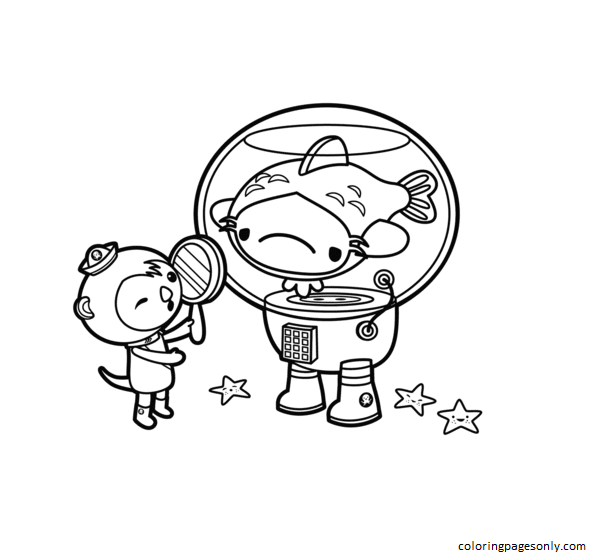
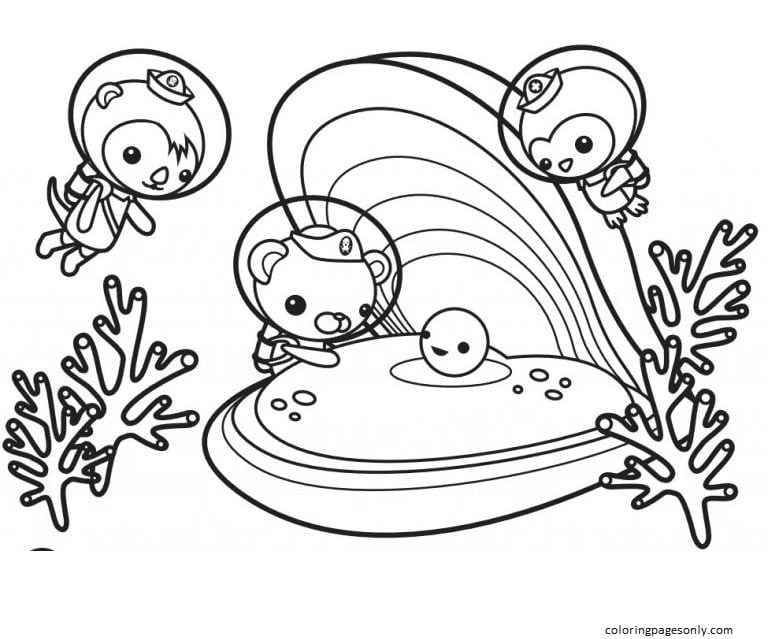
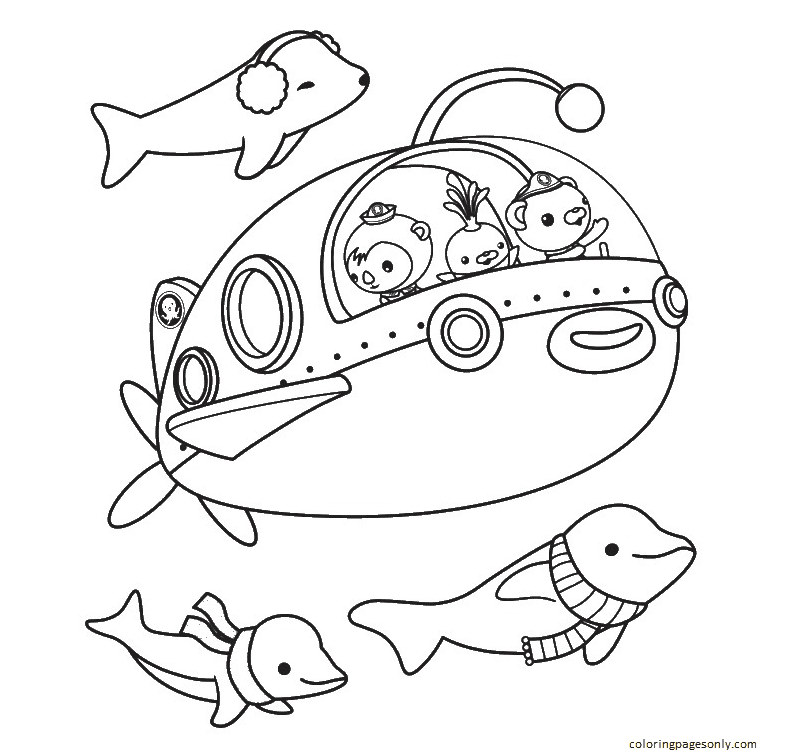
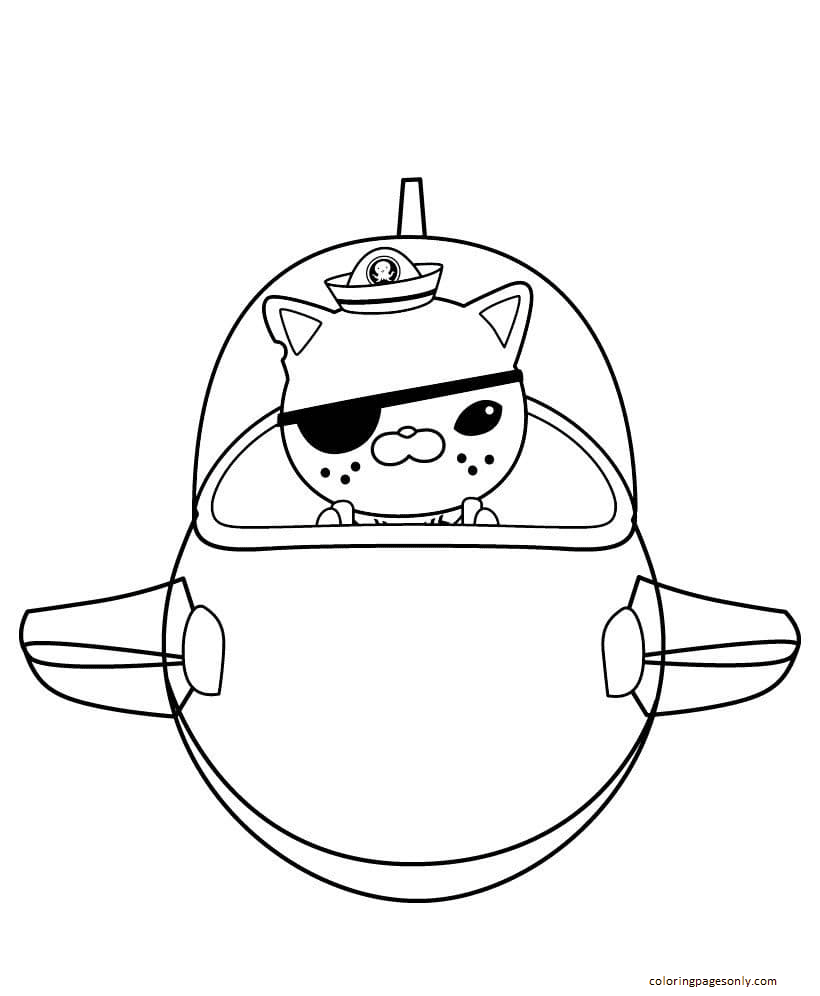
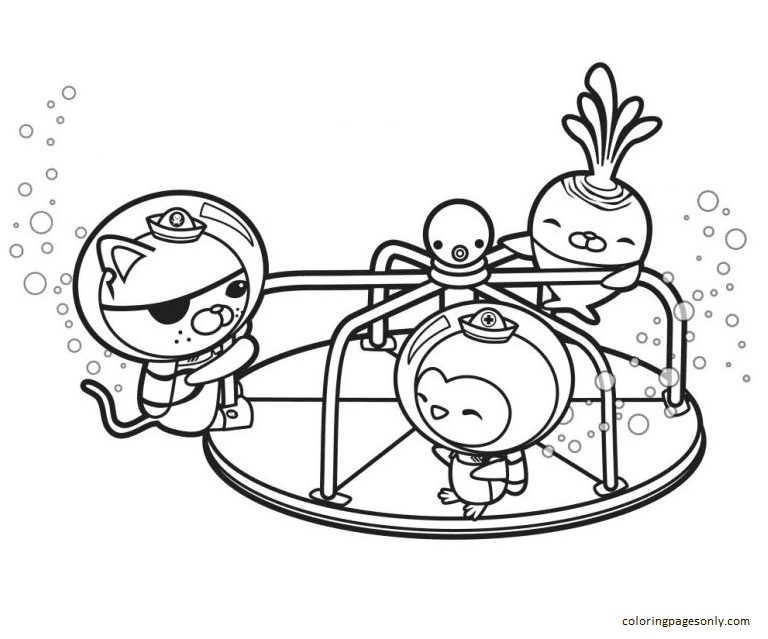
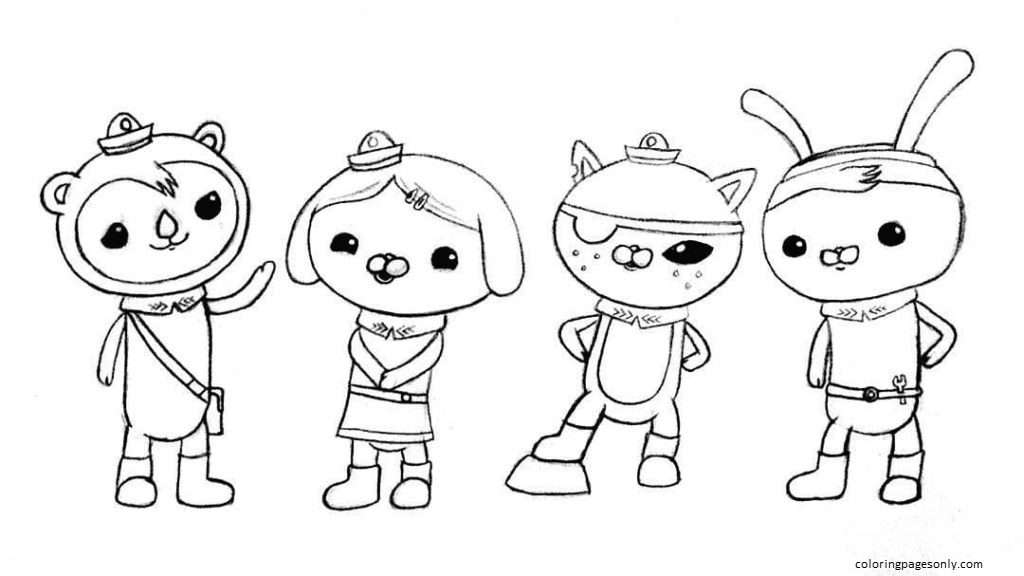
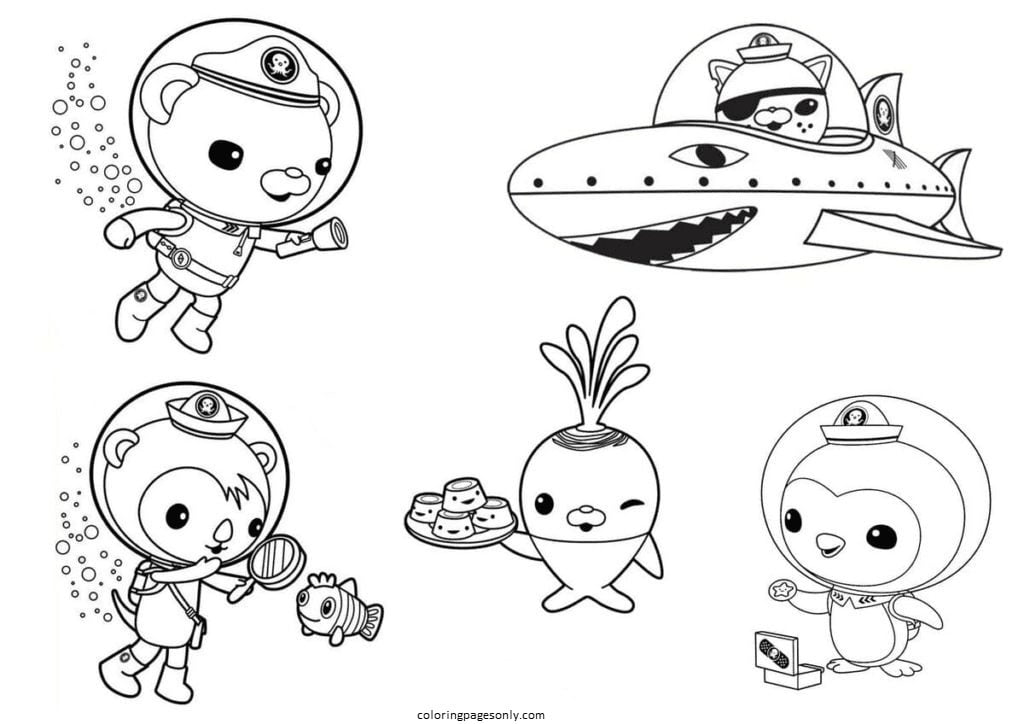
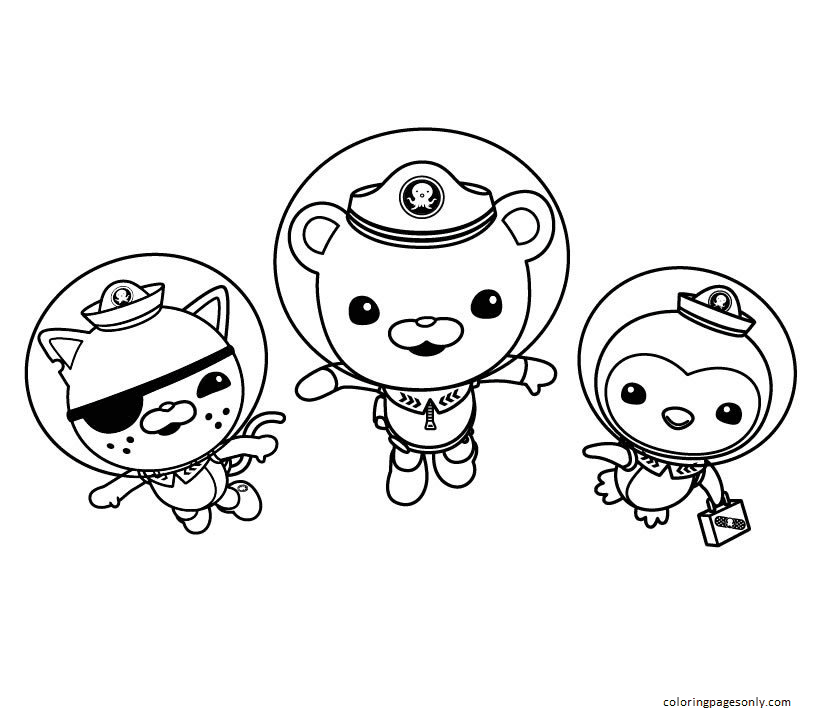
Free Octonauts Coloring Pages: 40+ pages featuring Captain Barnacles, Kwazii, Peso, Dashi, the Octopod, GUP vehicles, sea animals, and underwater rescue missions for kids. This collection also includes Tweak, Shellington, Professor Inkling, Tunip, the Vegimals, coral reefs, whales, dolphins, turtles, jellyfish, fish, and ocean adventure scenes. All free, printable PDFs and online coloring pages are ready for home printing, classroom use, preschool activities, kindergarten ocean lessons, birthday party printables, rainy-day fun, travel folders, and screen-free creative time. Many pages are also available in JPG and PNG formats so that children can print, save, or color them online with ease.

Octonauts is a children’s adventure world created by Meomi, the creative team of Vicki Wong and Michael Murphy. The story follows a brave team of animal explorers who live in an underwater base called the Octopod and travel through the ocean in special GUP vehicles. Their mission is simple and memorable: explore the ocean, rescue sea creatures, and protect underwater habitats.

That background makes Octonauts a strong coloring theme for children. It is not only a cute cartoon collection; it also connects naturally with ocean discovery, marine animals, teamwork, rescue stories, and early science curiosity. A child can color Captain Barnacles leading the crew, Kwazii exploring a sea cave, Peso caring for a turtle, Dashi recording a discovery, Tweak fixing a rescue vehicle, or Shellington studying an unusual marine creature.

The collection includes easy pages for younger colorists and fuller scenes for older children. Toddlers and preschoolers can enjoy simple character pages with large shapes and clean outlines. Older kids can spend more time on crew scenes, GUP vehicles, coral reefs, Octopod backgrounds, and ocean missions with richer details.

Parents can use these pages for quiet time, after-school activities, weekend crafts, or travel entertainment. Teachers can use them for ocean animal lessons, classroom coloring stations, storytelling activities, fine motor practice, and early science themes. The pages are simple enough to be fun, but rich enough to support imagination, vocabulary, focus, and creative learning.

These 40+ free pages at ColoringPagesOnly.com cover Captain Barnacles, Kwazii, Peso, Dashi, Tweak, Shellington, Professor Inkling, Tunip, the Vegimals, Octopod scenes, GUP vehicle adventures, sea animal rescue pages, underwater missions, easy Octonauts pages, and more detailed ocean scenes. All free, printable PDFs or online coloring pages, print or color online.

What’s Inside

Captain Barnacles Pages

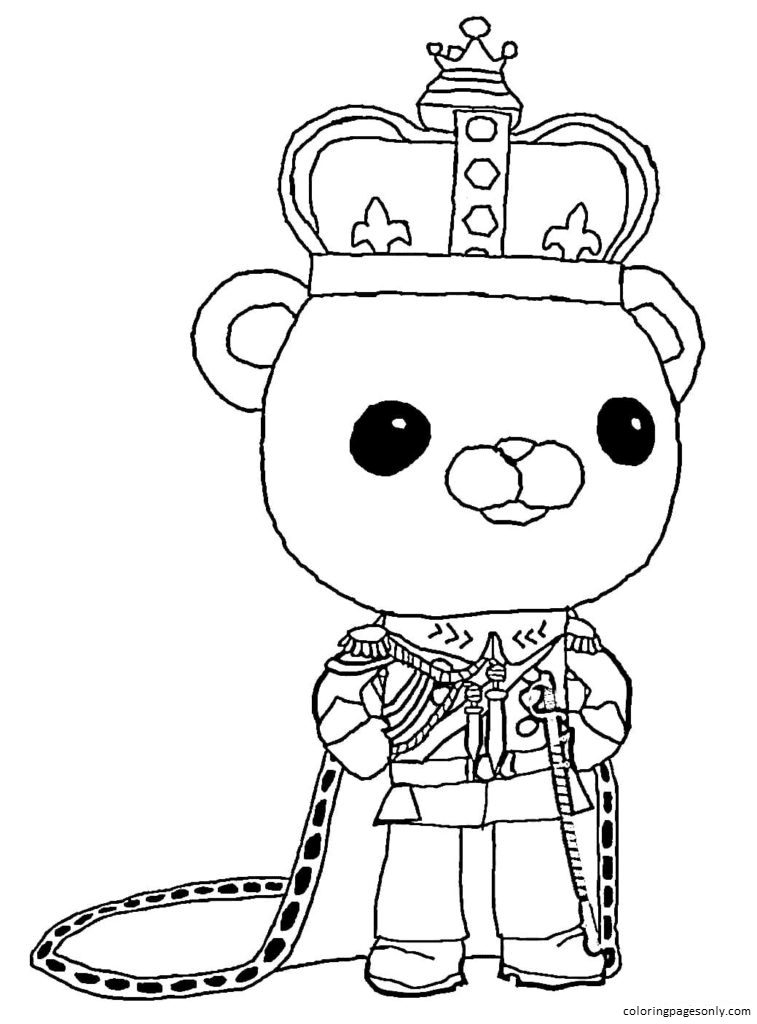
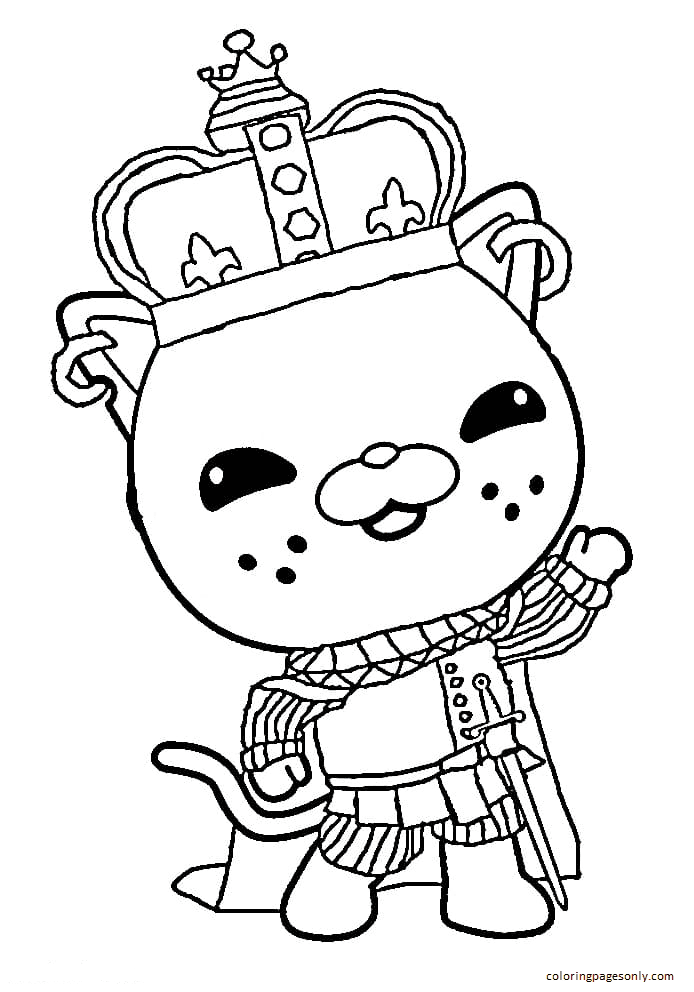
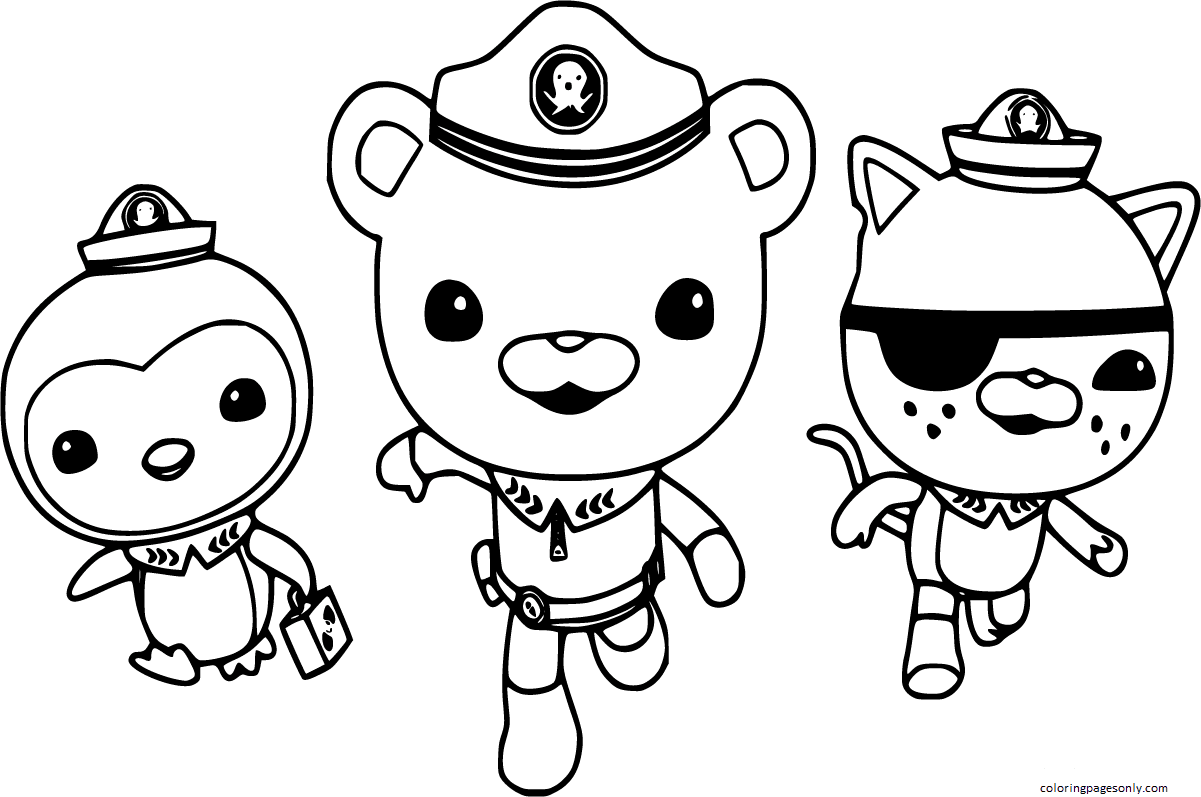
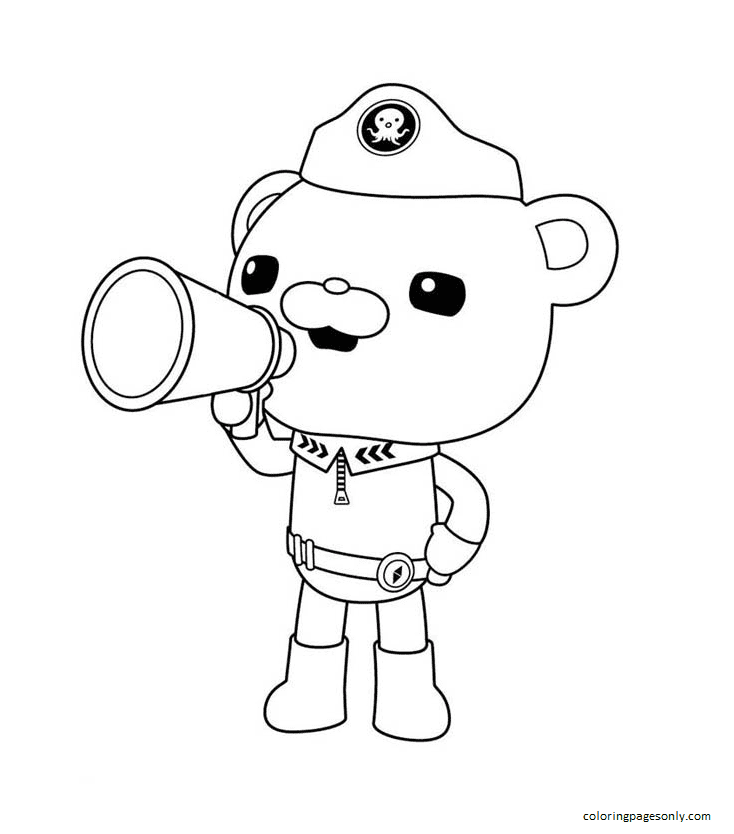
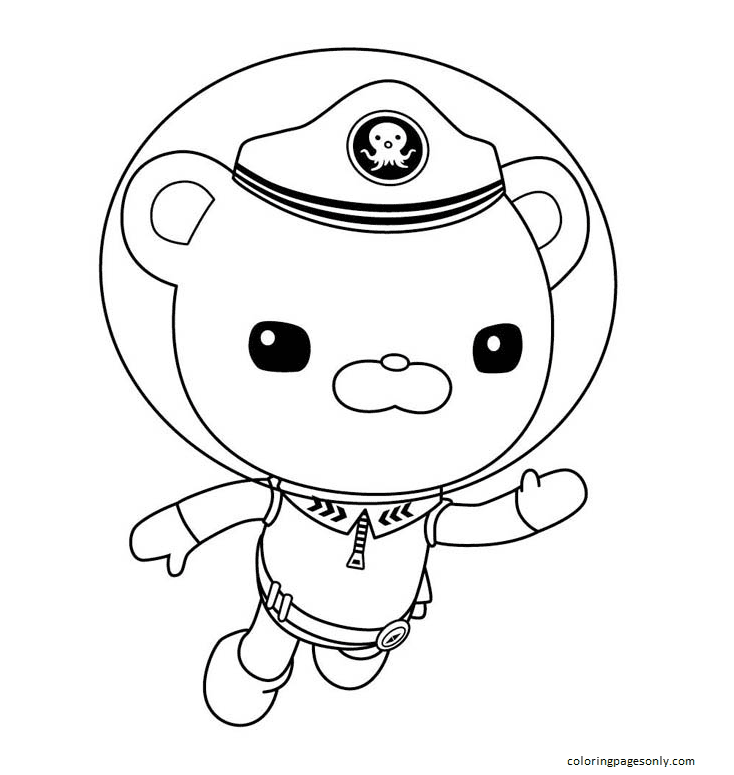
Captain Barnacles’ pages show the brave leader of the Octonauts crew in portraits, team scenes, and underwater missions. Some designs may show him standing ready for action, guiding the crew, helping a sea creature, or preparing for a new rescue near the Octopod. These pages work well as opening designs because Captain Barnacles gives the collection a clear leader and a strong adventure feeling.

For younger children, a simple Captain Barnacles page helps them recognize one main character and focus on a clear shape. For older children, pages with Barnacles inside a larger rescue scene can encourage storytelling: Where is the mission happening? Which sea animal needs help? What will the crew do next?

Coloring Captain Barnacles: Start with the character first, so he stays clear as the main subject. Use white, blue, gray, and soft ocean tones for his familiar look, then add light blue water, bubbles, coral, or small fish around him. If the page includes a rescue scene, make Captain Barnacles slightly brighter than the background so children can immediately see who is leading the mission. The common mistake is making the ocean background too dark, which can cause the character to blend into the page.

Kwazii Adventure Pages

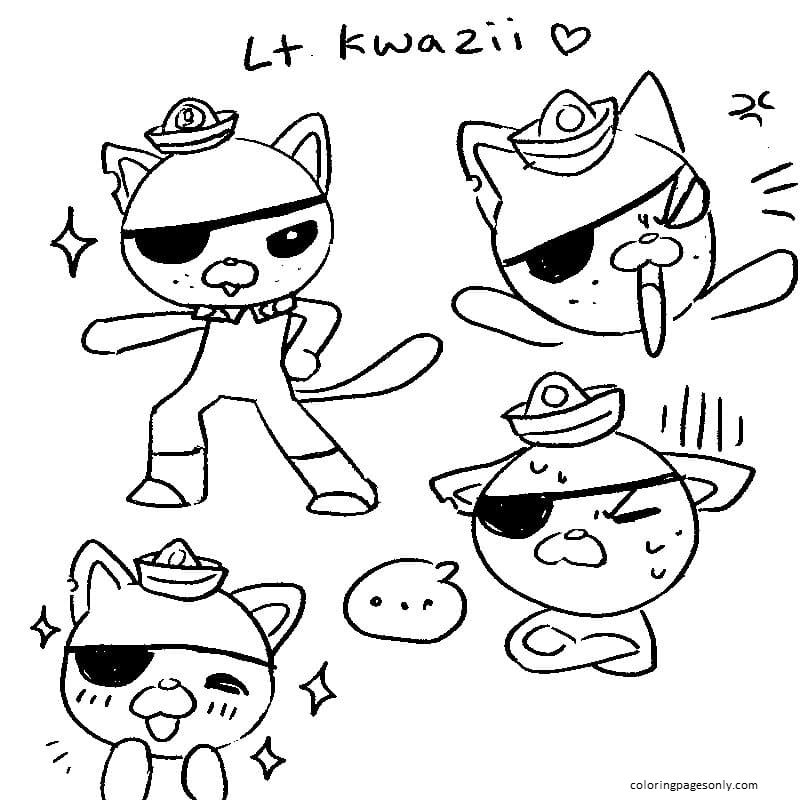
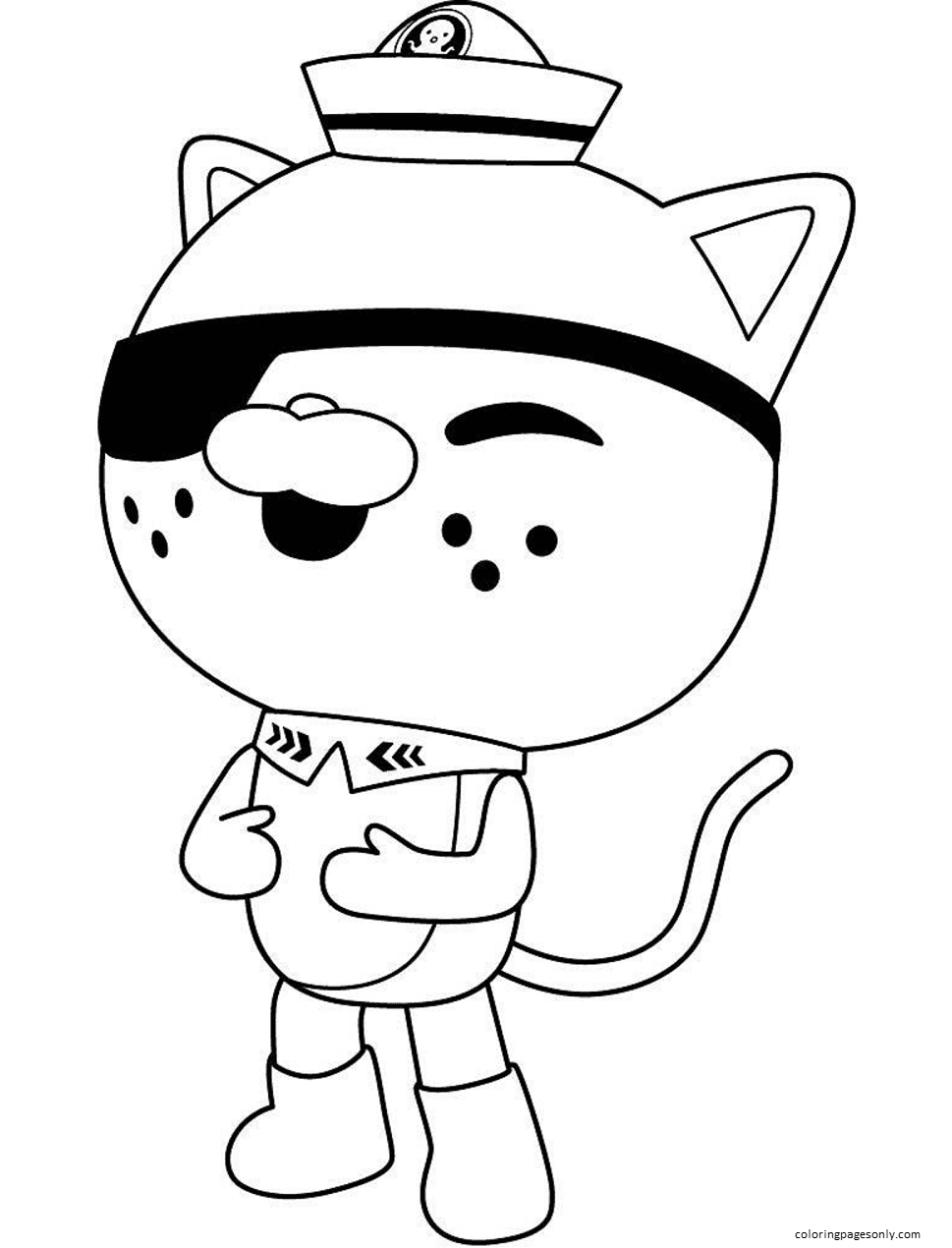
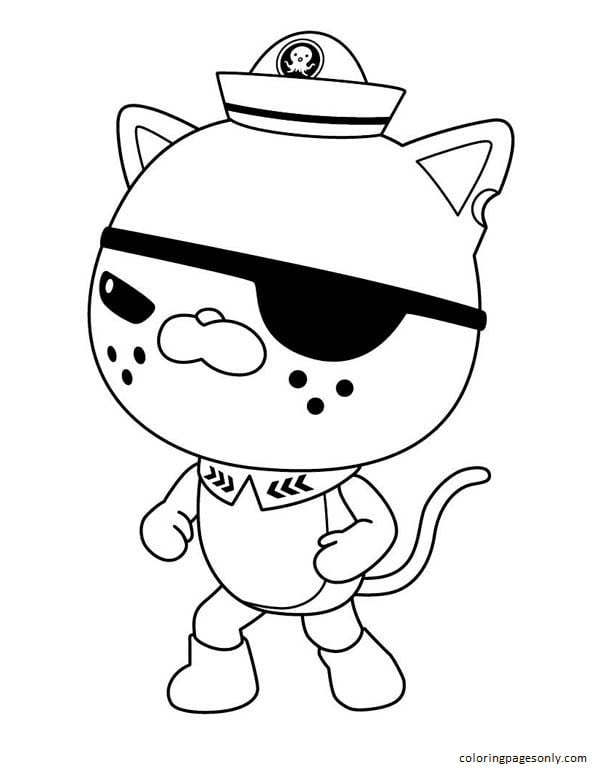
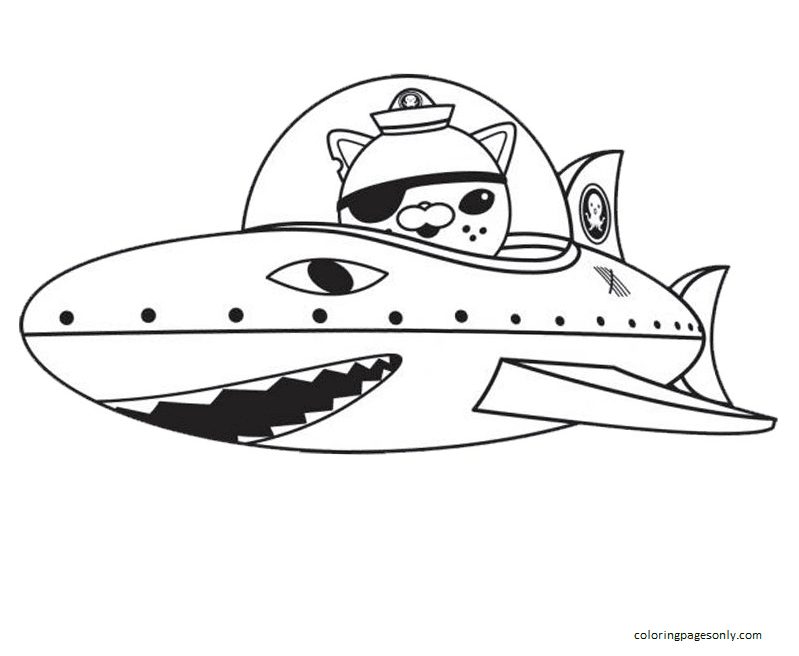
Kwazii pages bring movement, energy, and playful adventure to the collection. These designs may include Kwazii exploring sea caves, searching for treasure, riding in a GUP vehicle, swimming near coral, or joining Captain Barnacles and Peso on a rescue mission. His expressive face and adventurous personality make his pages especially fun for kids who like action.

This group also helps the gallery feel more dynamic. A Kwazii page can become a small treasure hunt, a cave exploration, or a fast ocean chase. That gives children more story to imagine while they color, instead of only filling in a still character pose.

Coloring Kwazii: Use warm orange tones for the character and place him against cooler ocean colors like blue, teal, or turquoise. Treasure, shells, rocks, and caves can use gold, brown, gray, pink, or purple. If Kwazii is inside a cave scene, keep the cave darker but leave the character bright. The common mistake is using too many dark colors around Kwazii, which can reduce the fun, lively feeling of the page.

Peso Rescue Pages

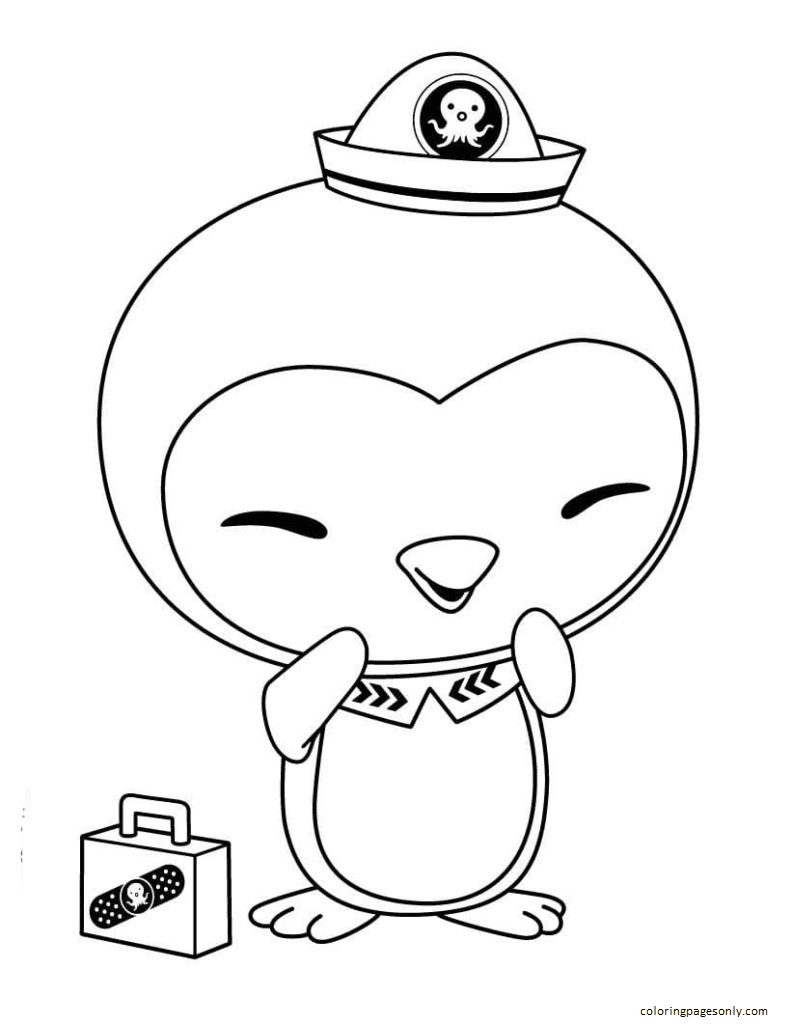
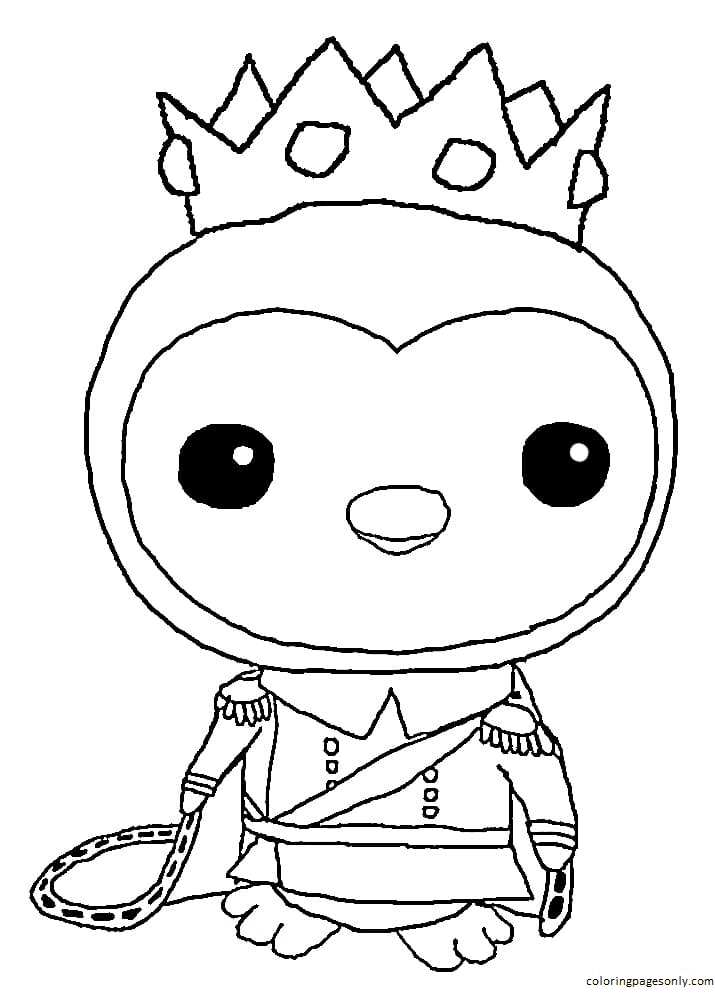
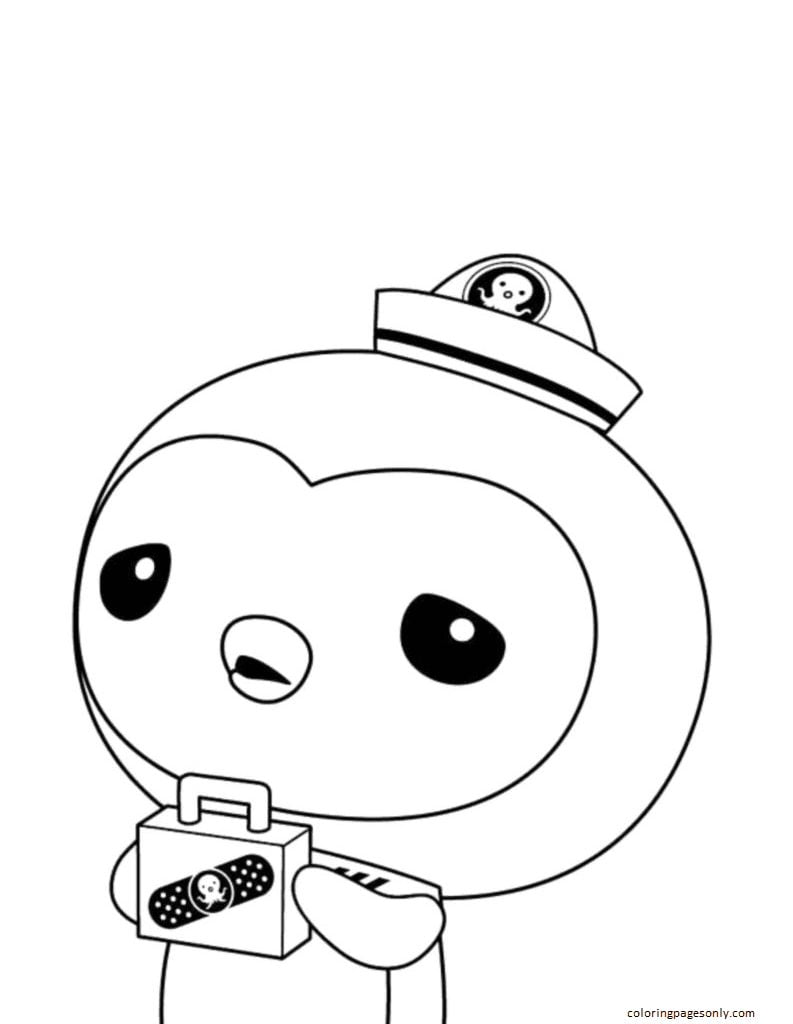
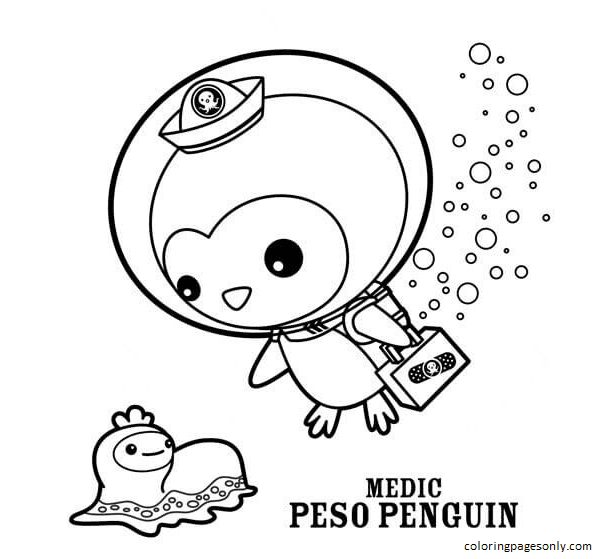
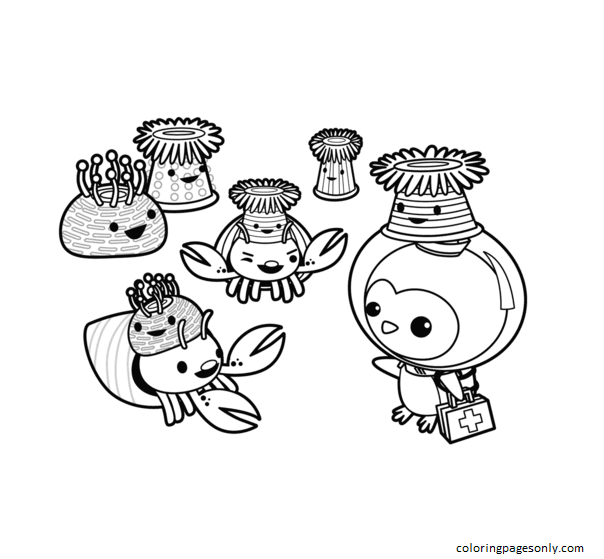
Peso pages are gentle, caring, and perfect for sea animal rescue scenes. These pages may show Peso helping a baby turtle, checking on a fish, standing with medical tools, or calmly joining an underwater mission with the rest of the crew. His pages create a softer emotional tone in the collection.

Peso is valuable for young children because his scenes naturally connect coloring with kindness. When a child colors Peso helping an animal, the activity can become a simple conversation about caring, staying calm, and helping others. That makes Peso pages especially useful for preschool and kindergarten activities.

Coloring Peso: Keep the colors soft and clean. Use black, white, light blue, and orange for Peso, then choose gentle colors for the animal he is helping. Turtles can be green and brown, fish can be yellow or orange, and whales can be blue-gray. If the page shows a medical or rescue moment, use small red, yellow, or blue accents for tools without making the scene too busy. The common mistake is adding too many strong colors to a gentle rescue page, which can make it feel crowded instead of calm.

Dashi Pages

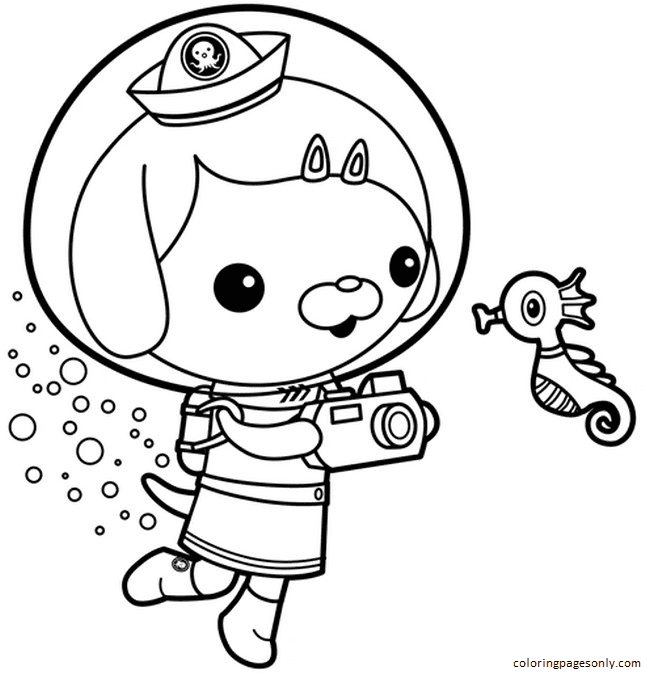
Dashi pages add discovery, photography, and technology to the Octonauts collection. She may appear with a camera, screen, map, communication device, or ocean research scene. These pages are excellent for children who enjoy observing details and imagining what the crew is learning.

Dashi pages can also support vocabulary and storytelling. Children can color what she is photographing, describe the creature she has found, or imagine that she is sending information back to the Octopod. That gives the page a clear learning purpose without making it feel like a worksheet.

Coloring Dashi: Start with Dashi and her camera or screen, then color the animal or background. Use clear character colors and add small bright accents to screens, buttons, lights, or camera details. Ocean backgrounds should stay softer so Dashi and her discovery tools remain visible. The common mistake is coloring every device detail with the same color, which makes the technology look flat.

Tweak and GUP Repair Pages

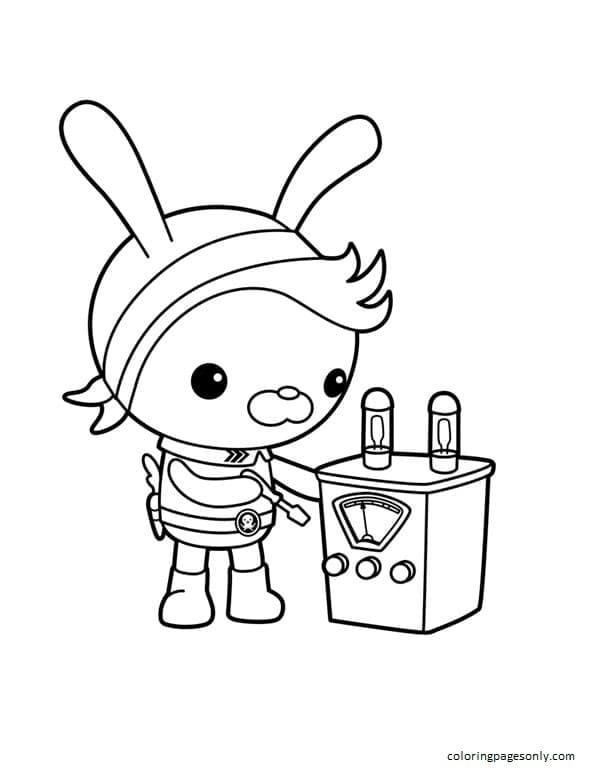
Tweak pages are perfect for tools, engineering, repairs, and GUP vehicle scenes. These pages may show Tweak fixing a submarine, checking a launch system, holding a tool, or preparing a vehicle for the next mission. They bring a useful STEM feeling to the collection.

Children who enjoy vehicles, building, and machines often connect strongly with Tweak pages. These designs encourage kids to notice wheels, panels, windows, buttons, tools, and mechanical shapes. They also help balance the softer animal rescue pages with more action and problem-solving.

Coloring Tweak: Use bright, clear colors for the character and stronger mechanical colors for tools and vehicles. Gray, blue, yellow, orange, and red work well for machines, while small lights and buttons can add interest. Keep the vehicle body organized with one or two main colors. The common mistake is using too many unrelated colors on one GUP vehicle, which can make the page look messy.

Shellington and Ocean Discovery Pages

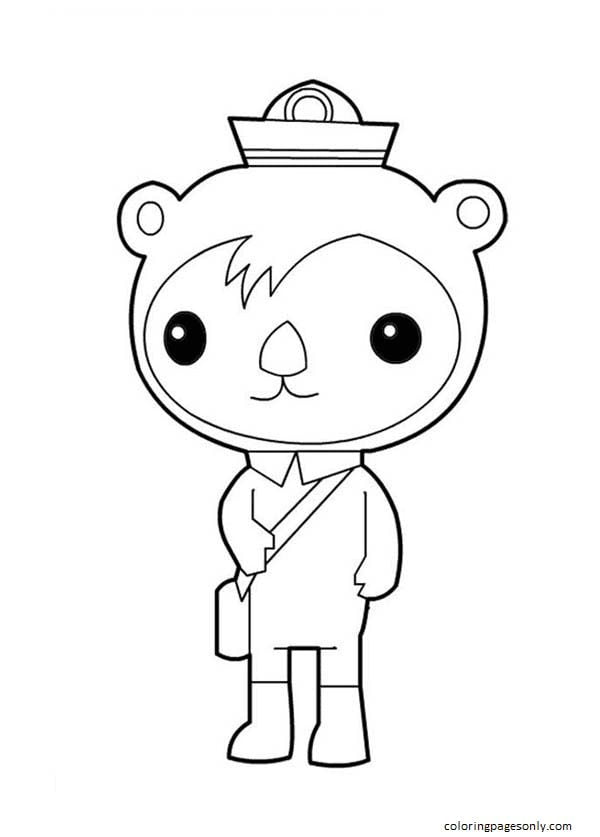
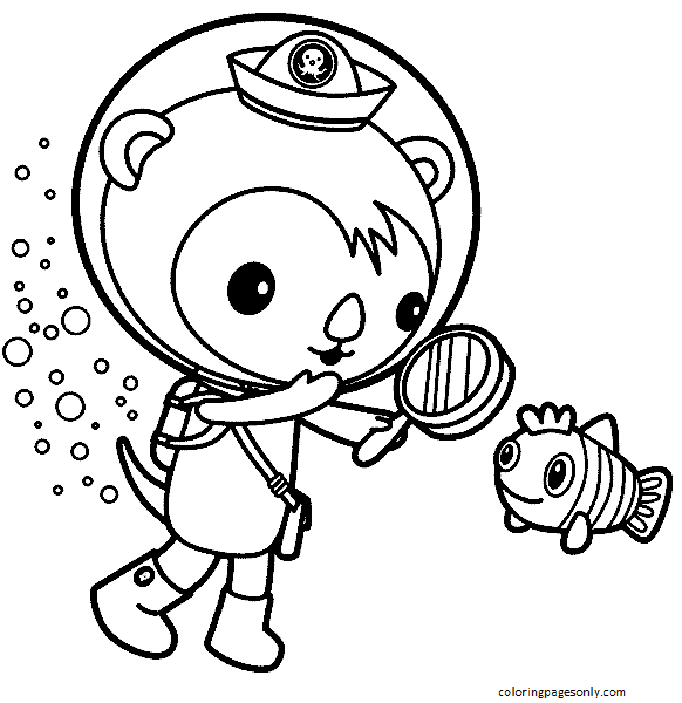
Shellington pages connect naturally with marine creatures, shells, coral reefs, fossils, and ocean facts. These pages may show him studying a creature, looking at a shell, exploring a reef, or discovering something unusual underwater. They are some of the best pages for linking coloring with early science.

This group is useful for teachers and parents because it can start simple ocean conversations. A child can color a seahorse, crab, fish, turtle, or coral reef and then talk about what that animal might eat, where it lives, or why the Octonauts are studying it. The page becomes a visual starting point for curiosity.

Coloring Shellington: Use natural sea-life colors around him. Coral can be pink, orange, red, yellow, or purple, while shells can use cream, tan, or soft pastel shades. If the page includes many small animals, choose a limited palette so the scene stays organized. The common mistake is coloring the background too heavily before finishing the animals, which can hide the details that make the page educational.

Professor Inkling Pages

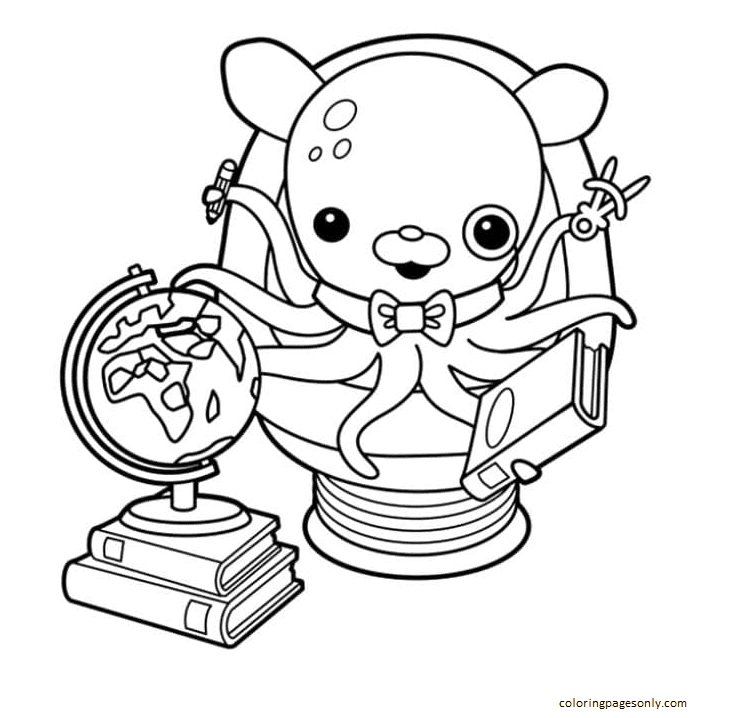
Professor Inkling pages bring a thoughtful, calm, and wise feeling to the Octonauts collection. These pages may include books, maps, planning scenes, Octopod interiors, or mission discussions before the crew begins an adventure.

These designs show that adventures begin with thinking and planning, not only action. For children, this can support a simple idea: before solving a problem, the team observes, discusses, and chooses what to do. That makes Professor Inkling pages a good fit for quieter coloring time.

Coloring Professor Inkling: Use soft purple, blue, and gentle ocean tones. If the page includes books, maps, or the Octopod interior, use warmer colors like tan, yellow, or light brown to separate those details from the water. Avoid making the whole scene blue because it can flatten the indoor or planning details.

Tunip and Vegimals Pages

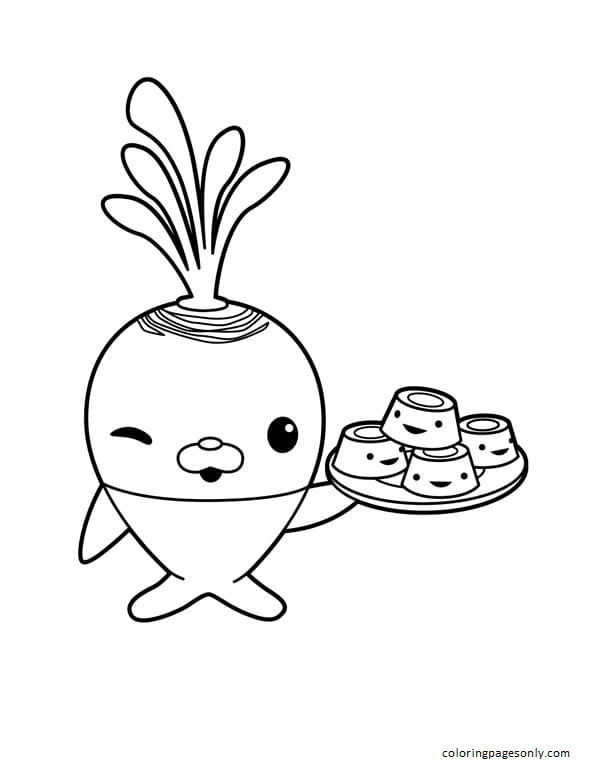
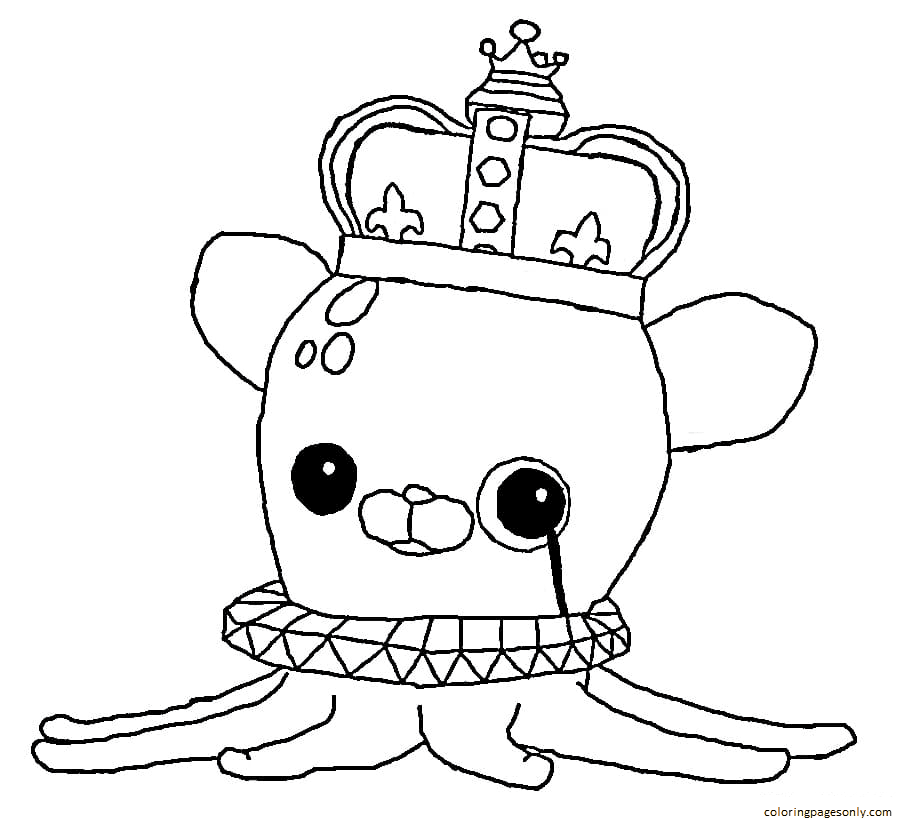
Tunip and the Vegimals bring cuteness and humor to Octonauts coloring pages. These pages may show Tunip smiling, holding kelp cakes, helping inside the Octopod, standing with other Vegimals, or joining a simple ocean scene. Their rounded shapes and cheerful expressions make them especially friendly for younger children.

These pages give the collection easy, joyful designs that do not require too much detail. A preschooler can complete a Tunip page more quickly than a full underwater mission. That sense of completion helps children feel proud and confident.

Coloring Tunip and Vegimals: Use green, yellow, light orange, and cheerful colors. Keep the background simple with bubbles, seaweed, shells, kelp, or small plants. If the page includes kelp cakes or kitchen details, use warm colors to make the scene feel playful. The common mistake is adding too many tiny colors around the character, which can make an easy preschool page feel crowded.

Octopod Pages

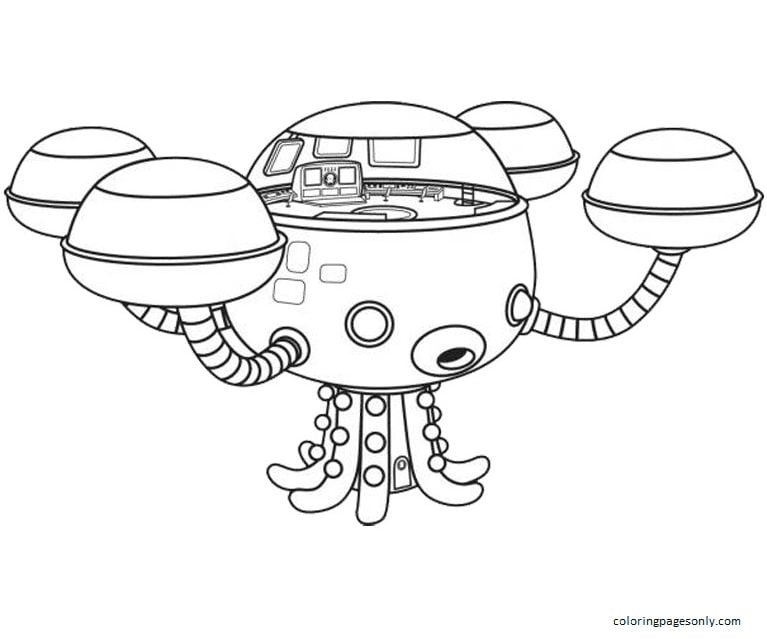
Octopod pages show the underwater base where the Octonauts live, plan, and begin many of their missions. These pages may include the Octopod under the sea, the Octopod surrounded by fish, the Octopod near coral reefs, or the base with GUP vehicles nearby.

Octopod pages are strong because they show the world of the Octonauts, not just one character. They give children a bigger setting to color and help them understand where the missions begin. These pages can also work well as centerpiece designs for a classroom wall or themed activity.

Coloring Octopod pages: Color the large base first, then add the ocean background and small details. Use gray, blue, yellow, orange, and light window colors to keep the structure clear. Add different shades of blue around the base to create depth. The common mistake is using the same blue for the Octopod and the water, which makes the base disappear into the background.

GUP Vehicle Pages

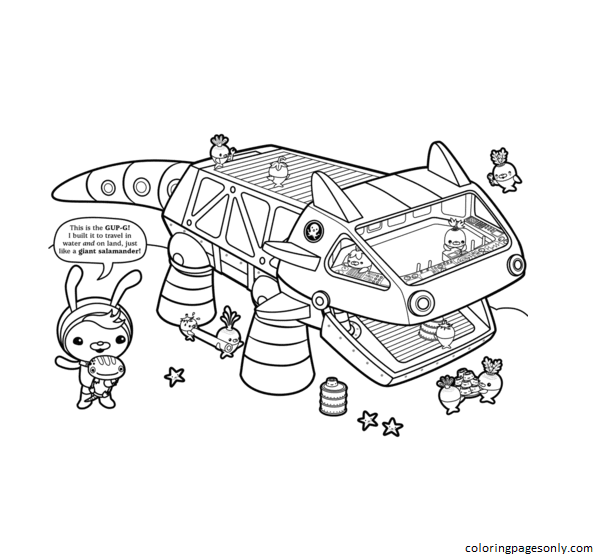
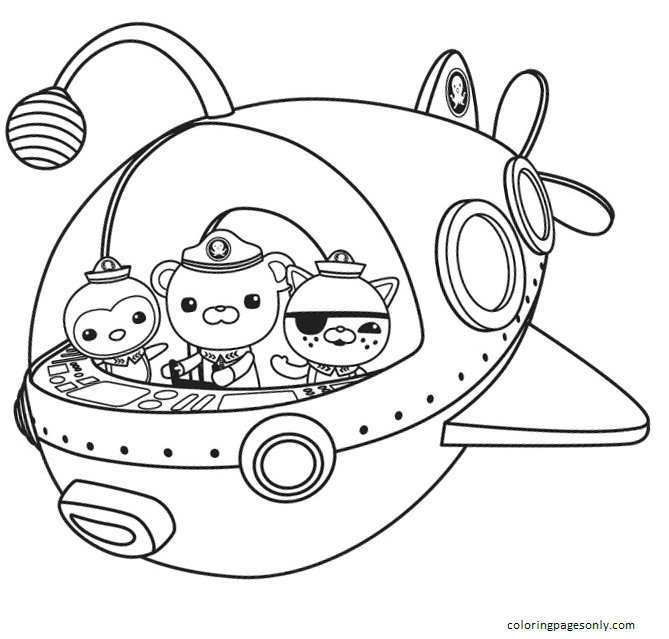
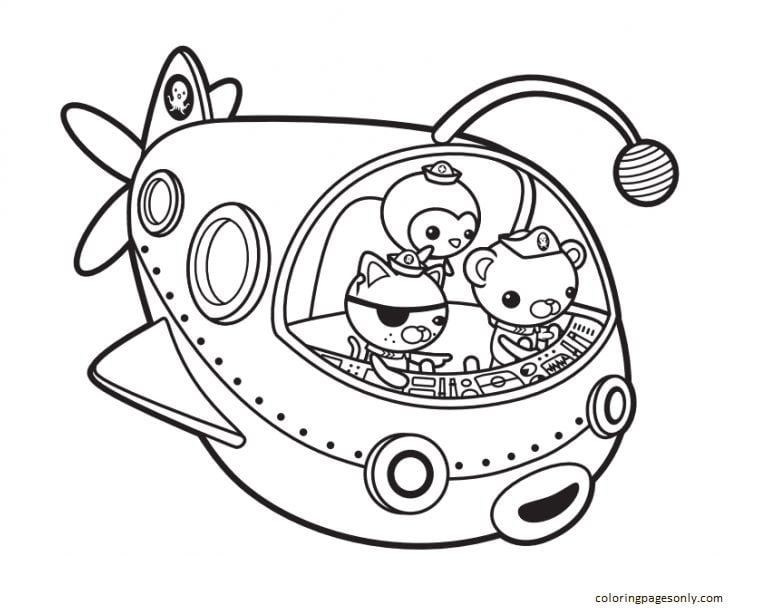
GUP vehicle pages are great for kids who love submarines, machines, rescue vehicles, and underwater travel. These pages may include GUP vehicles moving through the ocean, launching from the Octopod, helping in a mission, or exploring near marine animals.

These pages provide strong shapes and clear coloring zones, which make them satisfying for children. A GUP page can also encourage spatial thinking because children notice windows, wheels, lights, panels, doors, and motion lines. For older kids, these details make the page more engaging.

Coloring GUP vehicles: Use clean, bold colors for the vehicle so it becomes the center of the page. Red, yellow, orange, blue, gray, and white all work well. Windows can be light blue, wheels or panels can be gray, and small lights can be yellow. If the vehicle is moving through deep water, keep the background darker and the GUP brighter. The common mistake is using too many colors on one vehicle, which can make it look messy instead of strong.

Sea Animal Pages

Sea animal pages connect Octonauts fun with ocean learning. Children can color whales, dolphins, turtles, sharks, jellyfish, fish, crabs, starfish, seahorses, penguins, rays, and other underwater creatures that appear in rescue or exploration scenes.

These pages can turn coloring into conversation. A parent or teacher can ask what animal is on the page, where it lives, what colors it might have, and why the Octonauts might be helping it. That keeps the activity simple but meaningful.

Coloring sea animal pages: Choose natural colors for a realistic look or brighter colors for a playful cartoon style. Whales can be blue-gray, dolphins light gray, turtles green and brown, jellyfish pink or purple, and fish rainbow-colored. Keep the animal slightly different from the water background so it remains visible. The common mistake is forgetting to separate the animal from the ocean with contrast.

Underwater Mission Pages

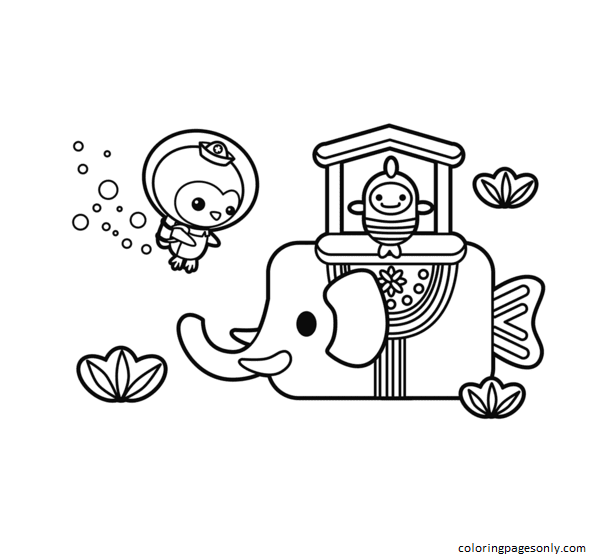
Underwater mission pages are the most story-driven part of the collection. These designs may show the Octonauts helping a creature, exploring a coral reef, swimming through bubbles, traveling in a GUP vehicle, or working together on a rescue.

Mission pages are strong because they give children a beginning, middle, and possible ending. The child can decide what is happening, who is helping, what the problem is, and how the mission ends. That makes the page useful for storytelling and classroom discussion.

Coloring underwater mission pages: Start with the main action, then color the background. Keep the characters, sea animal, or vehicle brighter than the water so children can understand the story at a glance. Use bubbles, rocks, seaweed, shells, and coral as supporting details, not distractions. The common mistake is coloring every small detail first and losing the main mission scene.

Easy Octonauts Pages for Younger Kids

Easy Octonauts pages have large shapes, simple outlines, fewer background details, and one clear main subject. These pages are best for toddlers, preschoolers, and children who are still learning how to control crayons or markers.

These pages help children succeed. When a child can finish a page without frustration, coloring becomes a positive experience. Simple Tunip, Peso, Captain Barnacles, turtle, fish, or GUP pages are especially helpful for this age group.

Coloring easy Octonauts pages: Use simple color choices and avoid overcomplicating the scene. One main character color, one ocean background color, and two or three small accent colors are enough. Use crayons or washable markers that are easy for small hands to hold. Let children enjoy the process instead of expecting every small detail to be perfect.

Detailed Octonauts Pages for Older Kids

Detailed Octonauts pages include more characters, fuller underwater scenes, Octopod backgrounds, GUP vehicles, coral reefs, sea caves, and rescue missions. These pages are better for children who enjoy longer coloring activities and more creative control.

Older children can practice planning, patience, and color balance with these pages. They can choose which parts should be bright, which should be shaded, and how to make the ocean feel deep, calm, bright, or mysterious. These pages can also become strong craft pieces after coloring.

Coloring detailed Octonauts pages: Choose a small color palette before starting. Use different blues for water depth, bright colors for coral and animals, and clean character colors to keep the scene organized. Repeat a few colors throughout the page so the final picture feels connected. The common mistake is using too many unrelated colors, which can make the page feel visually noisy.

What These Pages Do

Octonauts coloring pages help children enjoy cartoon fun while also exploring ocean animals, rescue stories, teamwork, and underwater habitats. A child can color a favorite character, recognize a sea creature, imagine a mission, and talk about what is happening in the picture. That combination of character interest and topic-based learning makes the pages stronger than a simple standalone cartoon sheet.

These pages also support fine motor development. When children hold crayons, control hand movements, stay inside larger shapes, and gradually work toward smaller details, they practice the same hand coordination needed for early writing and everyday tasks. Simple pages help younger children build confidence, while more detailed pages encourage older children to slow down, plan colors, and complete a larger scene.

This kind of activity fits well with what the American Academy of Pediatrics has emphasized about play in child development. Play can support social-emotional growth, problem-solving, executive function, and parent-child connection. Octonauts pages work naturally in that space because children are not only filling shapes; they are making choices, building small stories, and sometimes talking with an adult or classmate about the mission on the page.

Coloring can also provide a calm and structured creative moment. A 2005 study in the Art Therapy Journal found that coloring structured patterns, such as mandalas or organized designs, was linked with greater anxiety reduction than unstructured coloring. Octonauts pages are not therapy and should not be treated as medical tools, but their clear outlines, predictable spaces, and familiar characters can make them useful for quiet time, transitions, and relaxed classroom activities.

The collection supports early vocabulary, too. Children can talk about whales, dolphins, turtles, jellyfish, crabs, fish, coral, submarines, rescue missions, ocean habitats, teamwork, and protection. Parents and teachers can ask simple questions: Who is on the page? What animal needs help? What colors belong in the ocean? What happens after the rescue? These small prompts turn coloring into language practice.

For classrooms, these pages can become part of preschool ocean units, kindergarten animal lessons, homeschool activities, library programs, daycare art centers, and quiet work. For families, they are easy printable activities for everyday use. One page can become a coloring sheet, a story starter, a craft project, a classroom display, or a small conversation about ocean life.

Most importantly, Octonauts coloring pages give children a safe and familiar way to explore big ideas. They can think about helping, protecting, discovering, observing, repairing, and working together. Those ideas are simple enough for young children but meaningful enough to make the activity feel richer than just filling in a picture.

How to Color These Pages Well

Start with the main subject before coloring the background. If the page shows Captain Barnacles, Kwazii, Peso, Tunip, a GUP vehicle, or the Octopod, color that part first. That helps children understand the center of the picture and keeps the page organized. Once the main subject is clear, the water, bubbles, coral, and sea animals can be added around it.

Use ocean colors to create the setting without overpowering the characters. Light blue, aqua, teal, turquoise, and soft green work well for most underwater pages. Darker blue or purple can be used for deep-sea scenes, while light blue works better for cheerful pages aimed at younger kids. If the page has many details, use a lighter background so the characters remain easy to see.

Keep character colors clean and recognizable. Octonauts pages often include characters, sea animals, vehicles, bubbles, coral, and underwater plants in the same picture. Use stronger colors on the main character and softer colors behind them. That makes the design easier to read and helps children feel proud of the finished page.

Use coral and sea plants as accent areas, not the main focus. Coral can be pink, orange, red, yellow, green, or purple, but too many bright colors in the background can distract from the Octonauts characters. Choose three or four coral colors and repeat them across the page. That gives the picture variety while keeping it balanced.

Make GUP vehicles look bold and simple. GUP vehicles and the Octopod look best when the main body color is clear, and the details are added carefully. Use one or two main colors for the vehicle, then add small accents for lights, windows, buttons, wheels, or panels. Children can use gray for mechanical parts and light blue for windows.

Separate sea animals from the water with contrast. If the water is light blue, use gray, green, yellow, orange, or purple for the animal. If the background is dark, use lighter colors for the sea creature. This simple contrast makes whales, dolphins, turtles, jellyfish, fish, and crabs easier to notice.

Add depth on detailed pages with different shades of blue. Older children can use light blue near the top of the page and darker blue near the bottom. That makes the ocean feel deeper. Deep-sea pages can include small glowing details in yellow, pink, light blue, or green to make jellyfish, bubbles, or special creatures stand out.

Let younger children use fewer colors. Toddler and preschool pages do not need advanced shading or perfect accuracy. One color for the character, one color for the water, and a few bright details are enough. The goal is confidence, hand control, and enjoyment, not a perfect copy of the original cartoon.

Encourage older children to plan before coloring. For a full crew scene or large underwater mission, children can choose a small palette first: blues for water, warm colors for coral, clean colors for characters, and one bright accent color for important details. Planning helps the final page look more finished.

The common mistake is coloring the whole page with the same blue. Water can be blue, but characters, vehicles, animals, coral, and bubbles need contrast. Even young children can make the page stronger by choosing one color for the ocean and different colors for the main subjects.

5 Creative Craft Ideas

Octonauts Mission Storybook

Print several Octonauts pages that show different parts of an adventure: one character page, one GUP vehicle page, one sea animal page, one rescue mission page, and one Octopod page. After children color the pages, staple them together in order to make a small mission storybook.

This craft helps children practice sequencing. The first page can introduce the crew, the second page can show the problem, the third can show the rescue, and the final page can show the team returning to the Octopod. Younger children can tell the story aloud, while older children can write one sentence under each page.

GUP Vehicle Paper Play Set

Choose pages with GUP vehicles, submarines, or Octopod scenes. After coloring, cut out the vehicles with adult help and glue them onto thicker paper or cardboard. Use a blue sheet of paper as the ocean background and add paper coral, fish, bubbles, and seaweed.

Children can move the vehicles around the background and create pretend rescue missions. This craft is useful for kids who like machines, action, and imaginative play. It also gives finished coloring pages a second life as a hands-on activity instead of leaving them flat on paper.

Sea Animal Rescue Poster

Print a page with a whale, turtle, dolphin, fish, jellyfish, crab, or another ocean creature. After coloring, glue it onto a larger sheet of paper and add simple words around it, such as “Help ocean animals,” “Protect the sea,” “Save the turtle,” or “Keep the ocean clean.”

This craft is especially useful for classroom ocean lessons or Earth Day activities. It helps children connect coloring with care for animals and habitats. Teachers can display several posters together to make a sea animal rescue wall.

Octopod Classroom Display

Give each child a different Octonauts page to color. Some children can color characters, others can color marine animals, GUP vehicles, bubbles, coral, or an Octopod page. After the pages are finished, arrange them together on a classroom board.

That creates a shared underwater display where every child contributes one part of the scene. It works well for preschool, kindergarten, daycare, homeschool groups, or library activities. The display can also support group discussion about teamwork, ocean animals, and rescue missions.

Underwater Adventure Diorama

Use a shoebox, blue paper, string, cotton, and finished Octonauts coloring pages to create a simple 3D underwater scene. Children can color and cut out characters, fish, coral, bubbles, and GUP vehicles. Glue coral and sea plants to the bottom of the box, hang fish or jellyfish from the top, and place the Octonauts crew inside.

This craft is best for older children or parent-child activity time because it involves cutting, arranging, and building a scene. It helps children think about space, background, foreground, and storytelling. The finished diorama can be used for show-and-tell, classroom display, or a themed party table.

Frequently Asked Questions

Are Octonauts coloring pages free?

Yes. The Octonauts coloring pages at ColoringPagesOnly.com are free for personal use at home, in classrooms, during parties, in daycare, or for quiet creative activities. Parents can print one page for a quick activity or choose several pages to create a small coloring packet.

Teachers can also use the pages for ocean units, art centers, early science lessons, and classroom displays. For group use, it is helpful to choose a mix of easy pages and more detailed pages so different age levels can participate comfortably.

Can I print these Octonauts coloring pages?

Yes. You can print the pages and use them with crayons, colored pencils, markers, or other coloring tools. PDF files are especially useful because they usually keep the lines sharp and clear when printed.

For younger children, print pages with large outlines and fewer details. For older children, print pages with GUP vehicles, full crew scenes, coral reefs, or underwater missions. If children use markers, thicker paper can help prevent color from bleeding through.

Are online coloring options available?

Yes. When online coloring is available, children can color directly in the browser without printing. That is useful for quick digital play on a computer, tablet, or mobile device.

Online coloring can be helpful when families do not have a printer nearby. It also lets children try different colors, undo mistakes, and experiment before printing a final version.

What formats are available?

Many pages are available as printable PDFs, and some may also be available in JPG or PNG formats. These options make it easy to print, save, or color online.

PDF is usually best for clean printing. JPG and PNG are convenient for saving individual images or using digital coloring tools. Online coloring is useful when children want to start right away without downloading.

What characters are included?

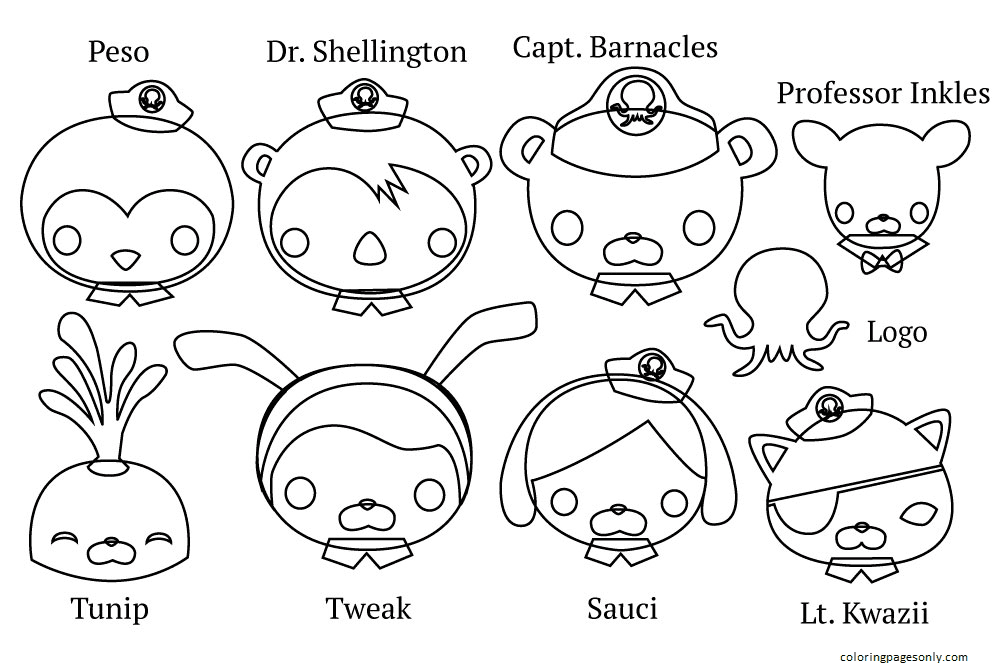
The collection may include Captain Barnacles, Kwazii, Peso, Dashi, Tweak, Shellington, Professor Inkling, Tunip, the Vegimals, and the Octonauts crew in different underwater scenes.

Some pages focus on one main character, while others include vehicles, sea animals, the Octopod, or full rescue missions. This variety helps children choose pages based on their favorite character or favorite type of scene.

Are these pages safe and age-appropriate for young kids?

Yes. Octonauts coloring pages are family-friendly and suitable for young children when parents or teachers choose pages that match the child’s age and skill level. Simple character pages, Tunip pages, Peso pages, and easy animal pages are especially good for preschoolers.
For toddlers and younger preschool children, choose pages with fewer small details and use safe coloring tools such as crayons or washable markers. Older children can use more detailed pages with vehicles, coral reefs, and full mission scenes.

Are these pages good for toddlers and preschoolers?

Yes. Simple Octonauts pages with large outlines, one main character, and fewer background details are good for toddlers and preschoolers. Tunip, Peso, basic Captain Barnacles pages, simple fish pages, and easy GUP vehicle pages are especially friendly for younger children.
For this age group, the goal is not perfect coloring. The goal is to help children enjoy colors, practice hand control, recognize shapes, and complete a page with confidence. Crayons or washable markers usually work best.

Are there pages for older kids?

Yes. Older children may enjoy detailed Octopod scenes, full crew pages, GUP vehicle missions, coral reefs, deep-sea backgrounds, and underwater rescue pages with more elements to color.

These pages allow older kids to plan a color palette, add shading, use different ocean tones, and create more polished artwork. They can also turn finished pages into storybooks, posters, or dioramas.

Can teachers use these pages in class?

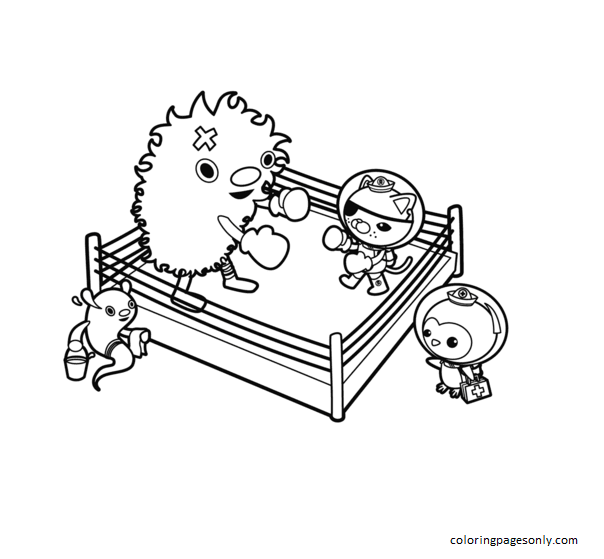
Yes. Teachers can use Octonauts coloring pages for preschool activities, kindergarten ocean units, animal lessons, quiet work, fine motor practice, and storytelling prompts.

A teacher might use a turtle page during an ocean animal lesson, a GUP vehicle page during a problem-solving activity, or a full crew page during a teamwork discussion. Finished pages can also become classroom displays.

What colors work best for Octonauts pages?

Blue, aqua, teal, turquoise, gray, white, orange, yellow, green, pink, and purple all work well. Use ocean colors for the background, bright colors for coral and fish, and clear colors for the main characters.
For a softer page, choose light blue water and gentle animal colors. For a more exciting page, add bright coral, yellow lights, orange vehicles, and colorful fish. The best result usually comes from keeping the main subject brighter than the background.
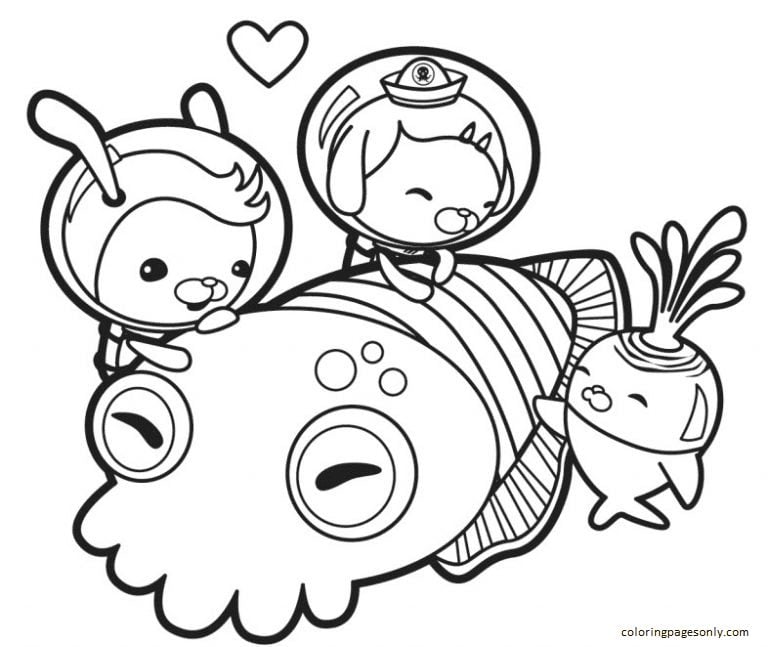
Which pages are easiest for young children?

Single-character pages, Tunip pages, Peso pages, easy sea animal pages, and basic GUP vehicle pages are the easiest. These pages usually have larger shapes and fewer small details.
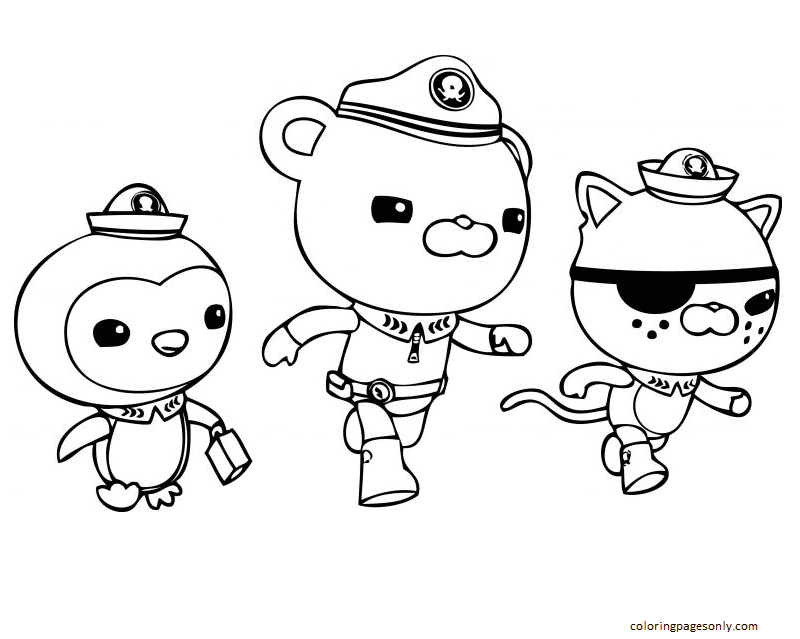
Younger children may enjoy coloring one main character first and then adding a simple blue background. Avoid pages with too many coral details, full crew scenes, or tiny vehicle parts if the child is still developing hand control.
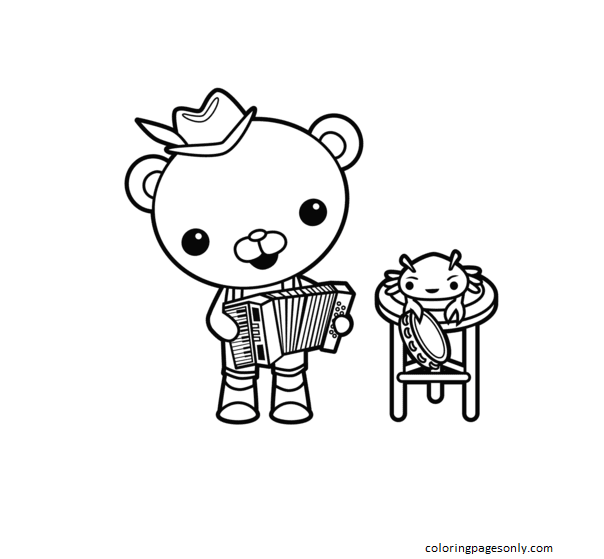
Which pages are best for creative coloring?

Full crew scenes, Octopod pages, GUP vehicle adventures, coral reef pages, and underwater rescue missions are best for creative coloring because they include more details, background elements, and storytelling possibilities.

These pages let children make more decisions. They can choose whether the ocean looks bright or deep, whether the coral is realistic or rainbow-colored, and how the rescue mission should feel.

Can finished pages be used for crafts?

Yes. Finished Octonauts pages can be turned into storybooks, posters, paper play sets, classroom displays, greeting cards, scrapbook pages, or underwater dioramas.

Crafts are a good way to extend the value of a coloring page. Instead of finishing the page and putting it away, children can cut, arrange, display, tell a story, or build a larger project from their artwork.

What other coloring pages go well with Octonauts?

Sea animal, underwater, dolphin, turtle, fish, and penguin pages all pair well with Octonauts because they keep the same ocean adventure feeling. These related pages are useful if a child finishes the Octonauts collection and wants more sea-life themes to color.

Browse the full collection at ColoringPagesOnly.com. All 40+ pages are free, easy to use, available as printable PDF, JPG, or PNG files, and ready to print at home or color online.

These ocean adventure pages are created for personal, classroom, and creative coloring use. They fit many moments: preschool ocean lessons, kindergarten animal activities, a quiet afternoon at home, a travel folder, a birthday party coloring table, a homeschool project, or a screen-free cartoon break. They also give children a useful challenge because Octonauts pages combine main characters, sea animals, vehicles, bubbles, coral, and underwater settings.

For the final pass, keep the Octonauts crew bright, make the ocean background clear, and let the main mission stay easy to follow. Color GUP vehicles with clean bold colors, use coral and fish as playful accents, and leave small highlights on bubbles, windows, lights, or water details. A clear main character, a simple ocean path, and a few bright accents can make the whole underwater adventure page feel more complete.

Share your finished Octonauts pages on Facebook or Pinterest and tag #Coloringpagesonly. We love seeing how kids color Captain Barnacles, Kwazii, Peso, the Octopod, GUP vehicles, and their favorite sea creatures.

Explore, rescue, protect, and color your own Octonauts adventure!

These related coloring collections will help you explore the wonderful world of colors. Let’s choose, be creative, and show us your great pictures!

Jennifer Thoa – Content Editor & Designer

Jennifer Thoa is Content Editor and Designer at ColoringPagesOnly.com. Degree in Journalism and Creative Writing, University of Kansas. She writes and edits long-form educational articles on anime, film, animals, world cultures, and automotive history - verified against named primary sources before publication.