PJ masks Coloring Pages
 By:
Jennifer Thoa - Content Editor & Designer
Updated:
By:
Jennifer Thoa - Content Editor & Designer
Updated:
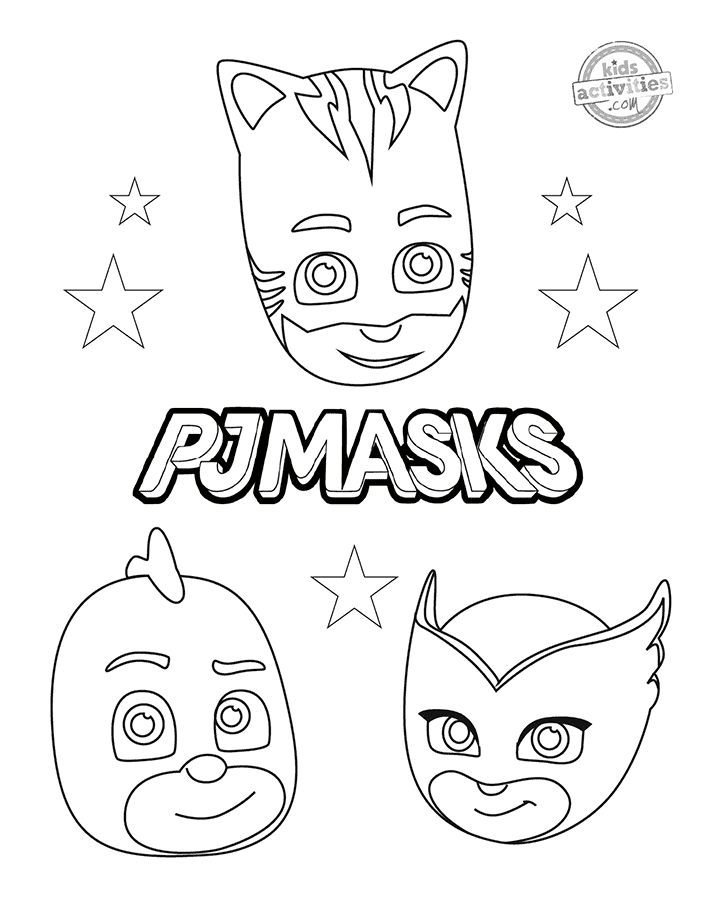
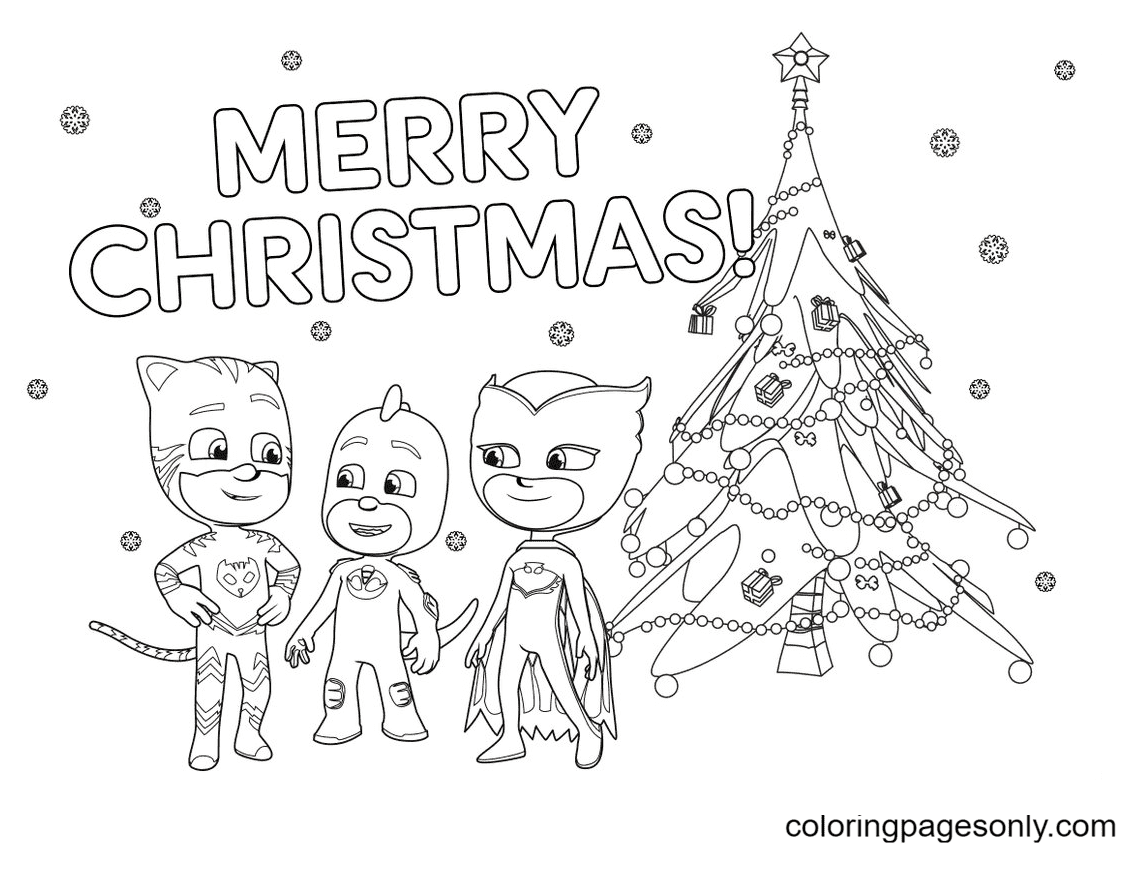
Free PJ Masks coloring pages: 50+ pages featuring Catboy, Owlette, and Gekko in action poses and portrait close-ups, their distinctive blue, red, and green superhero suits with animal-themed emblems and headpieces, the Cat-Car, Owl Glider, and Gekko-Mobile vehicles, villain pages featuring Romeo, Luna Girl, and Night Ninja, group team compositions, nighttime city setting scenes, and the full visual vocabulary of the animated superhero series built on a simple and specifically effective premise: three six-year-old children who put on their pajamas and become heroes after dark. All free, printable PDF and online coloring for young fans of the series.
PJ Masks is an animated children’s television series based on the French book series “Les Pyjamasques” written and illustrated by Romuald Racioppo and published by Gallimard Jeunesse in France beginning in 2007. The animated adaptation was produced by Entertainment One (eOne), Frog Box, and TeamTO, created for television by Christian De Vita, and premiered simultaneously in France on TF1 and in the United States on Disney Junior on September 18, 2015. The series ran for five seasons, concluding in 2022, and broadcast across Disney Junior channels in more than 180 countries.
The show’s premise is specifically calibrated for its target audience of children aged two to seven: the three heroes are the same age as the audience (six years old), they are ordinary children by day, and they become superheroes at night, specifically to fix problems caused by villains who operate after bedtime. “Into the night to save the day” is the team’s operative motto, and the show’s structure of daytime normalcy followed by nighttime adventure maps directly onto the daily schedule and bedtime imagination of the children watching it.
These 50+ free pages at ColoringPagesOnly.com cover the full cast of heroes and villains. All free, PDF or PNG, print or color online.


What’s Inside
Catboy (Connor): Portrait and Action Pages
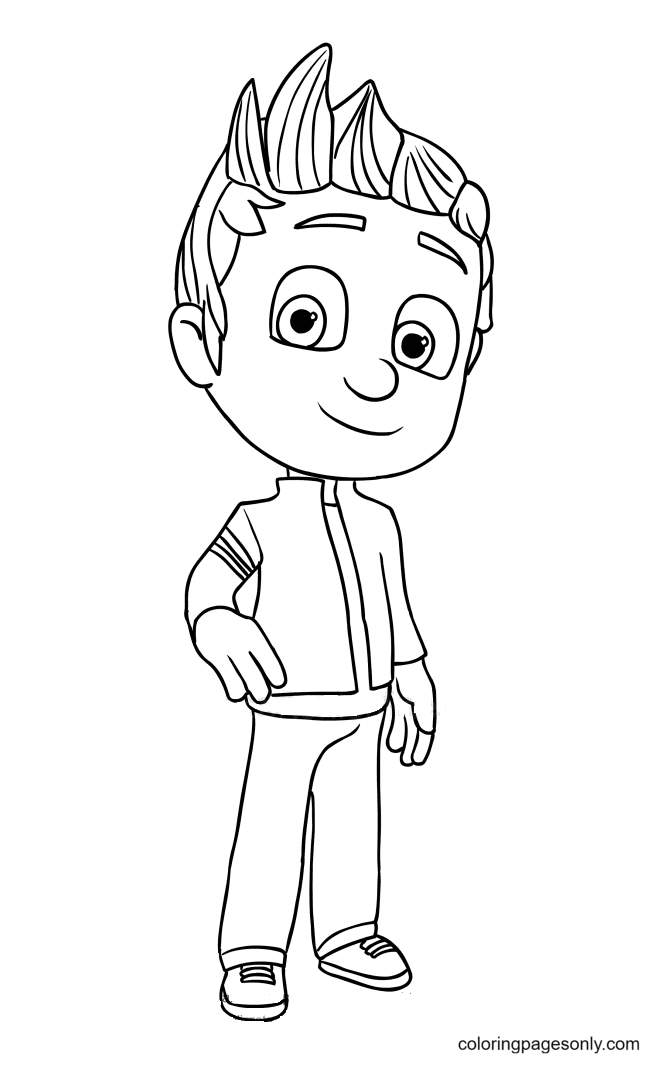
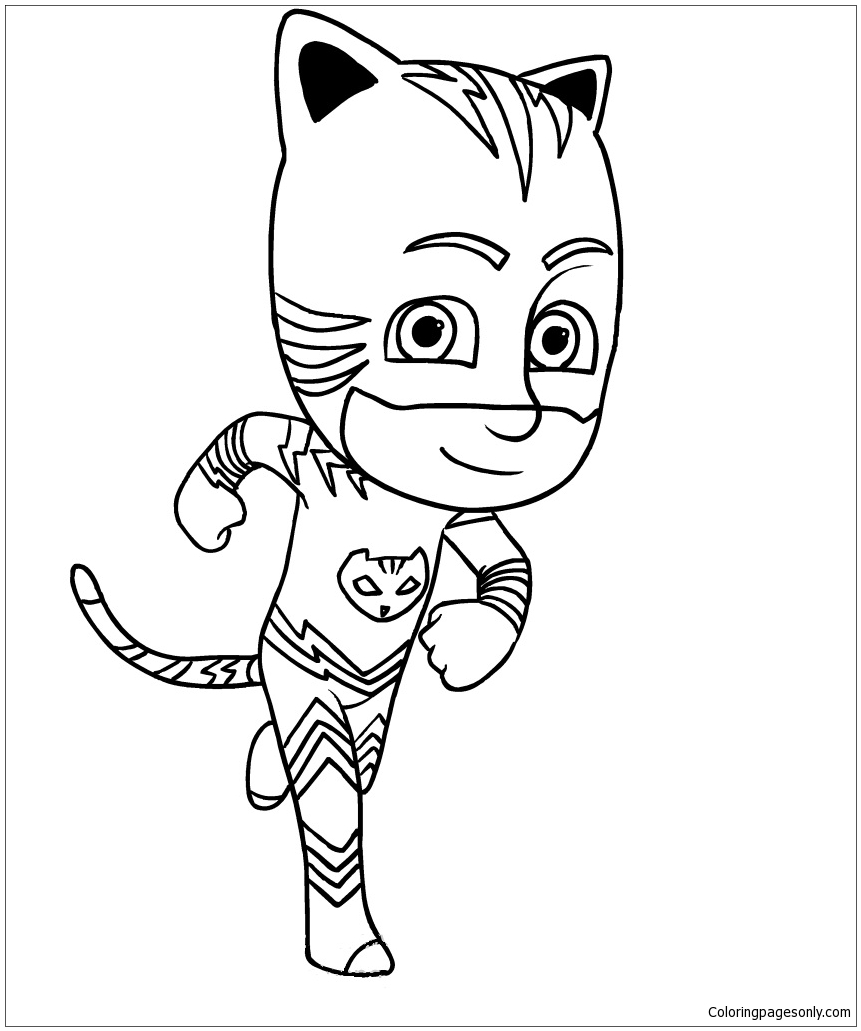
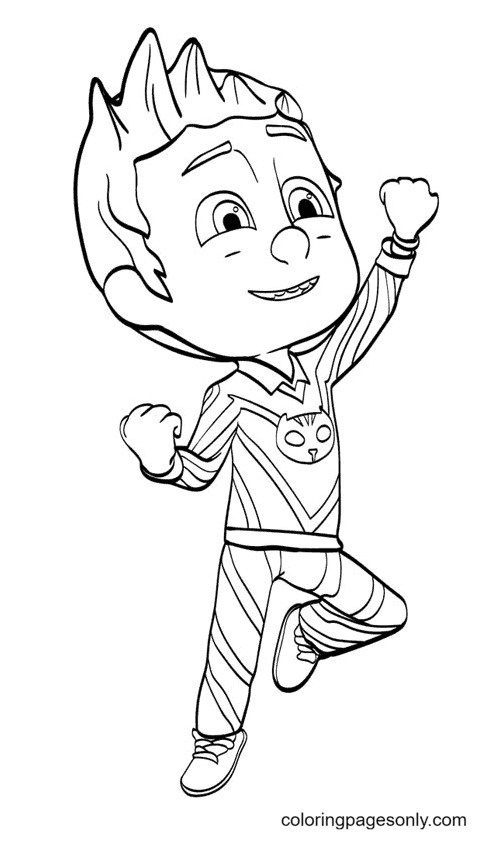
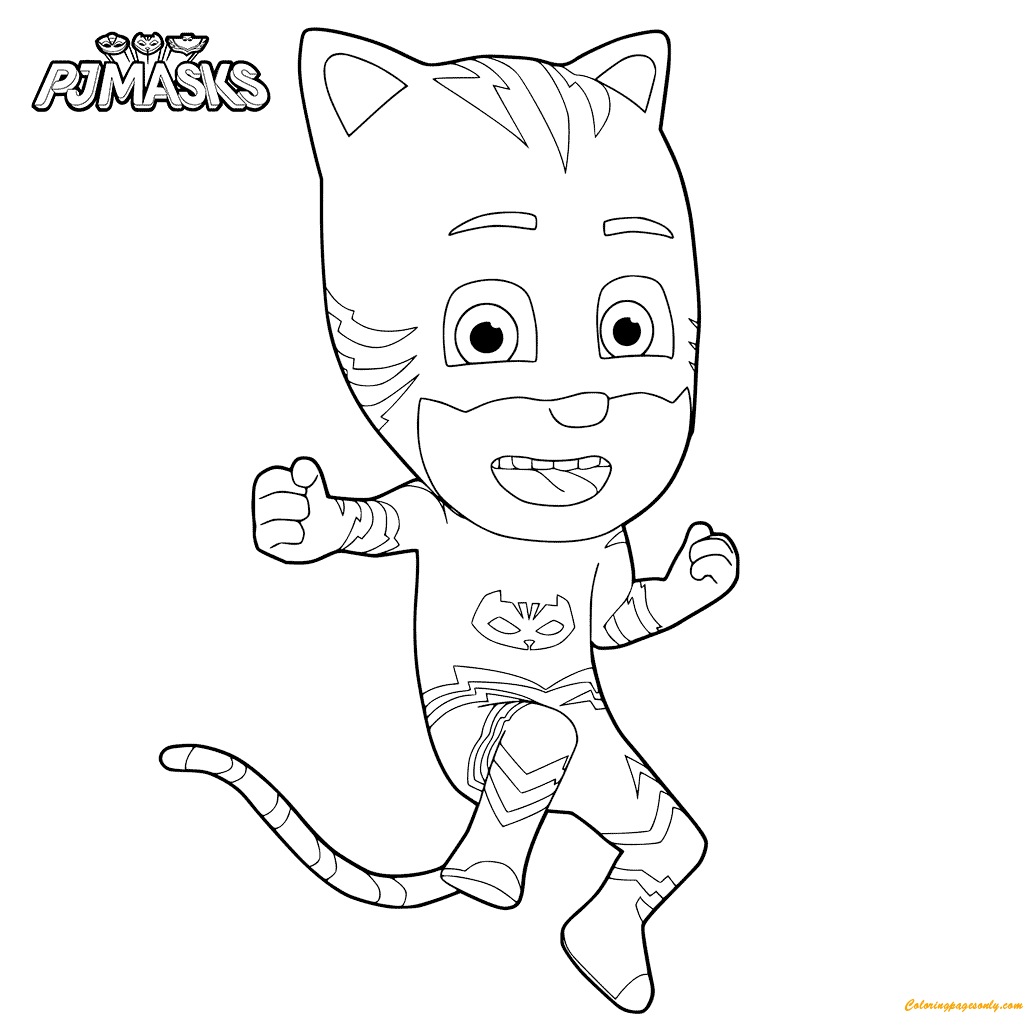
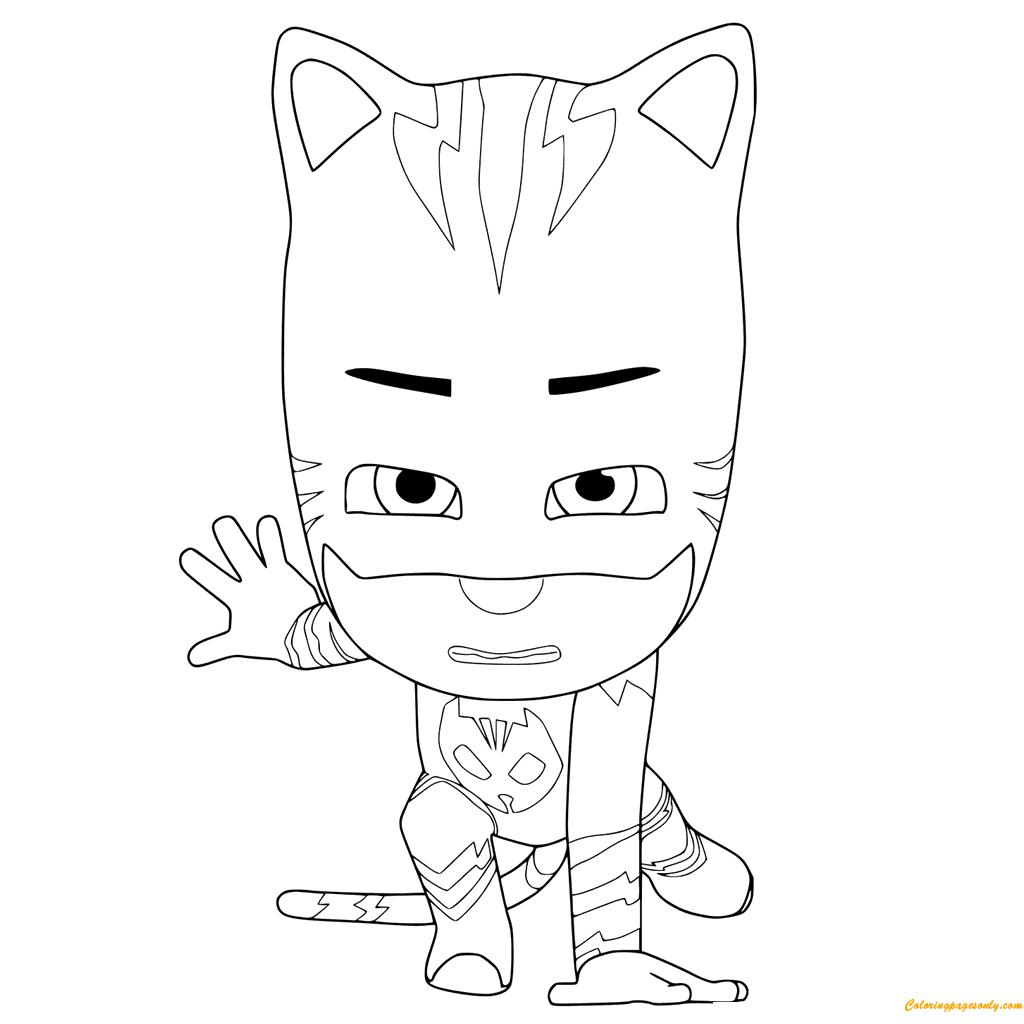
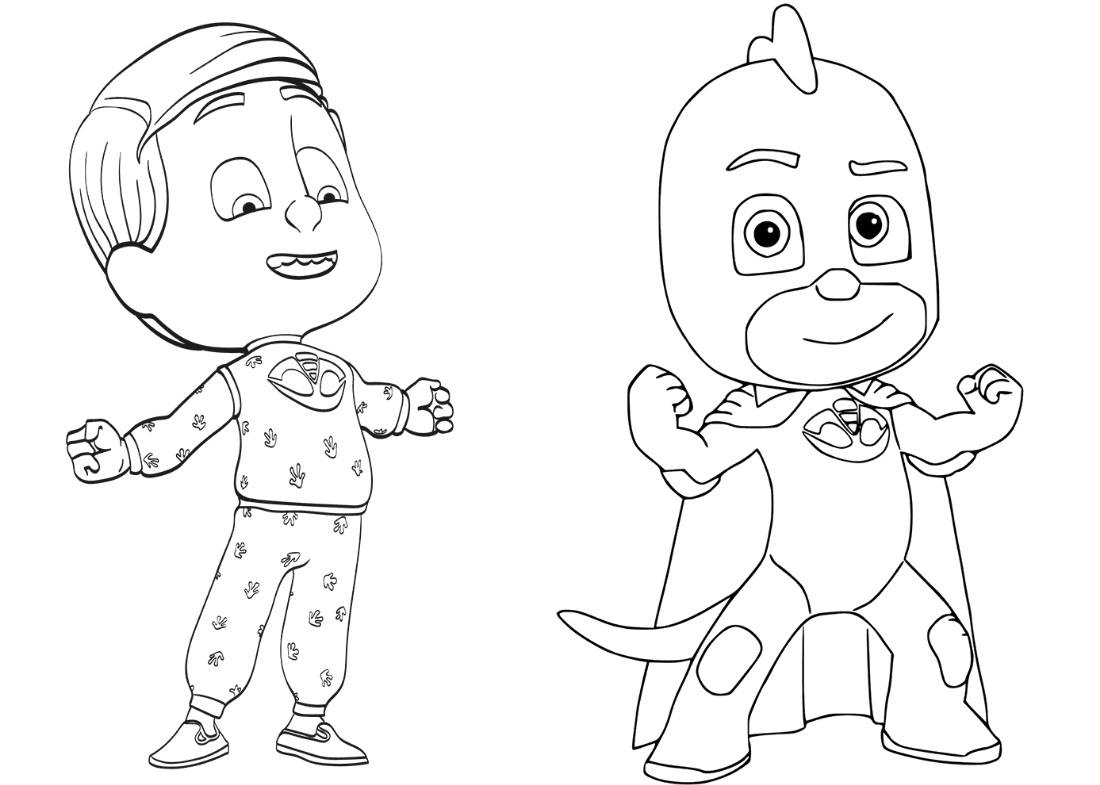
Catboy is the PJ Masks team’s leader in most situations and the character whose competitive personality provides the most consistent source of both conflict and growth across the series. His civilian identity is Connor, a six-year-old with dark hair whose enthusiasm for competition and desire to be the best member of the team occasionally create problems that the team has to work through together.
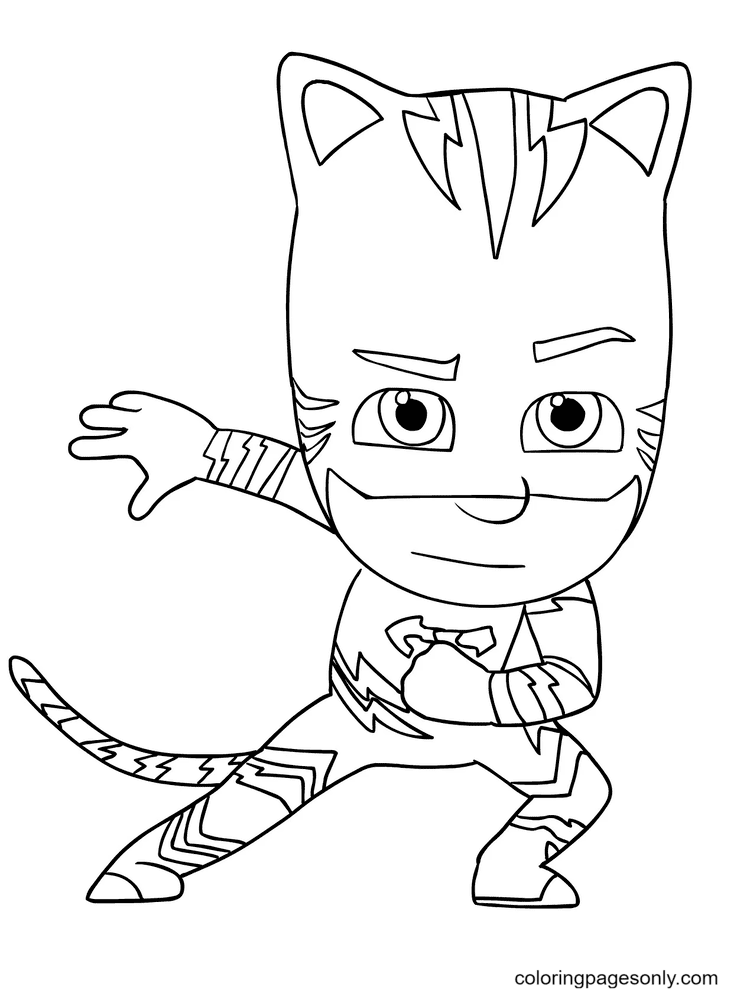
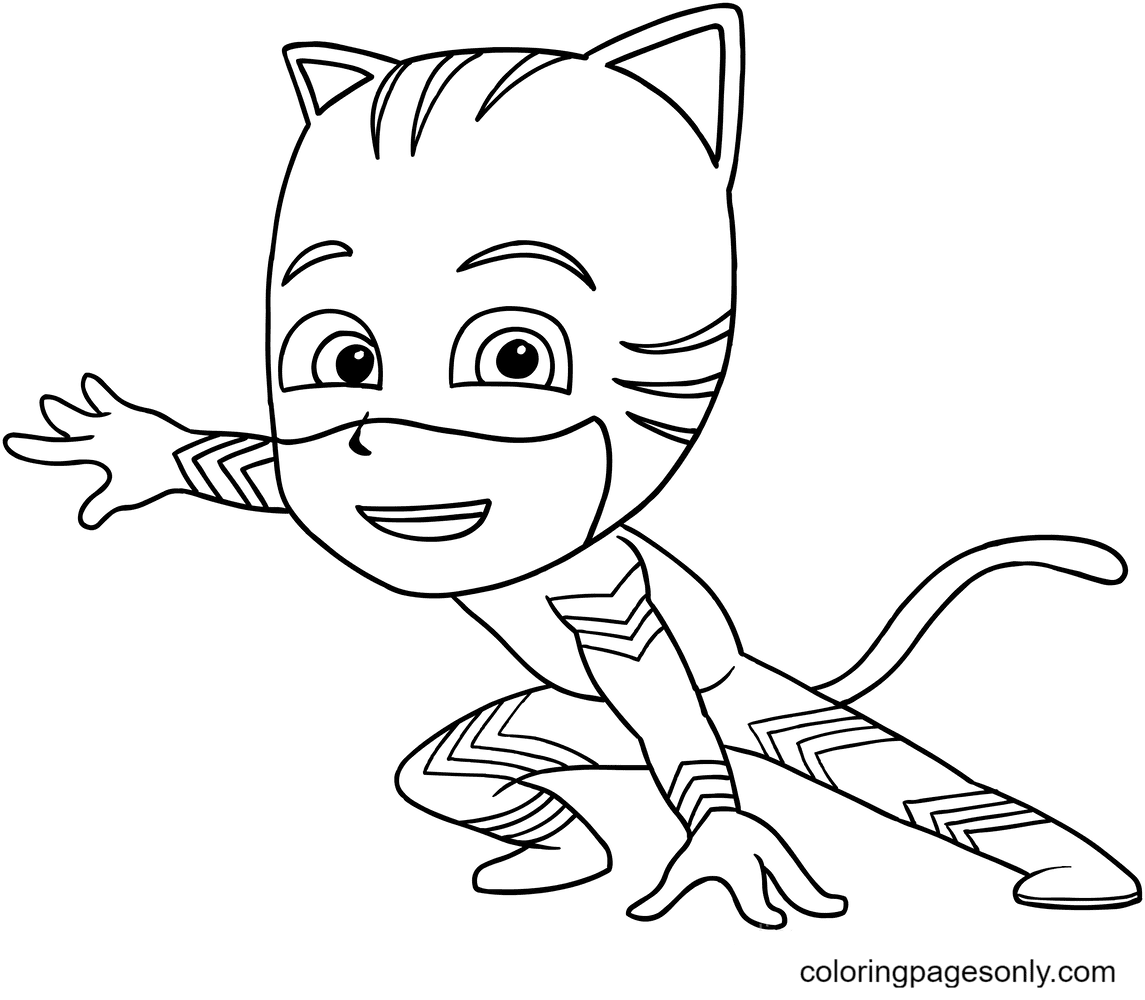
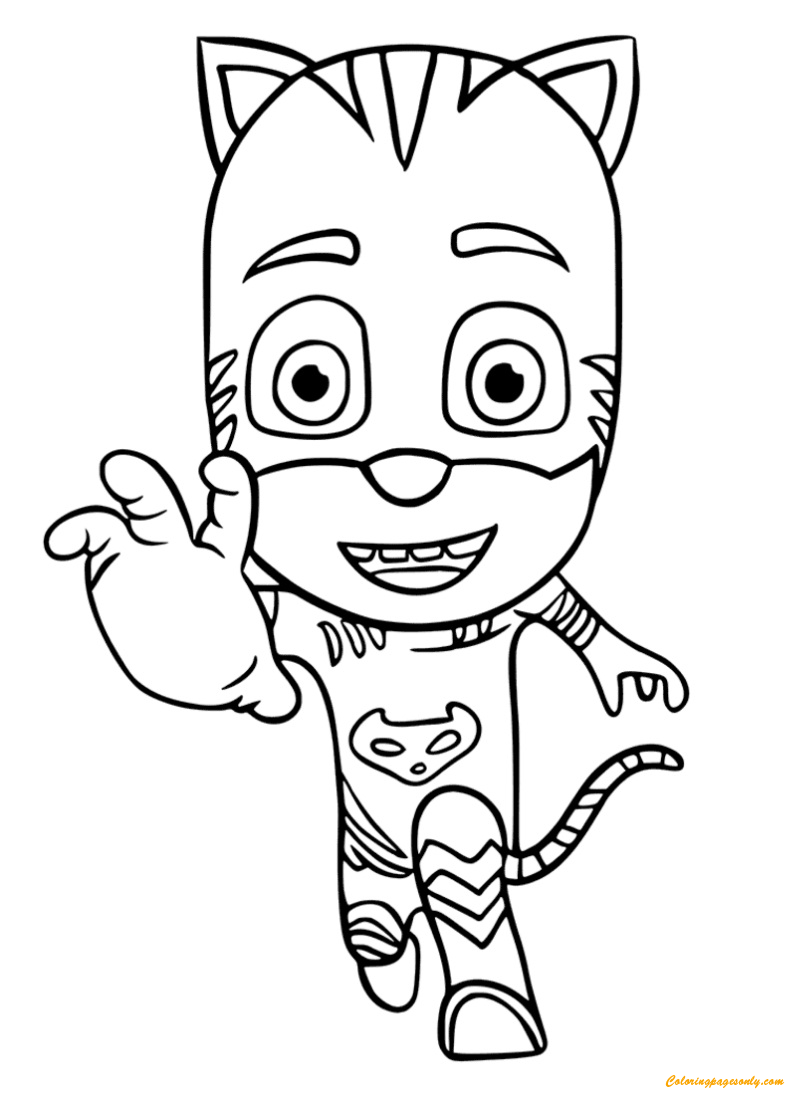
His Catboy costume is the collection’s most predominantly blue page: a dark blue full-body suit with lighter blue accent details, cat ear headpieces rising from the top of his mask, and the cat emblem on his chest. His mask covers the upper portion of his face in the style of classic superhero mask design, leaving his mouth visible for the facial expressions that communicate his personality.
His powers are cat-themed and movement-oriented: super cat speed (the fastest running of the three heroes), super cat hearing (able to hear things from great distances), cat stripes (rapid claw-like strike attacks), and super cat jump (able to leap to extraordinary heights). These powers reflect the character’s competitive, physical, kinetic personality: Catboy is the team member who wants to run faster, jump higher, and get there first.
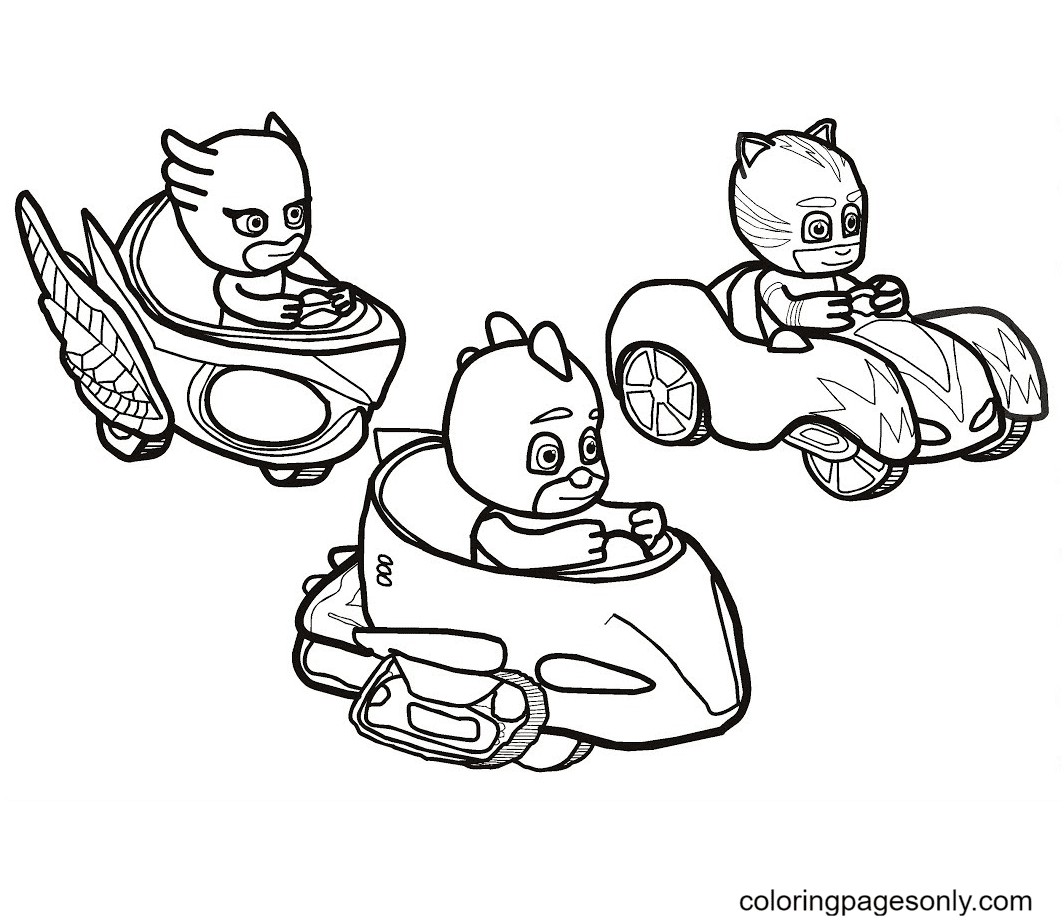
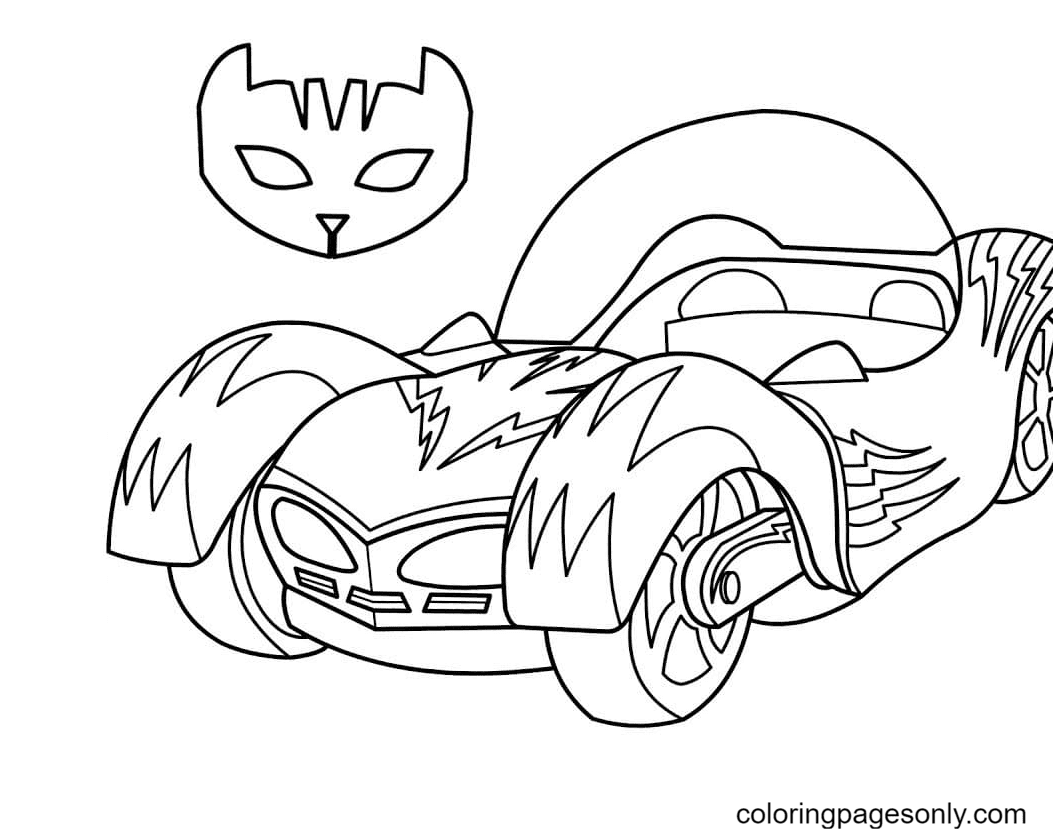
His vehicle, the Cat-Car (also called the Catmobile), is a sleek, dark blue cat-themed vehicle with cat ear fins, angular lines, and the specific aerodynamic design of something built for speed.
Coloring Catboy pages: The suit is deep, dark navy-blue applied at full coverage across the full suit surface. The accent elements, including the cat ear outlines and any lighter blue detail work, are a slightly lighter, slightly brighter medium blue that remains clearly within the blue family while providing visual separation from the darker suit base. The cat emblem on his chest is the suit’s primary accent color detail. His eye area within the mask is white or pale skin tone, with his actual eyes applying the standard animated character eye treatment: vivid blue irises with dark pupils and a white highlight dot.
Owlette (Amaya): Portrait and Action Pages
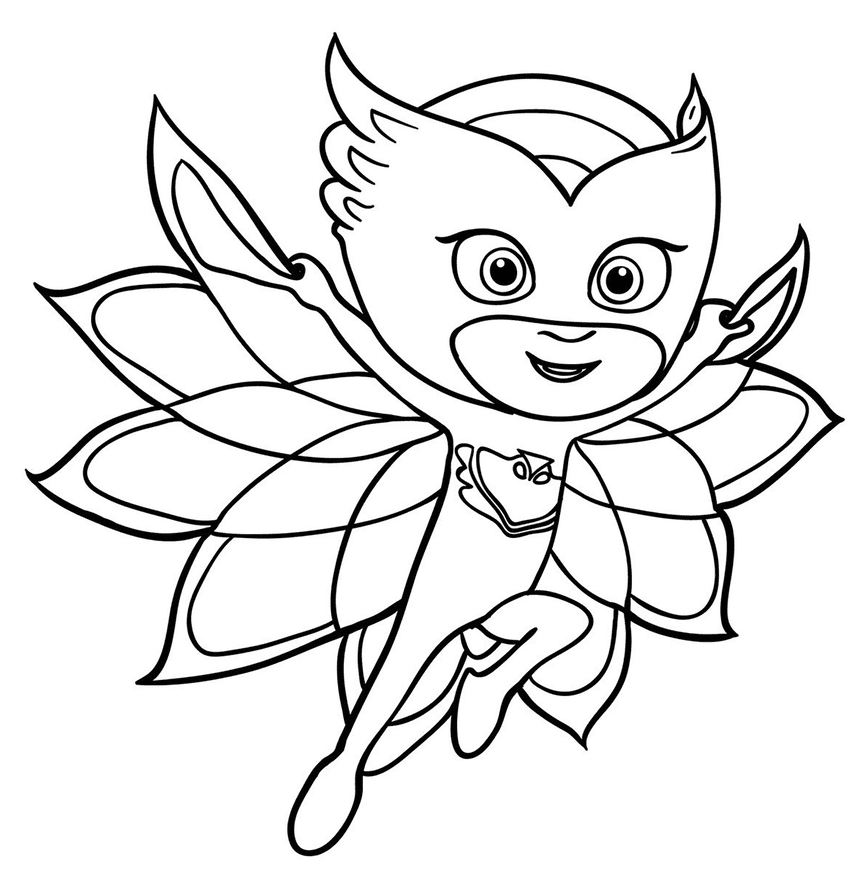
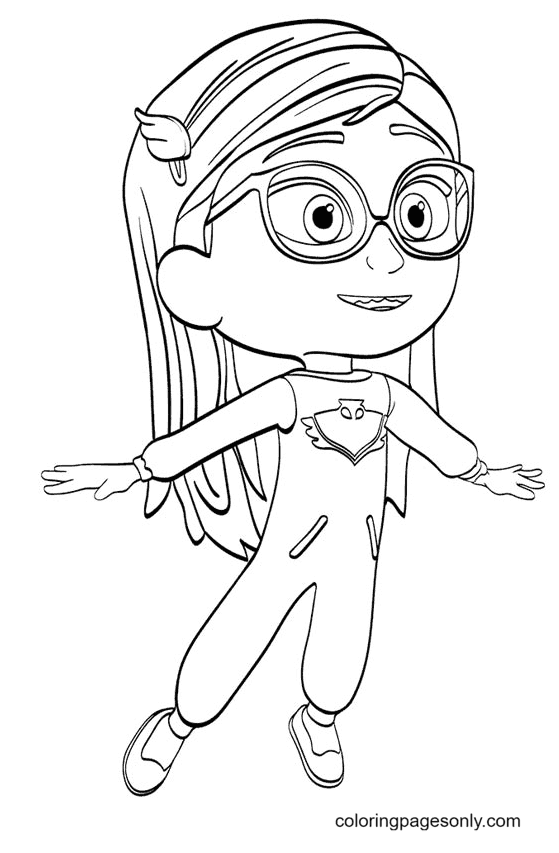
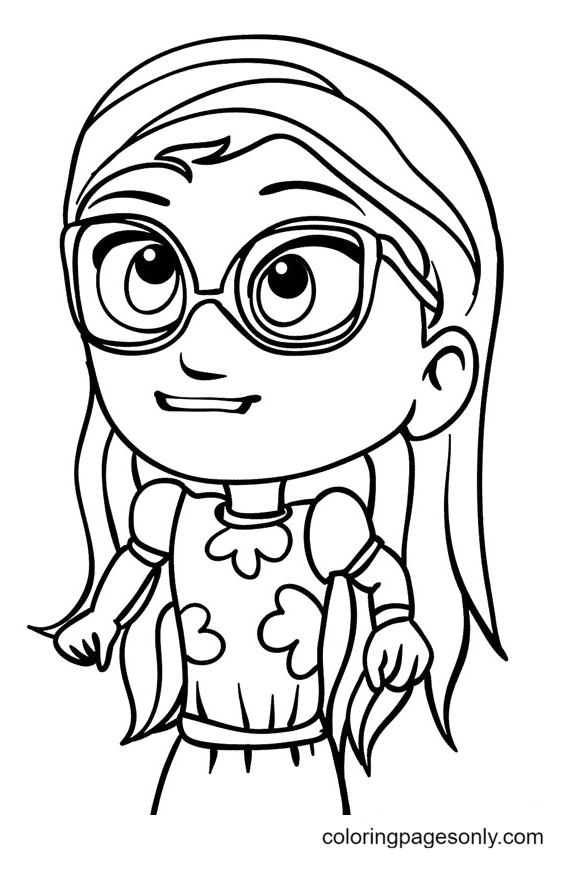
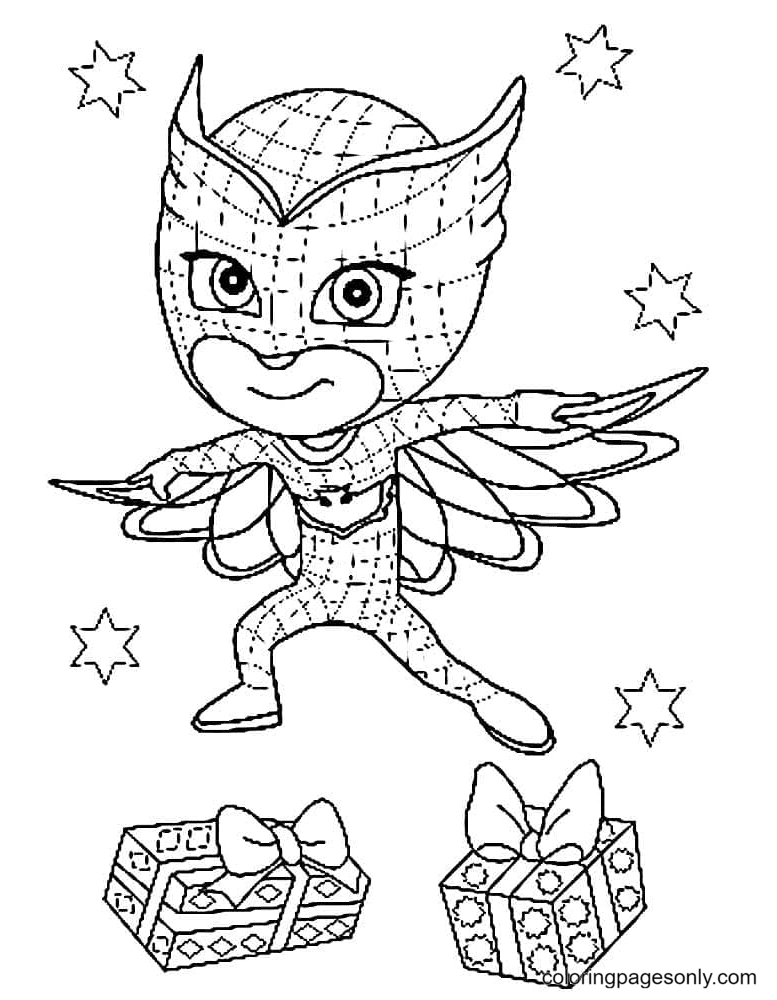
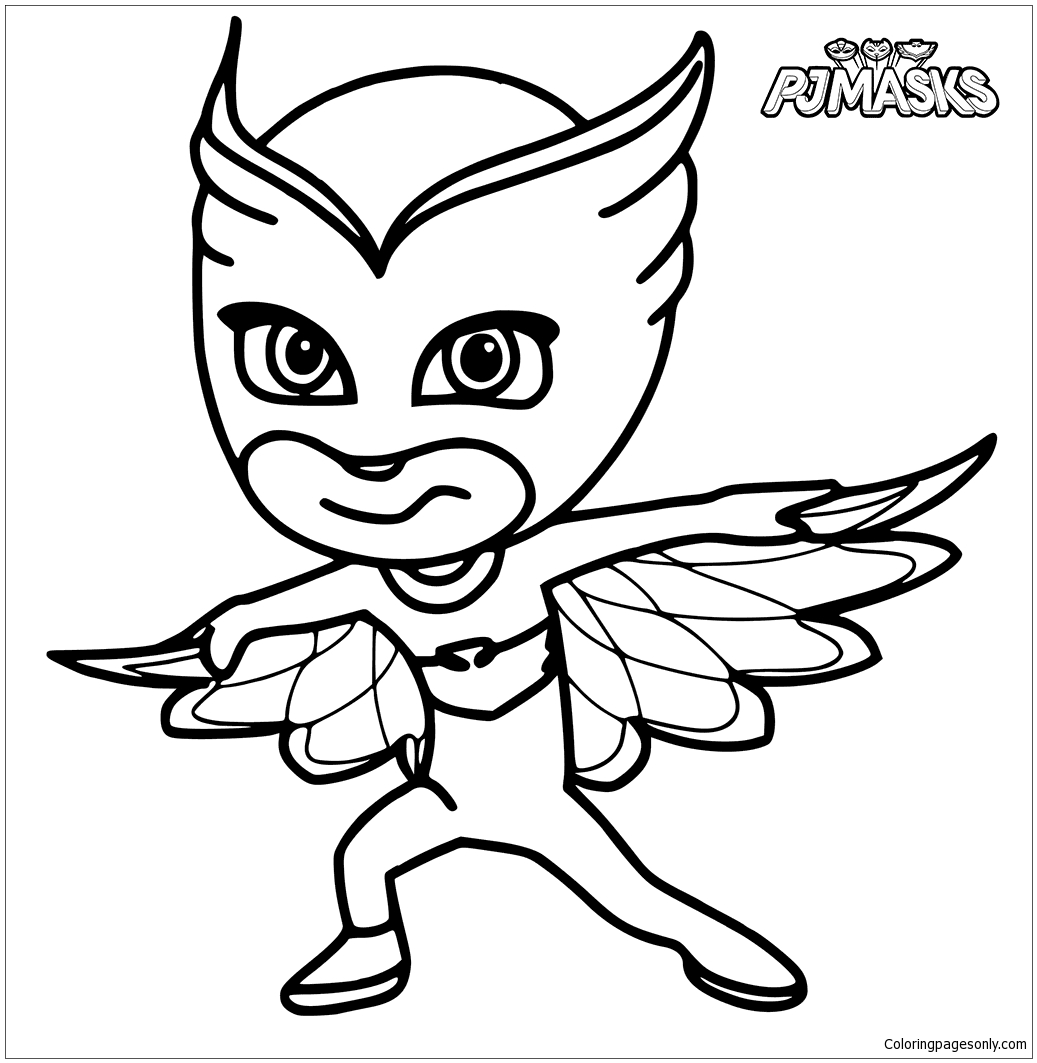
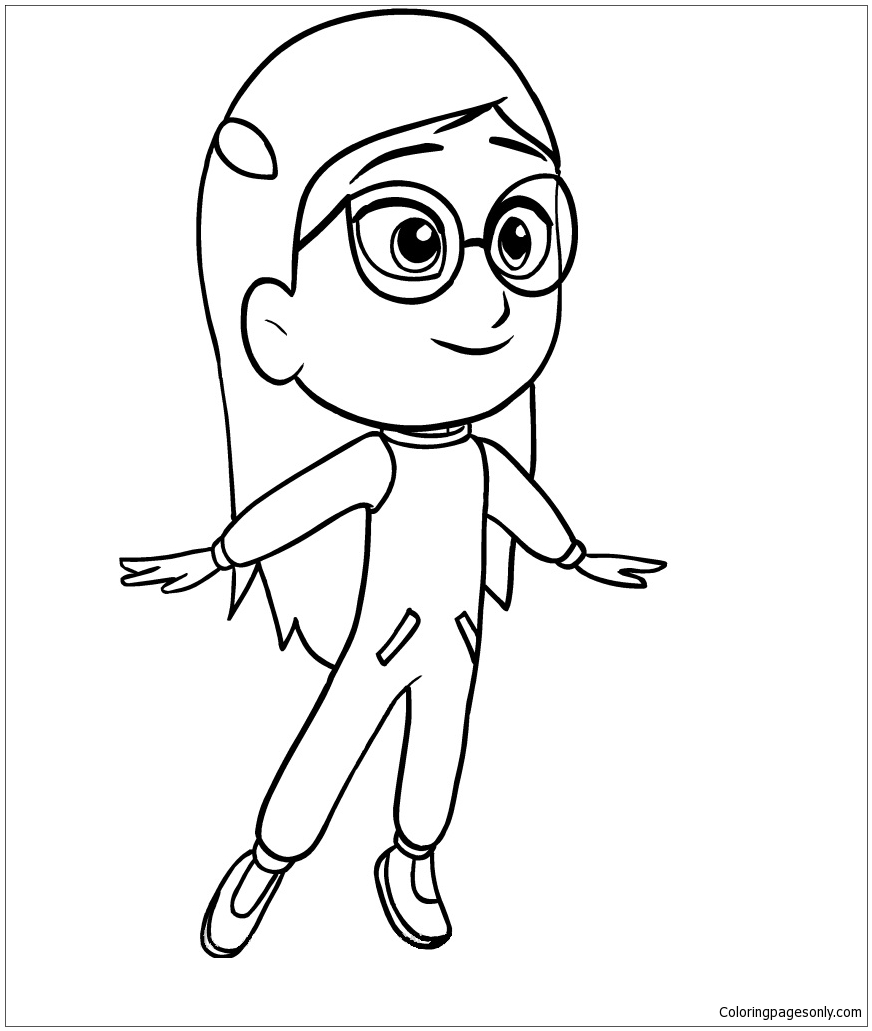
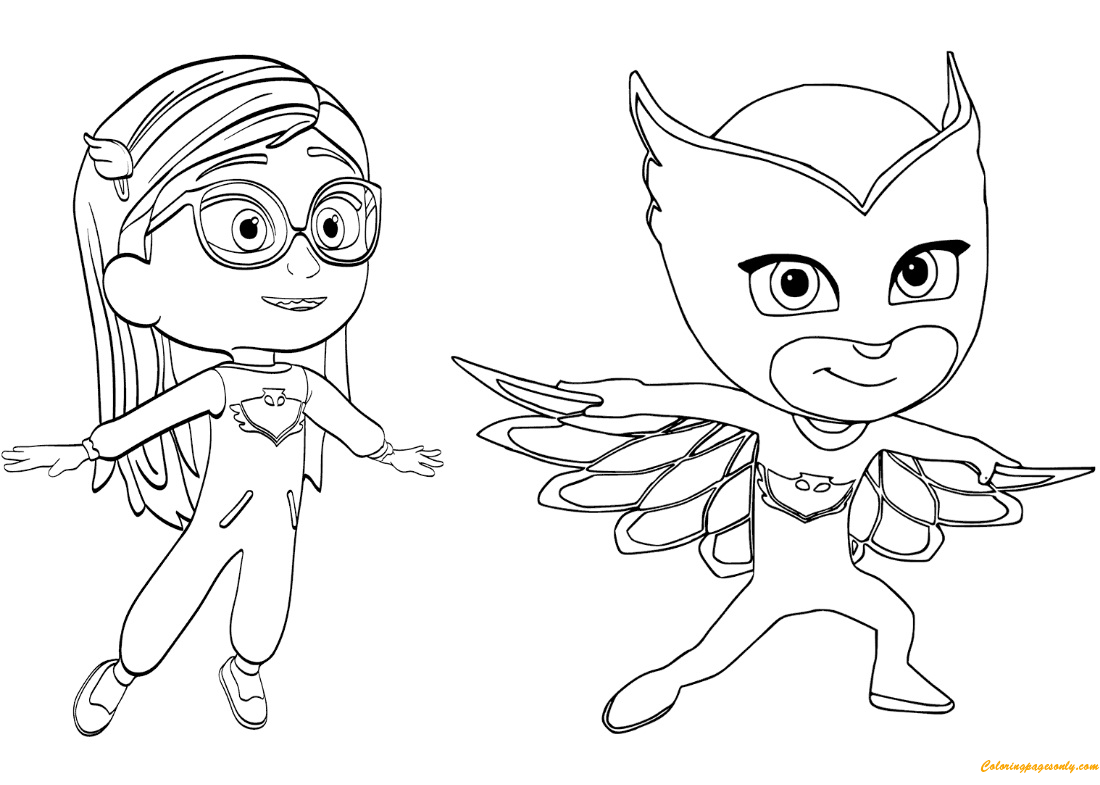
Owlette is the PJ Masks team’s most thoughtful member and the one most likely to suggest a careful approach before acting. Her civilian identity is Amaya, a six-year-old whose calm and observational nature contrasts with Catboy’s competitiveness and Gekko’s eagerness to prove himself. She is depicted as a strong problem-solver who is comfortable taking time to think before committing to an action.
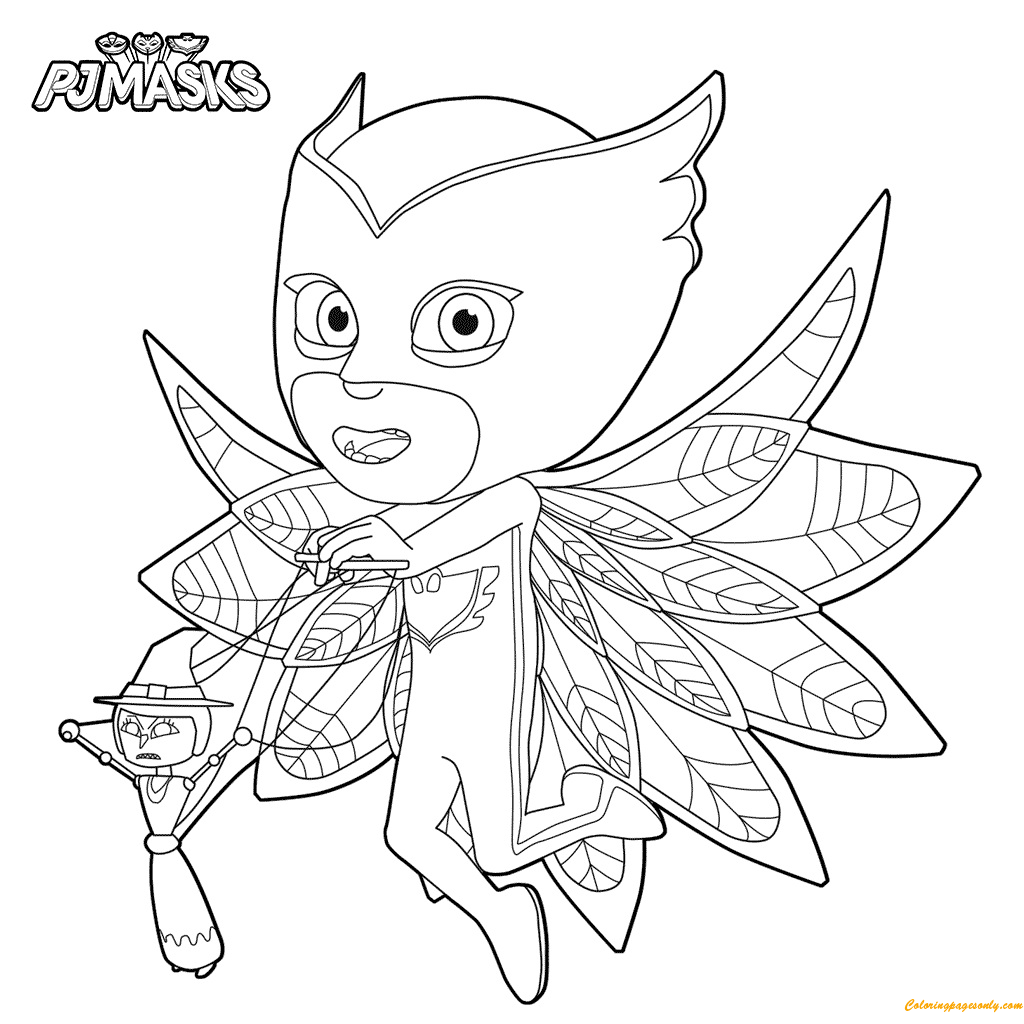
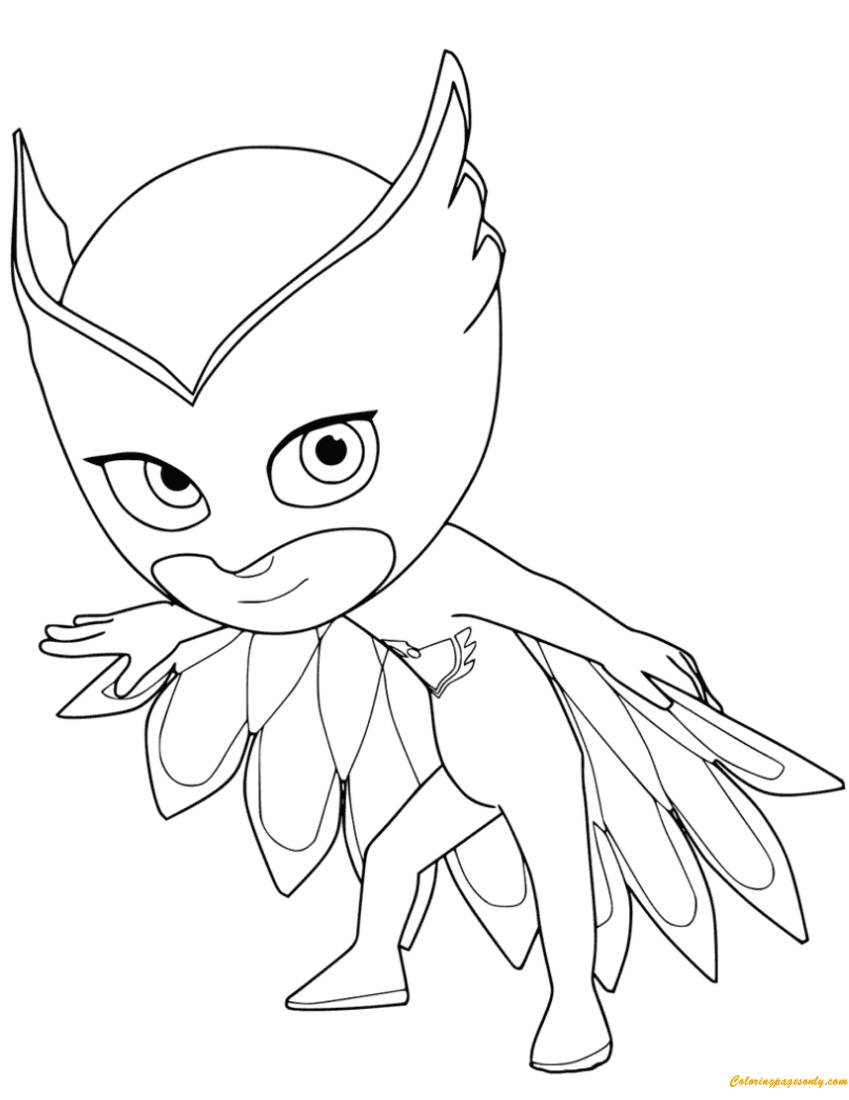
Her Owlette costume is the collection’s most vivid red page: a crimson-red full-body suit with owl wing panels extending from her arms, large owl eye designs on her mask, and the owl emblem on her chest. The owl wings, which extend from the wrists to the waist of her suit when she holds her arms out, are the costume’s most visually distinctive element: they give her silhouette a dramatically different shape from her teammates when she is in flight.
Her powers are owl-themed and perception-oriented: owl eyes (super vision allowing her to see great distances and in darkness), owl wings (flight ability using the wings built into her suit), owl feather wind (generating powerful gusts from her wings), and owl wing wind (creating directed wind currents). These powers reflect the character’s observational, thoughtful personality: Owlette is the team member who sees what others miss.
Her vehicle, the Owl Glider, is a red flying vehicle with an owl-shaped design, used for aerial missions.
Coloring Owlette pages: The suit is vivid crimson-red applied at full coverage across the full suit surface. The wing panels, when extended, are the same crimson-red with darker red detailing along the feather patterns if the page design includes them. The owl eye designs on her mask are large circles in a lighter color (pale yellow or white) with the owl pupil in dark brown or near-black. Her chest emblem matches the owl eye design in miniature. The red should lean toward warm crimson-red rather than cool raspberry-pink or orange-red.
Gekko (Greg): Portrait and Action Pages
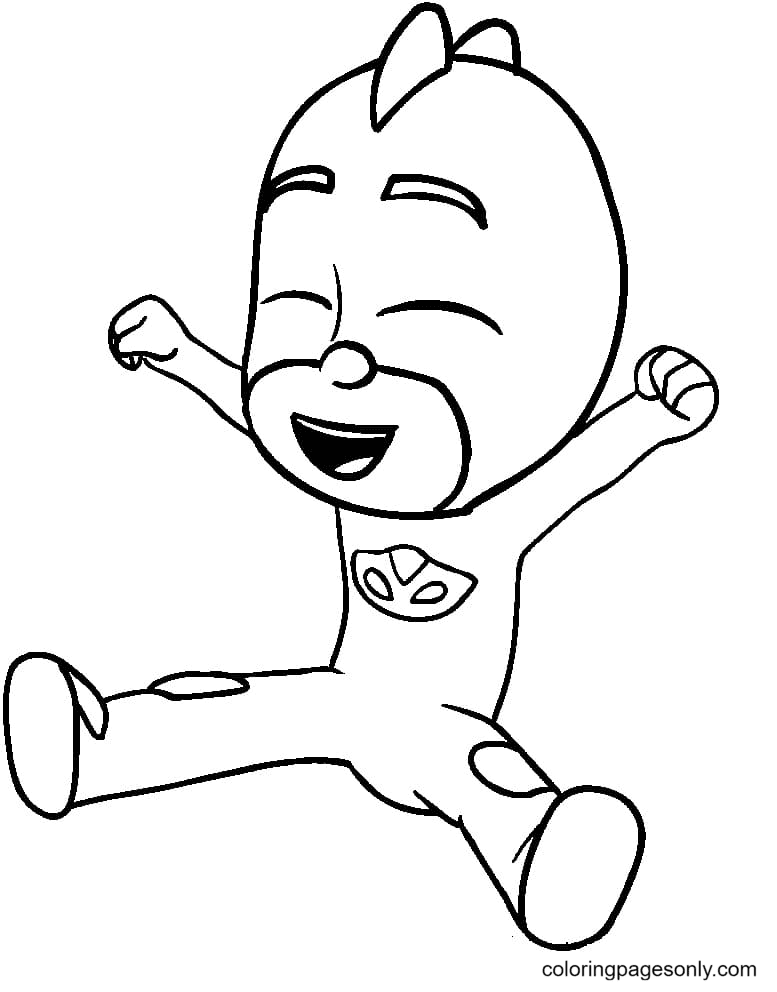
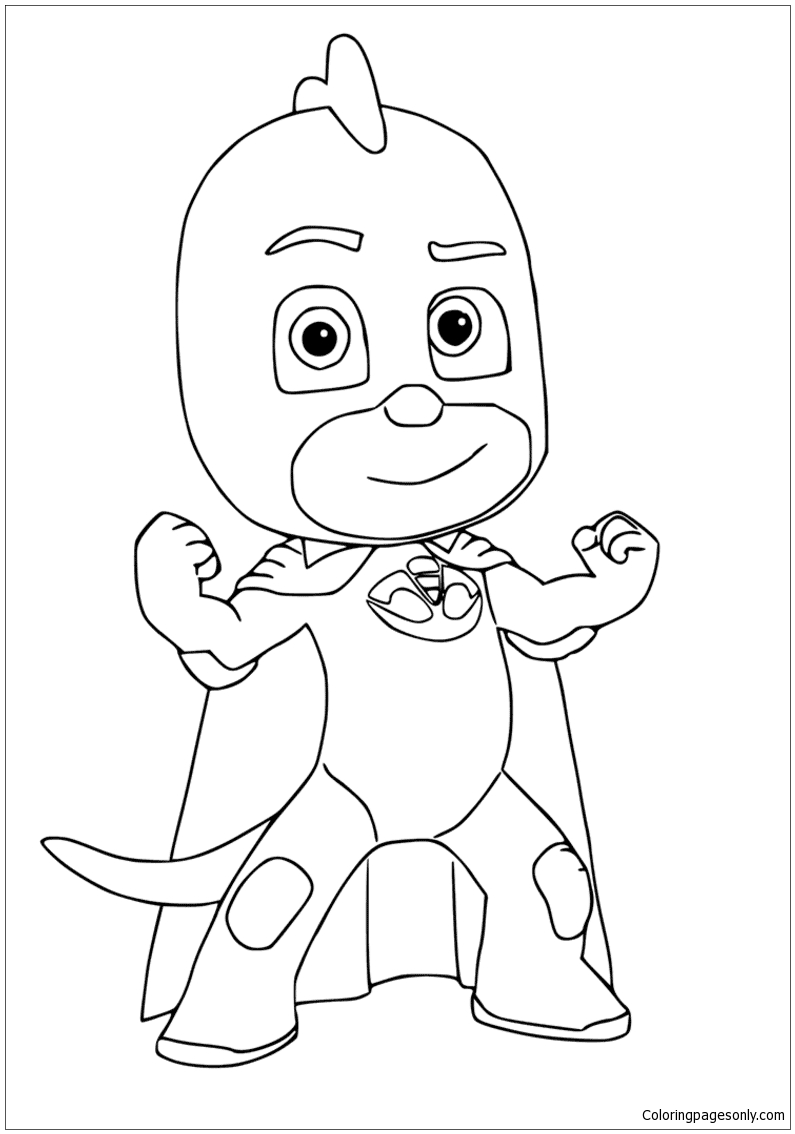
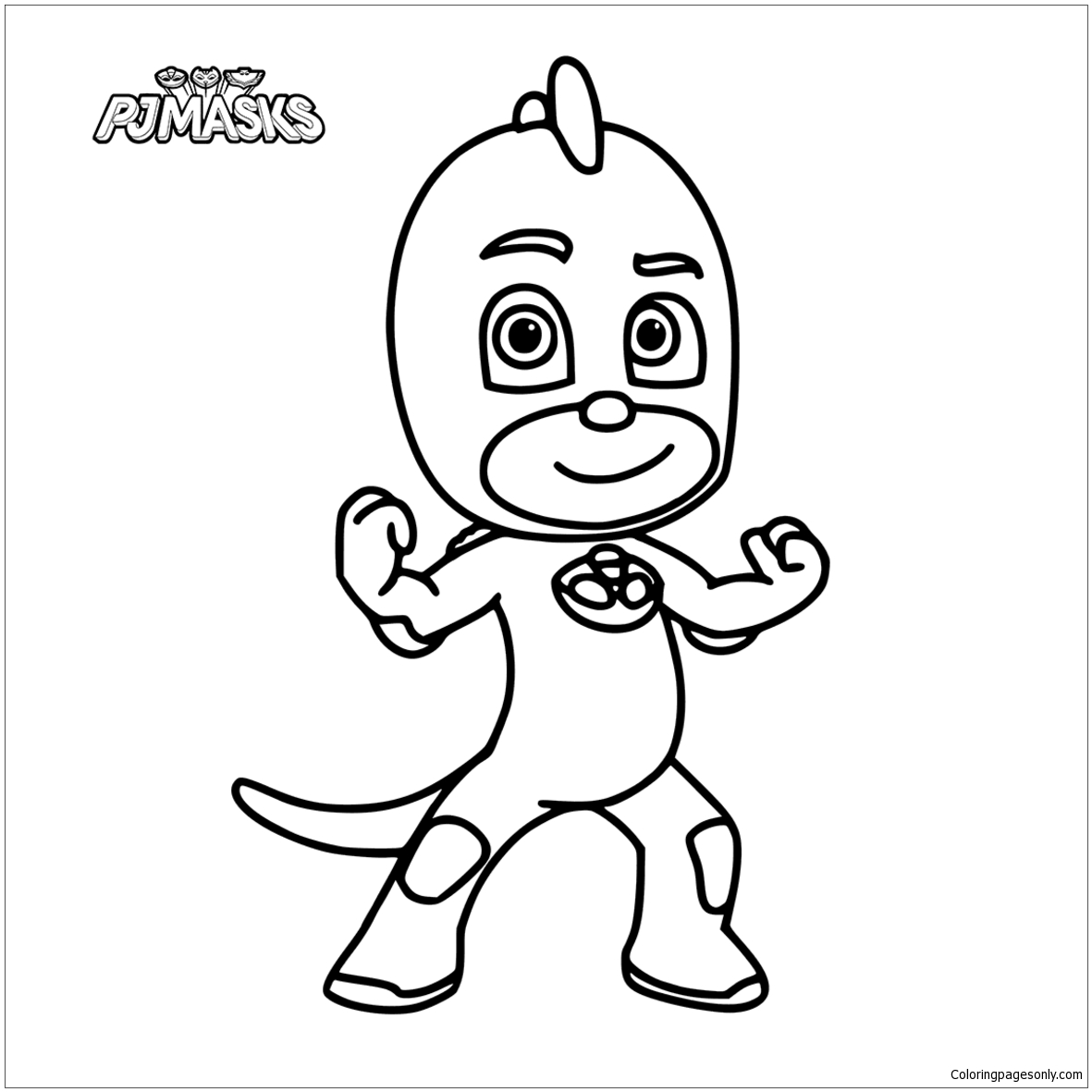
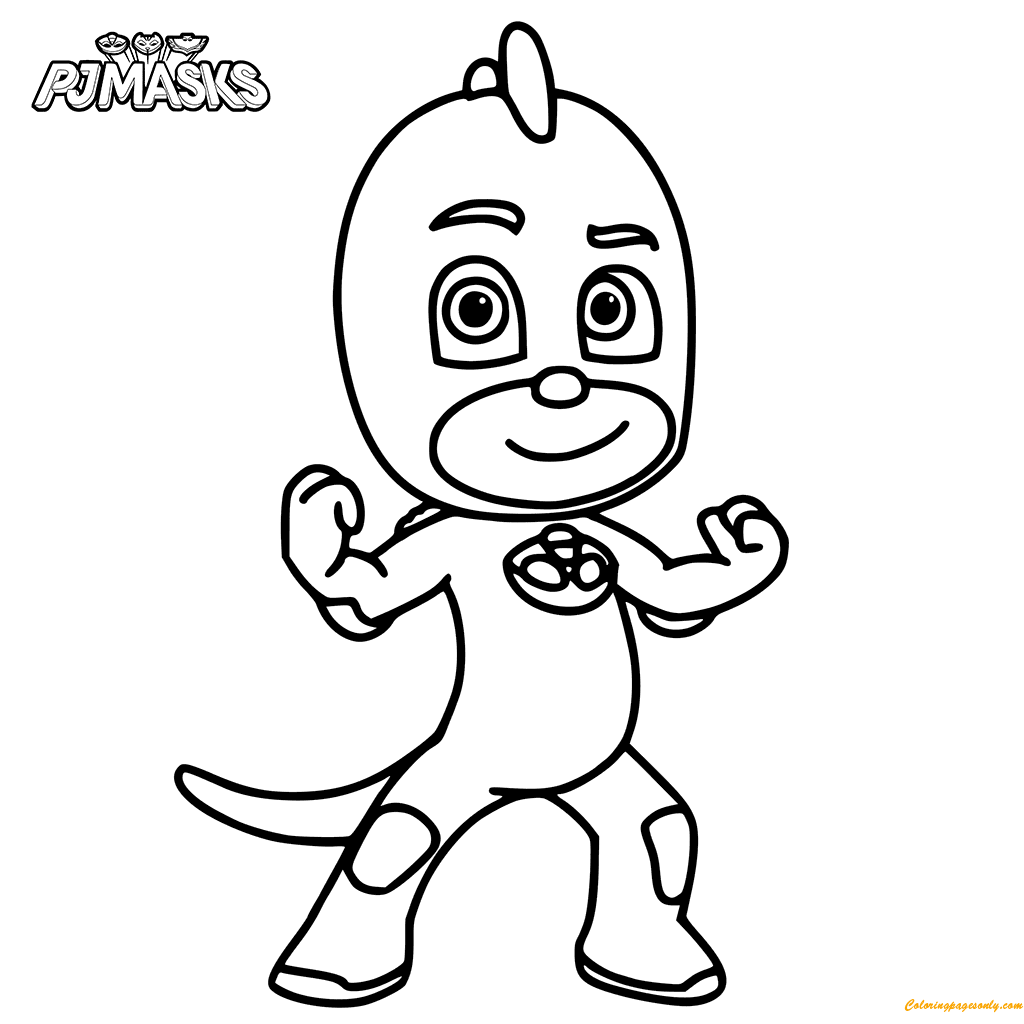
Gekko is the youngest and smallest of the three PJ Masks heroes, a detail the show uses consistently: Gekko (Greg) is the one most concerned about being taken seriously, most eager to demonstrate his worth to the team, and most likely to feel overlooked. This specific characterization resonates directly with younger siblings and younger children in peer groups who relate to being the smallest person who is trying to prove they can do what the bigger kids do.
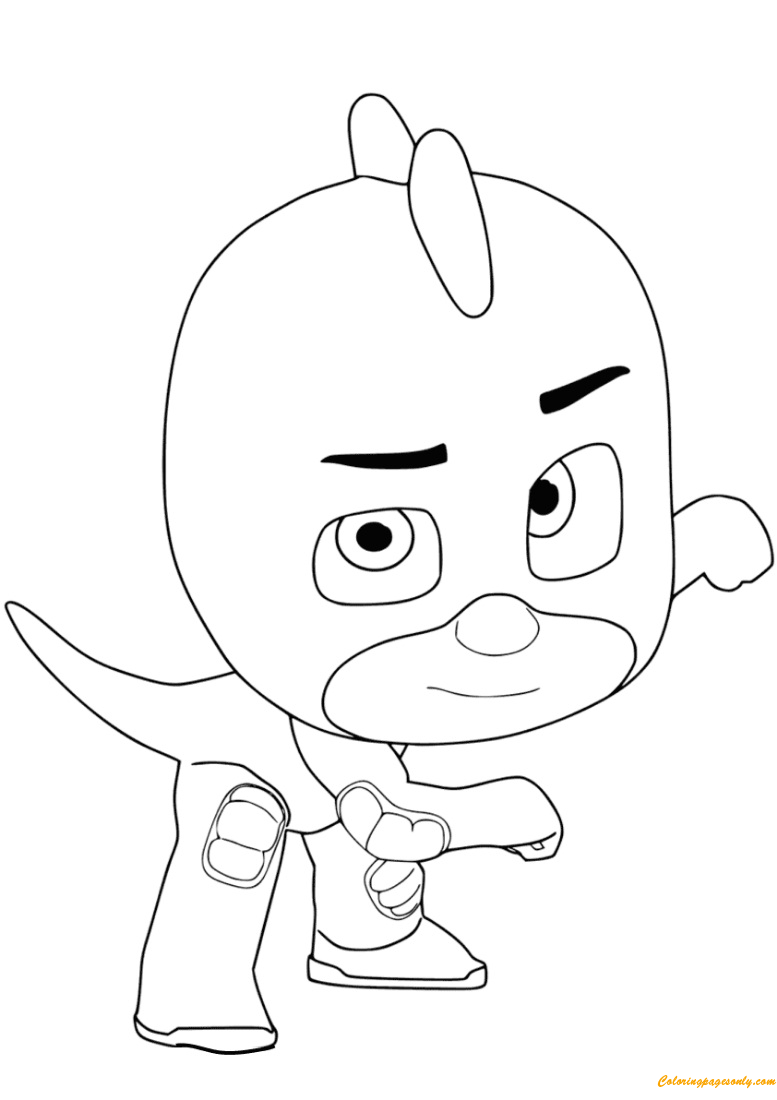
His Gekko costume is the collection’s brightest green page: an emerald-green full-body suit with a scaly texture pattern suggesting reptile skin, small spikes along the back in some design variations, and the gecko/lizard emblem on his chest. His mask covers the upper portion of his face with a rounded, slightly scaled design aesthetic.
His powers are gecko/lizard-themed and strength-oriented: super gekko muscles (extraordinary physical strength, making him the team’s strongest member despite his small size), gekko camouflage (the ability to blend into surroundings and become nearly invisible), super gekko grip (ability to climb and stick to any surface), and gekko shield (generating a hard reptilian scale shield for protection). This power set is specifically designed to subvert the character’s small-size limitation: the smallest hero is the physically strongest one.
His vehicle, the Gekko-Mobile, is a green gecko-themed car with the visual design of a lizard, used for ground missions.
Coloring Gekko pages: The suit is vivid emerald-green, applied at full coverage. Any scaly texture pattern on the suit can be suggested by applying slightly darker green along the scale lines, creating a subtle pattern within the overall green surface. The gecko emblem on his chest uses the same green family but at a slightly different shade for visual distinction. His overall silhouette is rounder and more compact than Catboy and Owlette, reflecting his smaller, stockier build.
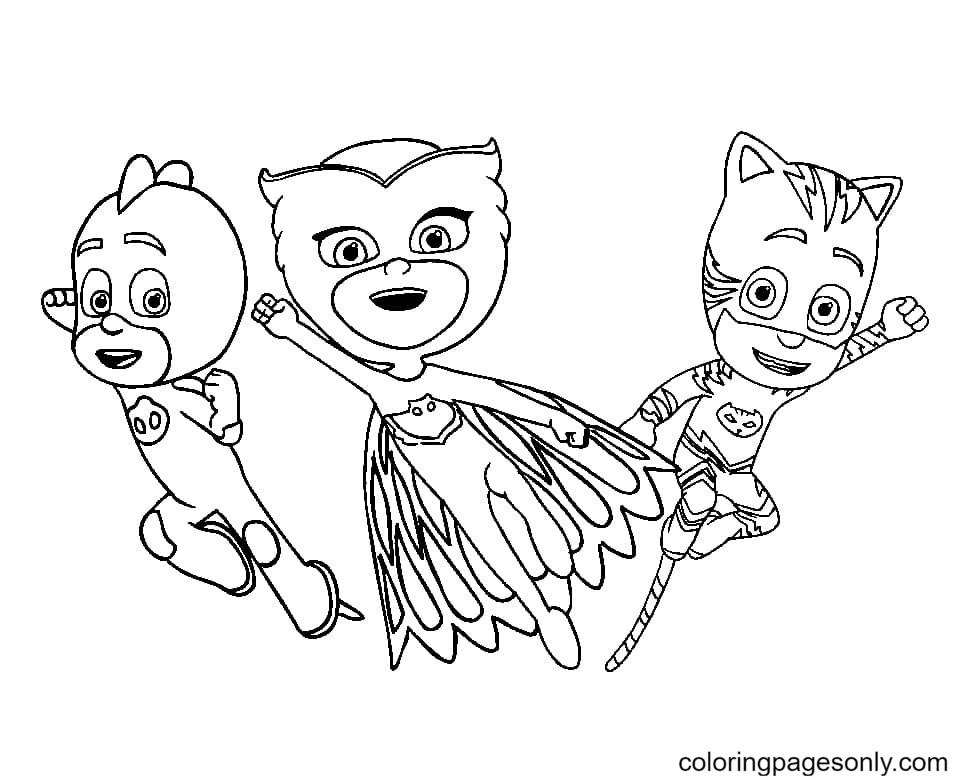
Group Team Pages
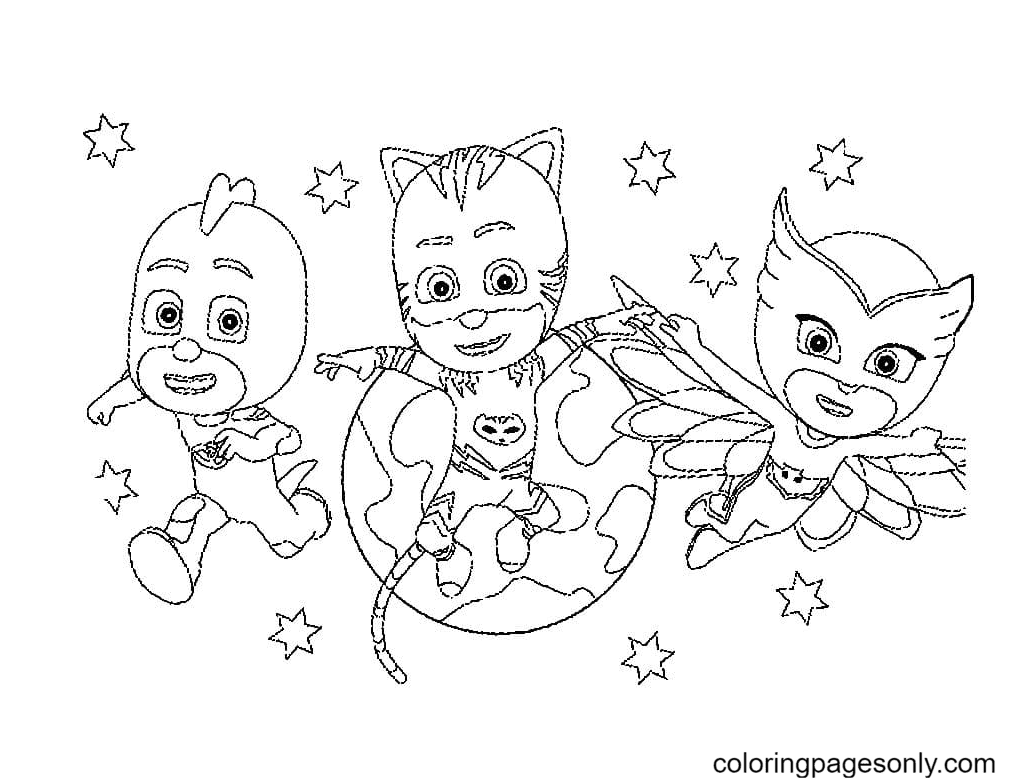
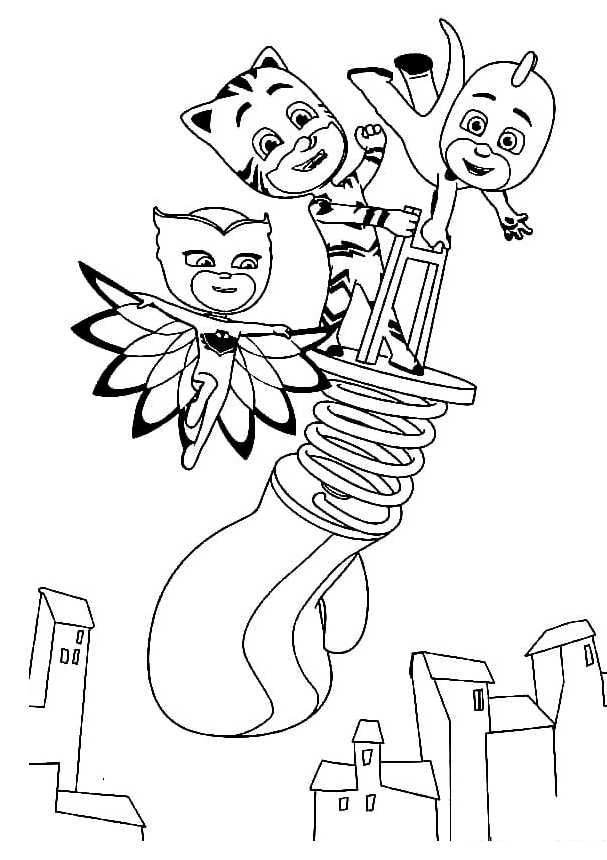
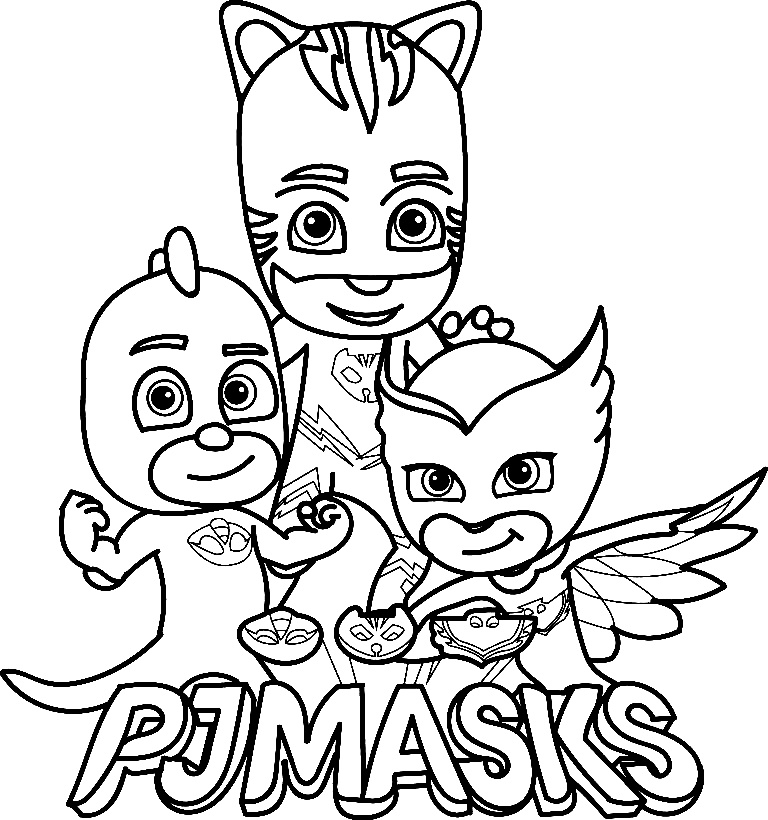
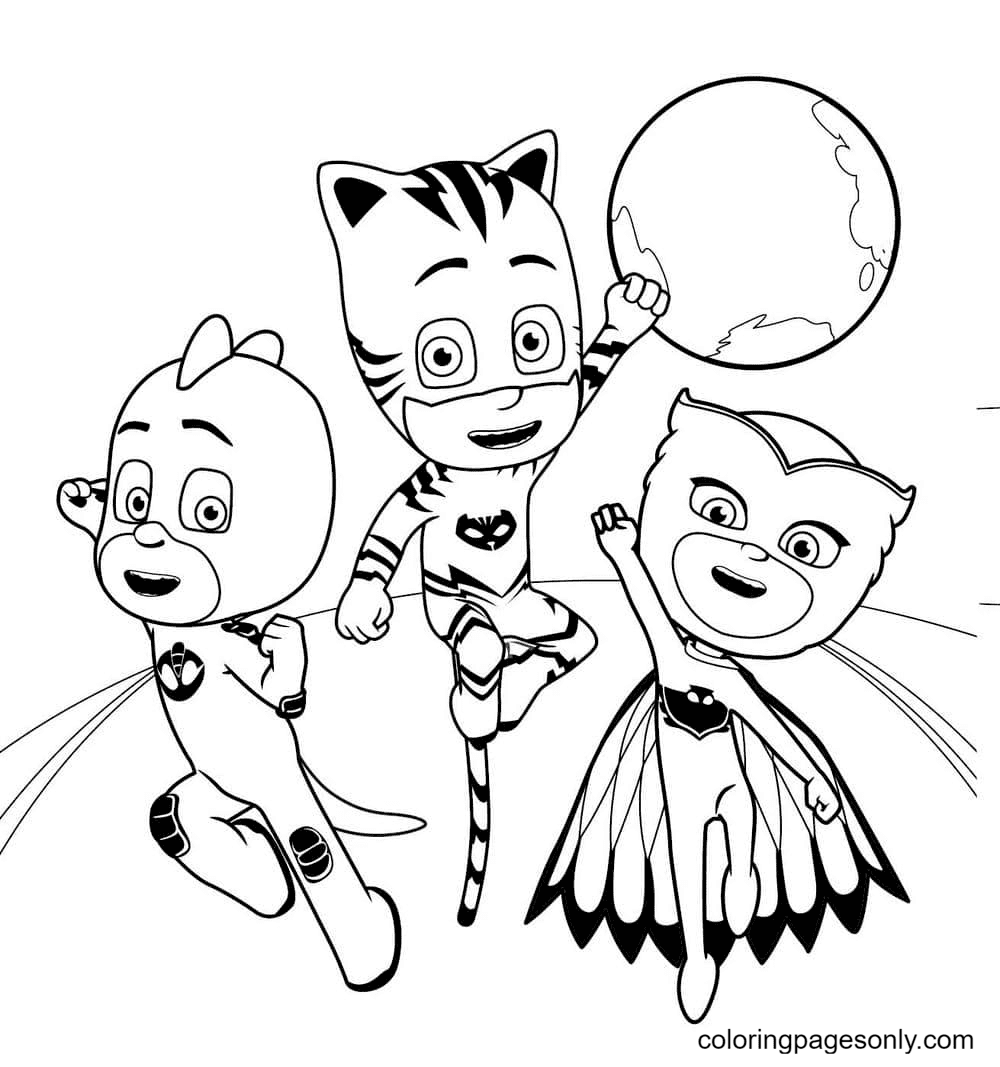
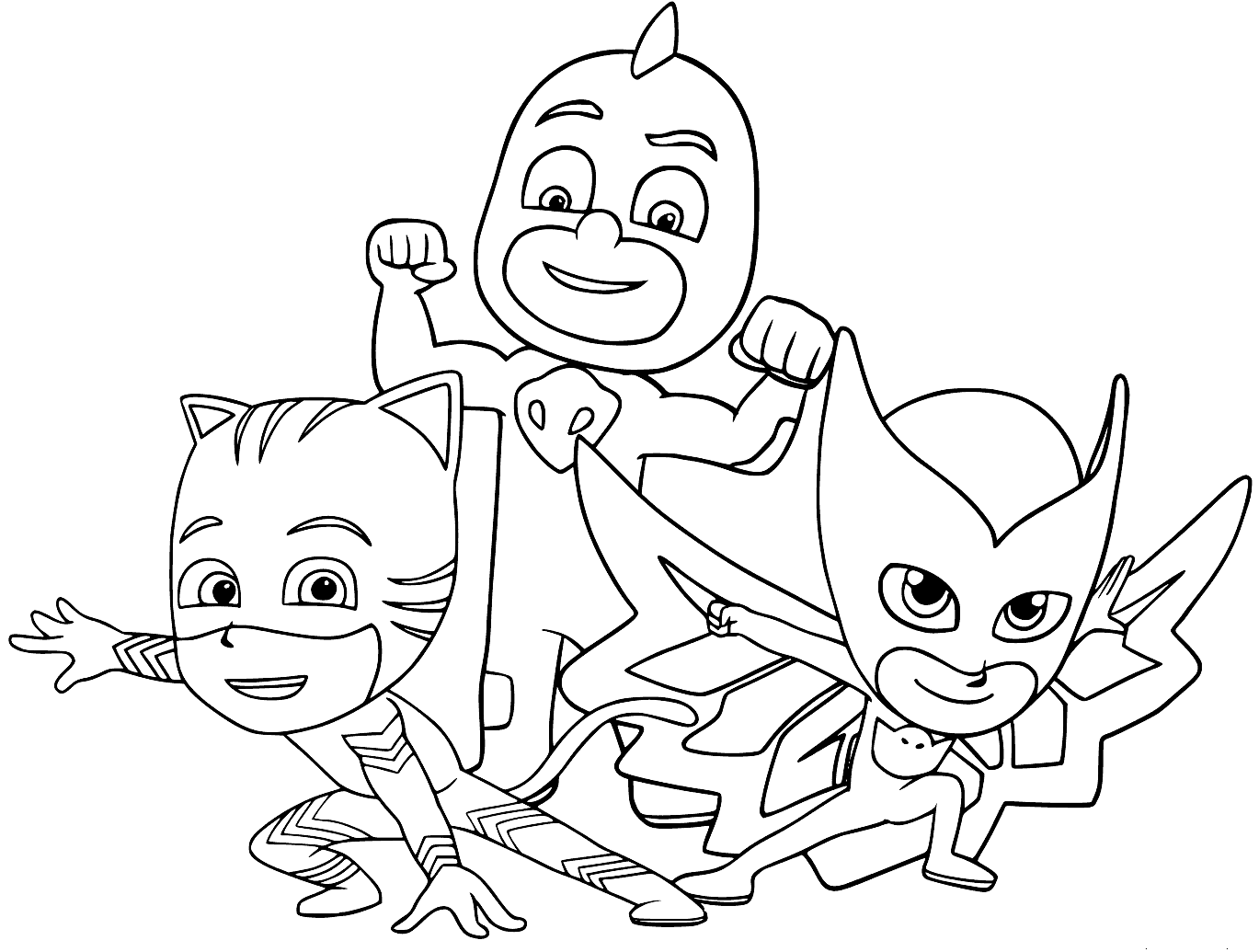
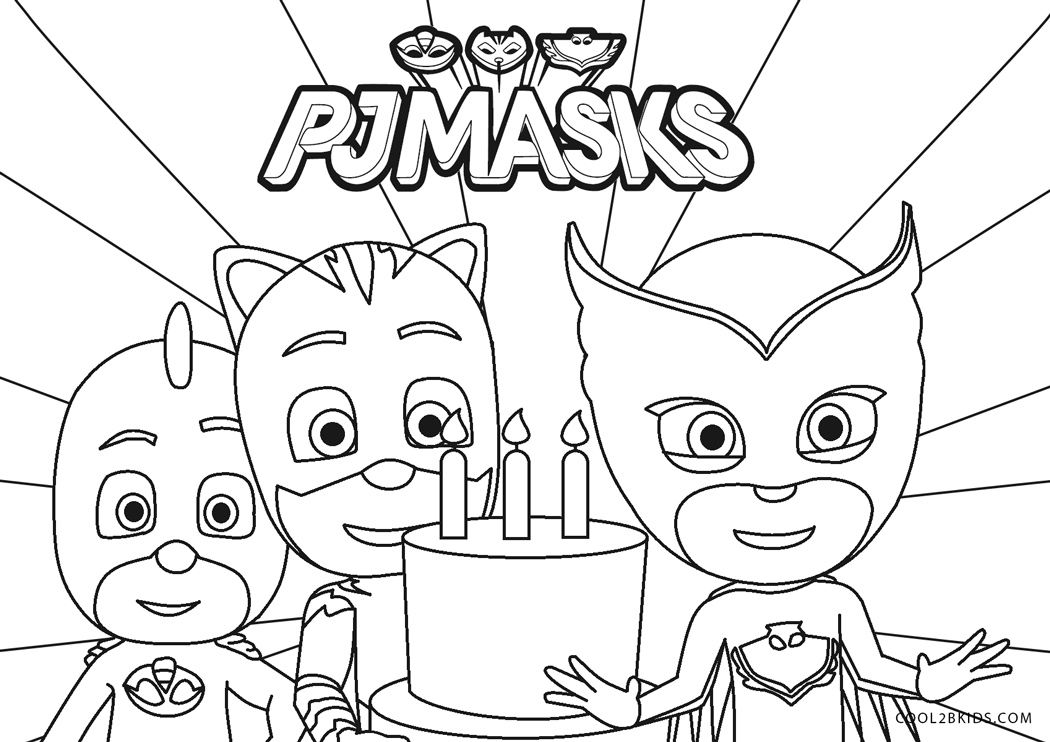
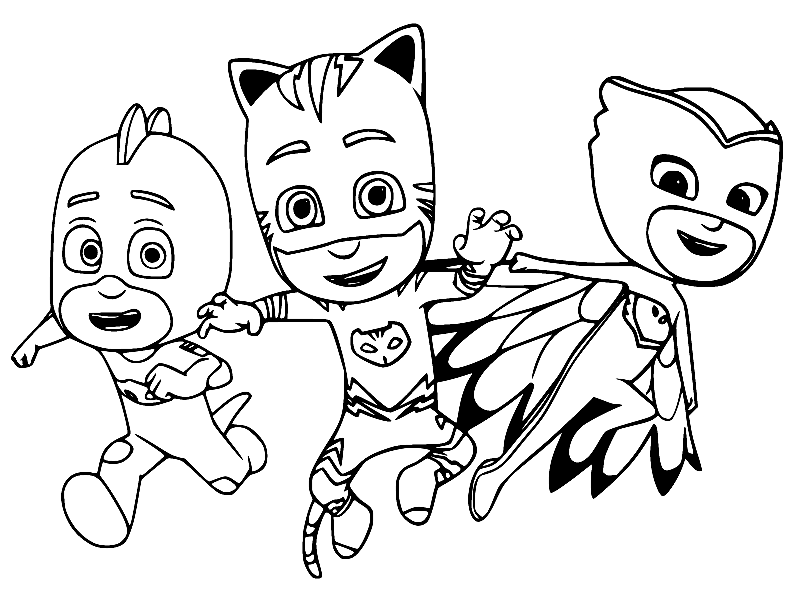
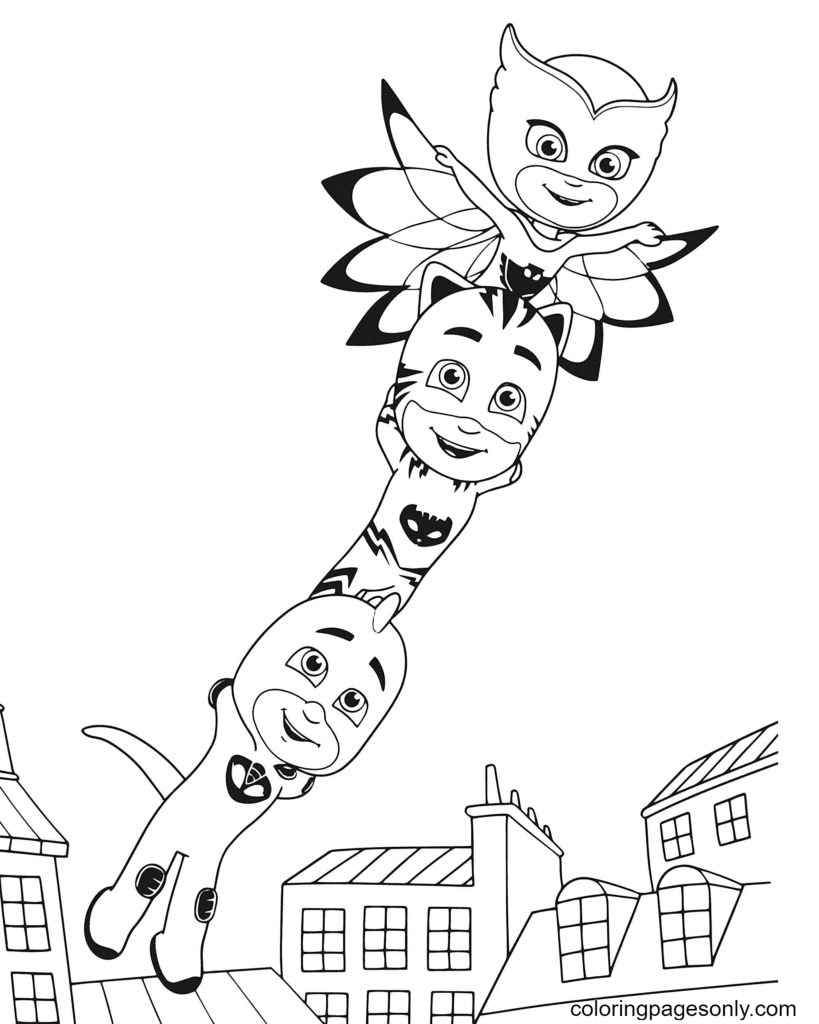
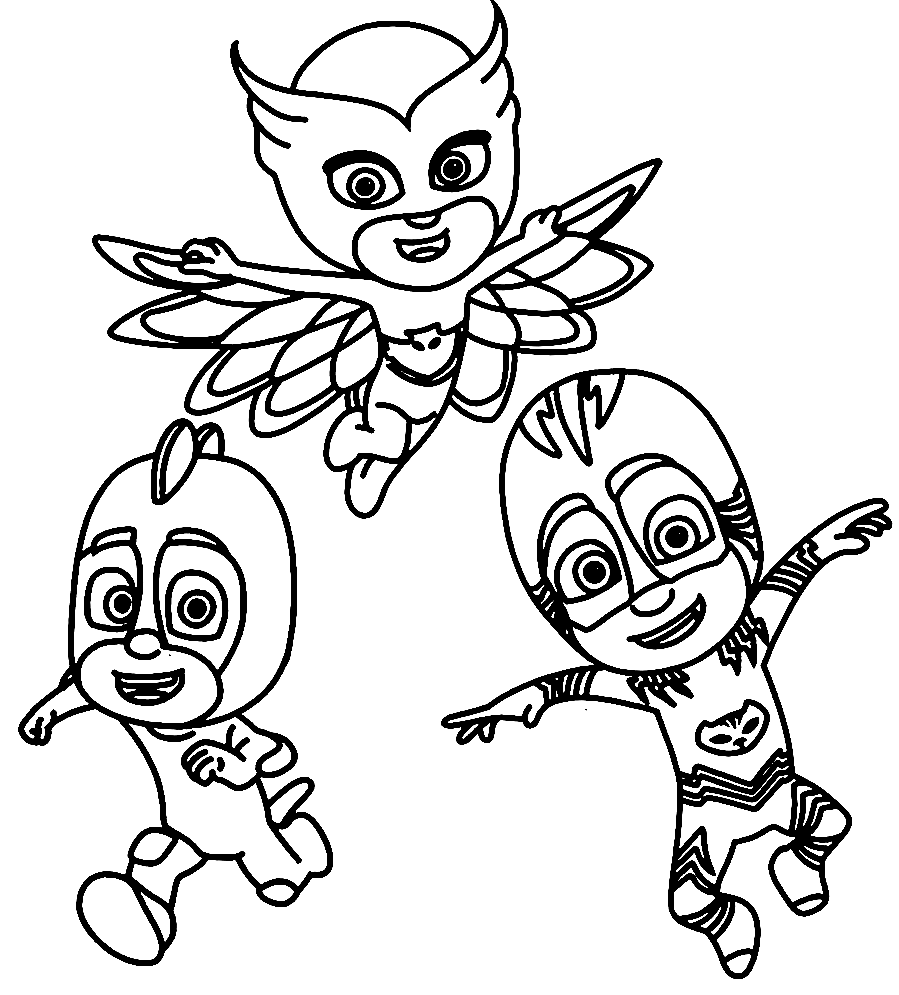
Group pages showing all three heroes together, in action poses or in the standard team lineup, are the collection’s most color-diverse and most visually energetic compositions. The specific color combination of the three heroes’ suits (blue, red, green) creates a primary-color-adjacent palette that reads as immediately vibrant and child-friendly: these three colors together produce the maximum visual energy achievable with three suit colors.
The standard team lineup shows Catboy at center or slightly forward (as team leader), with Owlette and Gekko flanking him, all in the action poses that communicate their respective personalities: Catboy in a ready-to-sprint position, Owlette with wings extended, Gekko in a strong, low stance.
Coloring group pages: Apply the colors in order of size: the largest color area first, then the medium, then the smallest. Typically, Gekko’s green covers the most surface area in group pages (his suit is the most uniformly covered), followed by Catboy’s blue, then Owlette’s red. Apply each at full saturation. The contrast between the three fully saturated primary colors at full saturation creates the specific visual energy that defines the PJ Masks’ visual identity.
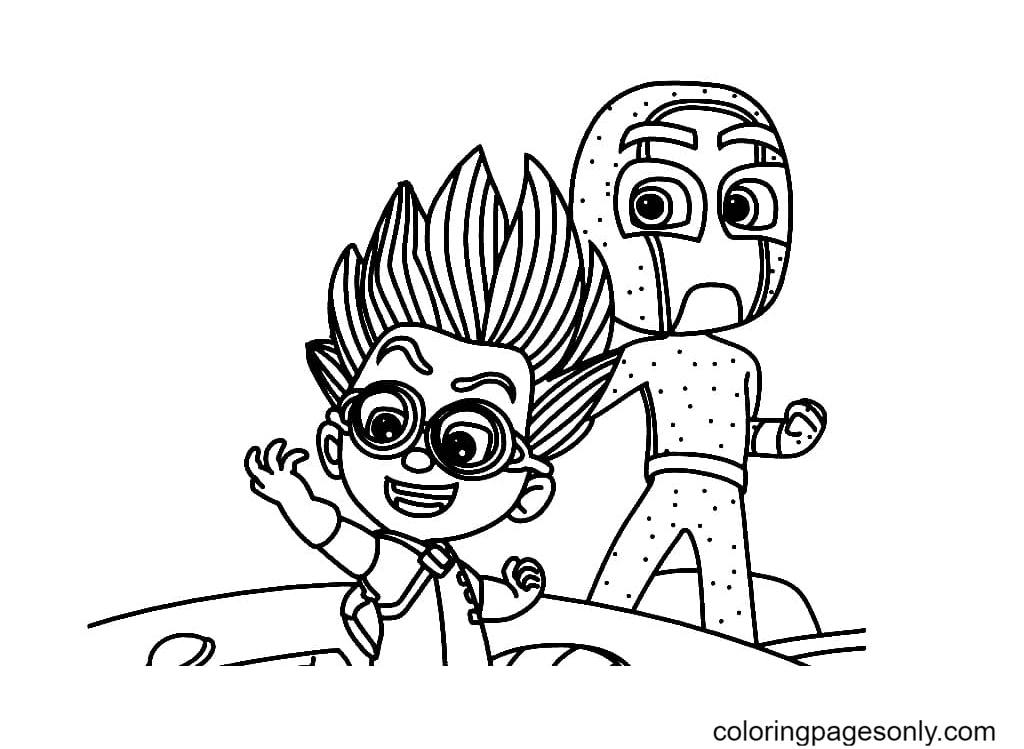
The Villains: Romeo, Luna Girl, and Night Ninja
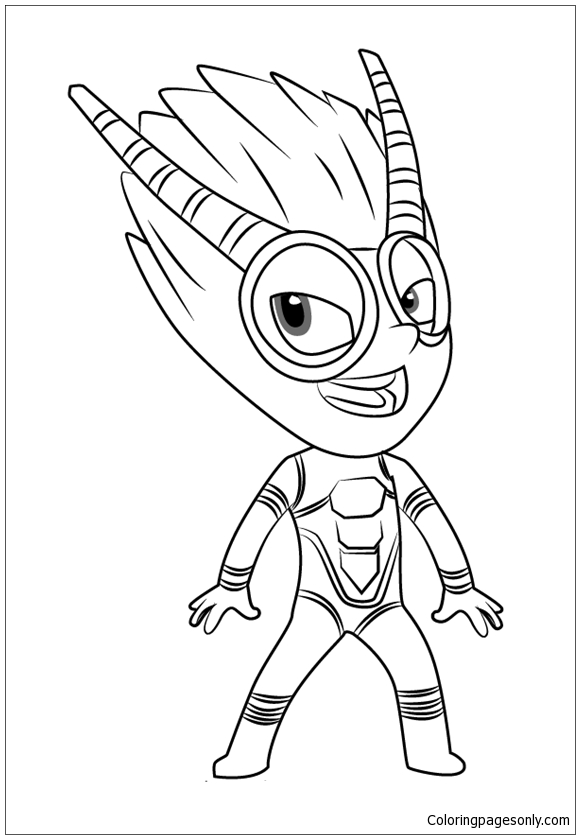
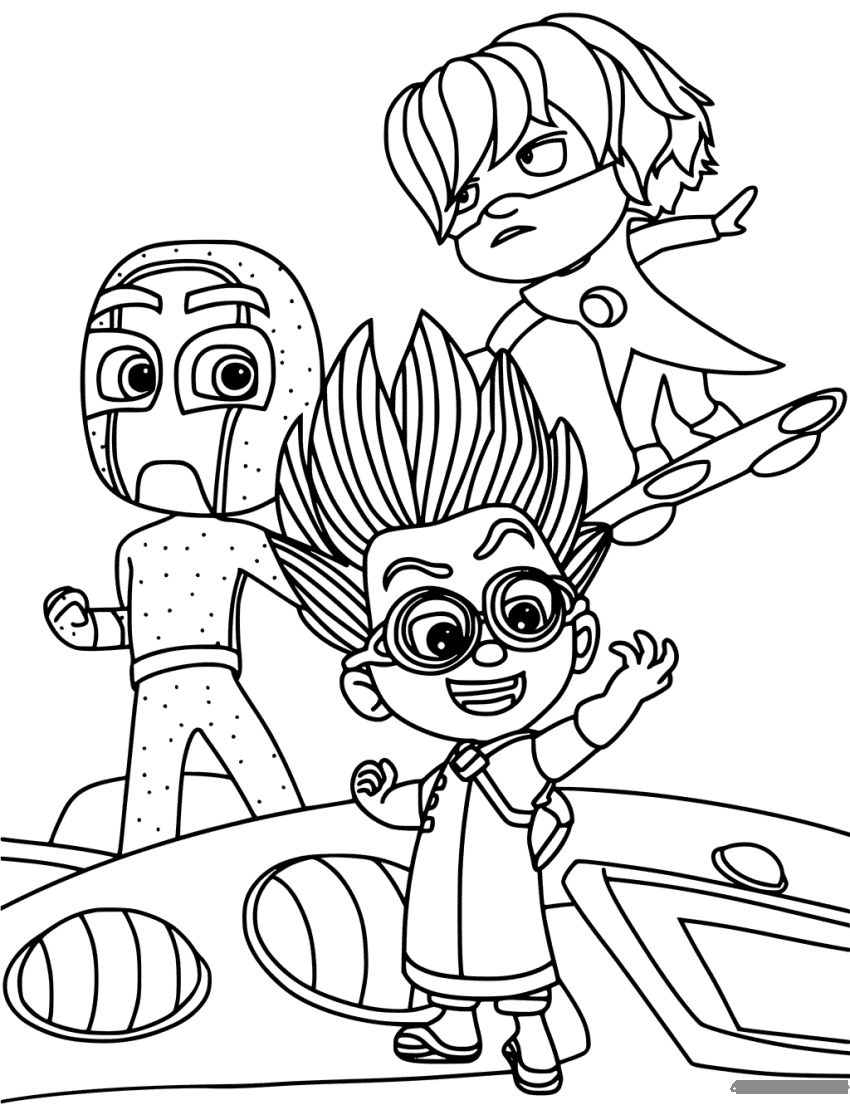
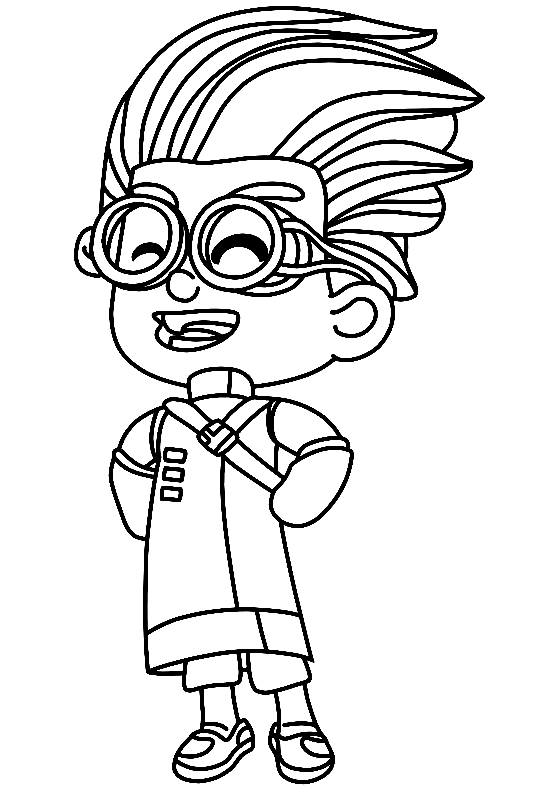
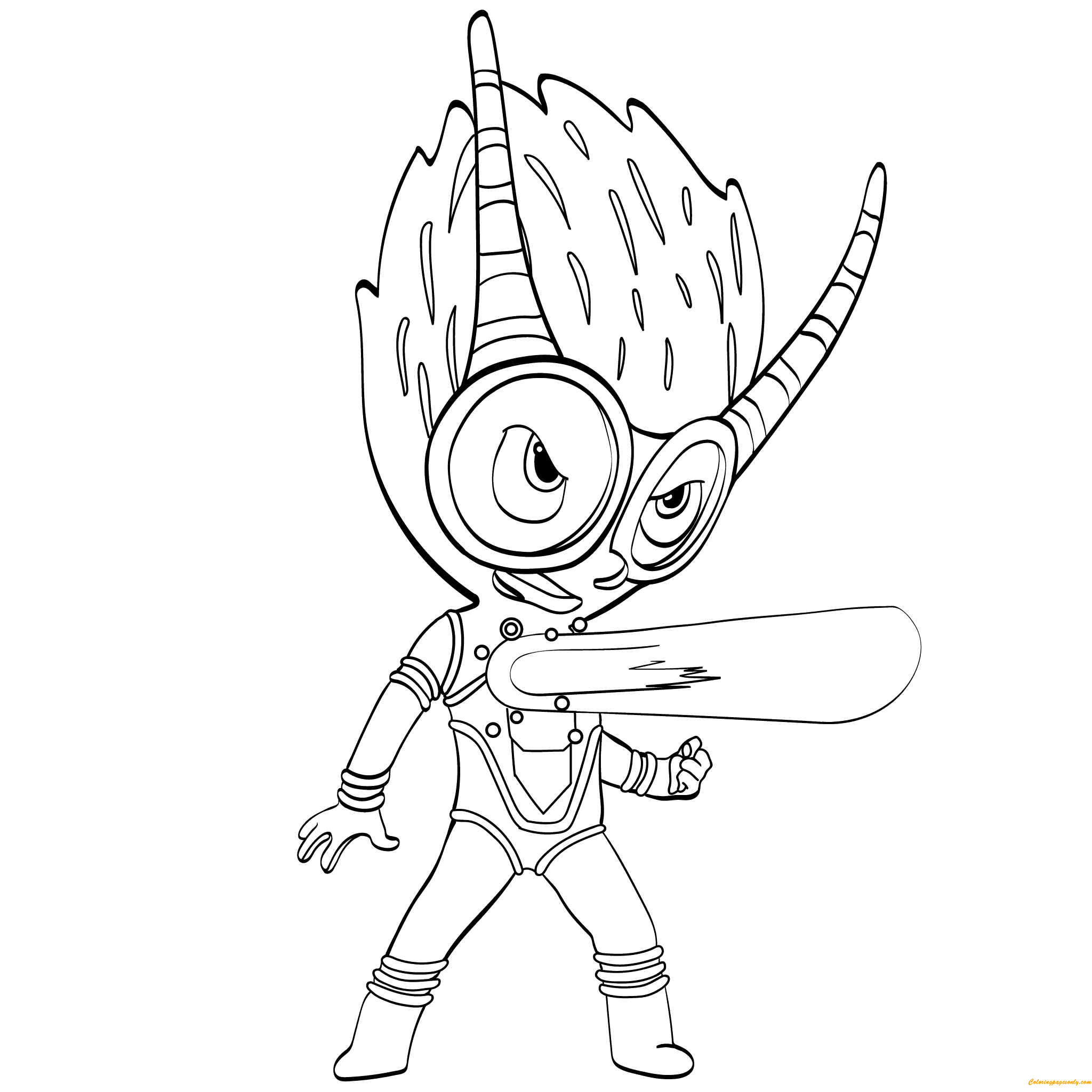
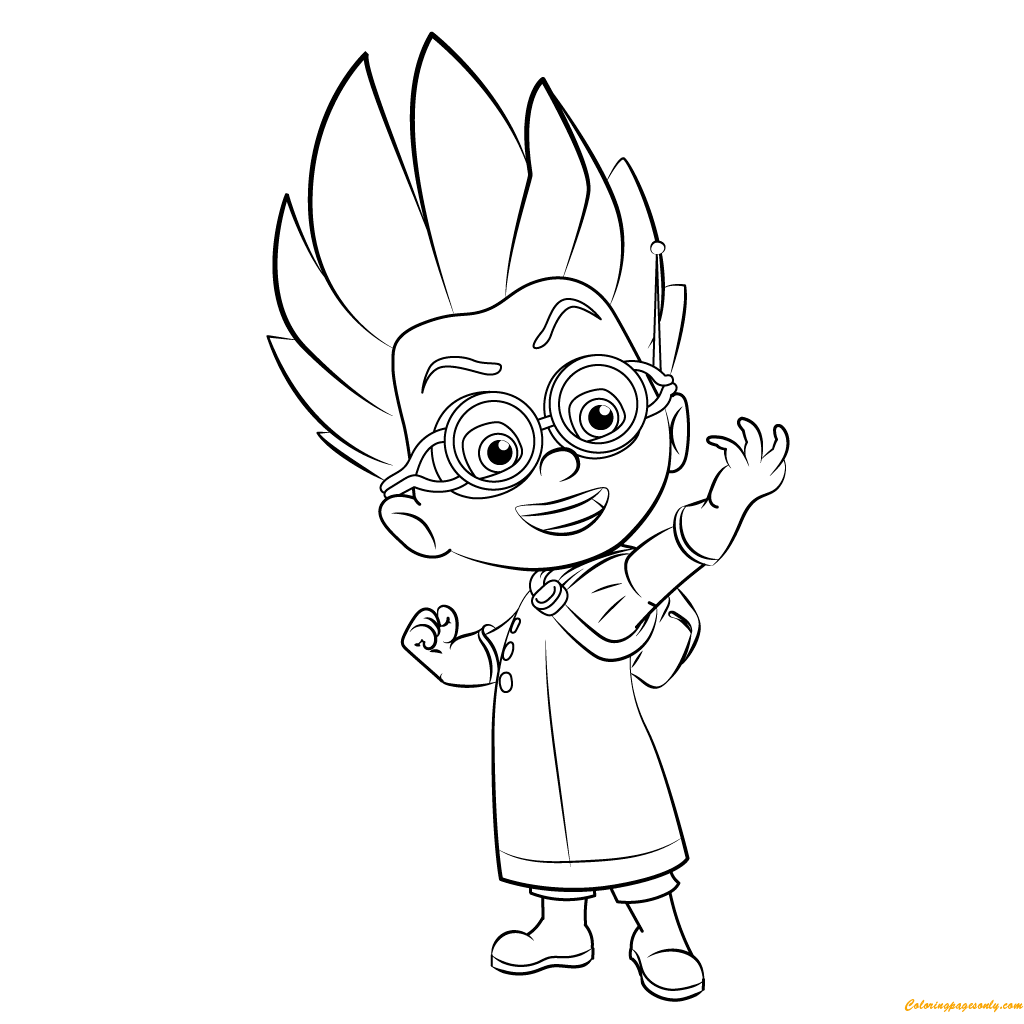
Romeo is the series’s primary villain and the character who most directly parodies the “child genius evil scientist” archetype. He is a boy with vivid green hair (a detail that immediately marks him as a character set apart from normalcy) wearing a white lab coat and purple or black accessories. He has built a large mobile laboratory vehicle and creates robots and machines to carry out his plans. His robotic companion is simply called Robot. Romeo’s plans consistently overestimate his own genius and underestimate the PJ Masks, which is both the source of his villainy and the engine of his defeat in each episode.
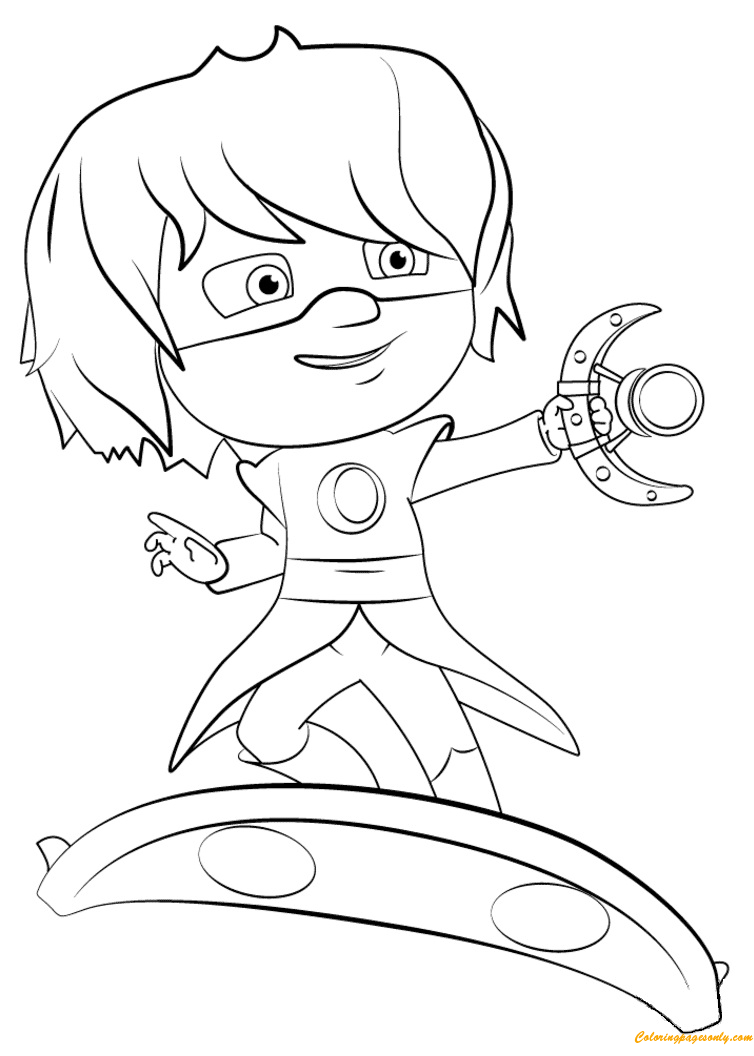
Luna Girl is a girl villain who draws power from the moon and moonlight. Her costume is white and black with moon-shaped details, and she rides a moon-themed hoverboard. She controls moths (her “Luna Moths”) using a device called the Luna Magnet. Luna Girl is the series’s most nuanced villain: she shows occasional kindness and has moments of wanting genuine friendship, making her more ambiguous than the straightforwardly self-interested Romeo.
Night Ninja is a child villain in a dark purple ninja costume with a mask, who commands a team of small ninjas called “Ninjalinos.” He uses sticky splat-based weapons and ninja techniques, and speaks in the specific dramatic ninja idiom. The Ninjalinos, small and round in their purple ninja suits, are among the series’ most visually appealing minor characters.
Coloring Romeo pages: White lab coat as the primary color, applied cleanly. His hair is a vivid, slightly unnatural green. His accessories (goggles, gloves, shoes) are typically dark purple or black. Coloring Luna Girl pages: White and black as the primary suit colors, with moon-shaped details. Coloring Night Ninja pages: Deep purple as the dominant costume color, with black details and white accent elements on the mask and costume.
Vehicle Pages
The three heroes’ vehicles are among the collection’s most mechanically specific pages. Each vehicle is designed in the visual aesthetic of its hero’s animal: the Cat-Car has cat ear fins and the sleek, angular lines of something designed for speed; the Owl Glider is a flying vehicle with an owl-shaped body and wing extensions; the Gekko-Mobile has a scaled, reptilian exterior design.
Coloring vehicle pages: Each vehicle matches its hero’s primary suit color at full saturation: the Cat-Car is the same dark navy-blue as Catboy’s suit, the Owl Glider is the same crimson-red as Owlette’s suit, and the Gekko-Mobile is the same emerald-green as Gekko’s suit. The windscreen areas are slightly darker with a very subtle blue-grey suggestion of transparency. Any mechanical details (vents, trim elements, vehicle emblems) use slightly darker versions of the primary vehicle color or near-black details.
What These Pages Do
The PJ Masks series communicates a specific and directly stated message to its young audience about the relationship between nighttime fears and childhood agency. The three heroes are the same age as the primary viewing audience (six years old), go to bed at the same time as that audience (when the day’s adventures have to end), and face challenges at night rather than during the day. The show’s structure places children in the role of the competent problem-solver operating in the nighttime environment that most children experience as slightly threatening, and through that placement gives the viewing child a specific imaginative model of nocturnal courage.
The source book series, “Les Pyjamasques” by Romuald Racioppo, published beginning in 2007 by Gallimard Jeunesse in France, preceded the animated series by eight years. Gallimard Jeunesse is one of France’s most significant children’s publishing houses, founded in 1972 as a division of the larger Gallimard publishing house that has published French literature since 1911. The PJ Masks books being published within this tradition give the animated series a literary foundation with specific cultural credibility.
The American Academy of Pediatrics identifies fine motor skill development as a key childhood milestone throughout early childhood. The suit emblem details, the animal-feature rendering on the masks and headpieces, the vehicle mechanical details, and the action pose line work across the collection all provide motivated fine motor practice specifically calibrated to the developmental level of the two-to-seven-year-old primary audience. The 2005 Art Therapy Journal study on structured coloring and anxiety reduction applies throughout, with the specific thematic resonance that these pages depict the characters associated with nighttime courage.
The three-color visual identity of the PJ Masks team (blue, red, green) is a specifically effective color education tool: the three fully saturated primary or near-primary colors provide maximum contrast from each other and maximum color recognition practice for young colorists learning to distinguish and apply color categories.
How to Color These Pages Well
- Each hero’s color is a single, fully saturated, flat primary or near-primary color applied at full coverage: The PJ Masks visual style uses flat, fully saturated colors without complex shadow gradients or realistic lighting. The correct approach is to apply Catboy’s blue, Owlette’s red, and Gekko’s green at maximum pressure, maximum saturation, and full coverage across the full suit surface. Do not add shadow gradients or attempt realistic three-dimensional lighting: the flat, vivid approach is the correct one for this visual style and the one that reads as true to the source material.
- The three hero colors must be clearly distinguishable from each other with no ambiguity: In group pages where all three heroes appear together, the visual success of the composition depends entirely on Catboy’s blue, Owlette’s red, and Gekko’s green reading as clearly and unambiguously different from each other. If the blue leans too purple, it approaches Owlette’s range. If the red leans too orange, it approaches warmth confusion with Gekko’s green. Keep each color in its own unmistakable family: Catboy’s blue is blue, Owlette’s red is red, Gekko’s green is green.
- Romeo’s white lab coat needs a second, distinguishing tone applied very lightly over the base white: Romeo’s white lab coat and pale skin present the challenge of making two similar light-value areas readable as different materials. Apply a very faint warm grey to the lab coat fabric (using the lightest possible pencil pressure over the paper white) while leaving skin areas closer to the paper’s natural white or a very pale warm skin tone. His vivid green hair should be applied at full saturation: the most intense, slightly unnatural green available, reading as a character design choice rather than as natural hair color.
- Nighttime city background pages use deep blue-black rather than black alone: PJ Masks operates at night, and pages that include a city skyline or nighttime setting background should use the deepest midnight blue or deep blue-black rather than a warm black or neutral black. The nighttime sky is a specific, cooler dark tone. Stars, if present, are small, vivid white points applied with the finest available tool. The city buildings below the sky can use slightly darker or slightly lighter variations of the same deep blue, with windows as small rectangles of warm yellow-amber, suggesting interior light.
- Animal feature details on masks and headpieces are the most character-communicating elements: The cat ears on Catboy’s mask, the owl eyes on Owlette’s mask, and the scaled texture on Gekko’s mask are the elements that most specifically identify which character is depicted and are the elements young colorists most frequently rush past. The cat ears should show the inner ear detail (a slightly lighter or slightly darker triangle within the main ear triangle). The owl eyes on Owlette’s mask are large circles with the specific owl eye design. Gecko’s mask scales can be suggested with slightly darker green scale line marks.
5 Creative Craft Ideas
1. The Day to Night Transformation
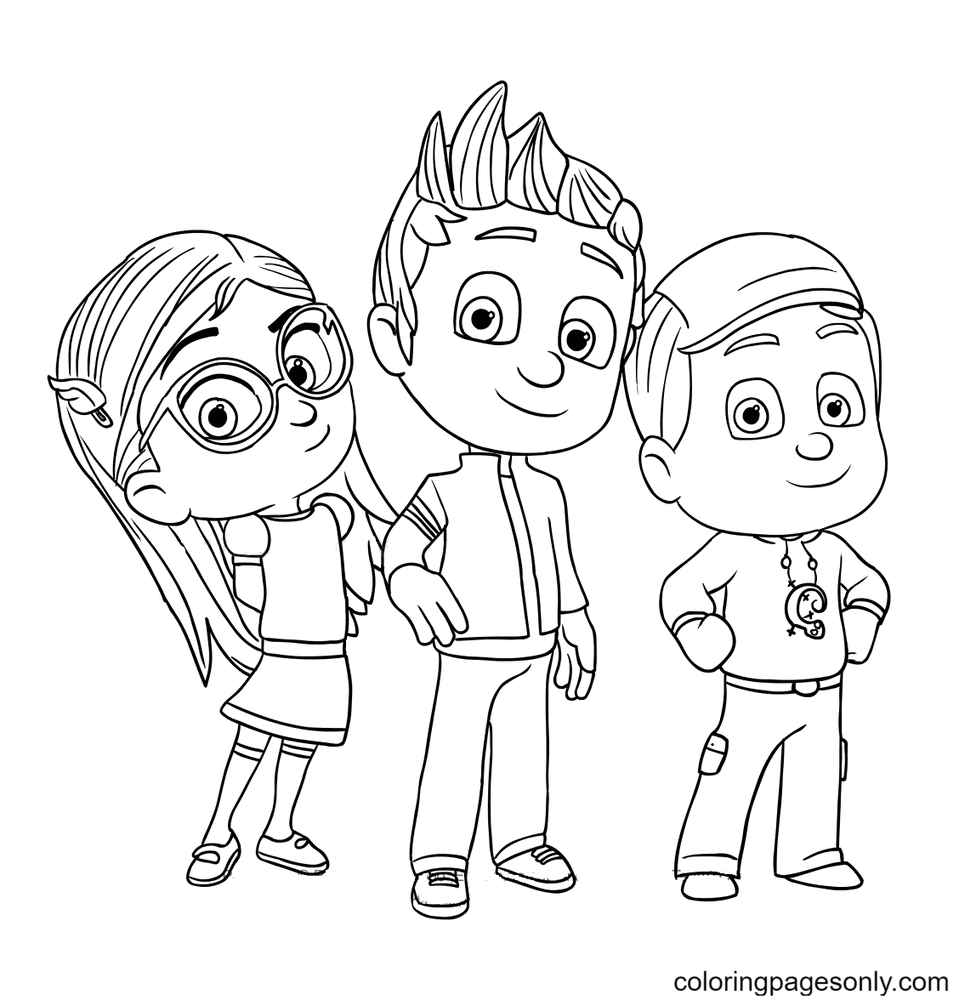
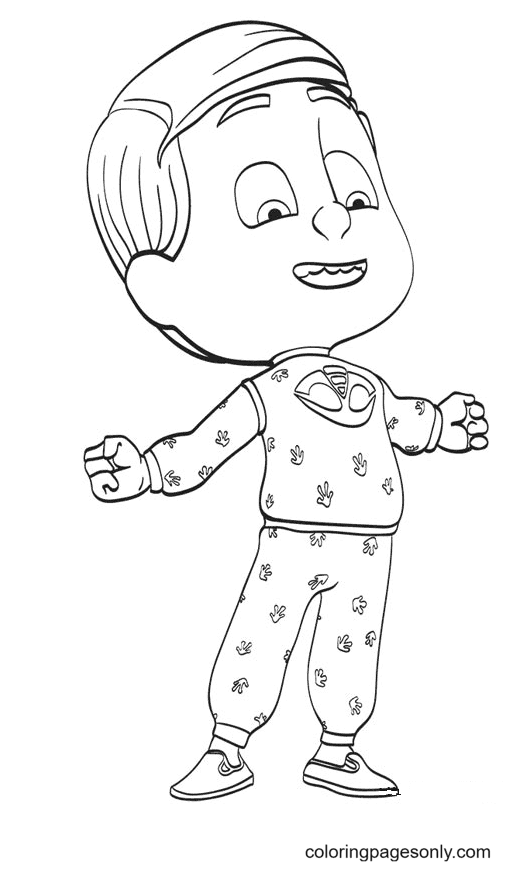
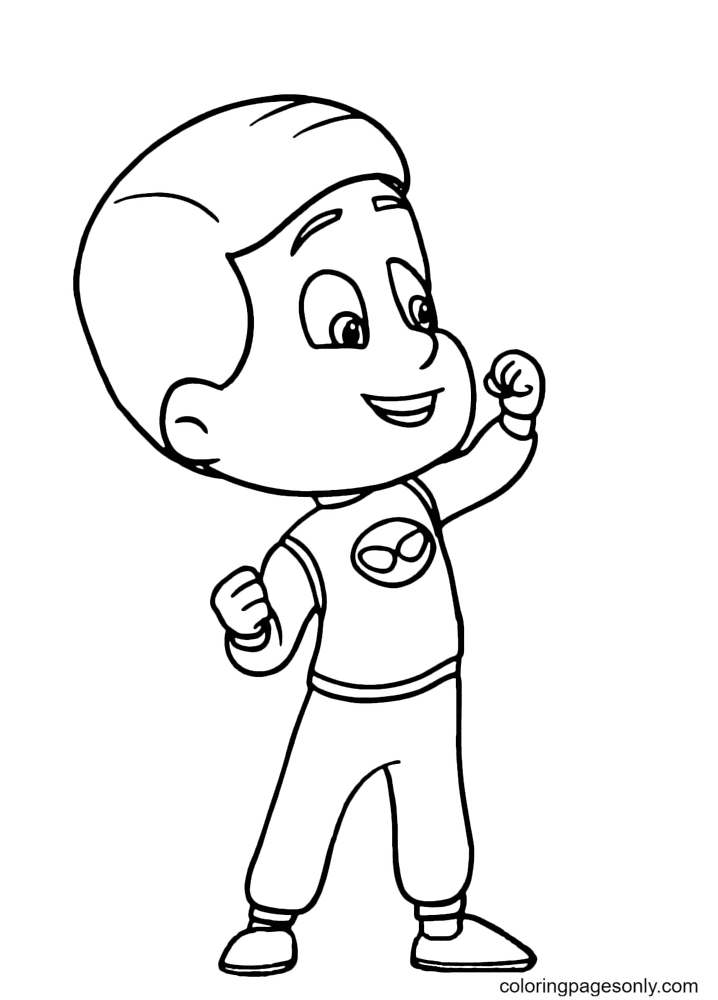
PJ Masks operates on the specific dramatic tension of ordinary children becoming extraordinary heroes. Print one simple portrait page of the civilian versions of the characters (Connor, Amaya, and Greg, if the collection includes them) and one corresponding page of each in their full superhero costume.
Color the civilian pages in warm everyday tones: ordinary children’s clothing in casual colors, normal hair, the specific visual of daytime normalcy. Color the superhero pages in the fully saturated blue, red, and green of the PJ Masks costumes.
Mount in pairs: “Connor by day. Catboy by night.” “Amaya by day. Owlette by night.” “Greg by day. Gekko by night.” The display captures the series’ central premise in a single visual.
Create a PJ Masks Coloring Book
2. The Power Chart
Each of the three heroes has four specific powers tied to their animal. Print one portrait page for each hero. Color all three in canonical colors.
Below each portrait, draw a small four-part chart listing each hero’s powers with small visual symbols:
“Catboy: Super speed. Super hearing. Cat stripes. Super jump.” “Owlette: Owl eyes. Owl wings (flight). Feather wind. Wing wind.” “Gekko: Super strength. Camouflage. Gecko grip. Gecko shield.”
The finished display is a team reference card showing each hero’s capability alongside their colored portrait.
DIY PJ Masks Wall Art (Resource: Themed co uk)
3. The Villain Lineup
Romeo, Luna Girl, and Night Ninja each represent a specific archetype of childhood-adjacent villainy: the overconfident genius who underestimates everyone else (Romeo), the lonely outsider who acts out to get attention (Luna Girl), and the dramatic, theatrical show-off who makes everything into a performance (Night Ninja).
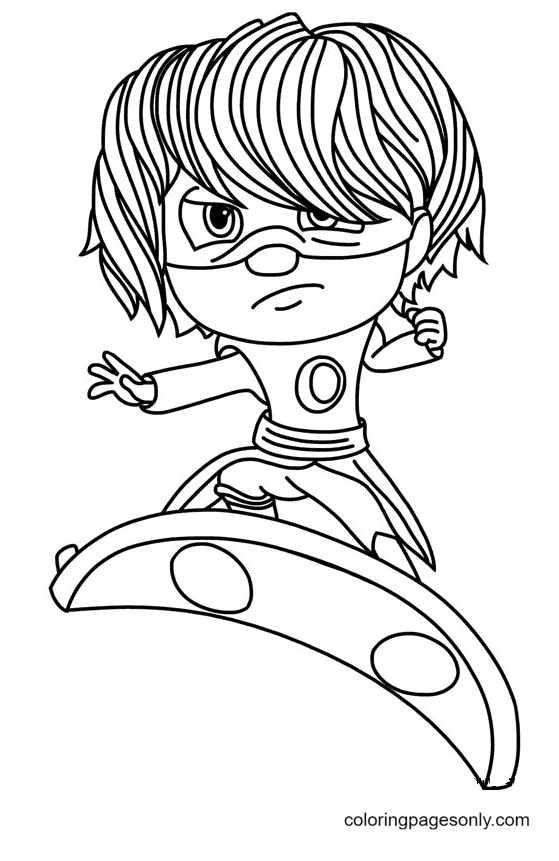
Print one page for each villain. Color Romeo in his white lab coat with vivid green hair. Color Luna Girl in her white and black moon costume. Color Night Ninja in his deep purple ninja suit.
Mount all three: “Romeo: self-declared genius. Green hair. White lab coat. Plans that make perfect sense to him.” “Luna Girl: moon-powered, moth-commanding, occasionally shows she might not want to be a villain.” “Night Ninja: dramatic. Ninjalinos as his team. Everything is a ninja moment.”
Make PJ Masks Masks
4. The Vehicle Specifications
Print one vehicle page for each of the three hero vehicles: the Cat-Car, the Owl Glider, and the Gekko-Mobile. Color each in the color of its corresponding hero’s suit: Cat-Car in dark navy-blue, Owl Glider in crimson-red, Gekko-Mobile in emerald-green.
On a small card below each vehicle, write simple “specs”:
“Cat-Car. Catboy’s ground vehicle. Color: Blue. Special feature: Cat ear fins. Best for: High-speed ground pursuit.” “Owl Glider. Owlette’s aerial vehicle. Color: Red. Special feature: Owl-shaped body. Best for: High-altitude missions.” “Gekko-Mobile. Gekko’s ground vehicle. Color: Green. Special feature: Gecko-textured exterior. Best for: Ground-based operations.”
Storytelling with Coloring Pages
5. The “Into the Night” Diorama
The PJ Masks headquarters is depicted as a special platform in a large tree in the city, from which the heroes launch their nighttime missions. The nighttime city skyline is one of the show’s most consistent visual settings.
Print a group team page showing all three heroes together. Color all three in full canonical colors at full saturation.
On a large dark backing sheet (deep midnight blue), mount the colored group page centrally. Add a simple city skyline drawn along the bottom of the backing sheet in slightly lighter midnight blue, with small warm yellow-amber window rectangles suggesting buildings with interior lights on. Add small white star dots at the top of the blue sky.
Add the team’s motto: “PJ Masks, all shout hooray, ’cause in the night we save the day!”
Frequently Asked Questions
What is PJ Masks, and when did it first air?
PJ Masks is an animated children’s television series based on the French book series “Les Pyjamasques” written and illustrated by Romuald Racioppo, published by Gallimard Jeunesse beginning in 2007. The animated series was produced by Entertainment One (eOne), Frog Box, and TeamTO, created for television by Christian De Vita. It premiered on September 18, 2015, on Disney Junior in the United States and on TF1 in France. The series ran for five seasons, concluding in 2022, and was broadcast in more than 180 countries worldwide. The show follows three six-year-old children who transform into superheroes at night by putting on their pajamas, operating with the motto “Into the night to save the day.”
Who are the three PJ Masks heroes and what are their names?
The three PJ Masks heroes are Catboy, Owlette, and Gekko. Catboy’s civilian name is Connor: a competitive, fast-running six-year-old whose powers include super cat speed, super cat hearing, cat stripes, and super cat jump. His suit is dark blue with cat ear headpieces. Owlette’s civilian name is Amaya: a thoughtful, observant six-year-old whose powers include owl eyes for super vision, owl wings for flight, owl feather wind, and owl wing wind. Her suit is crimson-red with owl wing panels on her arms. Gekko’s civilian name is Greg: the youngest and smallest of the three, whose powers include super gekko muscles (extraordinary strength), gekko camouflage (near-invisibility), super gekko grip (wall-climbing), and gekko shield. His suit is emerald-green with a scaly texture.
What are the main villains in PJ Masks?
The three primary villains in PJ Masks are Romeo, Luna Girl, and Night Ninja. Romeo is a self-declared child genius with vivid green hair and a white lab coat, who builds machines and robots in his mobile laboratory to carry out plans that consistently underestimate the heroes. His robotic companion is called Robot. Luna Girl is a girl villain who draws power from the moon, rides a lunar hoverboard, and controls moths (her “Luna Moths”) using a luna magnet. She occasionally shows ambivalence about villainy and a desire for genuine friendship. Night Ninja is a child villain in a dark purple ninja costume who commands a team of small ninjas called Ninjalinos, using sticky splat weapons and theatrical ninja technique. Later seasons also introduced the Wolfy Kids as additional antagonists.
What are each hero’s vehicles in PJ Masks?
Each of the three PJ Masks heroes has a dedicated vehicle that matches their color scheme and animal theme. Catboy’s vehicle is the Cat-Car (sometimes called the Catmobile), a dark blue ground vehicle with cat ear fins and the aerodynamic design of something built for speed. Owlette’s vehicle is the Owl Glider, a crimson-red flying vehicle with an owl-shaped body design used for aerial missions. Gekko’s vehicle is the Gekko-Mobile, an emerald-green ground vehicle with a gecko-textured exterior design. The team’s headquarters is a special platform in a large tree in the city, from which they launch their nighttime missions.
What is the source book series for PJ Masks?
PJ Masks is based on “Les Pyjamasques” (The PJ Masks), a children’s book series written and illustrated by French author Romuald Racioppo. The series was first published in France by Gallimard Jeunesse beginning in 2007, eight years before the animated series premiered. Gallimard Jeunesse was founded in 1972 as the children’s publishing division of Gallimard, one of France’s most significant literary publishers (founded 1911) whose catalog includes works by Marcel Proust, Albert Camus, and Simone de Beauvoir. The books feature the same three child heroes in the visual style that was later adapted for the animated series.
Why are the heroes’ children the same age as the viewers?
The design decision to make the PJ Masks heroes six-year-olds operating at nighttime is specifically calibrated for the show’s target audience of two-to-seven-year-olds. Children in this age range relate directly to characters their own age experiencing situations they recognize: going to school by day, going to bed at night, and imagining adventures in the dark. The heroes are not older teenagers or adults with superior knowledge and experience; they are children of the same developmental level as the viewing audience who face the same challenges (working as a team, managing competitive feelings, not always being taken seriously) while also being superheroes. This direct developmental mirroring is one of the specific design choices that has made the series particularly effective with its target age group.
What age group are these pages best suited for?
PJ Masks coloring pages are specifically designed for the series’ primary viewing audience: children ages two to seven. The simplest individual hero portrait pages with large, clearly defined color areas and the flat, bold visual style of the animated series are accessible from ages two and three, where the character recognition and the simple blue, red, and green color targets provide immediately achievable and satisfying coloring results. The group pages showing all three heroes and the villain pages with multiple characters are most rewarding from ages four to seven, where developing fine motor control allows for more careful application and the ability to manage three distinct colors in a single composition. The vehicle detail pages are most engaging for ages five and up.
Browse the full collection at ColoringPagesOnly.com. All 50+ pages free, no sign-up, PDF or PNG, print or color online.
Romuald Racioppo published the first “Les Pyjamasques” book in France in 2007 through Gallimard Jeunesse. Eight years later, Entertainment One, Frog Box, and TeamTO adapted it into an animated series that premiered on September 18, 2015, and ran for five seasons in 180 countries.
The three heroes are six years old. They go to bed, and then they wake up as superheroes. The competitive one runs fast. The thoughtful one sees far. The smallest one is the strongest.
The villains are also children. This is not incidental.
Pick up your dark navy blue for Catboy. Apply at full coverage, full saturation, no shadows. Pick up your crimson-red for Owlette. Pick up your emerald-green for Gekko. Three colors. Three heroes. Into the night.
Share your finished pages on Facebook and Pinterest and tag #Coloringpagesonly. The day-to-night transformation displays and the power chart pages are particularly worth sharing.
Color the blue. Color the red. Color the green. Into the night to save the day.