Rhino Coloring Pages
 By:
Jennifer Thoa - Content Editor & Designer
Updated:
By:
Jennifer Thoa - Content Editor & Designer
Updated:
Free Rhino Coloring Pages: 24 printable PDF designs featuring real species in the wild, cute and baby rhinos, playful and fantasy rhinos, artistic and pattern designs, and general printable sheets. Each page can be downloaded as a PDF to print or colored online in the browser.
The word rhinoceros comes from the Greek words for nose and horn, a fitting name for an animal defined by that single, striking feature. There are five living rhino species today: the white and black rhinos of Africa, and the greater one-horned, Javan, and Sumatran rhinos of Asia. Despite their tank-like build, their closest living relatives are not elephants or hippos but horses, zebras, and tapirs, all members of the same order of odd-toed, hoofed mammals. A rhino’s horn is not made of bone at all; it is built from keratin, the same protein found in human hair and fingernails, packed into dense, interlocking layers. The Sumatran rhino, the smallest and only hairy species alive today, is also the closest living relative of the extinct woolly rhinoceros that once roamed alongside mammoths during the last Ice Age.
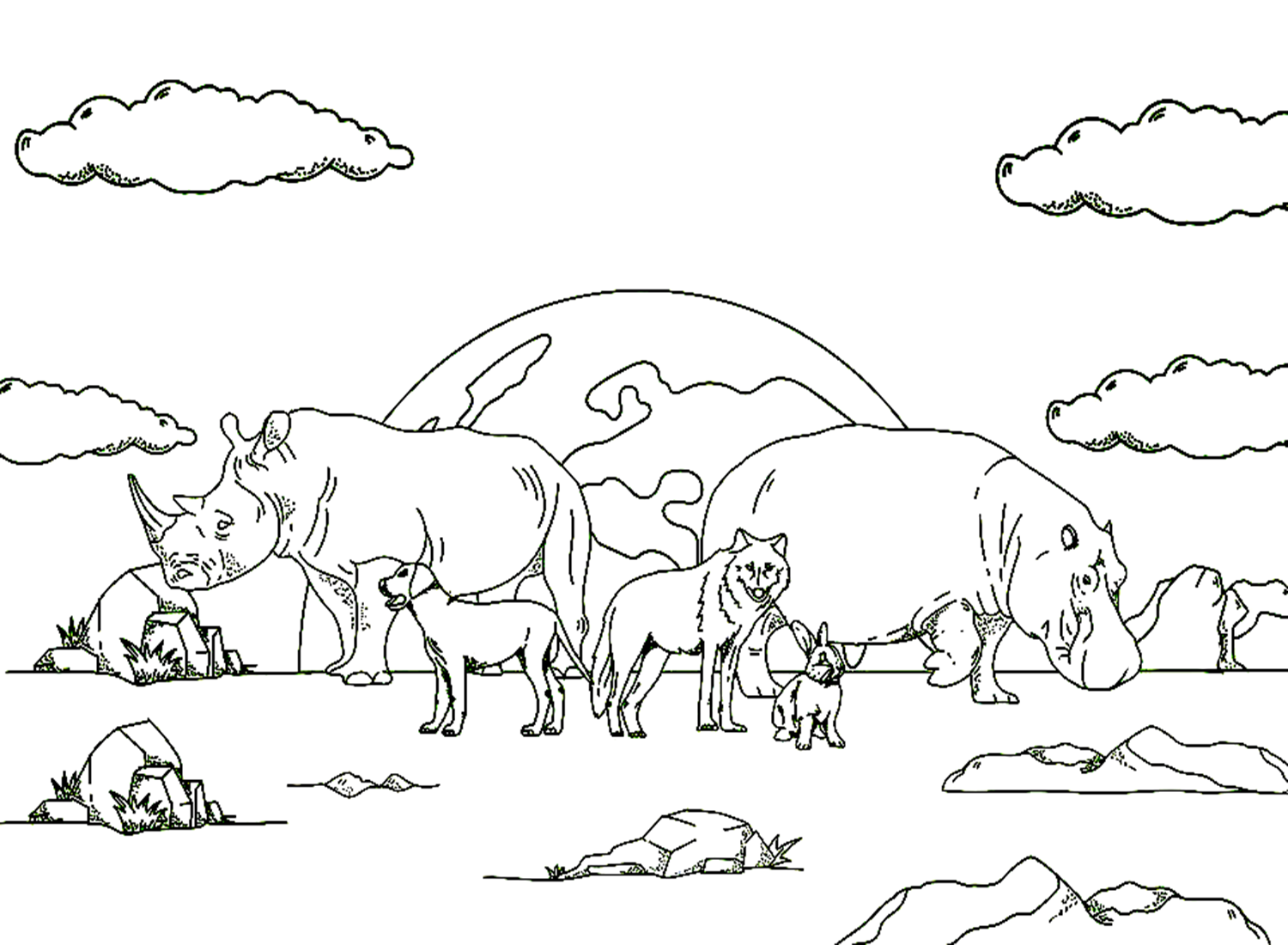
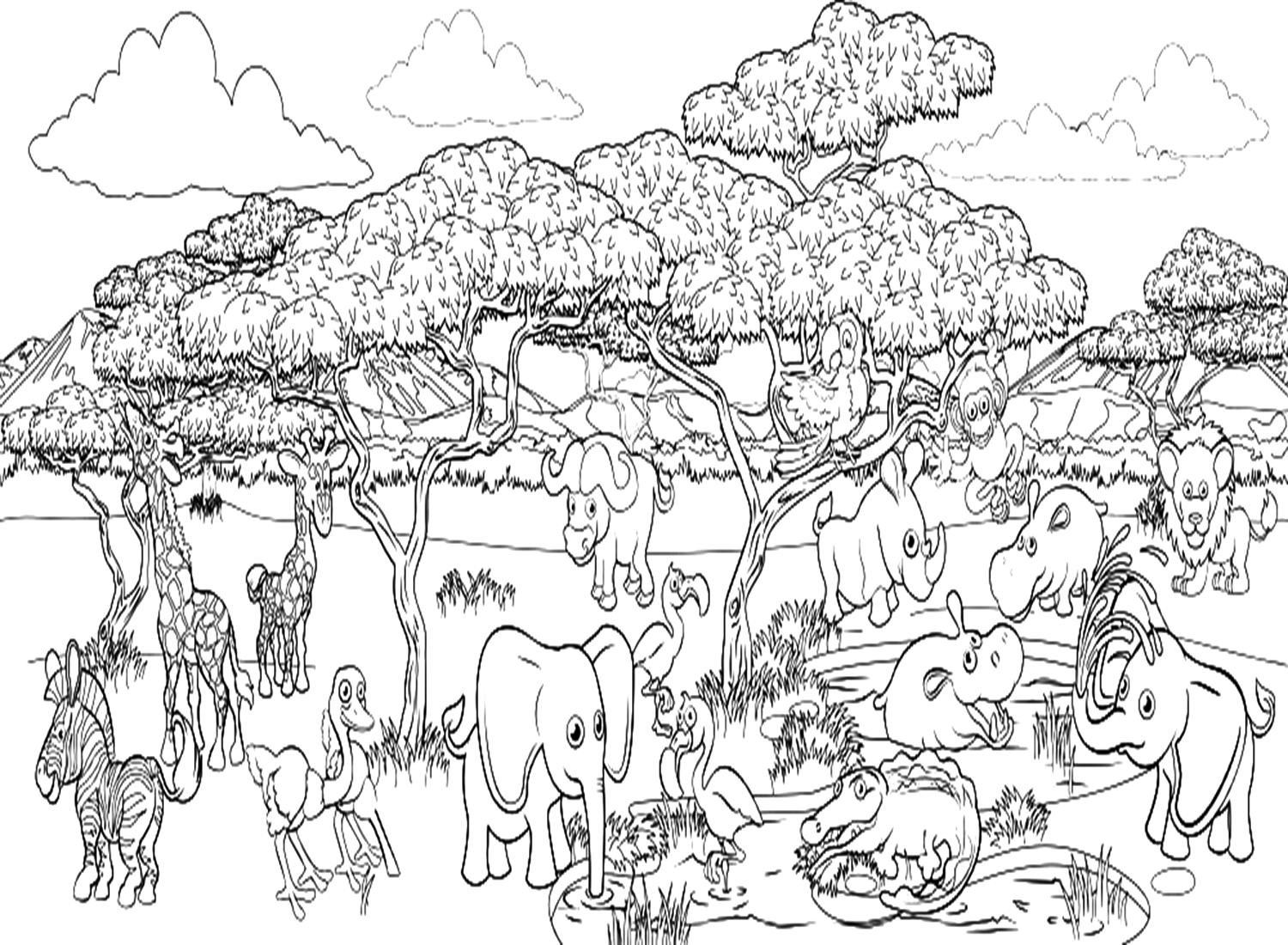
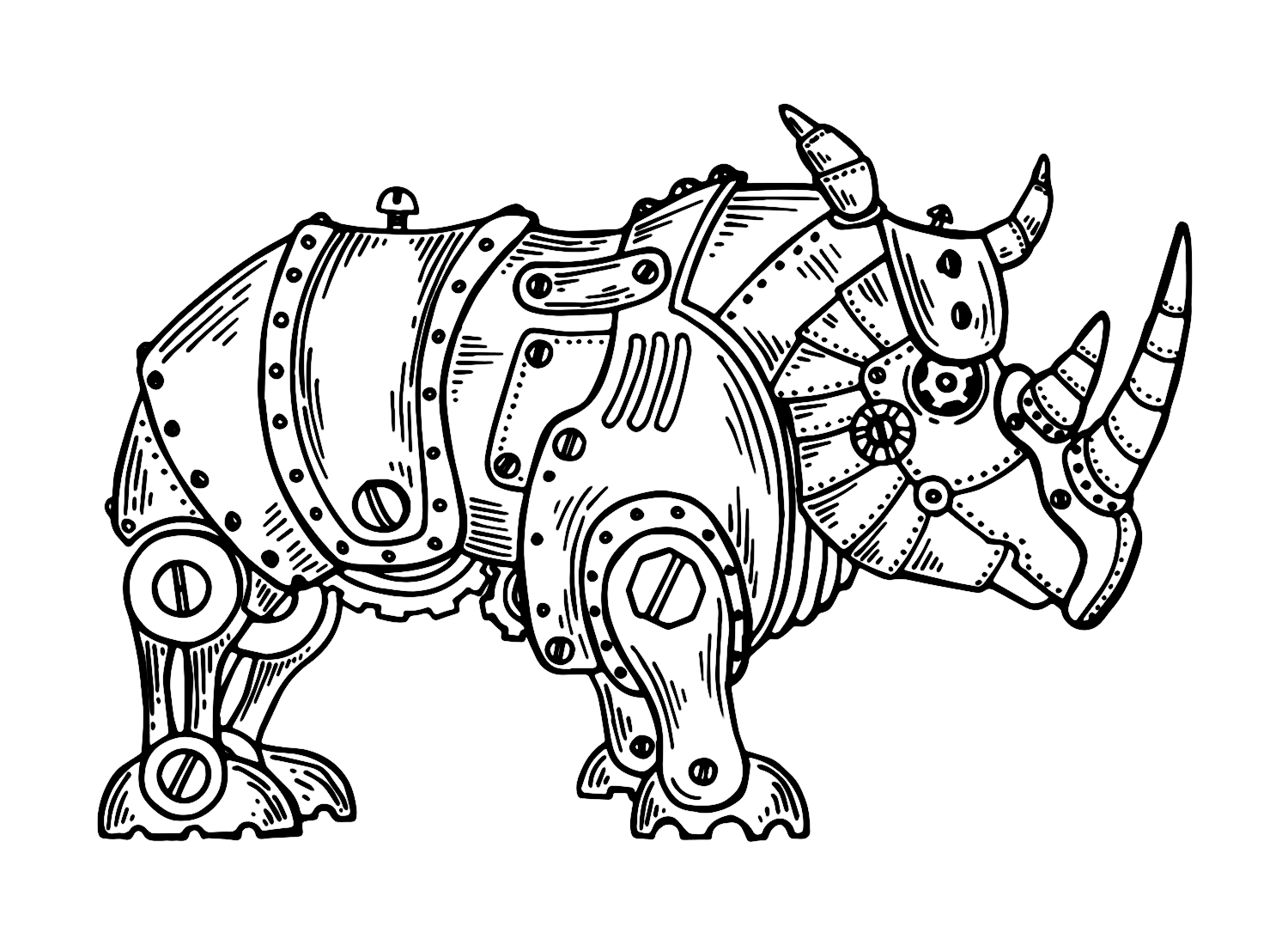
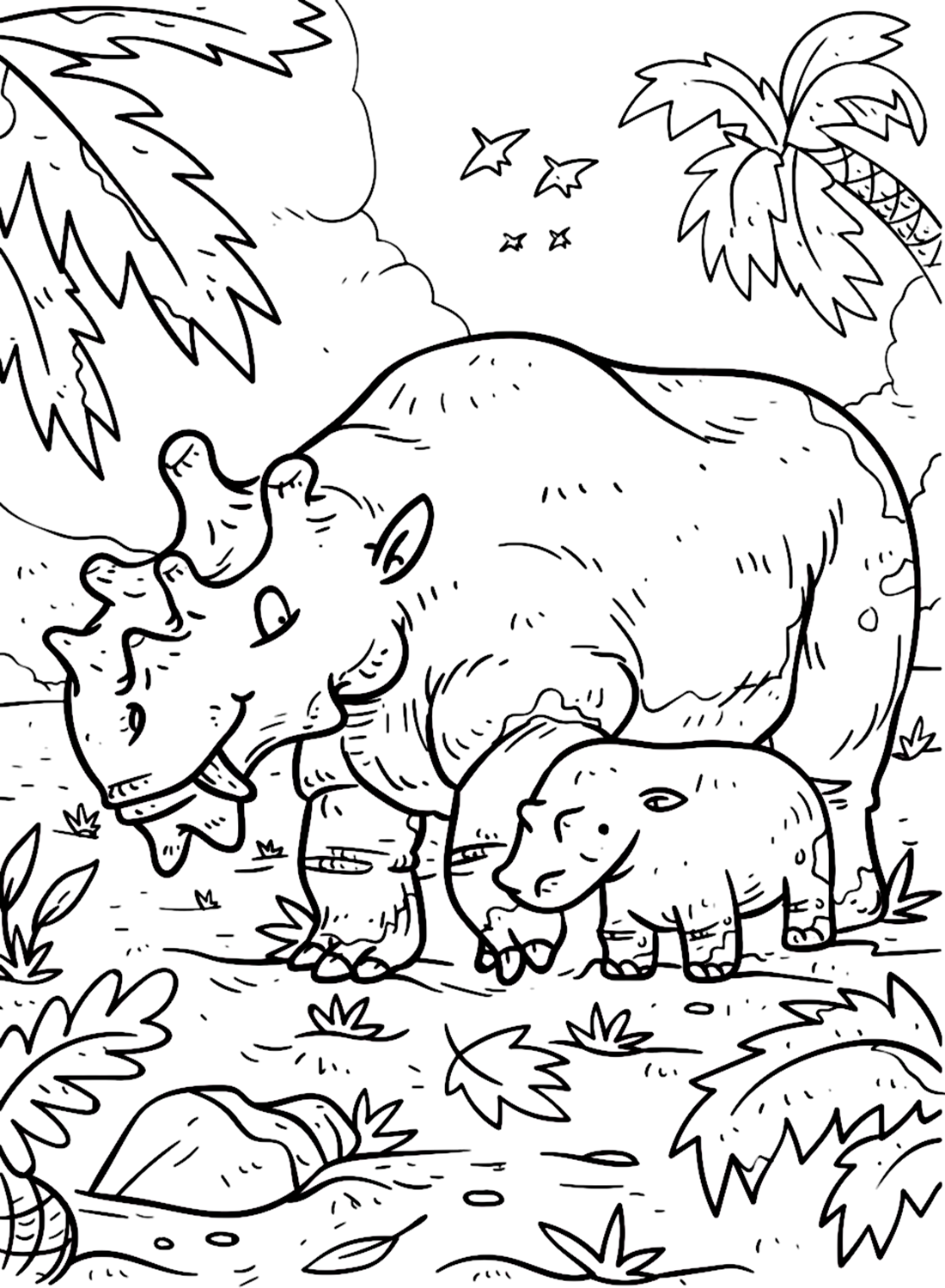
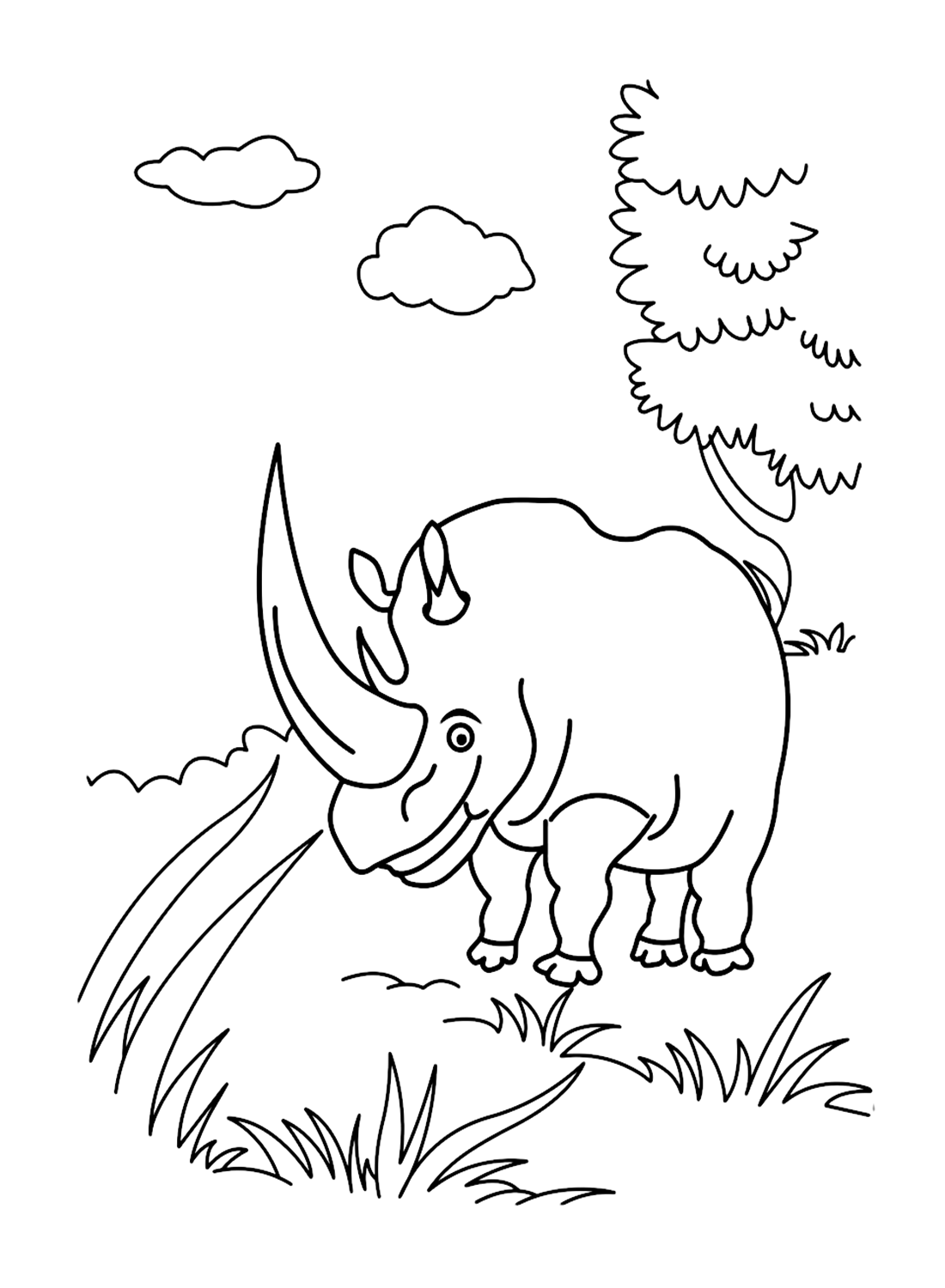
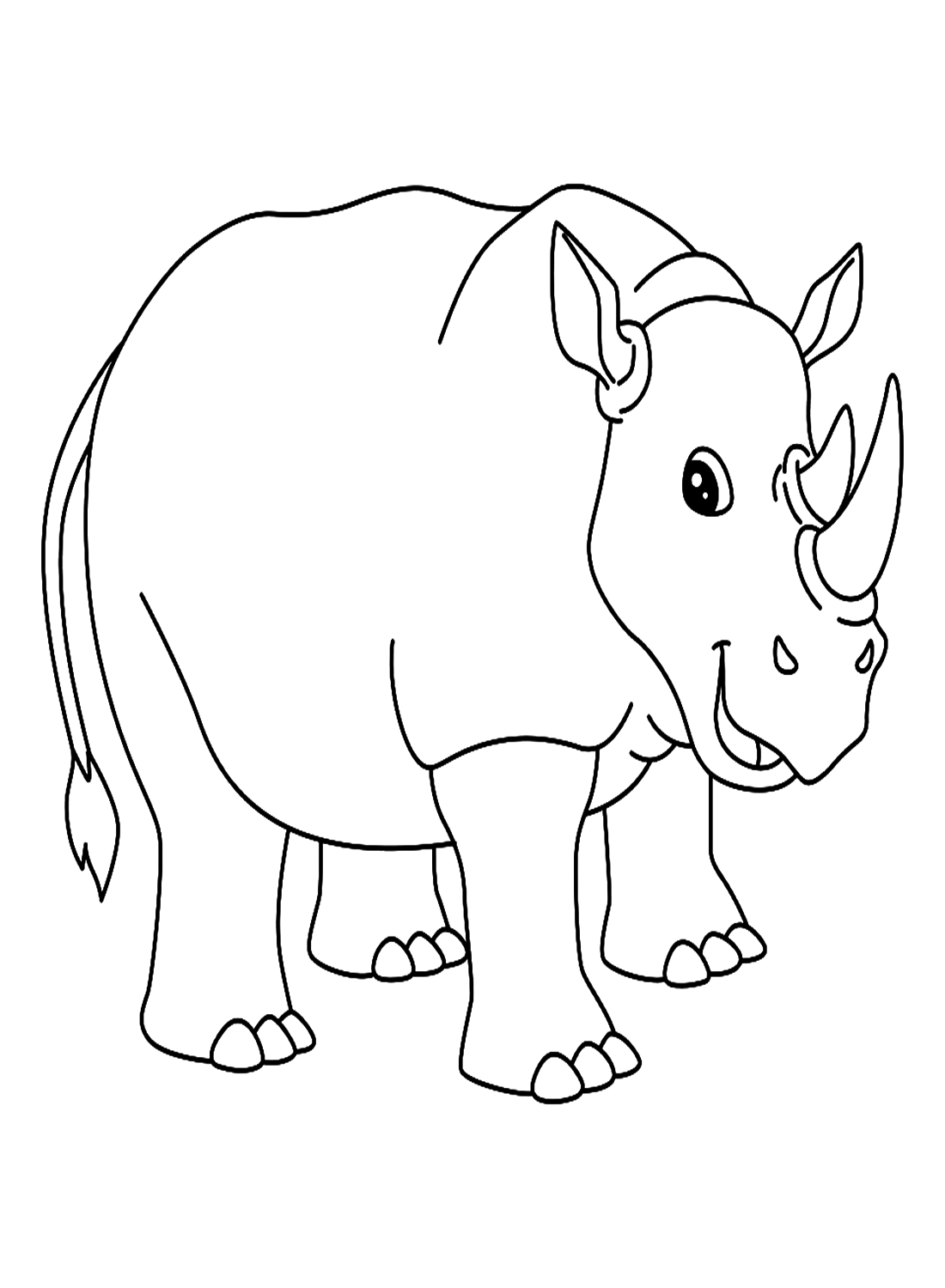
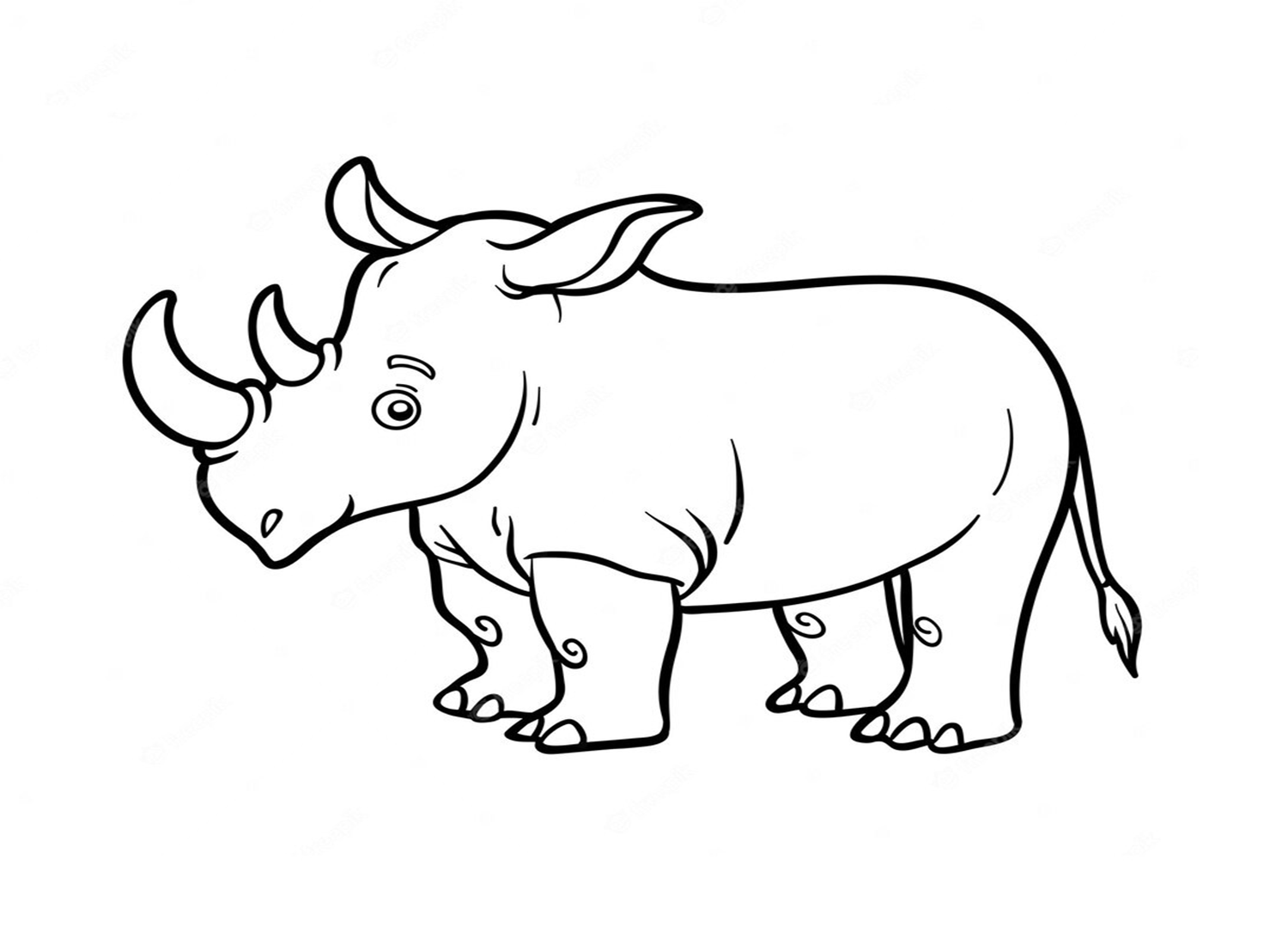
This collection spans 24 pages, split between real species in the wild, cute and baby rhinos, playful and fantasy rhinos, artistic and pattern designs, and general printable sheets. The coloring angle ranges from a single simple outline to detailed savanna scenes and intricate mandala patterns.

What’s Inside This Collection
The 24 designs group into five categories, from real species in the wild to general printable sheets.
Real Species in the Wild
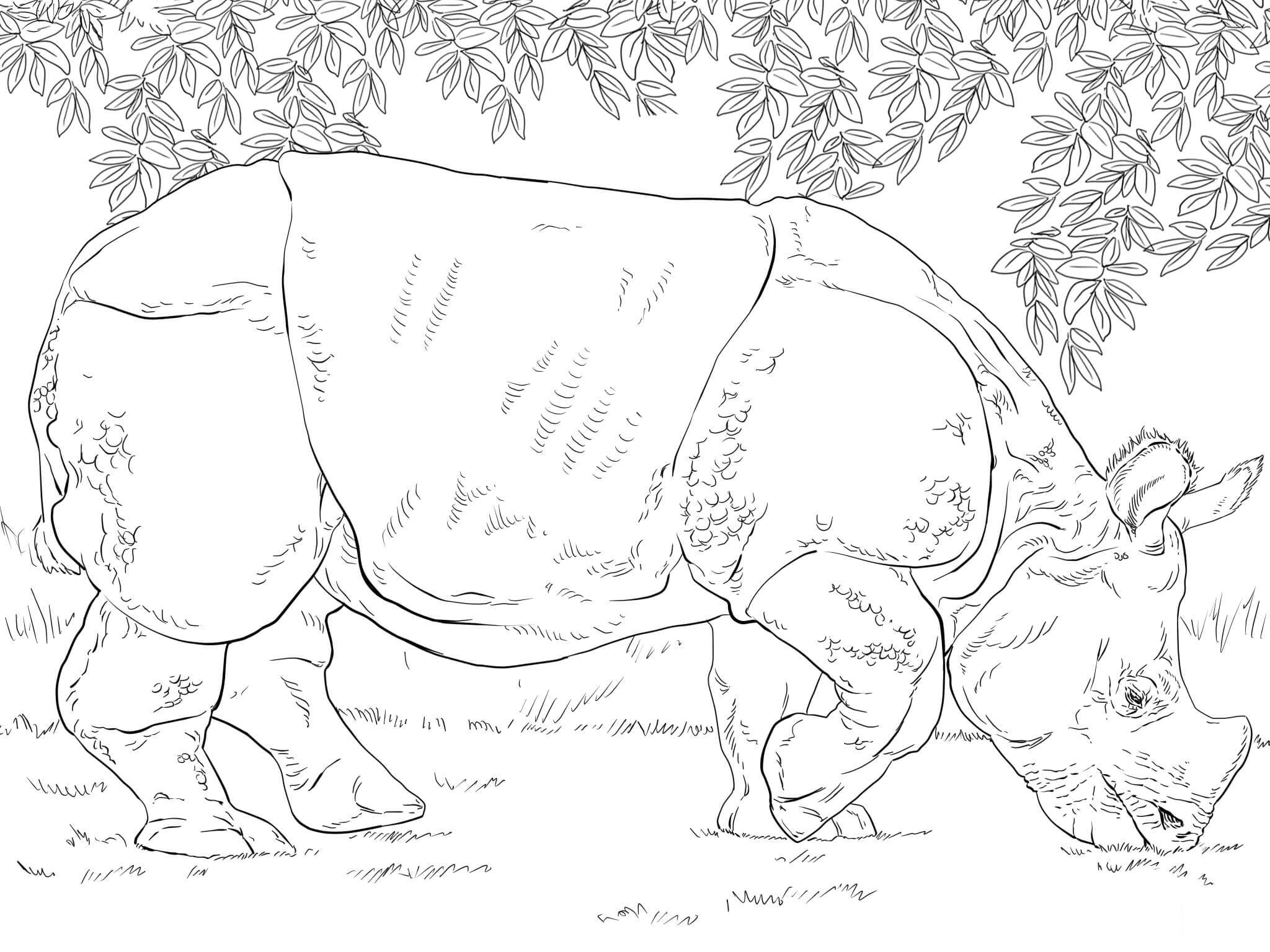
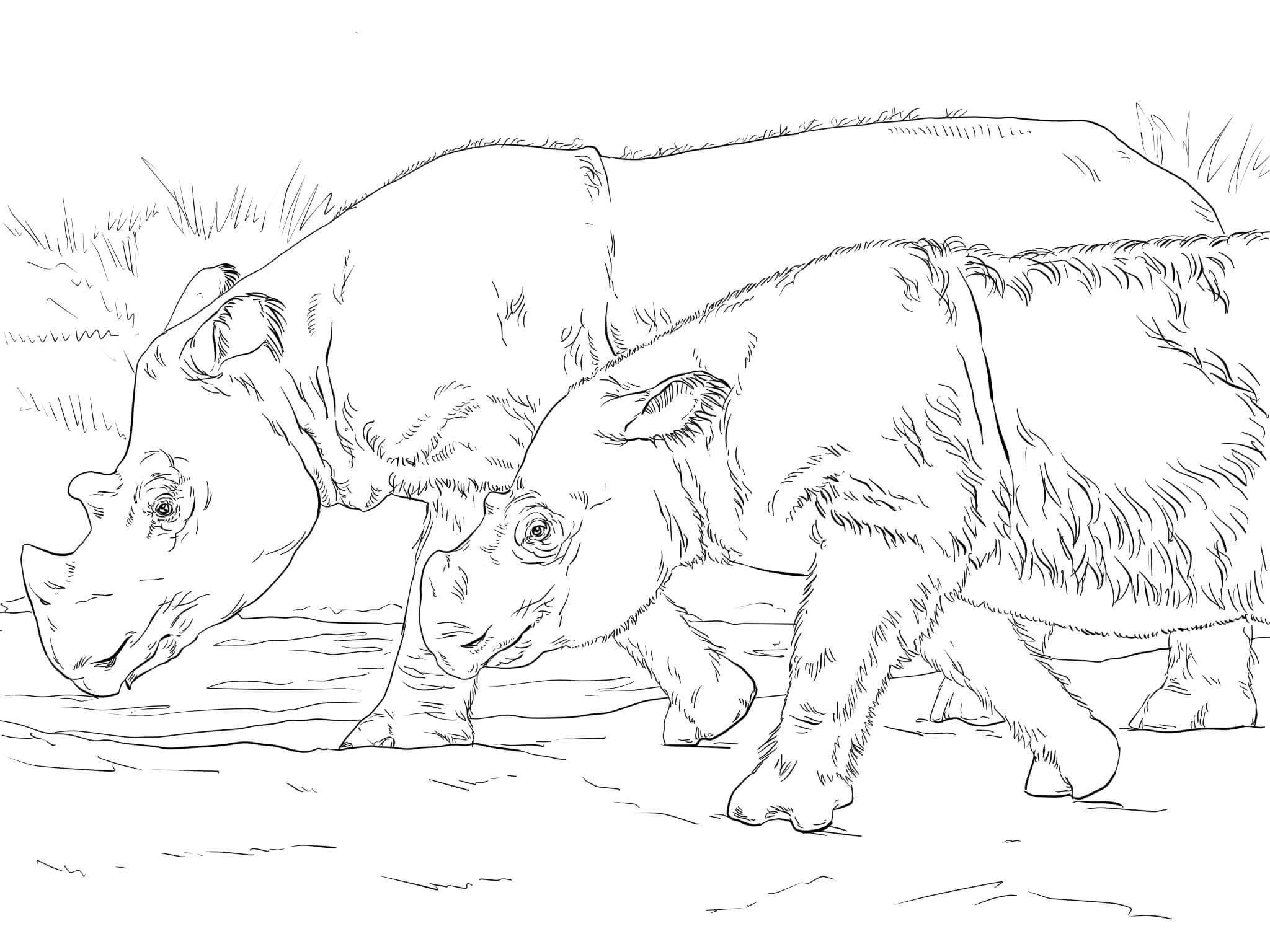
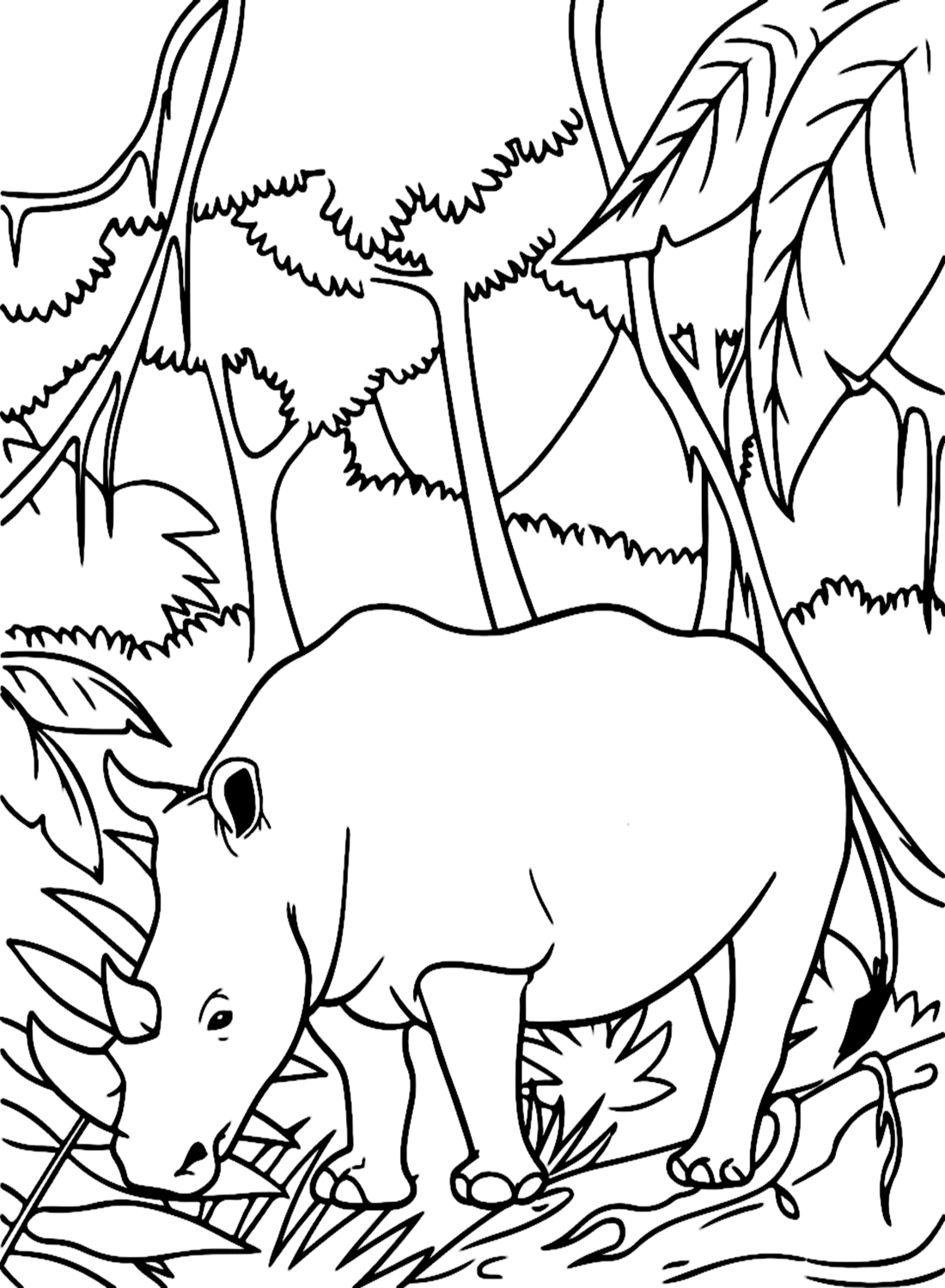
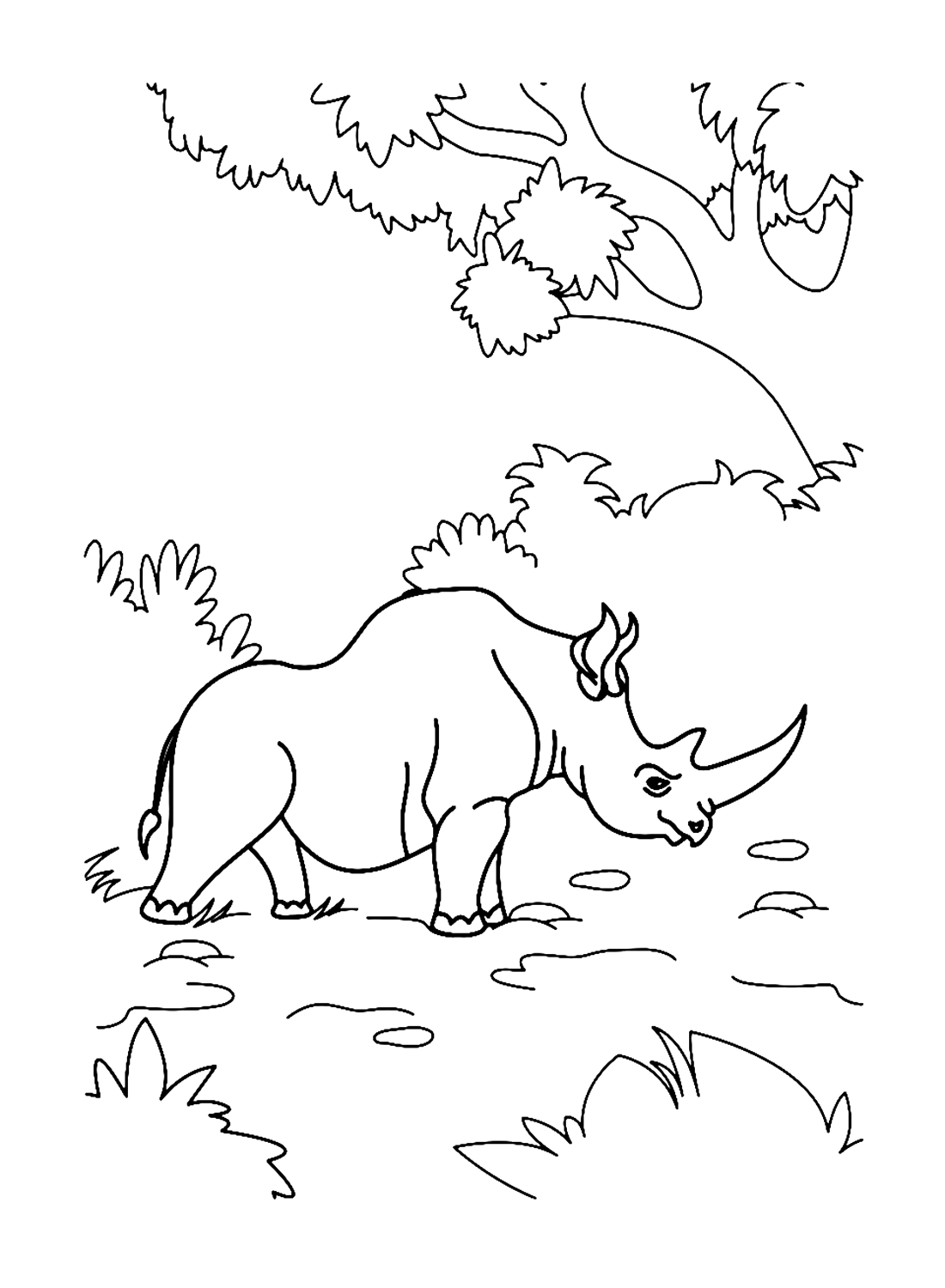
Nine pages show rhinos in a realistic setting, including designs based on the Indian and Sumatran species. Warm grays and browns work well here, matching the natural, earthy tones of a rhino’s thick hide.
Cute and Baby Rhinos
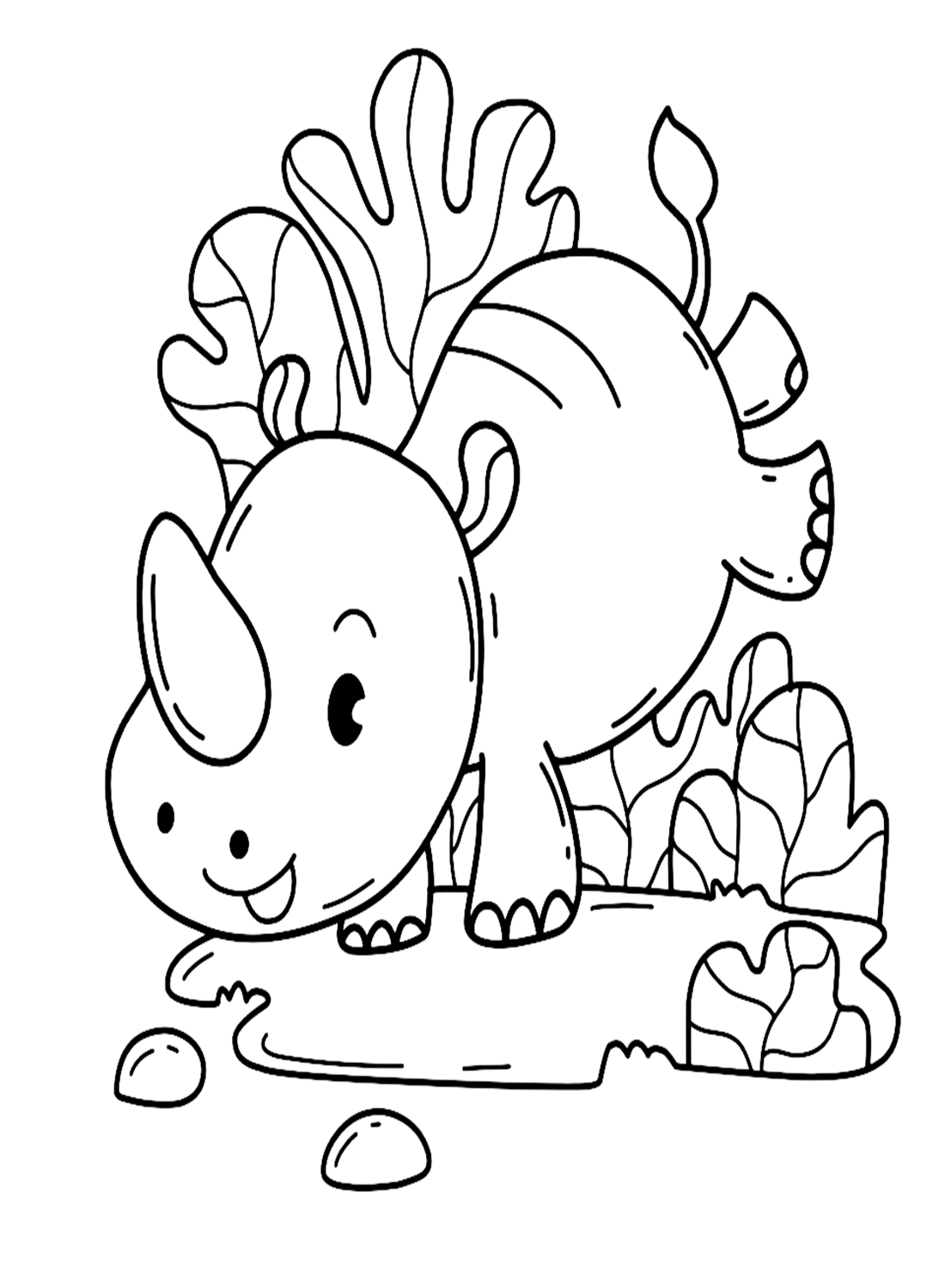
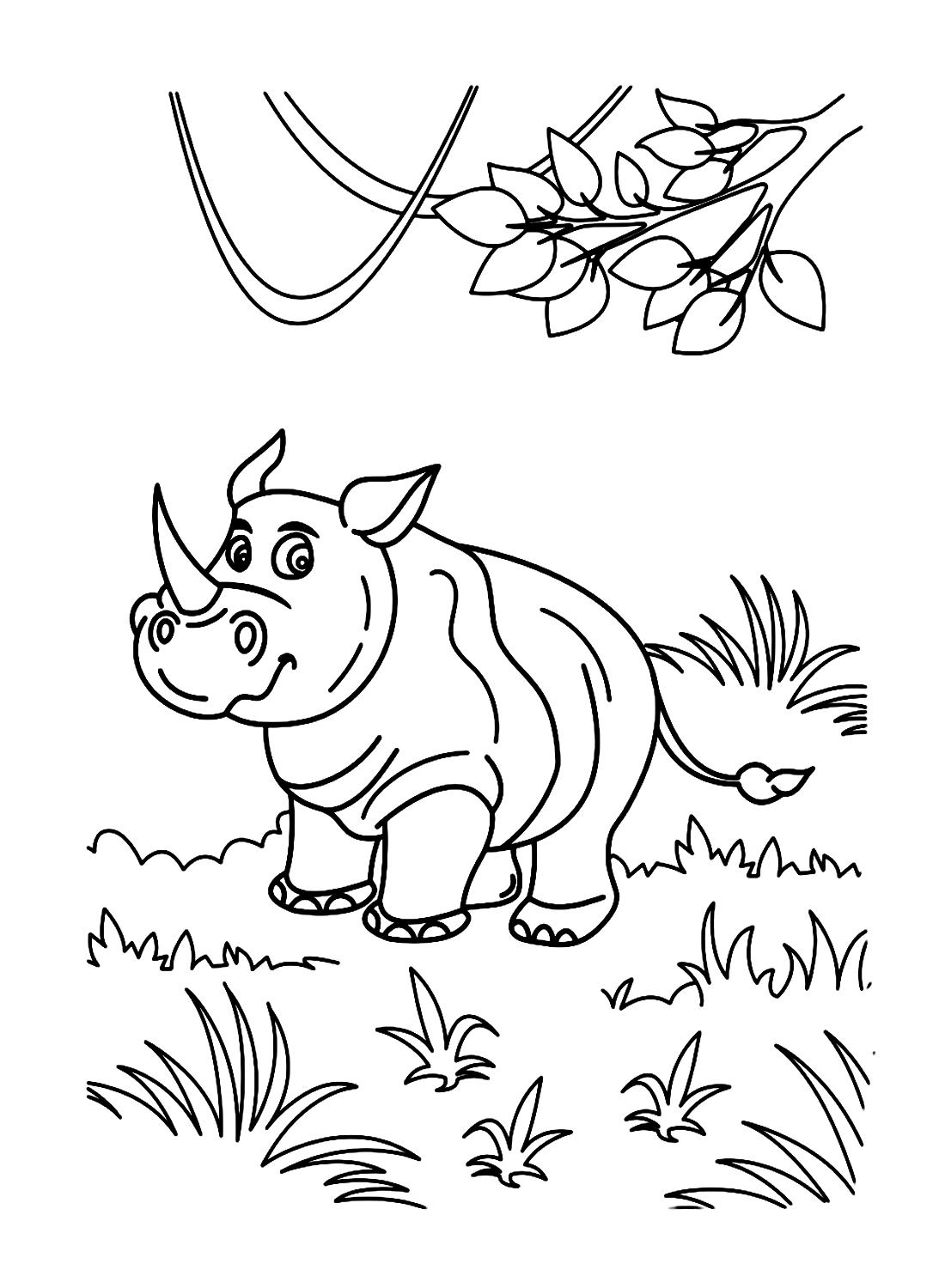
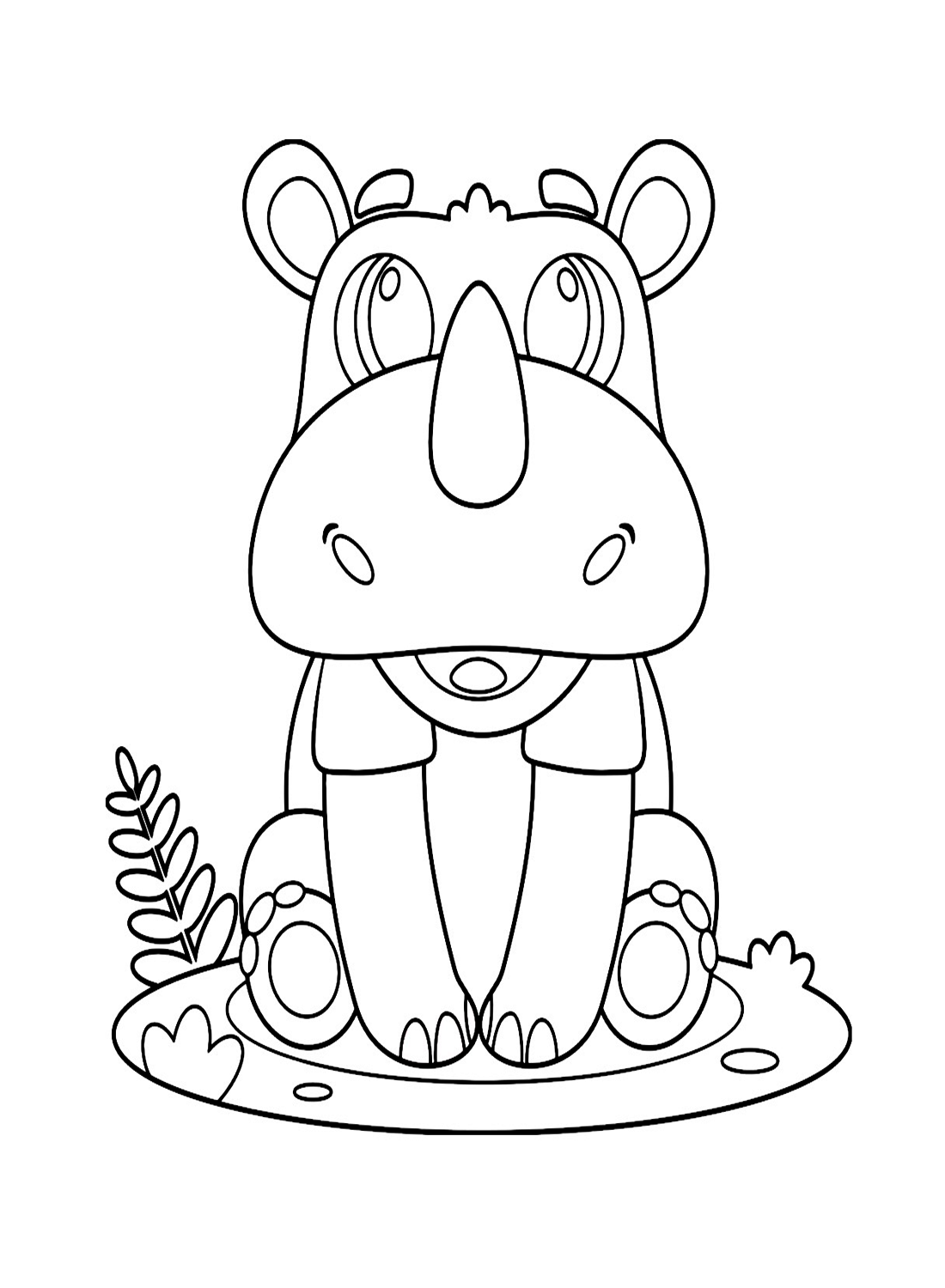
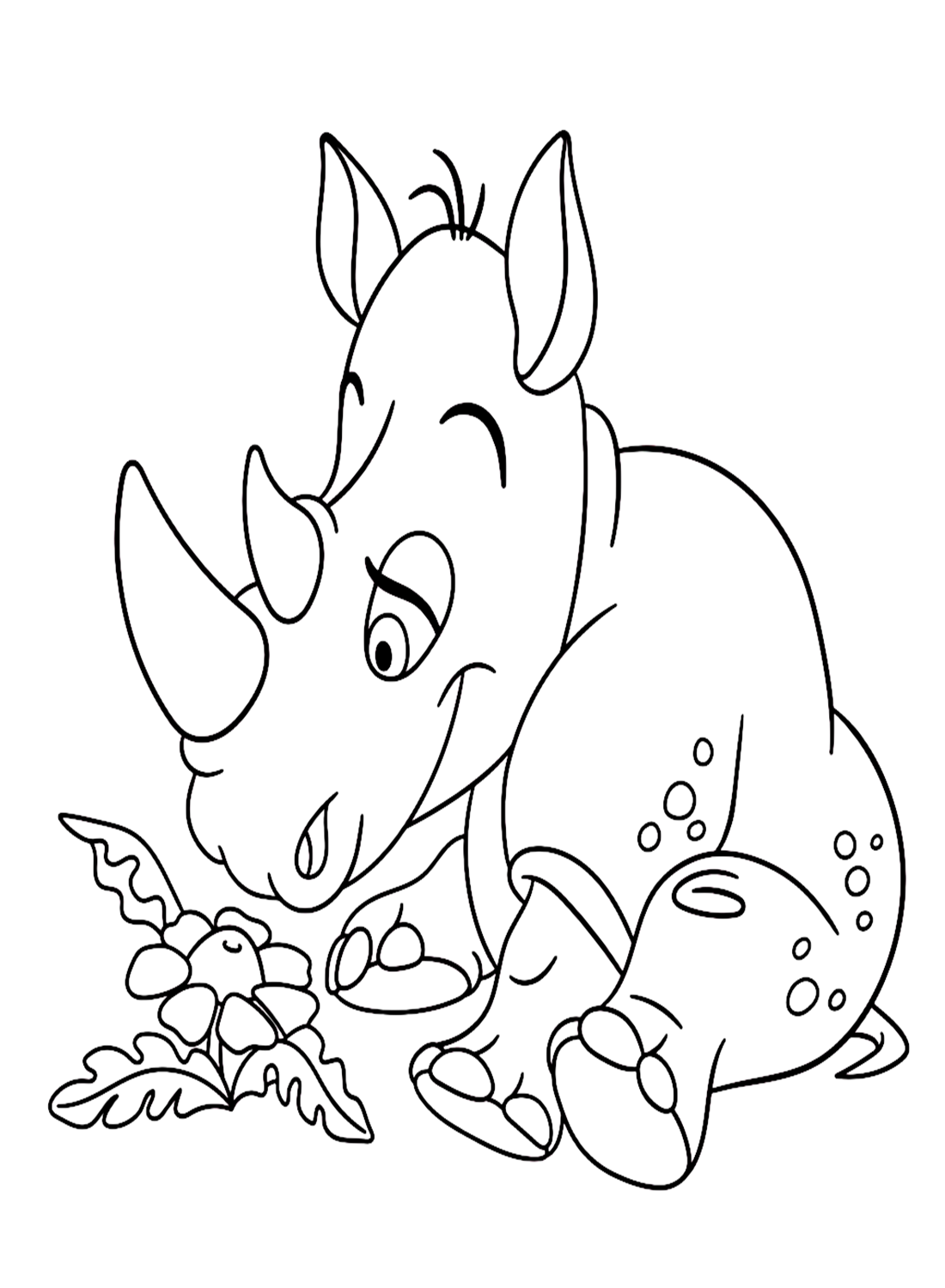
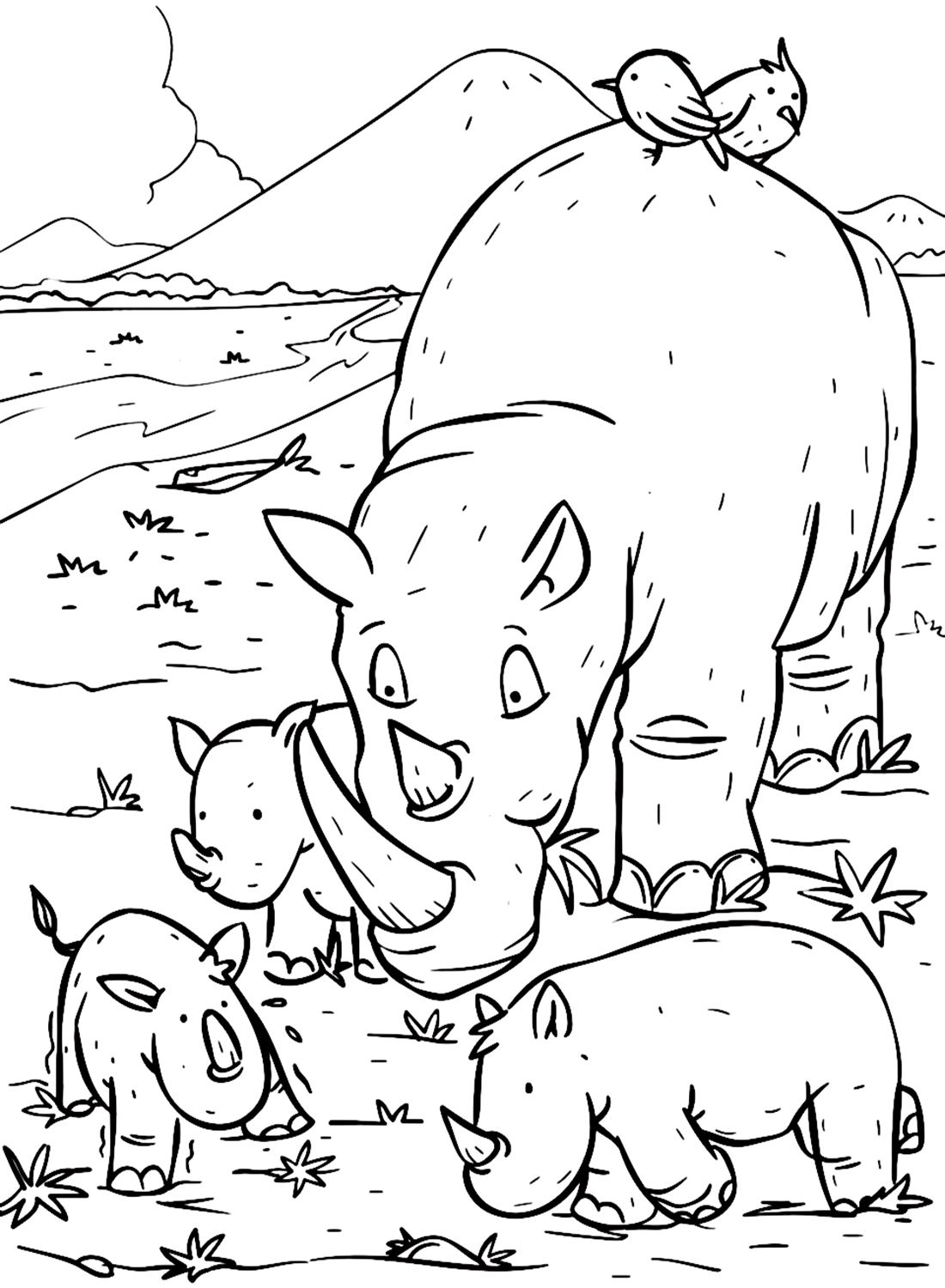
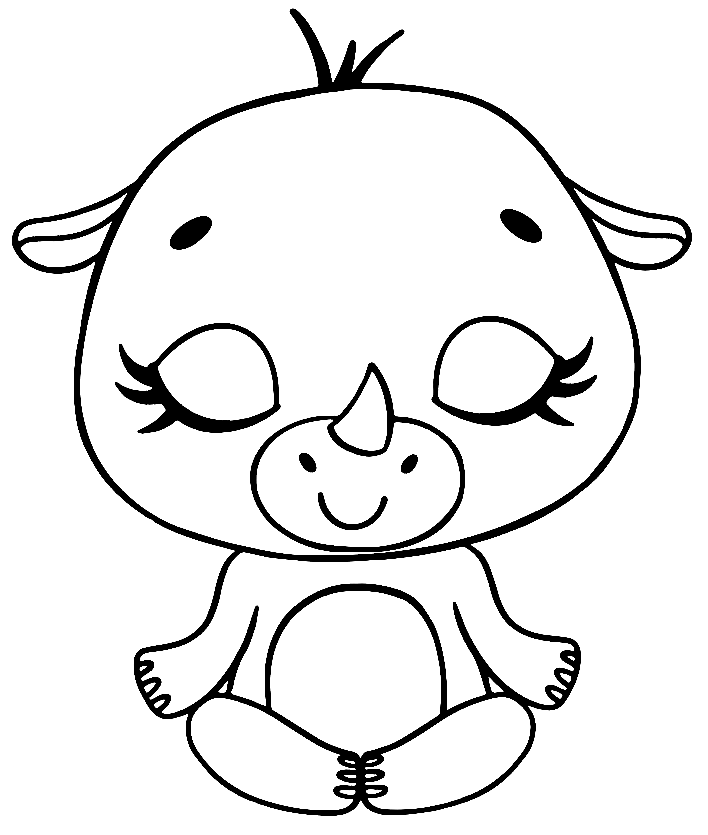
Three pages focus on baby rhinos and gentler, more approachable cartoon designs. Softer, lighter grays suit these friendlier pages, helping them feel distinct from the more realistic wild scenes.
Playful and Fantasy Rhinos
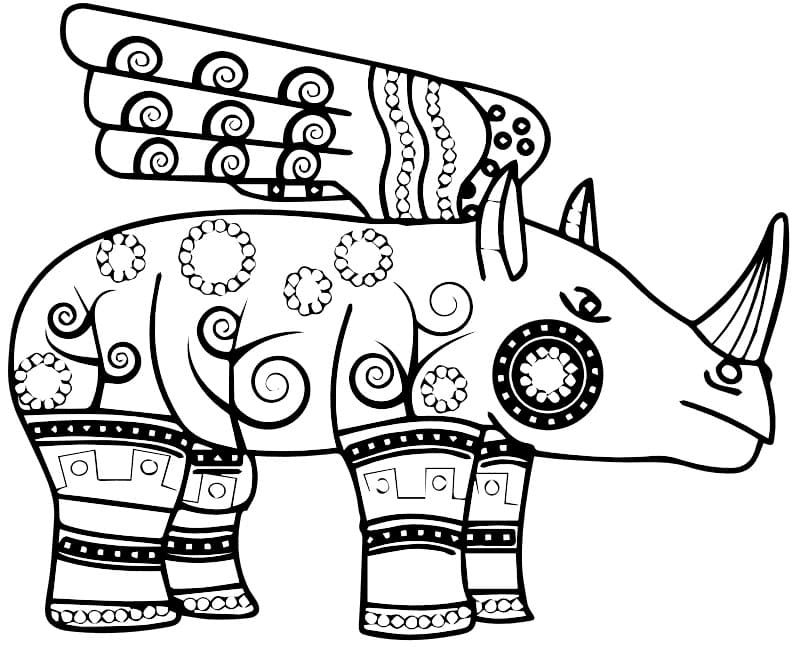
Five pages give rhinos an unexpected twist, from playing soccer to sporting wings or a prehistoric look. Bright, imaginative colors work well here, since these designs lean toward fun rather than realism.
Artistic and Pattern Designs
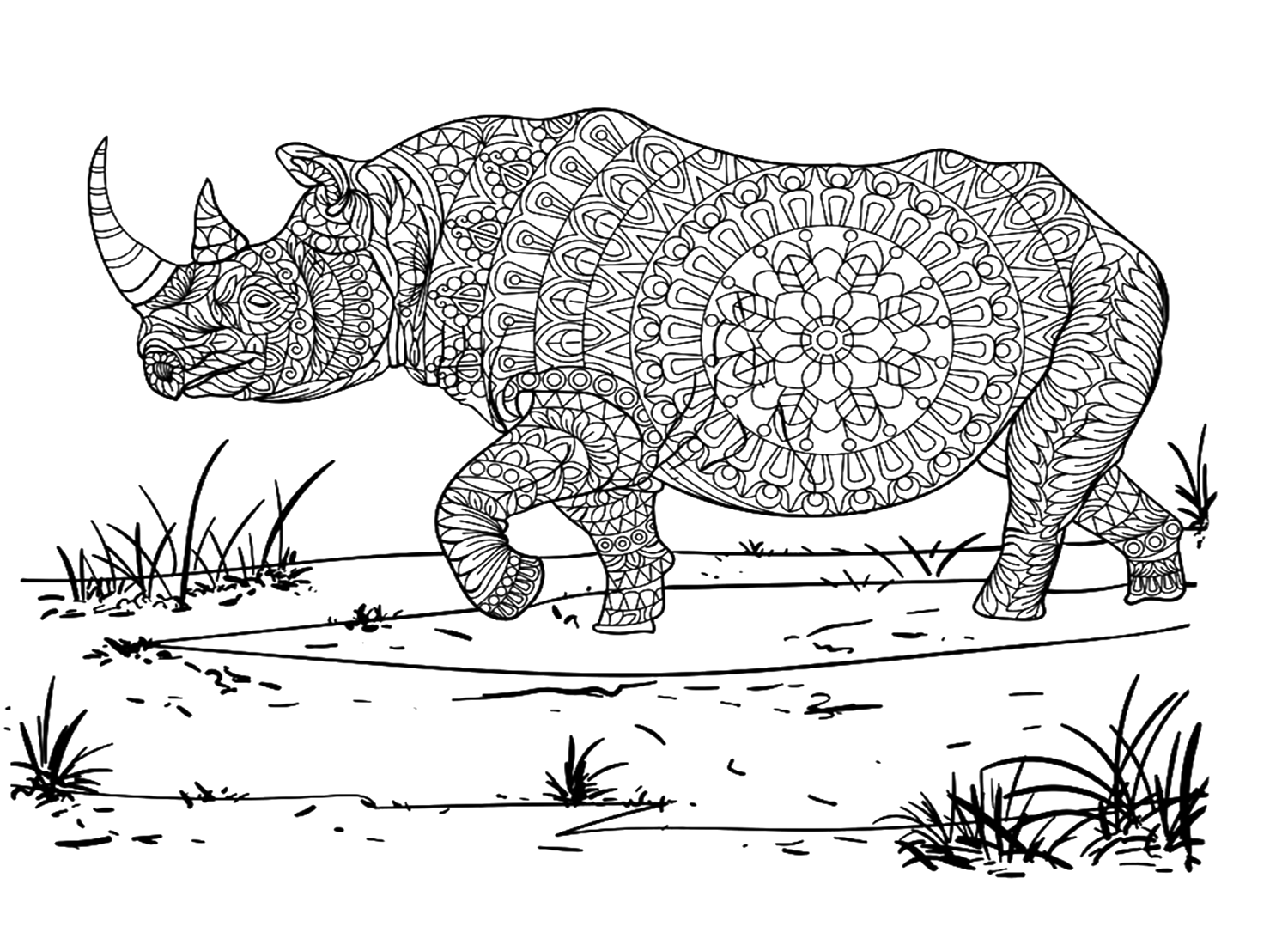
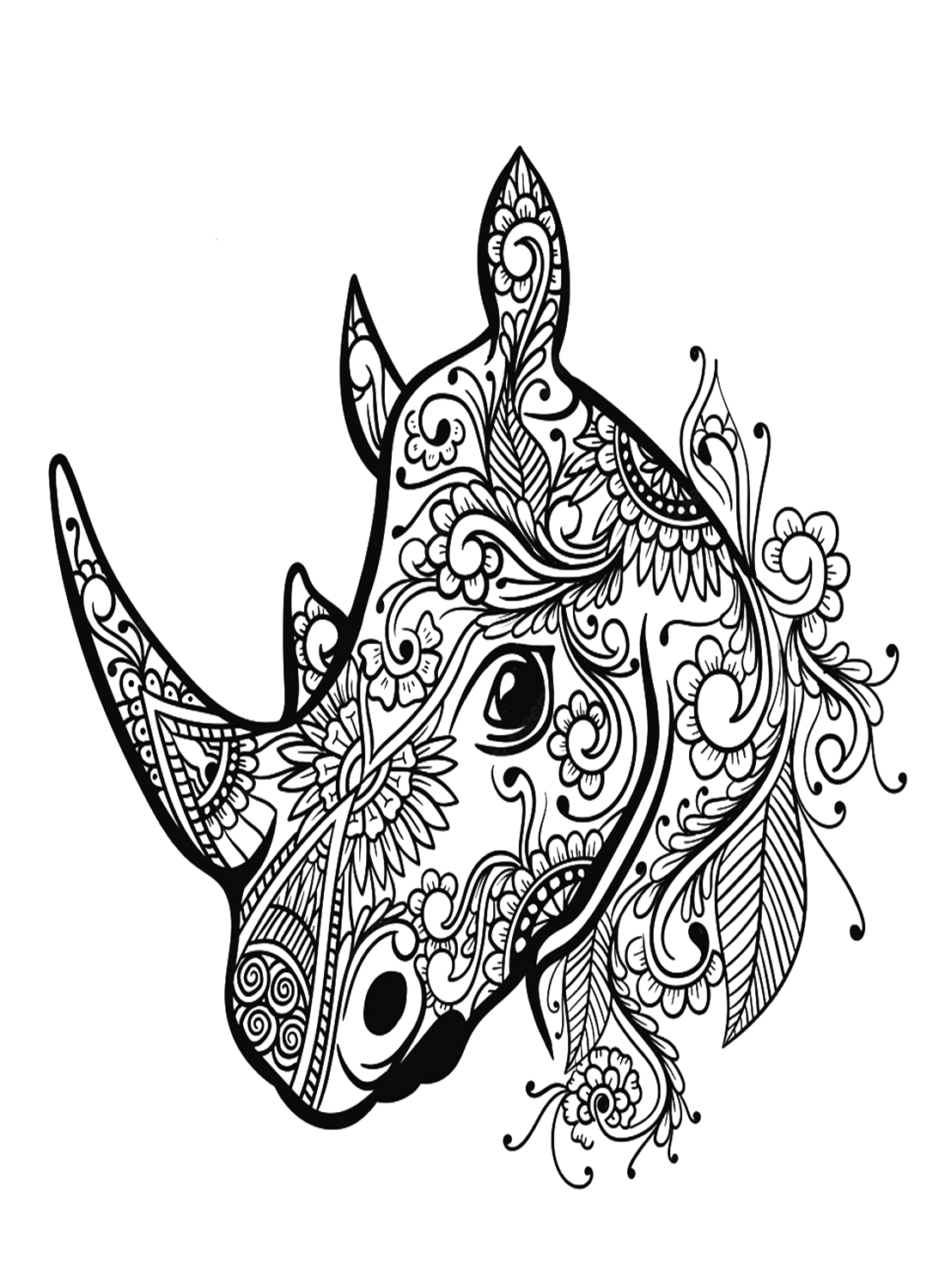
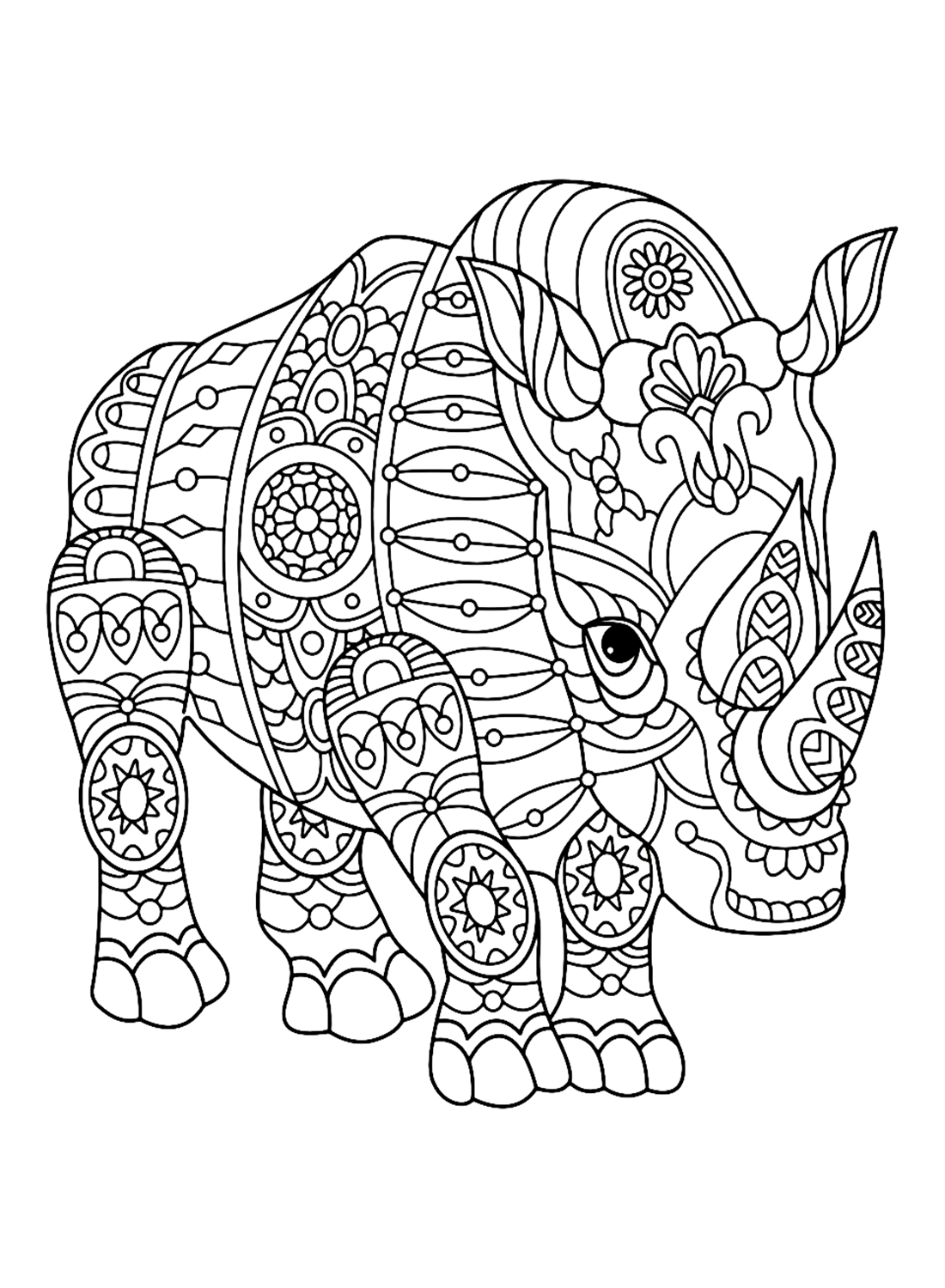
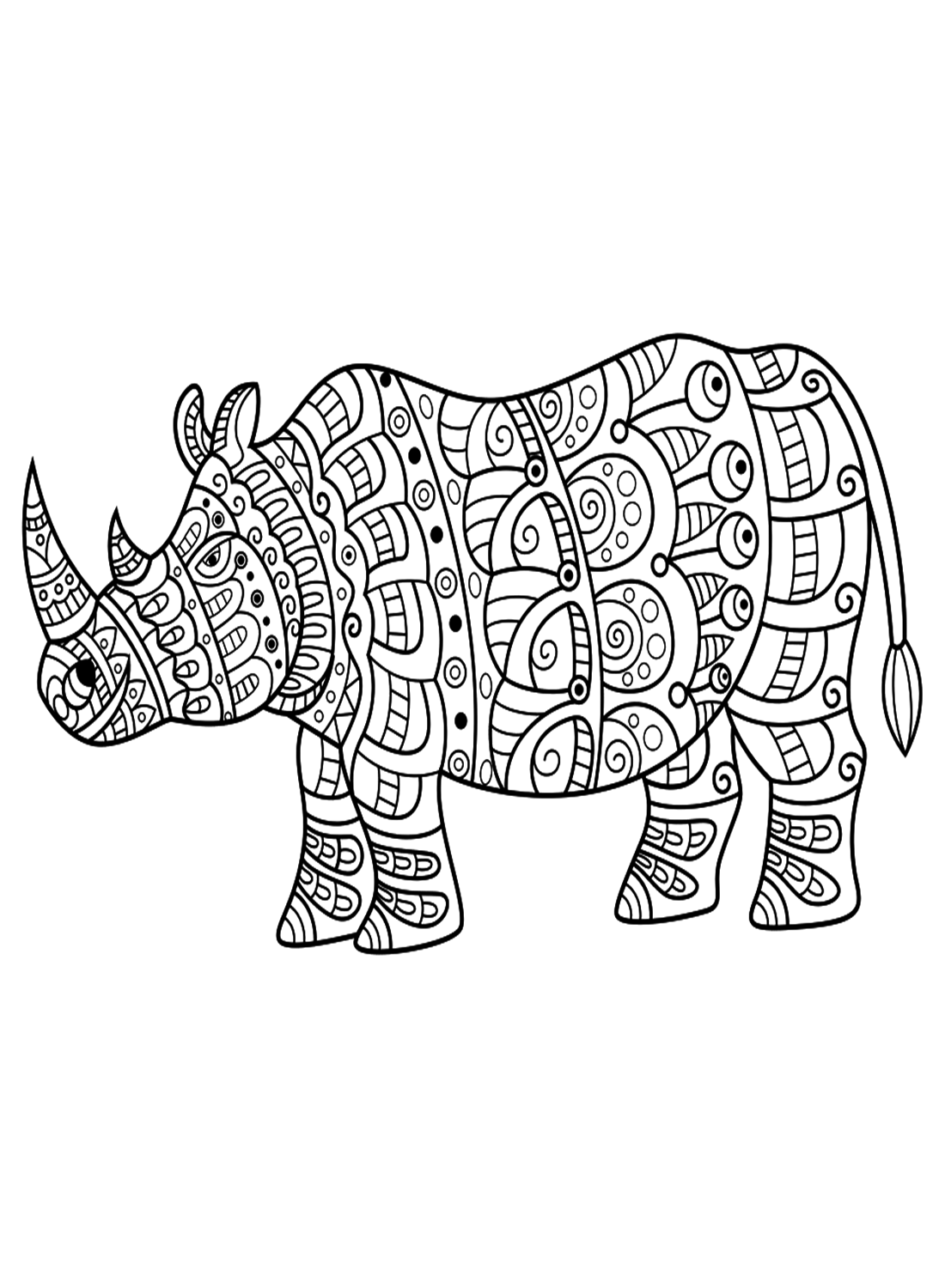
Four pages incorporate a rhino into a decorative pattern, including tribal-style, doodle, mandala, and zentangle designs. Rich, varied colors work well for filling in the many small sections these intricate patterns create.
Printable and General Sheets
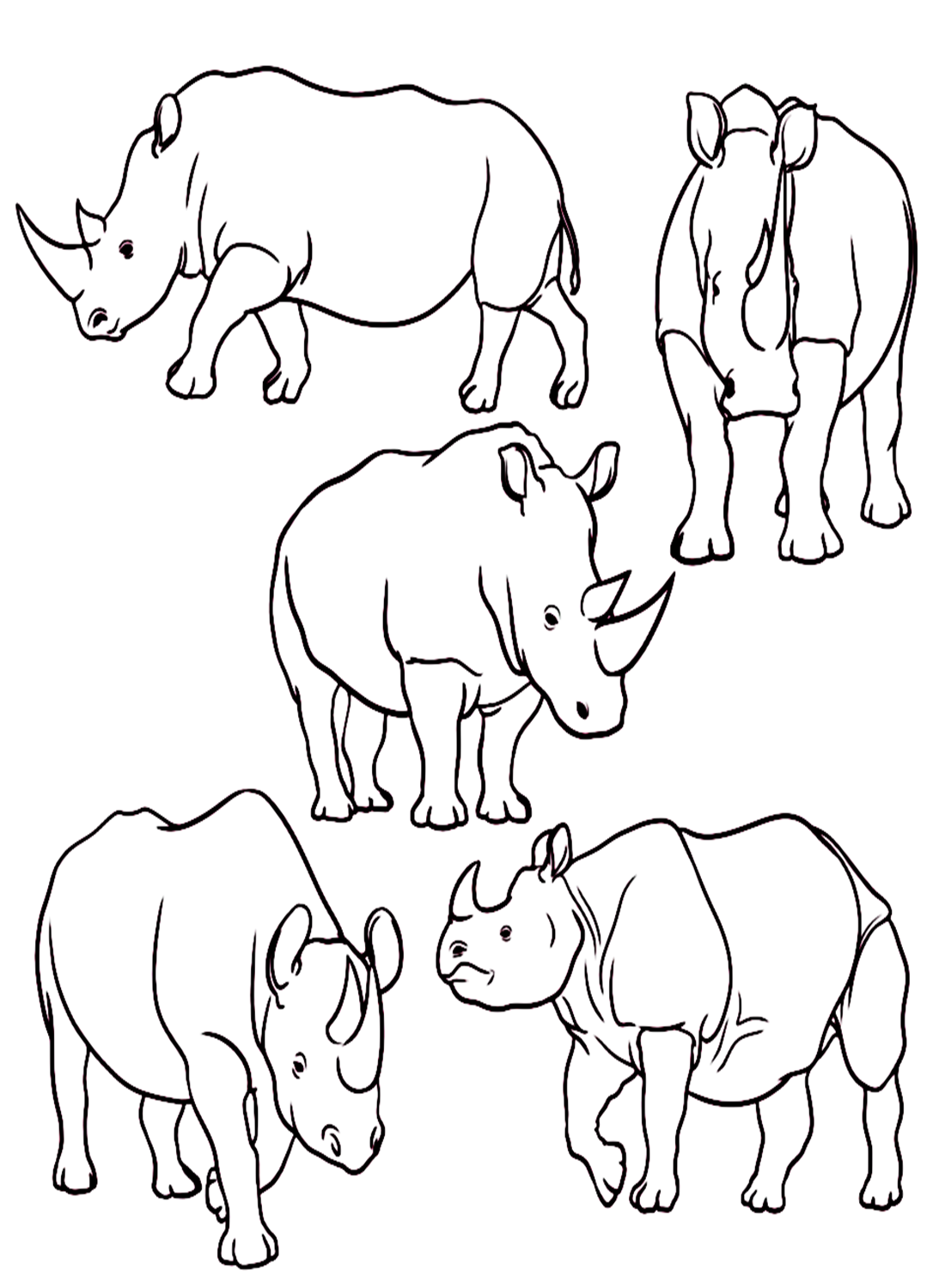
Three pages are sized for a quick, single-session print, most featuring a standalone rhino outline or group. Two or three solid colors are enough here since the outlines are simple.
What Rhino Coloring Pages Do
Careful strokes for thick folds and small horn details. Filling in the deep folds of a rhino’s armor-like skin or the small, layered texture of its horn without crossing the lines calls for controlled, contained pencil movement, and the American Academy of Pediatrics points to this kind of precise coloring as a way to build fine motor skills in children between ages 2 and 7.
A chance to correct a common misconception. Many kids assume a rhino’s horn is made of bone, but it is actually built from keratin, the same material as hair and fingernails. Coloring a rhino page next to that fact gives kids an easy, memorable way to swap the common misconception for an accurate one.
A steady, repeatable rhythm. A 2005 study published in the Art Therapy Journal recorded measurable drops in anxiety among participants who completed structured coloring sessions, and the intricate mandala and zentangle-style rhino pages in this collection offer that same steady, meditative rhythm.
Practice with a limited, earthy color palette. Because real rhinos are almost entirely gray and brown, these pages give colorists a focused way to practice building depth and texture using shading rather than a wide range of colors, a useful skill for more realistic wildlife art.
How to Color Rhino Coloring Pages Well
- Skin: Use a warm Gray as the base color, adding a slightly darker gray or brown in the deep folds and creases for a natural, textured look.
- Horn: A pale tan or off-white works well for the horn, with fine vertical lines in a slightly darker shade to suggest its layered, fibrous texture.
- Baby rhinos: Keep the skin tone a shade lighter and softer than adult rhinos to help convey a younger, gentler appearance.
- Mandala and pattern designs: Use a wide range of colors across the surrounding pattern, keeping the rhino itself in a more neutral tone so it remains the clear focal point.
- Fantasy rhinos: Feel free to use bold, unconventional colors for winged, mechanical, or prehistoric-style designs, since these pages are meant to be imaginative rather than realistic.
- Backgrounds: Warm tans and golds suit savanna and grassland scenes, while soft greens work well for jungle-themed settings.
5 Creative Craft Ideas With Rhino Coloring Pages
1. Savanna Scene Collage
Color several wild rhino and landscape pages, cut them out, and arrange them together on a poster board to build a full savanna scene.
2. Fact Card Set
Color a rhino page, write a real fact about rhinos on the back, and use the set as simple flash cards for at-home or classroom learning.
3. Bookmark
Trim a small colored rhino design to size, laminate or cover with clear tape, and punch a hole for ribbon to make a durable reading bookmark.
4. Framed Mandala Art
Color one of the intricate mandala or zentangle rhino designs, mount it on cardstock, and frame the finished piece as a piece of wall art.
5. Greeting Card
Fold cardstock in half, mount a small colored rhino design on the front, and write a message inside for a birthday or nature-themed card.
Frequently Asked Questions
What are rhino coloring pages?
Rhino coloring pages are printable line-art designs featuring real species in the wild, cute and baby rhinos, playful and fantasy rhinos, artistic pattern designs, and general printable sheets. This collection includes 24 free designs available as PDFs or online coloring.
How many species of rhino are there?
There are five living rhino species: the white and black rhinos of Africa, and the greater one-horned, Javan, and Sumatran rhinos of Asia.
What is a rhino’s horn actually made of?
A rhino’s horn is not made of bone. It is built from keratin, the same protein found in human hair and fingernails, packed into dense, interlocking layers.
What are a rhino’s closest living relatives?
Despite their size and appearance, a rhino’s closest living relatives are horses, zebras, and tapirs, all part of the same group of odd-toed, hoofed mammals.
Which rhino species is covered in hair?
The Sumatran rhino, the smallest living rhino species, is also the only hairy one, and it is considered the closest living relative of the extinct woolly rhinoceros.
Are black and white rhinos actually different colors?
No. Despite their names, both black and white rhinos are the same grayish-brown color. The names are believed to come from a mistranslation rather than an actual color difference.
Are rhino coloring pages suitable for young children?
Yes. The simpler, cute, and baby rhino designs in this collection use bold, uncluttered outlines suited to preschool and early elementary colorists. At the same time, the detailed wild scenes and mandala patterns work well for older children and adults.
What colors work best for a rhino?
Warm gray for the skin paired with a pale tan horn creates the most recognizable, natural rhino look, with darker gray shading in the skin folds for added texture.
Start Coloring
Download any page by clicking the design. No account, email, or payment is required. Pages print directly from the browser at full resolution or open in the online coloring tool for screen use. Share finished pages on Facebook or Pinterest with the share buttons at the top of each design page.