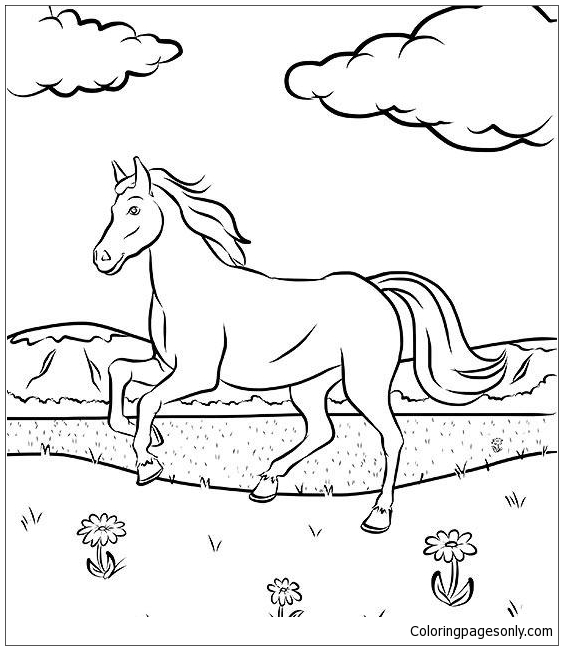
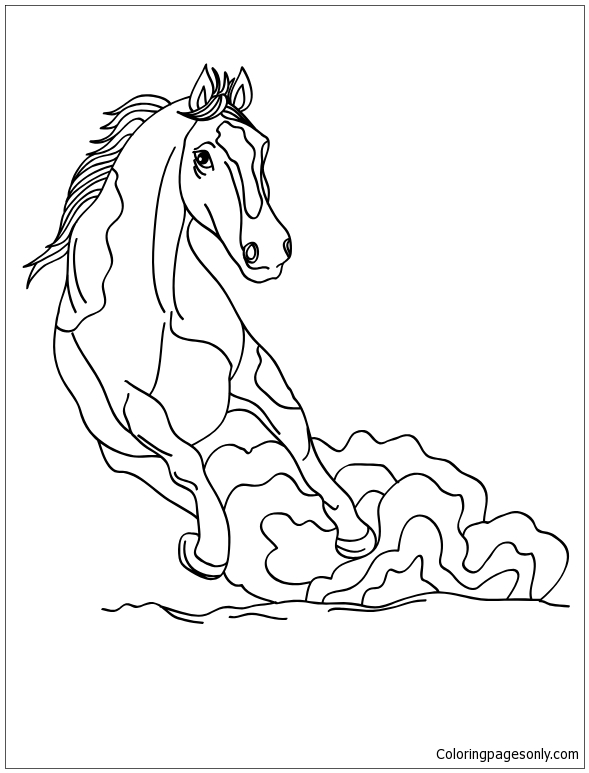
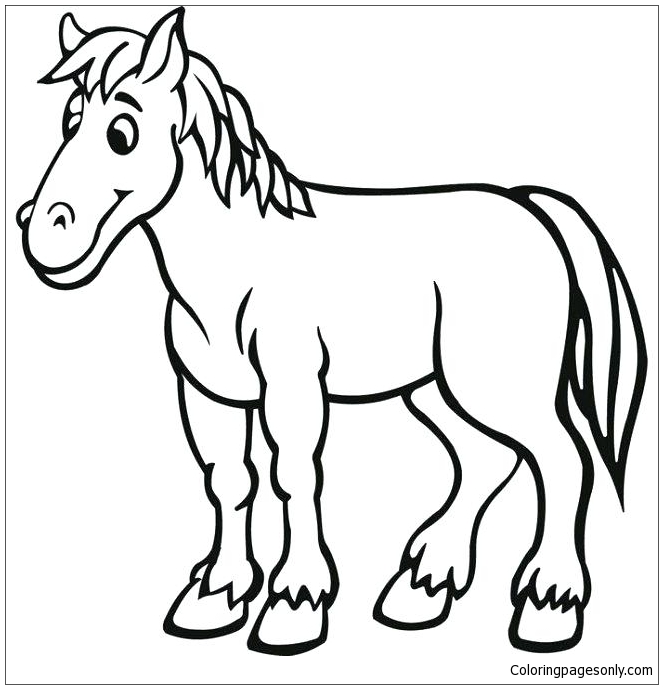
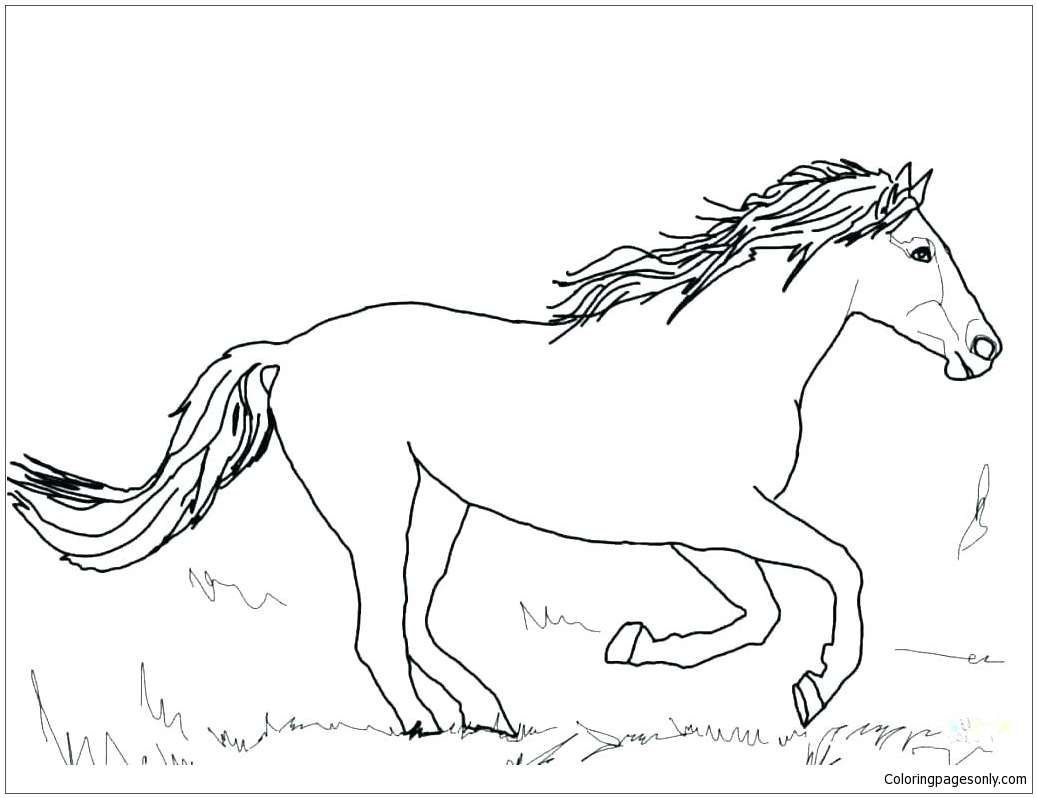
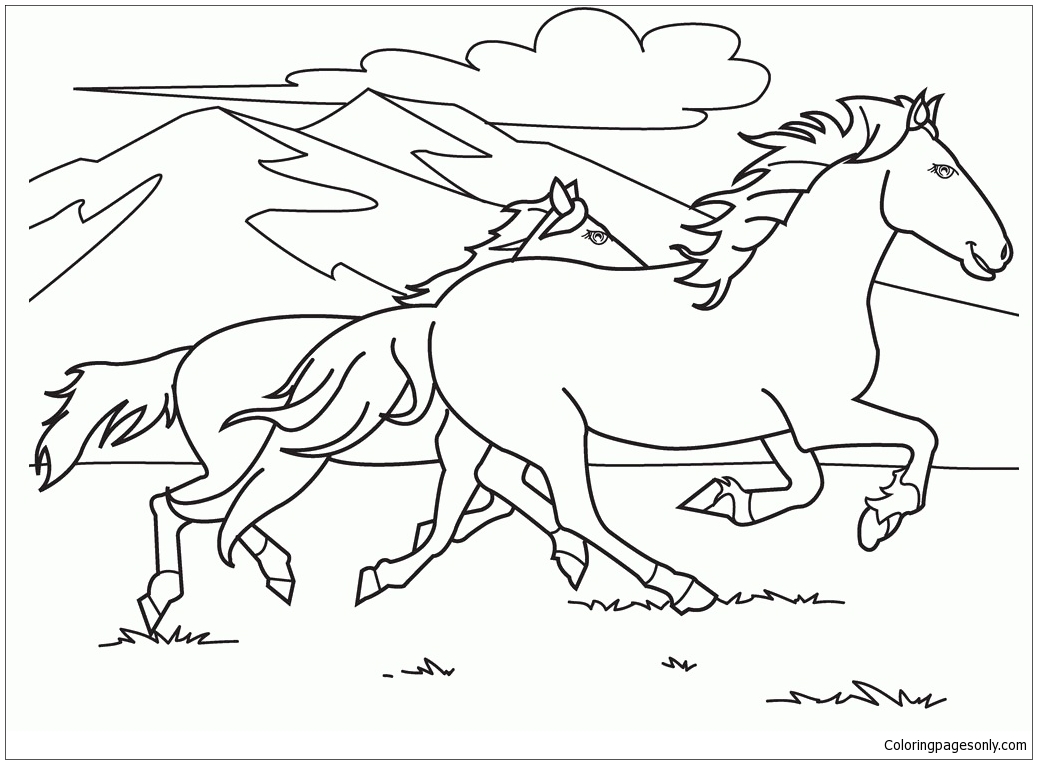
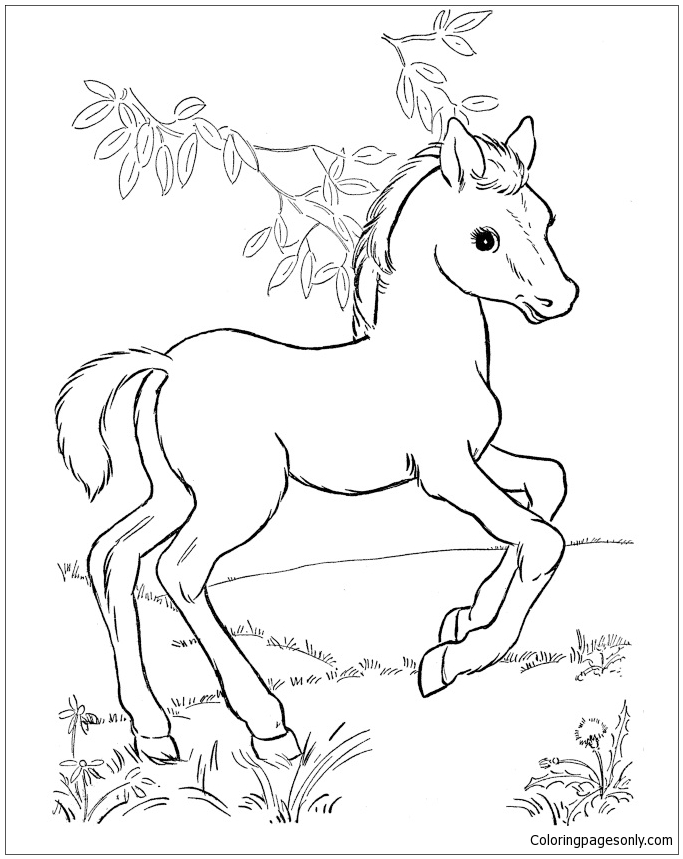
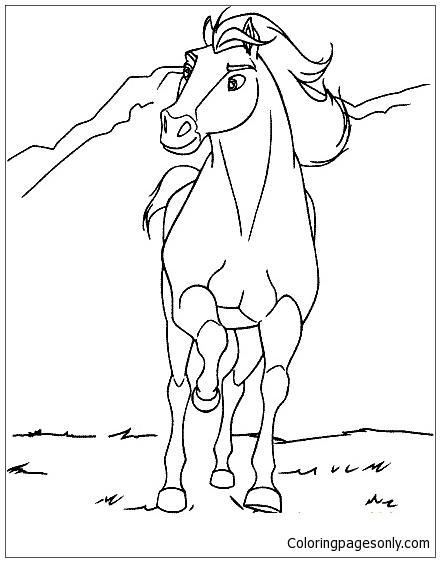
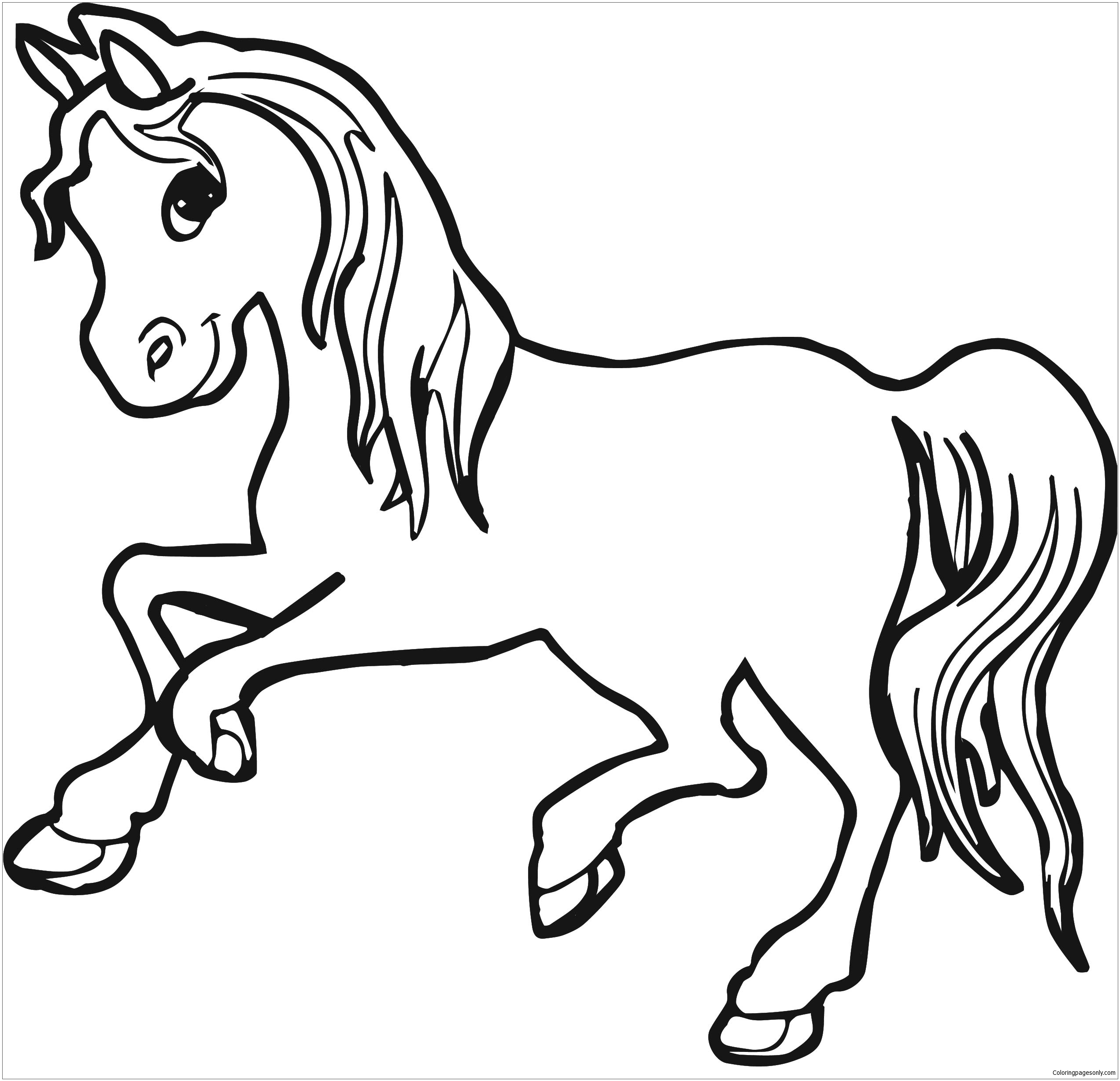
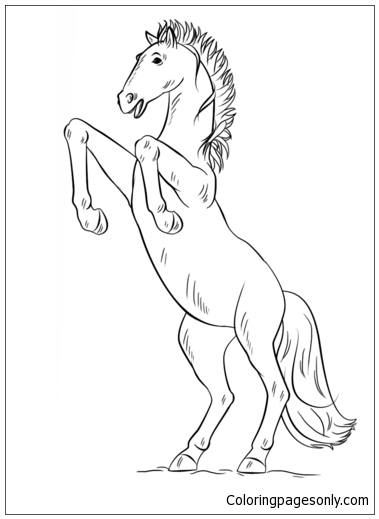
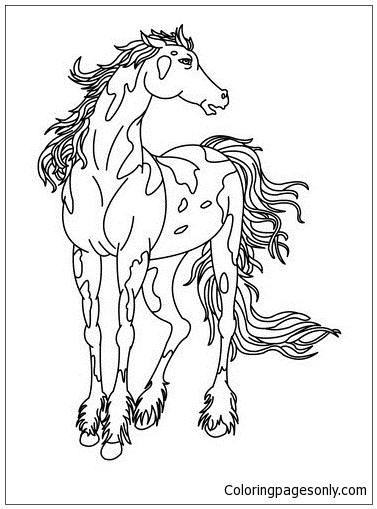
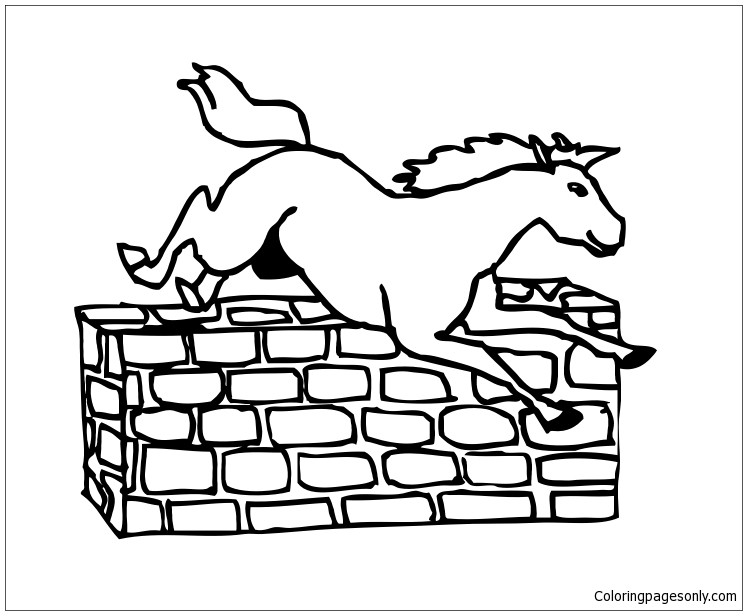
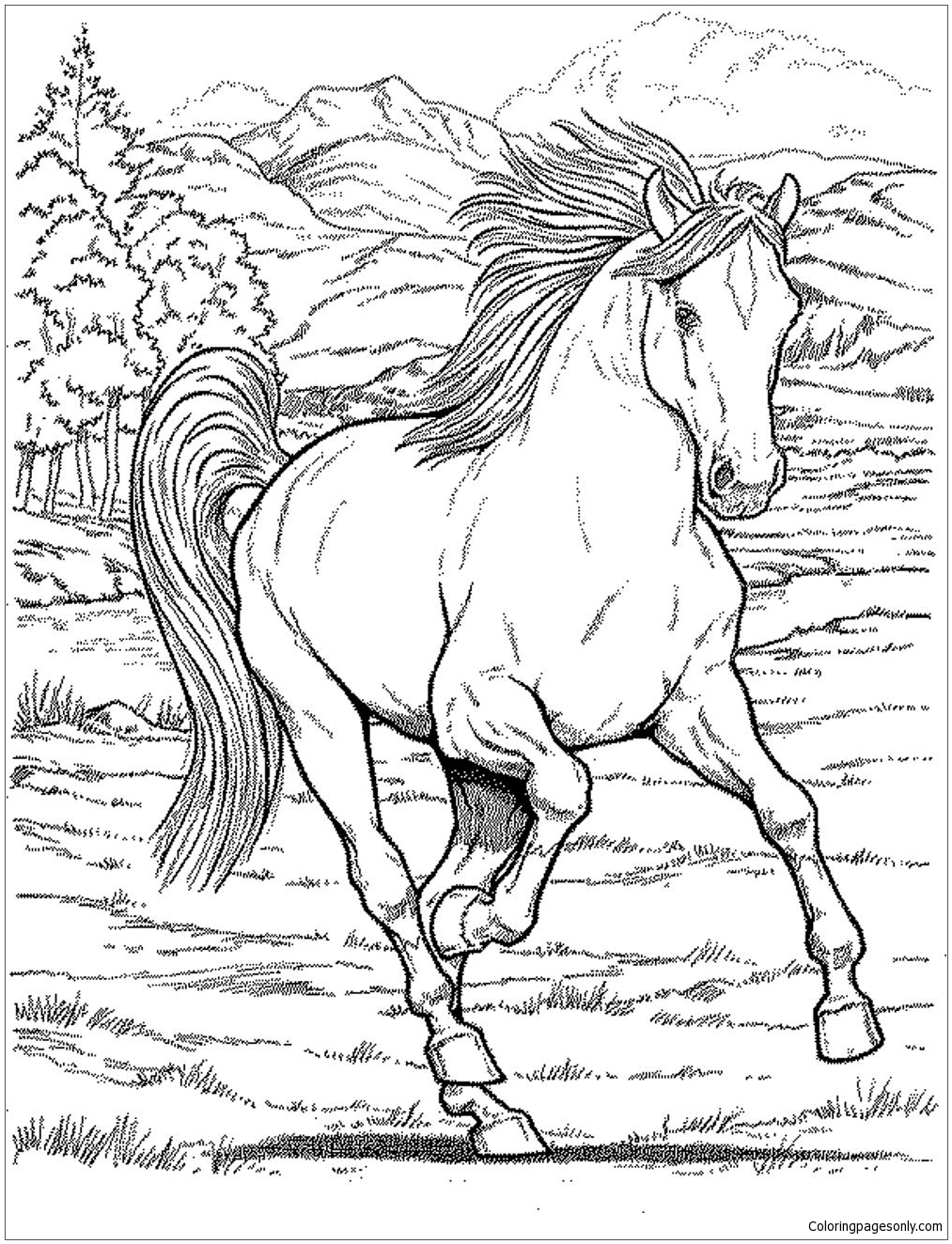
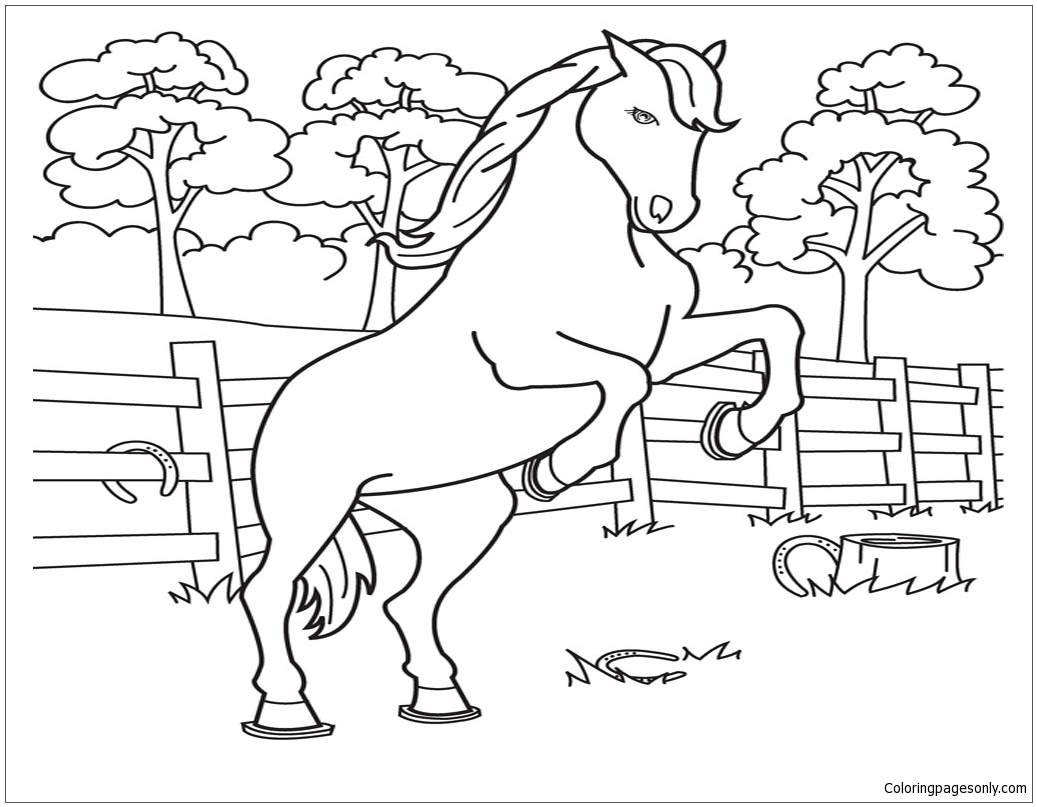
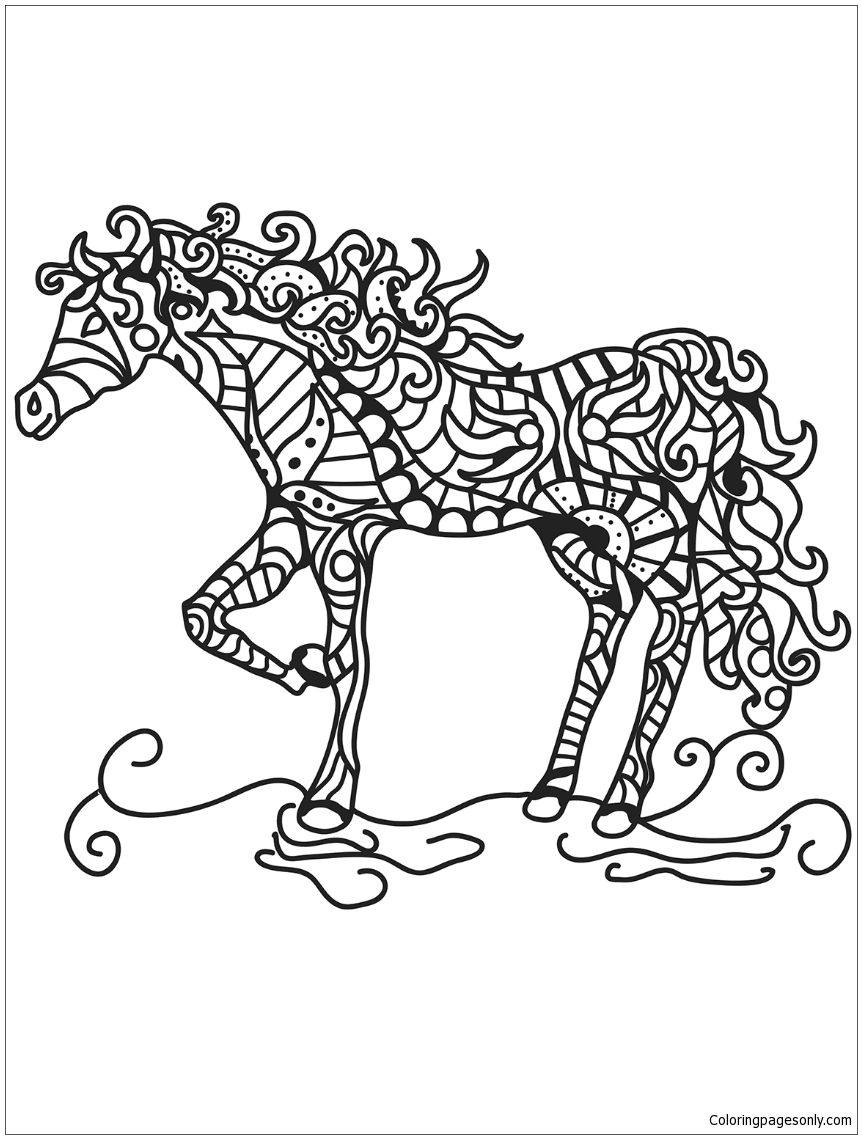
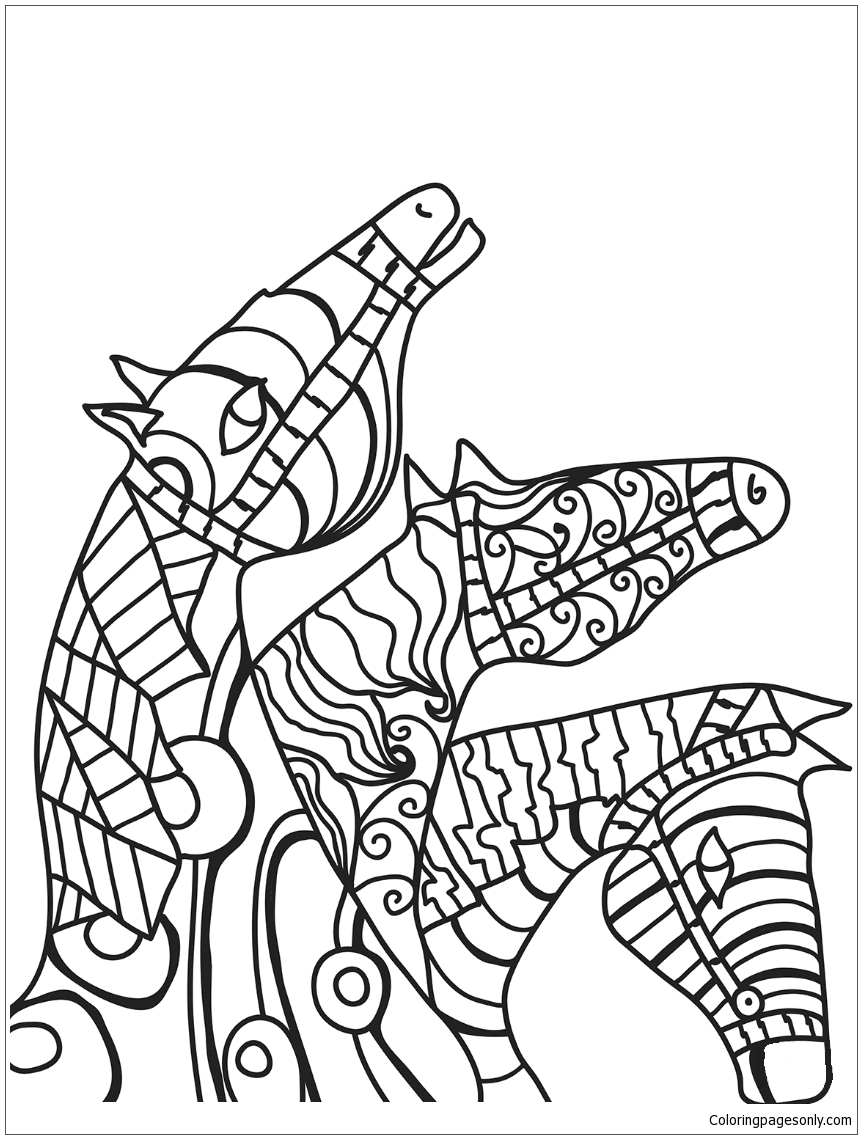
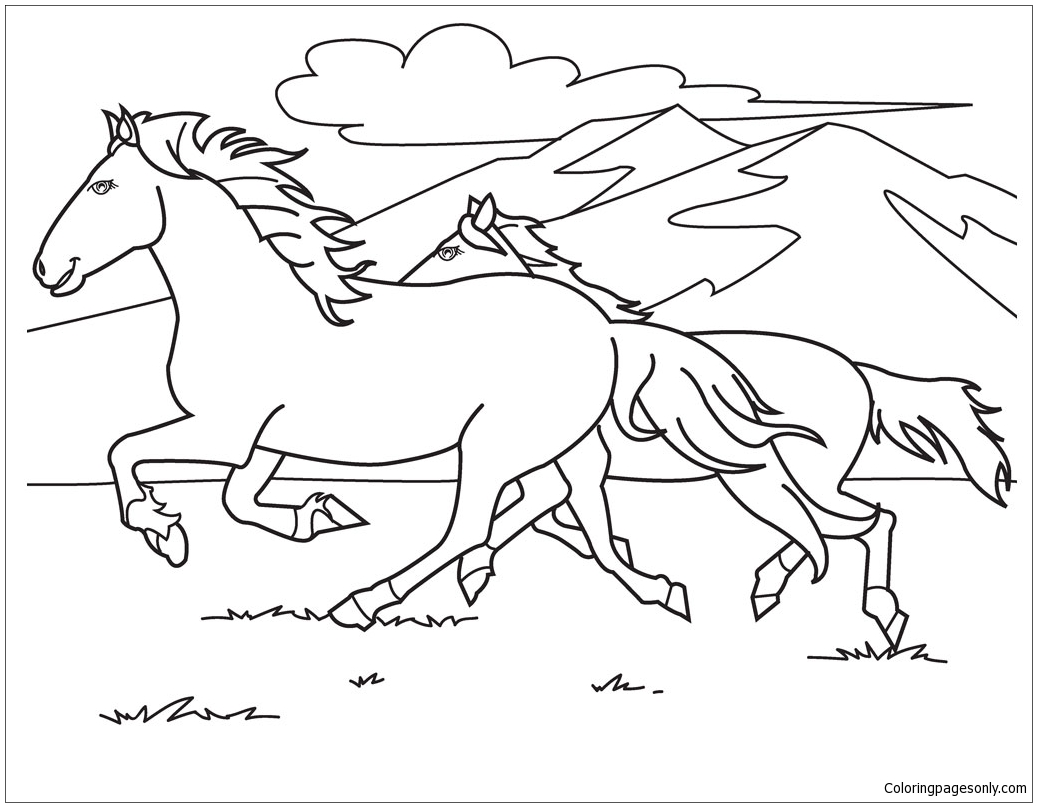
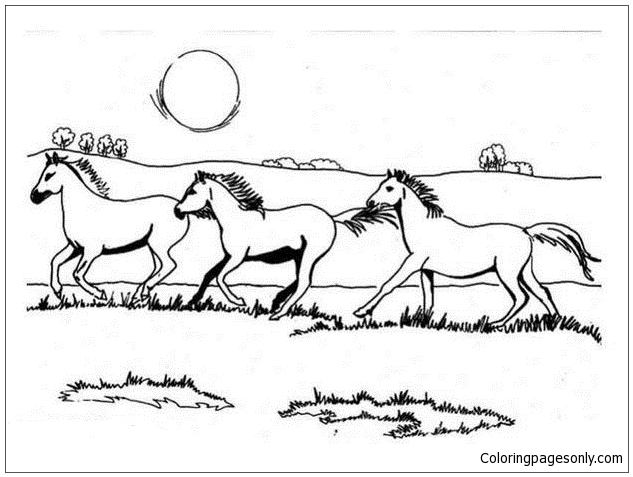
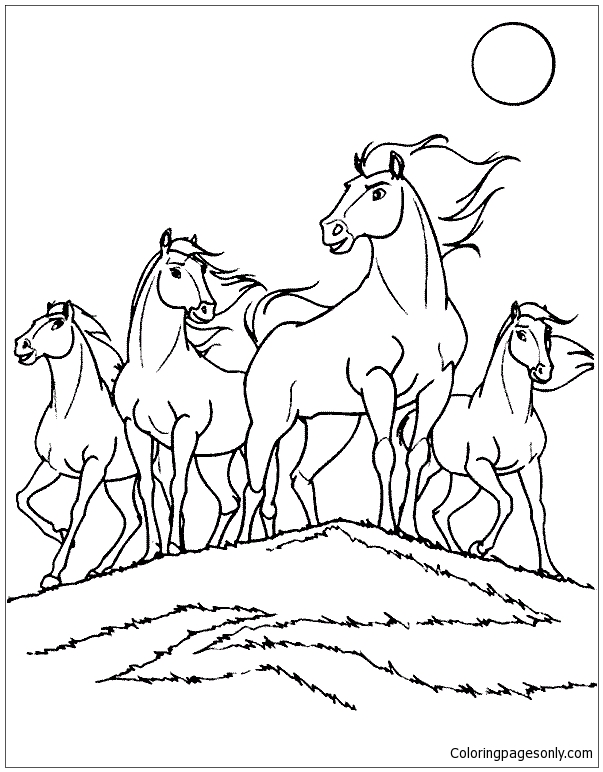
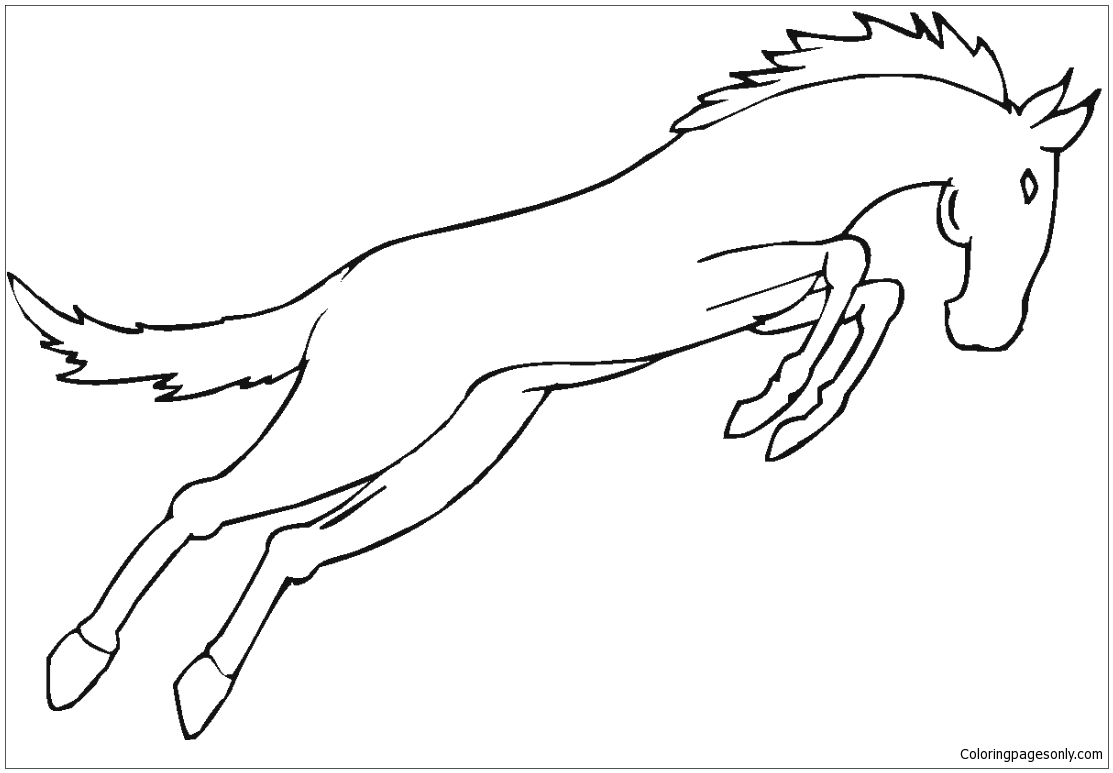
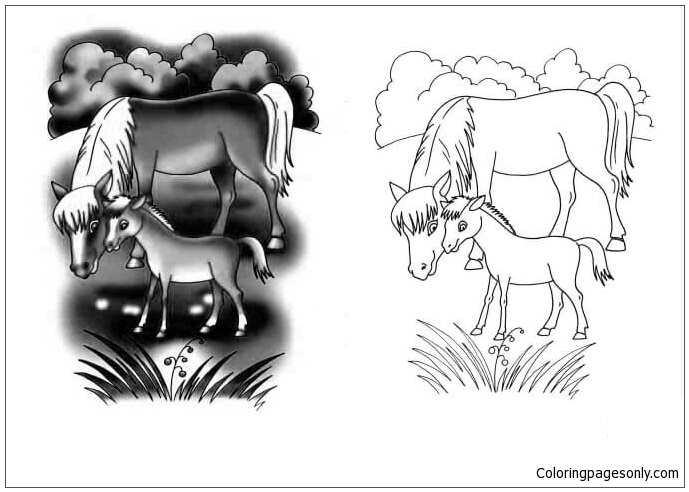
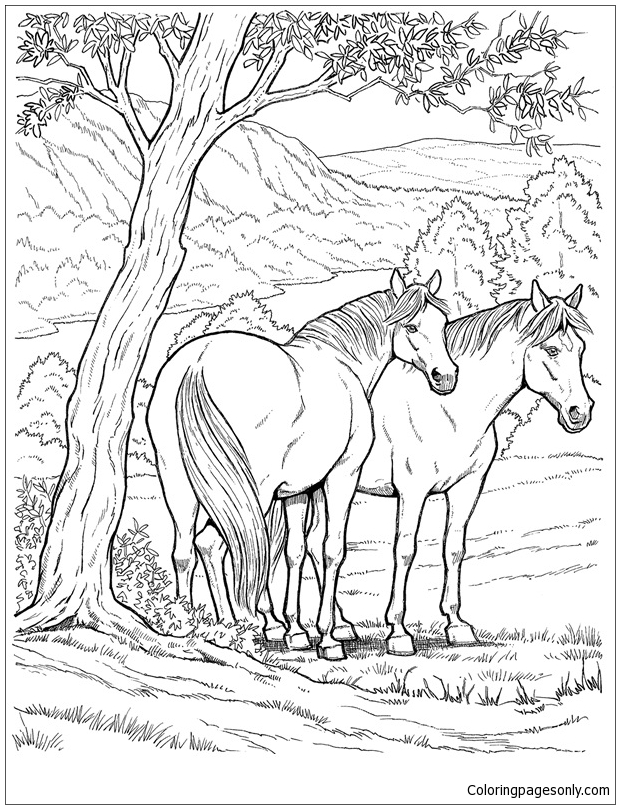
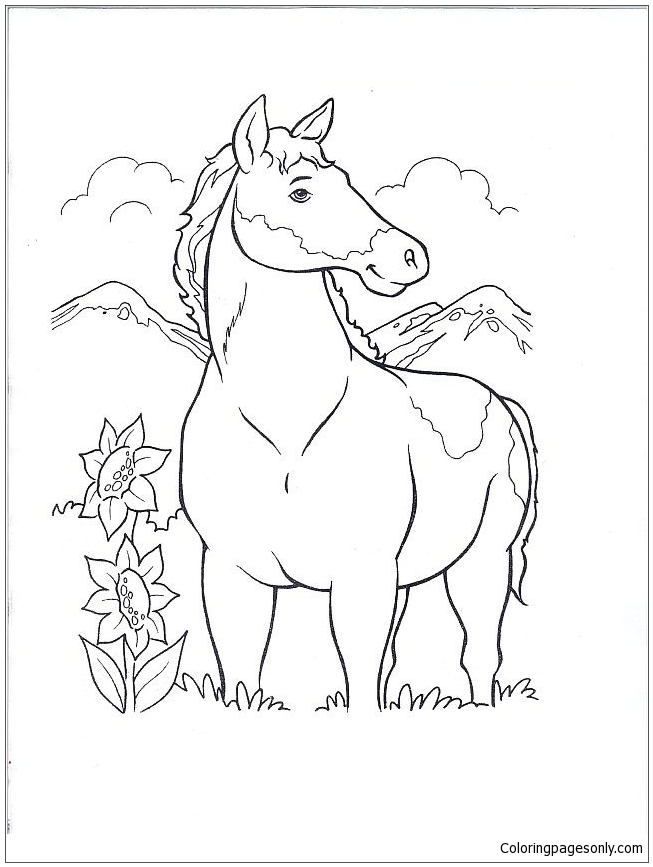
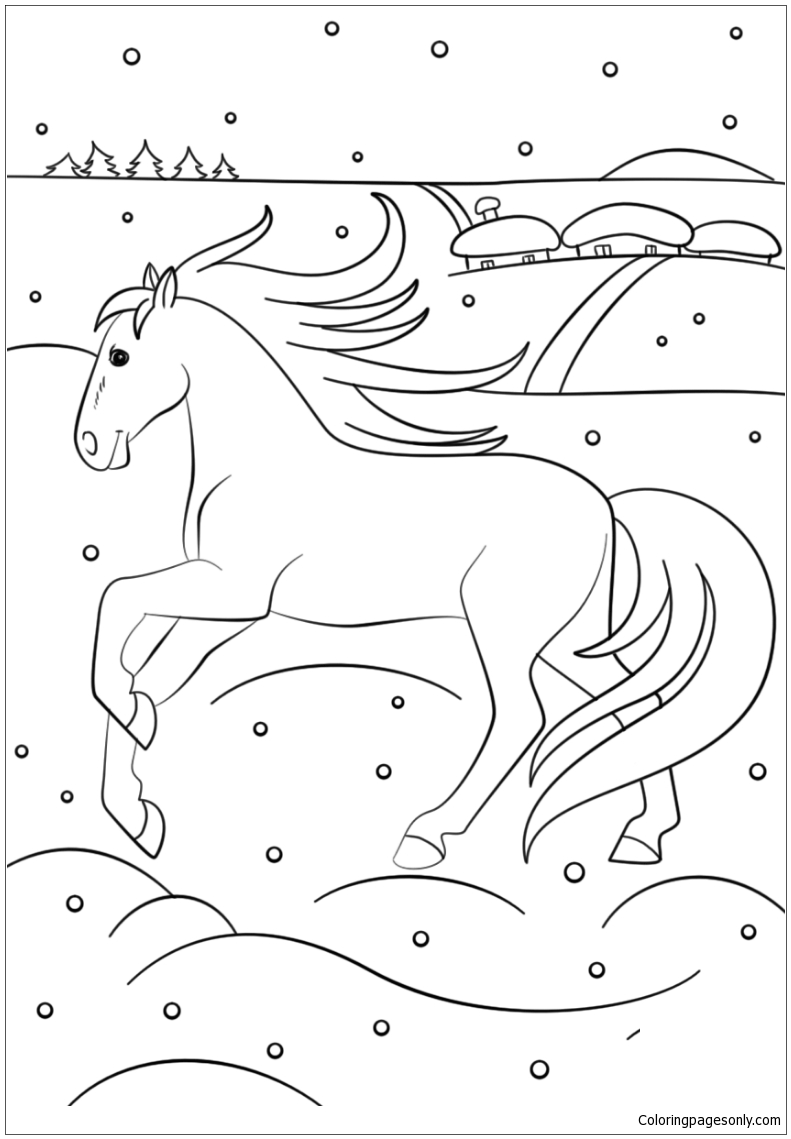
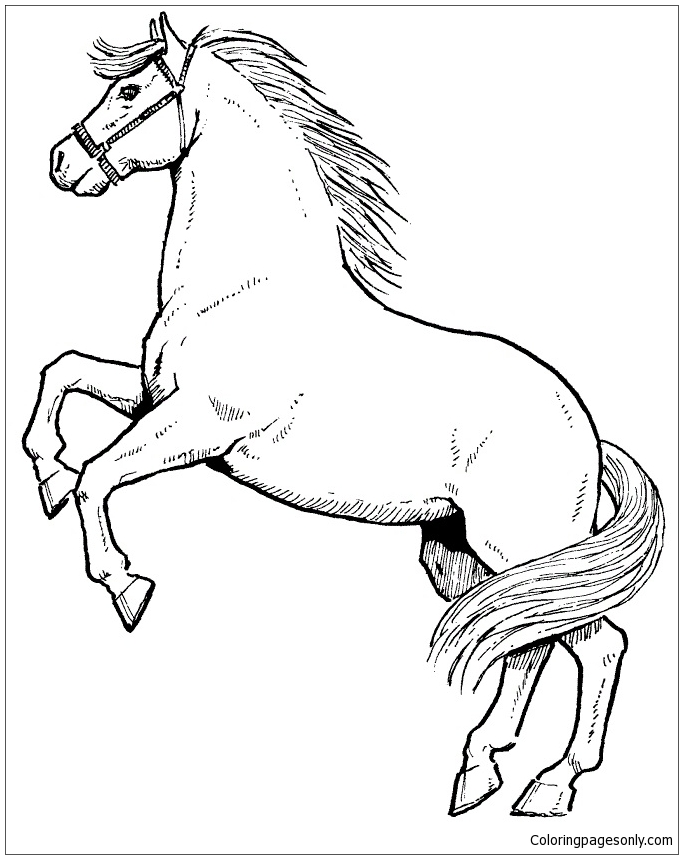
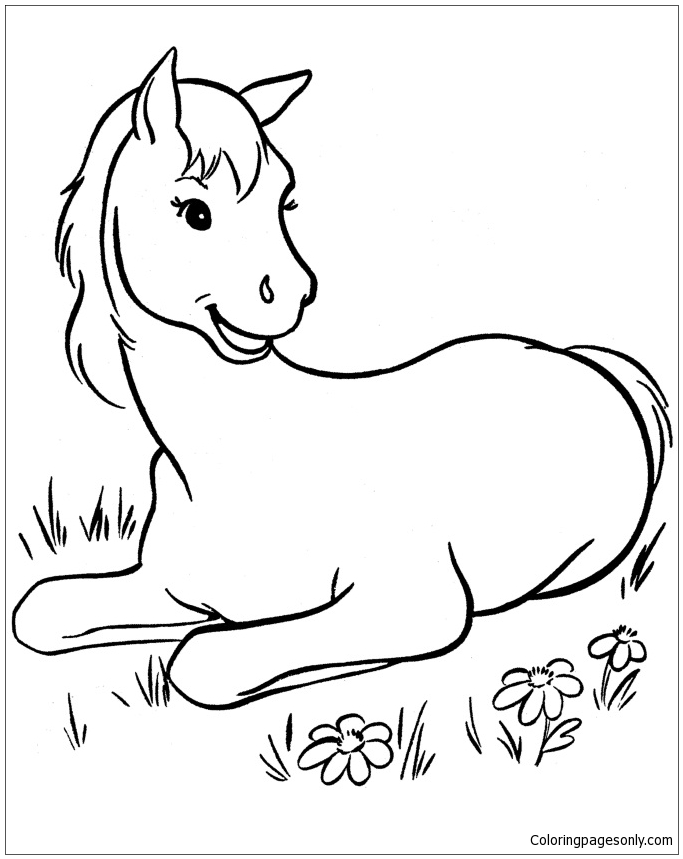
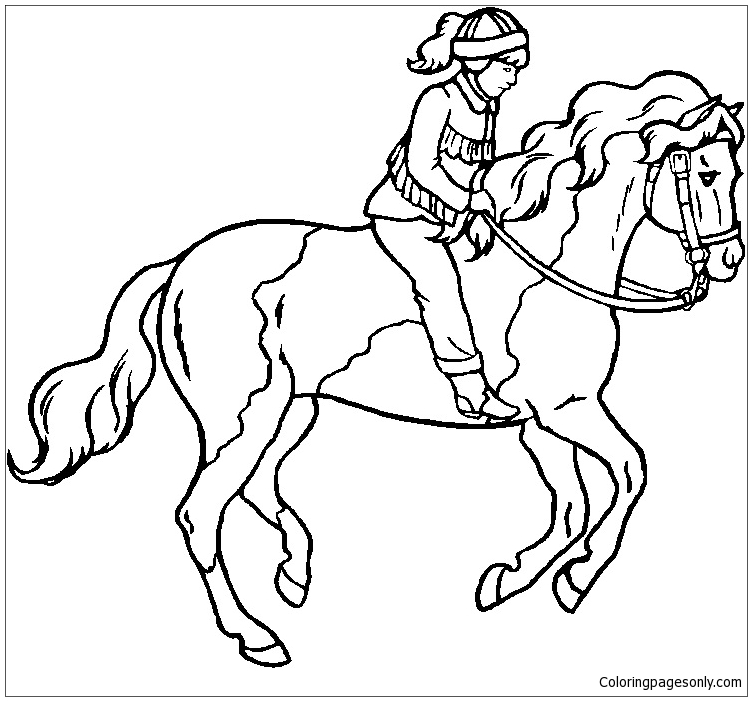
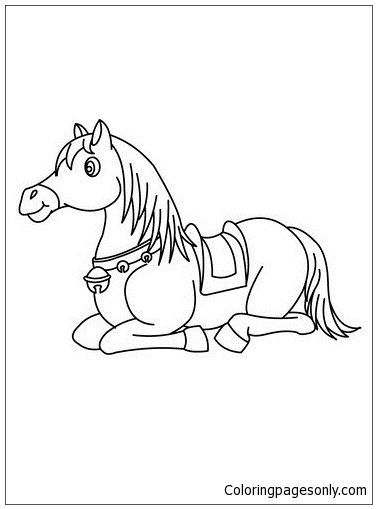
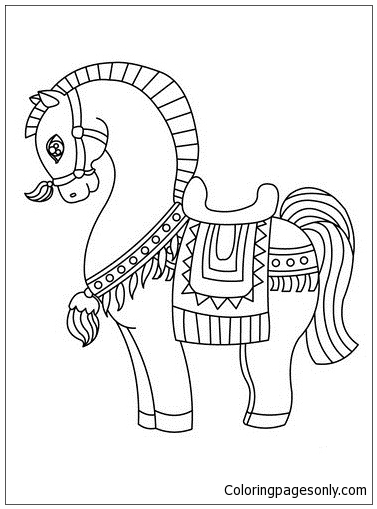
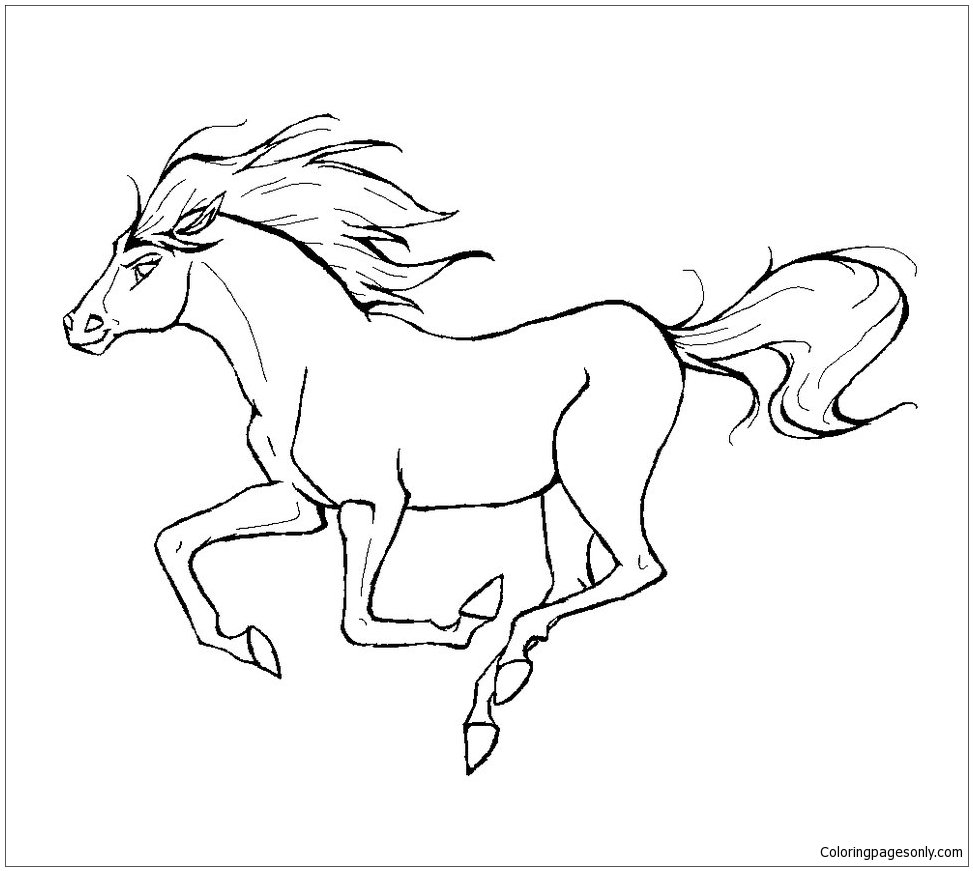
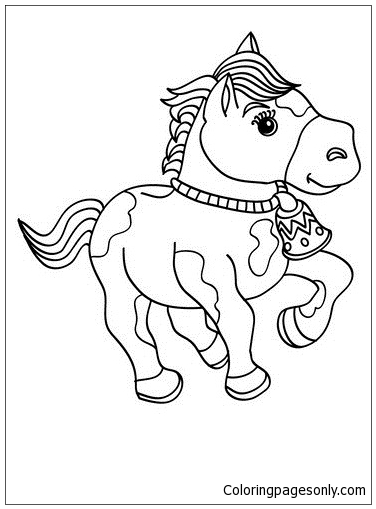
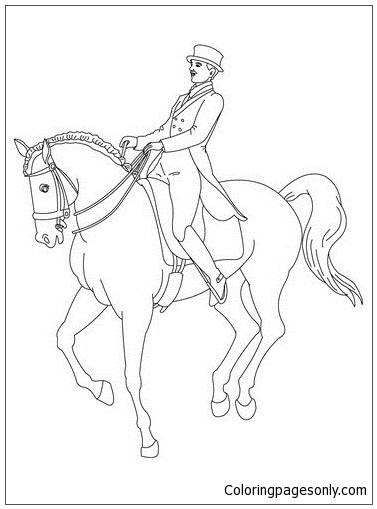
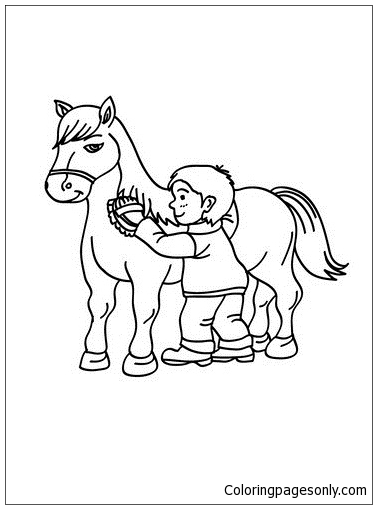
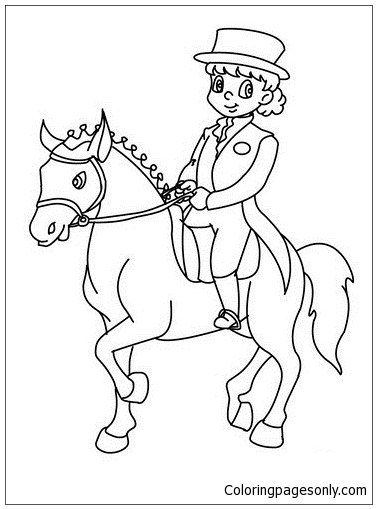
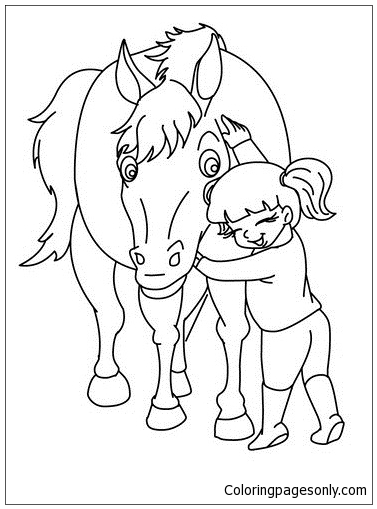
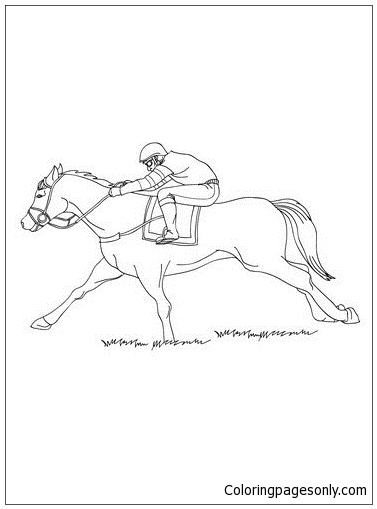
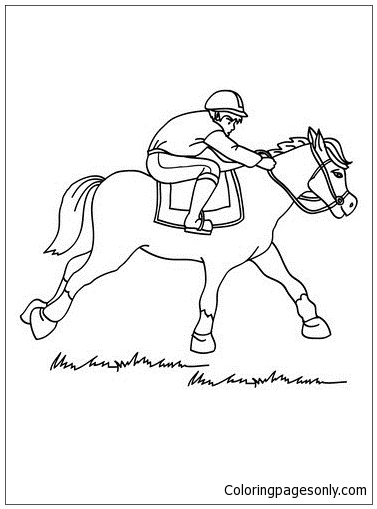
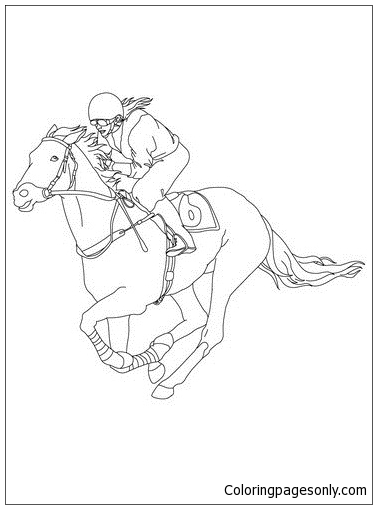
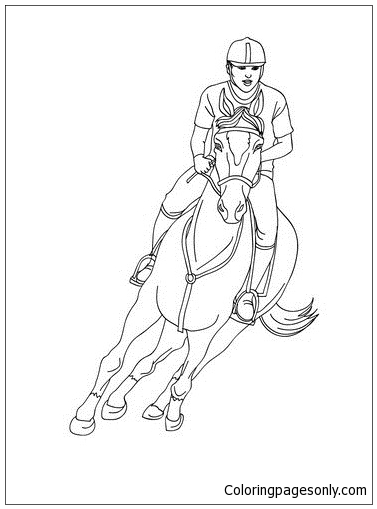
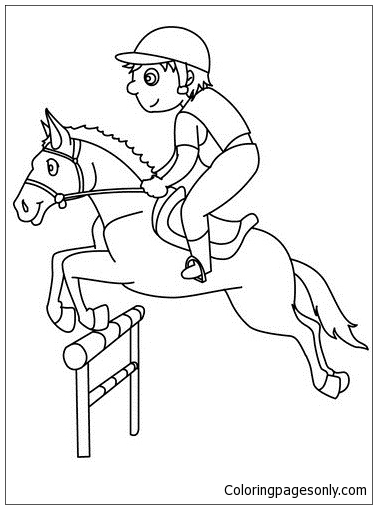
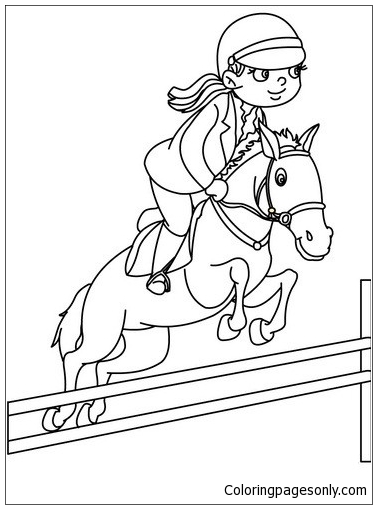
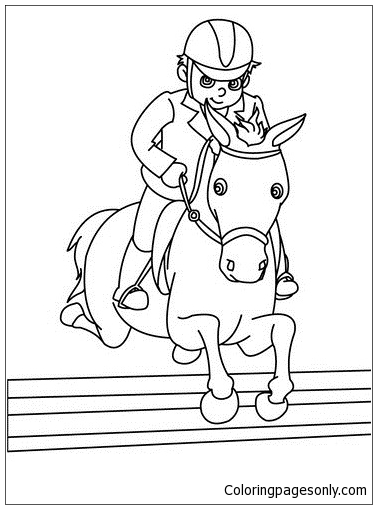
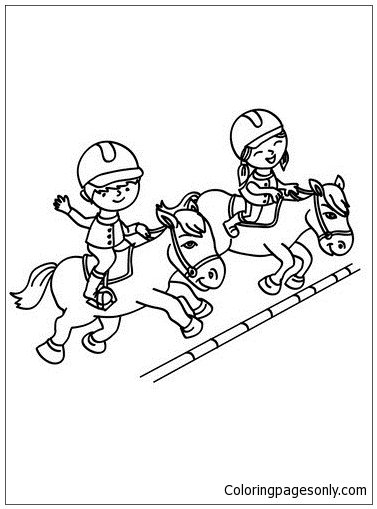
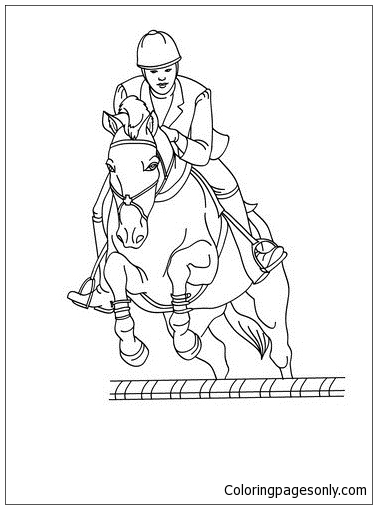
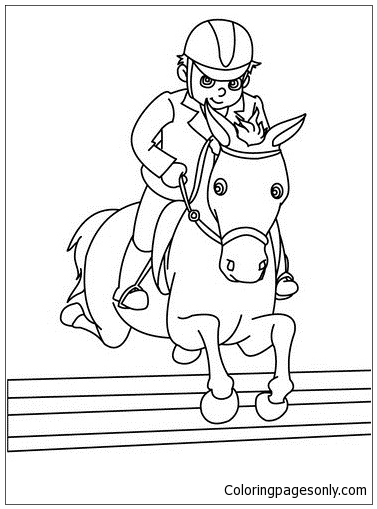
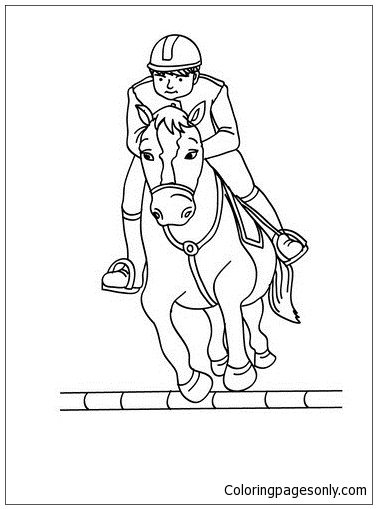
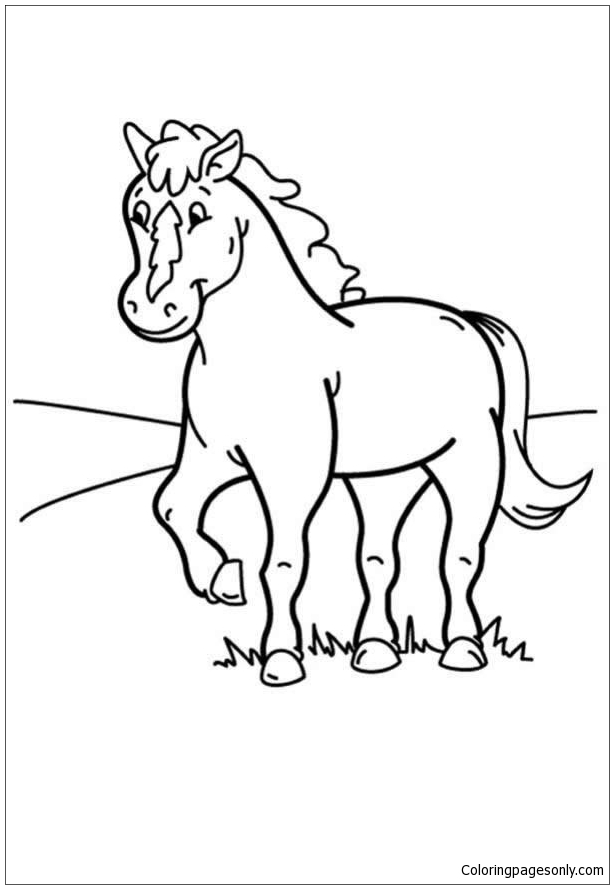
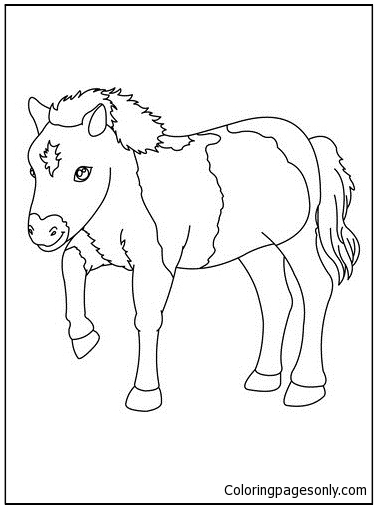
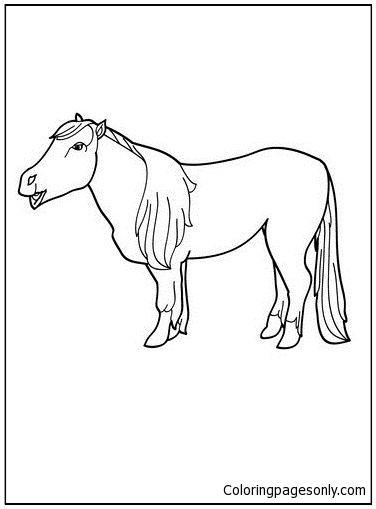
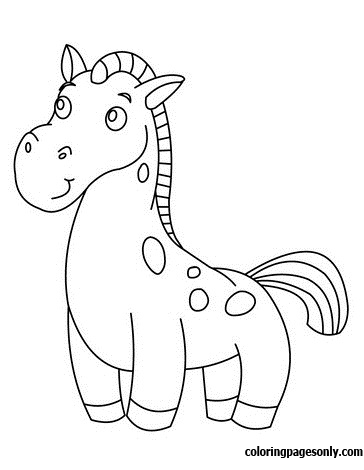
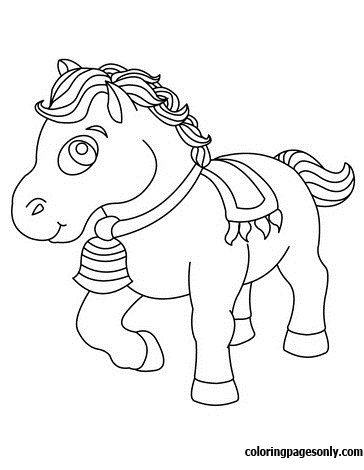
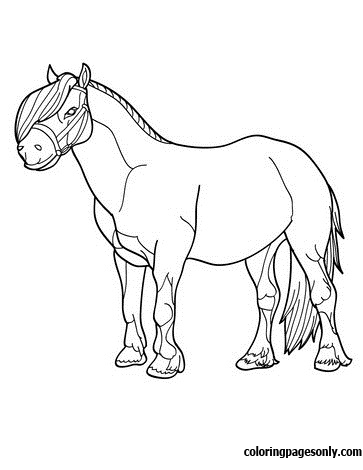
On this page, you’ll find 180+ free horse coloring pages – the largest horse collection on ColoringPagesOnly.com, all free to download as PDFs or color online! I’ve organized everything a horse lover could want: real breed portraits (Quarter Horse, Arabian, and more), action scenes of cowboys and sheriffs riding, circus and performance horses, peaceful baby foals, galloping horses in motion, fantasy and unicorn pages, and plenty of detailed portraits that challenge experienced colorists alongside simple outlines perfect for young children.
These pages are perfect for kids who love horses, families who ride, classroom nature studies, therapeutic coloring sessions, and anyone who finds something genuinely compelling about one of history’s most magnificent animals. Once colored, use them as wall art, birthday party decorations, or just fold them into your personal collection of finished pages!
While you’re here, grab these related pages! Animals Coloring Pages · Unicorn Coloring Pages · Farm Animal Coloring Pages · Dog Coloring Pages
The 55-Million-Year Horse – The Most Documented Evolution in Paleontology
The evolutionary history of the horse is one of the clearest and most completely documented in the entire fossil record – so clear, in fact, that when the paleontologist Thomas Huxley used it to illustrate natural selection in the 1870s, even skeptics found the progression difficult to argue with. Very few lineages give us an unbroken fossil chain spanning tens of millions of years. The horse does.
The story begins approximately 55 million years ago, during the early Eocene epoch, with an animal called Eohippus – the “dawn horse.” When you picture a horse, picture the opposite. Eohippus stood approximately 35–50 centimeters tall at the shoulder – roughly the size of a beagle – and weighed between 5 and 10 kilograms. Its back was arched. Its neck was short. Its skull was small, with a compact brain and teeth adapted for browsing soft forest leaves rather than grazing tough grass. Most remarkably, Eohippus had four toes on its front feet and three on its hind feet, each with small, padded hooves suited for walking on the soft, moist ground of subtropical forests.
This was the horse. Or rather, the horse’s earliest ancestor – a forest creature whose survival strategy was agility, concealment, and quick escapes through dense undergrowth rather than the open-plain speed and endurance that defines the modern horse.
Over the next 55 million years, driven by climate change as forests gave way to grasslands, the horse lineage underwent a remarkable transformation: bodies grew larger (from 10 kilograms to 380–550 kilograms in modern horses), limbs grew longer and more efficient for sustained running, the multiple toes reduced – first to three, then to one – with the single remaining toe encased in the hard keratin hoof we recognize today, and teeth became high-crowned and continuously growing to handle a lifetime of grinding abrasive grass. The brain grew substantially in size and complexity. By around 4 million years ago, the genus Equus – the direct ancestor of every modern horse, donkey, and zebra – had emerged.
Here is the remarkable twist: the entire evolutionary journey from Eohippus to Equus happened primarily in North America. Horses evolved on this continent, spread to Eurasia and Africa via the Bering land bridge, and then – in one of evolution’s most puzzling extinctions – completely disappeared from the Americas around 10,000 years ago, along with many other large mammals at the end of the last Ice Age. When Spanish explorers led by Hernán Cortés arrived in Mexico in 1519, they brought with them the 16 horses that first returned to the continent. Columbus had brought the first horses to the Caribbean in 1493. The ancestors of today’s American mustangs – wild horses that seem so iconic to the American West – are the descendants of these Spanish horses, animals that had evolved in North America millions of years earlier and returned home after a 10,000-year absence.
Domestication – 6,000 Years of Partnership
Horses were first domesticated by humans approximately 6,000 years ago – around 4000 BCE – on the grasslands of Central Asia, specifically in what is now the Kazakh steppe, the region between the Ural and Altai mountains. Archaeological evidence from this period includes horse remains with bit wear on their teeth (evidence of bridles) and milk residues in pottery (evidence of milking mares). By 3000 BCE, domesticated horses and the knowledge of how to breed and train them had spread widely across Eurasia.
The effects of domestication were immense and rapid. Within a few thousand years, horses had transformed human civilization: replacing slower oxen for plowing, enabling faster long-distance communication, fundamentally changing warfare, and providing the mobility that allowed cultures, goods, and ideas to travel across continents at previously impossible speeds. For several thousand years, horses were the fastest land transportation available to humans – a role they held until the invention of the steam locomotive in the 19th century.
Domestication also dramatically accelerated coat color diversity. Wild Eohippus is believed to have had a striped or dappled coat for forest camouflage. The ancestral coat of Equus ferus (the wild horse before domestication) was likely dun – a grey-yellow tone that blended with the open steppe. Cave paintings from 20,000–35,000 years ago depict black and spotted horses alongside the dun coat, confirming that some color variation existed before domestication. But the enormous range of coat colors we see in horses today – bay, chestnut, grey, palomino, Appaloosa spots, pinto patches – emerged primarily through human selective breeding between 5000 and 3000 BCE, as people began choosing horses for appearance alongside function.
Three Things Horses Can Do That Seem Impossible
- Sleep standing up. Horses are prey animals, and evolution gave them a remarkable adaptation for staying safe while resting: they can sleep standing upright. This is possible through a “stay apparatus” – a series of ligaments and tendons in their legs that lock the joints in place without muscular effort, allowing the horse to remain upright with minimal energy expenditure even while sleeping. Horses do lie down for deep REM sleep (and need to, for approximately 30 minutes to a few hours per day), but they can reach light sleep states while standing, keeping their bodies vertical and their hooves on the ground, ready to flee in a fraction of a second if threatened.
- See almost entirely around themselves. A horse’s eyes are positioned on the sides of its head, which is why horses have a nearly 360-degree field of vision, one of the widest of any land mammal. They can see almost everything around them simultaneously. There are two blind spots: a small zone directly in front of the nose (within about a meter), and a zone directly behind the tail. This panoramic vision is a predator-detection system refined over millions of years of living in open grasslands with nowhere to hide. It also explains a behavior that puzzles many new riders: horses that suddenly shy at something directly in front of them are reacting to an object in their near blind spot, suddenly becoming visible as they approach it.
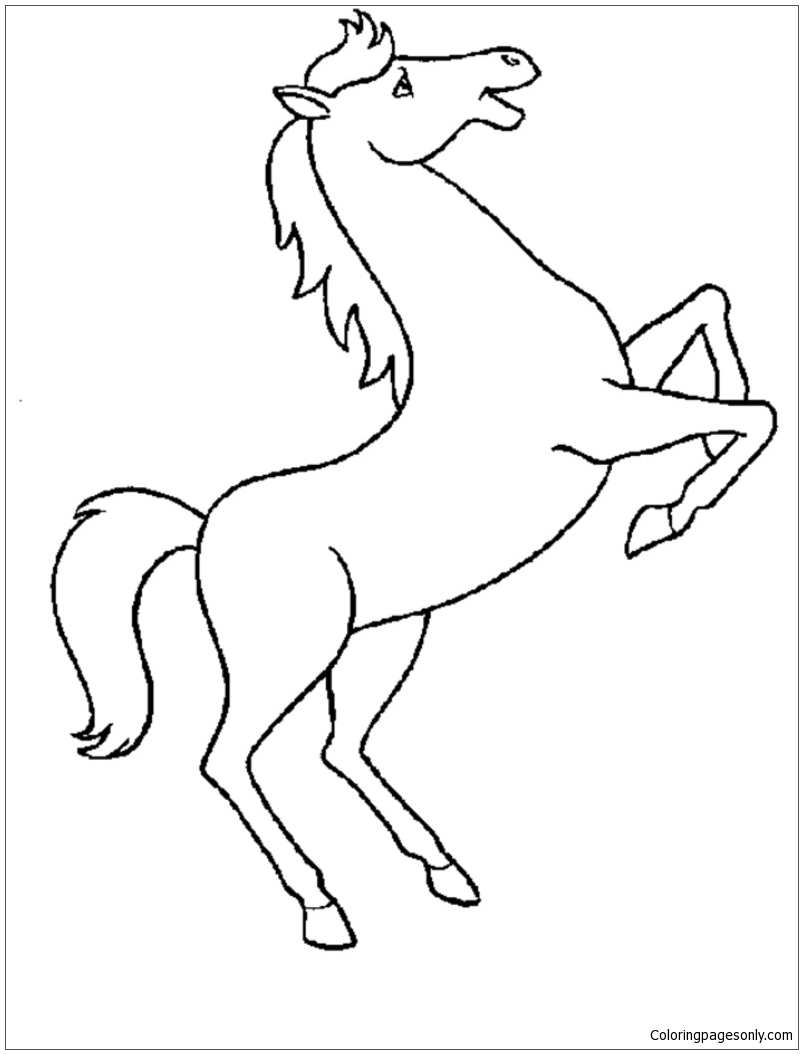
- Give birth to foals that run within hours. A newborn horse – called a foal – can stand within approximately one to two hours of birth and run within hours. By the end of its first day, a healthy foal can keep pace with its mother at a full trot. This extraordinary rapid development (called precocial development) is the opposite of animals like humans or cats, whose young are born completely helpless. It is, again, a survival adaptation from a time when horses lived in the open with predators present – a foal that could not move with the herd within hours was a foal that did not survive. The mare carries the foal for approximately 11 months of gestation, and this long developmental period enables the foal to arrive at a stage of neurological maturity that most other mammals reach only weeks or months after birth.
The World’s 300+ Horse Breeds – A Three-Category Framework
There are more than 300 recognized horse breeds in the world today – each the product of centuries or millennia of selective breeding for specific human purposes. Understanding the three broad temperament categories helps make sense of why horses look and behave so differently from one another.
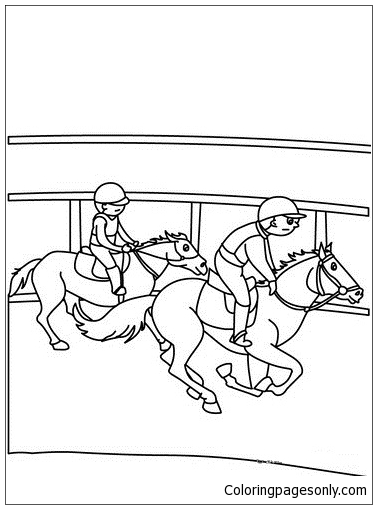
Hot-blooded animals are the speed and endurance specialists – breeds developed in hot desert or steppe climates for rapid movement over long distances. The Arabian horse (the collection’s “Quarter Horse” tile represents its American cousin) is the oldest and most influential of the hot-blooded breeds, with records of selective breeding in the Arabian Peninsula going back to at least the 7th century CE. Arabians are compact, refined, and physically distinctive for their concave profile (“dished” face), large nostrils, and naturally elevated tail carriage. They have one fewer lumbar vertebra than most other horses. The Thoroughbred – the breed that dominates modern horse racing – descends almost entirely from three imported Arabian stallions in 17th-century England.
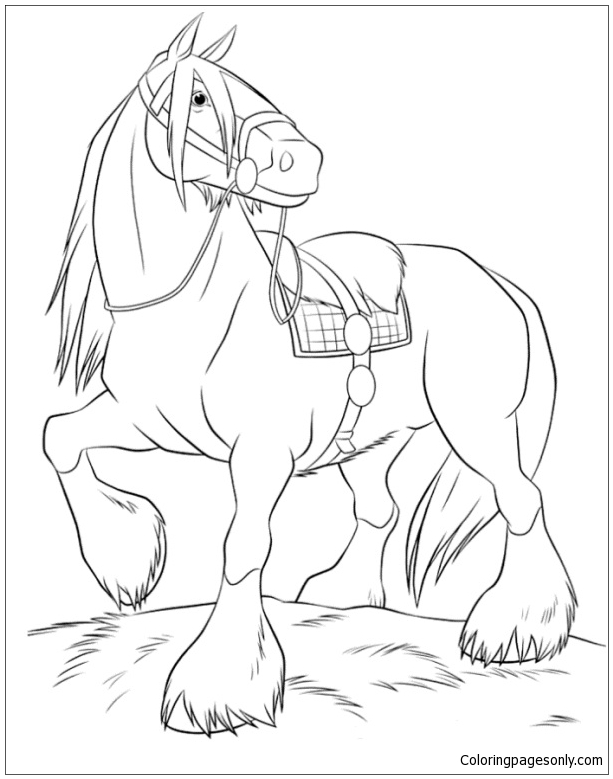
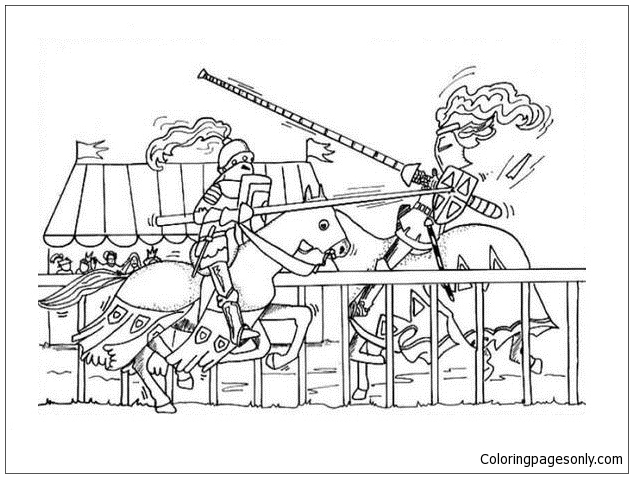
Cold-blooded animals are the power and endurance workers – large, heavy draft breeds developed in northern Europe for farming, hauling, and warfare, carrying armored knights. The Clydesdale (Scotland), Percheron (France), and Shire (England) are the most widely known, with Shire horses reaching up to 19 hands (193 cm) at the shoulder and weighing over 900 kilograms – the largest horses alive. These breeds have the calm, patient temperament suited to sustained heavy labor and are described as “gentle giants” by their handlers.
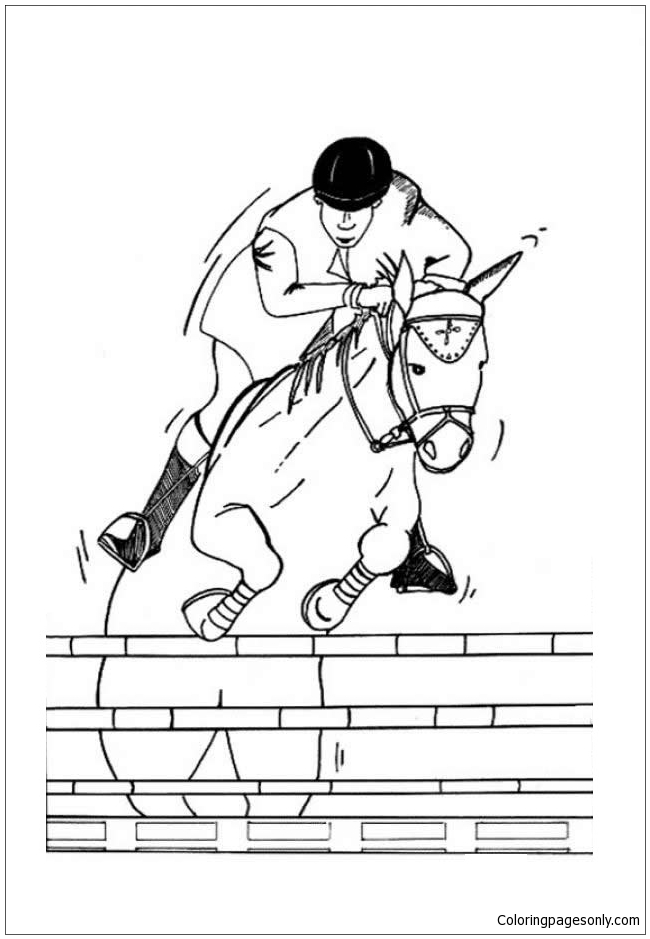
Warmbloods are purpose-engineered crosses – bred by combining hot blood speed and sensitivity with cold blood size and calm. Most modern sport horses used in Olympic disciplines (show jumping, dressage, eventing) are warmbloods, including the Hanoverian, Dutch Warmblood, and Swedish Warmblood. The Quarter Horse depicted in this collection’s tile is America’s own version of a warmblood concept – bred for the specific burst speed needed for cattle work and short-distance racing, it is the most registered horse breed in the world.
Horse Coat Colors – The Colorist’s Complete Reference Guide
Getting a horse’s coat color right is one of the most important coloring decisions in this collection, and it is one where precision makes a dramatic difference. Each of the following colors is biologically specific and has a specific visual character.
Bay is the most common horse coat color – a warm reddish-brown body with black mane, tail, and lower legs (called “points”). The body color ranges from light copper-red (light bay) through rich mahogany-red (blood bay) to very dark brown-red (dark bay). The key visual rule: bay always has black points. If the mane and tail match the body color, it’s not bay.
Chestnut (called sorrel in Western riding contexts) is a warm red-brown coat with a mane and tail in the same color as the body, ranging from golden-yellow-red (light chestnut or palomino-adjacent) to deep liver-brown (liver chestnut). The critical distinction from bay: chestnut has no black. The mane, tail, and legs are all the same warm red-brown family as the body.
Grey is one of the most visually complex horse colors because it changes dramatically with age. Grey horses are born dark (often black or bay) and lighten progressively throughout their lives, often becoming nearly white in old age. A young grey horse may be iron grey (dark grey flecked with white); a middle-aged grey may be dappled grey (distinctive circular lighter patches on a darker grey background – one of the most beautiful and complex patterns to color); and an old grey may be almost pure white. There are no true white horses in the genetic sense – what appear to be white horses are almost always very old or very light grey horses.
Black is a pure, cool, dark coat that shows no red or brown tones – a true genetic black. It is less common than it appears because many “black” horses are actually very dark bay or very dark brown, which will show red or brown highlights in sunlight.
Palomino is the golden coat – a warm yellow-gold body with white or cream mane and tail. The body color ranges from pale cream-gold to deep, rich gold. The mane and tail should be clearly lighter and warmer than the body, tending toward cream-white. Palomino pages are among the most visually striking in this collection for their warm, luminous quality.
Dun is a diluted coat with a characteristic dorsal stripe – a dark line running along the spine from mane to tail – and often zebra stripes on the legs above the knees. The body color in dun horses is a yellow-tan or grey-tan. Dun is one of the oldest horse coat colors, likely ancestral to the species.
Roan horses have a body coat that is a mixture of white hairs and colored hairs rather than a uniform solid color, producing a distinctive speckled or frosted appearance. A bay roan has white hairs mixed into the bay body; a chestnut roan (strawberry roan) has white mixed into chestnut; a grey-roan (blue roan) has white mixed into black. The key visual: Roan horses have mixed-hair bodies but retain solid-colored heads, lower legs, mane, and tail.
Appaloosa horses have spotted coat patterns – white with dark spots, or dark coats with white spotted “blankets” over the hindquarters. The spots can be leopard-spotted (dark spots on white), blanket (solid white rump), snowflake (white spots on dark), or frost (fine white flecks). Appaloosa pages are the collection’s most complex single-coat-color coloring challenge.
The Collection’s Pages – A Scene Guide
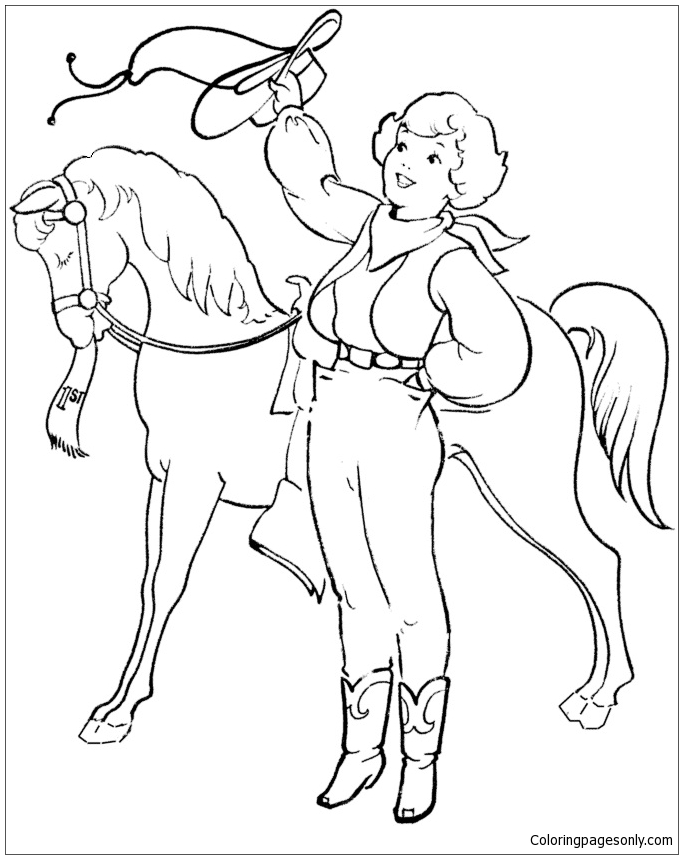
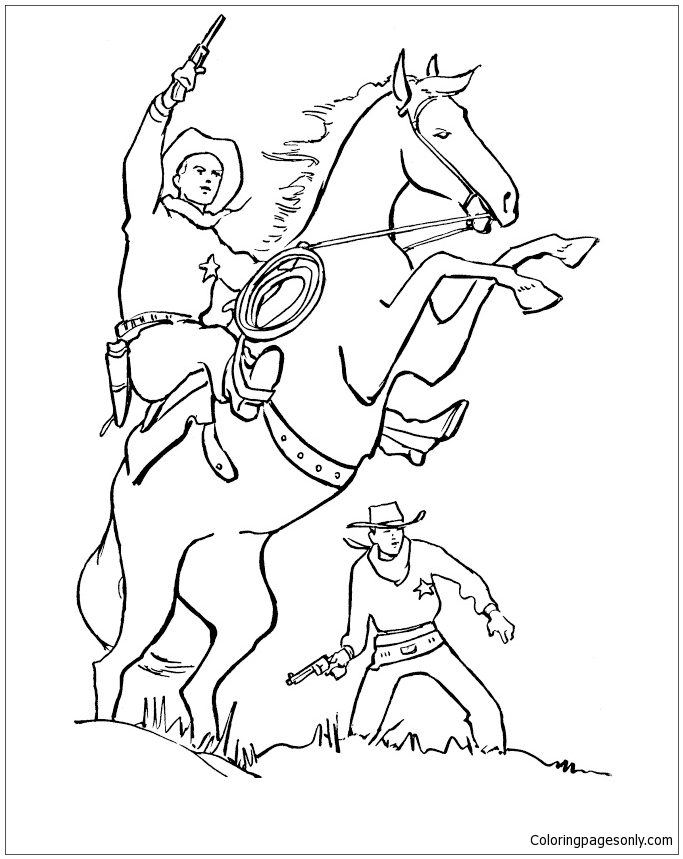
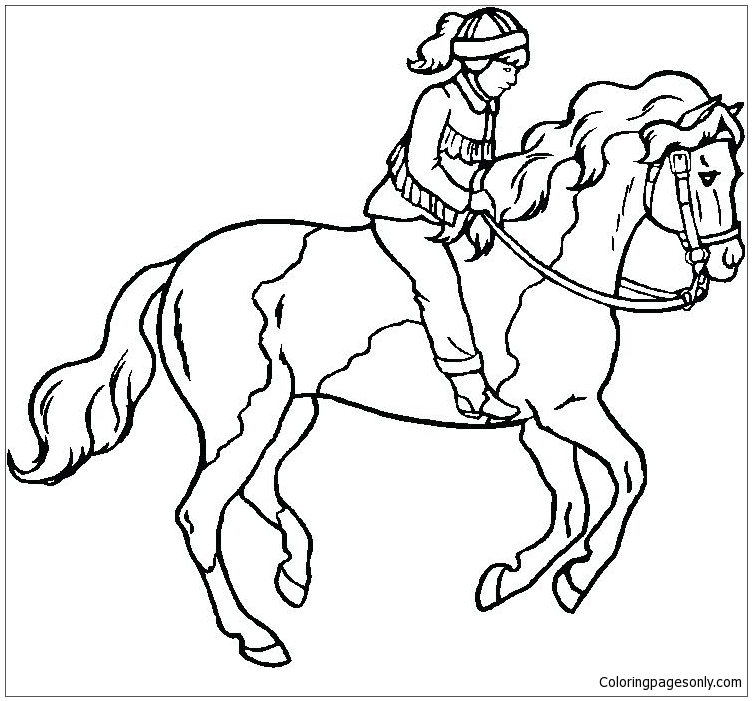
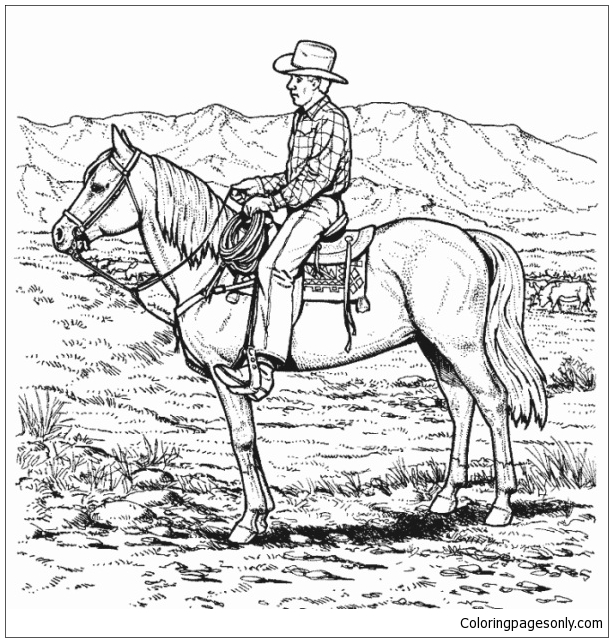
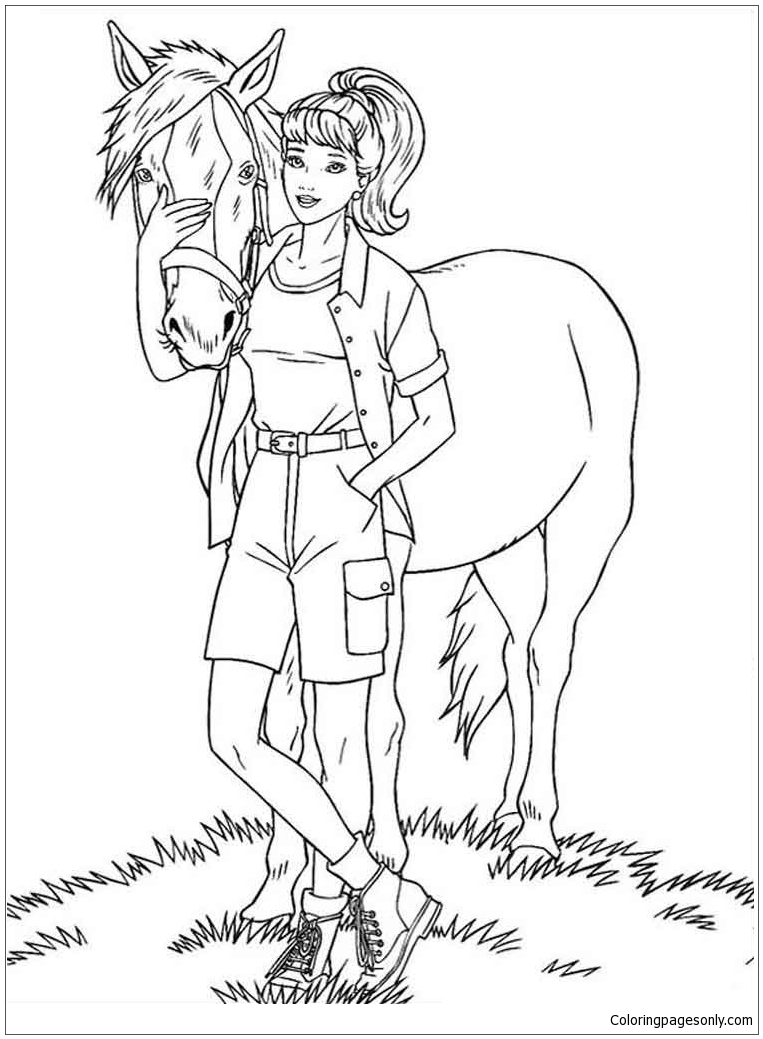
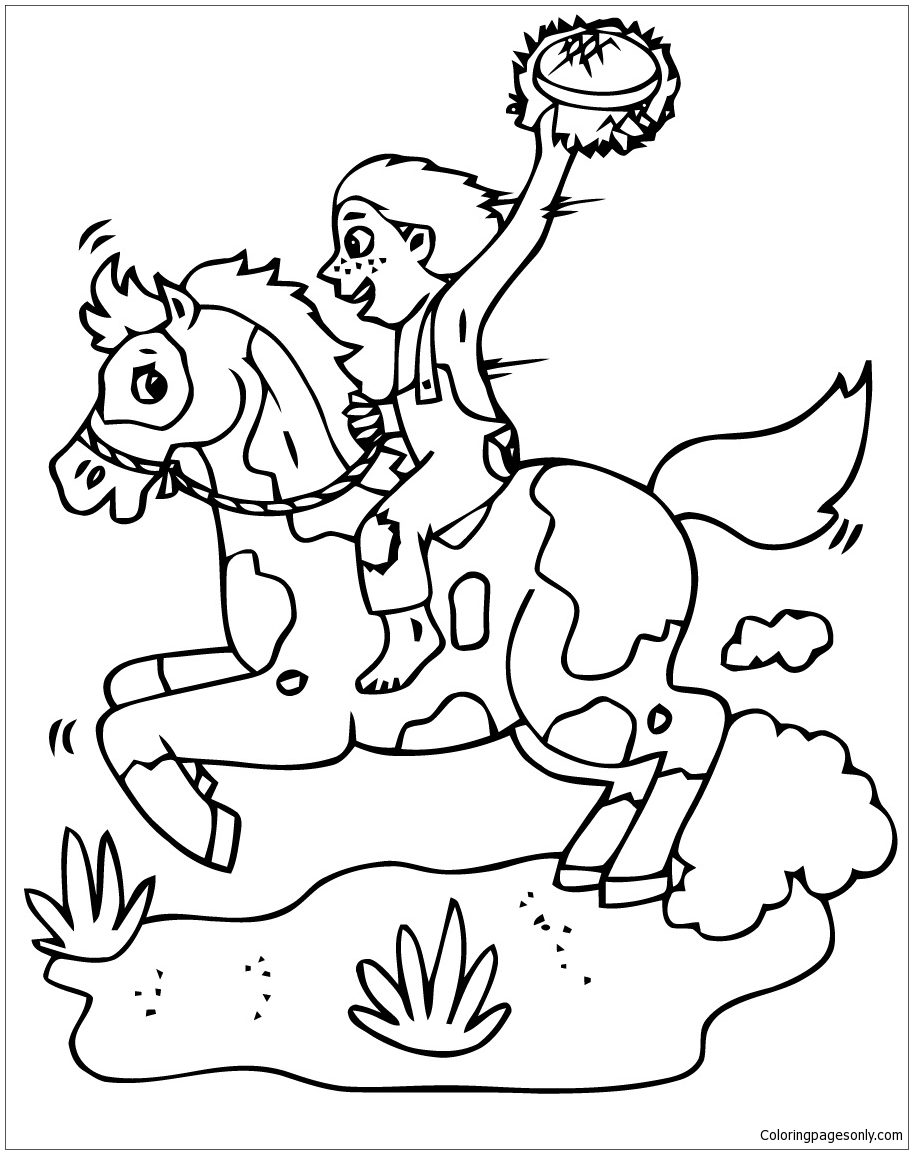
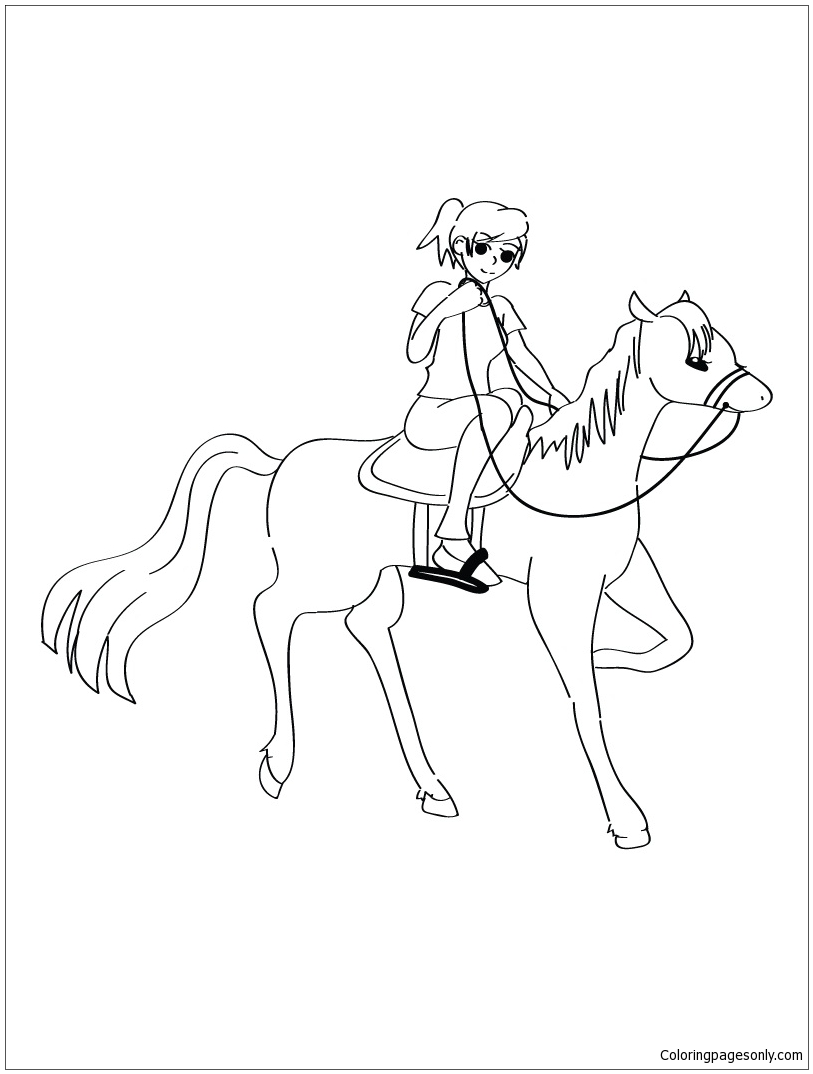
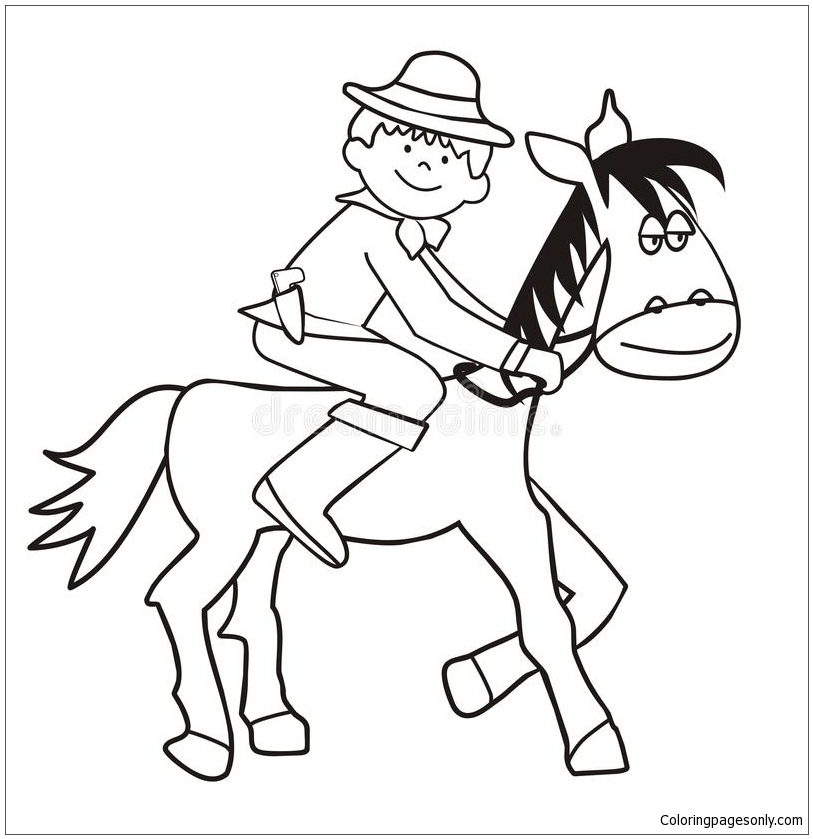
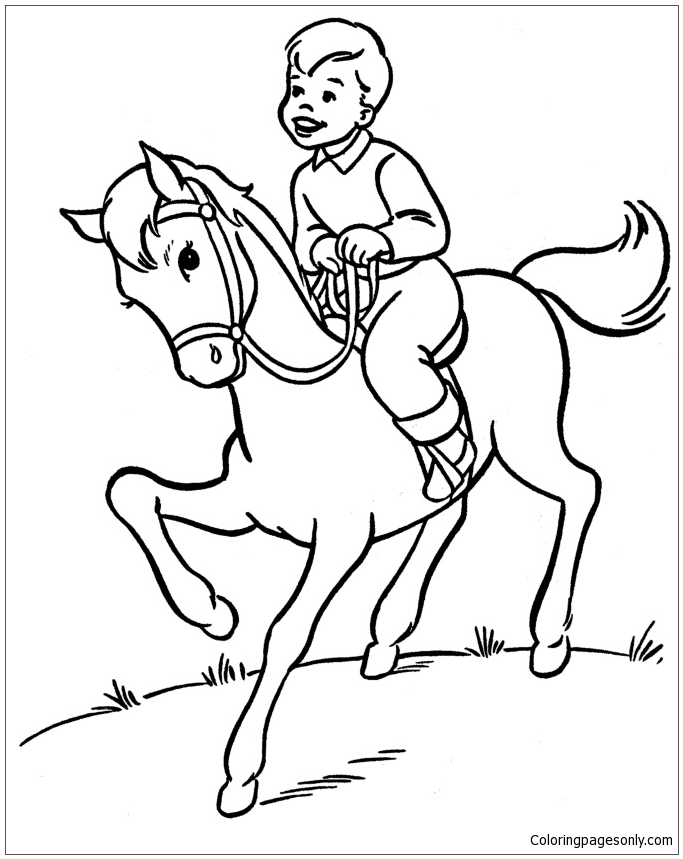
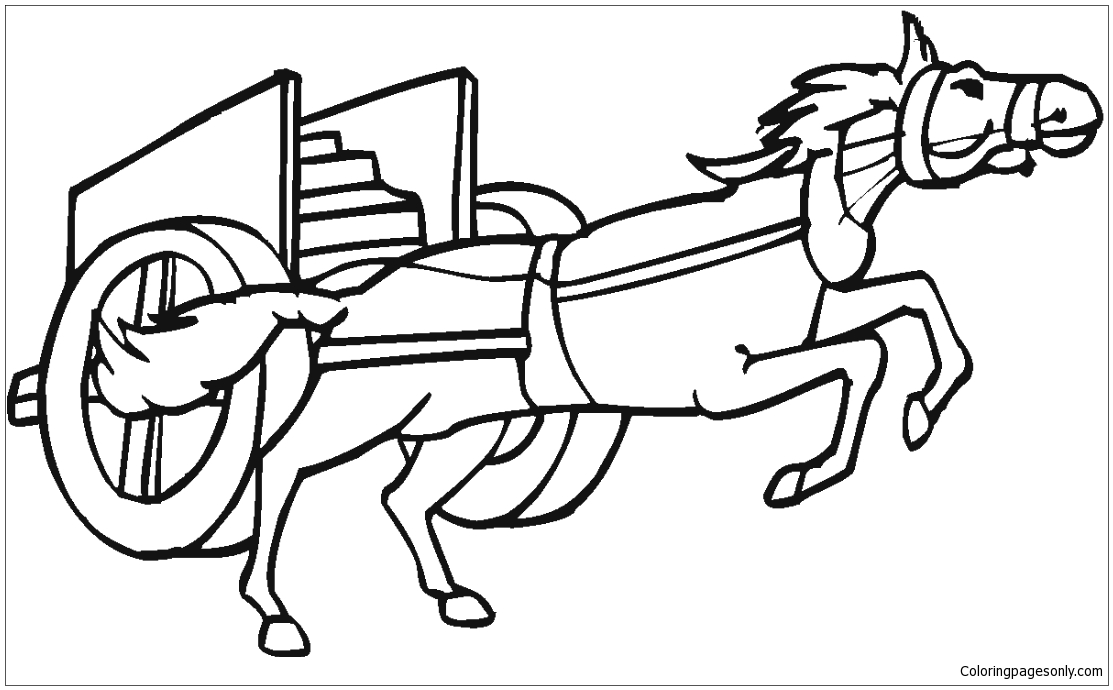
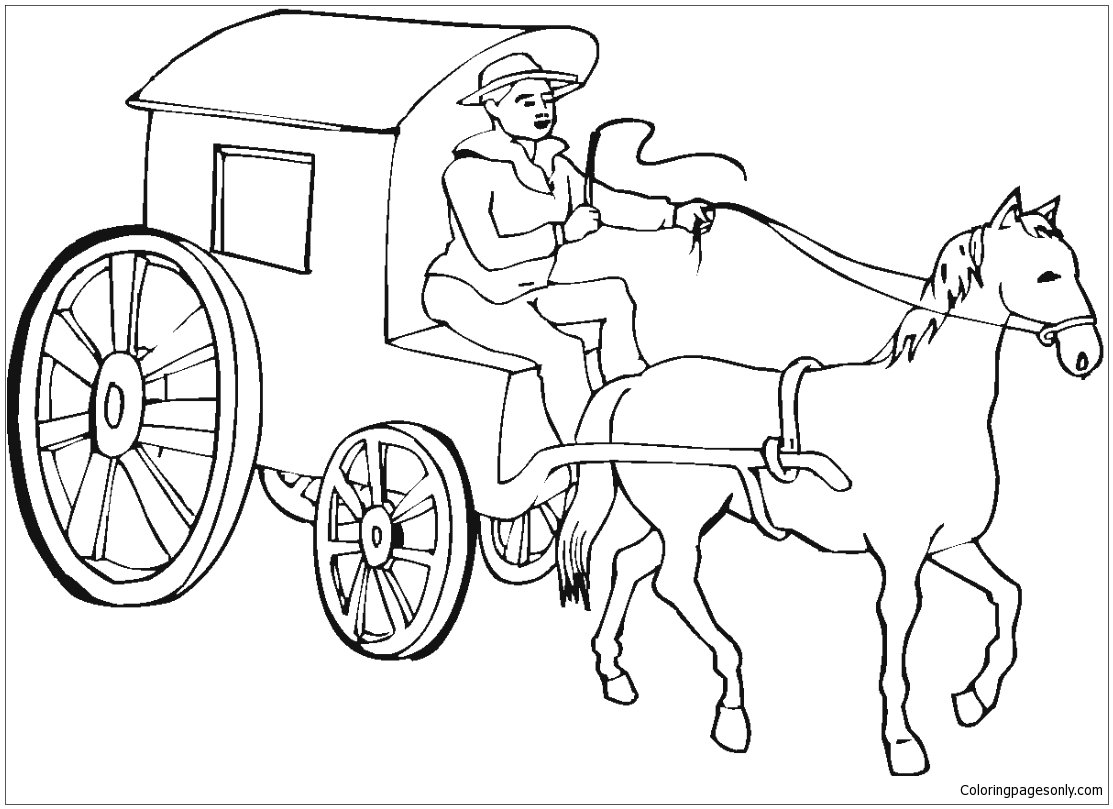
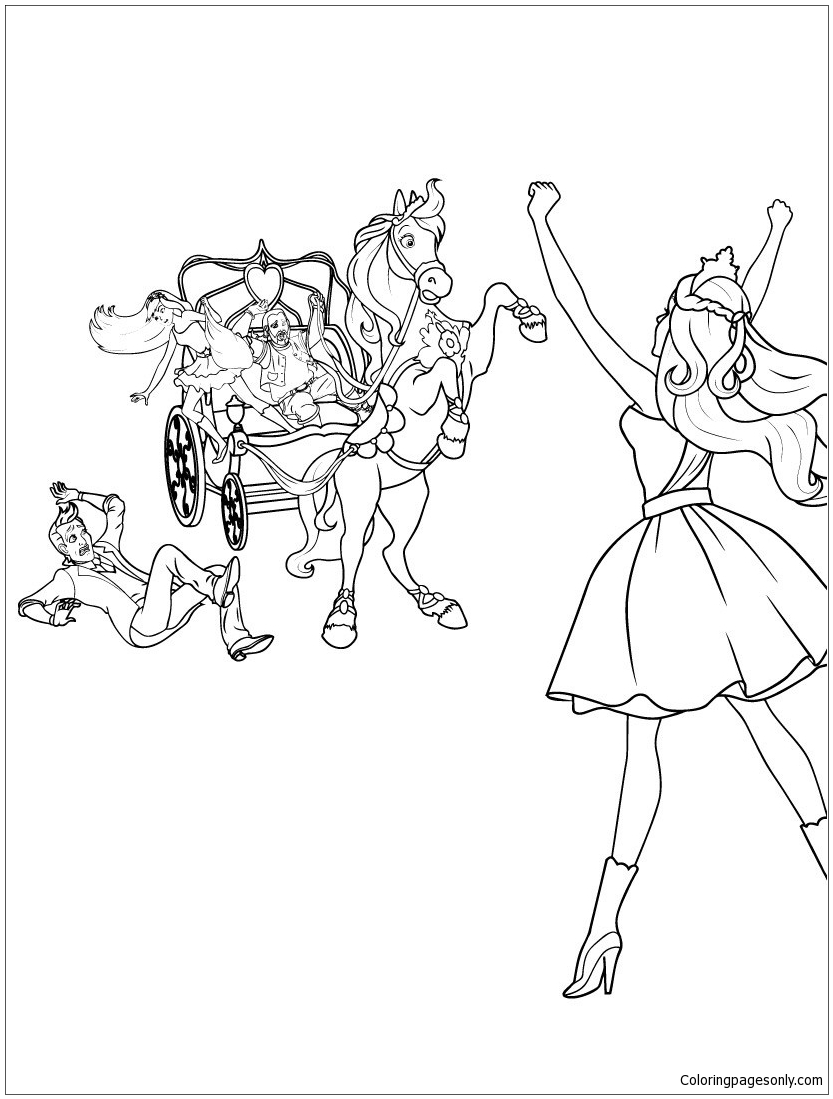
Riding and work scenes – “Cowboy Riding Horse,” “Horse And Sheriff” – depict the working partnership between horses and humans that defined transportation, agriculture, law enforcement, and warfare for several thousand years. These pages work best when the horse and rider’s palettes are chosen to complement rather than compete.
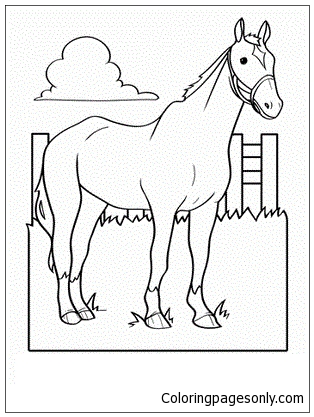
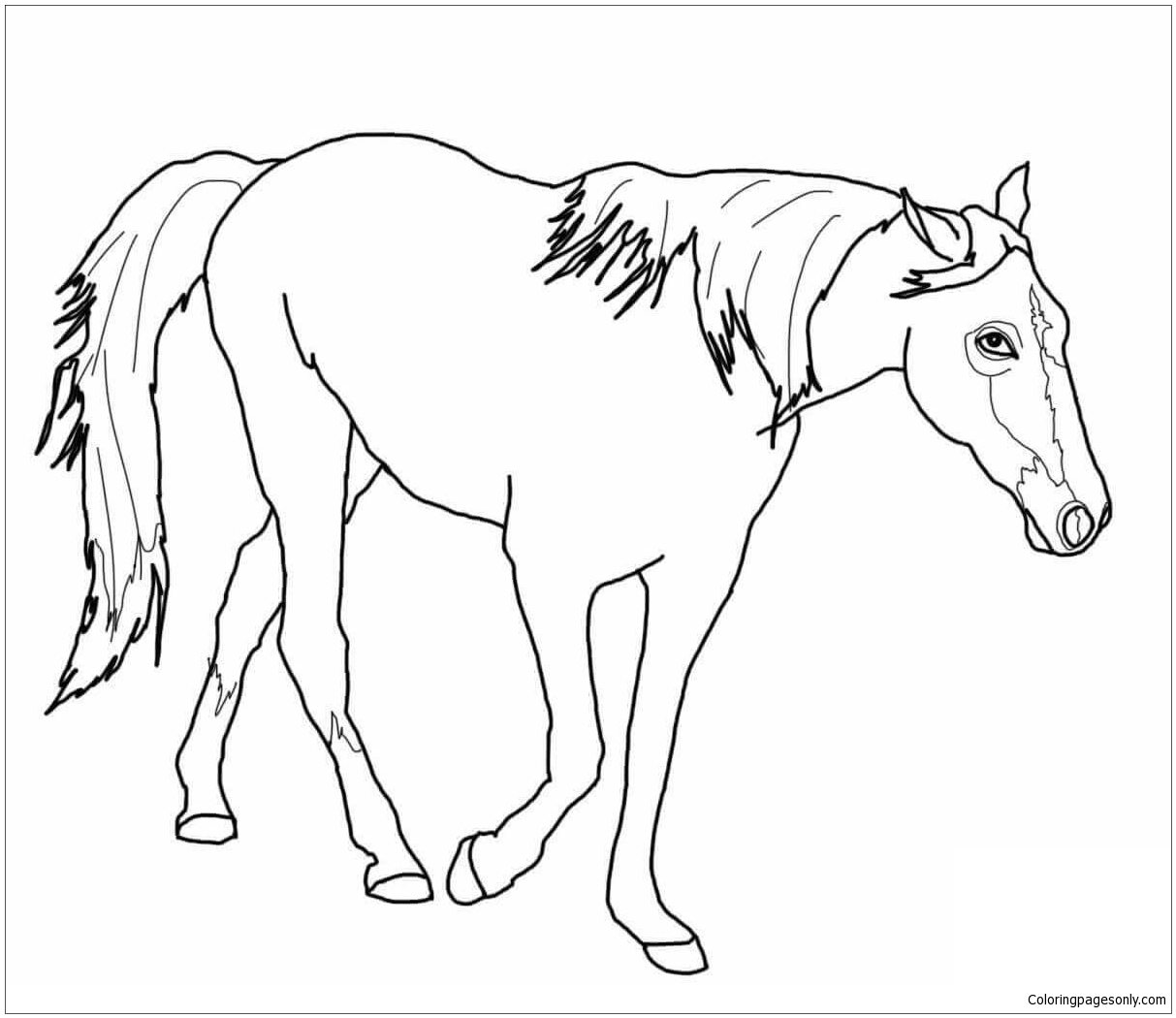
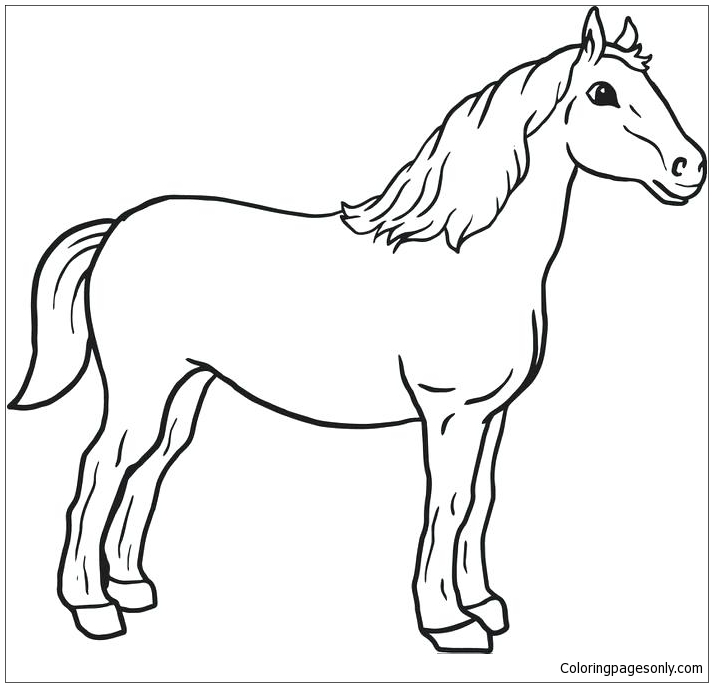
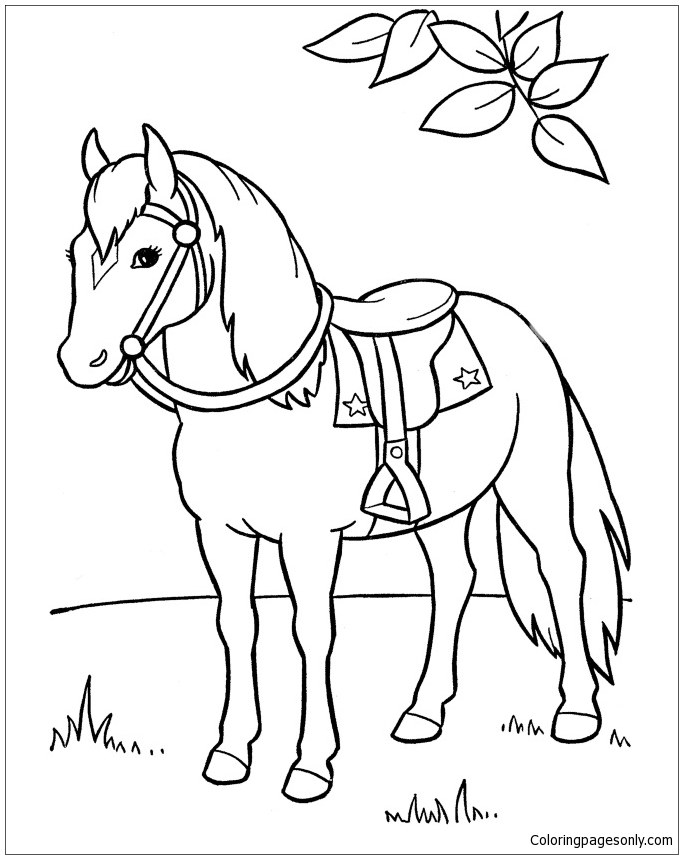
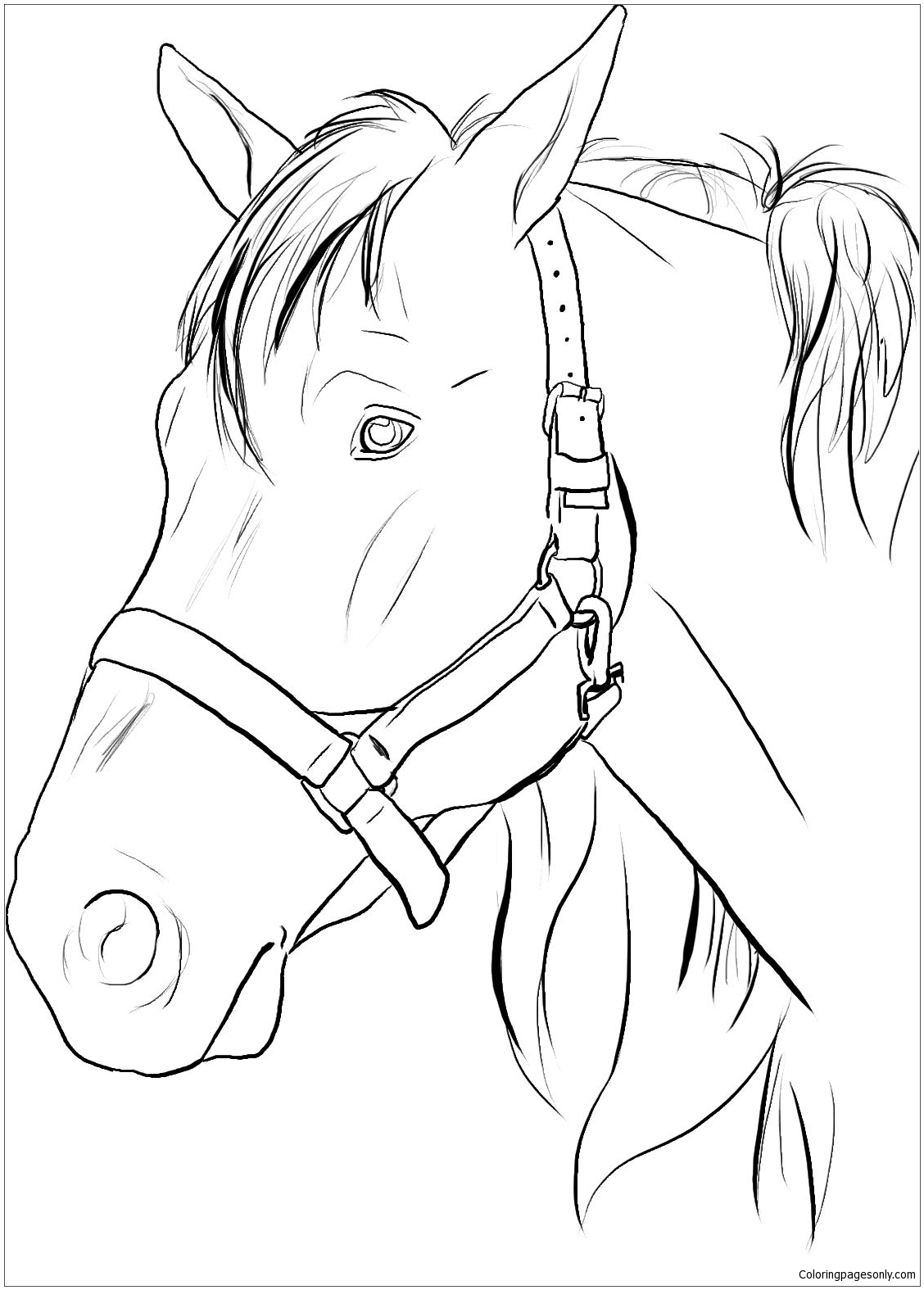
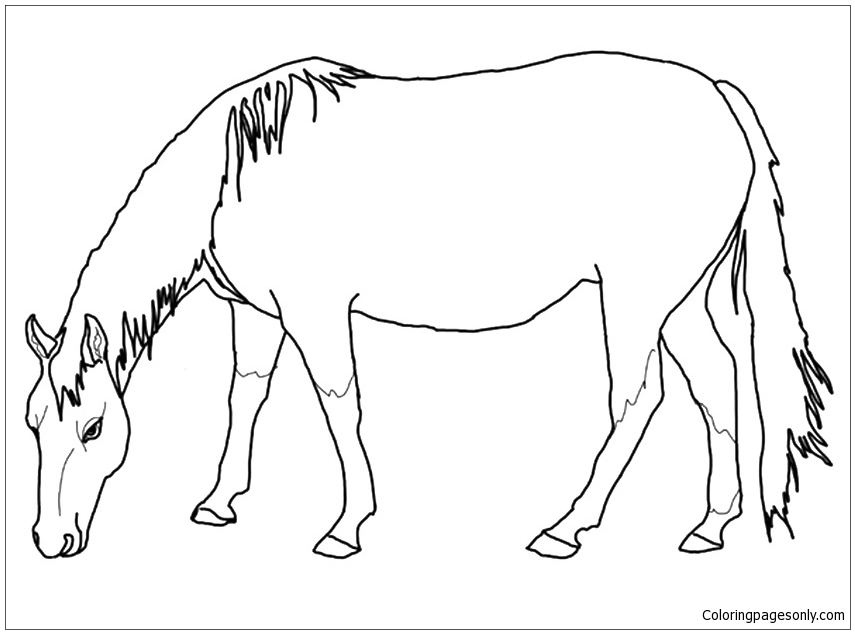
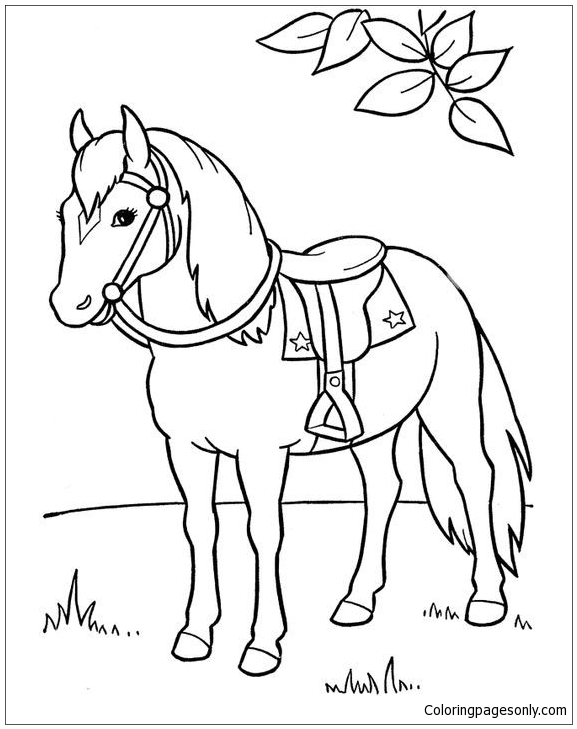
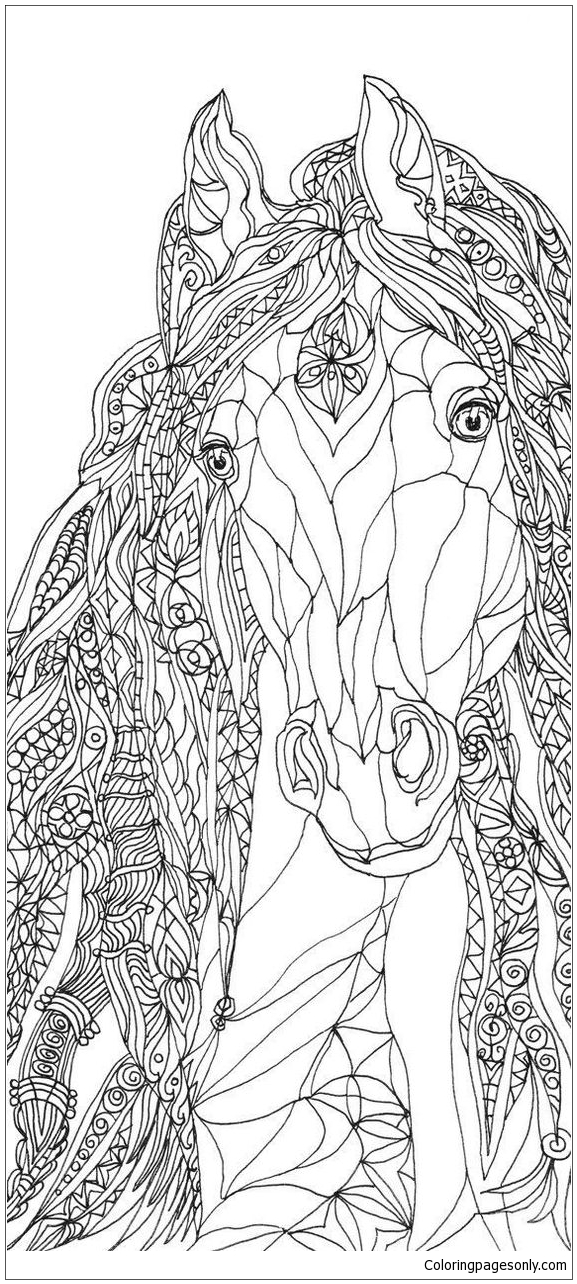
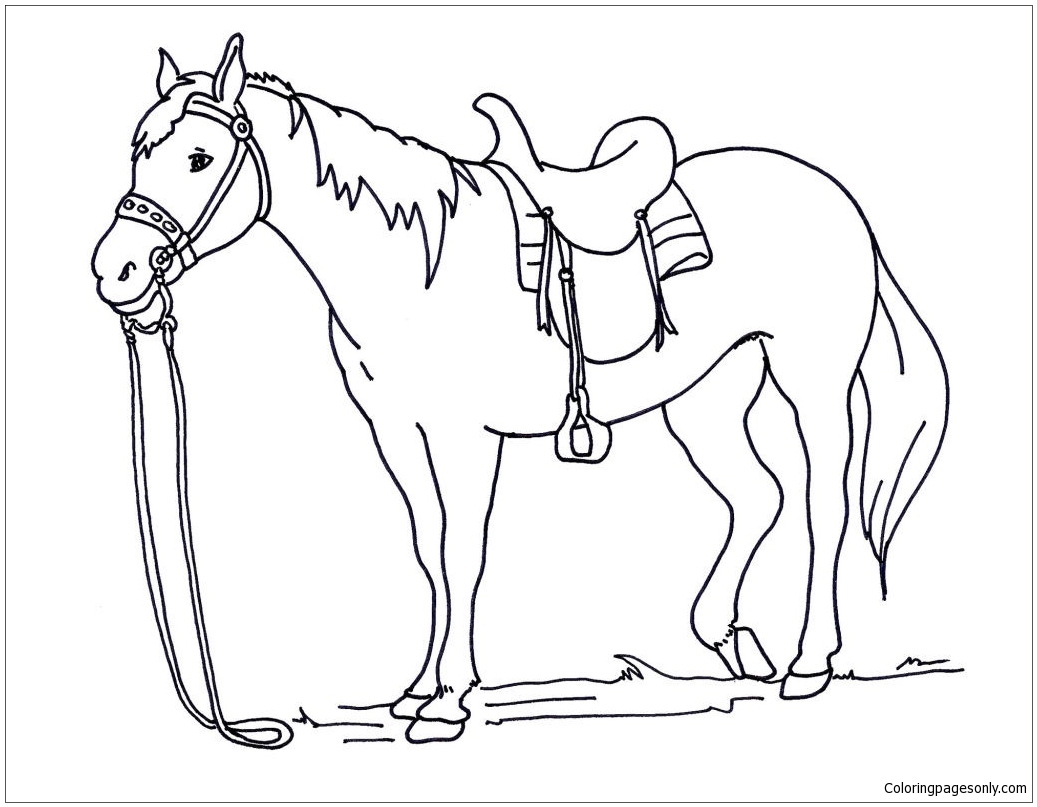
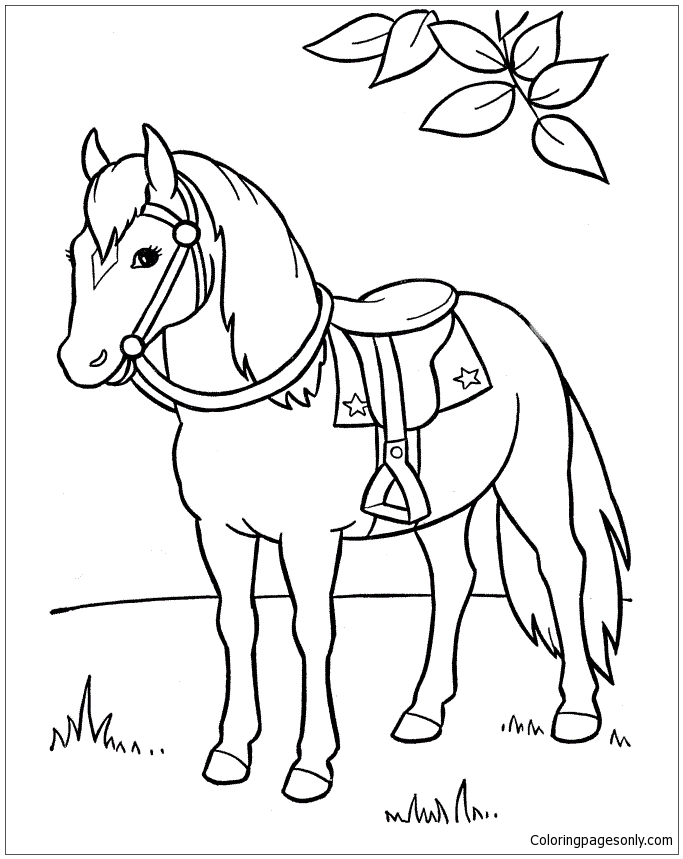
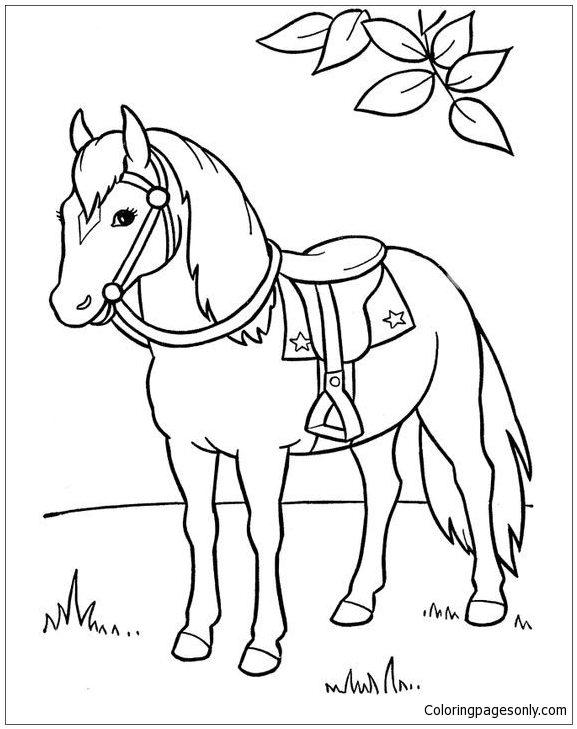
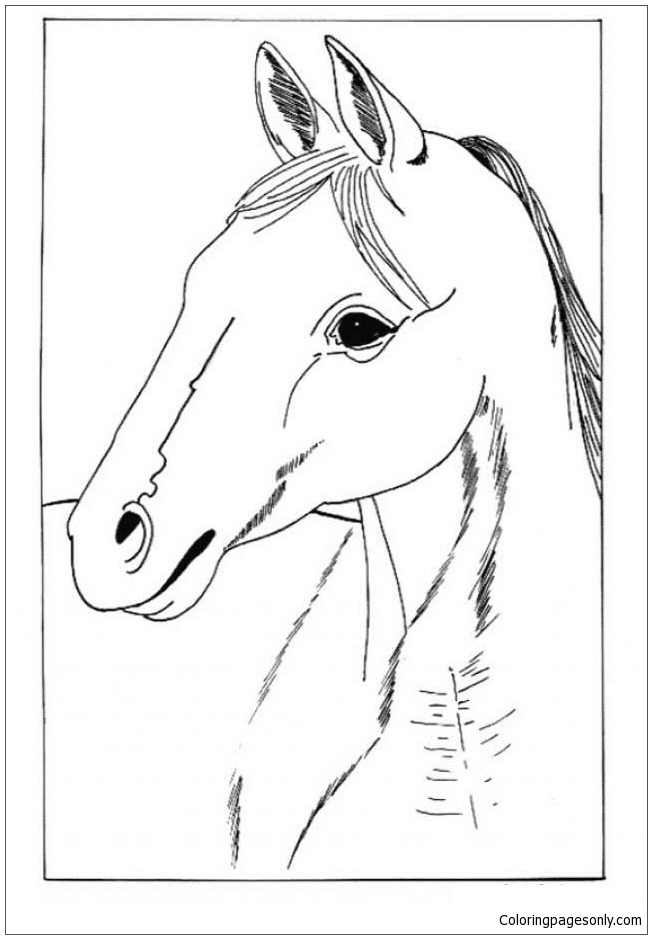
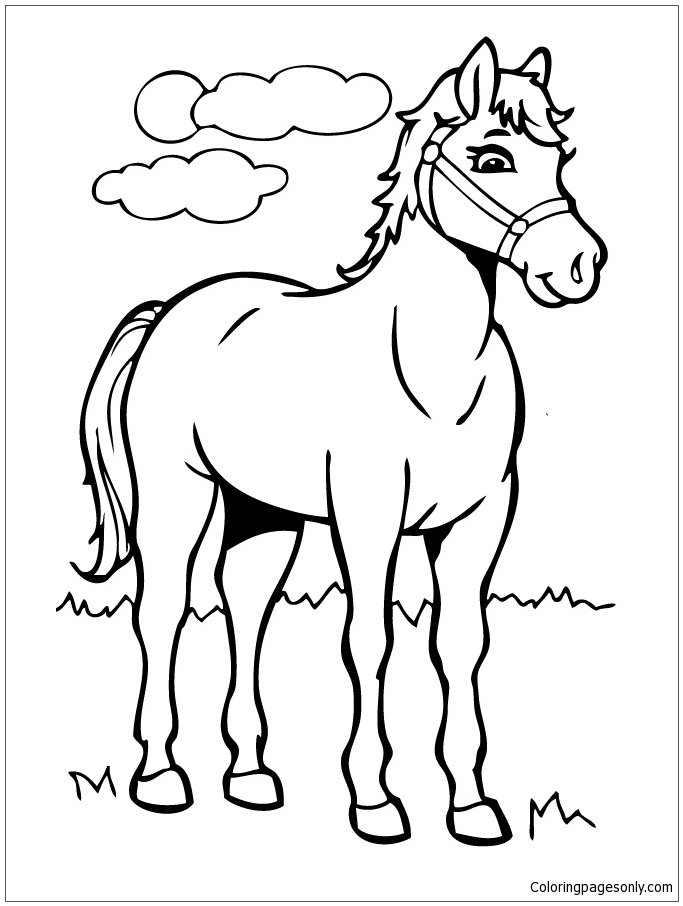
Breed portrait pages – “Quarter Horse” and other breed-specific tiles – offer the opportunity to research and reproduce a specific breed’s characteristic conformation and coat color. The Quarter Horse, as noted above, should be rendered in its most common coat colors: bay, chestnut, or sorrel are the most historically common Quarter Horse colors, though all colors exist in the breed.
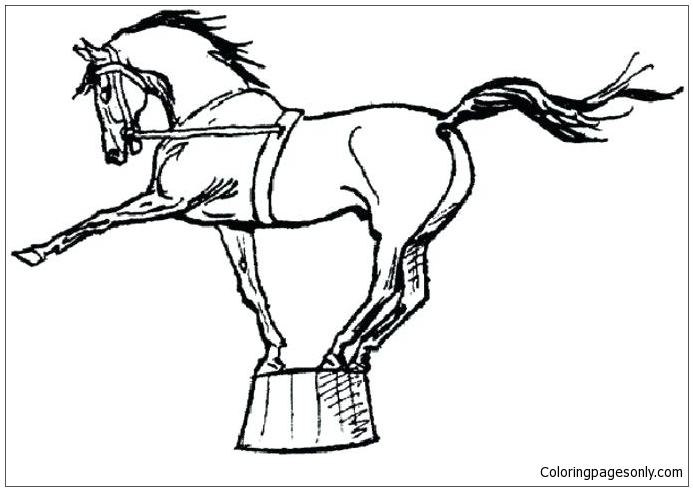
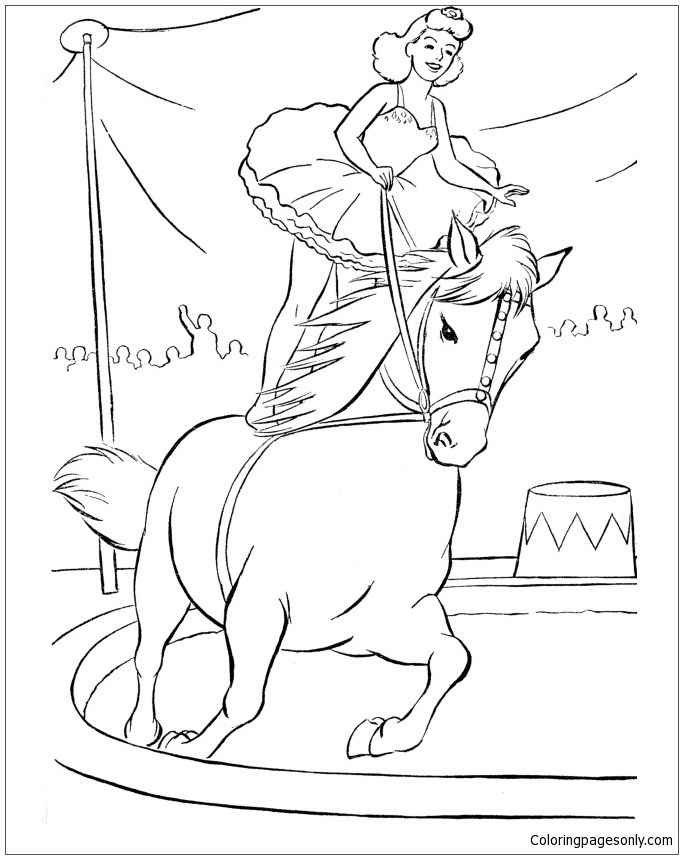
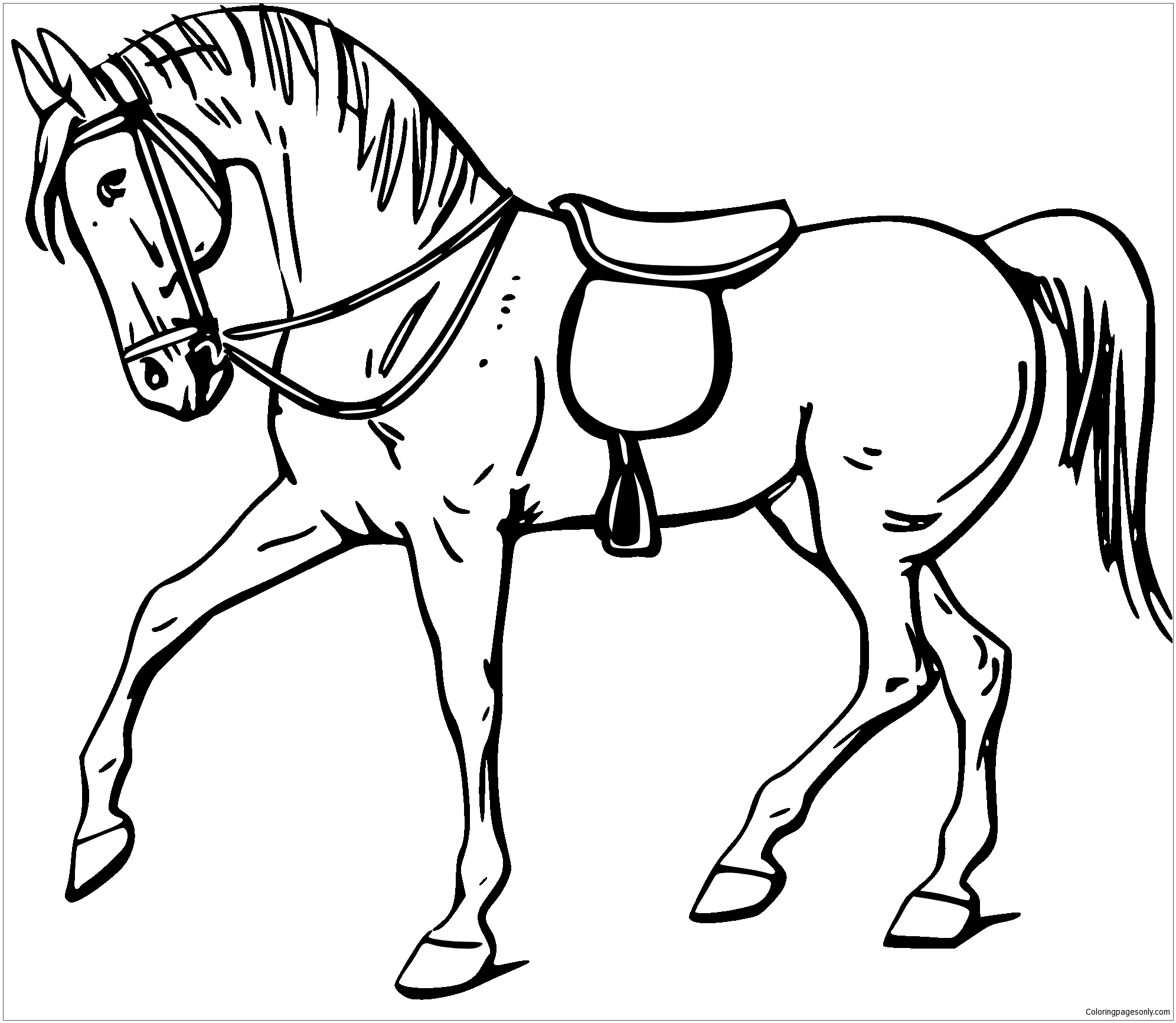
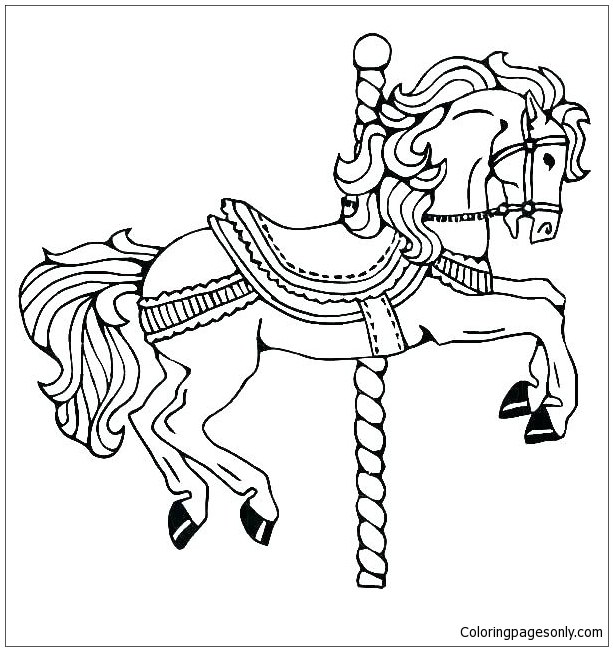
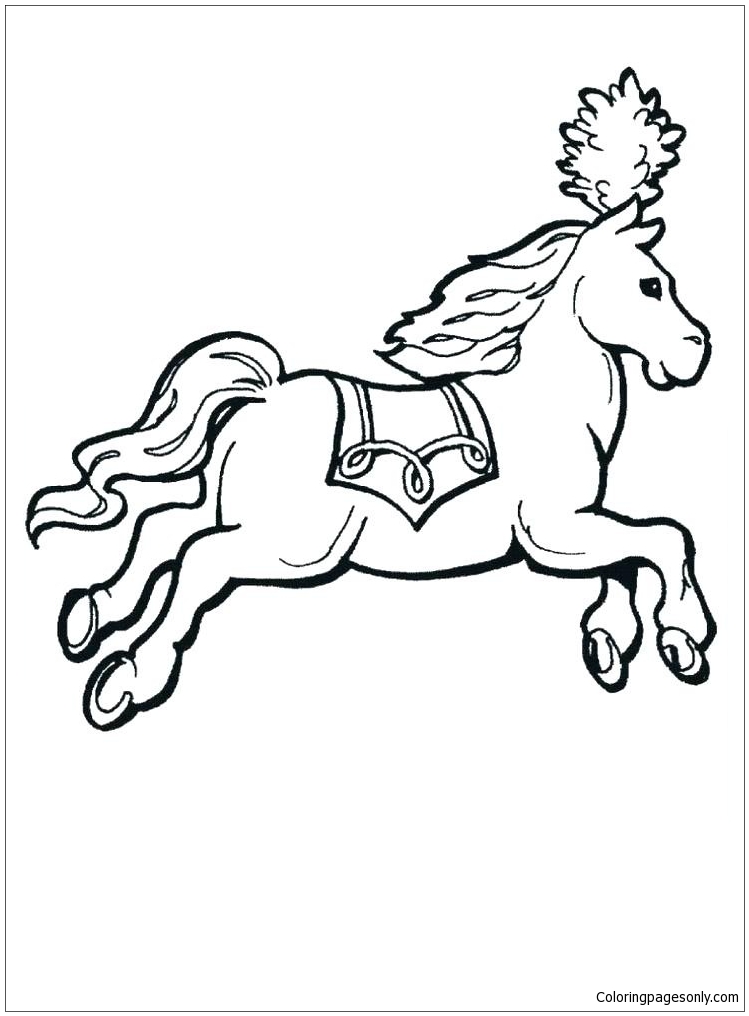
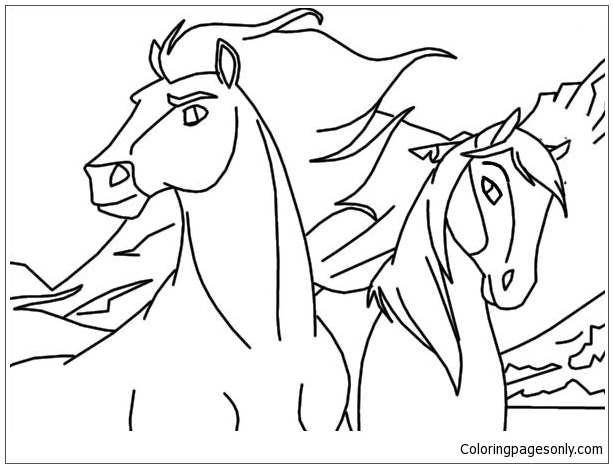
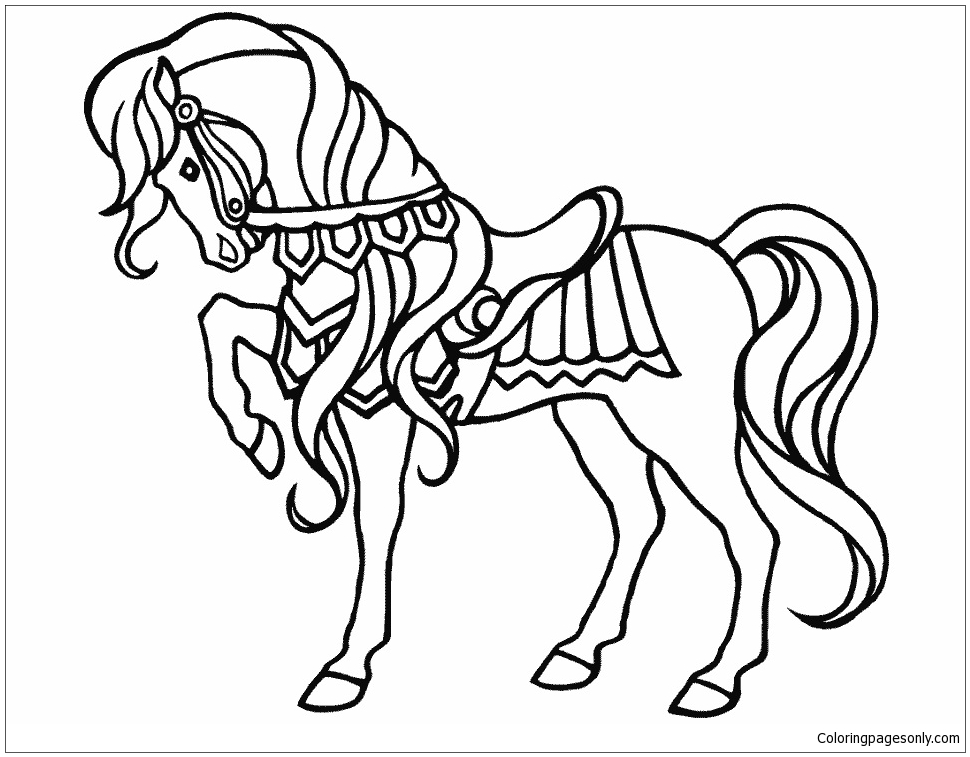
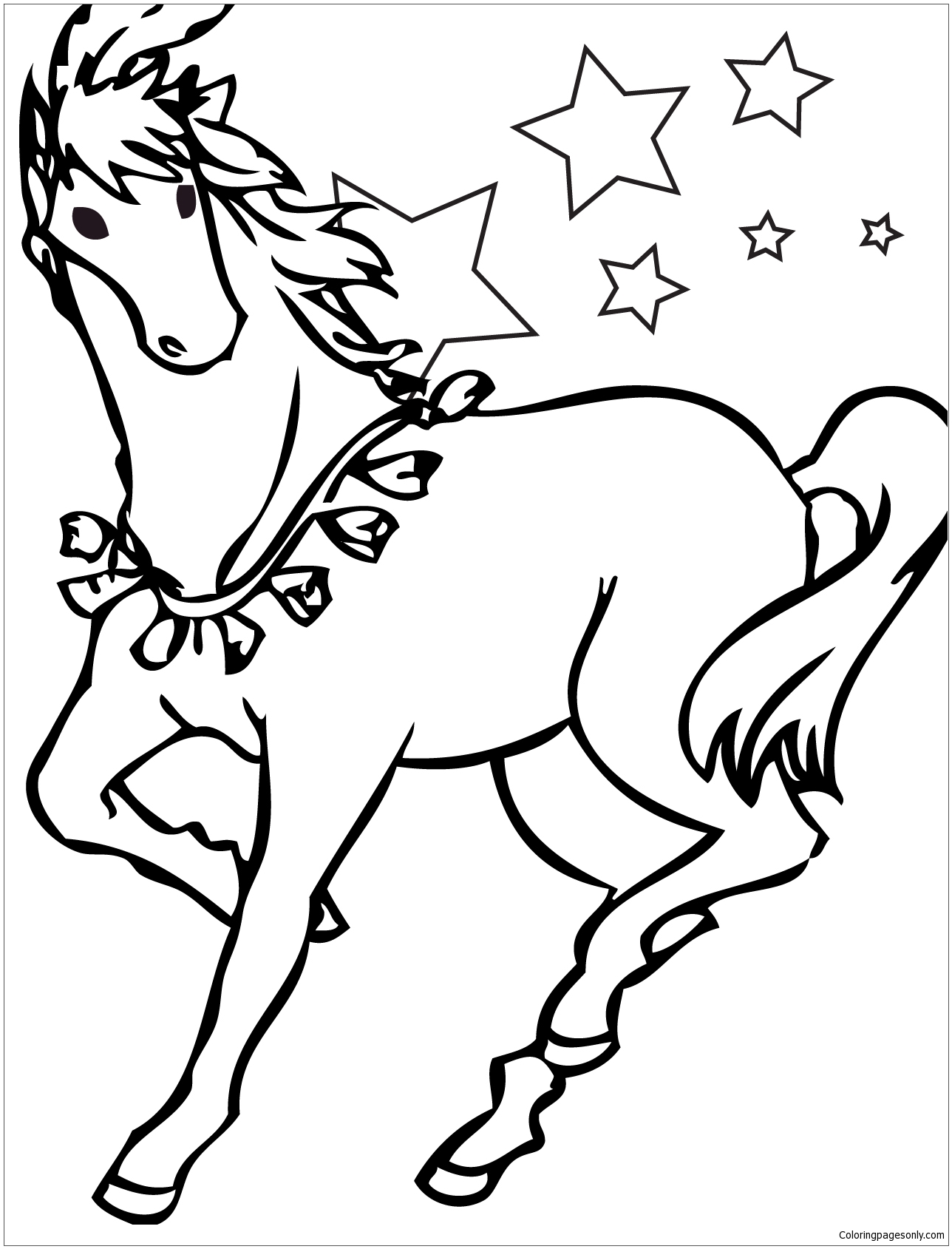
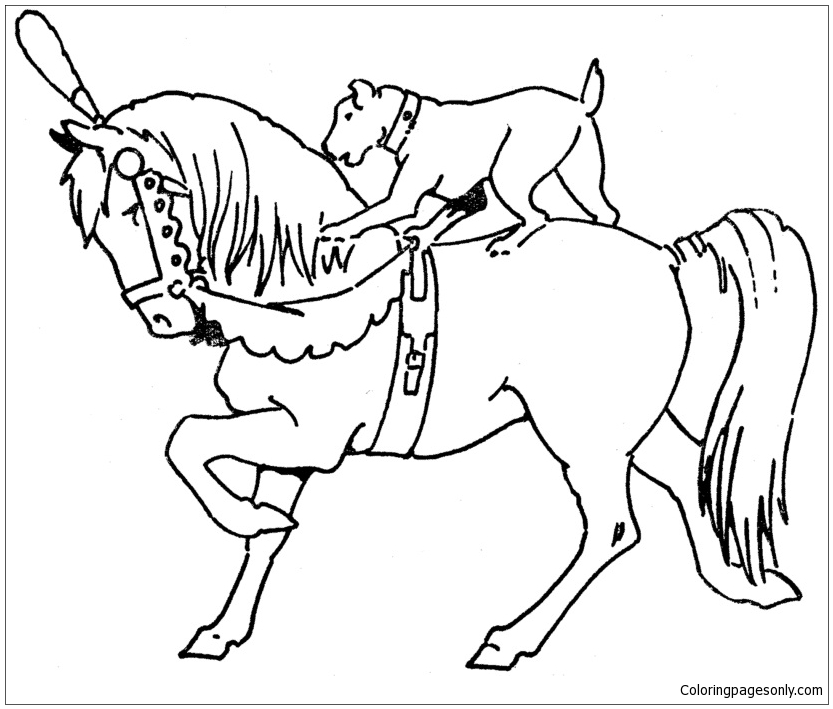
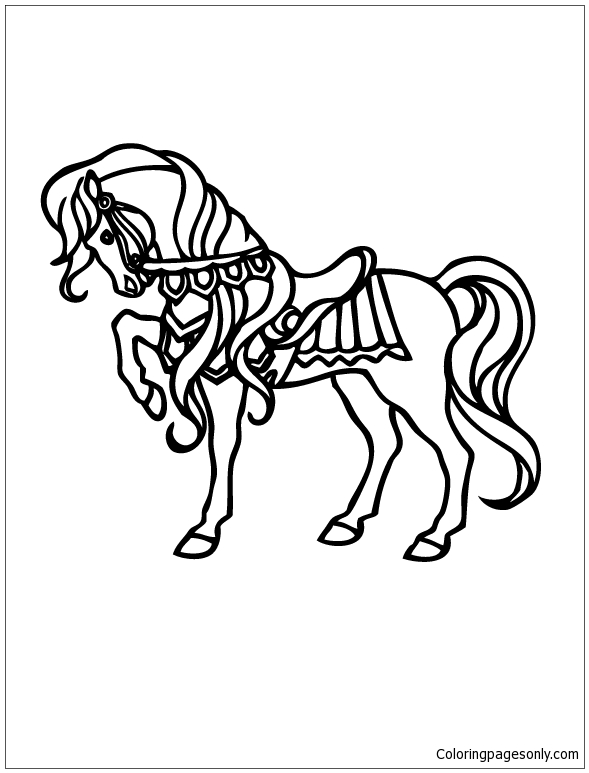
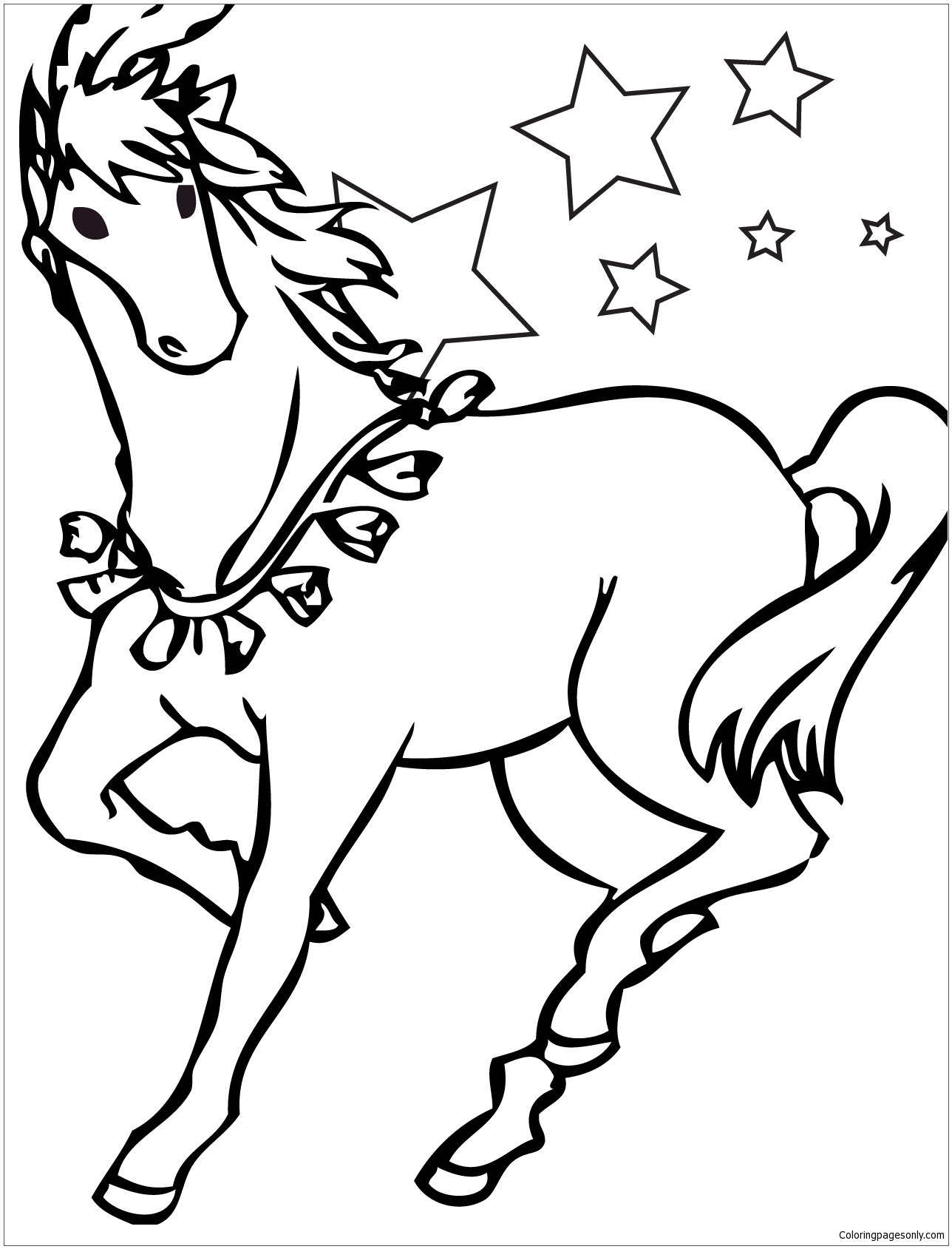
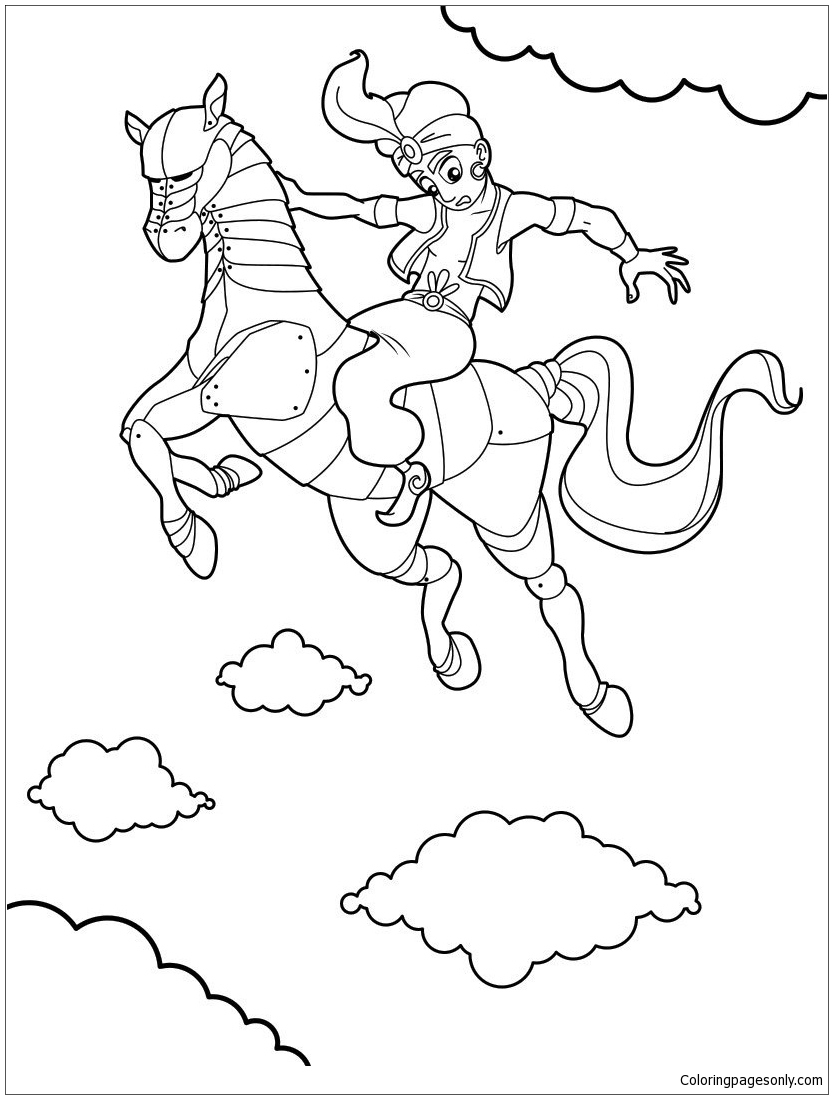
Performance and circus pages – “Circus Horse Performing Coloring Page,” “Two Circus Horses Coloring Page” – depict horses in performance contexts: elaborately decorated with feathers, ribbons, and decorative tack, in the elevated, animated gaits (the Spanish Walk, the levade, the capriole) that circus trainers develop through years of patient work. These pages are the collection’s most theatrically rich and allow the most creative use of non-naturalistic colors.
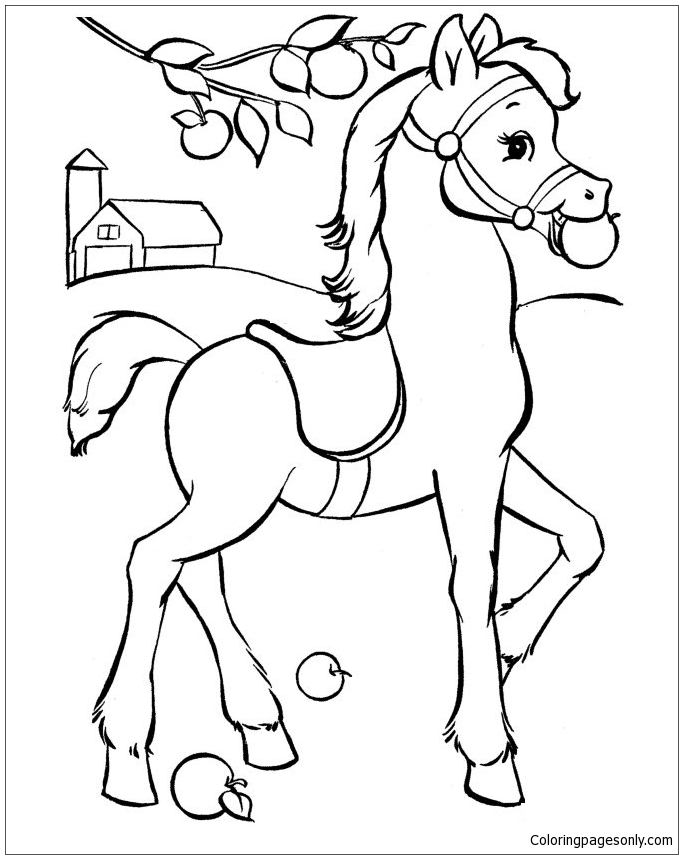
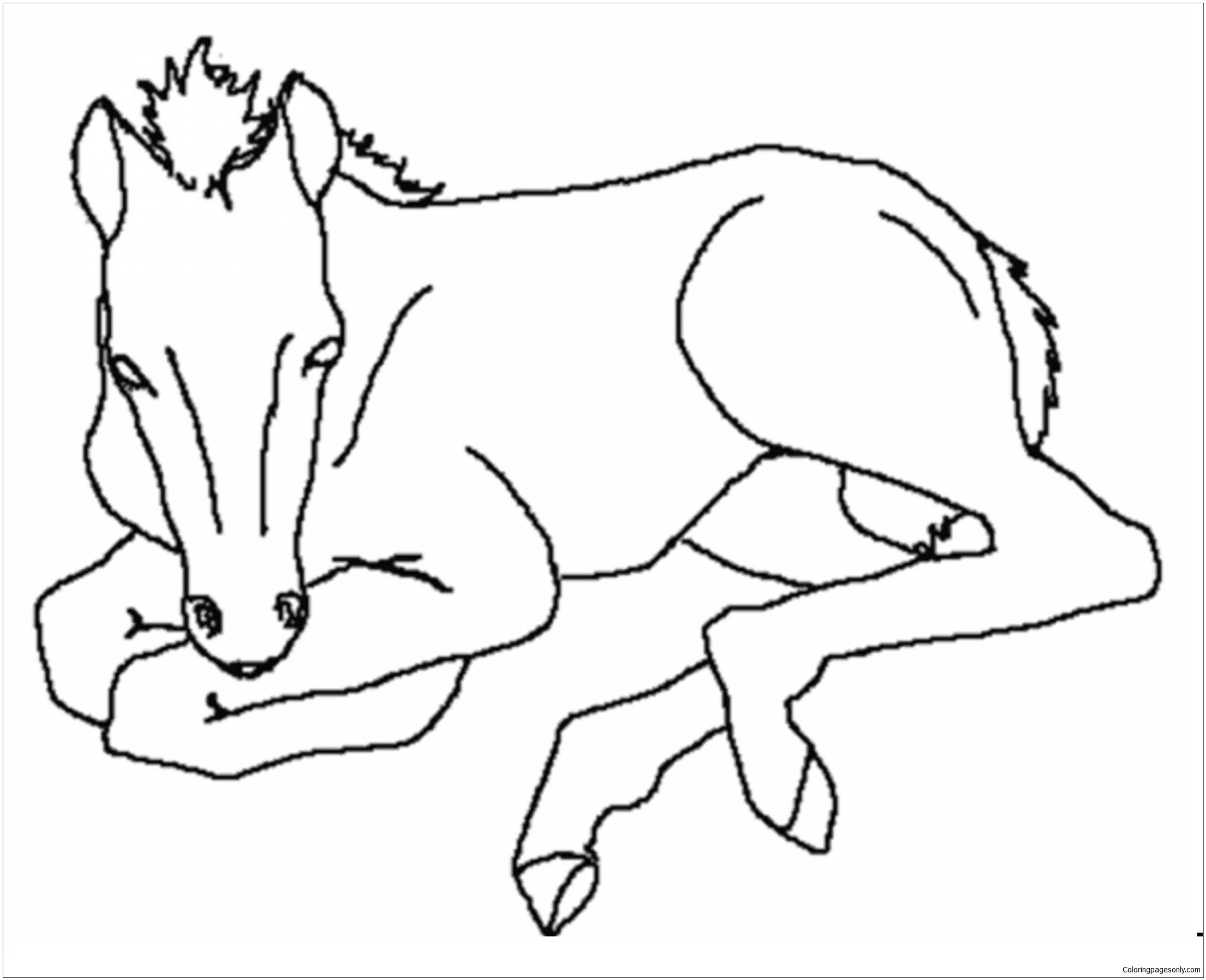
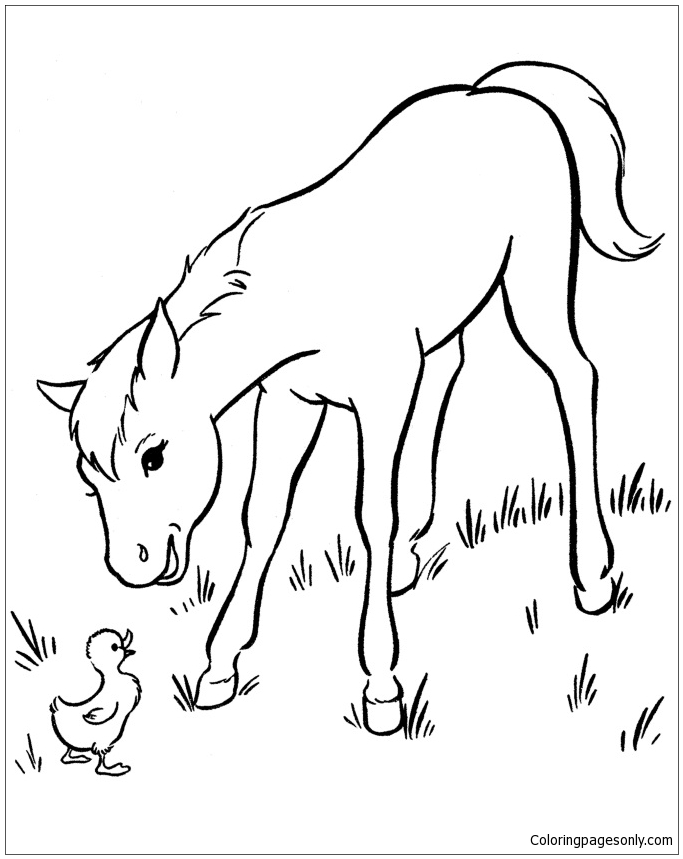
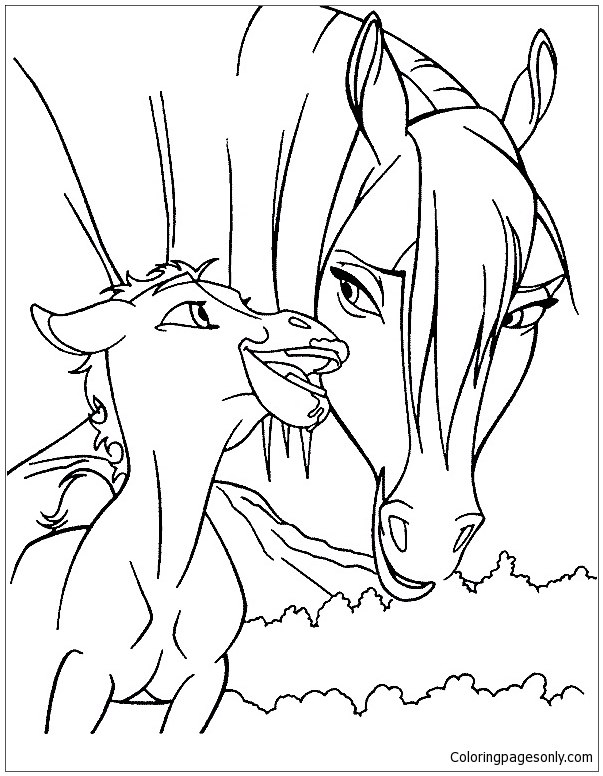
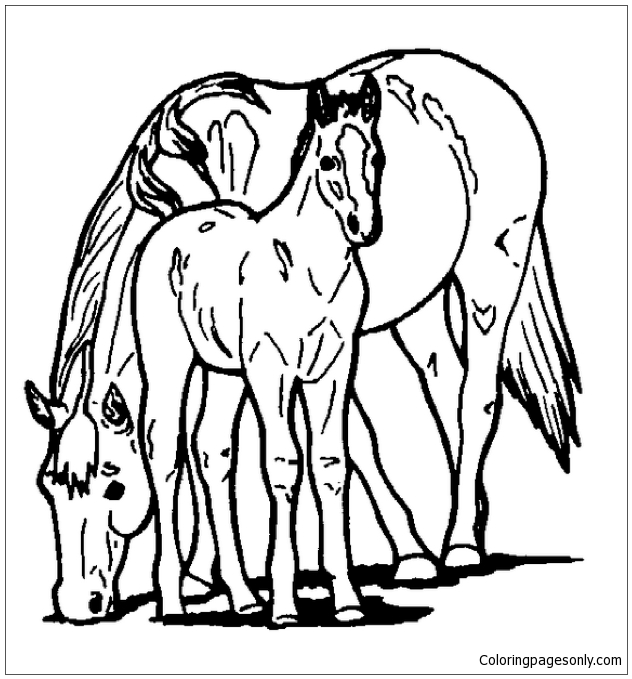
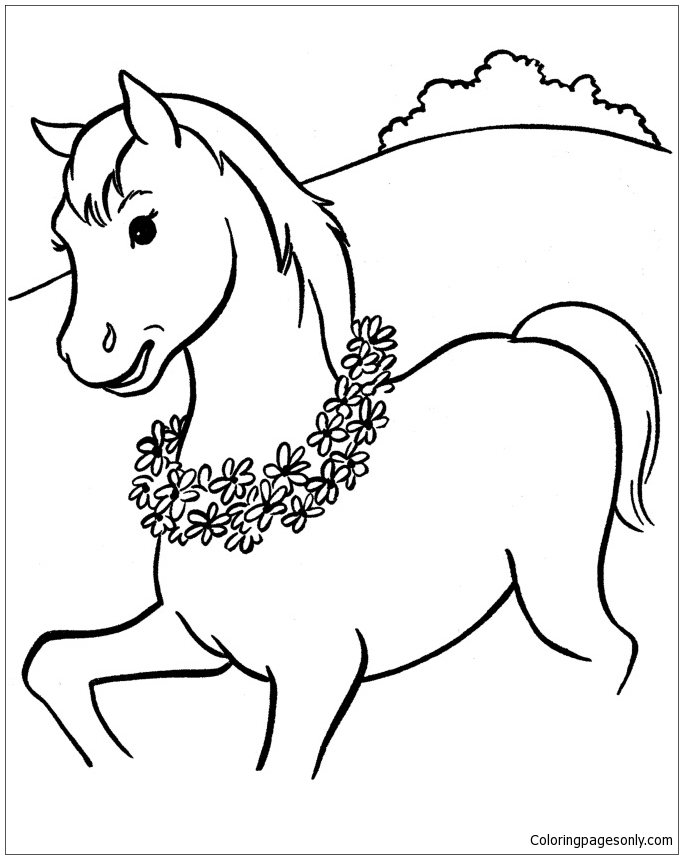
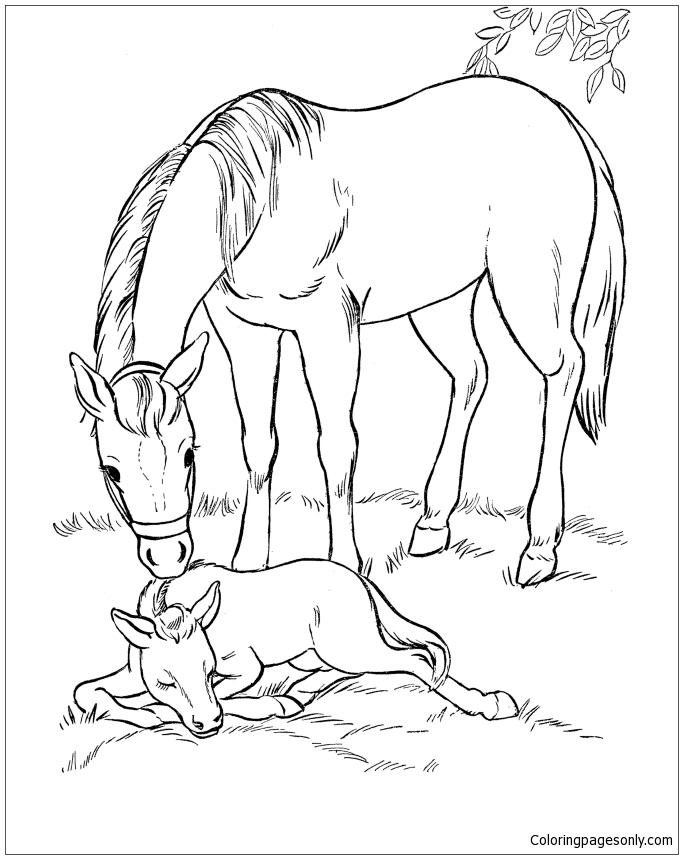
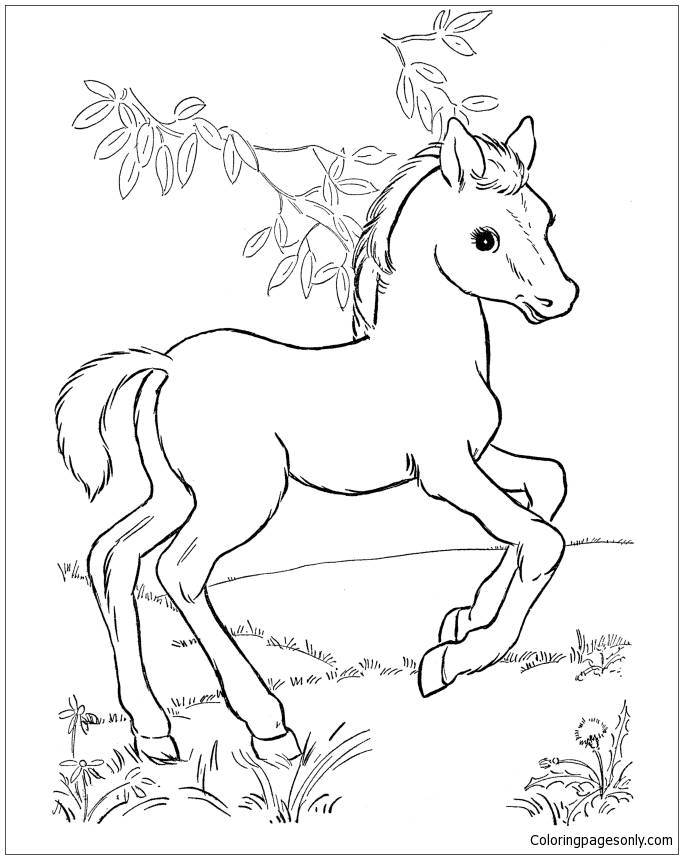
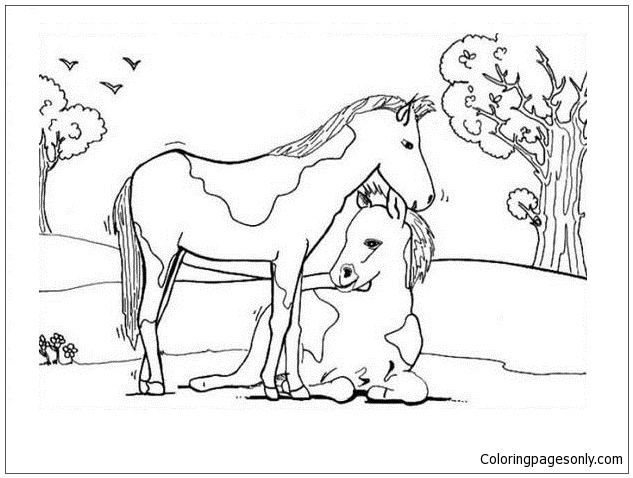
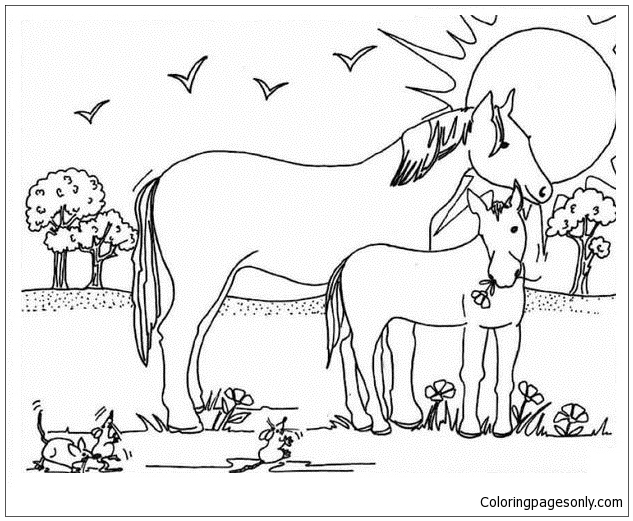
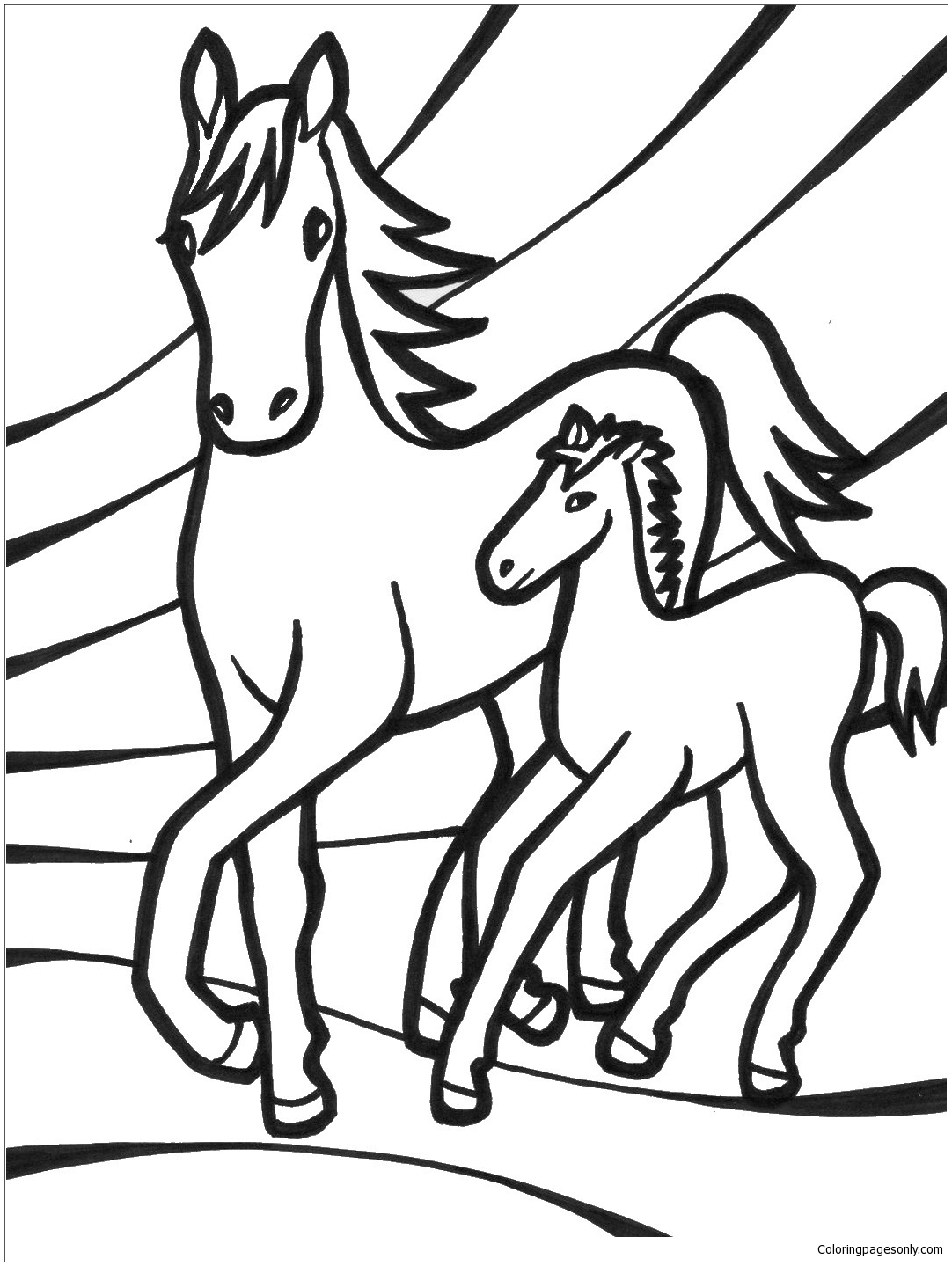
Foal and young horse pages – “Baby Foals Coloring Page” – depict newborn or very young horses. Foals have proportions distinctly different from adult horses: their legs are disproportionately long (they are born with nearly full leg length), their heads are slightly oversized relative to their bodies, and their coats are often slightly fluffy and soft-textured compared to the sleek coats of adults. The proportional differences are important for making a foal page read correctly – a page that uses adult horse proportions will look wrong even if the colors are accurate.
Coloring Tips for Horse Pages
Coat direction – always follow the muscle. Horse fur is very short and lies flat against the body in specific directional patterns that follow the muscle groups underneath. Unlike cats (where fur can be depicted as a somewhat generic texture), horse coloring requires following the body’s musculature to look right. The general principle: fur follows the line of the underlying form. On the barrel of the body, color strokes follow the curve of the ribcage. On the neck, strokes follow the crest line downward. On the hindquarters, strokes follow the curve of the muscle groups downward and slightly backward. In shadow areas – the underside of the belly, the inside of the legs, the undersurface of the neck – the coat color should be deepened by one to two values to suggest the curvature of the body.
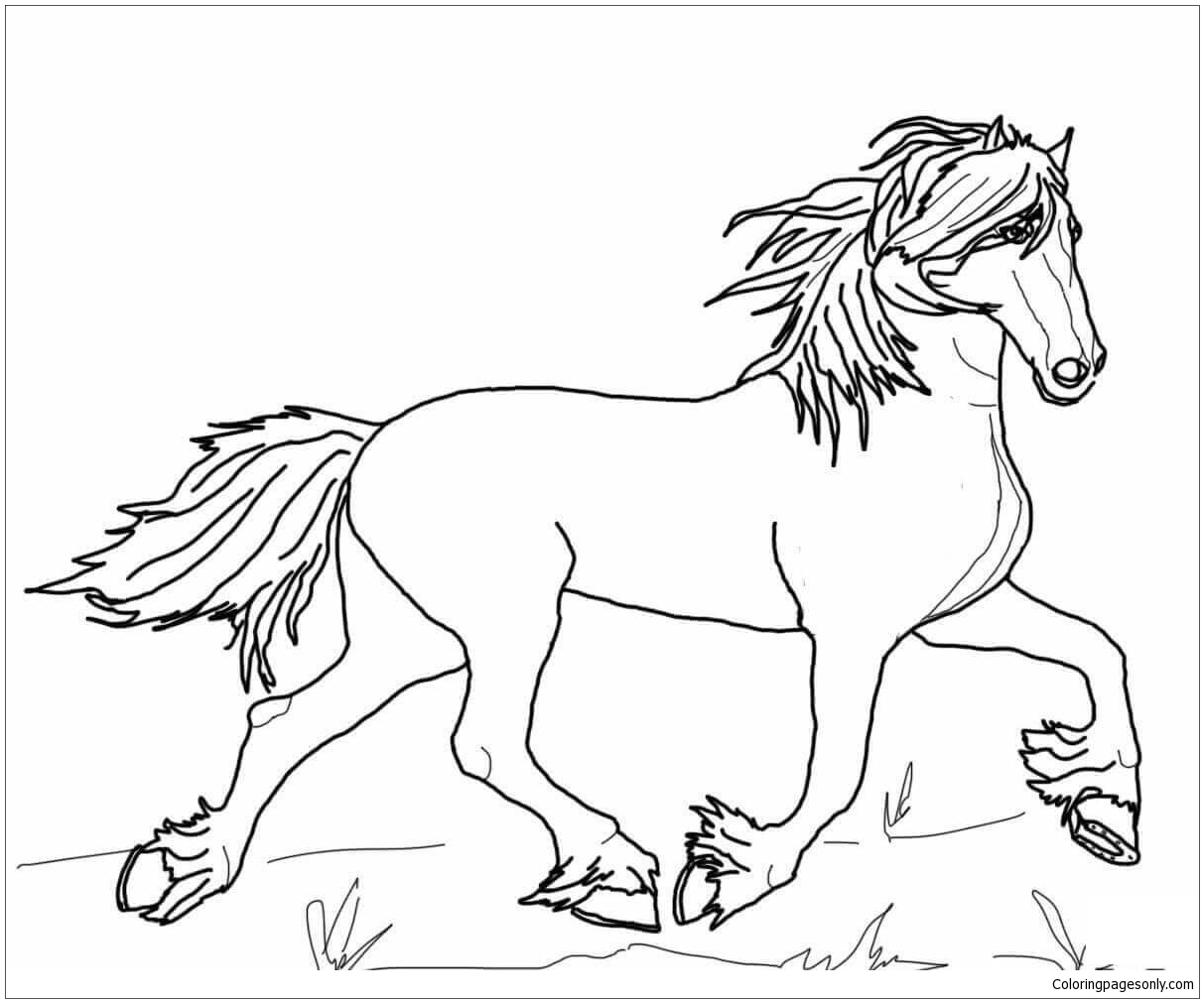
The mane and tail – every stroke is a separate hair. Manes and tails are the most dramatically depicted elements of horse coloring pages and the ones that most clearly separate careful from careless coloring. The key technique: establish the overall mass first with a mid-tone value, then add individual darker stroke lines to define hair separation, then add a very few lighter strokes at the uppermost surface of the mane where light would catch individual hairs. On flowing or wind-blown mane pages, the hair strokes should follow the direction of the depicted movement – curving outward from the neck in the direction of the wind or motion. Never fill a mane or tail with flat, uniform color; the visual richness of the finished page depends almost entirely on the layered, directional quality of these hair areas.
Bay horses – the three-tone rule for legs. Bay horses have black lower legs, but “black” on a leg is not flat fill. The leg below the knee should be rendered in three tones: a very dark charcoal-black on the shadow side and inside of the leg, a true black on the front and visible outer surface, and a note of very dark warm brown at the top of the leg where it transitions into the bay body color. This three-tone approach is what makes the legs read as round, cylindrical forms rather than flat colored shapes.
Palmino pages – the golden challenge. Palomino is one of the hardest natural horse colors to render convincingly because the gold body color needs to read as genuinely warm and luminous rather than simply yellow. The technique: use a warm golden-yellow as the base tone for the body, then add a layer of slightly deeper, more amber-toned color in the shadow areas (underside of neck, belly shadow, inside of legs). Leave a note of very pale warm cream at the highest-lit body surfaces (top of the back, crest of the neck, high point of the hindquarters). The mane and tail should be rendered in a creamy off-white – distinctly lighter than the body but warm rather than cold, and with individual hair strokes as described above.
Circus performance pages – creative latitude and decoration. Circus horse pages are the collection’s most freely interpretable: historical circus horses were frequently decorated with elaborate plumed headdresses, jeweled browbands, colorful saddlecloths, and ribbons braided into manes and tails. These decorative elements allow full creative invention with color – a circus horse in deep burgundy and gold tack on a chestnut coat is historically plausible and visually spectacular. Research historical circus horse costumes from the 19th and early 20th centuries for reference that is both fascinating and directly applicable to coloring these pages.
5 Activities
The fossil horse timeline. Using six pieces of paper or card, draw and label six points in horse evolutionary history: Eohippus (55 million years ago), Mesohippus (40 million years ago, three toes, slightly larger), Parahippus (25 million years ago, beginning of grass grazing), Merychippus (15 million years ago, clearly horse-shaped but still three toes), Pliohippus (5 million years ago, first single-toed horse), and Equus (modern horse). For each stage, color a simple outline of the animal in a coat appropriate to its likely environment – Eohippus in a dappled forest pattern, the intermediate stages in transitional open-steppe tones, modern Equus in a bay or dun coat. Assemble the six cards in a timeline sequence and add labels showing height, number of toes, and diet at each stage. The finished artifact is a hand-colored visual evolutionary timeline – a genuinely educational piece of scientific illustration that teaches natural selection through the specific, well-documented case of the horse.
The breed identification and color matching project. Choose five pages from this collection that appear to depict different horse types. For each page, research which horse breed the illustration most closely resembles – using physical characteristics (body shape, head profile, ear size, overall proportions) rather than just color. Once you’ve identified the likely breed, research its characteristic coat colors and color the page accordingly. Write the breed name, country of origin, and primary purpose (racing, draft work, cattle work, sport) below each finished page. If the collection includes a “Quarter Horse” tile, color it in the breed’s most characteristic coat – bay or chestnut – and label its distinguishing proportional features: the muscular hindquarters, the compact head, the deep chest. This activity builds both identification skills and color accuracy within real biological constraints.
The historical partnership collage. The “Cowboy Riding Horse” and “Horse And Sheriff” tiles depict one specific era of the human-horse partnership – the American West in the 19th century. Color both pages, then research and draw a third scene from a completely different era and geography of the human-horse relationship: a Roman chariot race, a medieval knight on a destrier, a Mongolian steppe warrior, a 19th-century mail rider, or a World War I cavalry unit. Color this third scene and display all three together as a visual representation of the horse’s role across different human civilizations. Add a brief written caption to each scene: when and where it is set, what the horse was being used for, and one specific fact about how horses were used or trained in that context. This activity turns the coloring pages into a visual history lesson spanning thousands of years.
The coat color genetics experiment. Using the coat color guide above, create a “horse coat color swatch book”: take eight small squares of paper and color each one in a different horse coat pattern – bay, chestnut/sorrel, grey (dappled), black, palomino, dun with dorsal stripe, roan, and Appaloosa spotted. Label each swatch with its color name and the key visual identifier that distinguishes it from similar colors (bay = black points; chestnut = no black; dun = dorsal stripe; etc.). Then, choose any horse page from the collection and color it three times – in three different canonical coat colors from your swatch book – to see how dramatically the same illustration changes in character depending on coat color. A palomino reading as golden and warm; the same page in grey reading as cool and silvery; the same page in black reading as powerful and dramatic. This activity teaches color theory through a real biological subject and produces a reference tool that is genuinely useful for all future horse coloring.
The circus horse costume design. After coloring any circus horse page from the collection in the horse’s natural coat color, design a full performance costume for the horse on a separate sheet: an elaborate plumed headdress (researching the form of historical circus horse plumes), a decorative browband, a jeweled or embroidered breast collar, a colorful saddlecloth, and braided ribbon decorations for the mane and tail. Choose a color scheme for the costume that complements the horse’s natural coat color – gold and burgundy for a bay horse; blue and silver for a grey; green and copper for a chestnut. Draw the full decorated horse alongside your plain-coated version as a “before and after” costuming comparison. This activity combines historical research (what did circus horses actually wear?), color theory (complementary and analogous color relationships), and craft design thinking (how do decorative elements relate to each other and to the base color of the animal they adorn?).