Saint Mary Coloring Pages
 By:
Jennifer Thoa - Content Editor & Designer
Updated:
By:
Jennifer Thoa - Content Editor & Designer
Updated:
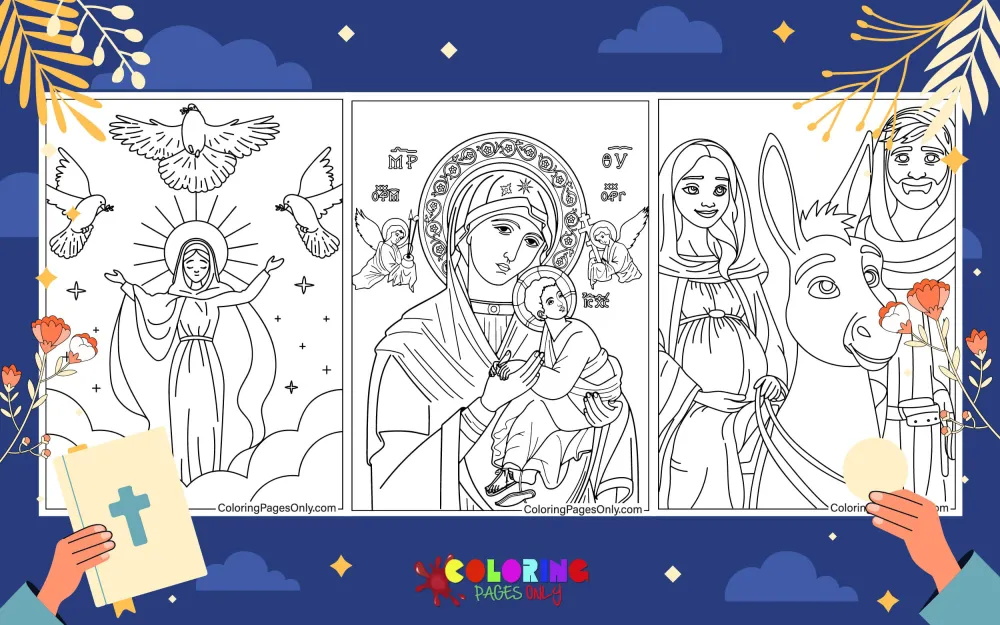
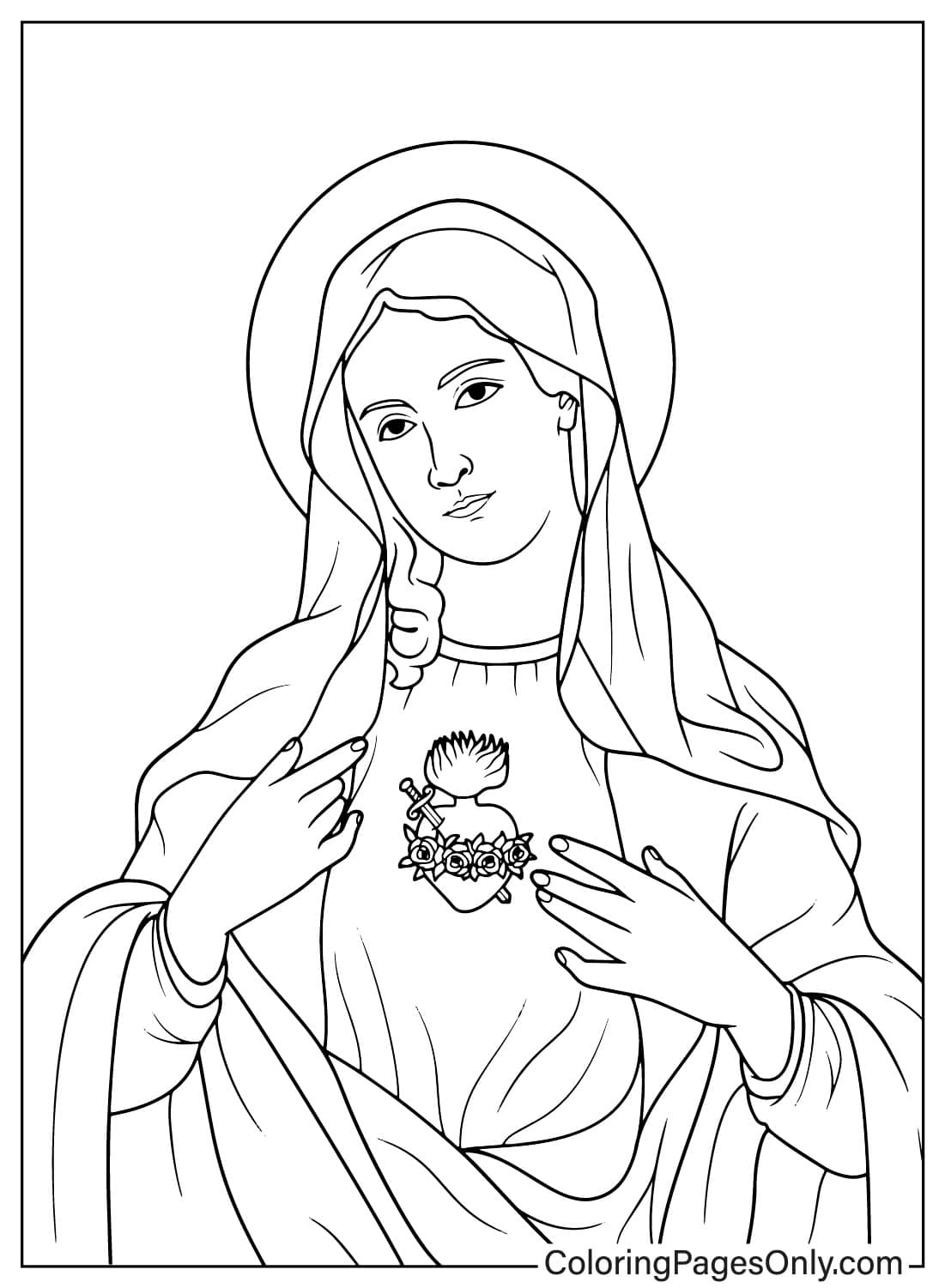
Saint Mary coloring pages: 22 printable PDF designs depicting the Virgin Mary across Catholic tradition, including named apparitions, formal Church teachings, and devotional portraits. Each page can be downloaded as a PDF to print or colored online in the browser.
Two specific Catholic teachings about Mary show up repeatedly in this collection, and they’re often mixed up with each other despite describing very different things. The Immaculate Conception, the belief that Mary herself was conceived without original sin, was formally defined as Church doctrine by Pope Pius IX on December 8, 1854. The Assumption, the belief that Mary was taken body and soul into heaven at the end of her earthly life, was formally defined nearly a century later, by Pope Pius XII on November 1, 1950. A striking detail connects one of these teachings to a separate part of this collection: just four years after the Immaculate Conception was defined, a 14-year-old French girl named Bernadette Soubirous reported a series of apparitions at Lourdes in 1858, in which the figure she saw identified herself, in Bernadette’s own local dialect, as “the Immaculate Conception,” a title Bernadette would not have been expected to know on her own. This collection includes pages for Lourdes and other well-known apparition sites, Guadalupe in Mexico, and Fatima in Portugal, alongside pages built around the formal Church teachings themselves.
With 22 pages split between formal Church teachings, specific apparitions, devotional titles, and simpler family portraits, the set works as a quiet, reflective coloring session and as a small introduction to how varied Marian devotion actually is.





What Is Inside This Collection
This collection groups its 22 pages by theme, since a formal Church teaching, a specific apparition, and a simple family portrait each call for a different coloring approach.
The Immaculate Conception and the Assumption
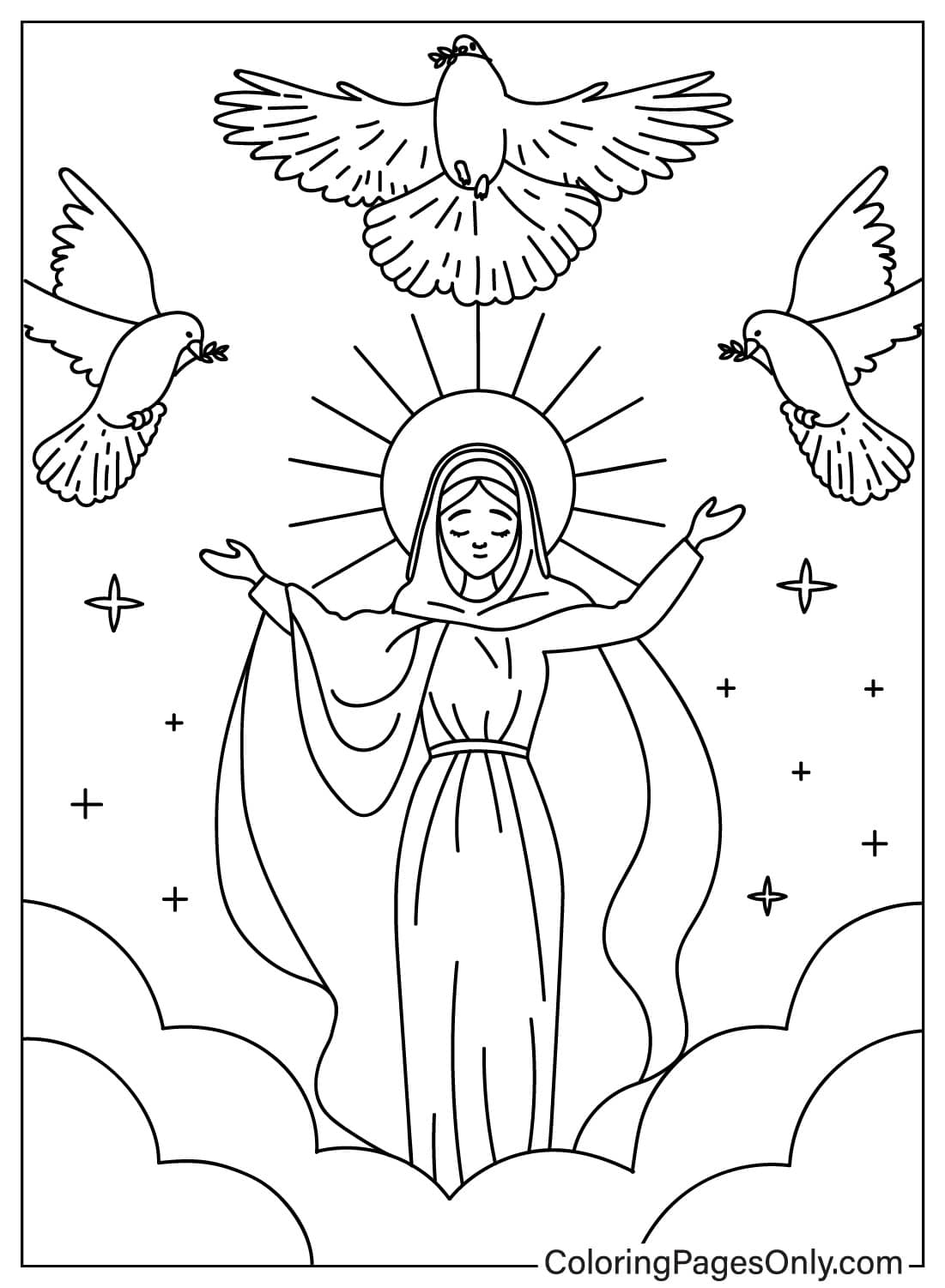
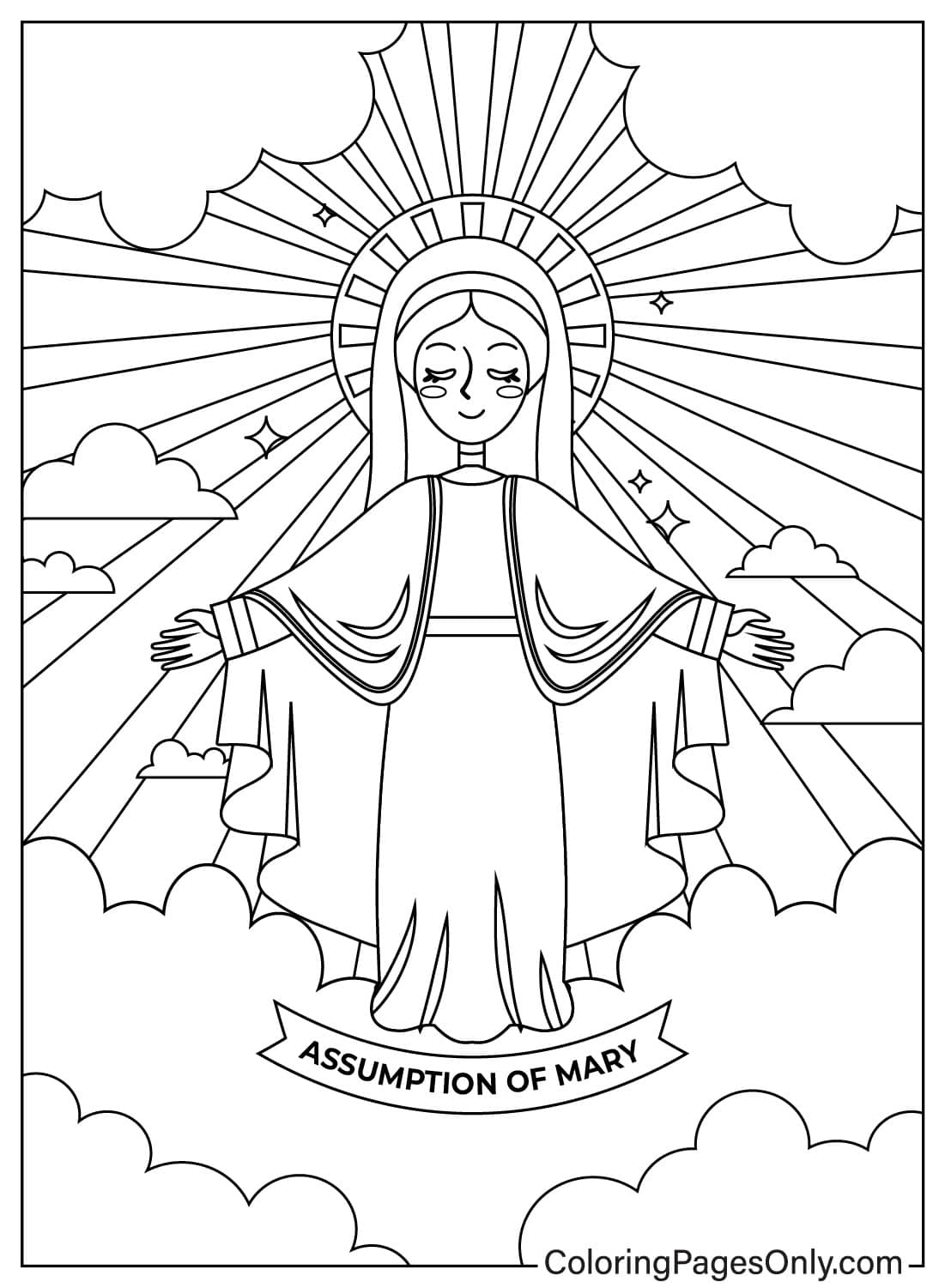
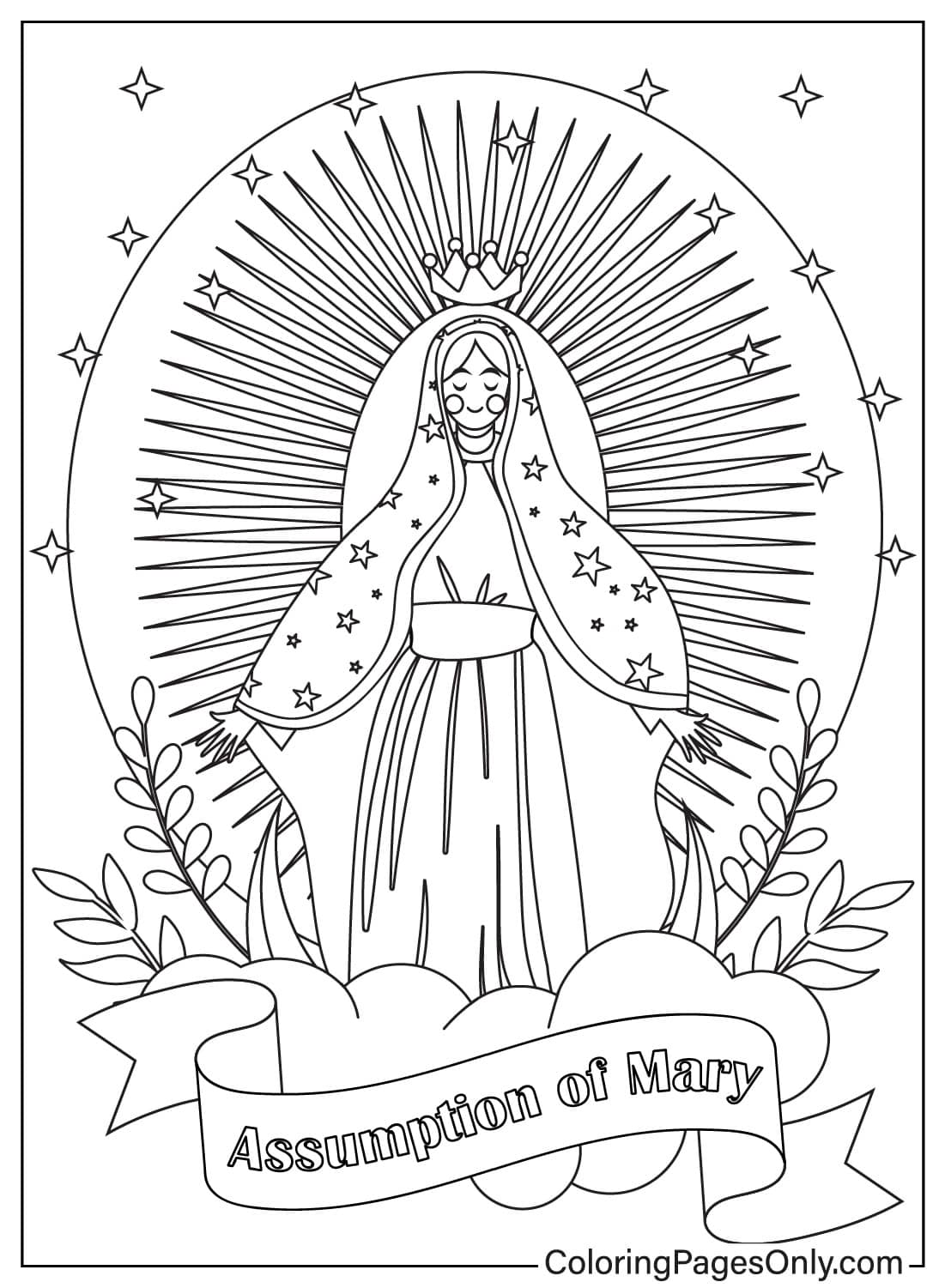
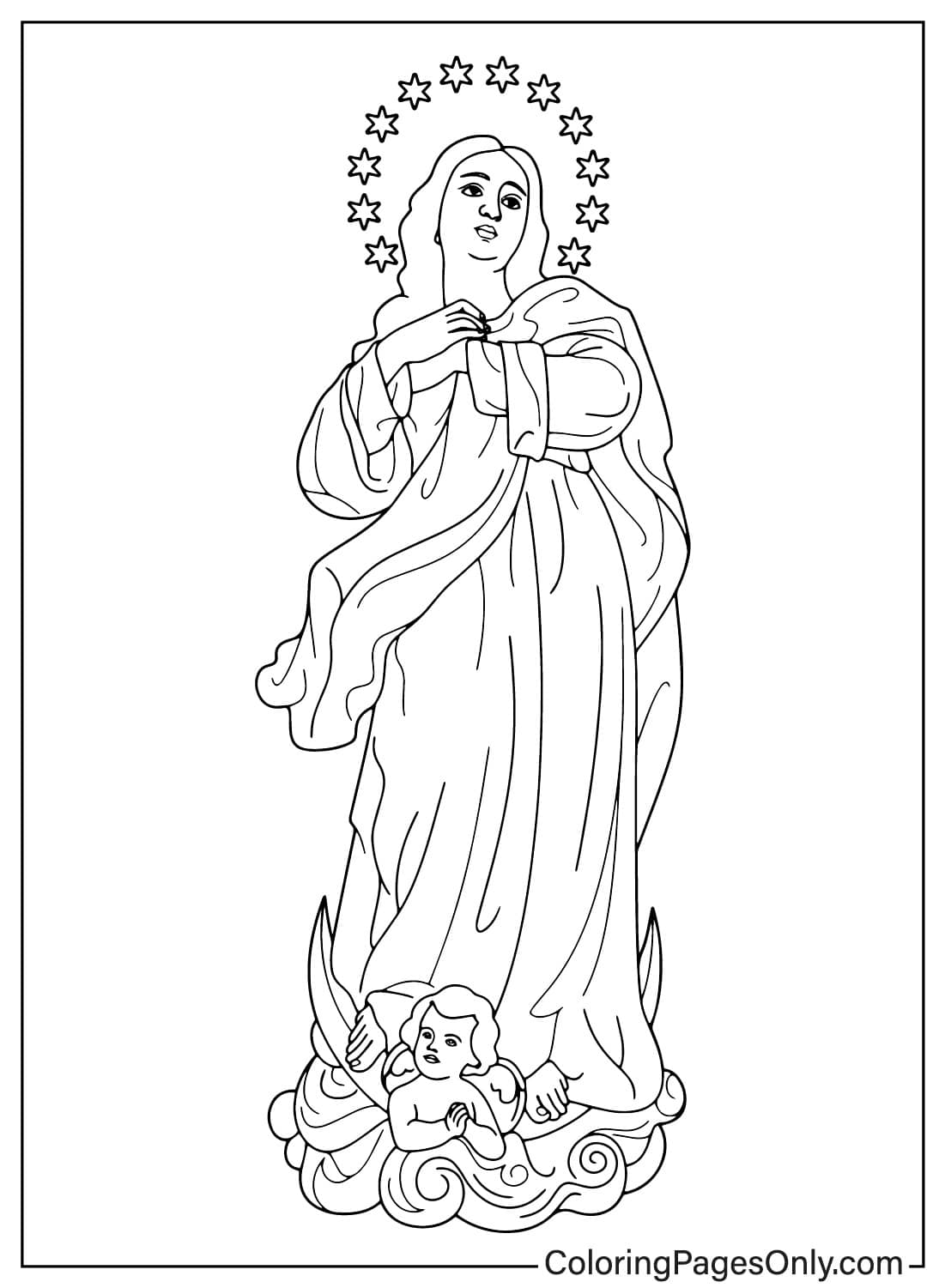
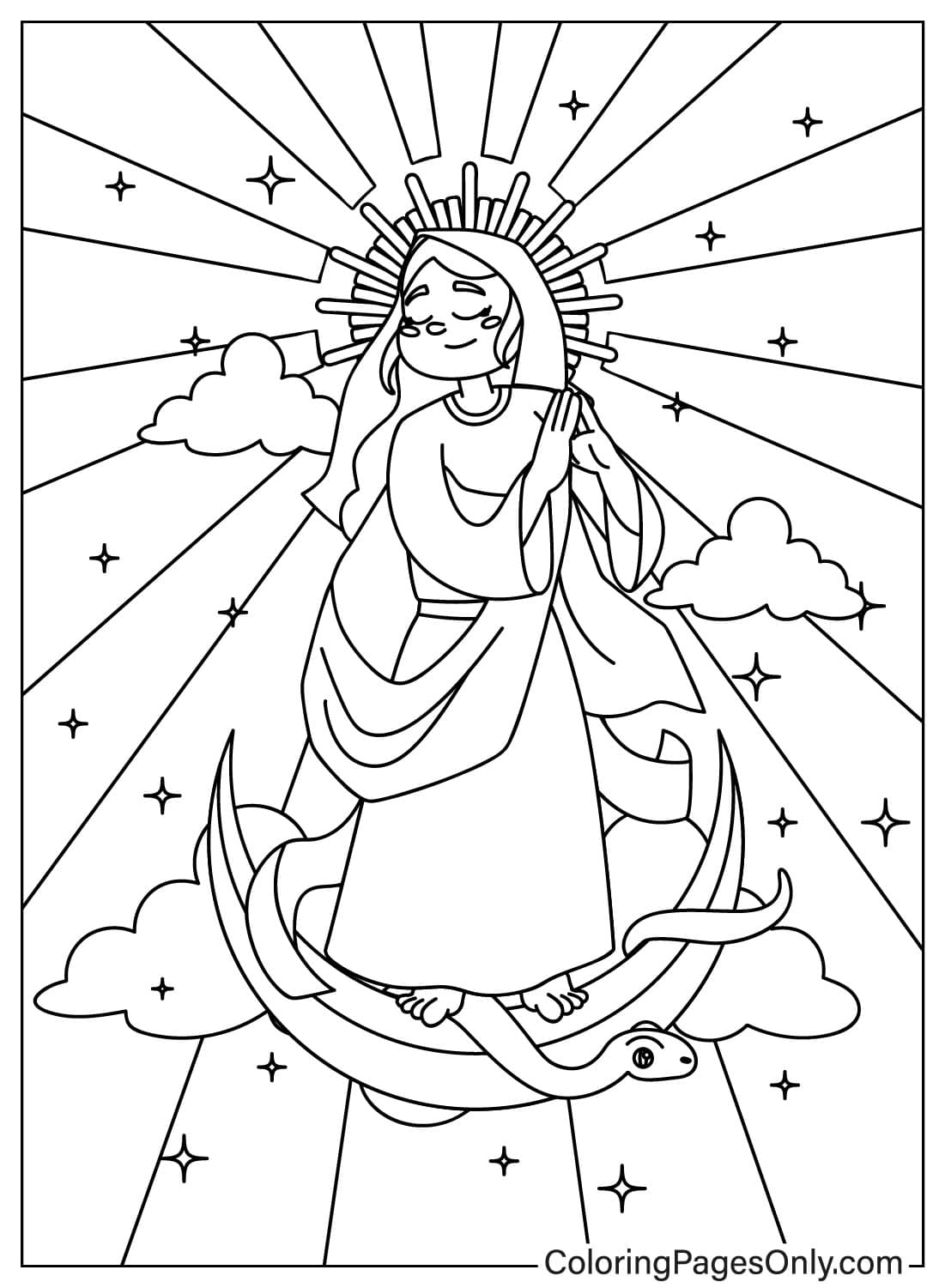
Six pages focus on two specific Catholic teachings about Mary rather than a particular apparition: the Immaculate Conception, formally defined by Pope Pius IX in 1854, and the Assumption, formally defined by Pope Pius XII in 1950. These two teachings are often confused with each other, but they describe different moments, one about how Mary’s life began, the other about how it ended, so it’s worth checking which page shows which before coloring.
Marian Apparitions
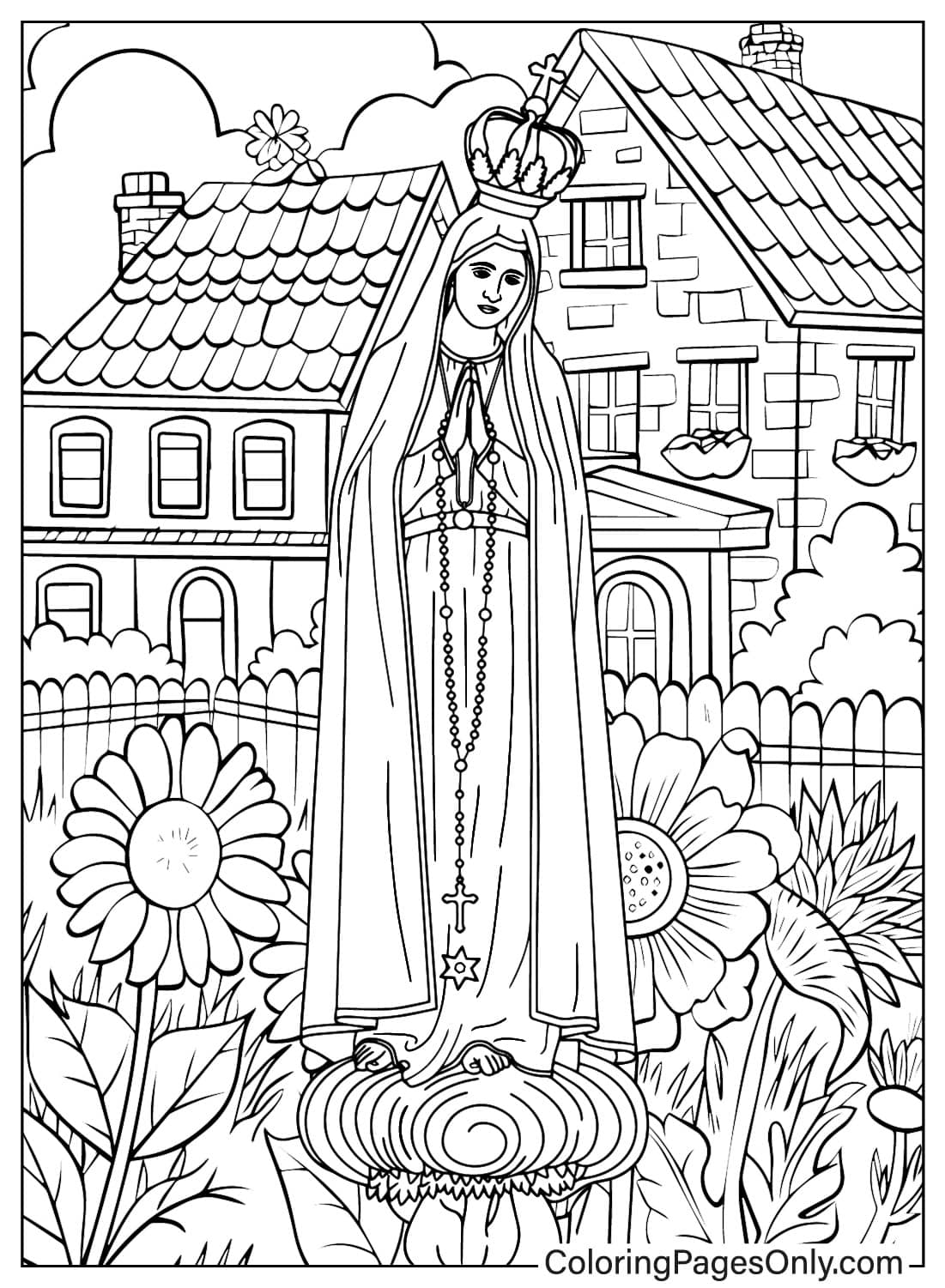
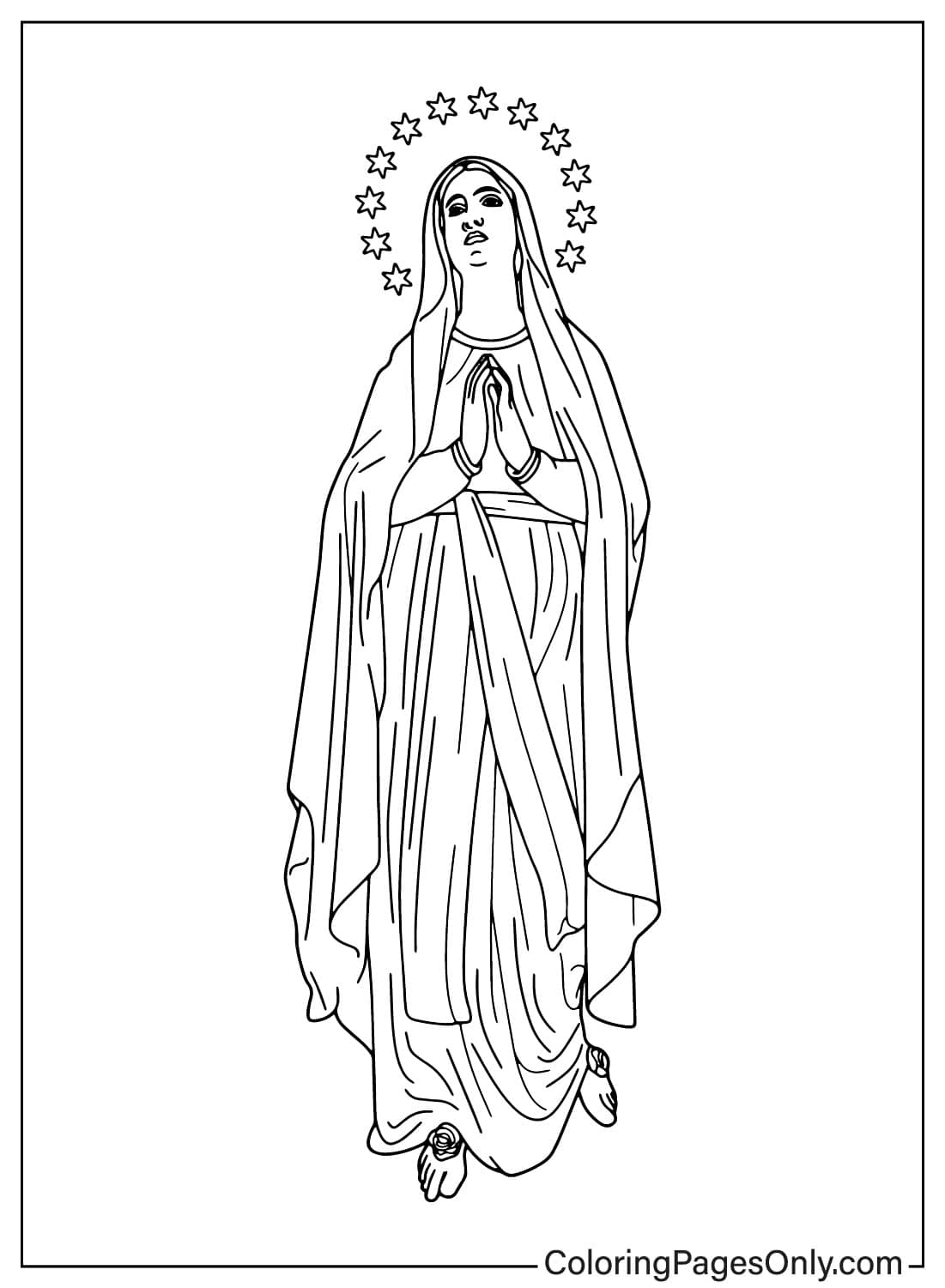
Four pages depict specific, named apparitions: Our Lady of Guadalupe, reported by Juan Diego in Mexico in 1531; Our Lady of Lourdes, reported by Bernadette Soubirous in France in 1858; and Our Lady of Fatima, reported by three shepherd children in Portugal in 1917. Each apparition has its own traditional color palette drawn from written accounts, Guadalupe’s turquoise mantle and rays of light, Lourdes’ white robe and blue sash, so matching those specific colors keeps each page tied to its own tradition rather than a generic blue-and-white look.
Marian Titles and Devotions
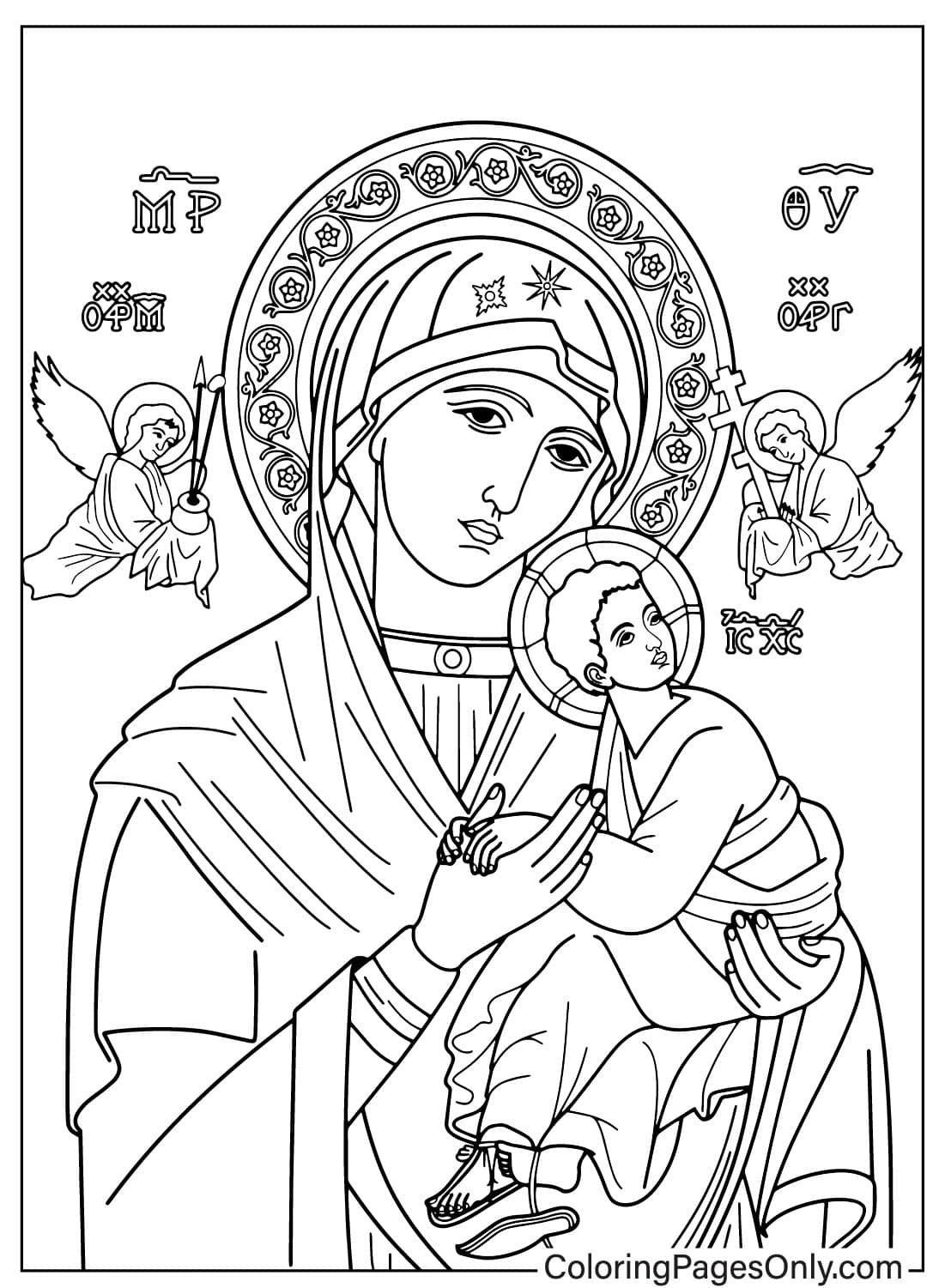
Five pages cover specific titles and devotional images: Our Lady of Grace, Our Lady Help of Christians, Our Lady of Mount Carmel, and Our Lady of Perpetual Help. Each title has its own visual tradition built up over centuries, so a quick reference image for the specific title named on the page helps keep small details, like the position of the hands or the style of the crown, consistent with that tradition.
Portraits and Family Scenes
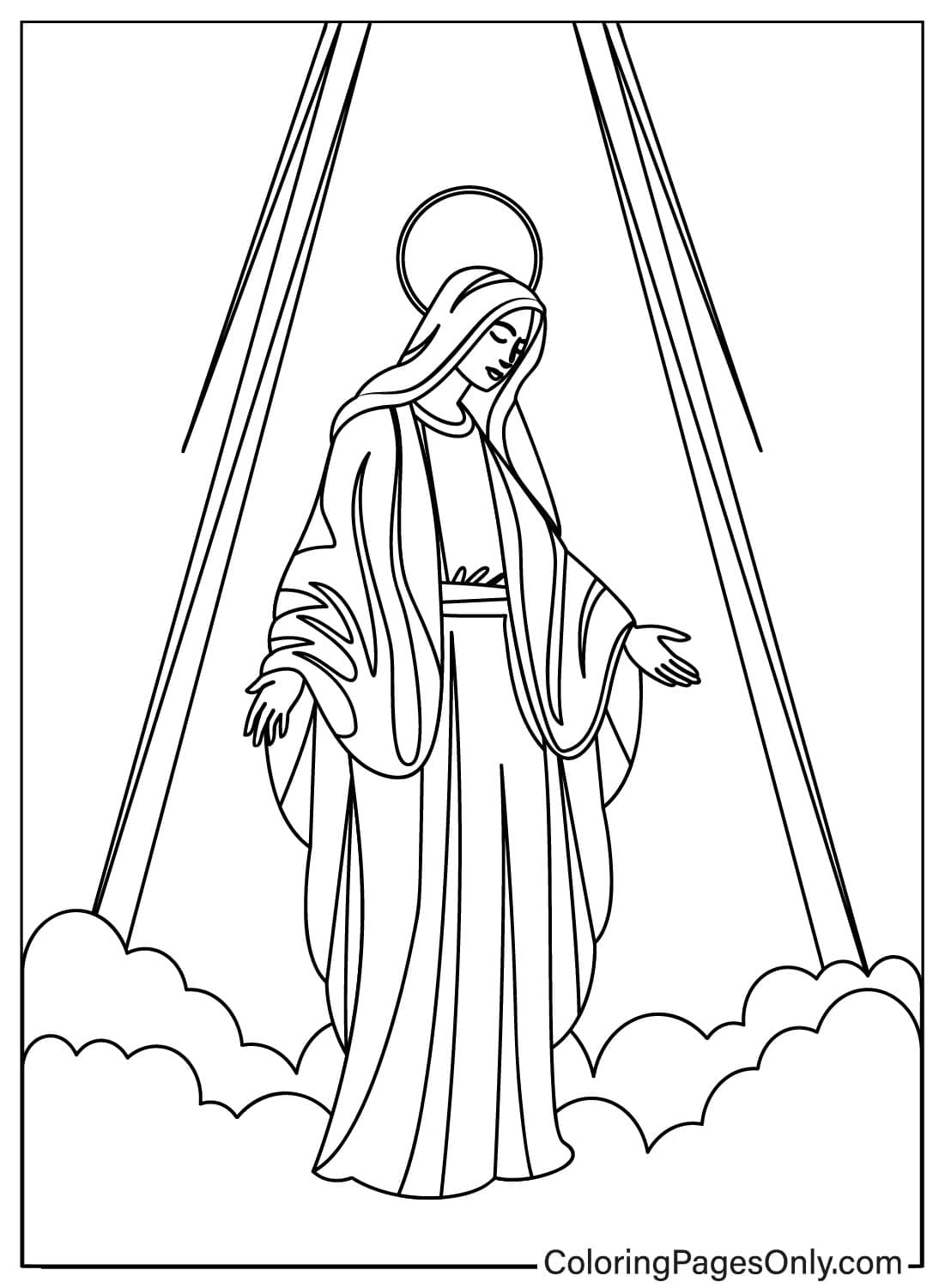
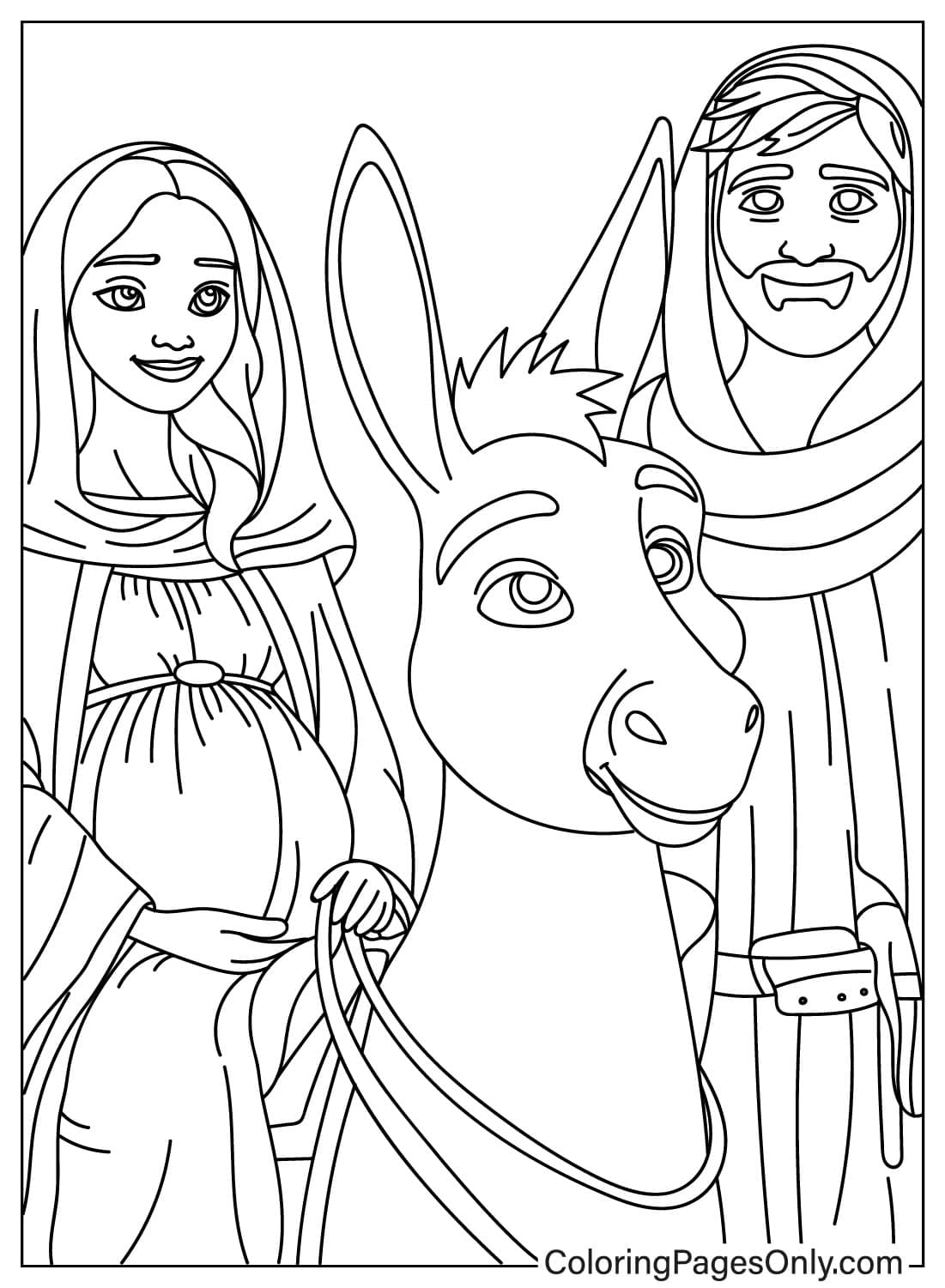
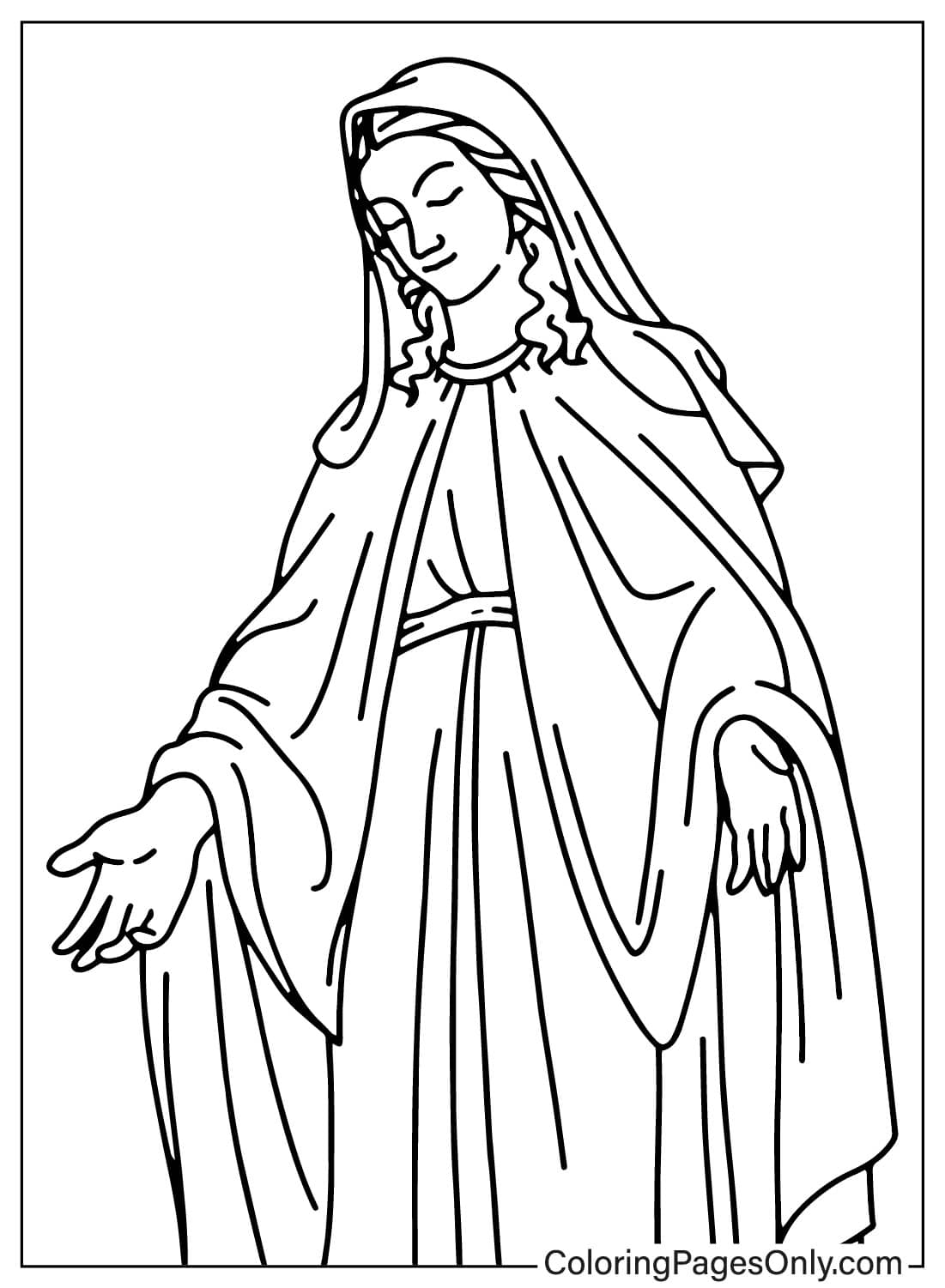
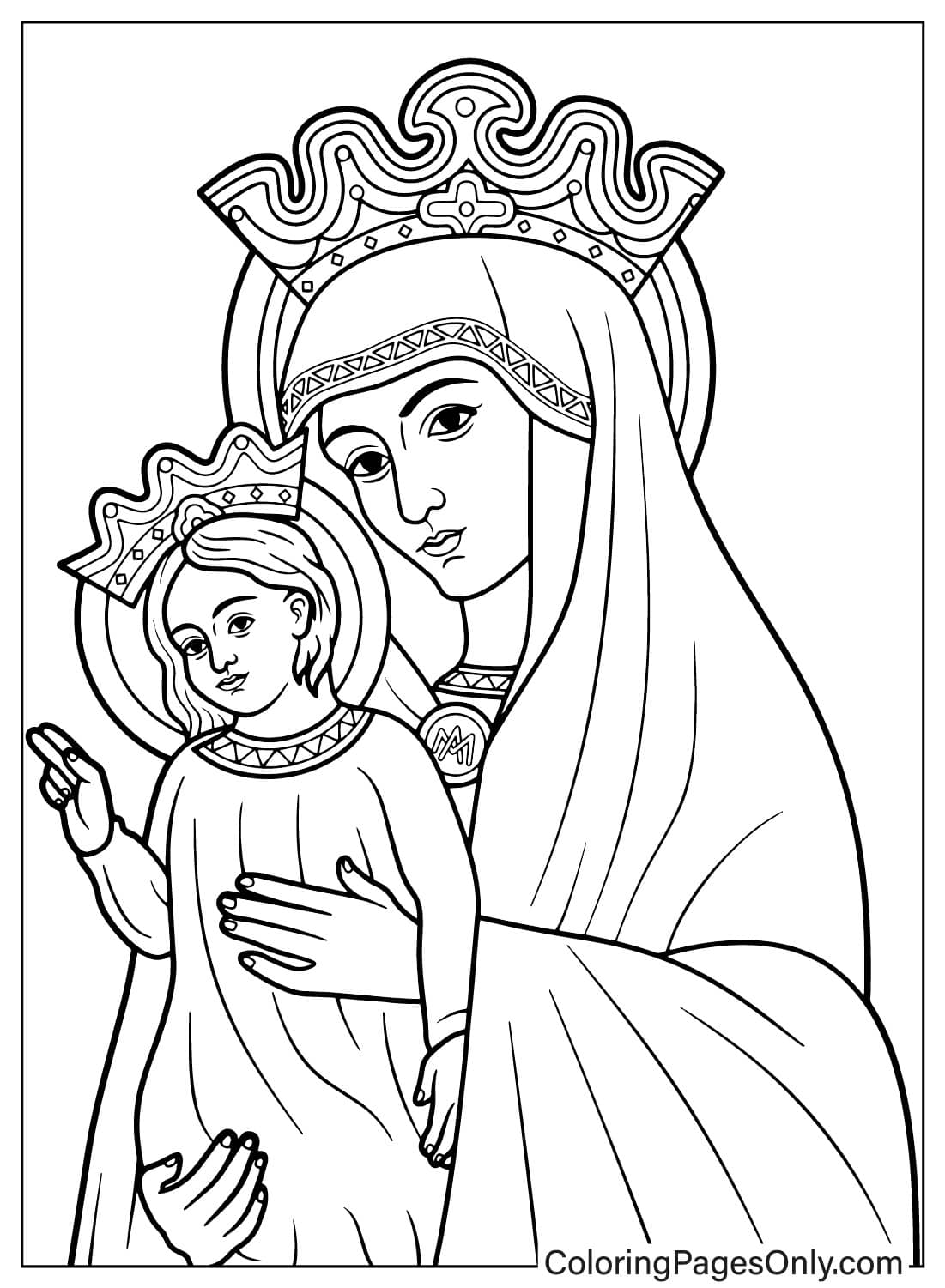
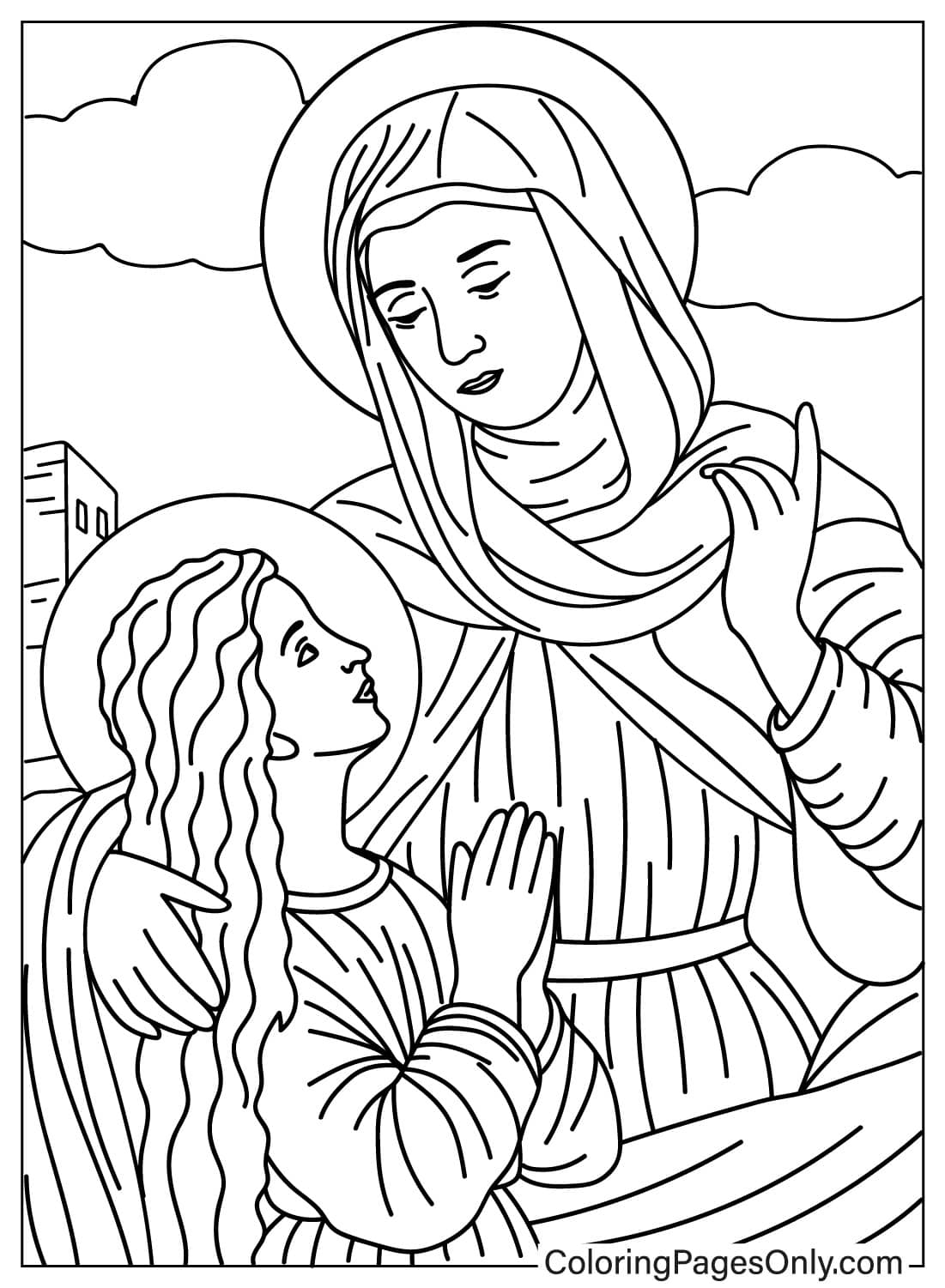
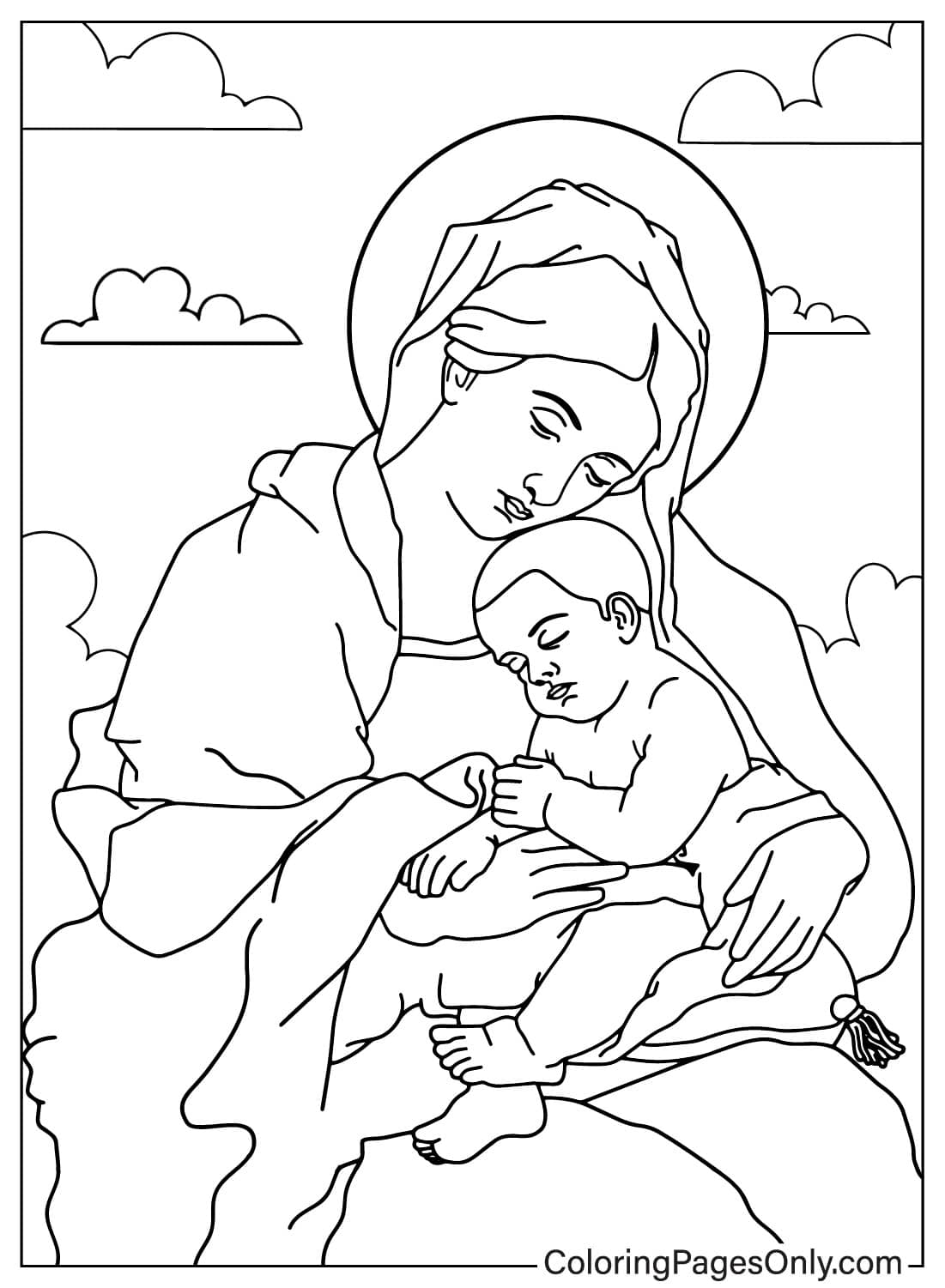
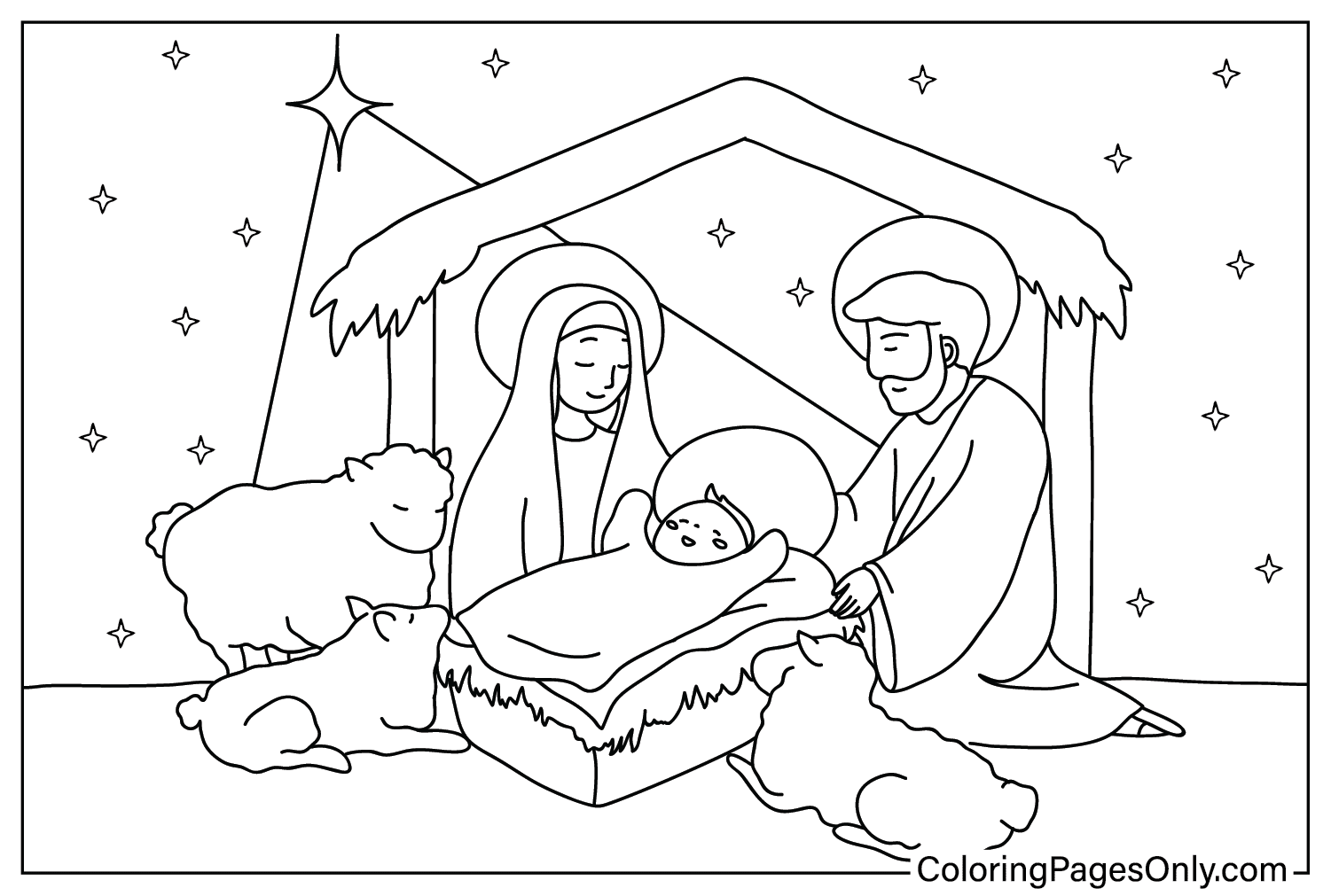
Seven pages show Mary in a simpler portrait or a family scene: with baby Jesus, with her mother, Saint Anne, or in a plain, uncomplicated pose. One page in this group is labeled as a Christmas Palestine scene rather than naming Mary directly. However, it likely fits within the same Nativity tradition as the rest of the collection. Blue and white are the two colors most consistently associated with Mary across traditions, so they’re a safe, respectful default for any of these simpler pages.
What Saint Mary Coloring Pages Do
Detail and drapery reward a careful hand. The folds of a robe and the rays of light in an apparition scene ask for steadier, more deliberate coloring than a plain figure would, and the American Academy of Pediatrics names exactly this kind of structured coloring, done between ages 2 and 7, as a clear path to fine motor skill development. The simpler portrait pages offer an easier version of that same practice before a detailed apparition scene.
A specific name behind every title. Since titles like Our Lady of Guadalupe, Our Lady of Lourdes, and Our Lady of Fatima each refer to a distinct, dated tradition tied to a specific place, coloring one is a small opening to look into that particular story, rather than treating all Marian images as interchangeable.
Calm through repetition. A 2005 Art Therapy Journal study found a measurable drop in anxiety after coloring sessions built around a defined structure. For many who use this collection, that calm sits alongside a devotional purpose, which several of the site’s suggested activities, like prayer cards, lean into directly.
Two teachings, not one. Coloring an Immaculate Conception page next to an Assumption page side by side is a concrete way to keep the two straight, since one describes the beginning of Mary’s life and the other describes its end.
How to Color Saint Mary Coloring Pages Well
- General Marian palette: Use Sky Blue or Cerulean for the mantle over a White robe, the most consistently used color combination across traditions.
- Our Lady of Guadalupe: Use a turquoise or teal mantle covered in small gold stars, with rays of golden light radiating outward and a rose-pink underlayer.
- Our Lady of Lourdes: Use a White robe, a Sky Blue sash at the waist, and a Goldenrod rose at each foot, following the traditional description of the apparition.
- Our Lady of Fatima: Use a White robe and mantle with golden trim, since this apparition is traditionally shown almost entirely in white and gold.
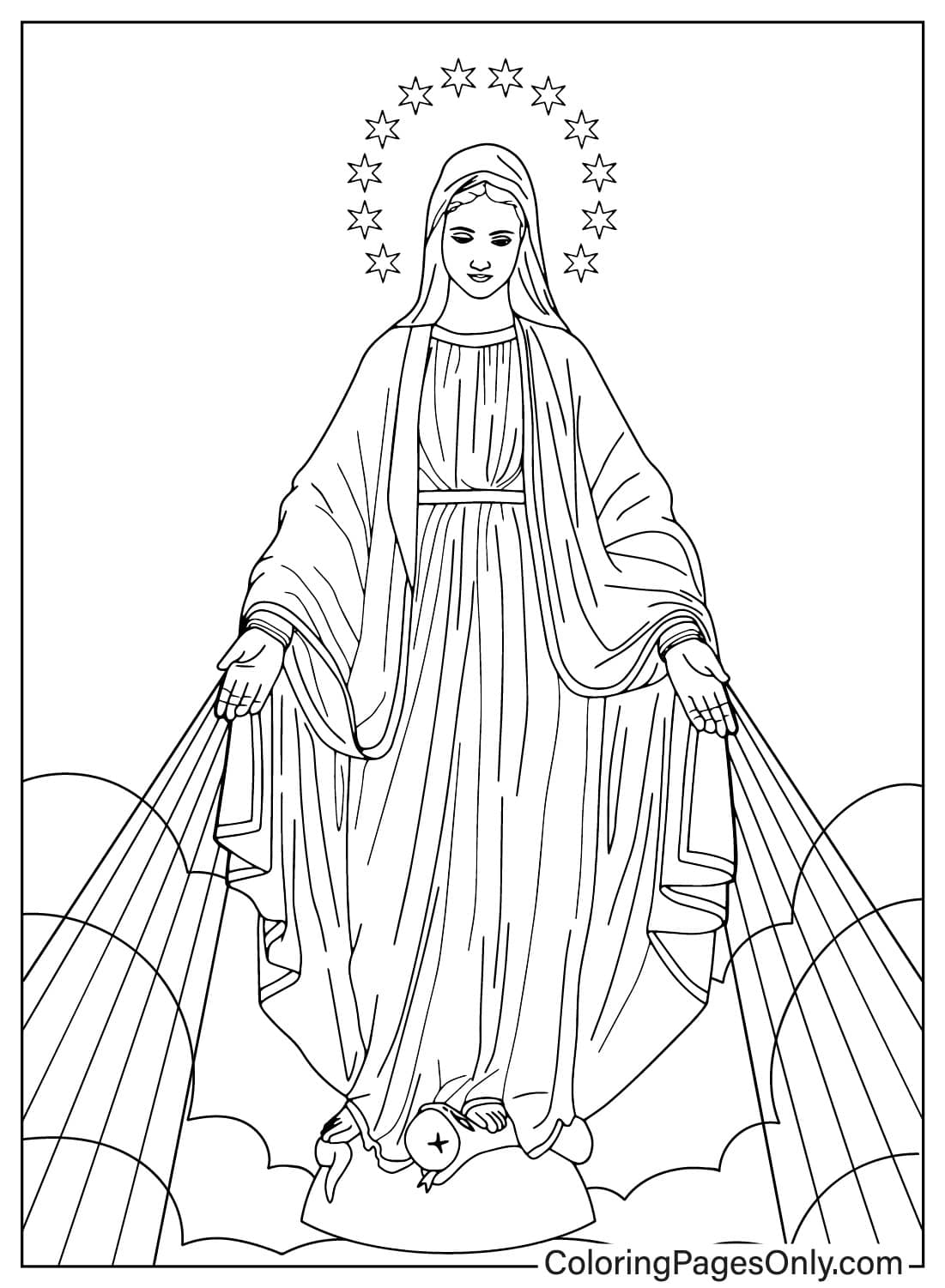
- Immaculate Conception and Assumption pages: Keep White and Sky Blue as the base, but add Goldenrod rays, a crown of stars, or clouds underfoot to distinguish these more symbolic, doctrinal pages from a straightforward portrait.
- Halos: Use a thin Goldenrod or Silver outline rather than a solid filled circle, keeping the halo readable without overpowering the rest of the page.
5 Creative Activities With Saint Mary Coloring Pages
1. Prayer Card. Color a favorite page, mount it on a folded piece of cardstock, and write a prayer inside. It turns a coloring page into a small, personal keepsake.
2. Greeting Card for a Feast Day. Color a page tied to a specific feast, like the Assumption on August 15 or Our Lady of Guadalupe on December 12, and turn it into a card for that date. It connects the coloring activity to a real point on the liturgical calendar.
3. Marian Titles Fact Cards. Color a few of the named apparition pages, then write the real date and place associated with each on the back of the card. A small stack makes a simple, reusable set for a religious education lesson.
4. Family Display. Color the Saint Anne and Mary page alongside a Mary-and-baby-Jesus page, then display them together to show the family connection across three generations. It’s a gentle way to introduce the wider family described in Catholic tradition.
5. Bookmark Set. Color a few small portraits, cut them into narrow bookmark strips, and cover each with clear contact paper. A set makes a meaningful, low-cost gift for a religious occasion.
Frequently Asked Questions
What are Saint Mary coloring pages?
Saint Mary coloring pages are free printable and browser-colorable designs of the Virgin Mary, including named apparitions, formal Church teachings, and devotional portraits. This collection has 22 pages, available as PDF downloads or through the online coloring tool.
What is the difference between the Immaculate Conception and the Assumption?
The Immaculate Conception refers to the belief that Mary herself was conceived without original sin, defined as Church doctrine in 1854. The Assumption refers to the belief that Mary was taken body and soul into heaven at the end of her earthly life, defined as Church doctrine in 1950. The two describe different points in Mary’s life, not the same event.
What is Our Lady of Guadalupe?
Our Lady of Guadalupe refers to a Marian apparition tradition centered on Tepeyac Hill near Mexico City, reported by Juan Diego in December 1531. She is venerated as the patroness of Mexico and the Americas, with a feast day on December 12.
What happened at Lourdes?
According to Catholic tradition, a 14-year-old girl named Bernadette Soubirous experienced a series of 18 apparitions at Lourdes, France, beginning in February 1858. Lourdes has since become a major pilgrimage site associated with healing.
What happened at Fatima?
According to Catholic tradition, three shepherd children in Fátima, Portugal, reported a series of Marian apparitions in 1917. The final apparition, on October 13, 1917, was reportedly witnessed by a large crowd and is remembered as the “Miracle of the Sun.”
Why is Mary often shown wearing blue?
Blue has been closely associated with images of Mary for centuries, partly because blue pigment was historically expensive and reserved for depicting especially significant figures. It has remained the traditional color across most later Marian art and devotional images.
Are Saint Mary coloring pages suitable for young children?
Yes, with the right page. The simpler portraits suit younger children, while the more detailed apparition and doctrinal scenes suit older kids or adults with more background in the subject.
Is this collection specific to the Catholic Church?
Yes, primarily. Most of the titles and teachings in this collection, including the Immaculate Conception, the Assumption, and the named apparitions, are specific to Catholic tradition and teaching. However, Mary is also venerated in other Christian traditions.
Start Coloring
Download any design by clicking it. No account, email, or payment is required to color or print. Every page opens in the online coloring tool for on-screen use or downloads as a full-resolution PDF for printing. Share a finished page using the Facebook or Pinterest buttons at the top of the page.