Spain Coloring Pages
 By:
Jennifer Thoa - Content Editor & Designer
Updated:
By:
Jennifer Thoa - Content Editor & Designer
Updated:
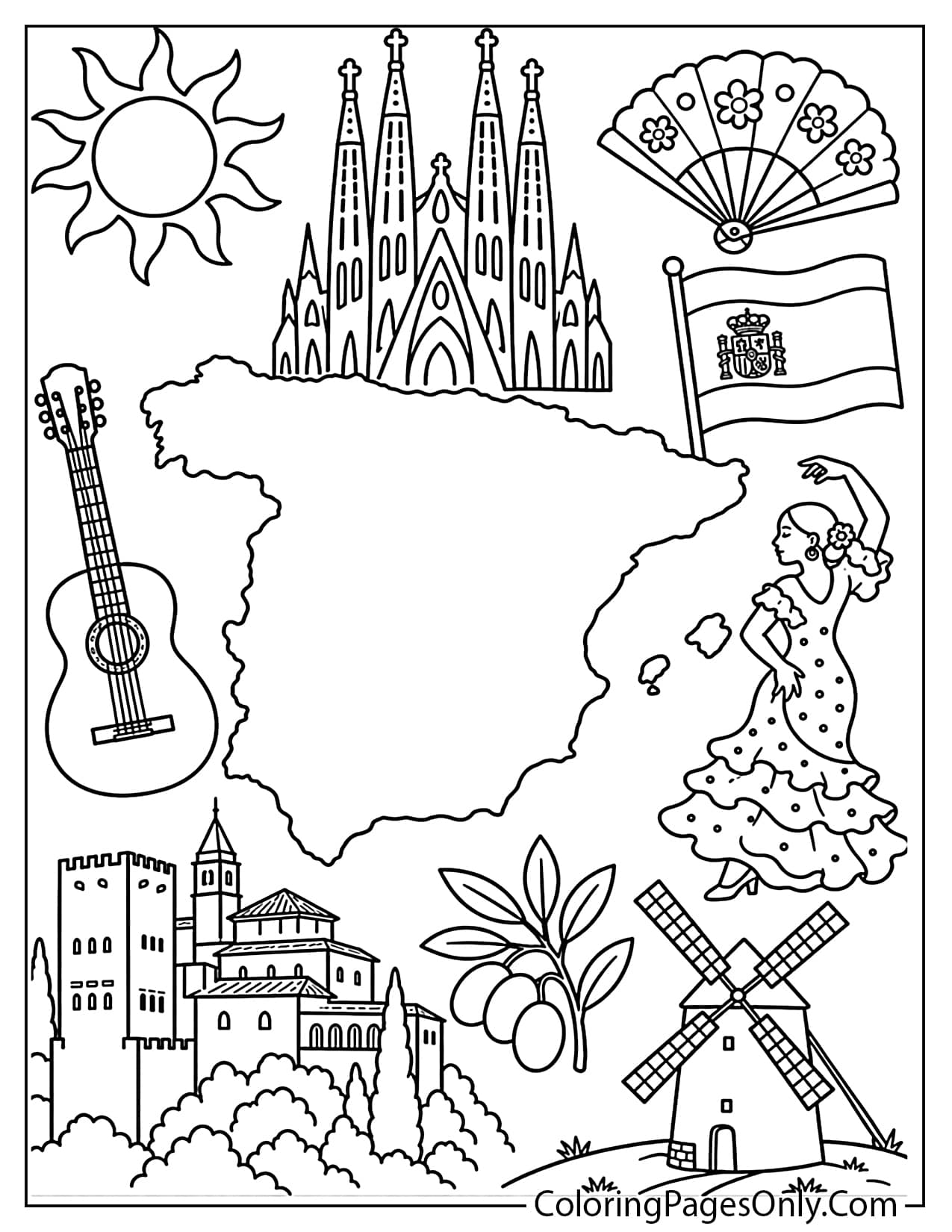
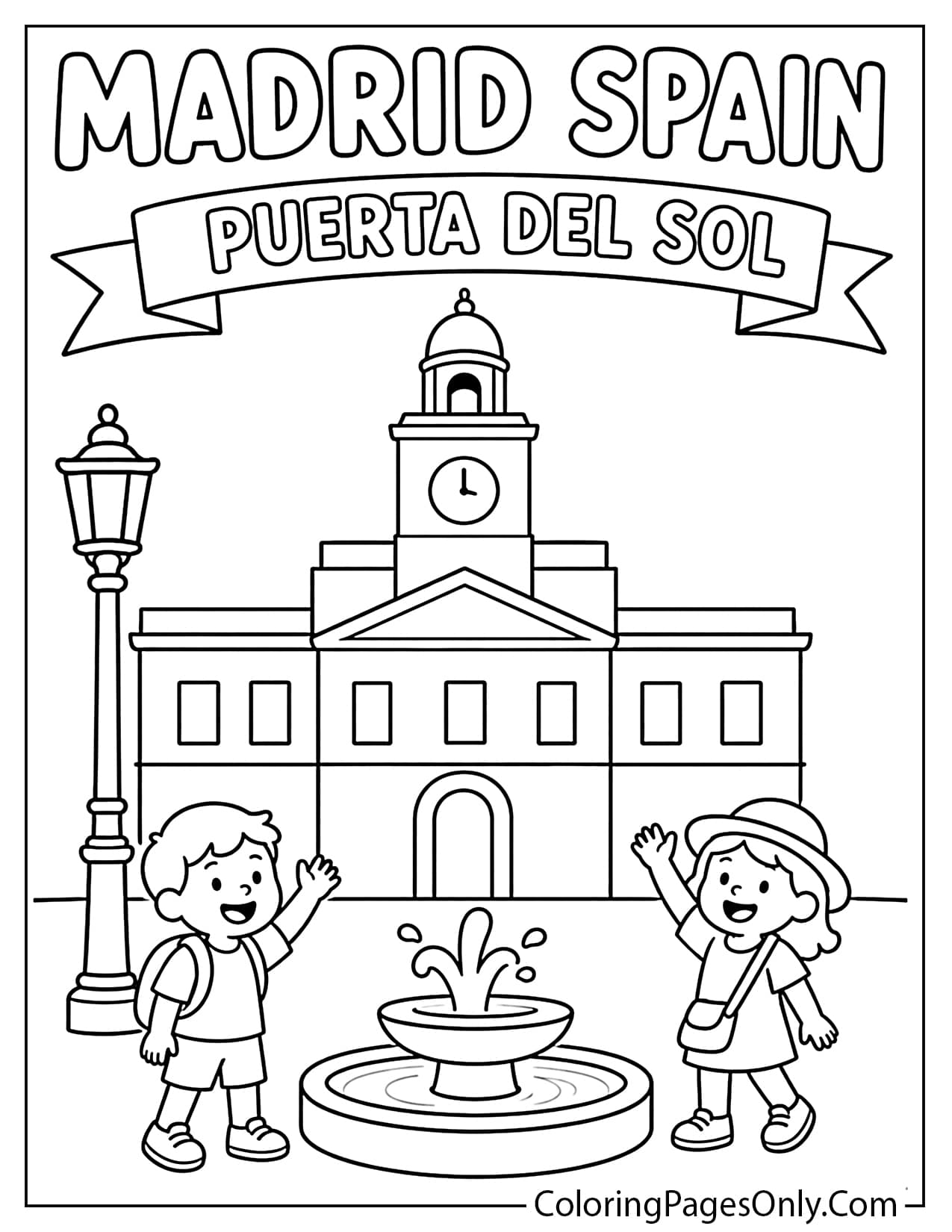
Spain coloring pages: 36 printable PDF designs spanning national symbols and landmarks, festivals and traditions, food, and a fresh set of pages celebrating Spain’s 2026 World Cup win. Each page can be downloaded as a PDF to print or colored online in the browser.
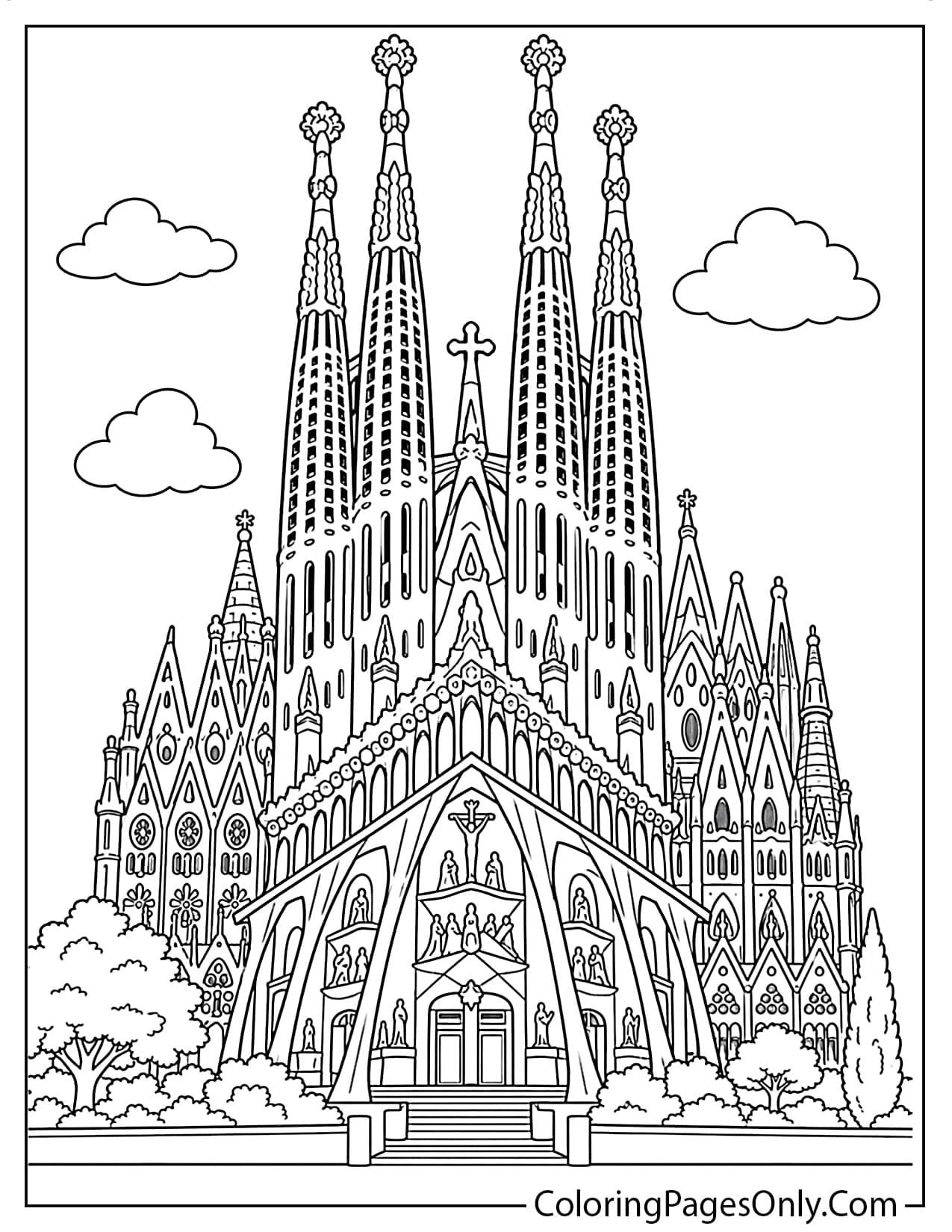
Two of Spain’s biggest recent milestones both landed in 2026, and this collection has a page for each. In Barcelona, Antoni Gaudí’s Sagrada Família finally reached its full height on February 20, 2026, when workers installed the last piece of its central tower, bringing the spire to 172.5 meters and making it the tallest church in the world, more than 140 years after construction began in 1882 and exactly a century after Gaudí’s own death. A few months later, on July 19, 2026, Spain’s national football team beat Argentina 1-0 in the World Cup final in New Jersey, with 19-year-old Barcelona star Lamine Yamal helping seal the country’s second World Cup title. Both moments show up directly in this set, alongside older, more familiar symbols like the Alhambra, flamenco dancers, and a plate of paella.
With 36 pages split between landmarks, festivals, food, and the recent World Cup win, the set works as a quick single-page project and as a broader introduction to Spanish culture, history, and current events all at once.
What Is Inside This Collection
This collection groups its 36 pages by theme, since a national landmark, a festival scene, and a World Cup celebration page each call for a different coloring approach.
National Symbols and Landmarks
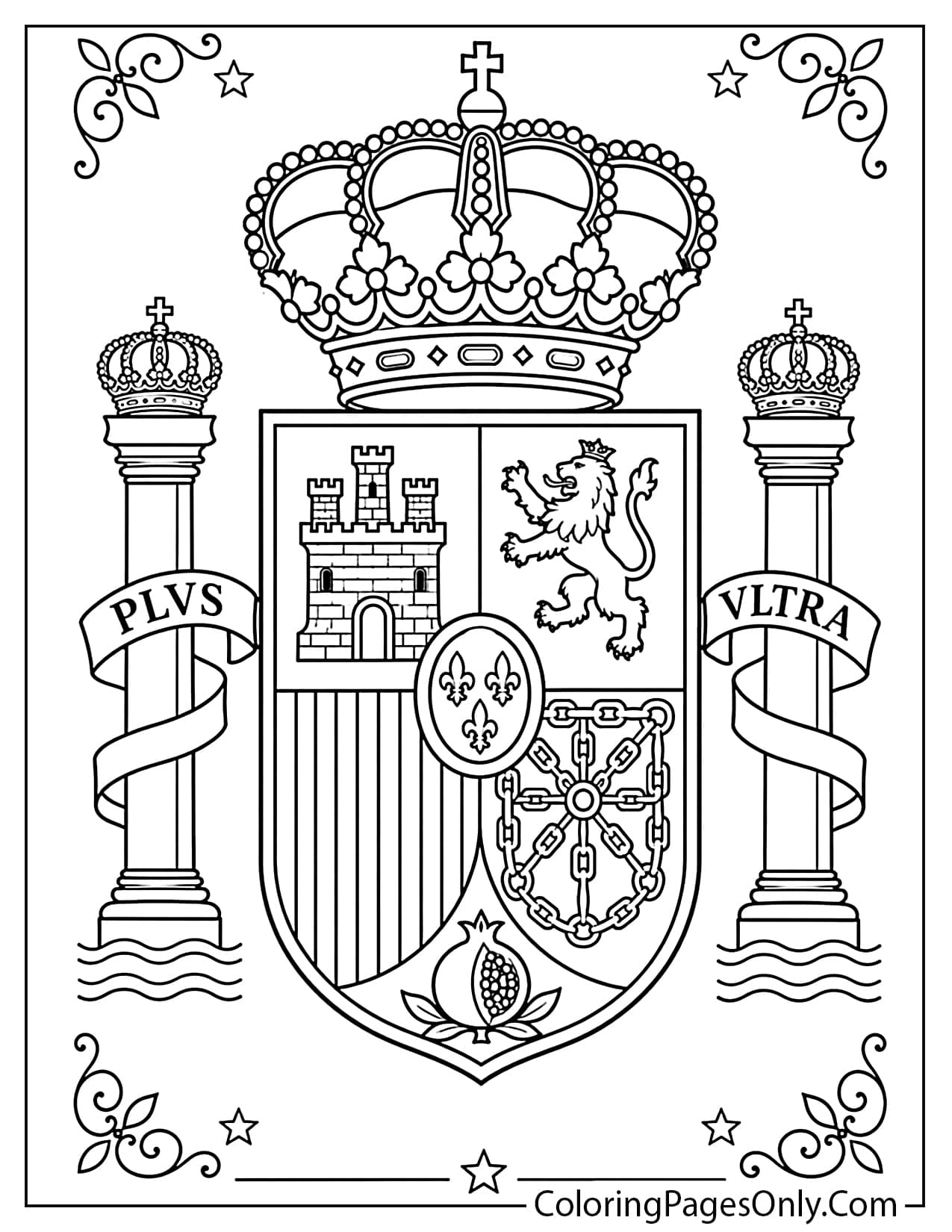
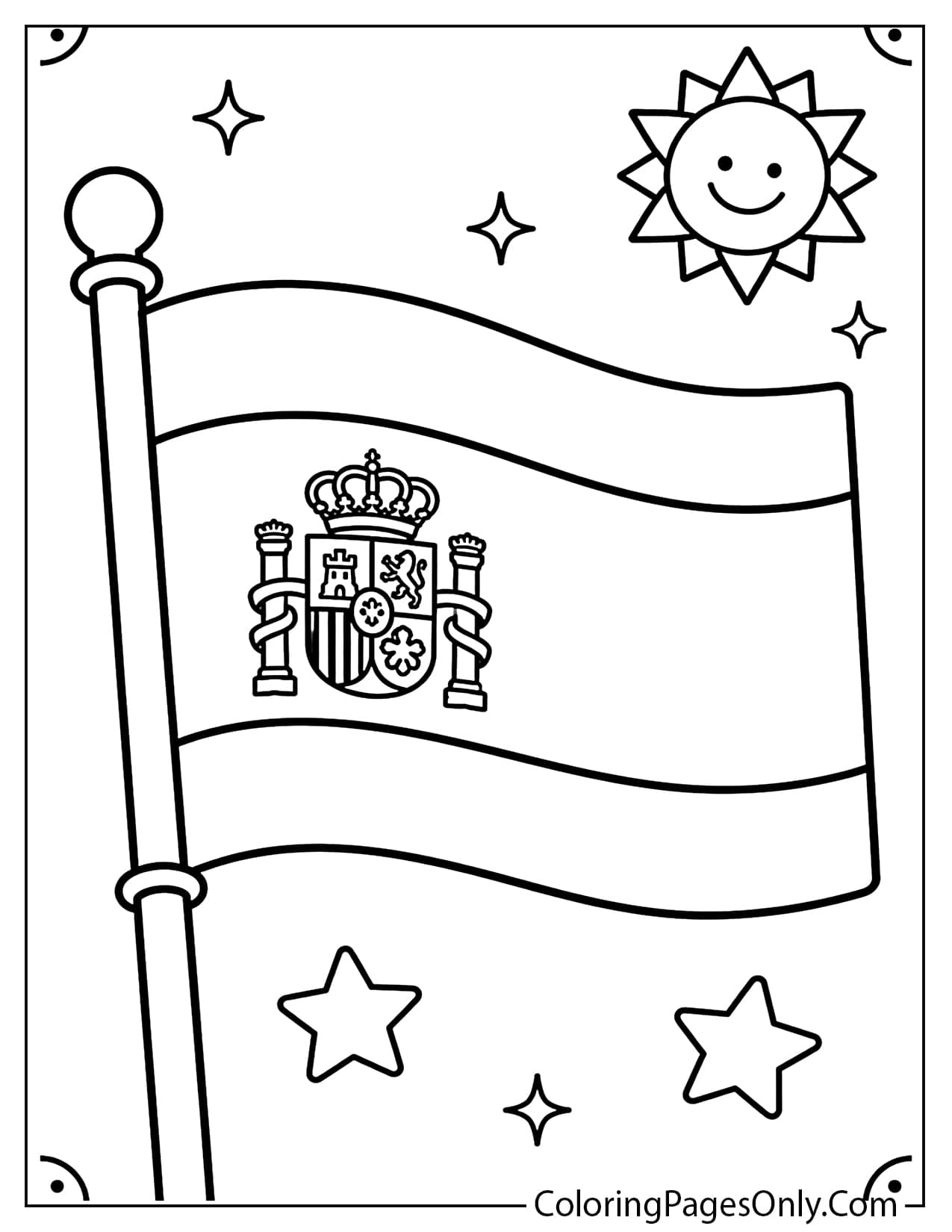
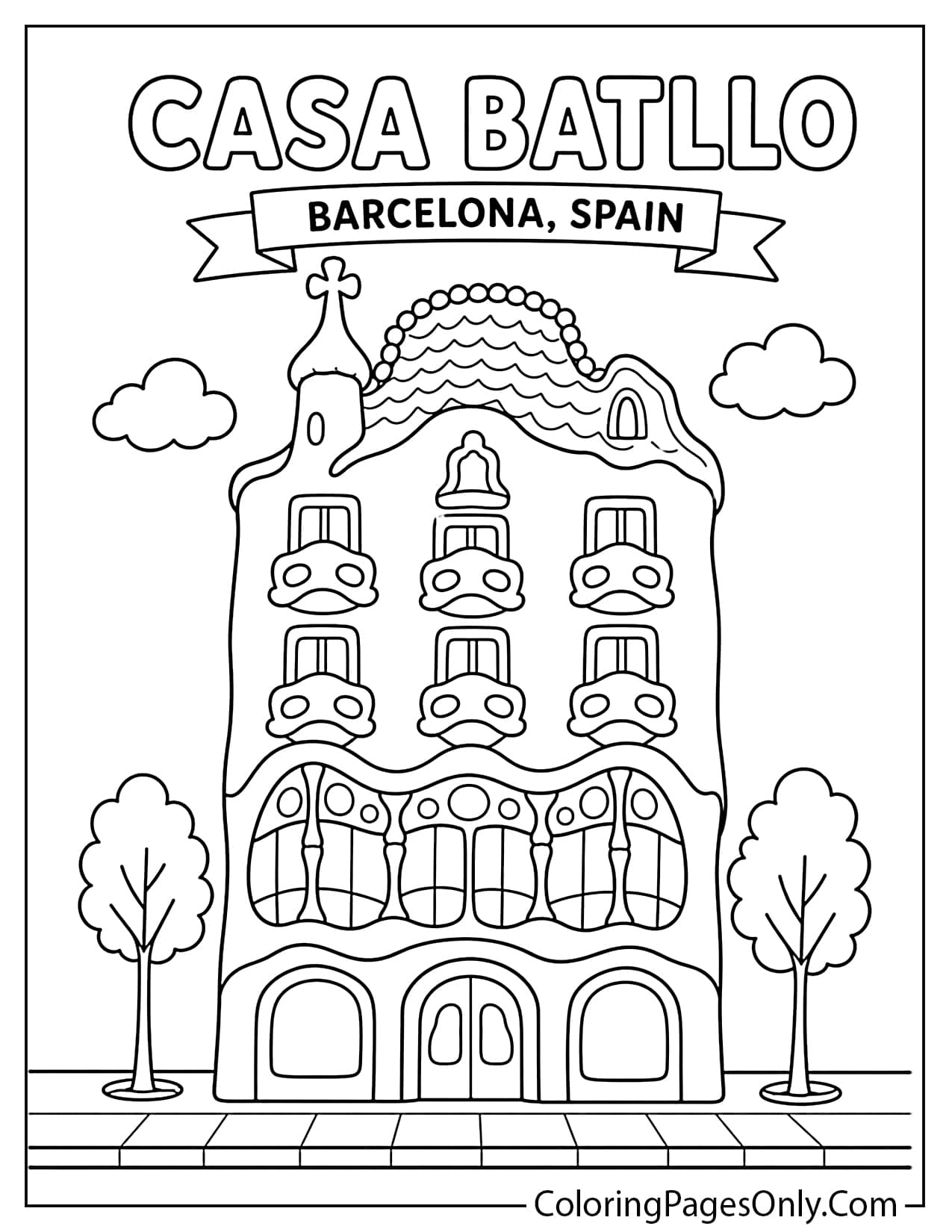
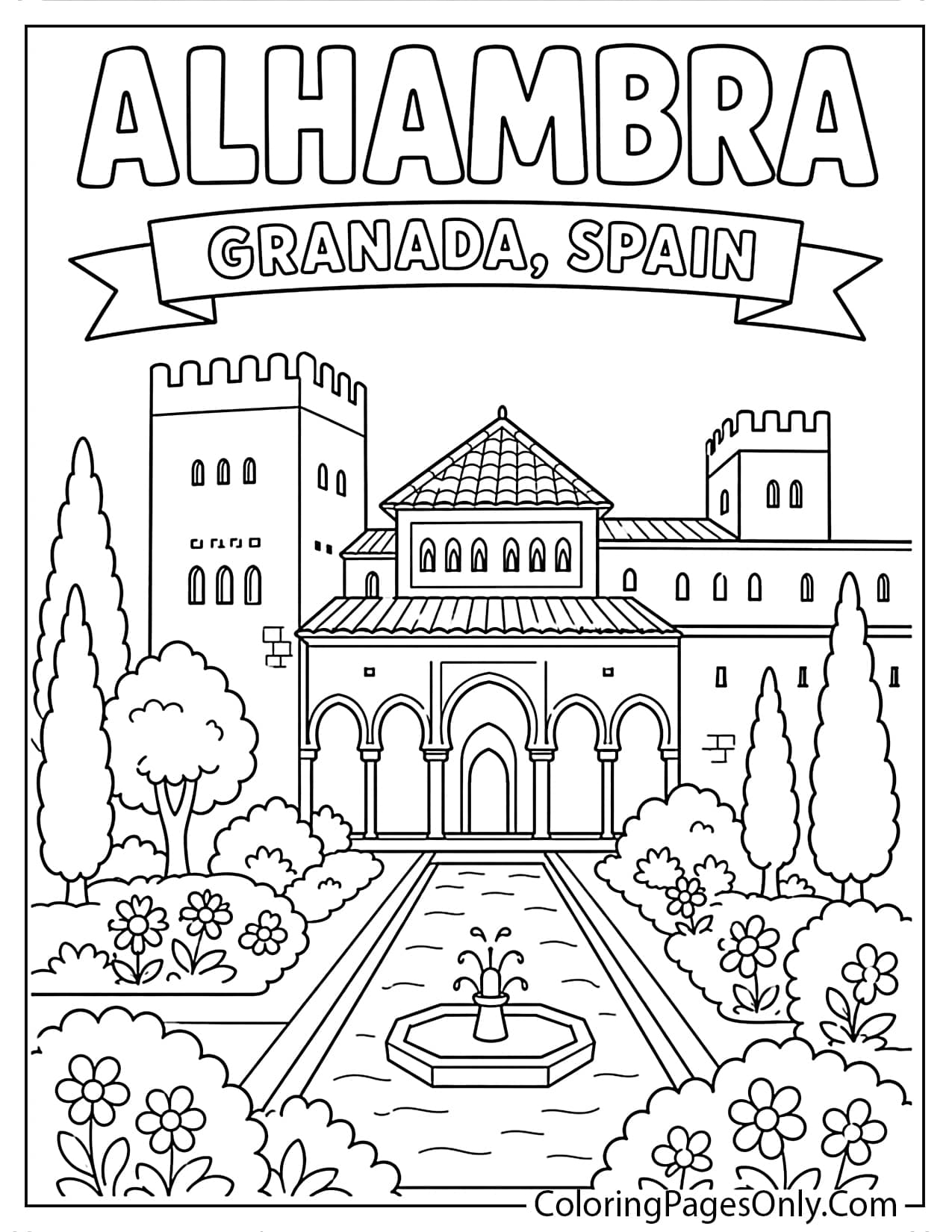
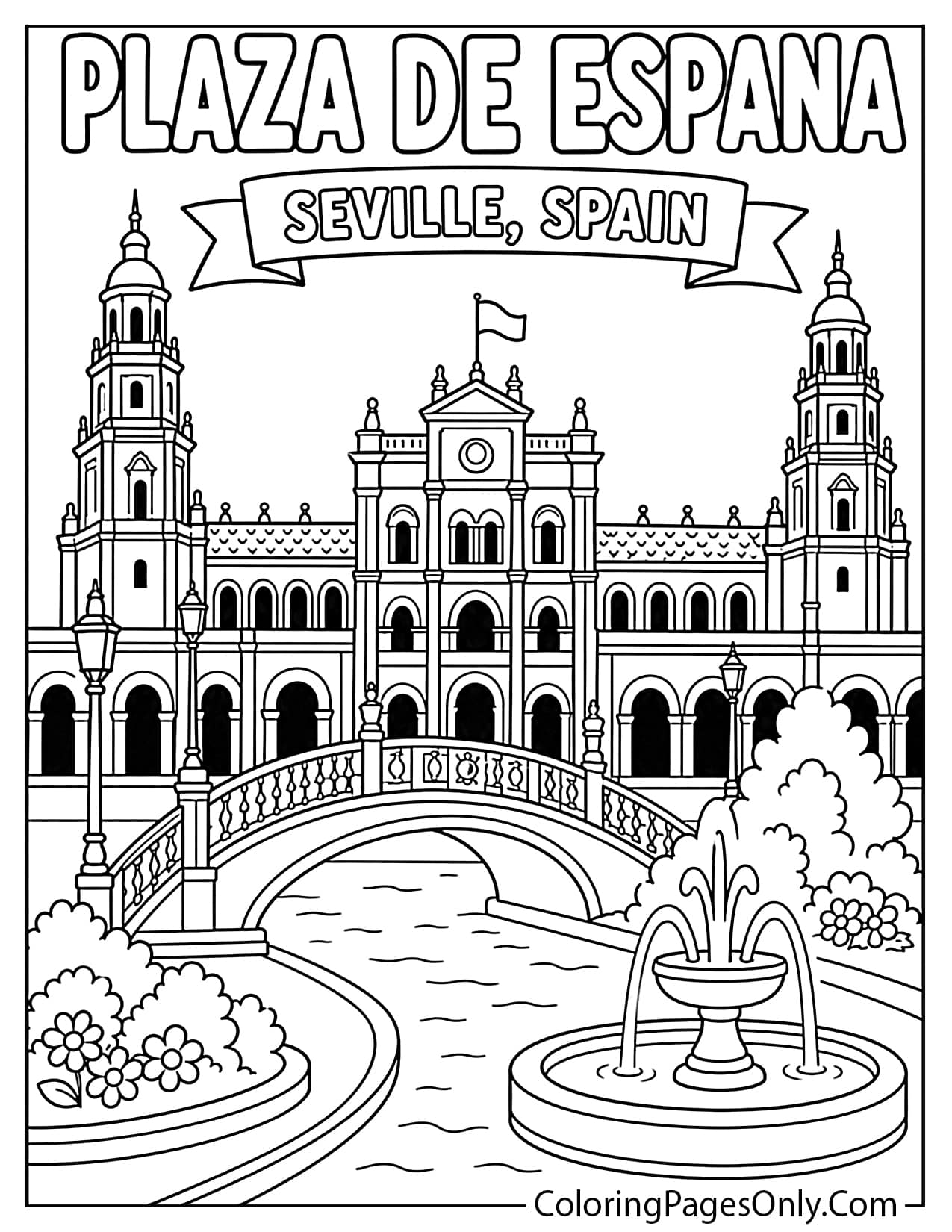
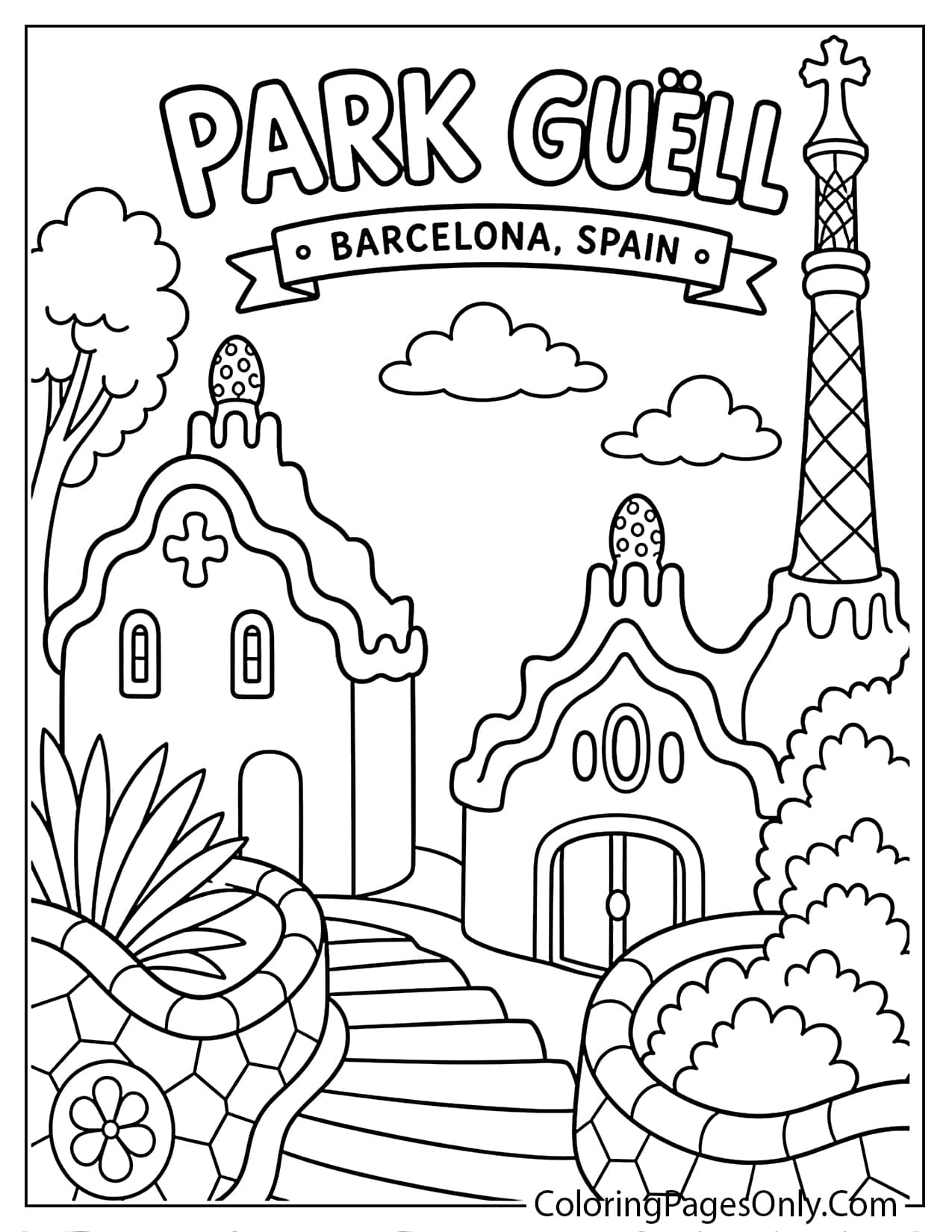
Thirteen pages cover Spain’s official symbols and its best-known buildings, from the flag and coat of arms to Gaudí’s Sagrada Família and Casa Batlló in Barcelona and the Alhambra in Granada. The Sagrada Família’s central tower, the tallest church spire in the world at 172.5 meters, was only fully completed in February 2026 after more than 140 years of construction, so a page showing it depicts a building that just recently reached its finished form. Keep Gaudí’s buildings in warm, sandy stone tones with small bursts of mosaic color, since his real designs favor texture and detail over one dominant color.
Festivals and Traditions
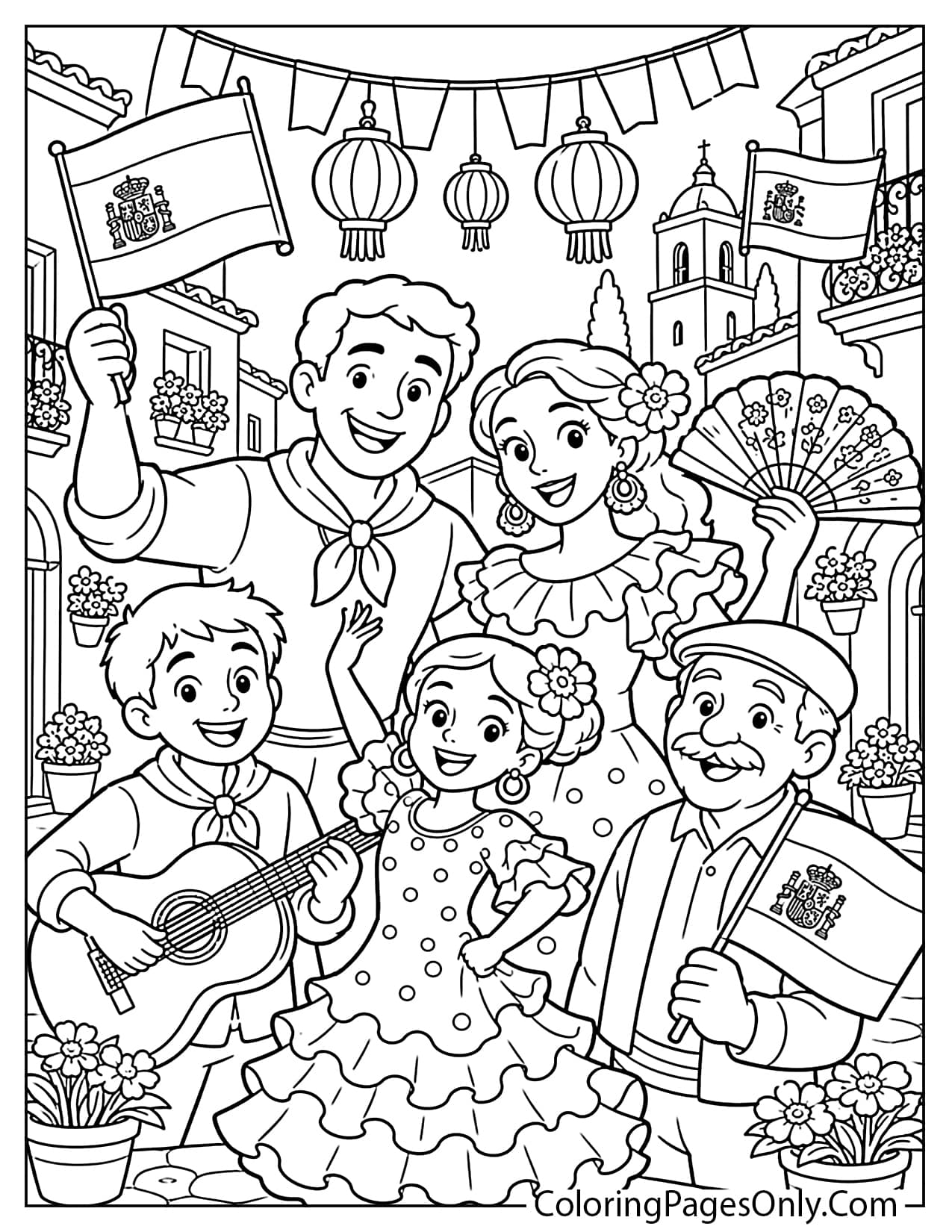
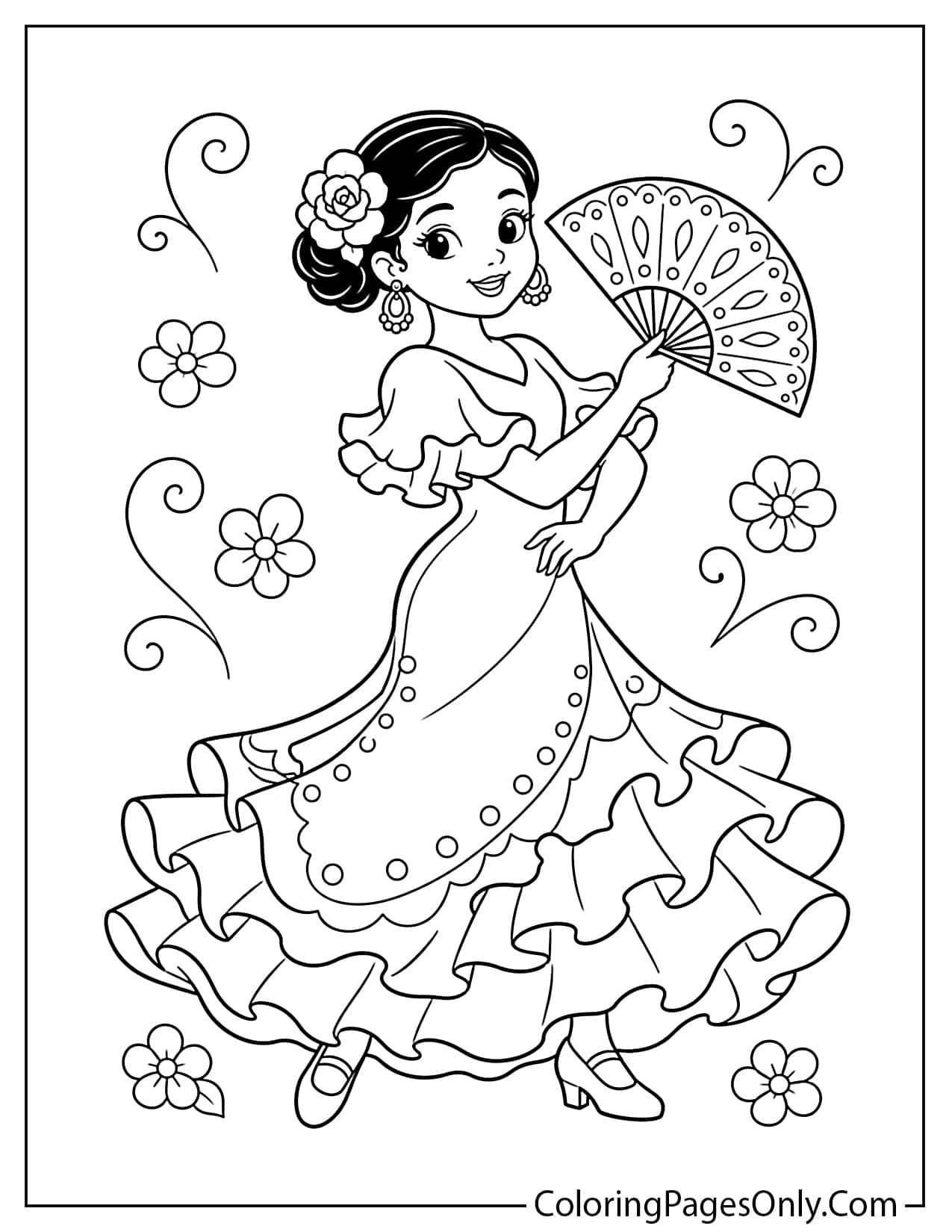
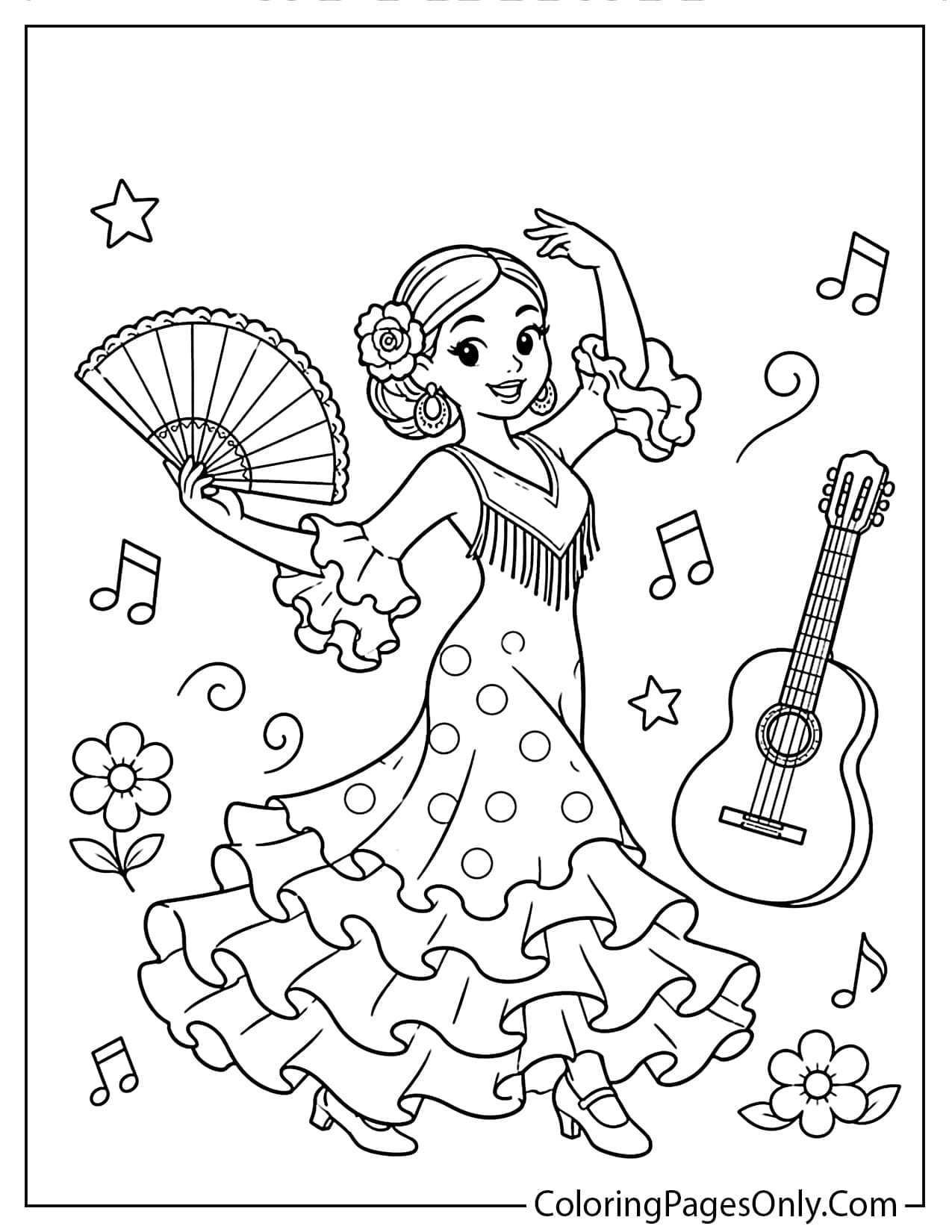
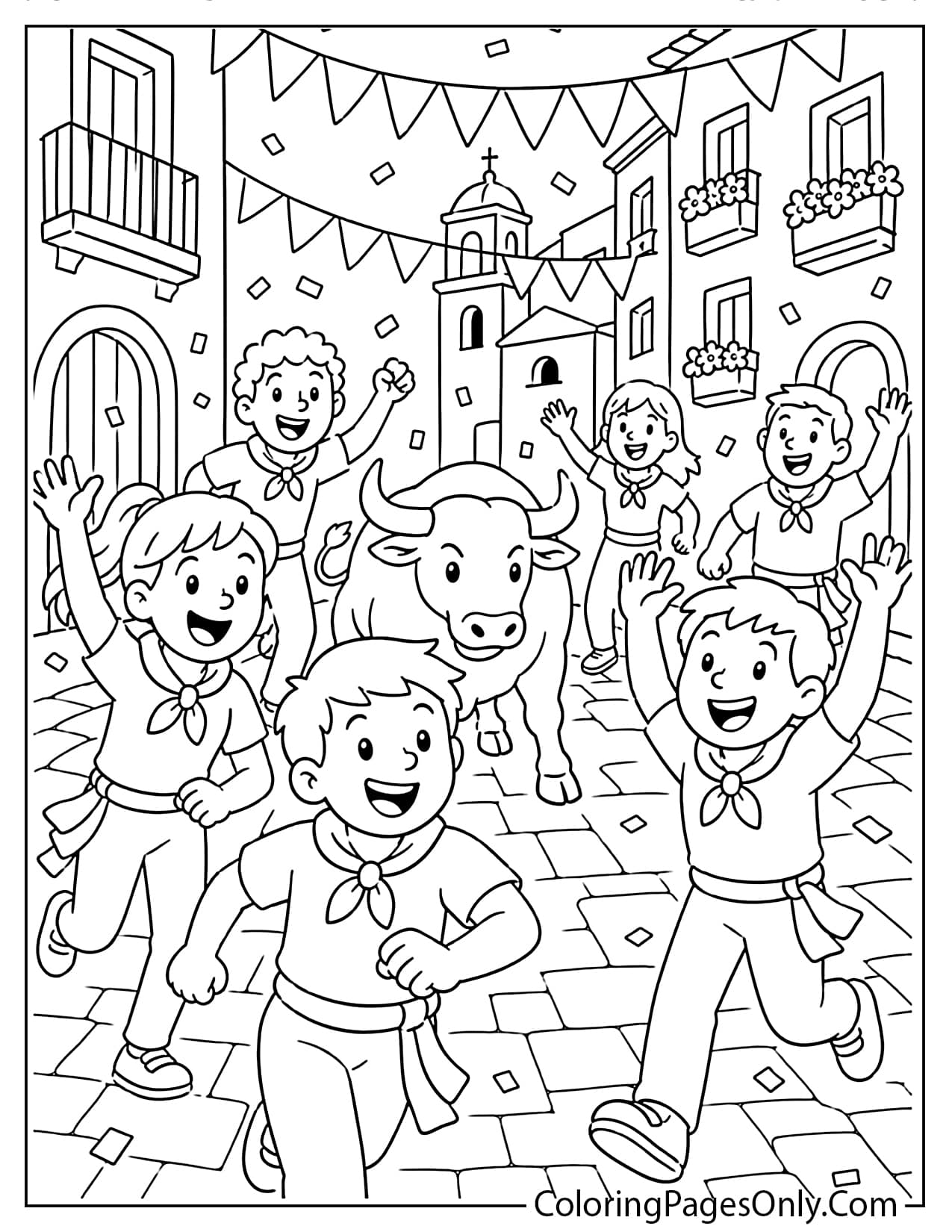
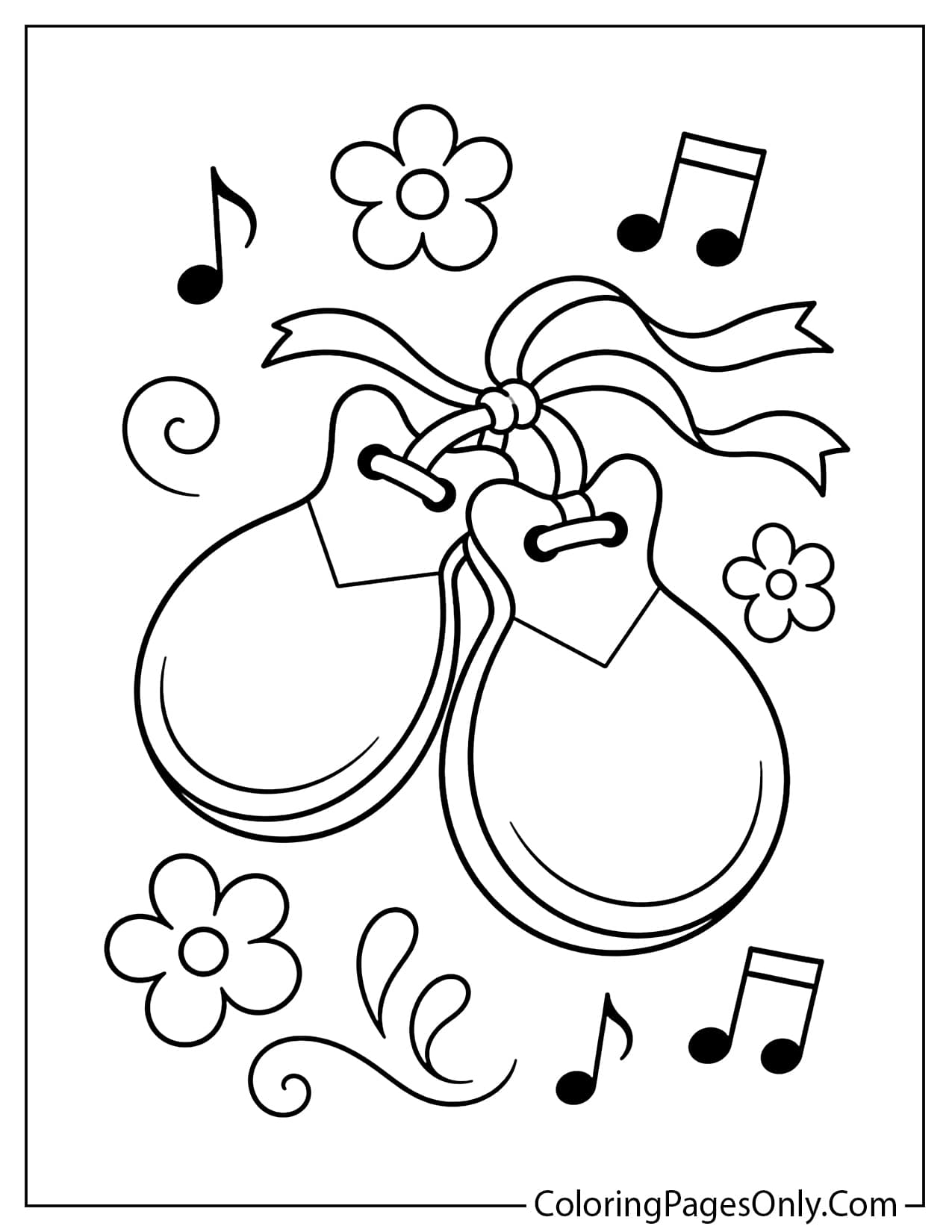
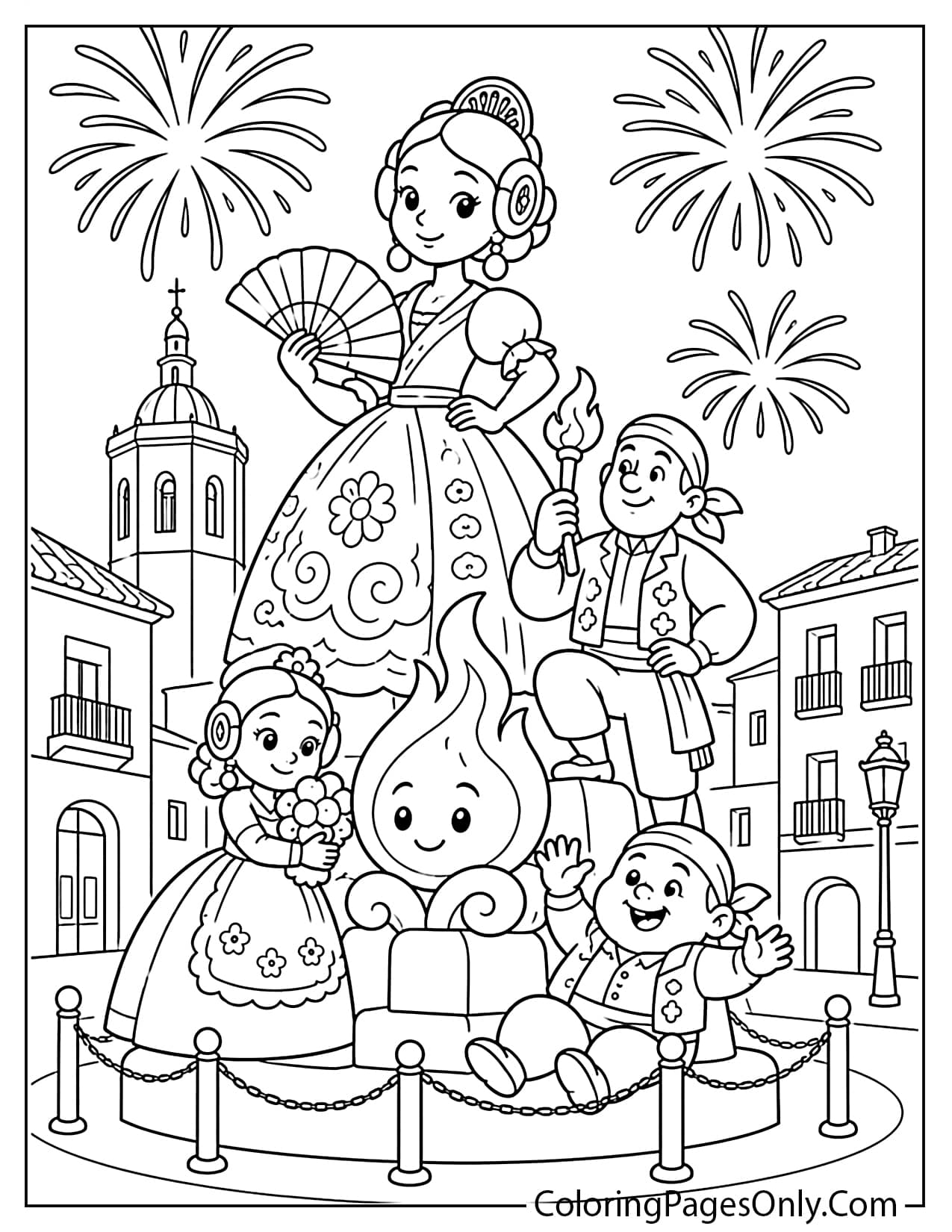
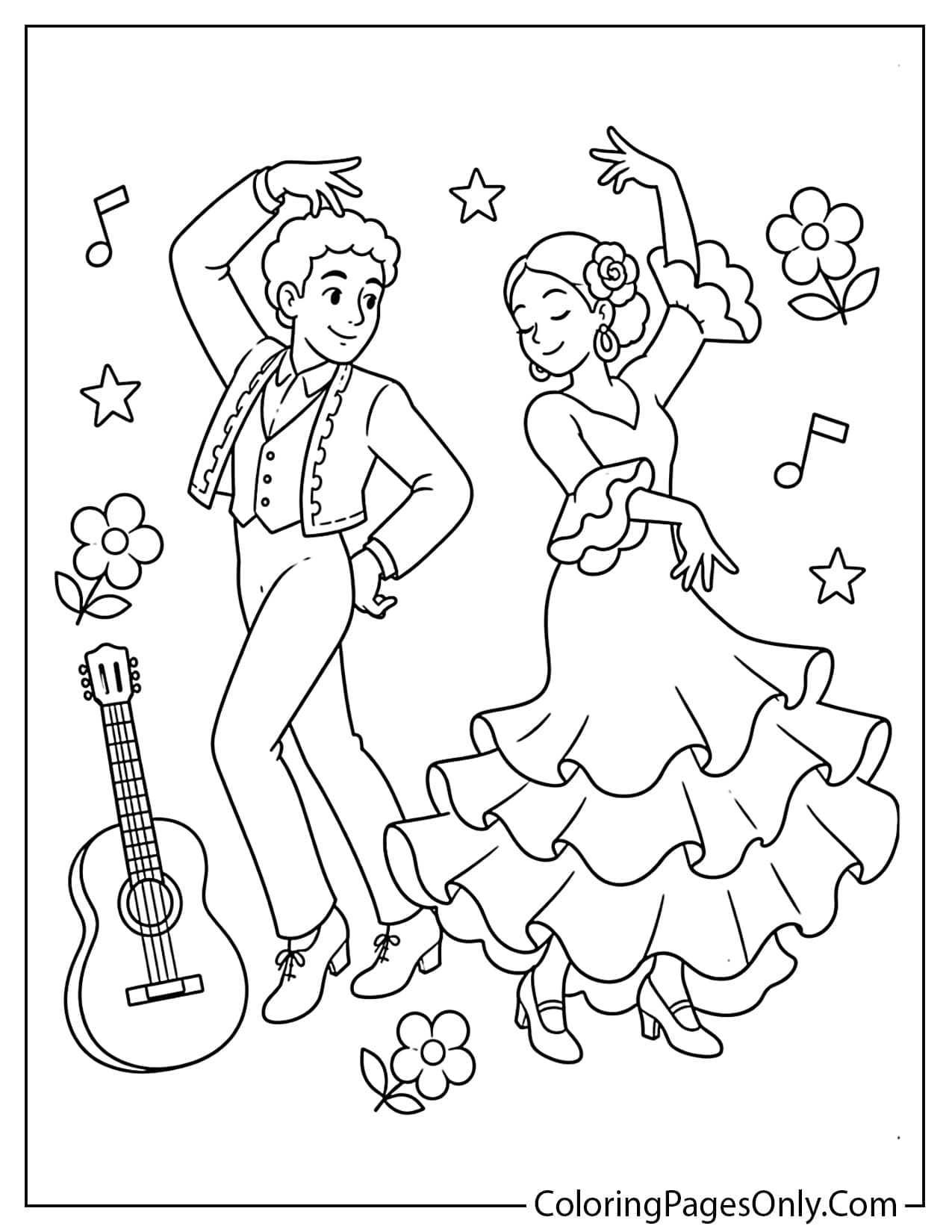
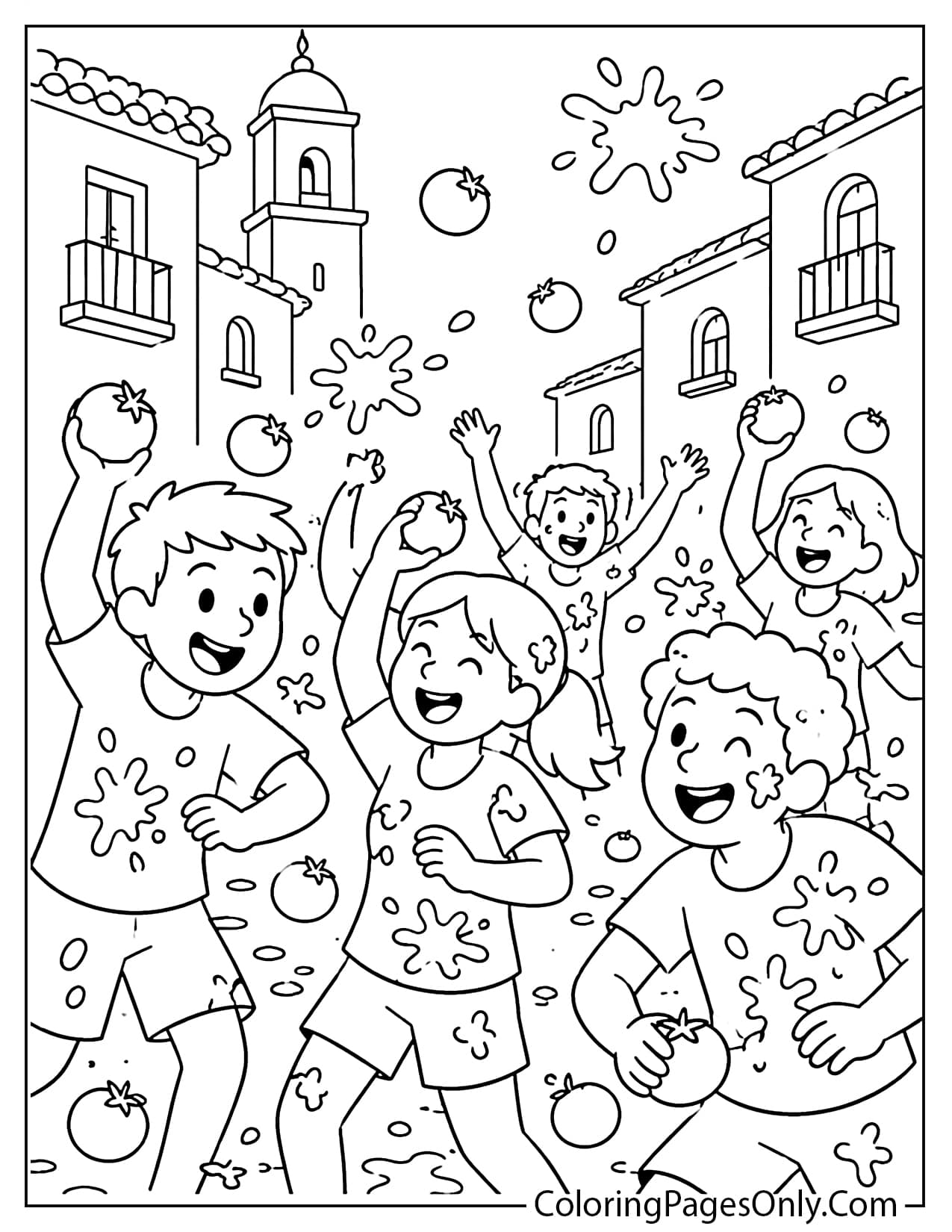
Eleven pages capture Spain’s festivals and cultural traditions: the running of the bulls at San Fermín, the tomato-throwing festival La Tomatina, the burning sculptures of Las Fallas, and flamenco dancers with castanets and a fan. Since several of these festivals are genuinely tied to a specific color, tomato red for La Tomatina, deep reds and blacks for flamenco, those pages are a good place to lean into one bold, dominant color rather than a full rainbow palette.
Food and Coastal Scenes
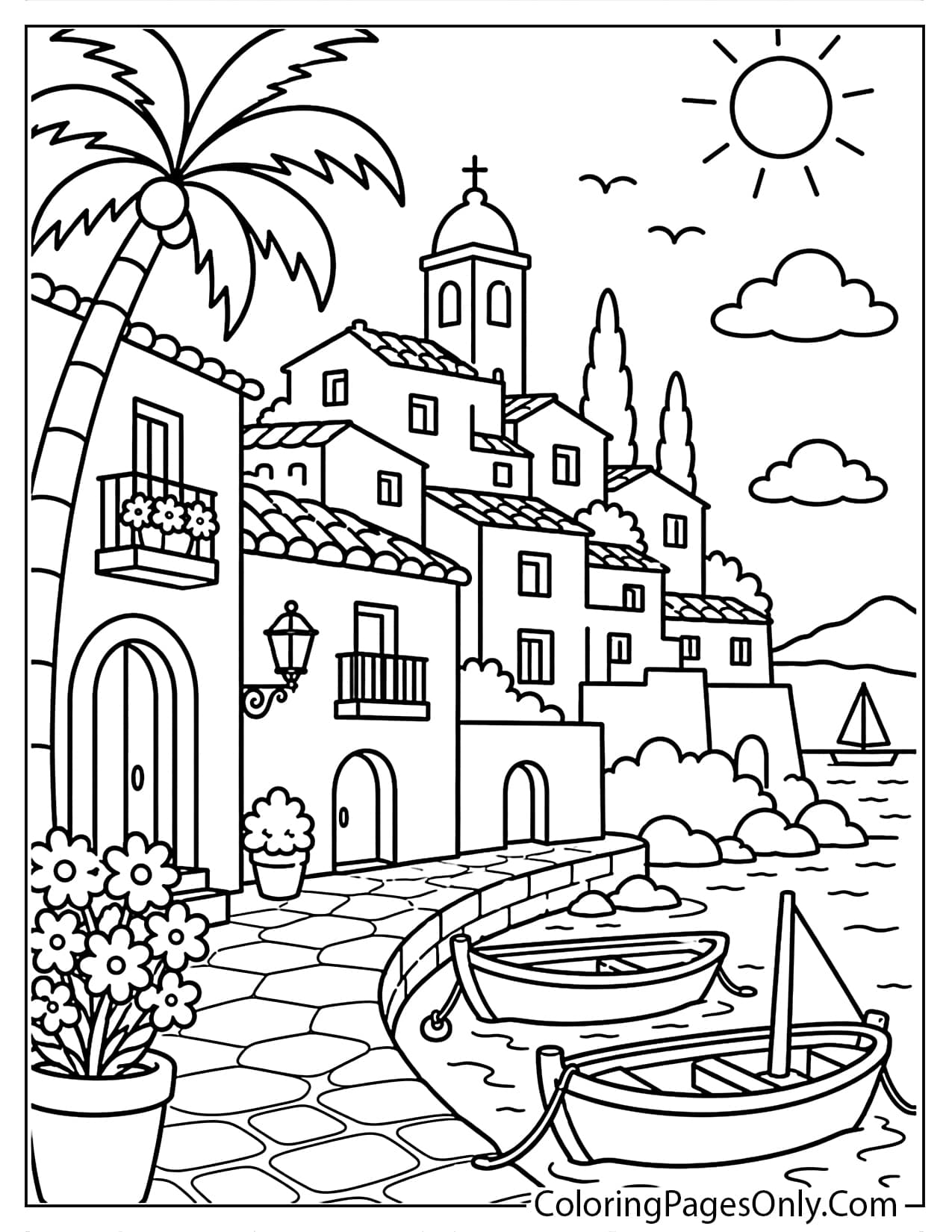
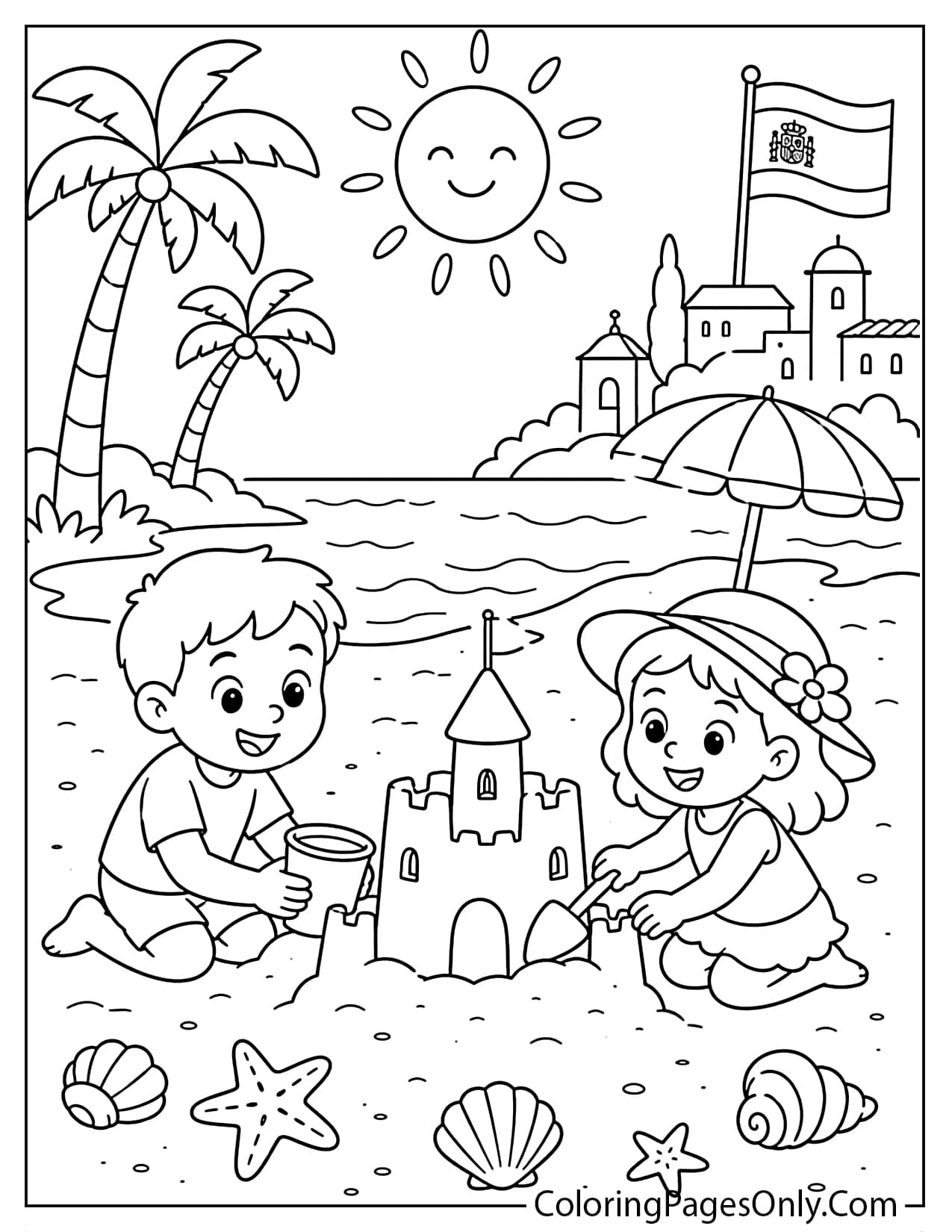
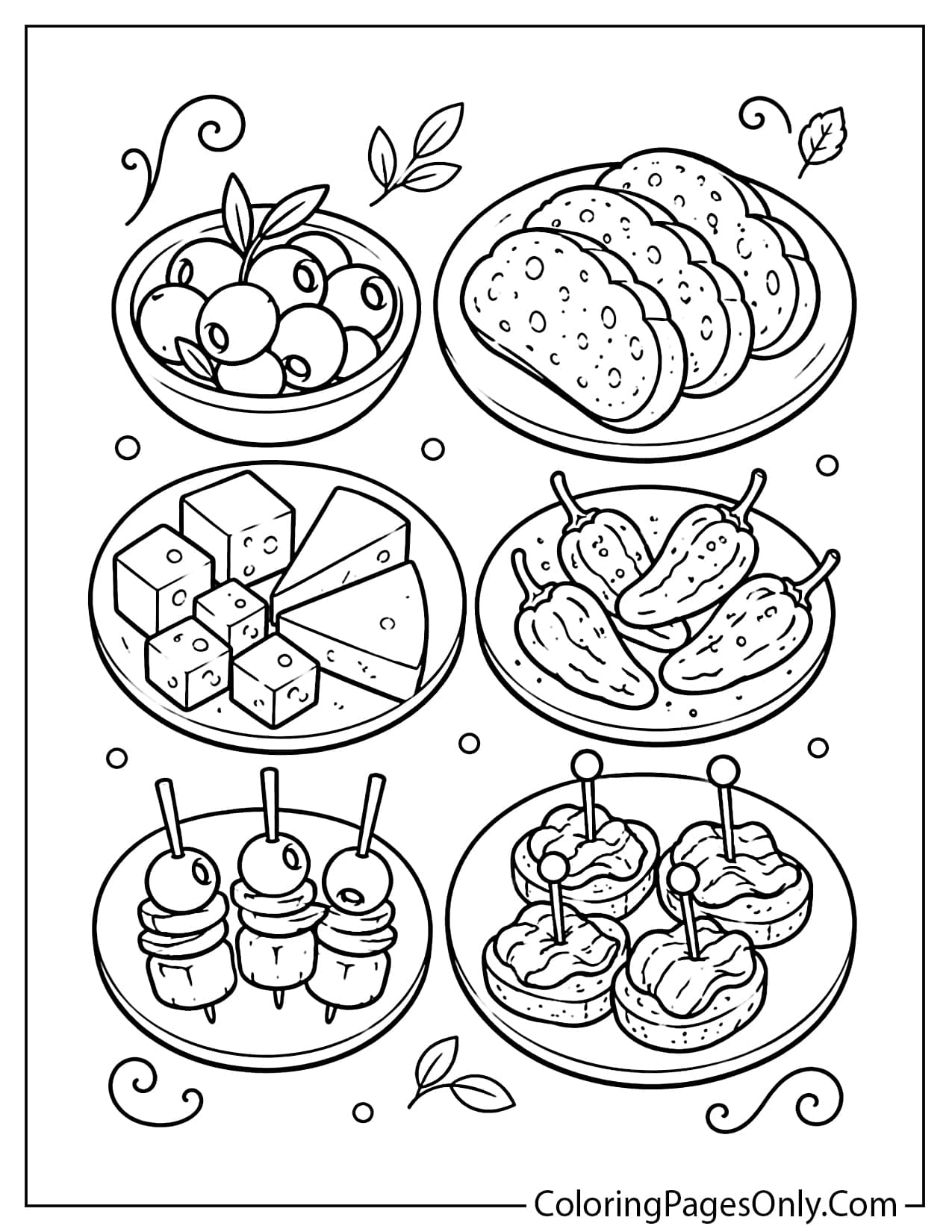
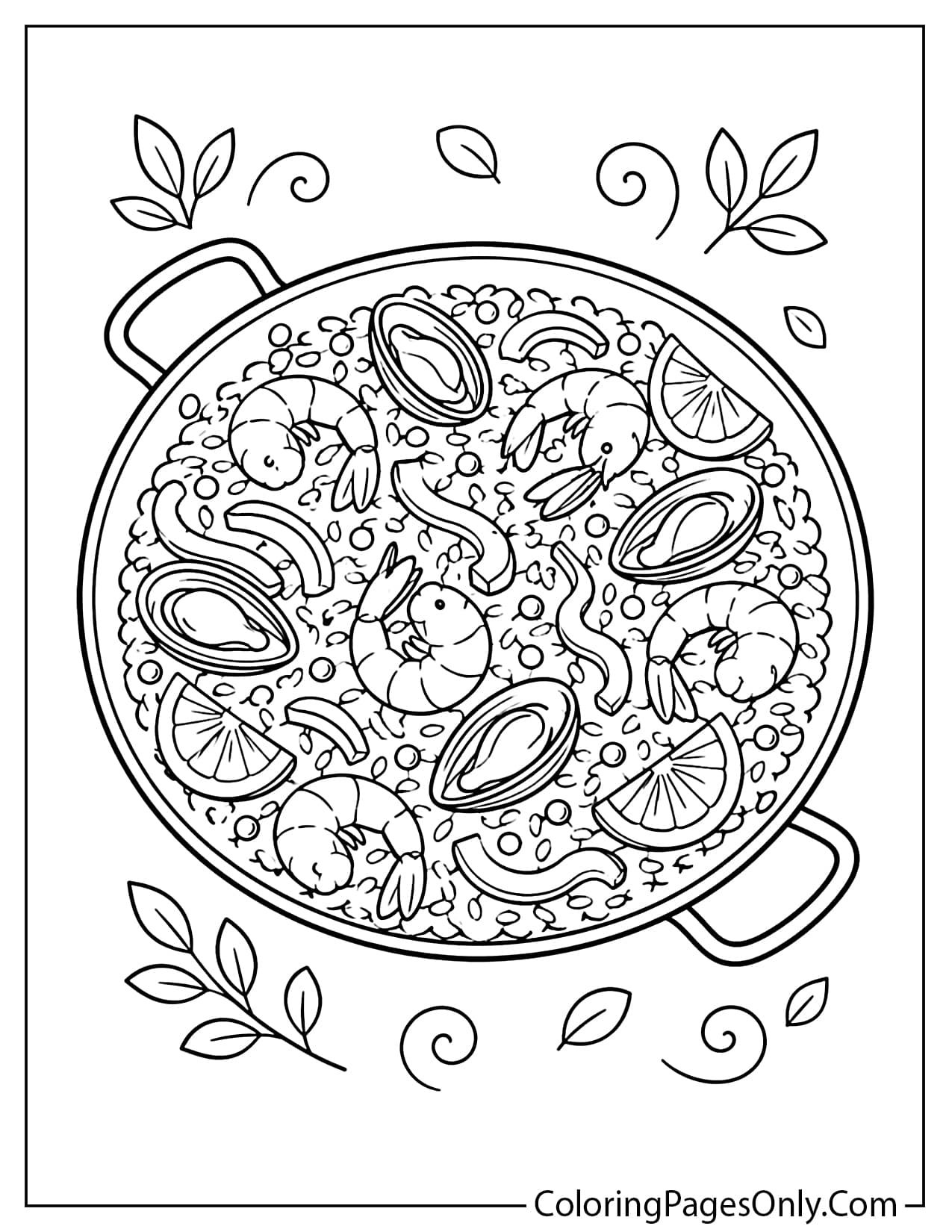
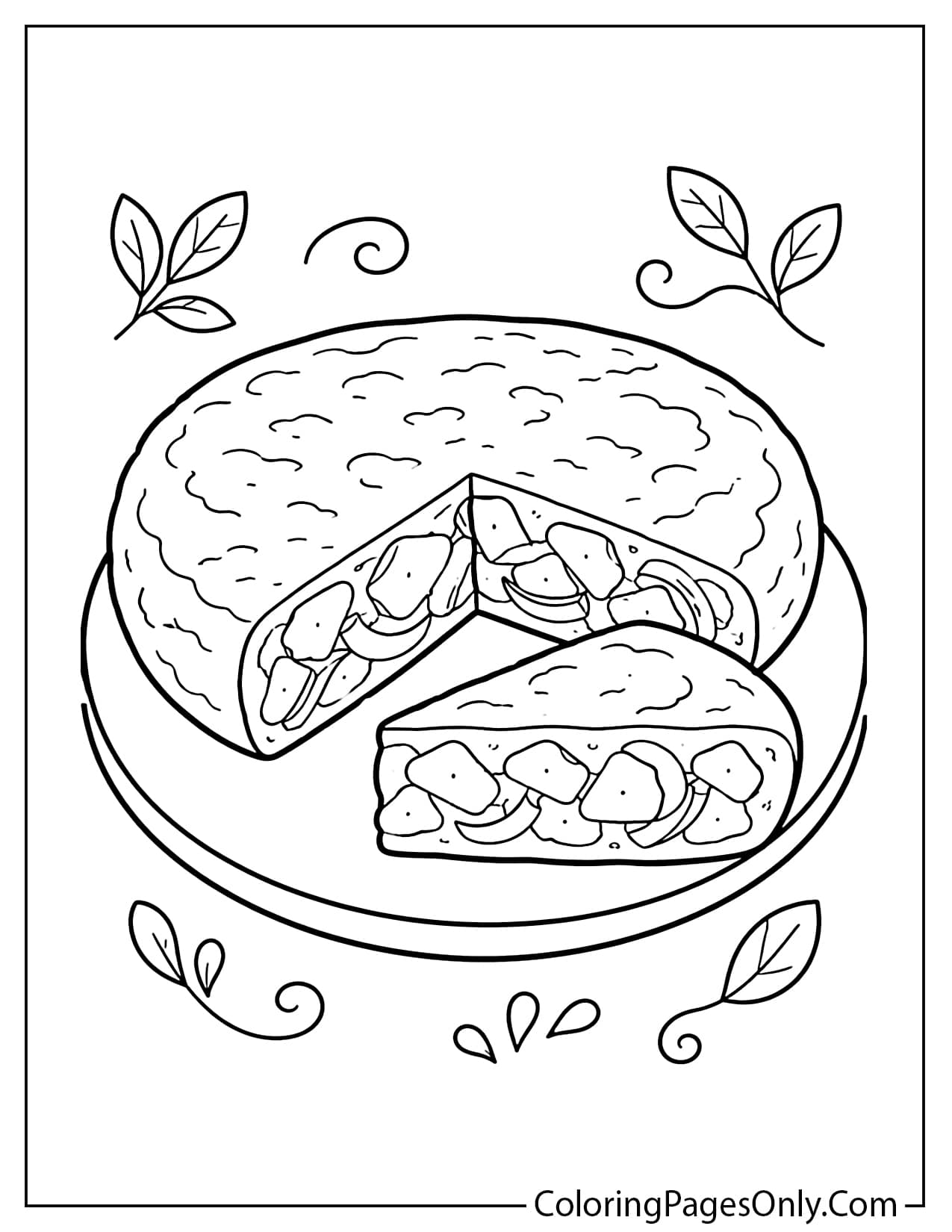
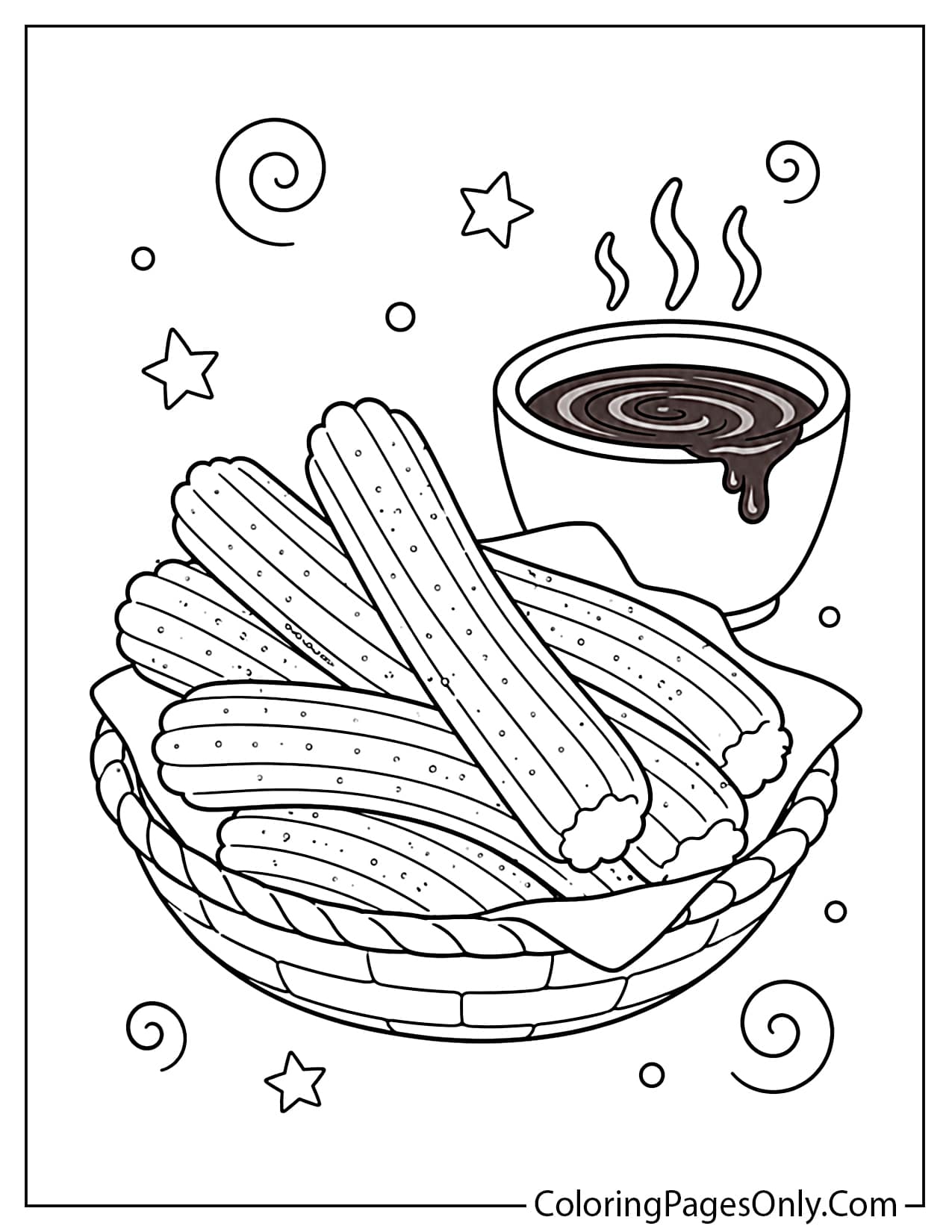
Six pages cover Spanish food and coastal life: paella, tapas, a Spanish omelet, churros, a coastal village, and a beach scene. Paella gets its color mostly from saffron, so a warm golden-yellow rice base with red pepper and green pea accents reads more accurately than an orange or plain yellow fill.
2026 World Cup Champions
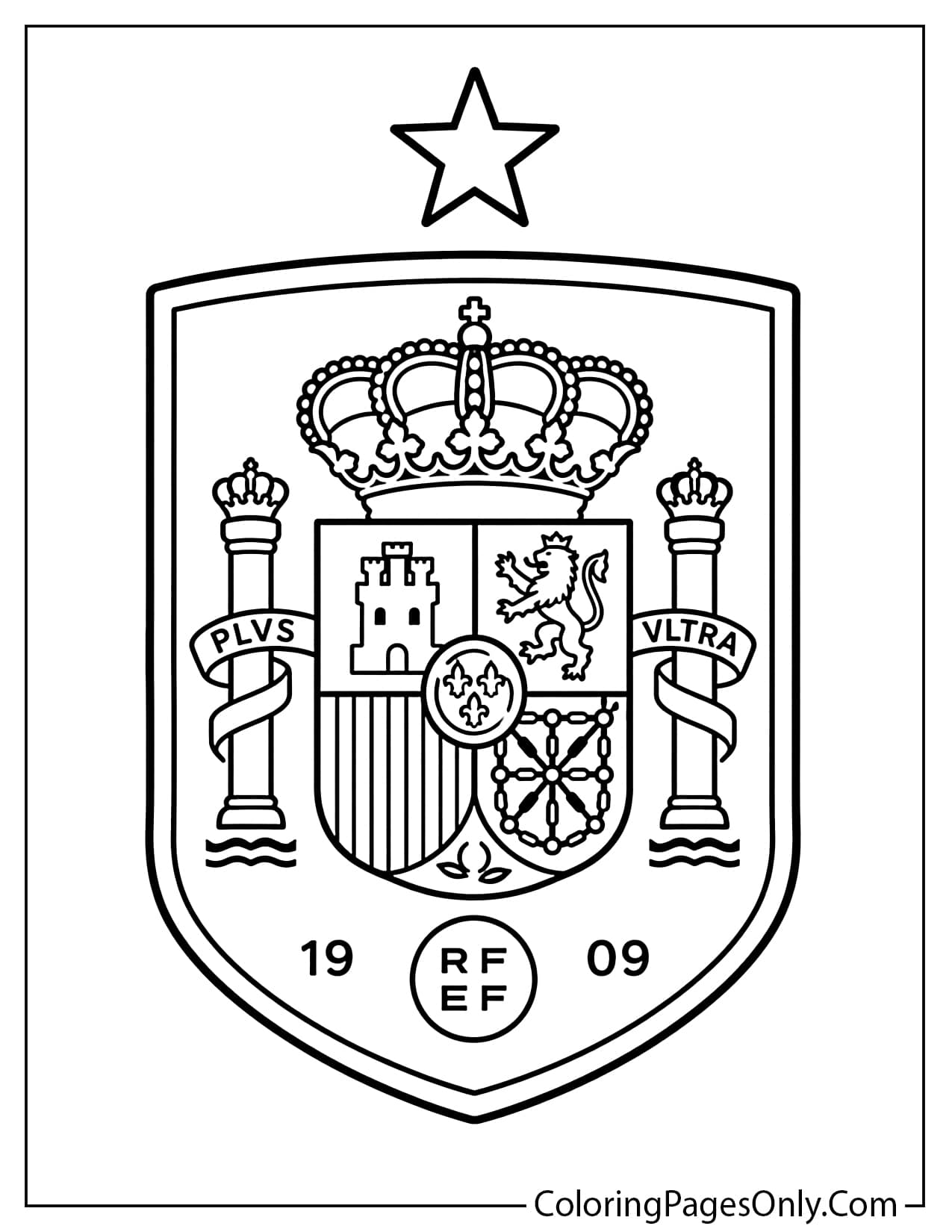
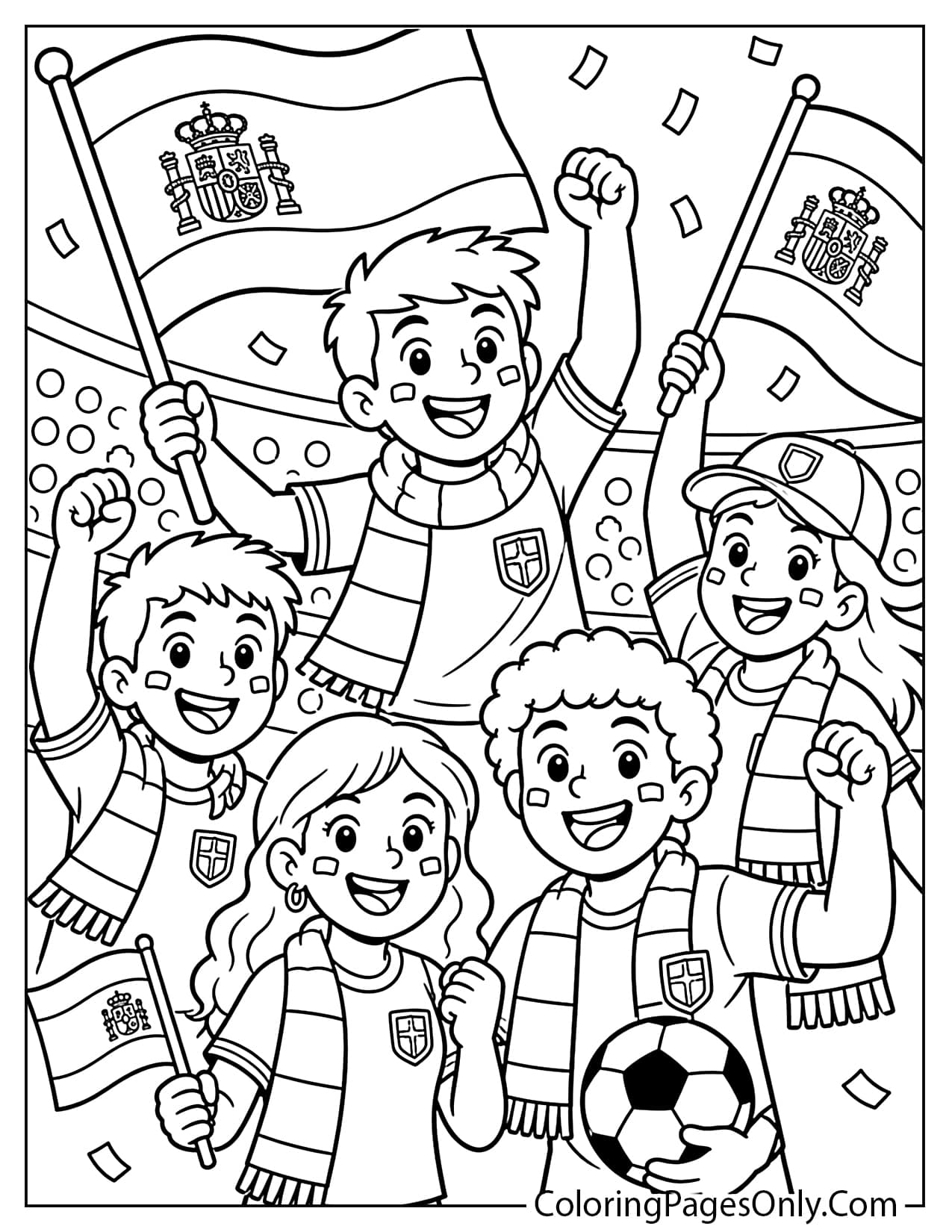
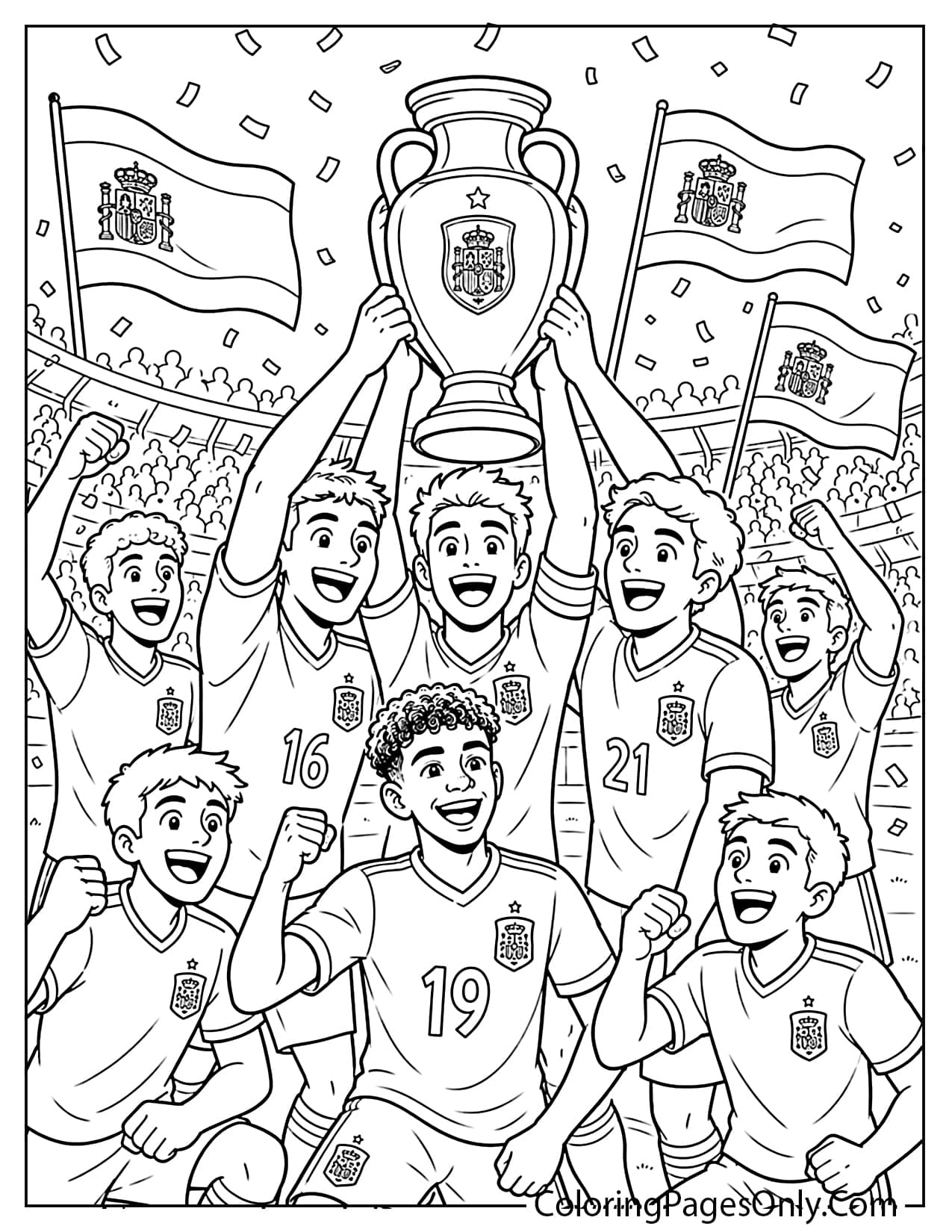
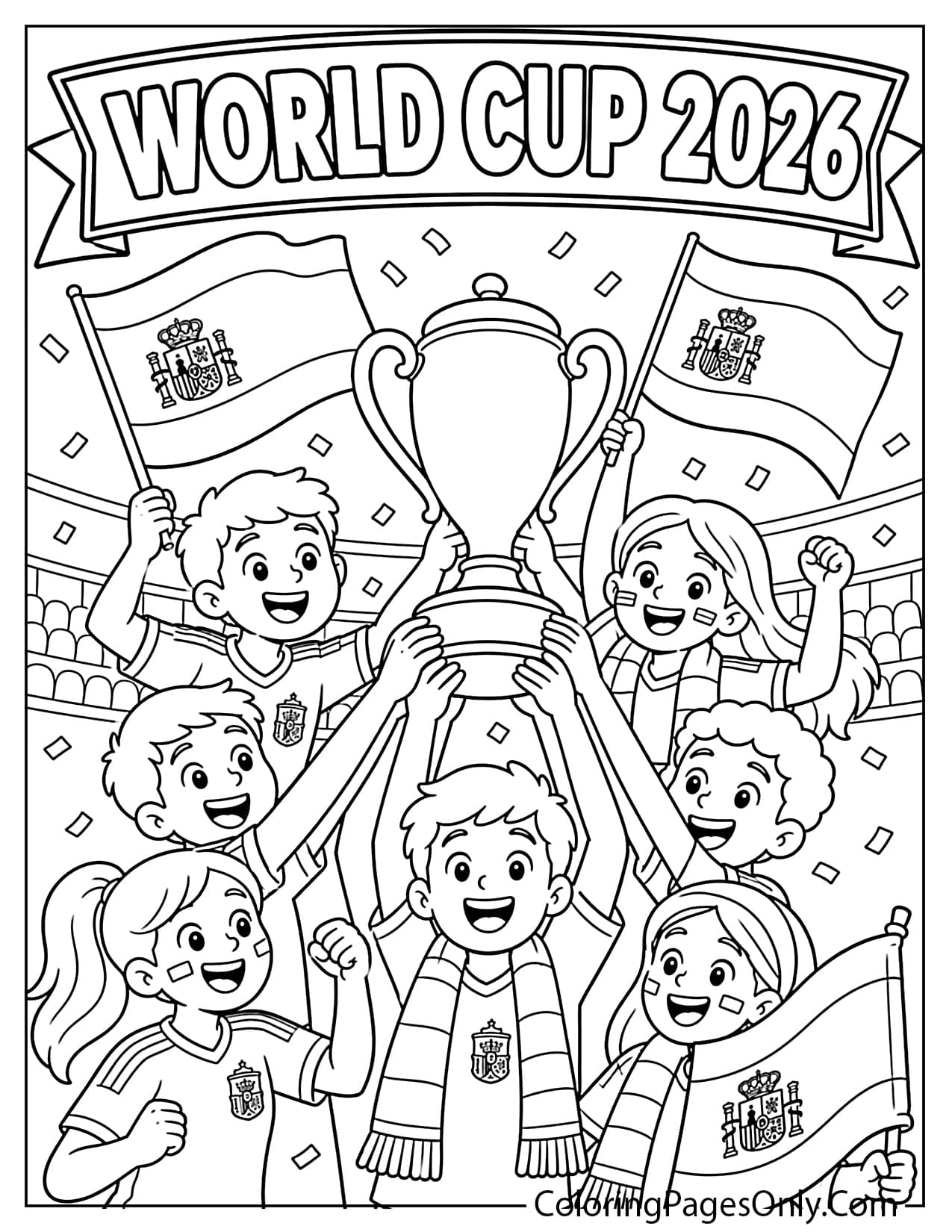
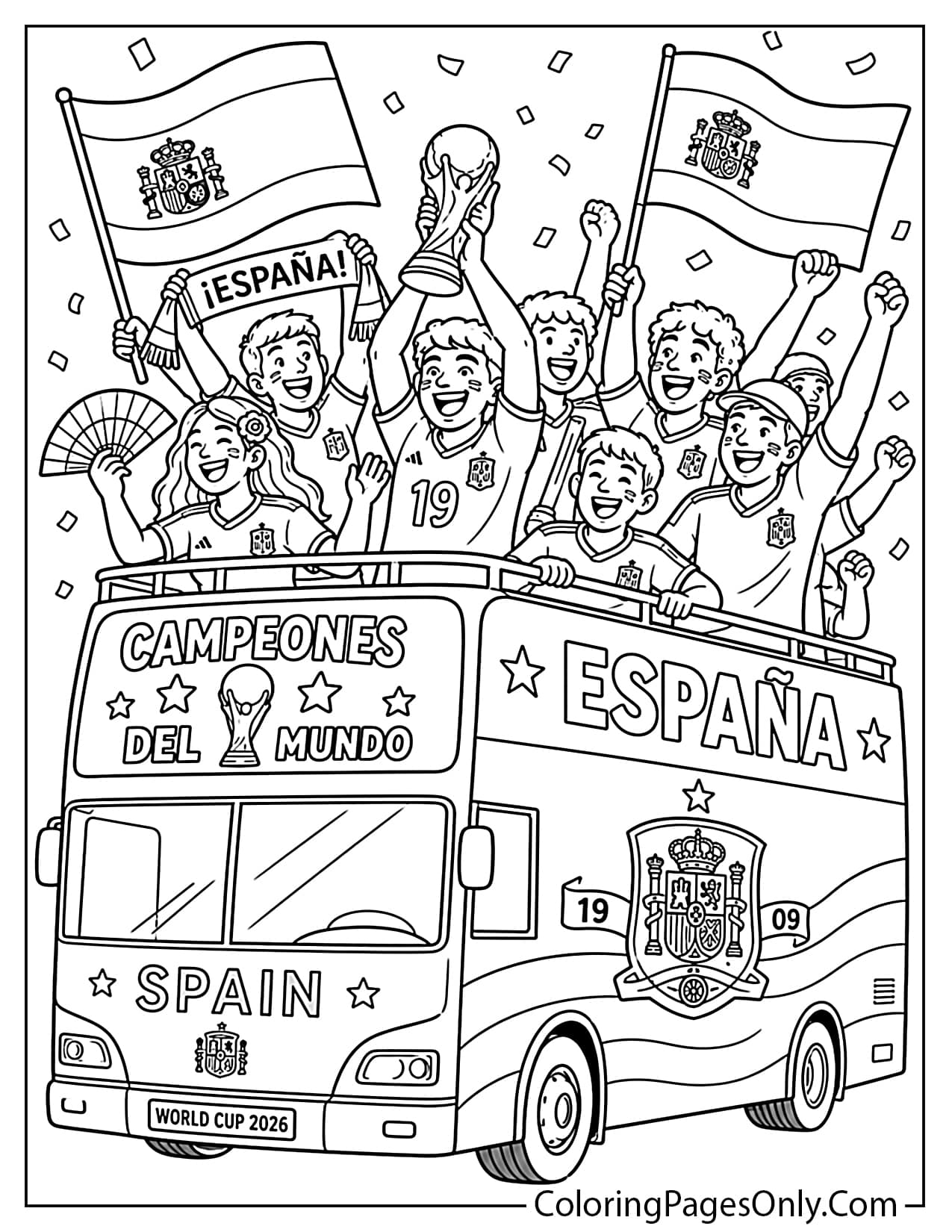
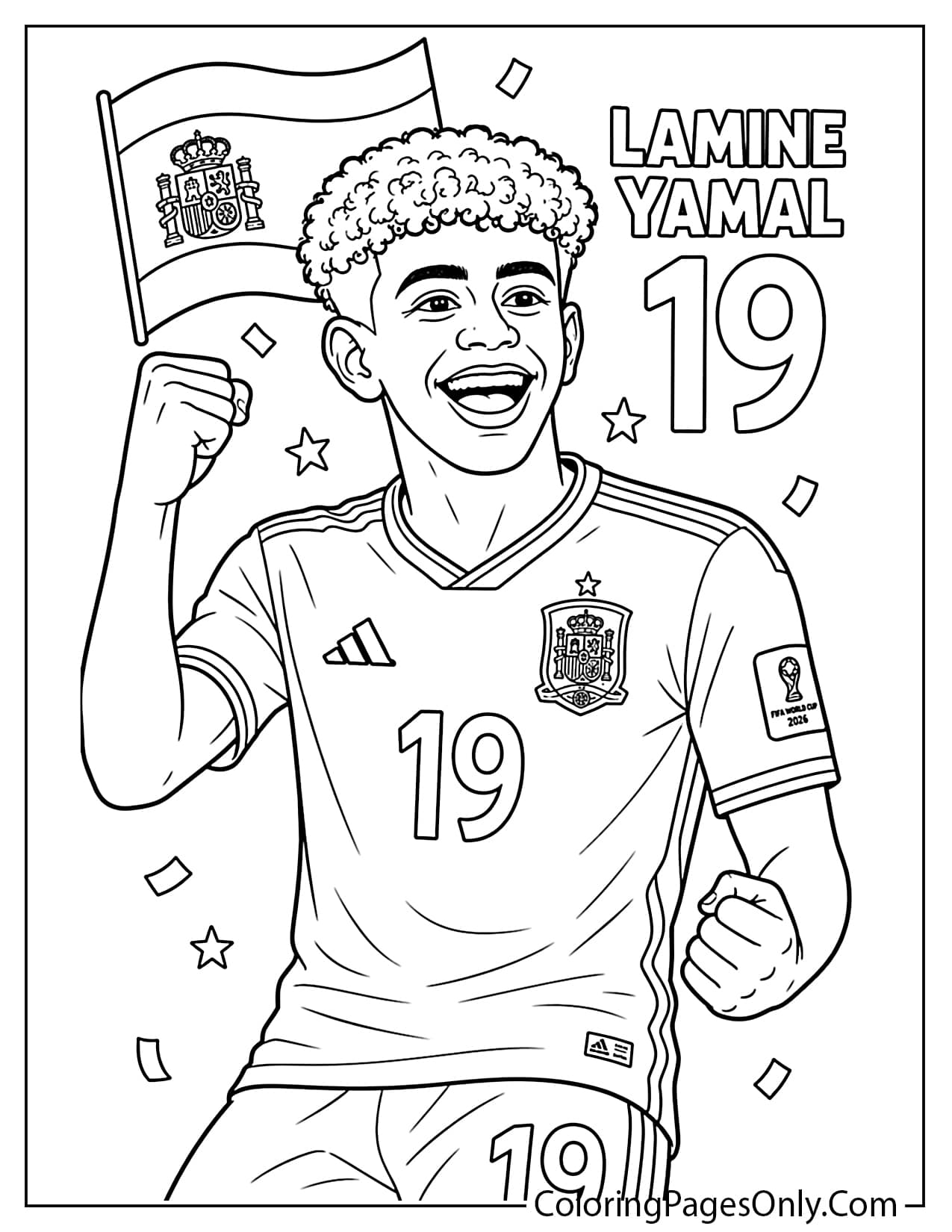
Six pages celebrate Spain’s most recent football triumph: the national crest, fans celebrating, the champions’ parade, and a page dedicated to teenage star Lamine Yamal, who wore number 19 as Spain beat Argentina 1-0 in the 2026 World Cup final on July 19, 2026. Spain’s national kit runs a deep red with gold trim, so keeping that combination consistent across every page in this group ties them together as one connected moment rather than six separate scenes.
What Spain Coloring Pages Do
Detail rewards a careful hand. The tilework on Gaudí’s buildings and the layered ruffles on a flamenco dress both ask for steadier, more deliberate coloring than a plain shape would, and the American Academy of Pediatrics names exactly this kind of structured coloring, done between ages 2 and 7, as a clear path to fine motor skill development. The simpler flag and symbol pages offer an easier version of that same practice before a busier landmark scene.
A country changes while a page waits. Because part of this set was only added after February and July 2026, coloring the Sagrada Família or the World Cup pages is a small reminder that even a country’s most famous landmarks and biggest wins are recent history, not something that’s always existed the way a page might suggest.
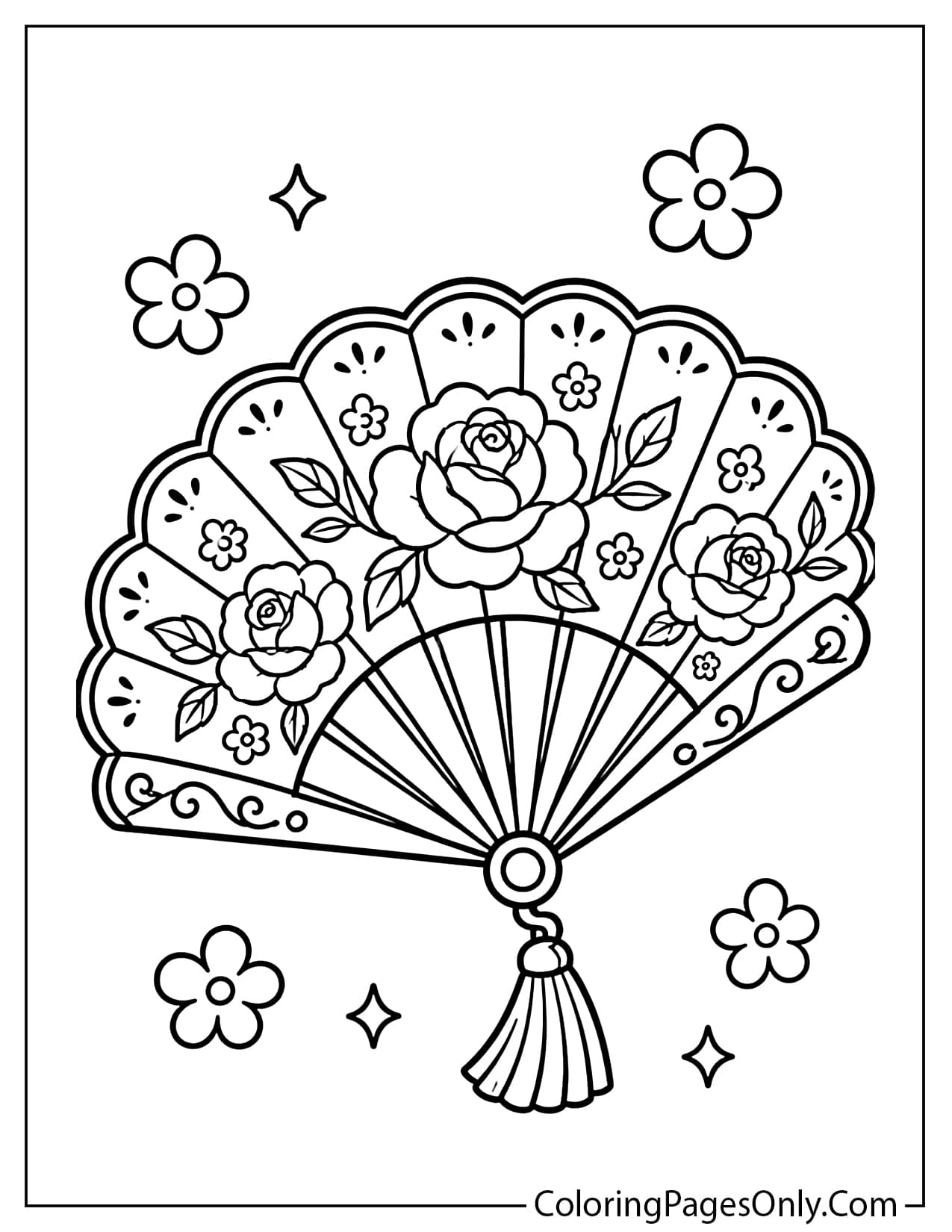
Calm through repetition. A 2005 Art Therapy Journal study found a measurable drop in anxiety after coloring sessions built around a defined structure. The repeating mosaic patterns on Gaudí’s architecture and the geometric detail on a Spanish fan are about as structured as a coloring page gets.
A geography lesson without a map quiz. Moving between a Barcelona landmark, a Pamplona festival, and a Valencia dish over the course of a few pages is a low-pressure way to notice that “Spain” isn’t one single place or style, but a country made up of distinct regions, each with its own traditions.
How to Color Spain Coloring Pages Well
- Spanish flag: Color Scarlet bands on the top and bottom with a wider Goldenrod band in the center, keeping the coat of arms small and detailed rather than oversized.
- Gaudí’s buildings: Use Tan or Raw Sienna for the stonework on the Sagrada Família, Casa Batlló, and Park Güell, with small dots or patches of Turquoise Blue, Scarlet, and Goldenrod scattered in to suggest mosaic tile.
- The Alhambra: Color the walls warm Tan and Burnt Sienna, with Sea Green accents in the tiled courtyards and gardens.
- Flamenco dancers: Use deep Scarlet or Black for the dress, keeping the ruffles a slightly lighter shade of the same color rather than switching palettes entirely.
- Paella: Color the rice Goldenrod or Dandelion for the saffron base, with Scarlet pepper strips and small green pea dots.
- World Cup pages: Use Scarlet jerseys with Goldenrod trim and lettering, matching the real Spanish national team’s kit colors.
5 Creative Craft Ideas With Spain Coloring Pages
1. Spain Fact Cards. Color a few of the landmark or symbol pages, then write one real fact, like the Sagrada Família’s height or Spain’s World Cup win, on the back of each card. A small stack makes a simple, reusable set for a geography or current events lesson.
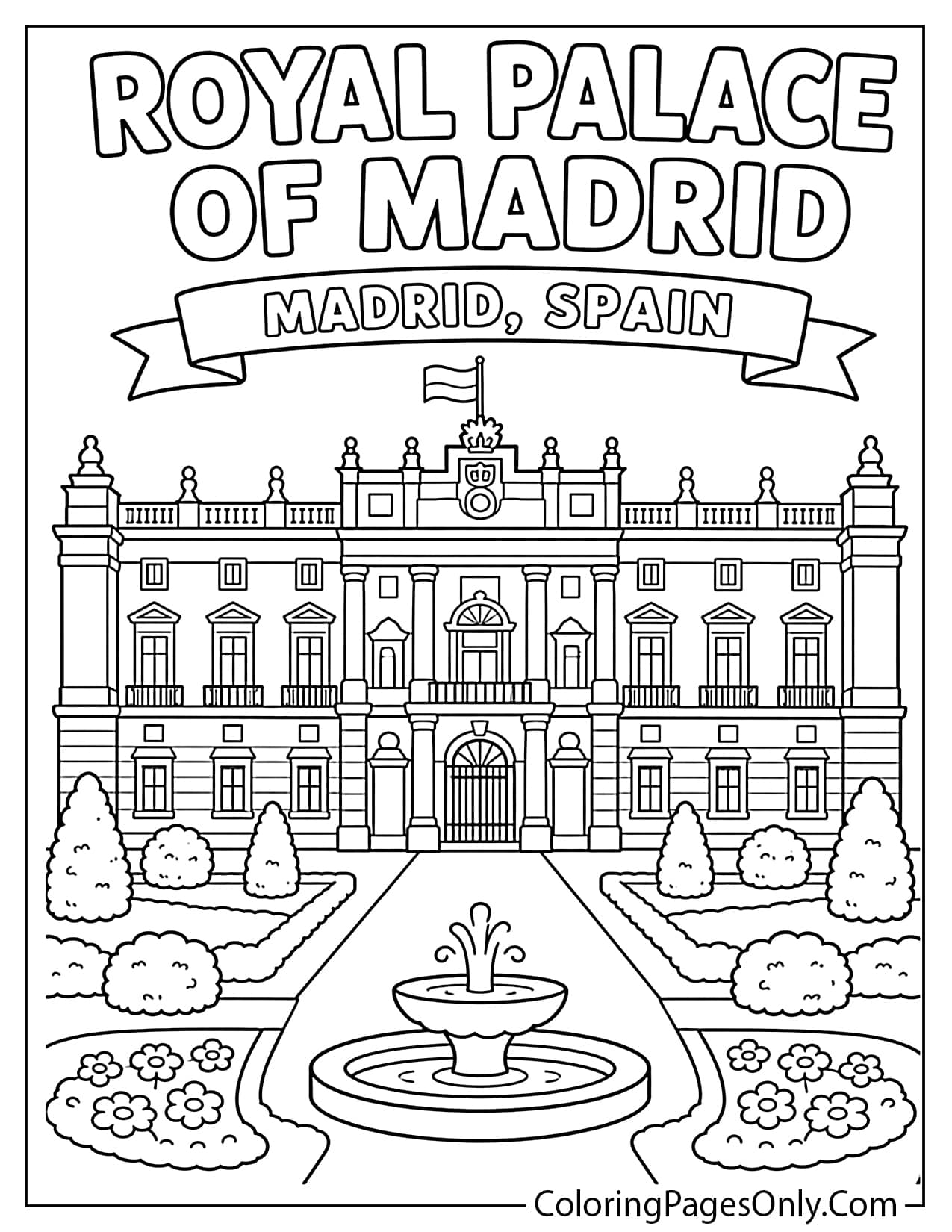
2. Landmark Travel Poster. Color a few landmark pages, the Sagrada Família, the Alhambra, the Royal Palace, and arrange them together on a poster board like a mini travel brochure. It’s a fun way to plan an imaginary trip through Spain.
3. Festival Calendar. Color the San Fermín, Las Fallas, and La Tomatina pages, then arrange them in the order their festivals happen during the year and label each with its month. It turns three separate pages into a small yearly calendar of Spanish traditions.
4. Tapas Table Spread. Color the paella, tapas, and churros pages, cut them out, and arrange them together on paper like a table spread. It’s an easy way to bring a Spanish meal to life without any actual cooking.
5. World Cup Fact Card. Color one of the champions or Lamine Yamal pages, then write the final score and date of the 2026 World Cup final on the back. It doubles as a quick keepsake of a moment in sports history.
Frequently Asked Questions
What are Spain coloring pages?
Spain coloring pages are free printable and browser-colorable designs of Spanish landmarks, festivals, food, and national symbols, including recent pages celebrating the 2026 World Cup. This collection has 36 pages, available as PDF downloads or through the online coloring tool.
When was the Sagrada Família finally completed?
The Sagrada Família’s central tower reached its full height of 172.5 meters on February 20, 2026, when the final piece was installed, more than 140 years after construction began in 1882. It’s now the tallest church in the world.
Did Spain win the 2026 World Cup?
Yes. Spain beat Argentina 1-0 after extra time in the World Cup final on July 19, 2026, in New Jersey, winning the country’s second World Cup title and its first since 2010.
Who is Lamine Yamal?
Lamine Yamal is a young Barcelona and Spain forward who played a starring role in Spain’s 2026 World Cup win at age 19, becoming one of the youngest players in history to win both a European Championship and a World Cup.
What is La Tomatina?
La Tomatina is an annual festival held in the town of Buñol, near Valencia, where participants throw ripe tomatoes at each other in the streets. It typically takes place on the last Wednesday of August.
What is the running of the bulls at San Fermín?
The running of the bulls, or encierro, takes place each July during the San Fermín festival in Pamplona, where participants run through blocked-off streets ahead of a group of bulls on their way to the bullring.
Are Spain coloring pages suitable for young children?
Yes, with the right page. The simple flag and symbol pages suit younger children, while the detailed landmark and festival scenes suit older kids studying Spanish culture in more depth.
What is Don Quixote, and why is it in this collection?
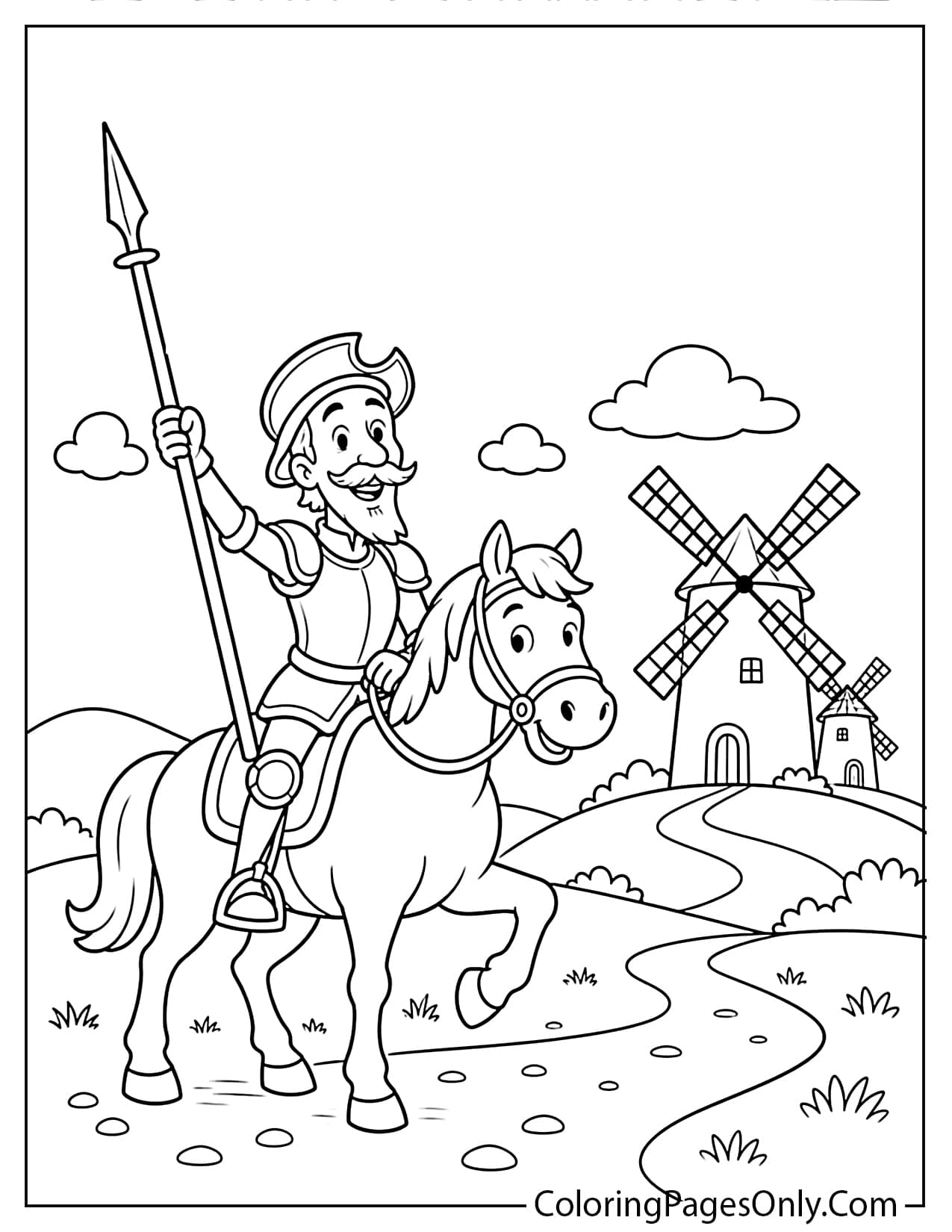
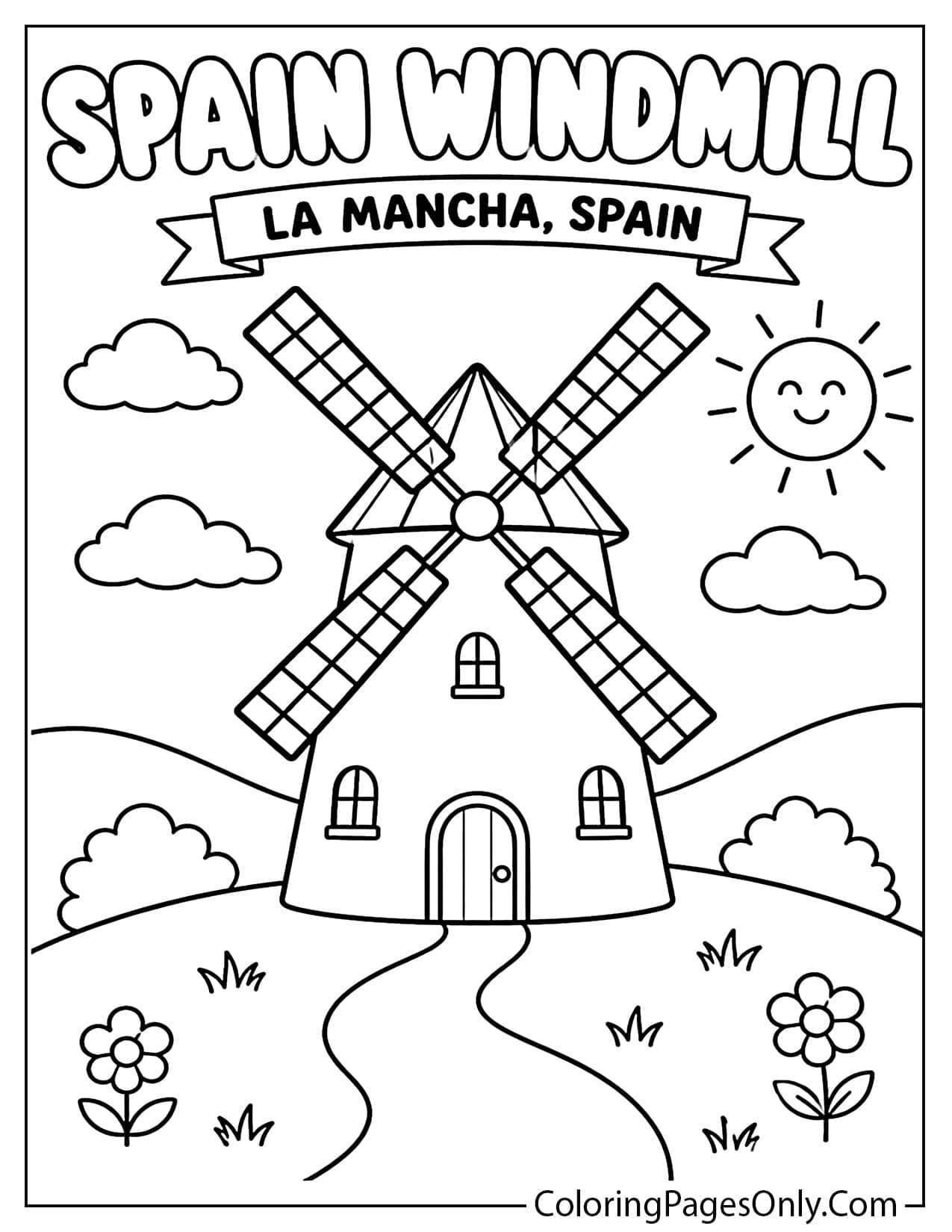
Don Quixote is the title character of a novel by Miguel de Cervantes, first published in 1605, widely considered one of the most influential works in Spanish literature. He’s an aging nobleman who sets out on chivalric adventures after reading too many tales of knighthood.
Start Coloring
Download any design by clicking it. No account, email, or payment is required to color or print. Every page opens in the online coloring tool for on-screen use or downloads as a full-resolution PDF for printing. Share a finished Spain page using the Facebook or Pinterest buttons at the top of the page.