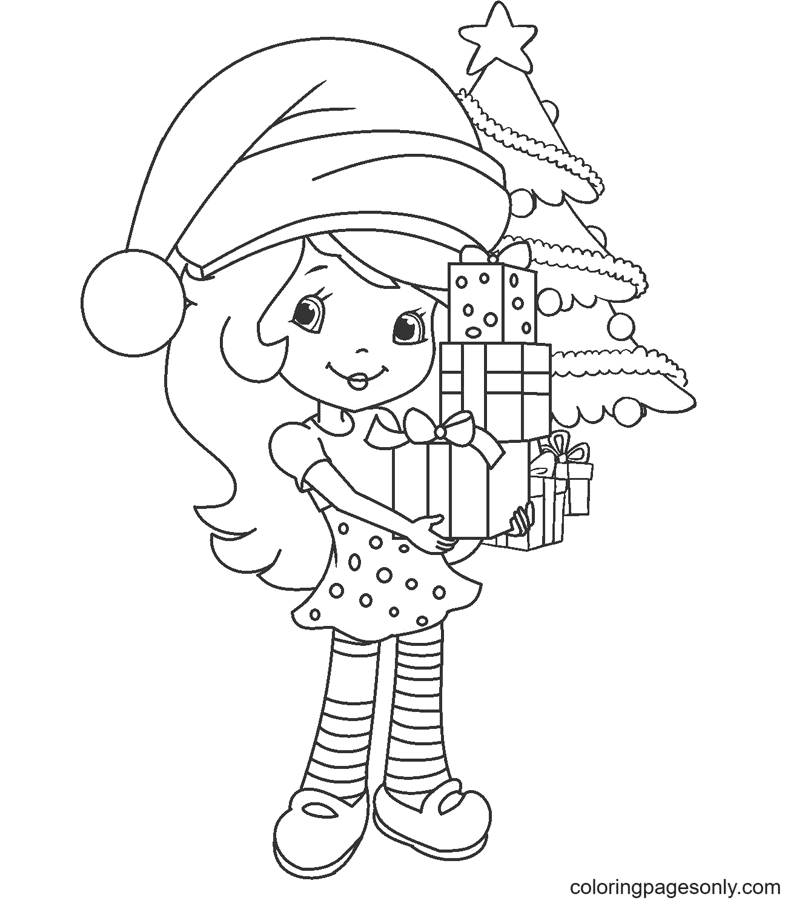
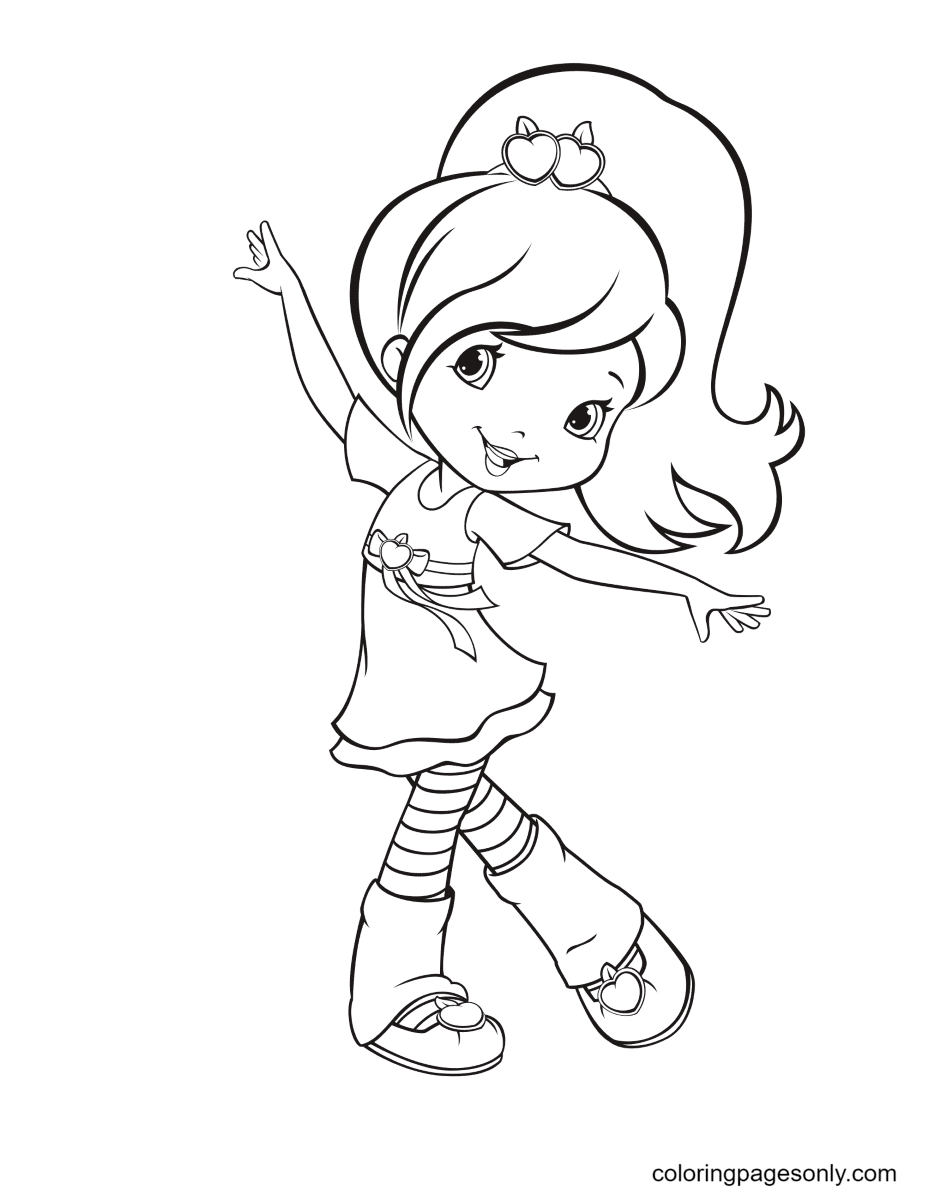
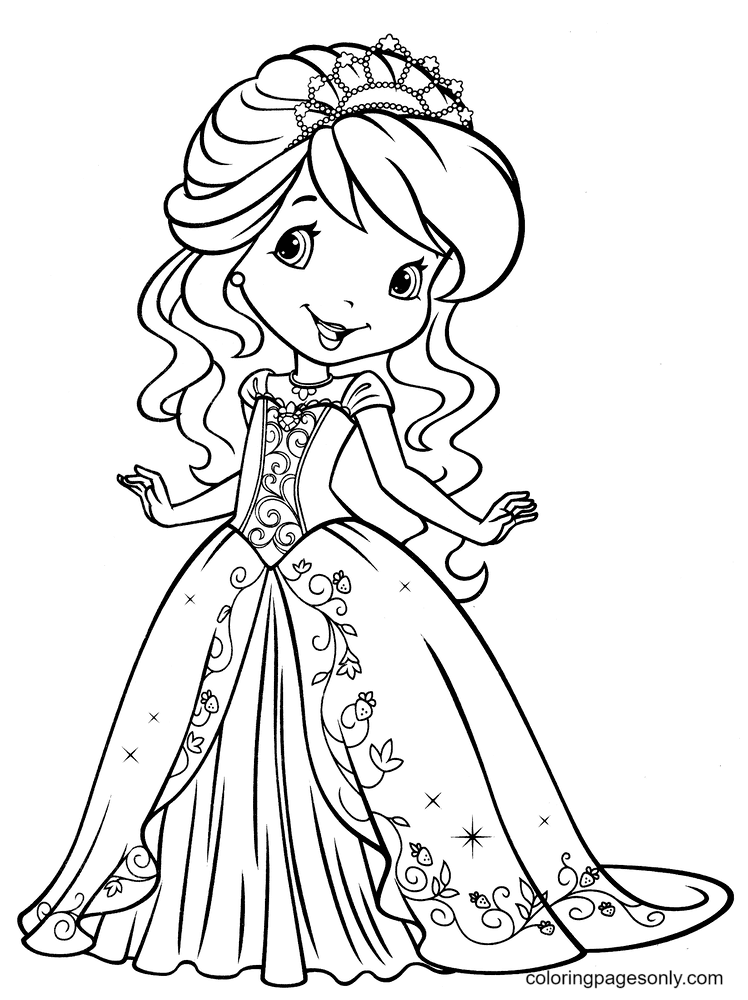
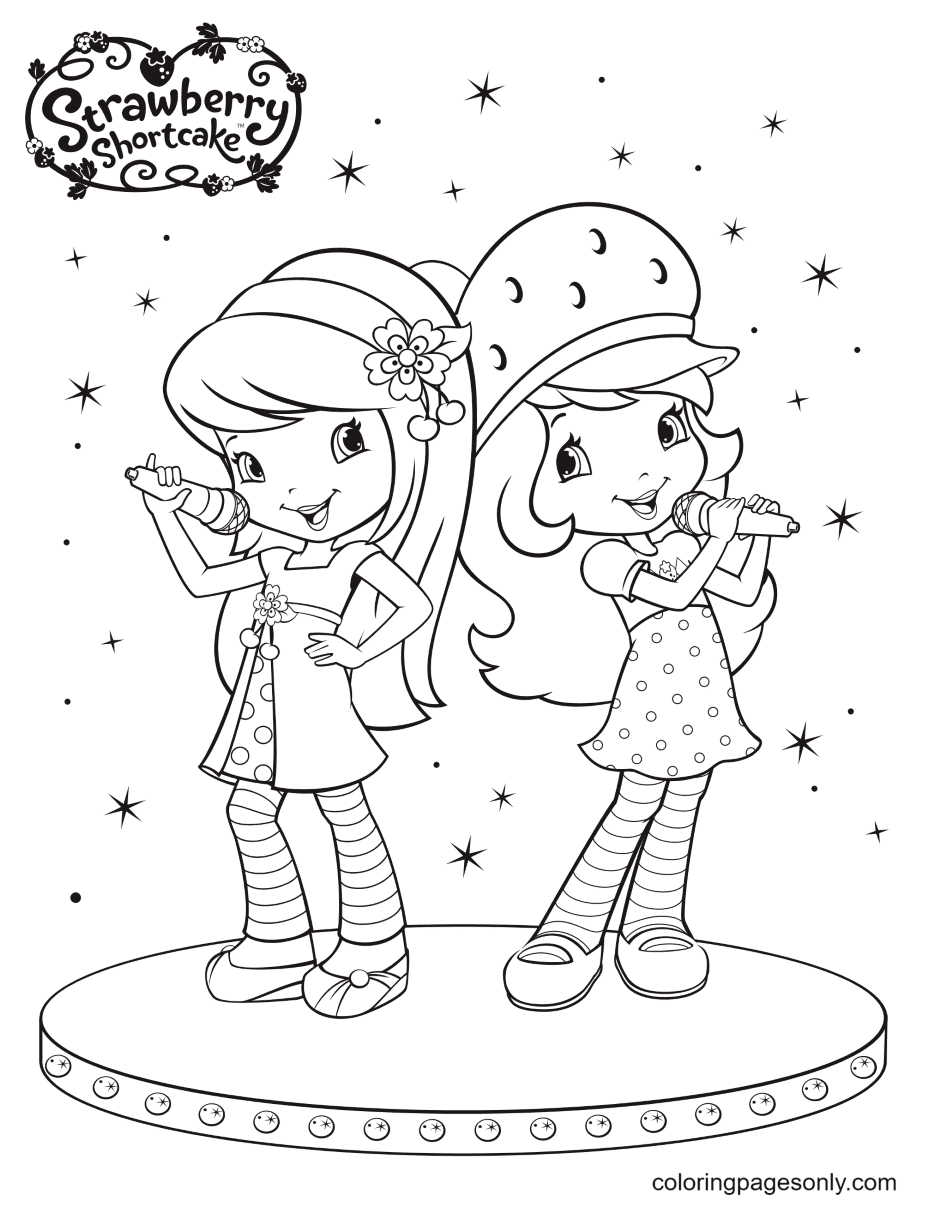
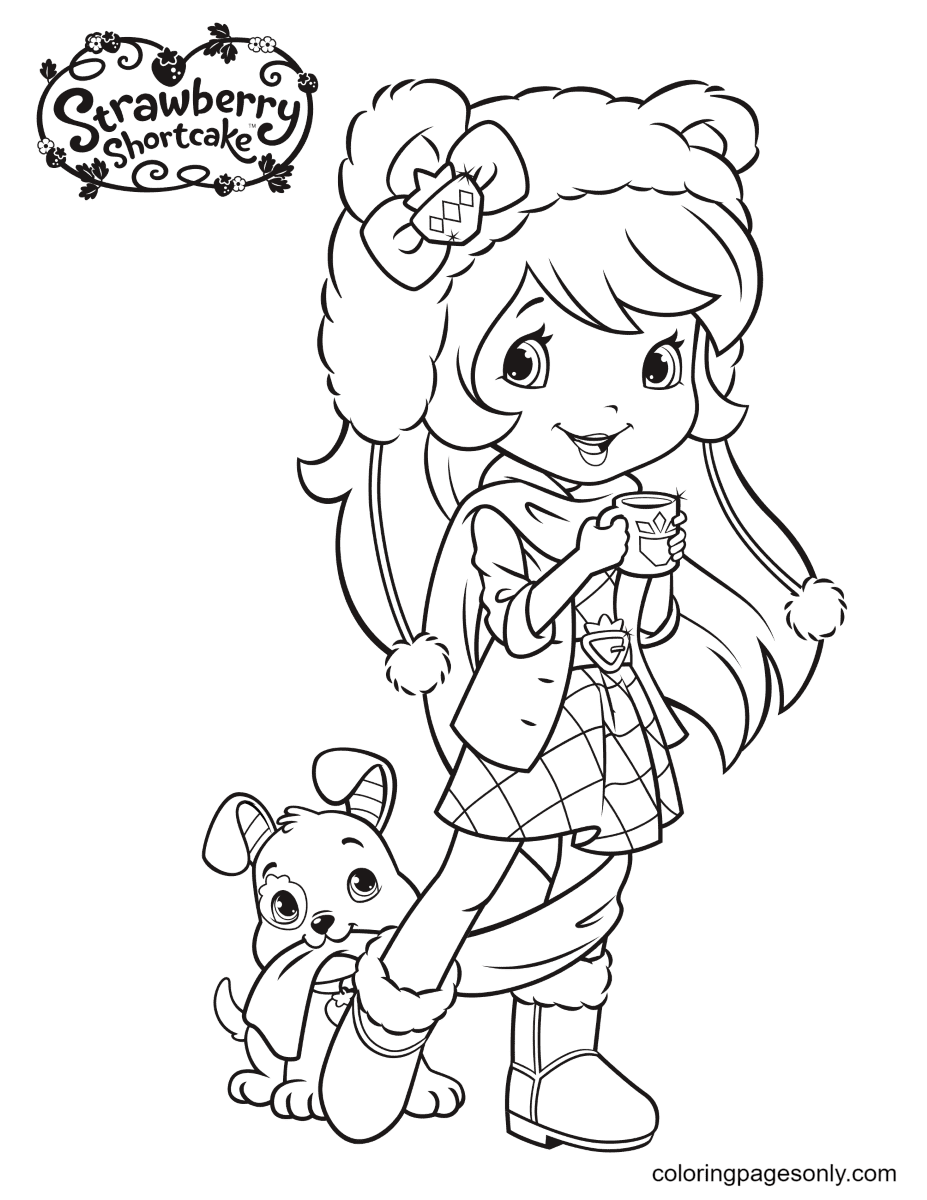
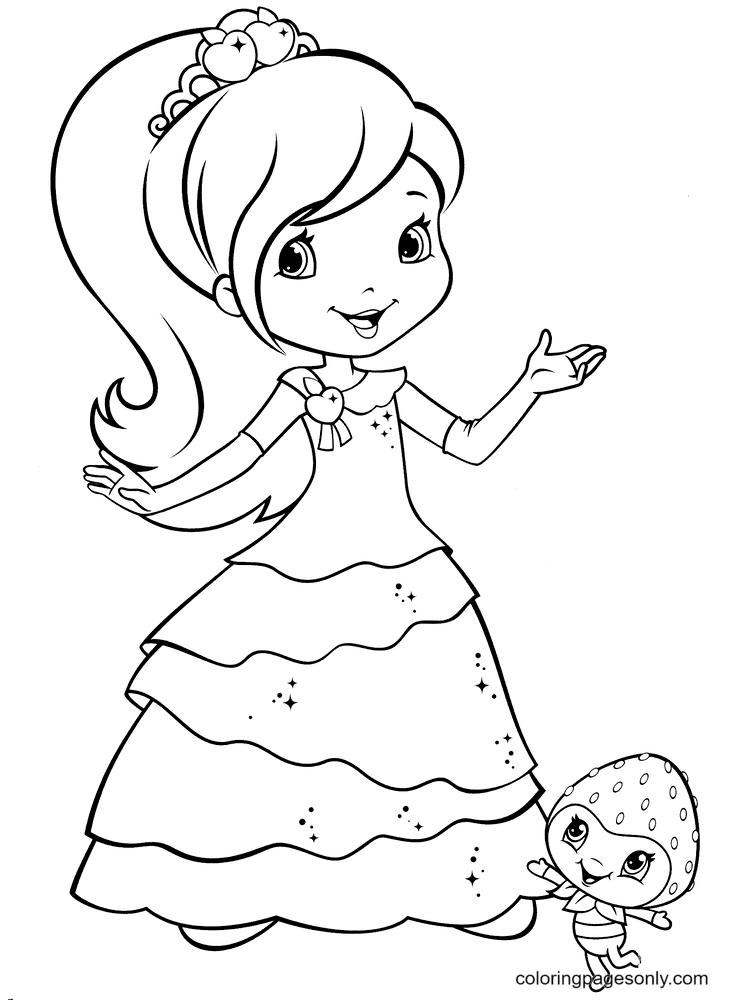
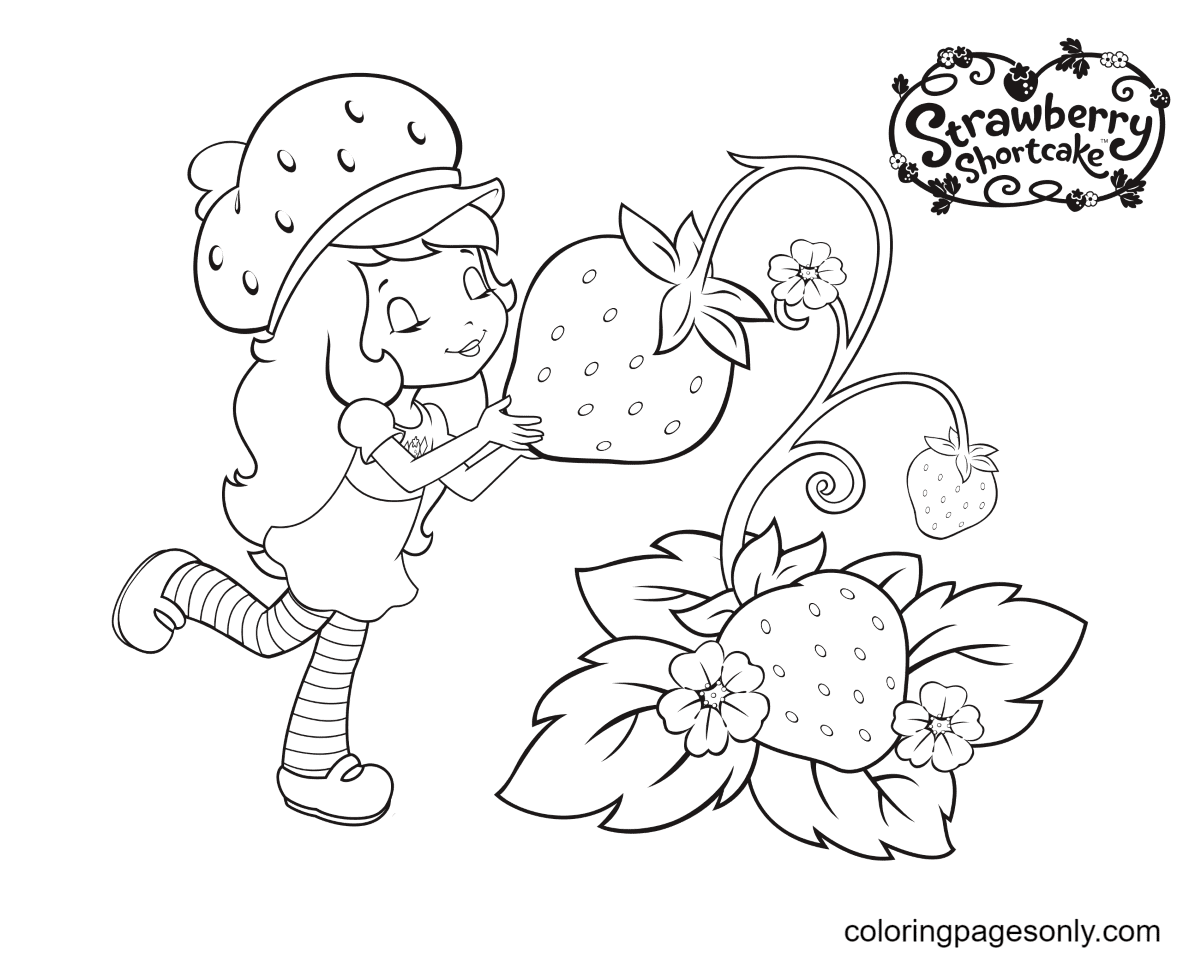
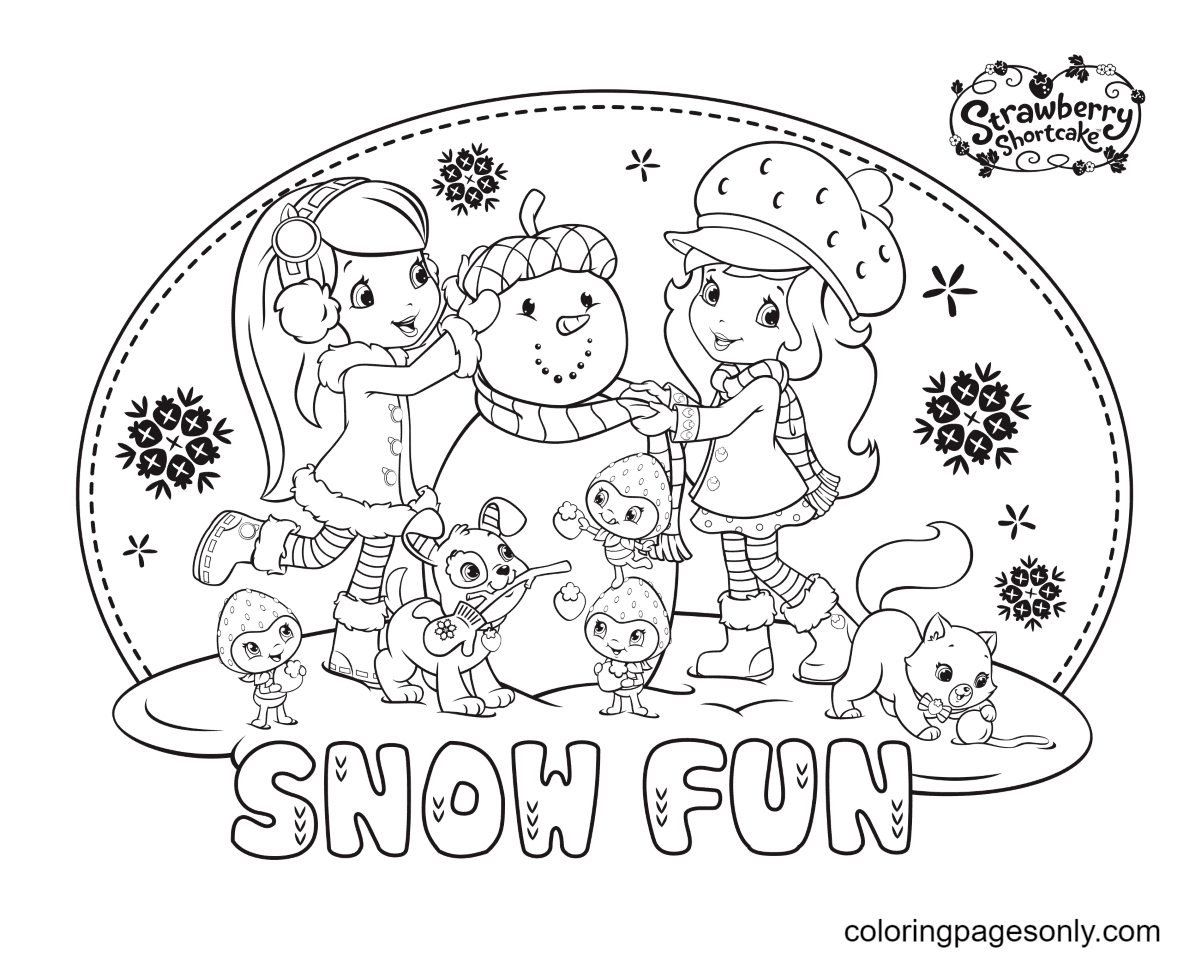
Free Strawberry Shortcake coloring pages – 60+ pages featuring Strawberry Shortcake in her iconic red-and-white outfit and strawberry hat, Blueberry Muffin, Lemon Meringue, Orange Blossom, Huckleberry Pie, Custard the cat, Strawberryland environments, dessert-themed settings, friendship scenes, seasonal celebrations, and character portraits from across the franchise’s four decades – free printable PDF and online coloring for fans of the sweetest character in American greeting card history.
Strawberry Shortcake was designed by Muriel Fahrion, an artist at American Greetings, and first appeared commercially in 1979 on the Ohio company’s greeting cards. American Greetings, founded in 1906 and headquartered in Westlake, Ohio, created the character as a marketing property – a young girl with strawberry-red hair and a large sun hat, living in a world called Strawberryland where every resident was named after a sweet treat and smelled like one. The character’s commercial success exceeded any greeting card function almost immediately.
In 1980, Kenner Products manufactured the first Strawberry Shortcake dolls, with a specific feature that made them unlike any doll previously sold at scale: they were scented. Each character smelled like their associated food. Strawberry Shortcake smelled like strawberries. Blueberry Muffin smelled like blueberries. The sensory innovation created a category of toy memory so specific that adults who encountered the dolls in childhood describe the scent with immediate precision decades later. The franchise generated an estimated $100 million in merchandise in its first two years.
The first animated special, “The World of Strawberry Shortcake,” aired on NBC in 1980. Multiple specials followed across the 1980s. The franchise was revived in 2003, again in 2009 with the animated series Berry Bitty Adventures, and again in 2021 with a new series. Each revival redesigned the character for its era while maintaining the recognizable core: the red hair, the strawberry hat, the sweet world.
These 60+ free pages at ColoringPagesOnly.com cover the full Strawberry Shortcake visual history. All free, PDF or PNG, print or color online.
What’s Inside
Strawberry Shortcake – The Original Design
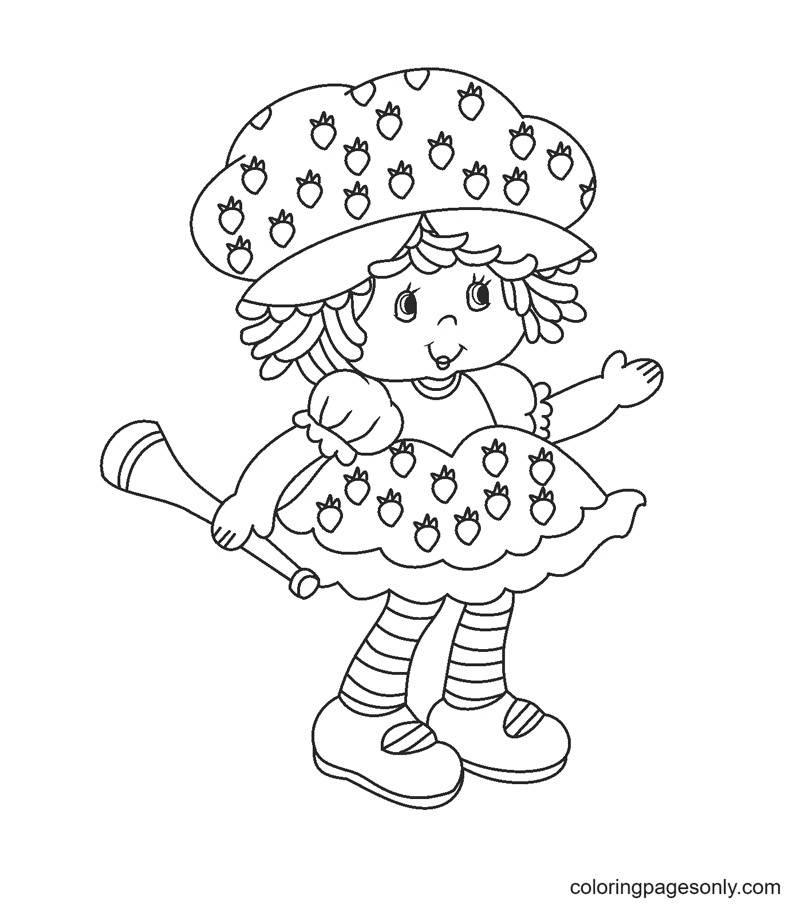
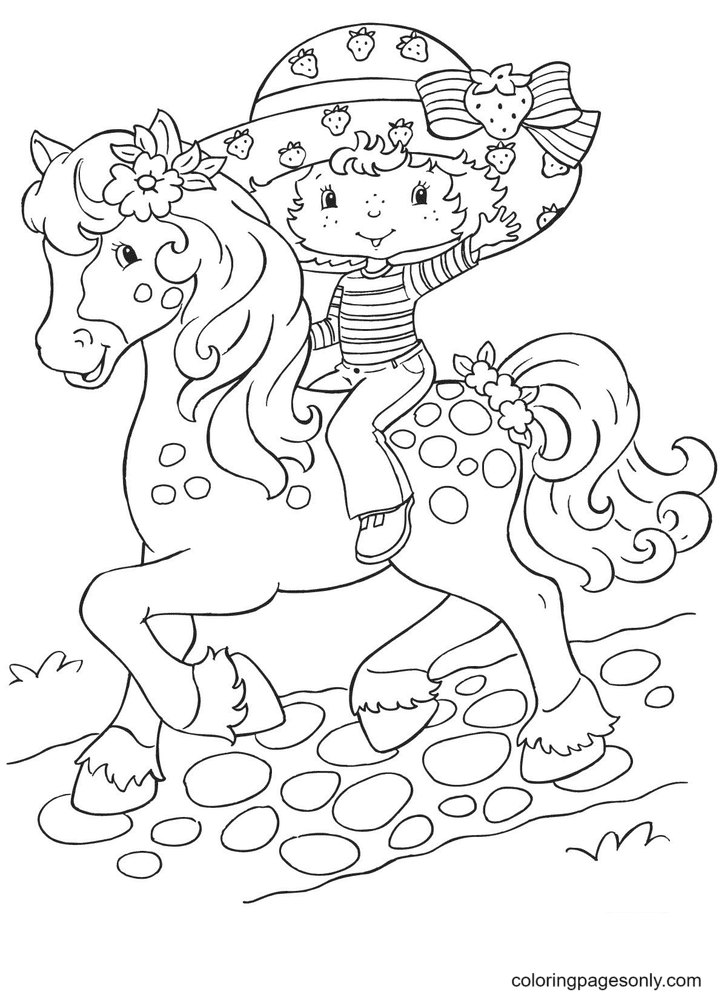
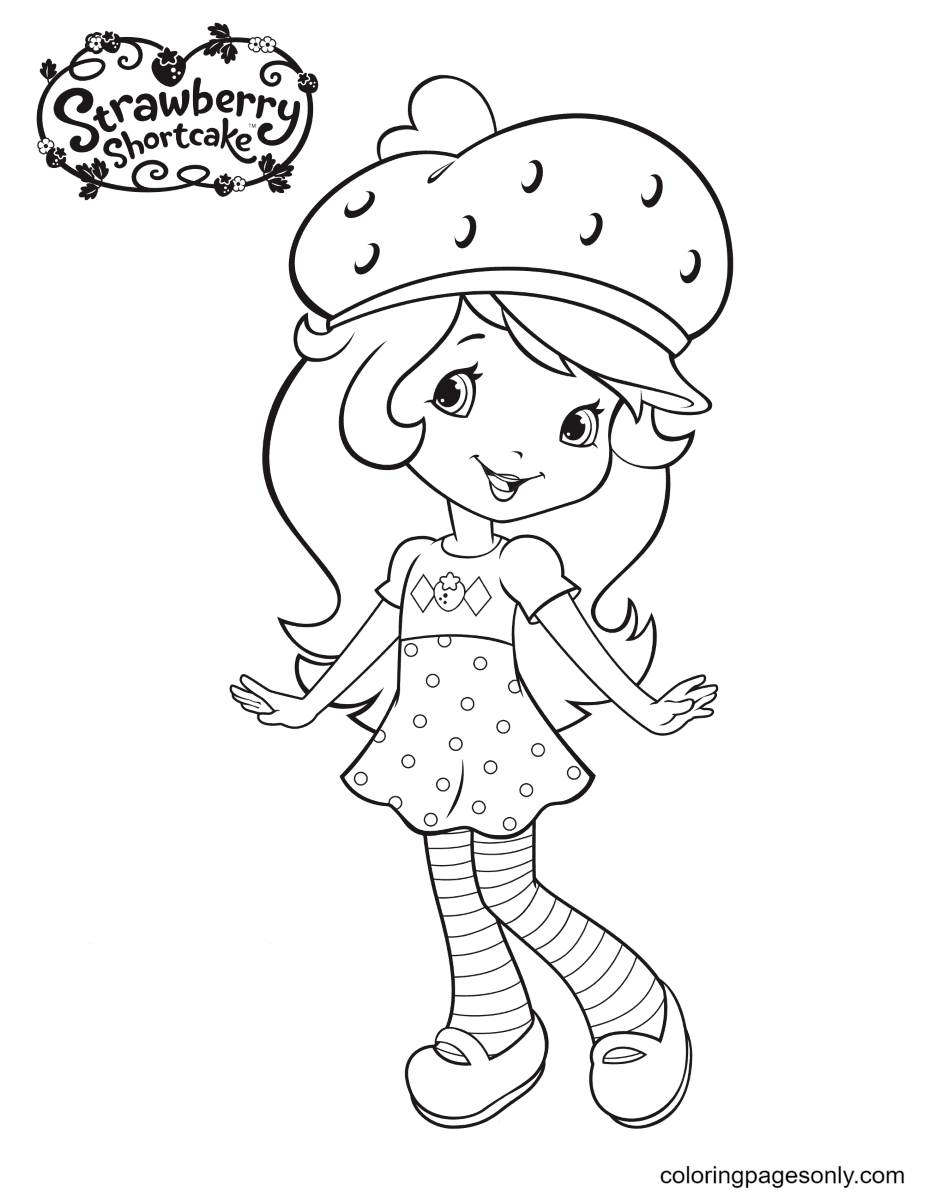
The original Strawberry Shortcake design by Muriel Fahrion is a specific visual that millions of adults carry as a childhood memory image: a young girl with braided red-orange hair, freckles across her nose, and the proportions of a very young child – large head, round face, compact body. Her outfit is the classic – a white dress with a red polka-dot or strawberry-patterned bodice, a pink pinafore (apron), white stockings with strawberry patterns, and the defining element: the large white sun hat decorated with strawberries and a green ribbon.
This design was the defining children’s character aesthetic of the early 1980s – round-proportioned, food-themed, and unmistakably warm in its visual quality. The character’s face, with its large eyes and open expression, communicated the same friendliness as the food world she lived in: approachable, sweet, uncomplicated.
The freckles across the nose are as much a character identifier as the hat – without them, the portrait does not read as the original Strawberry Shortcake. They connect her visually to the strawberry dots on her clothing and to the countryside outdoor quality of Strawberryland itself.
Coloring original-era Strawberry Shortcake: Her hair is a warm, vivid red-orange – the specific color of a ripe strawberry rather than the cool dark red of other red-haired characters. Apply it at full saturation across all braided sections. Her hat is white – clean, pure white with the strawberry decorations in vivid red and green leaf accents. Her dress is white with a red strawberry or polka-dot pattern: apply a white base, add the dots or strawberry motifs in vivid red as a second layer. Her pinafore/apron is pink – a warm, vivid pink that contrasts warmly with the white dress. The freckles on her nose: small warm dots in a slightly deeper tone than her skin, three to five dots across the nose bridge.
Blueberry Muffin
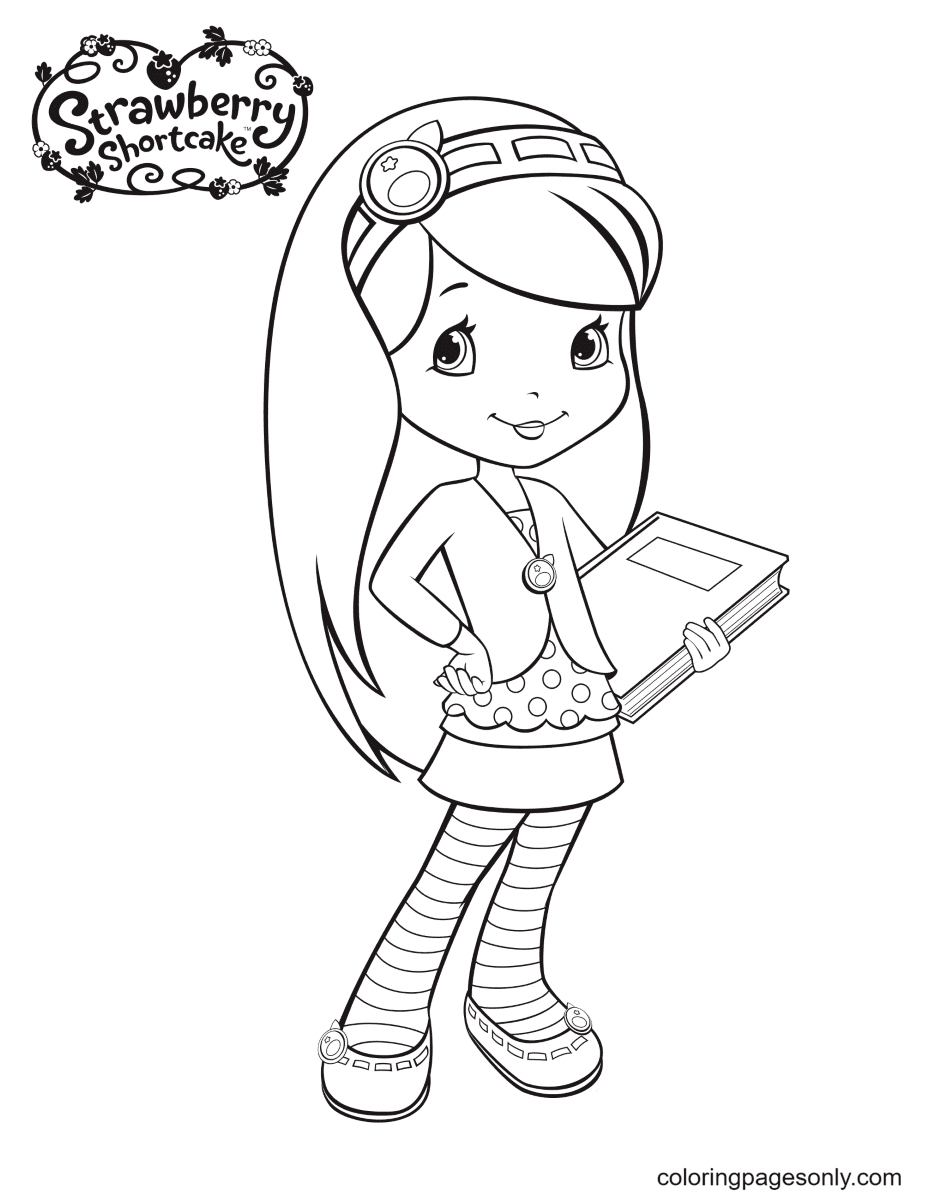
Blueberry Muffin is one of Strawberry Shortcake’s closest friends – a bookish, reading-loving character dressed in the blue palette that her name suggests. In the original 1980s design, she has purple-blue hair, a blue outfit, and carries or is associated with books and learning. Her color scheme is the coolest in the friend group – the blue-purple of blueberries contrasting with the warm red-pink of Strawberry Shortcake.
Her personality across the franchise’s various iterations has consistently been the intellectual or studious one – the friend who reads, who knows things, who approaches situations thoughtfully. This personality expressed through color (the cool, calm blue of blueberries rather than the warm, energetic red of strawberries) is the franchise’s most consistent piece of character design, communicating personality through color.
Coloring Blueberry Muffin: Her hair and outfit exist in the blue-purple range – a medium, slightly warm blue-purple that reads immediately as blueberry-adjacent without being a literal blueberry color. Apply this blue-purple across hair and clothing elements. Any blueberry decoration details should be in a deeper, cooler purple-blue. White or cream elements in her outfit provide the same contrast that cream provides in an actual blueberry muffin.
Lemon Meringue
Lemon Meringue is the beauty and fashion-focused character in the friend group – vivid yellow, associated with lemons, and typically depicted with yellow hair and a yellow outfit that reads as the most vivid, bright color in the friend group. In the 1980s original, she is a curly-haired, enthusiastic character. In the later revivals, she is more explicitly fashion-oriented.
The yellow of Lemon Meringue’s design is the franchise’s most immediately cheerful color – a warm, vivid yellow that reads as sunshine and lemon zest simultaneously. Her presence in group pages creates the maximum warm-palette range: red-orange for Strawberry Shortcake, yellow for Lemon Meringue, providing the two anchors of the warm color spectrum.
Coloring Lemon Meringue: Her yellow is vivid and warm – apply at full saturation across hair and outfit elements. The specific yellow should read as a warm, vivid lemon-yellow rather than a pale or cool yellow. White accents in her outfit (referencing the meringue element of her name) provide contrast against the vivid yellow.
Orange Blossom
Orange Blossom is one of the franchise’s most significant characters from a representation perspective – an African American character present from the franchise’s early years, whose orange-blossom theme gave her a warm orange-and-white color palette. In the original 1980s design, she has dark curly hair and a warm brown skin tone, dressed in orange and white.
Her presence in the Strawberryland friend group from the franchise’s earliest commercial period was noted by cultural historians of children’s media as a relatively early example of a major children’s character property, including a Black character not as a token addition but as a central member of the primary friend group.
Coloring Orange Blossom: Her skin tone is a warm medium-dark brown with warm undertones – apply warmly throughout, deepening in shadow areas without cooling. Her hair is dark – near-black. Her outfit is orange and white in various designs across the franchise’s eras – the orange should be a vivid, warm orange that distinguishes her from the yellow of Lemon Meringue.
Custard – The Cat
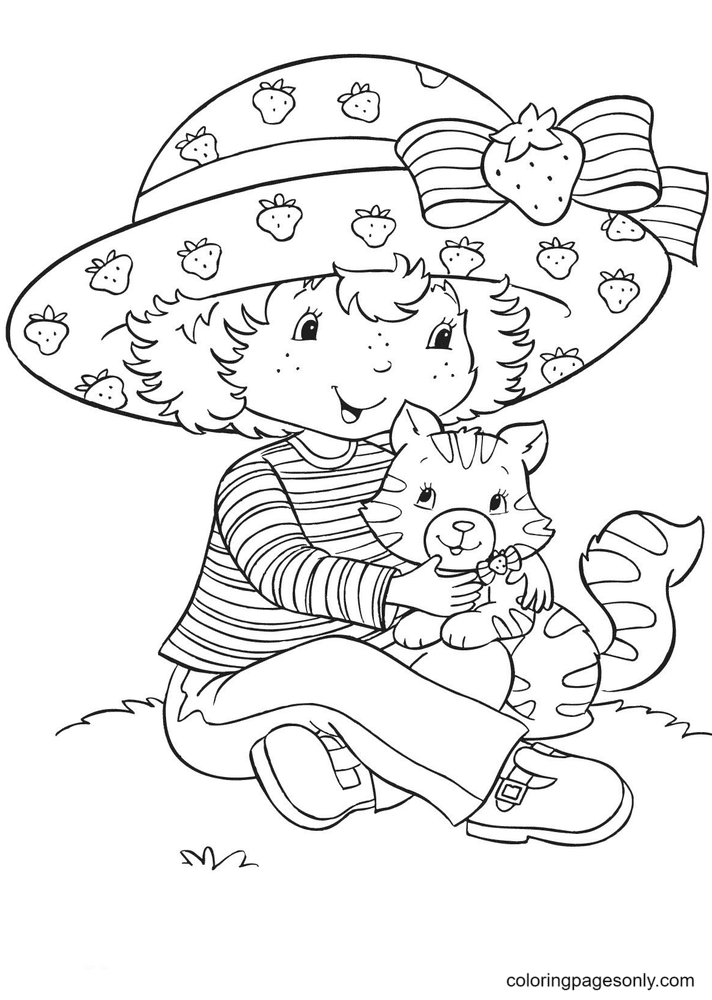
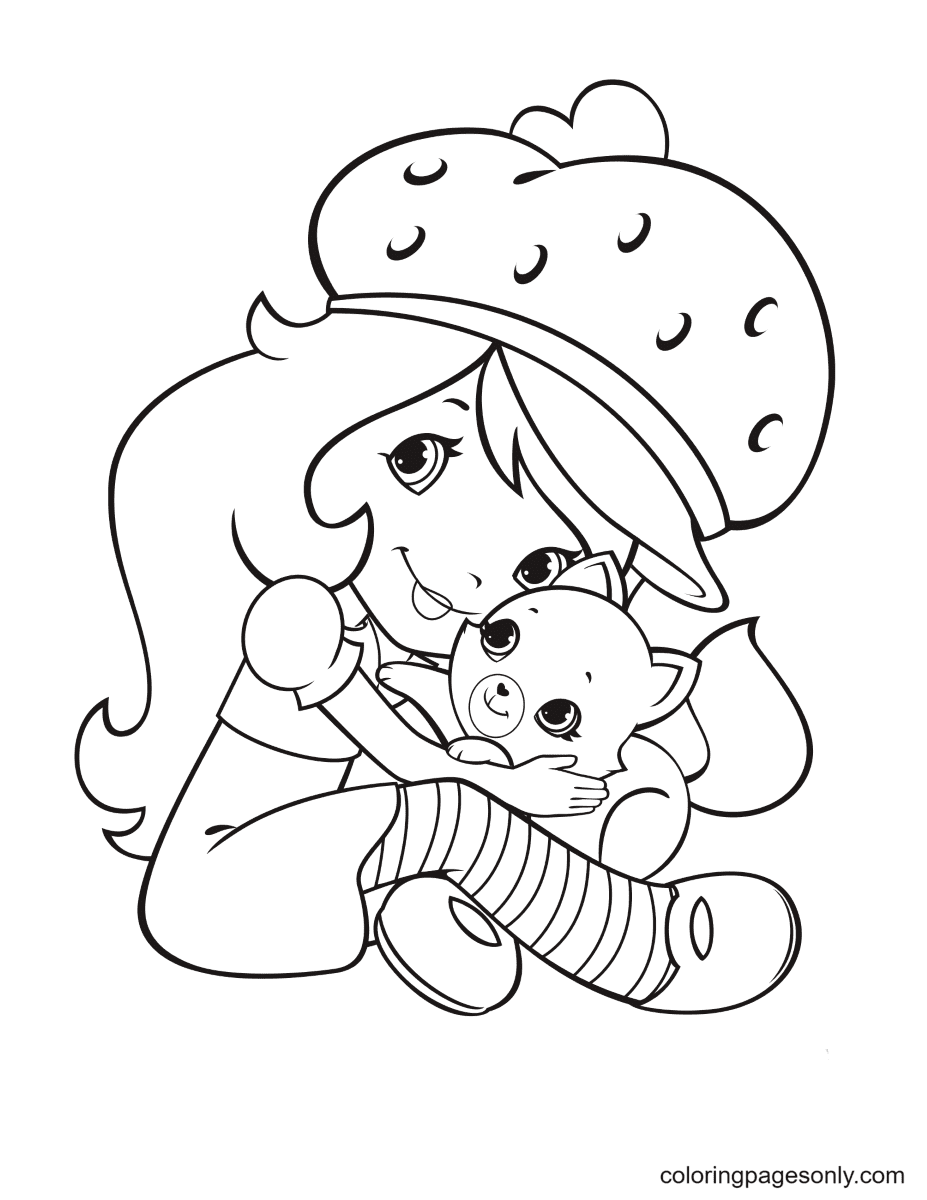
Custard is Strawberry Shortcake’s pet cat – an orange tabby with the specific personality of a slightly sardonic, comfortable cat who tolerates the sweetness of Strawberryland with a cat’s characteristic combination of affection and dignity. In the franchise’s animated specials and later series, Custard speaks and functions as a character in her own right rather than merely as an accessory.
The name “Custard” fits the franchise’s food-naming convention while giving the cat a specific personality register – custard is sweet but has a richer, more complex flavor than the pure sweetness of strawberry. The cat’s personality in the animated specials reflects this: warmer than you might expect from a cat, but with her own distinct perspective.
Coloring Custard: Orange tabby coloring – a warm medium orange as the base fur color, with darker orange-brown tabby stripes applied as a second layer over the base. The stripes follow the cat’s body shape: down the back, across the flanks, and ring-like on the tail. The inner ear and belly are typically lighter – a warm cream-pink. Her eyes are green, which provides the complementary contrast (green against orange) that makes tabby cats visually striking.
Strawberryland Environments
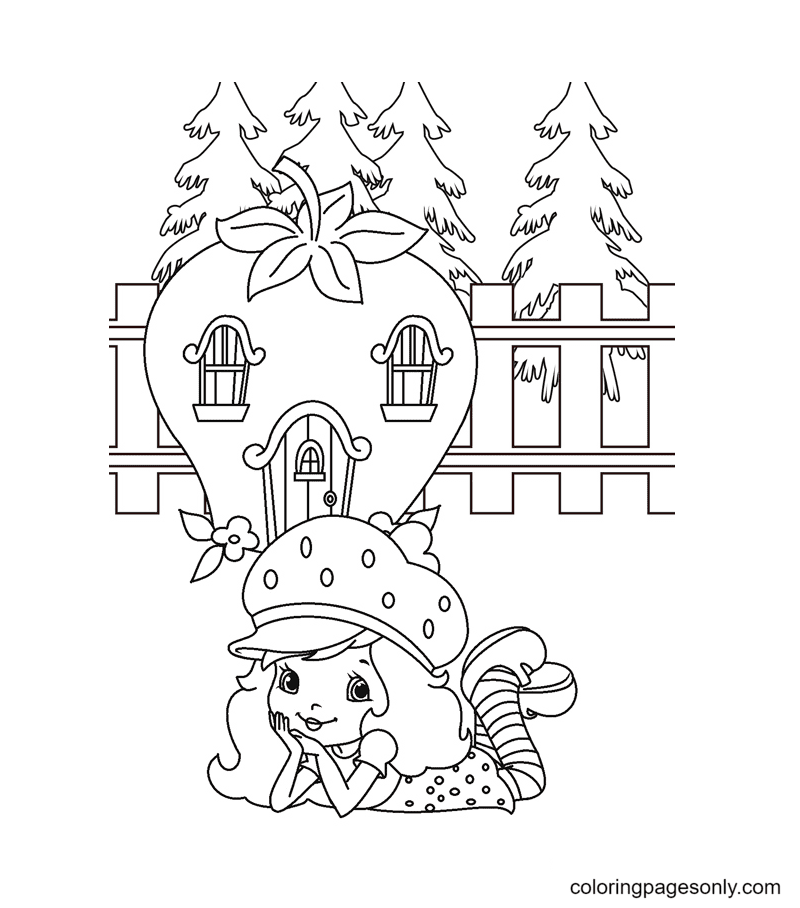
The world Strawberry Shortcake inhabits is as specifically conceived as its characters: a landscape of rolling hills, berry bushes, and small houses designed to resemble food items. Strawberry Shortcake’s own home is often depicted as a strawberry-shaped house. Other characters have homes reflecting their food themes. The overall visual of Strawberryland is pastoral, warm, and specifically sweet – the world of a dessert menu rendered as geography.
Environment pages show Strawberryland’s specific visual vocabulary: the vivid green of berry plant leaves, the red of strawberries growing in the garden, the soft, warm sky, and the small, charming houses with their food-themed architecture.
Coloring Strawberryland: The grass is vivid grass-green – the specific bright green of a well-tended garden. Berry plants should show the vivid red of ripe strawberries against the dark green leaves. Houses can be colored in the food-themed palette of their resident – pink and red for Strawberry Shortcake’s berry house. The sky is a warm, soft blue with white fluffy clouds.
Seasonal and Celebration Pages
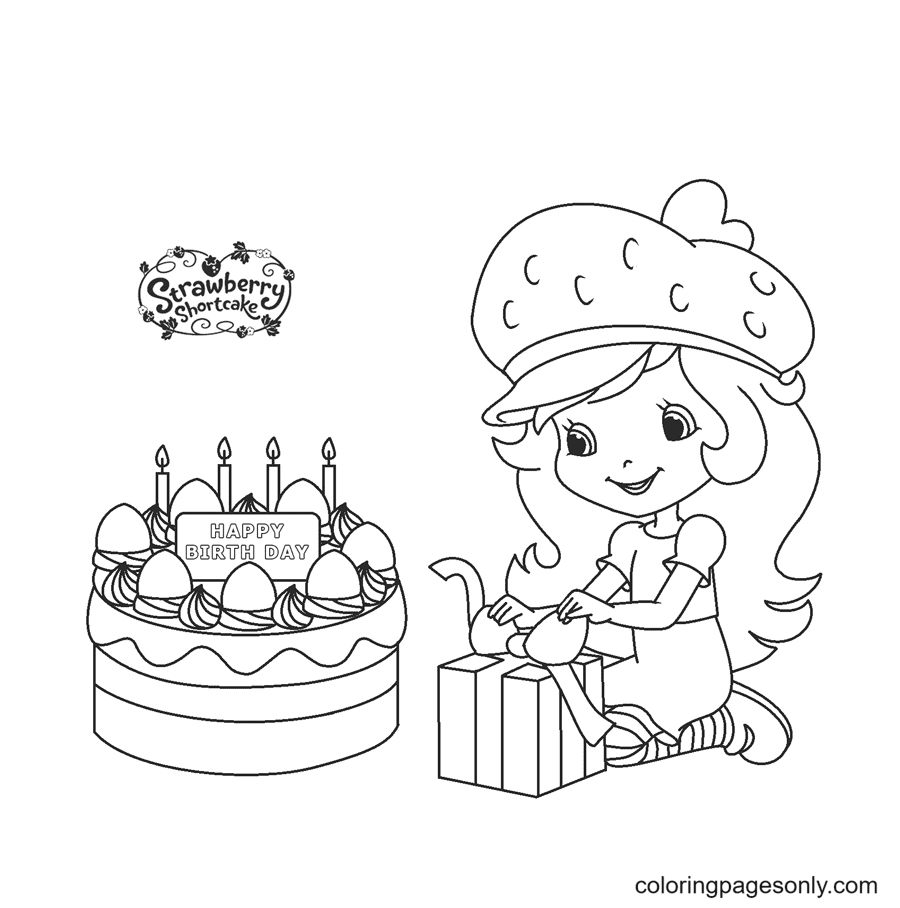
Birthday, holiday, and seasonal pages are among the collection’s most contextually specific – Strawberry Shortcake celebrating her birthday with a strawberry cake, decorating for the holidays, and enjoying the seasons of Strawberryland. These pages give the character and her friends the specific warmth of celebration and community.
What These Pages Do
Strawberry Shortcake’s scented dolls created one of American toy history’s most specifically documented examples of scent as a memory anchor. The Kenner scented dolls of 1980 demonstrated that sensory experience beyond vision and touch – the olfactory dimension – could create product recognition and emotional memory at a scale that standard marketing tools could not match. Adults who encountered these dolls as children consistently describe the strawberry scent with immediacy decades later. The coloring pages cannot replicate the scent, but for fans who remember it, they trigger the same memory pathway.
The franchise’s color-coded friend group is a deliberate pedagogical design. Every character in Strawberryland is identified by a fruit or food color: Strawberry Shortcake’s red, Blueberry Muffin’s blue, Lemon Meringue’s yellow, and Orange Blossom’s orange. This color coding operates as a color identification system embedded in a character property – children learning to associate colors with names through the characters are engaging in the same color literacy development that more explicitly educational materials target.
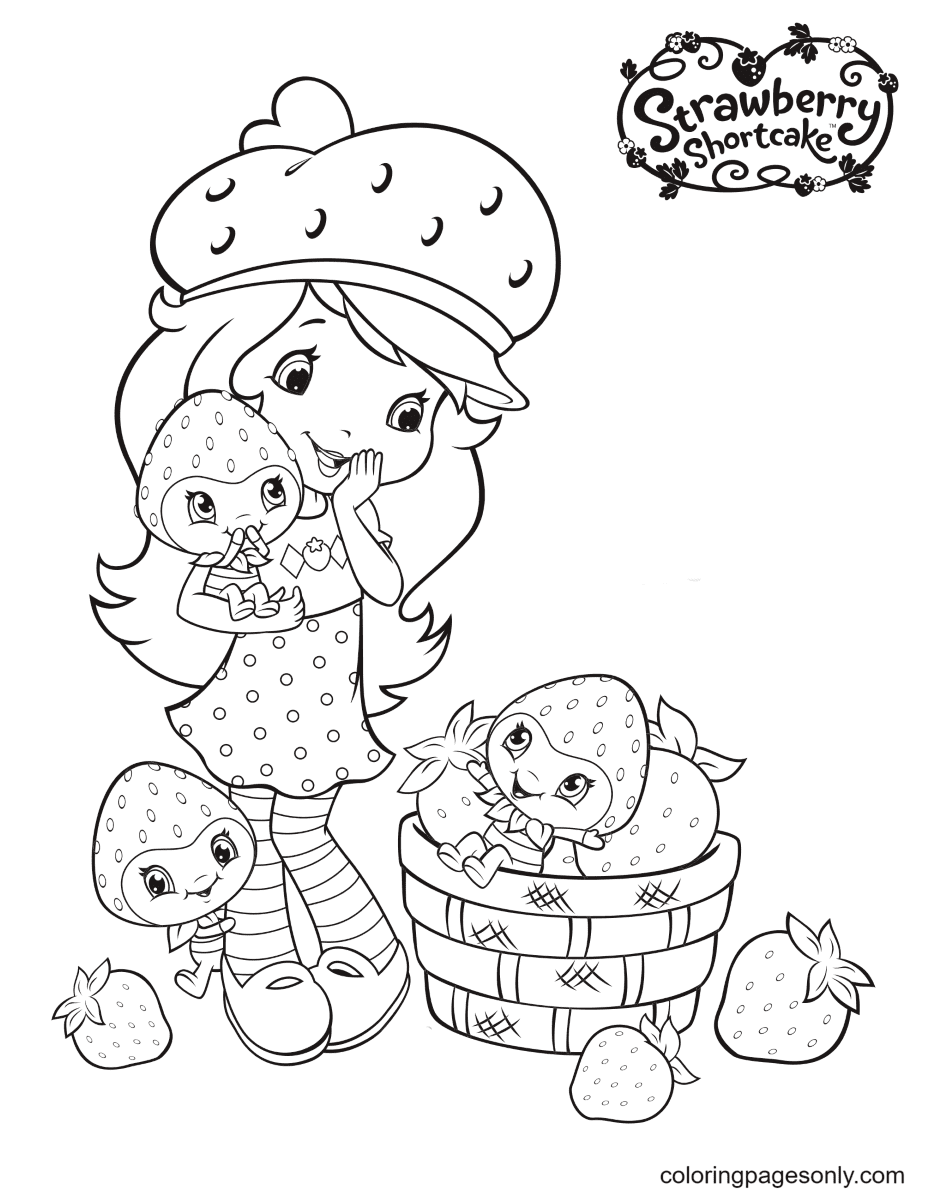
Strawberry Shortcake’s four-decade presence across multiple complete redesigns makes the collection a visual history of how children’s character design has changed. The 1979 original’s chubby toddler proportions, the 2003 reboot’s more contemporary look, the 2009 Berry Bitty Adventures design, and the 2021 revival’s modern styling are four completely different design vocabularies applied to the same character – a documented case study in how children’s entertainment aesthetics have evolved.
Fine motor development. The American Academy of Pediatrics identifies fine motor skill development as a key childhood milestone throughout early childhood. The strawberry dot pattern on Strawberry Shortcake’s dress, the freckles on her nose, Custard’s tabby stripes, and the Strawberryland garden details all provide motivated, sustained fine motor practice. The 2005 Art Therapy Journal study on structured coloring and anxiety reduction applies throughout this collection.
How to Color These Pages Well
The strawberry red of her hair is the collection’s most important color decision – warm, vivid, and specific. Her hair is not the cool dark red of a redhead in other franchises. It is the warm, vivid red-orange of a ripe strawberry – closer to orange than to burgundy, at maximum saturation. Test the color before applying: hold it against white and confirm it reads as “strawberry red” – the specific vivid warm red that distinguishes this character from any other red-haired figure. Apply at full pressure across every braided section.
The hat’s white must be treated as white fabric, not blank paper. The large white hat is the second most important element in Strawberry Shortcake’s design. Apply a very subtle warm shadow under the hat’s brim (where the brim creates shade on the face below) and at the deepest fold areas of the hat’s crown. The rest should be as white as the paper allows. The strawberry decorations on the hat – vivid red berries with green leaves – should be the hat’s most colorful elements, applied after the white hat is complete.
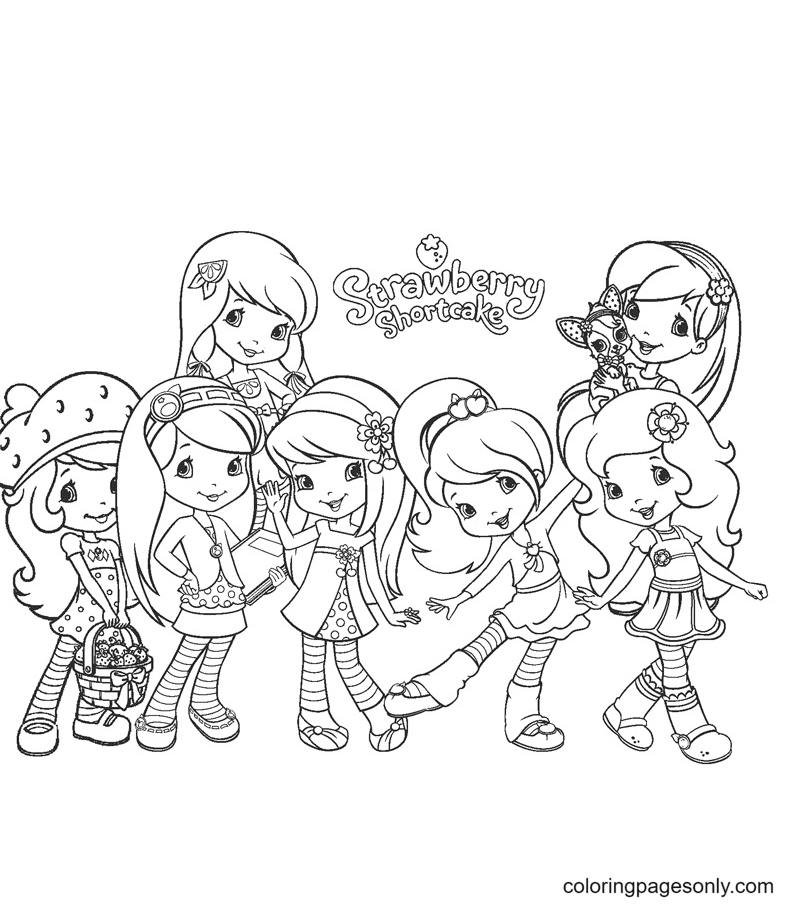
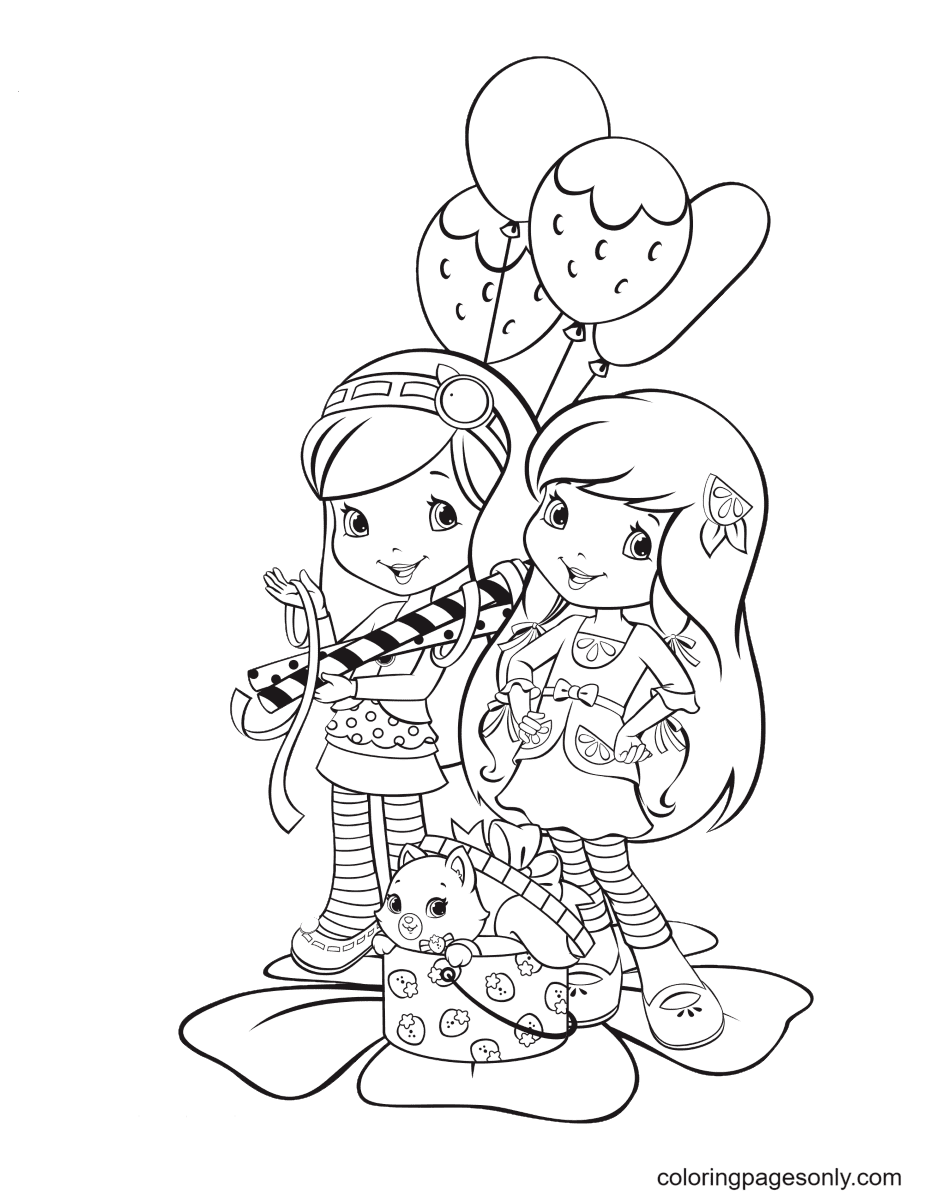
The friend group’s color-coding must be maintained precisely across multi-character pages. On any page showing multiple Strawberryland friends together, each character’s canonical color must be clearly distinct from every adjacent character: Strawberry Shortcake’s red-orange must not drift toward Lemon Meringue’s yellow, and Orange Blossom’s orange must sit clearly between them. Color each character completely before moving to the next, and verify the separation between adjacent characters before the coloring is finished.
Custard’s tabby stripes need the base coat first. Apply the warm orange base color across every fur surface first. Let it completely cover the page area for the cat. Then apply the darker orange-brown tabby stripes as a second layer over the base, following the natural direction of fur growth and the conventional stripe placement of a tabby cat (down the spine, across the flanks, ringed on the tail). The base-then-stripe sequence is essential – applying stripes without the base produces a different effect.
Strawberryland’s food-themed architecture rewards research before coloring. If the environment pages show Strawberry Shortcake’s home (often depicted as a strawberry-shaped house), the house color should reference the character’s palette – red and white, with strawberry-leaf green for garden elements. Think of each Strawberryland house as a collaboration between the building material colors (warm wood tones, white) and the character’s food theme color.
5 Creative Craft Ideas
My Strawberryland Character
The Strawberryland franchise design system is specifically learnable: each character is named after a food, their color palette derives from that food, and their personality reflects the food’s character. Print any Strawberry Shortcake character page as a reference. On blank paper, design your own Strawberryland character: choose a food name, derive a color palette from that food, design an outfit, a hat, and a pet or accessory that connects to the food theme.
Color your original character in your chosen palette. Name them (following the pattern: [Food] [Dessert type], e.g., “Peach Cobbler” or “Mango Sorbet”). The finished design is a Strawberryland original character – fully in the franchise’s established design vocabulary.
The Four Decades Display
Print four Strawberry Shortcake pages representing different design eras – one that references the original 1979-1985 design (chubby, toddler-proportioned), one from the 2003 reboot, one from the 2009 Berry Bitty Adventures era, and one from the current 2021 revival. Color all four in the same canonical red-orange hair and red-and-white outfit across all eras, so the design changes are the only variable.
Mount in chronological order: “1979 – Muriel Fahrion’s Original,” “2003 – First Revival,” “2009 – Berry Bitty Adventures,” “2021 – Current Era.” The display is a character design history – the same identity expressed through four completely different design vocabularies across forty-five years.
The Scented Memory Card
Print the most charming original-era Strawberry Shortcake portrait page. Color it carefully in the canonical warm red-orange hair, white hat with strawberry decorations, pink pinafore.
On the back, write: “Strawberry Shortcake. Designed by Muriel Fahrion for American Greetings, 1979. The Kenner doll, launched in 1980, smelled like strawberries. Estimated $100 million in merchandise in its first two years.”
Add a personal note: the first memory you have of the character, or the memory of what a strawberry-scented doll smelled like. Mount the colored page with the personal memory card into a small keepsake book.
The Friend Group Color Chart
Print one character page for each of the four core Strawberryland friends: Strawberry Shortcake (red-orange), Blueberry Muffin (blue-purple), Lemon Meringue (vivid yellow), and Orange Blossom (warm orange). Color all four in their canonical palettes – complete, fully saturated, at maximum color commitment.
Mount all four side by side on a backing sheet. Add a color wheel diagram above them showing how the four characters’ colors relate to each other on the color spectrum. Add: “Strawberry Shortcake’s friend group spans the warm side of the color wheel – red, orange, yellow, blue-purple – giving maximum visual diversity within a warm overall palette.”
Strawberryland Diorama
This craft uses multiple coloring pages as components of a three-dimensional scene. Print at least four pages: Strawberry Shortcake herself, Custard the cat, one or two friends (Blueberry Muffin and Lemon Meringue), and one Strawberryland environment page.
Color all pages. For the character pages: cut each character out carefully around their outline. For the environment page, mount flat as the background. Add folded cardboard tabs to the back of each character cutout so they can stand upright.
Arrange the standing character cutouts in front of the mounted background environment. The finished craft is a Strawberryland paper diorama – a three-dimensional scene assembled from individually colored two-dimensional pages.
Frequently Asked Questions
Who created Strawberry Shortcake, and when was she first introduced? Strawberry Shortcake was designed by Muriel Fahrion, an artist at American Greetings, the Ohio-based greeting card company founded in 1906. The character first appeared commercially in 1979 on American Greetings greeting cards and was subsequently licensed to Kenner Products for doll manufacturing. The first Strawberry Shortcake dolls launched in 1980 and were notable for being scented – each character smelled like their associated food. The first animated television special, “The World of Strawberry Shortcake,” aired on NBC in 1980. The franchise generated an estimated $100 million in merchandise within its first two years.
What makes the original Strawberry Shortcake dolls unique? The original Kenner Strawberry Shortcake dolls, launched in 1980, were scented – a feature that distinguished them from virtually all other dolls available at the time and that created unusually strong sensory memory associations in children who played with them. Strawberry Shortcake smelled like strawberries; Blueberry Muffin smelled like blueberries; Lemon Meringue smelled like lemon; each character’s scent matched their food theme. The scent technology in the dolls was an innovation in toy design that contributed to the franchise’s rapid commercial success and to the particularly vivid quality of childhood memories associated with the toys.
Who are Strawberry Shortcake’s main friends? The core Strawberryland friend group across the franchise’s various eras includes Blueberry Muffin, a bookish blue-palette character named for blueberry muffins; Lemon Meringue, a fashion-focused yellow-palette character; Orange Blossom, an orange-palette character who has been part of the franchise since its 1980s origin; Huckleberry Pie, one of the few boy characters in the original lineup; and Raspberry Torte, a fashion-designer character from the original era. The 2009 animated series Berry Bitty Adventures added Cherry Jam, a music-focused character. Each character is color-coded to match their food name – Blueberry Muffin is blue, Lemon Meringue is yellow, Orange Blossom is orange – creating a color-diverse friend group from a consistent design system.
Who is Custard? Custard is Strawberry Shortcake’s pet cat – an orange tabby who has been part of the franchise since its earliest iterations. In the animated specials and later series, Custard speaks and has a distinct personality, functioning as a character rather than merely a pet accessory. The name connects to the franchise’s food-naming system (custard being a sweet dessert sauce) while giving the character a specific personality register distinct from the character names around her. Strawberry Shortcake also has a pet dog named Pupcake in some iterations of the franchise.
How many times has Strawberry Shortcake been redesigned? Strawberry Shortcake has undergone at least three major complete redesigns since her original 1979 creation. The first redesign occurred in 2003 when the franchise was revived with an updated look for a new animated series. The second significant redesign came in 2009 with the animated series Berry Bitty Adventures, which gave the character a more contemporary appearance while retaining her core design elements. The third major redesign launched in 2021 with a new animated series, giving the character a fully modernized, fashion-forward appearance aimed at contemporary children. Each redesign updated the character’s proportions, outfit details, and overall aesthetic while maintaining the core identifiers: red hair, strawberry hat, and sweet-themed world.
What is the Purple Pieman? The Purple Pieman of Porcupine Peak – officially “the Peculiar Purple Pieman of Porcupine Peak” – is the primary villain of the original 1980s Strawberry Shortcake animated specials. He is a villain baker who attempts to steal recipes, sweet things, and cause trouble for Strawberry Shortcake and her friends. His purple color scheme directly contrasts with Strawberry Shortcake’s warm red palette – the cool purple of a villain against the warm red of the protagonist. He was typically accompanied by Sour Grapes, a purple-and-green character who served as his associate. The Purple Pieman and Sour Grapes are specifically associated with the original 1980s specials and are less prominent in the franchise’s later revivals.
What age group are these pages best suited for? Strawberry Shortcake coloring pages serve a wide age range through a specific lens. The simplest character portrait pages – clean outlines, large color areas, single character compositions – are accessible from ages three and four for young children familiar with the character from the current animated series. The pages with more detail – friend group compositions, environment scenes, outfit pattern detail – are most engaging from ages five to eight, where developing motor control allows more precise application. The design-era comparison pages and the more elaborate scene compositions are most rewarding for older children and adult fans, particularly those with a nostalgic connection to the 1980s original. The franchise’s multi-generational reach means the collection genuinely serves parents and children simultaneously – the parents’ nostalgic connection and the child’s current engagement meet on the same page.
Browse the full collection at ColoringPagesOnly.com. All 60+ pages free, no sign-up, PDF or PNG, print or color online.
Muriel Fahrion drew a girl with red-orange hair and a large white hat decorated with strawberries and put her on a greeting card in 1979. Kenner made her into a doll that smelled like strawberries. NBC ran an animated special. The merchandise sold $100 million in two years.
Forty-five years later, there is a new animated series and sixty coloring pages.
The hat has a strawberry on it. The hair is the color of a ripe strawberry. The world she lives in is called Strawberryland. The cat is named Custard.
Pick up your warm red-orange. The hair comes first. Then the hat’s white. Then the dots on the dress.
Share your work on Facebook and Pinterest and tag #Coloringpagesonly. We especially want to see the four-decade displays and the Strawberryland character designs.
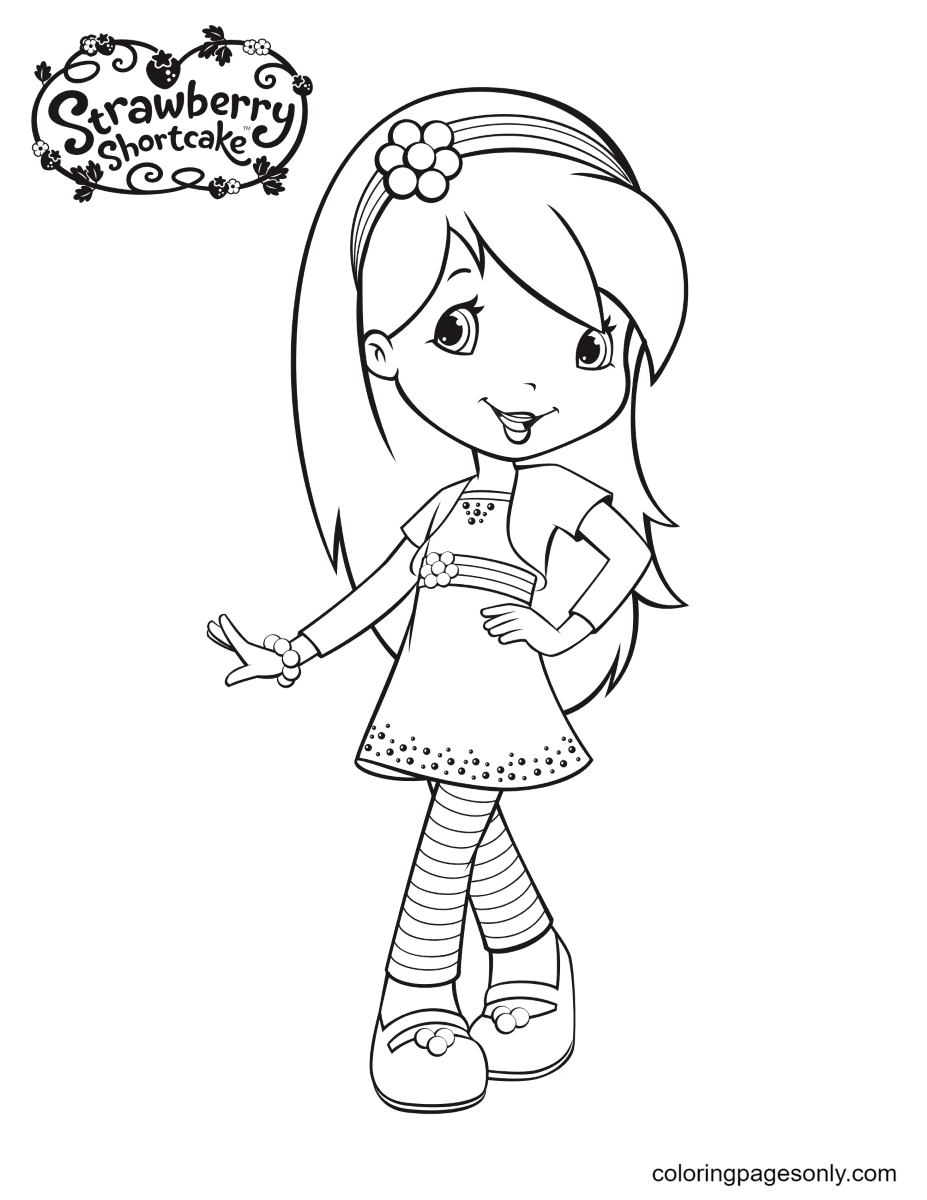
Color the hat. Add the strawberry. Strawberryland is always in season.