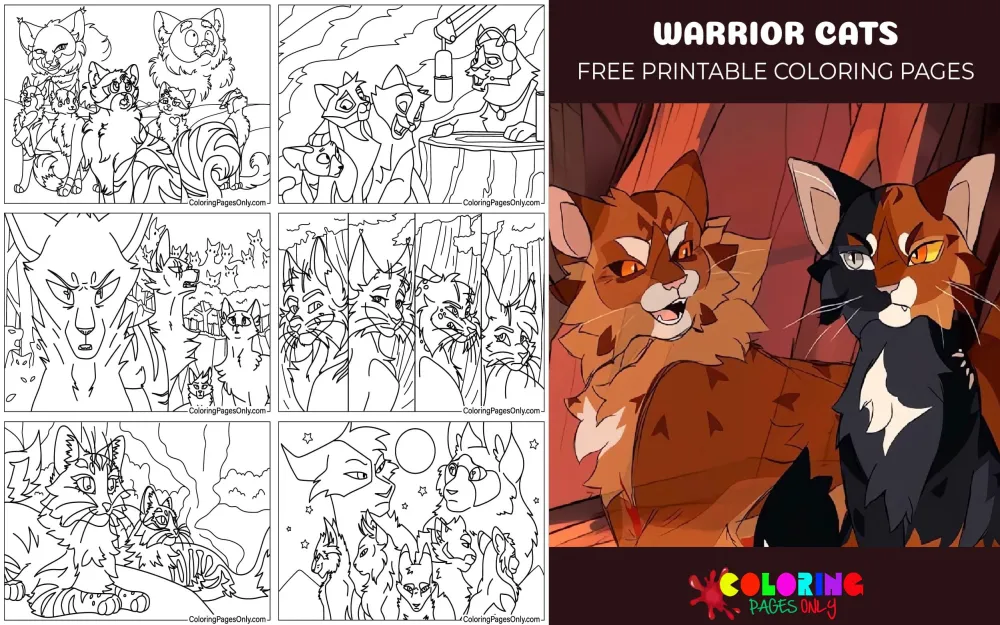
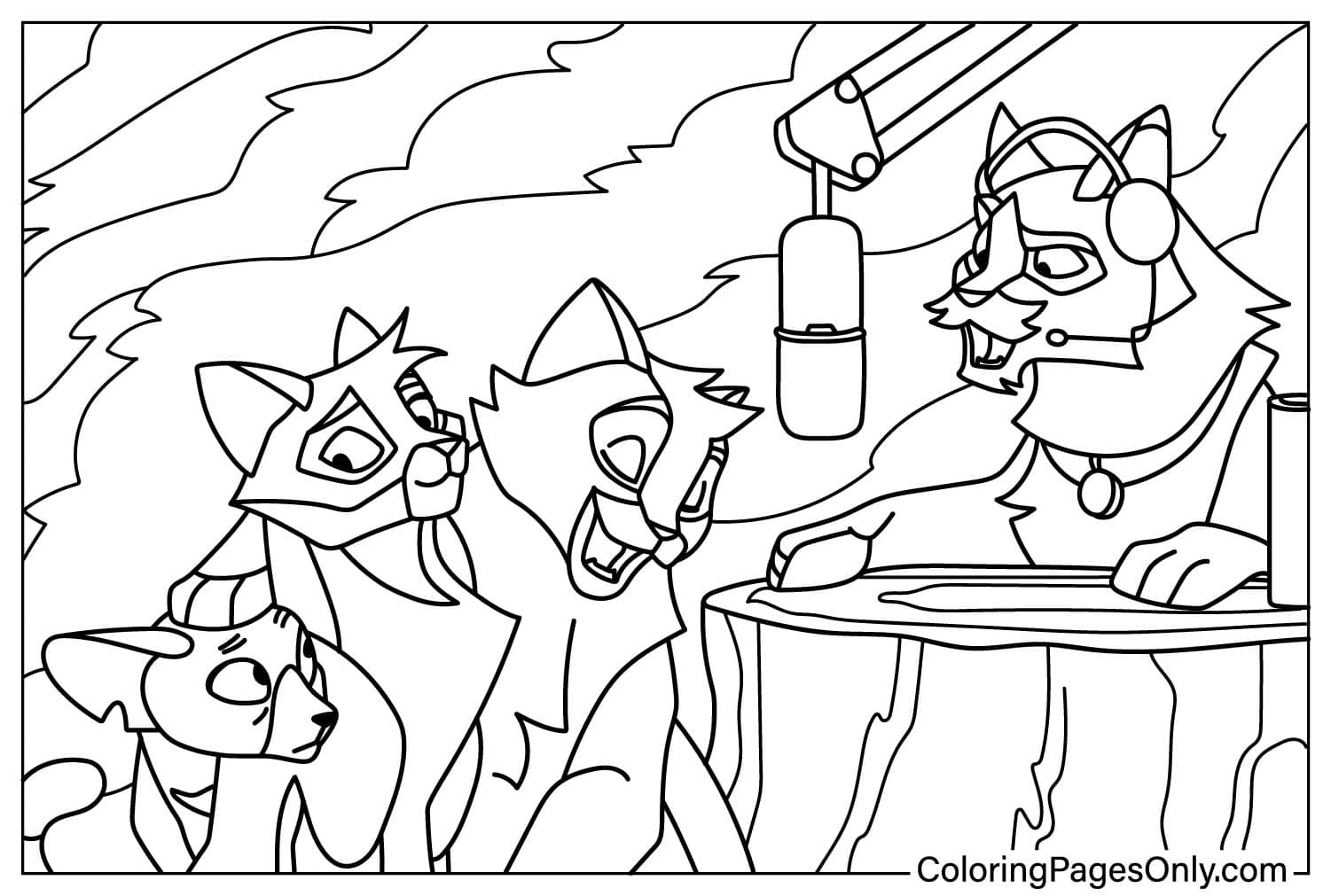
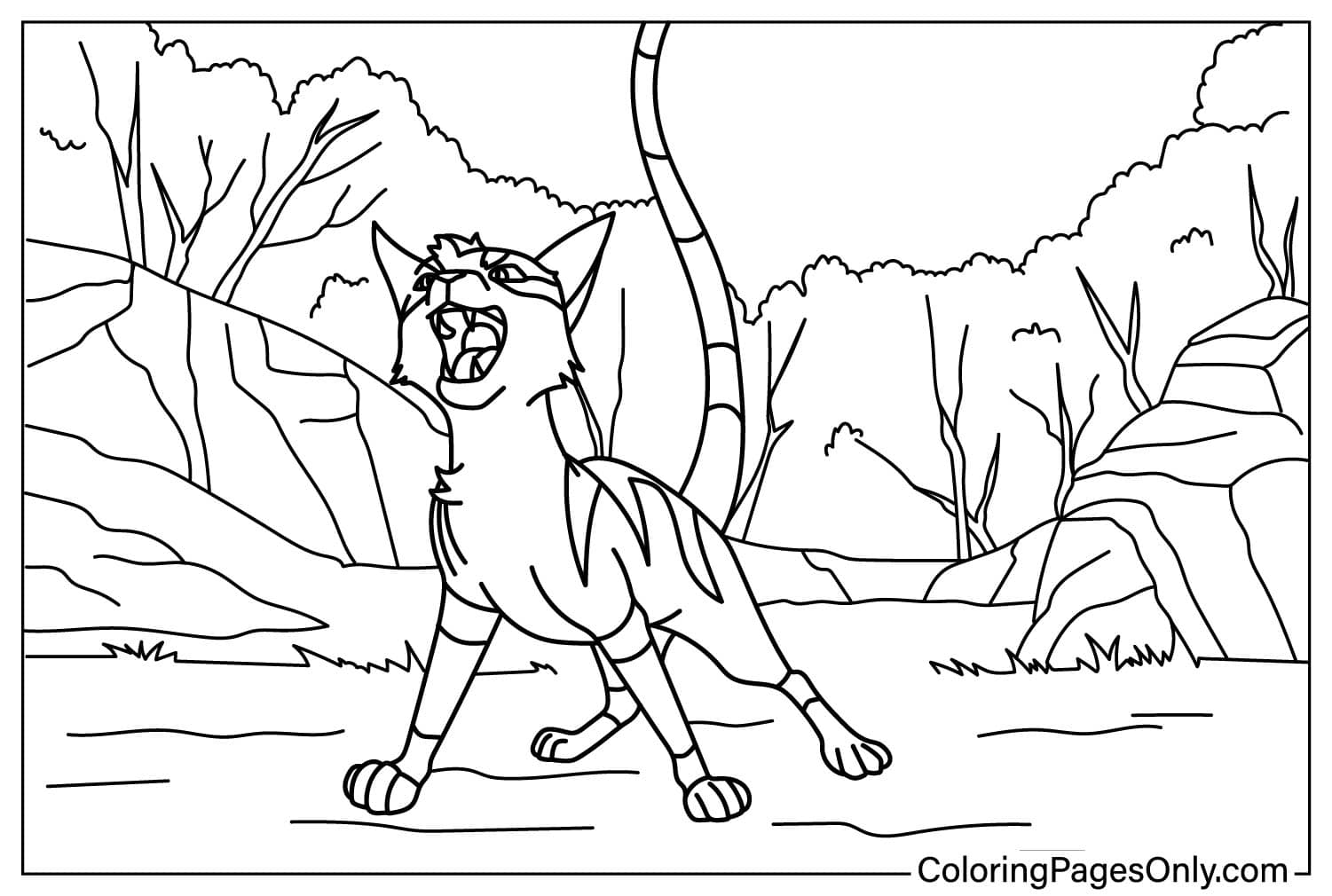
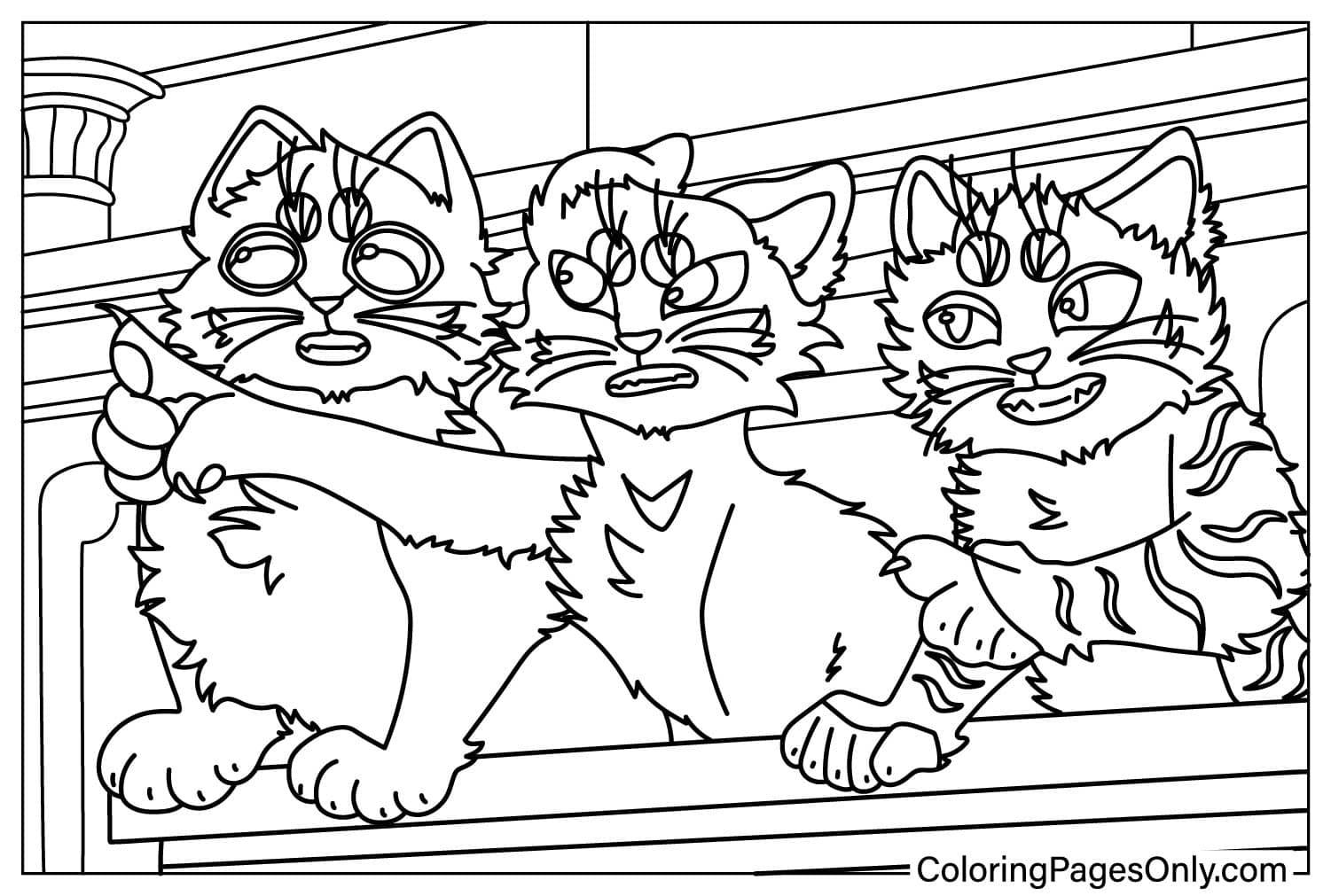
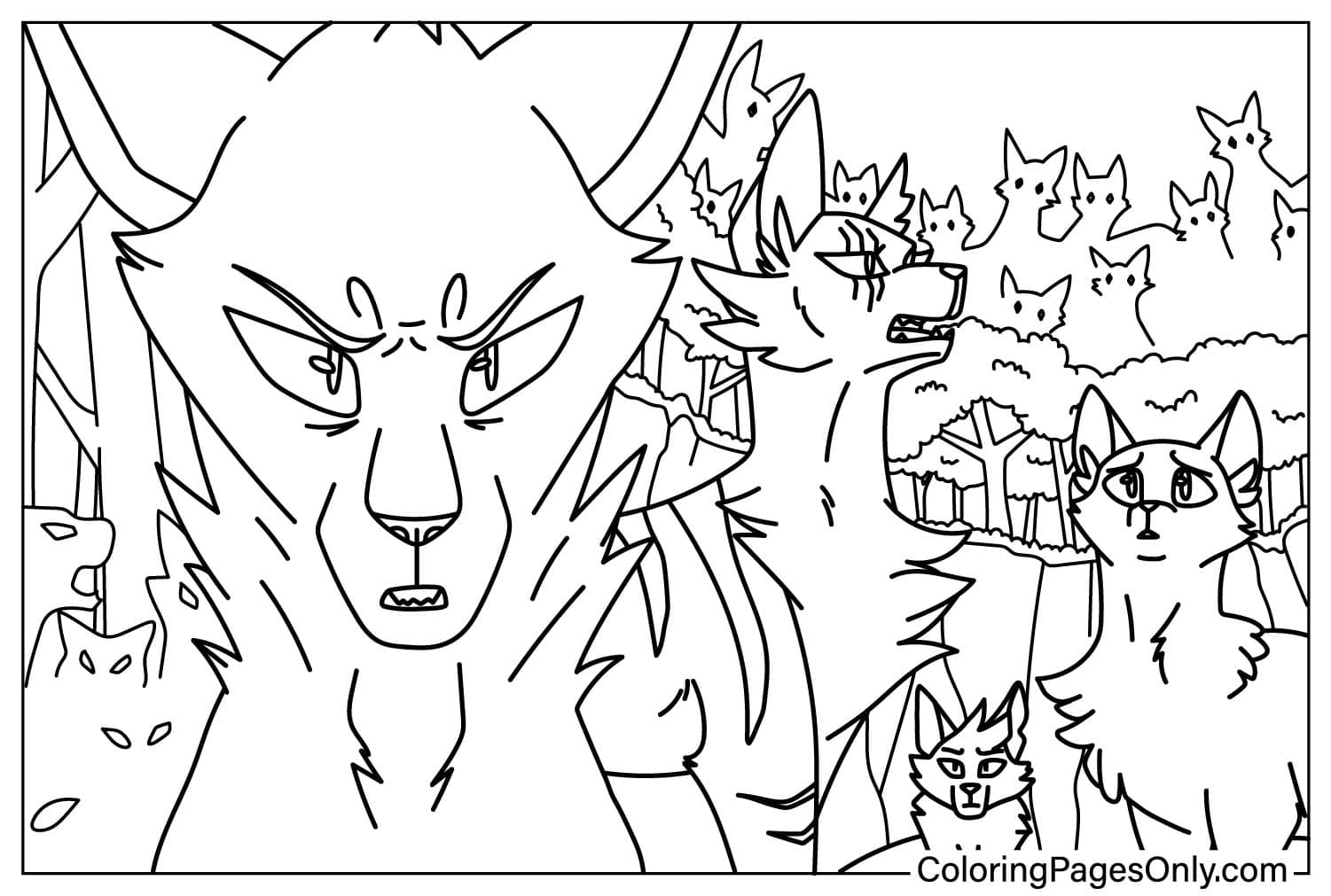
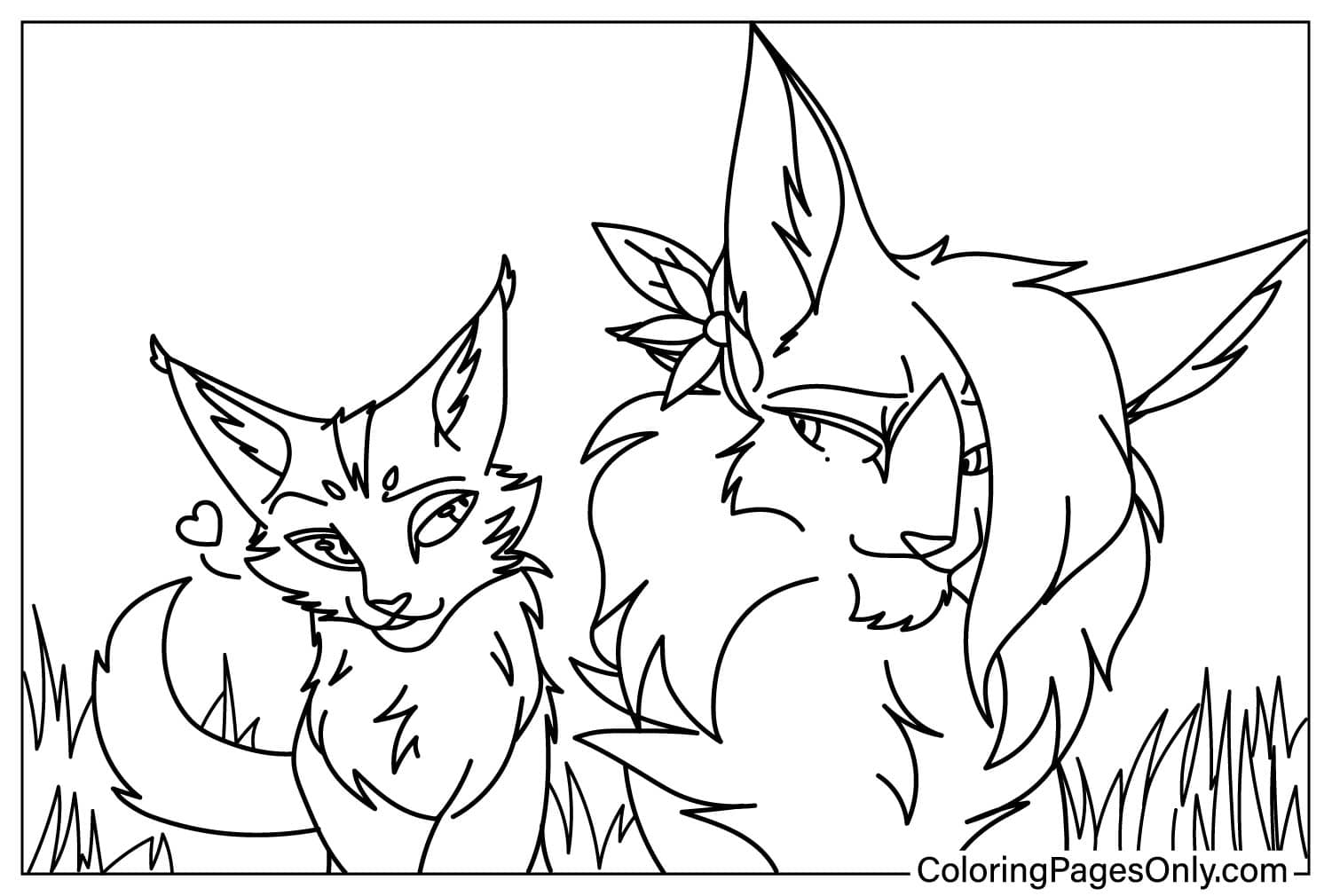
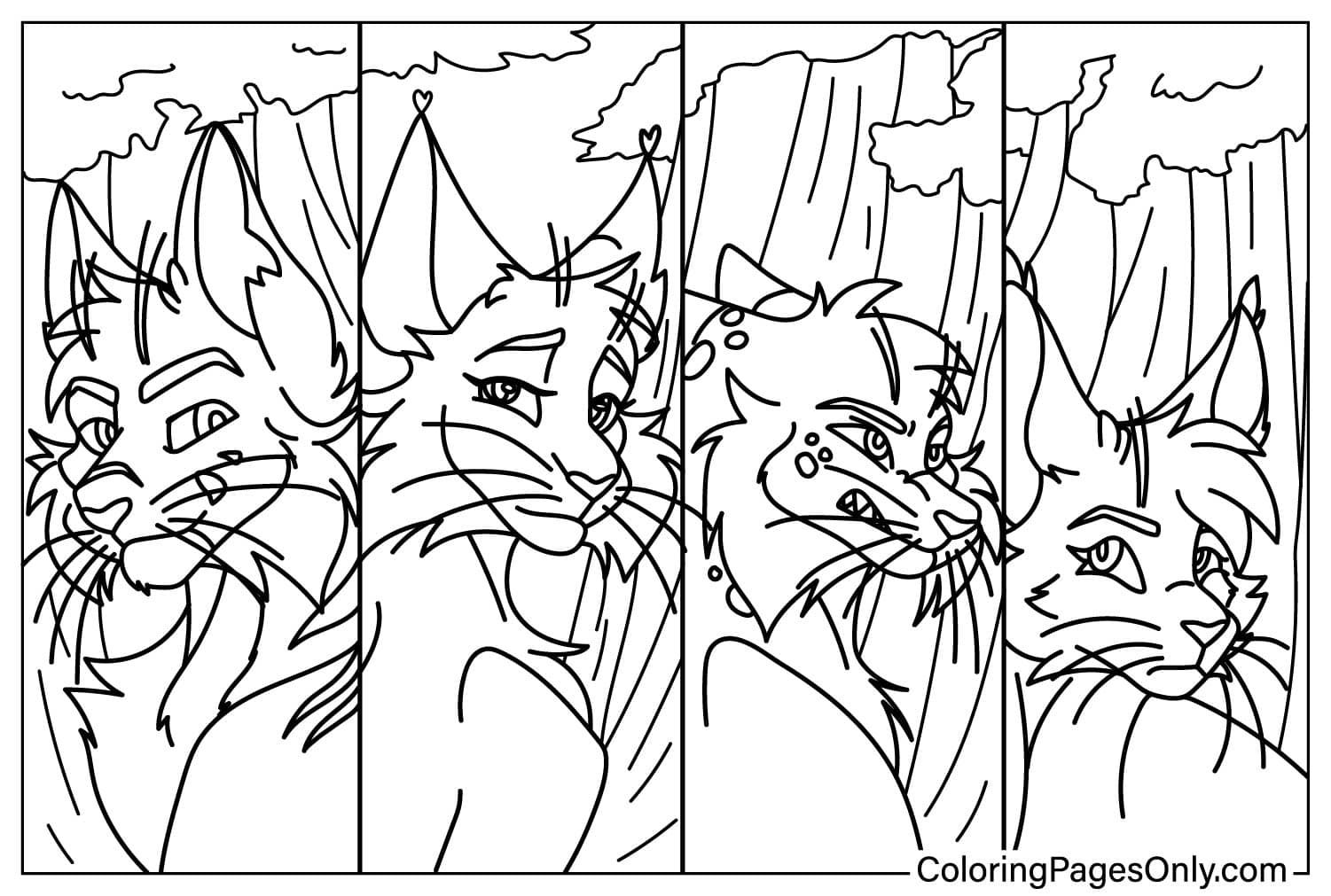
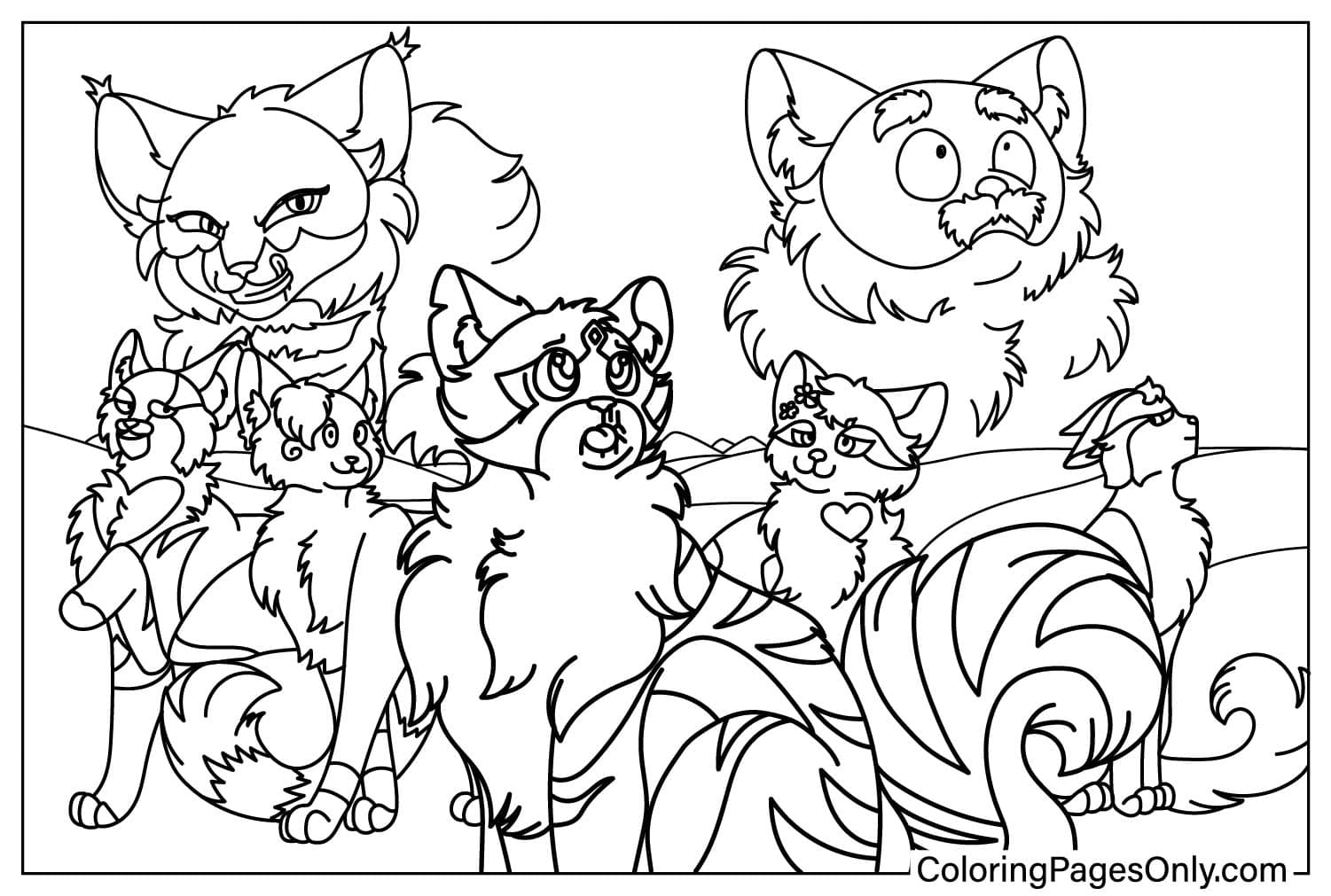
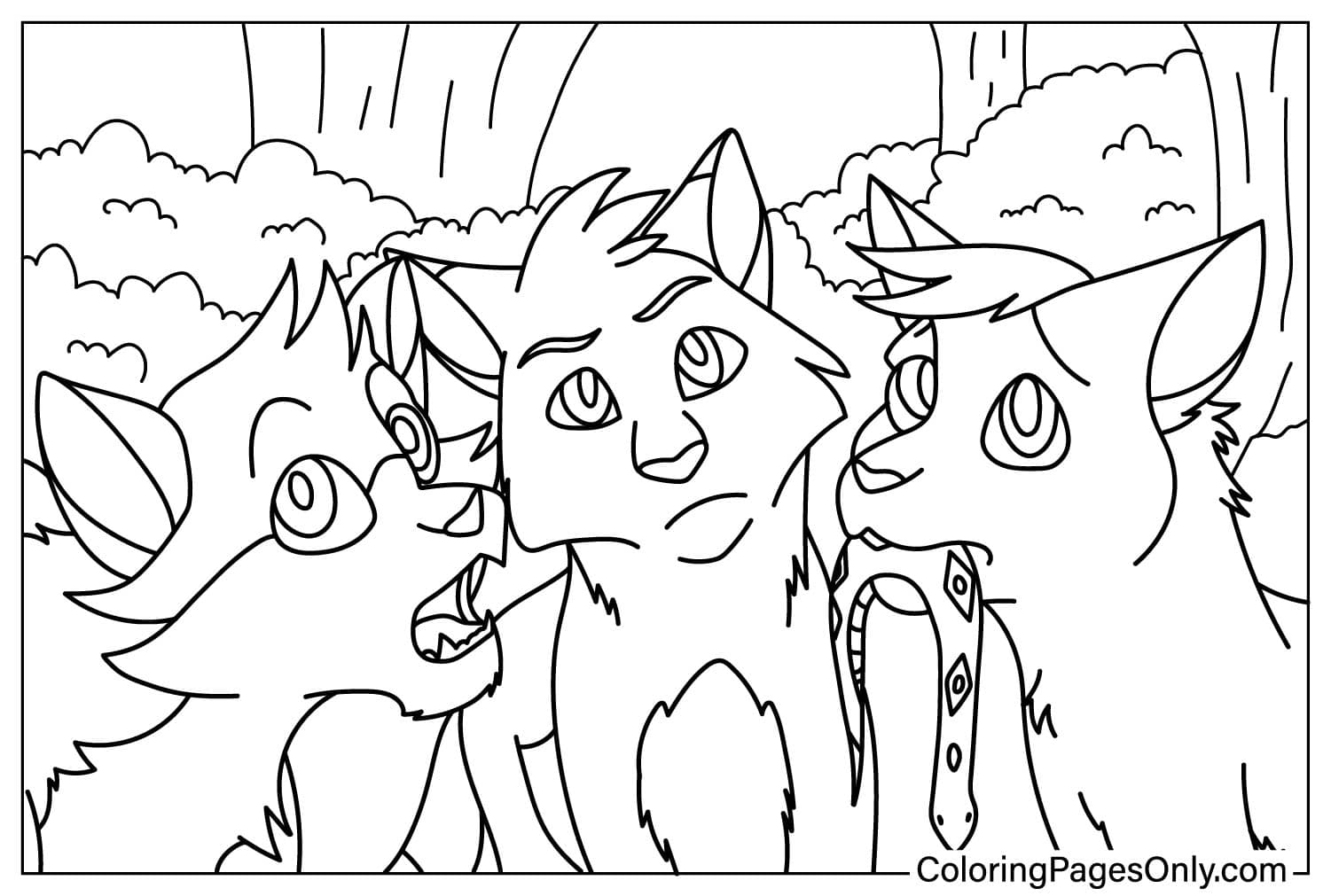
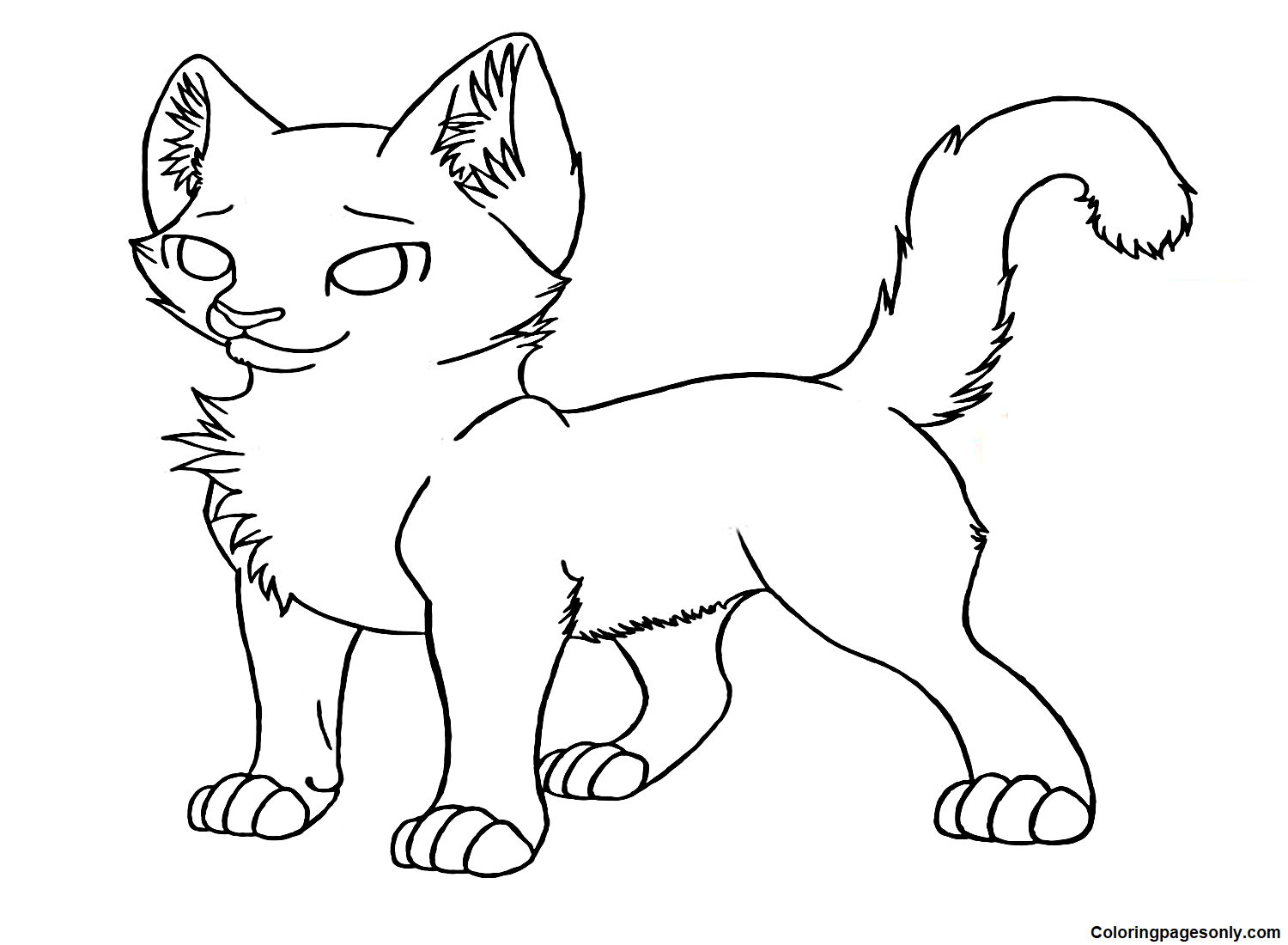
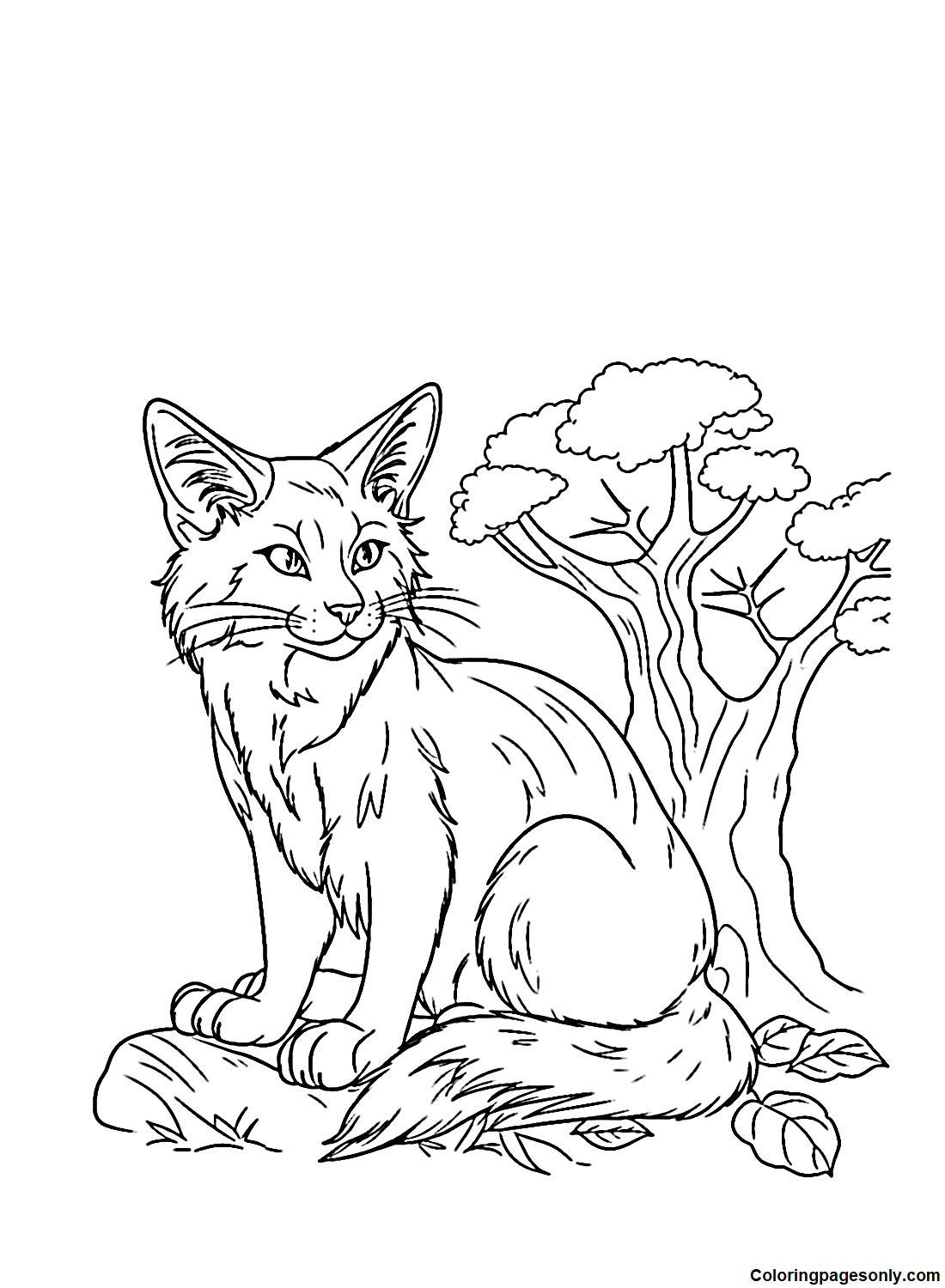
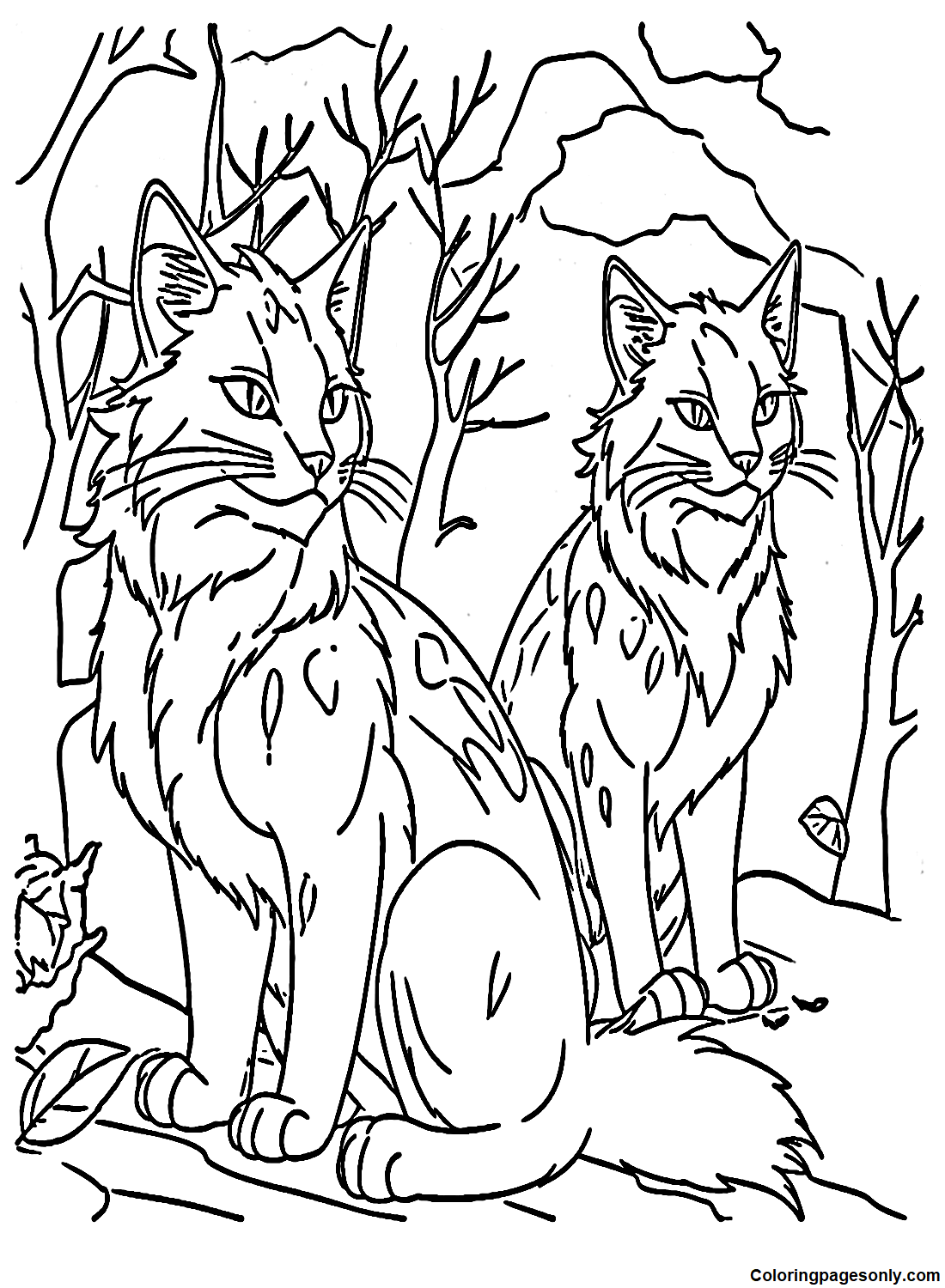
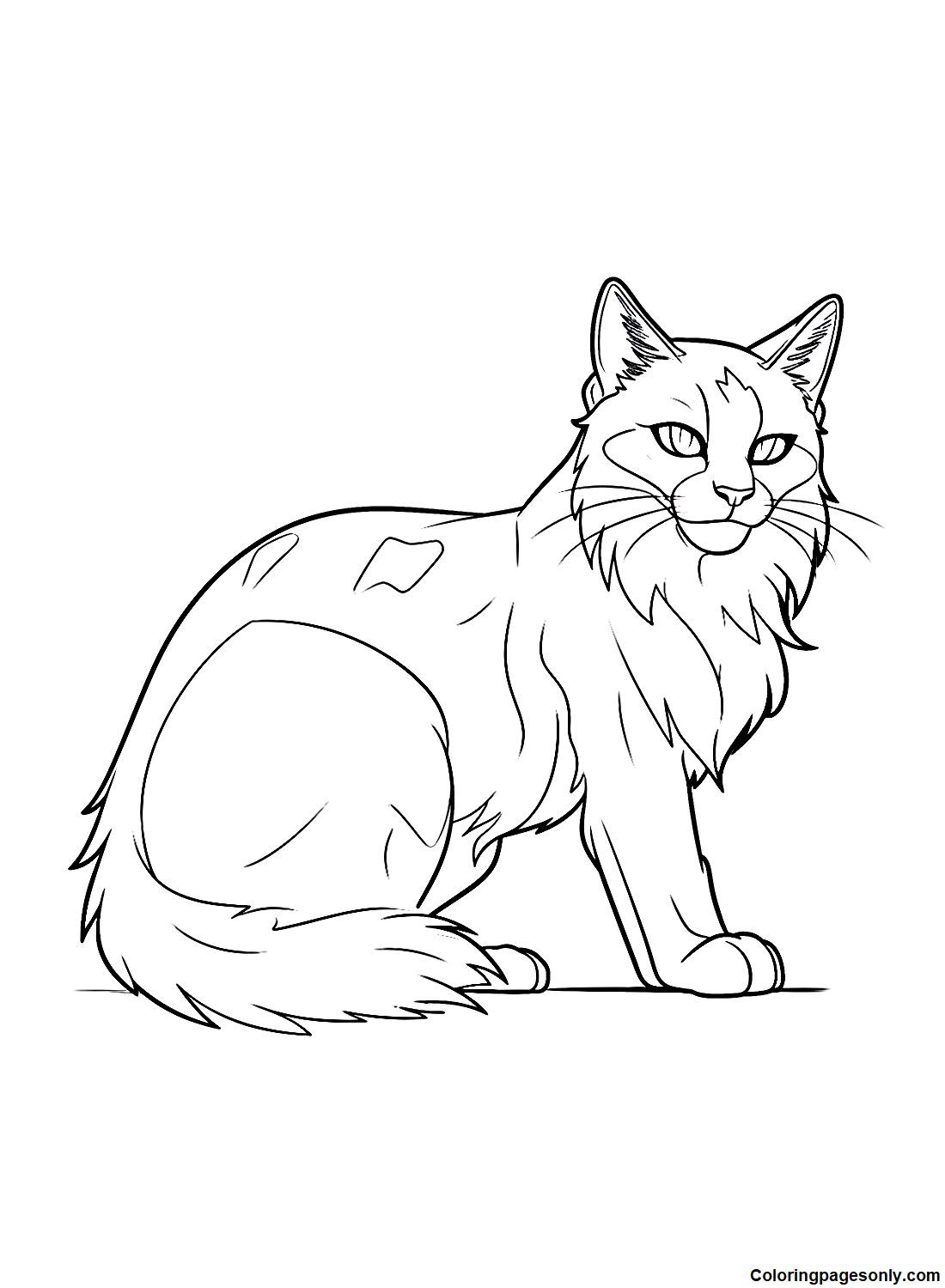
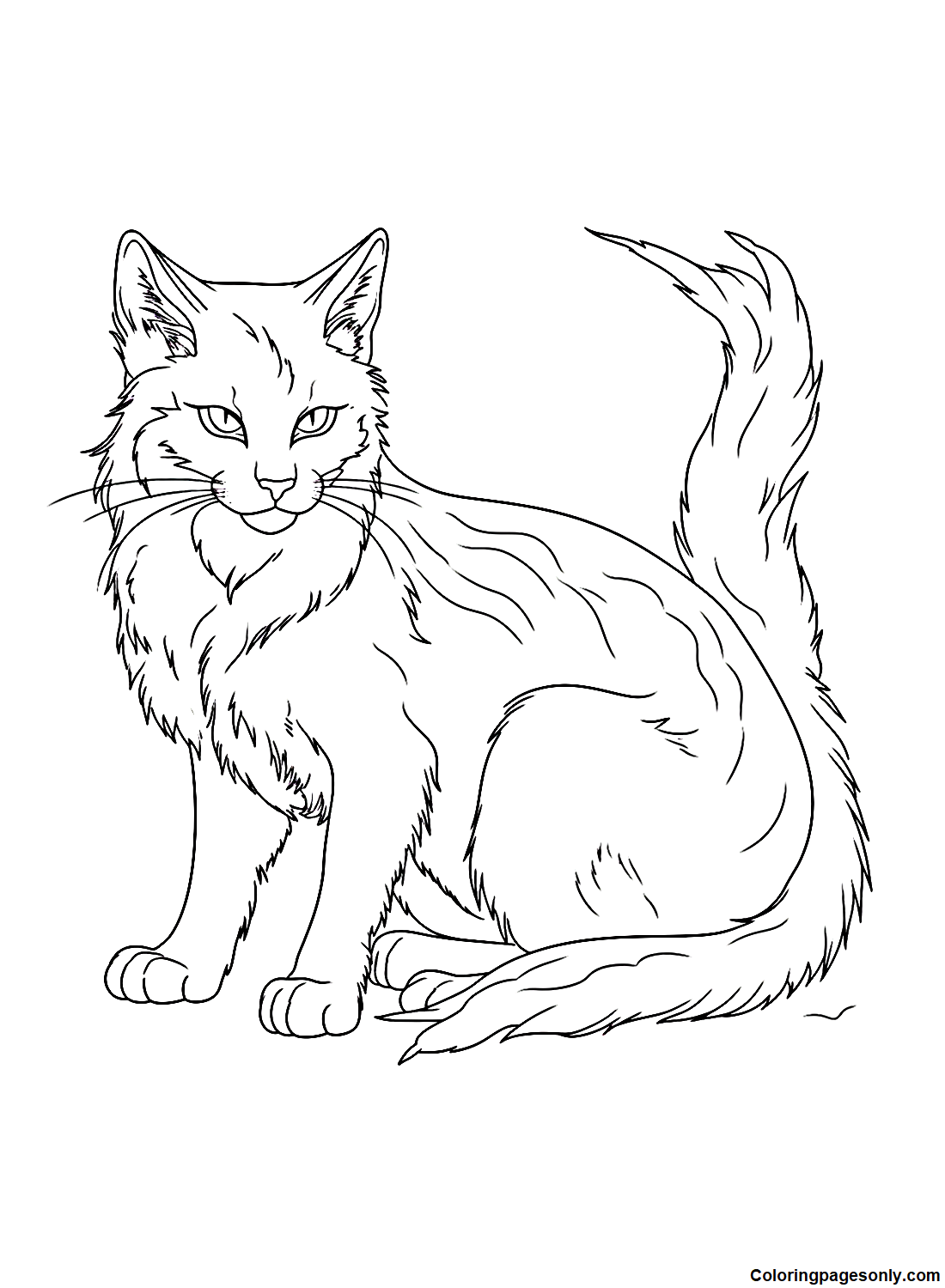
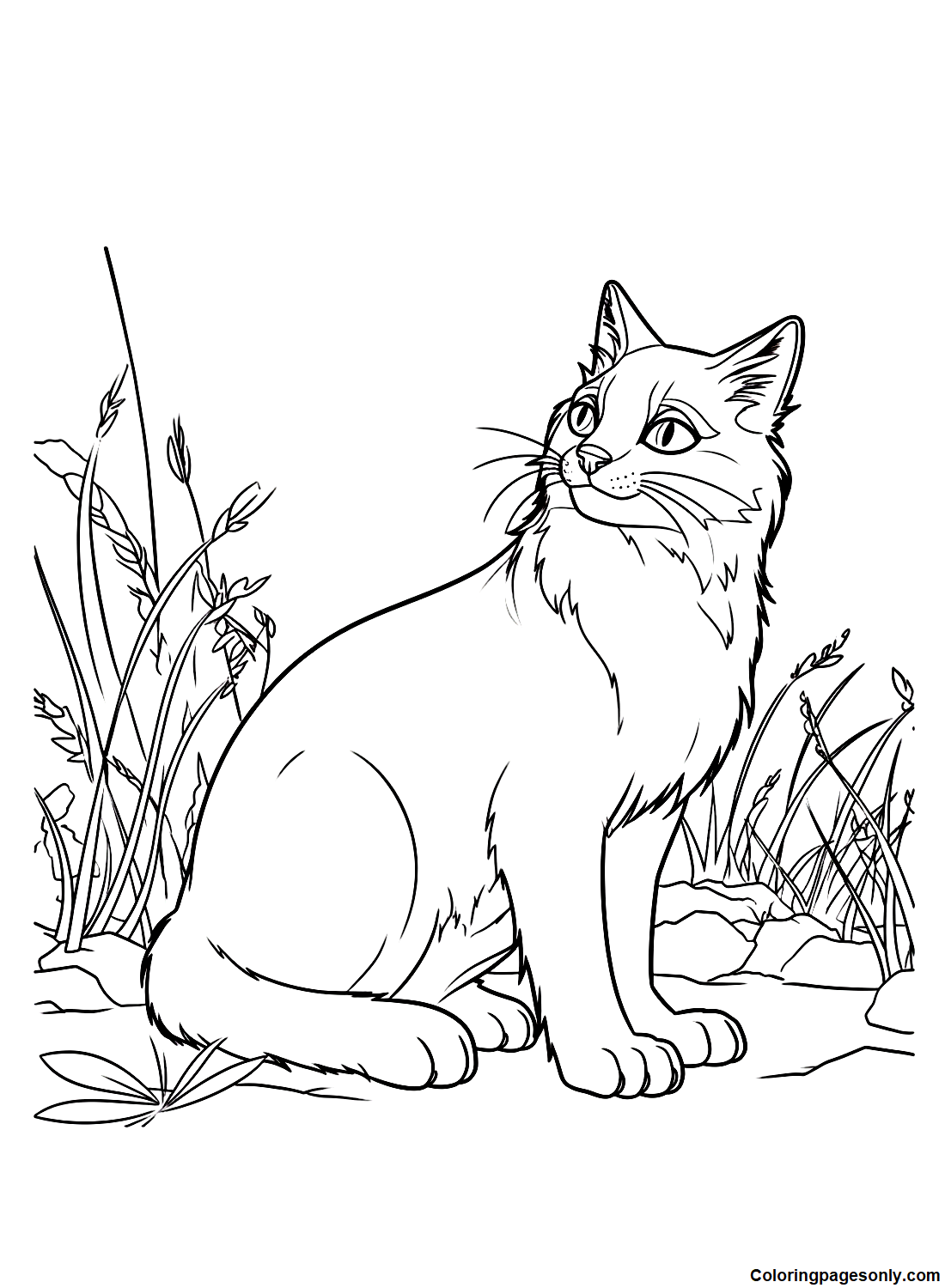
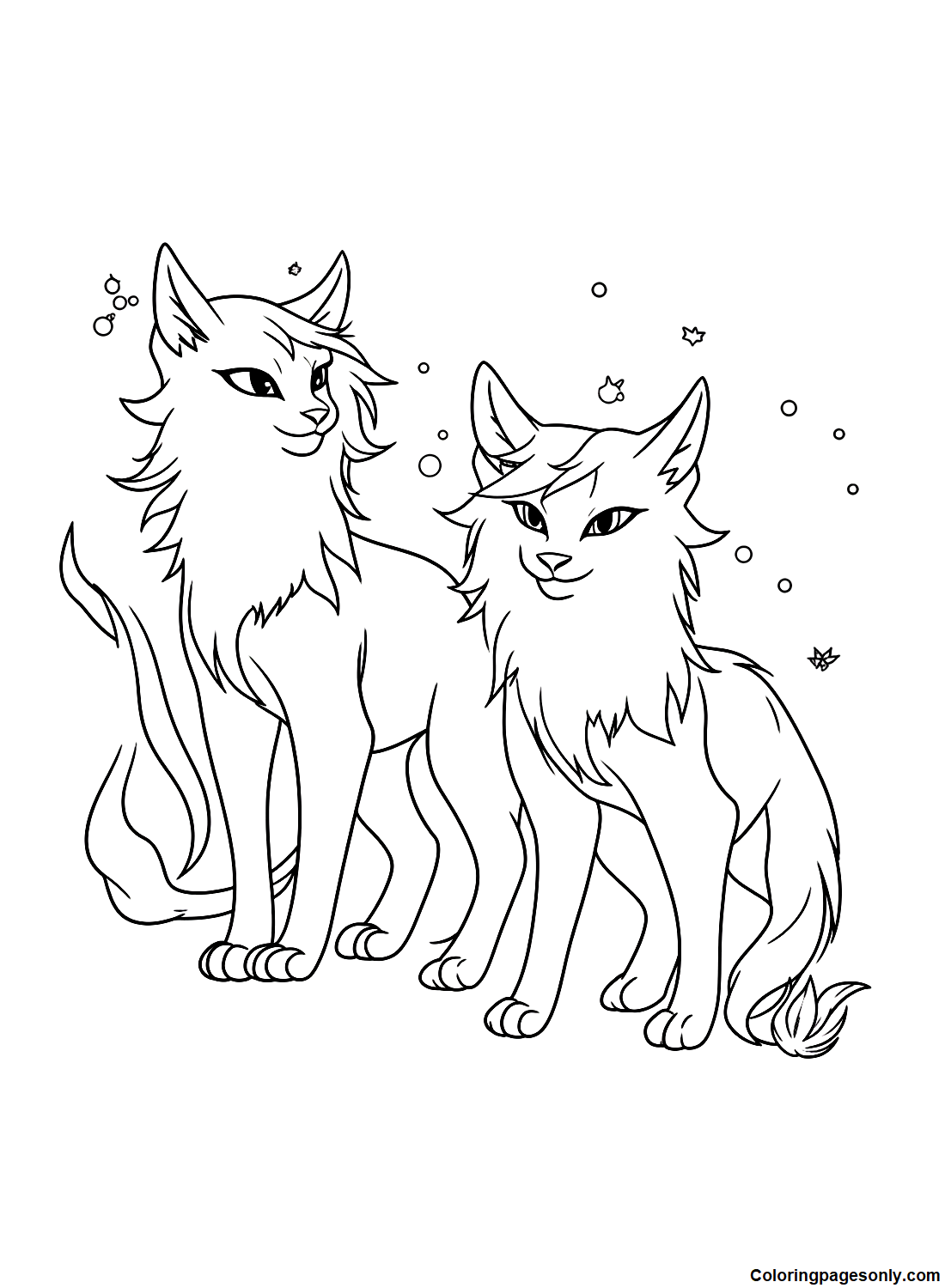
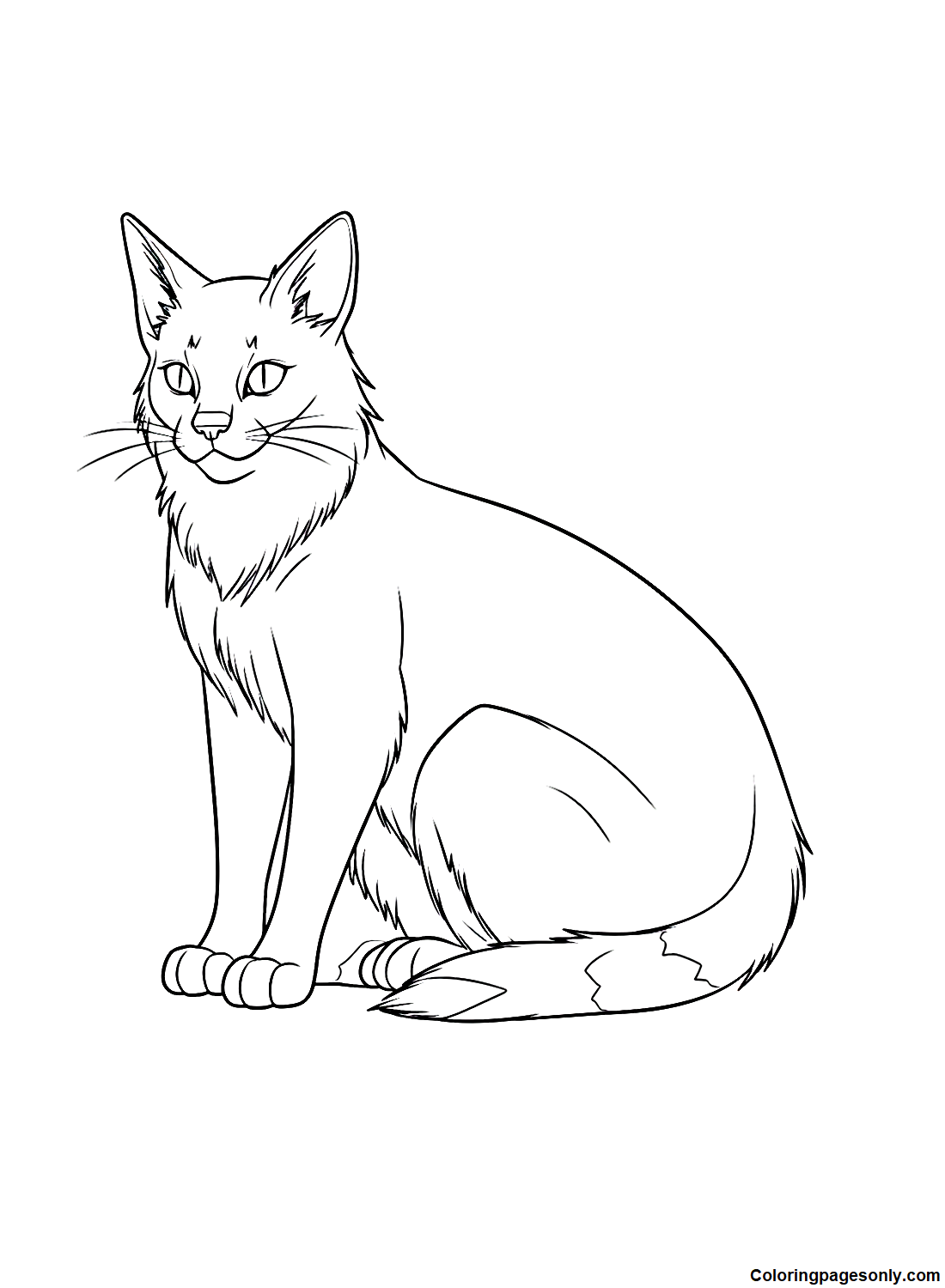
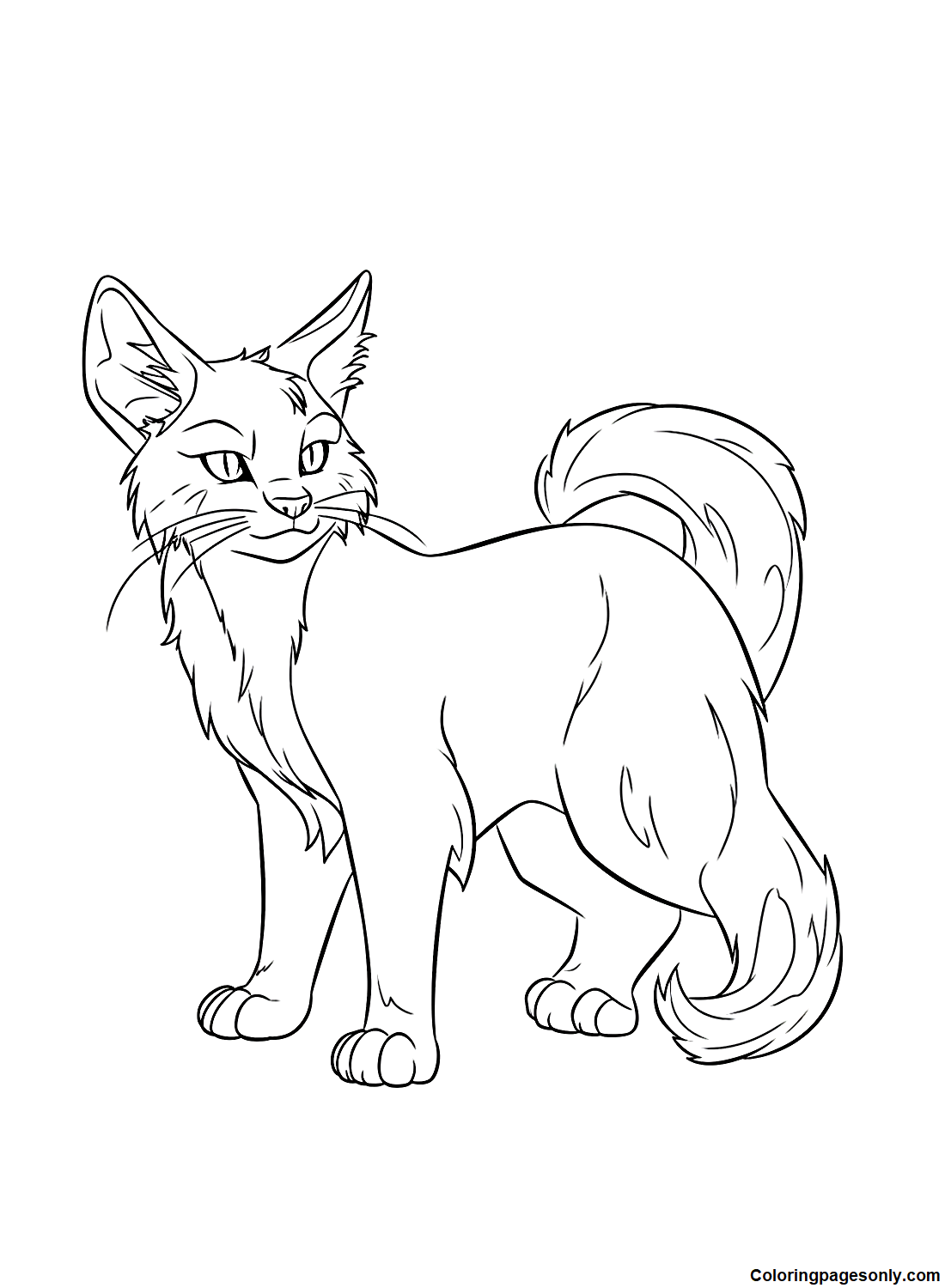
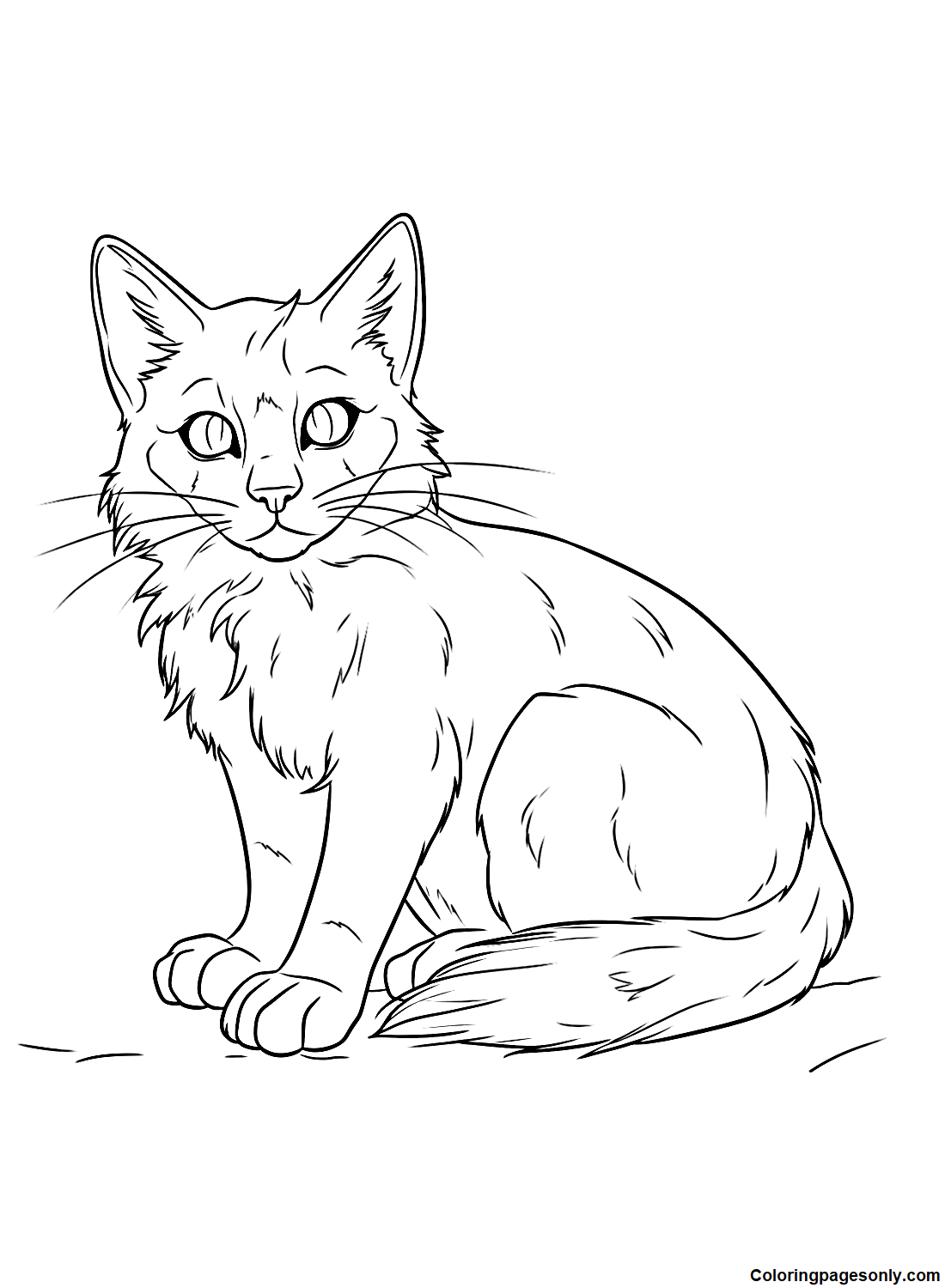
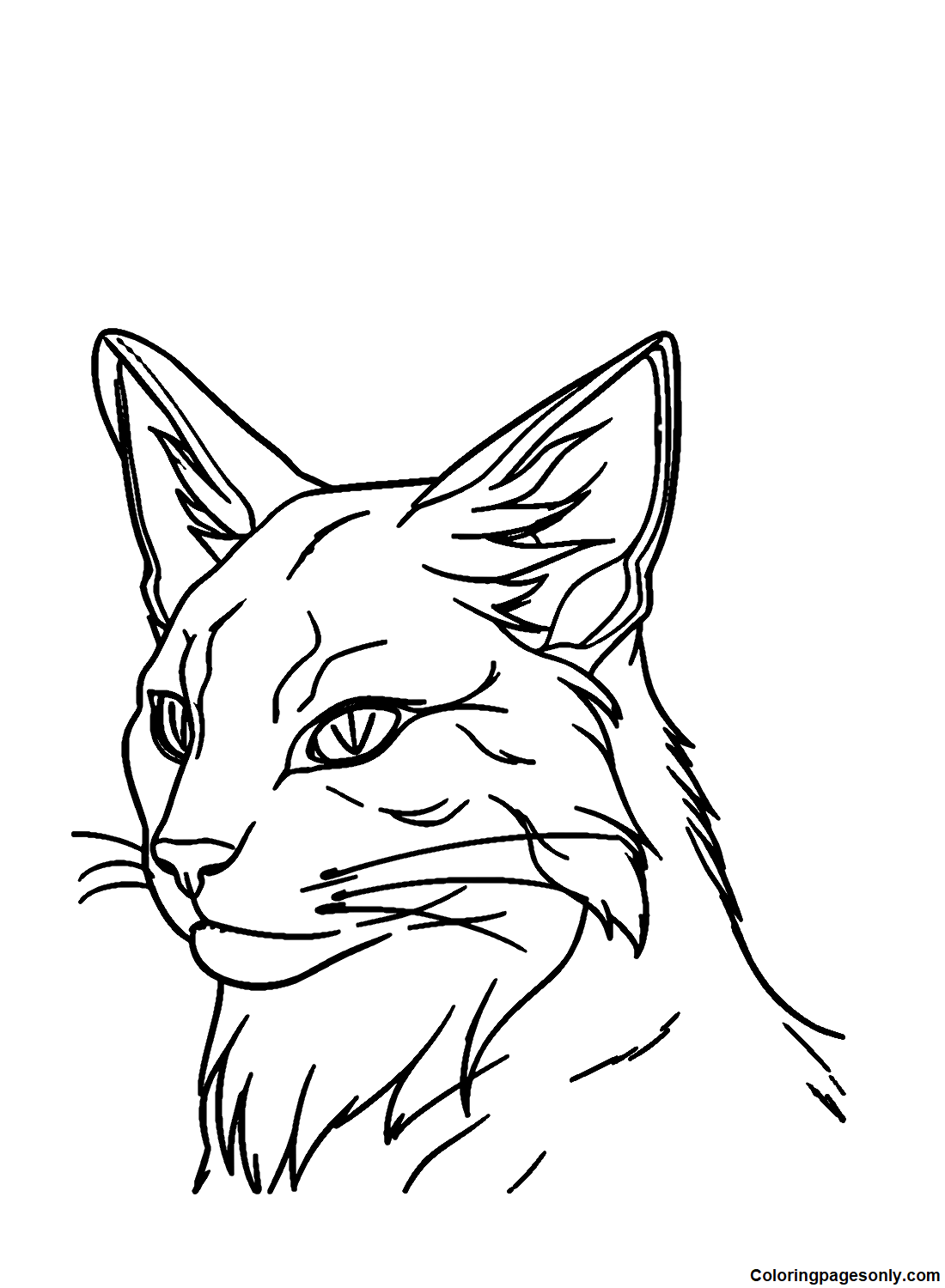
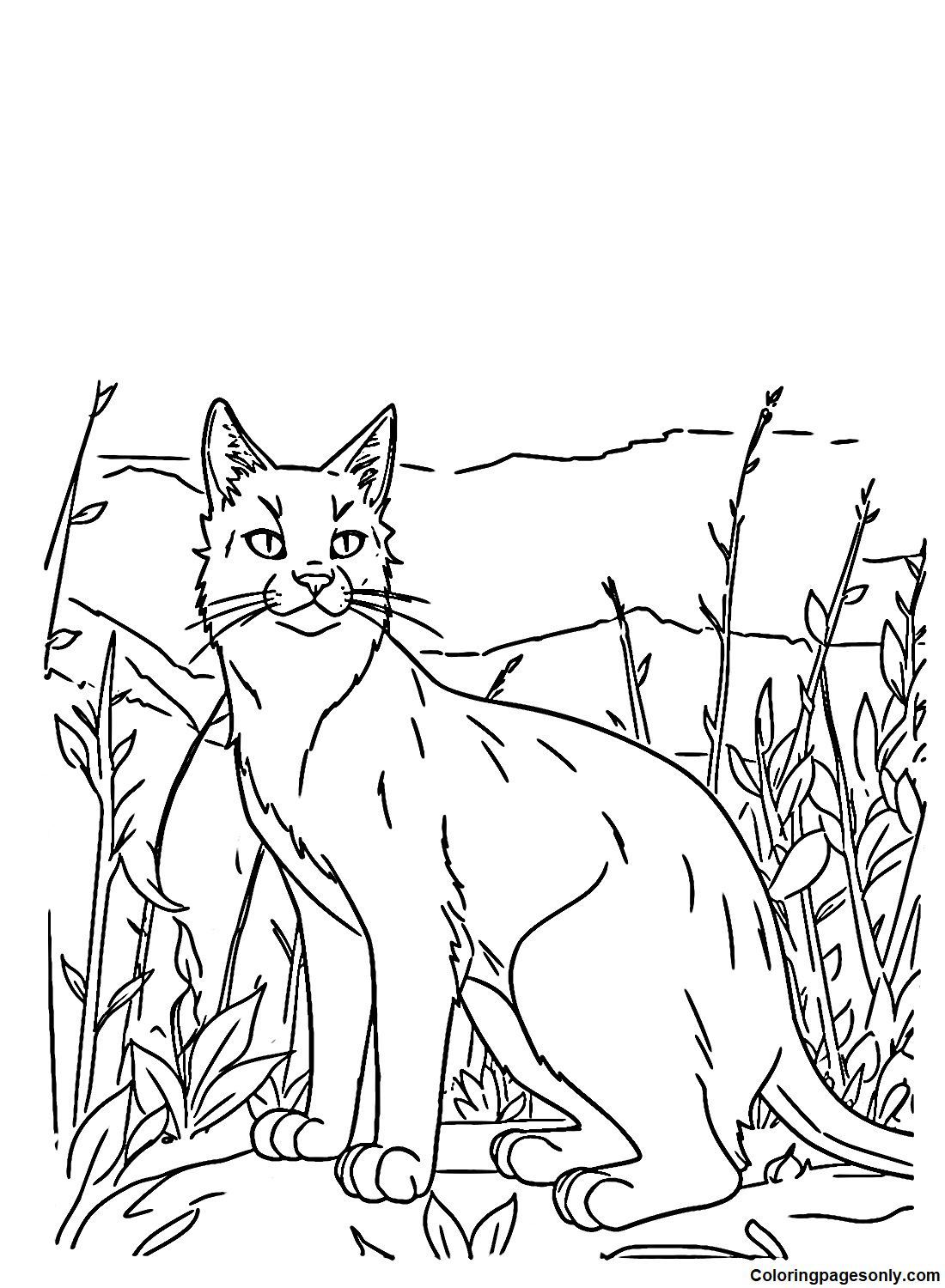
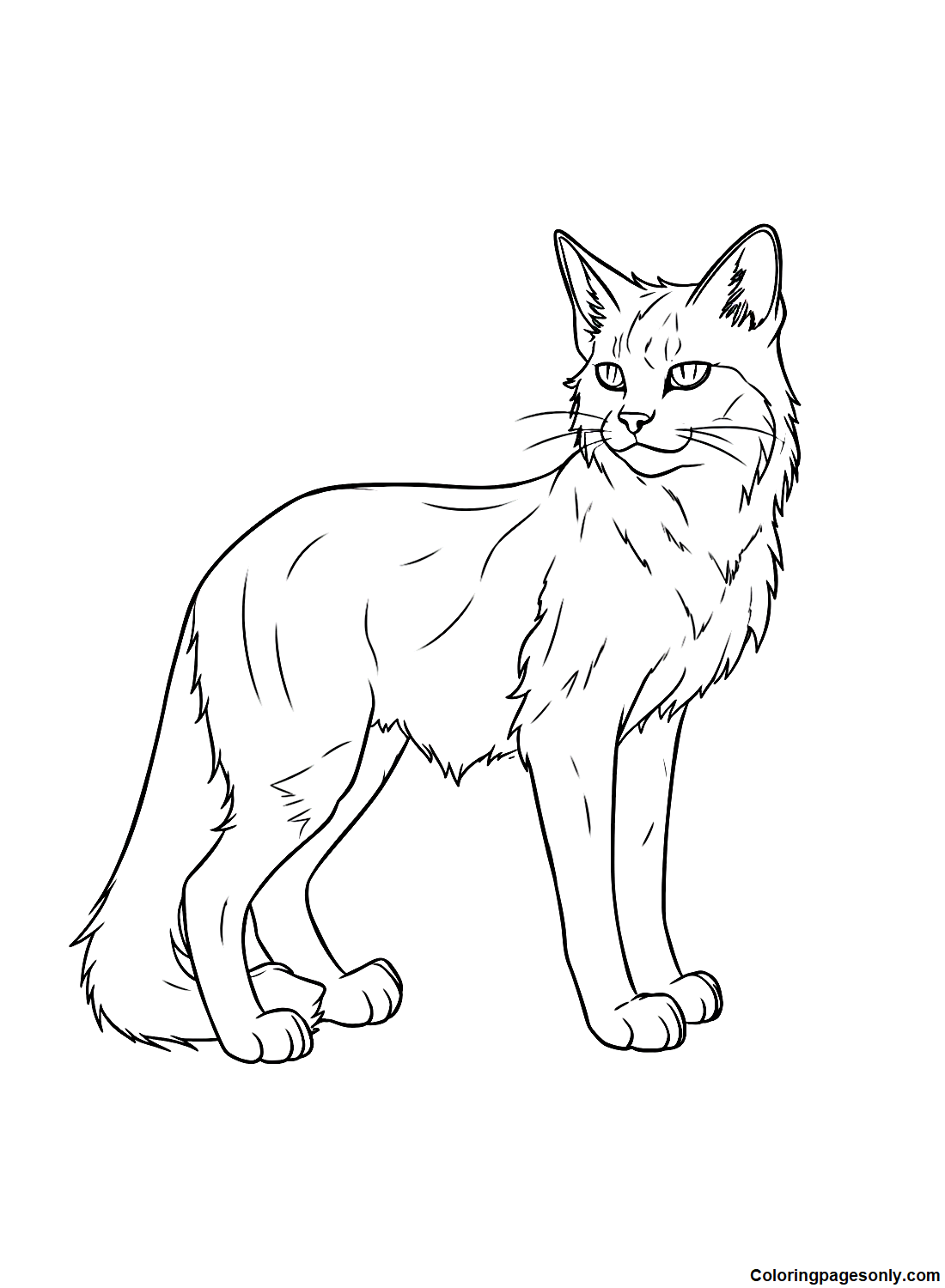
Free Warrior Cats coloring pages – 20+ pages featuring Firestar, Bluestar, Graystripe, Tigerstar, Sandstorm, Yellowfang, Clan cats in forest and combat settings, StarClan spirit scenes, and character portraits from across the Warriors book series – free printable PDF and online coloring for fans of the world-building fantasy series that has sold over 30 million copies.

Warriors – known widely as Warrior Cats – is a fantasy novel series published under the collective pen name Erin Hunter, a pseudonym used by a team of authors including Kate Cary, Cherith Baldry, and Tui T. Sutherland, with the series developed and shaped editorially by Victoria Holmes. The first book, Into the Wild, was published by HarperCollins in January 2003. The premise is one of the more quietly ambitious in children’s fantasy: wild cats living in organized Clans with their own laws, spiritual practices, history, and warfare, the entire civilization rendered from the ground up and maintained across a universe that now encompasses more than 90 books, including main series, super editions, novellas, and manga adaptations.

The world is organized around four (later five) Clans – ThunderClan, RiverClan, WindClan, ShadowClan, and the later-introduced SkyClan – each occupying distinct territories and characterized by distinct traits and fighting styles. Above the living world sits StarClan, the spirit realm of deceased warriors who guide the living through dreams and signs. Below it is the Dark Forest – the Place of No Stars – where cats who lived without honor go when they die, some of whom return to influence the living in the series’ darkest arcs.

The fandom that formed around this series is one of the most devoted and creatively productive in middle-grade fiction – characterized by fan art, original character creation, online Clan roleplays, and a continuous engagement with the naming system that is itself one of the series’ most discussed design decisions.

These 20+ free pages at ColoringPagesOnly.com cover the full Warrior Cats world. All free, PDF or PNG, print or color online.

What’s Inside

Firestar – ThunderClan’s Greatest Leader

Firestar is the protagonist of the original series and the character whose arc defines the franchise’s first six books. He begins as Rusty – a kittypet (domestic cat) with a collar and a comfortable life – and becomes Firestar, ThunderClan’s leader, through a process the series documents in careful, gradual detail across multiple books and name changes: Rusty, Firepaw (Apprentice), Fireheart (warrior), Firestar (leader).

His design is specific and consistent: a flame-colored orange tabby coat with darker stripes, green eyes, and the specific quality of a cat who looks ordinary until he is in motion. His coloring – orange-flame – connects to the first book’s prophecy (“Fire alone can save our Clan”) in the most direct possible way, which the series acknowledged Bluestar recognized immediately. His Personality is the series’ moral center: fair, loyal, willing to break Clan law when Clan law is wrong, and consequently, the character most readers use as their entry into a world that is otherwise strictly governed by rules and hierarchies.

Coloring Firestar: His coat is a specific warm orange – flame-colored, with darker orange or red-brown tabby markings. The tabby pattern runs in slightly darker stripes across the lighter orange base. His green eyes are the most vivid non-orange element in his portrait – a medium, clear green that should contrast clearly against the warm orange face. Apply the base orange first across the entire coat, then add the darker tabby stripes with a deeper red-brown at reduced pressure.

Bluestar – The Leader Who Found Him

Bluestar is ThunderClan’s leader when Rusty arrives at the forest – a blue-grey she-cat whose composure and authority are immediately apparent, and whose complexity becomes the subject of the super edition Bluestar’s Prophecy (2009), which tells her story from kithood through her leadership. Her arc in the original series includes one of the franchise’s most studied character developments: a leader who begins to lose her faith in StarClan and in her own judgment under the weight of betrayal, recovering it in the final moments of A Dangerous Path in a scene that many readers cite as one of the series’ most effective.

Her coat is blue-grey – the specific cool, slightly blue-shifted grey that the series consistently associates with her. Her eyes are blue, matching the cool palette of her coat. Her overall visual register is cooler and stiller than Firestar’s warm flame – the visual contrast between the two characters’ color palettes mirrors their generational relationship.

Coloring Bluestar: Cool blue-grey across the entire coat – not warm grey, not silver, but the specific grey with blue undertones that reads as a blue-grey cat. Apply the base tone at moderate pressure across all coat surfaces. The darkest areas – the tips of the ears, the shadow under the jaw, the deepest coat shadows – should shift slightly cooler and deeper. Her blue eyes should be a soft, medium blue – not vivid, not pale, but the specific blue of a clear sky reflected in still water.

Graystripe – The Best Friend

Graystripe is Firestar’s closest friend from his earliest days in ThunderClan – a large, cheerful, loyal tom whose dark grey coat has a slightly lighter grey stripe running along his back (the “gray stripe” that gives him his warrior name). He is one of the series’ most beloved characters, not because his arc is the most dramatic,c but because his Personality is the most immediately warm – he is funny, genuinely kind. His loyalty to Firestar is one of the series’ most consistent elements across books and timeskips.

His super edition, Graystripe’s Vow, covers his life after the original series in significant depth, and the manga series The Lost Warrior follows his experiences during a period of captivity among kittypets.

Coloring Graystripe: Dark grey coat across the main body, with a slightly lighter grey stripe running from the base of his neck along his spine – this is the feature that earned him his name and is the one detail that should be visibly lighter than the surrounding dark grey. His eyes are yellow or amber. The lighter stripe should be rendered at noticeably less pressure than the surrounding coat – it should read as a genuine tonal difference, not as a subtle variation.

Tigerstar – The Villain

Tigerstar is the series’ primary antagonist across the original arc and, following his death and entry into the Dark Forest, a recurring dark presence across subsequent series. He is a dark brown tabby tom with amber eyes, long claws, and the specific quality of a character designed to be impressive and threatening before his villainy is fully revealed – he is formidable enough that his ambition is understandable even as it becomes impossible to excuse.

His visual design communicates what the narrative confirms: the tabby pattern on a dark brown coat is inherently more shadow-rich and visually complex than Firestar’s warmer orange, and the amber eyes carry a different quality from Firestar’s green – more predatory, less open. His eventual form in the Dark Forest – glowing with a specifically sinister energy – is the most dramatically rendered version of his design in fan art and the pages that reference his spirit appearances.

Coloring Tigerstar: Dark brown as the coat’s base color – a deep, warm dark brown that is darker than milk chocolate and warmer than grey-brown. The tabby markings are near-black against this dark brown base, requiring careful rendering to maintain visibility – the stripes must be darker than the coat without losing their definition against a dark background. Apply the dark brown first, then add the near-black stripes at maximum pressure in their specific patterning. His amber eyes should be a vivid, warm amber-yellow – the most vivid warm color on the page.

Forest Environment and Clan Territory Pages

The Warriors world is rooted in a specific landscape – the forest territories of the four Clans, each with distinct geography. ThunderClan’s territory is dense forest with undergrowth and clearings. RiverClan’s territory is defined by water – rivers and streams, and the cats who live near them are known for their swimming. WindClan’s territory is open moorland, the fastest cats in the series at home on flat ground. ShadowClan’s territory is a dark, pine-heavy forest, the shadow-casting environment that gives the Clan its name.

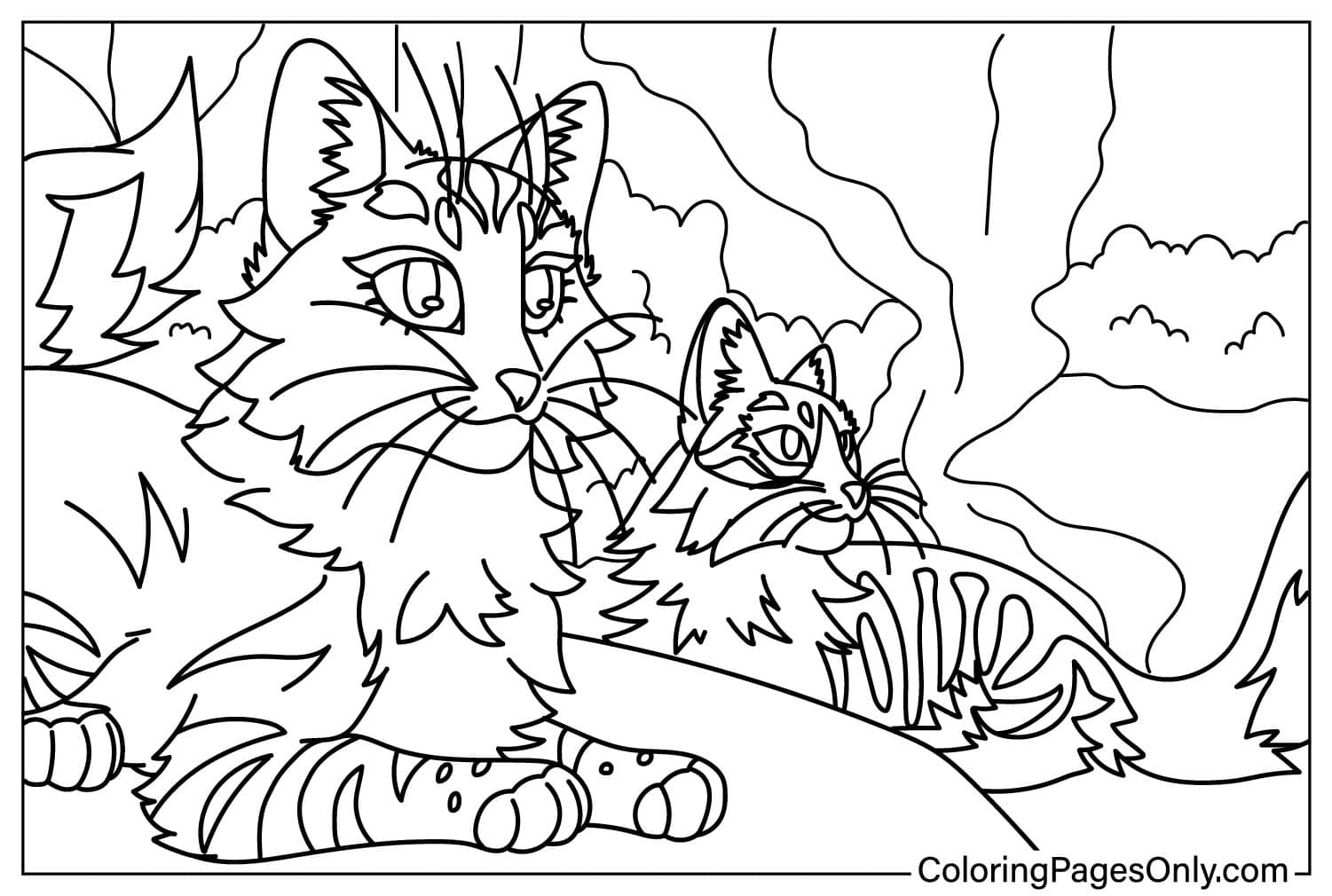
Forest pages showing Clan cats in their territories are the collection’s most atmospherically rich – moonlight through tree branches, paw prints in forest earth, cats moving through undergrowth.

Coloring forest environments: Moonlit forest – the setting for many Clan gatherings and night patrols – uses a specific palette: dark blue-grey sky visible through the canopy, very dark green for the deepest undergrowth, and the specific silver-grey of moonlight caught on leaf surfaces and cat fur. The key technique is value contrast: the cats should be slightly lighter than the surrounding environment so they read as subjects against a background rather than disappearing into it.

StarClan Spirit Pages

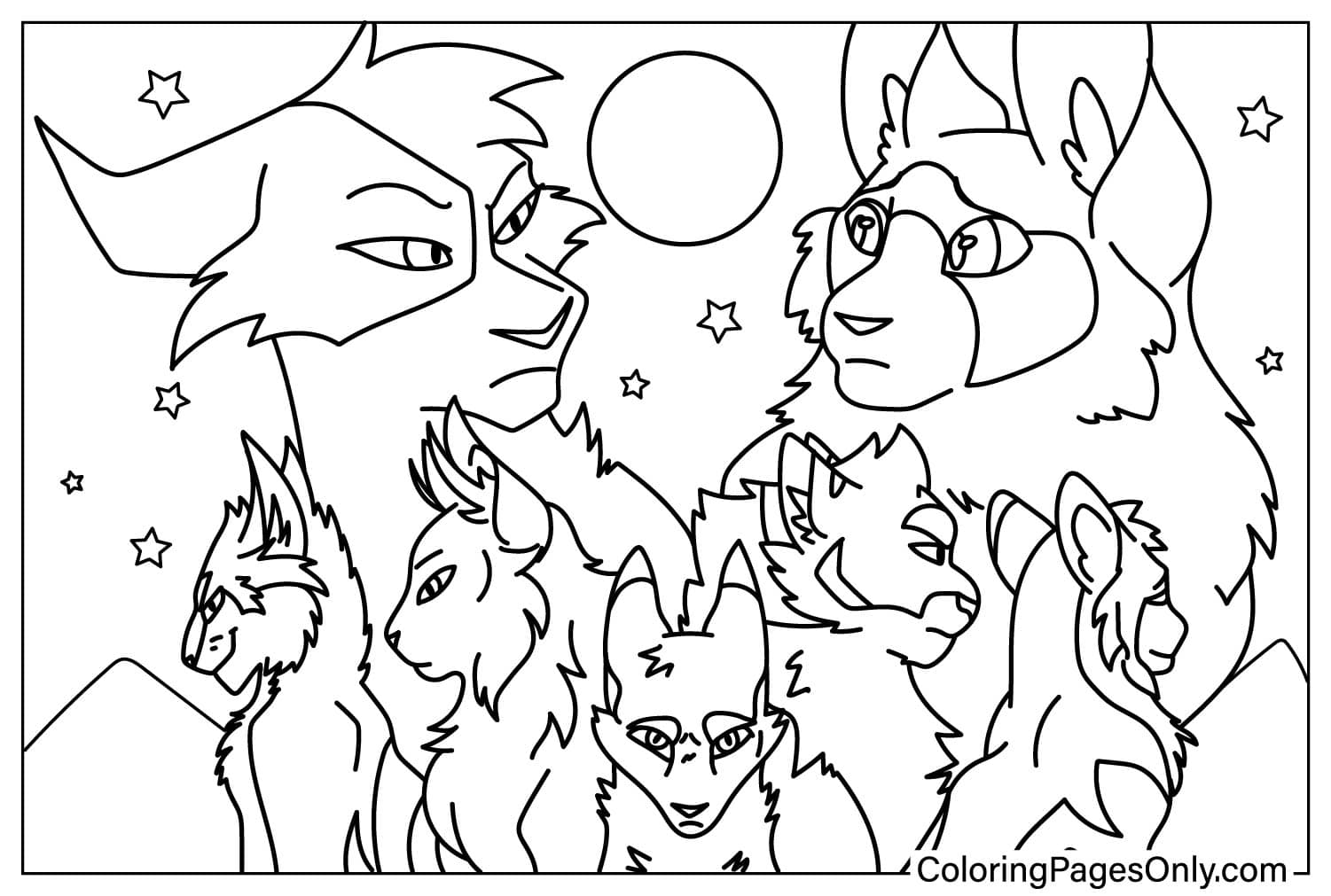
StarClan – the warrior ancestors who watch over the living Clans from their spirit realm – is represented in the series through specific visual language: starlight, glowing pelt, and the presence of a night sky full of stars. Pages that reference StarClan cats or StarClan visits show cats with a luminous quality that distinguishes them from the living cats of the collection.

Coloring StarClan pages: The luminous quality of a StarClan cat is achieved through reversed value application – lighter at the edges of the figure where the spirit energy radiates outward, slightly darker at the center. Apply a base coat color consistent with the cat’s living appearance. Then add a very pale, slightly blue-white glow along the outer edge of the figure – the brightest tone available, applied in a thin halo that suggests light emanating from within. Stars in the background, where present, should be white or near-white dots against a deep navy or blue-black sky.

What These Pages Do

Warriors is one of the most complete fantasy series in middle-grade fiction. The Clan system, the naming conventions, the spiritual practice of StarClan, the territory boundaries and seasonal changes, the warrior code – all of these exist as a self-consistent internal world that rewards the sustained engagement of readers who return to it across years and dozens of books. Coloring the characters while knowing this world gives each page a specific narrative weight.

The naming system is the series’s most imitated design element. The progression from [name]kit to [name]paw to [warrior name] to [name]star follows a logic that fans have applied to creating their own “original character” warrior cats for over twenty years. This fandom practice – generating cats within the series’ naming logic – is one of the most extensive creative secondary practices in any children’s book fandom. The coloring pages are the most direct entry point for fans who want to engage with the visual side of this practice.

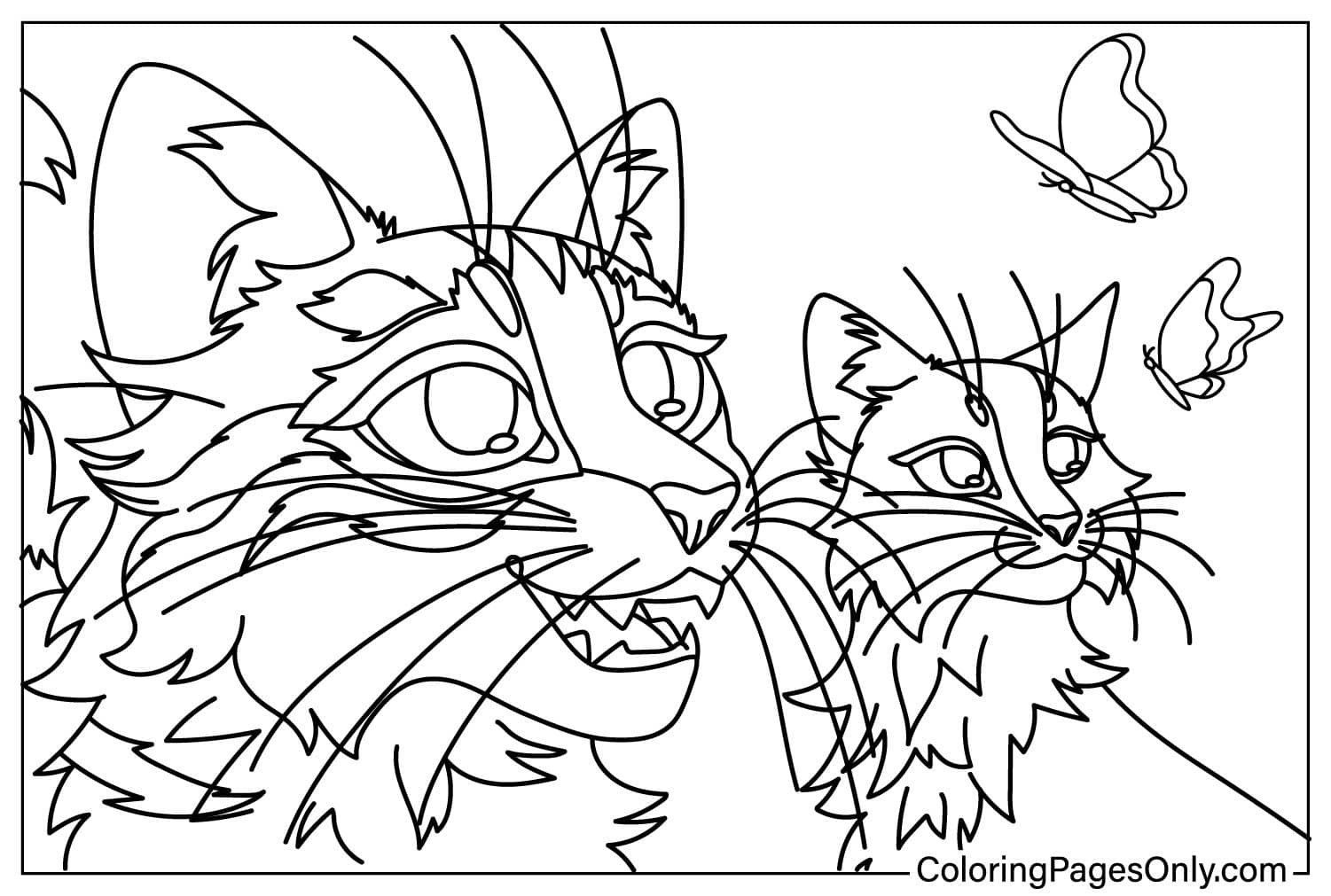
Cat fur texture provides a specific fine motor challenge. The American Academy of Pediatrics identifies fine motor skill development as a key milestone throughout early childhood. Cat fur – with its layered, directional texture visible in the line work of every character portrait – provides exactly the kind of fine motor complexity that rewards sustained, motivated attention. The 2005 Art Therapy Journal study on structured coloring and anxiety reduction applies with particular directness to the animal portrait format of these pages, where the organic complexity of fur and the specific facial features of each cat character reward the focused attention the research identifies.

The collection’s atmospheric forest and moonlit pages teach environmental color. Most coloring pages focus on the character rather than the environment. The Warrior Cats pages that show cats in their territories – forest undergrowth, open moorland, the dark pine of ShadowClan’s territory – require the colorist to make environmental decisions alongside character decisions: what does a moonlit forest look like? What color is the undergrowth in full summer? These environmental choices develop color literacy that purely character-based pages do not.

How to Color These Pages Well

Tabby markings require a base coat first. The tabby pattern – distinctive stripes or swirls of darker color over a lighter base – is the most common cat coat pattern in the collection and requires a specific application sequence. Apply the base coat color first across the entire cat’s body at moderate, even pressure. Let it fully settle (or fully dry, if using markers). Apply the darker tabby markings second, over the base coat. This layered sequence makes the tabby pattern read as markings on a colored coat rather than as two colors competing at the same level.

Each cat’s eye color is a character identifier. The series’ cast is large enough that eye color functions as an important distinguishing detail in portrait pages – Firestar’s green, Bluestar’s blue, Tigerstar’s amber, Graystripe’s yellow. Before coloring any portrait, identify the character and confirm their eye color from the series reference. An orange tabby with yellow eyes reads as a generic cat; an orange tabby with Firestar’s specific green eyes reads as Firestar specifically.

Directionality communicates body structure. In cat portrait pages, the fur lies in specific directions across different body regions – forward-sweeping on the forehead, outward from the spine along the sides, downward along the belly, outward on the tail. When adding shading to a cat portrait, follow the fur’s growth direction with your coloring strokes rather than applying shade uniformly. The result reads as natural fur rather than as a colored outline.

Dark cat colors need carefully managed highlights. Tigerstar’s dark brown, the dark grey of Graystripe – these darker coat colors need strategic highlight application to prevent the figure from reading as a dark silhouette. Apply a slightly lighter version of the coat color along the highest point of each body area – the top of the head, the curve of the back, and the outer surface of each leg. These highlights should be subtle: the coat should still read as dark, with just enough lighter tone to give the body three-dimensional form.

The Dark Forest cats want cooler, more sinister color treatment. Any page referencing the Dark Forest – the spirit realm of evil cats – should use a cooler, darker palette than the same cat would receive in their living or StarClan context. Tigerstar in the Dark Forest reads correctly as dark brown-almost-black with amber eyes; the same character in a flashback to his living years reads slightly warmer. The environment’s darkness should shift the entire palette cooler and deeper.

5 Creative Craft Ideas

Clan Color Reference Guide

Print one cat page representing each of the four main Clans. Color each in a palette associated with their Clan’s territory and character: ThunderClan in warm orange-forest tones (Firestar’s flame coloring as the template), RiverClan in cool blue-grey tones (the color of river cats and water), WindClan in pale, open moorland tones (lighter, more wind-swept), ShadowClan in dark green and near-black pine-forest tones.

Mount all four on a backing sheet. Below each, add the Clan name and three key traits: “ThunderClan – Forest, Courage, Justice.” “RiverClan – Water, Cunning, Grace.” “WindClan – Moorland, Speed, Loyalty.” “ShadowClan – Pine, Ambition, Survival.”

The finished guide is a visual reference for the series’ world-building that uses color itself to communicate each Clan’s identity.

DIY Warrior Cat Trading Cards
DIY Warrior Cat Trading Cards (Resource: artstation.com)

Warrior Name Badge

Create a personal warrior cat identity using the coloring pages as a starting point. Select any cat page with a relatively neutral design. Color it in the coat color and pattern of the warrior cat you would design for yourself – the coat you would have, the eye color you would choose.

Below the finished image, hand-letter the warrior name you would receive following the series’ naming convention: [feature][nature element or concept] – Stormpelt, Brightleaf, Shadowwhisker, Silentfoot. Add your Clan. Add your rank. The finished badge is a fan identity document made personal through direct creative choices.

Custom Warrior Cat Storybooks
Custom Warrior Cat Storybooks (Resource: annatyszka.blogspot.com)

Prophecy Page

Print a Firestar page. Color it in canonical flame-orange. In the background area of the page – or on a separate card mounted beside it – hand-letter the first prophecy of the original series: “Fire alone can save our Clan.”

Below the prophecy, add a note in smaller letters: Into the Wild, 2003—Bluestar to Spottedleaf. Then, below that: “He was a kittypet named Rusty. The prophecy chose him anyway.”

The finished display connects the visual of the character to the narrative moment that defined his role – prophecy and portrait together.

Decorative Art Displays
Decorative Art Displays (Resource: TeePublic.com)

The Moonstone Journey

In the original series, new ThunderClan leaders travel to Moonstone (later Moonpool) to receive their nine lives from StarClan – a ceremony in which nine StarClan cats each give a life representing a specific virtue. Print a leader page (Firestar or Bluestar, whichever is available) and a StarClan spirit page.

Color the leader page in canonical warm colors. Color the StarClan page in the luminous, blue-shifted pale palette of spirit cats. Mount both on a dark backing sheet that suggests the moonlit cave or pool where the ceremony occurs. Add a list of nine virtues along the bottom, hand-lettered: Courage, Loyalty, Justice, Compassion, Strength, Wisdom, Clarity, Honesty, Hope.

Personalized Bookmarks
Personalized Bookmarks (Resource: Etsy.com)

Original Character Design Sheet

This craft is specifically for the fandom’s most active creative practice – designing original warrior cats. Print any cat outline page that serves as a template. Color it in the coat and eye colors you design for an original character.

On a separate page, create a character sheet following the series’ conventions: Name (kit → apprentice → warrior or medicine cat), Clan, Rank, Physical description, Personality (three traits), Special skill, Mentor (if Apprentice), Apprentice (if warrior/medicine cat). Mount the colored cat page alongside the character sheet.

The finished product is a complete original warrior cat – a character who exists within the series’ world-building rules, made visual through the coloring activity and documented through the character sheet.

Frequently Asked Questions

What is Warrior Cats, and who wrote it? Warrior Cats, formally titled Warriors, is a fantasy novel series published under the collective pen name Erin Hunter – a pseudonym used by a team of authors including Kate Cary, Cherith Baldry, and Tui T. Sutherland, with the series conceptually developed and editorially shaped by Victoria Holmes. Published by HarperCollins, the series began with Into the Wild in January 2003. The universe has since expanded to more than 90 books across multiple main series, super editions, novellas, and manga adaptations. The series has sold over 30 million copies worldwide and maintains an exceptionally active fandom, particularly among readers aged eight through sixteen.

What is the Clan system in Warrior Cats? The Warrior Cats world is organized around four primary Clans of wild cats – ThunderClan, RiverClan, WindClan, and ShadowClan – with SkyClan introduced in later series. Each Clan occupies a distinct territory and is characterized by specific traits: ThunderClan is known for courage and lives in the forest; RiverClan for swimming ability and lives near water; WindClan for speed and lives on open moorland; ShadowClan for cunning and lives in the pine forest. Each Clan has its own leader (whose name ends in “-star”), deputy, medicine cat, warriors, apprentices, queens, kits, and elders. The Clans interact through periodic gatherings (truces), territorial disputes, and occasionally warfare.

Who is Firestar, and why is he important to the series? Firestar is the protagonist of the original Warriors series – a domestic cat (kittypet) originally named Rusty who joins ThunderClan and rises through its ranks to become leader. He is a flame-colored orange tabby with green eyes. His arc across the original six books – from curious outsider to ThunderClan’s most celebrated leader – is the framework around which the franchise’s first chapter is built. He is referenced extensively in subsequent series as a legendary historical figure. The first book’s prophecy, “Fire alone can save our Clan,” referred to him specifically, and his coloring – flame-orange – was the visual basis for Bluestar’s recognition of the prophecy’s subject.

What is StarClan? StarClan is the spiritual realm of deceased warrior cats – the warriors, medicine cats, and leaders who lived honorably and join the spirit realm after death. Living cats, particularly medicine cats, communicate with StarClan through dreams and at sacred locations (Moonstone, later Moonpool). StarClan guides prophecies and signs, grants leaders their nine lives, and watches over the living Clans. It is a specific and internally consistent mythology built around the real behaviors and lives of cats – hunting, territorial instinct, hierarchy – translated into a complete spiritual framework.

What is the Dark Forest? The Dark Forest – formally called the Place of No Stars – is where cats who lived dishonorably go when they die: those who betrayed their Clanmates, killed for ambition, or violated the warrior code in fundamental ways. Tigerstar, the series’s primary villain, resides there after he died in the original series. The Dark Forest is characterized by perpetual darkness, no starlight, and a cold, hostile environment. In the Omen of the Stars series, the Dark Forest cats begin training living Clan cats in secret and eventually wage war against the living Clans and StarClan – an arc that is widely considered one of the series’ most ambitious narrative structures.

What is the warrior name system, and how does it work? Warrior Cats uses a consistent naming convention that tracks a cat’s life stage and role. Kittens are named with the suffix “-kit” (Firekit, Bluekit). Apprentices training to be warriors receive the suffix “-paw” (Firepaw, Bluepaw). Upon becoming warriors, cats receive a two-part name combining two words from the natural world – no suffix required (Fireheart, Bluefur, Graystripe, Sandstorm). Clan leaders receive the suffix “-star” (Firestar, Bluestar, Tigerstar). Medicine cats follow the warrior naming convention but do not change their name upon full qualification. The system allows a cat’s name to communicate their history – the name progression is a biographical record.

What age group are these pages best suited for? The simpler cat portrait pages – clean outlines with minimal background detail showing a single character – work well from ages five to seven for young fans of the series or for children attracted to the cat character design without series knowledge. The forest environment pages and the pages with multiple characters are most engaging for ages seven to ten. The complex atmospheric pages – StarClan spirit renderings, Dark Forest scenes, and pages referencing specific named techniques or story events – are most rewarding for ages nine and up and for adult fans of the series. The fan creative practice of original character design, which the coloring pages can support, is most common among the series’ core demographic of ten-to-sixteen-year-olds.

Browse the full collection at ColoringPagesOnly.com. All 20+ pages free, no sign-up, PDF or PNG, print or color online.

Kate Cary, Cherith Baldry, Tui T. Sutherland, and Victoria Holmes wrote a first book about a domestic cat named Rusty who walks into the forest and finds an entire civilization. They published it in January 2003. More than ninety books later, the Clans are still fighting and hunting and receiving prophecies from StarClan and building the world that a generation of readers has been building alongside them.

The naming system spawned a creative practice that might outlast the books themselves. There are warrior cats named by fans who have never read the series, who encountered the naming logic through fandom and found it worth adopting.

Pick up your orange. Apply the tabby markings over it. The green eyes go on last.

Fire alone can save our Clan.

Share your work on Facebook and Pinterest and tag #Coloringpagesonly. We especially want to see the Clan color reference guides and the original character design sheets.

Color the Clan cat. Name the warrior. StarClan is watching.

These related coloring collections will help you explore the wonderful world of colors. Let’s choose, be creative, and show us your great pictures!

Jennifer Thoa – Writer and Content Creator

Hi there! I’m Jennifer Thoa, a writer and content creator at Coloringpagesonly.com. With a love for storytelling and a passion for creativity, I’m here to inspire and share exciting ideas that bring color and joy to your world. Let’s dive into a fun and imaginative adventure together!