
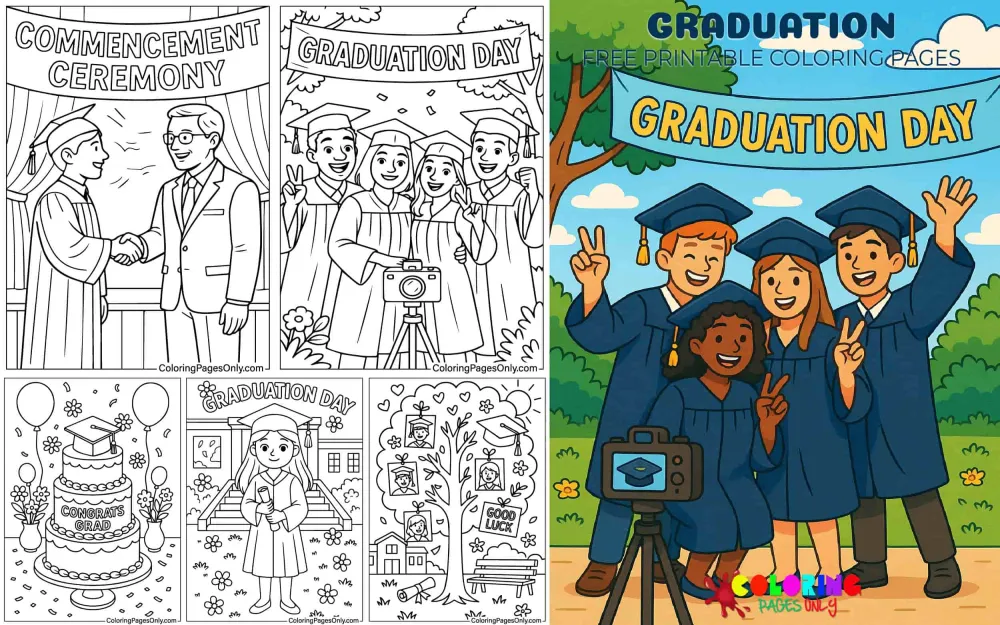
Graduation Coloring Pages at ColoringPagesOnly.com brings together 30+ free printable pages celebrating one of the most emotionally significant milestone events in any student’s life – the graduation ceremony in all its forms. From a kindergartener in a tiny mortarboard cap clutching a hand-drawn diploma, to a cartoon cat in academic regalia, to a high school graduate holding their scroll against a shower of confetti, to a university graduate at the moment their name is read, and their tassel turns from right to left, this collection covers every scale and every age at which graduation is celebrated. Download any page as a free PDF to print, or color online directly in your browser.
This collection sits within the Educational Coloring Pages hub and connects directly to the surrounding end-of-year collections: Last Day of School Coloring Pages, Classroom Goodbye Coloring Pages, Thank You Teacher Coloring Pages, and School Kindness Coloring Pages.

















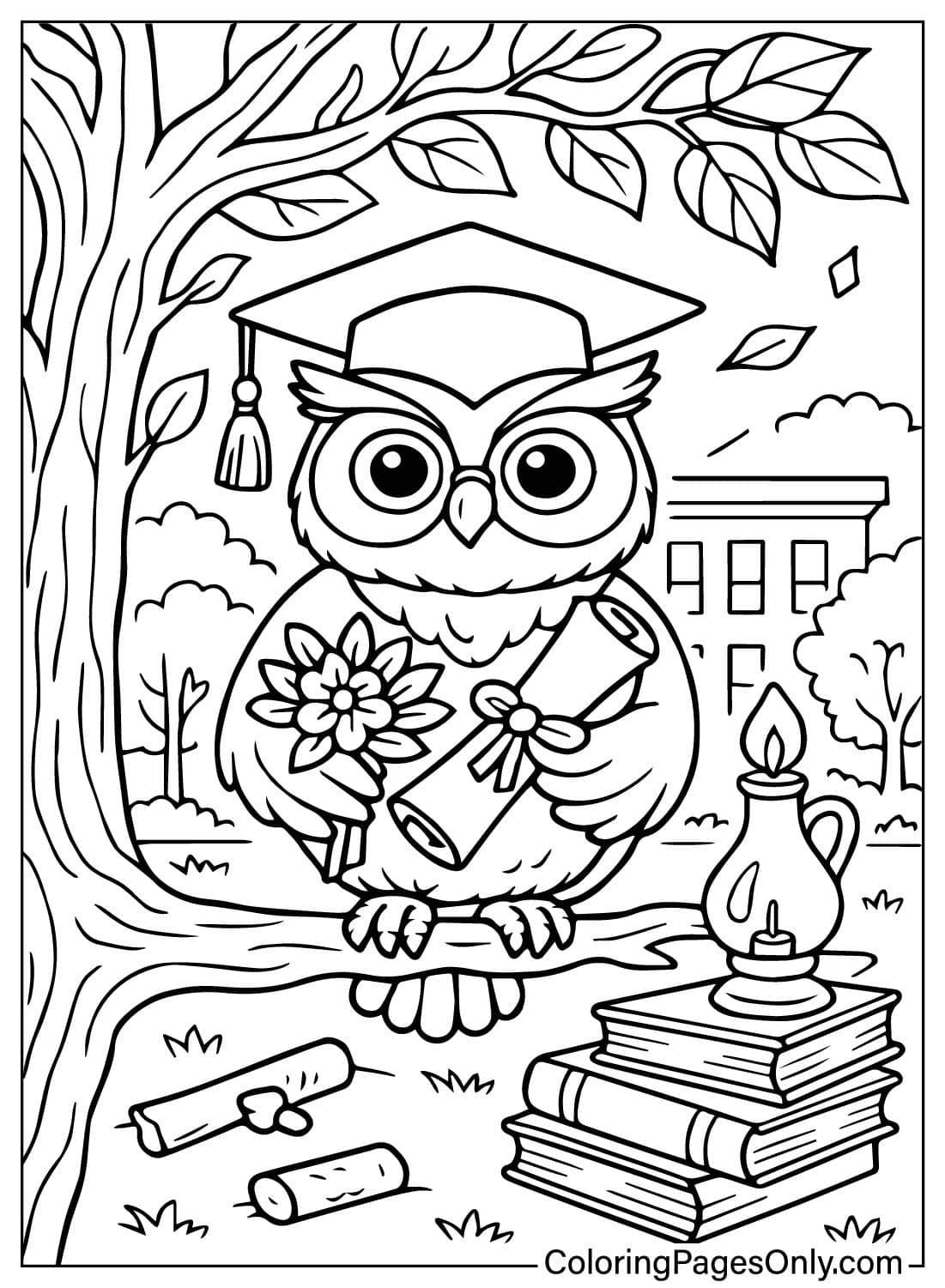





“Commencement” – Why Graduation Is Called a Beginning
The word that describes graduation ceremonies in formal academic language is commencement, and the word means not “ending” but “beginning.” This linguistic choice, rooted in the medieval Latin commencementum (initiation, start), captures something true about what graduation actually is: not the conclusion of a journey but the formal authorization to begin the next one. The ceremony does not mark what is over; it marks what is now permissible – a new status, a new capacity, a new responsibility to use what has been learned.
This distinction between ending and beginning is encoded in how graduation ceremonies are structured. The procession walks in; the degrees are conferred; the graduates depart to enter the world their education has prepared them for. The ceremony is not a farewell – it is a formal passage from one state to another, witnessed by family and the academic community, made permanent by the diploma and by the symbolic acts of regalia and ritual that mark the transition.
For younger children graduating from kindergarten or elementary school, the word “commencement” may not be used, but the same fundamental structure applies: this is not the end of the child’s relationship with learning; it is the formal beginning of their next level of engagement with it. The kindergartener who walks across a small stage in a construction-paper mortarboard to receive a hand-drawn certificate is participating in the same human ritual – scaled to their age and context – as the doctoral candidate whose eight years of research are acknowledged by a six-sided velvet tam and a four-foot hood.
Eight Centuries of Academic Regalia – The History Behind the Cap and Gown
When a child colors a graduation cap in black and gold, they are coloring an object whose specific visual form has a traceable history spanning more than 700 years across four continents. Understanding that history transforms the coloring activity from decoration into genuine cultural education.
The medieval origins – warmth and status. The academic gown’s earliest ancestors were the long robes worn daily by scholars at the medieval universities of Bologna (founded around 1088, the world’s oldest continuously operating university), Paris, and Oxford. In the 12th and 13th centuries, when these institutions first emerged, scholars were often members of clerical orders, and they adopted the long woolen robes of the clergy as standard dress. These robes served two practical purposes: they provided warmth in the unheated stone buildings where scholarship was conducted, and they visually distinguished learned individuals from the general population at a time when literacy and education were rare enough to mark someone as a distinct class of person. The hood – which appears in so many graduation scenes – originally sat atop the head as a practical warming garment, only migrating to hang down the back of the gown in later centuries when its decorative and symbolic functions overtook its practical ones.
By the second half of the 14th century, universities began formalizing their dress codes. Oxford required the wearing of long gowns after 1321. The hood shifted from functional headwear to a garment whose color, lining material, and shape began to indicate the wearer’s academic rank and field – a system of visual communication about scholarly achievement that persists unchanged in principle to the present day.
The mortarboard – a 600-year journey. The square flat cap that every child recognizes as a “graduation cap” has a surprisingly complex origin story. Early medieval scholars wore round skull caps called pileus – simple, practical head coverings. During the 15th century, these began to evolve toward the square-topped cap associated with Catholic birettas (the clerical cap with three peaks and a central tuft). By the 16th century, the corner-cap or square cap had become standard at Oxford and Cambridge, and historians trace the transition from soft rounded corners to the rigid flat square to an Oxford practice – documented as early as 1600 – in which scholars began using lightweight boards to hold the corners of their bonnets flat and square. The word “mortarboard” itself references the flat square board used by bricklayers to hold mortar – an apt description of the shape that emerged from this structural intervention.
By the 1700s, the flat square shape was firmly established. Tassels were added, initially attached to a button at the cap’s center point, and by the time the Intercollegiate Code of Academic Costume was published in 1895 – standardizing American academic dress across all institutions – mortarboards were already the dominant American graduation cap style. The 1895 code specified that all caps should have a long tassel attached to the middle point of the top: the first formal codification of what is now one of the most recognized elements of the graduation ceremony.
The tassel turn – a ritual within the ritual. The most dramatic moment of the modern American graduation ceremony is not the diploma handshake or the processional music but the tassel turn: the movement of the mortarboard’s tassel from the right side of the cap to the left, performed either when the individual’s name is called or at the direction of the presiding officer at the ceremony’s conclusion. This symbolic gesture marks the precise moment of transformation – the candidate is a student until the tassel turns; they are a graduate afterward. The University of Pennsylvania’s commencement tradition specifies the detail clearly: “At Commencement, graduates wear the tassel on the right side, moving it to the left when their degree is conferred.” The tassel turn is one of the most photographed moments in any graduation, precisely because it is the visible, instantaneous marker of a status change that otherwise happens gradually over the years.
What the hood’s colors mean. For the coloring pages in this collection that depict hooded graduates, the hood is not a decorative accessory – it is a color-coded communication system. Under the American academic dress code, the velvet edging of the hood indicates the graduate’s field of study: white indicates the liberal arts, purple indicates law, green indicates medicine, orange indicates engineering, light blue indicates education, dark blue indicates philosophy, golden yellow indicates science, pink indicates music, and so on through more than twenty designated colors. The hood’s lining reflects the institution’s colors. A doctoral graduate in full regalia is, as Northeastern University historian William Fowler described it, wearing a PhD that “is the most glorious of all; you look like a tropical bird” – a vivid, multi-colored statement of institutional identity and disciplinary achievement visible across an entire auditorium.
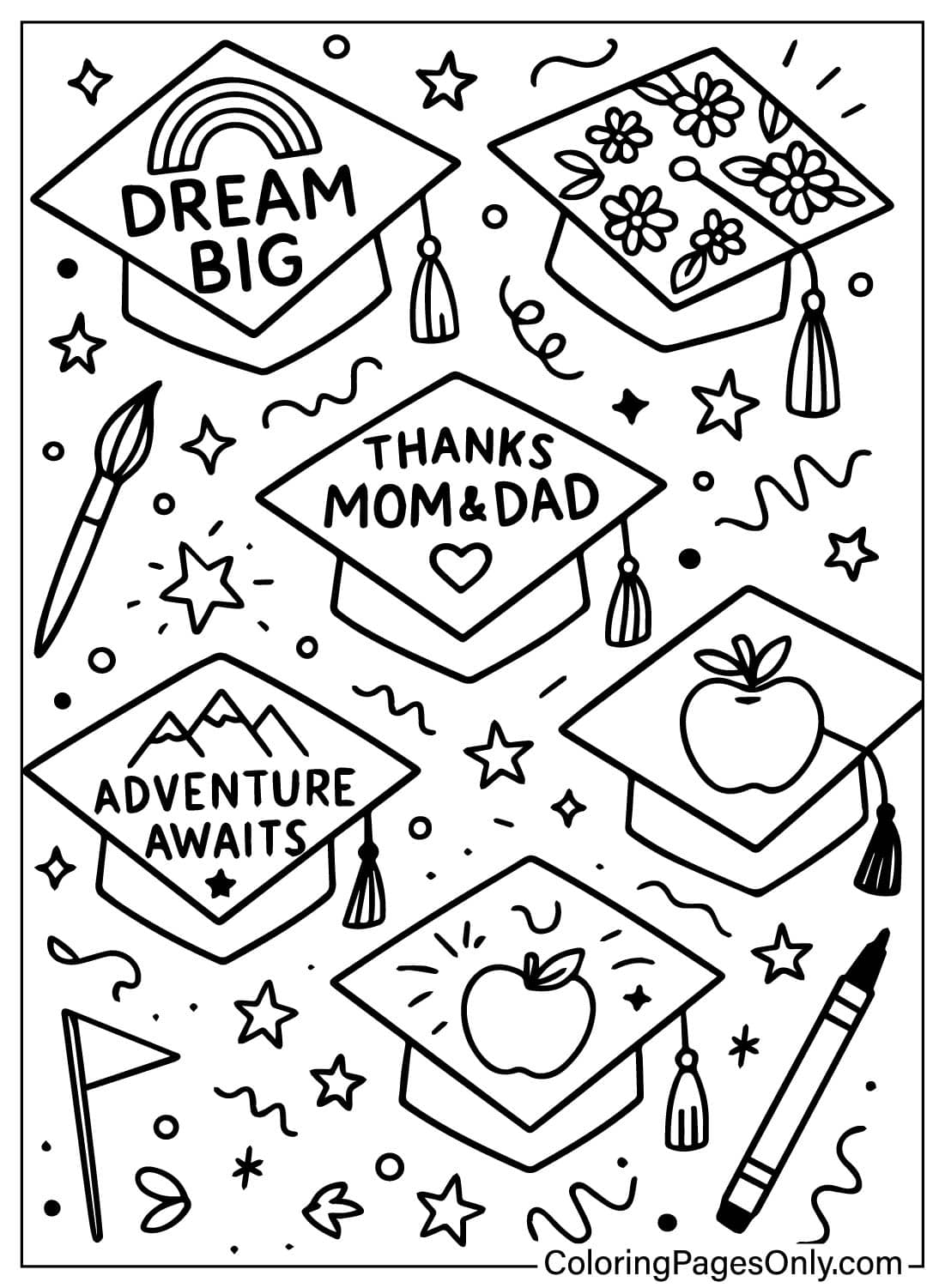
Mortarboard decoration – a tradition that began as a protest. One of the most vivid features of modern graduation imagery is the decorated mortarboard – caps covered in flowers, glitter, messages, photographs, three-dimensional sculptures, and personal statements. This practice, which many universities now actively encourage, has a more politically charged origin than most people realize. According to Sheila Bock, a researcher at the University of Nevada, Las Vegas, who studied mortarboard decoration, the earliest documented examples appeared in the 1960s and were associated with student protests against the Vietnam War – a moment when decorating the traditionally uniform and conformist academic cap became an act of individual expression against institutional consensus. What began as a “mini-rebellion” (in historian Fowler’s words) against the very principle of academic regalia has become one of the most beloved graduation traditions, connecting each decorated cap to a personal narrative told in color and imagery.
The diploma scroll – a practical origin. The rolled paper that represents the diploma in so many graduation scenes – and in many pages of this collection – references the earliest days of academic certification, when diplomas were made of parchment (thin-scraped animal hide), handwritten in Latin with the graduate’s degree status and credentials, and delivered as a rolled scroll sealed with wax. Harvard issued its first diploma in 1813, 177 years after the college’s first graduation ceremony. Before that, and in many institutions long after, the ceremony itself was the certification: the public declaration before witnesses that this person had completed the required studies, received the required examination, and was entitled to practice in their field. The scroll in a child’s coloring page carries this 800-year history of human institutional trust in concentrated visual form.
Graduation at Every Age – What This Collection Covers
One of the most distinctive features of the Graduation Coloring Pages collection is its span across the full age range of graduation experiences – from the most intimate (a single child in a hand-made cap) to the most formal (a university auditorium scene).
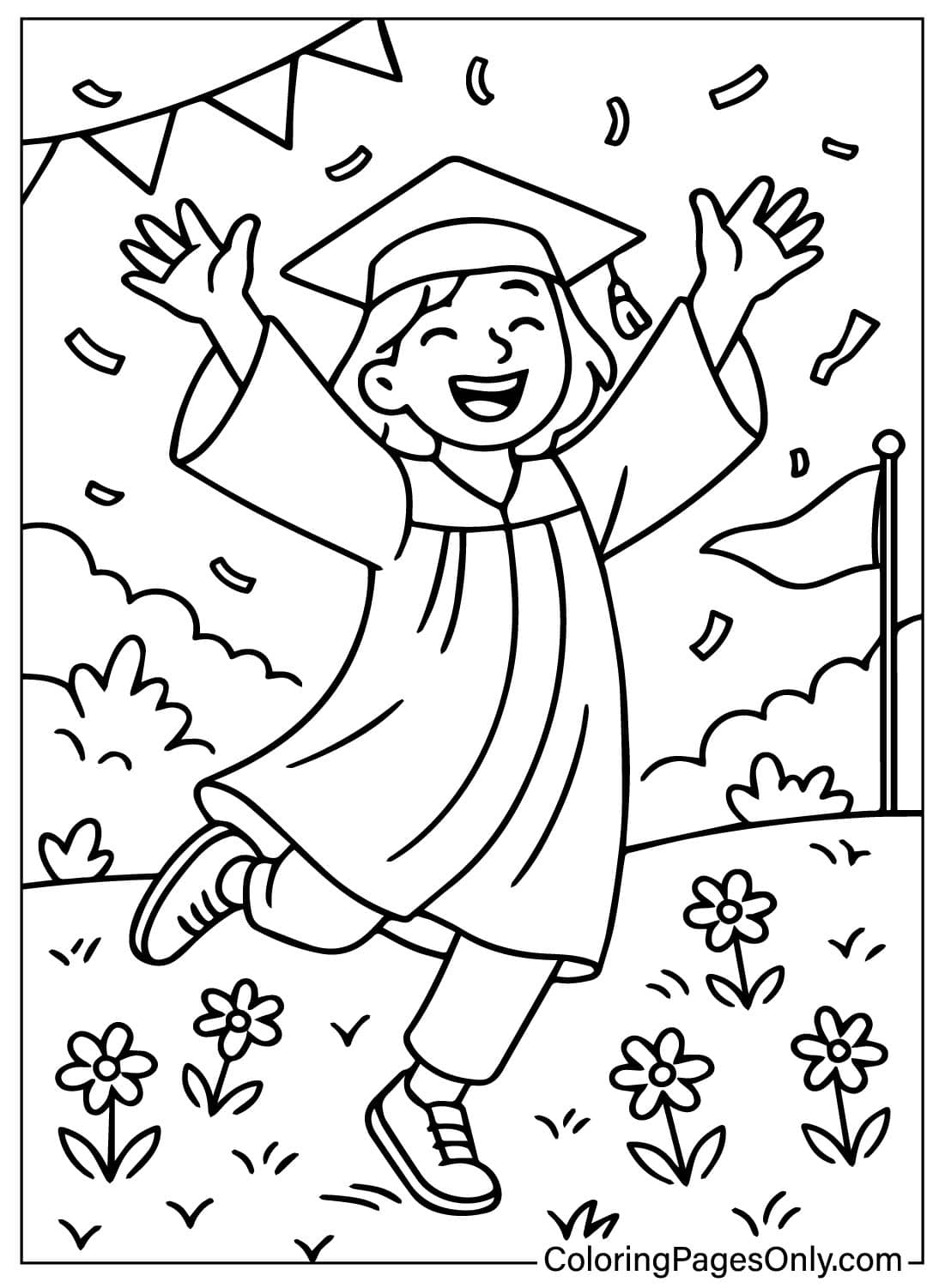
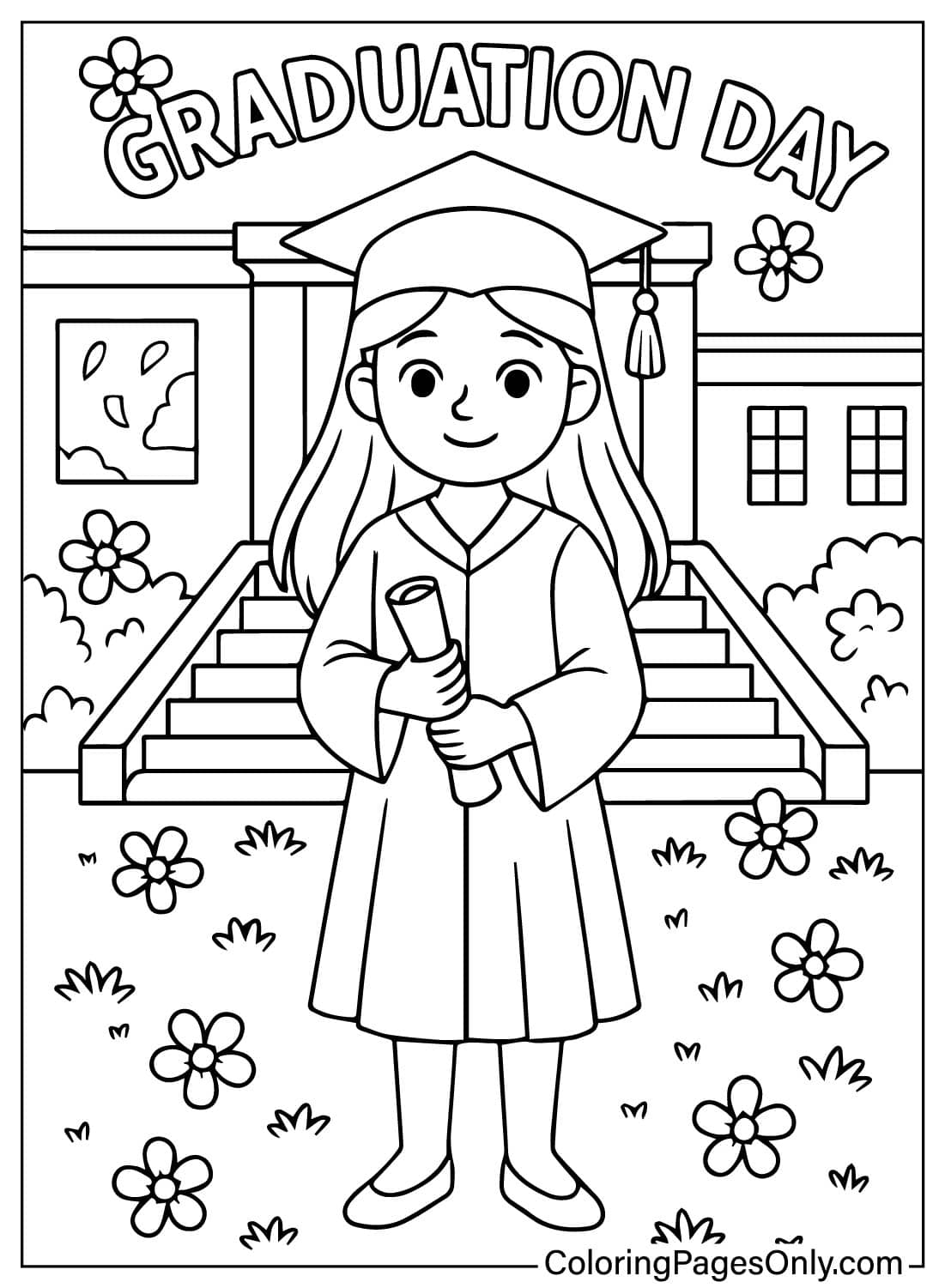
Kindergarten graduation – tiles like “Graduation in School,” “Child in Graduation Cap Coloring Page,” and “Graduation of Cartoon Cat” – depict the youngest and most purely celebratory form of the graduation ritual. Kindergarten graduation is not a graduation in the credentialing sense – no degree is conferred, no academic status is formally changed. What it is, and what makes it genuinely meaningful, is an acknowledgment: this child began something, worked at it for a full school year, and is now ready for the next thing. The ceremony – however small, however improvised – marks that acknowledgment publicly, in front of family, and gives it the visual vocabulary of formal achievement. A kindergartener in a mortarboard is not playing dress-up; they are participating in the same human ritual of recognized completion that doctoral candidates at Oxford participate in, simply scaled to their age, their achievement, and the community that celebrates them.
Elementary and middle school graduation – “Graduation in School,” “Graduation Memories,” “Kid and Graduation,” and the group ceremony pages – cover the grade transitions that many schools and families mark with formal acknowledgment: moving from elementary to middle school, from fifth to sixth grade, from one building to another. These transitions often lack the cultural weight of high school or university graduation but are genuinely significant for the children involved – particularly the end of elementary school, which is typically the first experience of leaving an entire building, an entire community of familiar teachers and staff, for an unknown new institution.
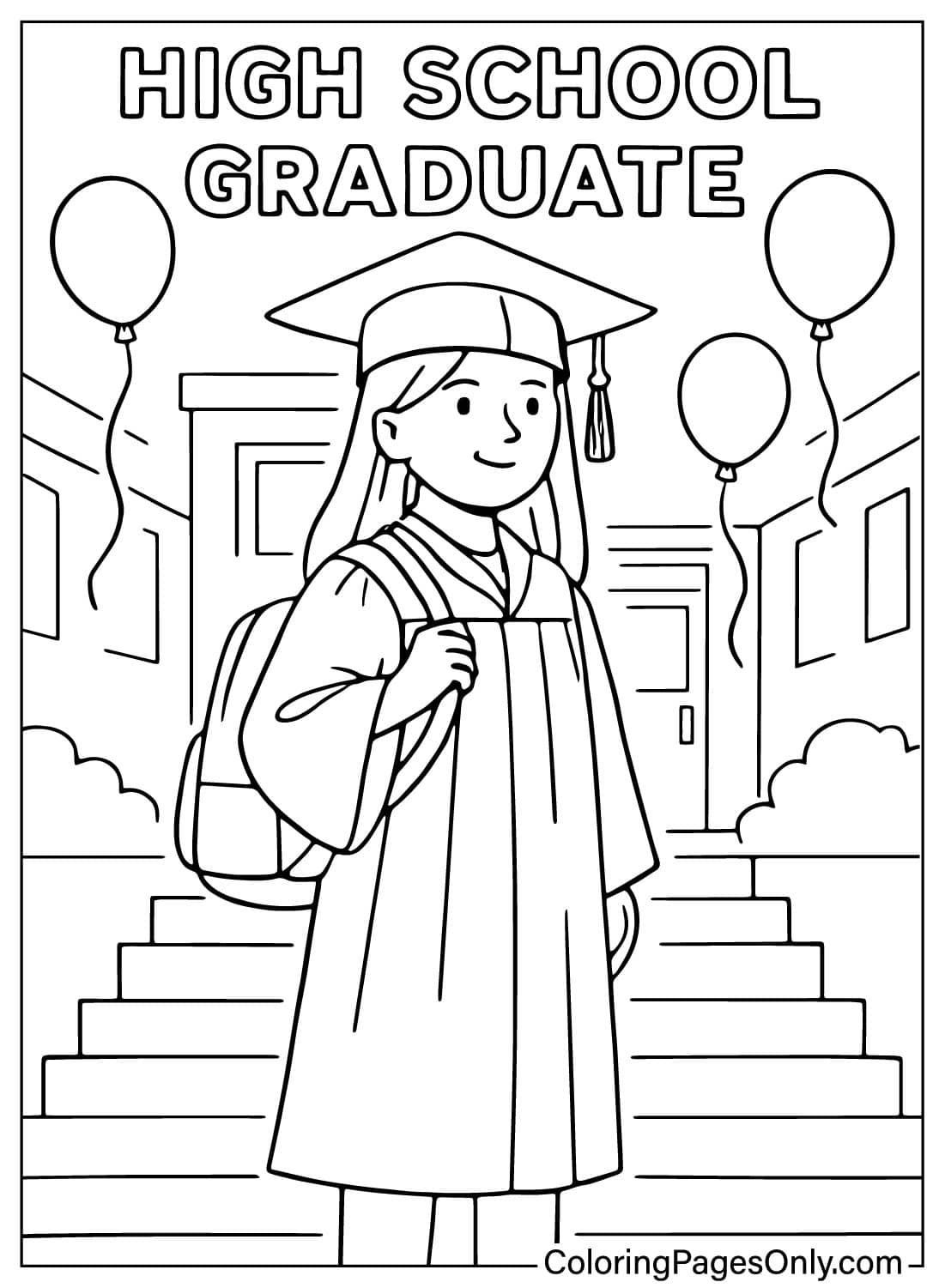
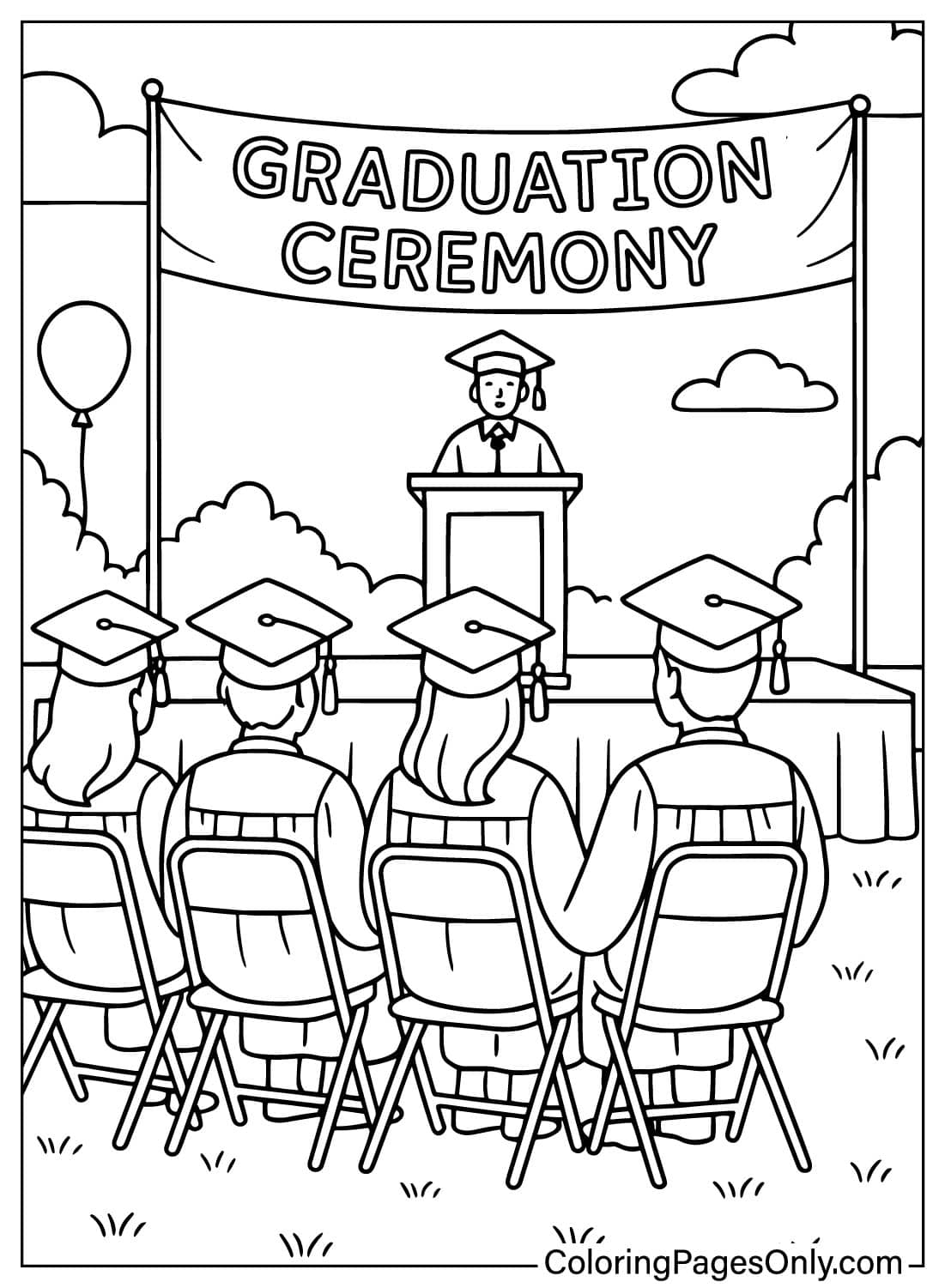
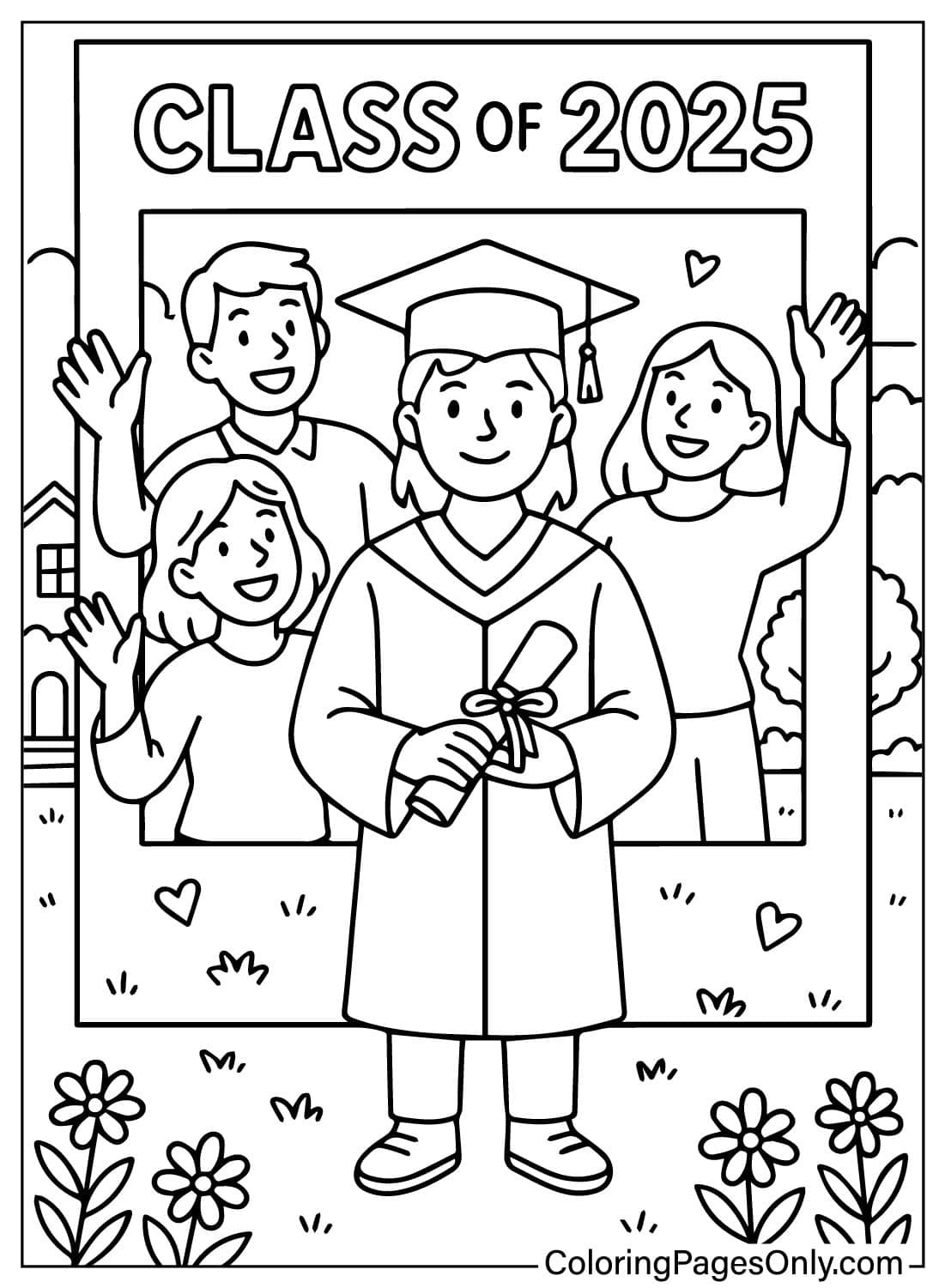
High school graduation – “High School Graduate,” “Graduation Ceremony,” “Graduation Ceremony With Friends,” “Graduation Ceremony With Family,” “Take Photo in Graduation Ceremony,” “Take Photo in Graduation Day” – covers the form of graduation most deeply embedded in American culture and most recognized worldwide. High school graduation carries the emotional weight of a genuine life transition: the formal end of compulsory education, the beginning of independent adult choices about education, work, and life direction. The cap-toss page, the family photograph page, and the ceremony scene pages all speak to this milestone’s particular combination of personal achievement and communal celebration.
University graduation – “University Graduate,” “New Graduate,” “Online Graduation Ceremony” – covers the formal academic degree ceremony in its most elaborated form: the full regalia, the academic procession, the individual name-calling, the diploma handshake, and the tassel turn. The “Online Graduation Ceremony” page acknowledges the experience of the COVID-19 pandemic years, when millions of students worldwide completed their degrees in the absence of an in-person ceremony – an experience that gave a new generation a renewed understanding of why the physical ceremony matters and what is lost in its absence.
The Collection’s Pages – A Scene-by-Scene Guide
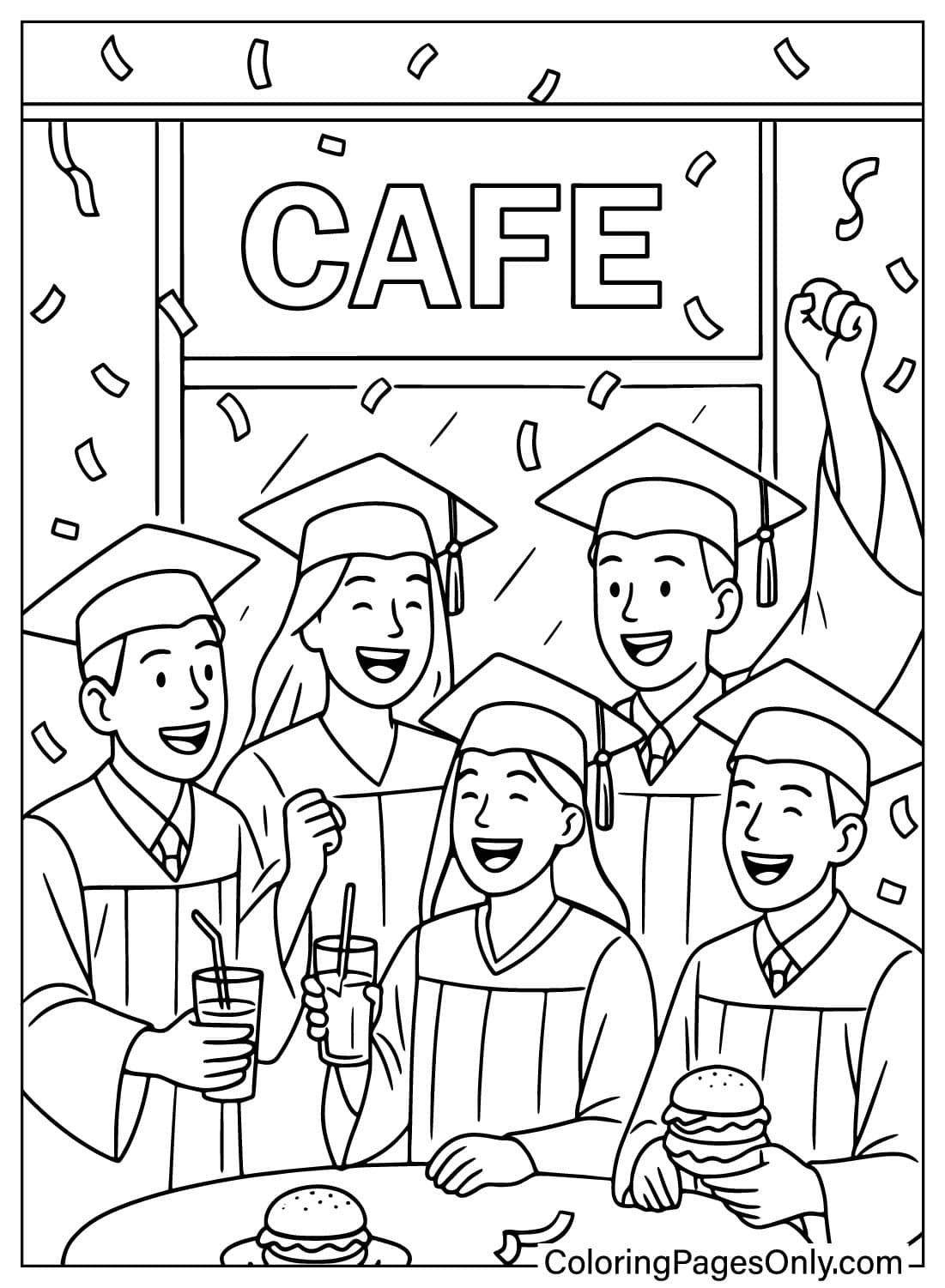
Ceremony and procession pages – “Graduation Ceremony,” “Graduation Ceremony With Friends,” “Graduation Ceremony With Family” – depict the collective, formal, publicly witnessed dimension of graduation. In these scenes, graduation is not an individual achievement but a shared experience: an entire class in matching regalia, families in the audience, the formal setting of a stage or auditorium. These pages communicate that graduation belongs to a community, not only to the graduate.
Portrait and individual graduate pages – “High School Graduate,” “New Graduate,” “University Graduate,” “Graduate Holding Diploma,” “Graduate with Cap and Gown” – focus on the individual: a single person in full regalia, diploma in hand or cap just turned. These are the pages most directly relevant to the specific graduate being celebrated – where the coloring activity most naturally becomes a personal portraiture exercise, with the child or family member giving the graduate figure their own hair color, skin tone, and gown color.
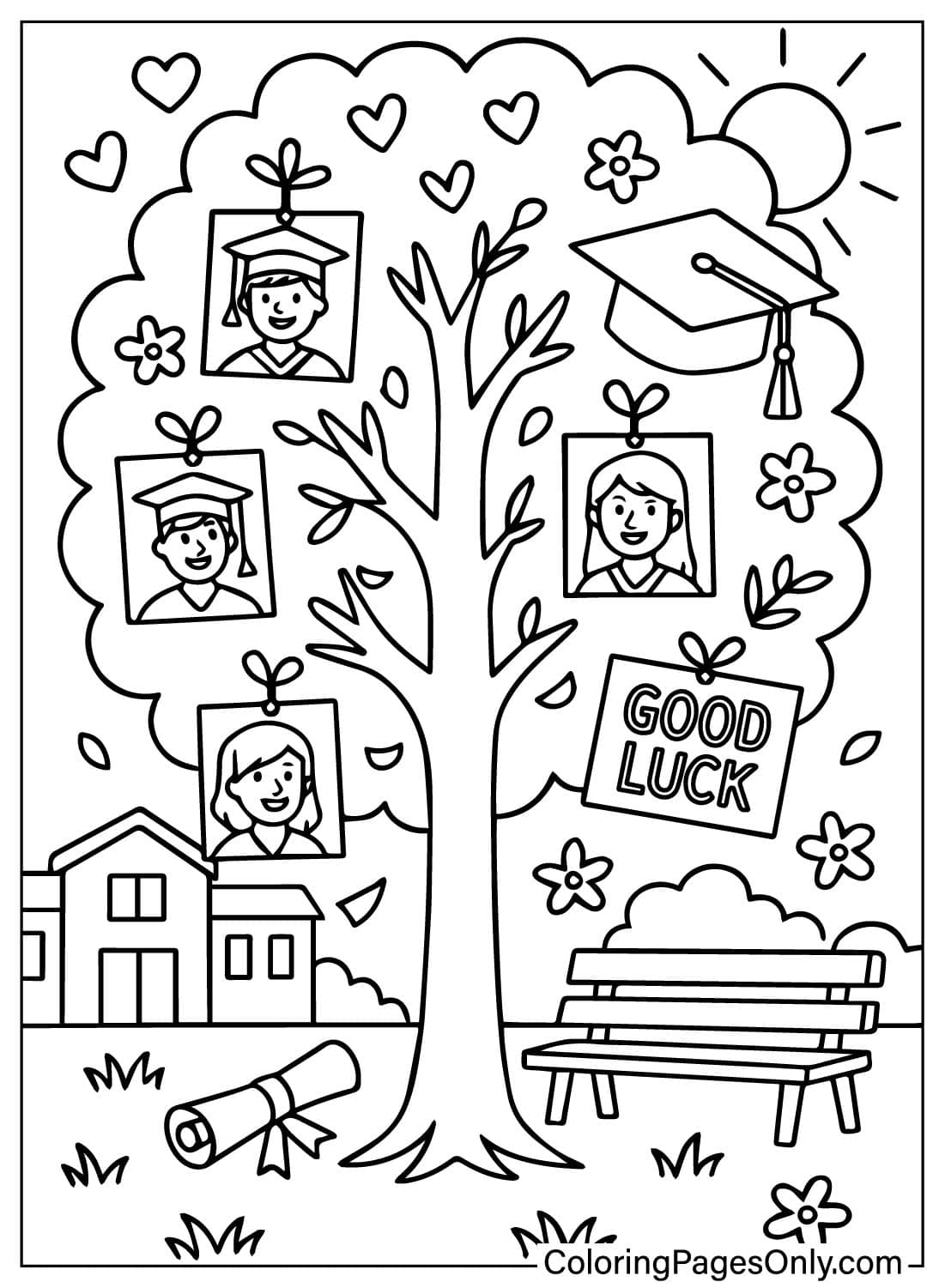
Memory and reflection pages – “Graduation Memories,” “Graduation Tree” – approach the milestone from a more contemplative angle, focusing on what is being carried forward from the graduated experience. “Graduation Memories” may depict a montage or collection of images representing the school years just completed; “Graduation Tree” uses the tree as a symbol of growth and what has been produced by years of effort. These pages work particularly well for the days around graduation when reflection on the school years is as appropriate as celebration of their completion.
Photography and documentation pages – “Take Photo in Graduation Ceremony,” “Take Photo in Graduation Day,” “Online Graduation Ceremony” – depict the contemporary graduation experience as a photographed, documented, shared event. These pages acknowledge that modern graduation is not only lived but recorded: the graduation photograph is itself a milestone artifact that families keep for decades.
Character and whimsy pages – “Graduation of Cartoon Cat,” “Cartoon Graduate Character” – bring animal mascots and cartoon characters into the graduation context, making the milestone’s visual vocabulary accessible and joyful for the youngest colorists and for any family that finds pure celebration the most fitting emotional register for the day.
Coloring the Regalia – A Precision Guide
The graduation regalia depicted in this collection has specific canonical colors and conventions that, when followed, produce a finished page that reads immediately as a graduation scene rather than as a generic festive scene. Here is a complete reference guide.
The mortarboard cap. The standard bachelor’s mortarboard is black – deep, true black with no warm or cool undertones. The board (the flat top) should be rendered as a consistent flat black, the sides slightly lighter where they catch light (a dark charcoal rather than pure black at highlighted edges). The tassel is the color variable: black for most undergraduates, but gold for doctoral recipients. For children’s graduation pages where school colors are implied, any color can be used for a festive variant, but the canonical color is unambiguous black.
The gown. Bachelor’s gowns are black with pointed sleeves. Master’s gowns are black with oblong open sleeves that can drape. Doctoral gowns are the most dramatic: black with velvet panels running down the front and three velvet bars across the sleeves, plus a longer bell-shaped sleeve, and the velvet bars and panels may be in the color of the graduate’s field of study (scarlet for law at some institutions, green for medicine, etc.). For children’s graduation pages and cartoon character pages, the gown color often departs from canonical black toward the school’s chosen color – bright blue, royal purple, red, or gold.
The hood. The hood hangs down the graduate’s back and is composed of two color elements: the lining (in the school’s colors) and the velvet edging (in the field of study’s color). For a maximally generic “graduation” coloring approach when the specific field is not known: leave the hood lining in a rich gold or royal blue (two of the most common university colors) and edge it in white (liberal arts) or dark blue (philosophy). For a “medical school graduation” scene: green velvet edging. For law: purple. For education: light blue.
The diploma scroll. The diploma is parchment – historically a scraped animal hide of cream or tan color, now reproduced in heavy cream or ivory paper. The canonical diploma color is warm off-white or aged cream, never bright white, with any writing or seal in dark ink (black or deep navy). The ribbon or seal holding the scroll closed is typically red or gold: a small color accent that catches the eye in the otherwise neutral diploma illustration.
The cap decoration. For pages depicting decorated mortarboards – one of the most visually rich and personally expressive elements of modern graduation imagery – no canonical rules apply. The decoration is the graduate’s personal statement, and the coloring should be as individual as possible: flowers, stars, personal messages, photographs, symbols of the future, tributes to family members, or simply the most vivid abstract color pattern the colorist can produce. This is the one element of graduation regalia where maximum creative freedom is not only permissible but specifically appropriate.
Graduation colors: the school palette. When graduation scenes show multiple graduates in gowns, the gown color reflects the school’s chosen hue. Some institutions use vivid colors for their undergraduate gowns (Harvard’s crimson, Yale’s blue, the distinctive gowns of many historically Black colleges and universities, which often feature bold color choices in their regalia). For pages showing group graduation scenes, the decision to use identical gown colors (institutional unity) or varied colors (individual expression) is a creative choice that reflects two genuine traditions within graduation photography: the formal uniformity of the procession and the personal variety of the photographed graduate.
For Families – Making the Coloring Activity Part of the Celebration
In the days before graduation. Print the relevant scale of graduation page – “Graduation in School” for a kindergartener, “High School Graduate” for a high school senior, “University Graduate” for a college graduate – and color it together as a family in the final days before the ceremony. Give the graduate figure on the page the coloring that matches the real graduate: their hair color, their school’s gown color if known, and their skin tone. The finished page becomes a pre-ceremony anticipatory artifact – a family-made representation of the graduate as they will appear on the day itself.
As part of the celebration meal. A coloring page in progress at the center of a graduation celebration table – surrounded by crayons, available for anyone at the table to add a section – becomes a collaborative artwork produced during the meal itself. By the end of the dinner, every family member who picked up a crayon has contributed to the same page, which documents the family gathering as a creative collective act as much as the photographs do.
As a gift for the graduate. A carefully colored “Graduation Ceremony With Family” or “Graduation Memories” page – signed and dated on the back by the family member who colored it – is a deeply personal gift for a graduate who will receive many commercial gifts. The handmade quality, the time invested, the personal color choices: these communicate something a purchased gift cannot. Framed, a carefully colored graduation page becomes a piece of art made specifically for this graduate by someone who loves them.
For children celebrating a sibling’s or parent’s graduation. When an older sibling, parent, or grandparent is the graduate, younger family members who color pages from this collection are participating in the milestone in an age-appropriate, creative way. A 5-year-old who cannot sit still through a two-hour university commencement ceremony can nonetheless celebrate the day by coloring “University Graduate” or “Graduation of Cartoon Cat” and presenting the finished page as their own contribution to the day’s significance.
Coloring Tips for Graduation Pages
Start with the regalia, not the background. In all graduation scene pages, the regalia (cap, gown, hood, diploma) is the primary visual content and should be colored first, with full attention to the canonical colors described above. The background elements – the stage, the auditorium, the audience, the confetti – are supporting visual information that should be rendered after the regalia is complete, in colors that complement rather than compete with the central figure.
The diploma glows. The diploma scroll, when colored in warm cream and lit by a gold highlight down one side (achieved by leaving a thin strip of the cream slightly lighter than the surrounding areas), acquires a luminous quality that makes it look like an object of genuine worth and formality. This subtle highlight technique – used by illustrators to suggest the sheen of expensive paper or parchment – is achievable with colored pencils by pressing lightly at the highlight strip and more firmly across the rest of the diploma surface.
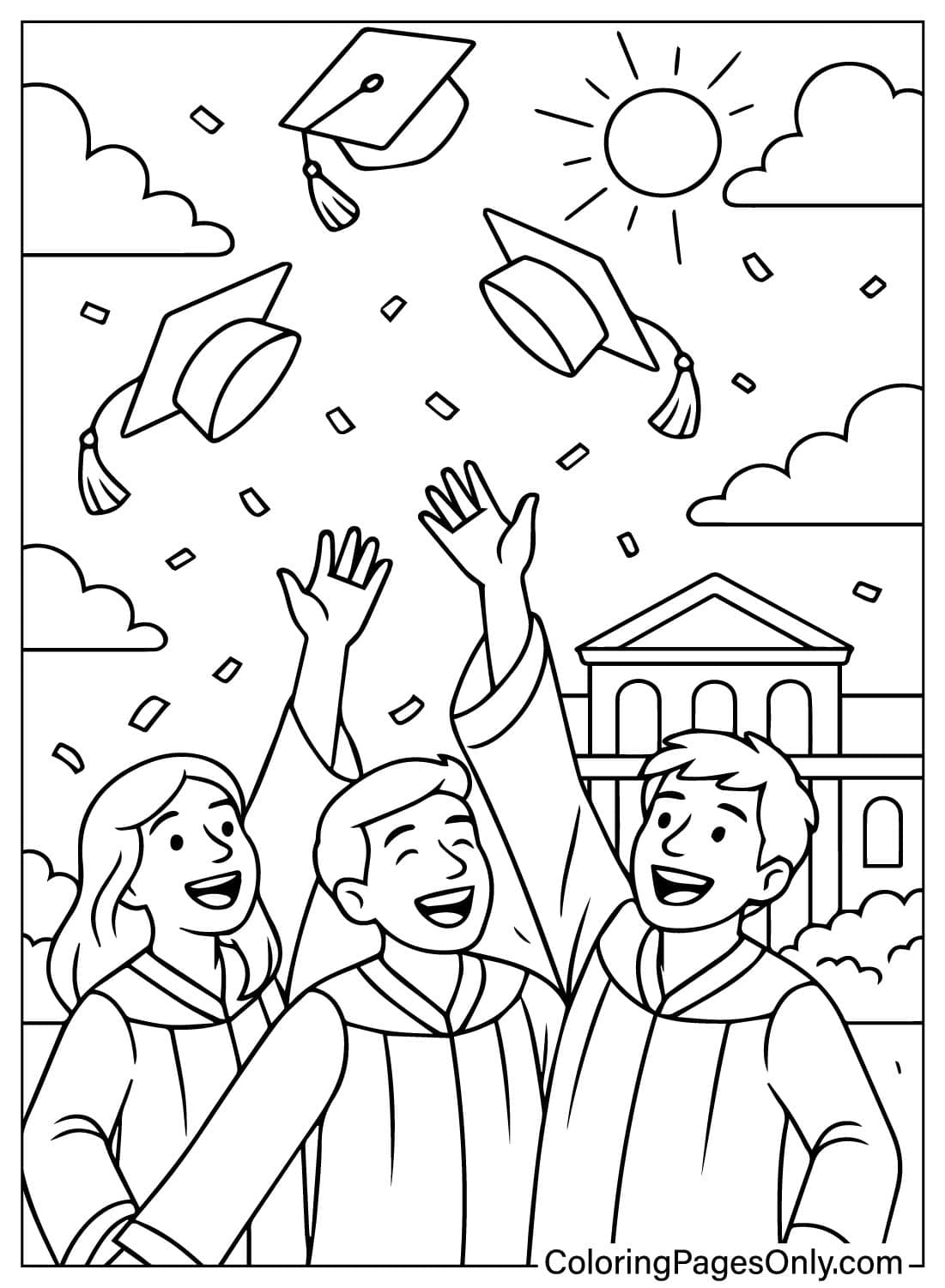
Confetti and cap toss pages – maximum variety, minimum repetition. Cap toss and confetti pages are among the most technically demanding in this collection because they require large numbers of small elements (individual caps, individual confetti pieces), each rendered in different colors without any two adjacent elements sharing the same hue. The technique: plan the color distribution before beginning, mentally dividing the confetti or caps into color groups, and work systematically through one color group at a time rather than coloring each element individually. This produces more even color distribution and prevents the accidental clustering of the same color in one area of the page.
Group ceremony pages – each figure has a different gown color. When multiple graduates appear together in ceremony pages, resist the temptation to make all gowns identical. Even if a school uses a single gown color, coloring each figure in a slightly different shade (one in deep navy, one in royal blue, one in cobalt) creates visual variety that makes the group scene more dynamic. If the school color is not specified, use a range of different colors deliberately – the visual diversity of a group of individuals in different colors communicates that graduation is a communal but individually inhabited experience.
The Graduation Tree page – growth palette. “Graduation Tree” depicts a tree as a metaphor for educational growth, and its coloring should reflect this metaphorical dimension. The roots (deep knowledge, foundational learning) should be rendered in the darkest, most grounded earth tones – rich brown, deep ochre. The trunk (years of work and development) is in warm mid-tone brown. The branches (expanding capabilities) are slightly lighter brown. The leaves (realized learning, achievement in full bloom) are in the most vivid greens at the outermost canopy edges, slightly cooler and more muted at the interior. This value progression from dark root to bright canopy is the most visually accurate representation of both a tree’s anatomy and the growth metaphor the page illustrates.
5 Activities
The regalia design project. Using any blank graduate figure page from the collection as a starting point, design a graduation regalia for a graduate in an invented academic field. The design rules: choose a field (marine biology, comic book illustration, architectural history, theoretical physics – any real or imagined discipline); assign the gown a color based on the closest real academic color convention or invent one; choose a tassel color; design a hood lining and edge color; and decorate the mortarboard with three symbols representing the field’s core values or methods. Write a three-sentence explanation of the design choices on the back. This activity develops both visual design thinking and knowledge of the graduation regalia system – children who complete it understand what academic regalia communicates and why it looks the way it does, knowledge they will carry into every graduation ceremony they attend in their lives.
The milestone map. After coloring any graduation page, create a “milestone map” of the graduate being celebrated (or of the child themselves, if they are the one graduating). The map begins with birth at the left edge of a large piece of paper and ends with the current graduation at the right edge. Between birth and graduation, mark every significant milestone the graduate reached: first word, first steps, first day of school, learning to read, learning to ride a bike, a meaningful friendship formed, a difficult challenge overcome, a skill mastered. Connect the milestones with a line representing the journey, and place the colored graduation page at the right end as the current culmination. This timeline transforms a single coloring page into the visual conclusion of a complete narrative – the graduation, not as an isolated event, but as the most recent achievement in a life of accumulated milestones.
The advice letter exchange. Pair the coloring activity with a structured letter-writing exercise: one person colors a graduation page while another writes a letter to the graduate. The letter must include three specific elements – one specific memory of watching the graduate learn something, one quality the writer most admires in the graduate, and one piece of advice for the next chapter that is concrete and personal rather than generic (“work hard,” “be yourself”). Exchange: the letter writer receives the colored page; the graduate receives the letter. This exchange transforms the coloring activity into a relational artifact – a communication between two people about the meaning of the milestone being celebrated – and the advice letter into a keepsake that the graduate will find more personally meaningful than any advice given in a speech.
The “then and now” interview. Conduct a brief recorded interview with a graduate on the day of their graduation, using the following questions while simultaneously coloring a page from this collection together: What do you remember about your first day of school? What is the hardest thing you learned? What is the one moment you’re most proud of? What are you most nervous about for the next chapter? What would you tell your first-day-of-school self that would have helped? Record the answers (video or audio). Revisit the recording and the colored page at five-year intervals. This interview-and-coloring combination creates a time capsule: the colored page preserves the visual memory of the graduation day, while the recorded interview preserves the emotional and intellectual snapshot of who the graduate was at that specific moment. Together, they document a transition that is very easy to remember in general terms but very difficult to remember in the specific, personal detail that the interview captures.
The collective class portrait. For a classroom graduation or a group of students graduating together, print one graduation scene page for each student (or one large group scene printed on a large format if available). Each student colors their own figure in the group scene – or, if individual pages, colors the graduate figure in colors that represent themselves: their hair, their clothing preferences, their favorite color for the gown. All completed pages are assembled together in a gallery display or bound into a class book. The finished collection is a community portrait of everyone graduating at the same time, made by the graduates themselves. Teachers and schools that have maintained this tradition across multiple graduation years accumulate a year-by-year archive of outgoing classes – each rendered in their own colors, their own hands, their own creative choices – that becomes increasingly meaningful as the archive grows.