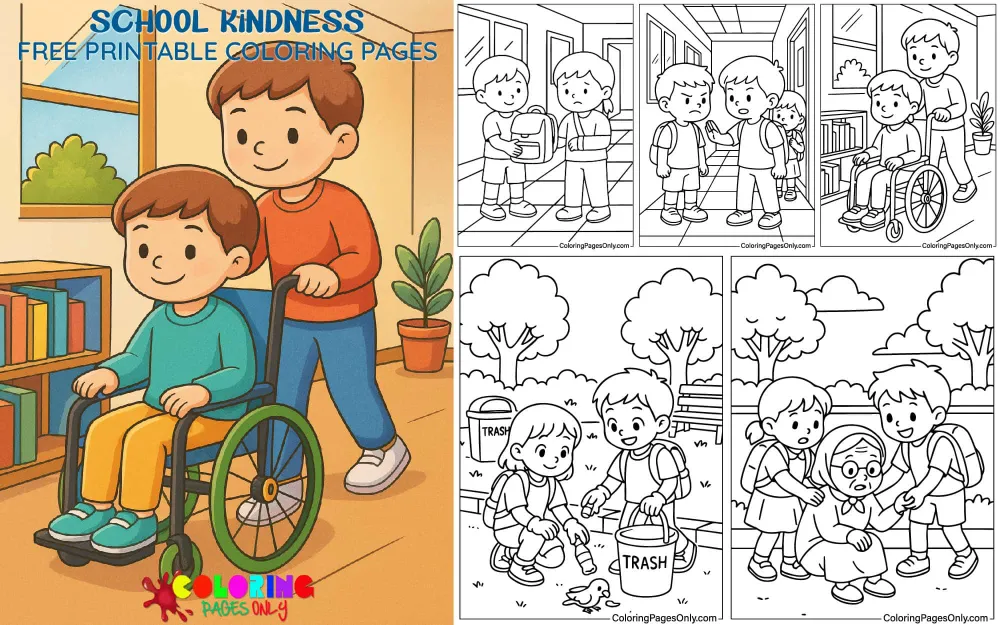
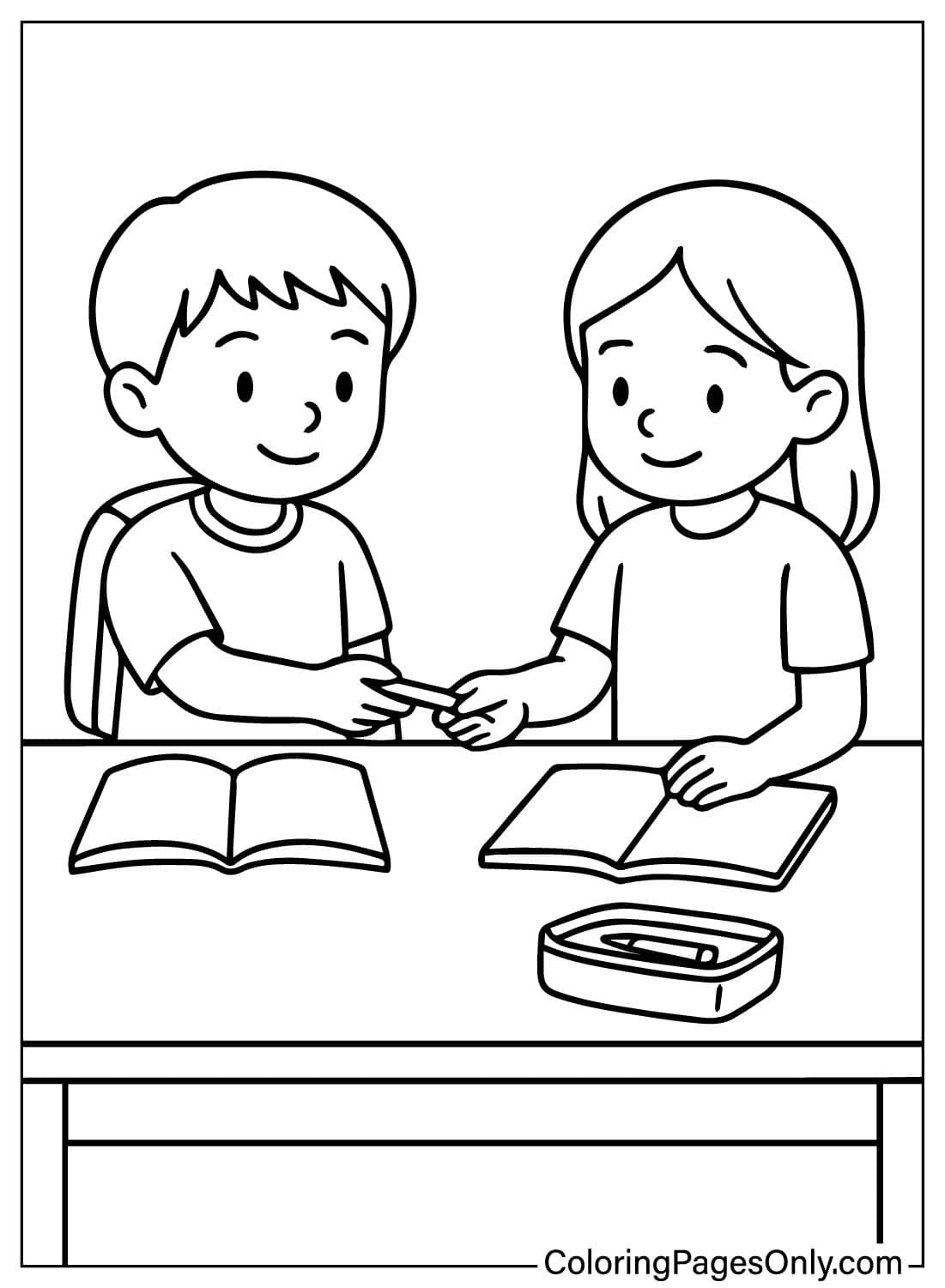
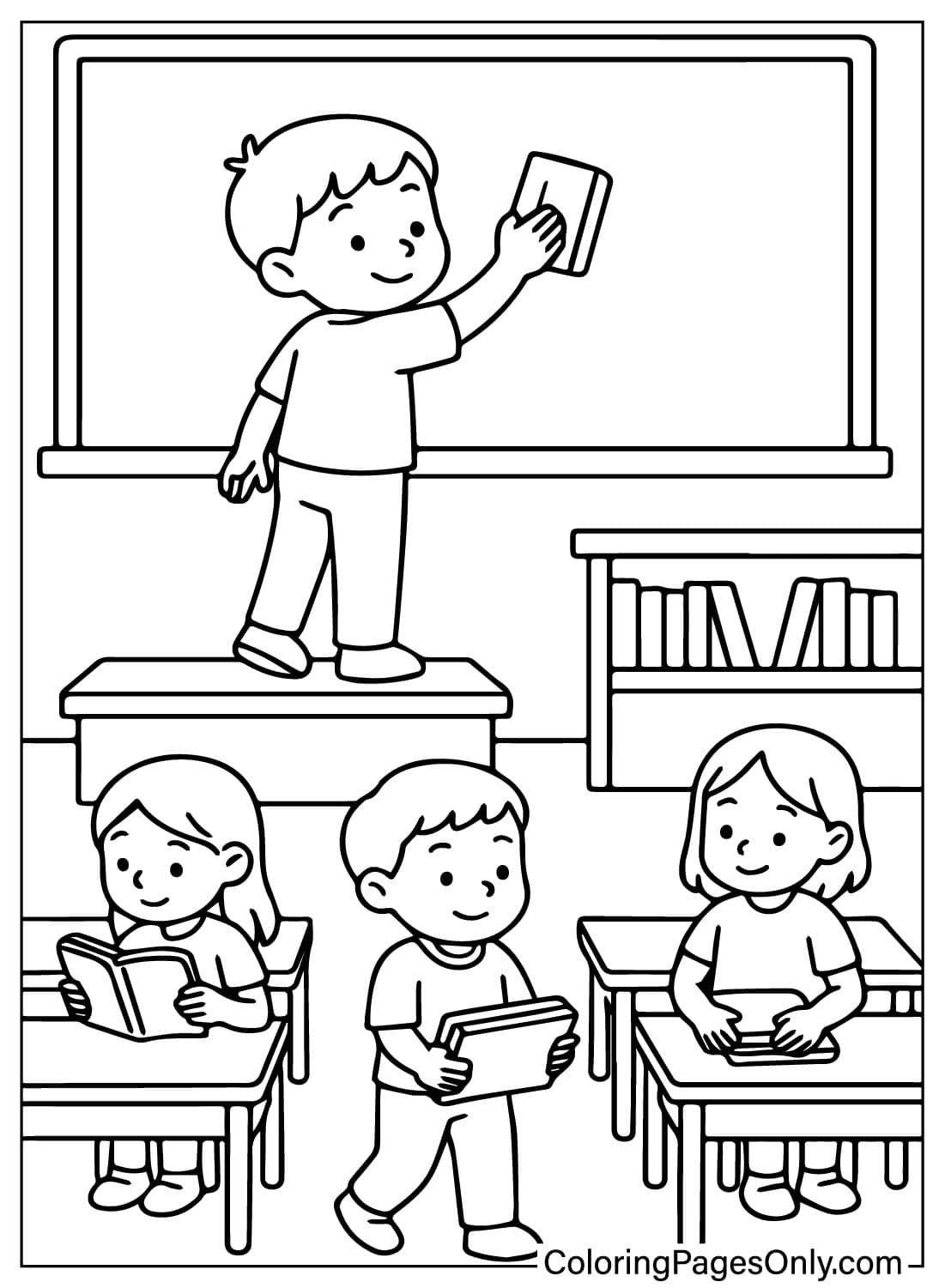
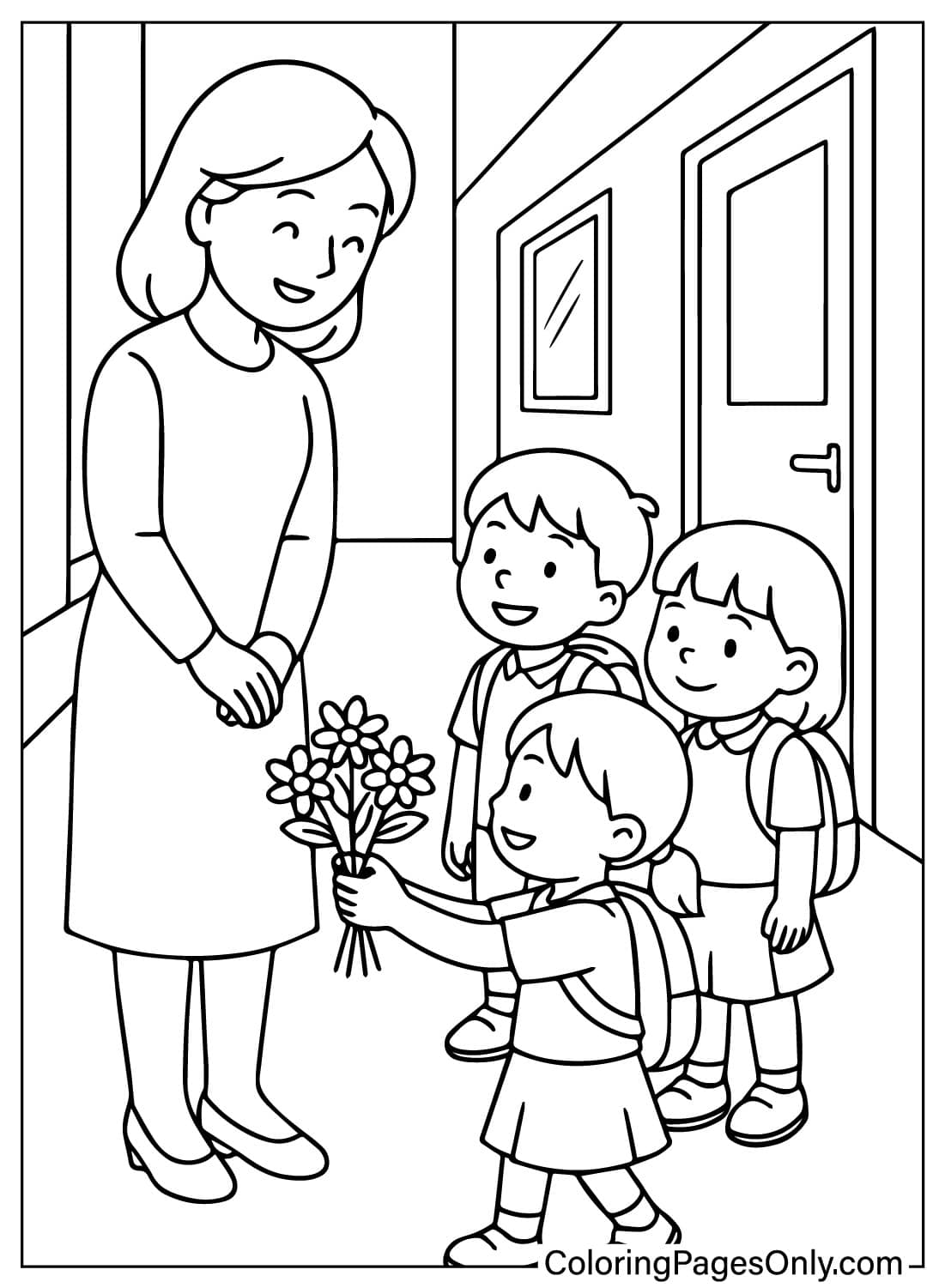
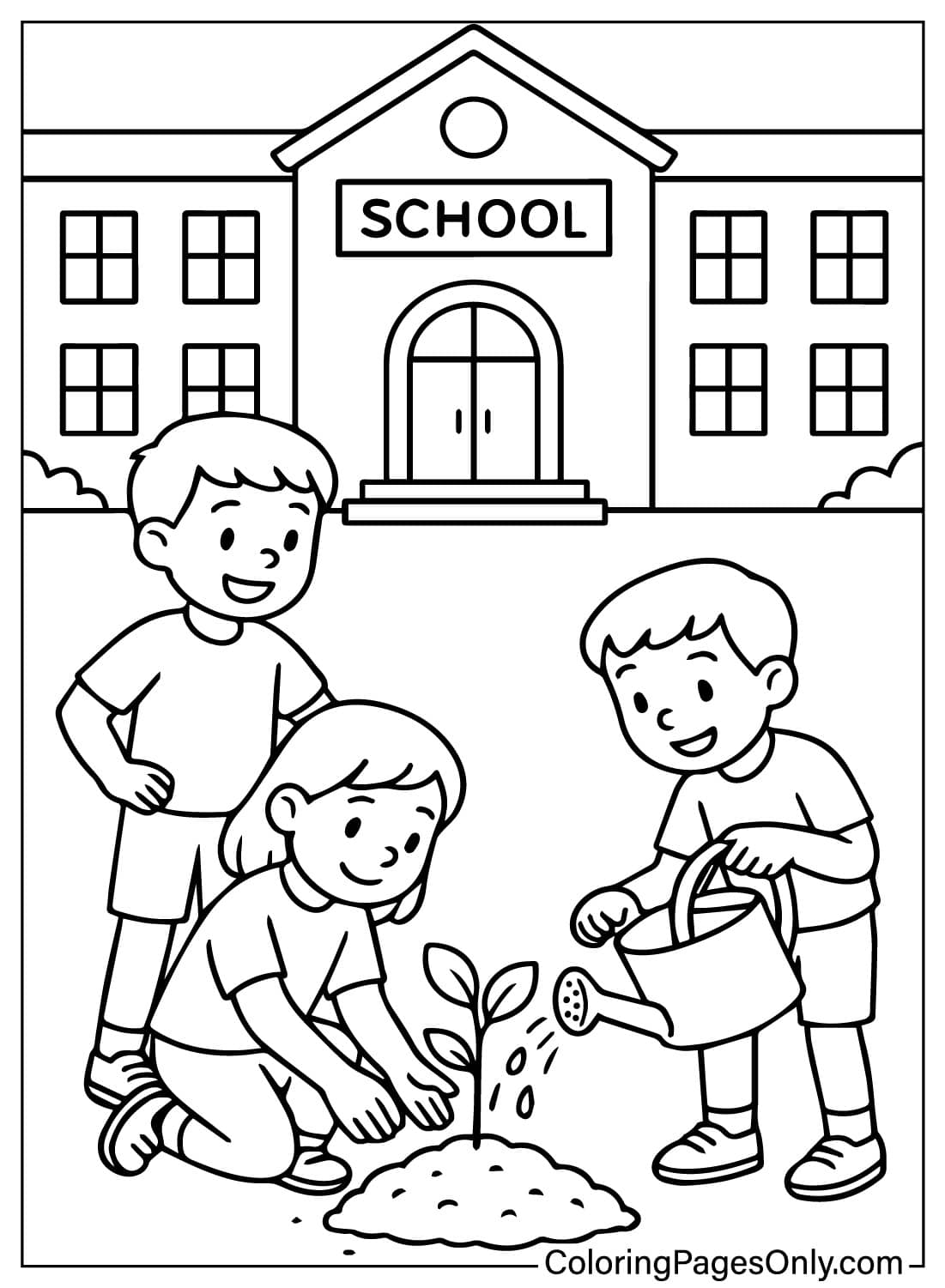
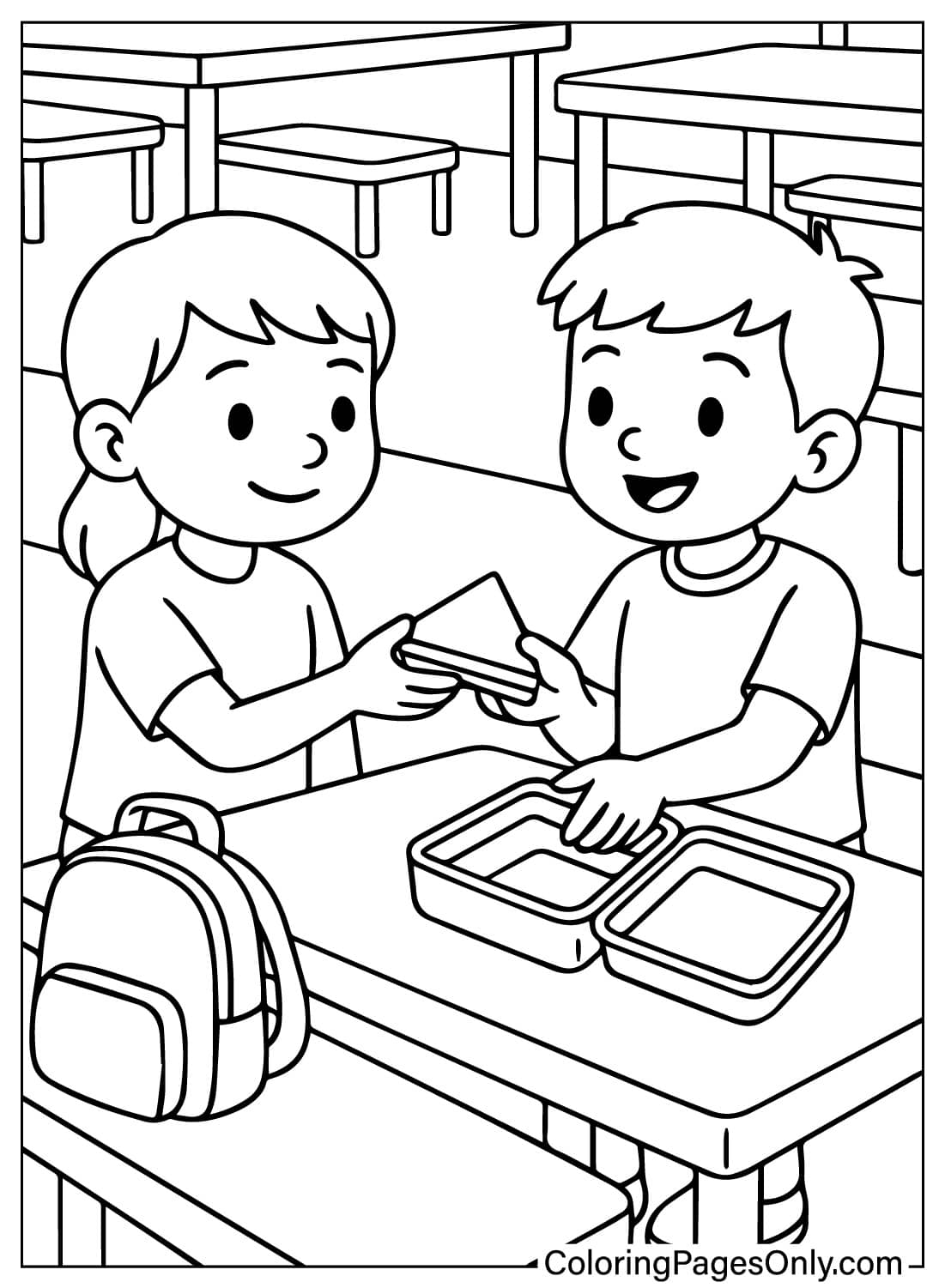
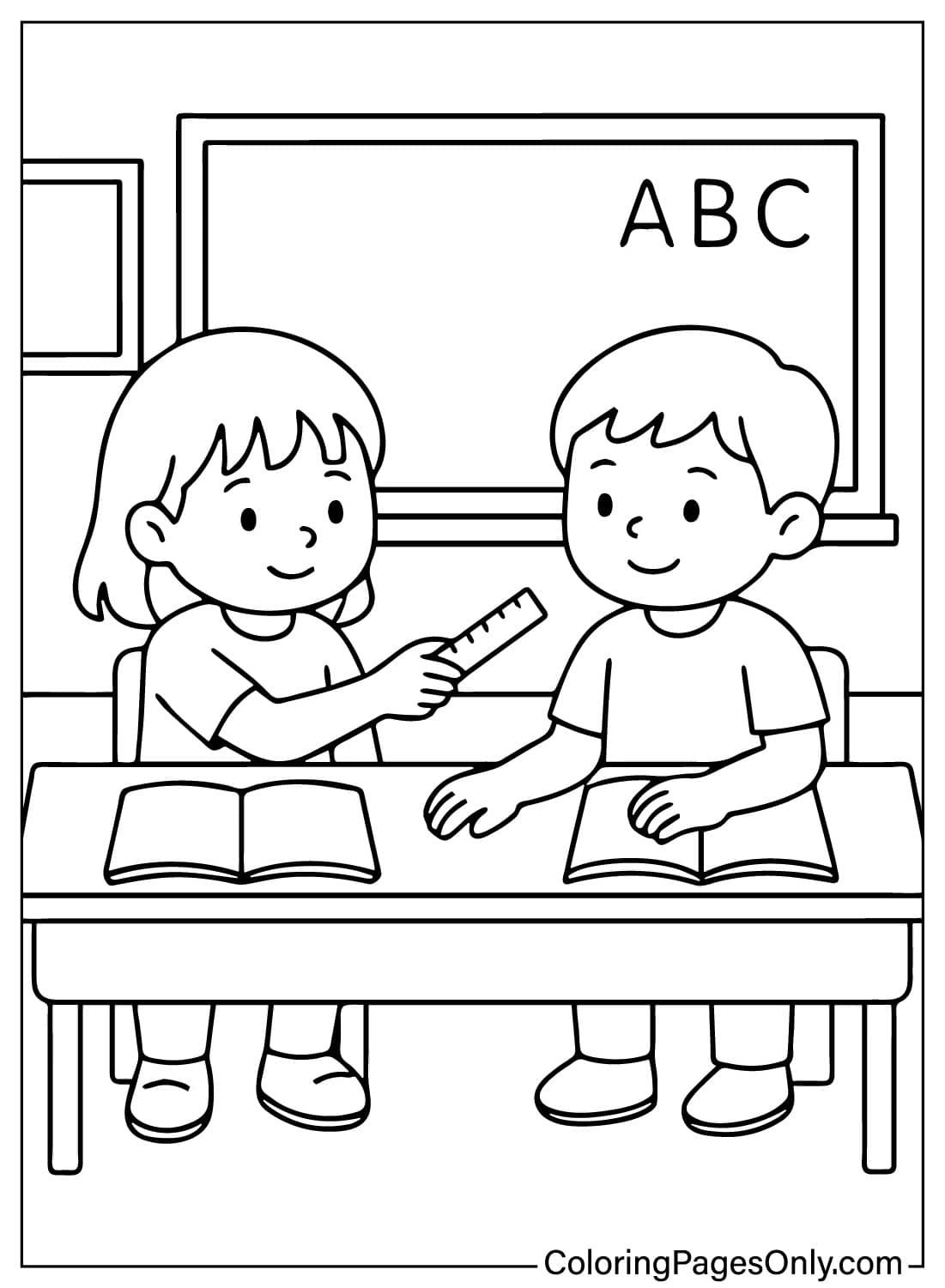
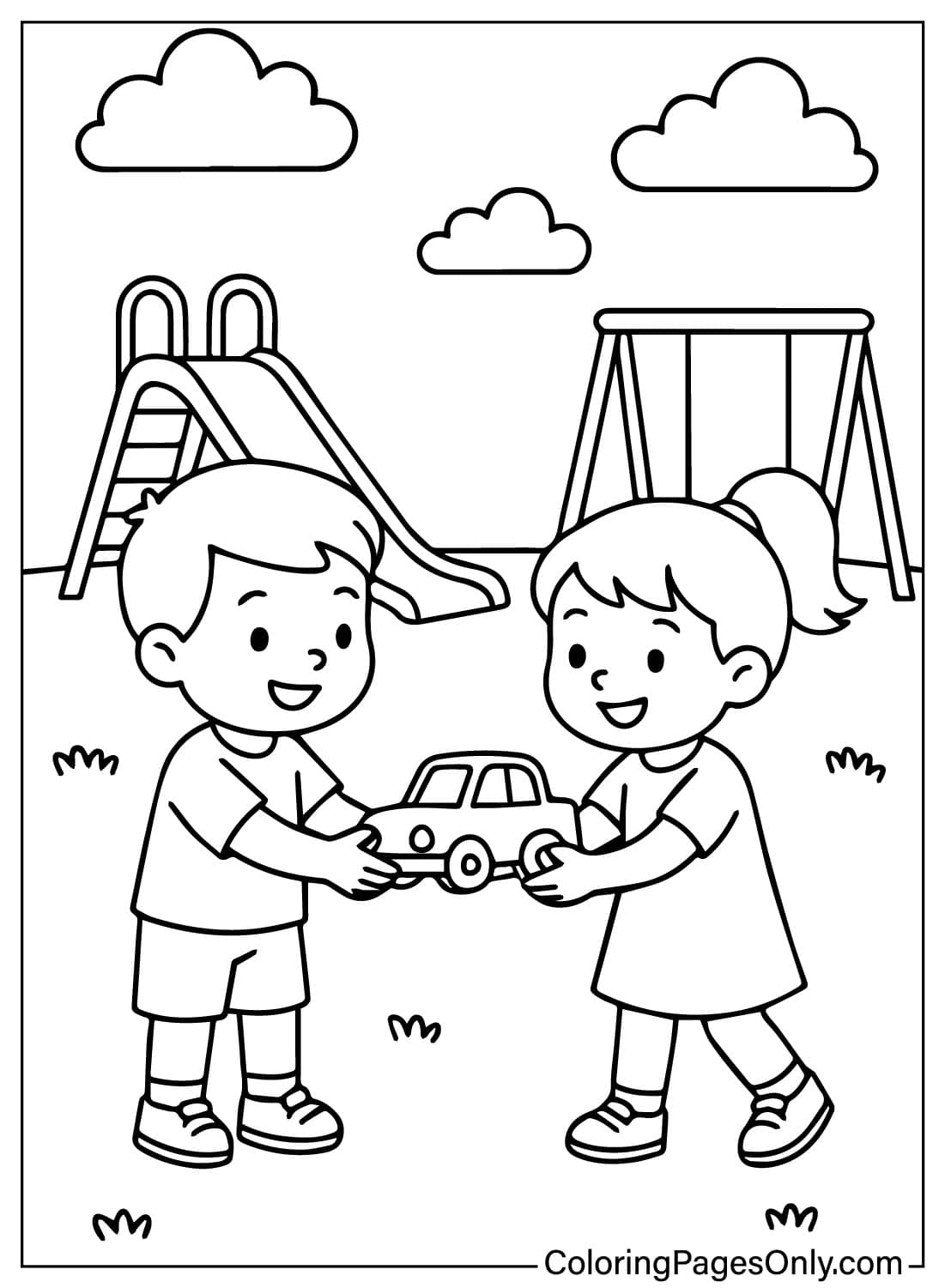
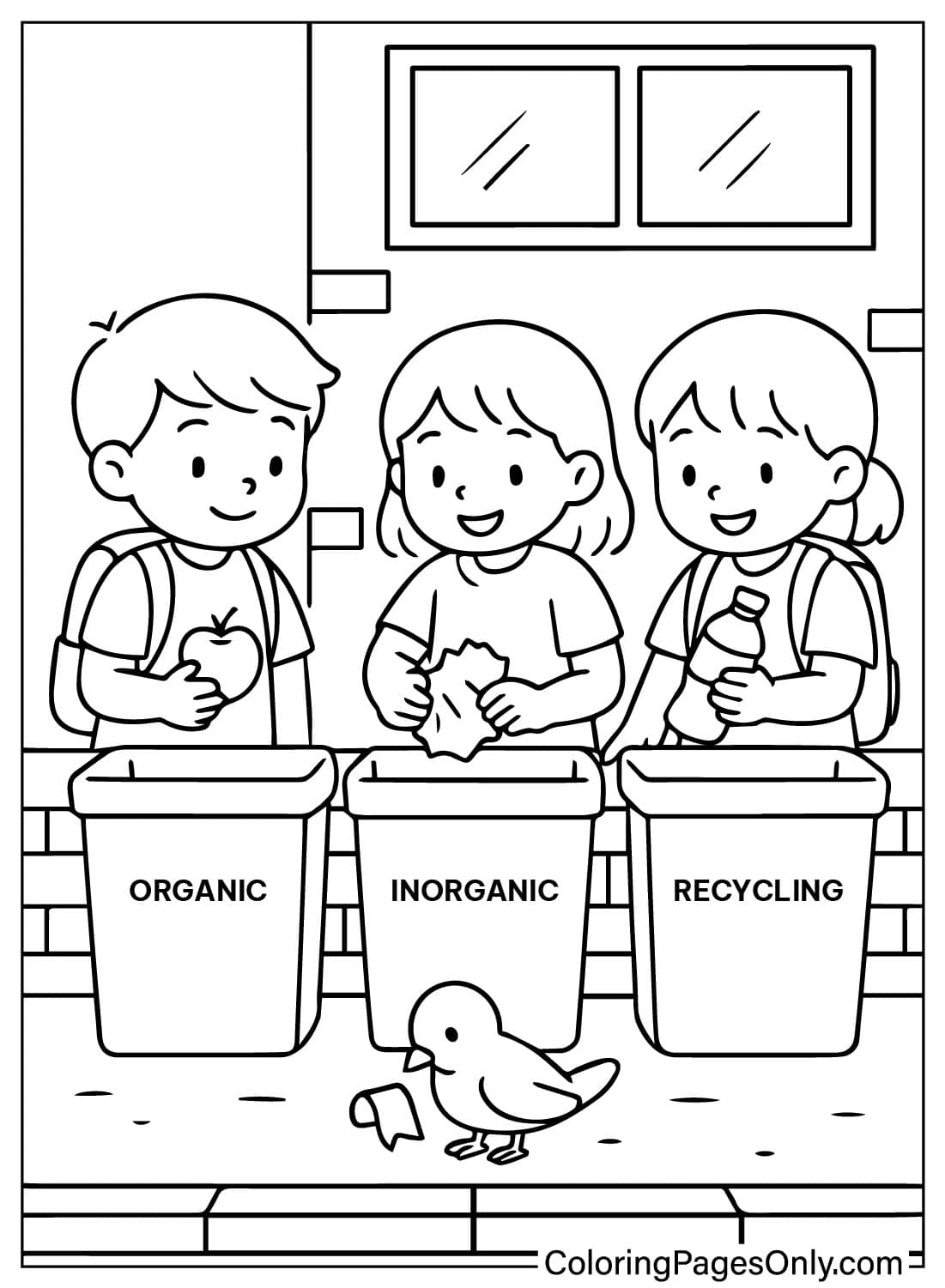
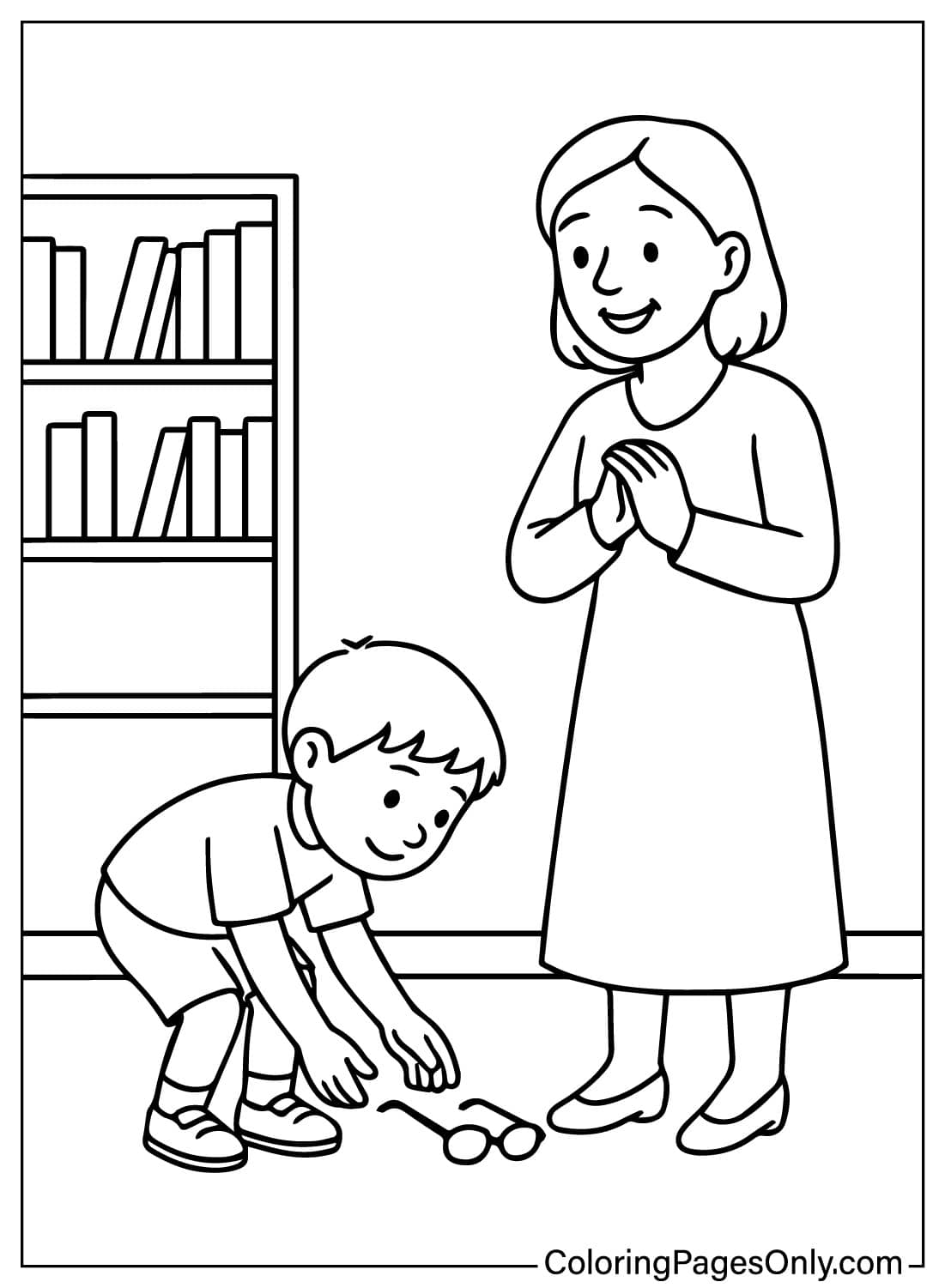
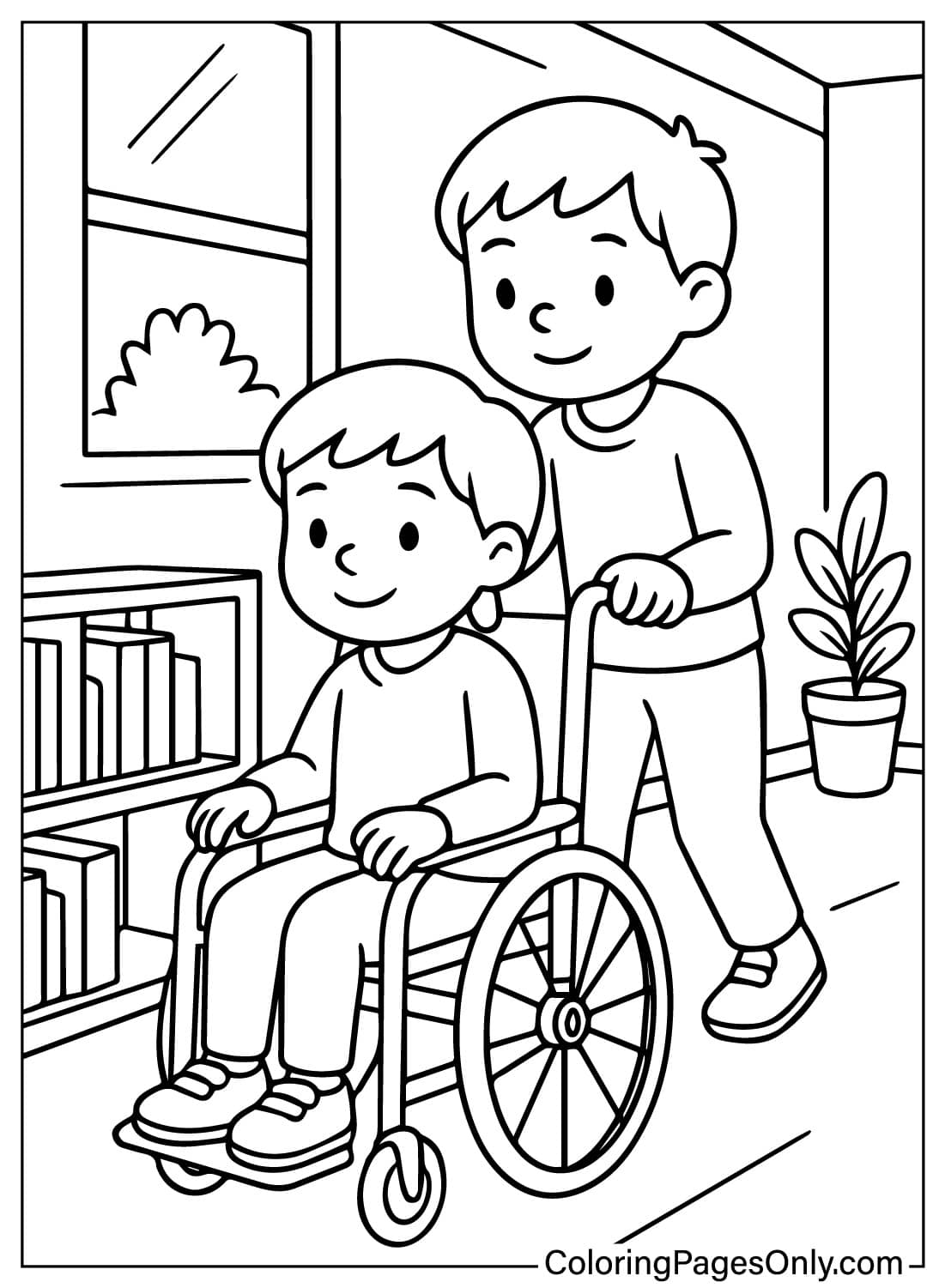
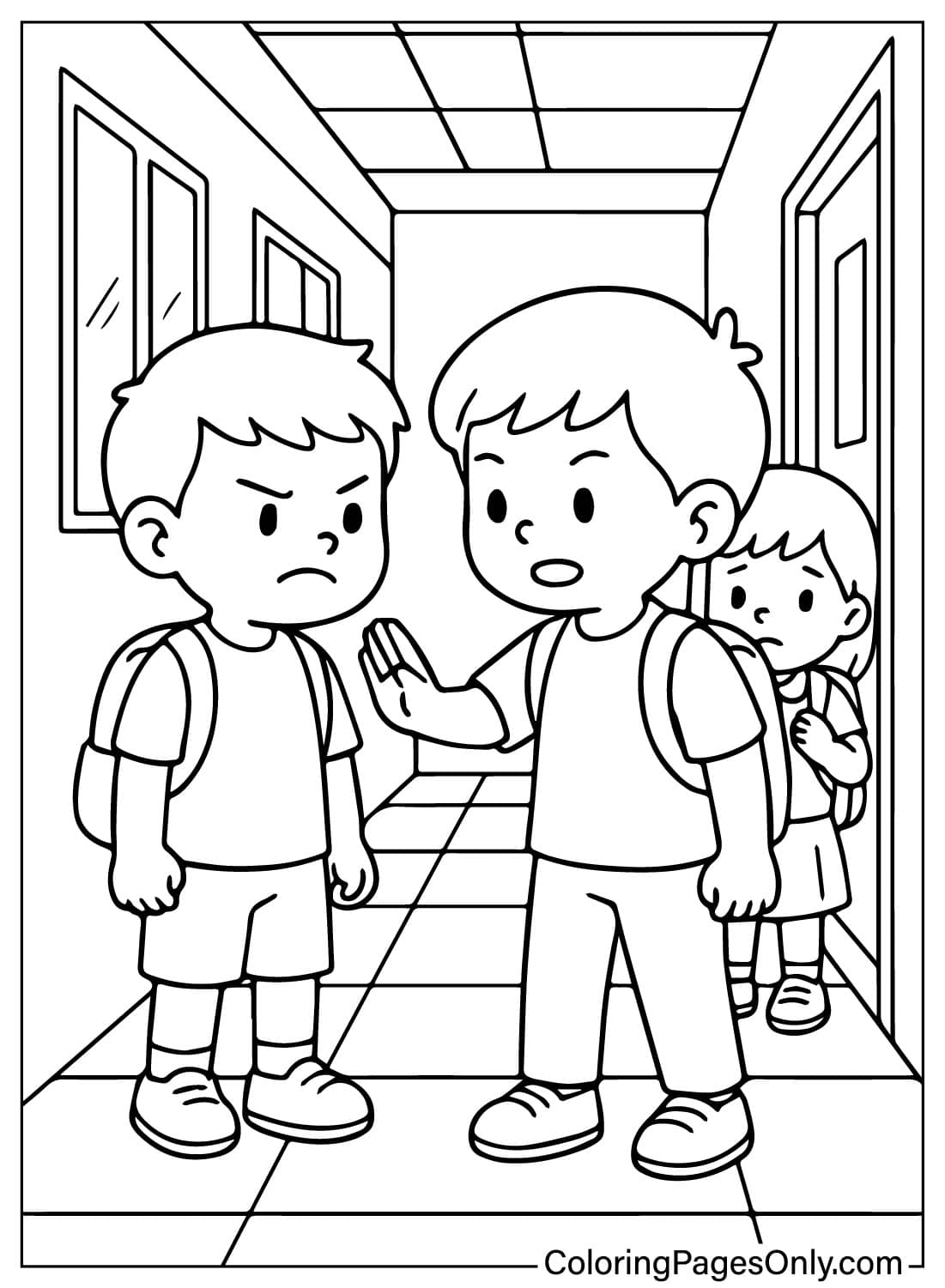
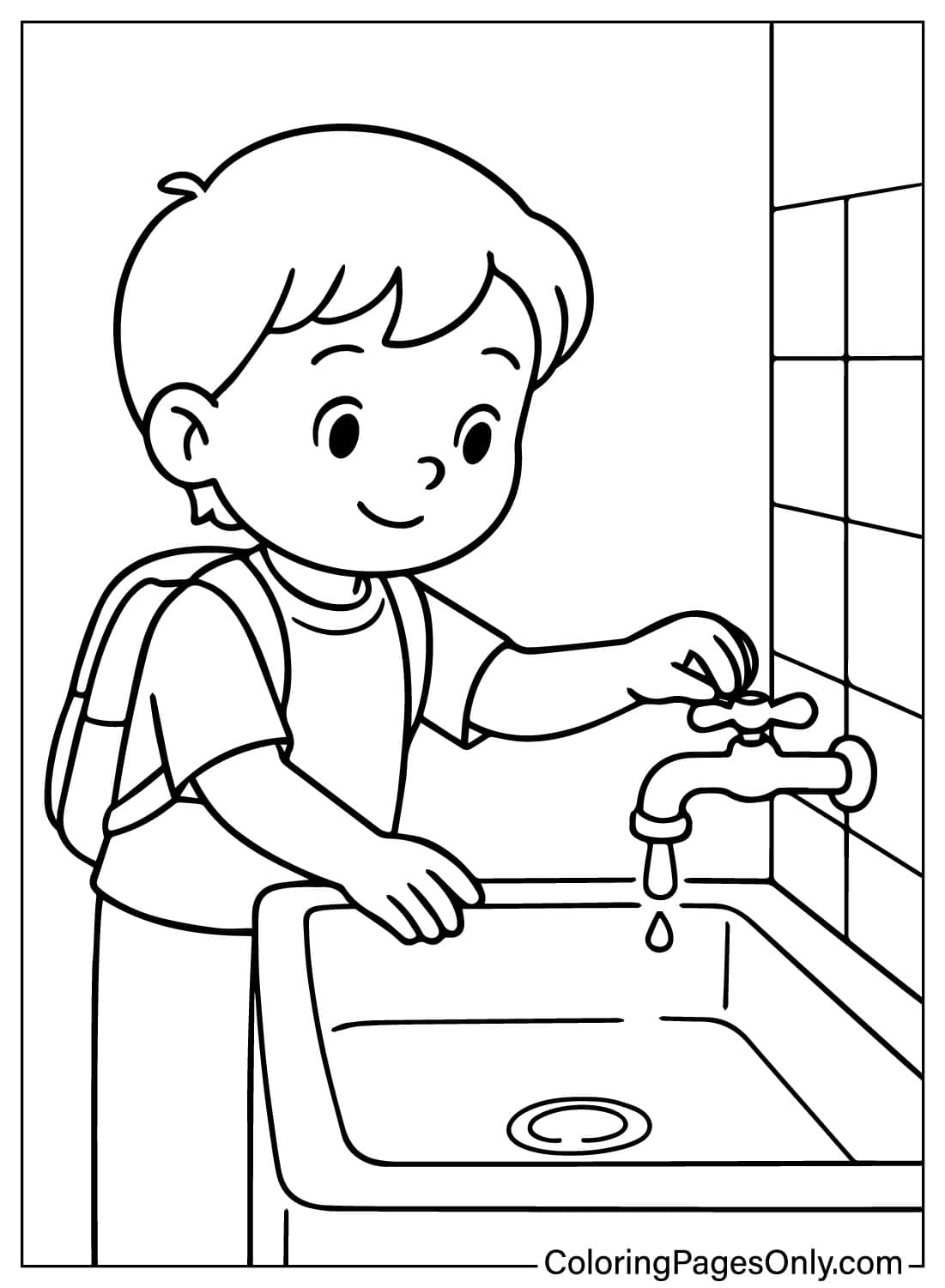
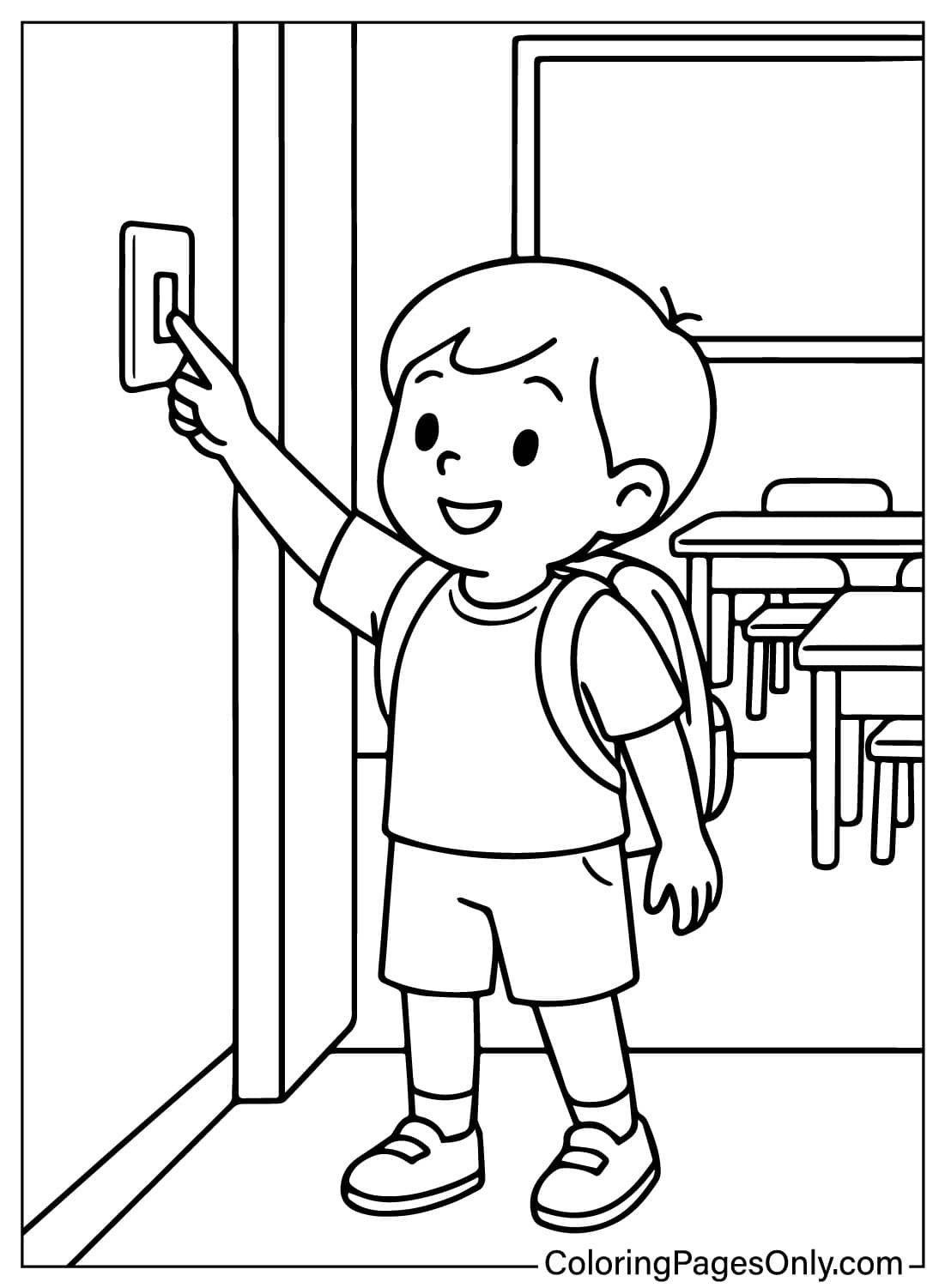
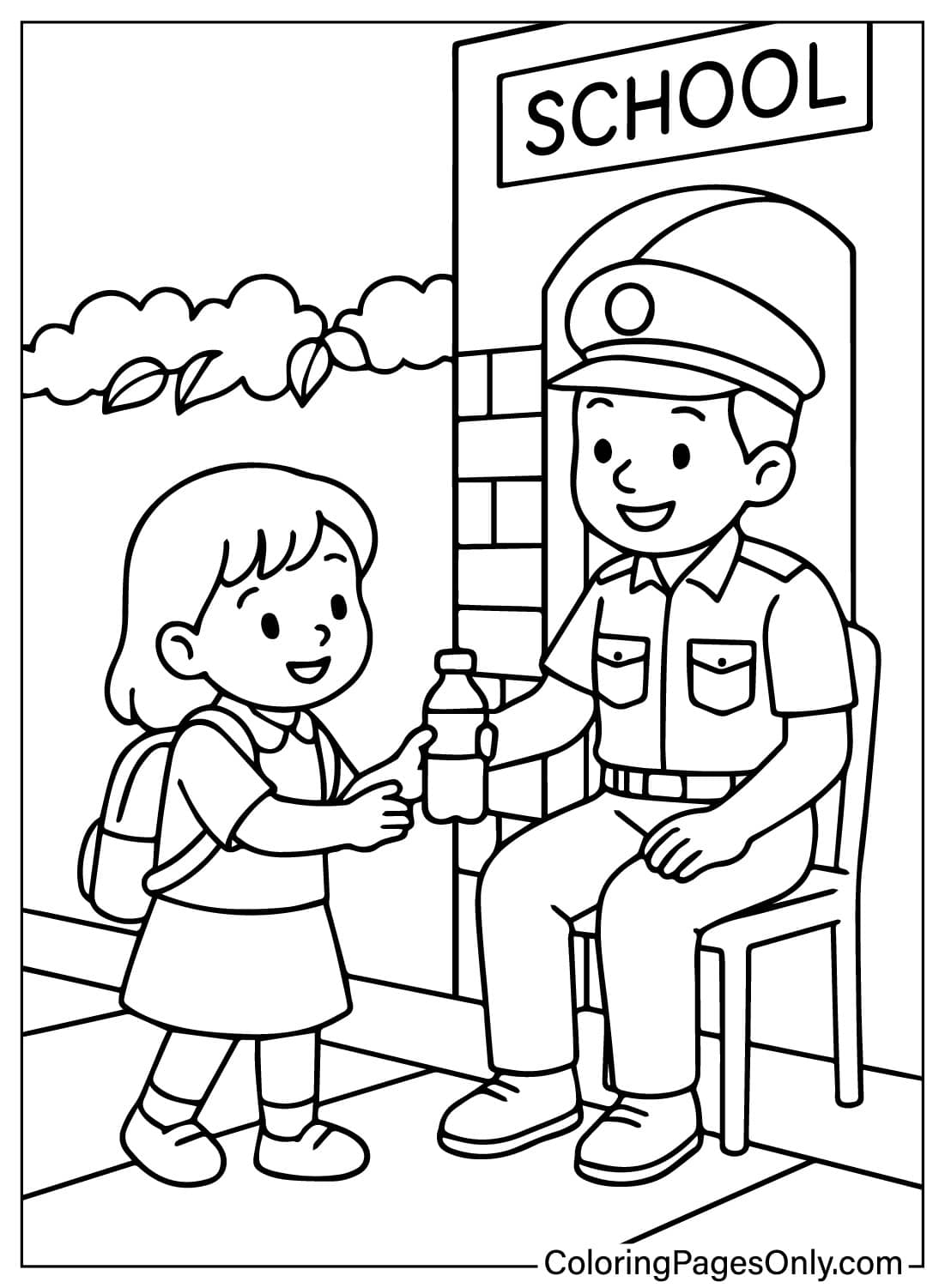
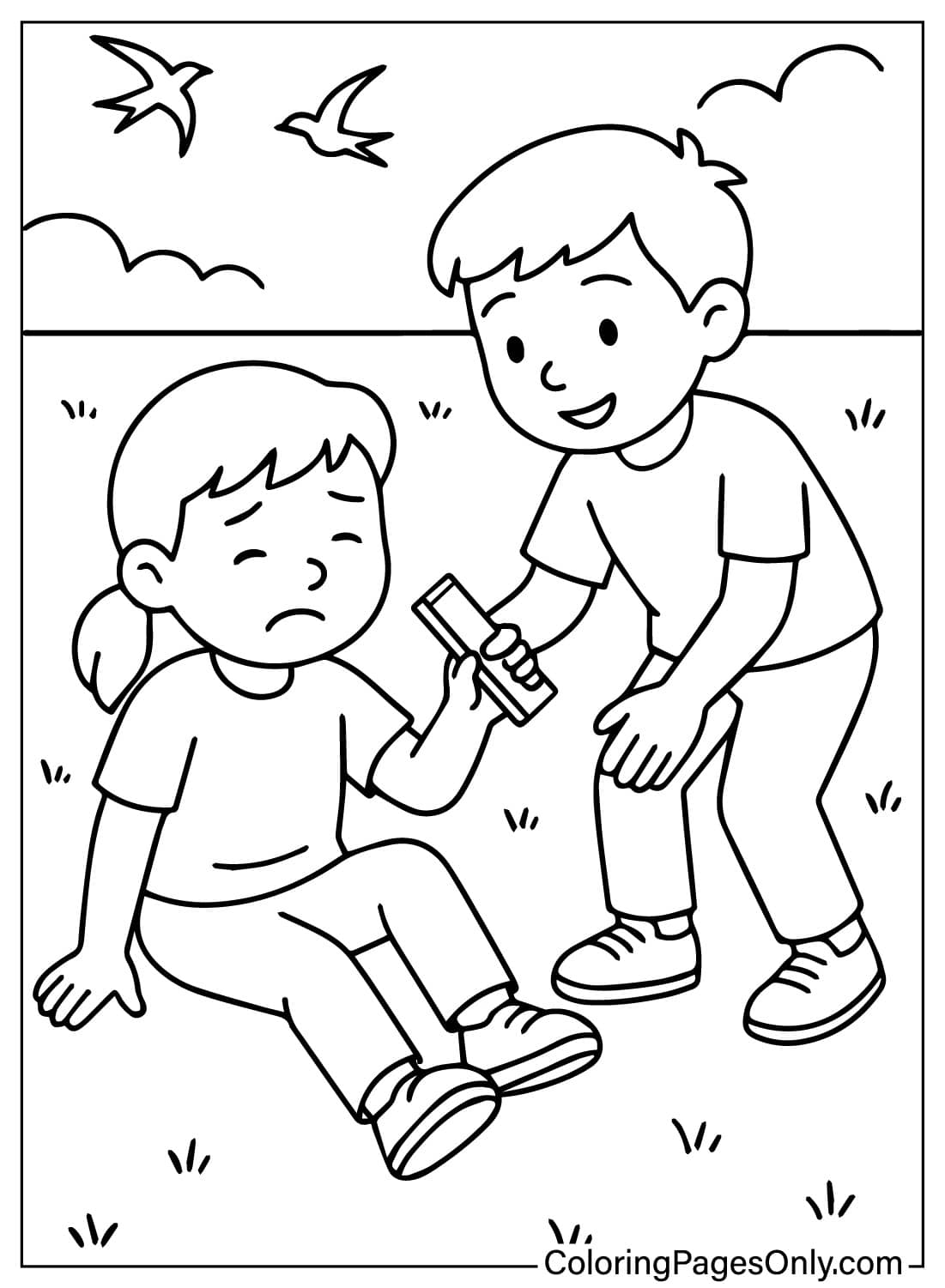
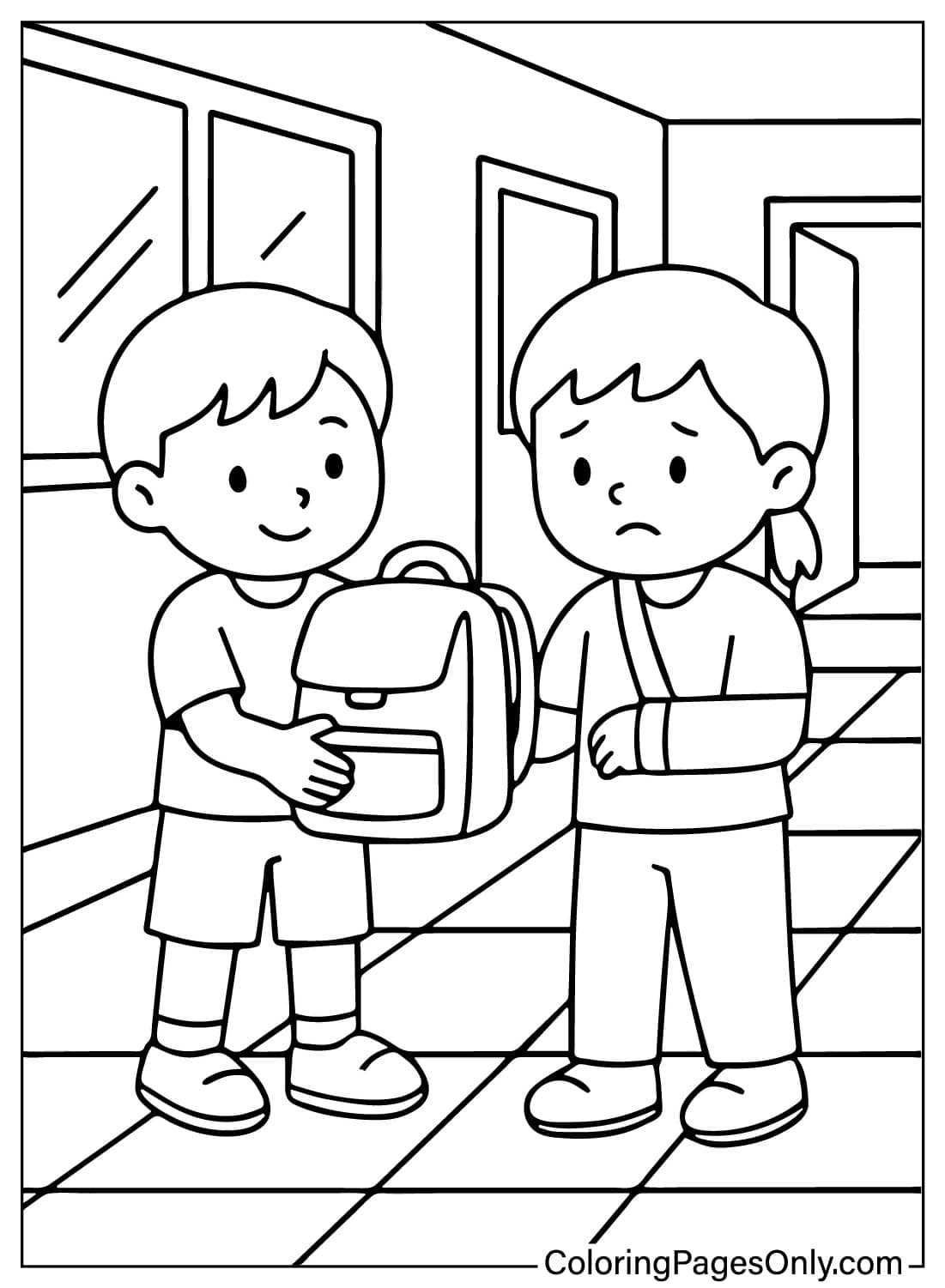
School Kindness Coloring Pages at ColoringPagesOnly.com brings together 30+ free printable pages illustrating the full spectrum of kindness in a school community – a boy stopping to greet the custodian sweeping leaves, students sharing a pen across a desk, children bringing flowers to their teacher, kids studying together in the library, classmates helping carry books, a group planting a tree in the schoolyard, students sorting waste into recycling bins, and children rushing to help an elderly person who has fallen. Every page depicts a specific, real act of kindness that children can recognize, name, discuss, and then make vividly colorful. Download any page as a free PDF to print, or color online directly in your browser.
This collection sits within the Educational Coloring Pages hub alongside closely related school-year collections: Back to School Coloring Pages, First Day of School Coloring Pages, Safety at School Coloring Pages, and Growth Mindset Coloring Pages.
Kindness Is Not Soft – It Is the Foundation of Academic Success
There is a persistent assumption in education that social skills and academic achievement are separate concerns – that kindness, empathy, and prosocial behavior are nice-to-have qualities that occupy time better spent on content learning. A substantial body of research has systematically dismantled this assumption over the past three decades.
The most comprehensive evidence comes from a 2011 meta-analysis conducted by Joseph Durlak and colleagues at the Collaborative for Academic, Social, and Emotional Learning (CASEL), which examined 213 school-based social-emotional learning programs involving 270,034 students from kindergarten through high school. The results were unambiguous: students who participated in SEL programs showed academic performance gains averaging 11 percentile points compared to students who did not. This is not a marginal effect – an 11-percentile gain is comparable to the impact of programs designed specifically to improve academic performance. SEL programs also showed improved social behaviors, reduced behavioral problems, and decreased emotional distress, all within the same intervention.
A follow-up analysis found that these academic gains persisted years after the programs ended, with long-term academic performance averaging 13 percentile points higher than that of comparison students. The economic analysis is equally striking: CASEL found that for every dollar invested in evidence-based SEL programming, the return in long-term social and educational outcomes averages approximately $11.
The Carnegie Council on Adolescent Development’s Task Force concluded that academic learning is “possible only after students’ social, emotional, and physical needs have been met.” In other words, kindness and the conditions it creates – safety, trust, belonging, and positive peer relationships – are not alternatives to academic learning but prerequisites for it.
Neuroscience reinforces this connection at the physiological level. Dr. Patty O’Grady, writing in Positive Psychology in the Classroom, notes that when children experience and practice kindness, serotonin levels increase – the same neurotransmitter that regulates mood, reduces anxiety, and creates the psychological conditions most conducive to learning. Kindness does not just make children feel good in a vague sense; it measurably alters the neurochemical environment of the brain in ways that improve concentration, reduce stress responses, and increase openness to new information.
The implications for how we think about kindness education are significant. Teaching kindness is not taking time away from academics. It is one of the highest-leverage academic interventions available.
The Five Types of Kindness in This Collection
The pages in this collection are not abstract – every page depicts a specific, concrete act of kindness in a recognizable school context. Organizing them by the type of kindness they model reveals that the collection covers all five core domains that the CASEL framework identifies as essential social-emotional competencies: self-awareness, self-management, social awareness, relationship skills, and responsible decision-making. The pages work as a complete SEL curriculum in miniature.
1. Greeting and Respect – Seeing Everyone as Worth Acknowledging
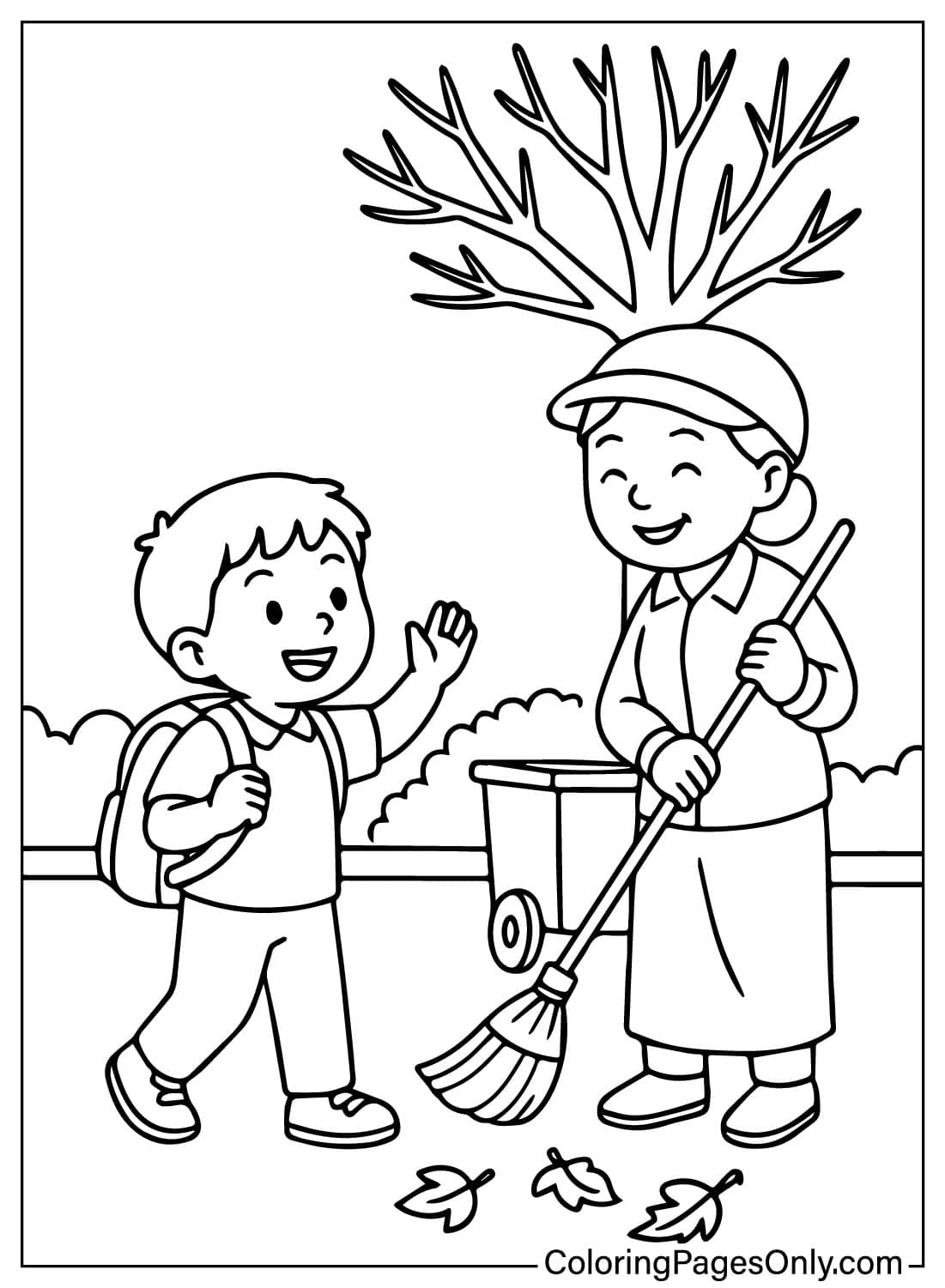
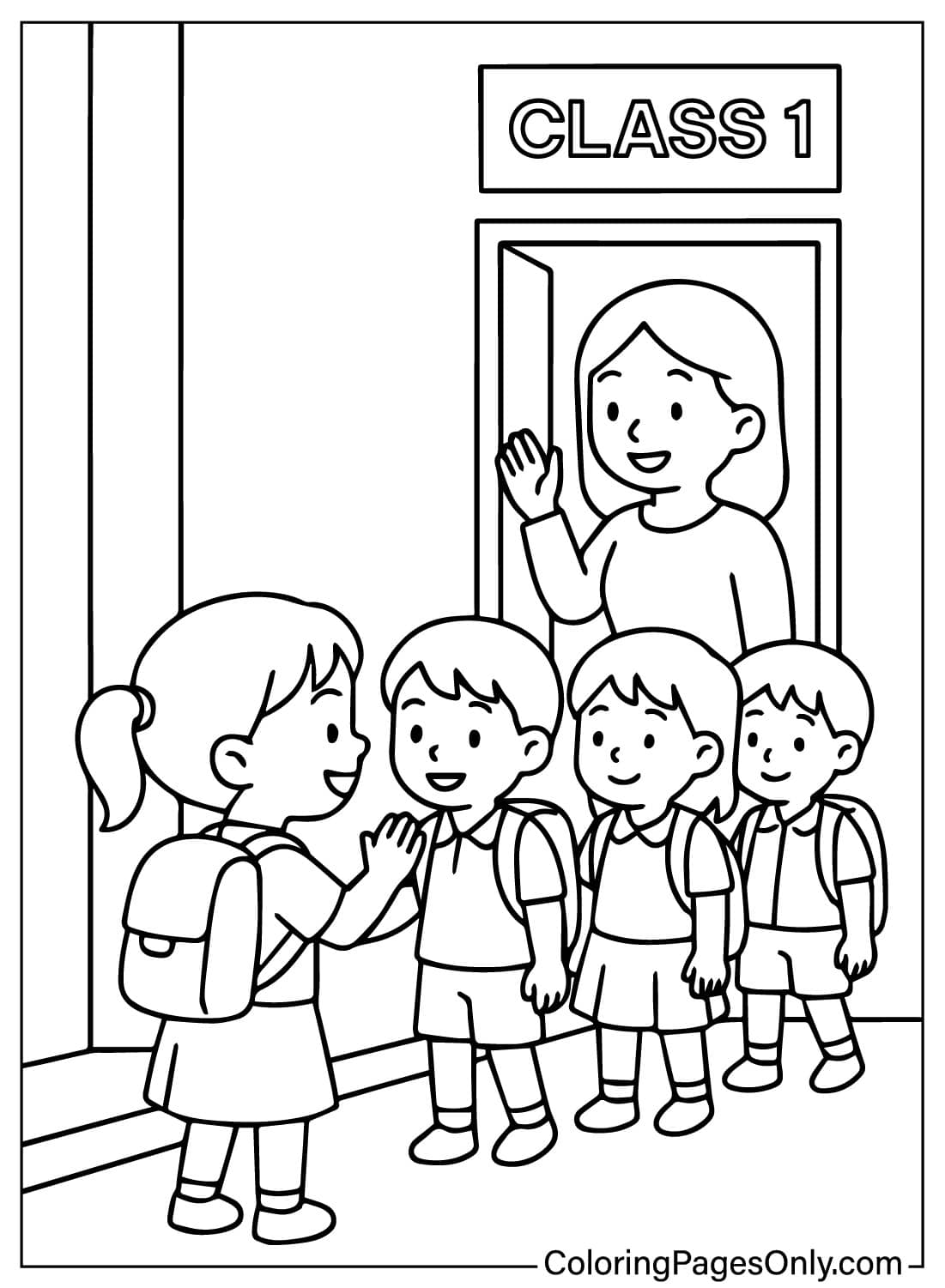
The Boy Greets The Cleaning Lady and Class 1 Students Greeting Teacher represent the first and most frequently overlooked form of kindness: respectful acknowledgment. A boy stops to wave at the school custodian sweeping leaves – not because he is required to, not because anyone is watching, but because he sees her as a person worth greeting. A line of students waves to their teacher as they arrive.
This type of kindness – simple greeting, eye contact, acknowledgment – is among the most powerful and most neglected in school culture. School custodians, cafeteria workers, bus drivers, and administrative staff are often invisible to students in a way that reflects not malice but a lack of intentional teaching. The page depicting the boy greeting the cleaning lady directly and specifically models the understanding that every person in a school community has equal worth, regardless of their role or status. This is the root of respect in its most practical form.
For young children, learning to greet non-teaching school staff is also an important boundary-safety skill: children who regularly interact with and know the names of school support staff are more comfortable seeking help from them in uncertain situations.
2. Academic Cooperation – Learning Together as Kindness
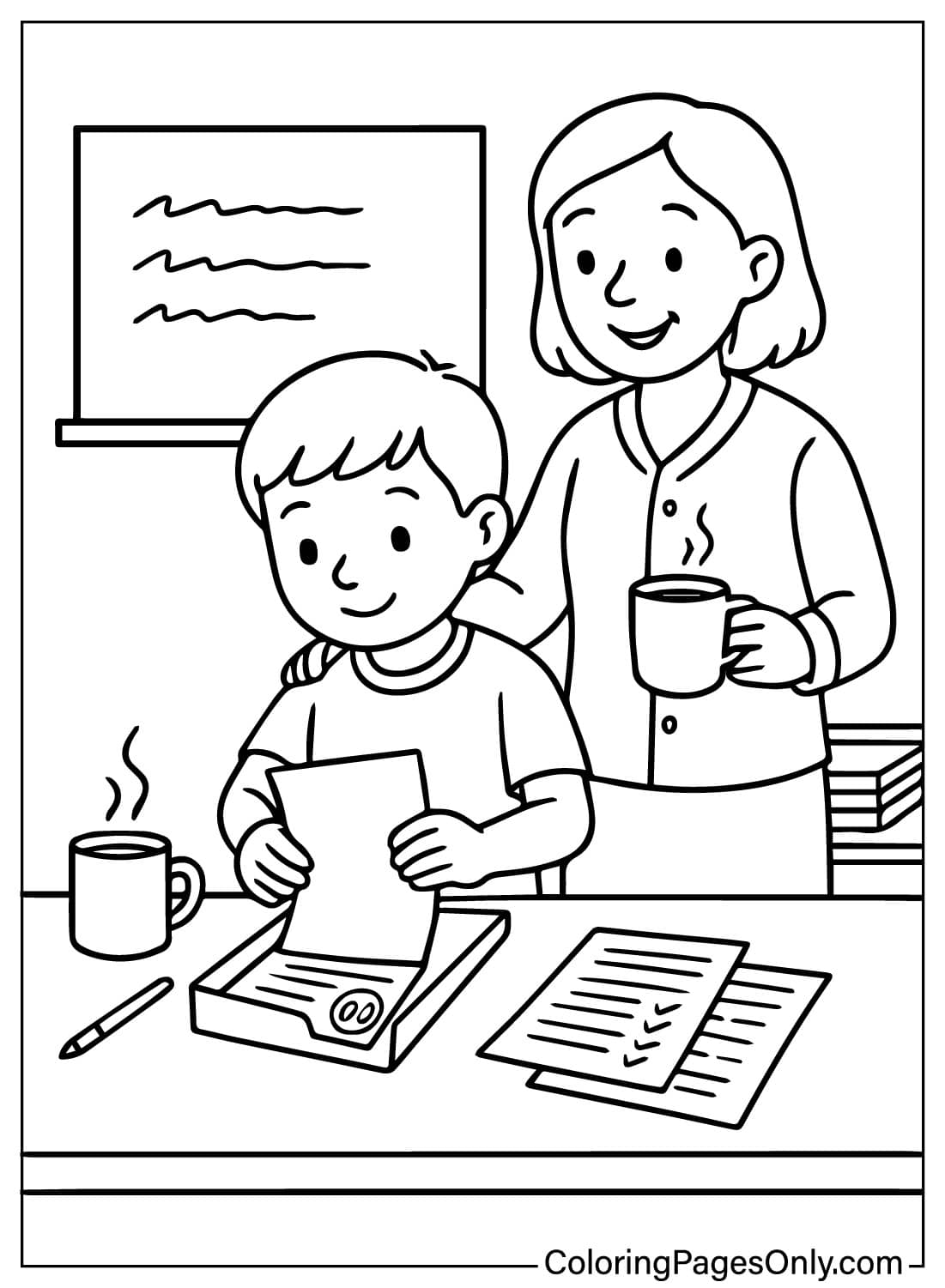
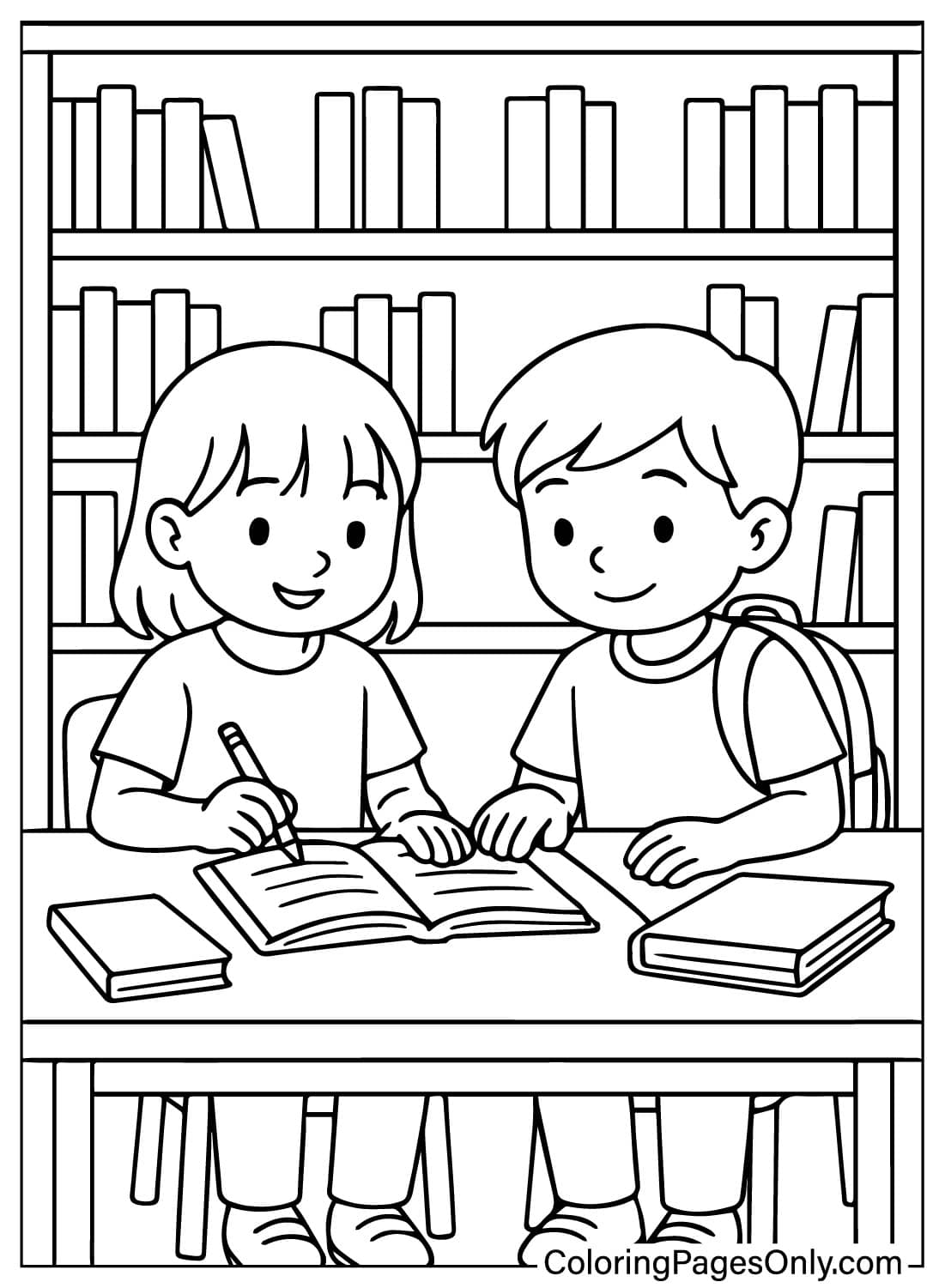
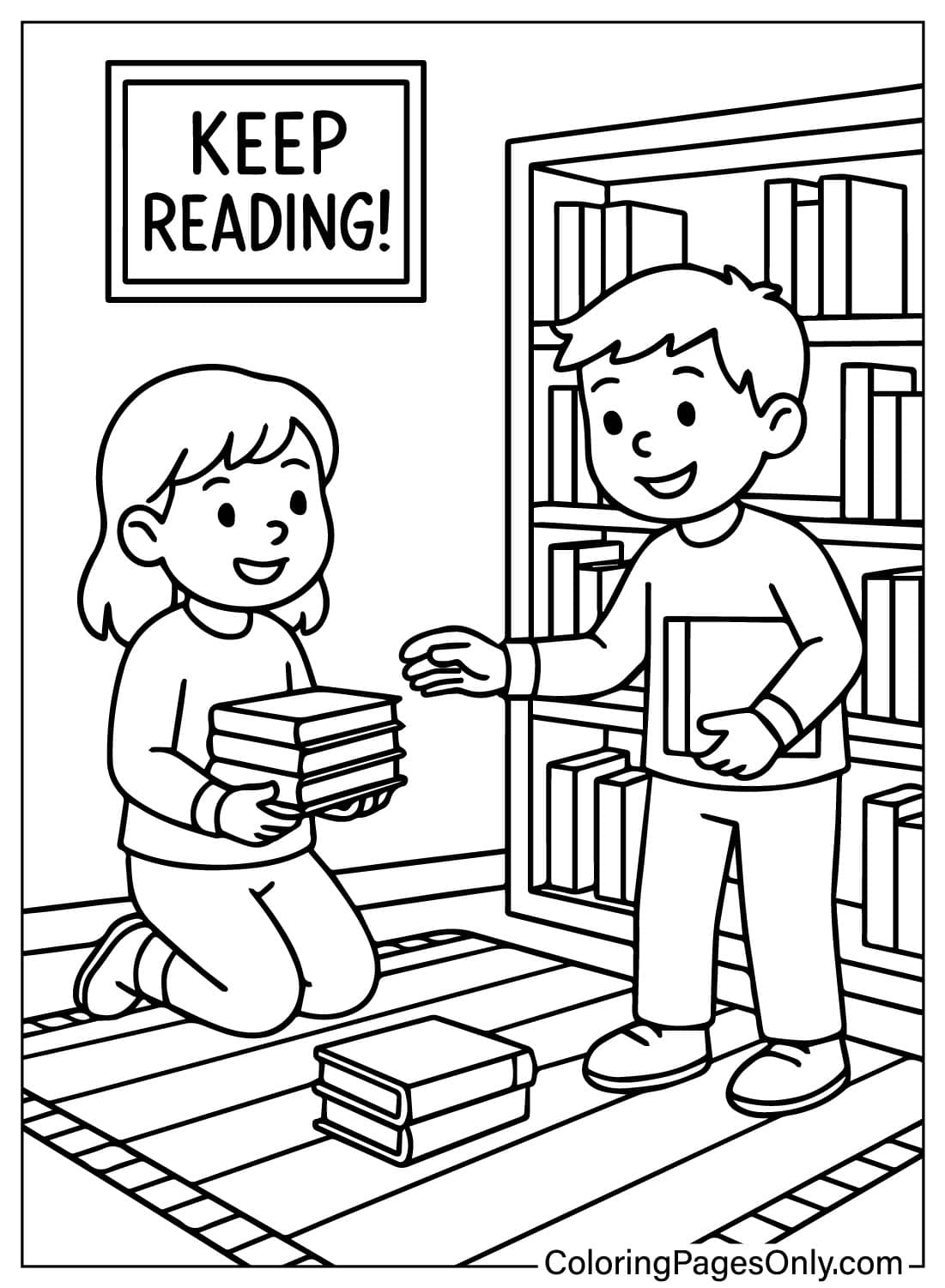
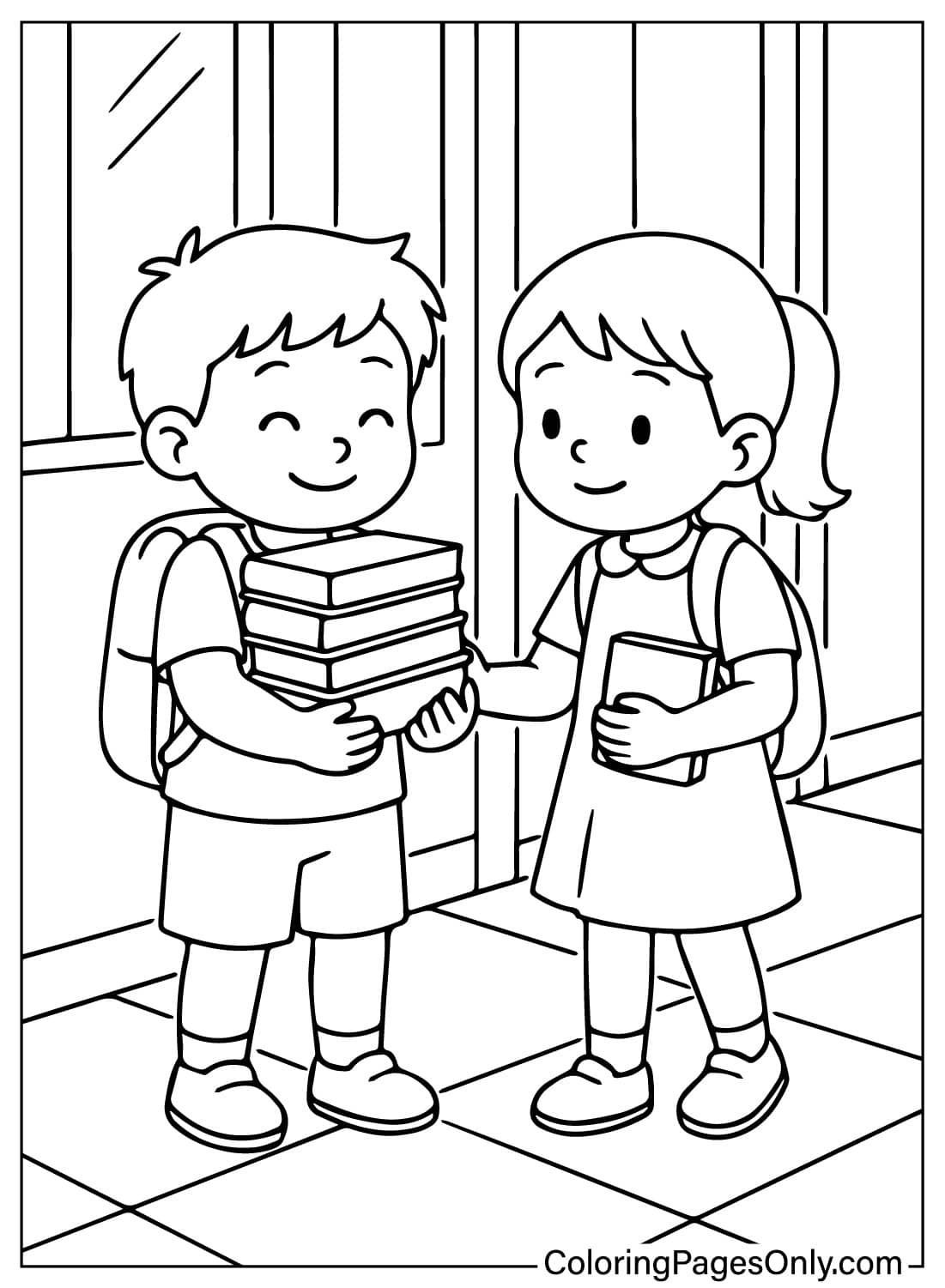
Students Sharing Pen, Kids Sharing Ruler in Classroom, Kids Studying Together Library, Students Helping in Classroom, and Teacher and Student Working Together represent the everyday academic kindness that makes classrooms work: sharing supplies, collaborating on tasks, helping a classmate who is struggling, and accepting support from a teacher without embarrassment.
These scenes are important because they normalize a form of kindness that children sometimes fail to recognize as kindness at all – they think of it as just “the way school works.” Making it explicit (coloring a scene of a student sharing a pen and discussing why this matters) helps children develop the vocabulary and the conscious intentionality around these behaviors. Research on cooperative learning consistently finds that students who understand why collaboration matters – not just that it is required – engage in it more authentically and with greater benefit to all parties.
The Teacher and Student Working Together page is particularly valuable because it models the teacher-student relationship as collaborative rather than hierarchical – a teacher sitting beside a student at a desk, both looking at the same work, represents a relationship of mutual engagement rather than one-directional instruction. This relational model is associated in research with stronger student-teacher trust and better academic engagement.
3. Gratitude and Appreciation
Students Giving Flowers to Teacher captures one of the most emotionally resonant kindness behaviors in school culture: expressing gratitude to a teacher. A group of students presenting flowers to their teacher demonstrates that kindness flows in both directions – not only from teachers to students, but from students to teachers.
Research on gratitude consistently finds that the act of expressing gratitude benefits the giver at least as much as the receiver. Children who practice gratitude – through actions like gift-giving, thank-you notes, or explicit verbal appreciation – develop more positive attitudes toward school, toward authority figures, and toward learning itself. The gratitude expressed in this scene is also a social skill: it requires recognizing another person’s contribution, finding a way to communicate appreciation, and overcoming any self-consciousness about expressing positive feelings publicly.
4. Environmental and Community Kindness
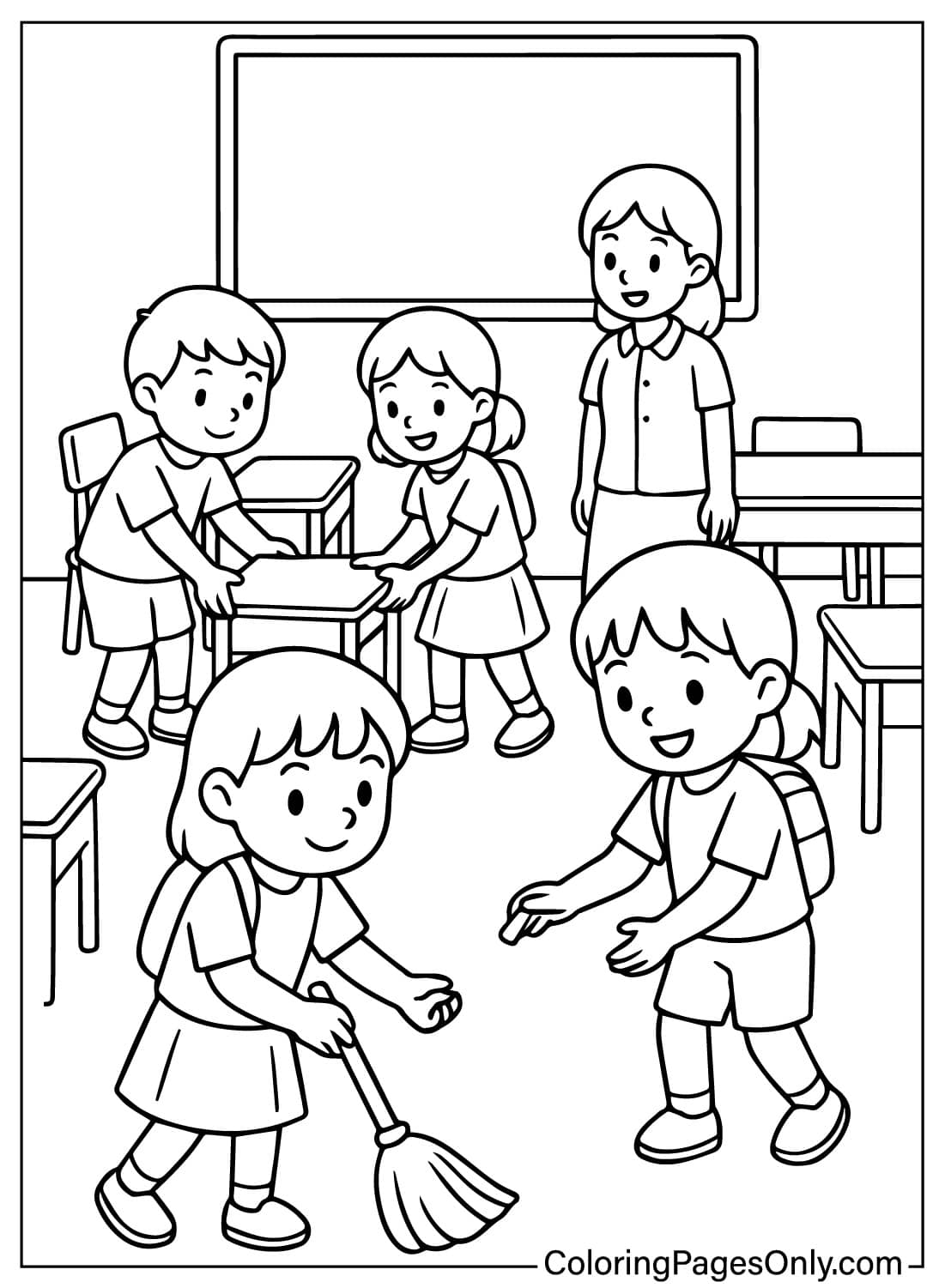
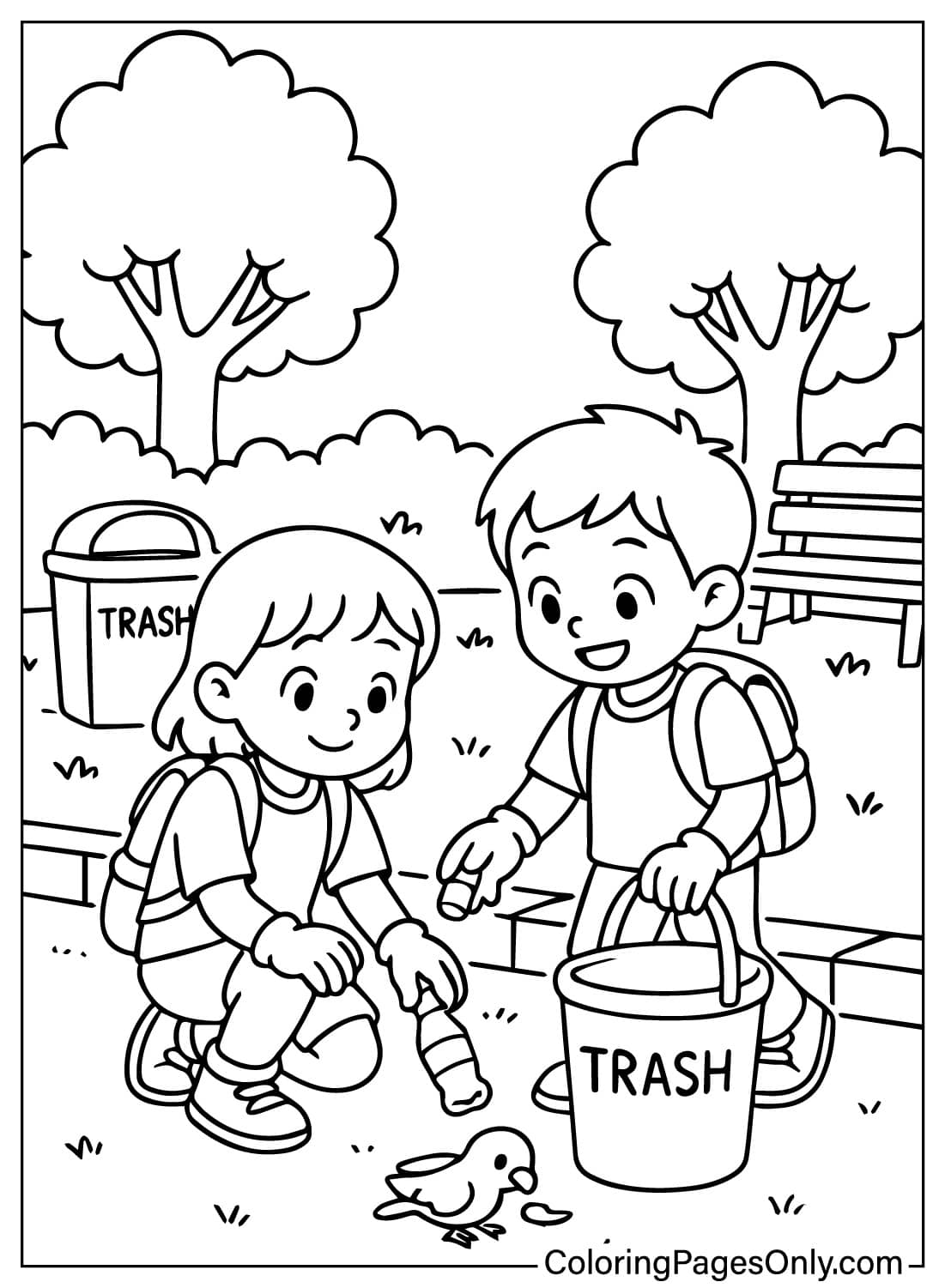
Kids Planting Trees at School, Kids Sorting Waste, and Students Cleaning Classrooms represent a form of kindness that extends beyond individual-to-individual relationships to the collective environment: caring for the shared spaces and natural systems that everyone depends on.
This category of prosocial behavior is increasingly recognized in SEL frameworks as an essential component of social responsibility – the understanding that kindness extends not only to the people immediately in front of us but to the broader community and environment. The three children working together to plant a tree are performing an act whose benefits extend far beyond their own immediate lives. The children sorting waste into recycling bins are practicing the cognitive habit of considering consequences beyond the immediate moment. These pages introduce environmental ethics through an action-first framework: children learn what environmental responsibility looks like by seeing it illustrated and then coloring it themselves.
5. Help Beyond the School Community
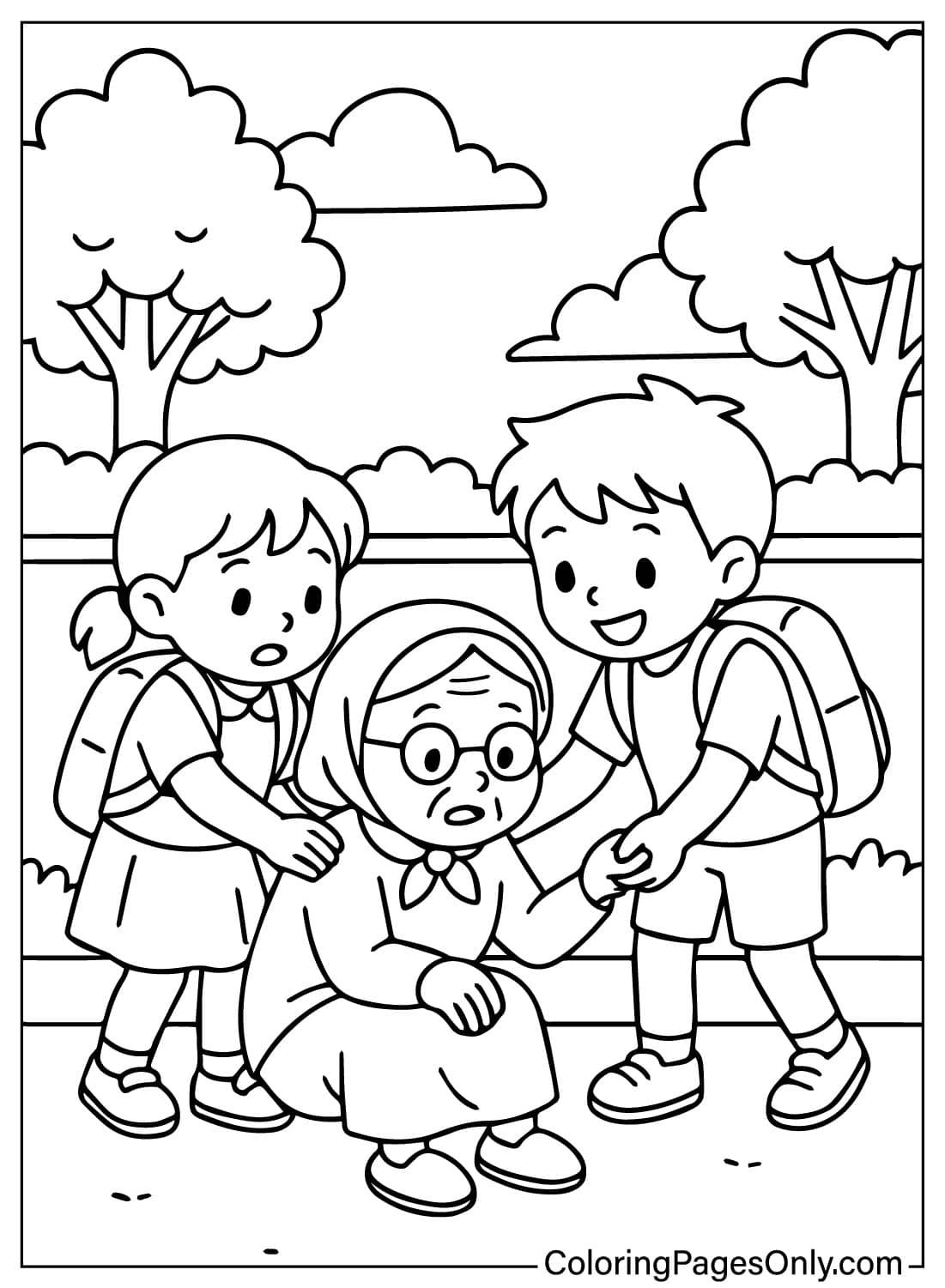
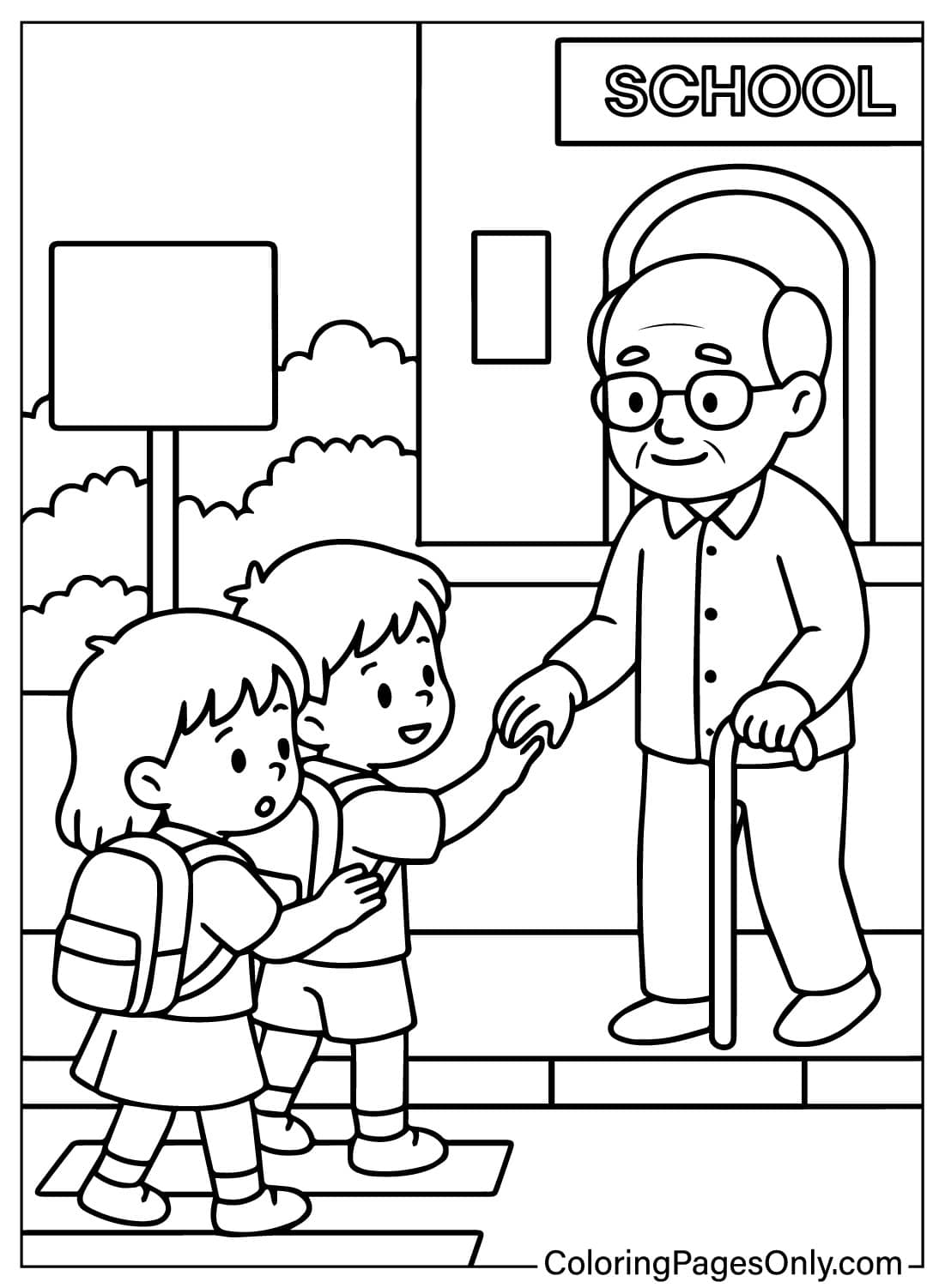
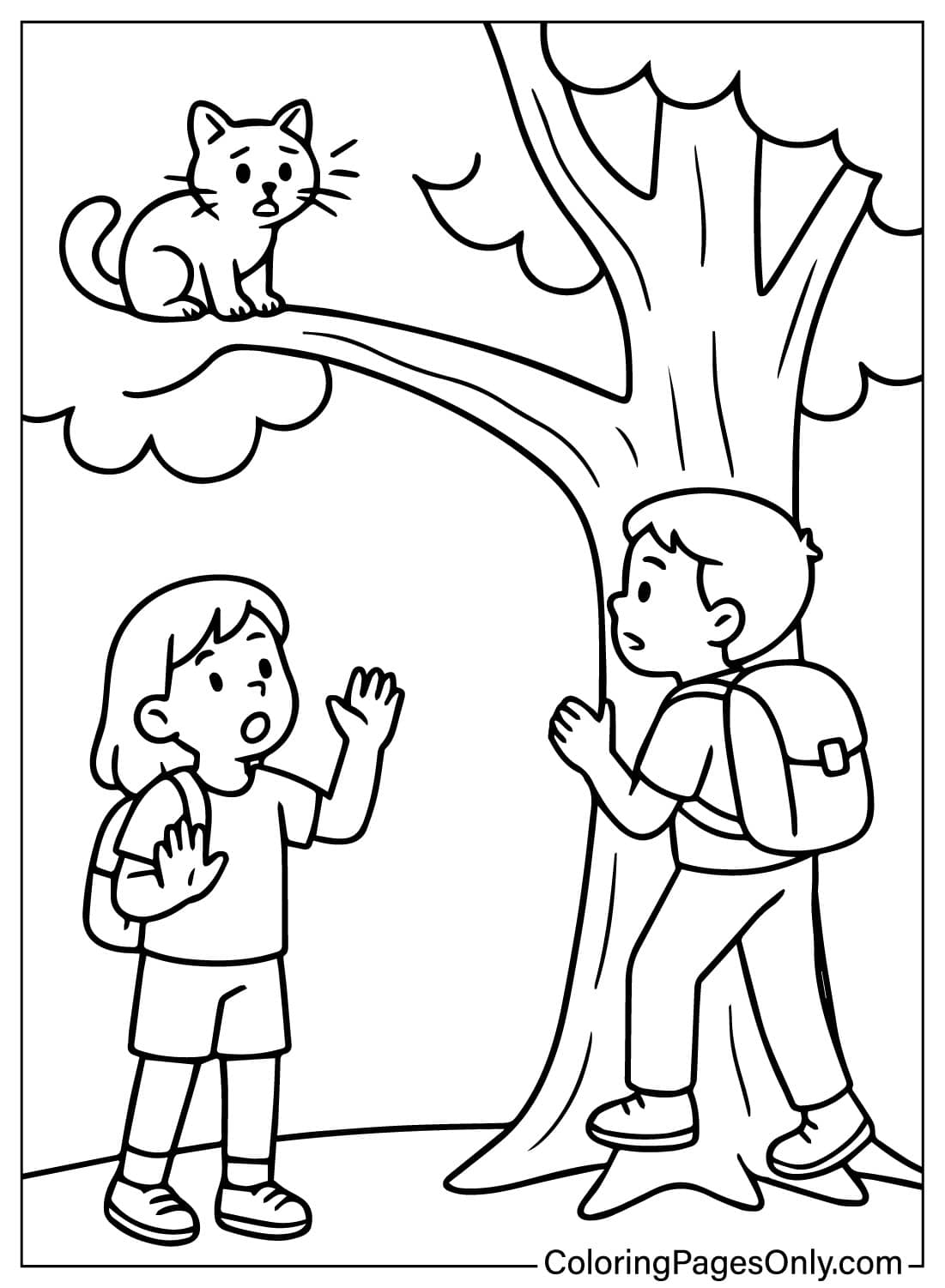
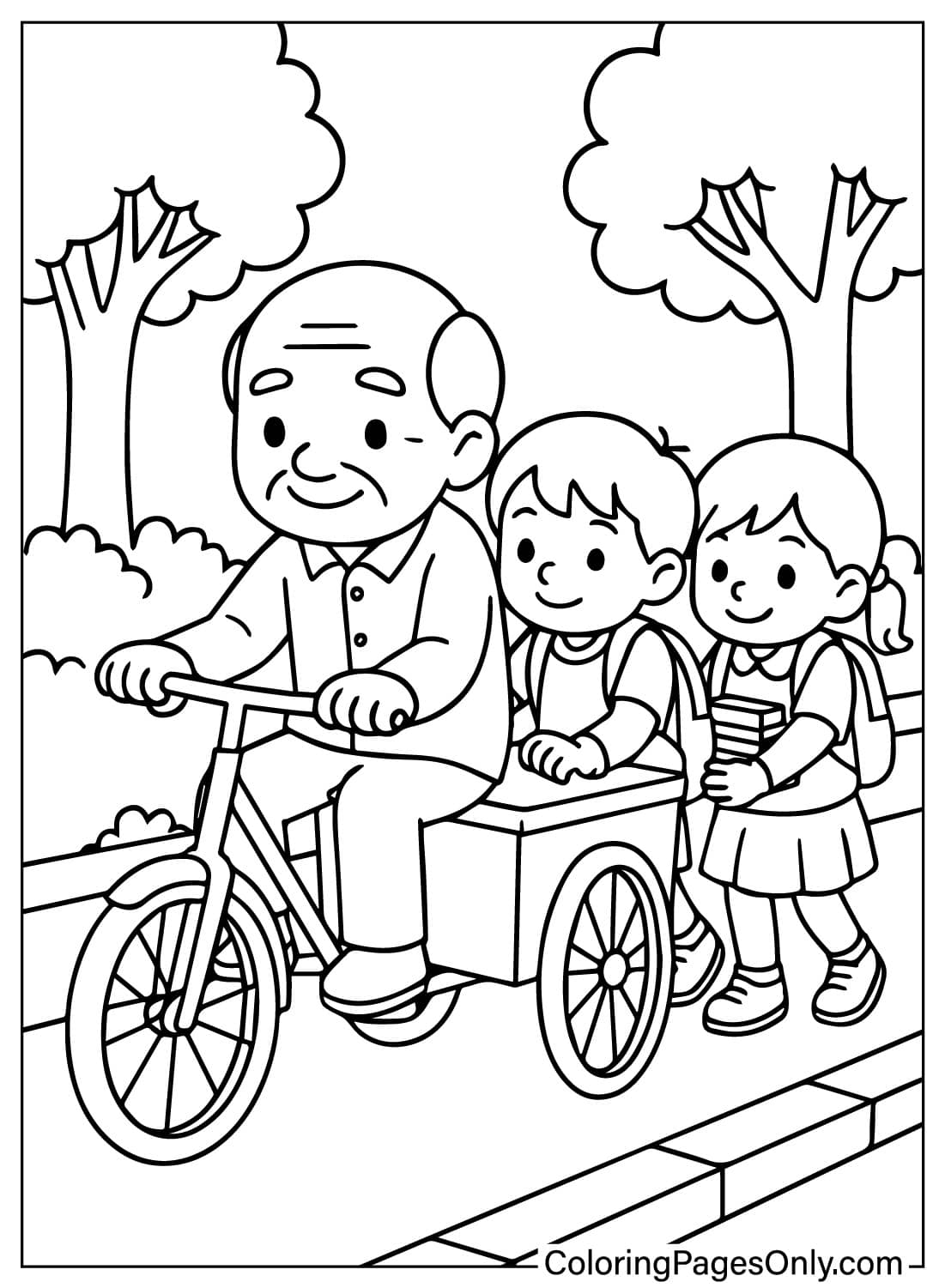
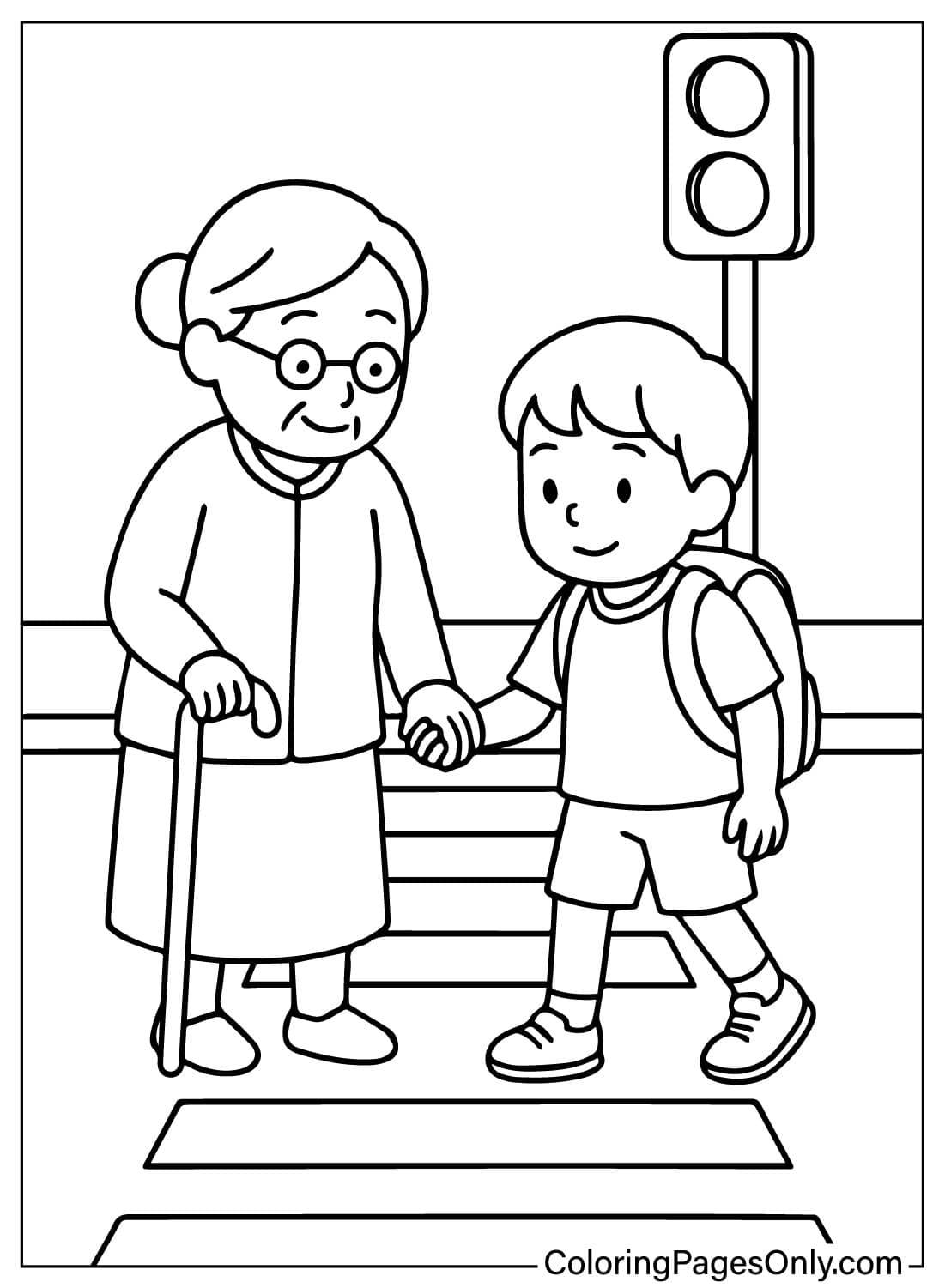
Kids Helping Fallen Elderly Woman, Kids Helping Elderly Man at School, and Kids Helping Cat in Tree extend kindness beyond the peer group and the familiar – to elderly people, to animals, to strangers in need. These pages depict what developmental psychologists call prosocial behavior directed at non-kin non-peers: helping someone outside your immediate social circle, not because you are required to, not because you will receive a reward, but because you see a need and respond to it.
This category of kindness is the most advanced and the most important for long-term character development. Research consistently finds that prosocial behavior toward strangers is the form most strongly associated with adult civic engagement, volunteerism, and the kind of community orientation that builds healthy societies. Children who learn to see and respond to the needs of elderly people, animals, and strangers are developing the moral imagination – the ability to perceive another’s experience and feel motivated to improve it – that underlies all forms of active citizenship.
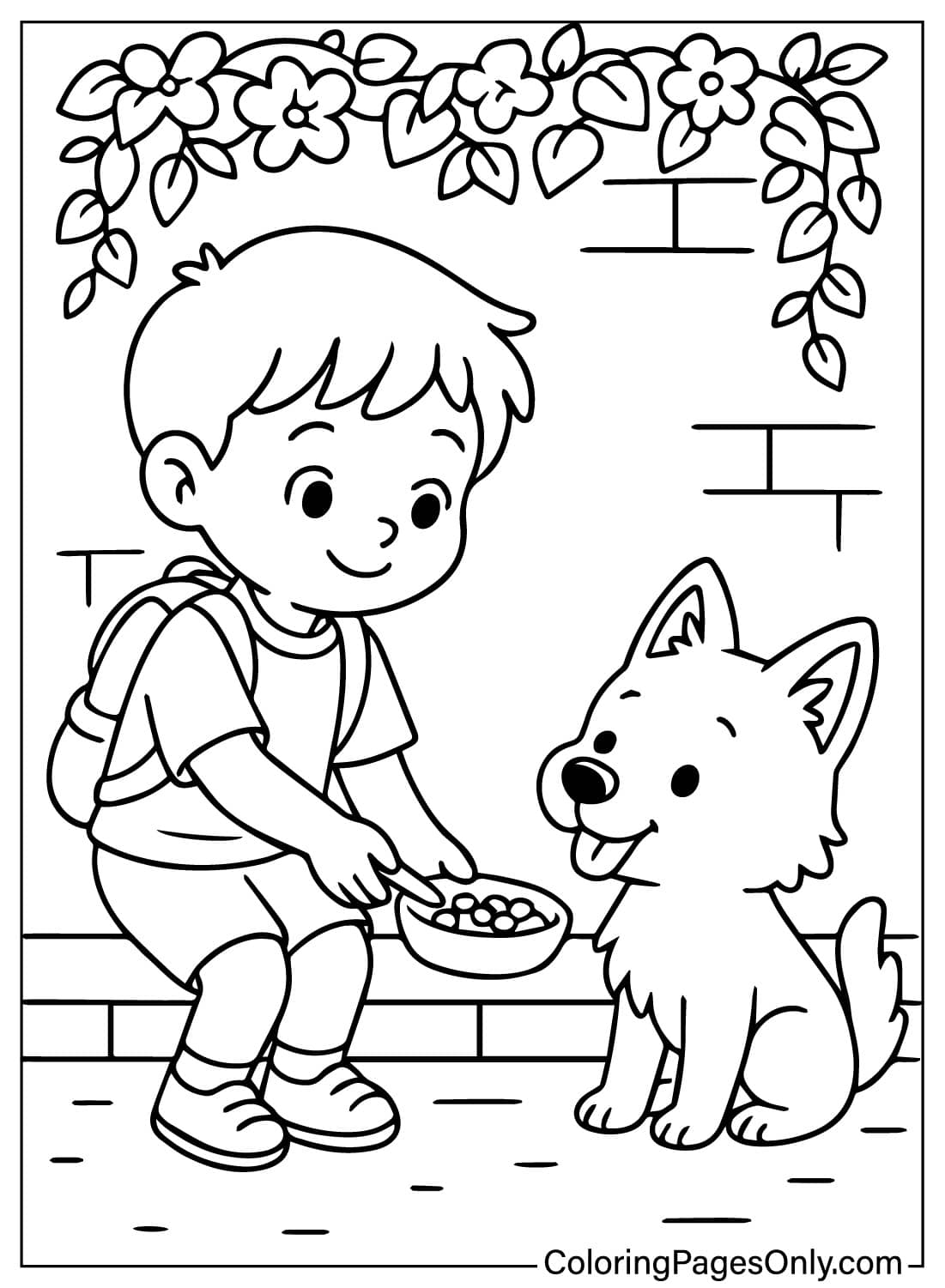
The “kids helping cat in tree” page has an additional educational value: it is one of the rare kindness contexts where children are clearly responding to an animal rather than a person, which activates the same empathy response while making the stakes less socially complex. For children who struggle to identify with or feel empathy toward other humans, animals often provide an easier entry point.
Why Coloring Kindness Scenes Works – The Research Basis
It is reasonable to ask why coloring a picture of students sharing a pen produces any meaningful kindness learning, as opposed to simply instructing children that they should share supplies. The answer lies in how values are actually internalized rather than just understood intellectually.
Dr. Patty O’Grady’s summary of the neuroscience of kindness education is precise: “Children and adolescents do not learn kindness by only thinking about it and talking about it. Kindness is best learned by feeling it so that they can reproduce it.” The same principle applies to visual engagement with kindness scenes: coloring a kindness illustration is an extended, focused, creative engagement with the specific scene depicted. During the 10–20 minutes a child spends coloring “Kids Sharing Lunch,” they are making decisions about the scene (what color are the children’s clothes? what expression does the sharing child have? what does the food look like?), which requires genuinely thinking about the scene, its participants, and its emotional content.
This extended creative engagement produces what educational psychologists call elaborative processing – engaging with information in multiple ways simultaneously (visual, motor, imaginative, narrative) rather than receiving it passively through a lecture or an instruction. Information processed elaboratively is significantly more durably encoded in long-term memory than information received passively.
There is also a specific mechanism related to the coloring activity itself. Research on the relationship between visualization and values suggests that children who create their own visual representations of prosocial behaviors develop stronger internal models of those behaviors than children who observe pre-made representations. When a child colors the boy greeting the cleaning lady and makes specific choices about how to render that scene, they are constructing their own mental image of that kindness behavior – a mental image that is more personally meaningful and more readily recalled than an image they simply observed.
Finally, the act of coloring kindness pages produces a physical artifact – a completed colored page – that the child can display, share, and return to. Research on commitment and behavior suggests that physical acts of representing a value (creating art about kindness) function as what social psychologists call commitment devices: they increase the probability that the behavior represented will actually occur, because the person has invested creative effort in affirming it.
For Teachers – Using These Pages in the Classroom
As a unit introduction. Before a dedicated SEL or character education lesson on sharing, cooperation, or community responsibility, distribute the relevant page as a warm-up coloring activity. A child who has spent five minutes coloring “Students Sharing Pen” arrives at the lesson discussion with the specific scene already activated in their memory – the discussion has a concrete visual anchor rather than beginning in the abstract.
As a morning meeting activity. Many elementary classrooms begin the day with a brief morning meeting or circle time. Distributing one page at the start of the morning meeting and giving children 5–7 minutes to color while the group assembles produces dual benefits: it gives arriving children an immediate, productive activity that reduces transition chaos, and it sets a prosocial tone for the day by giving children a kindness image to begin with. The page can then become the topic of the morning meeting discussion: “Who can tell me what is happening in this picture? Why do you think the boy decided to help that man?”
As a behavior reflection tool. After an incident of unkindness in the classroom – an argument over supplies, a moment of exclusion on the playground – the relevant kindness page can be used as part of the restorative conversation. Sitting with a student and coloring “Kids Sharing Toy Car Playground” together (or “Students Sharing Pen” for a classroom supply conflict) gives the conversation a concrete, forward-looking anchor: “What does this picture show? What could we have done differently to look more like this?”
As a bulletin board display. Each child in the class colors the same page using different color choices, and all finished pages are displayed together on a bulletin board titled “Our Kindness Gallery” or “This Is What Kindness Looks Like in Our School.” The display reinforces that kindness is a collective school value, not just an individual virtue – and the variety of color choices across the same scene demonstrates that there are many ways to be kind and many ways to see the same situation.
As a home-school connection. Send home a kindness page for children to color with their families. Include a brief note explaining the scene depicted and a simple conversation starter: “While coloring this picture together, ask your child: Have you ever done something like this? Has someone ever done something kind like this for you? How did it feel?” This extends the school’s SEL curriculum into the home context in a way that requires no special knowledge from parents and produces a natural conversation rather than a formal lesson.
Coloring Tips for Kindness Scenes
Faces carry the emotional message – color them expressively. Every page in this collection features at least two human faces, and the emotional story of kindness is told primarily through facial expressions. The faces of the giver and the receiver should look different: the giver of kindness typically has an expression of focused helpfulness or quiet satisfaction; the receiver typically has an expression of gratitude, relief, or warmth. Coloring faces with attention to this emotional differentiation – slightly brighter, more open tones for the receiver; a slightly more settled, collected expression for the giver – captures the emotional truth of the kindness exchange more fully than identical facial treatments.
Use warm colors for the figures performing kindness. Research on color psychology consistently finds that warm colors (reds, oranges, yellows, warm pinks) are associated with social warmth, approachability, and positive emotional states. In a kindness scene, the child performing the kind act should be rendered in warm, approachable tones – warm clothing colors, a warm skin tone (whatever is appropriate for the specific child’s representation), and warm-toned accessories. The recipient of kindness can be in slightly cooler tones initially, shifting to warmer ones in their response to the kind act. This warm-to-warm color arc across the two figures tells the emotional story of kindness visually without any text.
Environmental colors should be stable and reassuring. The school settings depicted in these pages – classrooms, libraries, schoolyards, sidewalks – should be rendered in calm, stable colors that communicate safety and belonging. Warm cream or pale yellow for classroom walls; soft blue-green for library shelves; warm golden-green for the schoolyard grass. The environment should feel like a place where kindness is natural and expected – not an institutional grey. The contrast between a safe, warm environment and the specifically warm human figures within it reinforces the message that school is a place where kindness happens.
The cleaning lady’s uniform in “The Boy Greets The Cleaning Lady” – color it respectfully. This is the page in the collection that makes the most direct statement about social equality and cross-status kindness. The cleaning lady’s uniform – whatever its color – should be rendered with the same care and attention as the boy’s clothing. The visual quality of a figure’s coloring communicates something about how the colorist values that figure: a carefully and thoughtfully colored cleaning lady, with attention to the details of her expression and posture, expresses the same respect that the boy in the scene is demonstrating by stopping to wave to her.
For the environmental pages (planting trees, sorting waste), use accurate natural colors. The kindness of environmental stewardship is partly about seeing the natural world clearly and accurately. For “Kids Planting Tree at School,” use realistic greens – medium green for the young tree’s leaves, warm brown for the soil being turned, soft grey-green for the grass around the planting area. For “Kids Sorting Waste,” the three recycling bins typically follow the color-coding conventions children will encounter in real life: green or brown for organic/compost waste, blue for recycling, dark grey or black for general waste. Coloring these bins in their conventional colors teaches the environmental vocabulary alongside the prosocial behavior.
5 Activities
The kindness observation journal. For one week following the completion of any three pages from this collection, keep a simple daily “kindness journal” – either a child’s personal notebook or a class chart on the wall. Each day, record one act of kindness that was witnessed or performed, matching it to a type of kindness from the coloring pages: “Today I shared my pencil, like in the sharing-pen page.” “I helped someone pick up something they dropped, like the kids helping the elderly man.” This matching exercise does two things simultaneously: it builds the habit of noticing kindness in daily life (which research shows increases the frequency of kind behavior in observers), and it connects the abstract kindness categories in the coloring pages to the concrete, specific kindness moments of real school days. Children who complete a week of this journaling typically report noticing significantly more kindness around them than they had before – not because more kindness is occurring, but because they have developed the attentional habits to see it.
The kindness spotlight presentation. After coloring any page in the collection, ask the child or class to prepare a 2-minute “spotlight presentation” about the kindness scene depicted: who is involved, what is happening, why the kind act matters to the person receiving it, and one way they could do something similar in their own life this week. The presentation can be given to the class, a small group, a parent, or recorded as a short video. This activity elevates the coloring page from a personal creative exercise to a social sharing moment – the child becomes an advocate for the specific kindness behavior they have colored, which deepens their investment in and understanding of that behavior. The preparation of the presentation also requires the child to take the perspective of the recipient: “Why does this matter to the person being helped?” – exactly the perspective-taking that is the cognitive core of empathy.
The “I could do this” kindness plan. After coloring any page, complete a simple three-part reflection on the back: “The kindness I see in this picture is ___. Someone at my school who might benefit from this kind of kindness is ___. One specific thing I could do this week is ___.” This reflection transforms a passive coloring activity into an active behavioral intention. Research on implementation intentions – the specific “when-where-how” planning of a behavior – consistently finds that people who form concrete plans to perform a behavior are significantly more likely to actually perform it than people who simply resolve to behave better. A child who writes “I could share my ruler with whoever sits next to me on Thursday when we’re doing art” has formed an implementation intention that is far more predictive of actual sharing behavior than a general intention to “be more kind.”
The community kindness map. After completing five or more pages from the collection, create a simple illustrated map of the school environment on a large piece of paper – front entrance, hallways, classrooms, library, cafeteria, playground, schoolyard. For each kindness scene depicted in the colored pages, draw a small version of the scene on the map at the location where it took place: the boy greeting the cleaning lady goes near the front entrance or courtyard; the students sharing the pen goes in a classroom; the kids planting a tree goes in the schoolyard. The finished map shows the entire school as a geography of kindness – kindness happening everywhere, not just in a single designated context. This geographical framing reinforces one of the most important SEL messages: kindness is not a special-occasion behavior or a formal lesson; it is something that occurs (or could occur) at every moment and in every location of school life.
The cross-generational kindness conversation. Two of the most striking pages in this collection show children helping elderly people: one who has fallen, and one with a cane who needs assistance. These pages present an opportunity for a conversation about intergenerational kindness that goes beyond the school community. After coloring one of these pages, open a discussion (or a written reflection for older children): “Why might an elderly person need help? What might it feel like to need help with something that used to be easy? Have you ever needed help with something and someone provided it – how did that feel? Is there an elderly person in your life or neighborhood who you could help with something?” This conversation – prompted by the specific scene on the colored page – develops what researchers call perspective-taking across social categories: the ability to empathize not just with peers but with people at very different life stages and circumstances. This is one of the most sophisticated and most socially valuable kindness skills children can develop, and it is rarely explicitly taught in elementary school curricula.