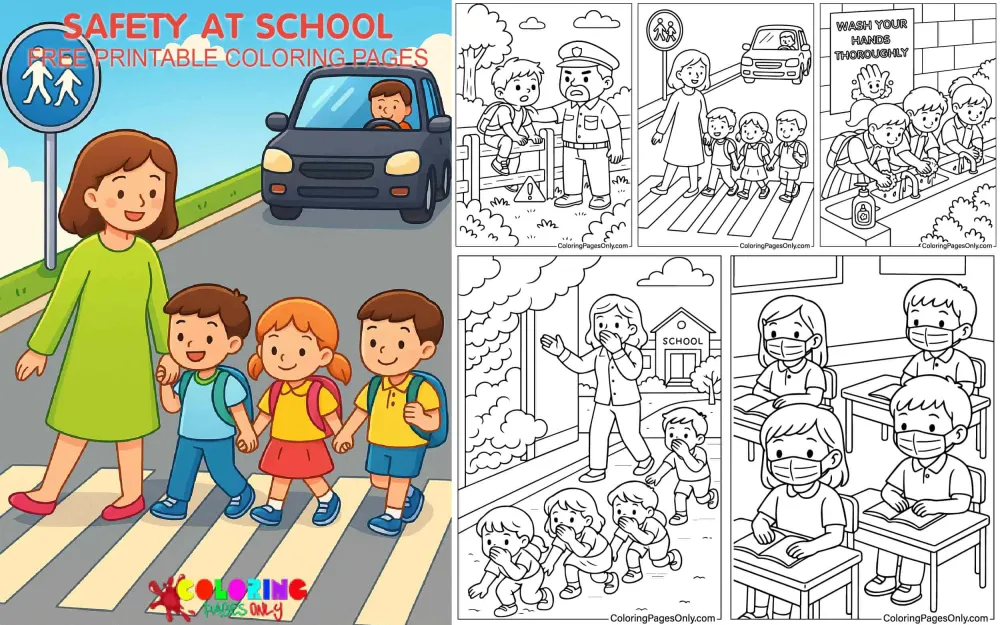
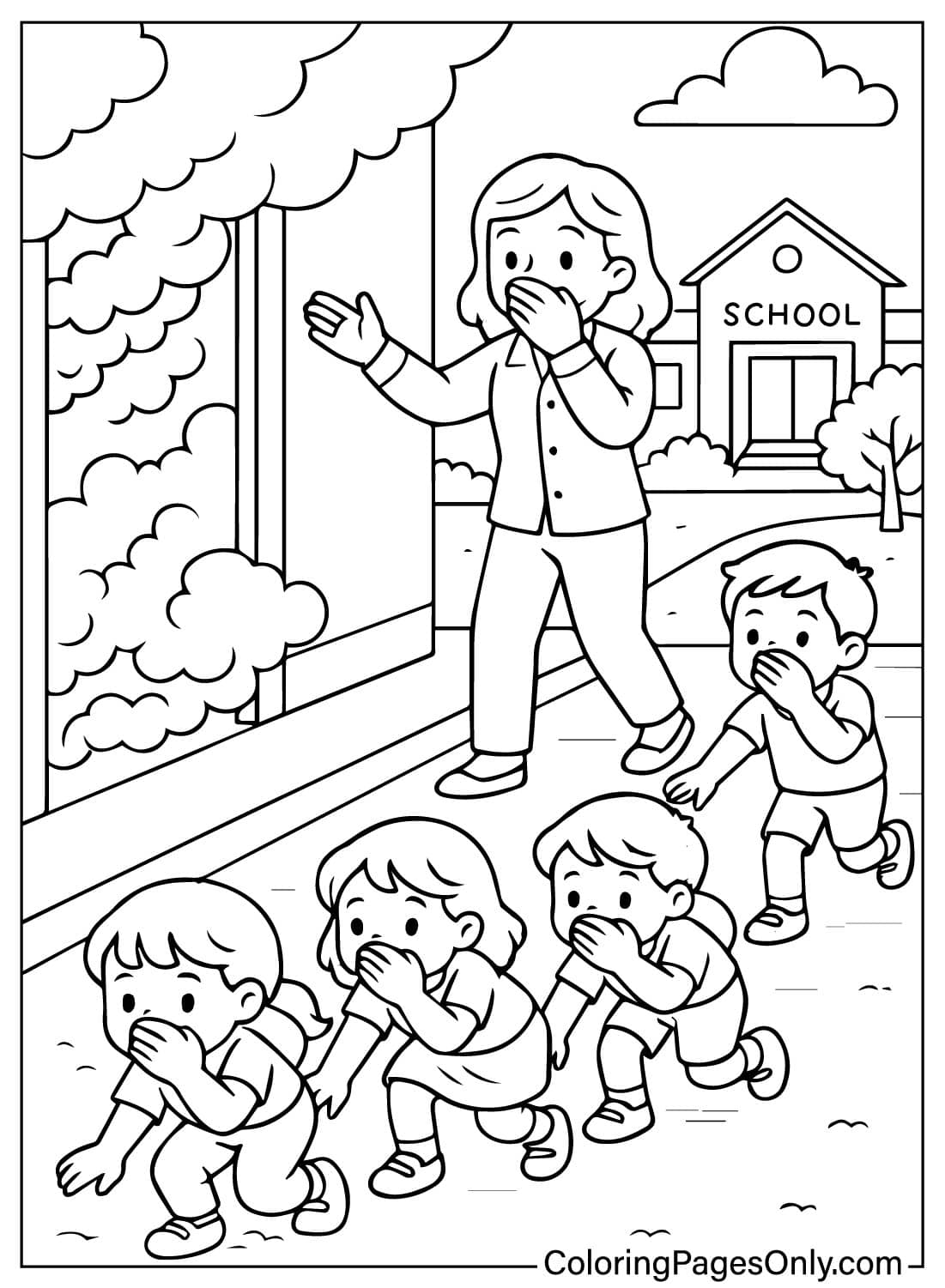
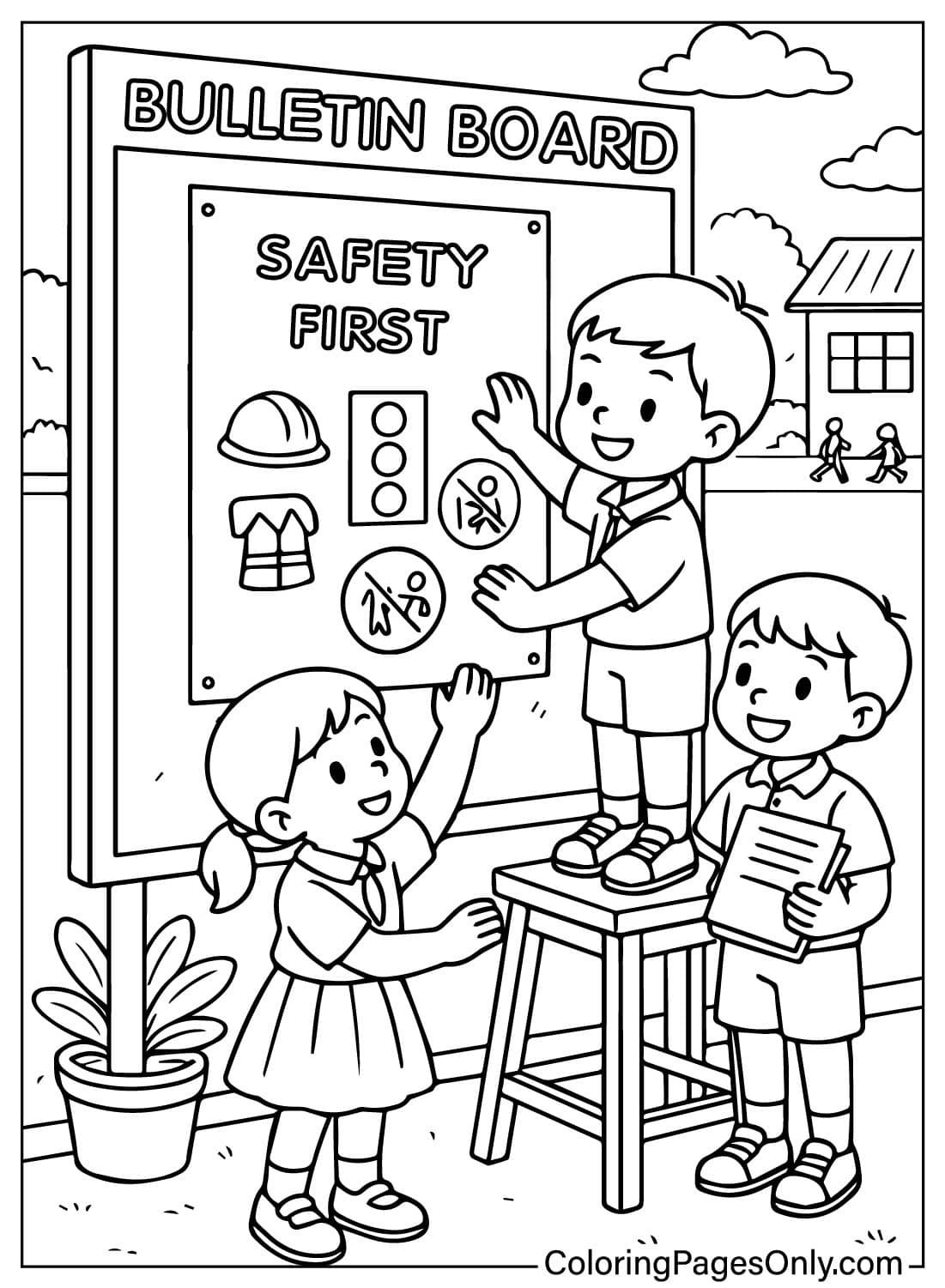
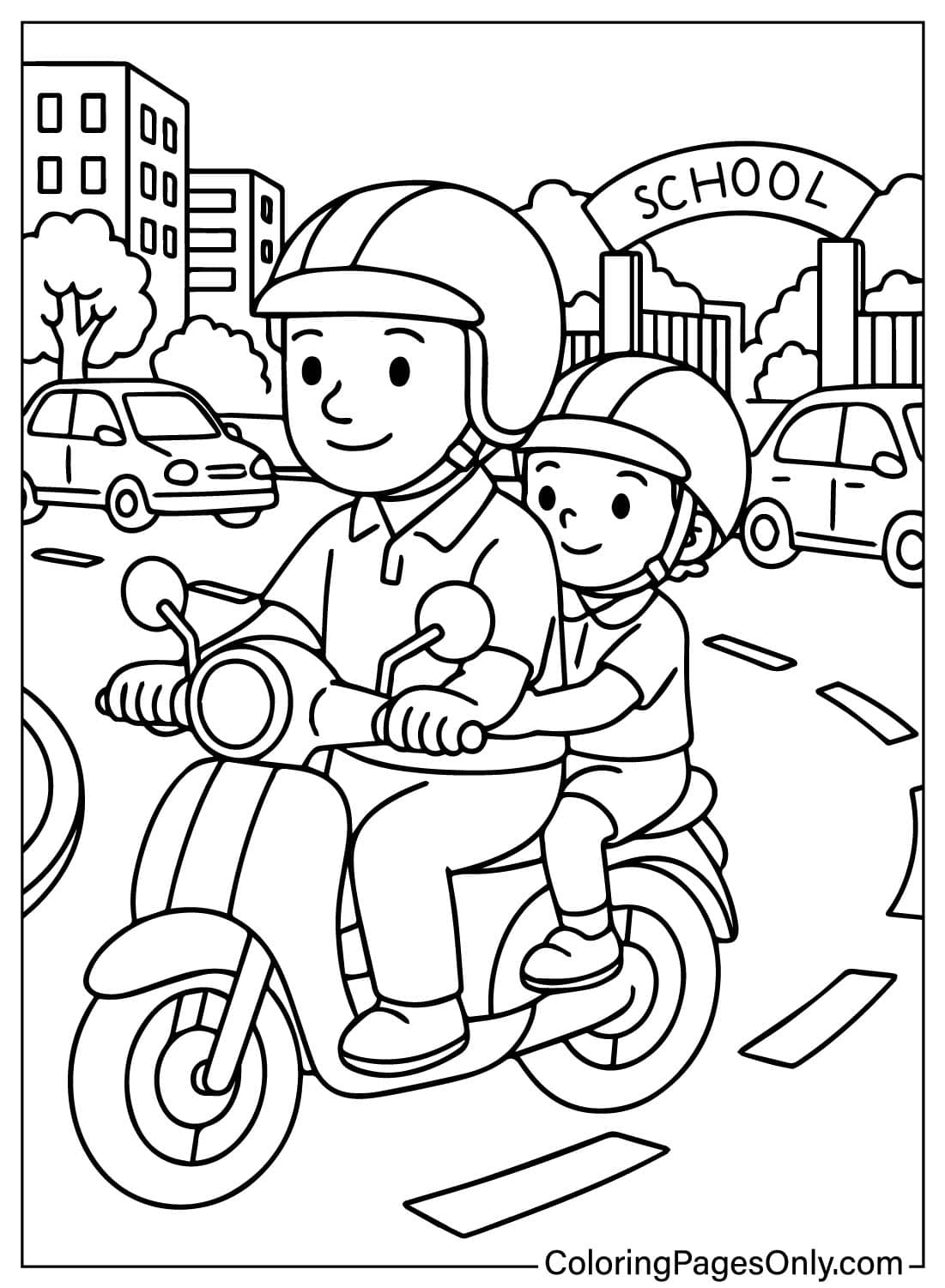
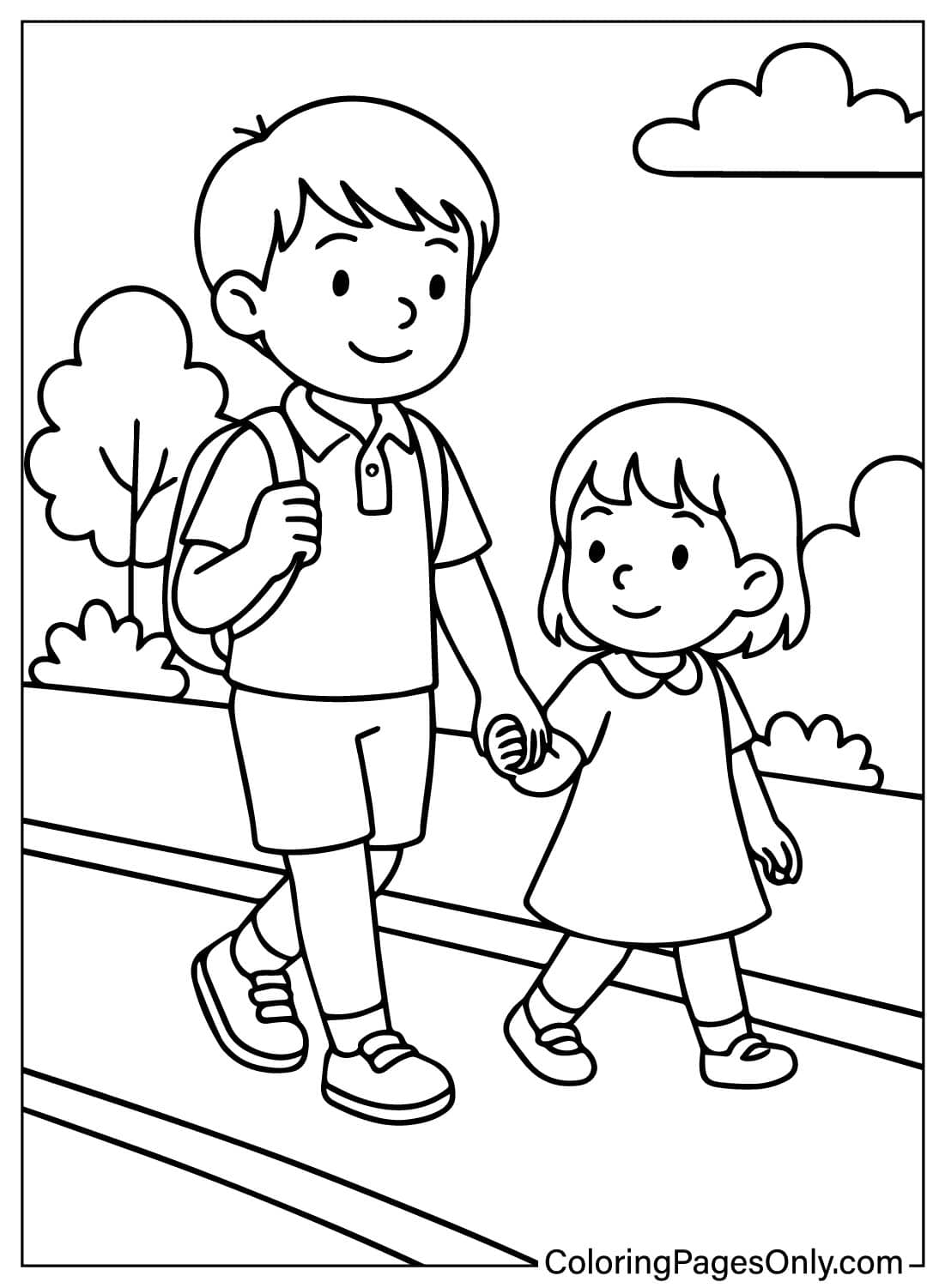
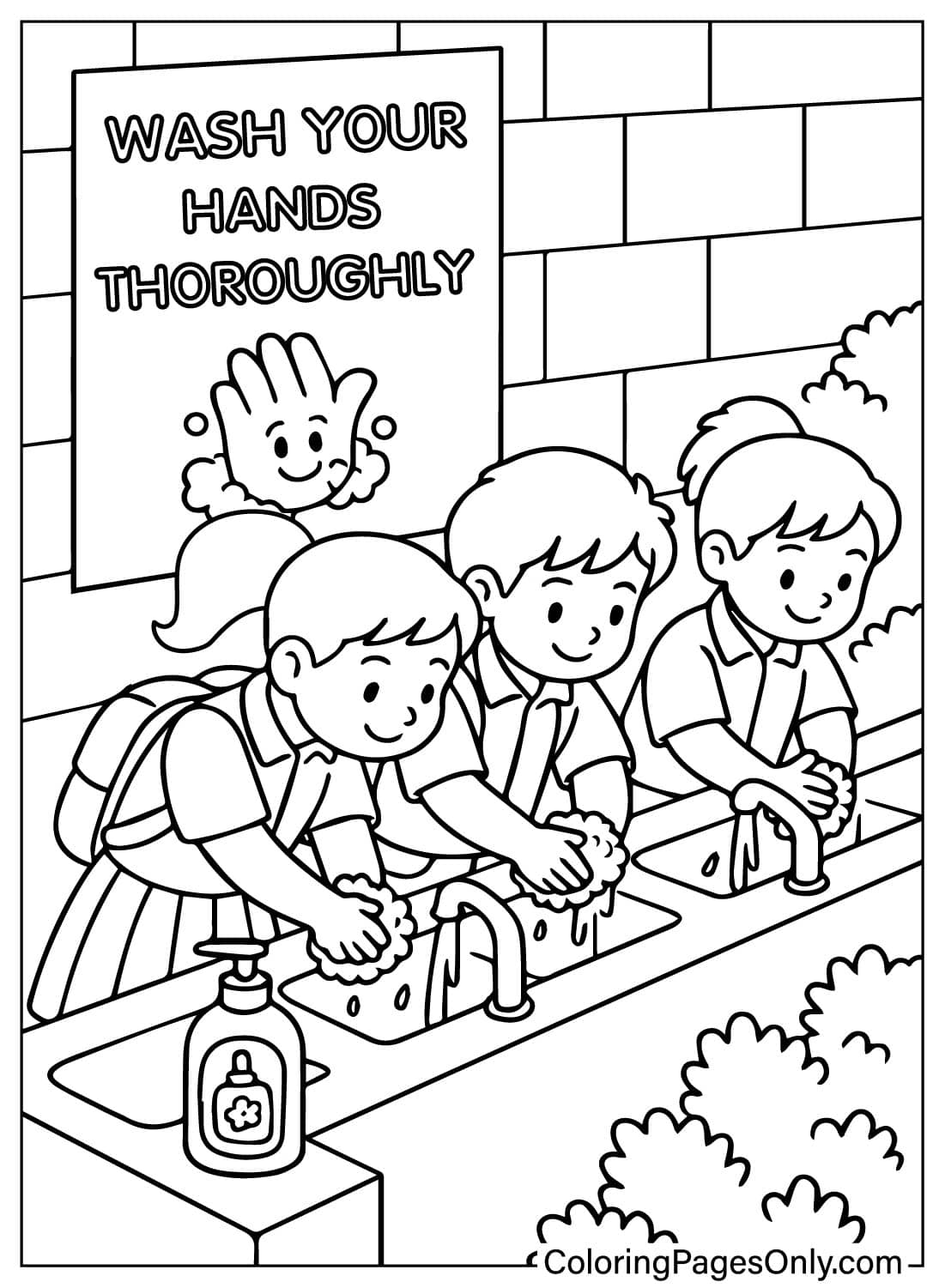
Safety at School Coloring Pages at ColoringPagesOnly.com brings together 20+ free printable pages illustrating the full range of safety behaviors in a school environment – a teacher demonstrating fire extinguisher use, students holding the handrail on stairs, children waiting in an orderly line for the bus, a teacher intervening when a stranger offers candy to a child, a student correctly reporting a broken ceiling wire, a class practicing earthquake drop-and-cover, a police officer redirecting a child away from a dangerous fence, and more. Every page depicts a specific safety rule or behavior that children can recognize, name, discuss, and absorb through the act of coloring. Download any page as a free PDF to print, or color online directly in your browser.
This collection sits within the Educational Coloring Pages hub alongside closely related school-year collections: School Kindness Coloring Pages, Growth Mindset Coloring Pages, Back to School Coloring Pages, and First Day of School Coloring Pages.
Why Safety Education Needs More Than a Lecture
The standard approach to school safety education is informational: a teacher explains what to do in a fire, an assembly covers stranger danger, and a handout describes bus safety rules. This approach feels sufficient – the information has been delivered, the rules have been stated. But research on safety skills in children consistently shows a significant gap between knowing a safety rule and being able to apply it correctly under real conditions.
A comprehensive review published in PMC examining safety skills training in children found that purely informational approaches – instructions and modeling without any opportunity for rehearsal or active engagement – were repeatedly found to be ineffective when outcomes were measured by real-situation assessments. Children who heard the rule could often repeat it back. Children who could repeat it back still failed to apply it correctly when the actual situation arose. The information was stored, but it was not integrated into an automatic behavioral response.
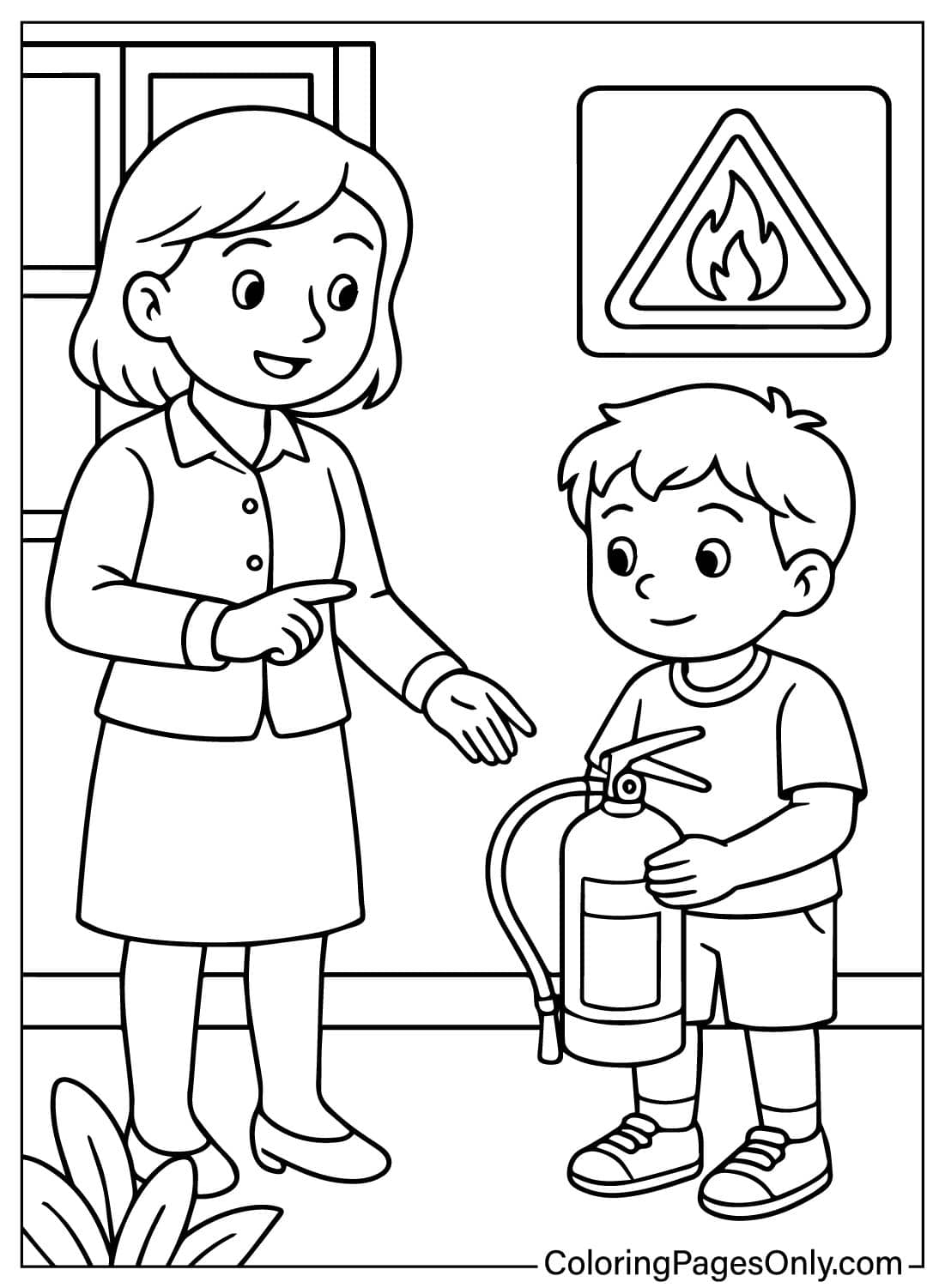
The most effective approaches to safety skills learning combine three elements: visual modeling (seeing the correct behavior performed), active engagement with the scenario, and repeated exposure to the scene in low-stakes contexts. Coloring a safety scene engages all three of these elements in a form appropriate for young children. A child who colors “Teacher Explaining Fire Safety with Fire Extinguisher to Child” spends several minutes in focused visual engagement with the specific scene of fire safety instruction – looking at the extinguisher, the teacher’s demonstration, the warning sign on the wall – in a calm, non-threatening creative context. When a real fire drill occurs, the scene is not entirely novel. The child has a mental image of what fire safety instruction looks like, who leads it, and what the relevant equipment looks like.
The Social Sci LibreTexts guidance on preventing injury in children puts this principle directly: safety guidance is most effective when it creates “awareness and encourages developmentally appropriate behavior.” Coloring safety scenes is one of the most developmentally appropriate forms of safety awareness building available for young children – it requires no reading ability, no abstract reasoning, no ability to retain verbal information under stress. It asks only that a child look carefully at a scene, make creative decisions about it, and spend time with it. That time spent is the foundation of behavioral readiness.
The Seven Categories of Safety in This Collection
The 20+ pages in this collection cover seven distinct categories of school safety, each addressing a specific domain of risk that children encounter regularly. Together they form a comprehensive visual safety curriculum – not a formal program, but a complete picture of what safe behavior looks like across the full school day.
1. Fire and Emergency Safety
Teacher Explaining Fire Safety with a fire extinguisher to a child and a teacher leading an earthquake safety drill in a classroom represent the two most critical emergency preparedness scenarios in school safety education: fire and earthquake response.
Fire safety education in schools is formally mandated in most jurisdictions. In California, for example, school districts are required to conduct monthly fire drills for elementary students and twice-yearly drills for secondary students. The effectiveness of these drills depends partly on whether children understand what they are practicing before the drill begins – a child who has seen fire safety equipment illustrated and explained in advance arrives at the drill with some prior mental model of what fire extinguishers look like, who uses them, and what their purpose is.
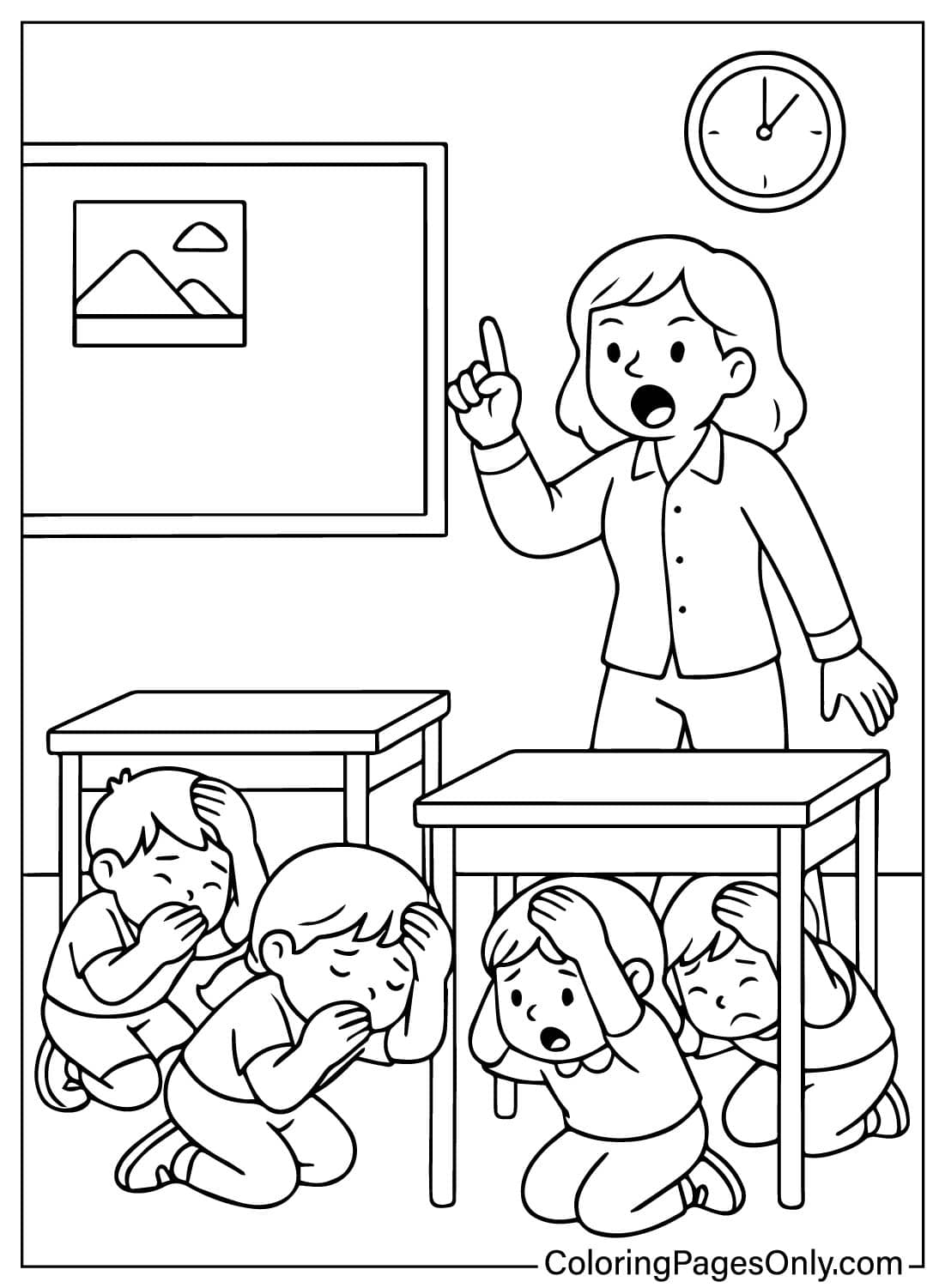
The earthquake drill page – showing students in the “drop, cover, and hold on” position under their desks while a teacher calmly directs them – depicts what is called the triangle of life misconception correction: many children (and adults) instinctively want to run when an earthquake occurs, when the correct response is to drop immediately and take cover. A page that shows the correct drill behavior in advance of a drill provides children with a visual template of the right response before they need to execute it in an actual exercise.
How to use these pages: Print and color the fire safety and earthquake pages in the week before a planned drill. After coloring, discuss: “Who has the extinguisher in the picture? What does it look like? When the drill happens at school, what will you do?” This pre-drill coloring session and brief discussion is the low-stakes rehearsal that research identifies as the missing ingredient in purely informational safety education.
2. Physical Safety in the Building
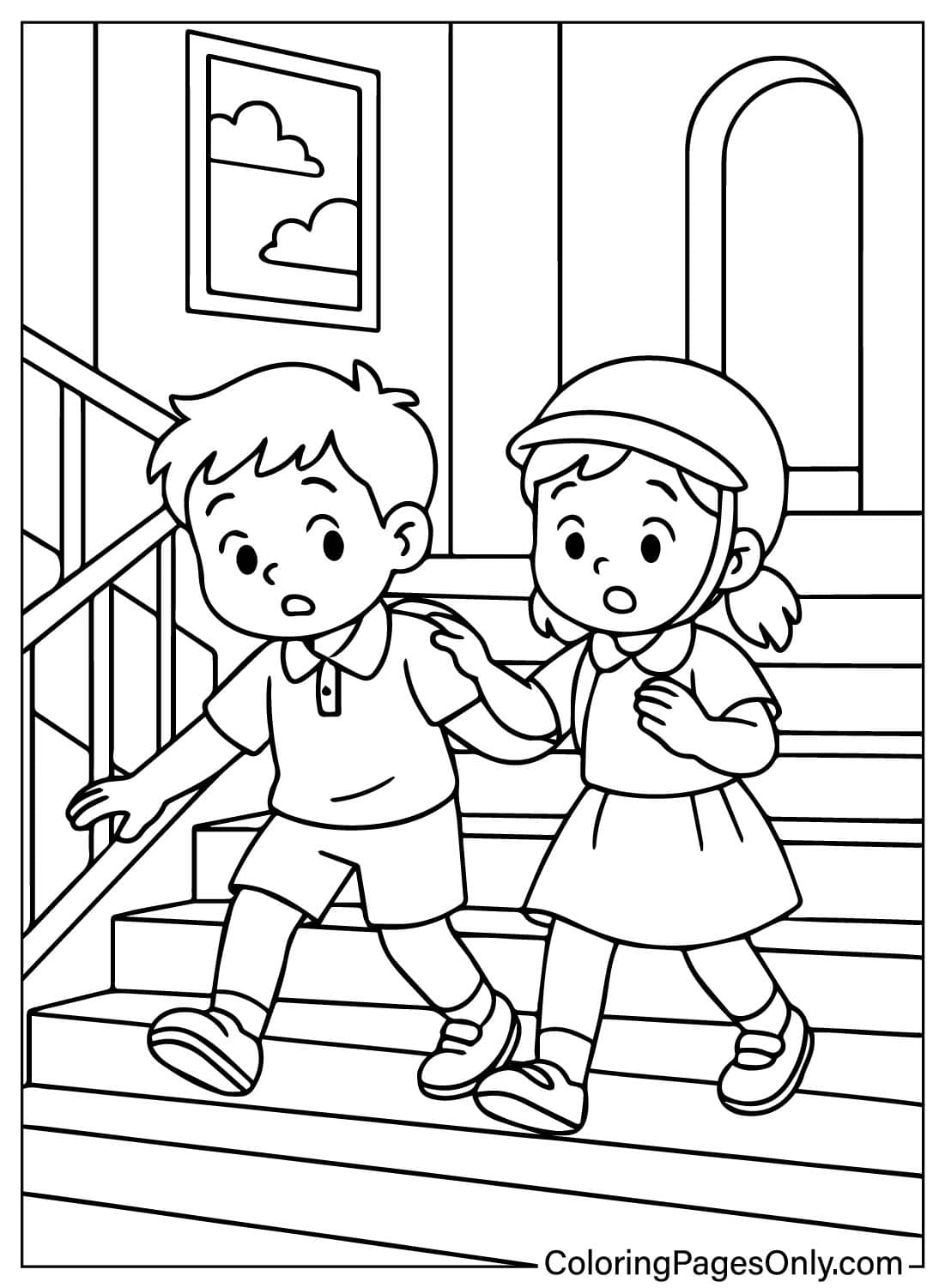
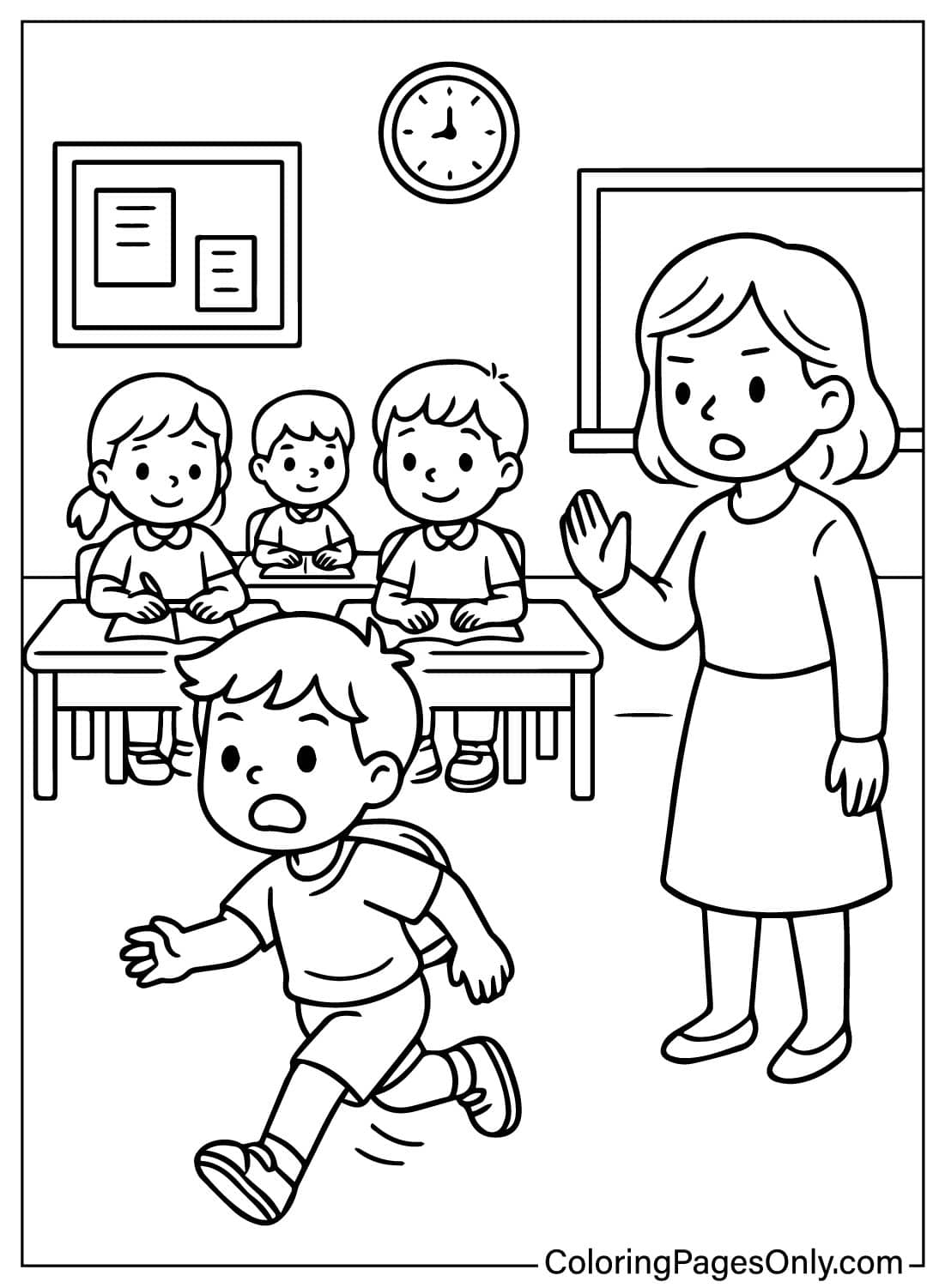
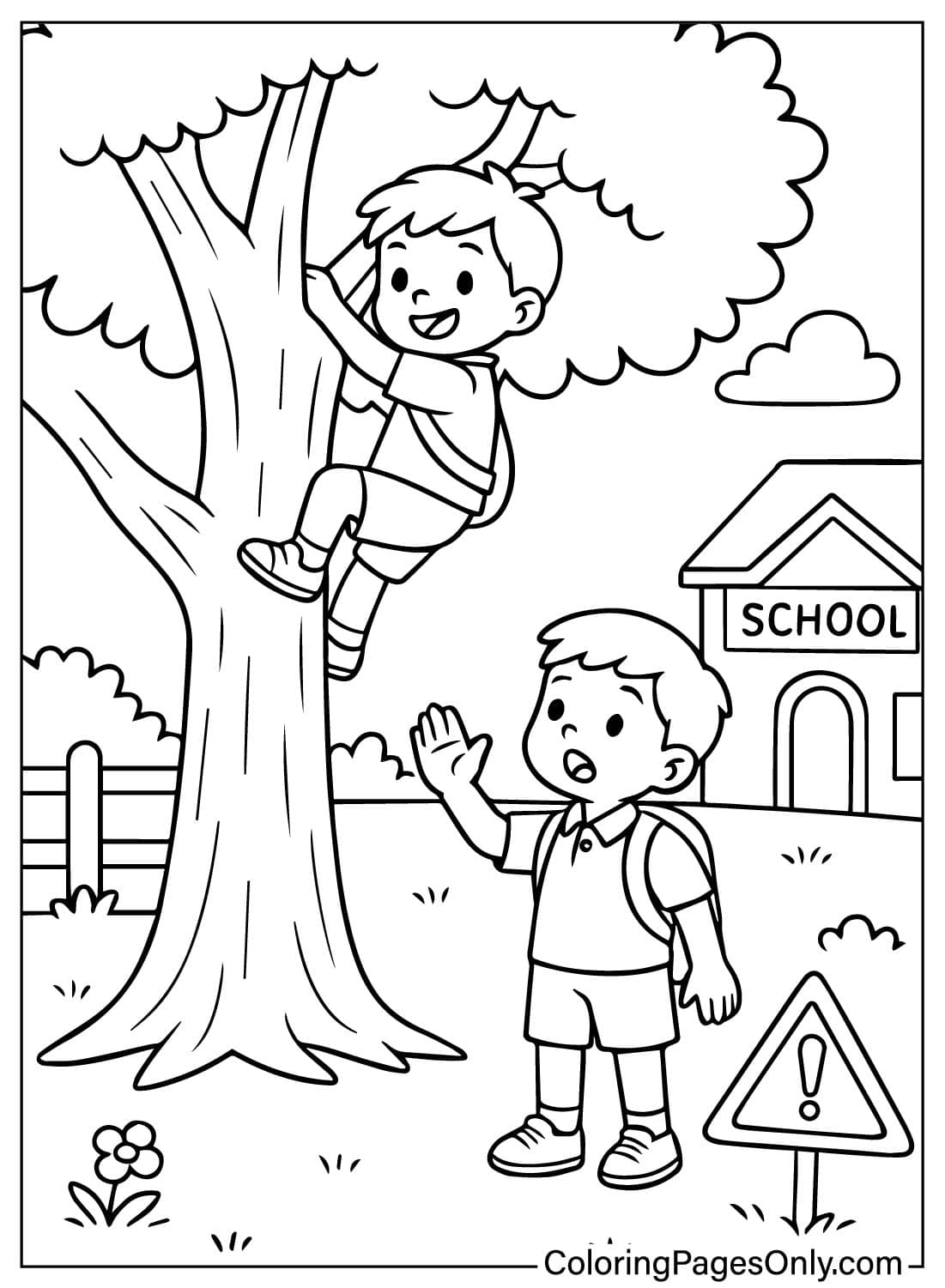
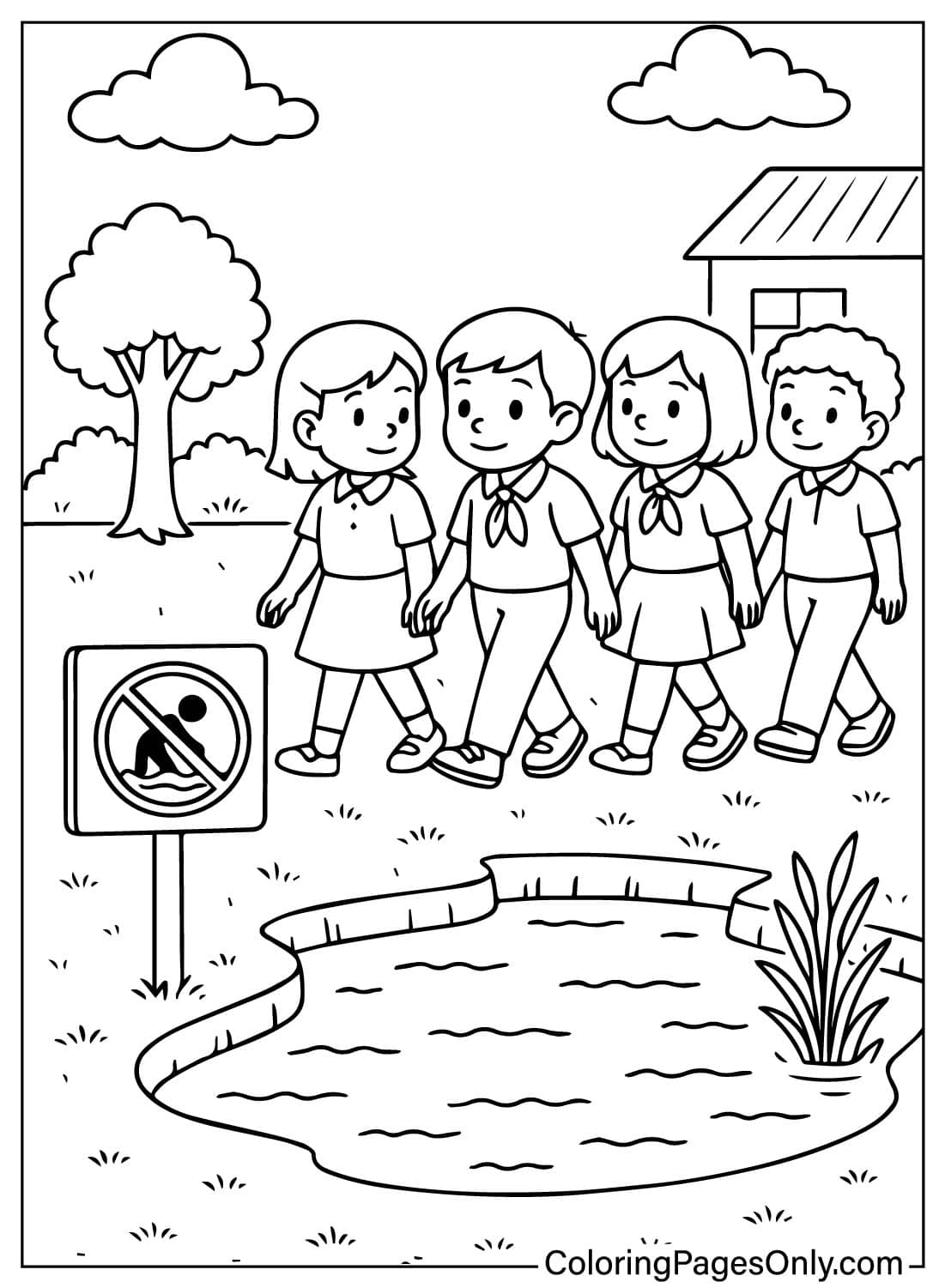
Students Walking Carefully Down the Stairs, Teacher Stopping Student from Running in Class, and Student Climbing Tree Near School Warning Sign address the most common causes of everyday school injury: falls and collisions from running, stair accidents, and climbing hazards.
Data from pediatric safety research is consistent: playground and building falls account for more than 200,000 emergency room visits by school-age children per year in the United States. Most of these injuries are not from dramatic accidents – they result from running on wet floors, descending stairs too quickly, and climbing structures not designed for climbing. These are precisely the behaviors depicted in this collection’s physical safety pages.
The stair page is particularly important because stair safety involves a physical habit – holding the handrail, maintaining a deliberate pace, keeping to the right – that children must form through repeated correct practice rather than simply knowing the rule. A child who has colored a page showing two students carefully walking down stairs while holding the handrail has a positive visual model of the correct behavior, not just a prohibition (“don’t run on stairs”). Research on safety rule learning in children consistently finds that positively framed rules – showing correct behavior – are more effective than negatively framed ones. “Walk carefully and hold the railing” is better absorbed than “don’t run.”
3. Stranger Danger and Personal Safety
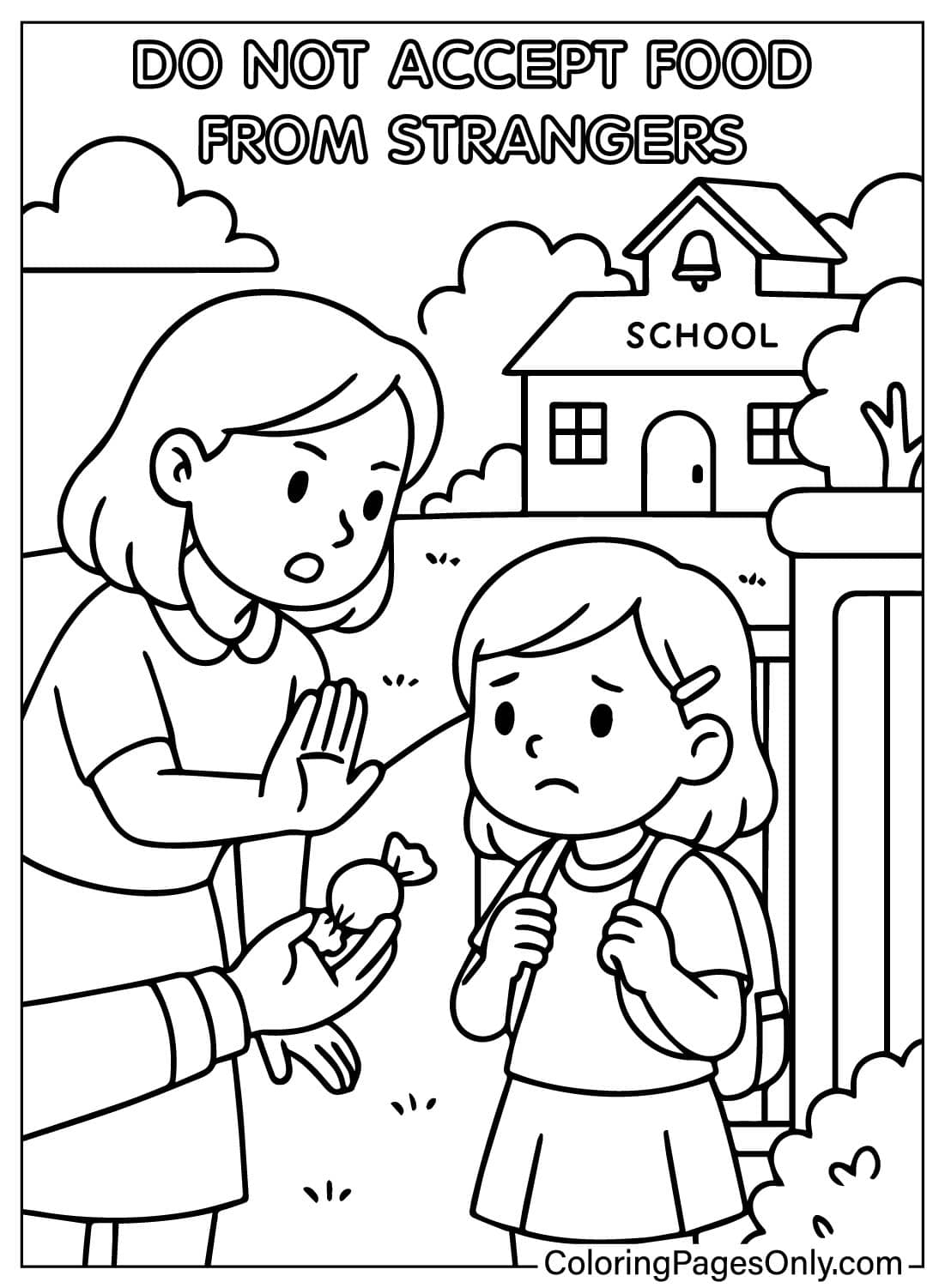
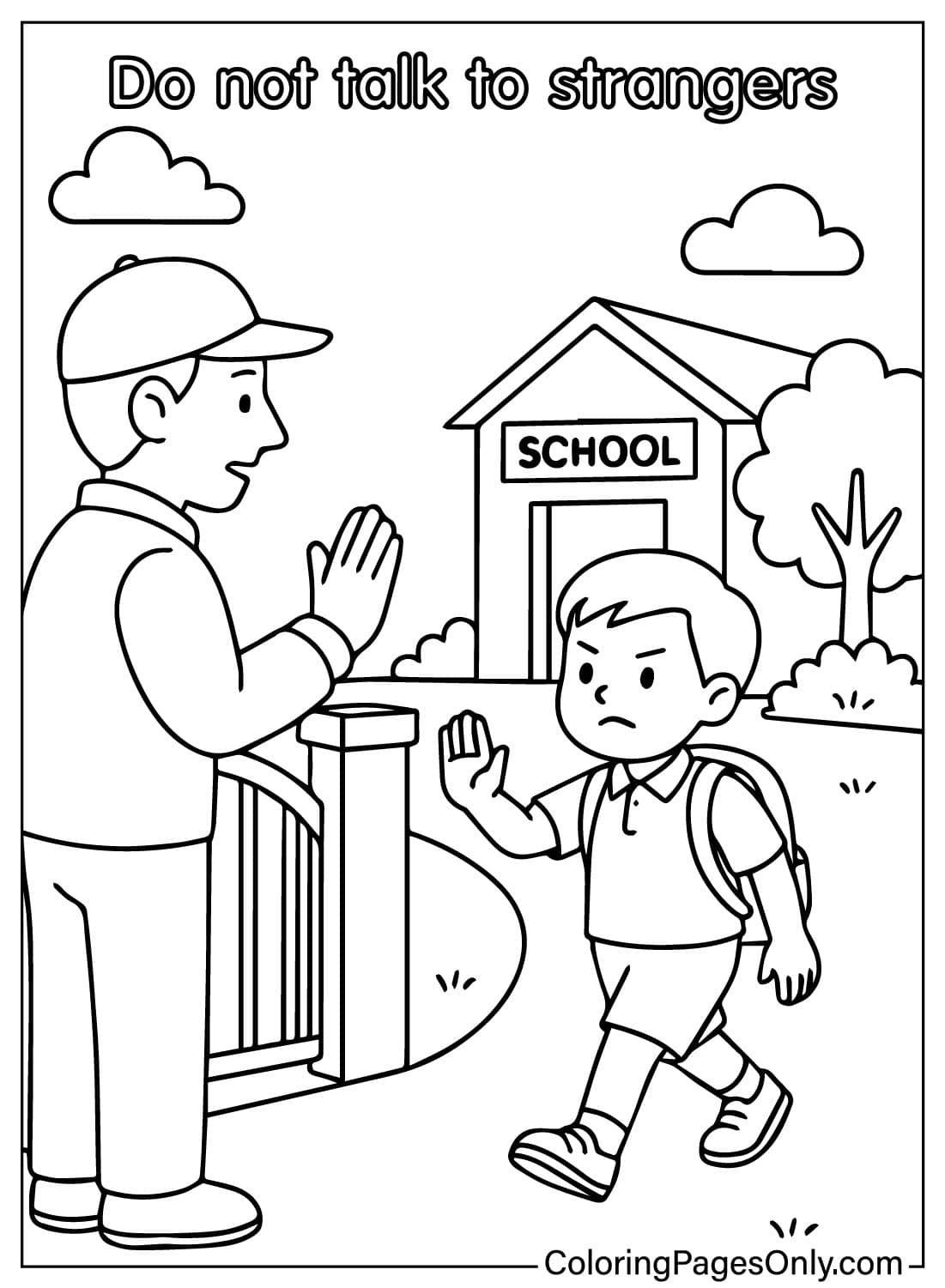
Teacher Warning Student About Stranger Danger depicts a scene that addresses one of the most important personal safety topics in child protective education: a teacher intervening when a stranger outside the school offers a child candy. The scene teaches three things simultaneously: that strangers may use appealing offers as lures, that trusted adults will intervene and protect, and that the correct response to such an offer is to stay back and seek a trusted adult.
Child personal safety education has evolved significantly from the older “stranger danger” framework, which research found to be both overly broad (not all strangers are dangerous; many are helpful) and psychologically counterproductive (producing generalized fear of all unfamiliar people). Contemporary personal safety education for children focuses more specifically on unsafe situations and unsafe behaviors rather than “strangers” as a category – teaching children to recognize specific warning signs (someone offering gifts, asking them to keep secrets, wanting them to go somewhere without their parents’ knowledge) rather than simply to avoid all unfamiliar people.
The page in this collection – showing a teacher actively guiding a child away from the situation – models the most important lesson in personal safety for young children: when something feels wrong, go to a trusted adult immediately. The teacher’s presence in the scene is as important as the stranger’s, because it shows the child that trusted adults are their allies and protectors in these situations.
4. Electrical and Environmental Hazards
Teacher Warning Child About Electrical Safety and Student Reporting Classroom Hazard to Teacher covers the category of environmental hazards: things in the school environment that are dangerous, not because of anyone’s bad intentions, but because of the physical properties of electricity, damaged equipment, or structural hazards.
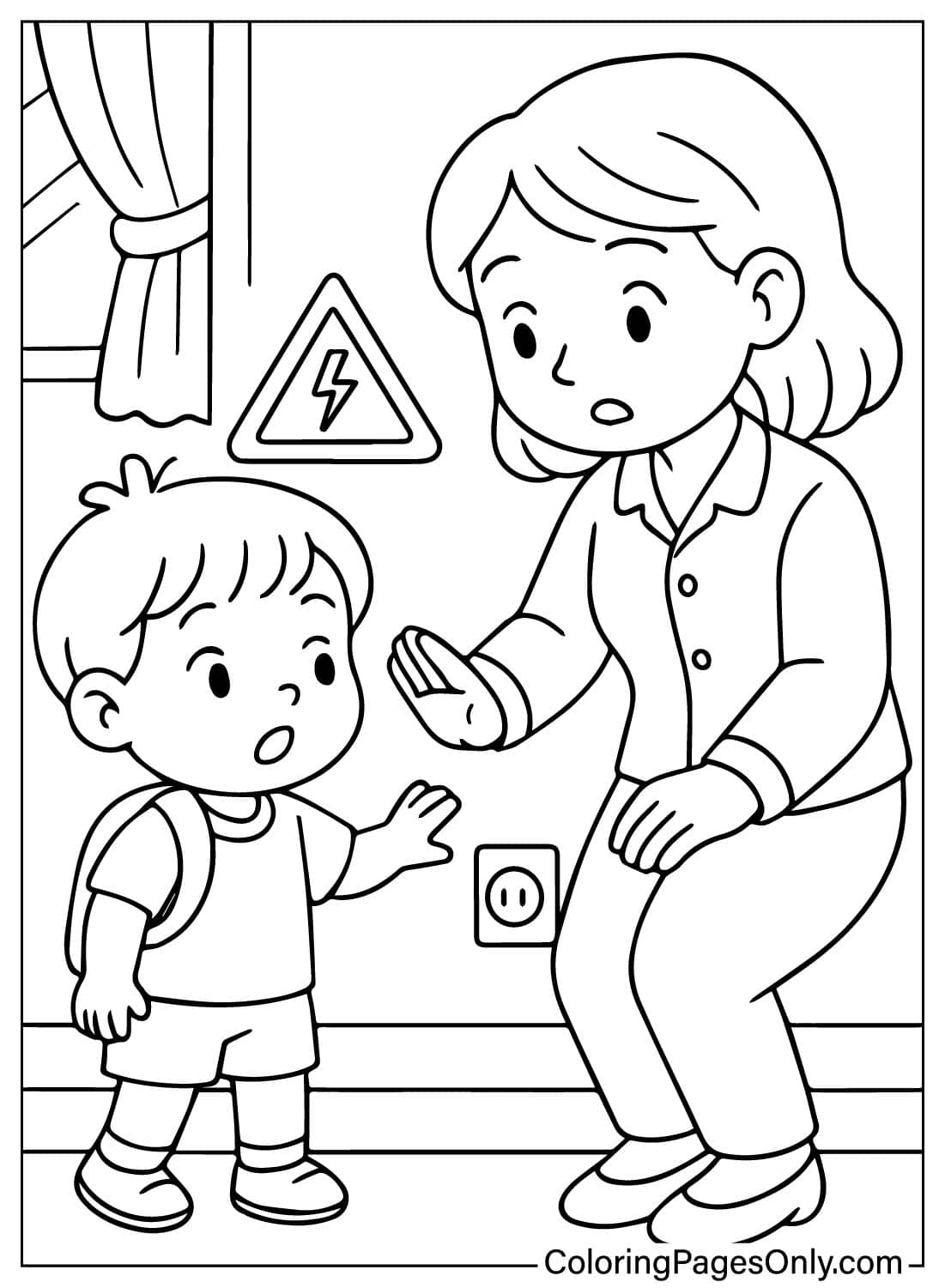
The electrical outlet page teaches what is called “hazard recognition” – the ability to identify a feature of the environment as potentially dangerous before contact with it. For young children, electrical outlets are a significant hazard precisely because children cannot see the danger directly (electricity is invisible) and because the outlet’s physical form is not intrinsically threatening. A page that shows the correct response (a trusted adult warning a child away from an outlet, with a warning sign visible on the wall) builds the association between the physical sight of an outlet and the concept of caution.
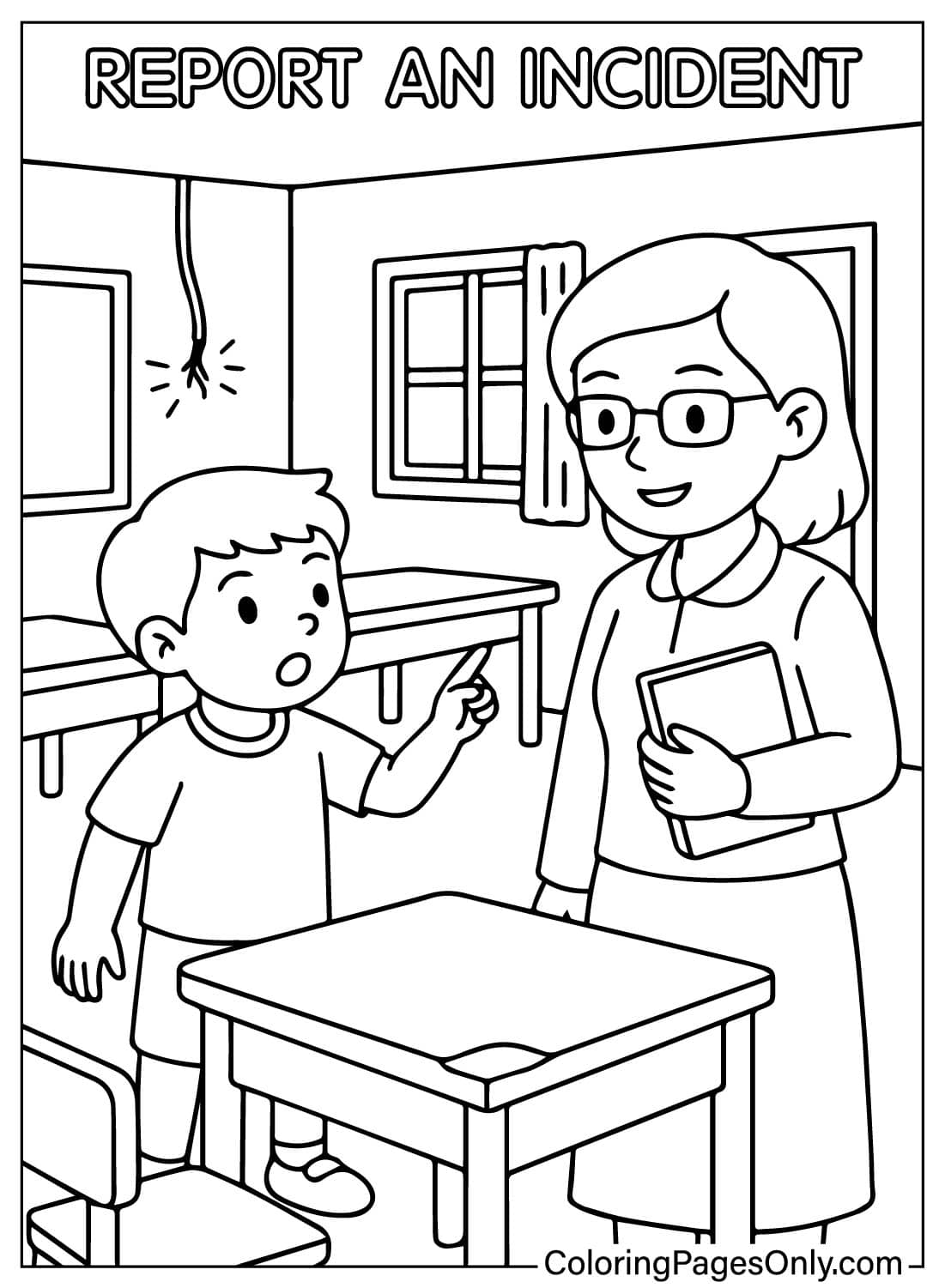
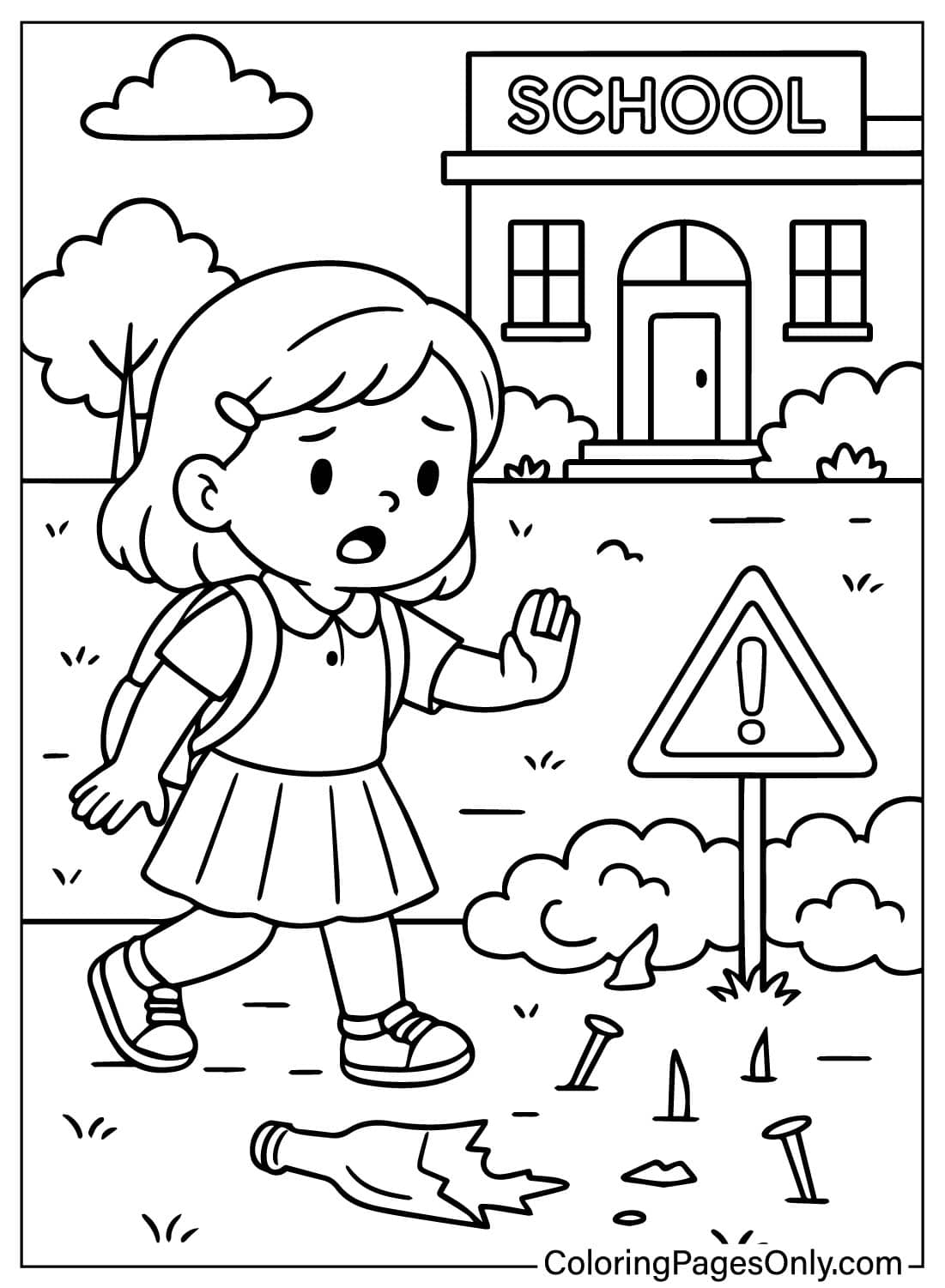
The “Student Reporting Classroom Hazard to Teacher” page teaches something equally important: the concept of reporting rather than handling. The page shows a student pointing out a broken ceiling wire to a teacher, rather than touching or investigating it themselves. This reporting behavior – seeing a hazard, not touching it, immediately notifying an adult – is one of the most important safety behaviors children can develop, applicable across a wide range of hazardous situations from damaged electrical equipment to suspicious objects to unsafe playground conditions.
5. Behavioral Safety and Conflict Prevention
Teacher Stopping Students from Fighting at School and Students Sitting Quietly and Studying in Class address two aspects of behavioral safety: conflict prevention and the classroom order that makes everyone safer.
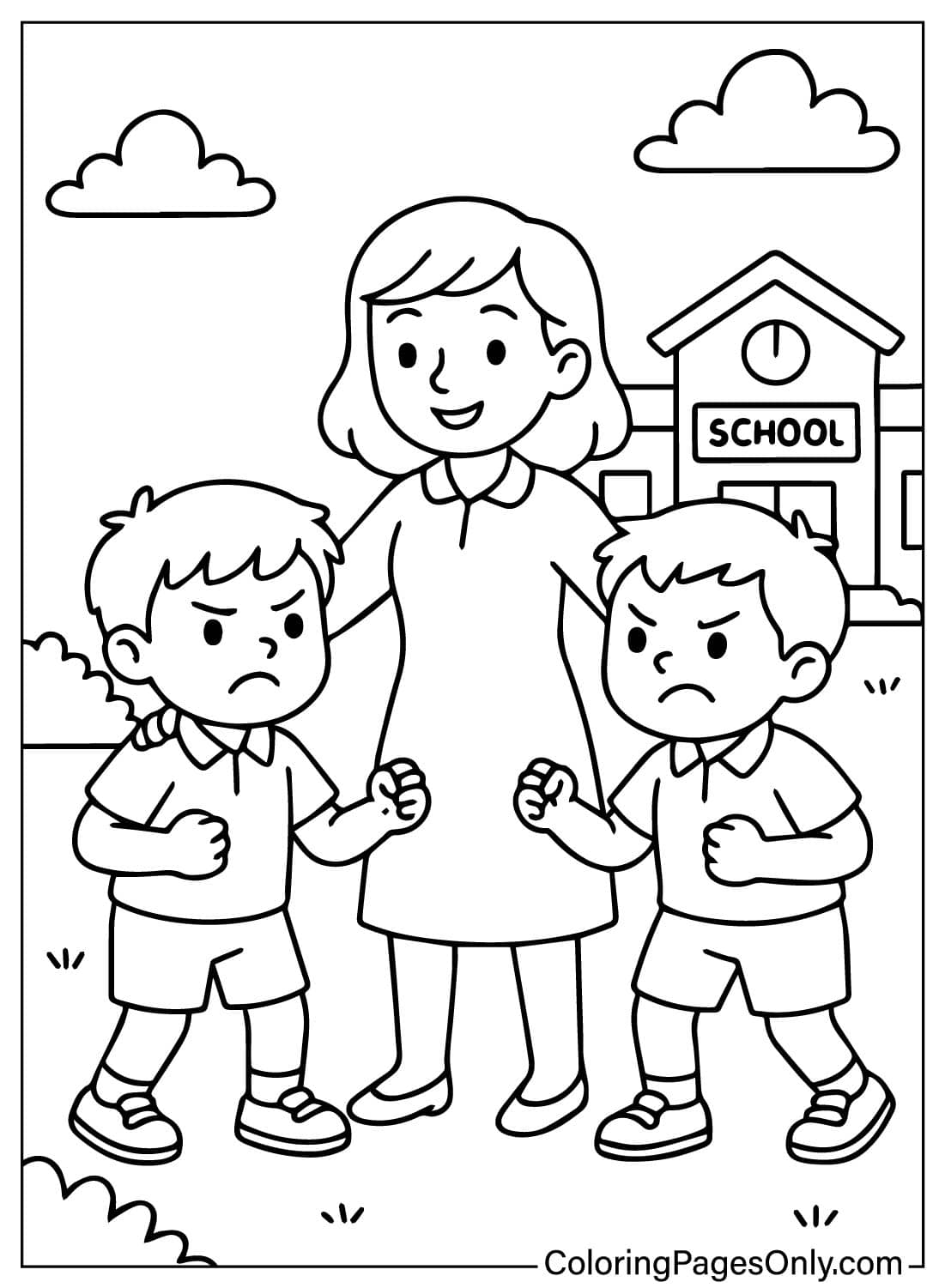
The fighting prevention page – showing a teacher physically and decisively stepping between two students with clenched fists – teaches children several things about school conflict: that physical fighting is not the way conflicts are resolved at school, that teachers will intervene, and that there are better channels for resolving disputes. For children who have witnessed or experienced physical conflict, the presence of a calm, authoritative adult figure in the scene provides a reassuring model of institutional response.
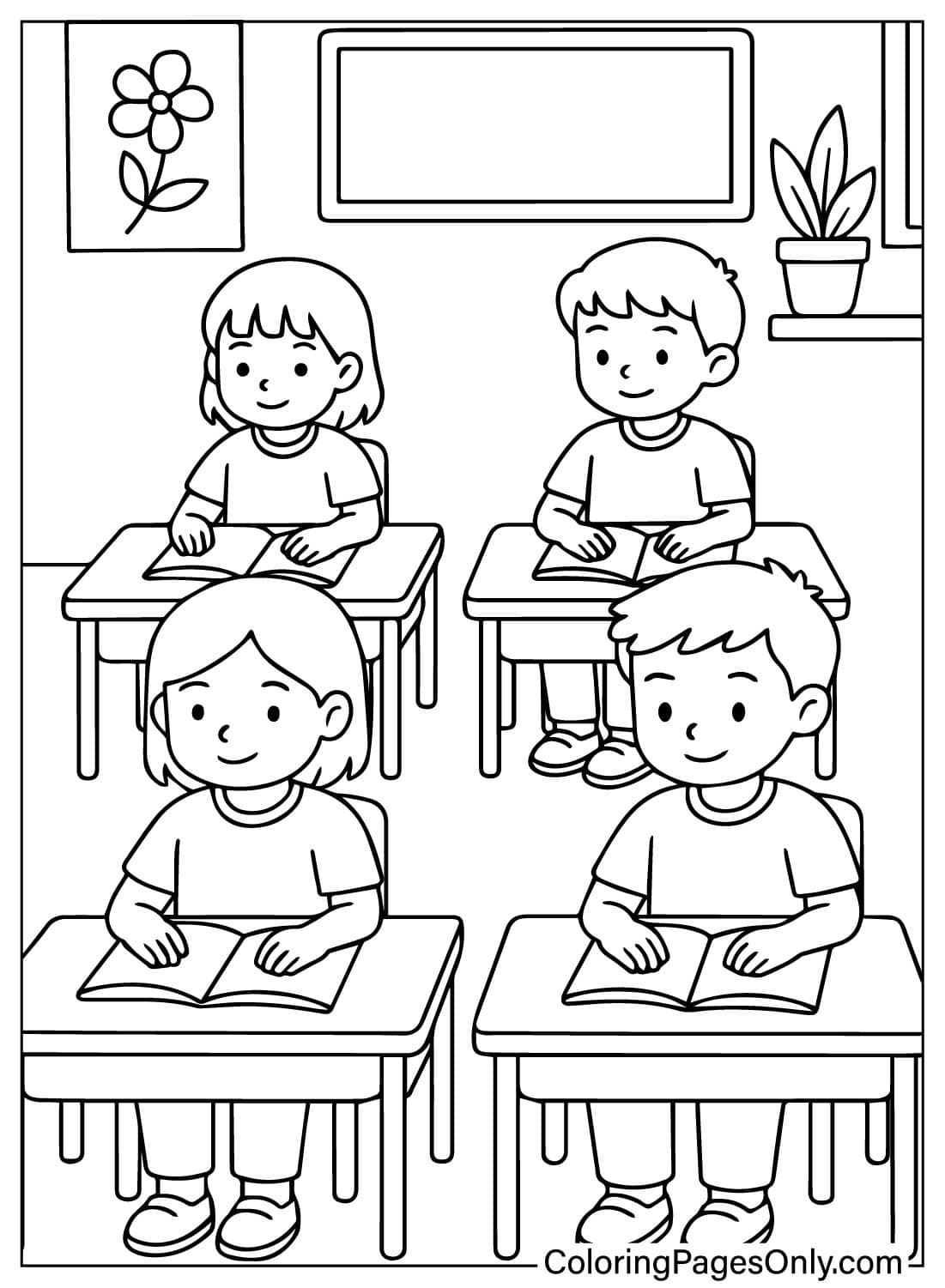
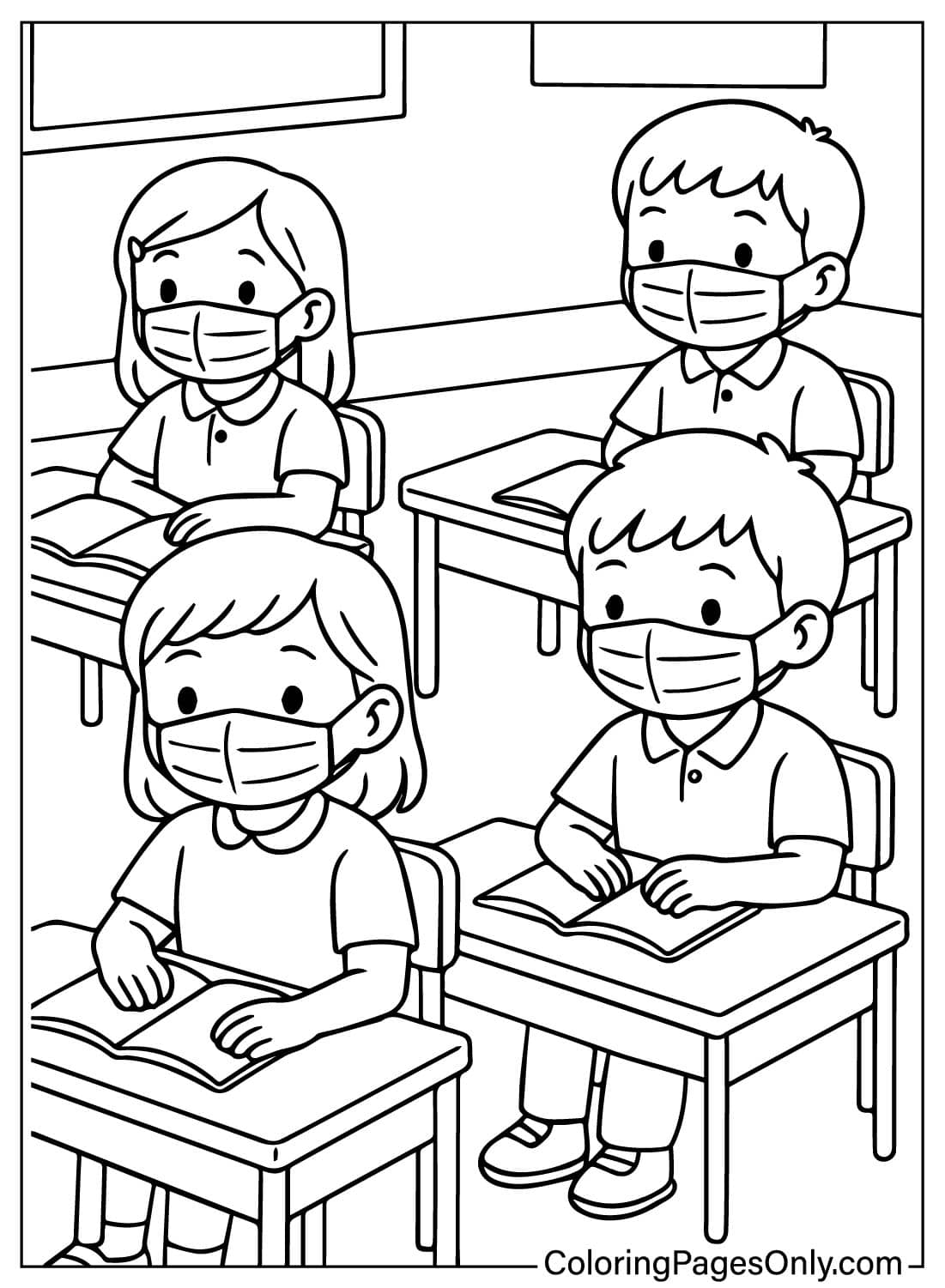
The “Students Sitting Quietly and Studying in Class” page may seem the most ordinary in the collection, but it depicts something genuinely important: a classroom environment where everyone’s safety and learning is protected by orderly, respectful behavior. The contrast between this scene and the fighting page communicates the same safety message from two angles – what unsafe looks like, and what safe looks like.
6. Transport and Crossing Safety
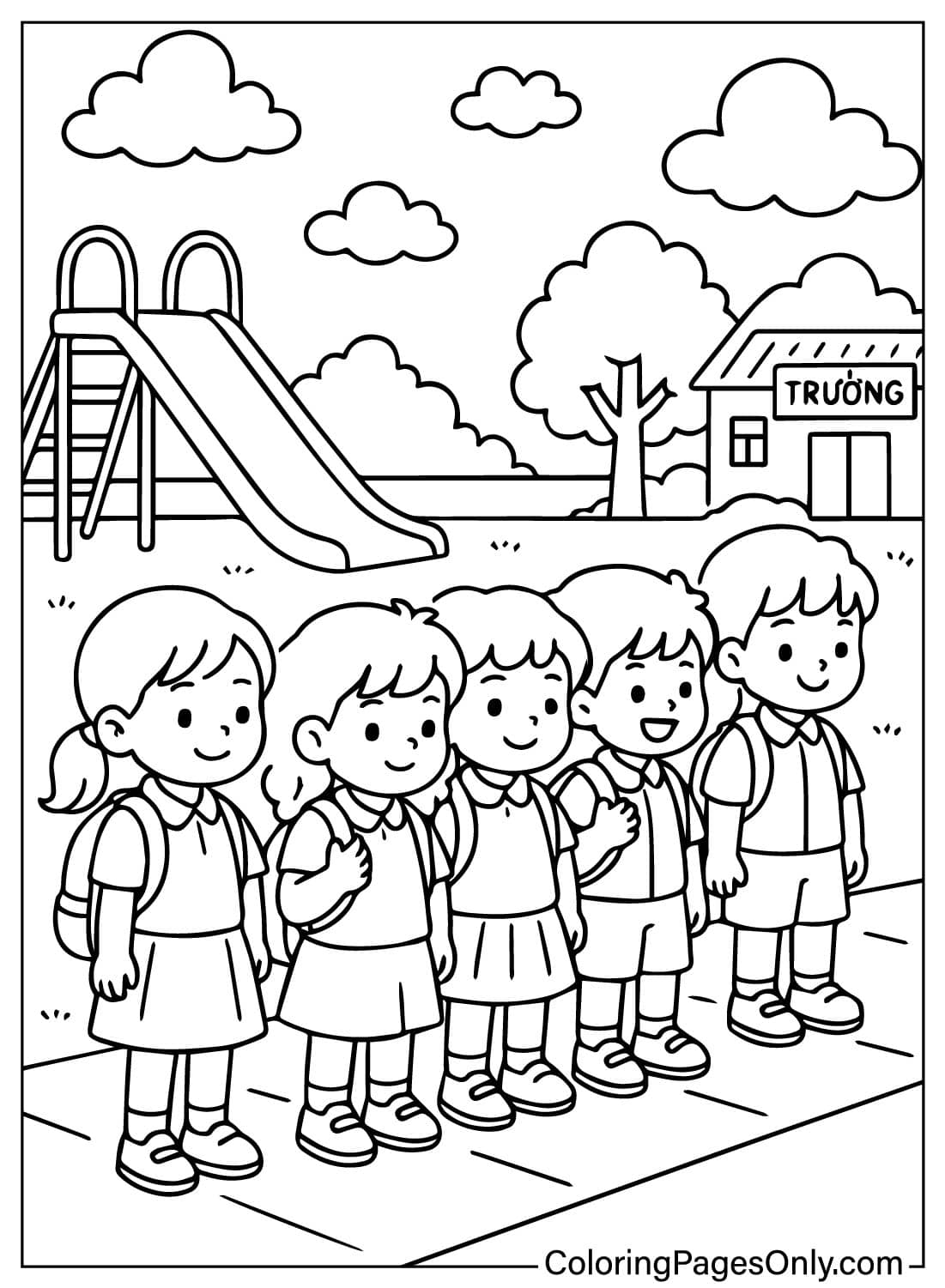
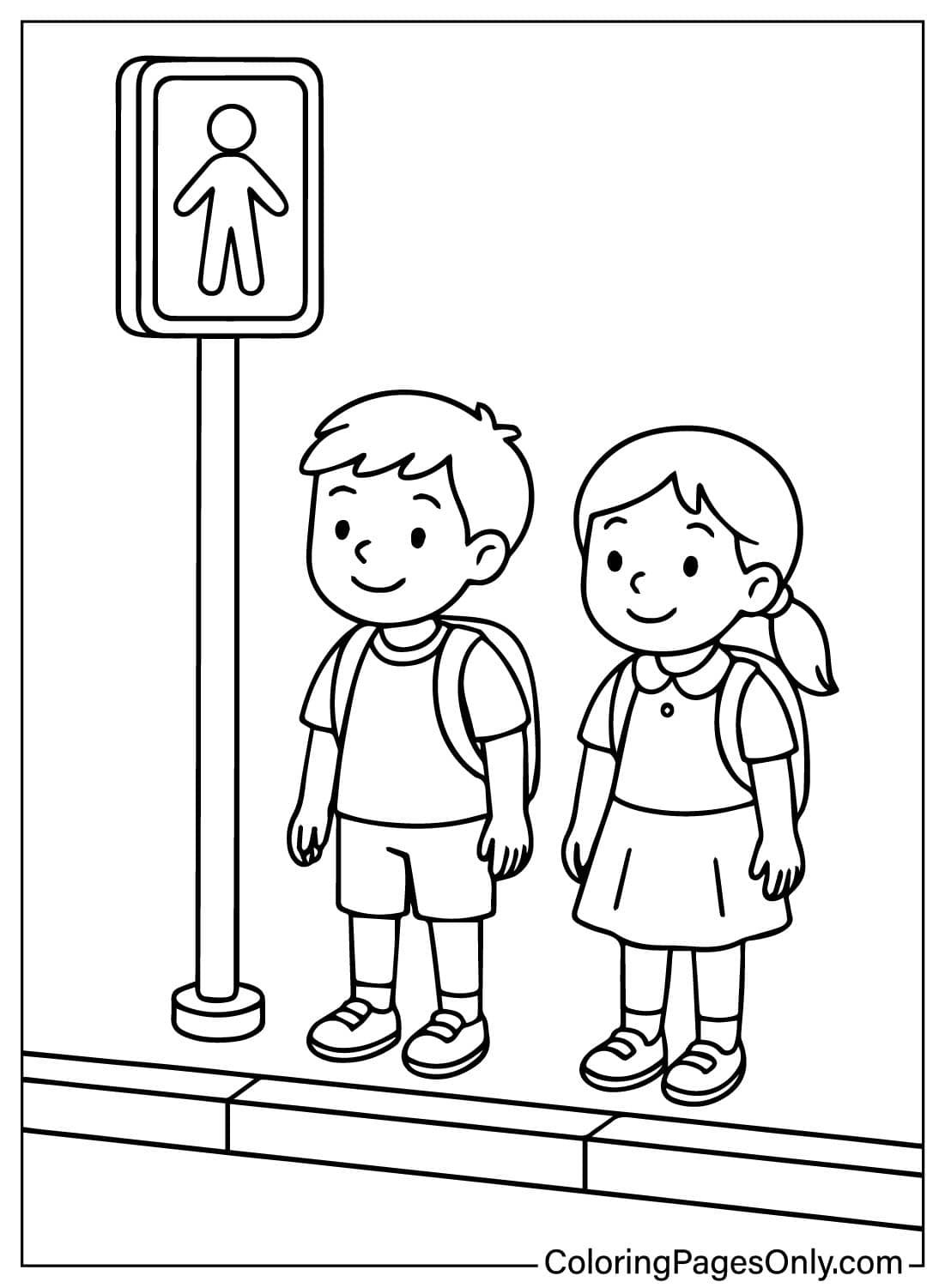
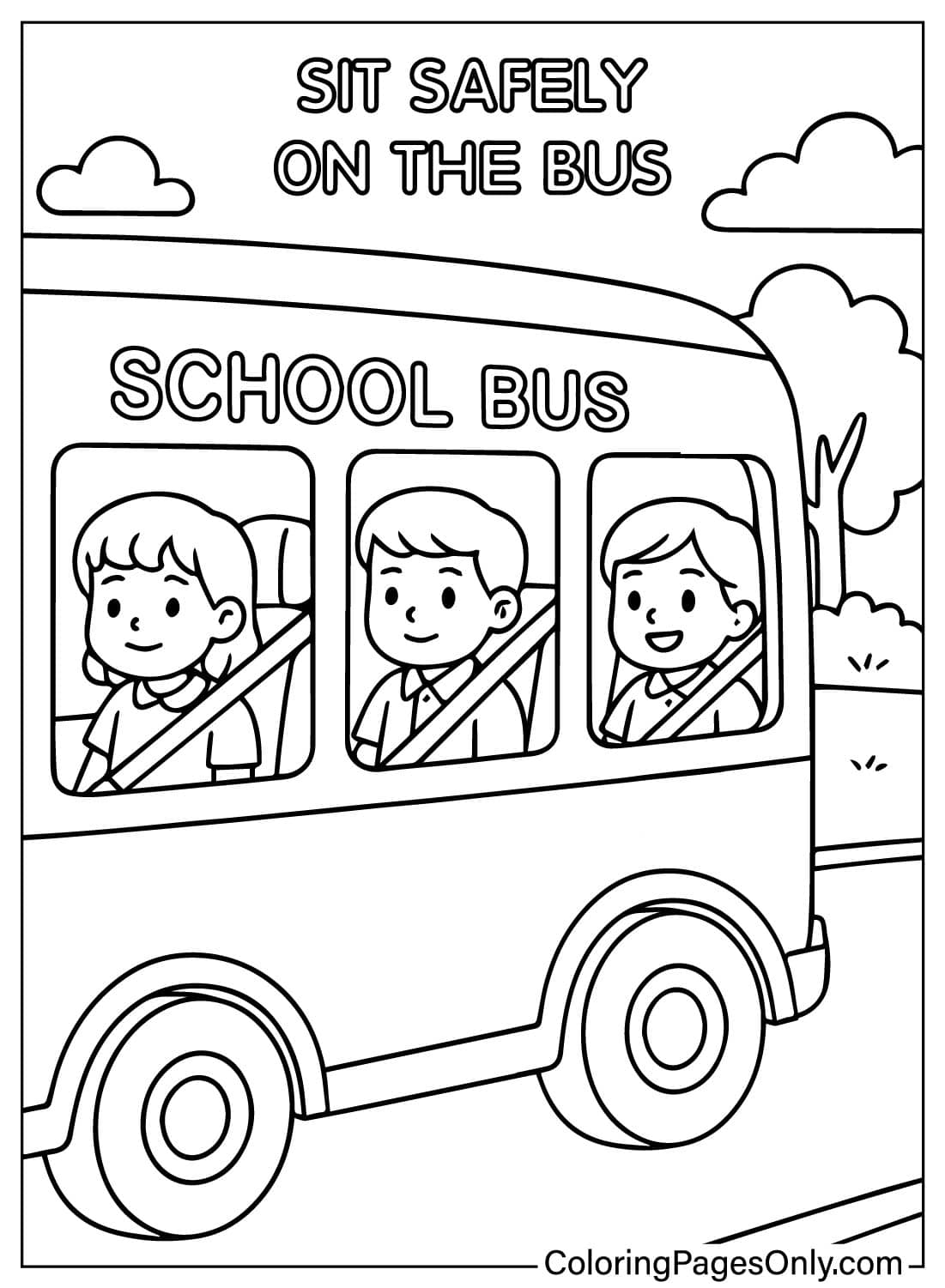
Students Standing Together Waiting for the Bus and Safe School Crossing with Teacher and Kids addresses two of the most hazardous moments in a school child’s day: the school bus stop and the pedestrian crossing near school.
School bus waiting areas are particularly hazardous because children must stand near a roadway, often in the early morning when visibility is low, while remaining patient and organized for an extended period. The bus waiting page shows five students with backpacks standing in a neat line – orderly, away from the roadway, together as a group. This organized waiting behavior significantly reduces the risk of traffic accidents, and it is a habit that children form through practice and positive modeling rather than through verbal instruction alone.
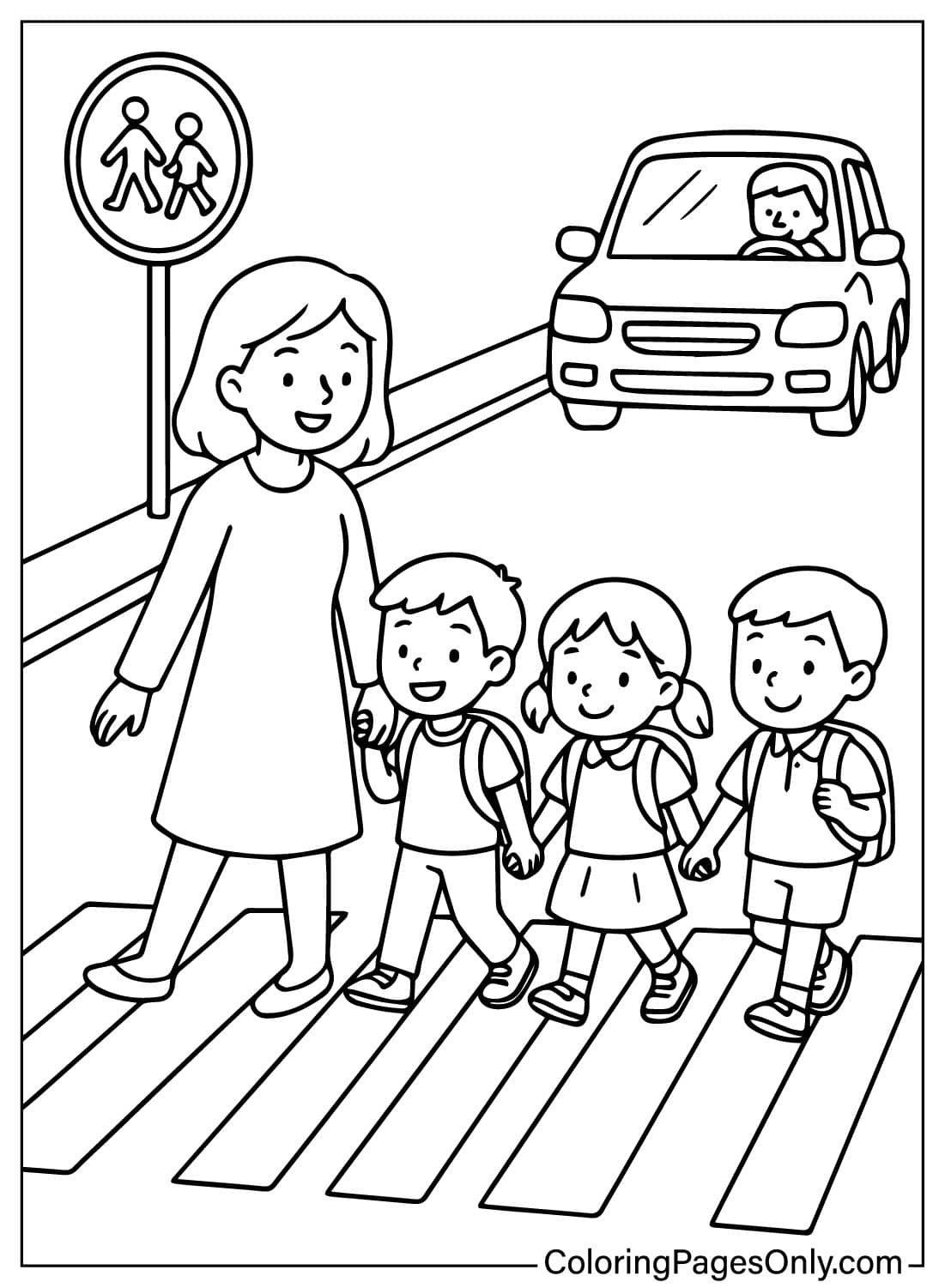
The school crossing page – showing a teacher guiding three children across a marked crossing while a car waits – models the full safe crossing sequence: wait at the edge, ensure vehicles have stopped, cross with a trusted adult or signal, move decisively. For children who walk to school or cross streets independently, this visual model of correct crossing behavior is a genuine safety resource.
7. Health and Peer Safety
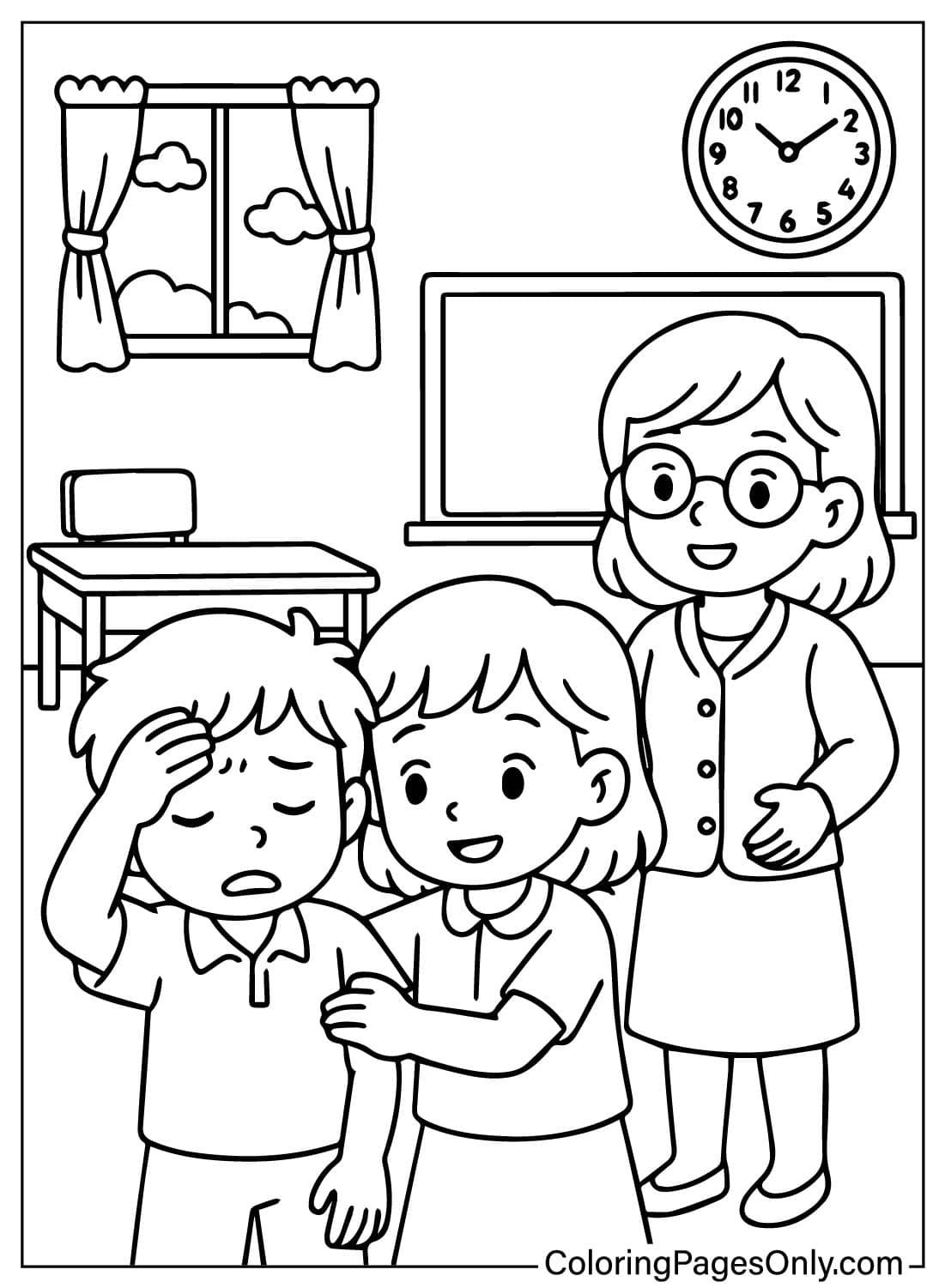
Student Comforting Sick Classmate in School and Safe Lunchtime at School for Kids address two aspects of health and well-being safety. The sick classmate page teaches a nuanced safety behavior: how to respond appropriately when a peer is unwell. A child who comforts a sick classmate – as the girl in the page does, with a concerned teacher observing – is modeling social support while also (implicitly) being supervised by an adult who will make the medical decision about care. The appropriate response to a sick classmate is comfort and immediate adult notification, not ignoring the situation or attempting to manage it independently.
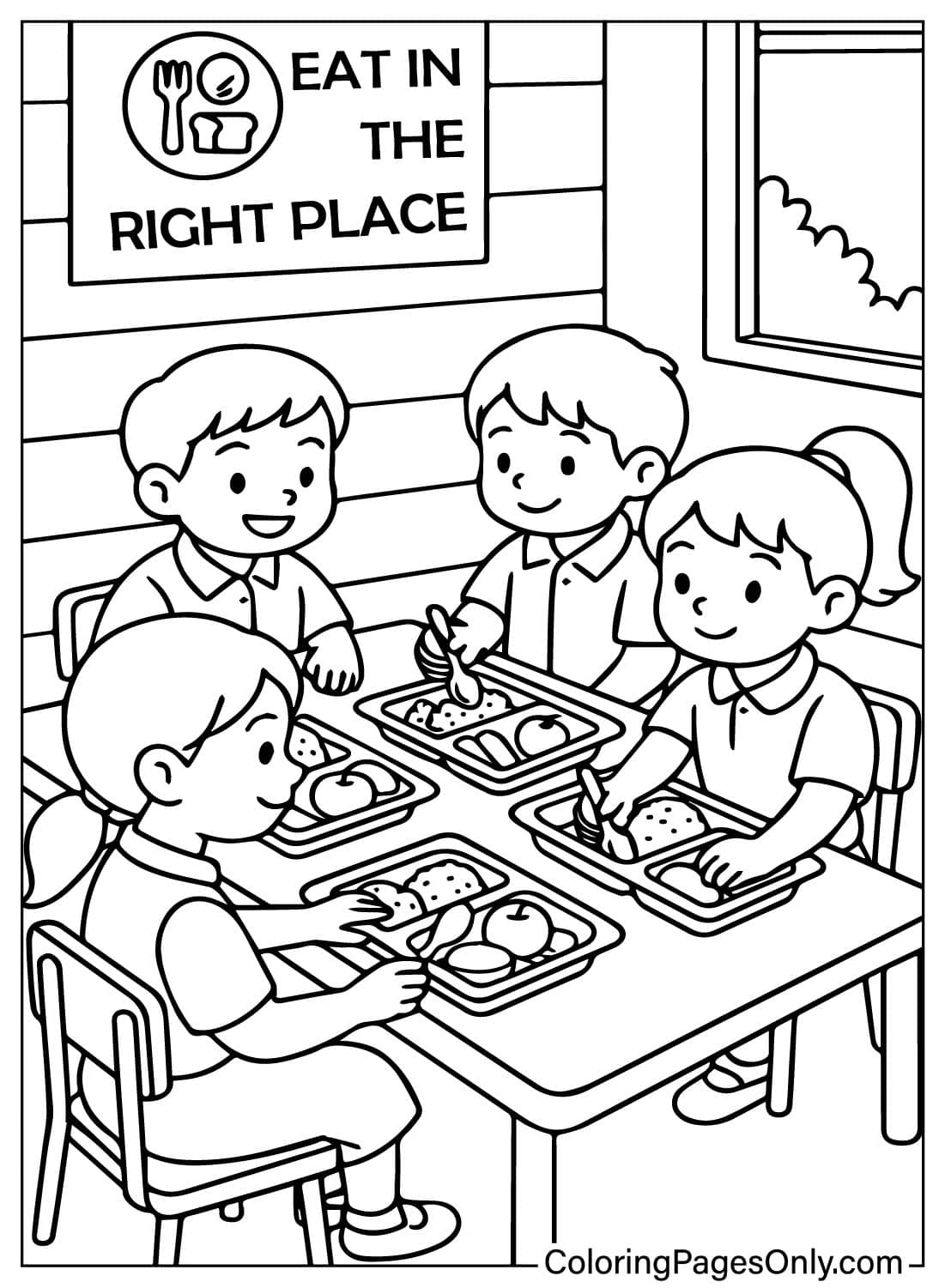
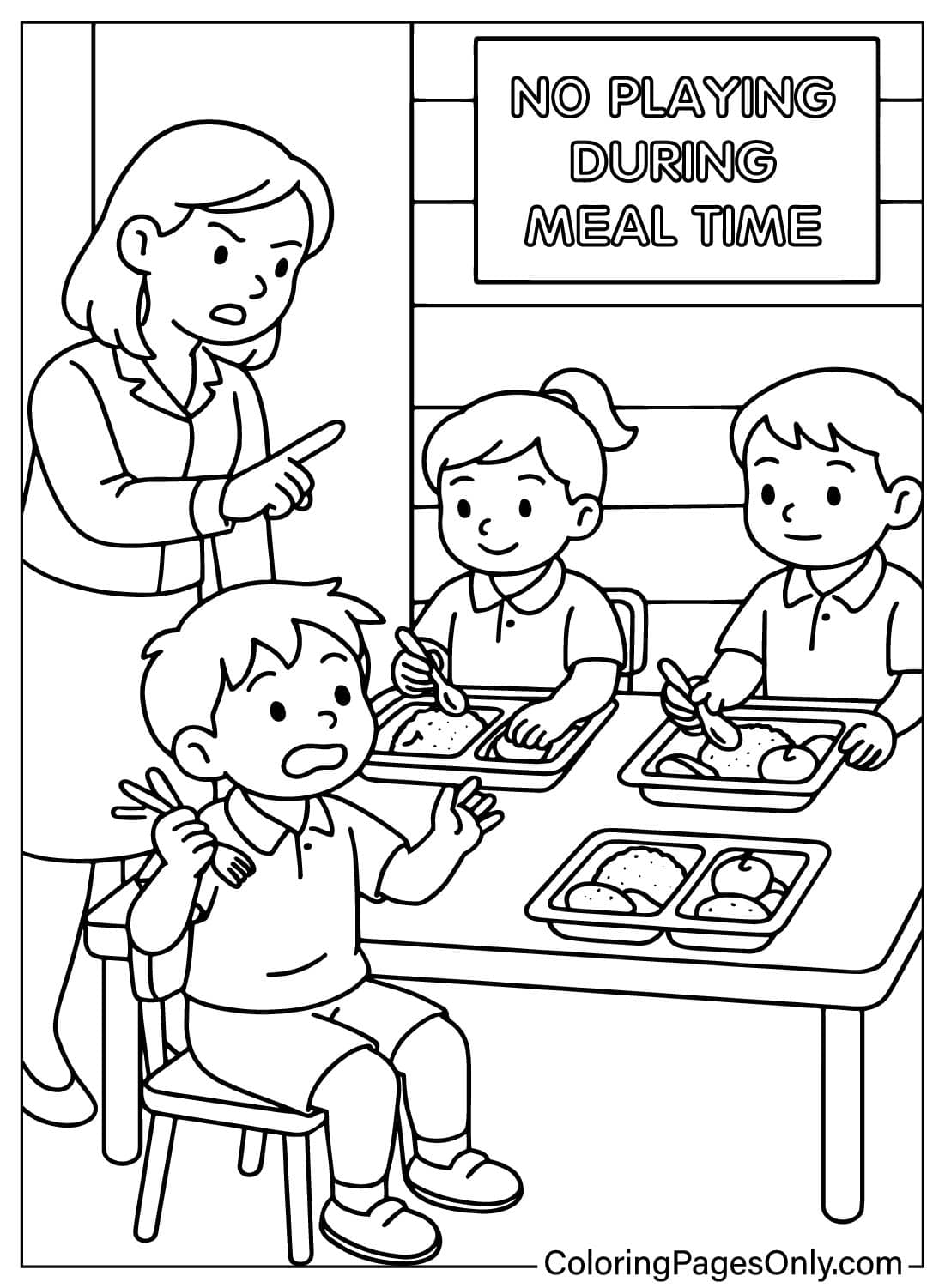
The lunchtime safety page depicts safe eating habits and organized cafeteria behavior – seated eating, awareness of shared space, calm interaction – in a setting where food allergies, choking hazards, and behavioral incidents can all occur.
How These Pages Work – The Cognitive Mechanism
Coloring a safety scene is not the same as reading a safety rule. The distinction matters because of how children encode and retrieve safety-relevant behavior under real conditions.
When a child reads or hears “hold the handrail when walking down stairs,” they encode a verbal rule in language-processing memory. When a real staircase situation arises – particularly in a hurried, excited, or distracted moment – retrieving and applying that verbal rule requires deliberate cognitive effort. Under the conditions most likely to produce stair accidents (rushing between classes, excitement, distraction), deliberate cognitive effort is exactly what is least available.
When a child has colored a picture of students walking carefully down stairs while holding the railing, they have encoded a visual scene in a different memory system – the episodic and visual memory that stores concrete imagery. Recognizing a real staircase as similar to the colored scene activates the associated safe behavior more rapidly and with less deliberate effort than retrieving a verbal rule. The visual memory is closer to the behavioral response loop than the verbal rule is.
This is the mechanism underlying what researchers call observational learning for safety behaviors: exposure to a visual model of safe behavior, processed in an engaged, creative context, produces a more accessible behavioral template than verbal instruction alone. The coloring activity adds elaborative processing – the child is actively making decisions about the scene (what colors, what details to emphasize) rather than passively receiving an image, which further strengthens the encoding.
For Teachers – Using These Pages in School
Pair with the actual safety drill or lesson. The most powerful classroom use of these pages is as a pre-drill or pre-lesson warm-up. Print and distribute the relevant page 10–15 minutes before the scheduled activity: color the fire safety page before the monthly fire drill, color the earthquake drill page before the drop-and-cover practice, color the bus waiting page before a school trip. The coloring session creates a visual mental model of the correct behavior immediately before the actual practice – producing exactly the behavioral rehearsal benefit that safety research identifies as essential.
Use the “report the hazard” page as a standing classroom expectation. The “Student Reporting Classroom Hazard to Teacher” page makes an especially effective classroom display. Coloring it and posting it near the front of the classroom communicates the expectation visually: if you see something unsafe, you tell an adult. Children who internalize this reporting norm are not only safer themselves but also contribute to the safety of the classroom community by keeping adults informed of hazards they would otherwise not notice.
The fighting prevention page works well after a conflict. When a classroom conflict or playground incident has occurred – even a minor one – using “Teacher Stopping Students from Fighting at School” as a restorative discussion anchor allows the class to process what happened without singling out individuals. “What is happening in this picture? Why is the teacher stepping in? What might the students do differently?” provides a structured, narrative discussion that addresses the safety issue without creating shame or defensiveness.
The stranger danger page is most effective with guided discussion. This page should not be displayed and colored without any facilitated conversation, as the scene raises genuine questions that children should be able to ask openly. After coloring, discuss: “Who is the stranger in this picture? What is he offering? What is the teacher doing? What would you do if someone you didn’t know offered you something?” Allow children to ask questions they have, answer them calmly and factually, and emphasize the key message: tell a trusted adult immediately. This facilitated discussion transforms the coloring activity into the supported processing that effective personal safety education requires.
For Parents – Using These Pages at Home
The bus waiting and crossing pages are directly practical for children who commute. If your child takes a school bus, print “Students Standing Together Waiting for the Bus” and color it together before the first day of school. Discuss what the students in the picture are doing: standing back from the road, together as a group, with their bags organized. Then, on the first day, remind your child of the picture: “Remember the page we colored? That’s exactly what you’ll do when you wait for your bus.” For children who walk and must cross streets, use the crossing page in the same way – color it, discuss it, then walk the route together and practice the crossing sequence.
Use the electrical safety page for a home walk-through. After coloring “Teacher Warning Child About Electrical Safety,” walk around your home together and identify all electrical outlets – particularly in rooms where children spend time independently. Discuss which ones have covers, which appliances should not be touched without adult supervision, and what to do if something electrical looks broken or makes an unusual sound (tell a parent immediately, don’t touch). The coloring page establishes the concept; the home walk-through applies it to the specific environment the child actually inhabits.
The stranger danger page creates an opening for ongoing conversation. Personal safety education for children is not a single conversation – it is an ongoing theme that should be revisited at different ages as children’s independence increases. Coloring the stranger danger page is a natural, low-pressure way to open this conversation with a young child who might otherwise find it abstract or frightening. The presence of the teacher in the scene – actively helping the child – keeps the emotional tone of the conversation protective and empowering rather than fearful.
Coloring Tips for Safety at School Pages
Warning and danger colors deserve consistency throughout the collection. Across these pages, certain colors carry universal safety meaning: red is the color of fire extinguishers and fire-related equipment; yellow is the color of caution signs; orange carries high-visibility warning associations. Whenever these objects appear in the collection – the fire extinguisher, the caution sign by the tree climber, the warning sign near the outlet – use their real, conventional colors consistently. A child who colors every caution sign in the collection yellow builds an automatic association between that yellow and the concept of caution that generalizes to real environments.
The teacher’s figures should be rendered in calm, authoritative tones. In every page in this collection, a teacher, police officer, or other trusted adult is present in an active protective role – explaining, warning, stopping, guiding. These figures should be colored to project calm authority: warm, collected clothing colors rather than agitated bright patterns, a composed expression rather than an alarmed one. The emotional message of these pages is “trusted adults protect you and know what to do” – and the visual rendering of those adults should support that message. A calm, well-rendered teacher figure communicates safety; a hastily colored, chaotic figure undercuts it.
Students in the safe behavior pages – bright, organized, grounded. Children performing safety behaviors correctly (waiting for the bus in a line, walking carefully on stairs, sitting quietly in class) should be colored in bright, confident tones – the same vivid back-to-school palette used in the Back to School collection. Safe behavior is not timid or anxious behavior; it is confident, organized, and purposeful. The color choices should reflect this positive character.
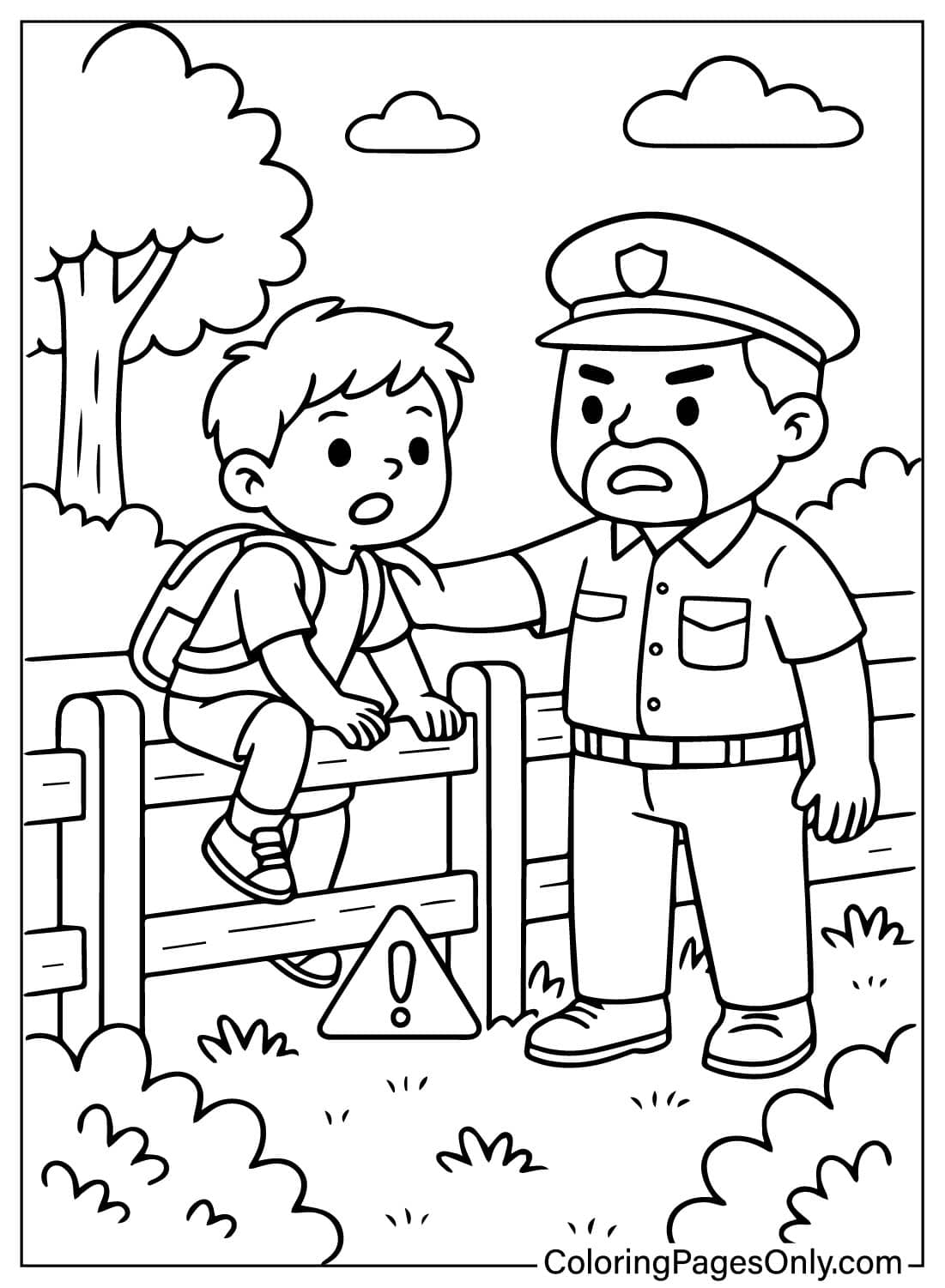
The hazard itself – a deliberate visual contrast. In pages like the electrical outlet warning, the broken ceiling wire, and the fence climbing scene, the hazard element (the outlet, the wire, the fence) benefits from a visual contrast with its safe surroundings: a grey or muted tone for the outlet against a lighter wall, a dark irregular line for the broken wire against the lighter ceiling, a more industrial and cold grey for the metal fence against the warm green of the surrounding environment. This visual contrast supports the “hazard recognition” goal of these pages – training the eye to notice things that don’t fit the safe, warm, organized school environment.
The earthquake drill page – cool, focused tones for the drill itself. The earthquake drill scene – students under desks in the drop-and-cover position – should be rendered in cooler, steadier tones than the other pages. This is a serious safety procedure rather than a warm social interaction, and the color palette should reflect that: slightly cooler blues and greens for the students’ clothing, a steady medium tone for the classroom environment, and a calm rather than warm expression for the teacher. The visual tone of “serious and focused” is the correct emotional register for a safety drill, and the coloring can communicate this.
5 Activities
The safety rules parade. After coloring three or more pages from the collection, create a simple “safety parade” display in the classroom or at home: cut each finished page into a banner shape, punch holes at the top, and string them together horizontally with ribbon or string. Each banner represents one safety rule. As each banner is added to the parade, the child states the safety rule it depicts in their own words: “Hold the handrail on stairs.” “Wait back from the road at the bus stop.” “Tell a teacher if you see something broken.” “Don’t take things from strangers.” “Drop and cover during an earthquake drill.” This activity produces both a visual display of safety rules and an oral rehearsal of each rule’s content – combining the visual encoding of the coloring activity with the verbal encoding of the oral statement. Children who have created and stated their own safety rule parade have engaged with each rule in three distinct modes: visual (coloring), kinesthetic (cutting, stringing), and verbal (stating the rule). This multi-modal encoding is significantly more durable than single-mode exposure.
The “spot the safe behavior” observation game. For one week following the completion of any five pages from the collection, play a daily observation game: at the end of each school day, the child identifies one safety behavior they saw at school that matches one of the pages they colored. “Today I saw two kids holding the handrail on the stairs, like in the stair page.” “The teacher made everyone walk when we came in from recess, like in the running-in-class page.” This observation game develops safety awareness as an active perceptual habit – children who play it begin genuinely scanning their environment for safety behaviors, which research on safety habit formation identifies as a key precursor to consistent safe behavior. Noticing safety behaviors in others is the first step toward reliably performing them oneself.
The home hazard audit. Using the “Teacher Warning Child About Electrical Safety” and “Student Reporting Classroom Hazard to Teacher” pages as starting points, conduct a simple safety audit of one room in your home or one area of the classroom. Create a simple checklist together: Are there any electrical cords that look damaged? Are there any outlets without covers in reach of younger children? Is there anything broken that needs to be reported to an adult or repaired? Are there any items stored at height that could fall? The audit – guided by a 6- or 7-year-old using a simple checklist they helped create based on the coloring page’s scene – is both a practical safety exercise and a developmental milestone: it gives the child the experience of being a safety-aware observer rather than only a safety rule recipient. Children who conduct safety audits with trusted adults develop a significantly more proactive orientation toward hazard recognition than children who only receive safety instruction passively.
The personal safety scenario practice. Using “Teacher Warning Student About Stranger Danger” as the visual anchor, practice three simple stranger danger scenarios through brief role-play. Scenario 1: A person you don’t know offers you candy and says your parents sent it. What do you do? (Say no, step away, find a teacher or trusted adult immediately.) Scenario 2: A person asks you for help finding their lost dog and wants you to come with them. What do you do? (Say no clearly, do not go, find a trusted adult.) Scenario 3: Someone at the bus stop offers to drive you home because they say the bus is late. What do you do? (Say no, stay at the bus stop, tell the bus driver or a trusted adult.) This role-play does not aim to frighten children – it aims to give them a practiced, rehearsed response that they can execute automatically without needing to reason through the situation in the moment. Research on personal safety skills consistently finds that rehearsed responses are more reliably executed than reasoned responses under the actual stress of a concerning situation.
The class safety book. After the class or family has colored all or most of the pages in the collection, compile them into a hand-made “Our School Safety Book” – each colored page becomes one page of the book, with the child or class writing (or dictating) one safety rule on the back of each page in their own words. The book can be bound with staples or a ribbon, given a cover illustration, and added to the classroom library or kept at home as a reference. This compilation activity transforms a collection of individual coloring exercises into a coherent, authored document: the child or class has created their own safety reference book. The act of authoring a safety book – organizing the rules, stating them clearly enough to write down, deciding on a logical order – requires the deepest engagement with safety content of any activity in this list. It also produces a physical artifact that can be revisited and re-read, providing the repeated exposure to safety content that behavioral rehearsal research identifies as essential for skill retention.