
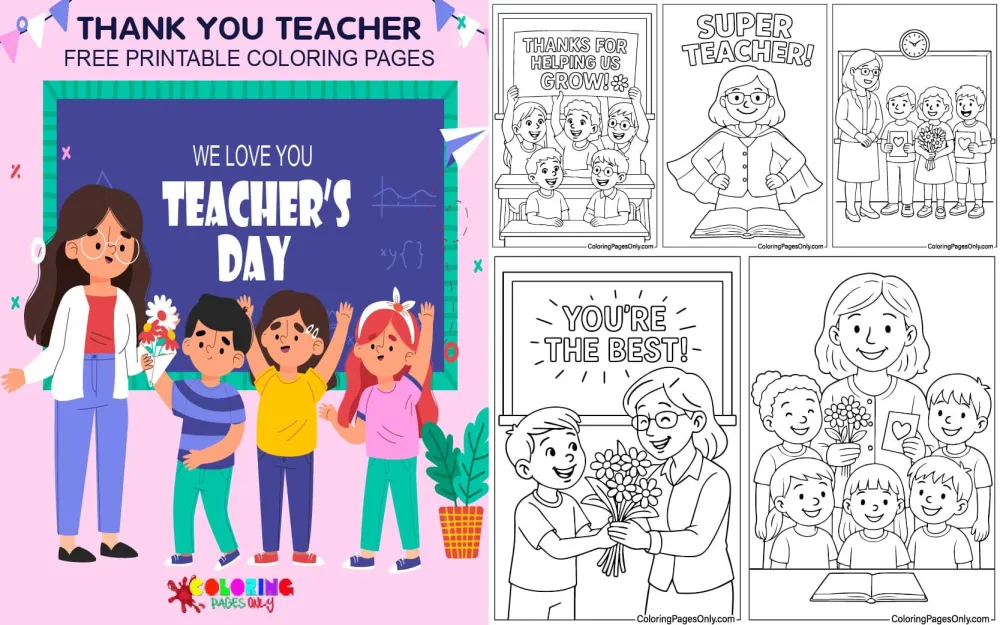
Thank You Teacher Coloring Pages at ColoringPagesOnly.com brings together 20+ free printable pages designed to help children express genuine gratitude to the teachers who shape their days – a student hugging a teacher goodbye, children holding a hand-painted “Thank You” banner together, a trophy engraved “Best Teacher,” a heartfelt letter being written at a desk, a flower pot tied with ribbon, students presenting handmade gifts, a class gathered for a group photo, and a chalkboard covered in appreciation messages. Every page is a gift in progress – a coloring page that becomes a personally meaningful artifact the moment a child finishes it and hands it to the person it was made for. Download any page as a free PDF to print, or color online directly in your browser.
This collection sits within the Educational Coloring Pages hub. For related school-year and end-of-year collections, see School Kindness Coloring Pages, Last Day of School Coloring Pages, Graduation Coloring Pages, and Classroom Goodbye Coloring Pages.







The Story Behind Teacher Appreciation – From One Arkansas Teacher’s Letter to a National Week
The formal recognition of teachers in the United States has its origins in a letter written around 1944 by Mattye Whyte Wooldridge, an Arkansas teacher who believed that the country needed a designated day to honor the people educating its children. Wooldridge began corresponding with political and educational leaders, eventually reaching Eleanor Roosevelt, who took the cause seriously enough to bring it before Congress.
In 1953, Roosevelt persuaded the 81st Congress to proclaim a National Teacher Day – a remarkable achievement, given that the idea had originated not with legislators or education officials but with a single teacher who wrote letters. It was, in its own small way, a demonstration of the influence individual educators can have when they speak with conviction about what they know matters.
Despite congressional support, the holiday remained inconsistently observed for decades. It was not until March 7, 1980, that National Teacher Day was formally and officially celebrated for the first time, after the National Education Association (NEA), along with state affiliates in Kansas and Indiana, lobbied Congress to give the day national standing. For the following four years, it remained in March, without a permanent Congressional designation.
The shift to May – and the expansion to an entire week – came in 1984, when the National Parent Teacher Association designated the first full week of May as Teacher Appreciation Week, with National Teacher Day falling on the Tuesday of that week. The NEA formally adopted this schedule in 1985, establishing the tradition that persists today. The NEA describes National Teacher Day as “a day of honoring teachers and recognizing the lasting contributions they make to our lives.”
Internationally, teacher recognition takes a parallel form. In 1994, UNESCO declared October 5 as World Teachers’ Day, now observed in over 100 countries. The choice of date honored the anniversary of the 1966 UNESCO/ILO Recommendation concerning the Status of Teachers – a foundational document on teachers’ rights, responsibilities, and professional conditions. World Teachers’ Day is the occasion for appreciating teachers beyond any single national context, recognizing their collective role in sustaining education as a global public good.
Teacher appreciation thus has a history rooted not in corporate tradition but in educators advocating for themselves and for each other – in one teacher writing letters, in organizations lobbying, in a First Lady standing before Congress. The colored pages a child hands to a teacher on a Tuesday in May are the living continuation of that 80-year effort.
Why Teacher Gratitude Matters More Than You Might Think
It is easy to assume that a “thank you” from a student is a pleasant but minor event in a teacher’s professional life – a small courtesy exchanged between the acknowledgment and the next lesson. Research on teacher well-being tells a different story.
Teaching is consistently identified among the most psychologically demanding professions in the human services sector. Teachers simultaneously function as knowledge transmitters, emotional caregivers, administrative managers, and mediators between schools and families – a combination of roles that places substantial psychological load on individuals who often have limited structural support. The data on the consequences is striking: approximately 45% of teachers leave the profession within their first five years, according to the NEA, with many citing feeling undervalued and underappreciated as a primary reason for departure. Teacher burnout – characterized by emotional exhaustion, depersonalization, and reduced sense of personal accomplishment – is not an occasional outcome of especially difficult circumstances; it is a systemic feature of the profession as currently structured.
Against this backdrop, the research on the relationship between student gratitude and teacher well-being takes on significant weight. A 2025 study published in Teaching and Teacher Education (ScienceDirect) examined 623 teachers and found that student expressions of gratitude significantly and positively predicted teachers’ professional well-being. The mechanism was specific: gratitude expression strengthened teacher-student relationships, which in turn reinforced teachers’ professional identity – their sense of themselves as educators making a meaningful contribution – and through that identity pathway, produced greater professional well-being. The researchers described it as “a brief, low-cost classroom tool that can retain effective teachers, boost morale, and foster a positive talent cycle.”
A complementary body of research led by Chan (2010, 2011) found that gratitude was inversely related to burnout in teachers. Dispositional gratitude in educators acted as a protective factor against emotional exhaustion and depersonalization. A gratitude-based intervention produced improvements in life satisfaction and personal accomplishment, with corresponding decreases in emotional exhaustion. A systematic review of teacher well-being interventions published in Educational Psychology Review (2025) confirmed that gratitude practices were among the most consistently effective interventions for reducing burnout symptoms.
The analysis of the #ThankYourTeacher campaign – a social media research project that collected public expressions of appreciation toward teachers – found something particularly revealing about what people most appreciate in educators. The researchers categorized what people expressed gratitude for using Orr’s Head, Heart, and Hands model. The finding was clear: more people expressed gratitude for teachers’ motivational and compassionate qualities (Heart) and their enthusiasm and leadership (Hands) than for their subject knowledge (Head). When people thank teachers, they are most often thanking them not for what they knew but for how they showed up – for caring, for encouraging, for making the child feel capable and seen.
This finding has direct implications for how children express gratitude to teachers – and for the pages in this collection. A colored “Best Teacher” trophy or a “Students Holding Thank You Banner” page does not communicate academic achievement; it communicates the relational dimension of what teaching is at its best. It says: you cared for us, you encouraged us, you made us feel that we were worth your effort. That is the message teachers most need to receive, and it is the message a child-made coloring page can carry.
The Science of Handmade Gifts – Why These Pages Work Better Than Store-Bought
There is a meaningful distinction between a commercially purchased teacher appreciation gift and a coloring page a child has made themselves – and it is not merely sentimental. It reflects how the brain processes and responds to evidence of care.
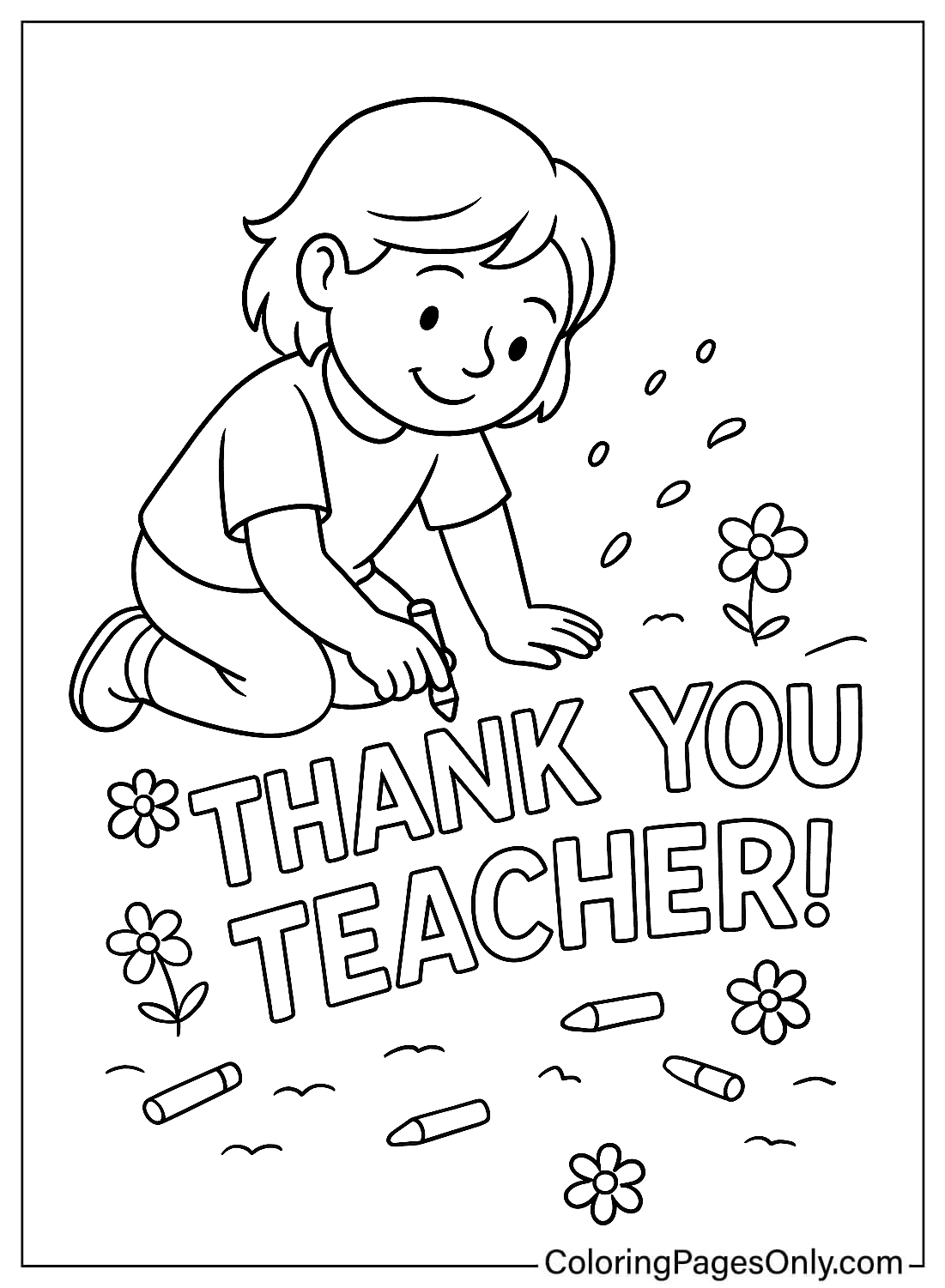
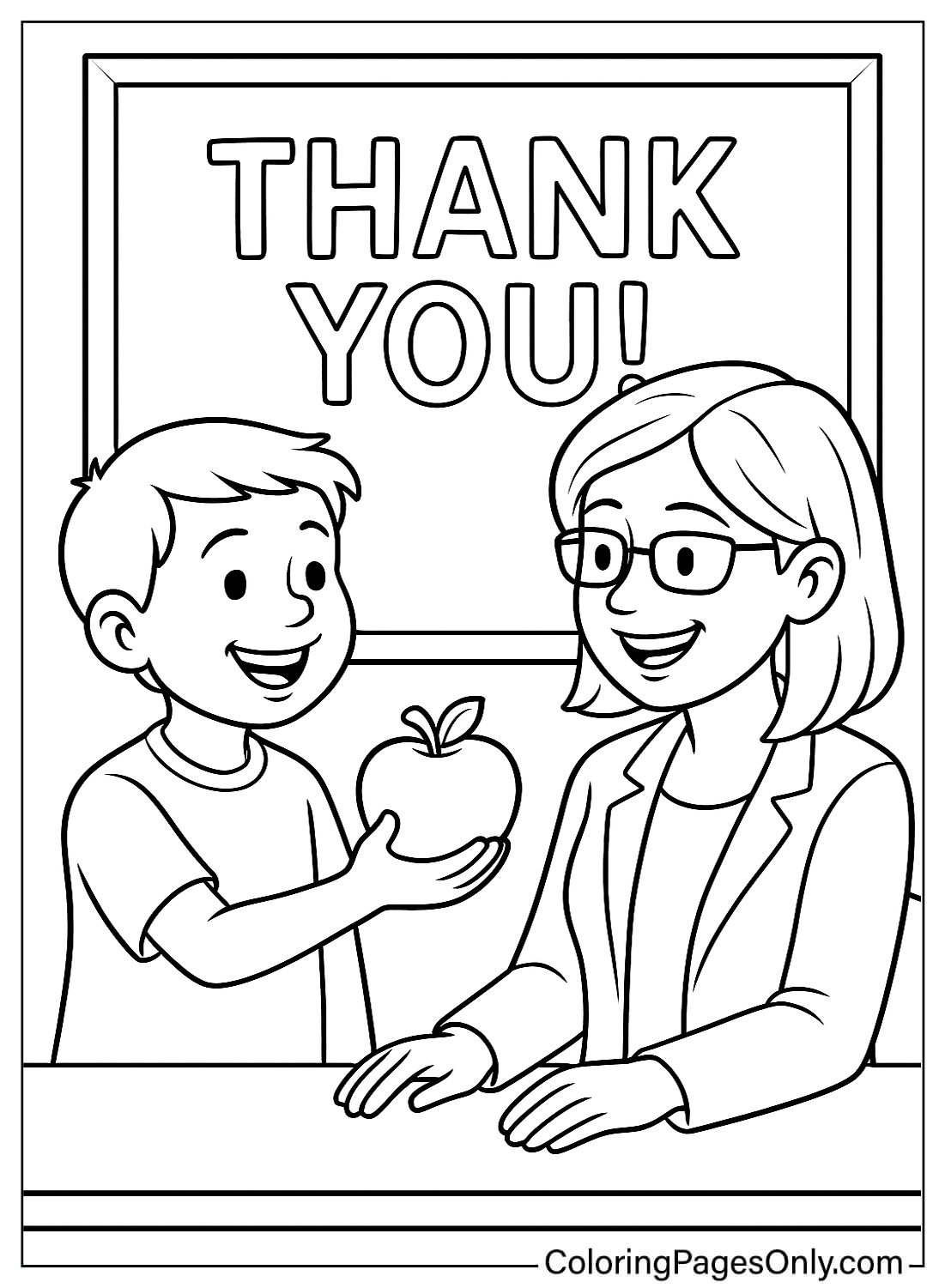
When a person receives a handmade object, they receive not only the object but the evidence of time and attention it represents. A child who has spent 20 minutes carefully coloring “Student Drawing Thank You Picture Coloring Page” has made a series of decisions about the image – which colors to use, how to treat the teacher’s figure, what shades to choose for the flowers or the banner – that are invisible to the recipient but perceptible in the quality of the finished work. A thoughtfully colored page communicates sustained attention in a way that a purchased gift, however expensive, cannot. The teacher receiving it knows, at some level, that a child chose to spend their time on this rather than something else.
Research on what is sometimes called the IKEA effect – the finding that people assign significantly more value to things they have made themselves – extends to recipients of handmade objects: they consistently rate handmade gifts as more meaningful and more evidence of care than commercially purchased gifts of equivalent or higher monetary value. The labor of creation communicates investment. For a child, the labor of coloring – a sustained, effortful, time-consuming creative act – represents exactly the kind of investment that makes a gift meaningful to receive.
There is also a benefit to the giver. Expressing gratitude through a creative act produces what positive psychologists call a double dose of well-being: the creator benefits from the emotional processing that creative work involves, and from the anticipation of giving, before the recipient benefits from receiving. A child who colors a “Heartfelt Letter to Teacher Coloring Page” is practicing gratitude as a sustained embodied act – not merely thinking grateful thoughts but converting them into something visible, tangible, and shareable. Research consistently shows that behavioral expressions of gratitude – writing, drawing, making – produce more durable positive emotional effects than internal gratitude alone.
The Collection’s Scenes – What Each Page Is Saying
The 20+ pages in this collection span a complete vocabulary of teacher appreciation, from the celebratory and symbolic to the deeply personal and intimate. Understanding what each type of page communicates helps in choosing the right page for the right moment and relationship.
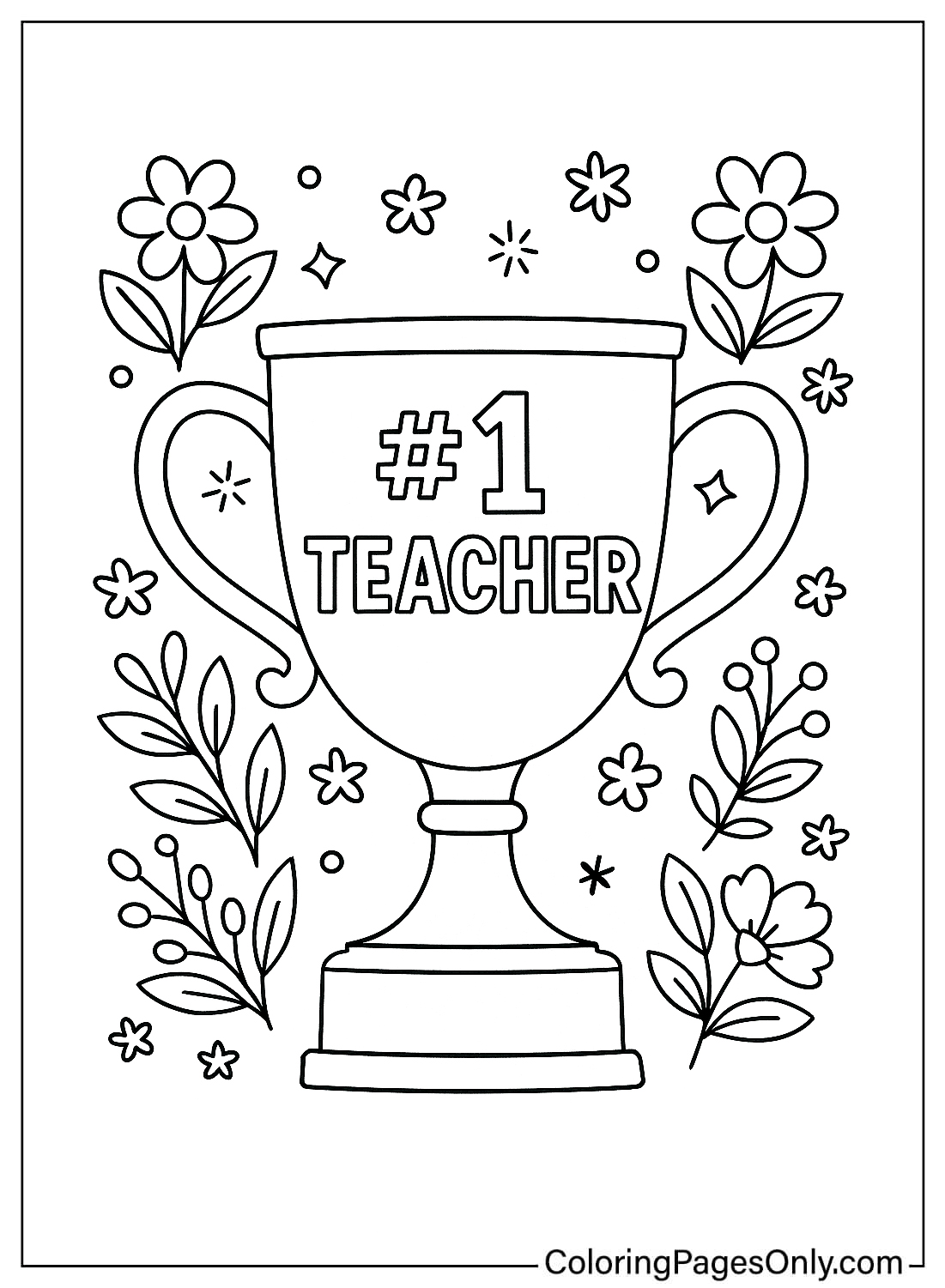
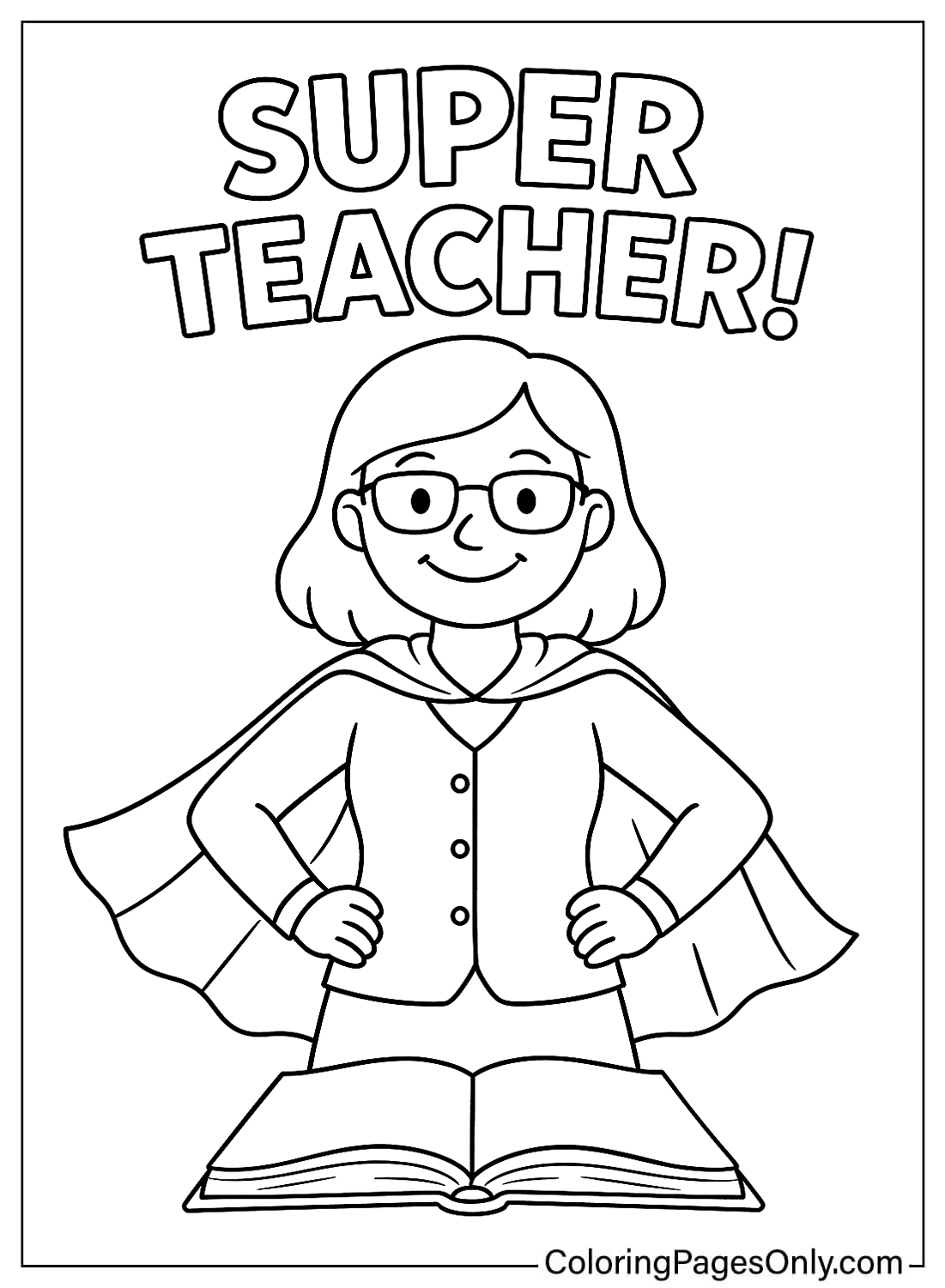
Trophy and award pages – “Best Teacher Trophy Coloring Page” and “Super Teacher Coloring Page” – use the visual language of achievement and recognition: the trophy, the cape, the starbursts of accomplishment. These pages speak to the child’s perception of their teacher as extraordinary – not just a competent professional but someone who exceeds what was expected, who goes beyond the routine. “Super Teacher” in particular draws on the superhero visual tradition in a way that is immediately legible to children and genuinely affectionate: teachers are described as superheroes not because they have unusual abilities but because they show up consistently, under difficult conditions, for children who need them.
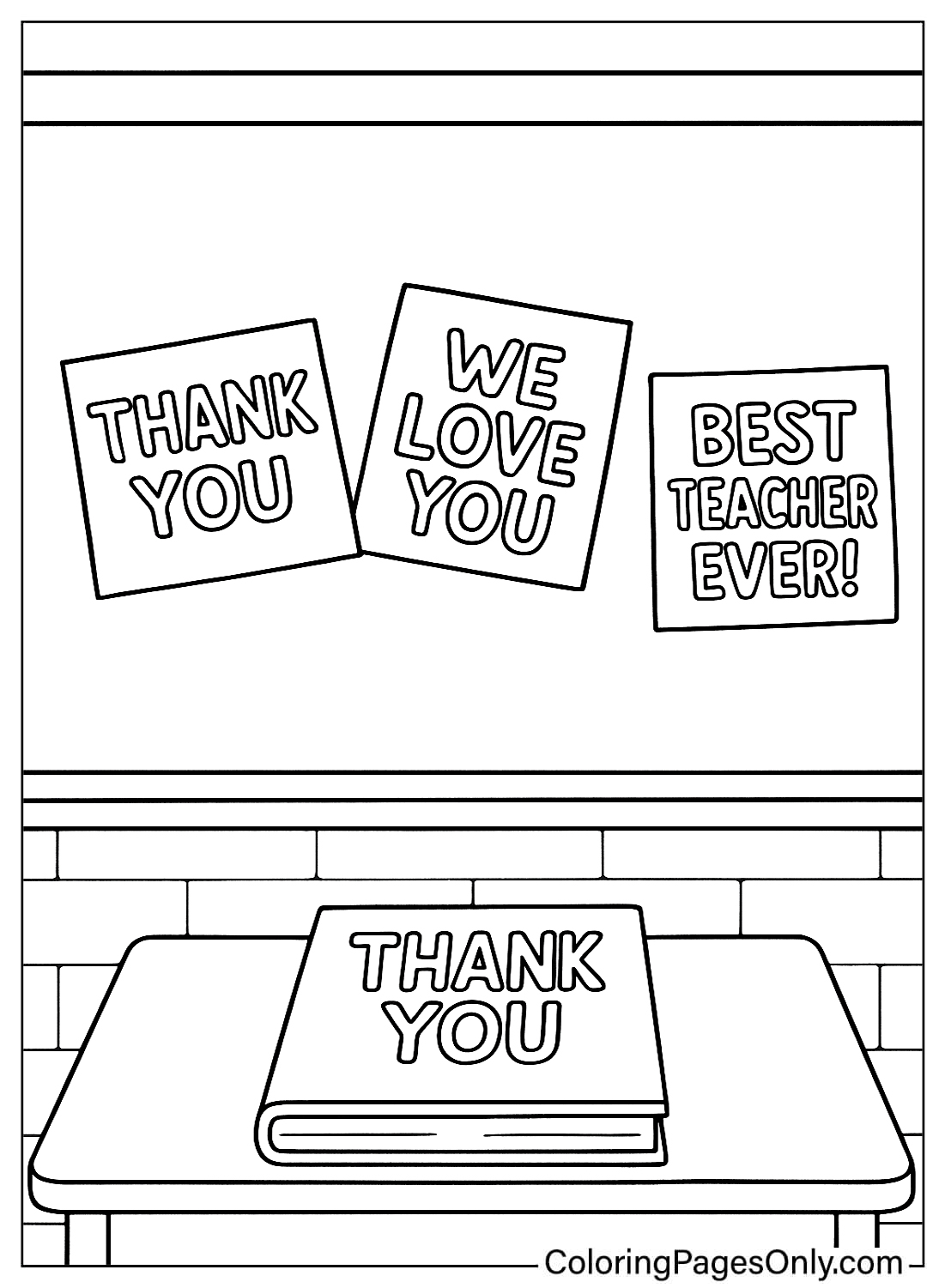
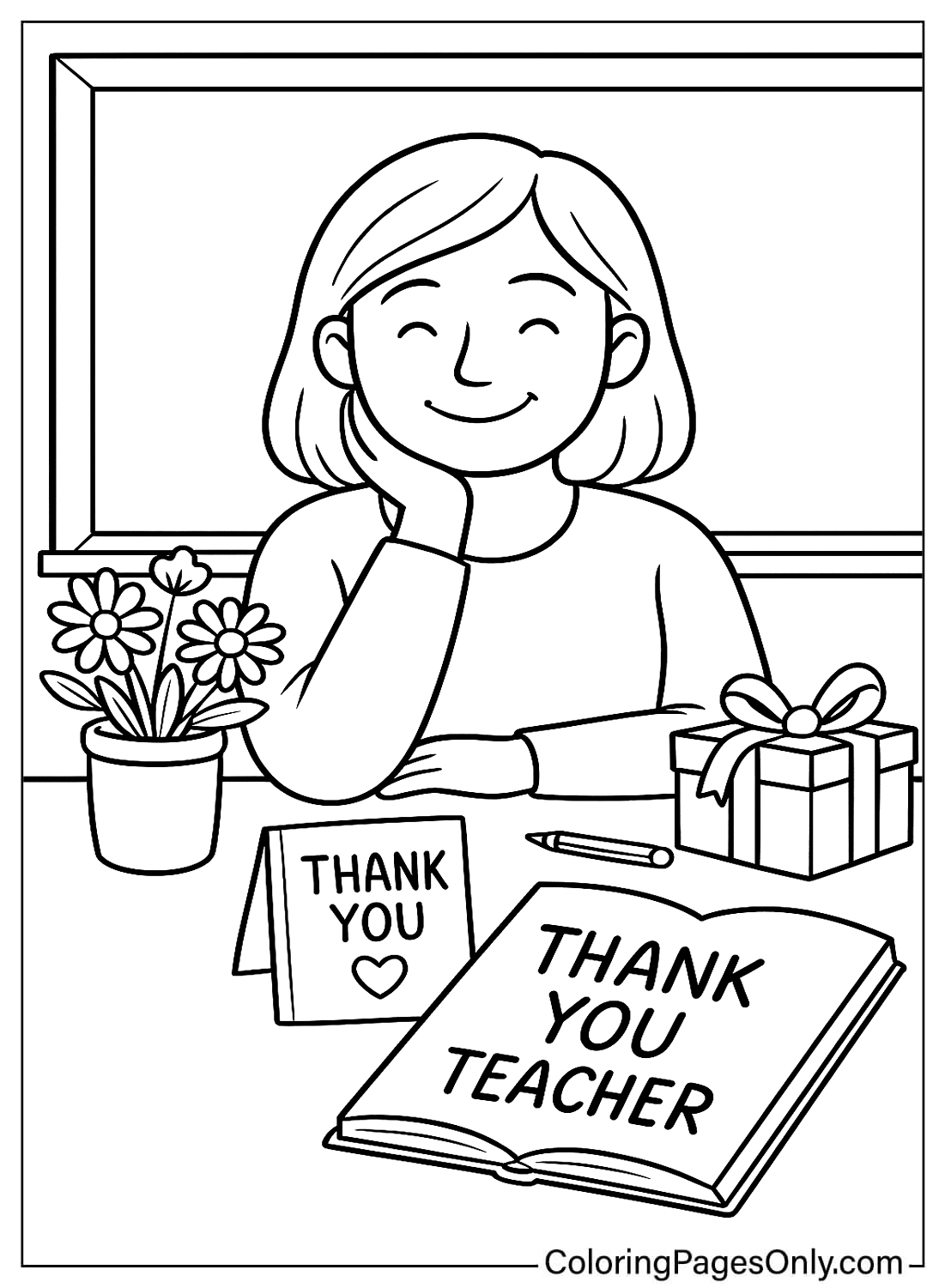
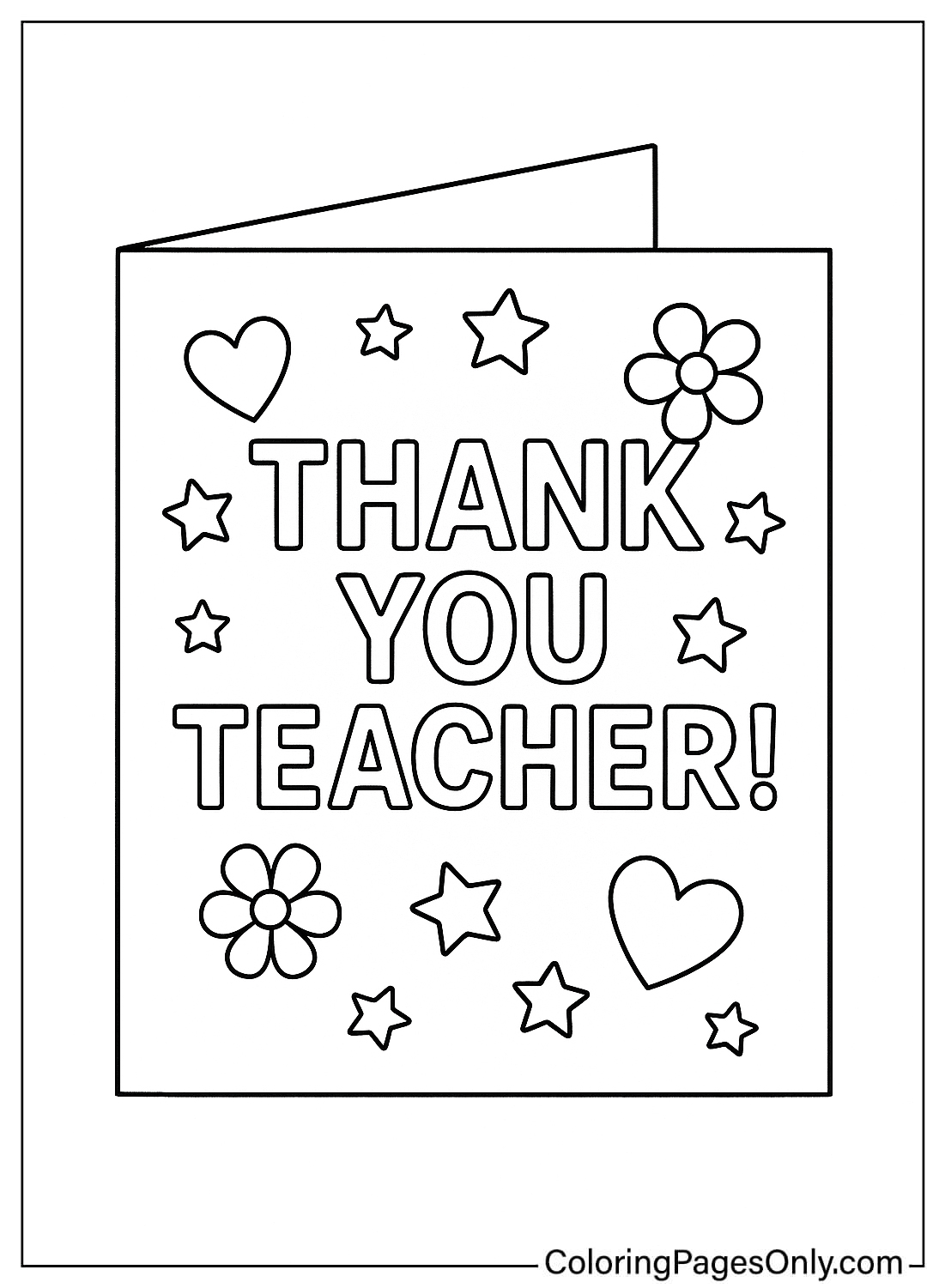
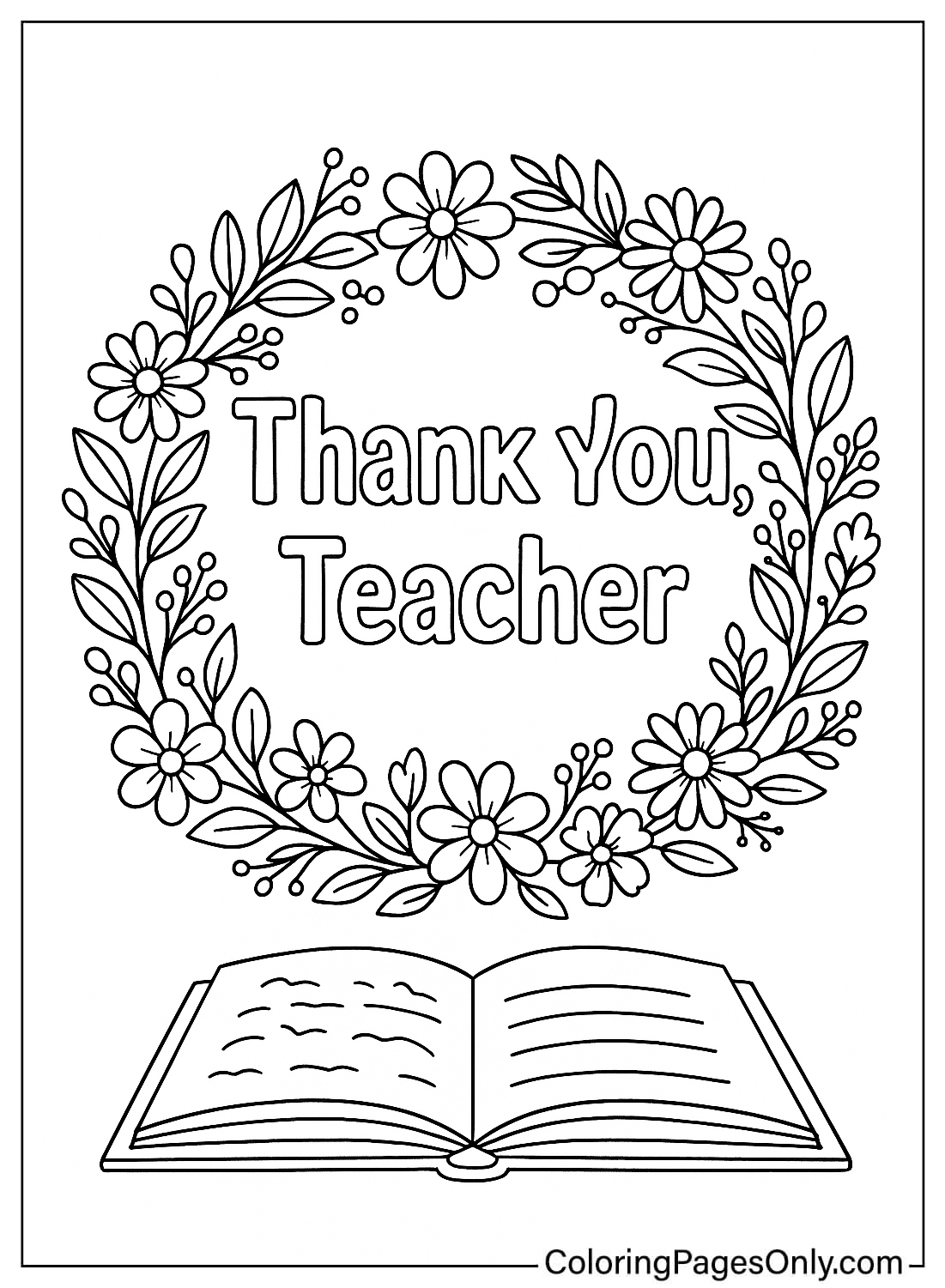
Letter and message pages – “Heartfelt Letter to Teacher Coloring Page,” “Chalkboard Thank You Message Coloring Page,” “Open Book with Thank You Message Coloring Page” – are the most verbally oriented pages in the collection, centering the written word as the vehicle for gratitude. These pages are particularly valuable for children who have something specific they want to say: the coloring activity provides a beautiful frame for a personal message that the child can write in or around the illustrated text. A child who colors “Heartfelt Letter to Teacher Coloring Page” and then writes their teacher’s name and a specific memory or thanks inside the letter’s frame has created a genuine keepsake – something the teacher may keep for years.
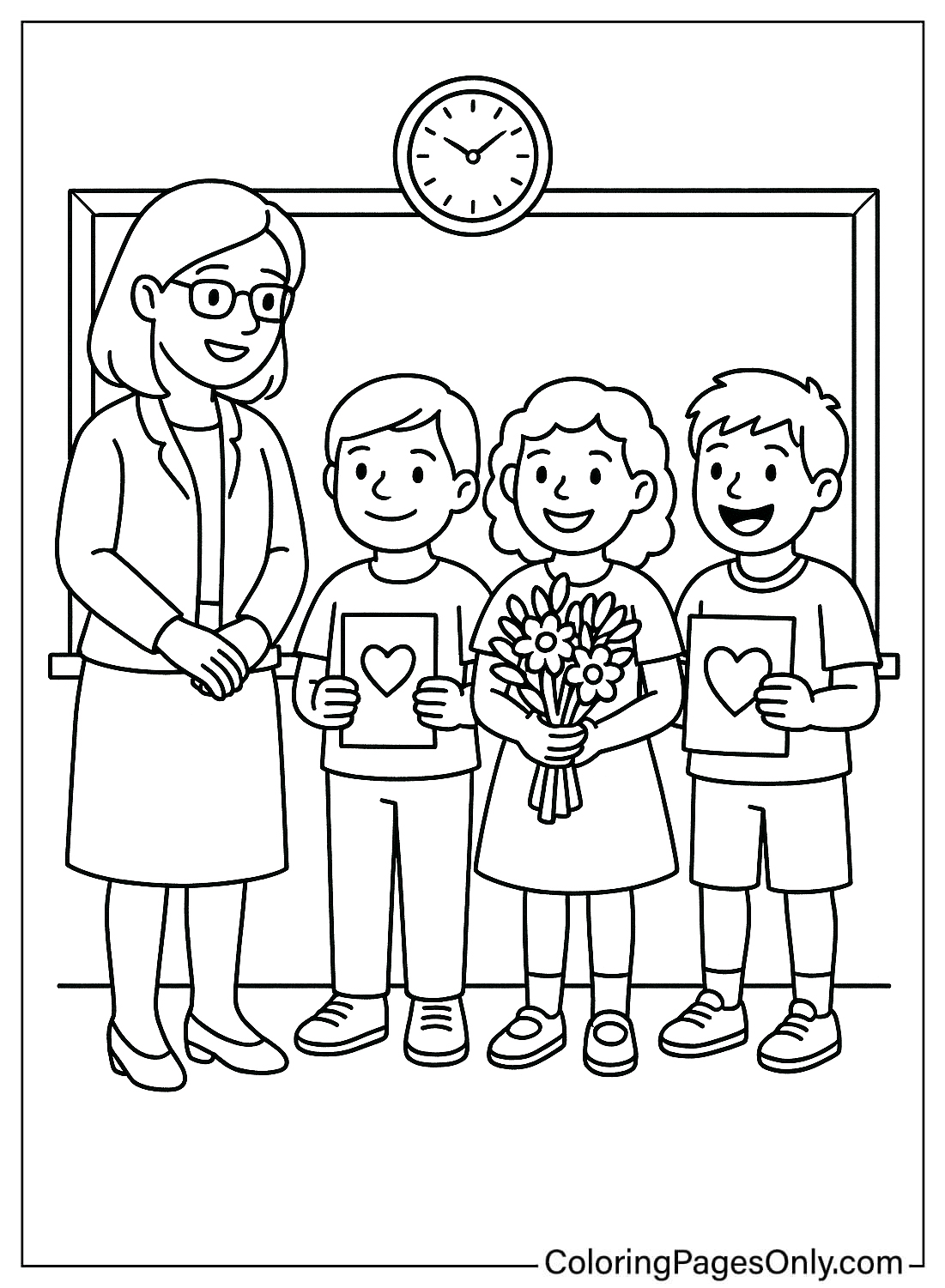
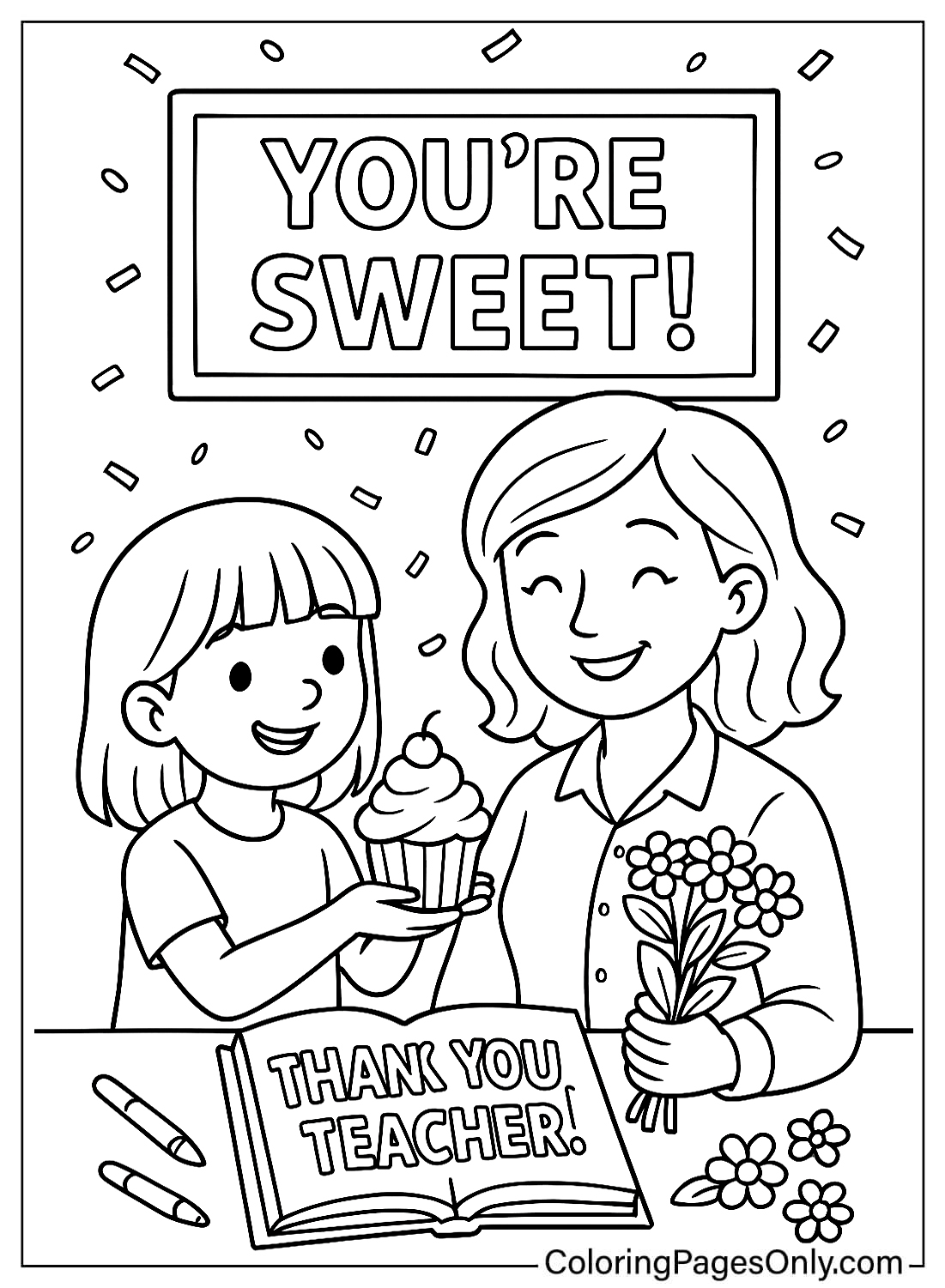
Gift-giving scenes – “Flower Pot Gift for Teacher Coloring Page,” “Gift Box for Teacher Coloring Page,” “Students Giving Handmade Gifts Coloring Page,” “Teacher with Thank You Gifts Coloring Page” – depict the physical act of giving: students presenting flowers, gift boxes, handmade objects to a teacher who receives them with visible warmth. These pages are particularly resonant at the end of the school year, when the relationship between teacher and class is complete, and the act of giving a gift marks the transition from the shared year to the summer ahead. Coloring a gift-giving scene the day before the last day of school creates anticipatory excitement about the act of giving – the child is coloring a version of what they are about to do.
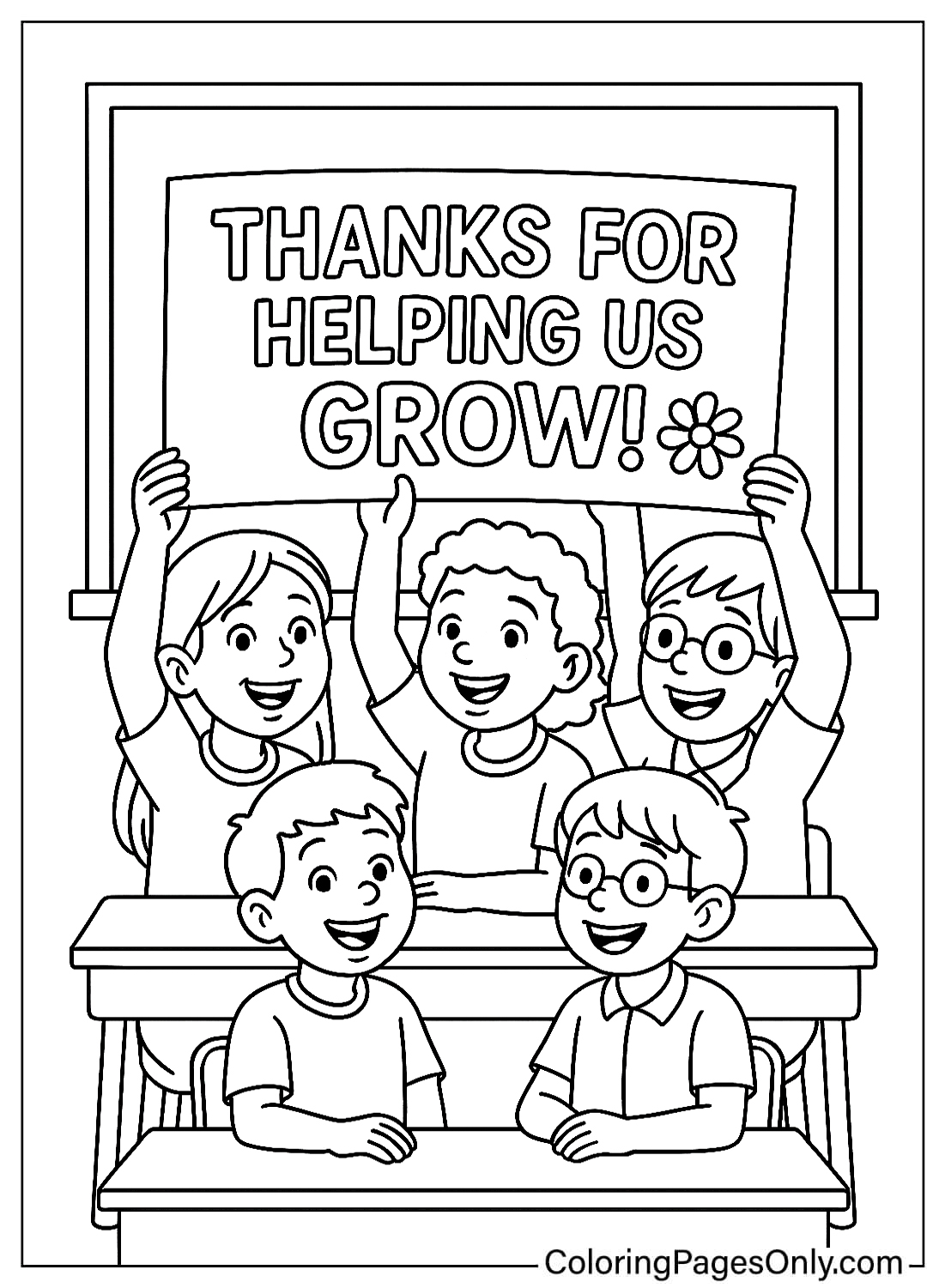
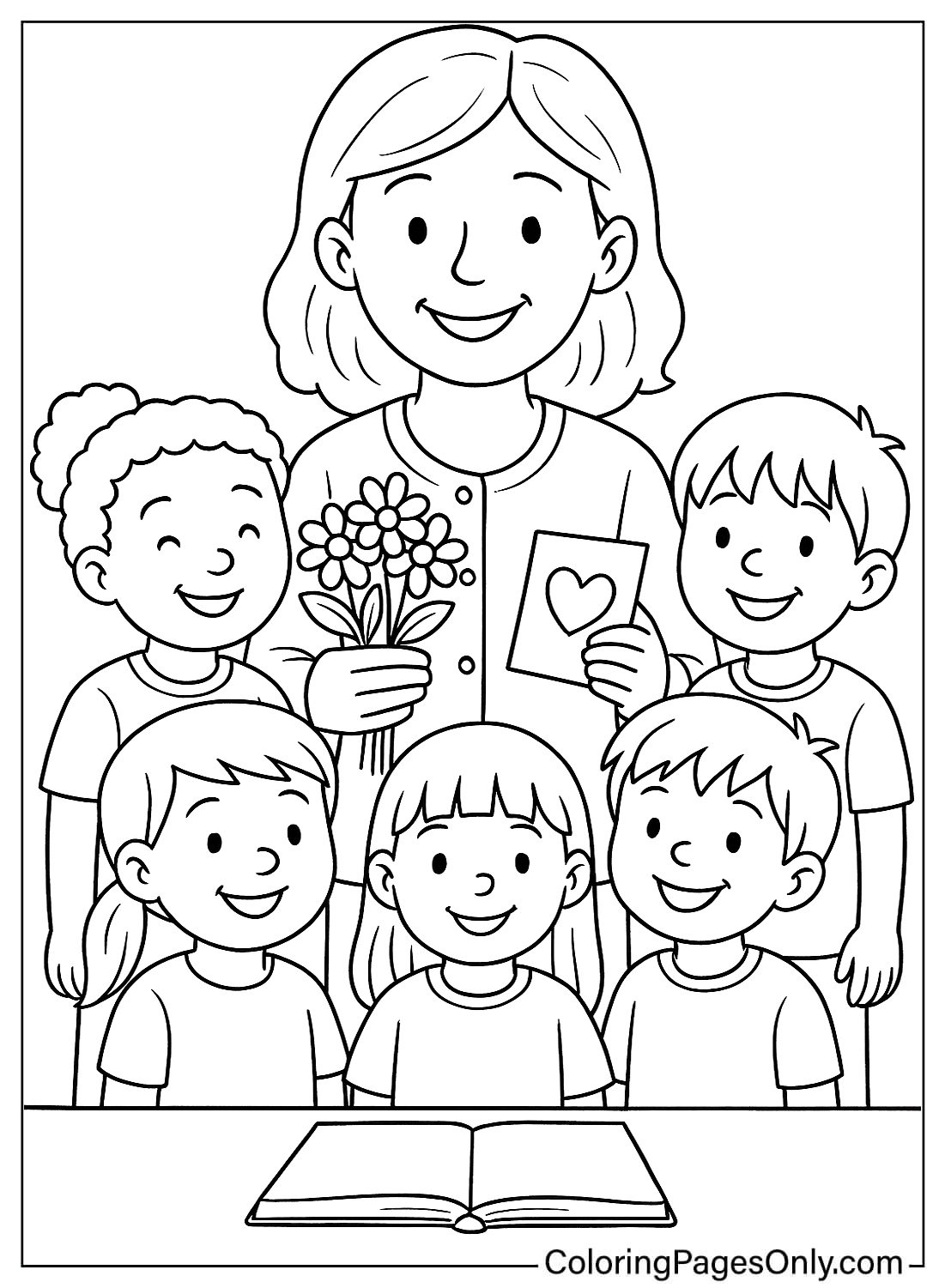
Group and banner pages – “Students Holding Thank You Banner Coloring Page,” “Teacher and Students Group Photo Coloring Page,” “Classroom Wall of Appreciation Coloring Page” – depict collective gratitude: an entire class acting together to honor their teacher. These pages are most powerful when used as a class activity, with all students contributing to the same or parallel pages that are then displayed together or assembled into a class gift. The “Classroom Wall of Appreciation” page in particular could serve as a model for an actual classroom activity: a bulletin board or wall display where each student contributes a colored tile or section to a larger collaborative appreciation piece.
Goodbye and transition pages – “Student Hugging Teacher Goodbye Coloring Page” – depict the emotionally most complex moment in the teacher-student relationship: the goodbye at the end of the year. A child hugging a teacher goodbye is not merely leaving a room; they are acknowledging that the relationship that sustained them for a year is changing. This page is most meaningful when it serves as a processing tool: a child who colors it the night before the last day of school has a way to engage with the complexity of the transition before it happens, in the calm of home rather than in the rushed emotion of the school goodbye.
When to Use These Pages – A Complete Timing Guide
Teacher Appreciation Week (first week of May, National Teacher Day on Tuesday). This is the primary designated occasion for these pages in the United States. Print and color the selected page during the week leading up to Teacher Appreciation Tuesday, taking enough time for a careful, attentive coloring session rather than a rushed one. The trophy pages, banner pages, and gift scenes are all well-suited to this occasion.
End of the school year (late May or June, depending on district). The goodbye and transition pages – “Student Hugging Teacher Goodbye,” “Teacher and Students Group Photo” – are most emotionally appropriate at year’s end, when the relationship between teacher and class is complete. End-of-year pages work particularly well as class gifts when each student colors their own version of the same page, and the teacher receives a complete set showing every child’s color choices and creative decisions.
World Teachers’ Day (October 5). For families and classrooms that observe World Teachers’ Day – a growing practice in many schools – the collection provides an international context for appreciation. A note explaining World Teachers’ Day can accompany any of the message-based pages, connecting the personal gesture of the colored page to the global recognition of teachers’ roles.
As a spontaneous thank-you at any time. The most valuable teacher appreciation gestures are often those that occur without a designated occasion – a child who comes to school with a colored page on a random Tuesday in February is giving a teacher something more surprising and more personally felt than the expected appreciation during Teacher Appreciation Week. Spontaneous gratitude carries a different emotional weight from calendar-driven gratitude, because it signals that the child (and family) thought about the teacher independently, without institutional prompting.
After a specific meaningful interaction. When a teacher does something that particularly affects a child – goes out of their way to help with something difficult, shows unusual kindness during a hard day, remembers something personally important – a colored page specifically chosen to match that moment (a helping scene, a flowers page, a letter page) becomes a specific acknowledgment rather than a generic appreciation. Specificity matters in gratitude expression: research consistently finds that expressions of gratitude that identify a specific behavior or action are received as more meaningful than general statements of appreciation.
Coloring Tips for Teacher Appreciation Pages
The teacher’s figure is the emotional center – color it warmly and carefully. In every scene-based page in this collection, the teacher appears as the recipient of gratitude: receiving flowers, accepting hugs, holding gifts, and reading a chalkboard message. The teacher’s figure should receive the most careful, warmest coloring treatment on the page. A warm, well-rendered teacher – with an expression of genuine warmth and a clothing palette in inviting, approachable tones – communicates the respect and affection that the page intends. The teacher’s face and expression are particularly important: the receiving-gratitude expression (eyes slightly lifted, an open, surprised warmth) is one of the most nuanced to render. A small white highlight dot in each eye and a gentle warm pink on the cheeks conveys this expression more effectively than any other technique.
Trophy pages – gold is not optional. The “Best Teacher Trophy” demands a genuine gold treatment: not yellow, not tan, but the specific deep amber-gold of a polished award trophy. Layer warm yellow as a base, then add amber and burnt orange in the shadow areas, and leave the highest-highlight areas with the brightest, most saturated yellow. The lettering “Best Teacher” on the trophy should be rendered in the same gold family, slightly darker than the surrounding trophy surface. A silver or metallic blue base for the trophy stand provides a complementary contrast that makes the gold of the cup itself more vivid.
The “Super Teacher” cape – bold primary hero colors. The superhero tradition uses vivid, high-contrast primary colors: red, blue, and yellow against black outlines. A “Super Teacher” page should lean into this visual language fully – the cape in vivid red or royal blue, the costume in bold complementary colors, the action lines and starbursts in bright gold and yellow. This is not a page for soft or muted colors. The hero visual language requires the most saturated, confident color choices in the entire collection.
Banner pages – each letter a different color, the children holding it in bright variety. “Students Holding Thank You Banner” benefits from the rainbow-letter treatment: each letter of “THANK YOU” in a different vivid color, warm and cool alternating or progressing through the spectrum. The students holding the banner should each be in a different clothing color – representing the natural diversity of a classroom – while sharing a unified, joyful expression. This page, when fully realized, looks celebratory and festive rather than uniform.
Flower pages – work from the outside petals inward. “Flower Pot Gift for Teacher” typically features a bouquet with multiple flower types. Color the outermost petals first, in the deepest version of each flower’s color (deep red for roses, deep orange for marigolds, deep purple for lavender). Then work inward toward the center, lightening the color slightly as you approach the stamen. This outside-to-inside gradient produces flowers that look naturally three-dimensional – the same technique florists use when describing how flower petals naturally gradient from deeper exterior tones to lighter interior ones.
5 Activities
The class appreciation wall. Using “Classroom Wall of Appreciation Coloring Page” as the model, create an actual classroom appreciation wall: print a tile-sized appreciation template for each student in the class, with a space for coloring and a space for a short written message. Each student colors their tile and writes one specific thing they appreciate about the teacher – not “you are great” but “I remember when you helped me understand fractions and didn’t give up on me” or “you always notice when I’m having a hard day.” The tiles are assembled on a bulletin board or piece of poster paper and presented as a class gift. This collective project produces a gift that no purchased item could match: it represents the sustained attention of every student in the class, assembled into a single artifact that the teacher can read and reread. The specificity of each tile – each child’s handwriting, color choices, personal memory – makes the whole more moving than the sum of its parts.
The memory letter. Using “Heartfelt Letter to Teacher Coloring Page” as the physical frame, write – or help a child write – a genuine memory-based thank-you letter to a teacher. The letter should contain three specific elements: one specific moment or interaction they remember clearly, one thing the teacher did that made a difference they didn’t expect, and one way the class or school year will stay with them. These three elements transform a general “thank you for being a great teacher” into a specific, memorable expression of gratitude that the teacher can return to on difficult days as evidence of real impact. The coloring activity colors the border, the header, and the decorative elements of the letter page, turning the written content into a finished, displayable artifact rather than a plain sheet of notebook paper. Many teachers keep such letters for decades.
The before-and-after comparison gift. At the beginning of the school year, have a child draw or describe what they think the year will be like and what they hope to learn. Seal it in an envelope and keep it. At the end of the year, when coloring one of the end-of-year pages (Student Hugging Teacher Goodbye, Teacher and Students Group Photo), open the envelope and compare the prediction with the reality. Then write a second letter describing what actually happened – what surprised them, what they learned that they didn’t expect, what the teacher helped them become. Present the finished colored page, the original prediction, and the end-of-year comparison letter together as a three-part gift. This gift communicates something that most single-occasion gifts cannot: the arc of the year, the shape of the journey, and the teacher’s specific role in it.
The gratitude portrait session. Using “Student Drawing Thank You Picture Coloring Page” as inspiration, invite a child or class to create their own portrait of their teacher – not a coloring page but an original drawing or painting. The child draws the teacher as they most remember seeing them: at the board explaining something, reading aloud, helping at a desk, or standing at the classroom door welcoming students. The portrait does not need to be technically accomplished – in fact, a child’s characterful, slightly imperfect rendering of a beloved teacher is often more moving than a careful reproduction. Alongside the portrait, write three words the child would use to describe the teacher. Frame the portrait (even a simple construction paper frame works), and present it with one of the colored pages from this collection as a companion piece. Teachers are rarely portrayed by the people they serve. A portrait from a student is genuinely rare and genuinely moving.
The time-delayed thank-you. Encourage older children, teenagers, or adults to use the “Heartfelt Letter to Teacher Coloring Page” or the “Teacher Appreciation Day Card Coloring Page,” not for a current teacher but for a teacher from the past – someone who made a difference years or decades ago. The research on what people appreciate in teachers (motivational and compassionate qualities, enthusiasm, belief in the student) corresponds precisely to the things that stay with people long after they have left a classroom. Tracking down a former teacher’s school or contact information and sending a colored page and letter – even years later – is an act of profound relational completion: it closes a loop the teacher may not have known they left open, and provides evidence of lasting impact in a moment when the teacher may have long since stopped wondering whether they made a difference with that particular student.