
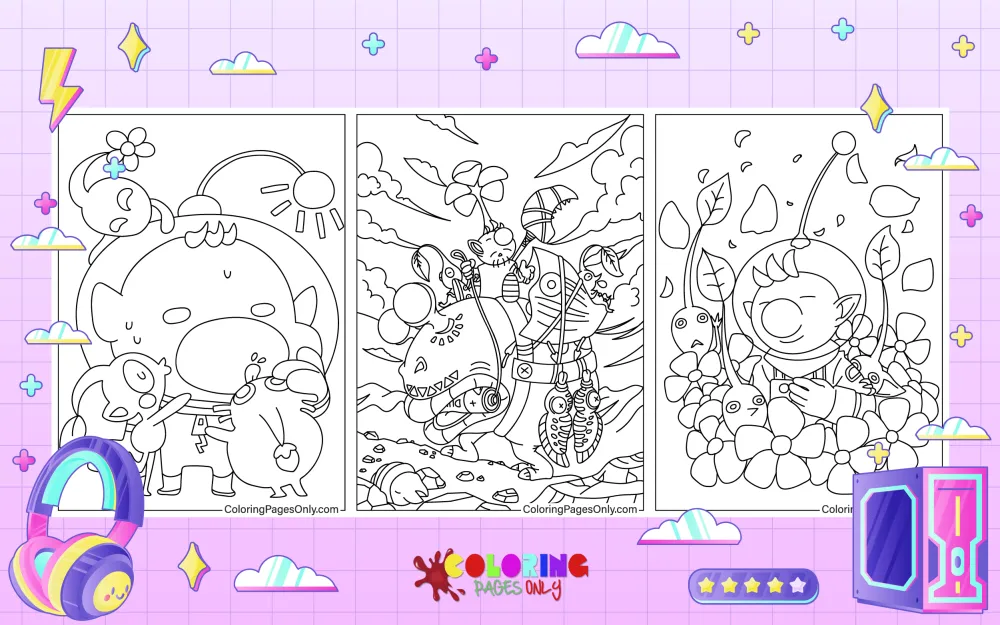
Pikmin Coloring Pages brings one of Nintendo’s most distinctive and beloved game series to your coloring table – and this collection of 20+ free pages at ColoringPagesOnly.com captures the small, plant-like creatures that have won fans across four console generations since 2001. The Pikmin series has one of the most naturally perfect visual systems for coloring of any Nintendo franchise: each type of Pikmin is defined by a single bold color, every color corresponds to a specific ability, and the miniature natural world they inhabit is a vivid palette of greens, browns, and the glowing quality of a world seen from ground level. Whether you’re here because a child loves Pikmin 4 on Nintendo Switch or you’ve followed the series since the original GameCube release, this collection is built for you. More Nintendo and gaming collections are available through our Games Coloring Pages hub.
Every page is completely free – download as PDF to print or color online in your browser. No sign-up, no cost.
What Is Pikmin?
Pikmin is a real-time strategy and puzzle game series developed and published by Nintendo, created by Shigeru Miyamoto, the same designer behind Mario and The Legend of Zelda. The first game launched for Nintendo GameCube in 2001 and introduced a gameplay concept that remains unique in Nintendo’s catalog: you play as a tiny astronaut who crash-lands on a planet and must command armies of small, plant-like creatures called Pikmin to survive, solve puzzles, and find your way home.
The planet the games take place on is heavily implied to be Earth seen from a miniature perspective – ordinary objects like bottle caps, empty cans, and fallen fruit become enormous obstacles or treasures, and the ground-level perspective makes dandelions look like trees and raindrops look like boulders. This miniature world aesthetic is one of the most visually distinctive in all of gaming, and it creates the specific quality that makes Pikmin pages so satisfying to color: everything that would normally be background detail becomes dramatic foreground scenery.
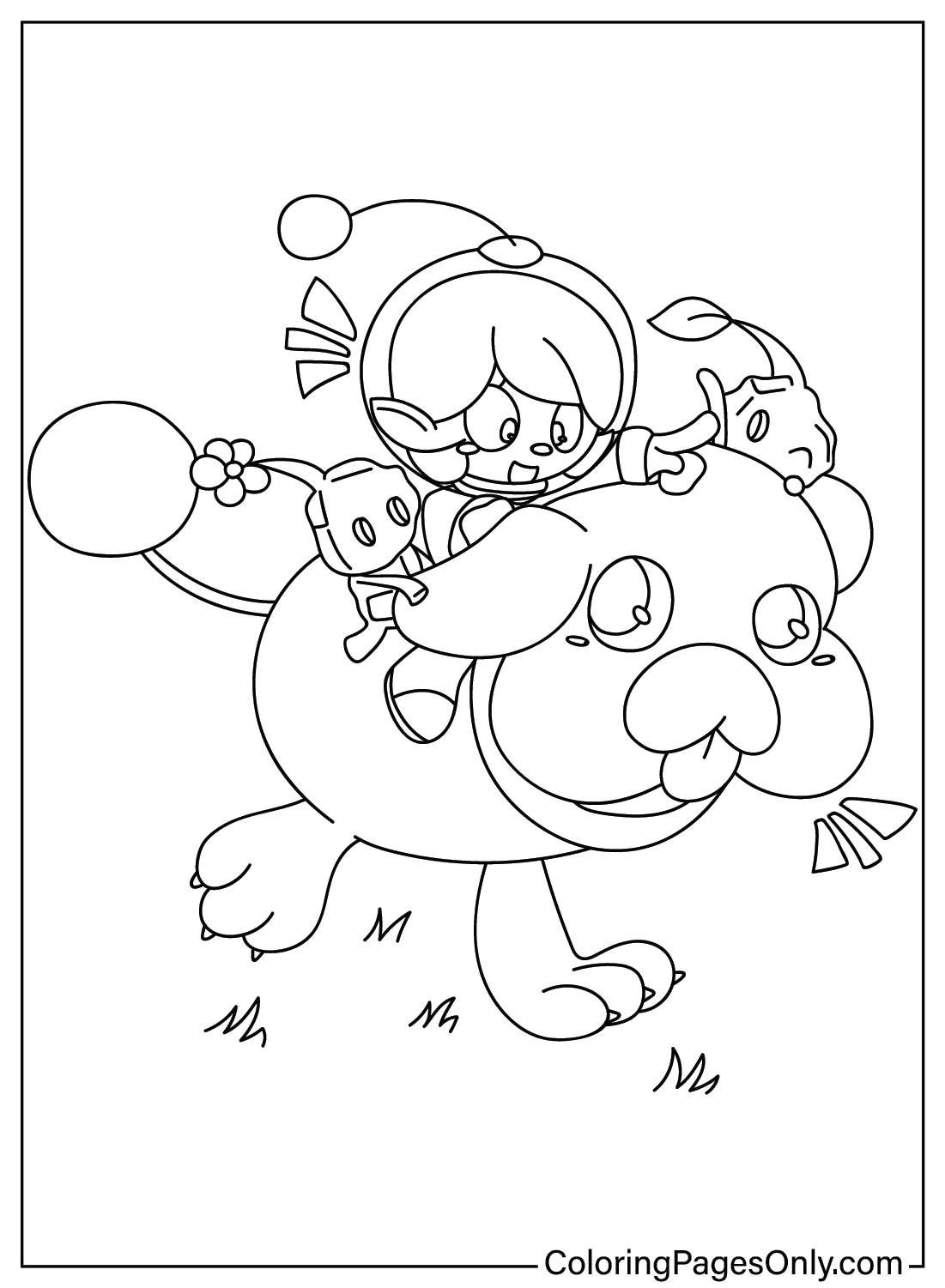
The series continued with Pikmin 2 (2004), Pikmin 3 (2013), and most recently Pikmin 4, released for Nintendo Switch in July 2023, which introduced new Pikmin types and the companion character Oatchi, a dog-like creature the player can ride. The main protagonist across the series is Captain Olimar (also written as Brittany, Charlie, and Alph as additional captains in Pikmin 3), a small alien from the planet Hocotate whose own perspective on the world is essentially the player’s perspective: everything on the Pikmin planet is enormous, dangerous, and beautiful at the same time.
The Pikmin Color Guide
The entire game is built around a color-coded system where each type of Pikmin has a specific color that corresponds to specific abilities. Understanding this system is both what makes the game strategically interesting and what makes it such an ideal coloring subject matter – each Pikmin type is essentially its own character defined entirely by color.
Red Pikmin are the original and most recognizable type – vivid red, with pointed noses that distinguish them visually from all other types. They are the strongest fighters in the series, dealing the most damage in combat, and they are immune to fire. In any group scene, the Red Pikmin should be the most saturated, most confident red on the page – not a warm orange-red or a dark crimson, but a clear, primary red.
Yellow Pikmin are bright yellow with large, distinctive ears on the sides of their heads that make their silhouette immediately recognizable even at a small size. They can be thrown higher than other types, were the only ones able to carry explosive items in early games, and are immune to electricity. Their yellow should be warm and cheerful – the yellow of a sunflower or a school bus, fully saturated and clear.
Blue Pikmin are medium blue with mouths that are visibly different from other types – the mouths appear to protrude slightly, which is the visual giveaway that distinguishes them from background blue elements. They are the only Pikmin that can work and survive in water. Their blue should be a natural, somewhat saturated blue – not as vivid as a primary blue, but clearly and definitively blue.
Purple Pikmin (introduced in Pikmin 2) are deep violet-purple, stocky, and visibly larger than other Pikmin types. They are the slowest but strongest, capable of stunning enemies when they land. Their purple should be rich and heavy – a saturated violet-purple that reads as powerful rather than delicate.
White Pikmin (introduced in Pikmin 2) are – as the name suggests – pure white, with distinctive red eyes. They are the fastest Pikmin type and are immune to poison. The whites should be kept truly clean and bright; their red eyes are the only color accent in an otherwise all-white design.
Rock Pikmin (introduced in Pikmin 3) are dark gray with a visibly hard, stone-like surface texture rather than the smooth, rounded forms of other types. They can break crystal and glass obstacles. Their gray should have a slightly cold, mineral quality – not warm brown-gray, but the cool gray of actual stone.
Winged Pikmin (introduced in Pikmin 3) are pink, visibly lighter, and more aerodynamic in body shape, with small wings that allow them to fly over water and obstacles. Their pink should be a clear, vivid pink – not pastel, but the bright pink that reads as energetic and mobile from a distance.
Ice Pikmin (introduced in Pikmin 4) are pale icy blue with a crystalline, slightly transparent appearance – their surface texture suggests ice or frost rather than the organic plant-like quality of the original types. They can freeze water and slow or freeze enemies. Their color should be the pale, slightly white-tinted blue of actual ice or frost – lighter and cooler than Blue Pikmin.
Glow Pikmin (introduced in Pikmin 4) appear during night missions and glow with a yellow-green bioluminescence – their color shifts away from the clear single-color identity of most other types toward the glowing, slightly hazy quality of something that emits light. These work best with layers of color that build from a darker center outward toward a brighter, lighter edge glow.
What’s Inside the Pikmin Coloring Collection
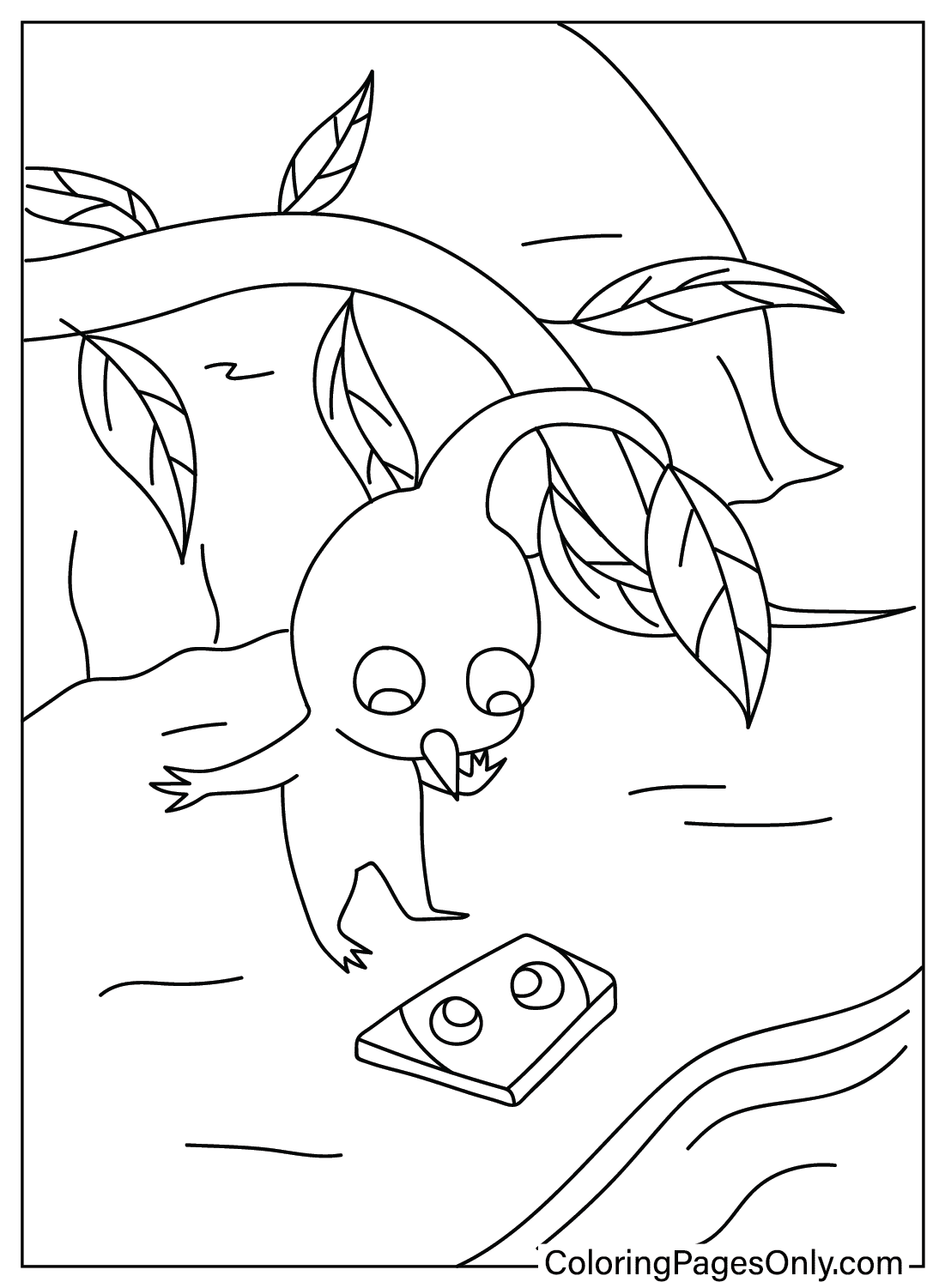
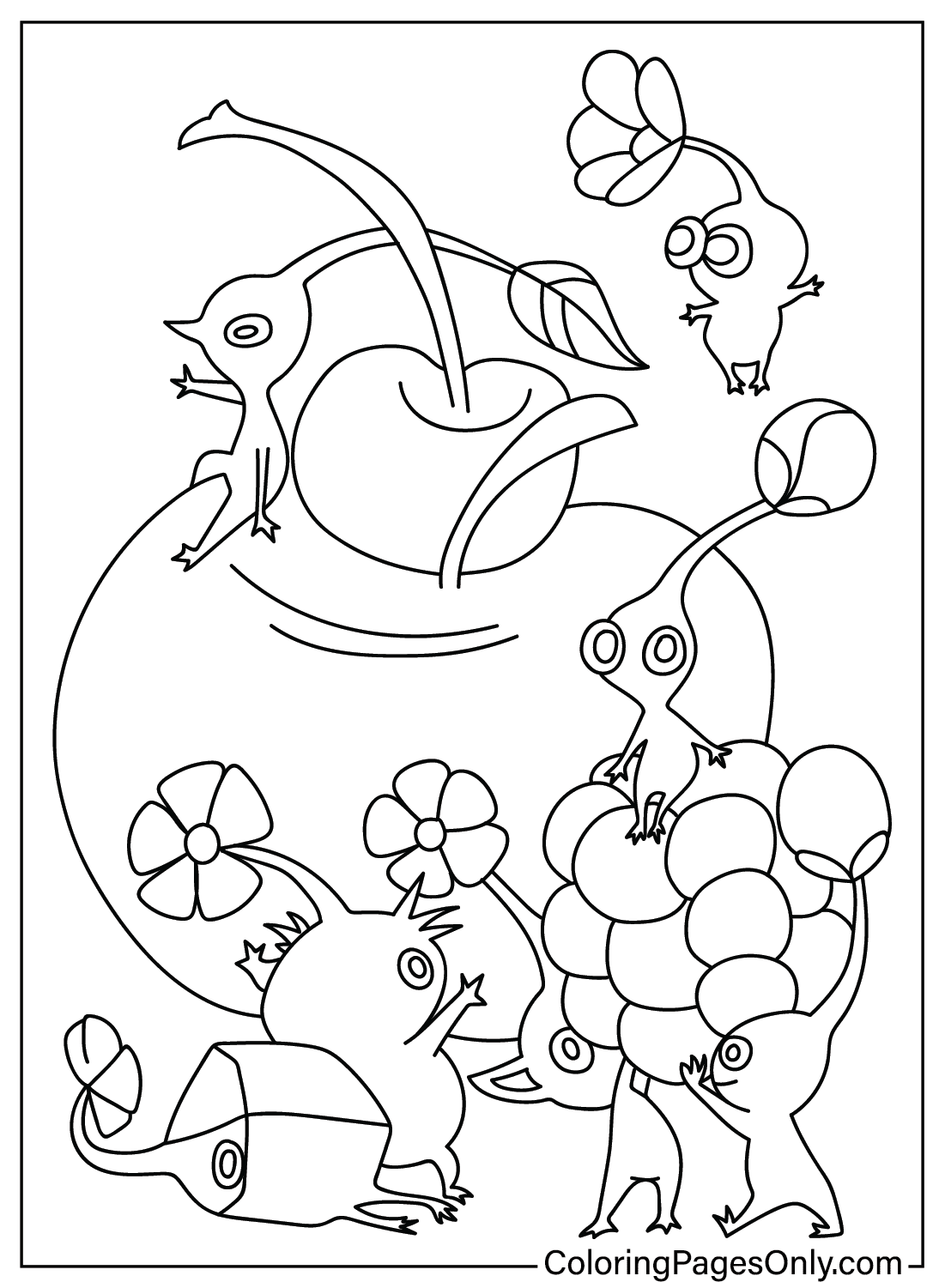
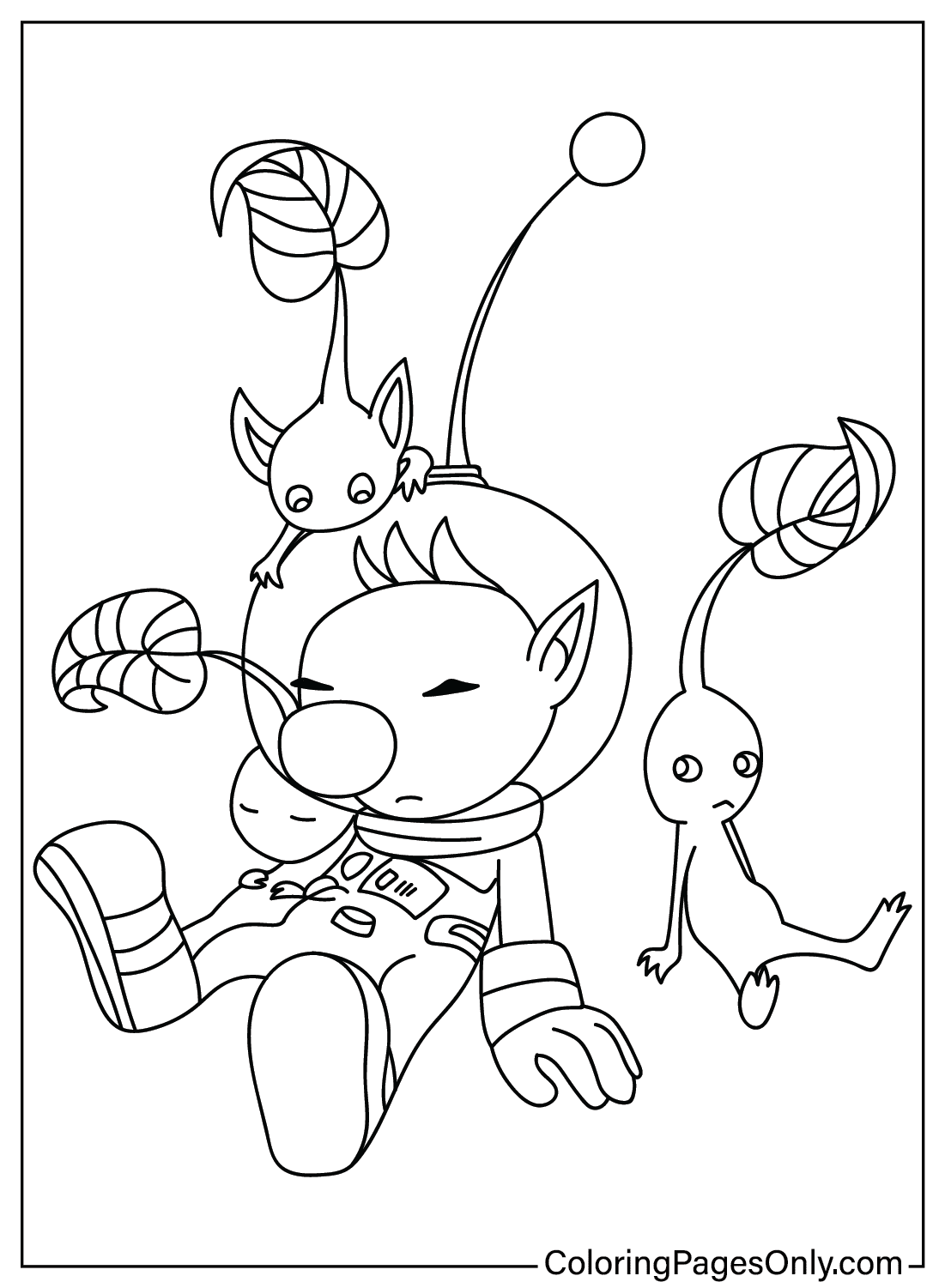
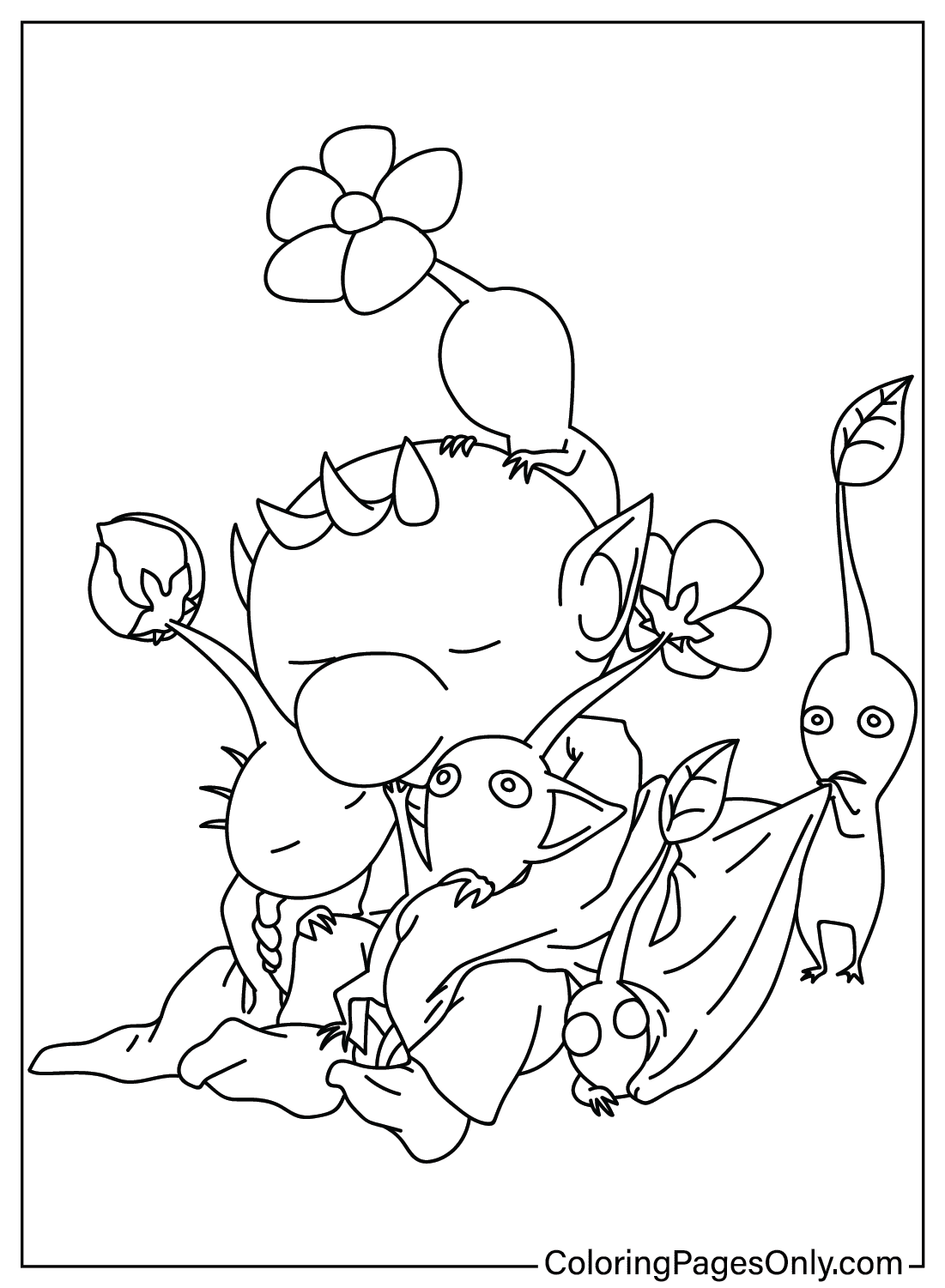
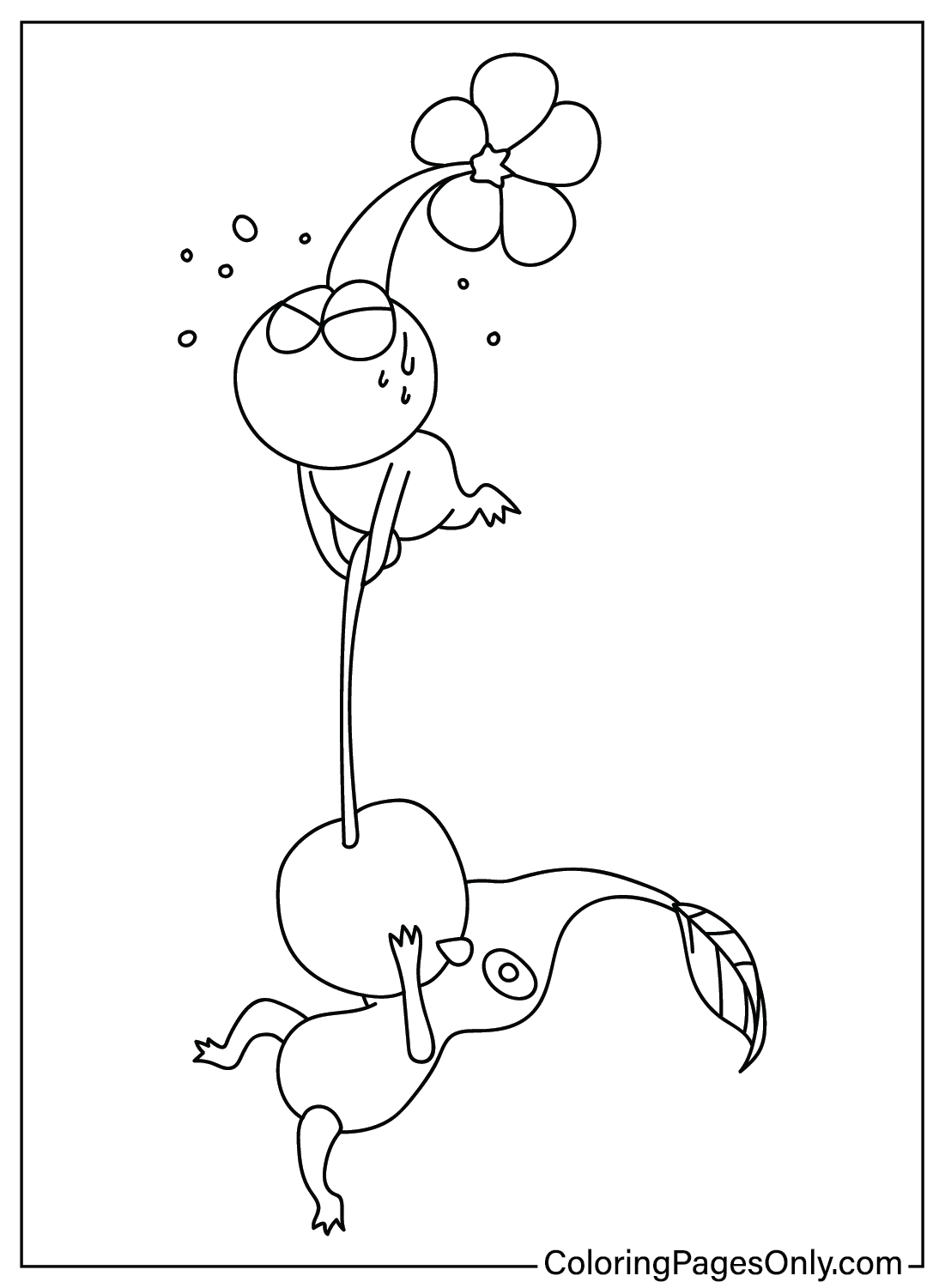
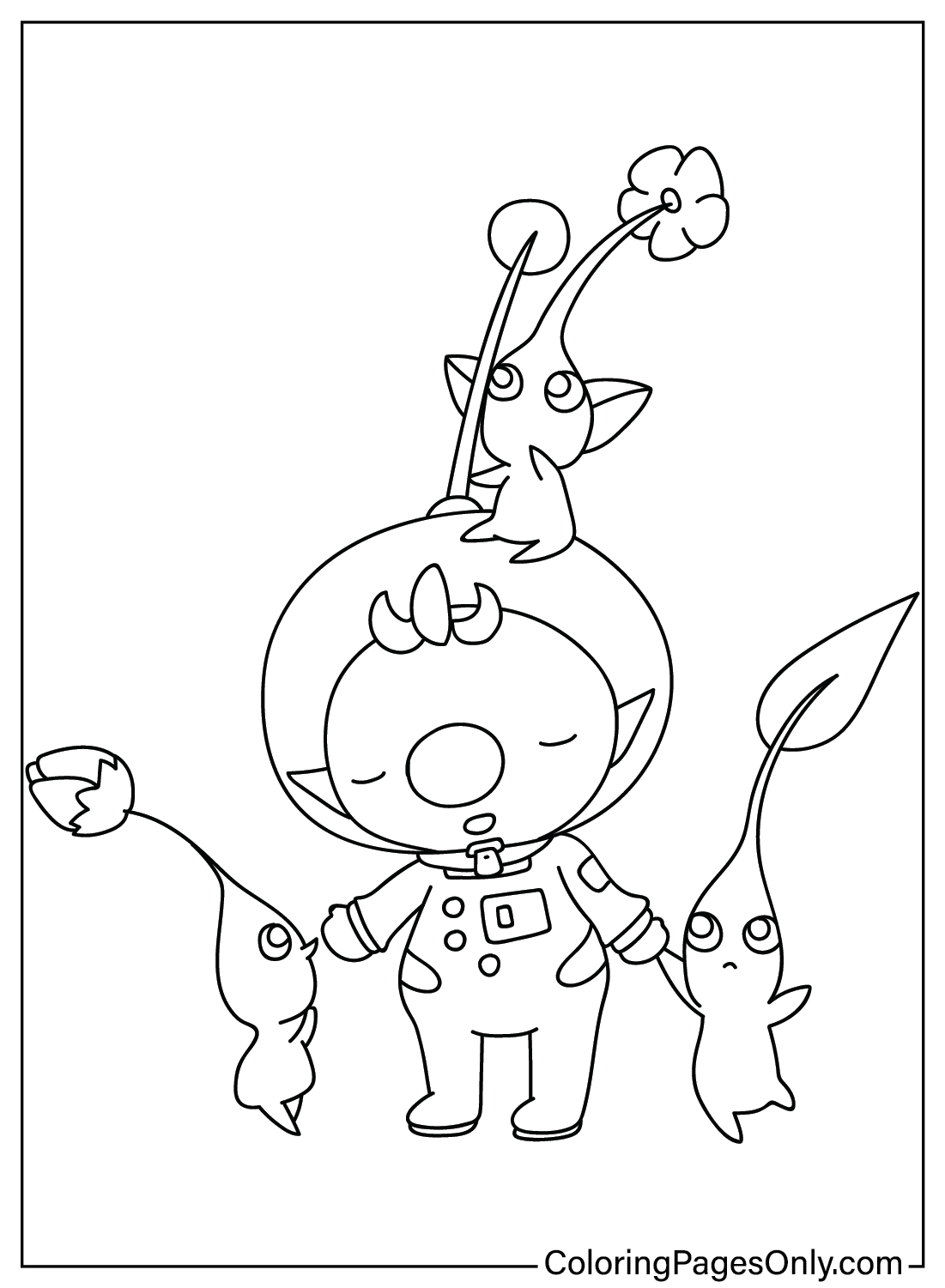
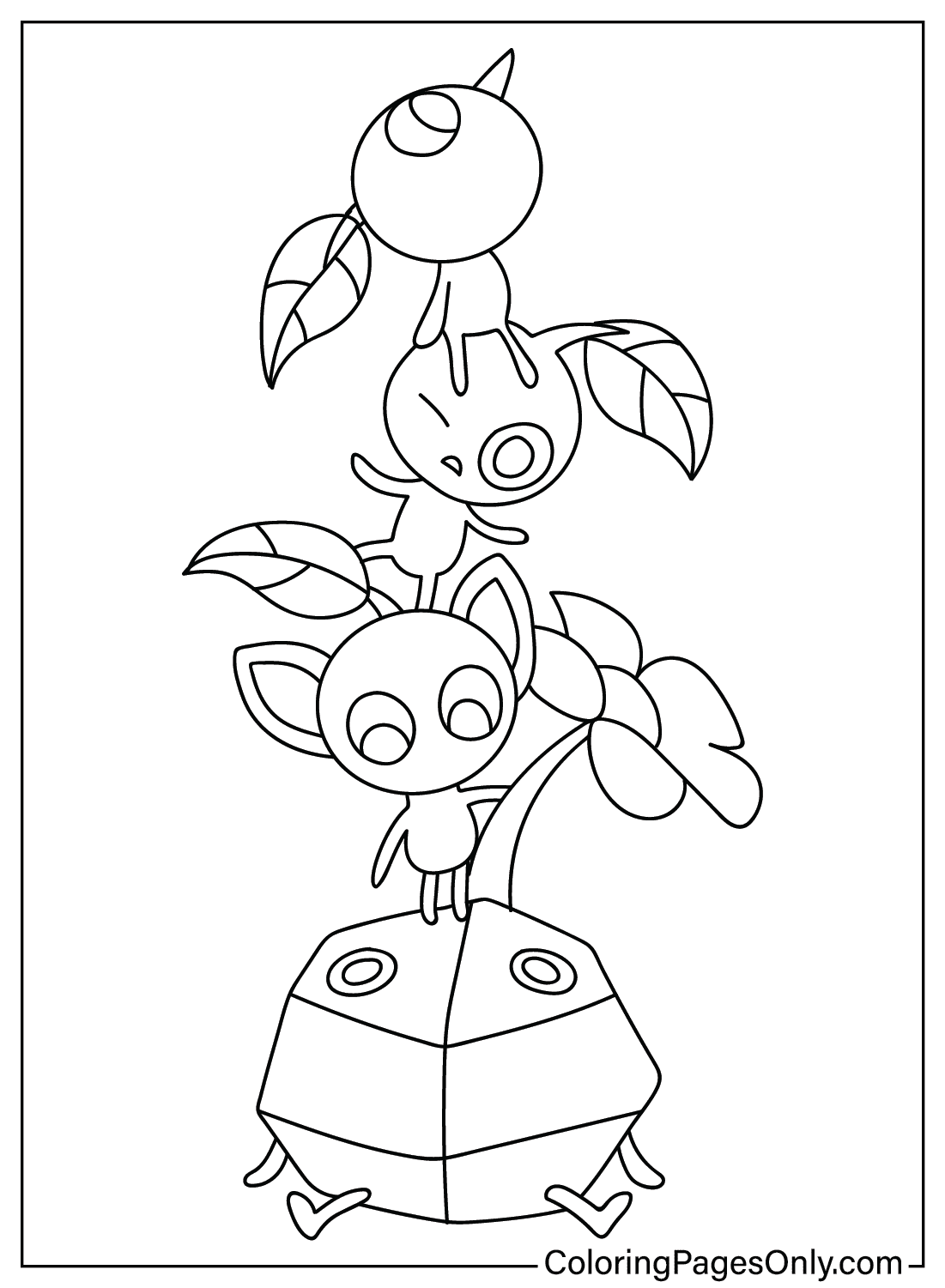
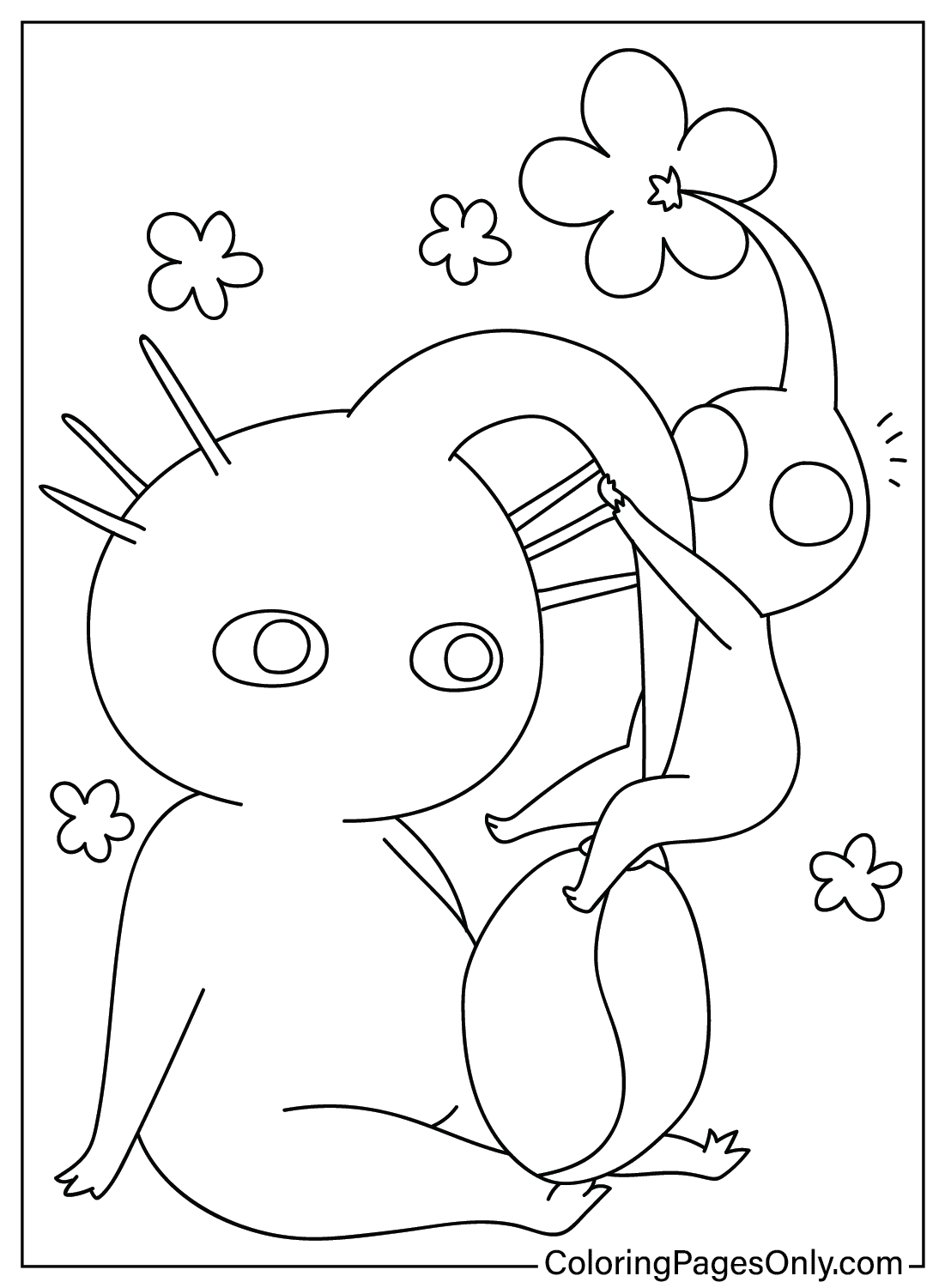
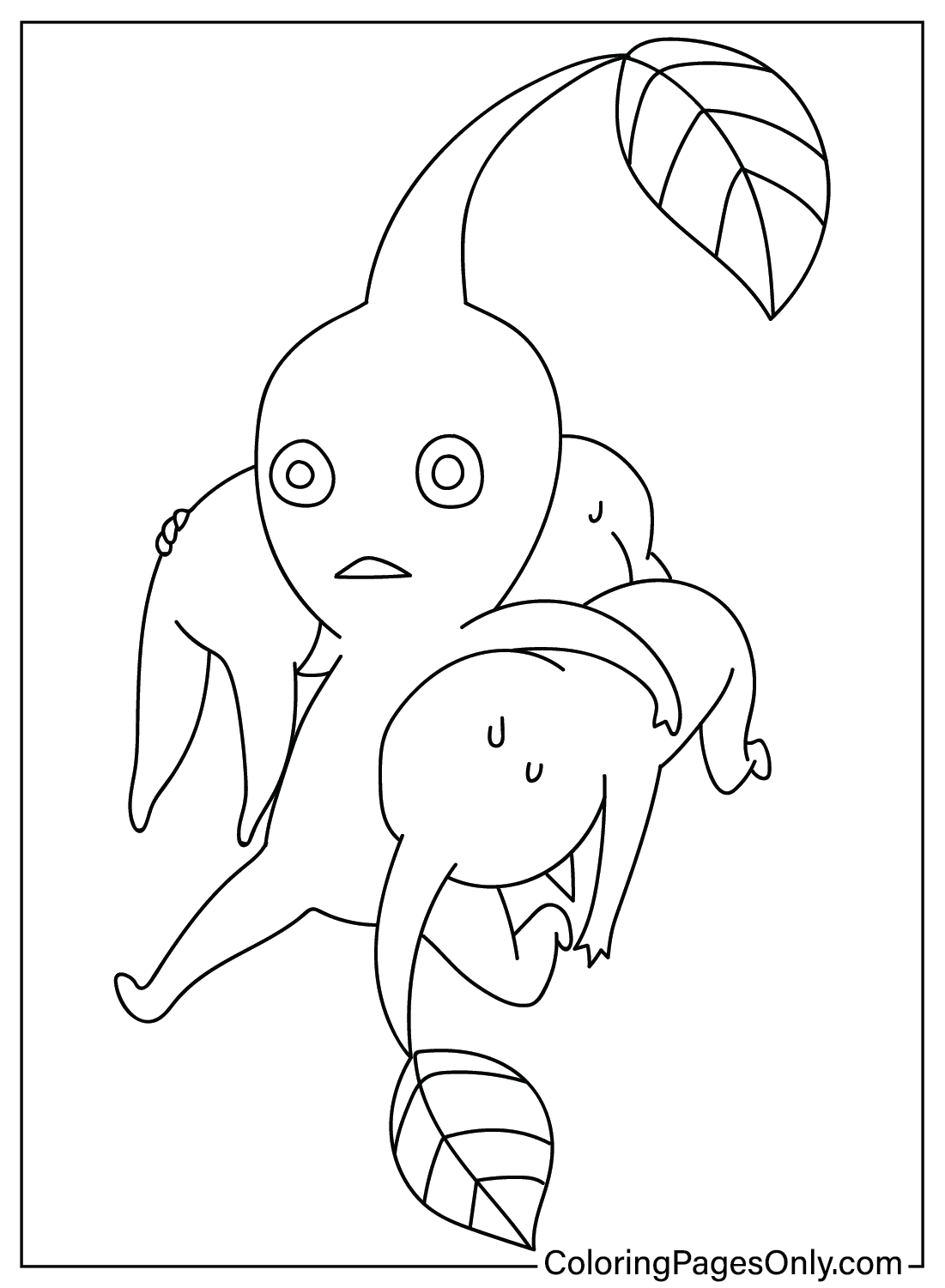
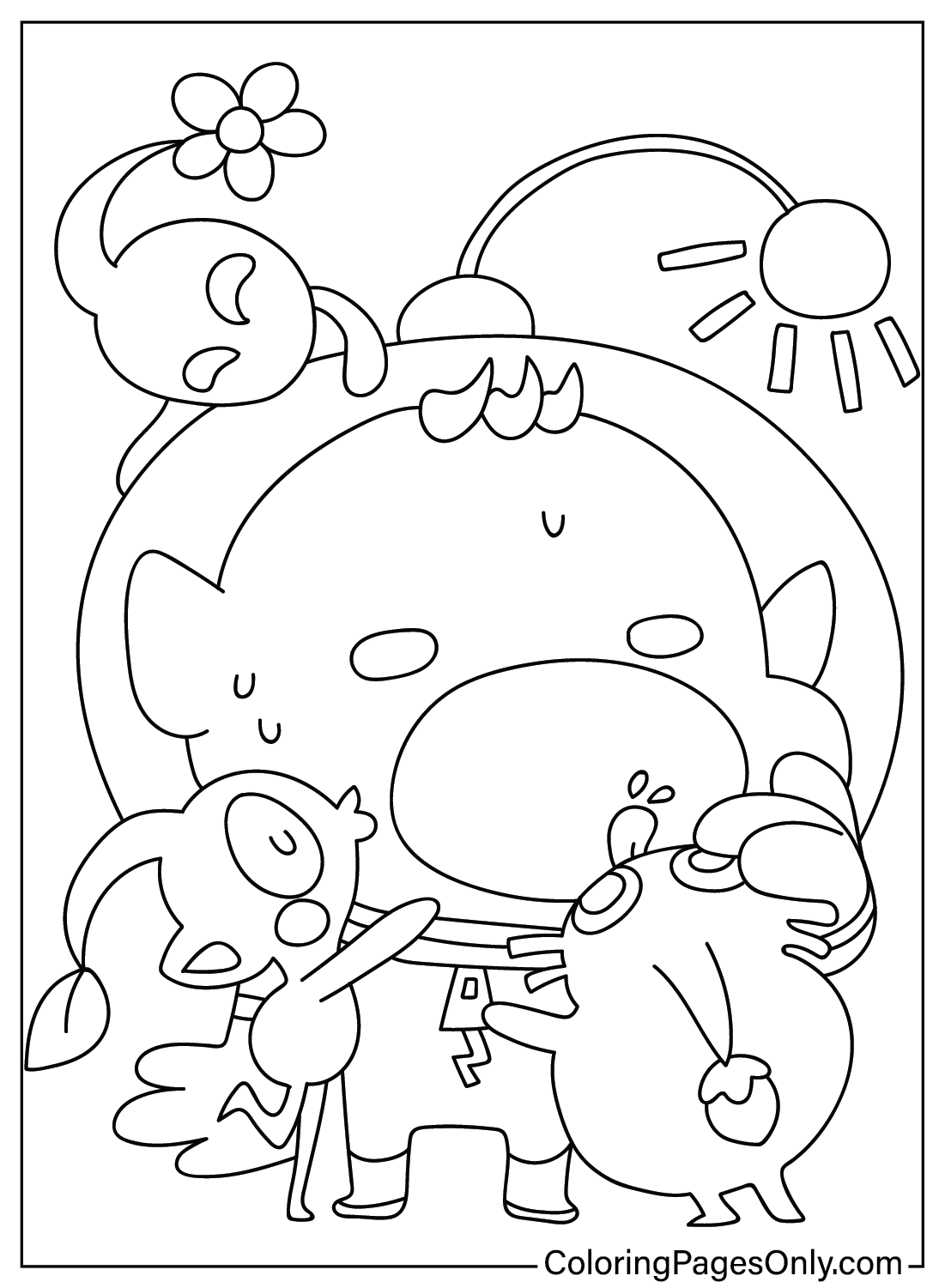
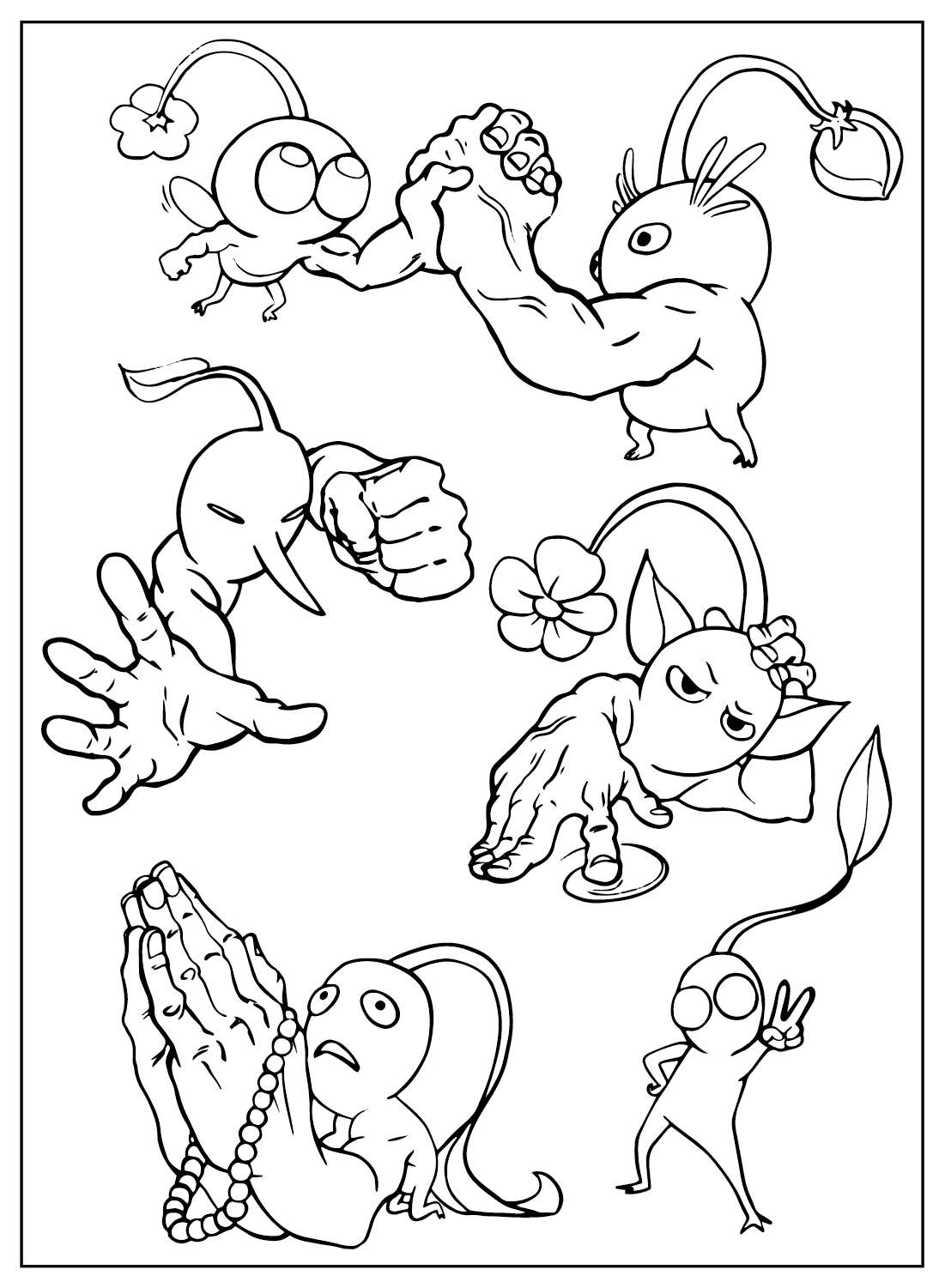
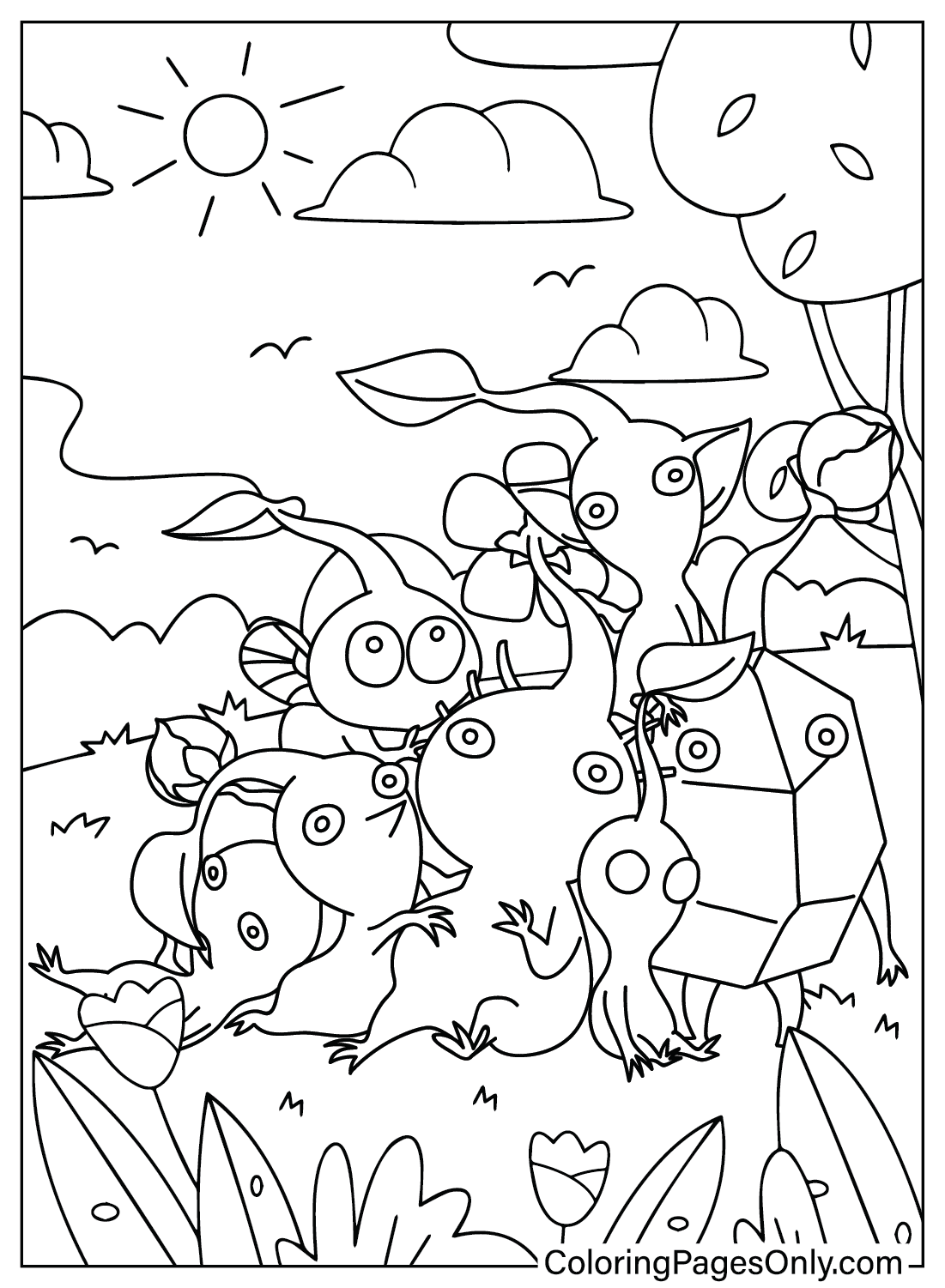
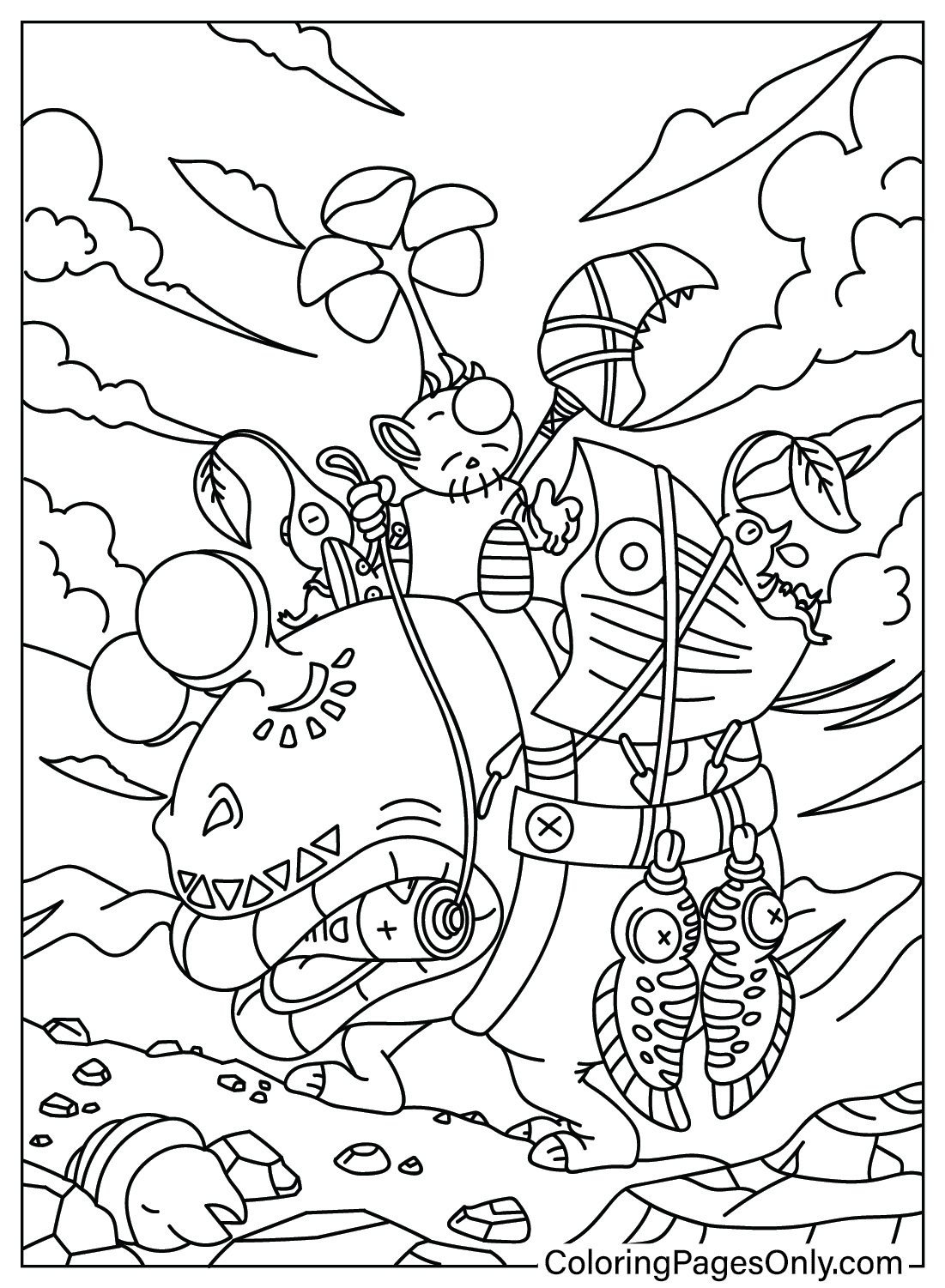
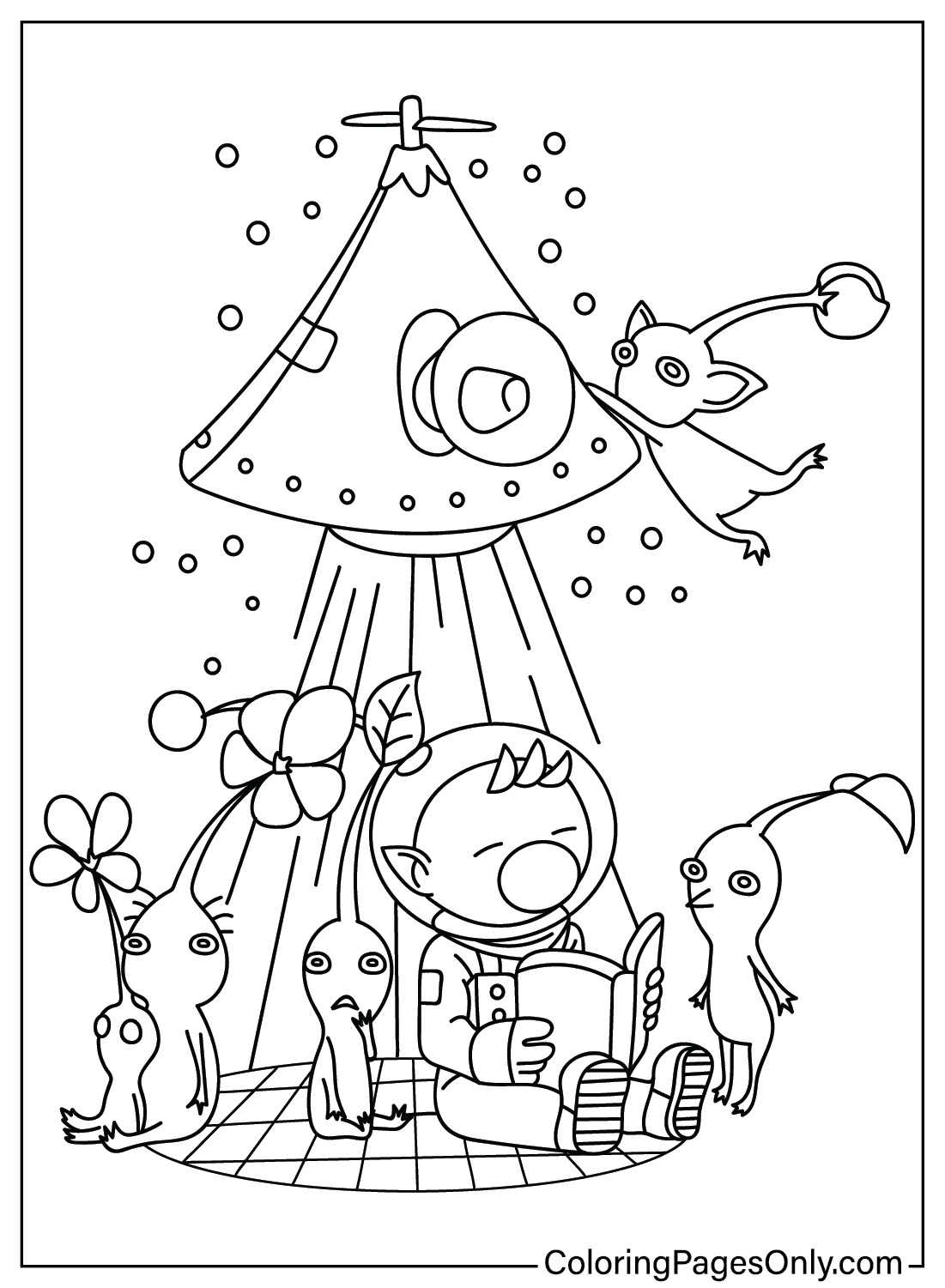
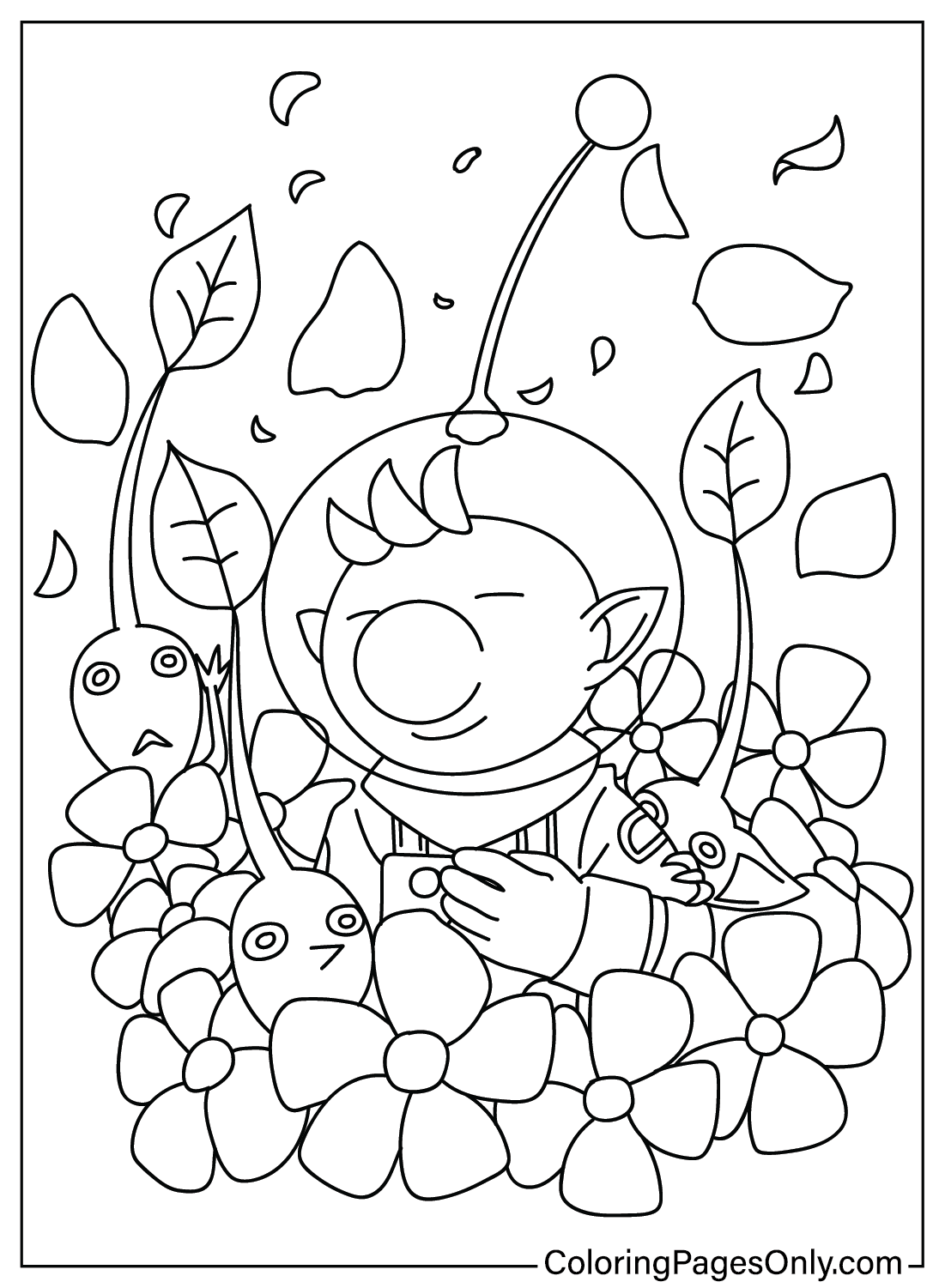
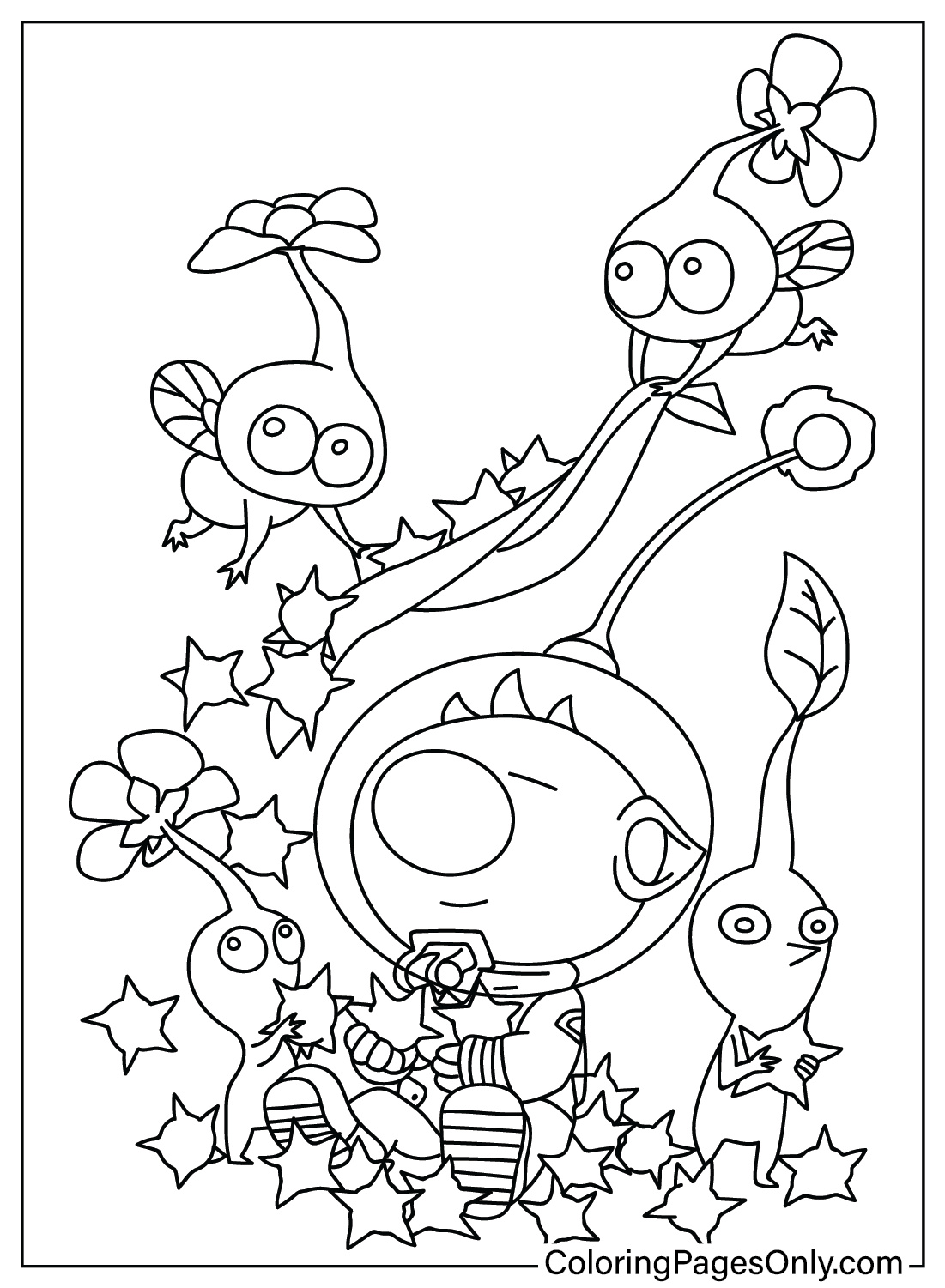
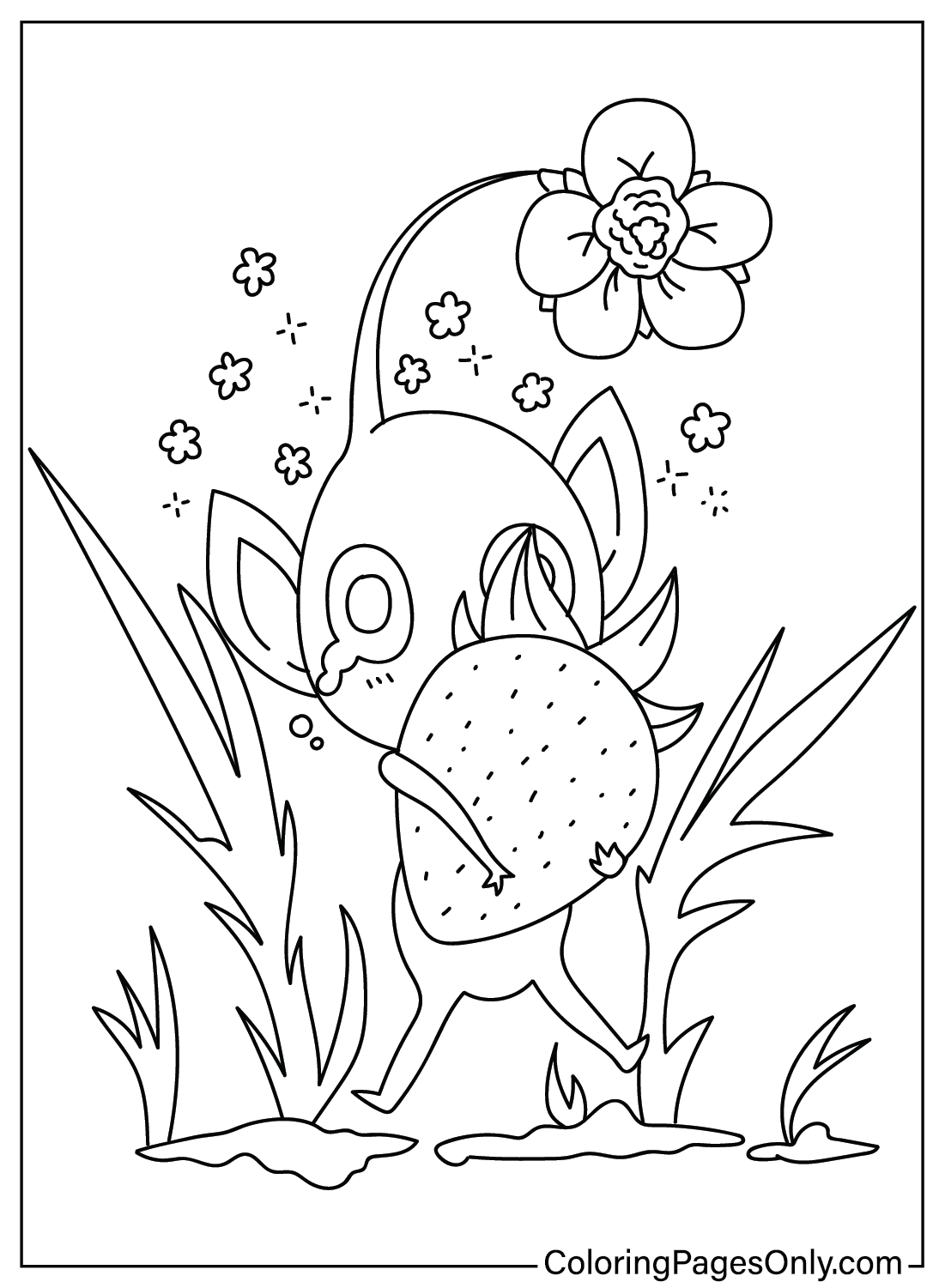
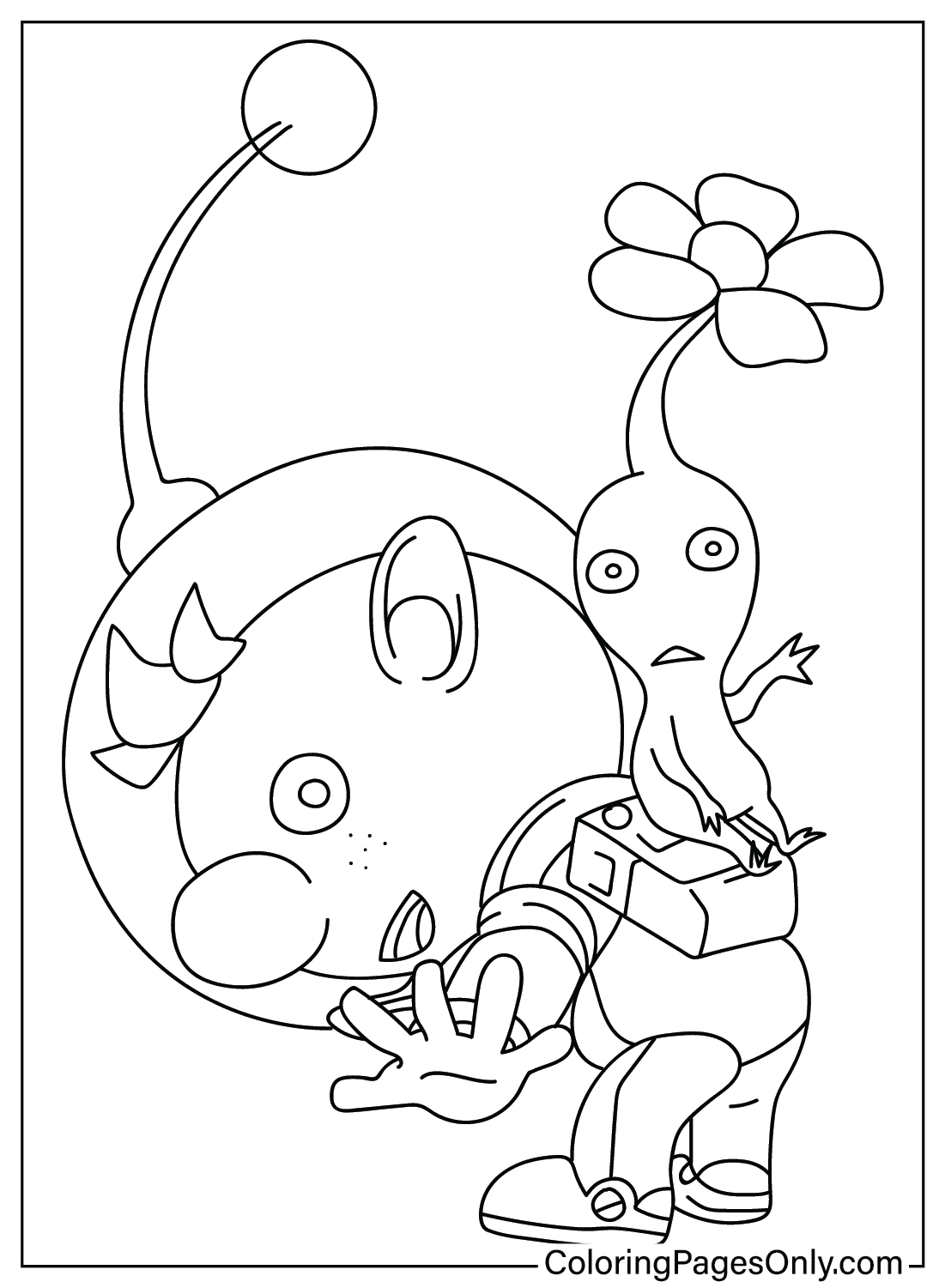
Because the gallery tiles in this collection use generic names rather than scene-specific titles, the pages cover the Pikmin characters in various configurations: solo Pikmin type studies, group arrangements showing multiple types together, scene compositions with Captain Olimar and Pikmin in their natural environment, action poses showing Pikmin carrying objects or interacting with the world, and simpler single-figure pages ideal for younger children.
The most valuable pages in any Pikmin collection for colorists are the group pages showing multiple Pikmin types together – because the entire color system of the game is designed to work as an ensemble, with each type’s distinct color reading clearly when placed next to the others. A page showing Red, Yellow, Blue, and Purple Pikmin together is a built-in color theory exercise: four distinct colors, each fully saturated, each with its own specific visual identity, arranged in a composition that only makes sense if each one is colored correctly.
The Captain Olimar pages show the tiny astronaut character whose perspective frames everything in the game – small, suited in his red and white spacesuit, typically dwarfed by the natural world around him. His spacesuit is red and white with a round helmet, and the important detail that distinguishes him from the Pikmin is that he is clearly mechanical and technological in design, while the world around him is organic and natural.
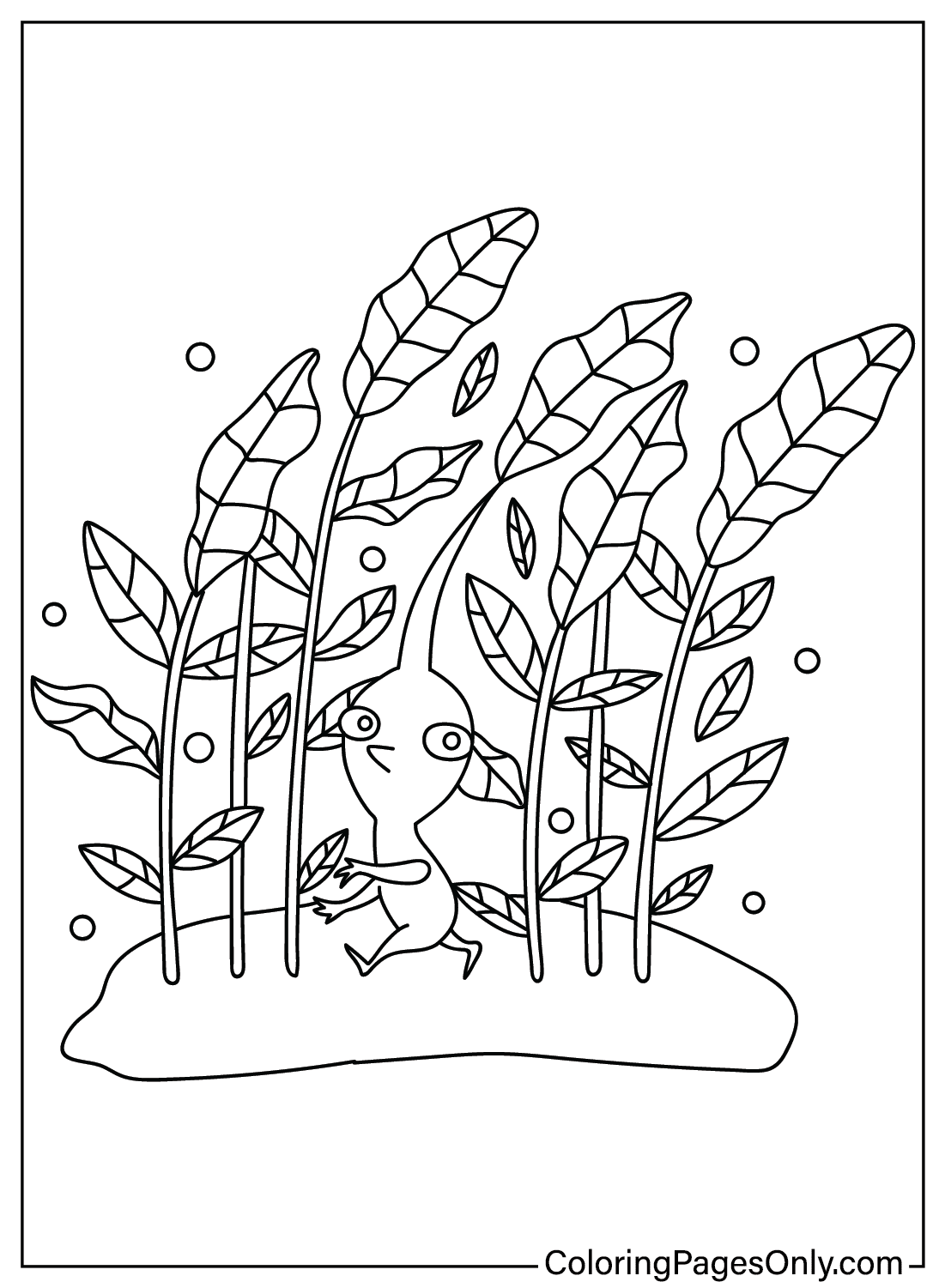
The environment and scene pages capture the miniature world quality of the game – flowers that dwarf the characters, fallen leaves as landscapes, and the quality of light filtering through grass from a ground-level perspective. For these pages, the background palette should lean into the vivid greens, warm browns, and golden light of a garden-scale natural environment.
Coloring Tips for Pikmin Pages
The most important principle for any Pikmin page is to commit fully to each type’s color. The game’s visual system only works if each Pikmin is unambiguously its designated color – a Red Pikmin that reads as orange-red, a Blue Pikmin that reads as teal, or a Yellow Pikmin that reads as gold will confuse the visual identity of the entire page. The colors are meant to be bold, simple, and immediately readable from across the room.
For multi-type group pages, color one type completely before moving to the next, and check that the colors are reading as clearly distinct from each other before continuing. The standard Pikmin palette of Red, Yellow, Blue is the most common trio in the series and creates a natural primary-color grouping – but it only works if all three are kept in the primary register rather than allowed to drift toward each other’s territory.
The stem and leaf that grows from each Pikmin’s head changes as they level up in the game – starting as a small sprout (short green stem), maturing to a leaf (longer stem with one large leaf), and finally becoming a flower (stem with a white flower at the top). If the page shows any of these detail levels, render the stems in a clear mid-green, the leaves in a slightly darker green, and the flower heads in bright white with yellow centers.
Captain Olimar’s suit should be kept in his canonical red and white – the suit body is red, the helmet dome is white or very pale, and the small LED light on his helmet antenna glows yellow. His small size compared to anything around him is what makes the environmental pages work visually; keeping him small and clearly defined in his suit palette against larger, more loosely rendered backgrounds maintains the correct sense of scale.
For environment pages, use the garden-scale palette that defines Pikmin’s world: the vivid, almost oversaturated green of grass seen close-up, the warm golden-brown of soil, the saturated reds and yellows of flowers. The world is meant to look beautiful and slightly magical – resist the urge to tone down the colors, because the game’s environments are deliberately more vivid than real nature to communicate that this is a place where small things are precious and wonderful.
5 Activities to Do With Your Pikmin Pages
Color the full Pikmin type chart. Print five or more pages from the collection and designate each as a specific Pikmin type – Red, Yellow, Blue, Purple, and White for the classic types, or add Rock, Winged, Ice, and Glow if you have enough pages. Color each page carefully in its designated type’s canonical color, following the specific rules for each type: Red’s pointed nose, Yellow’s large ears, Blue’s distinctive mouth, the stocky build of Purple, and the pure white of White Pikmin. Arrange all five or more as a reference chart with each type’s name and one-line ability description below. This exercise is essentially a game guide you built yourself.
Create a before-and-after sprout-to-flower series. Find three pages showing Pikmin and color one set as newly sprouted Pikmin (short stem, no leaf yet), one set as leaf-stage Pikmin (stem with a single leaf), and one set as flower-stage Pikmin (stem with a white flower). Use the same Pikmin type and color across all three pages to keep the progression clear. Arrange them in developmental order to show the life cycle progression that is central to the game’s progression mechanics.
Design a Pikmin squad assignment. Print six pages and assign each one to a specific “mission” from the game – crossing water (Blue Pikmin only), breaking a crystal barrier (Rock Pikmin), fighting a fire-element enemy (Red Pikmin), reaching a high ledge (Yellow Pikmin), nighttime exploration (Glow Pikmin), and flying over an obstacle (Winged Pikmin). Color each page in the appropriate type’s color and write the mission assignment below each page. Arranged together, this shows how the color system maps directly to strategic decision-making.
Make a giant and small contrast display. Print one page showing a Pikmin alone and one page showing the same scene with Captain Olimar nearby. Color both in full detail, then mount them side by side with a note about the actual size relationship between Olimar (a few centimeters in the game’s scale) and the objects around him. This scale-awareness activity connects the coloring to the game’s most distinctive narrative and visual concept.
Build a Pikmin group portrait with all types. Color multiple pages – one for each Pikmin type represented in the collection – in their canonical colors, cut them out carefully, and arrange them on a large sheet of background paper you’ve colored as a garden-scale environment: green grass, brown soil, flowers towering above. Mount each Pikmin cutout at ground level against the background to create a composite group scene. The combination of correctly colored individual Pikmin types against the garden environment captures exactly what makes the game’s visual world so distinctive.
Download Your Free Pikmin Pages Today!
All 20+ Pikmin Coloring Pages are completely free – download as PDF to print or color online with one click. No sign-up, no cost. Whether you’re here because Pikmin 4 is your current Nintendo obsession or you’ve loved these little plant creatures since 2001, we hope this collection gives you the right pages to work with.
Share your finished pages with us on Facebook and Pinterest at ColoringPagesOnly.com!