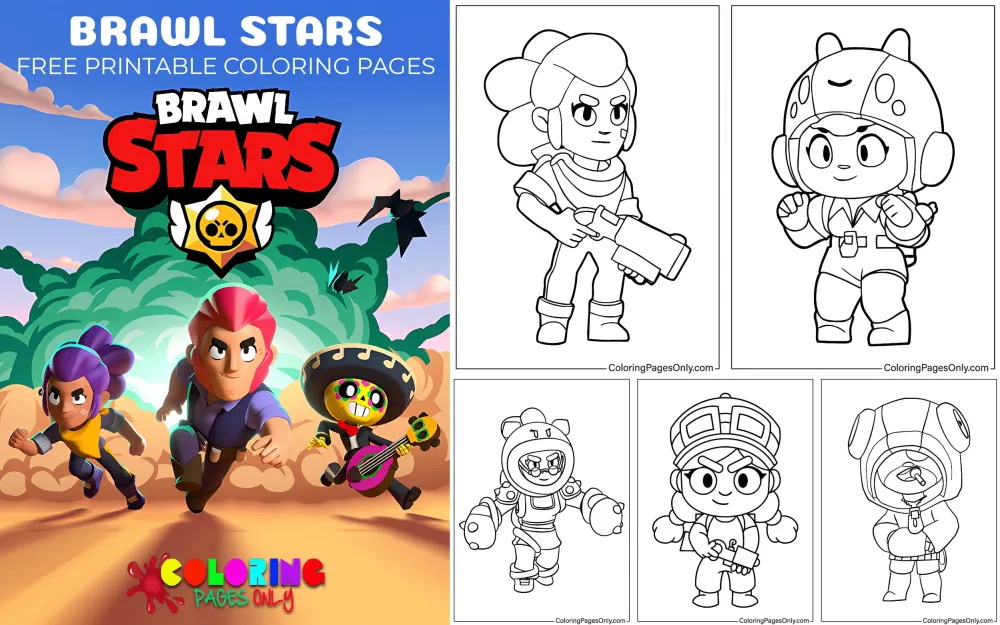
Free Brawl Stars Coloring Pages: 70 printable PDF designs featuring single brawlers like Spike and Piper, team lineups, holiday scenes, and crossover skins borrowed from Godzilla and SpongeBob SquarePants. Fans can print any design as a PDF for crayons and markers, or open it in the online coloring tool and fill it in on a tablet.
Brawl Stars is a mobile team battle game made by Supercell, the Finnish studio behind Clash of Clans and Clash Royale, and it launched worldwide in December 2018. Players pick from a roster of more than 100 characters called Brawlers, each with its own attack and a charged-up special move called a Super, then play short three-versus-three matches in modes such as Gem Grab and Brawl Ball. The game’s story is set in Starr Park, a fictional amusement park.
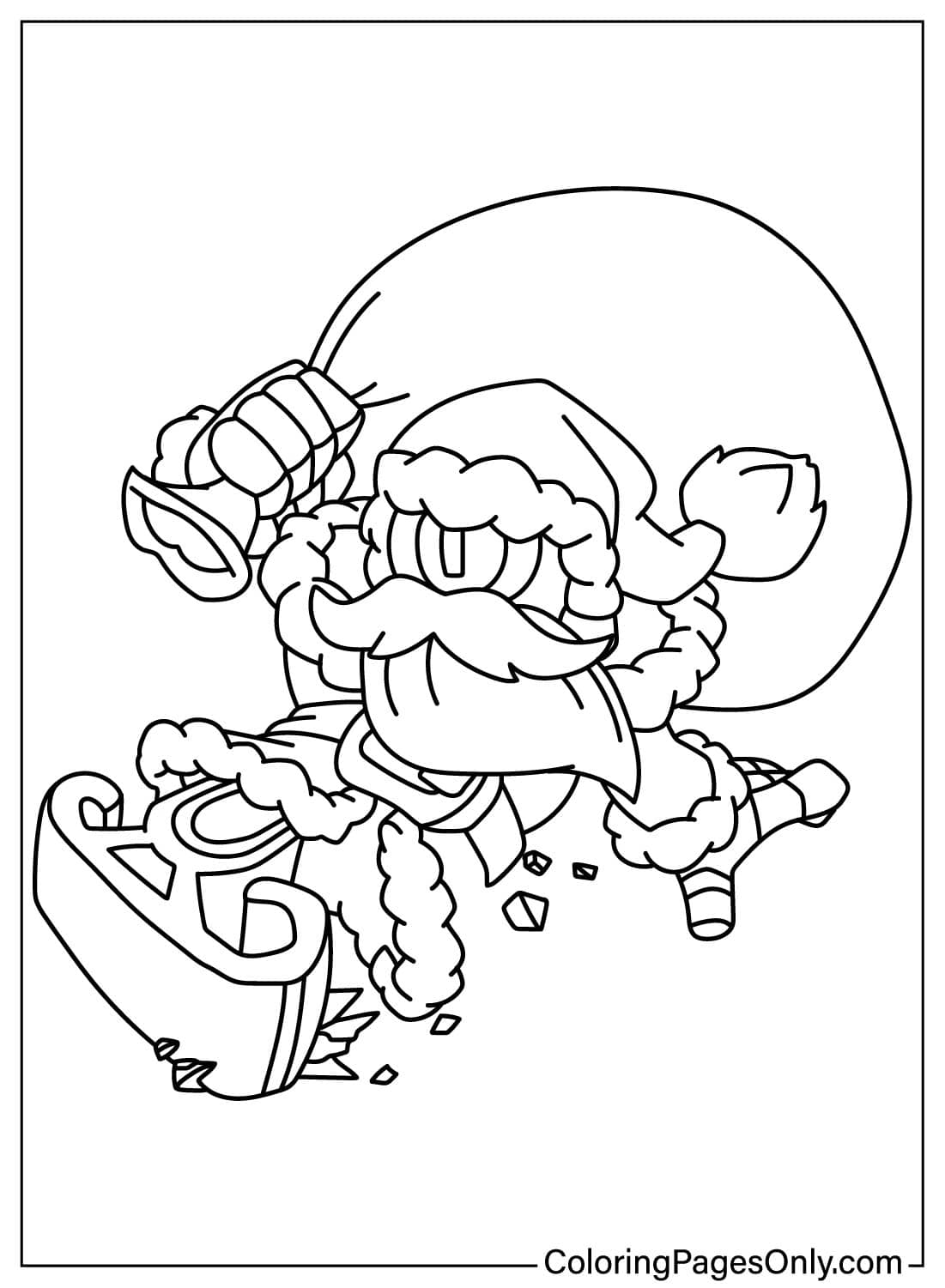
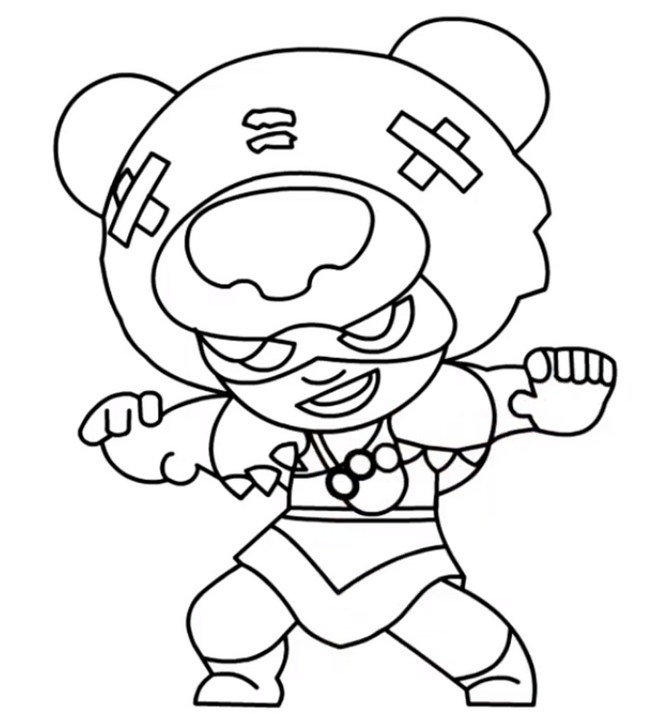
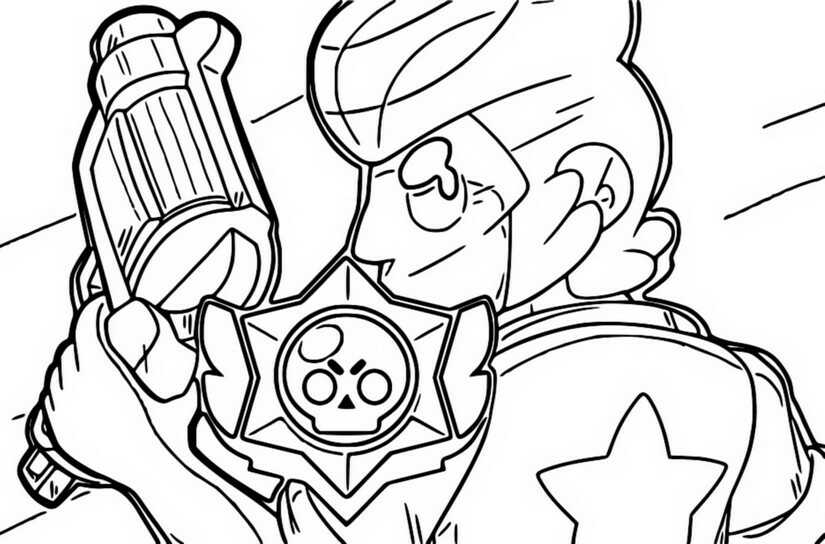
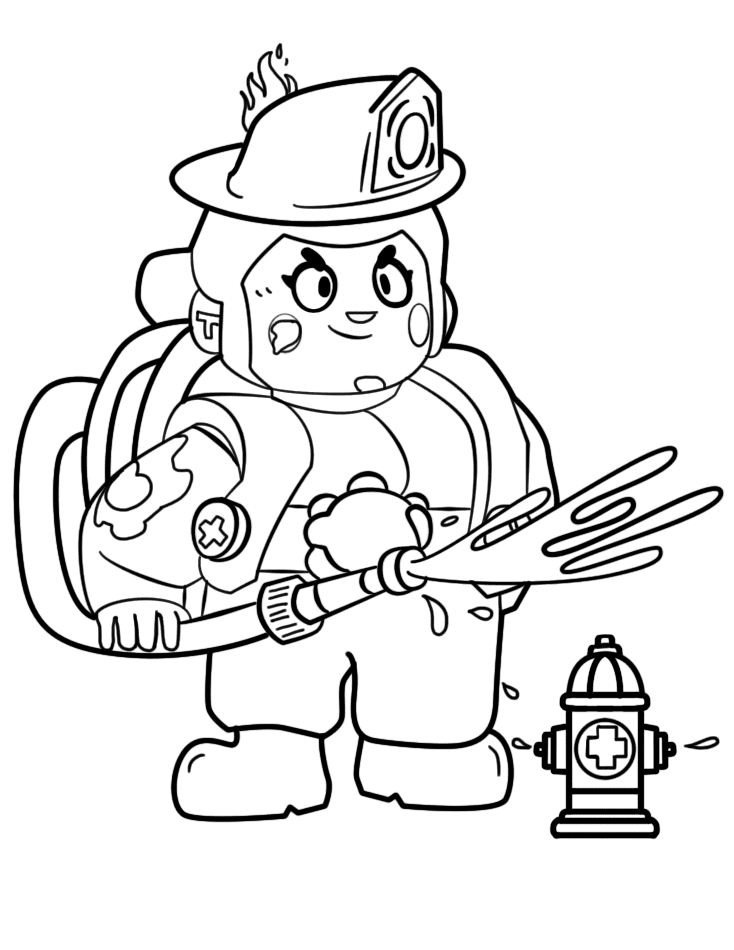
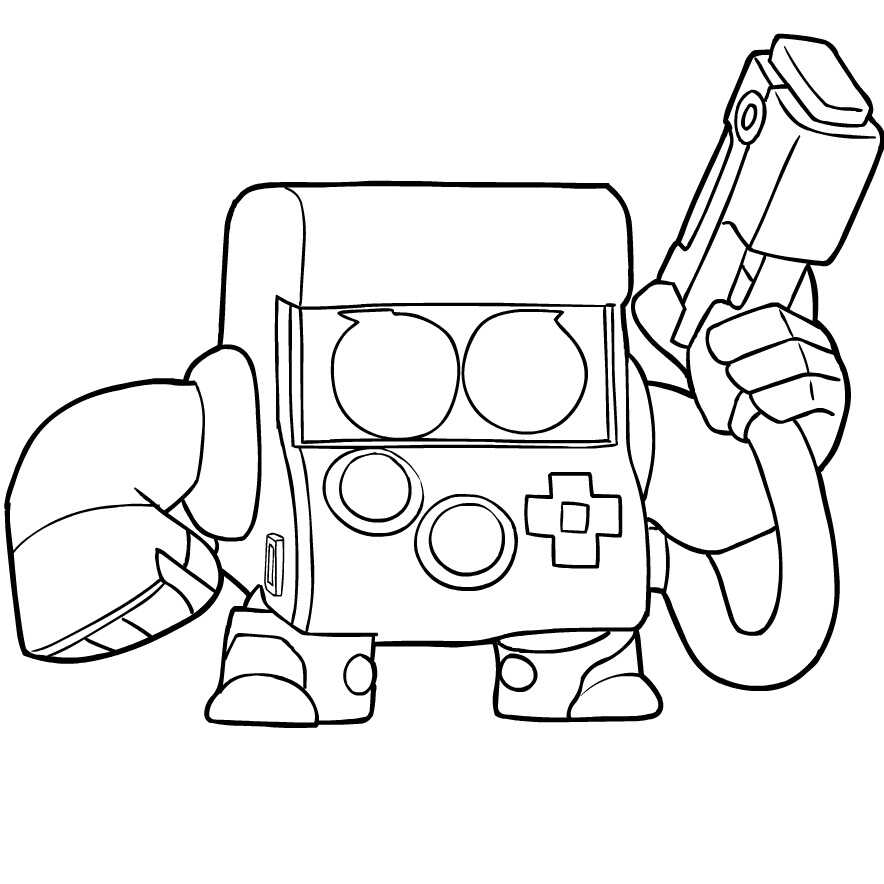
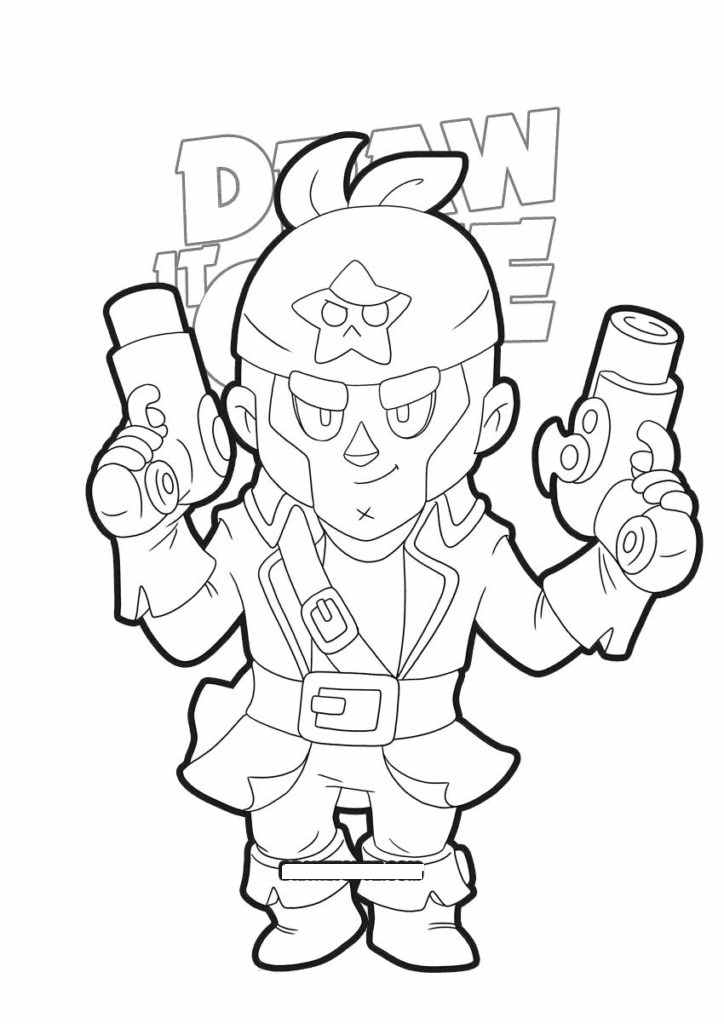
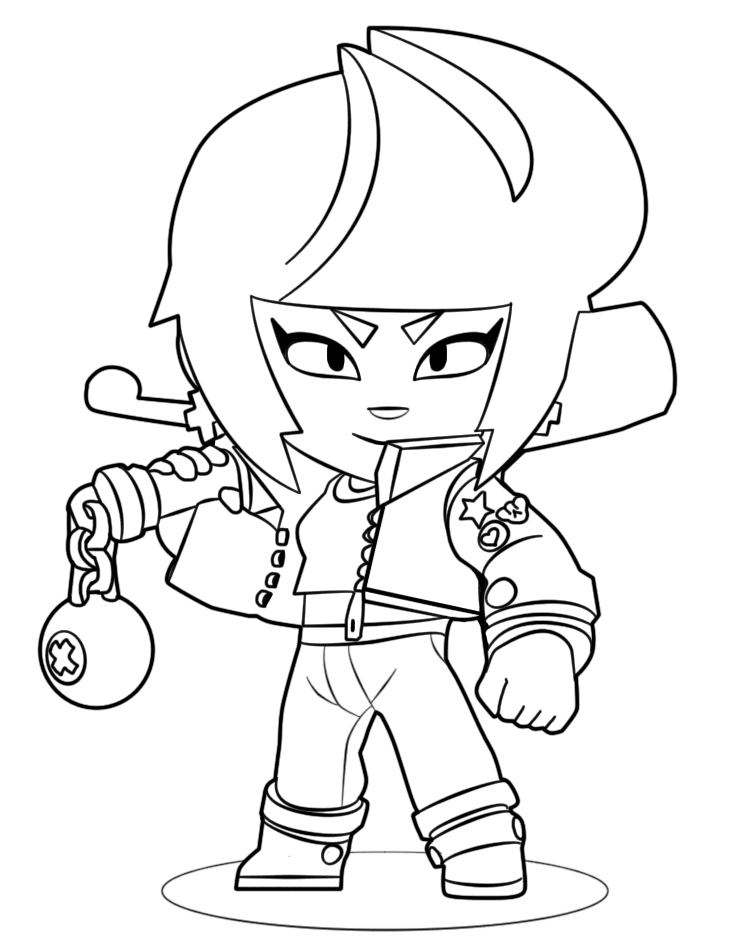
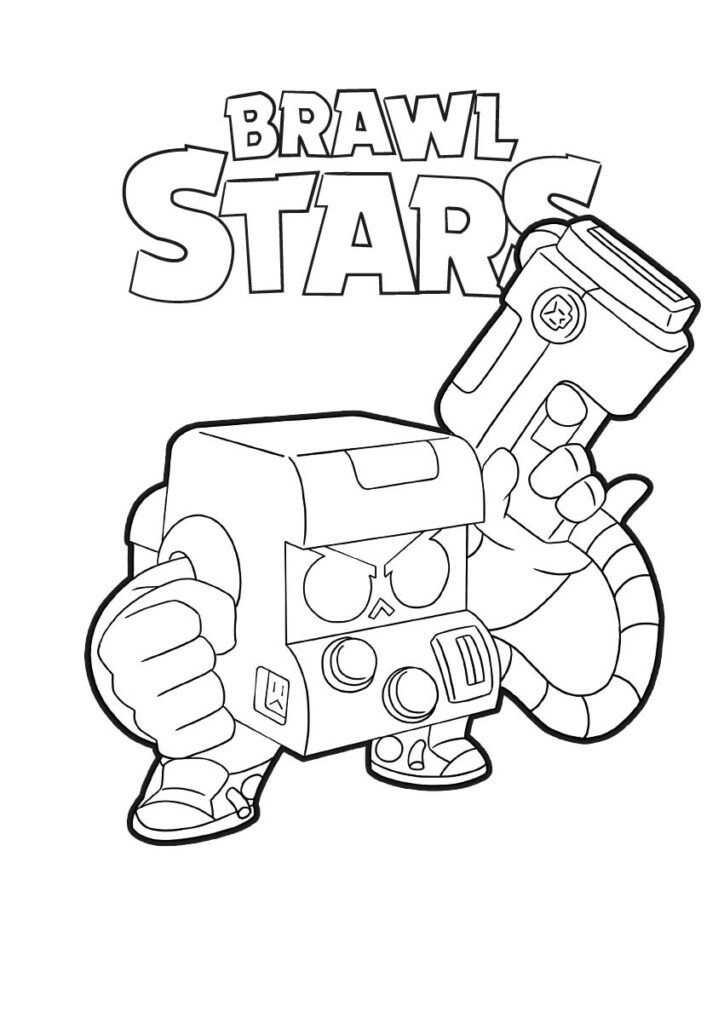
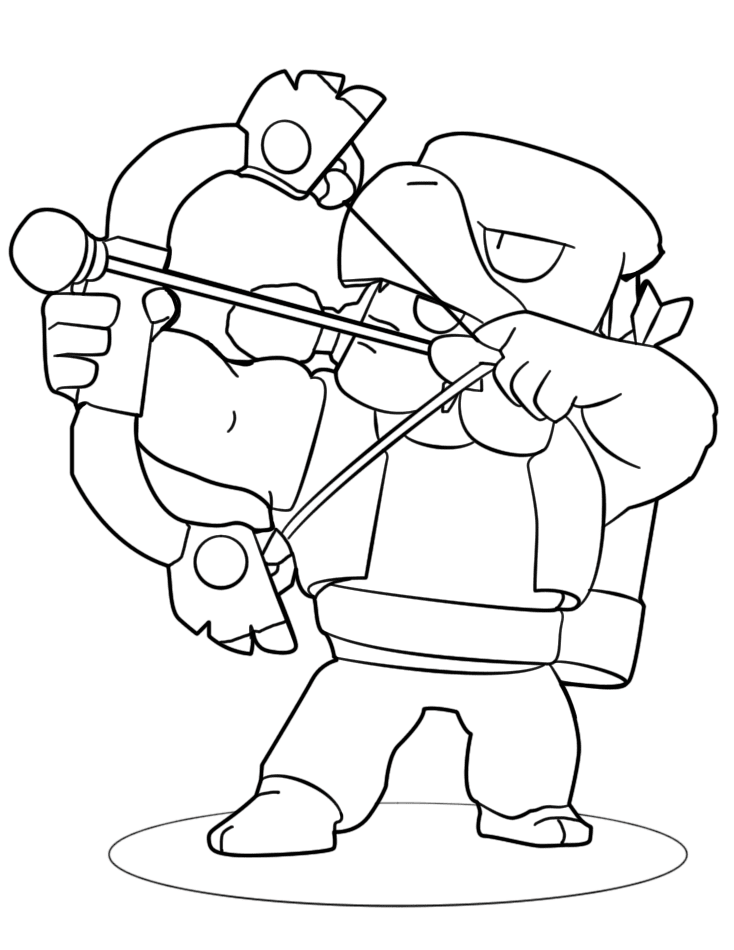
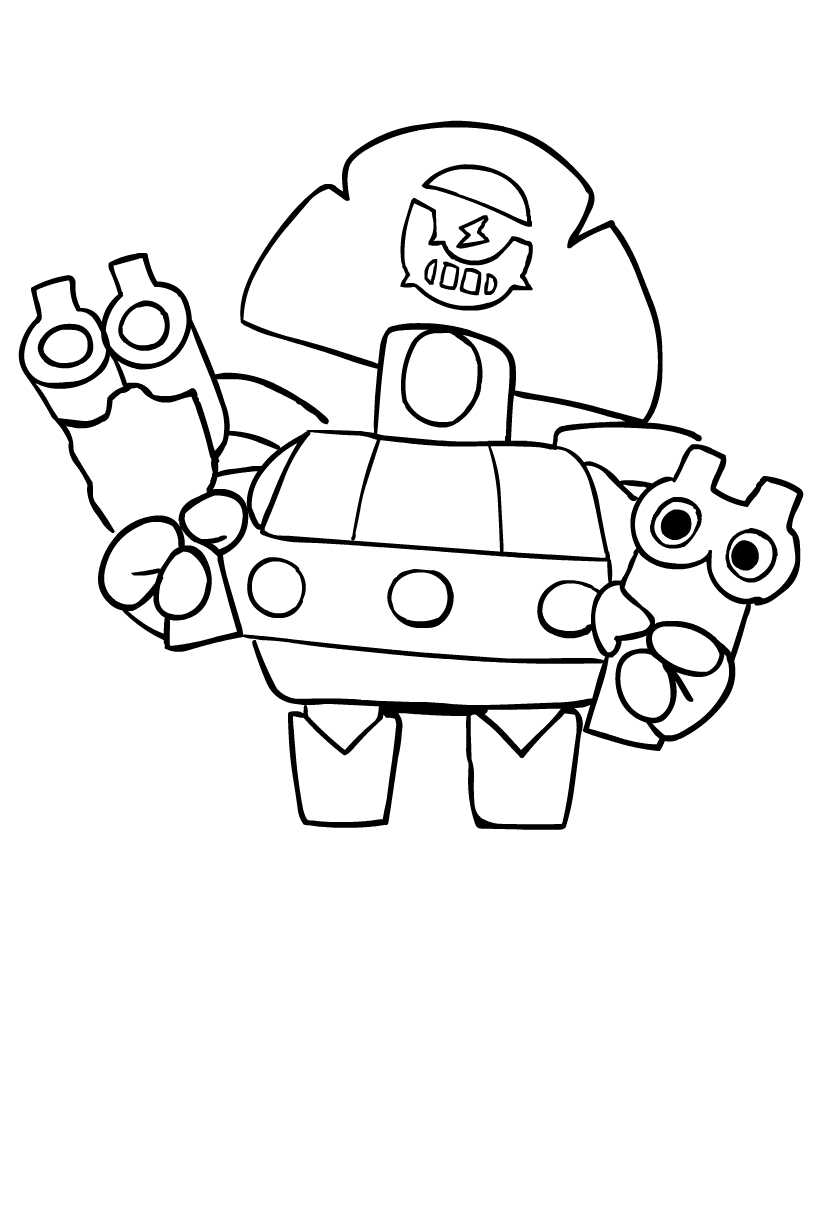
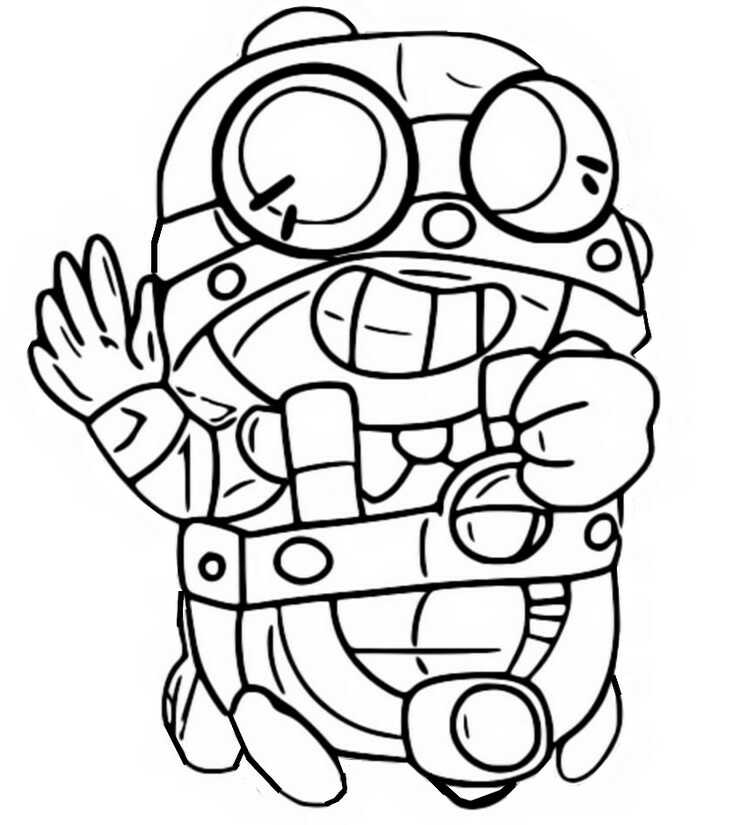
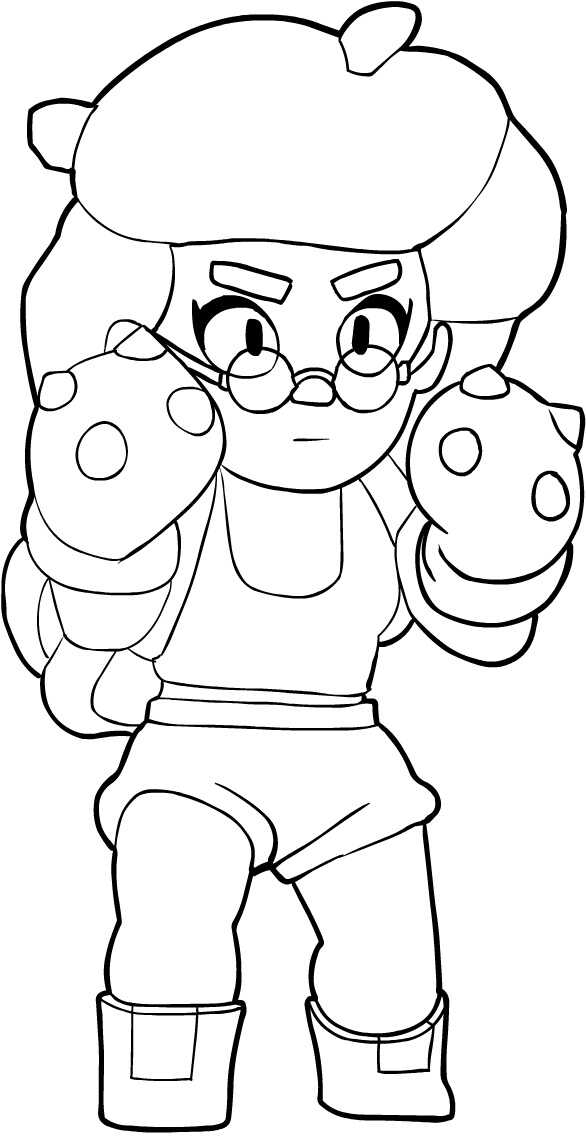
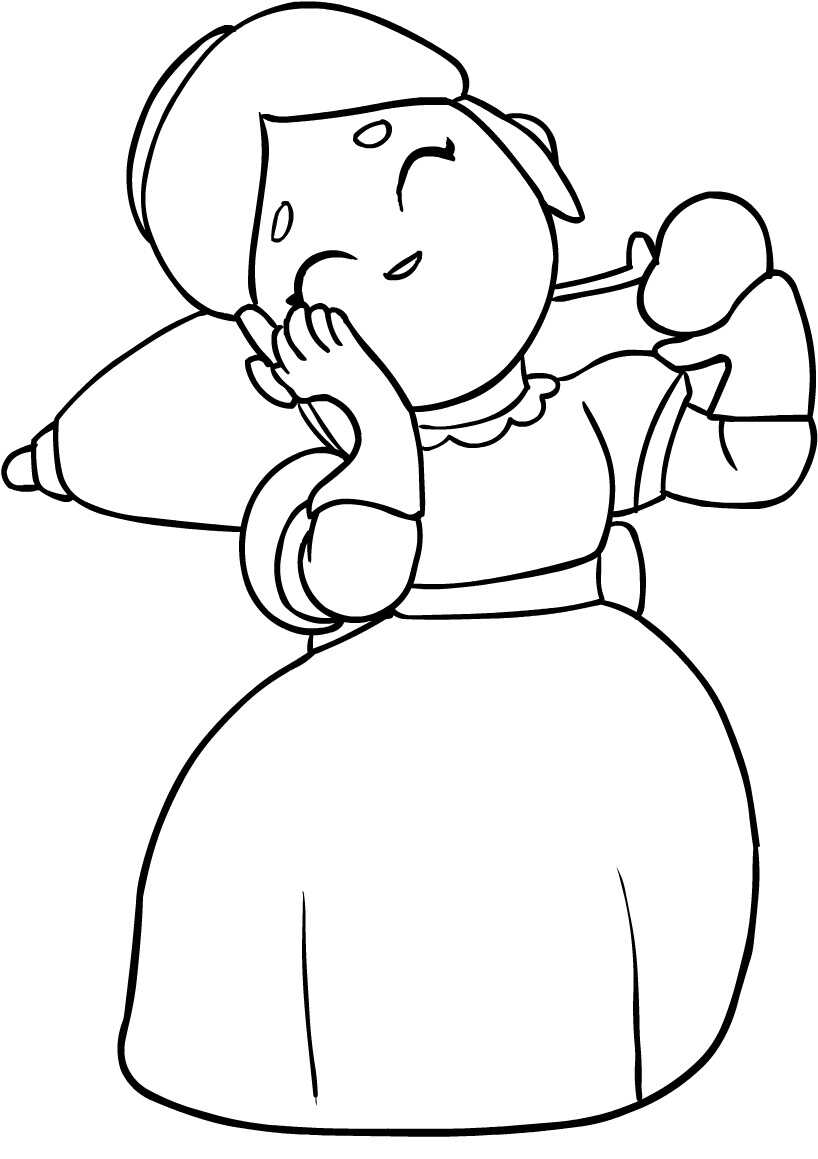
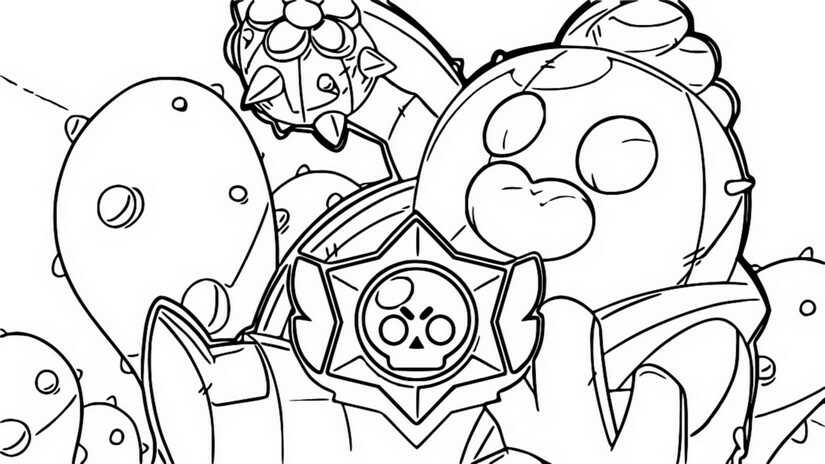
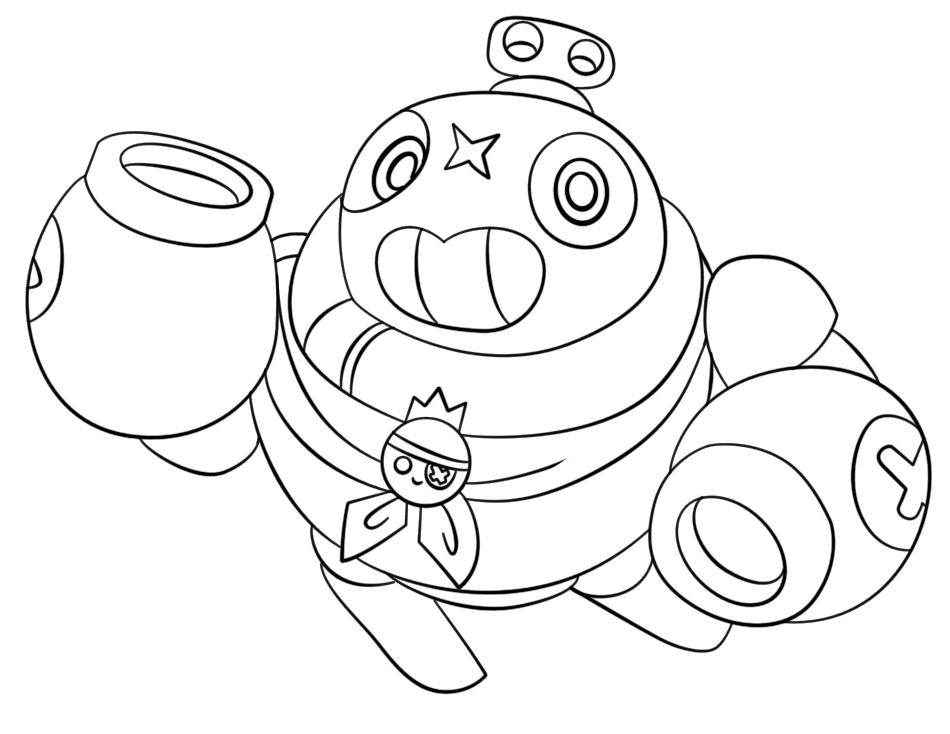
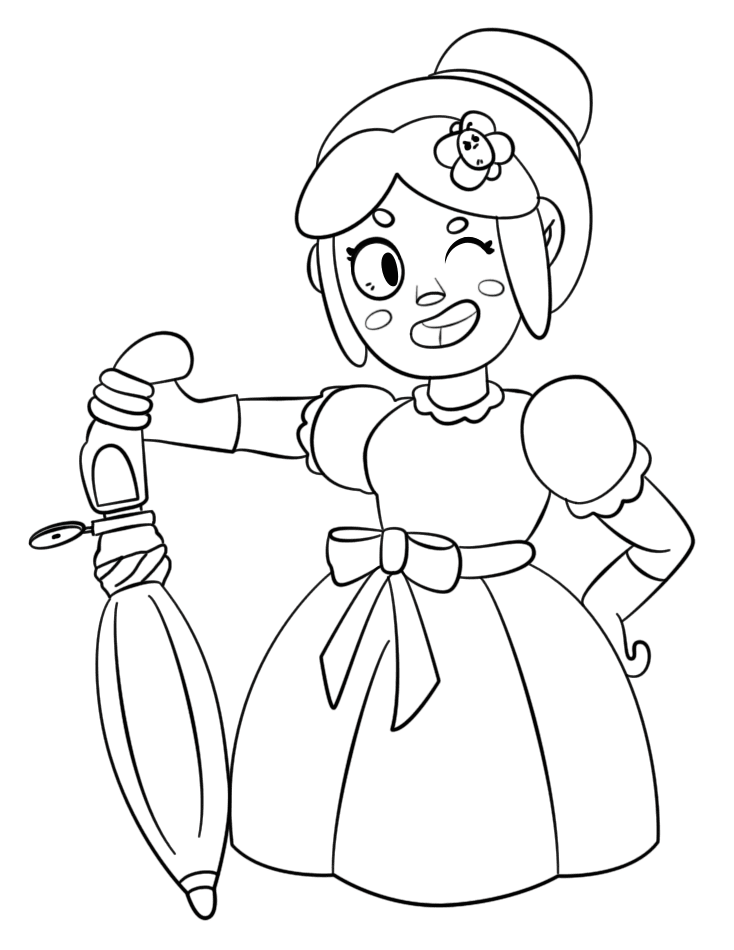
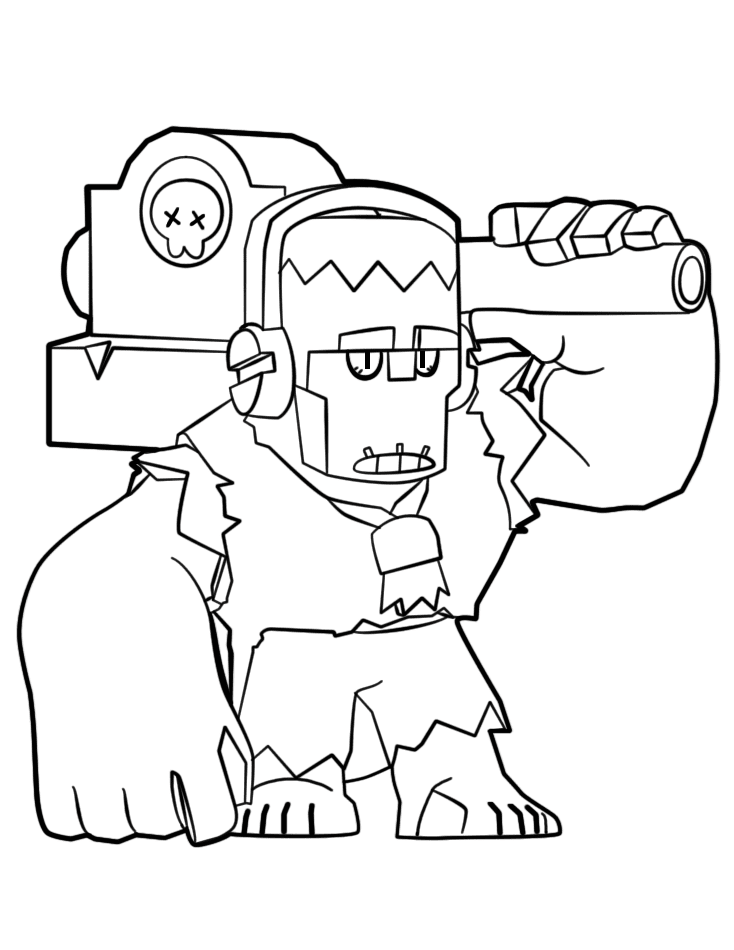
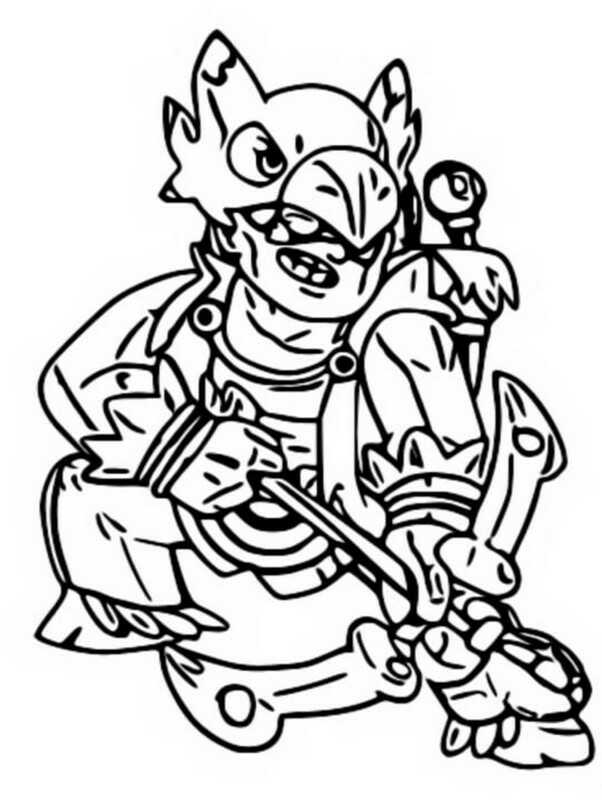
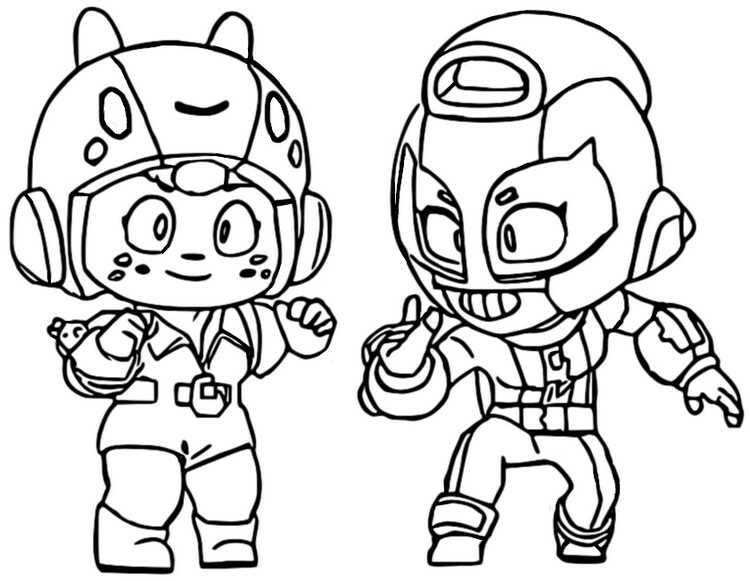
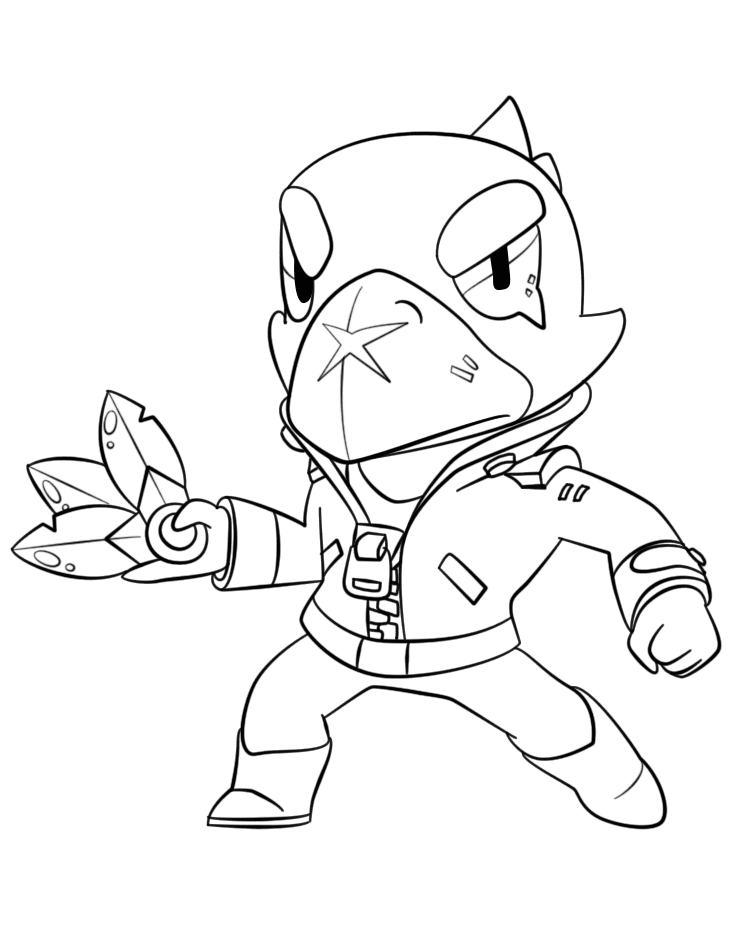
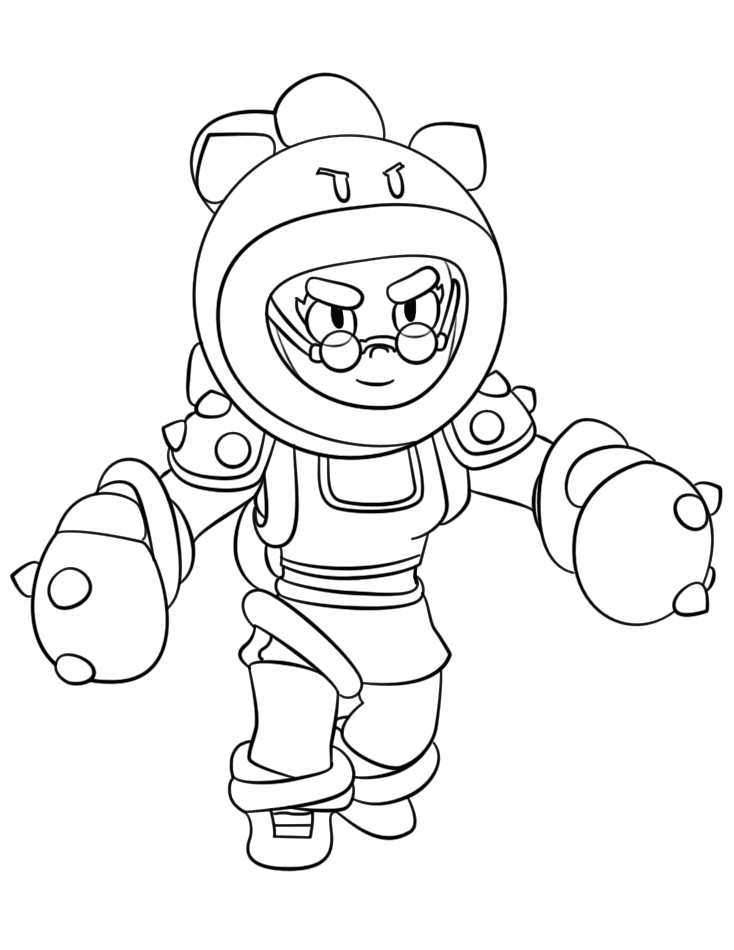
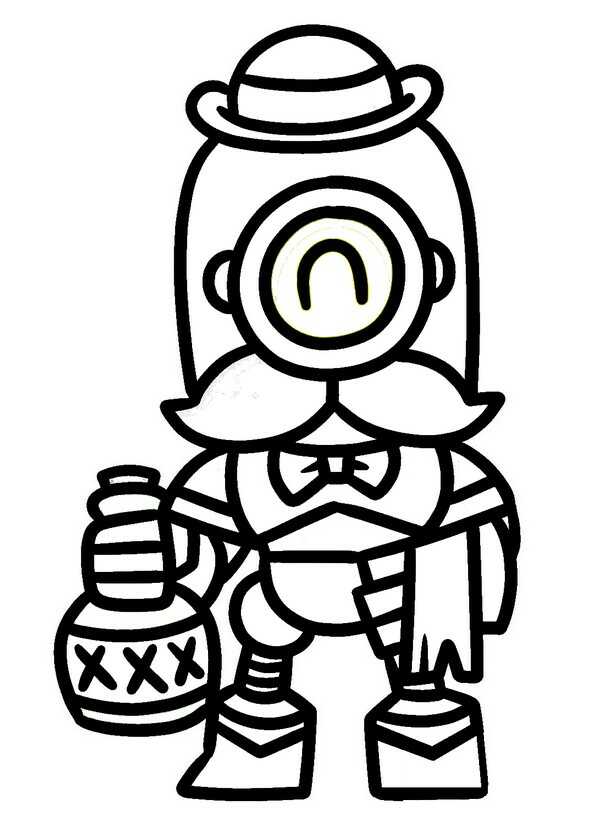
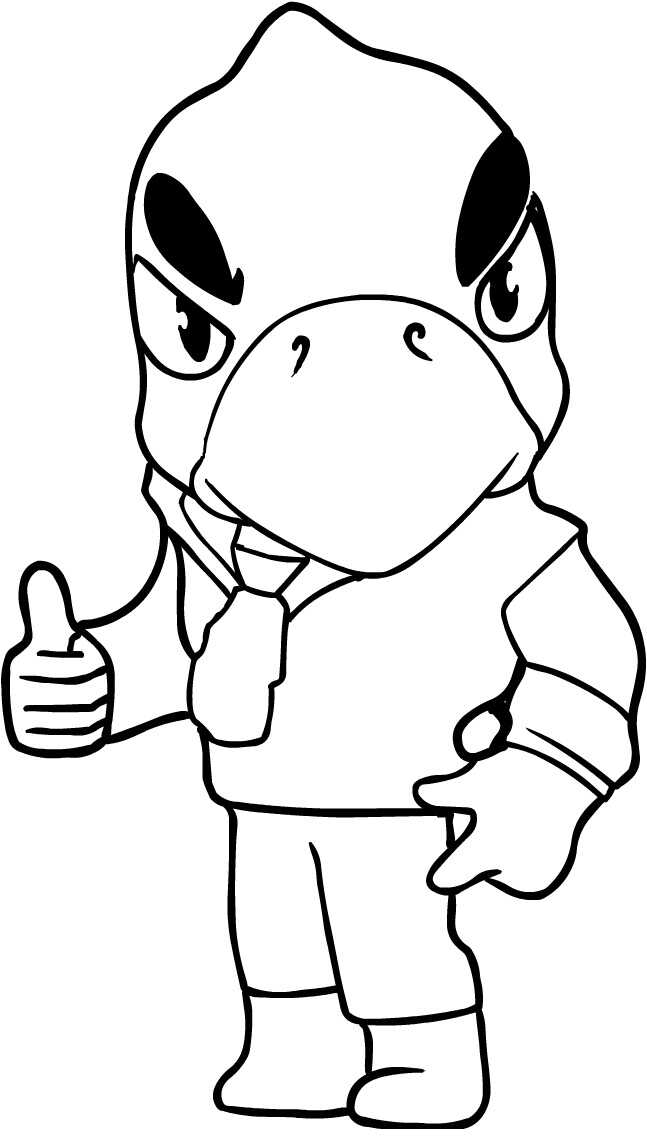
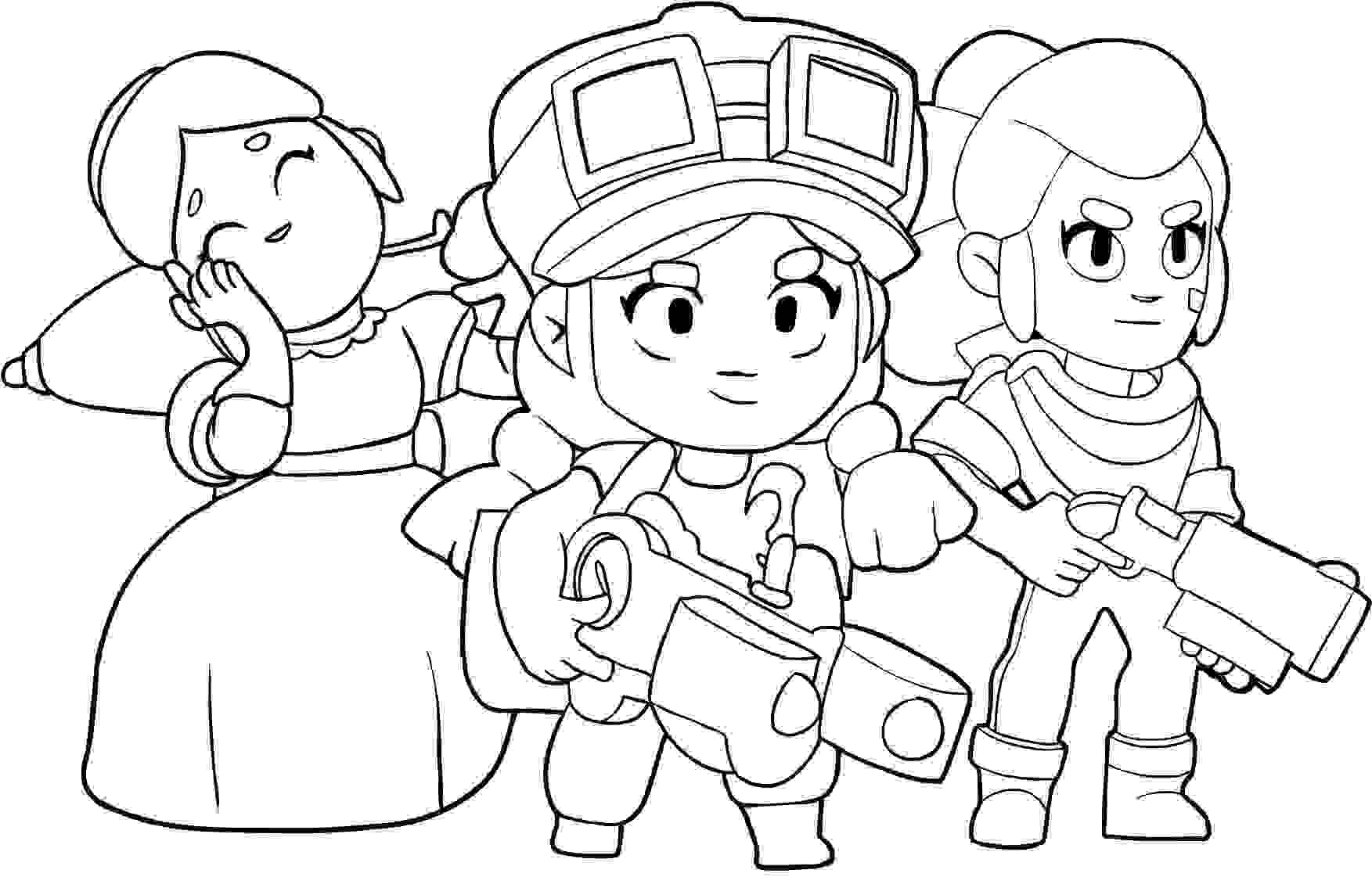
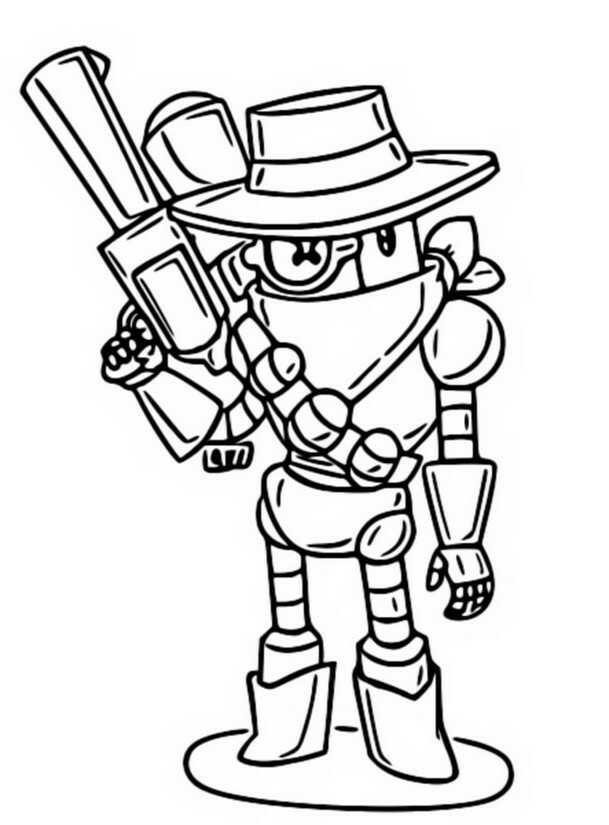
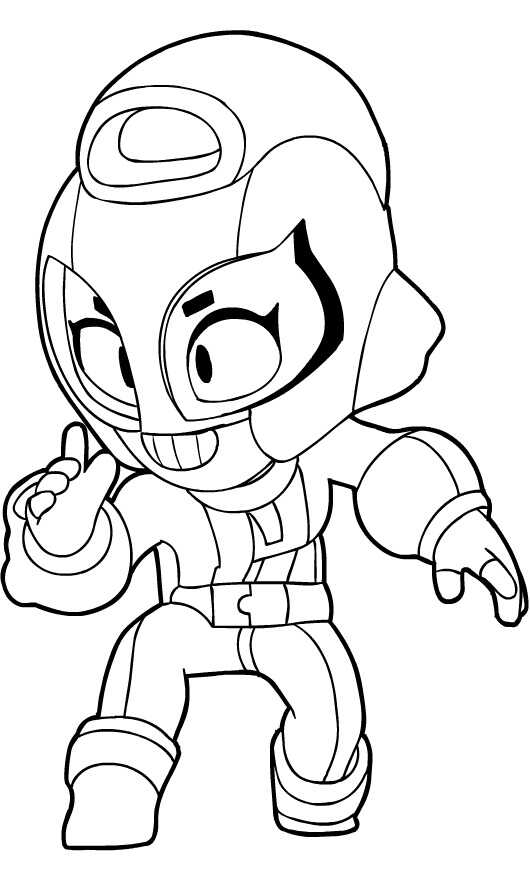
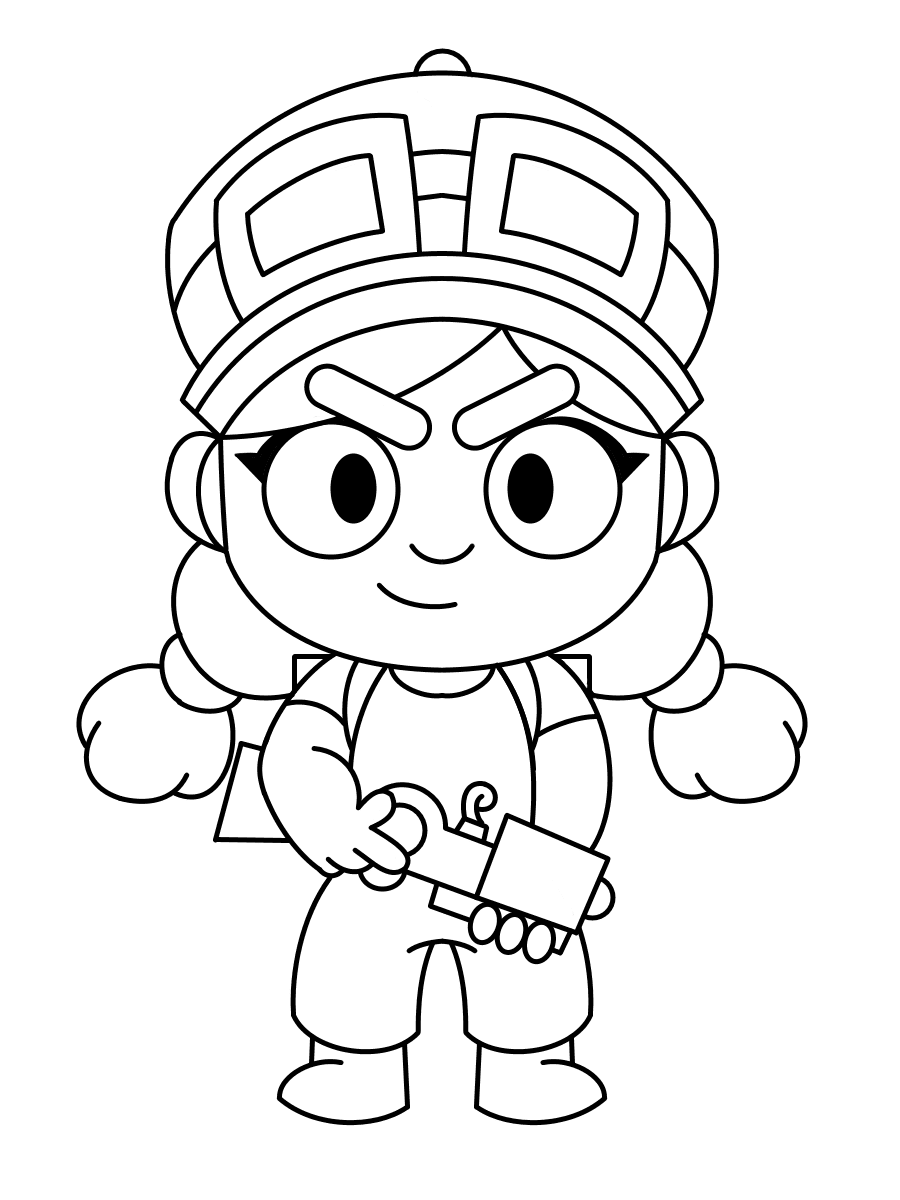
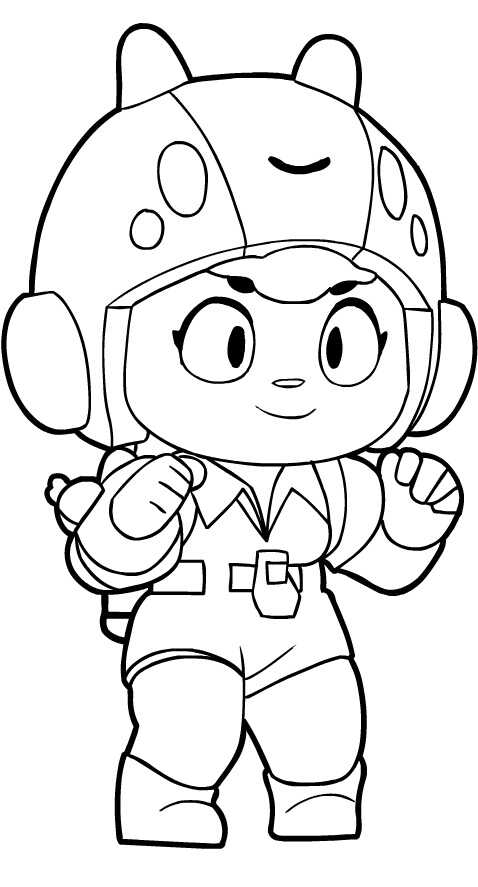
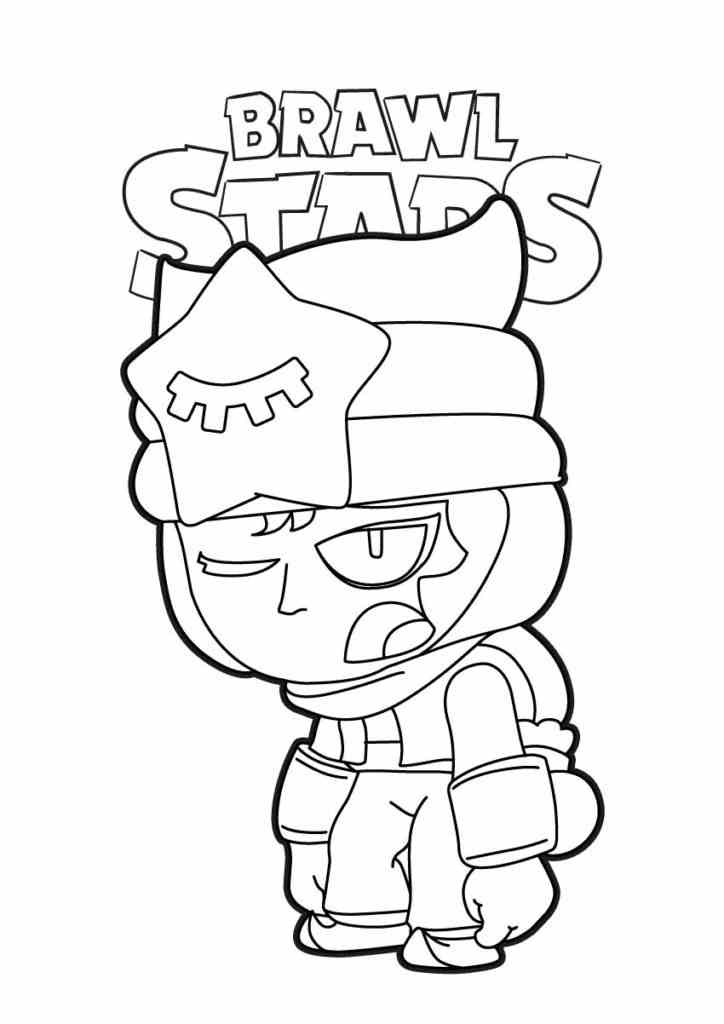
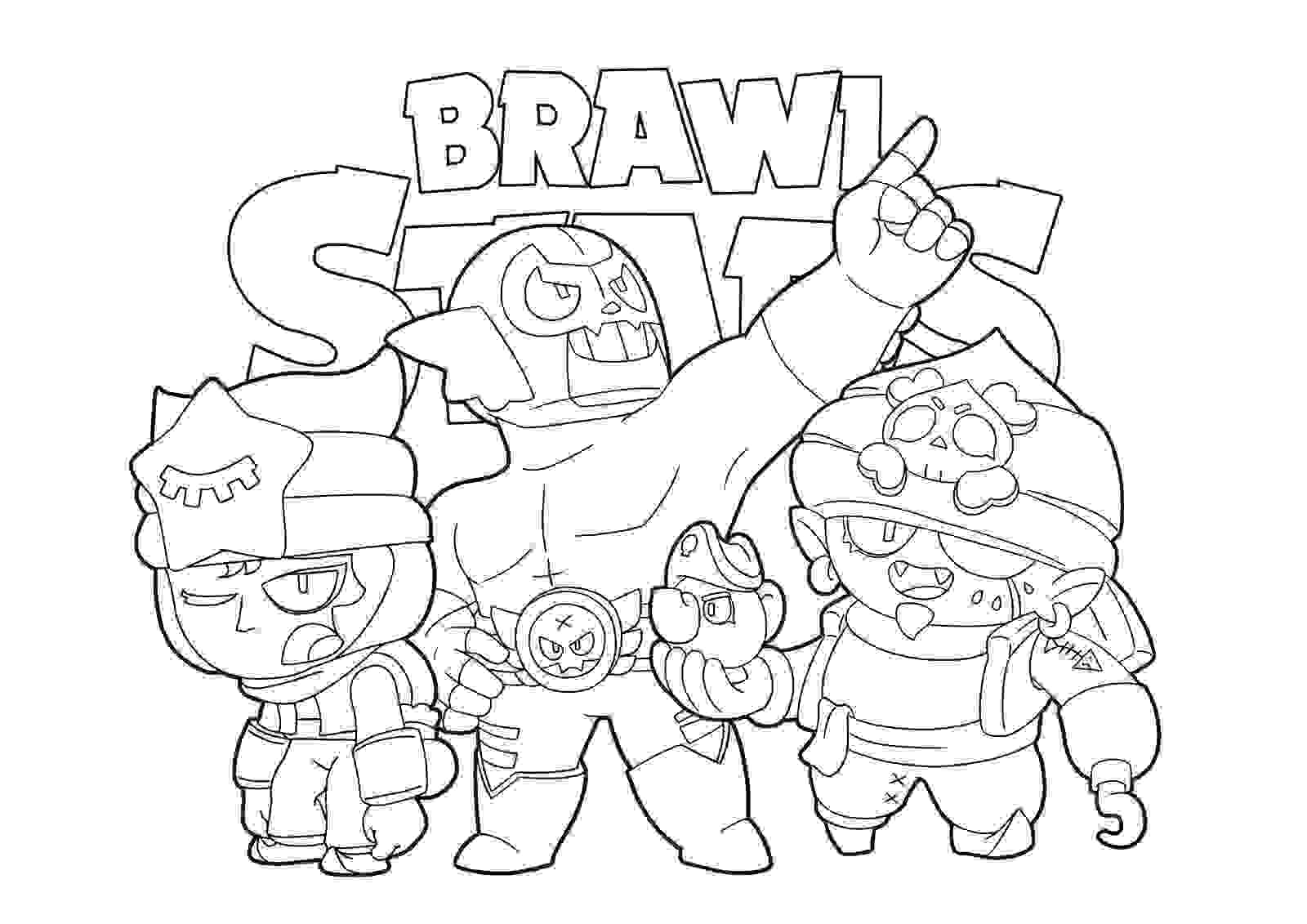
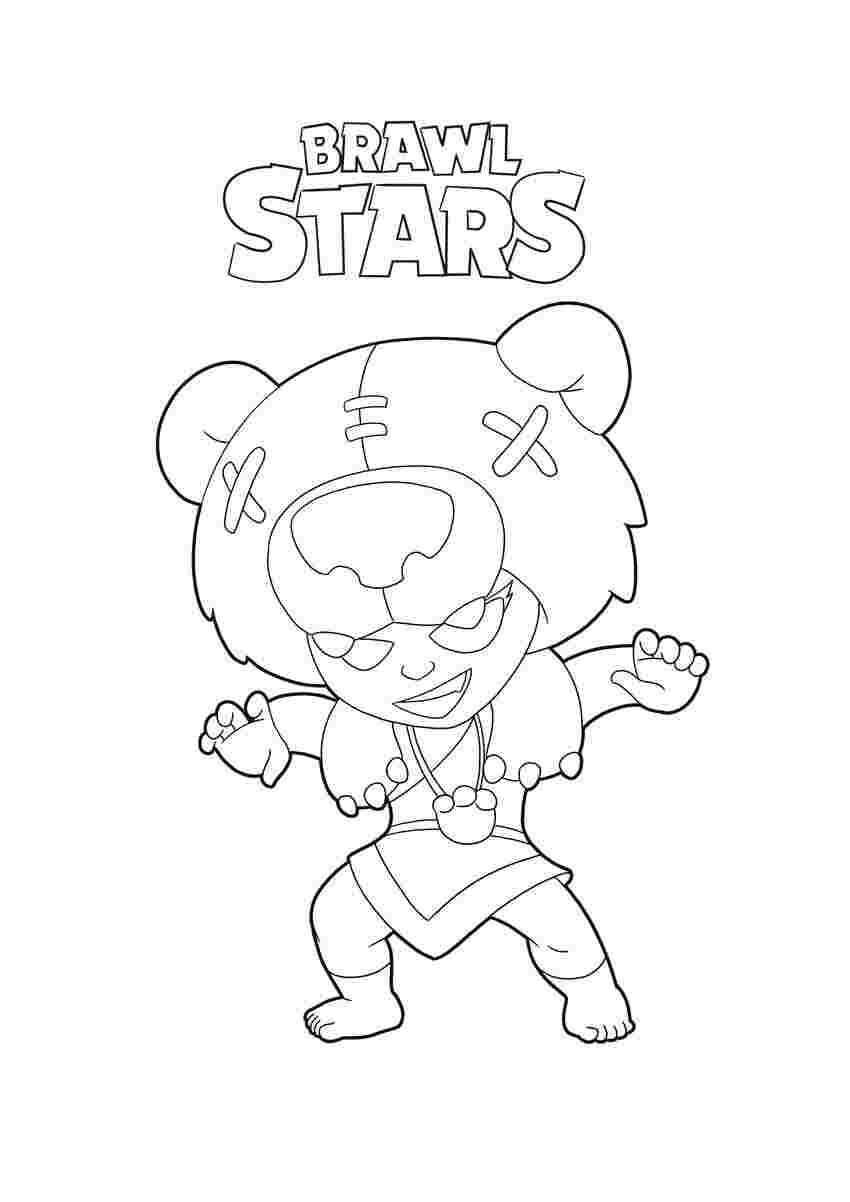
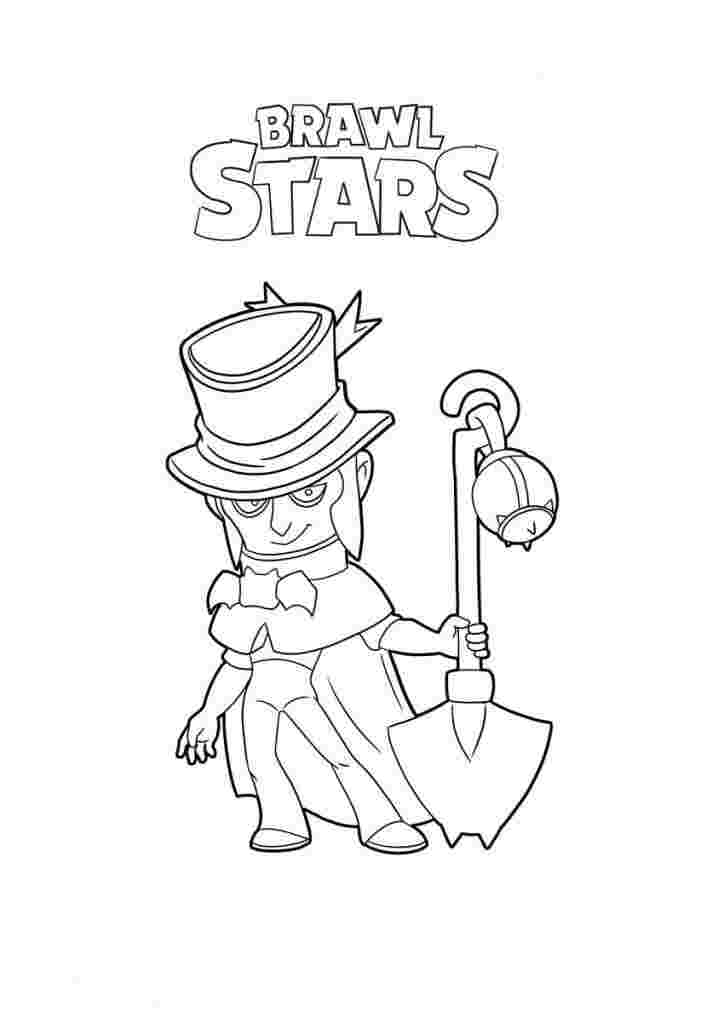
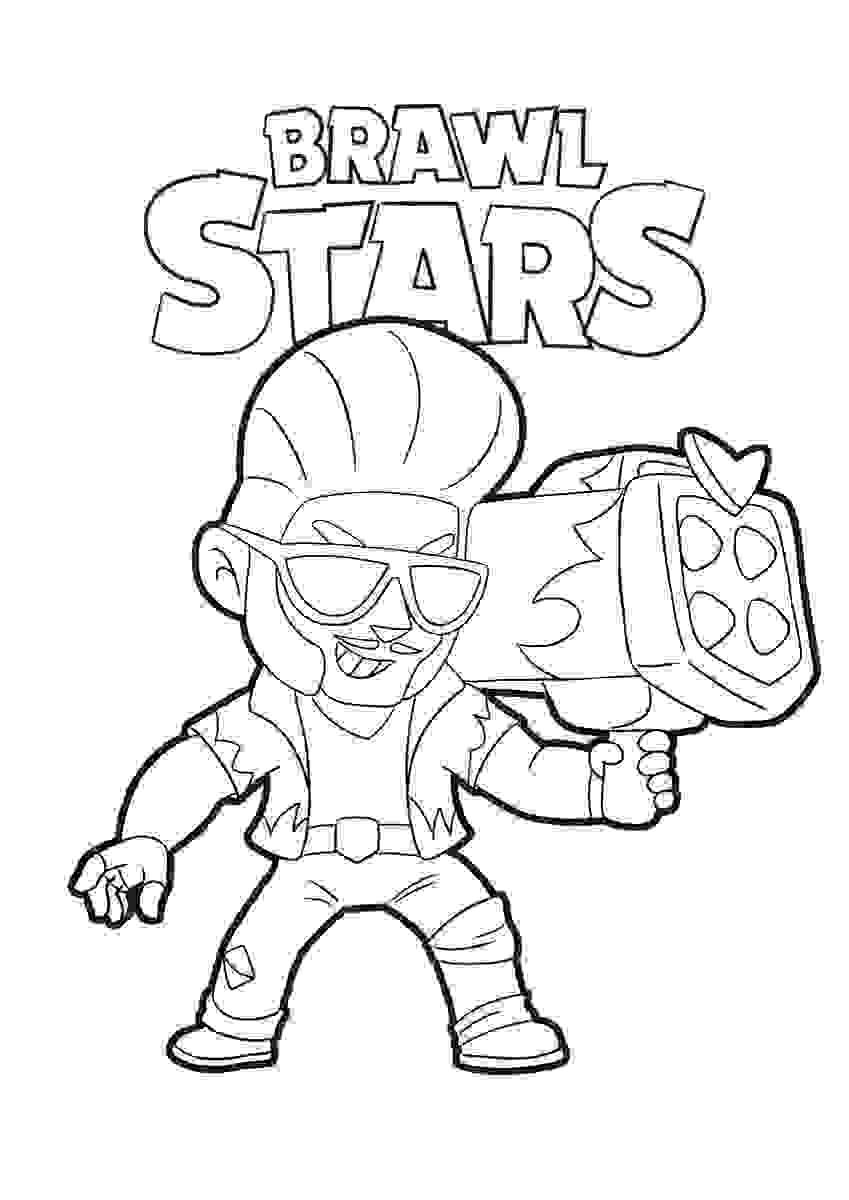
The designs in this set lean heavily on the characters themselves. Most pages show a single brawler in a signature pose, while others gather trios and teams, dress characters in special skins, or place the cast in a snowy Christmas scene. Clear outlines and bold shapes make the pages approachable for younger fans without losing the details older players will recognize.

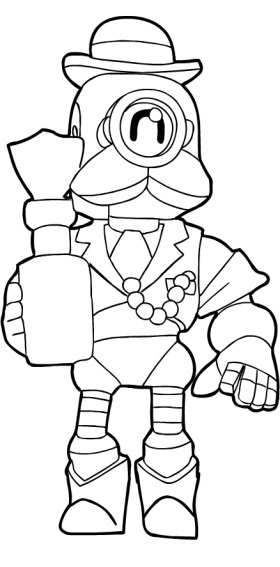
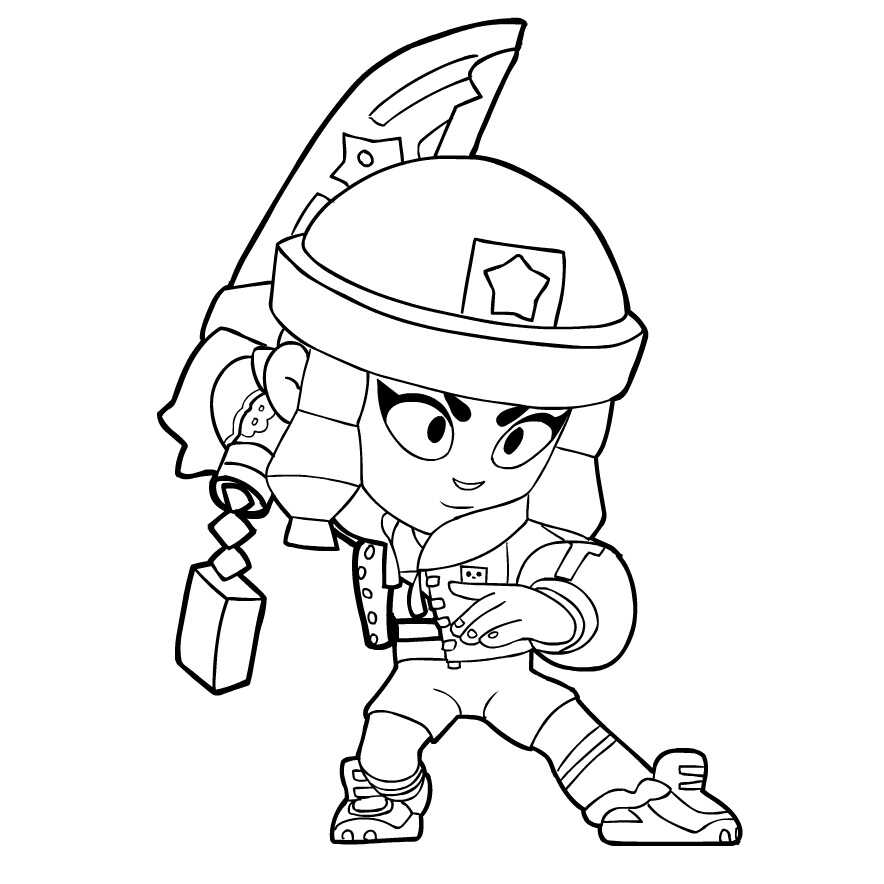
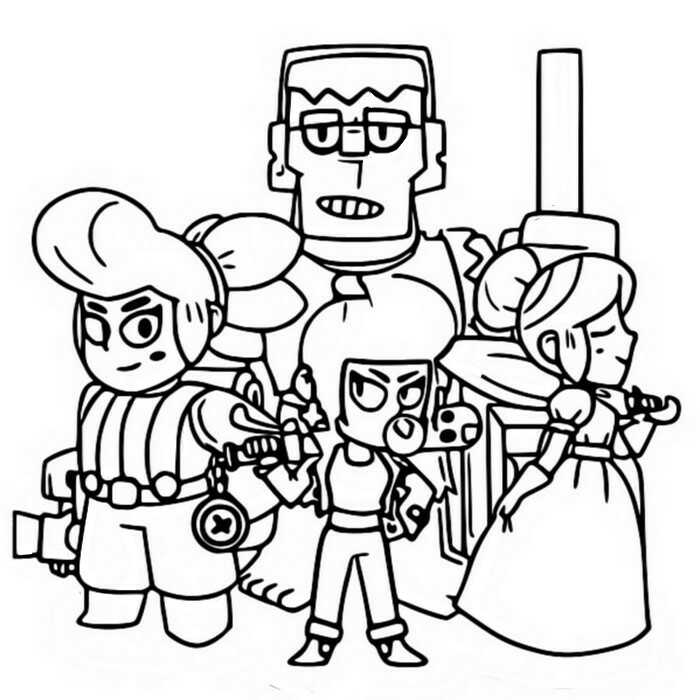
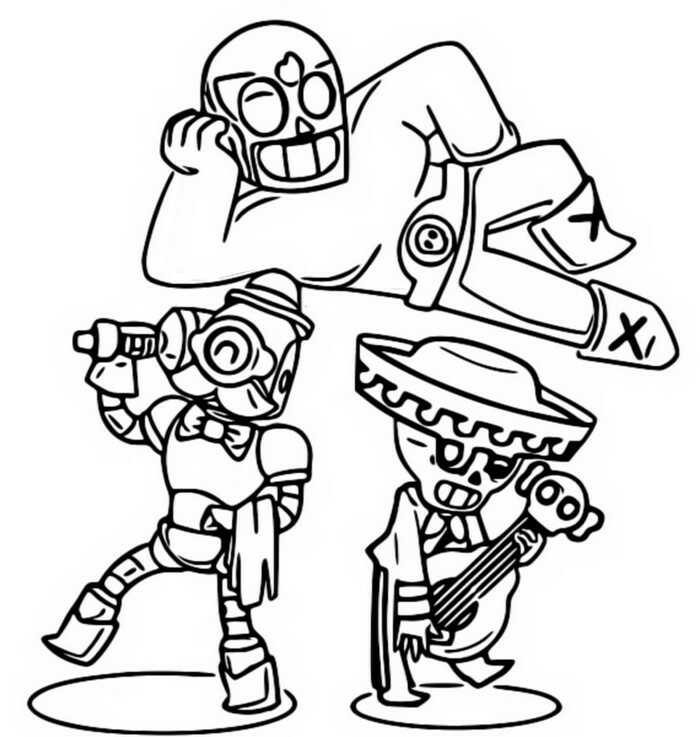



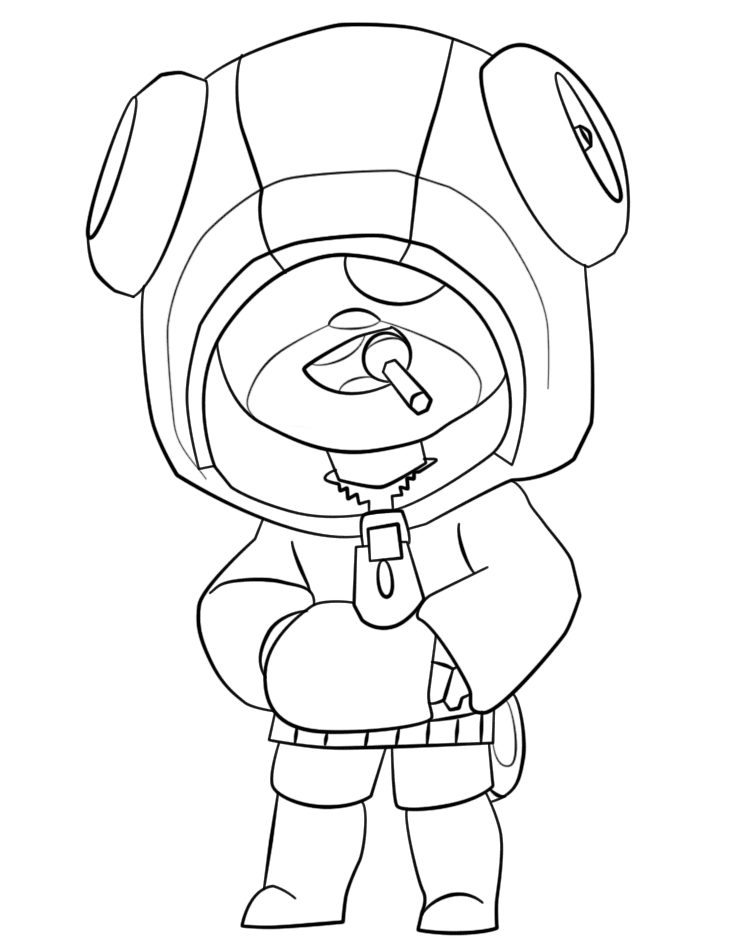
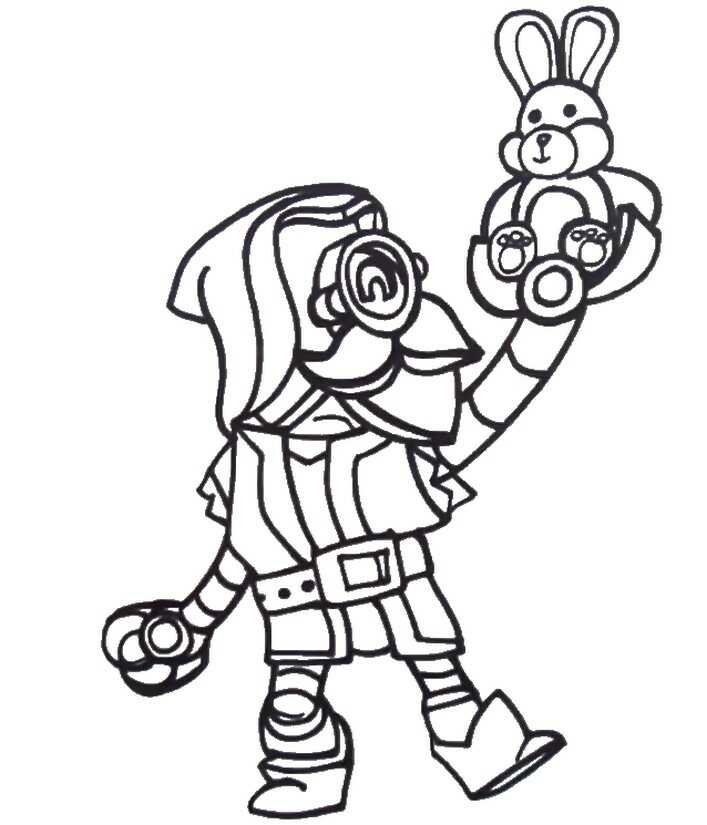

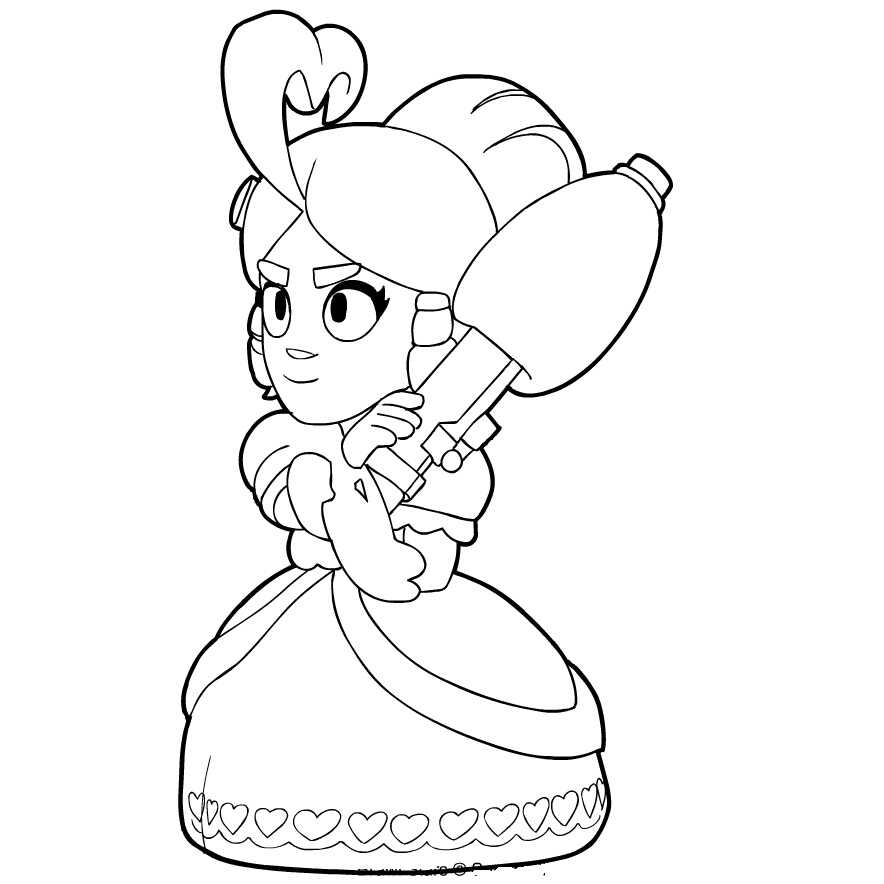
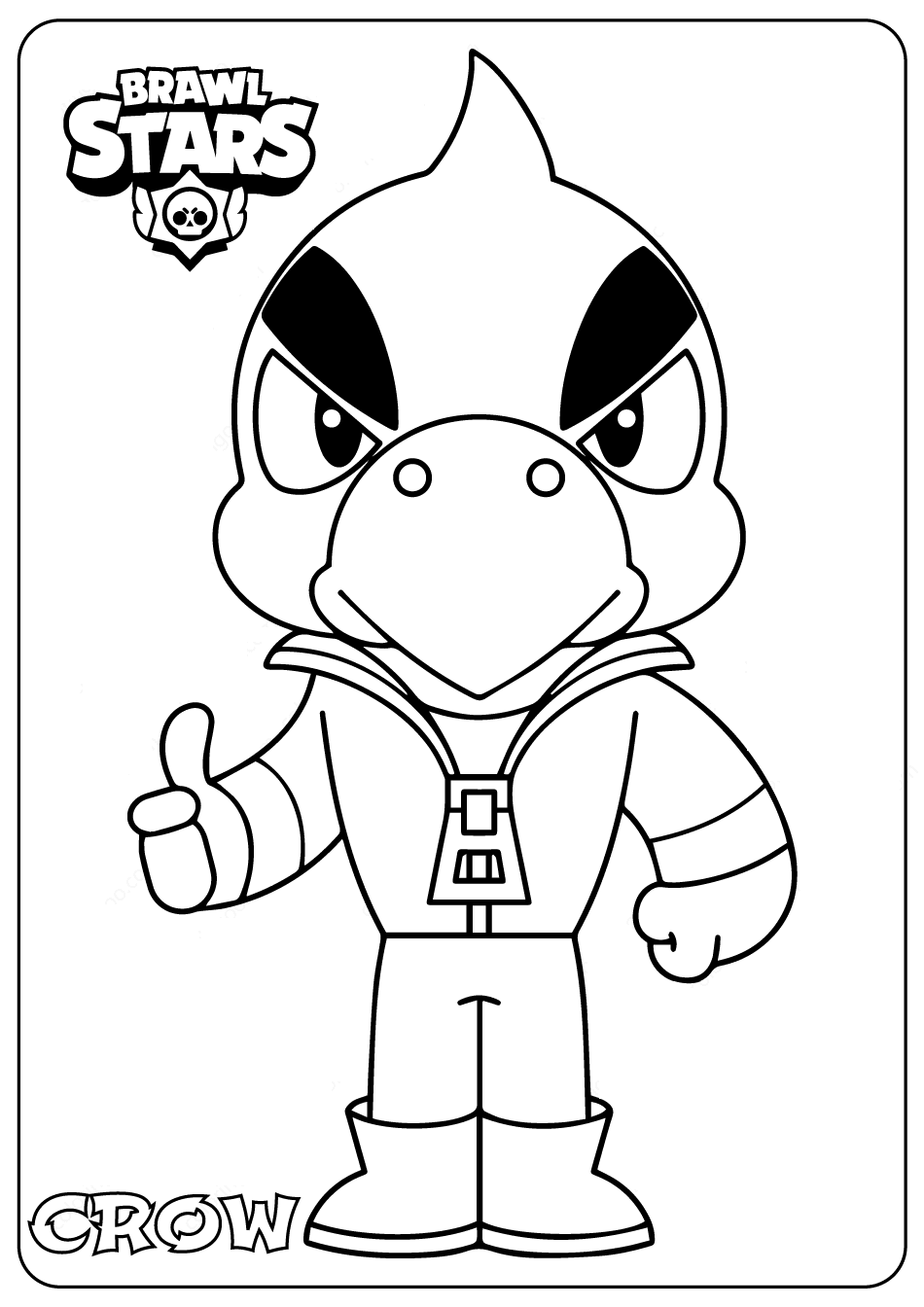


What’s Inside This Collection
The 70 pages fall into five natural groups, from single portraits to crossover skins, so a fan can start with a favorite brawler and branch out from there.
Single Brawler Portraits
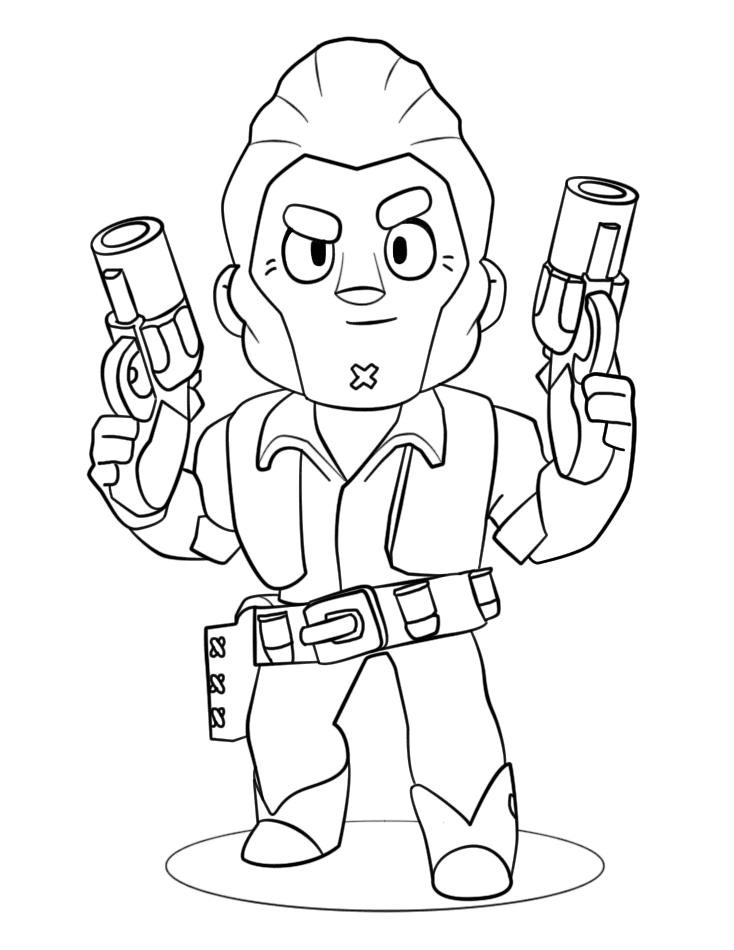
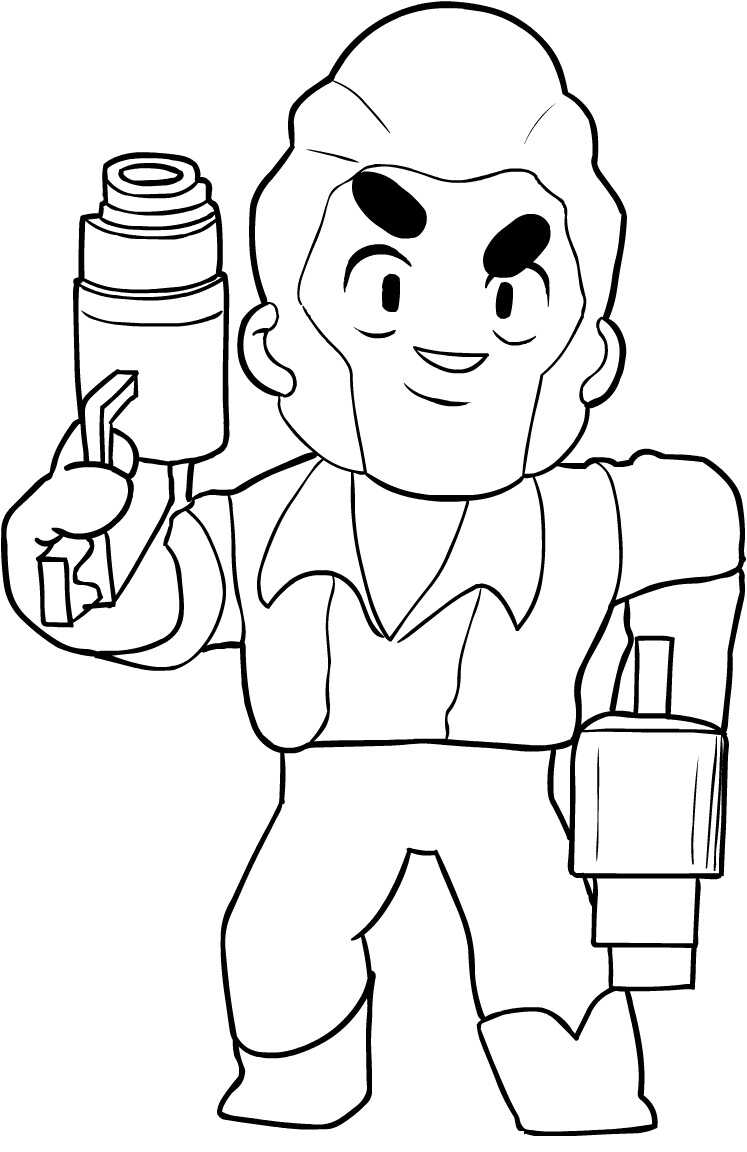
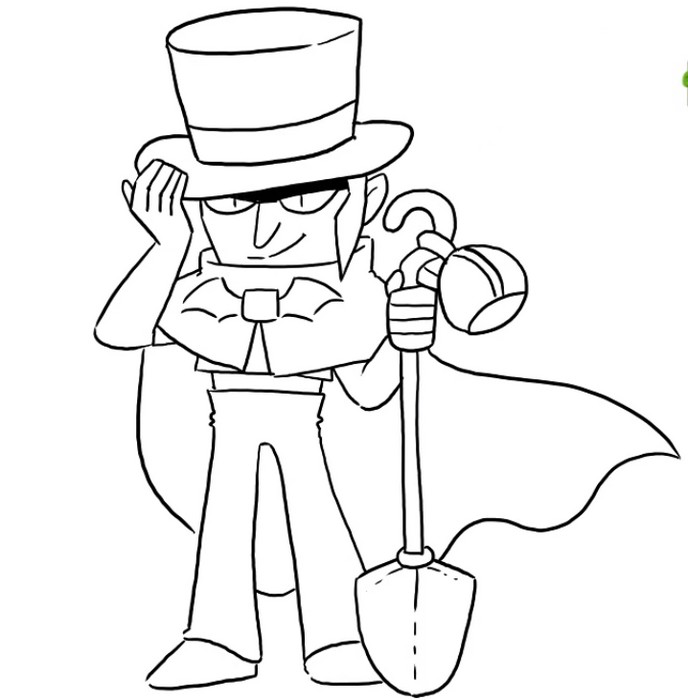
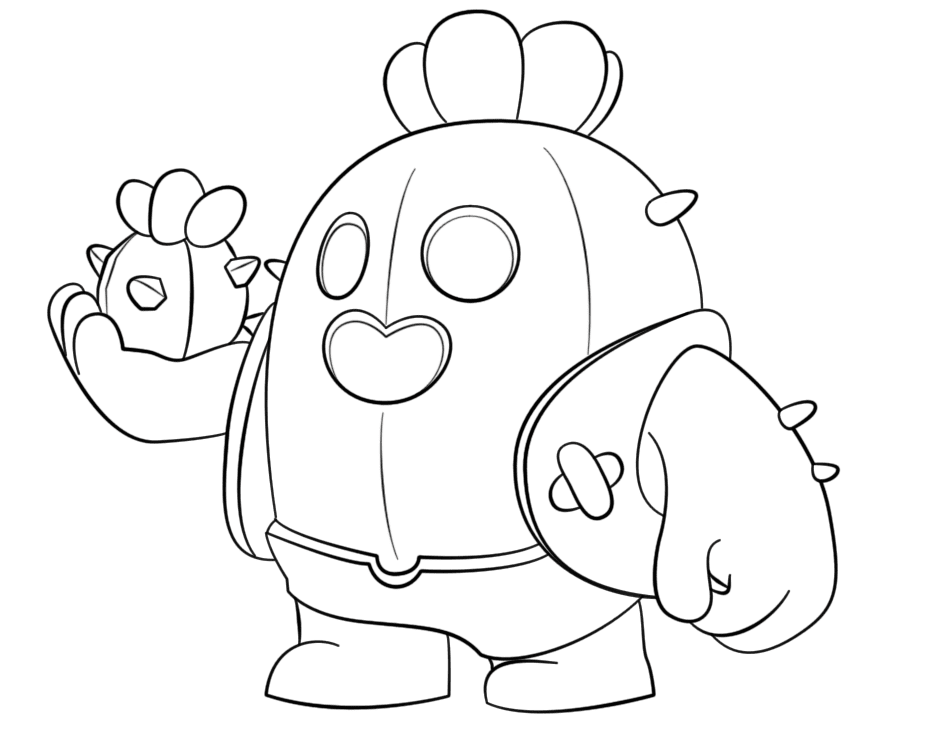
Roughly two-thirds of the set shows one brawler at a time, often mid-action or holding a signature item, such as Poco strumming his guitar or Spike surrounded by cactus spines. Piper appears most often, followed closely by Colt and Crow. Each portrait has plenty of open space, so bold, flat color on the body followed by a darker shade along one side gives the figure depth.
Teams and Trios
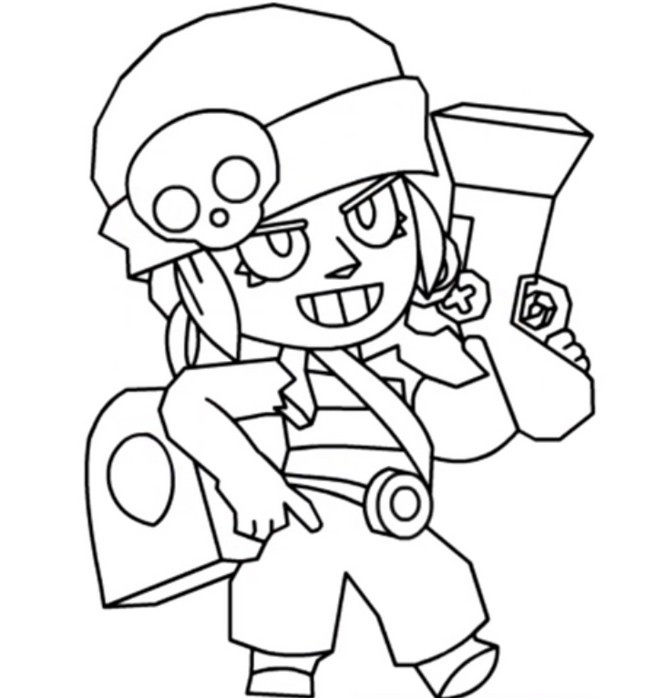
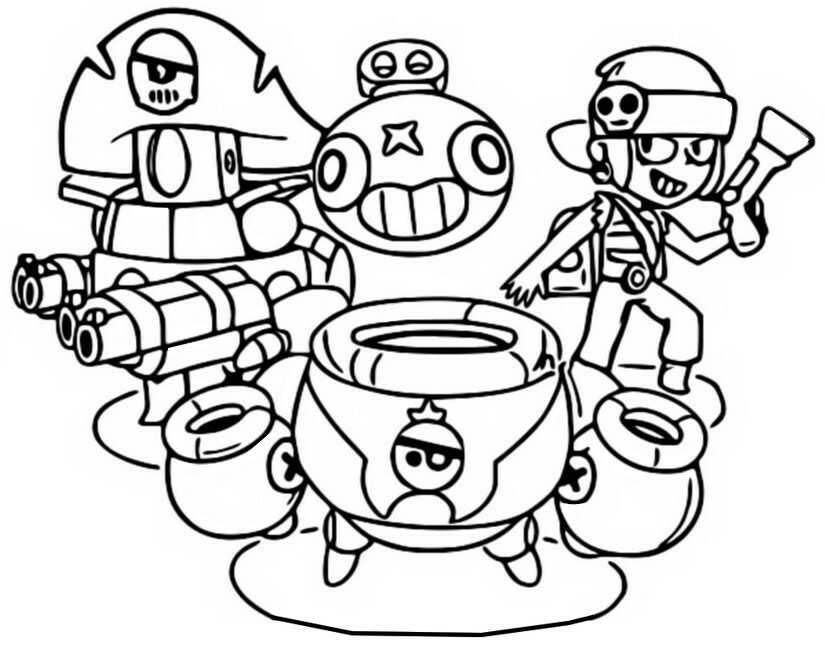
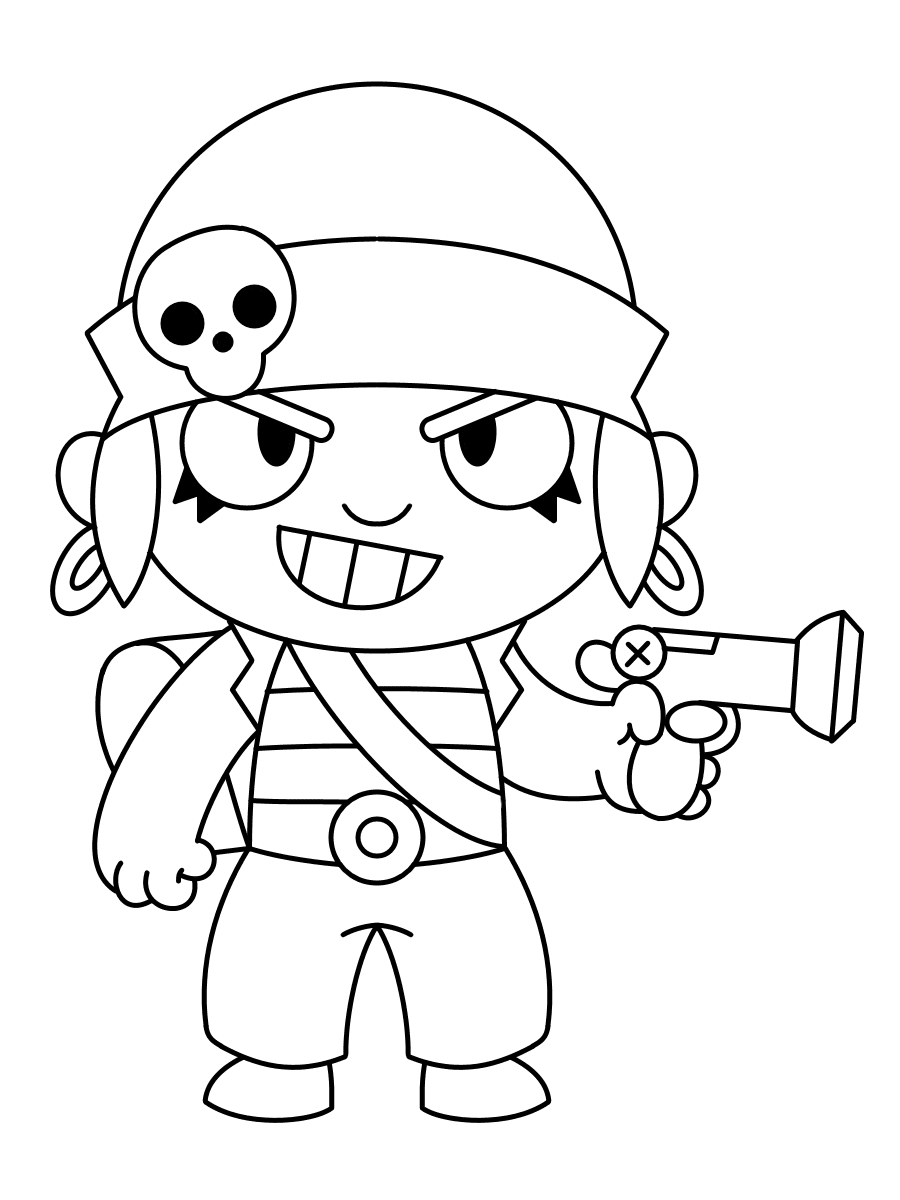
Several pages group brawlers who belong together, including the Legendary trio of Spike, Leon, and Crow, and a pirate crew led by Penny – these larger layouts reward planning before the first stroke. Choosing one strong color for each brawler and keeping neighboring characters in contrasting colors stops a crowded page from turning into one blur.
Skins and Costumes
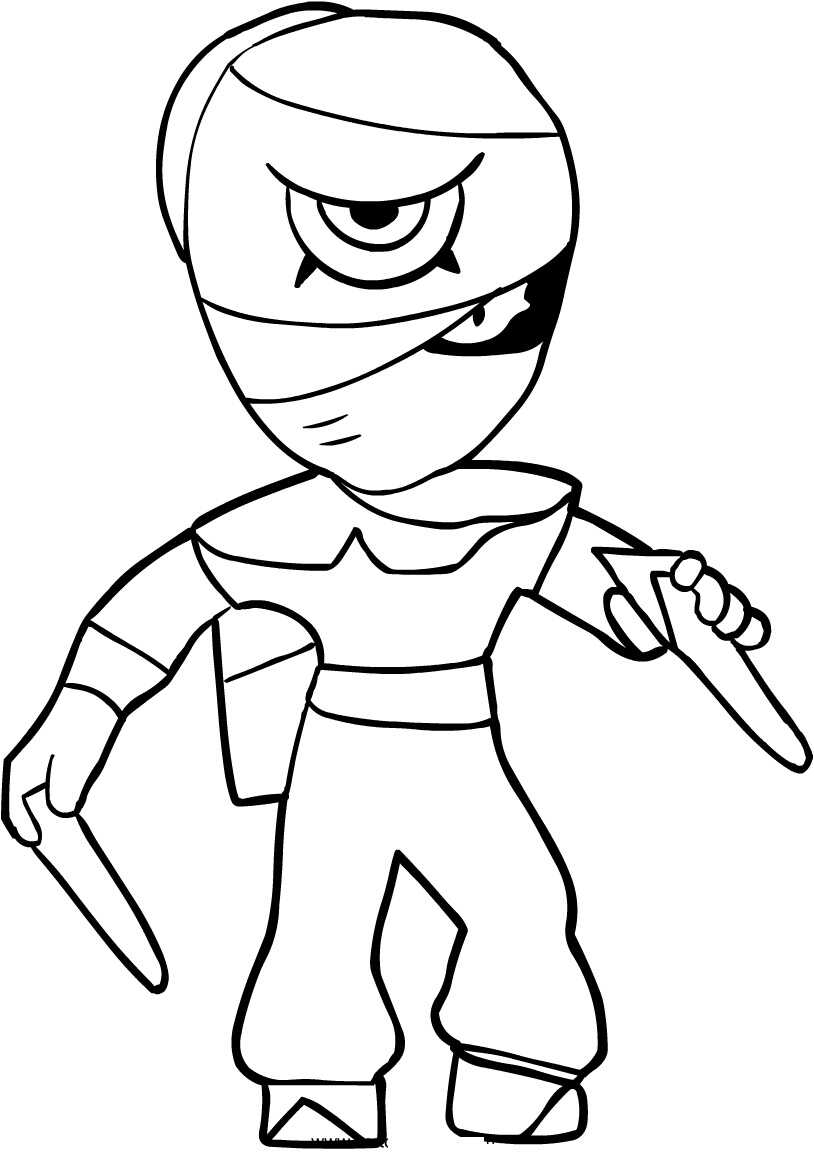
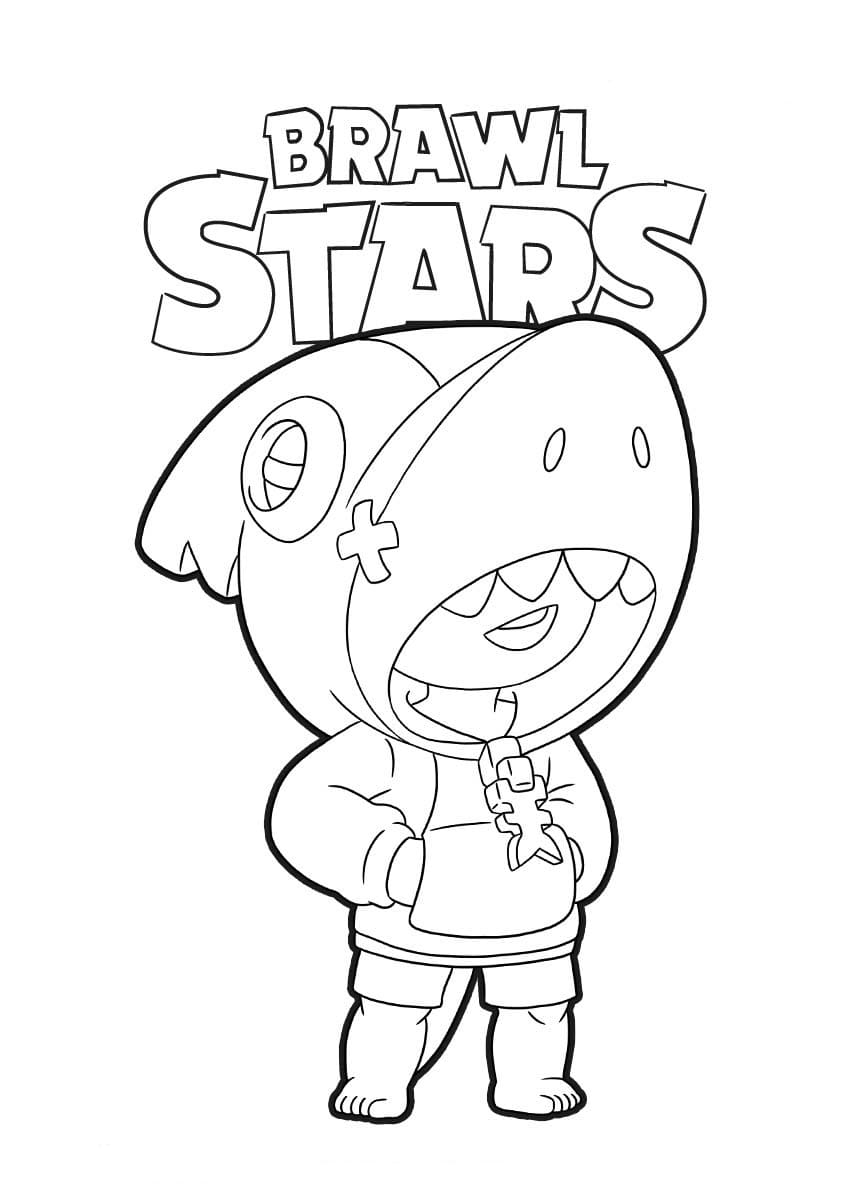
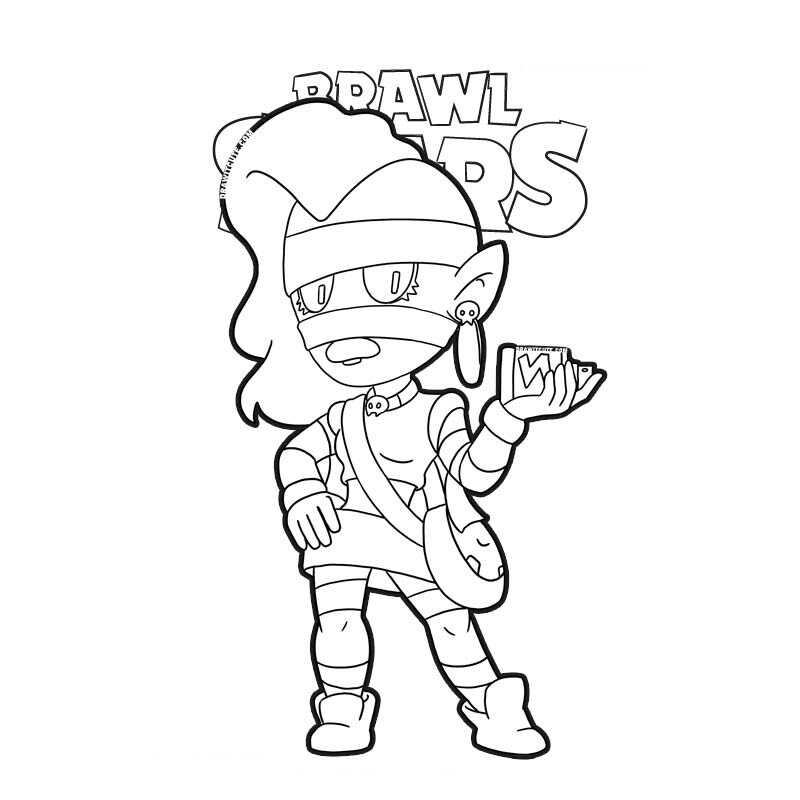
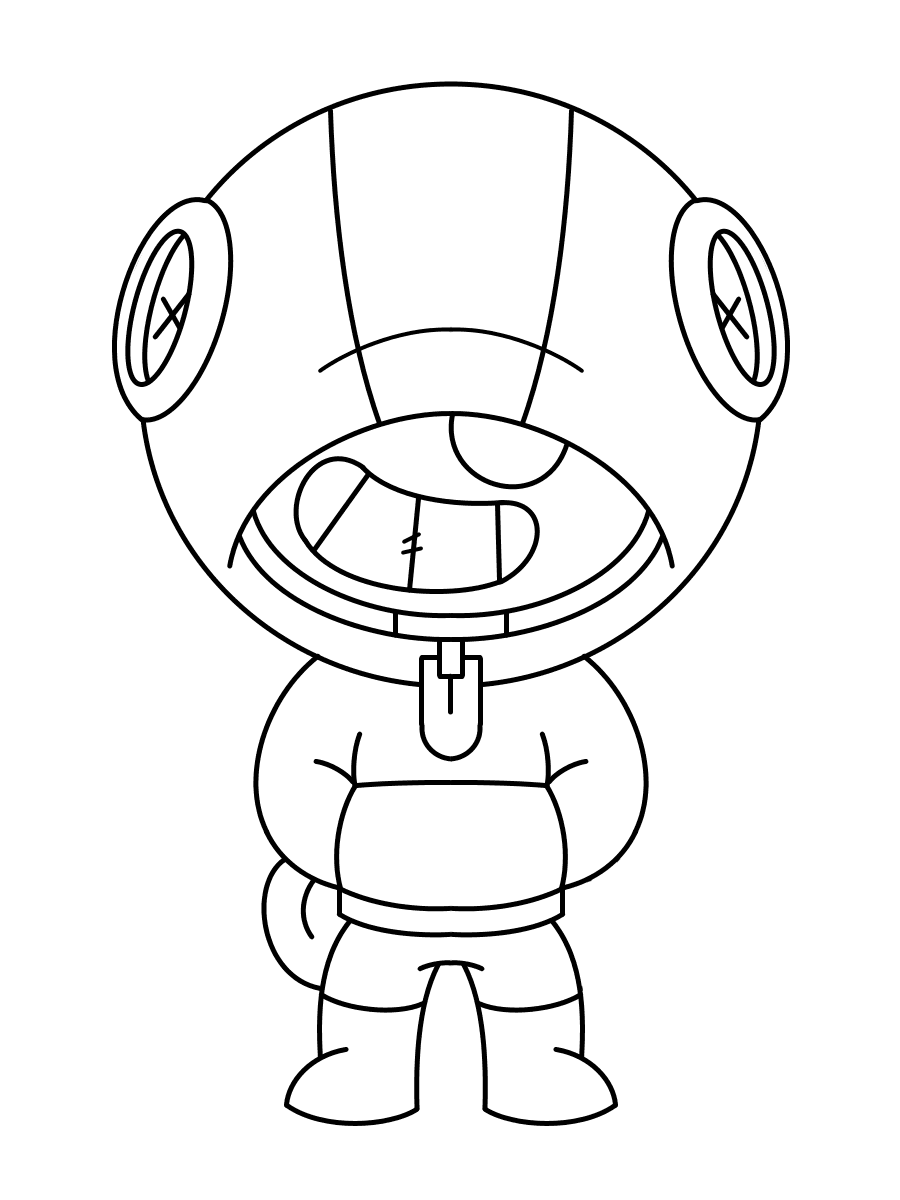
Skins are alternate outfits that change how a brawler looks without changing how it plays, and this group covers many of them, from Shark Leon to a mummy version of Tara. These pages invite playful color choices. Shark Leon’s hoodie looks convincing in Blue Gray with a White belly, while a mummy wrap works best in Tan with Raw Umber lines between the bandages.
Holiday Scenes and Crossovers
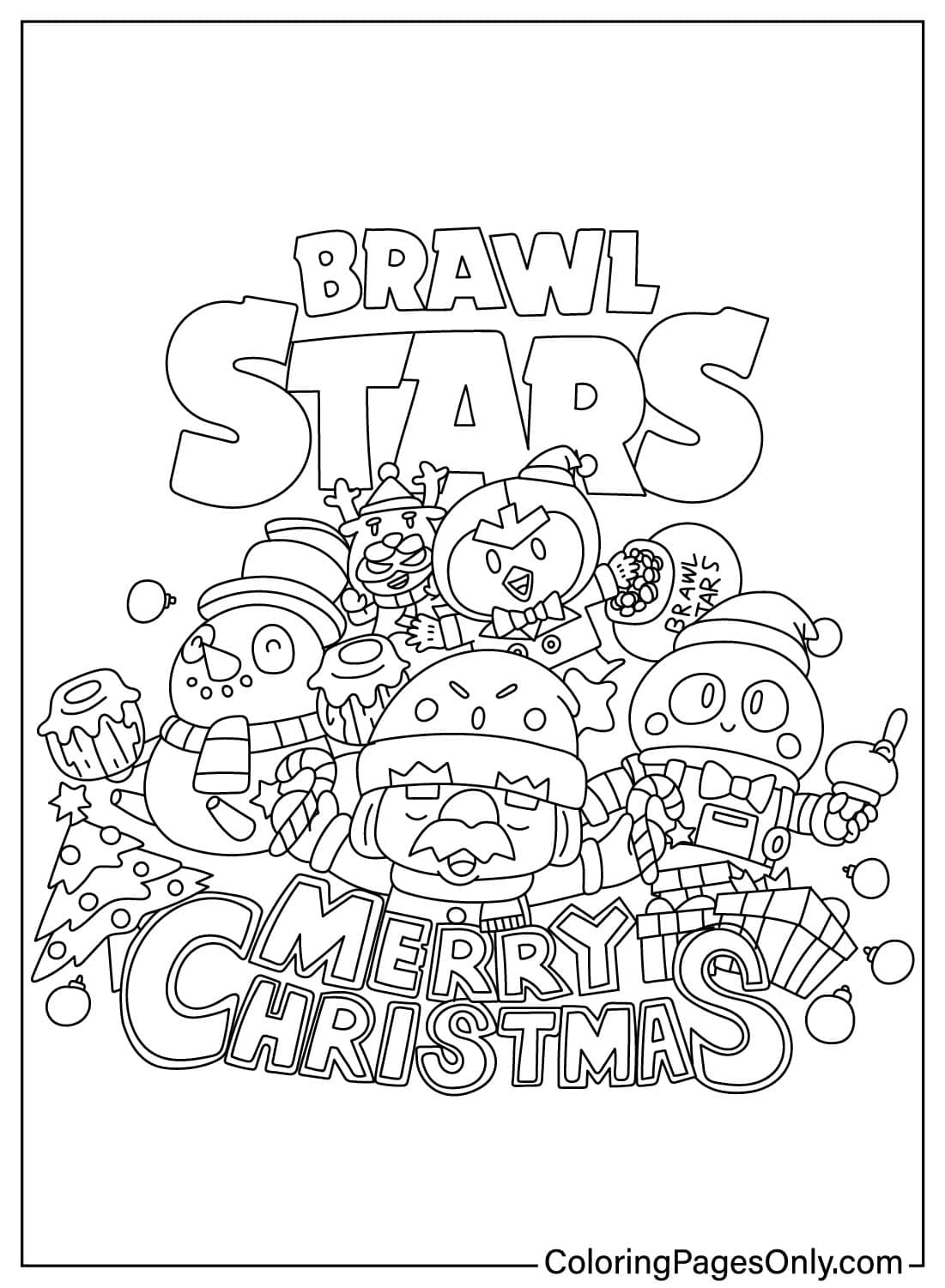
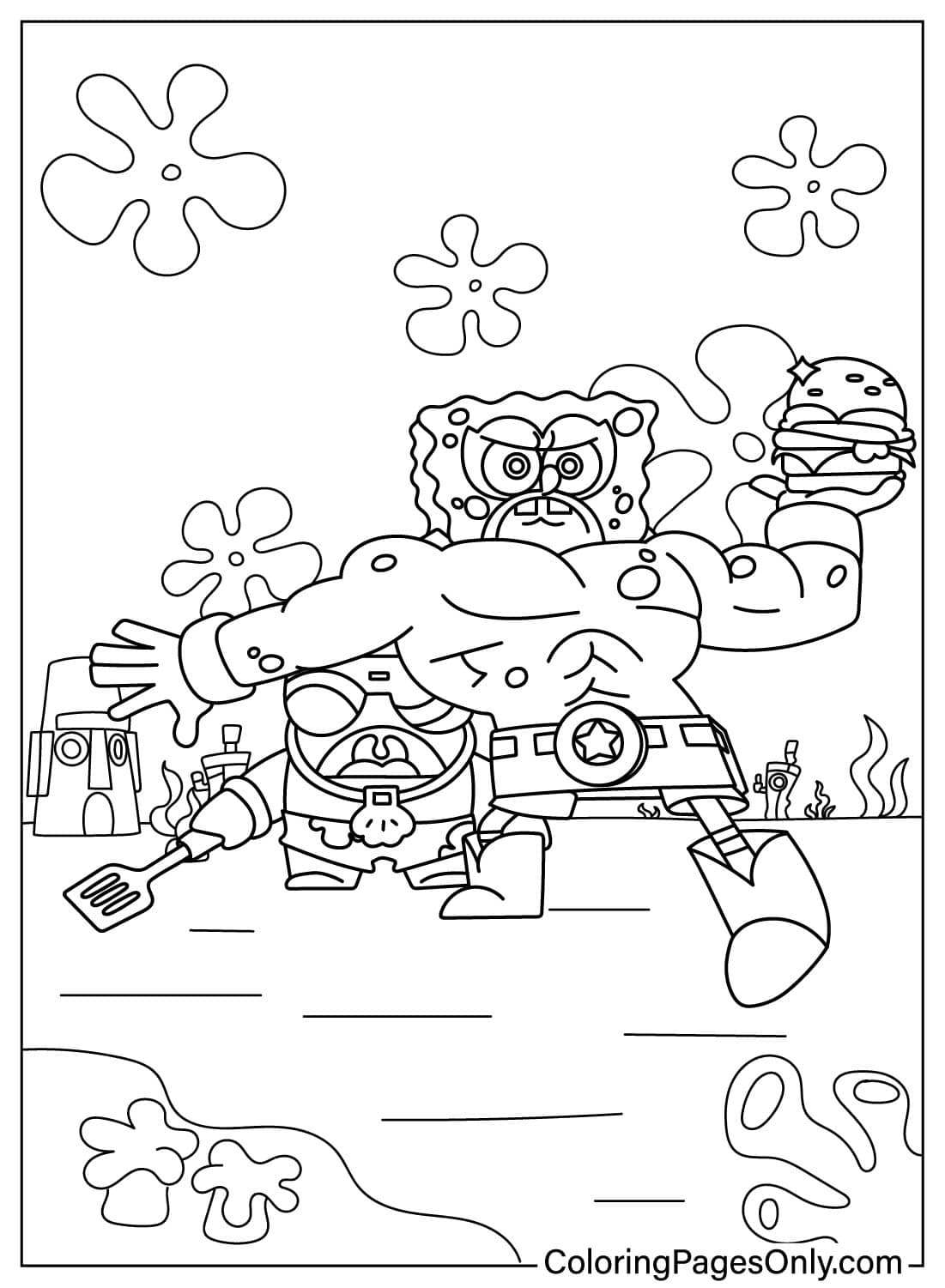
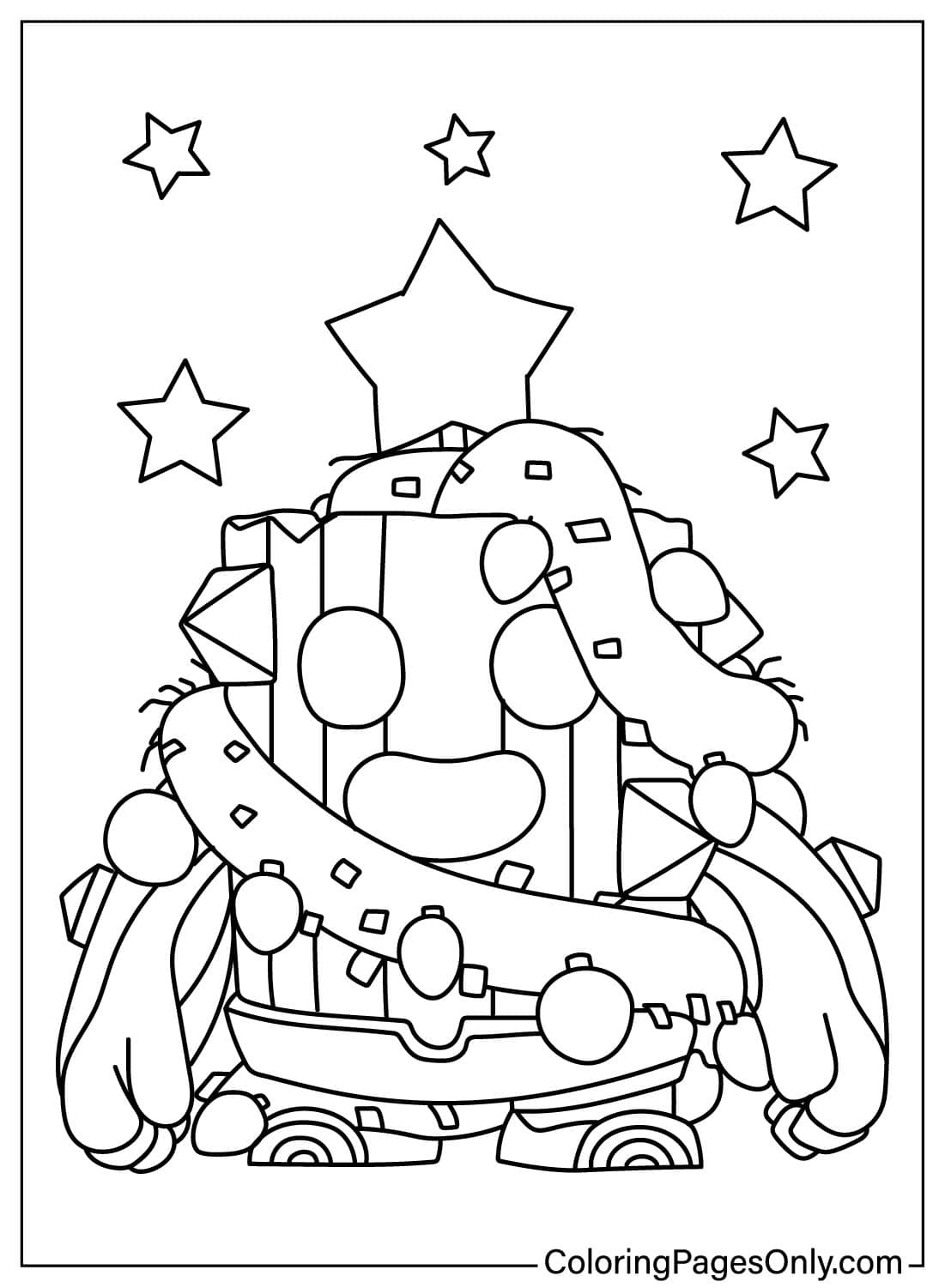
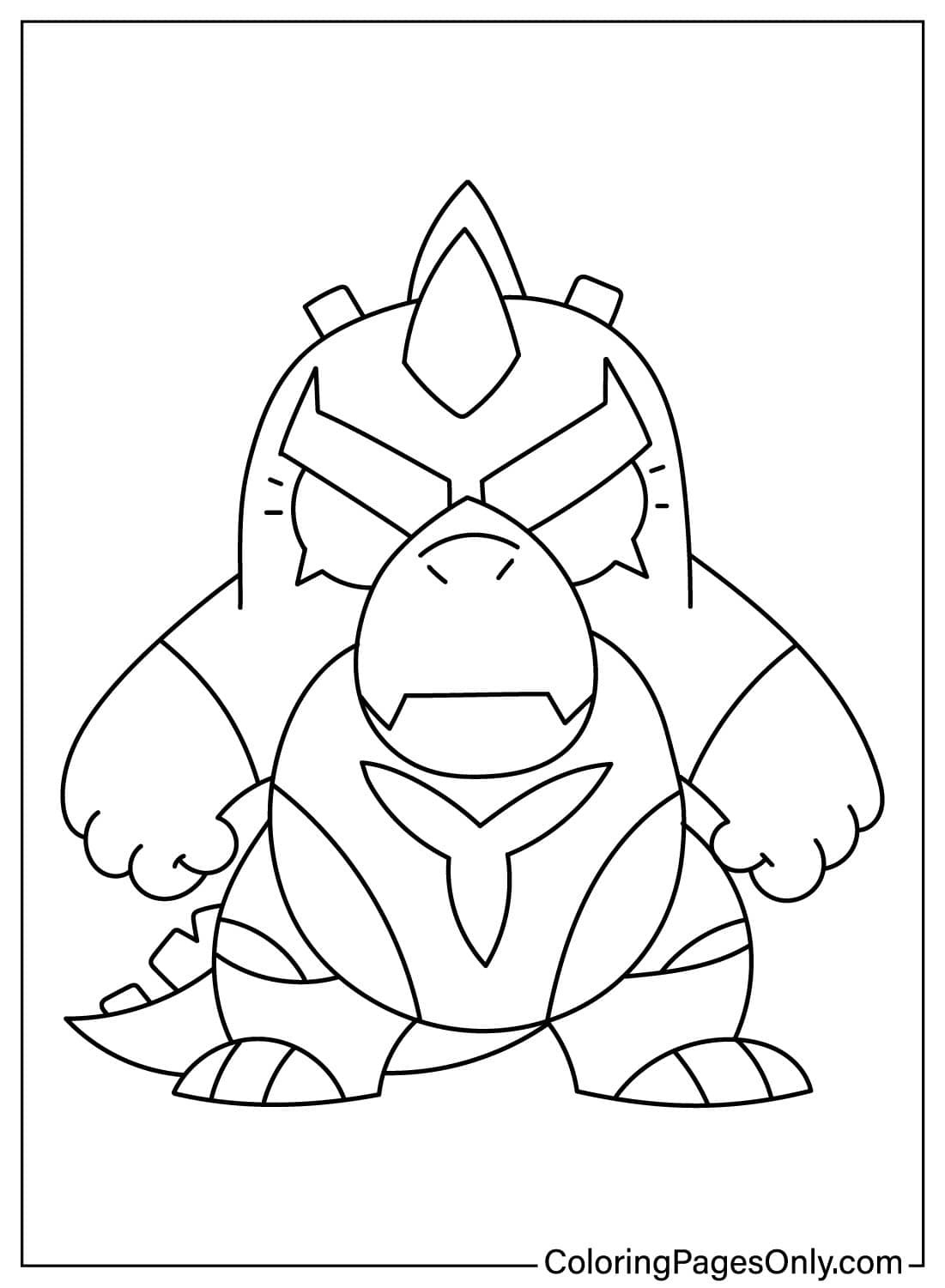
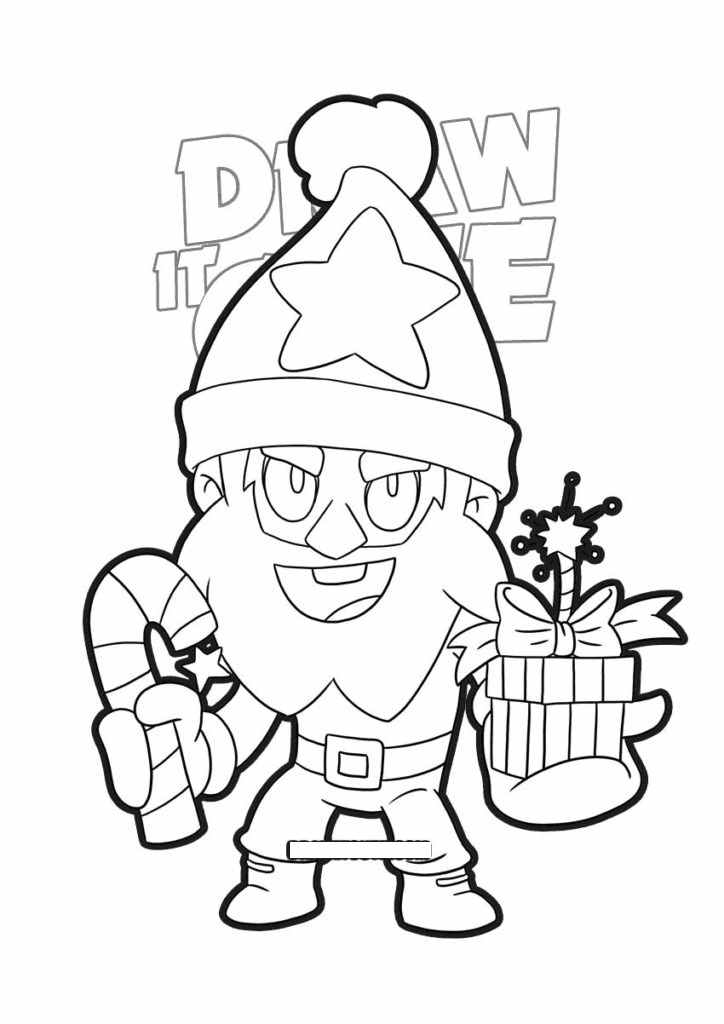
A handful of pages mix brawlers with winter and Christmas settings, and three more come from crossover events, including Godzilla Buzz and SpongeBob drawn in the Brawl Stars style. Holiday pages look festive in Red, Pine Green, and White. SpongeBob needs his familiar Yellow body, White shirt, Brown pants, and Red tie so he still reads as himself.
Logo and Game Items
Two pages step away from the characters: the Brawl Stars logo and a page of in-game coins. They make quick, satisfying warm-ups before a detailed portrait. Gold and yellow-orange on the coins, with a darker Goldenrod edge, give them a metallic look.
What Brawl Stars Coloring Pages Do
Detail work for busy hands. The American Academy of Pediatrics names fine motor development as a central benefit of structured coloring for children ages 2 through 7, and the skill keeps growing well past that age. Brawl Stars pages pack small details like gadgets, hats, and hair clips into each figure, which requires careful, controlled strokes.
A break from the screen. Brawl Stars is played in fast matches that last a few minutes each. Coloring the same characters offers a slower, screen-free way to spend time with them, and it gives parents an easy middle ground for a child who wants to keep talking about the game.
Calm after the action. In 2005, the Art Therapy Journal published research showing measurable drops in anxiety after structured coloring sessions. A quiet session with a favorite brawler can help a child wind down after a loud or competitive stretch of play.
Learning how characters are designed. Brawl Stars characters have to be recognizable as tiny figures on a phone screen, so their designs rely on strong silhouettes and one or two main colors. Coloring them shows young artists how shape and color work together to make a character instantly readable.
How to Color Brawl Stars Coloring Pages Well
- Spike: Color the round cactus body in a medium Green, add a slightly darker Green on one side for roundness, and save a clean Carnation Pink for the flower on top. Leave tiny white gaps on the spines so they stay sharp.
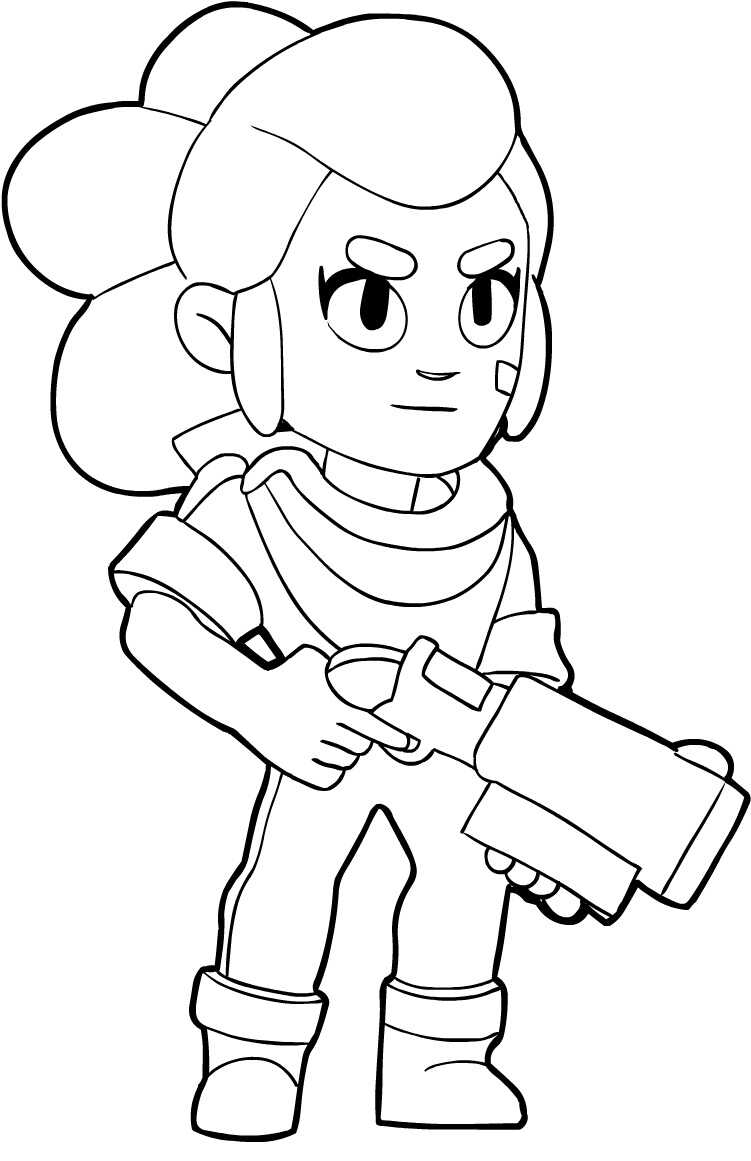
- Shelly: Her purple hair is the first thing fans recognize, so give it a solid Violet base and a darker Purple on the underside of each braid before moving on to her outfit.
- Poco: As a skeleton musician, Poco needs a bone color rather than bright white. Try a light layer of Tan over White, then color his guitar in warm Brown with a Goldenrod sound hole ring.
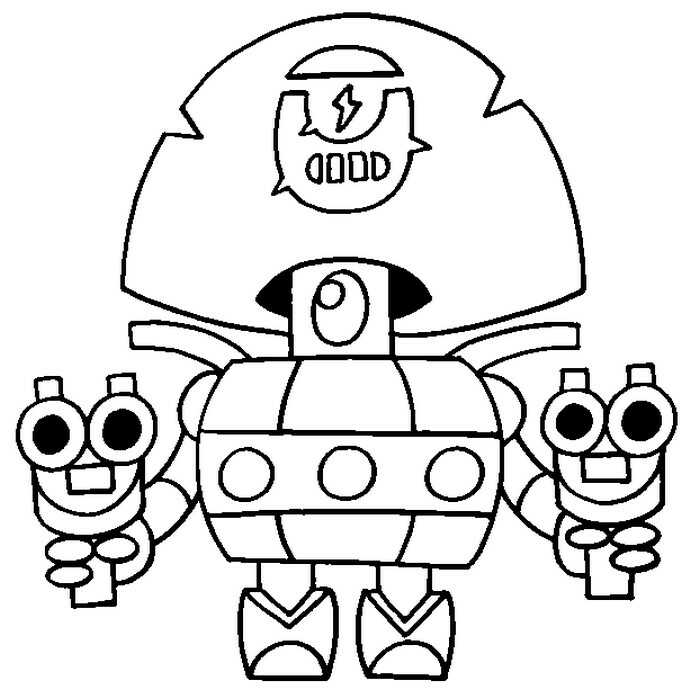
- Robot brawlers: Characters like 8-BIT, Barley, Darryl, and Tick look best with a base of Gray or Blue Gray and one bright accent color for lights or screens. Pressing harder along one edge of each metal panel suggests shine.
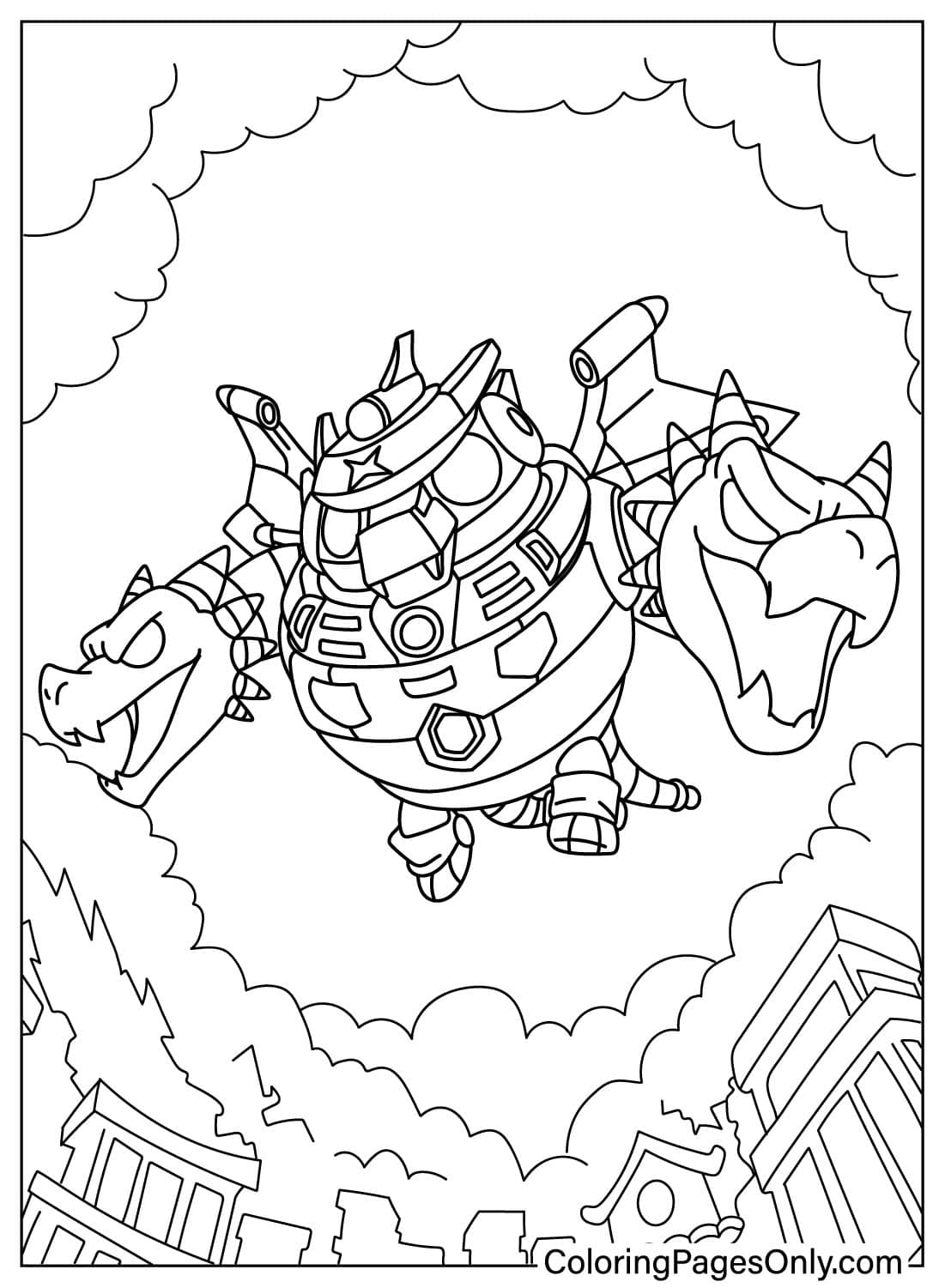
- Crossover skins: Color these in the crossover’s palette rather than the brawler’s usual one. Godzilla Buzz reads correctly in dark Gray and Olive Green, while Mecha Tick Ghidorah looks right in Goldenrod and Yellow.
- Group pages: Block in each brawler’s main color across the whole page before adding any shading. This quick first pass shows whether two similar colors sit side by side, which is easy to fix before the details go in.
5 Creative Craft Ideas With Brawl Stars Coloring Pages
1. Brawler Trading Cards
Color several single-brawler pages, cut out each character, and glue it to the front of an index card. On the back, write the brawler’s name, a favorite game mode, and a made-up power rating, then trade duplicates with friends or siblings.
2. Team Trio Standees
Glue three colored brawlers onto thin cardboard, cut around each figure, and add a folded cardboard tab at the bottom of each so it stands upright. Arrange the three as a team on a desk or bookshelf, and swap in new trios as more pages get colored.
3. Starr Park Poster
Draw a simple amusement park layout on a poster board, with rides, paths, and snack stands. Cut out colored brawlers and glue them around the park as if they were visiting, which turns the game’s fictional setting into a wall display.
4. Design-a-Skin Challenge
Print the same brawler page twice. Color the first in the character’s usual look, then invent a brand-new skin on the second, such as a holiday, sports, or animal theme, and display the two side by side.
5. Brawl Ball Tabletop Game
Draw a small soccer-style field on a sheet of cardboard with a goal at each end. Use colored and cut-out brawlers as players mounted on bottle caps, and flick a paper ball between them to play a quick, gentle tabletop match.
Frequently Asked Questions
What are Brawl Stars Coloring Pages?
Printable outlines of characters from the Brawl Stars mobile game. This set includes 70 designs covering single brawlers, teams, skins, holiday scenes, and crossover characters, all free as PDFs or for online coloring.
Who created Brawl Stars?
Supercell, a game studio based in Helsinki, Finland, developed and published Brawl Stars. The game launched worldwide in December 2018, following Supercell’s earlier hits, Clash of Clans and Clash Royale.
Which brawlers appear most often in this collection?
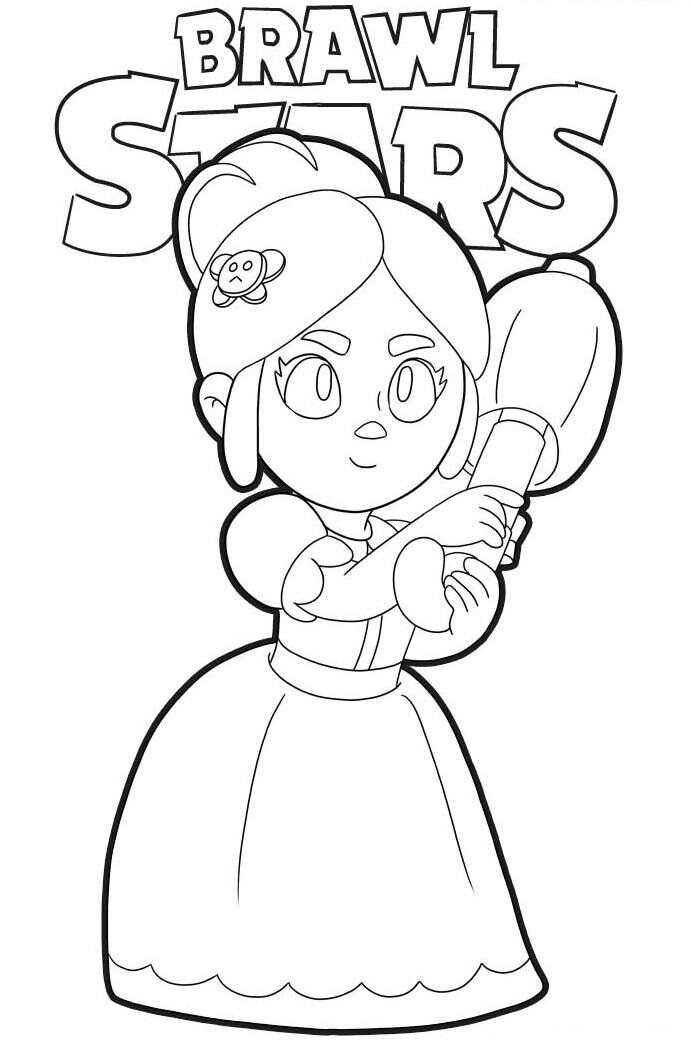
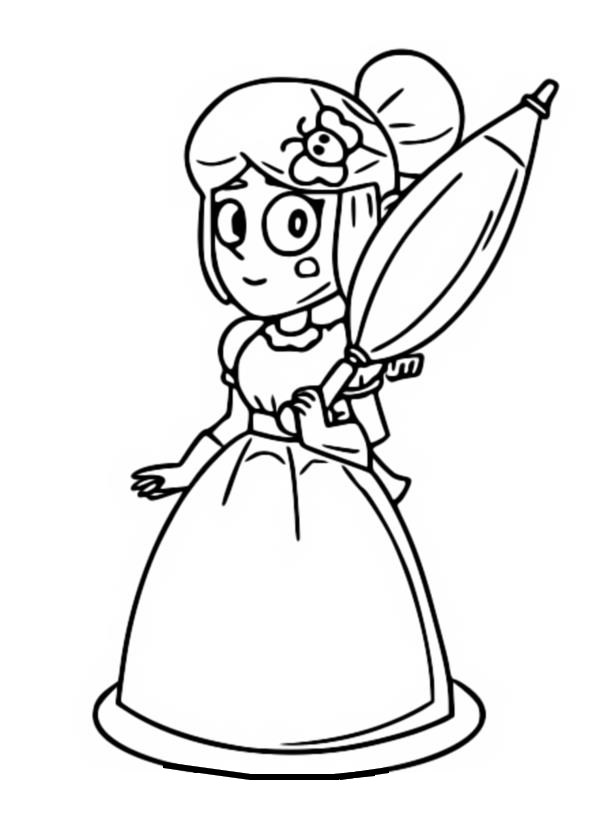
Piper has the most pages, with five designs, including her Cupid and Princess skins. Colt follows with four pages, and Crow appears on three pages of his own, plus the Legendary trio page.
Which crossover characters are included?
Three pages come from crossover events: Buzz in a Godzilla skin, Tick in a Mecha Ghidorah skin, and SpongeBob SquarePants redrawn in the Brawl Stars art style.
What is a skin in Brawl Stars?
A skin is an alternate costume that changes how a brawler looks without changing its abilities. Pages in this set show several, such as Shark Leon, Heroine Bibi, and Cowboy Rico.
Where does Brawl Stars take place?
The game is set in Starr Park, a fictional amusement park. That setting explains the cast of robots, mascots, and performers, from the arcade machine 8-BIT to the mariachi skeleton Poco.
Are Brawl Stars coloring pages right for young kids?
Most pages suit school-age fans. Brawlers carry cartoon weapons, so parents of younger children may prefer the portraits of characters like Spike, Poco, or Bea, which focus on personality rather than action.
Do the coloring pages show every brawler in the game?
No. The game now has more than 100 brawlers, and this set focuses on well-known characters such as Shelly, Colt, Nita, Spike, and Piper, along with popular skins and group scenes.
Start Coloring
Picking a favorite brawler is the easiest way in, whether that is Spike, Piper, or the arcade robot 8-BIT. Each design opens as a PDF with one click, with no sign-up, email, or cost, and prints cleanly on regular letter-size paper. For coloring on a tablet or laptop, the same page loads in the online coloring tool. Finished brawlers can be shared with other fans through the Facebook and Pinterest buttons at the top of every design page, which makes it easy to show off a new skin idea or a fully colored team.