Trippy Coloring Pages
 By:
Jennifer Thoa – Content Editor & Designer
Updated:
By:
Jennifer Thoa – Content Editor & Designer
Updated:
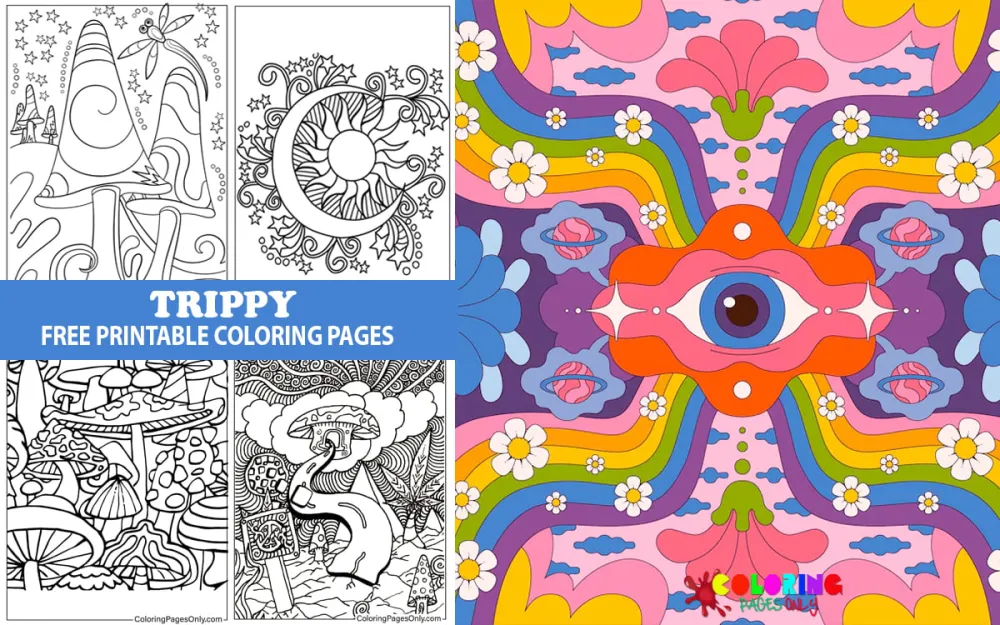
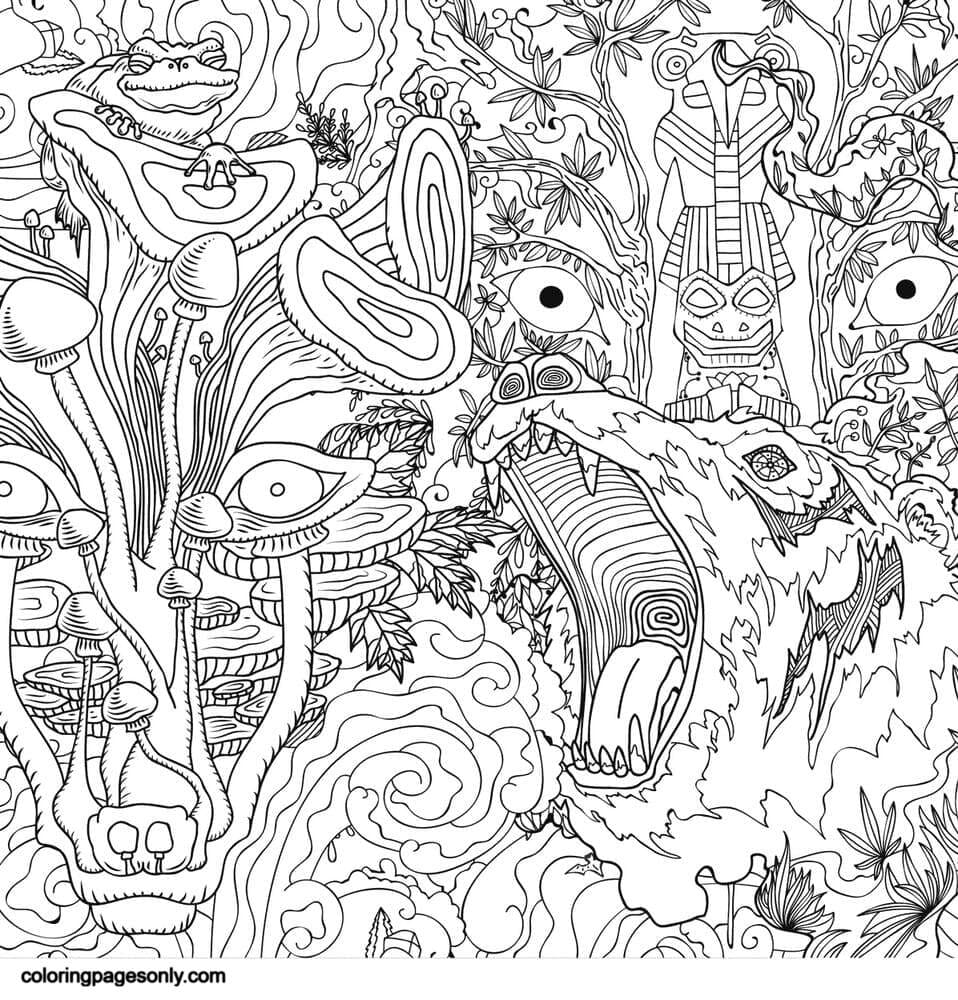
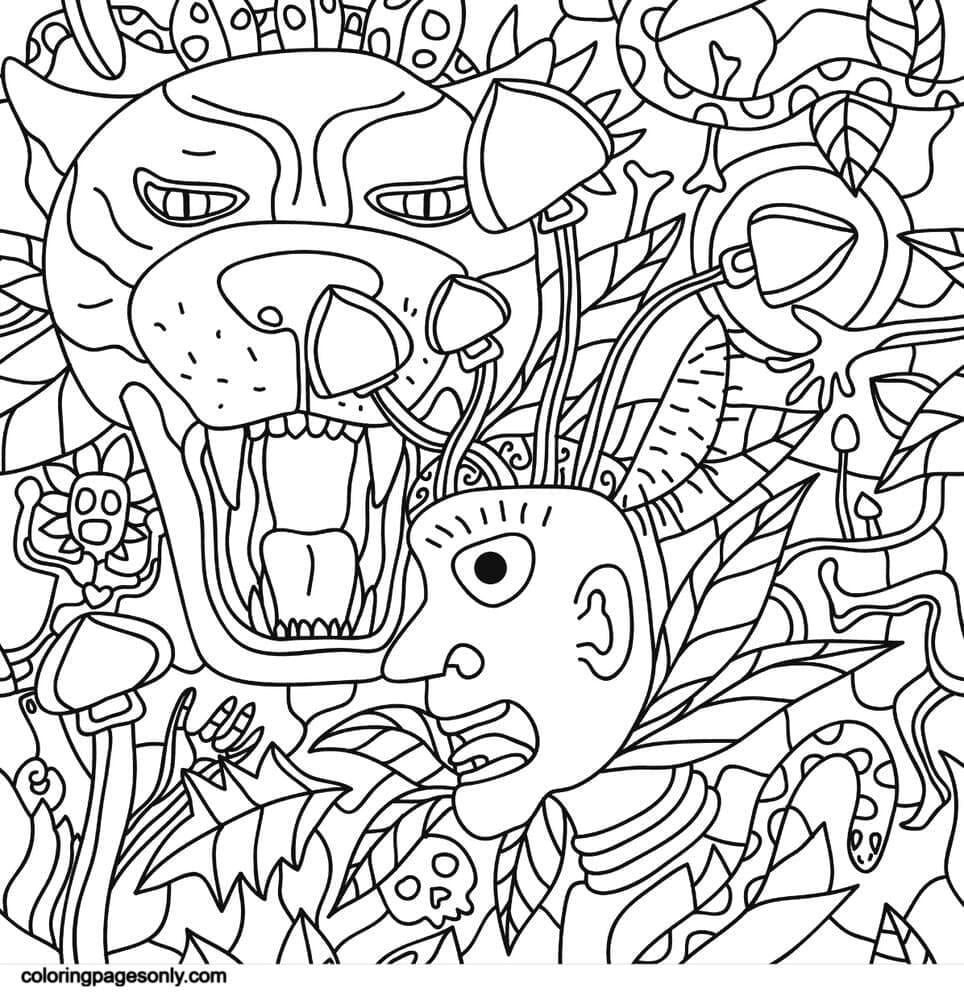
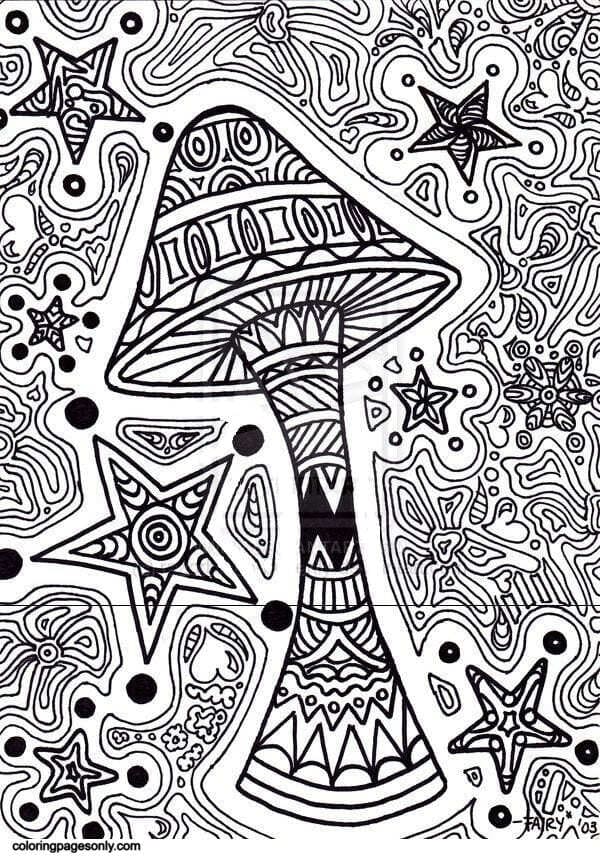
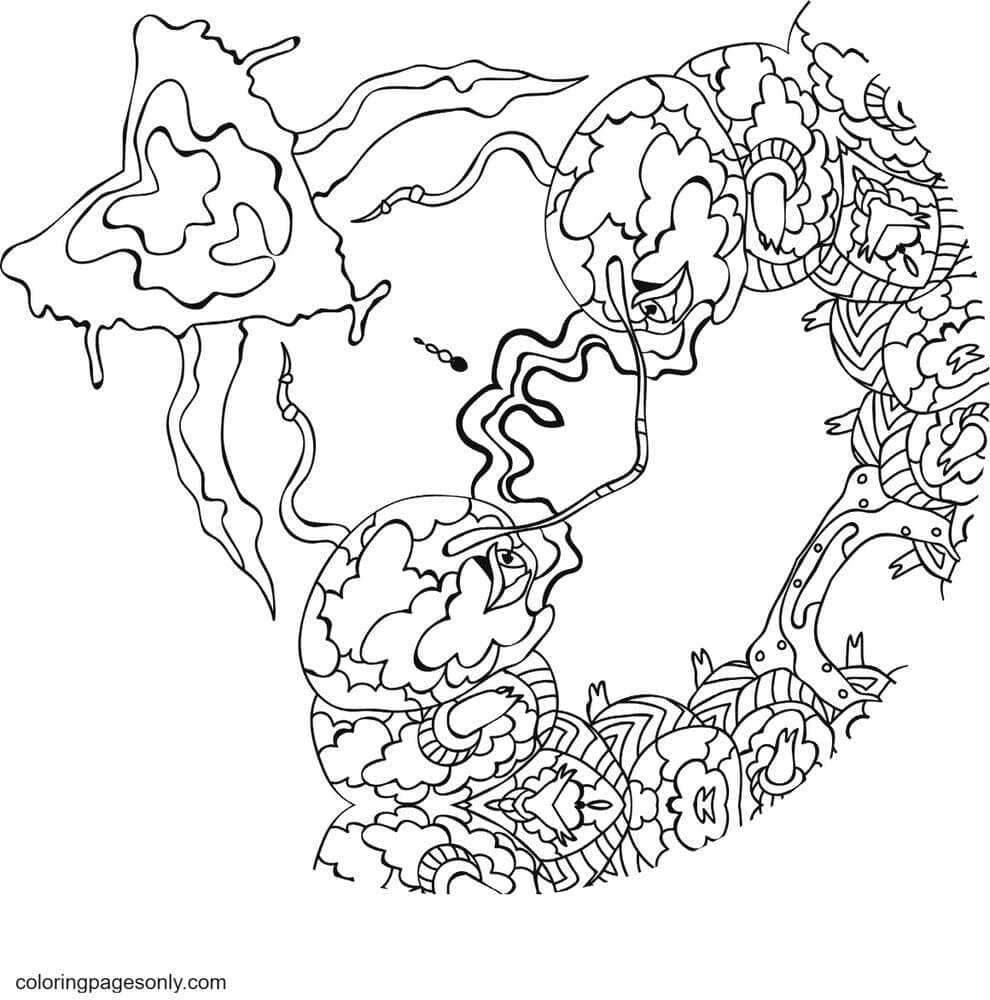
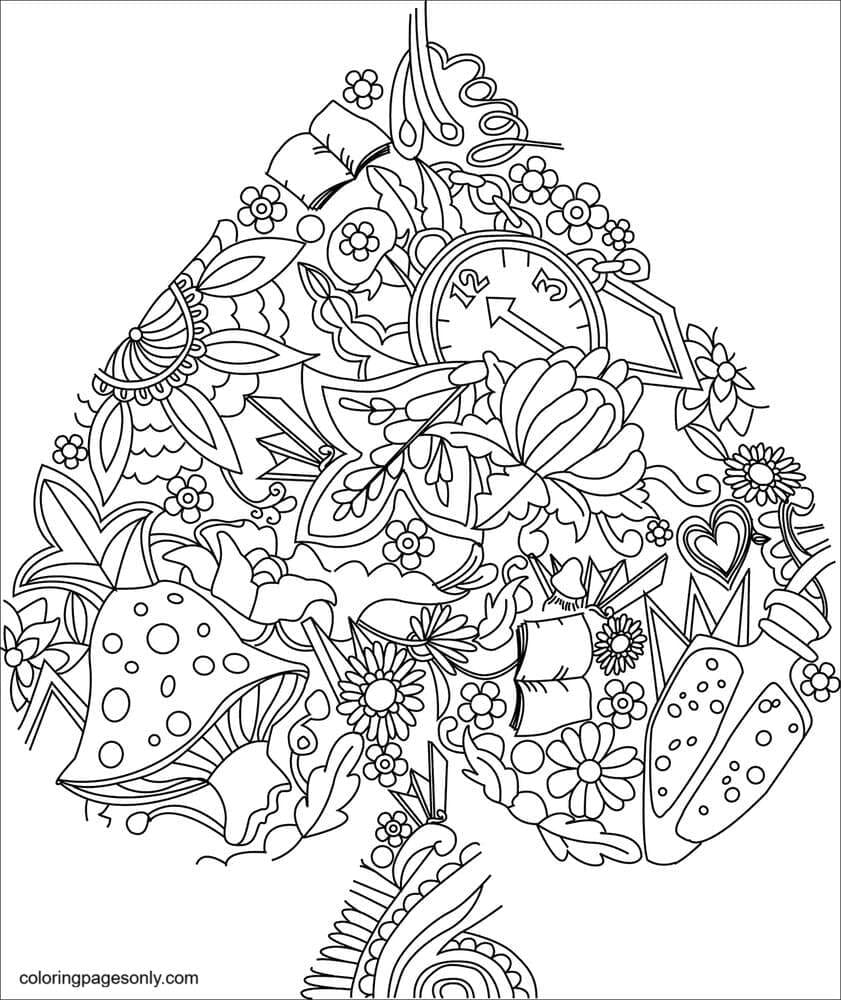
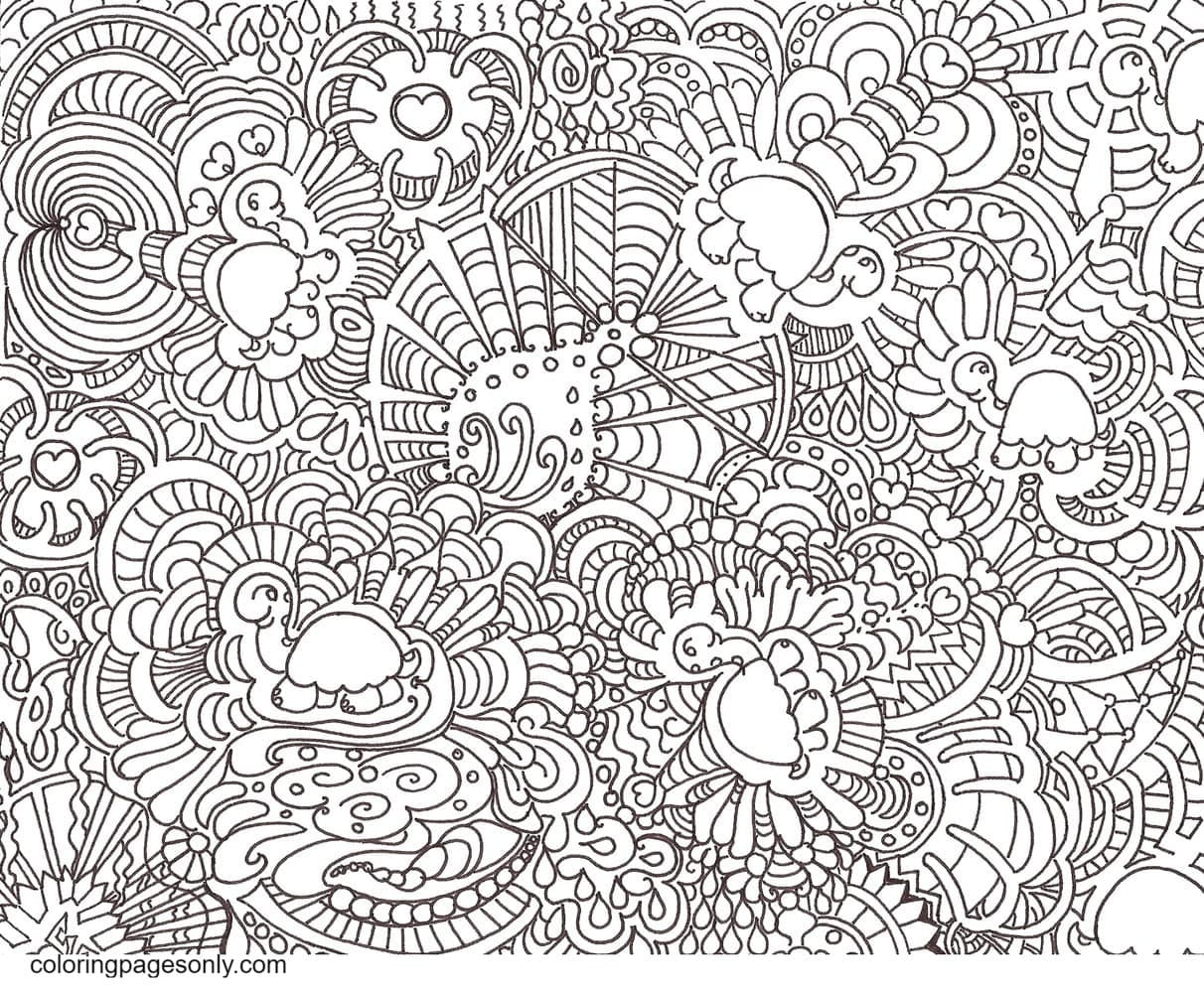
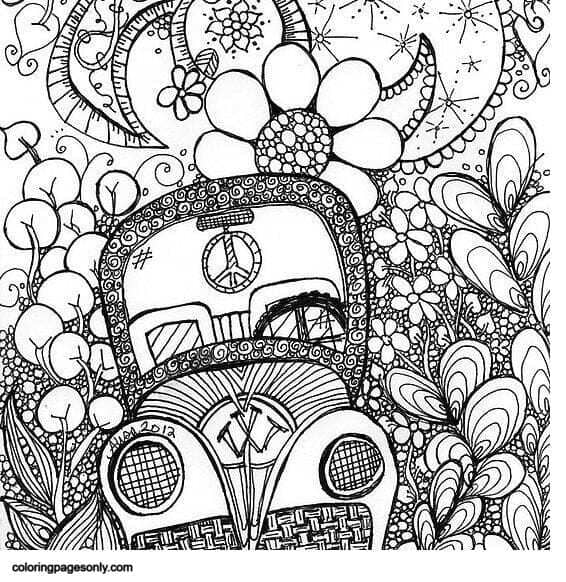
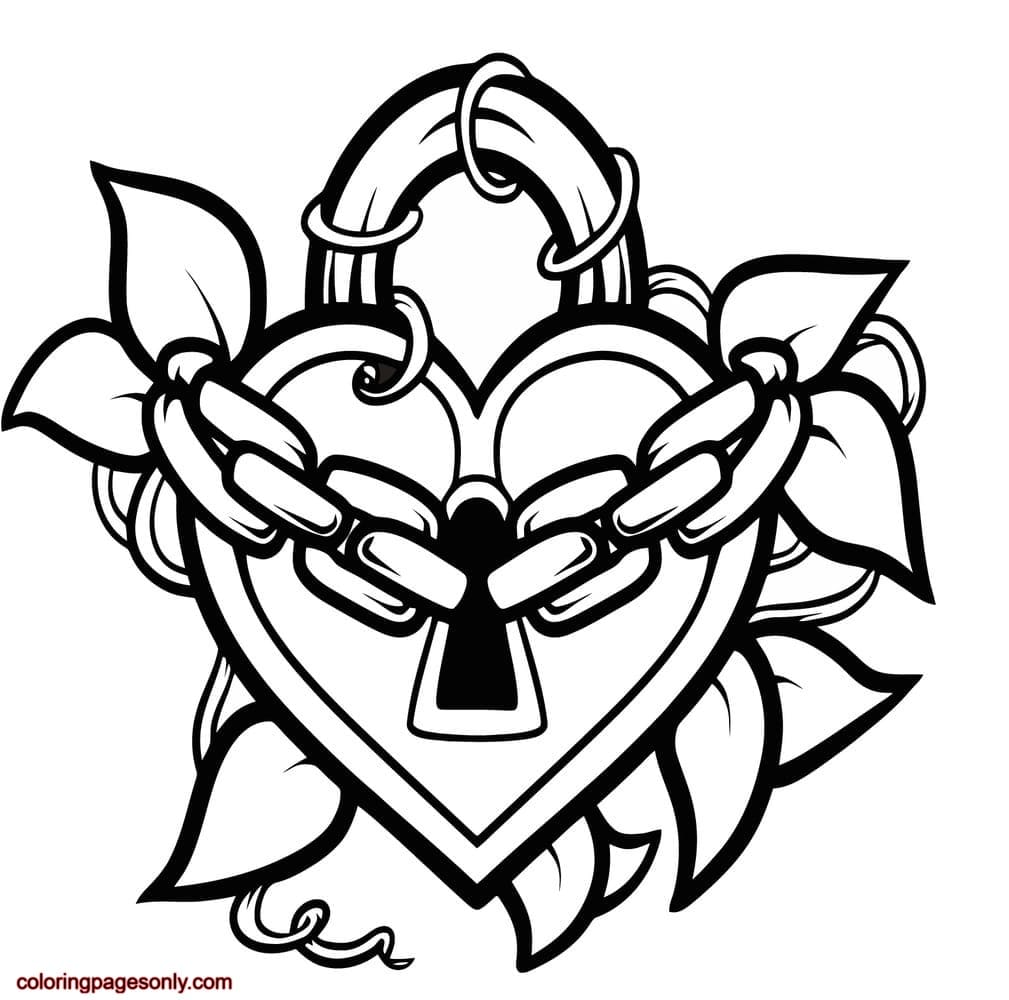
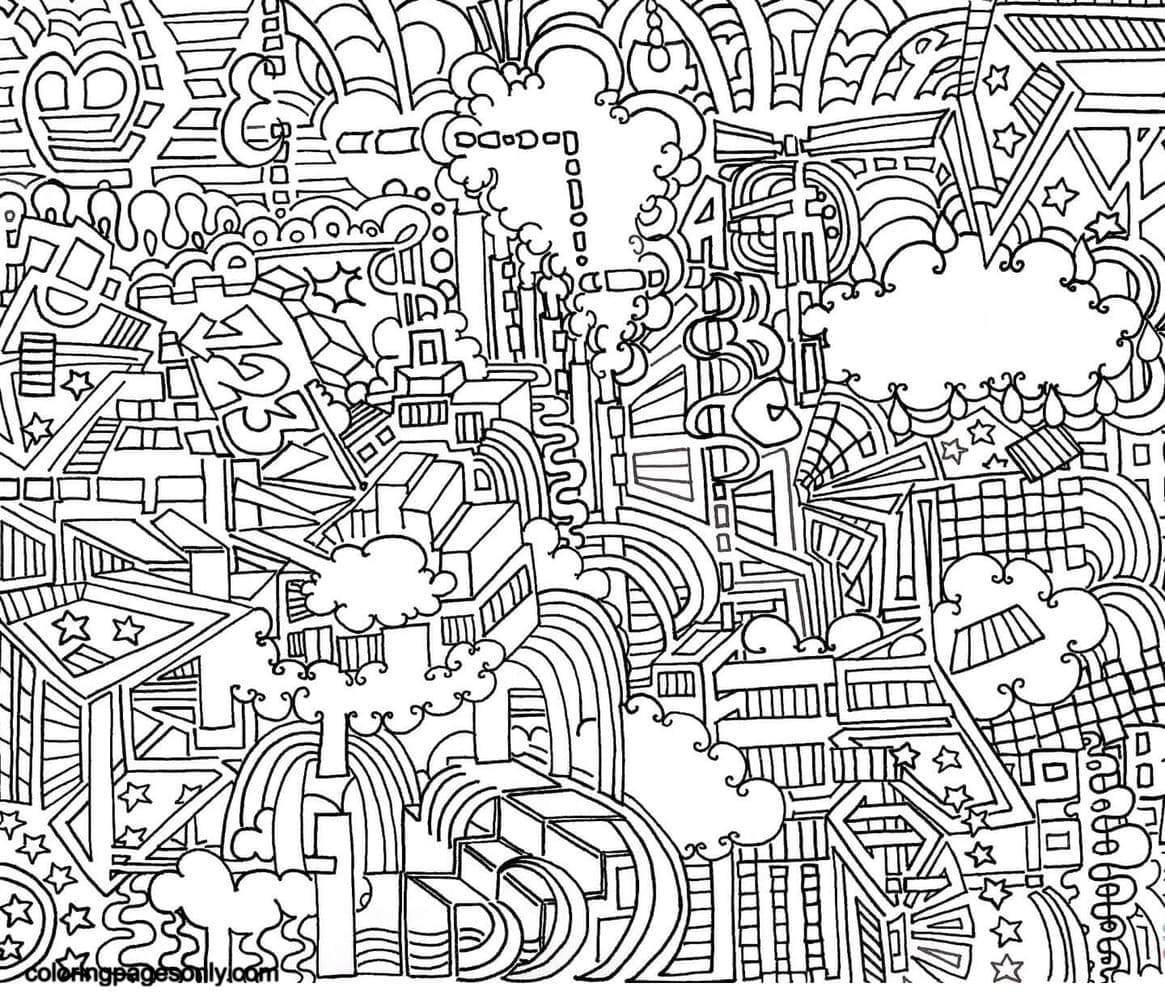
Free trippy coloring pages: 69 printable PDF designs featuring psychedelic patterns, paisley, optical illusions, and surreal nature and cosmic scenes. Each page can be downloaded as a PDF to print or colored online in the browser.
The paisley shapes that run through much of this set trace back to a Persian textile motif called boteh, later developed further in Kashmir, before a major revival in 1960s counterculture fashion and design brought it into psychedelic art. Psychedelic art itself emerged as a distinct visual style in the United States around that same decade, built on kaleidoscopic spirals, vivid color, and dense repeating patterns. This set suits a teen or adult looking for a more demanding page than a typical character sheet, and works equally well as a solo wind-down activity or a shared coloring session among friends.
There is no single palette that reads as correct here, which is different from a licensed character or a real vehicle. The actual skill this set builds is managing a page with no obvious starting point: picking a small section, committing to a color logic, and carrying it outward without the pattern turning into visual noise.








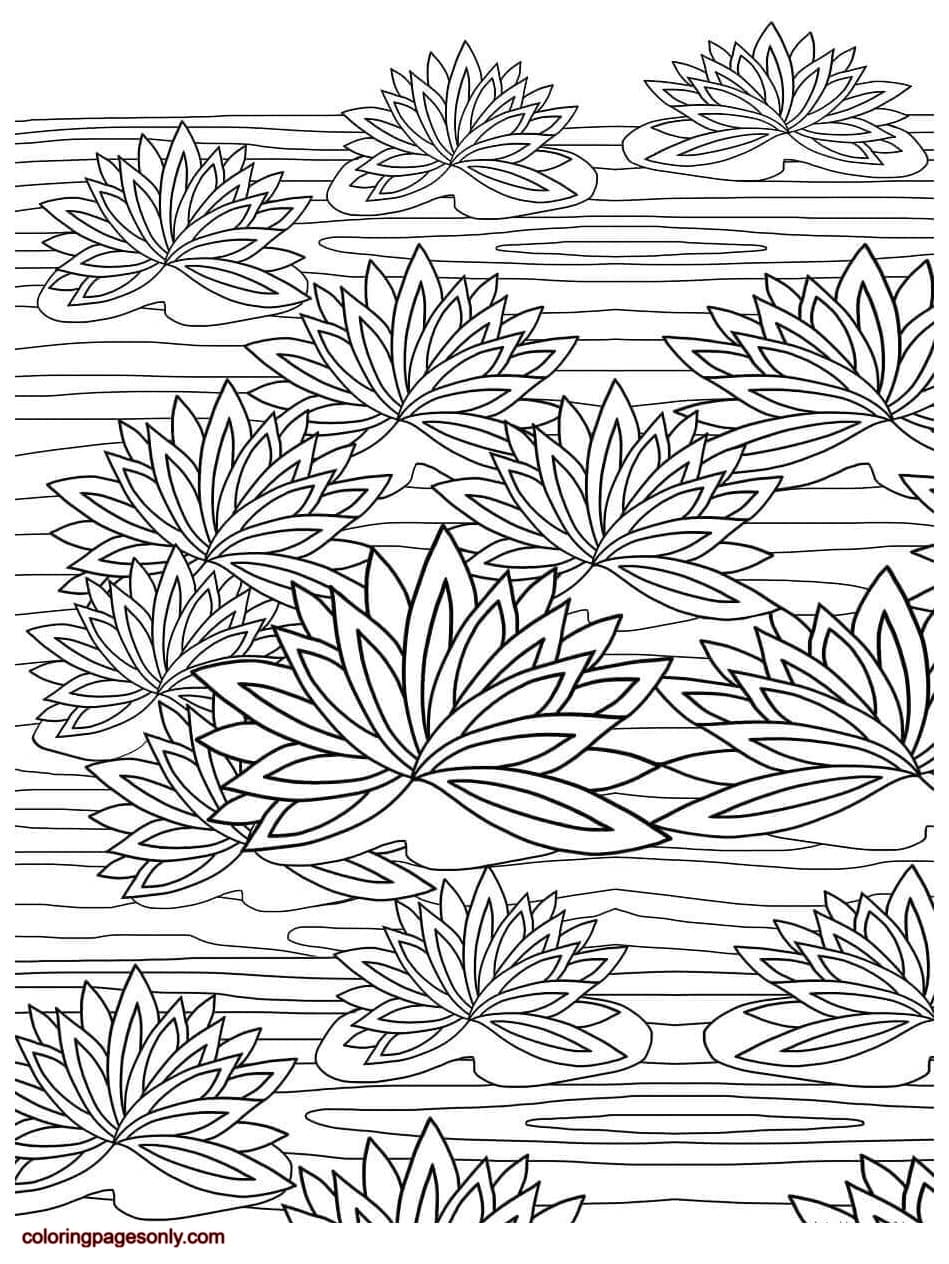
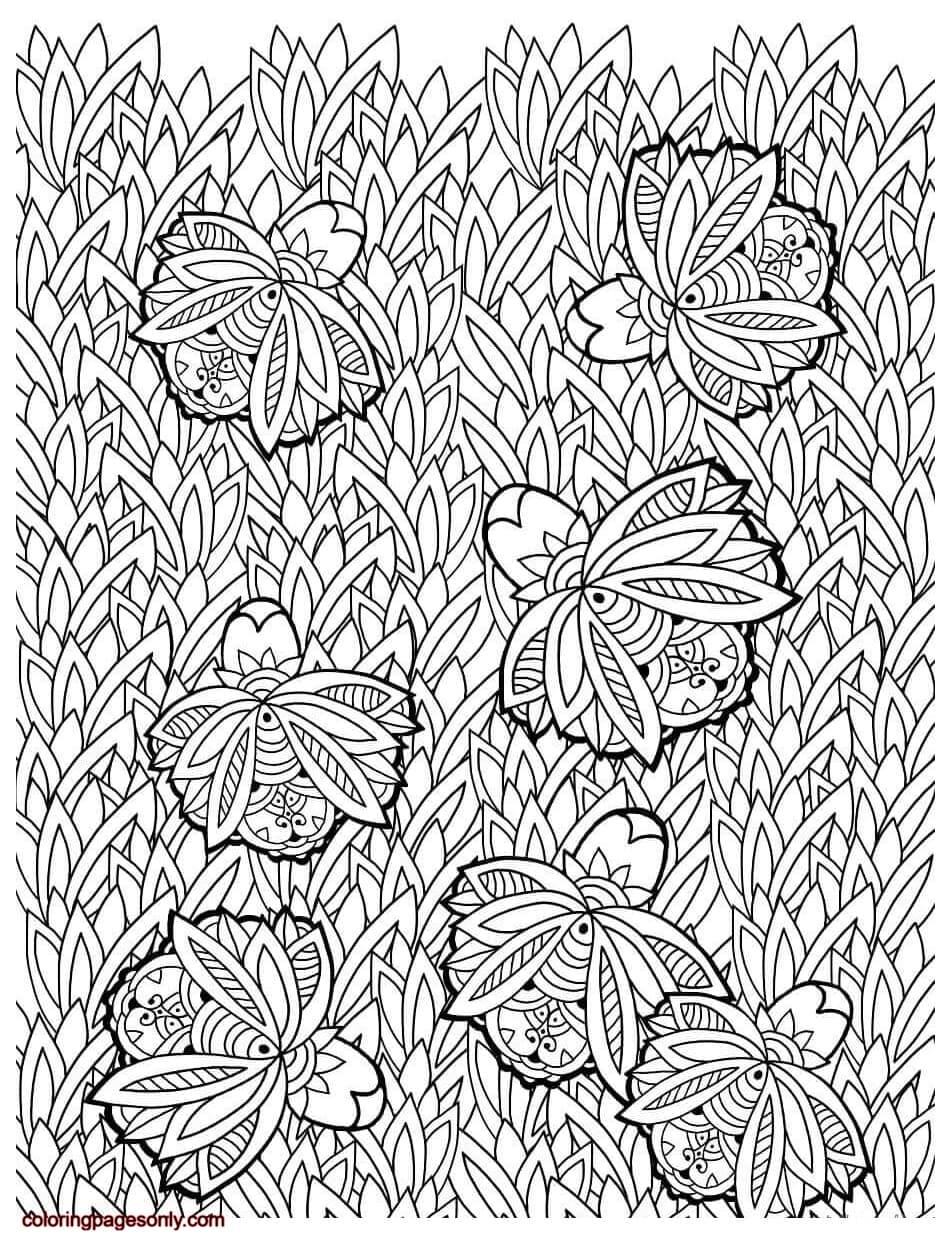
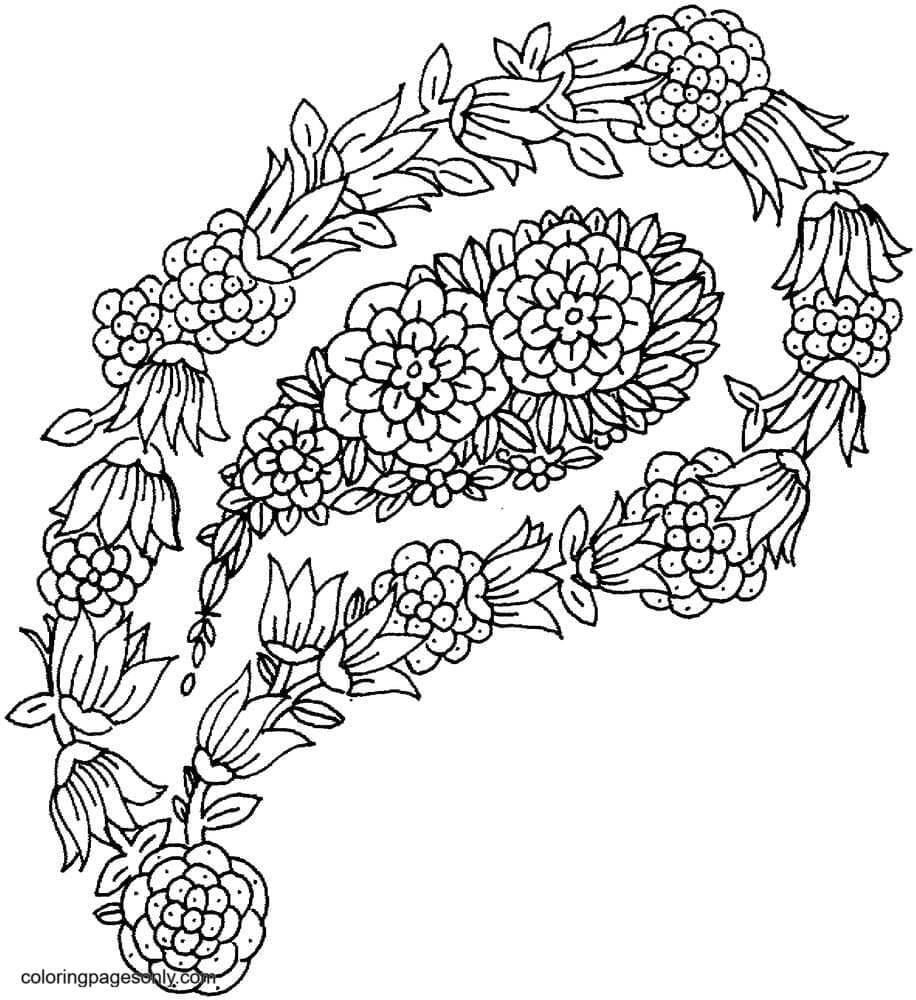
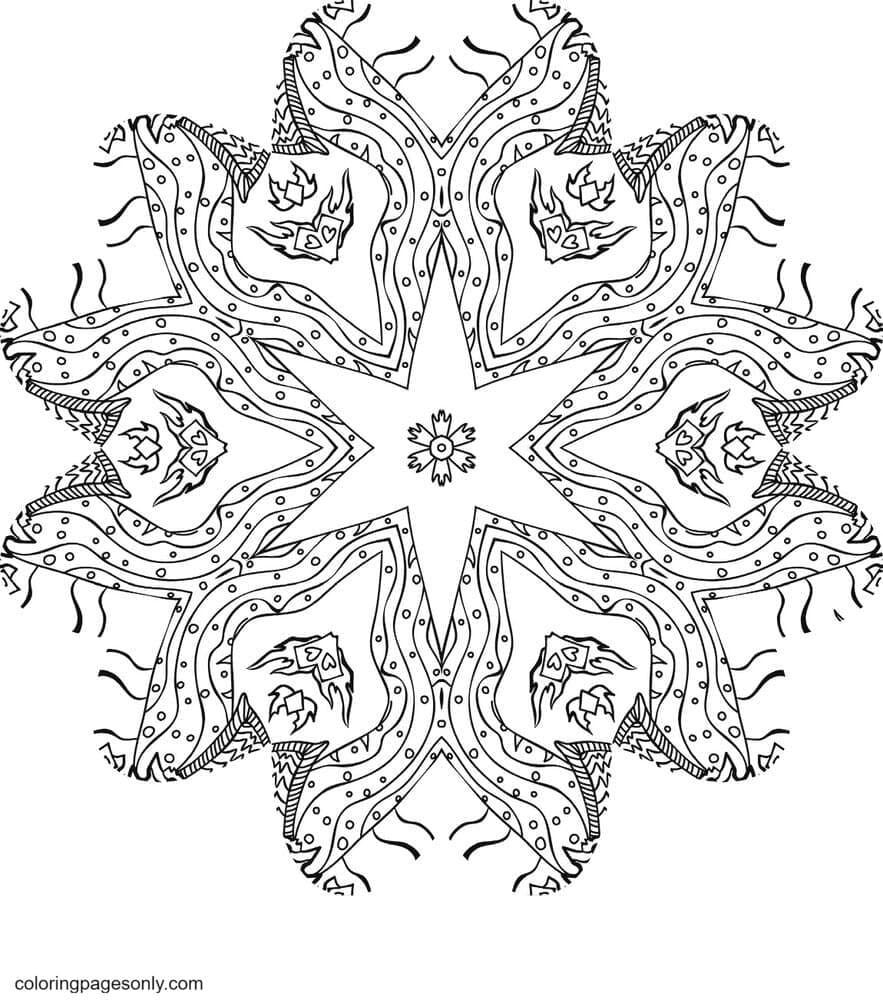

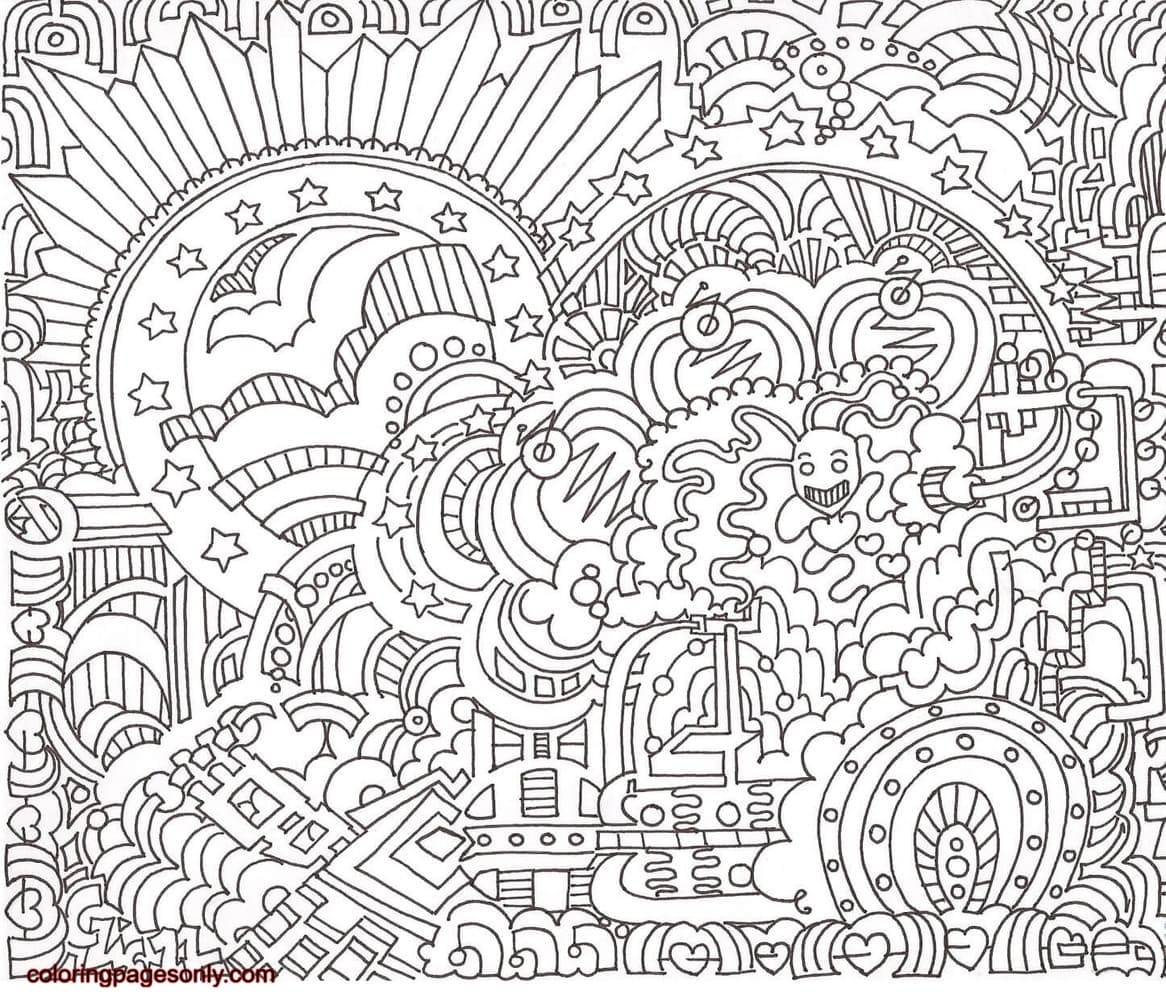
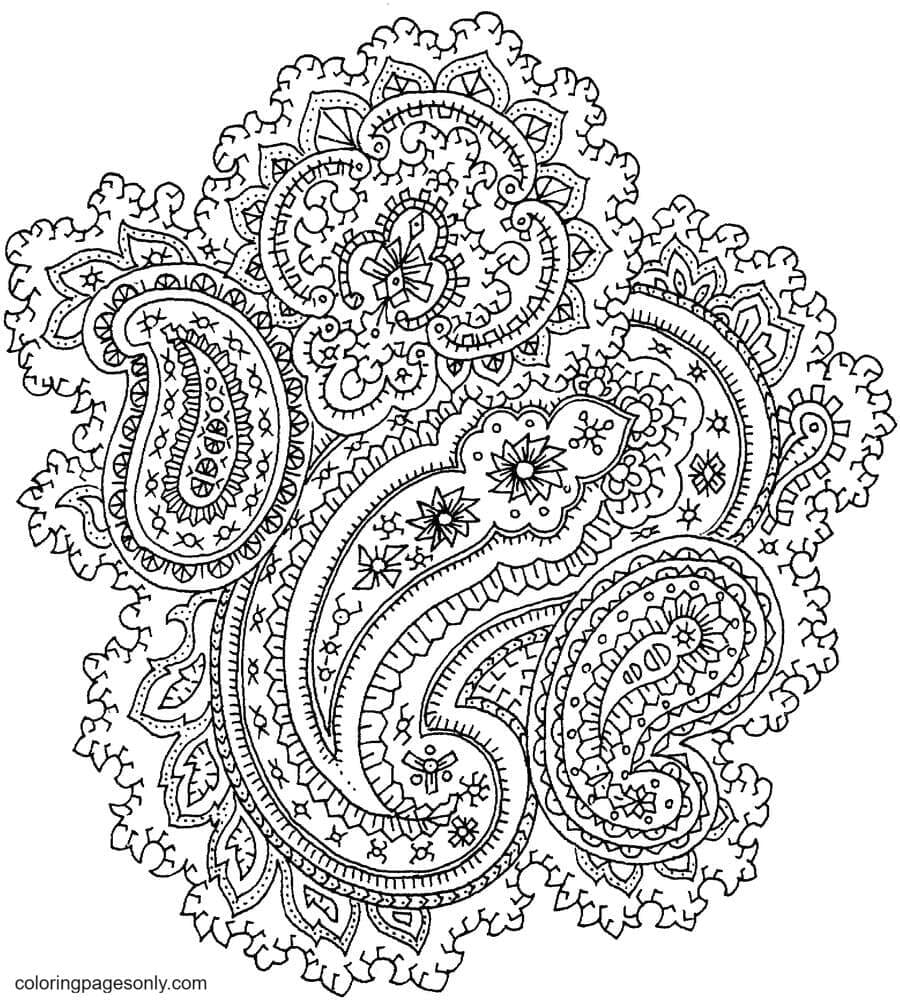
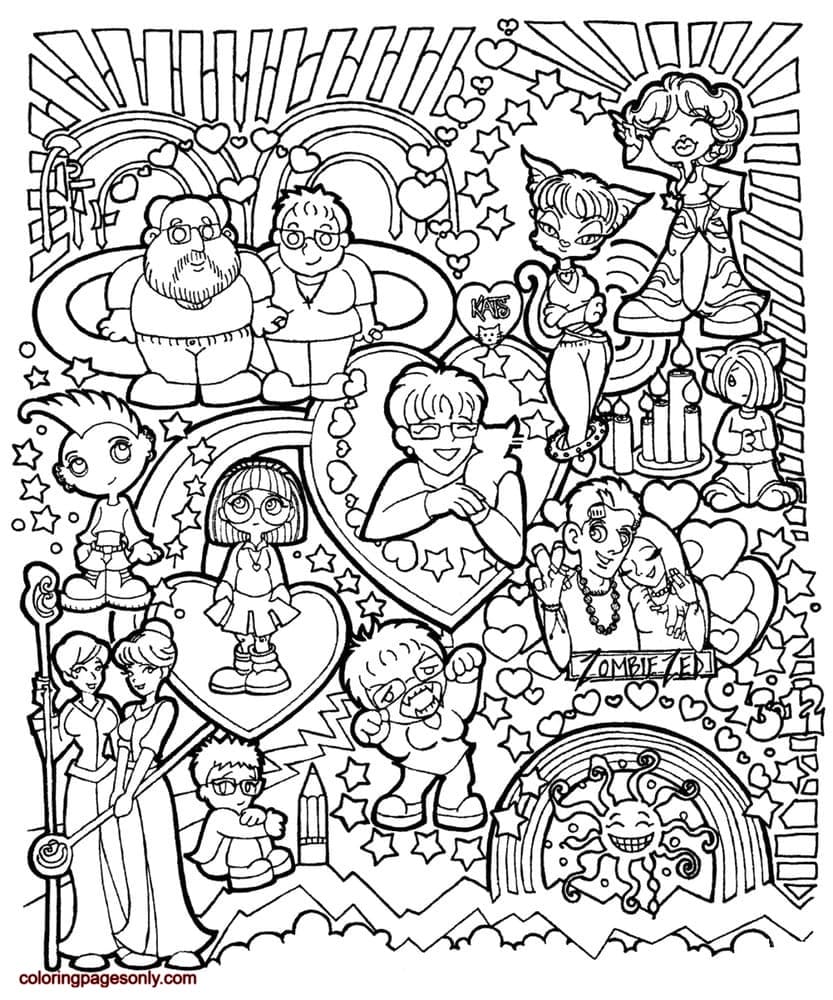
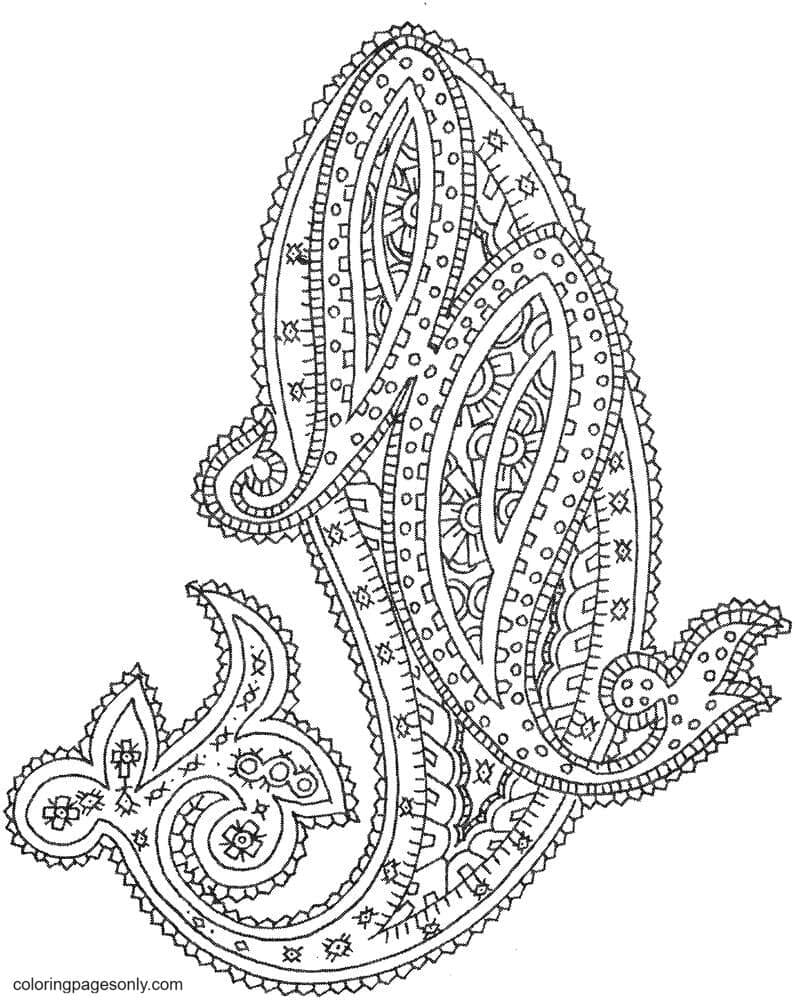



What Is Inside This Collection
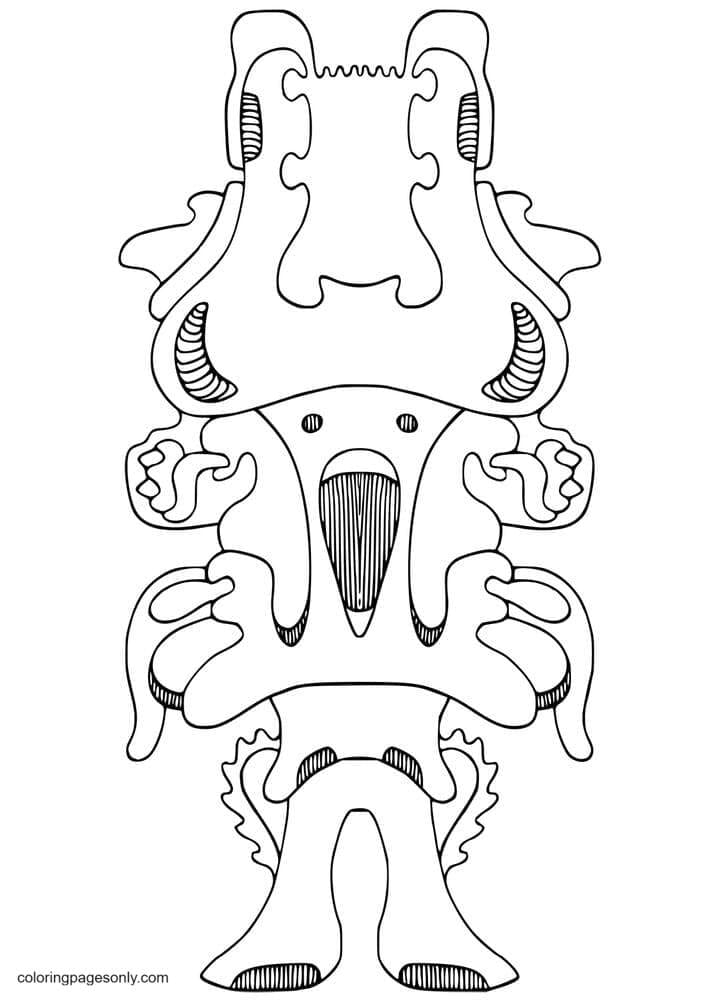
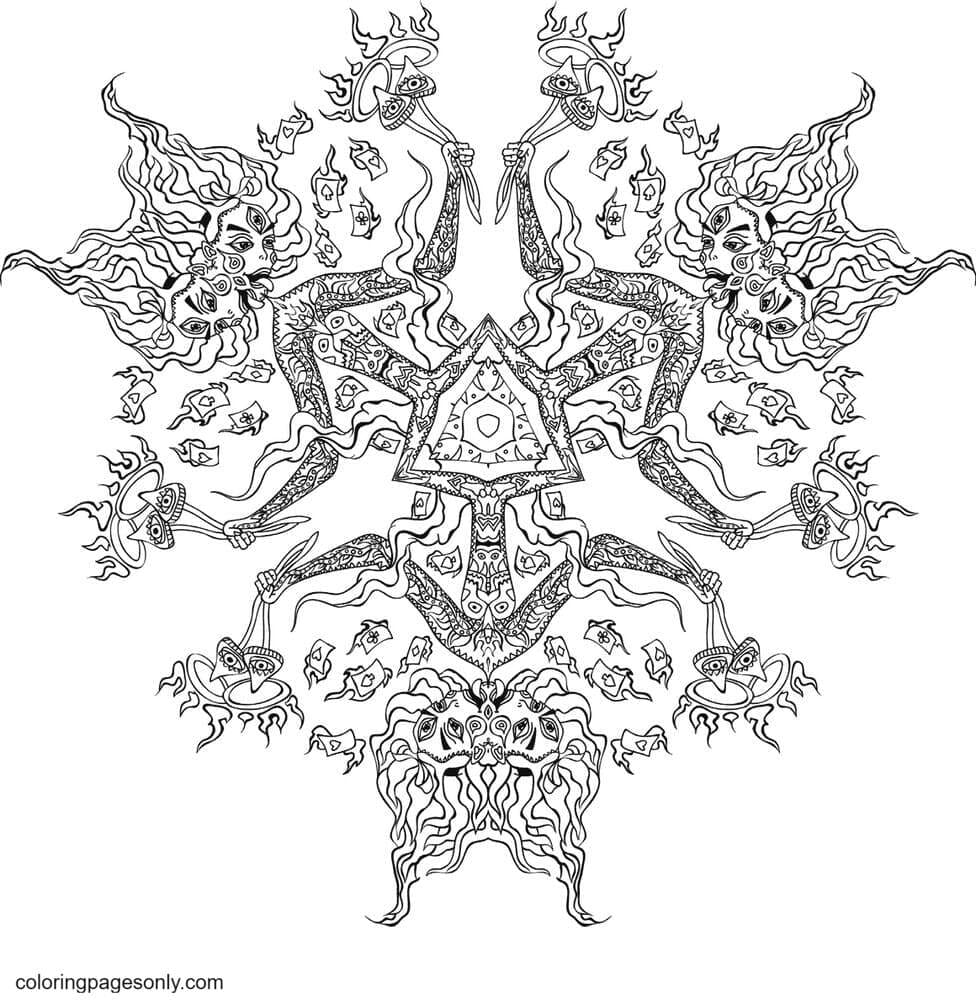
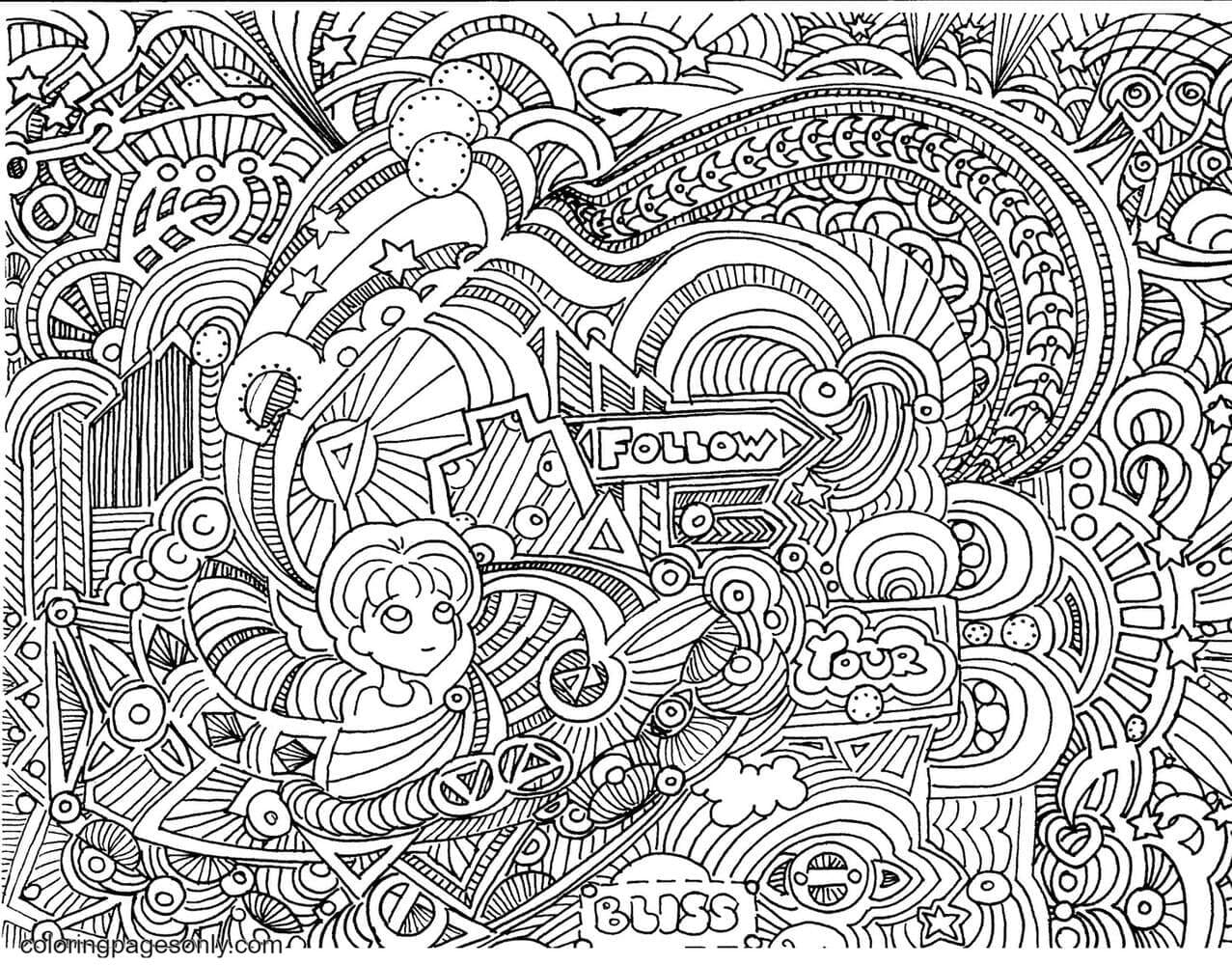
The 69 pages fall into a few clear groups, built around dense pattern work, nature and cosmic imagery, abstract figures, and looser doodle-style designs.
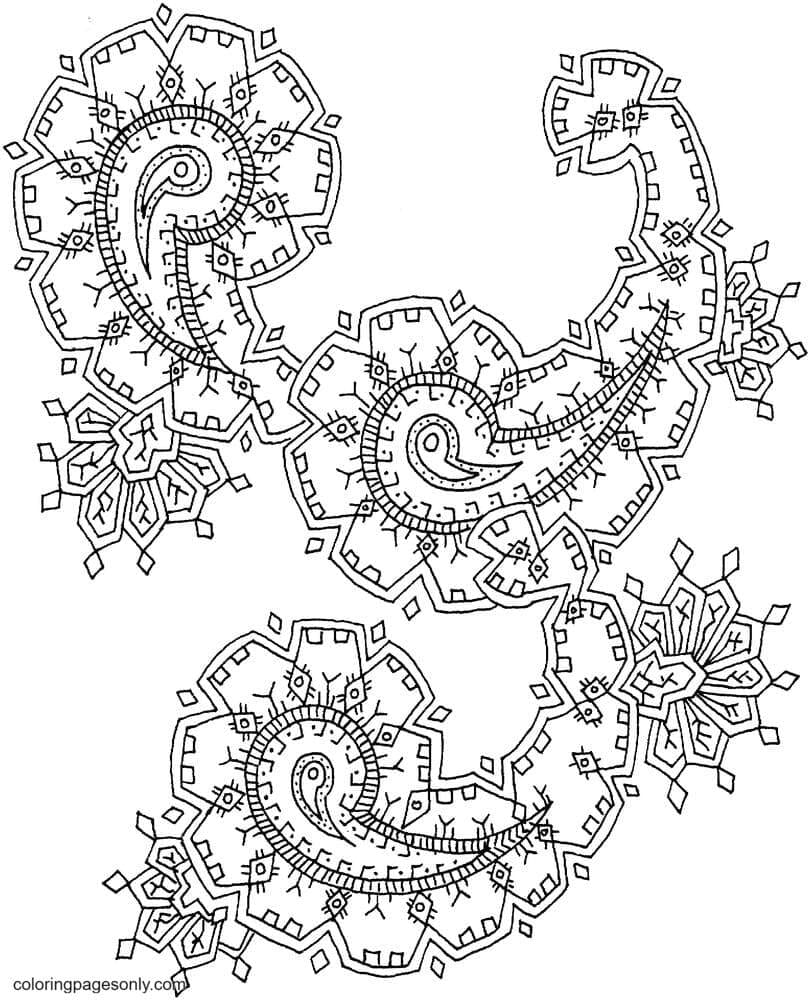
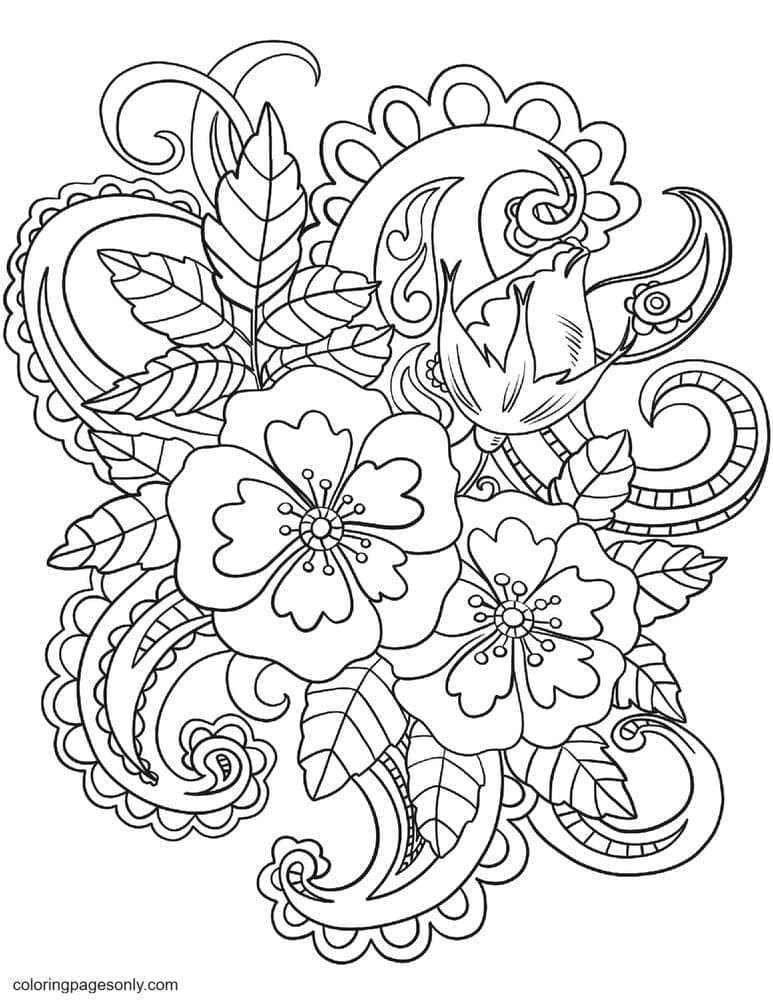
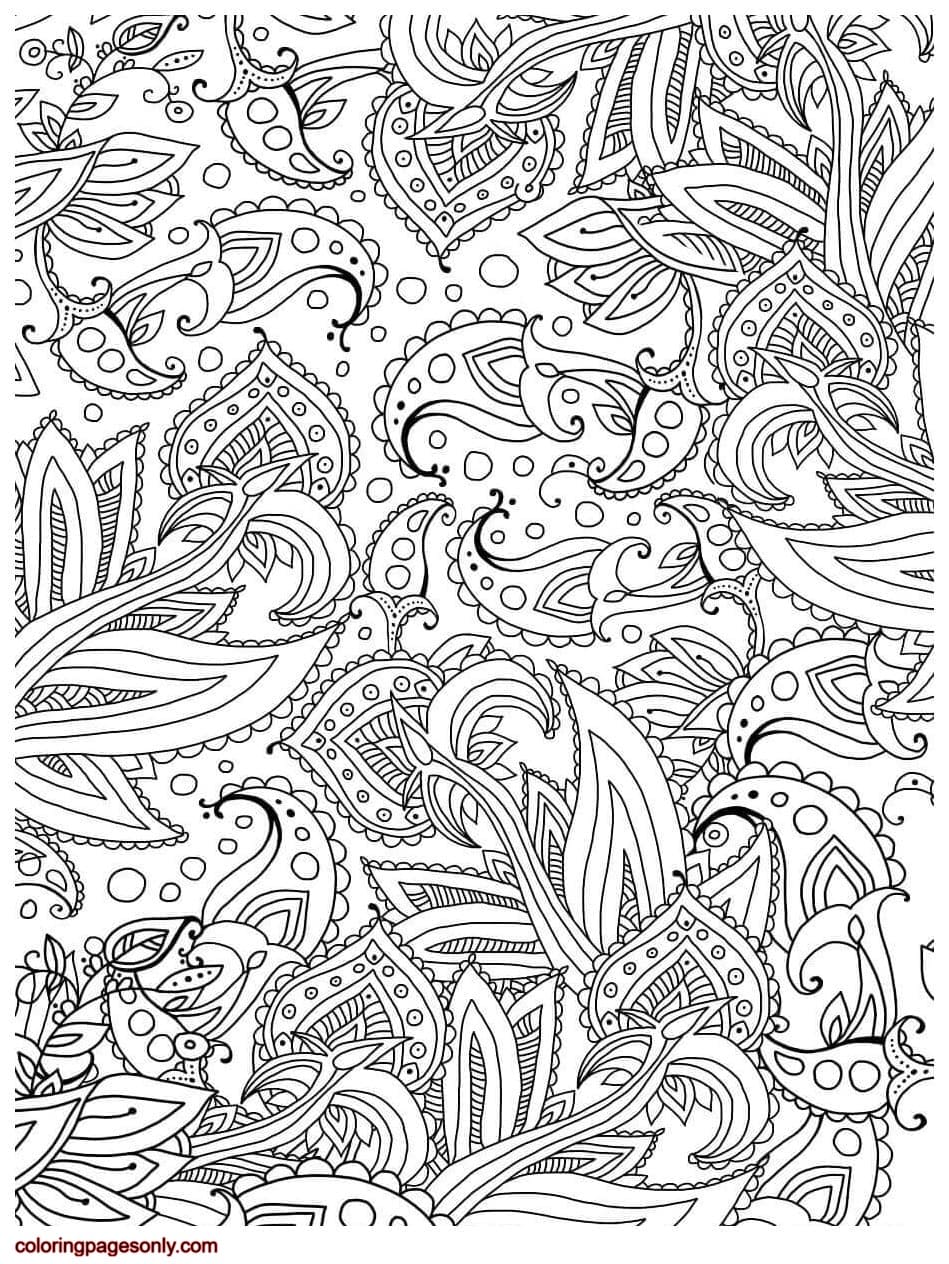
Paisley, Floral, and Pattern Designs
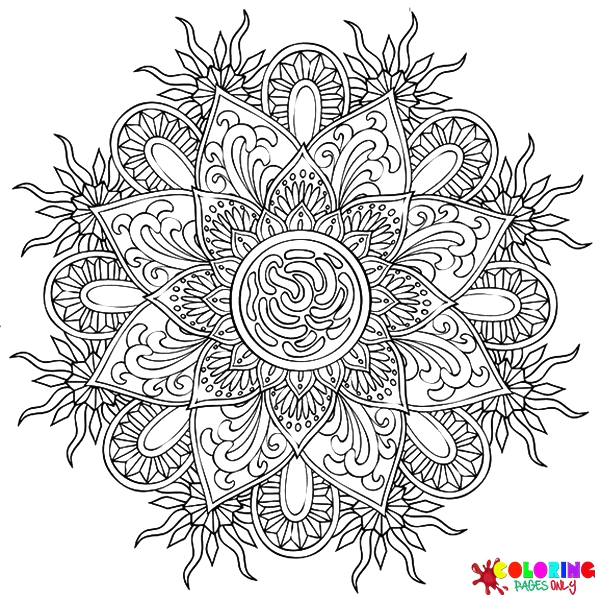
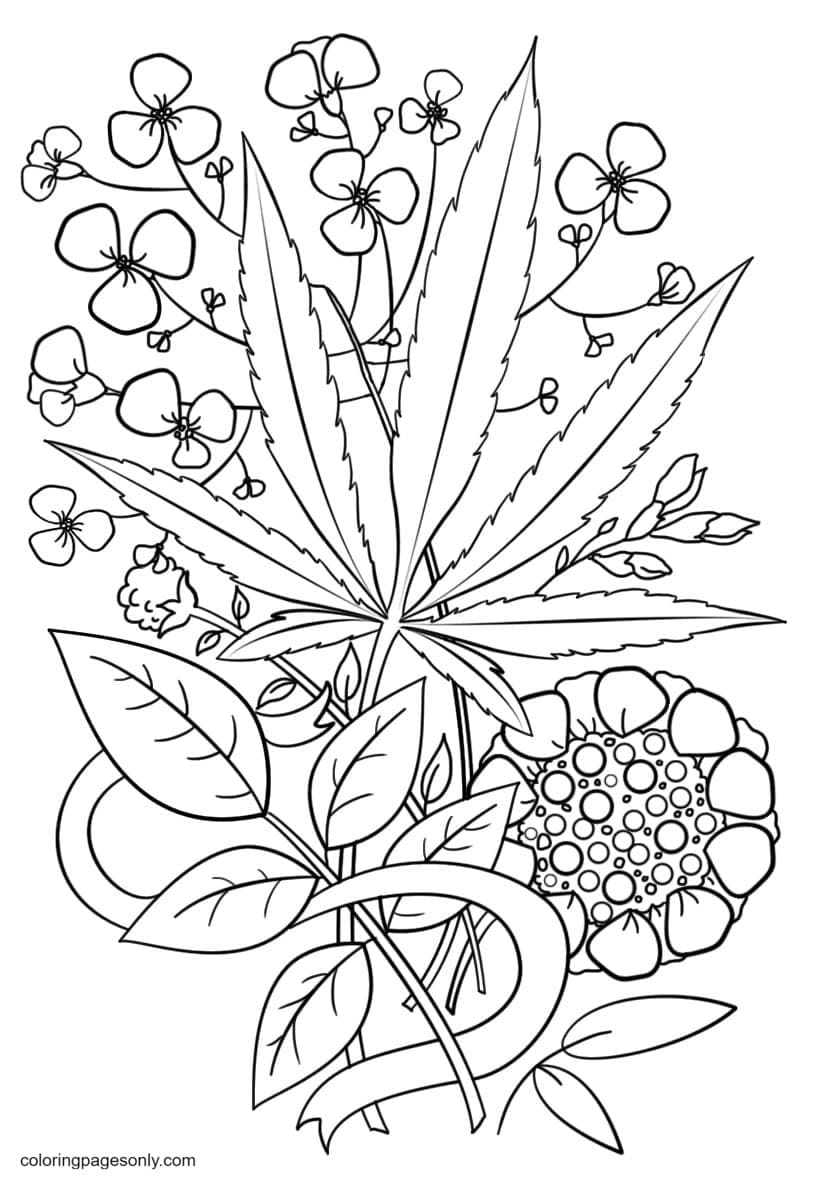
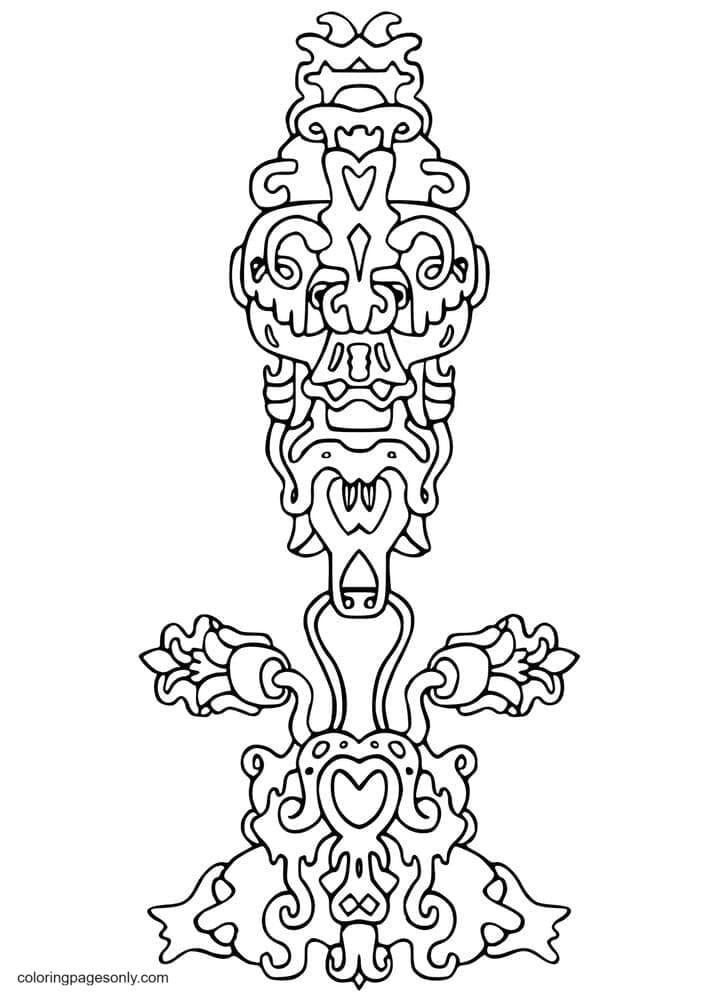
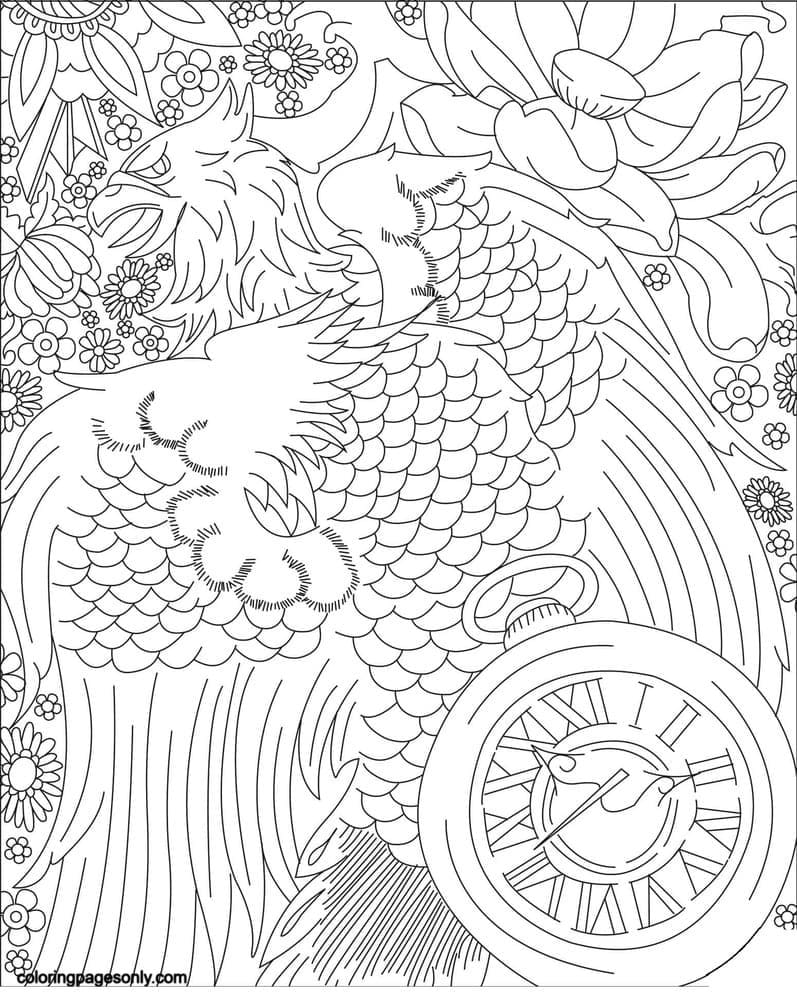
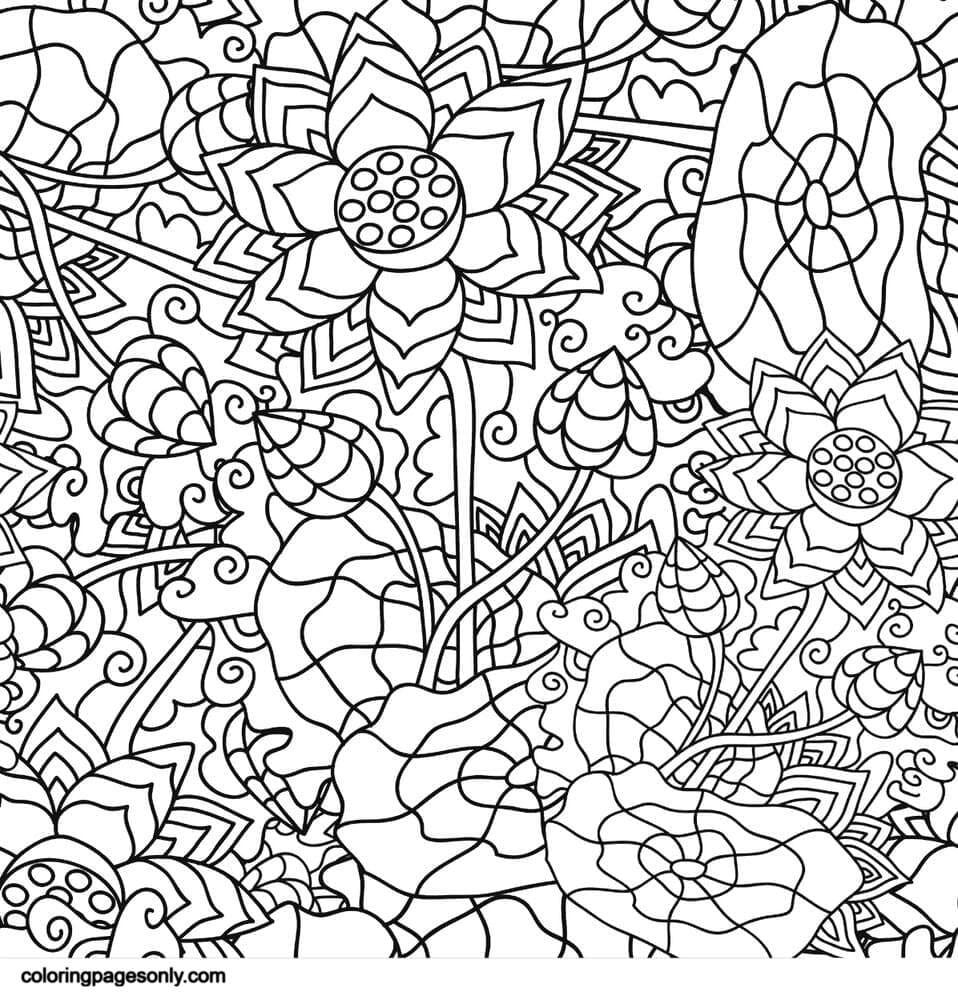
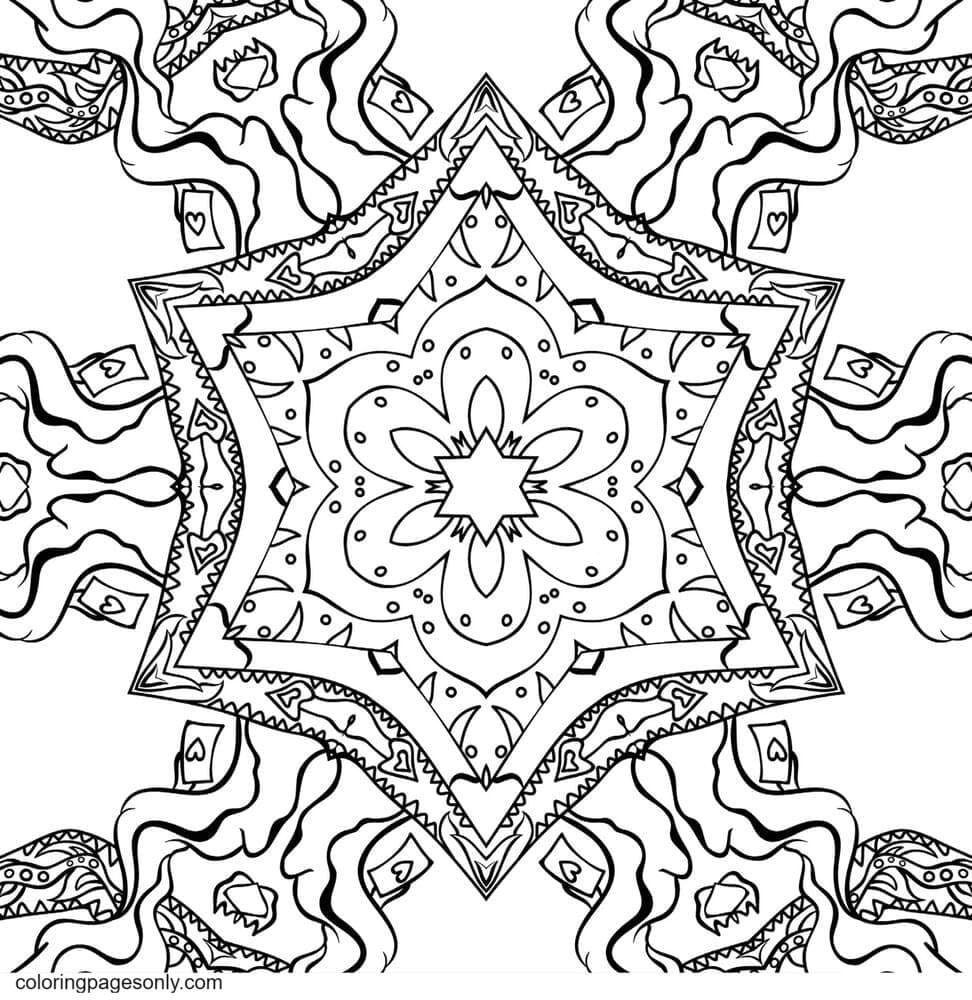
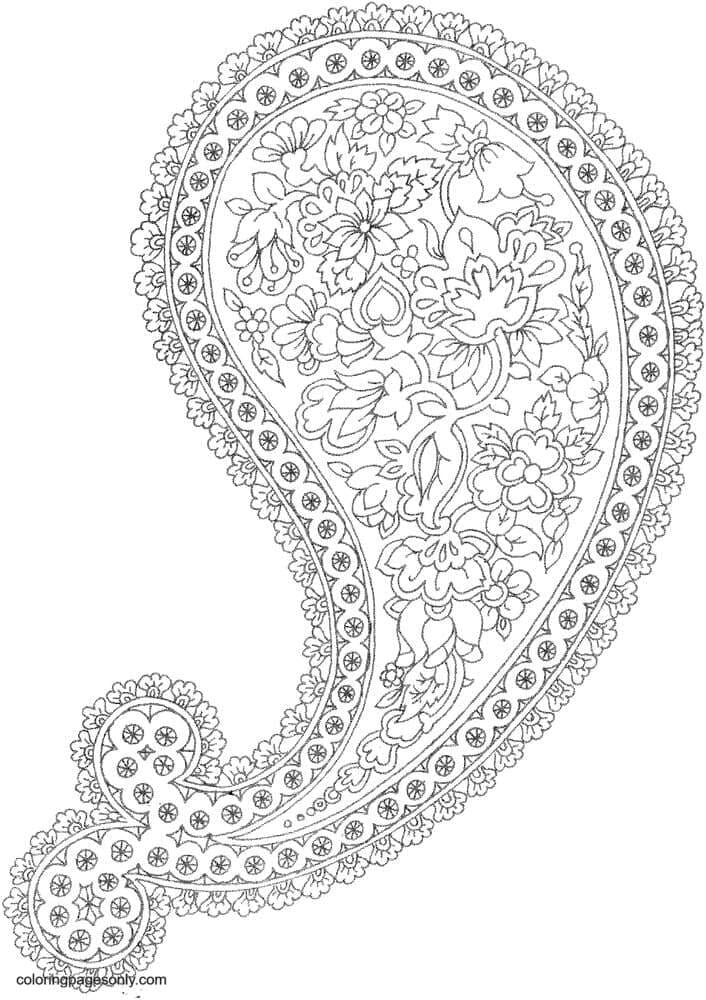
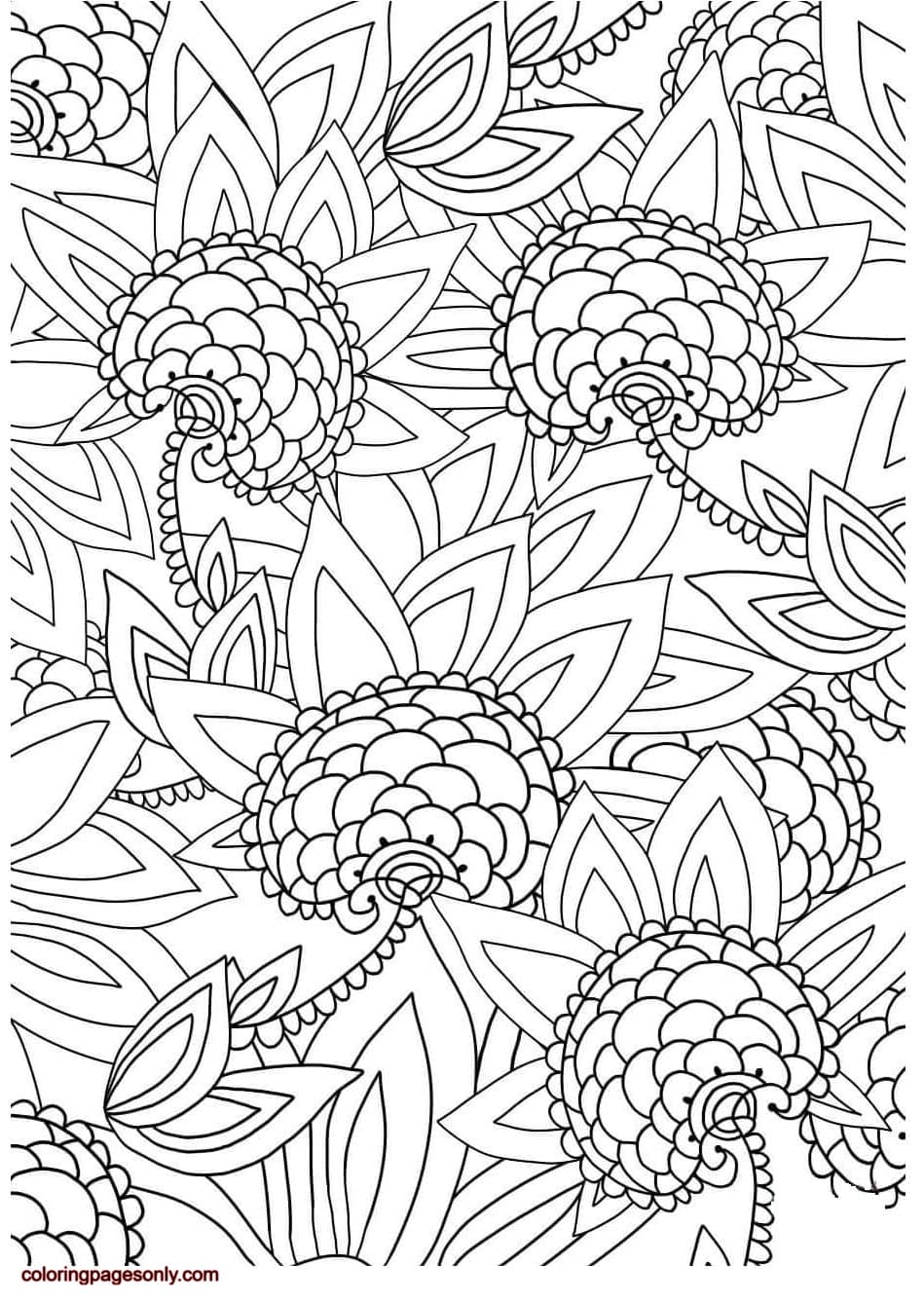
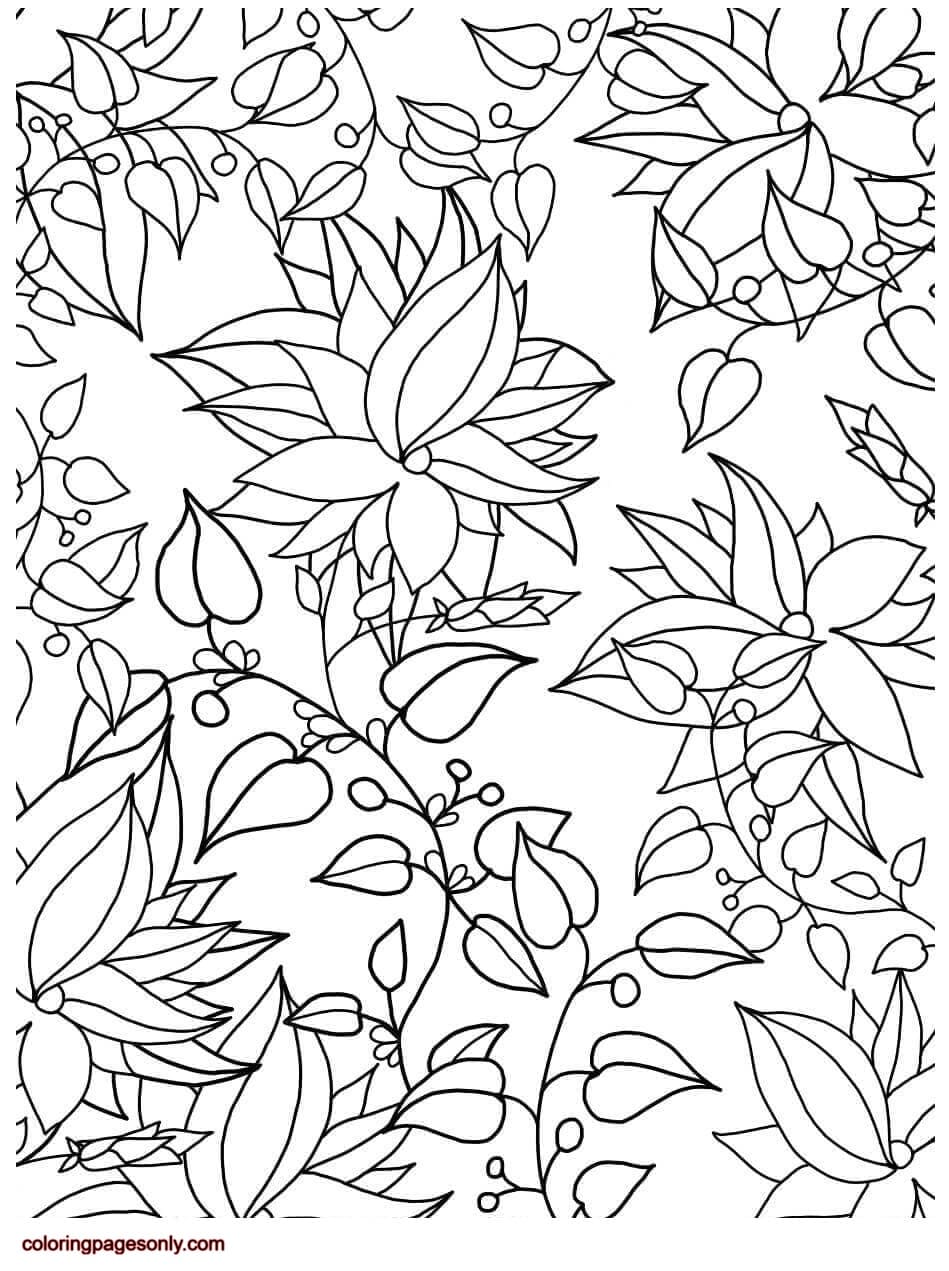
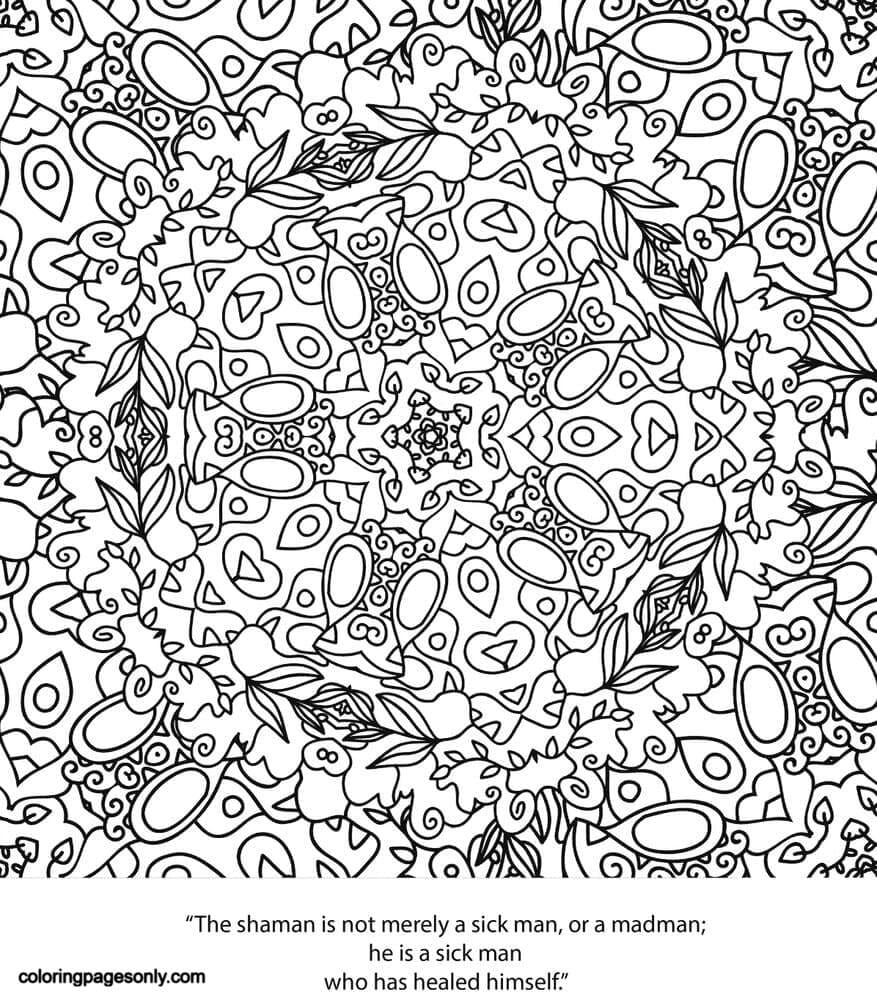
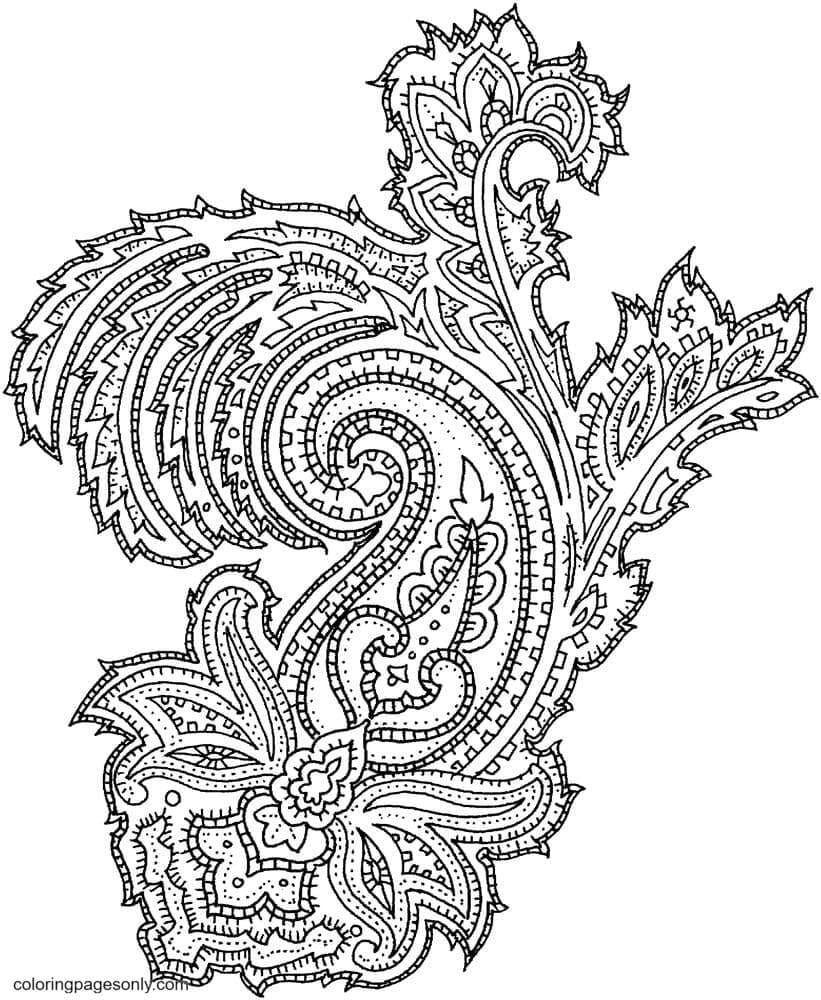
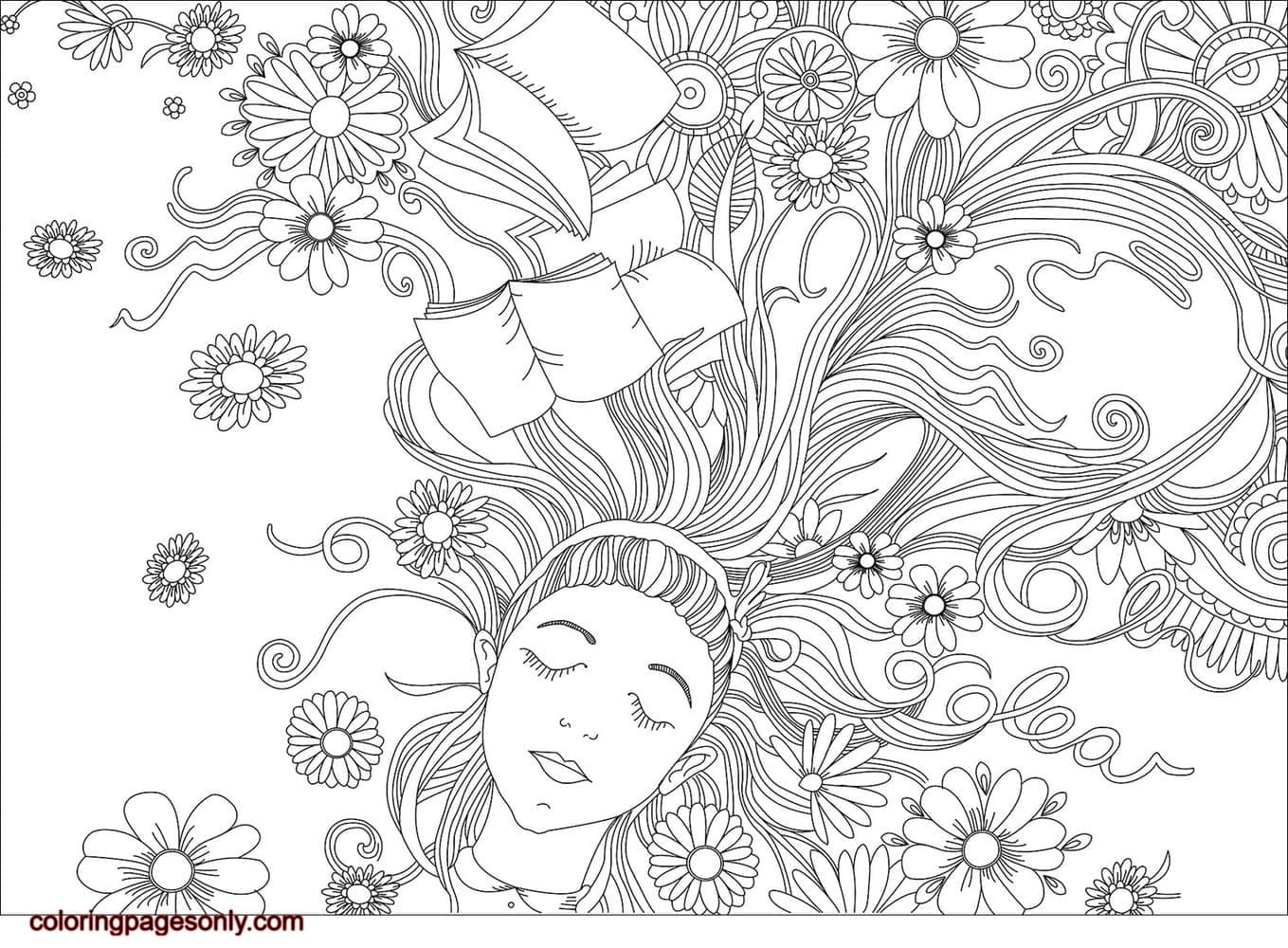
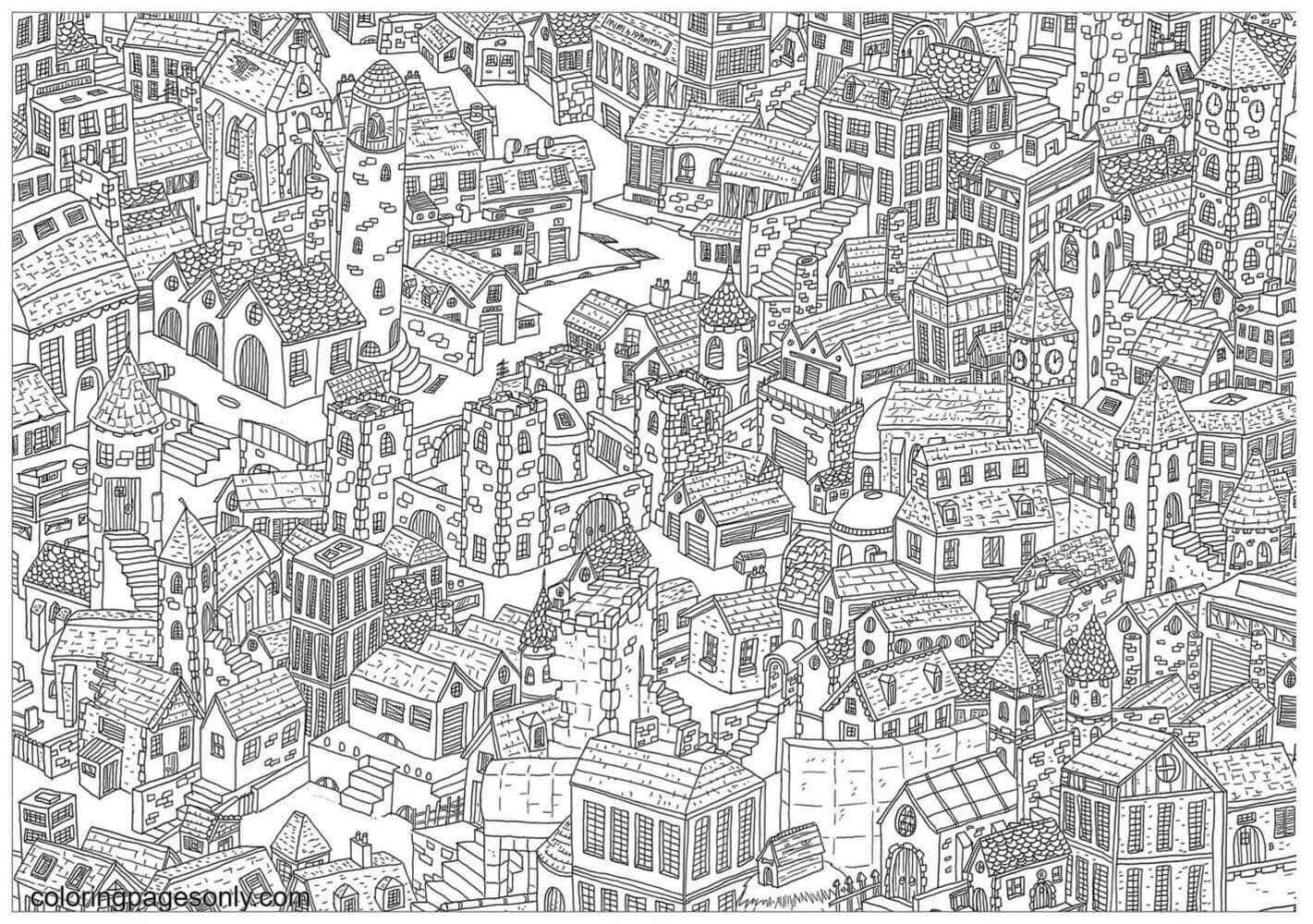
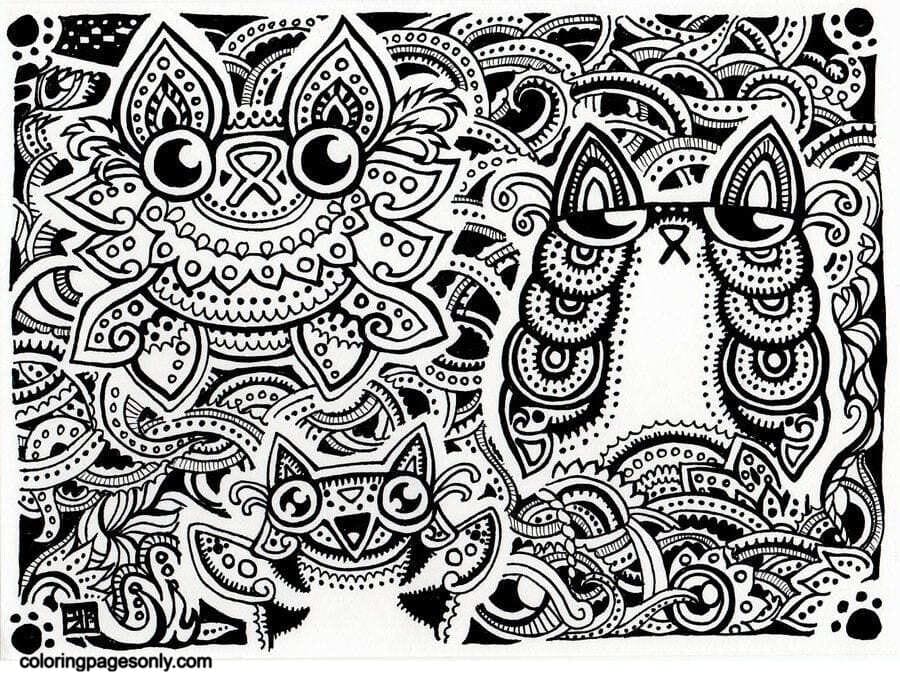
Nineteen pages, the largest group, are built from repeating pattern work: paisley shapes, dense floral arrangements, and abstract geometric fields. These are the most demanding pages in the set for anyone coloring section by section, rather than picking one color per shape. Alternating two or three related hues, rather than a single color per repeat, keeps a busy pattern like this from flattening out.
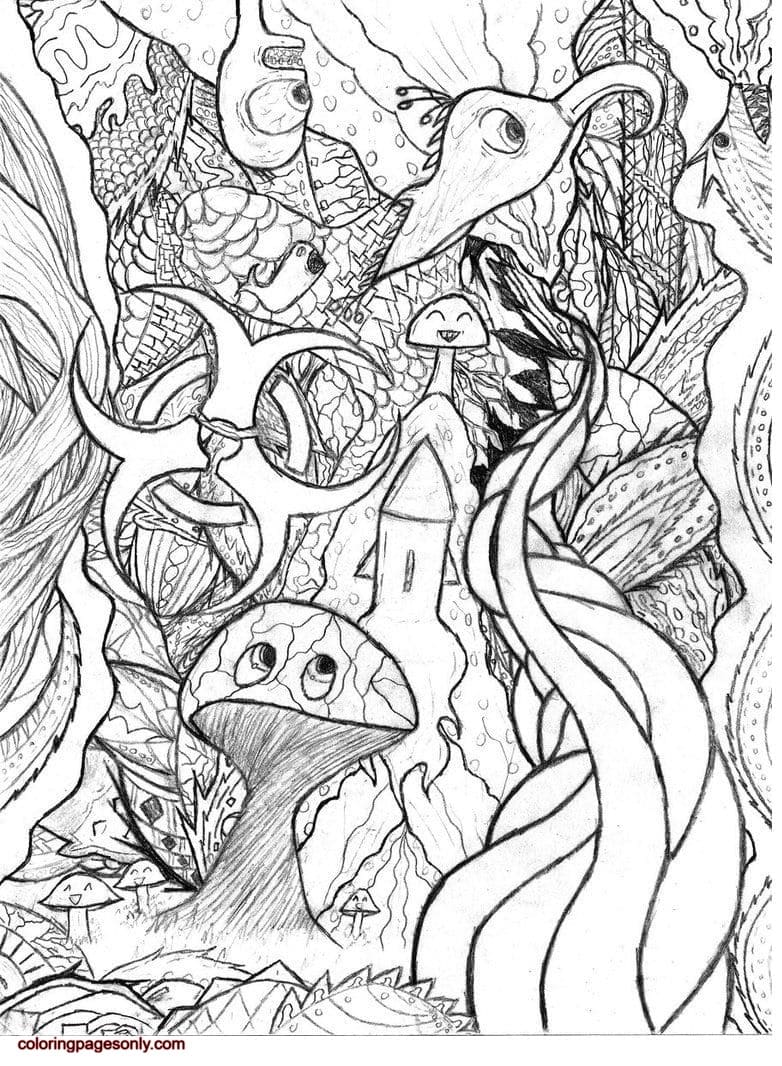
Nature, Mushroom, and Cosmic Motifs
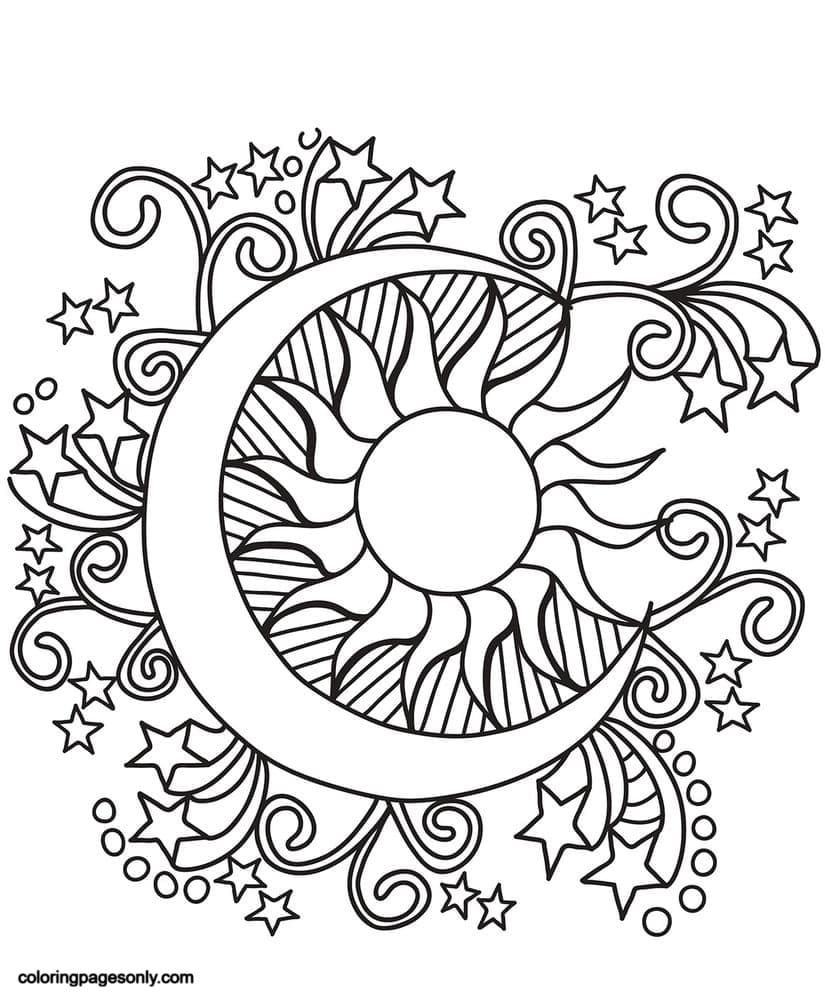
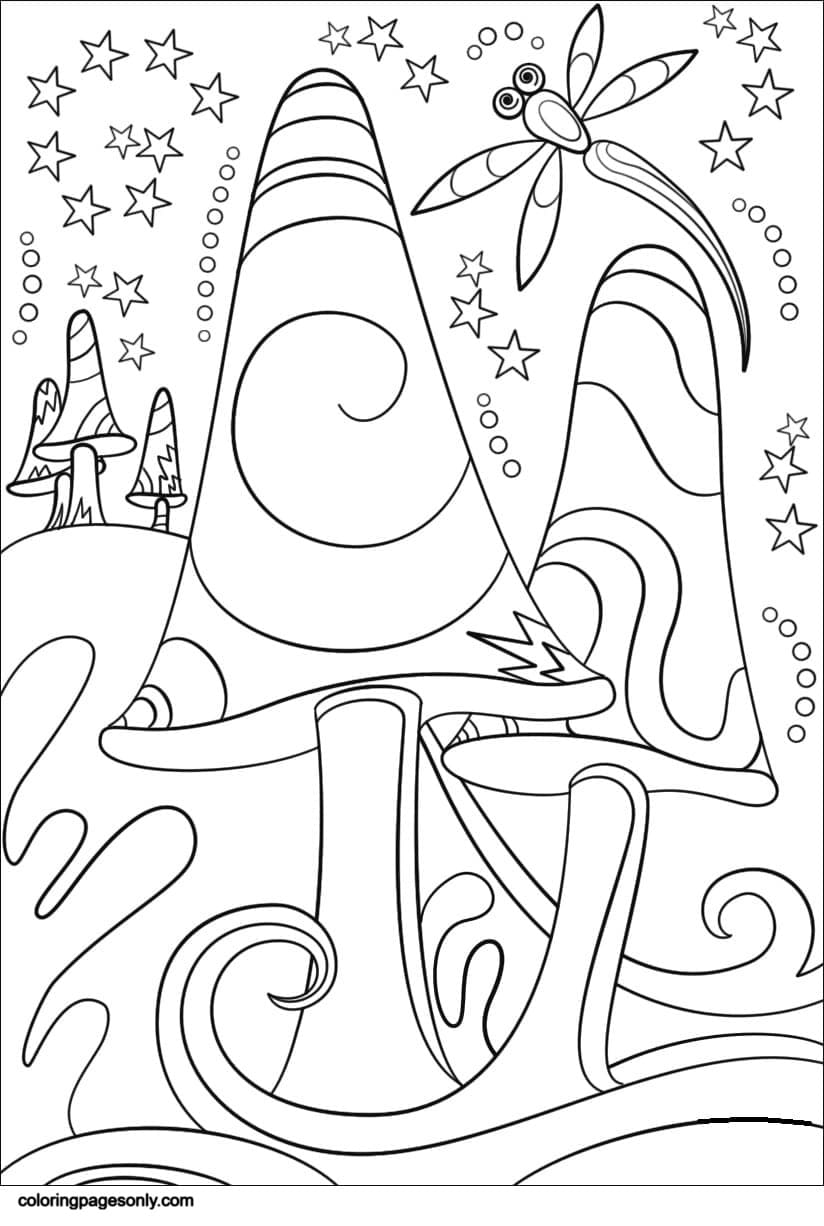
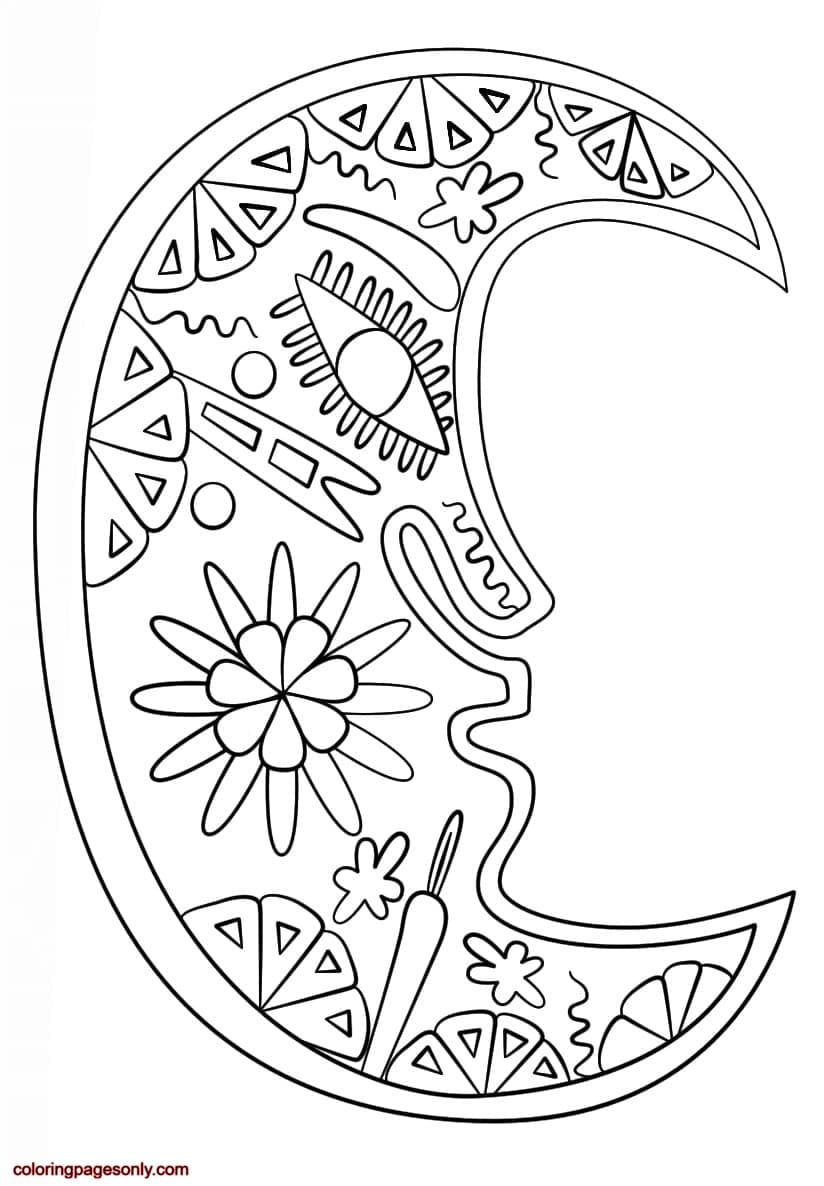
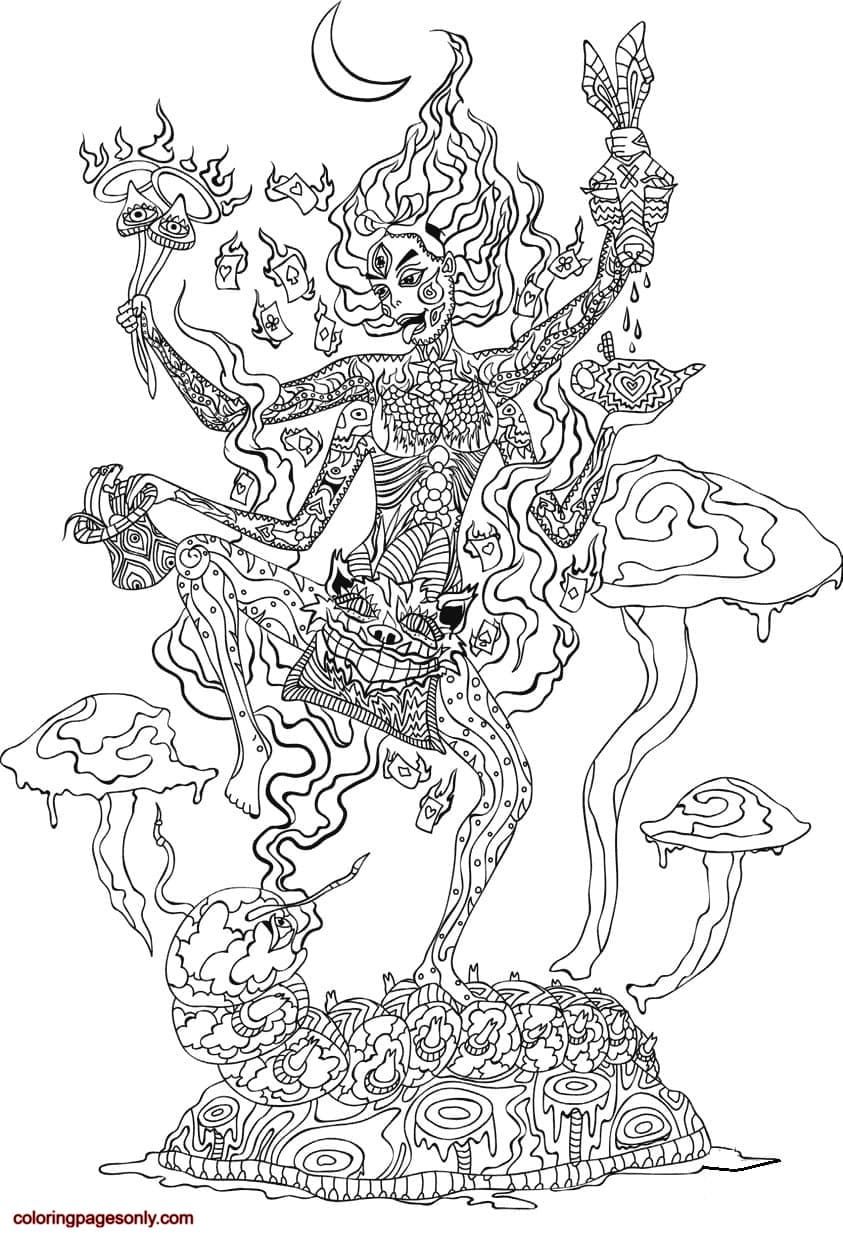
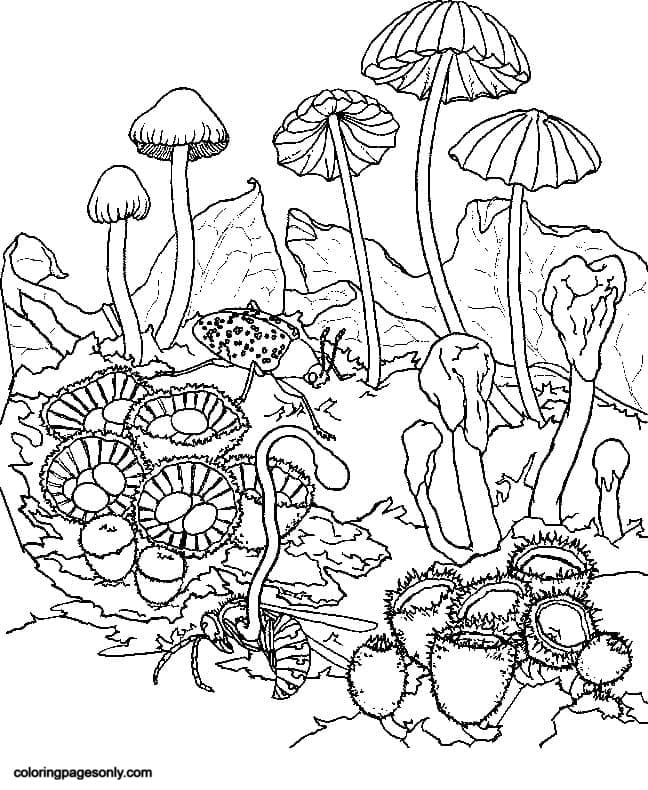
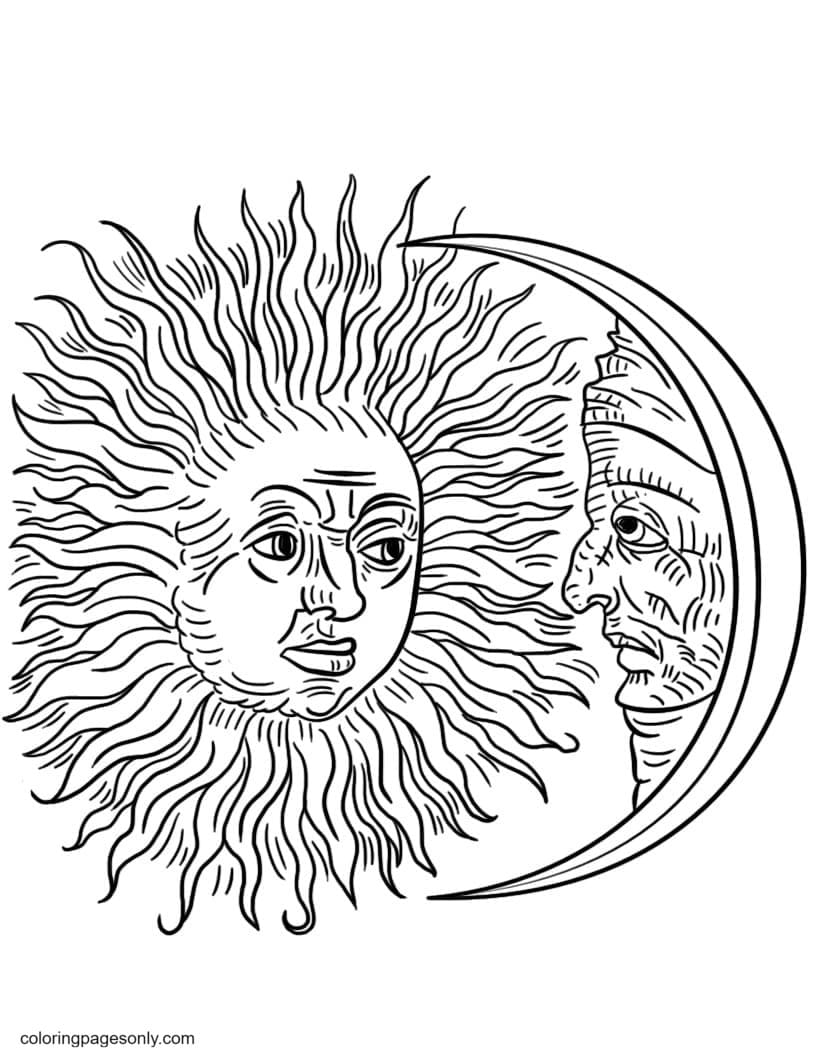
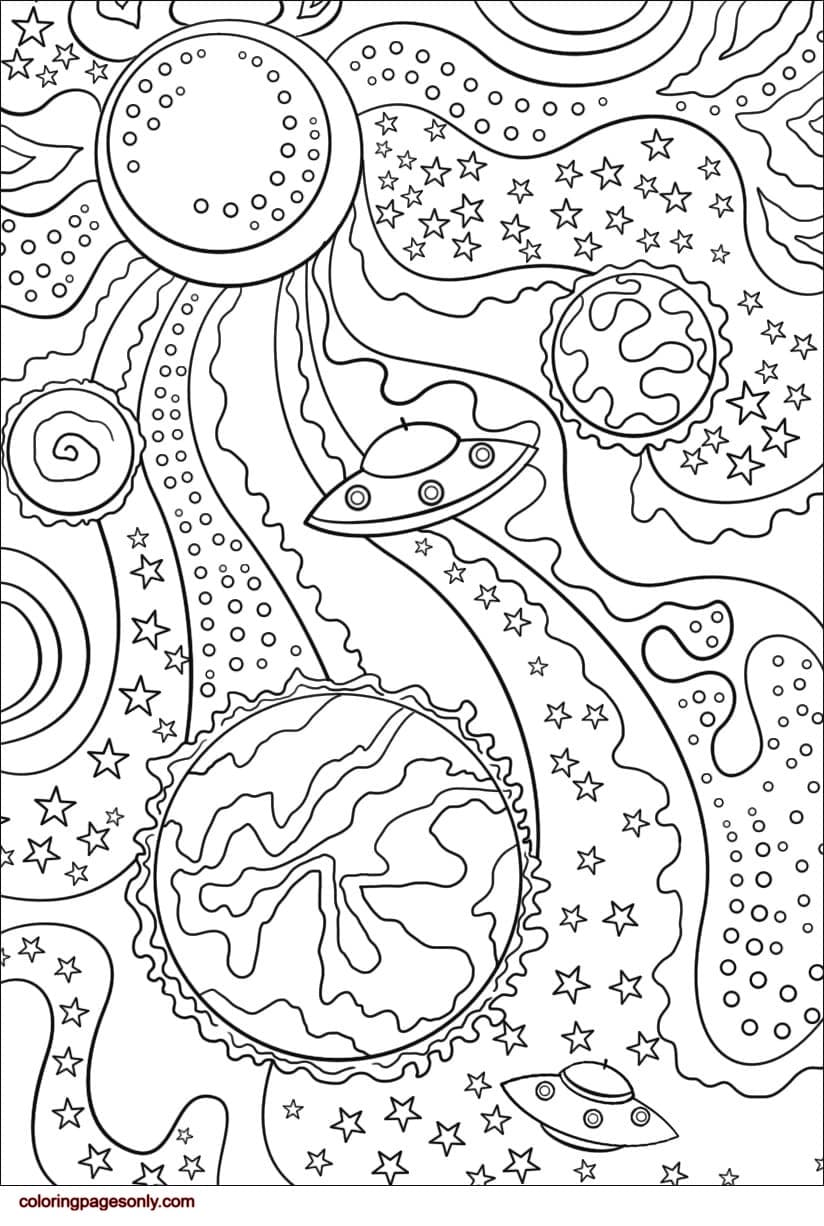
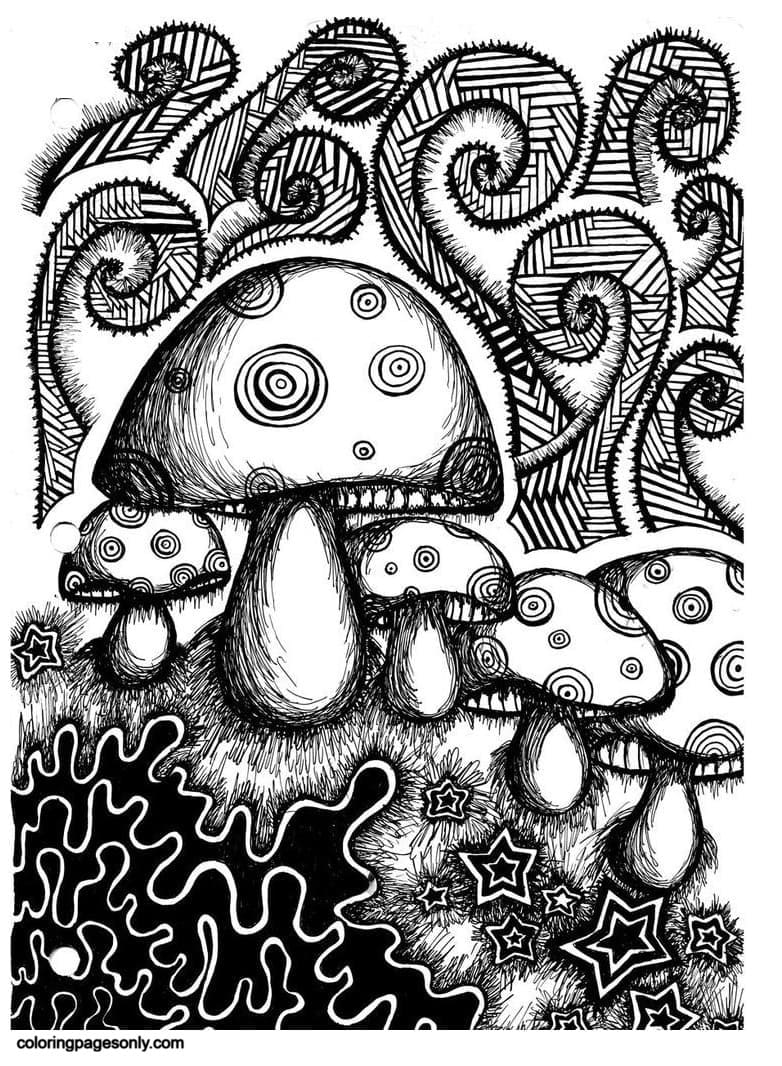
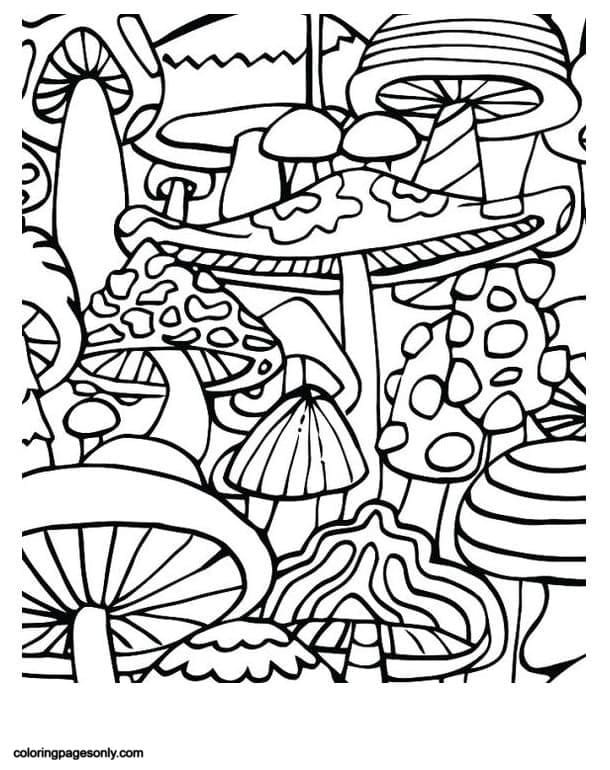
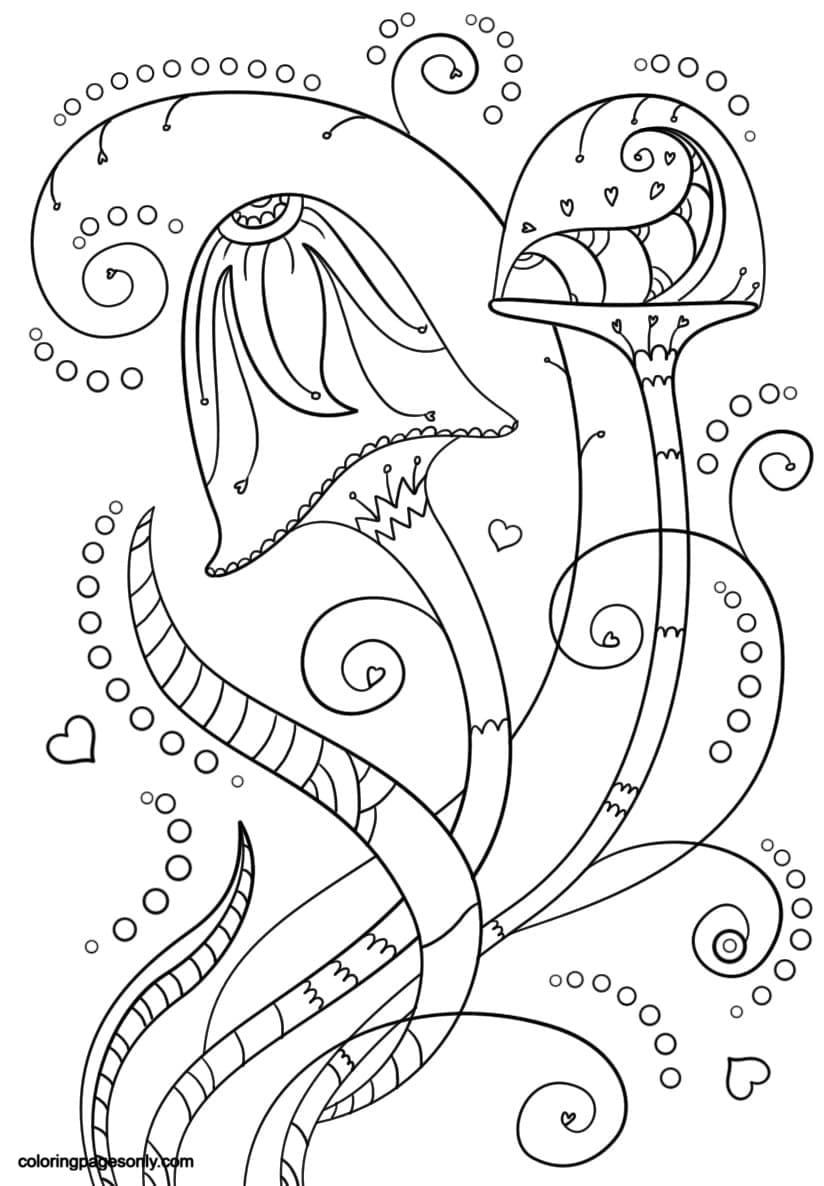
Thirteen pages draw on nature and sky imagery rendered in a swirling, exaggerated style, oversized mushrooms, suns, moons, and a couple of cosmic scenes with planets and a flying saucer. These pages lean on the same visual language that 1960s psychedelic poster art used to turn ordinary objects into something dreamlike. Bright, non-realistic color, a Magenta sky or a Turquoise mushroom cap, is more in keeping with the style than a natural palette.
Abstract Figures, Faces, and Wonderland Scenes
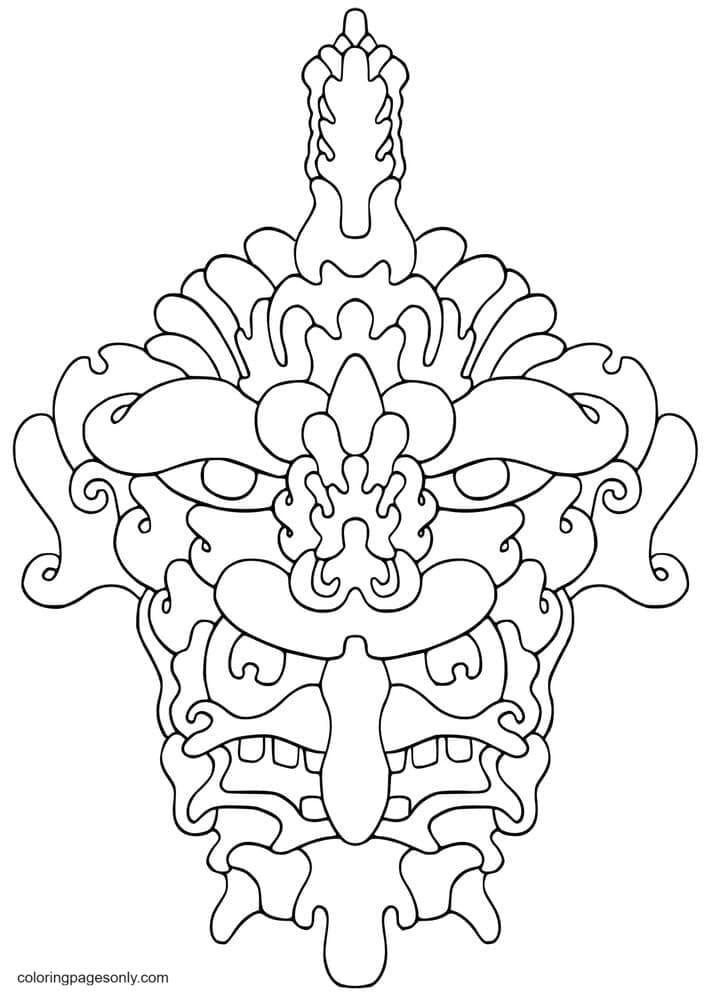
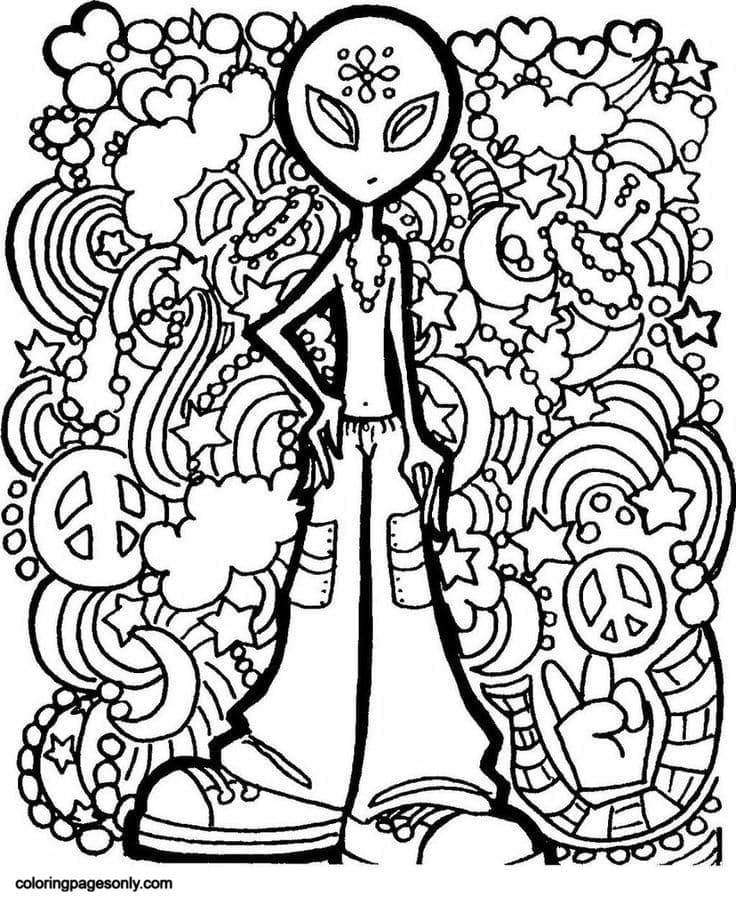
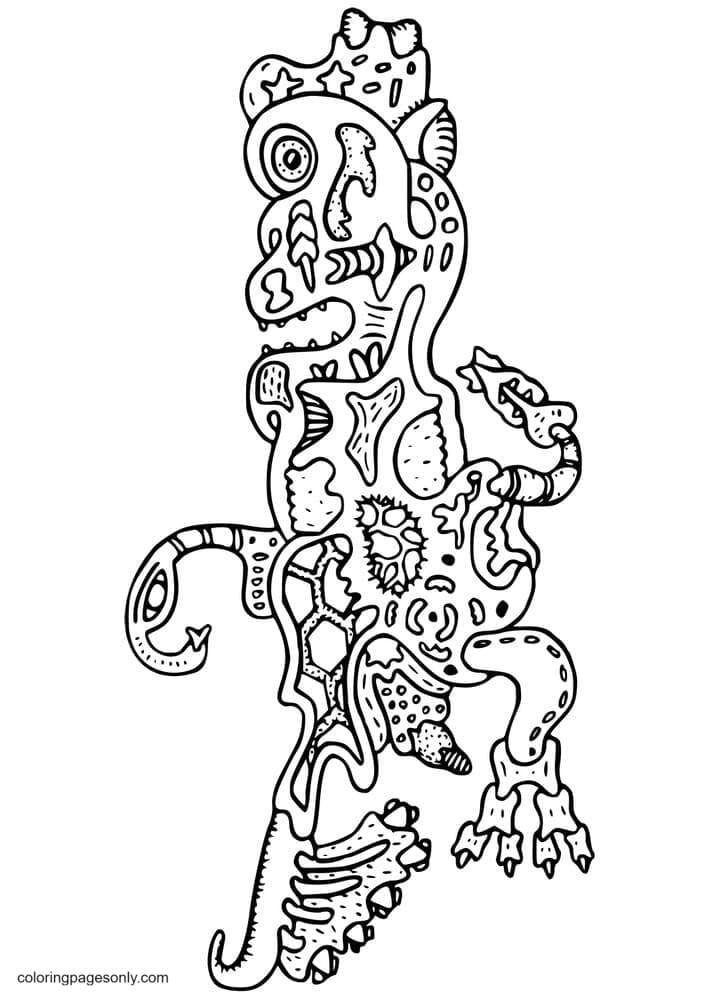
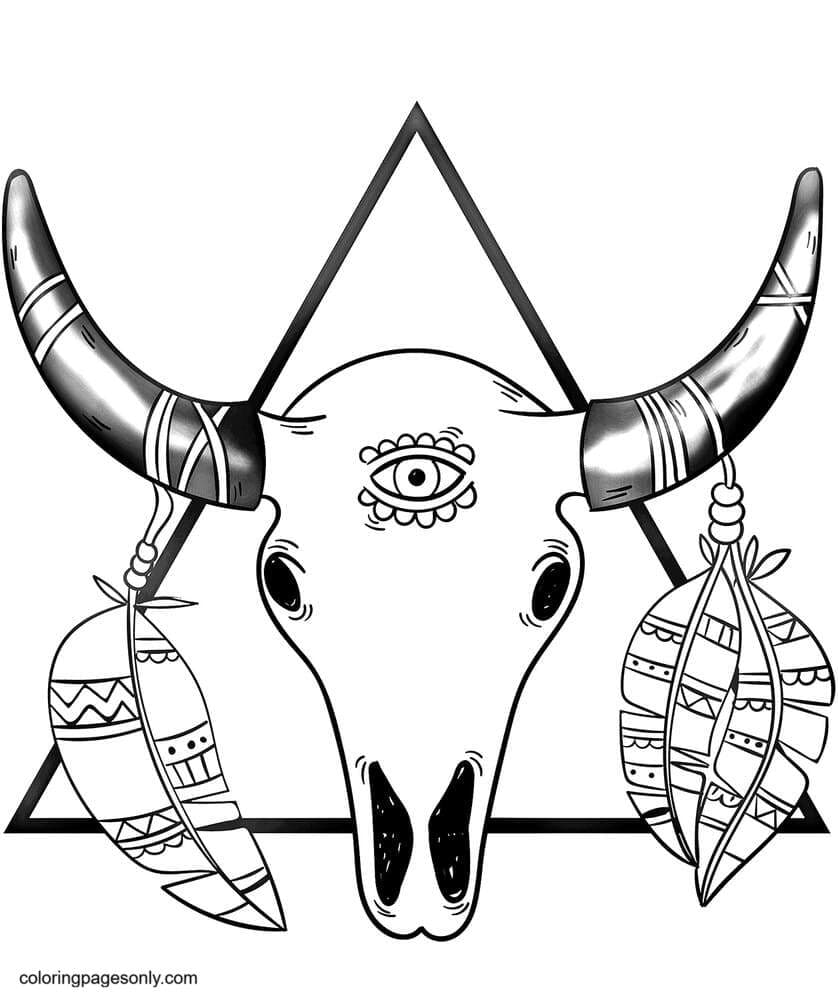
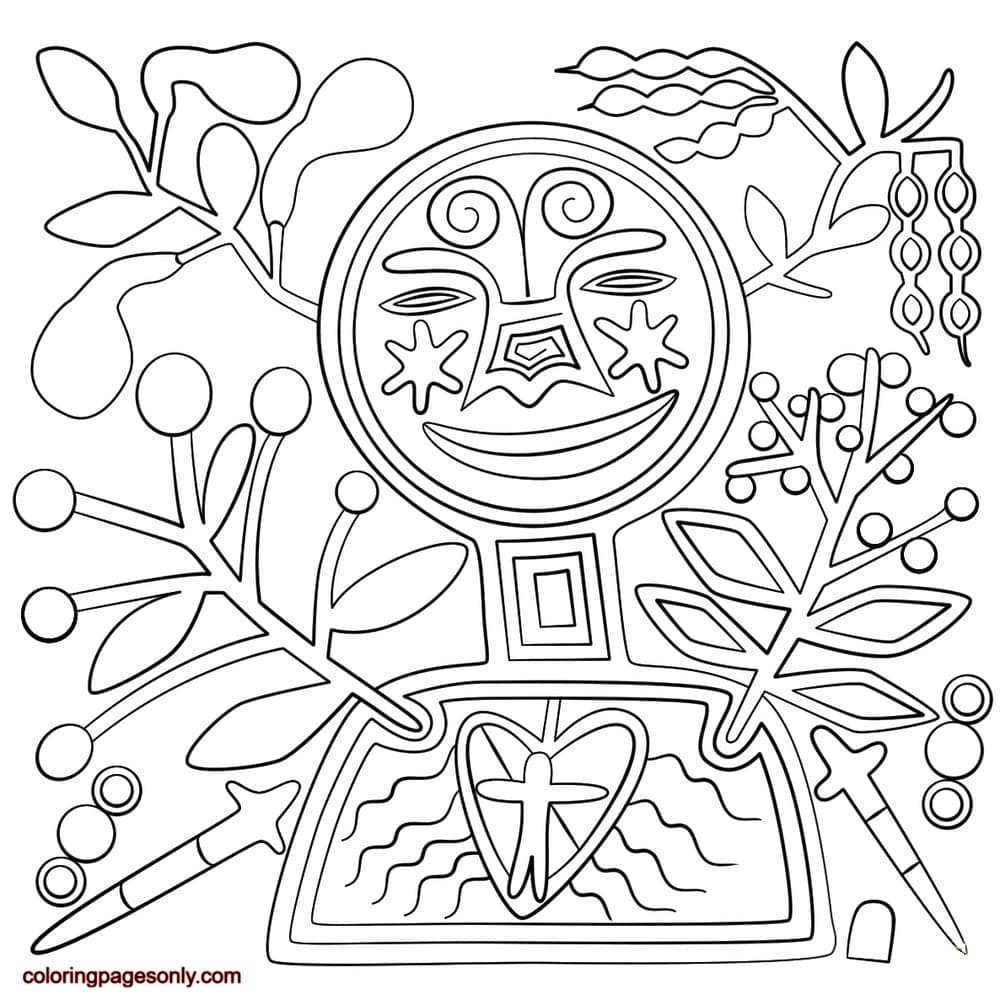
Fifteen pages focus on a single figure or face rendered in an abstract or surreal style, including several pages drawing on Alice in Wonderland, a public-domain story first published in 1865. These pages reward more contrast between the figure and its background than the pattern-heavy pages, since a figure needs to stay readable even inside a busy design.
Doodles, Ornaments, and Text Art
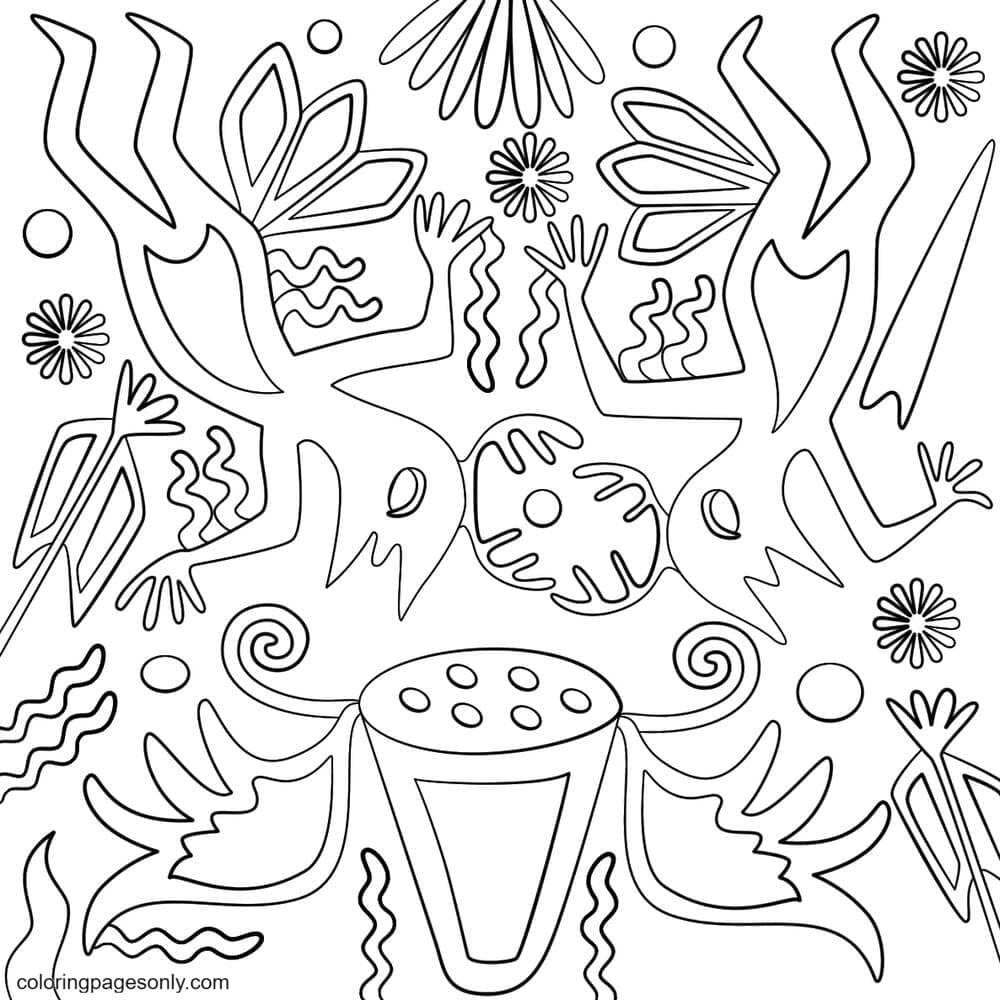
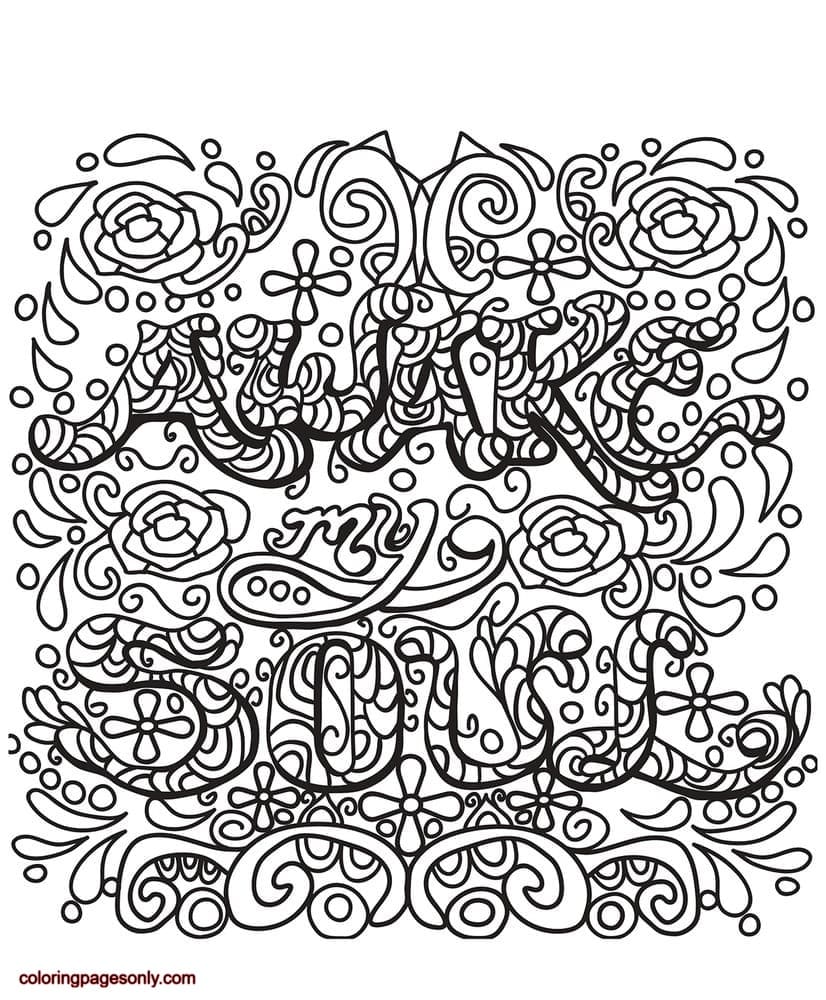
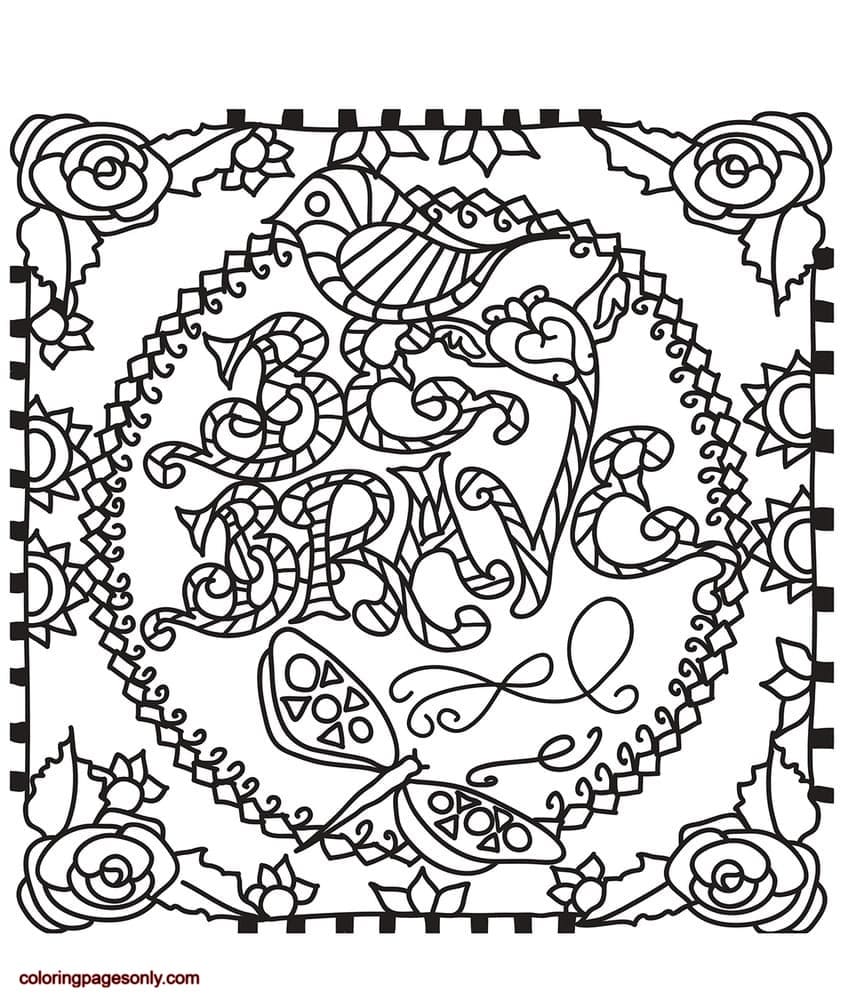
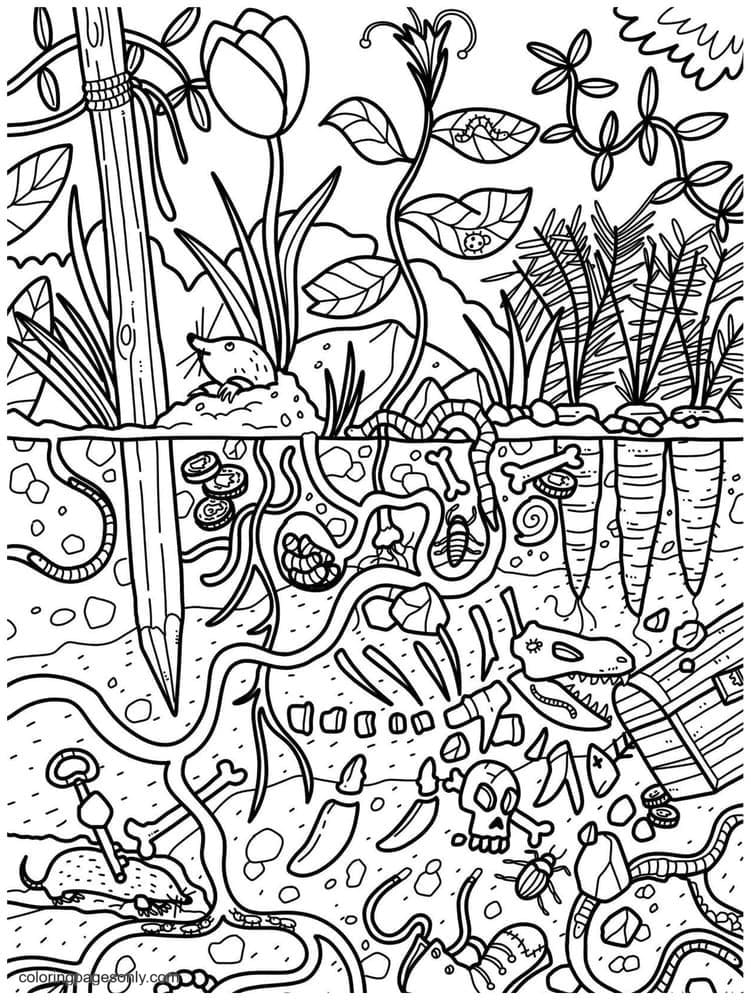
Twenty-two pages mix loose doodle-style scenes, ornamental shapes, and pages built around a short phrase or word. These are generally simpler and more open than the pattern-heavy pages, making them a reasonable starting point for a first-time trippy colorist before moving on to the denser designs.
What Trippy Coloring Pages Do
A page with no obvious starting point asks something different of a colorist than a page with one clear subject. Deciding where to begin and which small decision to repeat across the rest of the design is closer to planning than to filling in a shape.
That planning still comes down to a steady hand in the end. Dense pattern work, particularly the paisley and floral pages, is full of narrow repeated shapes, and staying inside them lines up with the fine motor skill development the American Academy of Pediatrics identifies as a core benefit of structured coloring for children ages 2 through 7, even though most of this particular set is aimed at older teens and adults.
The repetition itself is the other half of the appeal. A 2005 Art Therapy Journal study found that structured, repetitive coloring produced a measurable drop in anxiety compared to free drawing, and a page built almost entirely out of repeating shapes gives that slow, low-stakes rhythm more room to work than a page with only a few large areas to fill.
Pattern coloring also rewards a kind of visual patience that is harder to practice on a simpler page: noticing where a color choice from ten repeats ago needs to reappear to keep the whole design coherent, rather than treating each section as an independent decision.
How to Color Trippy Pages Well
- Build a small, repeating palette first: Choose three or four colors, such as Magenta, Turquoise, Yellow Orange, and Violet, and decide before starting how they will rotate through the pattern, rather than picking a new color for every shape.
- Use contrast to keep dense patterns readable: Alternate a light and a dark version of the same hue, like Yellow Orange next to Burnt Orange, so a busy paisley or floral page still reads as a pattern instead of a blur.
- Keep figures and faces higher-contrast than their background: On pages with an abstract face or figure, use a noticeably darker or brighter palette for the figure than for the surrounding pattern, so it stays the clear focal point.
- Push nature and cosmic scenes toward unnatural color: Color a sun Violet or a mushroom cap Turquoise rather than a realistic yellow or red, since the exaggerated, non-realistic palette is part of what makes a psychedelic-style page read as trippy rather than botanical.
- Work outward from a fixed point: On the densest pattern pages, start from the center or a clear anchor shape and repeat outward, rather than jumping between unconnected sections, to keep the color logic consistent.
- Save black or a very dark color for outlines only: Reserve Black for linework and small accent details rather than large fills, so the bright palette used elsewhere on the page stays the dominant visual note.
5 Creative Craft Ideas With Trippy Coloring Pages
- Trippy Wall Art. Materials: a colored pattern or figure page, a simple frame or mat board, and tape or adhesive. Trim the colored page to fit the frame or mat, and hang it as a piece of wall art.
- Pattern Bookmark Set. Materials: two or three colored pattern pages, scissors, clear contact paper, and a hole punch. Cut each colored page into a bookmark-sized strip, cover both sides with contact paper, and punch a hole for a ribbon.
- Trippy Greeting Card. Materials: a colored, smaller design, folded cardstock, scissors, and glue. Trim the colored page to fit the card front, glue it in place, and write a message inside for a birthday or thank-you card with a bolder look than a typical greeting card.
- Coaster Set. Materials: several small colored pattern pages, scissors, clear adhesive laminate, and cork or felt backing. Cut the colored pages into coaster-sized circles or squares, laminate each one, and glue a cork or felt backing on for a usable coaster set.
- Pattern Comparison Collage. Materials: several colored pages from different groups in the collection, scissors, glue, and a poster board. Cut out sections from different colored pages and arrange them together on the poster board to build a single combined collage.
Frequently Asked Questions
What are trippy coloring pages?
Trippy coloring pages are printable designs built around psychedelic patterns, paisley, optical illusions, and surreal figures and nature scenes. This collection includes 69 free designs available as printable PDFs or online coloring pages.
Where does the term psychedelic art come from?
Psychedelic art emerged as a distinct visual style in the United States in the 1960s, built on kaleidoscopic spirals, vivid color, and dense repeating patterns. It became closely associated with rock concert poster art of that decade.
What is the origin of the paisley pattern used in this collection?
Paisley traces back to a Persian textile motif called boteh, later developed further in Kashmir, before a major revival in 1960s counterculture fashion and design brought it into psychedelic art.
What colors work best for a trippy coloring page?
Bright, non-realistic colors work best: Magenta, Turquoise, Violet, and Yellow Orange rotated through a pattern, since an exaggerated palette is part of what gives a page its psychedelic look.
Are trippy coloring pages the same as mandala coloring pages?
Not exactly. Mandalas are built around a single symmetrical, centered design, while trippy pages are a broader category that also includes paisley, abstract figures, and surreal nature and cosmic scenes.
Who are trippy coloring pages best suited for?
This collection is best suited to teens and adults, since the dense pattern work and surreal imagery call for more coloring experience than a typical page made for young children.
Do any pages in this collection reference other stories or artwork?
A few pages draw on Alice in Wonderland, a public-domain story first published in 1865, reimagined in an abstract, surreal style rather than as a direct illustration of the book.
Can trippy coloring pages be used for relaxation or stress relief?
Yes. The dense, repeating patterns throughout the collection suit the kind of slow, structured coloring associated with lower stress and better focus, making them a reasonable choice for unwinding after a busy day.
Start Coloring
Download any page by clicking the design. No account, email, or payment is required. Pages print directly from the browser at full resolution or open in the online coloring tool for screen use. Share finished pages on Facebook or Pinterest with the share buttons at the top of each design page.