Capybara Coloring Pages

Capybara Coloring Pages at ColoringPagesOnly.com brings together 33 free printable pages dedicated to the world’s largest rodent – an animal that has earned a devoted internet following for its extraordinarily calm temperament and its remarkable habit of befriending virtually every other animal it encounters. The collection covers the full range of capybara subject matter: simple and realistic portraits, habitat scenes in rivers, lakes, grass, and bamboo forest, a substantial flower-themed cluster, activity and costume tiles (soccer player, astronaut, backpack adventurer, umbrella carrier in the rain), artistic treatments in Zentangle and Mandala styles, two dot-to-dot activity pages, and two character crossover tiles from Disney’s Encanto. The full Animals collection is available through our Animals Coloring Pages hub.
Every page is completely free – download as PDF to print or color online in your browser. No sign-up, no cost.
About the Capybara
The capybara (Hydrochoerus hydrochaeris) is the largest rodent species on Earth – a semi-aquatic mammal native to South America that belongs to the same order as guinea pigs, chinchillas, and rats, despite being dramatically larger than any of its relatives. Adult capybaras typically weigh between 35 and 66 kilograms (77–145 pounds), with the largest recorded individuals exceeding 90 kilograms. Their body length ranges from 106 to 134 centimeters, with a shoulder height of approximately 50–62 centimeters – making them roughly the size of a large dog, though their barrel-shaped body, short legs, and blunt, rectangular head give them an unmistakably distinct silhouette.
Capybaras are found across a broad range of South American habitats – dense rainforest, savanna, grassland, and the edges of rivers, lakes, and wetlands – throughout Venezuela, Colombia, Brazil, Argentina, Bolivia, Peru, and neighboring countries. They are highly social animals, living in groups typically ranging from 10 to 20 individuals, with some groups reaching 100 or more in the dry season when water sources concentrate. A capybara group is centered around a dominant male, several females, subordinate males, and juveniles, with a clear social hierarchy maintained through vocalizations, scent marking, and posture.
Water is central to the capybara’s biology. Their name derives from a Tupi language phrase meaning “master of the grasses” or, in some interpretations, “one who eats slender leaves” – but their relationship with water is equally defining. Capybaras are excellent swimmers and divers, capable of remaining submerged for up to five minutes. Their eyes, nostrils, and ears are all positioned high on the skull so that they can remain almost fully submerged while keeping their sensory organs above water – a predator-avoidance adaptation that allows them to monitor their environment while cooling off in rivers and lakes. They also mate in water.
Capybaras are strict herbivores, grazing primarily on grasses and aquatic plants. They are hindgut fermenters with a complex digestive system that allows them to extract maximum nutrition from fibrous plant material – they even re-ingest their own feces in the morning to extract additional nutrients from bacterial breakdown products, a practice common among rodents and lagomorphs.
Their predators in the wild include jaguars, pumas, caimans, anacondas, and ocelots. Despite this predator pressure, capybaras maintain their characteristic calm – moving as a group, staying close to water, and relying on their swimming ability as a primary escape mechanism.
The Capybara as Internet Phenomenon
The capybara’s global cultural profile changed dramatically during the early 2020s, when it became one of the most prominent animal subjects in internet meme culture. Videos of capybaras lounging in what appeared to be a state of complete existential contentment – soaking in hot springs at Japanese zoos (particularly at Izu Shaboten Zoo, which pioneered the practice of placing yuzu-filled hot tubs near capybara enclosures in winter), coexisting peacefully with animals as varied as ducks, monkeys, birds, dogs, and caimans perched on their backs – spread rapidly across social media platforms worldwide.
The appeal of the capybara meme is rooted in genuine behavioral reality: capybaras are remarkably tolerant of other species, and wild and captive populations regularly demonstrate interspecies interactions that appear extraordinarily relaxed. Baby birds landing on resting capybaras, capybaras ignoring predators like caimans that have chosen to use them as basking platforms, capybaras remaining still while rabbits, ducks, and small monkeys cluster around them – these images are not staged, and their authenticity gave the capybara meme a foundation in actual natural history that most internet animal trends lack.
The result is that capybaras now occupy a unique position in popular culture as a symbol of radical calm, universal friendliness, and the absence of aggression – qualities that have made them an especially popular subject for illustrated and cartoon treatment, and that explain why a coloring collection of 33 pages finds such a diverse range of moods and scenarios to explore.
What’s in This Collection
Simple and Portrait Tiles
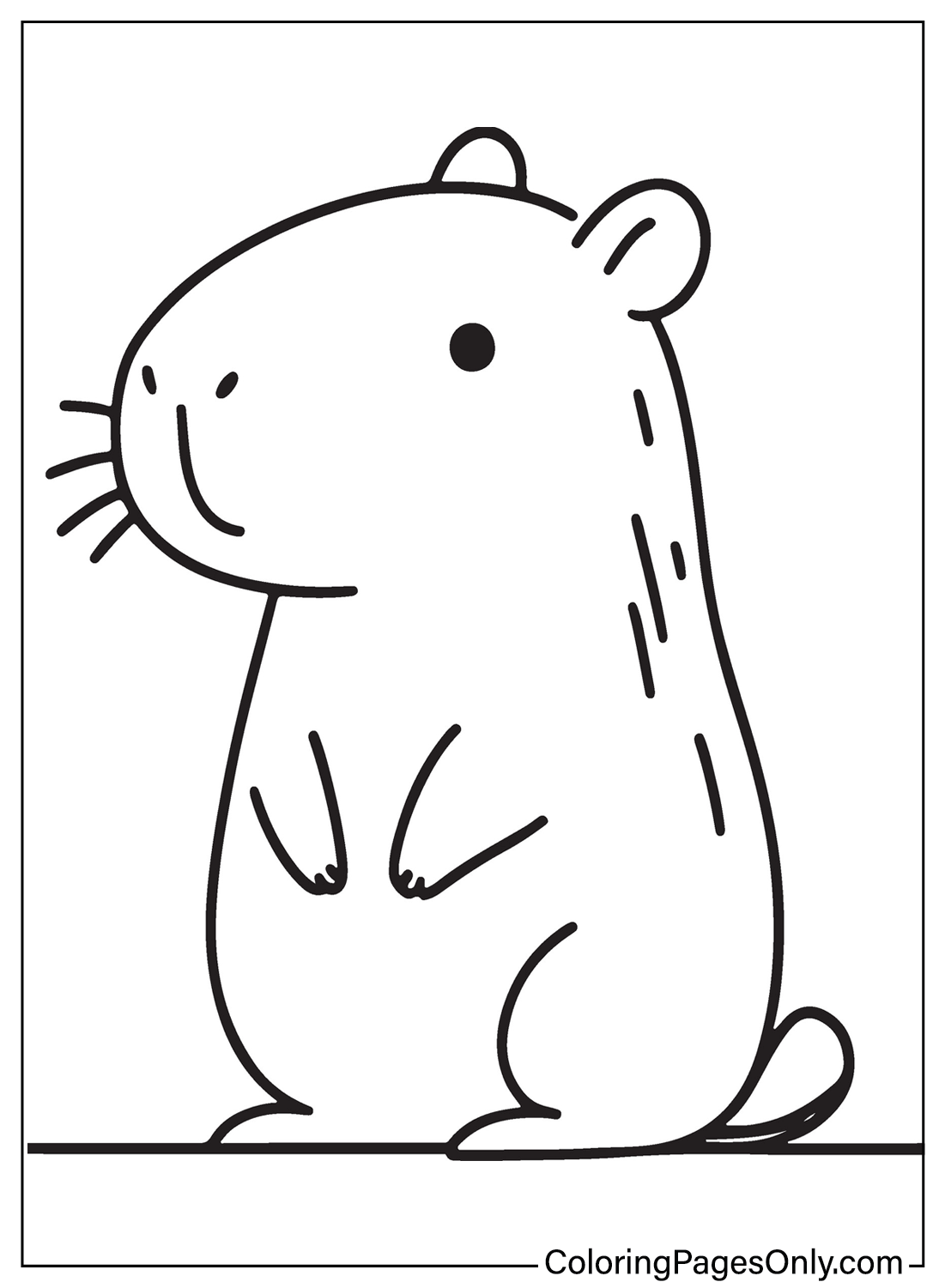
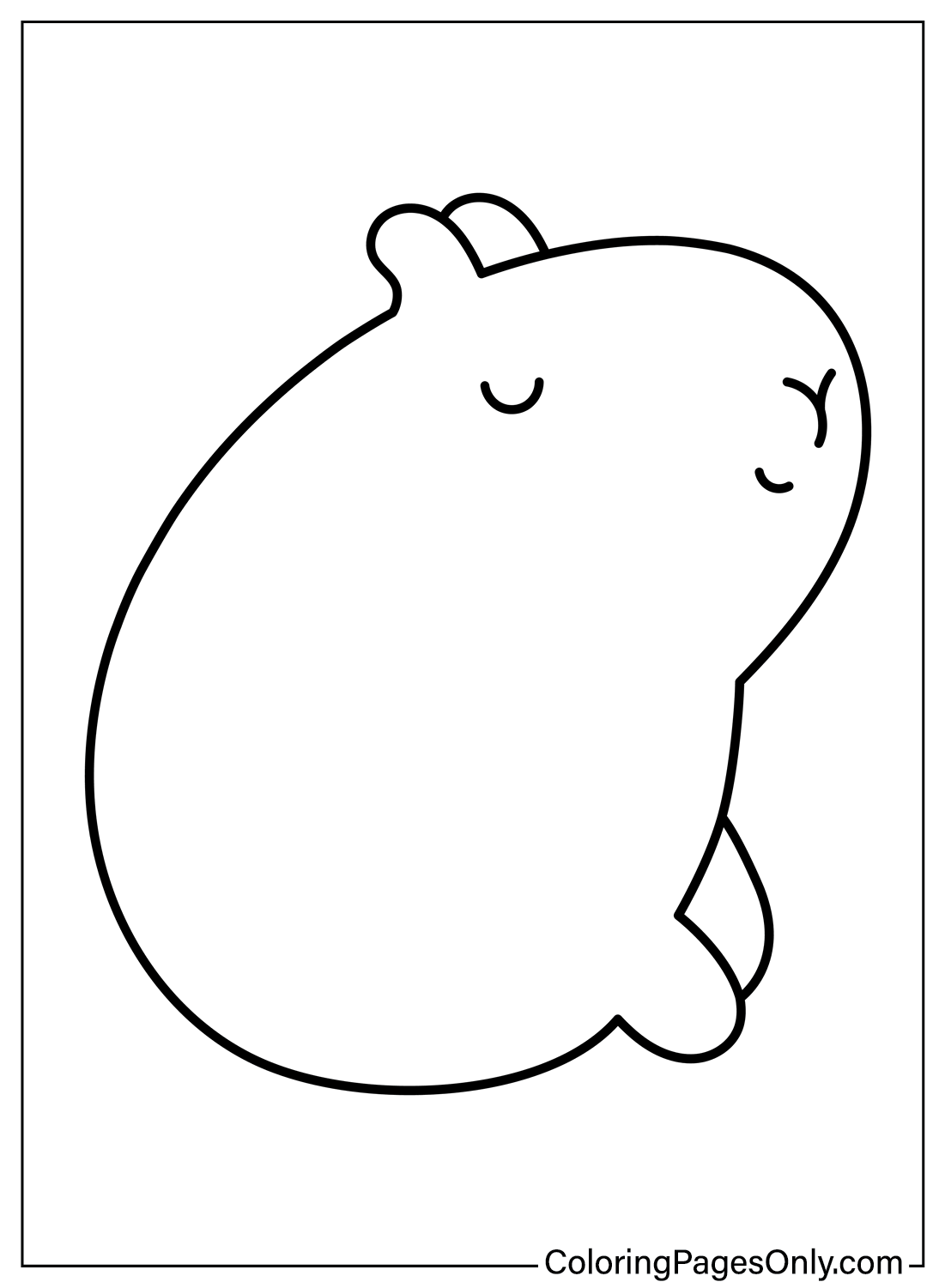
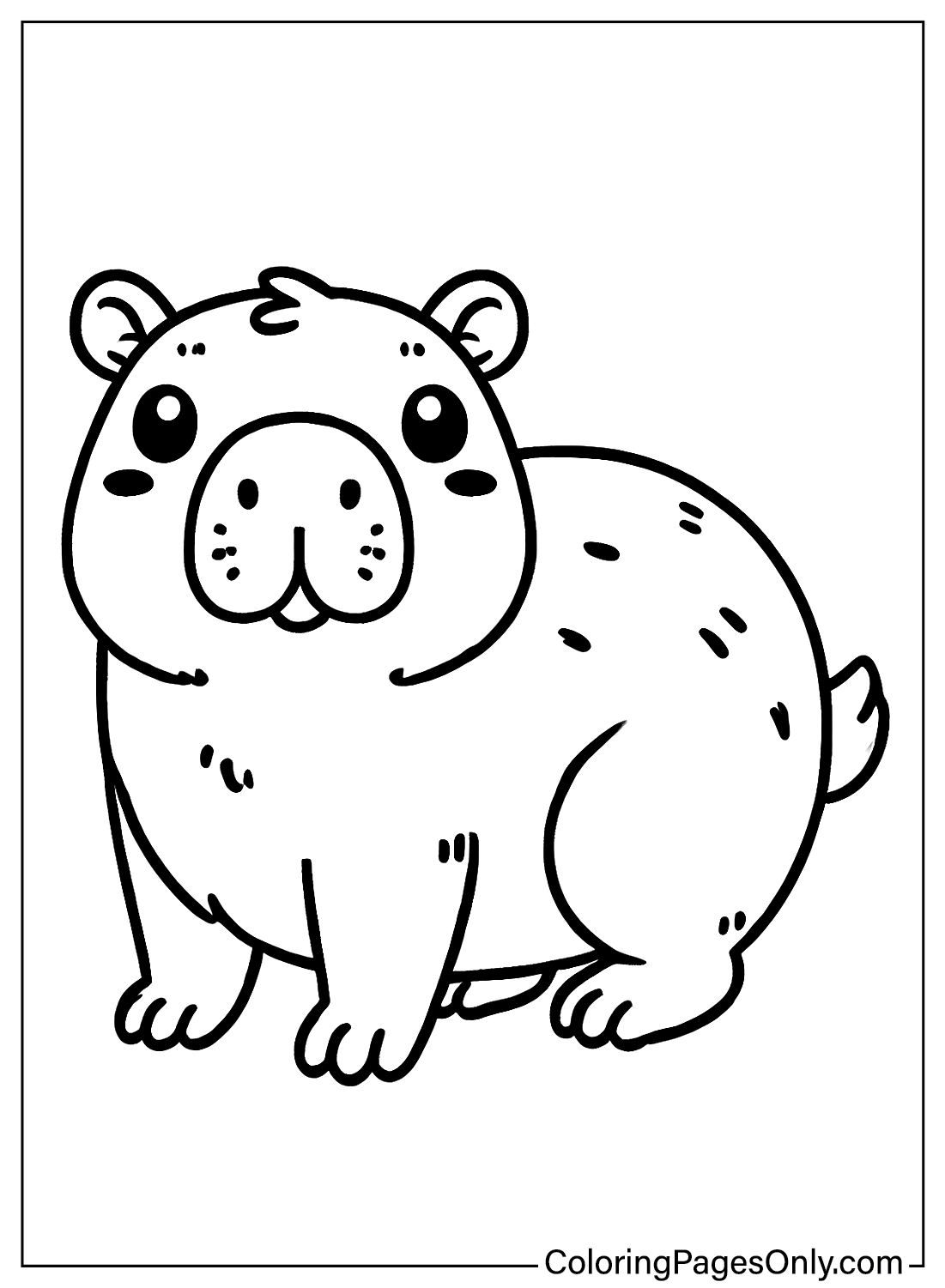
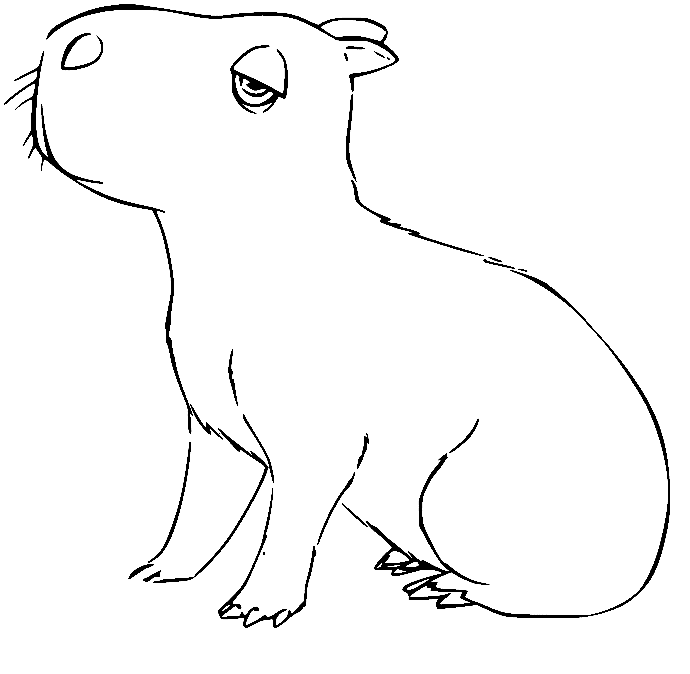
Simple Capybara, Cute Capybara, Cute Capybara for Kids, Adorable Capybara, and Lovely Capybara form the collection’s foundational portrait group – single-subject capybara illustrations at varying levels of stylization and detail, from the most simplified outline suited to very young children to more detailed character treatments with expressive faces.
The Simple Capybara tile is the most stripped-back composition in the collection – a clean outline with minimal internal detail, providing the largest uninterrupted color zones of any tile. This makes it the ideal starting point for children ages 3–5 who are developing coloring coordination and need clear boundaries without visual complexity. The Cute Capybara for Kids tile applies a slightly more character-forward approach while maintaining the simplicity appropriate for the youngest colorists – larger features, rounder proportions, more expressive expression. Cute Capybara and Lovely Capybara add slightly more detail and personality while remaining fully accessible to children ages 5 and up.
The Adorable Capybara tile offers the most characterful single-subject portrait in this group – a capybara rendered with enough detail to reward careful coloring, with textural suggestion in the fur and a facial expression that captures the animal’s characteristic placid warmth.
Activity and Costume Tiles
Four tiles in the collection place the capybara in human activity or costume contexts, each creating a different kind of visual humor through the contrast between the animal’s inherent calm and the scenario it inhabits.
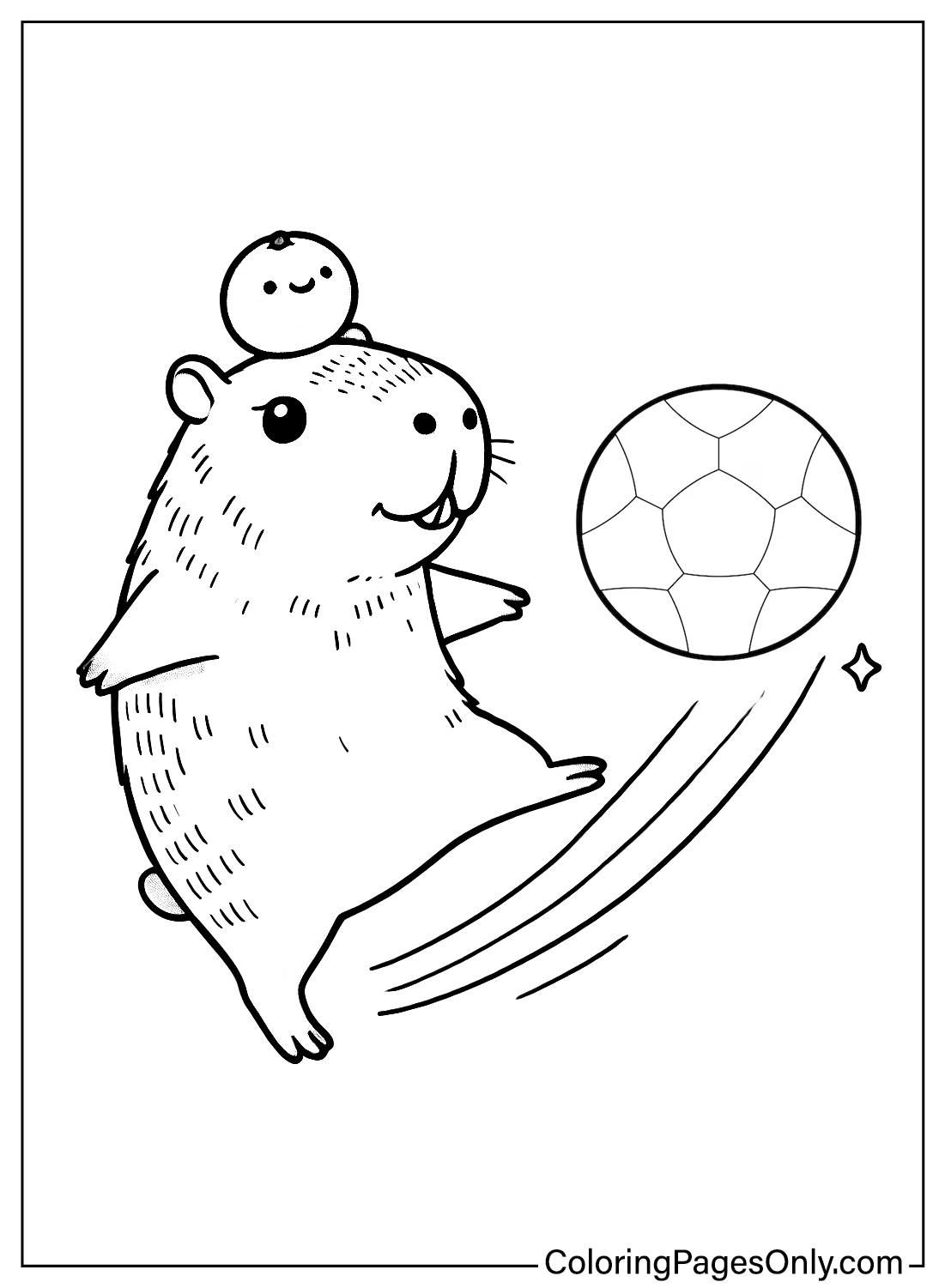
Capybara playing Soccer depicts the world’s most relaxed rodent in the world’s most popular sport – a capybara as a soccer player, presumably approaching the game with the same unhurried equanimity it brings to everything else. The combination of the capybara’s characteristically low-energy demeanor and the energetic urgency of soccer creates the gentle absurdist comedy that makes these tiles particularly engaging for children. This tile suits any soccer team colors for the kit, or natural capybara tones for the body.
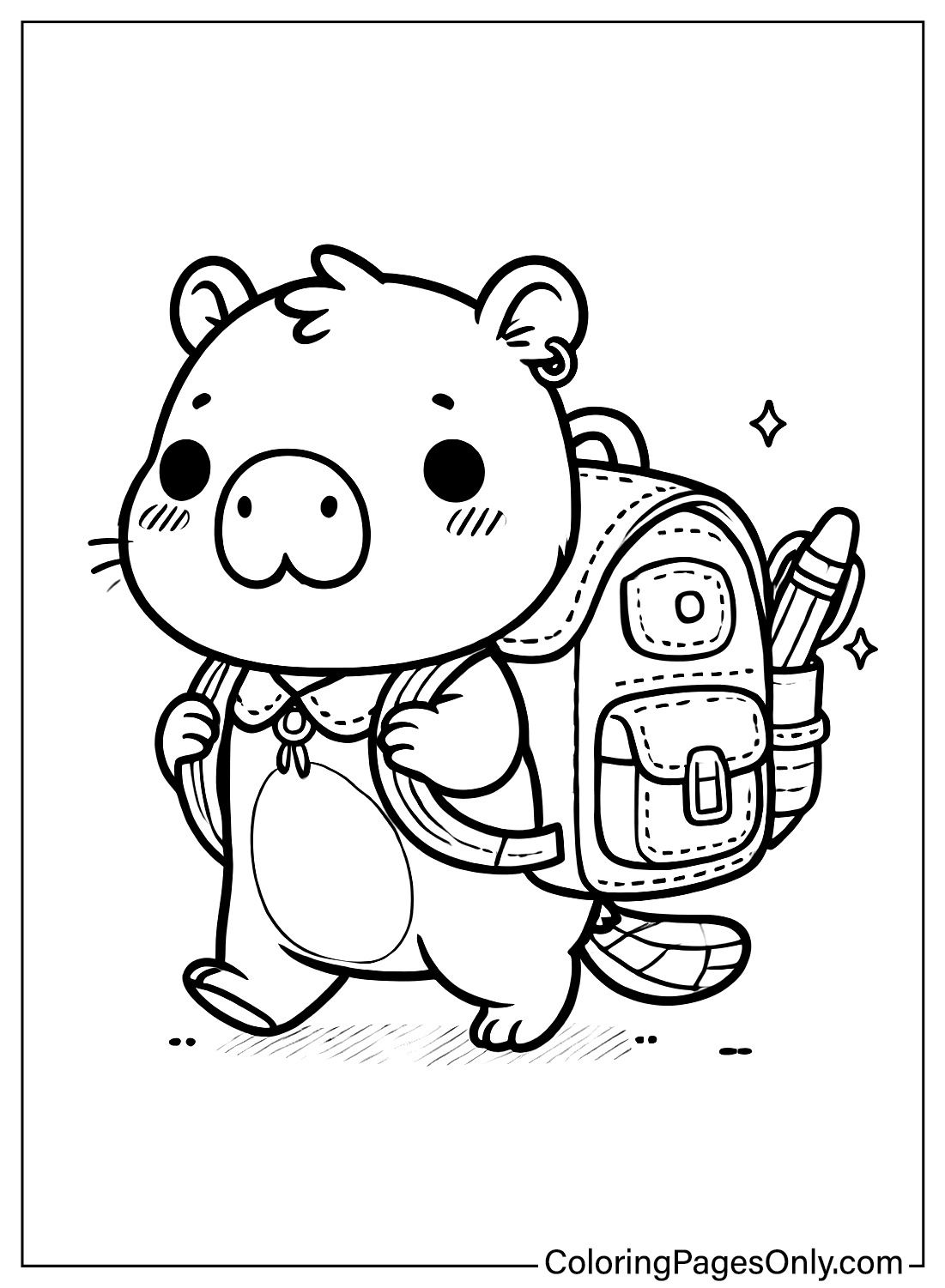
Capybara with Backpack is the adventurer tile – a capybara equipped for a journey, the backpack creating an immediate narrative implication about destination and purpose. The contrast between the capybara’s barrel-shaped, low-to-the-ground body and the backpacker’s adventuring posture is the composition’s central charm. The backpack offers the most color decision flexibility of any prop in the collection.
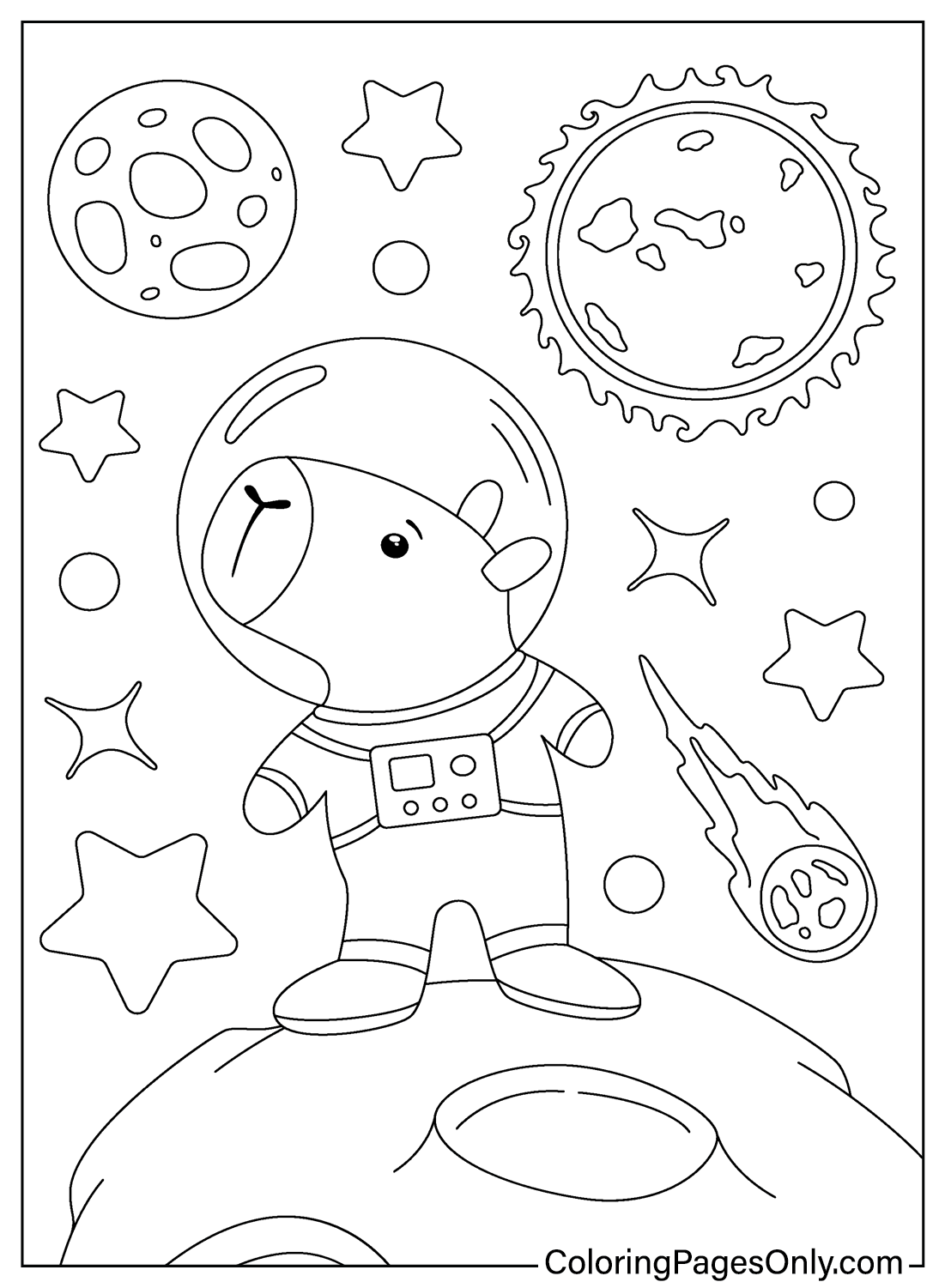
Capybara Astronaut is the collection’s most dramatically imaginative tile – a capybara in a full space suit, transporting the world’s chillest animal into the most extreme environment any mammal has visited. The space suit provides a visually complex color opportunity: a white or silver suit with visor, helmet trim, backpack life-support unit, and the earthy tones of the capybara visible through the helmet faceplate or suit gap.
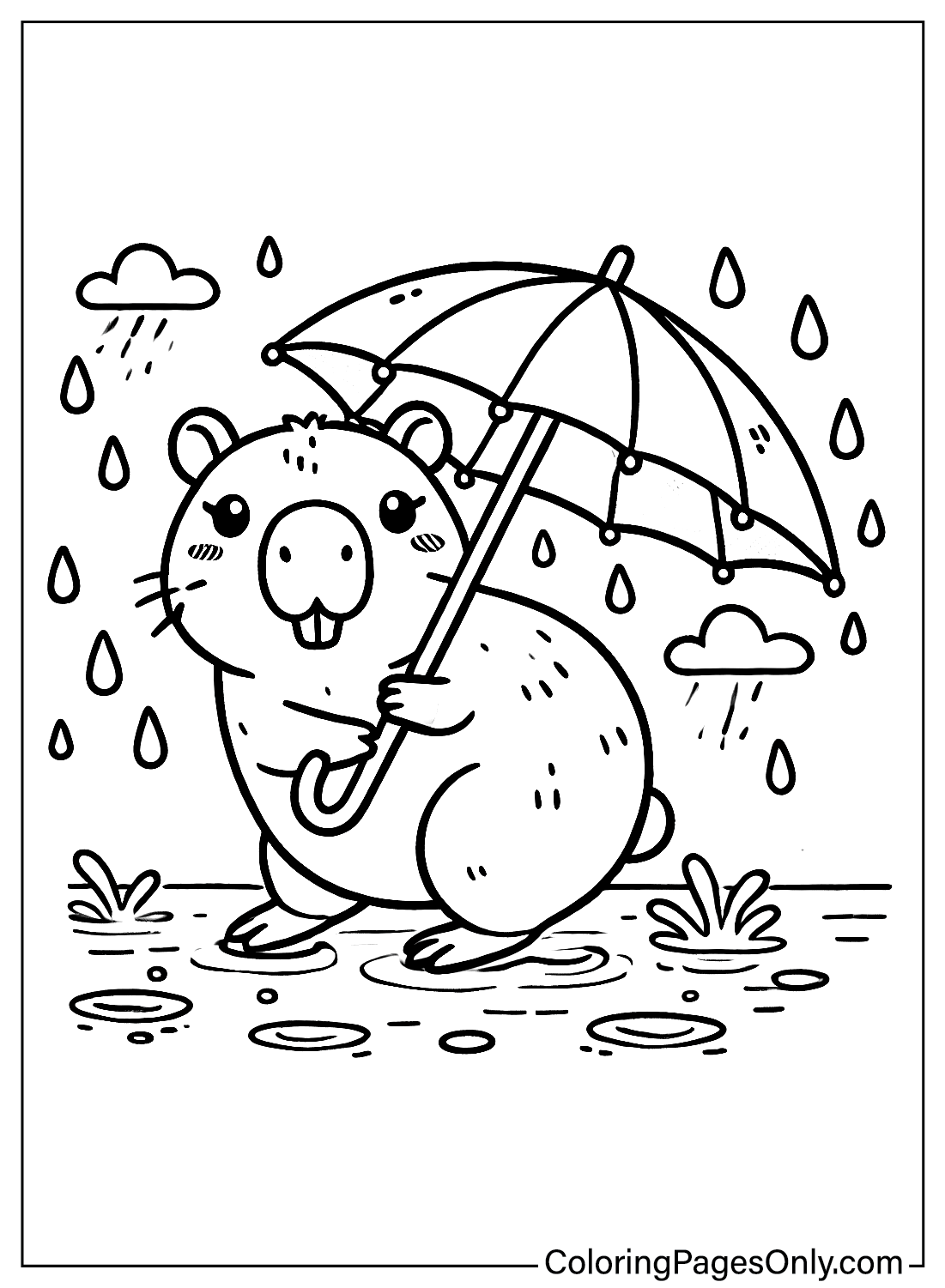
Capybara holding an umbrella in the Rain places the capybara in a classic rainy-day scenario – a standing figure holding an umbrella, rain lines suggested in the background. Given that capybaras are genuinely indifferent to water and spend significant time submerged in rivers and lakes, the image of one carrying an umbrella against rain is particularly droll.
Nature and Habitat Tiles
The collection’s largest single thematic group covers the capybara in its actual natural environments – the riverine, grassy, and forested habitats of South American wetland and savanna ecosystems.
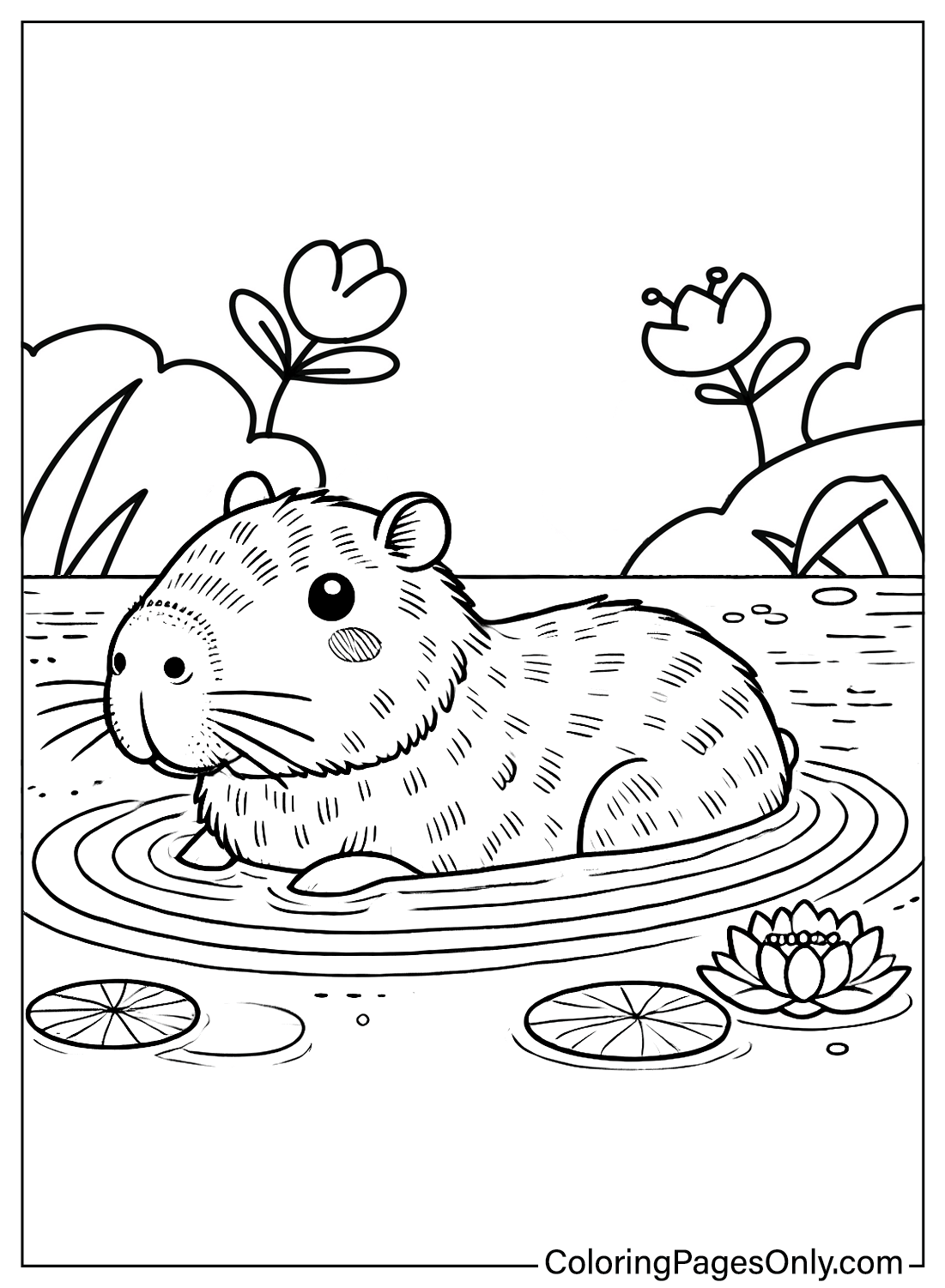
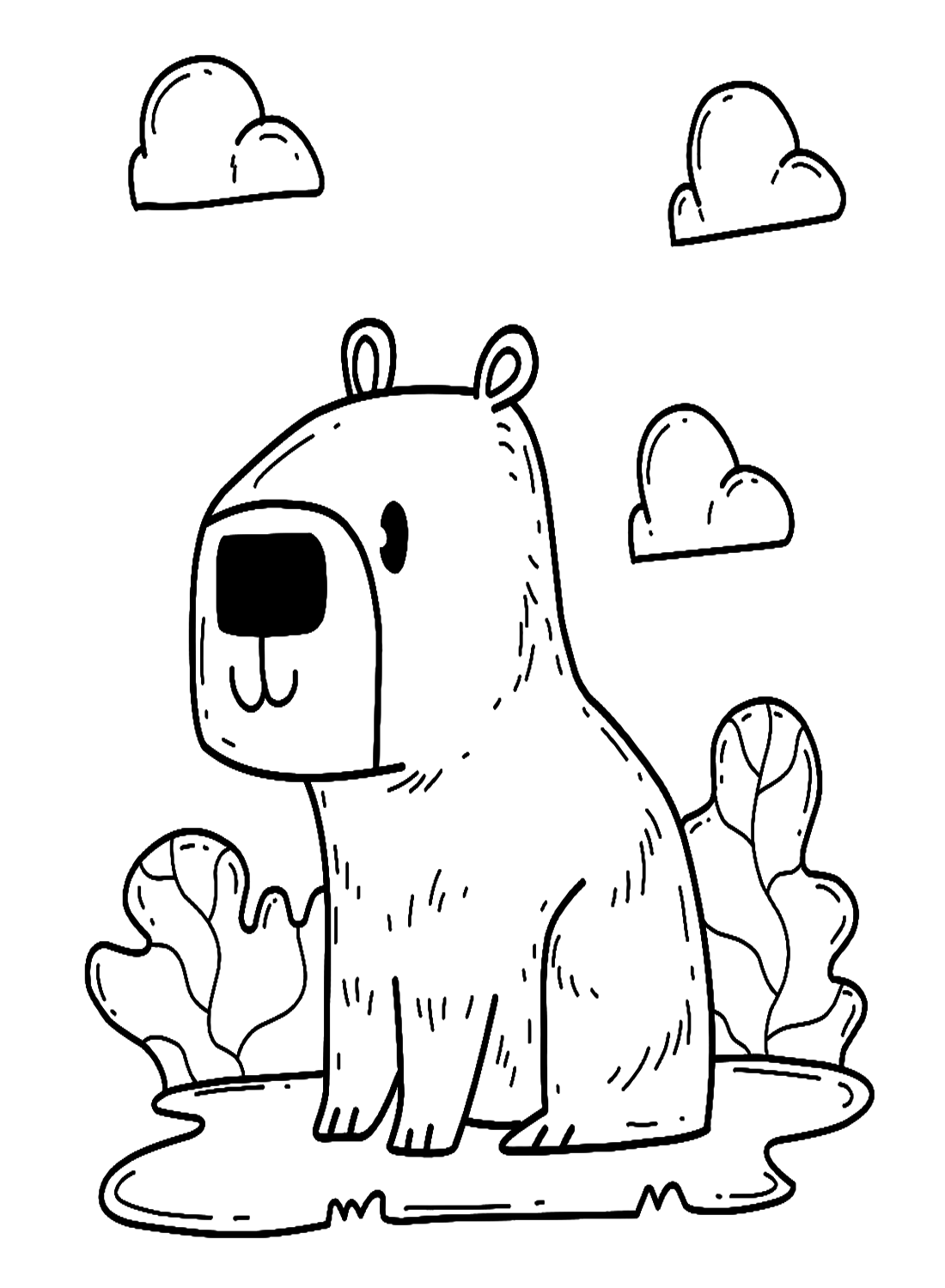
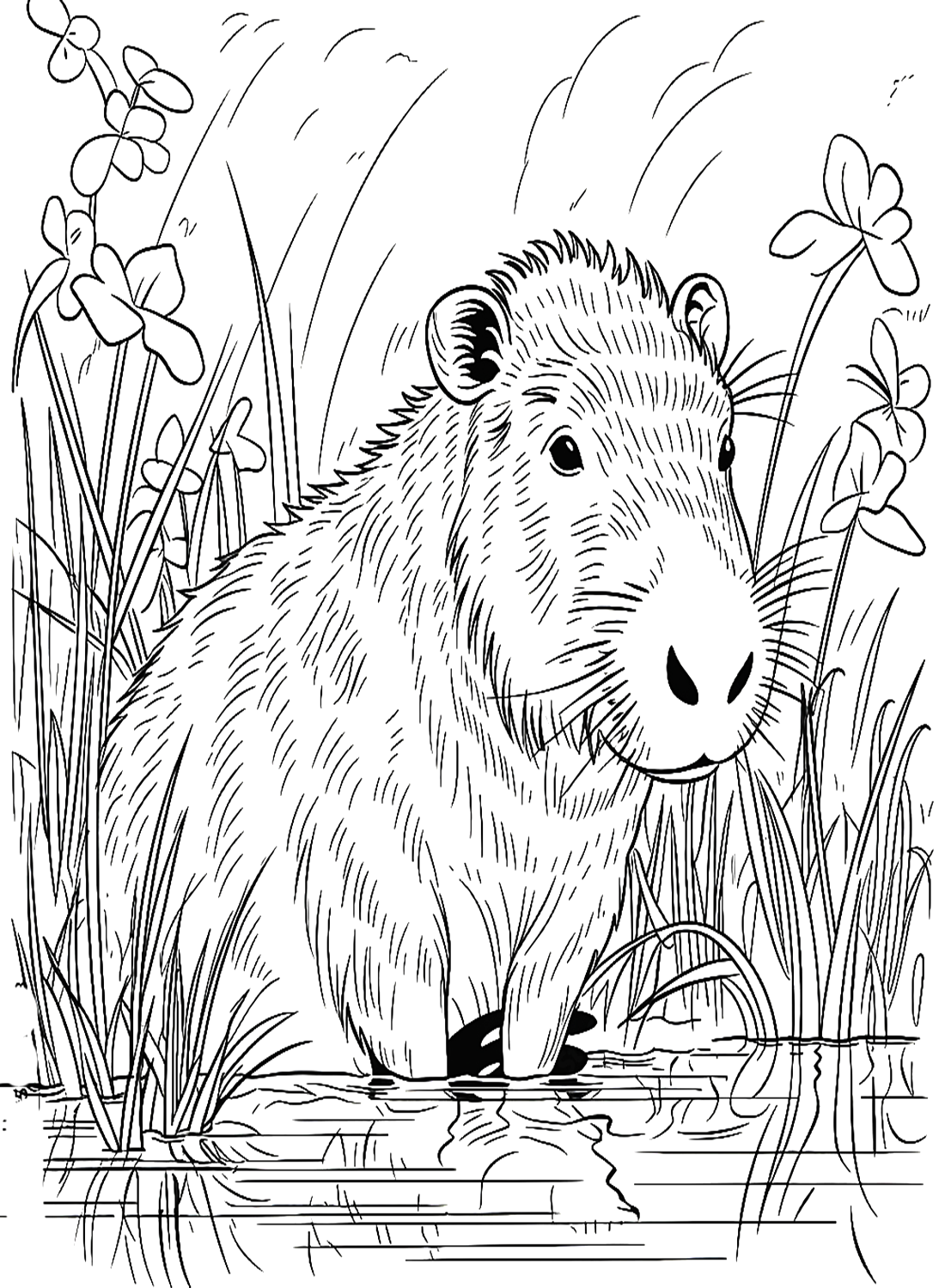
Capybara in the Lake and Capybara Sitting In The Water are the collection’s most biologically accurate habitat tiles – depictions of the capybara in or at the edge of its most essential environment. Capybaras spend much of the day in water, particularly during the midday heat, and their semi-submerged posture – body mostly underwater, eyes and nostrils at the surface – is one of their most characteristic appearances. Water tiles provide one of the most visually satisfying coloring opportunities: the water surface in blue-greens, the capybara’s warm brown visible above, reflections, and ripples as additional detail.
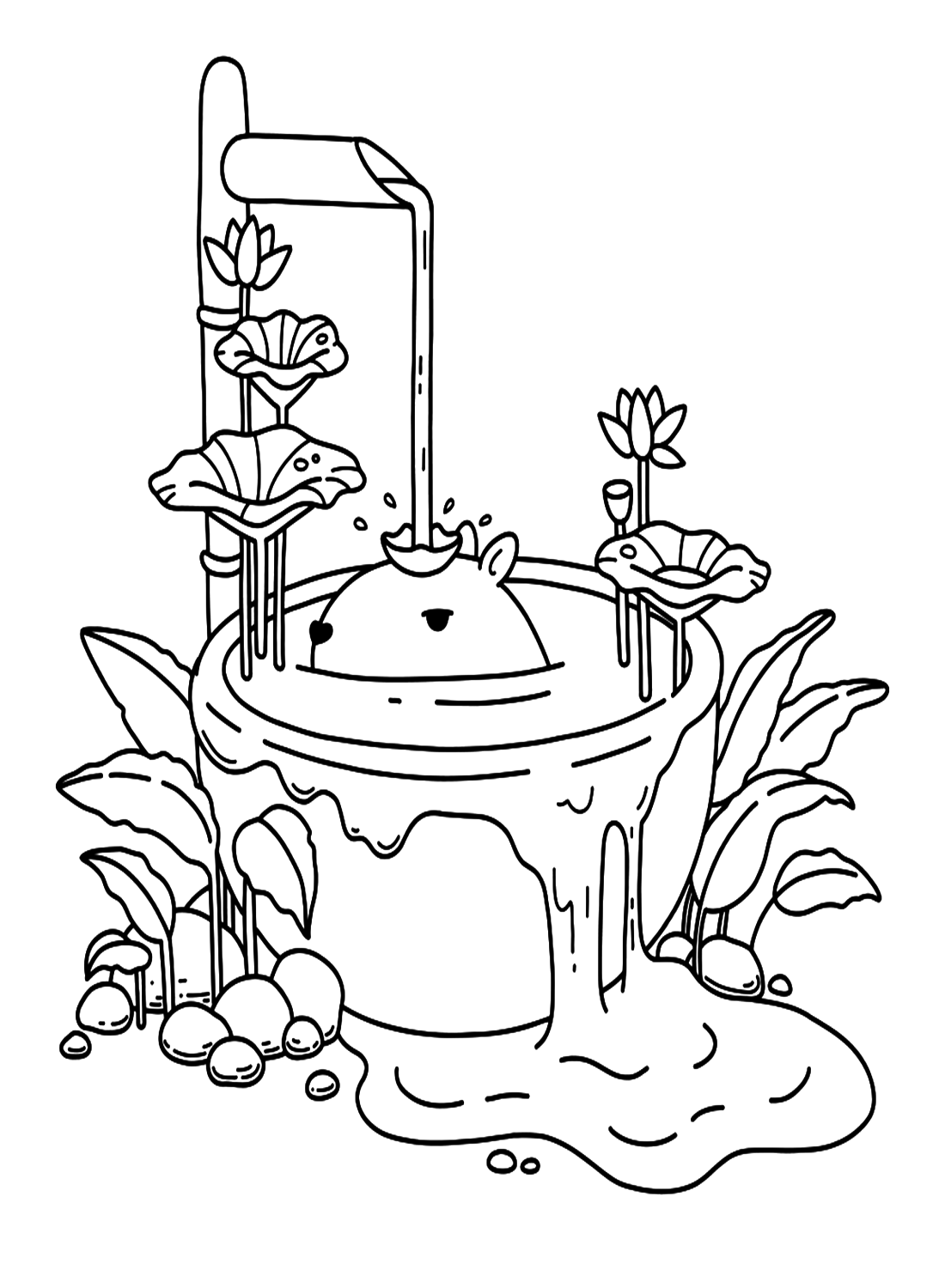
Capybara Bathing In The Pool offers a more domestic water context – a pool setting rather than a natural waterway, referencing the Japanese hot spring zoo footage that contributed significantly to the capybara’s internet popularity.
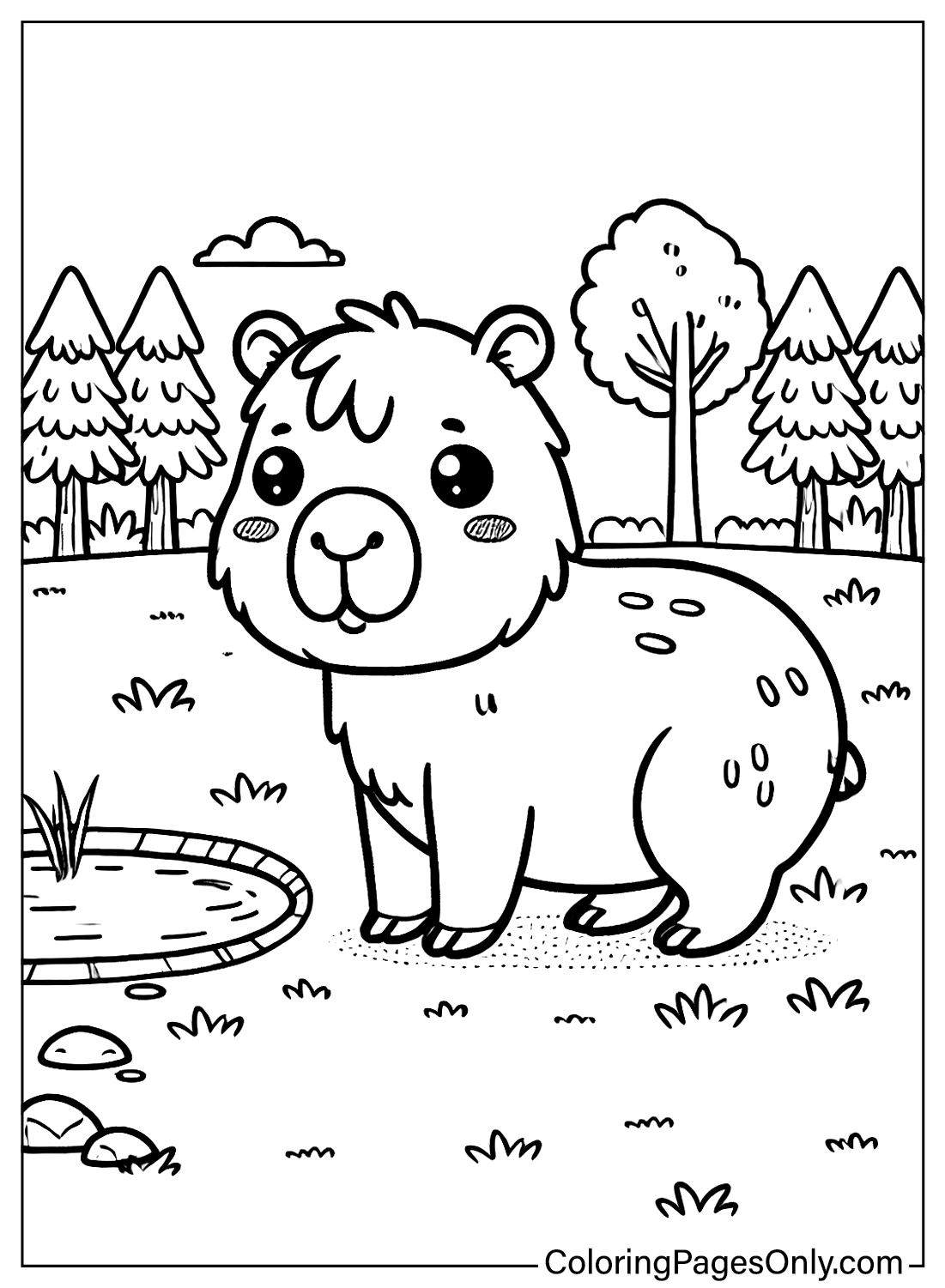
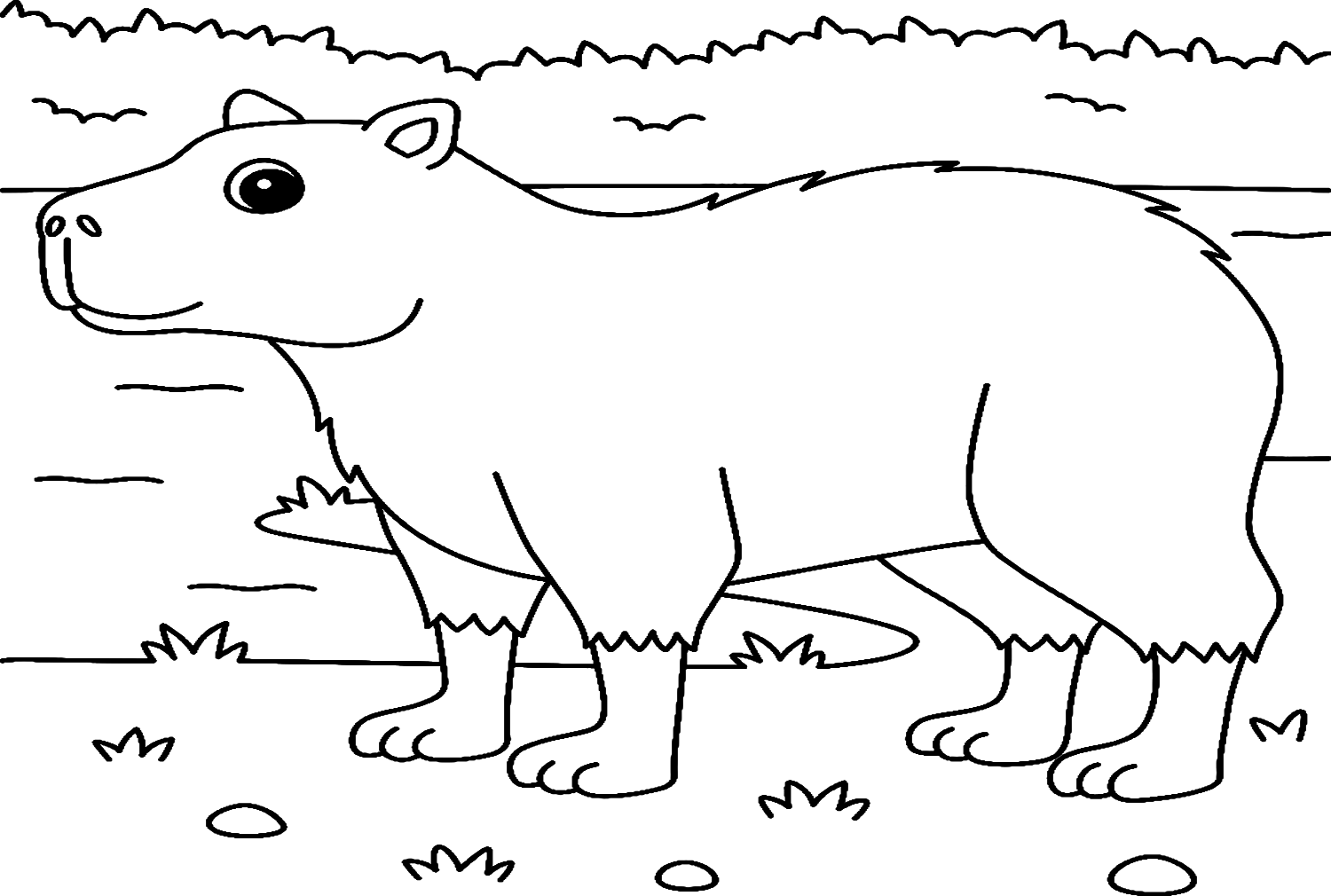
Capybara On The Grass depicts the animal in the grassland habitat where it grazes – surrounded by the green ground-level vegetation that makes up the majority of its diet. This is the most straightforward habitat tile in color terms: warm medium brown for the capybara body against medium to bright greens for the grass.
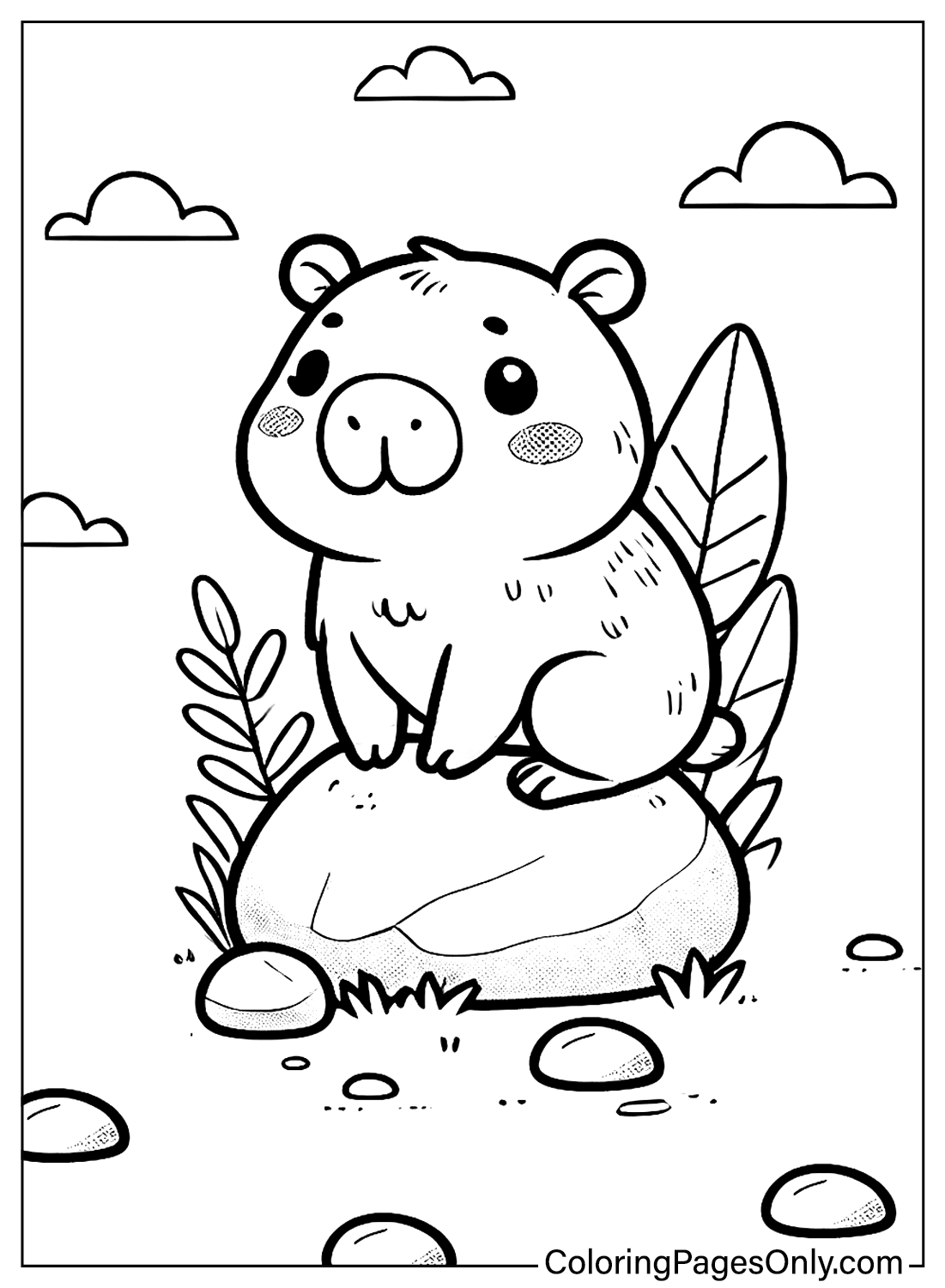
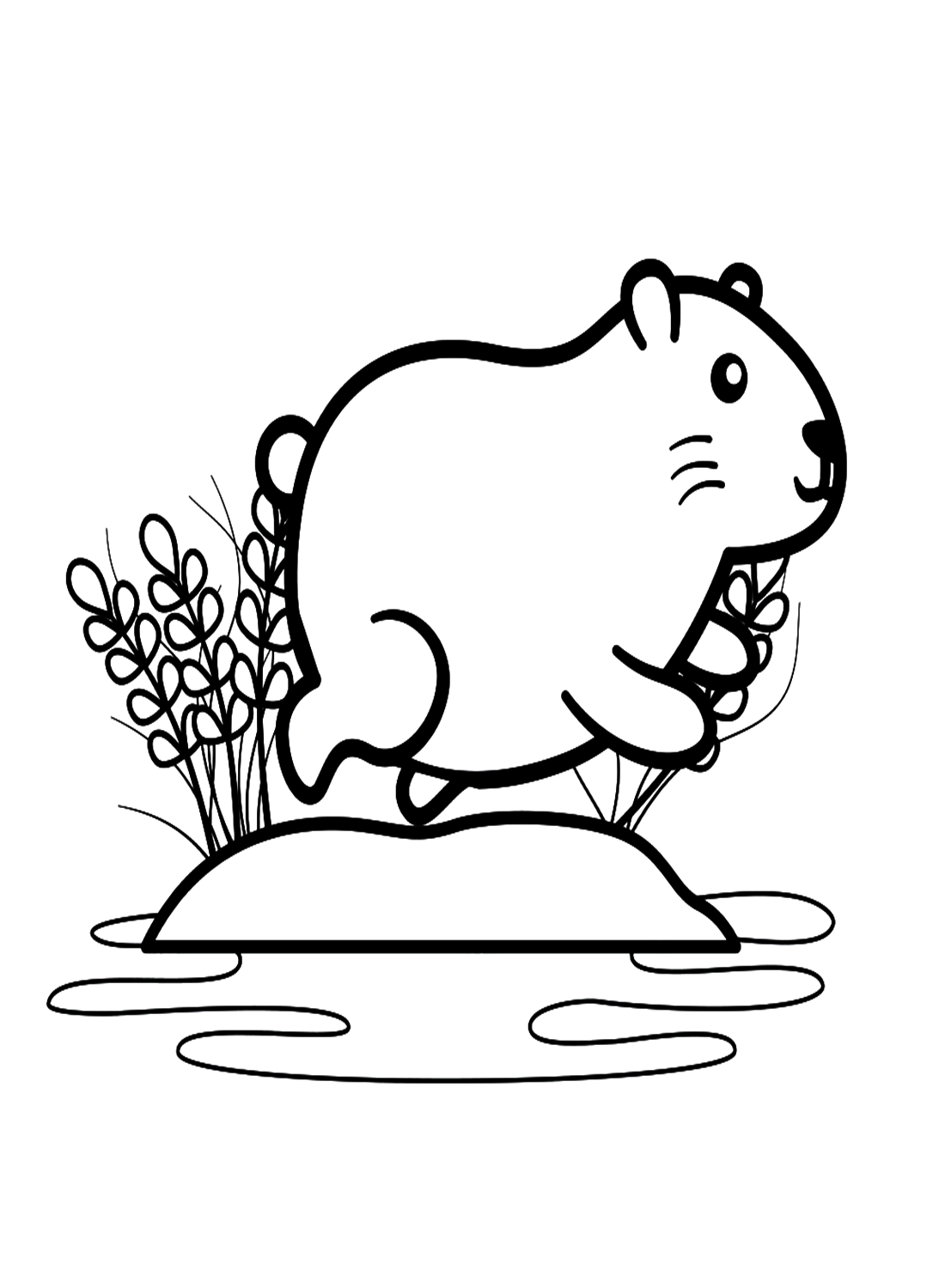
Capybara on the Rock places the capybara on a rocky surface – a resting posture that capybaras adopt in the wild, particularly near riverbanks where flat rocks provide sun-warmed resting surfaces. The rock surface provides a different textural coloring opportunity than grass or water – grey tones with shadow and highlight variation.
Capybara in a Bamboo Forest transposes the capybara into an East Asian environment that does not overlap with its natural South American range – creating a cross-cultural visual combination that makes for a lush, densely green background tile. The bamboo stalks provide strong vertical structural elements around the central figure.
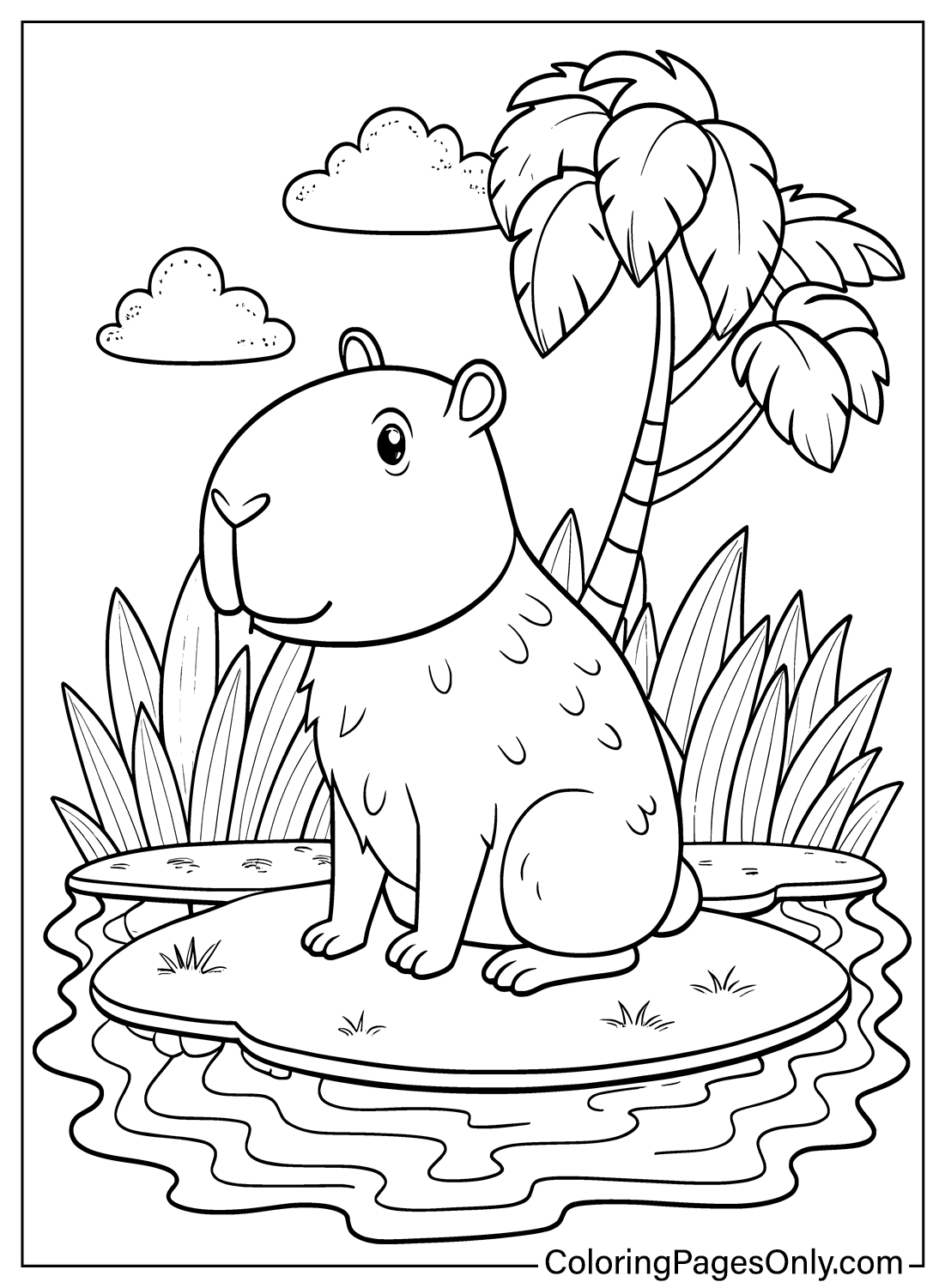
Capybara and Coconut Trees is a tropical scene – palm trees suggesting the warmer, coastal-adjacent ecosystems where capybaras sometimes appear near human settlements. The coconut palms create a characteristic tropical silhouette around the central figure.
The Flower Cluster
Four tiles form a dedicated flower-and-capybara sub-group that directly references one of the most frequently depicted elements of capybara internet imagery – the flowers-on-head phenomenon, where birds or humans place flowers atop a resting capybara’s flat head, and the capybara remains entirely undisturbed.
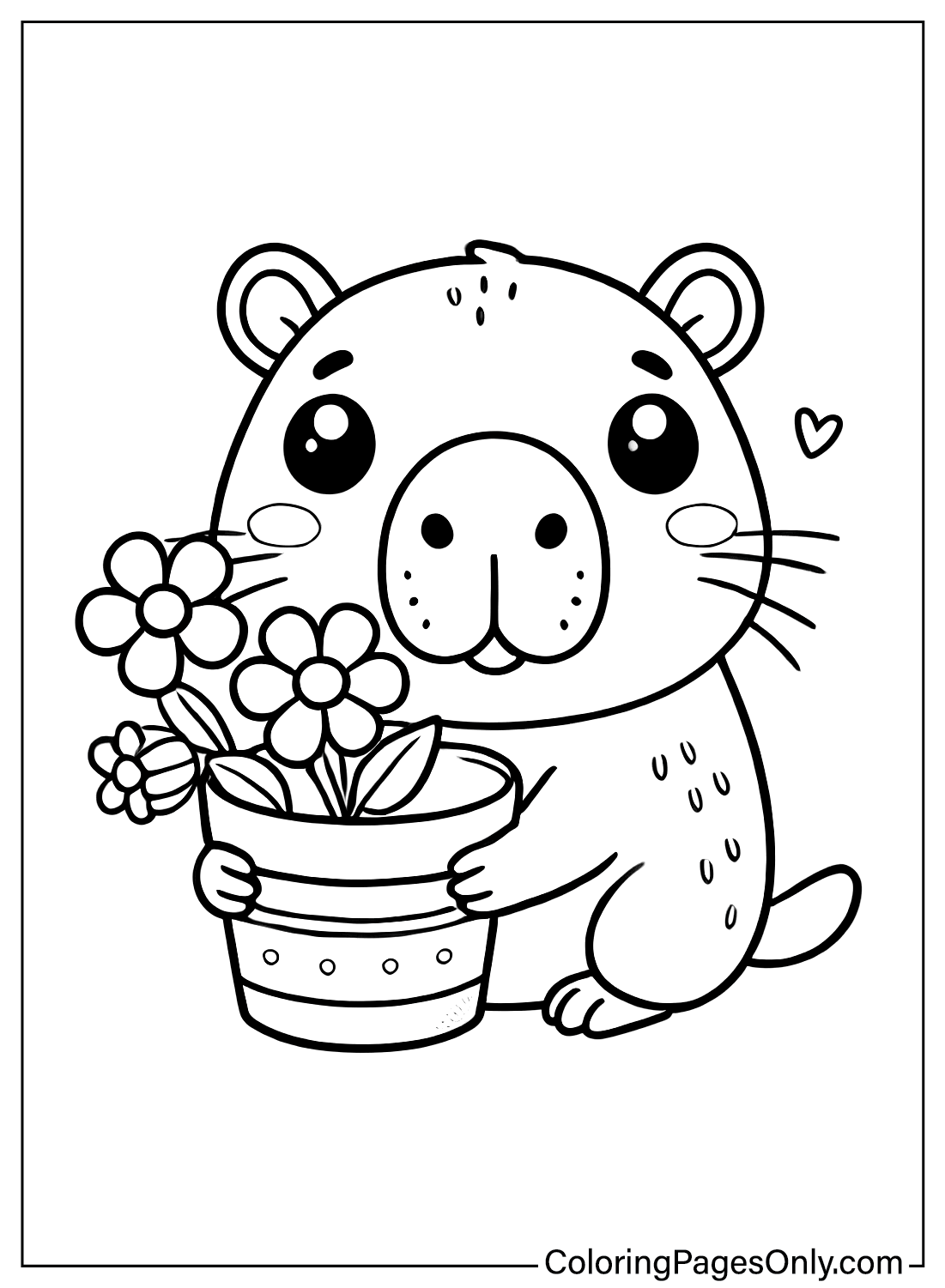
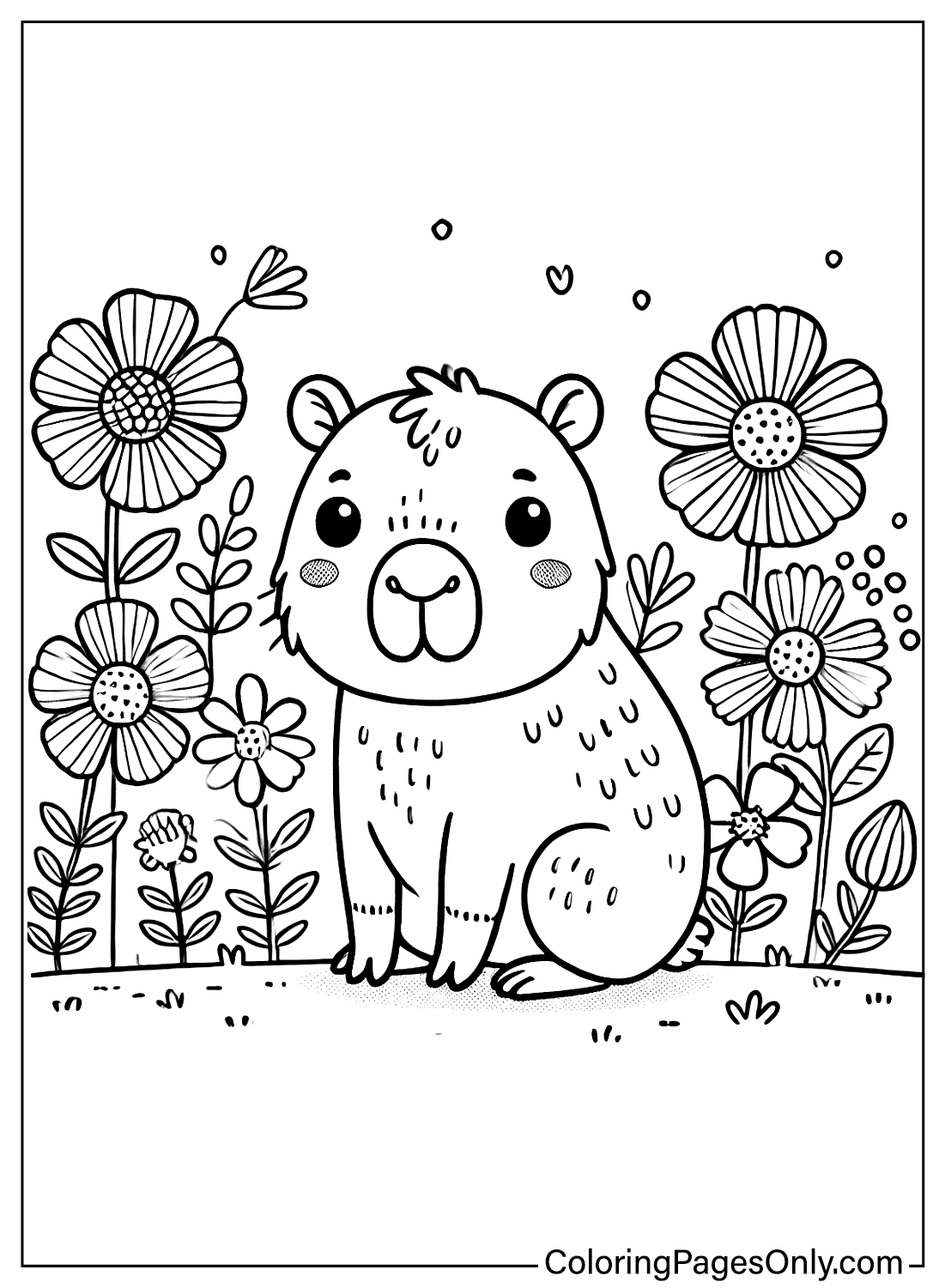
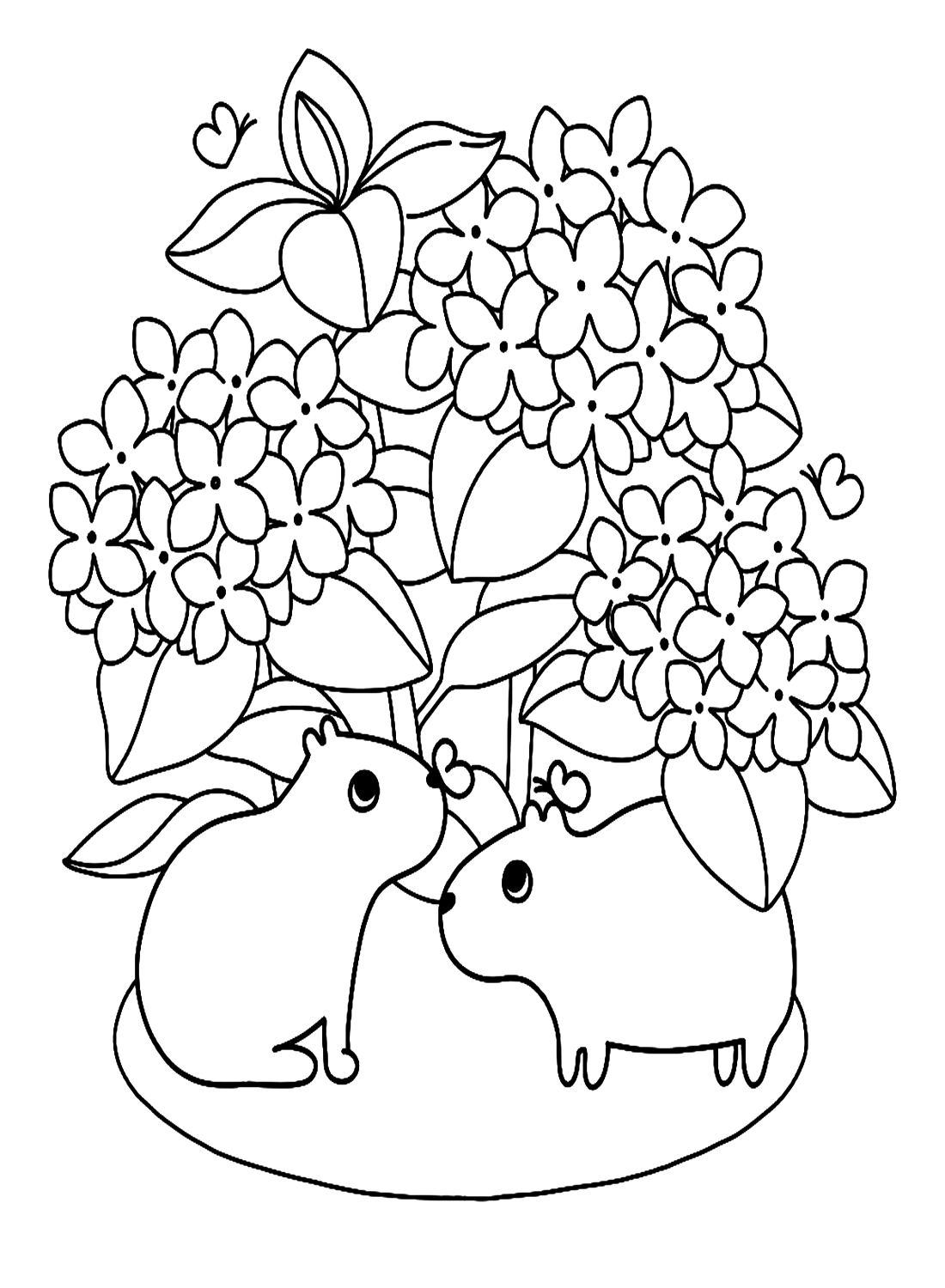
Capybara in the Flower Garden places the capybara surrounded by flowers in a garden setting – the most naturalistic of the flower tiles, with the animal simply present among blooming plants. Capybara With Flowers depicts the animal in direct proximity to flowers. Capybara hugging Flower Pot is the collection’s most endearing flower tile – a capybara embracing a flower pot, the rounded body shape of the animal and the rounded pot creating a naturally harmonious compositional pairing.
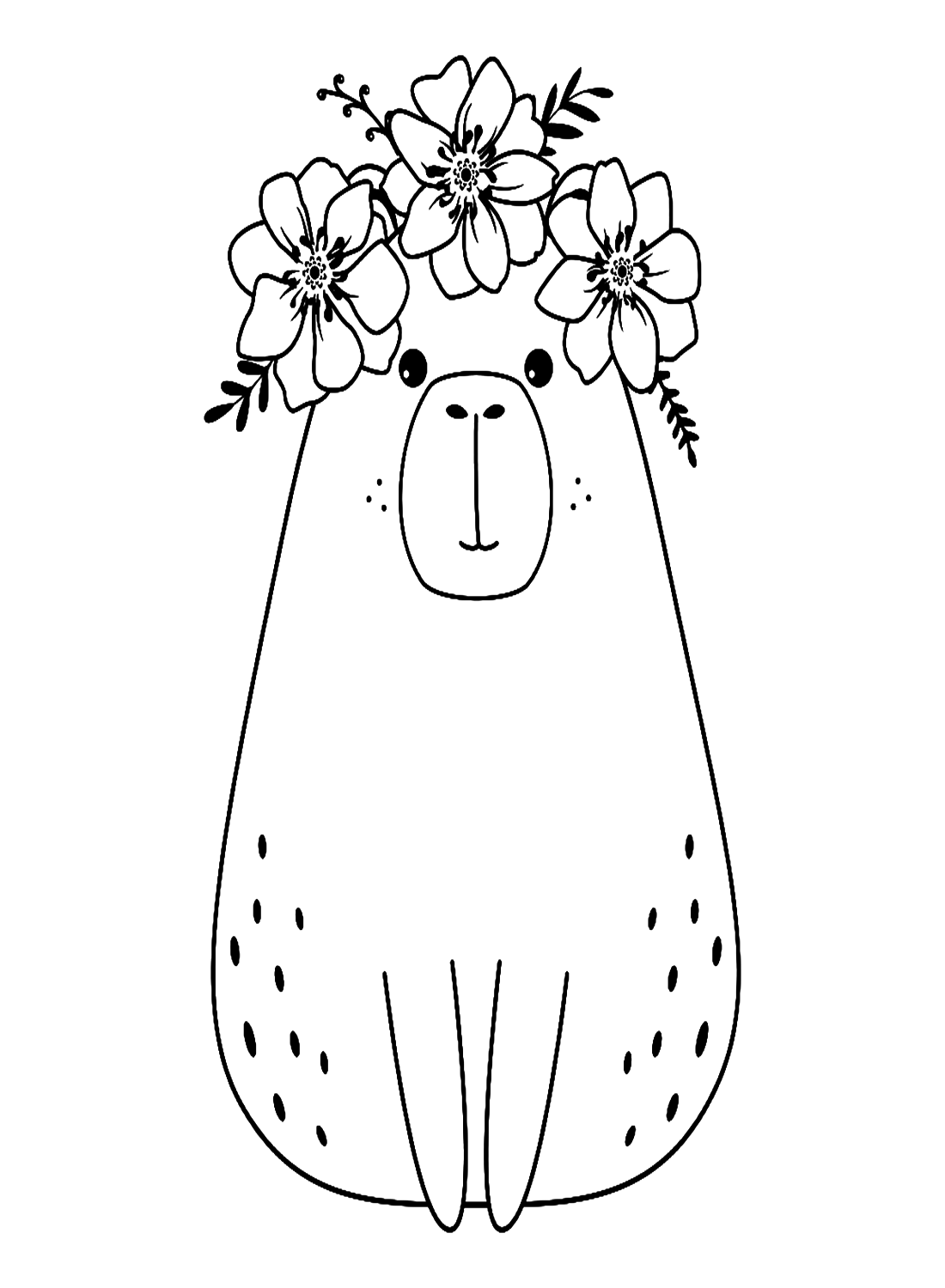
Cute Capybara With Flowers Wreath is the most decorative flower tile – a capybara surrounded by or wearing a wreath of flowers, directly referencing the flowers-on-head imagery that circulated so widely in capybara viral content. Two Capybaras With Flowers depicts two capybaras together in a floral context – the collection’s primary social tile outside of the family group.
Capybara With Family
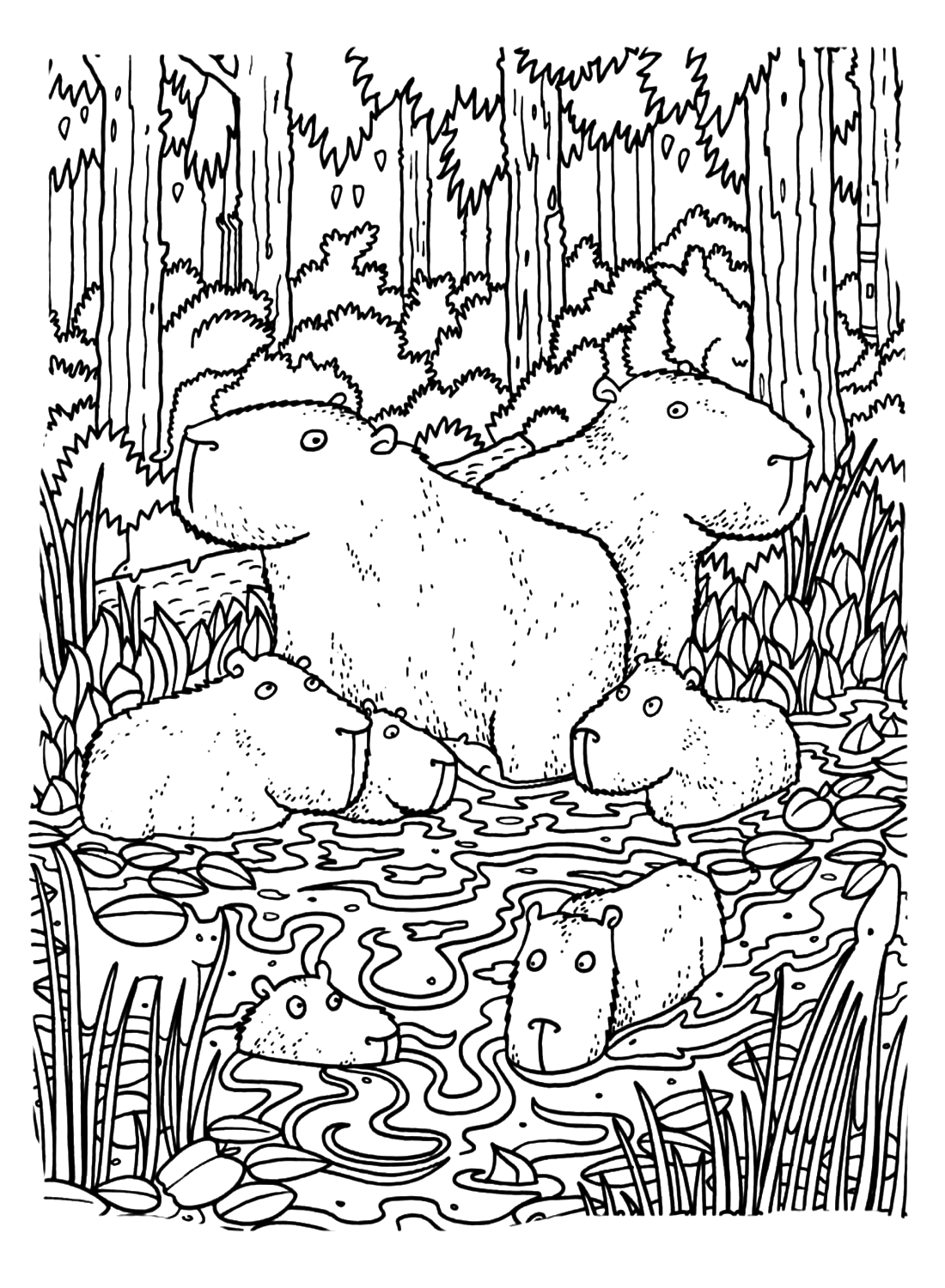
Capybara With Family is the collection’s most social and emotionally resonant tile – a capybara family group composition depicting the herd dynamics that are fundamental to the species’ social structure. Capybaras are never truly solitary animals; they live, graze, swim, and rest in family groups, and the presence of multiple individuals of different sizes in this tile – suggesting adults and juveniles together – captures the core social unit of the species. The size variation between adult and juvenile capybaras creates an immediate visual narrative about family relationships and protection.
Advanced Artistic Tiles
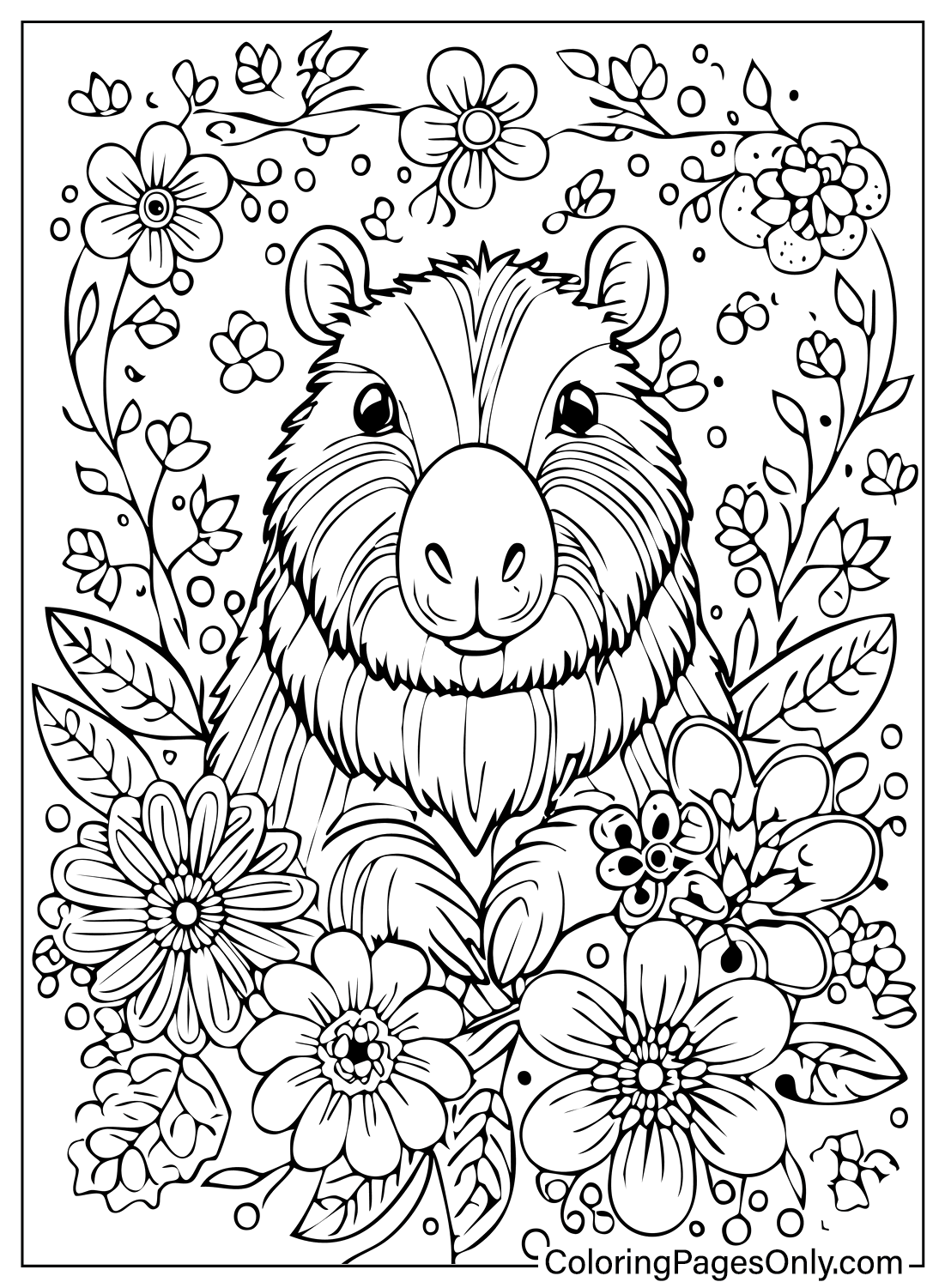
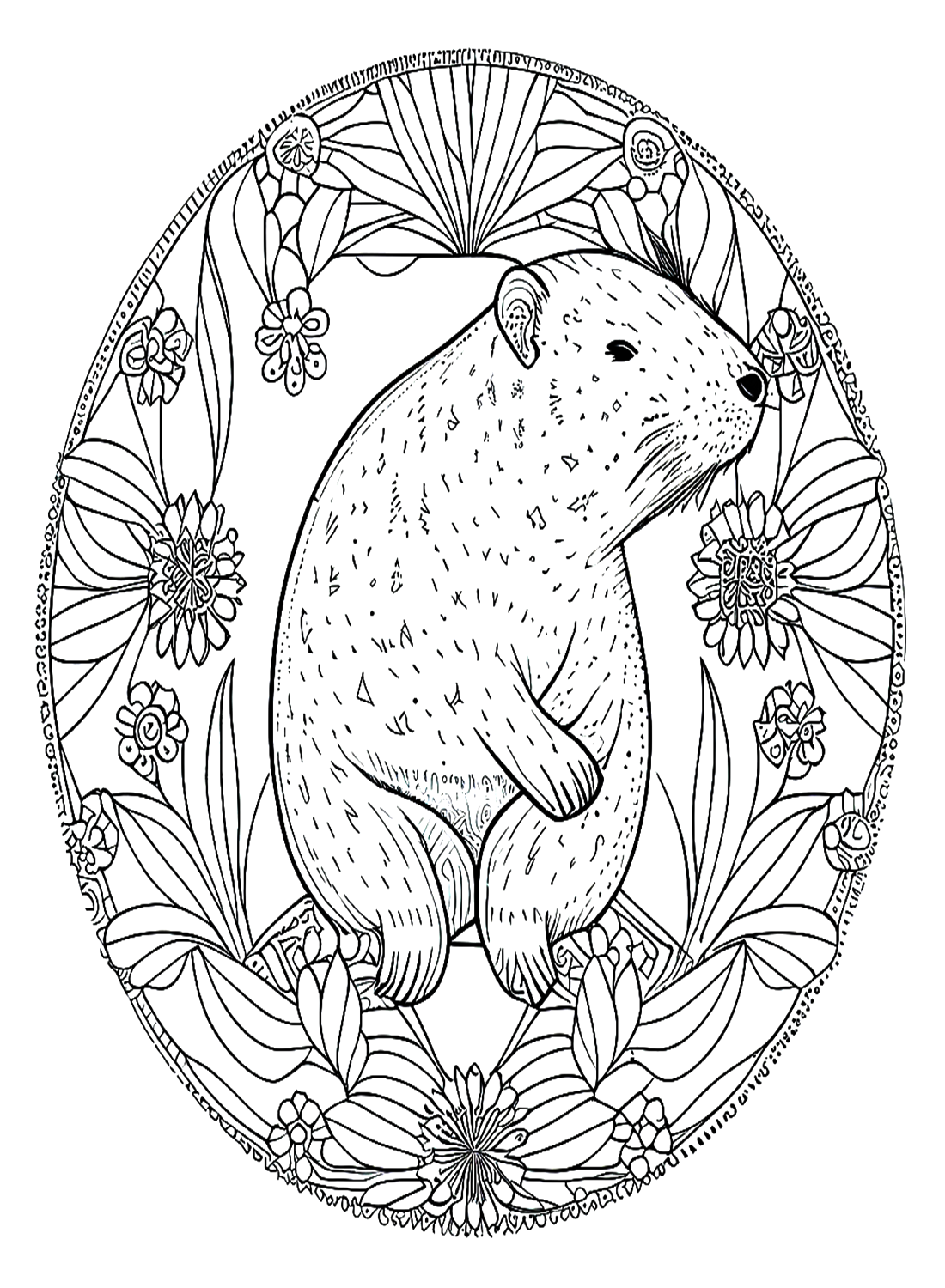
Capybara In Zentangle Style and Capybara In Mandala Style are the collection’s most technically demanding pages – coloring tiles that place the capybara silhouette within elaborate geometric or pattern-based artistic frameworks borrowed from established meditative art traditions.
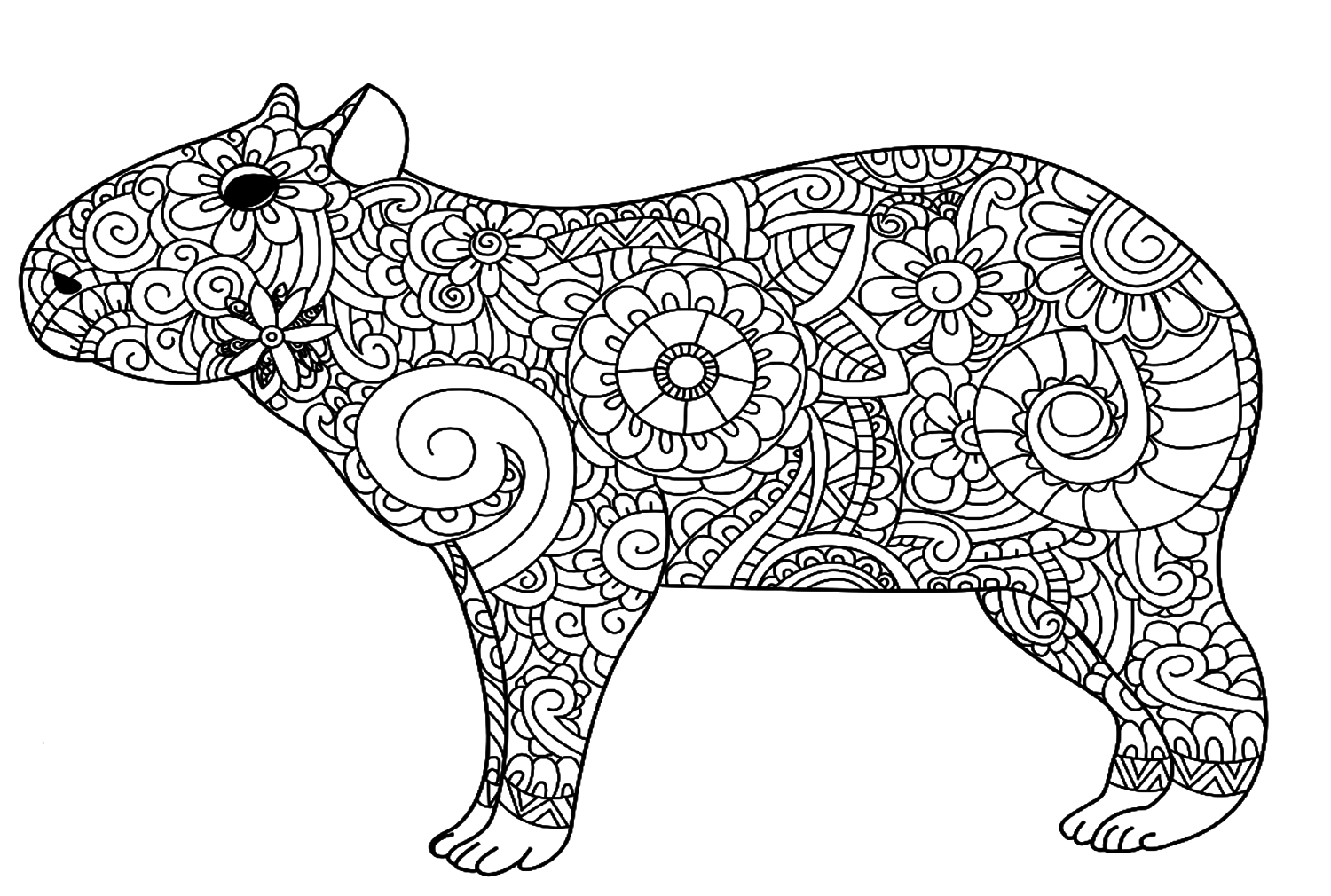
The Zentangle tile fills the capybara’s form with intricate repeating patterns – the Zentangle method uses structured patterns drawn in sections, creating a mosaic of different pattern zones within the overall shape. This tile is most suited to older children (age 10+), teens, and adults who enjoy fine detail work and the meditative quality of pattern-filling. Colored pencils or fine-tipped markers produce the most satisfying results.
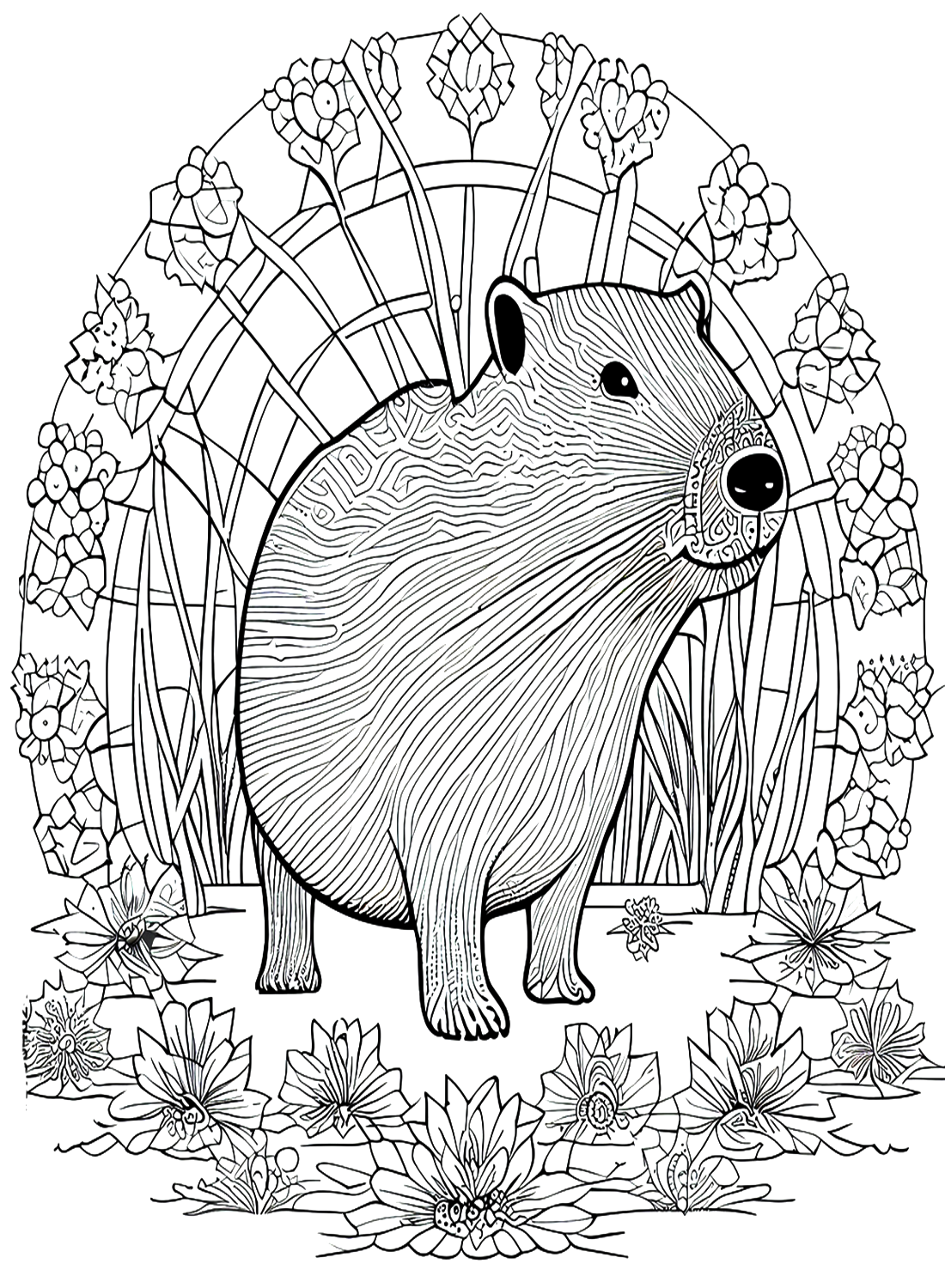
The Mandala tile places the capybara within or surrounded by mandala geometry – concentric radial patterns that create strong visual symmetry. The mandala format is among the most popular adult coloring styles for its combination of mathematical structure and color freedom. Using colors in a consistent pattern from the center outward – or deliberately breaking the pattern at intervals – are the two primary approaches to mandala coloring.
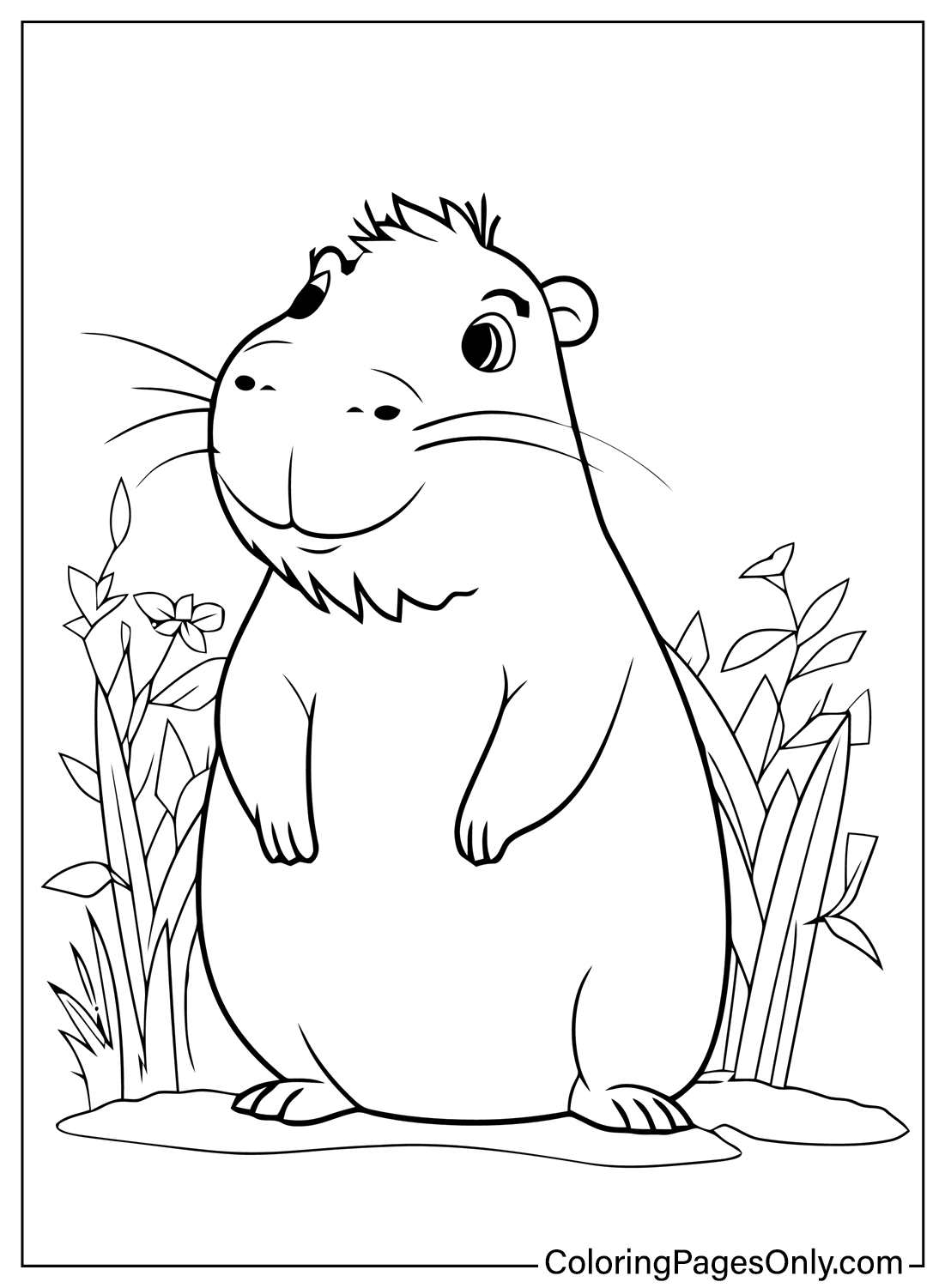
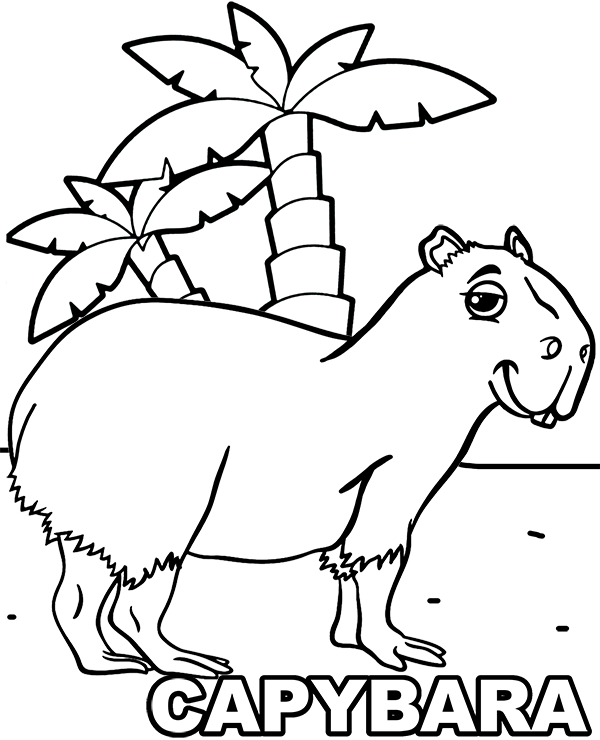
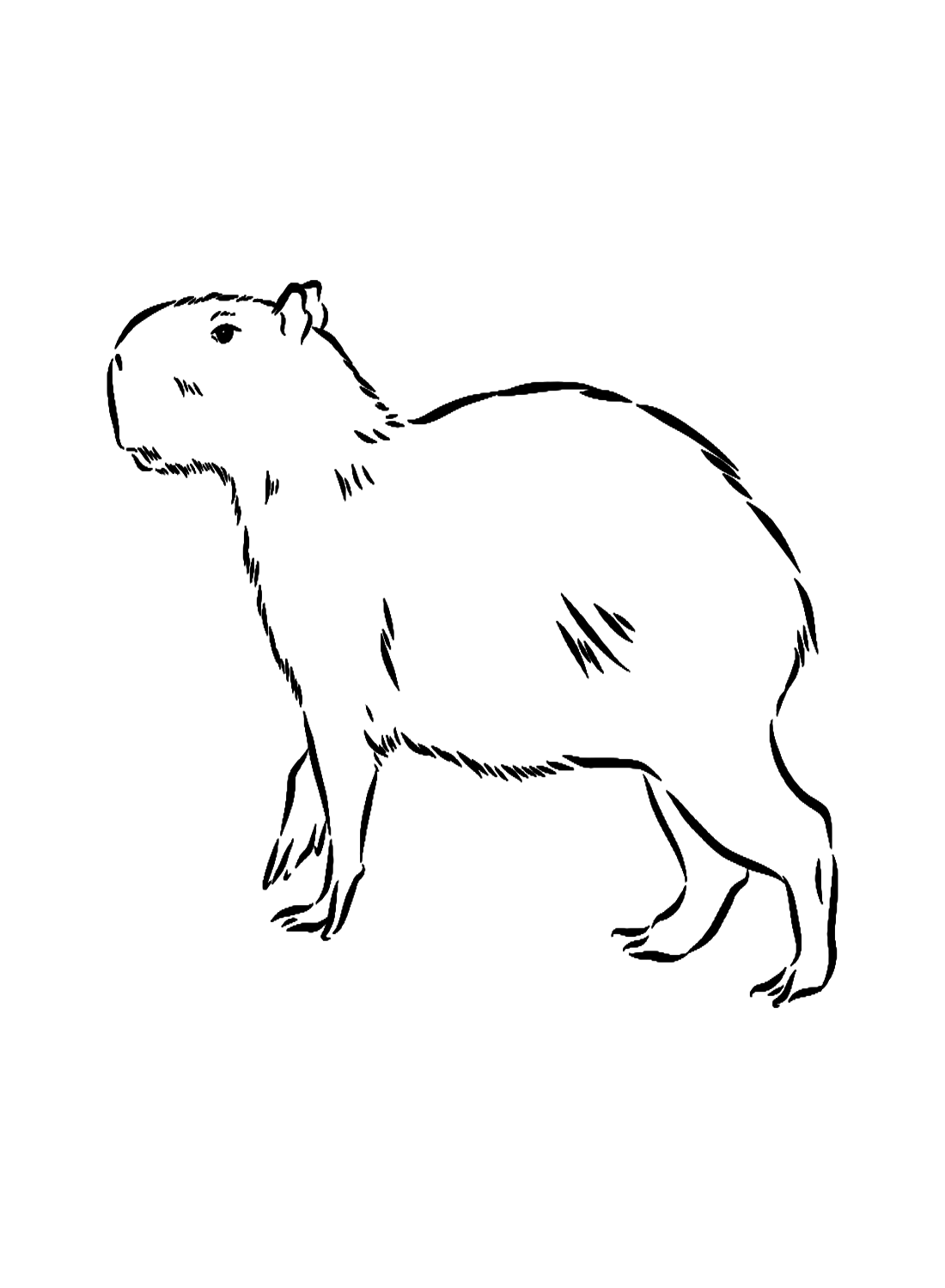
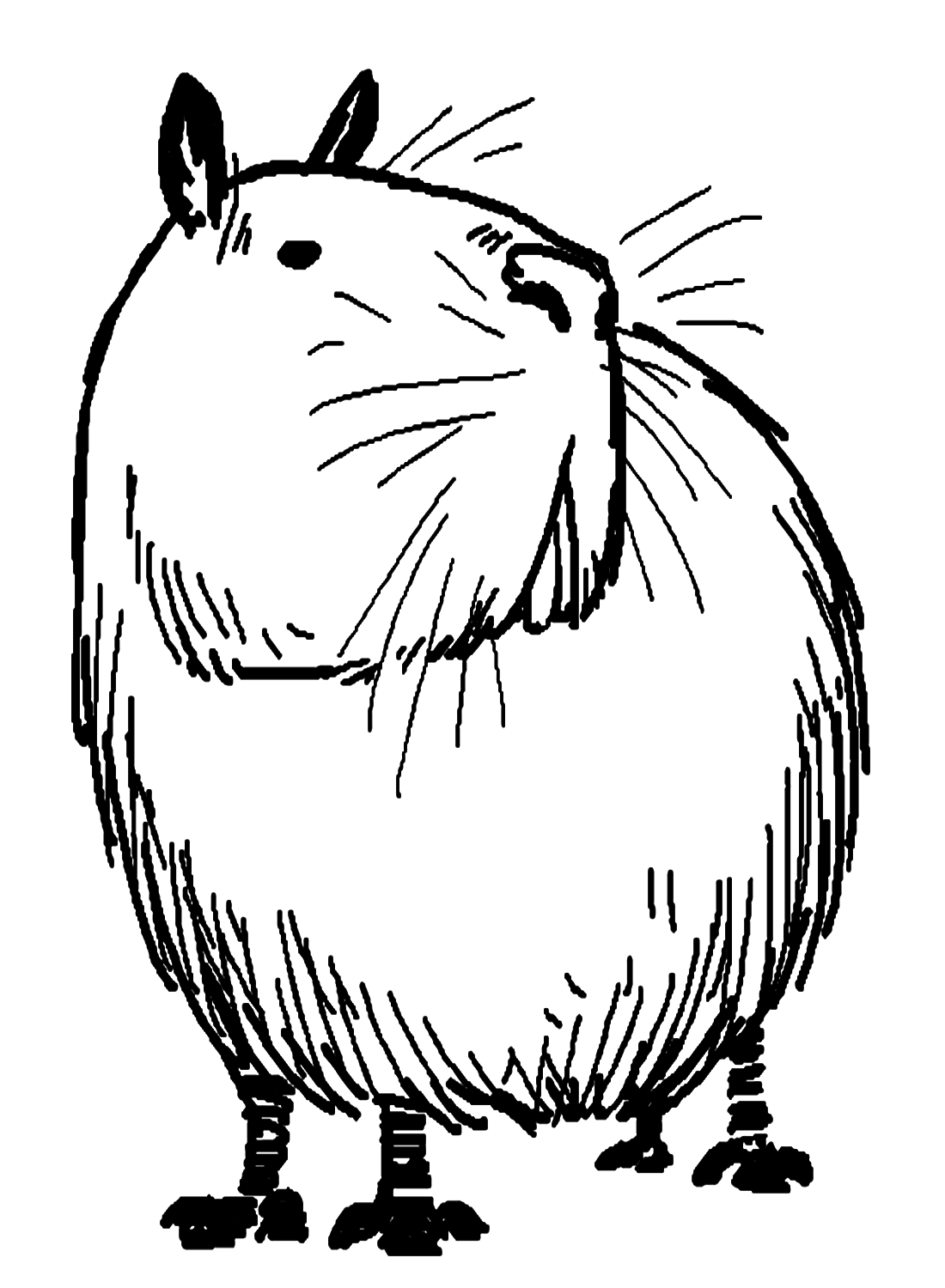
Realistic Capybara is the collection’s most naturalistic illustration – a portrait tile drawn with attention to the animal’s actual proportions, fur texture, and physical characteristics rather than cartoon simplification. This tile is most appropriate for older children and adults interested in naturalistic animal illustration, and benefits from layered color application to suggest fur texture.
Dot-to-Dot Activity Pages
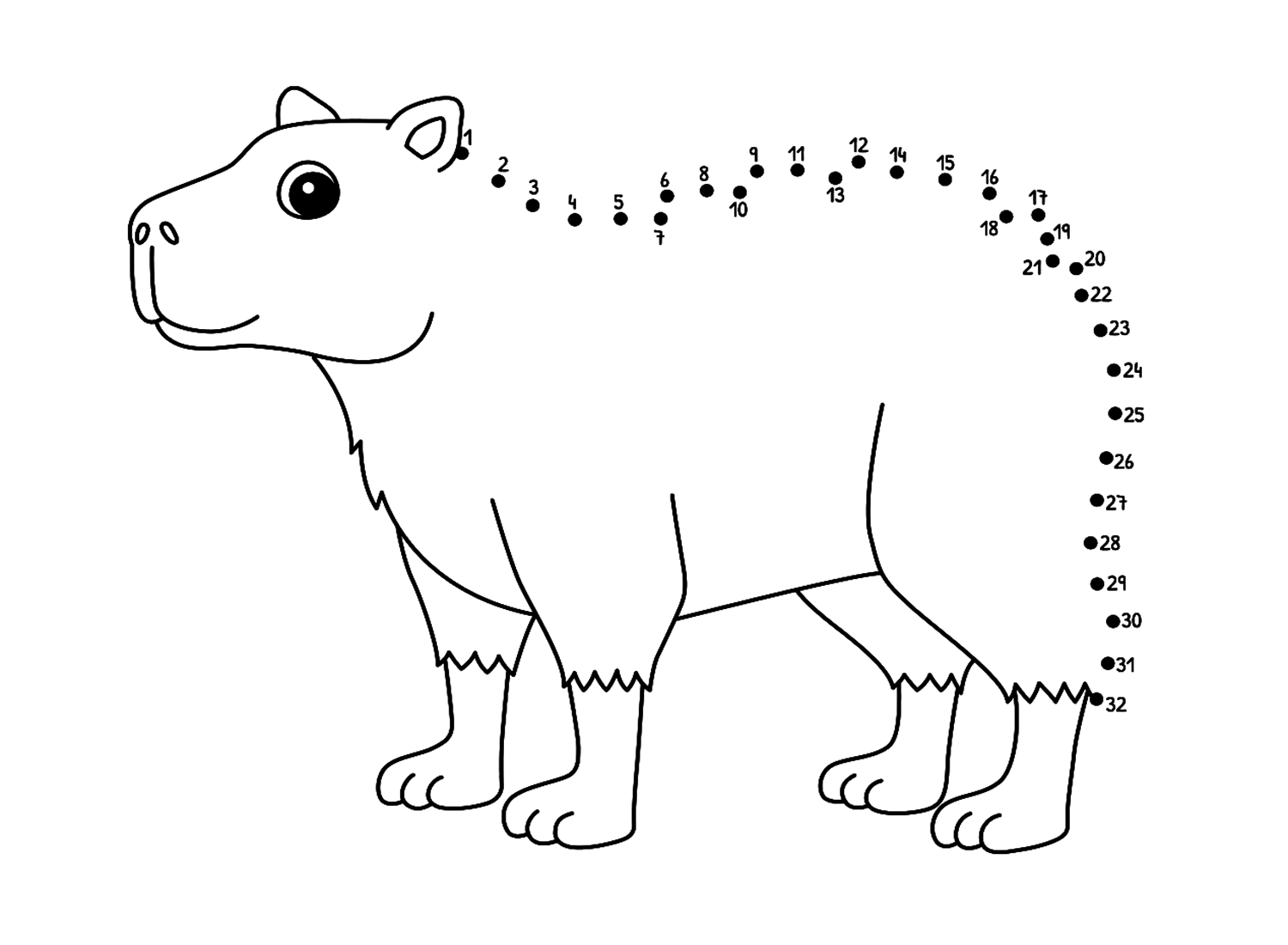
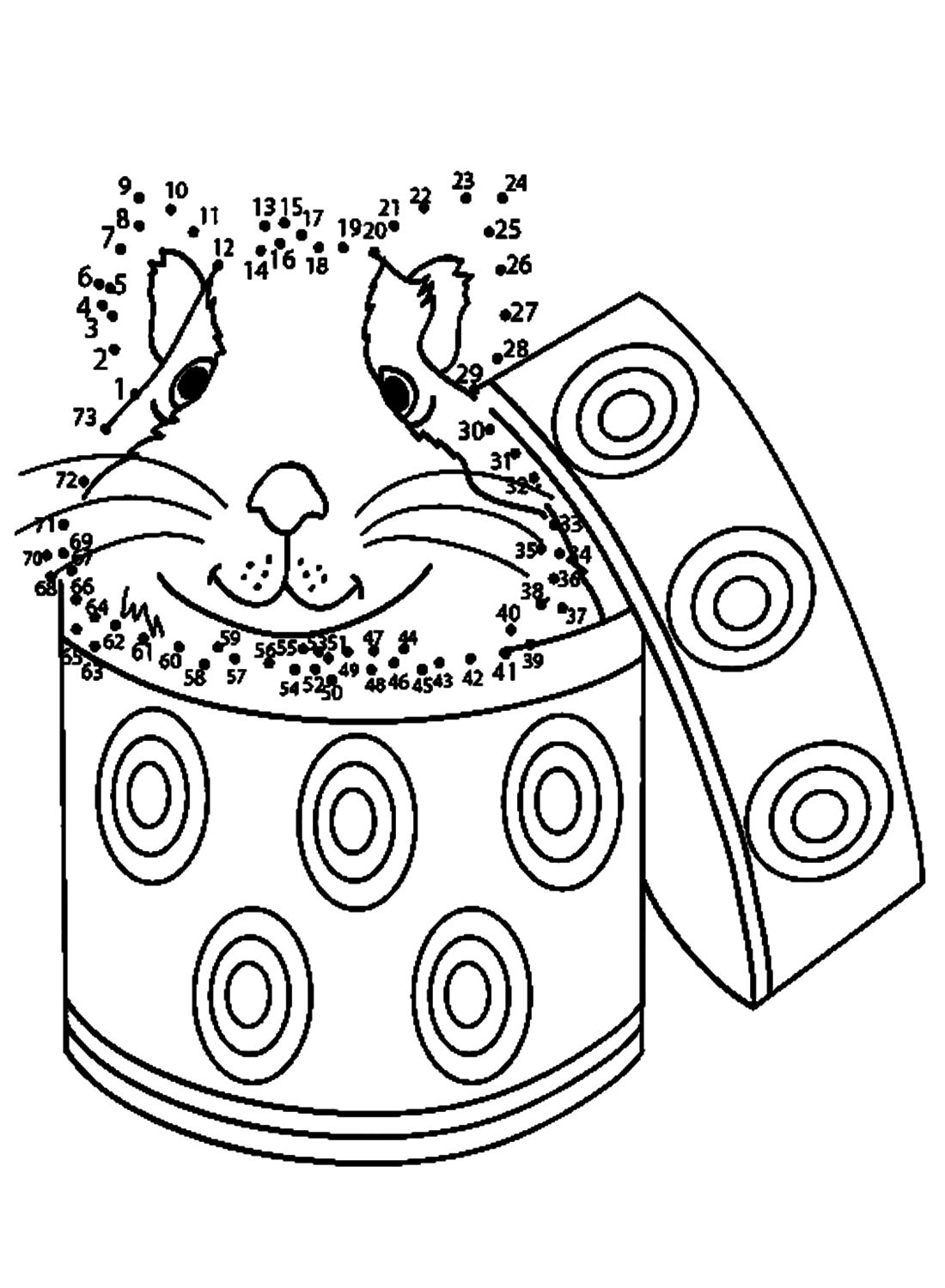
Dot To Dot Capybara and Capybara Dot To Dot are the collection’s two connect-the-dots activity tiles – numbered dot sequences that, when connected in order, reveal the capybara outline. These tiles add an interactive, sequential reasoning dimension to the collection before any coloring begins. The completed dot-to-dot outline can then be colored using any color scheme. These tiles suit children ages 5–8, developing number sequencing and fine motor skills through pen-tracing before applying color.
Encanto Character Crossover
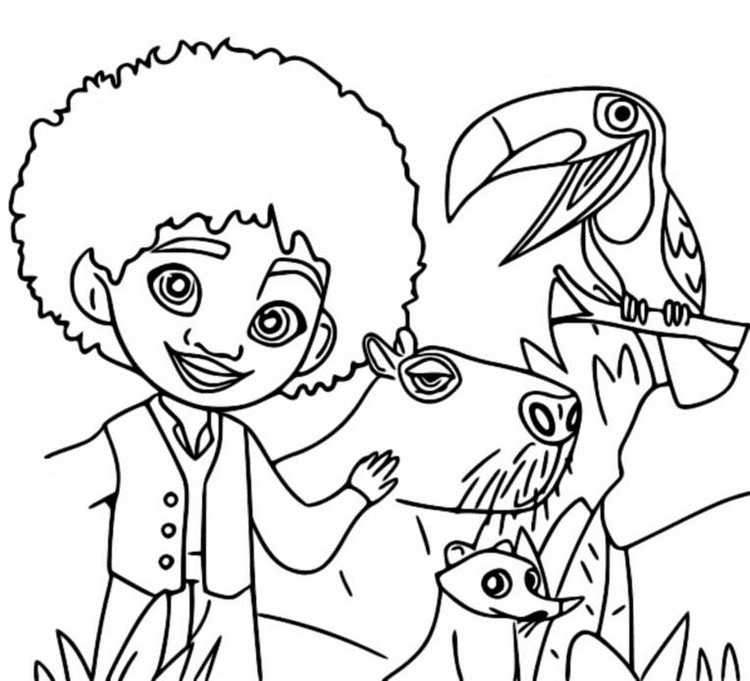
Two tiles bring the capybara into the world of Disney’s Encanto (2021) – the animated film set in a magical Colombian family home surrounded by lush South American vegetation and wildlife. The capybara appears in Encanto as one of the animals bonded to Antonio Madrigal, the youngest member of the Madrigal family, whose magical gift is the ability to communicate with animals.
Capybara from Encanto depicts the capybara as it appears in the film’s visual style – the distinctive Encanto character design applied to an animal whose native South American habitat makes it an organic fit for the film’s Colombian setting. Antonio with Coati, Toucans, and Capybara is a multi-character composition featuring Antonio alongside his animal companions – the capybara alongside a coati (a long-nosed South American mammal) and toucans, exactly the combination of regional wildlife that Encanto uses to establish its Andean biodiversity context.
These are the collection’s most recognizable tiles for children who know the film, connecting a specific, much-loved character to the broader capybara collection.
Coloring Guide: The Capybara’s Visual World
The Capybara’s Natural Color
The capybara’s coat is one of the most forgiving color subjects in any animal coloring collection – its sparse, coarse, reddish-brown to dark brown fur occupies a warm, approachable section of the color spectrum that is easy to achieve with most coloring media.
The natural base coat color is a medium warm brown – not orange-brown, not grey-brown, but a clearly warm brown with red undertones. The underside of the body and the area around the muzzle are typically slightly paler – a softer tan or sandy tone that creates subtle variation without the dramatic countershading of predator animals like big cats. The muzzle itself has sparse, shorter hair revealing more skin tone, and the area around the nostrils and lips uses a slightly pink-brown or dark grey-brown for anatomical accuracy in realistic tiles.
For naturalistic tiles (Realistic Capybara, habitat scenes): apply the medium warm brown as the primary coat, lighten slightly on the underside and muzzle area, and darken slightly along the spine, flanks, and leg joints where shadow falls on the rounded body. The eyes are dark brown with a small white highlight. Adding a slightly olive or yellow-green tint to fur color in areas catching reflected light from grass creates a naturalistic environmental interaction.
Color Approaches by Tile Type
Simple and cartoon portrait tiles suit the widest range of color approaches. The naturalistic warm brown is always appropriate, but the internet capybara aesthetic – chill, friendly, slightly absurdist – also invites creative color interpretation. Soft pastels (lavender, mint, peach) applied as the main coat color create a gentle, kawaii-adjacent aesthetic that works particularly well for the Cute Capybara for Kids and cartoon tiles. The contrast between a naturally colored capybara body and a vividly colored accessory (bright red backpack, yellow umbrella, white space suit) creates the most visually dynamic result in the activity tiles.
Flower tiles benefit from treating the capybara in its natural warm browns and reserving the most vivid color decisions for the floral elements – flowers in a full spectrum of vivid colors against the neutral animal body create maximum visual contrast. Flowers-on-head or wreath compositions particularly reward this approach: the more vivid the flowers, the more the capybara’s calm expression reads as compositionally ironic.
Zentangle and Mandala tiles are the only pages where the capybara’s natural color is entirely optional – pattern-based tiles can use any color combination for the internal geometric elements, independent of naturalistic reference. Cool analogous palettes (blue, teal, purple), warm analogous palettes (red, orange, gold), or full rainbow sequences all work effectively in pattern tiles.
The Encanto Palette
For the two Encanto tiles, the film’s color language provides a specific reference point. Encanto uses a vivid, jewel-toned tropical palette – deep greens, warm golds, rich magentas and oranges, bright sky blues – reflecting the visual culture of the Colombian Andes and rainforest. The capybara in the film’s context shares this warm, saturated, slightly magical quality. Antonio’s clothing uses earth reds and warm golds; the surrounding vegetation uses deep, rich tropical greens. Applying more vivid and saturated versions of the capybara’s natural brown, pushed toward reddish-amber rather than neutral brown, fits the Encanto color language well.
FAQs
What is a capybara? The capybara (Hydrochoerus hydrochaeris) is the world’s largest rodent – a semi-aquatic mammal native to South America. Adults weigh between 35 and 66 kilograms and live in social groups near rivers, lakes, and wetlands across Venezuela, Brazil, Argentina, and neighboring countries. Despite their size, capybaras are herbivores, grazing on grasses and aquatic plants.
Why are capybaras so calm around other animals? Capybaras are highly social animals with a low baseline stress response to non-threatening stimuli. In the wild, they coexist with a wide range of species – including birds that perch on them to eat parasites, a mutually beneficial relationship that reinforces the capybara’s tolerance. In captivity, this tolerance extends to most domestic and zoo animals. The widely circulated videos of birds, monkeys, ducks, and even caimans resting on capybaras reflect genuine behavioral patterns rather than unusual exceptions.
What is the capybara internet meme about? Beginning in the early 2020s, videos of capybaras – particularly footage of capybaras soaking in hot spring pools at Japanese zoos with yuzu fruits floating around them, and images of other animals resting on calm capybaras – spread widely across social media as emblems of radical relaxation and universal friendliness. The meme resonated partly because the content is genuine: capybaras really are unusually tolerant, and their placid expression and rounded form lend themselves naturally to anthropomorphic interpretations of contentment.
What is the capybara’s role in Encanto? In Disney’s Encanto (2021), set in a magical Colombian household, Antonio Madrigal’s magical gift is the ability to communicate with animals. A capybara is one of his animal companions, chosen specifically because capybaras are native to South America’s tropical and subtropical regions – the same biodiversity zone as the film’s Colombian setting. The capybara, alongside coatis and toucans, represents the regional wildlife of the Colombian Amazon and Andes.
Are capybaras endangered? Capybaras are currently classified as Least Concern on the IUCN Red List – their populations are stable across most of their South American range, and they are common in many areas. They are legally hunted in some regions for meat and hide, and are farmed in Venezuela. Their adaptability to human-modified environments, including agricultural land near rivers, has helped them maintain population levels despite habitat change in some areas.
How big do capybaras get? Adult capybaras typically weigh 35–66 kilograms (77–145 pounds) and measure 106–134 centimeters in body length, with shoulder height of 50–62 centimeters. The largest confirmed wild individuals have exceeded 90 kilograms. Females are generally slightly larger than males in this species, one of the few mammals where females are typically heavier.
Can capybaras be kept as pets? In some countries and US states, capybaras are legal to keep as pets, and there is a small community of capybara owners – primarily in the United States, where legality varies by state. They require access to water for swimming (a requirement, not a preference), large outdoor spaces, companionship from other capybaras or social animals, and specialized diet management. They are not well-suited to most domestic environments and require significant resources to be kept responsibly.
What age group is this collection for? The collection spans all ages. Simple Capybara and Cute Capybara for Kids are most suitable for children ages 3–6. The activity and flower tiles suit ages 5 and up. Dot-to-dot tiles suit ages 5–8 for the numbering component. The Realistic Capybara, Zentangle, and Mandala tiles are most appropriate for ages 10 and up, teens, and adults who enjoy detailed work.
All 33 Capybara Coloring Pages are free – download as PDF or color online. Share your finished pages on Facebook and Pinterest.