
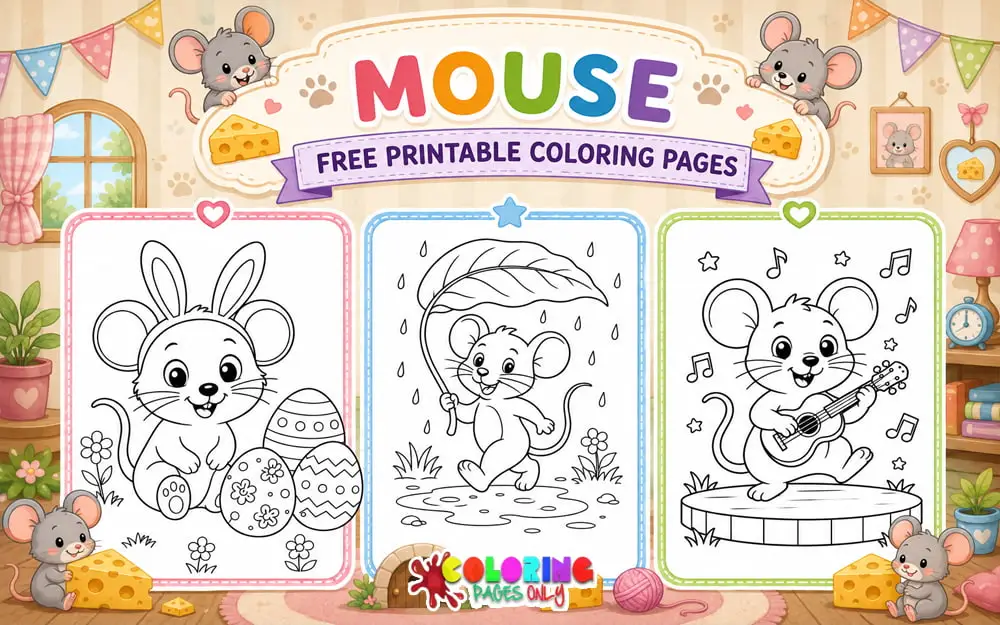
Free Mouse Coloring Pages: 32 printable PDF designs featuring sleepy baby mice, tiny adventurers sailing in a walnut shell, busy chefs and detectives, cheese and pizza snacks, and mice dressed up for every holiday. Download the sheets as PDFs or color them online straight from the browser.
A mouse is a small rodent with big ears, a pointed snout, and a long, thin tail, found on every continent except Antarctica. The most familiar kind, the house mouse, often lives near people, nesting in quiet corners and coming out mostly at night. Like all rodents, mice have front teeth that never stop growing, so they gnaw constantly to keep them short. Their sensitive whiskers help them feel their way through dark tunnels, and they can squeeze through a gap about as wide as a pencil.
Simple storybook mice suit preschoolers, while the miniature-world scenes and the detailed mouse house give older kids and adults plenty to explore.
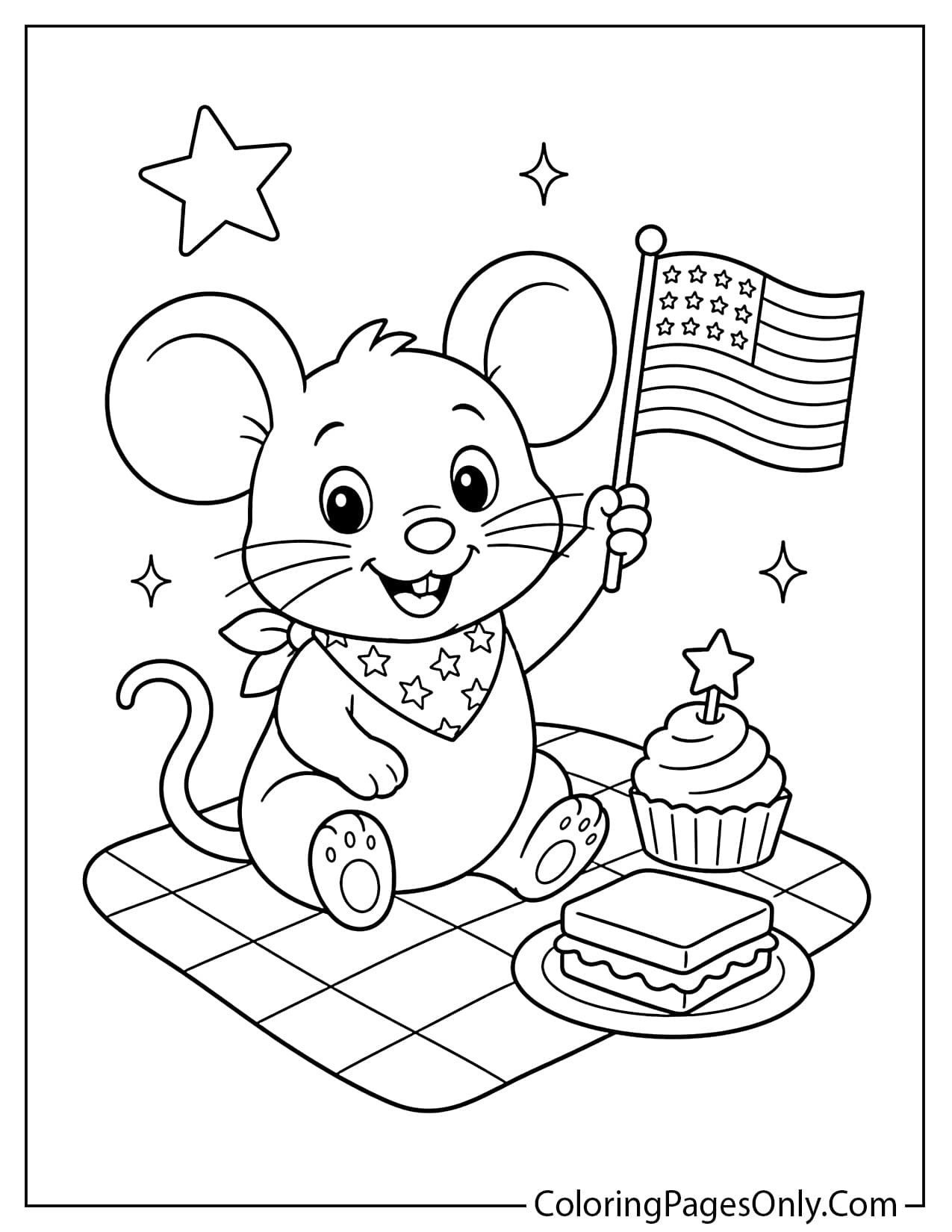
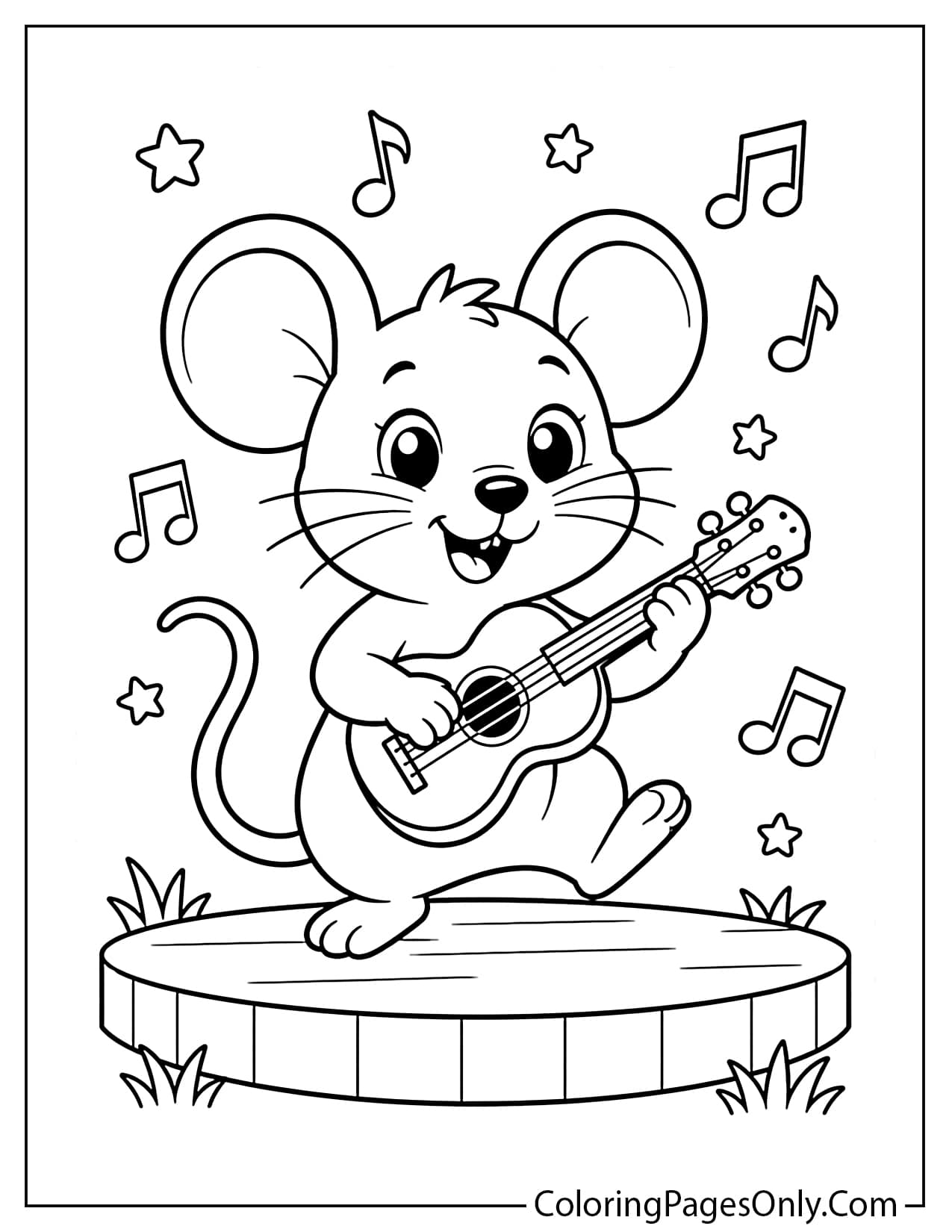

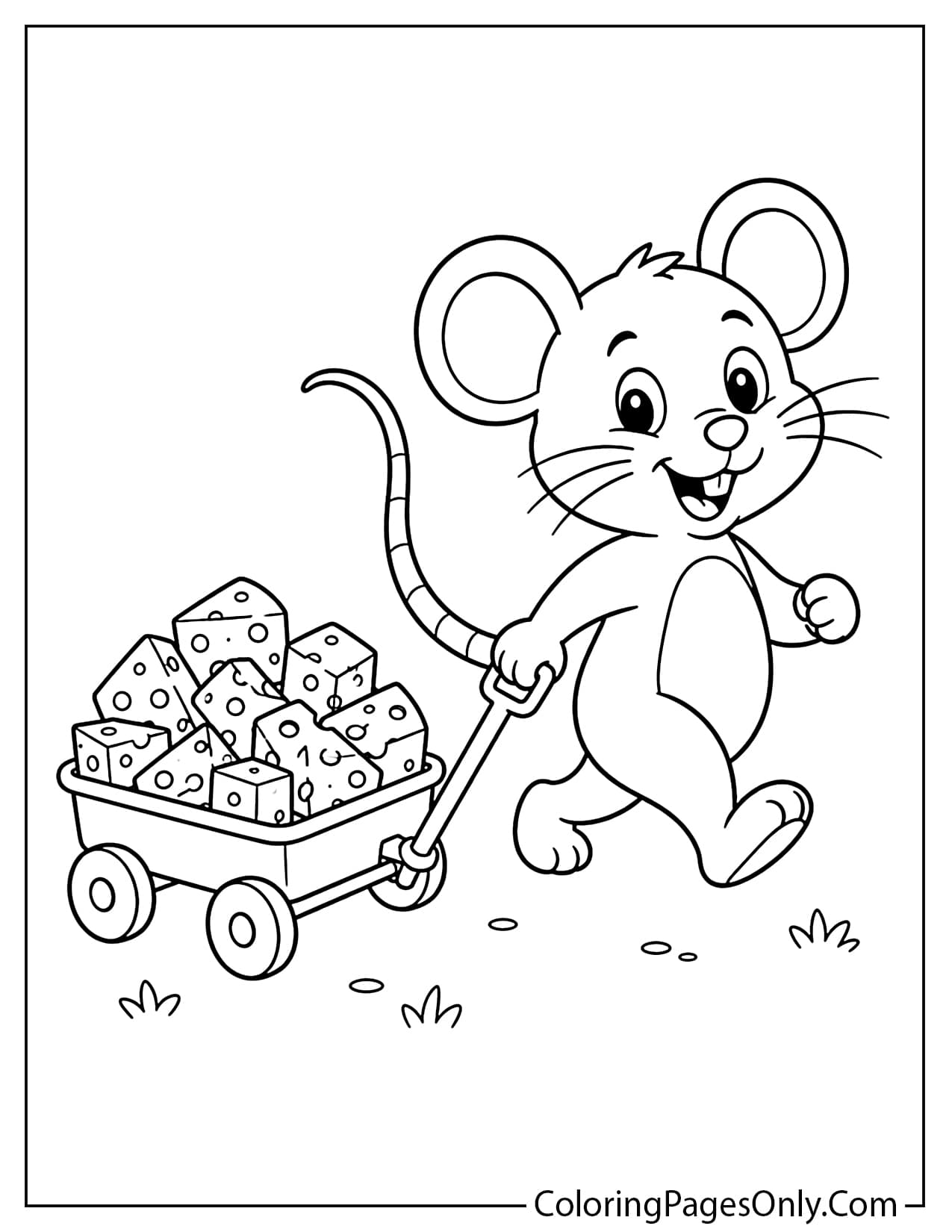
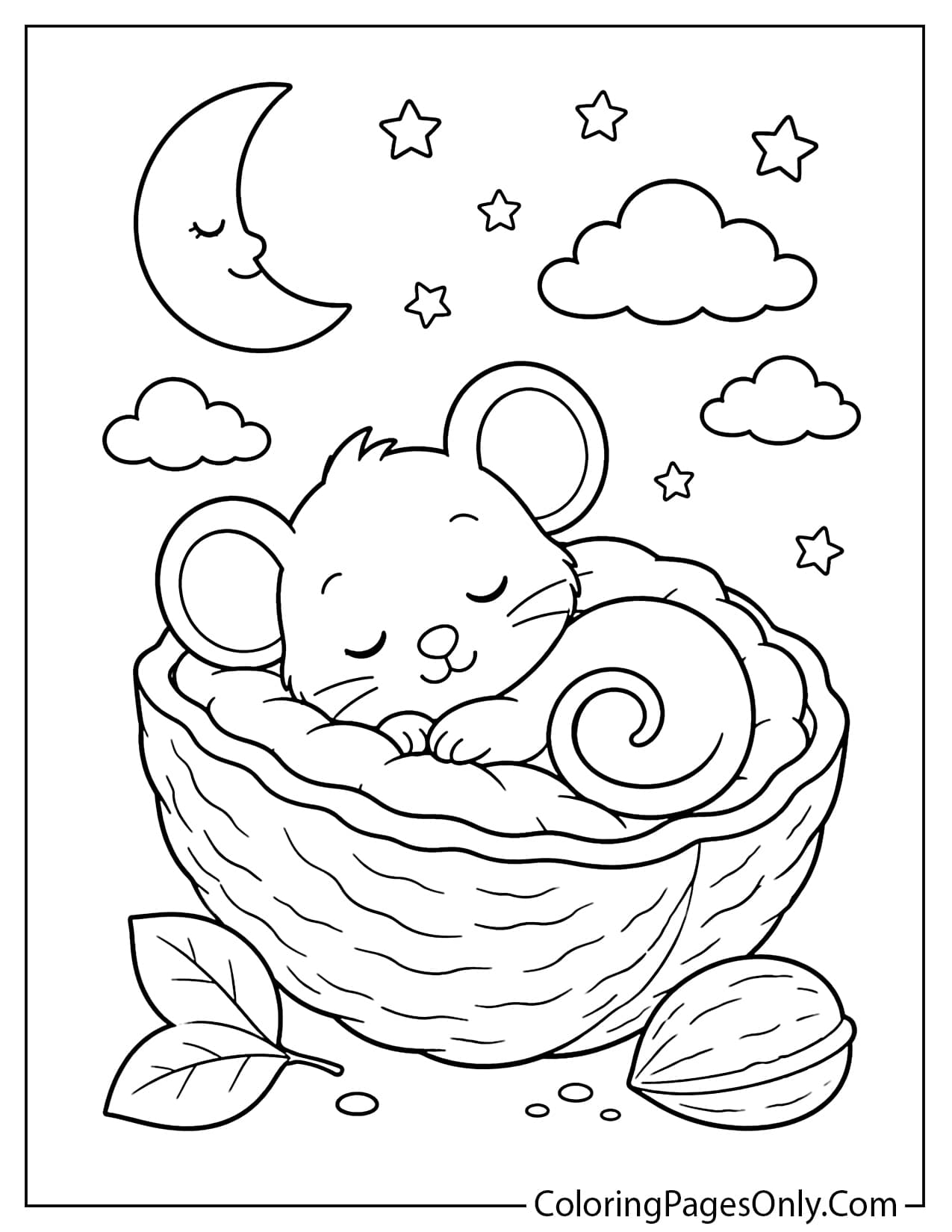
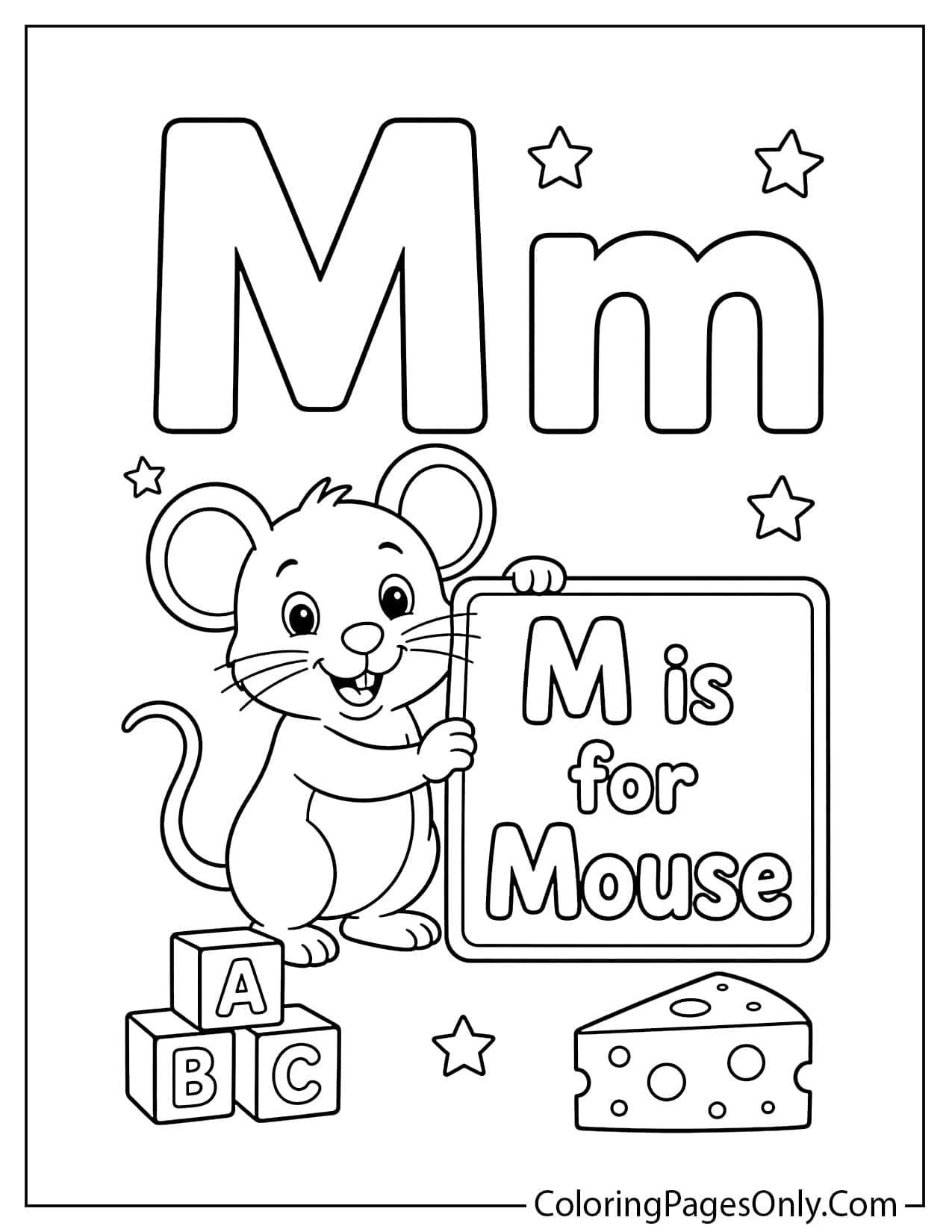
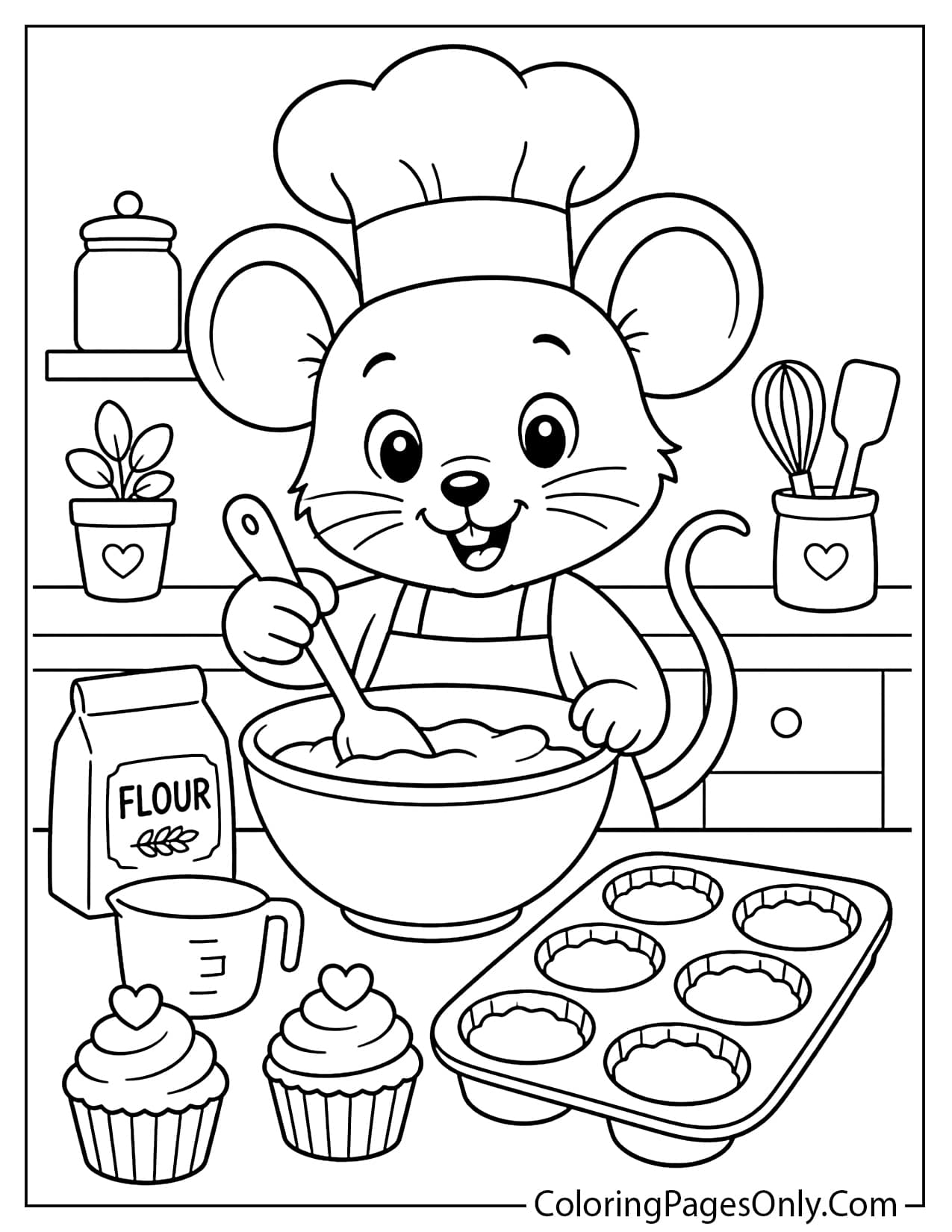
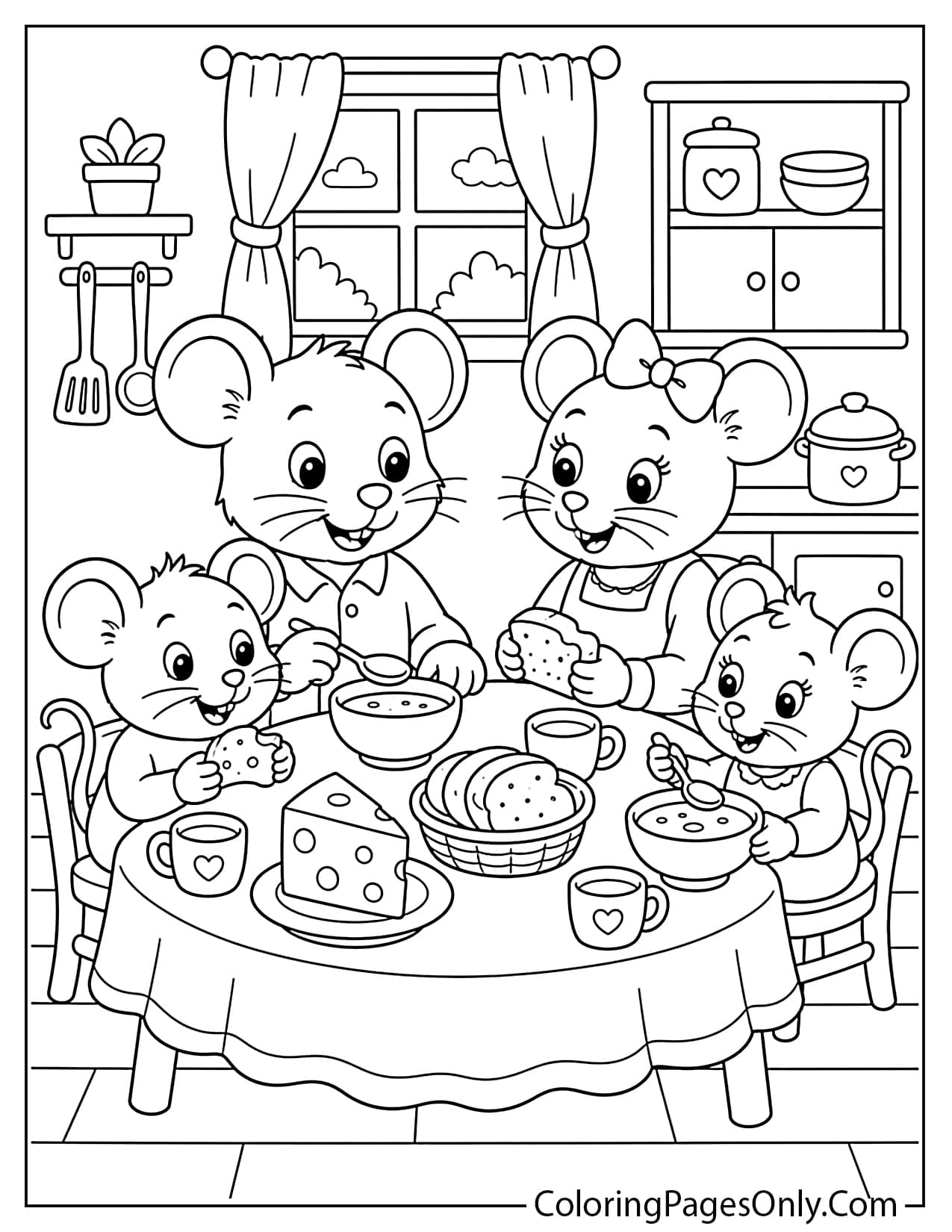
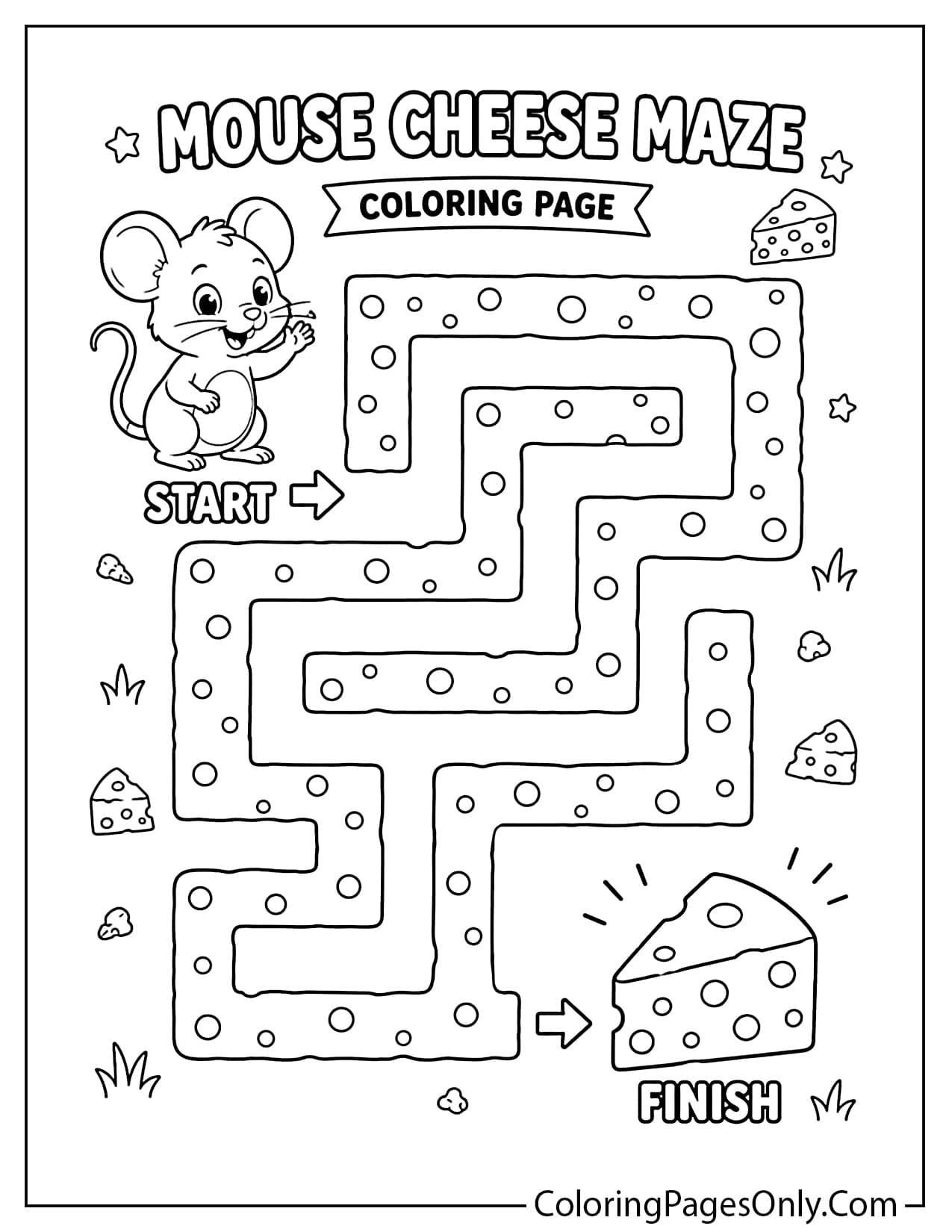
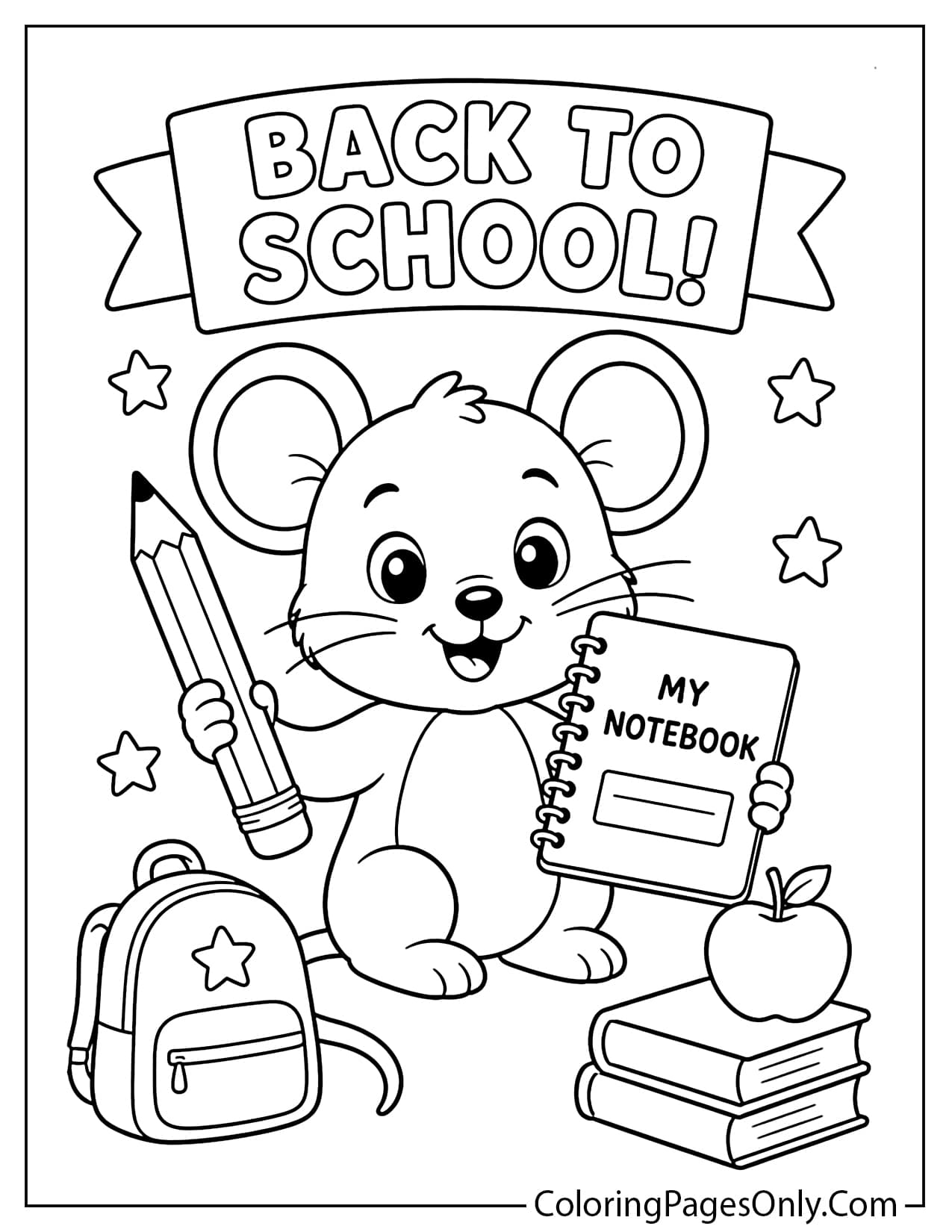
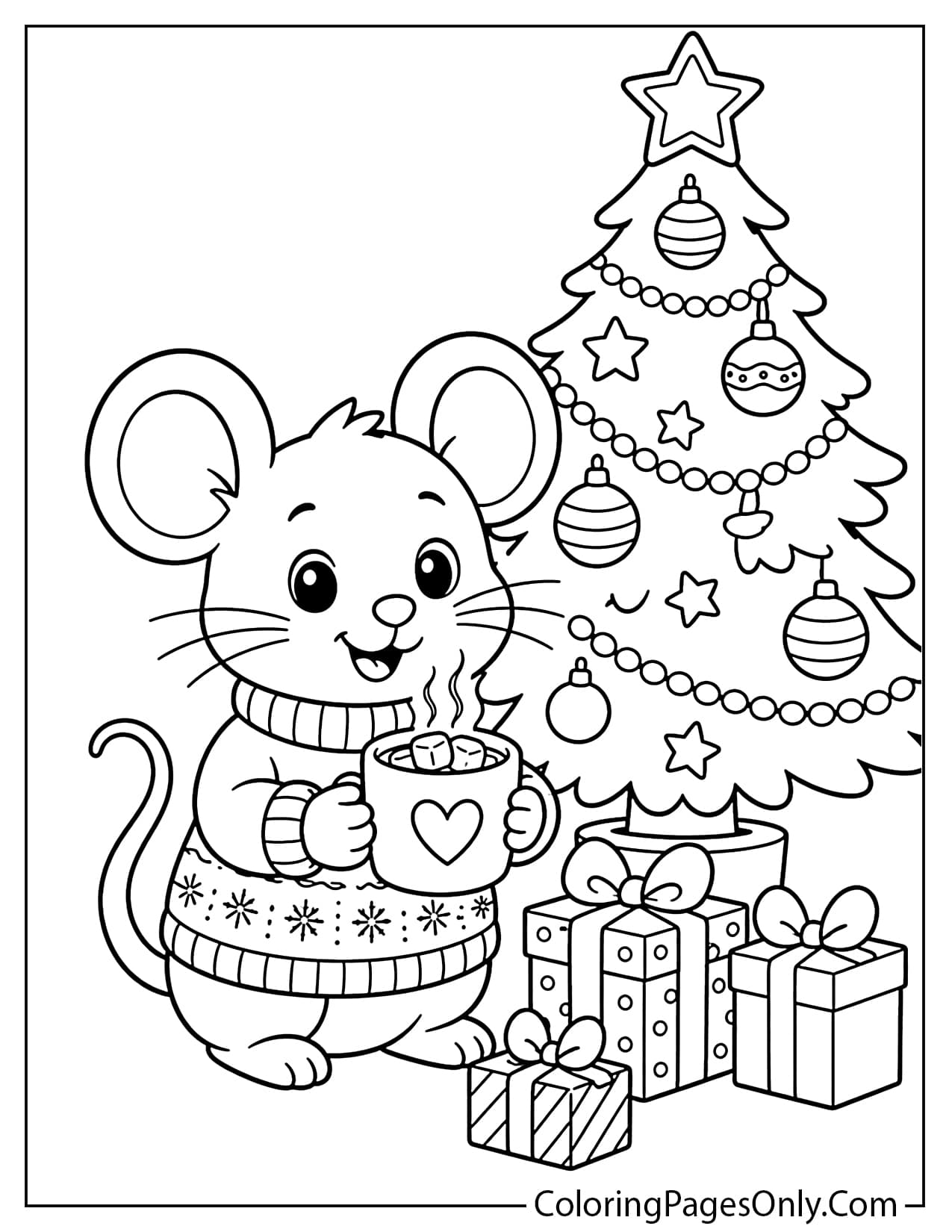
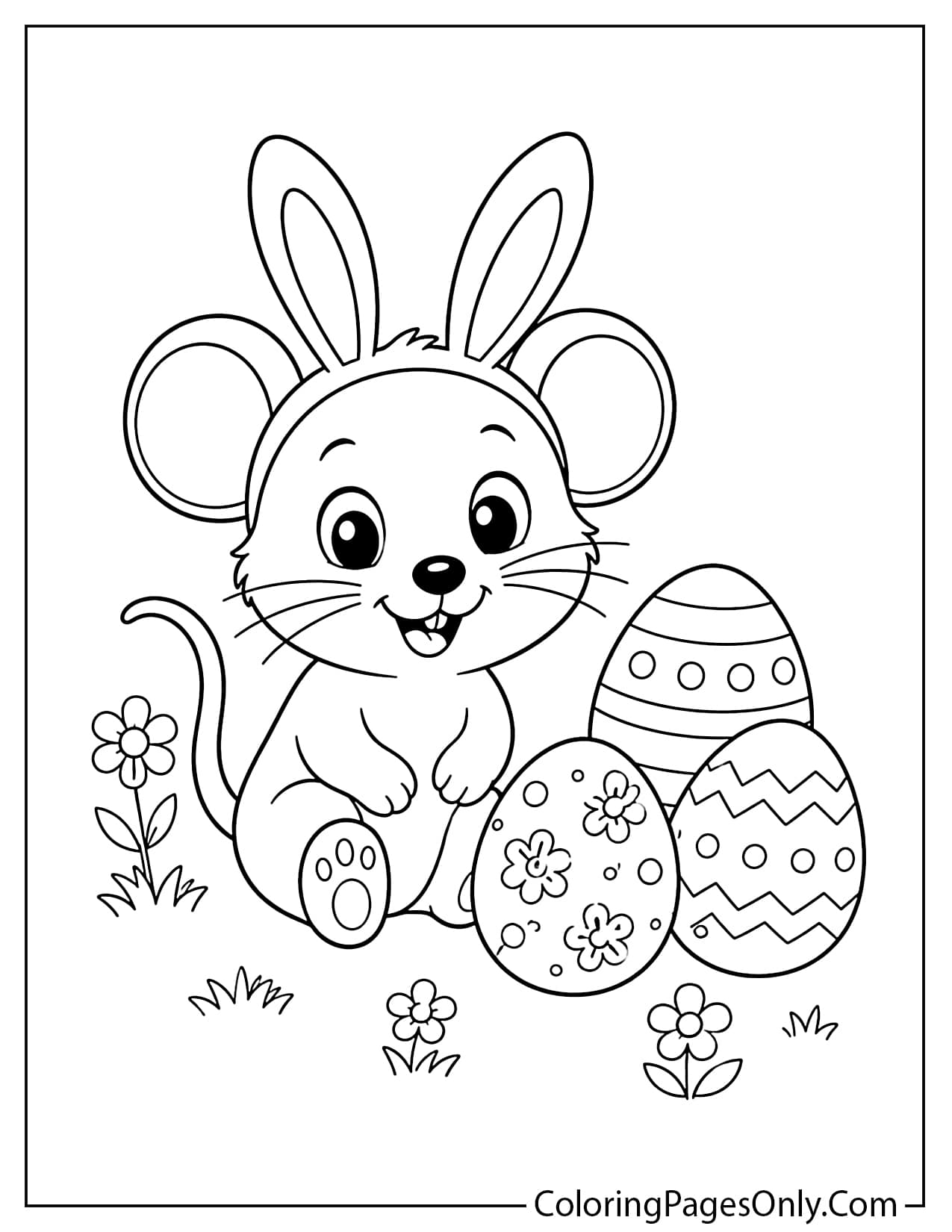
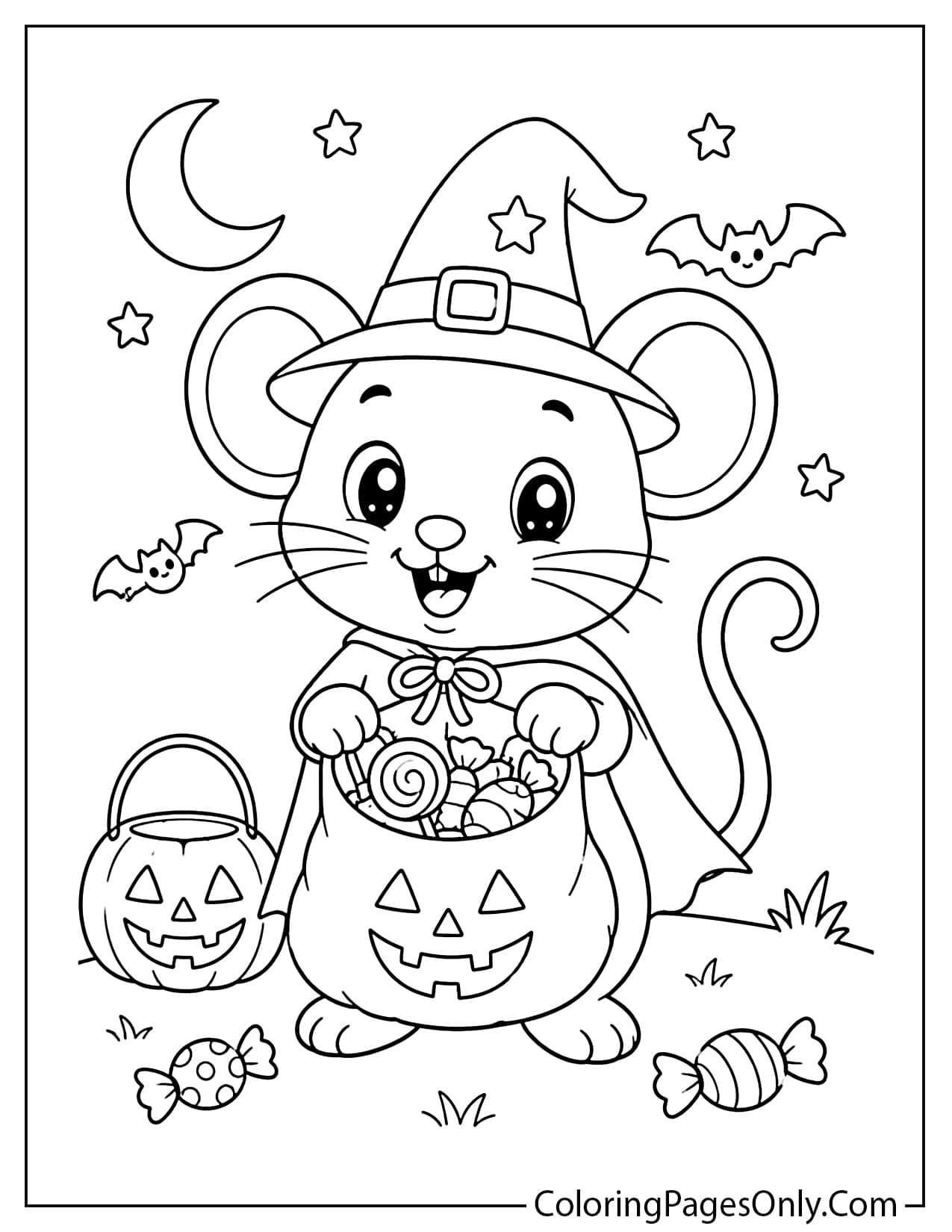
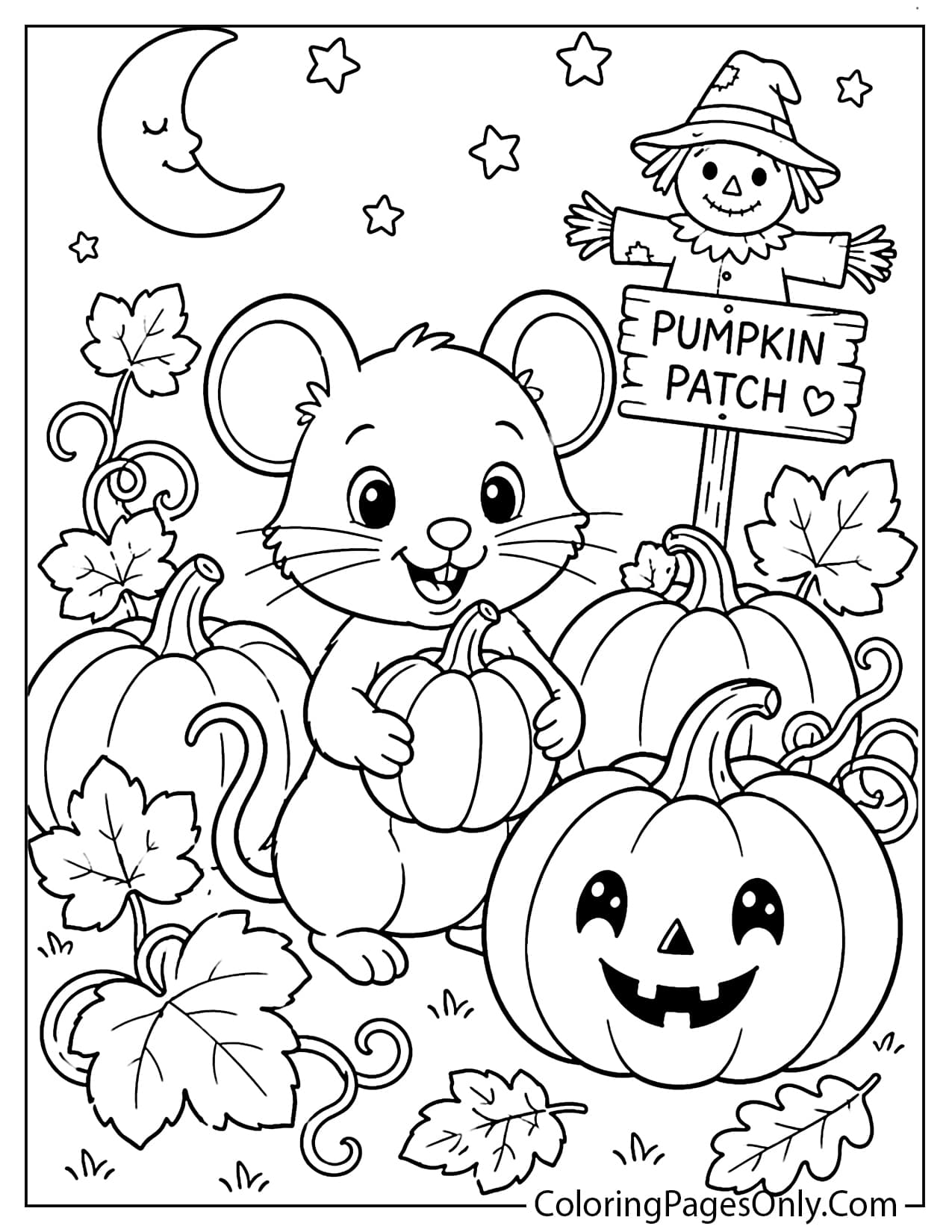
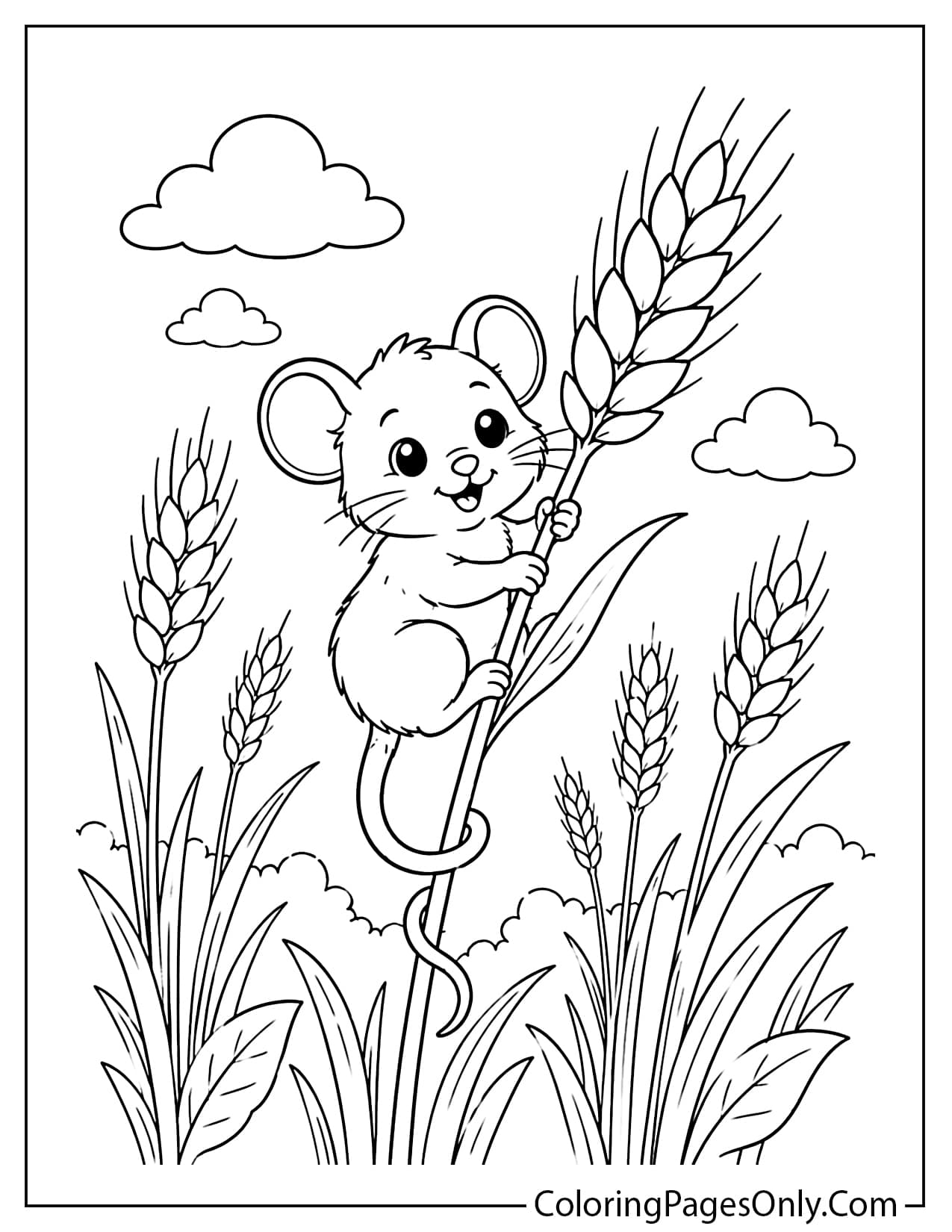
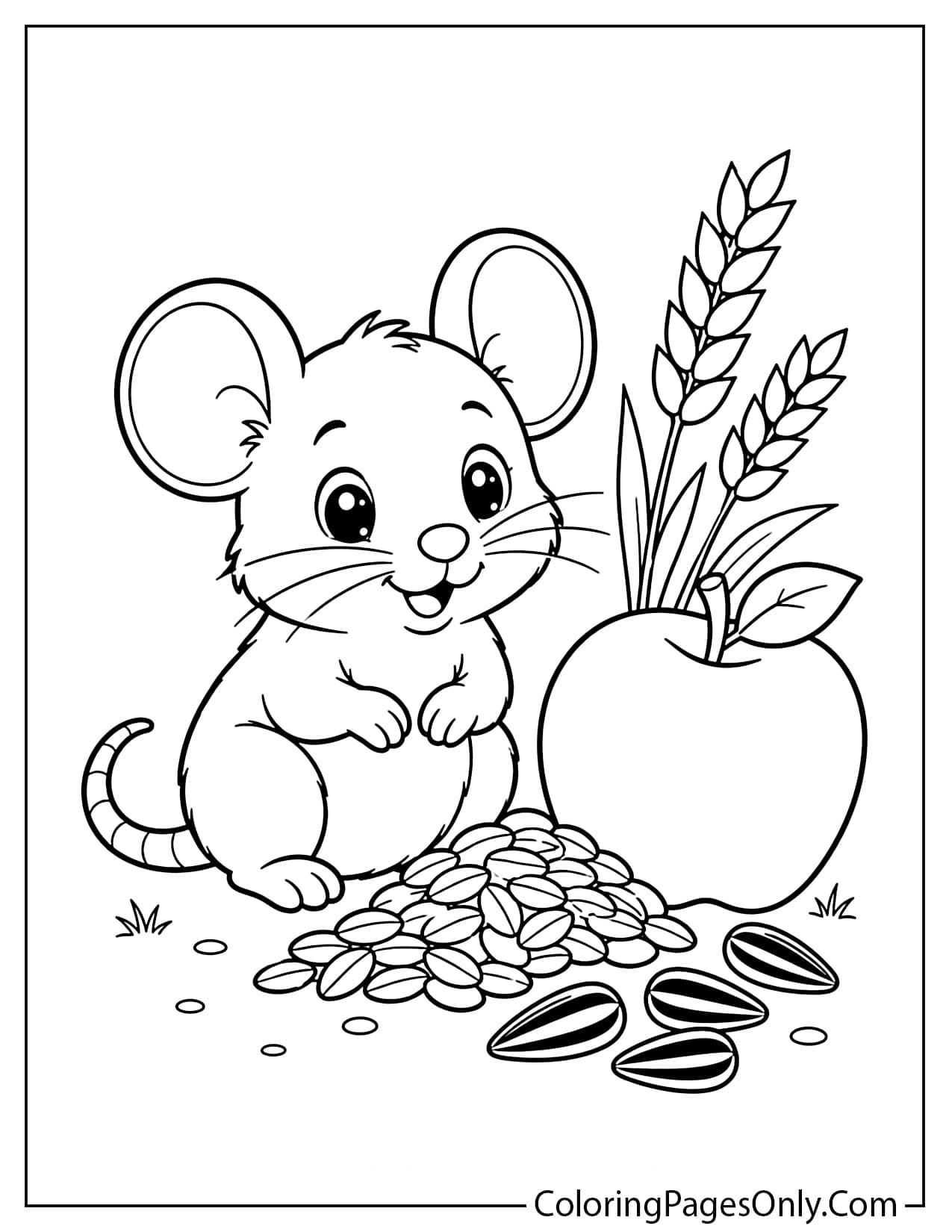
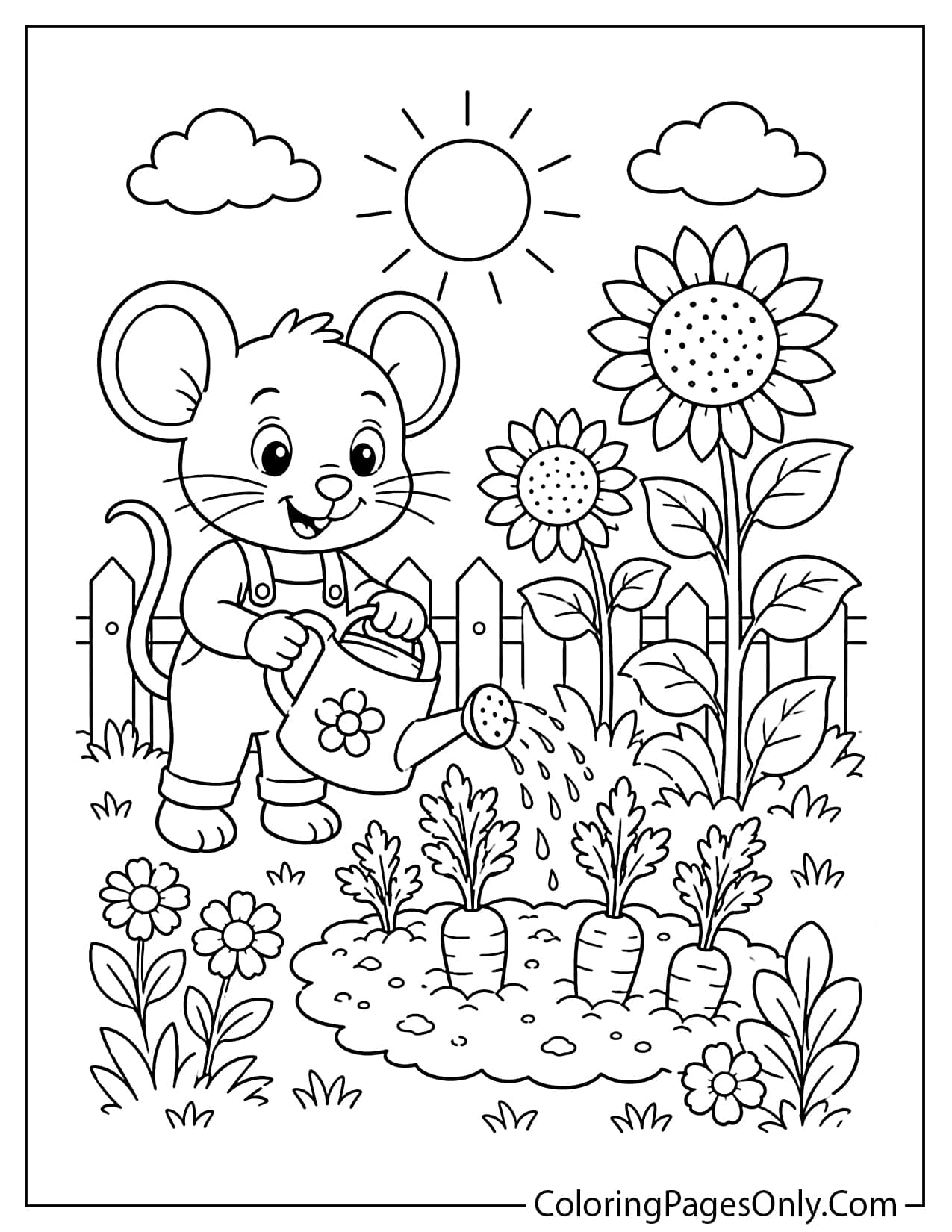
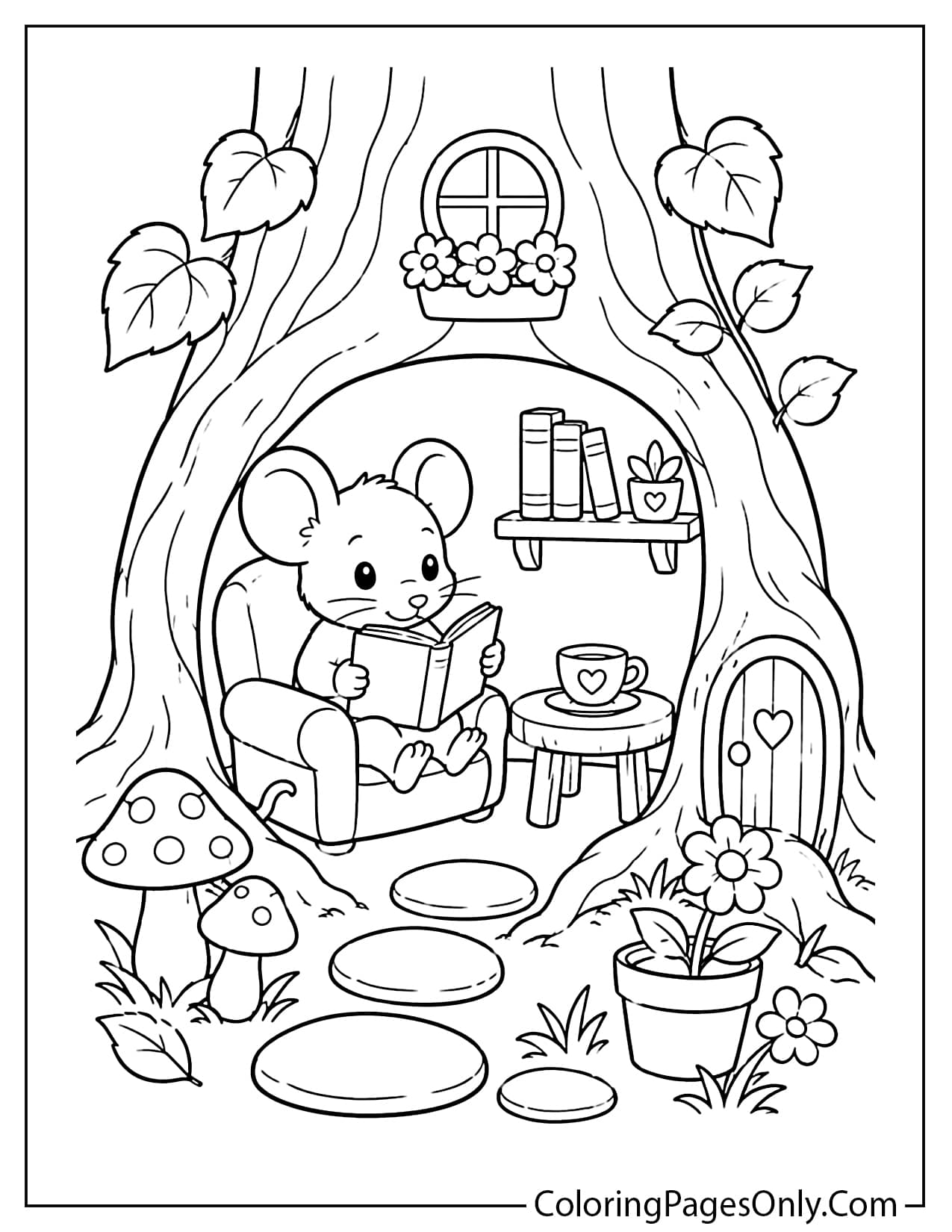
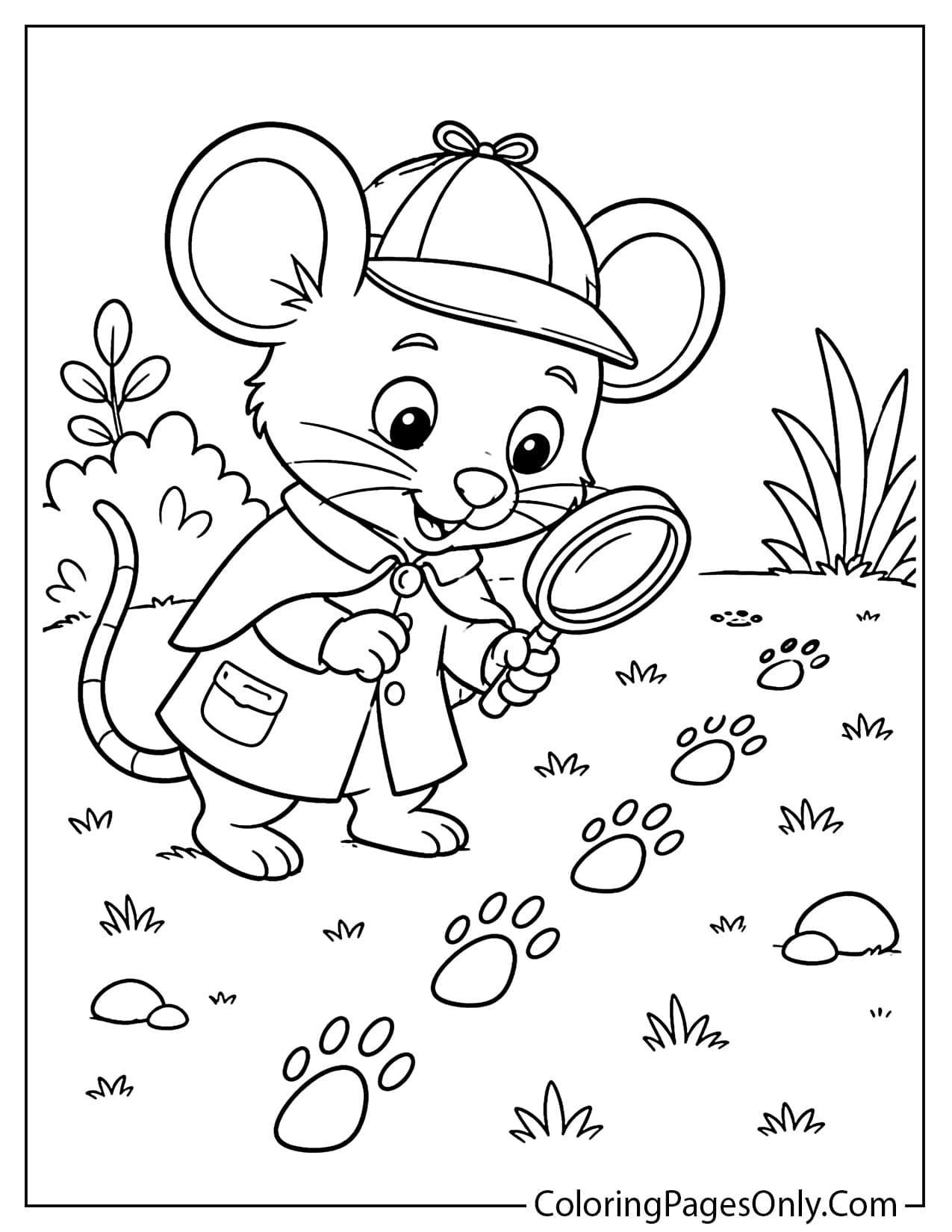
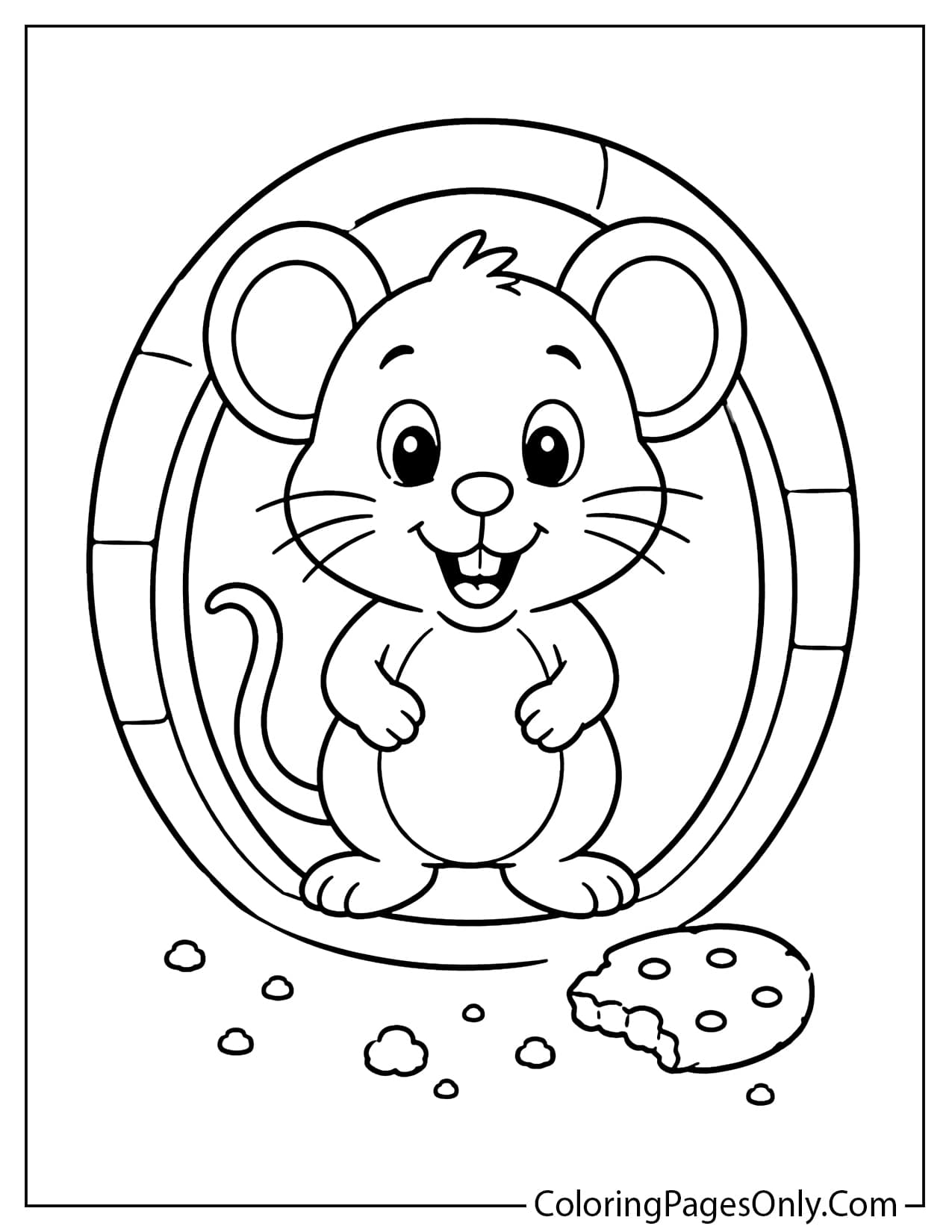
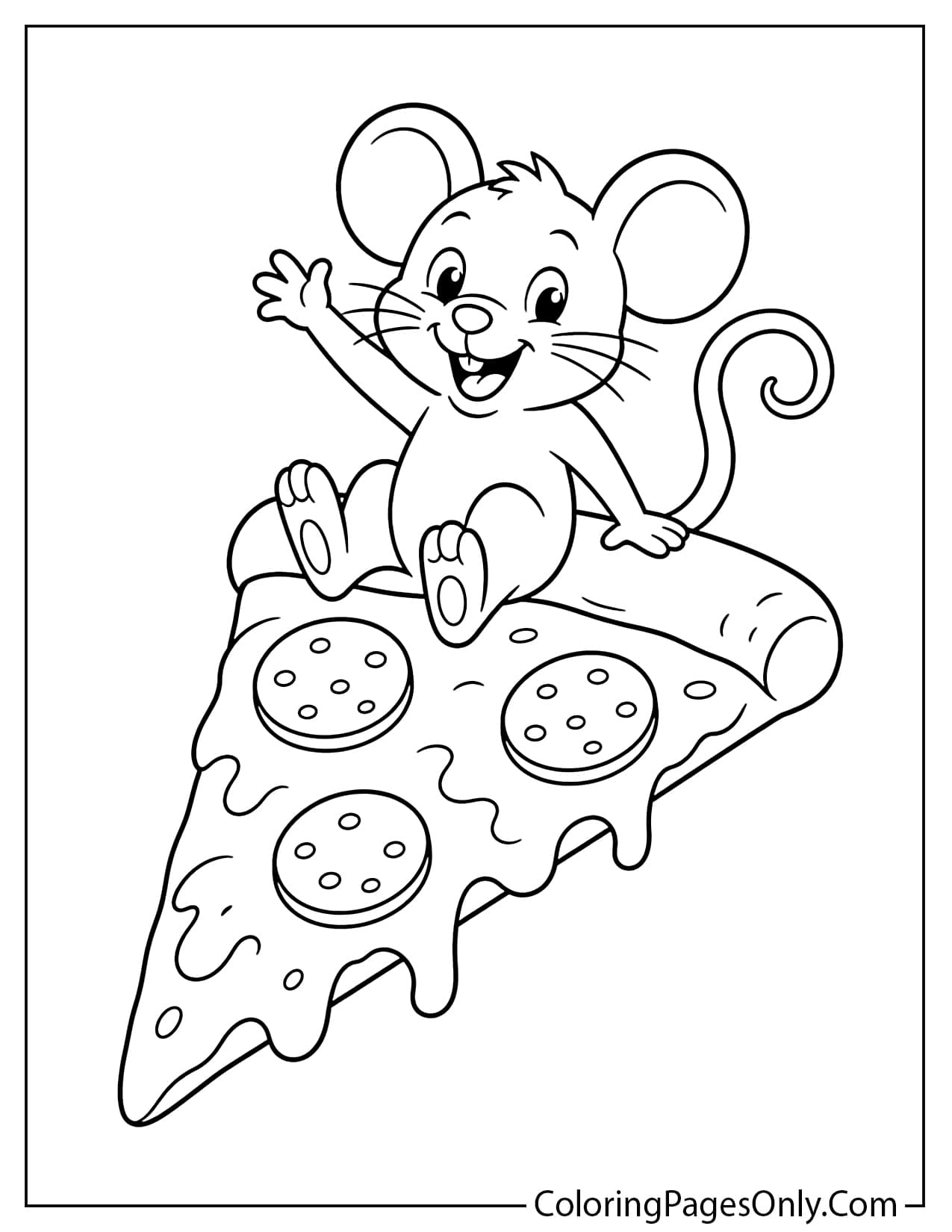
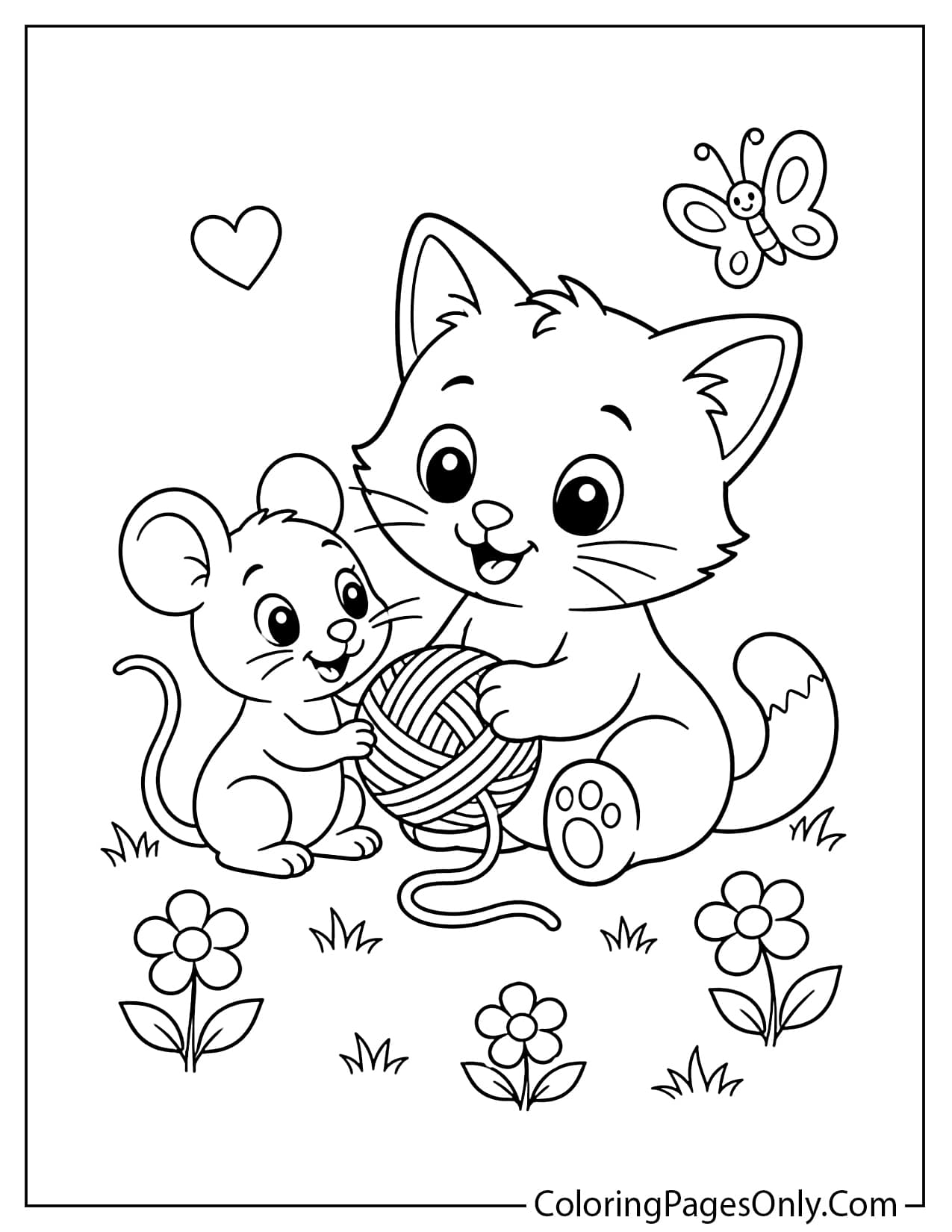
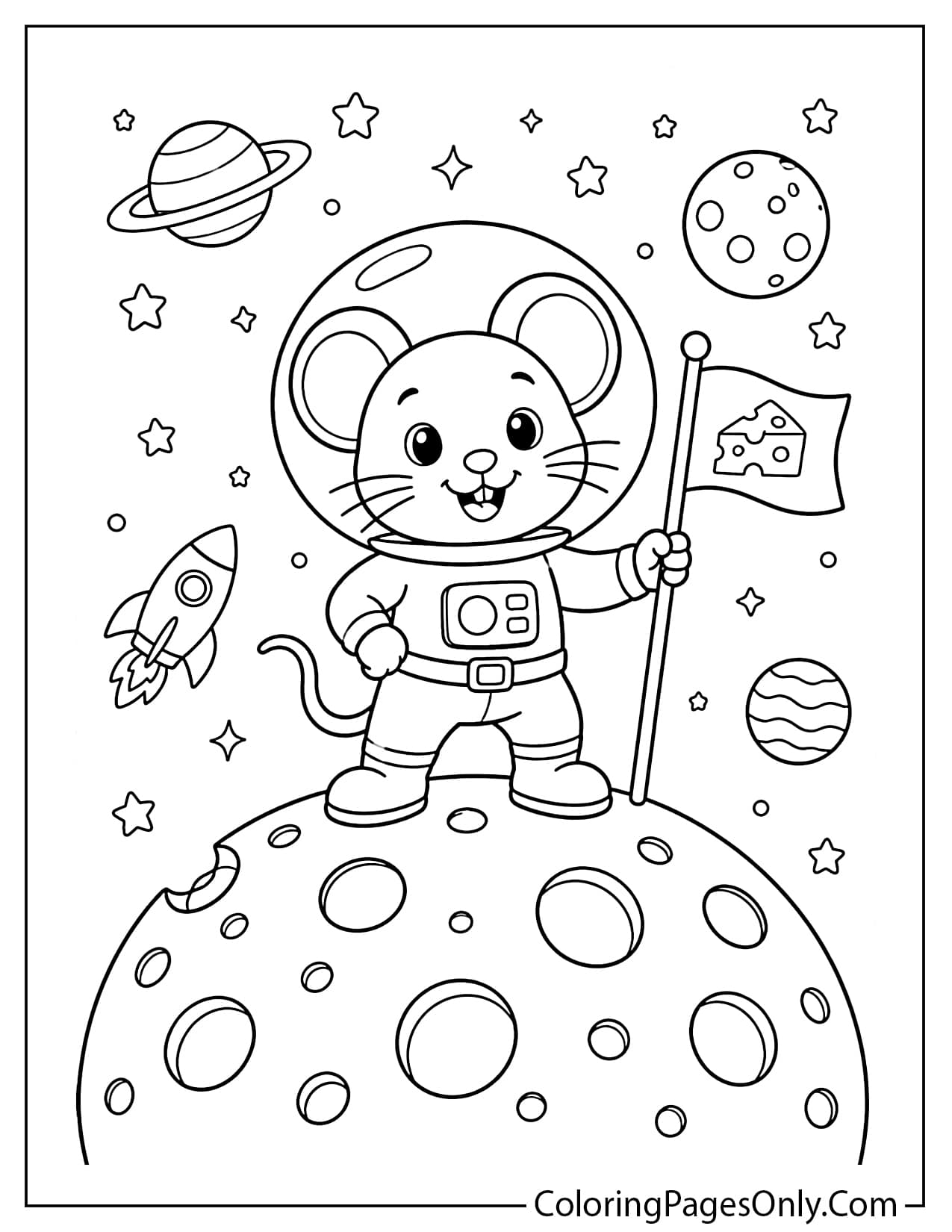
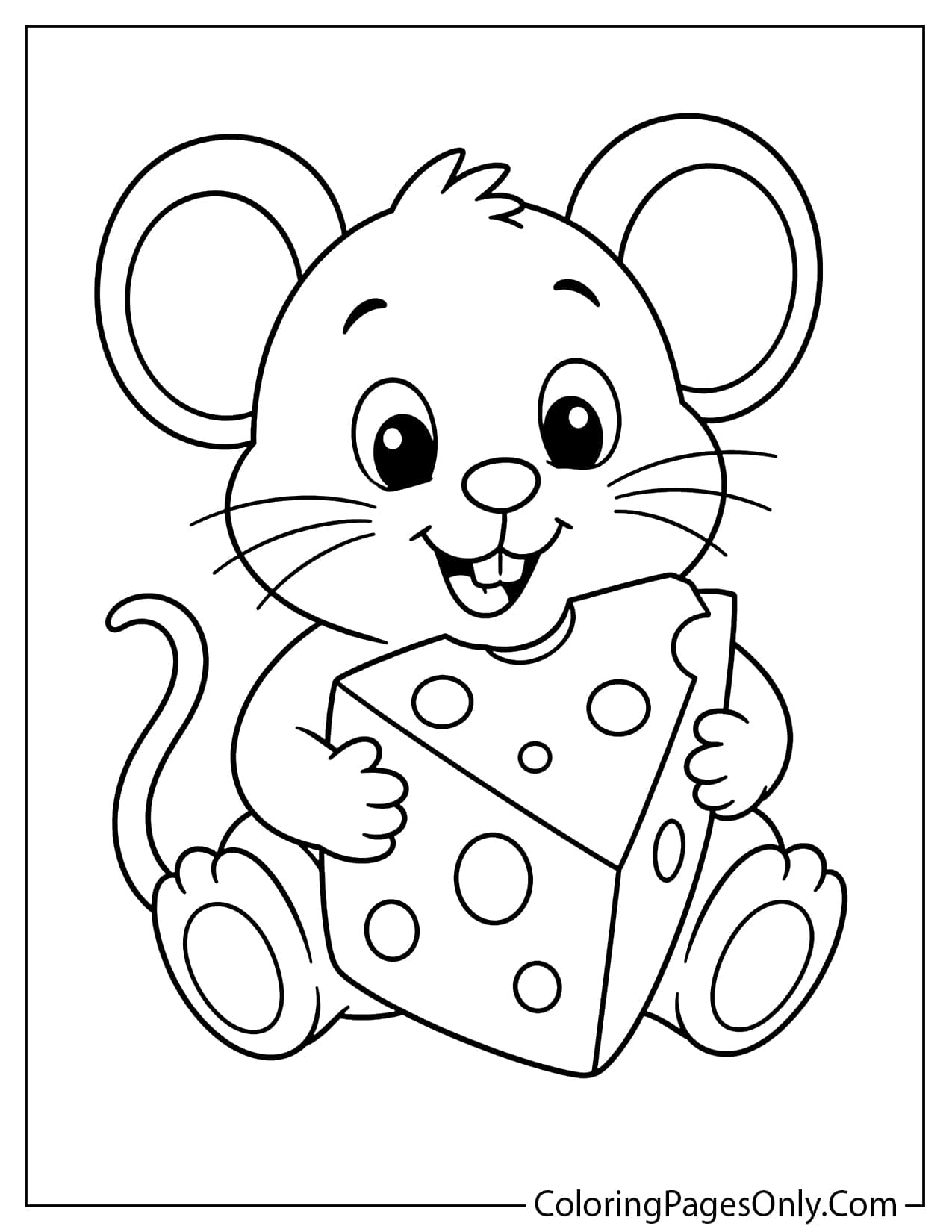
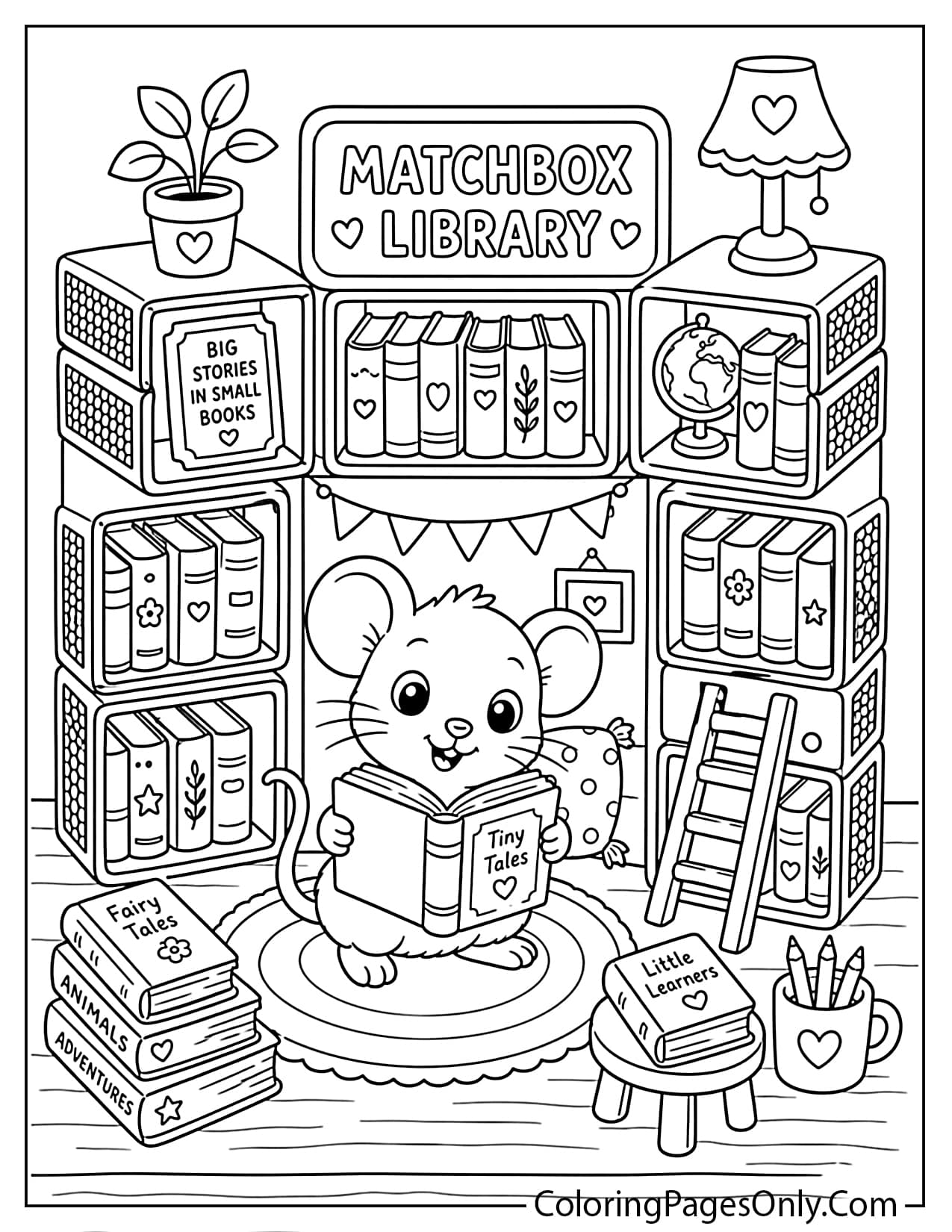
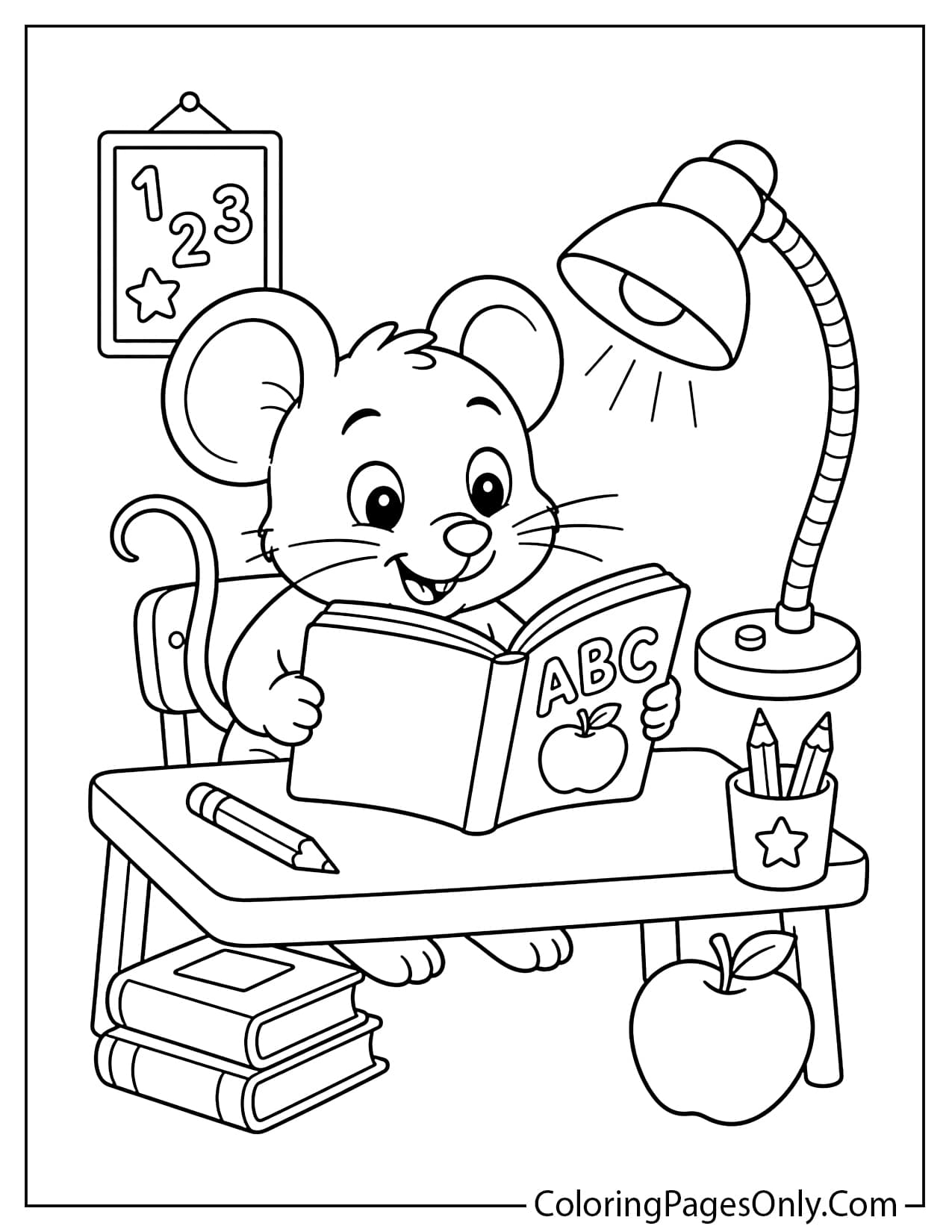
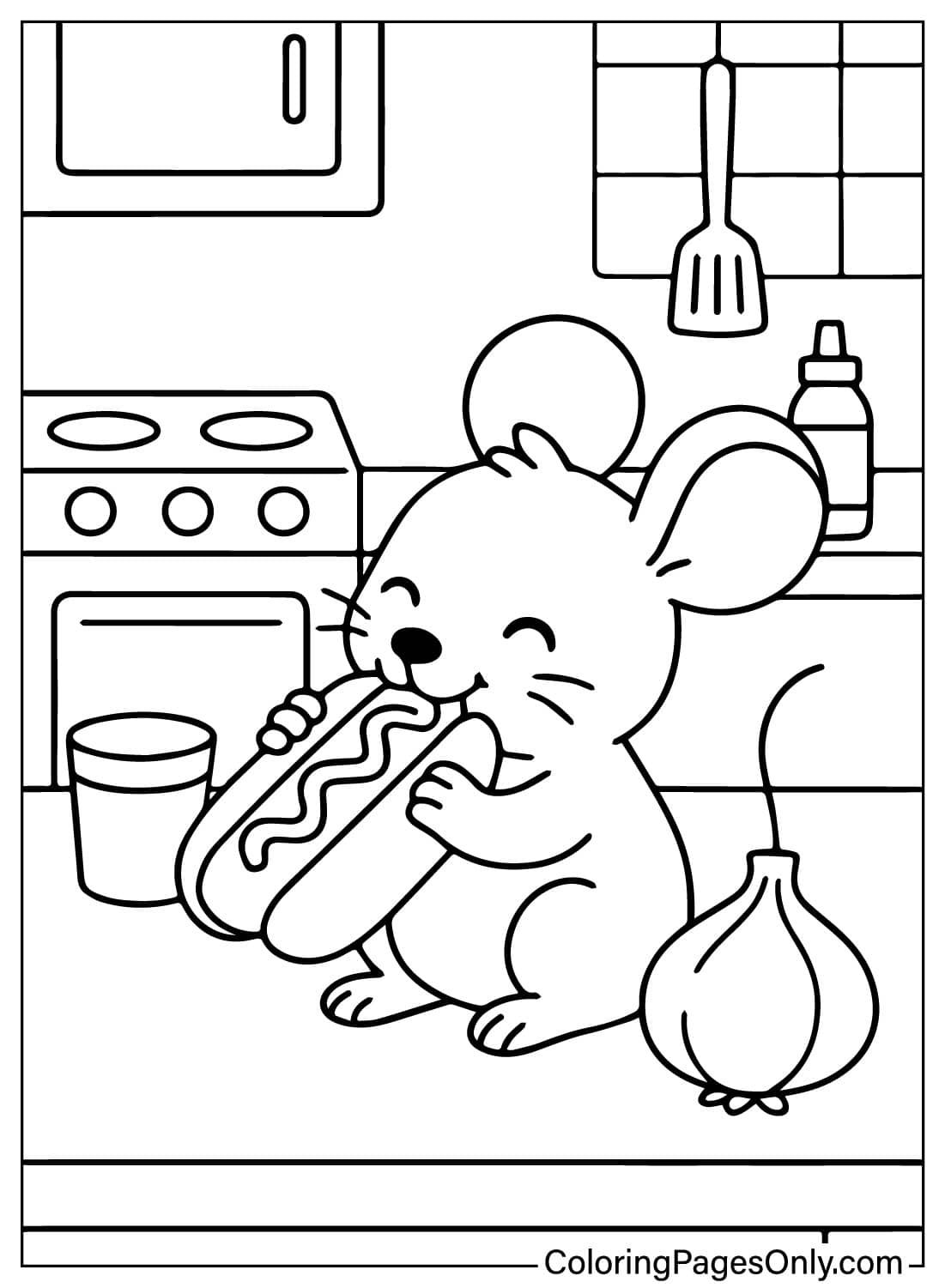
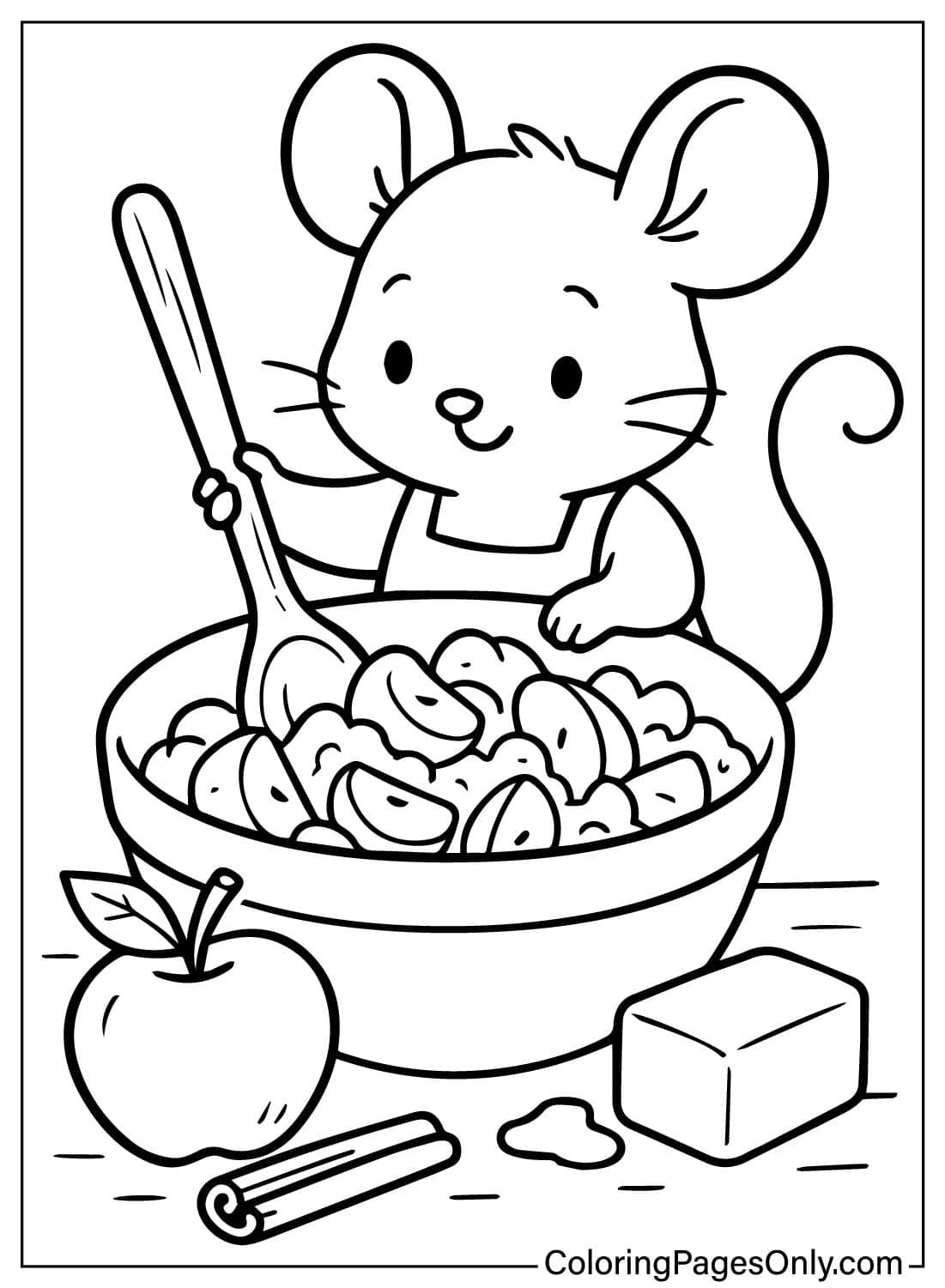
What’s Inside This Collection
Storybook mice, tiny adventures, mice at work and play, tasty treats, and seasonal pages make up the 32 sheets.
Storybook Mice
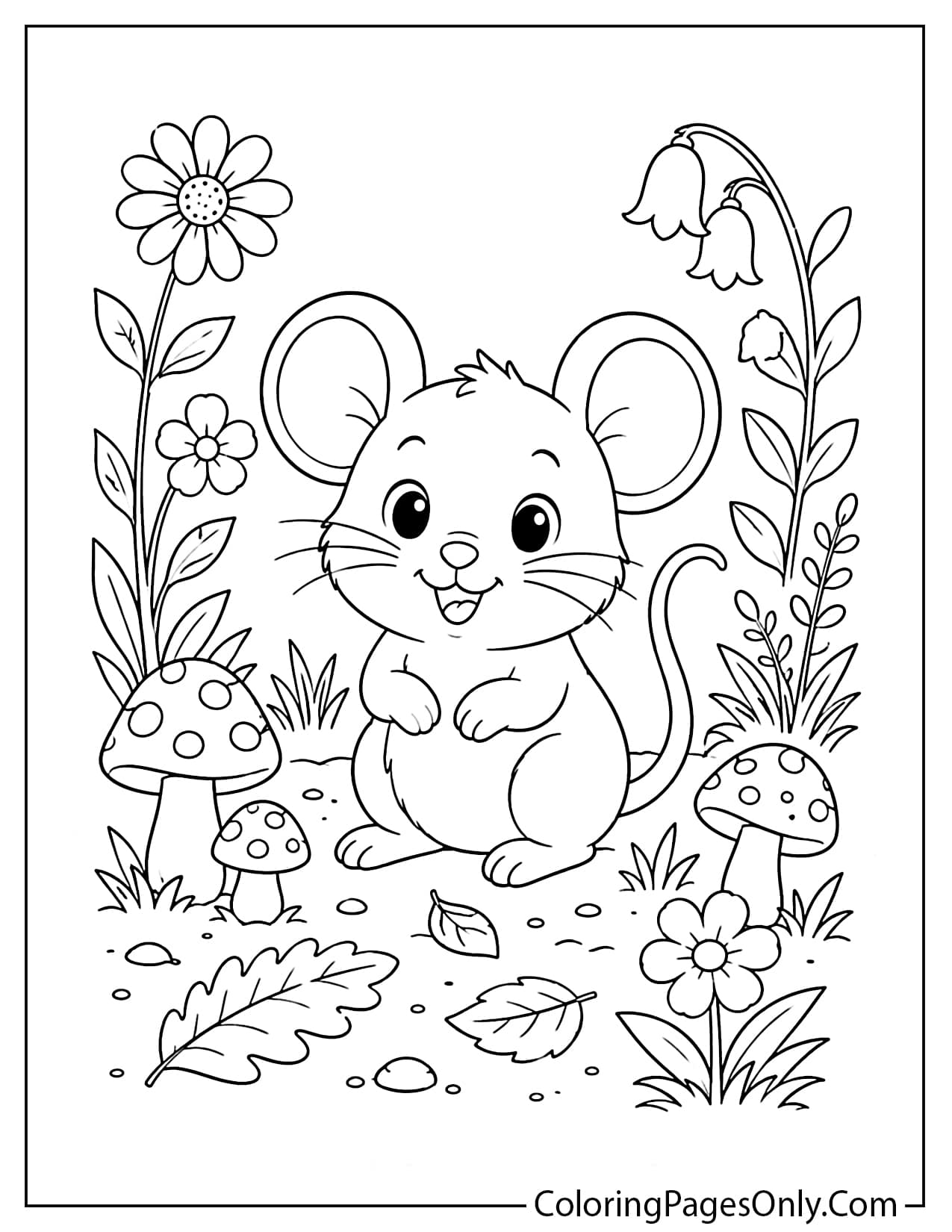
Gentle portraits show mice napping, peeking out of a mouse hole, and wandering through the woods, including Sleeping Baby Mouse. Color their fur soft Gray or warm Tan, with Pink ears, paws, and tails.
Tiny Adventures
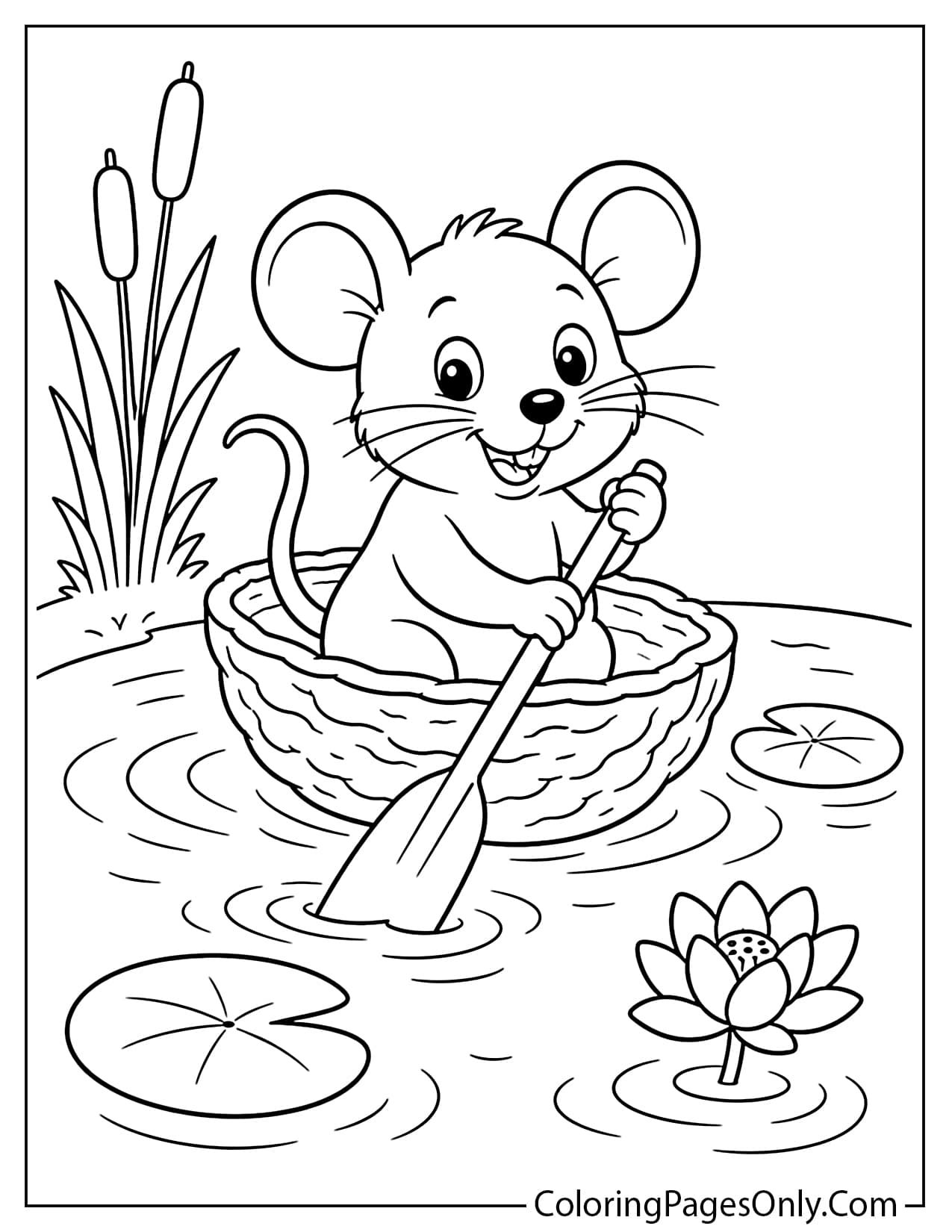
Mice sail, pull wagons, and even blast into space in these miniature scenes, like Mouse in a Walnut Boat. Use earthy Brown for nutshells and leaves, then add one bright color, such as Red or Sky Blue, to make the scene pop.
Mice at Work and Play
Mouse characters bake cupcakes, solve mysteries, tend gardens, read books, and play music. Give each job its own outfit, such as a White chef’s hat or a Brown detective coat.
Tasty Treats
Hungry mice nibble cheese, pizza, a hot dog, and a giant apple pie. Golden Yellow cheese with darker Orange holes and a Tan pie crust make the food look delicious.
Holidays, Seasons, and Learning Pages
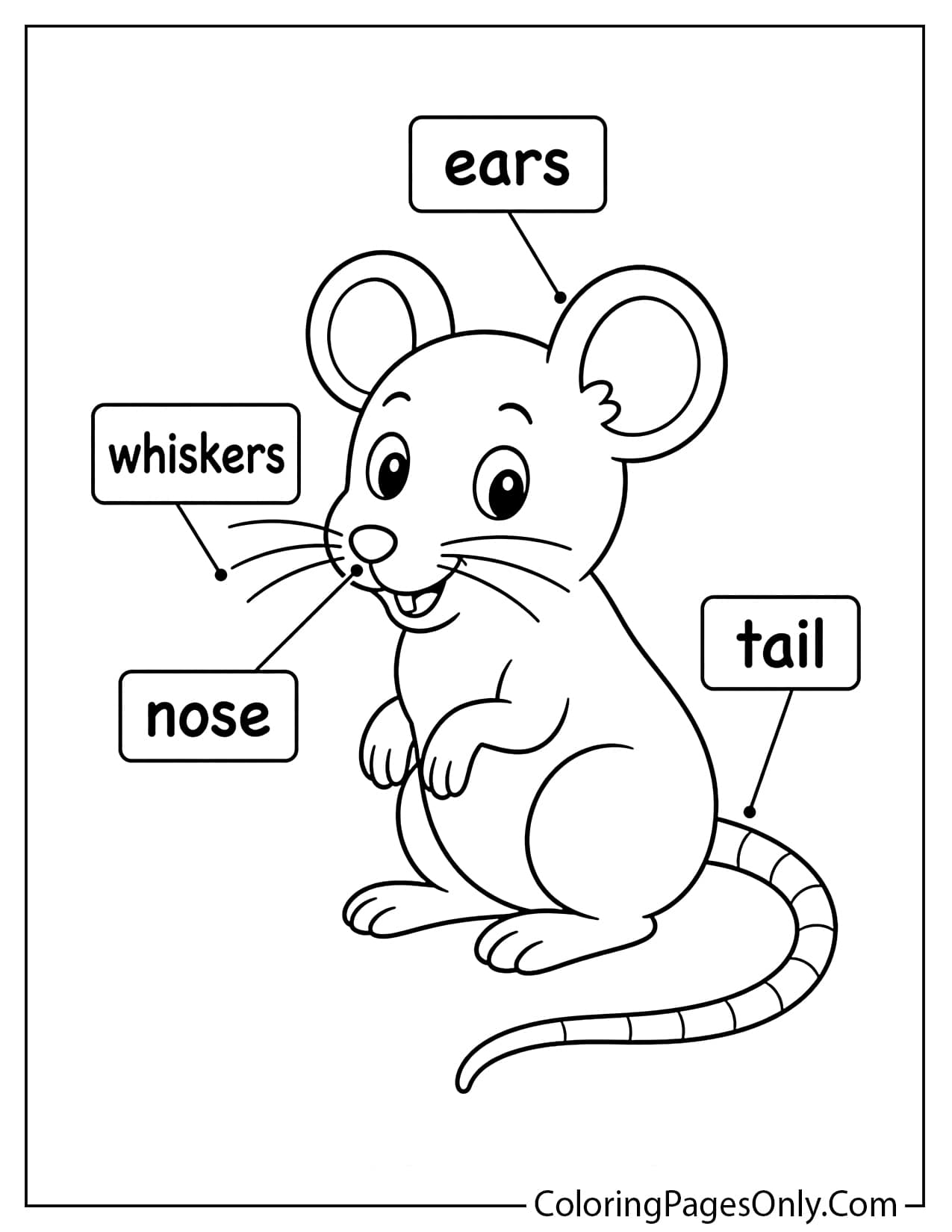
Mice celebrate Christmas, Easter, Halloween, Valentine’s Day, and the Fourth of July, and a few sheets include a simple anatomy diagram and a cheese maze. Festive colors like Red and Green or Pastel Pink and Lavender fit each season.
What Mouse Coloring Pages Do
Teaching about real animals. Mouse pages are a friendly way to introduce rodents, from their ever-growing teeth to their sensitive whiskers. The anatomy sheet lets kids point to ears, tail, and whiskers and learn what each part does.
Strengthening little fingers. Thin tails, tiny paws, and long whiskers call for slow, careful lines. Fine motor skills for children ages 2 through 7 get a boost from simple coloring practice, the American Academy of Pediatrics explains, and drawing whiskers in single, steady strokes is excellent pencil-control practice.
Bringing calm to a busy day. The cozy, small-scale scenes in this set feel peaceful and inviting. Structured coloring sessions brought measurable drops in anxiety in a 2005 Art Therapy Journal study, so filling in a snug mouse house is a soothing way to end the day.
Busting a famous myth. Cartoons often show mice loving cheese, but real mice prefer seeds, grains, and fruit. Parents can use the cheese pages to talk about how stories sometimes differ from real animal behavior.
How to Color Mouse Pages Well
- Soft fur: Use short, light strokes of Gray or Tan, and leave the belly a little lighter. Layering two shades makes the fur look fluffy rather than flat.
- Ears and tail: Color the inside of the ears Light Pink and the tail a slightly darker Rose. A thin White curve on the ear makes it look round.
- Whiskers: Draw whiskers last with a sharp Black or Dark Gray pencil, using one quick stroke each. Keep them long and fanned out from the nose.
- Eyes and nose: Fill the eyes with black, leaving a tiny white dot for sparkle, and color the nose Pink. Bright eyes make the mice look curious and friendly.
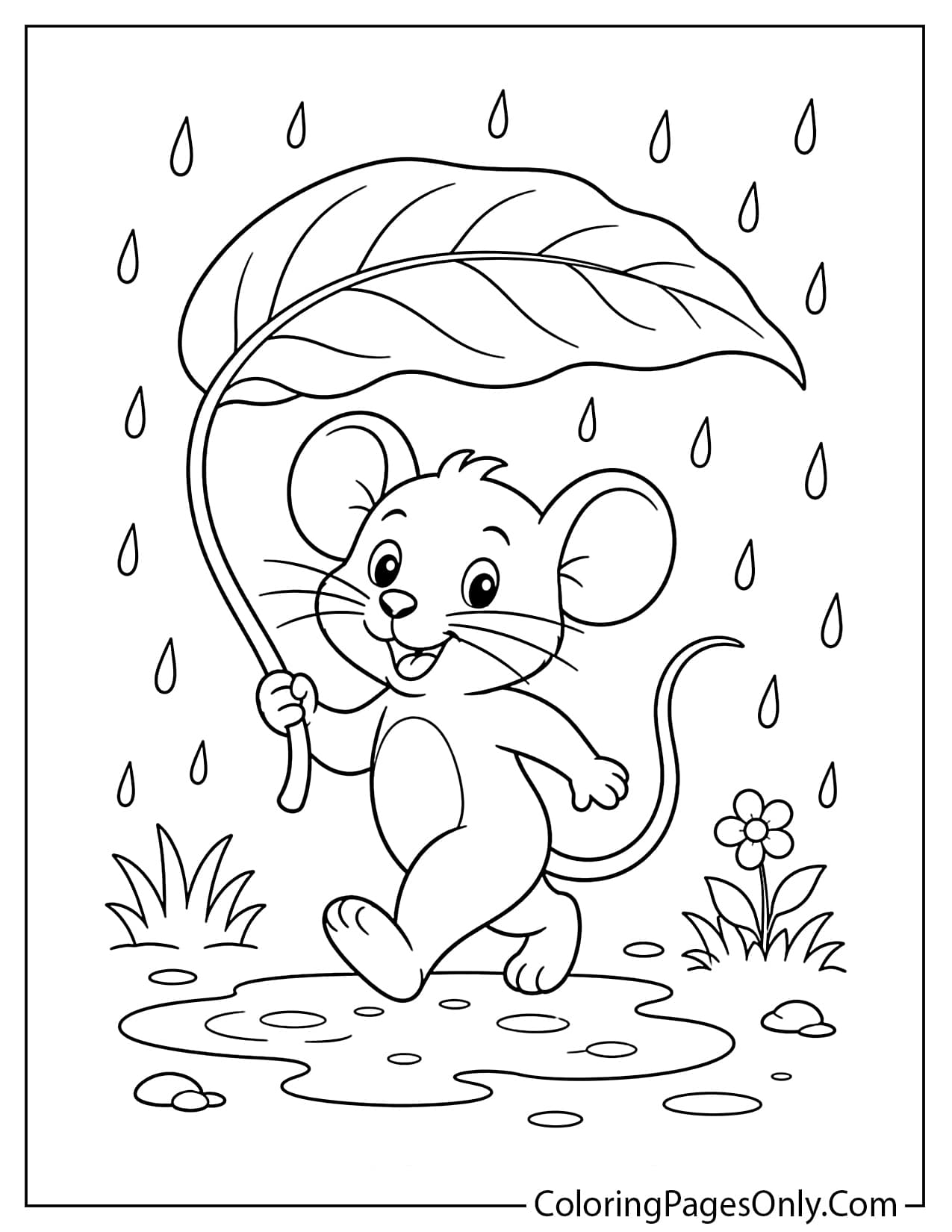
- Miniature props: Make objects like walnut boats and leaf umbrellas look big next to the mouse by adding rich detail, such as Brown wood grain or Green leaf veins.
- Backgrounds: Add a cozy Tan wall with a dark mouse hole, or a Green meadow with Yellow flowers. The background sets the mood for each mouse adventure.
5 Creative Craft Ideas With Mouse Coloring Pages
1. Mouse Hole Door Hanger
Color a mouse peeking from its hole, cut it out, and glue it to a door-hanger shape cut from cardstock. Write a fun sign, such as Quiet, Mouse Napping and hang it on a bedroom door.
2. Walnut Boat Diorama
Color the walnut boat page and cut out the mouse. Glue it into half of a real walnut shell or a paper boat, then set it on blue paper waves.
3. Mouse Facts Mini Book
Fold two sheets of paper into a small booklet and glue the anatomy page on the cover. Inside, write one fact per page about teeth, whiskers, tails, and food.
4. Cheese Maze Game
Color the cheese maze, then glue it onto cardboard for a sturdy game board. Kids can race a small paper mouse token through the maze to reach the cheese.
5. Seasonal Mouse Garland
Color several holiday mice, cut them out, and clip them onto a length of yarn. Swap the mice as the seasons change to decorate a window or classroom.
Frequently Asked Questions
What are Mouse coloring pages?
They are 32 free printable sheets featuring baby mice, storybook scenes, mice with jobs and hobbies, tasty treats, and holiday designs. The whole set is available as PDFs or as online coloring pages.
What is a mouse?
A mouse is a small rodent with a pointed nose, round ears, and a long tail. There are many species around the world, and the house mouse is the one people see most often.
Do mice really like cheese?
Not especially. In the wild, mice mostly eat seeds, grains, nuts, and fruit, and they are more attracted to sweet foods than to cheese.
Why do mice chew so much?
A mouse’s front teeth never stop growing, so it must gnaw on hard things to wear them down. Without chewing, the teeth would grow too long to eat with.
What are a mouse’s whiskers for?
Whiskers are sensitive hairs that help a mouse feel its surroundings, especially in the dark. They help it judge narrow spaces and find its way through tunnels.
What is the difference between a harvest mouse and a house mouse?
The harvest mouse is a very small mouse that weaves round nests out of grass stems in fields. The house mouse is larger and often lives near people, in buildings, barns, and gardens.
What age are Mouse coloring pages for?
The baby mice and simple portraits work for kids from about 3, while the miniature scenes and detailed mouse house suit older children and adults. Teachers often use them in animal and alphabet units.
How small a space can a mouse fit through?
A mouse can squeeze through a hole about a quarter of an inch wide, roughly the width of a pencil. Its flexible body lets it slip through any gap its head can pass.
Start Coloring
Choose a sleepy baby mouse, the walnut boat, or a mouse chef, then print it or color it online with no sign-up required. Animal lovers can share their finished pages on Facebook or Pinterest.