
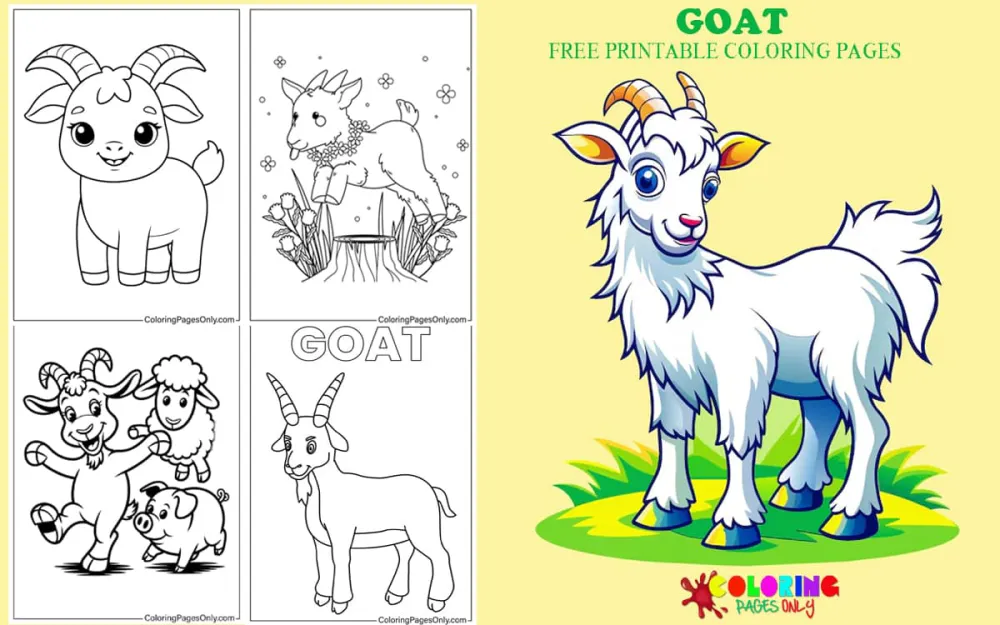
Goat coloring pages: 48 printable PDF designs spanning pasture and farmyard scenes, cartoon and character goats, and simple, realistic portraits. Each page can be downloaded as a PDF to print or colored online in the browser.
Goats were among the very first animals humans domesticated, roughly 10,000 years ago in the Zagros Mountains of what is now Iran, descended from the wild bezoar goat. That long history shows up in a small physical detail worth getting right on a realistic portrait: a goat’s pupil is a horizontal rectangle rather than round, an adaptation that gives it a wide field of view, close to 320 degrees, for spotting predators while its head is down grazing. One real goat breed takes farm quirks even further. Tennessee fainting goats carry a harmless genetic condition that makes their muscles briefly lock up when startled, causing them to topple over for a few seconds before getting back up completely unharmed. None of that history is necessary to enjoy the cartoon and character pages in this set, goats riding bikes, doing yoga, or keeping a classic storybook character company. Still, it’s there for anyone coloring the more realistic portraits who wants the details to hold up.
With 48 pages split between pasture scenes, cartoon personalities, and simple portraits, the set works as a quick farm-animal page for a young colorist and as a slightly more detailed project for anyone who wants to get a goat’s features right.
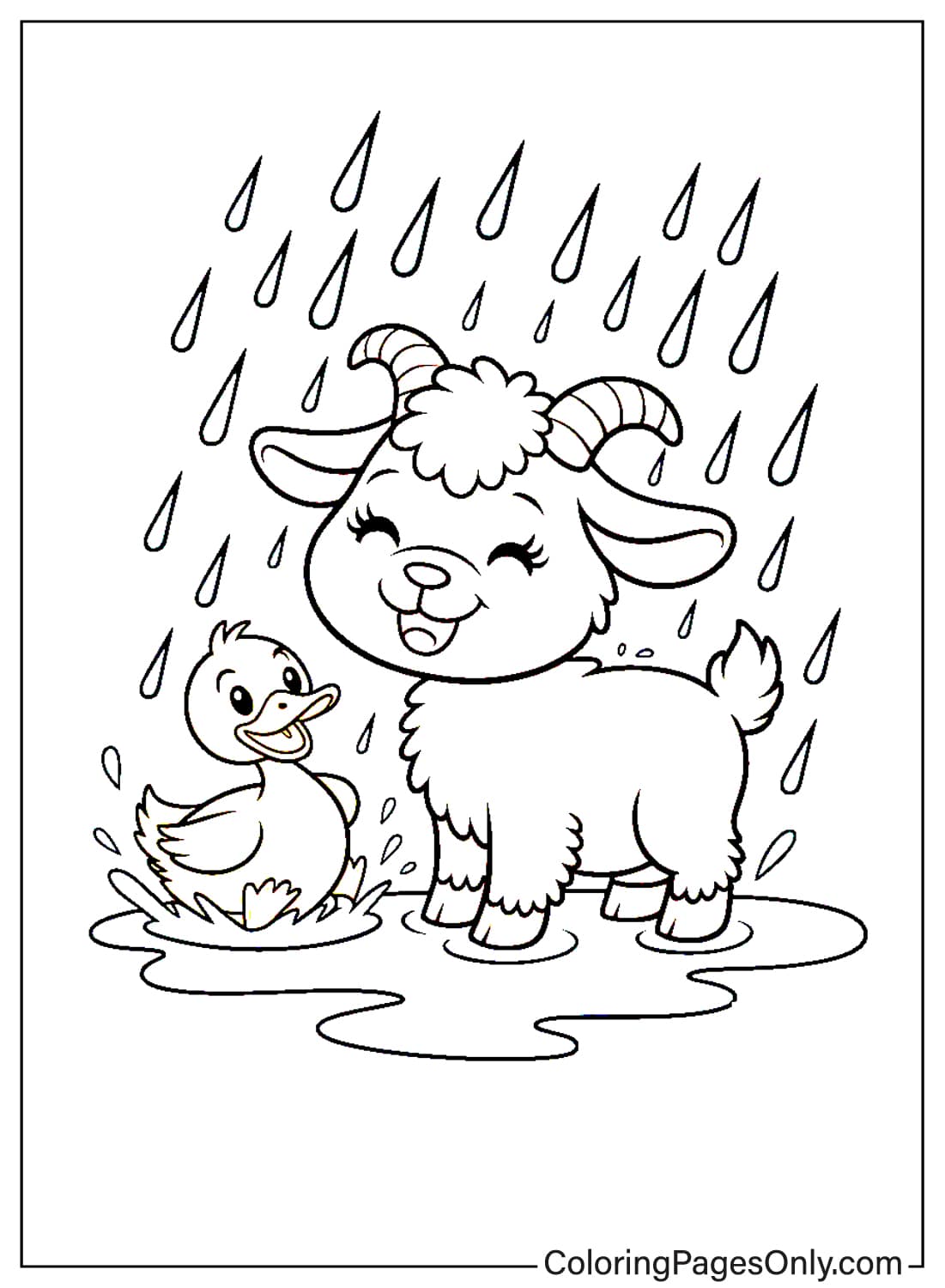
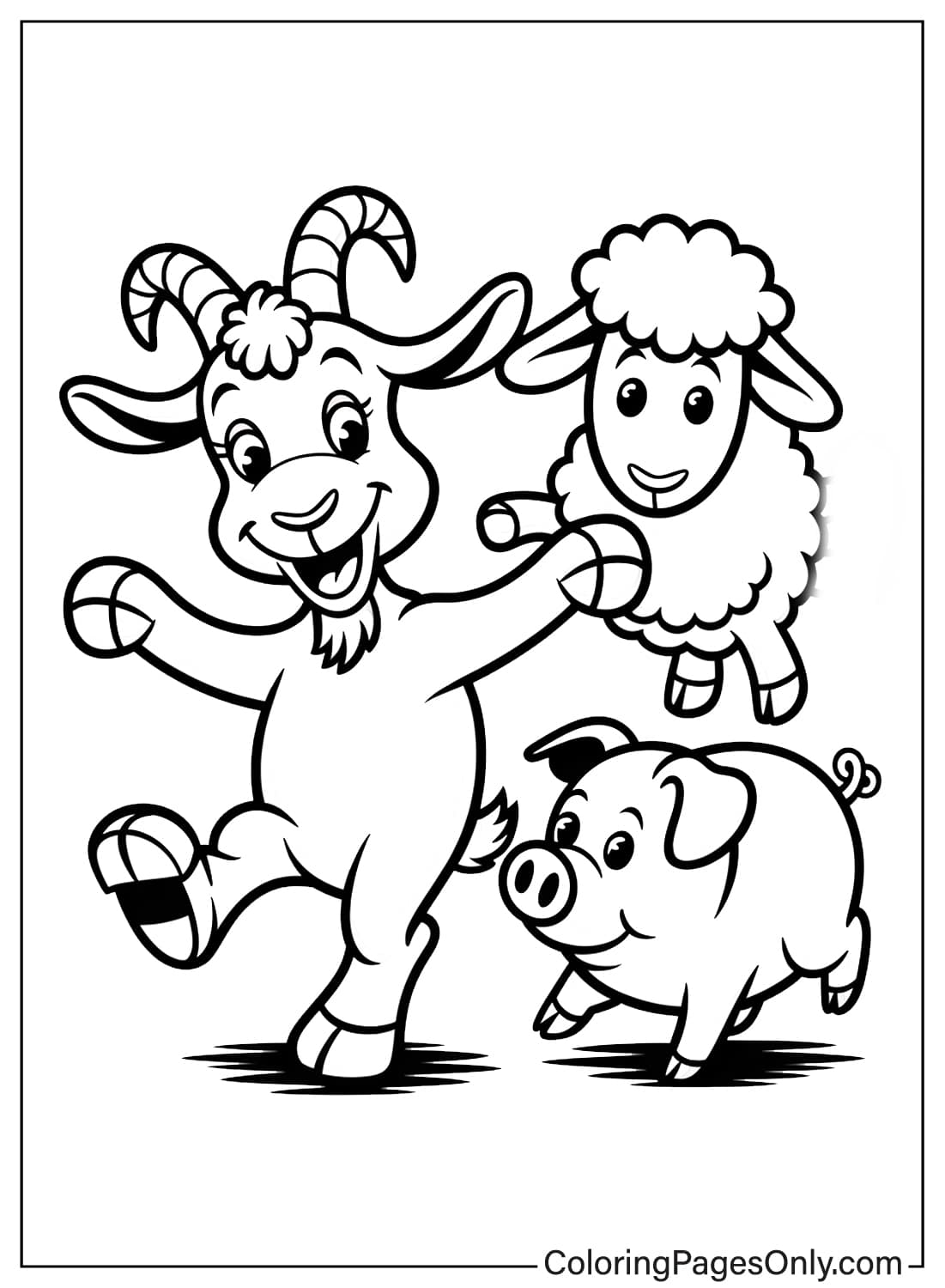
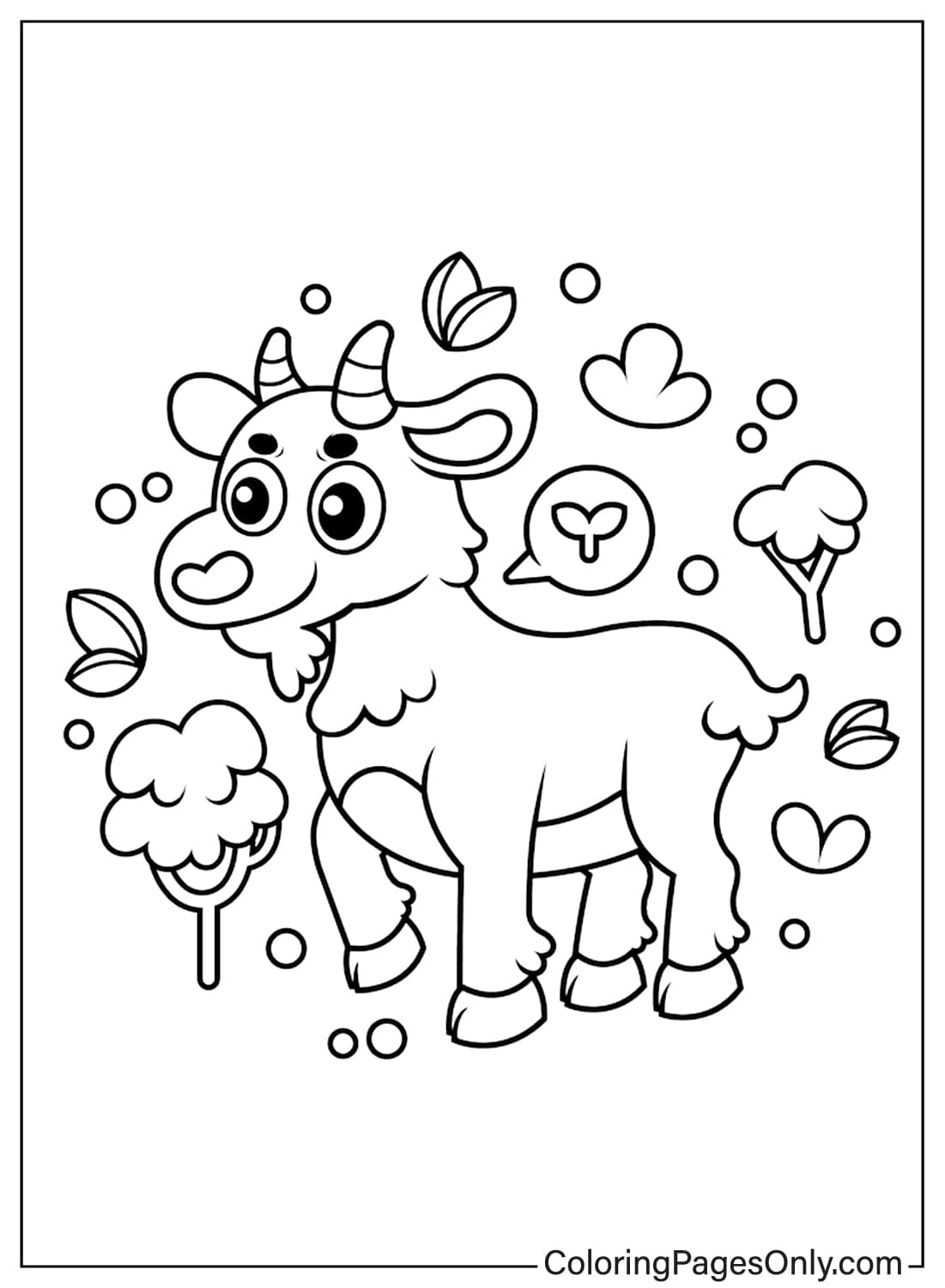
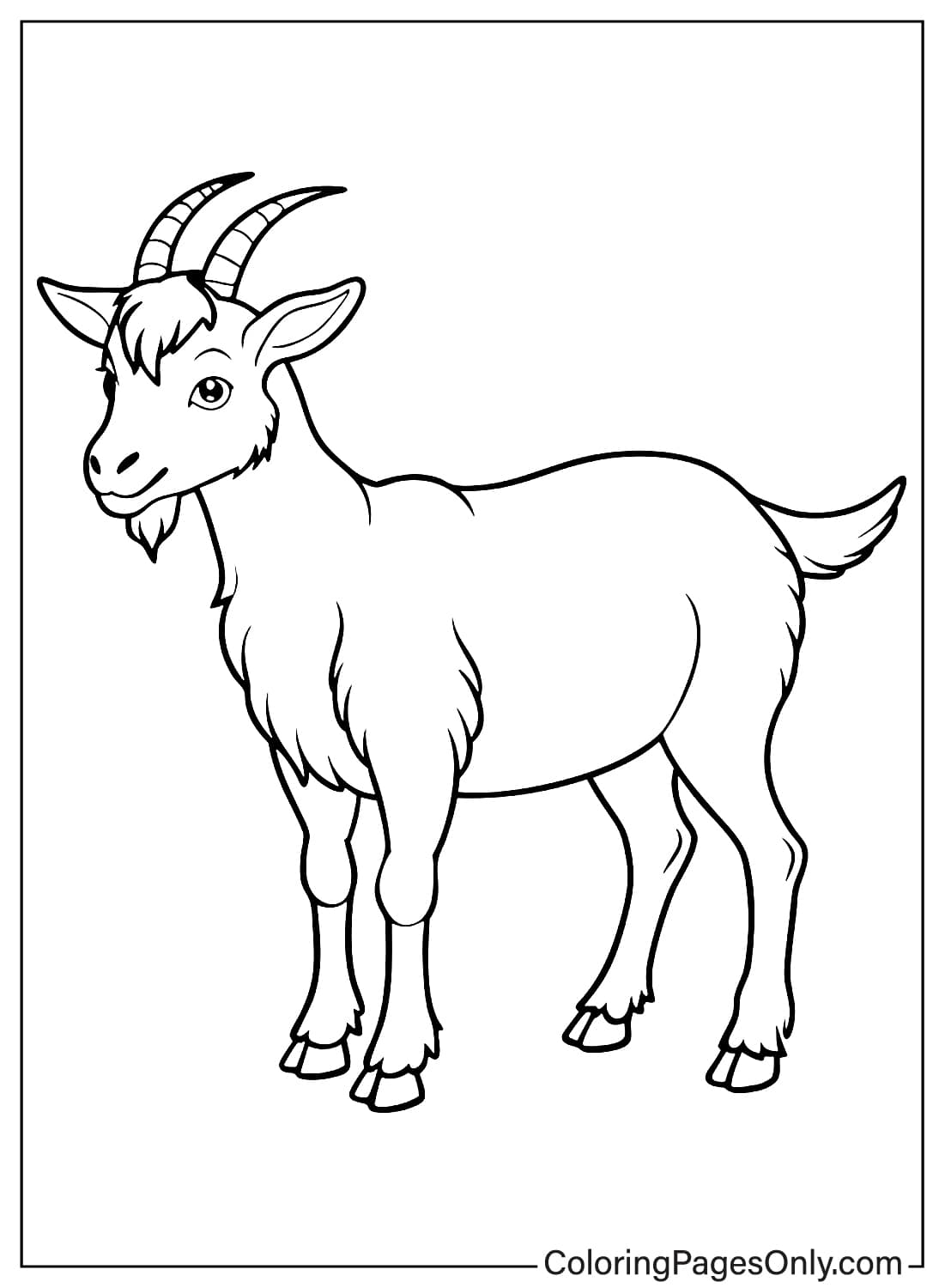
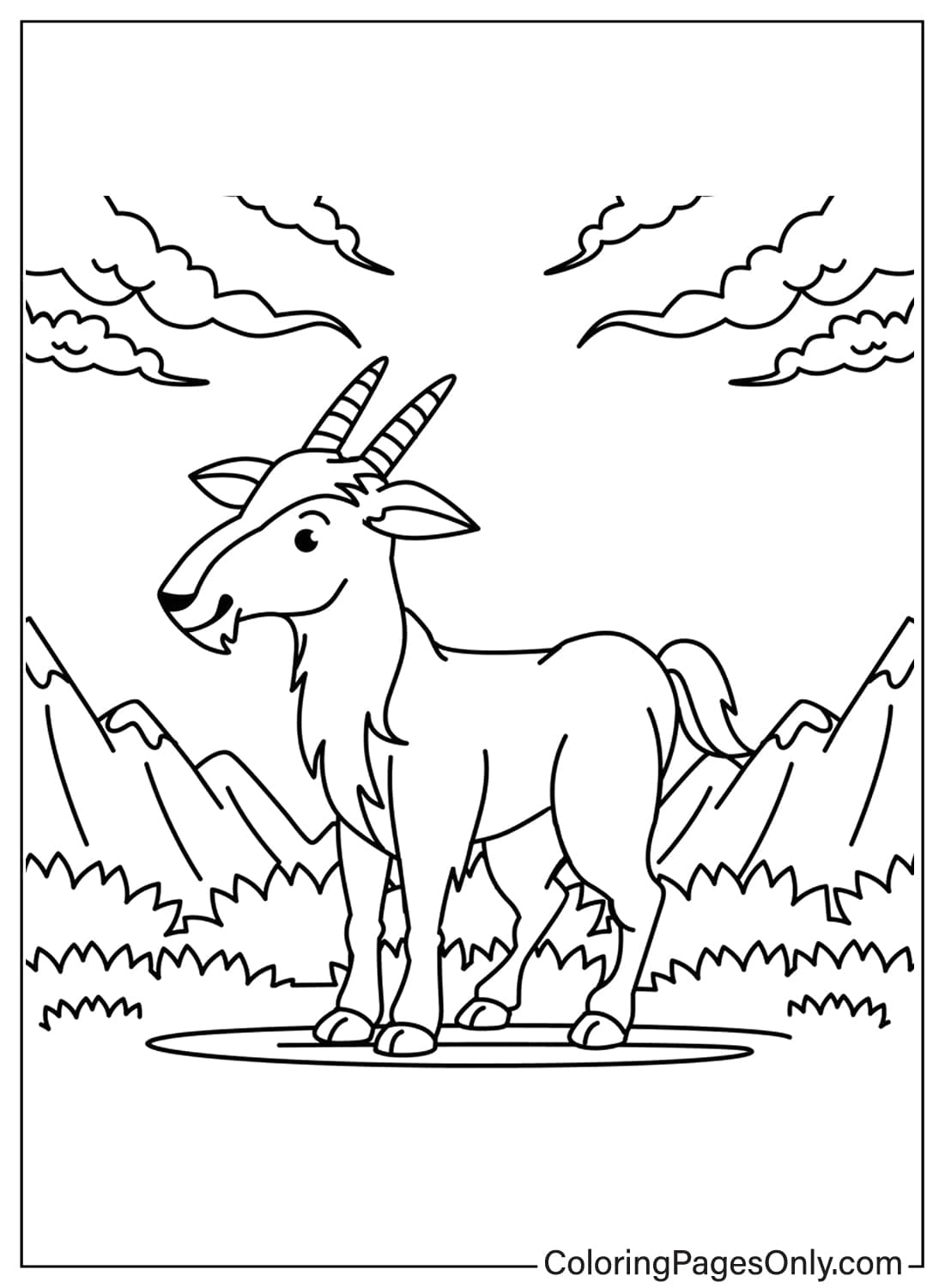
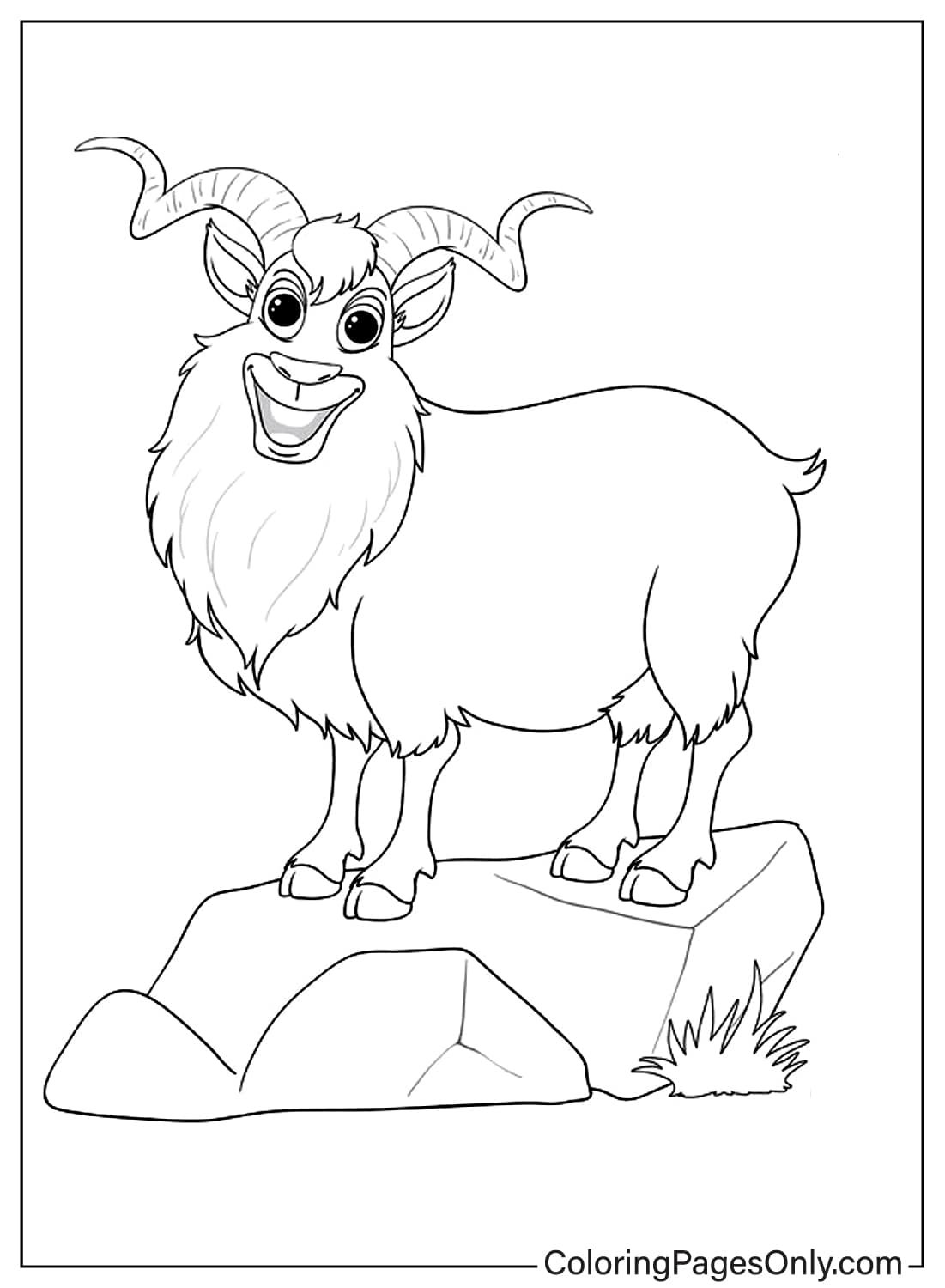
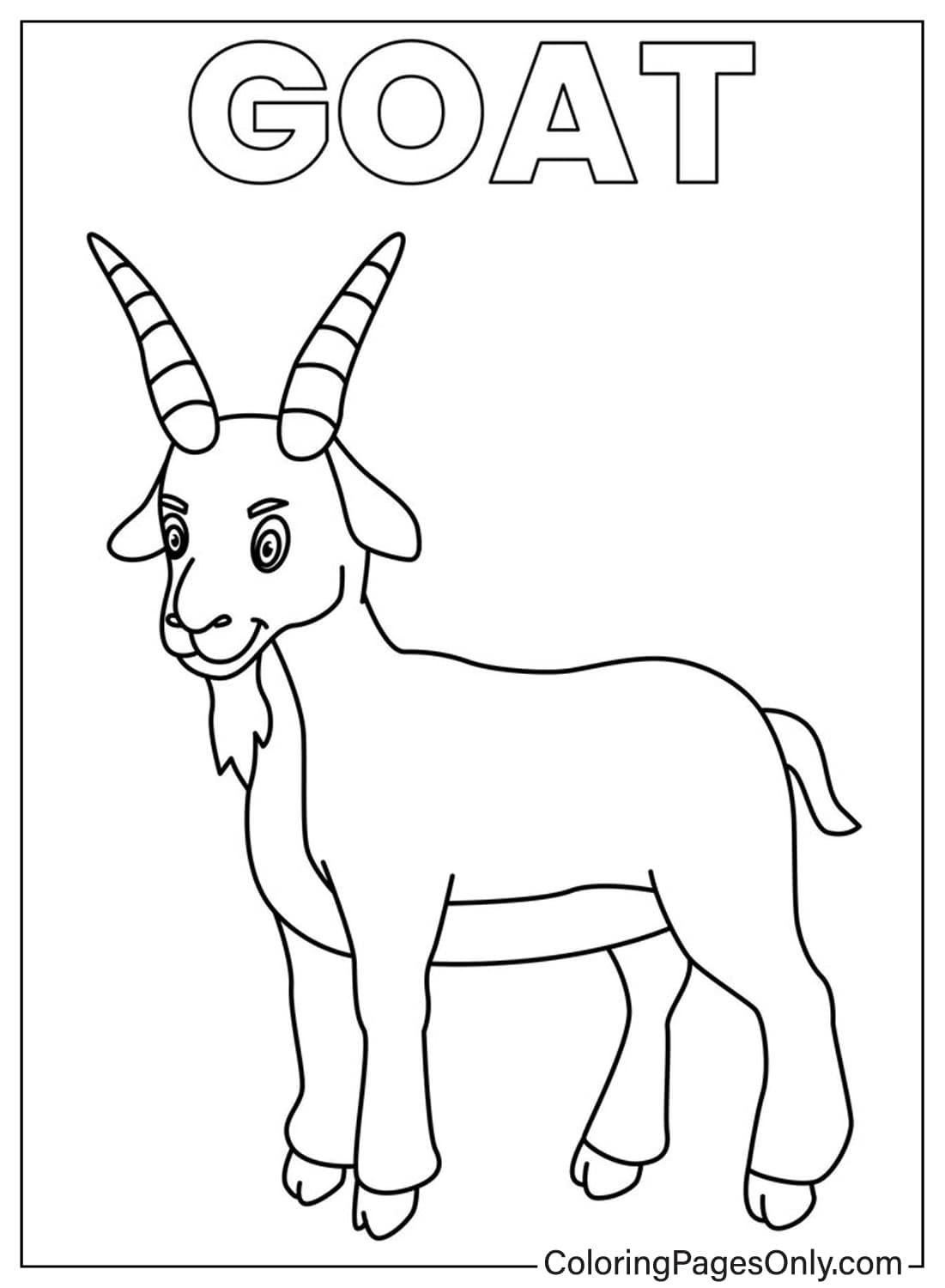
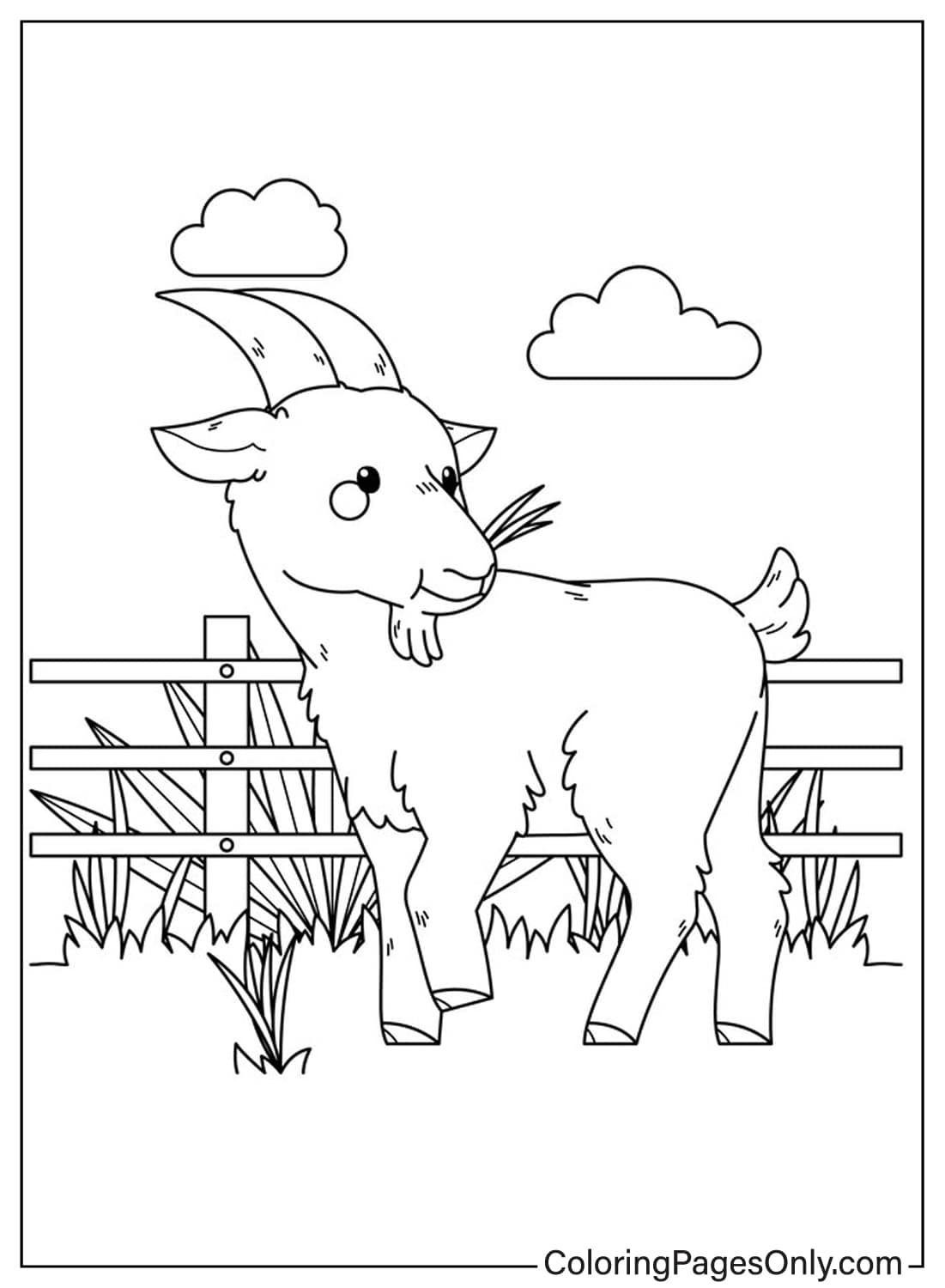
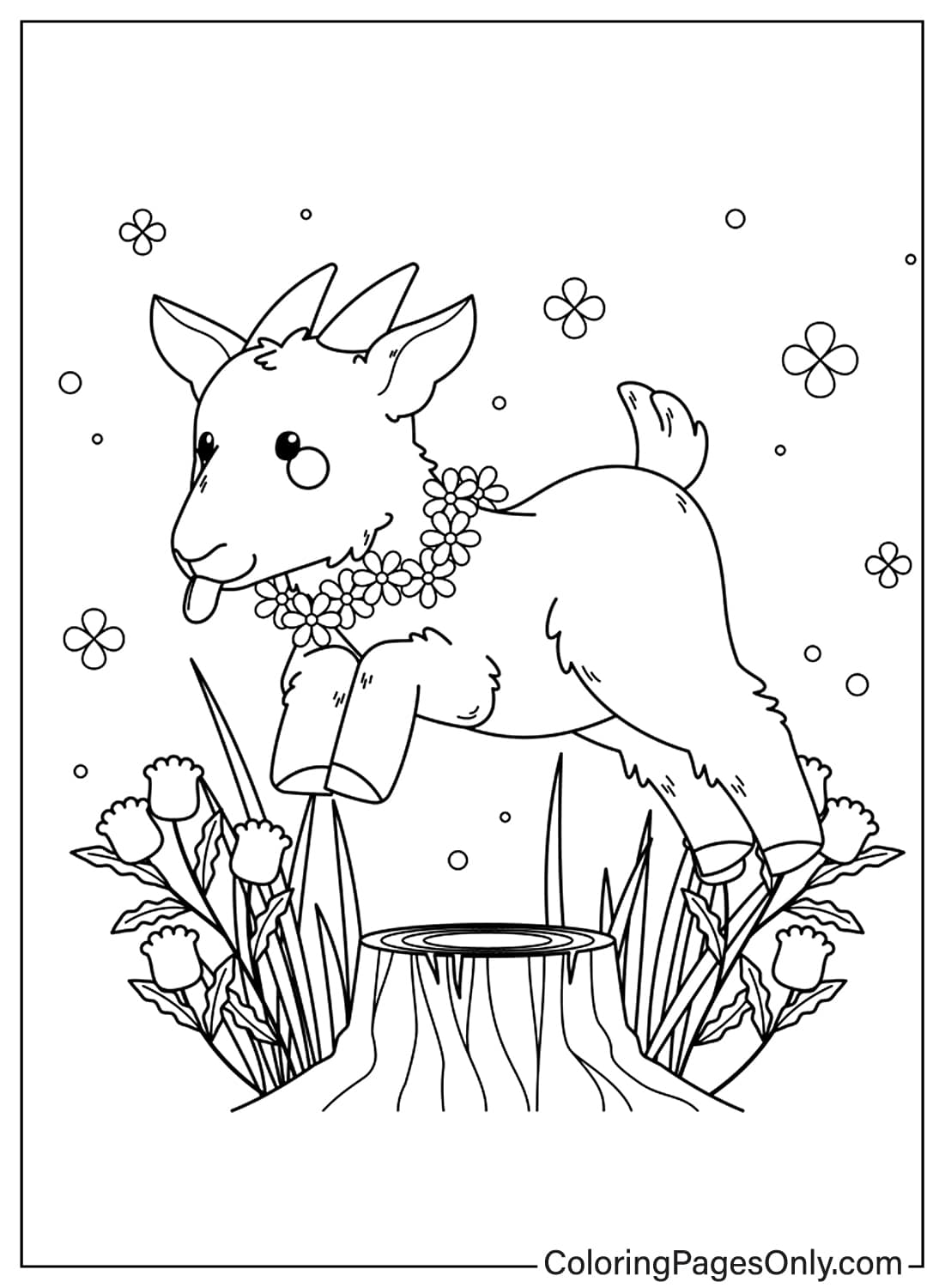
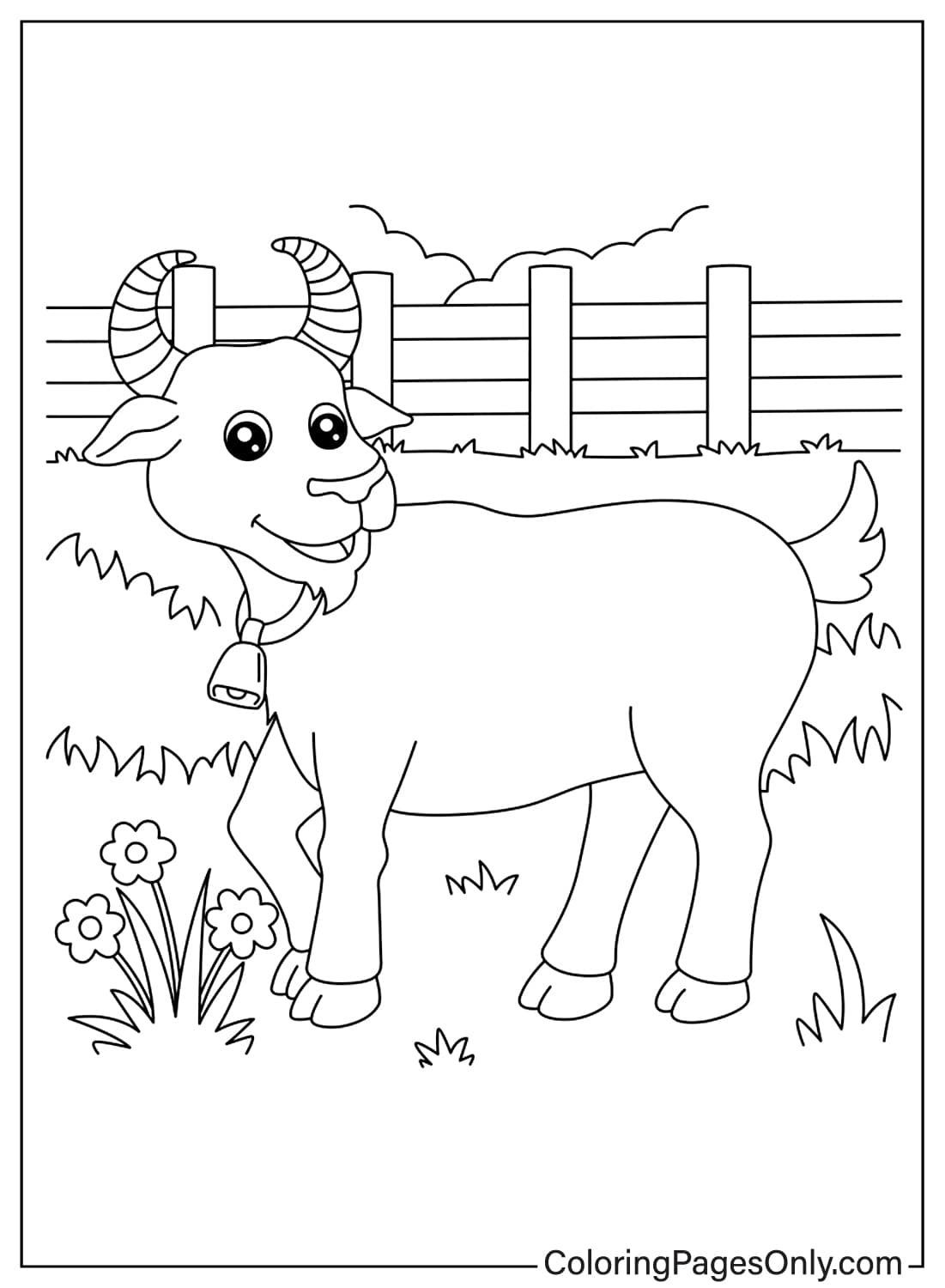
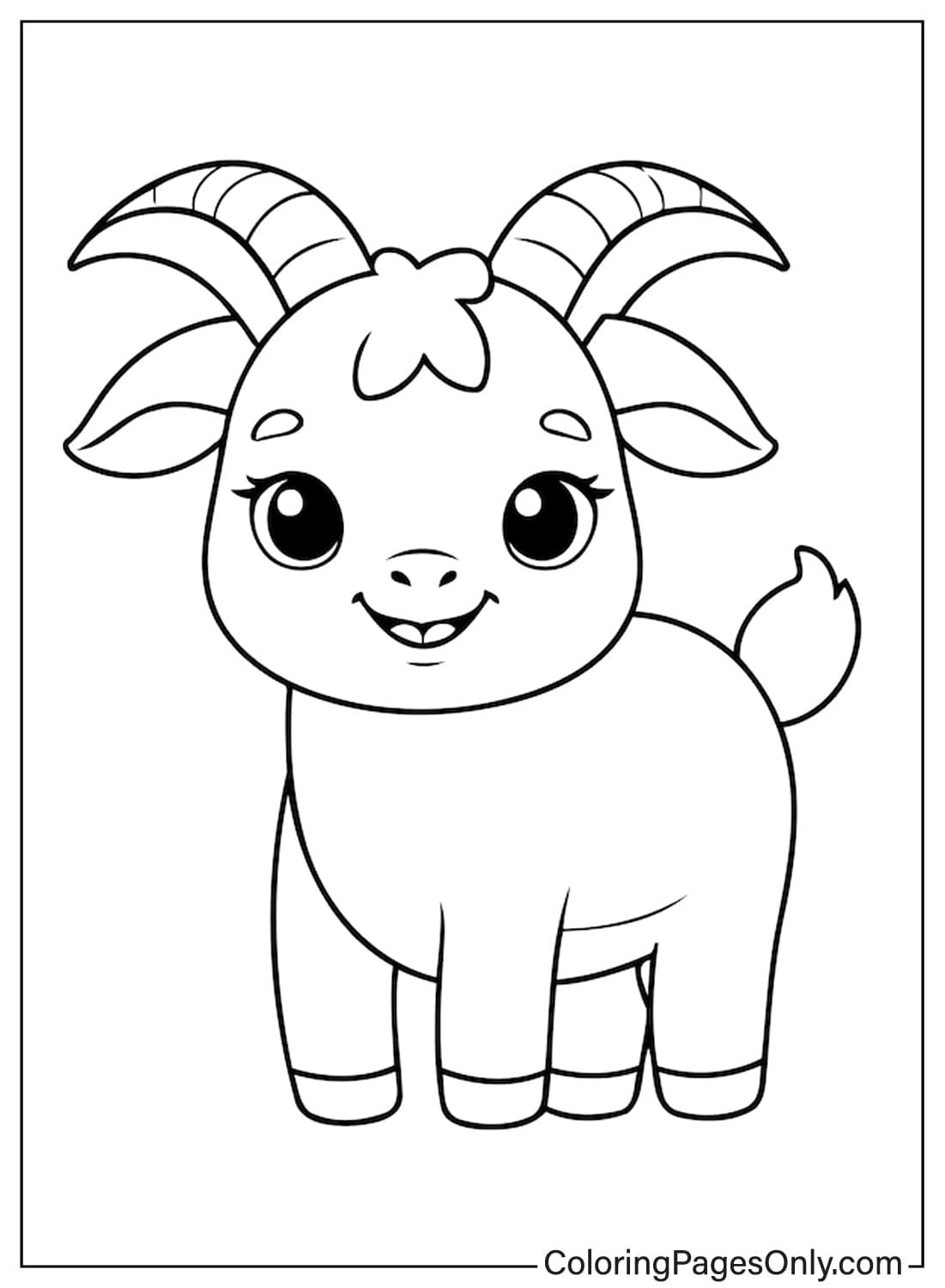

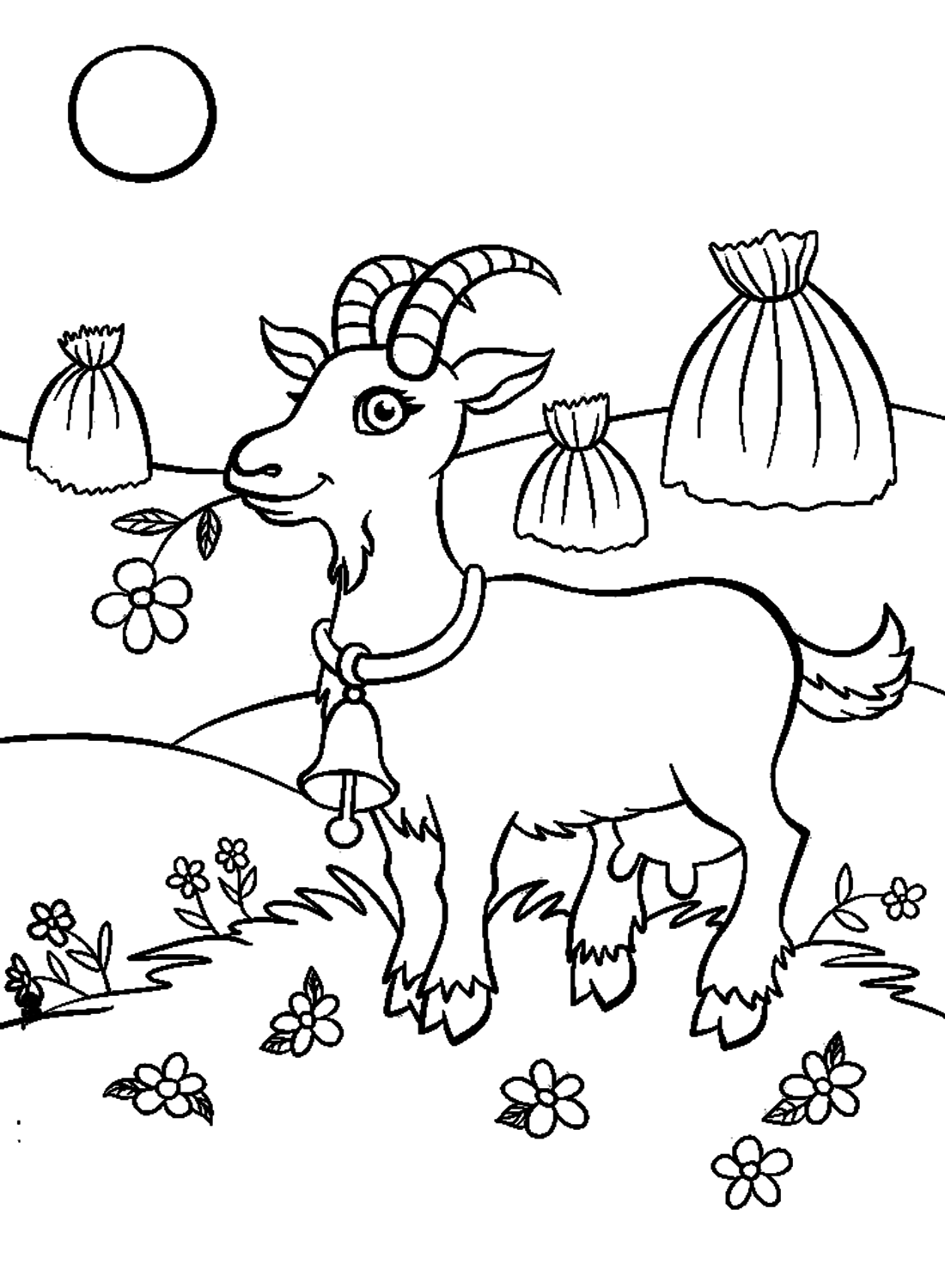
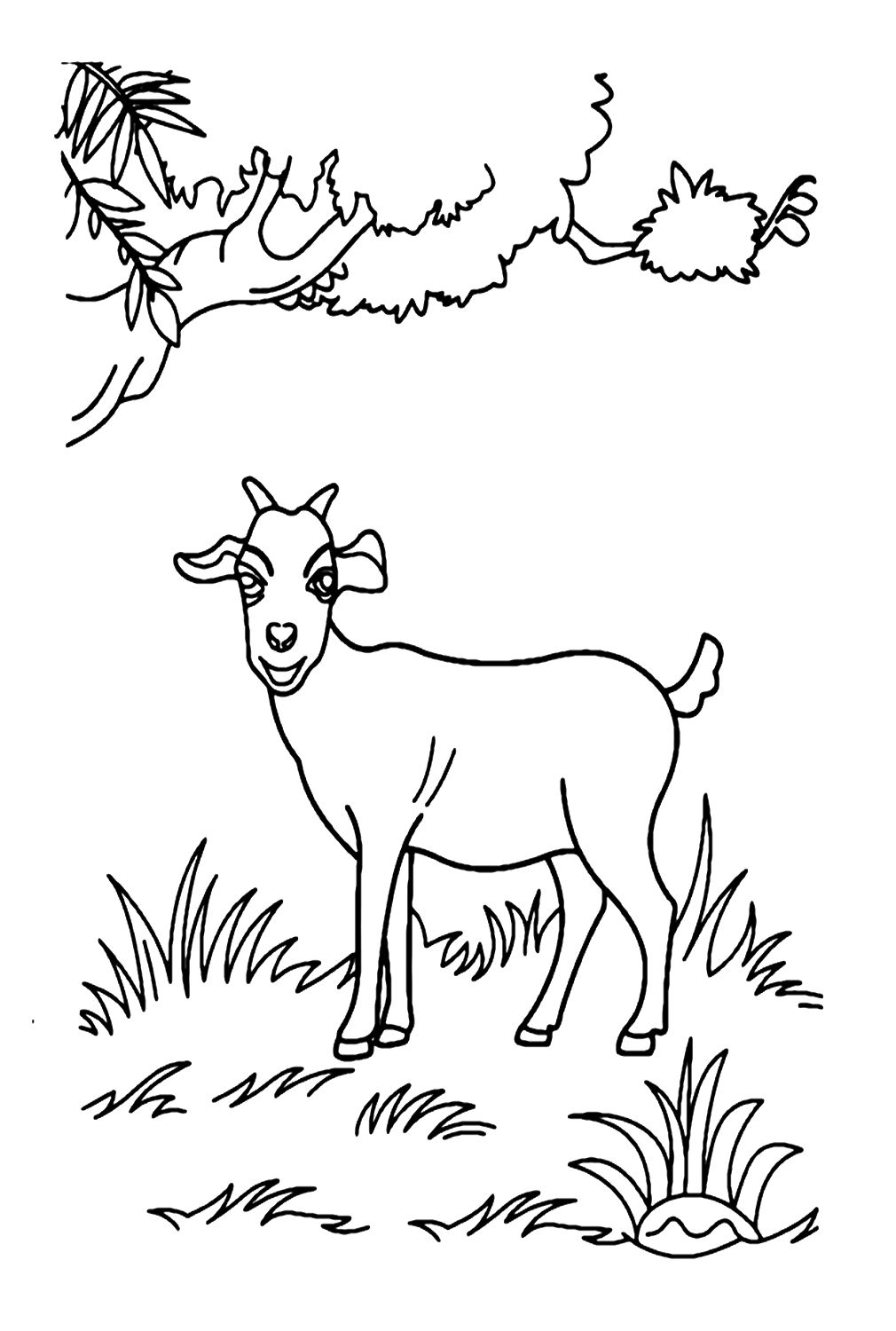
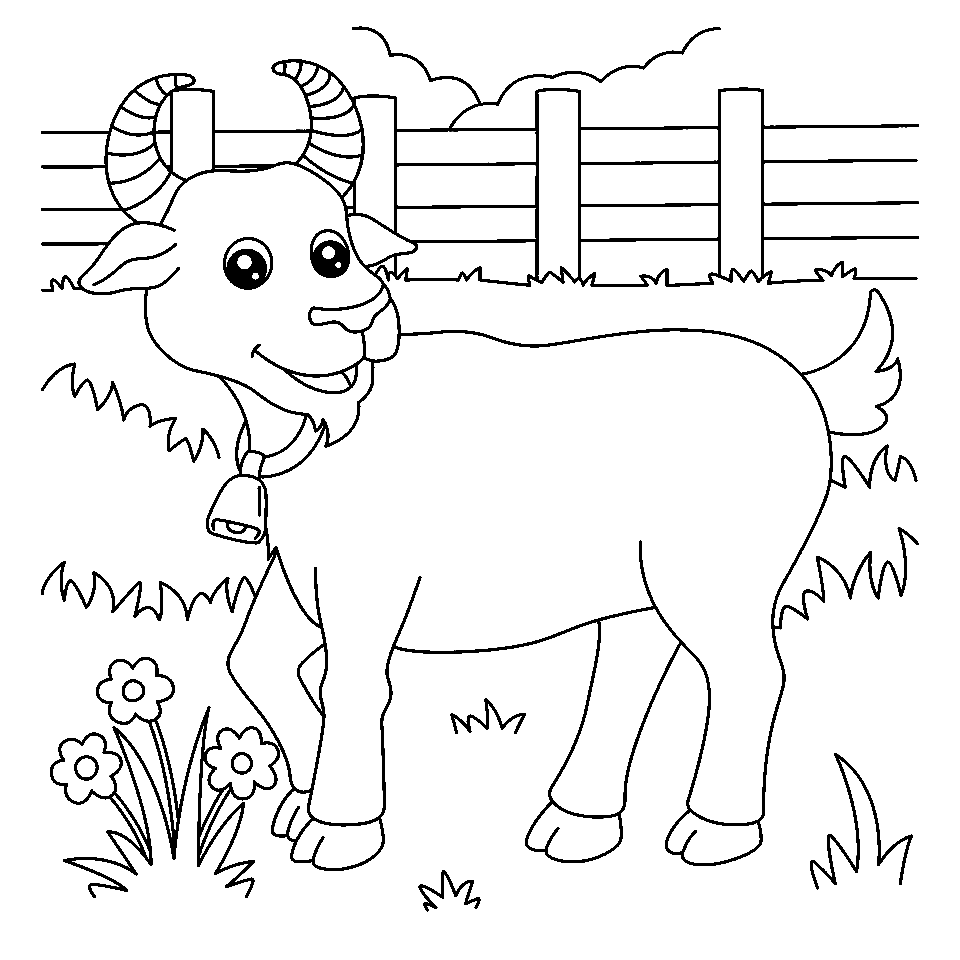
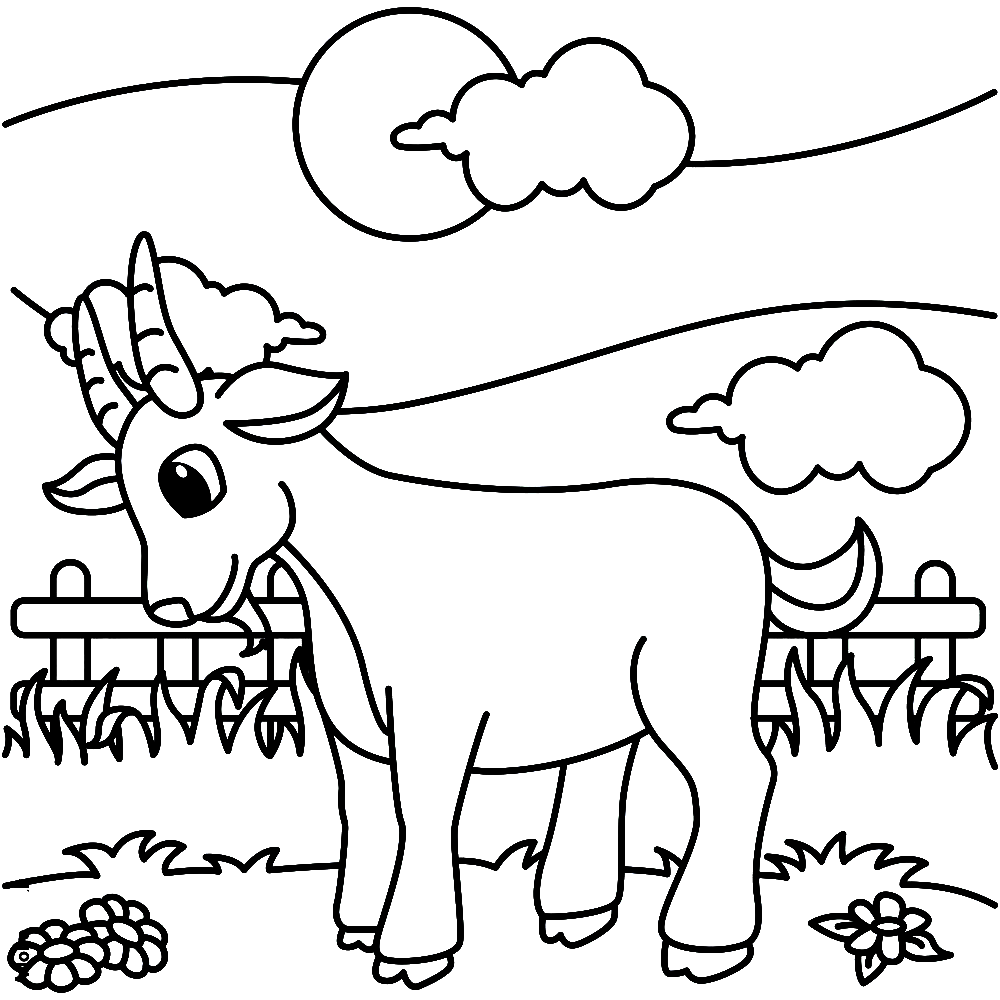
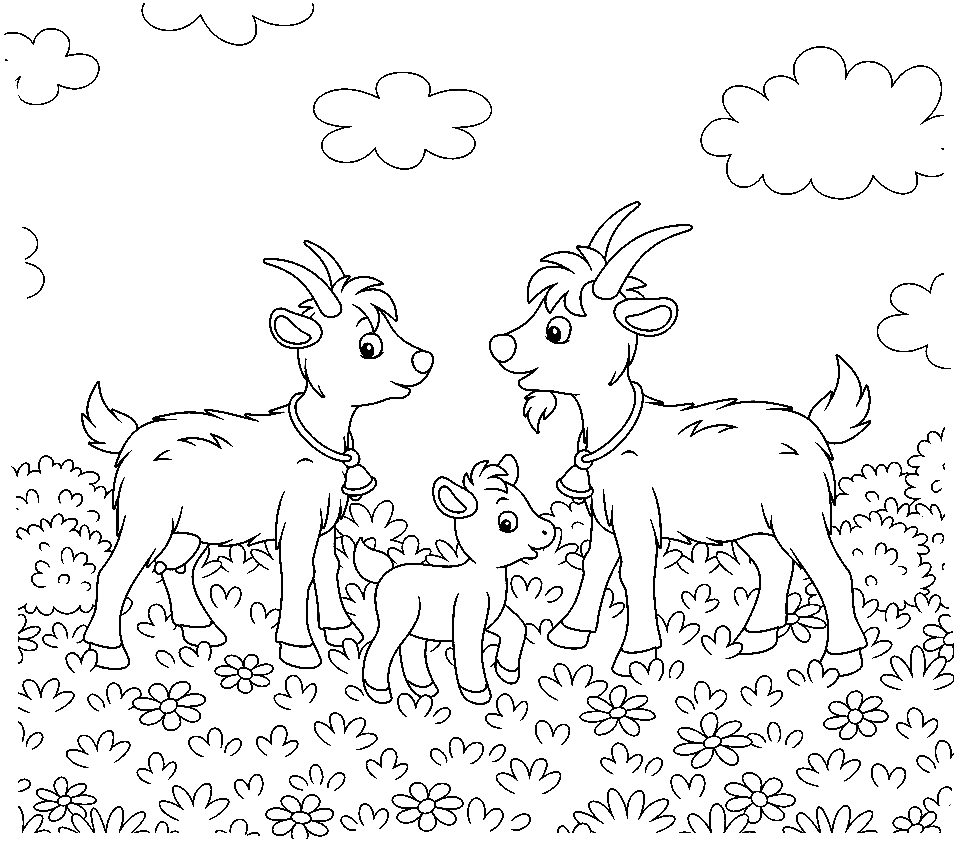
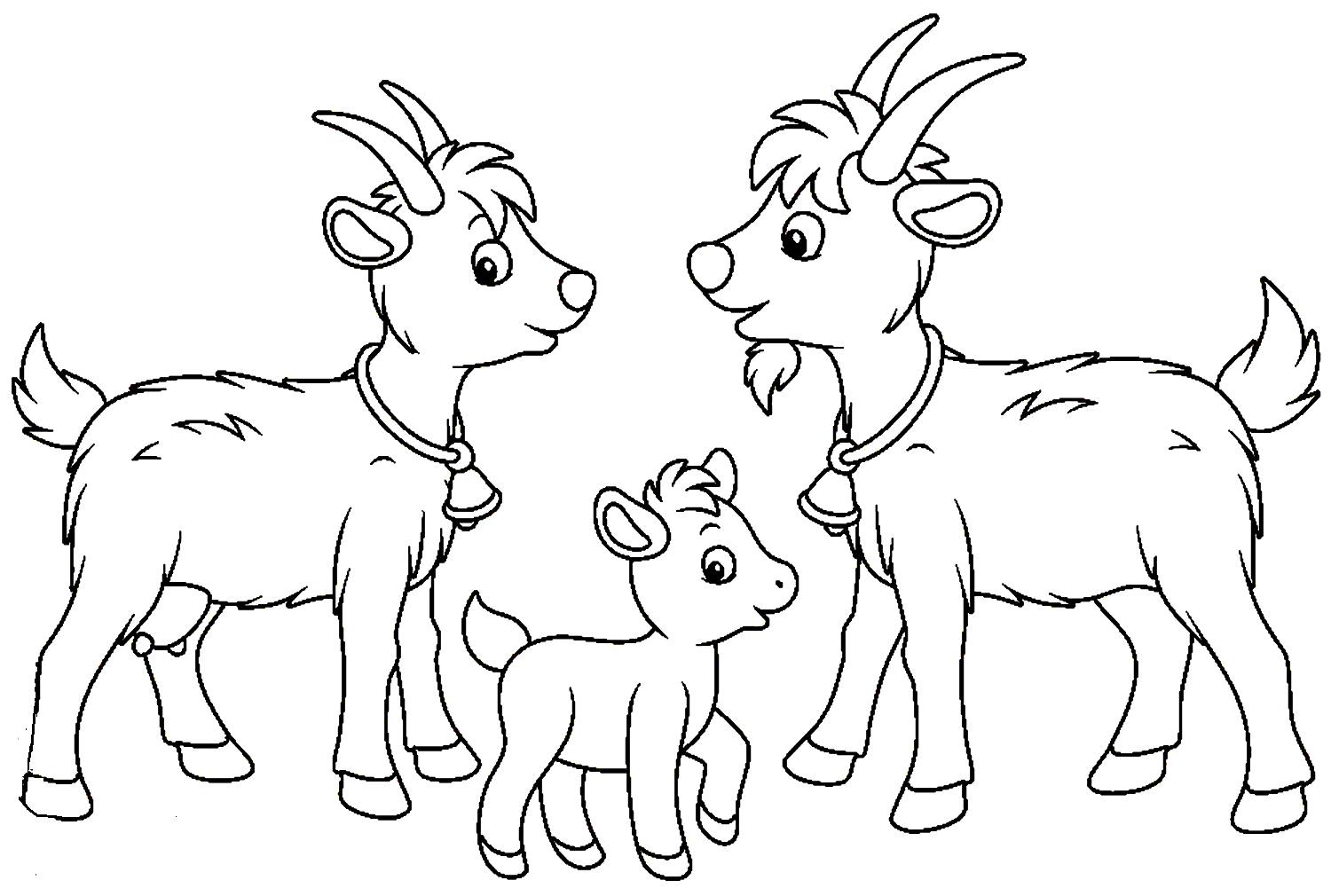
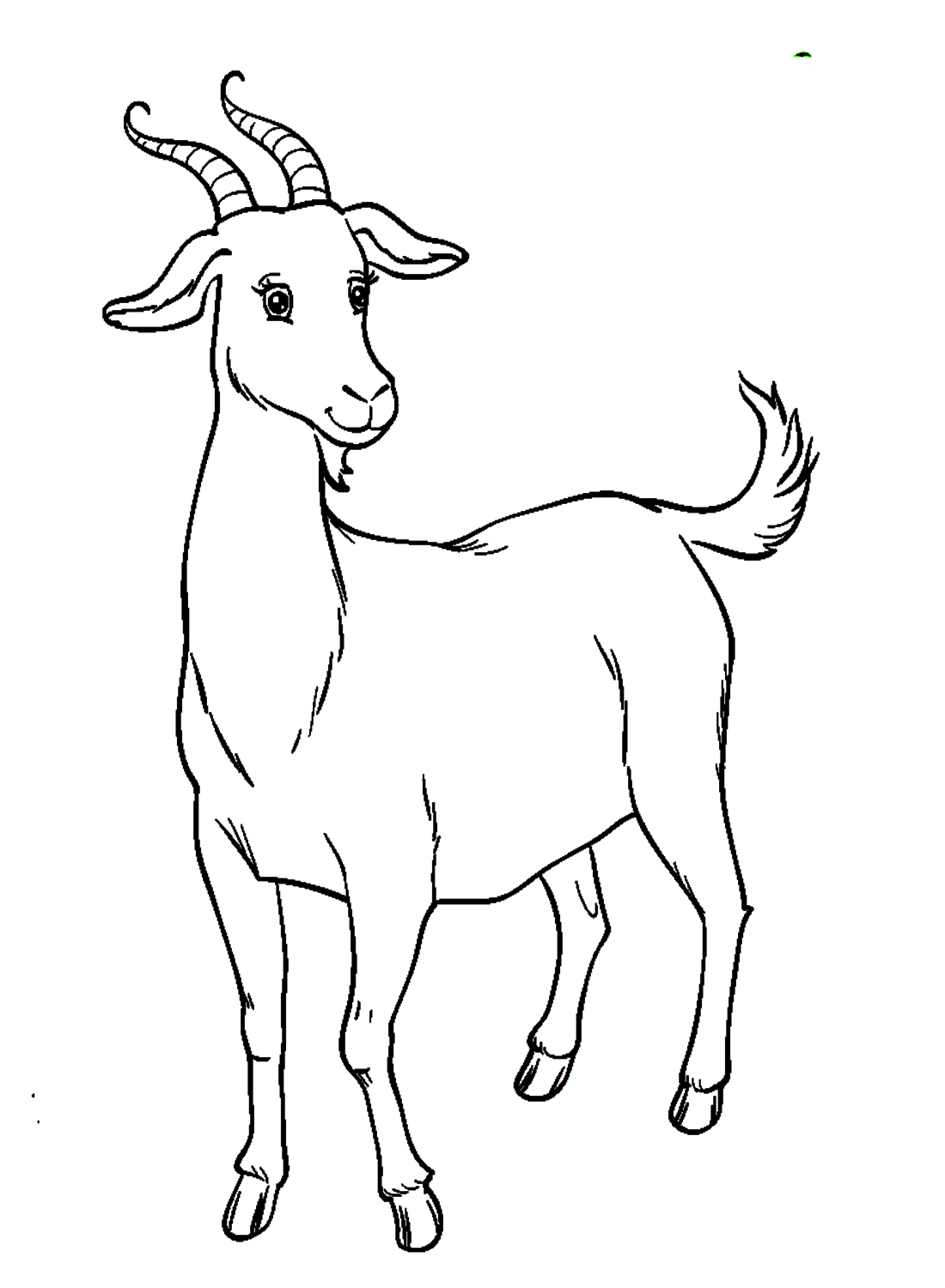
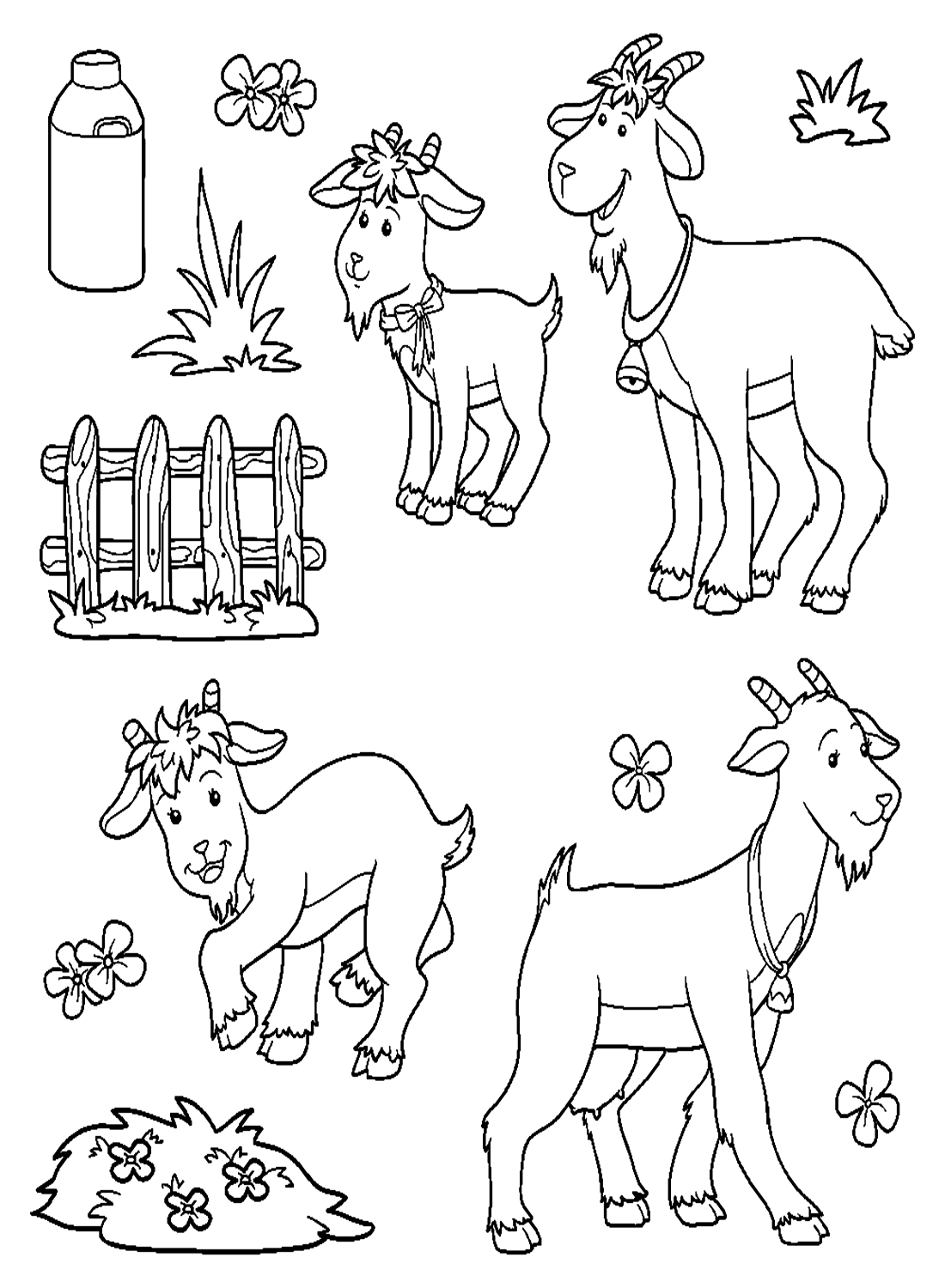
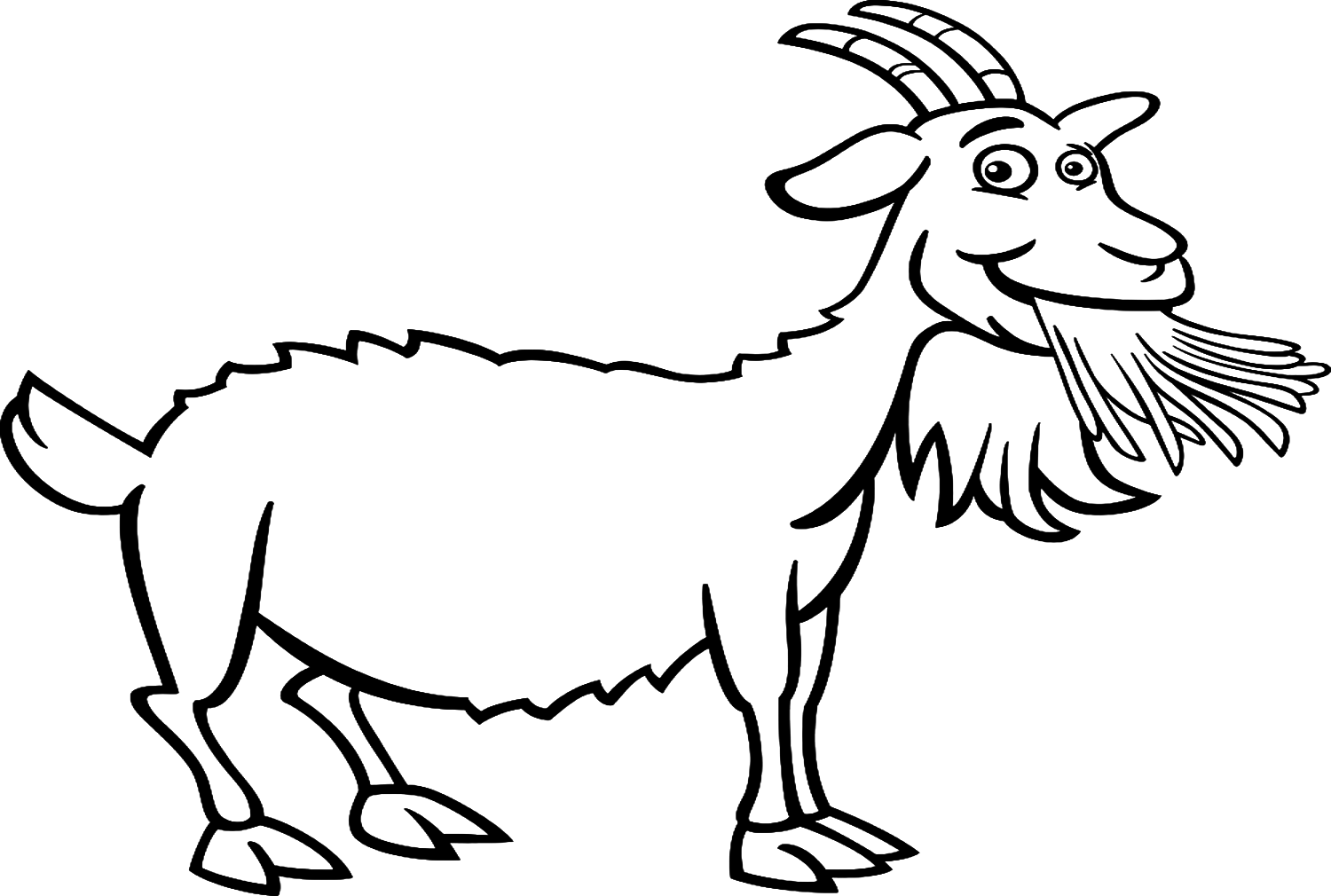
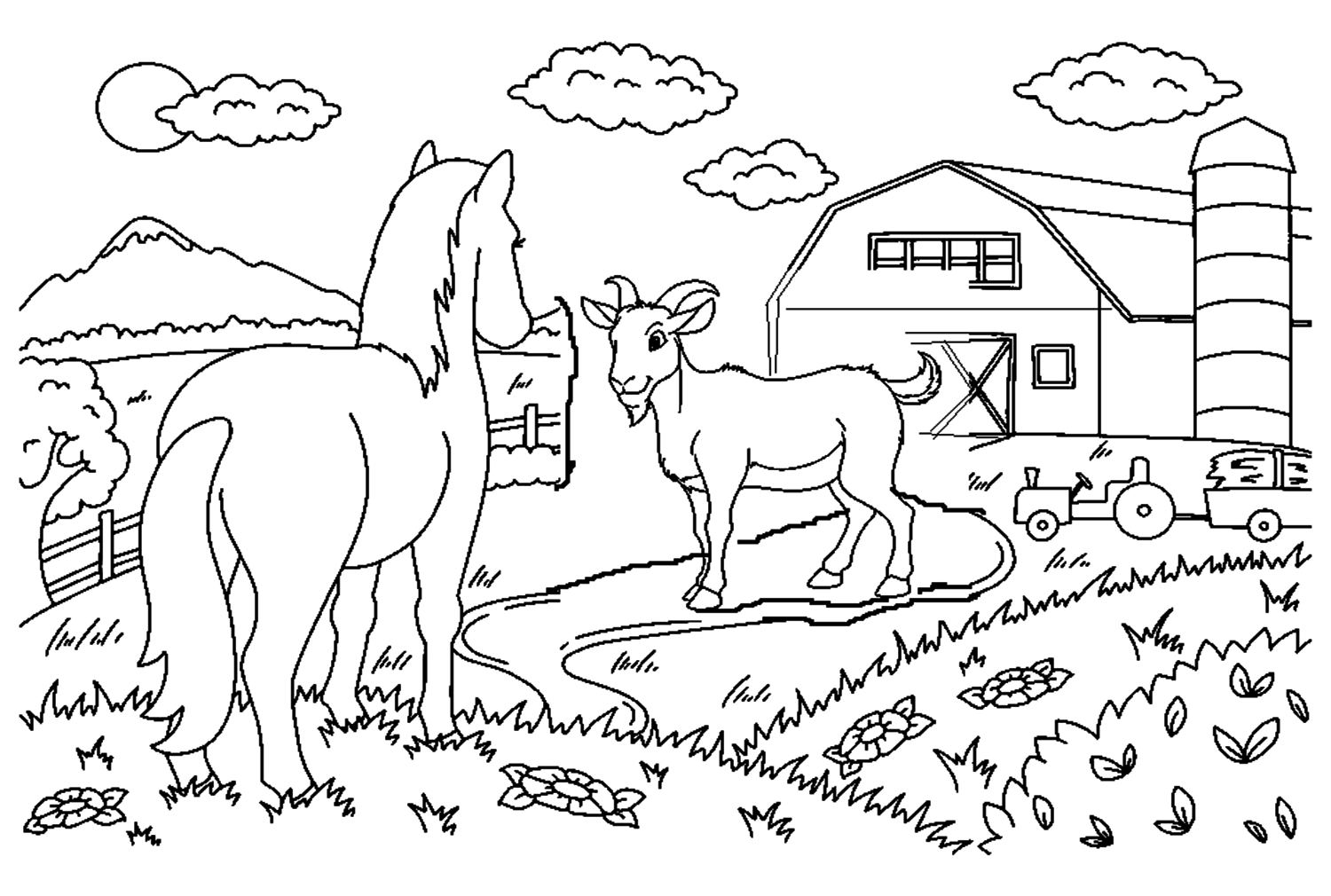
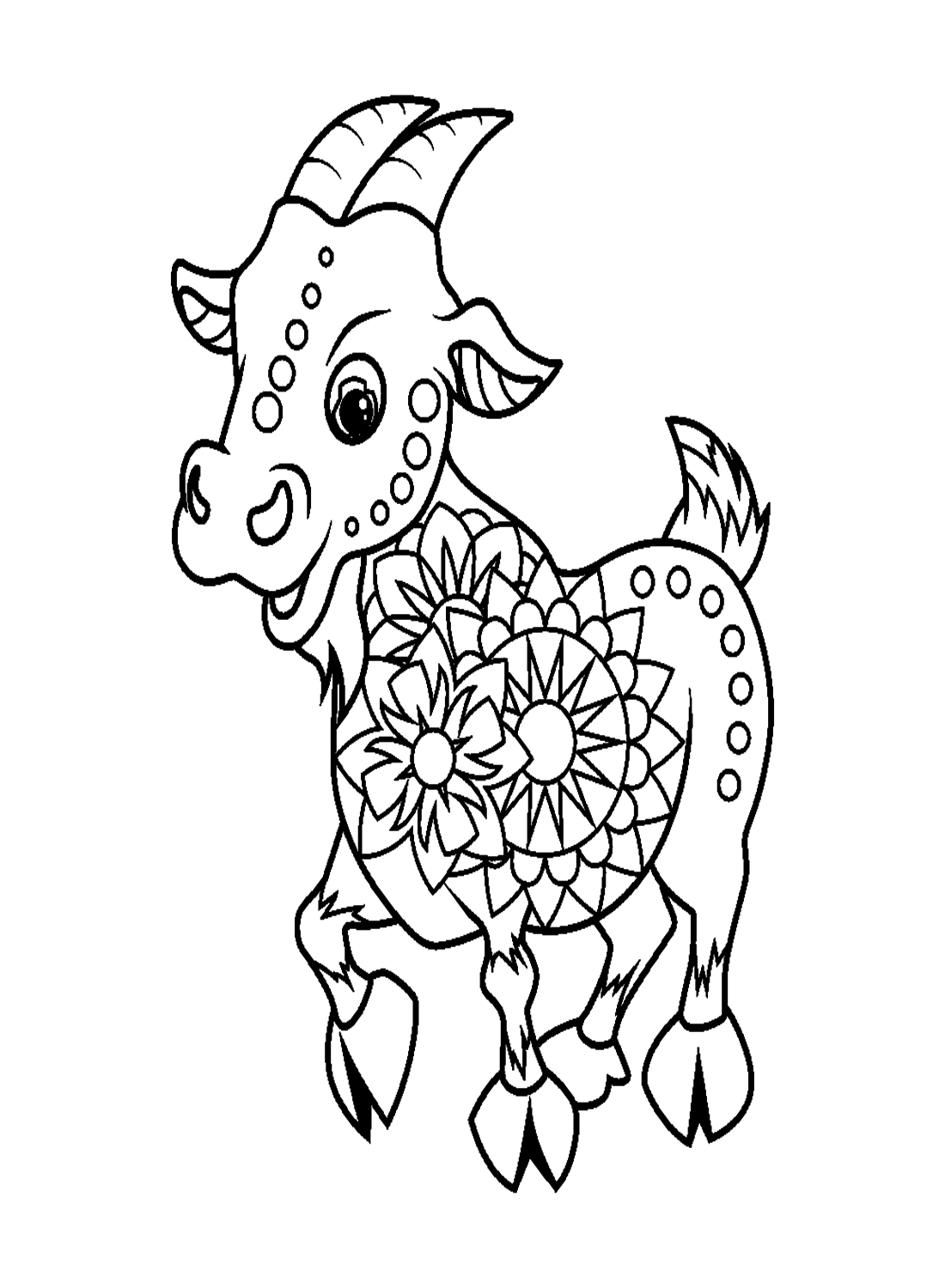
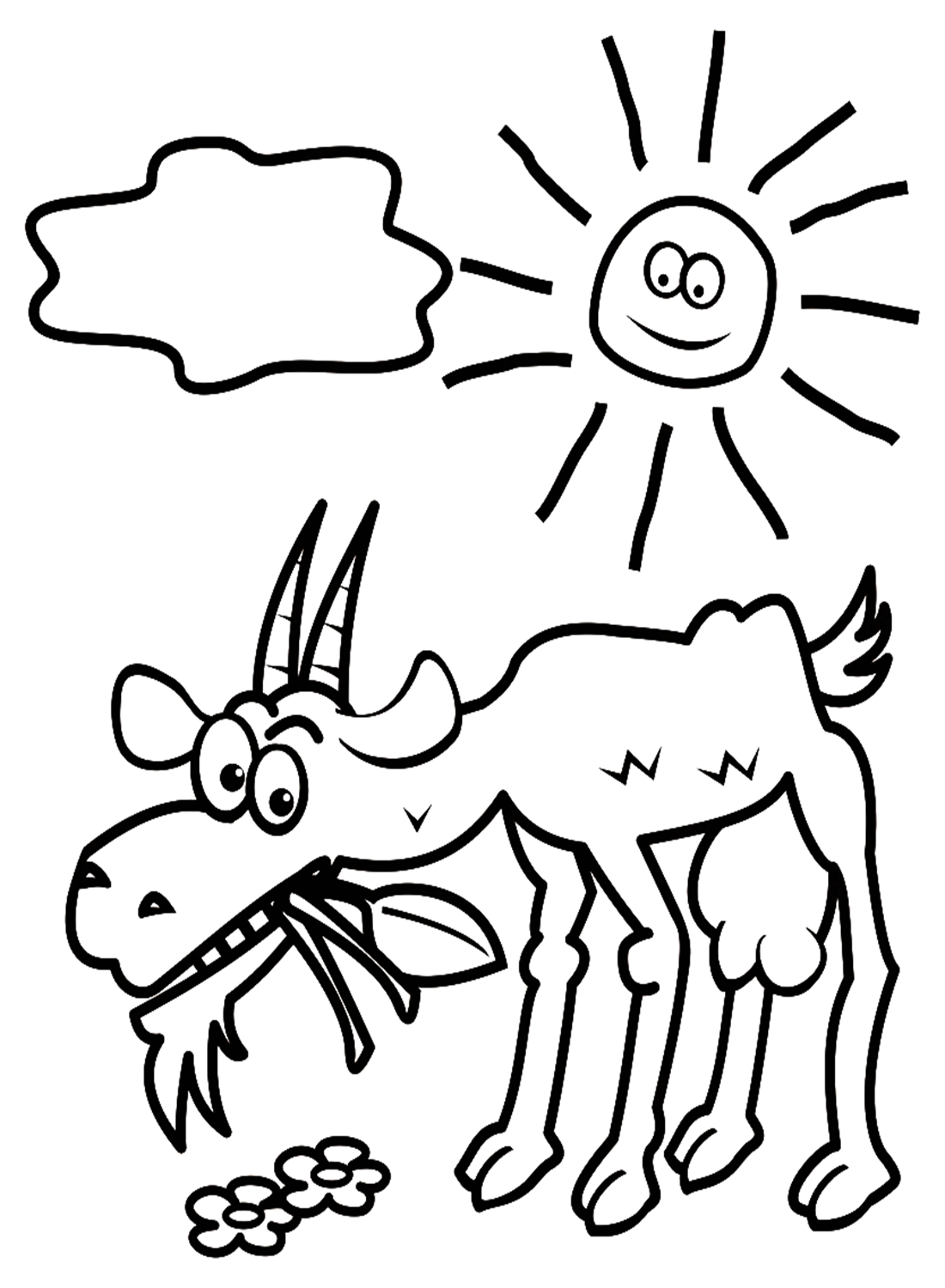

What Is Inside This Collection
This collection groups its 48 pages by setting and style, since a farmyard scene, a cartoon character, and a realistic portrait each call for a different coloring approach.
Goats in the Farmyard and Pasture
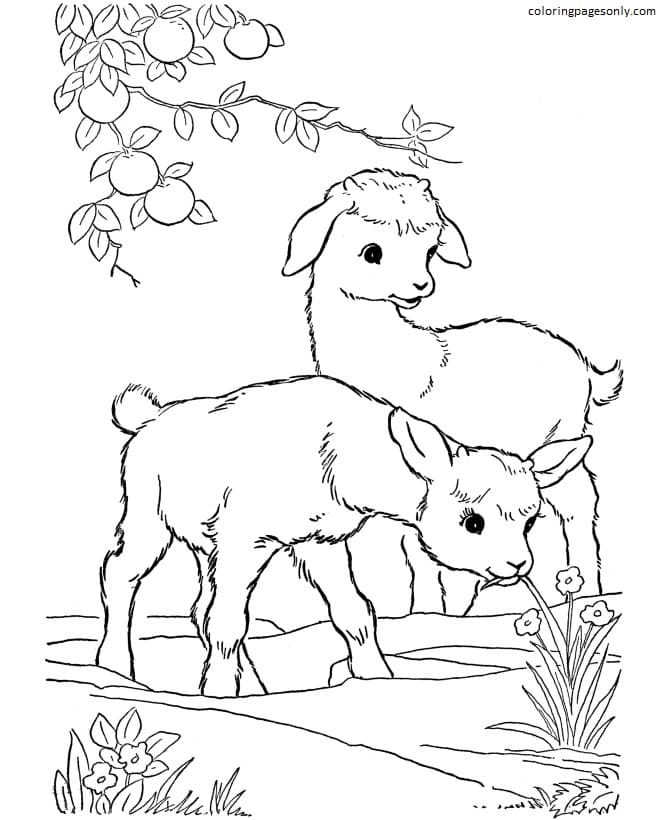
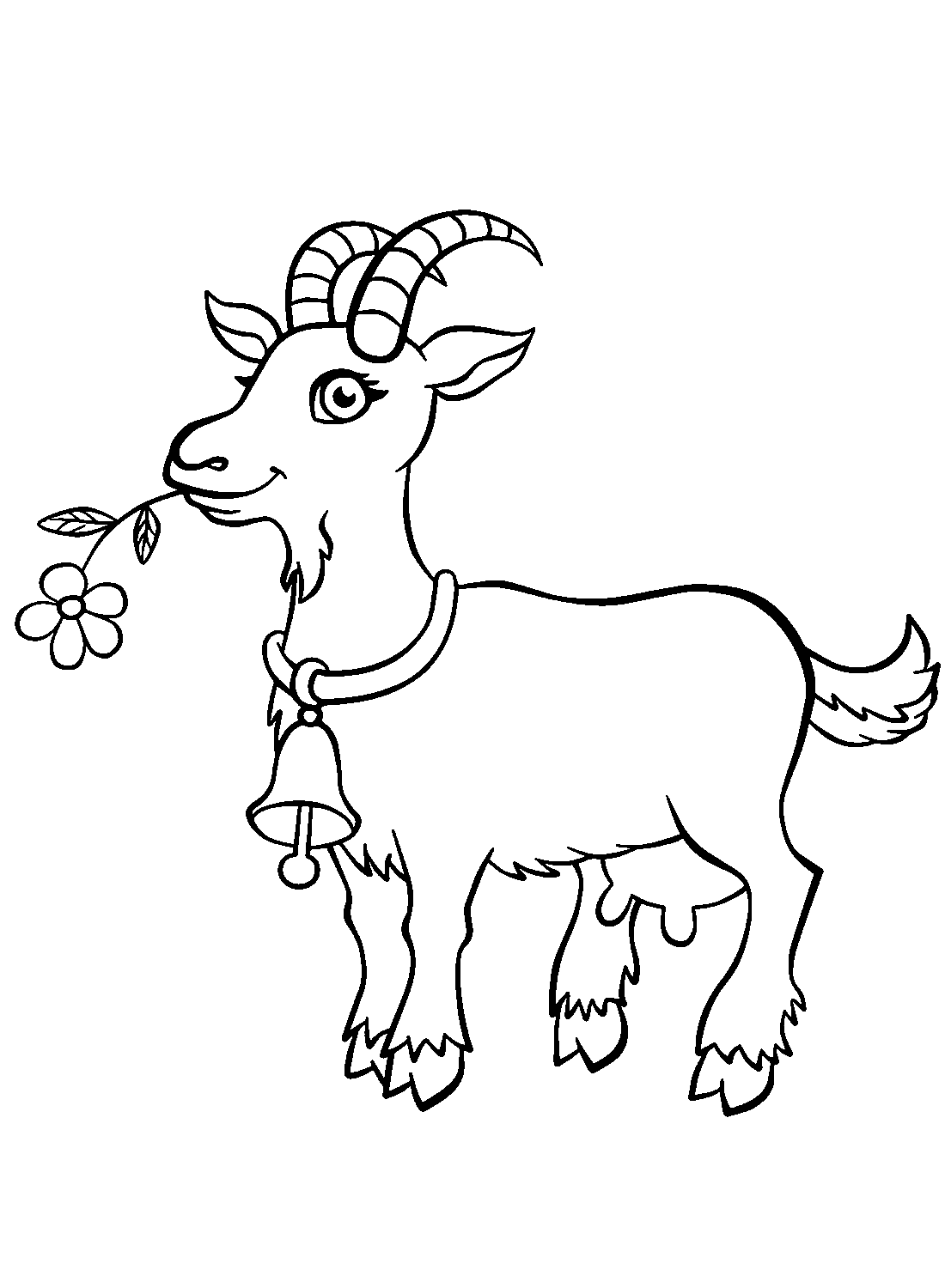
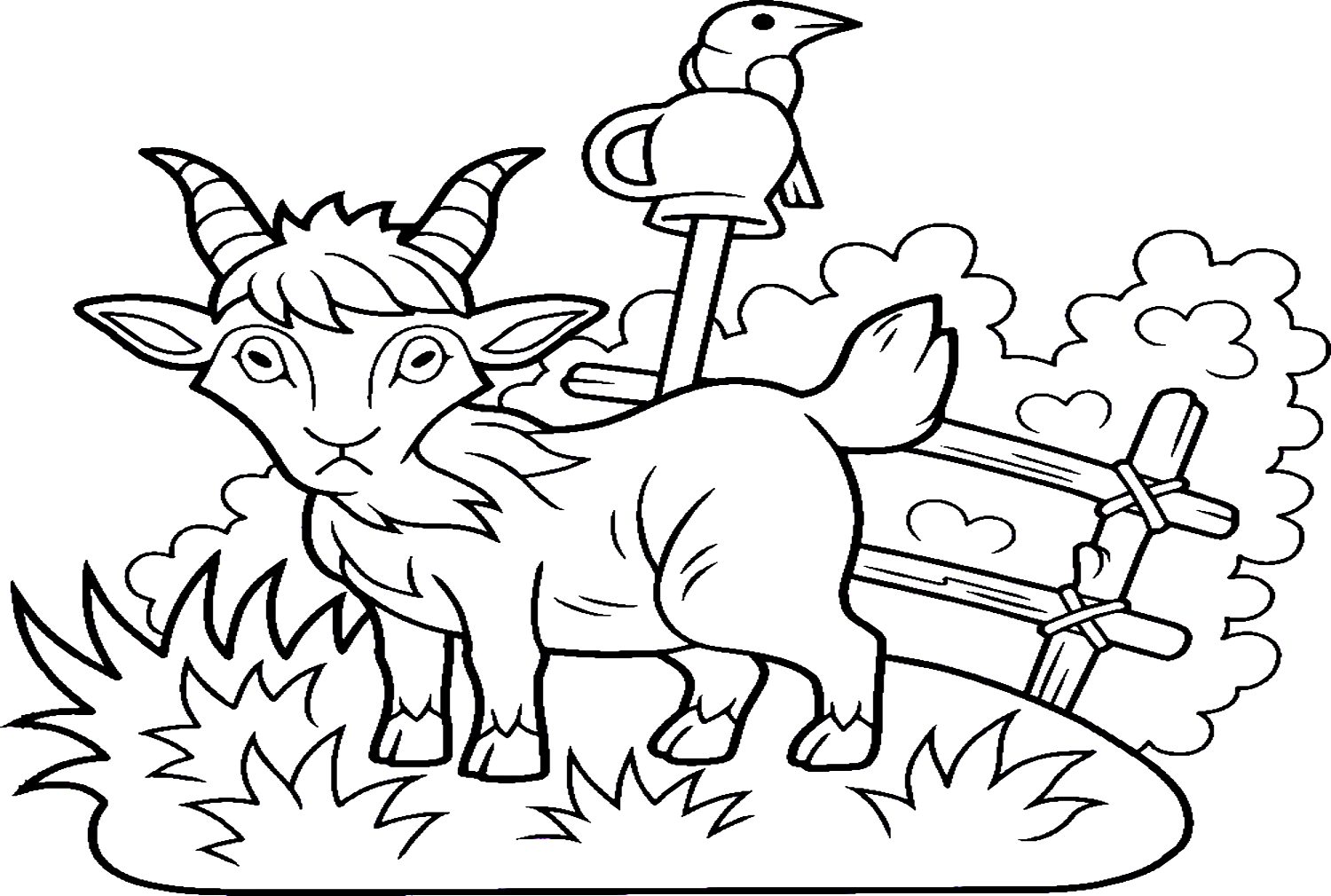
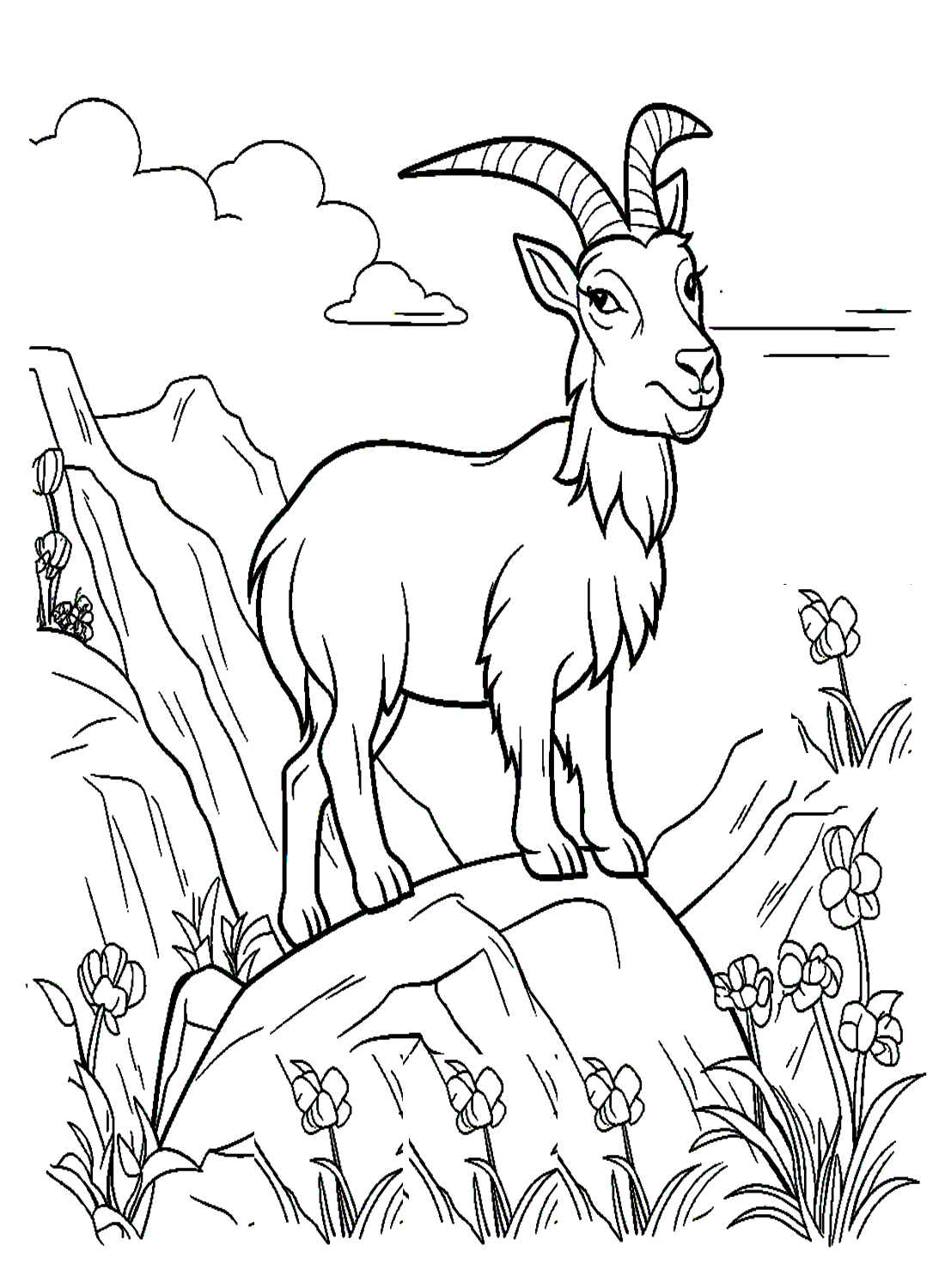
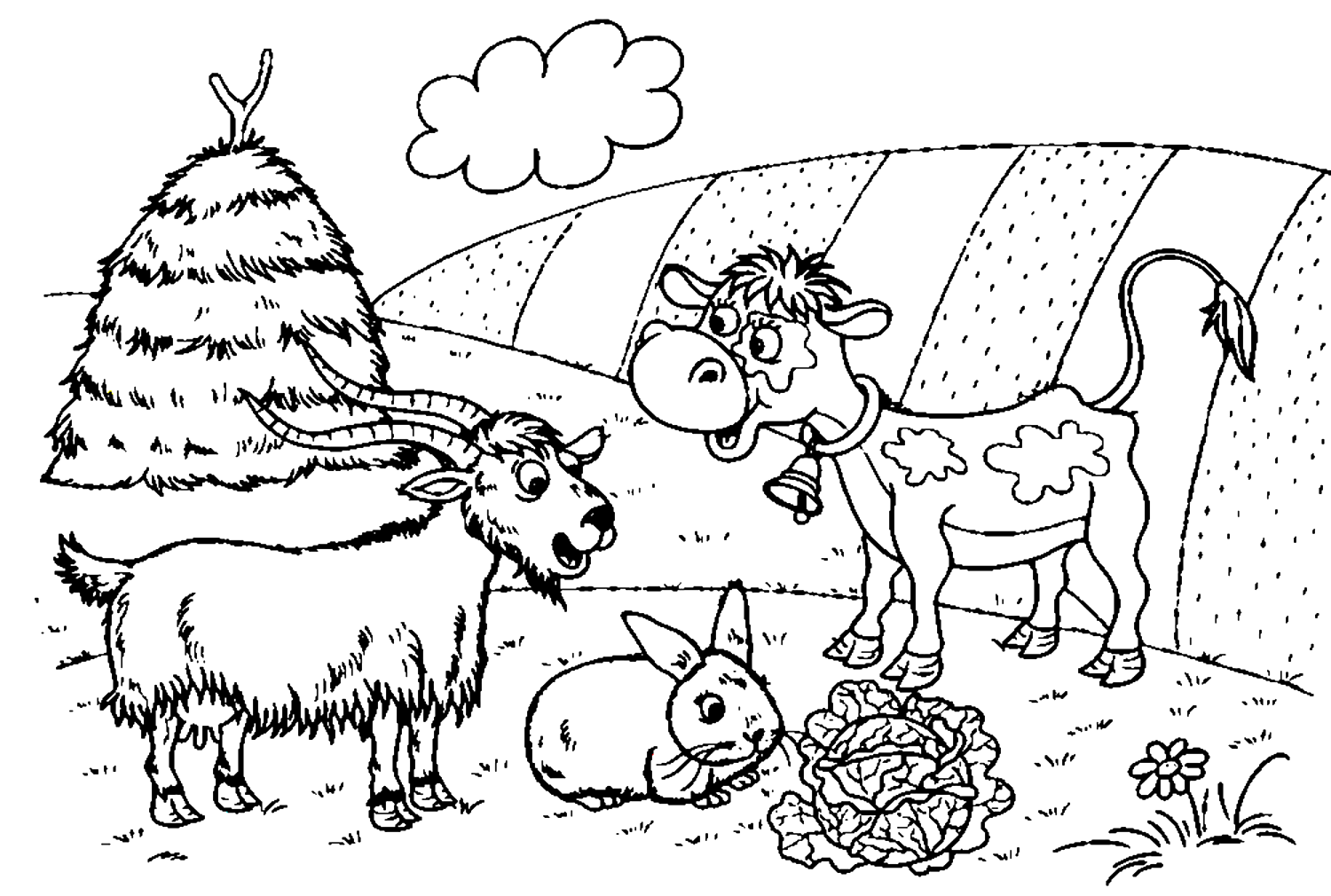
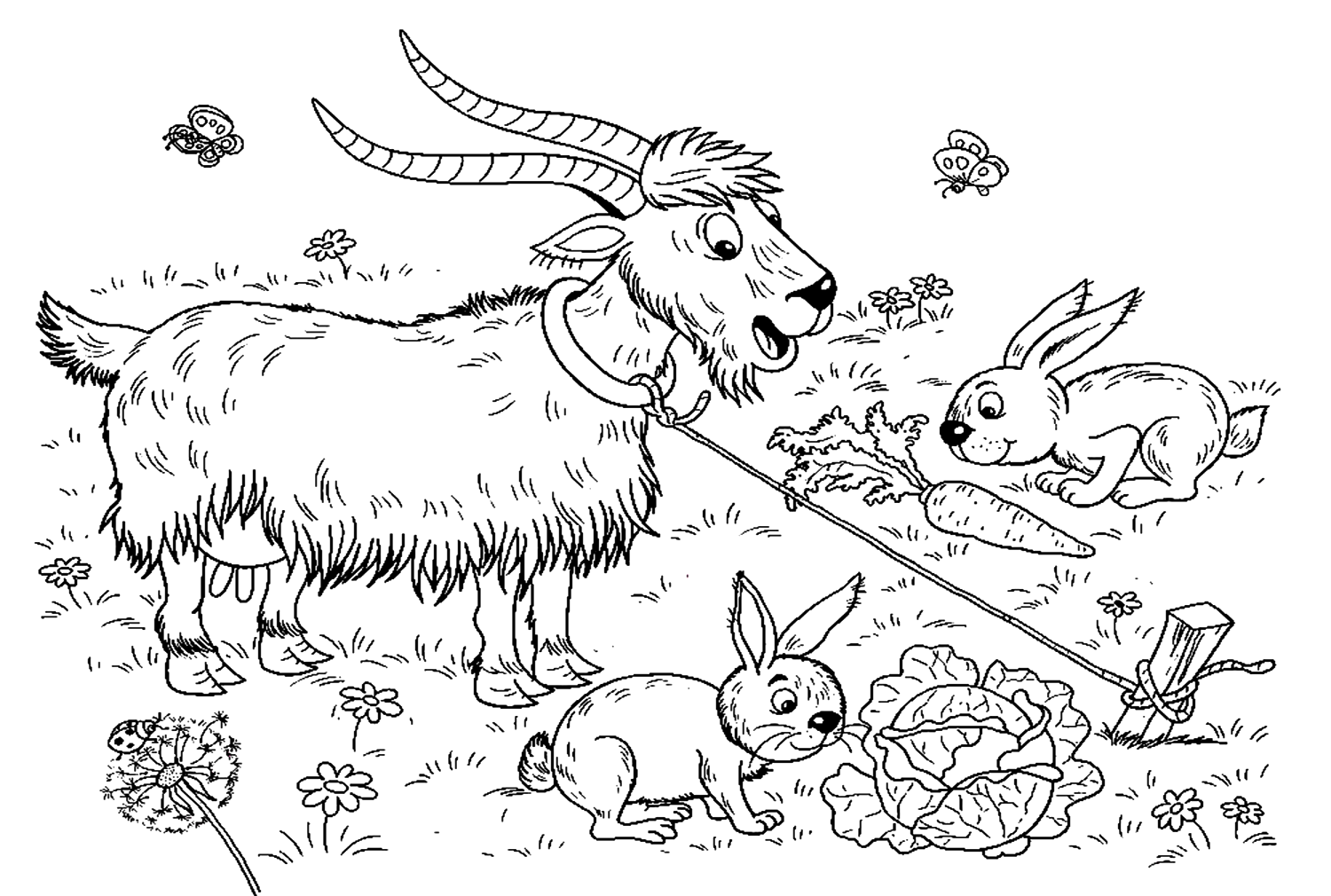
Thirteen pages place a goat in a working farm or pasture setting, standing on a hill, walking through grass, or grazing near a barn. A domestic goat’s coat commonly runs white, brown, black, or a mix of the three, so picking one dominant color for the body and adding small patches of a second color reads more like a real dairy or pack goat than a single flat tone.
Cartoon, Character, and Farm Friend Goats
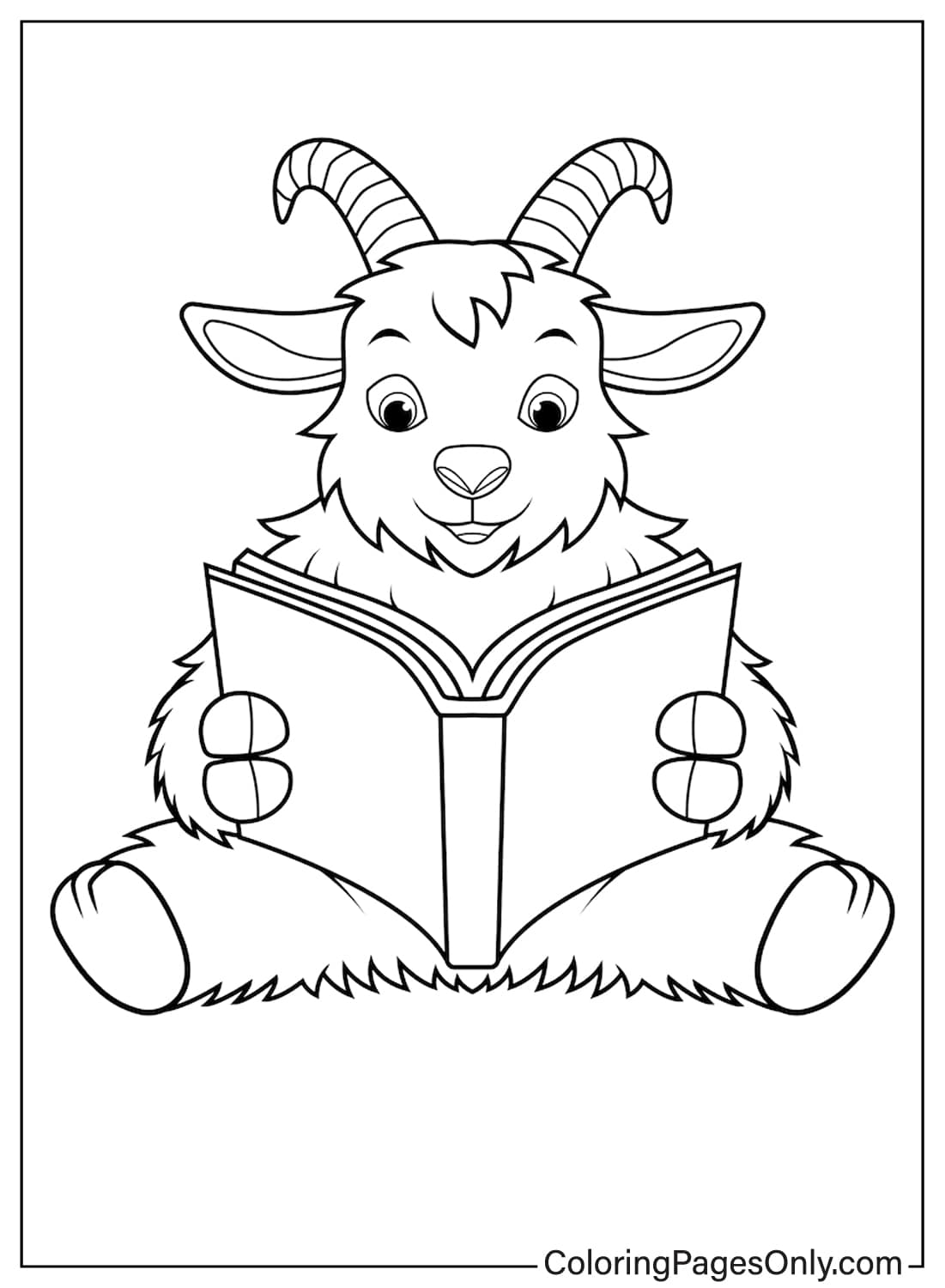
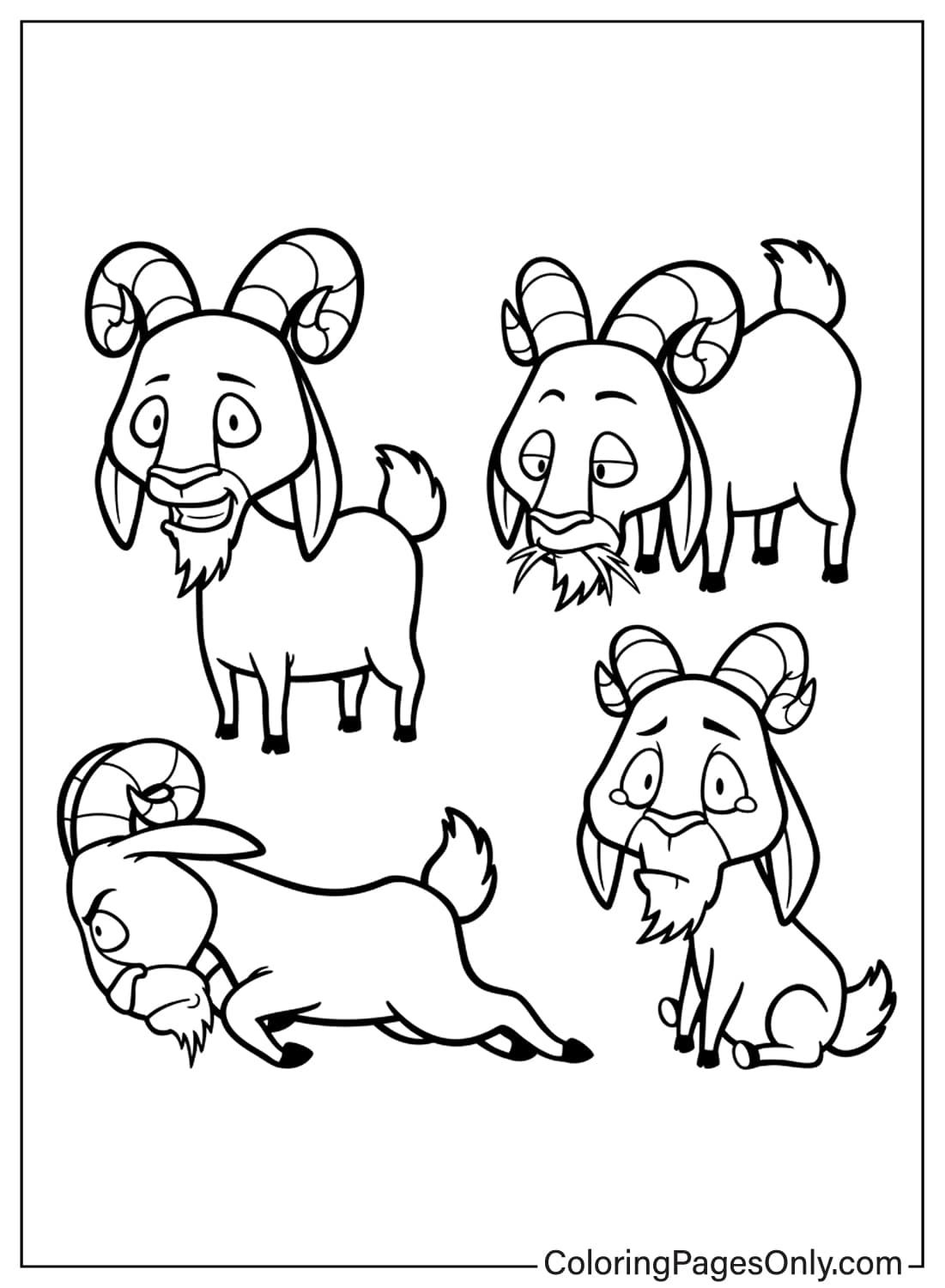
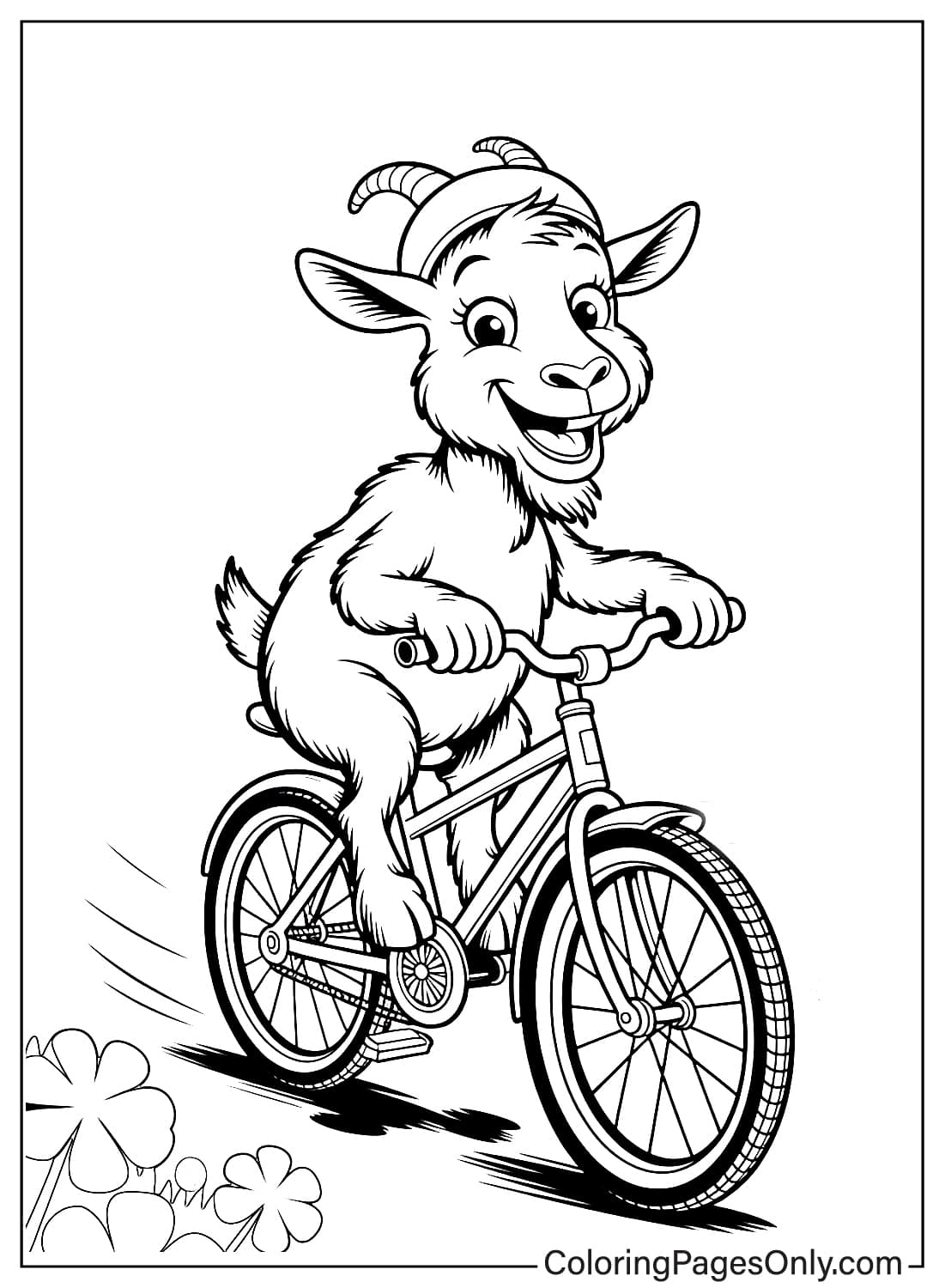
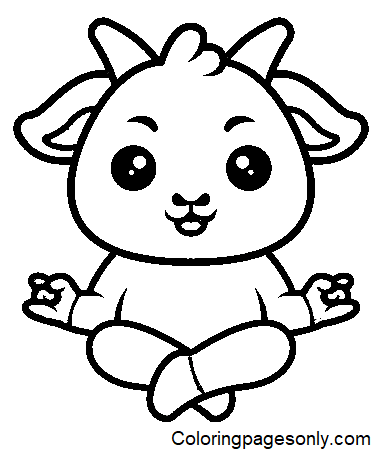
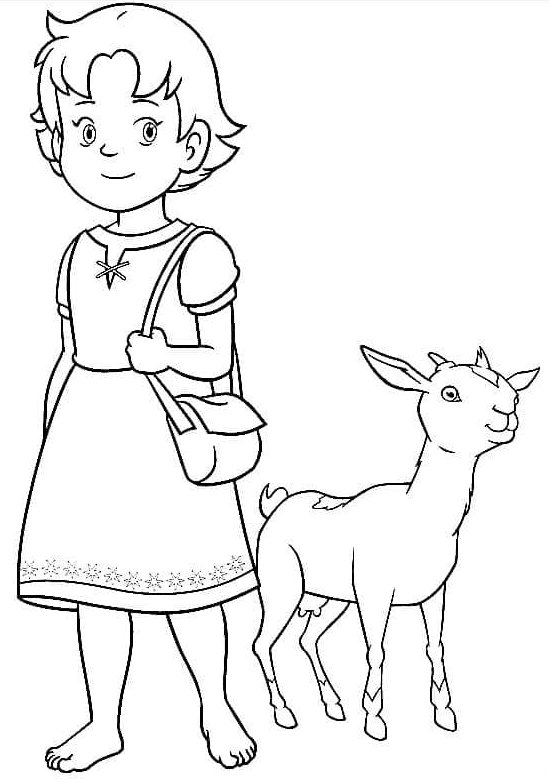
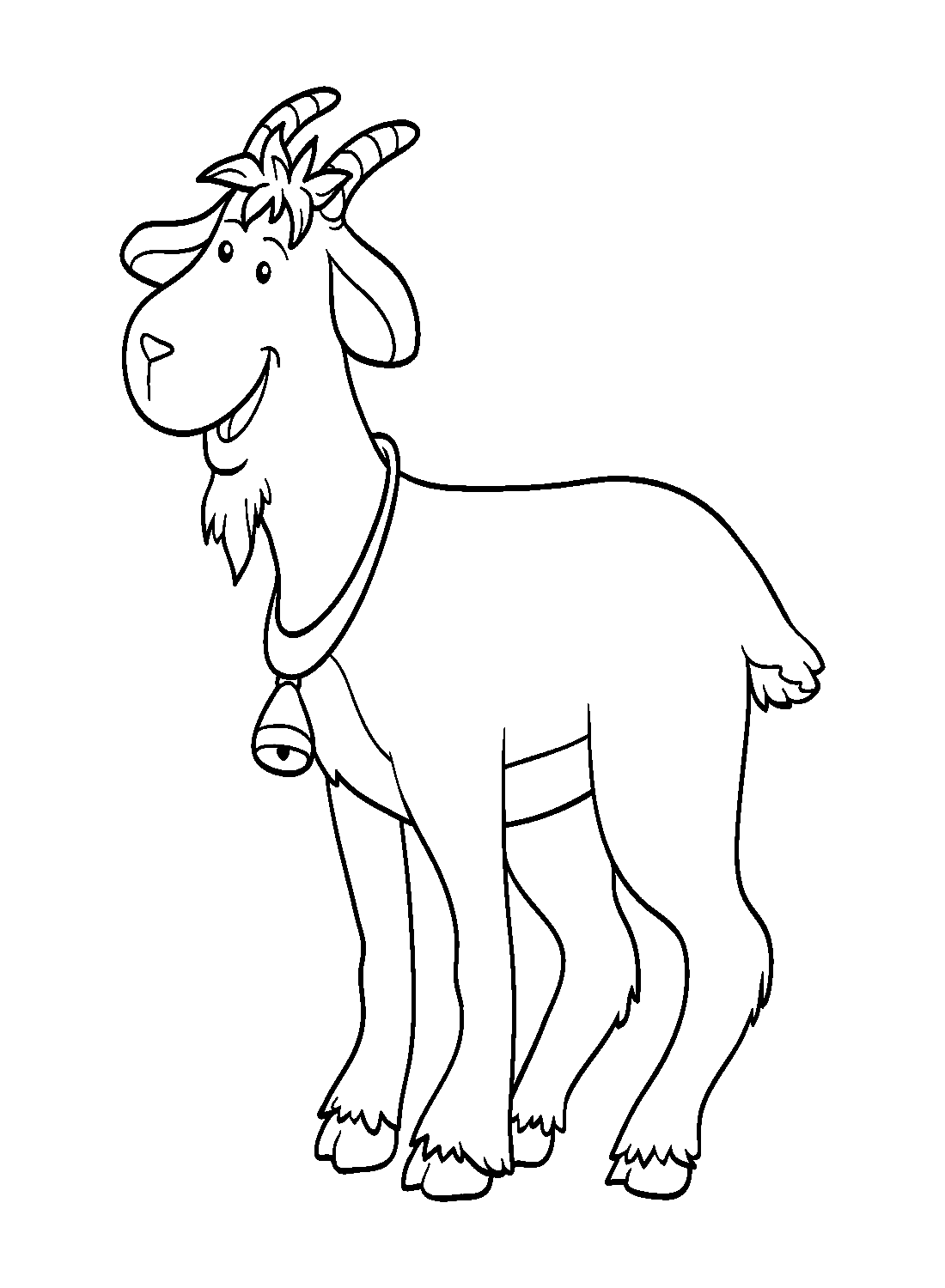
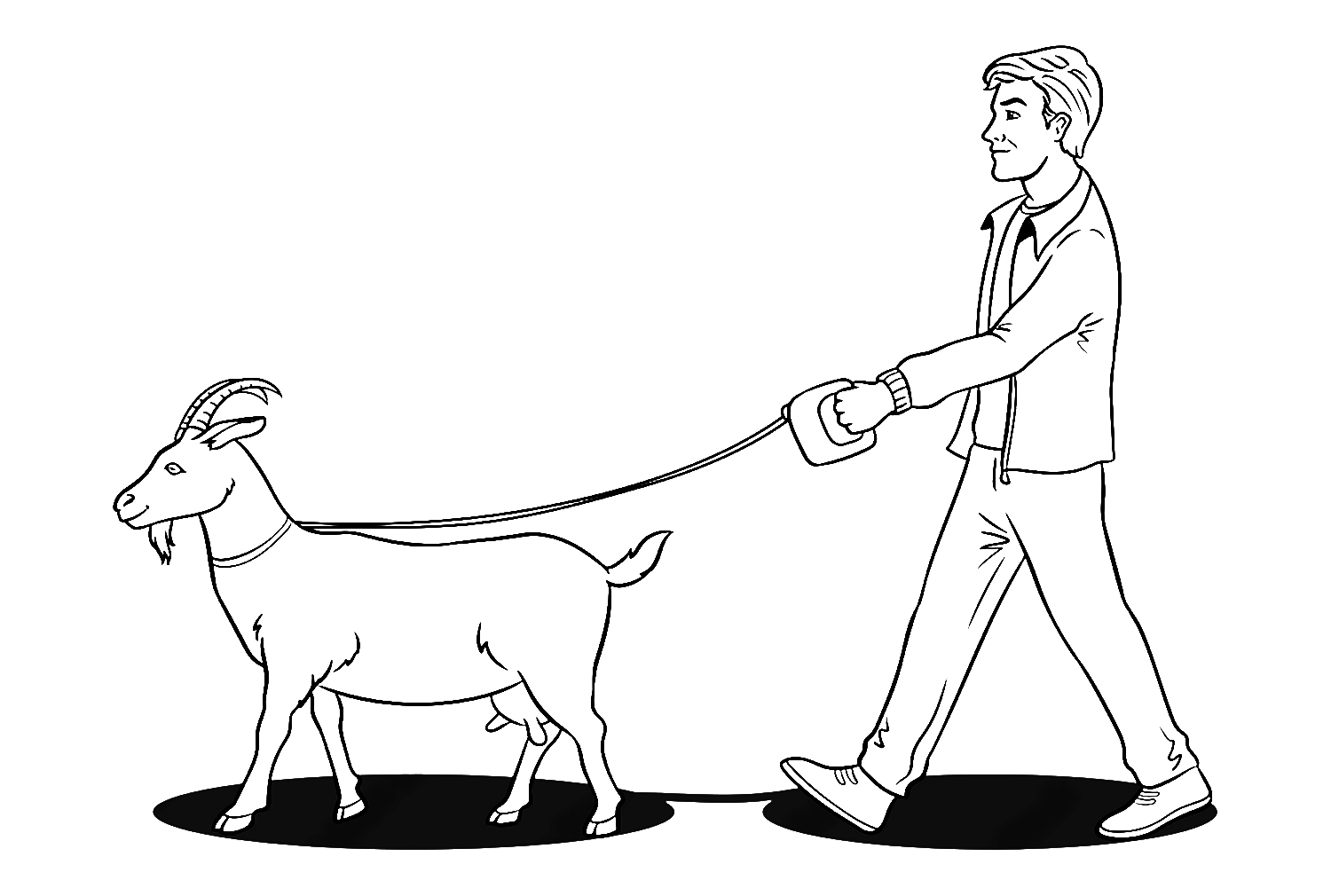
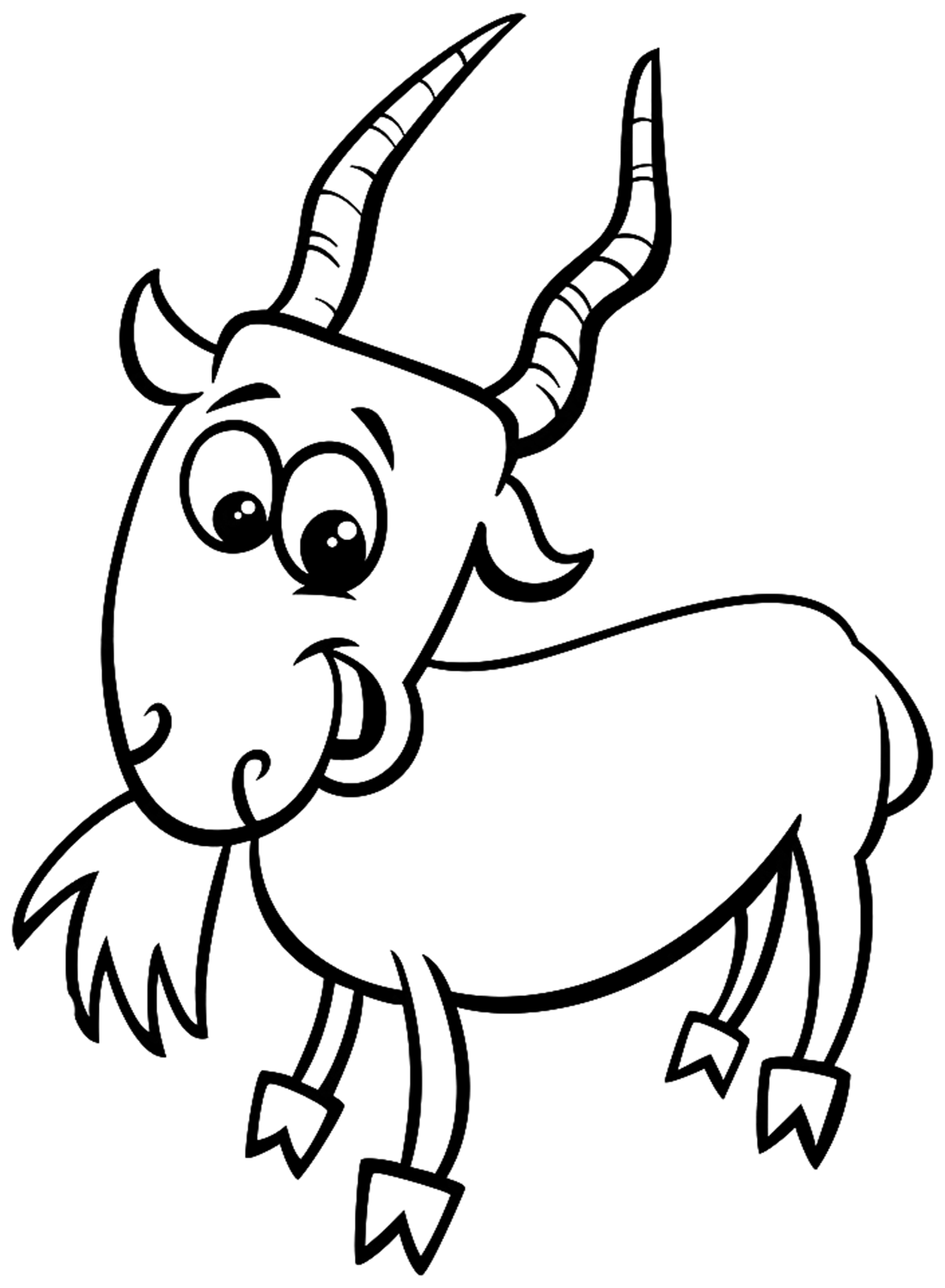
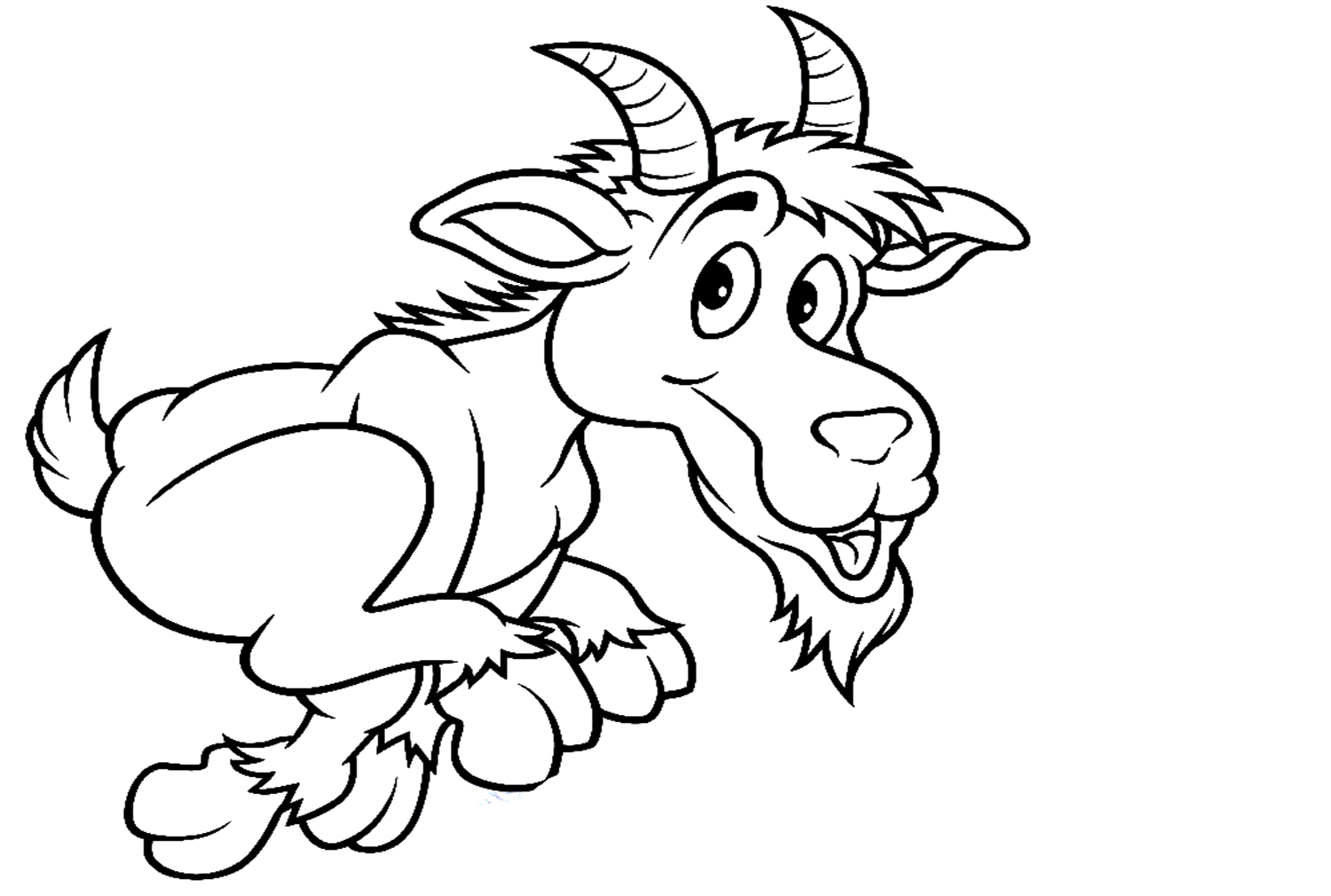
Eighteen pages take a lighter, storytelling approach: goats riding bikes, doing yoga, dancing with farm friends, or paired with a person, including a nod to the classic character Heidi and her goat companion. These pages can take brighter, less realistic colors than the pasture scenes, since the goal here is personality and humor rather than accuracy.
Simple and Realistic Goat Portraits
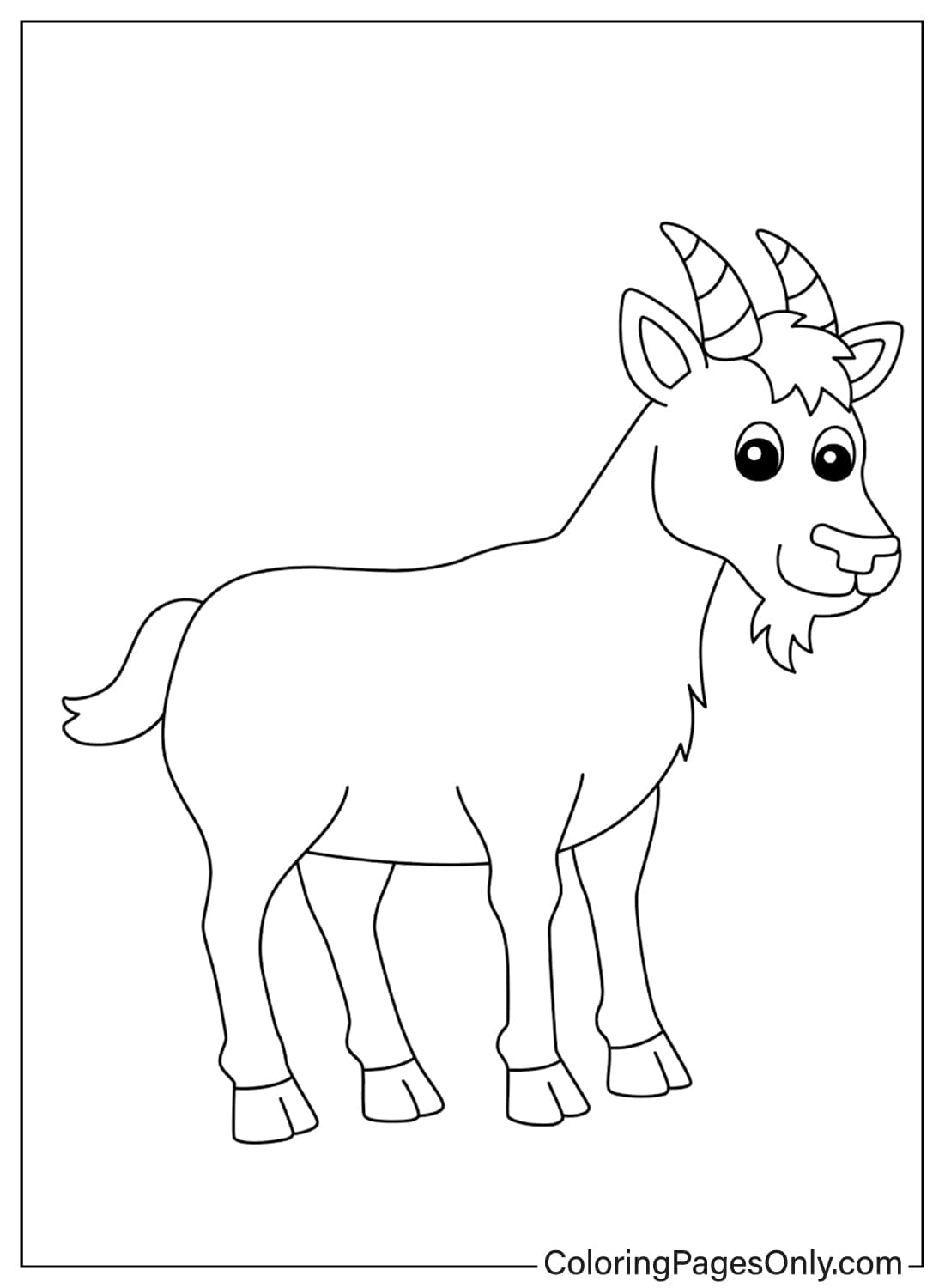
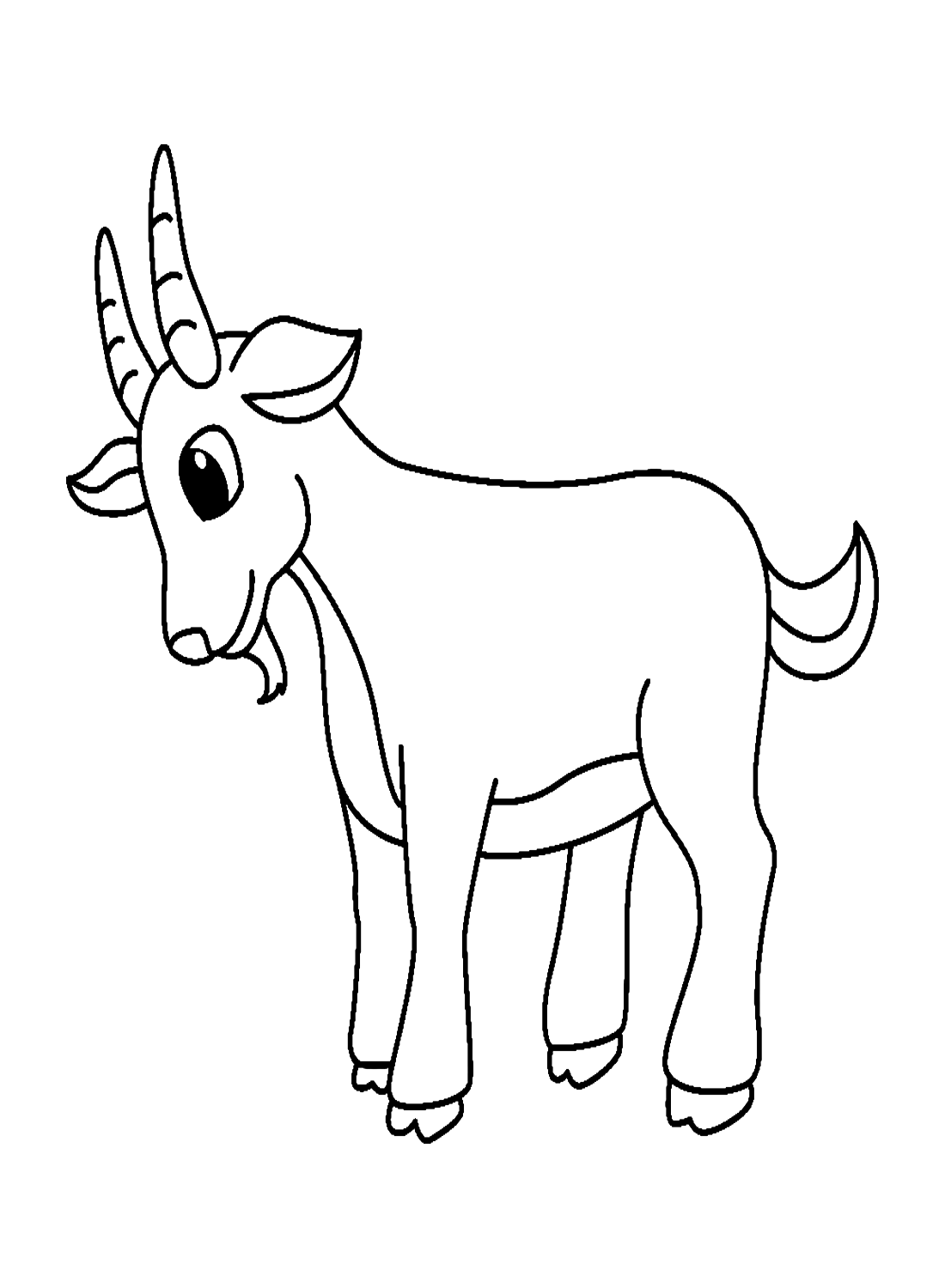
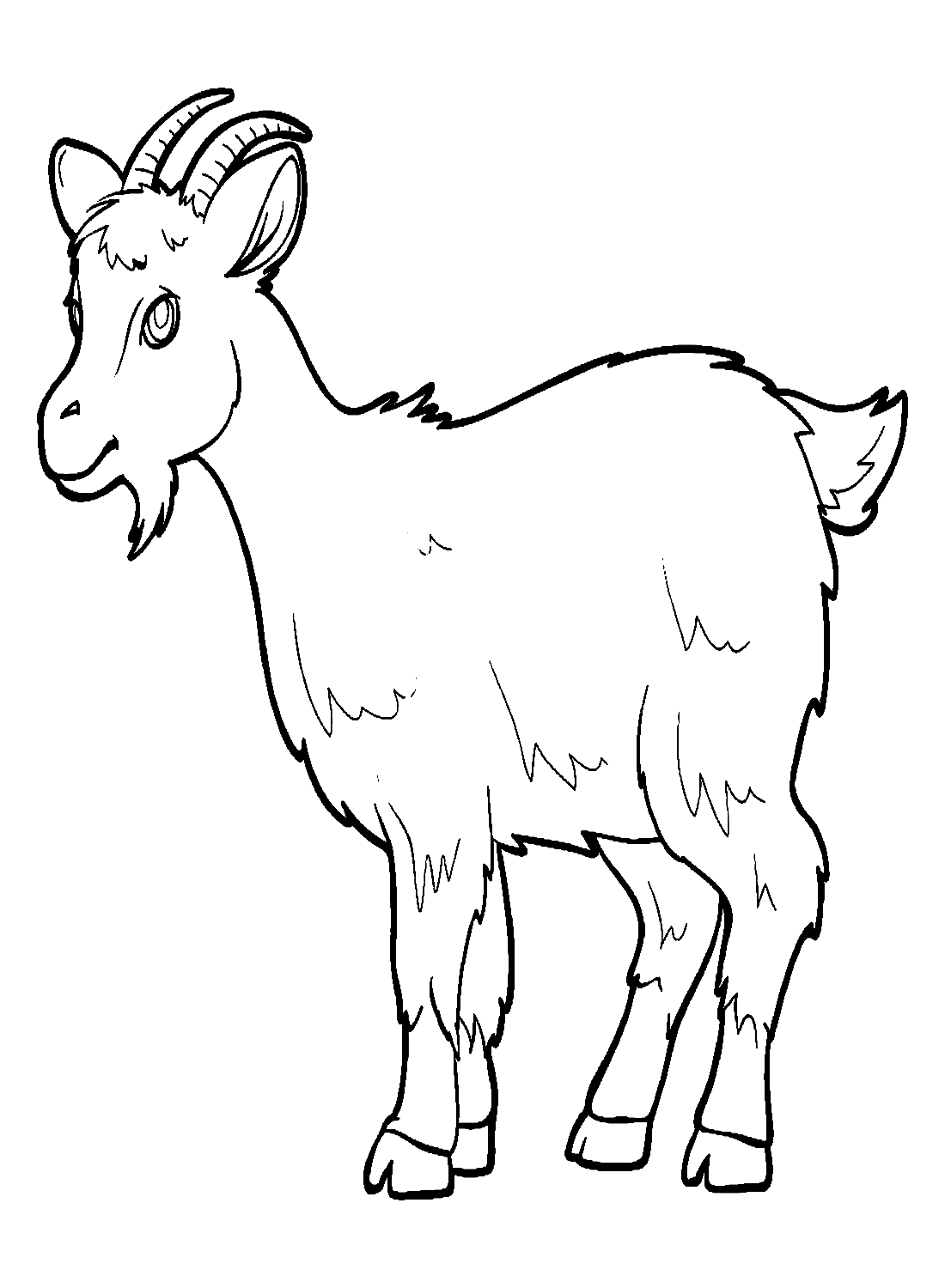
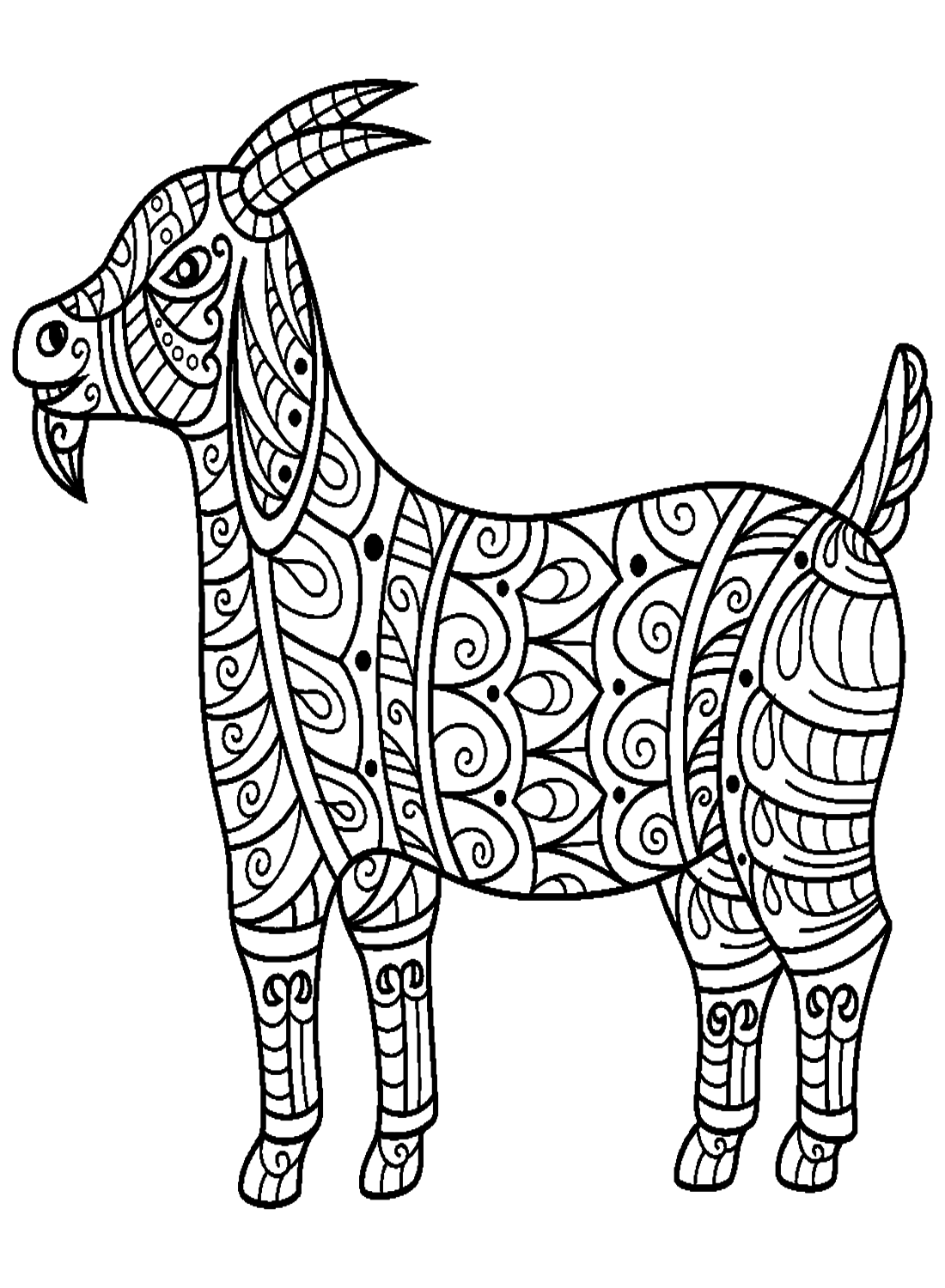
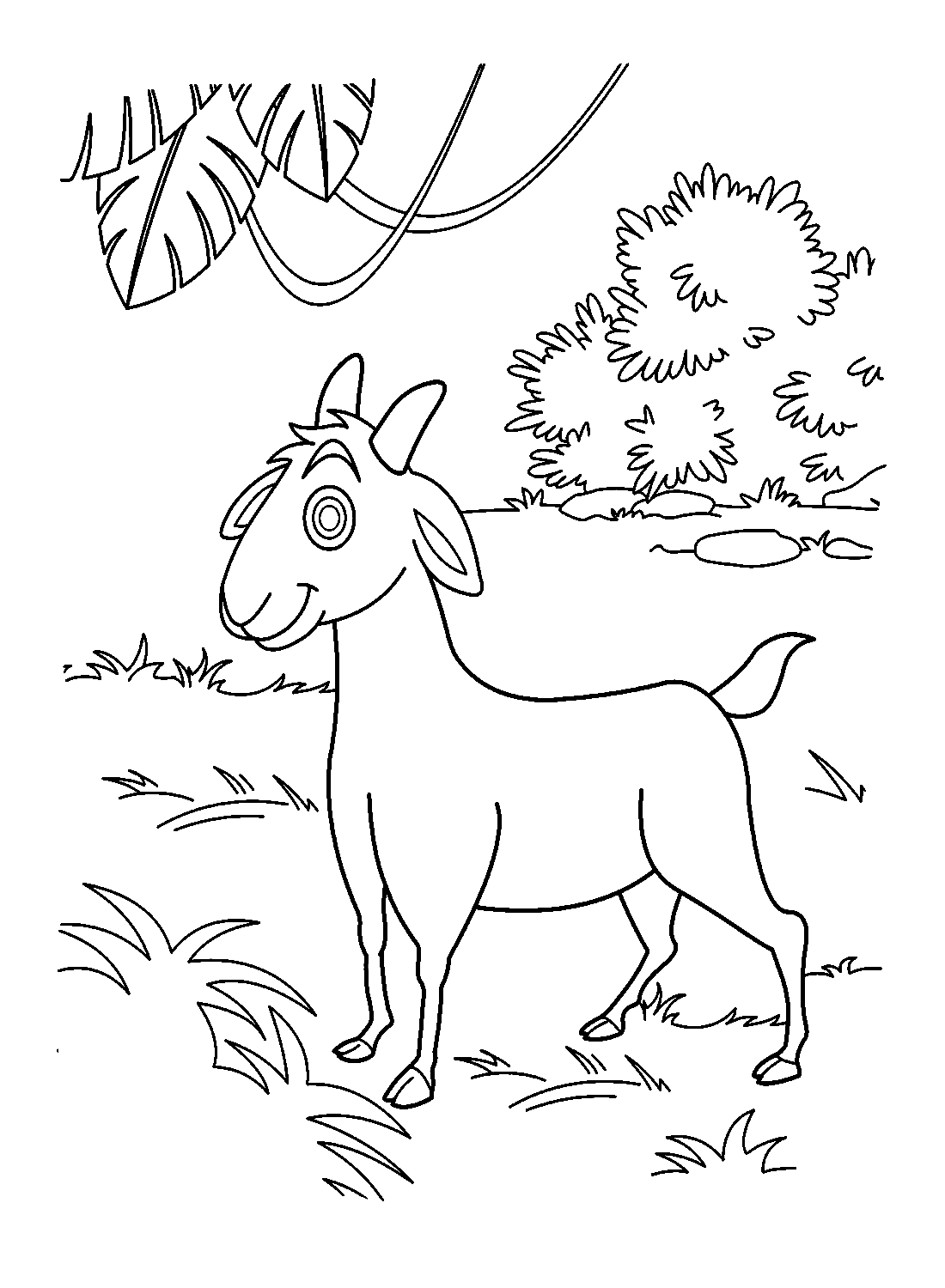
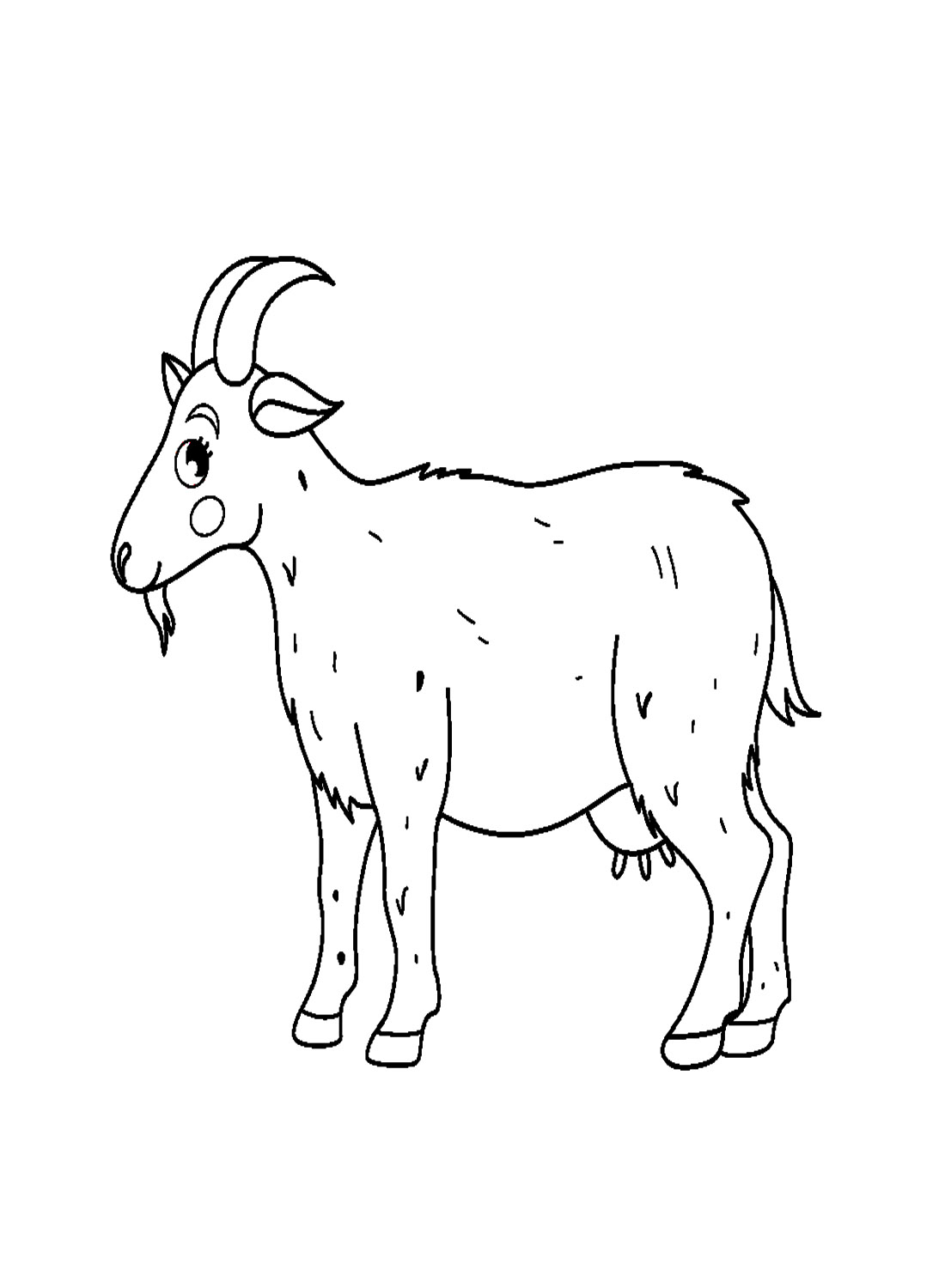
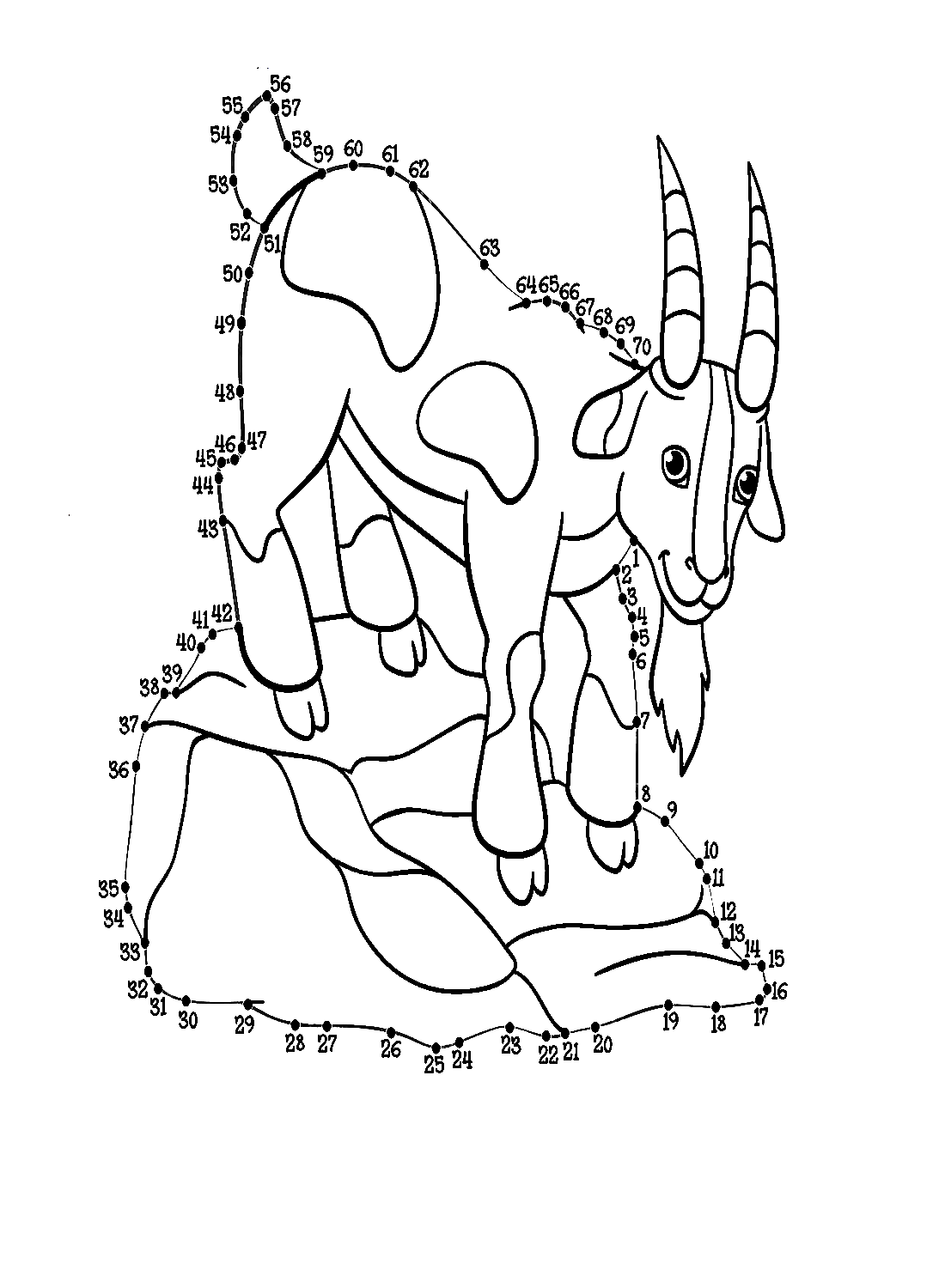
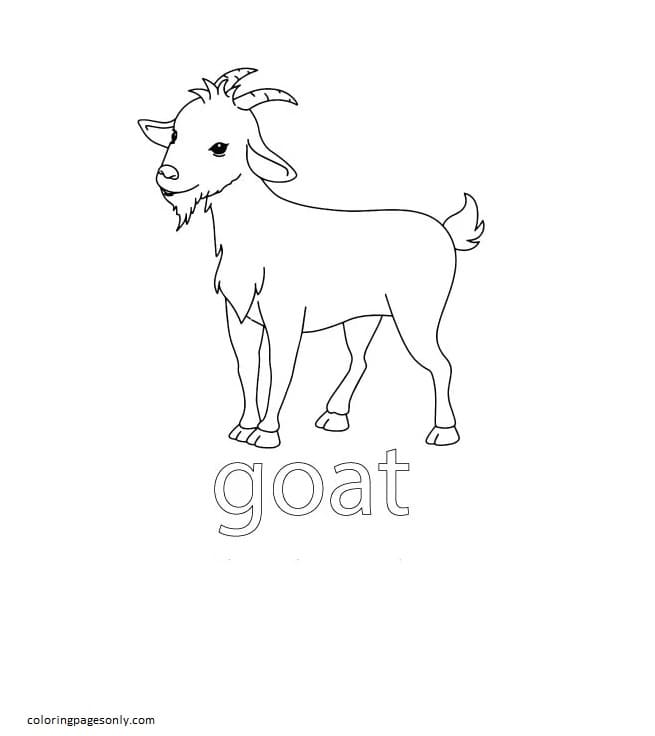
Seventeen pages keep to a simple or realistic solo portrait, from a very plain outline to a detailed, lifelike rendering, plus a mandala-style design and a dot-to-dot page. Look closely at a goat’s eyes on the more detailed portraits: the pupil is a horizontal rectangle rather than round, a small detail that’s easy to miss but makes the portrait read as more accurate once it’s colored in.
What Goat Coloring Pages Do
Small features, real payoff. A goat’s rectangular pupils, folded ears, and small beard all reward steadier, more controlled coloring than a plain round animal shape would, and the American Academy of Pediatrics names exactly this kind of structured coloring, done between ages 2 and 7, as a clear path to fine motor skill development. The simple portrait pages offer an easier version of the same practice before a busier pasture scene.
A very old animal, a very new page. Goats have lived alongside humans for roughly 10,000 years, making them one of the oldest domesticated animals on the planet. Coloring one is a small, hands-on way to connect a farm animal a kid might see today to a relationship that stretches back to the earliest human settlements.
Calm through repetition. A 2005 Art Therapy Journal study found a measurable drop in anxiety after coloring sessions built around a defined structure. The repeating texture of a goat’s coat, especially on the more detailed, realistic portraits, is about as structured as a coloring page gets.
A reason to look twice. A goat’s eyes are an easy detail to color wrong without noticing, since most animals get round pupils by default. Getting the rectangular shape right is a small prompt to look at a reference image rather than color from memory alone.
How to Color Goat Coloring Pages Well
- Base coat: Use White, Tan, or Black, or a mix of the three, since real goats commonly come in these colors rather than one universal shade.
- Eyes: Color a horizontal rectangle pupil in Black against a Goldenrod or amber-toned iris, rather than the round black dot most animal pages default to.
- Horns and hooves: Color these Timberwolf or Gray, since they’re made of keratin rather than fur and read differently in tone from the coat.
- Beard and coat texture: Use short, repeated strokes in a slightly darker shade of the base color rather than one flat fill, to suggest the texture of real goat hair.
- Pasture and farm backgrounds: Use Fern or Asparagus for grass and Raw Sienna for a wooden barn or fence, keeping the goat itself the brightest element on the page.
- Cartoon and character goats: Bright, flat colors work well here, Sky Blue for a bike or Scarlet for a yoga mat, since these pages prioritize personality over realism.
5 Creative Craft Ideas With Goat Coloring Pages
1. Goat Fact Cards. Color a few of the simple portrait pages, then write one real goat fact, like their rectangular pupils or their long domestication history, on the back of each card. A small stack makes a reusable set for review at home or school.
2. Barnyard Diorama. Color one of the farmyard scenes, cut it out, and stand it up inside a shoebox decorated with a paper fence and barn. It turns a flat farm page into a small 3D scene.
3. Goat Coat Comparison Poster. Color a few of the realistic portrait goats using different real coat colors, white, brown, and black, and label each one underneath. It’s a quick way to show that not every goat looks the same.
4. Cartoon Goat Story Strip. Color three or four of the cartoon or character goat pages, tape them together in a row, and narrate a short story using the sequence. It turns a handful of separate pages into one small storybook.
5. Goat Bookmark Set. Color a few small portraits, cut them into narrow bookmark strips, and cover each with clear contact paper. A set of different coat colors makes an easy, low-cost gift.
Frequently Asked Questions
What are Goat coloring pages?
Goat coloring pages are free printable and browser-colorable goat designs, from pasture and farmyard scenes to cartoon characters and simple portraits. This collection has 48 pages, available as PDF downloads or through the online coloring tool.
When were goats domesticated?
Goats were domesticated roughly 10,000 years ago in the Zagros Mountains of what is now Iran, descended from the wild bezoar goat. They’re considered one of the earliest animals humans domesticated.
Why do goats have rectangular pupils?
A goat’s horizontal, rectangular pupils give it a wide field of view, close to 320 degrees, which helps it watch for predators while grazing with its head down.
What is a fainting goat, and does it really faint?
A fainting goat carries a harmless genetic condition called myotonia congenita, which briefly locks up its muscles when startled and causes it to topple over. The goat doesn’t actually lose consciousness and gets back up unharmed within seconds.
What is the difference between a goat and a sheep?
Goats and sheep are related but distinct species. Goats tend to have straighter tails and a beard in many breeds and prefer browsing on leaves and shrubs, while sheep typically graze on grass and grow a wool coat that goats don’t have.
What is a baby goat called?
A baby goat is called a kid, the same word used for a young child. A female goat is a doe or nanny, and a male is a buck or billy.
Are Goat coloring pages suitable for young children?
Yes, with the right page. The simple portrait pages suit younger children, while the detailed, realistic renderings and busier farm scenes suit older kids who want more of a challenge.
Who is Heidi, and why does she appear with a goat?
Heidi is the title character of a classic 1881 Swiss novel by Johanna Spyri, later adapted into films and an especially well-known 1974 anime series. In the story, Heidi lives with her grandfather in the Alps and spends much of her time with goats, which is why one of this collection’s pages pairs the two.
Start Coloring
Download any design by clicking it. No account, email, or payment is required to color or print. Every page opens in the online coloring tool for on-screen use or downloads as a full-resolution PDF for printing. Share a finished goat page using the Facebook or Pinterest buttons at the top of the page.