Guitar Coloring Pages
 By:
Jennifer Thoa – Content Editor & Designer
Updated:
By:
Jennifer Thoa – Content Editor & Designer
Updated:
Free Guitar Coloring Pages: 30 printable PDF designs featuring acoustic and electric guitar portraits, animals playing guitar, kids playing guitar, and Cinco de Mayo-themed designs. Each page can be downloaded as a PDF to print or colored online in the browser.
The guitar is a stringed instrument played across nearly every musical genre, from classical and flamenco to rock, country, and pop, typically strummed or plucked with six strings running along a long, fretted neck. Acoustic guitars rely on a hollow wooden body to project sound naturally, while electric guitars use magnetic pickups to convert string vibrations into an electrical signal that can be amplified. The first commercially successful electric guitar, nicknamed the Frying Pan for its round, flat body, was developed by George Beauchamp and Adolph Rickenbacker in the early 1930s, paving the way for later solid-body designs from innovators like Les Paul.
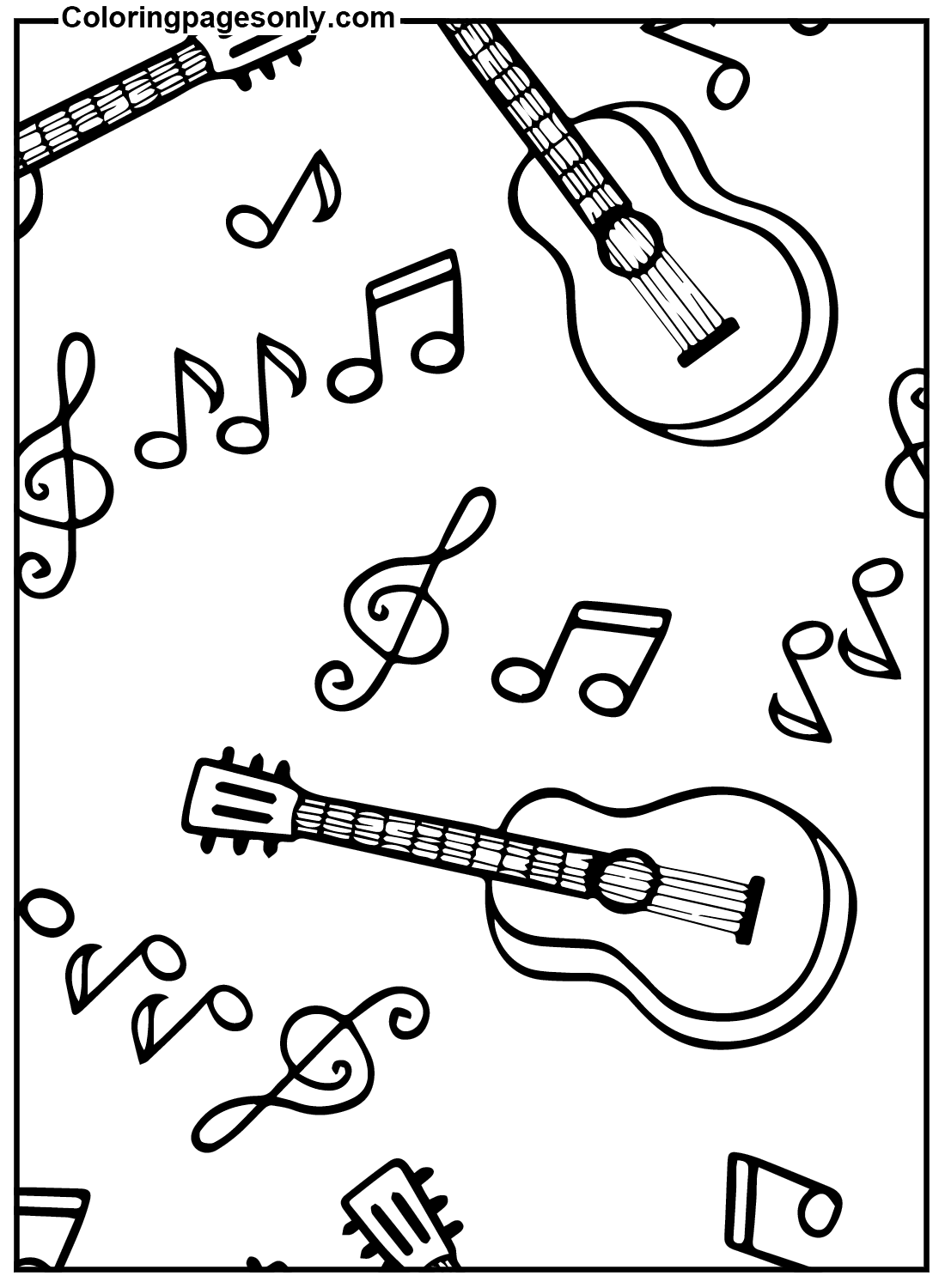
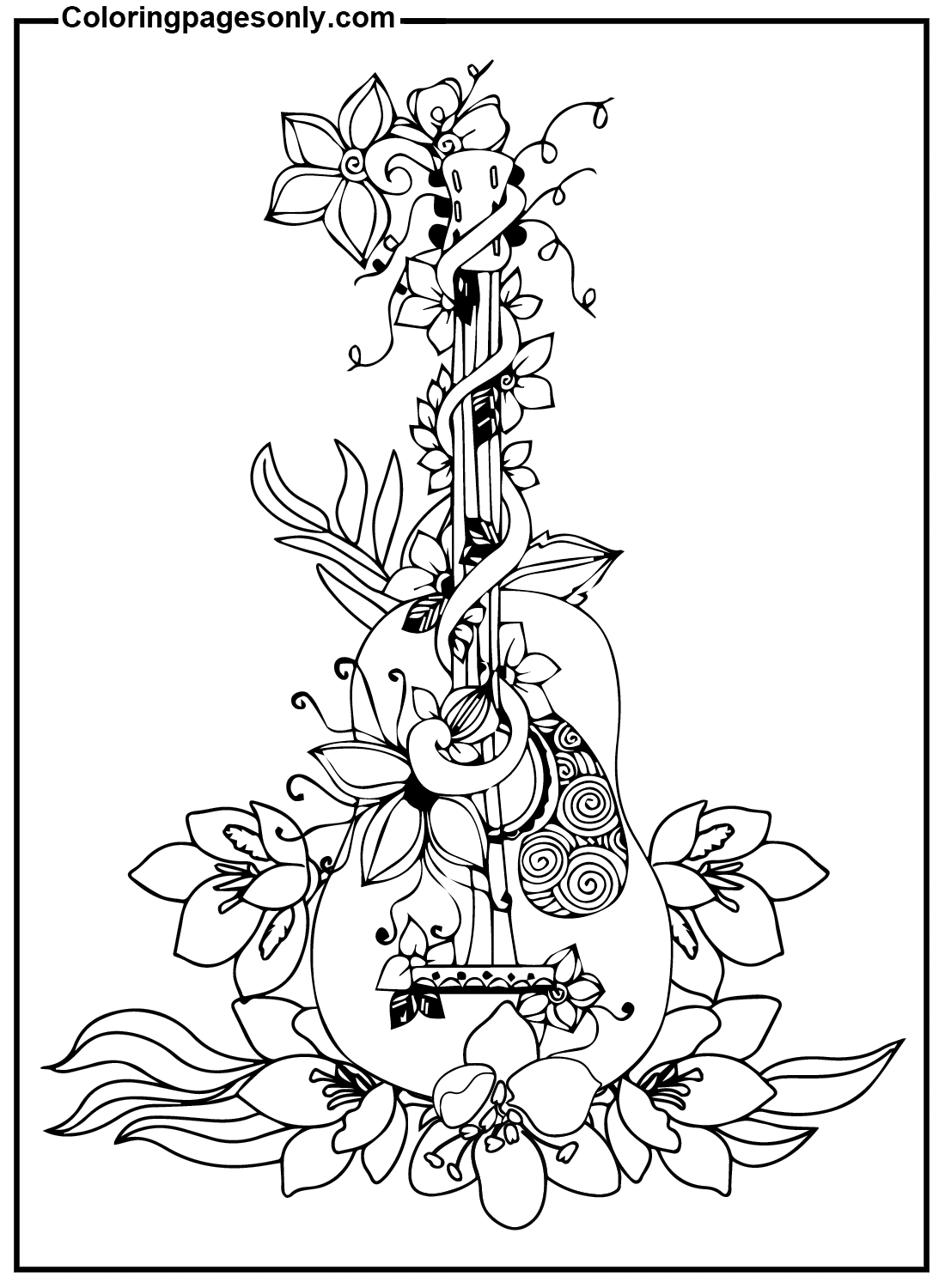
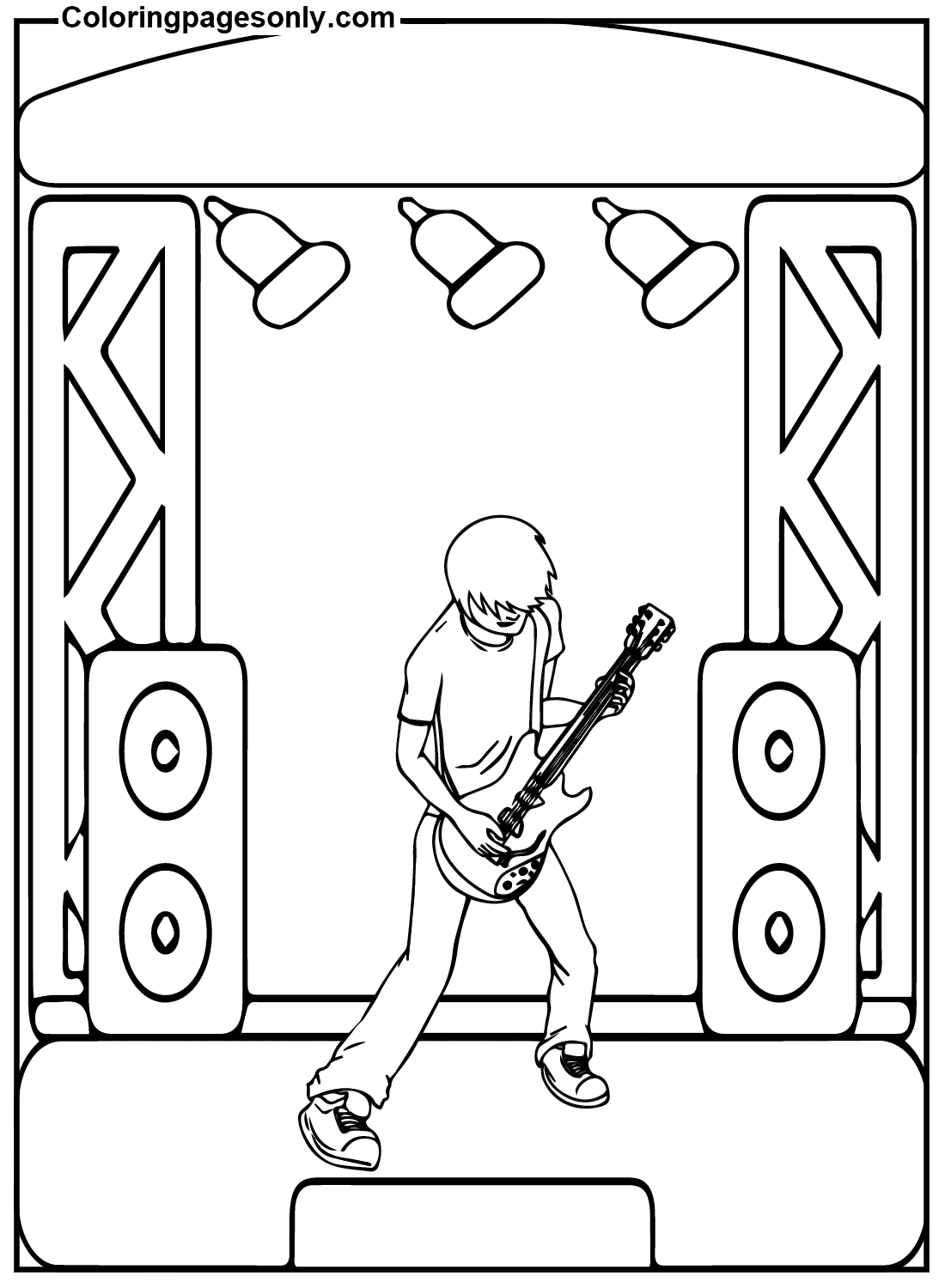
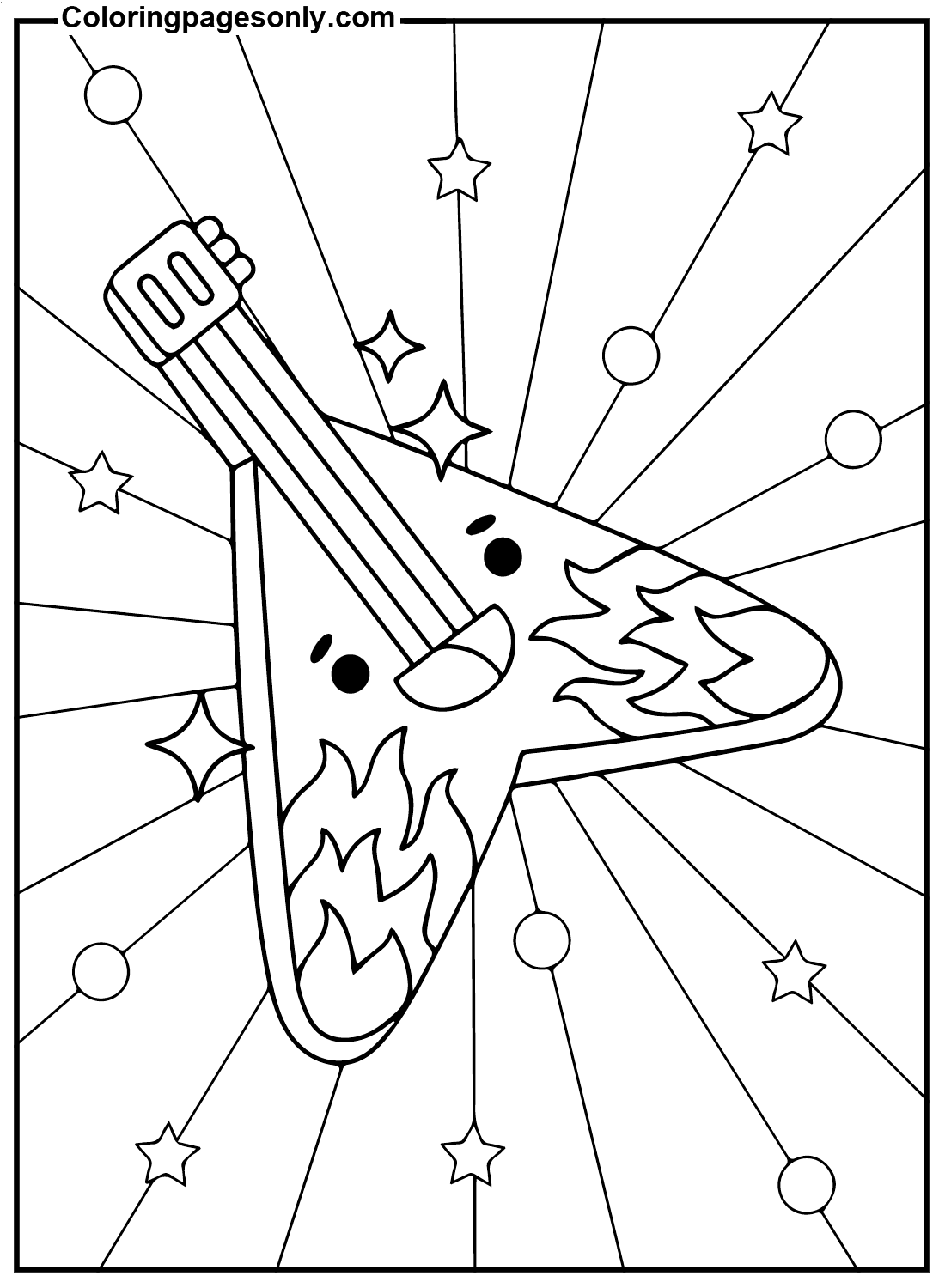
This collection spans 30 pages, grouped into classic guitar portraits, printable sheets, animals playing guitar, Cinco de Mayo-themed designs, and kids playing guitar. The coloring angle ranges from simple standalone instruments to playful scenes with characters and animals.
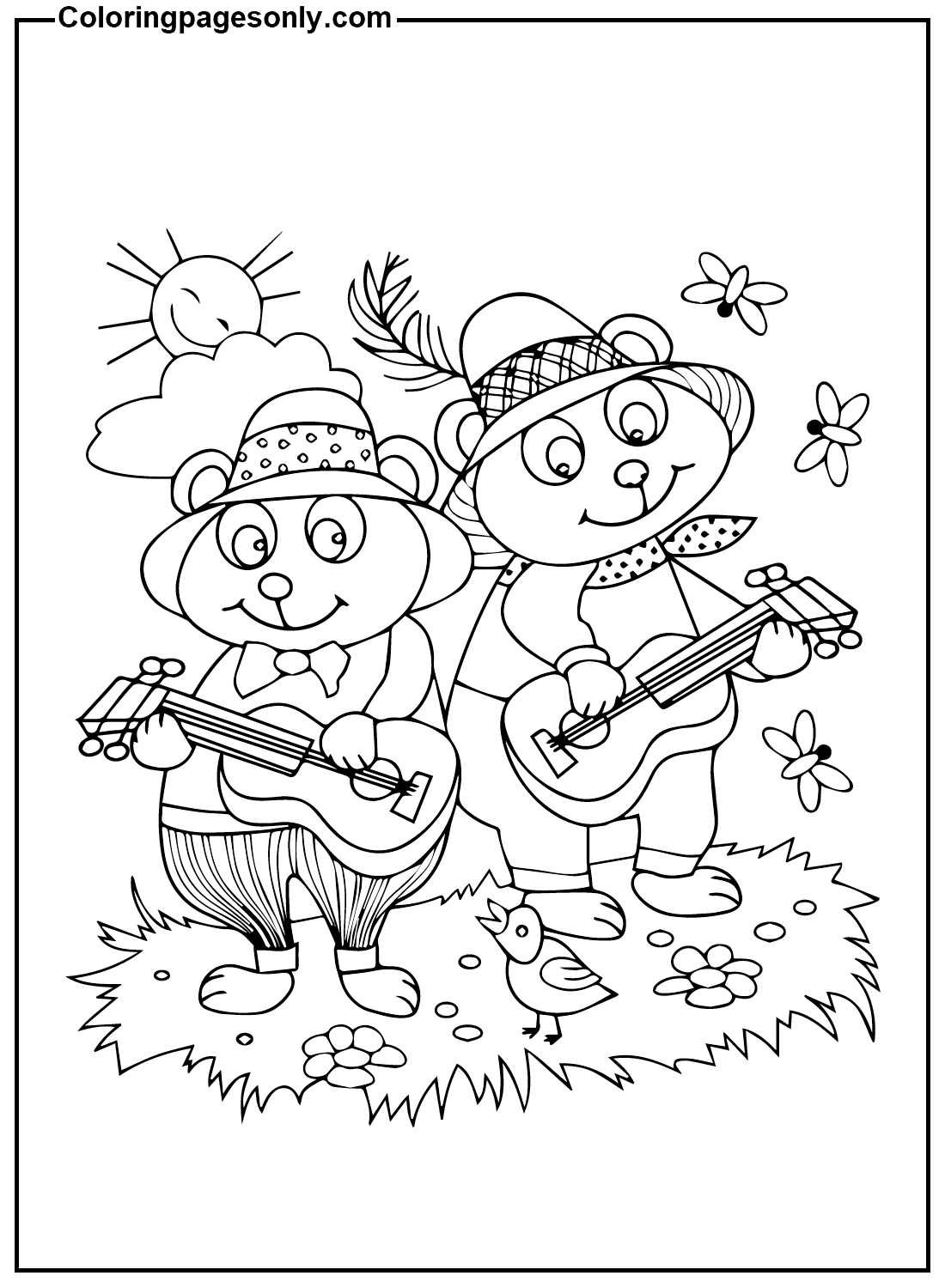
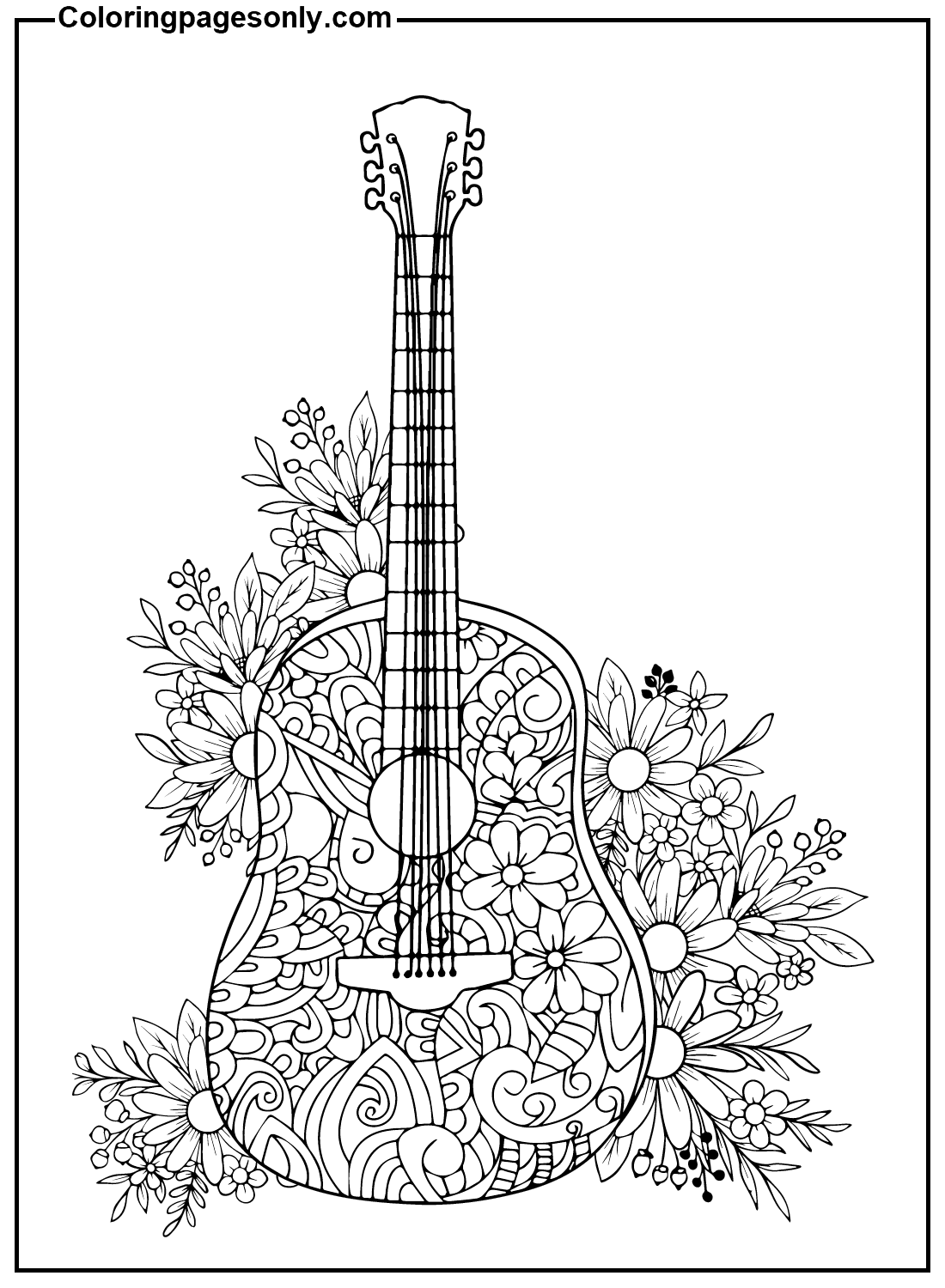
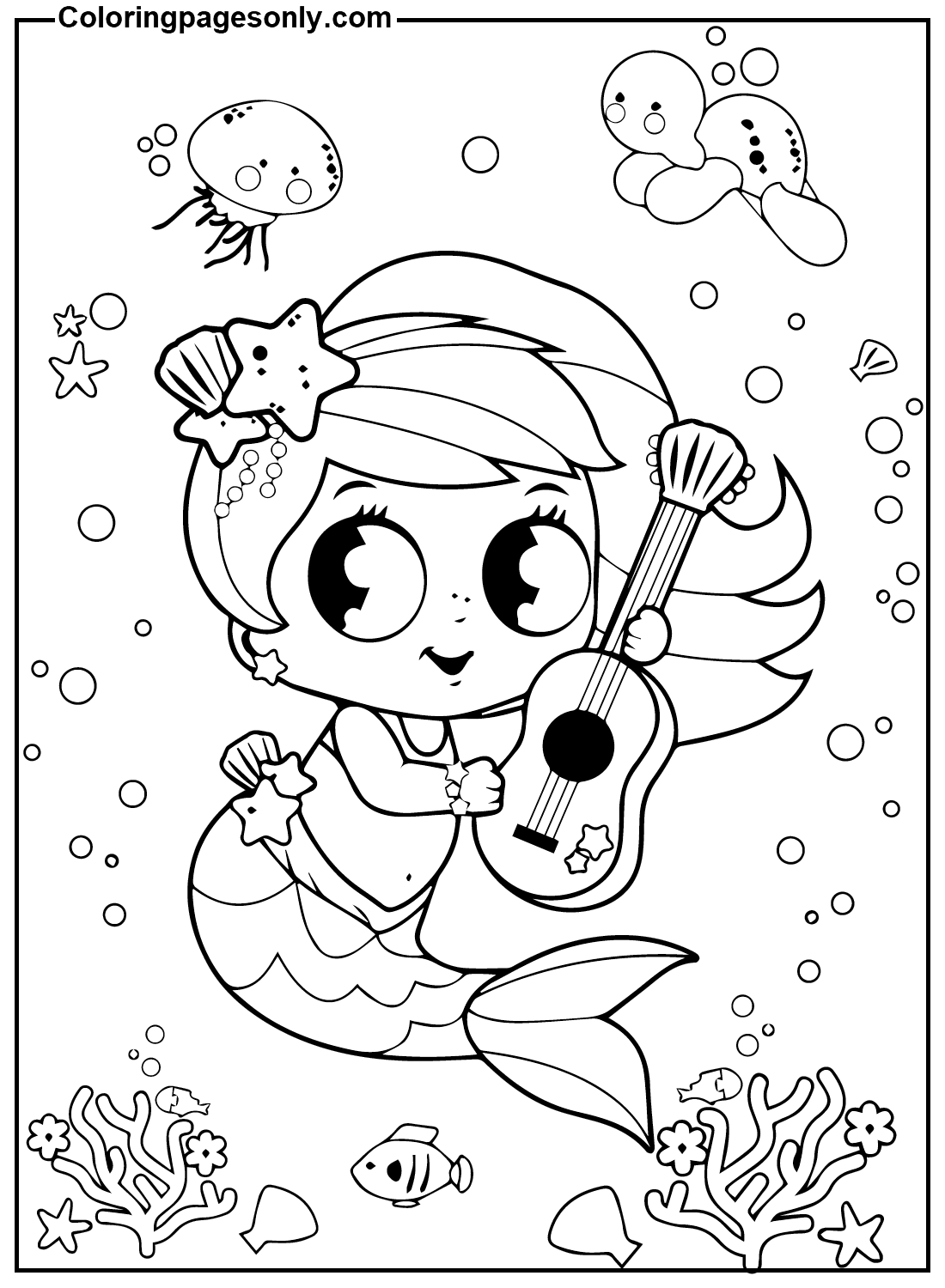

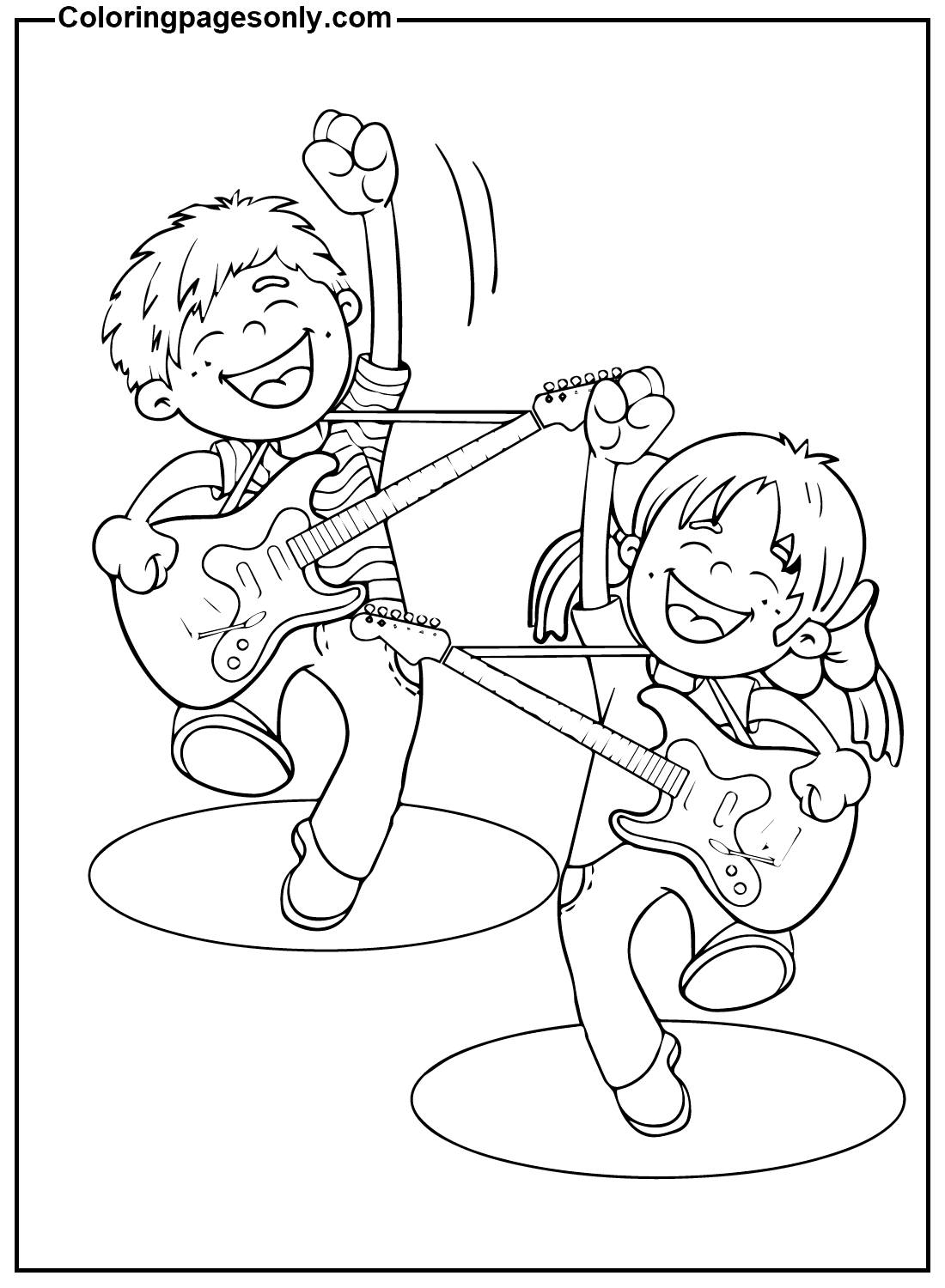
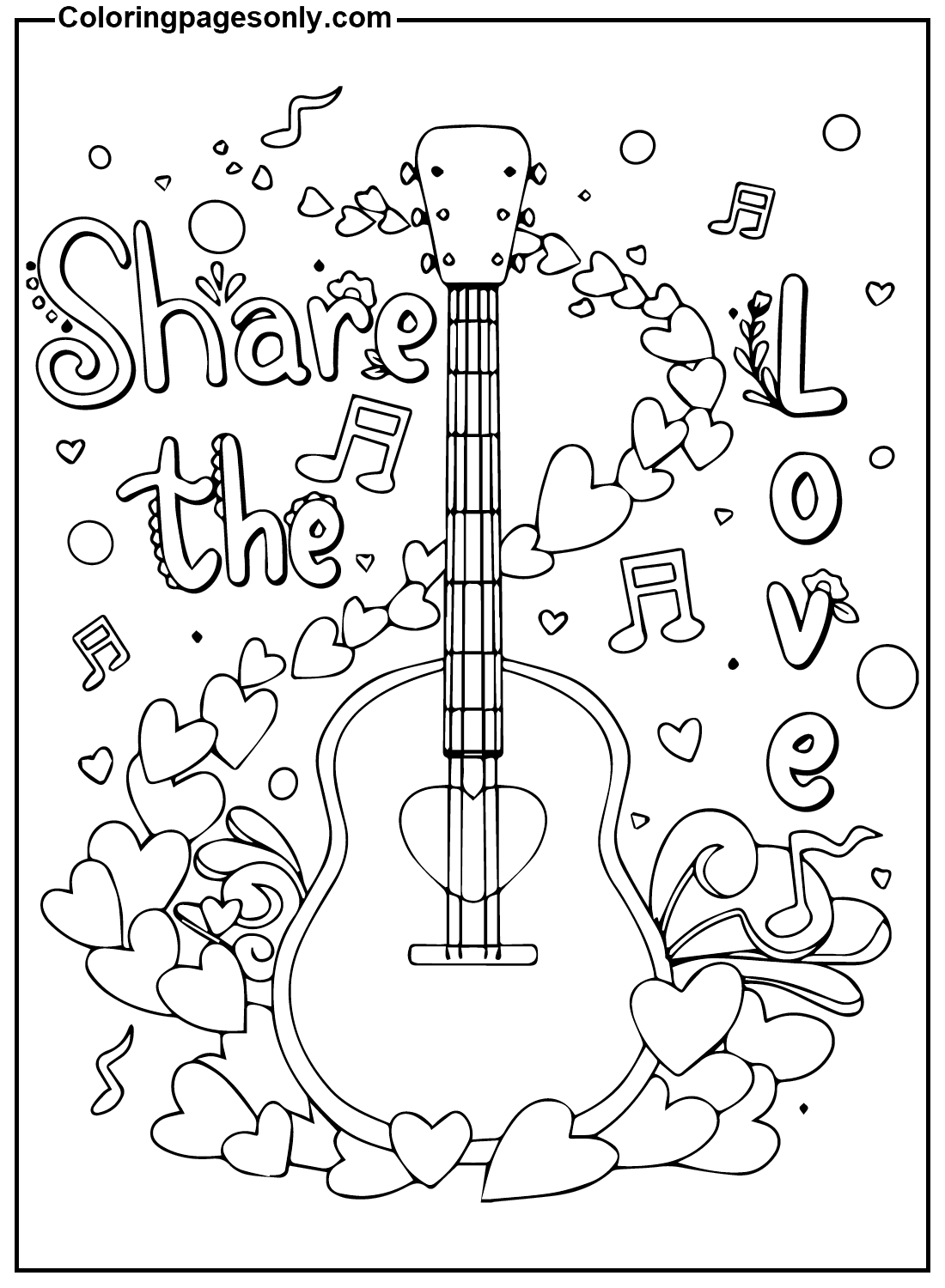
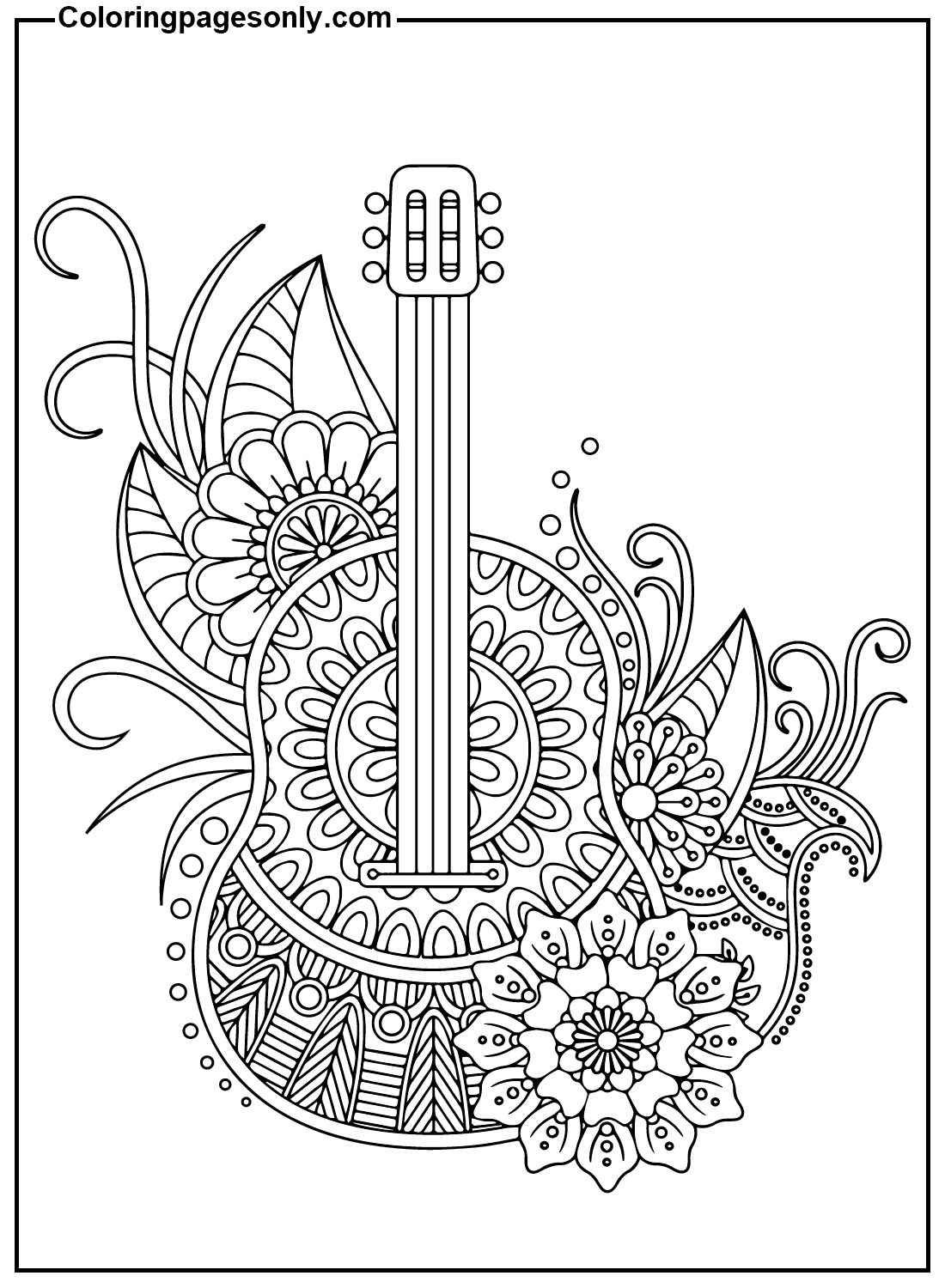
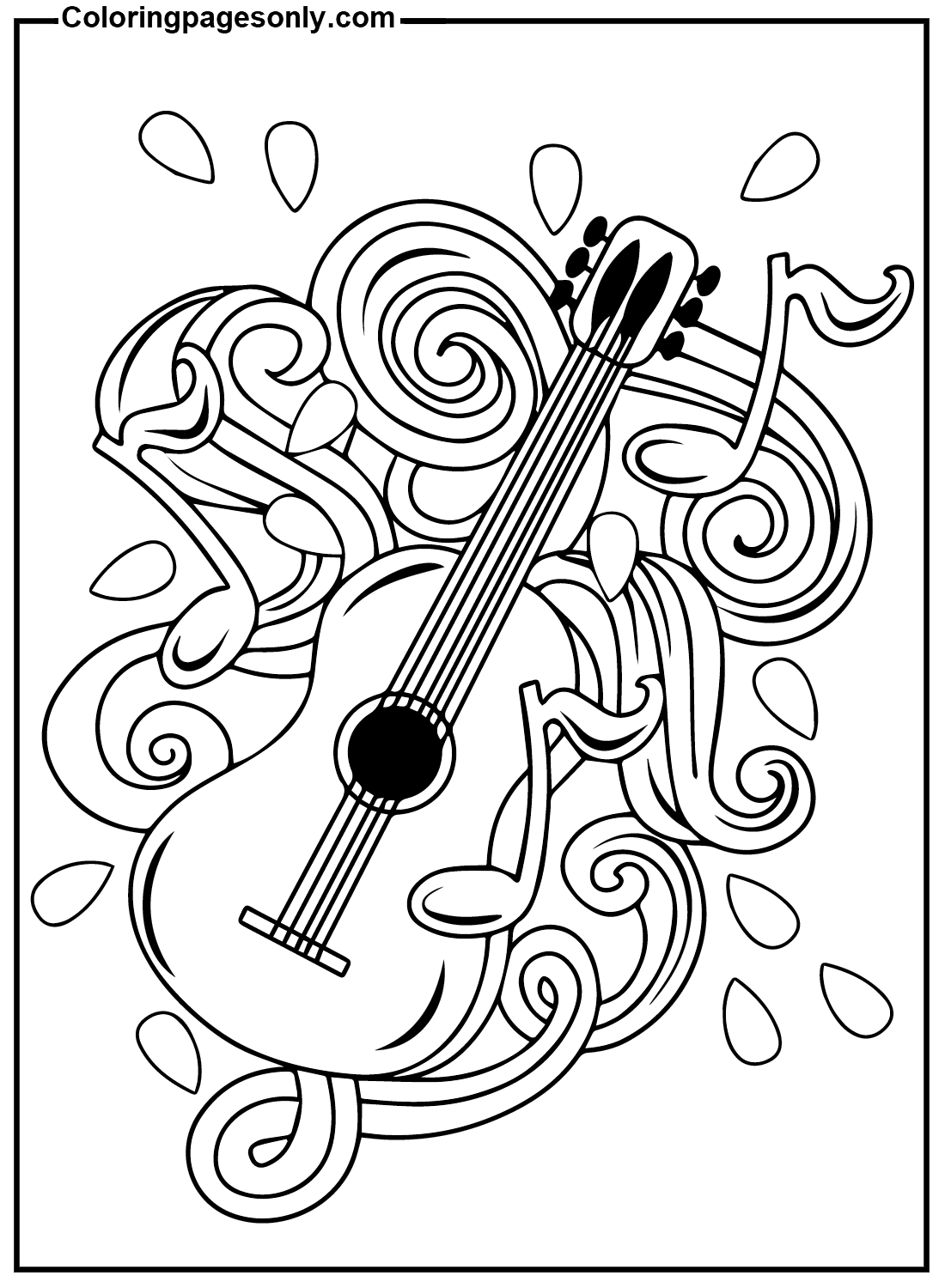
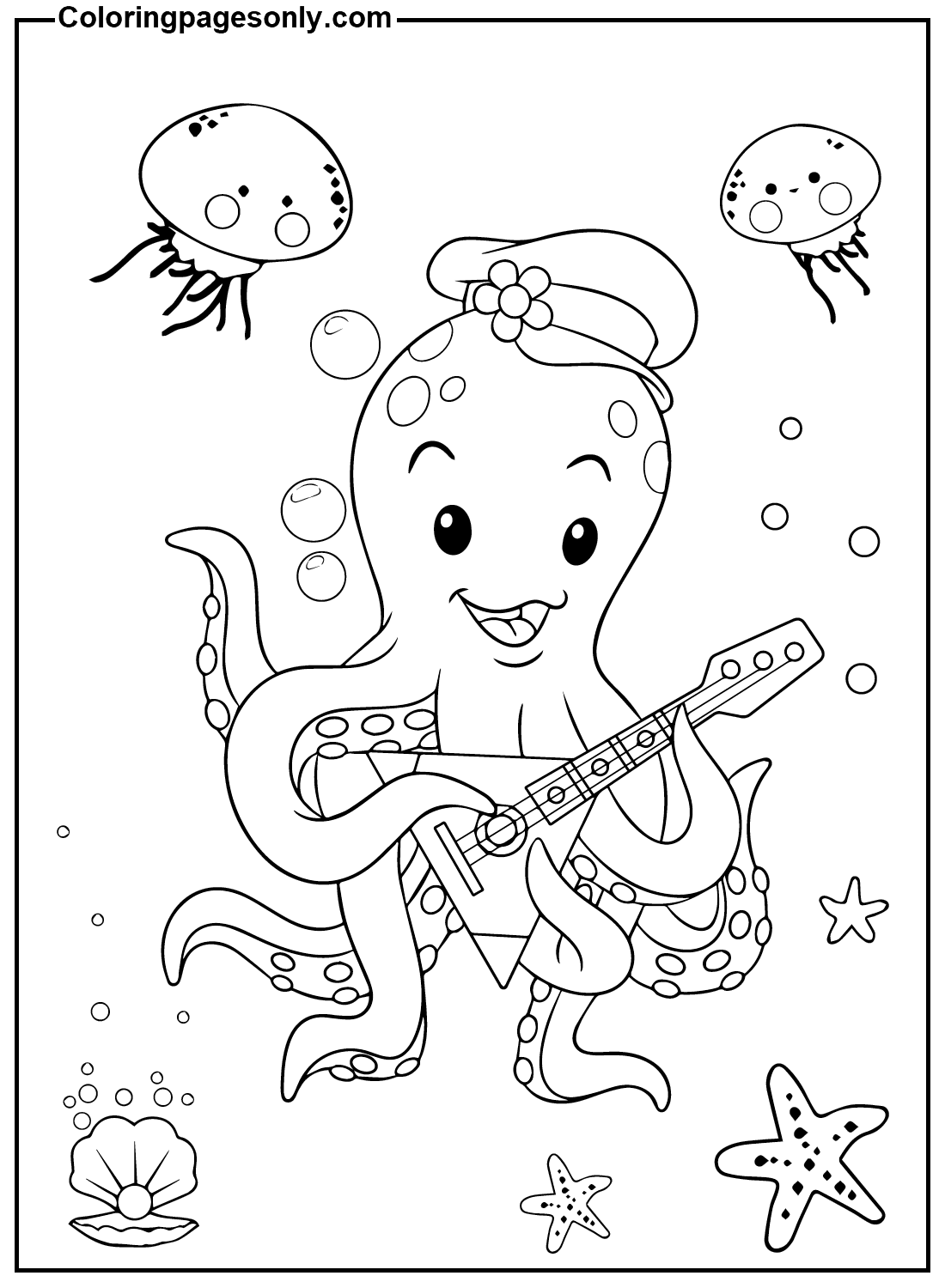
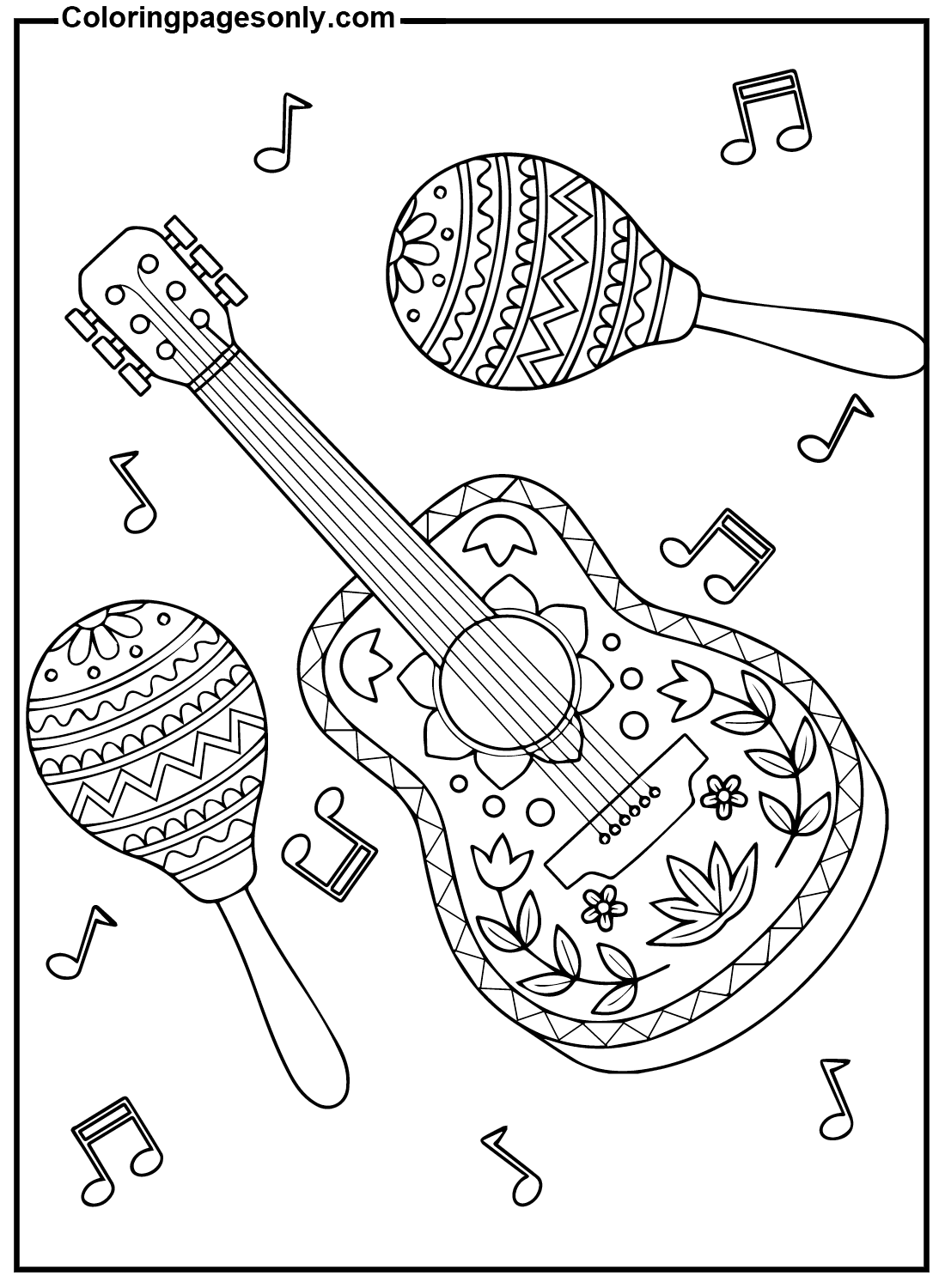
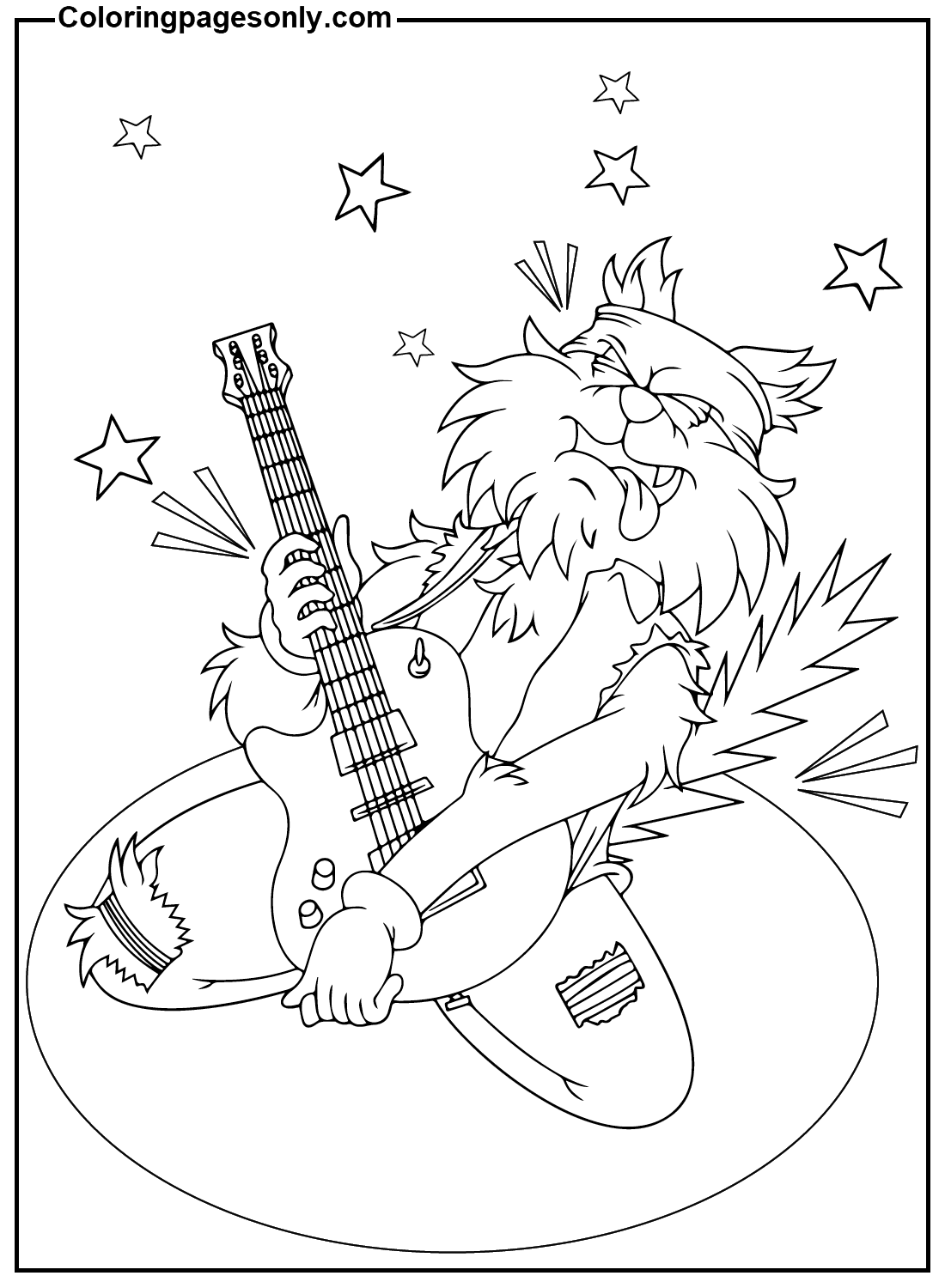
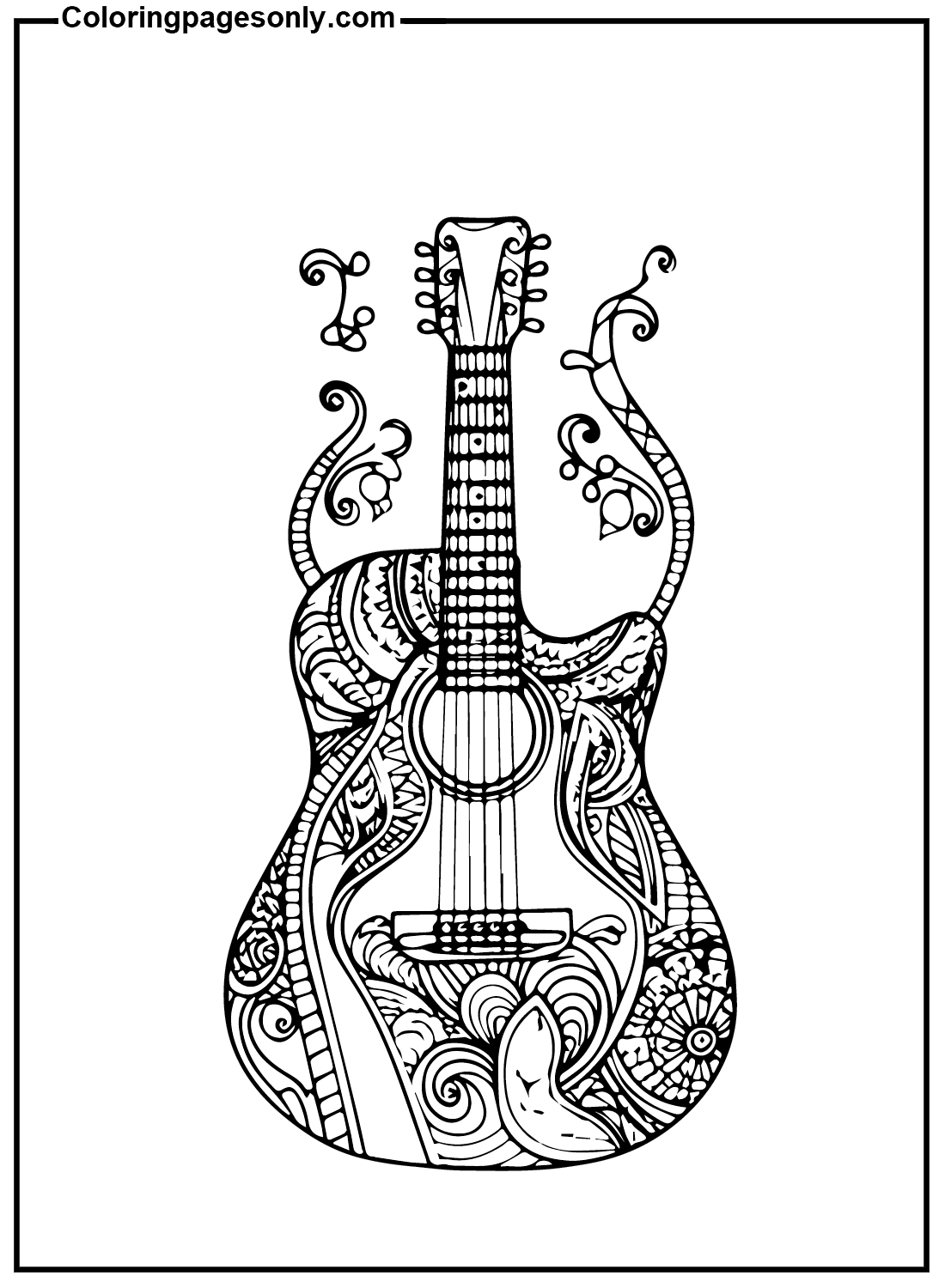
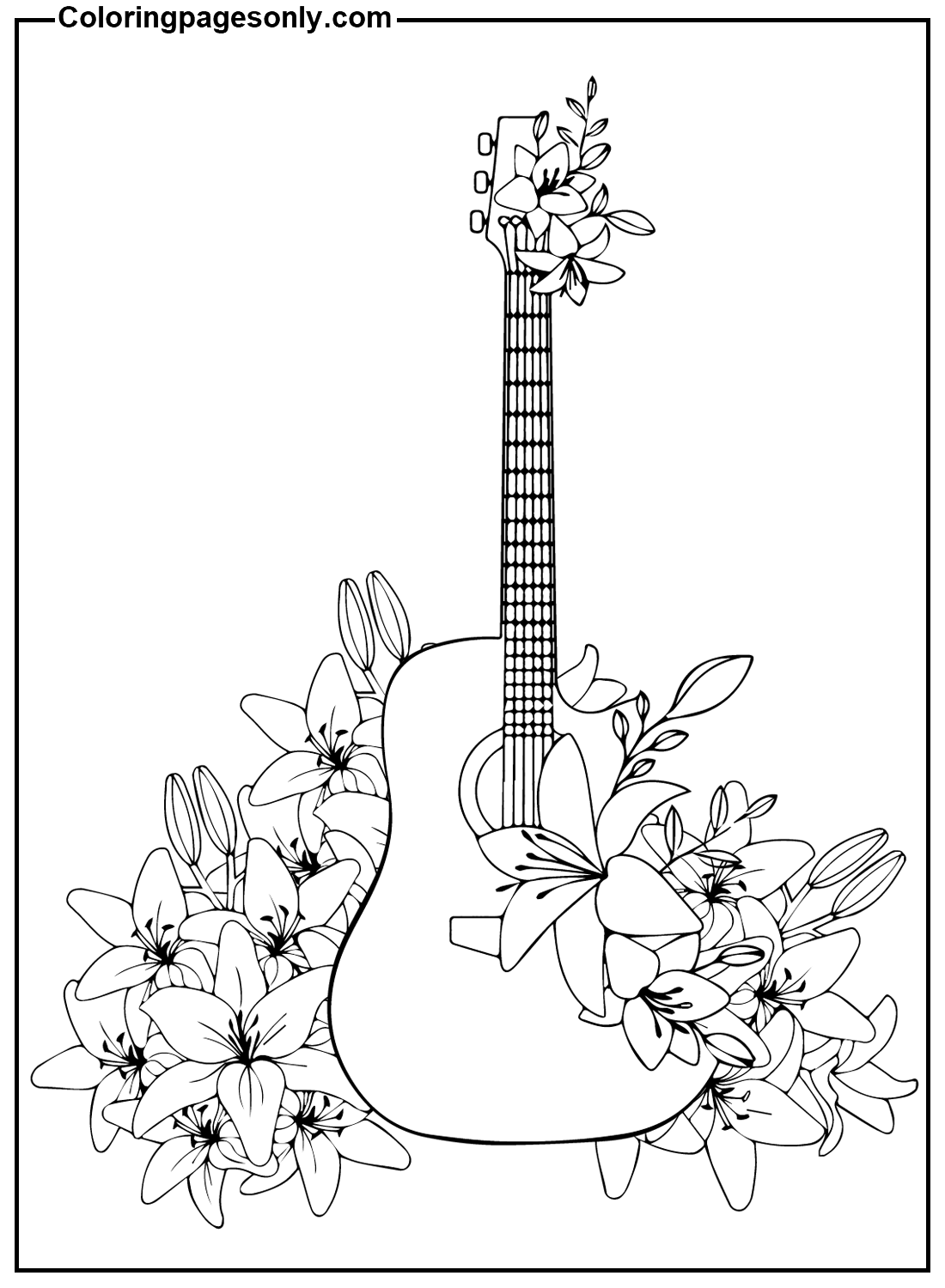


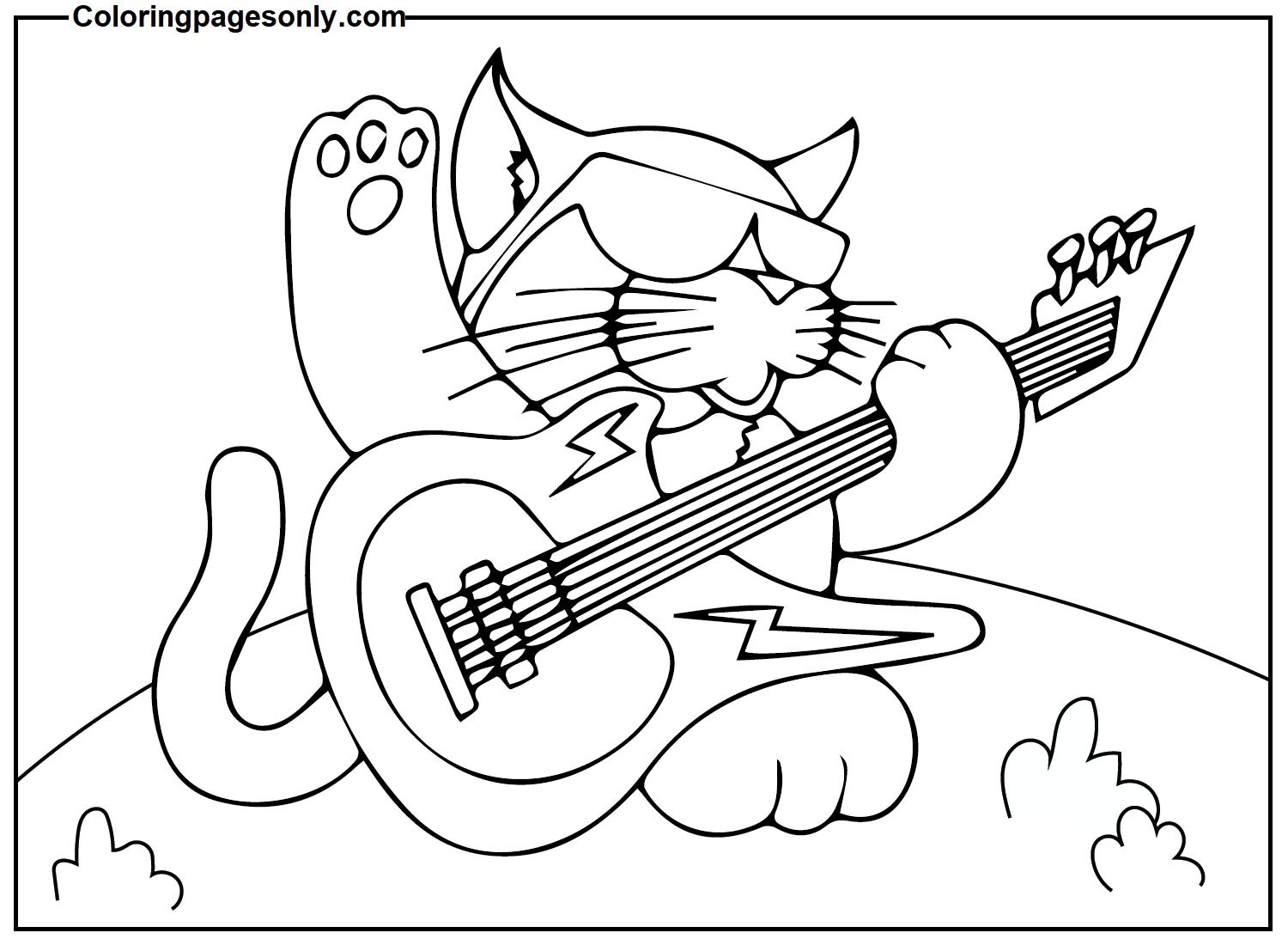
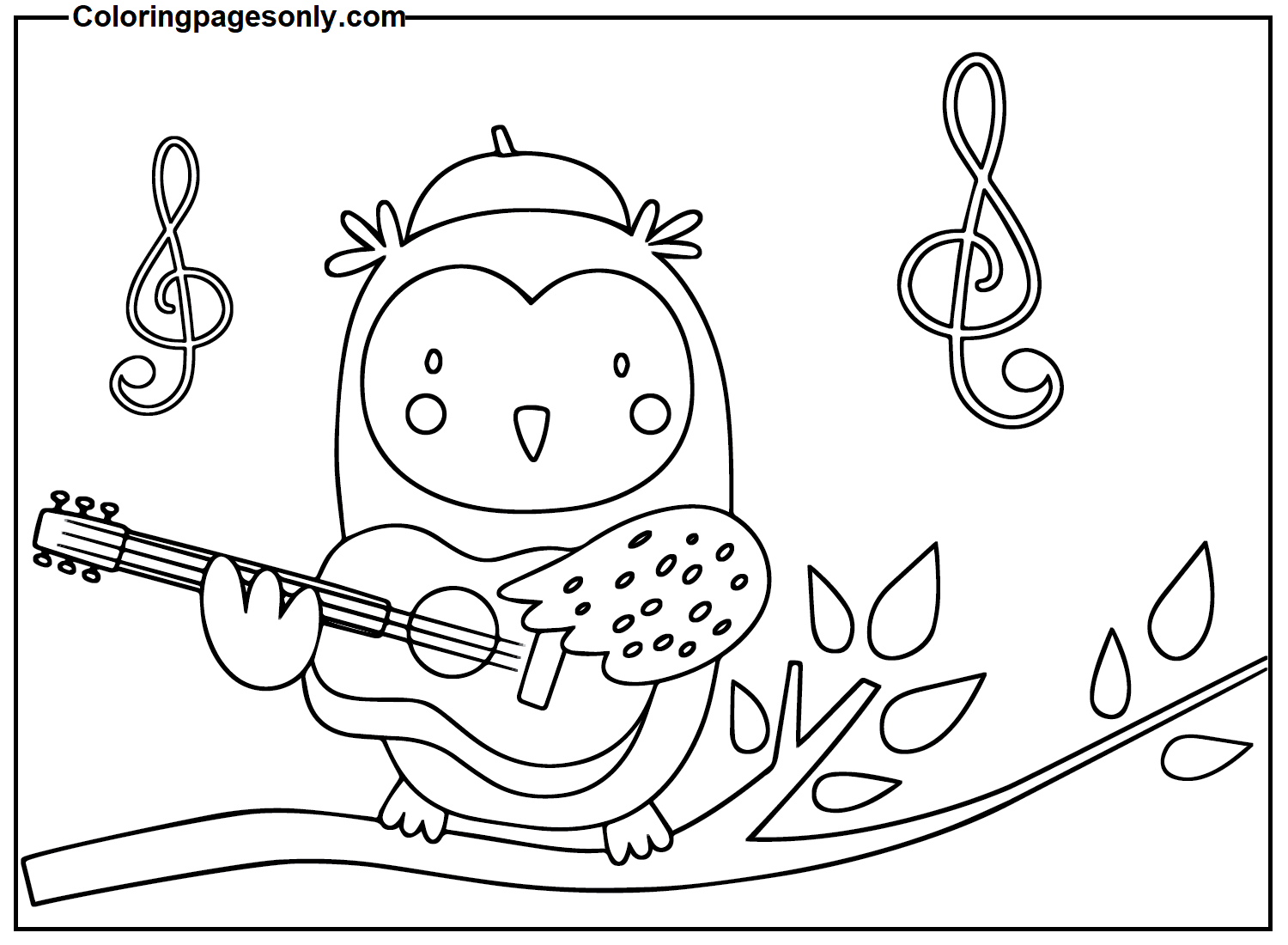
What’s Inside This Collection
The 30 designs group into five categories, from classic instrument portraits to playful character scenes.
Classic Guitar Portraits
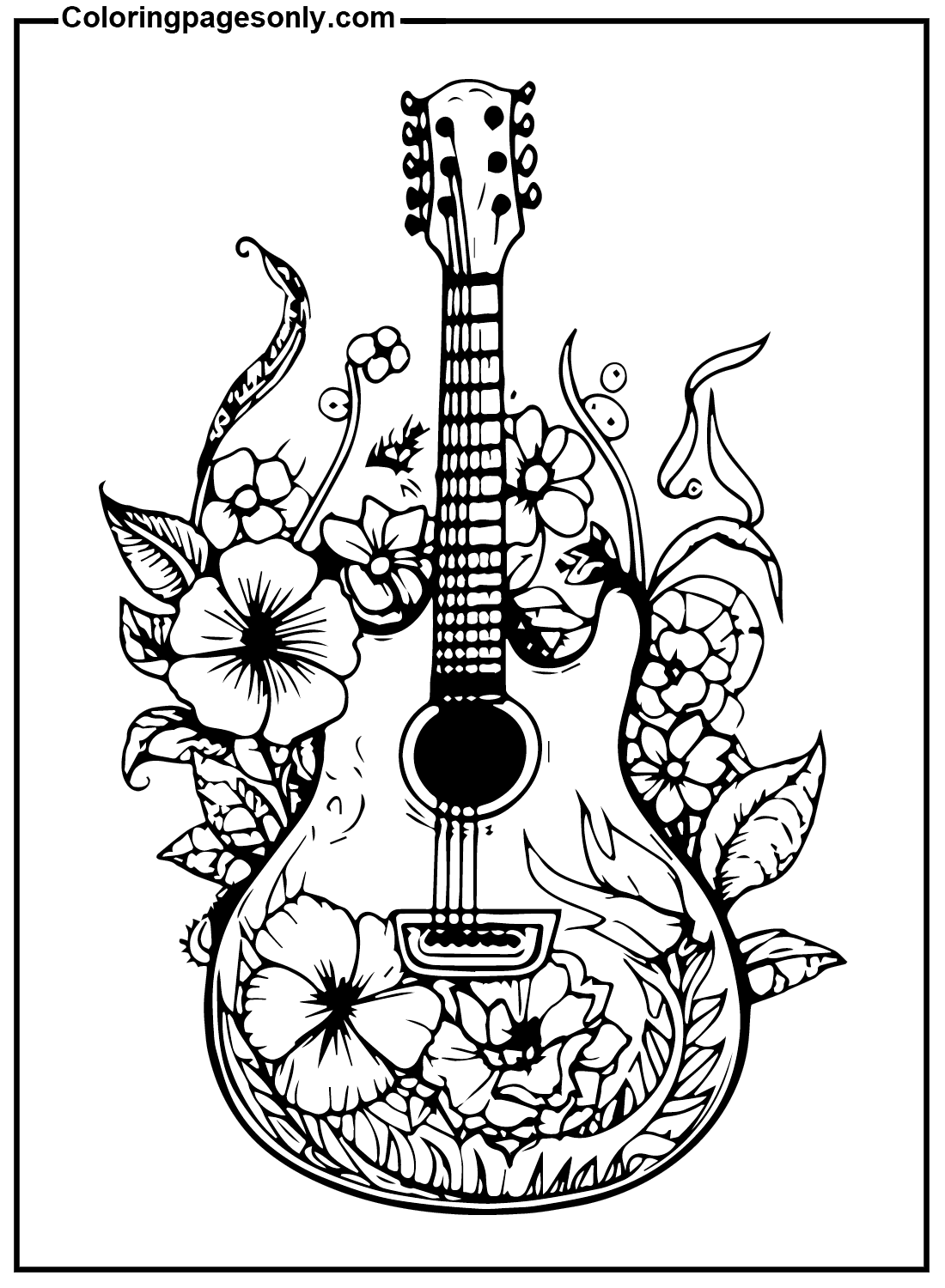
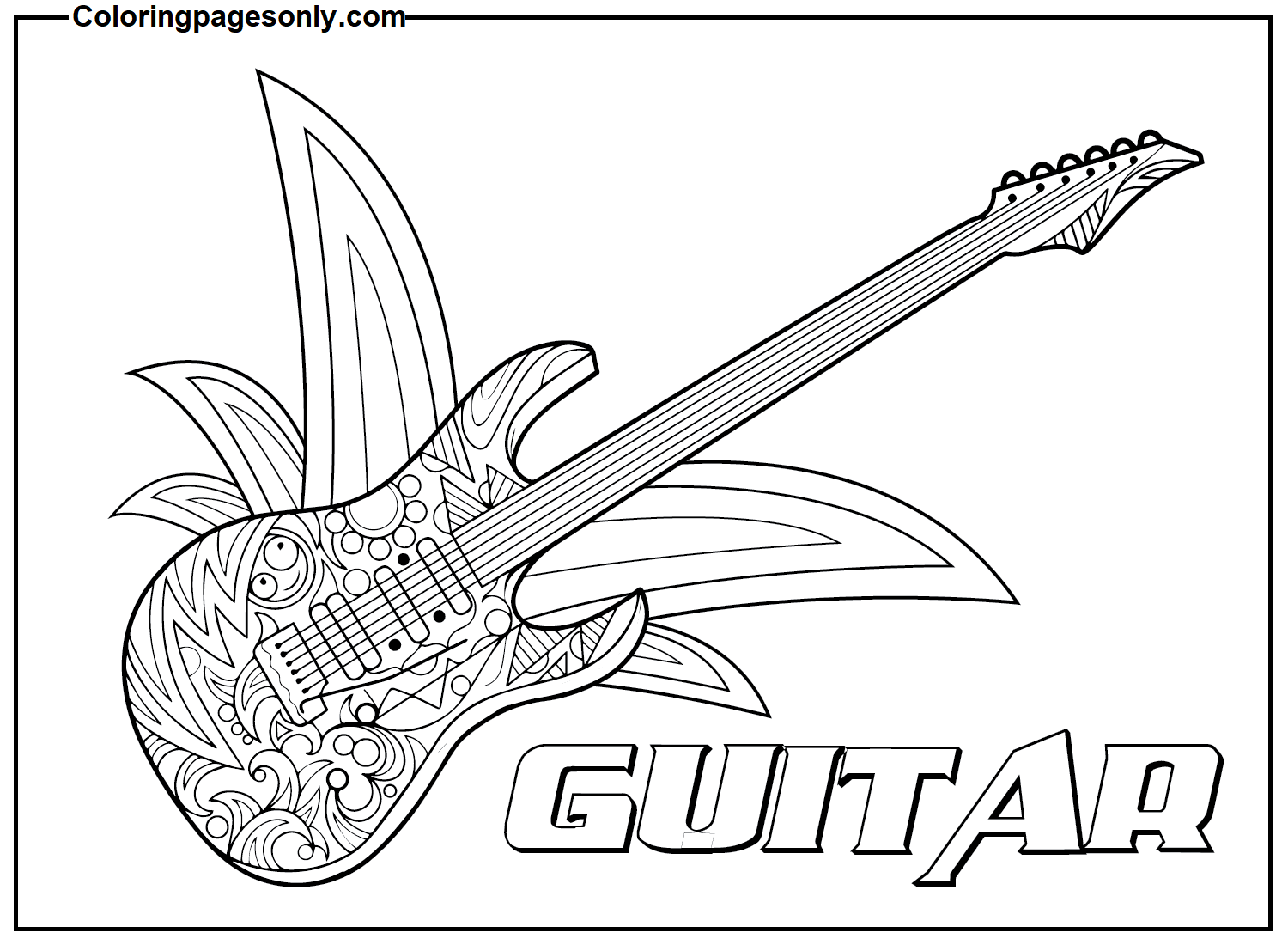
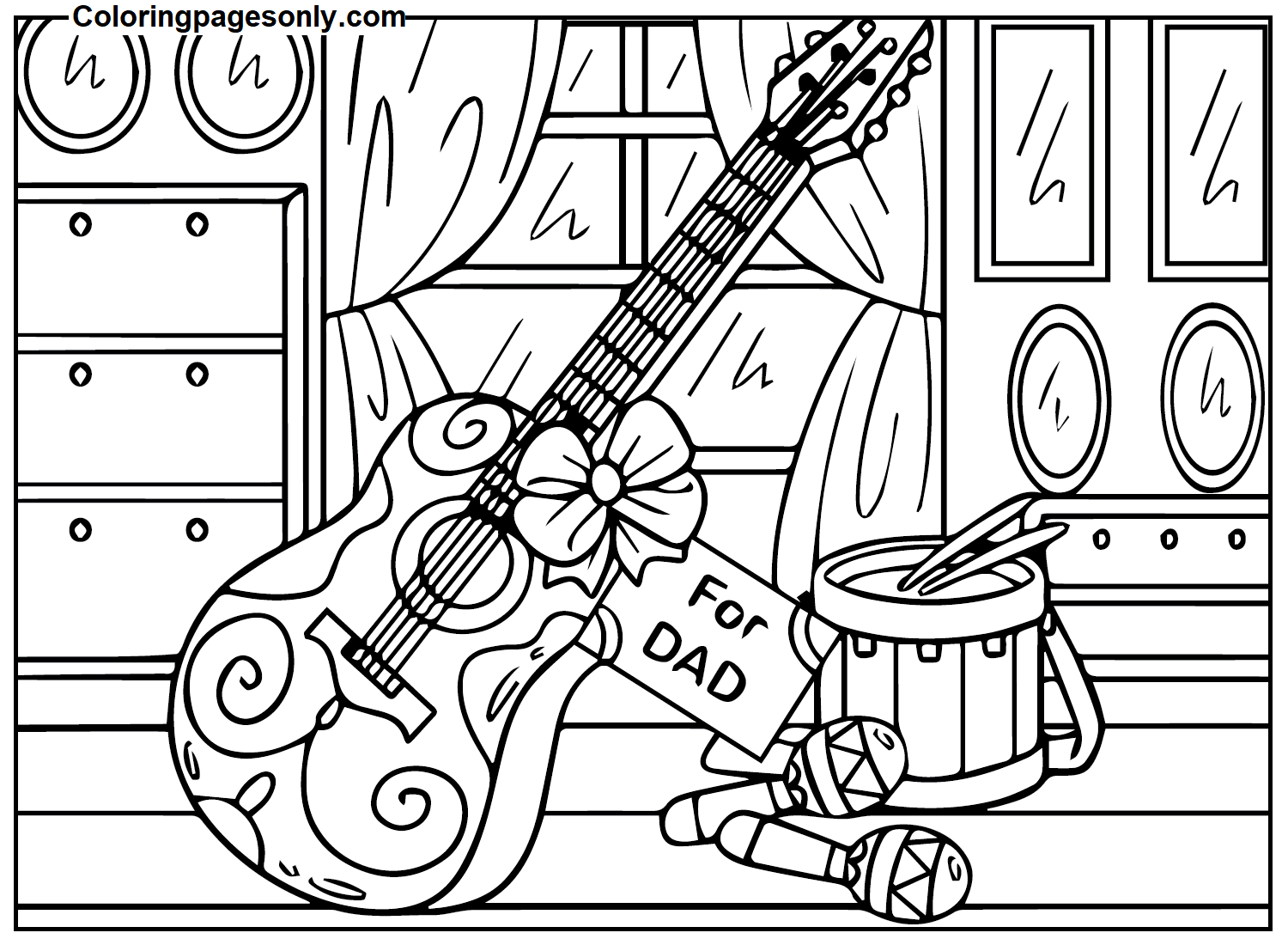
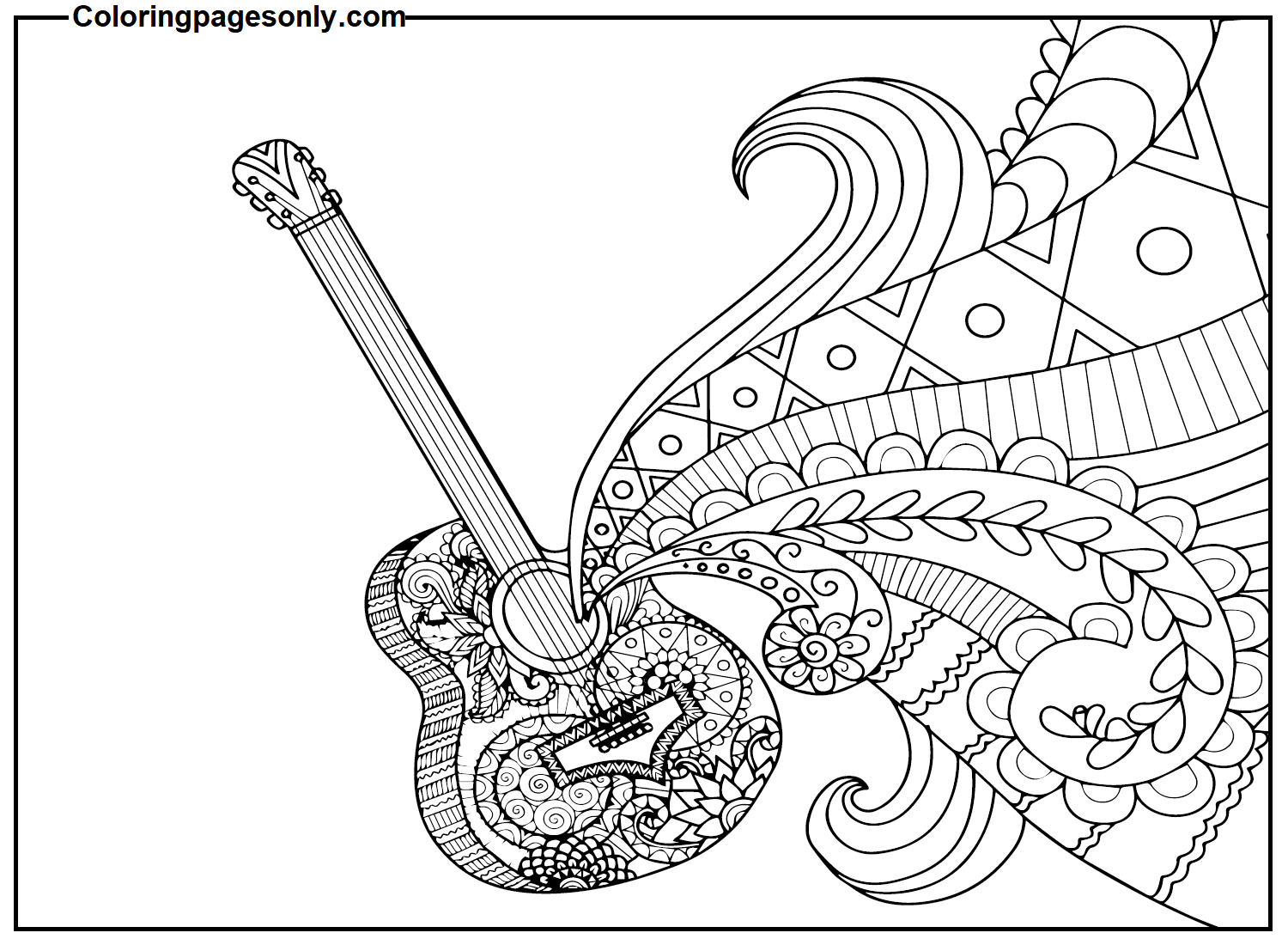
Seven pages show a standalone guitar, including both acoustic and electric styles, suited to colorists who want to focus on the instrument’s shape and detail.
Printable and Free Sheets
Seven pages are formatted as general printable sheets, useful for a quick, single-session print at home or in the classroom.
Animals Playing Guitar
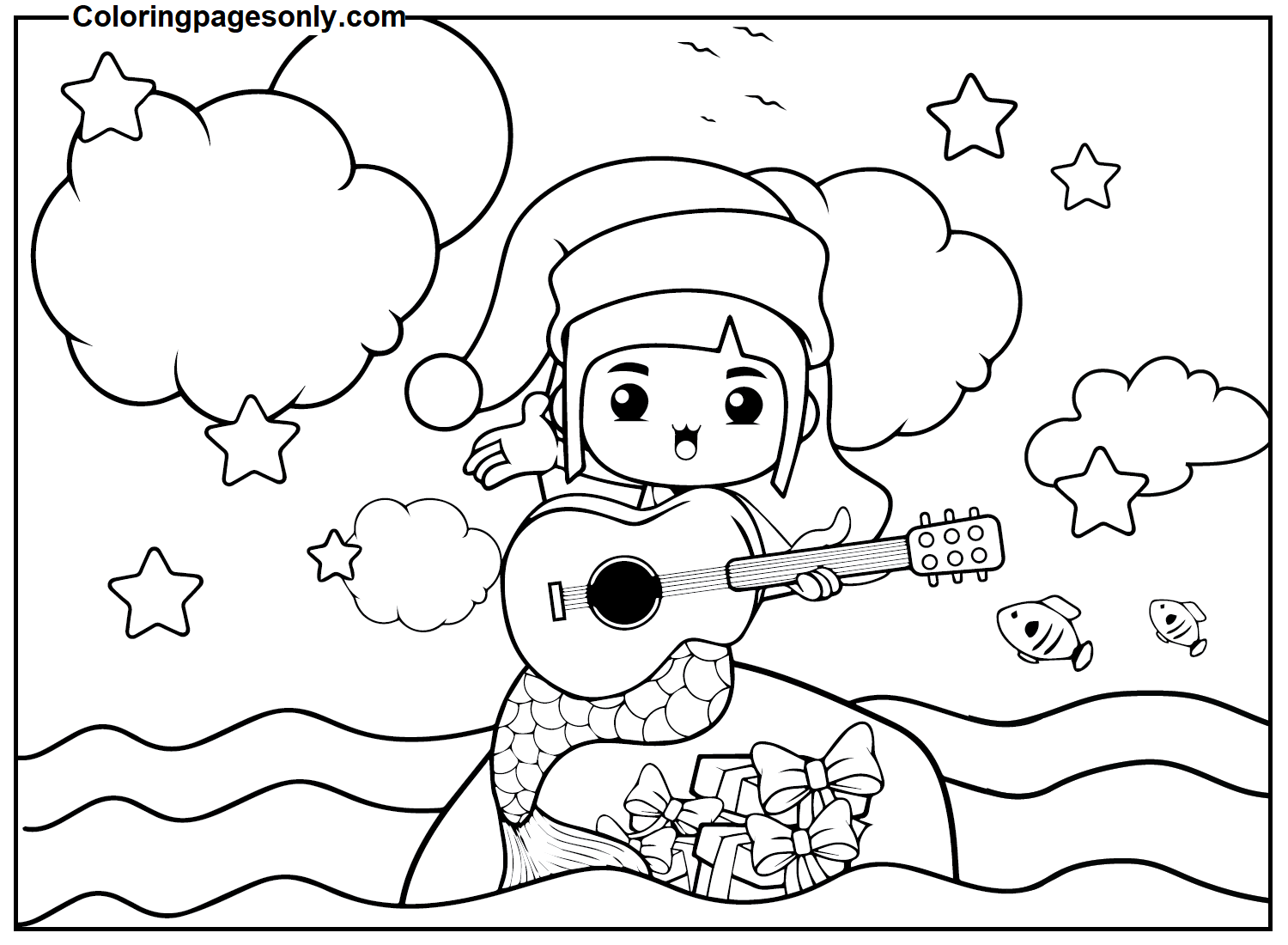
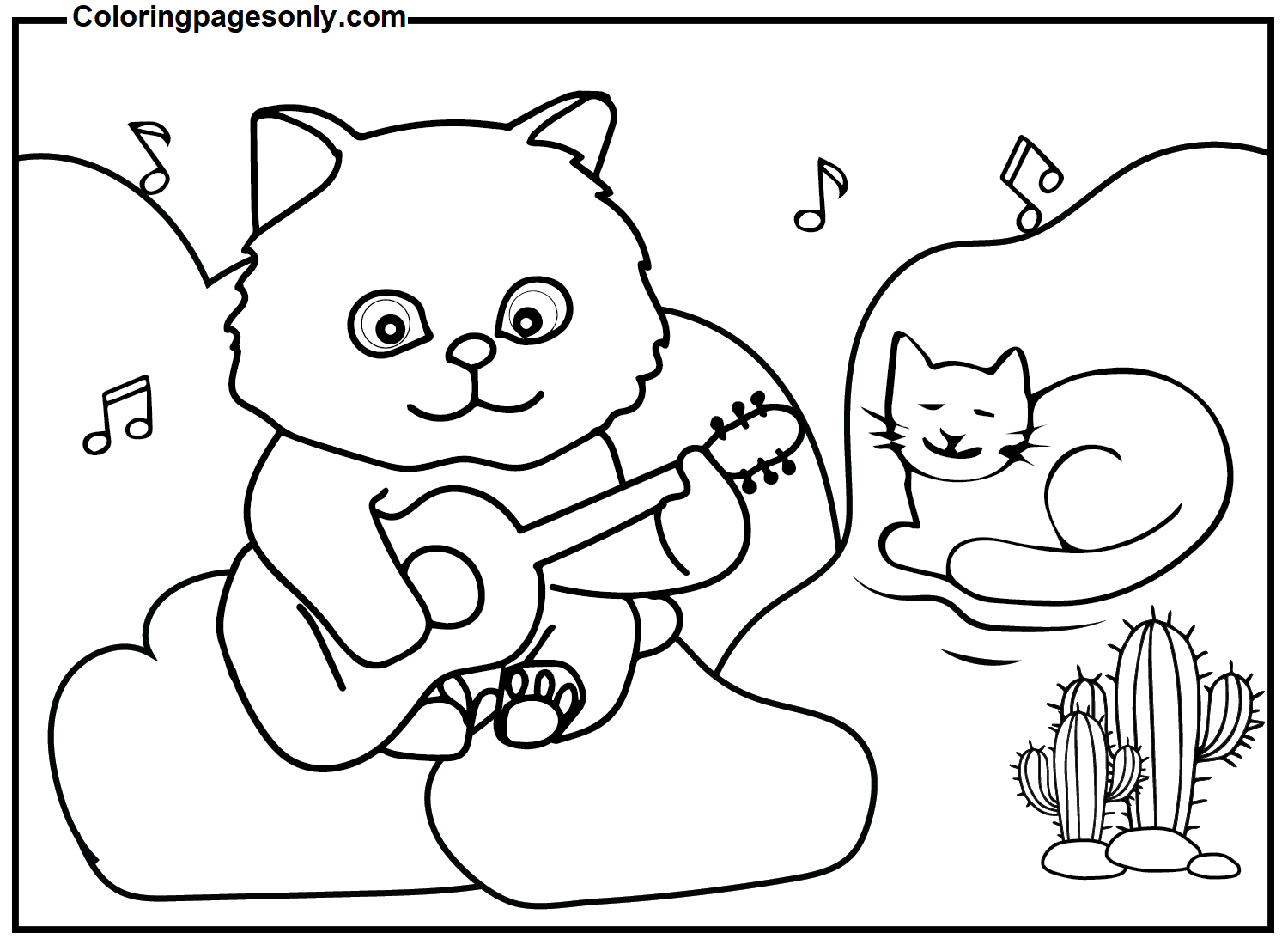
Eight pages give the instrument a playful twist, featuring bears, lions, cats, birds, and mermaids, each holding or playing a guitar.
Cinco de Mayo-Themed Designs
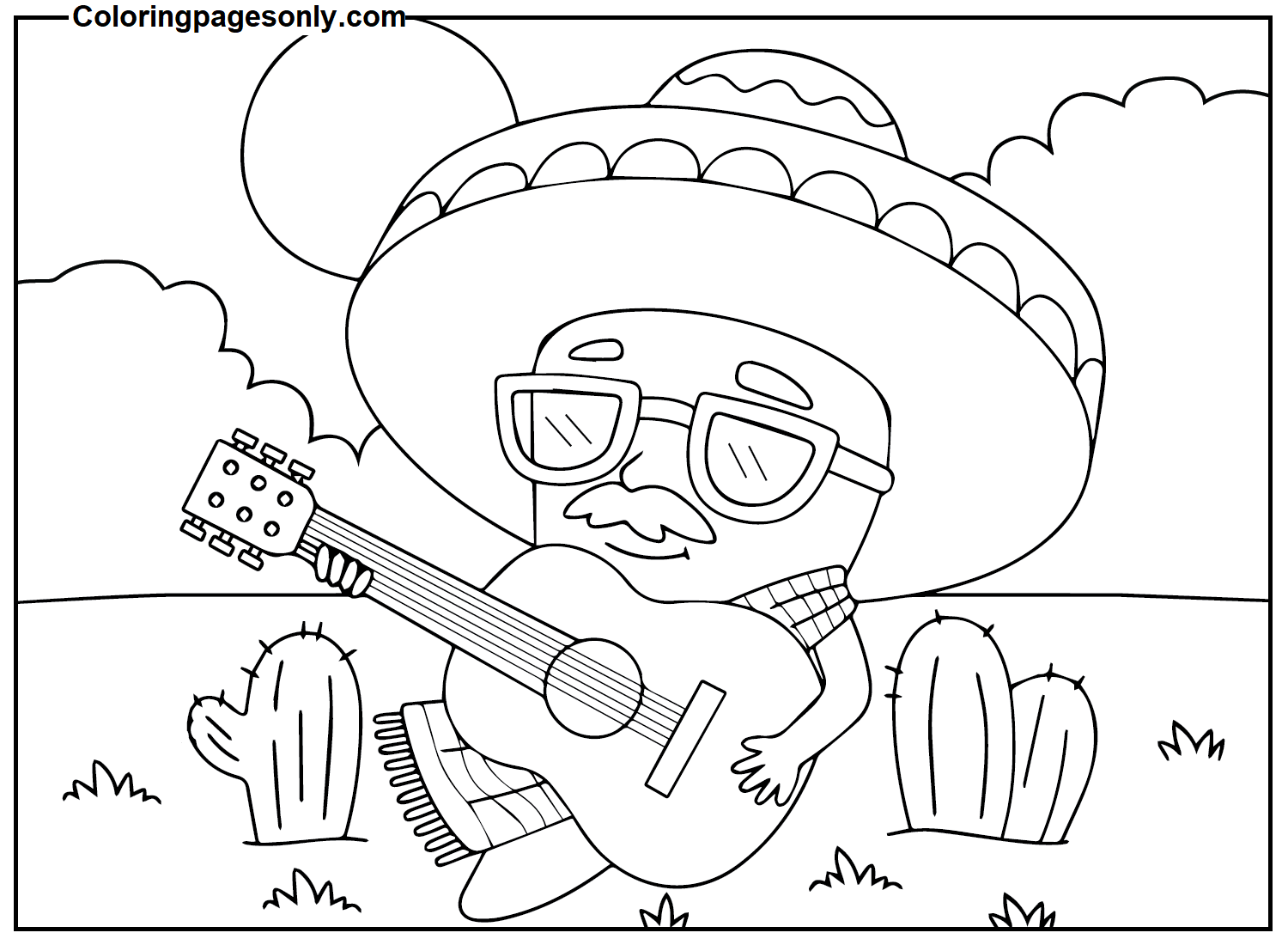
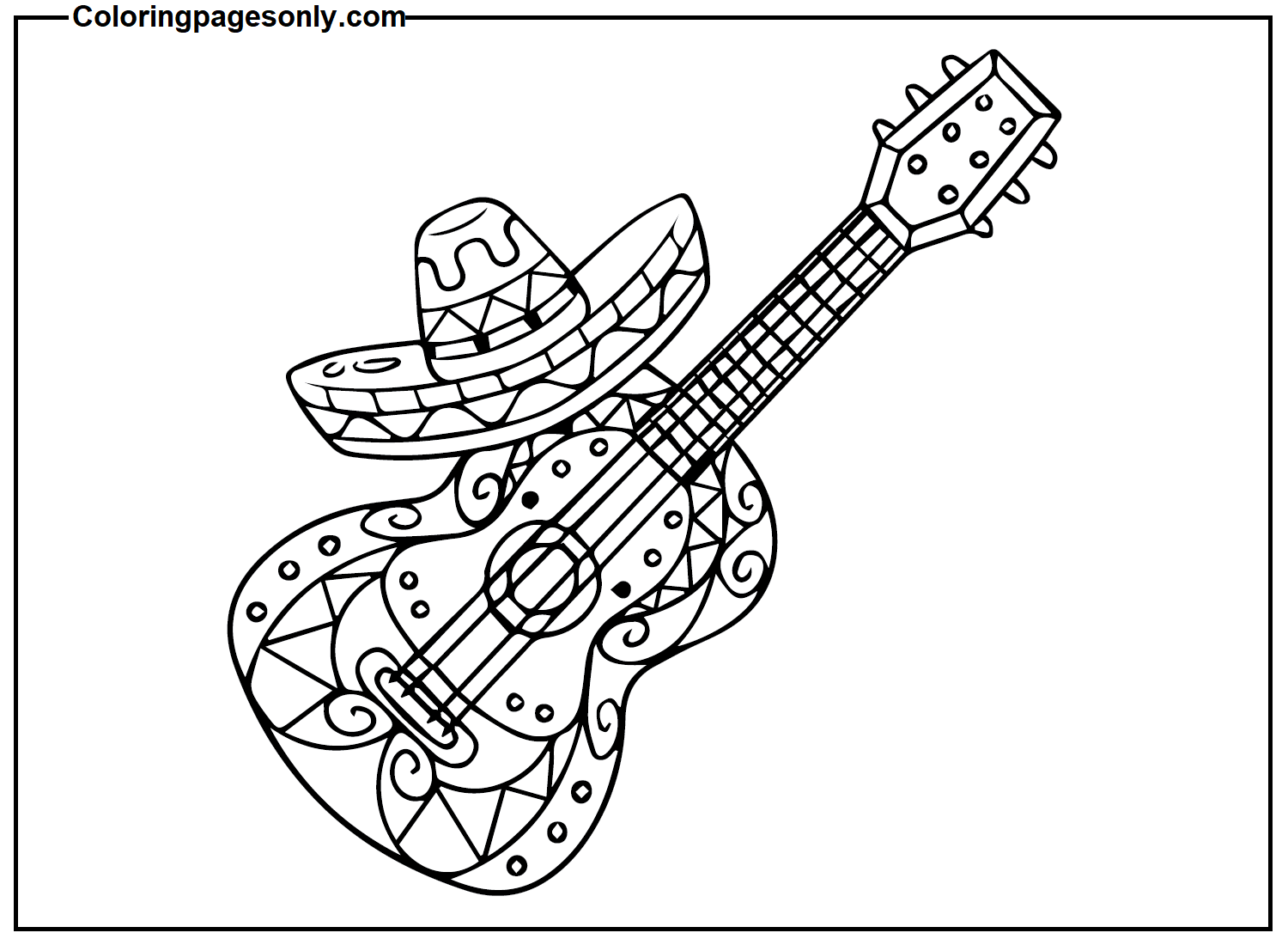
Four pages pair the guitar with Cinco de Mayo styling, reflecting the instrument’s strong association with Mexican and Latin American music traditions.
Kids Playing Guitar
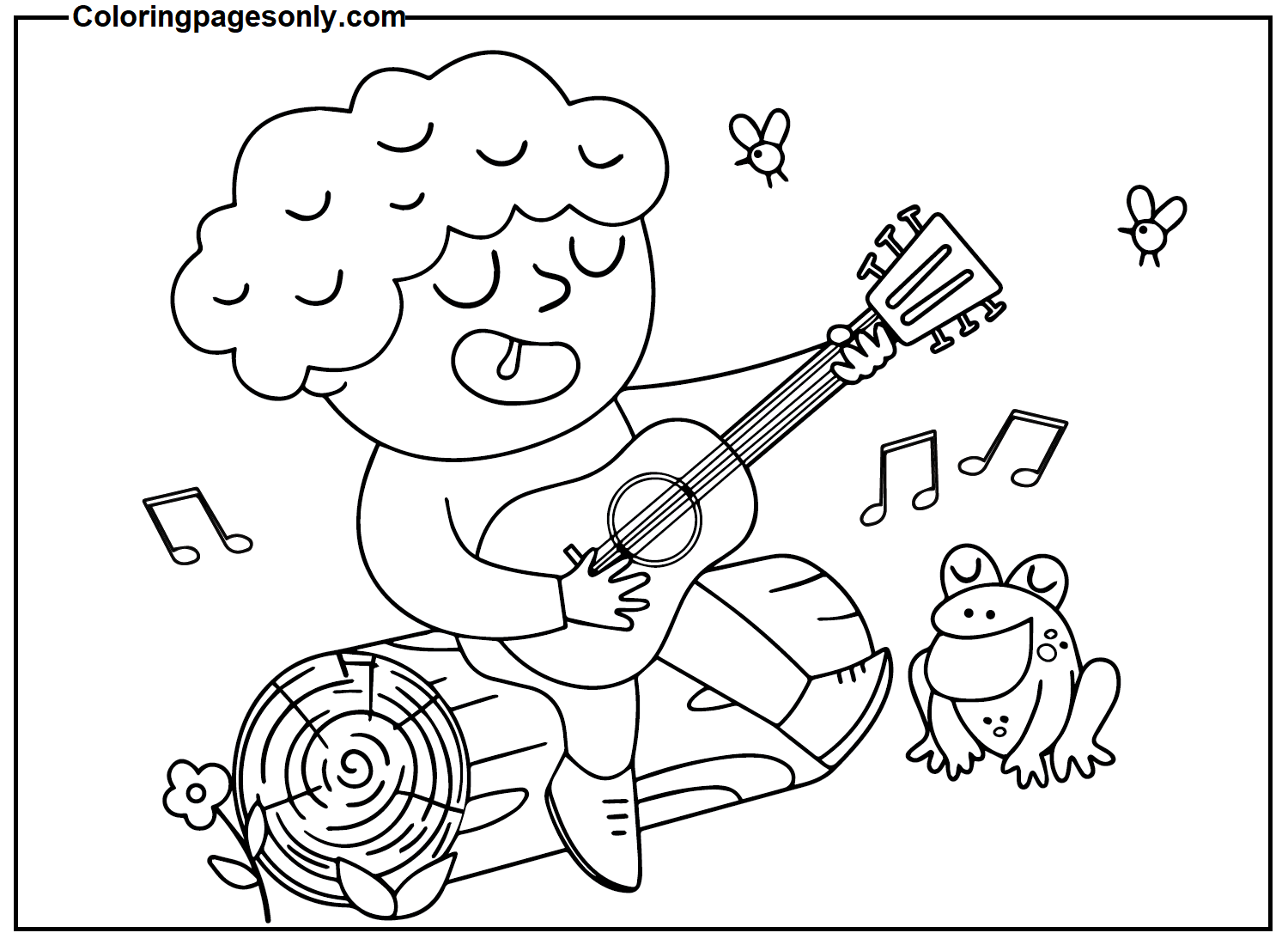
Four pages show children playing or holding a guitar, including a Guitar Hero-style design, suited to colorists who enjoy scenes with people rather than instruments alone.
What Guitar Coloring Pages Do
Six strings, six chances to lose a straight line. A guitar’s strings and frets run in tight, parallel lines down the neck, and keeping each one straight and evenly spaced without the pencil drifting takes a steadier hand than shading a single rounded shape. The American Academy of Pediatrics ties that kind of careful, controlled linework to fine motor skill development in children ages 2 through 7.
Wood grain versus glossy metal in the same collection. Acoustic guitars call for warm, matte wood-tone shading. In contrast, electric guitar pages invite bright, glossy colors and metallic highlights, giving colorists practice switching between two very different coloring textures depending on which instrument they pick.
An instrument built for telling stories. A 2005 study in the Art Therapy Journal found that structured coloring sessions produced measurable reductions in anxiety, and there’s a natural fit in that calming, focused activity paired with an instrument long used across cultures to express emotion and tell stories through music.
Animal fur and instrument hardware are on the same page. The animal-playing-guitar designs ask colorists to combine two different coloring skills at once, soft, textured fur or feathers alongside the guitar’s hard, defined edges, making these pages more varied than a single-subject portrait.
How to Color Guitar Pages Well
- Acoustic guitar body: Use warm wood tones like Golden Brown, Tan, or Amber, adding slightly darker Brown lines to suggest natural wood grain.
- Electric guitar body: Use bold, glossy colors like Red, Sunburst Orange, or Black, with a thin Silver or White highlight line along the edge to suggest a shiny finish.
- Strings and frets: Keep strings a consistent light Gray or Silver, and use Black or dark Gray for the thin fret lines across the neck.
- Guitar hardware: Use Gold or Silver for tuning pegs, the bridge, and other small metal hardware pieces.
- Animal characters: Give each animal a natural, realistic base color, Brown for bears, tawny Gold for lions, then let the guitar itself stand out with a bolder, contrasting color.
- Cinco de Mayo designs: Lean into a bright palette of Red, Green, and Gold, colors commonly associated with Mexican and Latin American festive art.
5 Creative Craft Ideas With Guitar Coloring Pages
1. Mini Guitar Model
Color a guitar page, cut out the shape, and glue it onto cardboard for a lightweight decorative model to display on a shelf.
2. Music-Themed Bookmark
Color a small guitar design, cut it into a bookmark shape, and use it to mark a place in a favorite book.
3. Greeting Card
Fold cardstock in half, glue on a colored design, and write a message inside for a friend who plays music.
4. Classroom Music Poster
Color several guitar and animal-with-guitar pages as a group and arrange them on a poster board for a fun music-corner classroom display.
5. Paper Garland
Cut out three or four colored guitar designs, punch a hole in each, and string them together with twine for a music-themed party garland.
Frequently Asked Questions
What are guitar coloring pages?
Guitar coloring pages are printable line-art designs featuring acoustic and electric guitars, animals and kids playing guitar, and themed illustrations. This collection includes 30 free designs available as PDFs or online coloring.
What is the history of the guitar?
The guitar has roots in centuries-old stringed instruments and became widely popular in its modern form through Spanish luthiers, with steel strings and later electric amplification expanding its sound and reach across musical genres.
When was the electric guitar invented?
The first commercially successful electric guitar, nicknamed the Frying Pan, was developed by George Beauchamp and Adolph Rickenbacker in the early 1930s.
What is the difference between an acoustic and an electric guitar?
An acoustic guitar uses a hollow wooden body to project sound naturally. In contrast, an electric guitar relies on magnetic pickups to convert string vibrations into an electrical signal that is amplified through a speaker.
How many strings does a standard guitar have?
A standard guitar has six strings, though variations with more or fewer strings exist for specialized playing styles.
What is Cinco de Mayo, and why does it appear in this collection?
Cinco de Mayo is a Mexican holiday commemorating the Mexican army’s victory at the Battle of Puebla in 1862, and the guitar’s strong ties to Mexican and Latin American music make it a natural theme for Cinco de Mayo-style designs.
Are guitar coloring pages suitable for young children?
Yes. The simple portrait and animal designs in this collection use bold, uncluttered outlines suited to preschool and early elementary colorists. At the same time, the detailed electric guitar pages offer more of a challenge for older kids.
What other musical instruments can kids explore through coloring?
Beyond the guitar, kids can explore coloring pages featuring pianos, violins, drums, and saxophones, each offering its own shapes and details to color.
Start Coloring
Download any page by clicking the design. No account, email, or payment is required. Pages print directly from the browser at full resolution or open in the online coloring tool for screen use. Share finished pages on Facebook or Pinterest with the share buttons at the top of each design page.