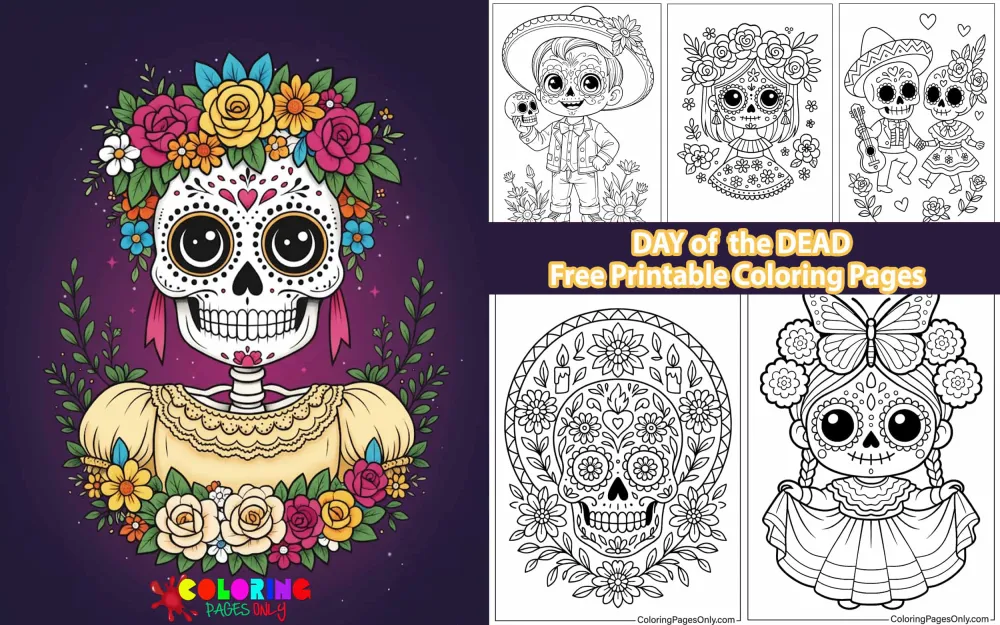
Free Day of the Dead Coloring Pages: 44 printable PDF designs featuring sugar skull portraits, Catrina figures, marigold flowers, and family altar scenes. Each page can be downloaded as a PDF to print or colored online in the browser.
Día de los Muertos blends Indigenous Mexican traditions honoring Mictēcacihuātl, the Aztec queen of the underworld, with the Catholic observances of All Saints’ and All Souls’ Day, which the Spanish church aligned with the existing Aztec calendar after colonization. The holiday’s best-known figure, La Catrina, began as a 1910 satirical etching by printmaker José Guadalupe Posada, who drew an elegantly dressed skeleton to mock Mexicans who imitated European fashion while downplaying their Indigenous heritage. Muralist Diego Rivera later gave her the name Catrina. He placed her at the center of his 1947 painting Dream of a Sunday Afternoon in Alameda Park, cementing her as a national symbol. This collection colors that same blend of remembrance and celebration, from sugar skulls and marigolds to family altar scenes.
This set works well for a classroom or family conversation about a holiday that is often confused with Halloween, despite having a very different meaning, since Día de los Muertos is a celebration of remembering loved ones rather than a night built around fear. The simpler sugar skull and flower pages suit a child just starting to color, while the detailed Catrina portraits and altar scenes give an older child or an adult more shading and pattern work to do.
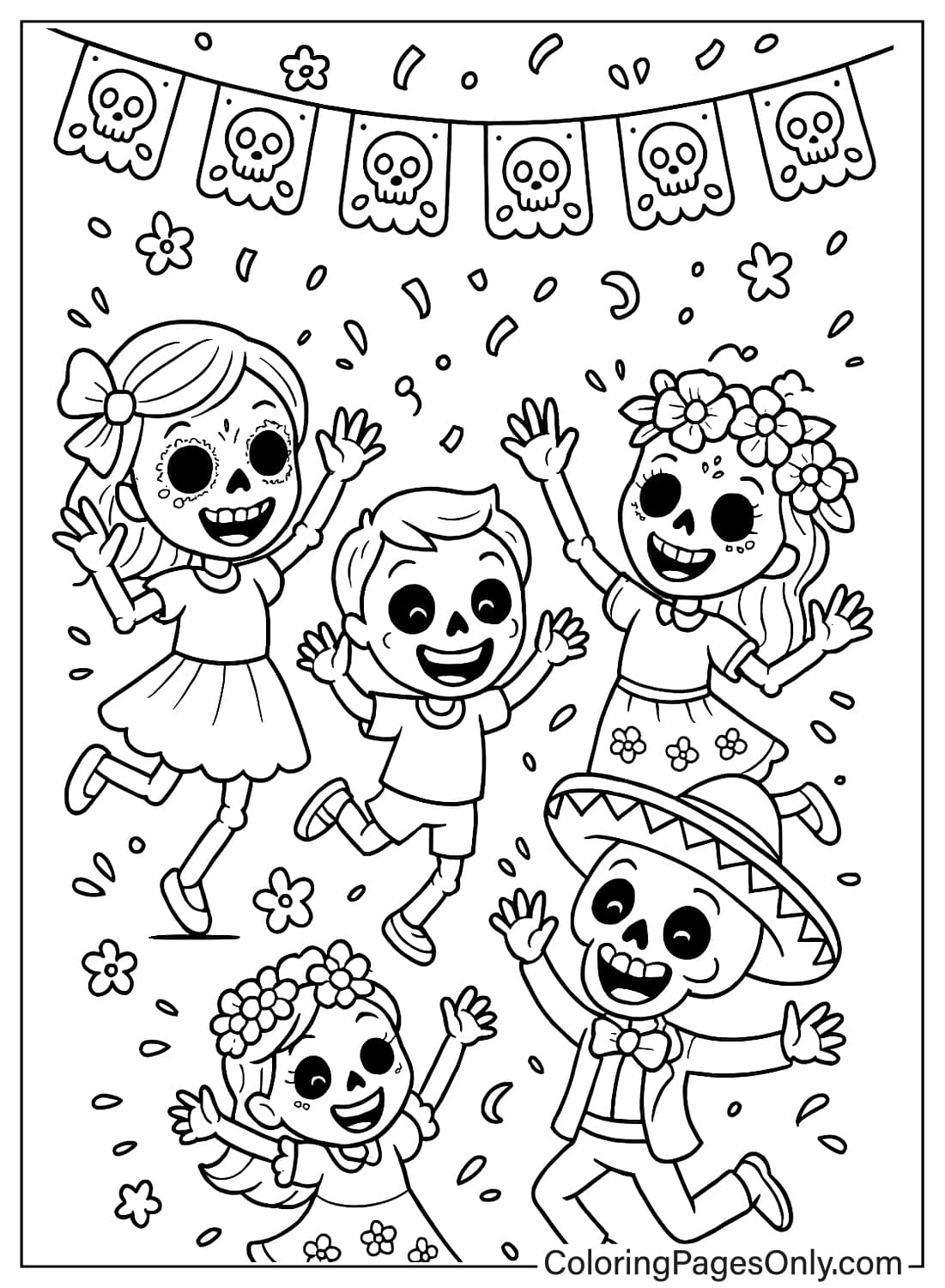
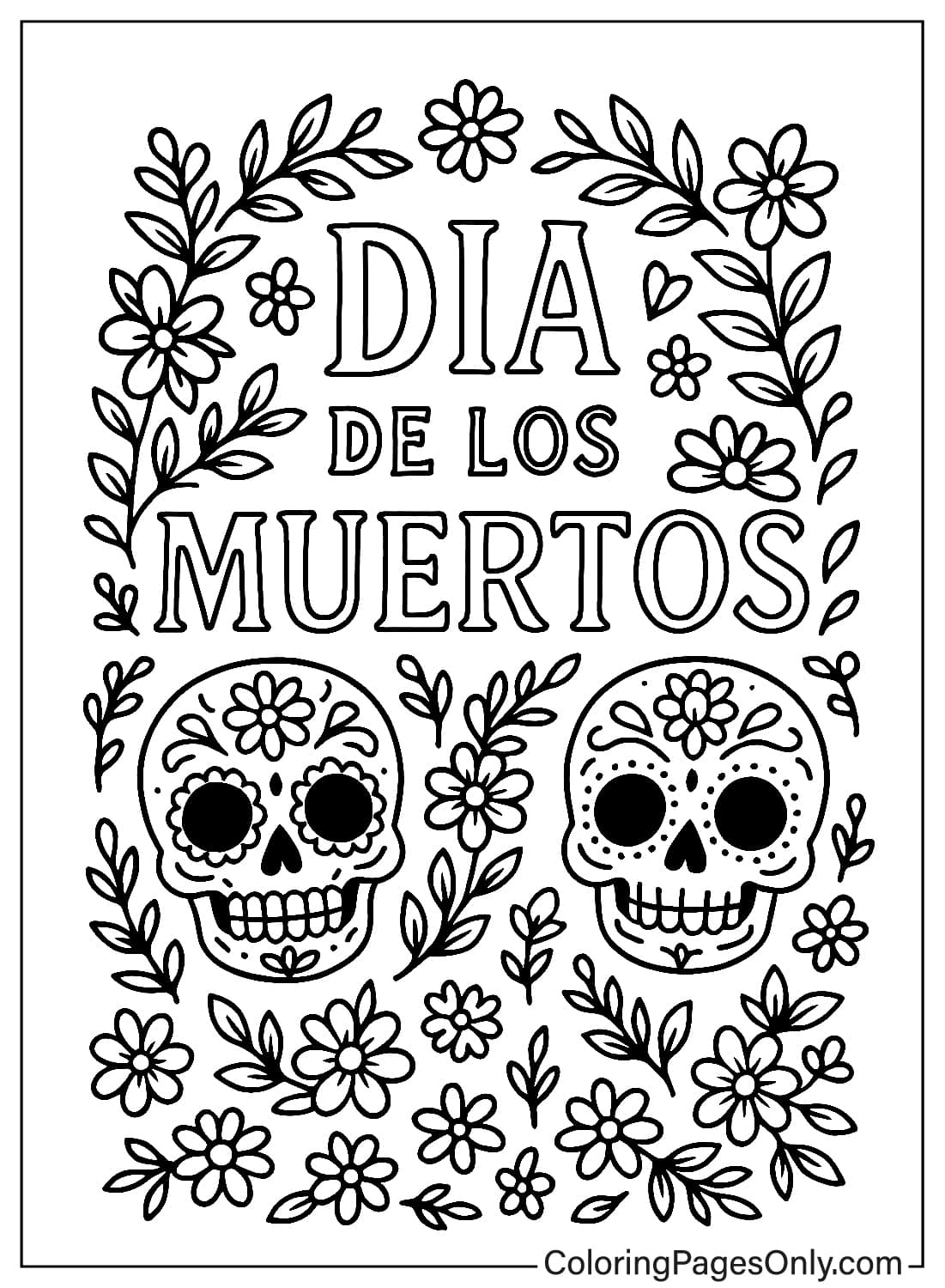
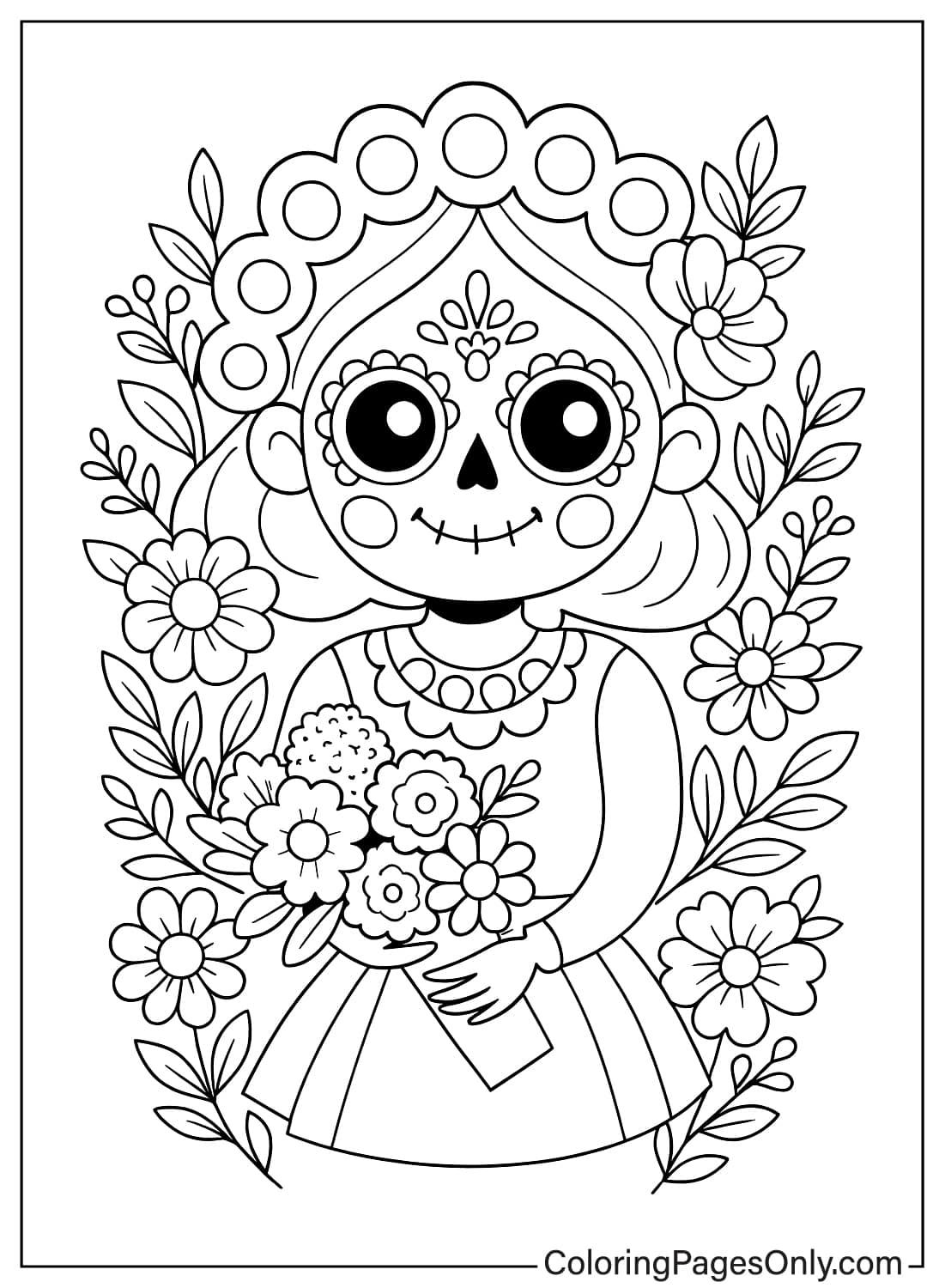
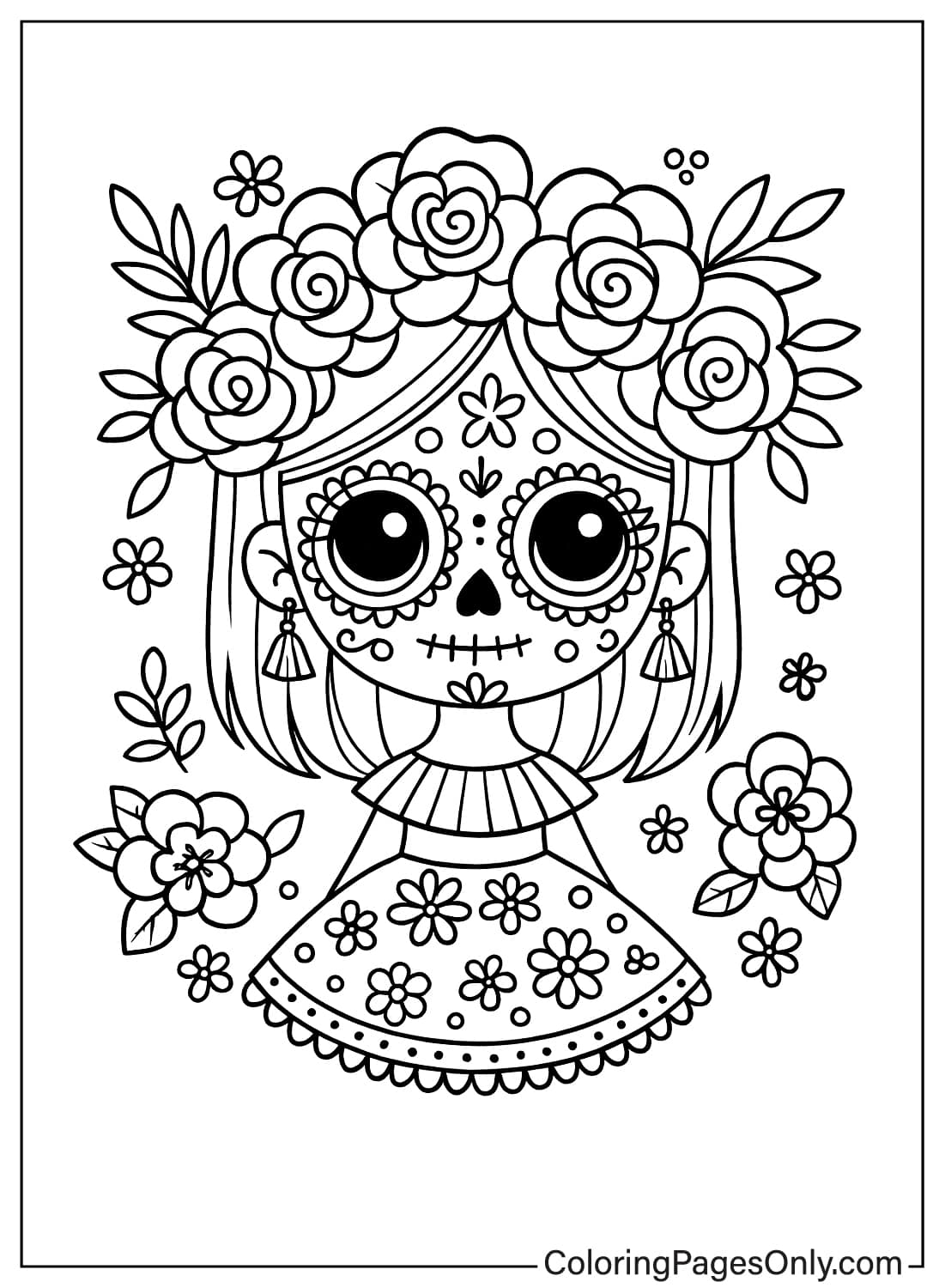
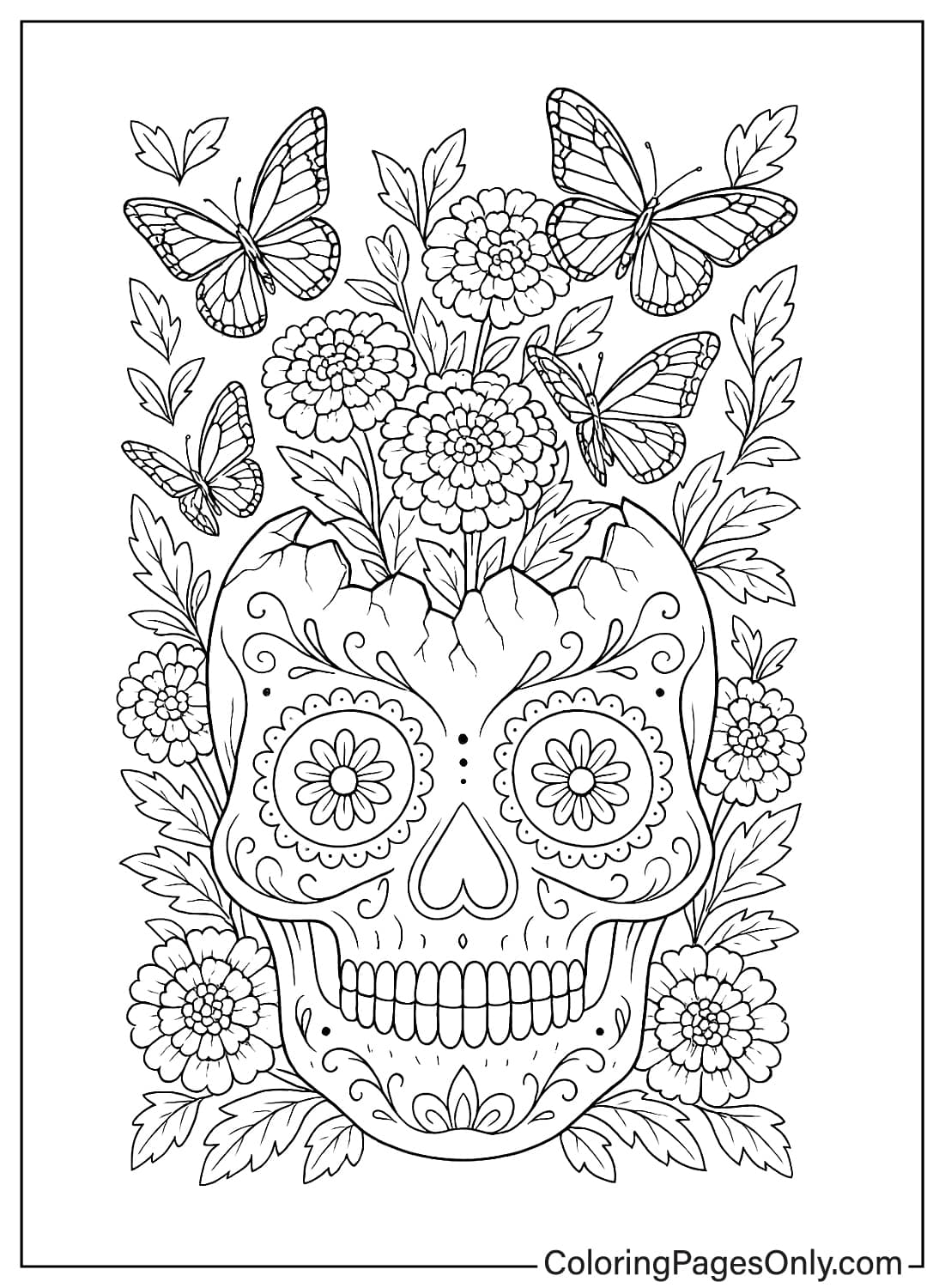
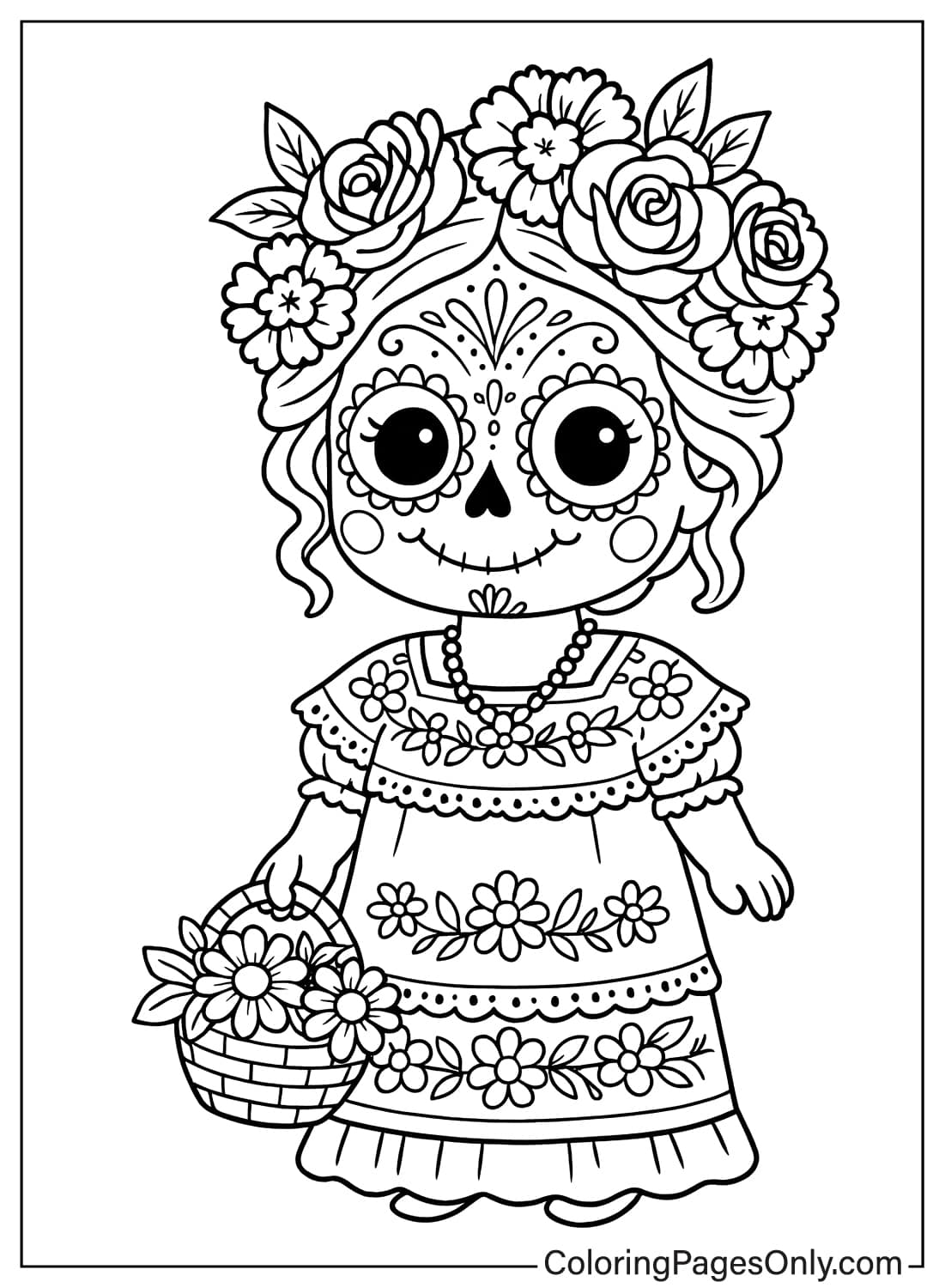
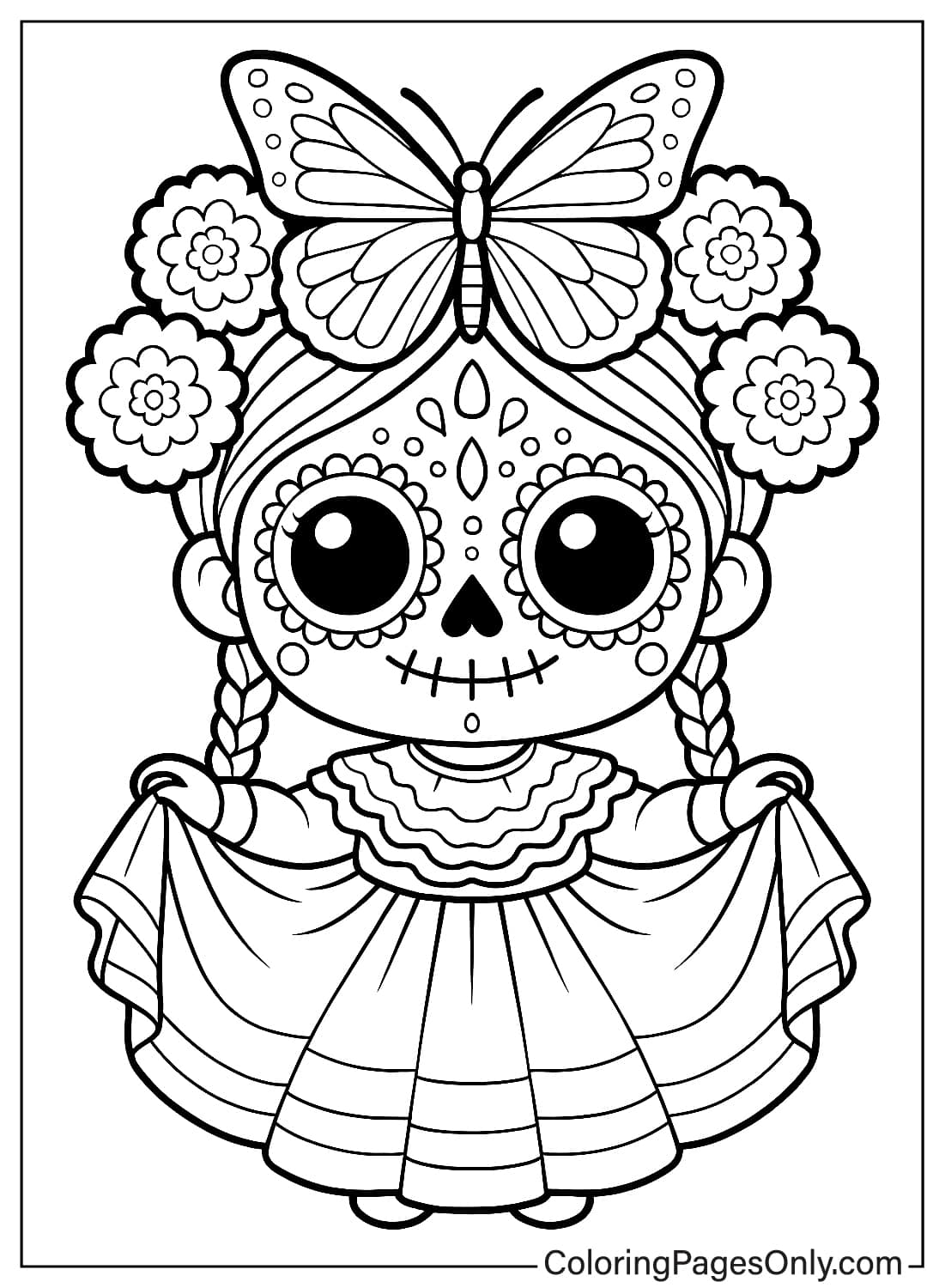
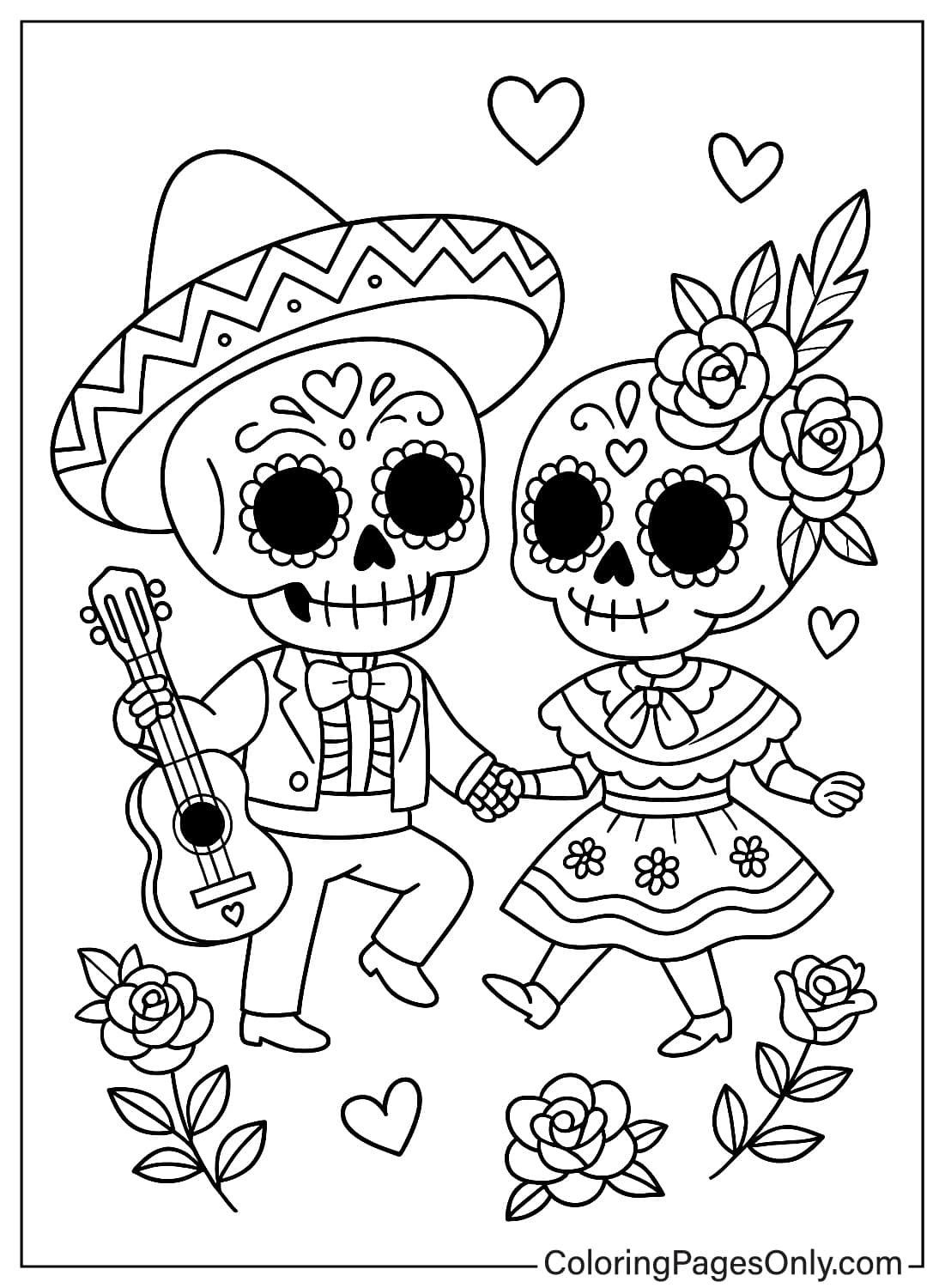
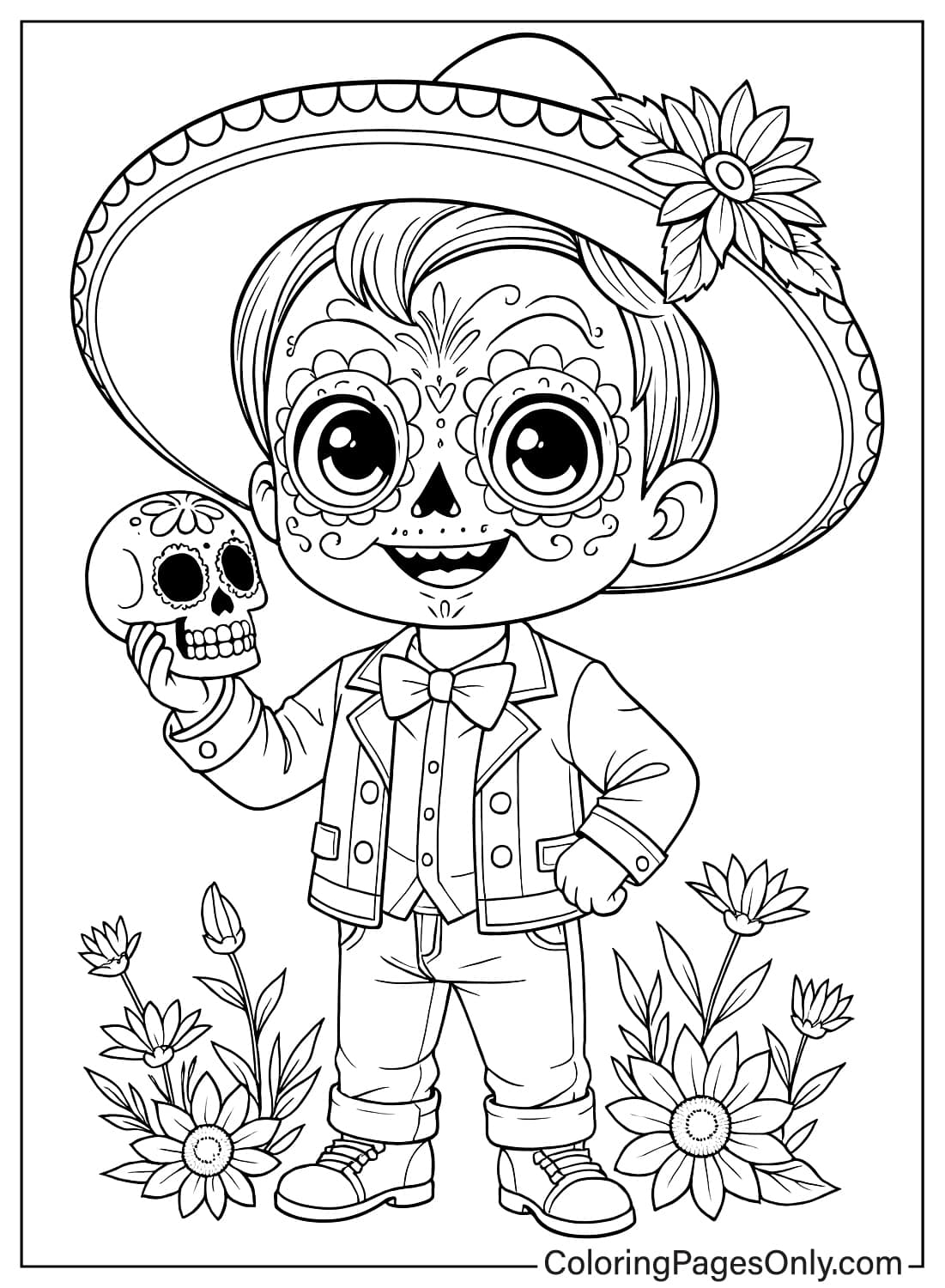
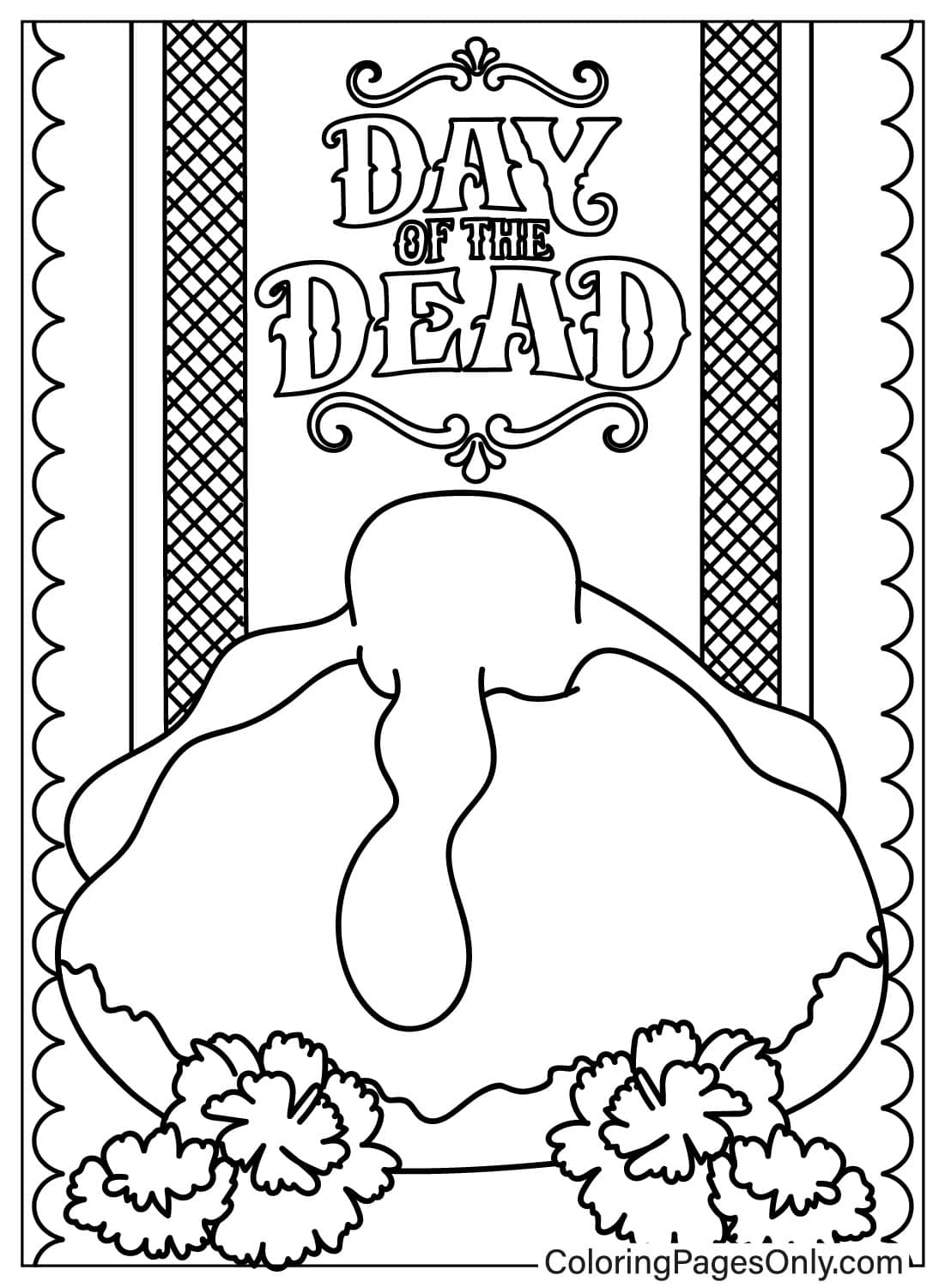
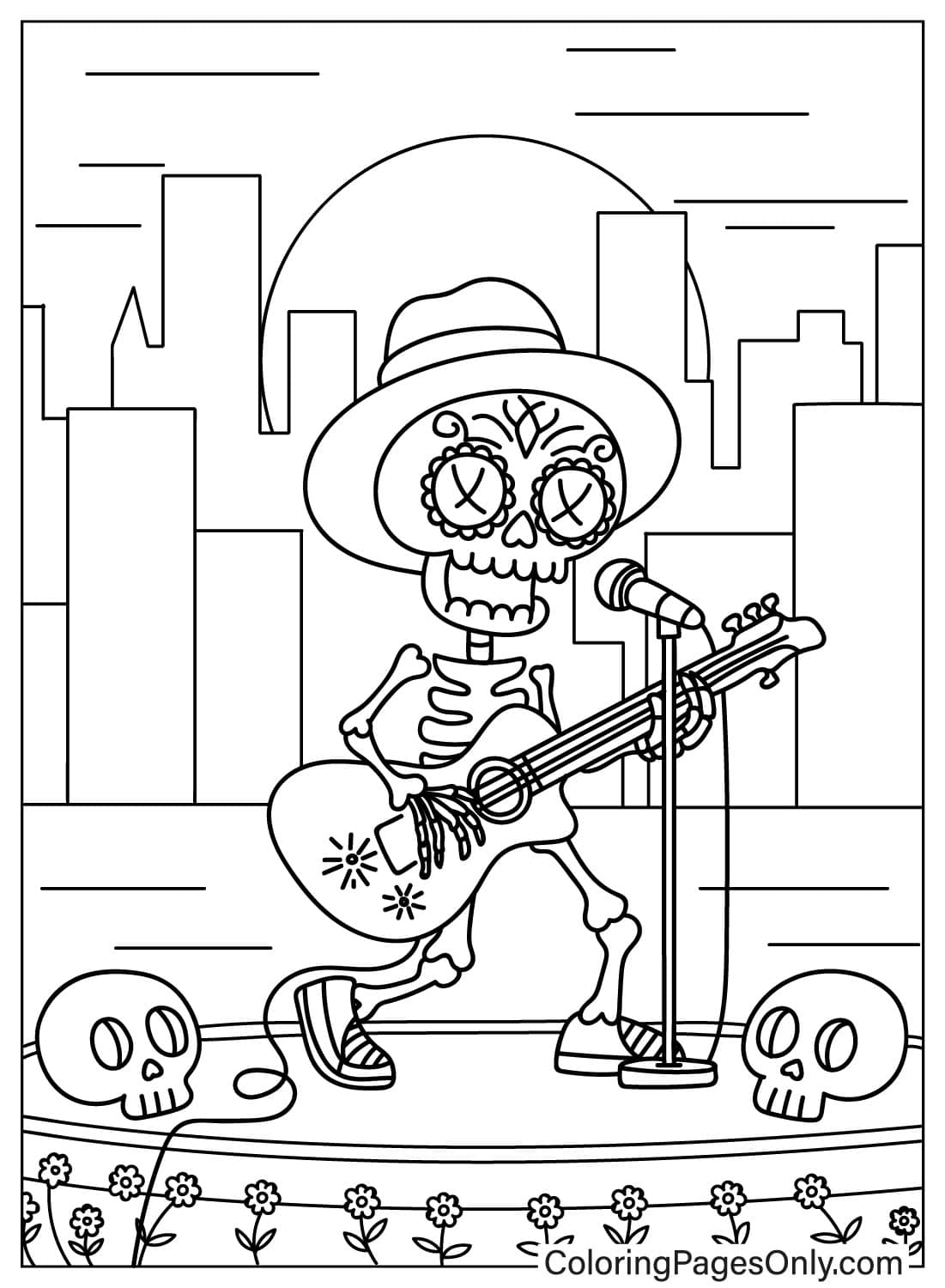
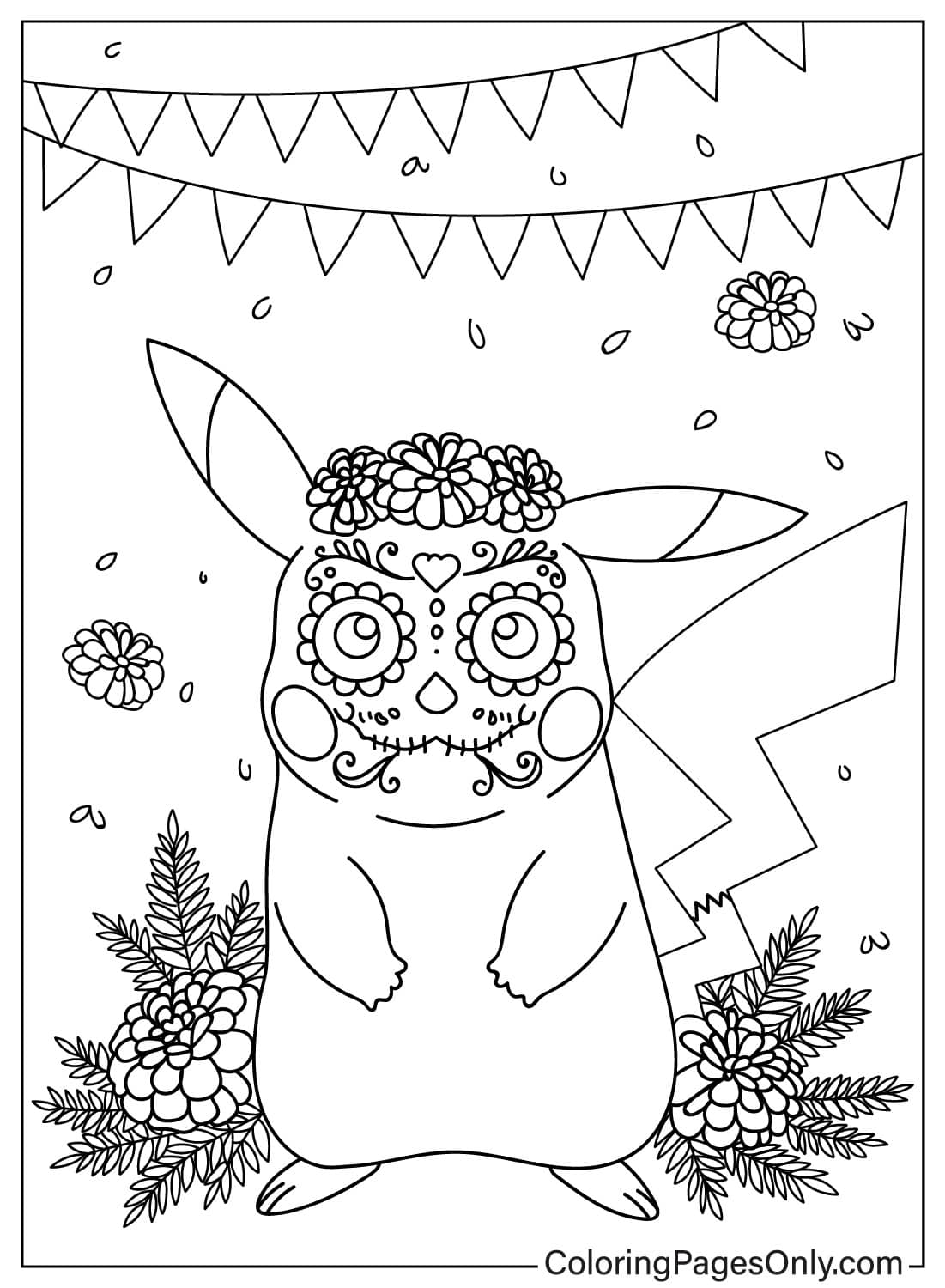
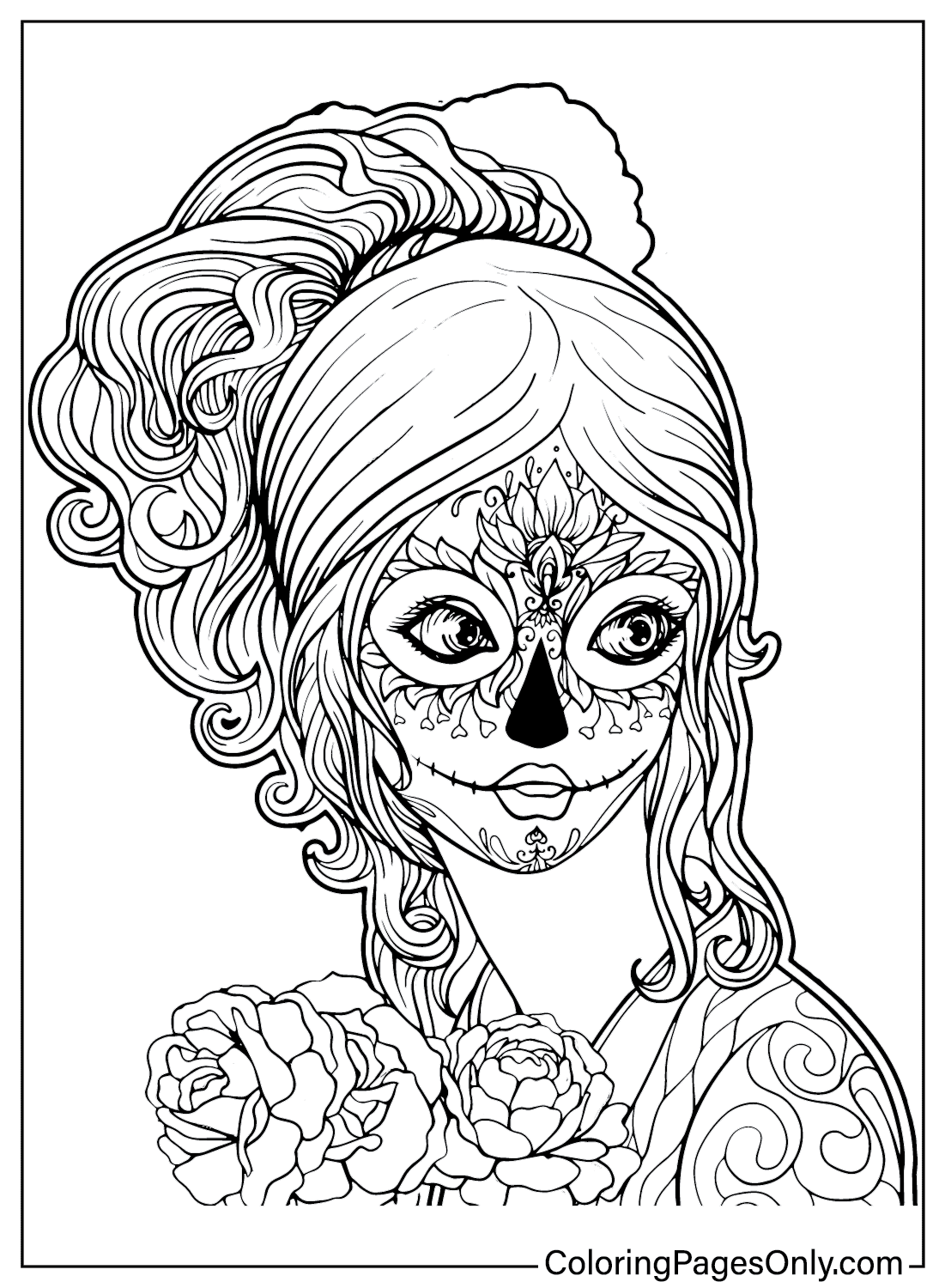
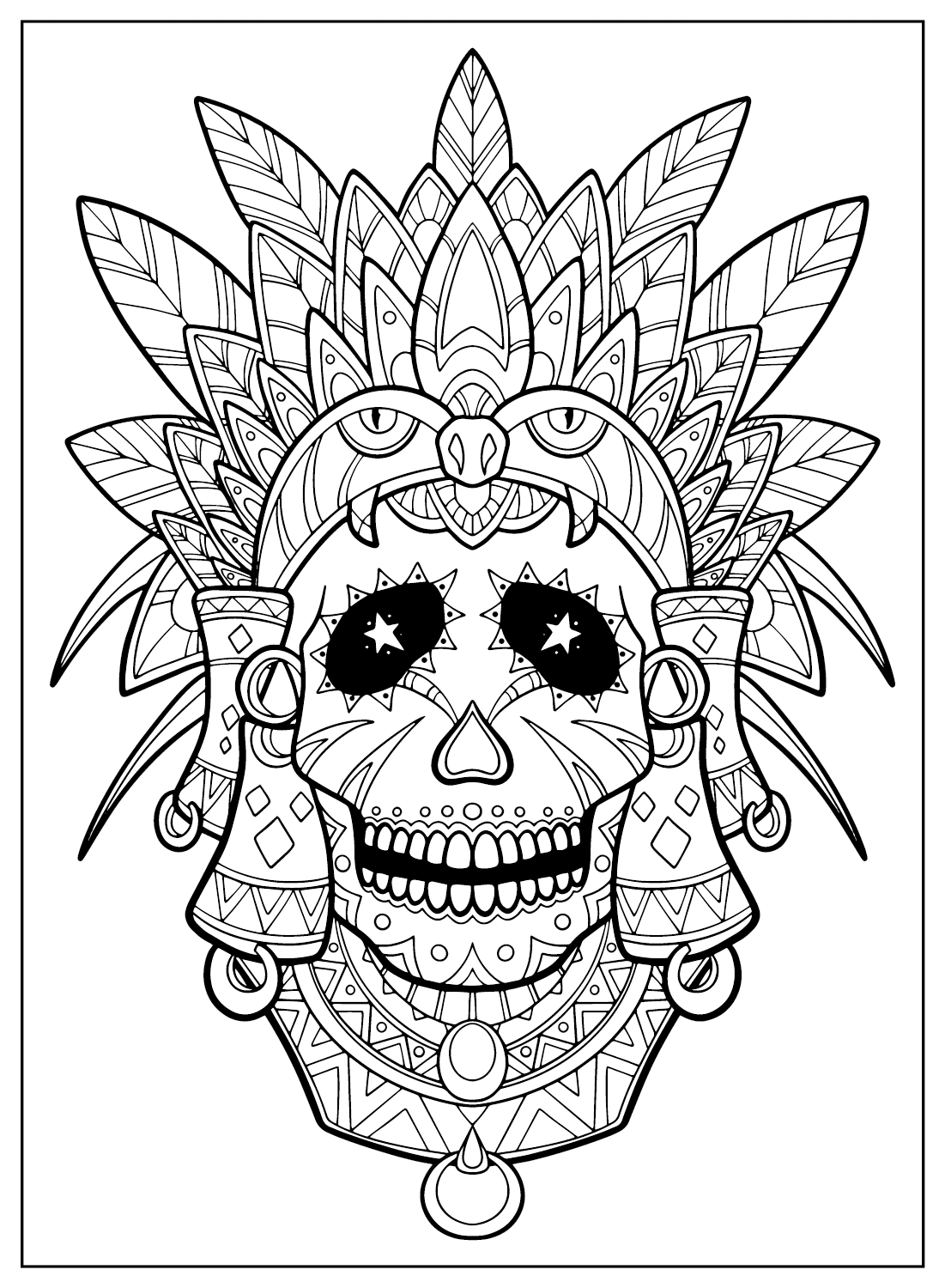
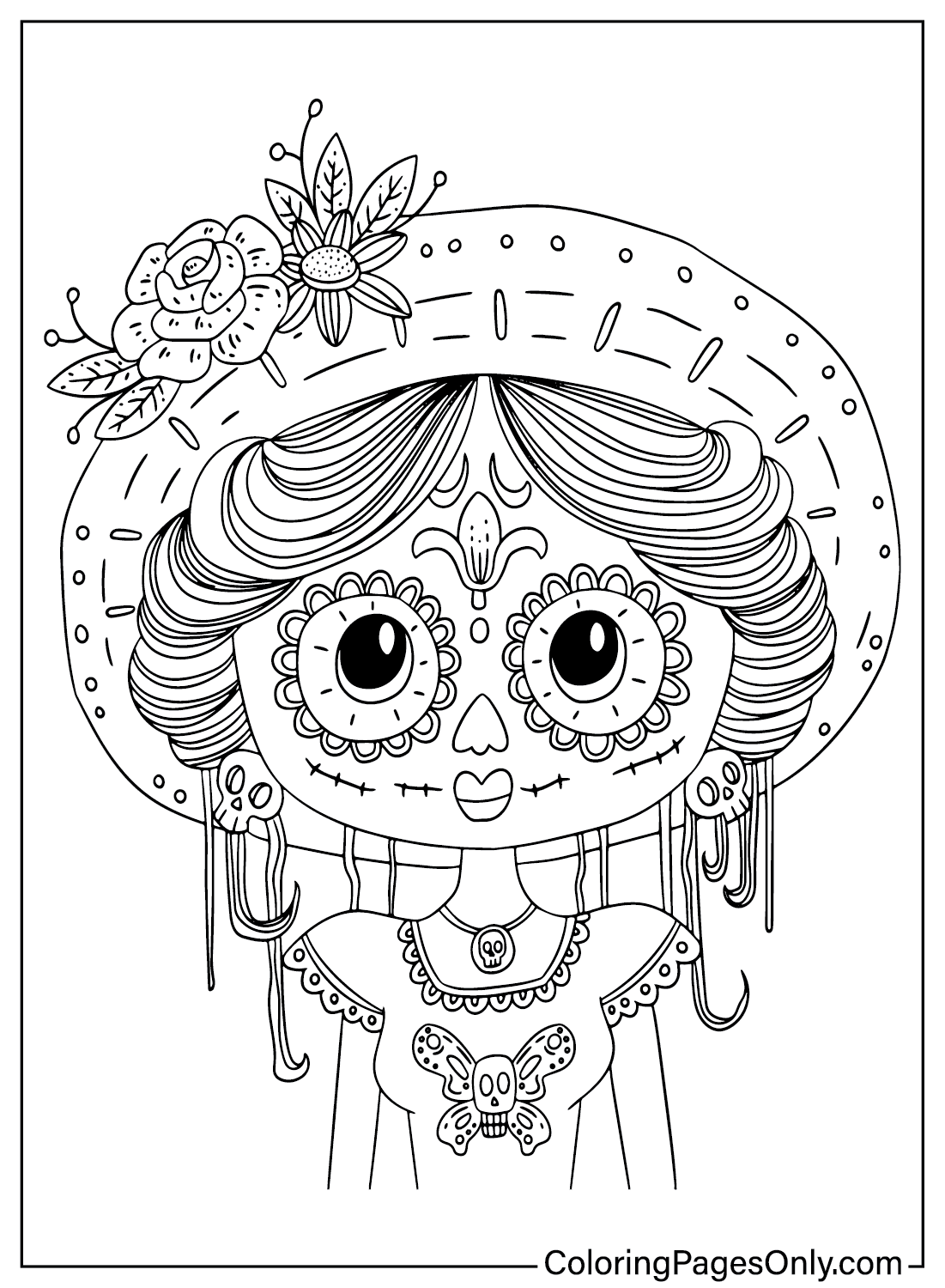
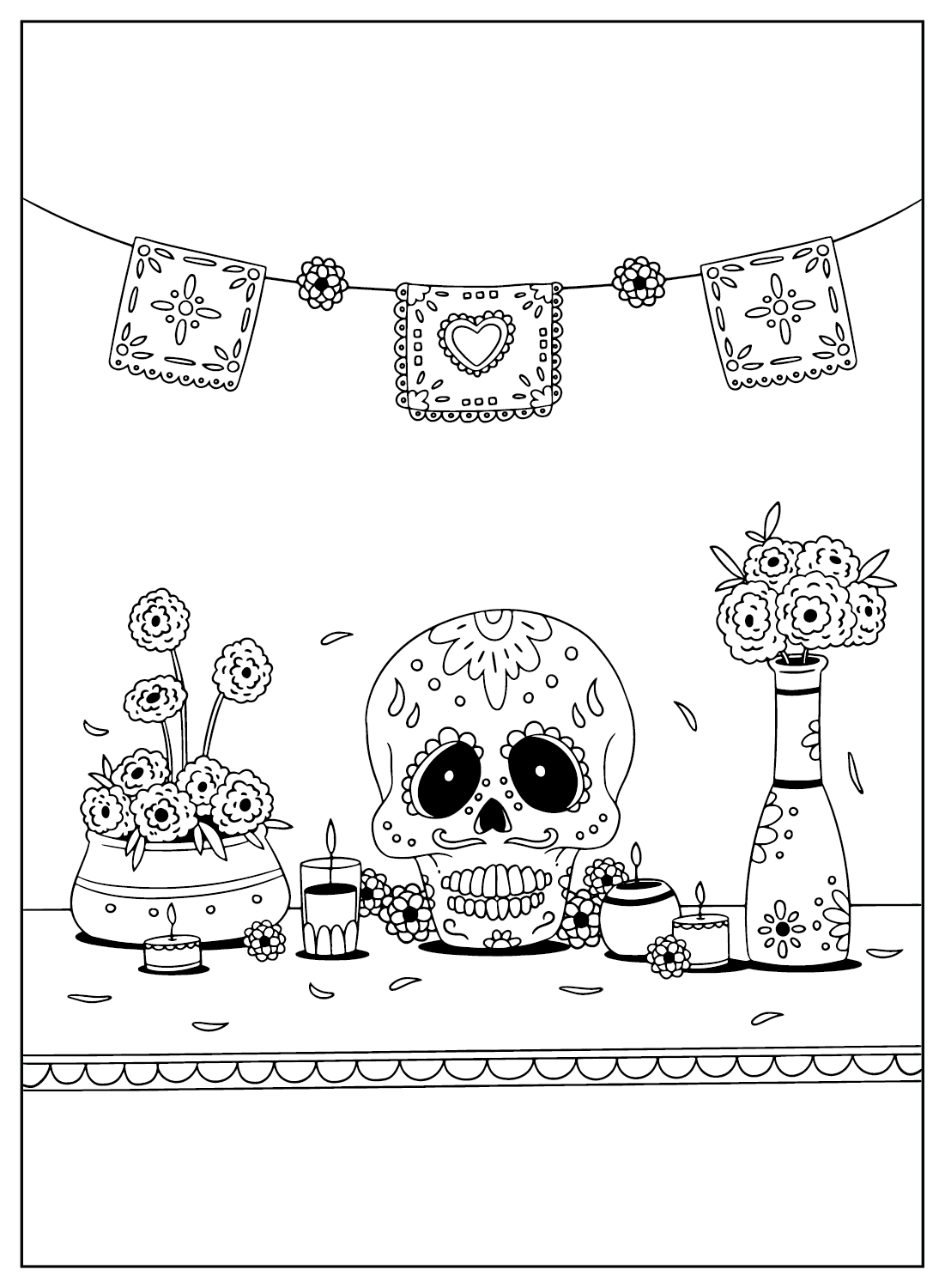
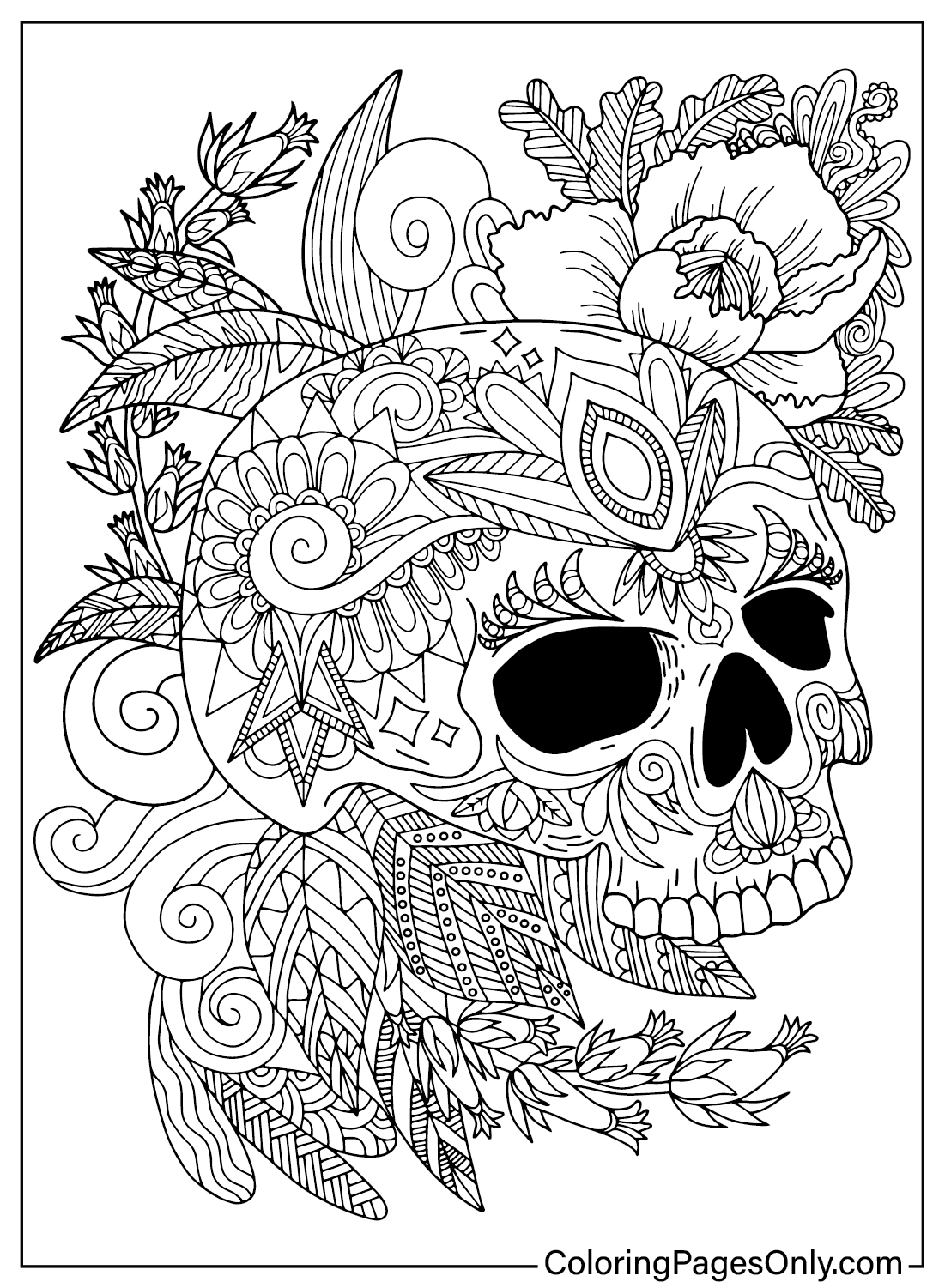
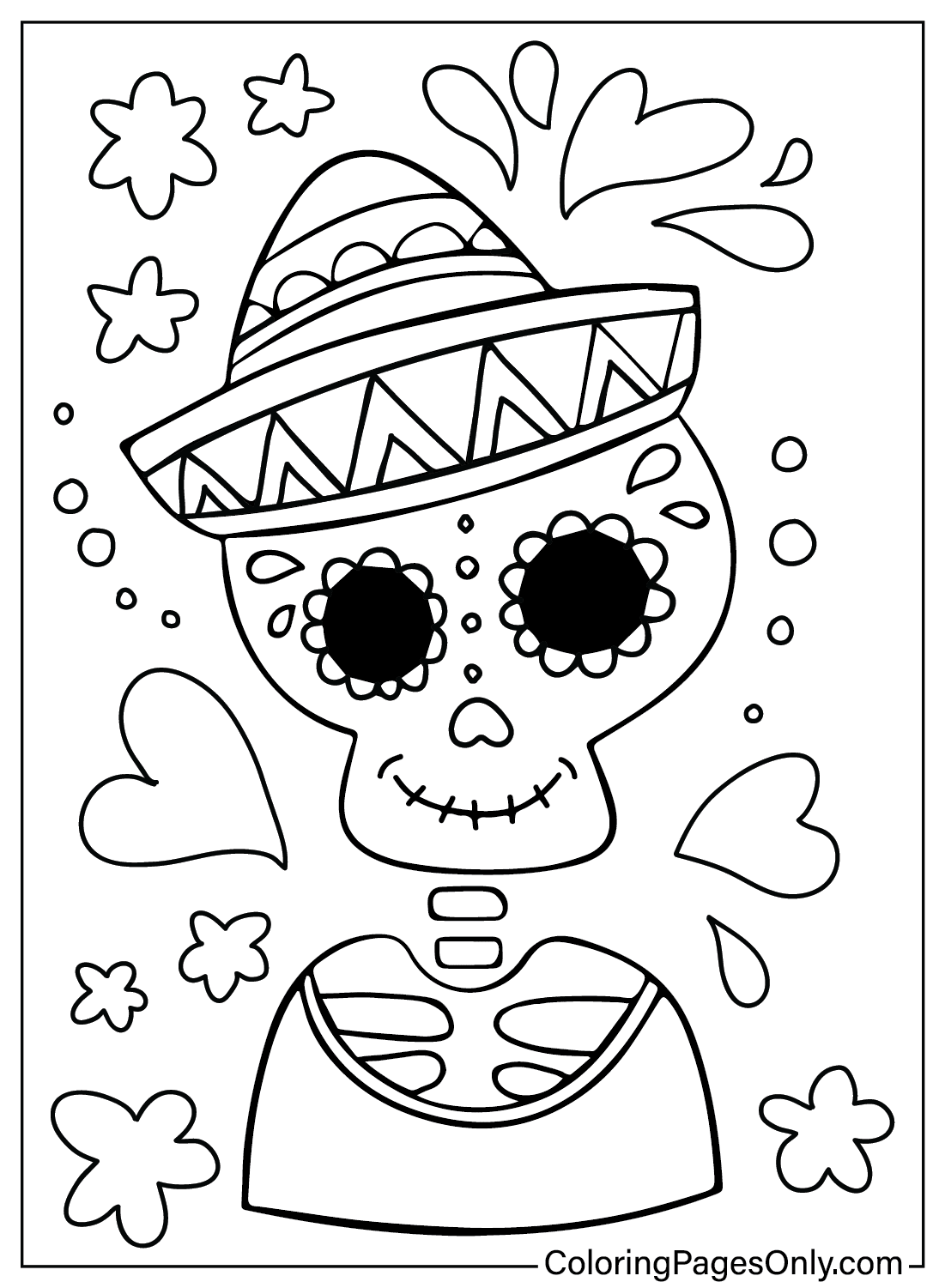
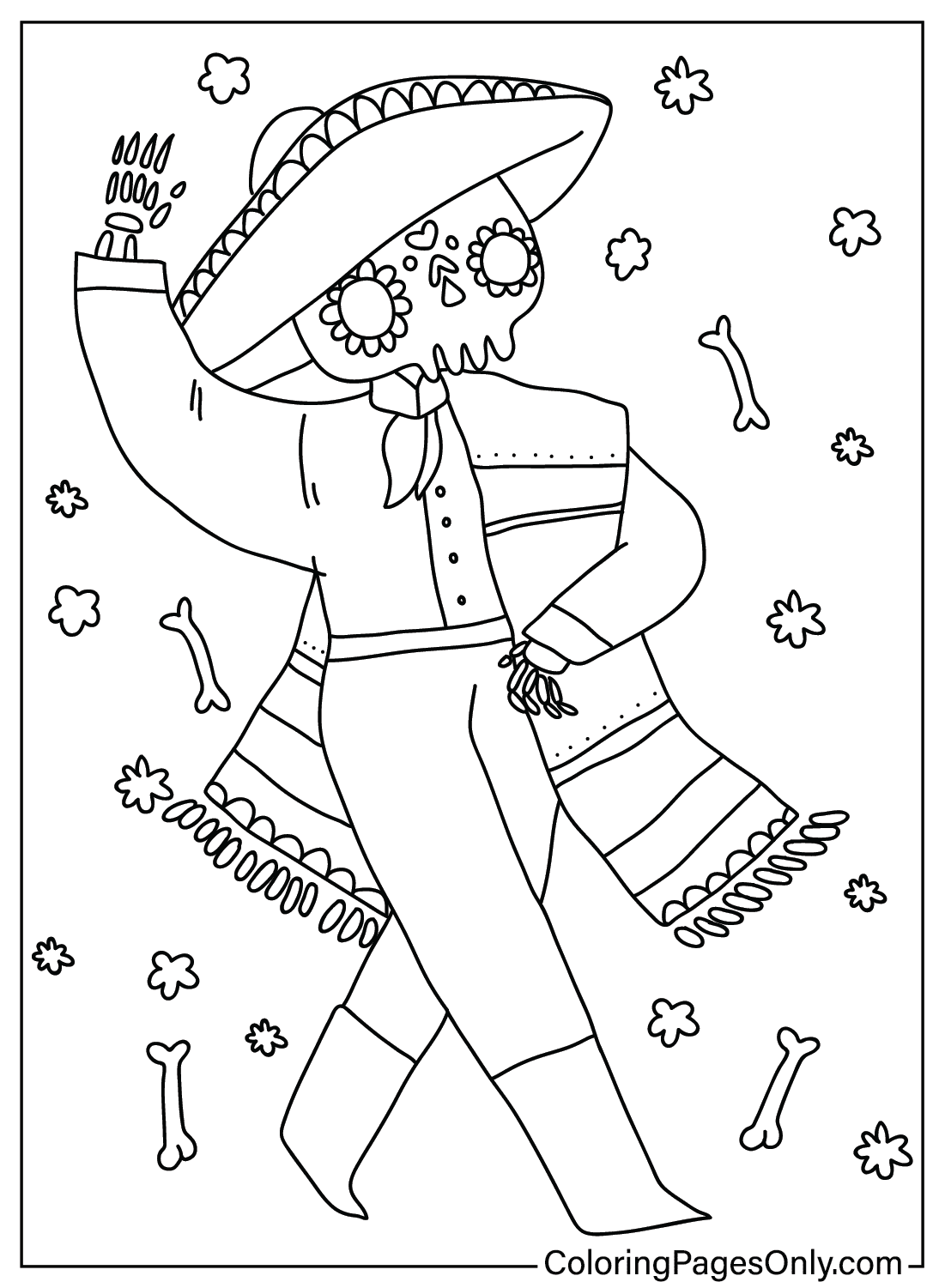
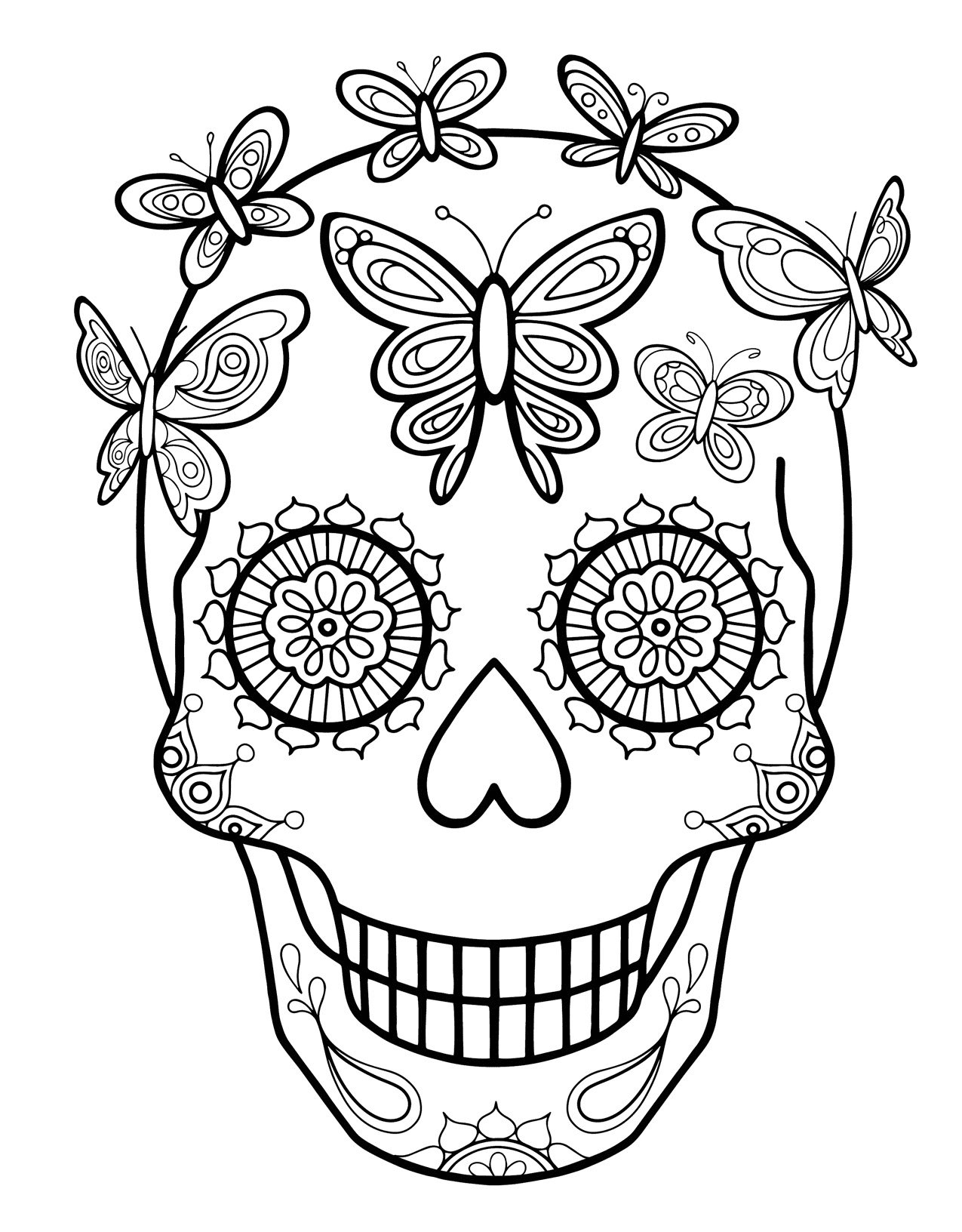
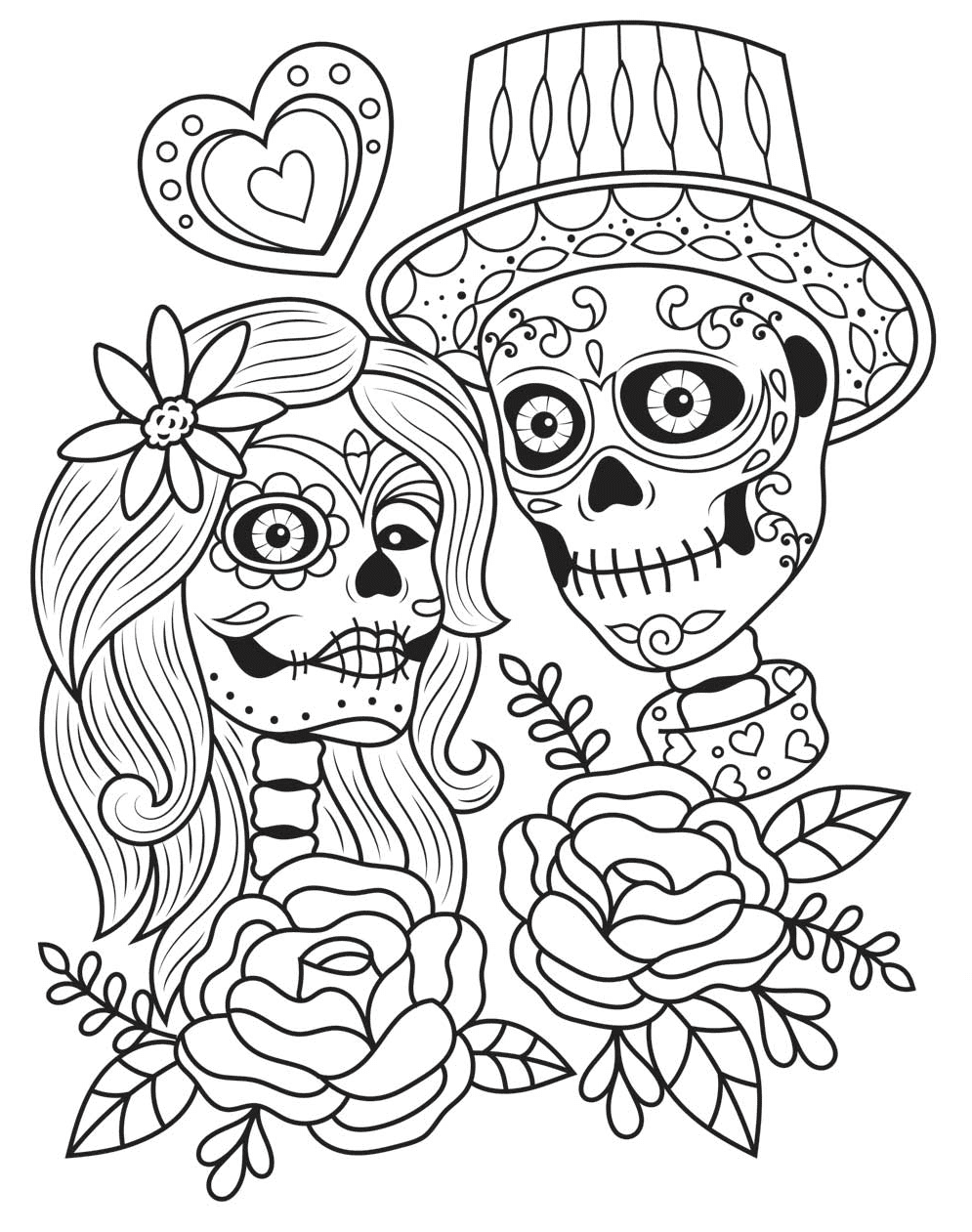
What Is Inside This Collection
The 44 pages fall into a few clear groups, based on the specific symbol or tradition each page centers on.
Sugar Skull Portraits (Calaveras)
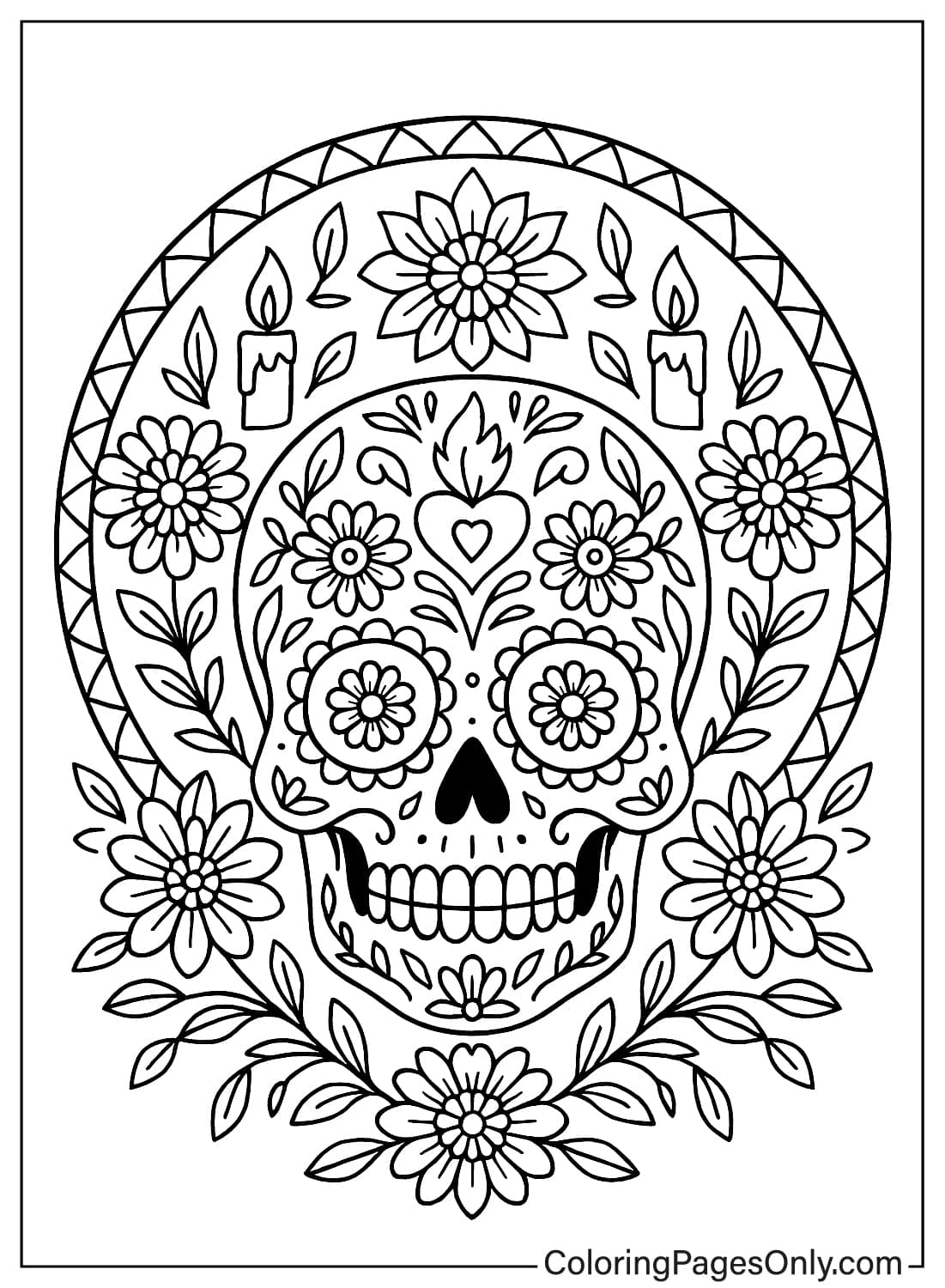
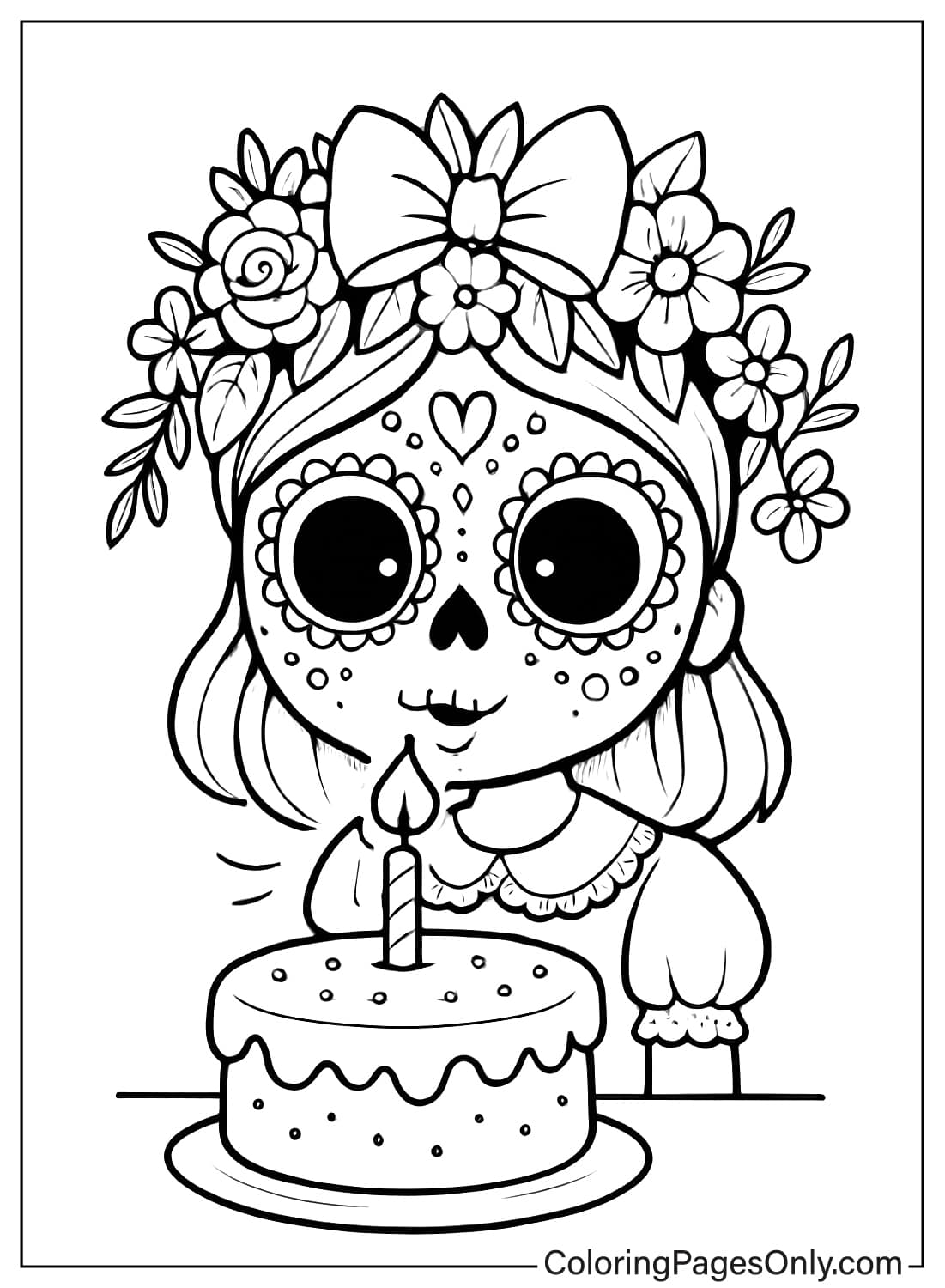
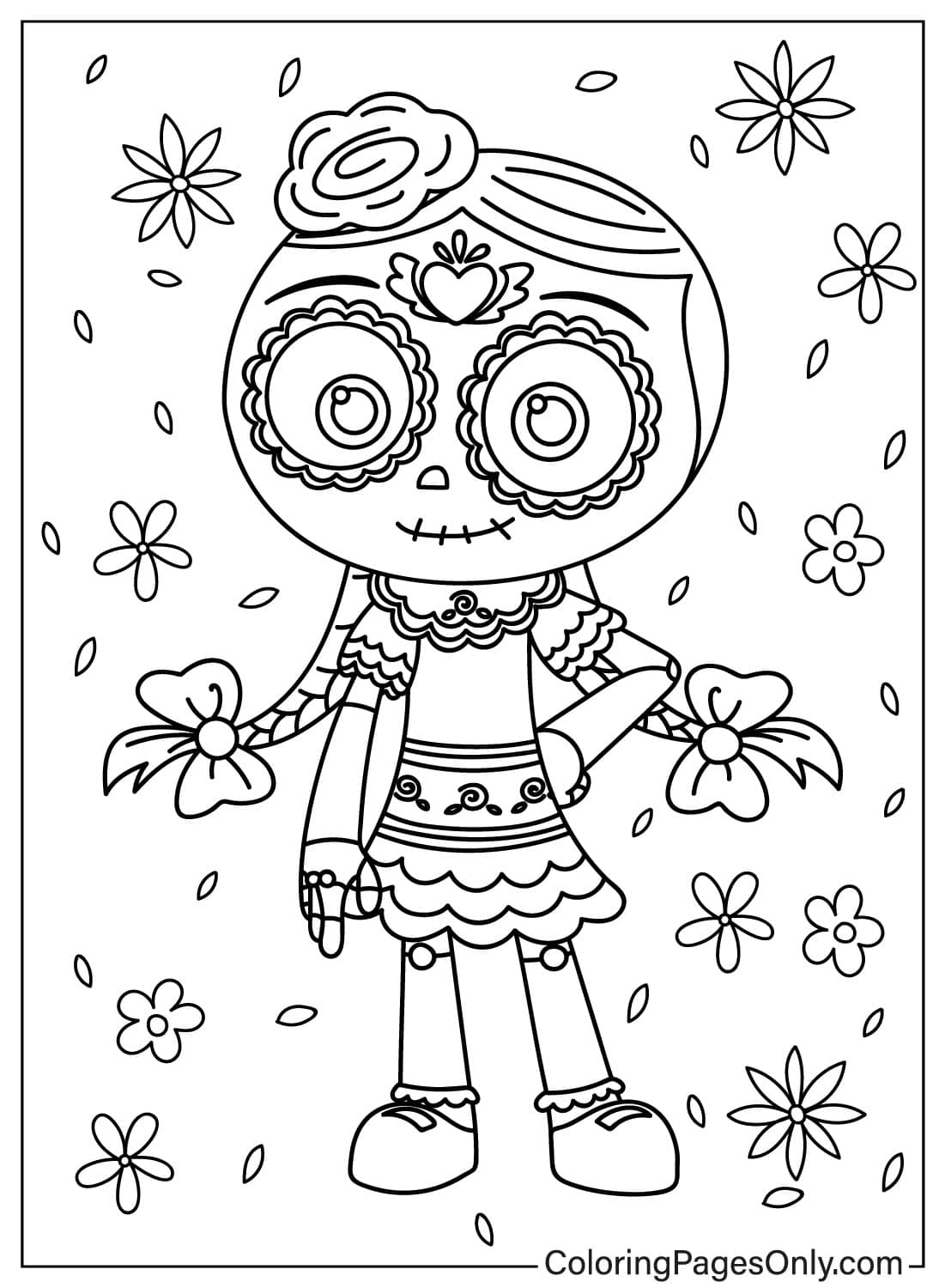
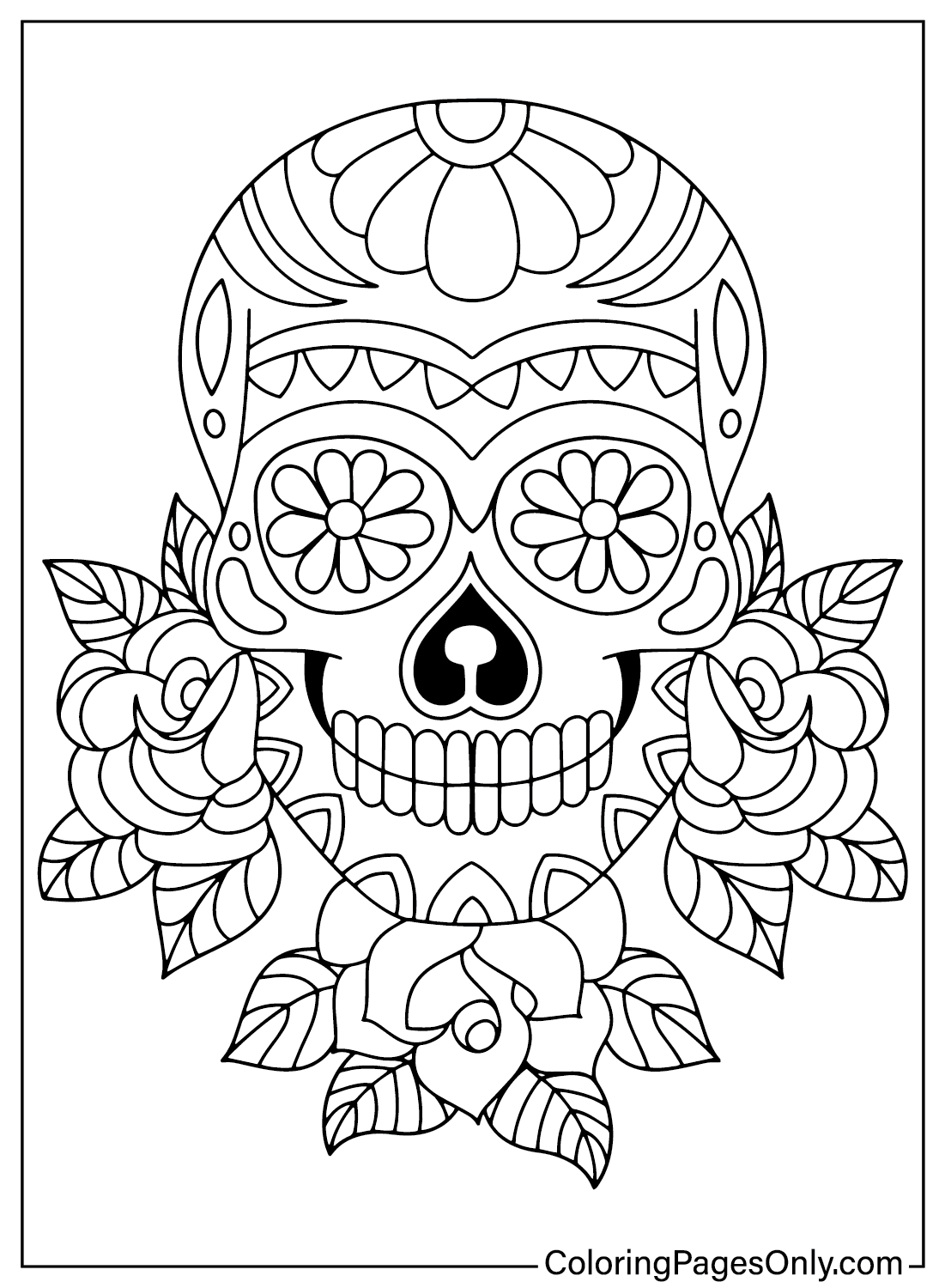
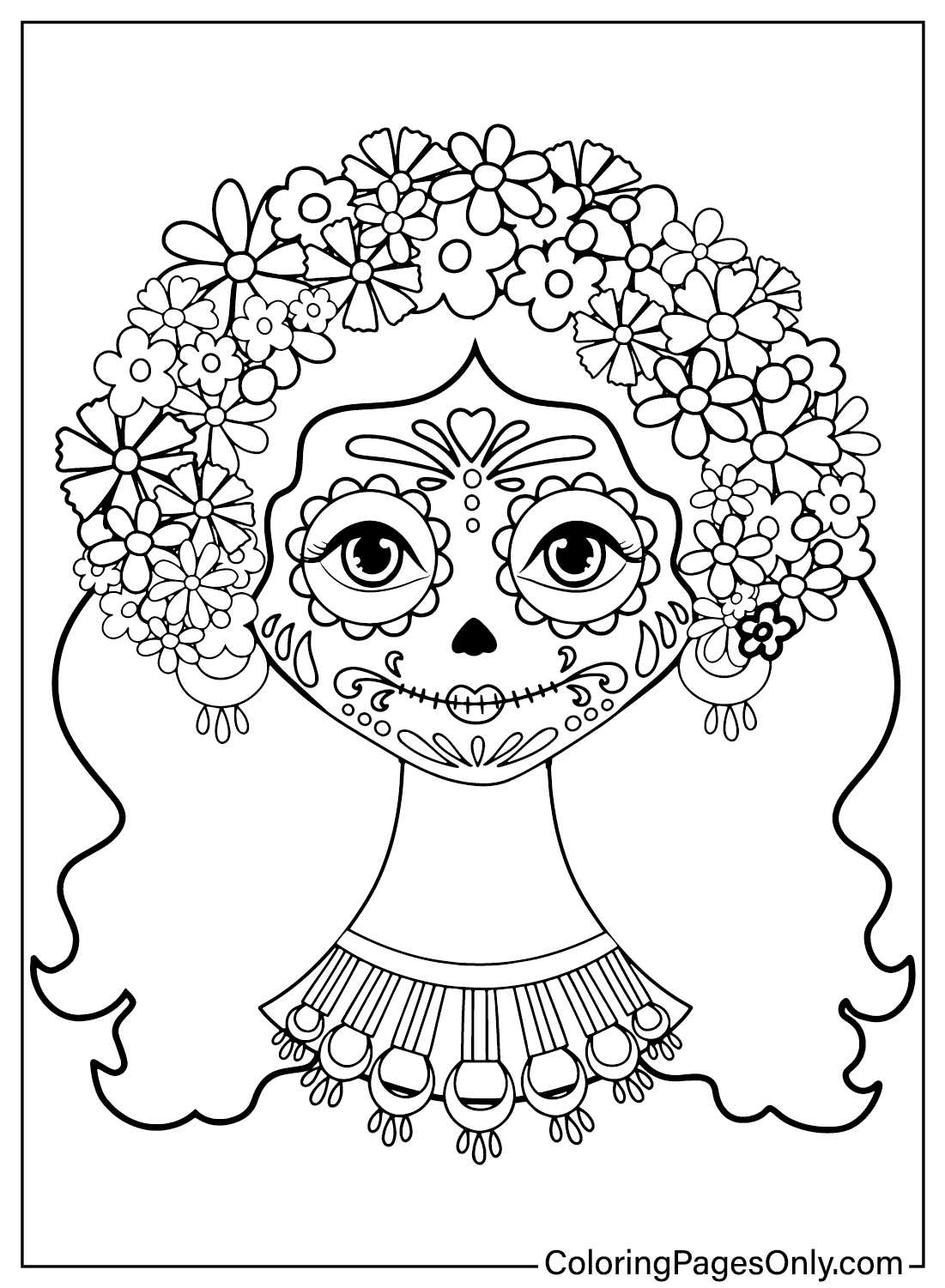
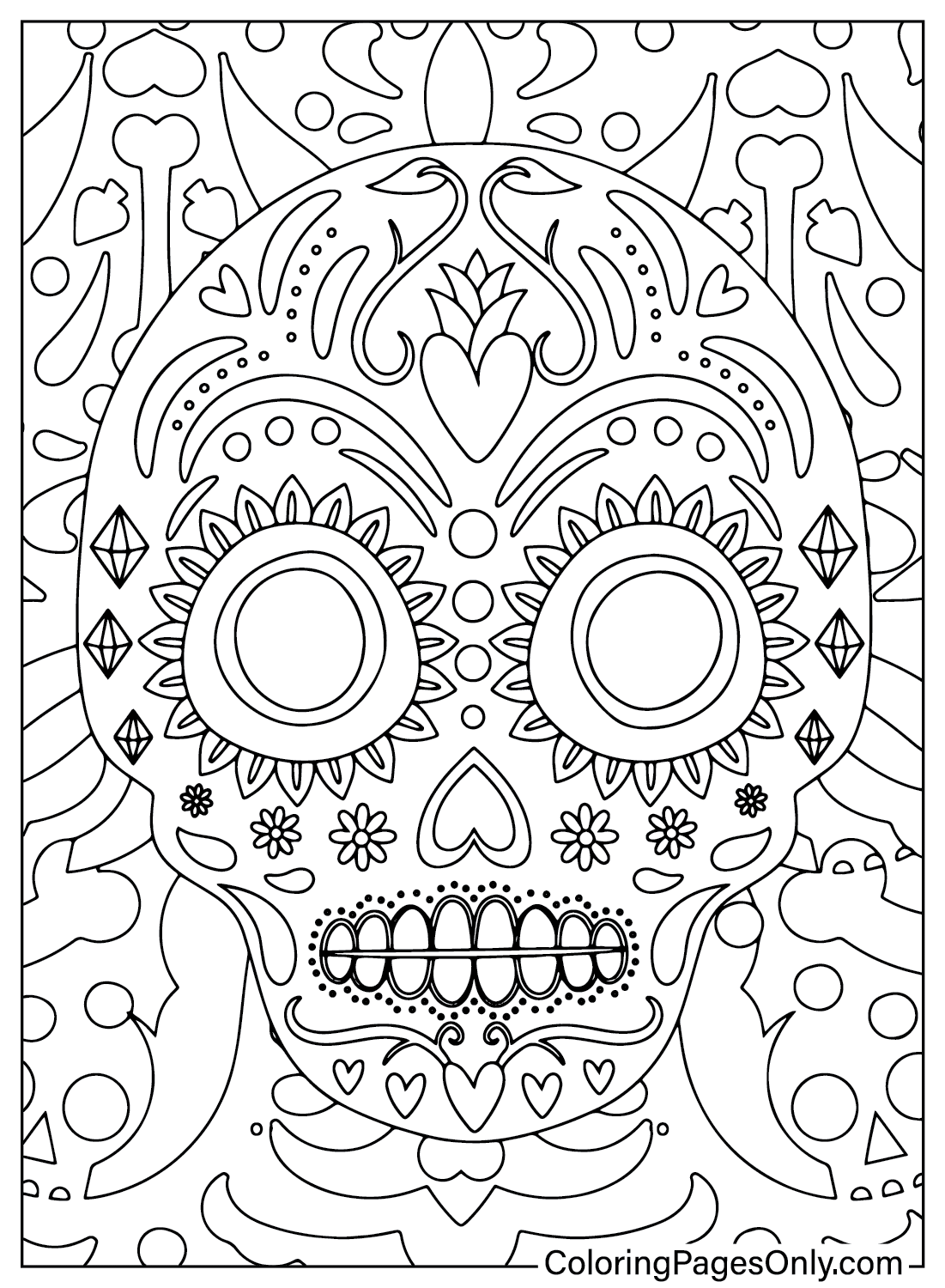
The largest share of the collection is sugar skull portraits, decorated with flowers, swirls, and lace-like patterns rather than left plain. Color the skull itself White or Ivory, then fill the decorative sections in bright Pink, Turquoise, Orange, and Yellow. This traditional palette turns a skull into a calavera rather than a frightening image.
Catrina and Calavera Figures
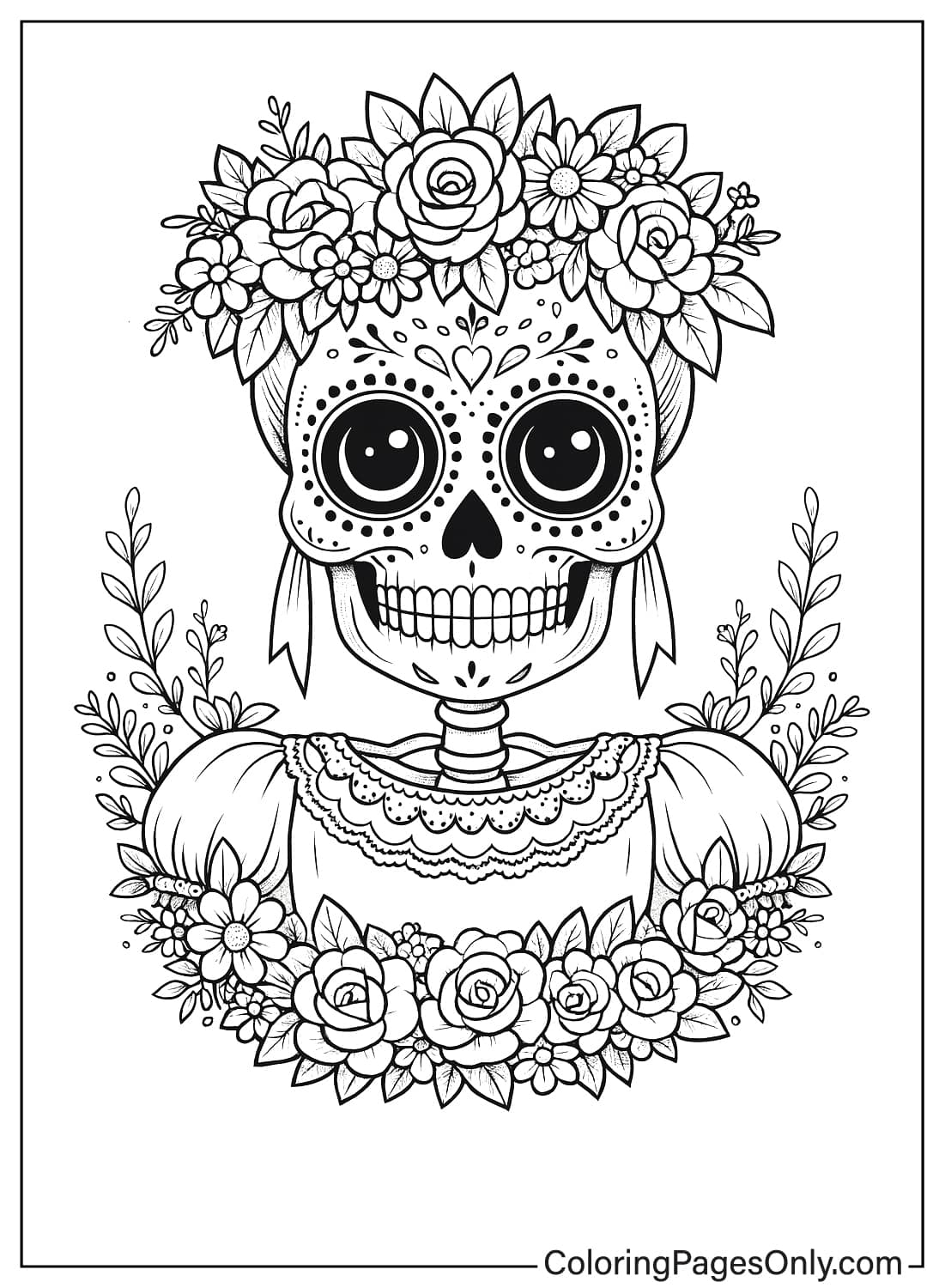
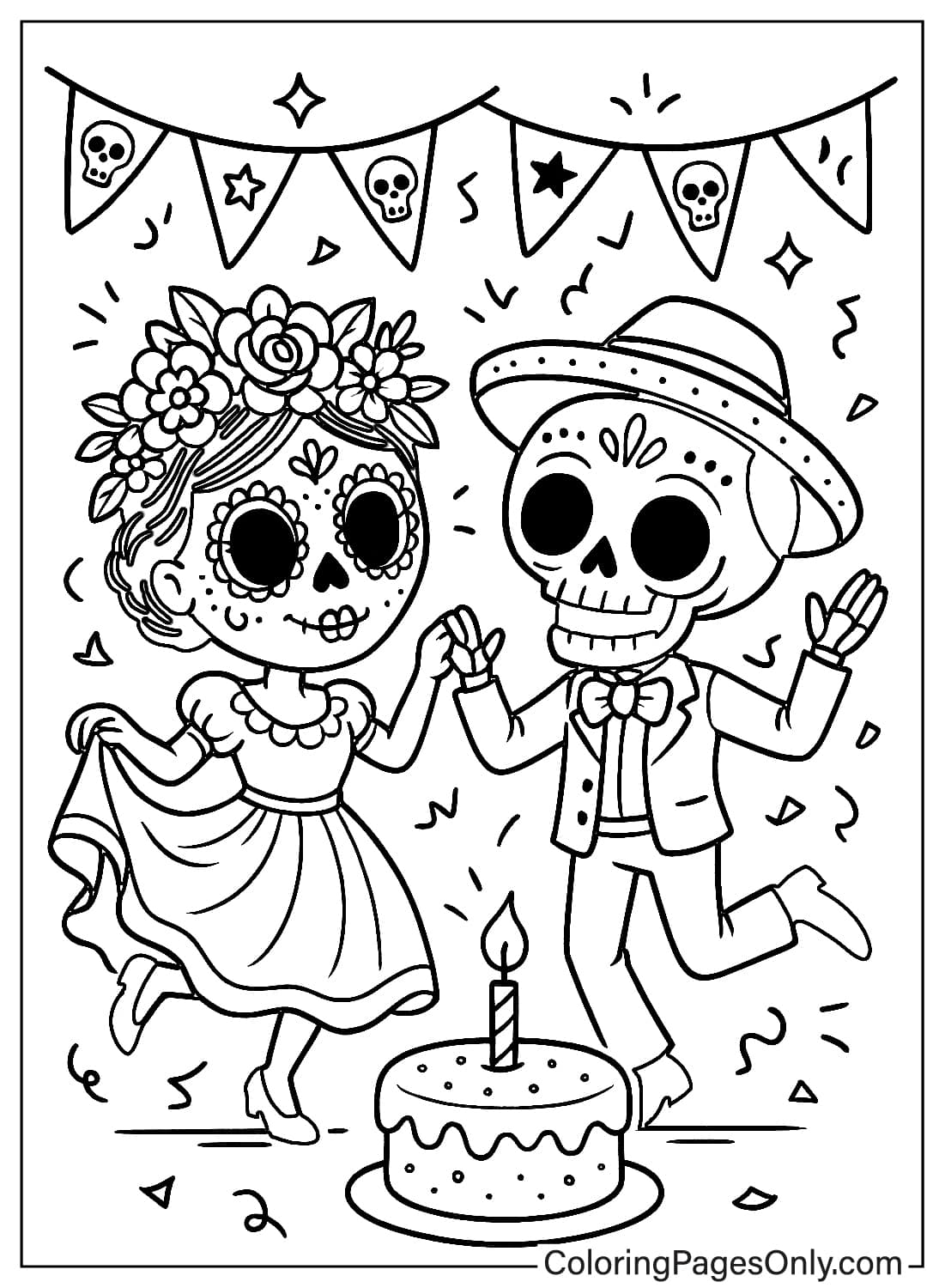
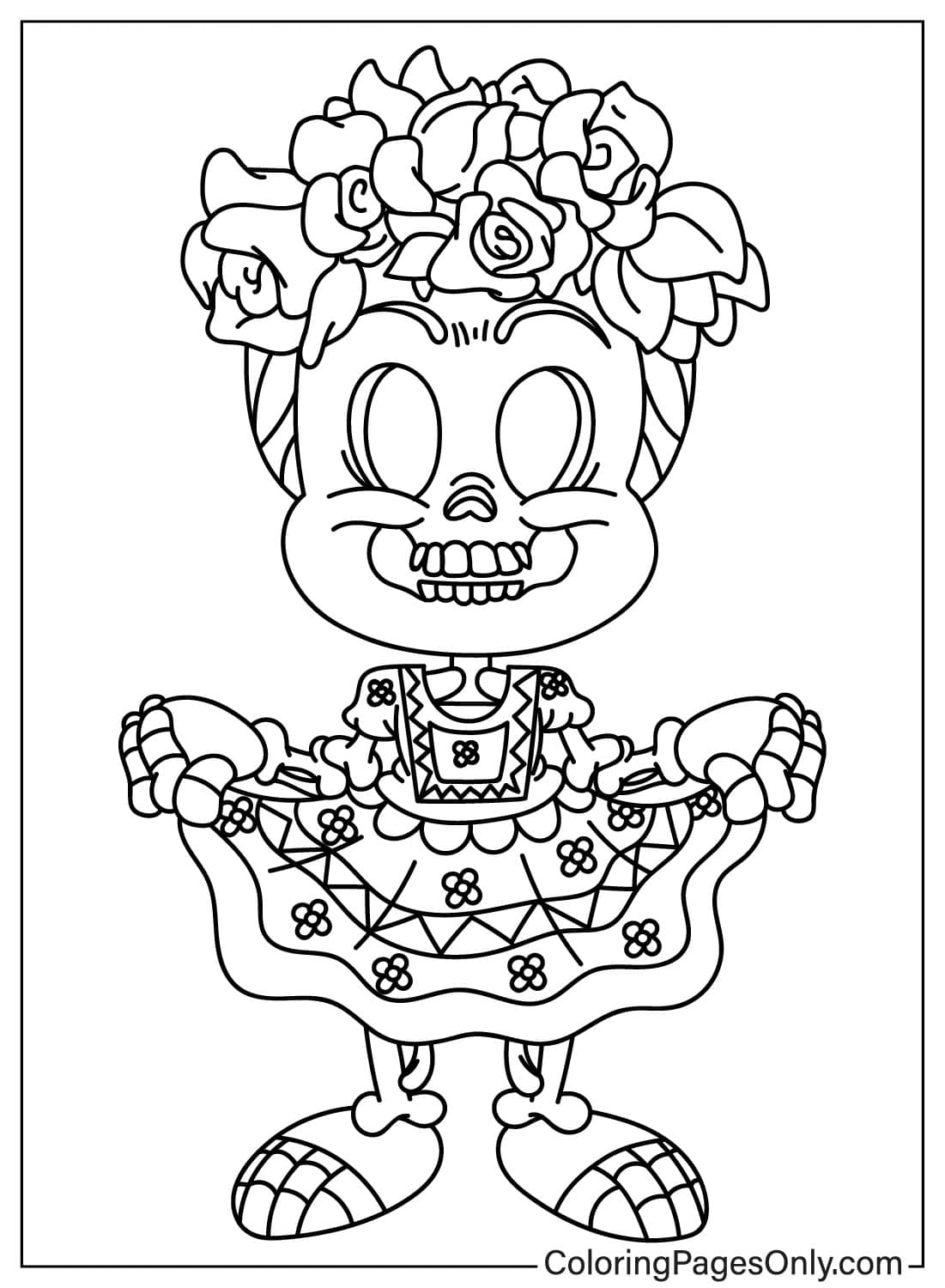
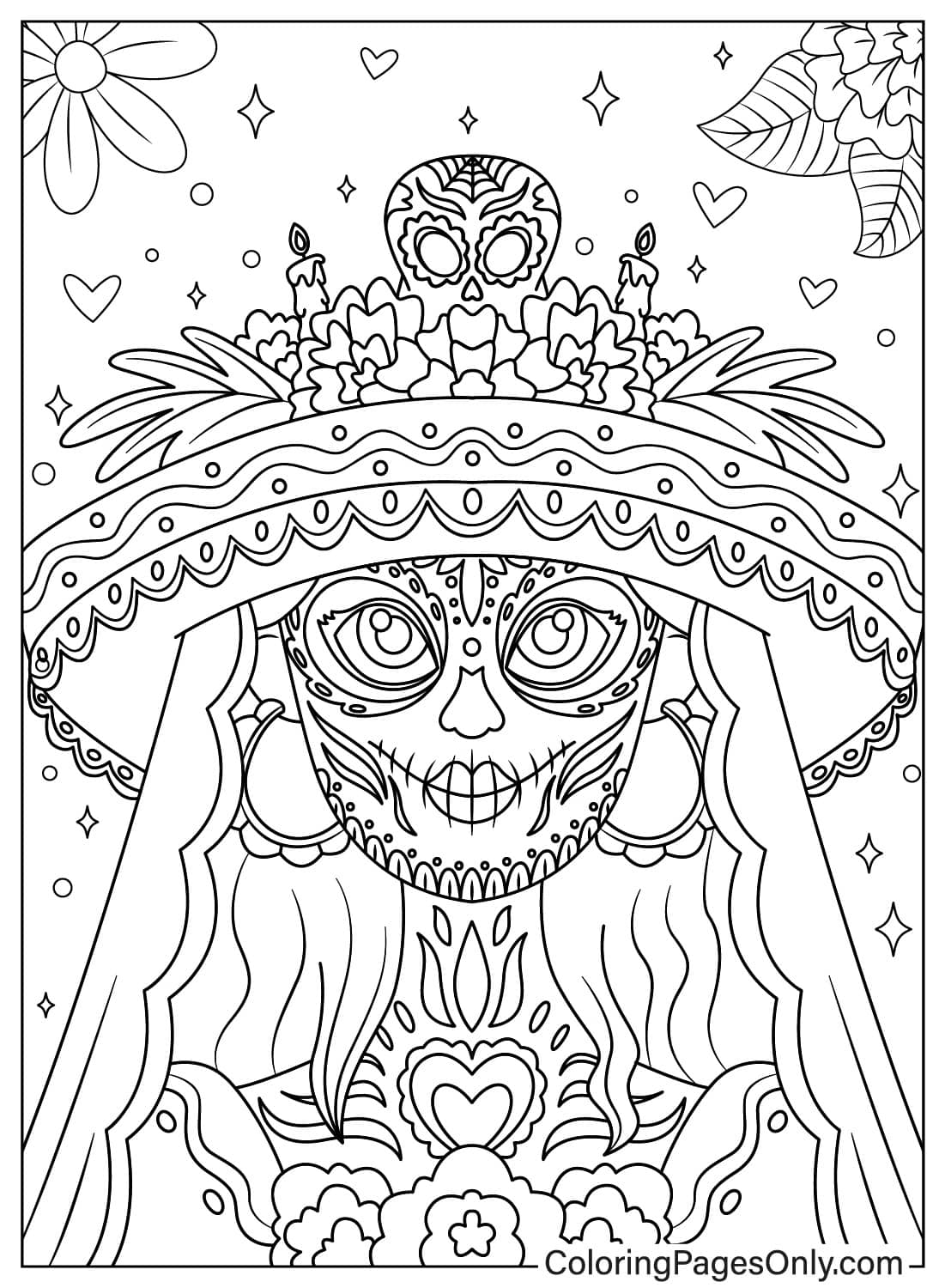
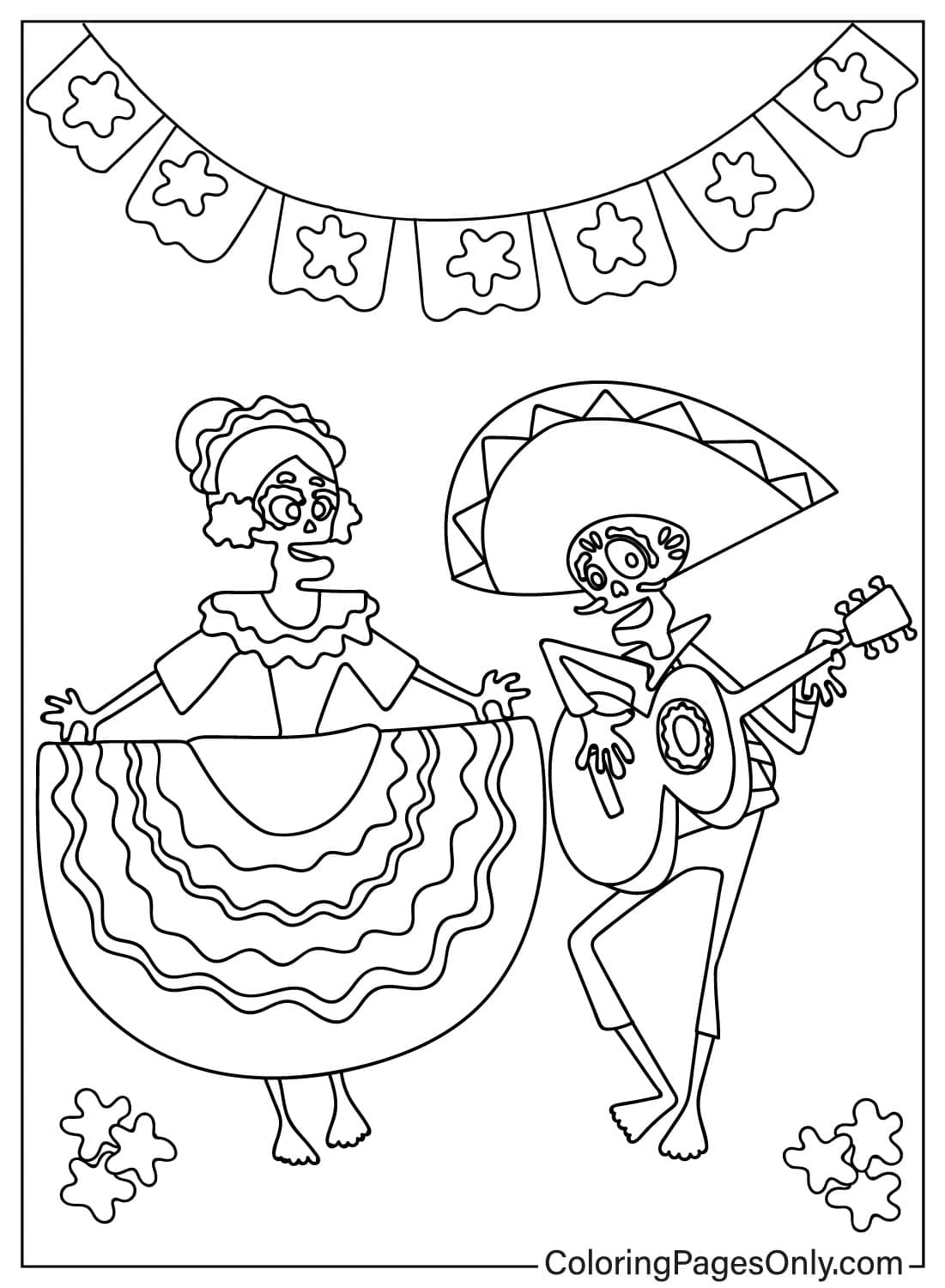
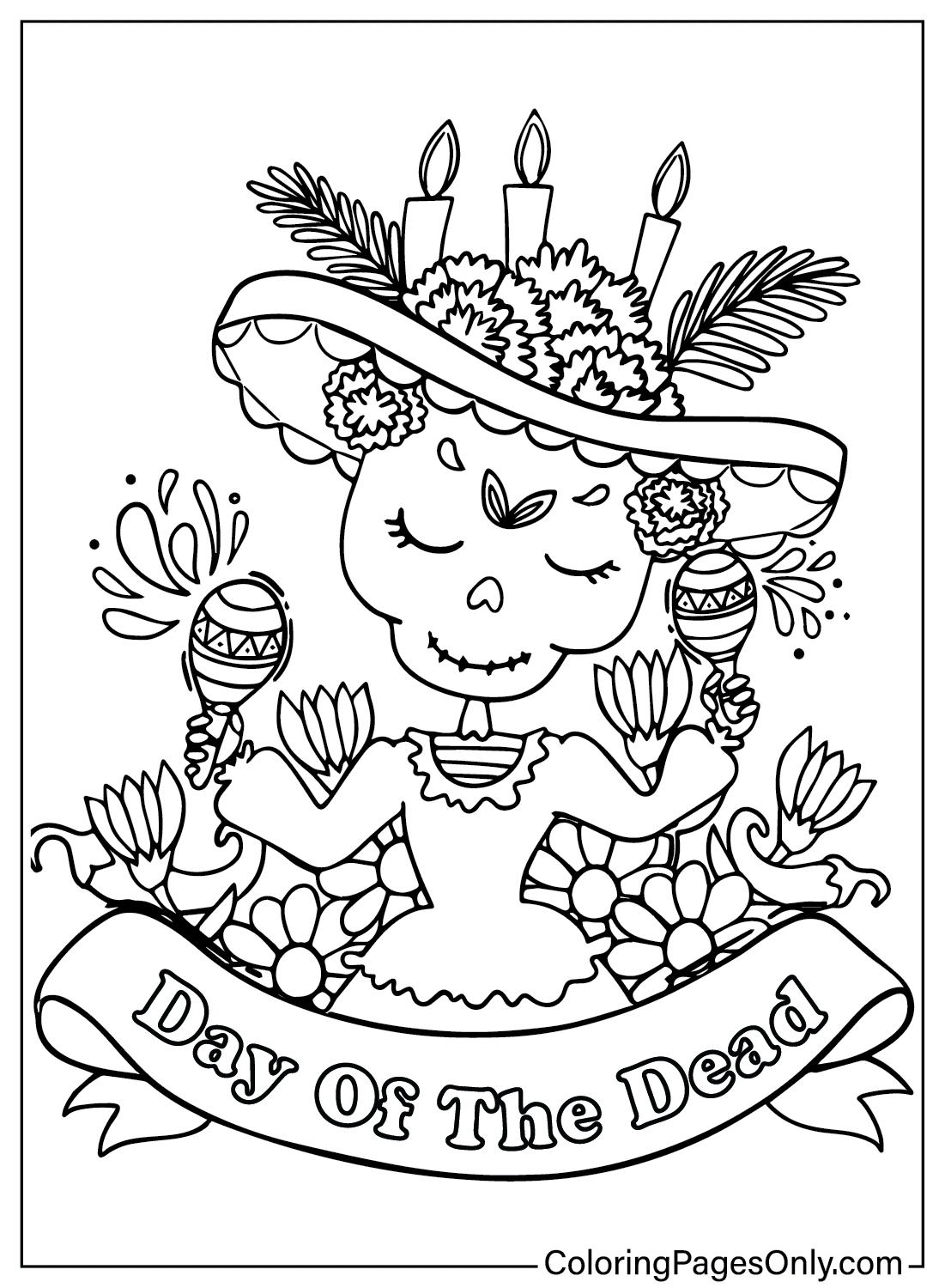
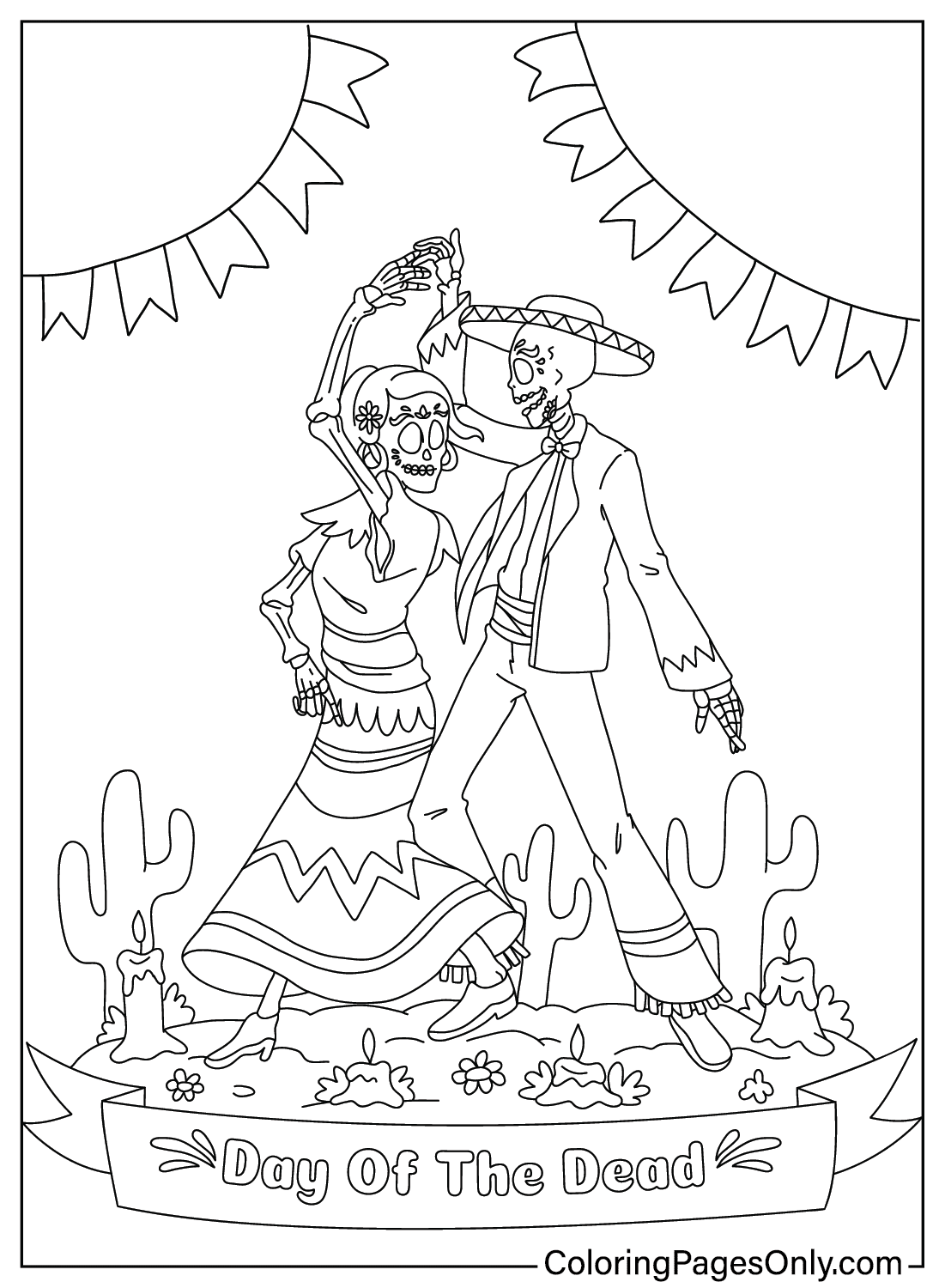
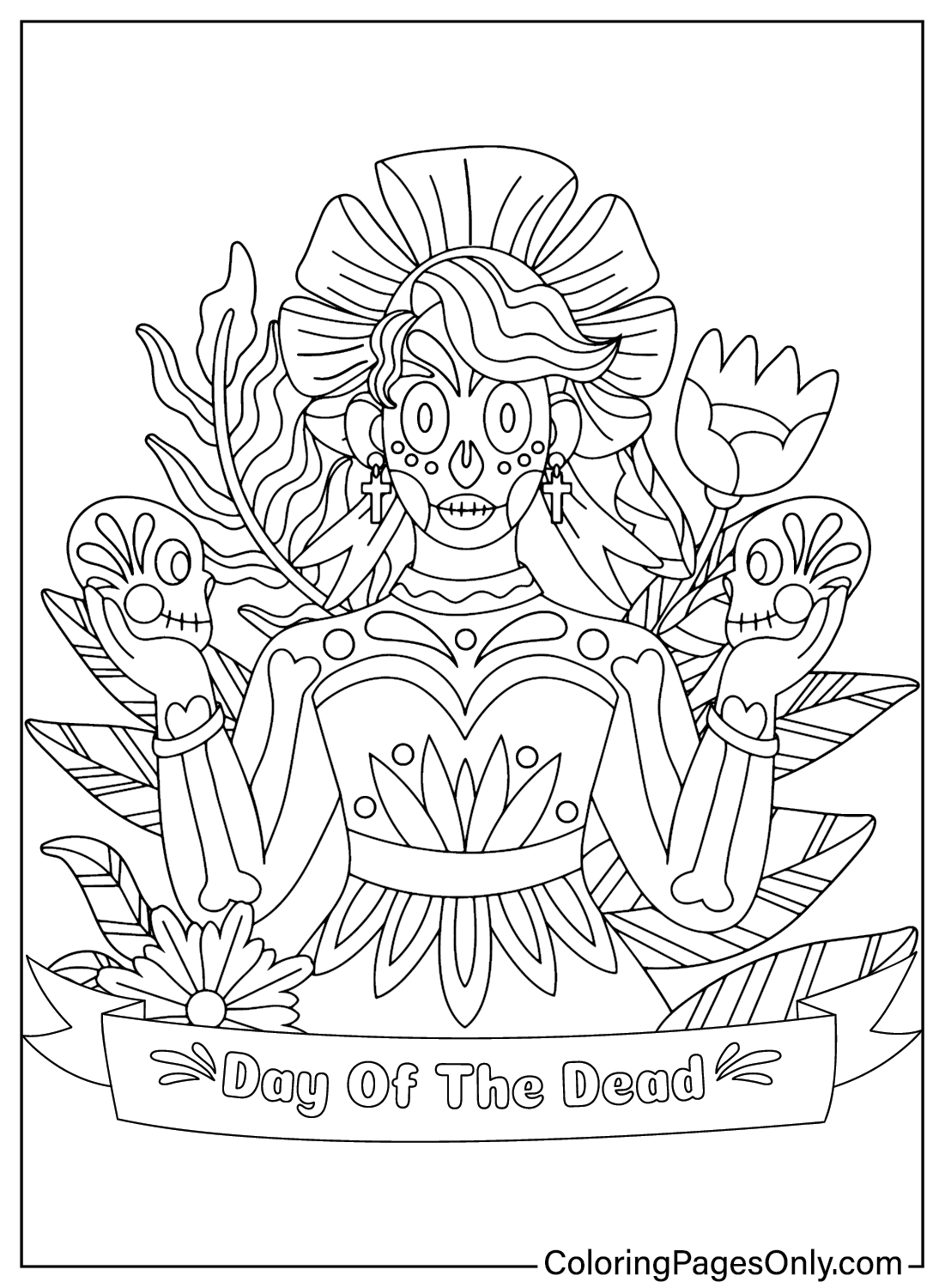
A second group shows fully dressed skeleton figures, including La Catrina herself, a dancing couple, and a boy in a mariachi dress, styled after Posada’s original elegant skeleton illustration. Color the clothing in rich Violet, Red, and Gold, and keep the exposed bone White or pale Ivory so the outfit reads as the main event rather than the skeleton underneath.
Altars, Food, and Traditions (Ofrendas)
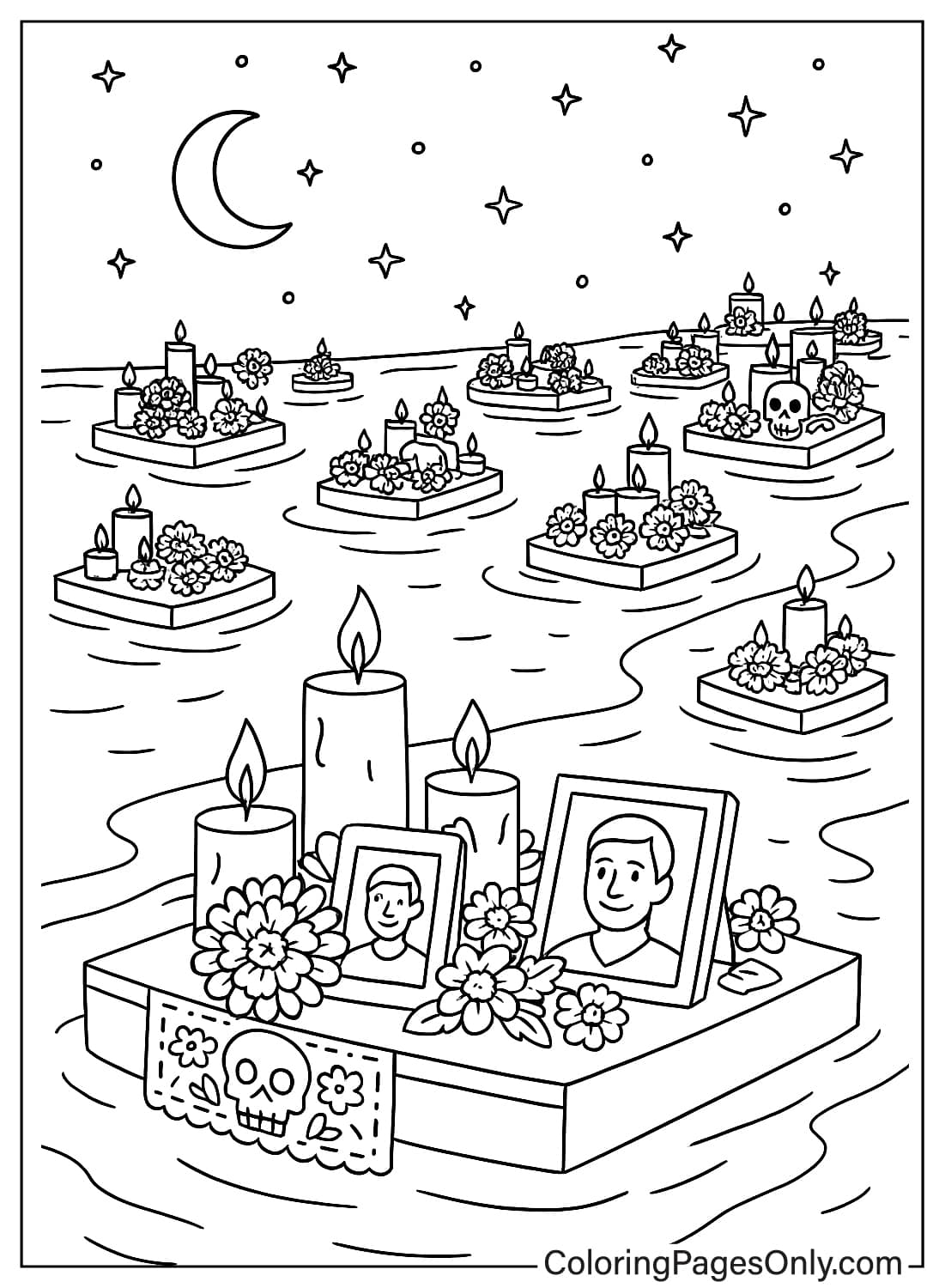
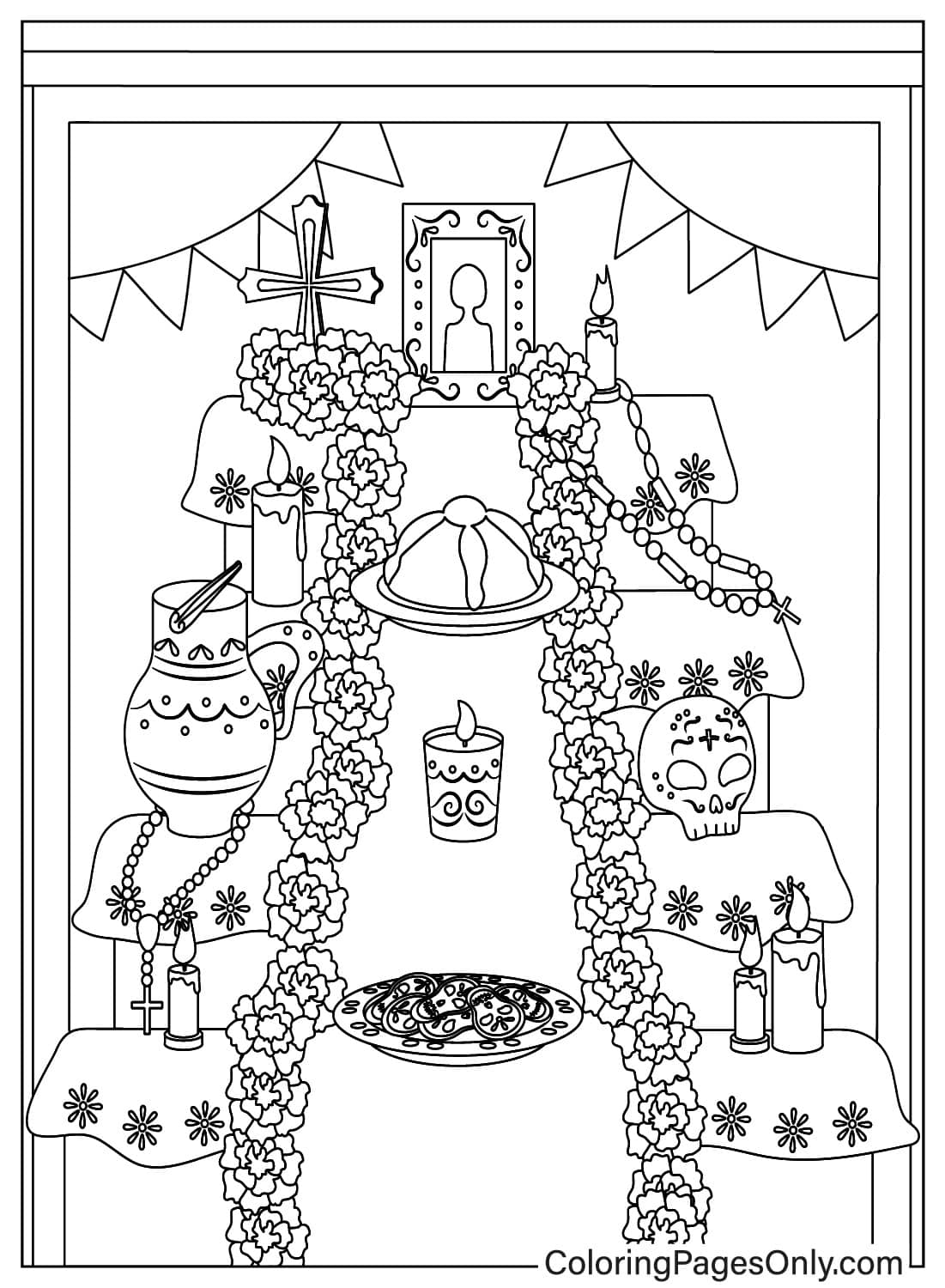
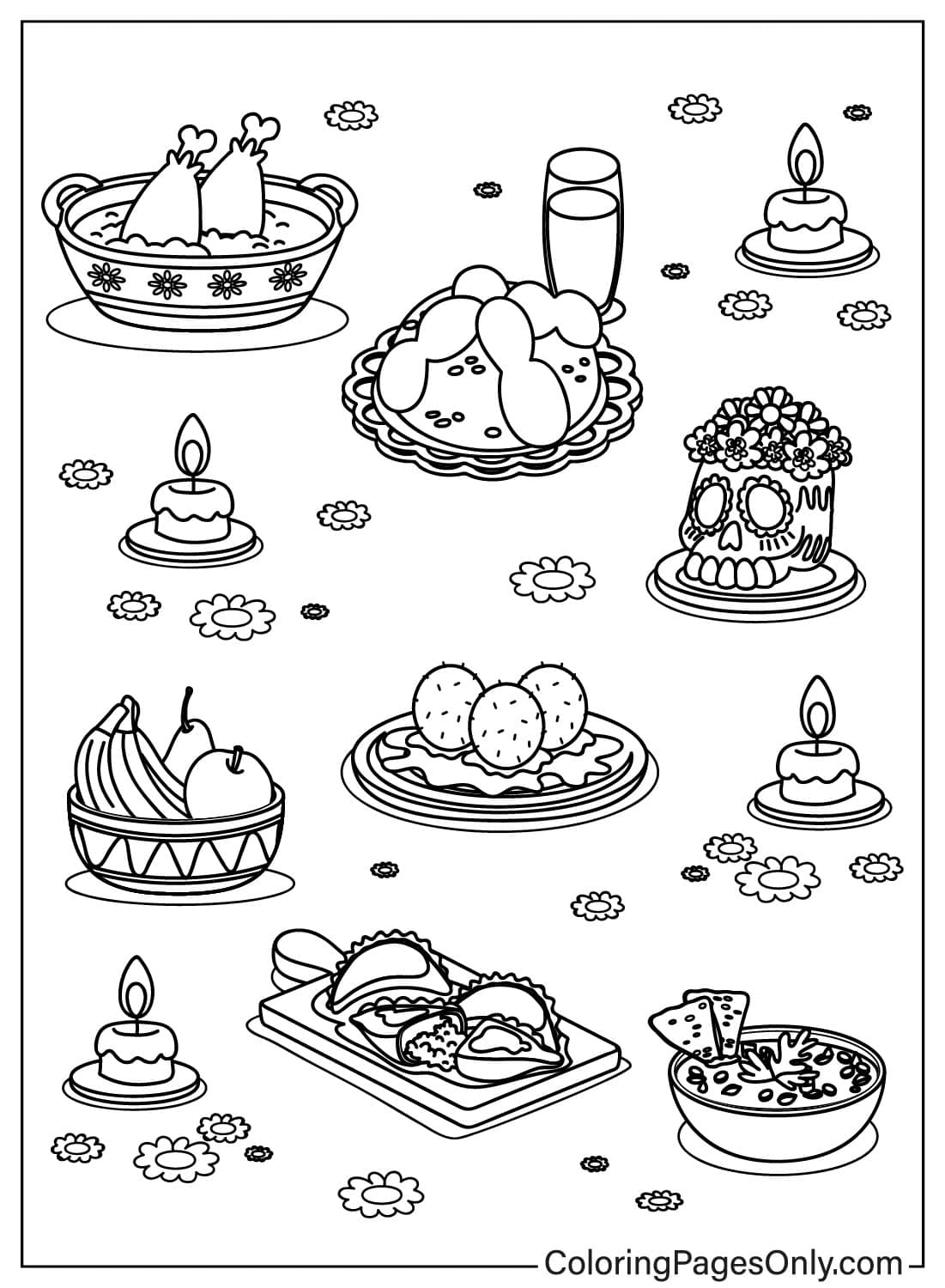
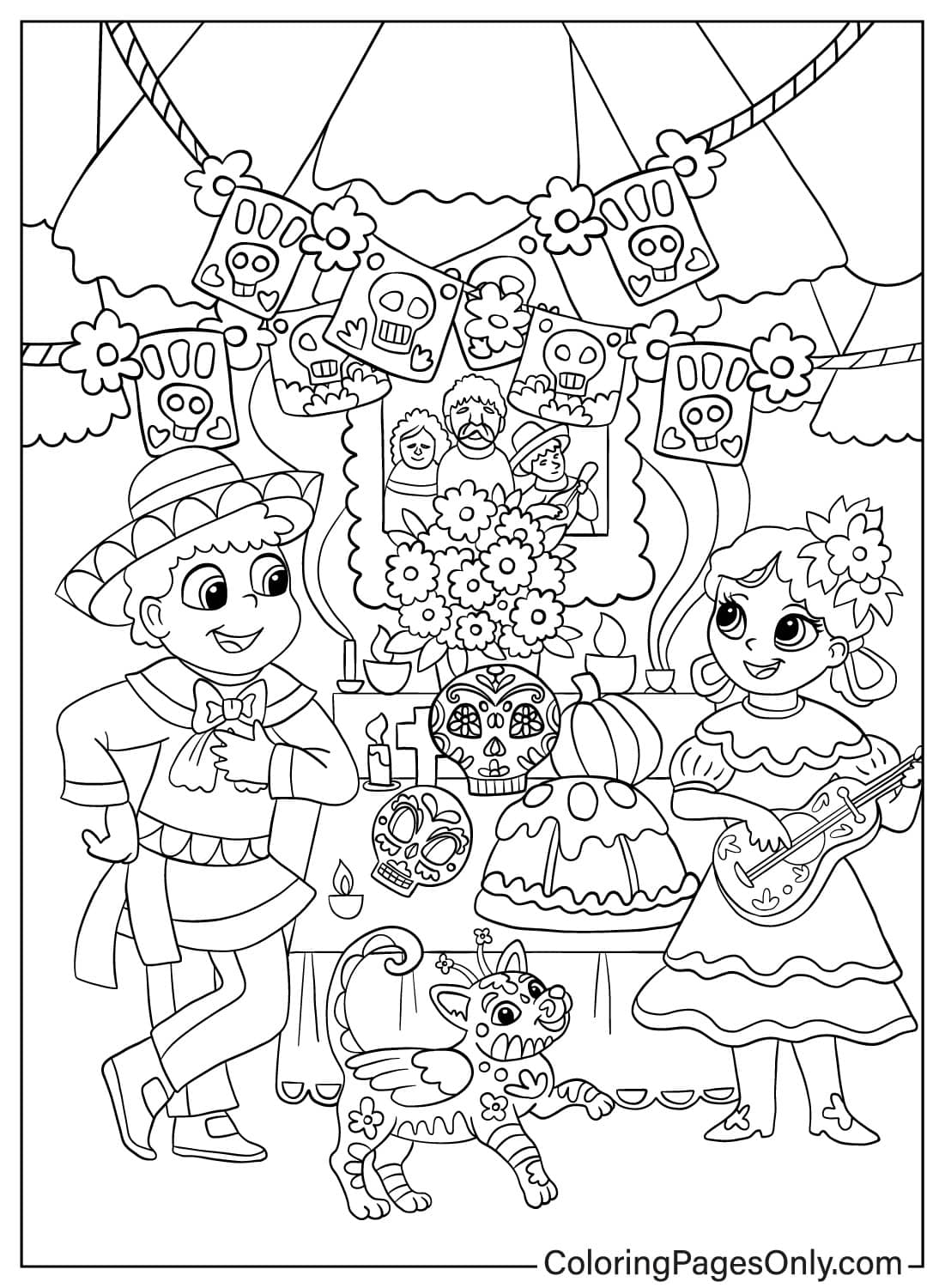
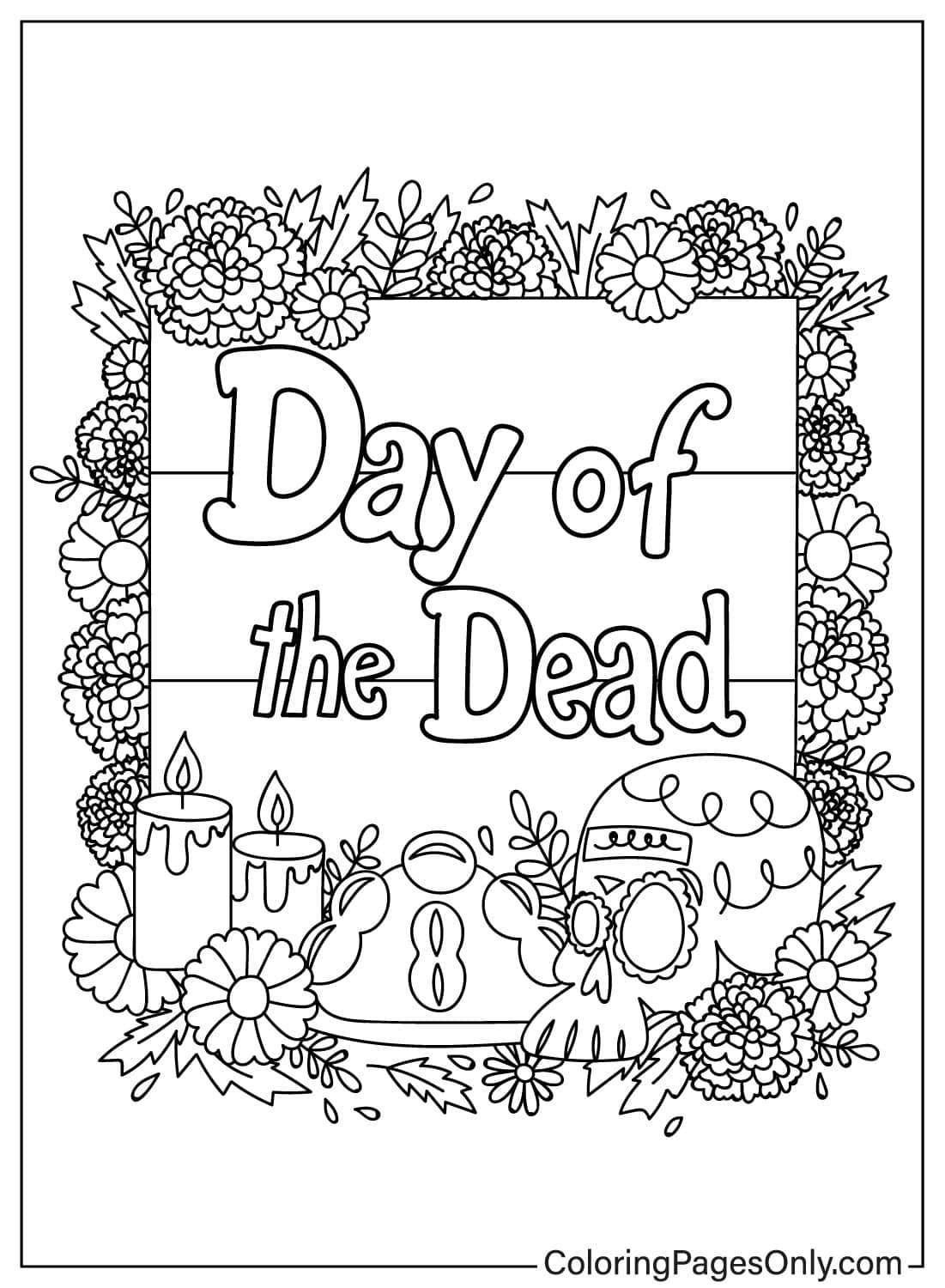
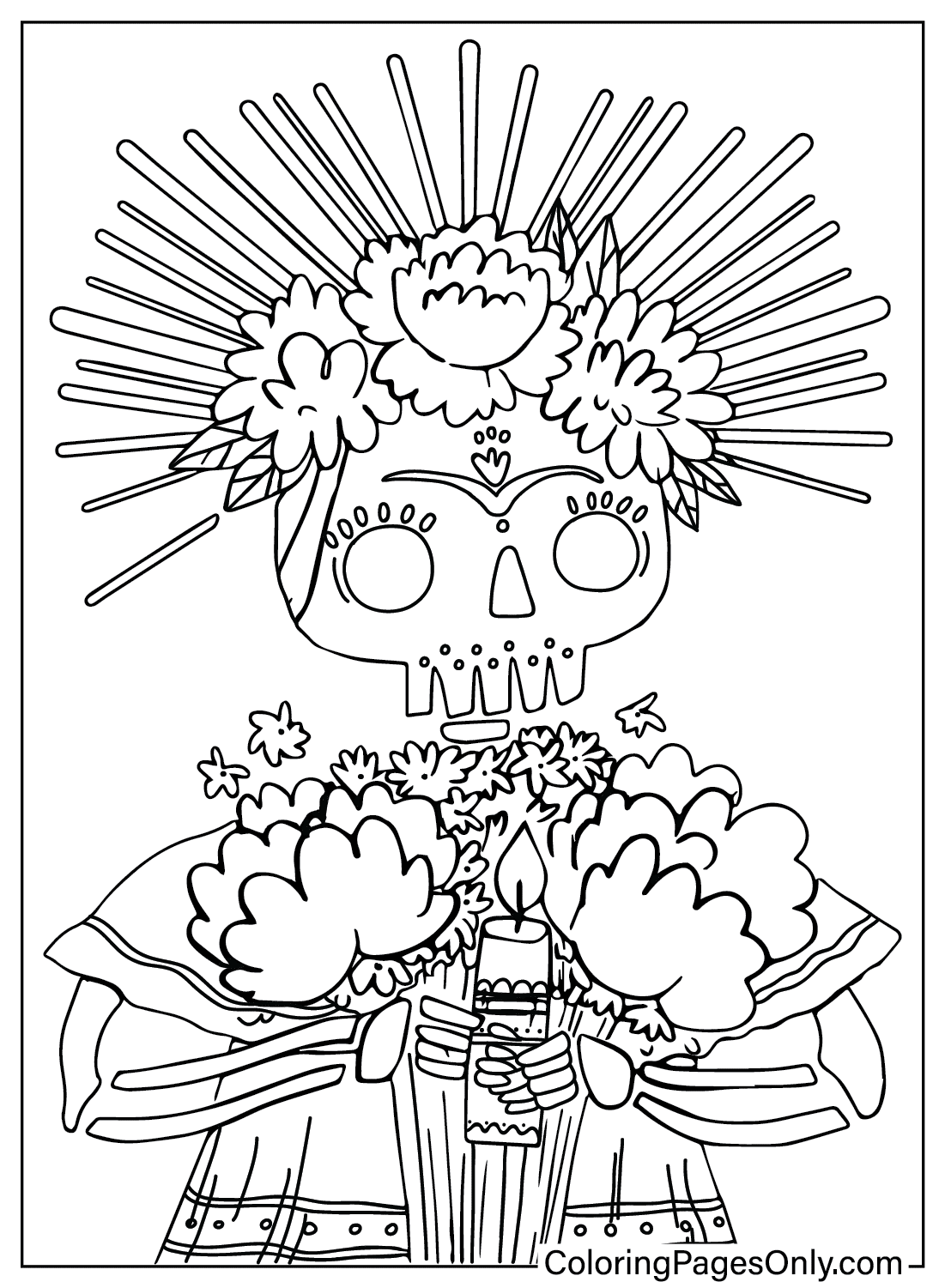
Several pages show the altar, or ofrenda, built for the holiday, along with the food traditionally placed on it, including pan de muerto bread and marigold-lined offerings. Use warm Orange and Yellow for marigolds, golden Brown and Cream for pan de muerto, and Orange or White for candles, since these warm tones are what give an altar scene its glow.
Lettering, Patterns, and Celebration Scenes
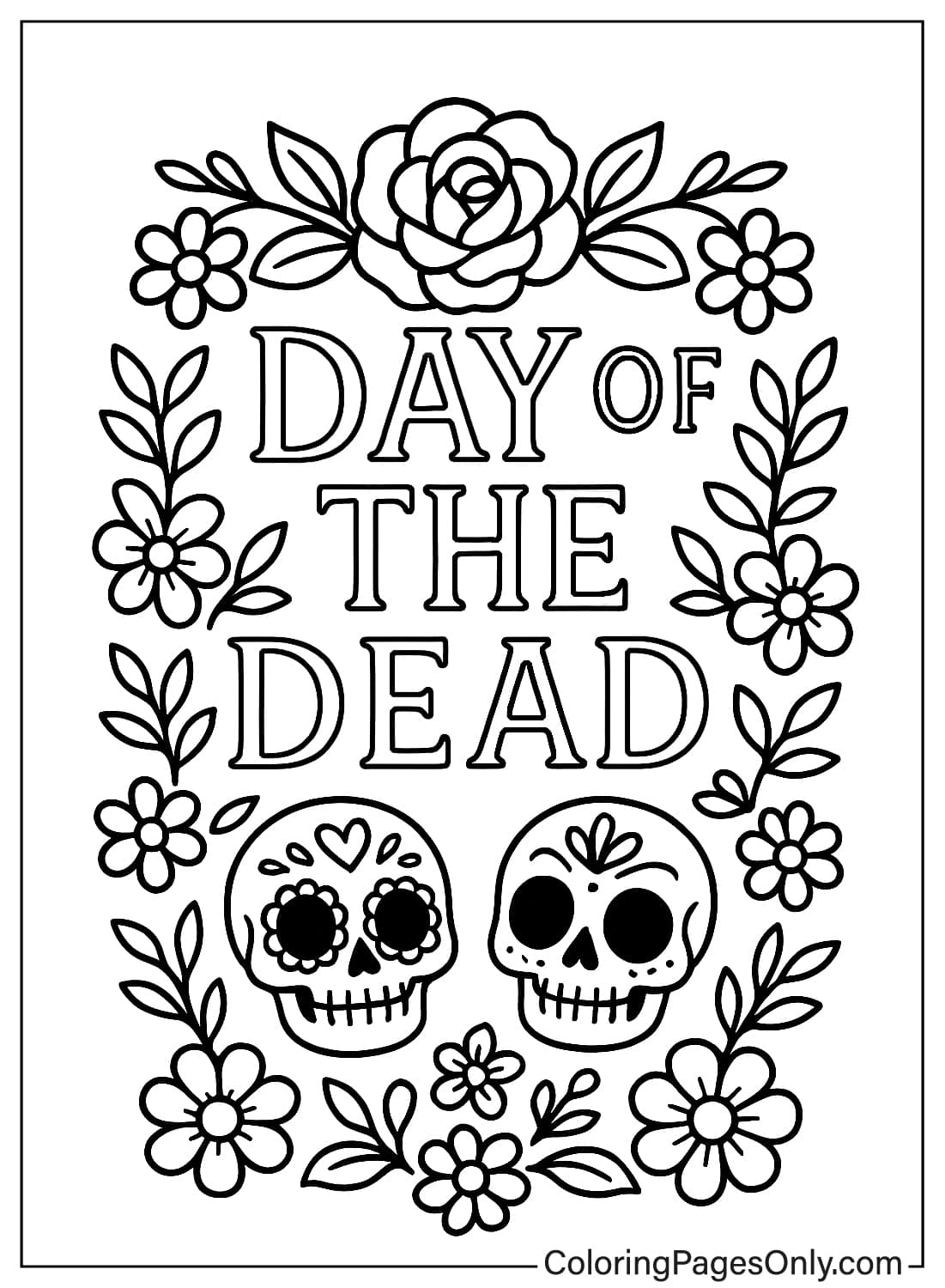
A large group covers decorative lettering, family celebration scenes, and repeating skull-and-flower patterns rather than a single central figure. Alternate two or three bright colors section by section in the patterned pages, and keep celebration scenes built around the same core palette, Orange, Pink, Purple, White, used throughout the rest of the collection.
Familiar Character Guest Appearances
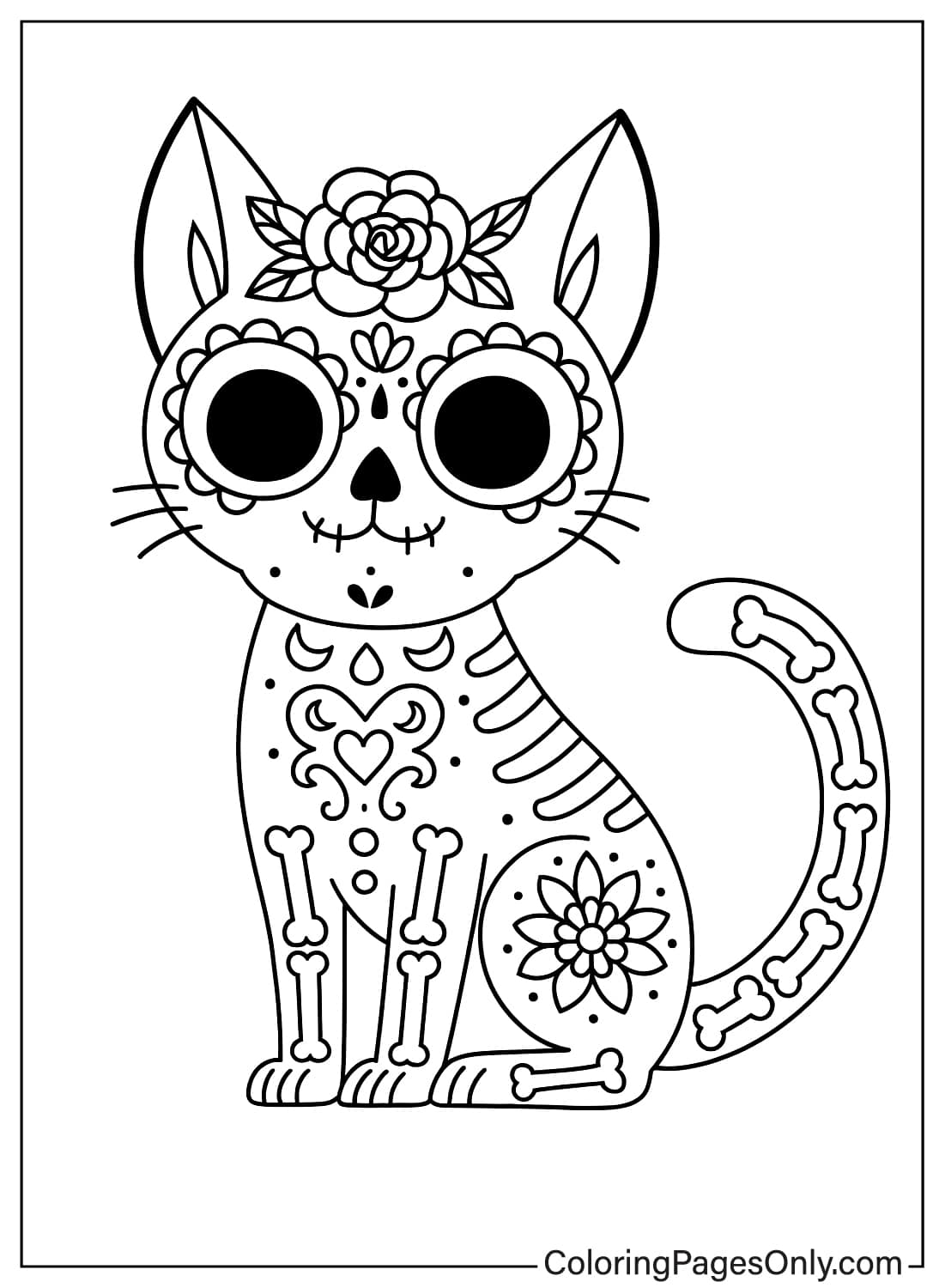
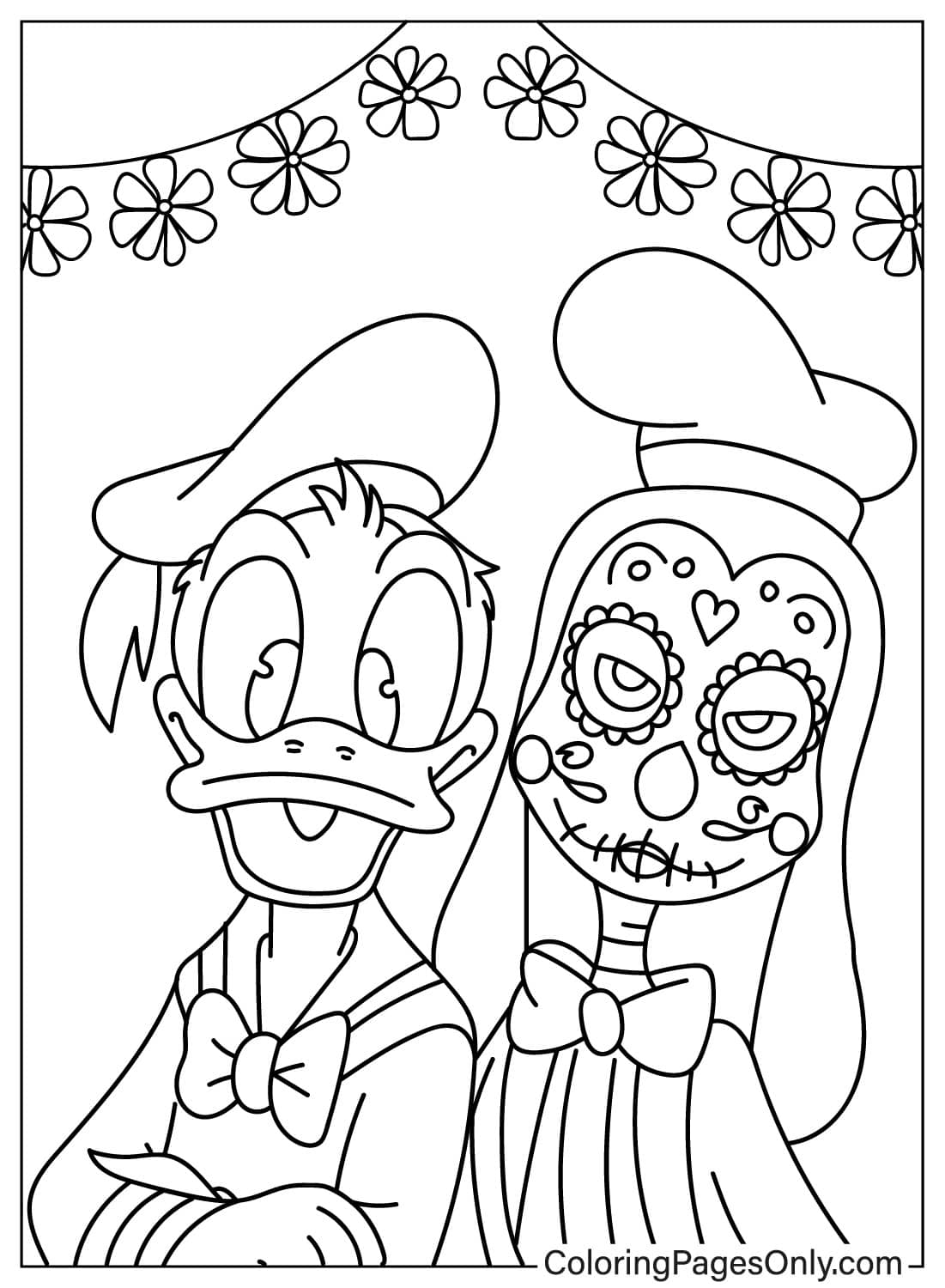
A handful of pages place familiar cartoon characters in Day of the Dead style rather than showing an original design. Color each character in its own familiar colors, adding only the holiday’s typical Orange, Pink, and White accents rather than redesigning the character.
What Day of the Dead Coloring Pages Do
Dense pattern work that most subjects don’t ask for. A sugar skull page is covered edge to edge in small repeating decorations, swirls, dots, and flower shapes, rather than leaving large open sections to fill in flatly. The American Academy of Pediatrics identifies fine motor skill development as one of the benefits of structured coloring in early childhood, and working through dozens of small connected sections in a row gives that skill unusually concentrated practice.
A holiday is easy to misread from the outside. Skulls and skeletons make Día de los Muertos look, at a glance, like a spookier cousin of Halloween. Still, the imagery serves the opposite purpose: it is meant to be warm, colorful, and welcoming rather than frightening, since the goal is inviting a loved one’s spirit home rather than warding anything off. Coloring a page is a natural moment to talk through that difference with a child.
A calming task with research behind it. A 2005 study in the Art Therapy Journal found that people who colored within a set outline reported lower anxiety afterward than those who drew without one. The intricate calavera and pattern pages here, built from dozens of small repeating sections, suit that same slow, contained focus.
A now-beloved icon that began as a political joke. La Catrina started in 1910 as a satirical etching by printmaker José Guadalupe Posada, mocking Mexicans who copied European fashion while downplaying their Indigenous heritage. Decades later, muralist Diego Rivera gave her a name and a place in his most famous painting, turning a piece of pointed social commentary into one of Mexico’s most recognized cultural symbols.
How to Color Day of the Dead Pages Well
- Sugar skull base: use White or Ivory, kept flat and simple, since the decoration is what carries the design, not the skull’s shading.
- Skull decorations: use bright Pink, Turquoise, Orange, and Yellow, alternating section by section rather than repeating one color across the whole design.
- Catrina clothing: use rich Violet, Red, and Gold for dresses and suits, with White or Cream for lace detail.
- Marigolds (cempasúchil): color the petals warm Orange and Yellow, the specific colors traditionally associated with guiding spirits home.
- Pan de muerto and food: Use golden Brown and Cream for the bread, leaving a light sugar-white dusting unfilled on top.
- Candles: color them Orange or White with a small Yellow flame, kept simple so they read clearly against a darker altar background.
5 Creative Craft Ideas With Day of the Dead Coloring Pages
- Paper Marigold Garland. Materials: several colored marigold pages, scissors, and a length of string. Cut out each colored flower and string them along the twine spaced a few inches apart to hang across a window or wall.
- Ofrenda Photo Frame. Materials: a colored altar or candle page, scissors, glue, and a small photo or drawing. Cut a frame shape from the colored page and glue it around the photo to make a small memory frame.
- Sugar Skull Gift Tag. Materials: a colored sugar skull page, a hole punch, ribbon, and scissors. Cut out the colored skull, punch a hole near the top, and tie a ribbon loop through it to use as a gift tag.
- Calavera Standee. Materials: a colored Catrina or calavera page, scissors, glue, and a folded strip of cardstock. Mount the colored page on the folded cardstock base and stand it on a shelf or table as a small display.
- Family Memory Card. Materials: a colored page, a blank folded card, scissors, glue, and a pen. Cut out the colored figure and glue it to the card front, then write a name or memory inside to honor someone.
Frequently Asked Questions
What are Day of the Dead coloring pages?
Printable designs featuring sugar skulls, Catrina figures, marigold flowers, and family altar scenes from the Mexican holiday Día de los Muertos. This collection offers 44 free designs as printable PDFs or online coloring pages.
What is Día de los Muertos, and when is it celebrated?
Día de los Muertos, or Day of the Dead, is a Mexican holiday held on November 1 and 2 that honors deceased loved ones. It blends Indigenous Aztec traditions with the Catholic observances of All Saints’ and All Souls’ Day.
Is Día de los Muertos the same as Halloween?
No. Although both involve skulls and take place around the same time of year, Día de los Muertos is a celebration of remembrance meant to welcome a loved one’s spirit home, rather than a holiday built around fear or frightening imagery.
Who is La Catrina?
La Catrina is an elegantly dressed skeleton figure created in 1910 by printmaker José Guadalupe Posada as a satire of Mexicans who imitated European fashion. Muralist Diego Rivera later named her and featured her in his 1947 painting, making her a lasting symbol of the holiday.
Why are marigolds important to Día de los Muertos?
Marigolds, known as cempasúchil, are believed to guide spirits back to their families with their bright color and strong scent, and they are traditionally placed on altars and gravesites during the holiday.
What is an ofrenda?
An ofrenda is a home altar built for Día de los Muertos, typically decorated with candles, marigolds, photos of the deceased, and their favorite foods, meant to welcome a loved one’s spirit for a visit.
Are Day of the Dead coloring pages suitable for young children?
Yes. The simple sugar skull and flower pages suit ages 4 and up, while the detailed Catrina portraits and altar scenes suit ages 8 and up or an adult looking for more detail.
Are any of these pages based on familiar cartoon characters?
A few pages place familiar characters in Day of the Dead style, alongside the collection’s original sugar skull, Catrina, and altar designs, which make up most of the set.
Start Coloring
Download any page by clicking the design. No account, email, or payment is required. Pages print directly from the browser at full resolution or open in the online coloring tool for screen use. Share finished pages on Facebook or Pinterest with the share buttons at the top of each design page.