
Free Jazz Coloring Pages: 15 printable PDF designs celebrating America’s homegrown music, with portraits of trumpeter Louis Armstrong and bandleader Duke Ellington, solo musicians lost in a tune, full jazz bands and a cartoon combo, a spread of instruments, and a swirling jazz mandala. All fifteen are available at no charge.
Jazz grew up in New Orleans in the early 1900s, where African rhythms, blues, ragtime, church music, and brass band marches mixed in the city’s streets and dance halls. The first jazz record, made by the Original Dixieland Jazz Band, came out in 1917. Louis Armstrong, born in New Orleans in 1901, turned the trumpet solo into the heart of the music and made scat singing famous. Duke Ellington, born in Washington, D.C., in 1899, led his orchestra for about 50 years and wrote well over 1,000 compositions. Today, the Smithsonian marks every April as Jazz Appreciation Month, and UNESCO celebrates International Jazz Day on April 30.
Instrument and cartoon band pages suit young kids. Portraits and the mandala reward older artists with patient hands.
What’s Inside This Collection
Jazz legends, solo musicians, bands, and instruments and patterns make up the 15 designs.
Jazz Legends
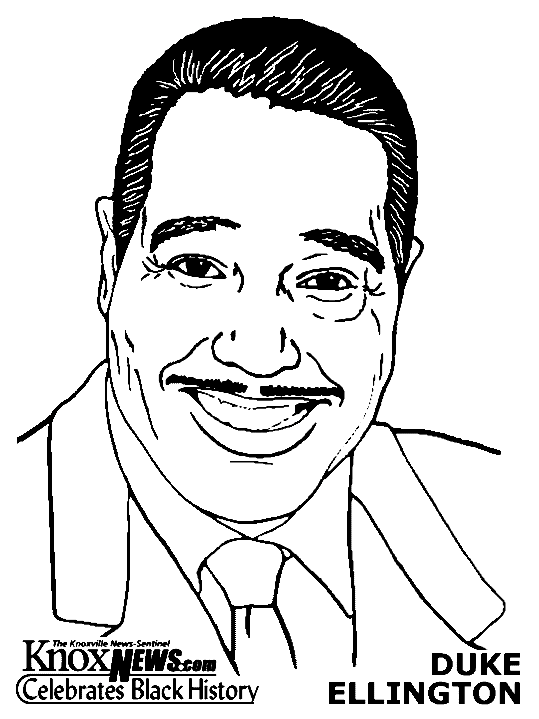
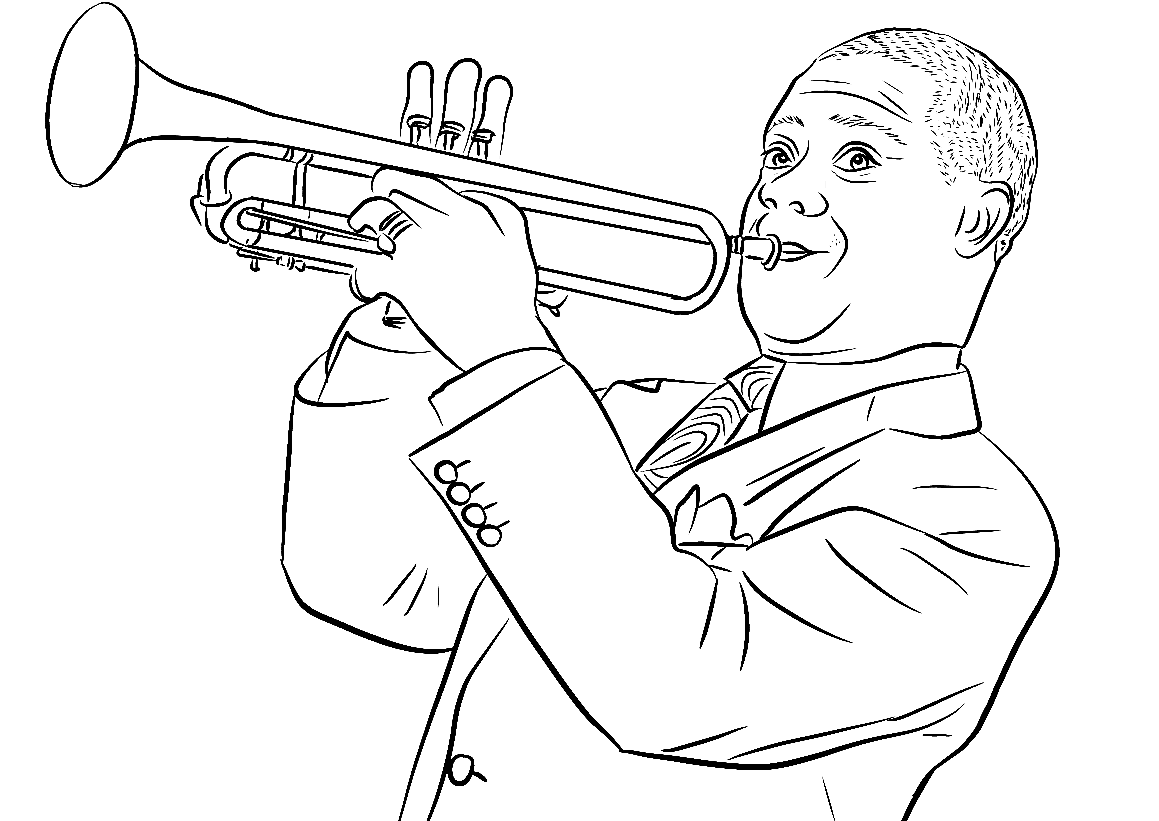
Two pages show Louis Armstrong with his trumpet and Duke Ellington. Give Armstrong’s trumpet a shining Brass Gold and his handkerchief a crisp White, and dress Ellington in a sharp Charcoal suit with a Crimson tie.
Solo Musicians
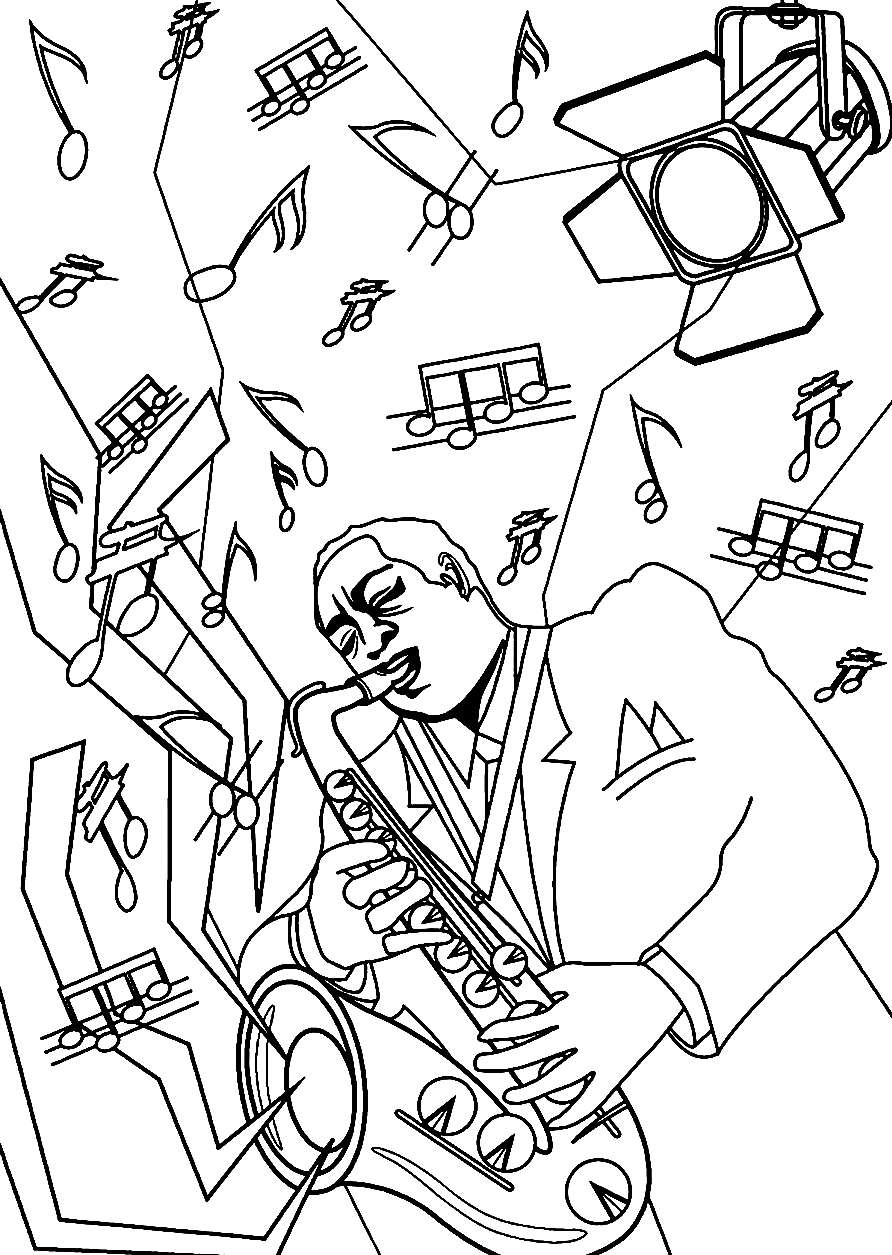
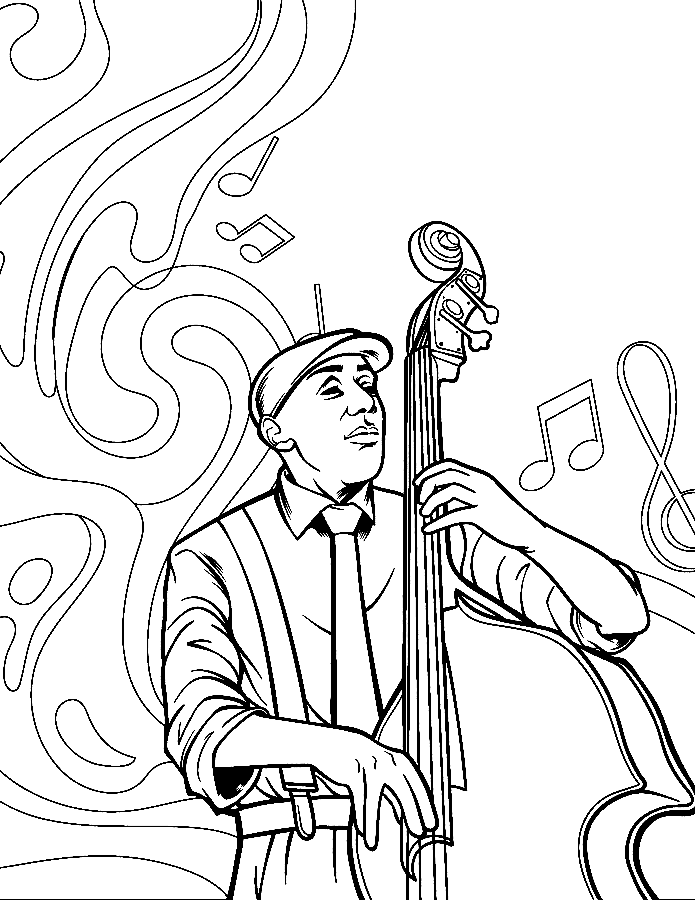
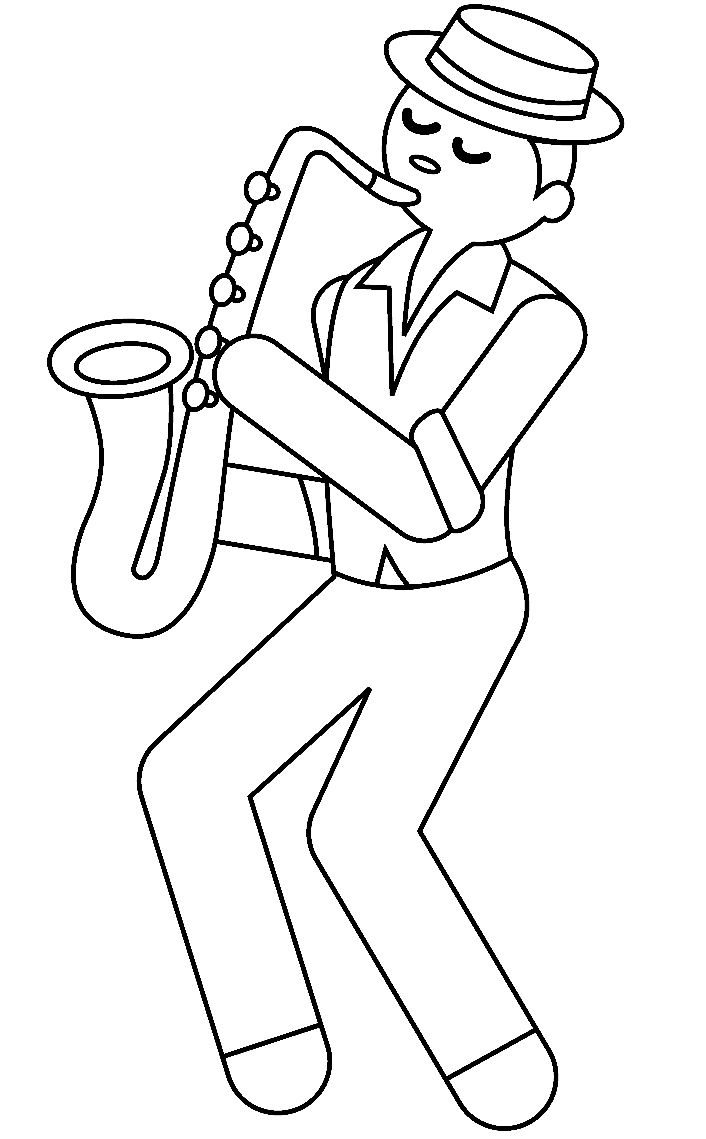
Four sheets show individual jazz players performing, including a musician playing an instrument. Color the saxophone a warm Goldenrod with small White glints along the keys.
Jazz Bands
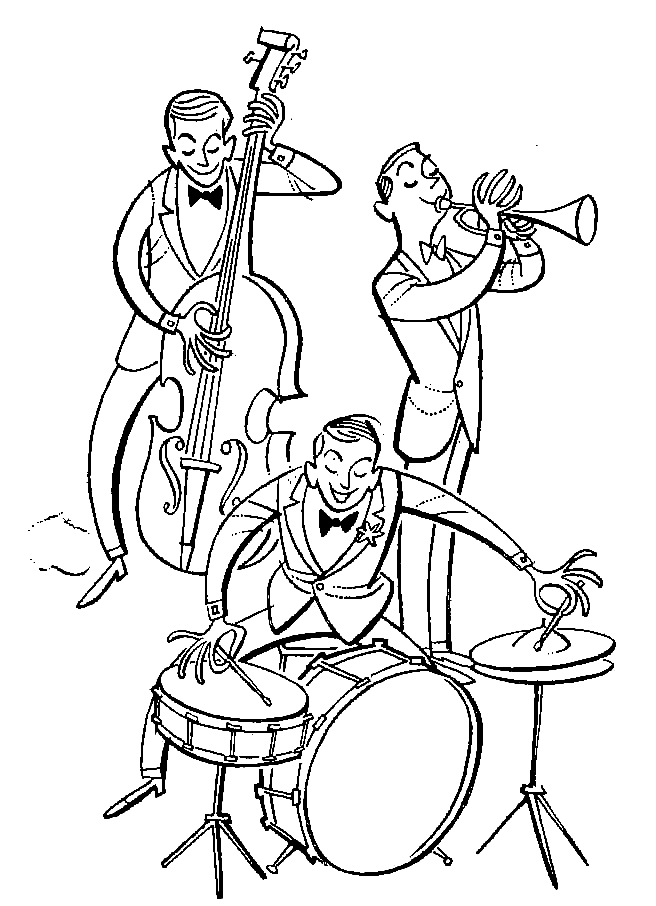
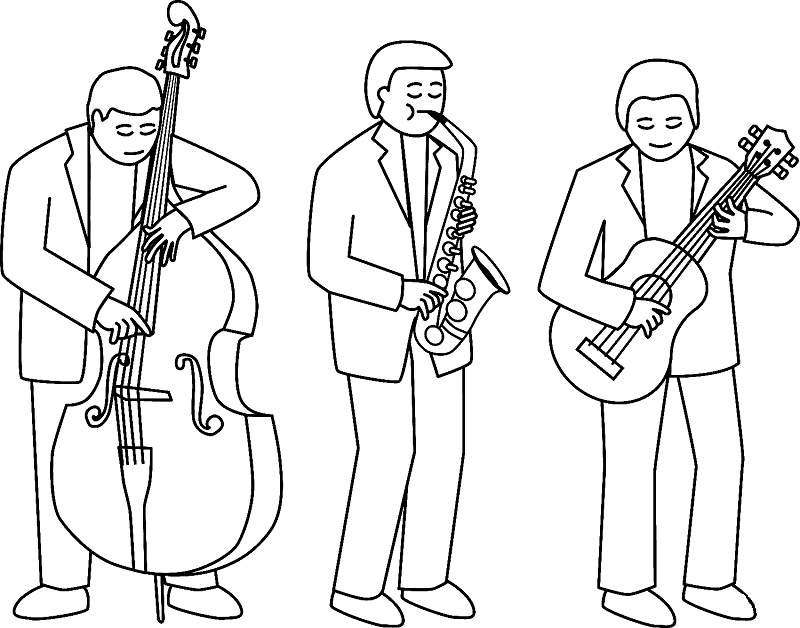
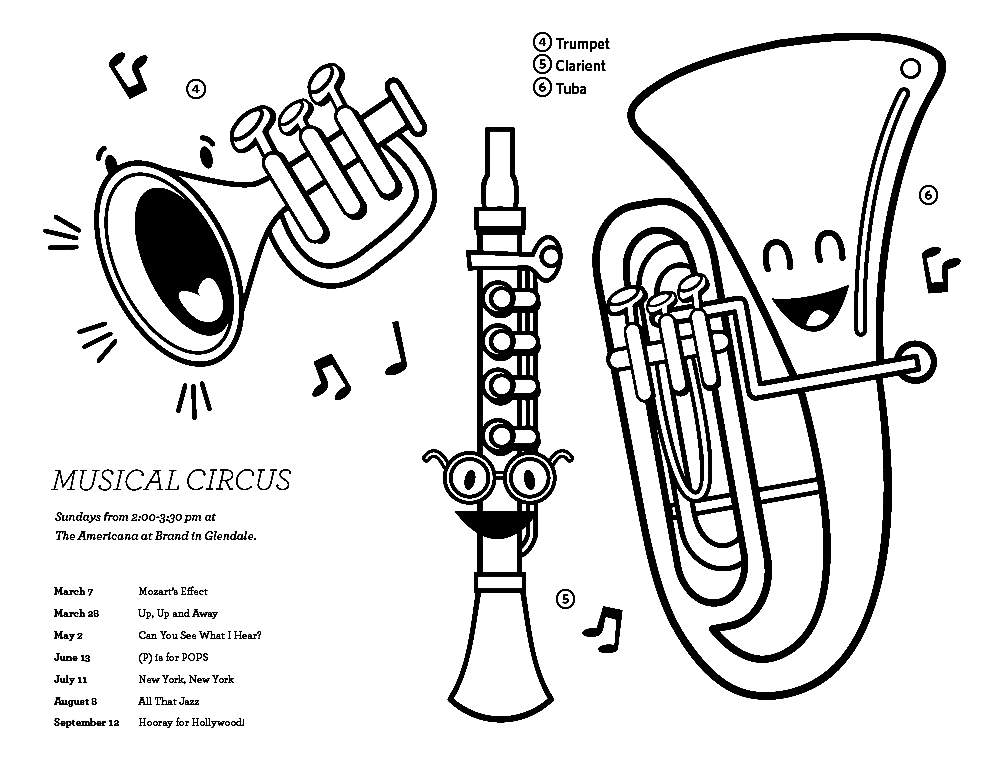
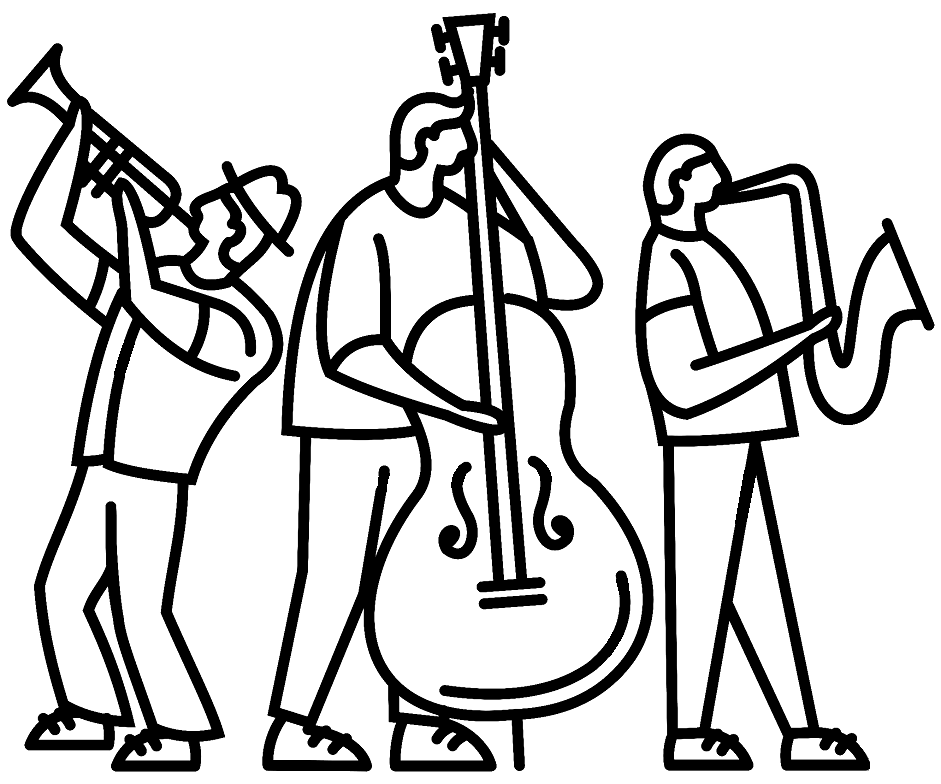
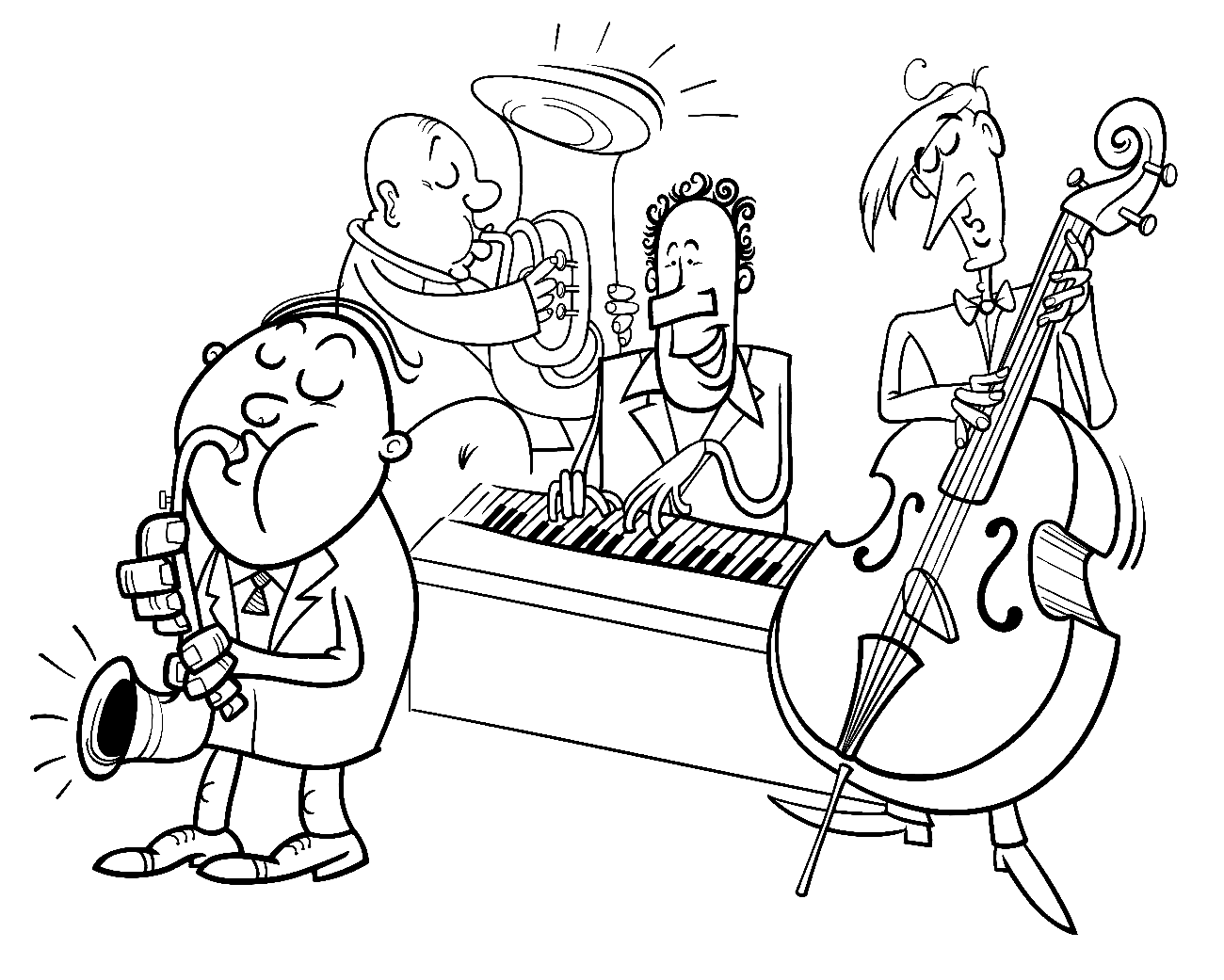
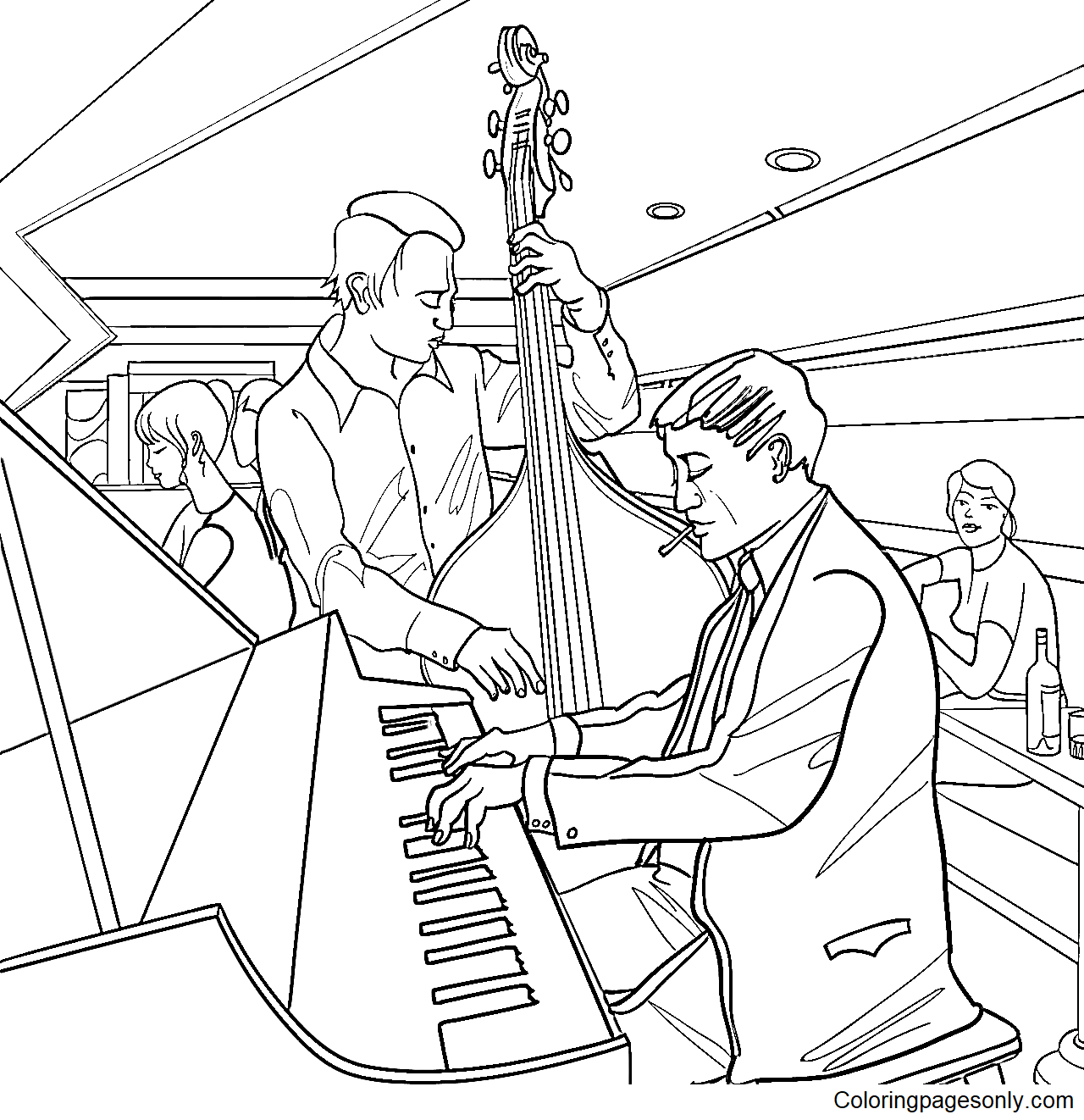
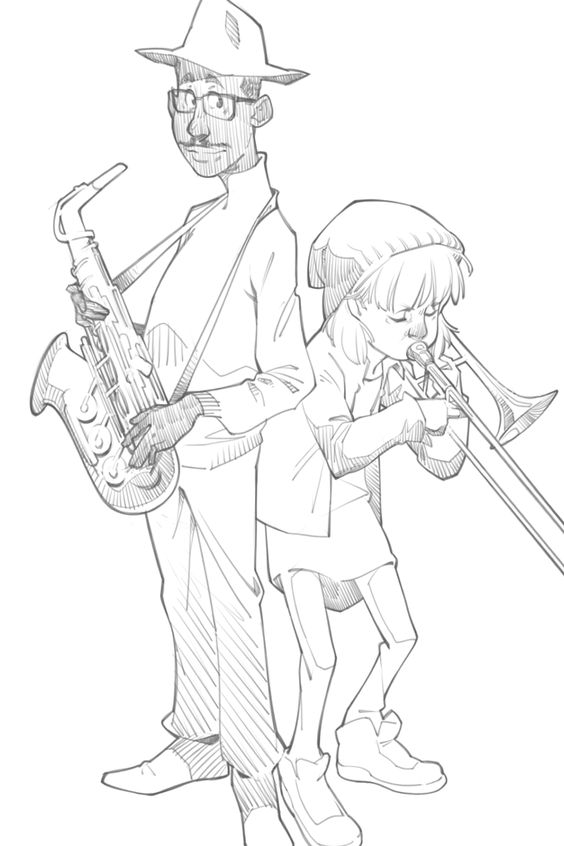
Four designs feature a full jazz band, two more band scenes, and a cartoon band of musicians. Light the stage with a Royal Purple curtain and soft Amber spotlights.
Instruments and Patterns
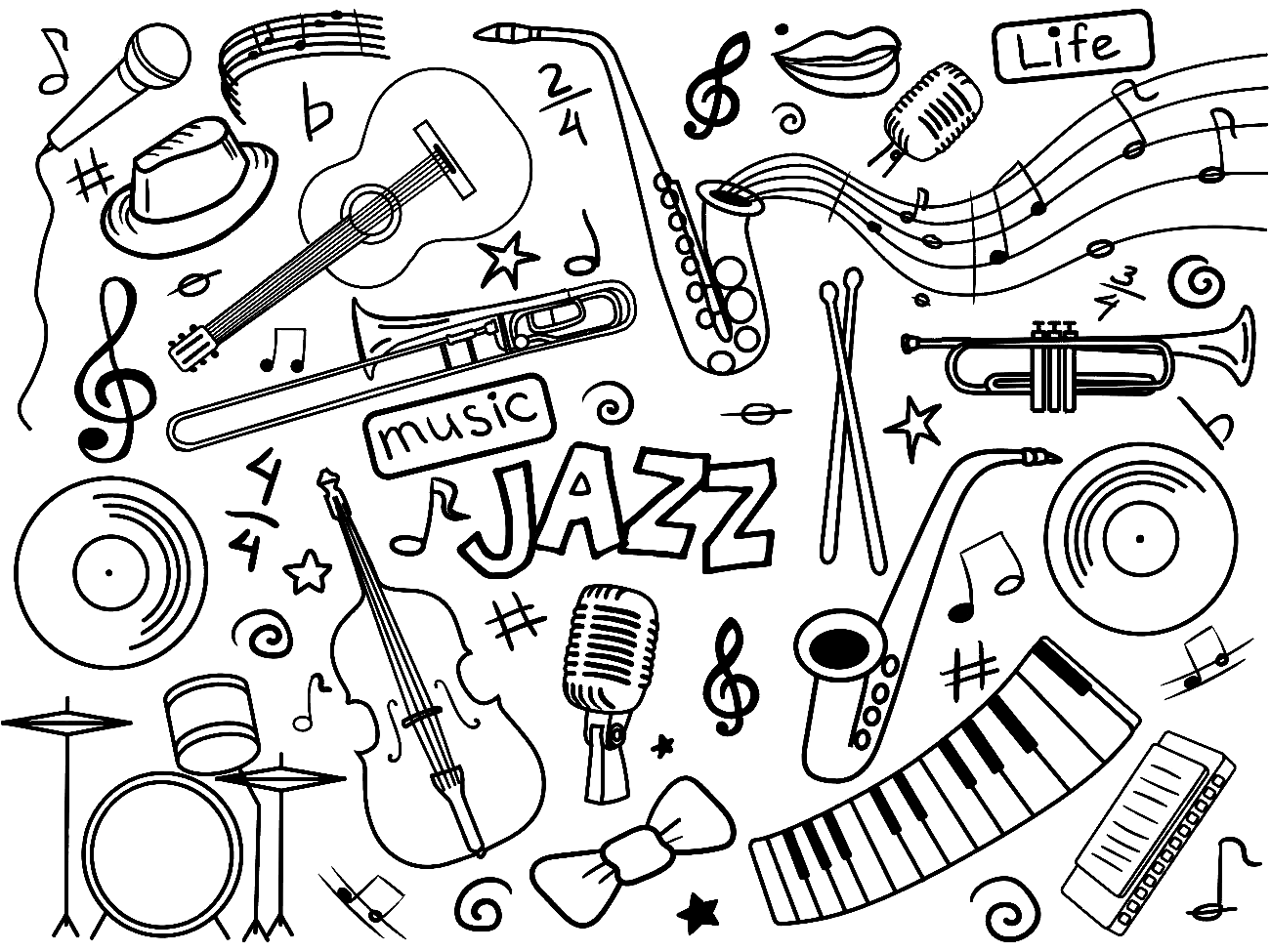
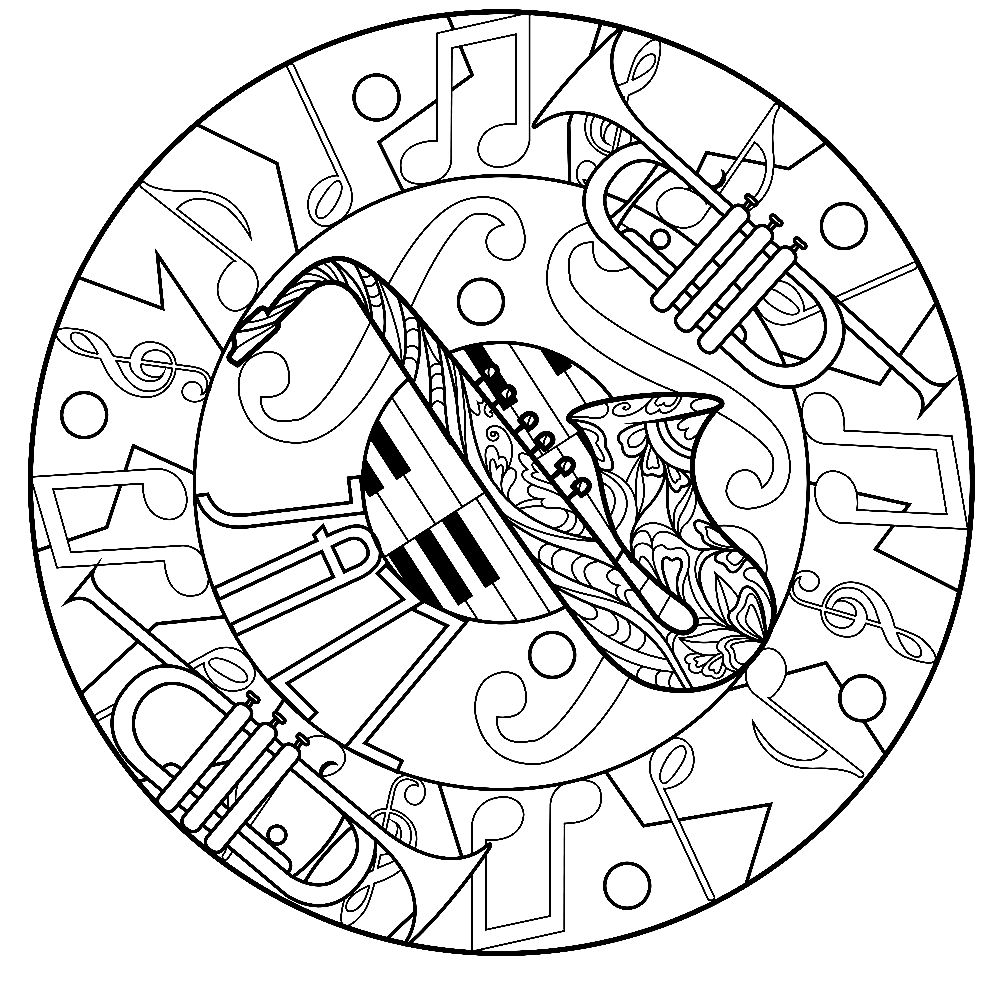
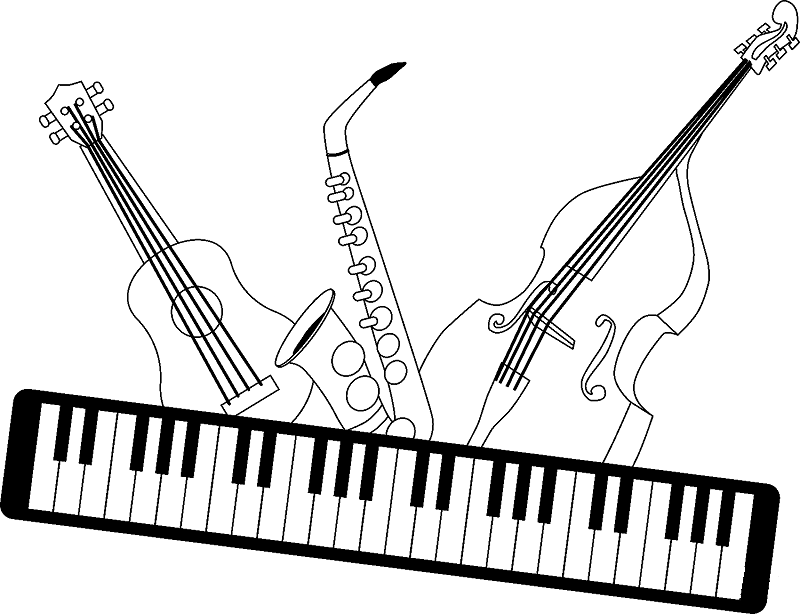
Five pages include a spread of jazz instruments, two music scenes, a free jazz printable, and a jazz mandala. Fill the mandala with Teal, Plum, and Gold to echo a smoky club at night.
What Jazz Coloring Pages Do
Introducing an American art form. Jazz is often called America’s classical music because it was born in the United States and spread worldwide. Coloring Armstrong and Ellington gives families a reason to listen to a few classic recordings together. Kids can hear the trumpet, piano, and drums they just colored, then talk about how each instrument sounds, connecting a picture on paper to real music.
Exploring improvisation and creativity. In jazz, musicians often make up melodies on the spot, building new ideas over a familiar tune. Coloring works the same way when children choose their own colors instead of copying a model. Parents can play a jazz track and invite kids to pick colors that match the mood, bright for fast songs and cool blues for slow ones, turning sound into a creative color choice.
Building precise hand control. Instruments are full of small parts, from saxophone keys to trumpet valves and piano keys, which call for careful coloring. That kind of precise work strengthens the small muscles of the hand; the American Academy of Pediatrics’ parenting advice frames drawing and coloring as building blocks for later handwriting. The mandala adds a symmetrical challenge for older kids.
Relaxing with rhythm and listening to music while coloring can make the activity even more calming. Patterned coloring cut anxiety more than free drawing among stressed adults in a study by Nancy Curry and Tim Kasser published in the Art Therapy Journal in 2005. The jazz mandala, with its repeating notes and curves, is an especially soothing page to color slowly with music in the background.
How to Color Jazz Pages Well
- Brass shine: Color trumpets and saxophones, gold or Yellow Orange, and spare a narrow ribbon of bare paper down each bend. The streaks look like stage lights reflecting off polished brass.
- Piano keys: Keep the white keys clean and fill the black keys with solid Black. Neat contrast makes the keyboard easy to read.
- Club lighting: Use Purple, Navy, and Deep Blue for the background, then add Yellow spotlight beams. Cool colors with warm beams capture a nighttime jazz club.
- Sharp suits: Dress band members in Black, Charcoal, or Navy suits with colorful ties. Classic outfits match the look of big band era photos.
- Music notes: Color floating notes in bright Rainbow colors. Colorful notes show the music bursting from the instruments.
- Mandala patterns: Choose three related colors and repeat them in each ring. A limited palette keeps the mandala balanced and calm.
5 Creative Craft Ideas With Jazz Coloring Pages
1. Jazz Club Diorama
Color a band page, glue it to the back of a shoebox, and add a purple tissue curtain and a foil spotlight. The box becomes a tiny stage for a jazz show.
2. Musician Fact Cards
Color the Louis Armstrong and Duke Ellington pages and list three facts about each musician on the reverse side. The cards double as a music history quiz.
3. Paper Plate Drum
Color the instruments page and glue it onto two paper plates stapled together with dried beans inside. Kids can shake and tap along to a jazz song.
4. Music Note Garland
Color the music pages, cut out notes and instruments, and string them on yarn. Hang the garland during Jazz Appreciation Month in April.
5. Mood Color Chart
Play three short jazz songs and color the mandala in sections, one section per song. Kids can label each section with the mood the music created.
Frequently Asked Questions
What are Jazz coloring pages?
There are 15 free sheets about jazz music, featuring Louis Armstrong, Duke Ellington, solo musicians, bands, instruments, and a jazz mandala. Each page prints as a PDF or can be colored online.
Where did jazz come from?
Jazz began in New Orleans in the early 1900s, mixing African rhythms, blues, ragtime, and brass band music. The first jazz record was released in 1917.
Who was Louis Armstrong?
Louis Armstrong was a trumpeter and singer born in New Orleans in 1901. He made the trumpet solo central to jazz and helped popularize scat singing.
Who was Duke Ellington?
Duke Ellington was a pianist, composer, and bandleader born in Washington, D.C., in 1899. He wrote more than 1,000 compositions and led his orchestra for about five decades.
What instruments are used in jazz?
Common jazz instruments include the trumpet, saxophone, trombone, clarinet, piano, double bass, and drums. Many bands also feature a singer.
What is improvisation in jazz?
Improvisation means musicians create melodies on the spot instead of reading every note from sheet music. It makes every jazz performance a little different.
What age are Jazz coloring pages for?
The main audience is kids roughly 4 through 12, though teens and adult music fans color them too. Instrument and cartoon pages suit younger kids, while portraits and the mandala fit older ones.
When is International Jazz Day?
International Jazz Day is celebrated every year on April 30, as declared by UNESCO. April is also Jazz Appreciation Month in the United States.
Start Coloring
Choose Louis Armstrong with his trumpet, a full jazz band, or the jazz mandala, then print it or add color digitally without registering. Music lovers can post a finished bandstand on Facebook or Pinterest.