Diwali Coloring Pages

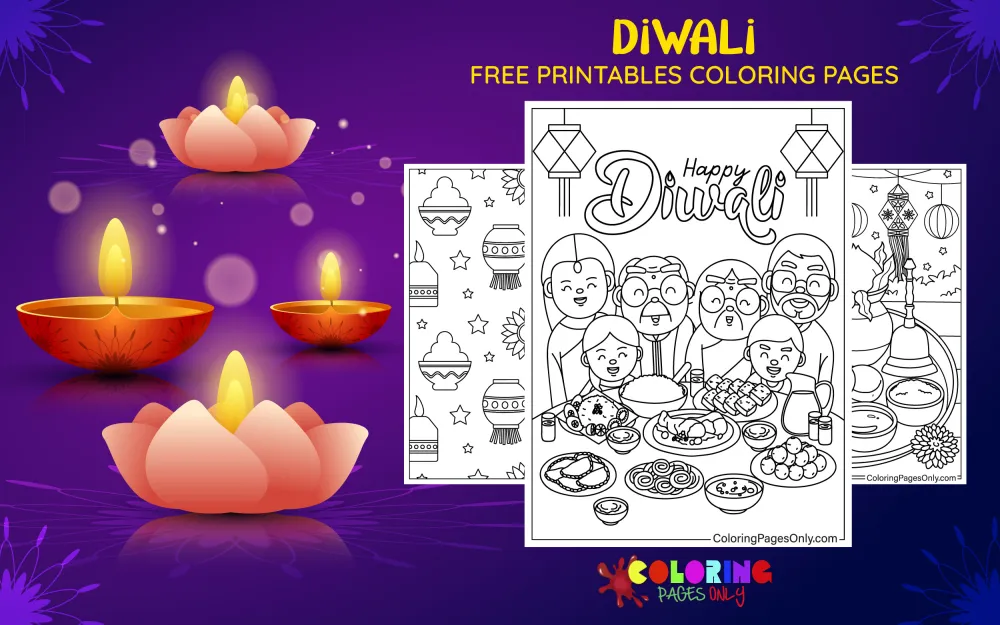
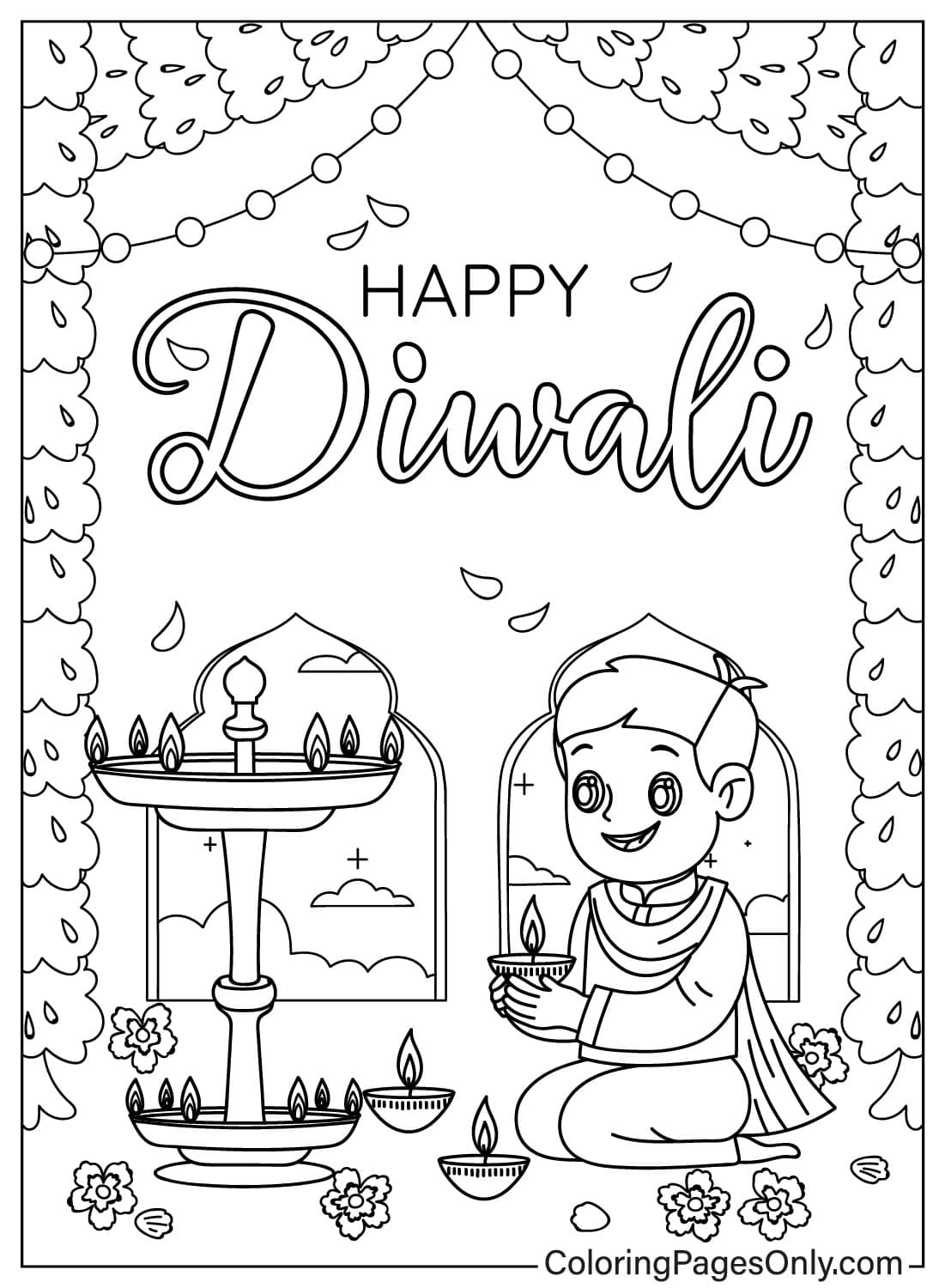
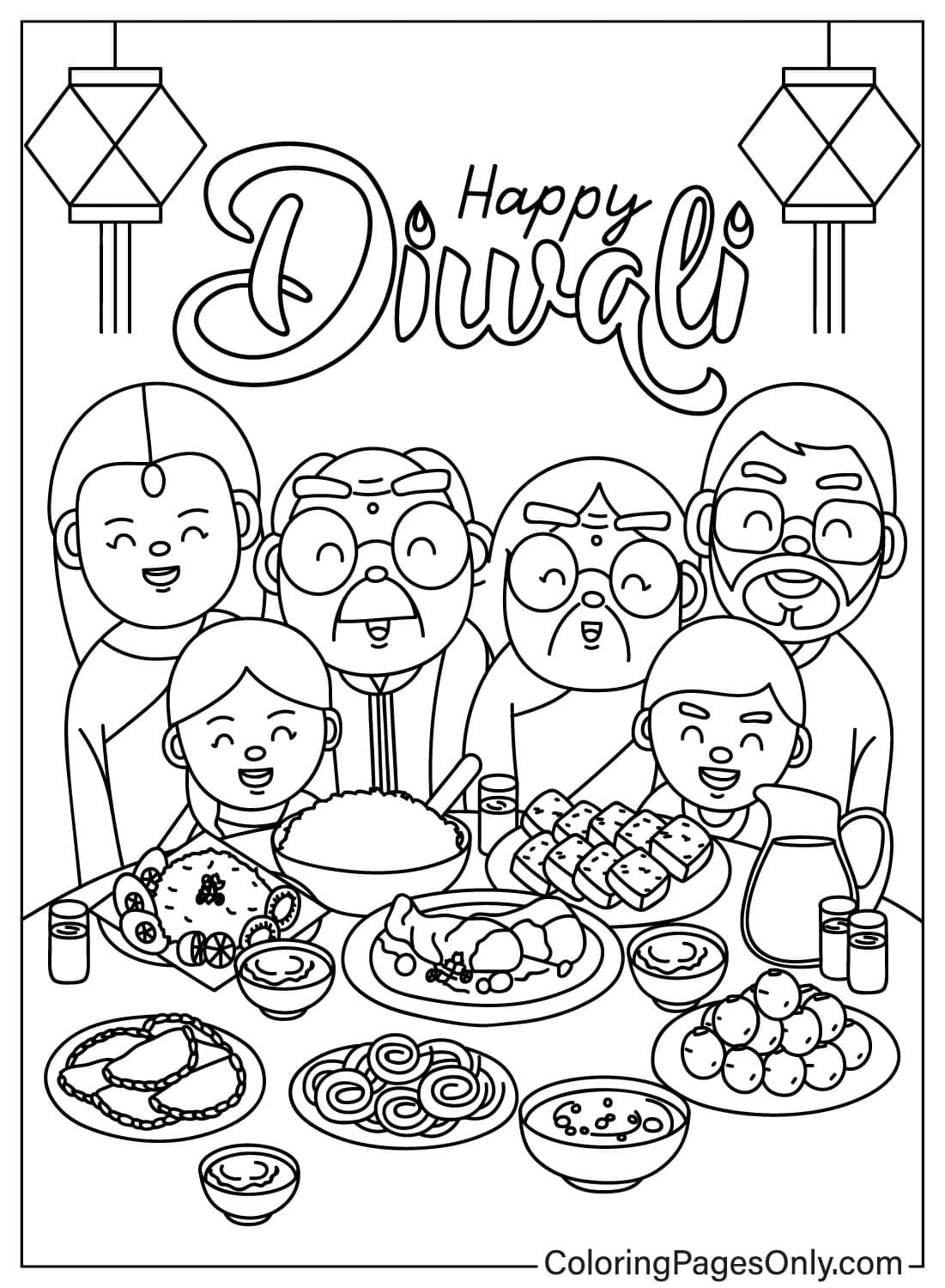
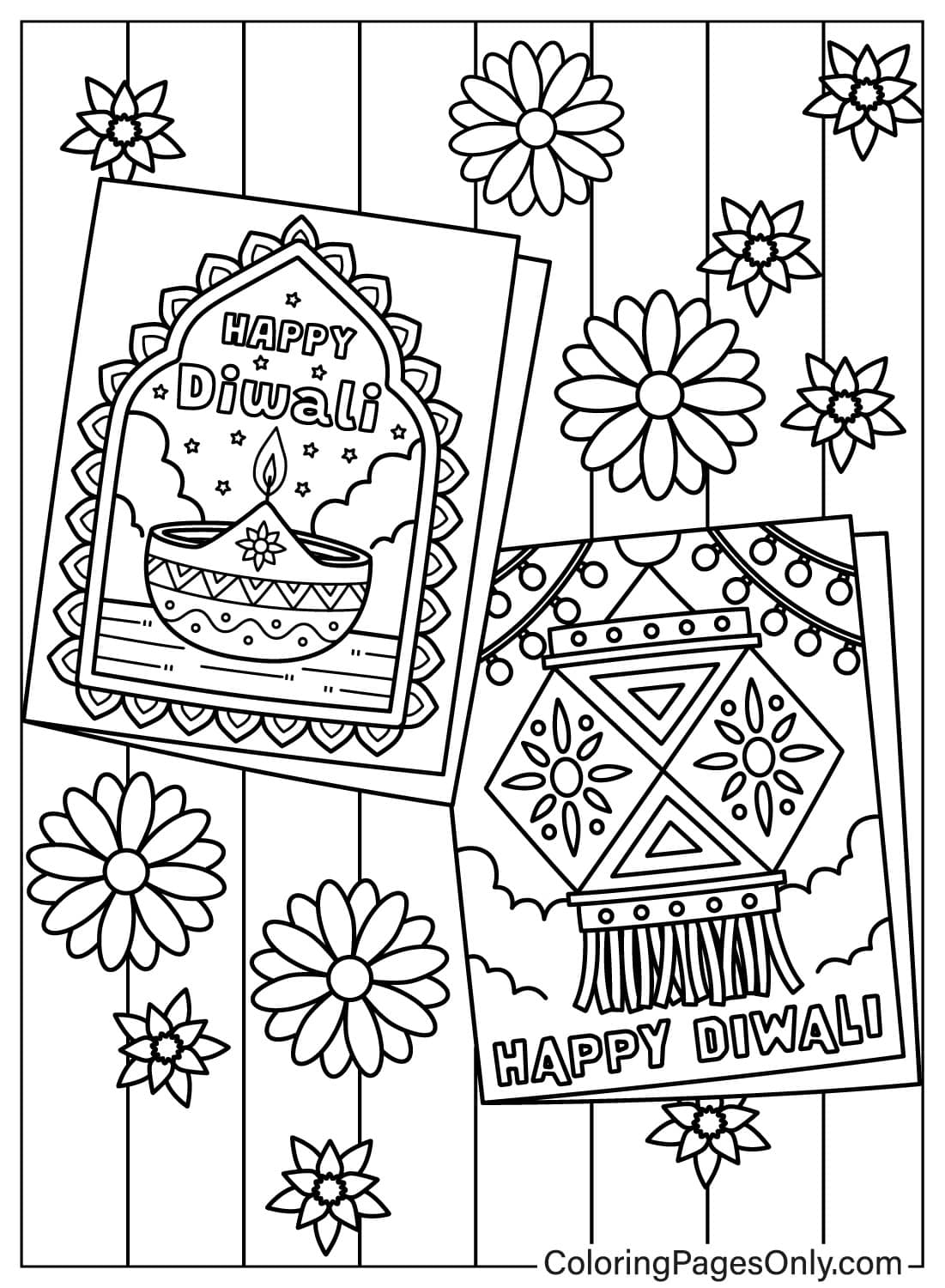
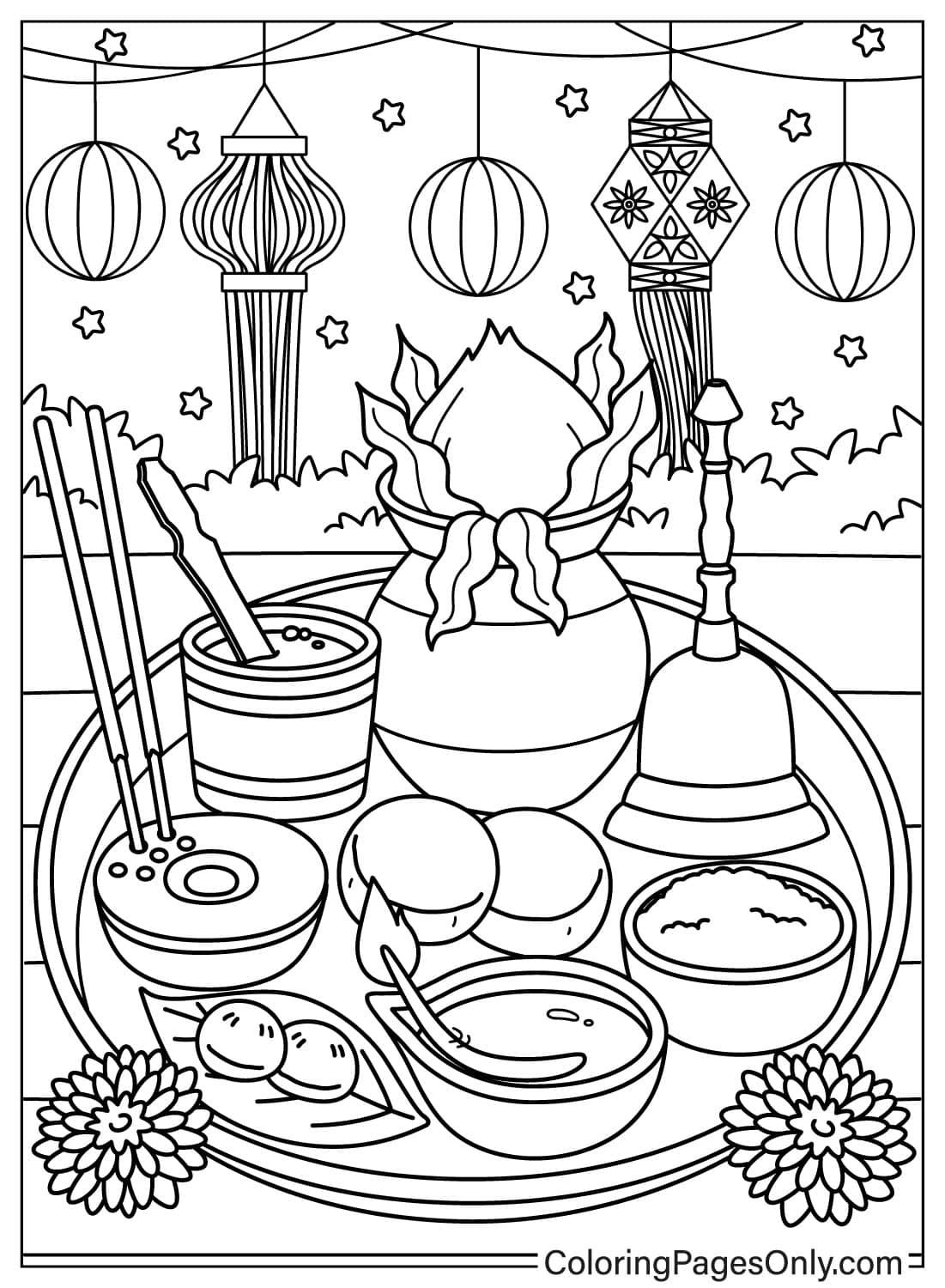
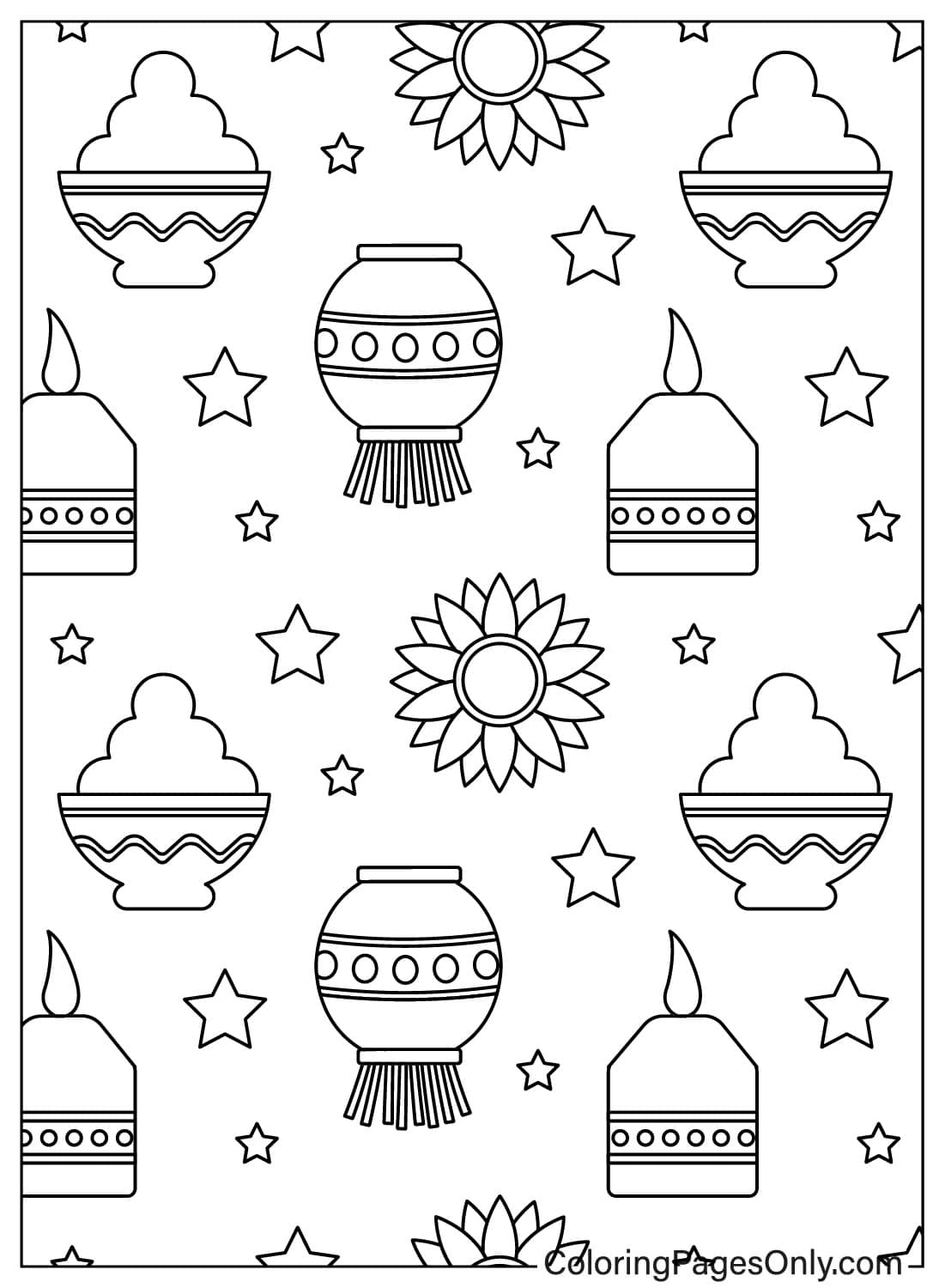
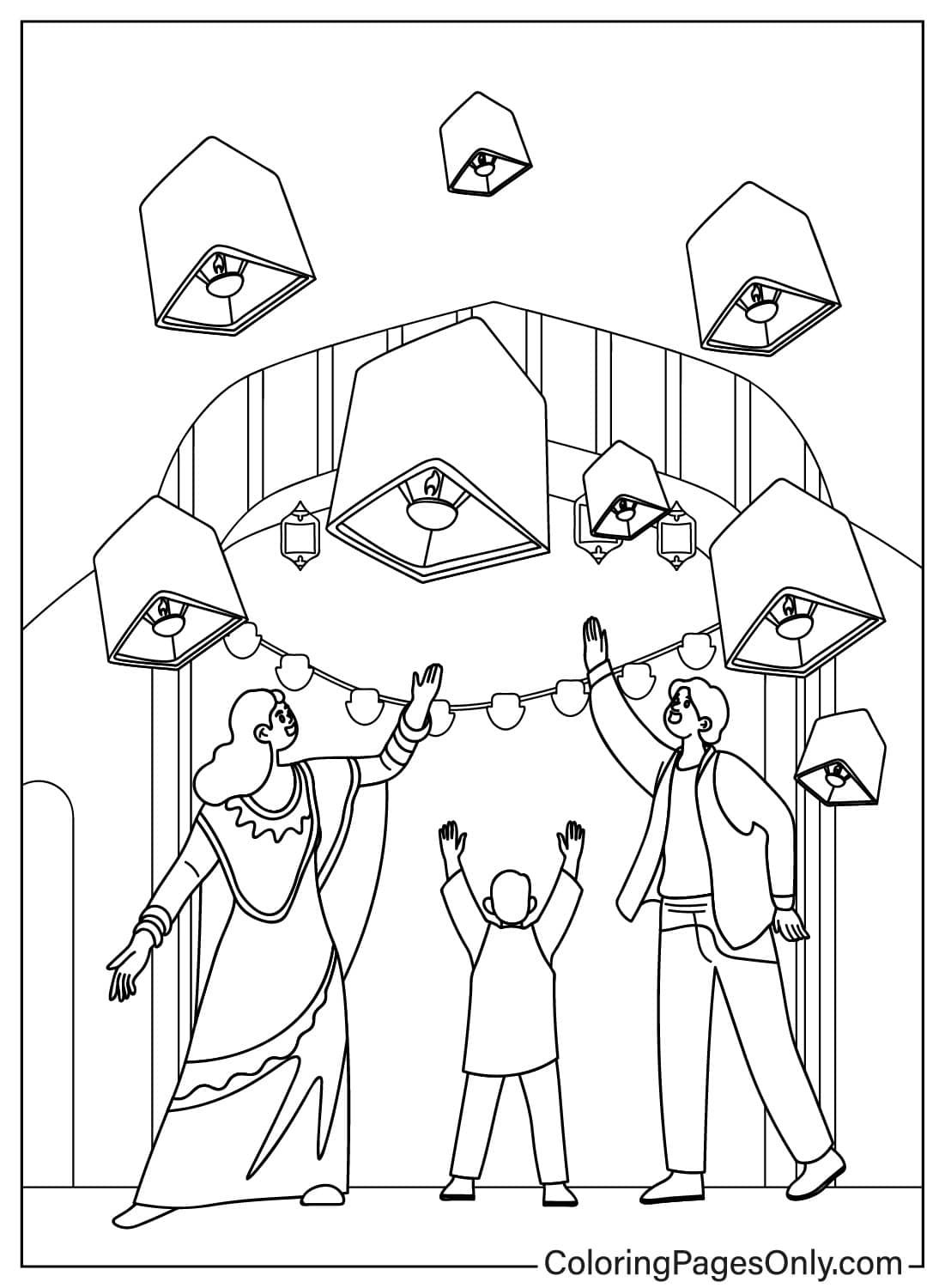
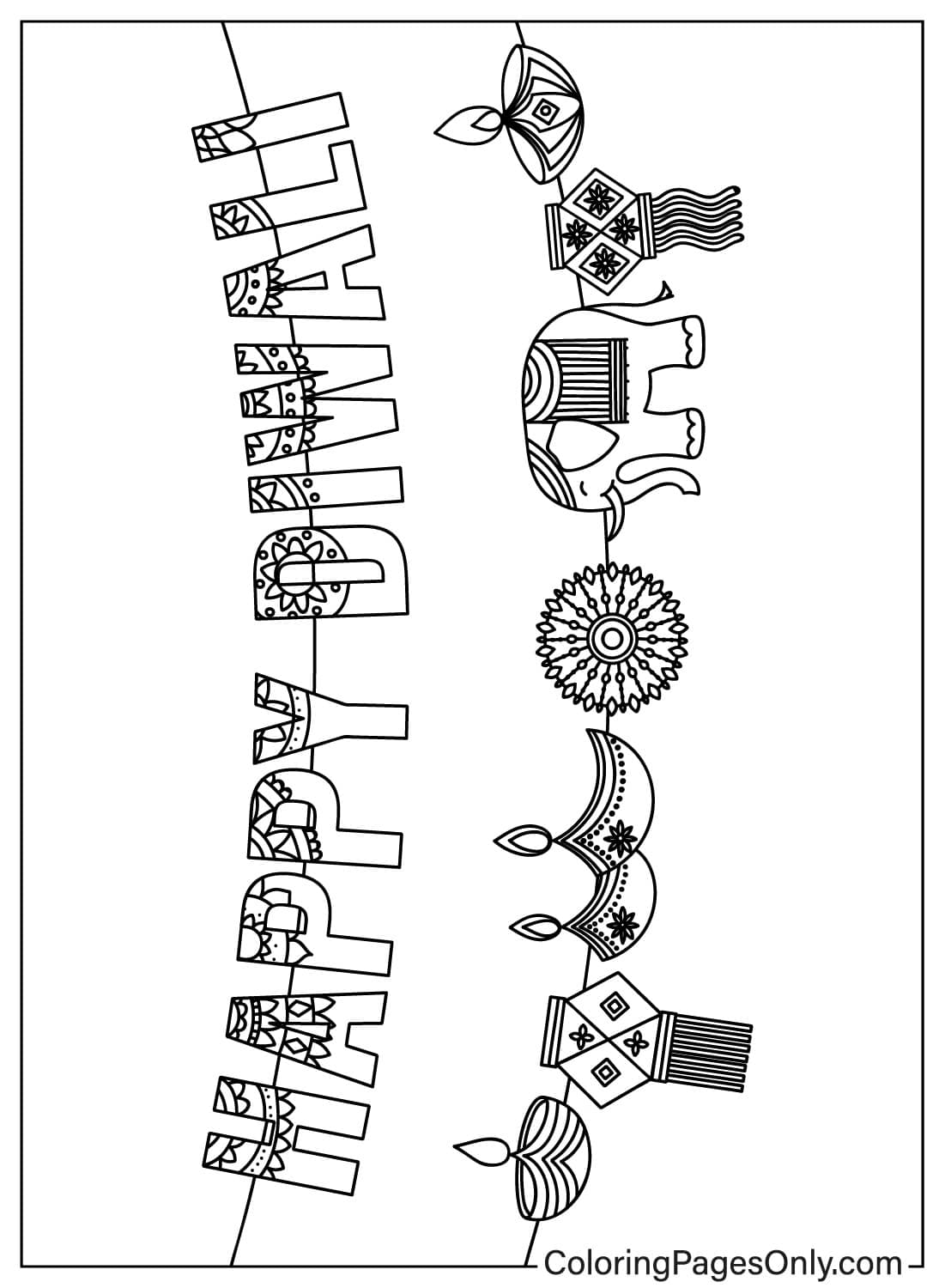
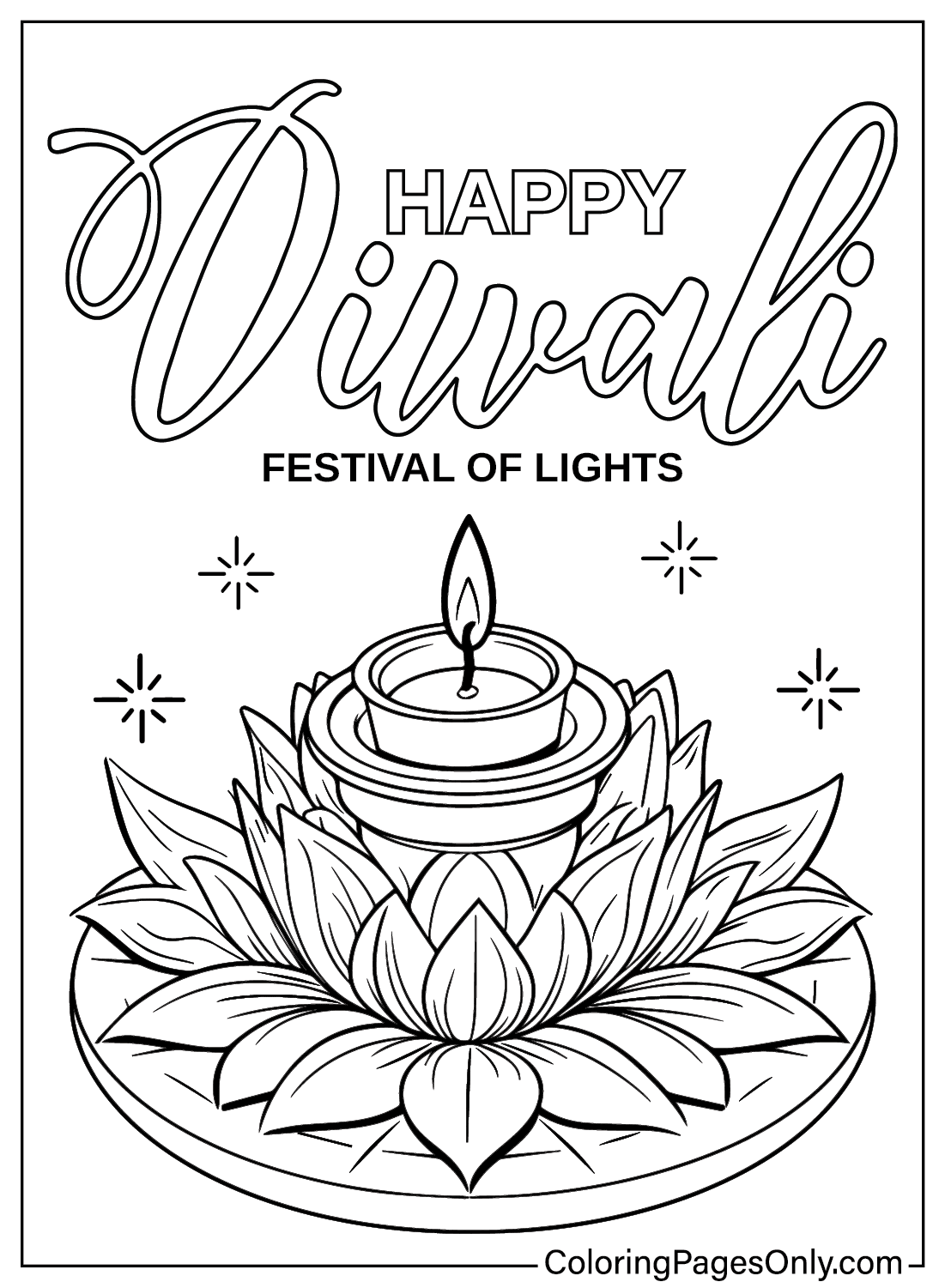
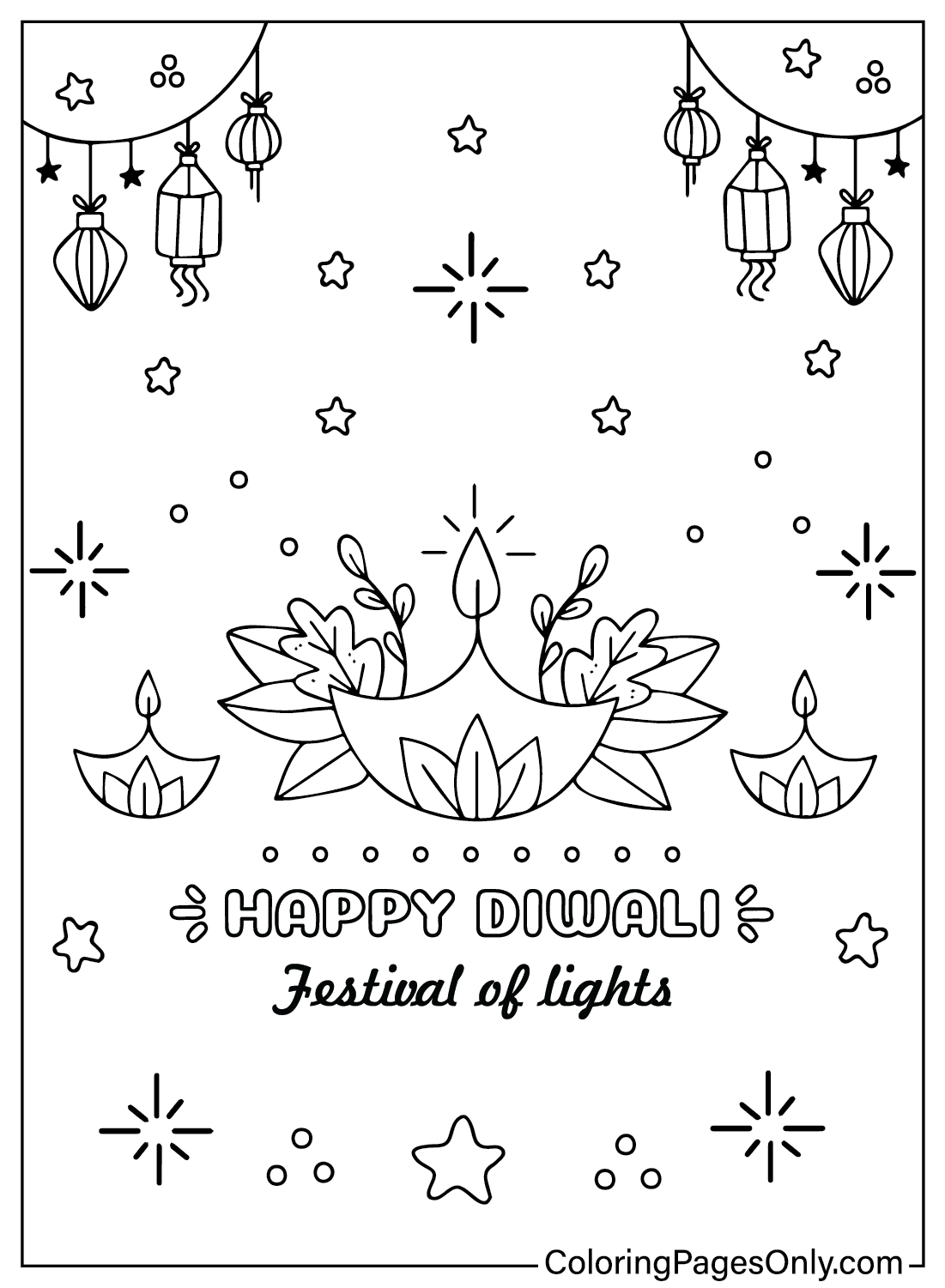
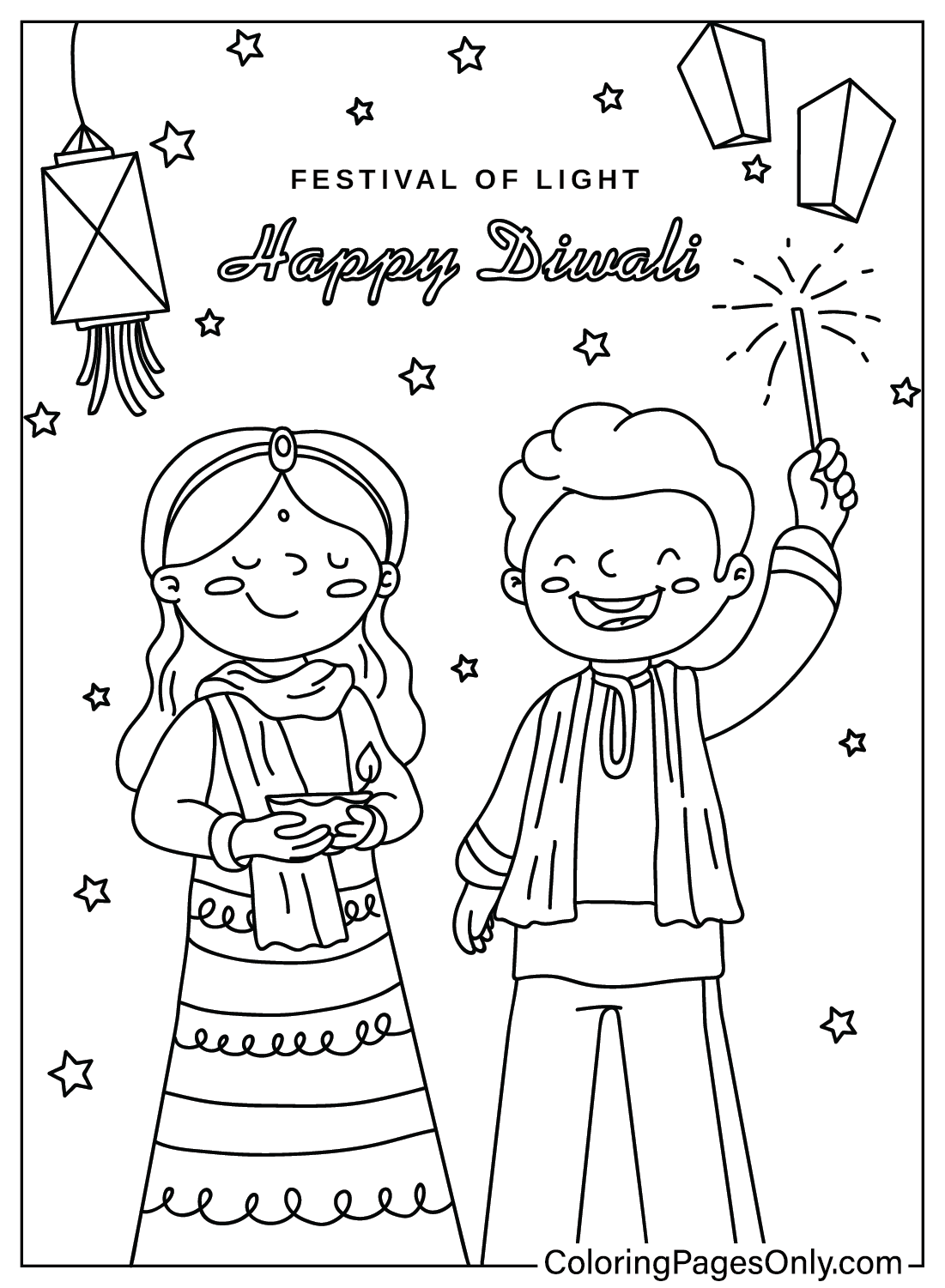
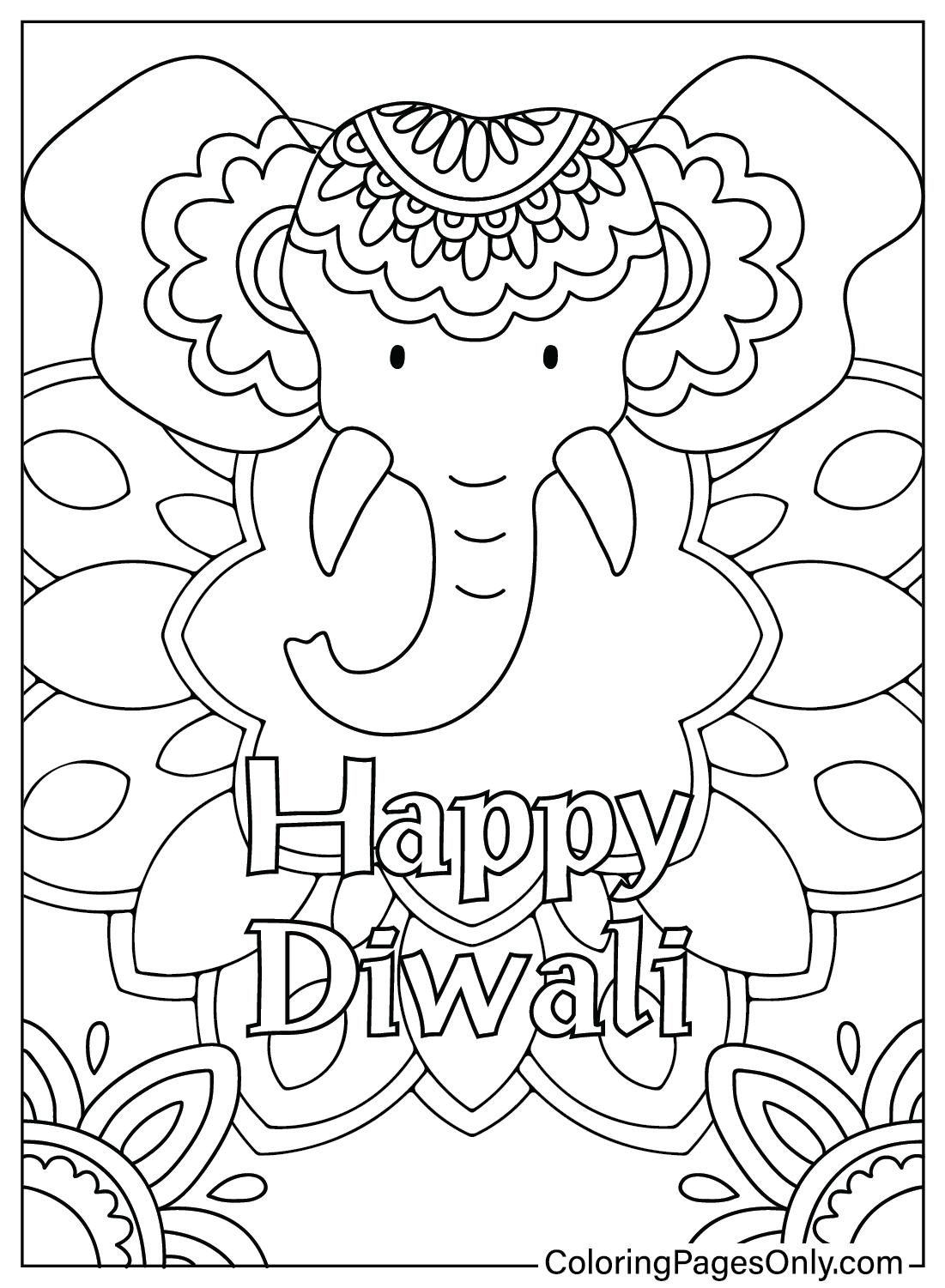
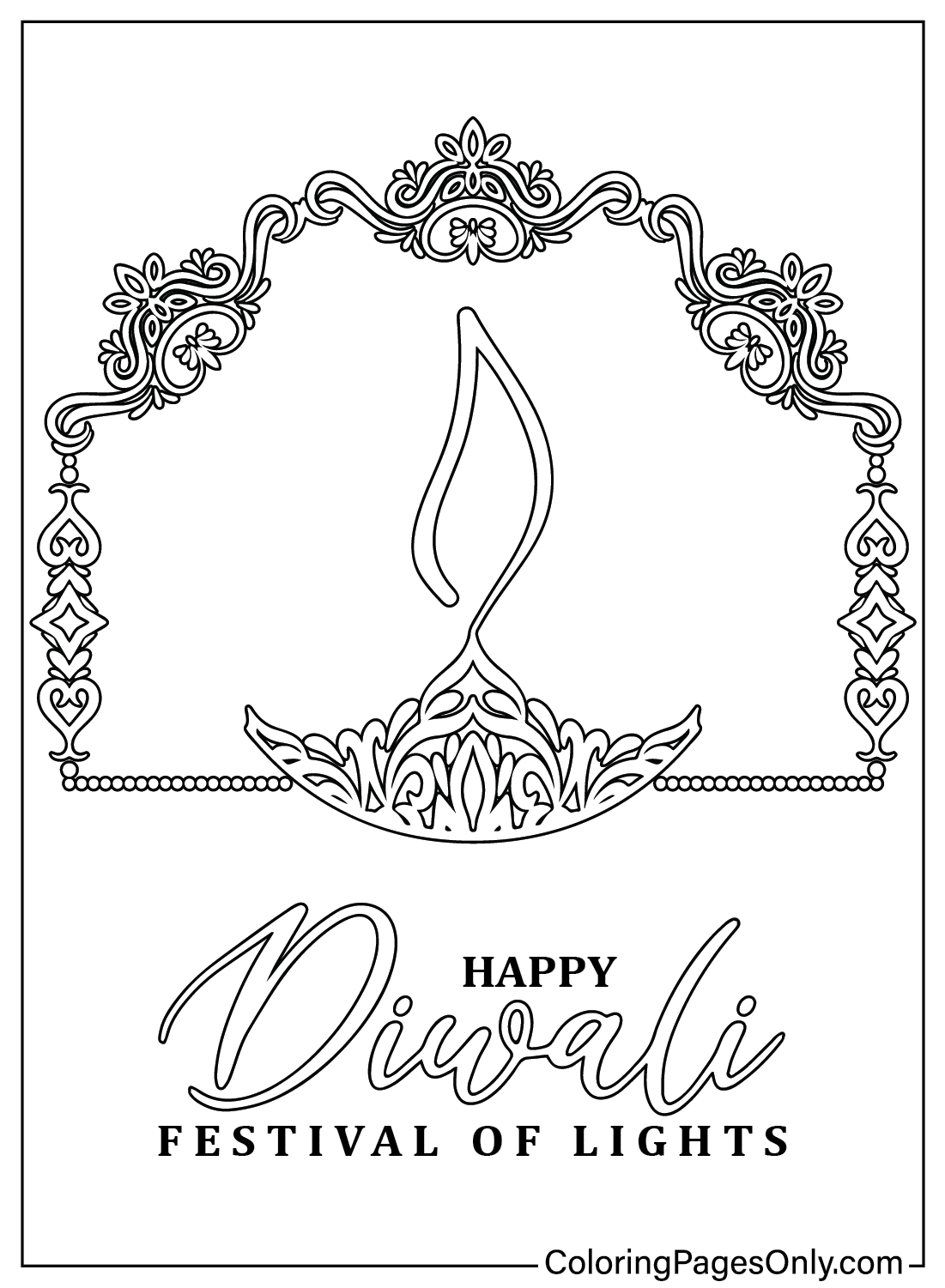
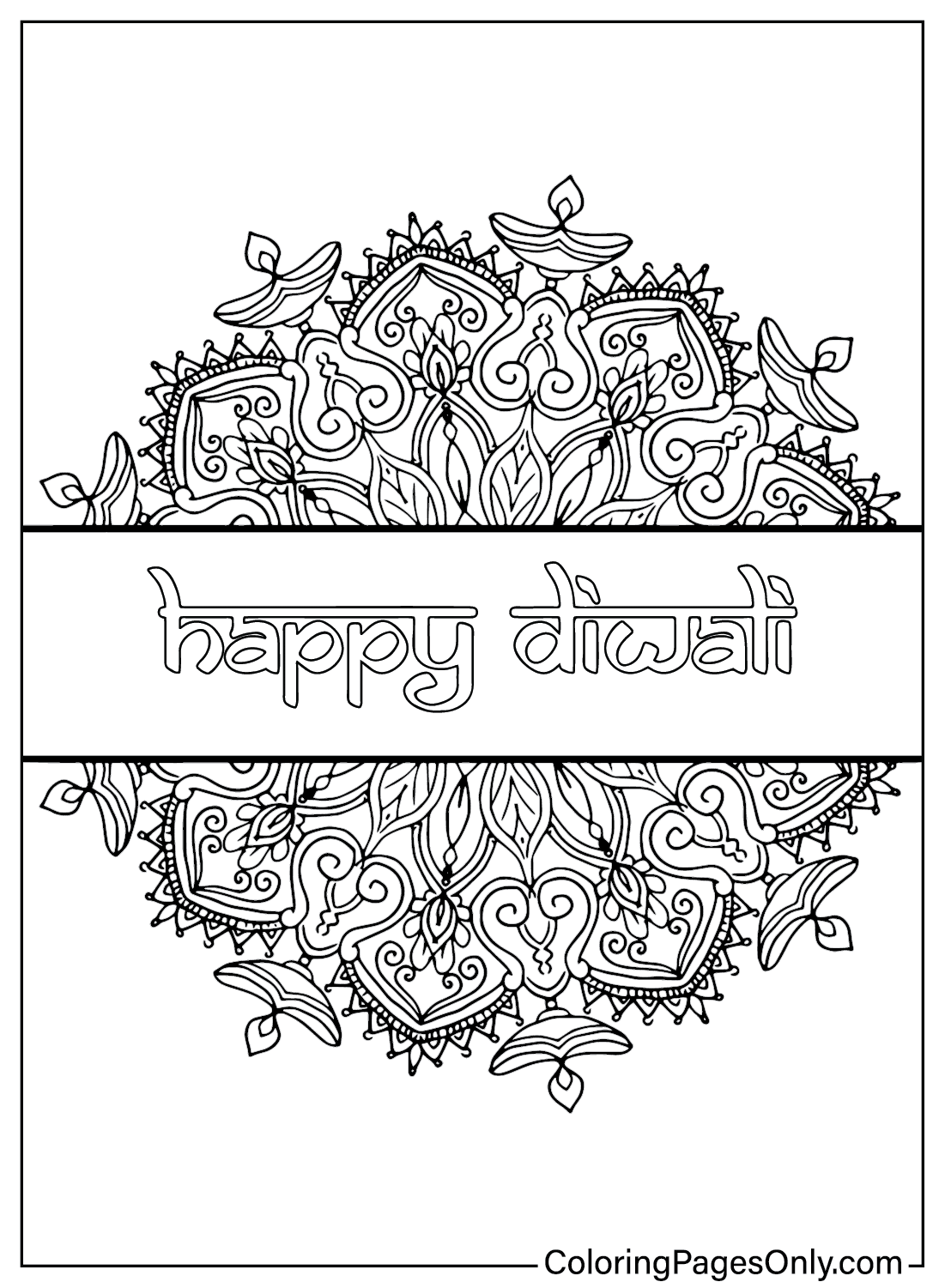
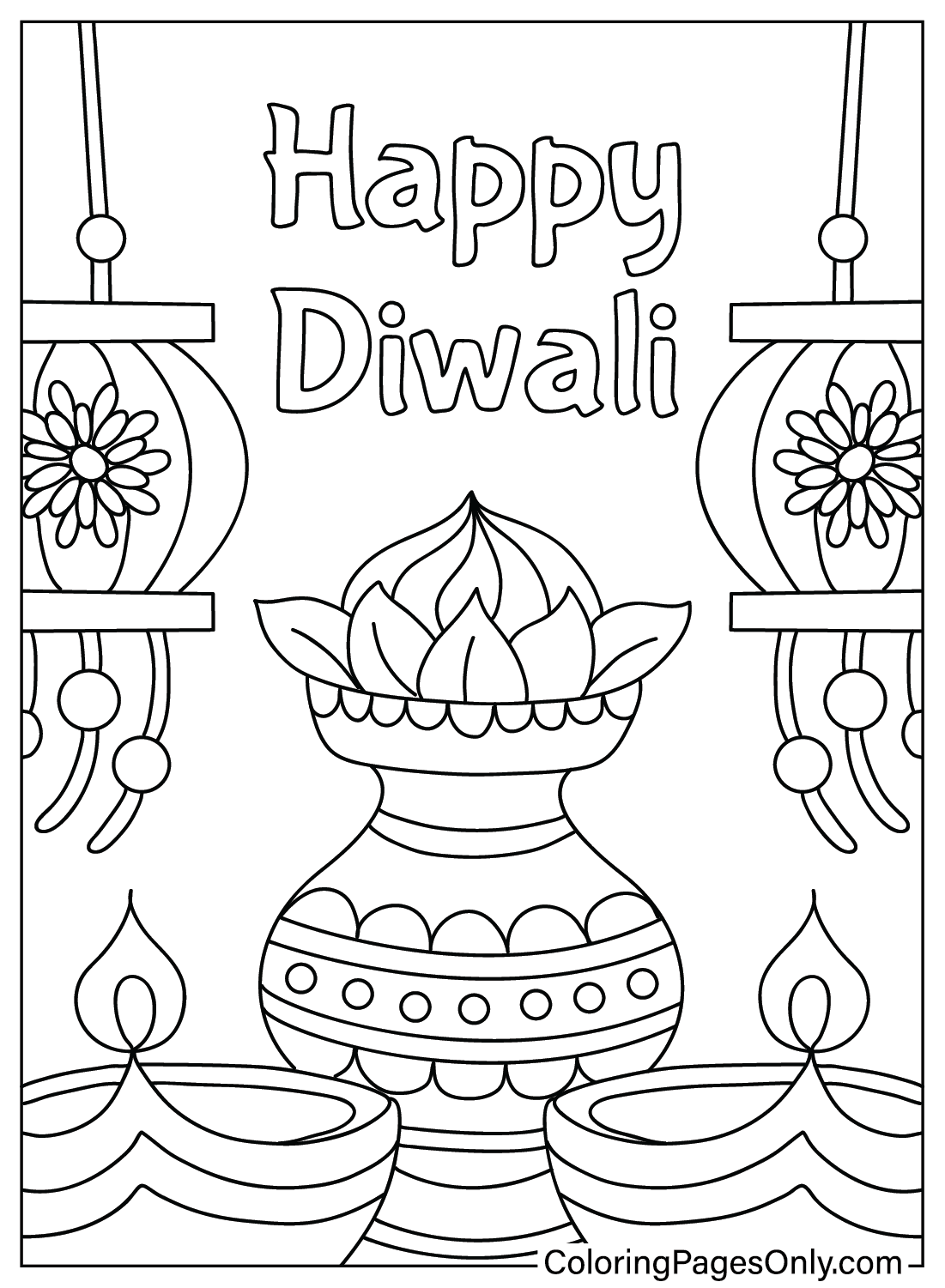
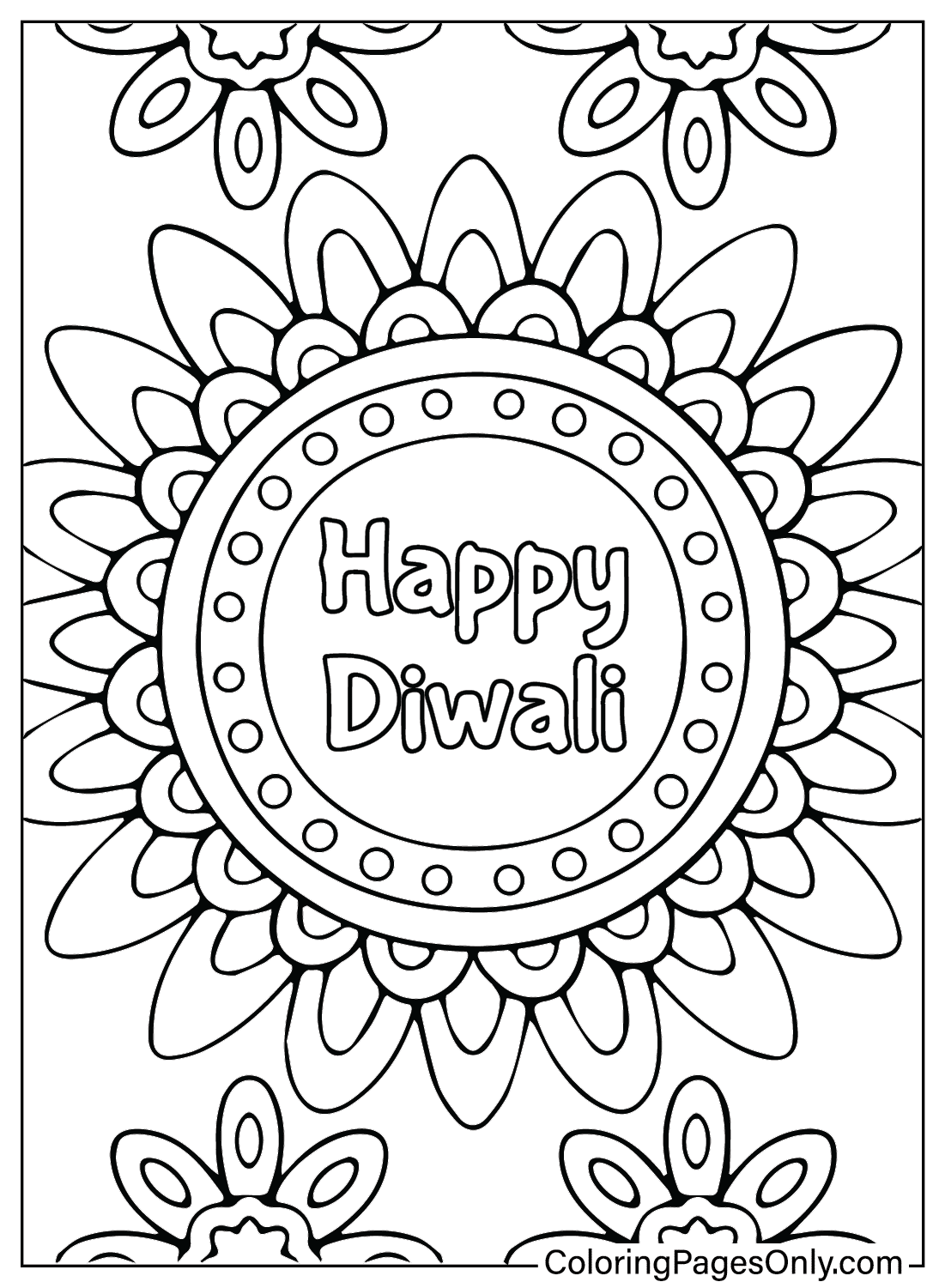
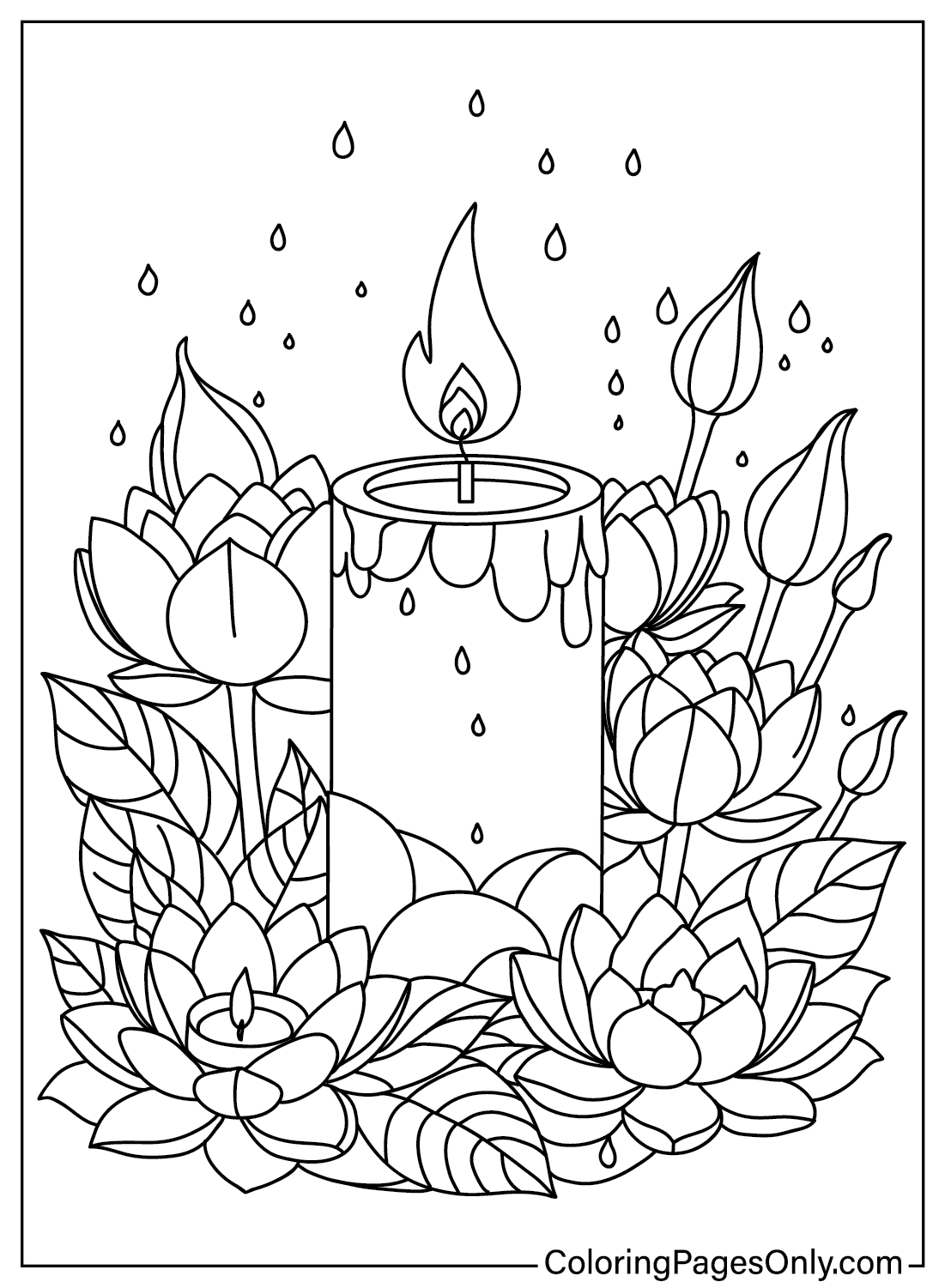
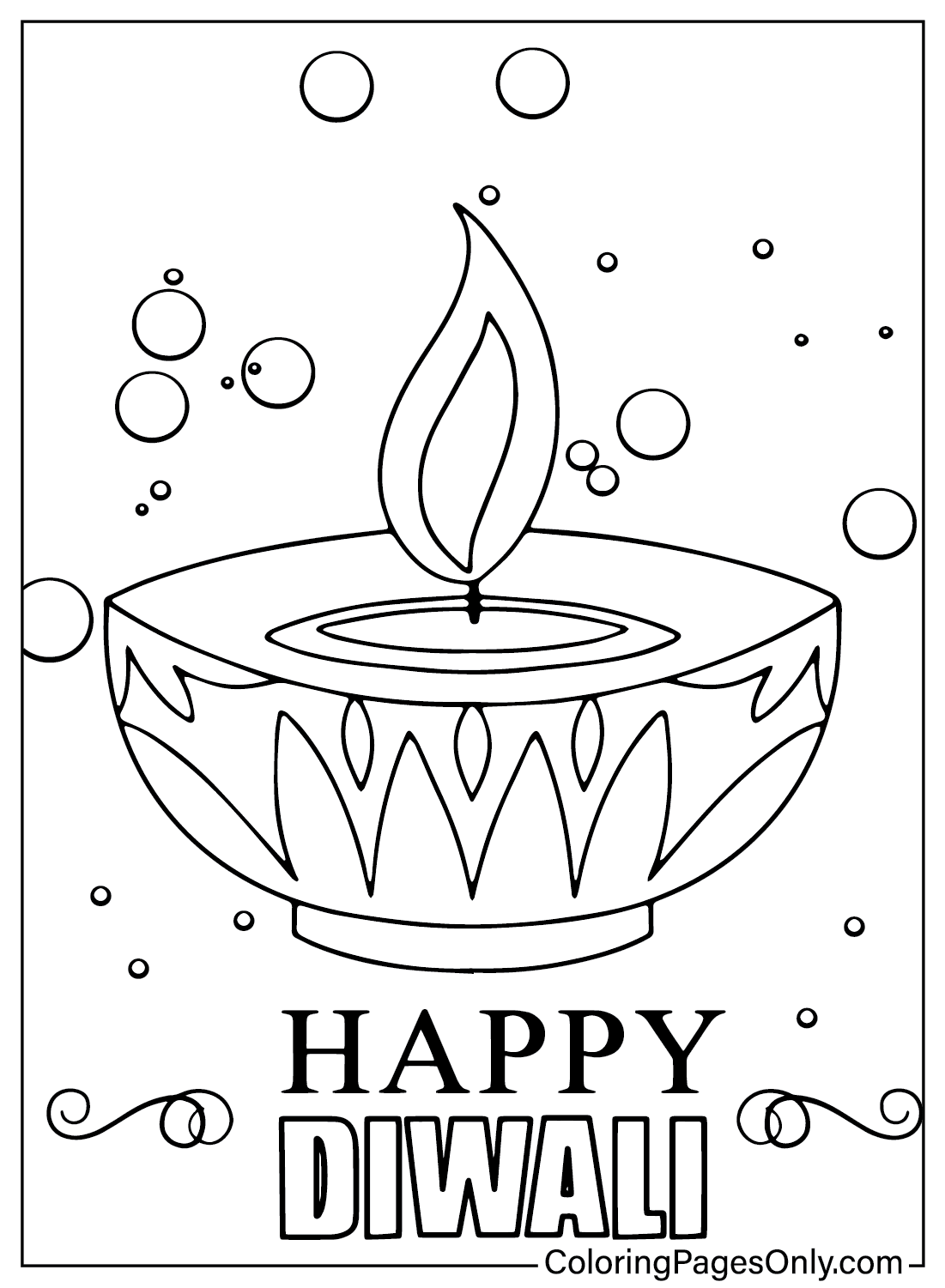
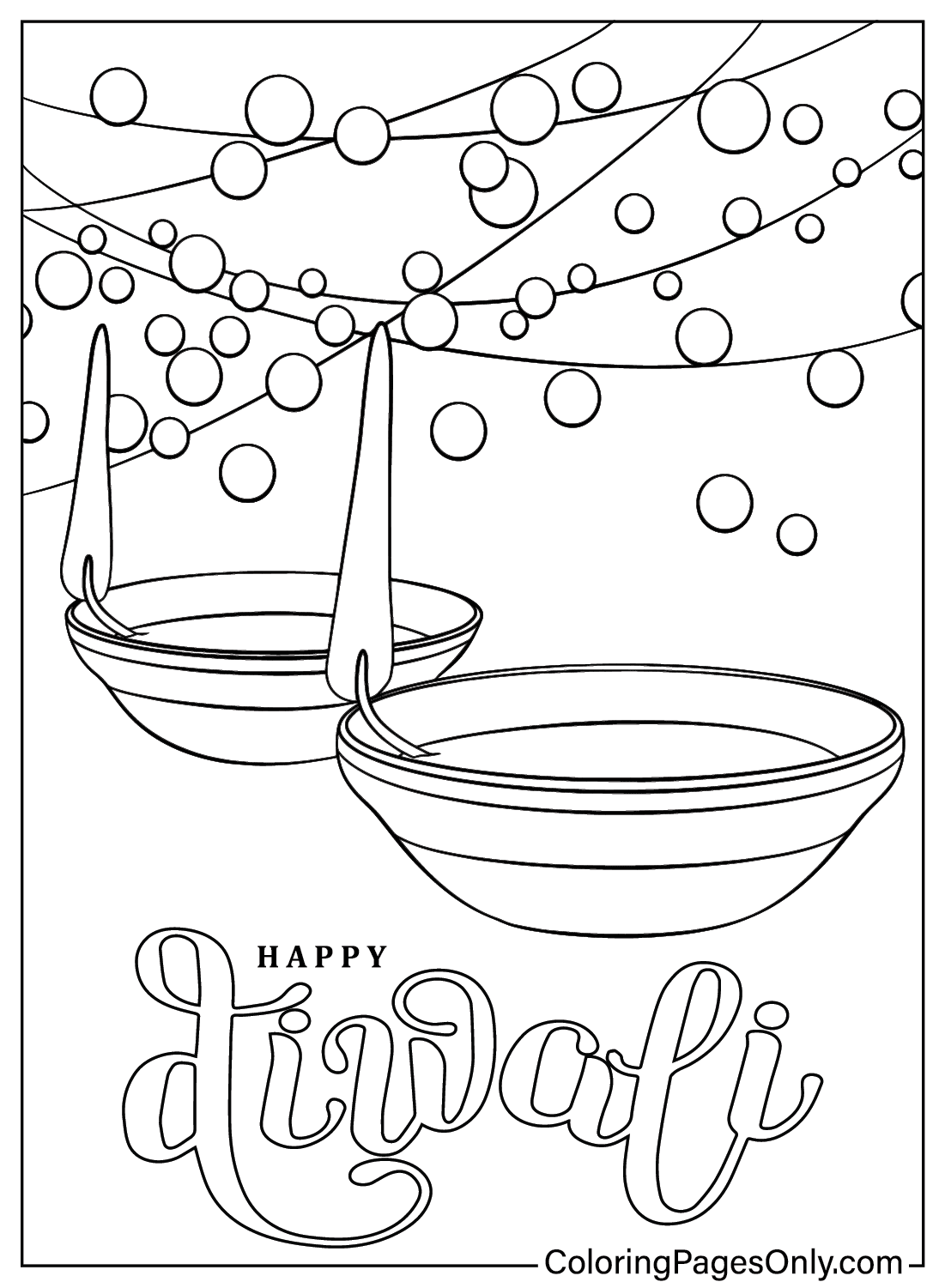
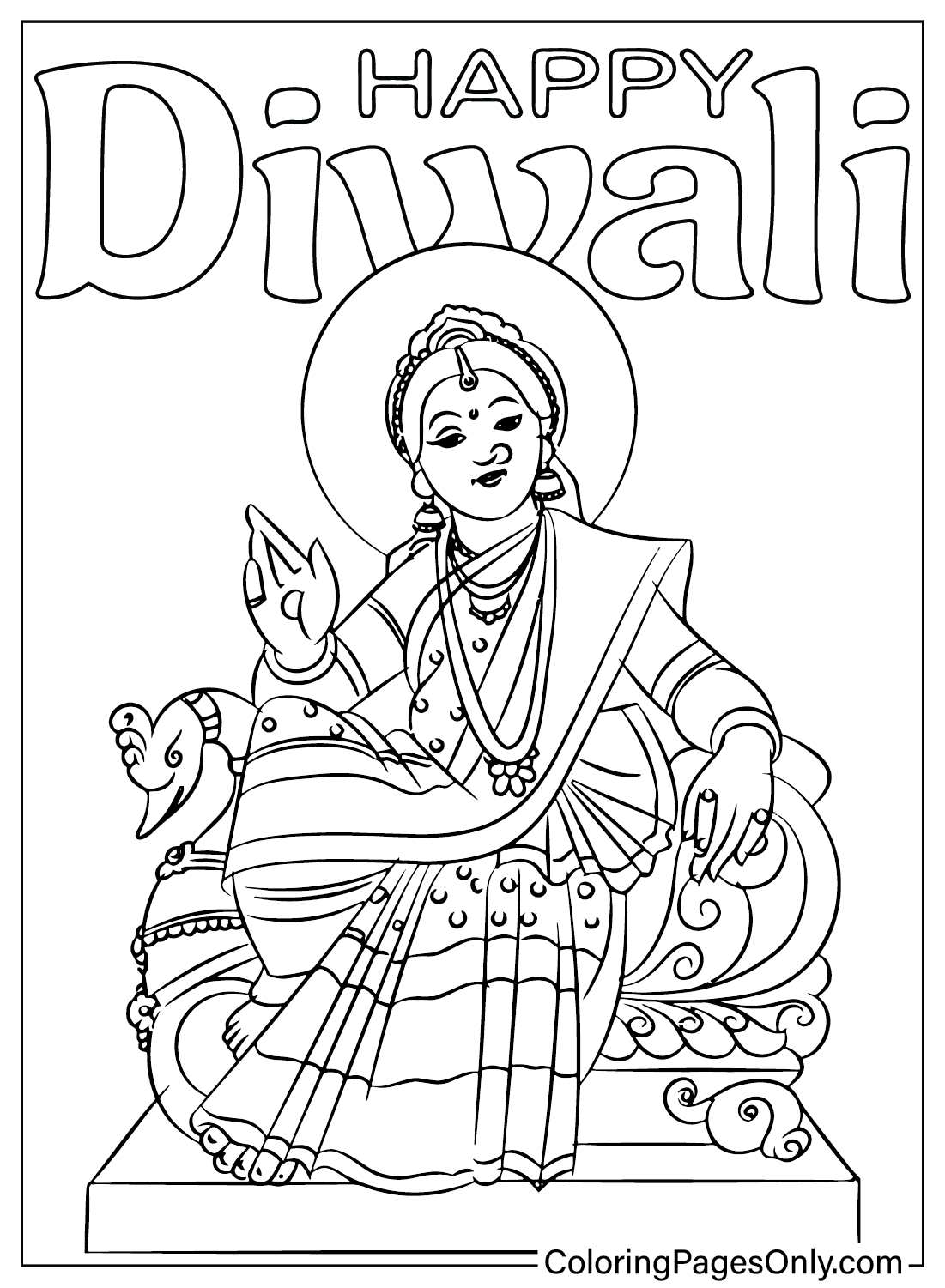
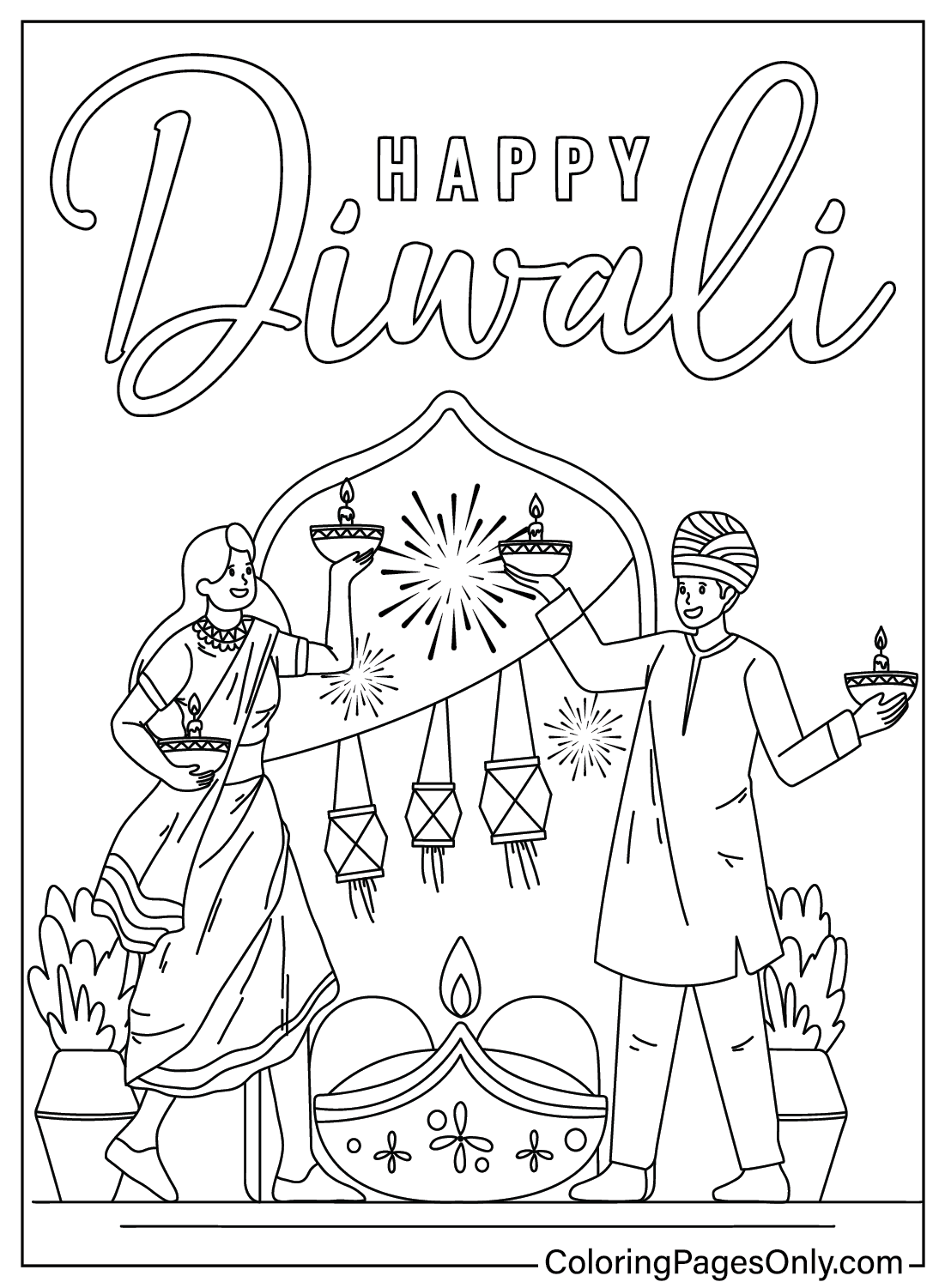
Free Diwali coloring pages: 31 printable PDF designs featuring diyas (oil lamps), rangoli patterns, lanterns, greeting cards, and festive scenes celebrating Diwali. Each page can be downloaded as a PDF to print or colored online in the browser.
Diwali, also called Deepavali, is the Hindu festival of lights, celebrated by millions of people in India and around the world. The name comes from a word meaning “row of lights,” and the festival is marked by lighting small oil lamps called diyas, making colorful floor patterns called rangoli, sharing sweets, and gathering with family. These traditions give the coloring pages bright, decorative subjects rich with pattern and color.
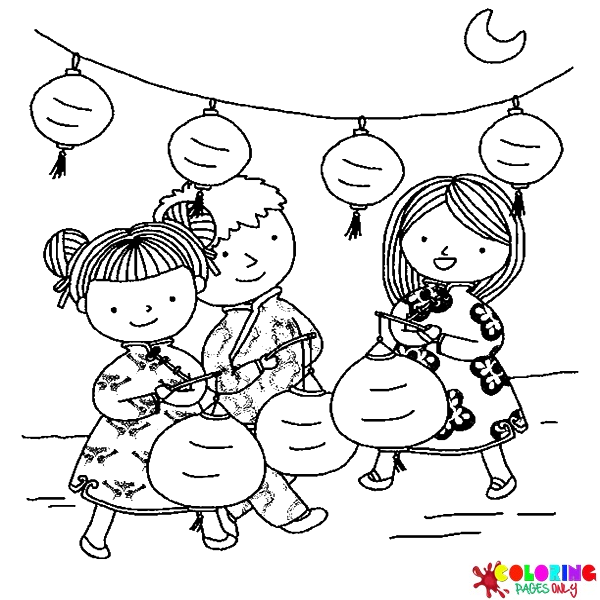
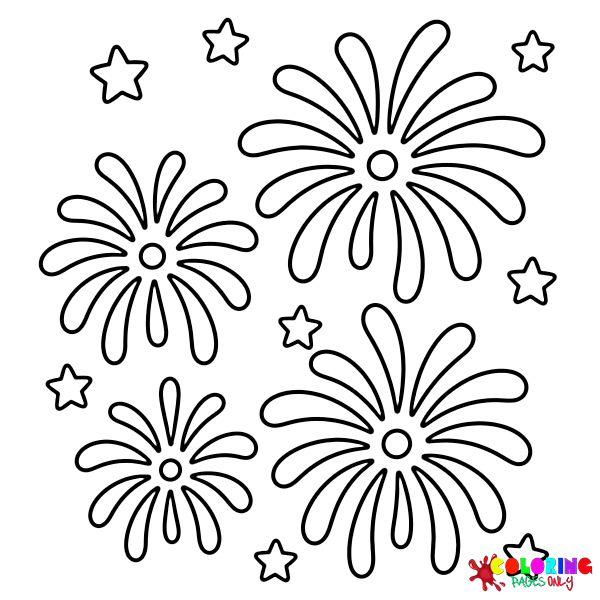
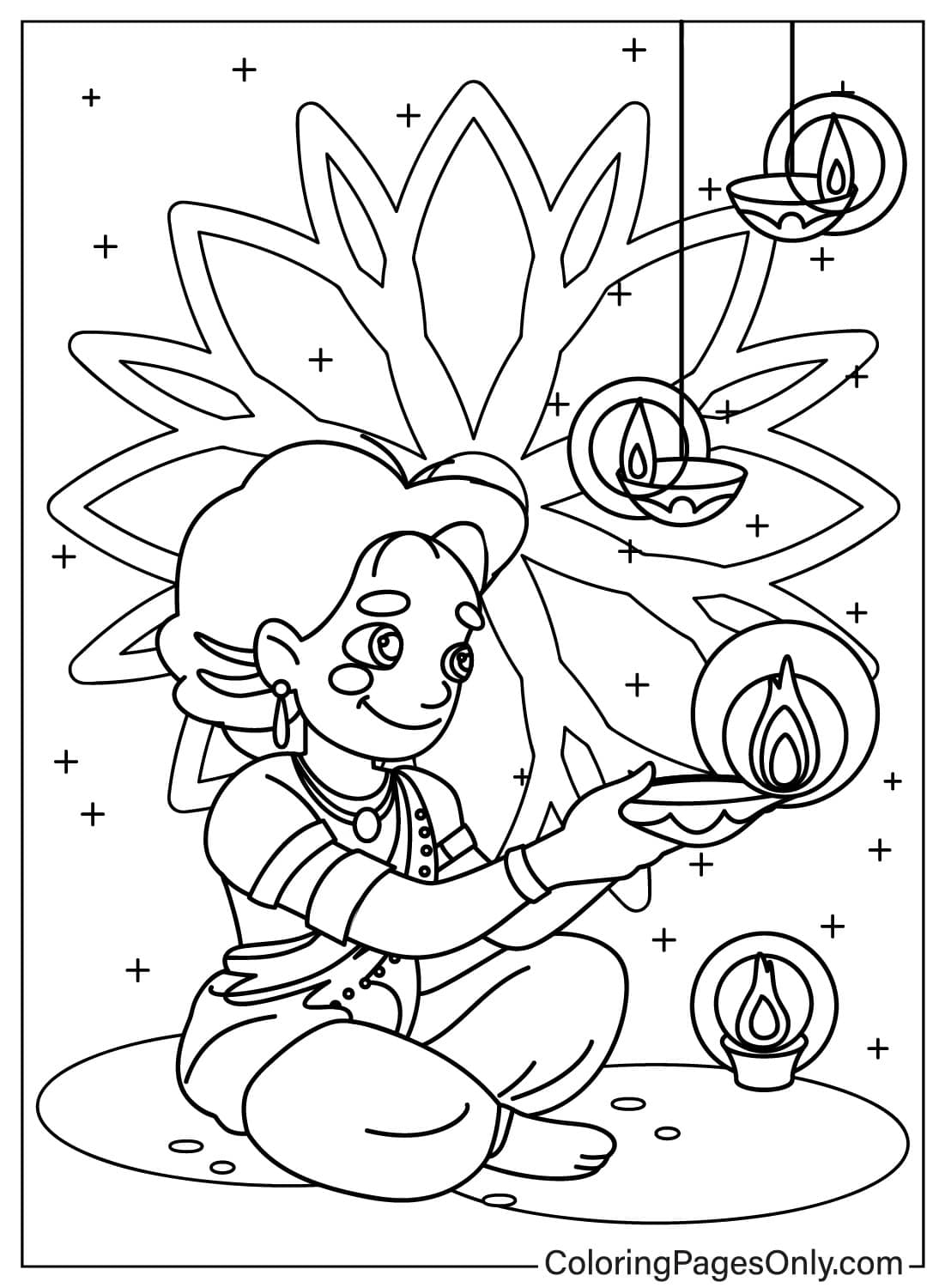
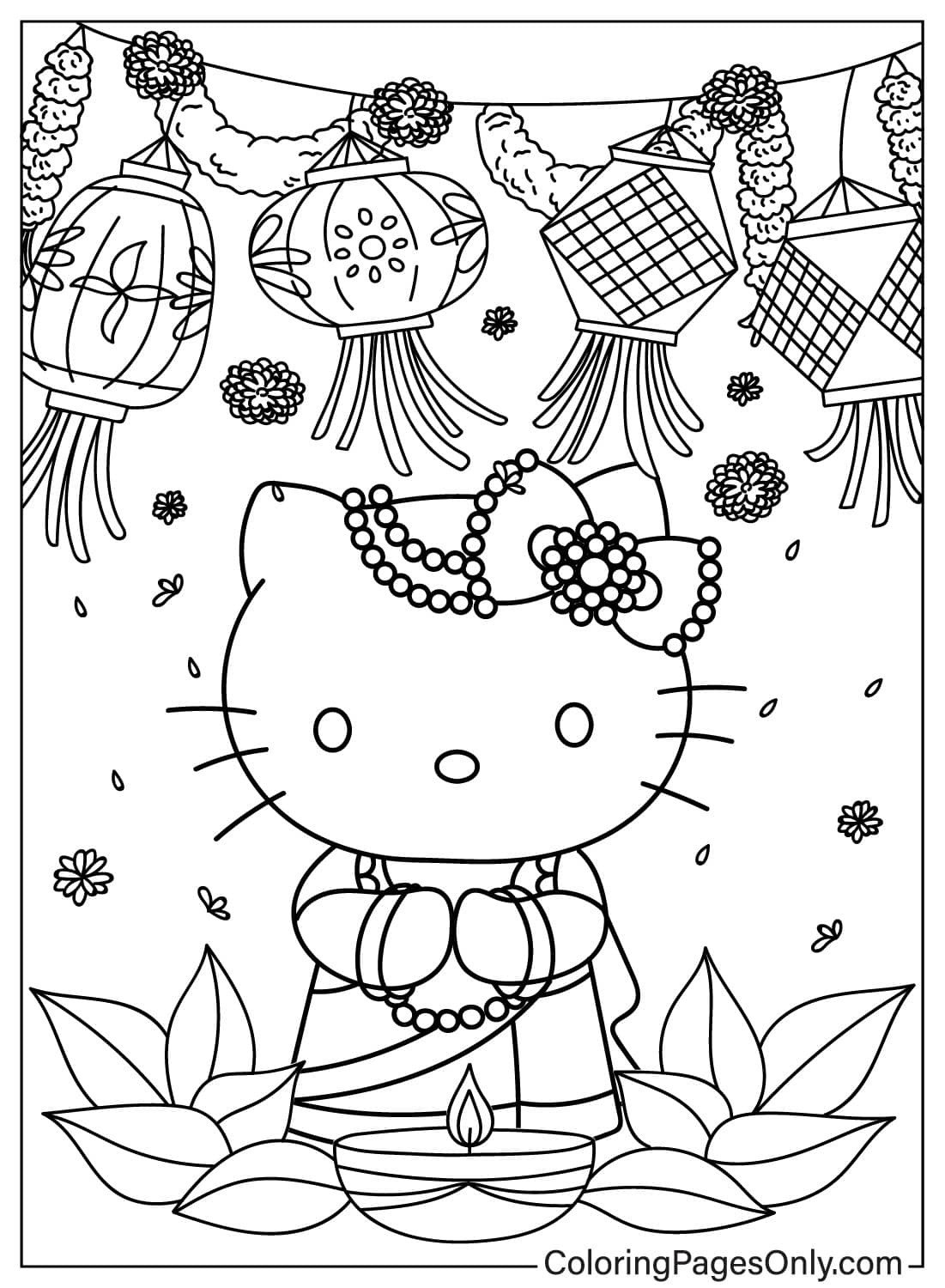
The collection ranges from simple diya and lantern pages for younger children to detailed rangoli patterns for older children and adults. Rangoli designs in particular, with their symmetry and fine detail, make absorbing pages for anyone who enjoys intricate pattern coloring.

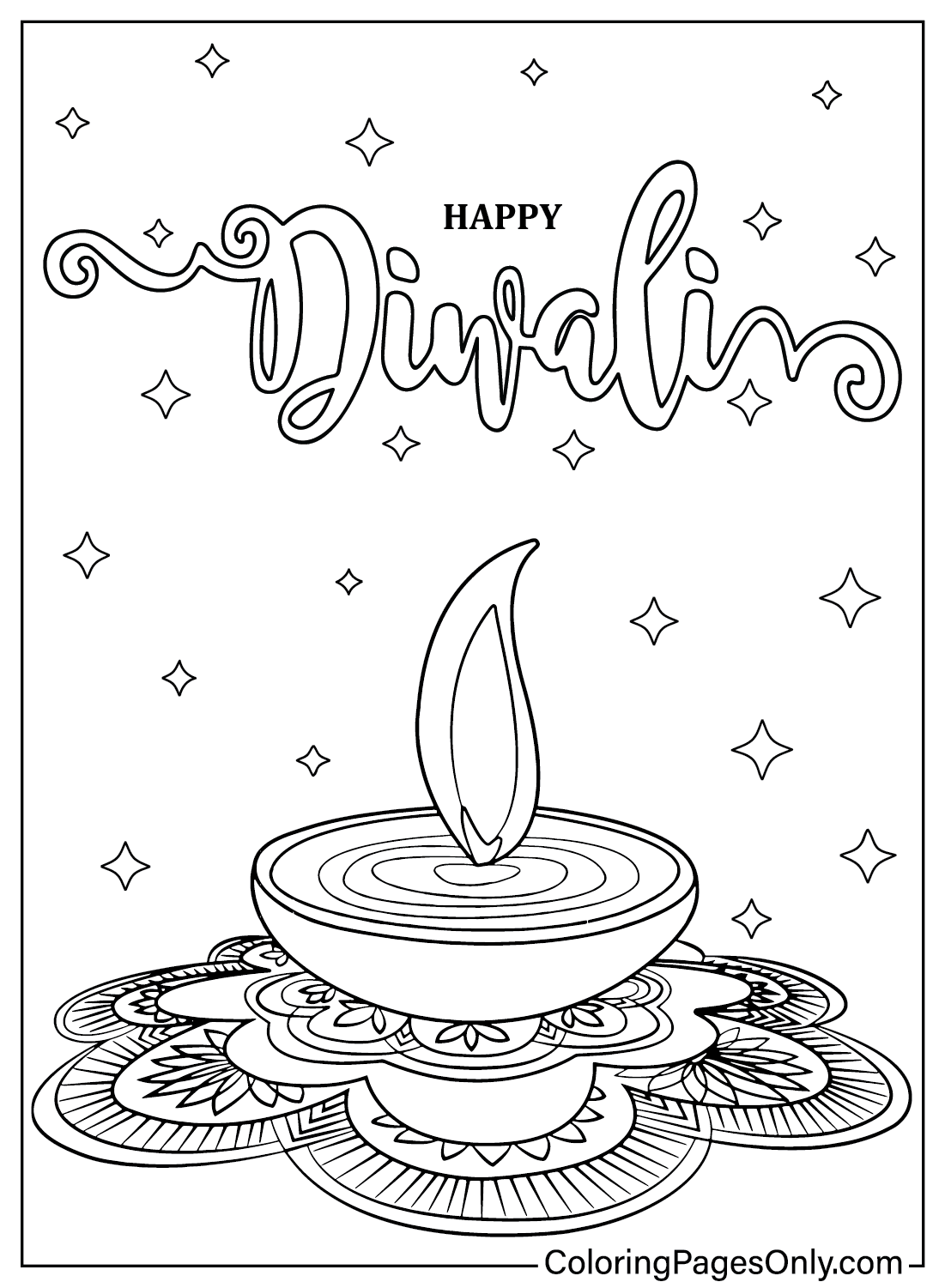
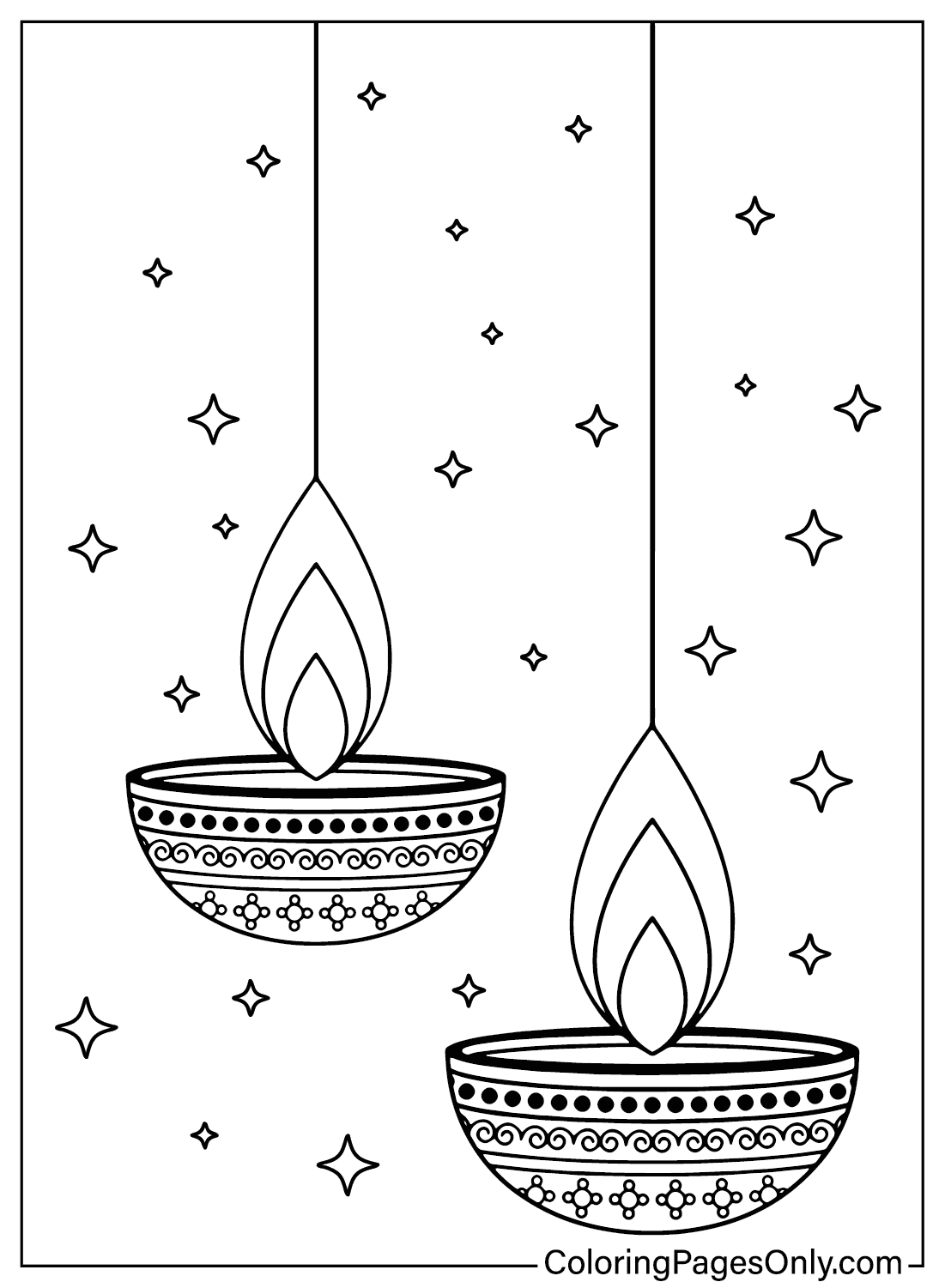
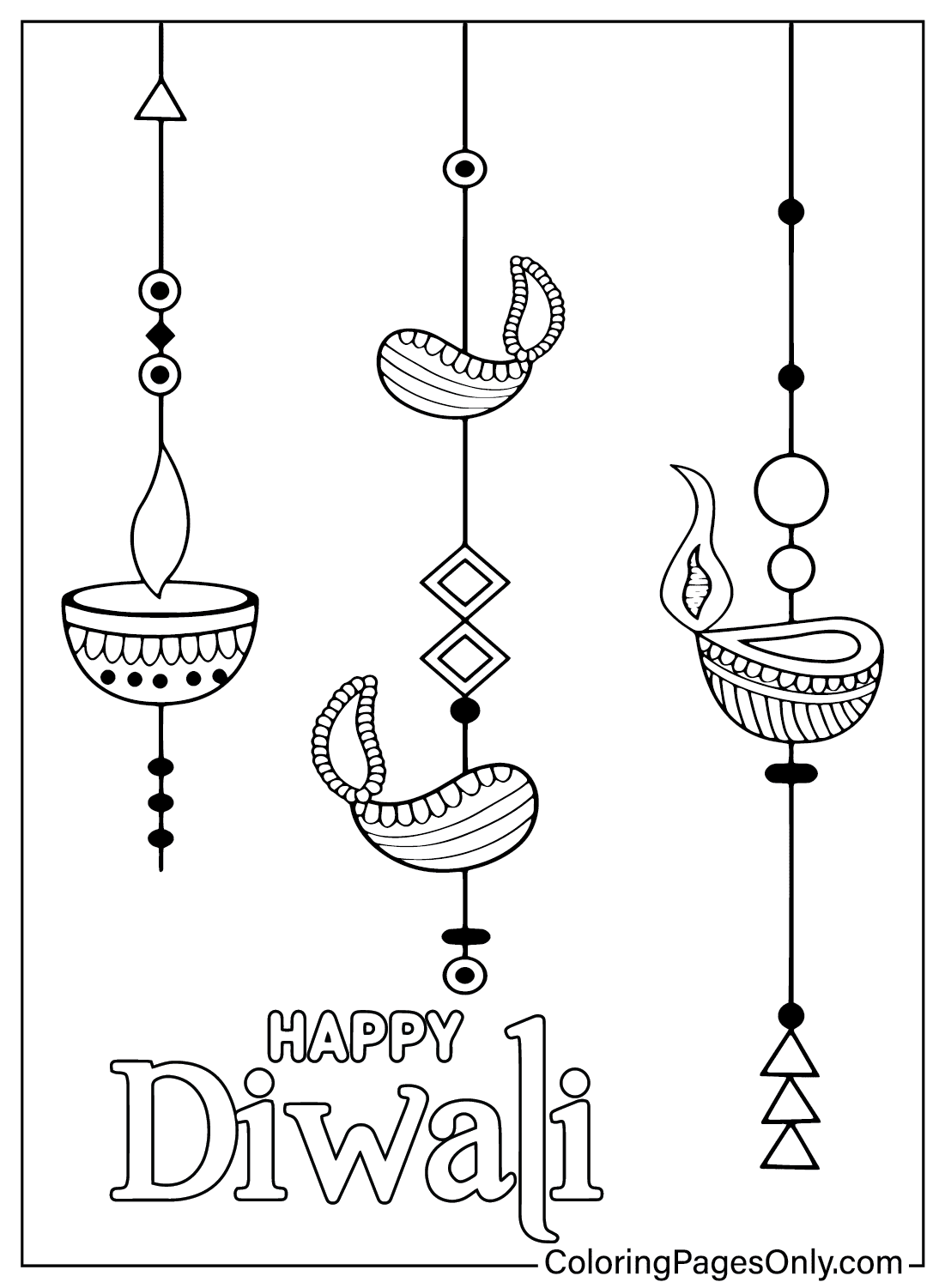
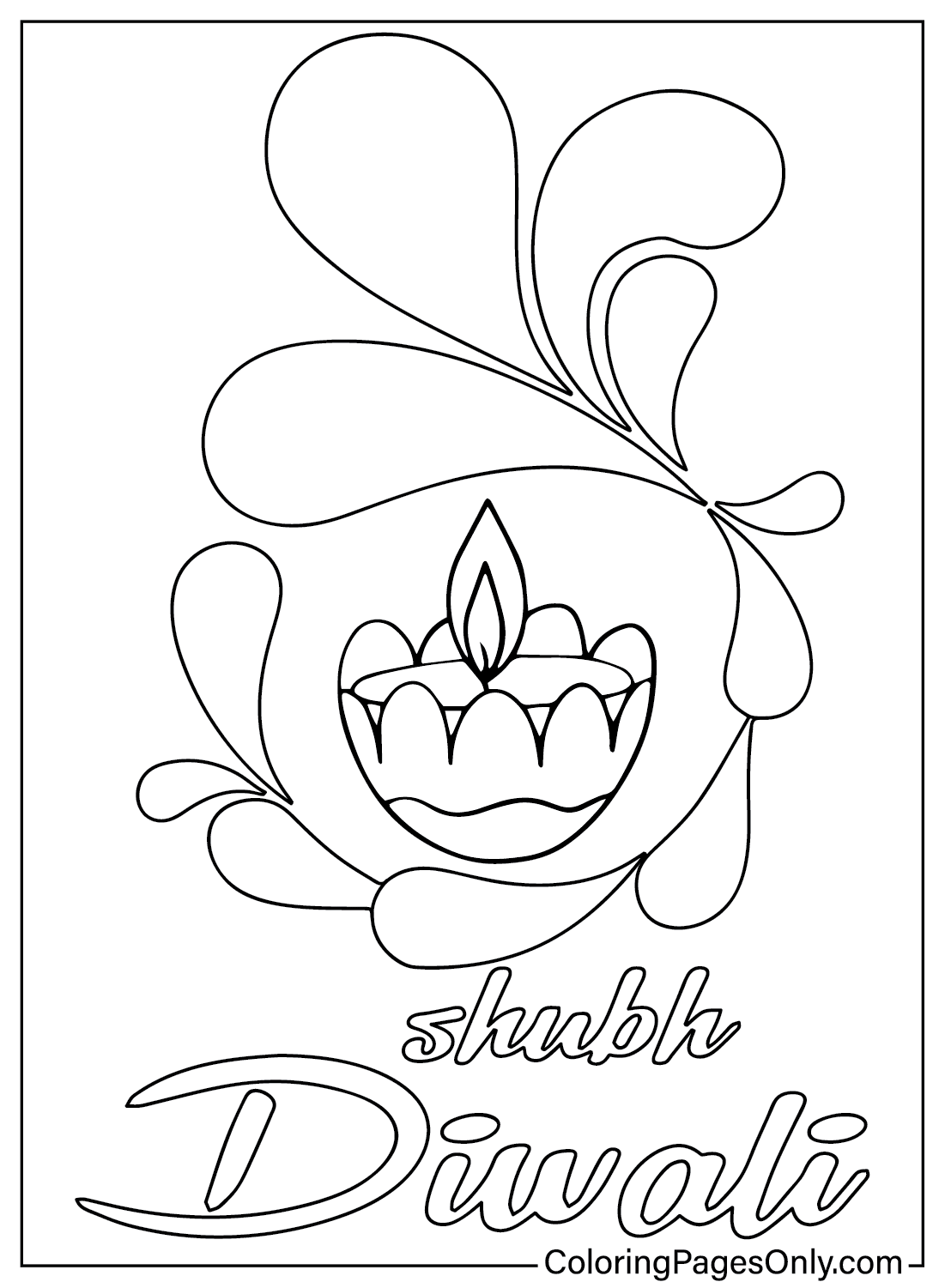
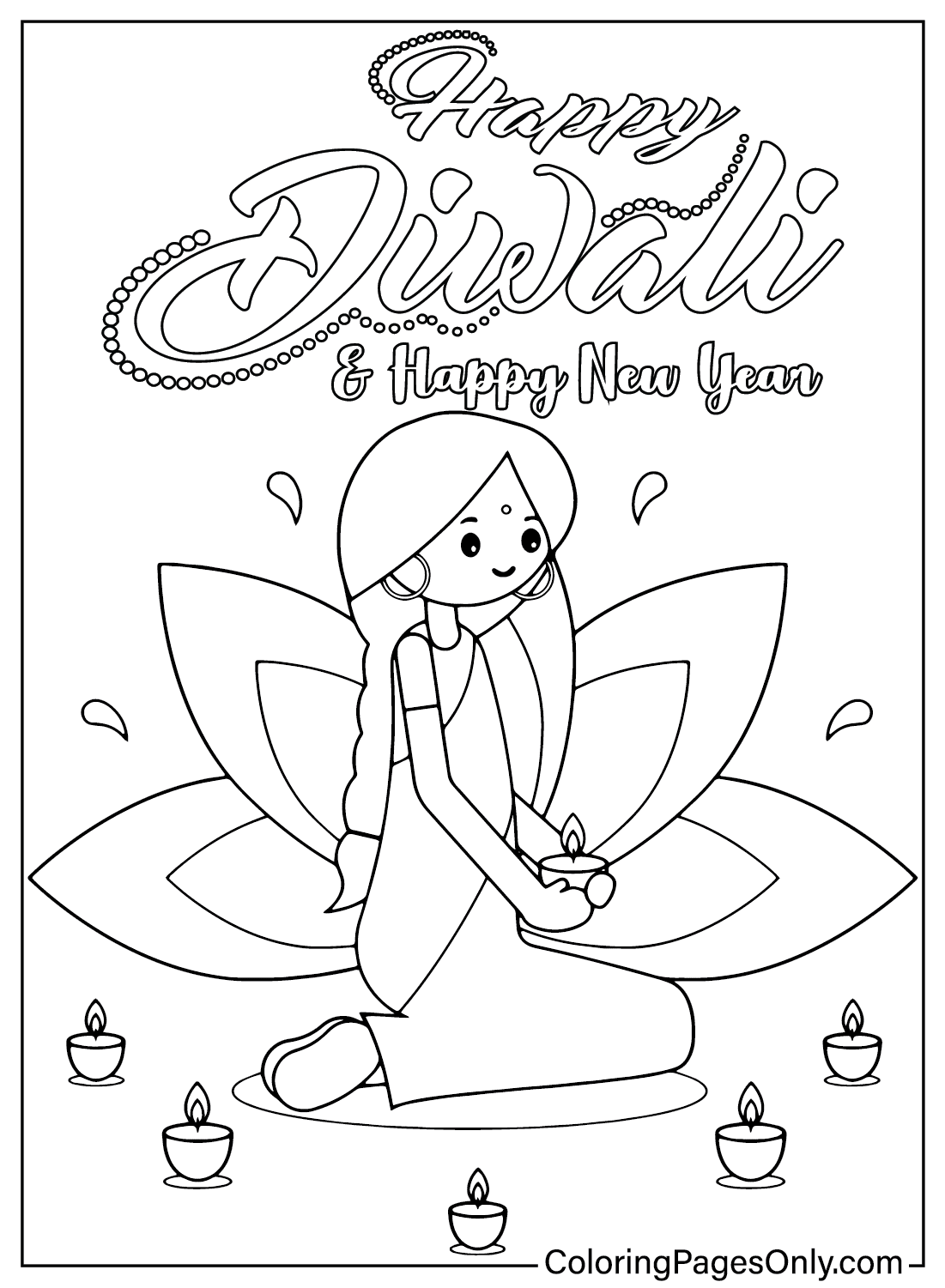
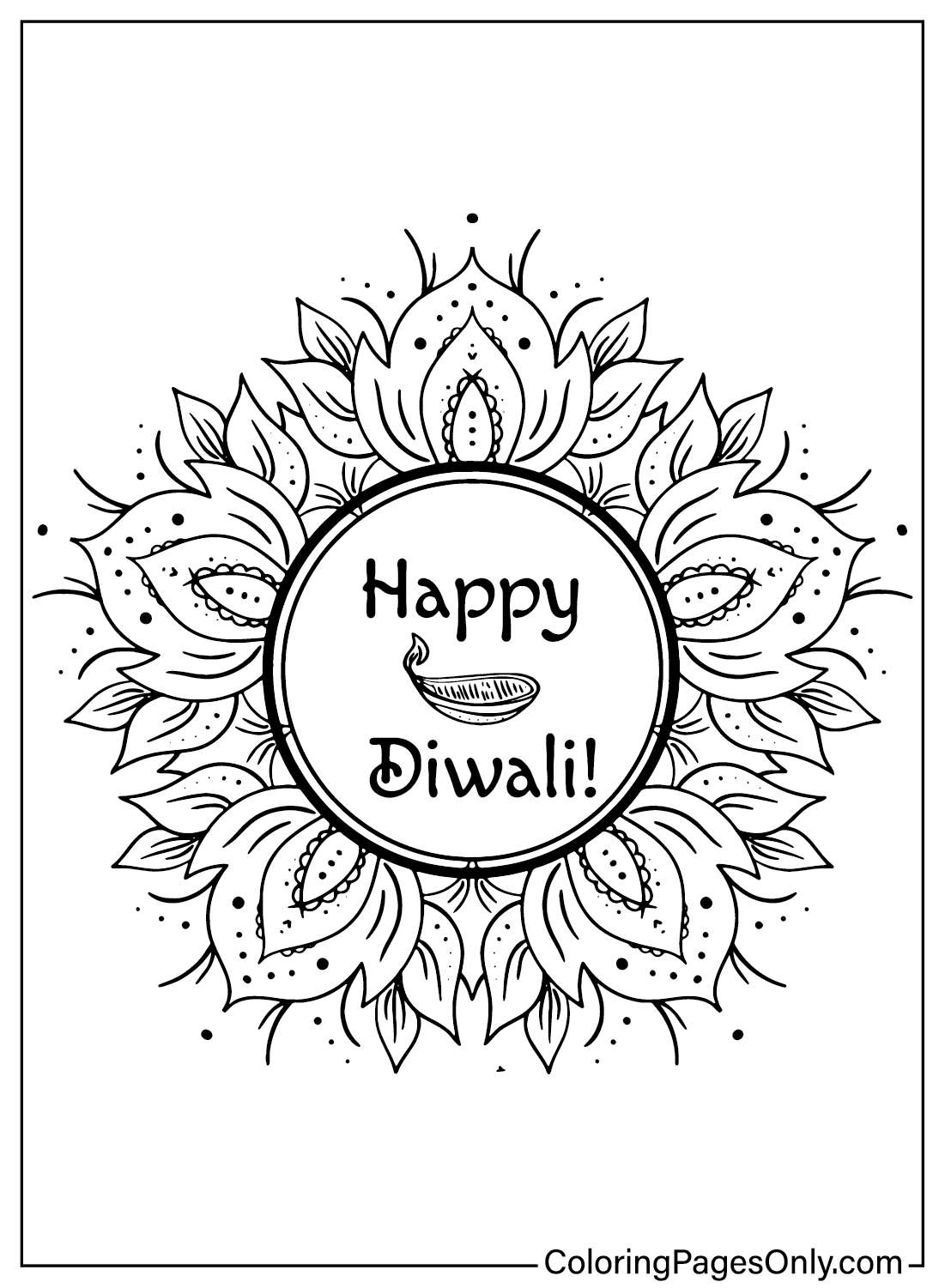
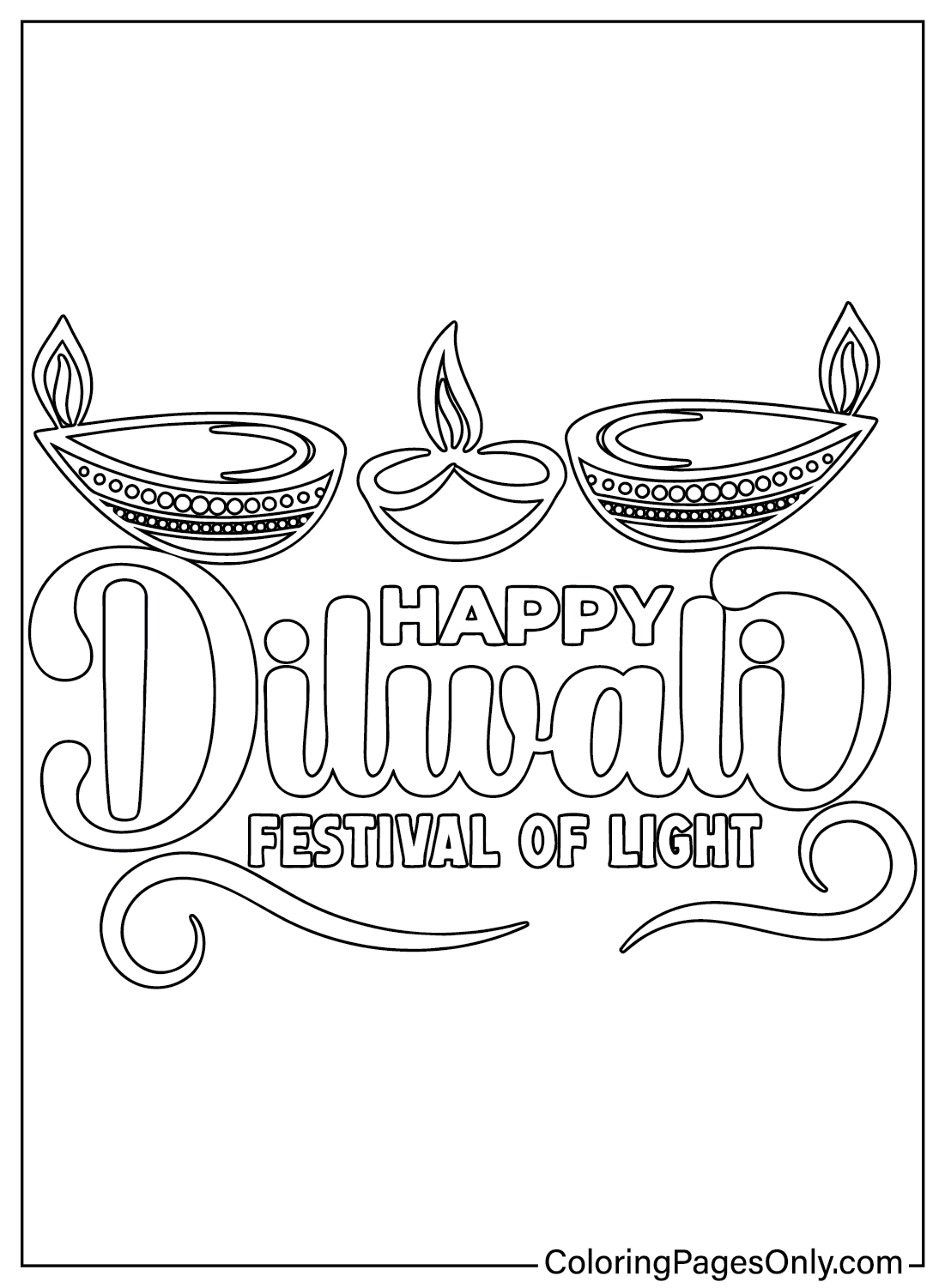
What Diwali Coloring Pages Do
Fine motor development. The American Academy of Pediatrics identifies fine motor skill development as a core benefit of structured coloring for children ages 2 through 7. The range here supports this well: a young child fills the simple shape of a diya lamp, while an older child manages the fine, symmetrical lines of a rangoli pattern.
Cultural learning. Coloring diyas, rangoli, and festival scenes introduces children to Diwali and its traditions in a hands-on way. For families who celebrate, the pages connect to a familiar holiday; for others, they offer a gentle introduction to a major world festival.
Anxiety reduction through focus. A 2005 study in the Art Therapy Journal documented measurable reductions in anxiety following structured coloring sessions. The repeating, symmetrical patterns of rangoli designs provide the kind of focused, absorbing task associated with the study’s calming findings, much like coloring a mandala.
Color and pattern planning. Diwali is a festival of bright colors. Coloring rangoli and lantern designs gives children practice planning a vivid, balanced palette across a symmetrical pattern, which builds color-planning and design skills.
How to Color Diwali Pages Well
- Bright, festive colors: Diwali uses rich, saturated colors. Reach for bold tones like Crayola “Orange,” “Magenta,” “Gold,” and “Red” to capture the festive feeling of the holiday.
- Glowing diyas: For the oil-lamp flames, color the center bright yellow and the outer flame orange, with a small white highlight, to suggest a glowing light.
- Symmetry in rangoli: Rangoli patterns are symmetrical. Coloring matching sections in the same color keeps the design balanced and makes the pattern stand out.
- Warm background: A deep blue or purple background behind lamps and lanterns makes the warm lights glow by contrast, since Diwali is a night festival.
- Gold and metallic accents: A gold or silver gel pen on borders and lamp details adds a celebratory, decorative finish.
- Layer the rangoli: Use several colors in concentric rings of a rangoli, working from the center out, for a rich, traditional look.
5 Creative Craft Ideas With Diwali Coloring Pages
1. Diwali Greeting Cards. Color a card design, fold it, and write a Diwali greeting inside to share with family and friends.
2. Paper Diya Garland. Color several diya pages, cut them out, and string them together as a festive garland.
3. Rangoli Wall Art. Color a detailed rangoli pattern and frame it as decoration for the home during the festival.
4. Window Lanterns. Color a lantern design on lighter paper, then tape it to a window so light shines through.
5. Festival Place Cards. Color small diya designs, fold them, and use them as place cards for a Diwali family meal.
Frequently Asked Questions
What is Diwali?
Diwali, also called Deepavali, is the Hindu festival of lights, celebrated by millions of people in India and around the world. The name means “row of lights,” and the festival is marked by lighting oil lamps called diyas, making rangoli patterns, sharing sweets, and gathering with family.
What are the symbols of Diwali in these pages?
The pages feature common Diwali symbols, including diyas (small oil lamps), rangoli (colorful floor patterns), lanterns, sweets, and festive scenes. These are the traditional decorations and activities associated with the festival.
What is a rangoli?
A rangoli is a colorful, symmetrical pattern traditionally made on the floor during Diwali using colored powders, rice, or flower petals. On a coloring page, rangoli designs make detailed, mandala-like patterns that are satisfying to color.
What colors are used for Diwali?
Diwali is a festival of bright, rich colors. Common choices include orange, red, magenta, gold, and yellow for lamps and patterns, often against a deep blue or purple night background that makes the warm lights stand out.
Are Diwali coloring pages suitable for young children?
Yes. Simple diya and lantern pages have large, clear shapes that suit children ages 3 and up. The detailed rangoli patterns suit older children and adults who enjoy intricate, symmetrical designs.
Are these Diwali coloring pages free to print?
All pages are free to download as a PDF and print, or to color online in the browser. No account, email, or payment is required. Pages print in standard size on regular paper for home or classroom use.
Can these pages be used to teach about Diwali?
Yes. The pages work well in classrooms and at home as a hands-on way to introduce the festival of lights, its symbols, and its traditions. Coloring diyas and rangoli connects children to the holiday through activity.
What are the benefits of coloring for children?
Coloring builds fine motor skills, which the American Academy of Pediatrics identifies as a core benefit for children ages 2 through 7. Diwali pages also support cultural learning and pattern planning, especially through the symmetrical rangoli designs.
Start Coloring
Download any page by clicking the design – no account, email, or payment required. Pages print directly from the browser at full resolution or open in the online coloring tool for screen use. Share finished pages on Facebook or Pinterest with the share buttons at the top of each design page.