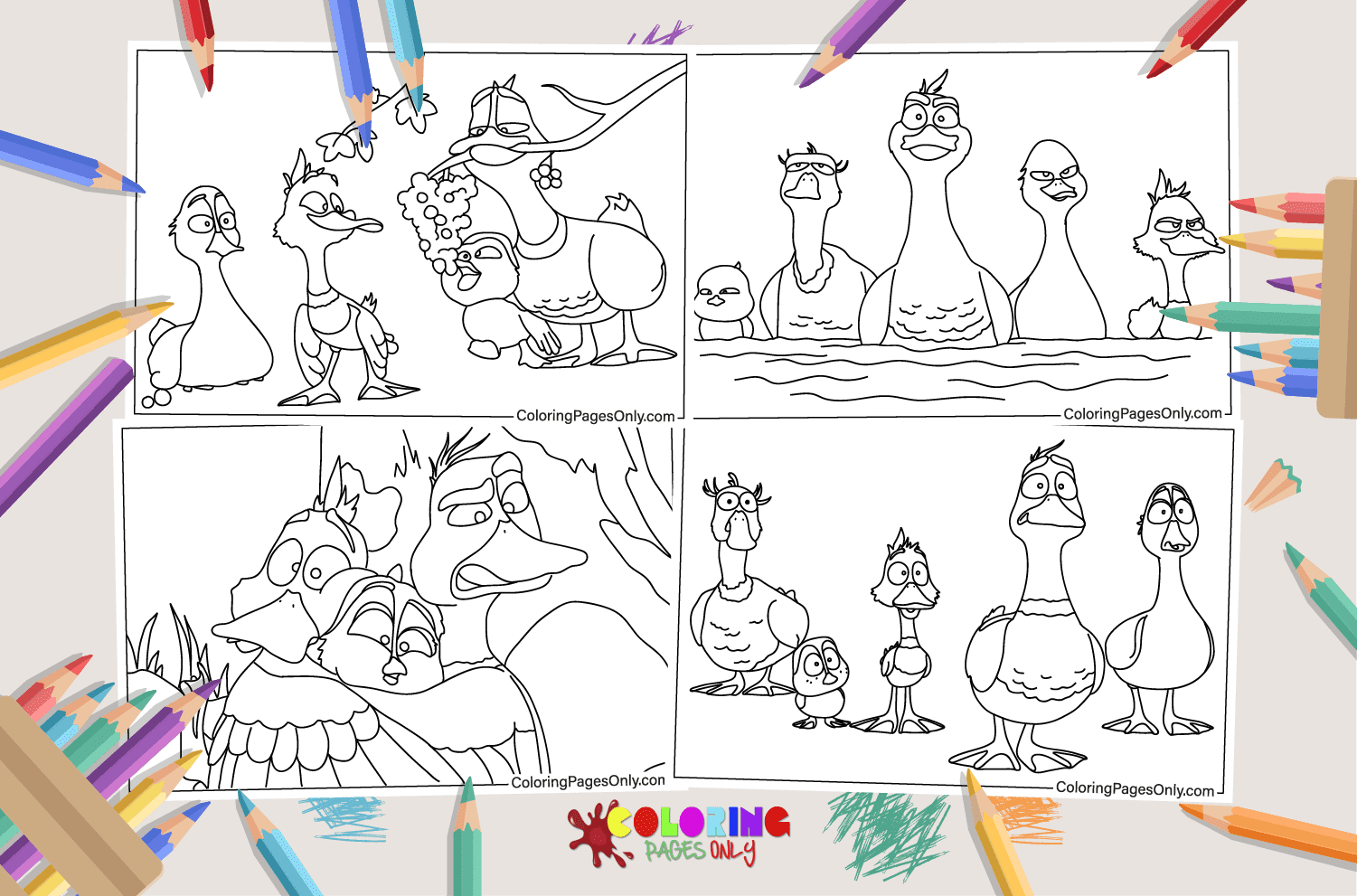
Free Migration coloring pages – 14 pages from Illumination’s 2023 animated film featuring the Mallard family: Mack, Pam, Dax, and Mimi, plus flight scenes and the wider world beyond the pond – free printable PDF and online coloring for kids and families.
Mallard ducks are genuinely extraordinary navigators. They migrate up to 800 miles in a single flight, traveling at 50 miles per hour at altitudes of up to 4,000 feet, using the Earth’s magnetic field, star patterns, and landscape landmarks to find the same wintering grounds year after year. Some mallards banded in Canada have been recovered in Louisiana. They know exactly where they’re going, and they’ve been doing it for thousands of years.
Mack Mallard, the father at the center of Illumination’s Migration (released December 22, 2023), does not know any of this about himself. He has spent his entire life on the same New England pond. He is afraid of what lies beyond it, which is, as the film takes some care to establish, a reasonable response to a world that contains predators. But when a flock of other ducks passes through on their way to Jamaica and Mack’s children meet them, the Mallard family’s comfortable inertia collides with the more interesting possibility of actually going somewhere – and the film follows what happens next.
These 14 free pages at ColoringPagesOnly.com cover the full Mallard family across their journey. All free, PDF or PNG, print at home or color online.
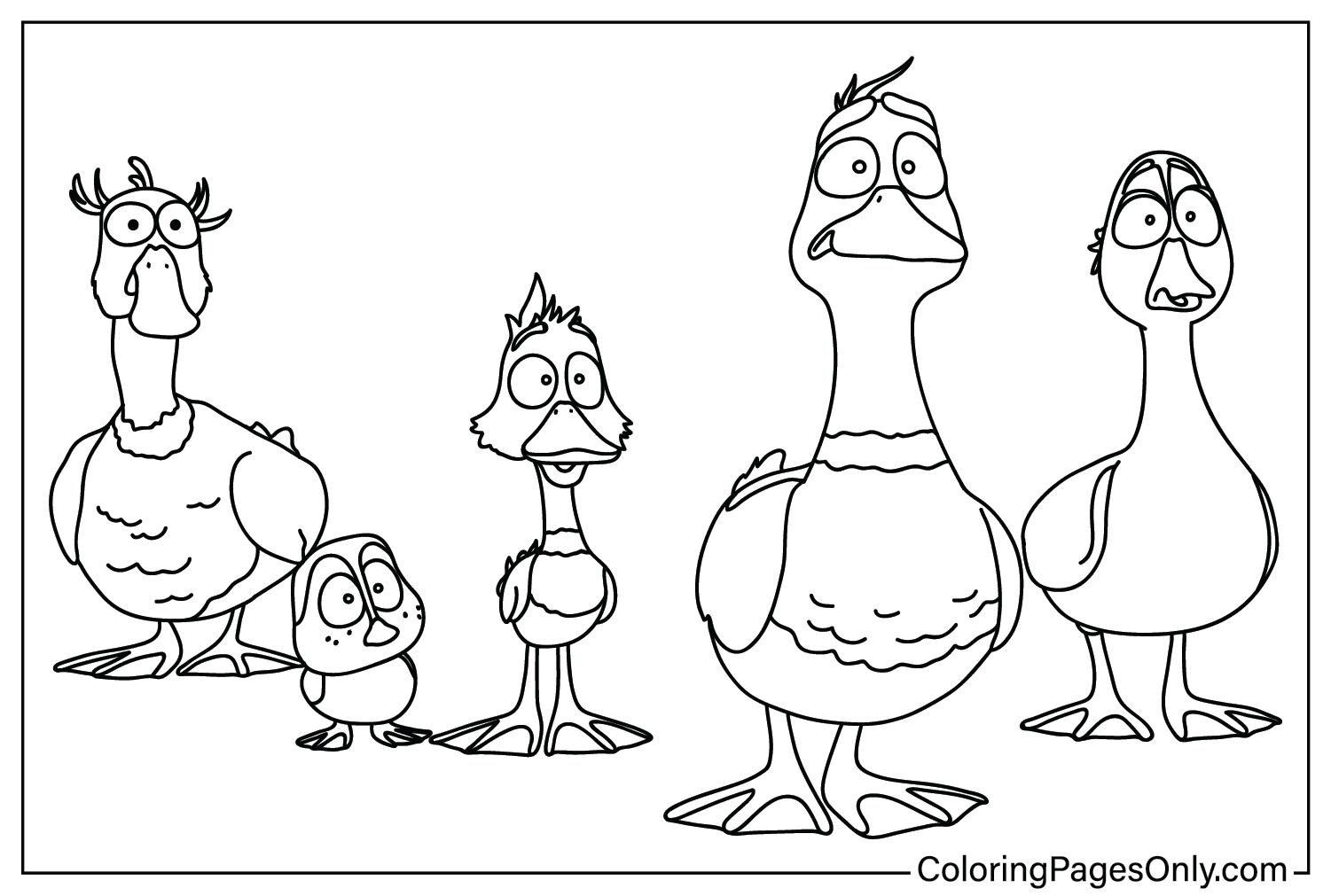
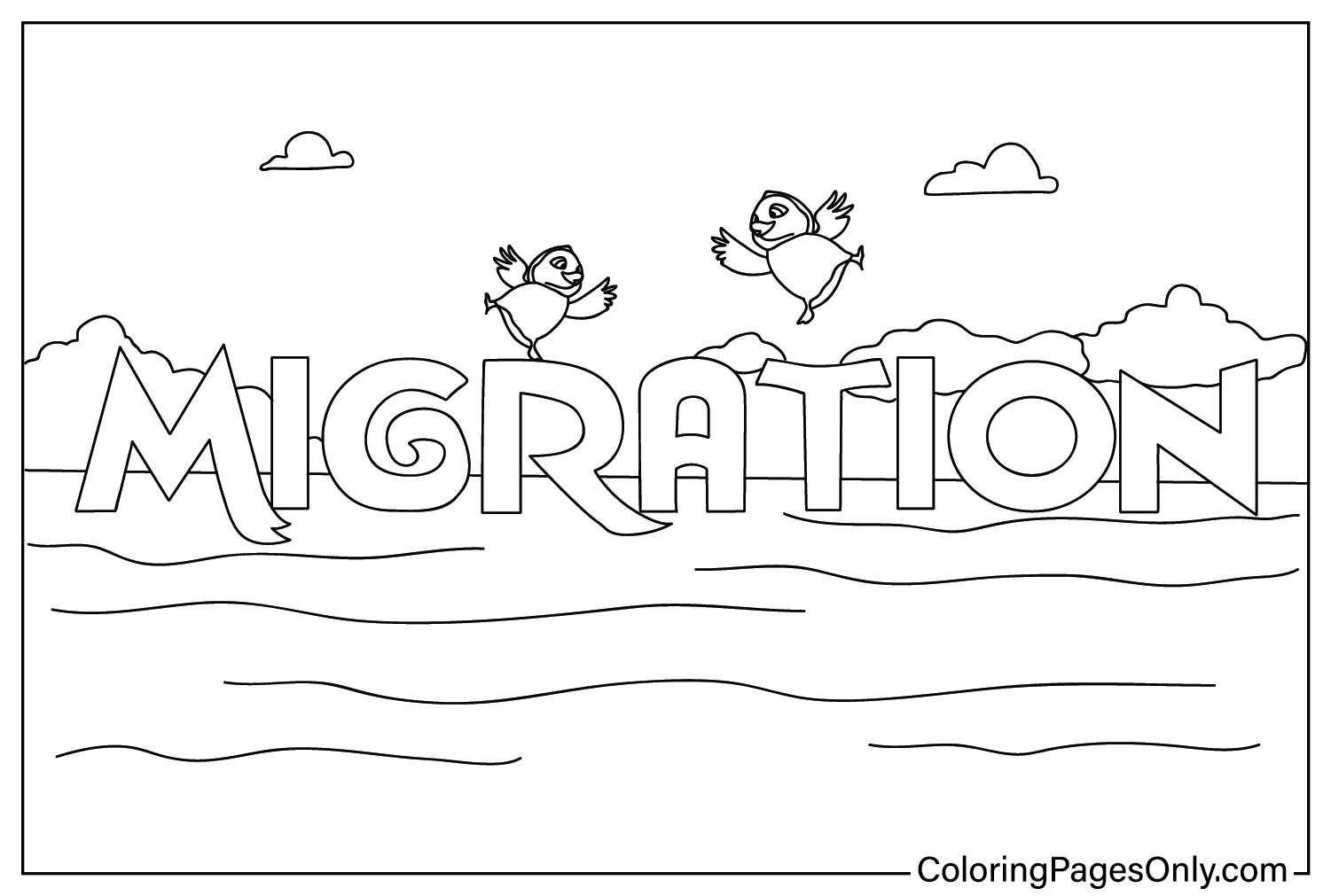
The Film and the Family
Migration was directed by Benjamin Renner (who also directed the Oscar-nominated Ernest & Celestine in 2012) and produced by Illumination, the studio responsible for the Despicable Me and Minions franchises, The Secret Life of Pets, and Sing. The film was released on December 22, 2023, in the United States and became one of the more quietly successful animated films of that season, earning over $200 million worldwide against a $72 million budget and receiving generally warm reviews for its humor, its voice cast, and Benjamin Renner’s ability to animate birds with genuine physical comedy and emotional weight.
The Mallard family at the center of the story:
Mack is the father – cautious, loving, fundamentally afraid of risk, and like many anxious parents, channeling that fear into a protective instinct that has kept the family safe on their pond but has also kept them small. His arc is the film’s real subject: not whether the family makes it to Jamaica, but whether Mack can learn to want something he can’t fully control.
Pam is the mother – more adventurous than Mack by temperament, more willing to believe that the world beyond the pond is worth discovering, and the character who most directly pushes the family’s journey forward. She is the film’s emotional anchor in the way that adventure-inclined parent characters often are: grounded and warm enough to make the journey feel safe, curious enough to make it feel worthwhile.
Dax is the son – energetic, impulsive, immediately excited by the passing migrants and their stories of Jamaica, and the family member whose enthusiasm provides the initial disruption to the comfortable pond routine. Children who see themselves in Dax – which includes most children who have ever wanted to go somewhere their parents said was too far – respond to him immediately.
Mimi is the daughter – younger, imaginative, and in many readings of the film, the most quietly courageous member of the family. She carries a plush toy, has very specific feelings about the world, and consistently demonstrates that young children in animated films are always underestimated by the adults around them.
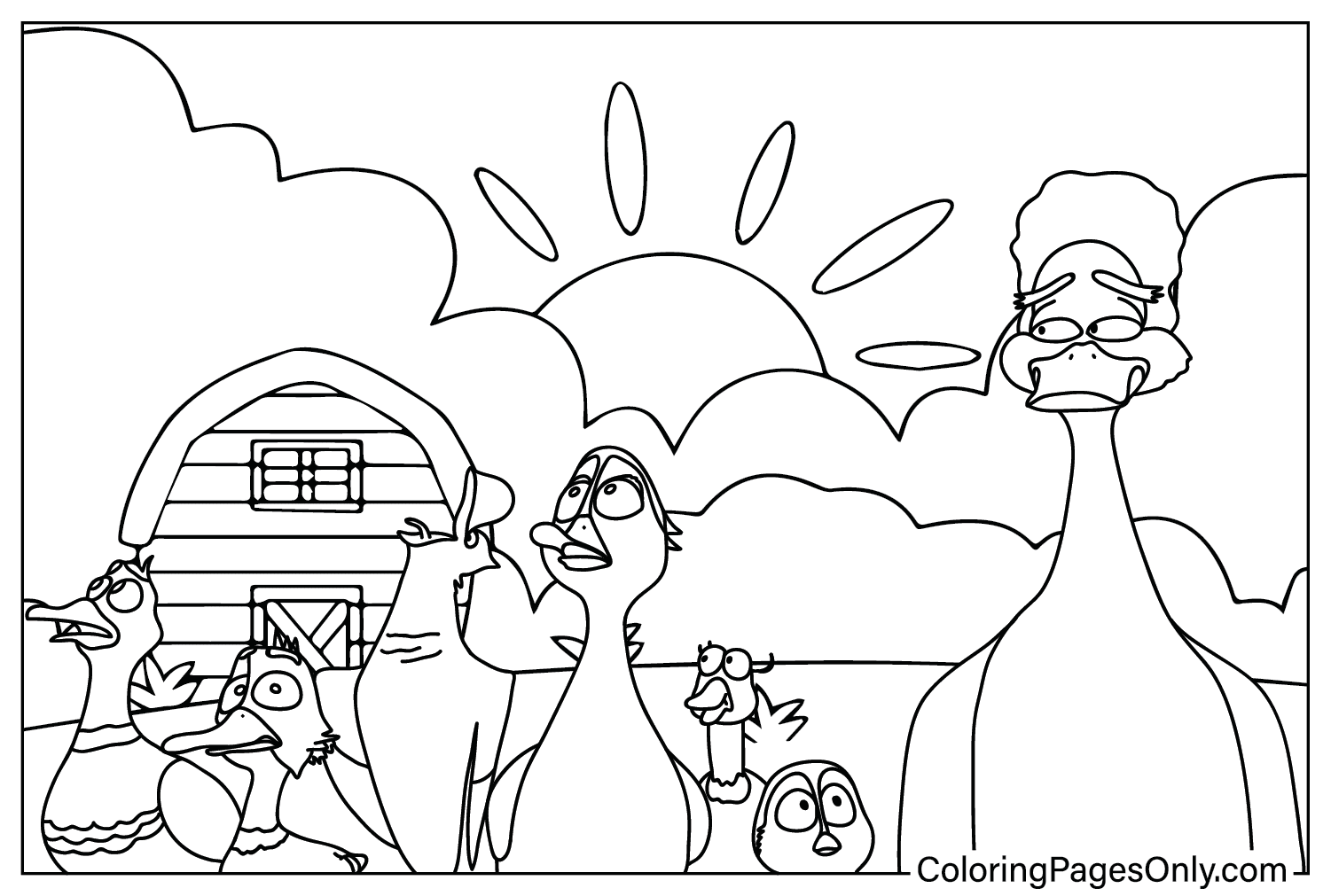
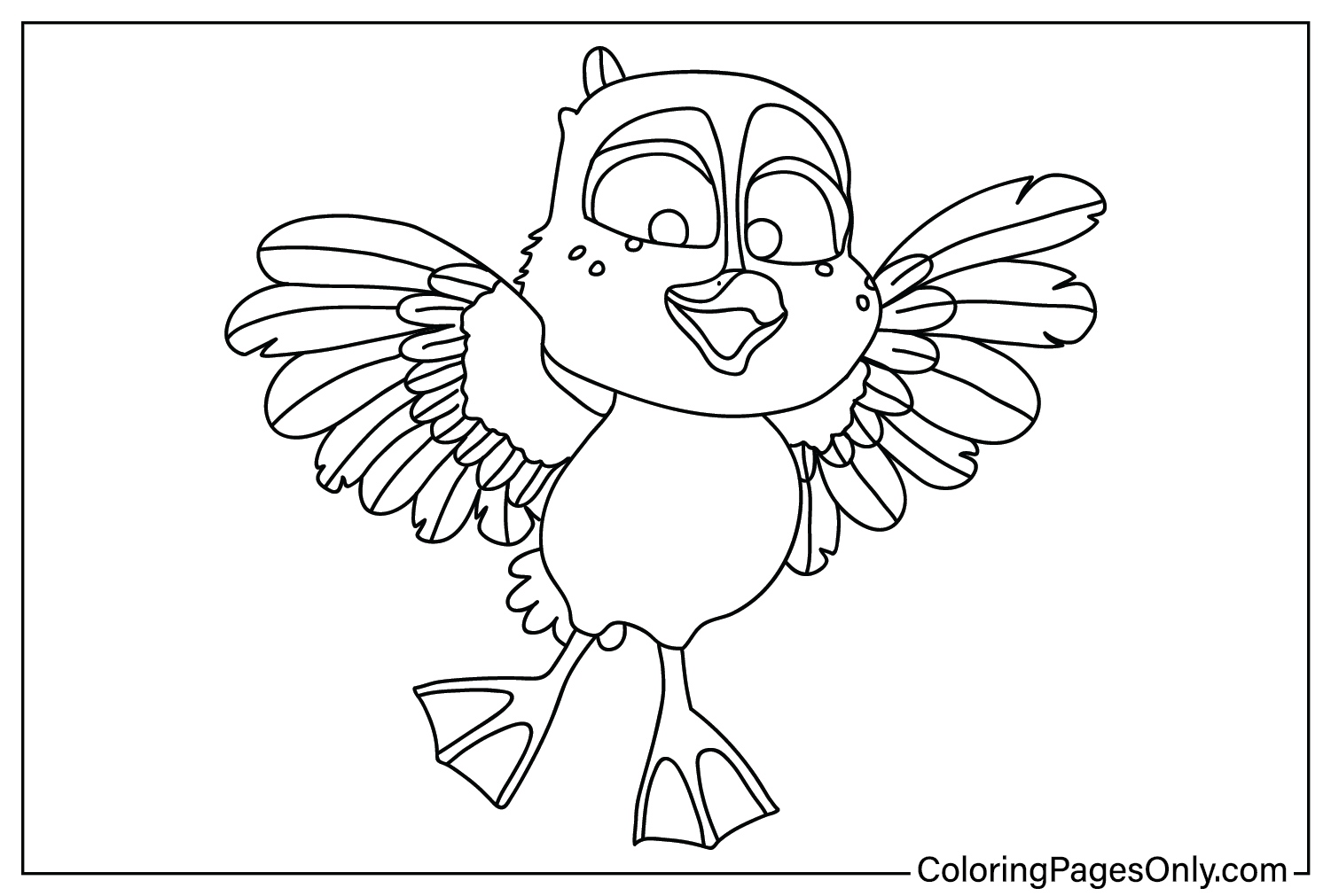
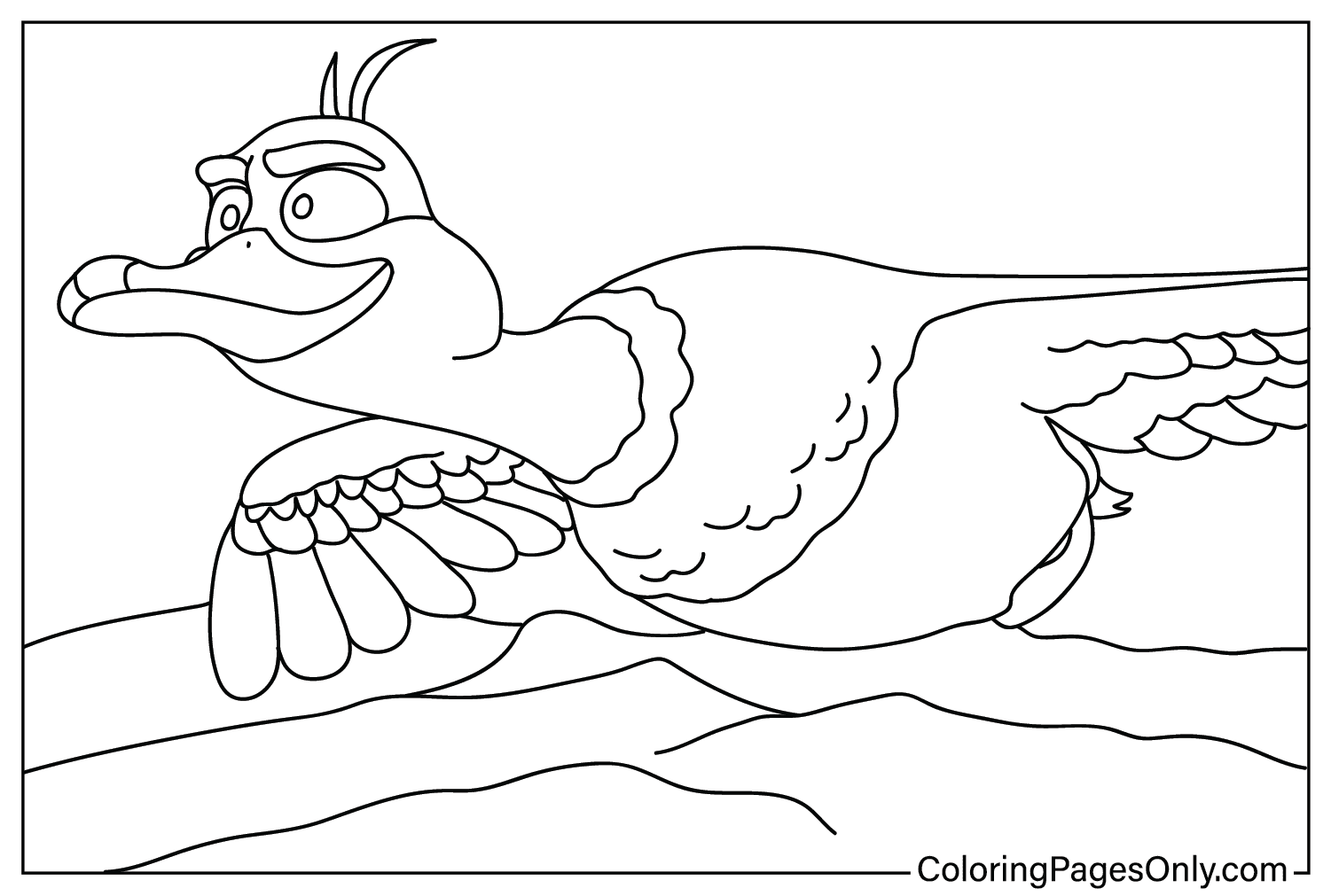
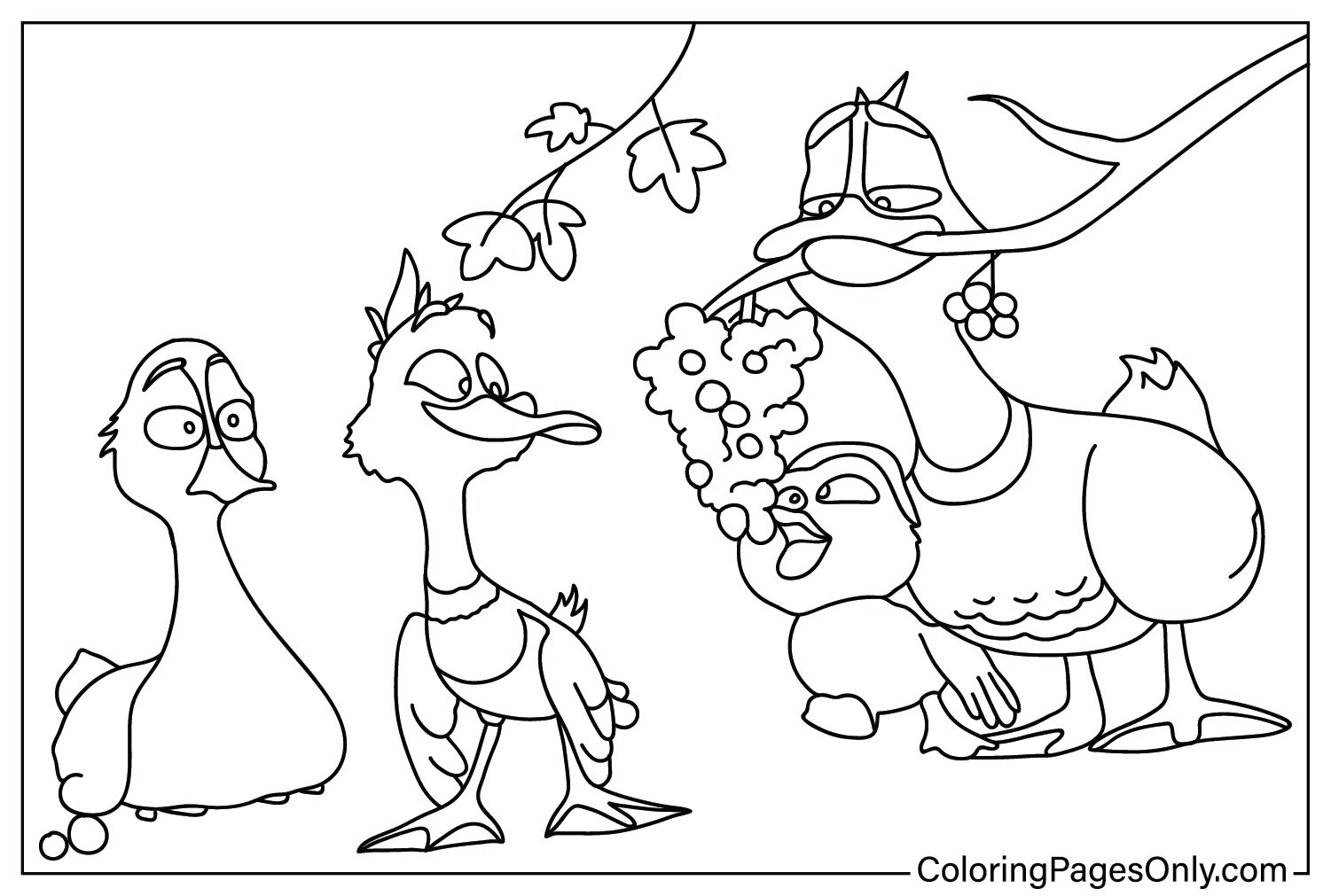
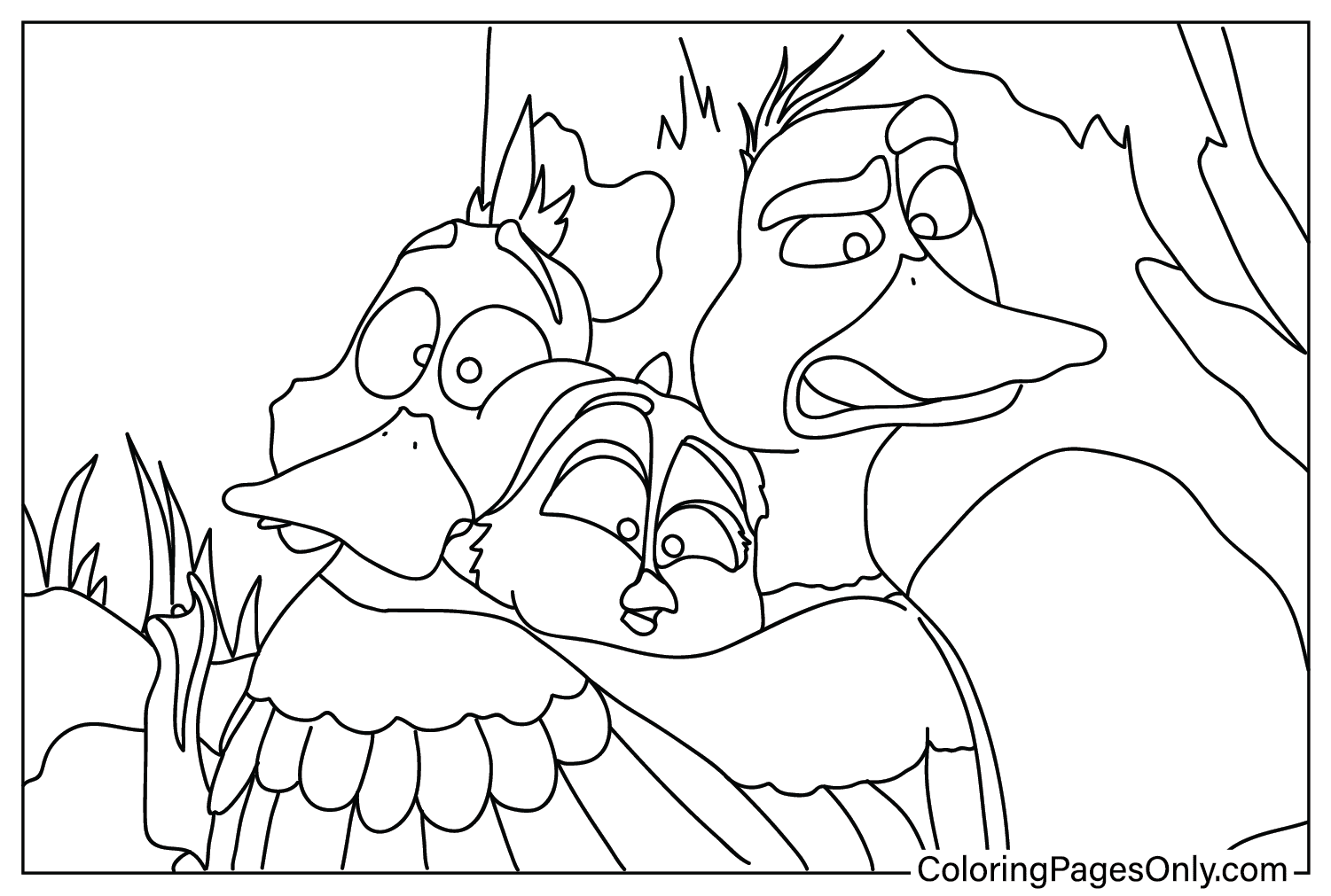
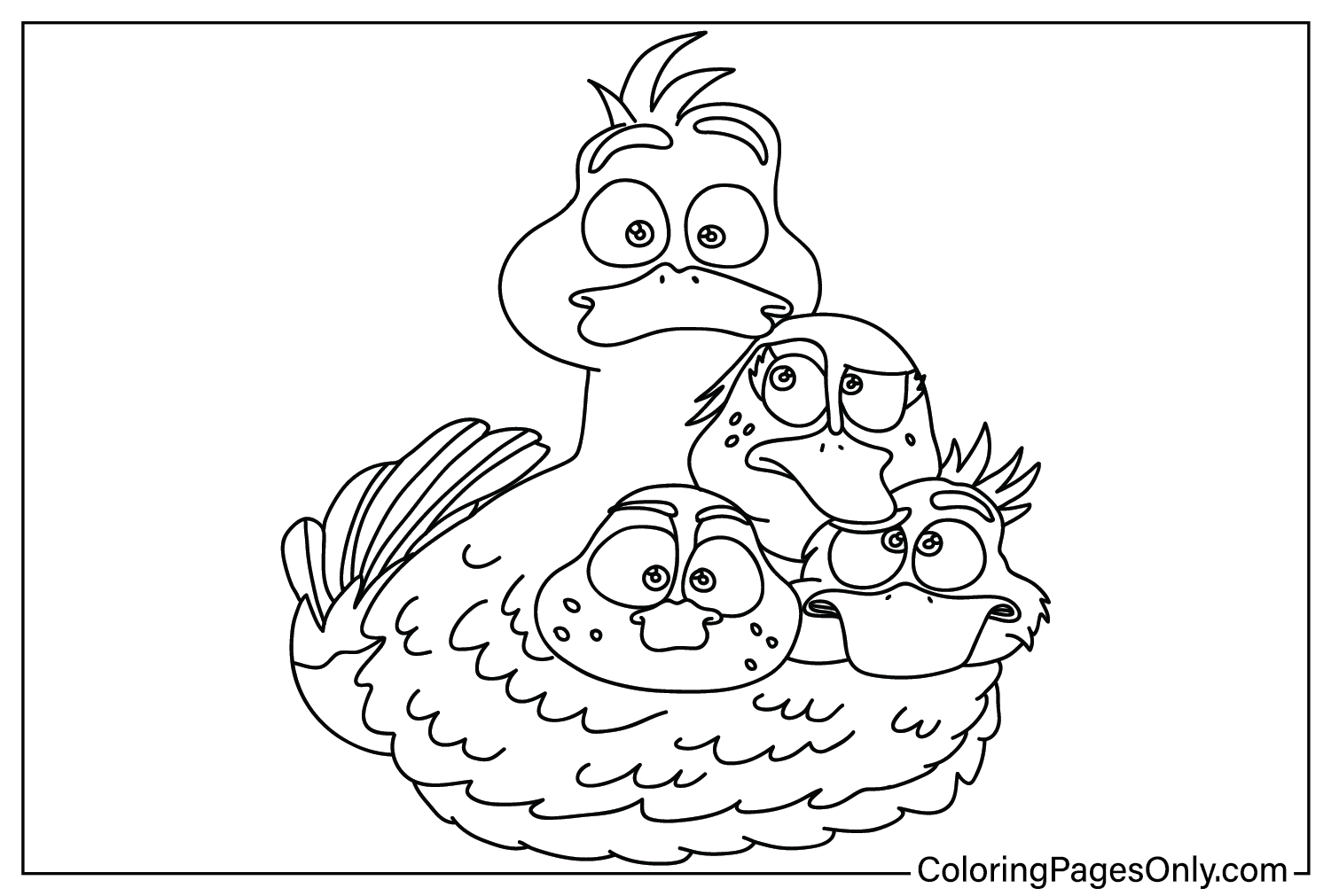
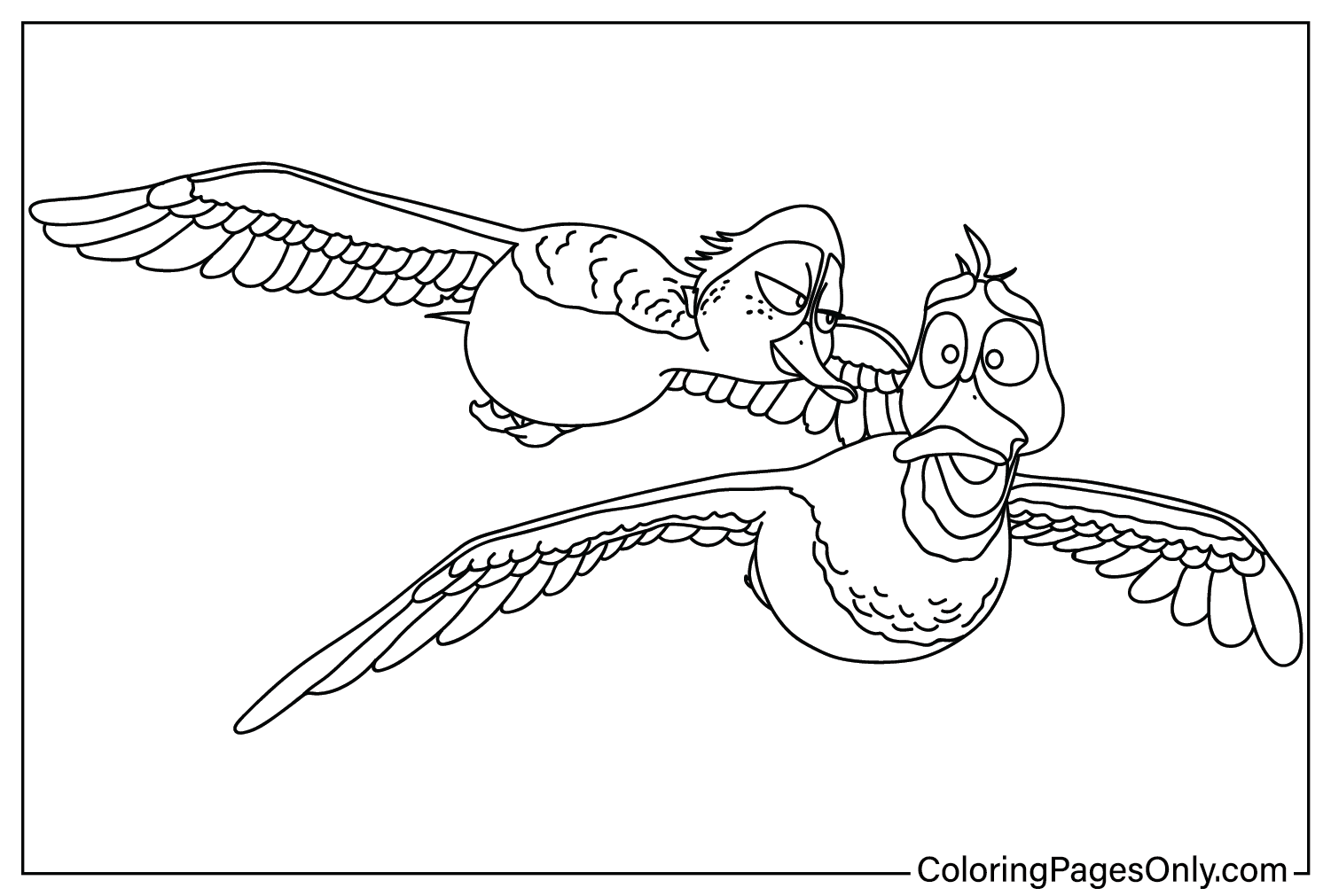
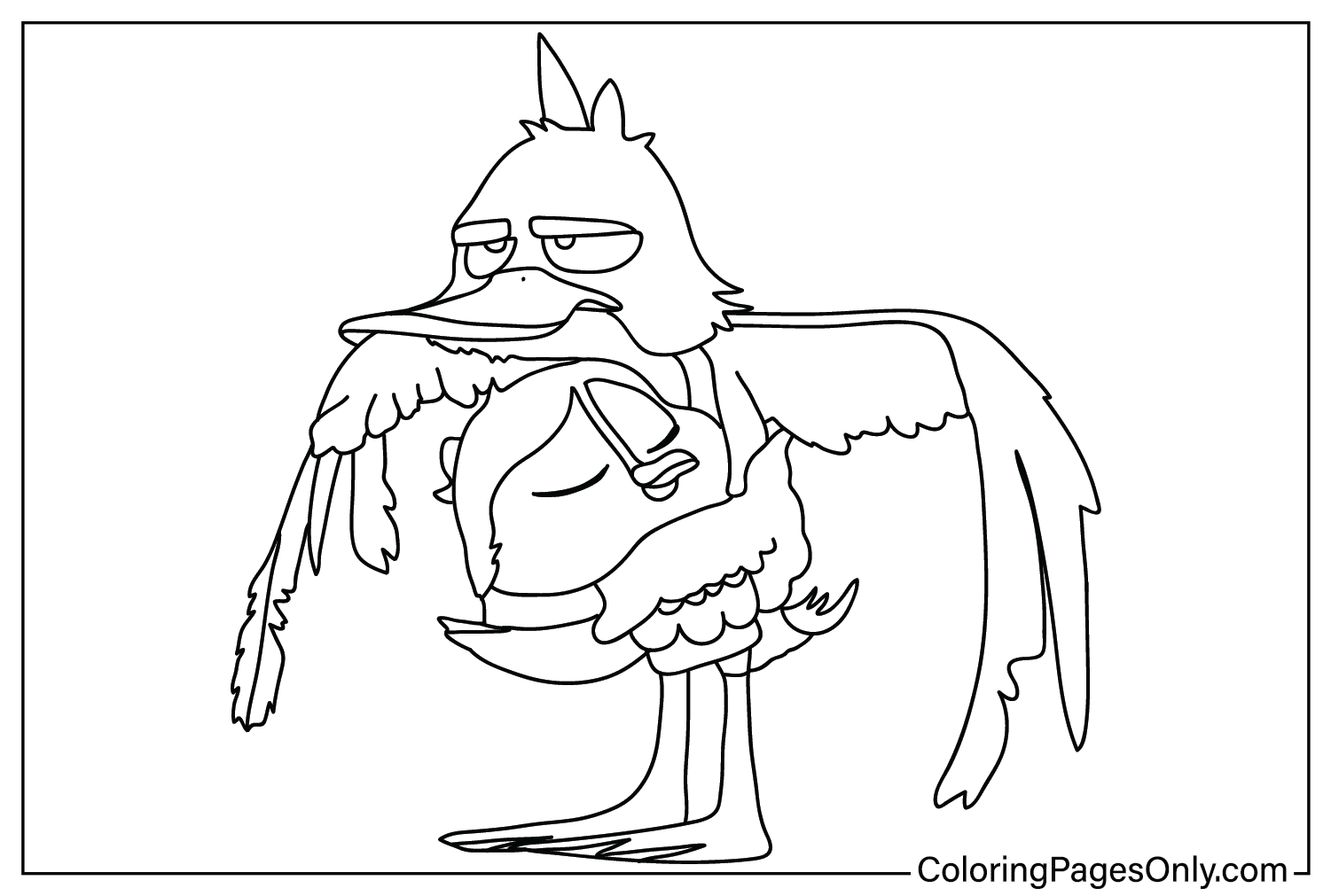
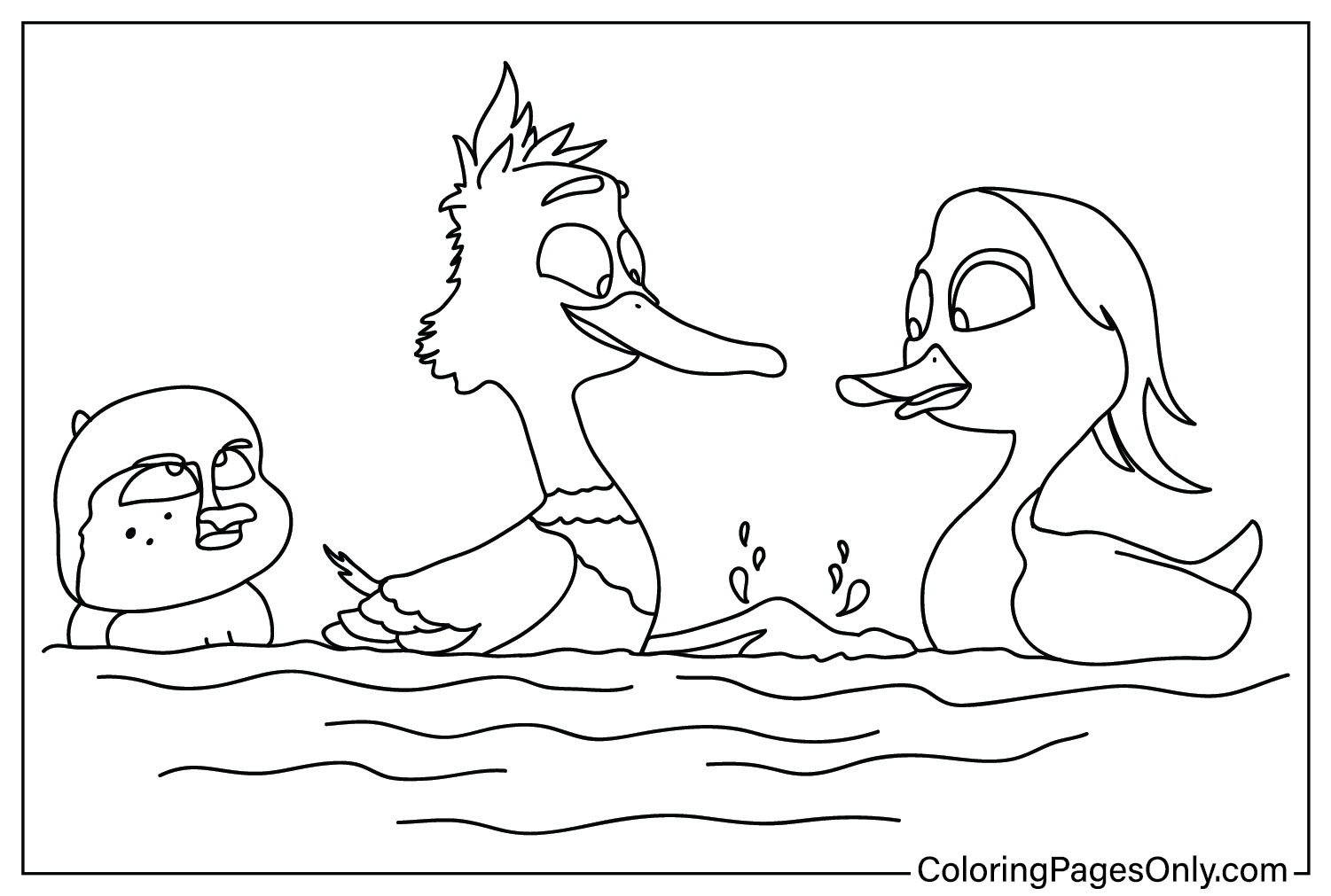
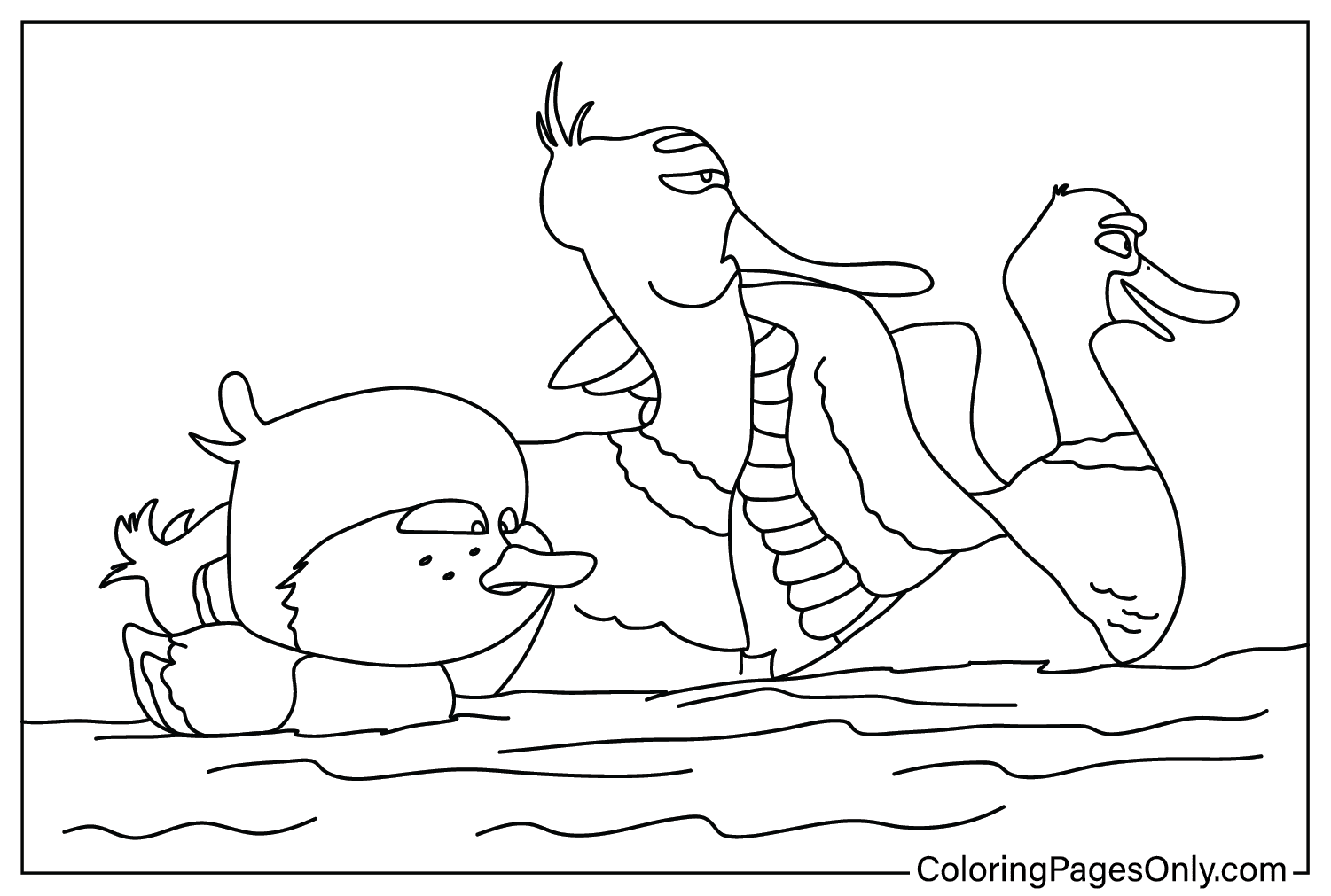
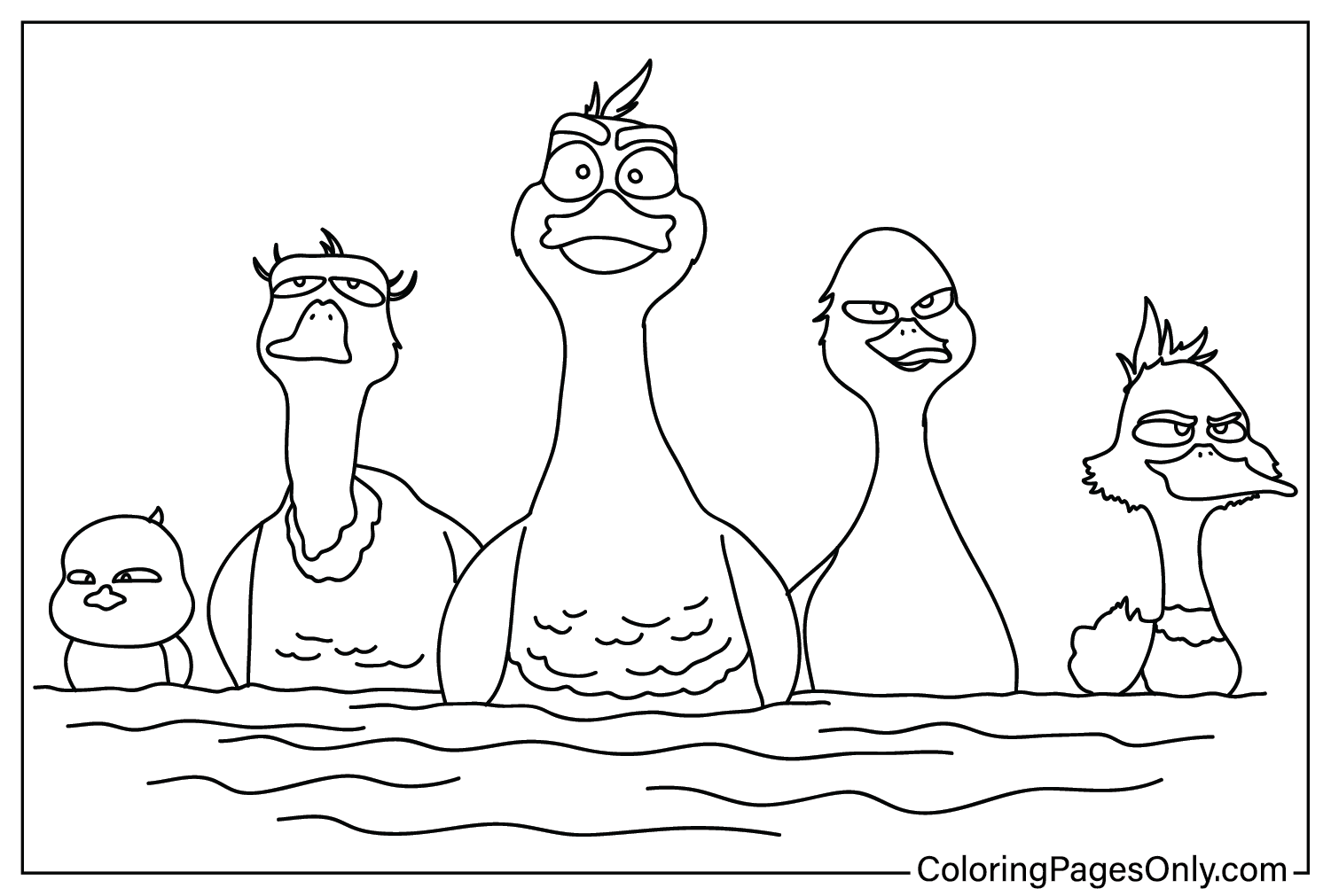
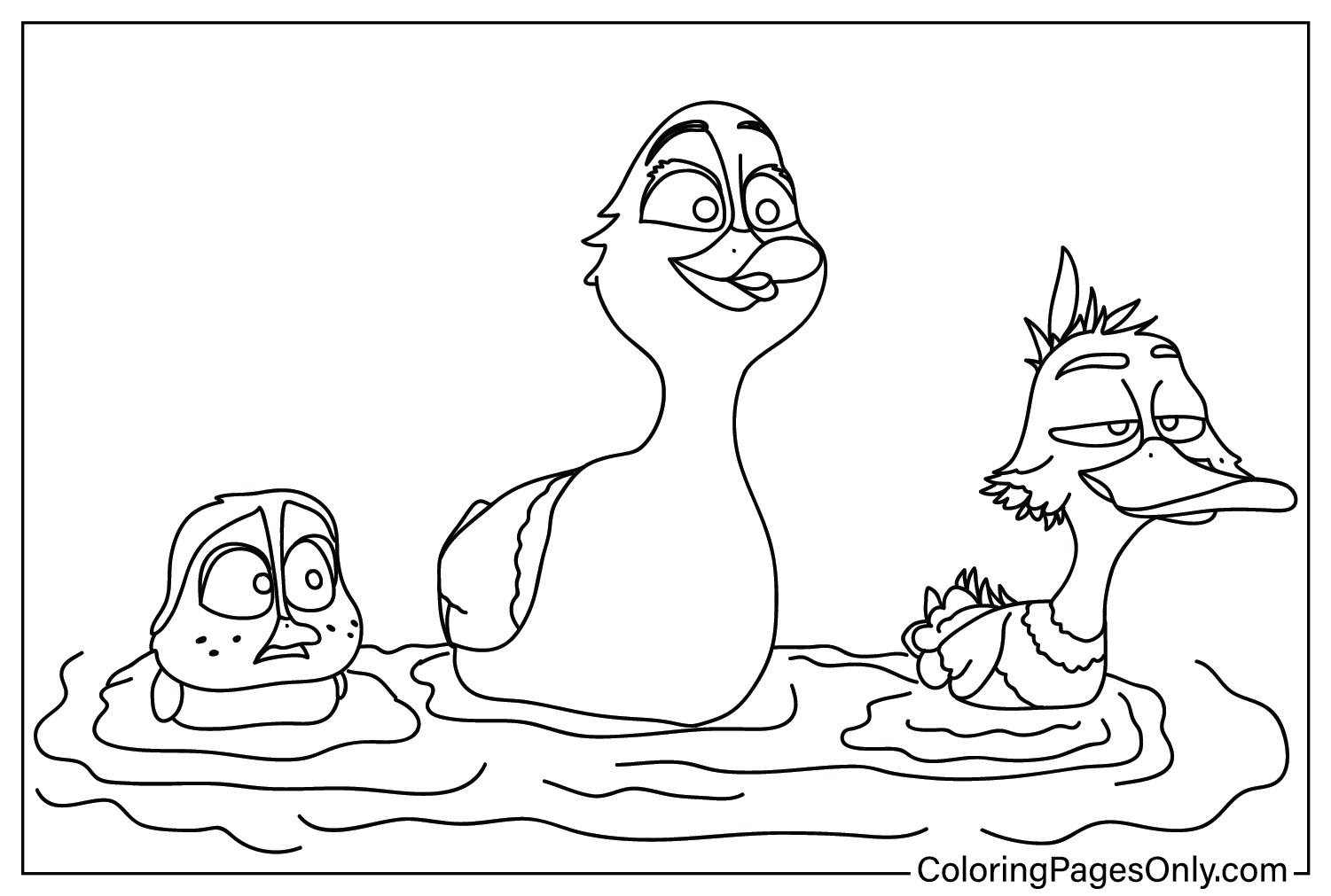
The pages in the collection depict all four family members across multiple scenes – solo portraits, family group compositions, and flight scenes that capture the specific quality of animated bird movement that Renner and his team developed for the film. The Coloring Page Migration and Color Page Migration pages include the most compositionally complex scenes, with multiple characters in motion against sky or landscape backgrounds. The solo character pages – those focusing on individual family members – reward more detailed, patient work on feather texture and expression.
What These Pages Do
The film works as a gateway to real ornithology. Migration is fiction, but the behavioral reality underlying it is not. Real mallard ducks do migrate. Real birds do use magnetic navigation, star patterns, and learned landscape features to navigate thousands of miles. Real migratory routes – the Atlantic Flyway, the Mississippi Flyway, the Pacific Flyway – are traveled by billions of birds each year on journeys that involve as much drama and danger as any animated adventure. A child who loves the film has a direct, motivated entry point into genuinely fascinating science. These pages, colored while a parent talks about what real ducks actually do, create that connection.
It teaches geography and exploration. The Mallards’ journey takes them from New England through New York City to the Caribbean – a real geographic arc that maps onto the Atlantic Flyway corridor that millions of real birds travel each fall. Children who have seen the film and want to know where Jamaica actually is, how far New York is from their pond, what the Atlantic Ocean looks like from above – these are real geography questions generated by genuine curiosity. The pages, pinned to a wall next to a simple map of the Atlantic coast, become part of a broader exploration that costs nothing and teaches a great deal.
The duck characters reward biological accuracy. Mallards are one of the most visually distinctive ducks in North America – the iridescent green head of the male, the mottled brown of the female, and the vivid orange feet. The film’s character designs are stylized but draw on the real mallard’s color vocabulary. Coloring the Mallard family characters accurately – looking up what real mallards actually look like and applying those colors – turns a coloring activity into a natural history lesson. The American Academy of Pediatrics identifies nature-connected learning experiences as significant contributors to environmental awareness, scientific curiosity, and overall developmental well-being in children.
The 2005 Art Therapy Journal finding applies especially well here. Structured coloring reduces anxiety. The specific emotional content of Migration – a film whose central theme is a parent’s fear of the unknown and a family’s capacity to discover that the world is bigger and safer than they imagined – makes its coloring pages particularly resonant for children who have their own relationship with anxiety about new things. Coloring Mack, who learned to fly further than he thought he could, is nothing.
It develops fine motor skills through feather and bird anatomy challenges. Birds are genuinely demanding coloring subjects. The overlapping layered structure of feathers – wing coverts, primary feathers, secondary feathers, tail feathers, all in precise spatial relationship – provides exactly the kind of detail-oriented, fine motor practice that the American Academy of Pediatrics identifies as a key developmental milestone in early childhood. A child who colors a duck wing carefully, tracking which feathers overlap which and where the color transitions happen, is doing something more demanding than coloring most cartoon character subjects.
How to Color These Pages Well
The male mallard’s iridescent green head. In real mallards – and in the film’s color design for Mack – the head is an iridescent green-black that shifts toward blue or purple depending on the light angle. This is caused by nanostructural coloration in the feathers: the same physical mechanism that creates iridescence in soap bubbles and butterfly wings. For coloring pages, the most evocative approach is to lay down a deep forest green as the base, then add a layer of blue-green or teal near the edges of the head shape, then a very subtle touch of deep purple at the crown, where the angle would catch light differently. Three distinct but closely related tones, applied softly, suggest the iridescence better than any single flat green.
Female mallard brown is warmer and more complex than it looks. Pam’s coloring – and the coloring of real female mallards – is the mottled warm brown that camouflages them on the nest. It is not a single flat brown. It is a layered combination of warm tan, medium brown, darker brown streaks, and the occasional buff or cream patch. Apply the lightest tone first as a base across the entire bird, then add the darker brown streaks on top with deliberate, feather-following strokes from the body toward the wingtip. The streaks should follow the direction of feather growth – this gives the finished coloring a quality that looks informed by how birds actually work rather than how a flat shape is filled in.
Orange feet deserve specific attention. Both male and female mallards have vivid orange feet – a color that reads as almost unnaturally bright against any natural background. In the film, the feet are a design element that contributes significantly to the characters’ expressiveness (duck feet are inherently comedic, and the animators use them accordingly). When coloring the full-figure pages, save the feet for last and use the most saturated, vivid orange available – not a warm, muted orange but a full-saturation, bright “duck feet orange” that pops against the brown and green of the body.
Flight pages want directional strokes and open space. The pages depicting the Mallard family in flight reward an approach that treats the sky background differently from the characters: broad, horizontal strokes for the sky in graduated blue tones (lighter at the horizon, deeper at the top), leaving areas near the birds slightly lighter to suggest air movement and sunlight. Apply color strokes on the wing feathers in the direction of flight – forward-angled on the leading edge, sweeping back toward the wingtip – which gives the flying figures visual momentum. The compositional tension in flight pages between the detailed, textured birds and the open, airy sky is what makes them the most visually striking pages in the collection.
For the city and landscape background pages, the contrast between the organic, warm-toned duck characters and the cooler, harder geometry of New York City buildings creates the visual tension that the film itself uses. Keep the buildings in cool greys and blues; keep the ducks in warm greens, browns, and oranges. The color temperature difference does the narrative work without additional effort.
5 Creative Activity Ideas
Migration Route Map
Turn the film’s journey into a geography project that lives on the wall alongside the coloring pages. Print two or three of the flight scene pages and color them carefully. While coloring, look up and print a simple outline map of the eastern United States and Caribbean – enough to show New England, New York, the Atlantic coast, and Jamaica.
Mark the Mallard family’s approximate route on the map with a colored line – blue for the Atlantic Flyway, which is the real migratory corridor that millions of ducks use along the eastern seaboard. Mark the real locations: Connecticut or Massachusetts as the starting pond area, New York City, where the family encounters the city scenes, and the Caribbean as the destination.
Mount the completed coloring pages around the map – flight scenes at the top, the family portrait page near the starting point. Connect each page to its location on the map with a colored string or drawn line. The finished display works as both a film celebration and a genuine geography learning tool, and it prompts the question that every good nature film prompts: What happens to real ducks when they make this journey?
Mallard Family Storybook
This is the “Create A Story Book” activity from the original page, significantly rebuilt with more structure and more creative scaffolding. Print all 14 pages at full size. Color each one carefully, keeping a consistent character palette across all pages – Mack’s iridescent green, Pam’s warm brown, Dax and Mimi’s character-appropriate color choices.
Arrange the colored pages in a narrative sequence – not necessarily following the film’s plot exactly, but in a sequence that makes a coherent story. The flight scenes become the journey pages; the family portrait pages become the beginning and ending; the individual character pages become the moments of personal focus.
For each page, write 2–3 sentences of original story text at the bottom – the child’s own narration of what is happening in this scene. Keep the text in the child’s voice, not a retelling of the film’s dialogue, but an original interpretation of the image. Bind the pages in sequence with a binder ring or staple along the left edge. The finished storybook is genuinely original creative work – an illustrated narrative that the child both drew and wrote.
Thanksgiving Migration Card
The film’s December 2023 release was positioned deliberately around the Thanksgiving and Christmas holiday season – and the Mallard pages’ autumn migration theme connects naturally to Thanksgiving’s harvest and gratitude context. This is the Thanksgiving card activity from the original page, with a clearer creative brief.
Print a single full-figure Mallard family page on cardstock (the heaviest weight your printer handles). Color the family in autumn palette choices: warm orange and golden-brown tones on the background, the canonical green and brown on the ducks themselves. The contrast of natural warm-autumn colors behind cool-toned mallard characters creates a seasonal image that reads immediately as Thanksgiving without being visually clichéd.
Fold the cardstock in half to create the card. On the front, the colored image is the visual. Inside, write a personal message – something about gratitude, about the people who matter, about being glad that the journey brought you here. The connection to the film’s themes of family, courage, and discovering that the world is worth exploring gives the card a layer of meaning that a standard Thanksgiving card doesn’t carry.
Duck Feather Study Journal
This craft extends the coloring activity into a nature science project. Print three or four of the character close-up pages – particularly any that show the birds’ feather detail clearly. Color each one, but color it slowly, looking up real mallard photographs for accurate color reference. Take your time with the feather direction, the color layering, and the small details.
While coloring, keep a simple notebook open beside you and answer one question per page: What do the feathers feel like? (Research: contour feathers, down feathers, flight feathers.) Why is the male mallard’s head green and iridescent? (Research: nanostructural coloration.) How do mallards stay dry in water? (Research: preen gland oil.) How do they navigate? (Research: magnetoreception, star navigation.)
The finished journal – handwritten answers paired with carefully colored duck portraits – is both a natural history reference and a portfolio of coloring work. It demonstrates the connection between close visual attention (coloring) and scientific inquiry (researching what you’re drawing) in a way that teachers in both art and science classes recognize as genuinely valuable.
Migration Mobile
Create a hanging mobile from the flight scene pages – a three-dimensional display that captures the film’s essential visual idea: ducks in the air, going somewhere, in a formation that makes them look like a family rather than a flock.
Print five to six of the most dynamic pages – prioritizing any that show the ducks in full flight with wings extended. Color each one with special attention to the sky background, which on a mobile will be visible from multiple angles. Cut out the duck figures (and sky, if the composition includes it) along clean edges.
Punch a small hole in the top of each cutout. Cut several lengths of thin dowel rod or bamboo skewer to different lengths (30cm, 25cm, 20cm works well). Thread fine string or fishing line through each cutout hole and tie off. Tie the cutout strings to the dowel rods at varying heights – longer strings for characters you want to hang lower, shorter for those higher in the composition. Balance each dowel carefully before moving to the next.
The finished mobile turns slowly in room air currents and creates the impression of a duck family in perpetual gentle flight – the exact visual metaphor the film is built on. Hung in a child’s bedroom near a window, it moves.
Frequently Asked Questions
What is the Migration movie about? Migration is a 2023 animated comedy film produced by Illumination and directed by Benjamin Renner. Released on December 22, 2023, it follows the Mallard family – father Mack, mother Pam, son Dax, and daughter Mimi – who have lived their entire lives on a safe but small New England pond. When a passing flock of migratory ducks tells the family about Jamaica, the children push their cautious father to attempt the journey for the first time. The film follows the family’s chaotic, funny, and emotionally resonant first migration – from their pond through New York City and beyond – as Mack learns to overcome his fear of the unknown and trust both himself and the world.
Who are the main characters in Migration? The four central characters are all members of the Mallard family. Mack (voiced by Kumail Nanjiani) is the overprotective father whose fear drives and complicates the family’s journey. Pam (Elizabeth Banks) is the mother who supports the adventure and holds the family together through its challenges. Dax (Caspar Jennings) is the son whose excitement for the world beyond the pond sets the story in motion. Mimi (Tresi Gazal) is the young daughter, imaginative and quietly determined. Supporting characters include a heron named Dan (Danny DeVito), a group of Jamaican parrots, and various other birds the family encounters during their journey.
Who directed Migration, and what other films did they make? Migration was directed by Benjamin Renner, a French director whose previous films include Ernest & Celestine (2012), which was nominated for the Academy Award for Best Animated Feature, and The Big Bad Fox and Other Tales (2017). Renner brought a European animation sensibility to the Illumination production model – particularly in the physical comedy of the bird characters, which draws on a long tradition of animal-based slapstick in French animation. The film was produced by Illumination and distributed by Universal Pictures.
Do mallard ducks actually migrate? Yes. Mallard ducks (Anas platyrhynchos) are partial migrants – meaning some populations migrate seasonally while others remain year-round in temperate climates where open water is available. Migratory mallards in North America travel along four major flyways – the Atlantic, Mississippi, Central, and Pacific – with journeys of several hundred to over a thousand miles between breeding and wintering grounds. They navigate using a combination of the Earth’s magnetic field (detected through specialized cells in the eye and beak), star patterns learned during their first migration, and landscape features including river systems and coastlines. The Cornell Lab of Ornithology tracks mallard migration as part of broader waterfowl monitoring programs.
What colors are real mallard ducks? Male mallards have an iridescent green head (the color shifts toward blue-black depending on light angle), a narrow white collar separating the head from the chestnut-brown breast, a grey body, black and white tail feathers, and a distinctive purple-blue speculum (wing patch) bordered by white. Female mallards are mottled warm brown with a slightly paler face and the same blue speculum visible in flight. Both males and females have vivid orange-yellow feet and orange bills with a darker saddle mark. The iridescent quality of the male’s green head is produced by nanostructural coloration – the same physical mechanism as butterfly wing iridescence – rather than by any green pigment.
At what age is Migration best suited for? The film is rated PG and is designed for a family audience, with humor that works simultaneously for young children and adults. Most reviewers identified the core audience as children aged 4–10, with adult-friendly comedy and emotional themes accessible to parents. The coloring pages in this collection work well for ages 3–4 on the simpler composition pages, ages 5–8 for the character portrait pages and the flight scenes, and for adults who want to practice bird illustration technique on the more detailed pages. The nature science extension activities – the feather study journal, the migration map – work best from ages 6–8 upward.
Can these pages be used in a classroom or educational setting? Yes, and the film’s combination of biology (bird migration, waterfowl identification), geography (Atlantic Flyway, New England to Caribbean routing), and emotional/social content (overcoming fear, family communication, the value of new experience) makes these pages particularly valuable in elementary classroom settings. Science teachers can use them alongside a unit on animal migration and navigation. Geography teachers can use them to introduce flyway corridors and seasonal bird movement. Language arts teachers can use the storybook activity as a creative writing prompt. All pages are completely free for educational use without restriction.
Browse the full collection at ColoringPagesOnly.com. All 14 pages free, no sign-up, PDF or PNG, print at home or color online directly in your browser.
Mallard ducks have been migrating along the Atlantic coast for thousands of years before anyone thought to make a film about it. The film’s central question: Is it worth the fear to go somewhere new? – is one that every creature that has ever left a familiar place has answered in the same direction. The ducks migrate because the journey is the answer. The pond is comfortable, and the world is larger.
Color the family. Follow the flyway. See what’s out there.
Share your work on Facebook and Pinterest and tag #Coloringpagesonly. We especially want to see the migration map projects and the mobiles.
Color the flock. Trust the flyway. Fly further.