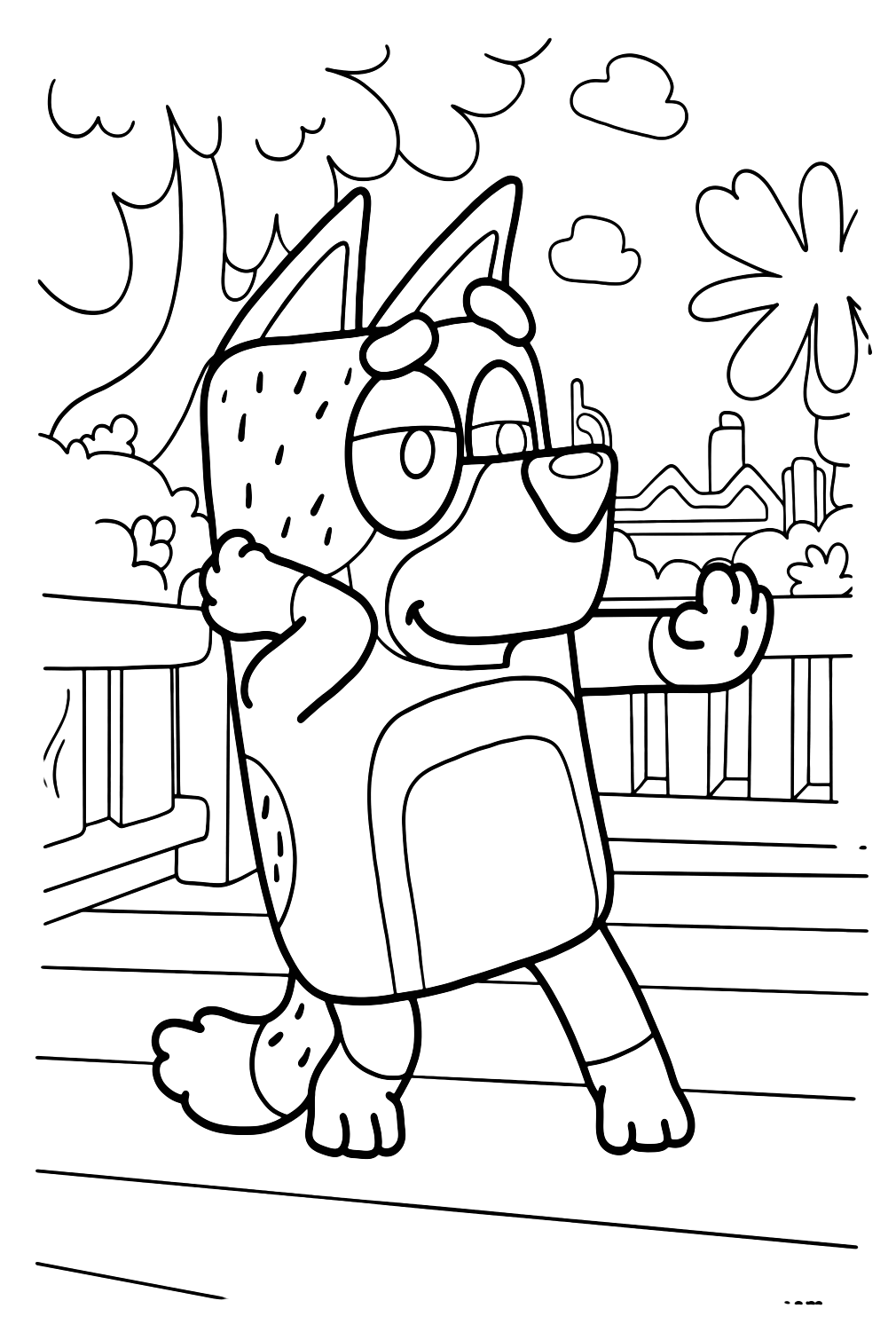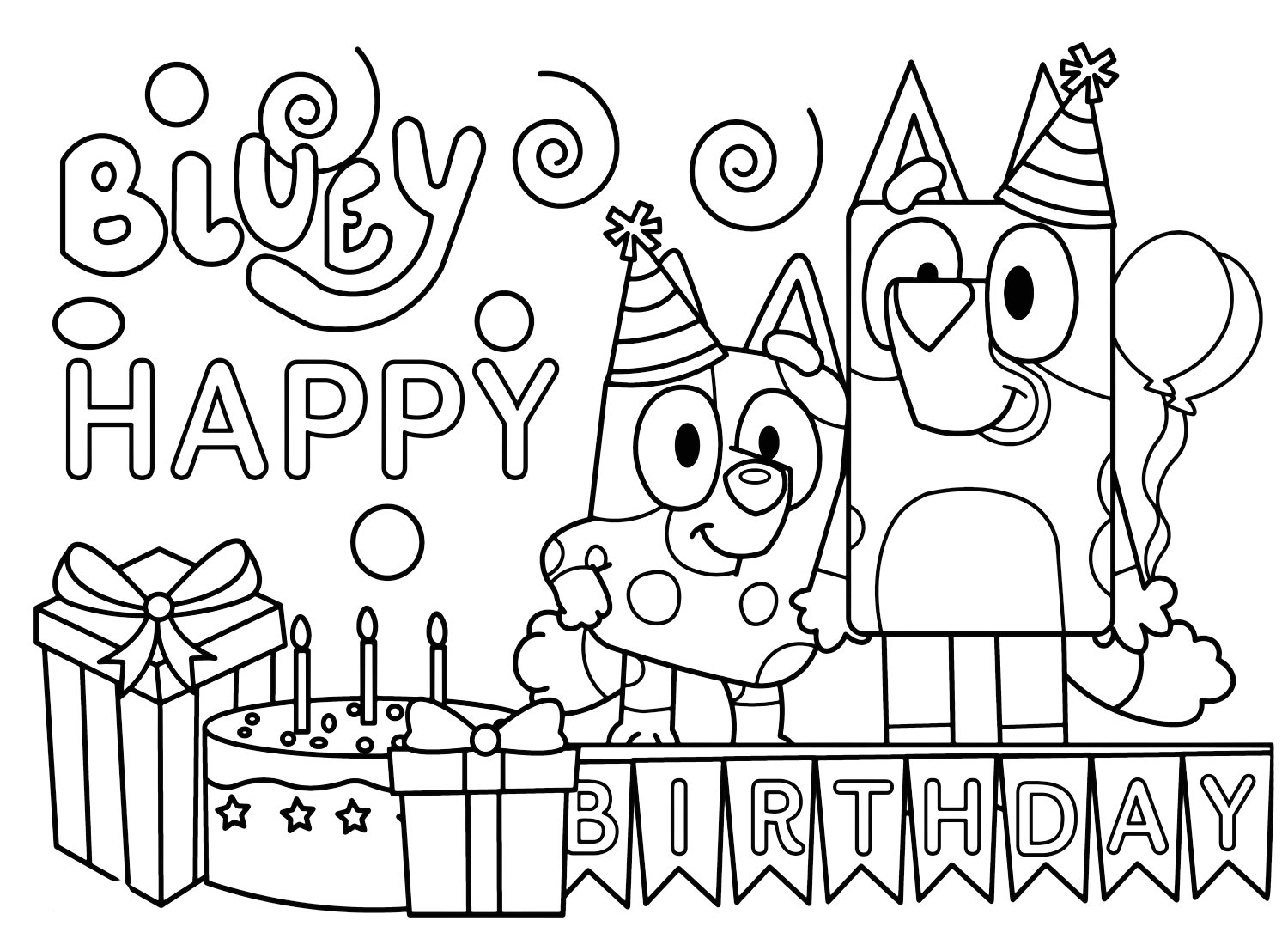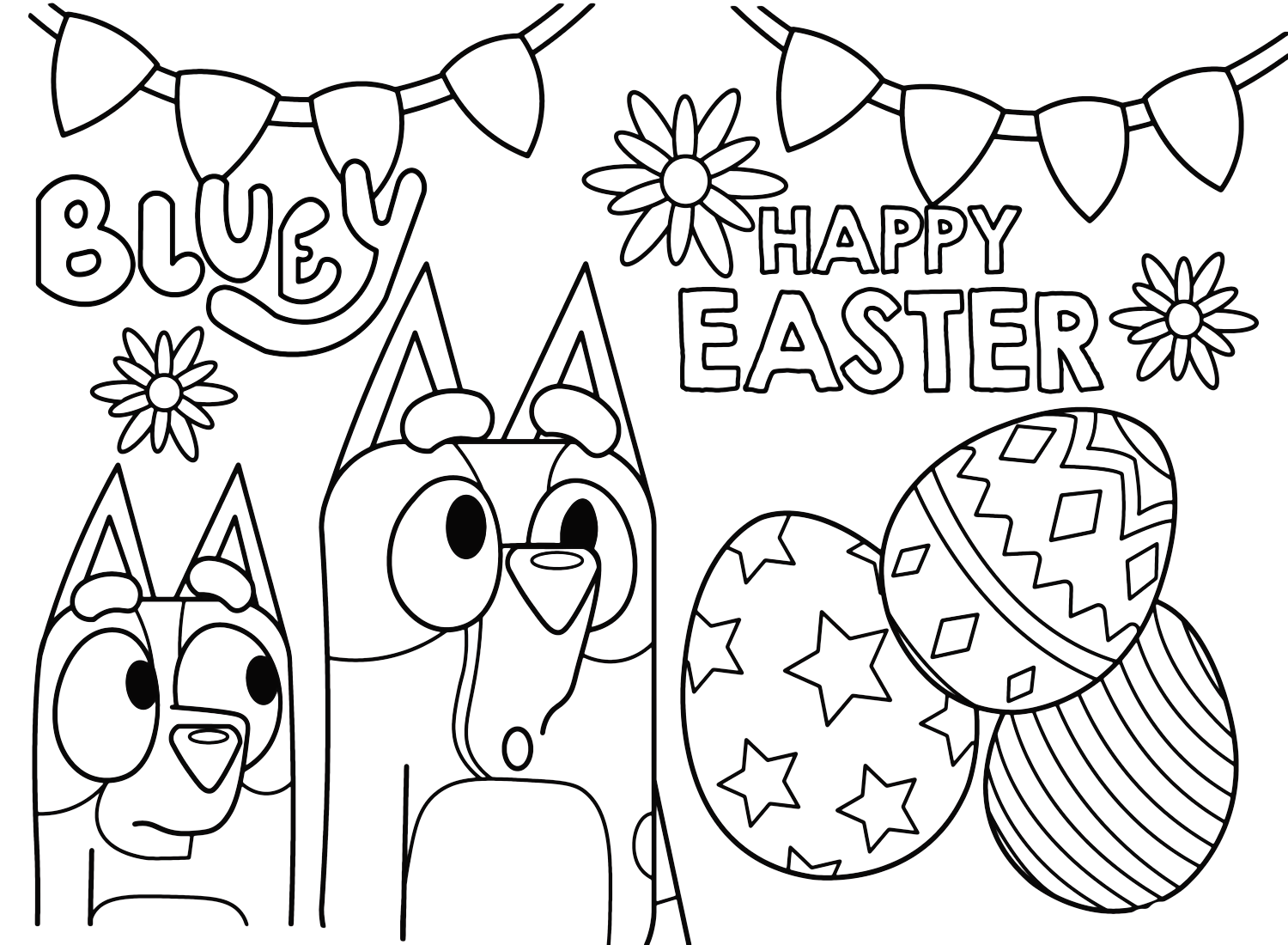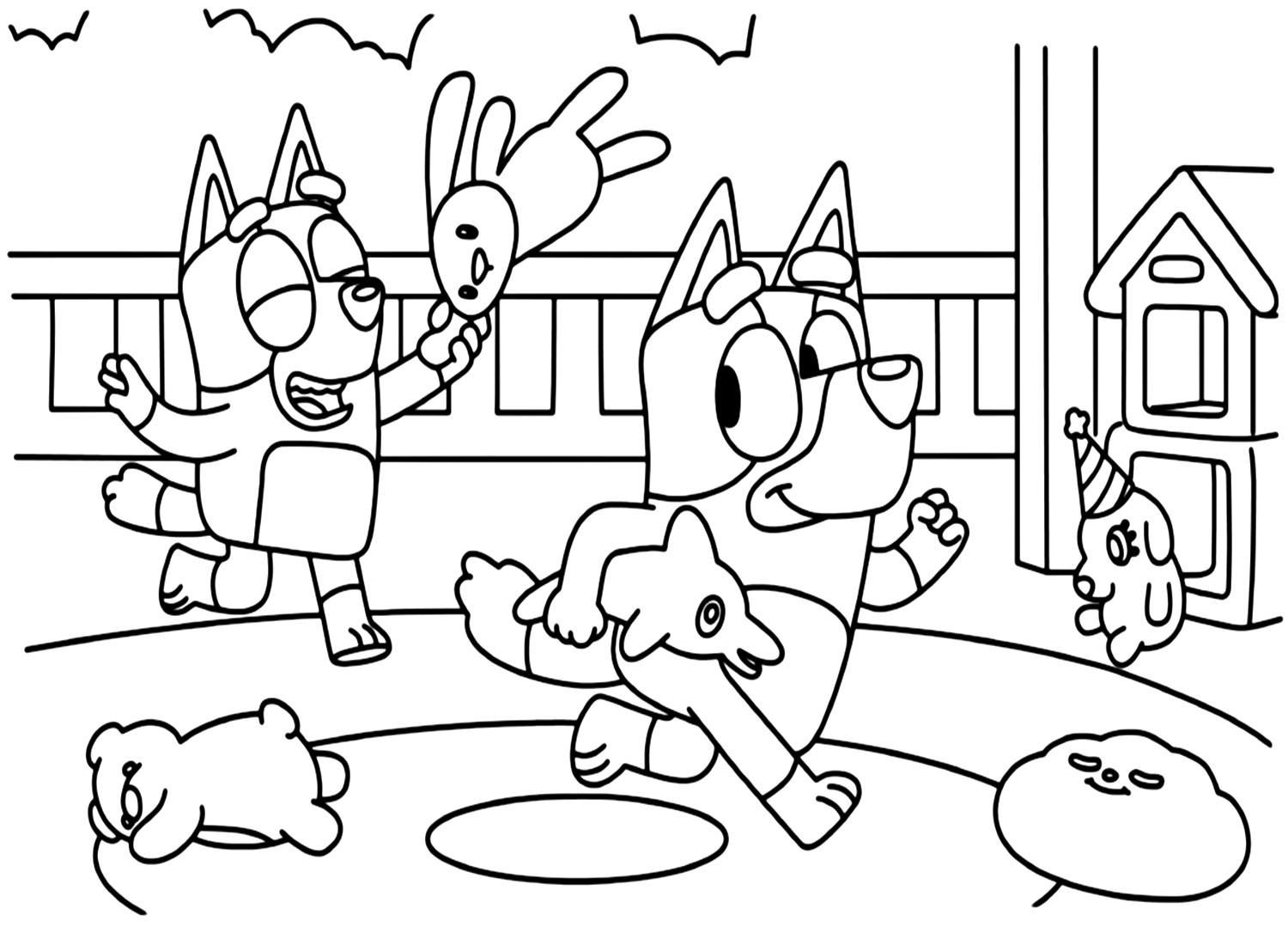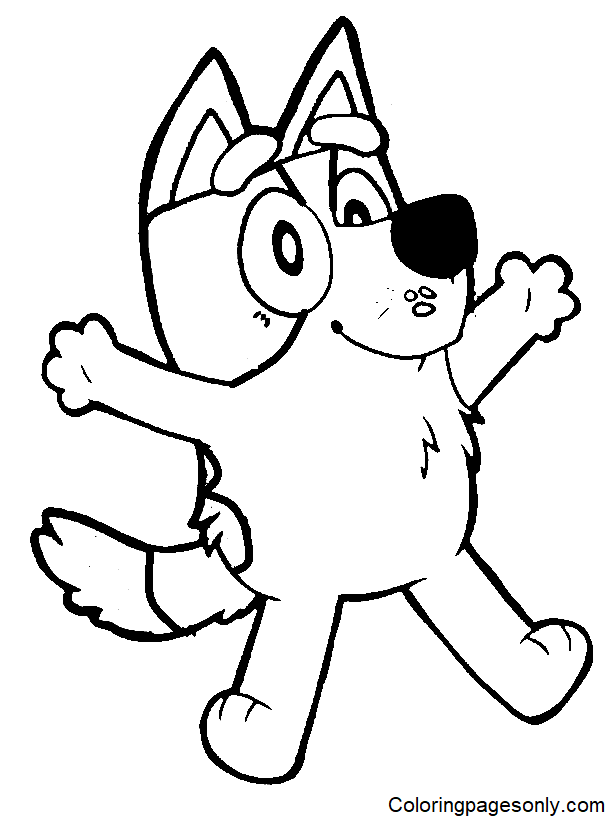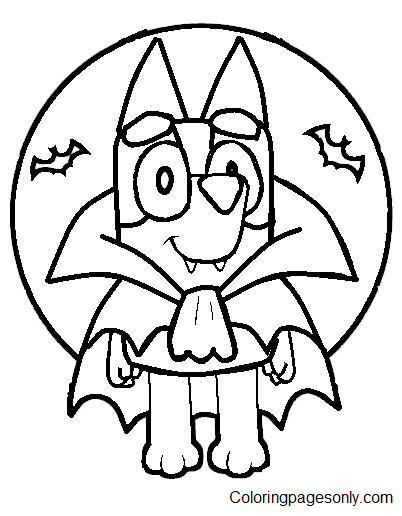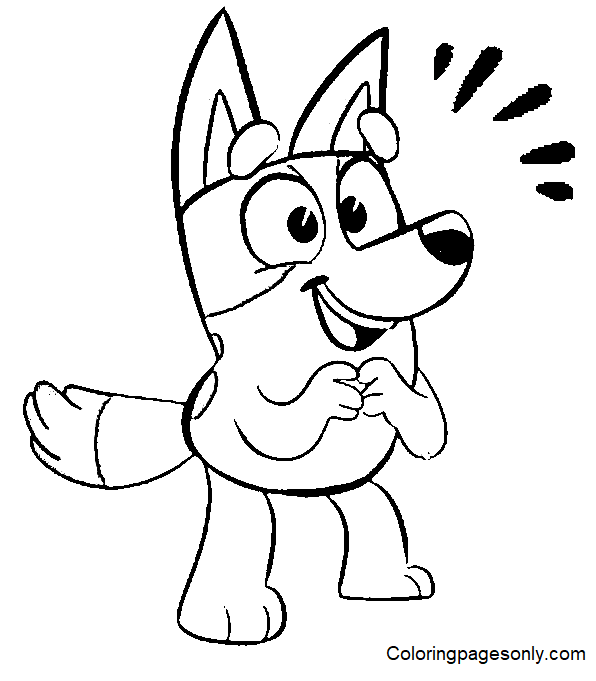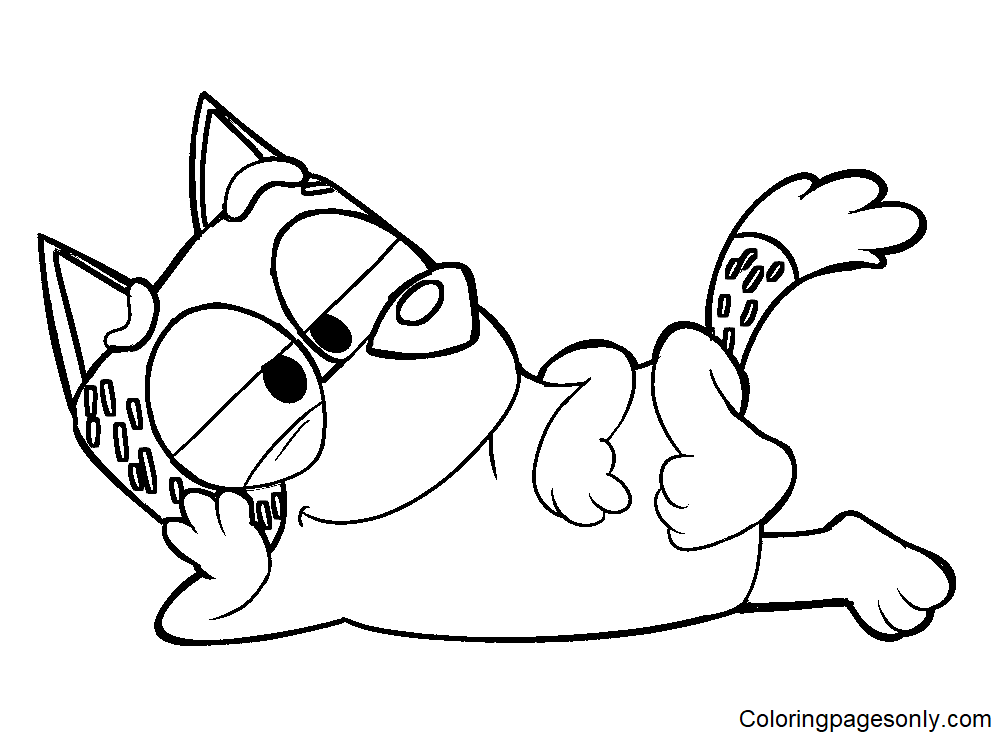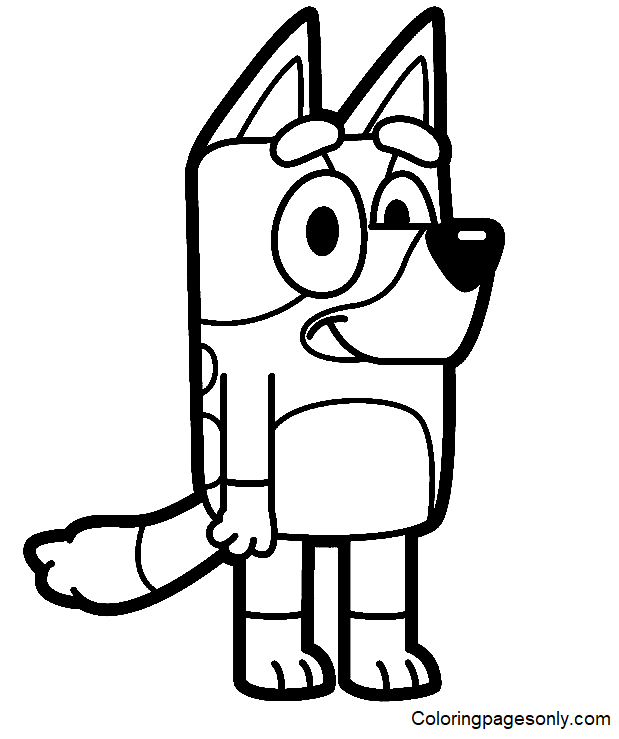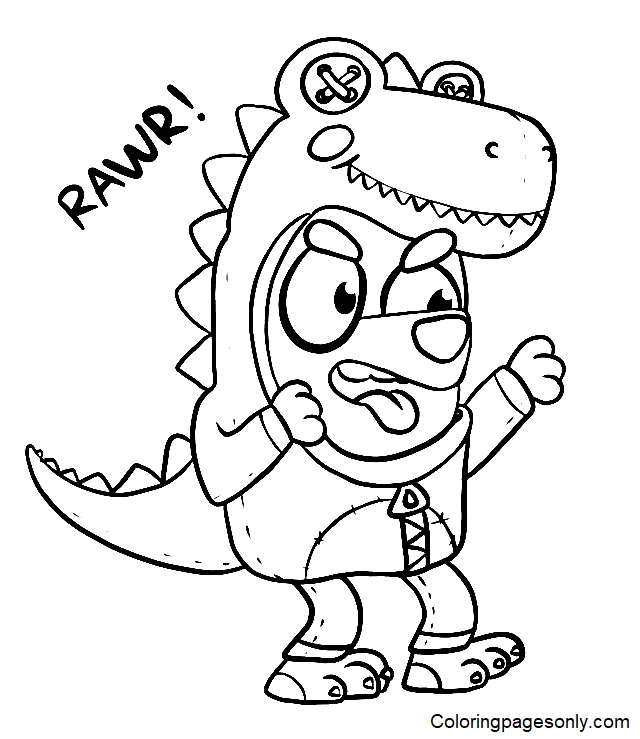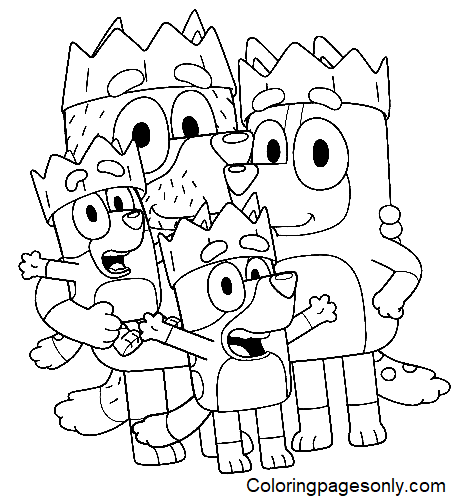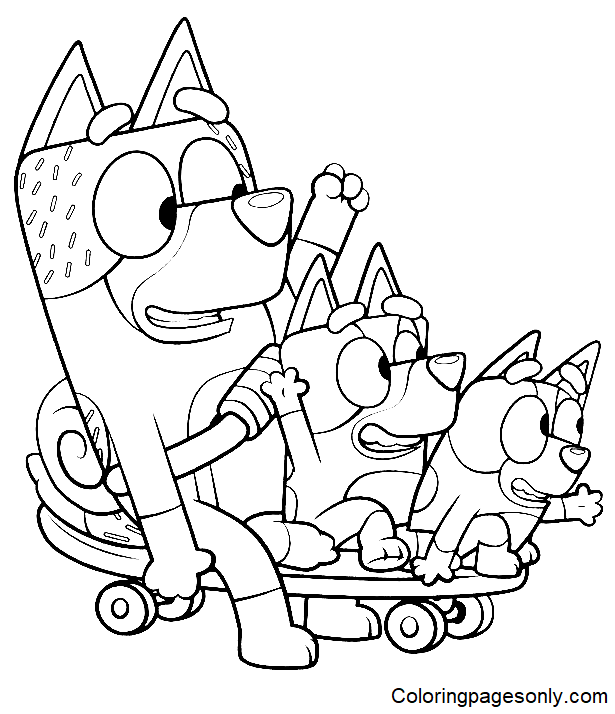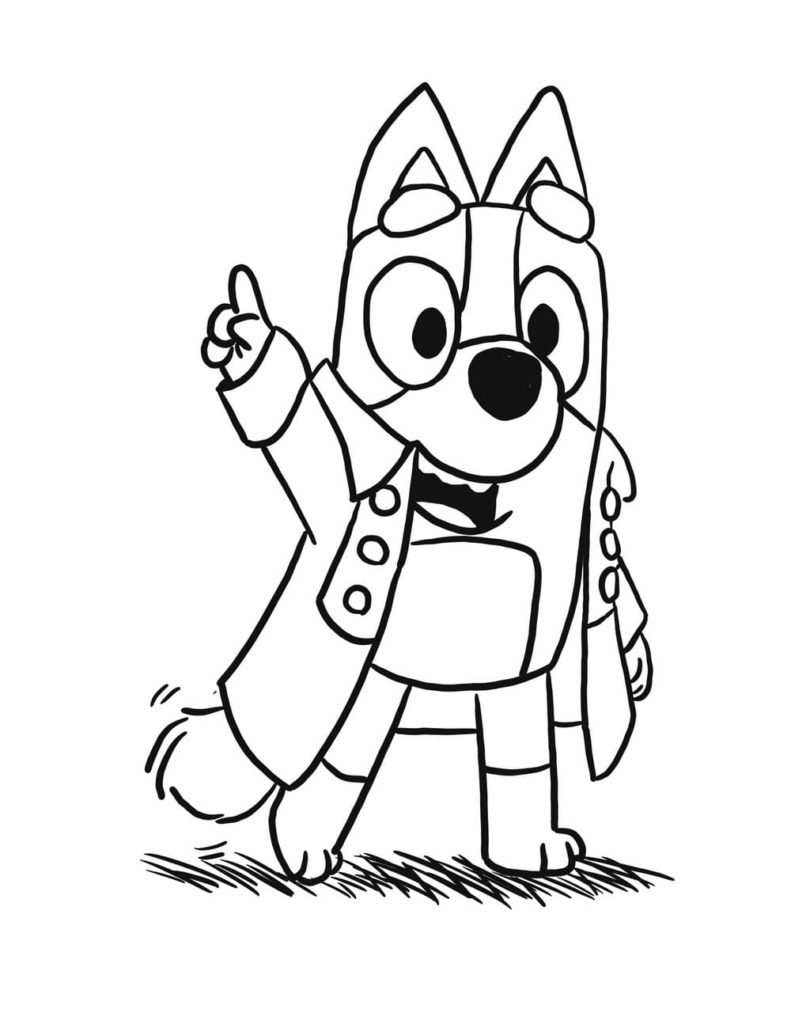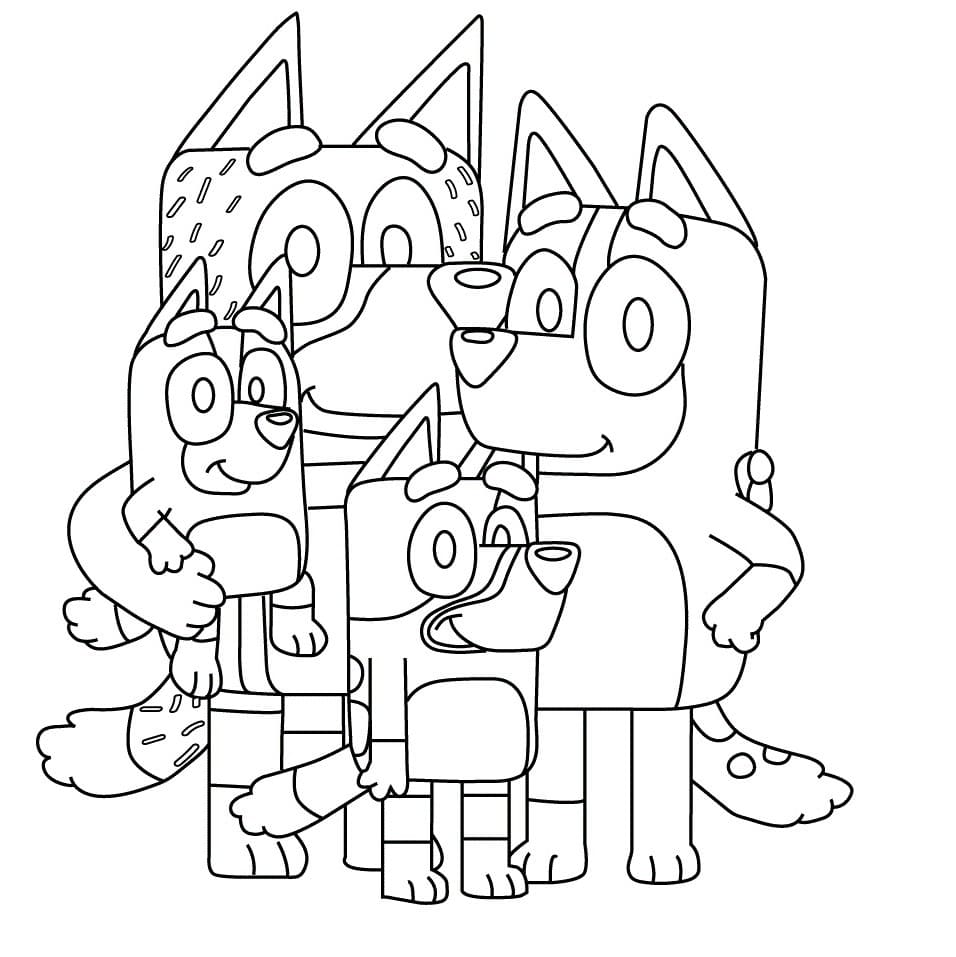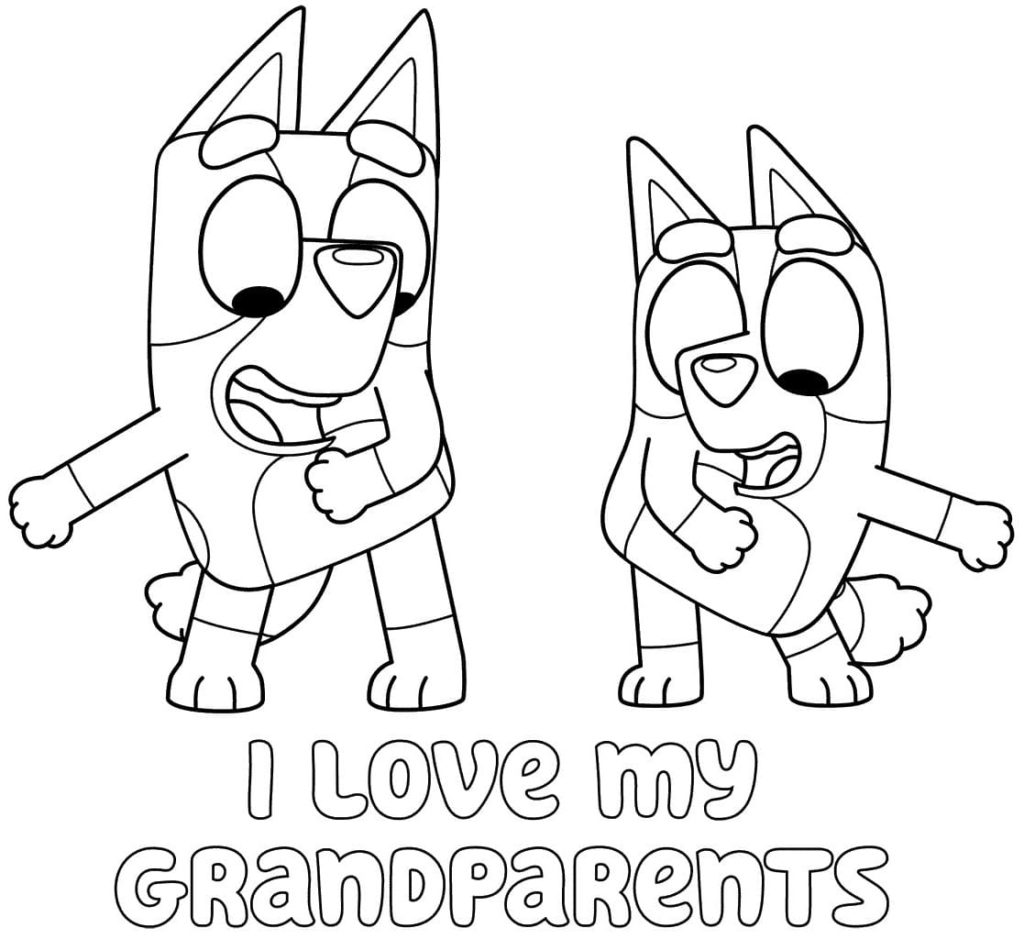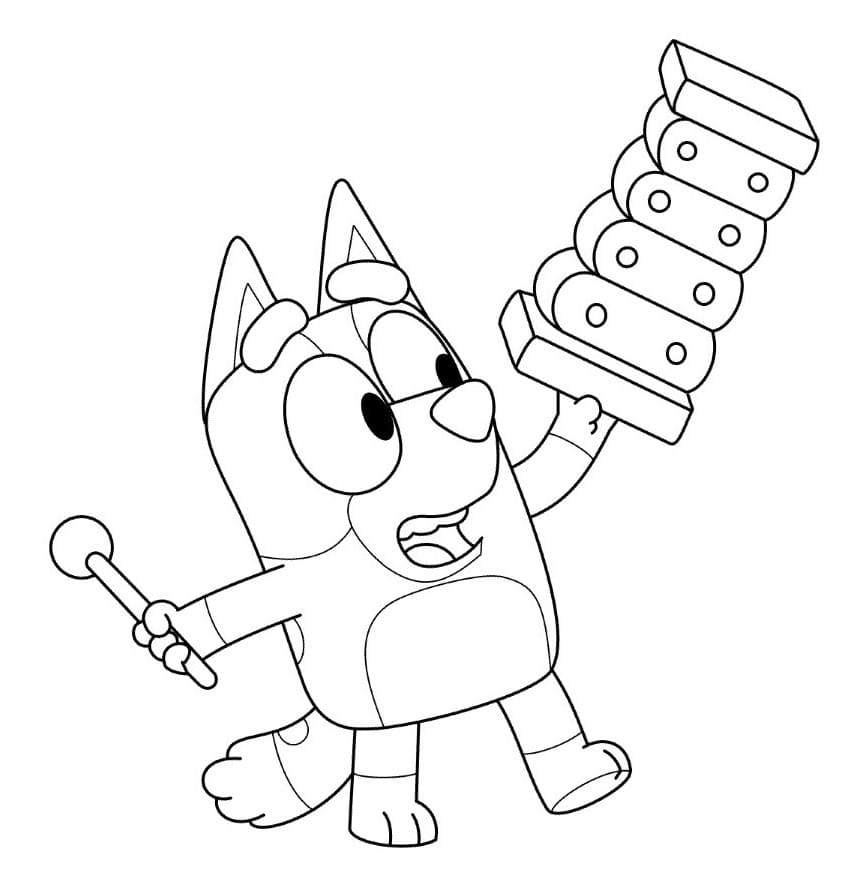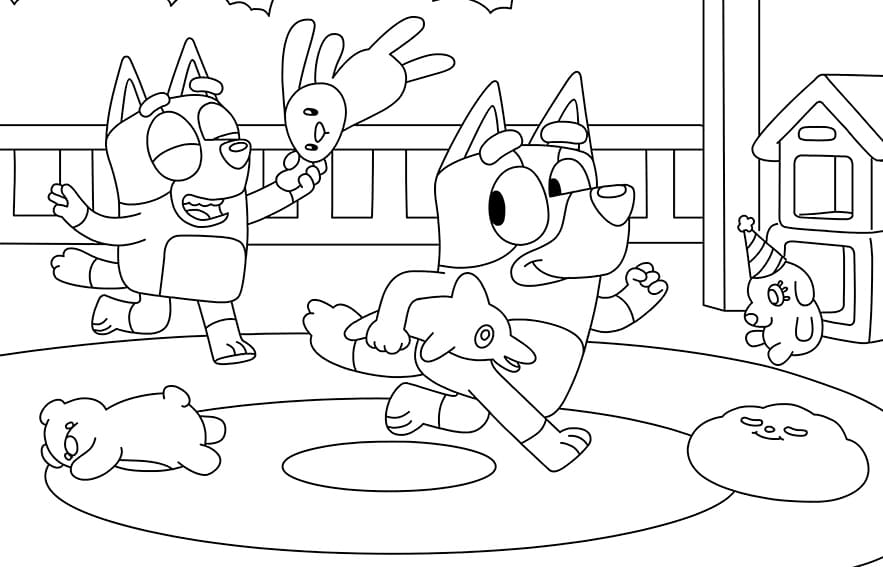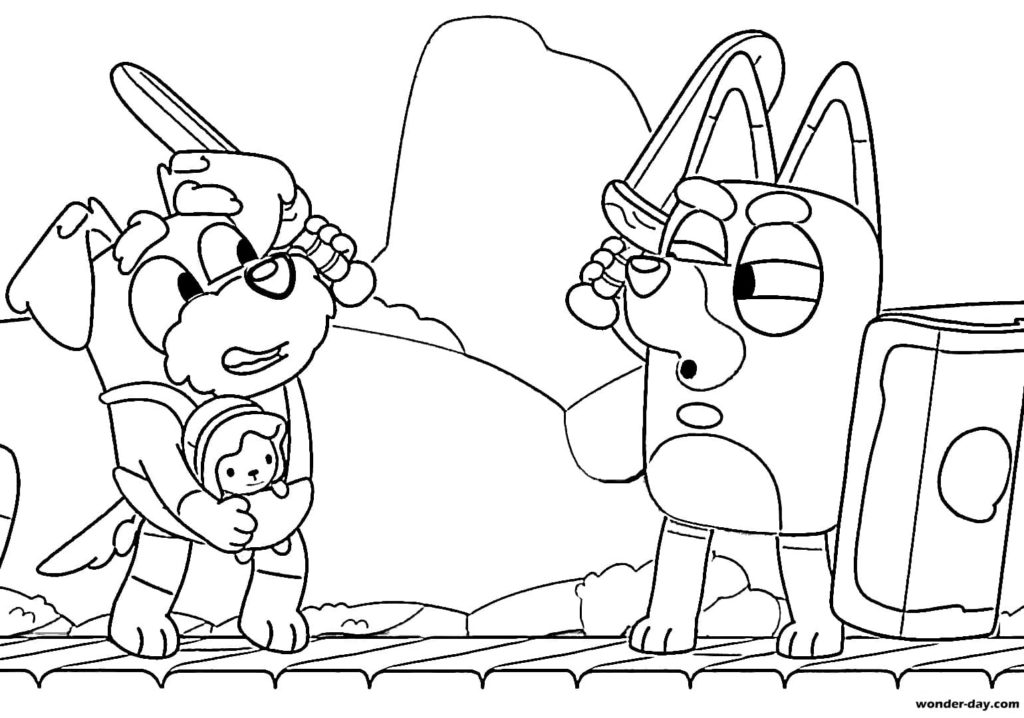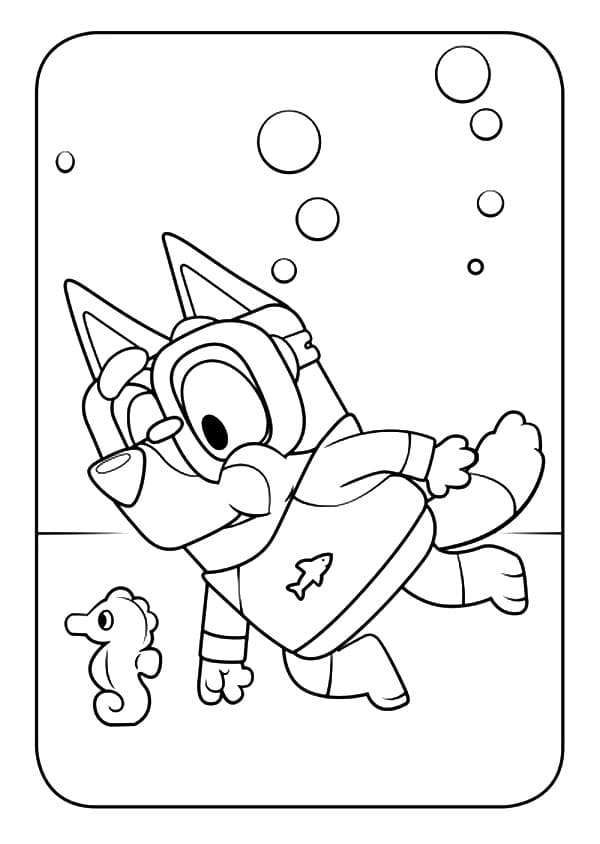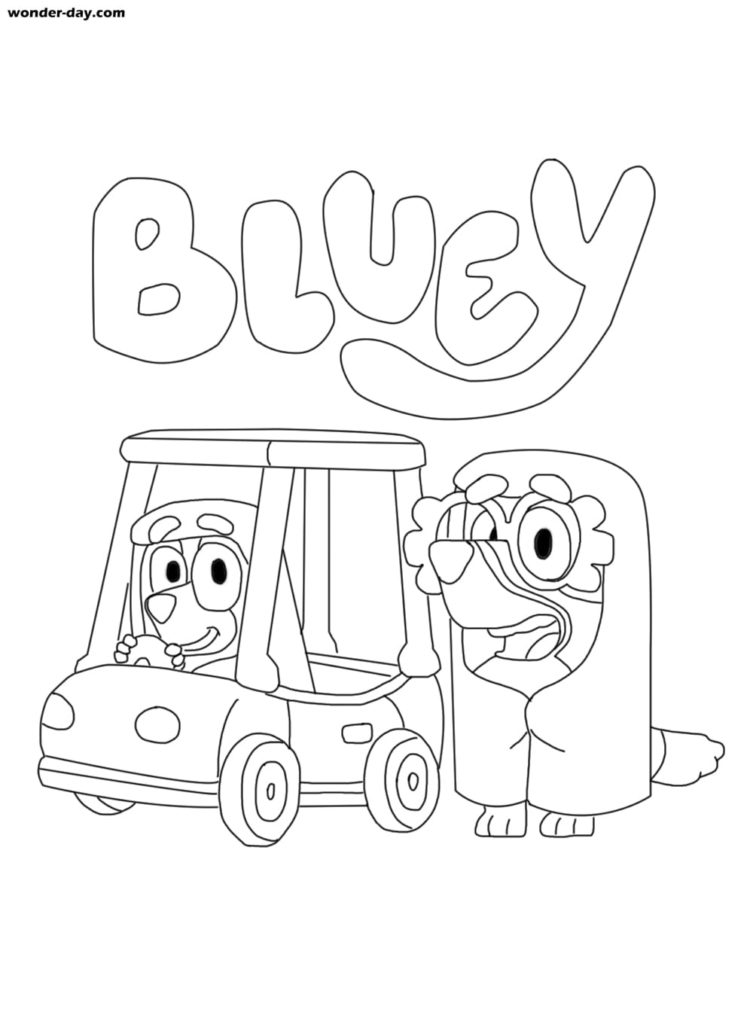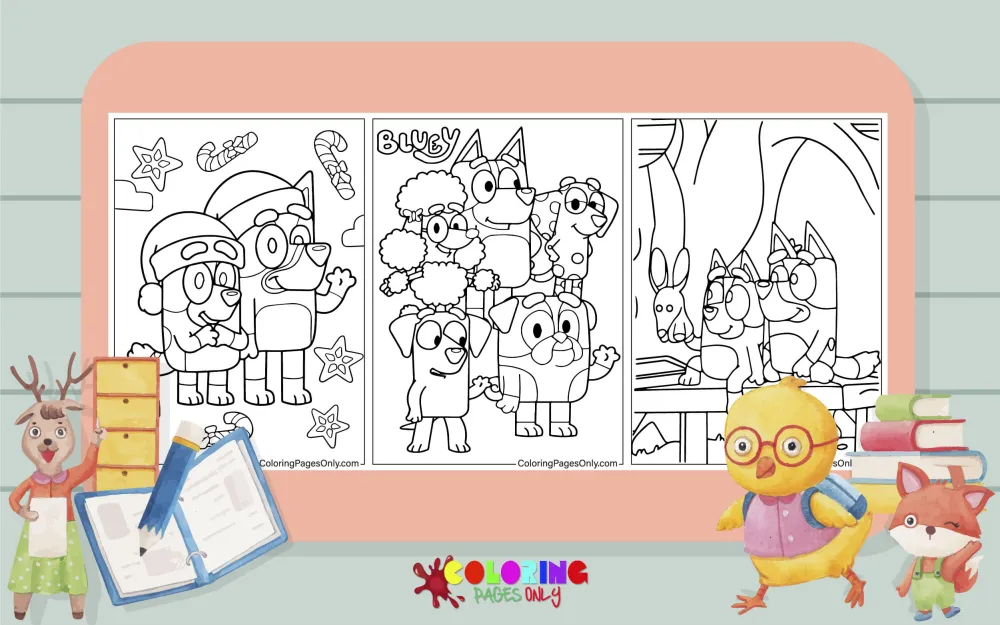
Bluey Coloring Pages bring one of the most acclaimed children’s television series of the 21st century to your coloring table – and this collection of 80+ free pages at ColoringPagesOnly.com covers the Heeler family across their full world: classic character portraits of Bluey, Bingo, Bandit, and Chilli, family group scenes, friendship and playdate pages, the imaginative game scenarios that define the show’s creative spirit, seasonal holiday pages for Christmas and Easter, and the rich cast of friends and extended family who populate Bluey’s Brisbane neighborhood. If you have spent any time with the show – whether as a child who loves Bluey’s energy and imagination or as a parent who has found yourself genuinely moved by the way the series handles family life – these pages are a way to spend time inside that world with your own creative choices. The full Cartoons collection on this site is available through our Cartoons Coloring Pages hub.
Every page is completely free – download as PDF to print or color online in your browser. No sign-up, no cost.
What Is Bluey?
Bluey is an Australian animated television series created by Joe Brumm and produced by Ludo Studio in Brisbane, Queensland, Australia. It premiered on ABC Kids Australia on October 1, 2018, and has since become one of the most internationally successful Australian cultural exports of the 21st century – broadcast in over 60 countries, translated into more than 30 languages, and holding the record as the most-watched program in the history of ABC iview (Australia’s national public broadcaster streaming service). In the United States, Bluey airs on Disney Junior and has consistently ranked as one of the most-watched children’s programs on American television.
The show follows Bluey Heeler, a six-year-old Blue Heeler puppy living in a suburban house in Brisbane with her family. The episodes – most running approximately seven minutes – depict ordinary moments of childhood and family life: backyard games, trips to the park, imaginary play, sibling disagreements, parental patience tested and rewarded, and the specific texture of growing up in a warm, engaged, imperfect family. What distinguishes Bluey from virtually all other children’s animated series is the sophistication with which it treats these ordinary moments – the emotional honesty, the genuine humor that works simultaneously for children and adults, and the consistent respect it shows for both the complexity of childhood experience and the difficulty of parenting.
The show won the BAFTA Award for Best Preschool Animation in 2021, the Annie Award for Outstanding Achievement for Animated Feature – Independent (TV Special category), and multiple AACTA Awards in Australia. The third-season episode “The Sign” – a 28-minute special that aired in April 2024 – became one of the most-watched single television episodes in Australian broadcasting history and generated international conversation about the emotional depth a children’s cartoon can achieve.
Ludo Studio is based in Brisbane, and the show’s setting is unmistakably the subtropical Southeast Queensland landscape – the wide timber-decked houses on stilts, the native Australian flora, the specific light and heat of a Brisbane summer, and the Australian cultural cadences in the characters’ speech and family dynamics. This grounding in a specific place and culture has not limited the show’s universal resonance but has contributed to it – the specificity of the Heeler family’s Brisbane life makes the emotional authenticity feel more real, not less.
The Heeler Family: Character Guide
Every member of the Heeler family is a Blue Heeler (Australian Cattle Dog), and the show uses the specific coat patterns of the breed as the basis for each character’s distinctive coloring. Understanding the canonical colors of each family member is the most important preparation for any Bluey coloring session.
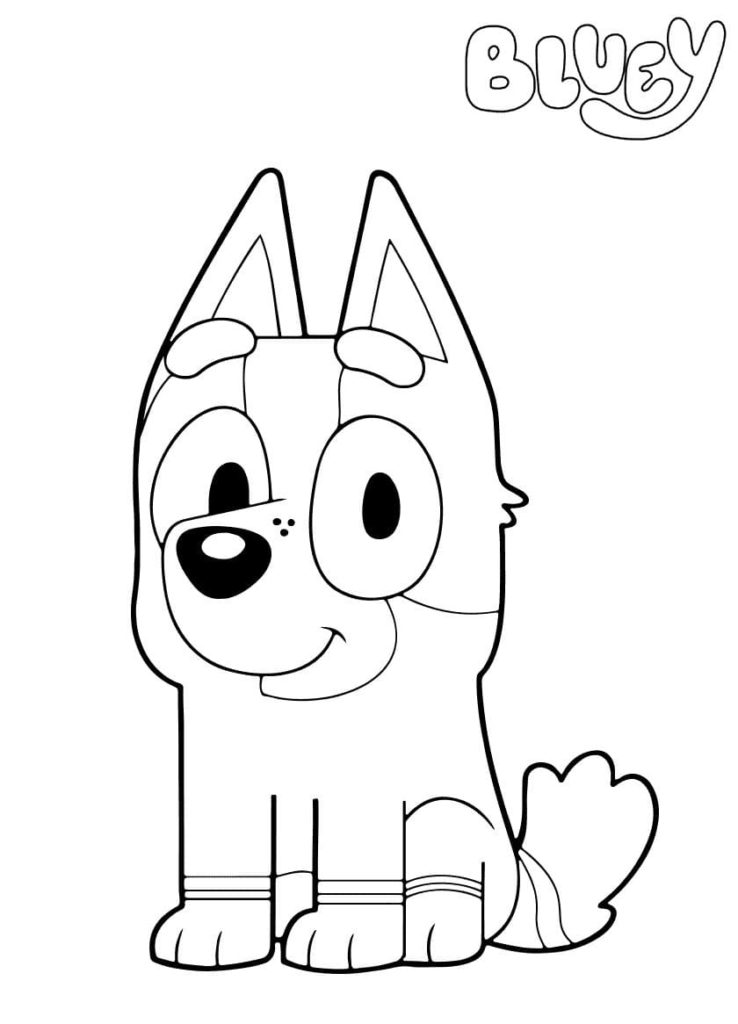
Bluey Heeler is the title character and protagonist – a six-year-old female Blue Heeler puppy. Her coat is the blue merle coloring of the Blue Heeler breed: a mid-range blue-gray with subtle mottling. In the show’s illustration style, this is rendered as a solid, vivid, slightly gray-toned medium blue – brighter and more saturated than navy, not as pale as sky blue, with a quality that suggests the cool blue of a clear winter sky at midday. Her ear interiors are a lighter pink-cream. Her eyes are characteristically large and expressive for the show’s art style. Bluey is the most energetic, creative, and imaginative member of the family – the one who invents the elaborate games that drive most episodes.
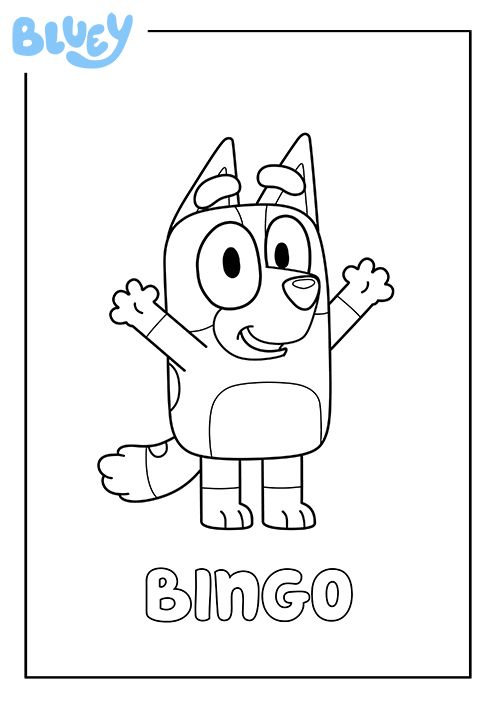
Bingo Heeler is Bluey’s younger sister – four years old – and the second most prominent character in the series. Bingo is a red heeler rather than a blue heeler, which means her coat is the warm orange-red of the Red Heeler / Australian Cattle Dog variant. In the show’s illustration, this is rendered as a vivid, warm orange-red to orange, comparable to the color of a blood orange or a warm autumn leaf. Bingo is gentler, more emotionally sensitive, and more nurturing than Bluey, though no less imaginative – she simply expresses her imagination differently.
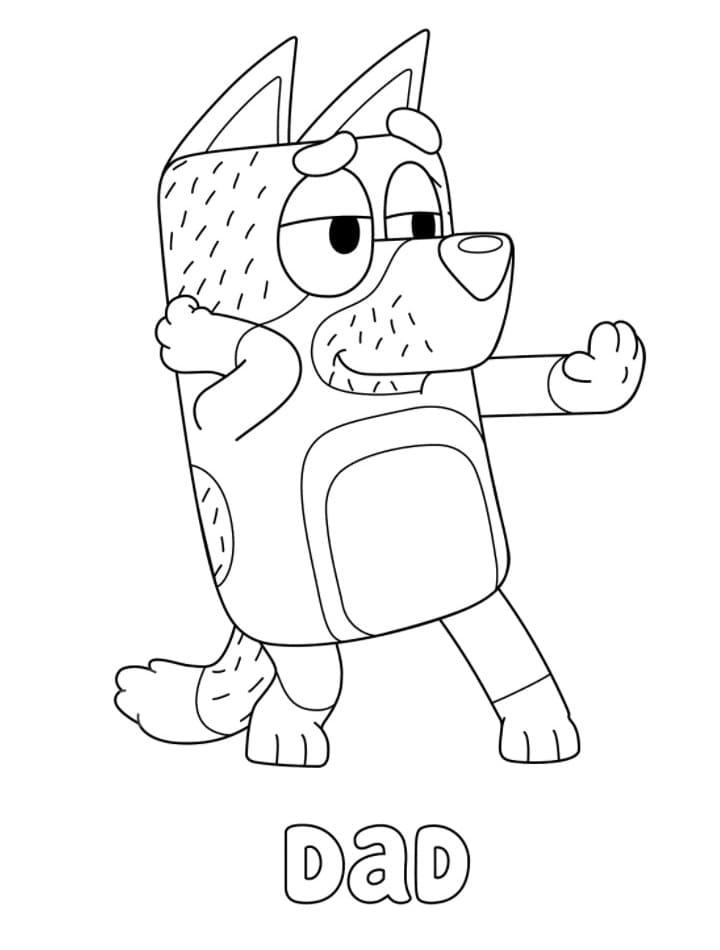
Bandit Heeler is the father, a tall, adult Blue Heeler in his late thirties. As an adult, his coat is rendered in a deeper, slightly more muted blue-gray than Bluey’s – still clearly blue but with more of the mottling and darker patterning characteristic of an adult Blue Heeler’s mature coat. He is an archaeologist by profession and the parent most often shown as the playmate and creative partner in the children’s games – willing to lie on the floor and be a patient in a pretend hospital, or to play the villain in an elaborate imaginative game, for as long as it takes. The “Daddy Bandit Coloring Sheet” and “Funny Bandit” tiles in the collection capture this specific energy.
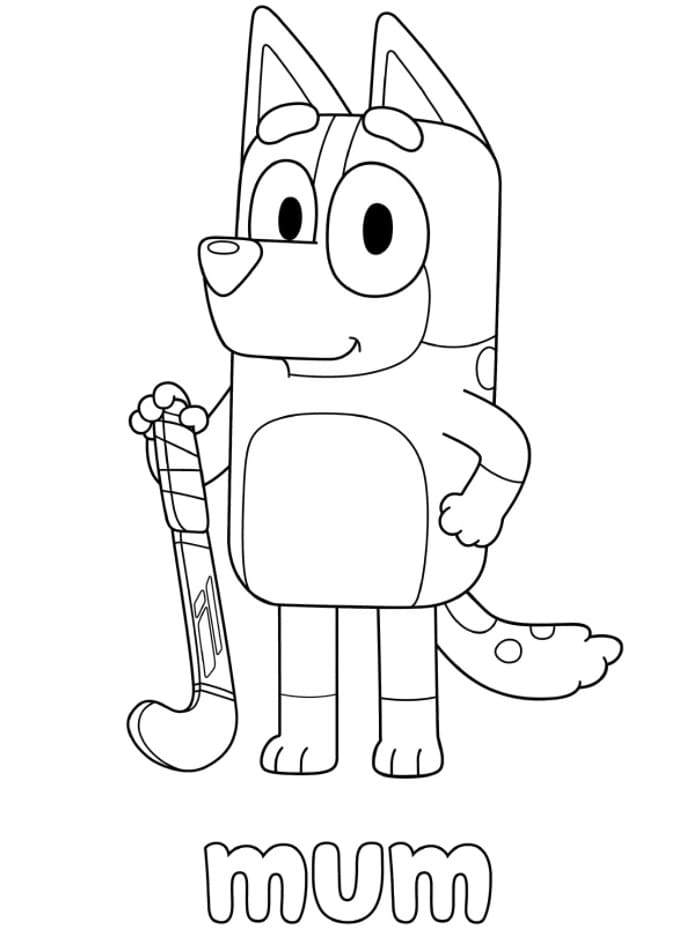
Chili Heeler is the mother, a Red Heeler. Like Bingo, her coat is the warm orange-red of the Red Heeler breed, rendered in the show as a slightly more mature, slightly deeper orange-red than Bingo’s lighter orange. She works part-time in airport security and is the family’s more emotionally grounded parent – the one who observes the chaos Bandit and the children create with a combination of amusement and patient exasperation. The “Mum” tile in the collection shows her in a standalone portrait; the family group pages show her alongside Bandit, Bluey, and Bingo.
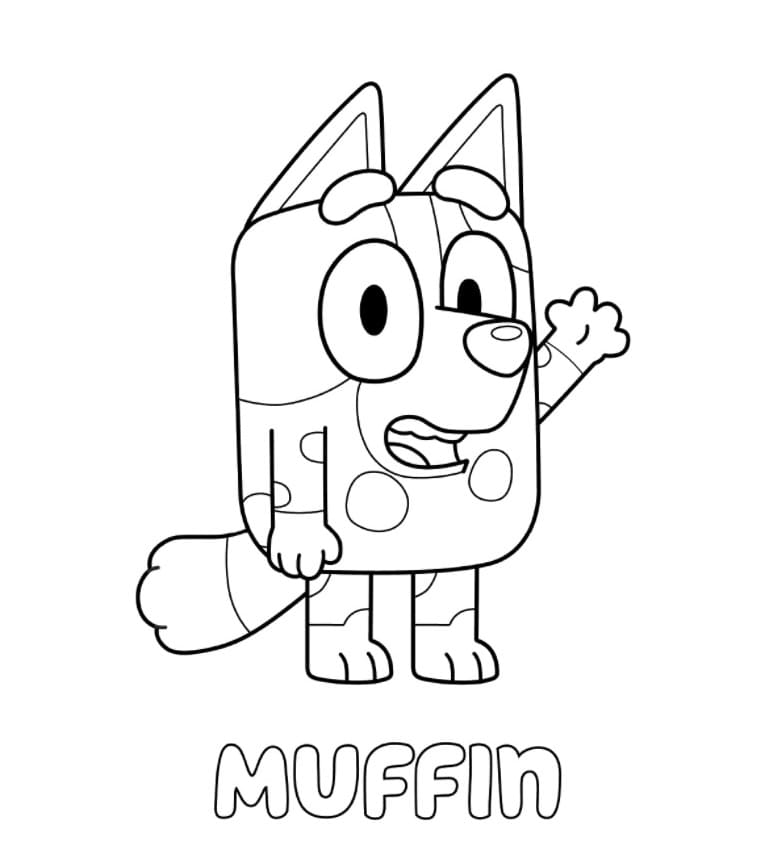
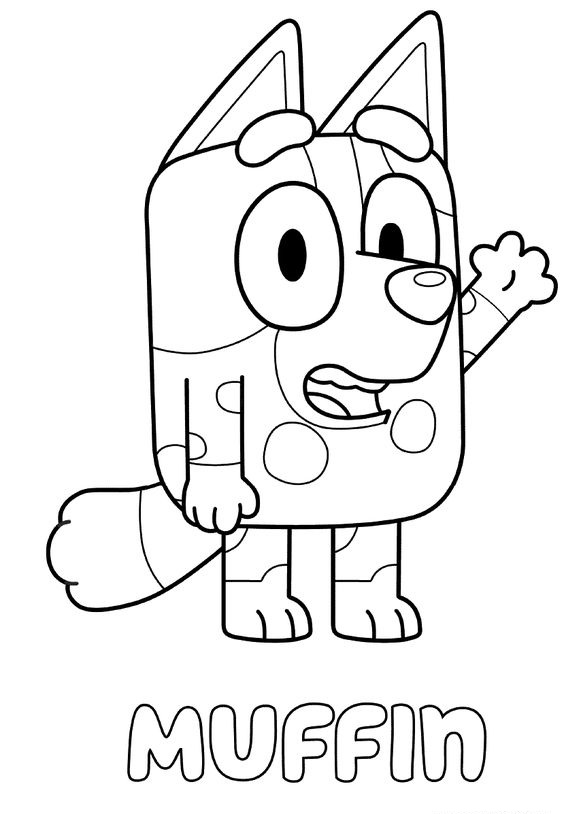
Muffin Heeler is Bluey and Bingo’s young cousin – a toddler, around three years old – who appears frequently in episodes. She is also a Blue Heeler, but her coloring in the show leans slightly more golden-tan than Bluey’s cooler blue-gray, reflecting her younger age and the show’s use of slightly different tonal variations within the Blue Heeler palette for different characters. Muffin is energetic, unpredictable, and often the source of chaos in episodes that feature her – she is the show’s funniest and most anarchic younger-generation character.
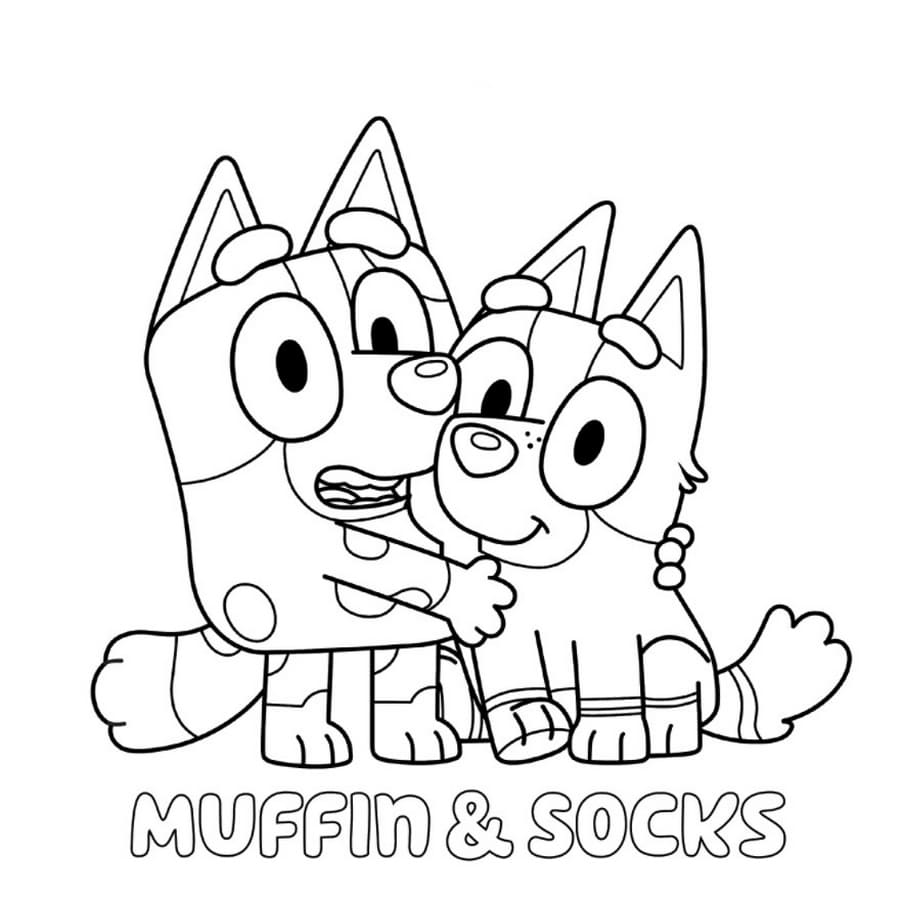
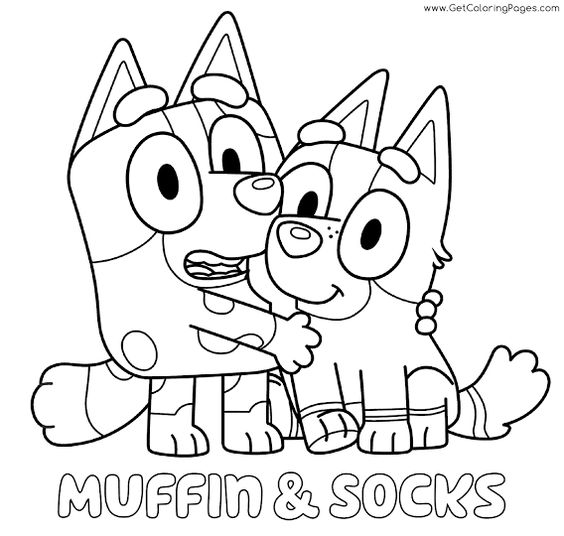
Socks Heeler is Muffin’s baby sister – a very young puppy who is still learning to talk and walk during the series. She is a Blue Heeler with a slightly lighter, more pale blue-gray coloring than either Bluey or Bandit, reflecting her infancy. The “Muffin and Socks” tiles in the collection show the two cousins together.
Bluey’s Friends: The Neighborhood Kids
The show’s world extends beyond the Heeler family to a richly populated Brisbane neighborhood where Bluey and Bingo have a well-developed social circle. Each friend character is a different dog breed with their own specific canonical coloring.
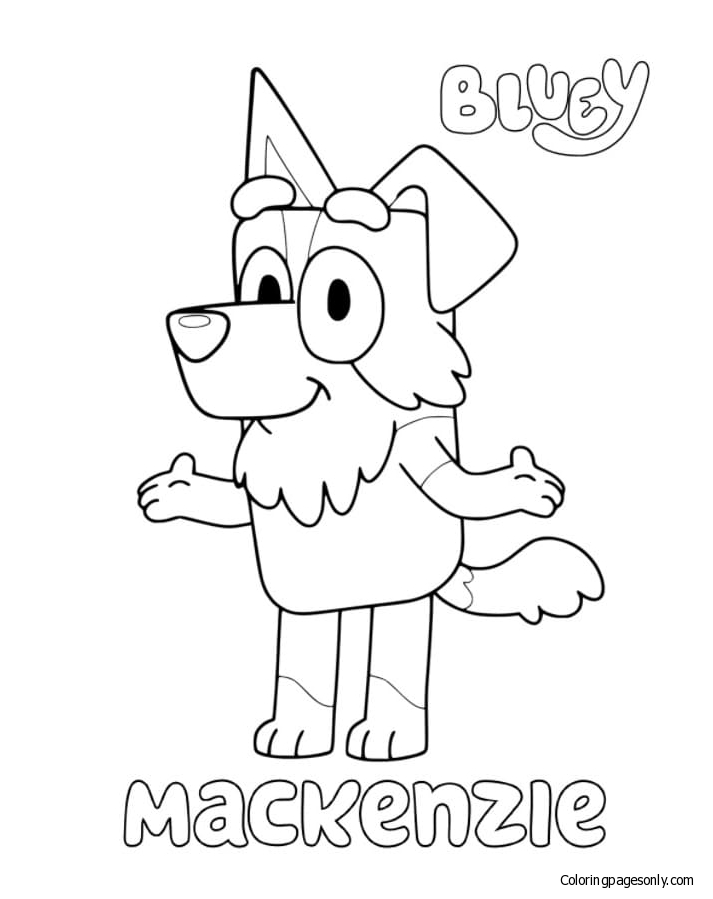
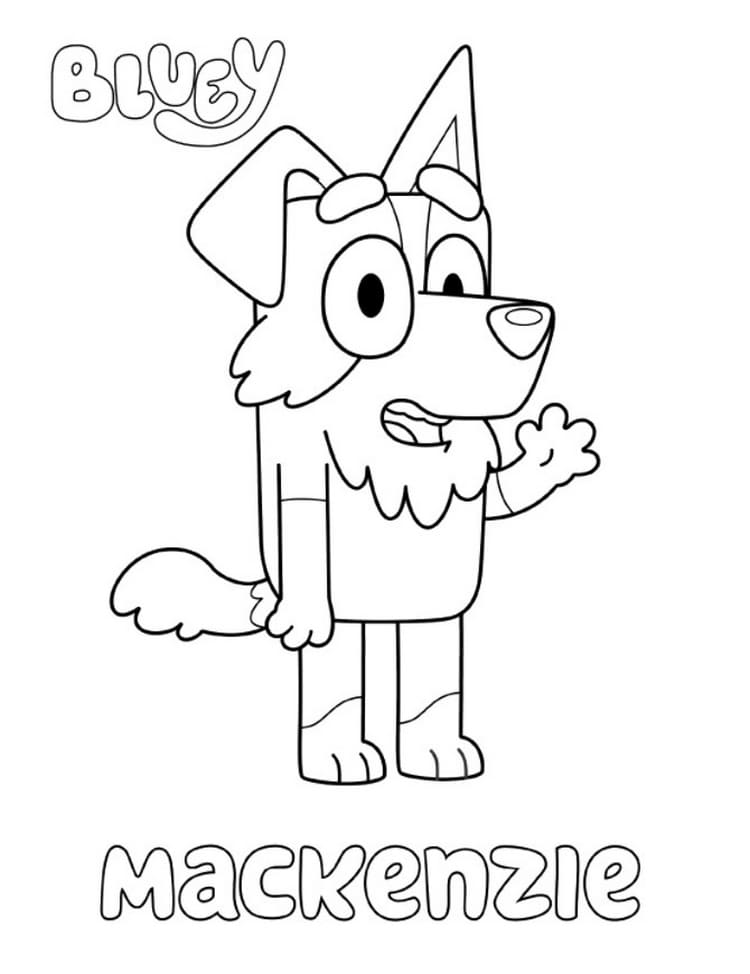
Mackenzie is one of Bluey’s closest friends – a Border Collie, which means his coat is the classic black-and-white of the Border Collie breed: deep black on the head and body with white facial blaze, white chest, and paws. The “Mackenzie” and “Happy Mackenzie” tiles in the collection show this classic Border Collie coloring.
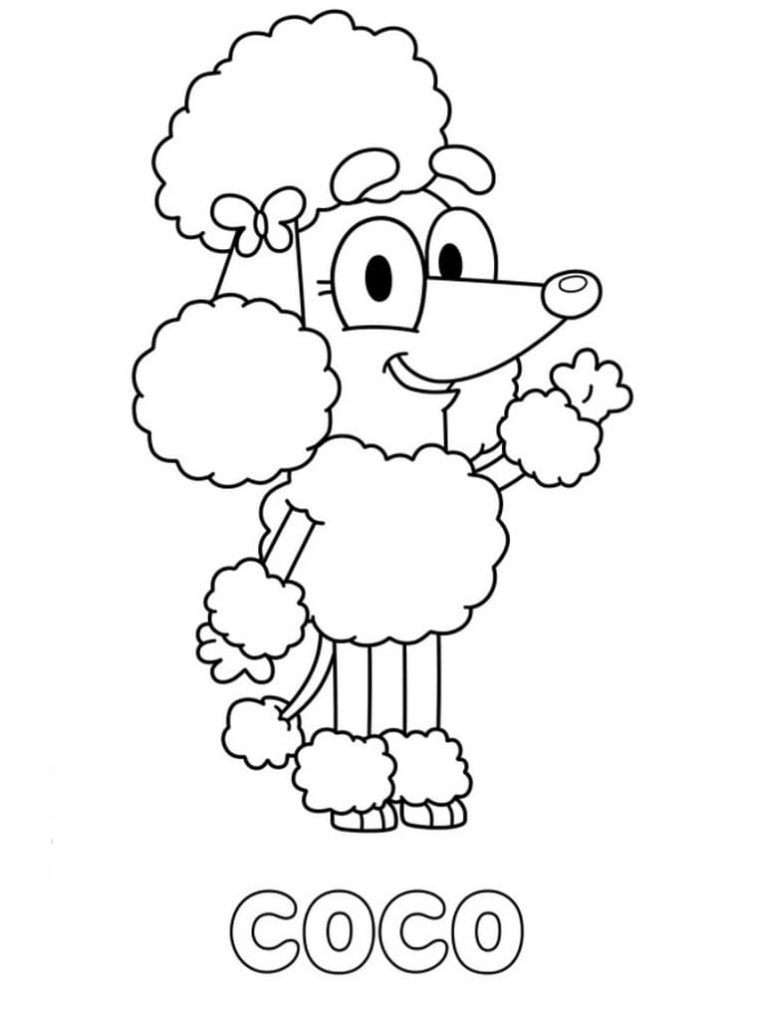
Coco is a Poodle – her coat in the show is rendered in a warm pink tone, specifically the rose-pink that cartoon poodle illustration has associated with the breed since at least the 1950s. Coco is a particularly gentle and imaginative member of Bluey’s friend group. The “Coco” tile shows her in her characteristic pink-poodle form.
Jack is a Dalmatian – his coat is the white-with-black-spots pattern that is immediately recognizable as Dalmatian. He is one of Bluey’s close school friends and appears frequently in school and playground episodes. The “Jack” tile in the collection shows the Dalmatian spot pattern in his specific character design.
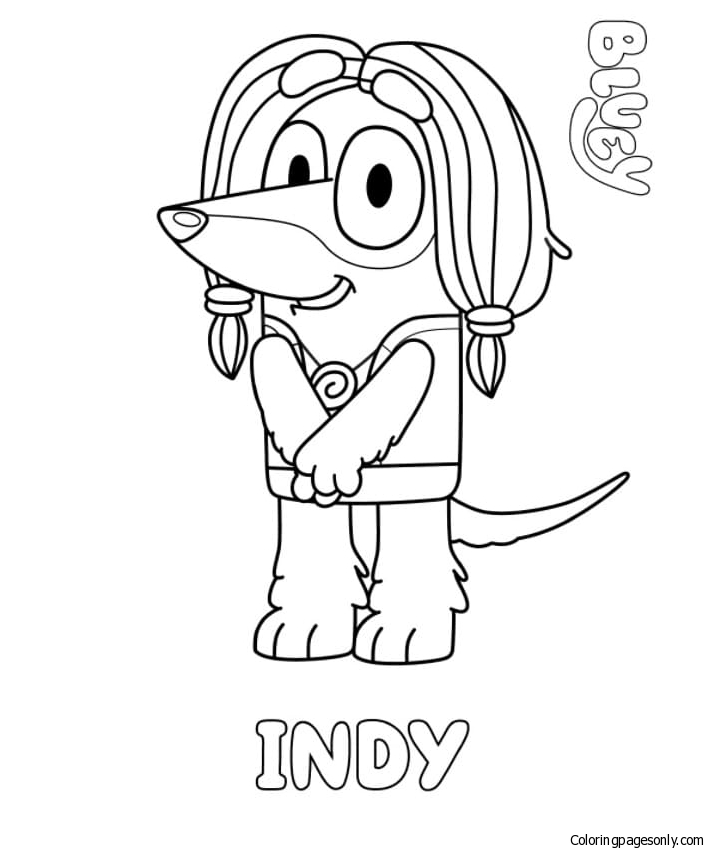
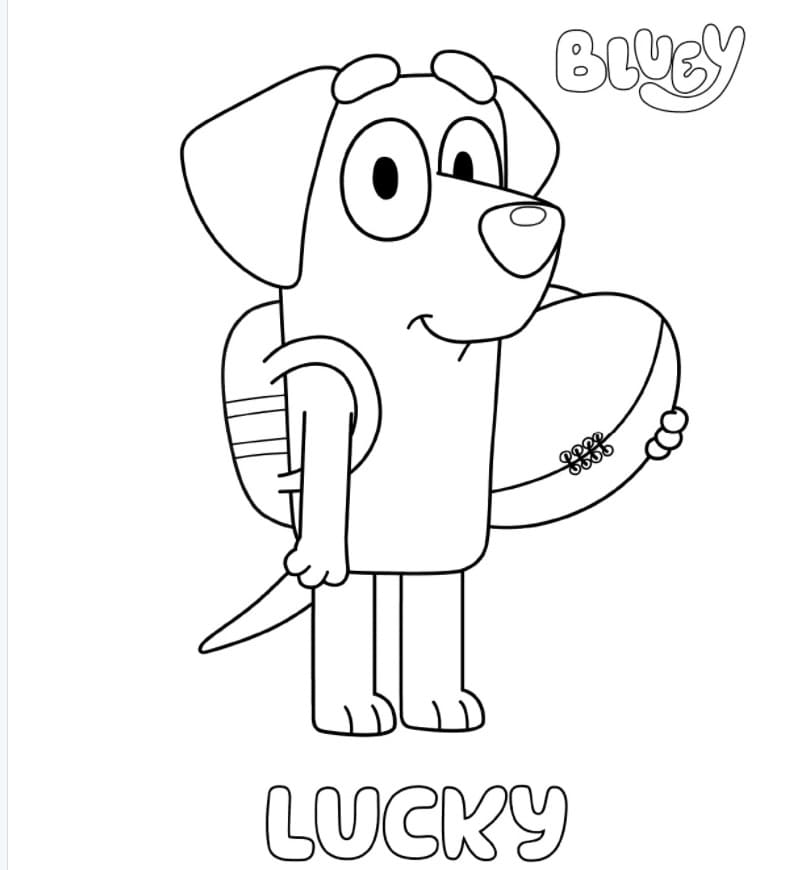
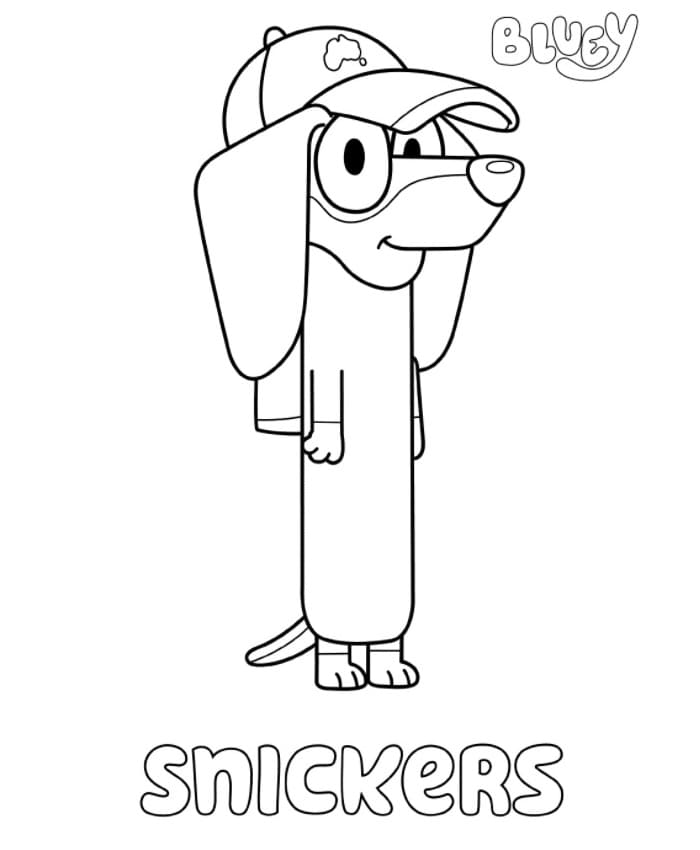
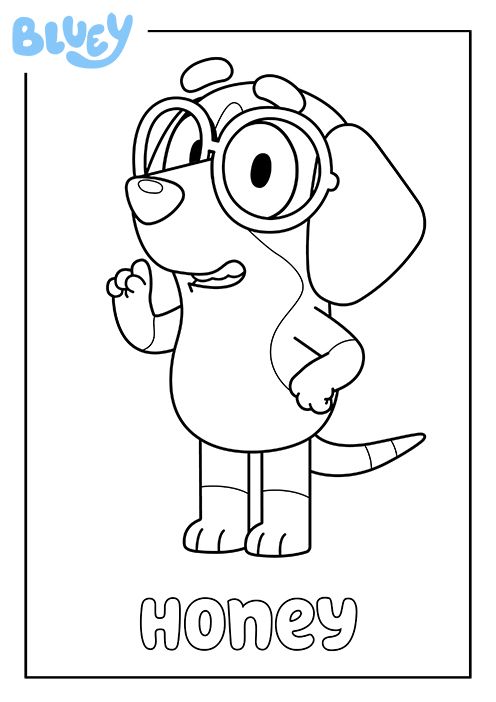
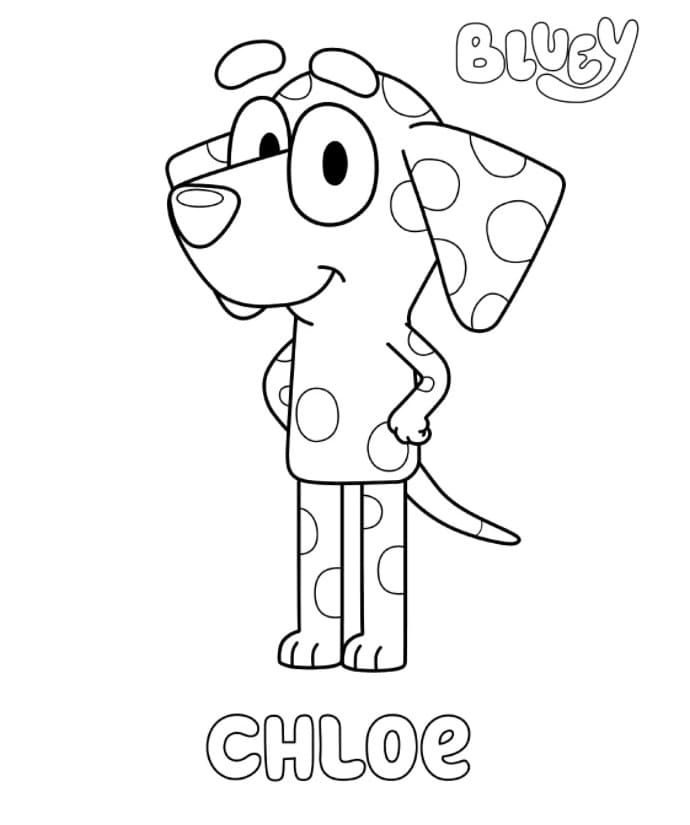
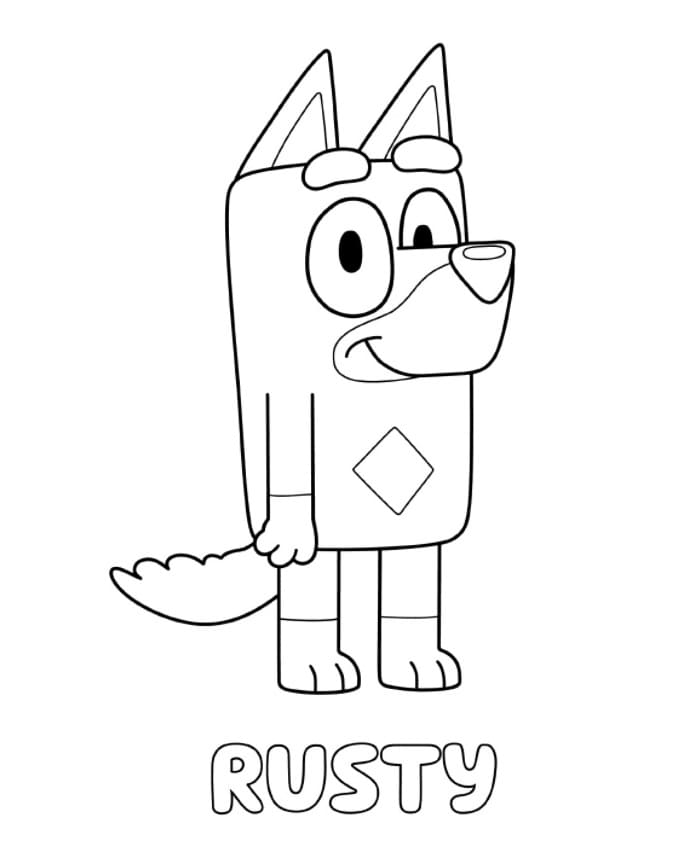
Indy is a friend of Bluey’s whose dog breed has a warm, golden-brown coat. Lucky – formally Lucky’s Dad, one of Bluey’s neighbor kids – appears in the “Lucky” tile. Rusty is a red and tan cattle dog cross – another Australian breed with a warm reddish-tan coat. Honey is a Beagle – the classic tricolor of black, white, and tan. Snickers appears in the collection as well. The “Chloe Bluey Character” tile covers Chloe, another friend from Bluey’s extended social circle.
What’s in the Collection
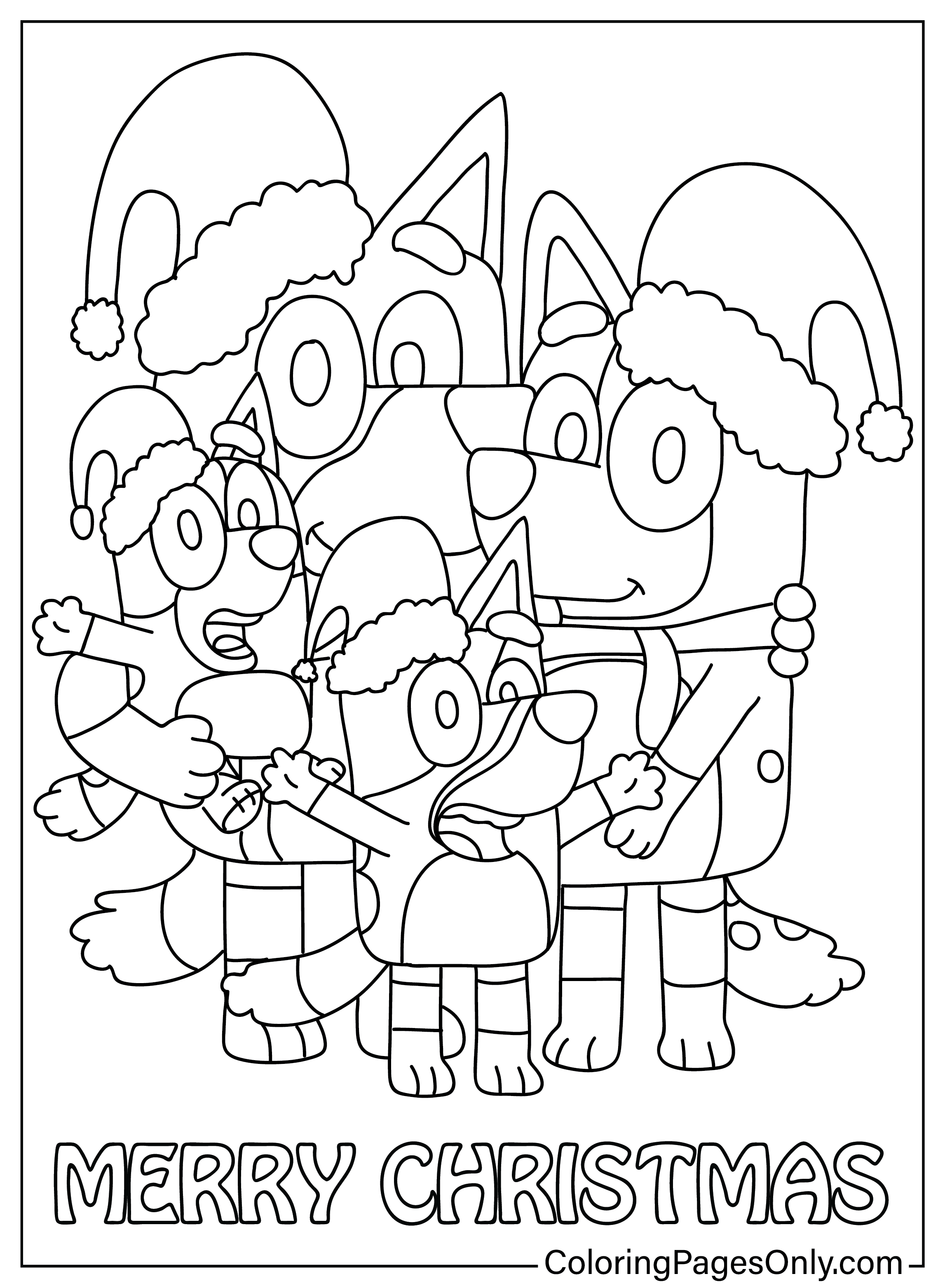
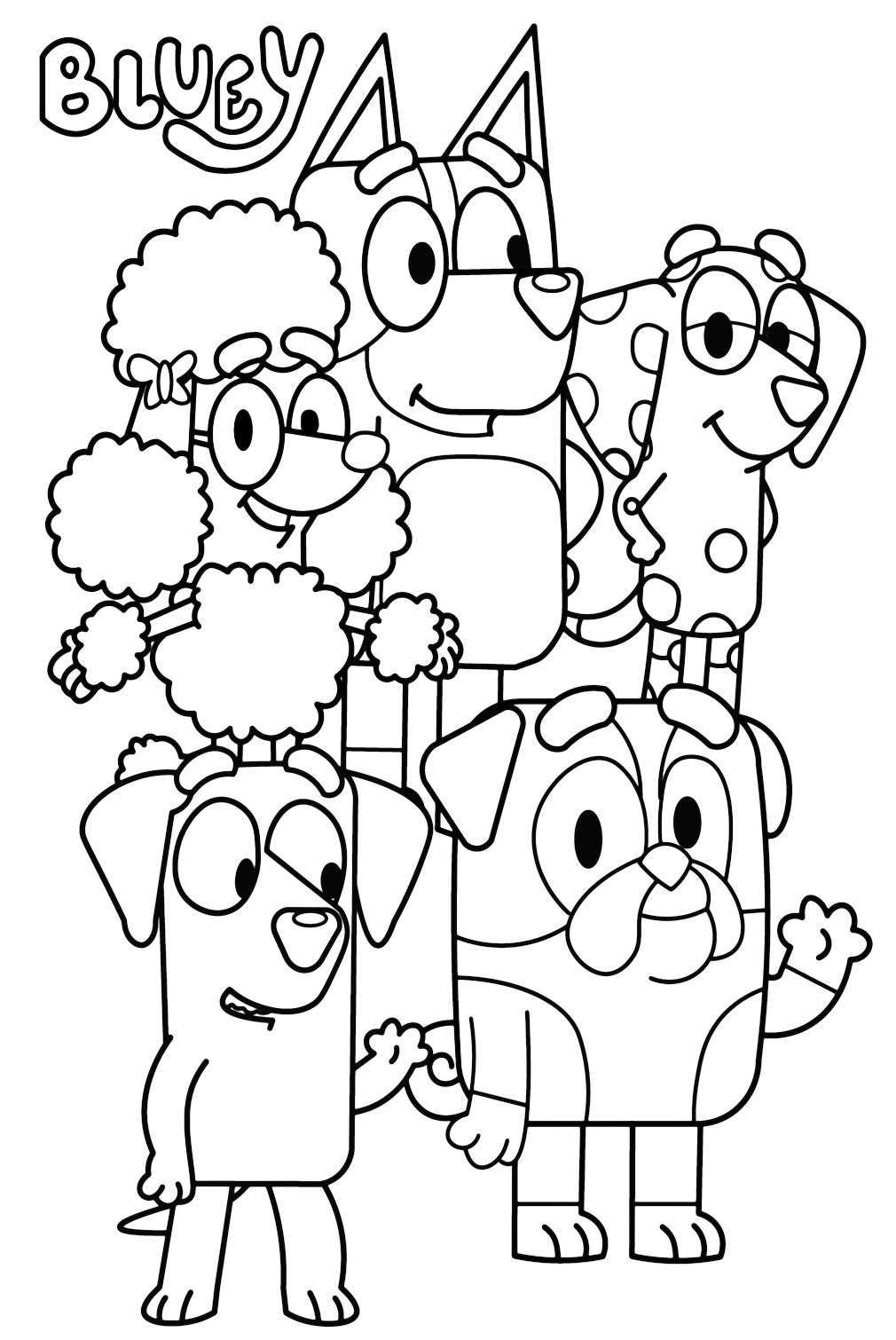
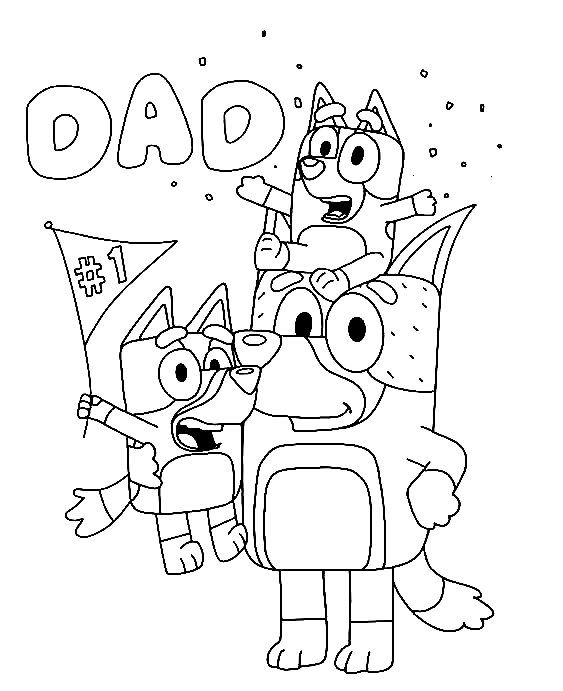
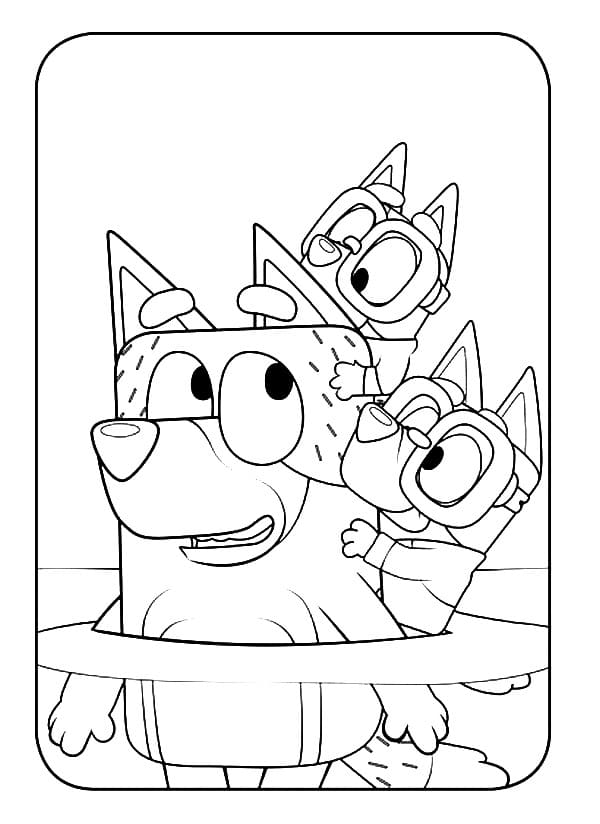
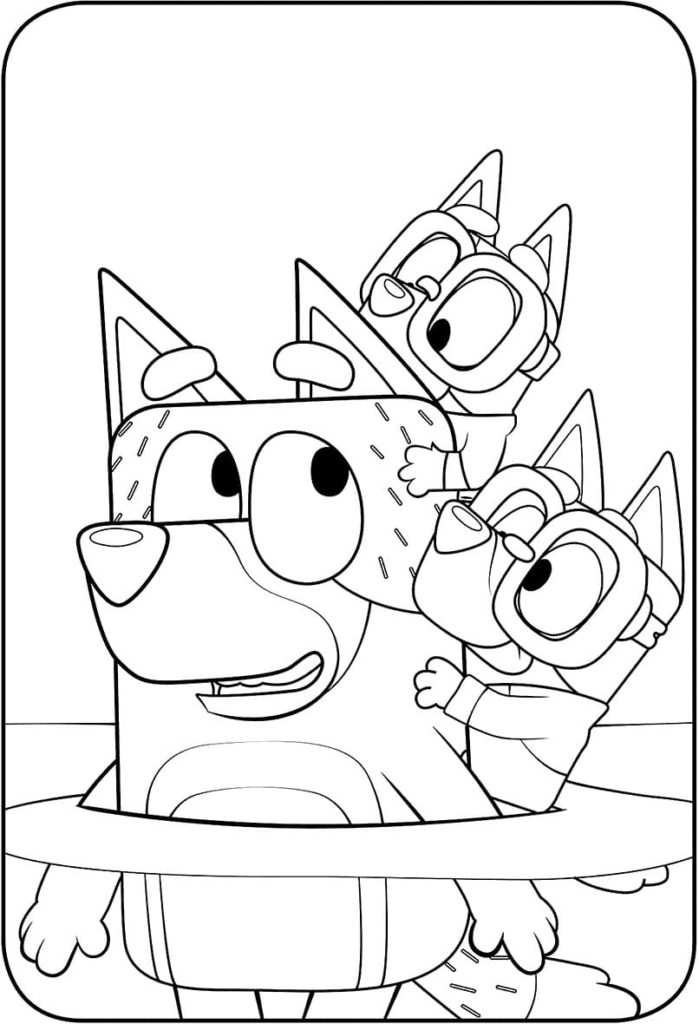
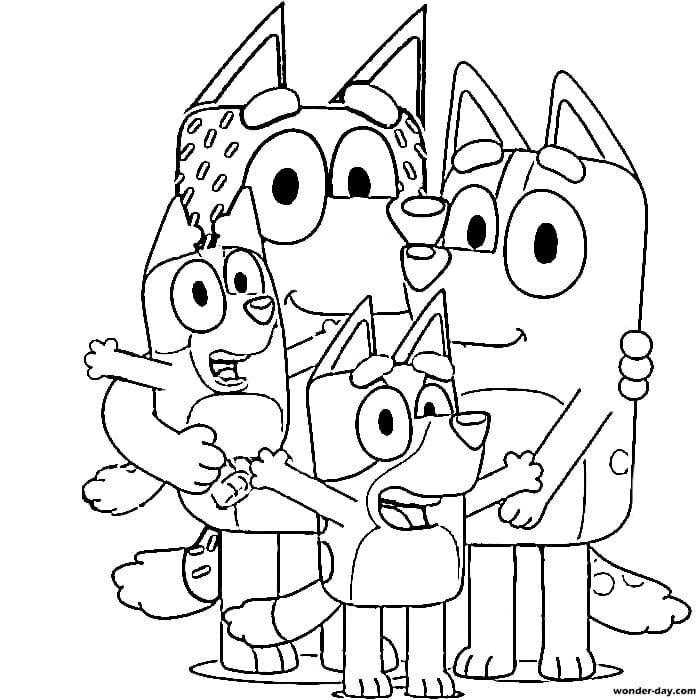
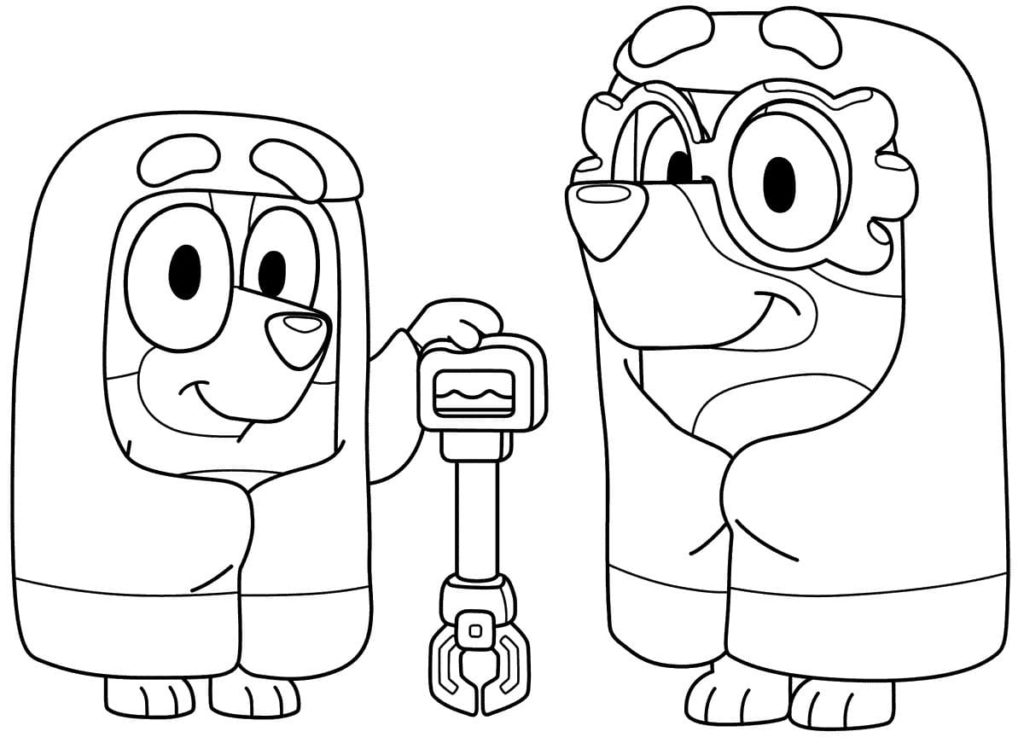
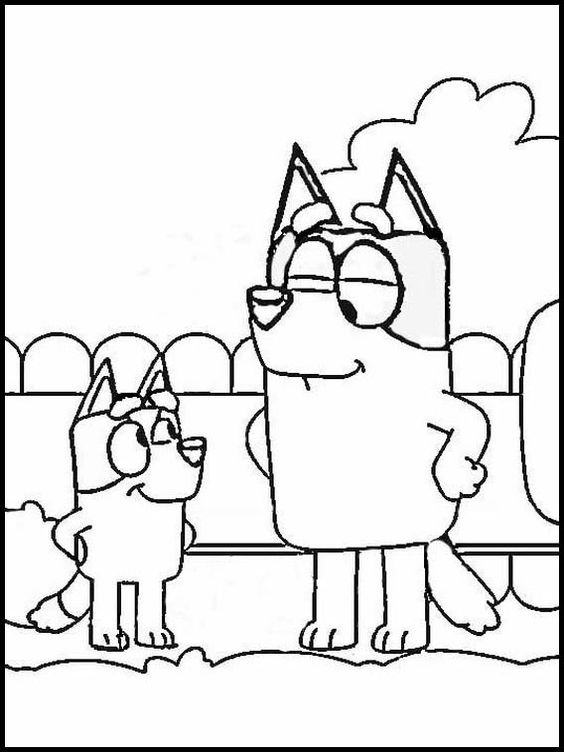
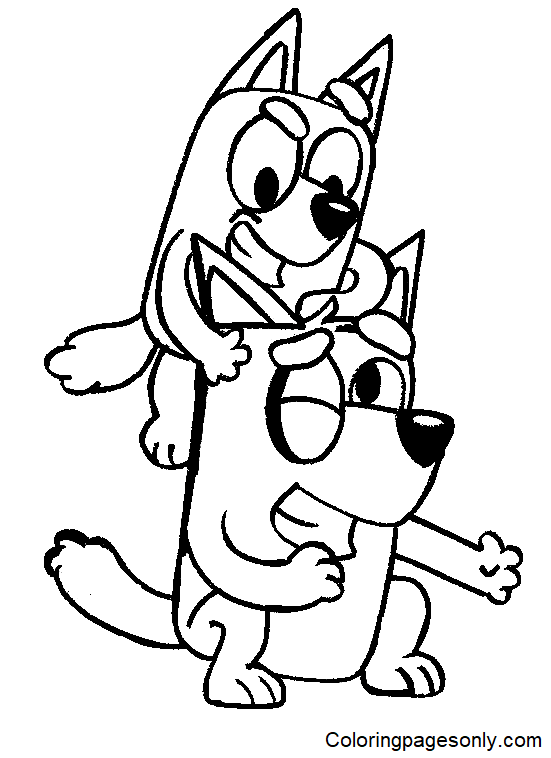
The family portrait and group pages are the most requested in the entire Bluey collection – these are the pages parents and children look for first. Bluey, Bingo, Bandit, and Chili Heeler show the complete nuclear family together. Bluey, Bingo, and Bandit, Bluey with Bingo and Dad, and Bandit with Bluey and Bingo cover various three-member family groupings. Bluey family, Bluey Family For Kids, and Dogs Play Mother And Daughter cover the family in larger or more compositionally varied group arrangements. Bluey, Grandma, and I Love My Bluey Grandpa bring in the extended family intergenerational dimension that the show handles with particular emotional care.
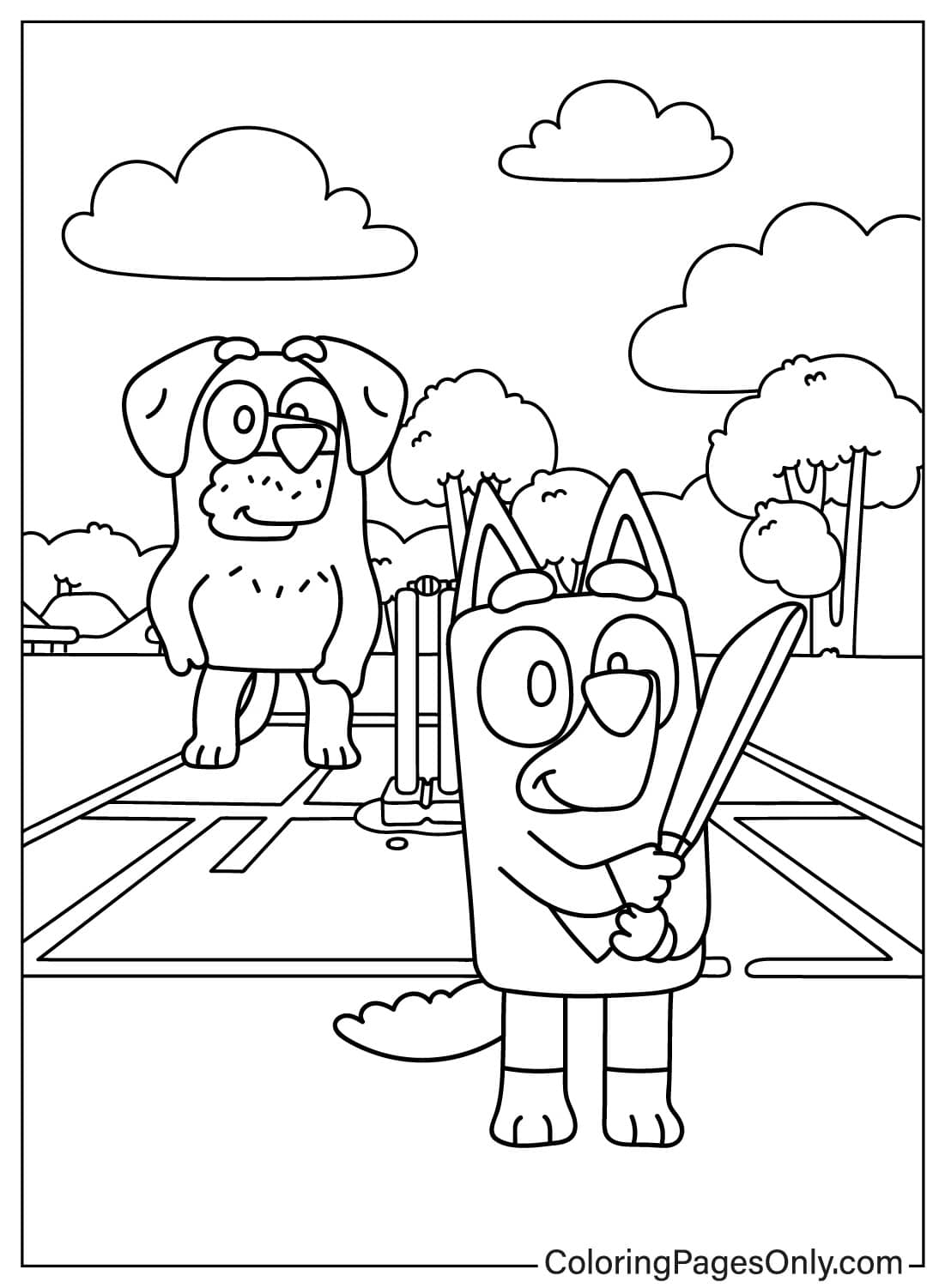
The Bluey and Bingo sister pages capture the central relationship of the series – the two sisters together, in the various moods and dynamics of sisterhood that the show explores across its episodes. Bluey and Bingo, Bluey and Bingo Coloring Pages, and Bluey and Bingo Playing Cricket Game show the sisters in different activity contexts.
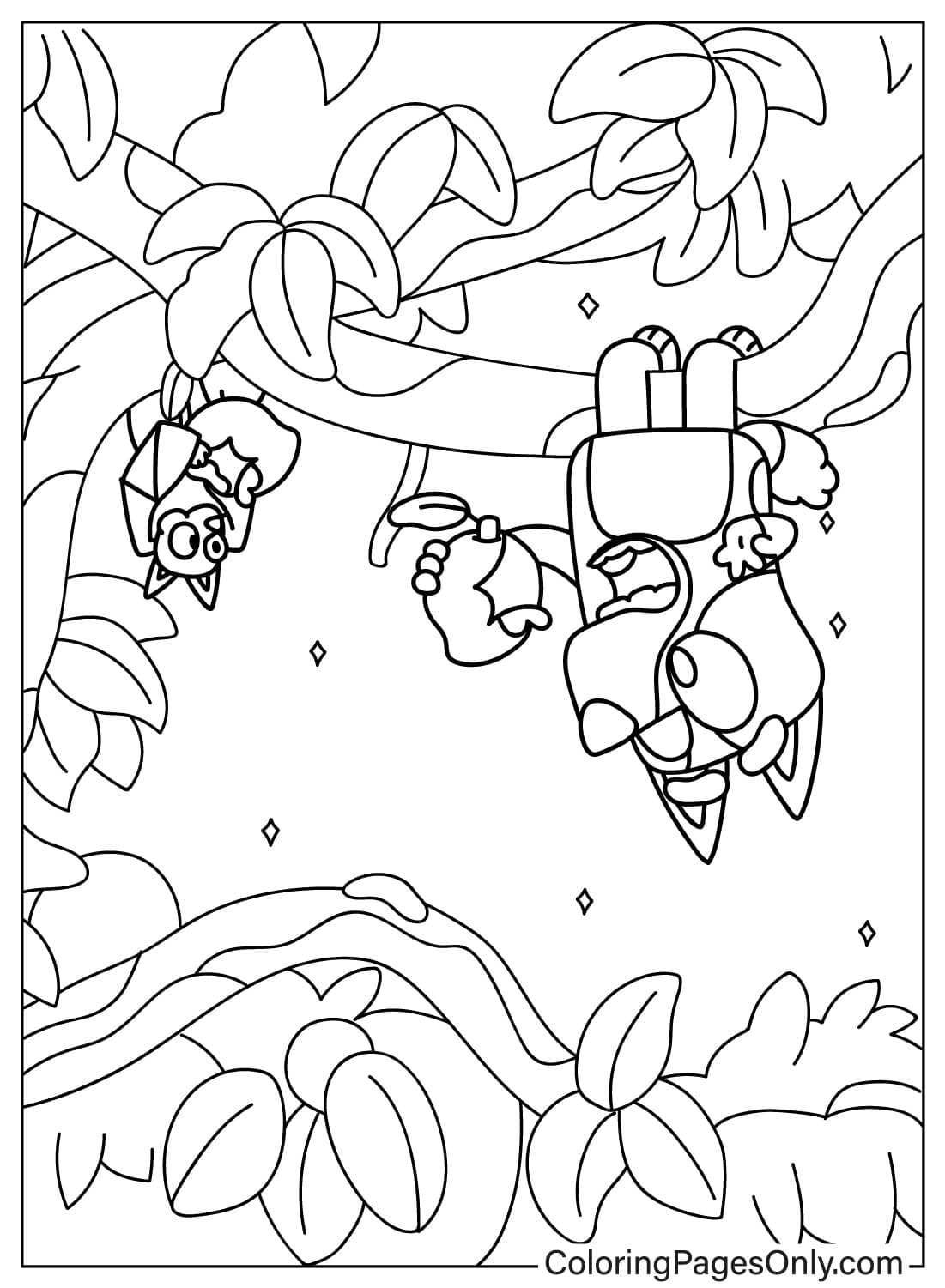
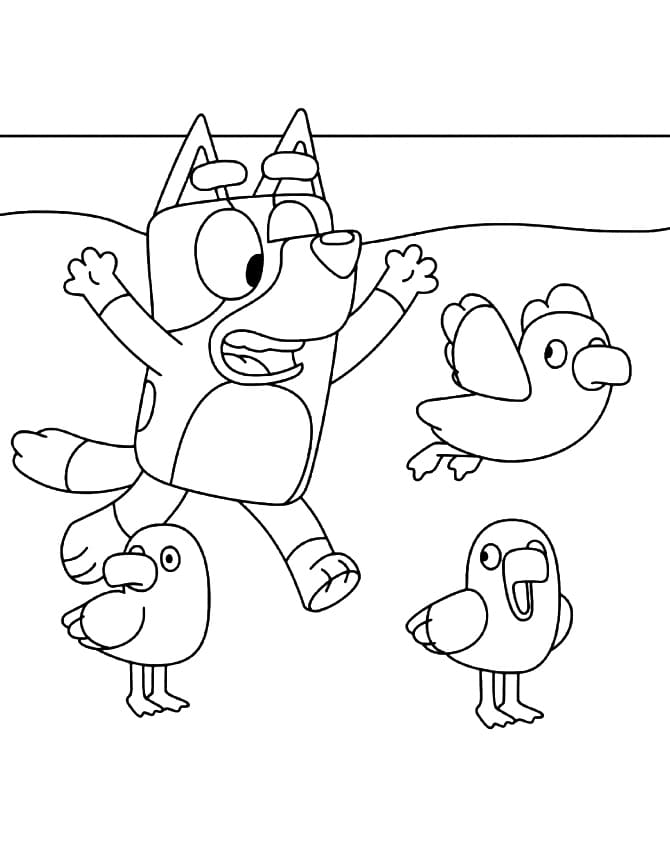
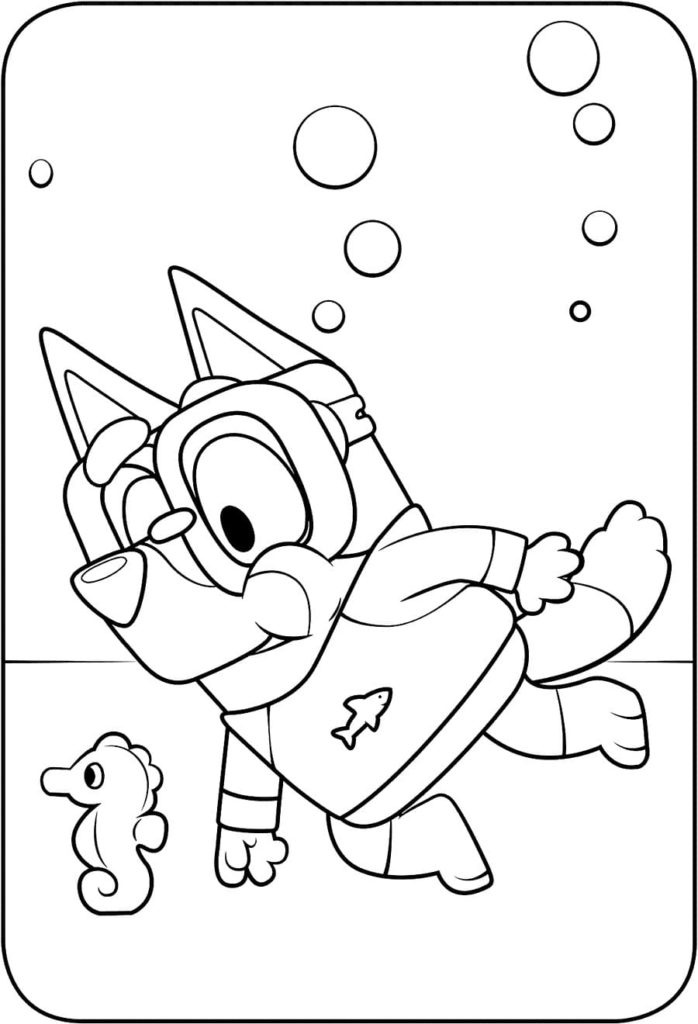
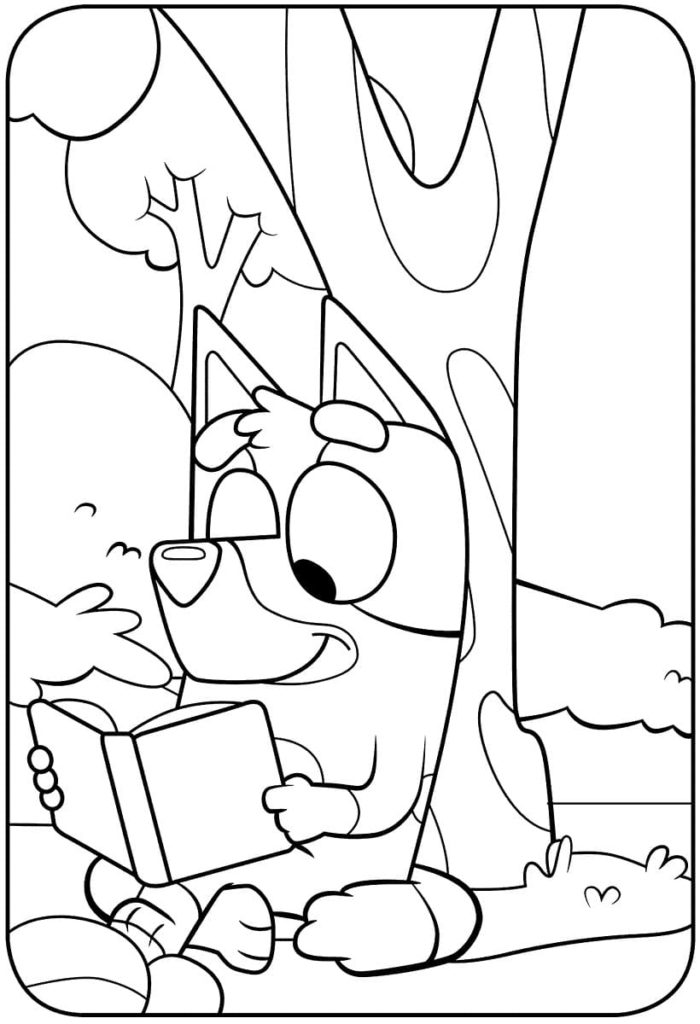
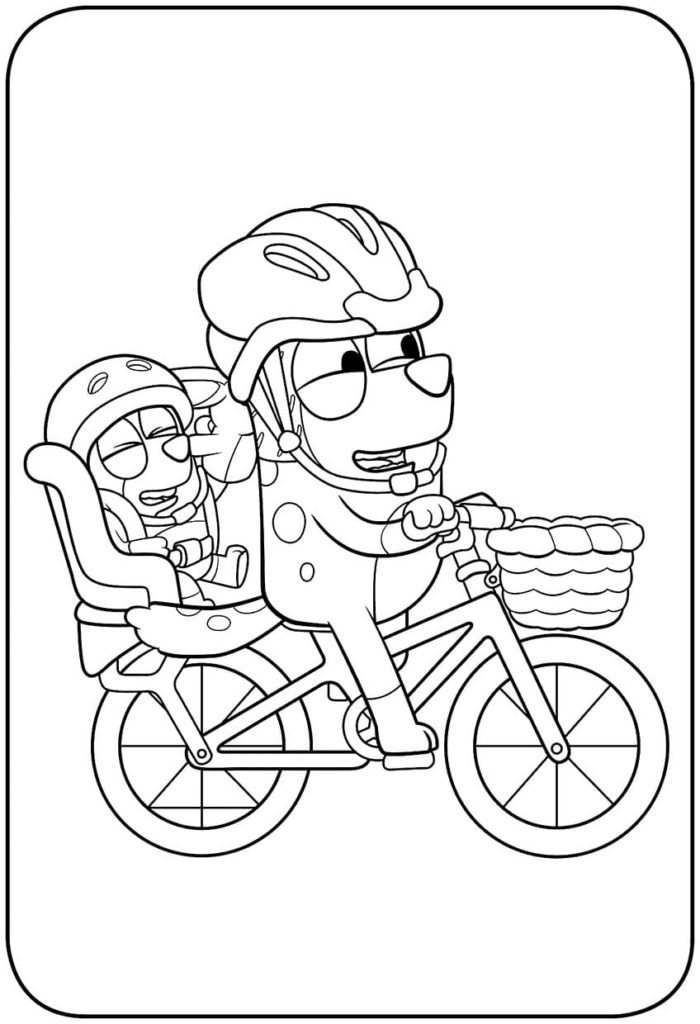
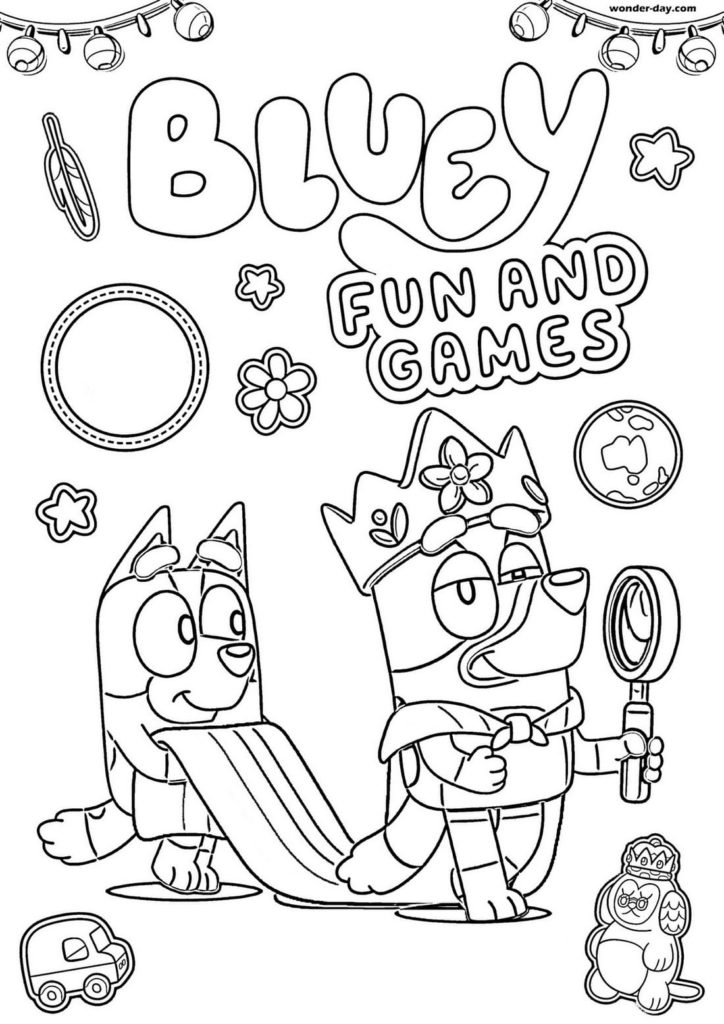
The activity and imagination pages reflect the show’s core visual content – Bluey and her family in the elaborate imaginary games and outdoor activities that fill each episode. Bluey Next To A Giant Mushroom, Bluey Turning Into A Bat, Bluey Underwater, Bluey On A Bike, Bluey Fun Car, Bluey plays with a ball, Bluey catches birds, Bluey Is Dancing, Bluey Reads A Book, Bluey diving, and Bluey with toys all capture specific activity contexts. Royal Dogs and Knight Dogs show the Heelers in imaginative dress-up scenarios. Japanese Spitz Judo from Bluey covers a specific friend character in a judo context that reflects the show’s Australian multicultural neighborhood setting.
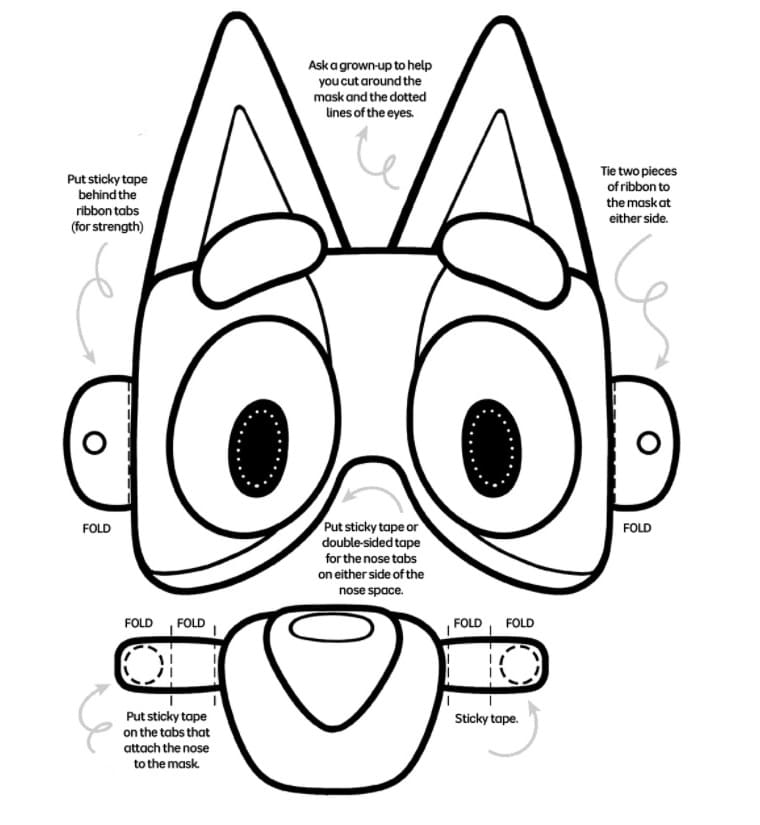
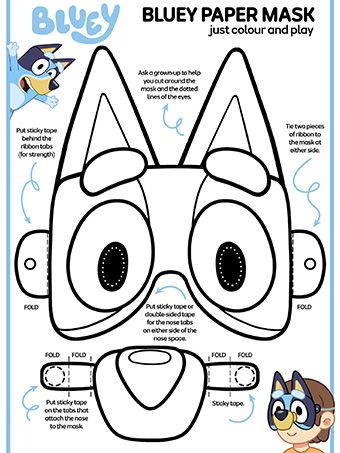
The Heelerween pages – Heelerween Bluey and the Halloween pages – cover the show’s annual Halloween episode tradition. “Heelerween” (Season 1, Episode 26) established the Heeler family’s Halloween as a recurring special occasion and introduced the term that the show’s fanbase has adopted for the holiday. Bluey Paper Mask is a specific craft-activity page based on the wearable paper masks that are a recurring element in show episodes.
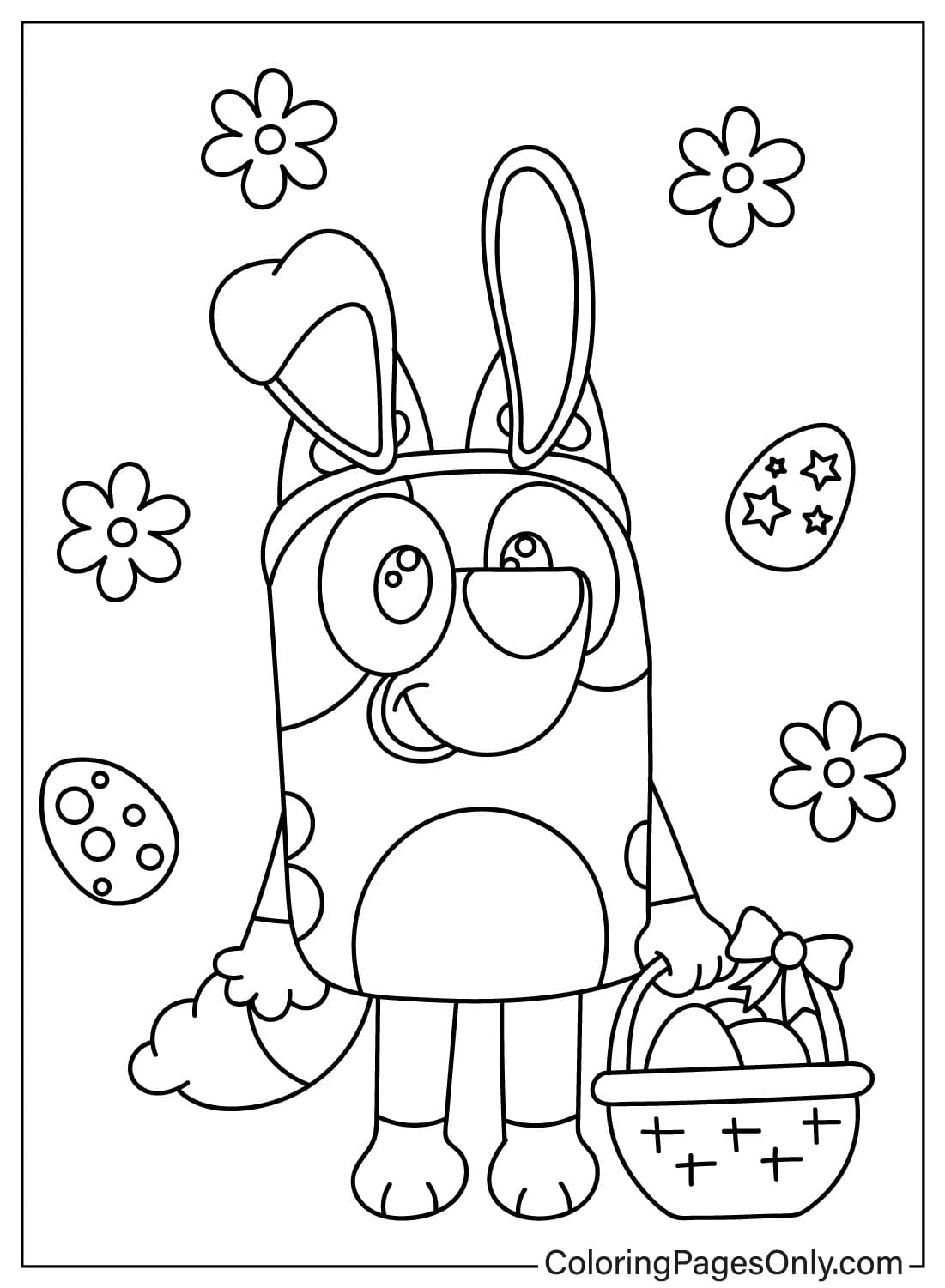
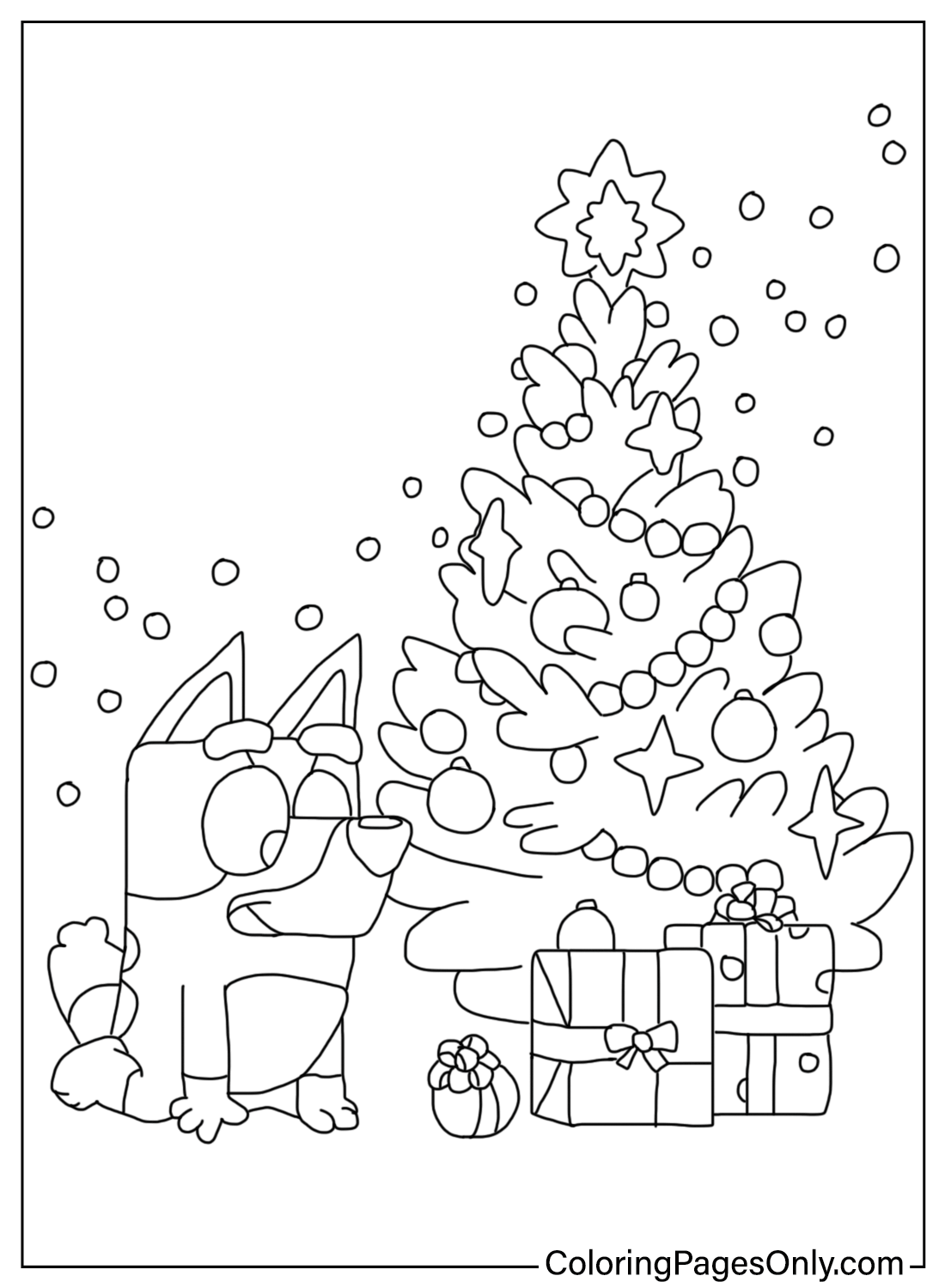
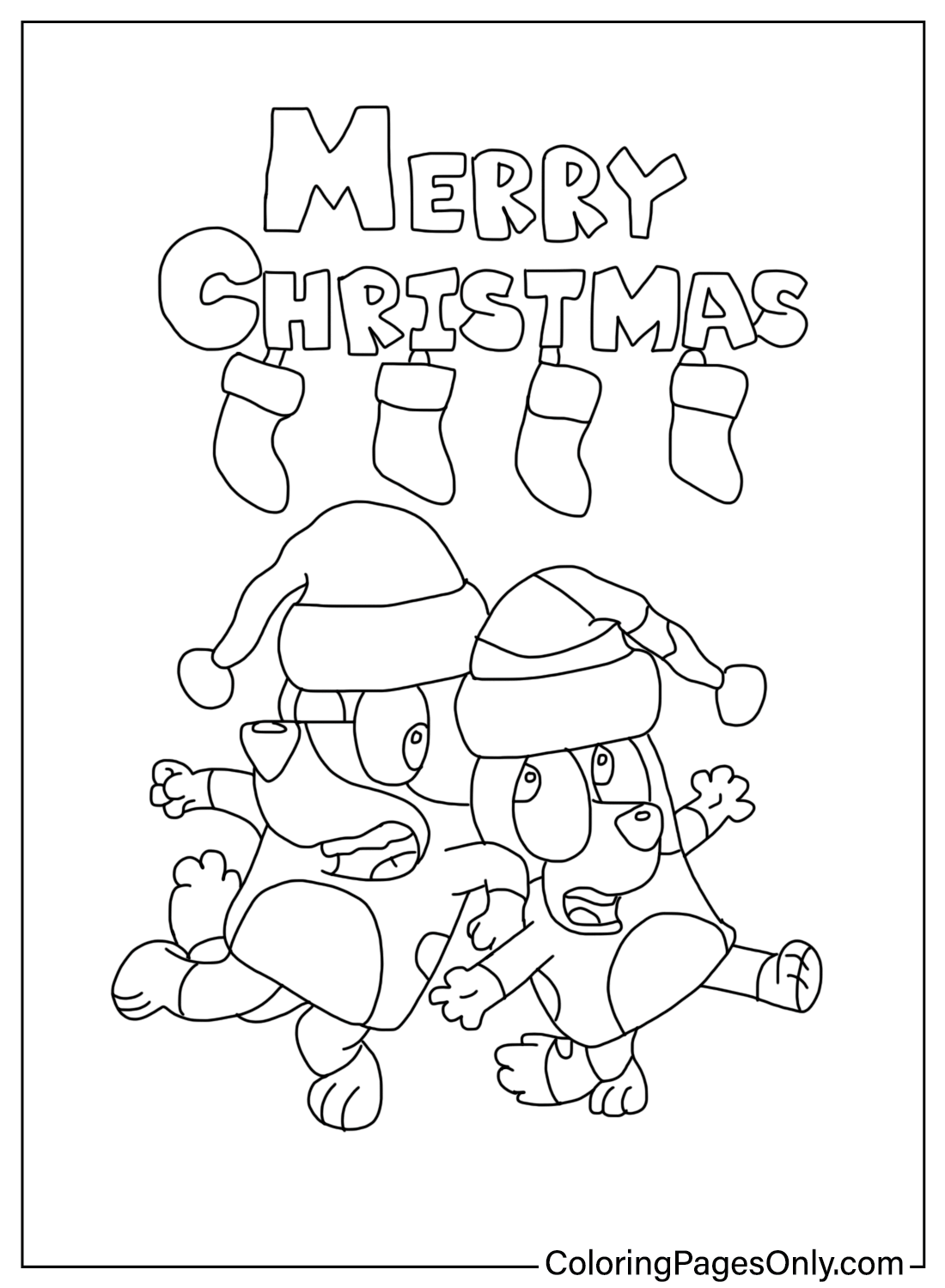
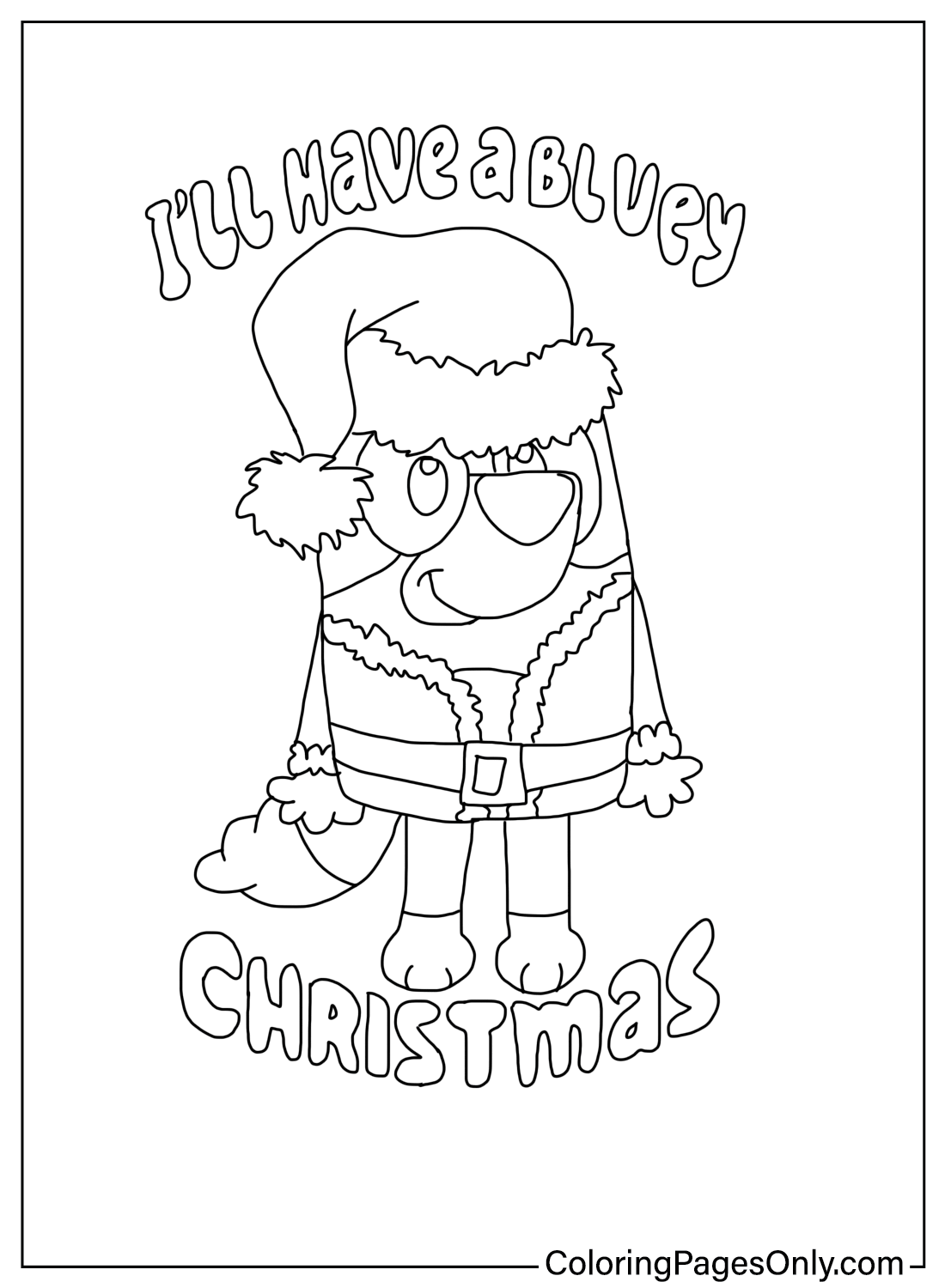
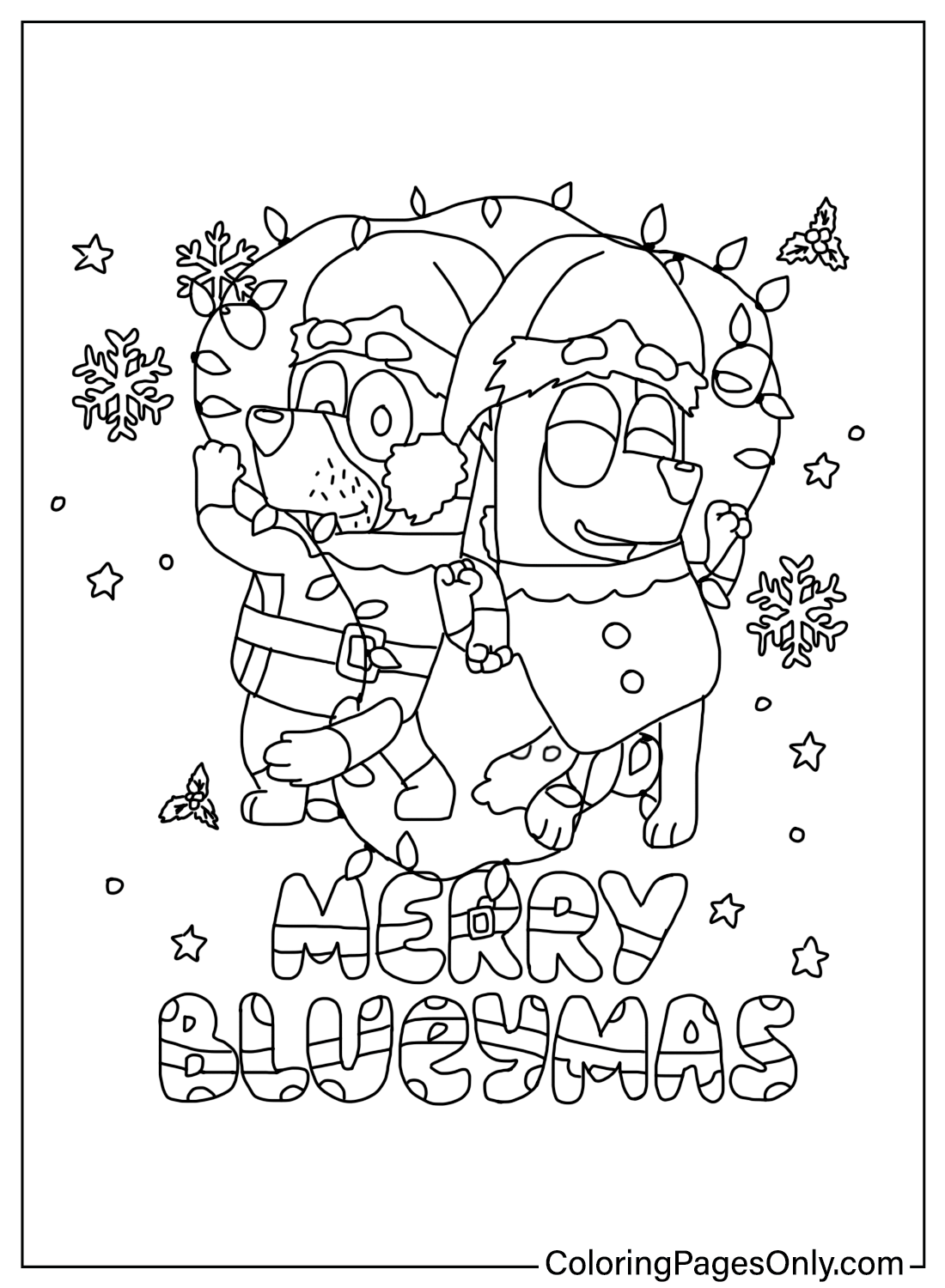
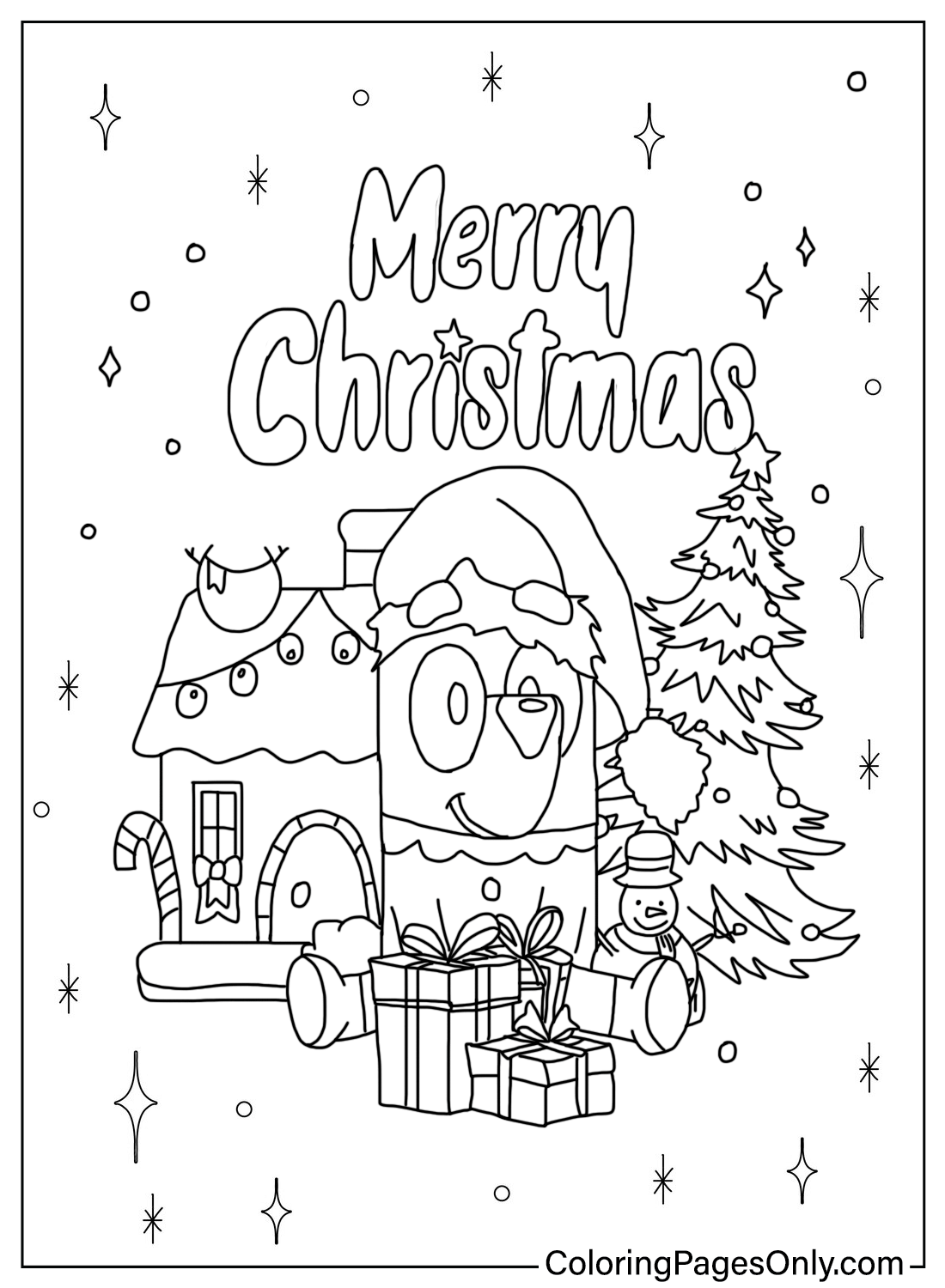
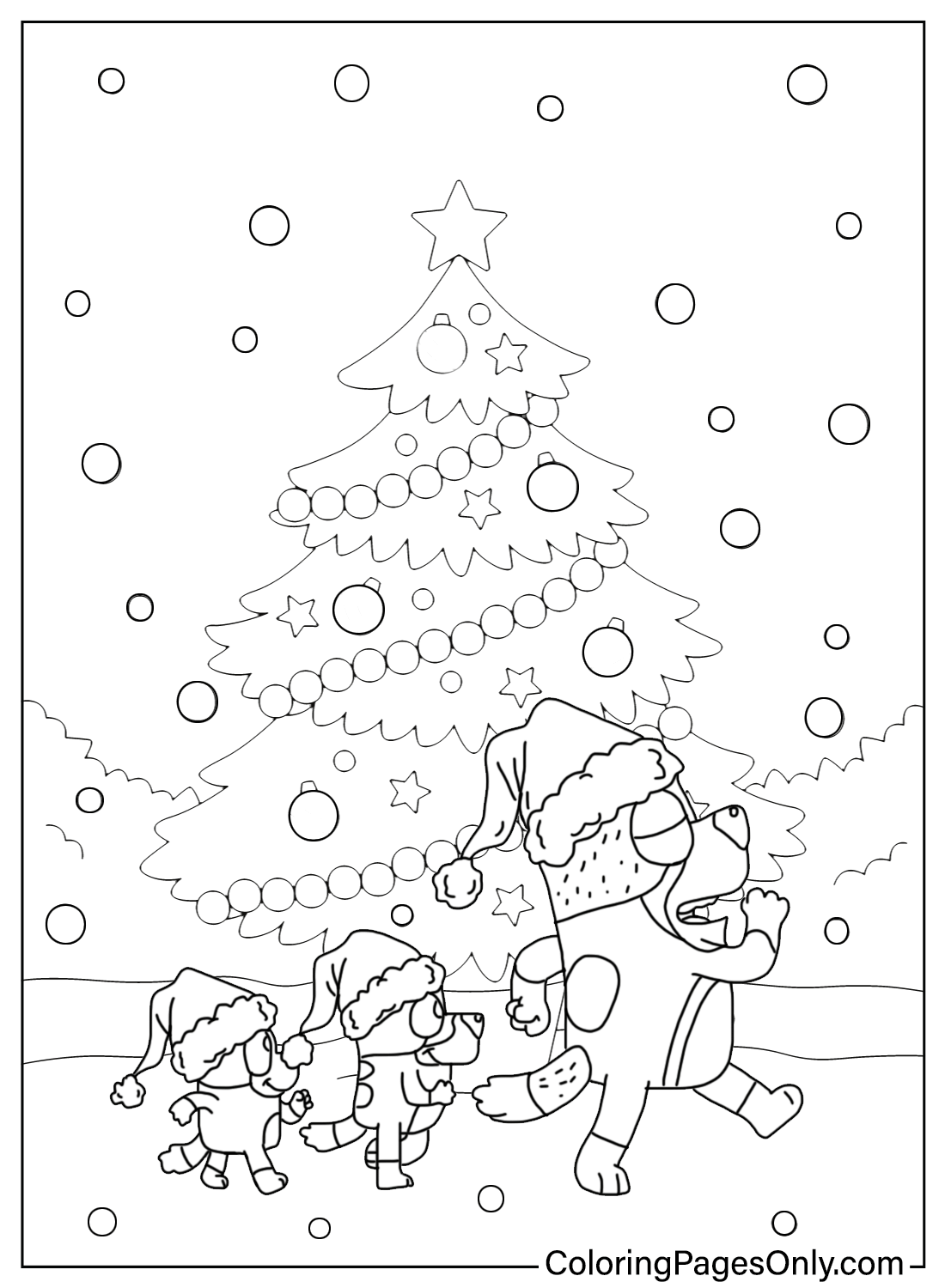
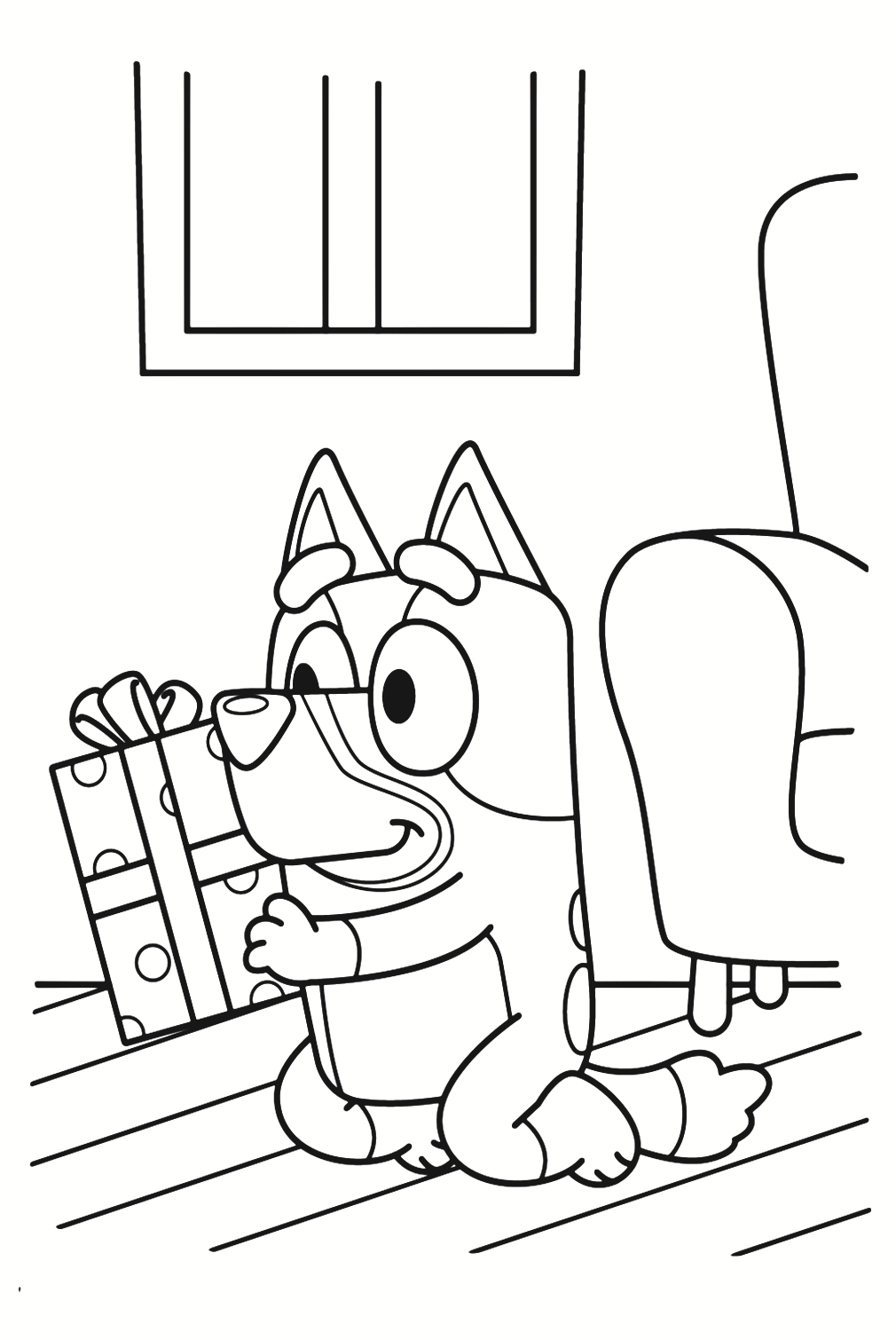
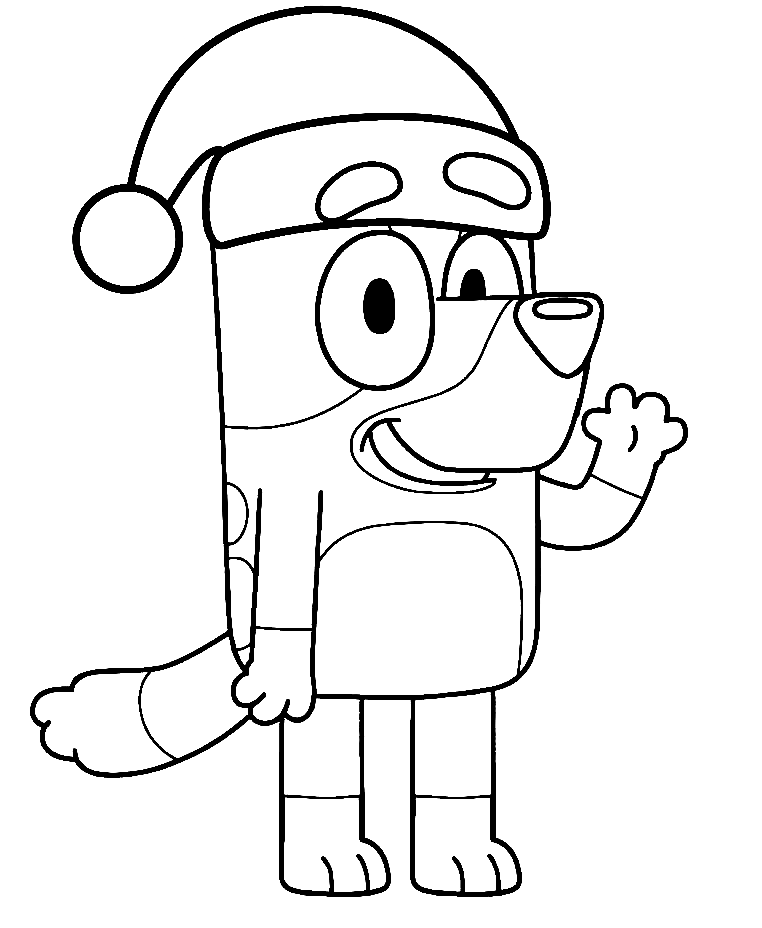
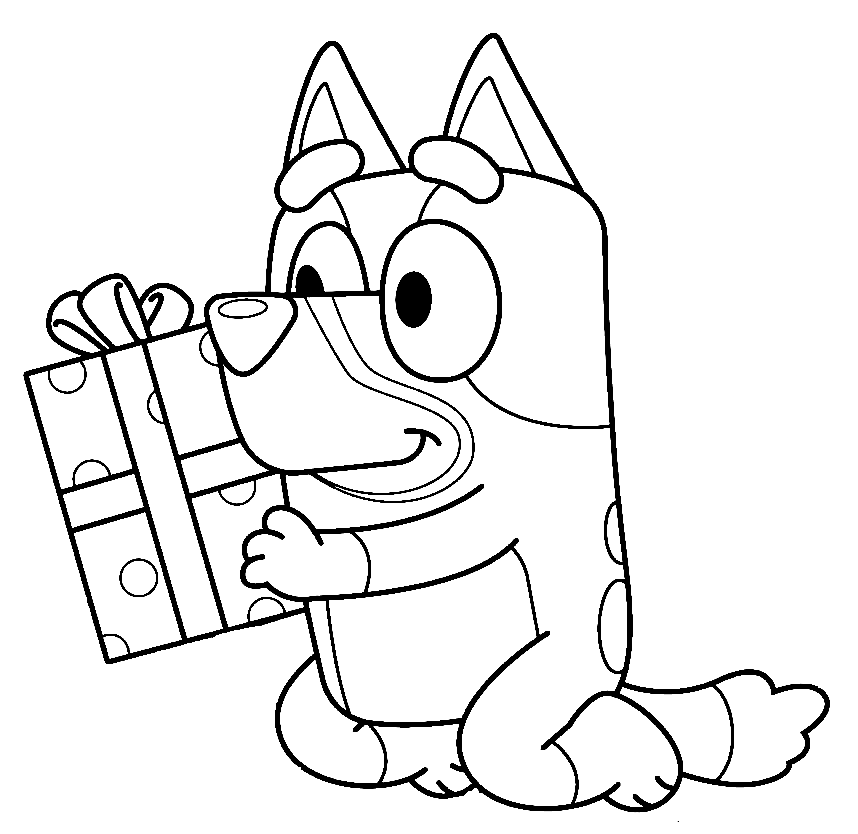
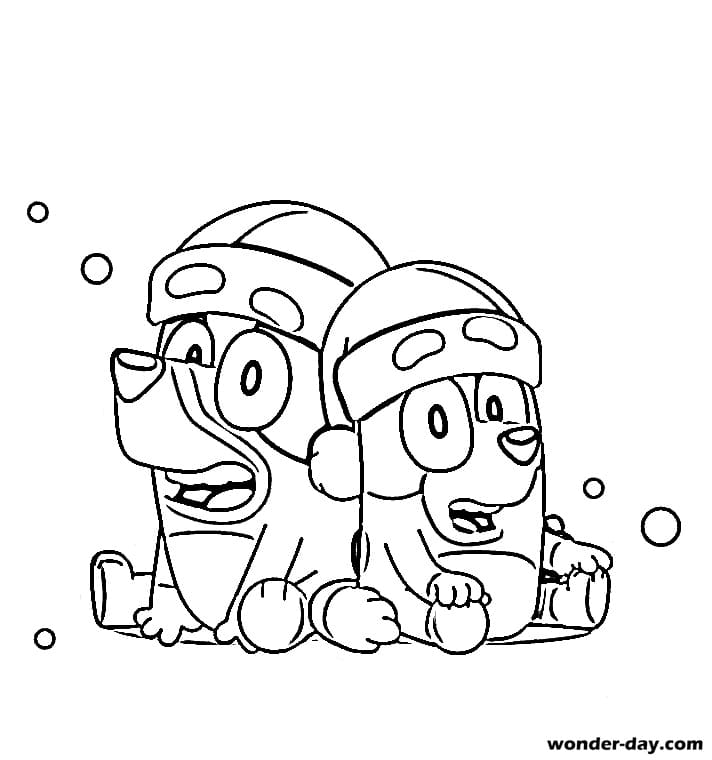
The Christmas pages are the most numerous seasonal cluster in the collection. Merry Christmas Bluey Bingo Coloring Page, Christmas Coloring Pages Merry Blueymas (using the fan-coined portmanteau), Bluey Merry Christmas Coloring Pages, Bluey Christmas Coloring Pages Free, Christmas Bluey Coloring Page, Bluey with Santa Hat, Bluey and Gift, and Bluey Christmas cover the full range of Christmas Bluey pages. Easter Bluey Coloring Page covers the spring holiday.
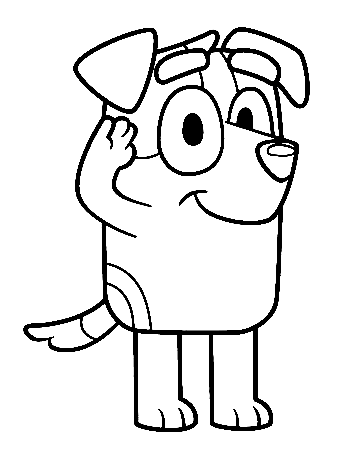
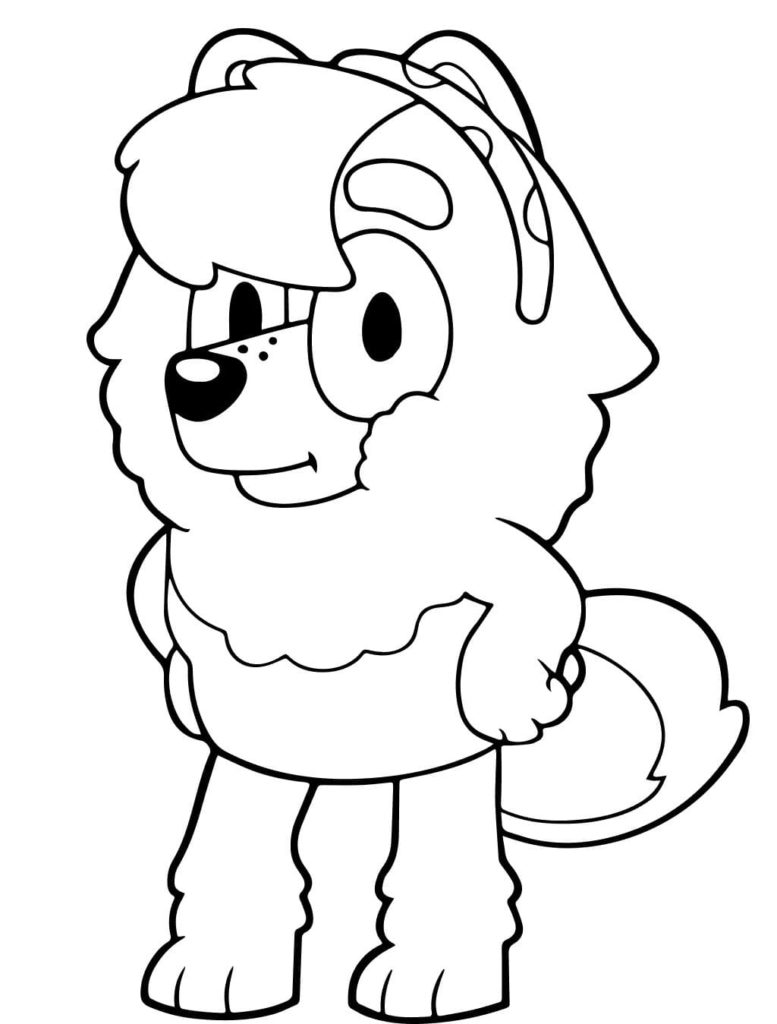
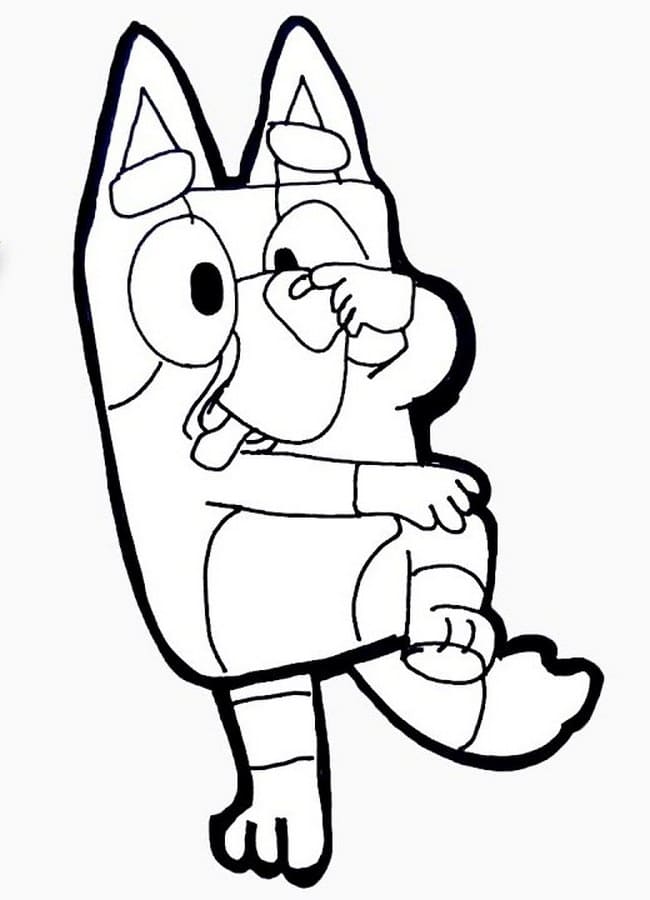
The individual character portrait pages – Happy Bluey, Bluey Hero, Bingo, Bingo Bluey Character, Bingo Bluey Character (alternate), Muffin, Muffin Bluey, Muffin And Socks, Socks Heeler, Daddy Bandit Coloring Sheet, Funny Bandit, Dad, Mum, Honey, Honey Bluey, Coco, Mackenzie, Happy Mackenzie, Jack, Indy, Rusty, Lucky, Chloe, Chloe Bluey Character, Snickers – cover the individual cast members for anyone who wants to focus on one specific character.
Coloring Tips for Bluey Pages
The canonical palette of Bluey is deceptively specific – what reads at a glance as “blue dog and orange-red dog” is actually a carefully calibrated set of individual character colors that the show keeps highly consistent across every episode and piece of official merchandise. Getting these colors right is the key to producing a Bluey coloring page that reads as authentically the show rather than a generic cartoon.
Bluey’s blue is the most important single color in the collection, and the most frequently misread. It is not the blue of a clear summer sky (too pale and too cyan), not navy (too dark and too cool), and not the blue of a sports team jersey (too saturated and too vivid). It is a medium blue with a slight gray undertone – the specific muted, dusty quality of the Blue Heeler breed’s actual coat. If you are working with colored pencils, a combination of a medium blue pencil with a light gray pencil layered over it produces the correct dusty quality. With markers, look for a “steel blue” or “denim blue” rather than a primary blue or a bright cerulean. The color should feel slightly restrained – present and clearly blue, but not saturated to the point of brightness.
Bingo’s orange-red is similarly specific. It is warmer than a pure orange (more red-orange than yellow-orange), and more vivid than a rust or terracotta. The closest common color reference is the warm orange-red of a blood orange or a warm autumn sunset – not the vivid orange of a pumpkin, not the cool red of a fire engine. If you are working with colored pencils, a warm orange-red pencil (often labeled “scarlet” or “orange-red” or “flame”) applied at medium pressure captures the Bingo palette well.
Bandit’s blue is the same family as Bluey’s, but with a slightly deeper, slightly more muted quality – he is an adult, and adult Blue Heelers have a fuller, more complex coat pattern than puppies. The easiest approach is to use the same blue as Bluey but apply it with slightly more pressure or layer it slightly more densely, then add a very subtle darker gray in the shadow areas where you would leave lighter values on Bluey’s coat.
Chili’s orange-red is the same family as Bingo’s but with a slightly deeper, more mature tone – again reflecting adult vs. puppy coat. Use the same Bingo orange-red, but apply it slightly more densely, with slightly more red in the mid-tones.
For the friend characters: Mackenzie’s black-and-white Border Collie pattern requires genuine black (not dark gray) for the black areas and pure white (paper left uncolored) for the white areas, with the characteristic Border Collie blaze pattern – the white line running from the top of the head down through the center of the face – being the most important identifying detail to preserve. Coco’s pink should be a warm, medium pink – not too pale (which reads as pale lavender at a distance) and not too vivid (which reads as magenta). Jack’s Dalmatian spots should be clear black ovals of various sizes on a white background, with the spots distributed across the body in the naturally irregular but not random pattern of actual Dalmatian spots – clustered more densely on the ears and body, less densely on the face.
For the seasonal pages: Christmas pages work best with Bluey and Bingo in their canonical colors, using the Christmas red and green of the Santa hat, gifts, and decorations as the seasonal accent. The contrast between Bluey’s blue body and a vivid red Santa hat is one of the most visually satisfying color combinations in the Christmas pages. Easter pages similarly work best with the canonical character colors as the anchor, with the pastel Easter palette (soft pink, pale yellow, mint green, lavender) applied to the Easter eggs and spring setting elements.
For the imaginary game pages (Royal Dogs, Knight Dogs, Heelerween, Bluey Turning Into A Bat): these pages call for costume elements to be colored in the palette appropriate to the scenario – medieval royal and knight colors (gold, red, deep blue, silver) for the Royal Dogs and Knight Dogs pages, Halloween colors (orange, black, purple) for the Heelerween page – while keeping the underlying Bluey and Bingo character colors consistent beneath or alongside the costume elements.
5 Activities to Do With Your Bluey Pages
Color the complete Heeler family portrait set. Print one of the individual character portrait pages for each family member – Happy Bluey, Bingo, Daddy Bandit Coloring Sheet, Mum, Muffin, and Socks Heeler – and color all six in their canonical palette before coloring any of the group pages. Establishing each character’s specific color in isolation before working on group pages significantly improves the consistency of character color across the set. When the family portraits are complete, color the Bluey, Bingo, Bandit, and Chili Heeler group page using exactly the colors you established in the individual portraits. Compare the group page result to the individual pages – the visual consistency of the character colors across the set is the measure of success.
Recreate a specific episode scene. Bluey’s best-known episodes each have a distinctive visual scenario that can be matched to specific pages in the collection. “Hammerbarn” (Season 3) centers on a family road trip and new home; “The Pool” centers on the public swimming pool; “Stickbird” centers on outdoor stick crafts in the park. Choose an episode and find the page in the collection whose setting most closely matches a scene from that episode – then color it in the specific environmental palette of that episode’s setting. A swimming pool episode calls for aqua blue water and the specific cream of a suburban Queensland pool deck; a park episode calls for the deep Australian green of subtropical park grass and the warm golden light of outdoor Brisbane.
Color a Heelerween costume series. Print Heelerween Bluey and any of the other Halloween-themed pages, and design original Halloween costumes for each Heeler family member – costumes that feel appropriate for each character’s personality. Bluey might be costumed as a superhero, Bingo as a fairy or butterfly, Bandit as something embarrassingly uncool (very on-brand for Bandit in Halloween episodes), and Chili as something elegant and minimal. Render each costume in the colors appropriate to the design while keeping the underlying character’s canonical blue or orange-red coat visible – the same approach the show uses in its Halloween specials, where the Heelers are clearly themselves in costume rather than transformed into something else.
Create a Brisbane neighborhood map. After coloring several pages – including Bluey’s House, outdoor activity pages, and pages featuring different friends – draw a simple map of the Heeler neighborhood on a large sheet of paper: the Heeler house at the center, the park nearby, the houses of Mackenzie, Coco, Jack, and other friends in the surrounding streets. Cut the finished character pages to a small size and place each character at their relevant location on the map. This creates a geographic overview of Bluey’s world – a tangible version of the neighborhood that the show evokes through recurring locations without ever showing as a complete map. Label each location and character, and you have a reference document for the show’s geography that is genuinely more organized than anything the show has officially published.
Make a Bluey and Bingo activity book. Print and color six to eight activity pages from the collection – Bluey And Bingo Playing Cricket Game, Bluey On A Bike, Bluey Is Dancing, Bluey Reads A Book, Bluey plays with a ball, Bluey catches birds, and any others showing the sisters in specific activities. Under each completed page, write a short caption in the style of a Bluey episode title – the show’s episode titles are always one or two words naming the game or activity of the episode (“Cricket”, “Bike Ride”, “Dance Mode”, “Story Time”). Stack the finished pages in order and staple them along the left edge to create a small activity book. This mimics the structure of the show itself – a series of discrete, titled play-scenarios – and creates a keepsake that organizes the coloring activity into a coherent narrative sequence.
Download Your Free Bluey Pages Today!
All 80+ Bluey Coloring Pages are completely free – download as PDF to print or color online in your browser with one click. No sign-up, no cost. Whether you are coloring with a child who loves Bluey’s energy and imagination, or you are an adult who has been quietly moved by what the show achieves, or you simply want to spend an afternoon with the most warmly depicted fictional family in contemporary children’s television, this collection has everything you need.
For Halloween-specific Bluey pages, visit our dedicated Bluey Halloween Coloring Pages collection.
Share your finished pages with us on Facebook and Pinterest at ColoringPagesOnly.com!