Athletics Coloring Pages at ColoringPagesOnly.com brings together 40+ free printable pages covering the world’s most fundamental competitive sport – track and field athletics, the discipline that has anchored every Summer Olympics since 1896. The collection covers the full range of athletics events: sprint races, relay racing, marathon and long-distance running, race walking, hurdles, high jump, long jump, pole vault, shot put, discus throw, javelin throw, hammer throw, and weightlifting, with dedicated tiles for each discipline in both realistic athlete and cartoon character treatments. The character cluster brings Mickey Mouse, Goofy, and Donald Duck into three classic throwing events. The full Sports collection is available through our Sports Coloring Pages hub.
Every page is completely free – download as PDF to print or color online in your browser. No sign-up, no cost.
About Athletics
Athletics – known as track and field in the United States and Canada – is the collective term for the competitive sports that involve running, jumping, and throwing. It is the oldest organized competitive sport in recorded history: the ancient Greek Olympics of 776 BCE featured a single event, the stade race (a sprint of approximately 192 meters), and athletics has remained at the center of organized sport ever since. Every Summer Olympics since 1896 has featured athletics as its largest and most-watched discipline, and World Athletics (formerly the IAAF) governs the sport internationally with more member federations than any other single-sport organization.
Athletics divides cleanly into two main branches: track events (running races of various distances and formats) and field events (jumping and throwing disciplines contested in the infield). Combined events – the decathlon (men, 10 events across two days) and heptathlon (women, 7 events across two days) – test athletes across multiple track and field disciplines, producing the individuals often considered the world’s most complete athletes.
The appeal of athletics as both a sport and a coloring subject is its universality. Unlike team sports that require specific equipment and facilities, the basic forms of running, jumping, and throwing are instinctively practiced by children from the earliest stages of development. Every child who has raced a friend, jumped over a puddle, or thrown a ball at a target has participated in the fundamental movements that athletics codifies into formal competition.
Track Events in This Collection
Sprinting
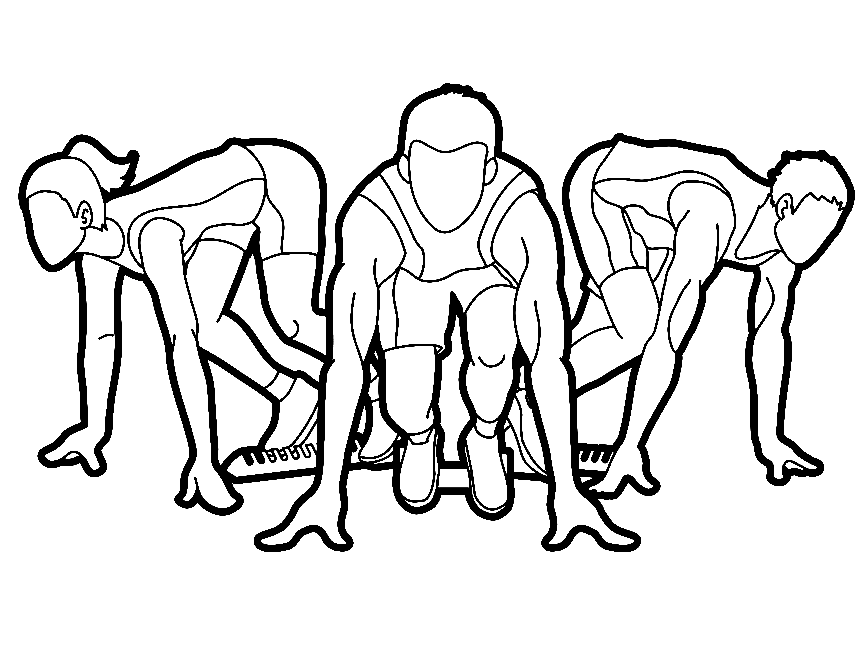
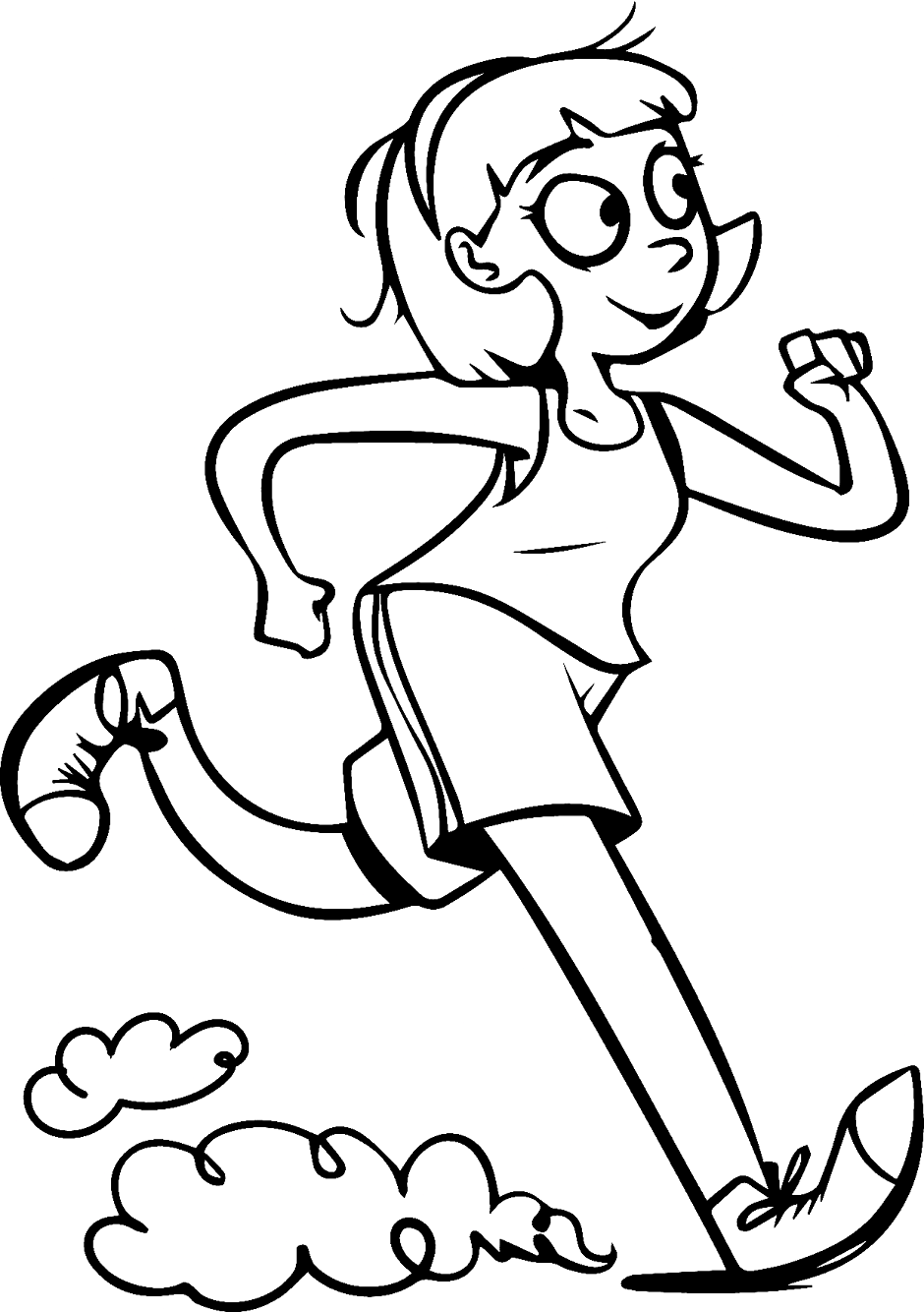
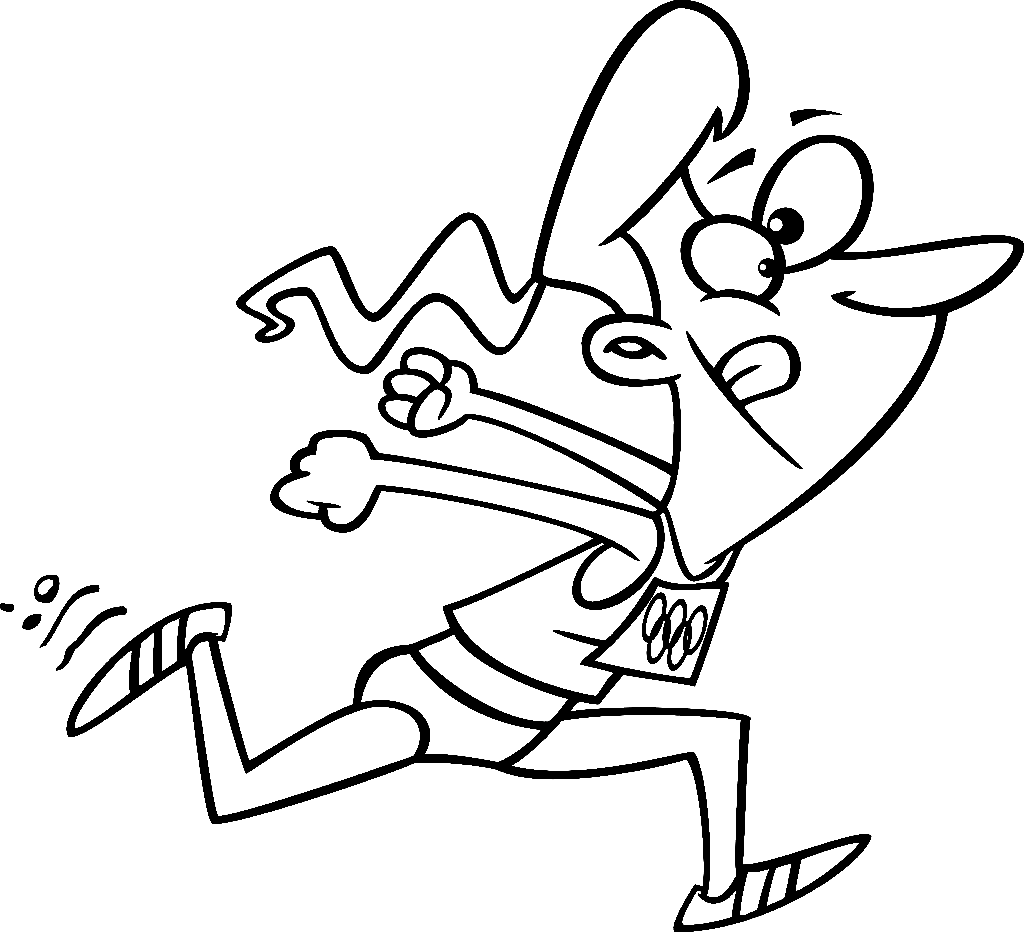
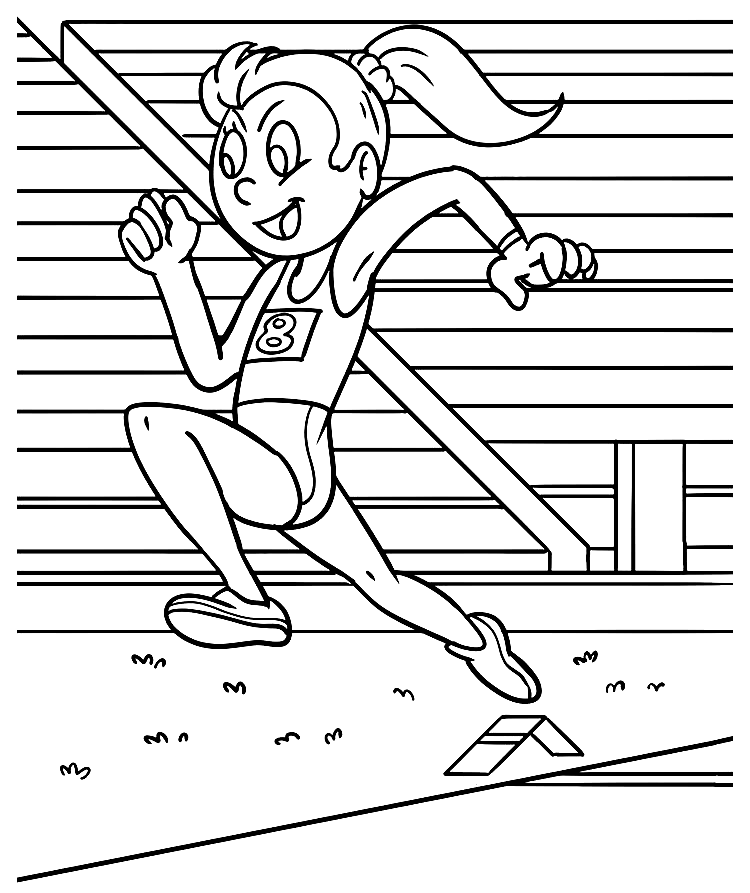
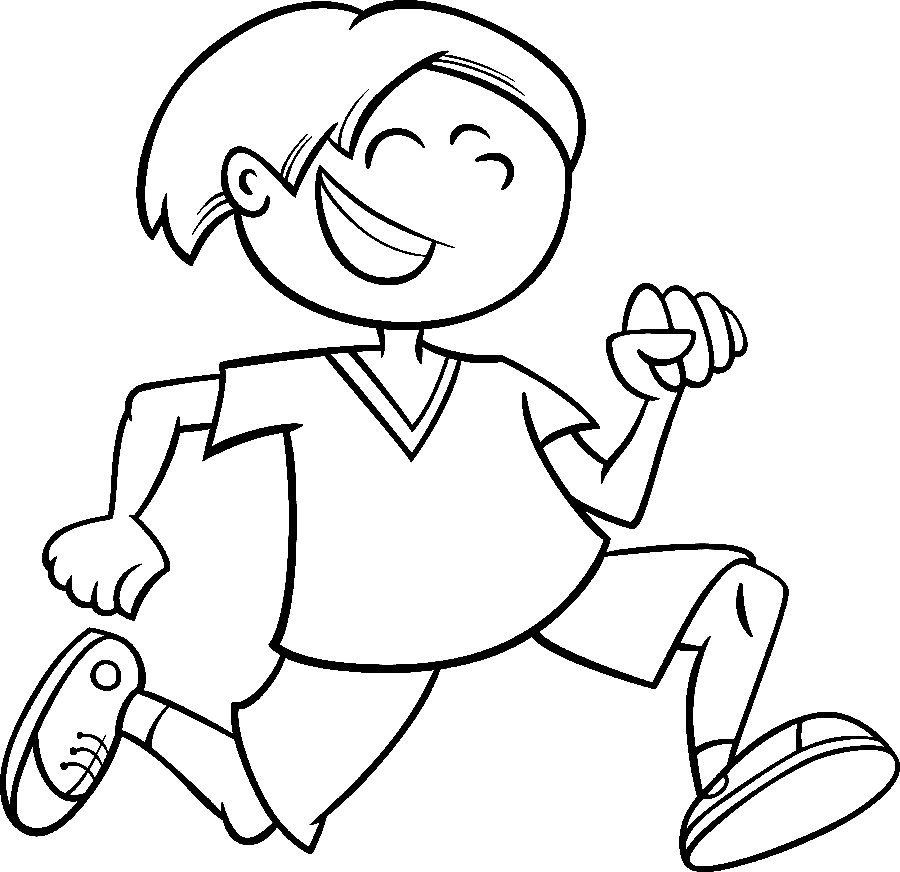
Sprint Runner and Athletics Running depict the shortest and most explosive of all running disciplines – the sprint, encompassing the 100 meters, 200 meters, and 400 meters in Olympic competition. Sprinting is the purest expression of raw speed in human athletics: at full speed, elite sprinters’ feet contact the ground for approximately 80-100 milliseconds per step, generating forces of up to 5 times body weight in that brief instant.
The 100 meters – the Olympic event most commonly described as determining the “fastest human on earth” – has been run in a wind-legal world record of 9.58 seconds by Usain Bolt of Jamaica, set at the 2009 World Championships in Berlin. This remains one of sport’s most celebrated individual records.
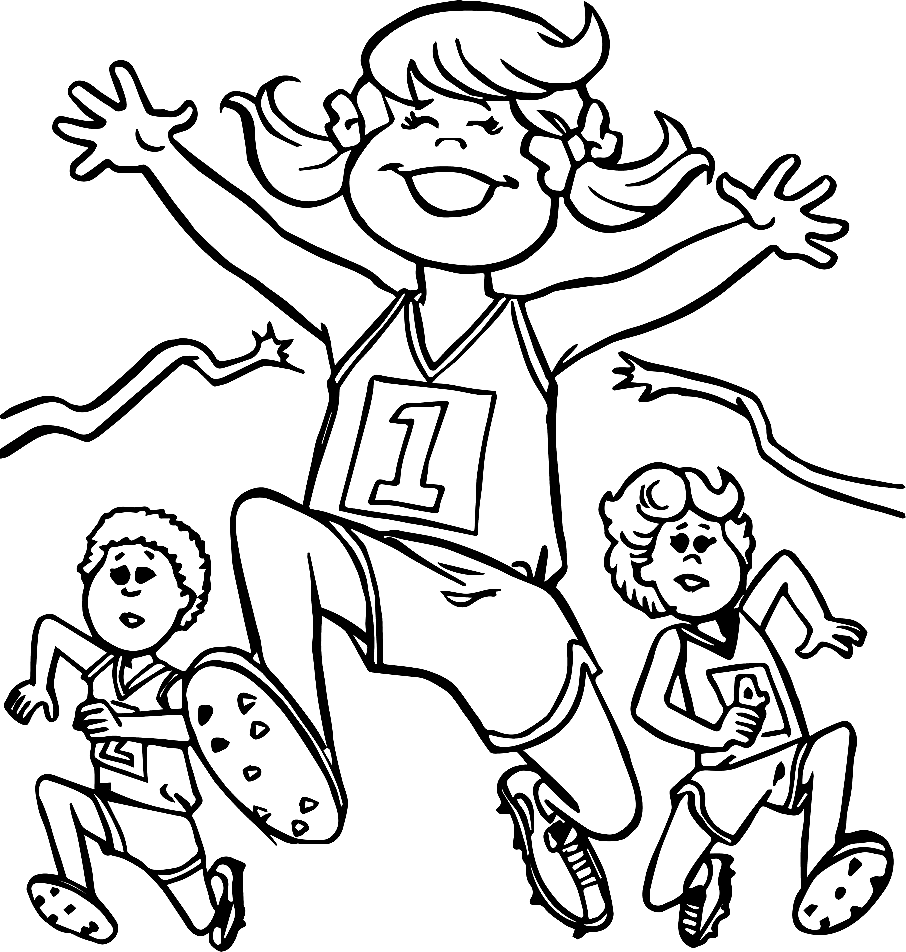
Coloring sprint tiles: The sprinter’s body at full speed creates one of the most kinetically dynamic poses in athletics – the driving arms, the high knee lift, the powerful push-off from the rear foot. The running lane (in white or pale yellow) on the red-brown track surface provides the environmental grounding. Sprint uniforms are sleek and form-fitting – vivid national team colors for international competition, school or club colors for recreational racing.
Relay Racing
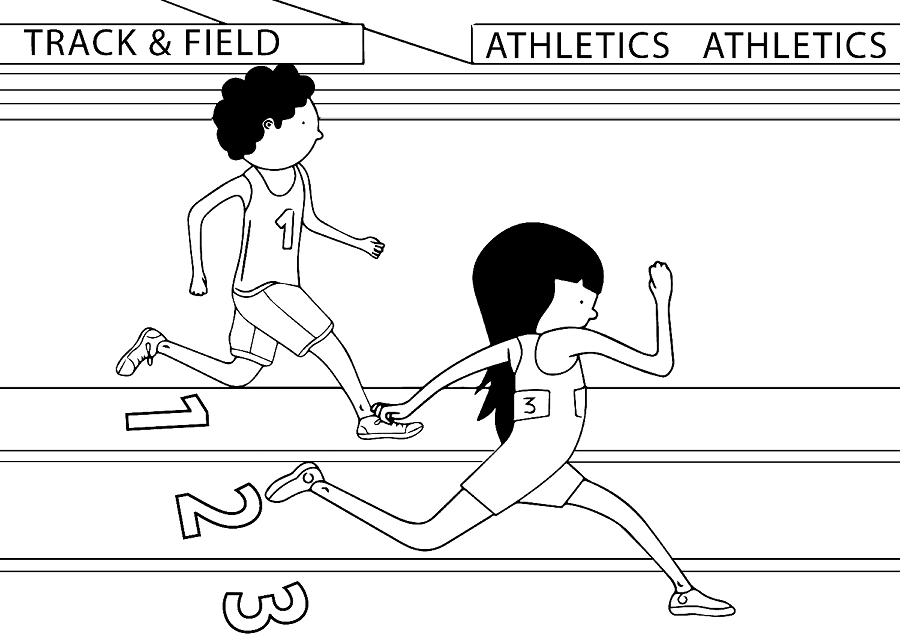
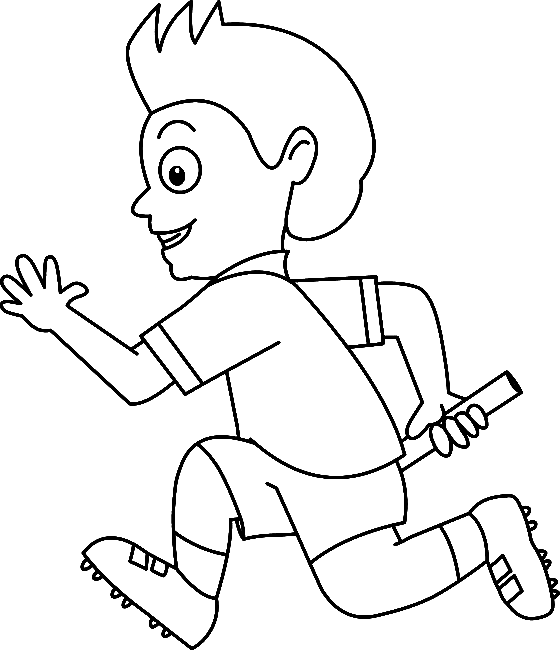
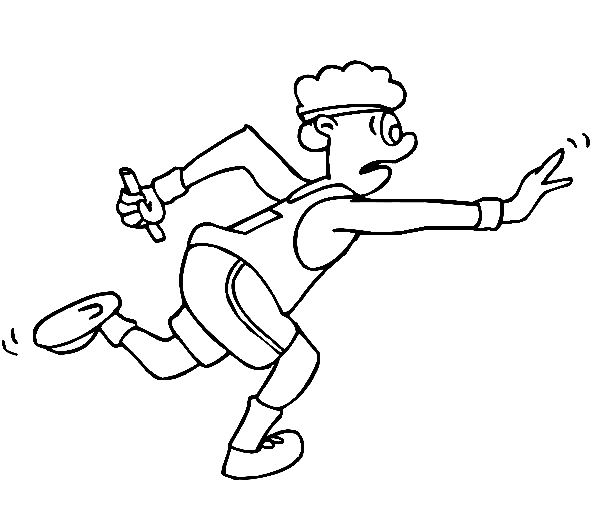
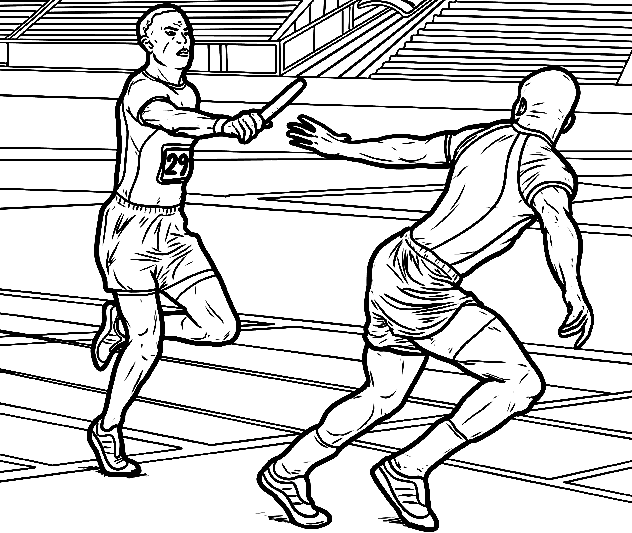
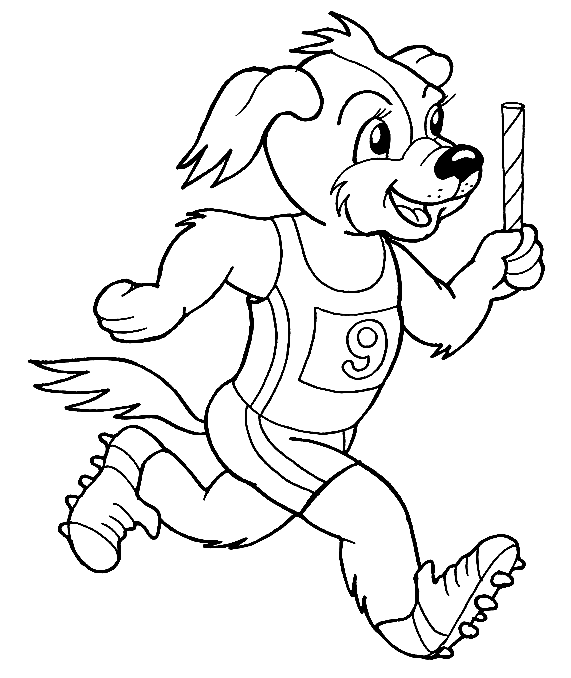
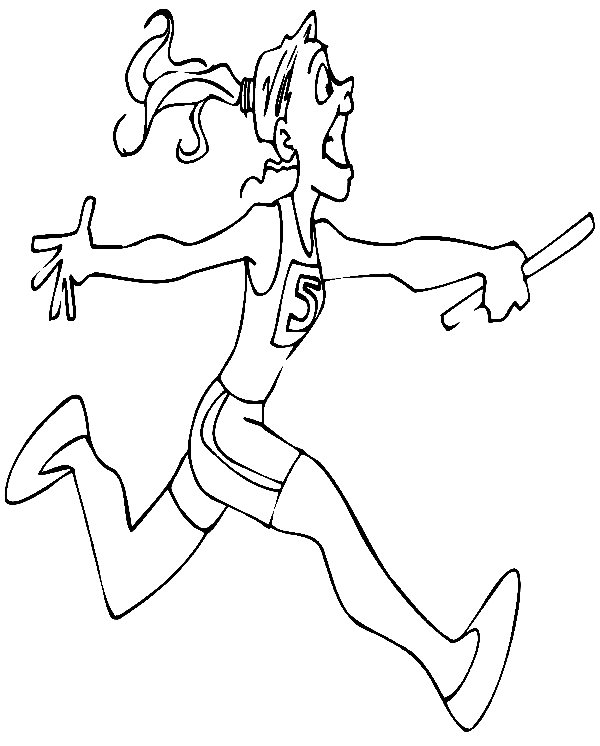
The relay cluster is the collection’s most socially expressive running group – Running Relay Race, Relay Race Runner, Man Relay Race, Girl Relay Race, and Dog Relay Race all depict the relay’s defining moment: the baton exchange between runners.
The relay is team athletics – individual speed combined with the technical precision of the exchange. The 4×100 meters relay requires each of its four runners to accelerate to full speed during the exchange zone (a 20-meter section of track) while passing a smooth metal or carbon fiber baton to the next runner without dropping it or exchanging outside the zone. Dropping the baton or exchanging outside the zone results in disqualification. The pressure of the exchange – executed between runners sprinting at maximum speed – makes the relay one of the most tactically and technically demanding events in track.
The Dog Relay Race tile is the collection’s most delightful non-human relay interpretation – cartoon dogs in athletic gear passing a baton in full sprint, applying the same choreography to a more compact, four-legged set of participants.
Hurdles
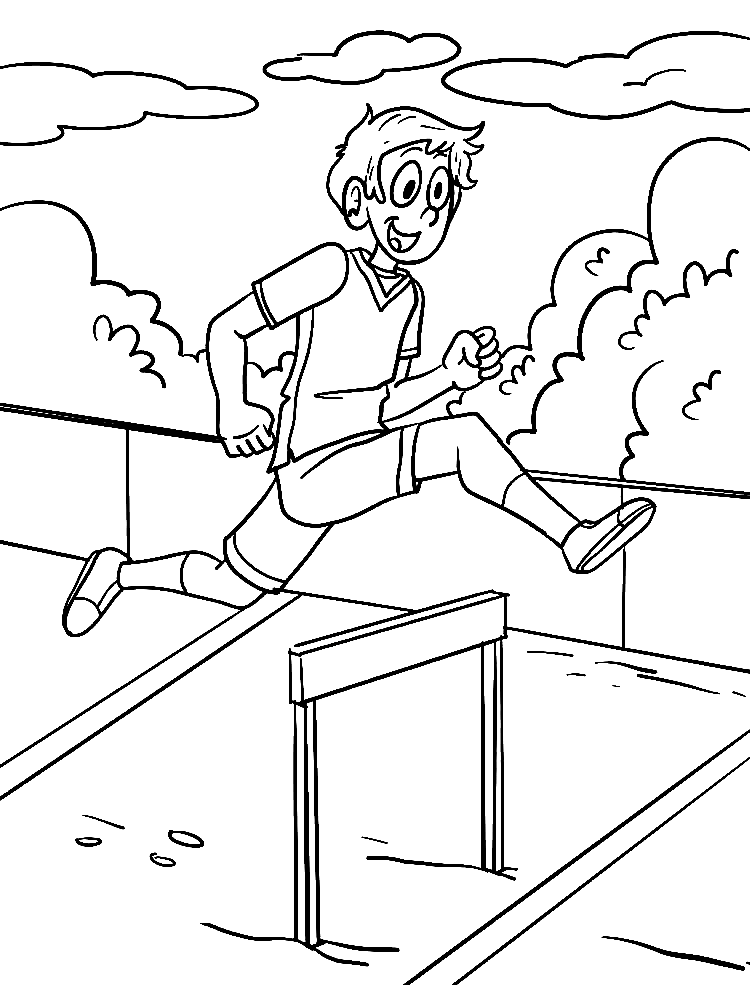
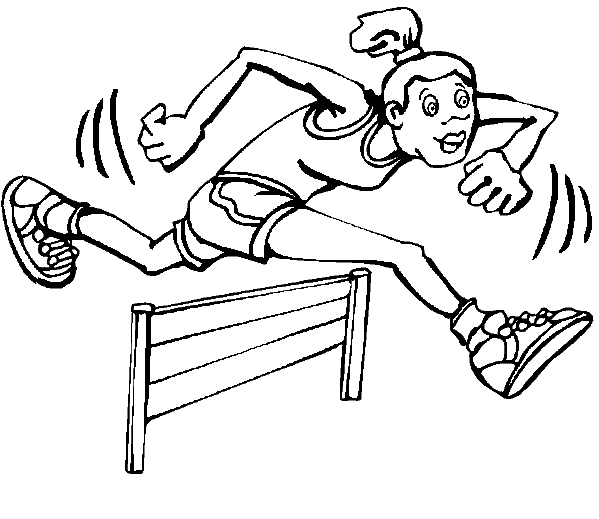
Hurdling Race and Boy Jumping Hurdle cover hurdling – the track event that adds an obstacle-clearance dimension to sprinting. Hurdlers must clear a series of barriers at fixed intervals while maintaining maximum running speed, since slowing to jump over hurdles costs more time than the aerodynamic efficiency of the fluid hurdling stride used by experts.
The 110-meter hurdles for men and 100-meter hurdles for women use 10 barriers of fixed height (106.7cm for men, 83.8cm for women) spaced at 9.14-meter intervals. The 400-meter hurdles (one full lap) uses 10 barriers at 91.4cm (men) and 76.2cm (women). Elite hurdlers do not jump over the hurdles – they stride through them, maintaining a nearly flat trajectory that barely clears the barrier’s height while keeping the majority of their running momentum directed forward.
Marathon and Long-Distance Running
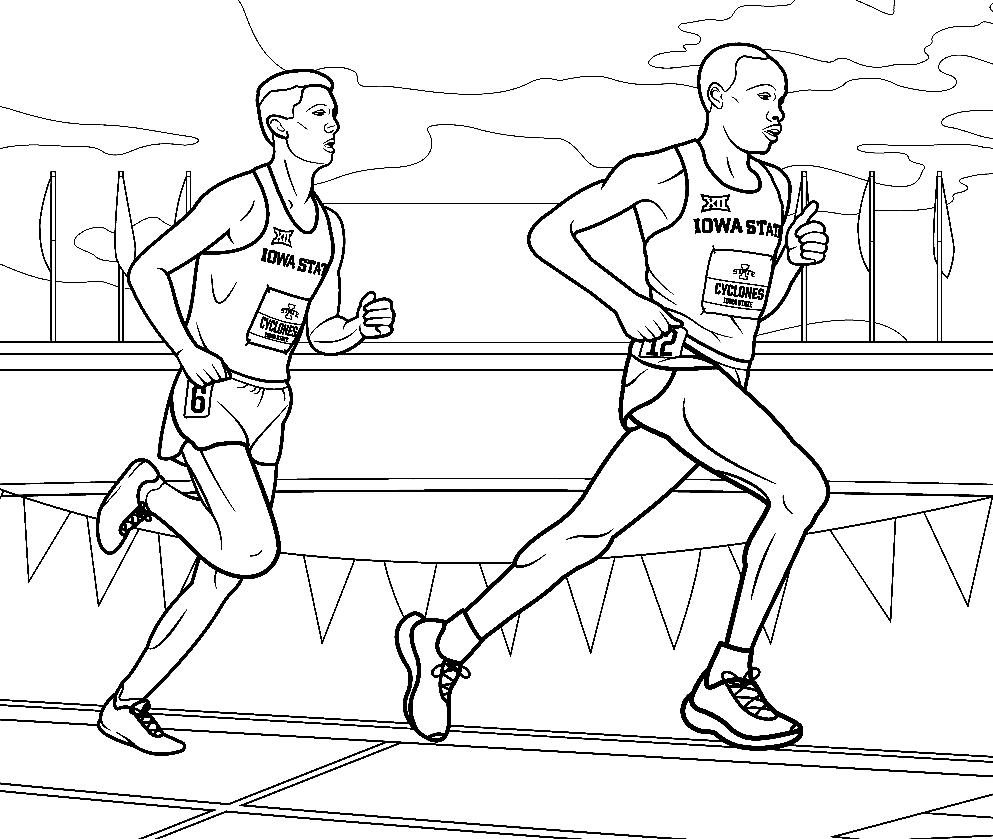
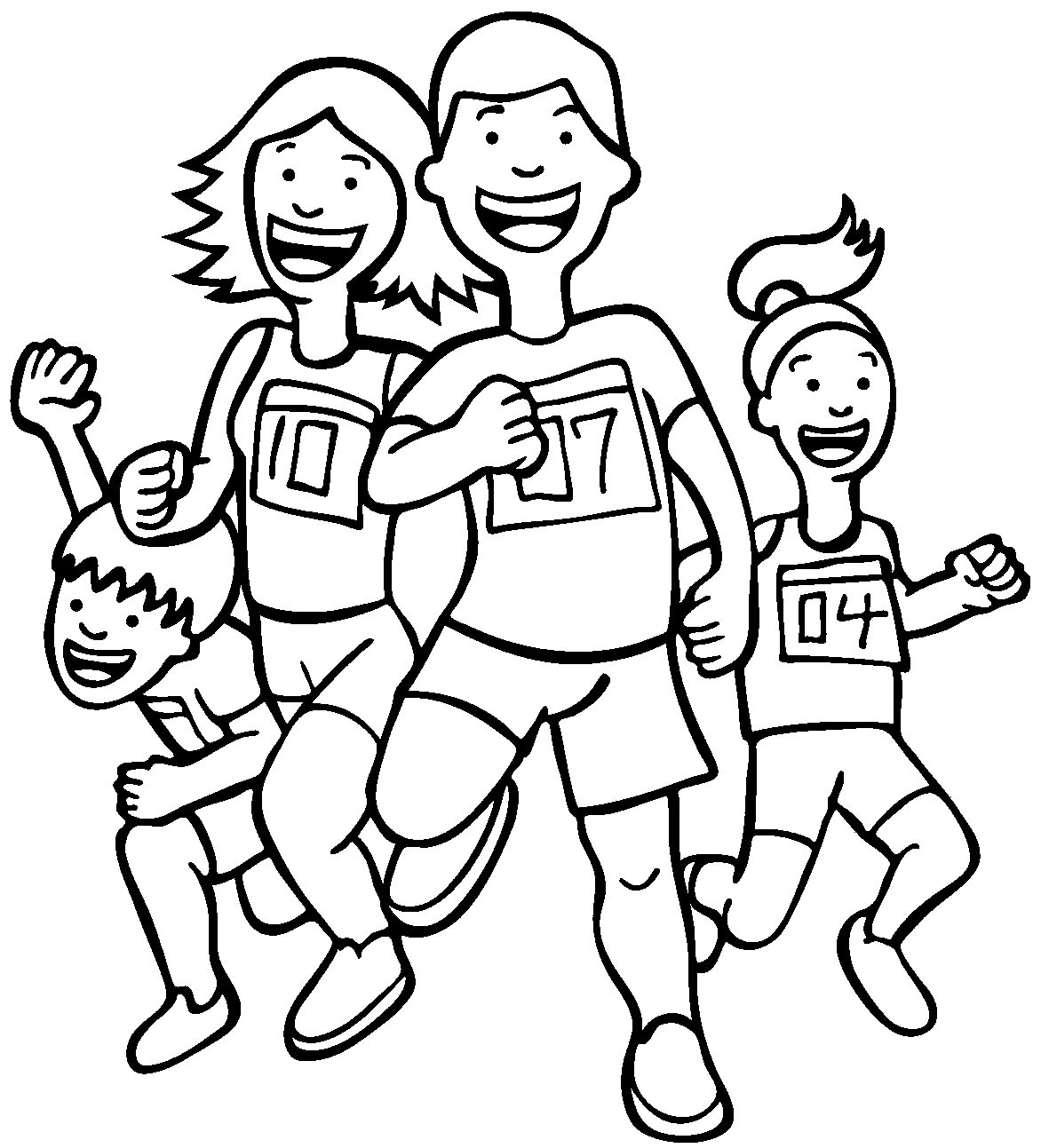
The marathon cluster – Starting Marathon, Running a Marathon, Marathon Runners, Finishing the Marathon, Kid Running a Marathon, and Long Distance Running – covers the most epic of all running events in both competitive and human emotional terms.
The marathon distance of 42.195 kilometers (26.219 miles) derives from the legendary run of the Greek soldier Pheidippides from the battlefield of Marathon to Athens to announce the Greek victory over the Persian army in 490 BCE – a story that, while historically contested in its details, embedded the Marathon as one of sport’s great origin myths. The modern marathon was established at the 1896 Athens Olympics and has been contested at every Summer Games since.
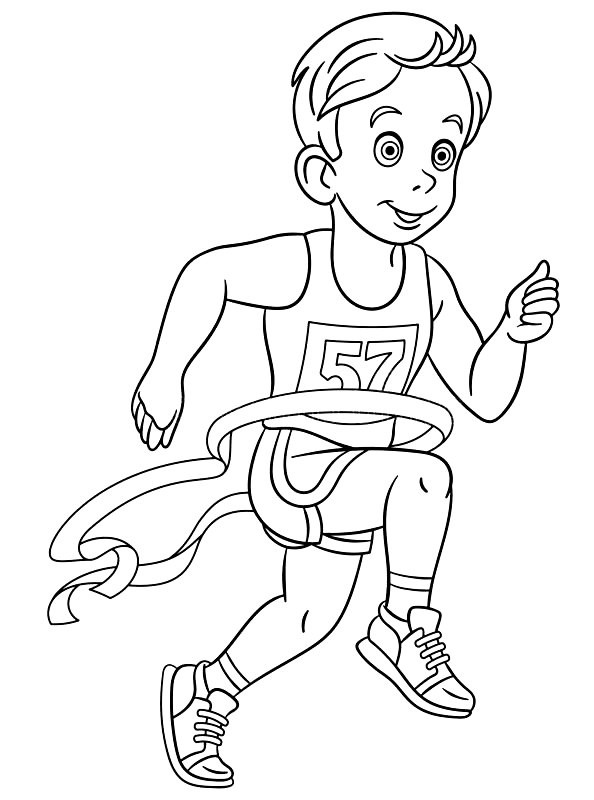
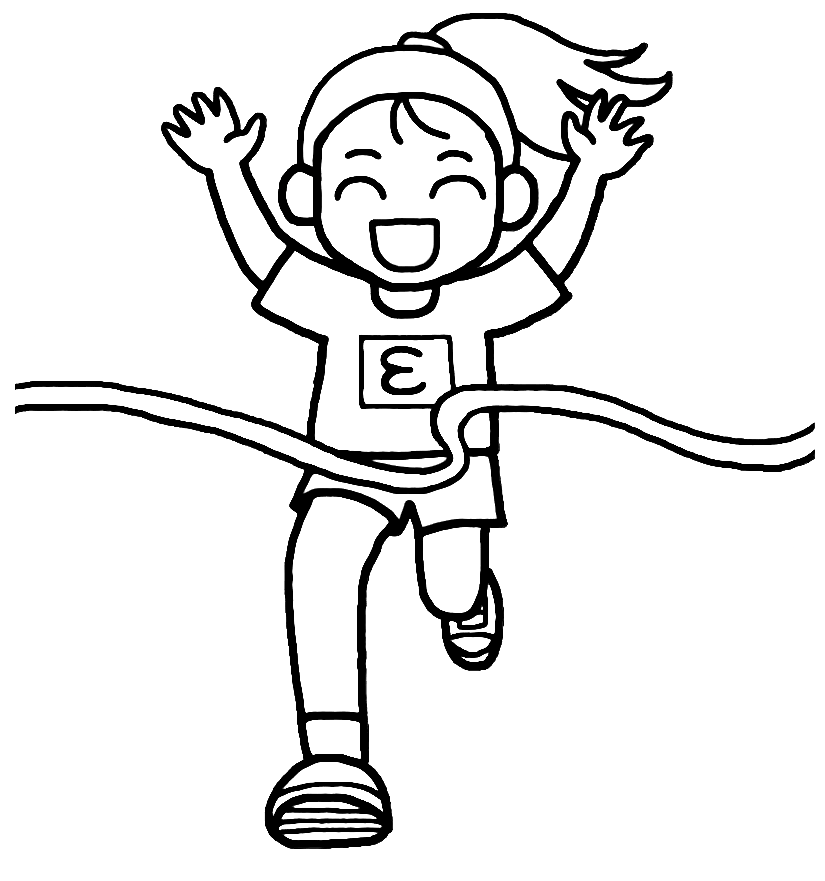
The Finishing the Marathon tile depicts the most emotionally charged moment in distance running – the moment of crossing the finish line after 42 kilometers of sustained effort. This moment, regardless of competitive position, represents one of sport’s most universal human experiences: the completion of something that required the full commitment of a person’s physical and mental capacity.
The Kid Running a Marathon tile is the collection’s most personally accessible marathon page – many communities hold junior marathon programs where children run shorter distances as part of youth running development, and this tile connects young colorists to the marathon tradition at an age-appropriate scale.
Race Walking
Race Walking is the collection’s most unusual and least-understood event – a competitive walking discipline that requires two strict rules: at least one foot must maintain contact with the ground at all times (unlike running, where both feet are airborne between strides), and the supporting leg must be straight (not bent at the knee) from the moment it contacts the ground until it passes under the body.
Race walking produces a distinctive, slightly stilted gait that looks deceptively easy but generates significant biomechanical effort. Elite race walkers complete 20 kilometers in under 1:20 and 50 kilometers in under 3:40 – performances that require extraordinary cardiovascular endurance combined with the technical discipline to maintain legal gait under fatigue and competitive pressure.
Field Events in This Collection
High Jump
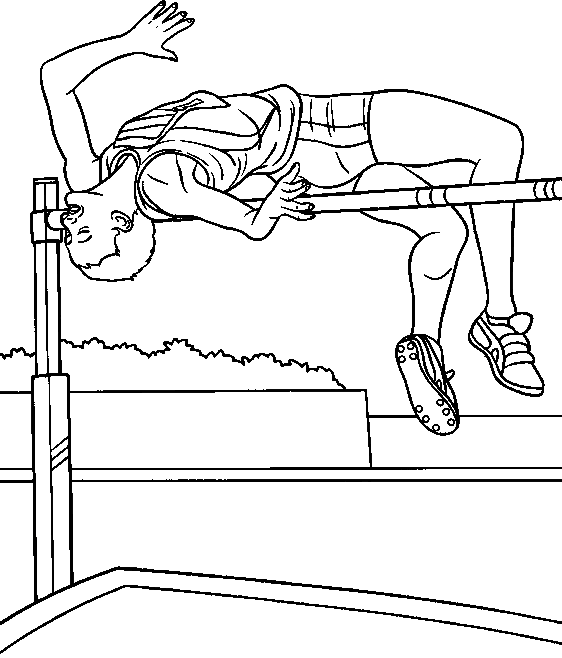
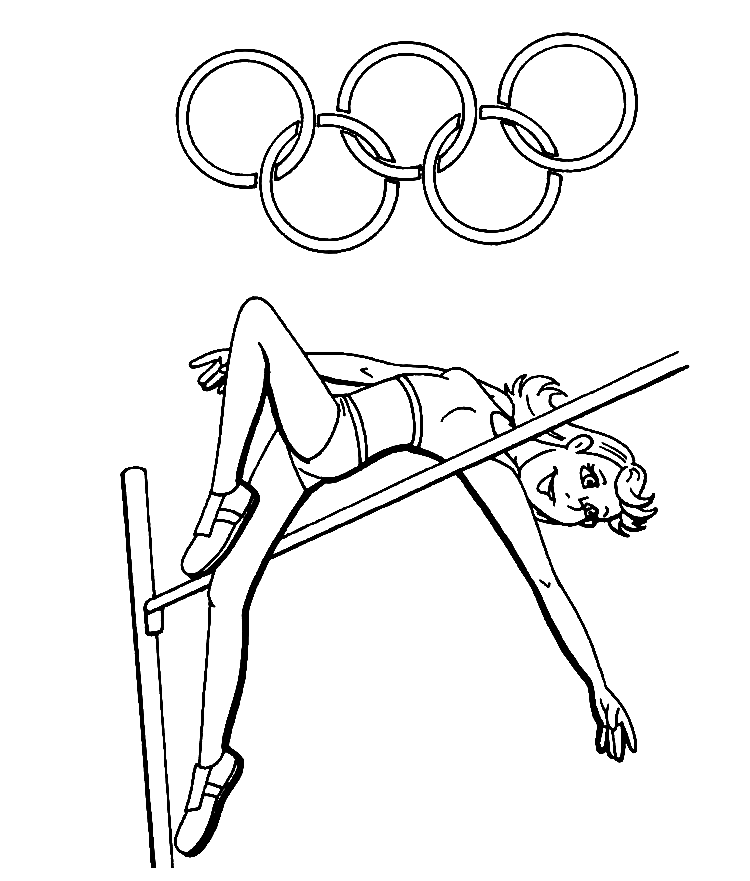
High Jump and High Jump Athletics depict the most technically evolved of all athletics jumping events – athletes clearing a horizontal bar using the Fosbury Flop, a backward-arching technique developed by American athlete Dick Fosbury and first used at the 1968 Mexico City Olympics, where Fosbury won gold with a technique that looked so unusual that observers initially questioned its legitimacy.
The Fosbury Flop involves approaching the bar at speed from a curved run, rotating to face away from the bar as the jump peaks, and arching the back so that the body passes over the bar in a series – hips clear first, then legs follow in a whipping motion. The technique allowed athletes to use their center of gravity more efficiently than previous techniques, enabling the continuous world record improvements that have since become the high jump’s history.
The men’s world record stands at 2.45 meters (Javier Sotomayor, Cuba, 1993) and the women’s at 2.09 meters (Yaroslava Mahuchikh, Ukraine, 2024).
Long Jump
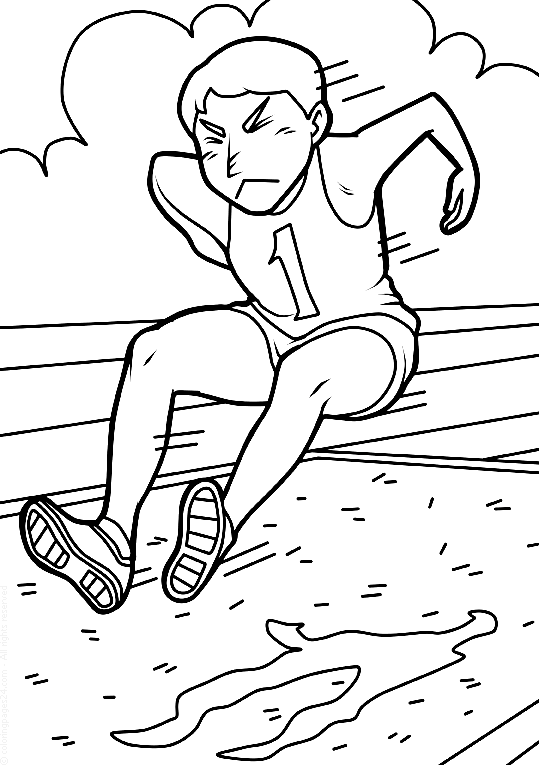
Long Jump Landing depicts the moment of impact in the long jump – the athlete landing feet-first in a sand pit after launching from a takeoff board at the end of a sprint approach. The long jump is the most direct translation of sprinting speed into horizontal distance, with elite athletes reaching takeoff speeds of 10-11 meters per second before converting that momentum into a flight of 8+ meters.
The men’s long jump world record of 8.95 meters (Mike Powell, USA, 1991) is one of athletics’ most enduring records, standing unbroken for more than three decades.
Pole Vault
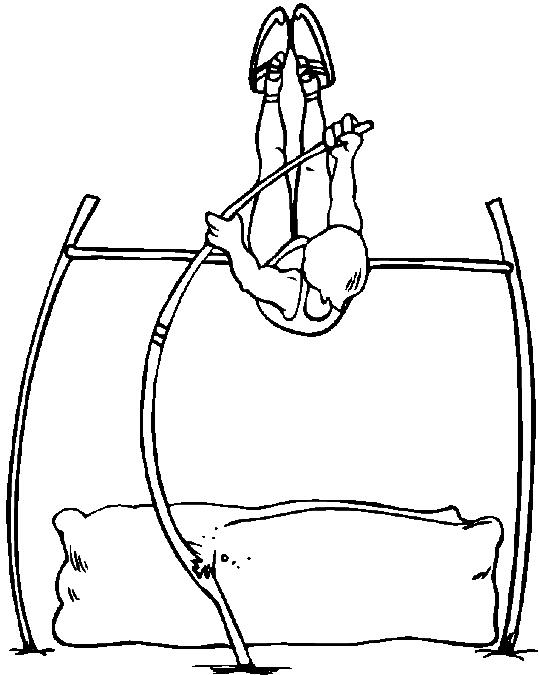
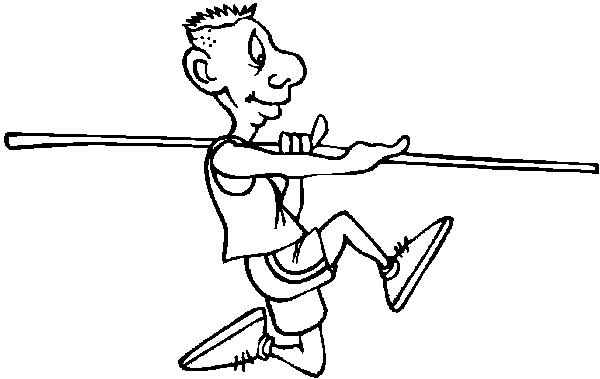
Pole Vault Jump and Man Pole Vault depict the most technically complex and visually dramatic of all athletics jumps – the event in which an athlete uses a long fiberglass pole to vault over a bar at heights that would be physically impossible without the pole’s elastic energy storage and release.
Modern fiberglass poles store energy as they bend under the athlete’s weight during the vault, then release that energy as they straighten, catapulting the vaulter upward and over the bar. Elite men clear bars above 6 meters – a height roughly equivalent to a two-story building – using poles 4.5-5.2 meters long.
Coloring the pole vault: The pole itself is the most important object in the composition – a long, slightly curved shaft in the vaulter’s hands, colored in the pale yellow-cream of fiberglass or in darker graphite tones depending on the specific pole model depicted. The bar is typically set on red or orange pegs above white uprights. The vaulter’s body at the inverted arch peak of the vault – upside-down, back arching over the bar – creates the most complex body position in any athletics coloring tile.
Shot Put
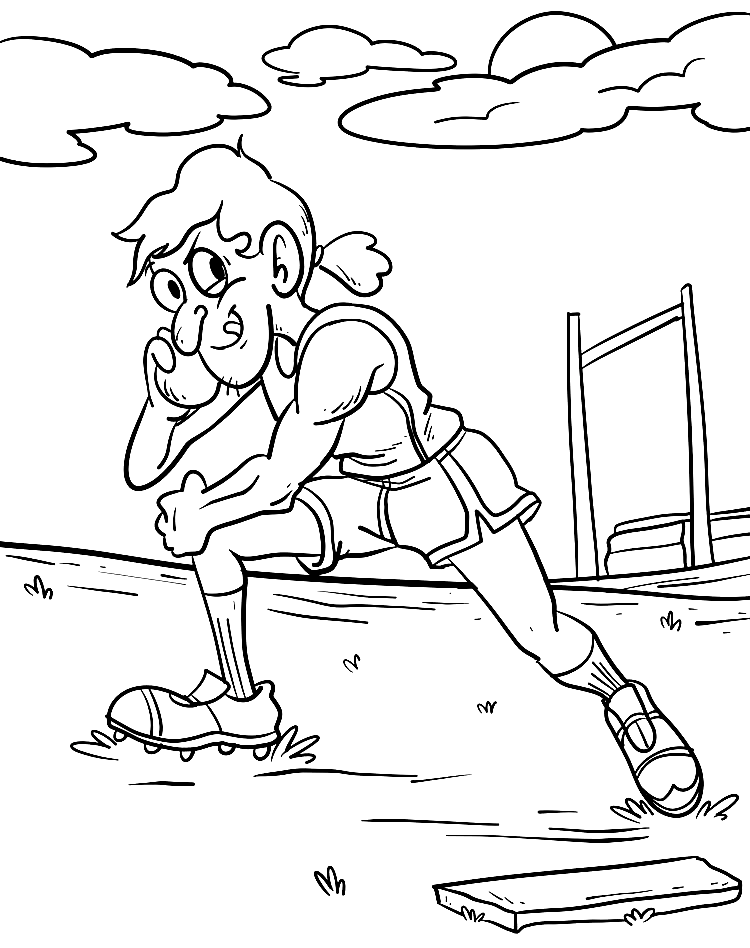
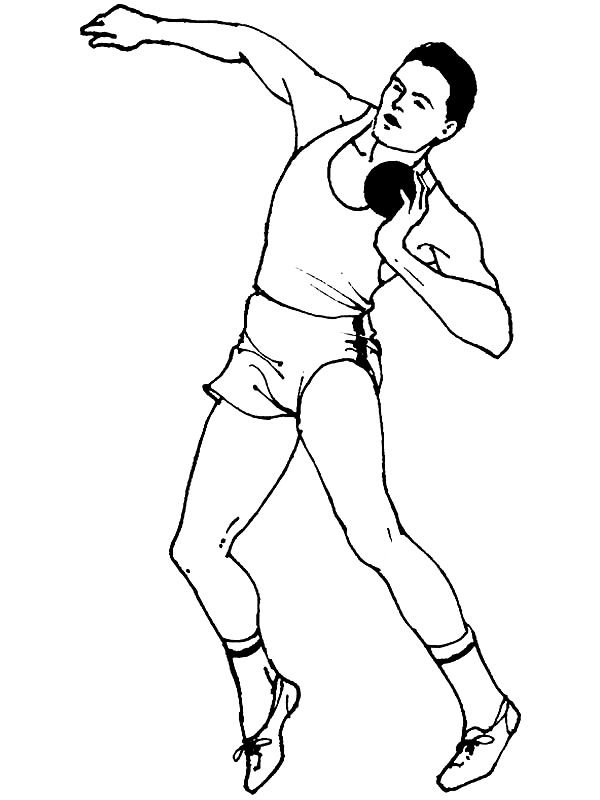
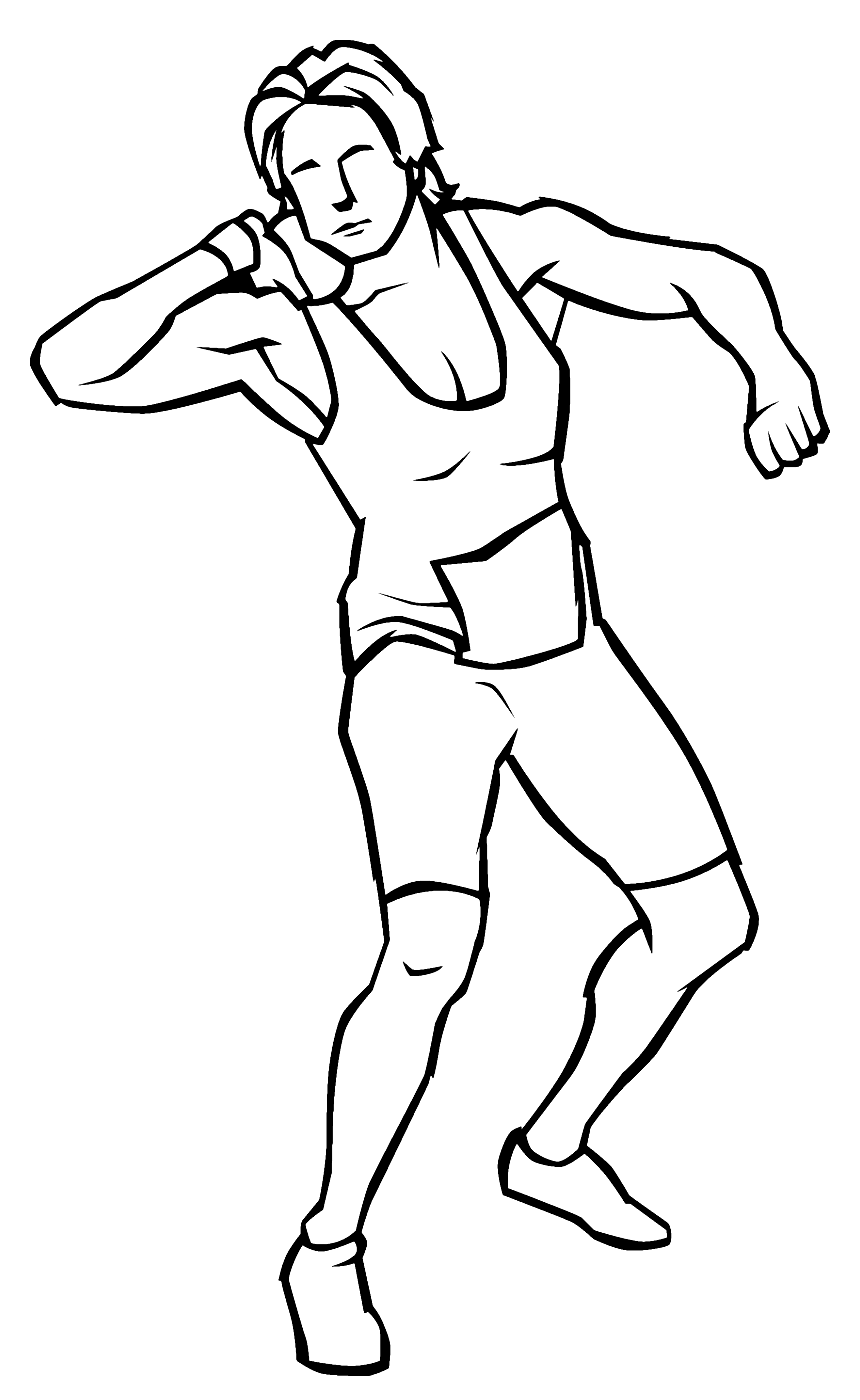
The collection’s largest throwing event cluster: Shot Put, Shot Put Athletics, and Olympic Man Shot Put depict the most fundamental of all throwing events – a competitor putting (not throwing, by strict definition) a heavy metal sphere from beside the neck using a pushing motion.
The men’s shot weighs 7.26 kilograms (16 pounds); the women’s shot weighs 4 kilograms (8.82 pounds). The putting technique uses rotational momentum from a spin or glide across the 2.135-meter diameter throwing circle to generate the force applied to the shot at release. Elite throwers can put the men’s shot more than 23 meters.
Coloring shot put tiles: The shot itself is a solid sphere of dark steel-gray or brushed silver metallic – unlike the discus or hammer, the shot has no visual detail beyond its spherical form and metallic finish. The thrower’s body in the final delivery position – weight transferring forward, arm extending explosively upward from the neck position – requires attention to the specific body angles that make this unique putting motion immediately recognizable.
Discus Throw
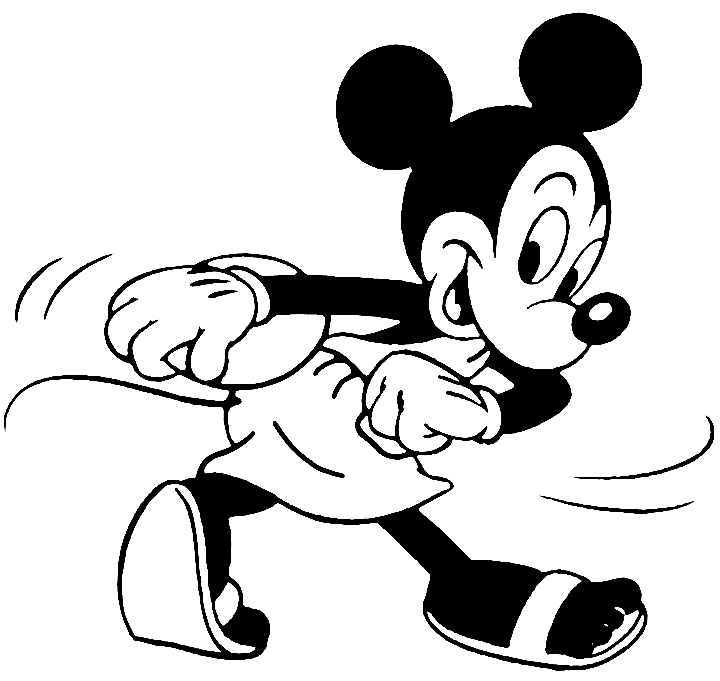
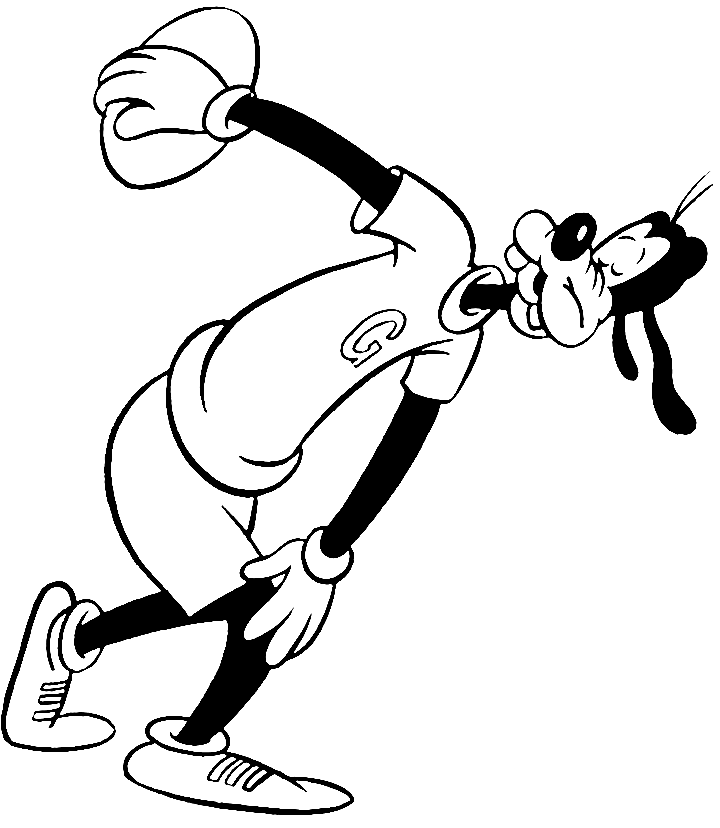
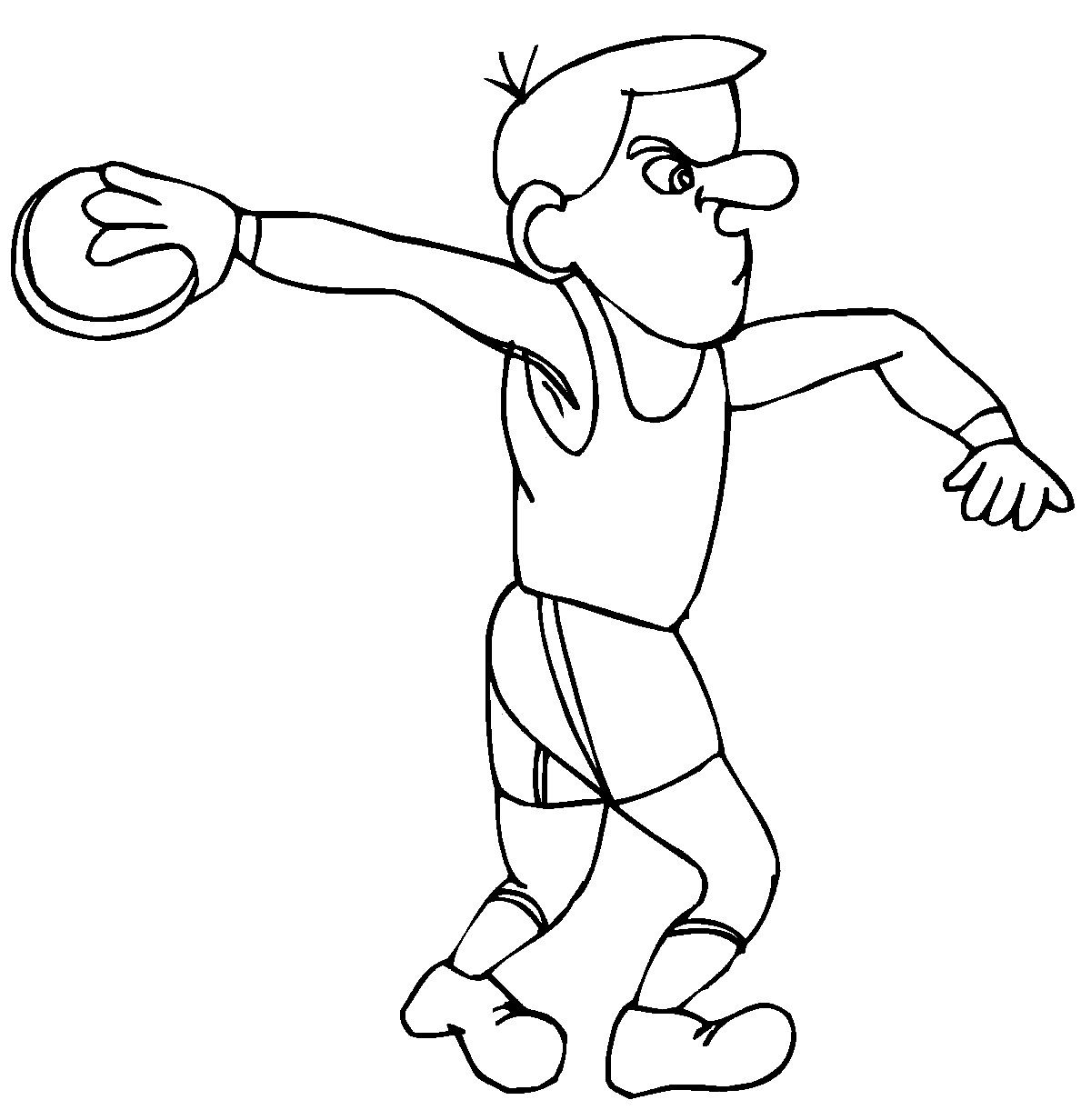
Discus Throw – and the Disney character crossovers Mickey Mouse Discus Thrower and Goofy Discus Thrower – cover the discus, a circular plate thrown by spinning to generate rotational velocity before release.
The discus is one of the most ancient athletic implements: discus-throwing appears in Homer’s Iliad and depictions of ancient Greek athletics, and the famous marble Discobolus (Discus Thrower) sculpture by Myron, created around 450 BCE, remains one of the most recognized images of ancient athletic culture. The modern discus weighs 2 kilograms for men and 1 kilogram for women.
The Mickey Mouse Discus Thrower and Goofy Discus Thrower tiles form a natural pair – two of Disney’s most recognizable characters in the same ancient athletic event, their very different personalities (Mickey’s energetic confidence, Goofy’s endearingly clumsy enthusiasm) mapped onto the same demanding technical discipline. Both tiles use the discus thrower’s characteristic spinning pose – weight on the back foot, arm fully extended back, about to rotate and launch.
Javelin Throw
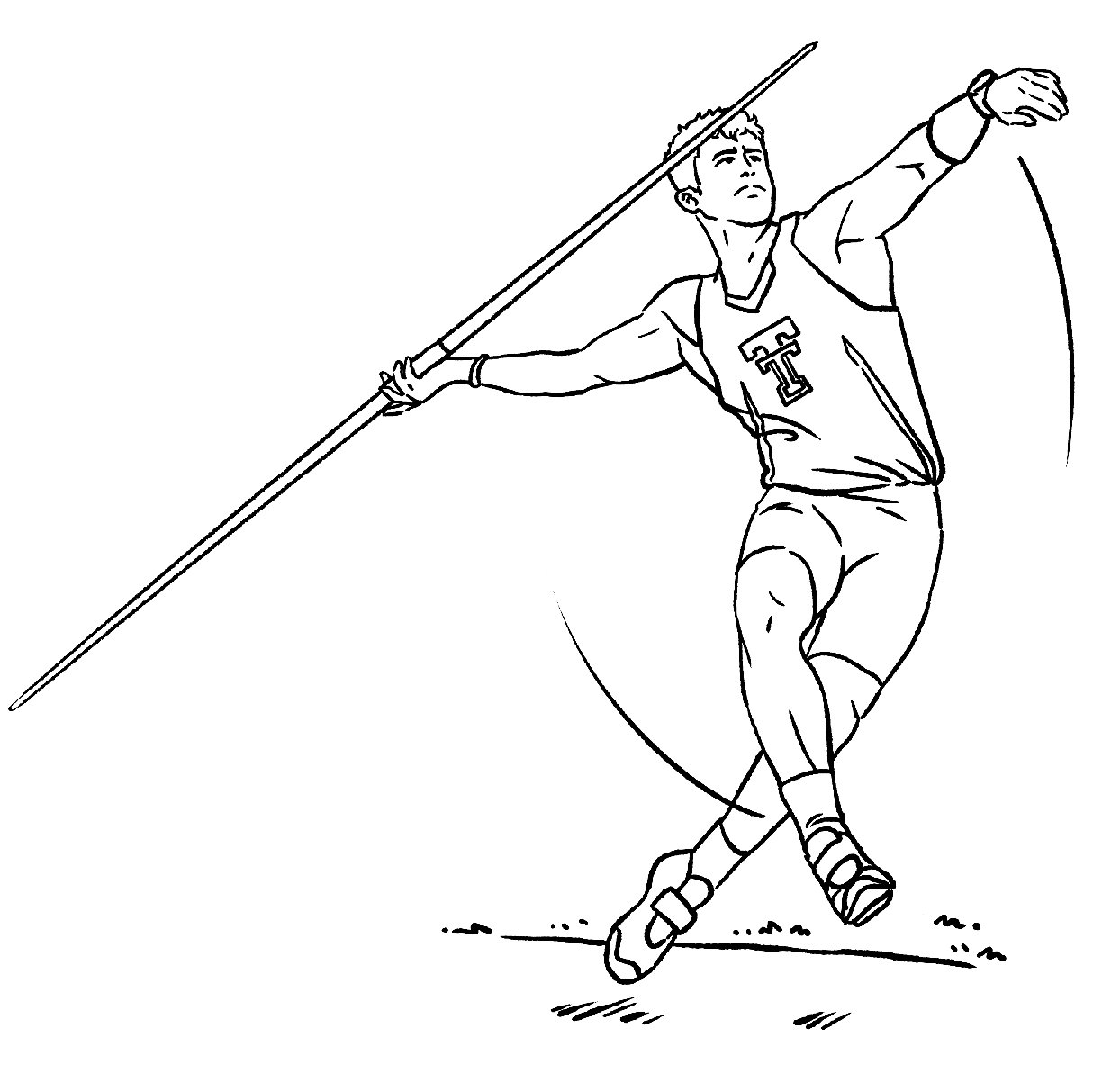
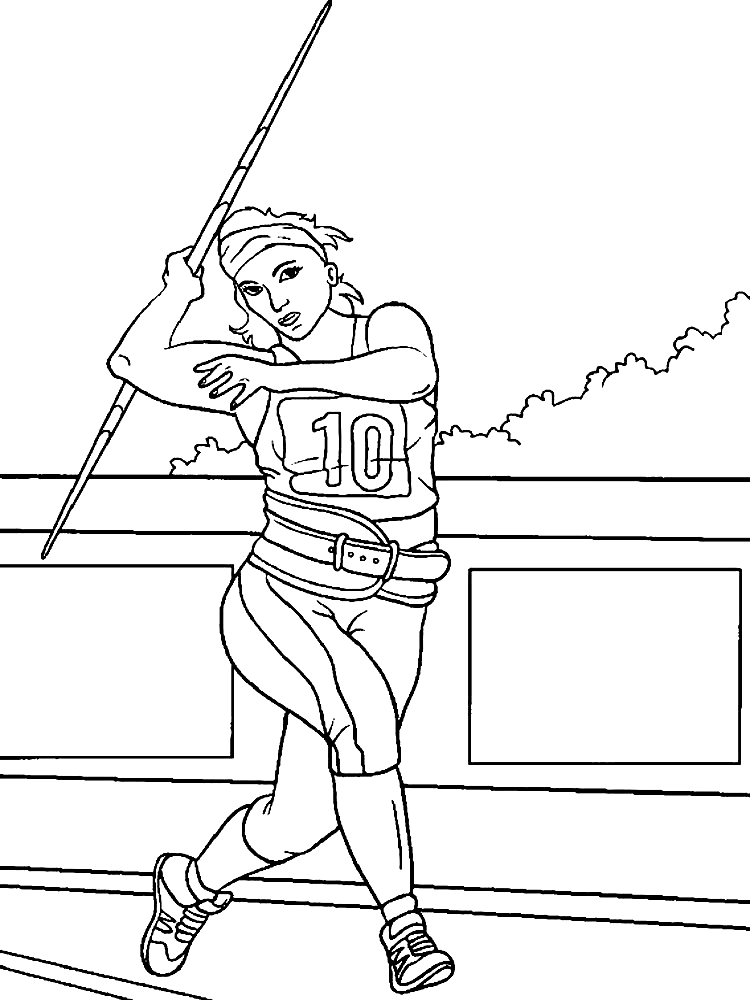
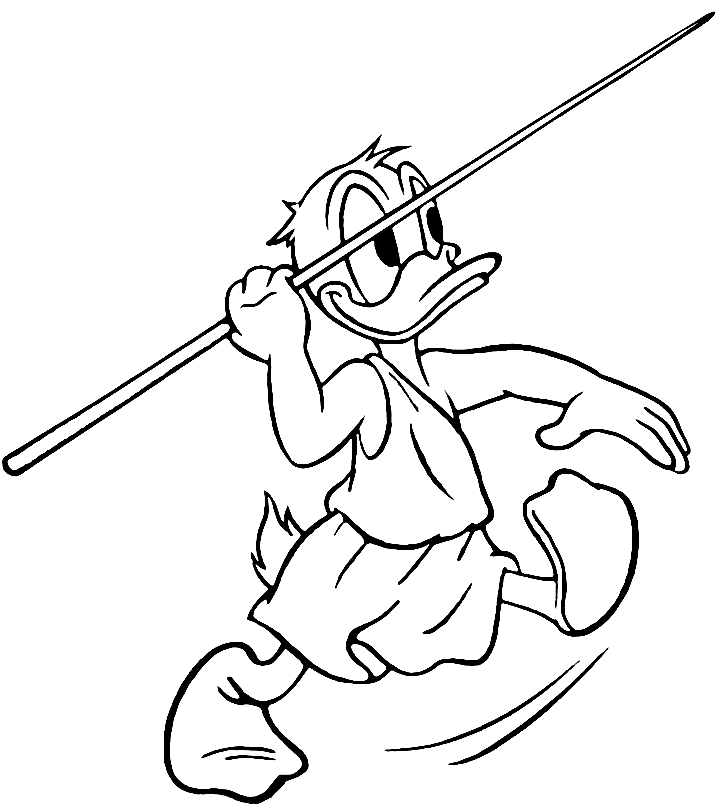
Javelin Throw, Javelin Throw Olympic, Olympic Javelin, and Donald Duck Throwing Javelin cover the most narratively resonant of all throwing events – the javelin, a spear-like implement whose competitive throwing directly descends from weapons practice and hunting skill testing.
Modern competition javelins are aluminum or carbon fiber shafts approximately 2.6 meters (men) or 2.2 meters (women) in length, with a metal tip and a cord grip at the center of gravity. Elite men throw the javelin more than 97 meters; women more than 72 meters.
Donald Duck Throwing Javelin completes the Disney throwing event trio – Donald, whose characteristic temperamental intensity and animated frustration make him an ideal figure for the javelin’s running approach and explosive release moment. Donald’s vivid blue sailor suit and bright orange bill make him the most visually colorful of the three Disney athletics character tiles.
Hammer Throw
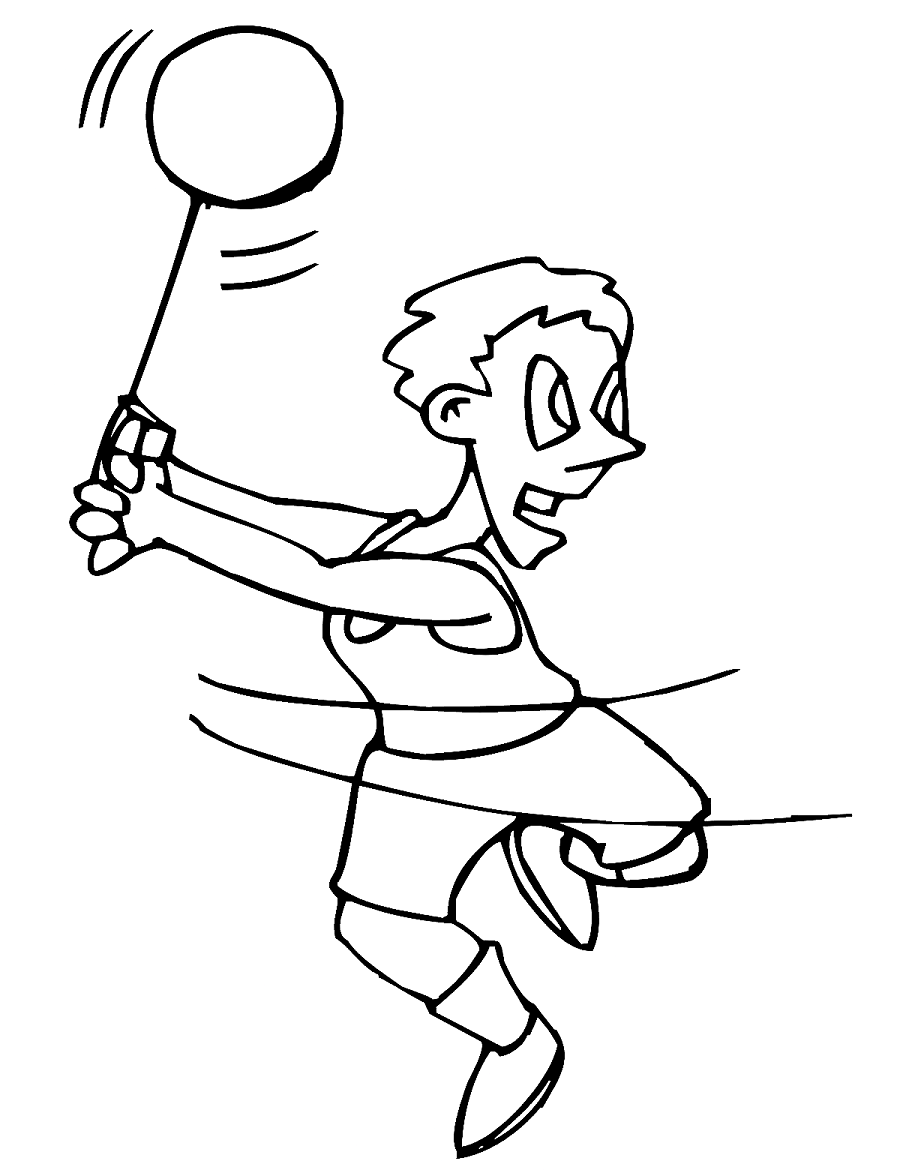
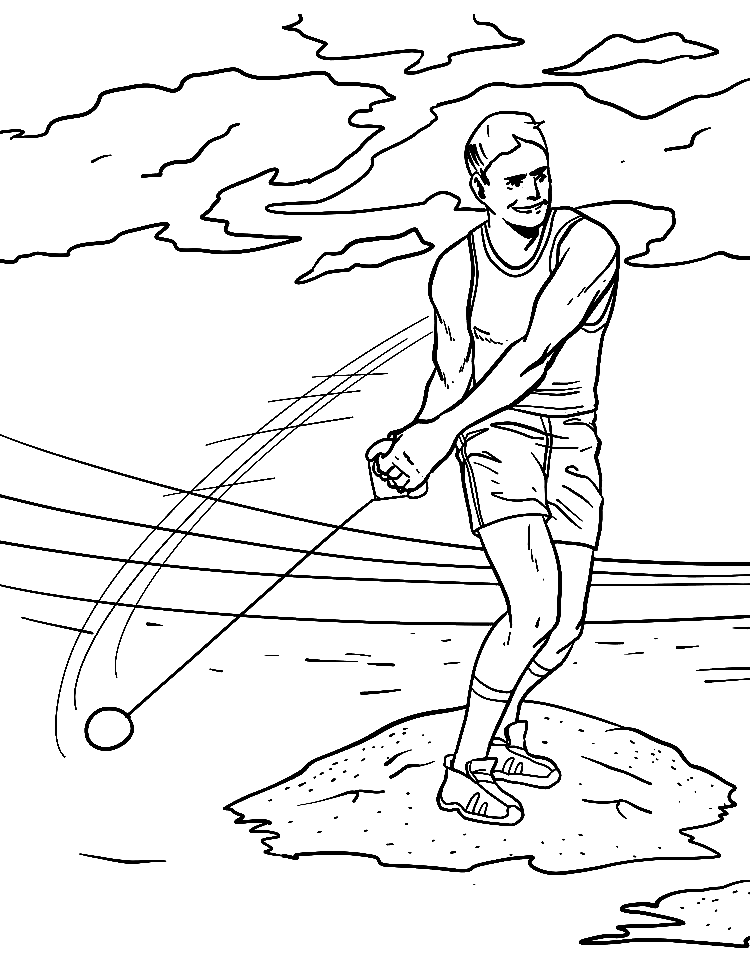
Hammer Throw and Hammer Throwing depict the most mechanically complex of the throwing events – an athlete spinning multiple times within a 2.135-meter circle while swinging a heavy metal ball attached to a steel wire, then releasing it to achieve maximum distance.
The hammer weighs 7.26 kilograms for men and 4 kilograms for women. The throwing technique requires 3-4 complete rotations within the circle, building rotational velocity with each revolution, before releasing the hammer at the optimal angle (approximately 44 degrees) for maximum distance. The centrifugal force generated during the throw requires the athlete to lean back significantly – the hammer and thrower forming a counterbalanced system through the spin.
Weightlifting
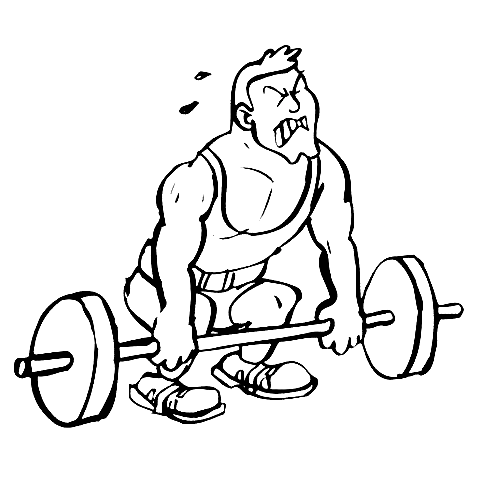
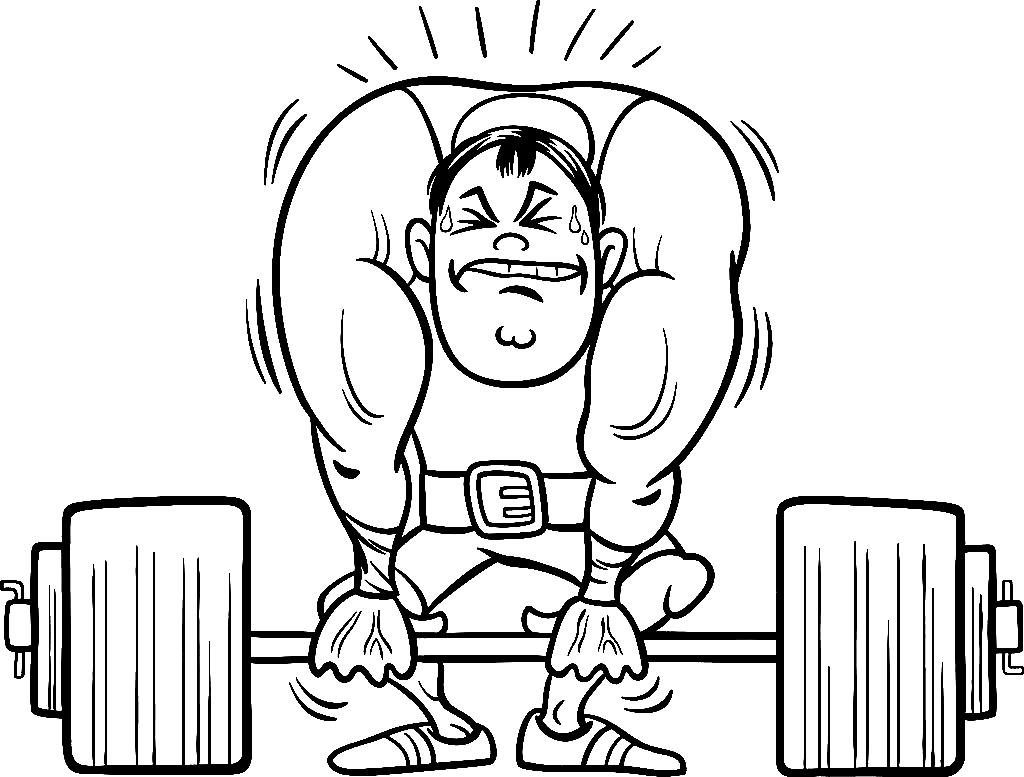
Weightlifting and Athletics Weightlifting depicts the two Olympic weightlifting movements – the snatch (lifting the bar from the floor to overhead in one continuous movement) and the clean and jerk (lifting to the shoulder, then driving overhead in a second phase). Weightlifting is technically a separate Olympic sport from athletics (track and field), but its inclusion in this collection reflects the general “athletics” category under which strength sports are sometimes grouped in educational and recreational contexts.
Coloring Guide: The Athletics Visual Language
The Running Track
The athletic running track is one of sport’s most recognizable surfaces – an oval of reddish-brown polyurethane (modern track surfaces) divided into eight lanes of white lane markings. The inner portion of the oval (the infield) is typically bright green grass, providing maximum contrast with the track’s warm red-brown. Hurdles, in white, stand at regular intervals on the track surface.
For running tiles showing a track environment: use a warm, slightly orange-tinged brown-red for the track surface (this is the specific artificial turf color of modern all-weather tracks), clean white for lane markings, and medium-to-bright green for any visible infield grass.
The Athletic Uniform
Competition athletics uniforms – particularly for sprint and field events – use national team or club colors in sleek, form-fitting designs that minimize aerodynamic drag. At the Olympic competition level, the uniform is the athlete’s most immediate visual identifier. Sprint uniforms consist of a body-hugging singlet (sleeveless top) and brief shorts in national team colors. Distance running uniforms are slightly less form-fitting but follow the same color principles.
Sprint spikes (running shoes for track events) are low-profile shoes with protruding metal or ceramic spikes on the sole for grip, in bright colors that often match or contrast with the uniform.
The Throwing Circle
Shot put, discus, and hammer throw all take place within a concrete or synthetic surface circle 2.135 meters in diameter, marked by a white boundary ring. The surface is typically pale gray concrete. The sector lines extending from the circle (marking the valid throwing area) are painted in white.
FAQs
What is athletics in sport? In most of the world, “athletics” refers to track and field – the competitive disciplines involving running, jumping, and throwing. In the United States and Canada, “track and field” is the more commonly used term. Athletics is the oldest competitive sport in recorded history and has been part of every modern Summer Olympics since 1896.
What events are in track and field athletics? Track events include sprints (100m, 200m, 400m), middle distance (800m, 1500m), long distance (5000m, 10000m), marathon (42.195km), hurdles (100m, 110m, 400m), steeplechase (3000m), and relay races (4×100m, 4×400m). Field events include the jumps (high jump, long jump, triple jump, pole vault) and the throws (shot put, discus, hammer, javelin). Race walking (20km, 35km) completes the program.
What is the Fosbury Flop in high jump? The Fosbury Flop is the backward-arching high jump technique developed by American athlete Dick Fosbury, who used it to win the gold medal at the 1968 Mexico City Olympics. Before the Flop, most jumpers used the Western Roll or straddle technique, jumping face-down over the bar. Fosbury’s technique – approaching the bar and arching over it backward – was more efficient and became universally adopted within a decade of its introduction.
What is the difference between a sprint and a distance run? Sprint races (100m, 200m, 400m) are run at or very close to maximum speed throughout. Athletes use starting blocks for explosive acceleration. Distance races (1500m and above) require a pacing strategy – running at a sustainable speed for most of the race before accelerating in the final stages. Marathon runners must sustain approximately 80-85% of maximum effort for 2+ hours.
What is a relay baton? A relay baton is a hollow tube approximately 28-30 centimeters long and 130 grams in weight – passed from one relay runner to the next within a designated 20-meter exchange zone. The baton must be exchanged (not dropped or thrown) within the zone; exchanges outside the zone result in disqualification. Both the visual and tactile experience of the baton exchange – two runners at full sprint, one passing an object to the other – is one of track’s most technically demanding and visually exciting moments.
How long is a marathon? A marathon is exactly 42.195 kilometers (26.219 miles). The distance was standardized in 1921 by the IAAF. Elite men finish in approximately 2:00-2:05; elite women in approximately 2:14-2:18. The marathon has been run at every Summer Olympics since 1896 for men, and since 1984 for women.
What age group is this collection for? All ages. The Cartoon Track and Field and character crossover tiles (Mickey, Goofy, Donald Duck) suit children ages 4-8. Standard single-event tiles suit ages 6 and up. The Olympic Javelin and detailed throwing event tiles are appropriate for older children and teens with an interest in the specific mechanics of the events.
All 40+ Athletics Coloring Pages are free – download as PDF or color online. Share your finished pages on Facebook and Pinterest.