Bananya coloring pages: 52+ free printable PDF designs featuring Bananya, Bananyako, Baby Bananya, Daddy Bananya, and Chourou Bananya, breed variants including ScottishFold, RussianBlue, Calico, and MaineCoon, eight costume pages, and Halloween variants. Every page is free to download as a PDF or color in the browser, with no account required.
Bananya is a Japanese anime short series that premiered on July 10, 2019, created by Taiga Gotou. Each episode runs about four minutes. The show follows cats that live inside banana peels as their natural home, narrated like a nature documentary.
These pages suit Bananya fans, kawaii and cat coloring enthusiasts, and anyone looking for a large set with a strong variety.
The coloring challenge is unique to this set: every page has two simultaneous color subjects. The yellow banana is always present, and the cat inside has its own breed or costume palette. RussianBlue grey, Calico three-tone, and Pirate dark navy must all read distinctly against the same banana yellow.







Quick Answer
Bananya coloring pages are a free set of 52+ printable PDFs and browser-based coloring sheets from the 2019 anime series, covering the full named cast, eight cat breed variants, eight costume pages, and Halloween and seasonal variants.
Best for: Bananya fans, kawaii coloring enthusiasts, cat lovers, and children aged 4 and up, looking for a large character set with a strong variety
Formats: printable PDF and online coloring
Popular pages: cute Bananya, Bananyako, Baby Bananya, Ninja Bananya, and Vampire Bananya
Creative uses: a named cast display, a cat breeds study, a costume collection, and a Halloween pair
What’s Inside Bananya Coloring Pages
The set is the largest in the kawaii cartoon category, covering the main cast, breed variants, costume variants, and seasonal pages across 52 designs.
Main Cast Pages
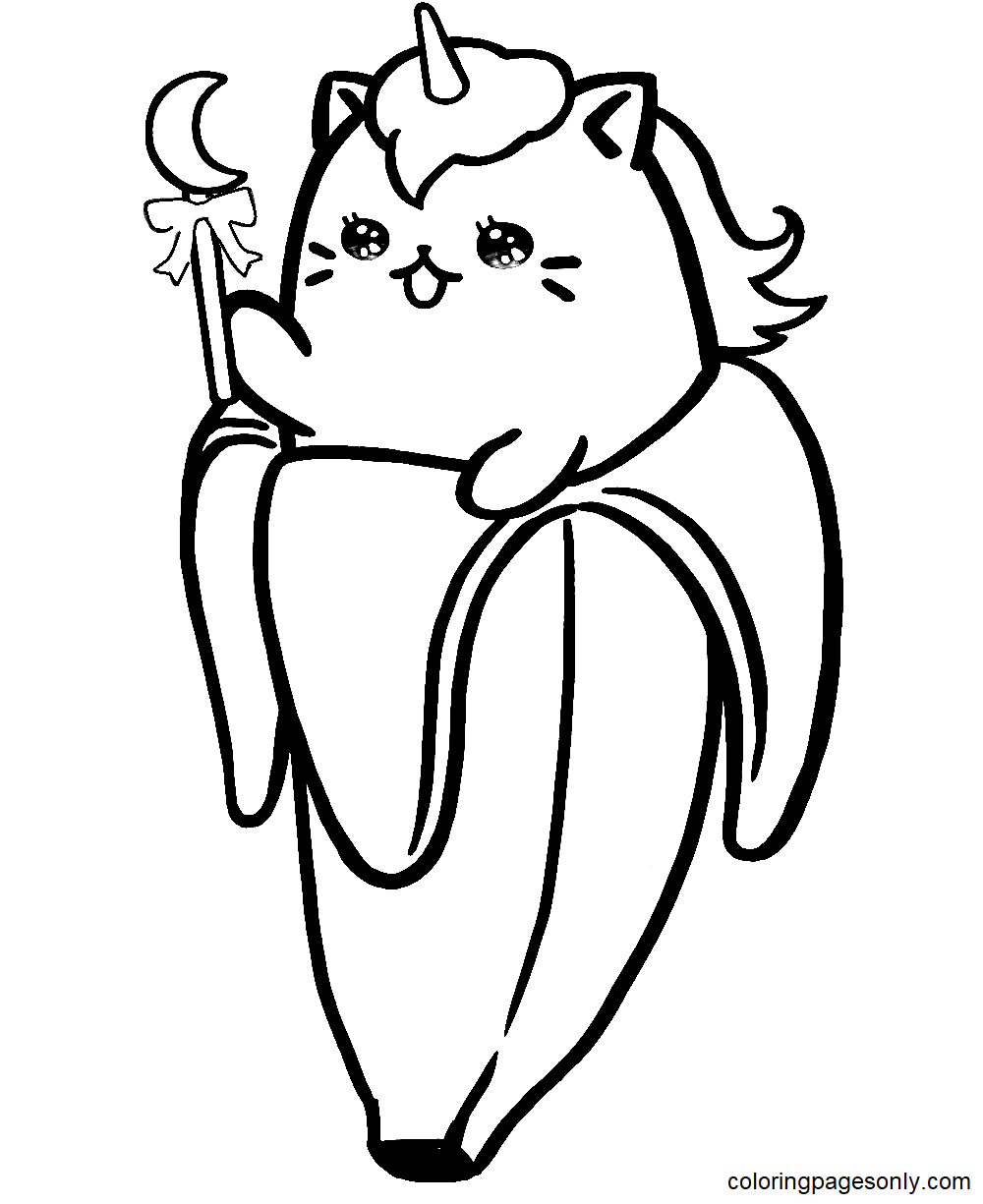
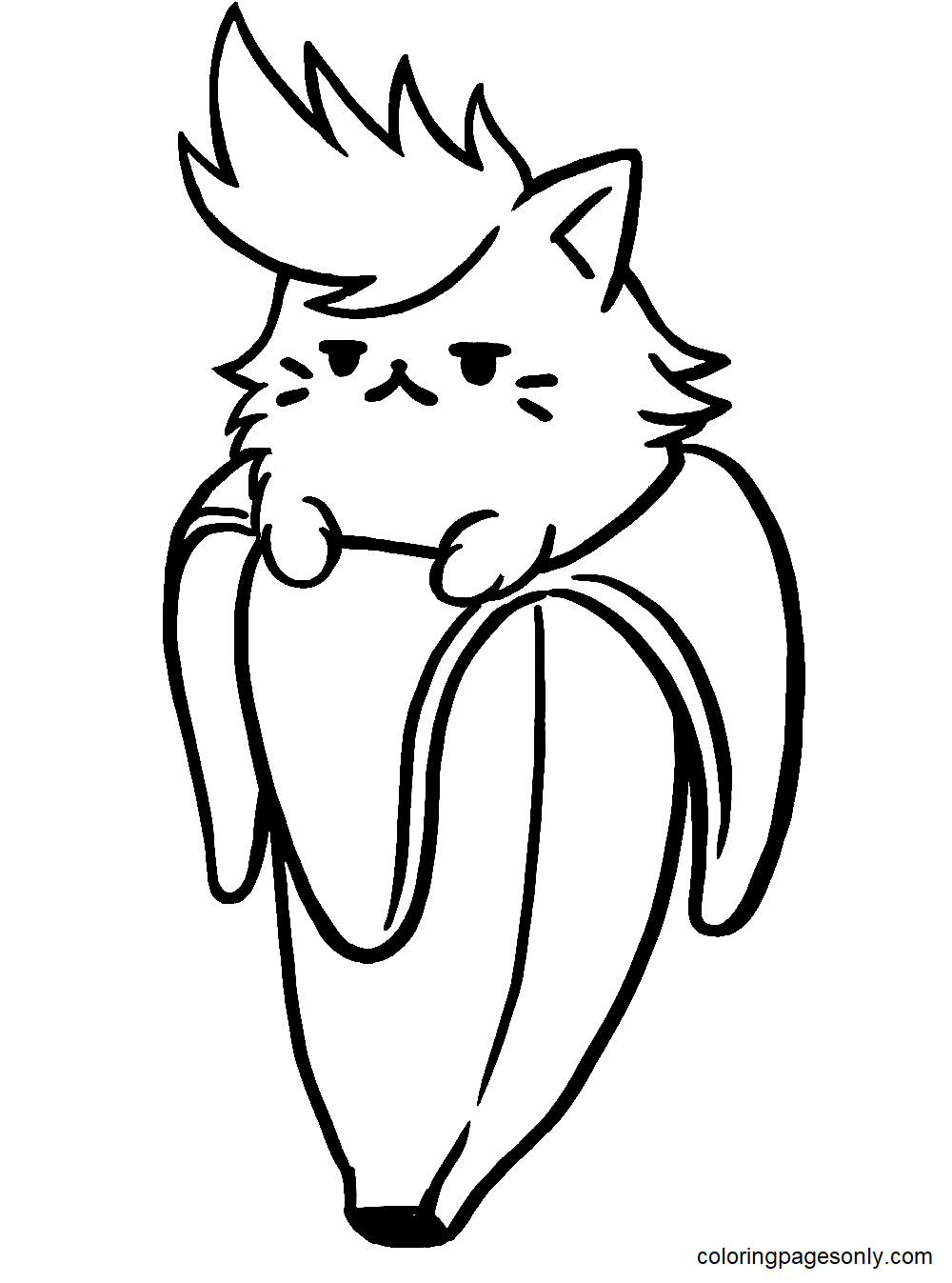
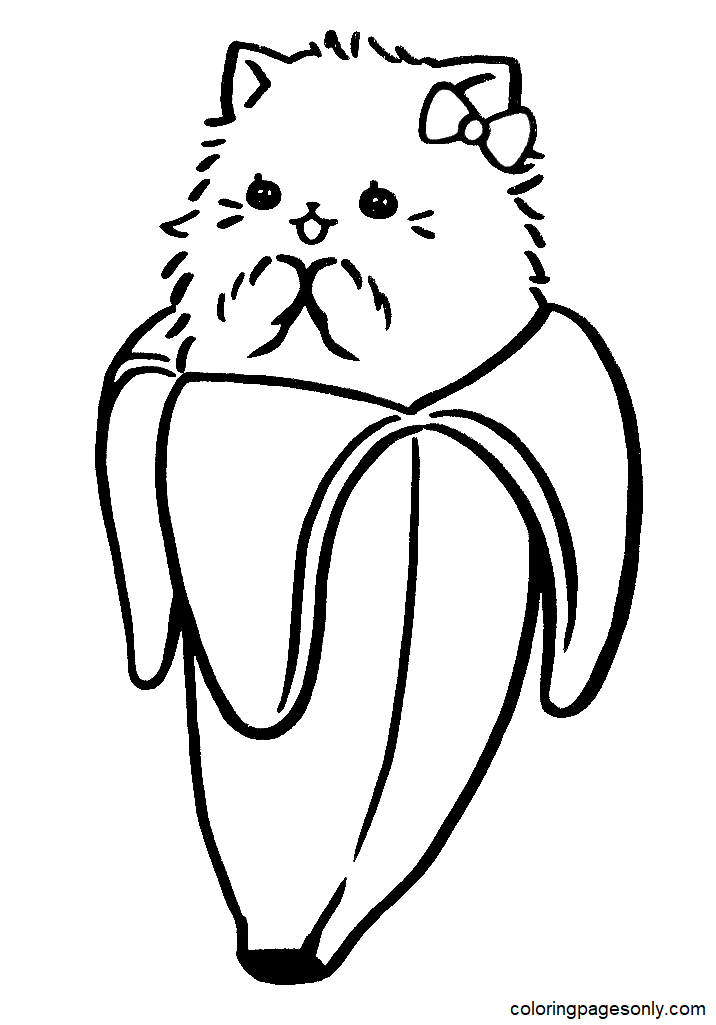
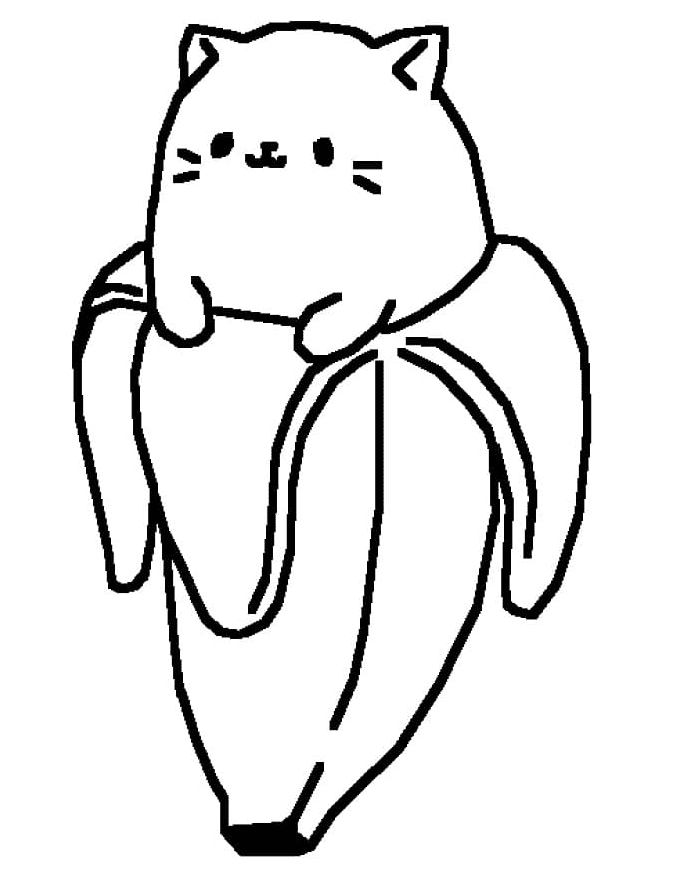
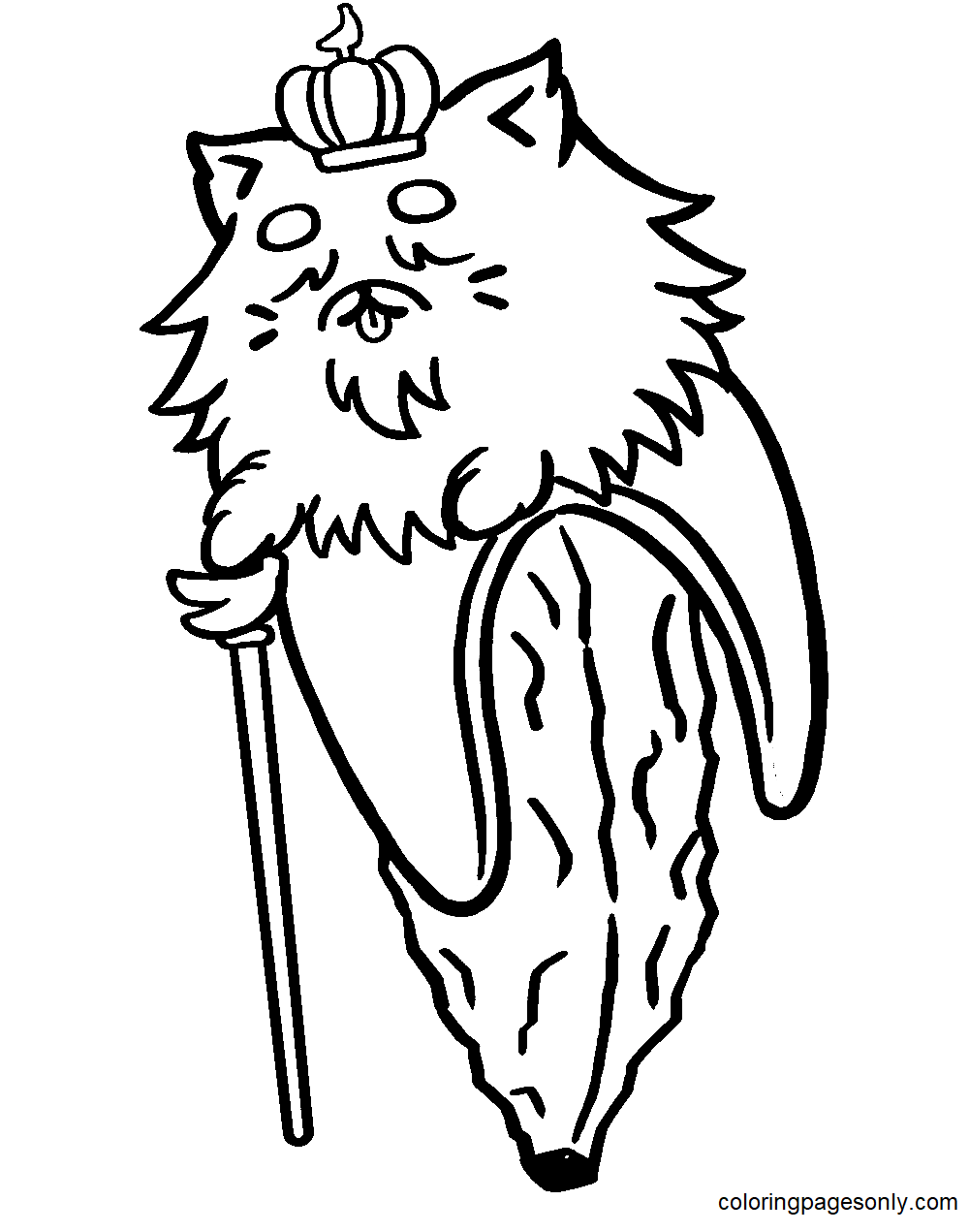
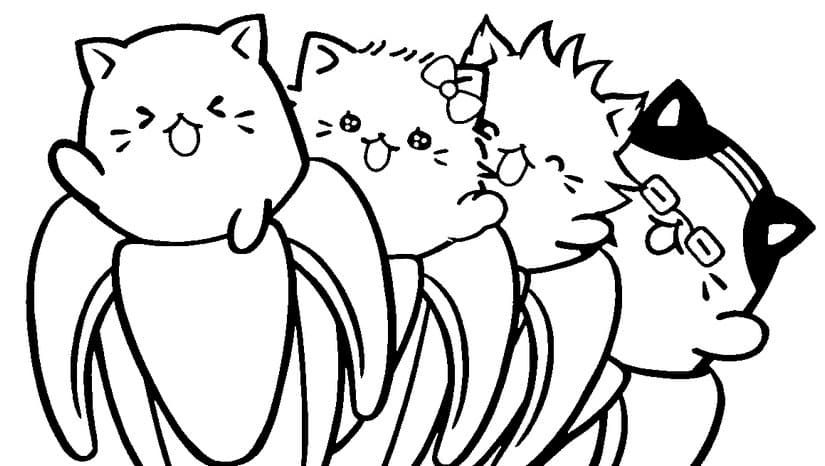
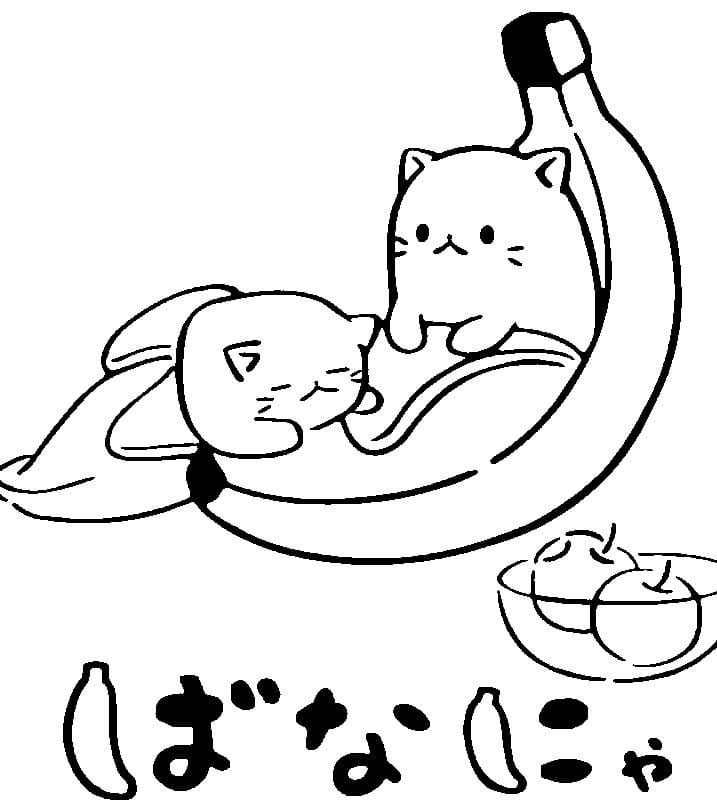
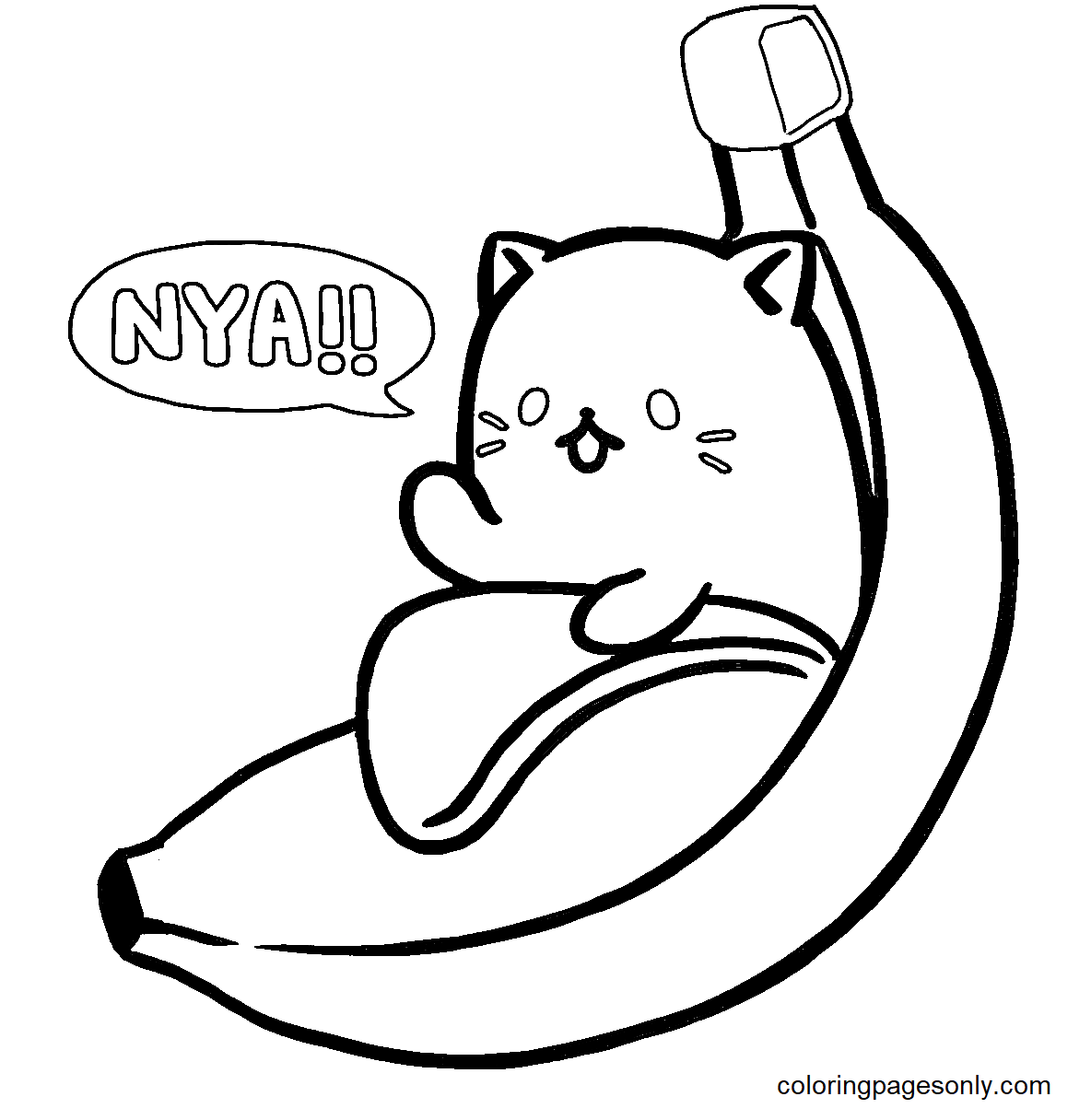
The named main characters appear across multiple pages: Bananya (the central orange tabby cat), Bananyako (the female character, typically depicted with a bow), Baby Bananya, Daddy Bananya, and Chourou Bananya (the elder, often shown with a more dignified bearing).
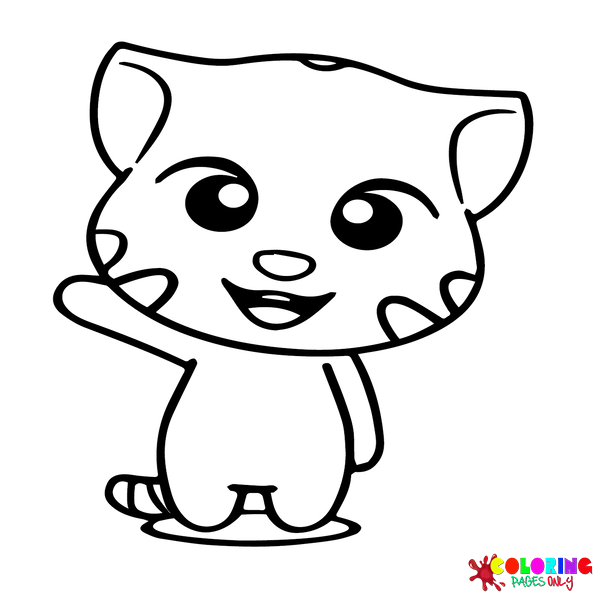
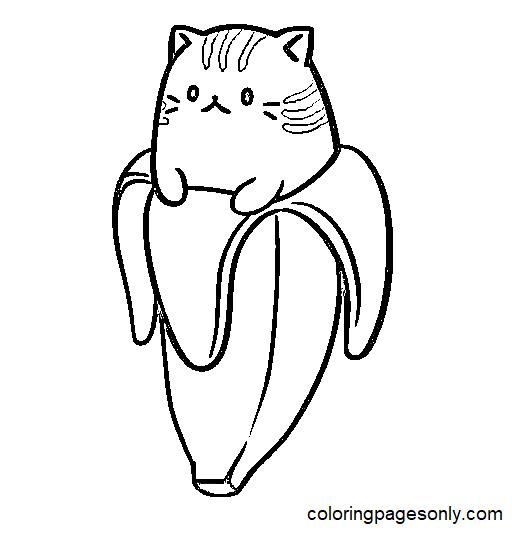
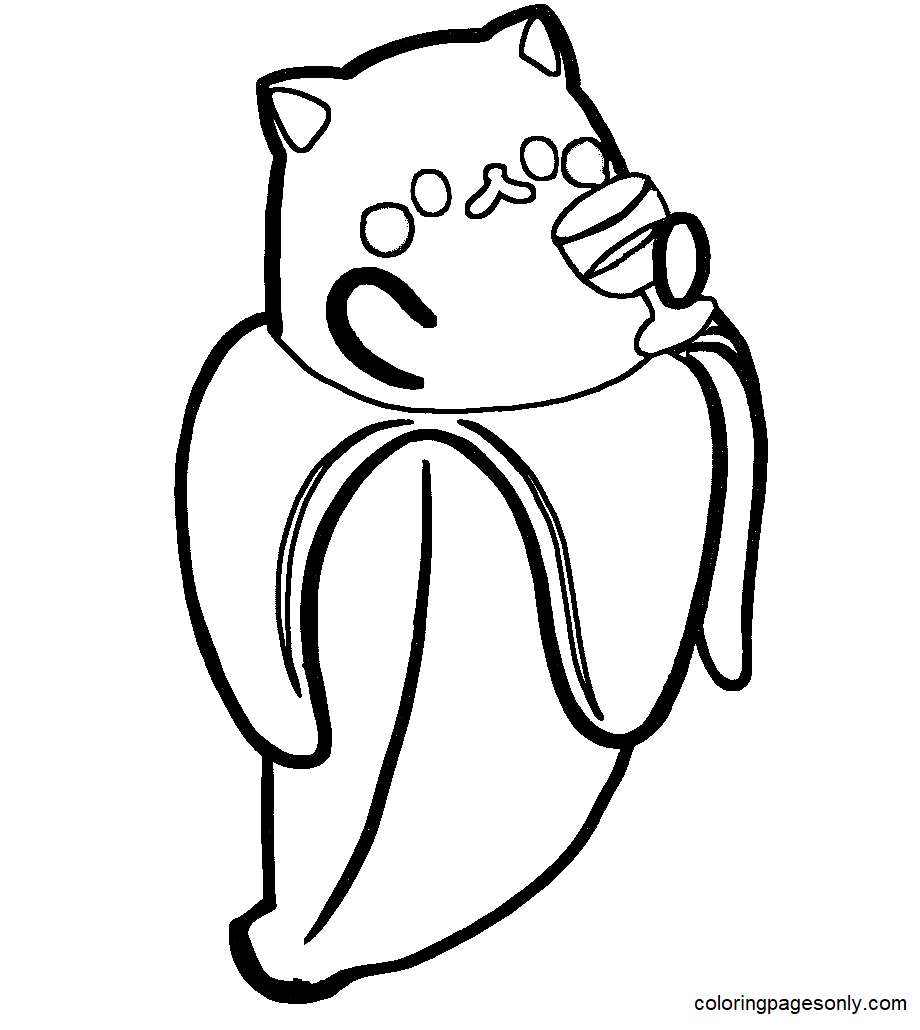
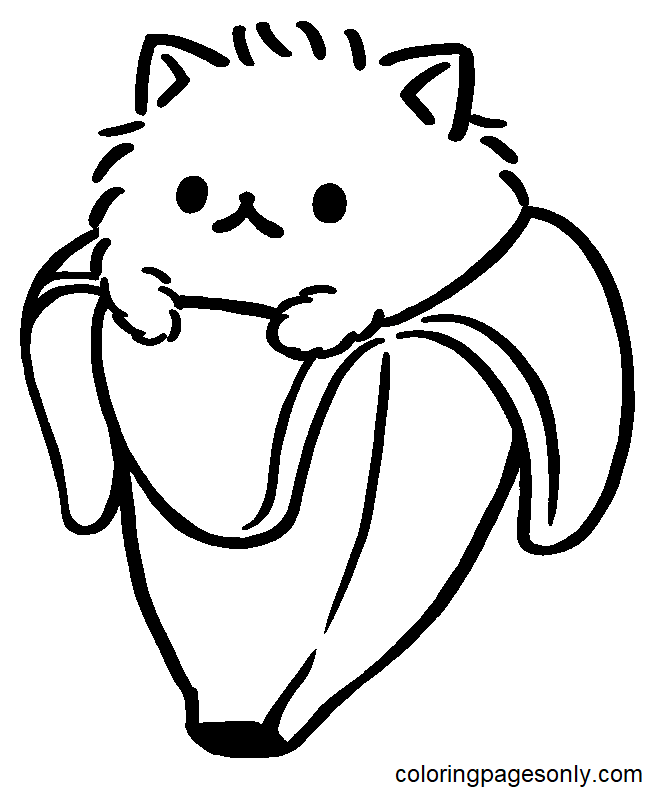
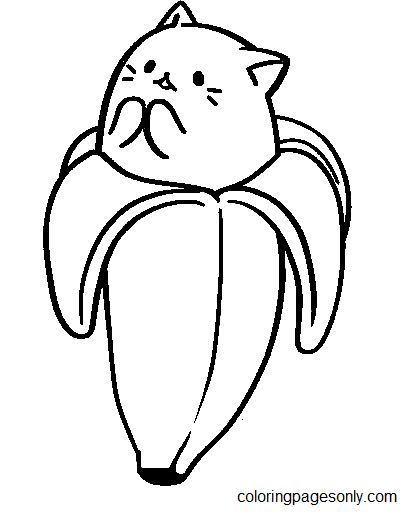
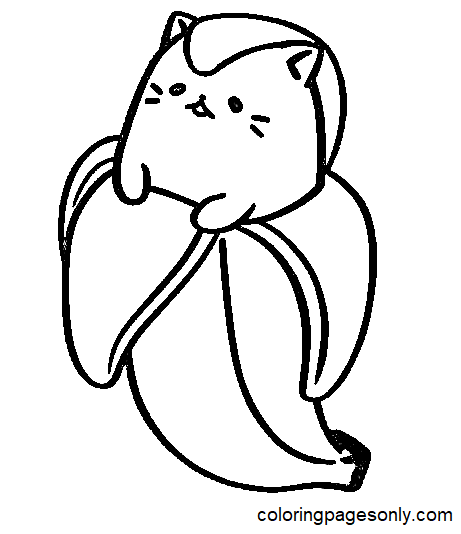
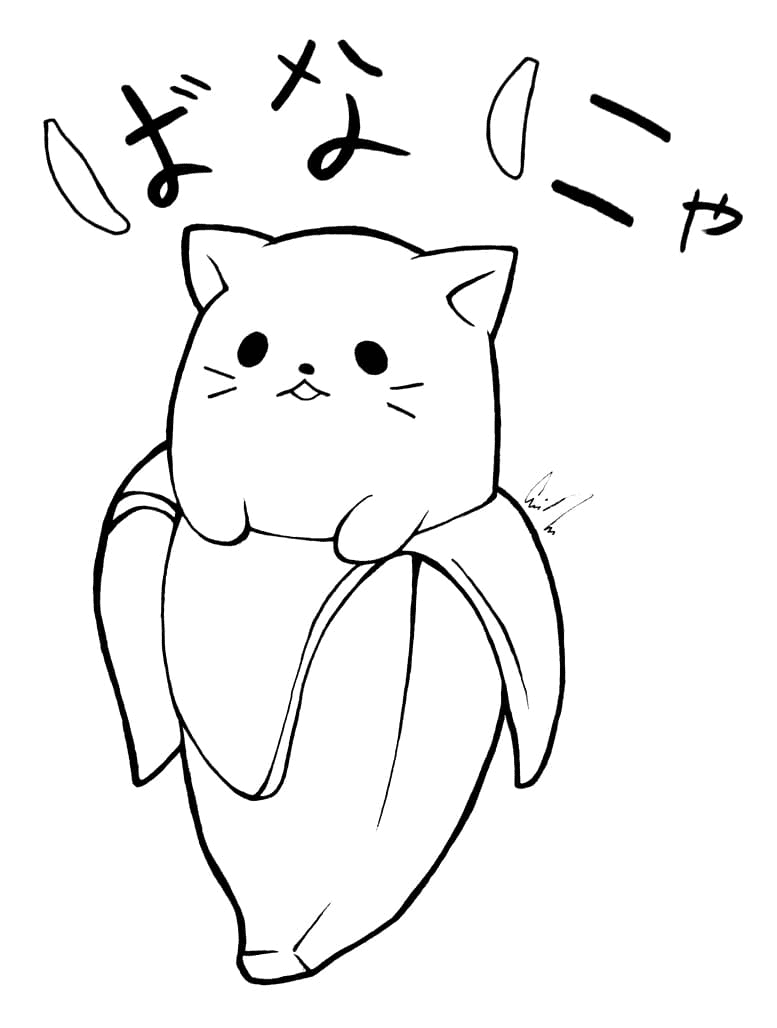
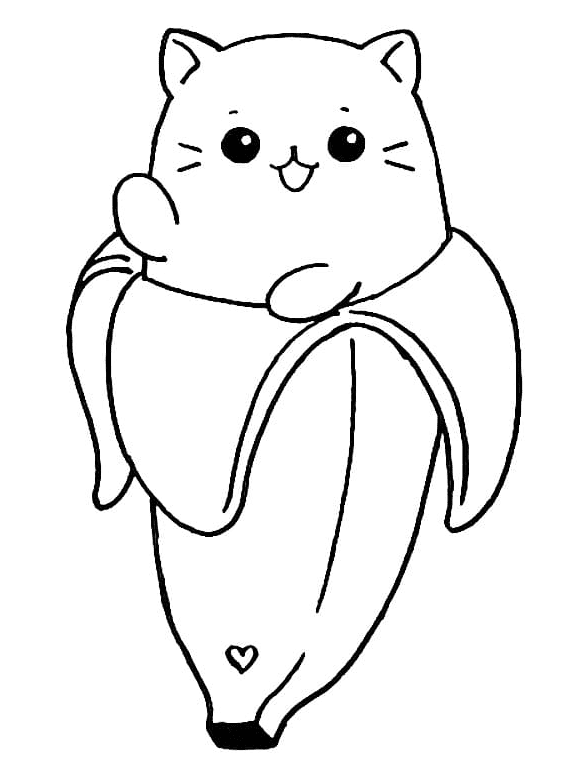
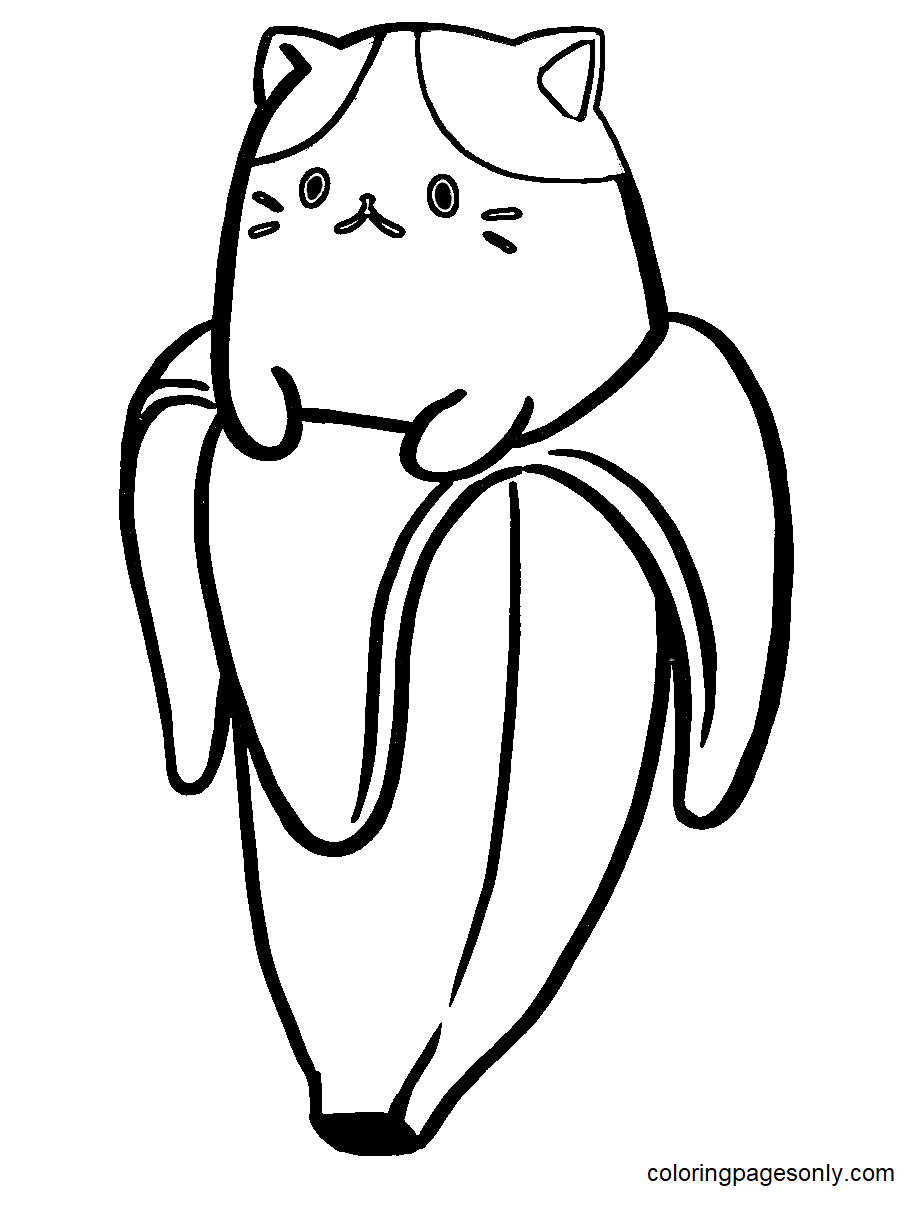
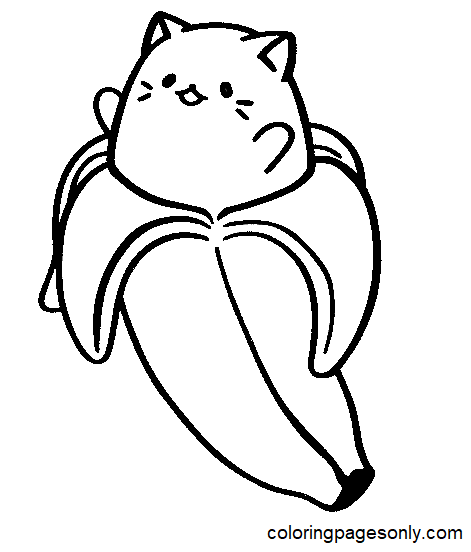
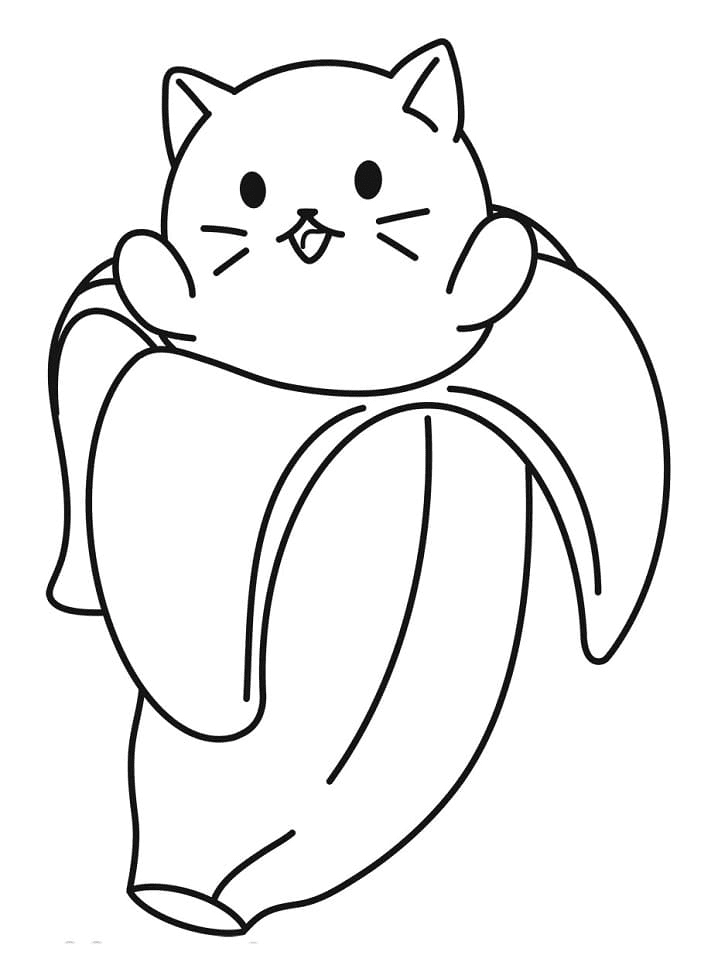
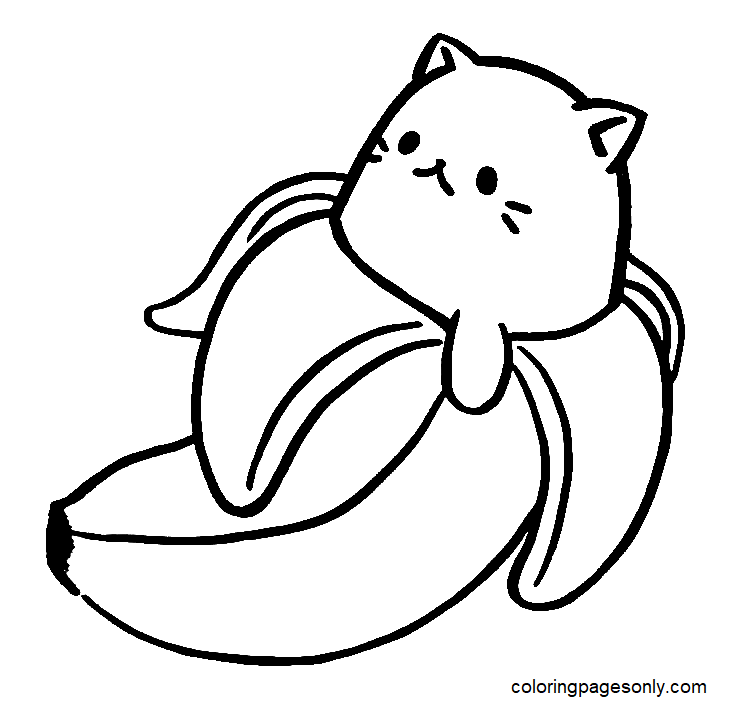
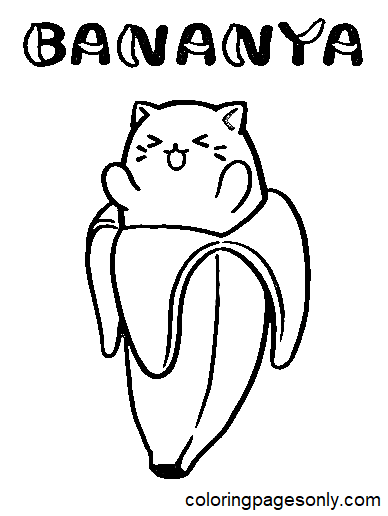
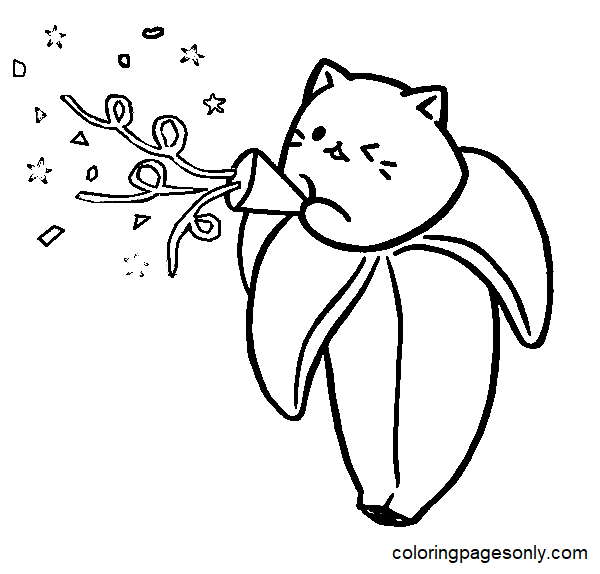
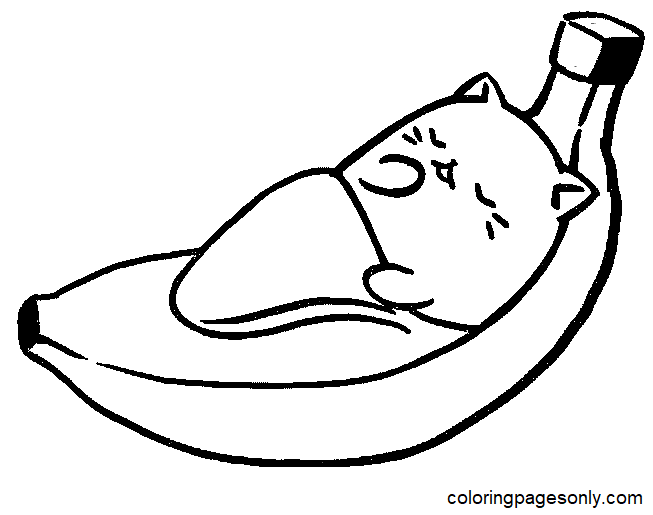
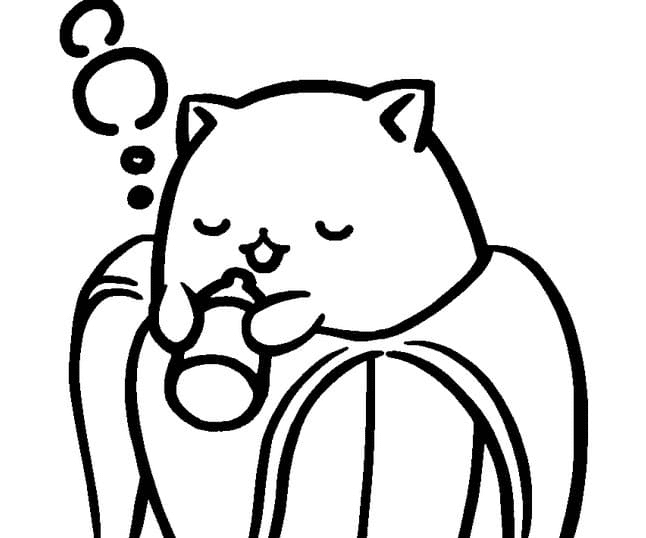
Coloring Bananya: the central Bananya is an orange tabby cat inside a yellow banana peel. The orange tabby coat has warm ginger and cream striping, with a slightly warmer orange-red on the tail and ear tips. Against the bright yellow of the banana, the orange reads as distinctly warm but not the same yellow. The banana peel has a characteristic bright primary yellow with slight green at the tips and a small brown dot at the top. The cat’s expression is typically round-eyed and simple, in the kawaii style.
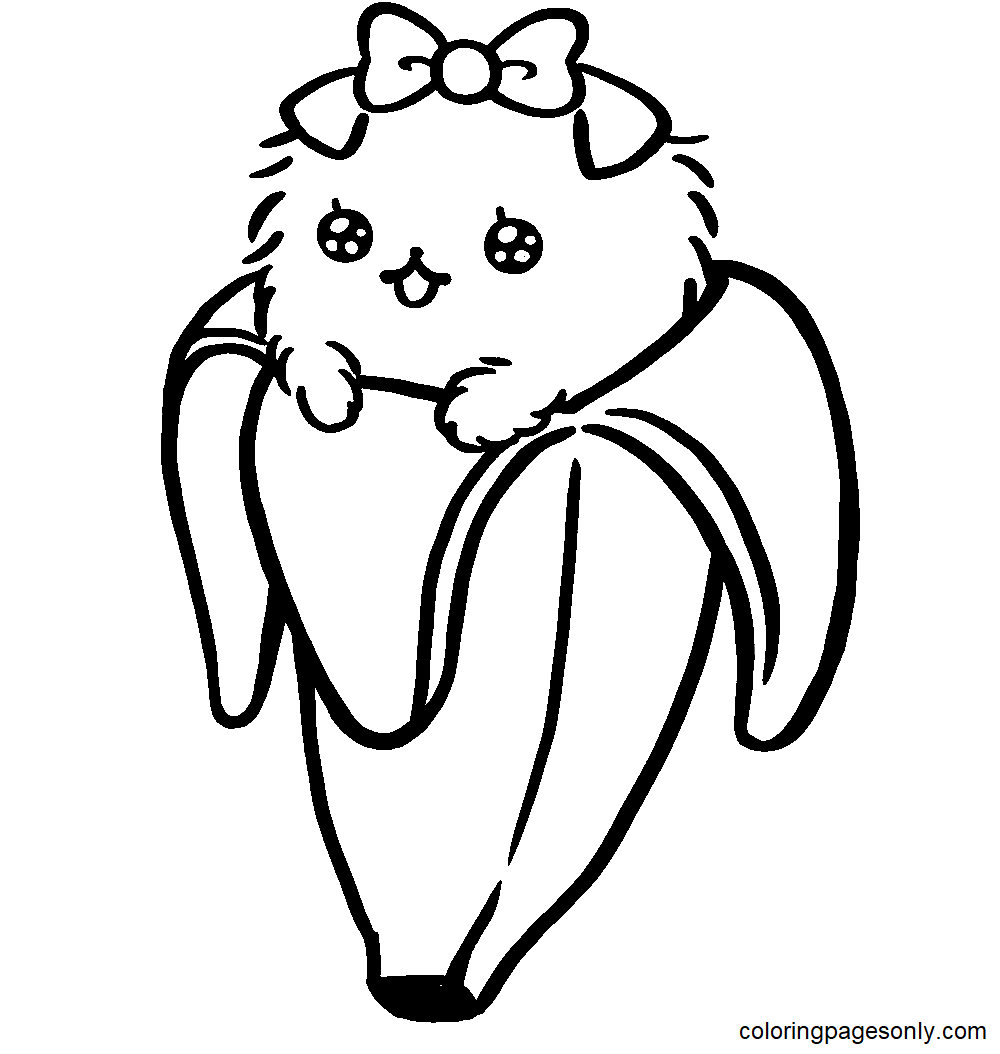
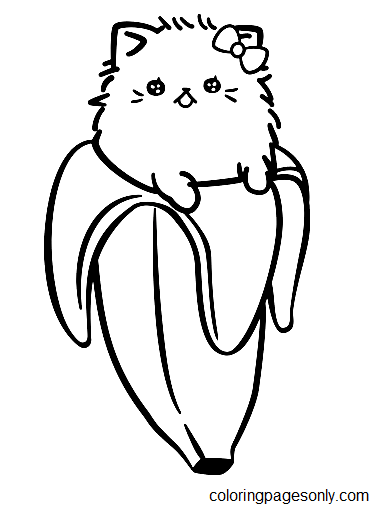
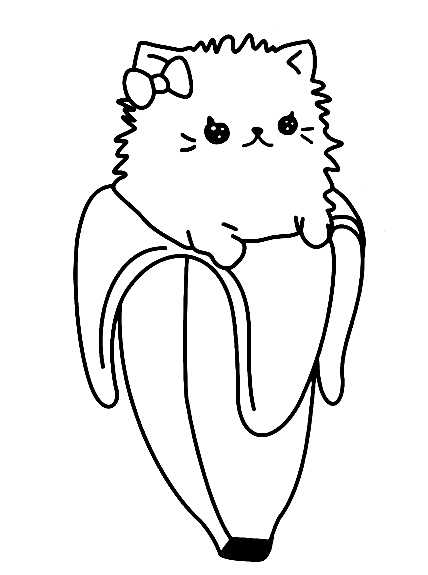
Coloring Bananyako: Bananyako is typically shown as a slightly more feminine variant of Bananya, often with a small bow or different expression. The same banana peel palette applies, with a slightly lighter or pinker coat depending on the specific page.
Coloring Baby Bananya: baby pages show a smaller, rounder form with proportionally larger eyes than the adult. The tiny scale of the baby against the banana creates one of the set’s most compact coloring compositions.
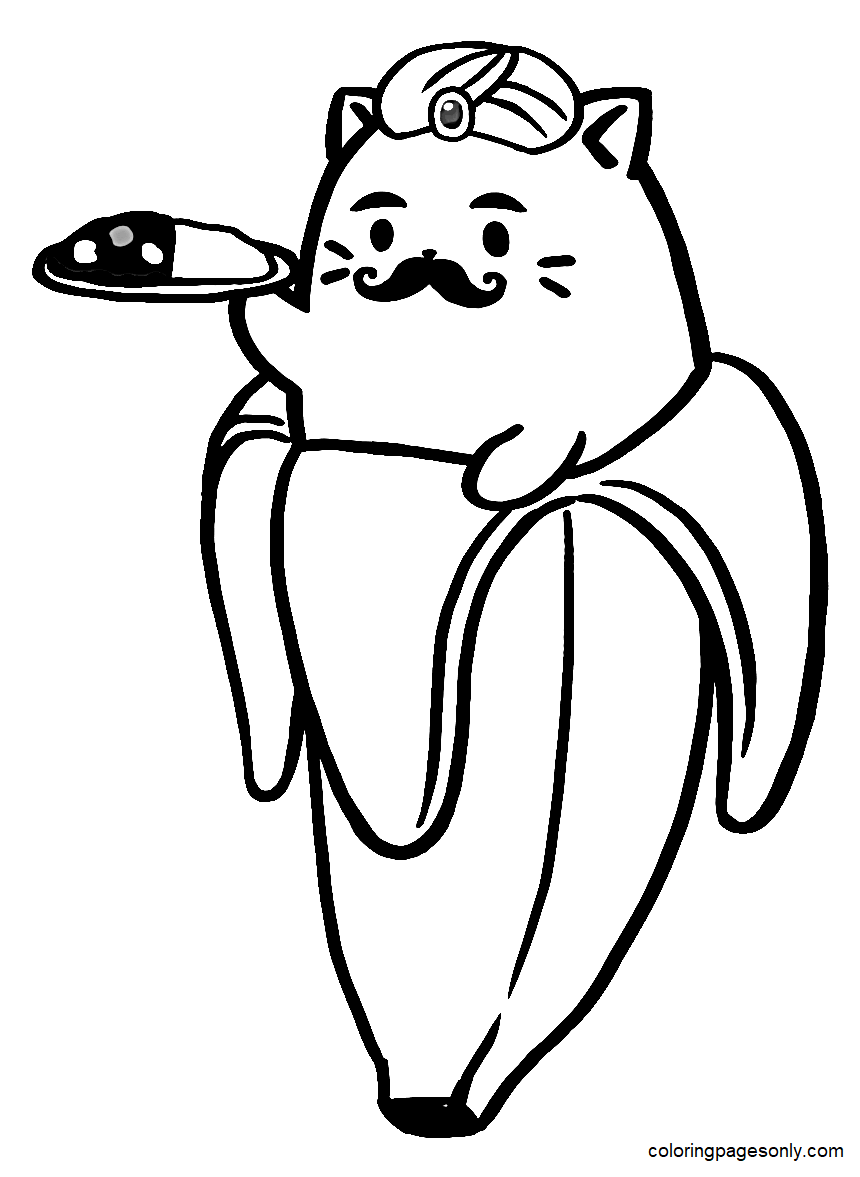
Coloring Daddy and Chourou Bananya: Daddy Bananya is larger and broader than the main Bananya, with the same orange tabby base coat but a slightly deeper, more saturated orange that reads as more mature or substantial. Chourou is the elder Bananya, typically shown with a calmer expression and sometimes with small marks or details suggesting age. Both use the standard banana peel yellow with orange tabby variants, but the expression and proportions distinguish them from the younger Bananya.
Cat Breed Variant Pages
Eight named cat breeds, Bananyas, appear in the set, each with the breed’s distinctive coat:
Tabby Bananya: warm orange-and-cream striped tabby pattern, the standard reference point for the series’ main character palette.
ScottishFold Bananya: ScottishFold cats are recognized by their folded-forward ears. On ScottishFold pages, the folded ear shape distinguishes this variant from other pages. The coat is typically a soft grey or cream.
RussianBlue Bananya: Russian Blue cats have a distinctive blue-grey coat with slightly silver tips, and bright green eyes. On the RussianBlue page, a cool blue-grey body against the warm banana yellow creates the strongest warm-cool contrast in the breed section.
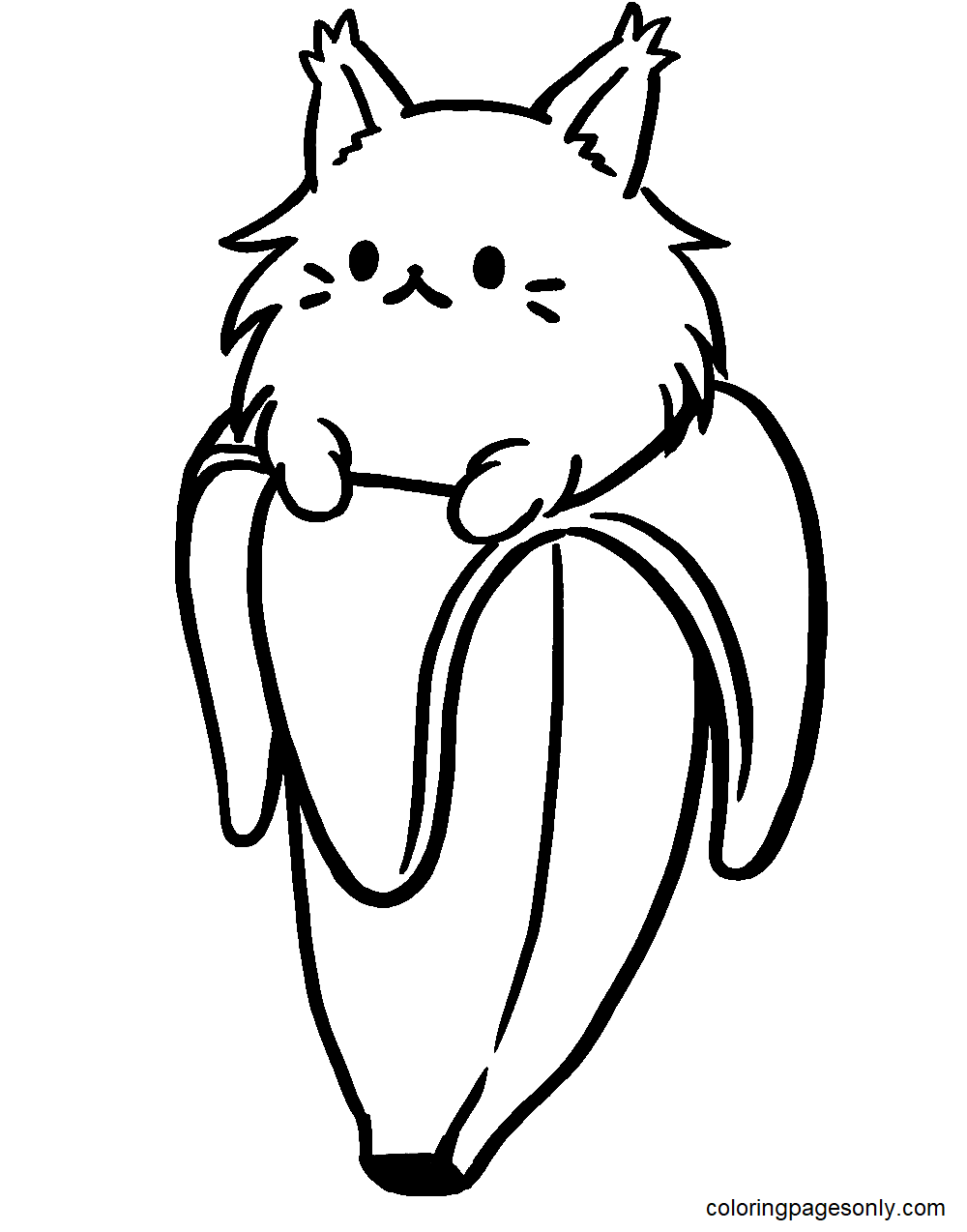
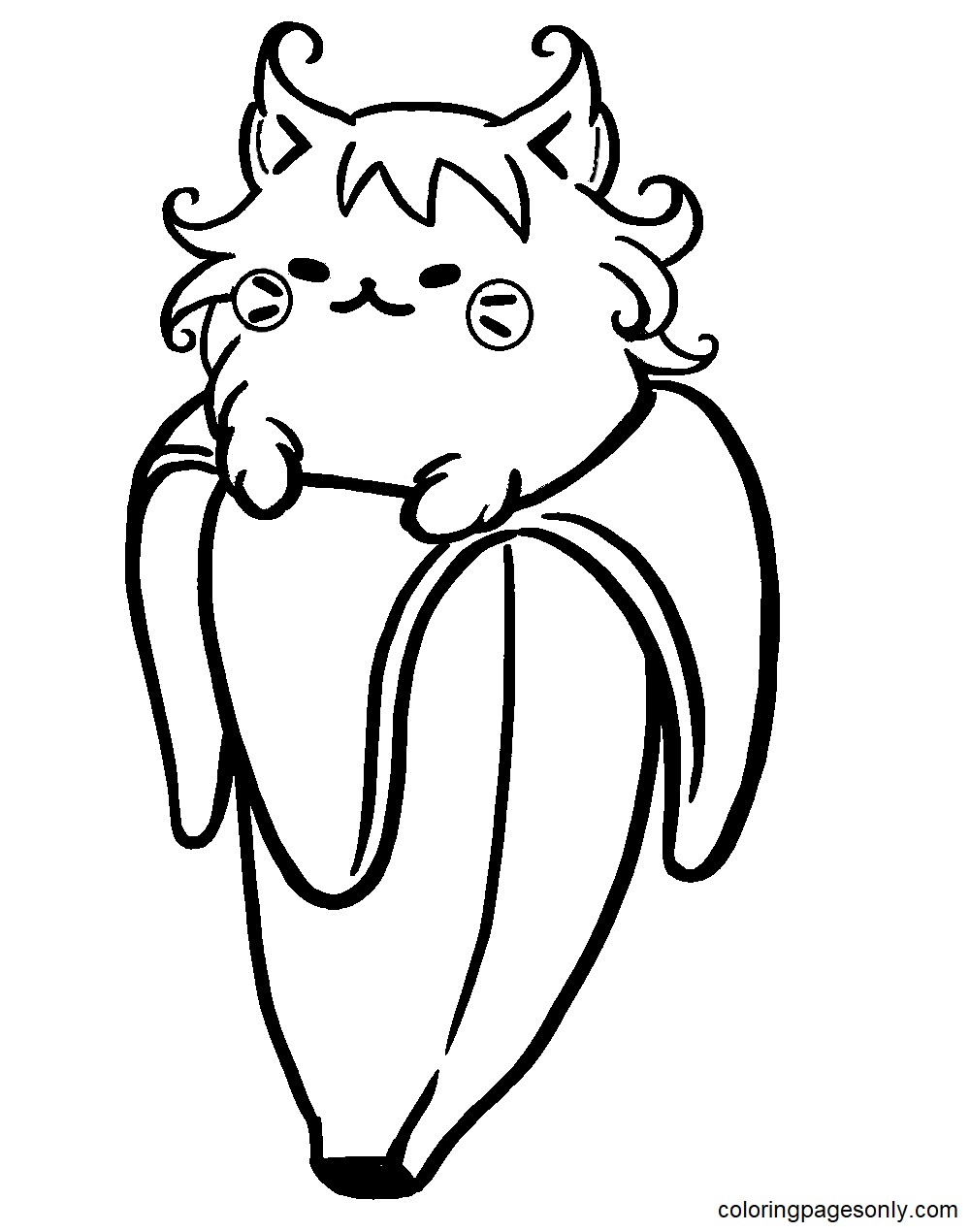
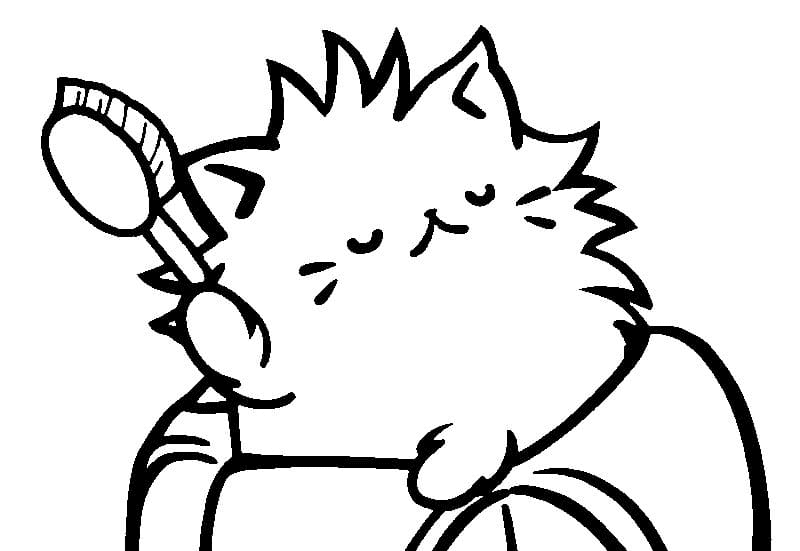
MaineCoon Bananya: Maine Coon cats have longer, shaggier fur. The MaineCoon page shows more coat texture than the other breeds, typically in a warm tabby-brown or grey-brown with a notably bushy tail.
Munchkin Bananya: Munchkin cats have notably short legs. On Munchkin pages, the stubby leg proportions distinguish this variant. Coat color varies.
Calico Bananya: Calico cats have three-color coats: white, black, and orange patches in irregular patterns. The Calico page is the most complex coat pattern in the set, requiring three distinct colors in organic patch arrangements.
Shirokuro Bananya: Shirokuro means black and white in Japanese. A clean two-tone black and white coat, the simplest breed palette in the set, and the highest contrast.
Long-Haired Bananya: similar to the MaineCoon but without the breed-specific proportions, showing longer, fluffier fur across the body.
Costume Variant Pages
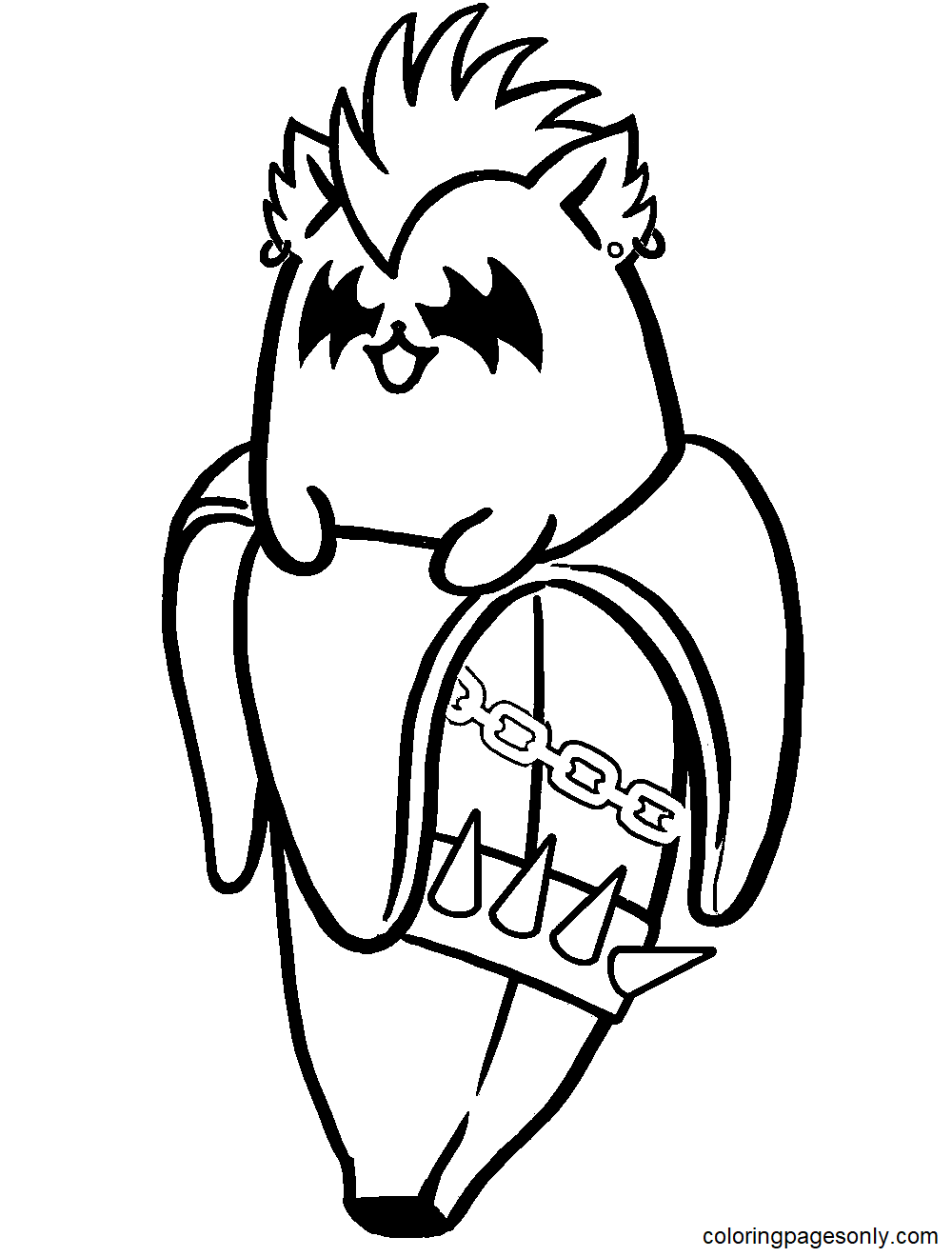
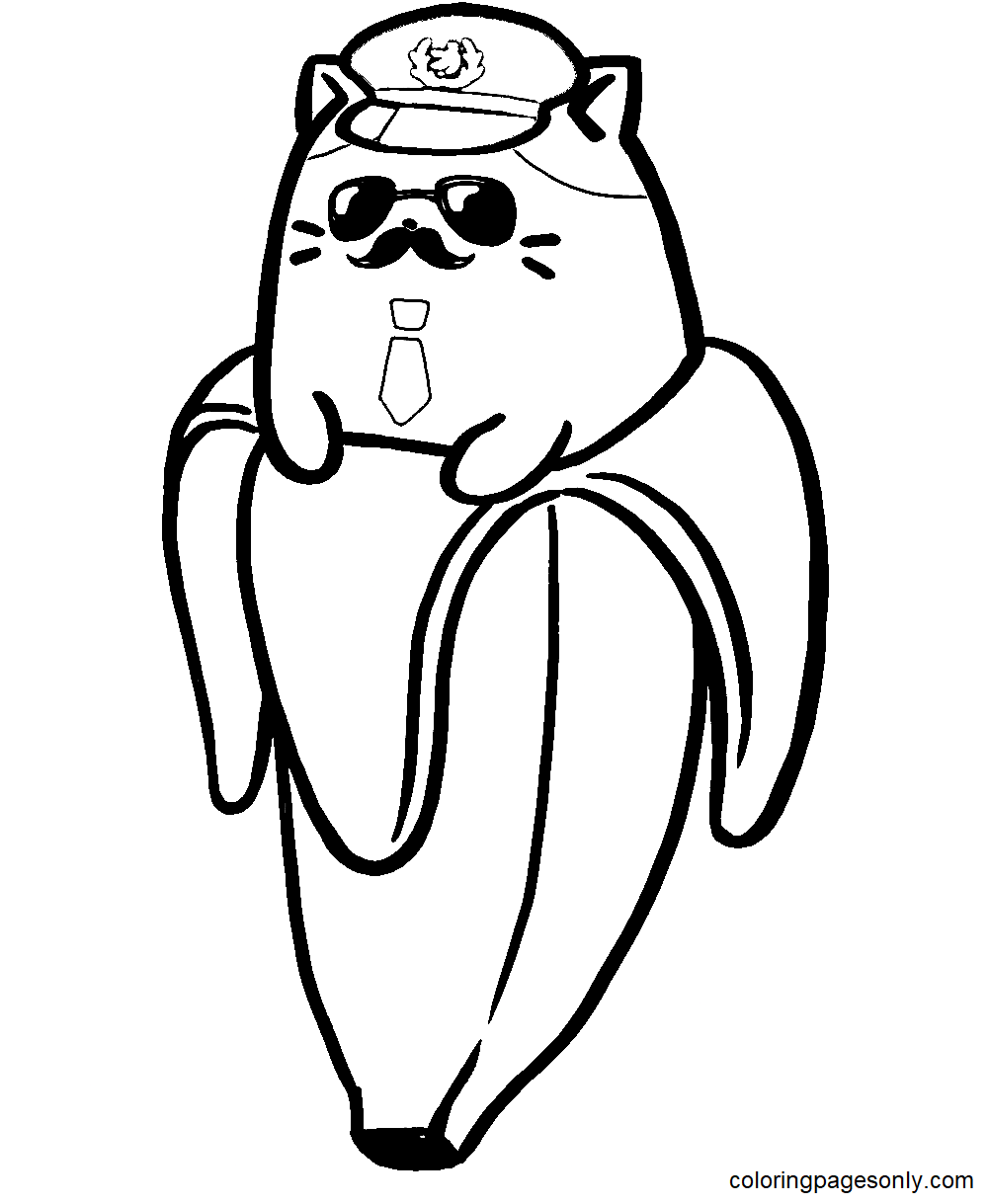
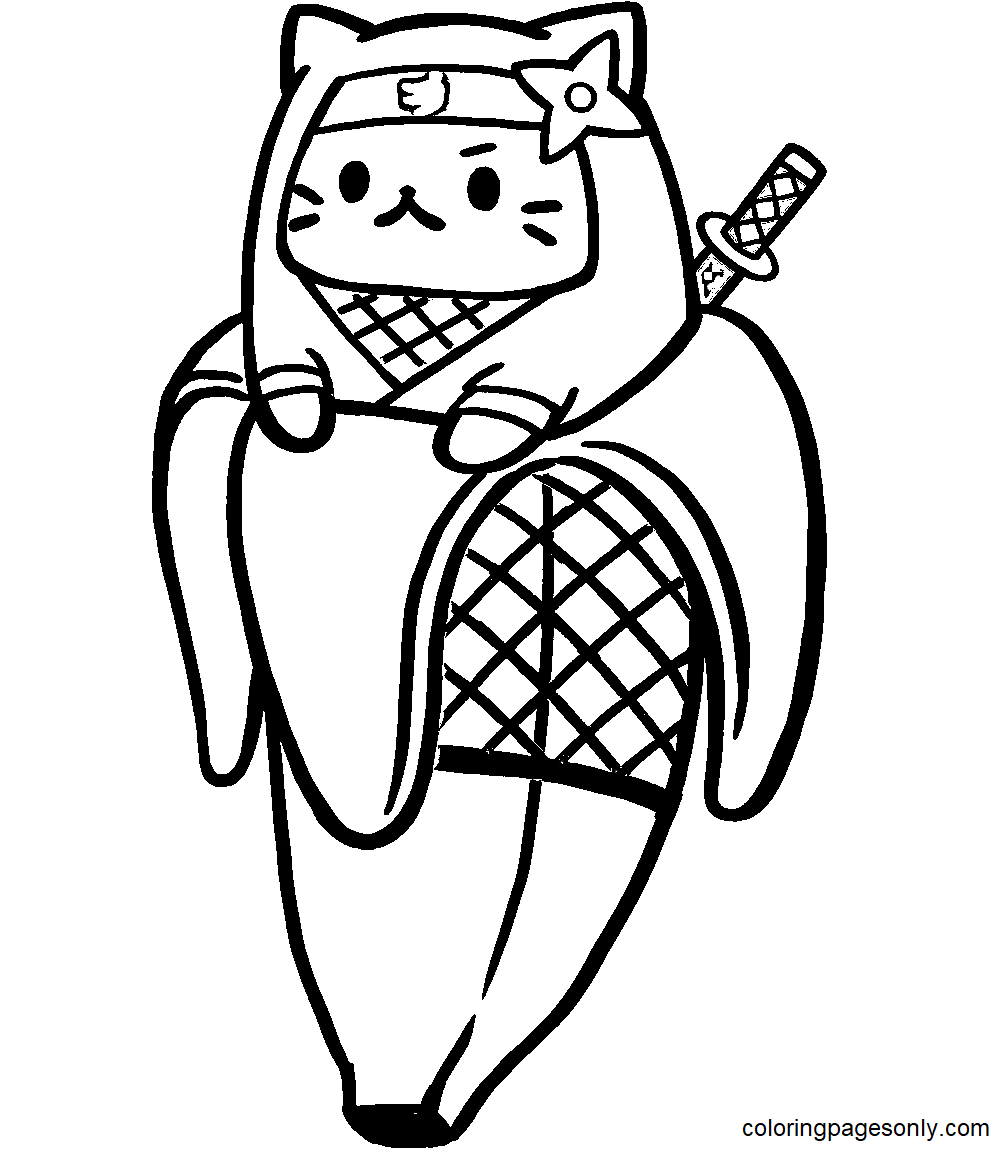
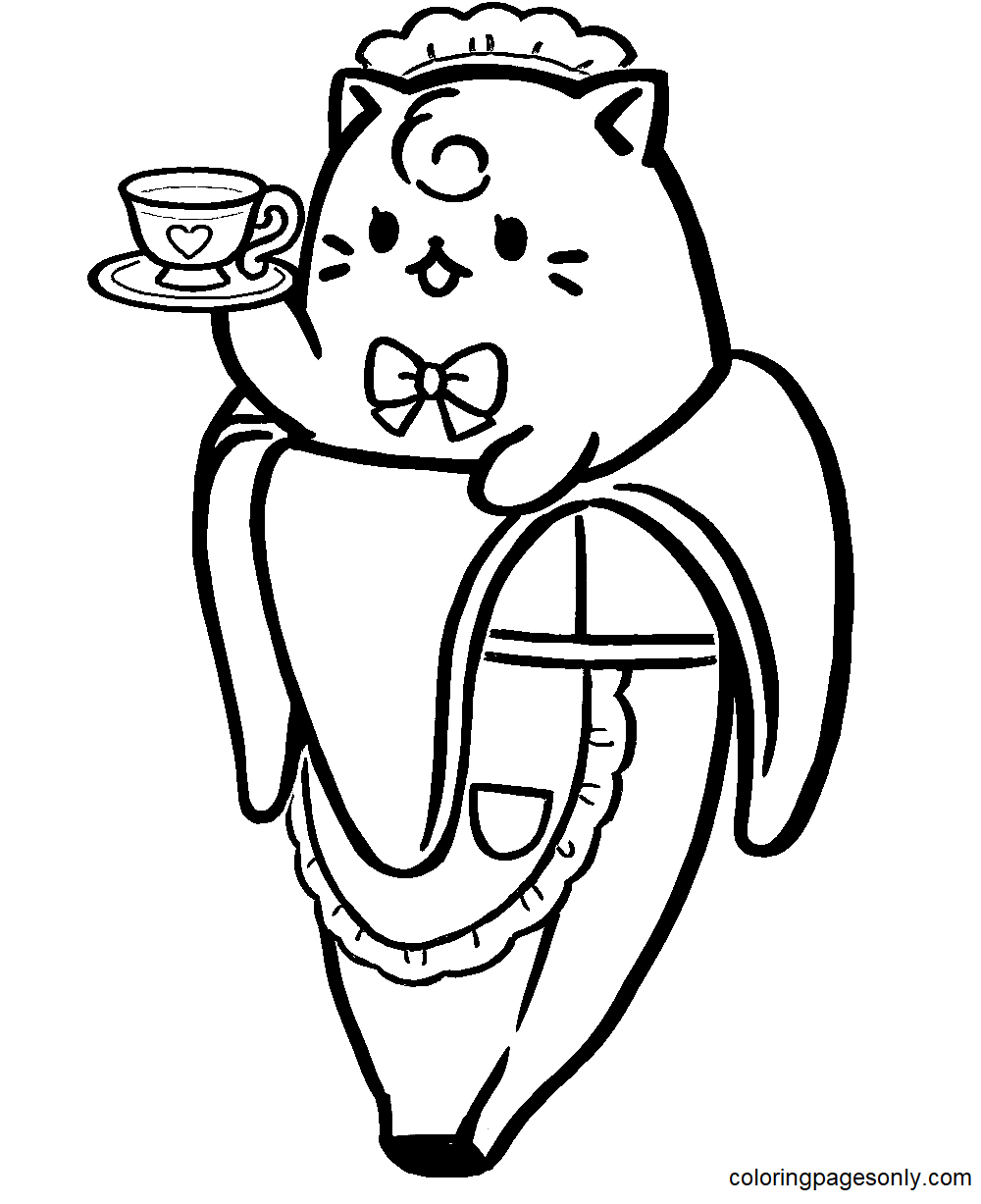
Eight pages show Bananya characters in costume: Sheriff, Pirate, Ninja, Police, Maid, Metal, EMO, and Namaste.
Coloring costume pages: on costume pages, the outfit palette takes visual priority over the banana-and-cat base. The banana peel’s yellow and the cat’s coat remain visible on the face and paws, but the costume color defines the overall page reading.
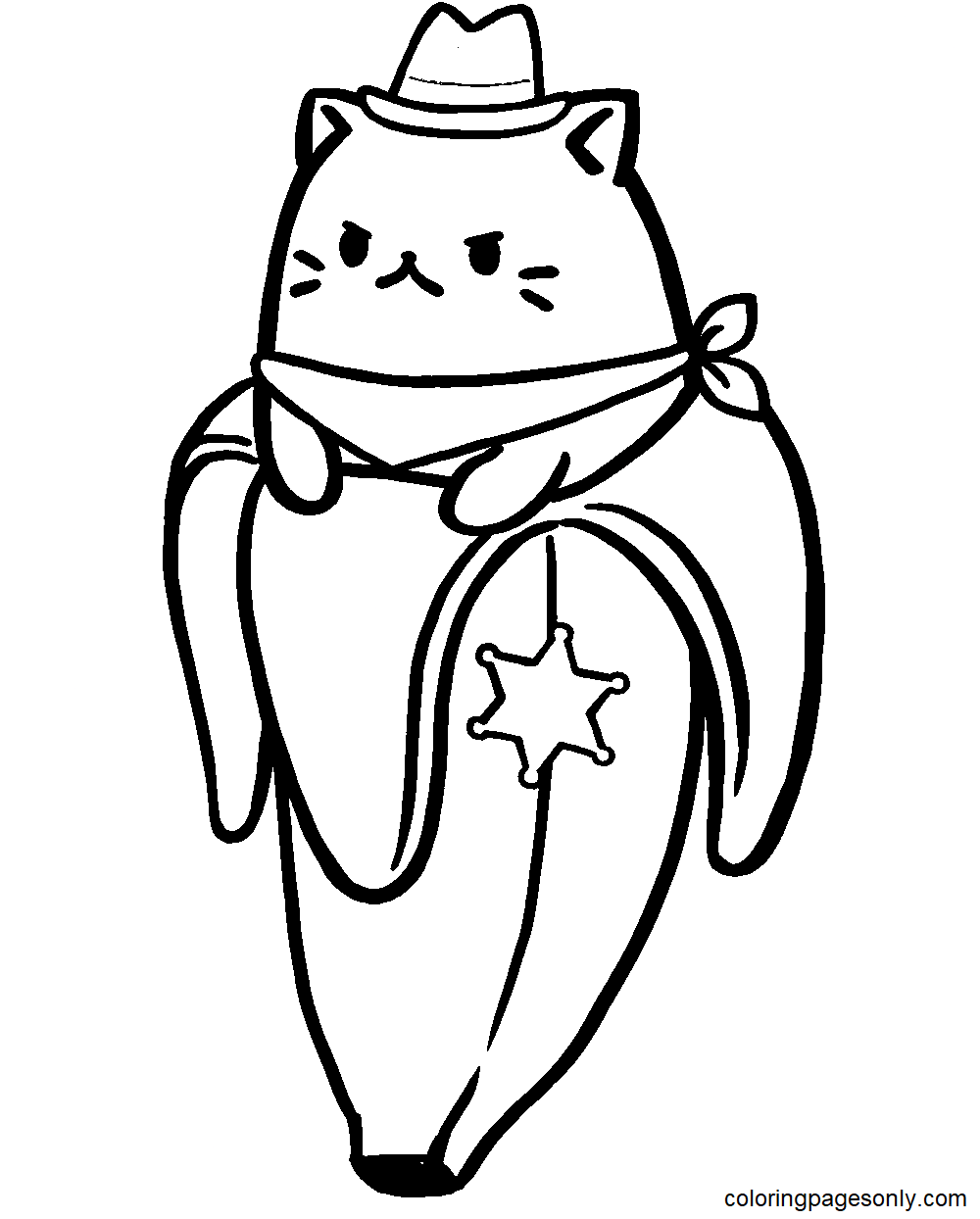
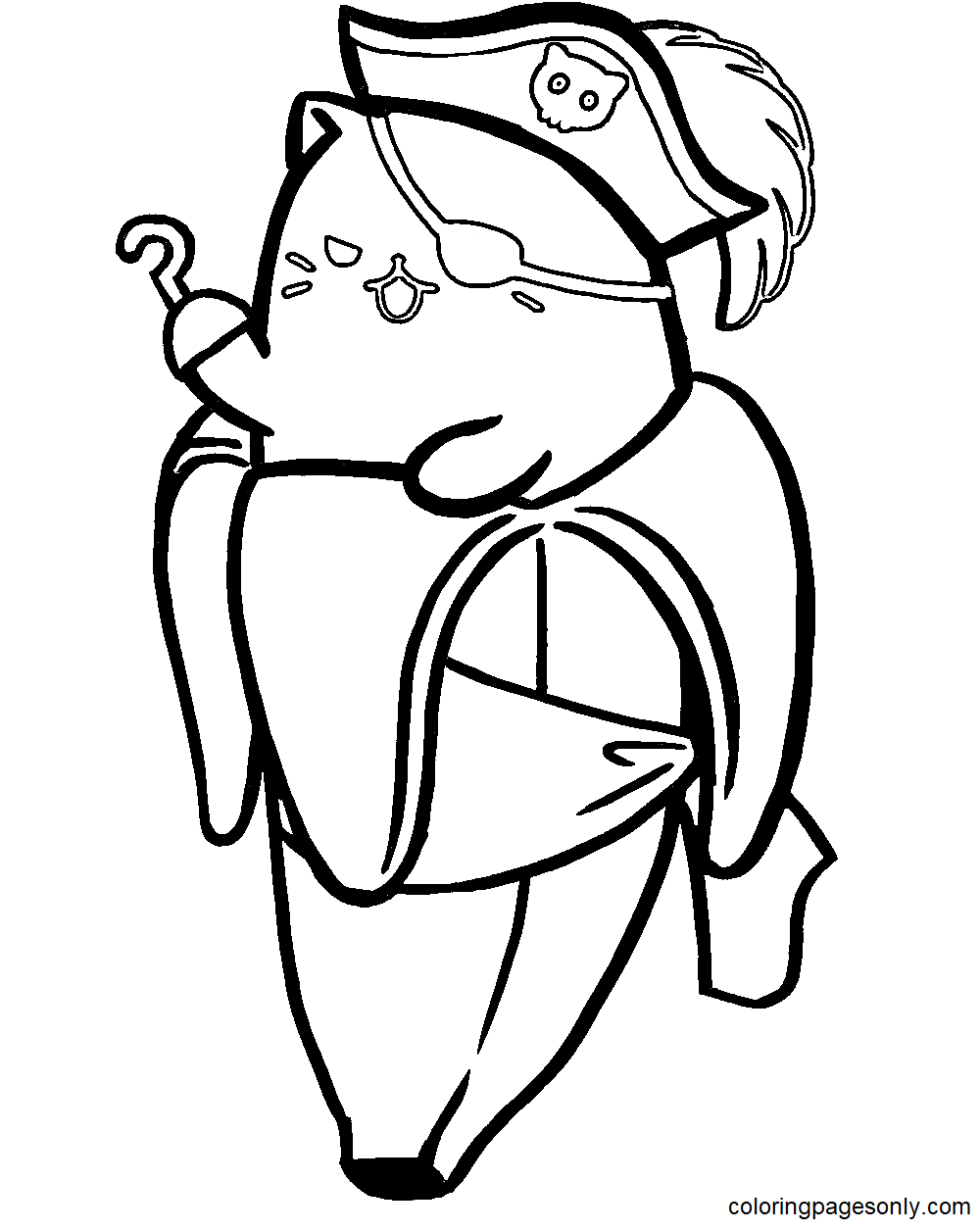
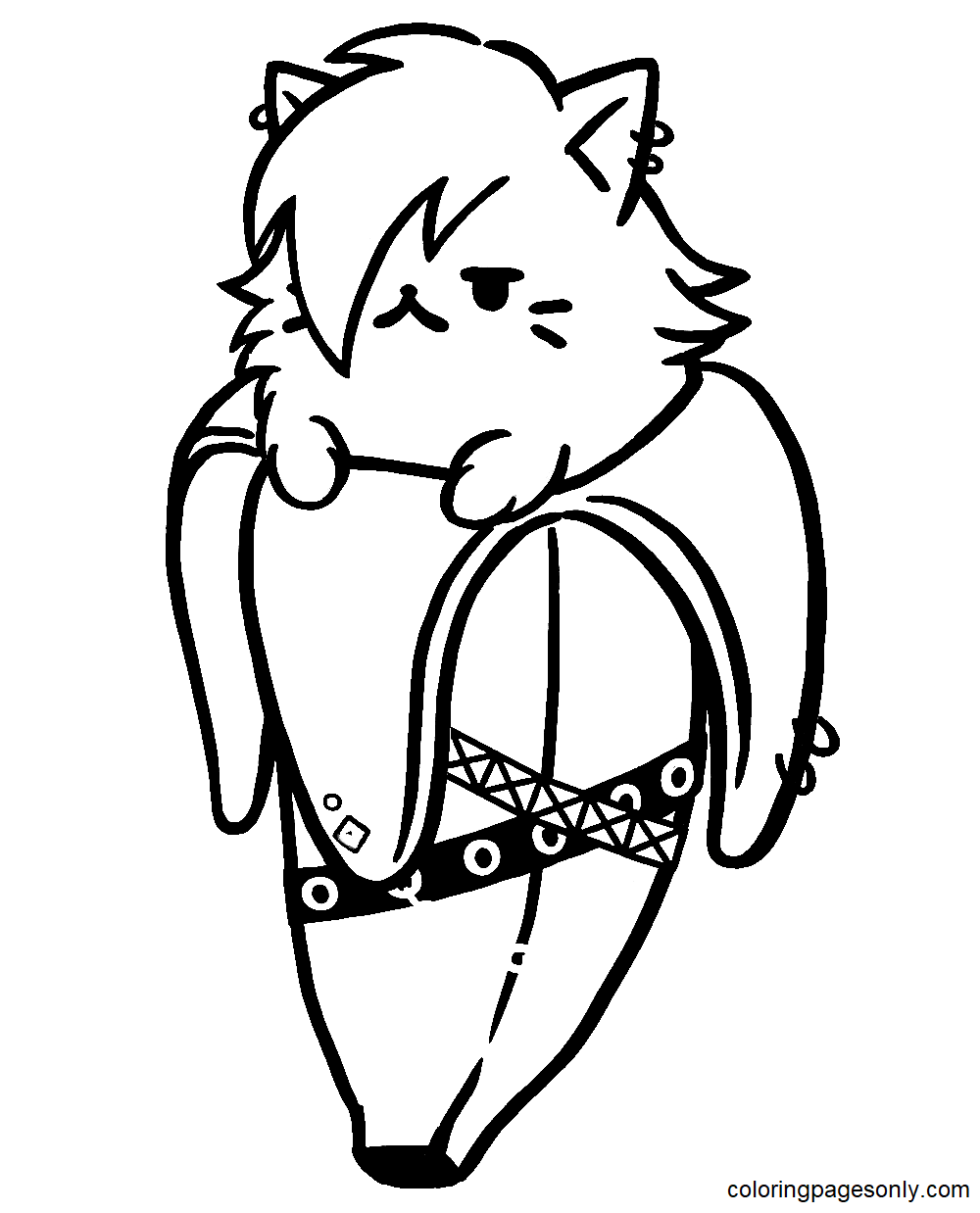
Sheriff: tan hat with brown brim, a warm gold sheriff badge, and western-appropriate warm browns. The warm tan palette works naturally alongside the banana yellow. Pirate: black hat with white skull detail, dark navy or black coat, and a red or white sash. The dark pirate palette creates the strongest contrast with the bright banana yellow in the set. Police: dark navy blue uniform with a small silver badge: same high-contrast-with-yellow logic as the pirate page, but with a more structured, formal silhouette. Maid: black dress with white apron and white collar trim. Metal: dark grey or near-black with silver accents, angular details. EMO: dark purple-black with possible red or white accent marks at the eyes or clothing.
Sheriff: tan or brown hat and star badge, warm western palette over the banana yellow. Pirate: dark hat with skull-and-crossbones, navy or black coat, creating a dark-over-yellow contrast. Ninja: dark grey or black costume, the highest contrast with the banana. Police: standard blue or dark uniform with badge detail. Maid: black and white maid outfit with apron. Metal: dark with silver accents, heavy metal aesthetic applied to the kawaii cat form. EMO: darker tones, perhaps dark purple or black, with contrasting expression. Namaste: warm meditation tones.
Halloween Pages
Two pages cover Halloween variants: Zombie Bananya and Vampire Bananya, with a third cute version, Cute Vampire Bananya.
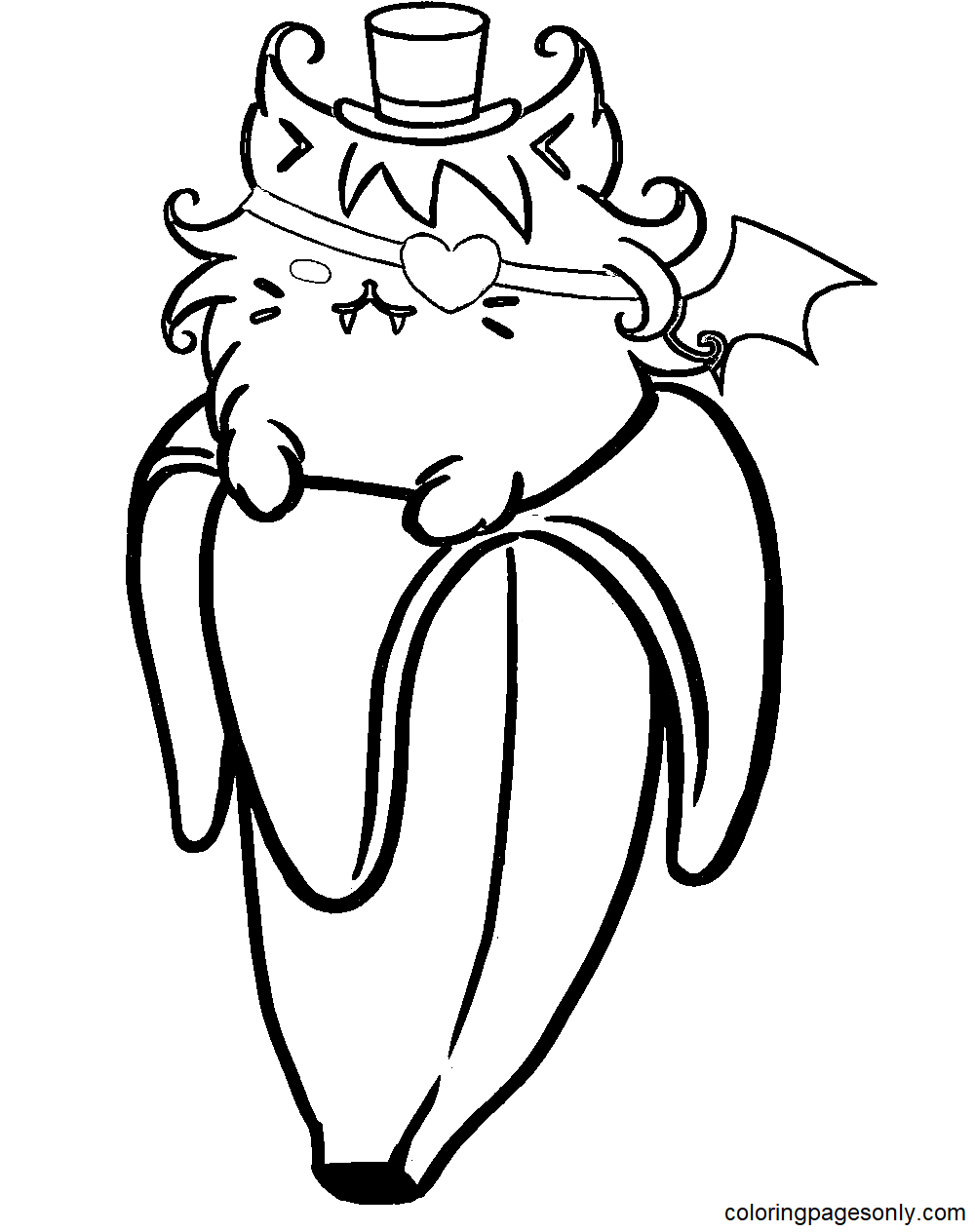
Coloring Halloween pages: Vampire Bananya wears a small black or deep purple cape with a red lining and shows small white fangs. The vampire palette (black cape, red interior, pale cat face) is a strong contrast page. Keep the banana peel a slightly more shadowed yellow to fit the night-time horror register; too bright a yellow breaks the mood. Cute Vampire Bananya uses the same elements at a softer saturation level.
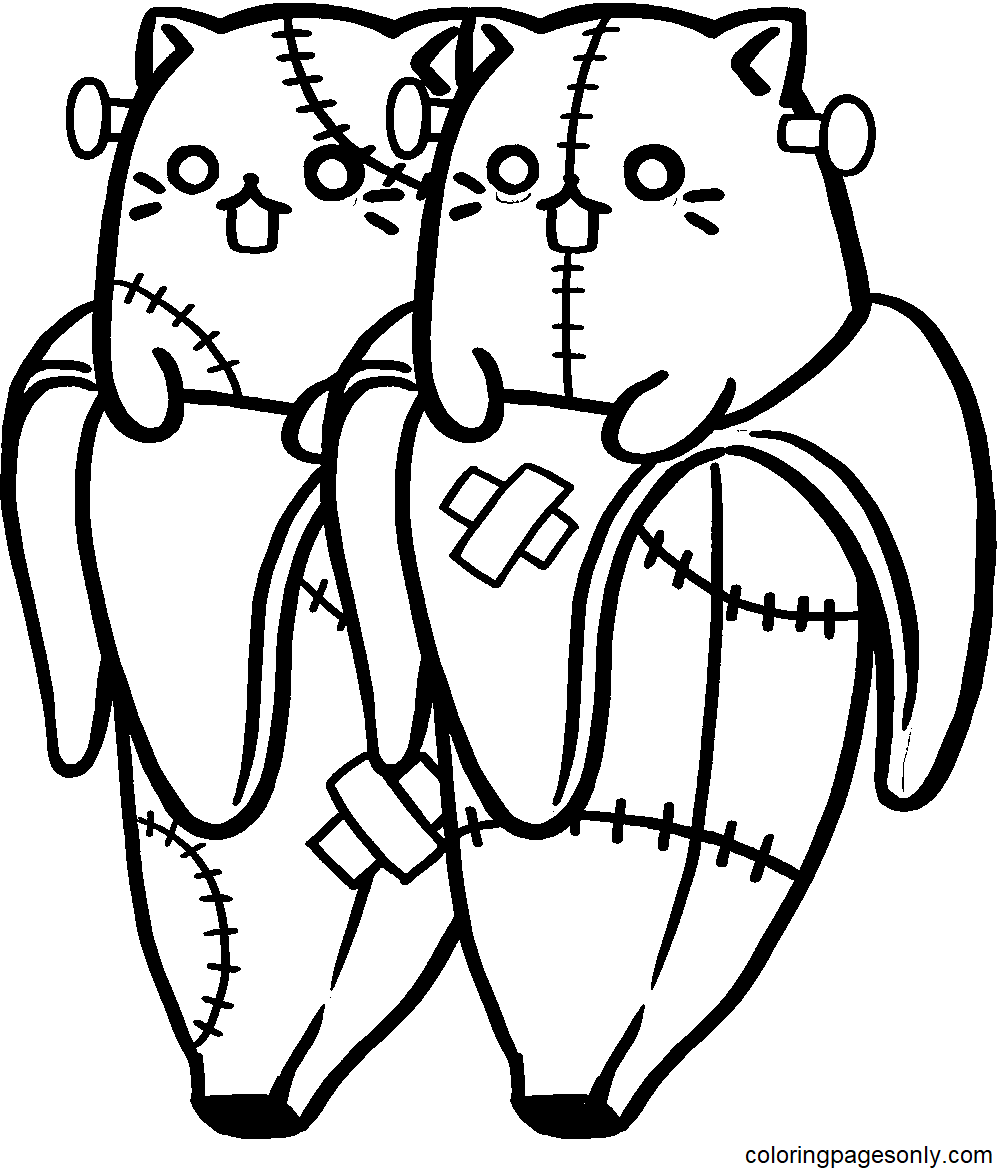
Zombie Bananya desaturates the standard orange tabby coat toward a muted grey-green, with slightly darkened areas around the eyes and a disheveled expression. The banana peel on zombie pages works best in a slightly greenish or muted yellow rather than the standard bright yellow.
Special and Seasonal Pages
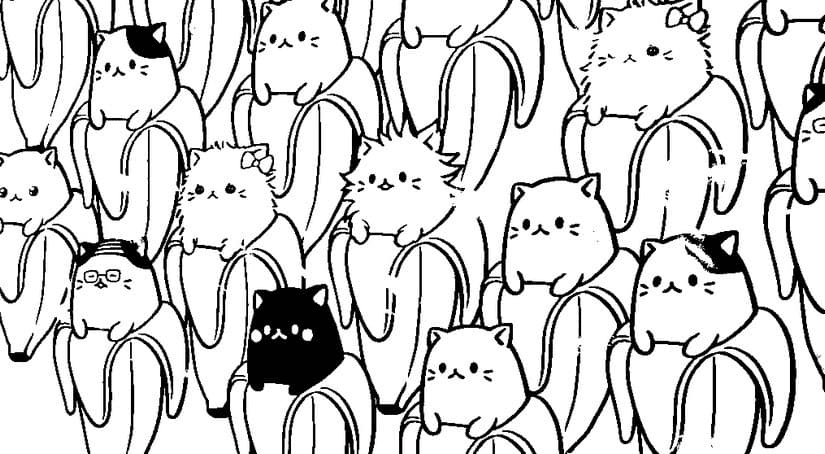
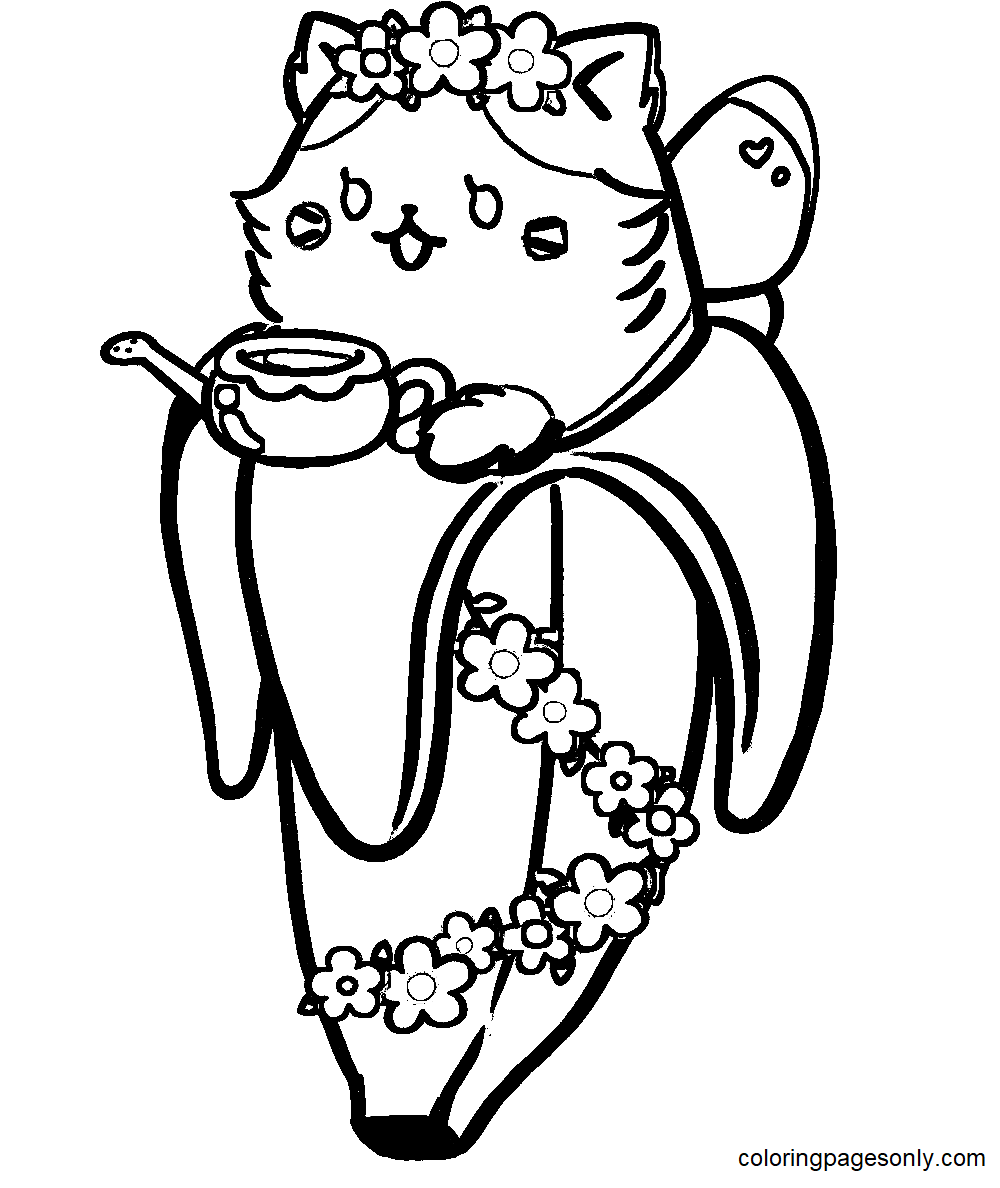
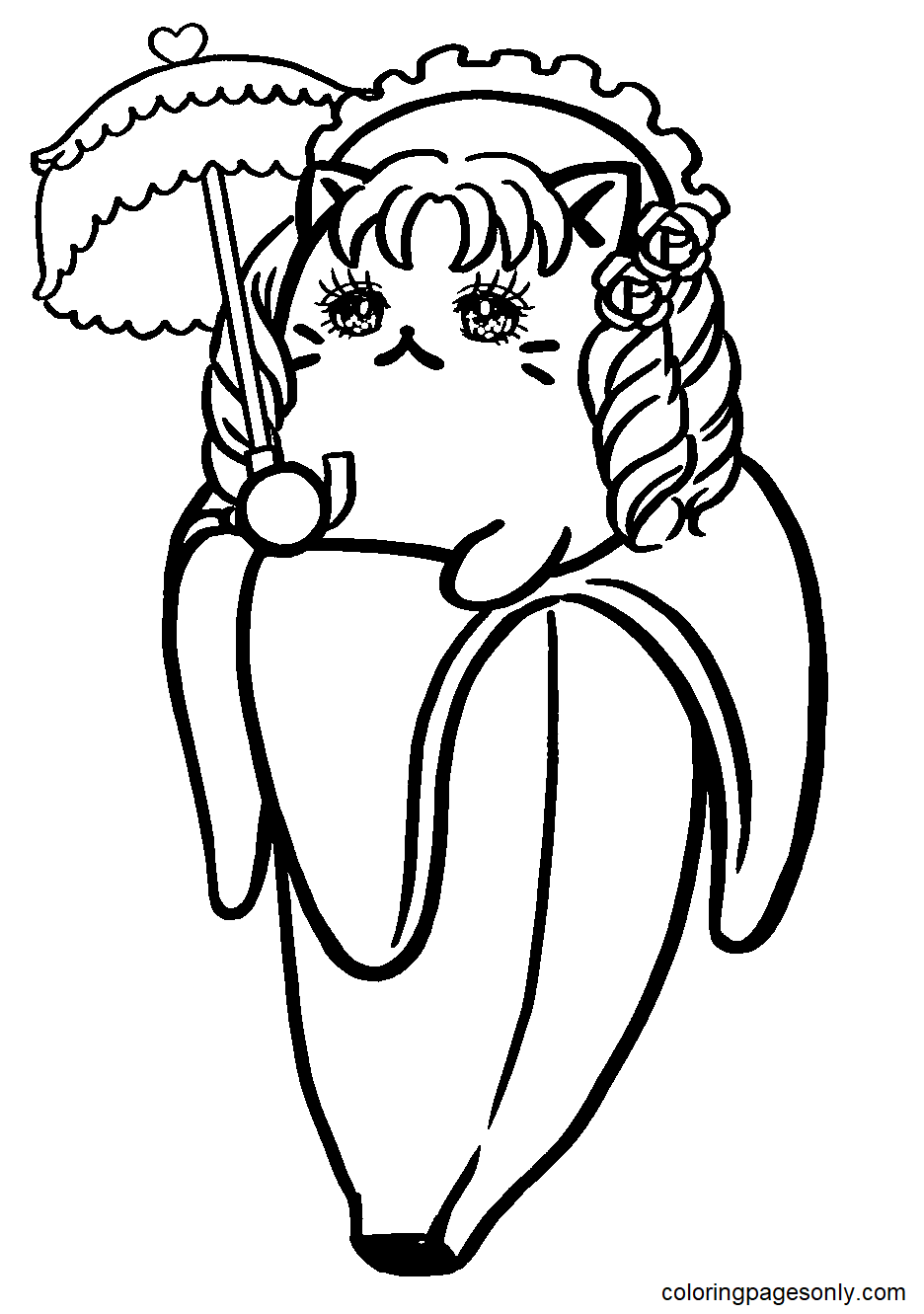
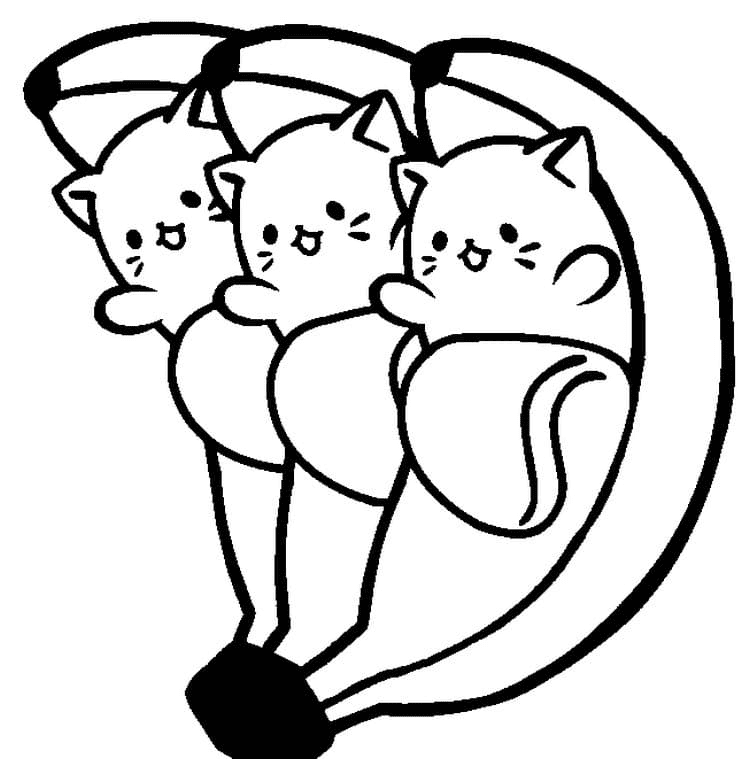
Additional pages cover flower, kawaii, lovely, NightRainbow, Kagakusha (scientist), and Elizabeth variants, alongside the Bananya Bunch and Bananya reading a newspaper.
Coloring the NightRainbow page: NightRainbow Bananya is set against a night sky. The background should be a deep blue-black, darker than a daytime ocean blue. Against this, the rainbow arc uses the same spectral sequence as a daytime rainbow (red through orange, yellow, green, blue, violet) but at lower saturation, since moonbows appear muted and pale compared to sun rainbows. The banana peel in this page reads best in a slightly paler, cooler yellow than the standard warm primary yellow, to match the lunar light quality.
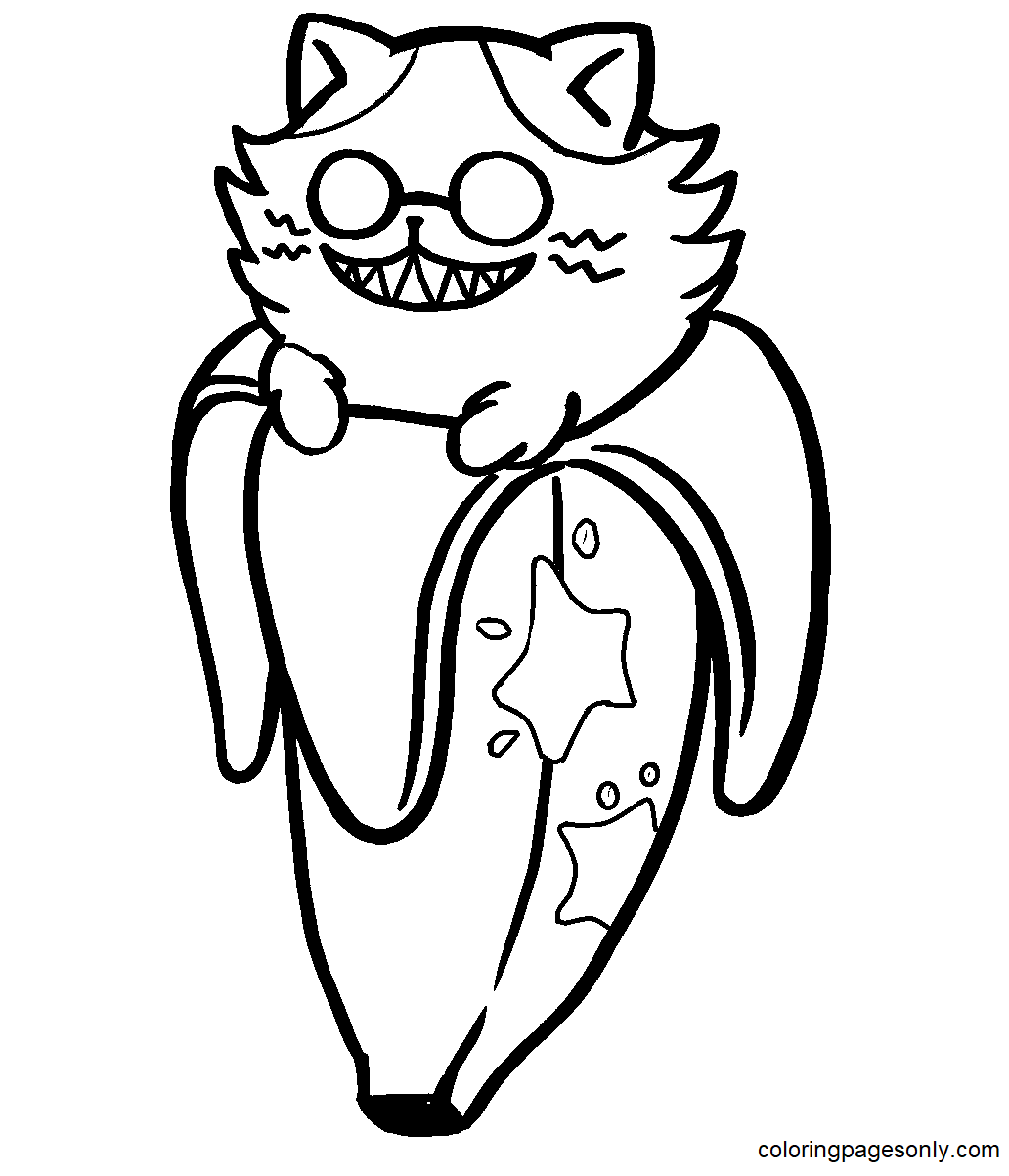
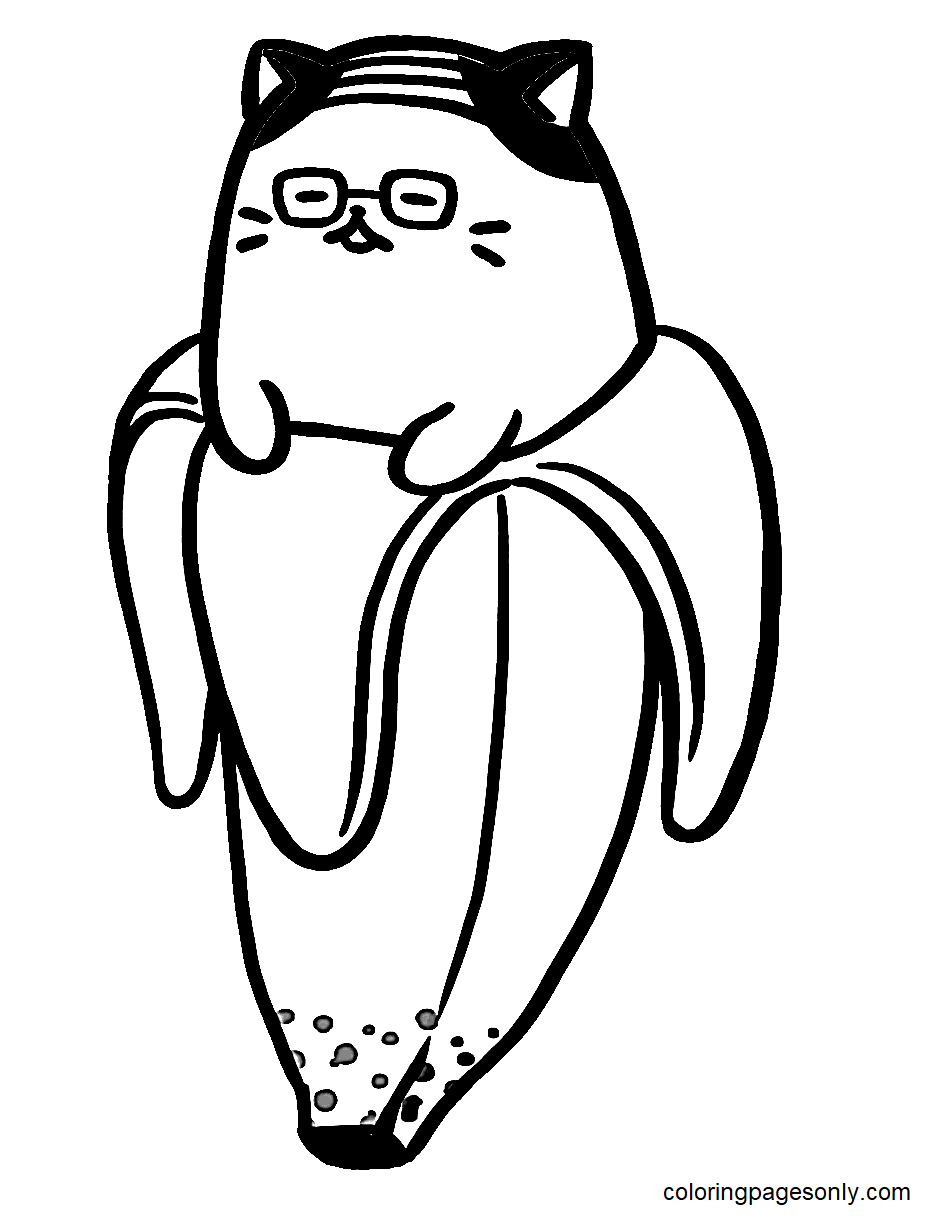
Coloring Kagakusha Bananya: Kagakusha means scientist in Japanese. The scientist Bananya wears small, round glasses and a white lab coat over the standard orange tabby form. The lab coat is crisp white, making this the most high-contrast Bananya page in the accessories section: bright banana yellow, orange tabby cat, and clean white coat. Small detail elements like a pencil, beaker, or notepad can be colored in warm yellow or clear glass tones.
Printable PDF and Online Bananya Coloring Pages
The breed variant pages and the Calico page in particular reward printing over screen coloring for close pattern and spot work.
What These Pages Do
Bananya is a cat that lives inside a banana. Not a cat wearing a banana costume, not a cat shaped like a banana. The banana peel is its home, the way a shell is a snail’s home. The show is 13 episodes of approximately four minutes each, and the narrator observes the Bananyas the way a nature documentary narrator observes animals in the wild, describing their daily activities with complete seriousness.
The premise is specific and entirely committed. The show does not explain how cats came to live in bananas. It does not ask whether this is possible. The narrator reports what the Bananyas are doing today: eating, sleeping, playing, and discovering new rooms inside their bananas. There are cat breed variants. There is a scientist, Bananya. There is an elder Bananya.
Coloring through 52 pages of this world is spending time with a creative premise that holds completely to its own internal logic. The banana is always yellow. The cat is always inside. The breed and costume variants change what is on the outside, but the core arrangement stays constant across every page.
The AAP notes that imaginative worlds with consistent internal logic, even highly unusual ones, support children’s creative thinking and their capacity to accept and extend a premise on its own terms, which is a foundational skill for both creative and analytical reasoning.
Art therapy practitioners note that imagery featuring small animals in enclosed, cozy spaces, where the container is warm and familiar, and the inhabitant is safe, is among the most reliably calming coloring subjects, offering a visual sense of comfort and containment that is accessible across a wide age range.
How to Color Bananya Coloring Pages
The banana yellow is warm and bright, not pale. Bananya’s banana peel should be a saturated, warm primary yellow rather than a pale lemon or a muted gold. The bright yellow is the visual signature of the series, and a pale banana loses the character’s most recognizable feature.
Keep the cat’s coat color distinct from the banana yellow. On the main Bananya pages, the orange tabby coat is a warmer, slightly more orange-red than the banana yellow. The distinction between the two warm yellows is subtle but important. On breed variant pages, the distinction is often more dramatic: RussianBlue’s cool grey and Shirokuro’s black and white both contrast strongly with the yellow.
Calico requires three separate patch colors, not blended. The Calico coat is orange, black, and white in distinct, irregular patches, not blended or overlapping. Each patch reads as its own color, separated by thin lines. The irregular, organic shape of the patches is what makes Calico recognizable.
Costume pages work best when the costume reads as the dominant layer. On Ninja, Pirate, and Metal pages, the costume palette should be slightly more saturated or vivid than the banana and cat tones, so it reads as a layer placed over the base character rather than as part of it.
5 Creative Craft Ideas with Bananya Coloring Pages
Named Cast Display
Color Bananya, Bananyako, Baby Bananya, Daddy Bananya, and Chourou Bananya as a five-character family display. Keep the banana yellow consistent across all five pages, varying only the cat details.
The complete main cast in one collected display. Takes about thirty minutes.
Cat Breeds Study
Color the Scottish Fold, Russian Blue, MaineCoon, Calico, and Shirokuro breed variant pages. For each, work out the breed-specific coat before filling the banana.
Five breed portraits showing how the same banana can contain completely different cats. Takes about thirty-five minutes.
Costume Collection
Color four costume pages: Ninja (darkest), Pirate, Sheriff, and Maid, as a costume wall. Keep the banana yellow consistent across all four.
The same character in four completely different roles, unified by the banana. Takes about thirty minutes.
Halloween Pair
Color Vampire Bananya and Zombie Bananya as a Halloween display. Let the costume palettes take over each page while keeping the banana visible.
The kawaii horror corner of the set. Takes about twenty minutes.
Breed and Banana Scale Study
Color the Calico Bananya page twice: once with the standard yellow banana and once with a slightly greener, unripe banana. Compare how the banana color affects the reading of the Calico patches.
A color relationship study using the same page twice. Takes about twenty minutes.
FAQ About Bananya Coloring Pages
Are these Bananya coloring pages free, and can I color them online?
Yes. Every page is free, with no account, email, or payment required. Download the PDF to print at home, or open it in the online coloring tool to color on screen.
What is Bananya?
Bananya is a Japanese anime short series that premiered on July 10, 2019, on TBS in Japan, based on the character created by Taiga Gotou. Each episode is approximately four minutes long. The series follows small cats called Bananyas that live inside banana peels, which serve as their natural homes. A narrator observes their daily activities in the style of a nature documentary. The series features multiple named Bananya characters and cat breed variants.
Who are the main Bananya characters?
The main characters are Bananya, the central orange tabby cat; Bananyako, the female companion character; Baby Bananya, the youngest; Daddy Bananya, the parental figure; and Chourou Bananya, the elder. The series also features named cat breed variants, including ScottishFold, RussianBlue, MaineCoon, Munchkin, Calico, Tabby, Shirokuro, and Long-Haired Bananya.
Why do the cats live inside bananas?
The Bananya series does not explain why cats live inside bananas. The premise is presented as simply the natural state of things, observed with the same matter-of-fact tone as a wildlife documentary. The banana peels are treated as the Bananyas’ natural homes, and the show explores their daily lives within that premise without questioning its logic.
What does Shirokuro mean?
Shirokuro is a Japanese word meaning black and white, used to describe the two-tone coat pattern of the Shirokuro Bananya character. In Japanese, shiro means white and kuro means black. The name is a direct description of the cat’s coloring.
What does Kagakusha mean?
Kagakusha is the Japanese word for scientist or researcher. The Kagakusha Bananya page shows a Bananya character in a scientific context, typically with glasses and laboratory accessories. The word comes from kagaku, meaning science or chemistry.
Are these official Bananya coloring pages?
No. These are fan-made coloring sheets for personal use and are not affiliated with, licensed by, or endorsed by Taiga Gotou, TBS, or any other rights holder of the Bananya series.
What age group are these pages best suited for?
Bananya coloring pages are appropriate for children aged 3 and up. The kawaii art style, simple rounded forms, and cheerful subject matter make them accessible to young children, and the breed variant and costume pages offer enough variety to engage older children across multiple sessions.
Start Coloring
Download any page by clicking the design. No account, email, or payment is required. Pages print directly from the browser at full resolution or open in the online coloring tool for screen use. Share finished pages on Facebook or Pinterest using the share buttons at the top of each design page.