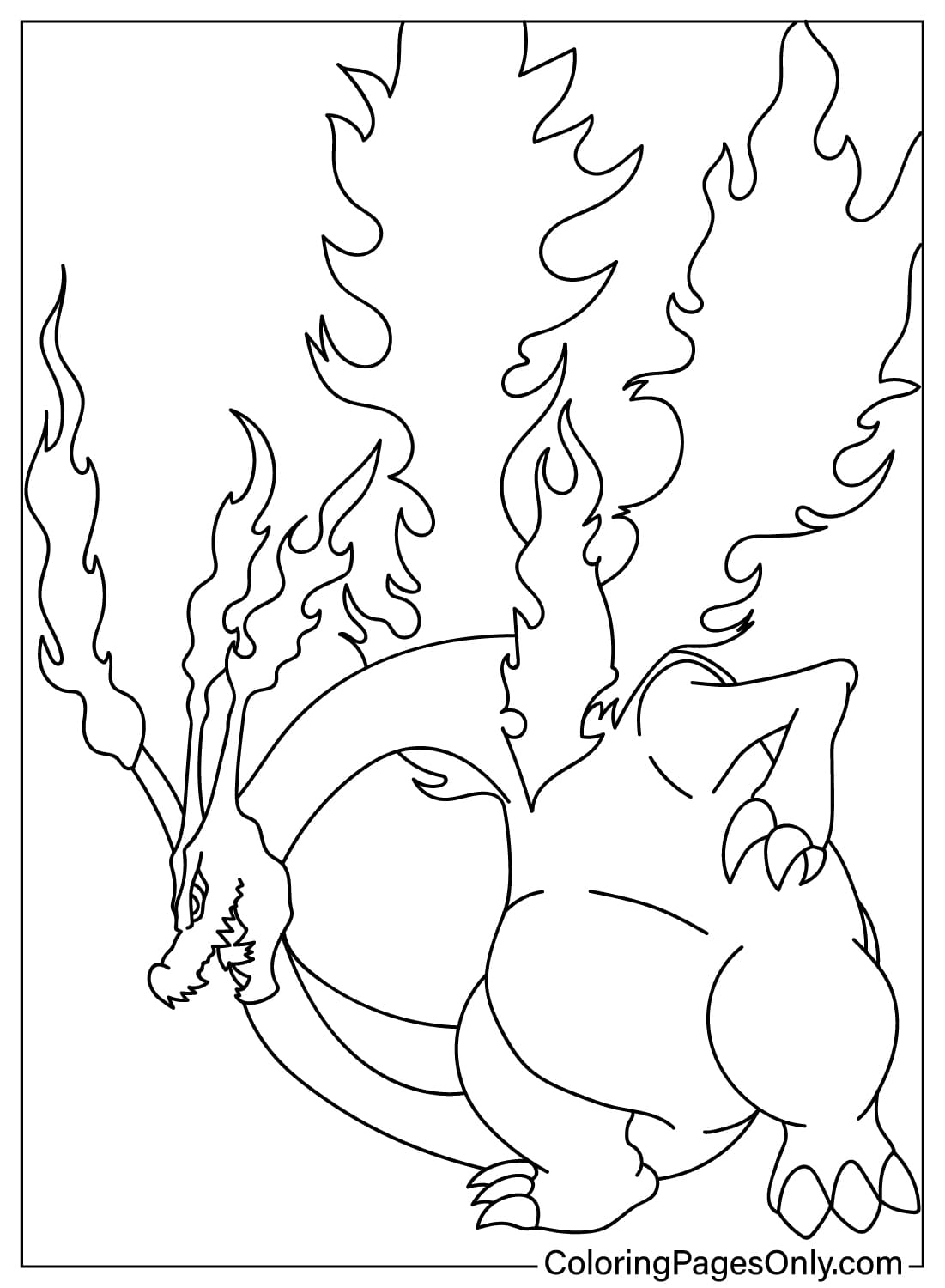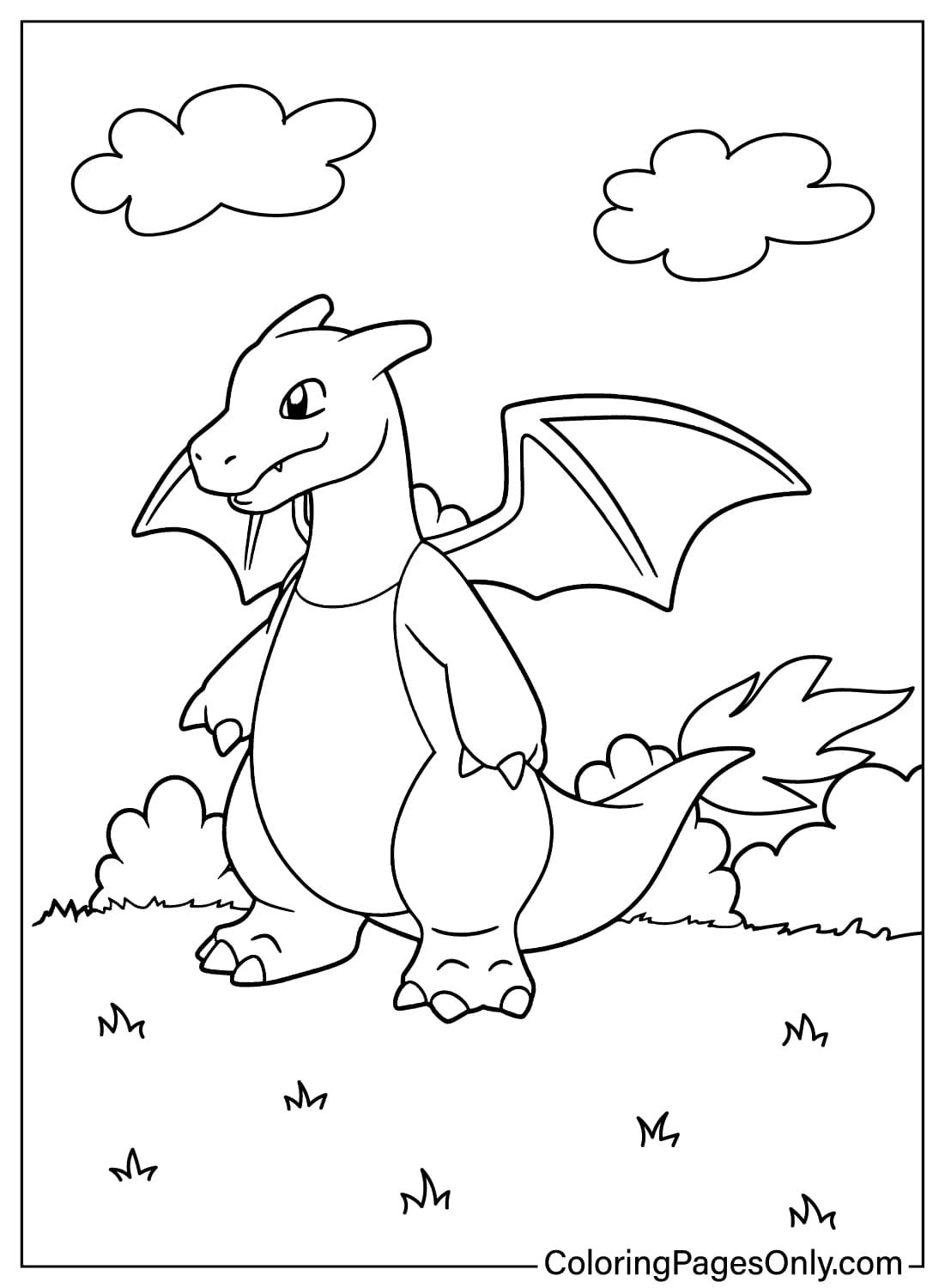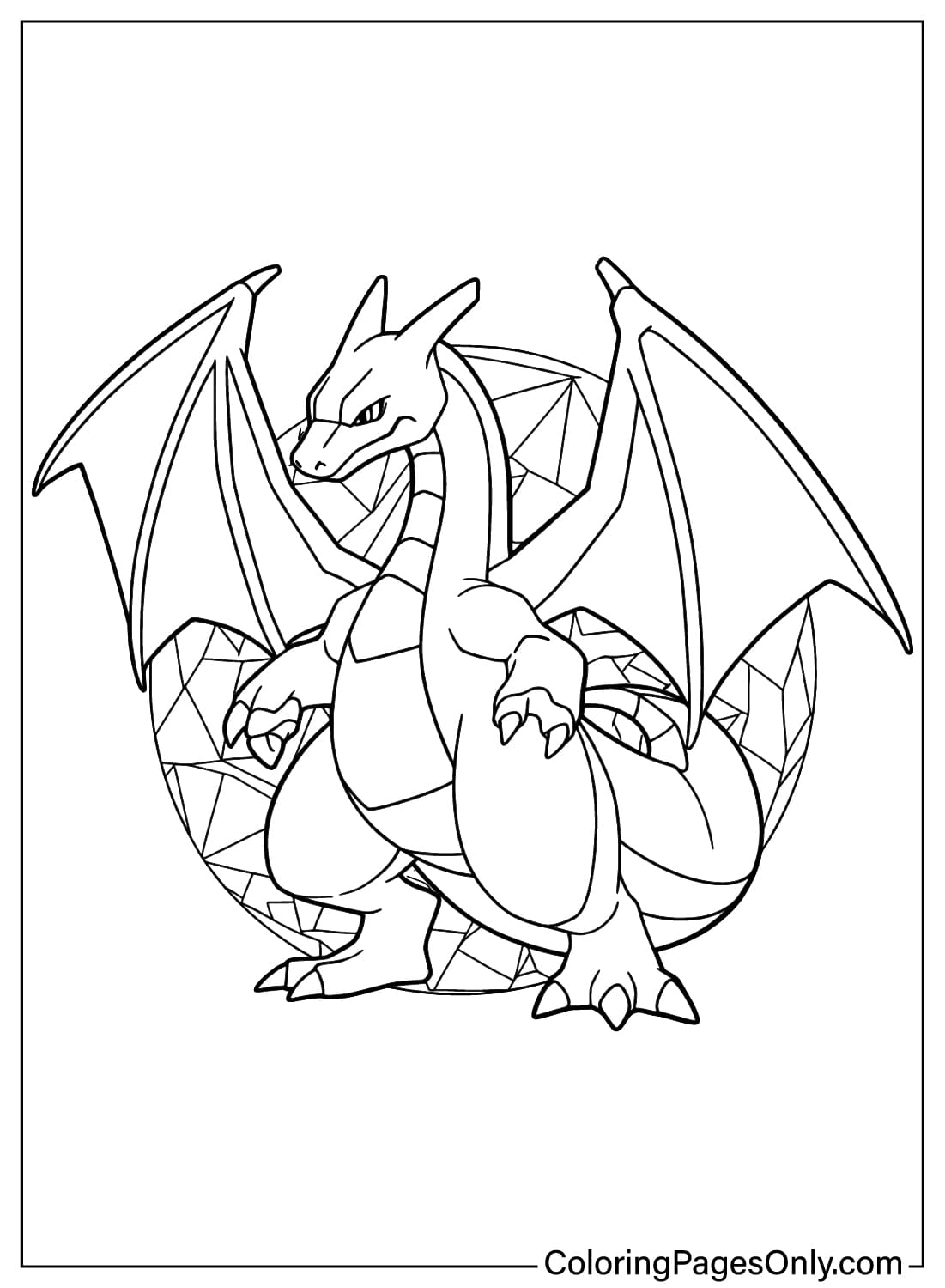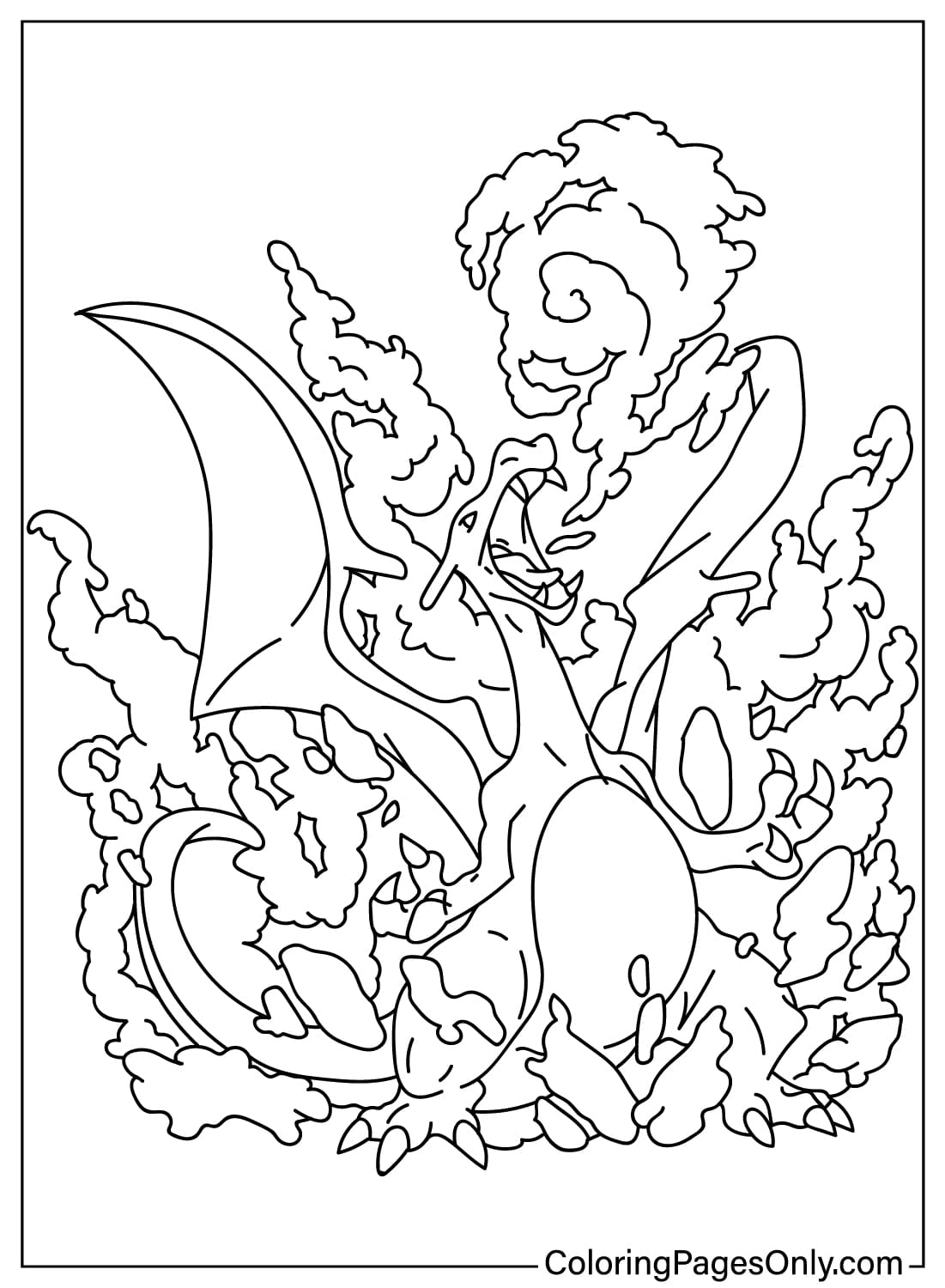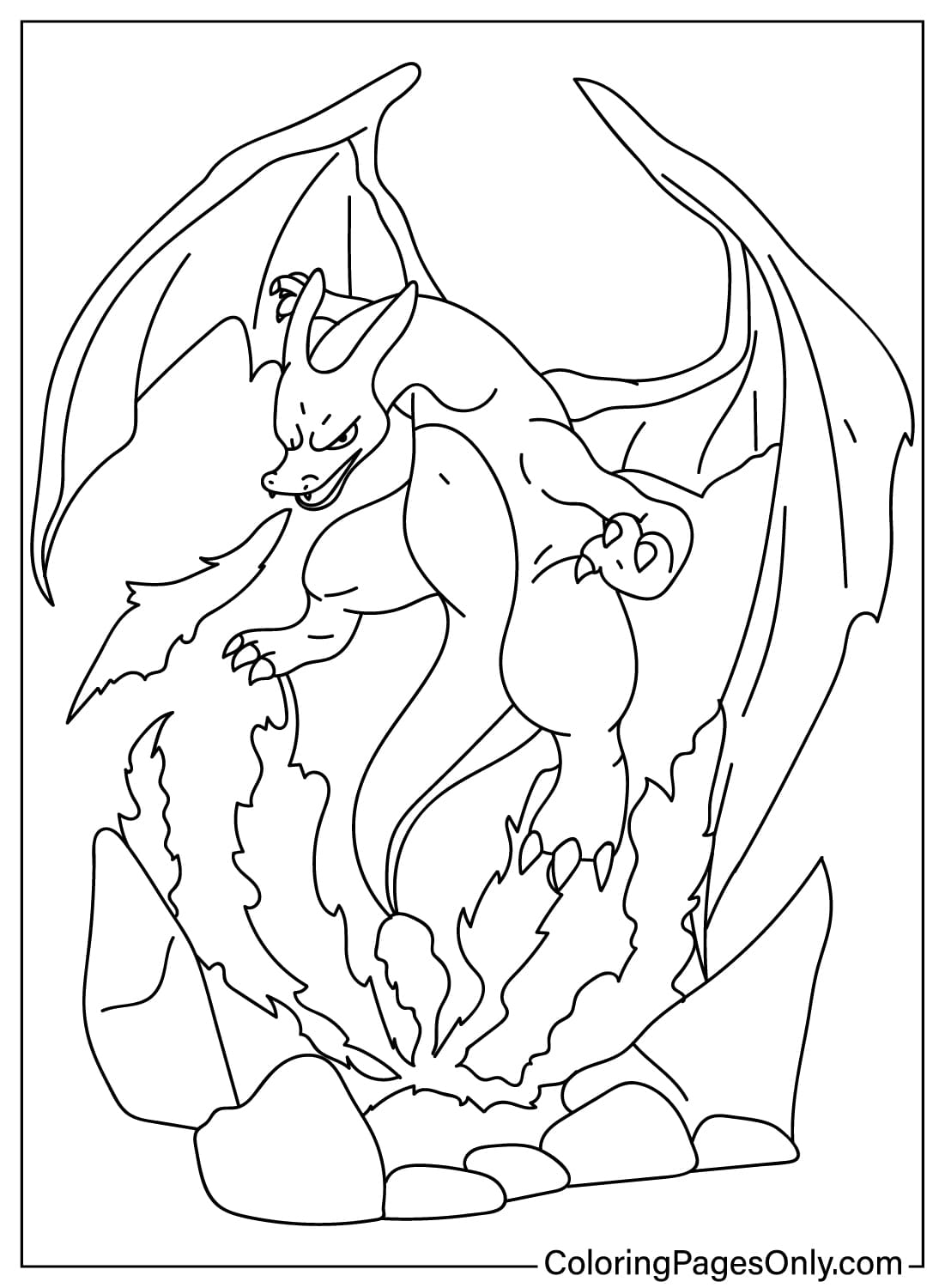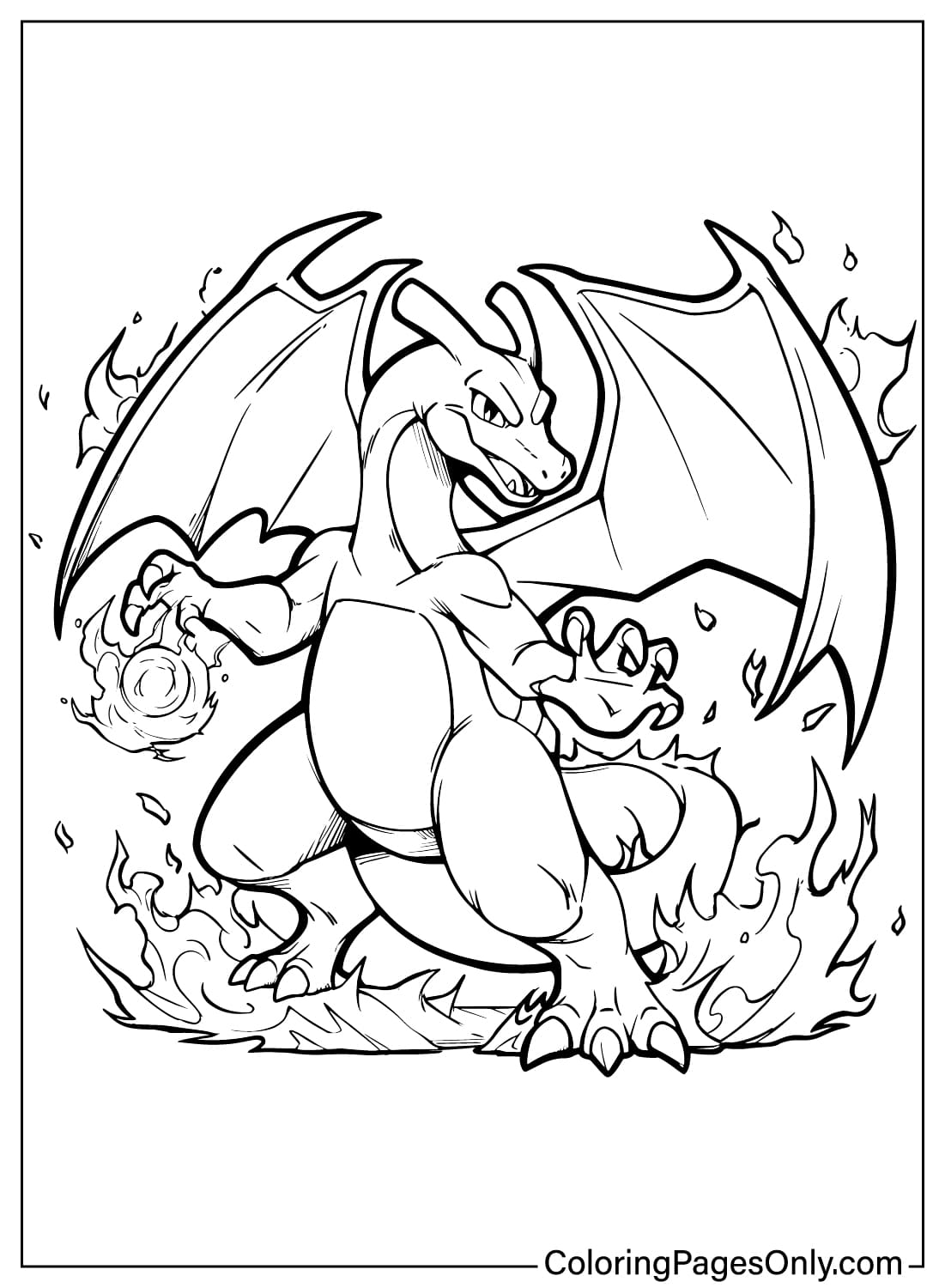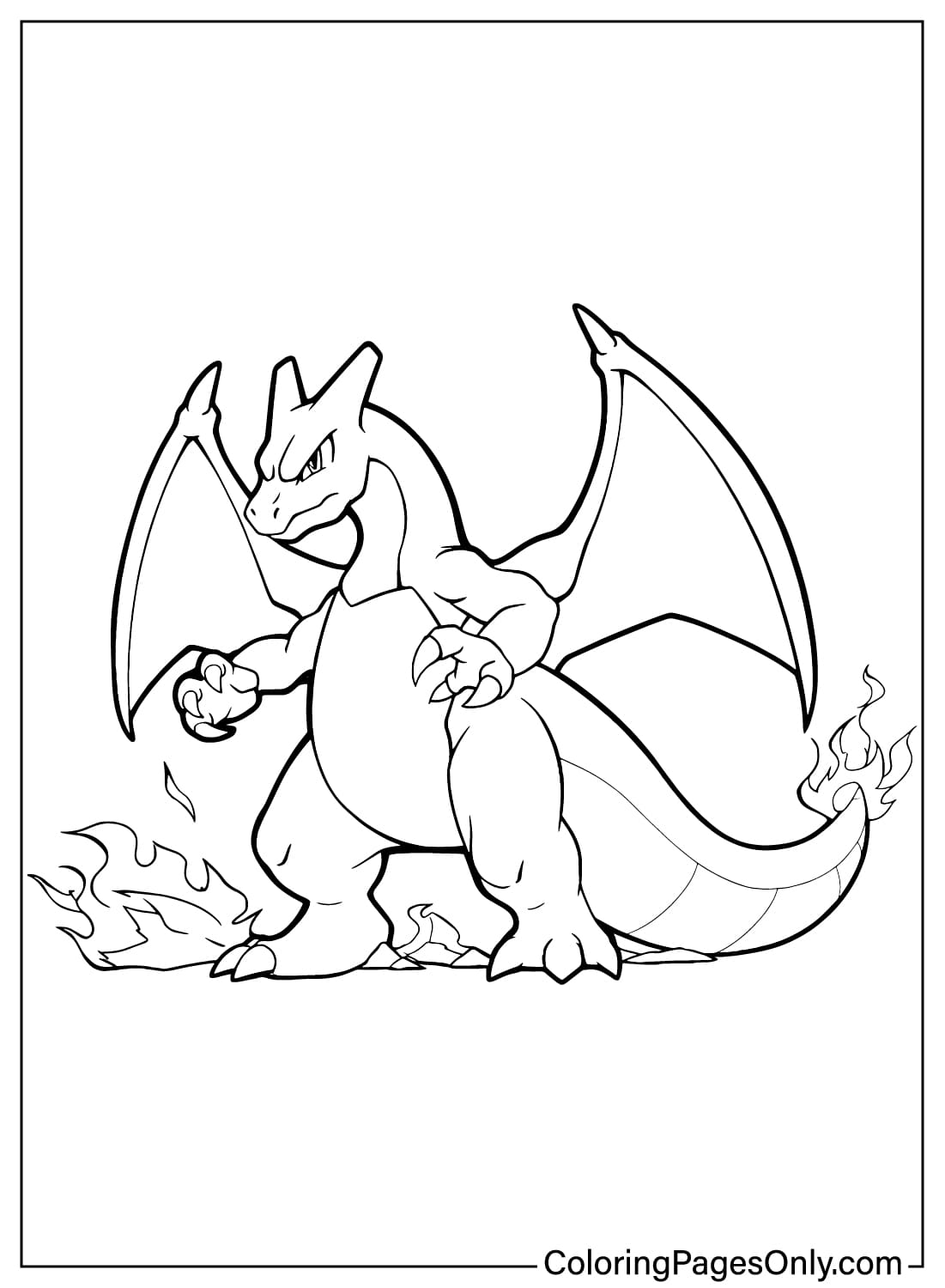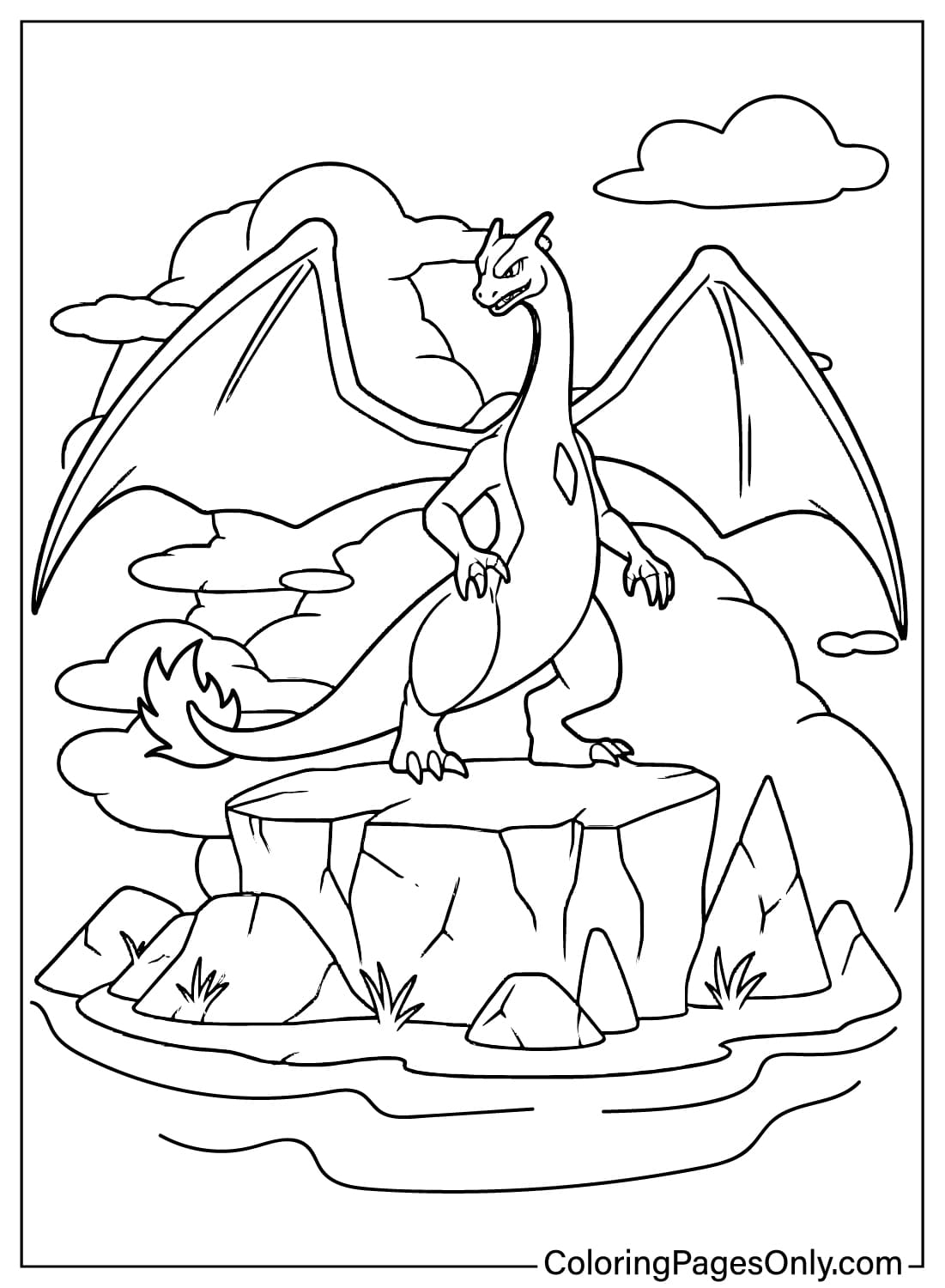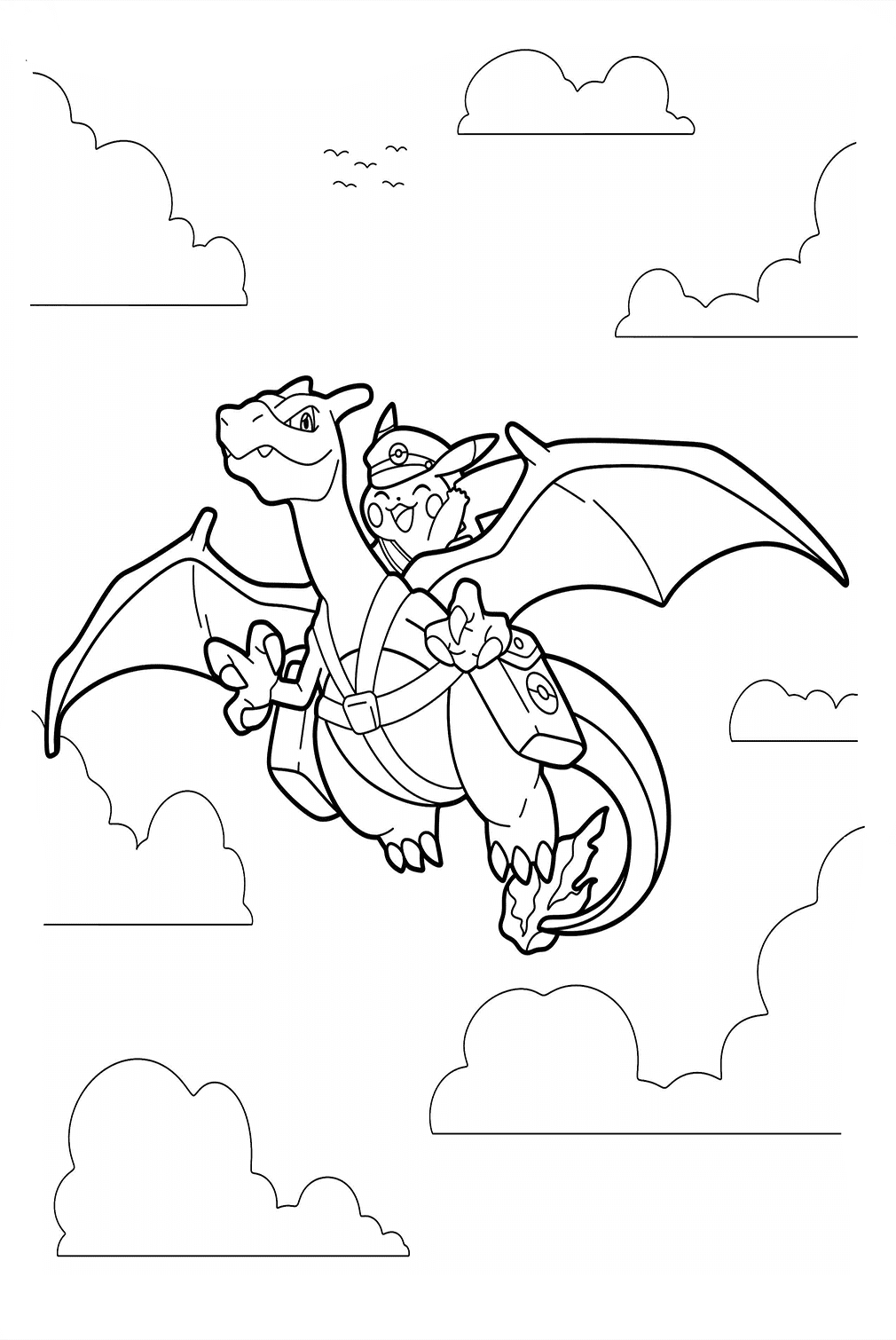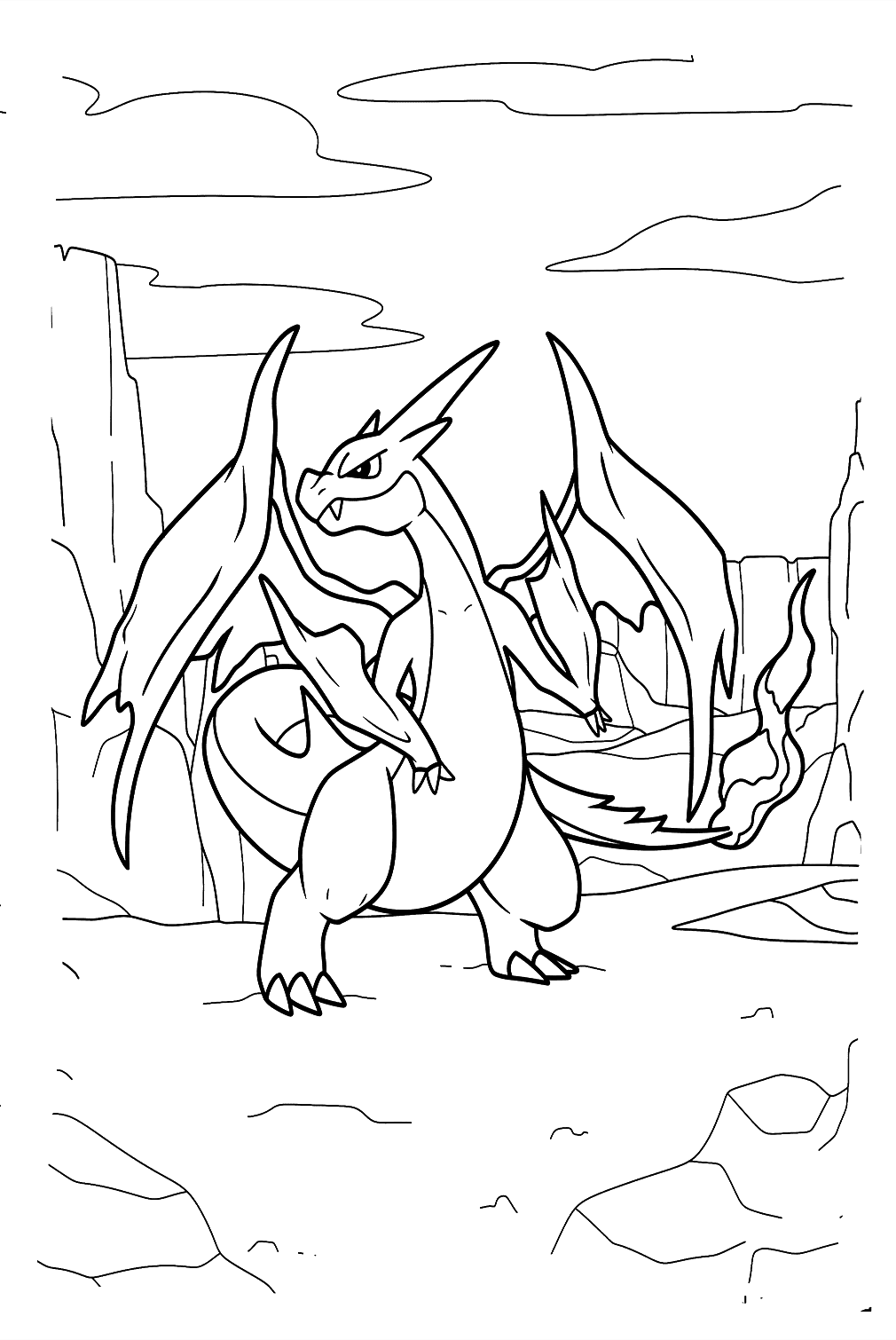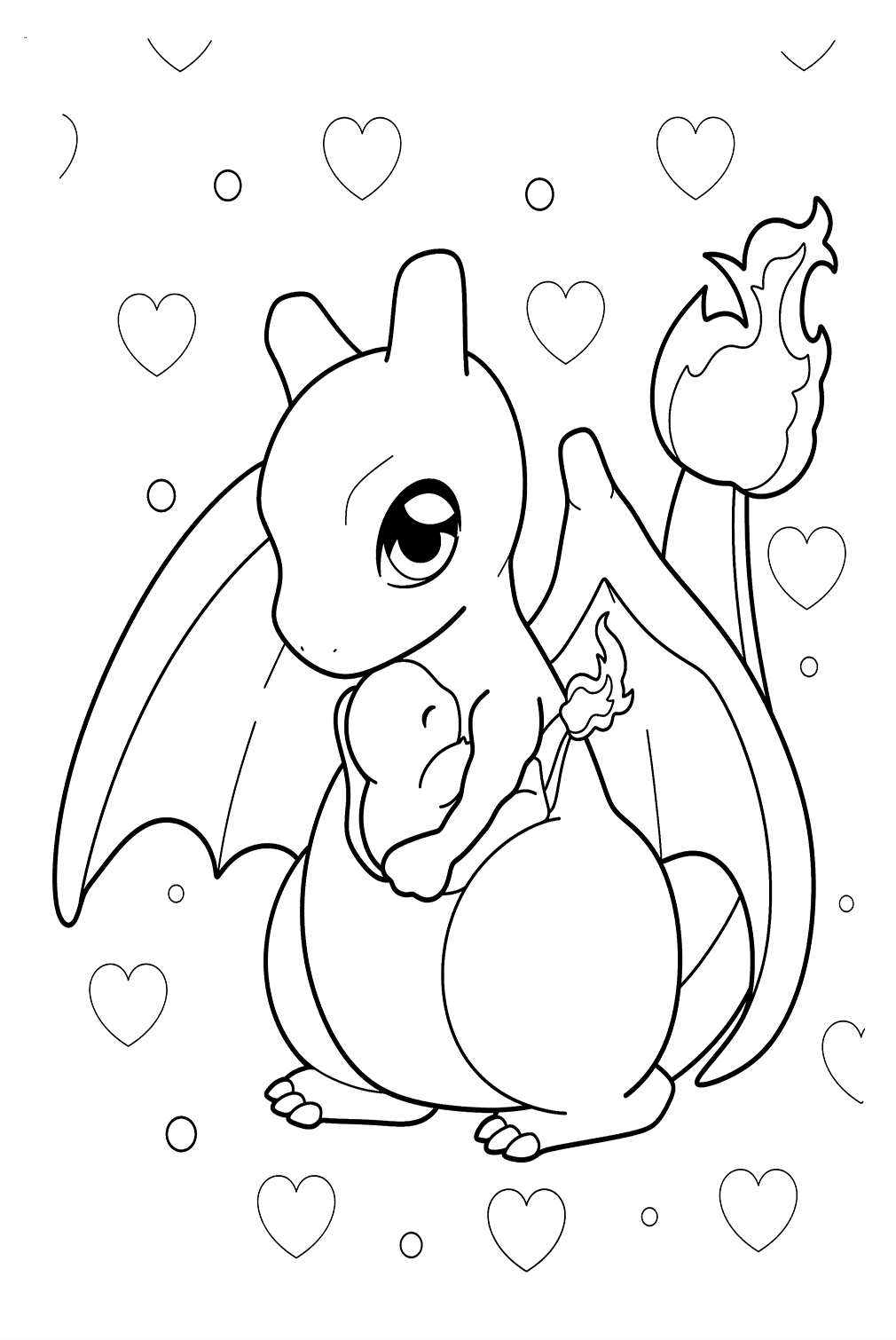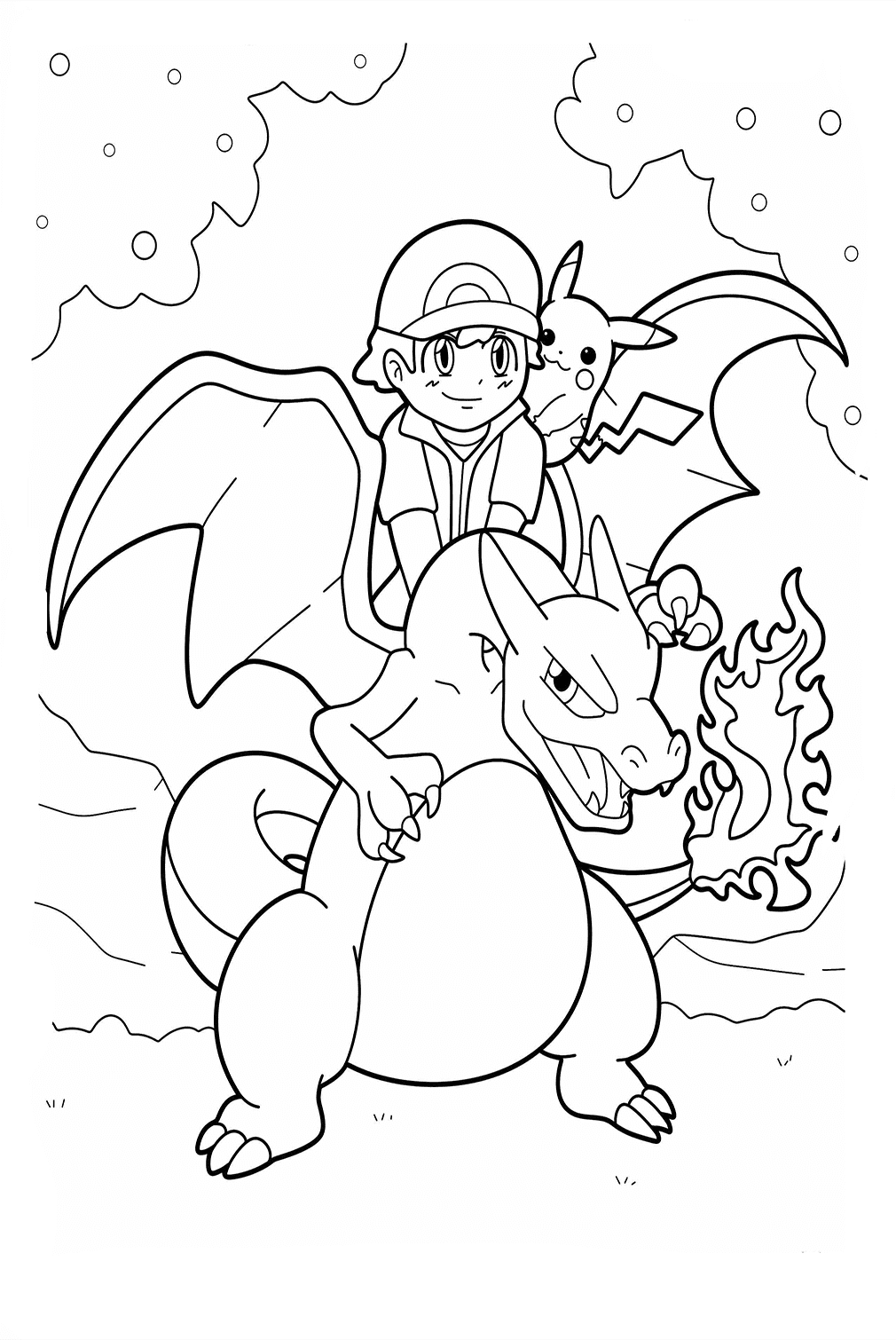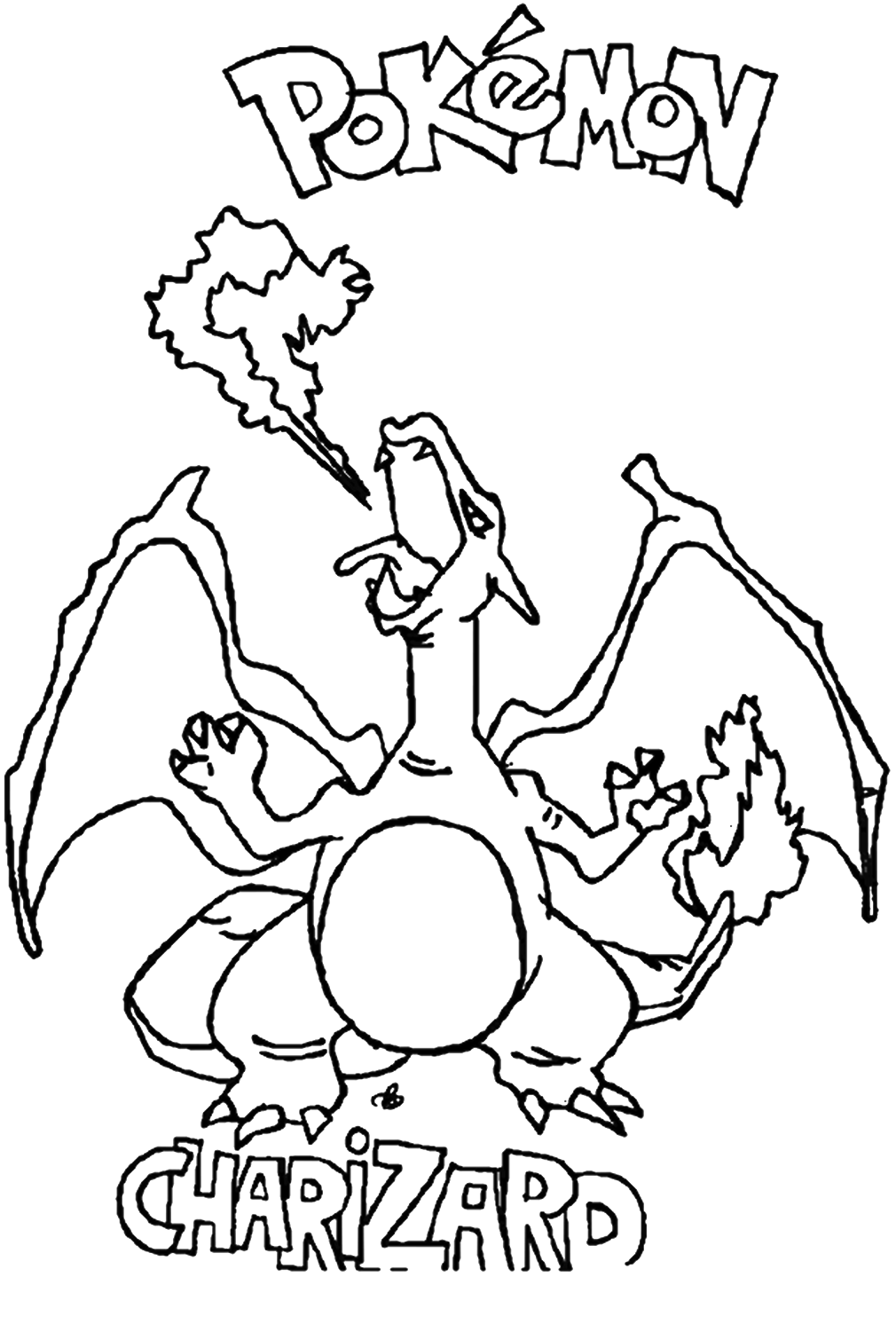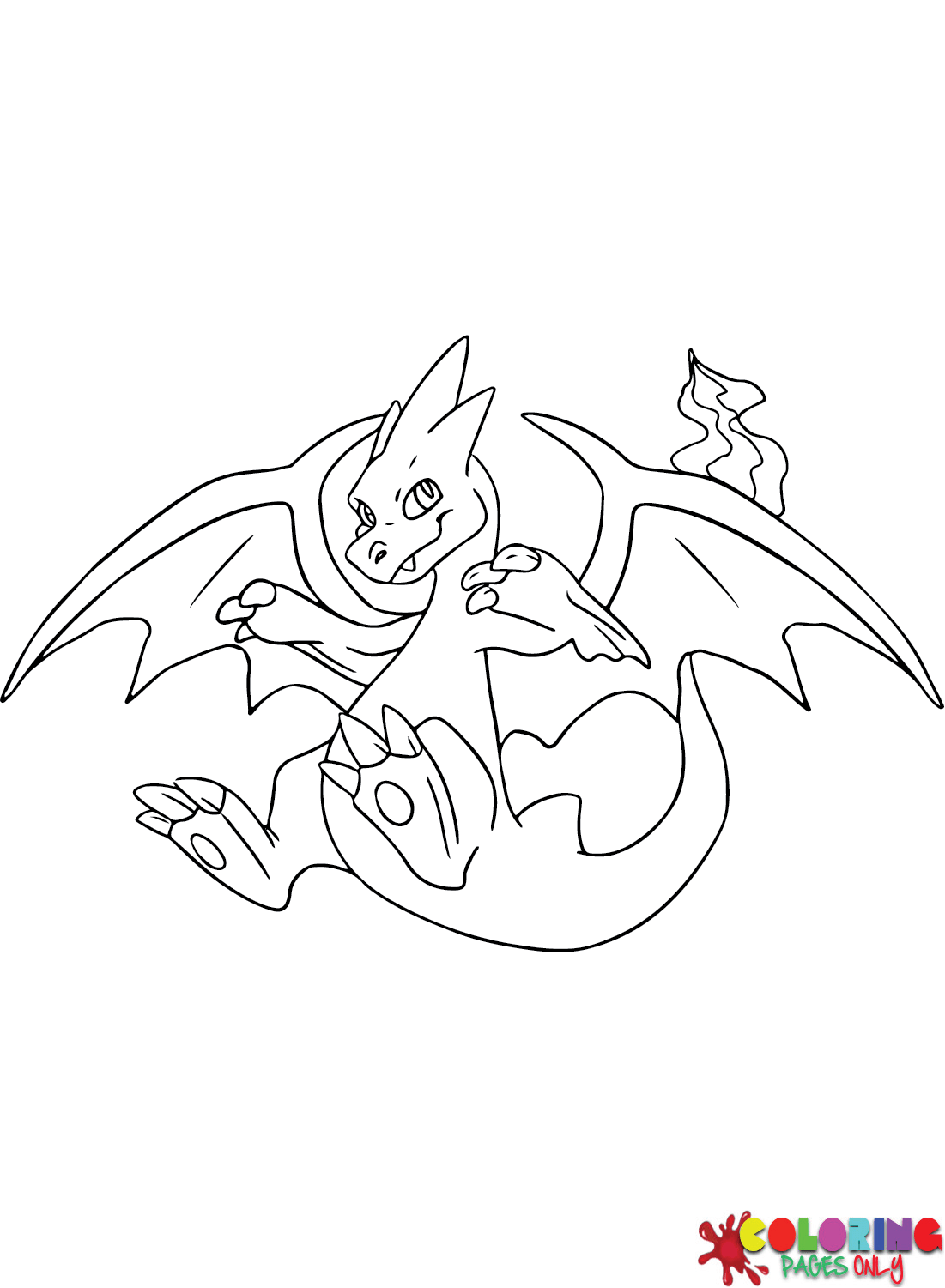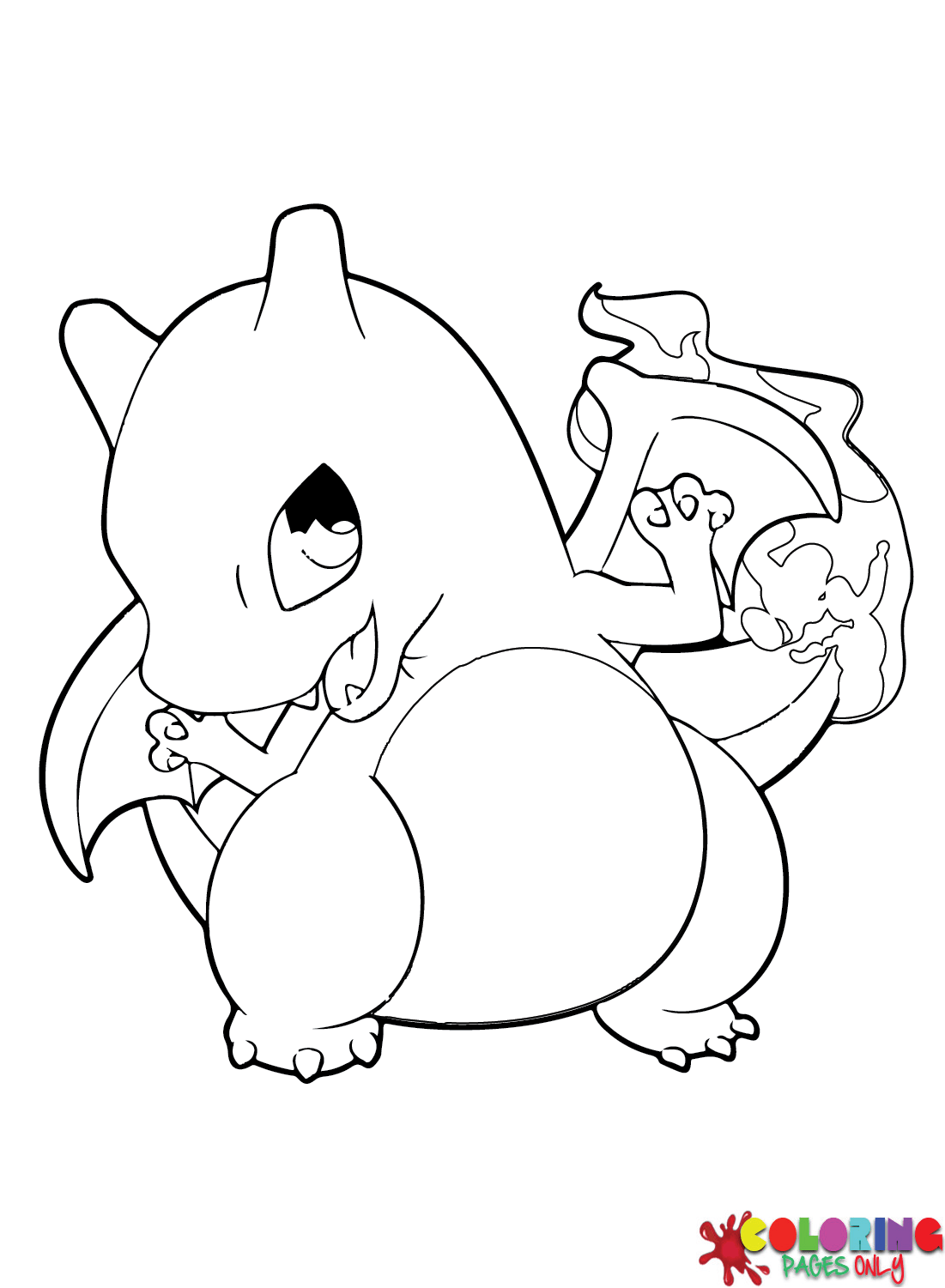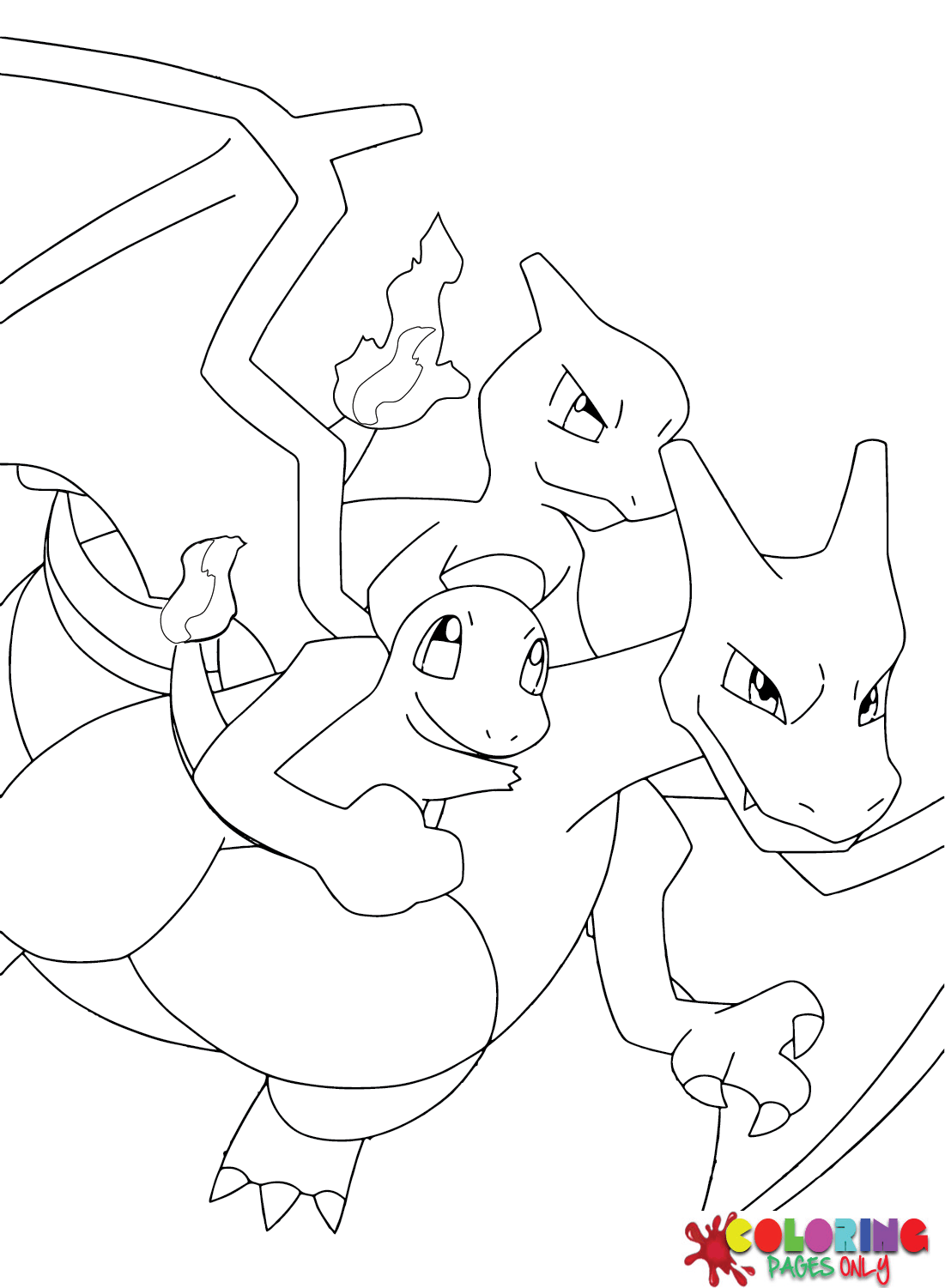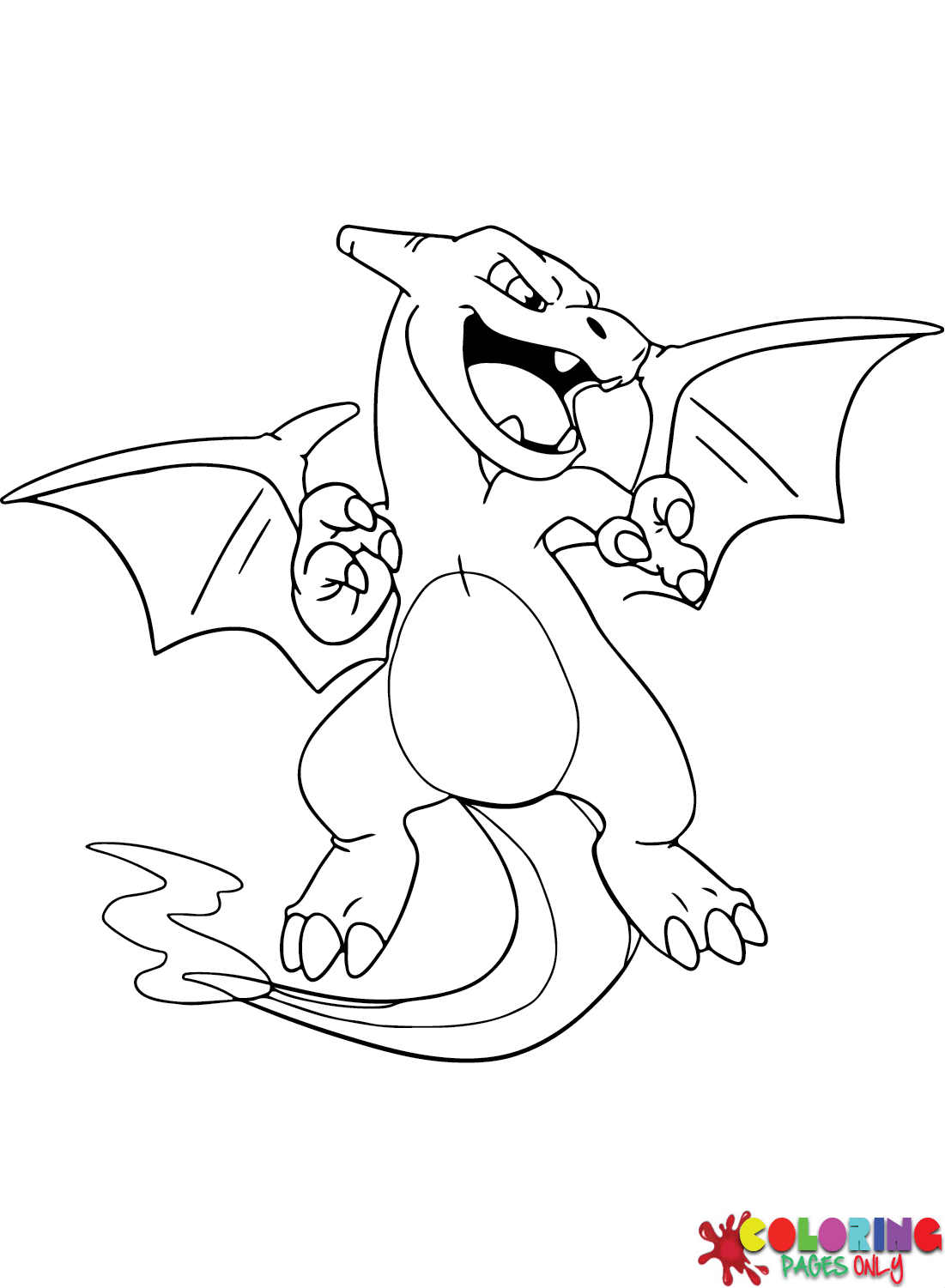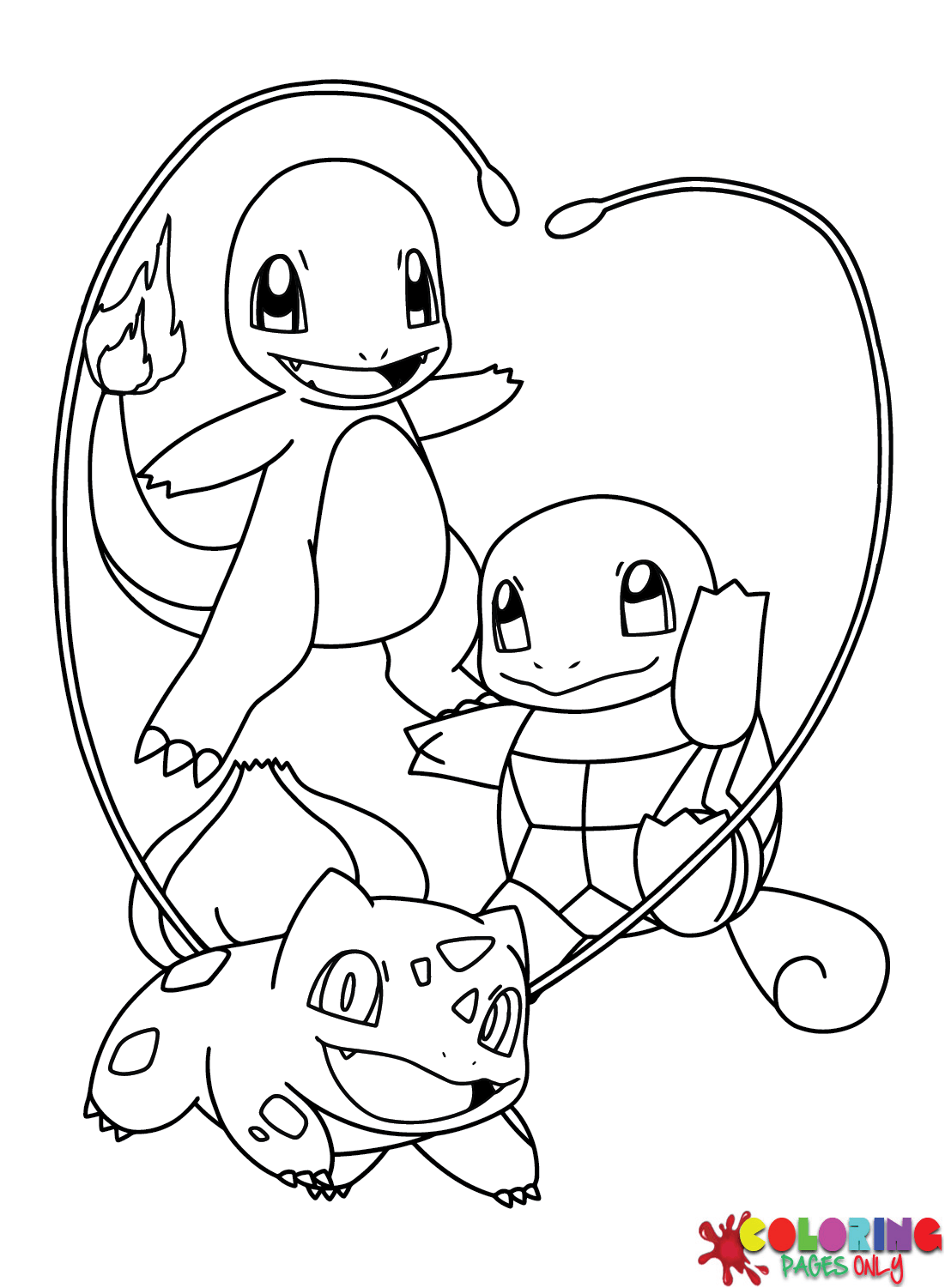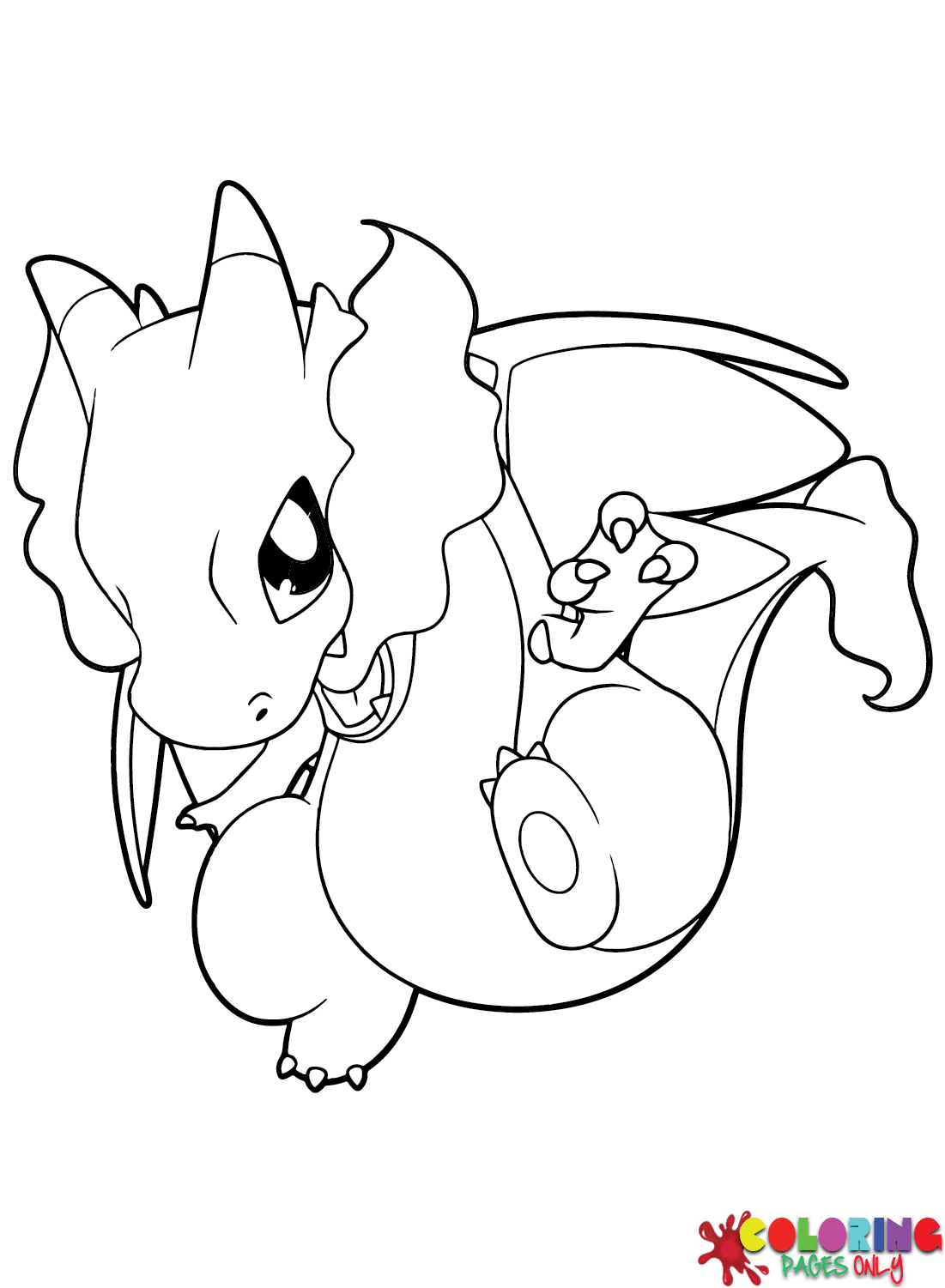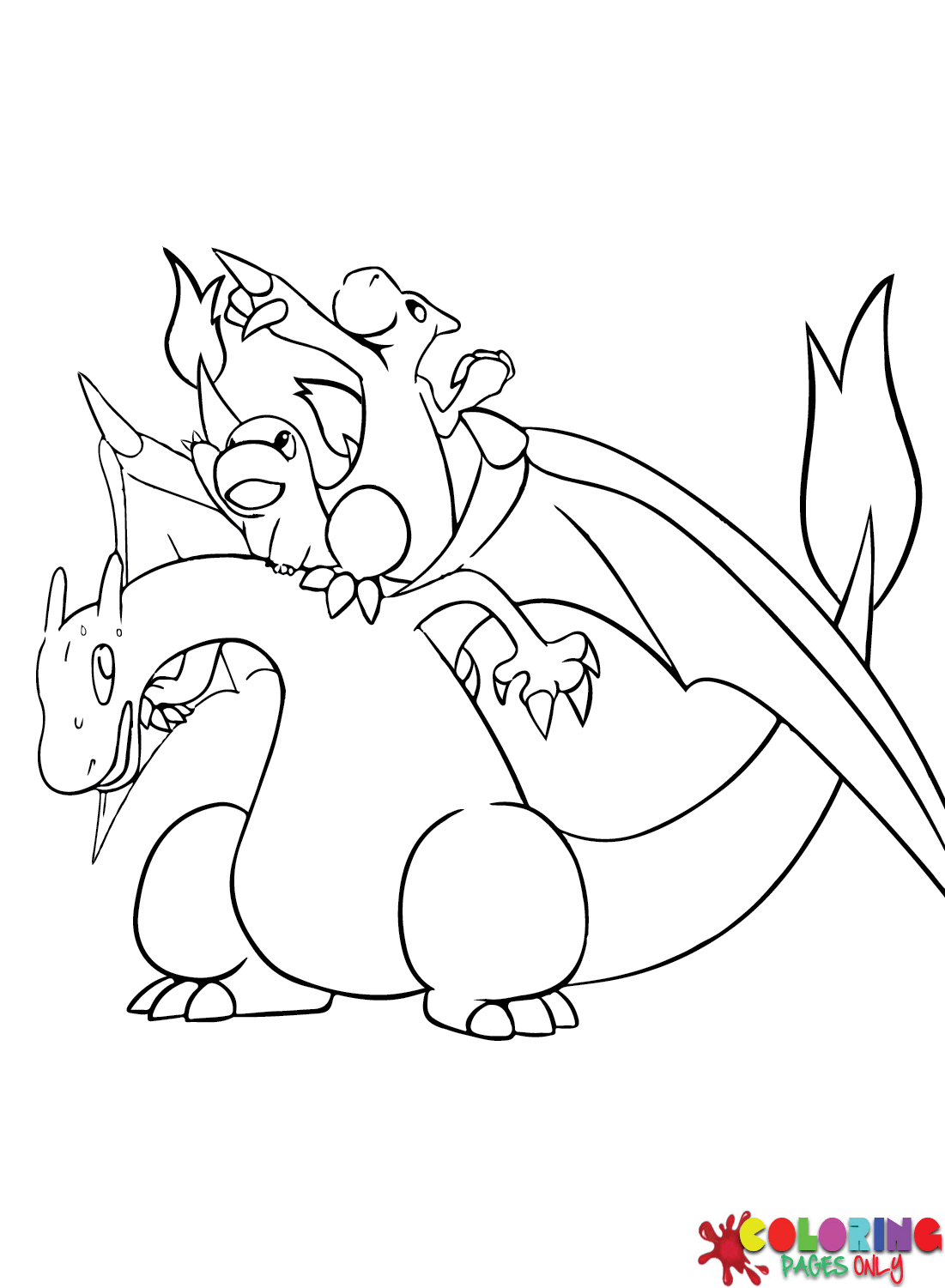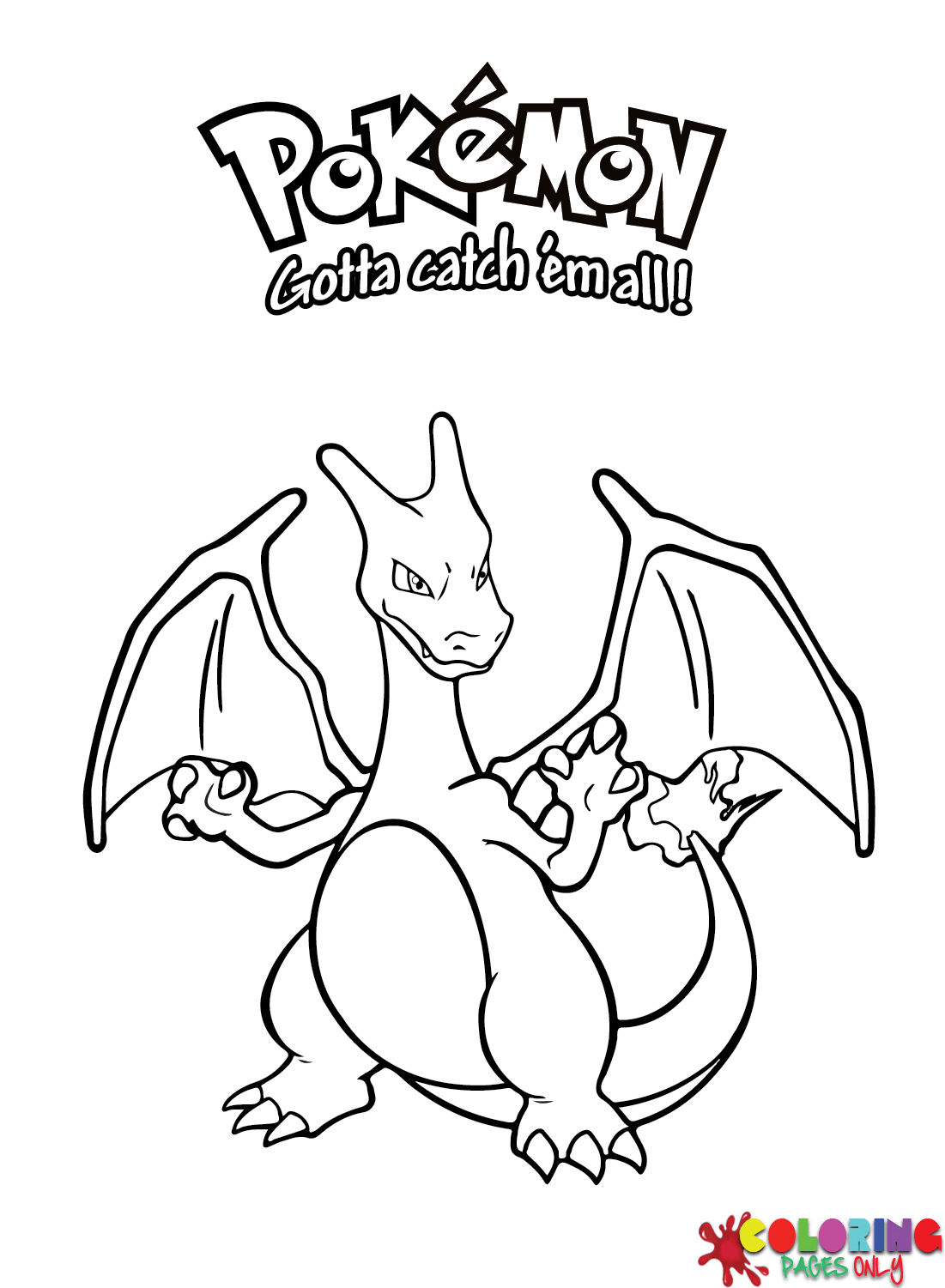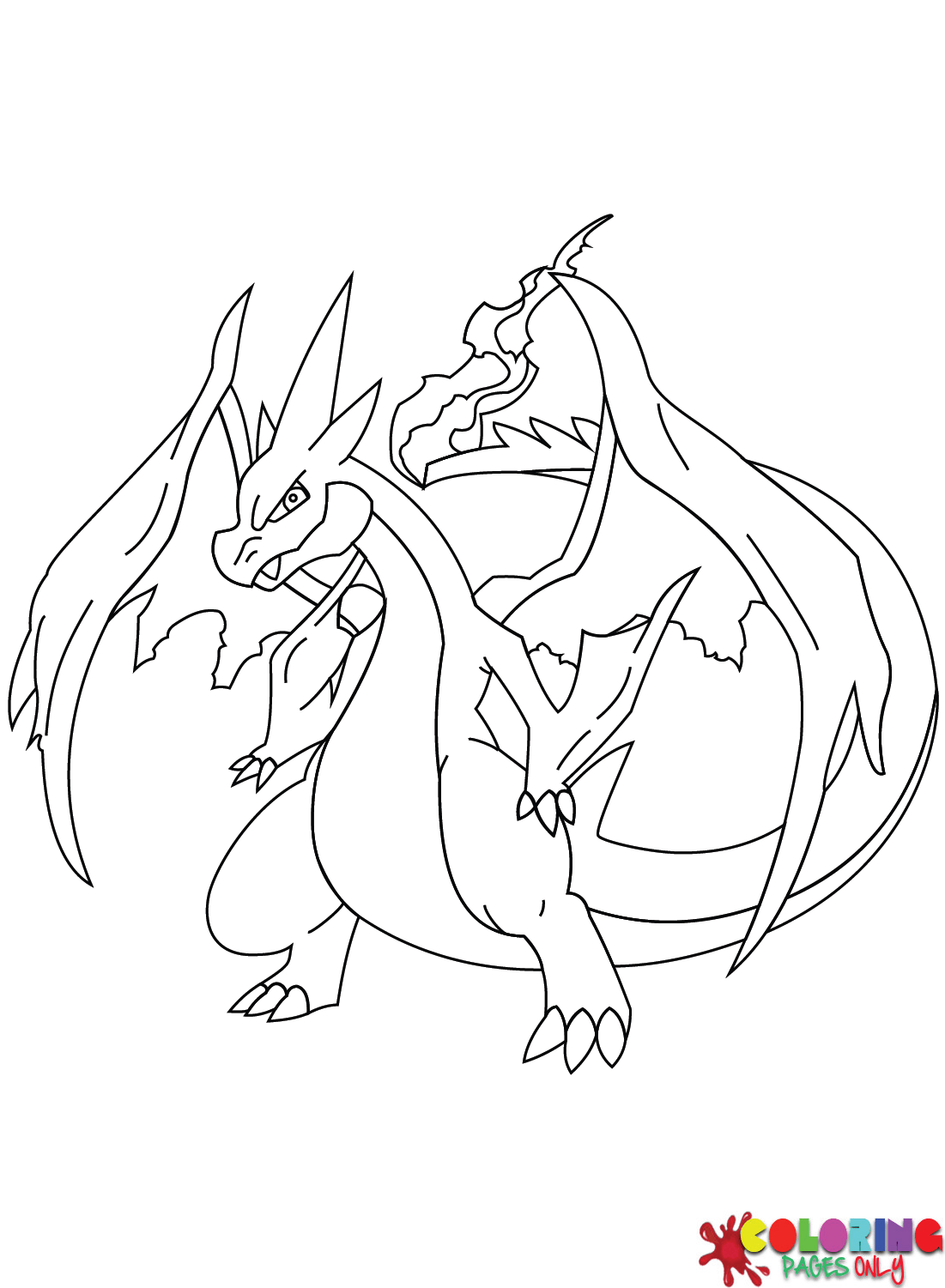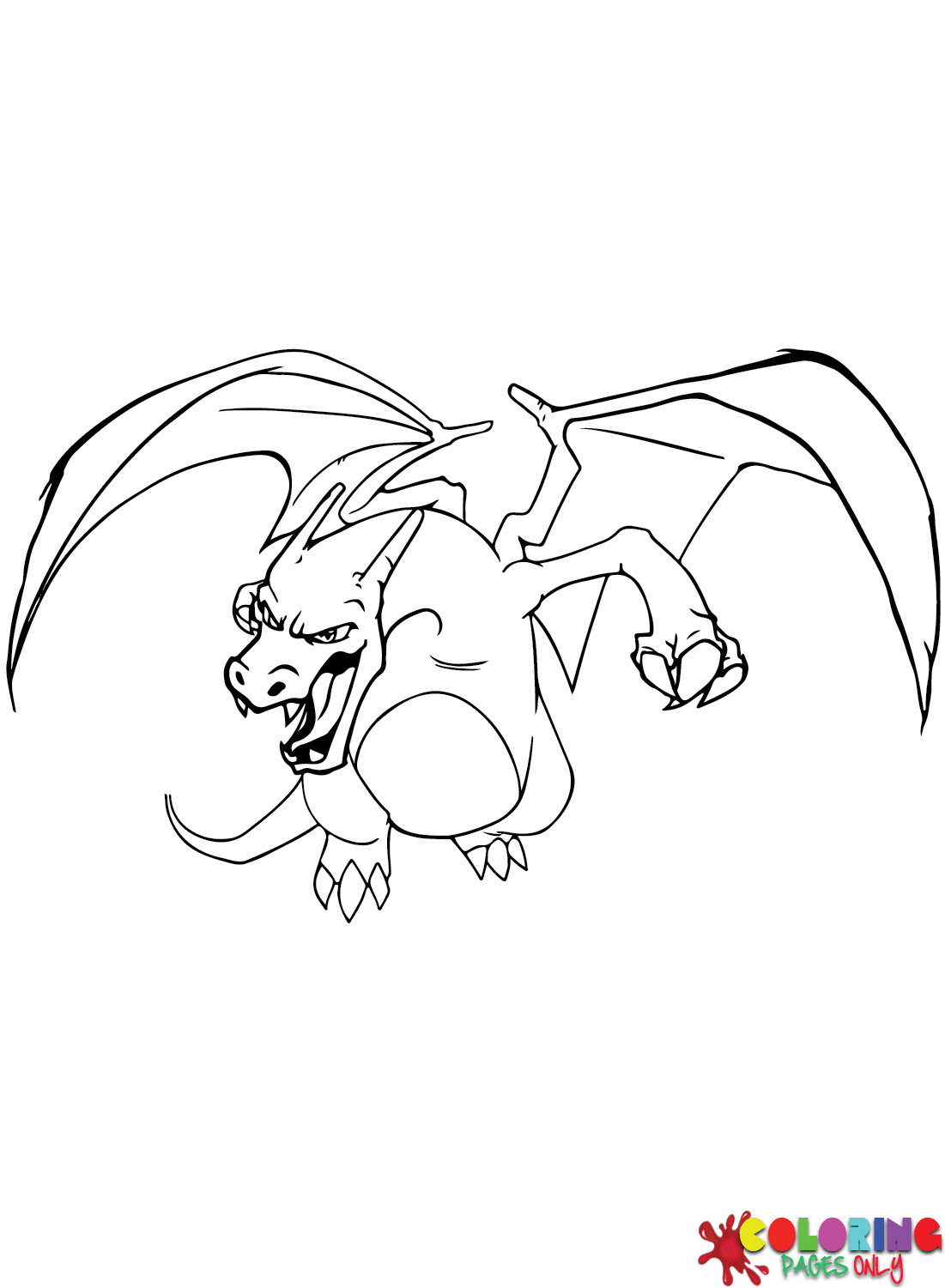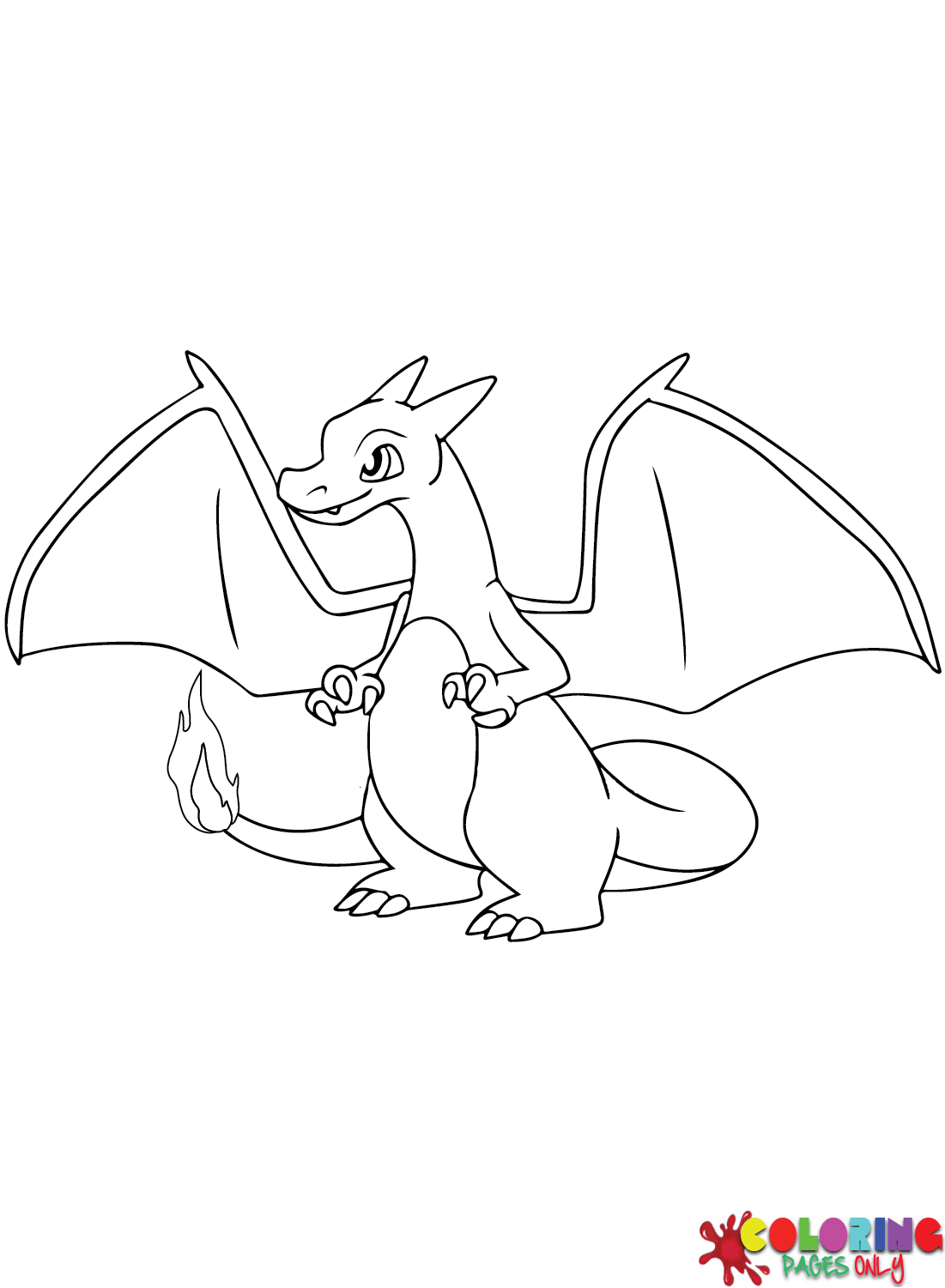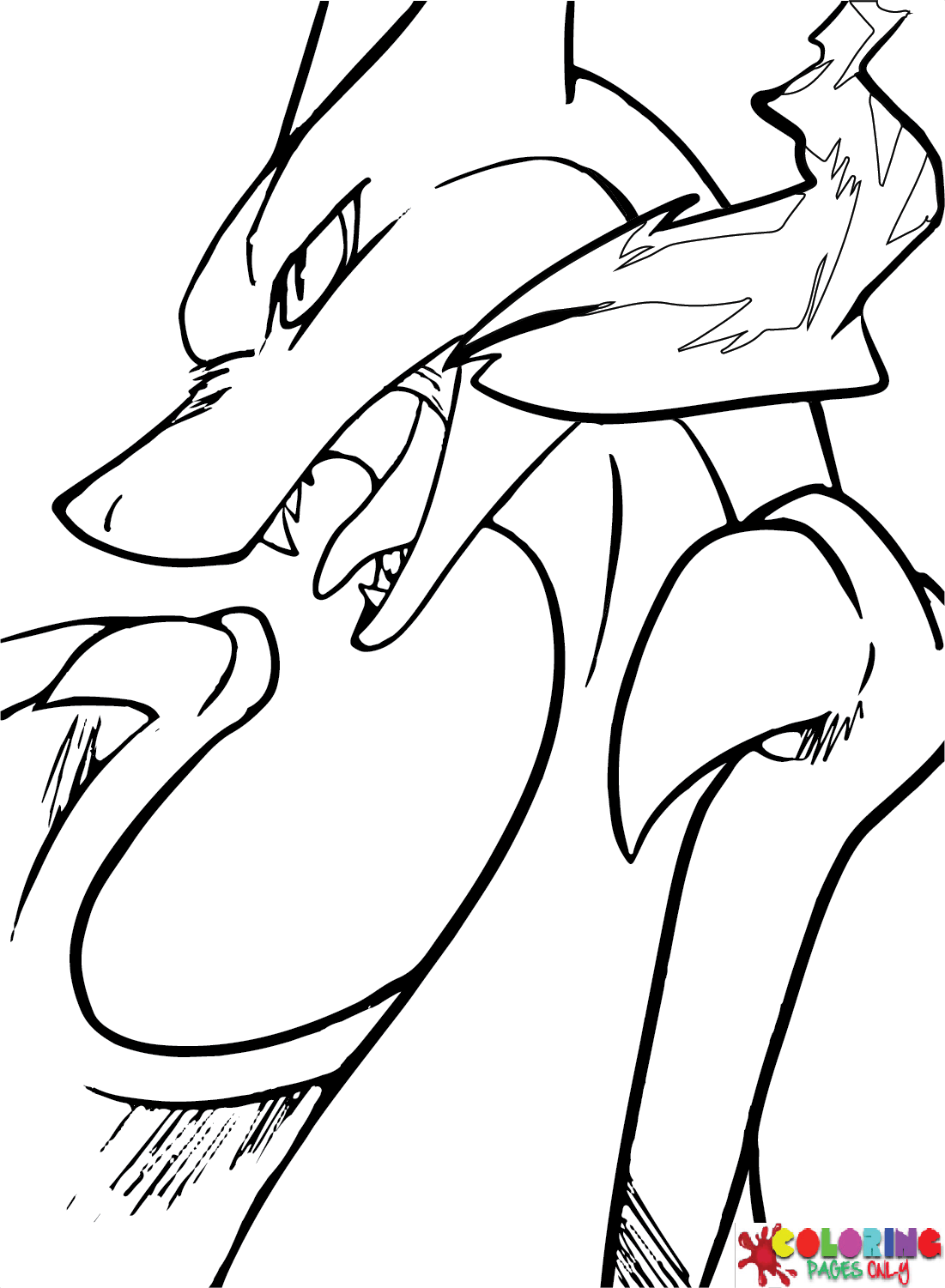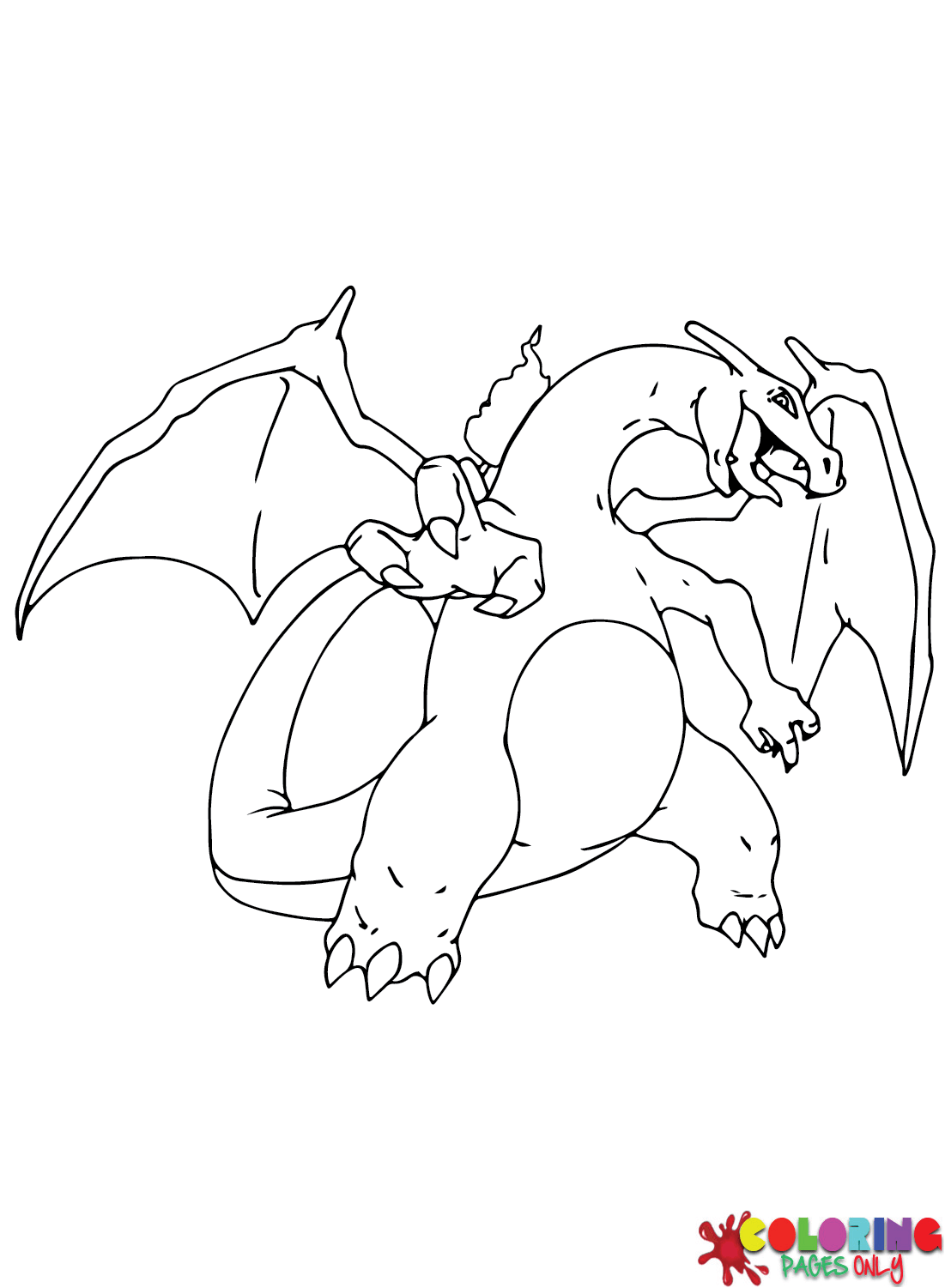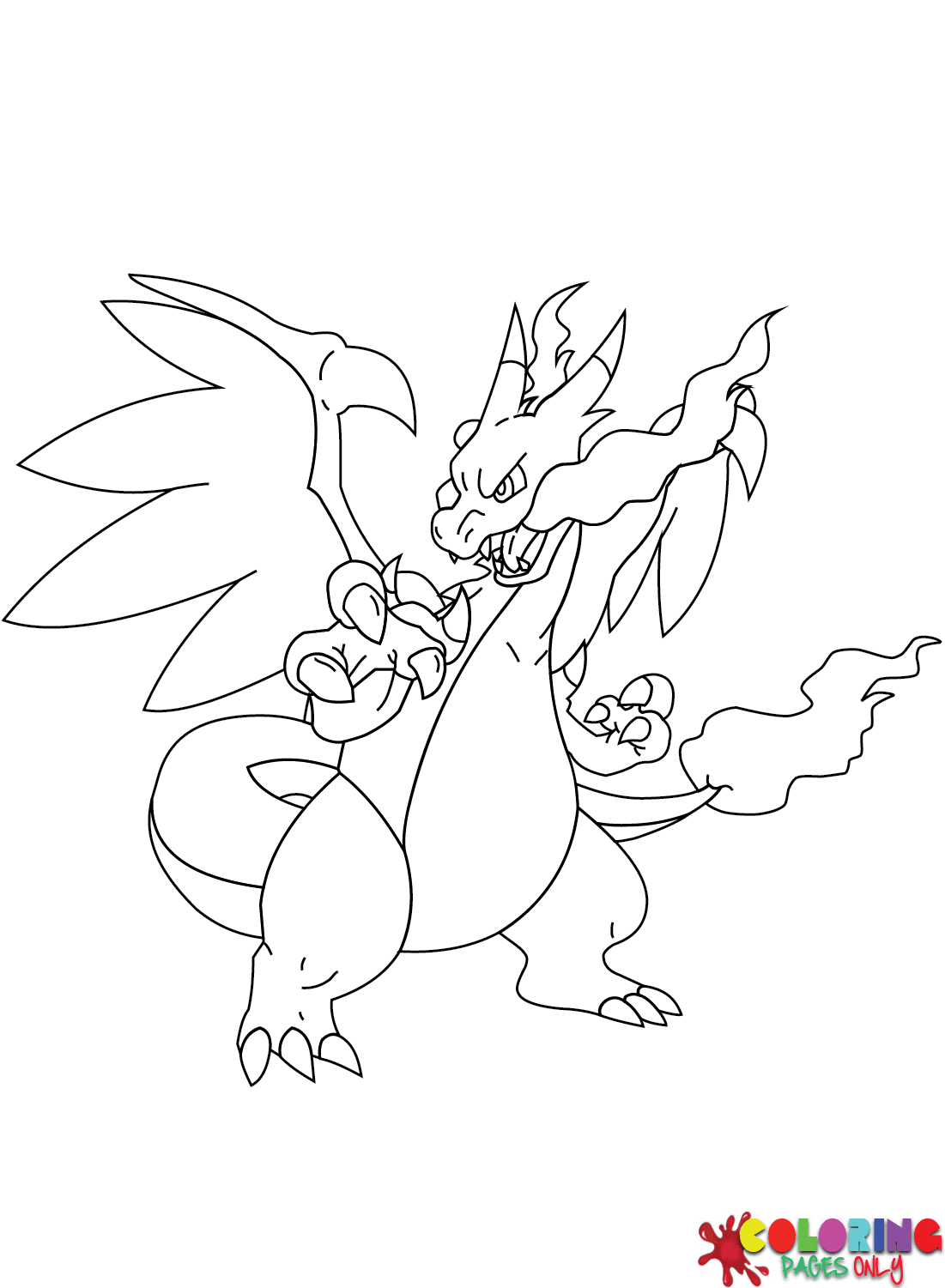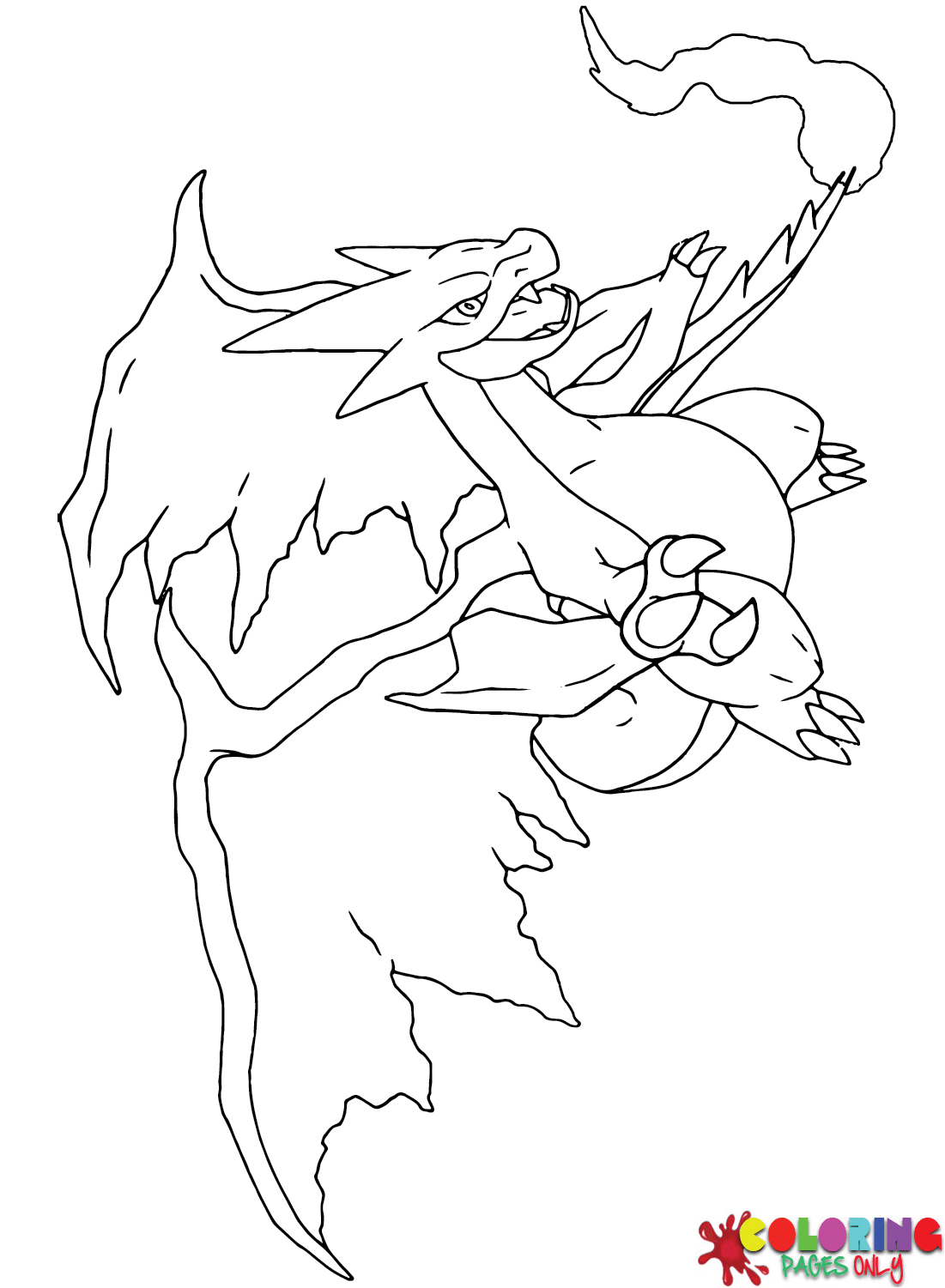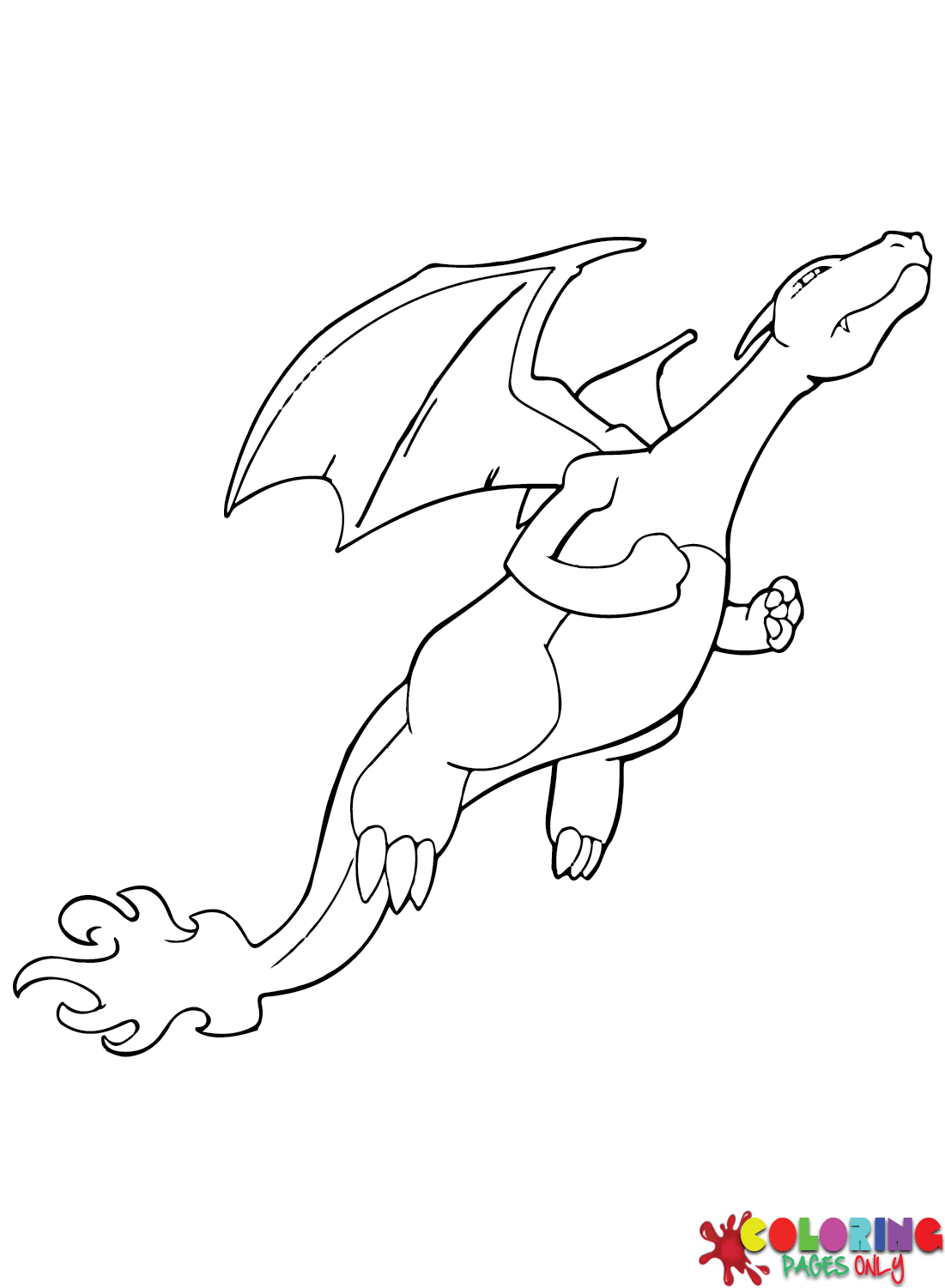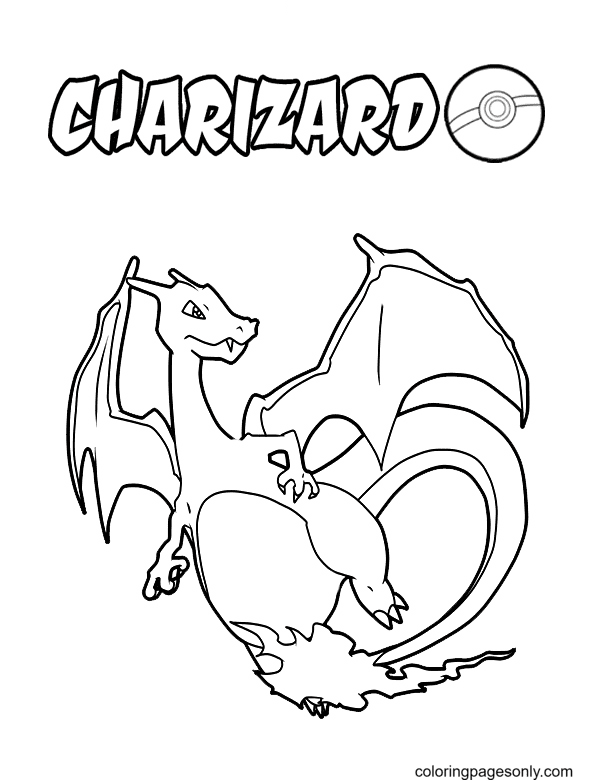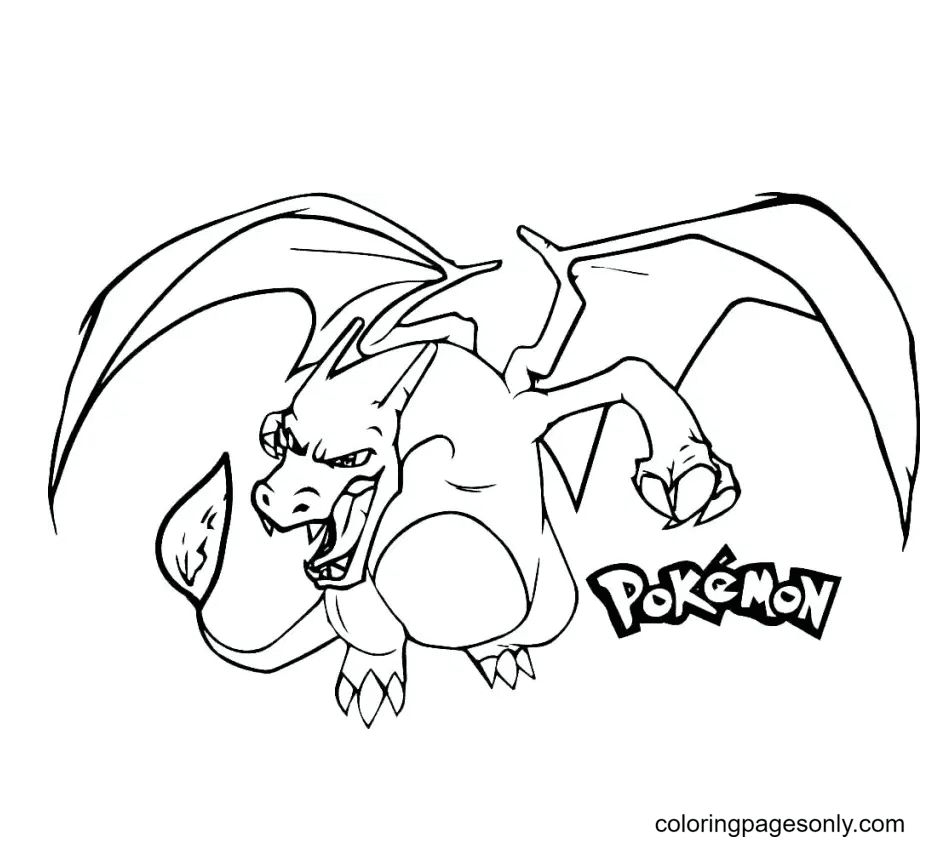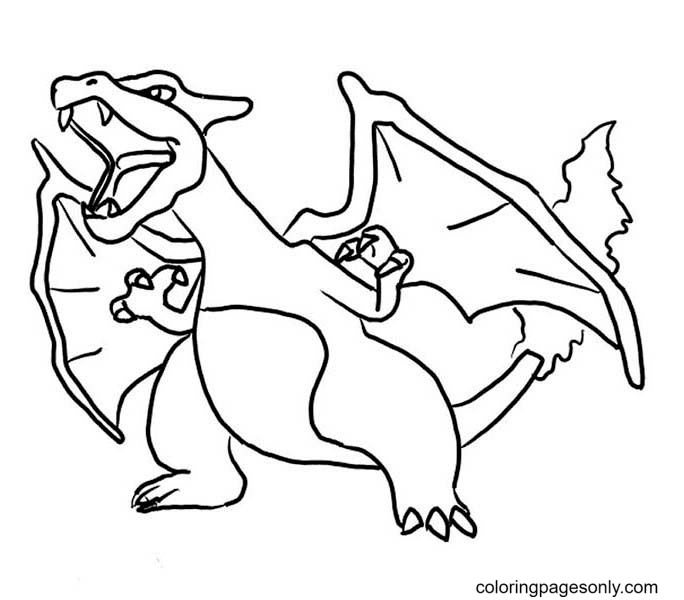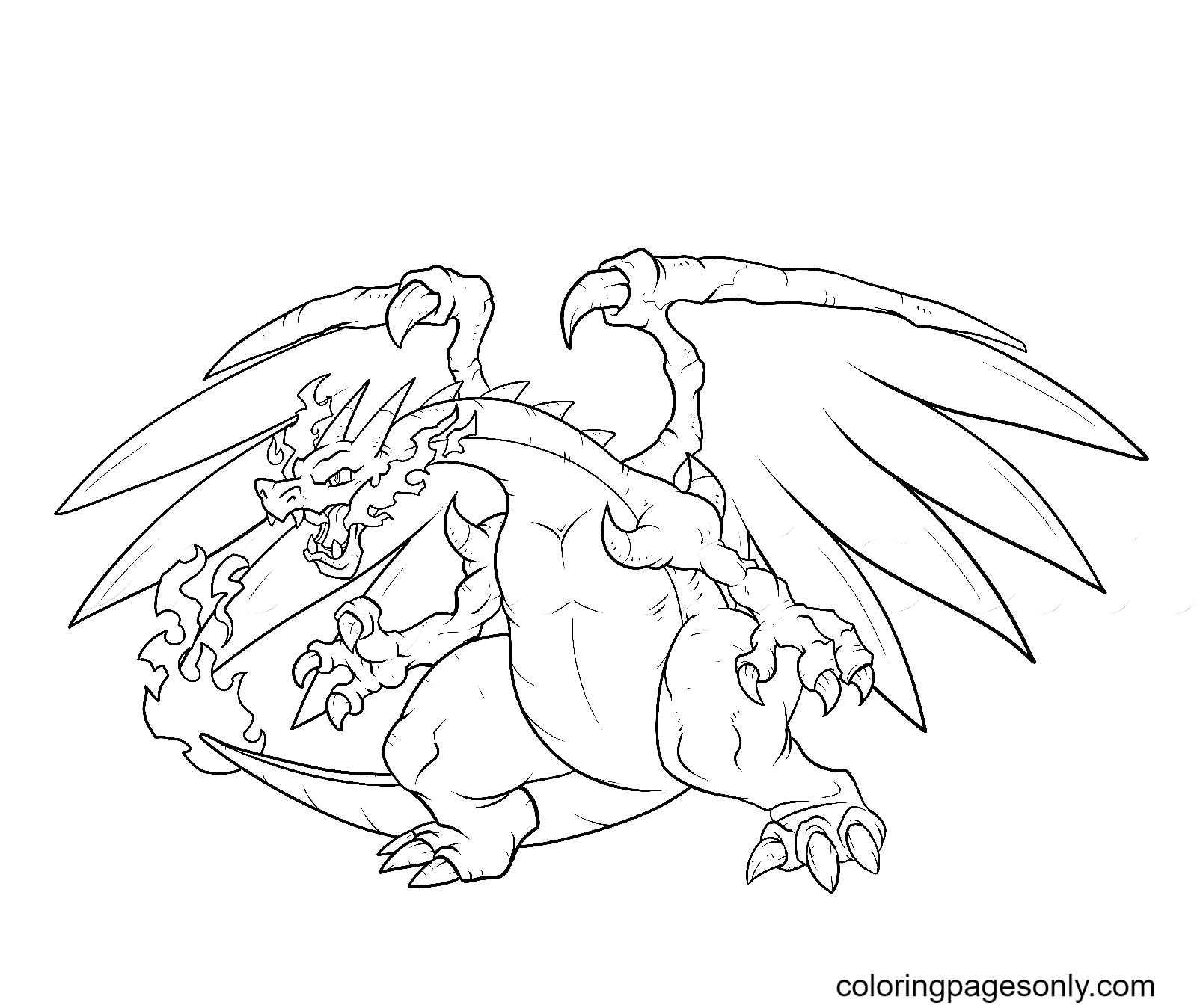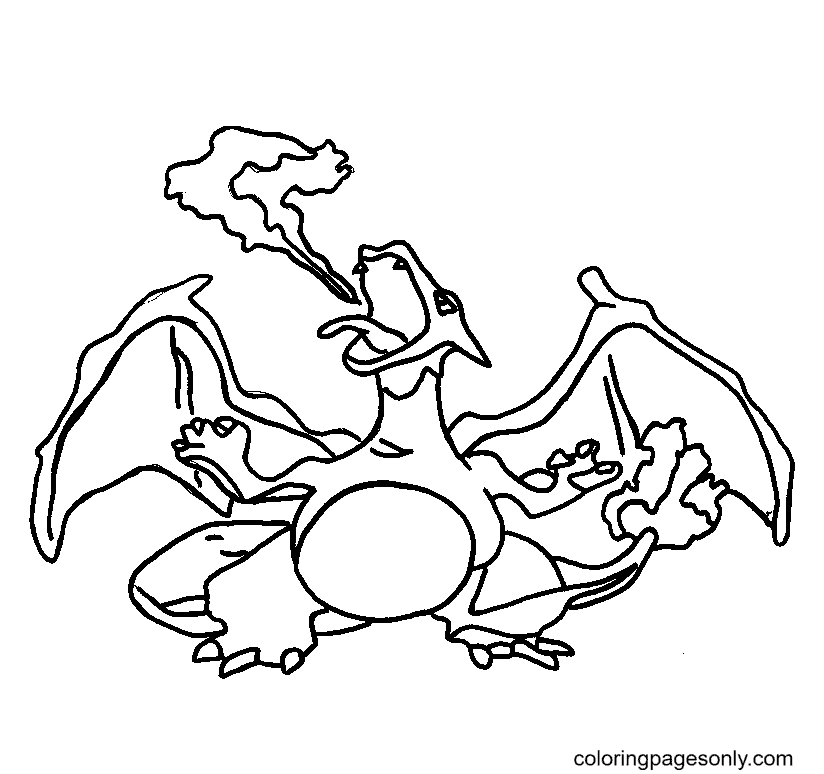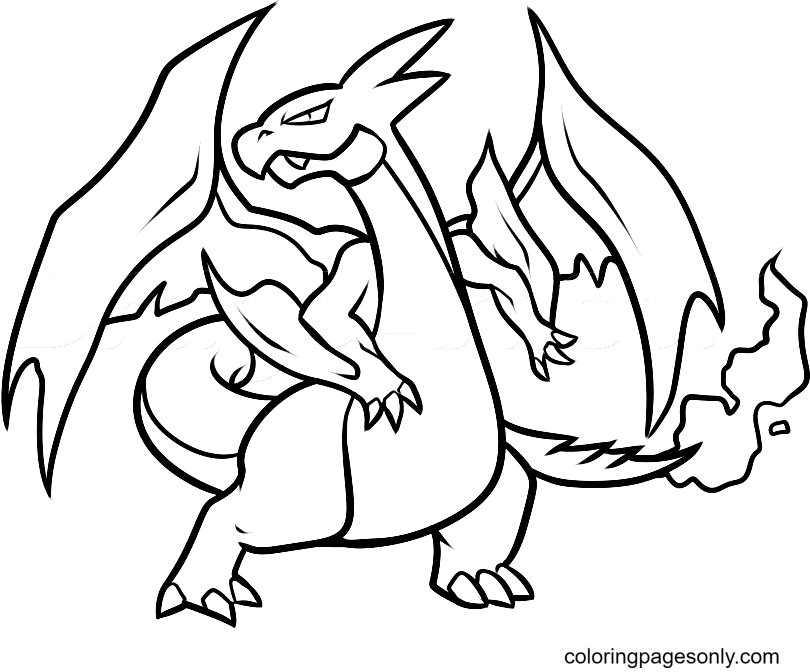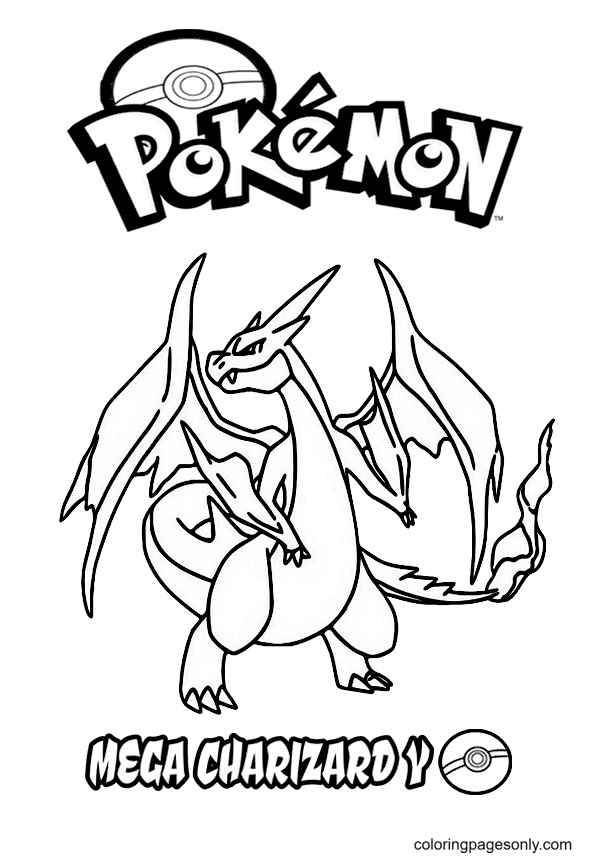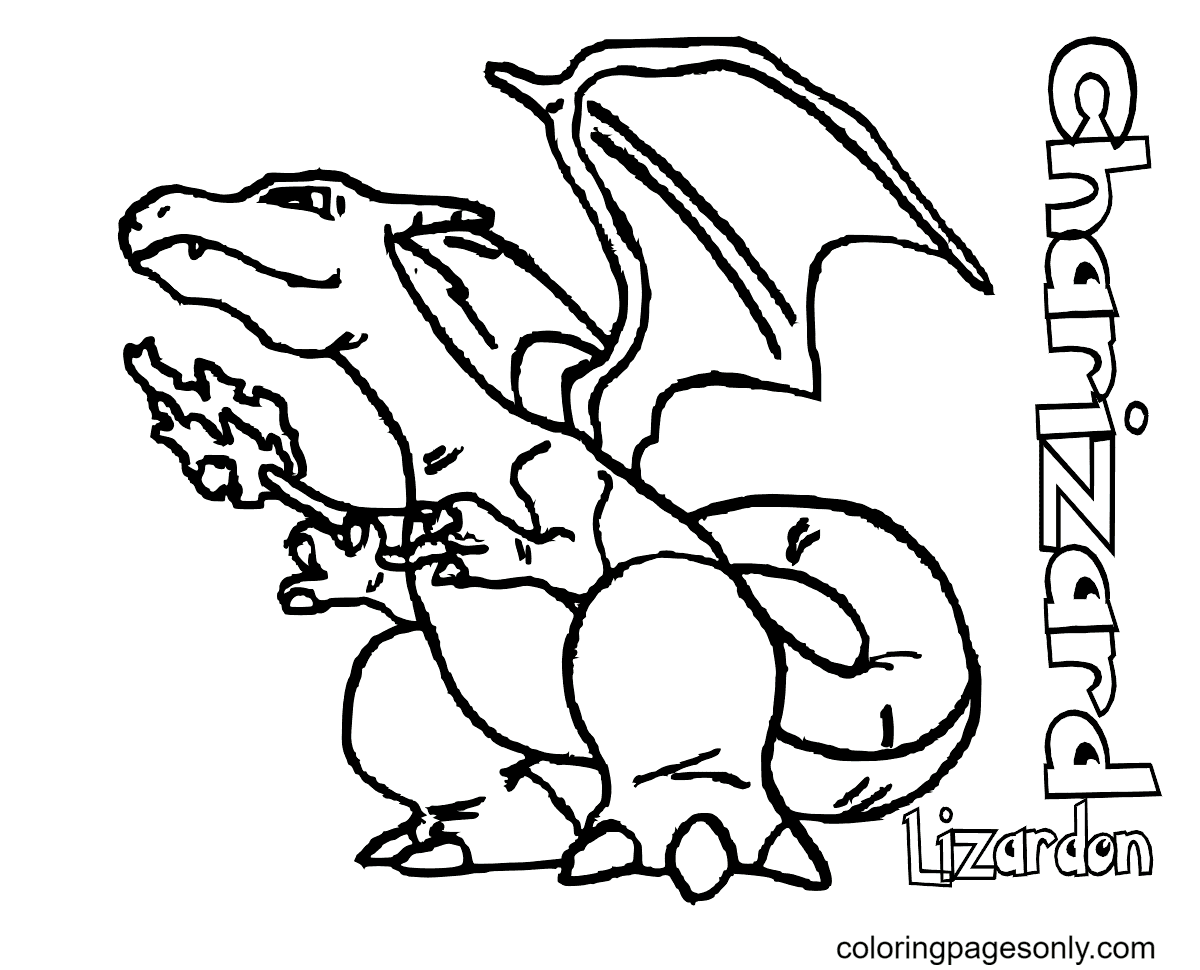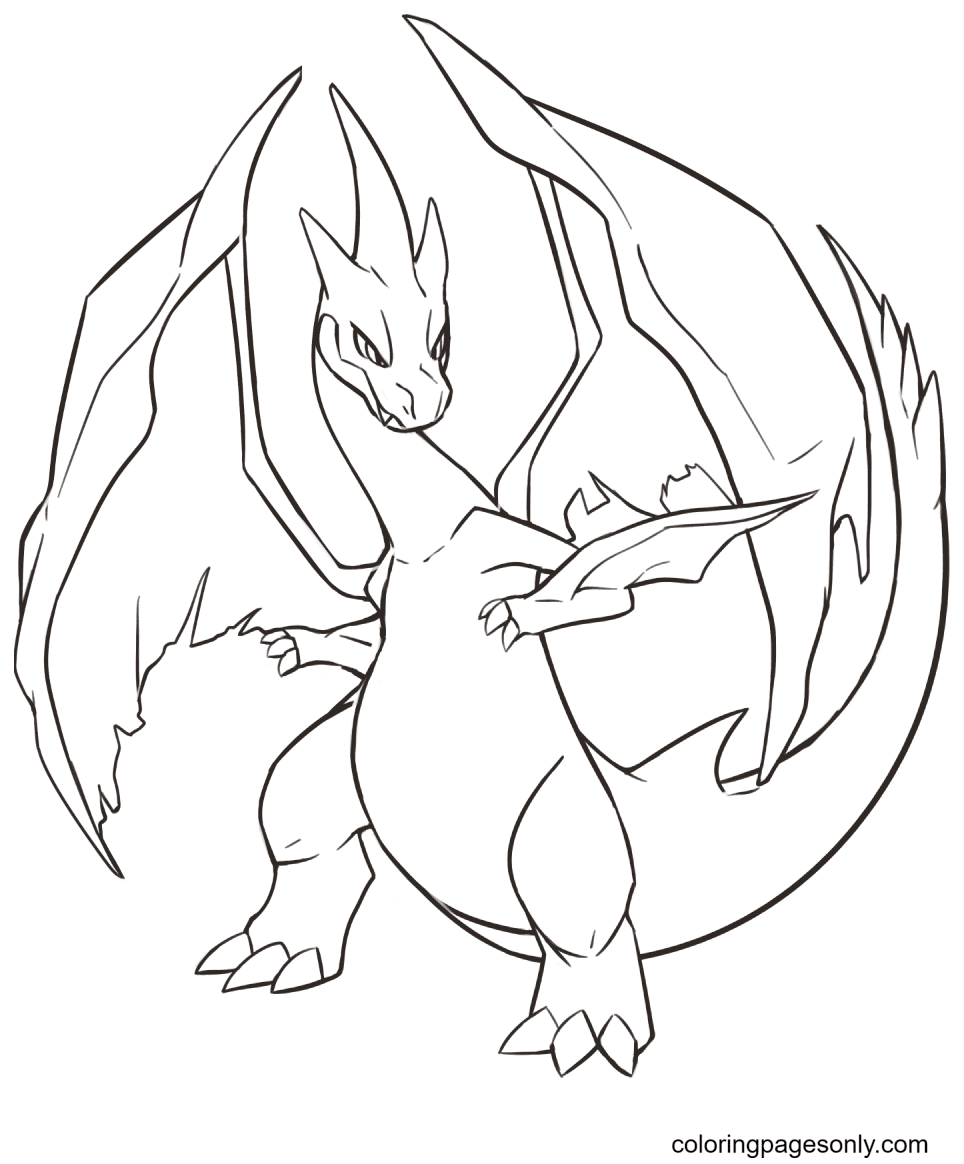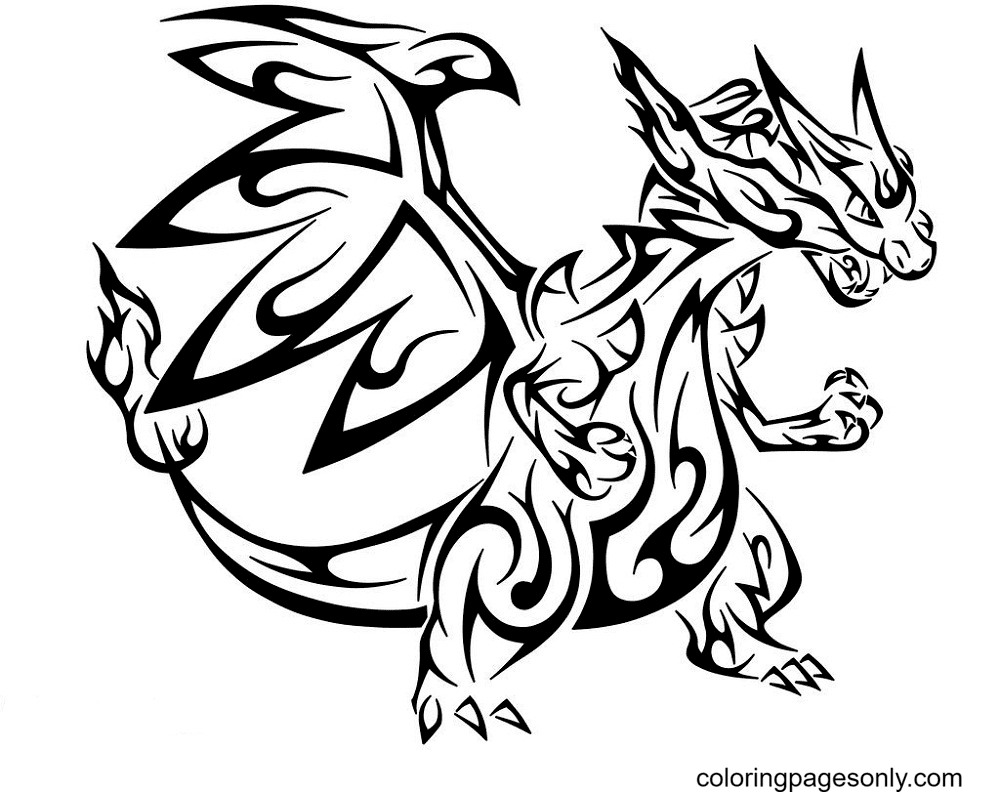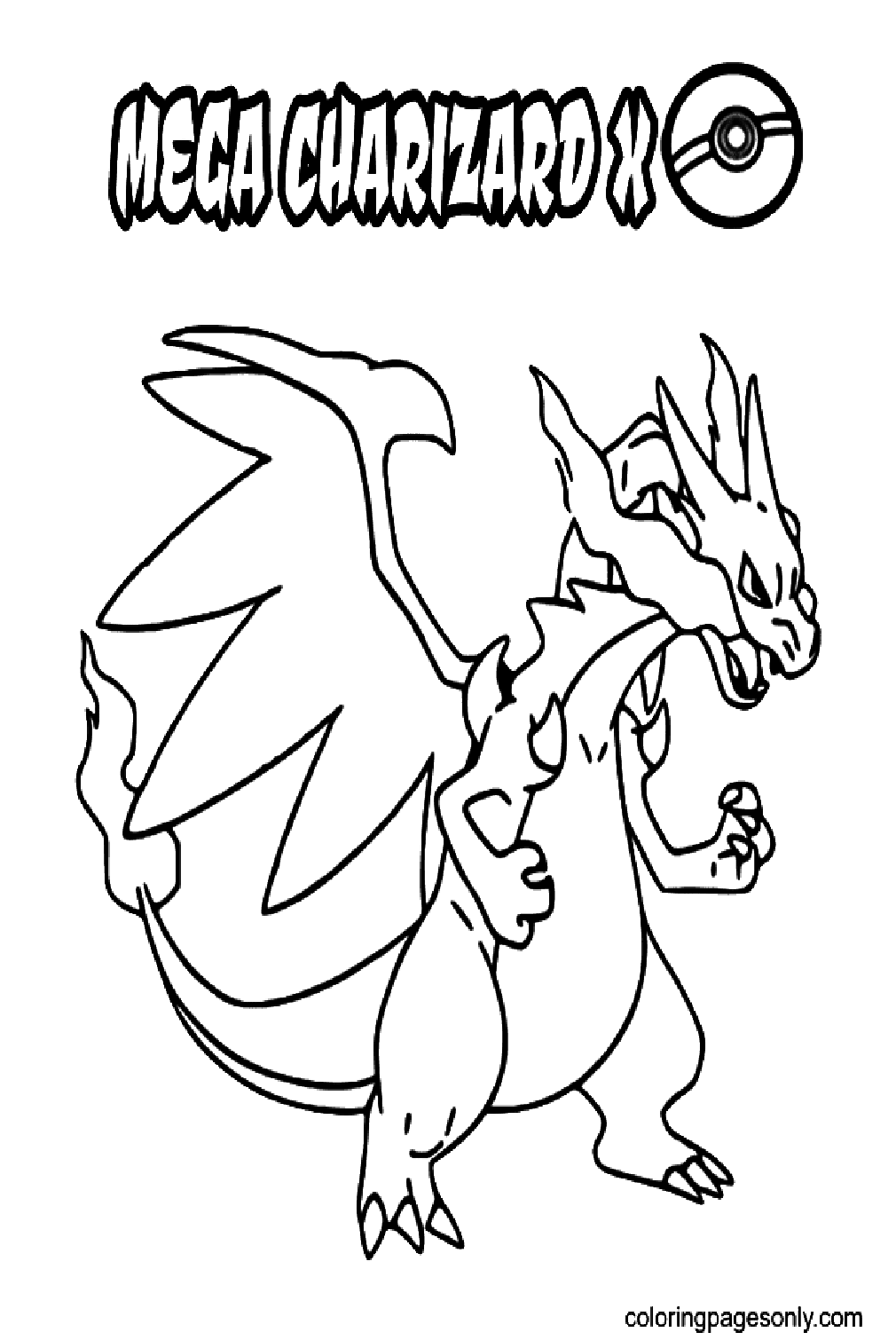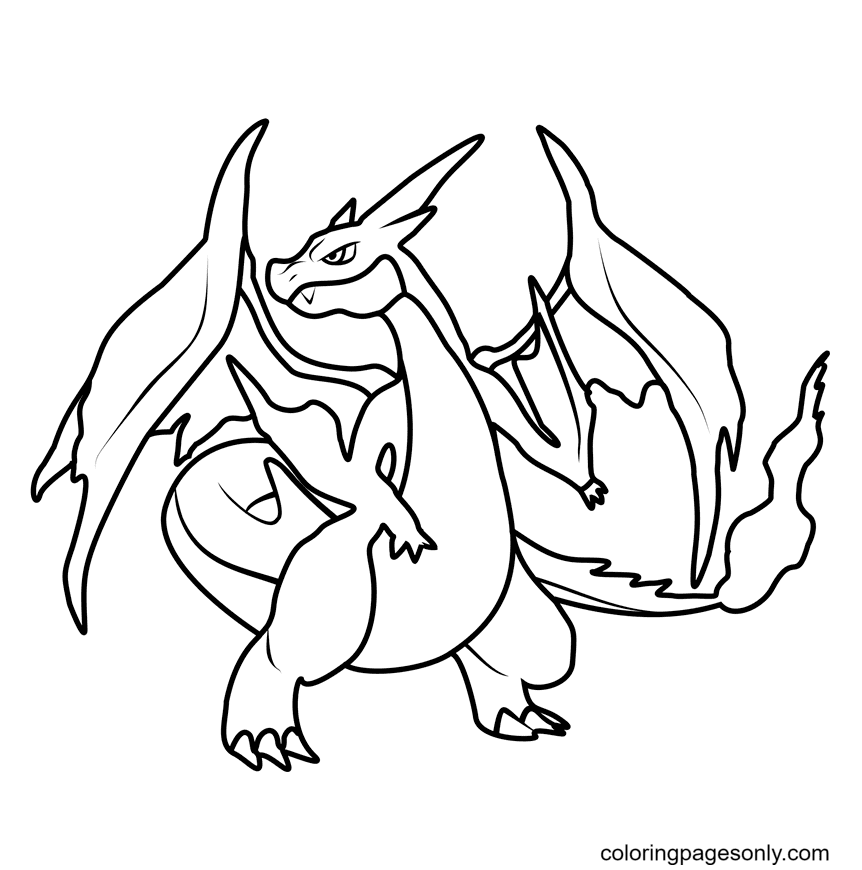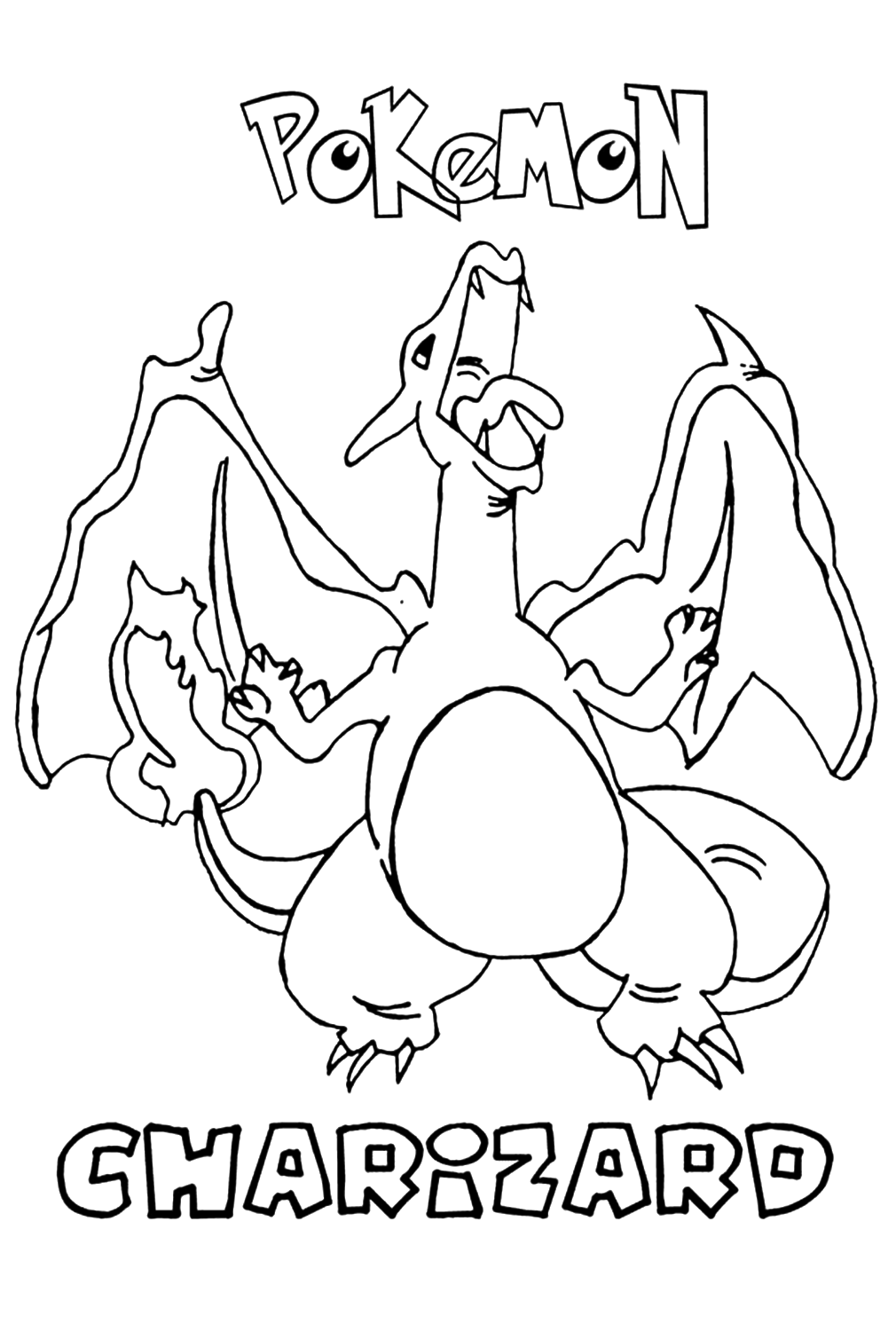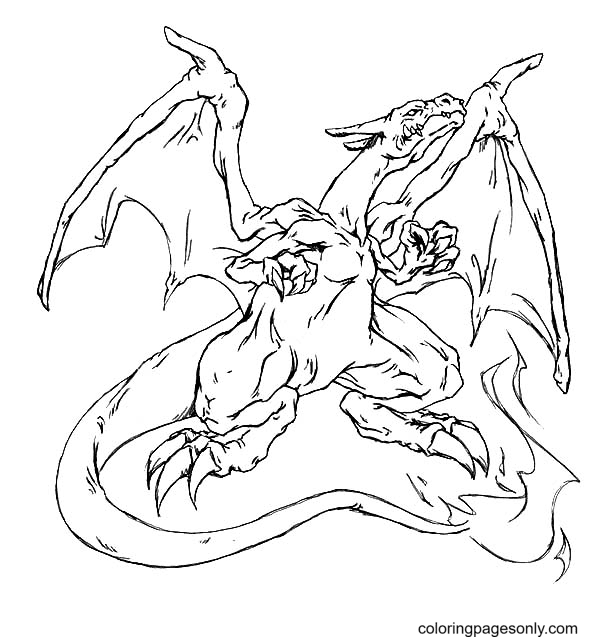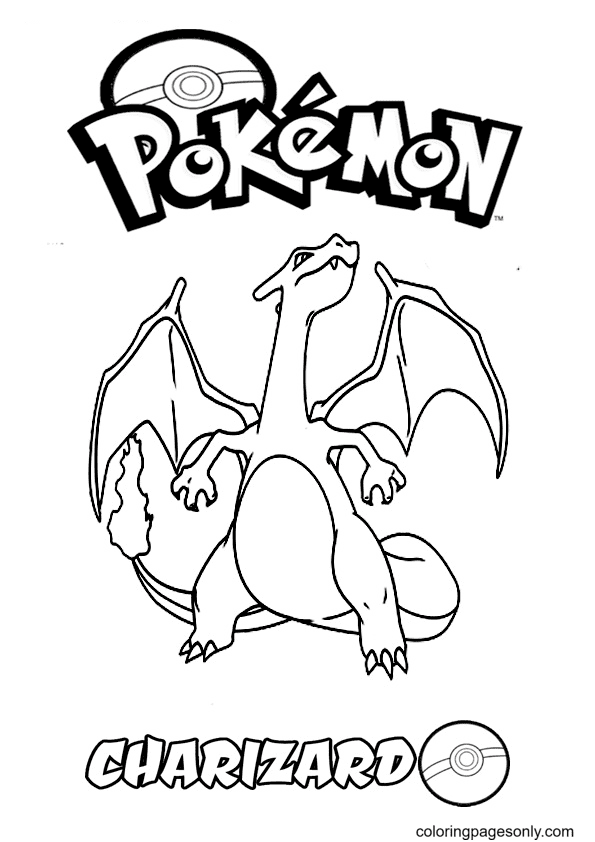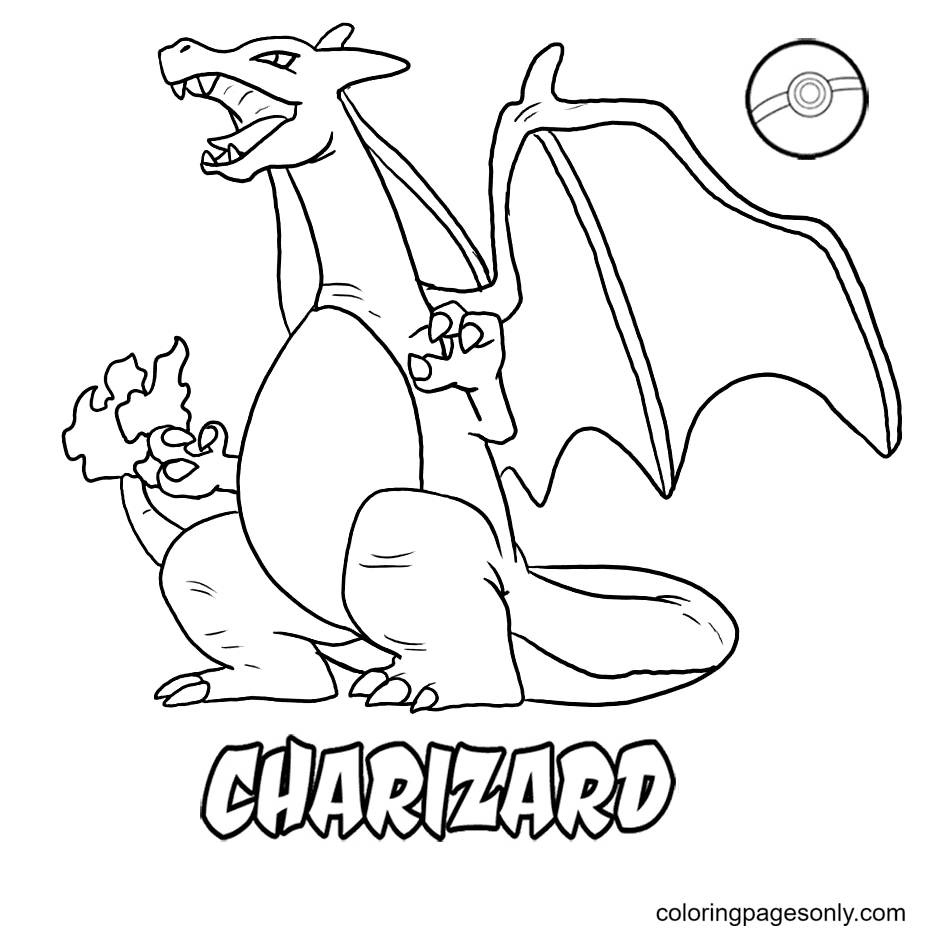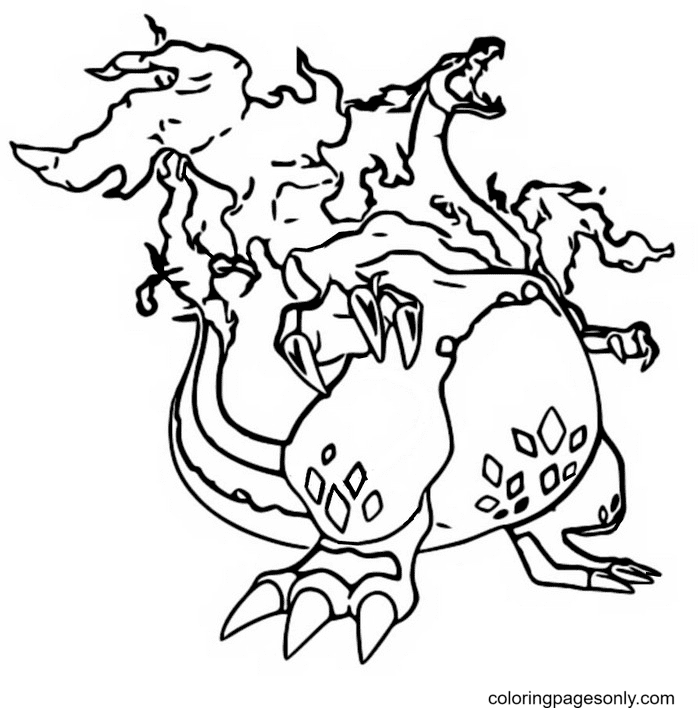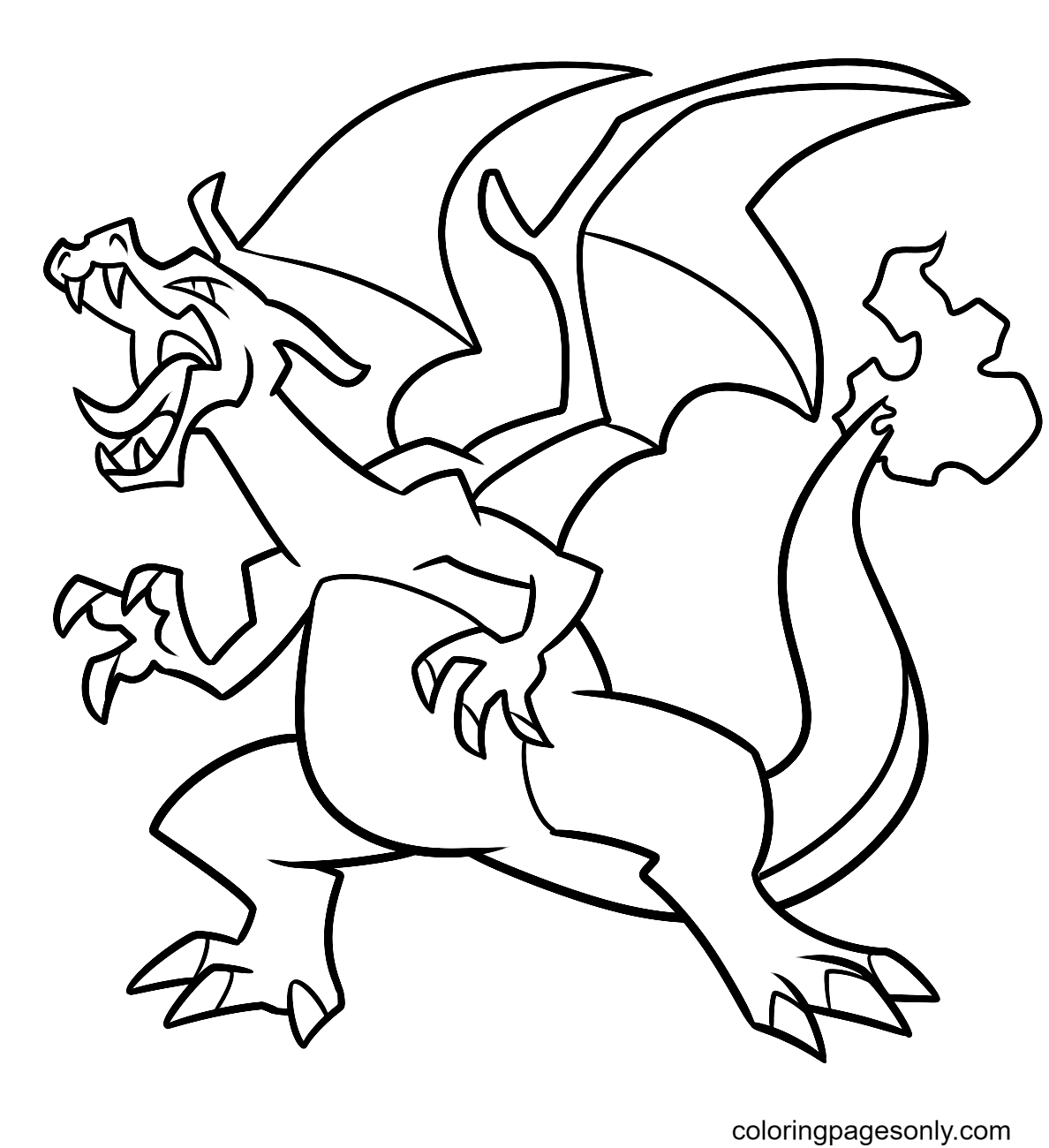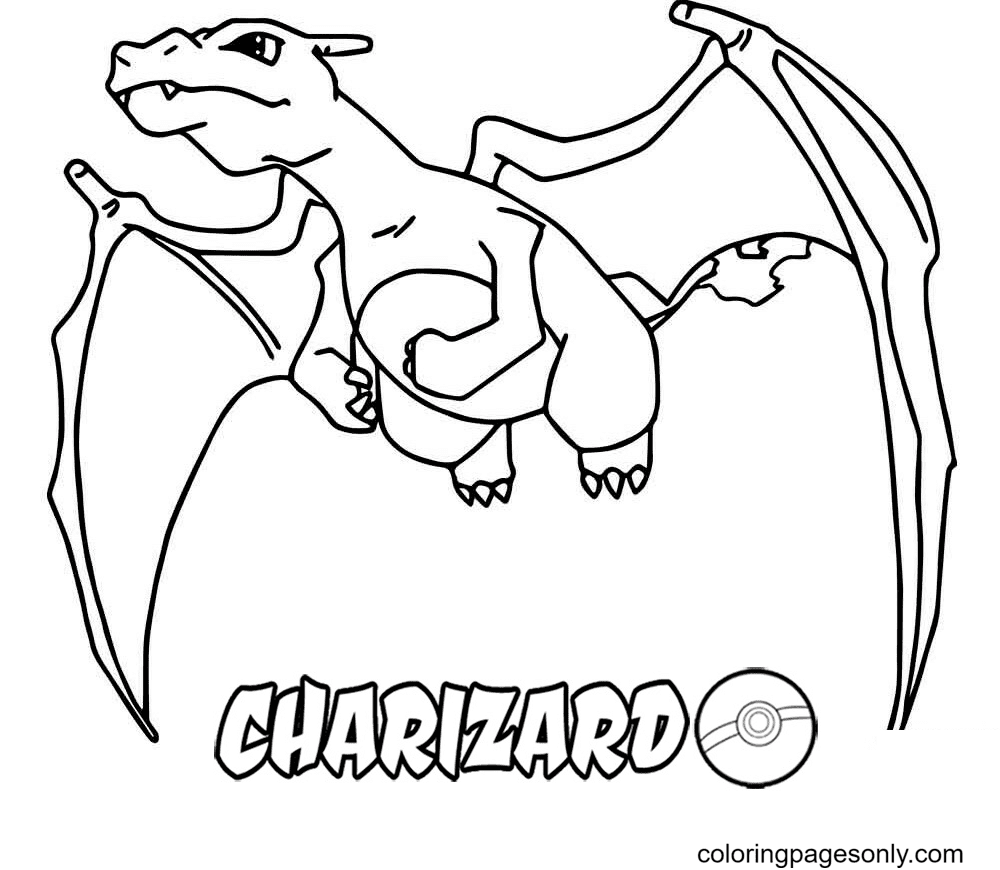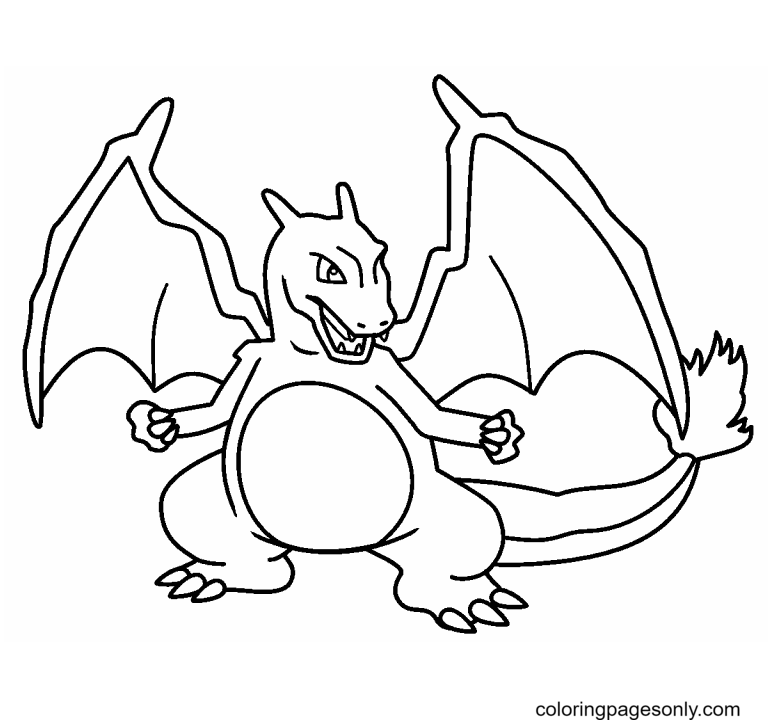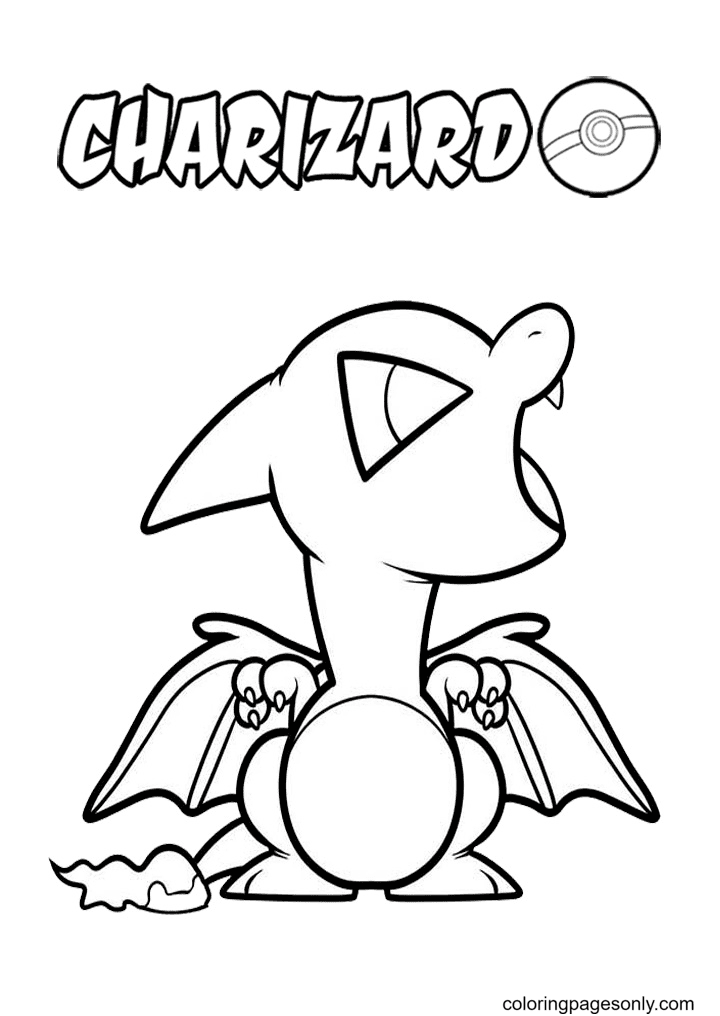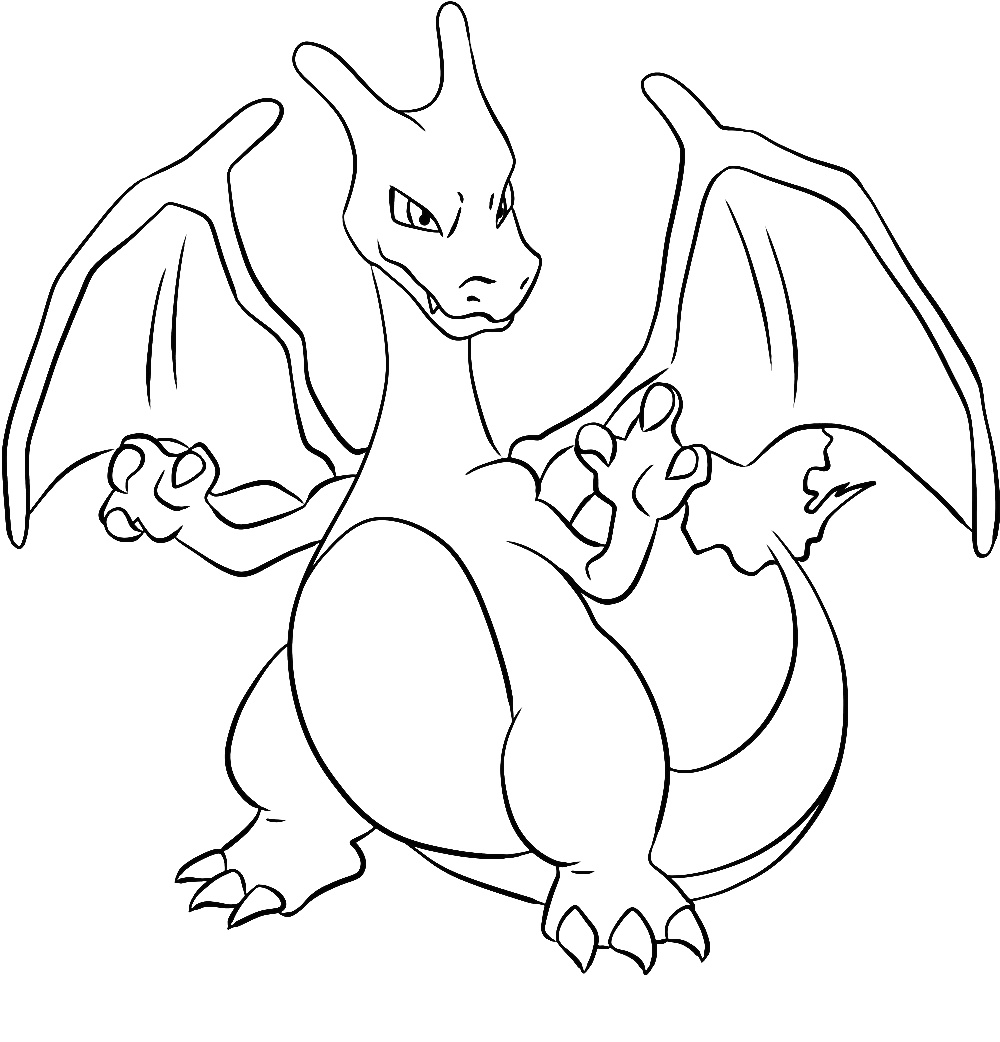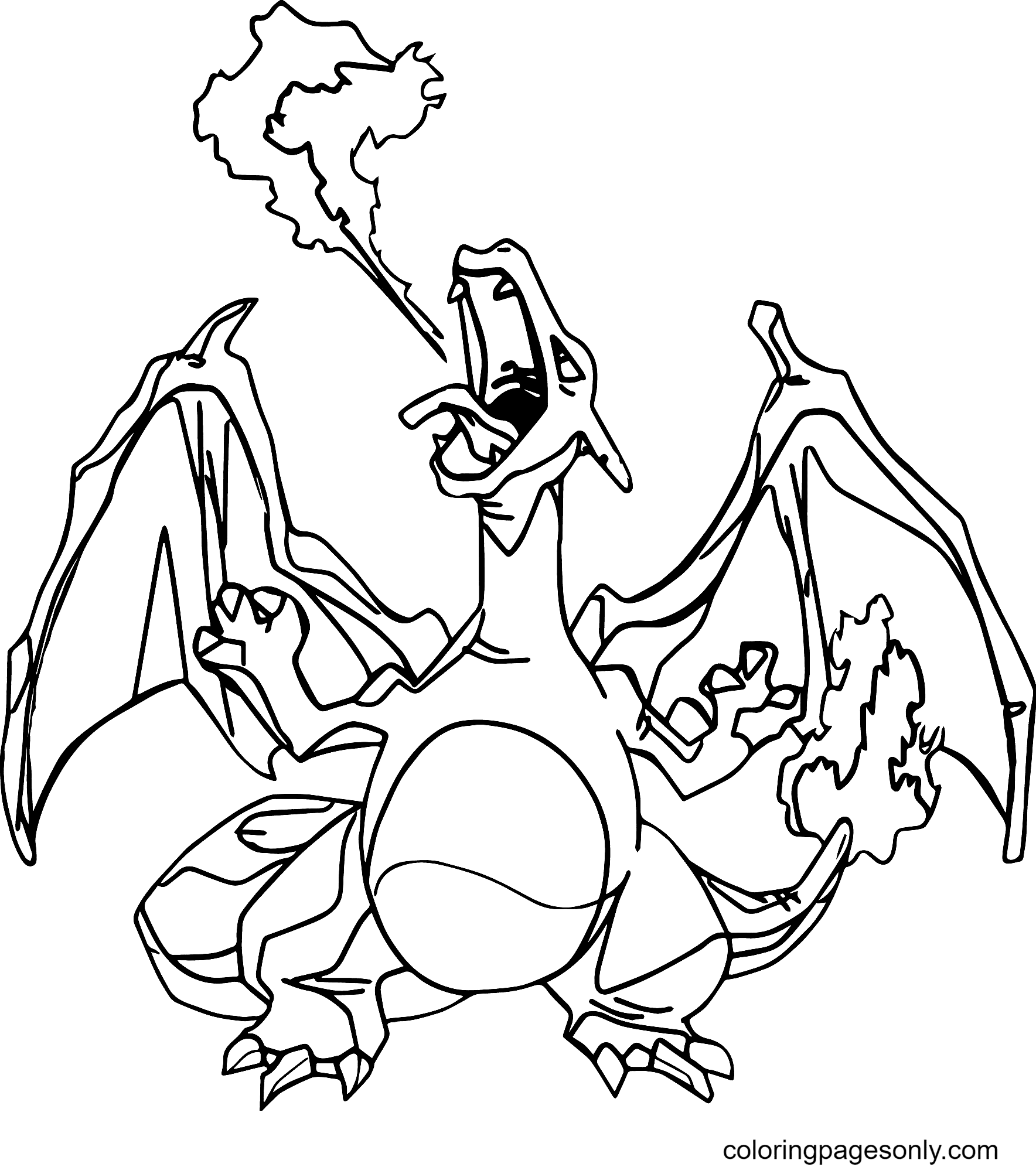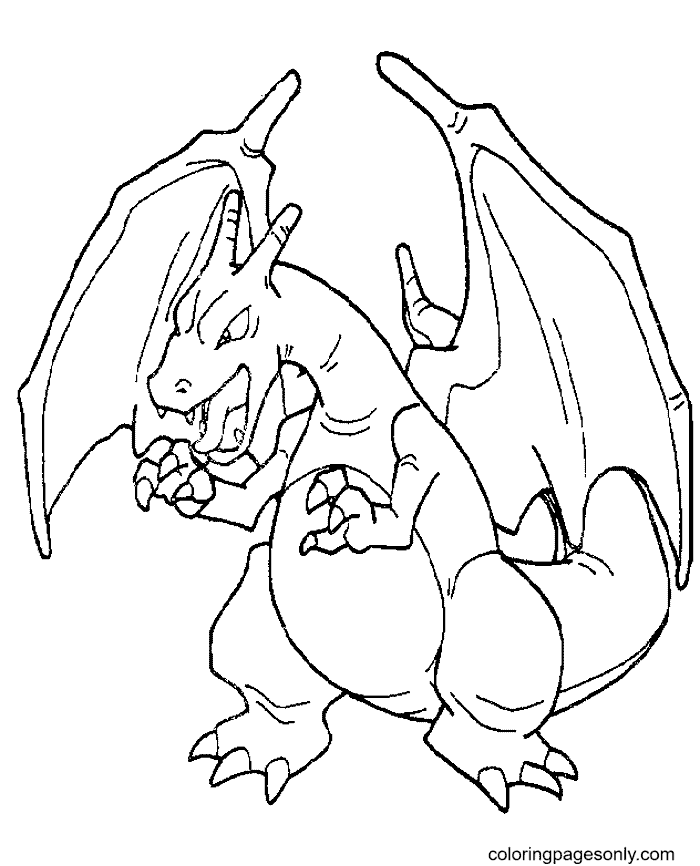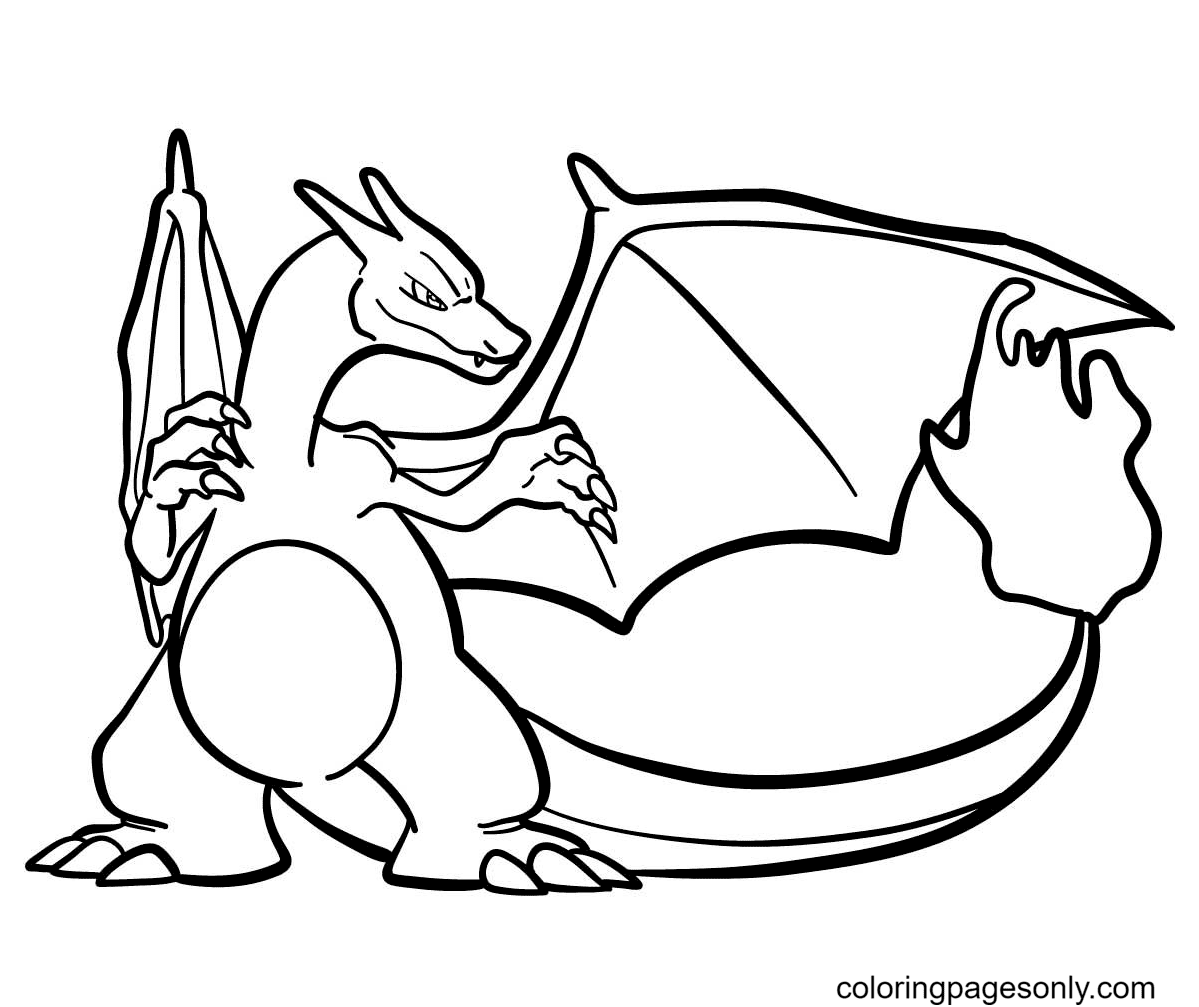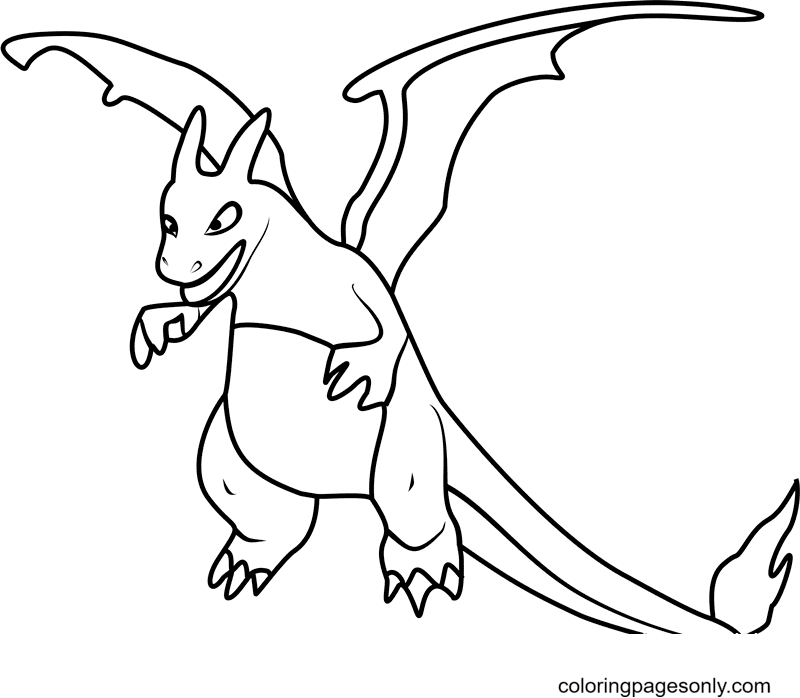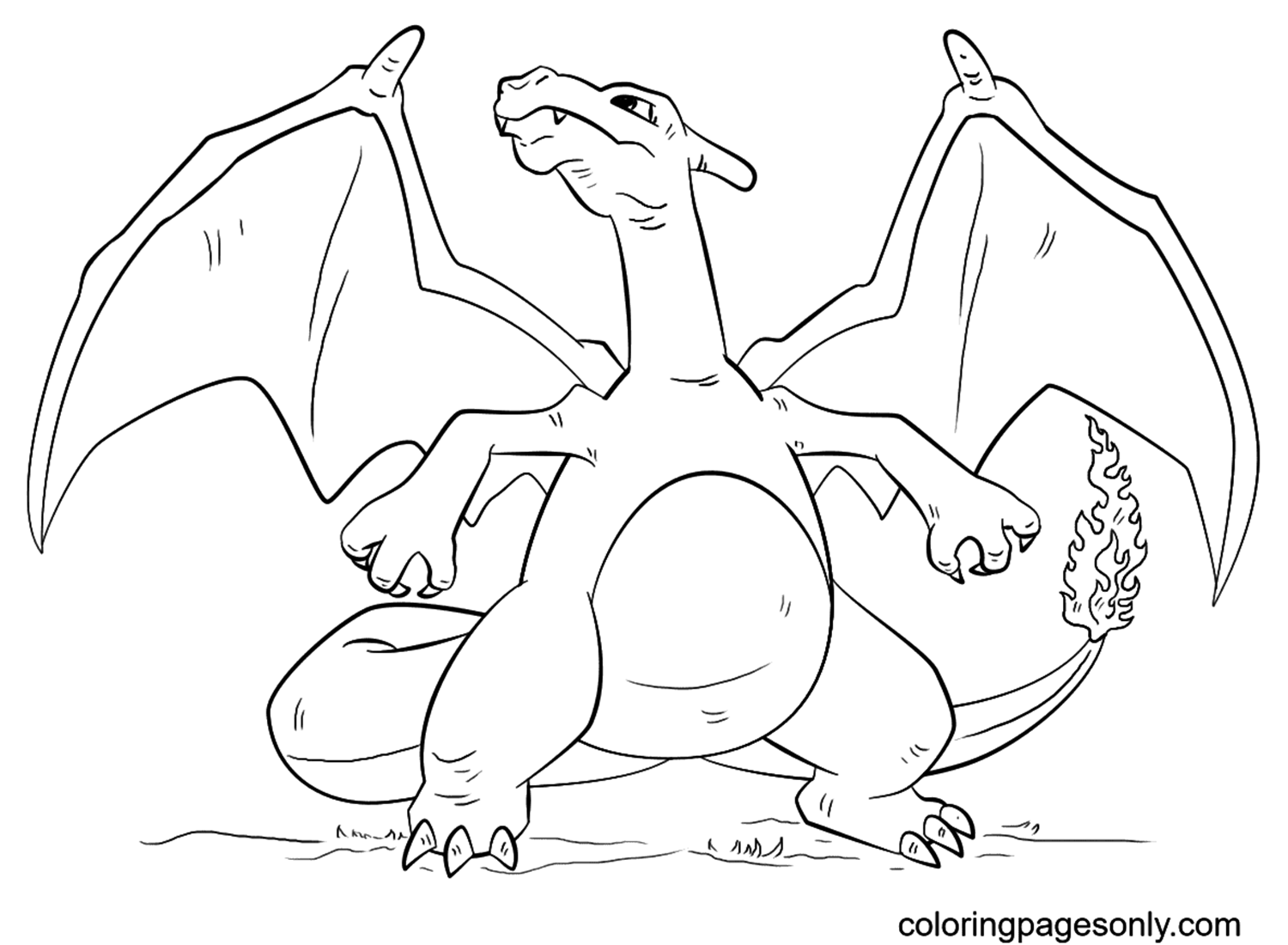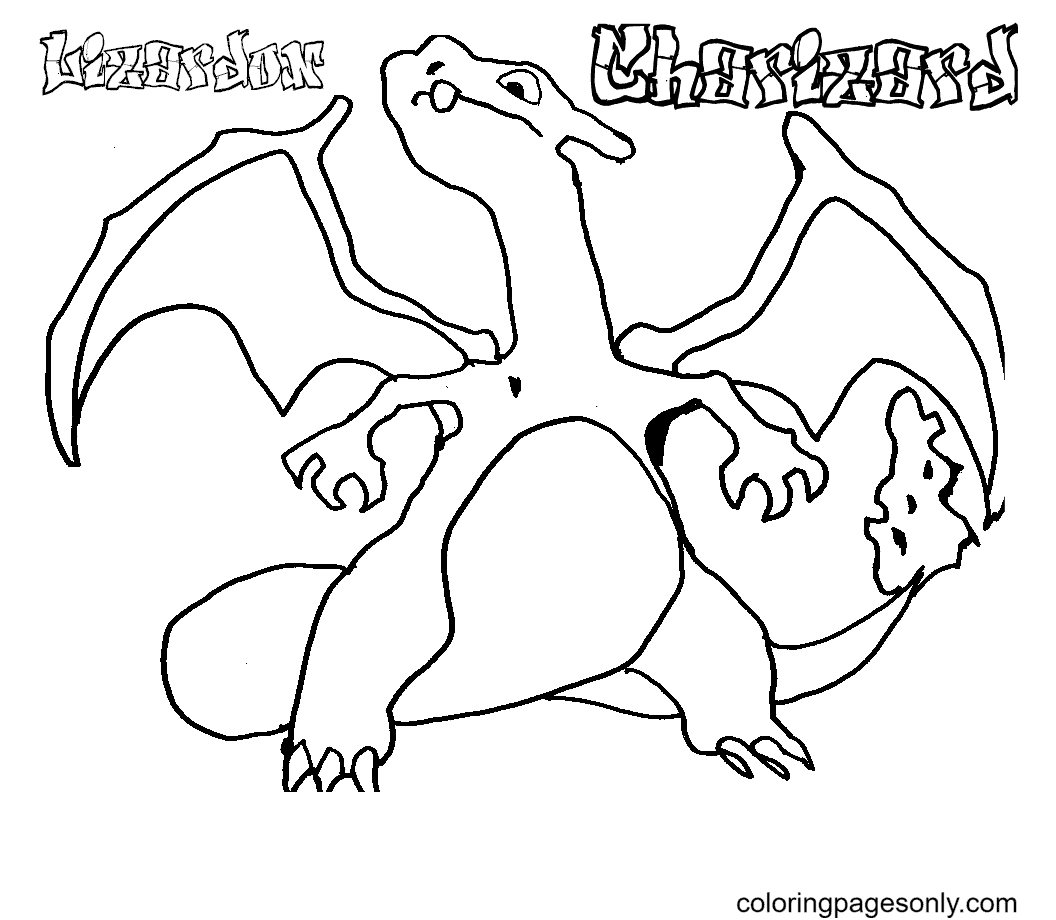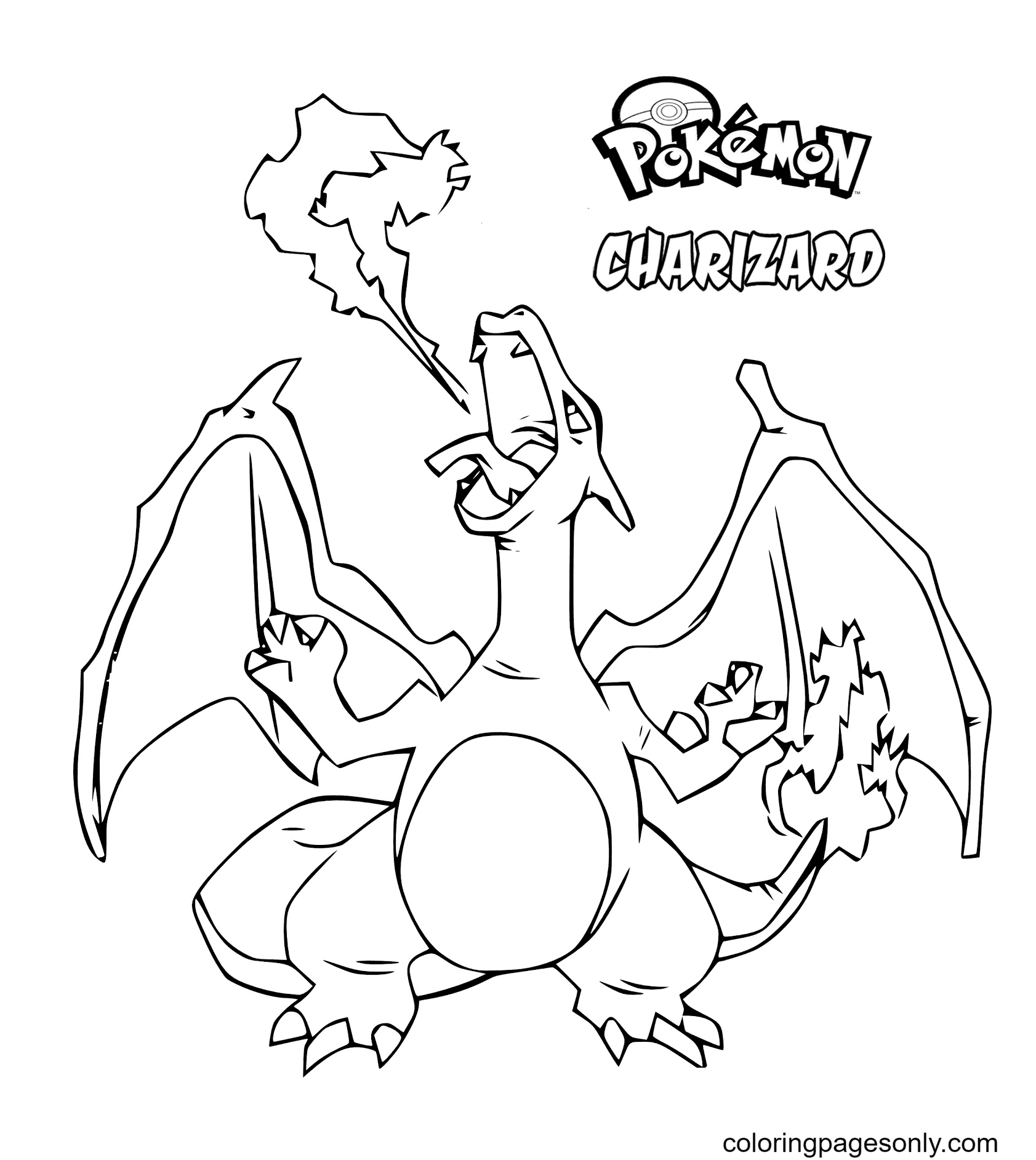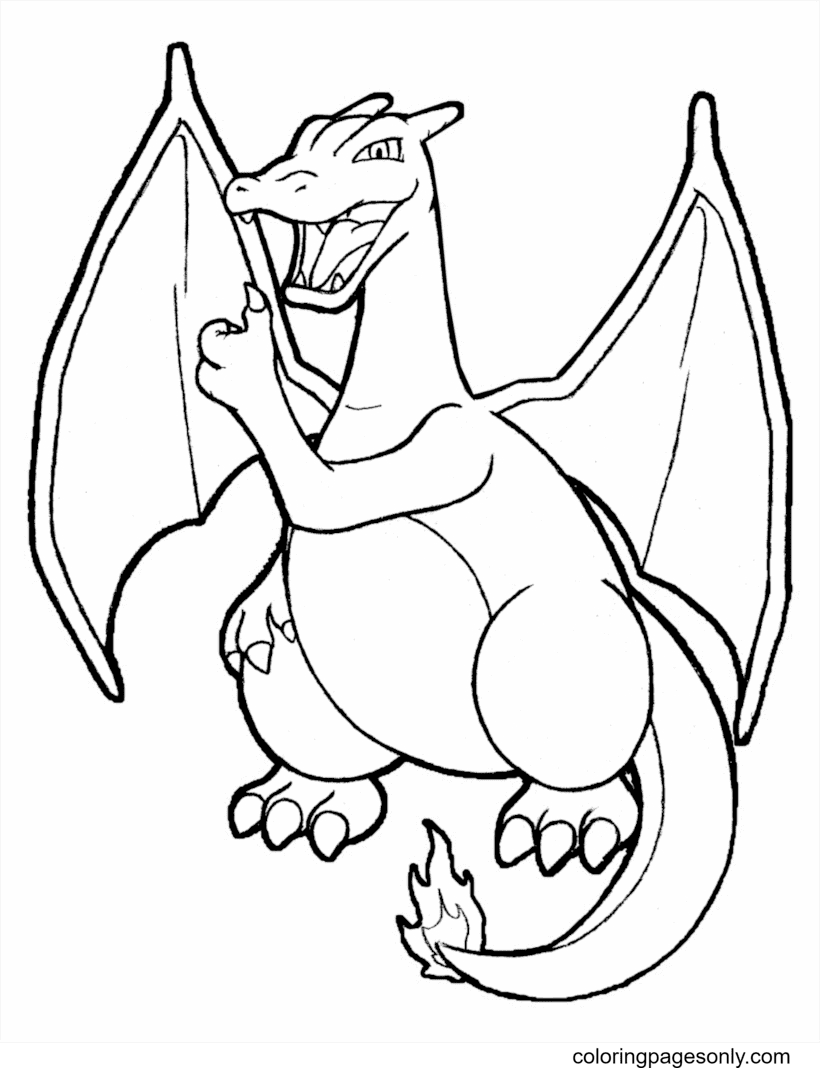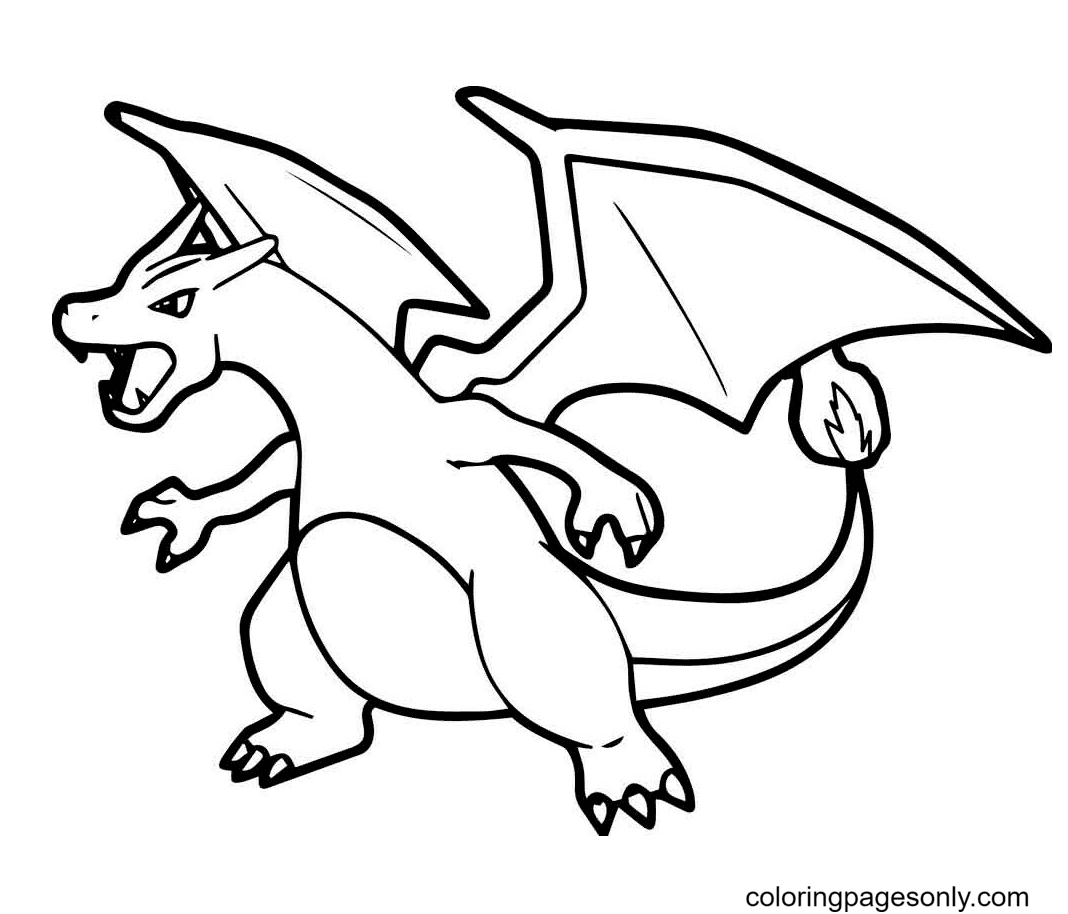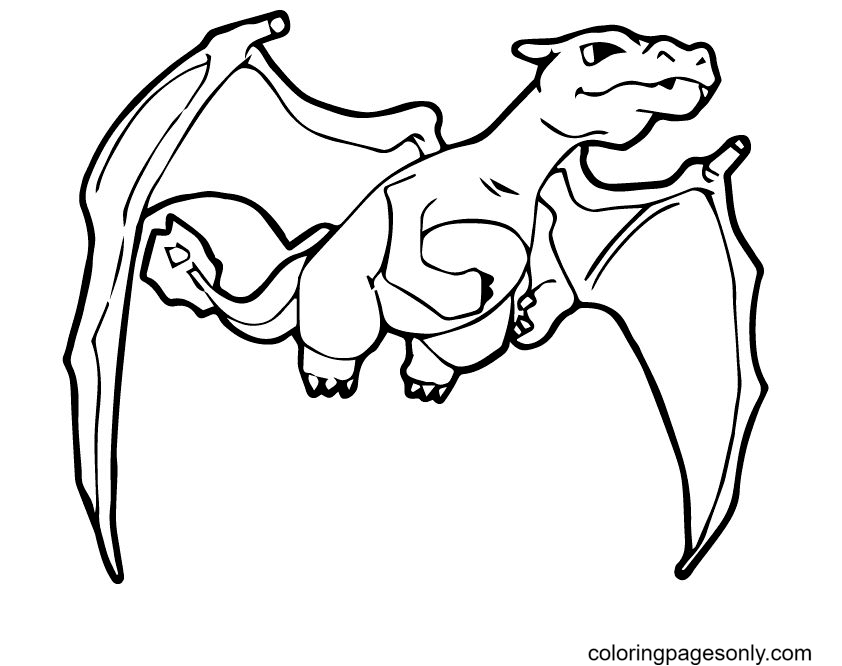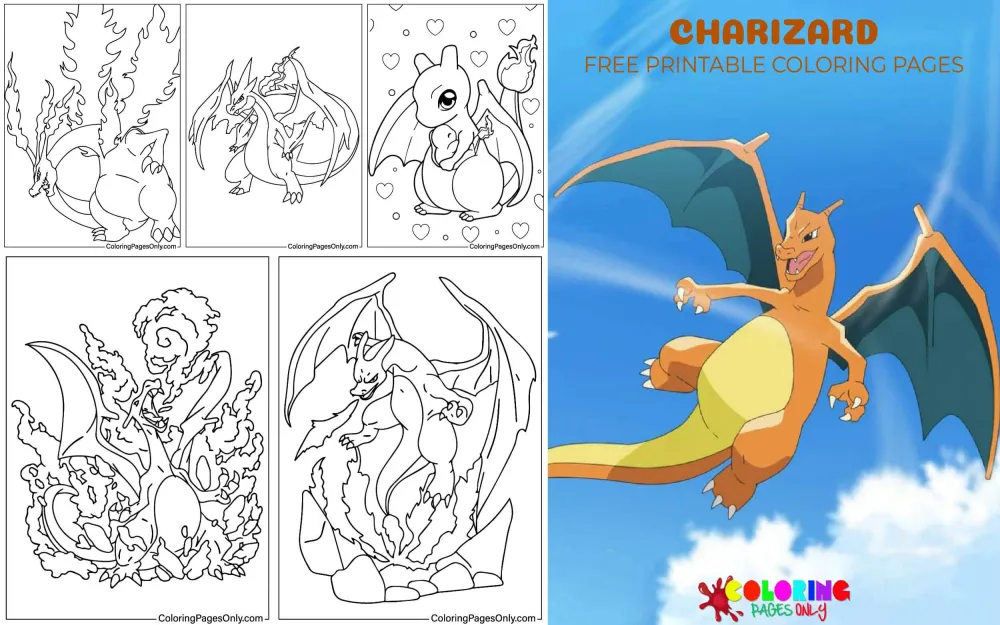
Charizard Coloring Pages at ColoringPagesOnly.com brings together 70+ free pages featuring Pokémon #006 – the classic flying pose, fire-breathing attacks, Charizard with Ash, chibi and cute interpretations, Mega Charizard X and Y forms, battle and action scenes, Charizard with the full Kanto starter trio, and a range of difficulty levels from simple outlines to detailed full-art compositions. Download any page as a free PDF to print, or color online directly in your browser.
Charizard is the final evolution of Charmander – explore the full Pokémon Coloring Pages hub for the complete collection, and find related characters at Pikachu Coloring Pages and the broader Cartoons Coloring Pages collection.
Who Is Charizard?
Charizard is Pokémon #006 in the National Pokédex, the final evolution of Charmander and one of the three original starter Pokémon from Pokémon Red and Green (released in Japan in 1996, internationally as Pokémon Red and Blue in 1998). It is officially classified as the Flame Pokémon, with the dual typing of Fire and Flying – a pairing that has defined its strengths and weaknesses across almost thirty years of competitive play, fan debate, and game design decisions.
Charizard was designed by Atsuko Nishida, the Game Freak graphic artist who also designed Pikachu, Bulbasaur, Charmander, and Squirtle – the foundational characters of the entire Pokémon franchise. Nishida described her design process for the Kanto starters in a revealing interview with Pokémon.com: she designed Bulbasaur, Charmander, and Squirtle by working backward from their final forms. She started with Charizard, then designed Charmander in such a way that Charizard would be unimaginable – so that players who chose Charmander would be genuinely surprised by what it became. Nishida has also stated that Charizard is her personal favorite Pokémon, describing it as looking “so cool drawn in dots” and being “filled with the kind of coolness that boys would adore.” The designer of one of the most iconic characters in franchise history loved the result enough to call it her own favorite.
Charizard was designed based on European dragons – large, winged, fire-breathing reptiles that differ from their pre-evolutions (Charmander and Charmeleon are ground-bound lizards) in being fully capable of flight and breath attack. This distinction between the humble lizard starter and the dragon final form was central to Nishida’s design intention. The English name “Charizard” is a portmanteau of “char” or “charcoal” and “lizard,” chosen by Nintendo to make the character more relatable and descriptive to Western audiences. The Pokémon Company’s president, Tsunekazu Ishihara, noted in an interview that Charizard was specifically expected to be popular with North American audiences because of their cultural preference for powerful, strong characters – a prediction that proved accurate beyond any realistic expectation.
In the Pokémon of the Year poll conducted by The Pokémon Company in 2020, Charizard received 93,968 votes – the most of any Generation I Pokémon – and was ranked fourth most popular overall across all Pokémon generations. It is the game mascot of Pokémon Red and its remake Pokémon FireRed, appearing on the box art of both games. It is the most common Pokémon used by in-game Champions across the entire main series, with four different Champion characters using a Charizard as their signature. It has been playable in every Super Smash Bros. game to date. A species of stem-nesting bees (Chilicola charizard) was formally named after Charizard by scientist Spencer K. Monckton due to the bee’s mountainous habitat and orange coloration matching the Pokémon’s design.
Ash’s Charizard – The Most Famous Story in Pokémon Anime History
No Pokémon in the anime has had a more emotionally resonant character arc than Ash’s Charizard, and it is this arc – spanning from helpless Charmander in Season 1 through disobedient Charizard through the Charicific Valley reunion and multiple returns – that forms the emotional context for most fans’ relationship with the character.
The story begins in Charmander – The Stray Pokémon, one of the most remembered episodes of the original series. A Trainer named Damian abandons his Charmander on a rock, instructing it to wait while he has no intention of returning. Charmander waits, rain threatening to extinguish its tail flame – which, like all members of the Charmander line, is tied to its life force. Ash rushes it to a Pokémon Center. Charmander recovers, rejects Damian when he returns, and joins Ash’s team.
The disobedience that develops as Charmander evolves into Charmeleon, and then into Charizard during a battle against a prehistoric Aerodactyl in Attack of the Prehistoric Pokémon, has been analyzed extensively in Pokémon fan culture. The canonical in-game explanation is that Charizard’s power had grown beyond Ash’s trainer rank, causing it to stop respecting him as a worthy leader. But the emotional reading – that Charizard’s disobedience reflects the transition from a vulnerable creature who needed Ash to a powerful one who felt it no longer did – is what made the arc resonate across multiple generations of viewers. Charizard would refuse Ash’s commands, sleep during battles, and burn him with Flamethrower.
The resolution comes in Charizard Chills, in which Charizard is frozen solid during a battle. Ash stays up all night rubbing and warming Charizard’s body to keep it alive. When Charizard thaws and sees what Ash has done for it – that Ash, now on the other side of the power equation, protected it when it was helpless – it yields, cries, and re-bonds with Ash as a willing partner. The moment is one of the most emotionally significant in the entire original series and continues to be cited as a defining example of what made the early Pokémon anime meaningful.
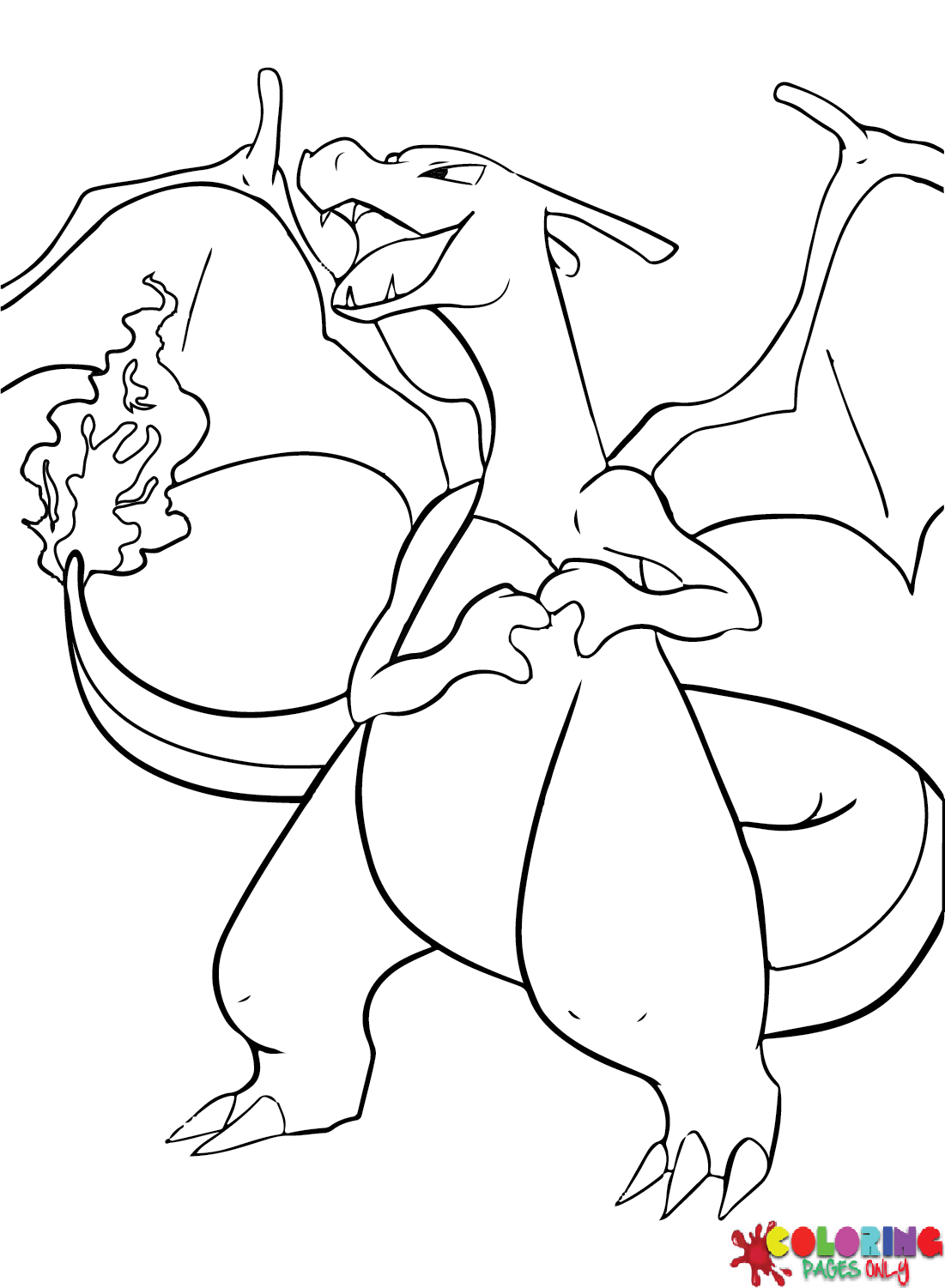
Charizard’s Complete Color Palette
Charizard has one of the most precisely documented canonical color palettes in all of Pokémon – and one where accuracy matters most to fans, because so many coloring page interpretations get specific elements slightly wrong.
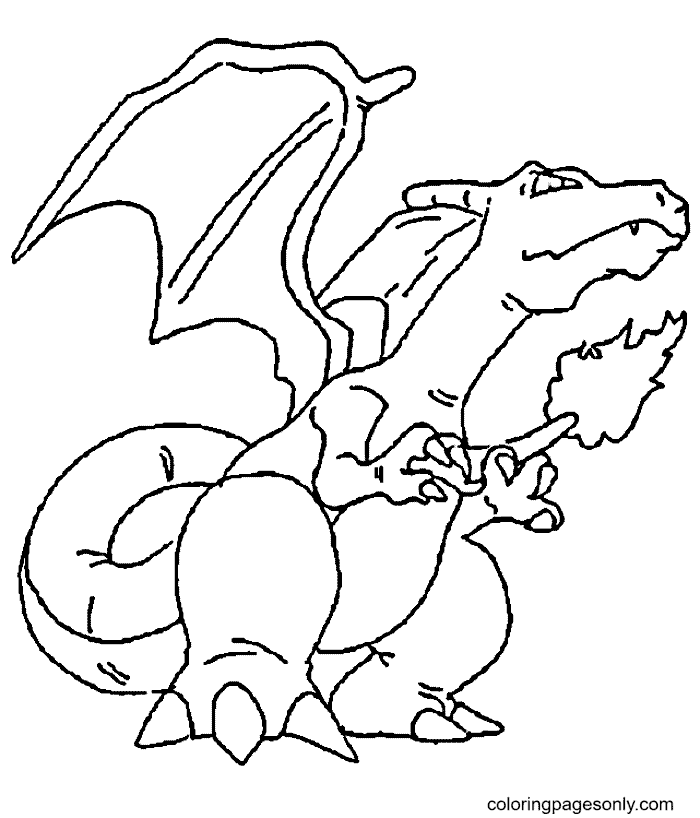
Standard Charizard
Body/Skin: A medium-to-bright orange – warm, fully saturated, reading as a bold fire-adjacent orange rather than a muted terracotta or a yellow-leaning orange. This orange covers the entire head, neck, back, arms, legs, and tail.
Underside (belly to tail tip): A warm cream or pale peach – distinctly lighter and warmer than white. The cream covers the front of the chest, the entire belly, and continues along the underside of the tail to its tip. The transition from orange back to cream along the underside should be a clear, visible boundary – not a gradual fade.
Wing undersides: A blue-green teal (sometimes described as turquoise in official sources). The outer wing surface is the same orange as the body; the inner/underside surface of the wings is this distinctive teal. This is one of the most commonly missed accuracy details in Charizard coloring – many colorists apply orange throughout the wings, losing the characteristic teal inner wing color that is part of the canonical design.
Eyes: Small, dark blue – subtle and relatively small compared to the overall head size. They are not dramatic or large like many anime character eyes.
Horns: Two horn-like structures protrude from the back of the rectangular head – they are the same orange as the body.
Claws: White, appearing on the three-fingered hands and the toes.
Tail flame: The canonical flame is a warm red-orange-yellow gradient. It burns at the tip of a tapering tail. According to the Pokédex and anime, the flame burns brighter as Charizard gains experience and becomes a blue-white flame when Charizard is furious or at maximum intensity. For standard pages, render the flame as red at the base, orange through the middle, and yellow at the tip.
Shiny Charizard
The Shiny form of Charizard – introduced in Pokémon Gold and Silver – replaces the standard orange body with black skin, and the teal wing undersides remain. The tail flame on Shiny Charizard is the same as standard. Shiny Charizard became one of the most sought-after shiny encounters in the franchise and has been a centerpiece of numerous Pokémon GO Community Day events featuring Charmander. Any page in this collection where a black-bodied Charizard would be appropriate represents the Shiny form.
Mega Charizard X
Mega Charizard X is the most dramatically different alternate form. The entire body turns black with a sky-blue underside replacing both the orange and cream. The eyes change to red. The horns sharpen, develop blue tips, and curve upward. The tail flame and the flames from the mouth become vivid blue. The wing finger disappears from the membrane, and the wing edges become rounded points rather than the pointed structure of the standard form. Two shoulder spikes with blue tips appear. Mega Charizard X is also the only form that carries the Dragon typing instead of Flying – for fans familiar with competitive Pokémon, this is one of the most significant mechanical facts about the character, and the blue fire represents that Dragon energy visually.
Mega Charizard Y
Mega Charizard Y retains the standard orange-cream-teal palette but with a new silhouette: a large additional horn emerges from the top of the head (pointing backward), the wings grow significantly larger, and the overall form becomes leaner. It more closely resembles standard Charizard than Mega X does. The typing remains Fire/Flying for Mega Y.
Gigantamax Charizard
Gigantamax Charizard’s belly turns white (replacing the cream), with a pattern of yellow diamonds across the lower body. The wings become constructs of pure fire – they extend outward as burning wing-shapes rather than physical membranes. Each horn emits flames. The tail flame has expanded dramatically down the tail. The sclera of the eyes becomes yellow. This form’s fire burns hotter than 3,600 degrees Fahrenheit (2,000 degrees Celsius) according to official lore.
The Evolution Line – Charmander and Charmeleon
Because the collection likely includes pages showing the full evolution line, a complete color reference for all three stages serves both accuracy and the storytelling arc of the pages.
Charmander – small, bipedal orange lizard, lighter orange than Charizard. Cream/pale belly. Four stubby toes. Two stubby arms. A single flame at the tip of a thick, short tail. The flame is the character’s most critical design element: if the flame goes out, Charmander dies. Eyes are light blue.
Charmeleon – taller than Charmander, darker red-orange skin (Charmeleon is specifically described as having red skin rather than Charmander’s softer orange or Charizard’s bolder orange). A single horn-like protrusion on the back of the head, pointing backward. Cream belly. Tail flame slightly larger. Red claws.
The dramatic shift from Charmeleon’s red-orange to Charizard’s brighter orange is a deliberate design choice by Nishida – Charizard represents a kind of reversion toward Charmander’s more approachable orange while gaining the dragon form’s power, creating the visual surprise she described in her interview.
Coloring Tips
The orange-cream boundary is the most important accuracy line in any Charizard portrait. The clean separation between Charizard’s orange back/sides and the cream underside is not a soft gradient – it is a relatively clear boundary, more like the visible color division on a real animal than a smooth painterly blend. The cream should begin at roughly the lower chest level and continue down the belly and along the underside of the tail. Before applying any color, mentally map this boundary on the page and consider marking it lightly before committing to either color area.
The wing undersides must be teal, not orange. This is the single most common accuracy error in Charizard coloring. The outer wing surface and the wing membrane from above are the same orange as the body. The inner/underside surface of the wings – the area visible when Charizard is shown from below or in a forward-facing flight pose – is a blue-green teal. For pages showing Charizard from above or with the wings folded, this element may not be visible. For pages showing a flight or landing pose from the front or below, the teal inner wing is a prominent feature that should be rendered in a clear, cool blue-green rather than any orange tone.
The tail flame is a gradient, not a flat color. The canonical flame moves from red-orange at its base (where it meets the cream tail underside) through vivid orange in the middle to a bright yellow at its tip. This gradient is one of the most visually striking elements of any Charizard page and rewards careful layering. Apply yellow first across the entire flame area, then add orange over the lower two-thirds, then add red-orange at the base. This layering approach (light to dark) produces the warmest, most luminous flame. If the tail flame is large and dramatic, add white highlights at the very tip to suggest the hottest part of the fire.
For Mega Charizard X pages, the blue replaces everything warm. The entire body goes black, the underside goes sky-blue, and the flames (mouth and tail) go vivid blue. The design philosophy is a complete inversion of the standard warm palette into a cool, dramatic black-and-blue scheme. When coloring these pages, think of the blue as the equivalent of the orange in standard Charizard – the primary vivid accent that defines the character. The black body should be a cool, near-neutral black rather than a warm brown-black, to maintain the icy quality of the design.
For battle and attack pages, many pages in the collection show Charizard using Flamethrower or other fire moves. For fire breath, use the same gradient logic as the tail flame (red at origin, orange through middle, yellow at tip) but extend it outward as a stream or cone shape. The most dramatic rendering places the fire’s origin (where it exits the mouth) in the deepest red-orange, with the stream lightening to yellow toward its endpoint. A white core running through the center of the fire stream suggests maximum heat and is a technique used frequently in official Pokémon art.
For chibi and cute Charizard pages – the collection includes cute/chibi interpretations where proportions are exaggerated (larger head, rounder body, smaller limbs). In these pages, the canonical colors remain the same, but the emotional register shifts. For chibi pages, consider slightly softening the orange toward a warmer peach and making the cream belly slightly more yellow-cream – these micro-adjustments lean into the cute register while maintaining recognizability.
Ash’s Charizard pages – if the collection includes pages showing Charizard with Ash or in the context of their relationship, the emotional history of that pairing is worth keeping in mind while coloring. The most iconic moments – Ash warming the frozen Charizard, Charizard crying when it reconciles with Ash – carry a specific warmth of palette. Warm background tones (amber, soft yellow, firelight orange) reinforce the bond and emotional register of these scenes more than cool tones would.
5 Activities
The Nishida design challenge – work backward from the final form. Atsuko Nishida designed Charmander by starting with Charizard and working backward to a version that could surprise players when it eventually evolved. Try this design method yourself: print the most dramatic Charizard page in the collection (a large, detailed flight pose or full battle scene) and color it. Then, on a blank piece of paper, design a simple, unassuming creature that could plausibly evolve into what you just colored. What would a creature look like if you deliberately made it impossible to predict that it would become Charizard? This exercise directly replicates one of the most influential design decisions in Pokémon history.
The four-form comparison. Print one Charizard page four times. Color each as a different form: standard canonical orange-cream-teal; Shiny (black body, teal wings, same flame); Mega X (black body, sky-blue underside, blue flames, red eyes); Mega Y (standard palette, larger wings, larger horn). Display all four together. The exercise makes visible how radically one character’s visual identity can shift across alternate forms while remaining recognizably the same Pokémon – and demonstrates why color is the most powerful form-identifier in the franchise. After completing, discuss: which form do you prefer visually, and why?
The tail flame as an emotional barometer. Pokémon lore establishes that the Charmander line’s tail flame communicates the individual’s emotional and physical state: normal orange for standard health, brighter for high emotion or battle intensity, blue-white for fury, dimming and threatening to go out for severe illness or near death. Print three pages showing Charizard in different contexts: a relaxed pose, a battle pose, and a desperate or vulnerable moment. Color the tail flame differently on each page to reflect the emotional state: normal gradient for relaxed, intense yellow-white for battle, reduced and barely orange for vulnerable. This activity builds understanding of Pokémon’s lore-through-design philosophy and develops skill in using color to communicate emotion rather than just accuracy.
The evolution line coloring series. If the collection or a combined Pokémon collection includes pages for Charmander, Charmeleon, and Charizard, print one of each. Color all three in the same session, maintaining the canonical color relationships between them: Charmander’s softer orange, Charmeleon’s darker red-orange, Charizard’s bold saturated orange. The challenge is making each stage’s orange clearly read as a different value/saturation from the others while keeping all three recognizably part of the same evolutionary family. After completing, trace the color shift from the vulnerable small Charmander to the powerful Charizard and consider how the colors support the evolution arc’s emotional meaning – the journey from fragile to formidable, rendered in shades of fire.
The Pokémon Company’s design question. In 2020, 93,968 people voted for Charizard as the most popular Generation I Pokémon in the official Pokémon of the Year poll. Write down your own answer to this question before starting any Charizard page: why do you think Charizard has remained the most popular original Pokémon for nearly thirty years? Consider the design (dragon-like power, fire breath, wings), the story (Ash’s disobedience arc), the game design (starter evolution line, box art mascot), and the cultural timing (appearing as the first generation of children were old enough to form lifelong attachments to media). Color any Charizard page while keeping your answer in mind. After finishing, return to your answer and see if the coloring process changed or deepened how you think about the question.