
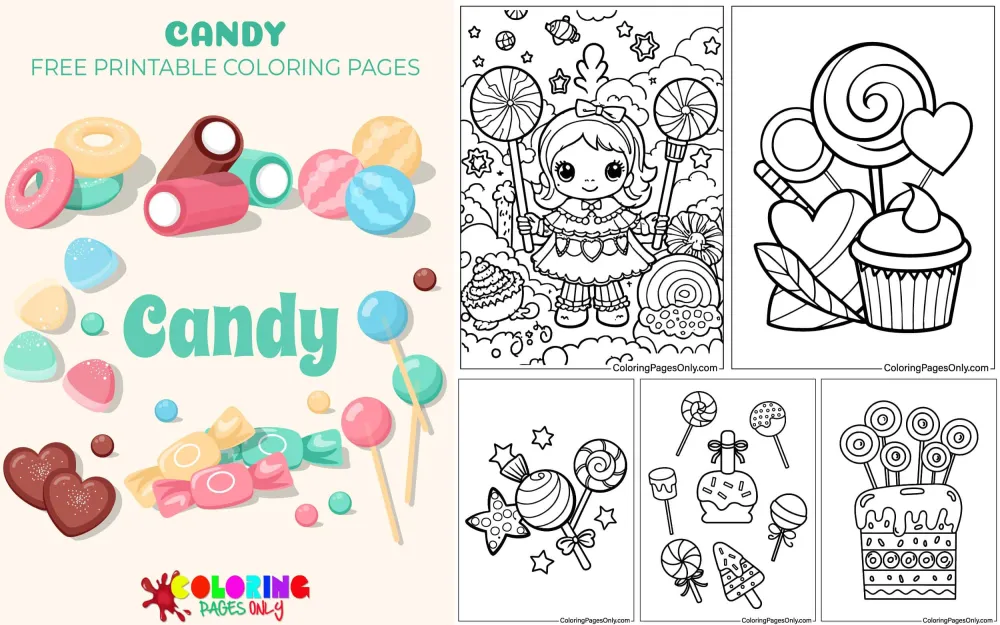
Free Candy Coloring Pages: 62 printable PDF designs featuring lollipops, candy canes, chocolate bars, and whole candy-house scenes. Each page can be downloaded as a PDF to print or colored online in the browser.
The word candy traces back to the Arabic qandi and the Persian qand, both meaning made of sugar, and entered English use around the 13th century. The candy cane’s now-familiar red-and-white stripes and curved shape are a relatively recent addition, too, since candy canes were sold as plain white, straight sticks for roughly two centuries before the striped, curved version became standard in the early 1900s. The lollipop’s own name likely comes from lolly, old British slang for tongue, and pop, meaning a slap. This collection colors that same world of familiar sweets across simple solo treats, holiday-themed candy, and whole candy-built scenes.
This set works across a wide range of ages: the plain, single-candy pages suit a child just starting to color a simple shape, while the busier candy houses, jars, and holiday scenes give an older child or an adult more detail and background to work through. It also gives a natural opening to talk about where a familiar word like candy actually comes from, since almost nobody expects it to trace back through Persian and Arabic before reaching English.
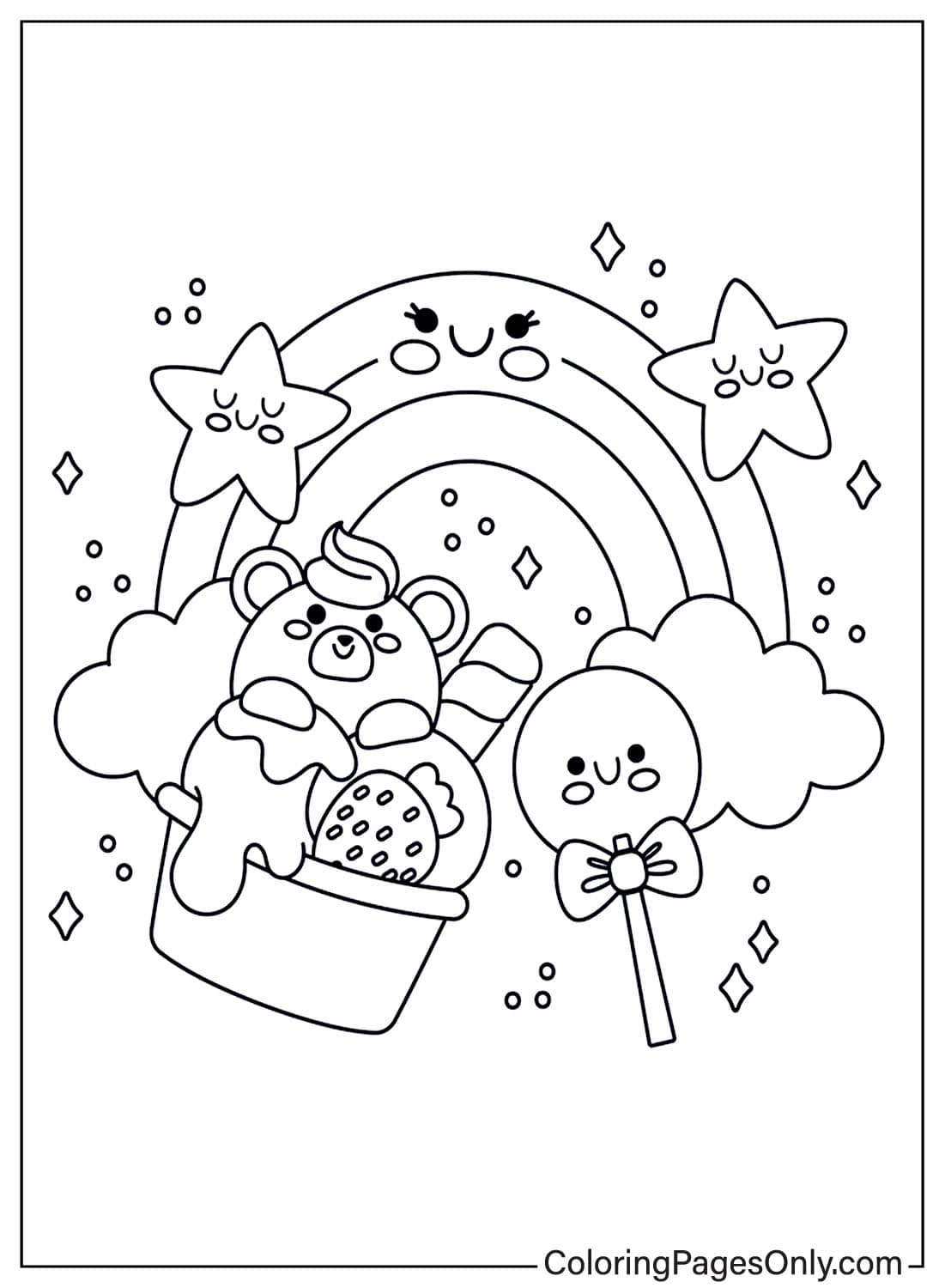
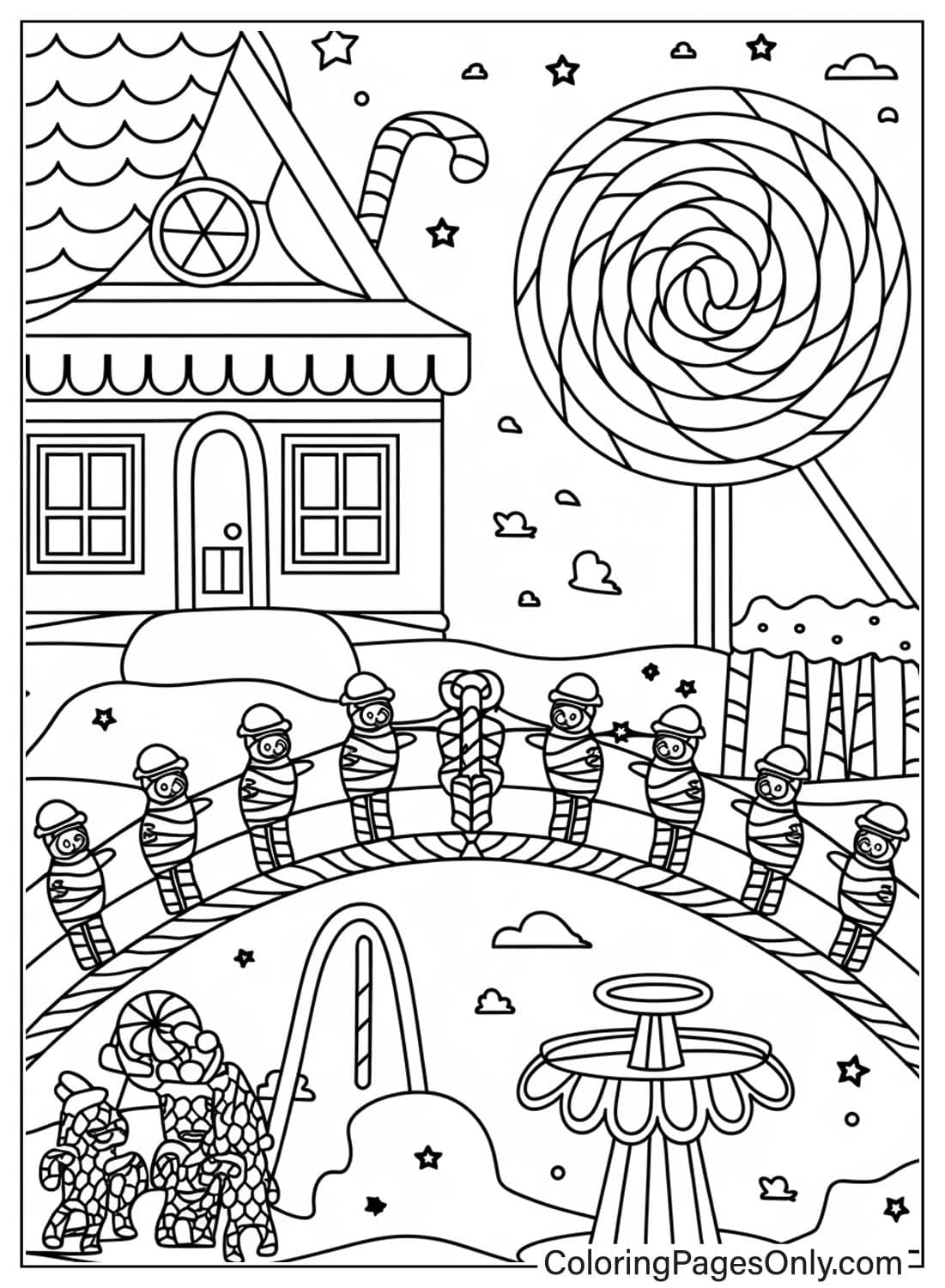
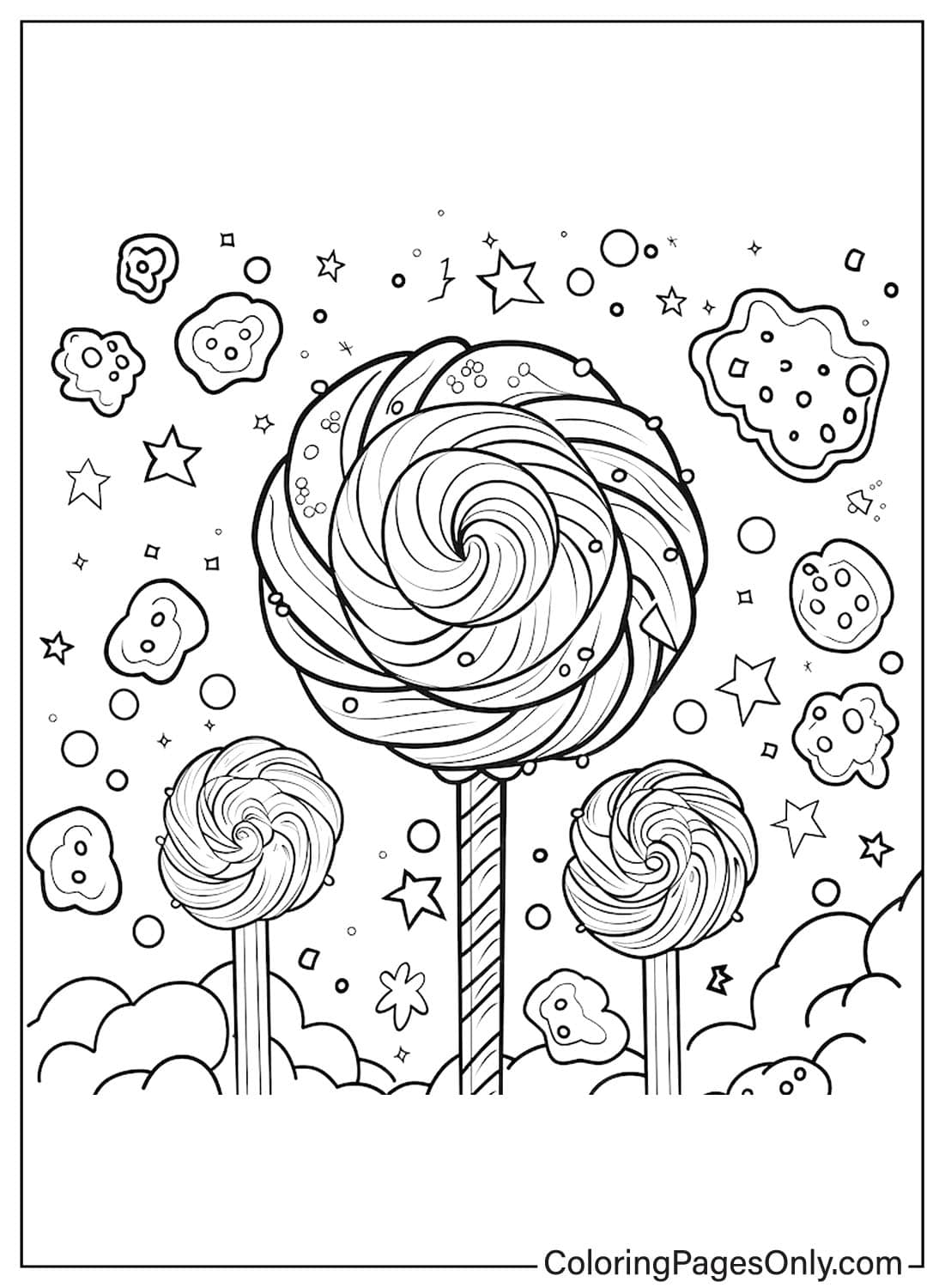
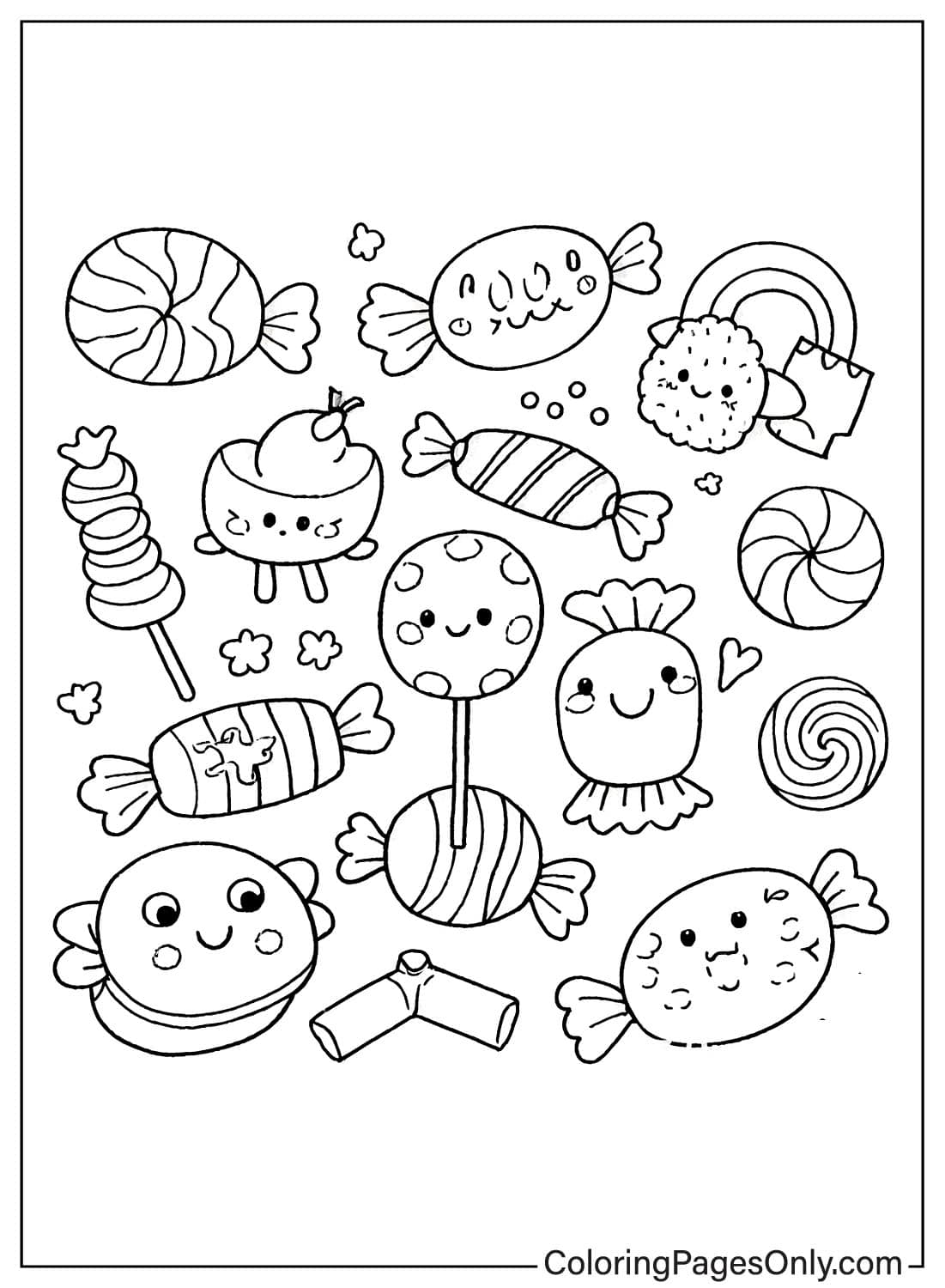
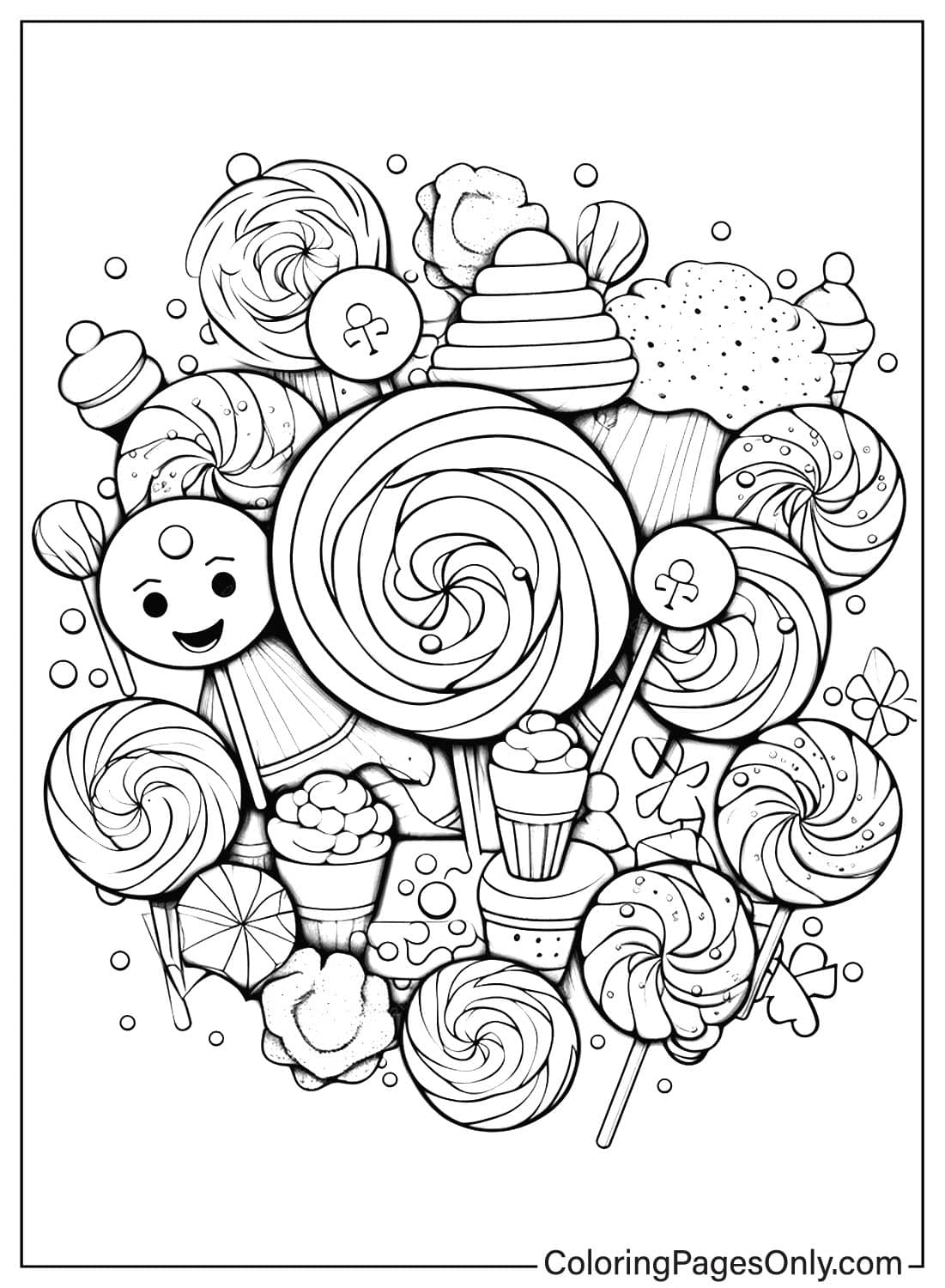
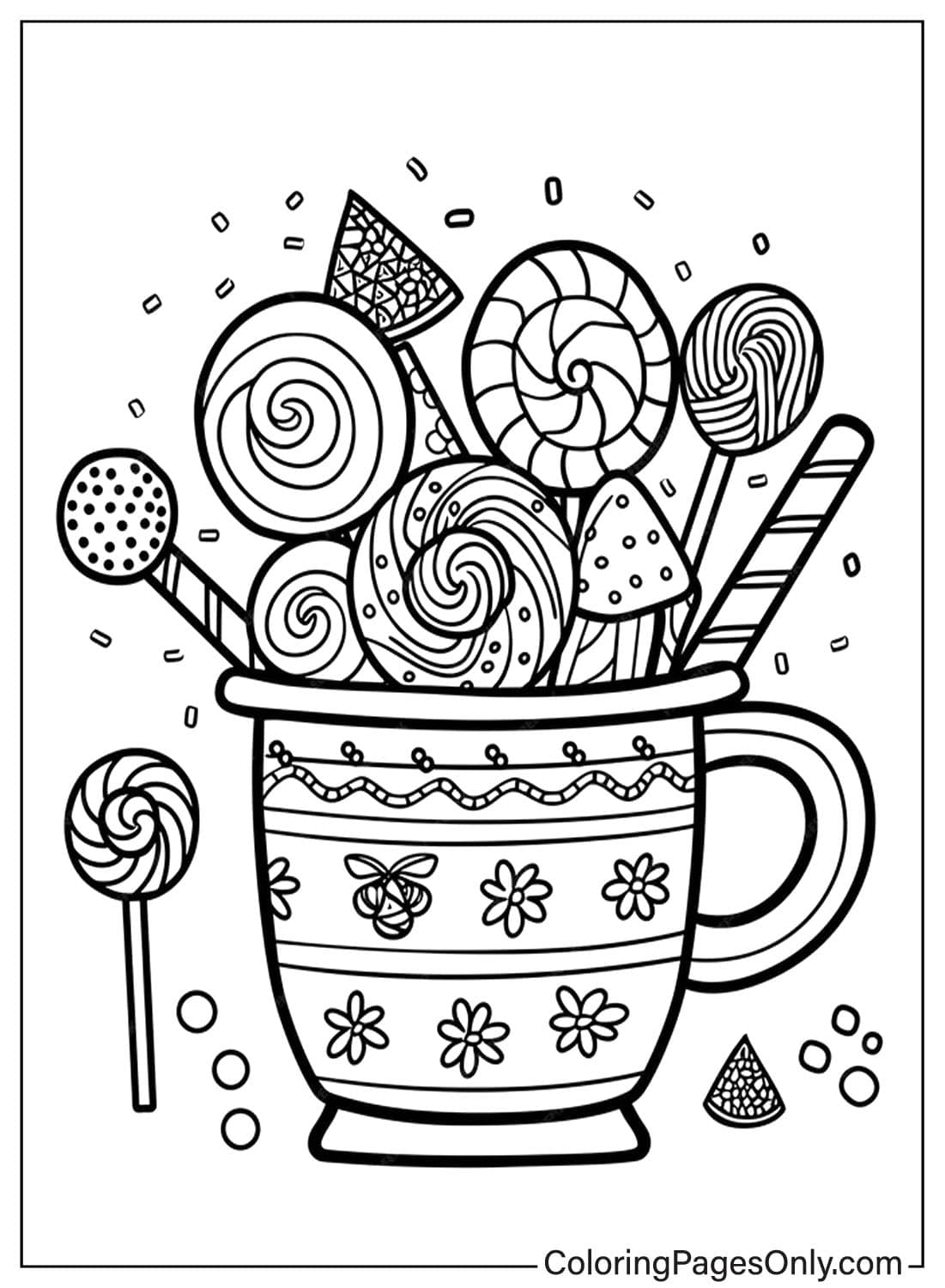
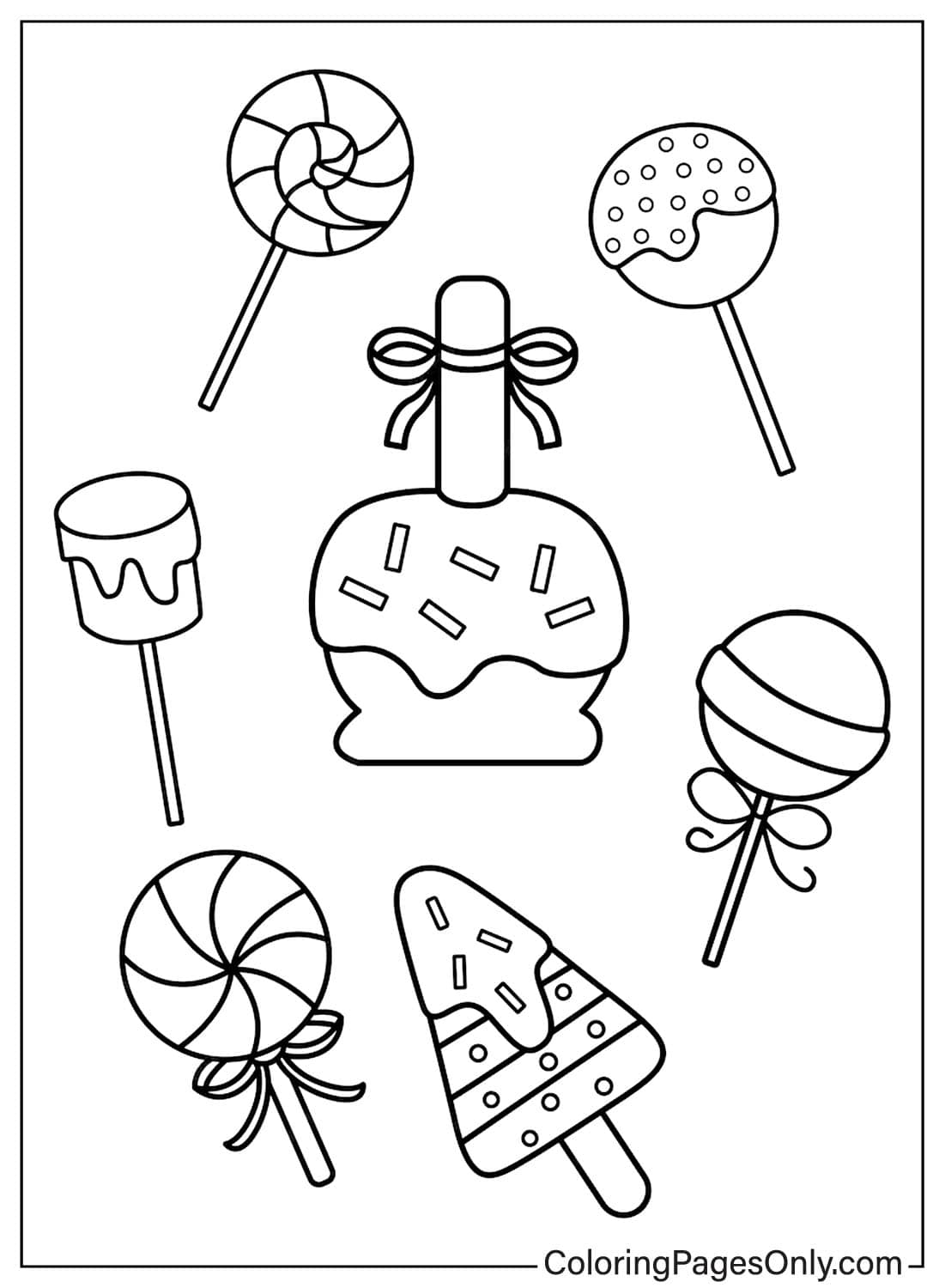
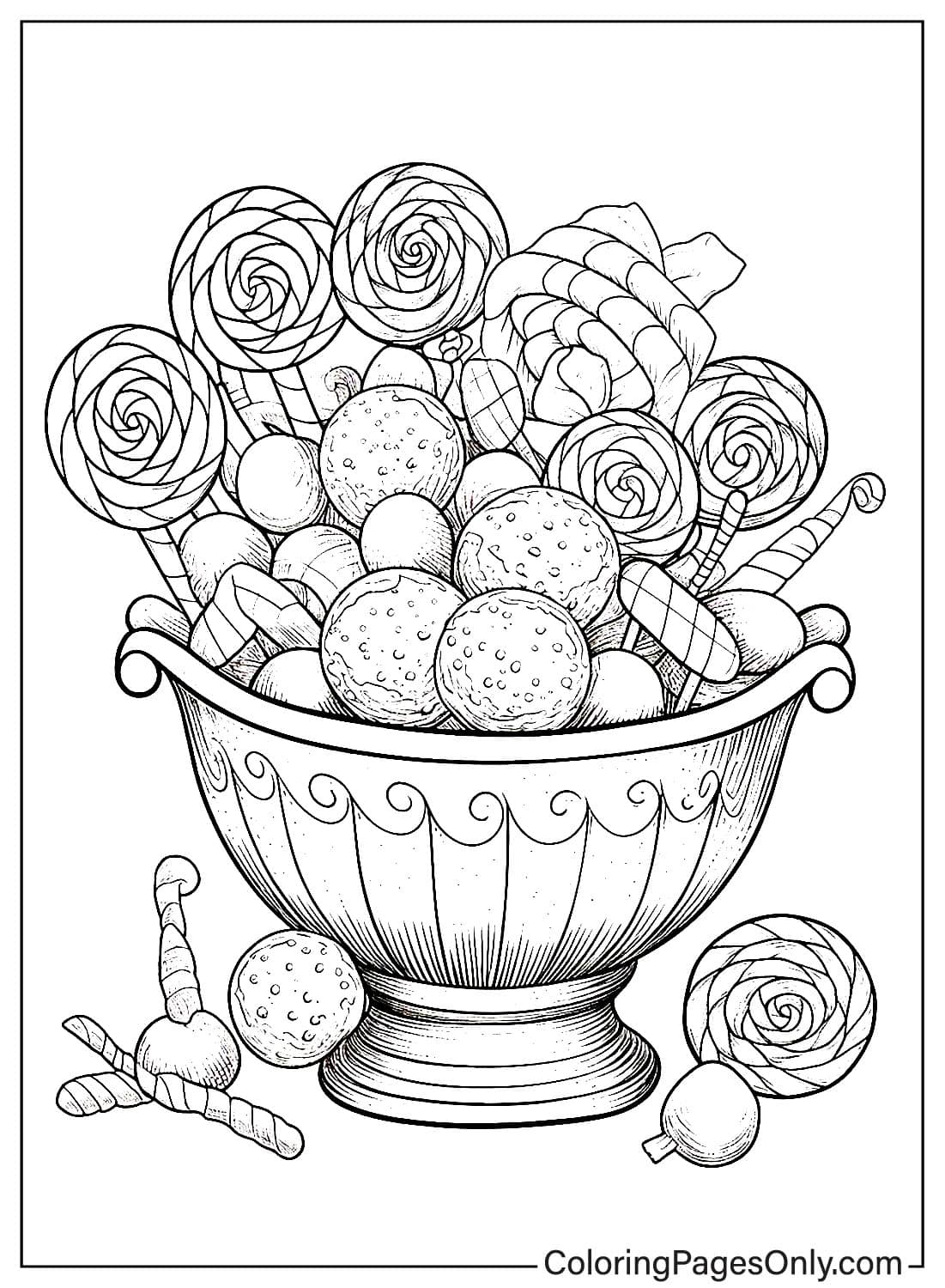





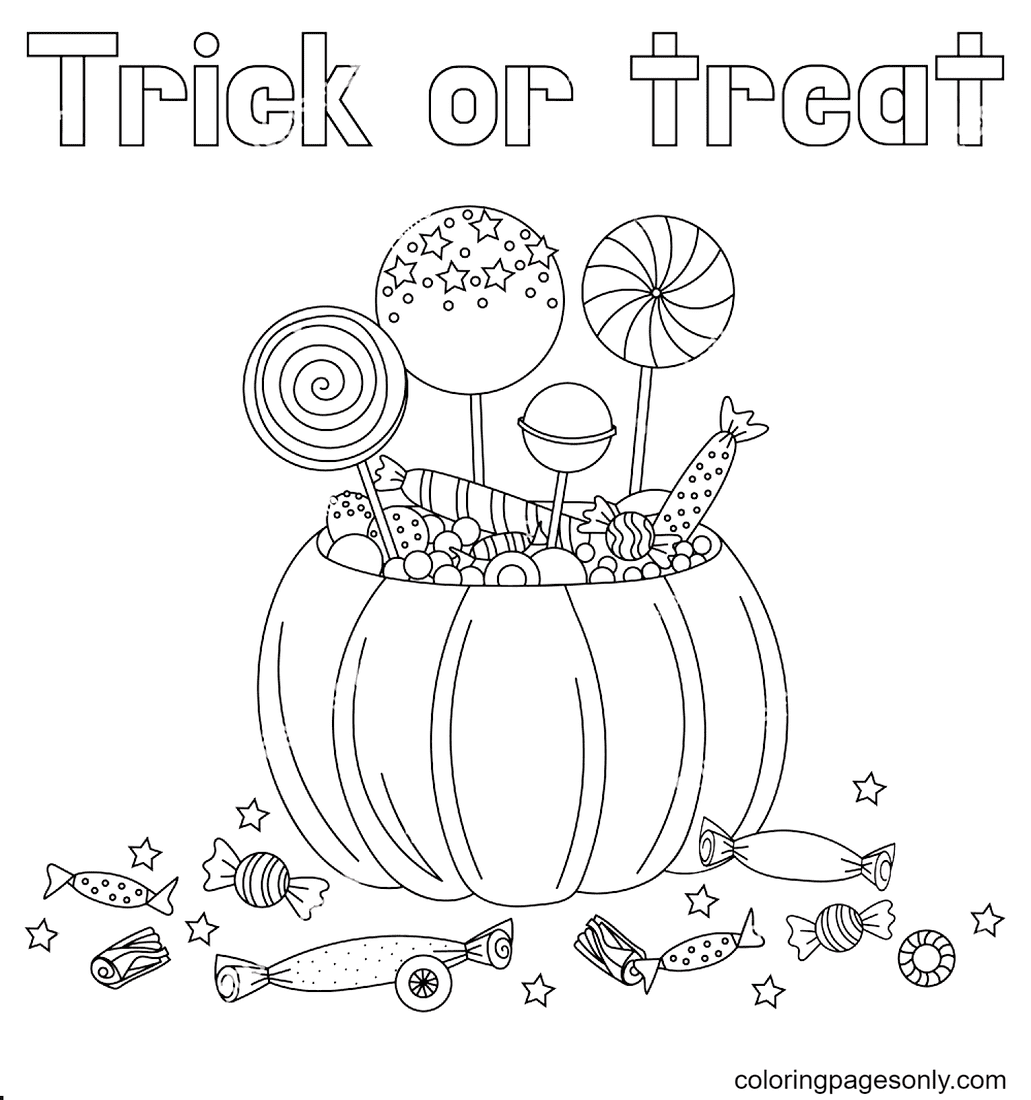
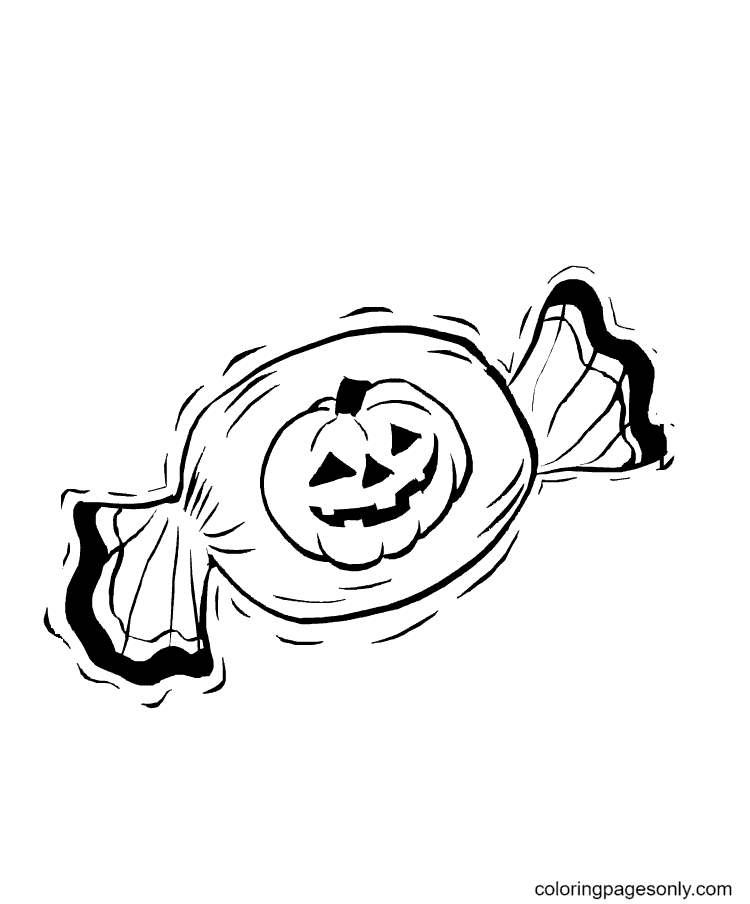
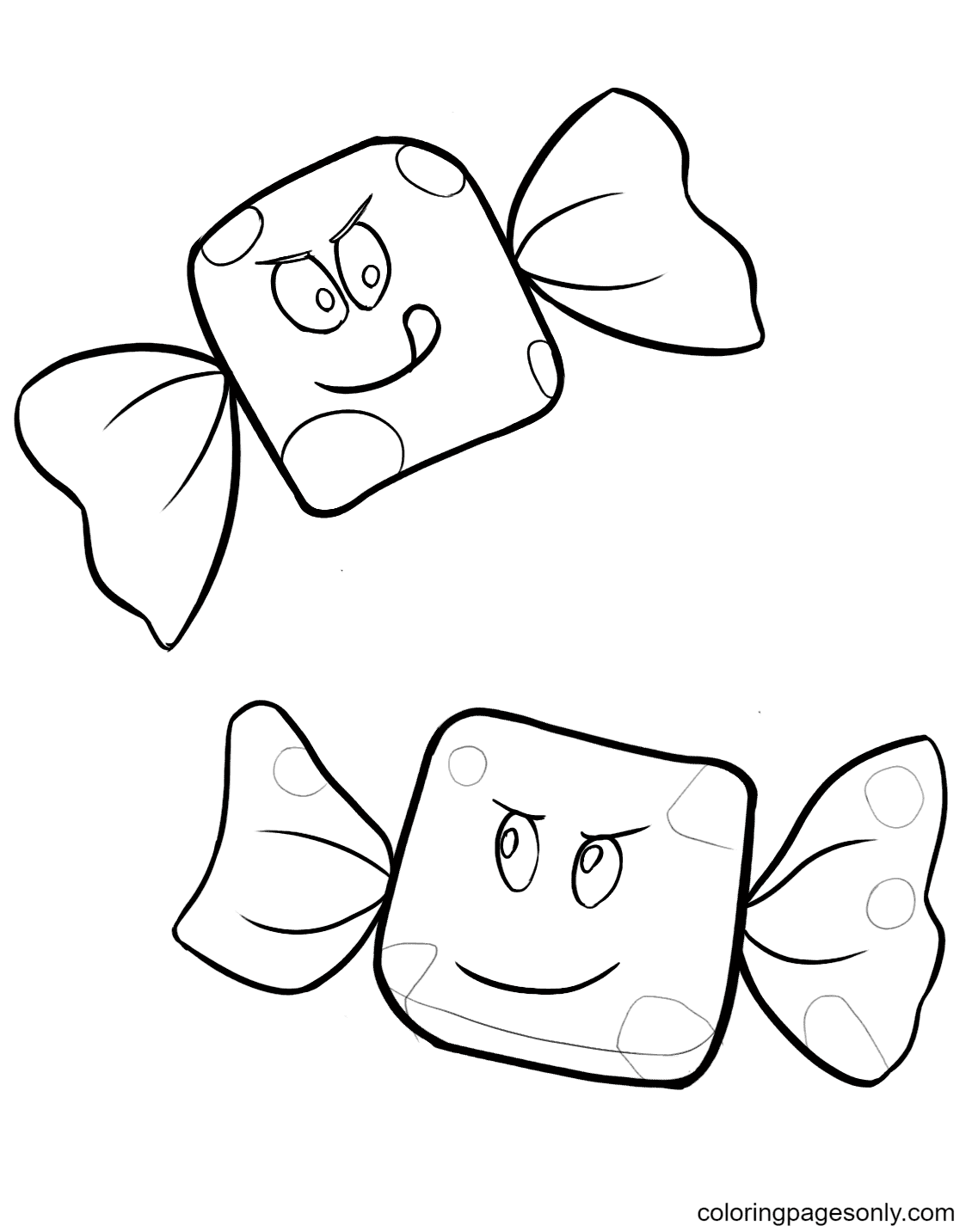
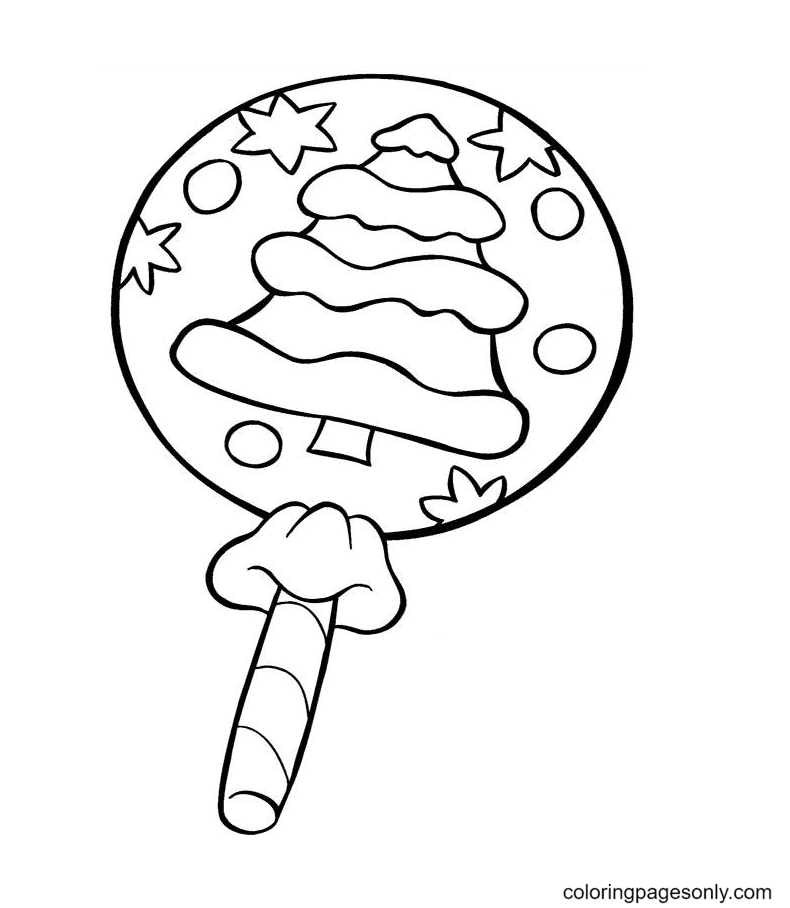


What Is Inside This Collection
The 62 pages fall into a few clear groups, based on the type of candy shown and how it is presented.
Lollipops and Swirl Candy
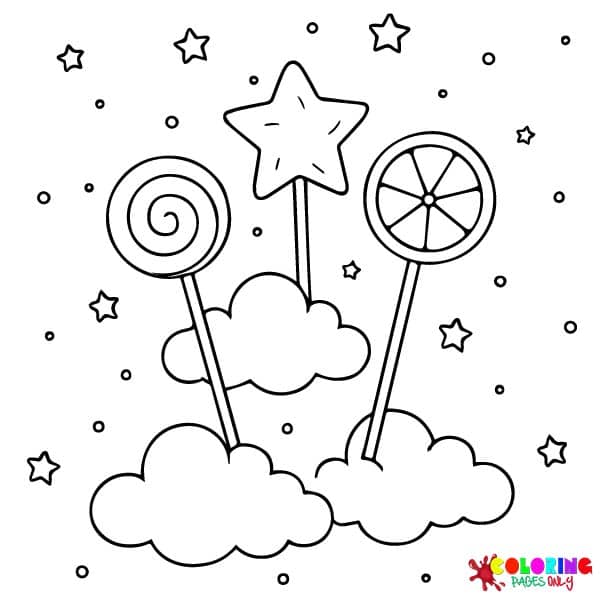
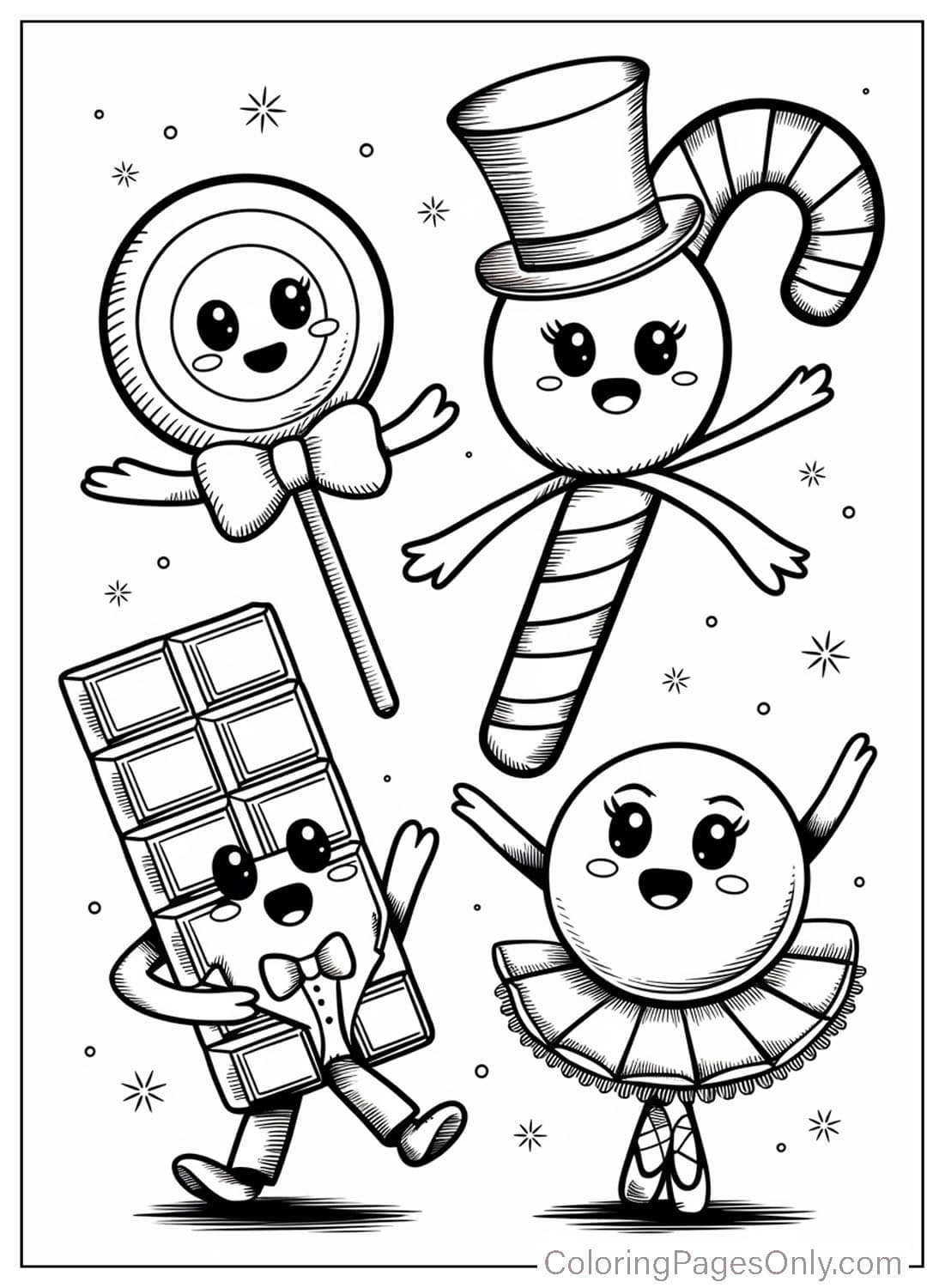
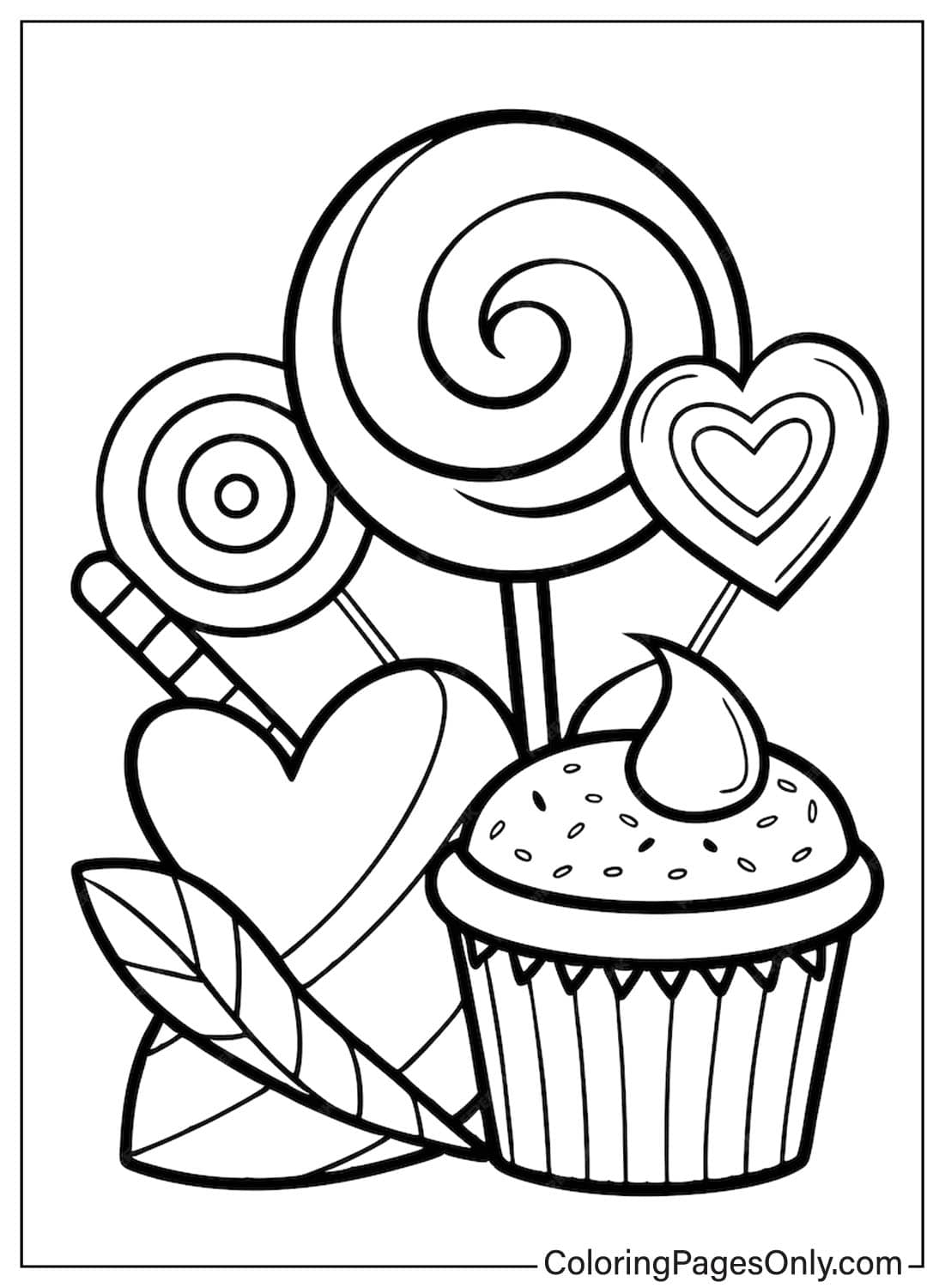
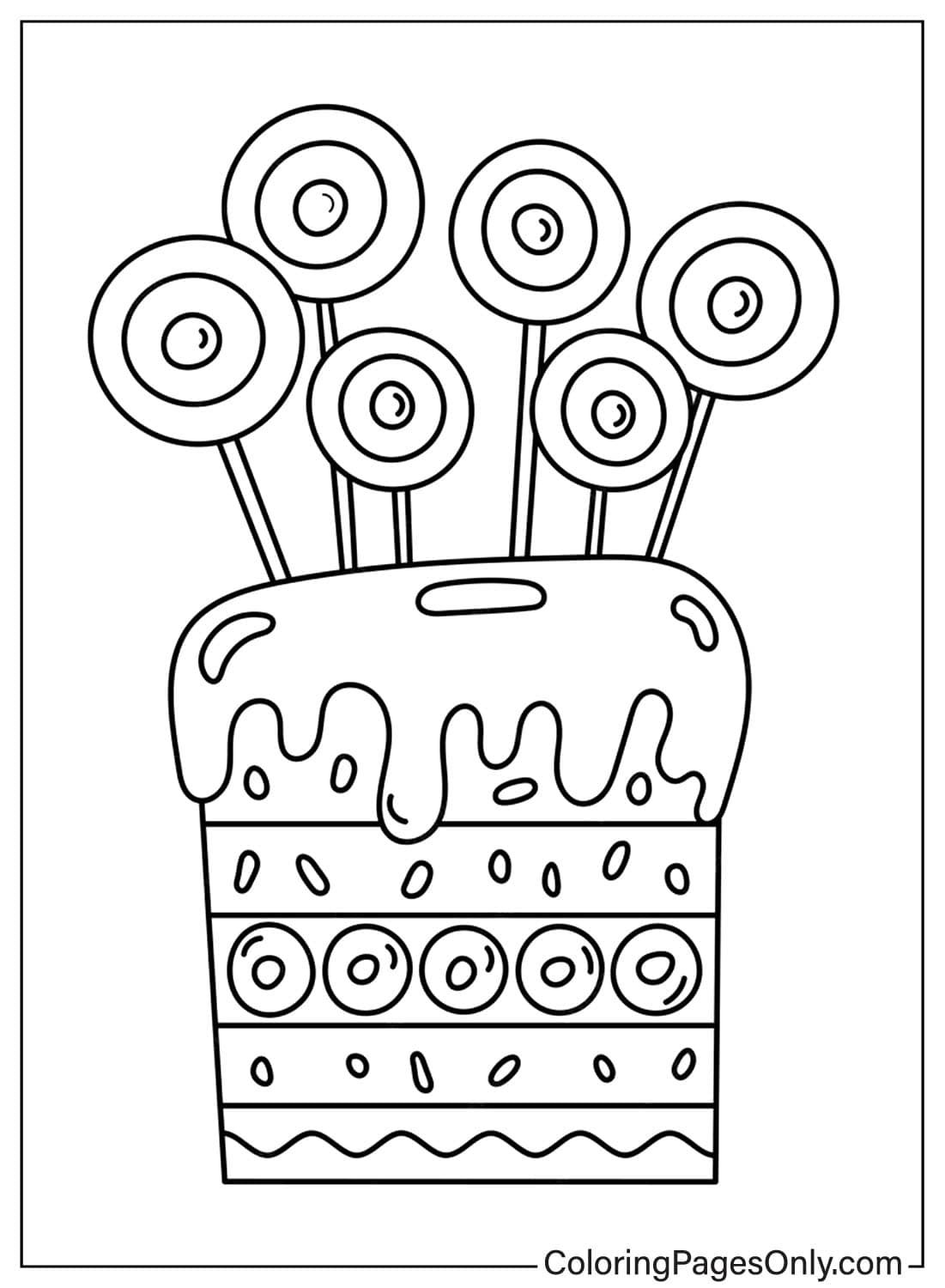
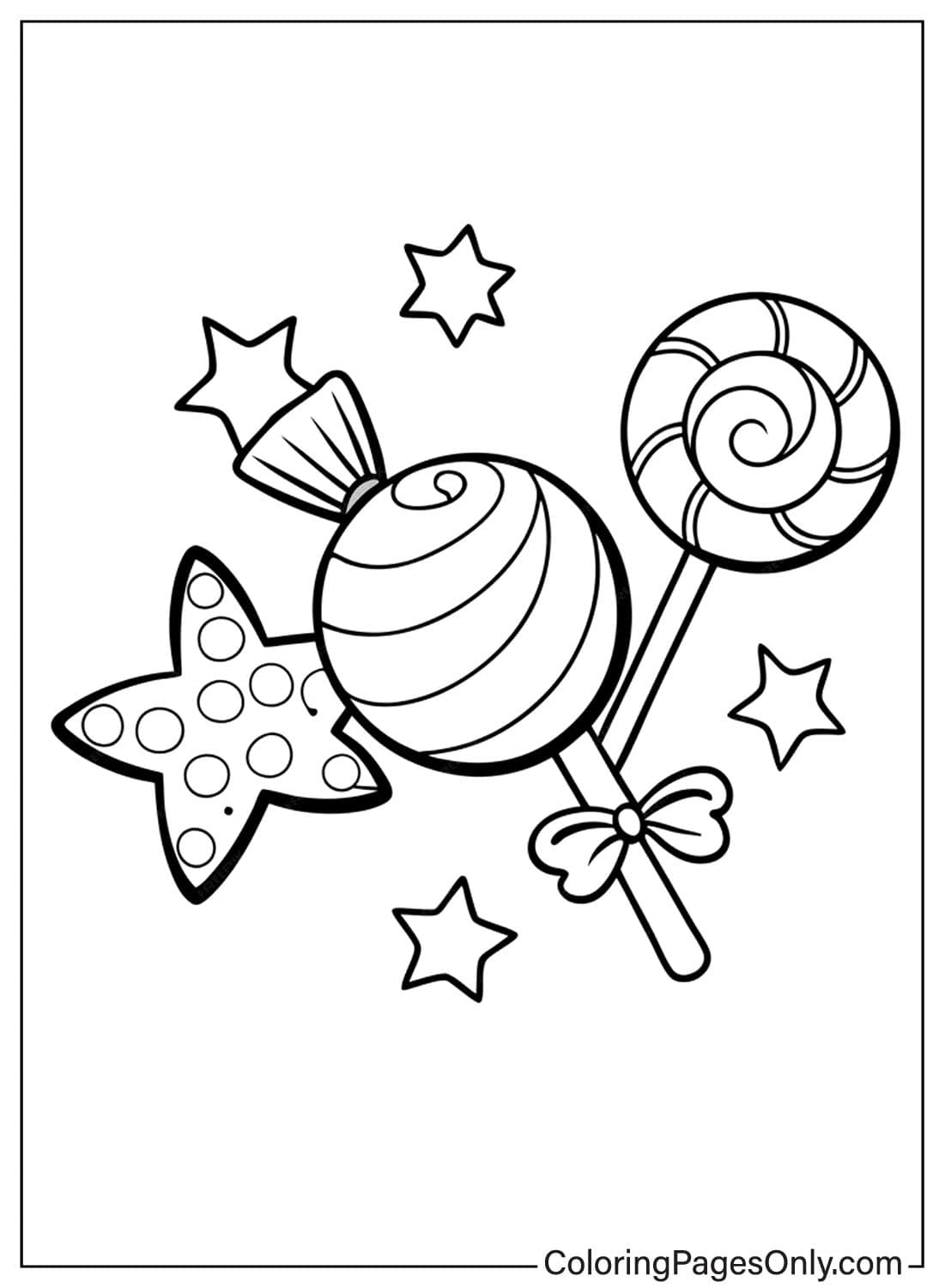
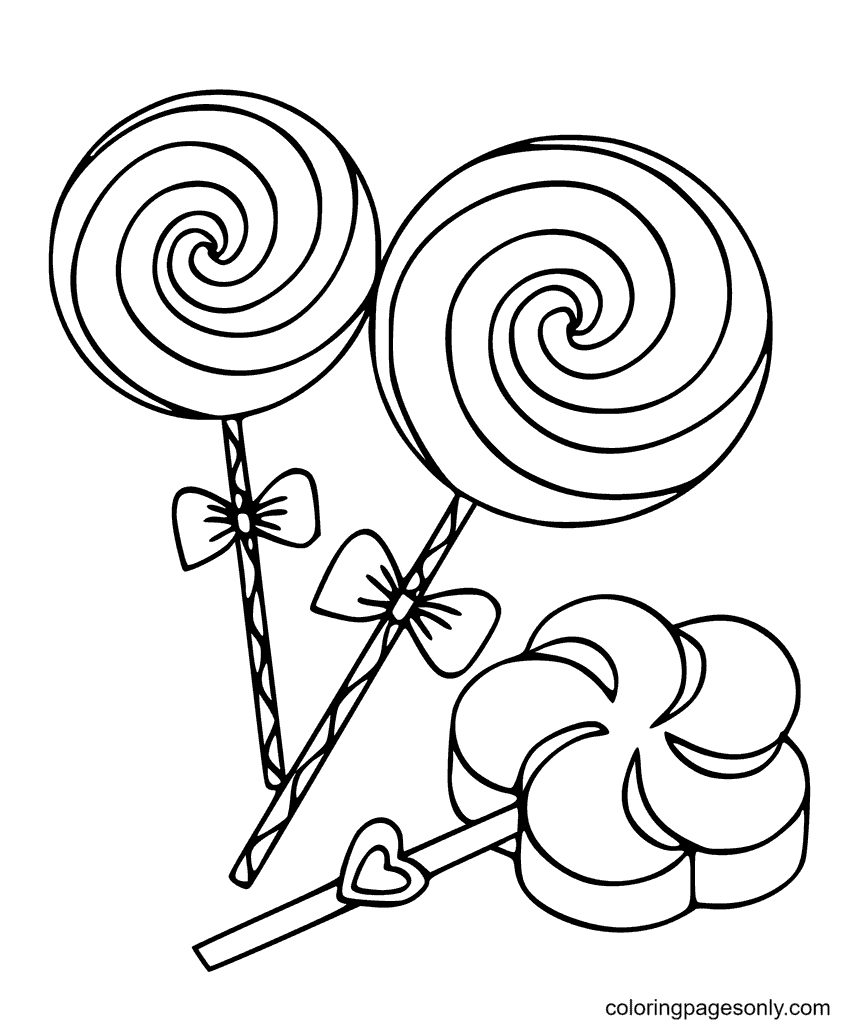
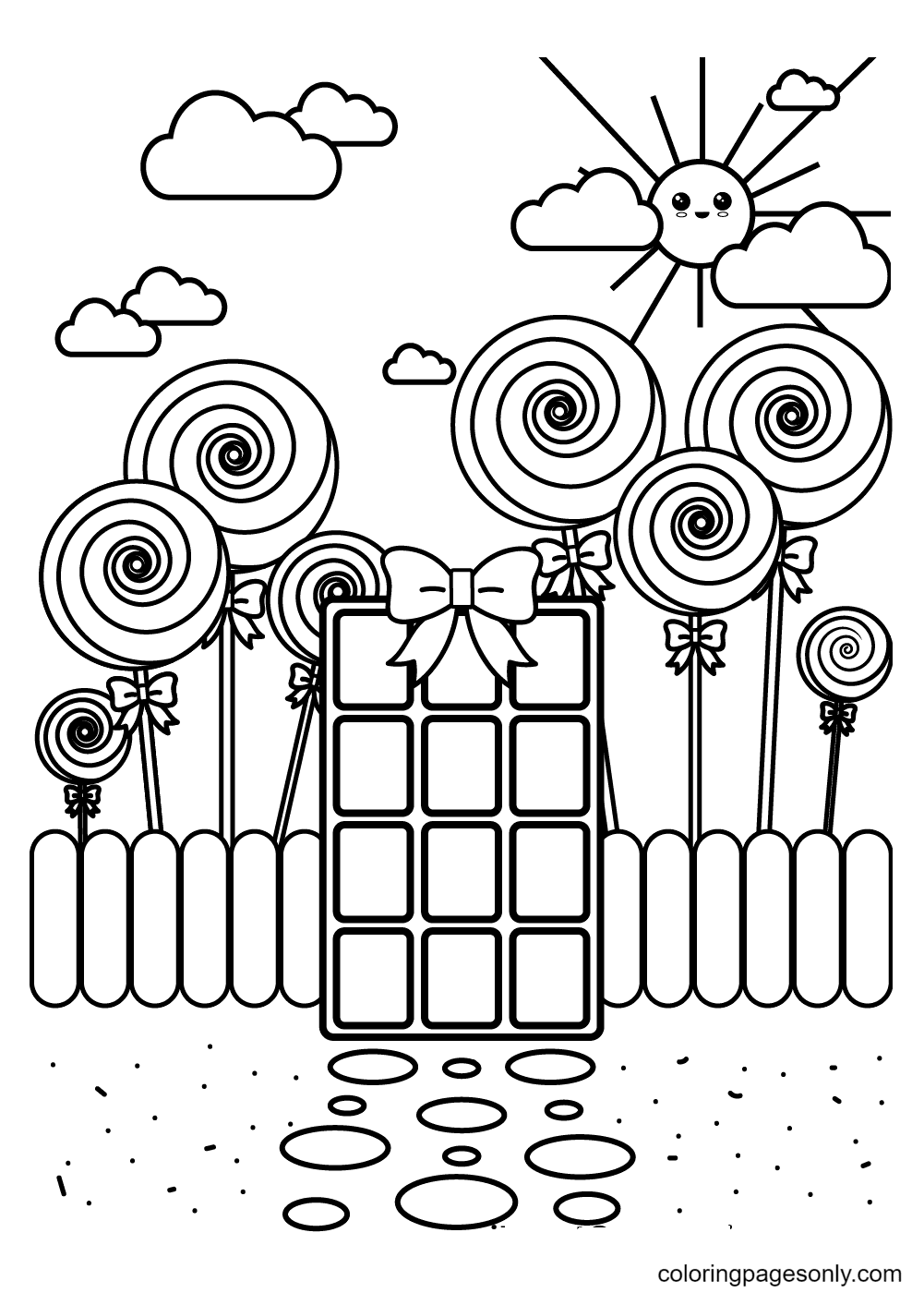
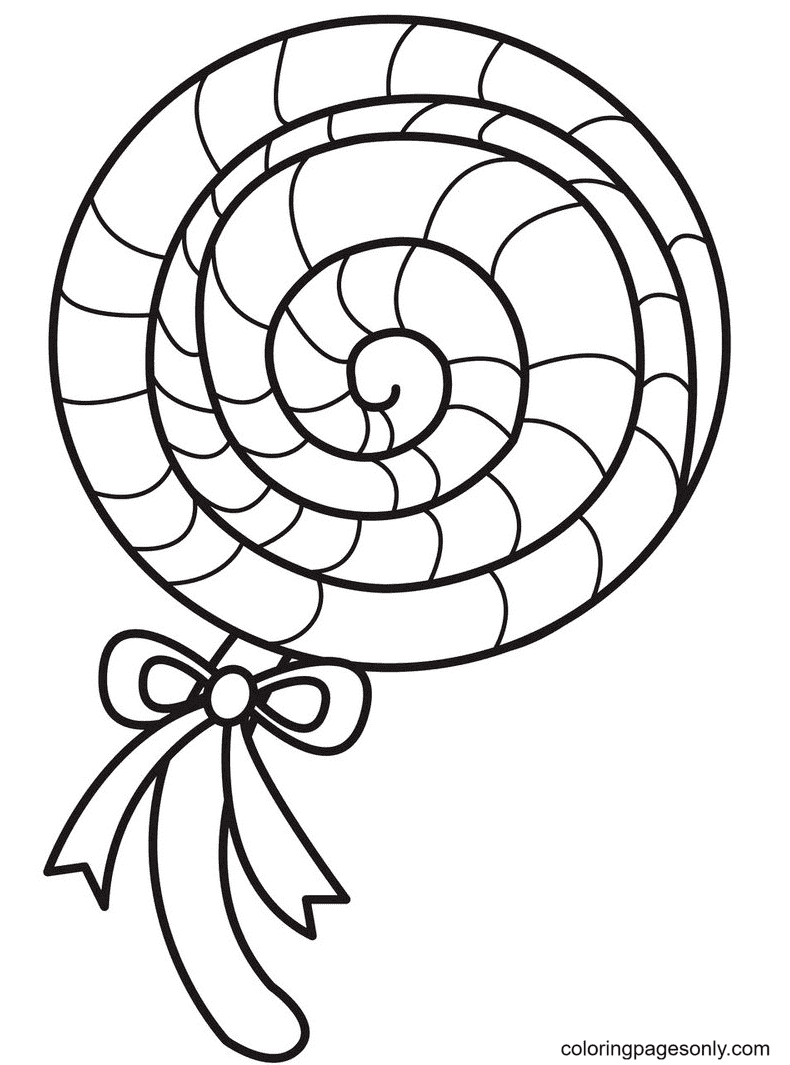
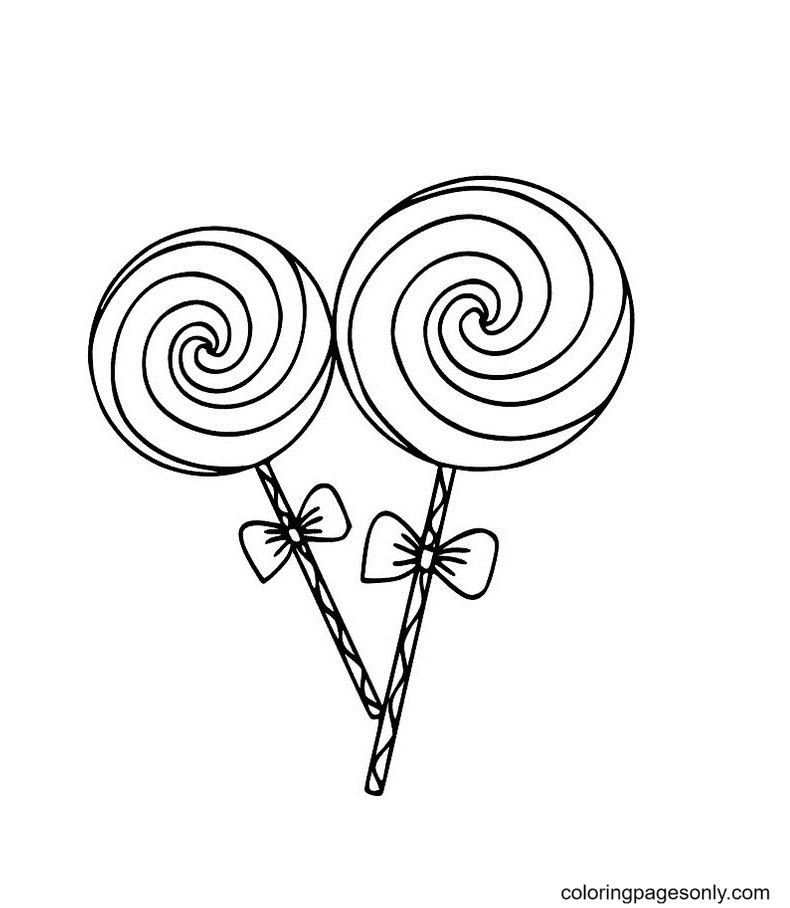
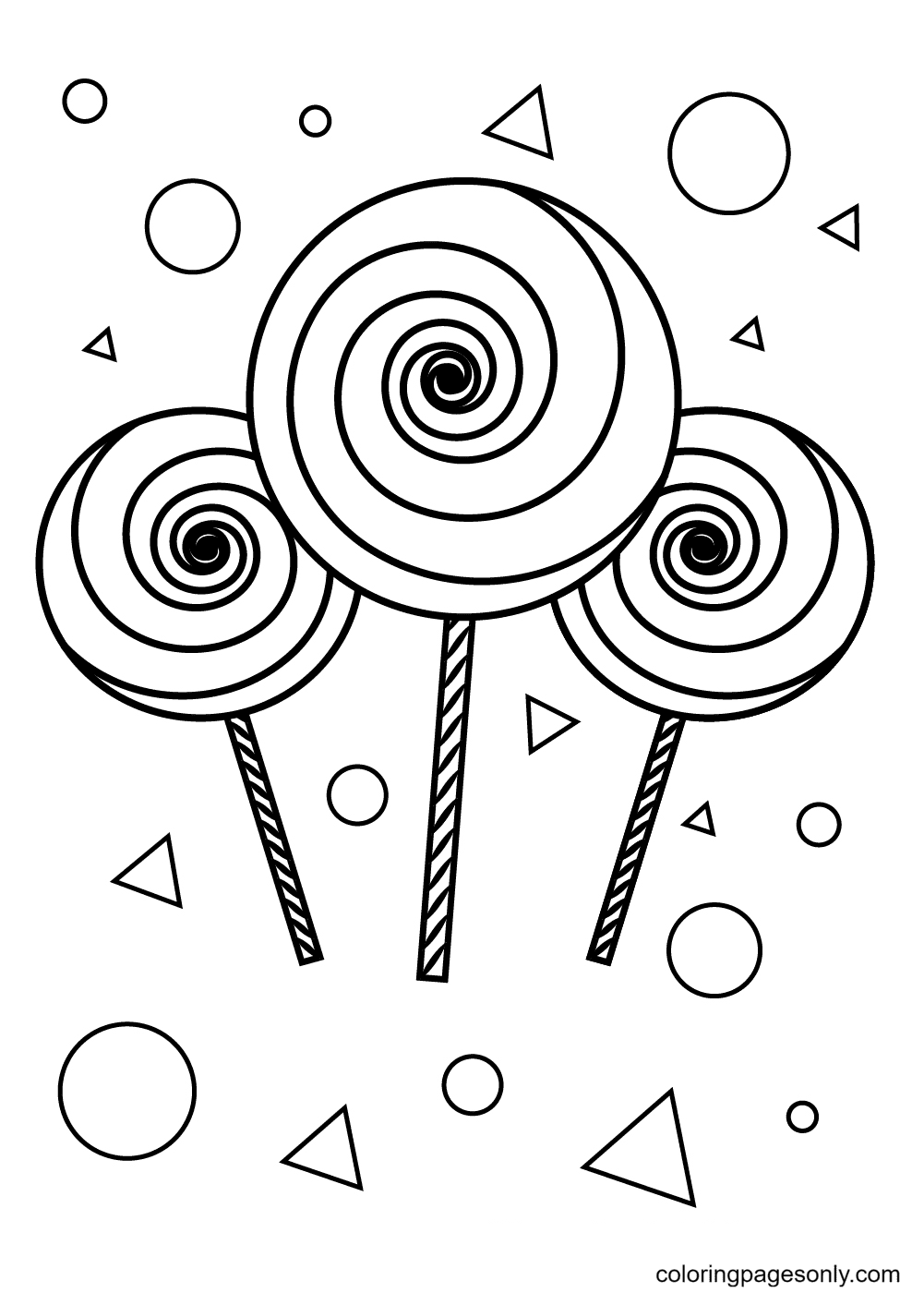
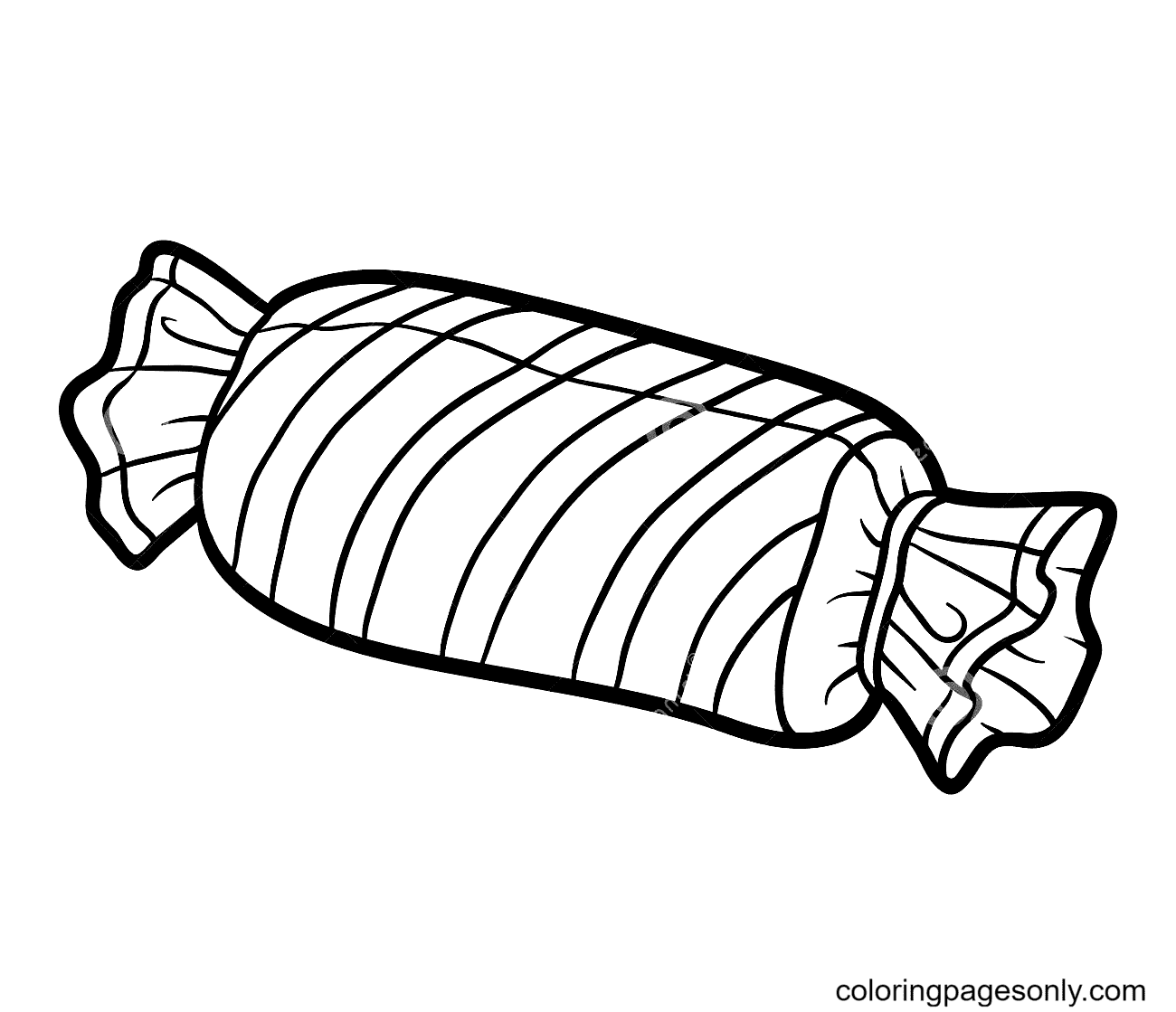
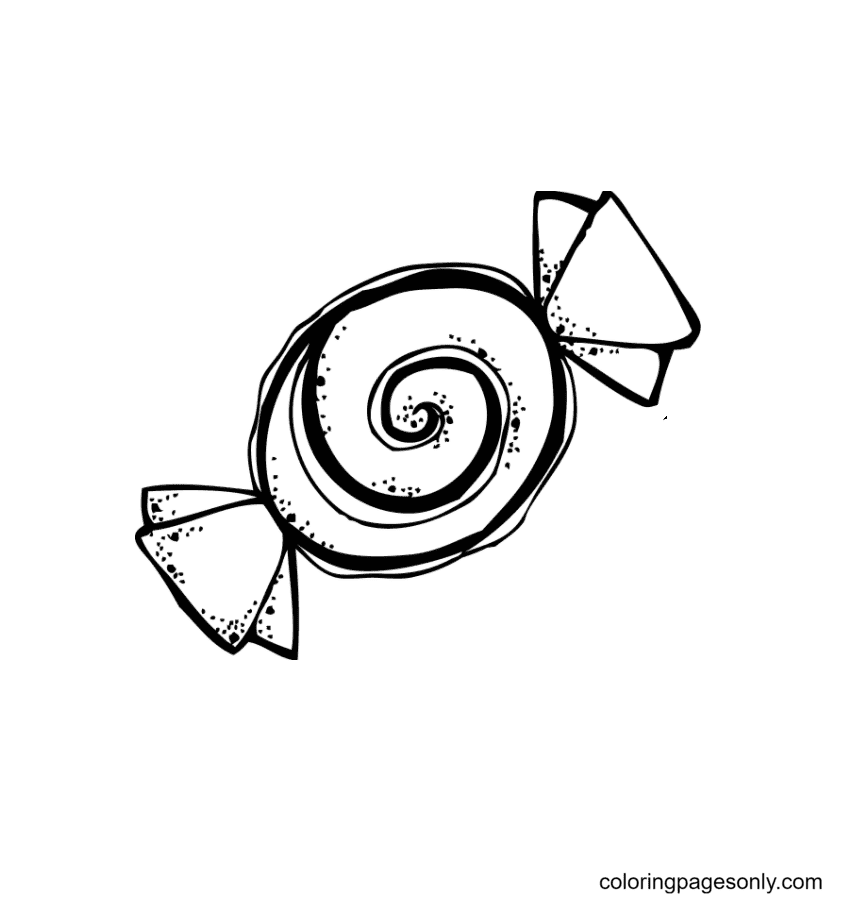
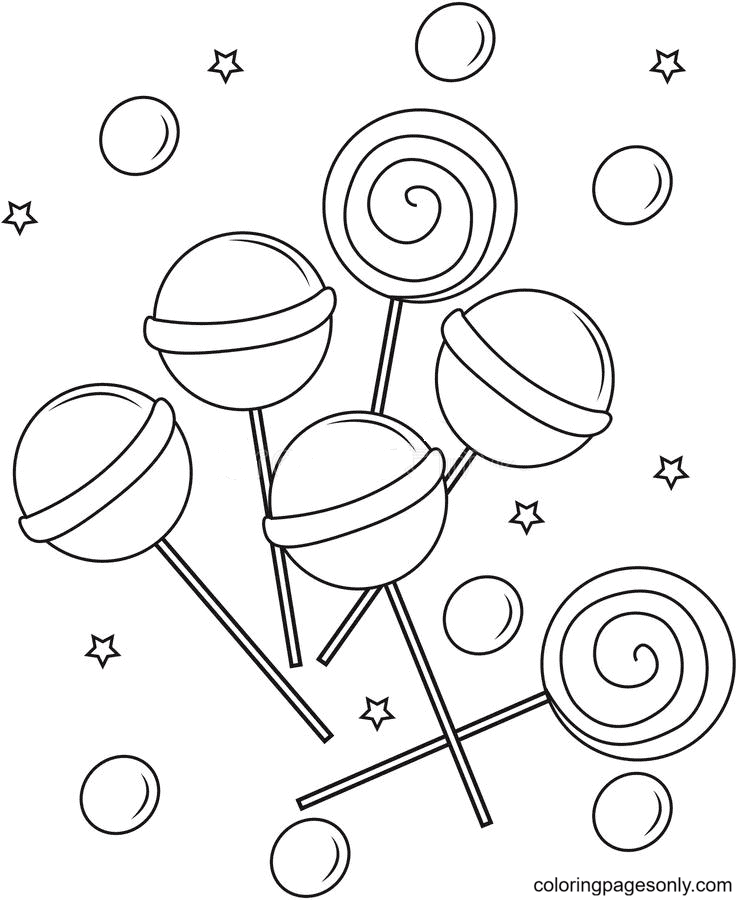
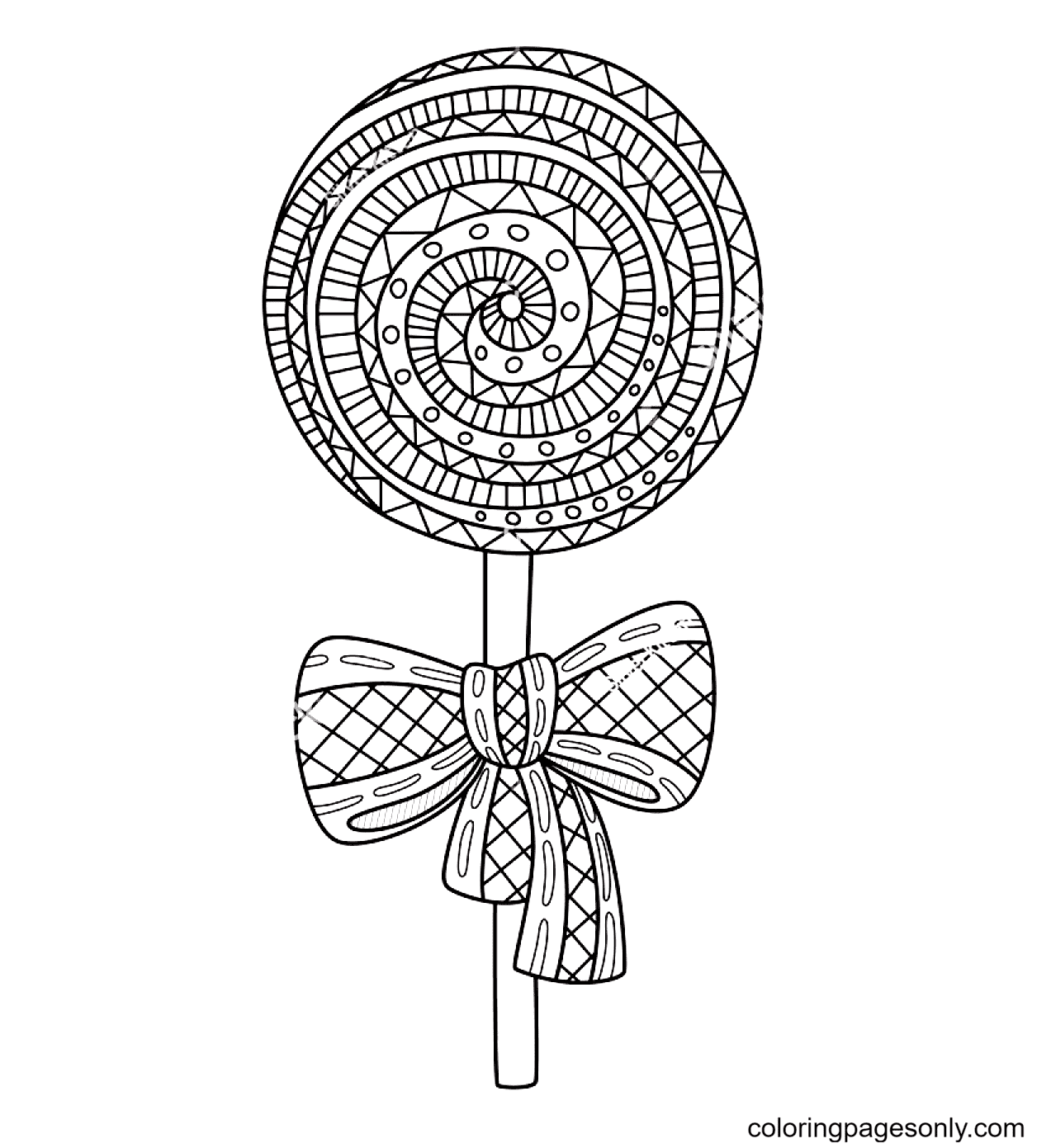
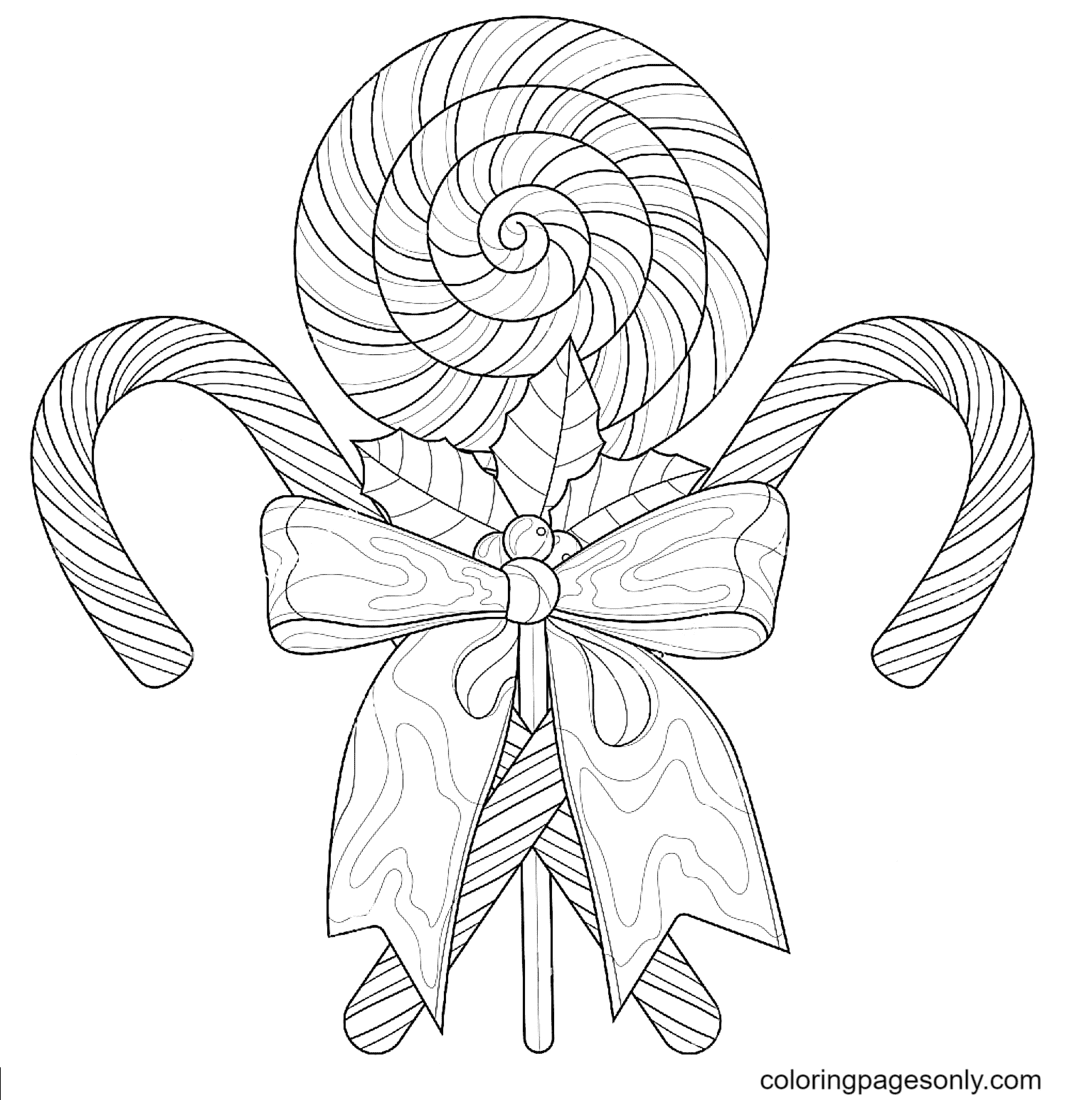
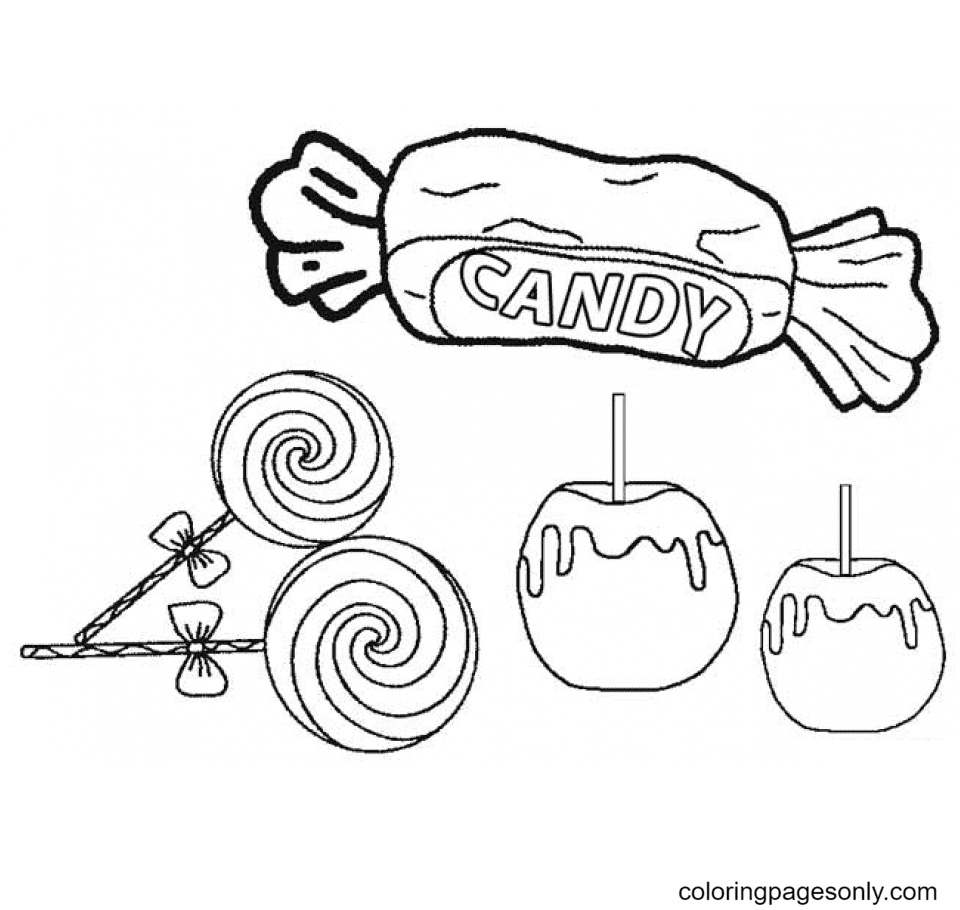
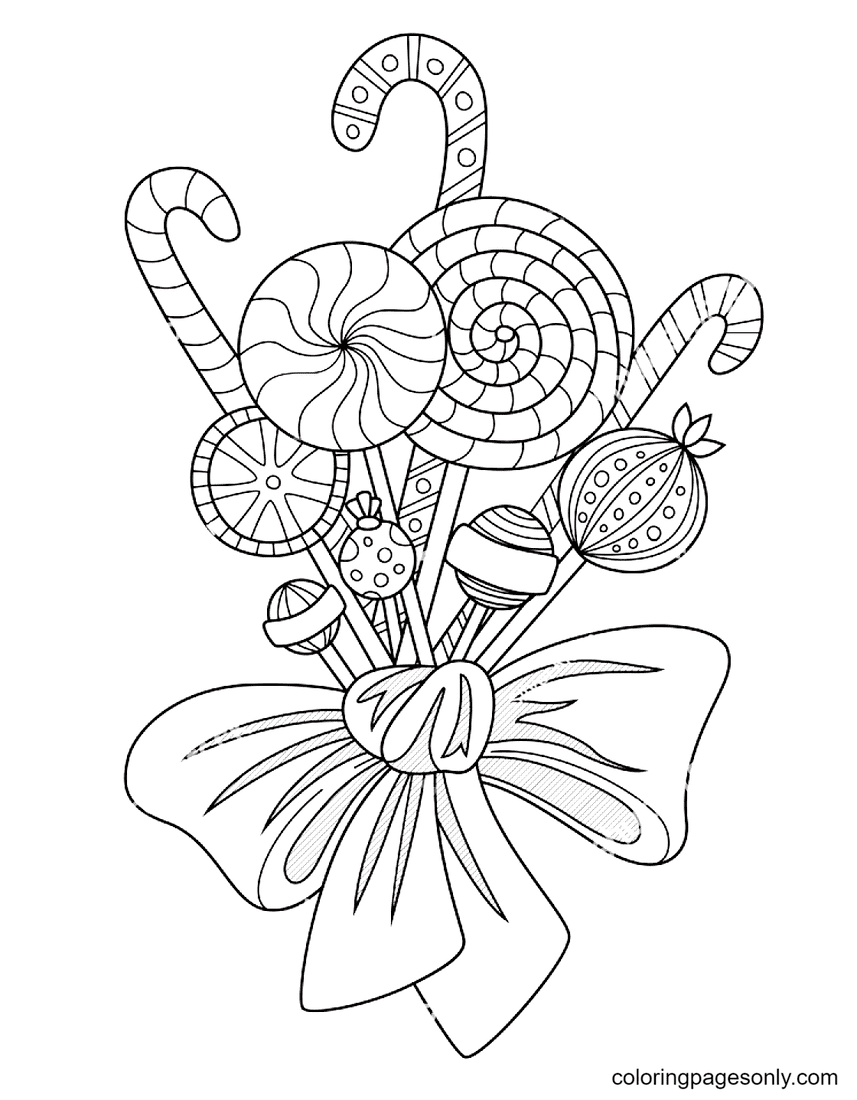
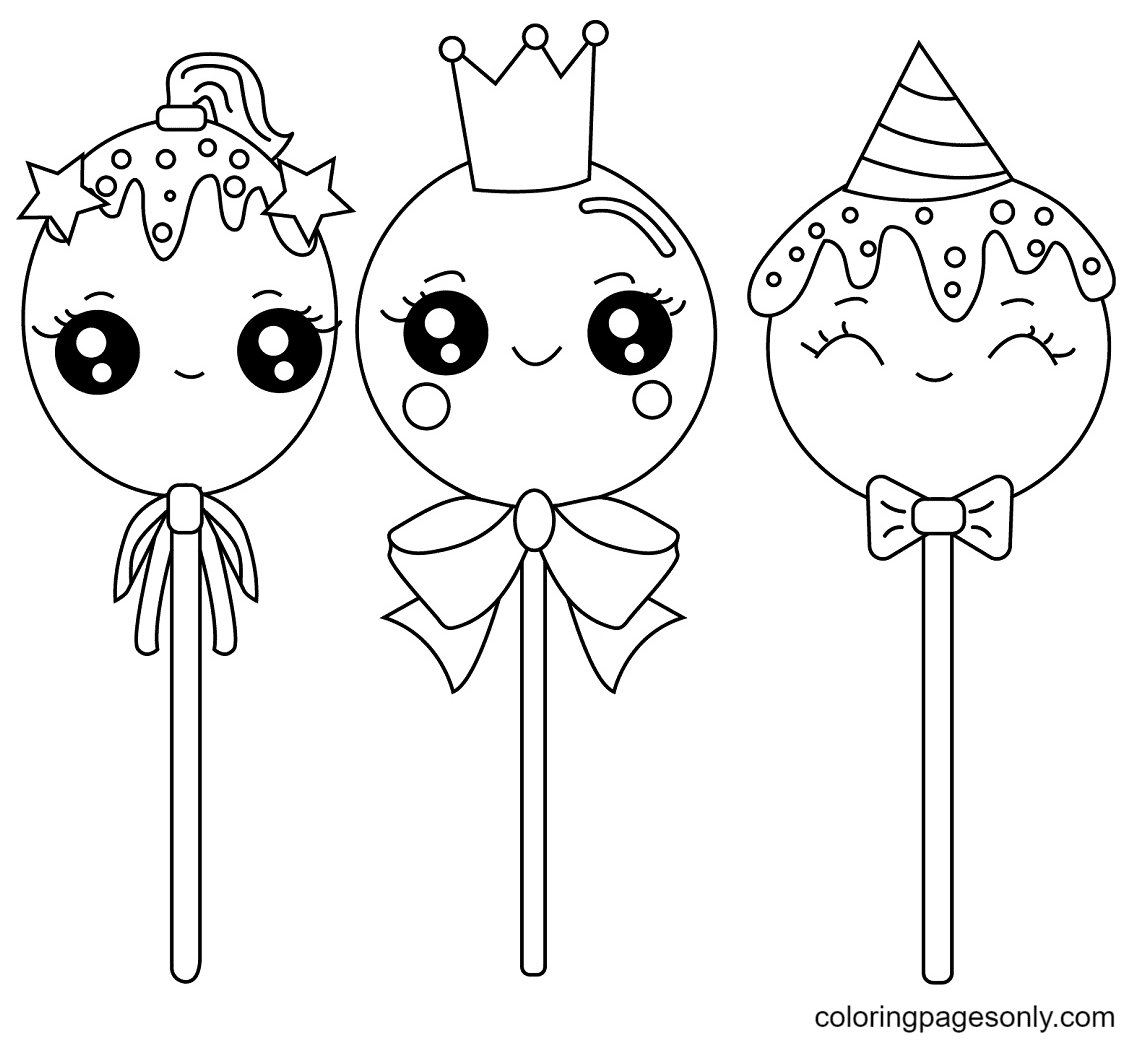
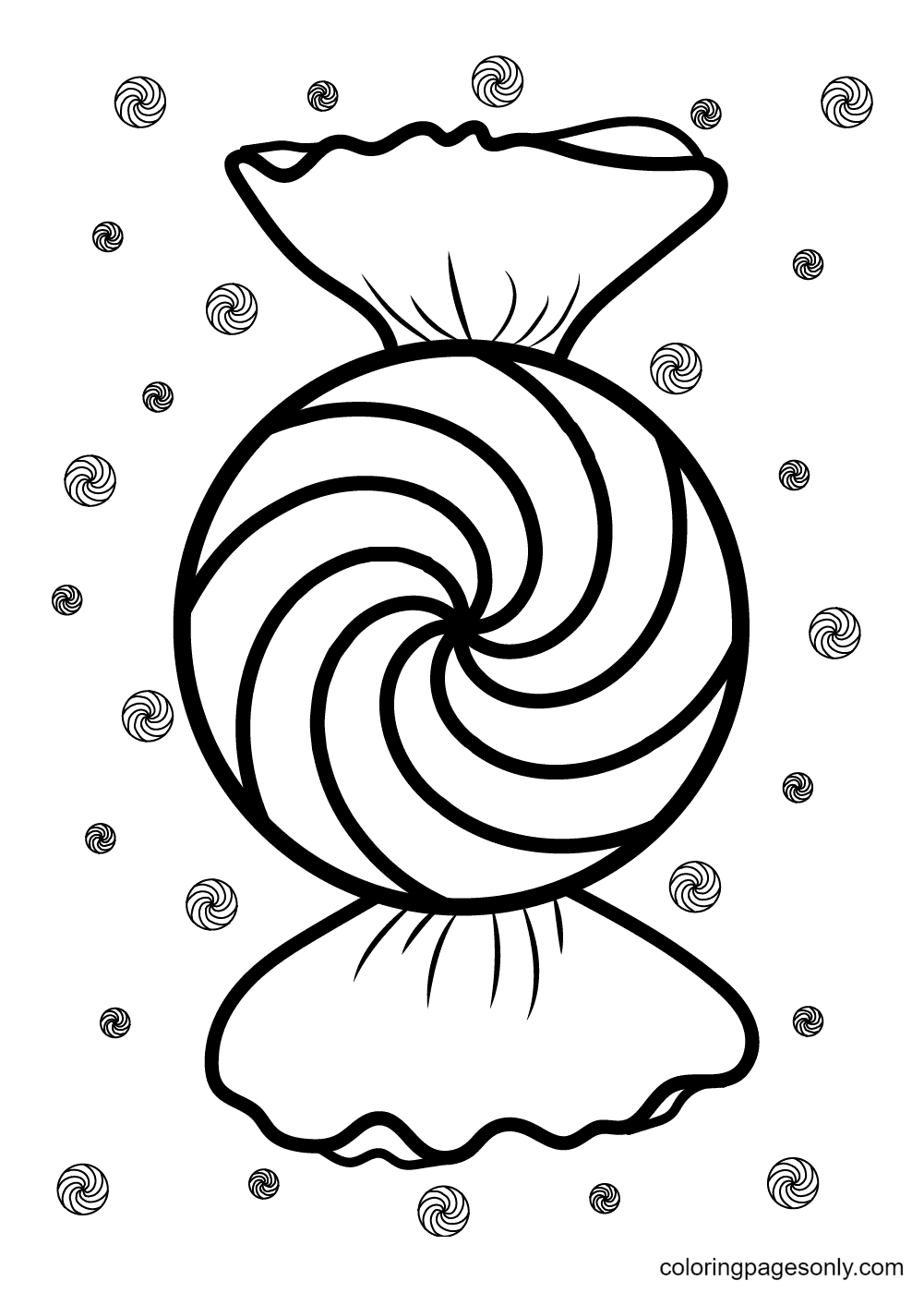
The largest share of the collection is solo lollipops and swirl-patterned candy, often decorated with a bow or ribbon. Alternate two or three bright colors, Red, Pink, and Yellow work well, in the swirl pattern section by section, and keep the stick a plain White or Tan so the colorful candy head stays the focal point.
Candy Canes and Holiday Sweets
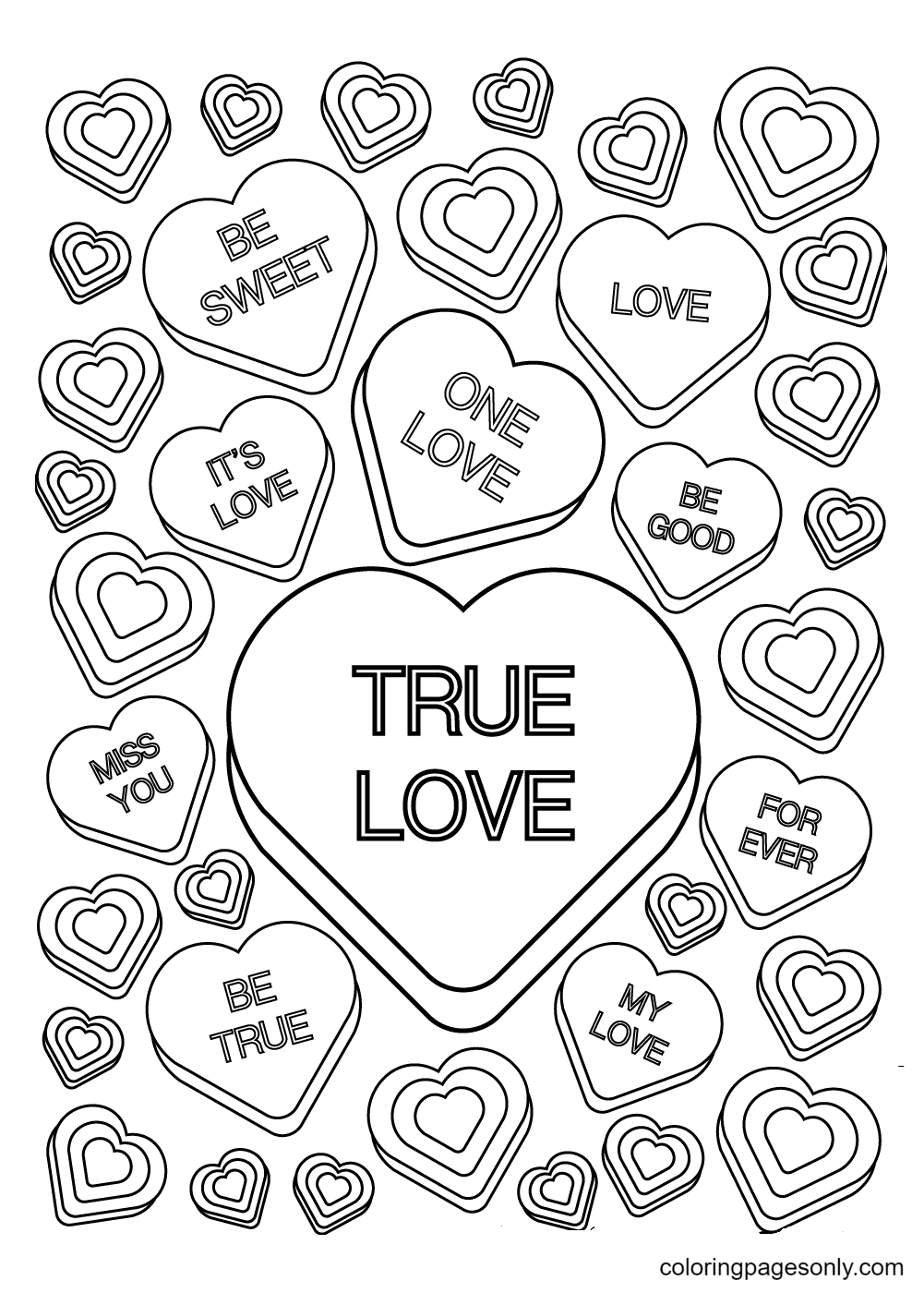
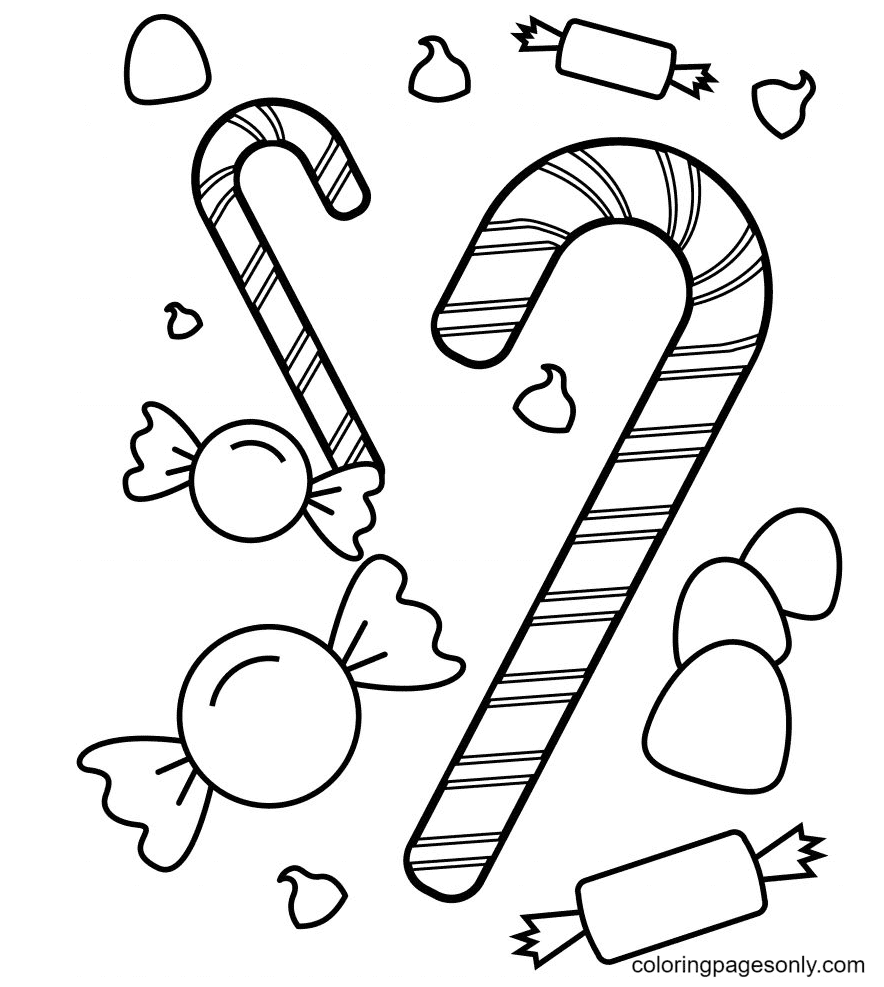
A second group ties candy to a specific holiday: candy canes and Christmas trees, pumpkins and Halloween candy, and heart-shaped Valentine sweets. Use the classic Red-and-White stripe for candy canes, Orange and Black for the Halloween pages, and Pink or Red for Valentine hearts, letting each holiday’s usual colors guide the palette.
Chocolate and Bar Candy
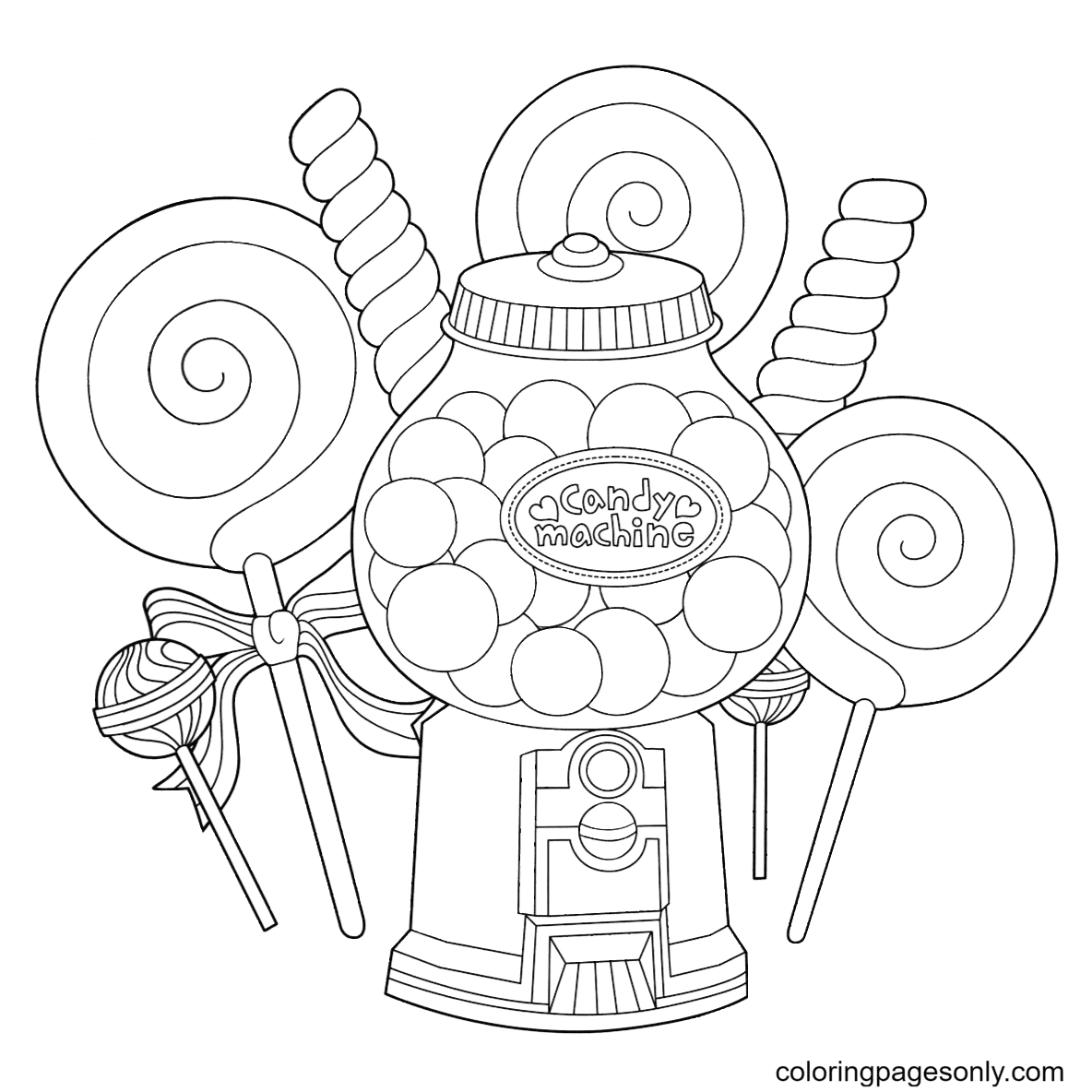
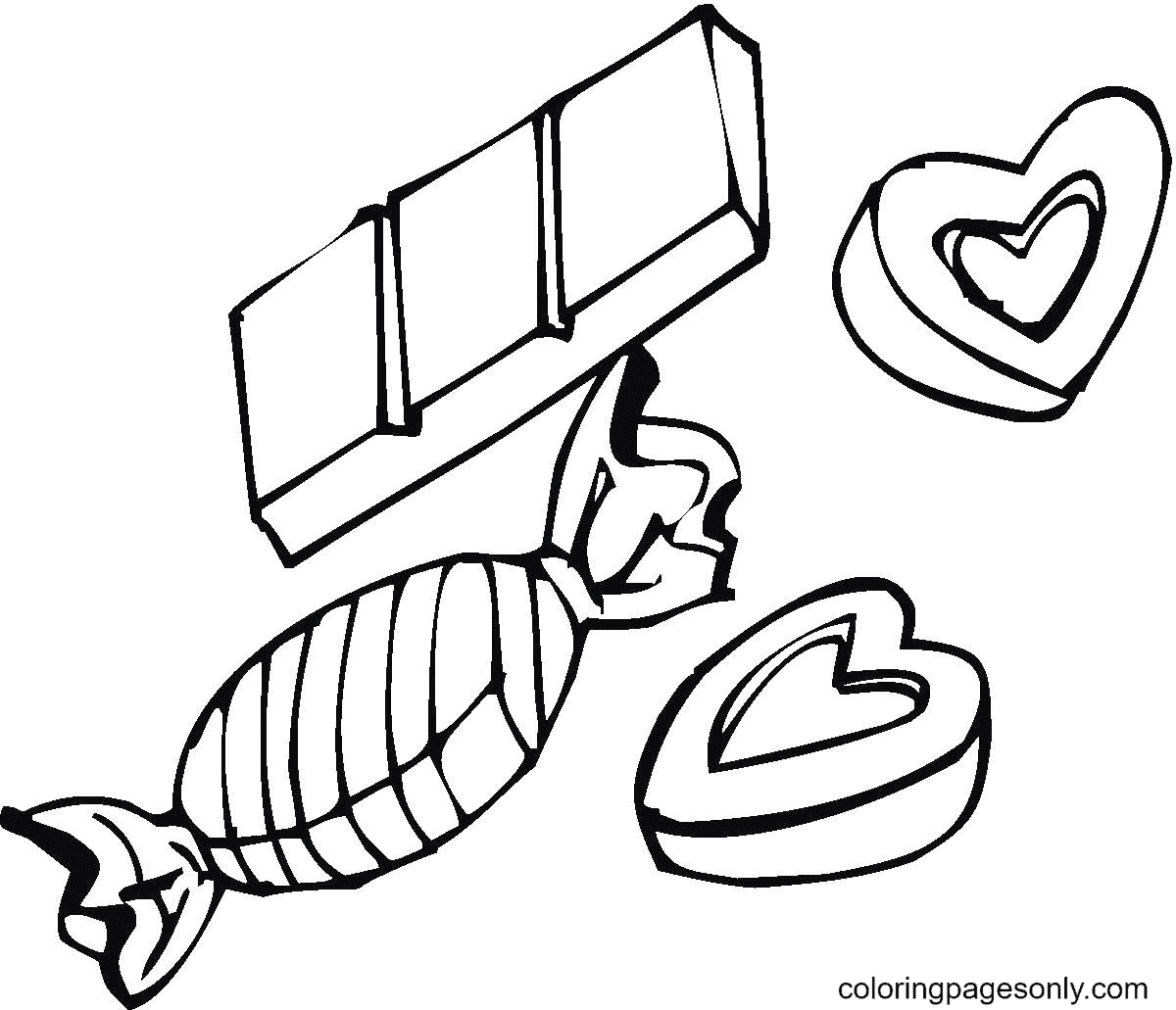
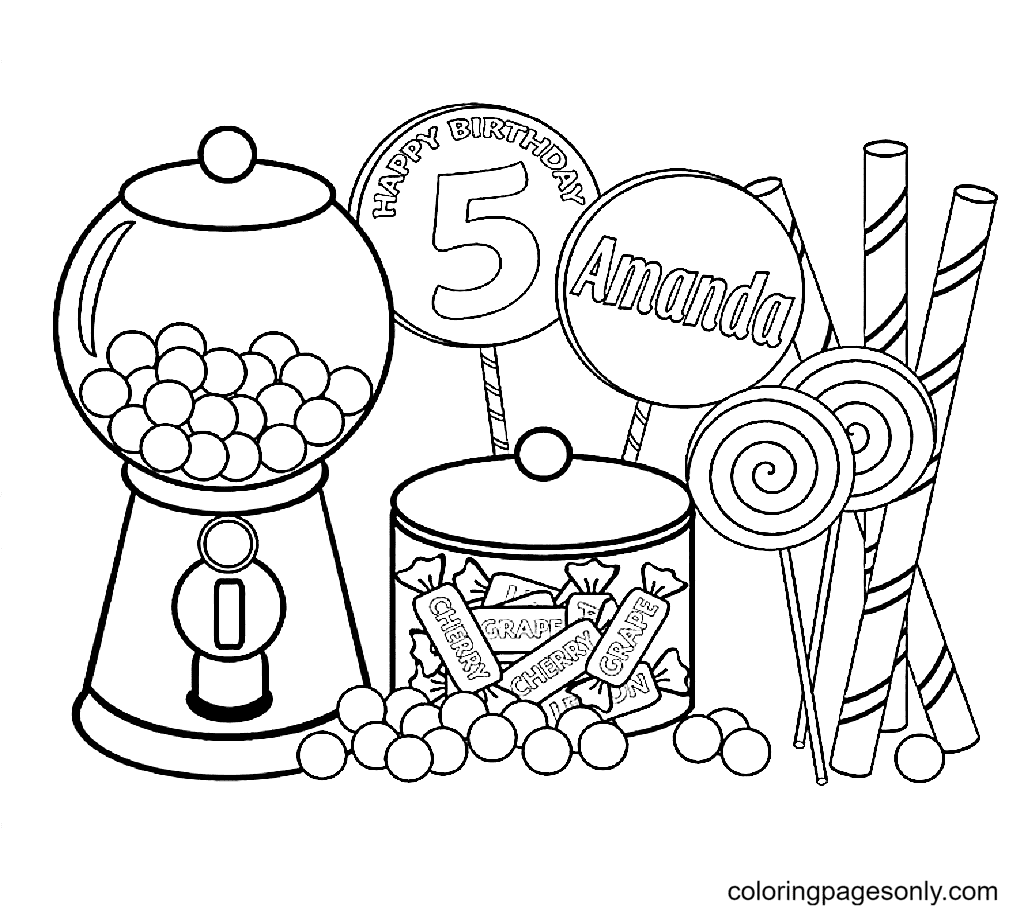
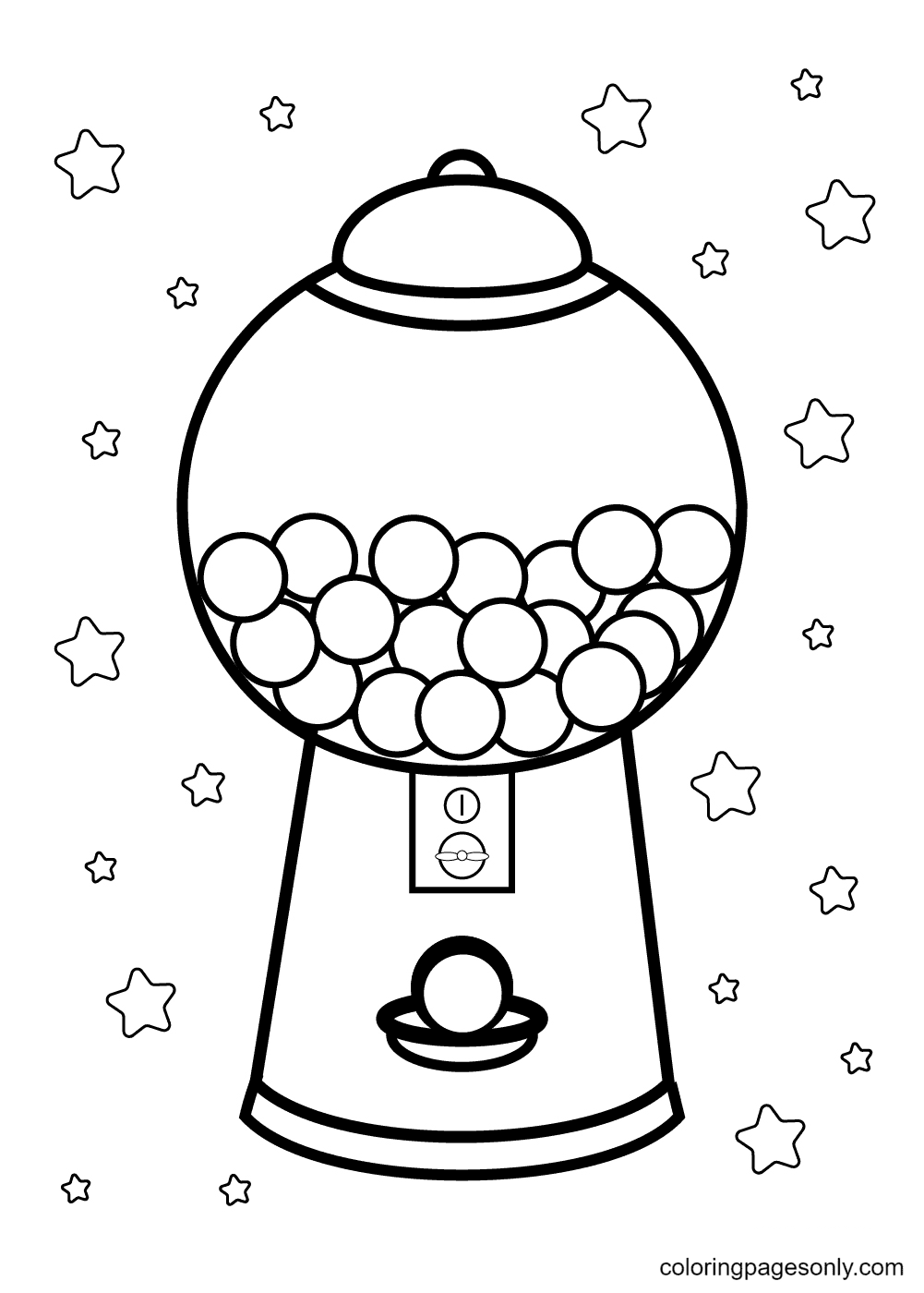
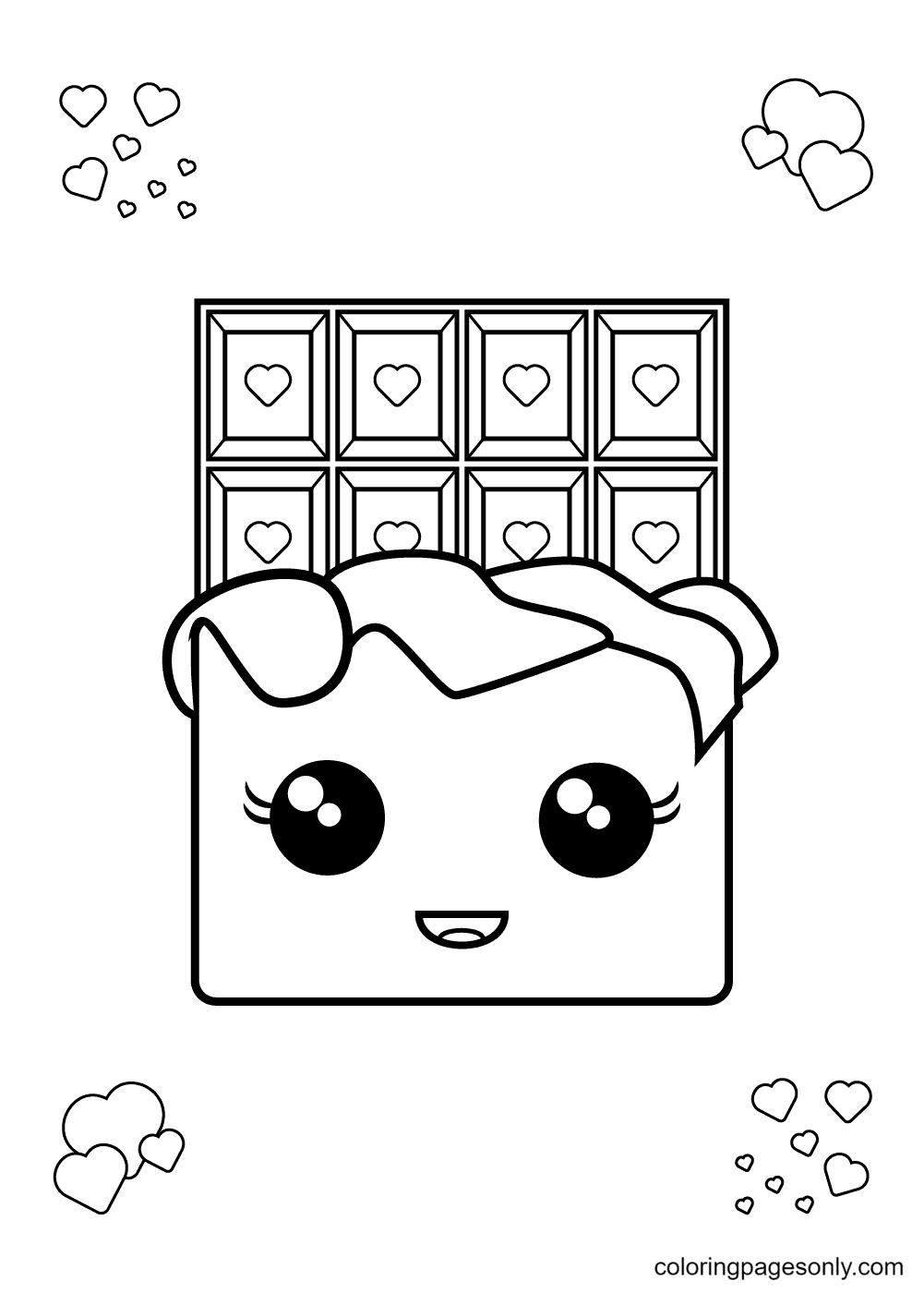
A smaller group focuses on chocolate bars and gumball machines. Color chocolate a rich Brown with a lighter Tan wrapper, and fill a gumball machine with several different bright colors in each round gumball rather than one flat color throughout.
Candy Scenes and Kingdoms
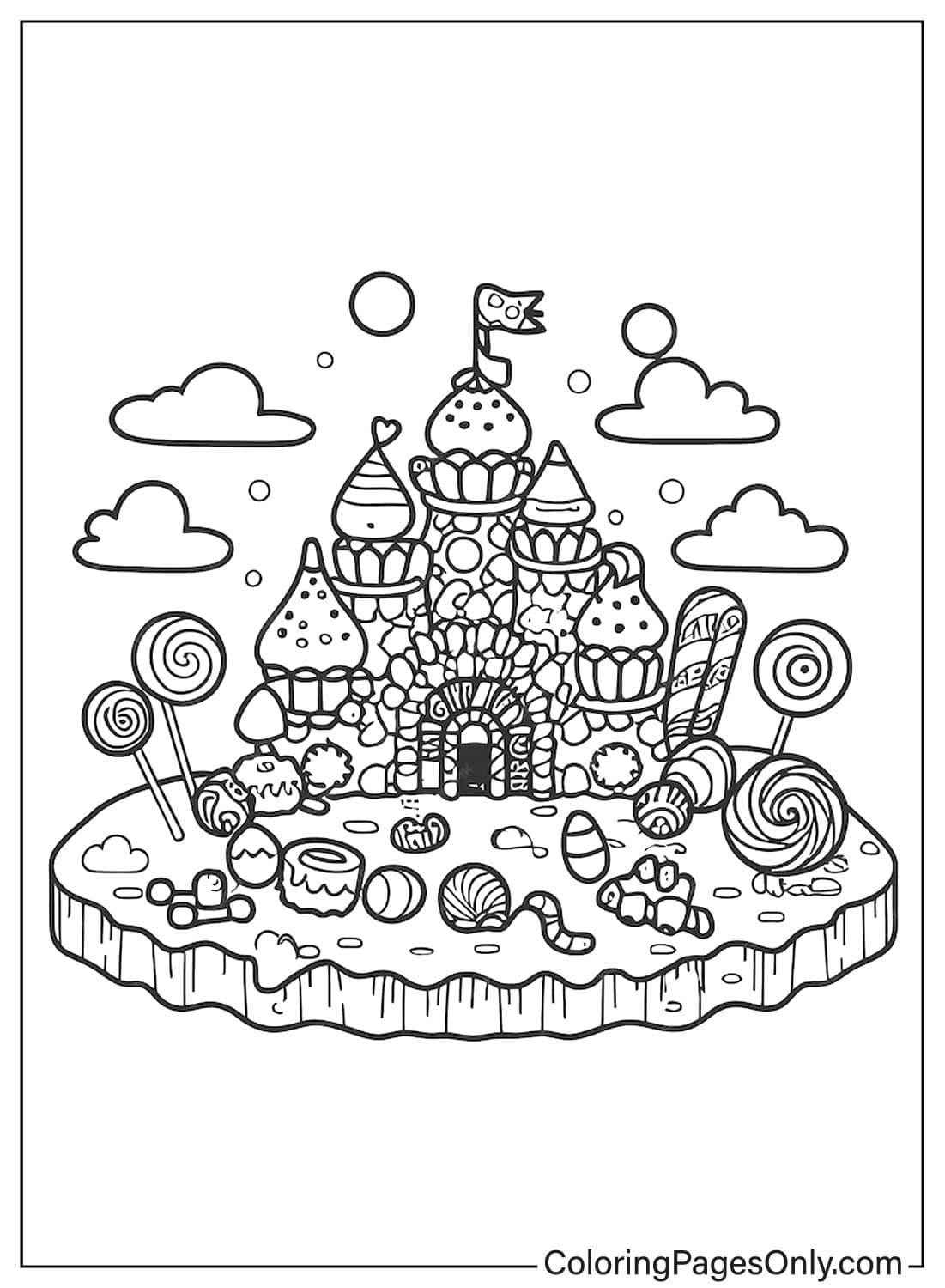
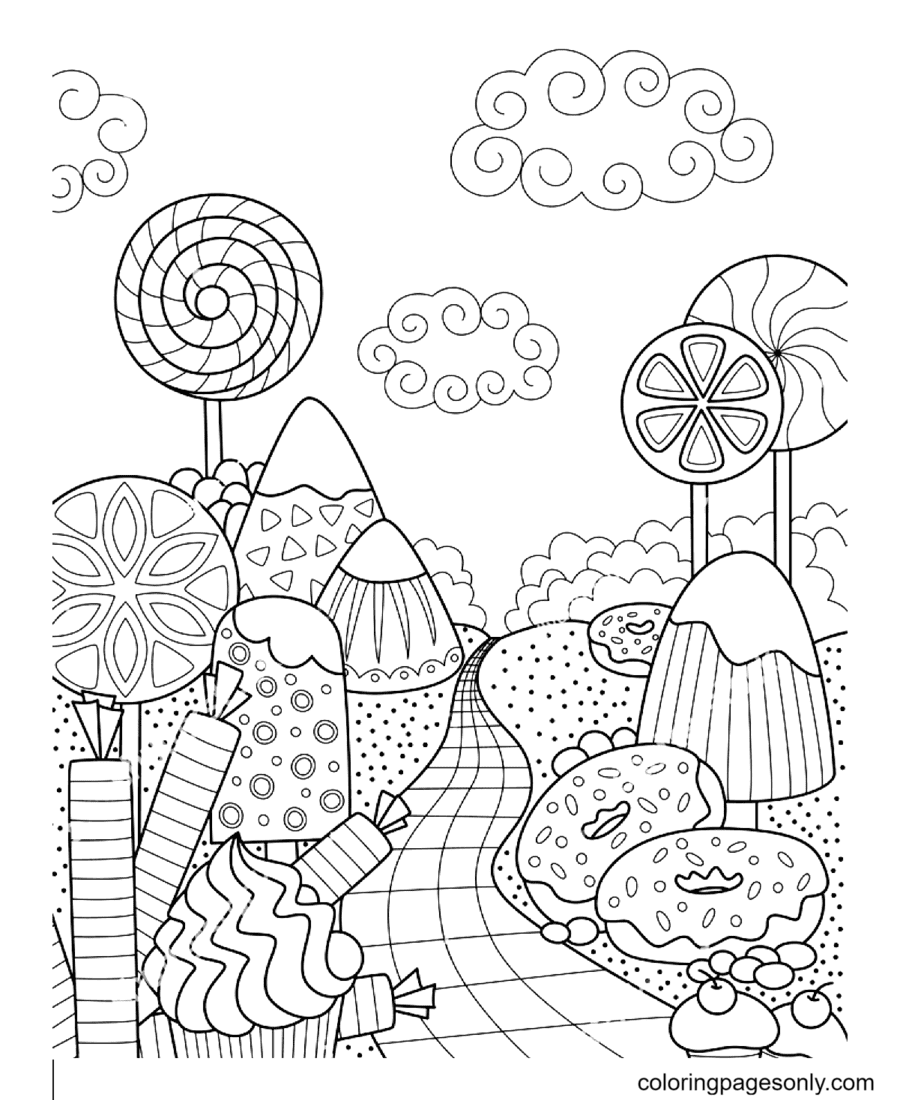
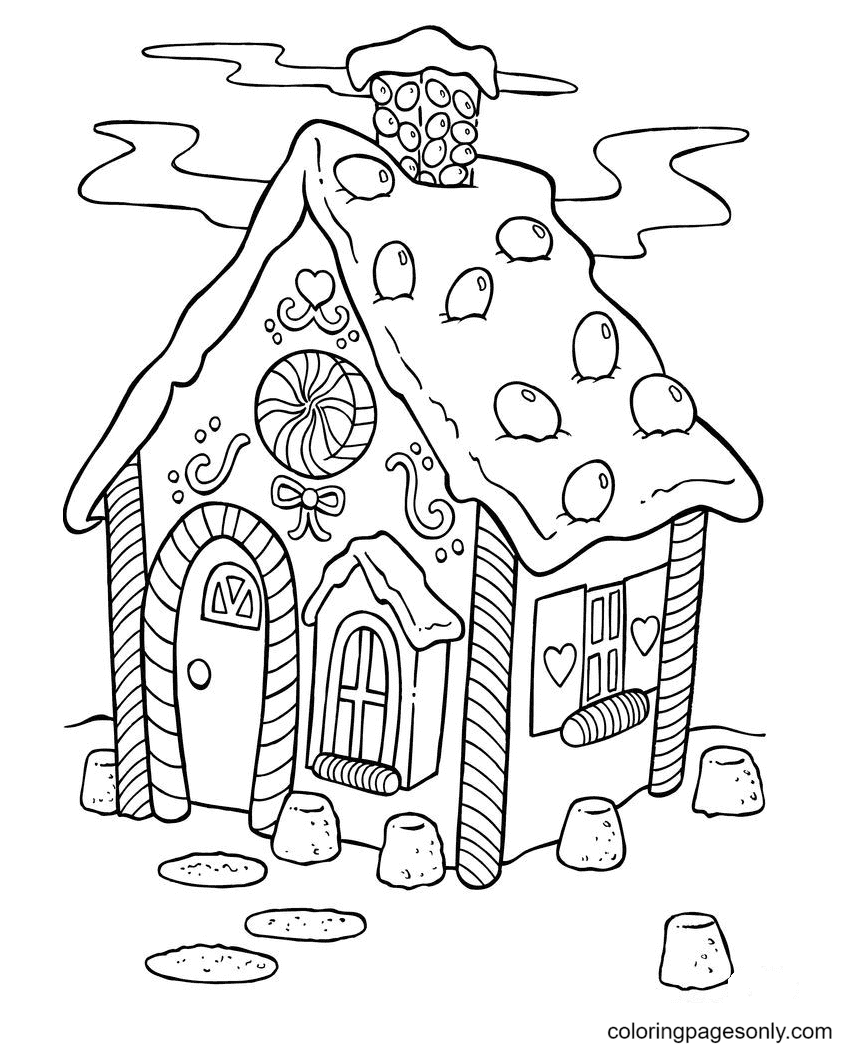
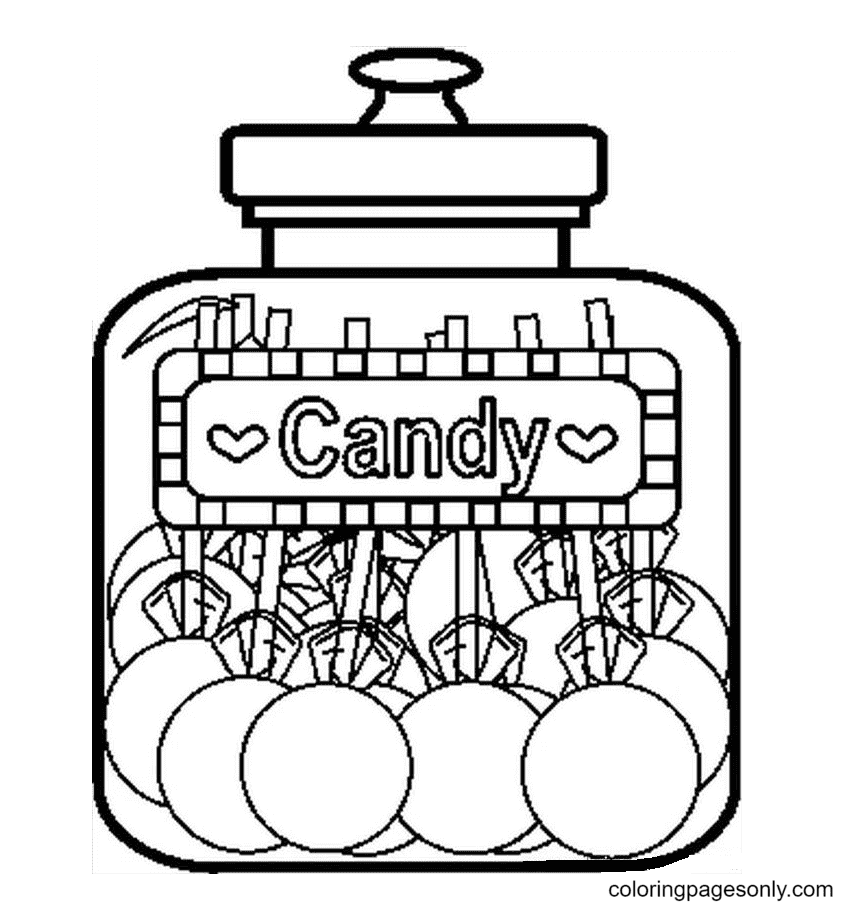
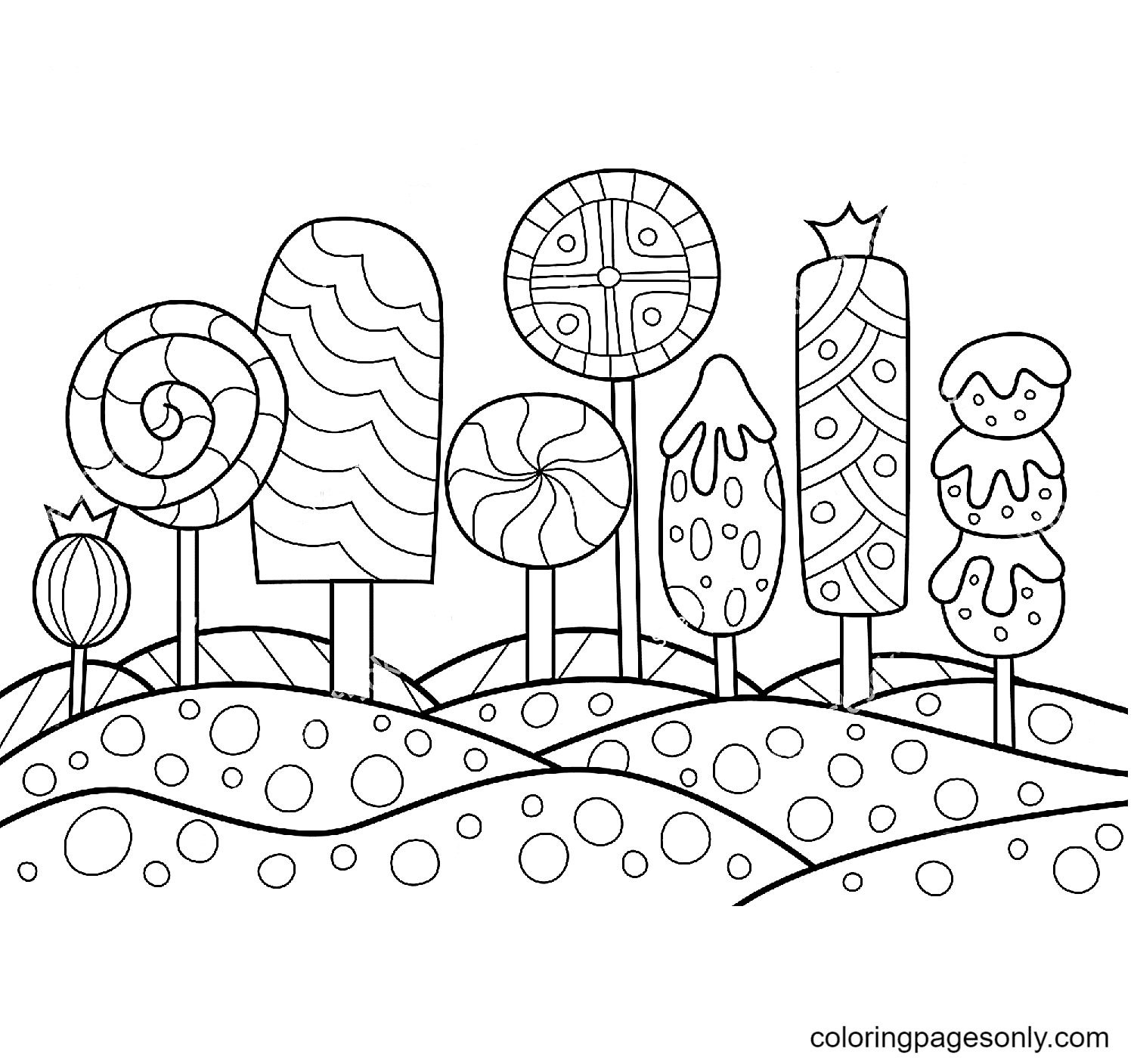
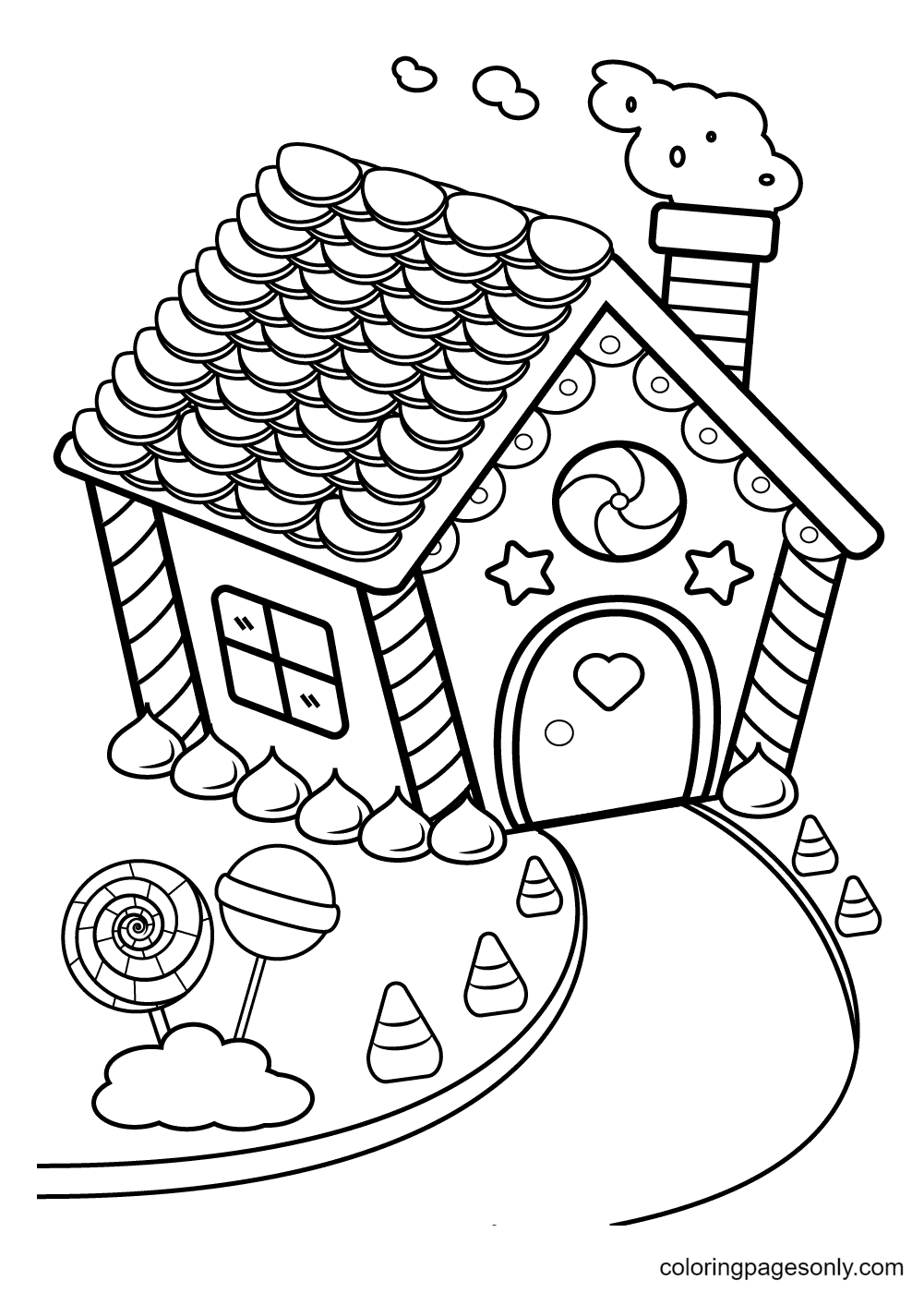
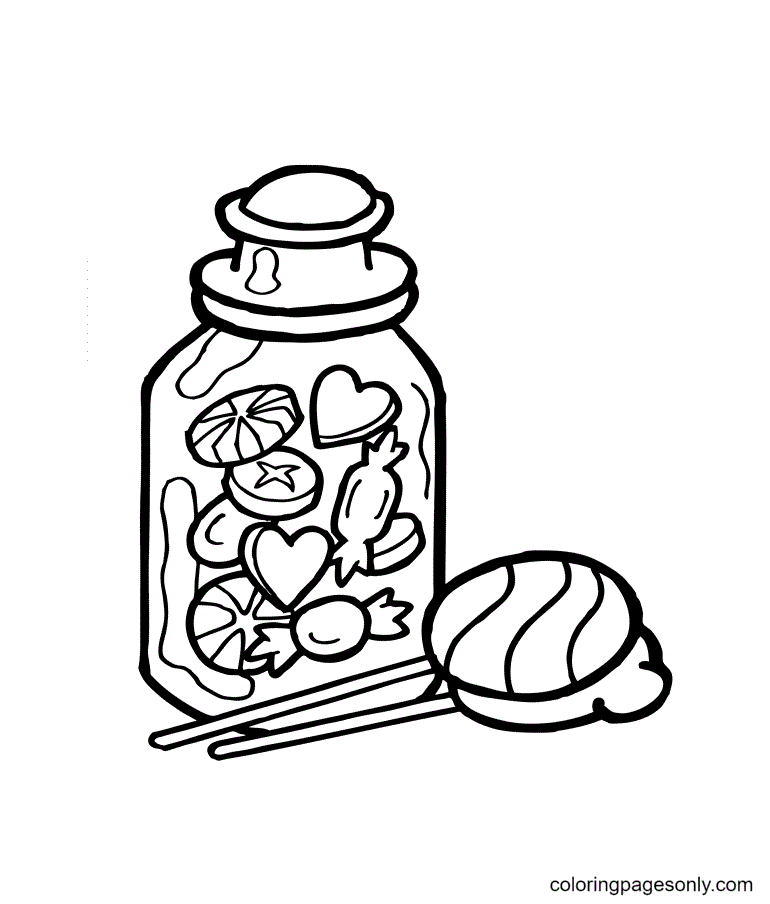
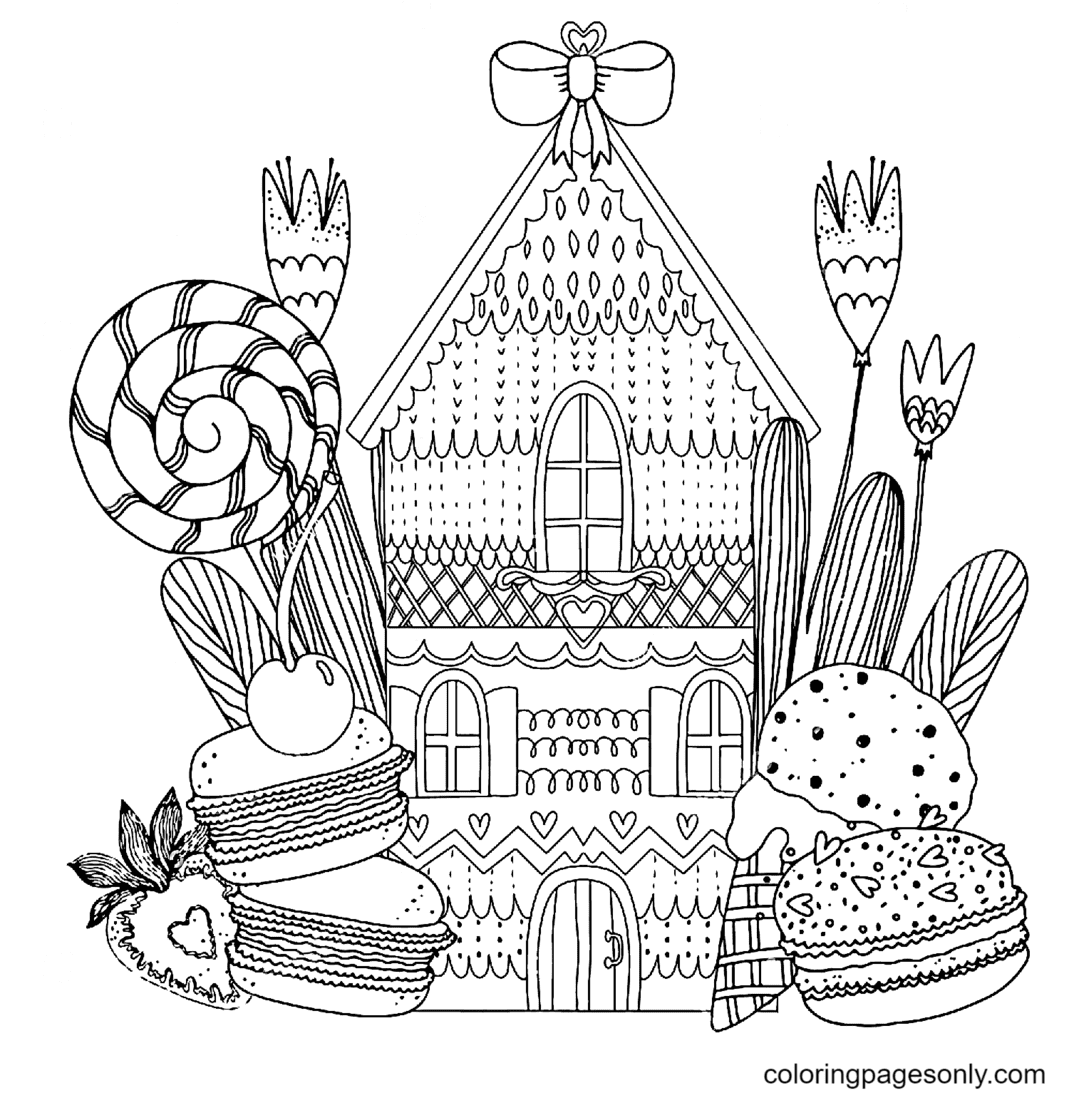
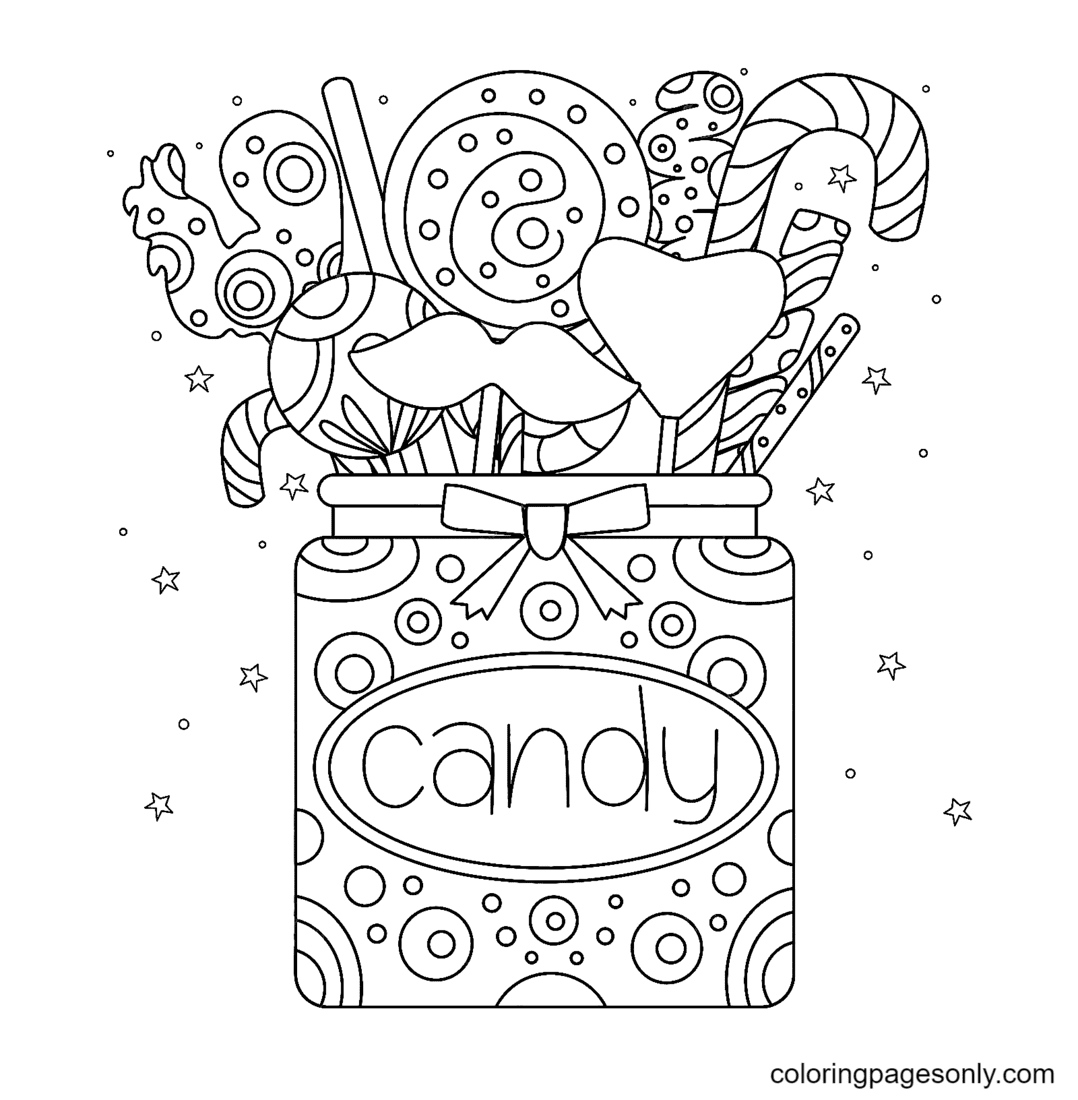
Several pages build a whole scene out of candy: a candy house, a candy-covered island, or a jar full of sweets. Vary the colors of the individual candies within the scene, Red, Yellow, Green, Blue, so the page reads as an assortment rather than a single repeated color.
Mixed Candy Assortments and Characters
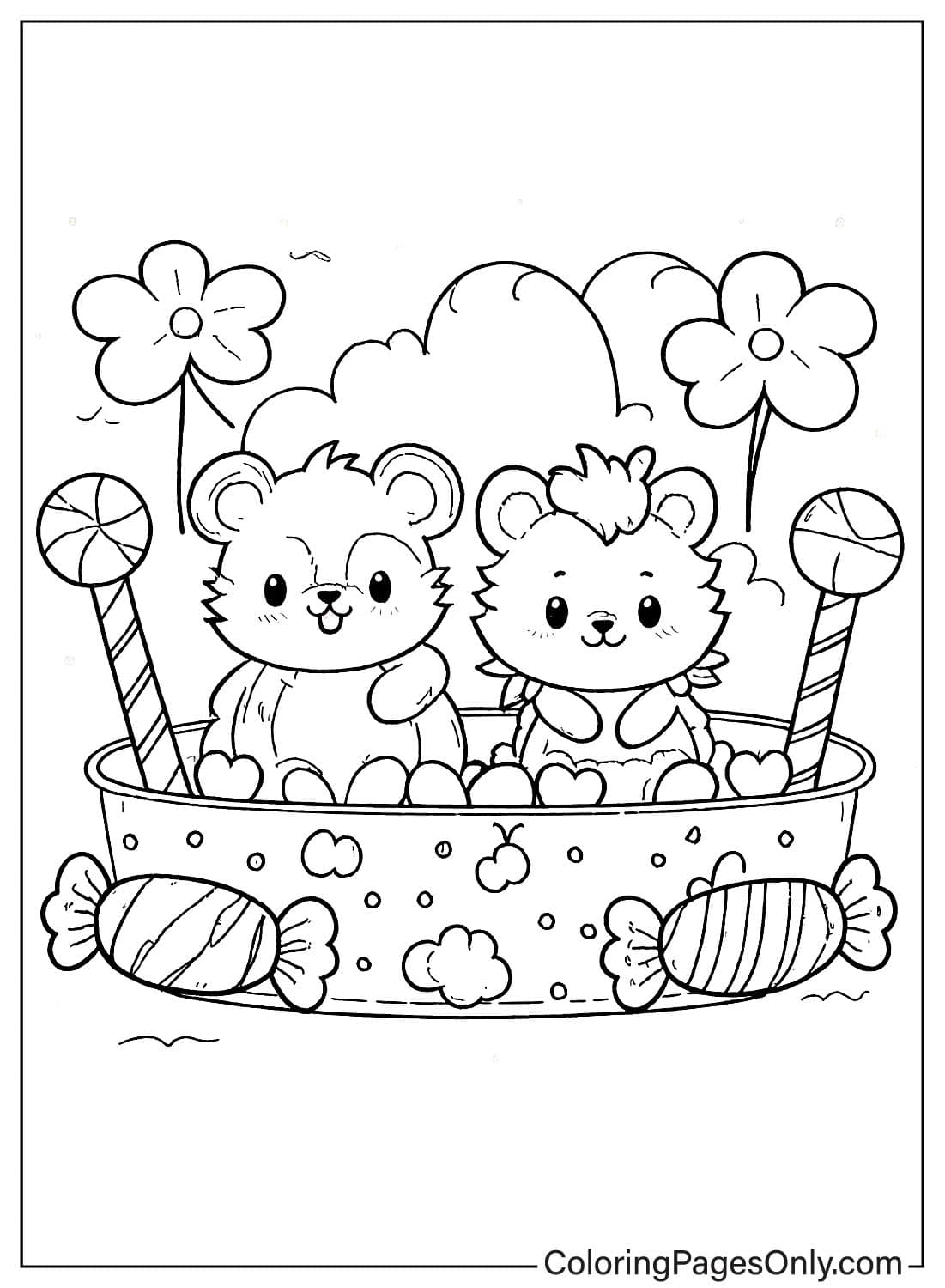
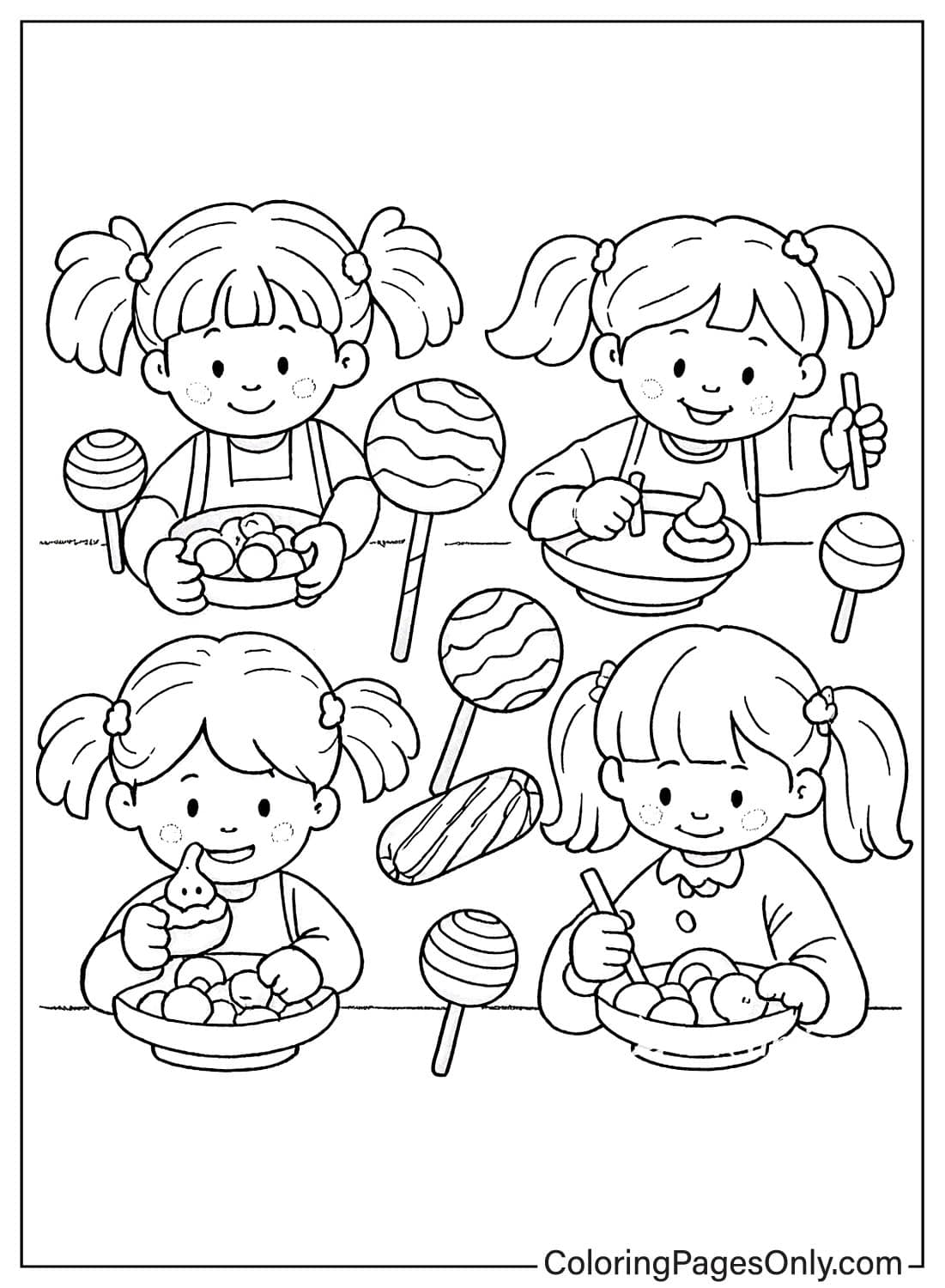
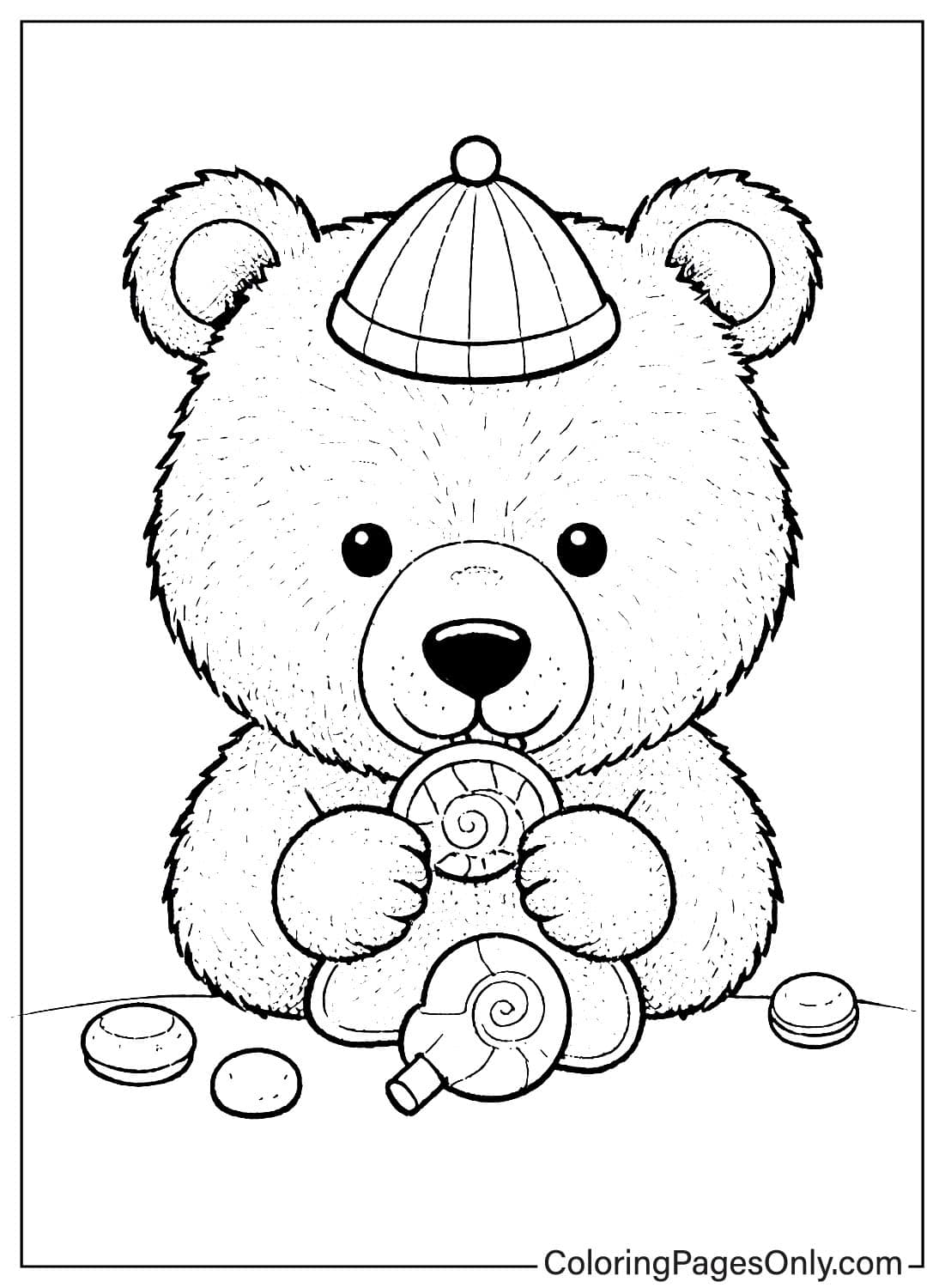
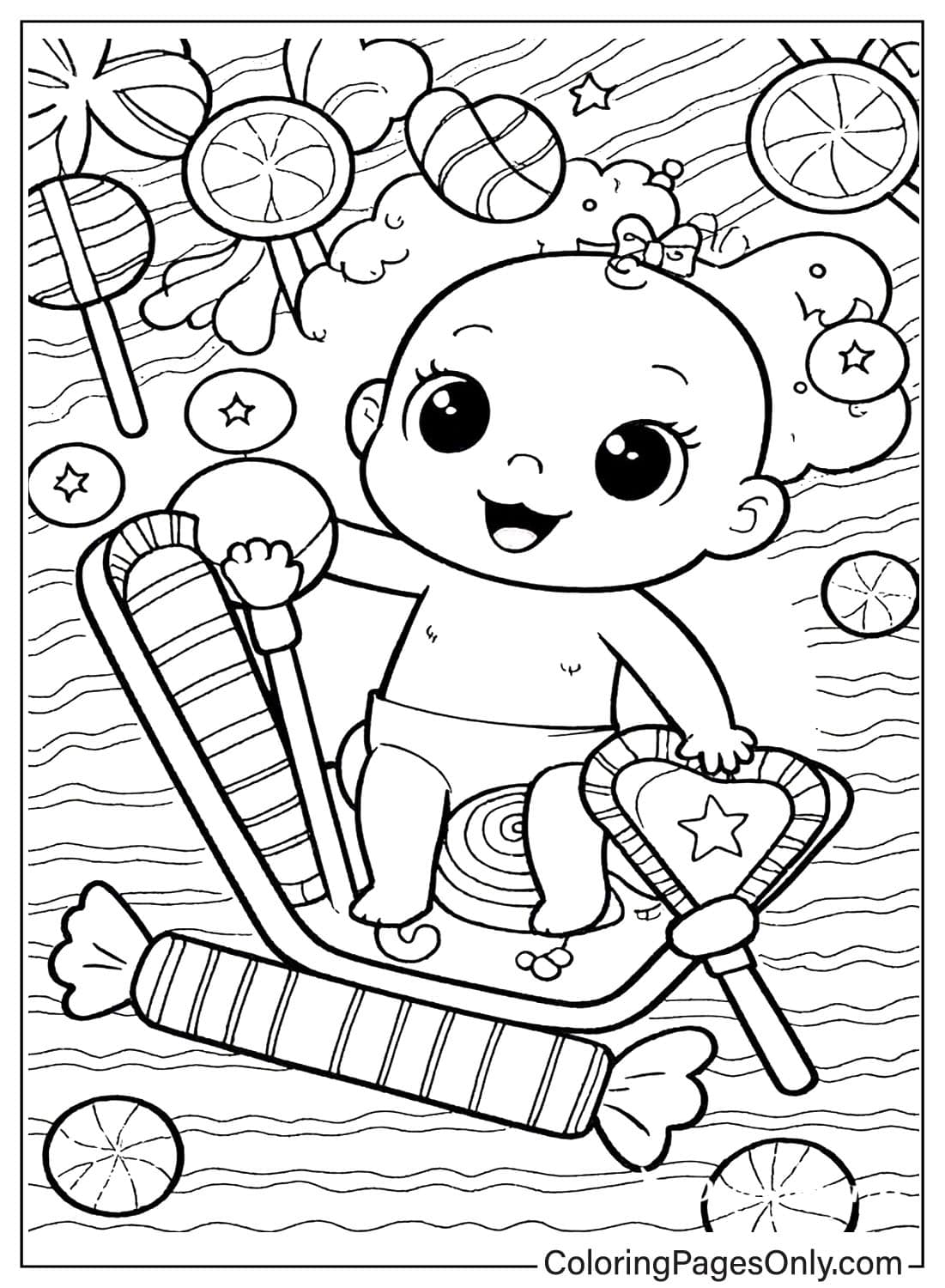
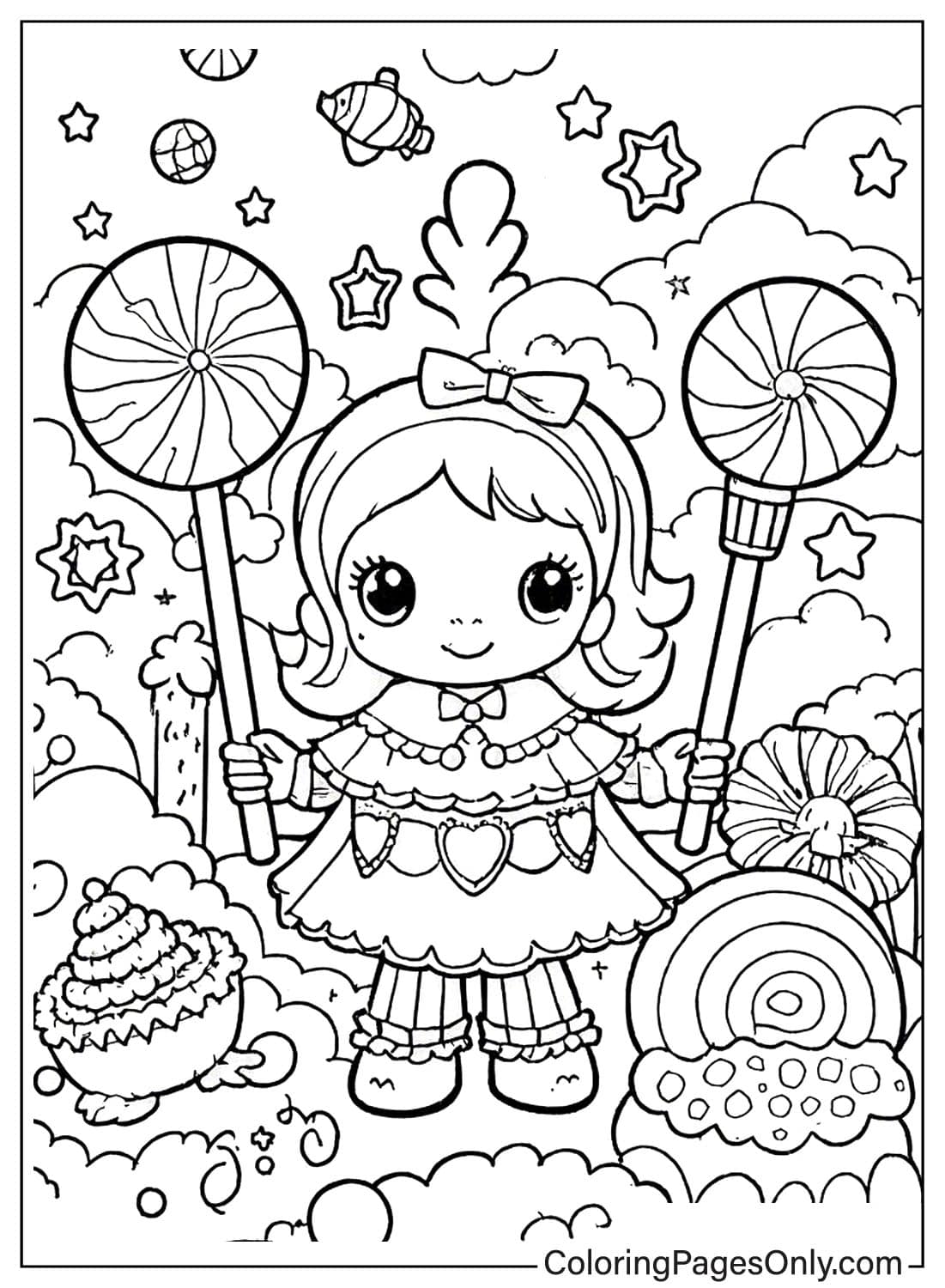
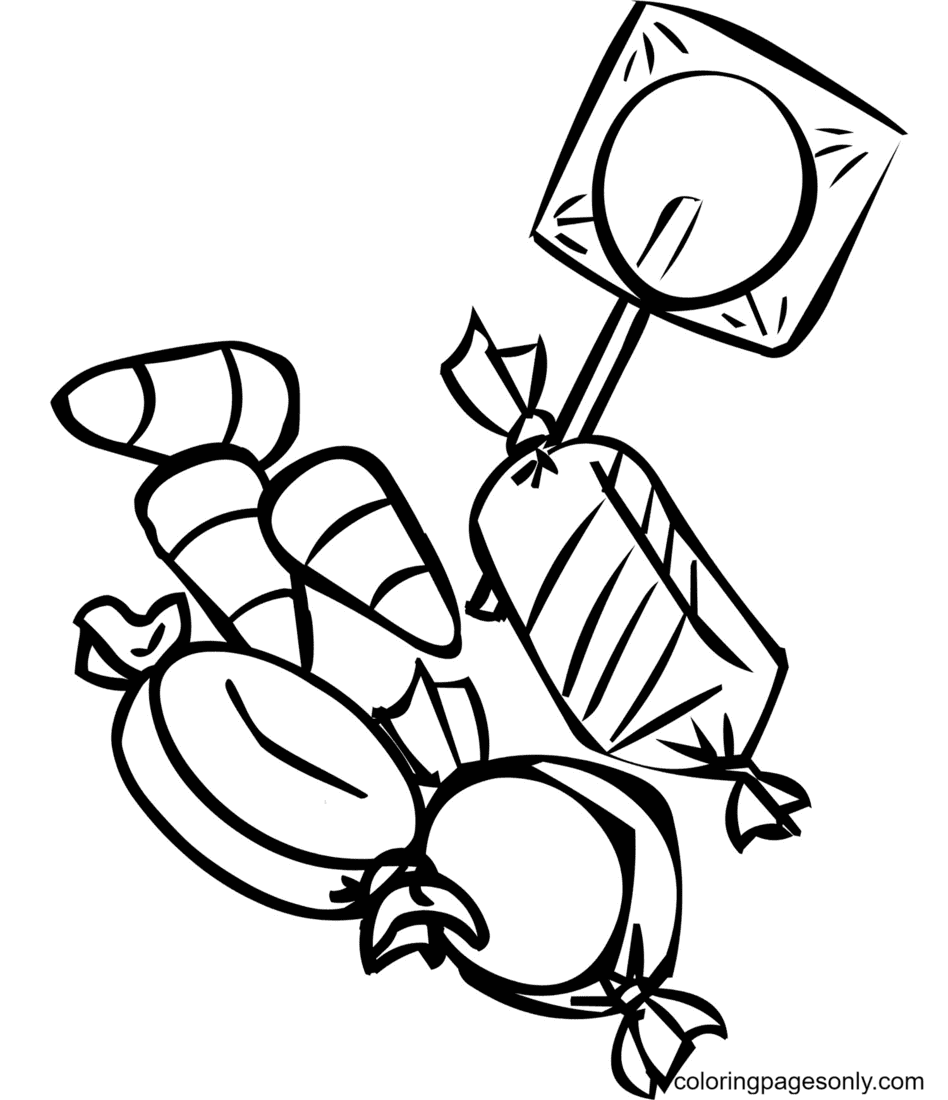
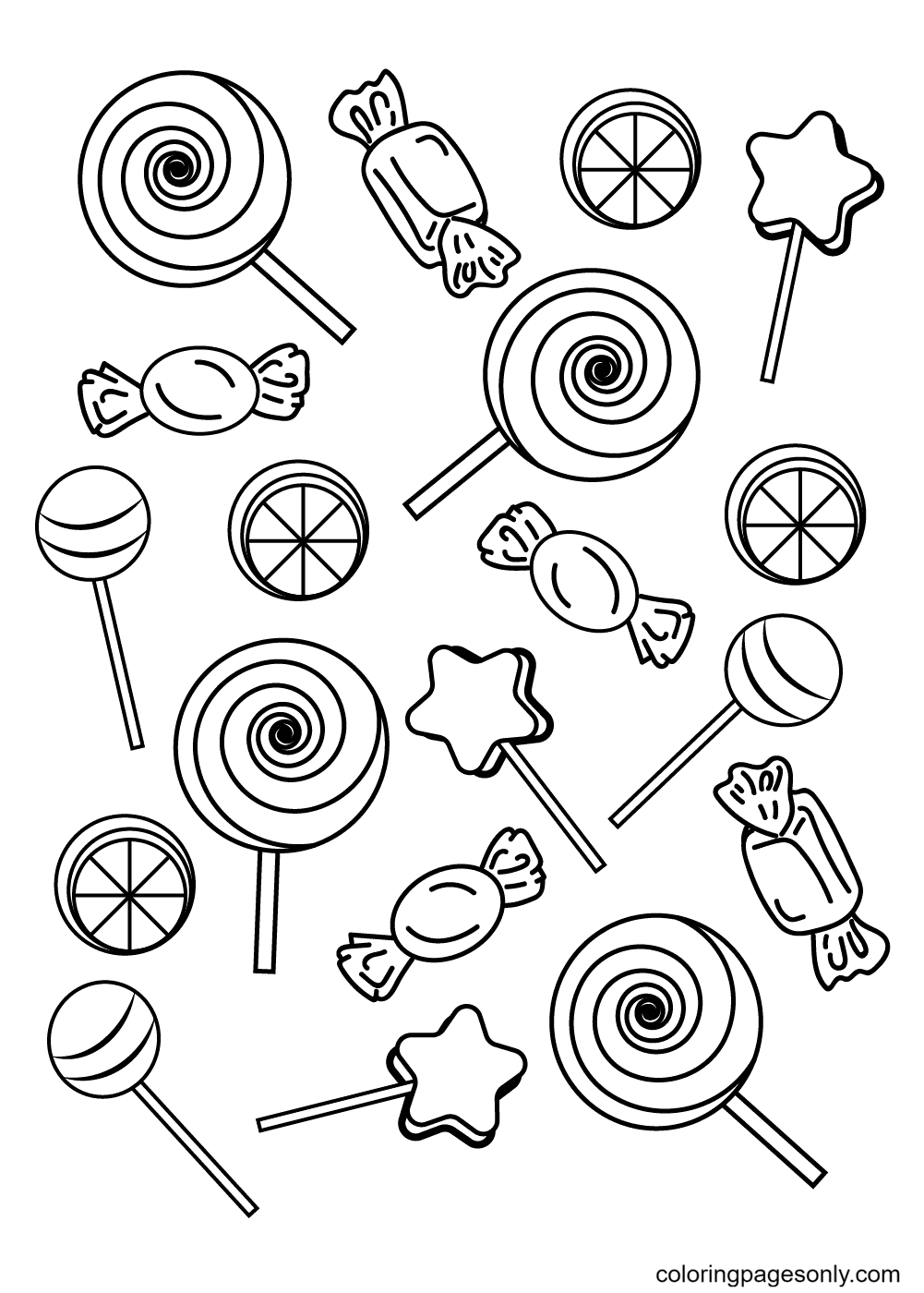
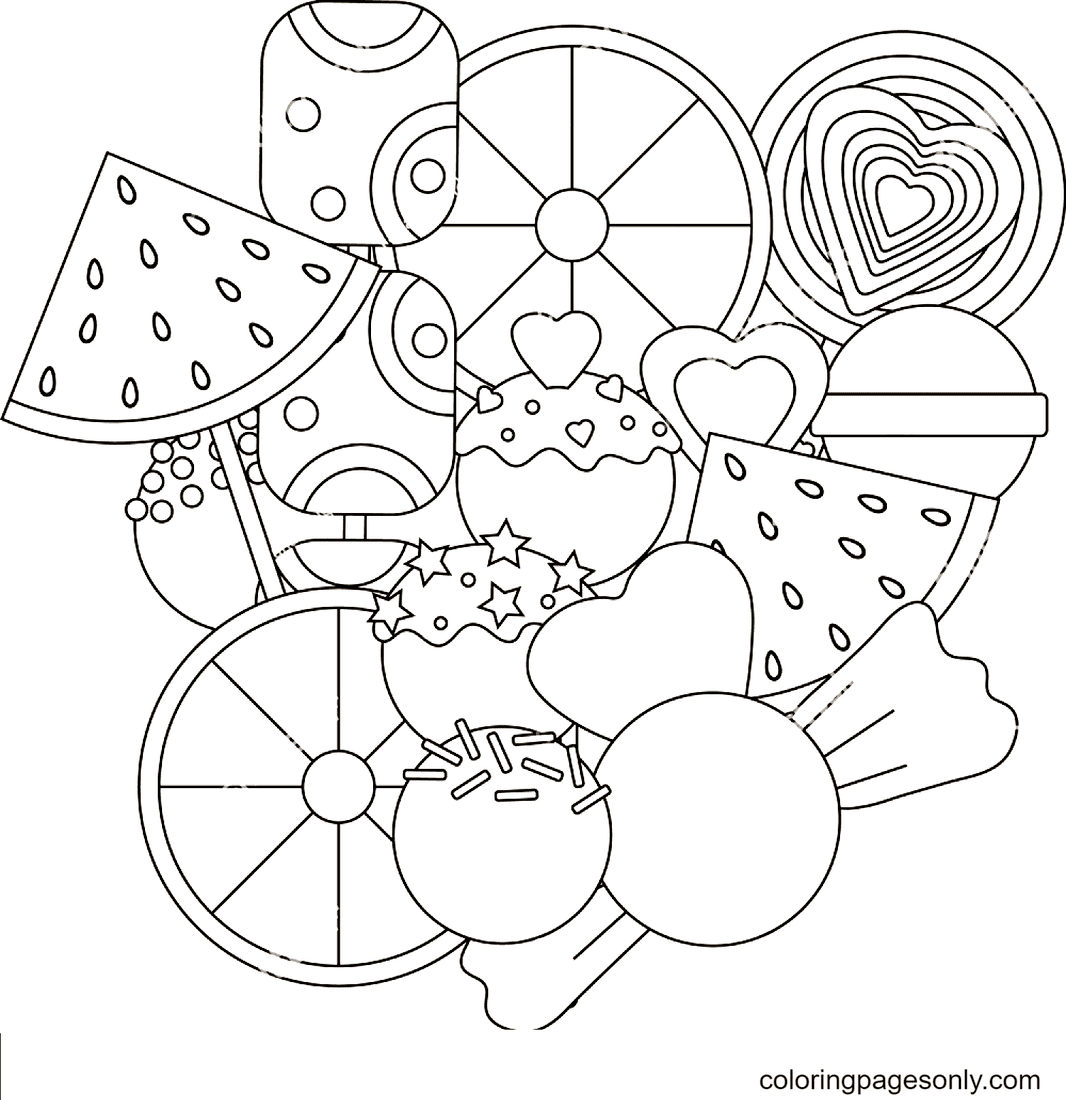
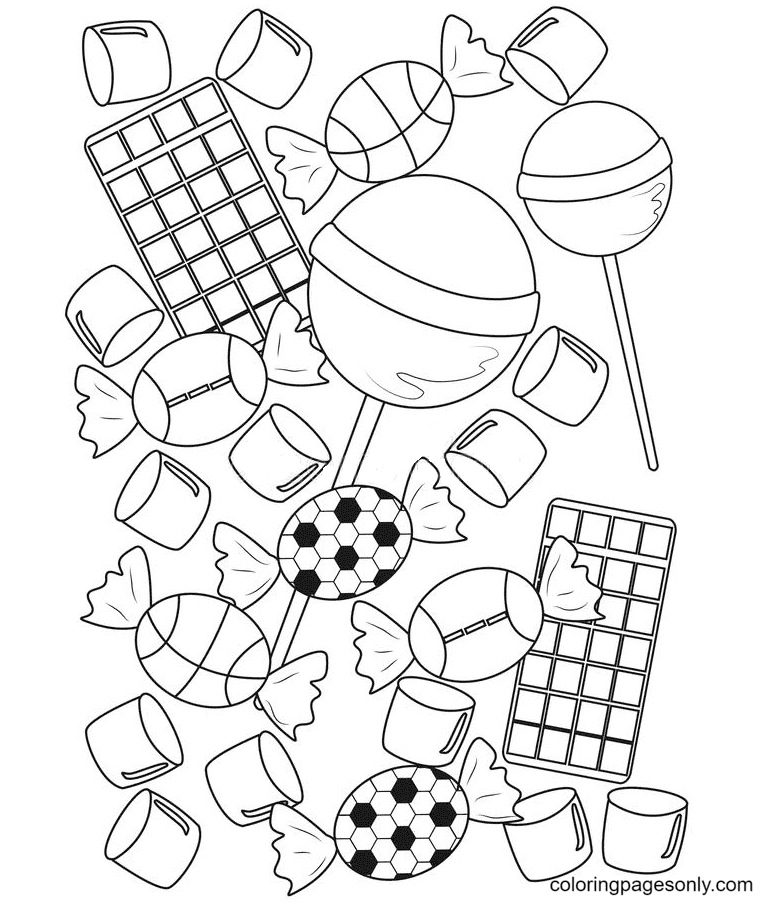
The remaining pages show a mix of different candies together, sometimes alongside a character enjoying them, a bear, a baby, or a girl with a sweet tooth. Keep each type of candy in its own realistic color and give the character its own separate palette so the two elements are easy to tell apart.
What Candy Coloring Pages Do
A spiral shape that most subjects don’t offer. A swirl lollipop or a striped candy cane asks a colorer to follow a continuous curved or spiraling line rather than a straight edge or a simple round shape, a different kind of hand control than most objects require. The American Academy of Pediatrics points to structured coloring tasks like this as a way to build fine motor control in young children, and tracing a spiral by hand is a meaningfully different practice than filling in a plain circle.
A word with a much longer trip than the treat itself. The word candy did not start as English at all; it comes from the Arabic qandi and the Persian qand, both meaning made of sugar, and only entered English use around the 13th century. Bringing that up while coloring turns a familiar word into a small language lesson, since most people who say candy every day have never thought about where the word came from.
There is also a documented calming benefit to lean on. A 2005 study in the Art Therapy Journal found that people who colored inside a defined outline showed lower anxiety afterward than those who drew without one. The busier candy house and jar-of-sweets pages here, with many small individual pieces to fill in one at a time, suit that same slow, repetitive kind of task.
The candy cane’s stripes are newer than the candy itself. Candy canes were sold as plain white, straight sticks for roughly two centuries before the red-and-white stripes and curved cane shape most people picture today became standard in the early 1900s. The often-told story of a 1670 choirmaster bending sugar sticks into a shepherd’s crook is treated by most historians as an unverified legend rather than a settled fact.
How to Color Candy Pages Well
- Lollipops and swirl candy: alternate two or three bright colors, Red, Pink, and Yellow, section by section around the spiral, keeping the stick a plain White or Tan.
- Candy canes: use the classic Red-and-White stripe, kept crisp and evenly spaced rather than blended.
- Chocolate: color it, Brown as the base with a lighter Tan or Cream wrapper, adding a thin darker Mahogany line for edges and folds.
- Gumball machines: fill each gumball a different bright color rather than coloring the whole cluster one shade.
- Candy houses and scenes: vary the color of each piece of candy used as a building material, Red, Yellow, Green, and blue, so the structure reads as an assortment.
- Holiday-themed candy: let the season’s usual colors guide the page, Orange and Black for Halloween, Red and Green for Christmas, Pink and Red for Valentine’s Day.
5 Creative Craft Ideas With Candy Coloring Pages
- Candy Garland. Materials: several colored lollipop or candy pages, scissors, and a length of string. Cut out each colored candy and string them along the twine spaced a few inches apart to hang across a window or wall.
- Candy Gift Tag. Materials: a colored candy page, a hole punch, ribbon, and scissors. Cut out the colored candy, punch a hole near the top, and tie a ribbon loop through it to use as a gift tag.
- Pretend Candy Shop Display Materials: several colored candy pages, scissors, glue, and a small box or shelf cutout. Arrange the colored candies like a candy shop counter display for imaginative play.
- Candy Jar Collage. Materials: several colored candy pages, scissors, glue, and a large paper jar outline. Cut out the colored candies and glue them inside the drawn jar shape to build a full jar-of-sweets collage.
- Candy Matching Game. Materials: two copies of colored candy pages, scissors, and cardstock backing. Cut into matching pairs, glue each to the cardstock, and use the set as a simple memory-matching game.
Frequently Asked Questions
What are Candy coloring pages?
Printable designs featuring lollipops, candy canes, chocolate, gumballs, and whole candy-house scenes. This collection offers 62 free designs as printable PDFs or online coloring pages.
Where does the word candy come from?
The word candy comes from the Arabic qandi and the Persian qand, both meaning made of sugar, and entered English use around the 13th century.
Were candy canes always red and white striped?
No. Candy canes were sold as plain white, straight sticks for roughly two centuries before the red-and-white stripes and curved shape most people recognize today became standard in the early 1900s.
Is the story about a choirmaster inventing the candy cane true?
It is a popular but unverified legend. Most historians treat the often-told story of a 1670 German choirmaster bending sugar sticks into shepherds’ crooks as folklore rather than a confirmed fact.
Where does the word lollipop come from?
Its exact origin is debated, but one common explanation traces it to lolly, old British slang for tongue, and pop, meaning a slap. The modern hard-candy-on-a-stick lollipop was popularized in the United States in the early 1900s.
What colors work best for a chocolate bar page?
A rich Brown base with a lighter Tan or Cream wrapper reads most clearly, with a thin, darker line along the edges and folds to suggest depth.
Are Candy coloring pages suitable for young children?
Yes. The simple solo candy pages suit ages 2 and up, while the busier candy house, jar, and holiday scenes suit ages 6 and up or an adult looking for more detail.
Are any of these pages tied to a specific holiday?
Yes. Several pages are built around Halloween, Christmas, or Valentine’s Day candy, alongside the collection’s plain, non-holiday designs.
Start Coloring
Download any page by clicking the design. No account, email, or payment is required. Pages print directly from the browser at full resolution or open in the online coloring tool for screen use. Share finished pages on Facebook or Pinterest with the share buttons at the top of each design page.