Fairy Coloring Pages
 By:
Jennifer Thoa – Content Editor & Designer
Updated:
By:
Jennifer Thoa – Content Editor & Designer
Updated:
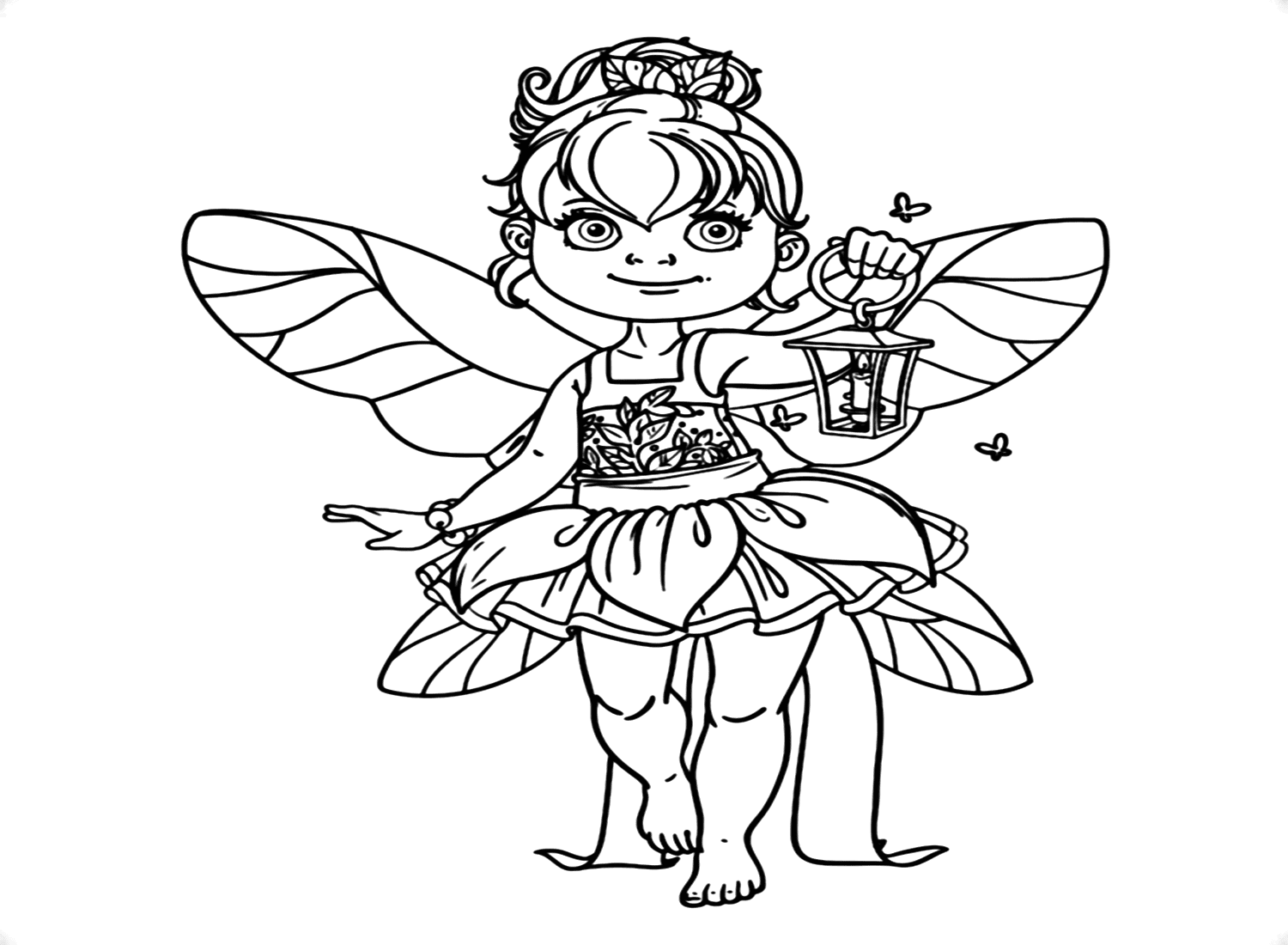
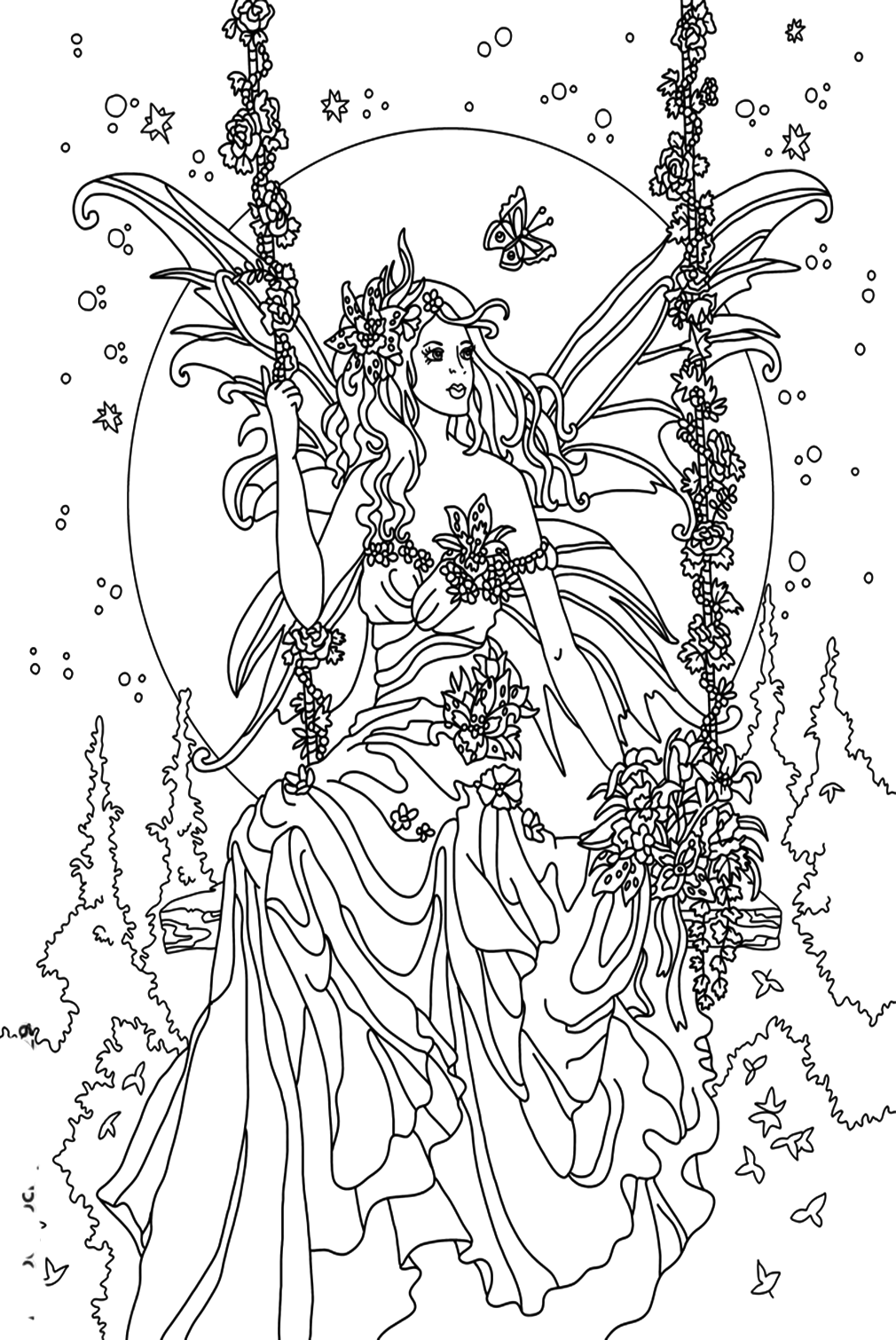
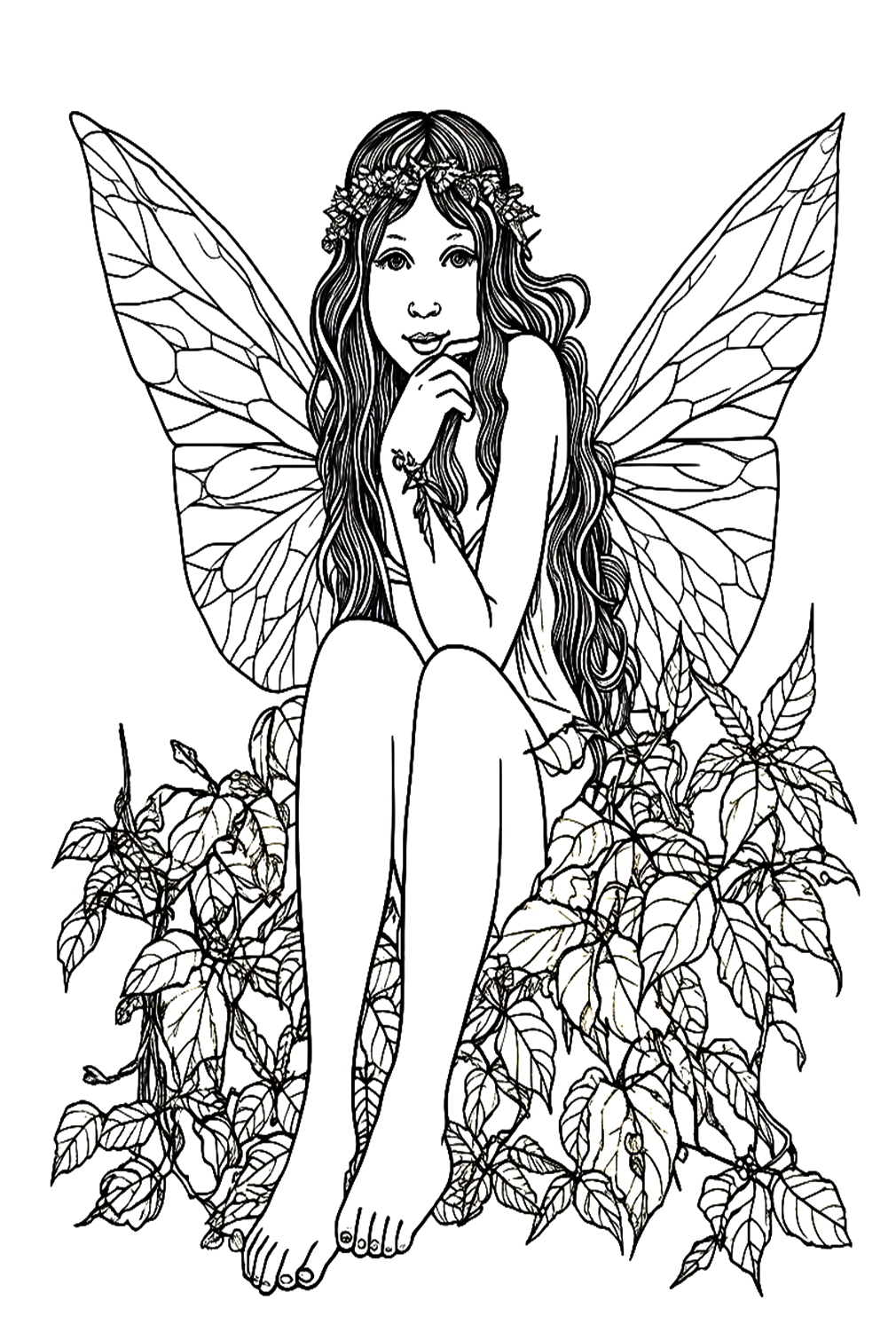
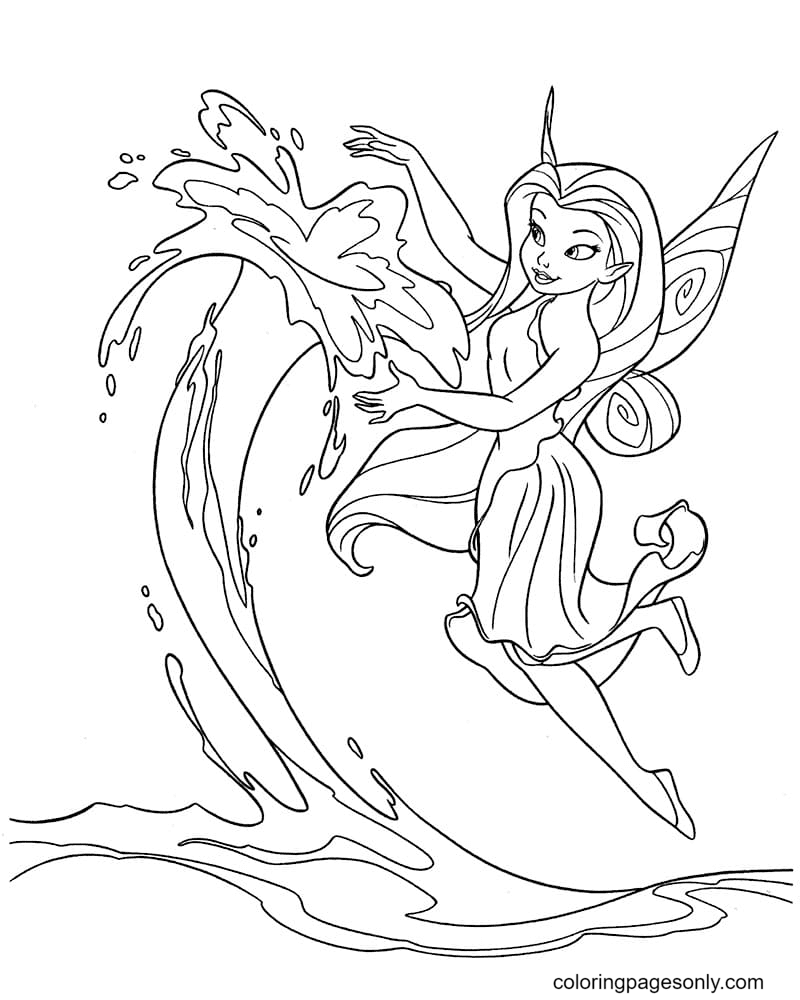
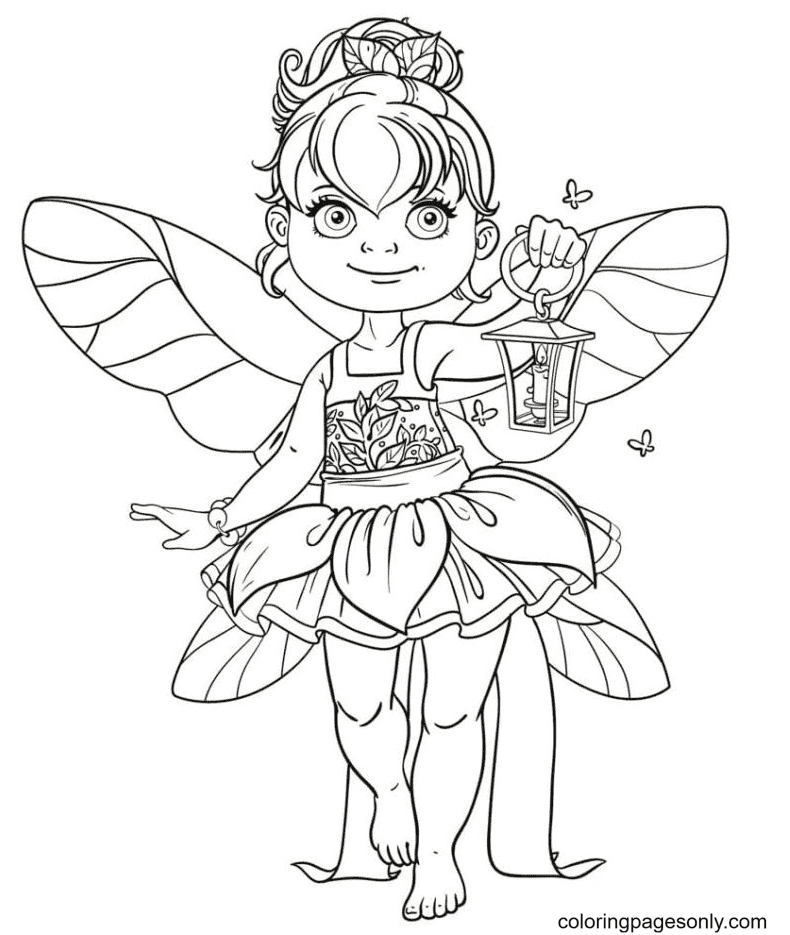
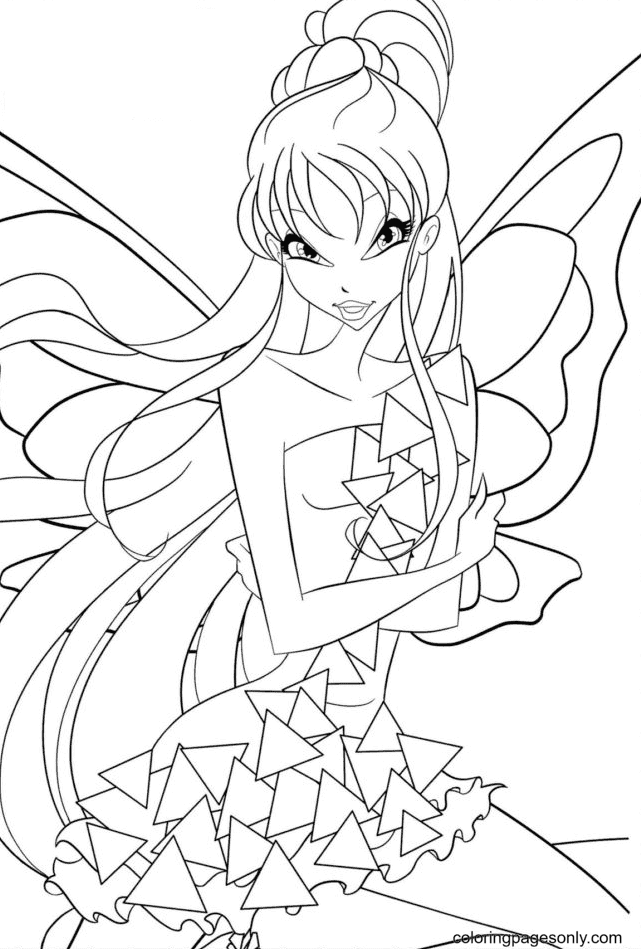
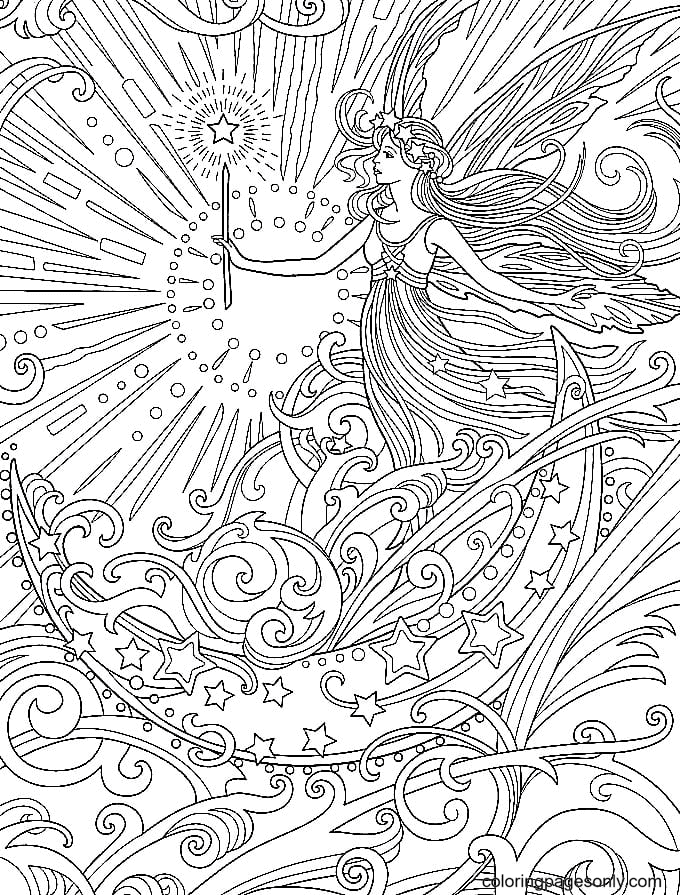
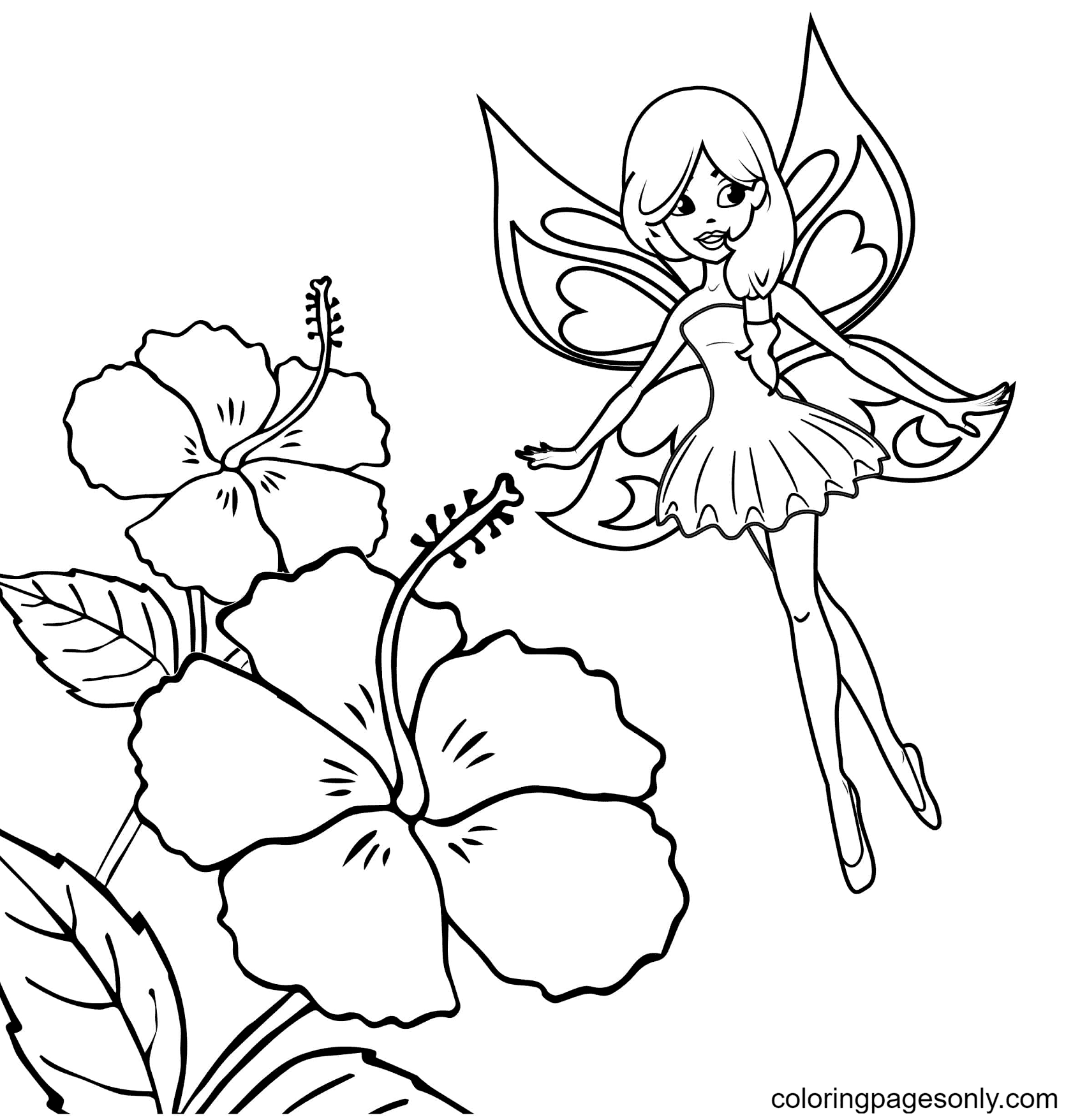
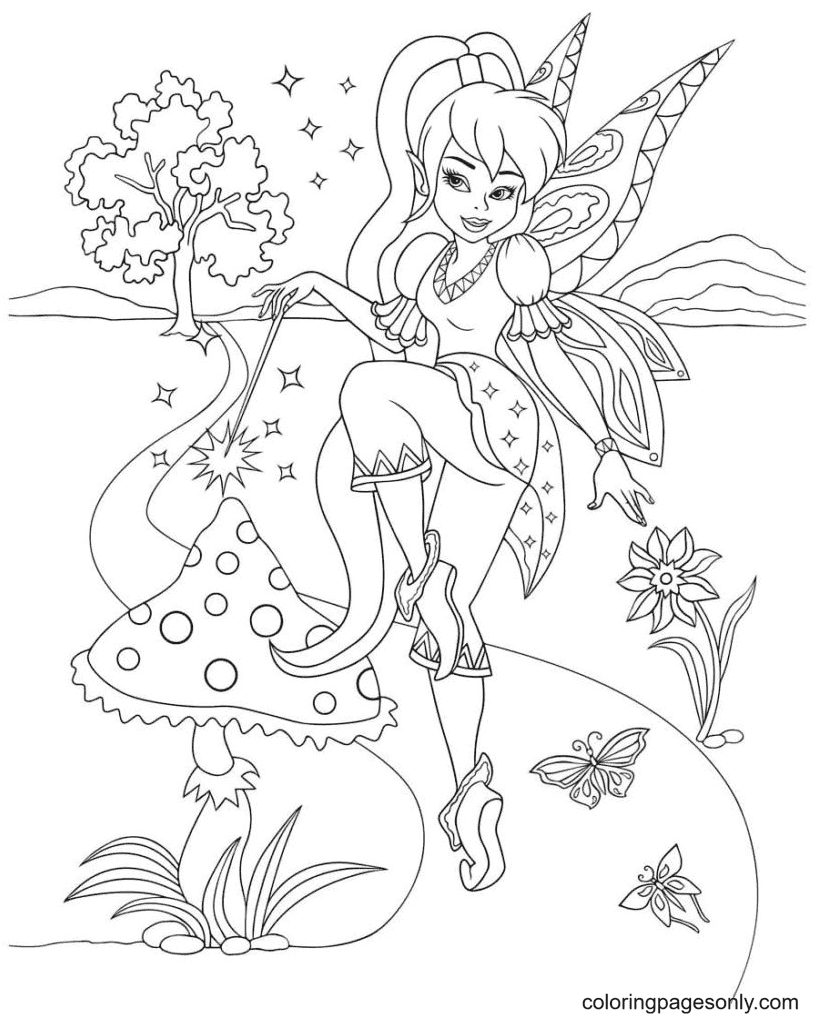
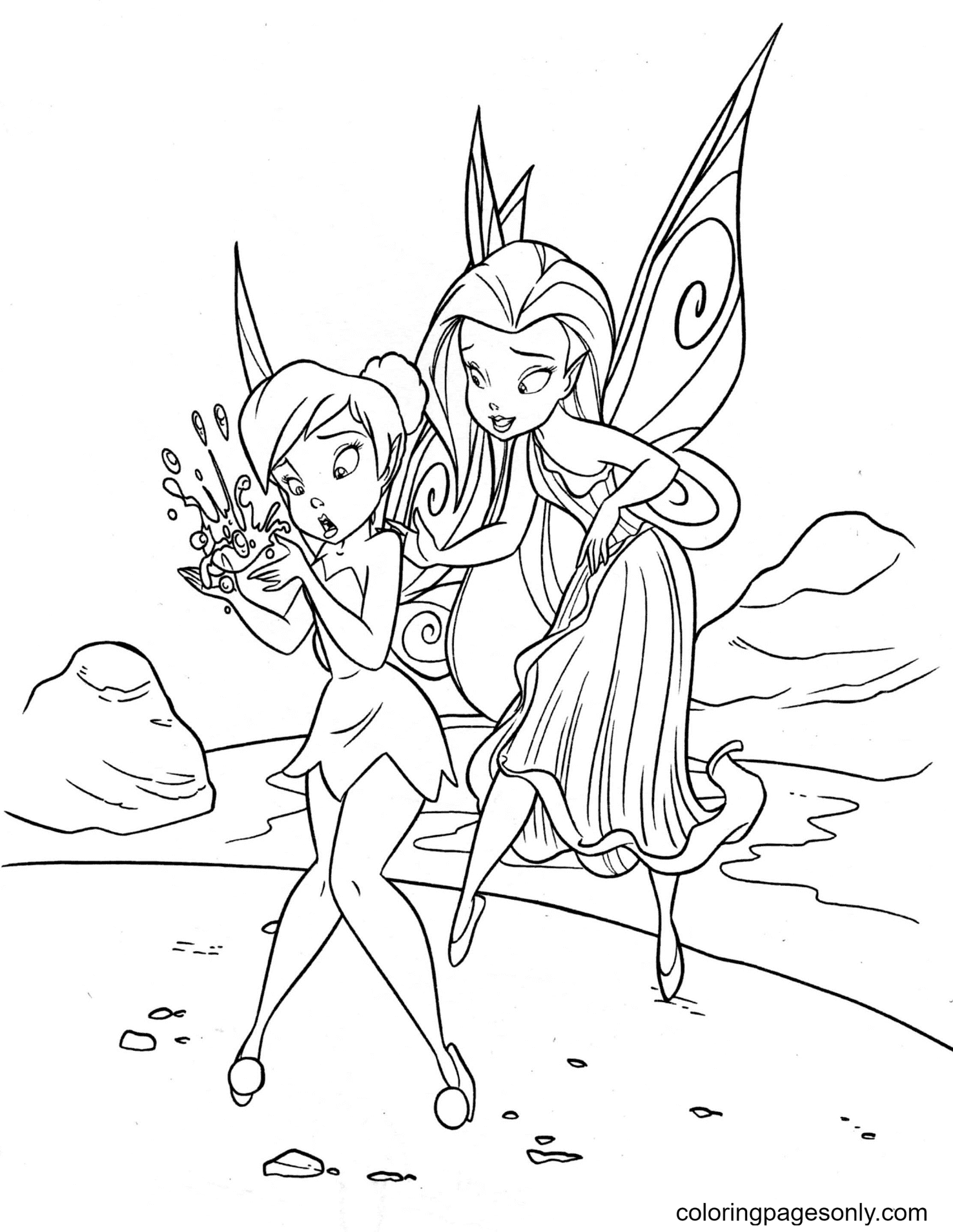
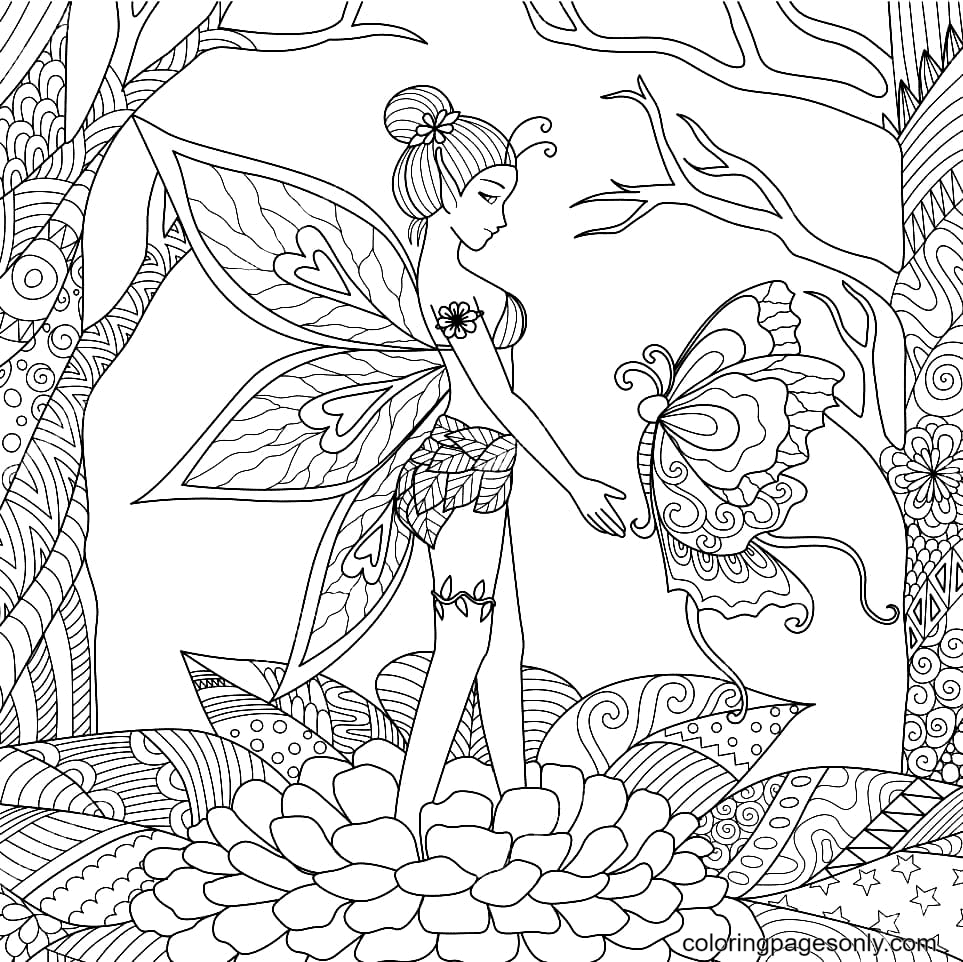
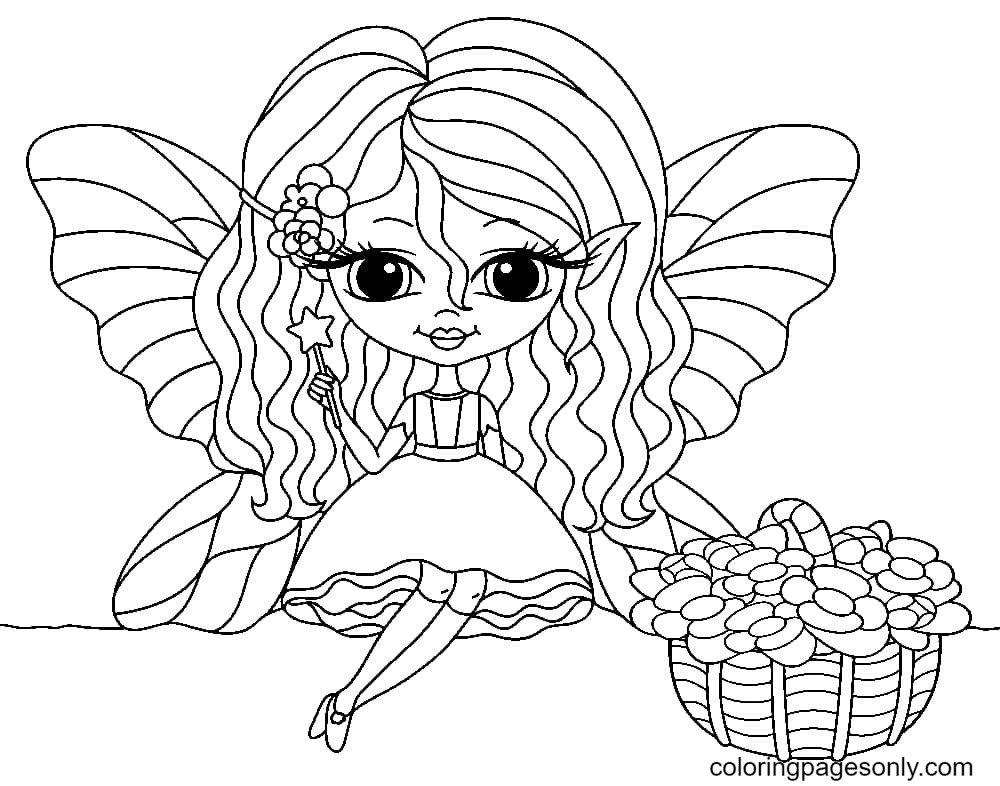
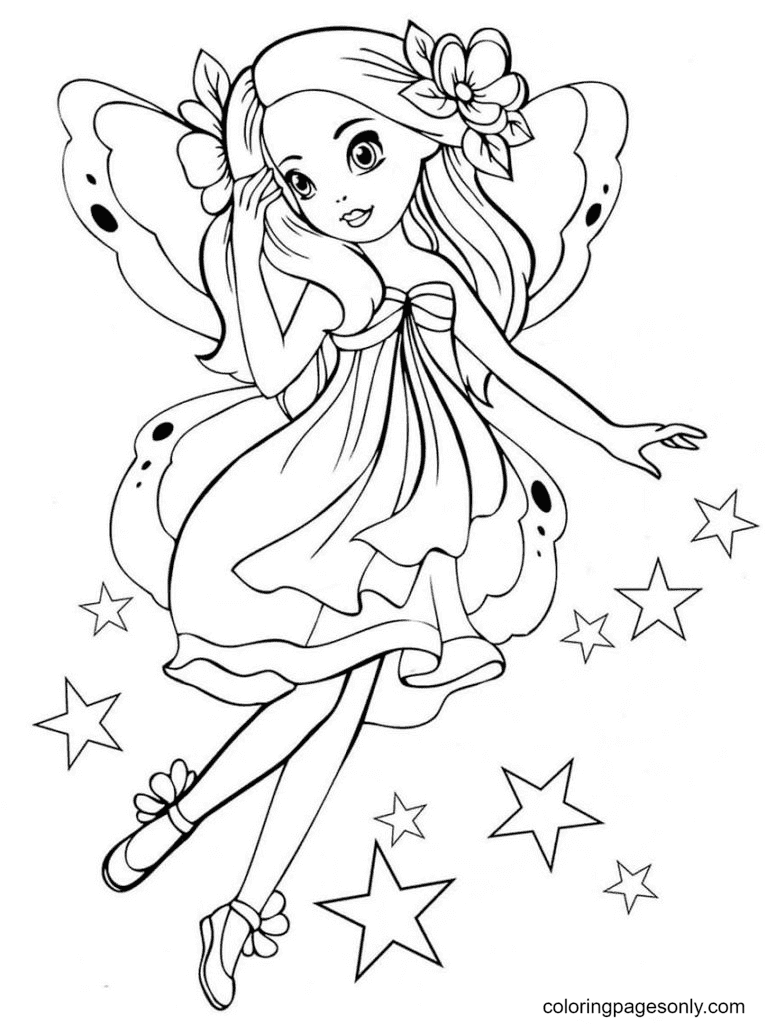
Free fairy coloring pages: 50+ pages featuring winged fairies in flying and resting poses, flower fairies drawn in the botanical illustration tradition, forest fairies among mushrooms and ancient tree roots, moon and night sky fairy compositions with star and crescent elements, fairy godmother scenes with wand and sparkle effects, water and frost fairy variants, fairy garden settings with roses and lavender, mandala-style fairy design pages with intricate wing patterning, kawaii and cartoon fairy faces for young colorists, group fairy ensemble scenes, and the full visual vocabulary of one of folklore’s oldest and most globally distributed supernatural beings across its classical European, Victorian, and contemporary pop culture visual forms. All free, printable PDFs and online coloring for fantasy and mythology enthusiasts of all ages.
The word “fairy” derives from the Old French “faerie” (enchantment, land of the fées), itself from the Latin “fata” (the Fates). The concept of small supernatural beings inhabiting natural spaces appears across virtually every human culture’s folklore, but the specific visual form of the winged fairy with iridescent insect-like wings was established in English art and literature during the Victorian era (1837-1901), when artists including Sir Joseph Noel Paton, Richard Dadd, and Arthur Rackham produced large-scale fairy paintings and illustrations that defined the Western visual tradition. Shakespeare’s A Midsummer Night’s Dream (approximately 1595-96) introduced Titania, Oberon, and Puck as the first widely influential literary fairies in the English language. The Flower Fairies series by Cicely Mary Barker, beginning with Flower Fairies of the Spring in 1923, became one of the most sustained botanical and fairy illustration projects in publishing history, with 8 volumes still in print as of 2025.
These 50+ free pages at ColoringPagesOnly.com cover the fairy across its full visual tradition. All free, PDF or PNG, print or color online.

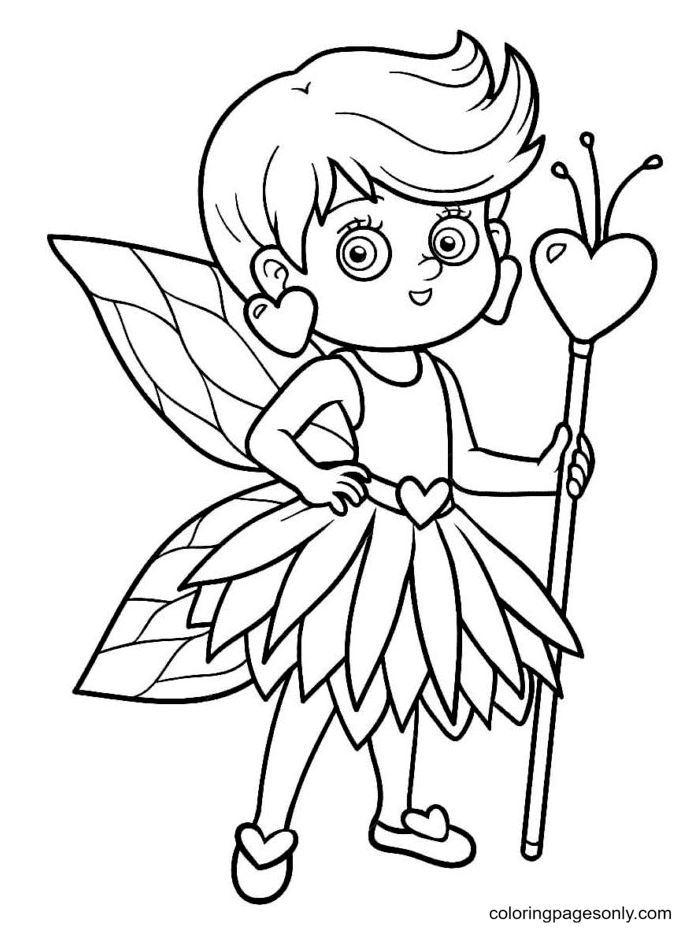
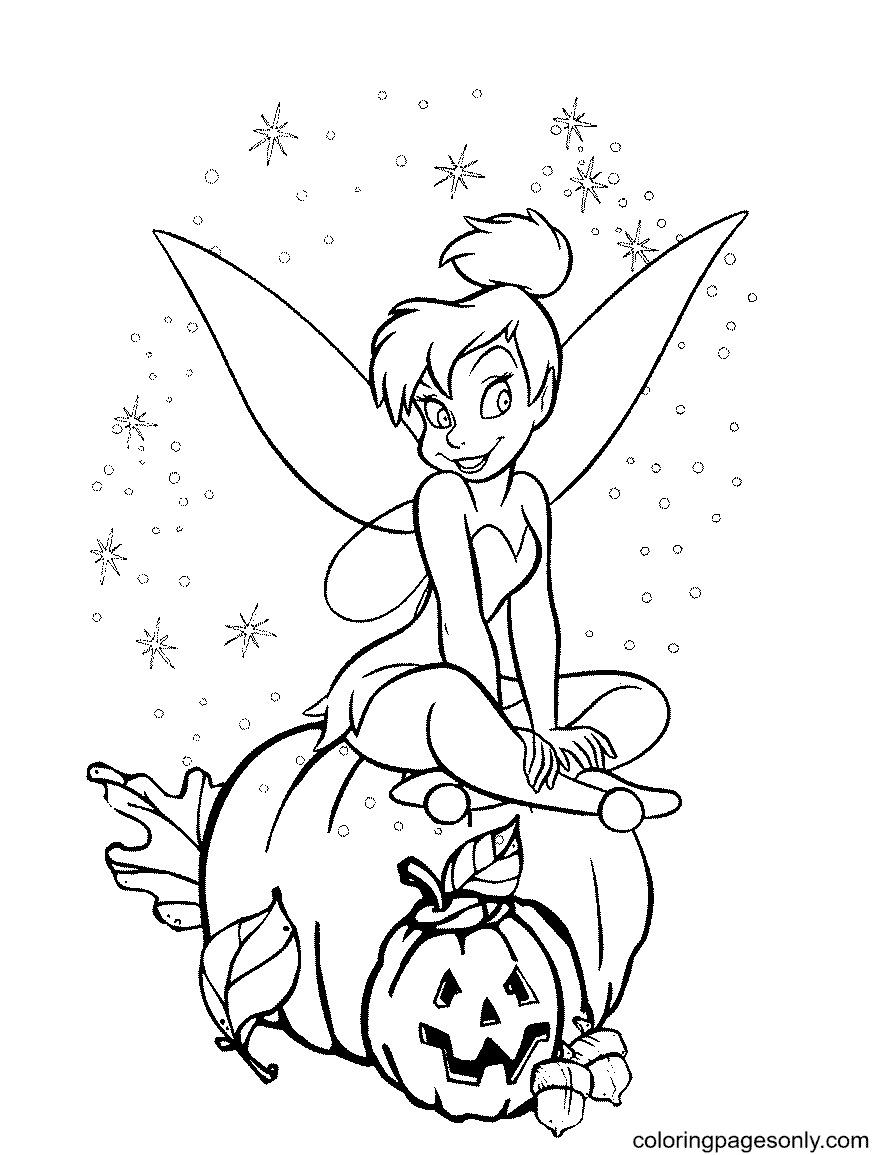
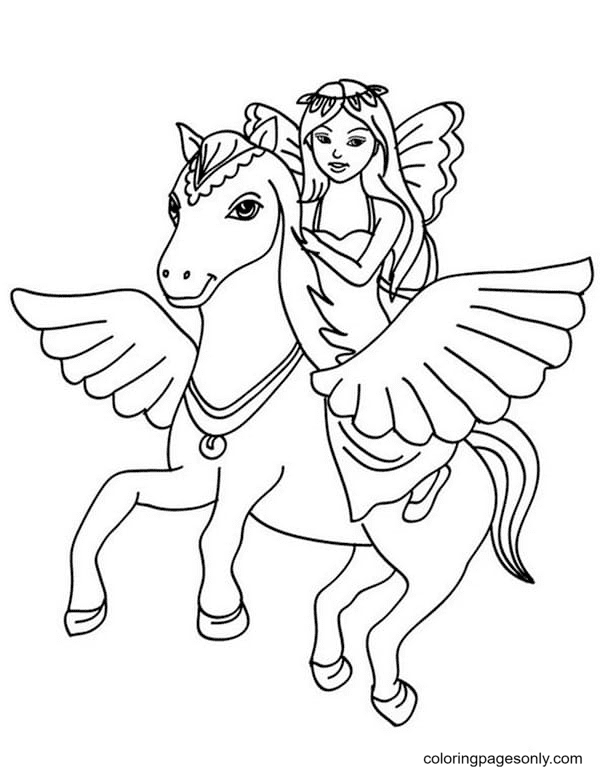
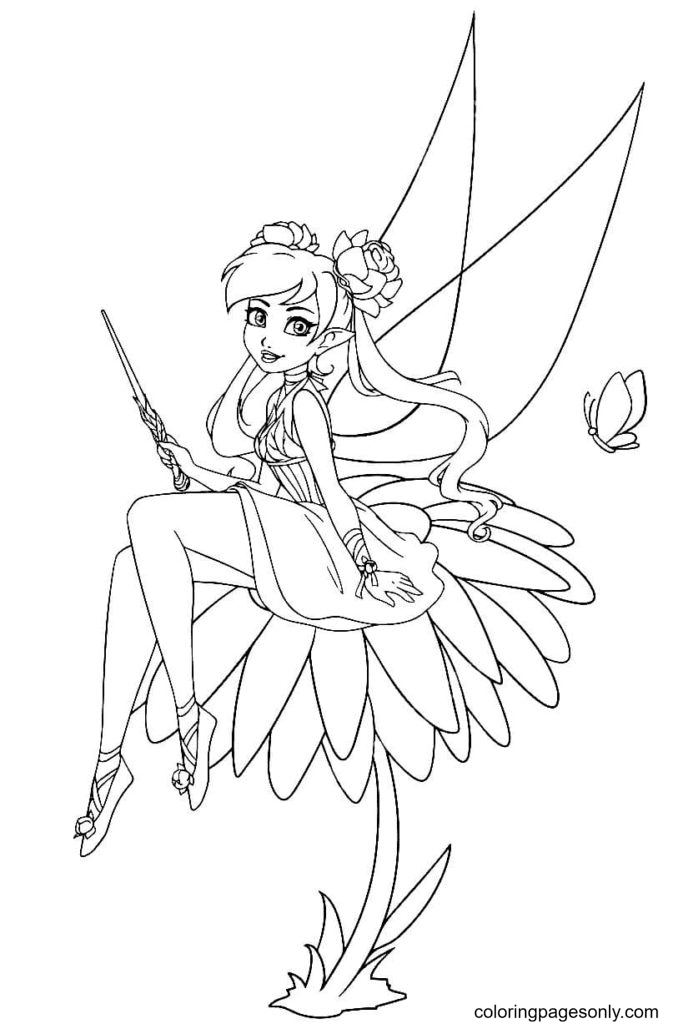


What’s Inside
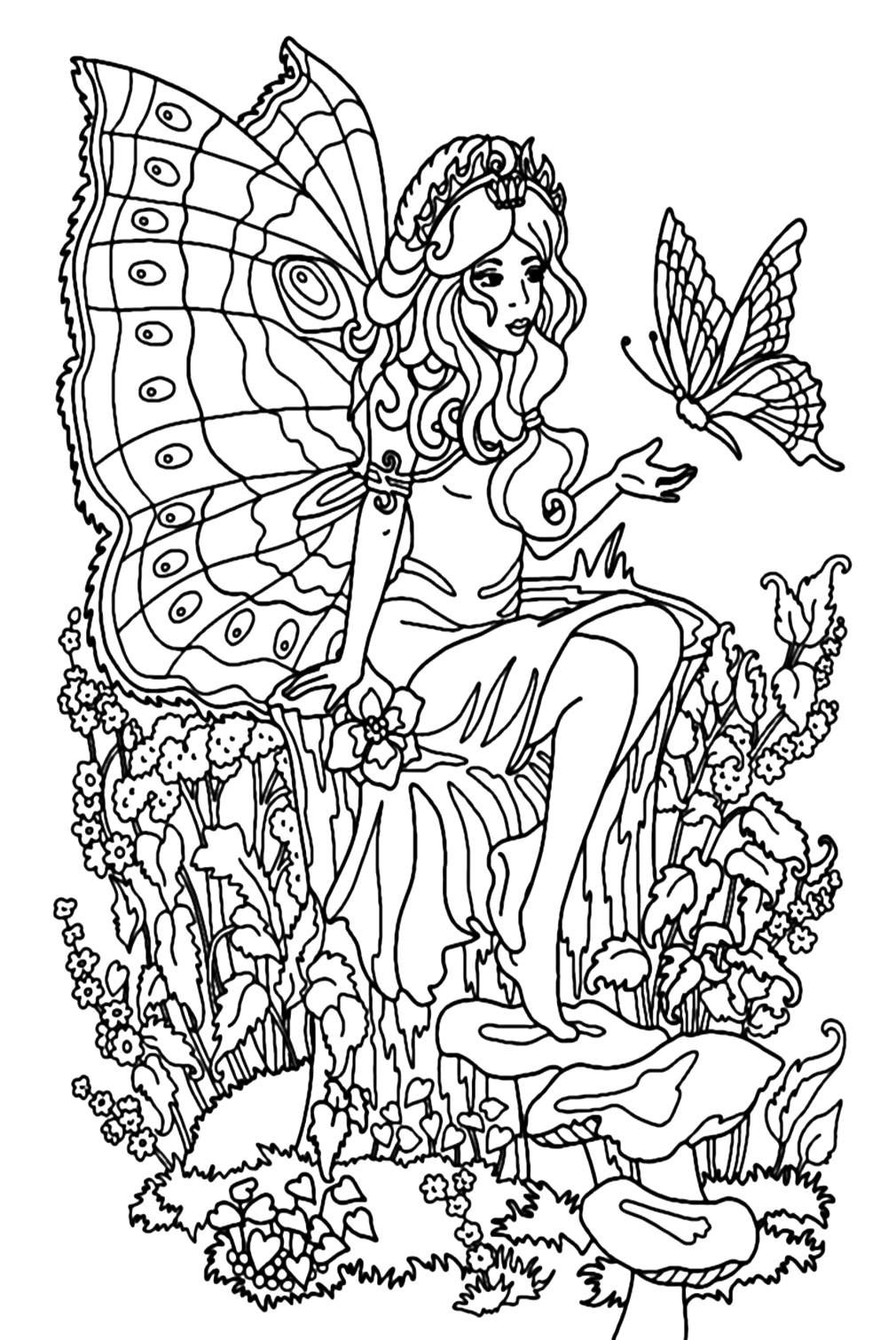
Winged Fairy Portrait and Flight Pages
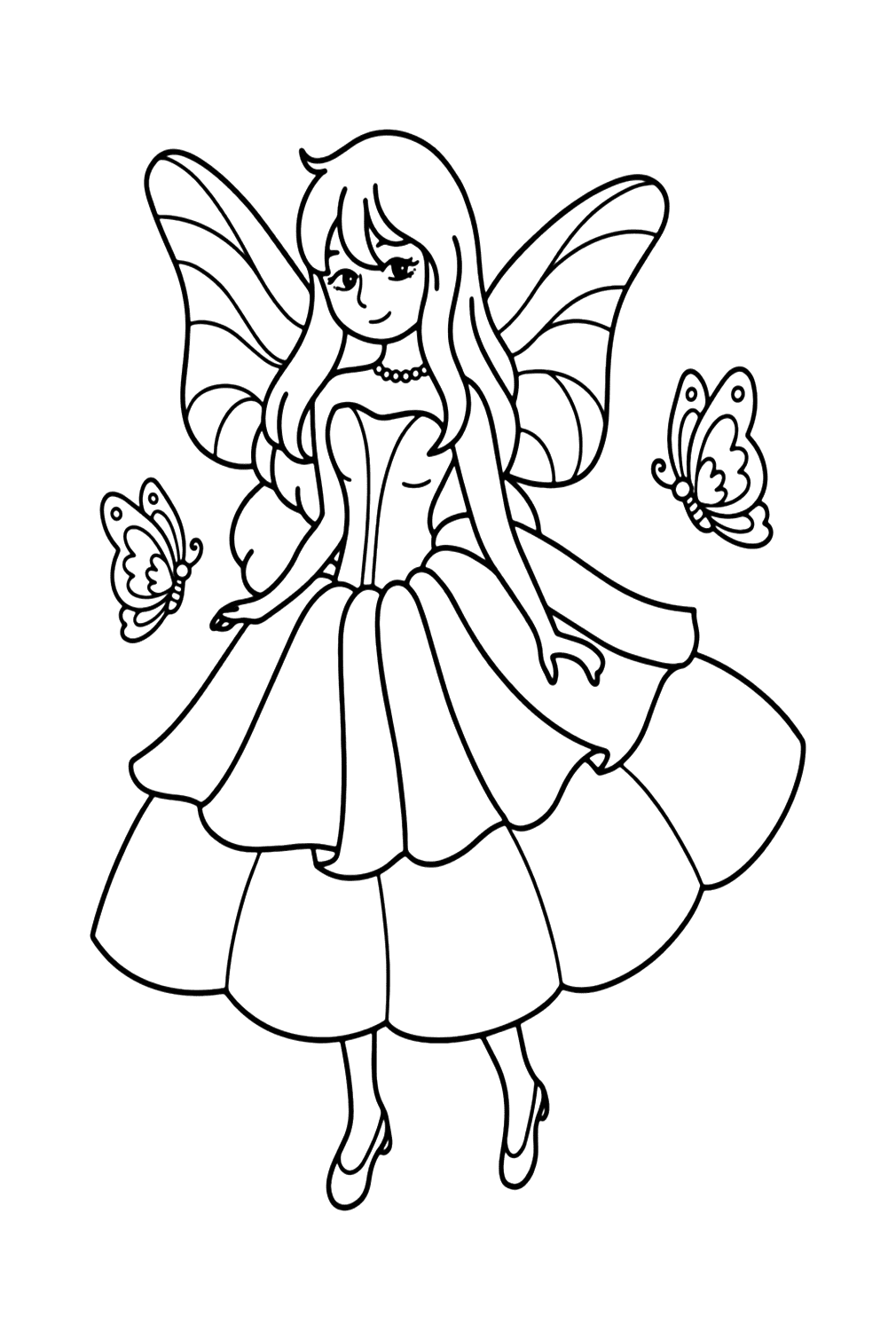
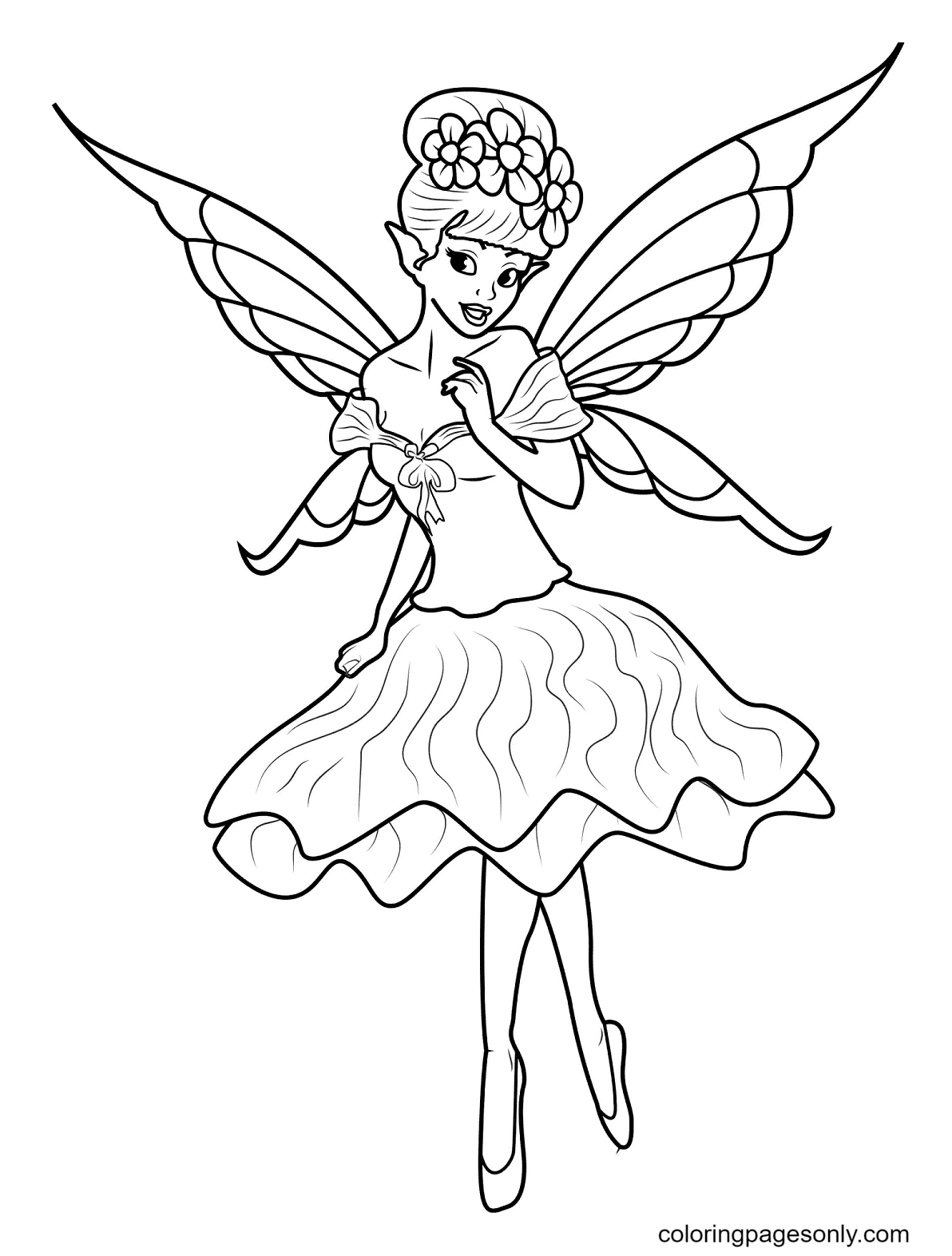
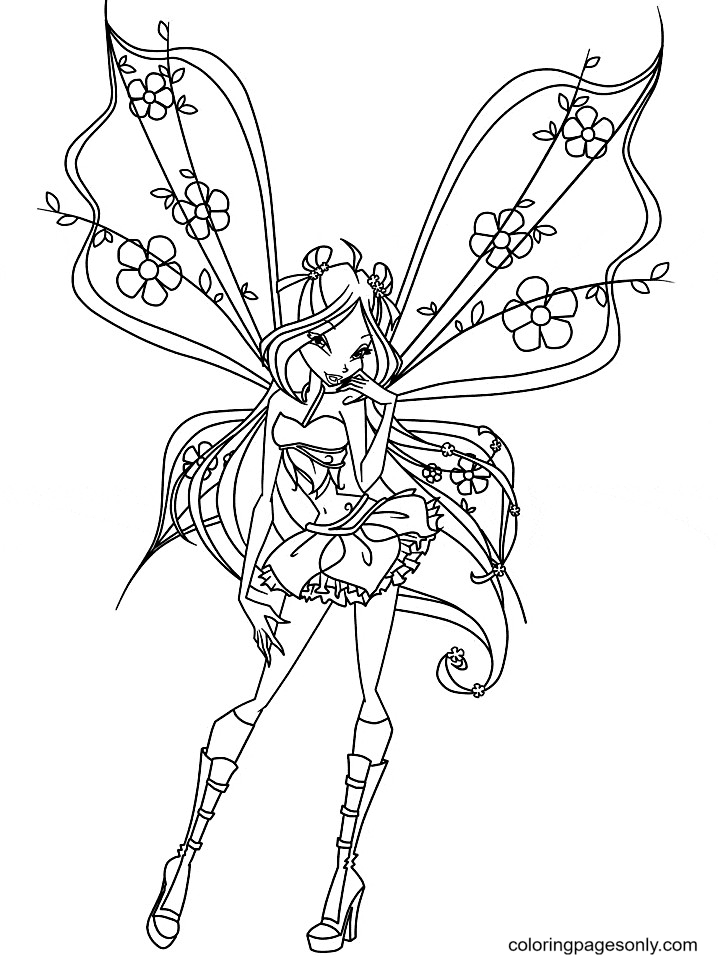
The visual of the fairy with insect-like transparent wings is a specific product of Victorian natural history illustration meeting Romantic-era supernatural fantasy: artists who had access to detailed scientific illustrations of butterfly and dragonfly wing structures applied the same precise, veined, iridescent quality of those wings to supernatural beings depicted at a human scale. The result is the specific wing design that has been the canonical fairy visual since the 1840s: rounded or pointed wings with visible venation, the semi-transparent membrane shown catching light differently from different angles, and the characteristic luminescence that suggests the wing material is something between glass and living tissue.
Sir Joseph Noel Paton’s “The Reconciliation of Oberon and Titania” (1847) and “The Quarrel of Oberon and Titania” (1849), both now held by the National Gallery of Scotland, are among the most extensively studied examples of Victorian fairy painting: large-scale canvases containing hundreds of individually rendered fairy figures, each with distinct wing structures and activities. Richard Dadd’s “The Fairy Feller’s Master-Stroke,” created approximately between 1855 and 1864 while Dadd was confined to Bethlem Royal Hospital following a conviction for murder, is considered the most technically intricate fairy painting in the Western tradition: a dense, jewel-like composition in which dozens of miniature fairy figures are pressed together in a grassy clearing.
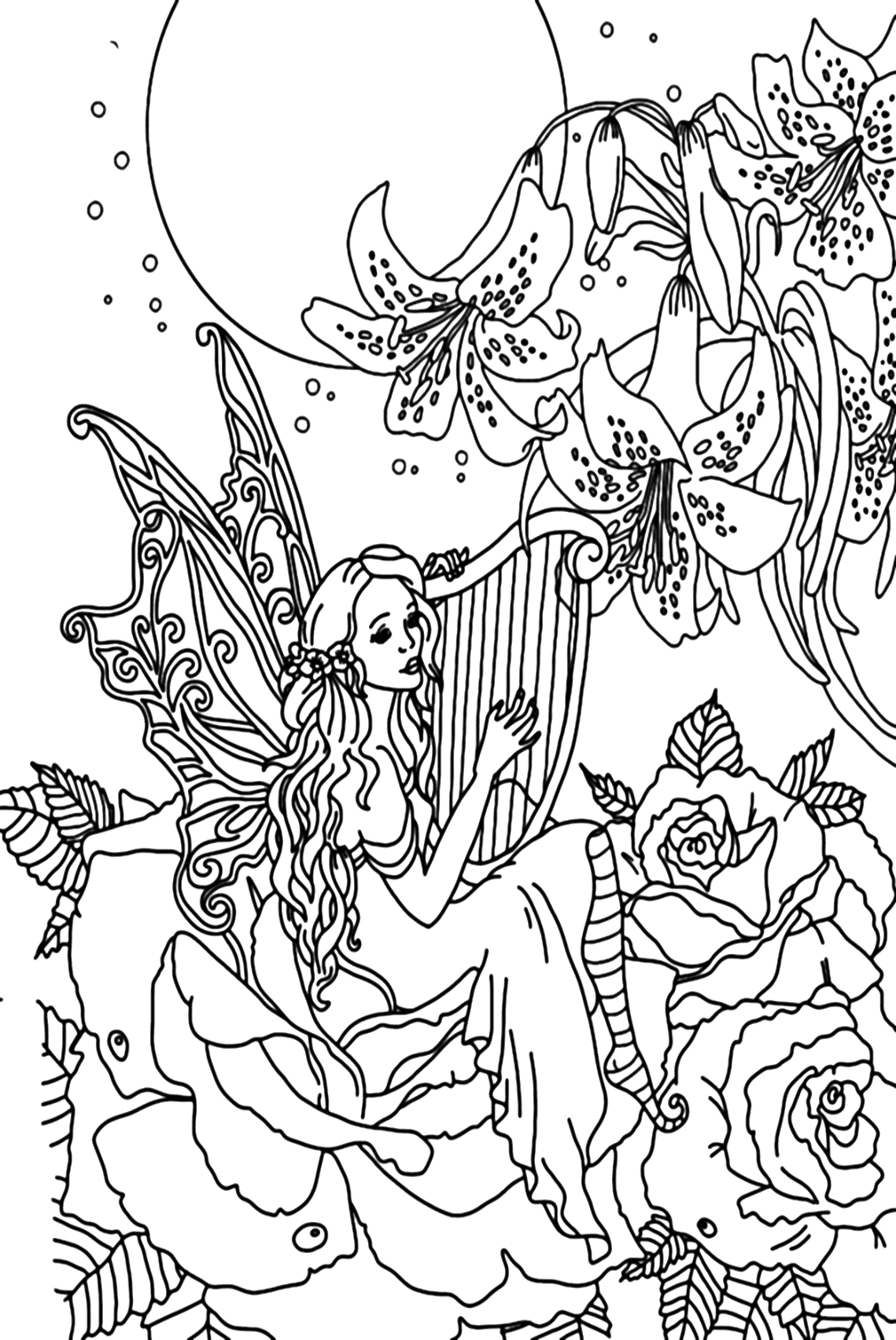
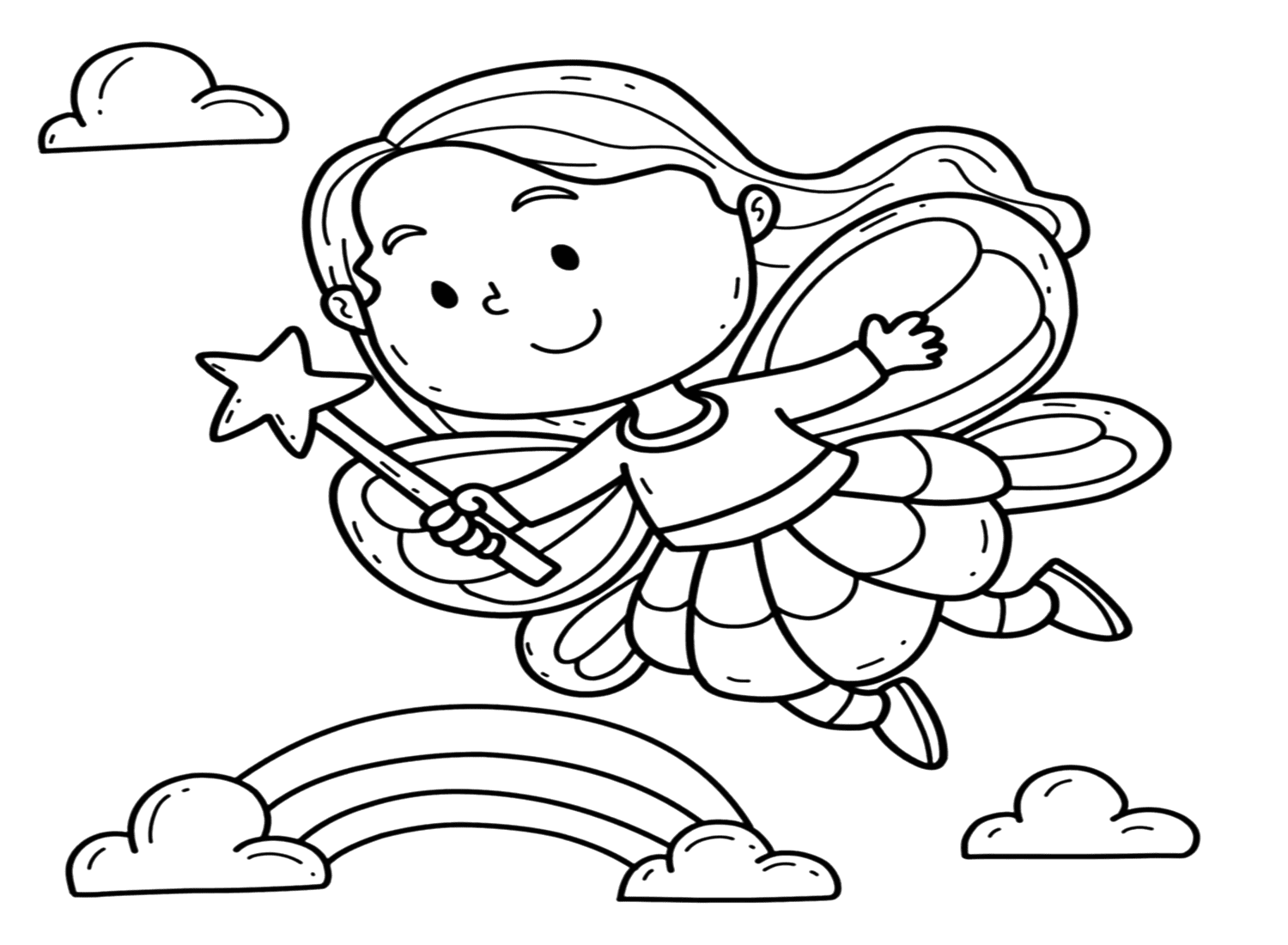
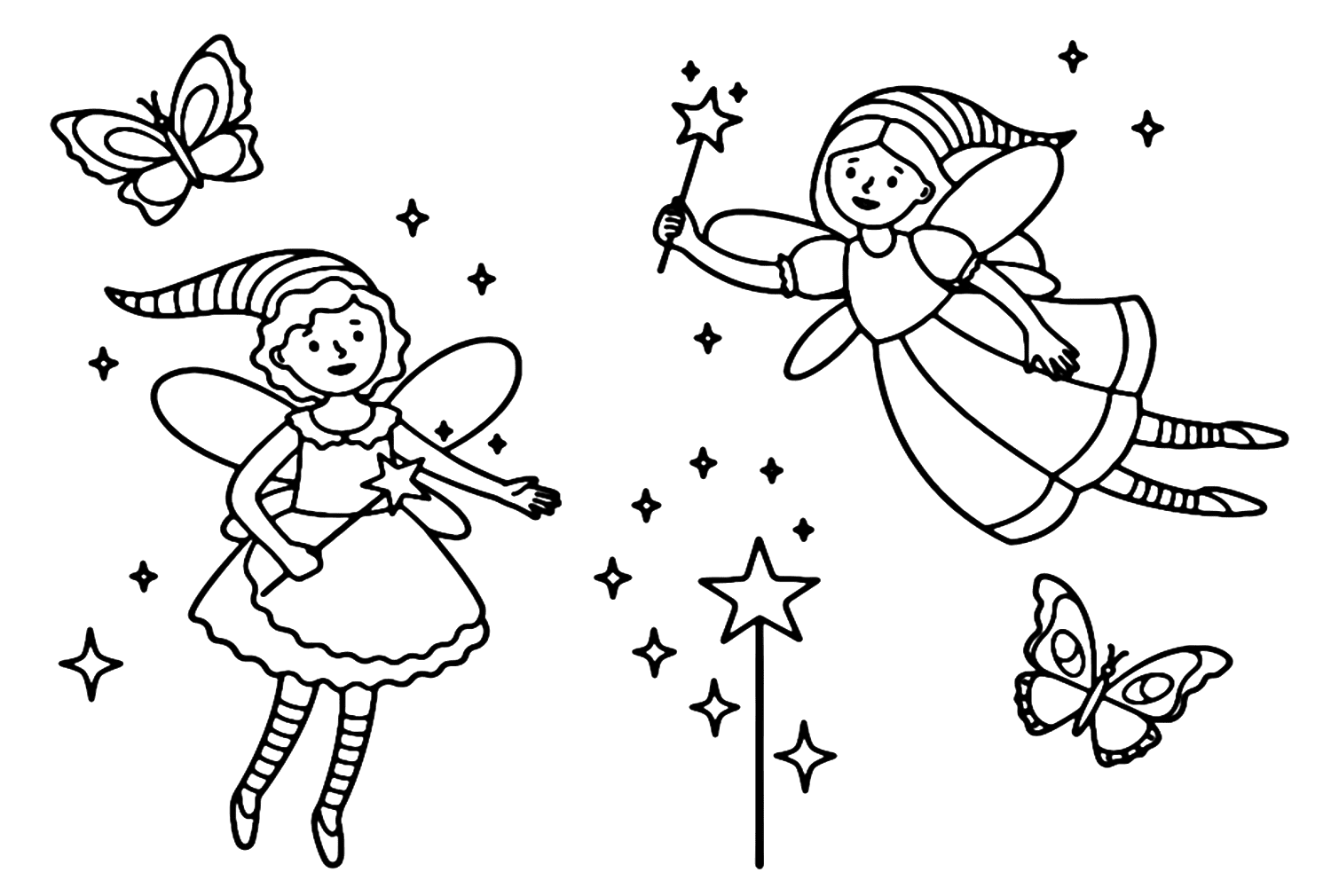
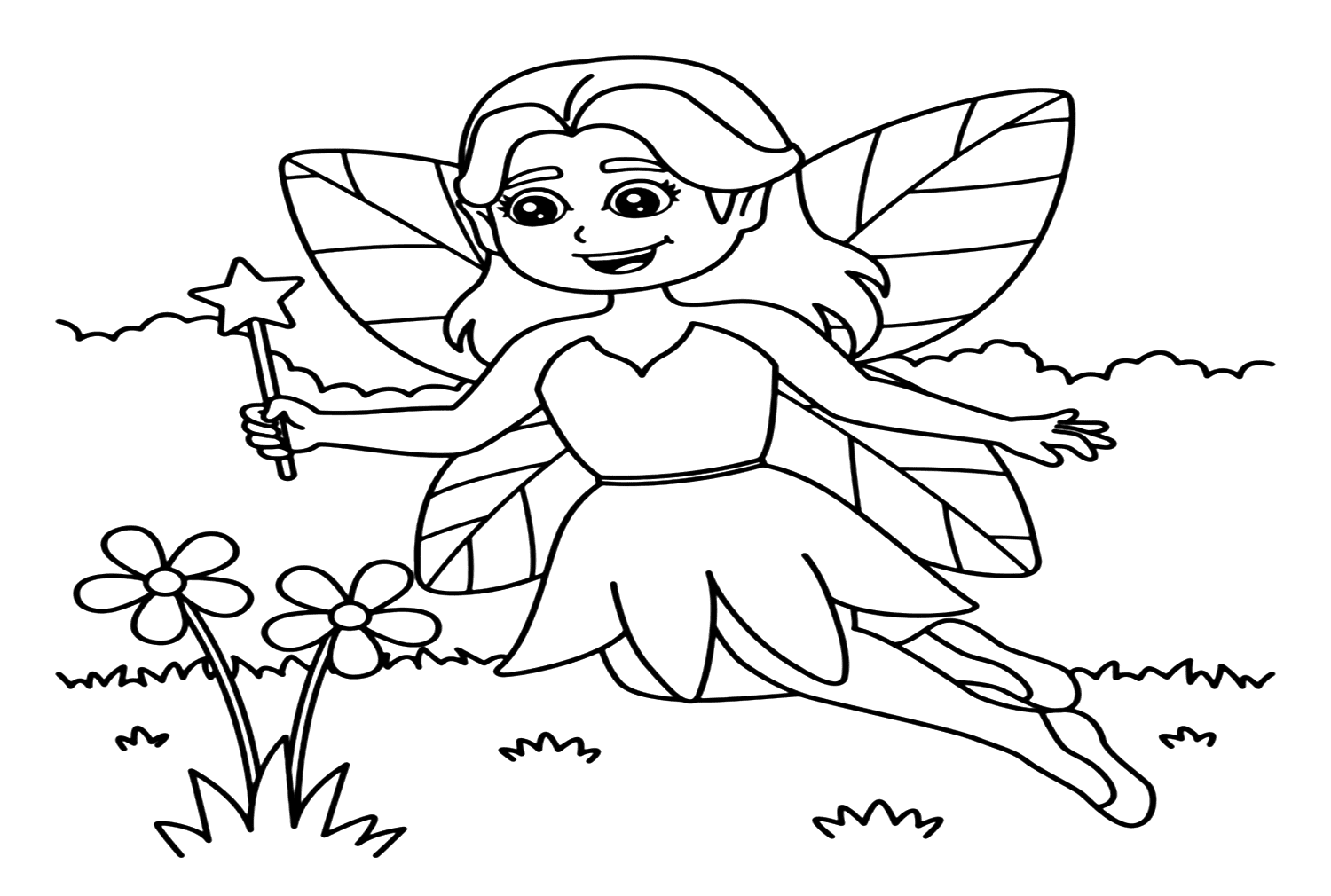
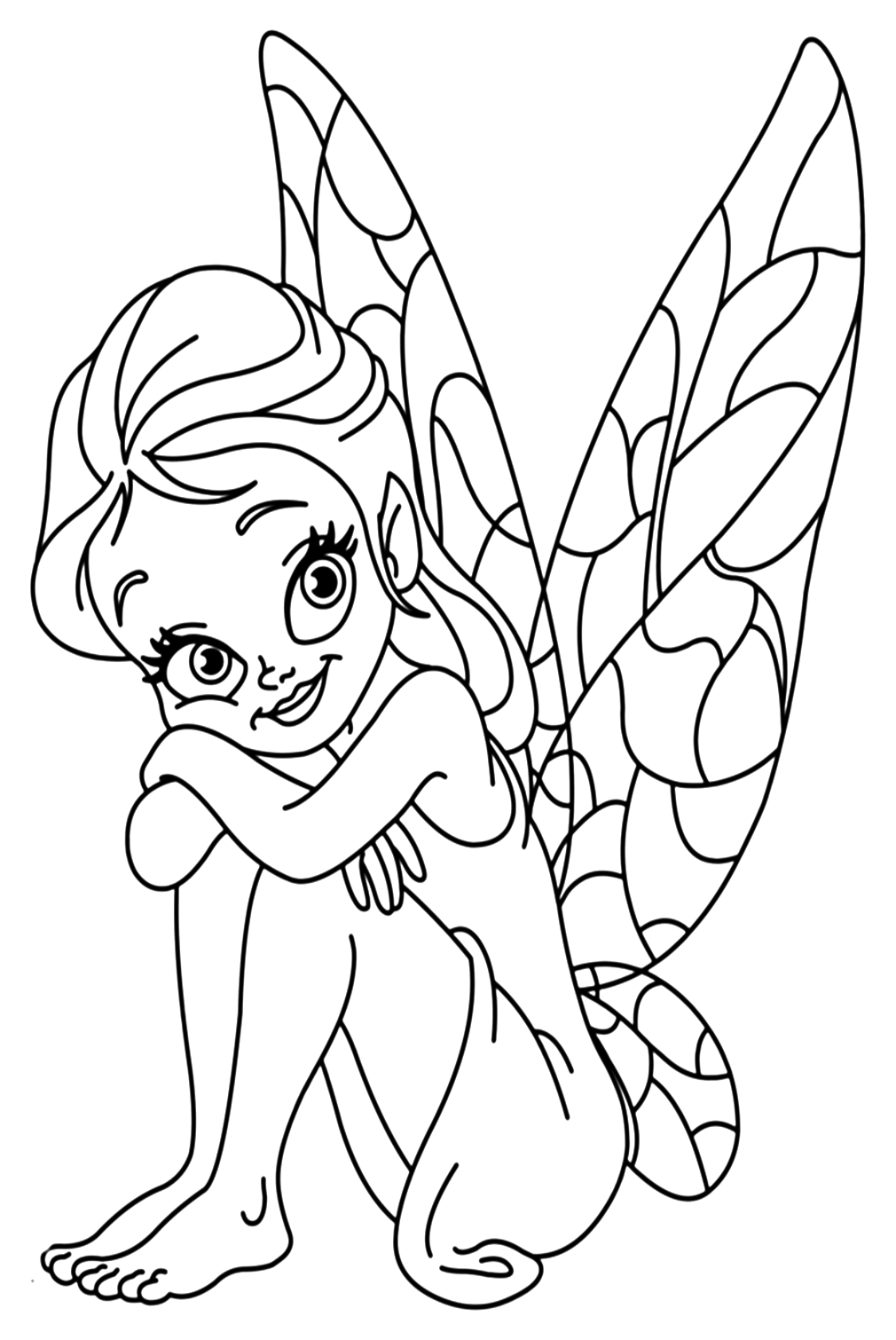
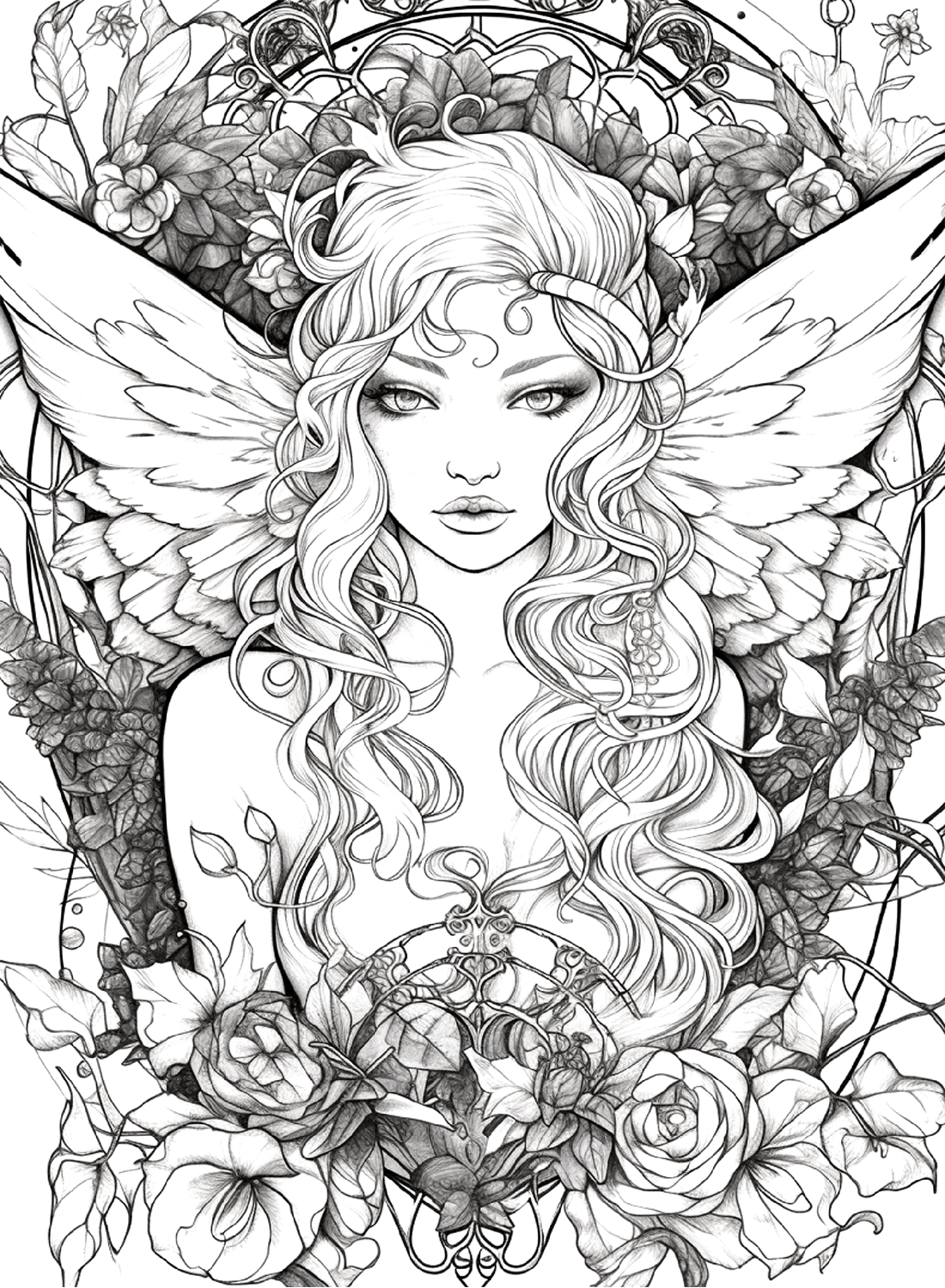
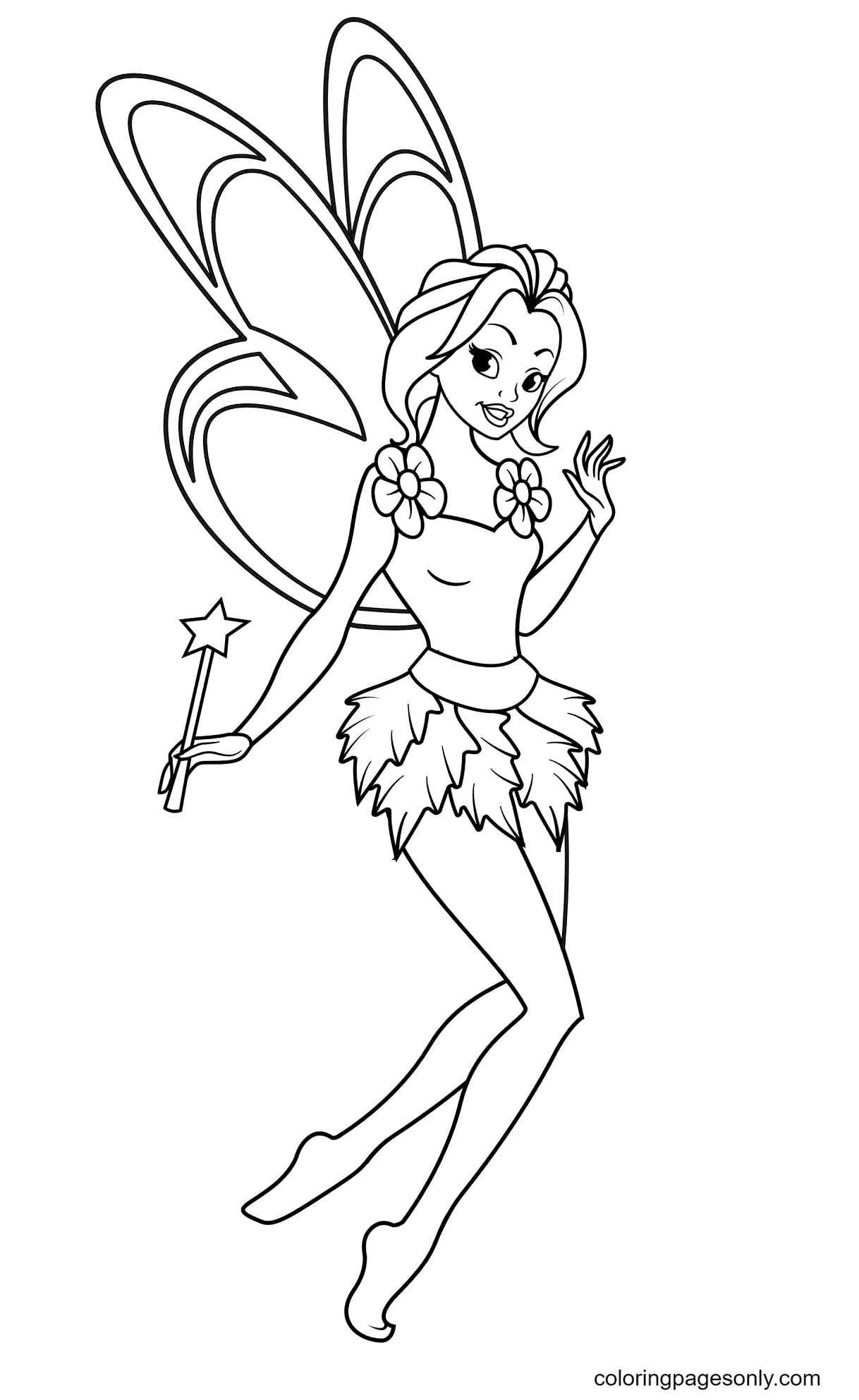
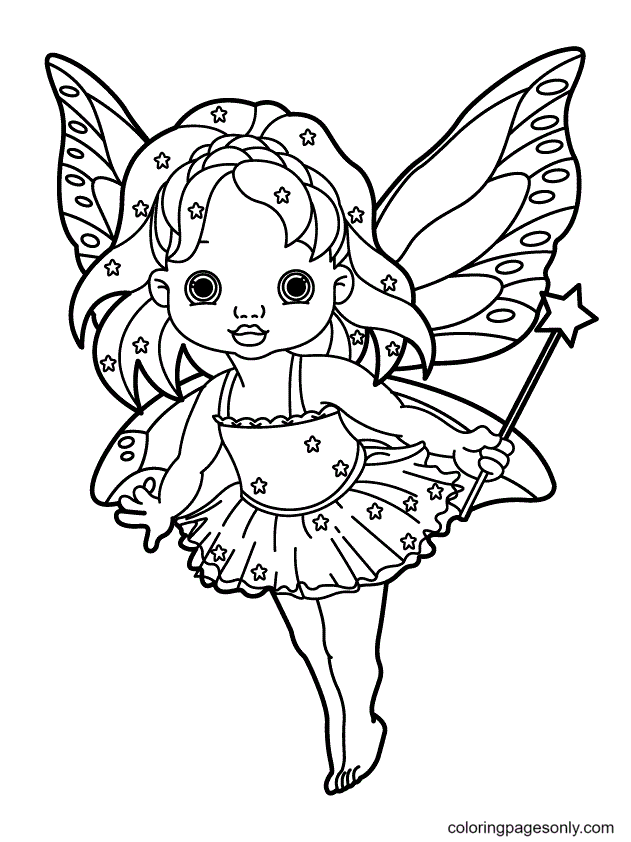
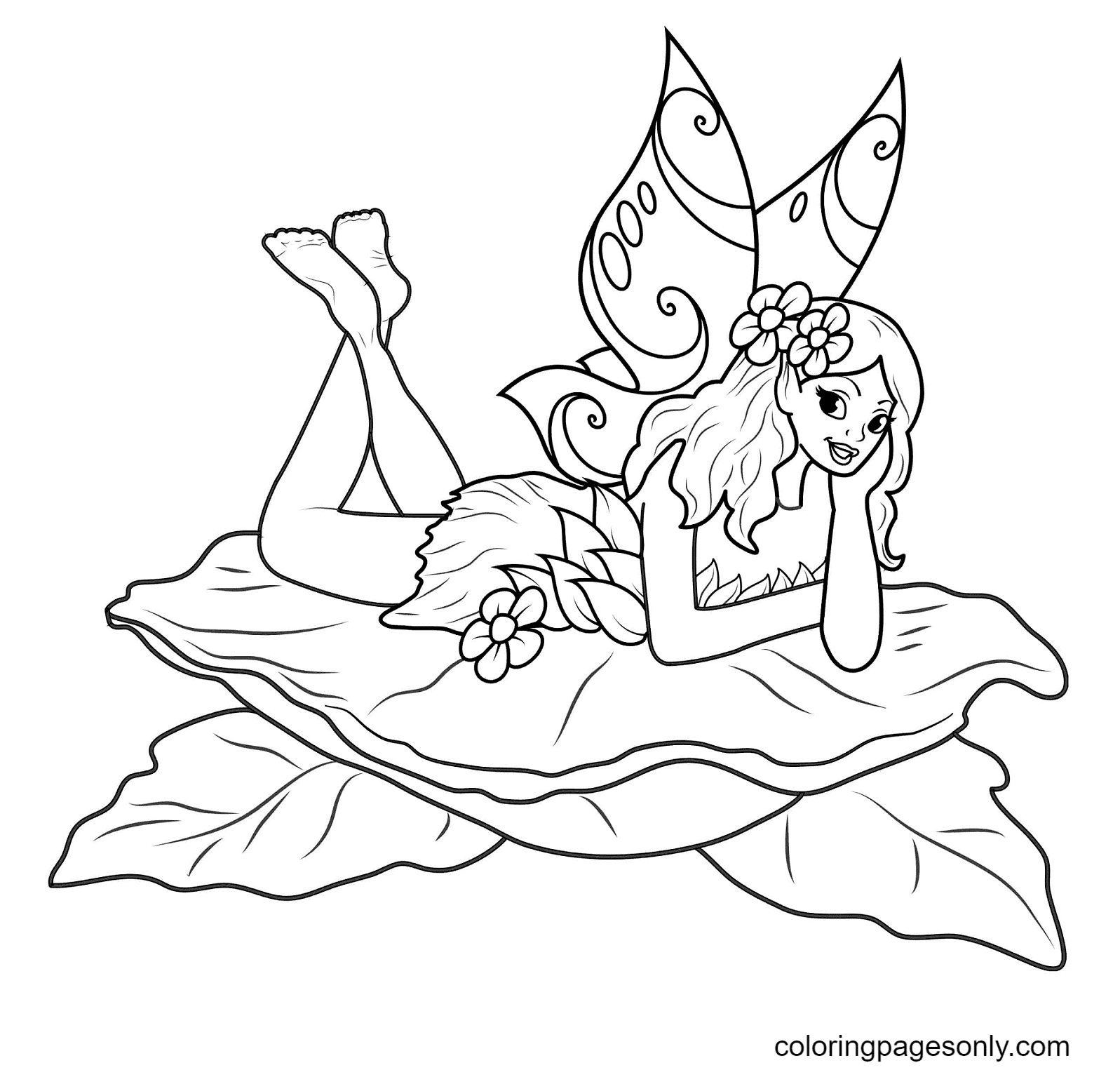
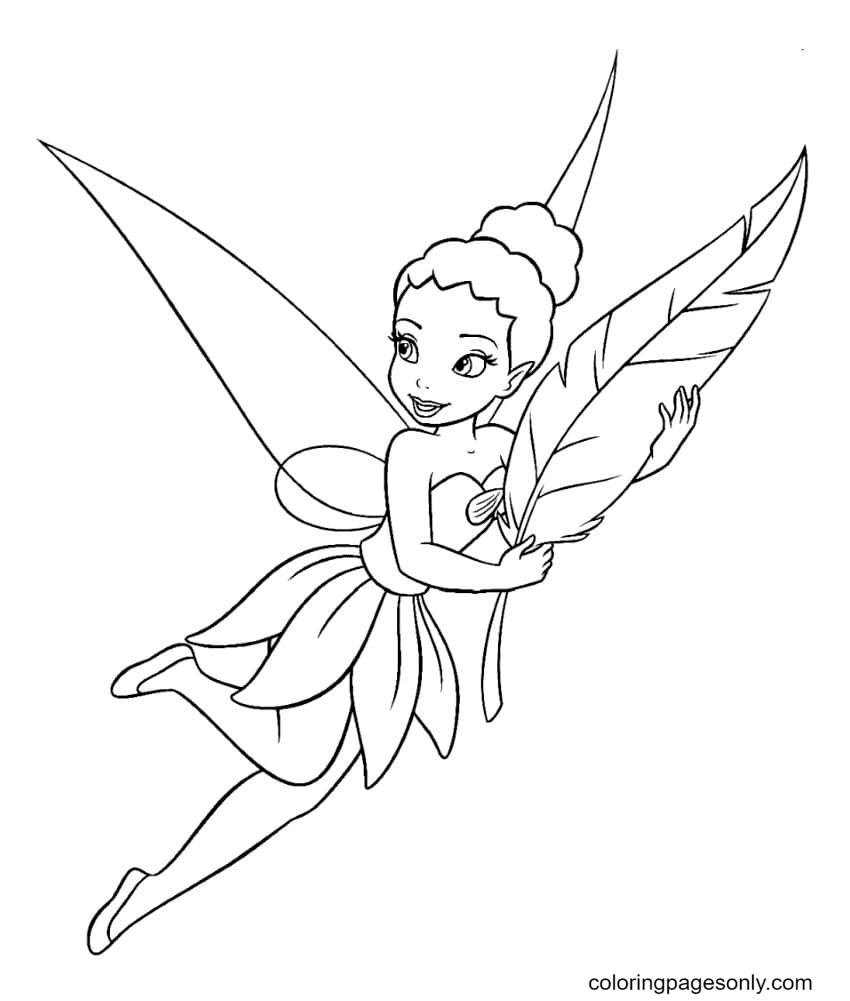
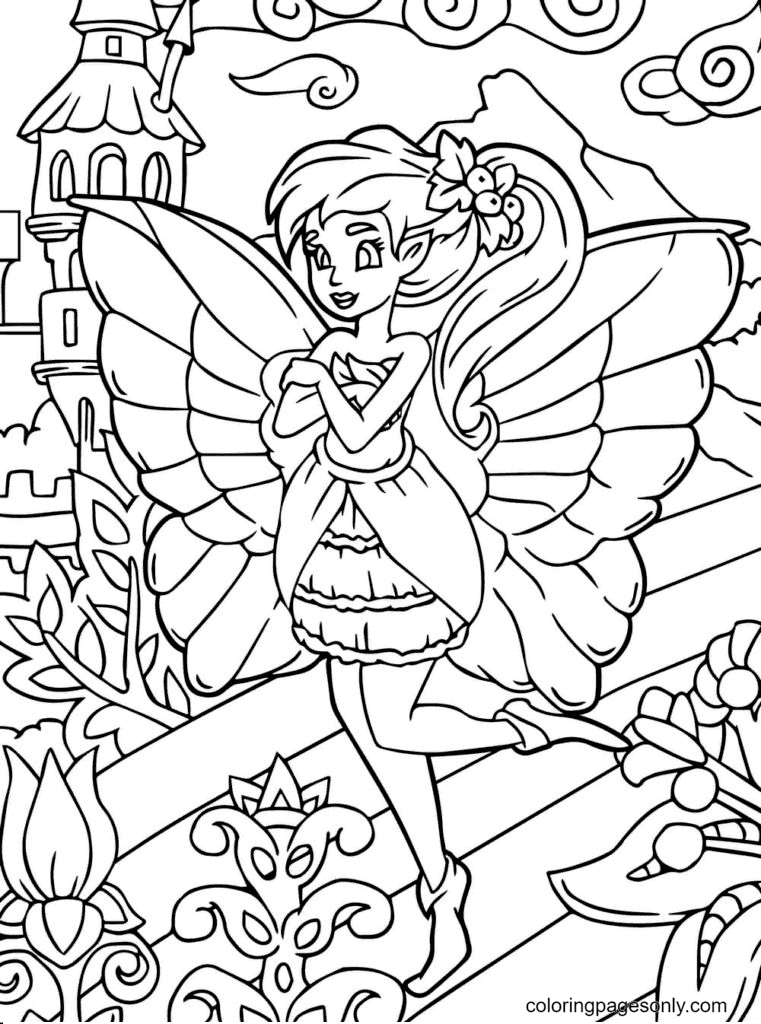
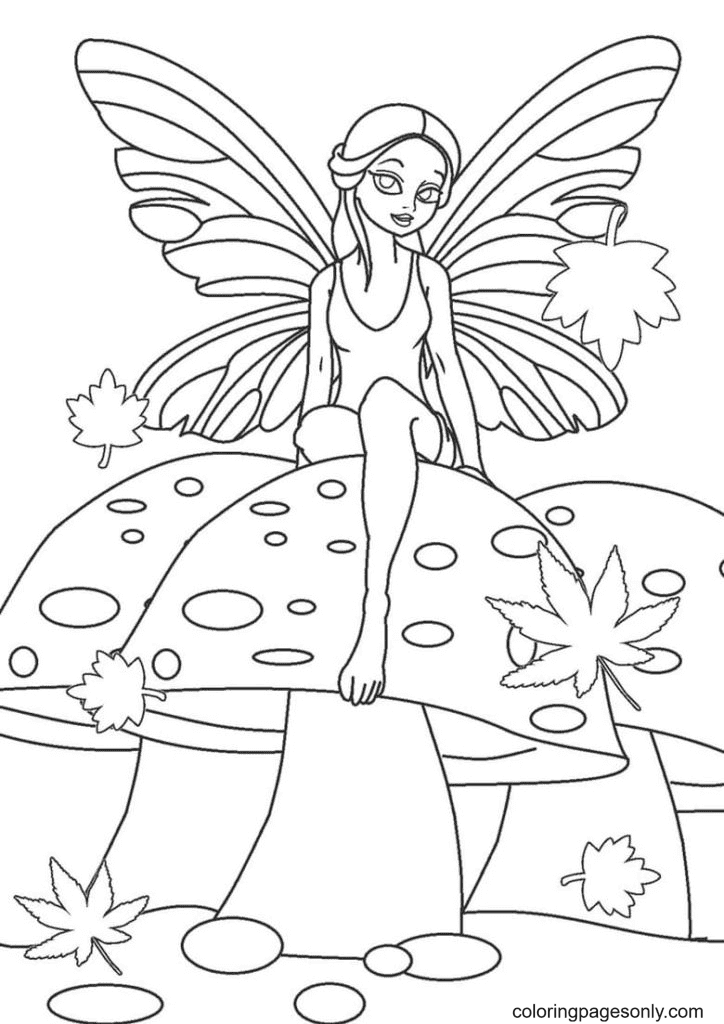
Portrait pages in the collection show fairies in three primary pose types: the hovering flight pose (wings spread, figure suspended in the air, body angled slightly forward), the resting pose (figure seated on a flower, mushroom, or leaf with wings folded or partially extended behind), and the wand-raising pose (figure in a standing or flying position with arm extended forward holding the wand, the wand’s tip producing a burst of light or sparkle effects).
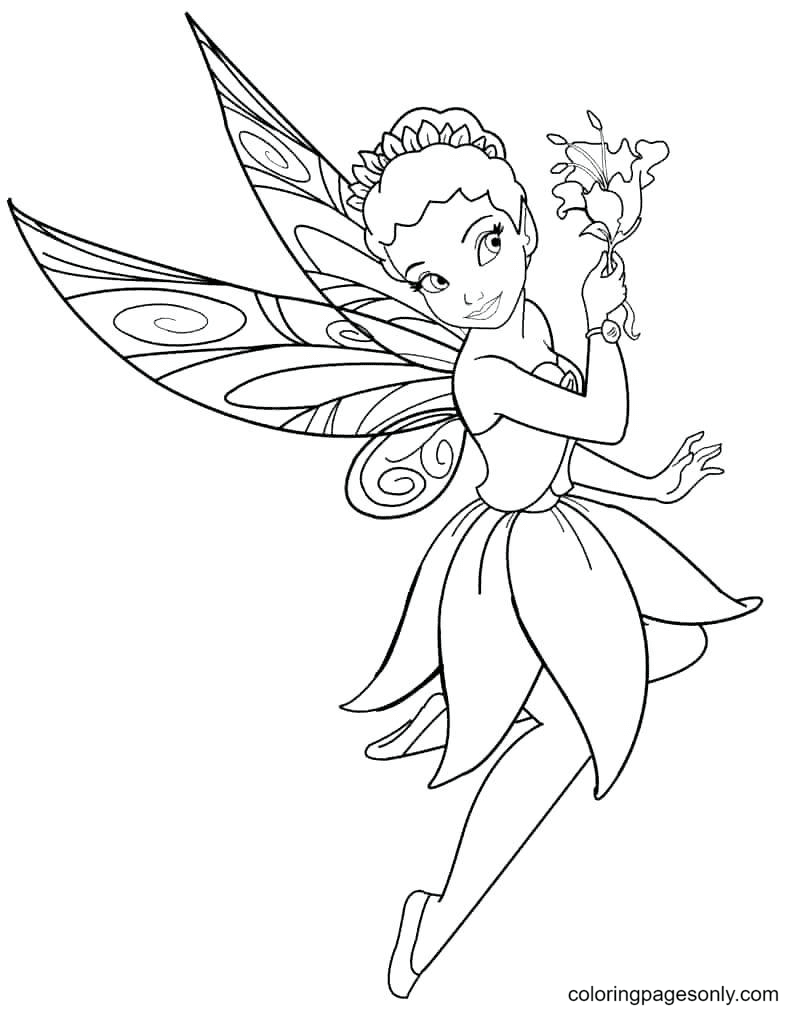
Coloring winged fairy portrait pages: The wings are the page’s most technically demanding element. Apply the wing membrane color at very light pressure using the translucency technique: choose the wing’s base color (pale blue, pale lavender, pale pink, or pale teal, depending on the page’s established palette) and apply at 40 to 50 percent of standard pressure, allowing the paper’s natural white to contribute. The wing venation lines (the darker structural lines running through the wing membrane) are applied at slightly heavier pressure in the same color family but slightly more vivid. Any iridescent highlight on the wing uses very pale gold-white or very pale teal-white applied at minimum pressure at the wing’s most directly lit upper surface.
Flower Fairy Pages
Cicely Mary Barker (1895-1973) began the Flower Fairies series in 1923 with Flower Fairies of the Spring, following it with seven additional volumes covering summer, autumn, winter, the garden, the wayside, trees, and the countryside. Each fairy in the series is depicted wearing clothing derived from the plant they represent and posed alongside a botanically accurate rendering of that plant. Barker used real children as her figure models, sourcing models primarily from the nursery school run by her sister in Croydon, England. The series is documented in the Oxford University Press archive and has been continuously in print since 1923.
The specific quality that distinguishes Flower Fairy illustration from generic fairy illustration is the botanical accuracy: the flowers, leaves, seed pods, and berries depicted alongside each fairy are rendered with the same care and accuracy as the human figure. The Bluebell Fairy’s costume uses actual bluebell petal shapes. The Blackberry Fairy holds actual blackberry fruits rendered with attention to their specific drupe-cluster structure. This dual commitment to accurate natural history and fantasy figure-making gives the Flower Fairies series its specific visual authority.
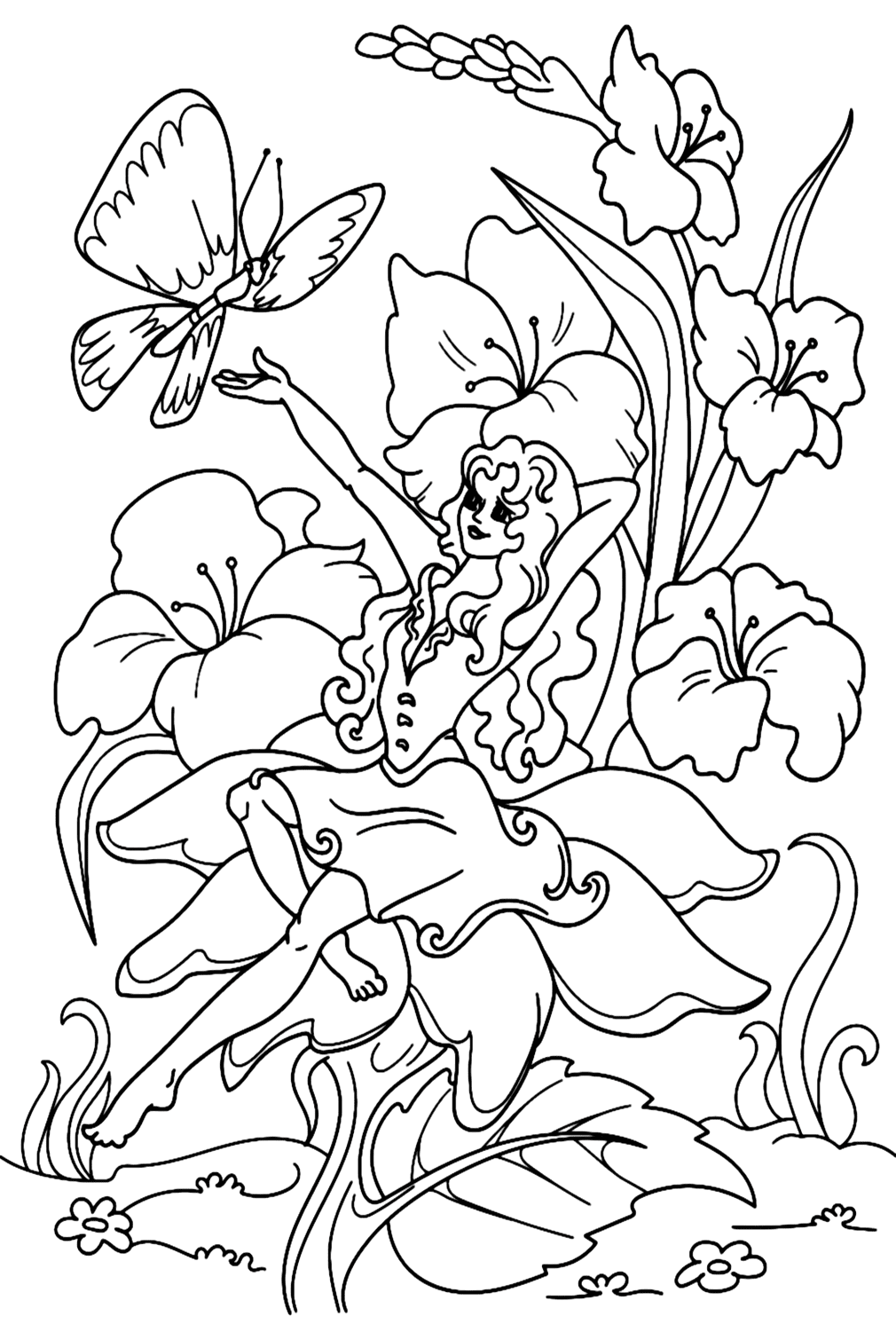
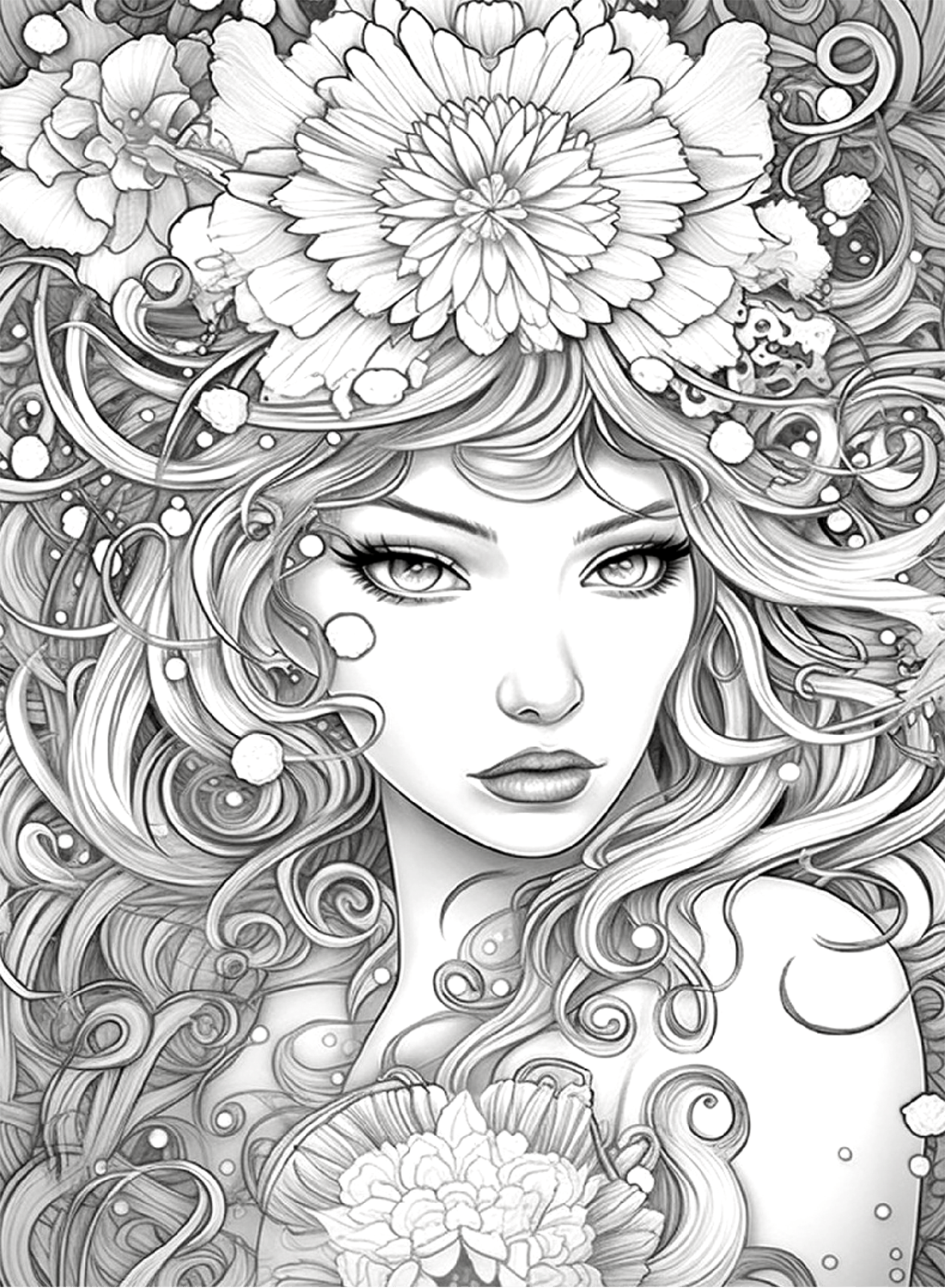
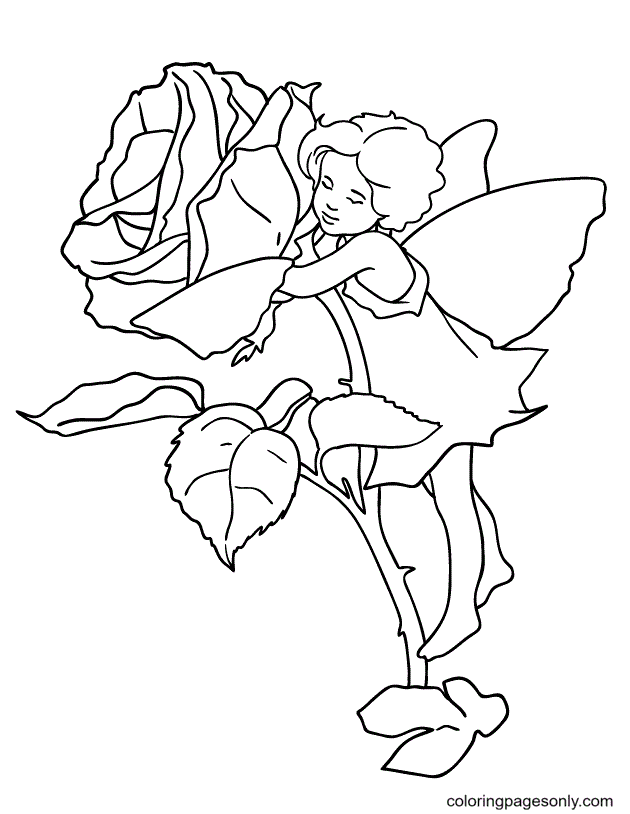
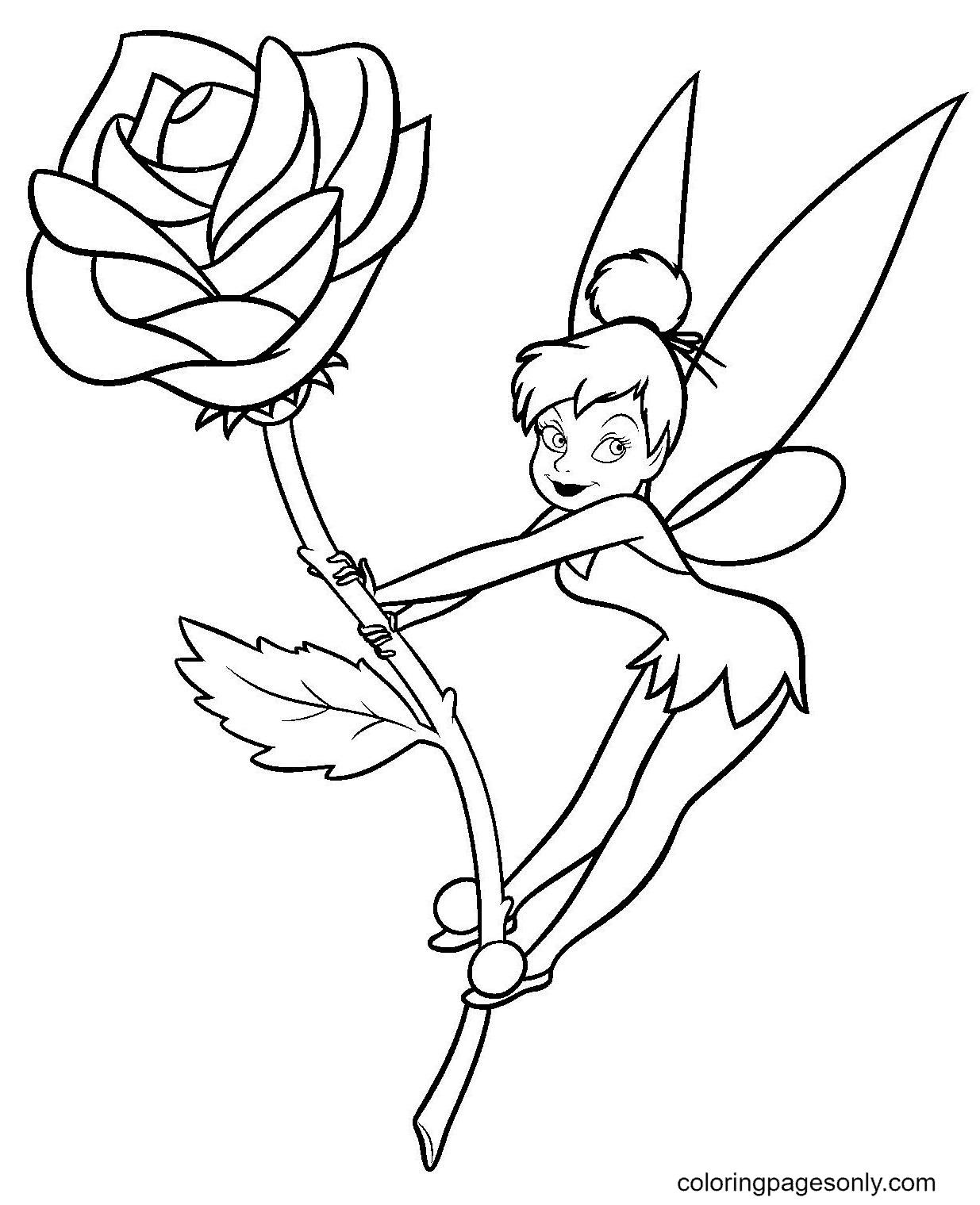
The most commonly depicted flower fairies in the collection draw on the series’ most recognized figures: rose fairies (red or pink rose petals forming the skirt), daffodil fairies (yellow trumpet forms), lavender fairies (purple-grey spike arrangements), and bluebells (deep blue bell clusters).
Coloring flower fairy pages: The flower the fairy is associated with determines the page’s entire palette. For a rose fairy: the rose petals in vivid warm red or warm pink form both the flower background and the fairy’s petal-derived costume; the leaves use medium warm green with slightly darker green veins; the fairy’s skin is a warm light tone, and the wings use pale pink-cream translucency. For a bluebell fairy: the bells use vivid medium blue-purple (neither too blue nor too purple but the specific cool violet of actual bluebells); the stems and leaves use medium grey-green; the fairy’s costume echoes the bluebell’s specific blue-violet. Apply all flower colors first to establish the palette, then apply the fairy figure’s costume in matching or harmonizing tones.
Forest and Nature Fairy Pages
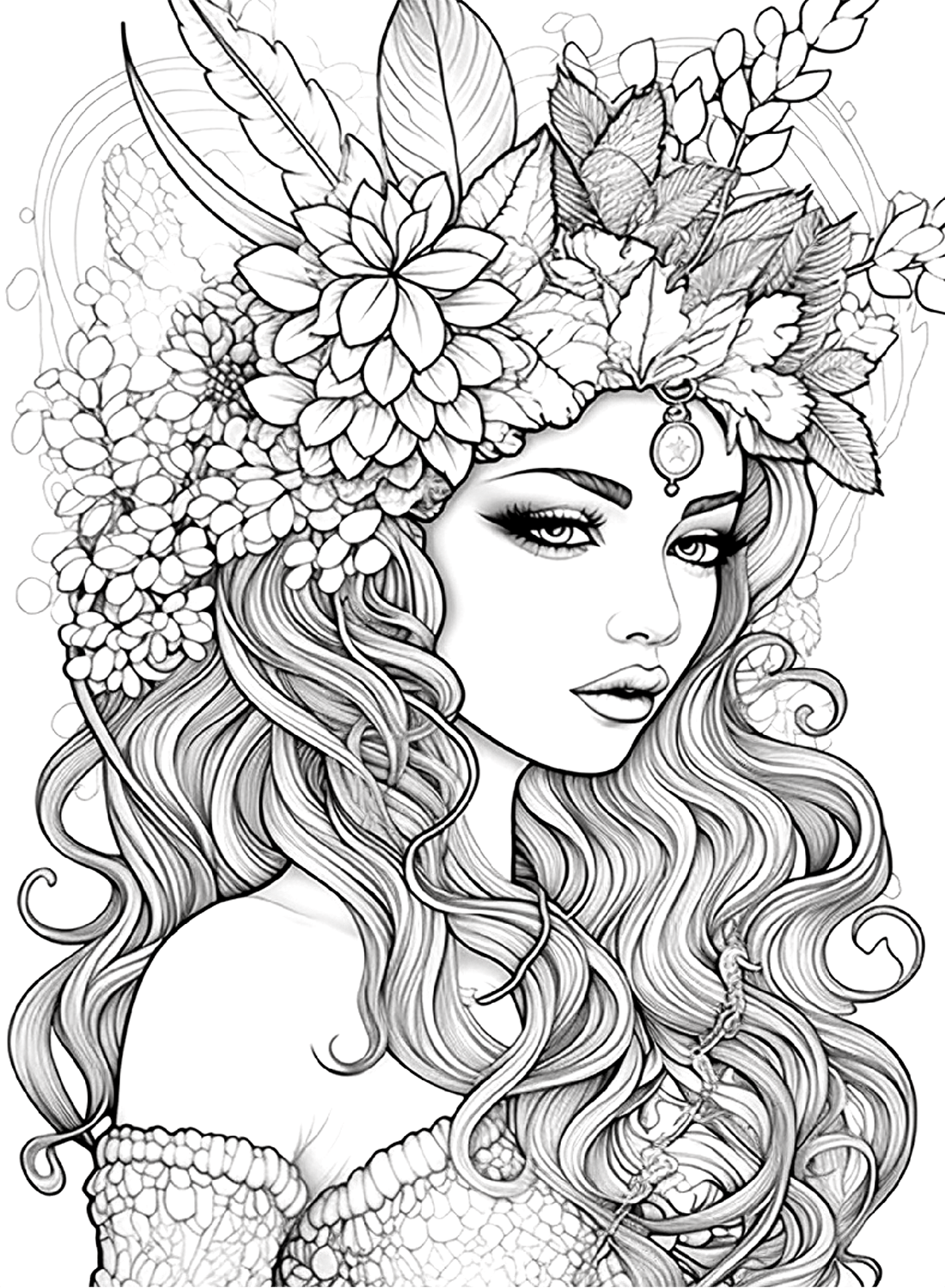
The forest fairy inhabits the intersection of the fairy folklore tradition with the specifically European literary tradition of the enchanted wood: the place where ordinary human reality gives way to supernatural experience. In Shakespeare’s A Midsummer Night’s Dream, the forest near Athens is the location where the fairy court rules; in Celtic folklore, the fairy rings (circles of mushrooms where fairies dance) mark the boundaries between human and fairy space; in Germanic folklore, the forest is where supernatural encounters occur. The forest fairy in the illustration combines all these traditions into a single setting: ancient trees, giant mushrooms, mossy stones, and bioluminescent undergrowth provide the specific environmental vocabulary of the fairy’s natural domain.
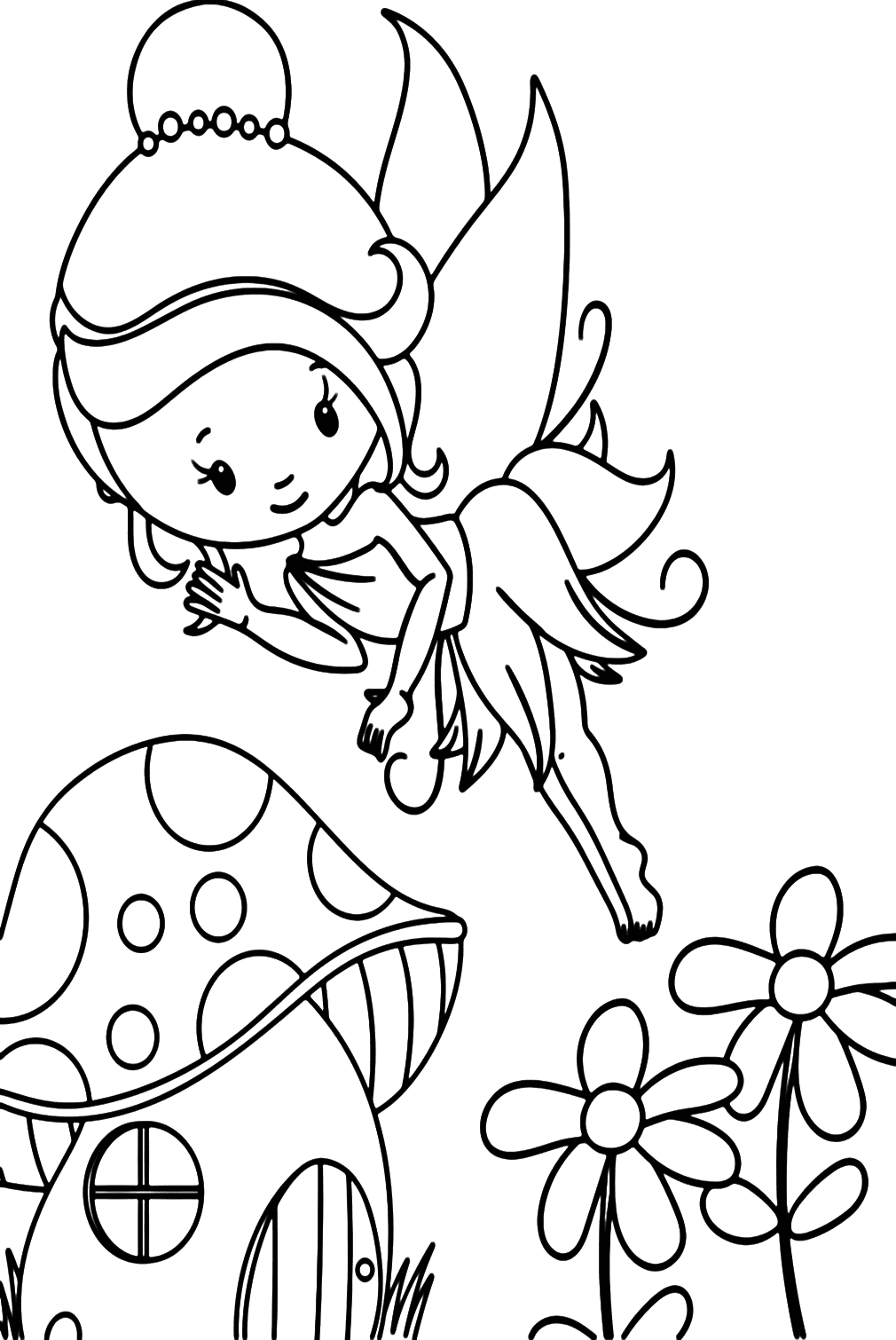
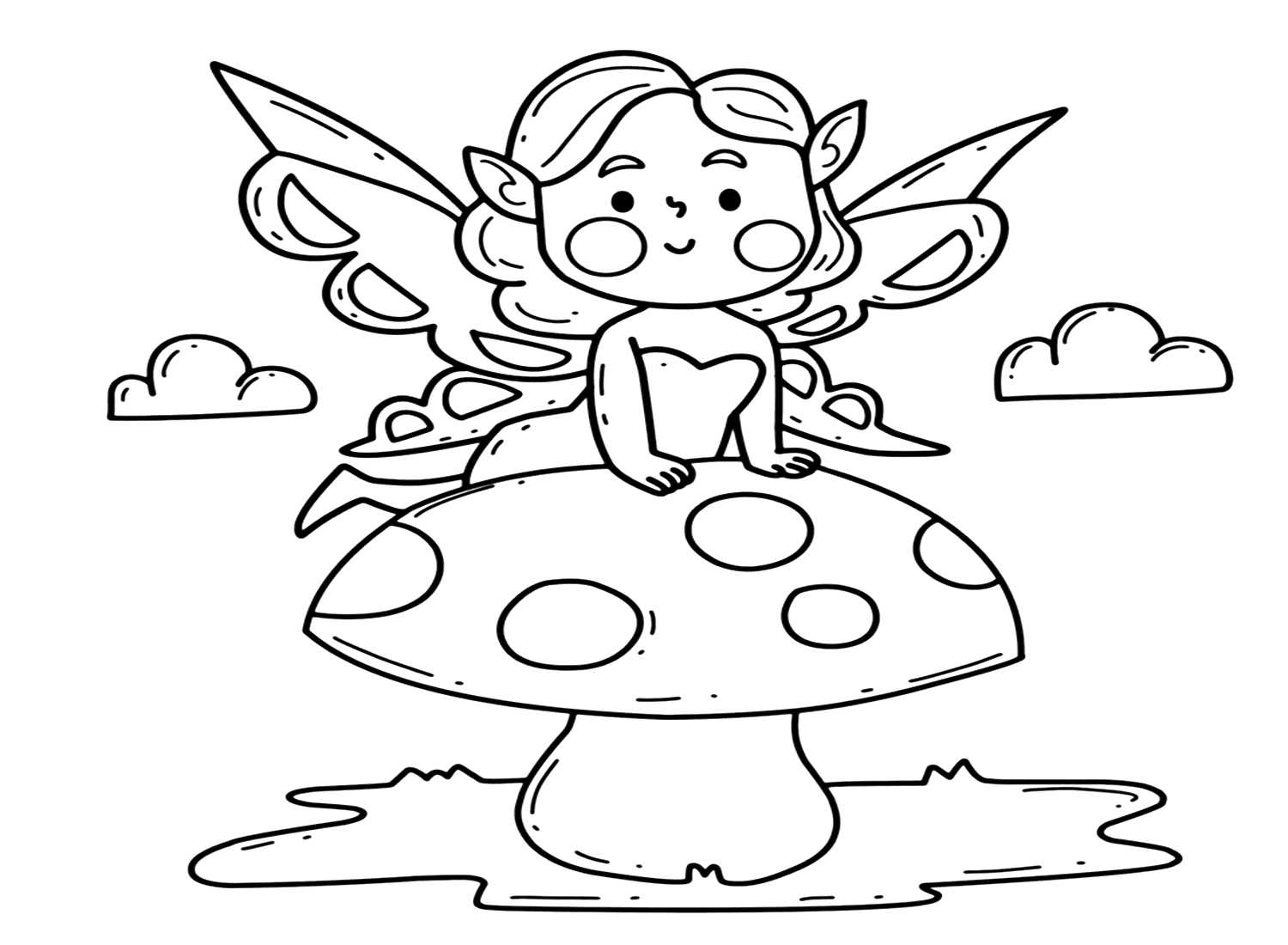
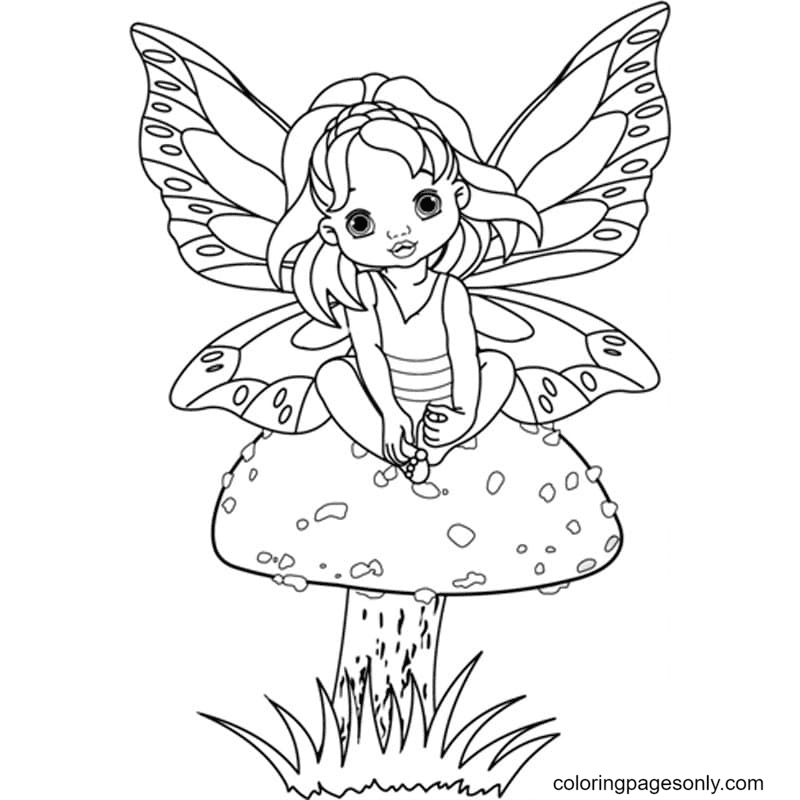
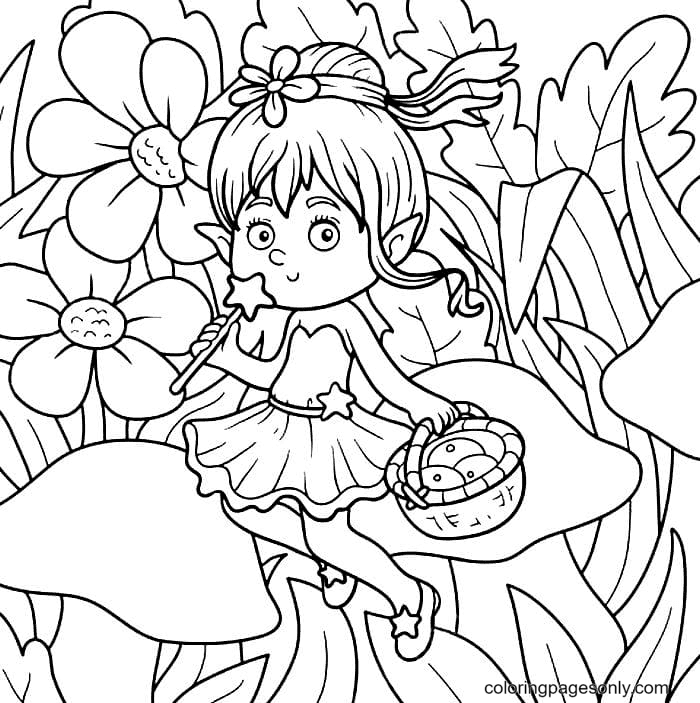
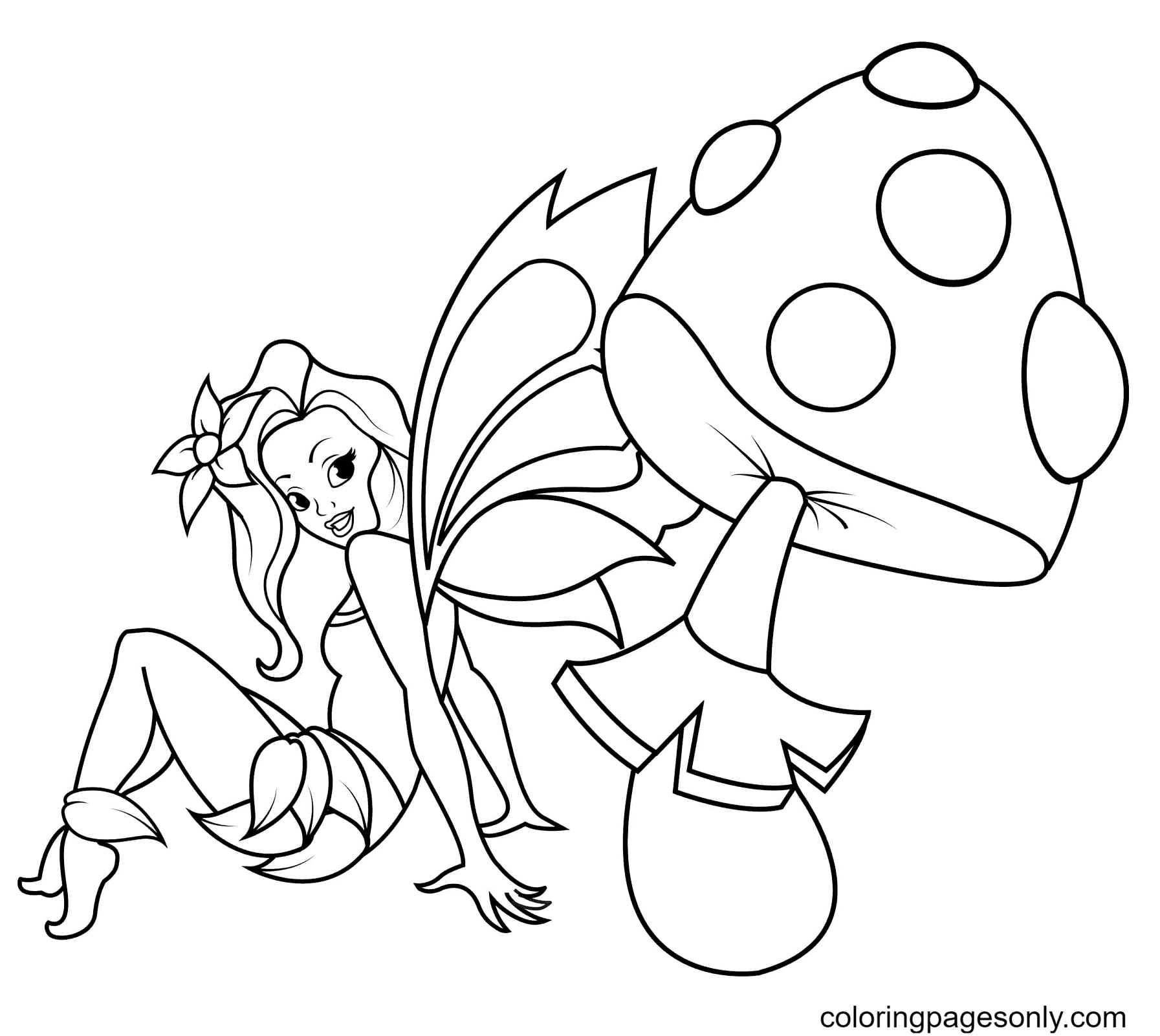
Mushrooms are particularly consistent companions to fairy depictions: the fairy ring (a naturally occurring circle of mushrooms caused by the underground mycelium’s radial growth pattern) was interpreted in European folklore as the place where fairies dance at night, and the specific species most associated with fairy imagery is the fly agaric (Amanita muscaria): the iconic red-capped, white-spotted mushroom whose distinctive appearance made it a visual shorthand for the magical forest. Forest fairy pages in the collection typically show one or more fairies perched on or flying above fly agaric mushrooms, surrounded by ferns, tree roots, and undergrowth.
Coloring forest fairy pages: The forest setting uses a layered approach, moving from background to foreground. Deep forest background uses very dark blue-green or near-black, applied at full coverage across the deepest background area. Mid-ground tree trunks use warm grey-brown. The fly agaric mushroom cap is vivid red at full saturation with white spots (the paper’s natural white or applied pale cream); the mushroom stem is white to pale cream. Foreground ferns use bright yellow-green for the most light-catching fronds and darker medium green for the fronds in shadow. The fairy itself stands out against this dark, richly colored setting: pale skin, vivid costume, luminous wings create the contrast that makes the figure readable in a complex setting.
Moon and Night Fairy Pages
Night fairy pages present the most dramatic coloring challenge in the collection: a figure rendered against a deep, dark background with the specific visual language of moonlight and starlight providing the scene’s illumination rather than direct sunlight. The night fairy is typically shown with a darker, cooler color palette than the daytime flower fairy: silver, deep blue, dark purple, and white-silver for the wings and costume rather than the warm yellows and pinks of the garden fairy.
The moon’s association with fairy magic is documented across multiple folklore traditions: the full moon was believed to be the time when fairy activity was most intense, when fairy rings appeared, and when human-fairy encounters were most likely. This tradition connects to the lunar calendar’s role in pre-industrial time-keeping and to the specific quality of moonlit nights in pre-electric rural environments, when the full moon genuinely changed the perceptual quality of the landscape significantly.
Stars and crescent moons are the most consistent decorative elements in night fairy pages, typically distributed throughout the background and sometimes incorporated into the fairy’s costume or wand design.
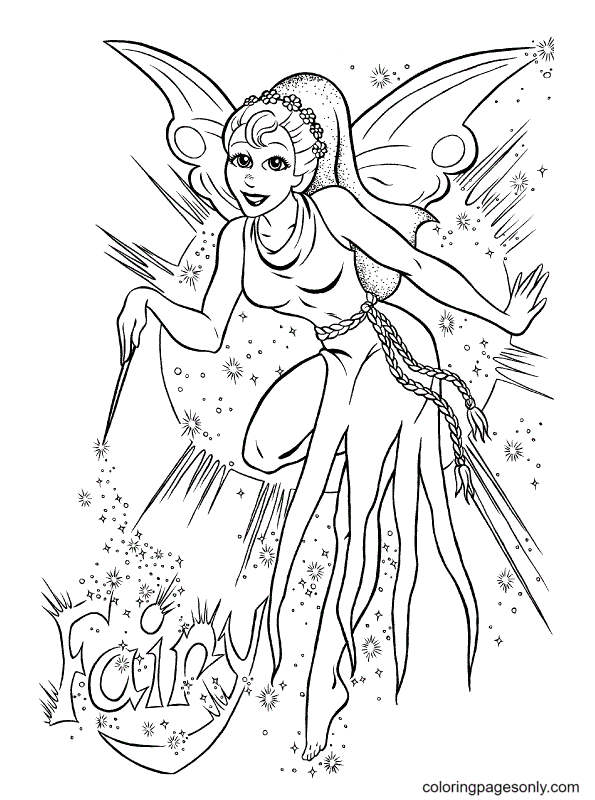
Coloring night fairy pages: Apply the deep night background first at full coverage: deep midnight blue or very dark blue-purple across the entire sky area. Stars are small dots of pale gold-white or pure white, applied with the finest available tool in an irregular, scattered distribution. The moon (crescent or full) uses pale warm gold-white. The fairy’s wings in the night context use silver or pale blue-white at the translucency pressure reduction technique: vivid enough to glow against the dark background, light enough to suggest luminescence rather than opaque material. The fairy’s costume in the Night Fairy pages uses deep jewel tones (deep sapphire blue, deep emerald green, deep amethyst purple) at full saturation.
Fairy Godmother and Wand Pages
The fairy godmother is a specific character type within the fairy tradition, distinct from the nature fairy of forest and garden: she is a powerful supernatural patron who assists a human protagonist through magical intervention, typically at a moment of critical need. The character type was most influentially codified by Charles Perrault in his 1697 “Cendrillon” (Cinderella), where the fairy godmother transforms Cinderella’s situation through a series of specific magical acts (pumpkin to coach, mice to horses, rags to ball gown) before imposing the midnight time limit.
Walt Disney’s 1950 animated Cinderella gave the fairy godmother her most globally recognized visual: a plump, white-haired, elderly woman in a blue cloak with a pointed blue hat, wielding a wand, whose charm is her combination of evident magical power and slightly scatterbrained practical manner. The “Bibbidi-Bobbidi-Boo” song she sings during the transformation sequence was written by Mack David, Al Hoffman, and Jerry Livingston and won the Academy Award nomination for Best Original Song at the 23rd Academy Awards in 1950.
Coloring fairy godmother pages: The Disney-influenced fairy godmother uses a specific pale blue for the cloak and hat: a medium, slightly warm blue that reads as neither vivid electric blue nor pale sky blue but as the specific soft blue of the character’s canonical design. White hair uses the translucency pressure technique: very pale grey applied lightly, almost reading as white but with just enough tone to distinguish from the pure white of the background. The wand sparkle effect uses pale gold-white at the tip, with small scattered star-dot elements radiating outward from the sparkle point.
Kawaii and Mandala Fairy Pages
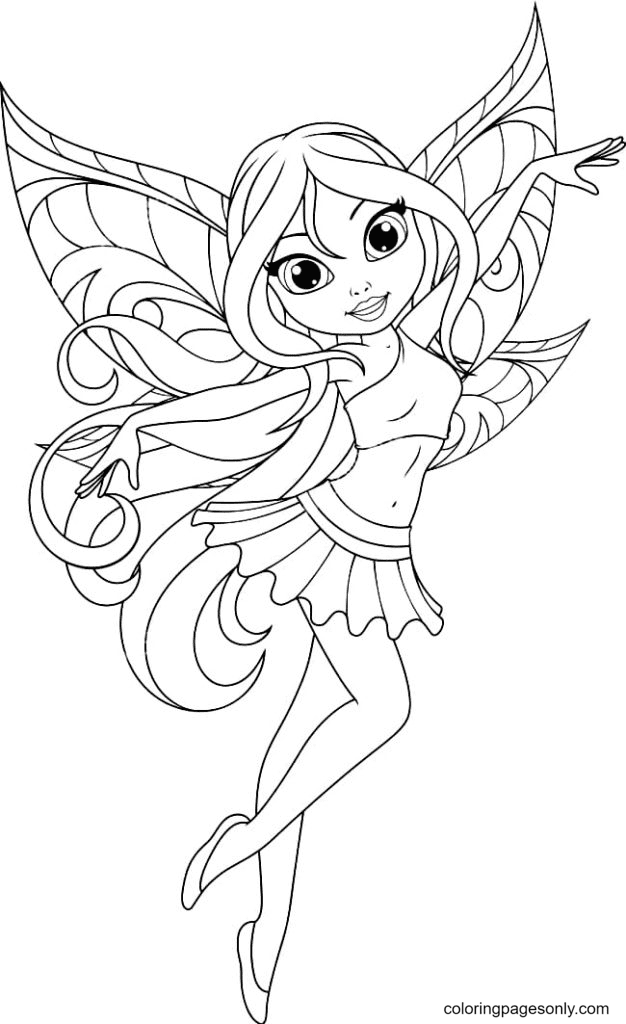
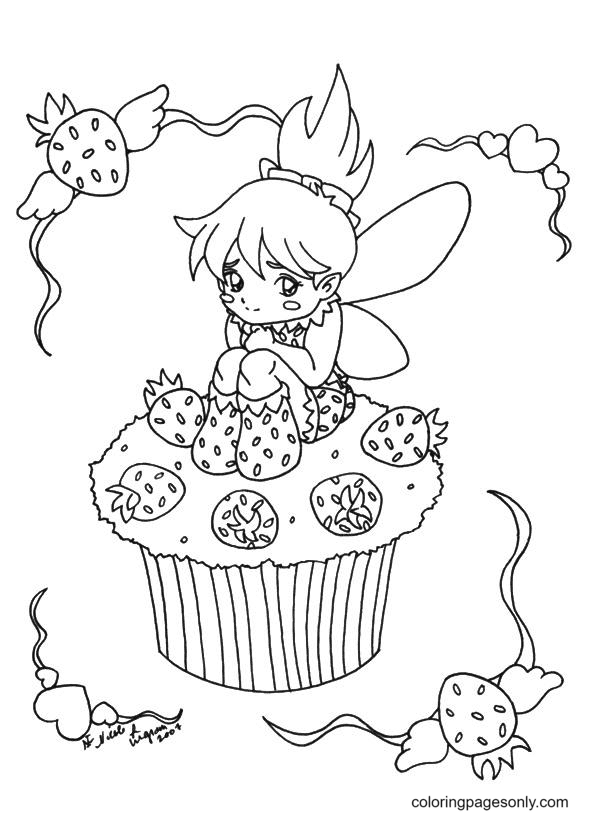
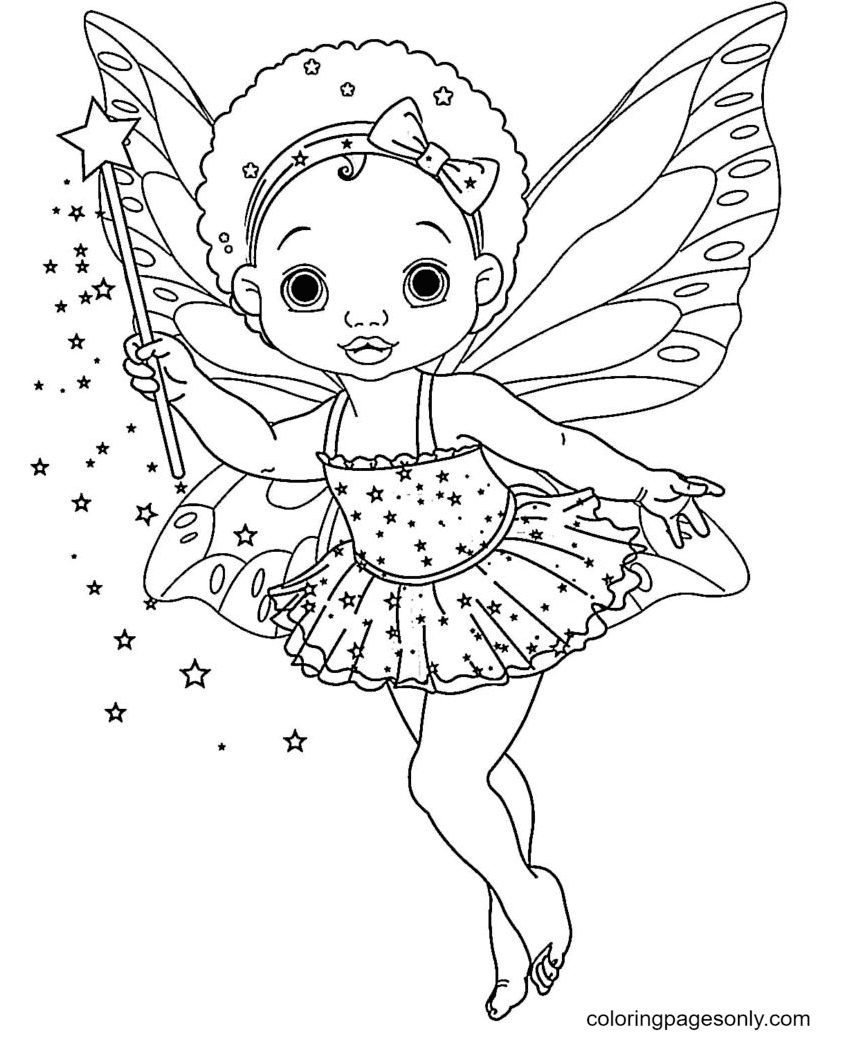
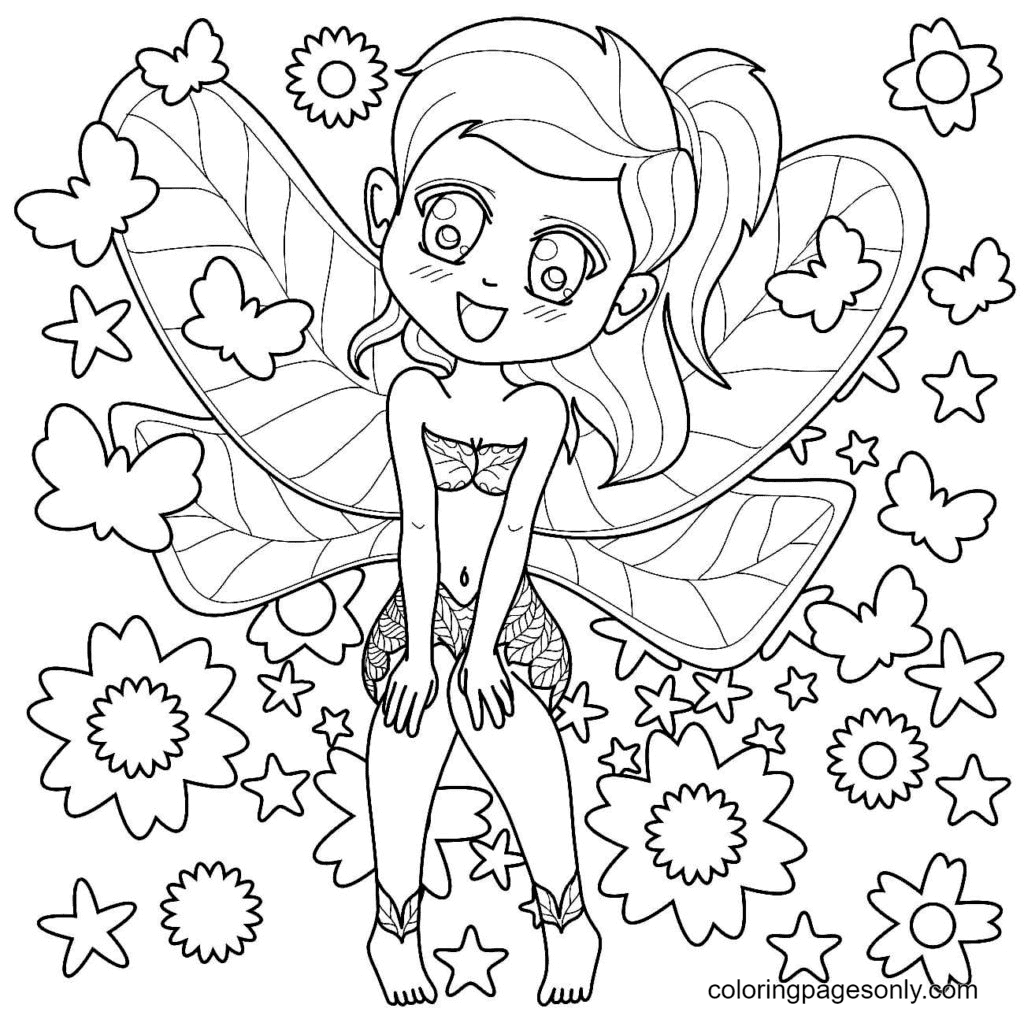
Kawaii fairy pages apply the standard large-eye, round-proportion design vocabulary to the fairy figure: proportionally larger head, simpler body outline, shorter wings relative to body size, and the specific soft pastel palette associated with kawaii design aesthetics. These pages are the collection’s most immediately accessible for very young colorists, whose developing fine motor skills are best served by the larger color areas and simpler shapes of the kawaii format.
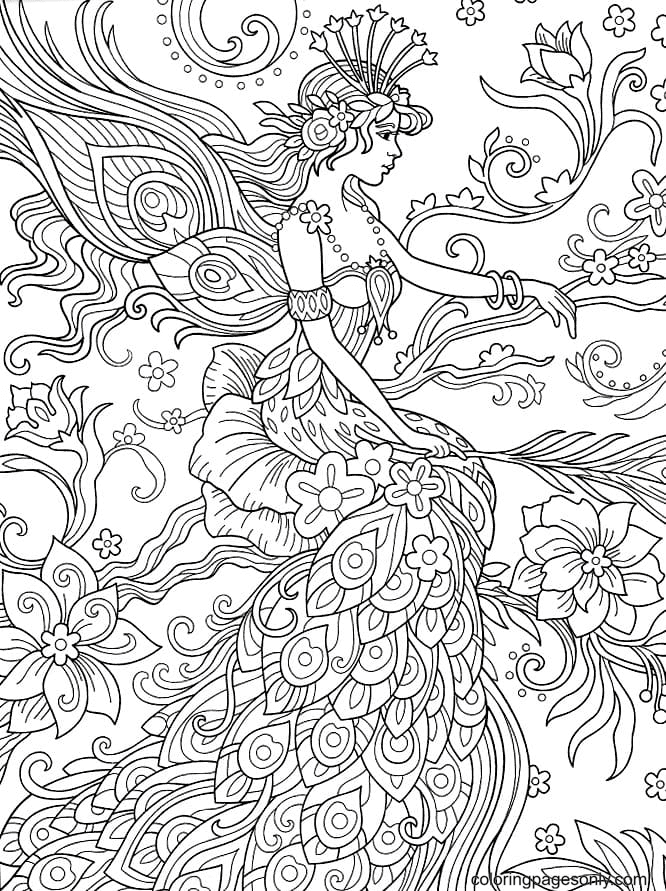
Mandala-style fairy pages place the fairy figure within an elaborate geometric and botanical framework: the fairy at the center of a circular composition surrounded by concentric rings of floral, leaf, and geometric elements. These pages are the collection’s most complex and most sustained coloring projects, requiring advance planning of color sequences across multiple decorative zones before any color is applied.
Coloring kawaii fairy pages: The soft pastel palette works best: pale lavender, soft rose-pink, pale mint green, and pale peach for the fairy’s costume and wings. Apply the wing membrane at very light pastel pressure, slightly more vivid than for realistic fairy wings. The face elements use standard kawaii rendering: white eye area with vivid iris, white highlight dot, small upturned mouth, and small circular rosy cheeks in warm pink. Coloring mandala fairy pages: Plan the full color sequence across all decorative zones before beginning. The innermost zone (closest to the fairy figure) uses the most vivid, most contrasting colors. Each successive concentric zone should alternate between warm and cool color families to create visual rhythm. The fairy figure itself uses slightly more vivid colors than the surrounding mandala elements to maintain compositional hierarchy.
What These Pages Do
The fairy as a subject in visual art has a documented presence spanning at least the early medieval period in European manuscript illumination, but the specific richness of fairy visual art in the Victorian era (1837-1901) represents the most sustained period of serious artistic attention to the subject in Western art history. The annual Royal Academy exhibitions in London during the 1840s and 1850s regularly included major fairy paintings alongside portraits and history paintings, with Paton, Dadd, Daniel Maclise, and John Anster Fitzgerald producing works whose scale and technical ambition placed the fairy subject in the same category as the period’s most prestigious artistic enterprises. The Victoria and Albert Museum’s collection includes significant examples of this tradition.
The Cottingley Fairies incident (1917-1983) is the fairy tradition’s most specifically documented modern episode: two cousins, Elsie Wright (then 16) and Frances Griffiths (then 9), in Cottingley, Bradford, England, photographed themselves appearing to interact with fairies, which were paper cutouts from “Princess Mary’s Gift Book” (1915). When shown to Sir Arthur Conan Doyle, creator of Sherlock Holmes, he published an article in The Strand Magazine’s December 1920 issue defending the photographs’ authenticity. The cousins admitted the photographs were faked in 1983, sixty-six years after they were taken.
The American Academy of Pediatrics identifies fine motor skill development as a key childhood milestone throughout early childhood. The wing venation line work on portrait pages, the botanical accuracy rendering on flower fairy pages, the small scattered star-dot placement of night sky backgrounds, the costume detail work across all fairy types, and the multi-zone color planning required for mandala fairy pages all provide sustained fine motor challenge across the collection’s wide age range. The 2005 Art Therapy Journal study on structured coloring and anxiety reduction applies throughout, with nature and fantasy imagery carrying the specific calming quality that connects to the fairy tradition’s historical association with woodland, garden, and moonlit environments.
How to Color These Pages Well
The wing membrane is the collection’s single most important technique decision and requires reduced pressure rather than reduced color. The instinct when rendering transparent or translucent material is to use a paler, more muted version of the color. For fairy wings, the correct technique is to keep the color fully saturated but reduce the application pressure to 40 to 50 percent of standard, allowing the paper’s white to contribute to the lightness rather than mixing in grey or white pigment. The result reads as vivid but transparent: the correct quality of the fairy wing’s semi-translucent membrane.
Wing venation lines must be applied after the membrane base and must be darker than the membrane without being opaque. Apply the wing membrane color at reduced pressure across the full wing area. After the membrane base is complete, apply the vein lines using the same color family at slightly higher pressure and slightly more vivid saturation: enough difference to make the veins readable as structural elements, but not so dark that they read as outlines drawn over the wing rather than as structures within it.
Night fairy pages require a dark background to be complete and dry before any fairy elements are applied. The fairy figure’s luminescence against a night sky is only effective when the background darkness is at maximum depth before the figure’s lighter, brighter colors are placed over it. Apply the deep midnight blue or very dark blue-purple at full coverage and full pressure across the entire background. Only after the background is fully established should the star dots, moon, and fairy figure be applied. The contrast between the deep background and the luminous figure is what gives night fairy pages their visual power.
Flower fairy pages require the flower to be colored first and the fairy’s costume second, using the flower as the palette reference. The Flower Fairies tradition specifically keys the fairy’s costume to the flower she represents. Establish the flower’s color fully (the specific red of the rose, the specific blue-violet of the bluebell, the specific yellow of the daffodil) before beginning the fairy’s costume. The costume should echo the flower’s colors at the same saturation, creating a unified composition where the fairy and the flower read as belonging to the same color world.
Mandala fairy pages reward systematic planning before any color is applied. Before touching any color to a mandala fairy page, identify every distinct zone in the composition: the fairy figure, the innermost ring, the next ring outward, and so on to the composition’s outer edge. Assign each zone a color from a pre-planned palette. Check that no two adjacent zones receive the same color family. The most common mandala coloring error is beginning to apply colors without this advanced plan, resulting in two adjacent zones receiving similar colors because the decision was made reactively rather than systematically.
5 Creative Craft Ideas
The Cottingley Study
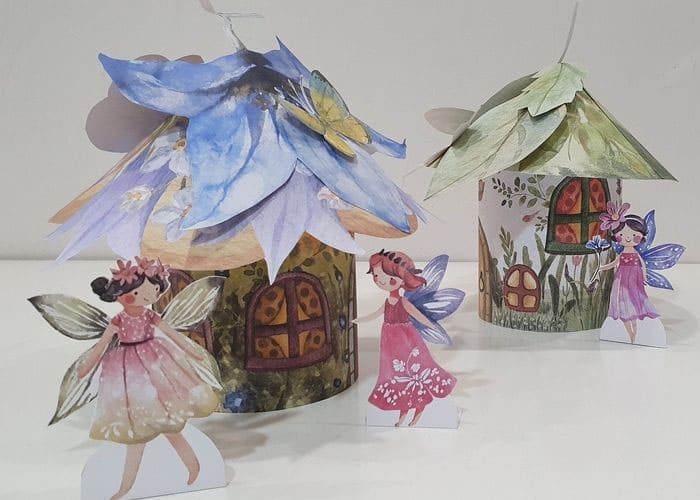
In 1917, Elsie Wright (16) and Frances Griffiths (9) photographed themselves in Cottingley, Bradford, England, apparently interacting with fairies. The fairies were paper cutouts from illustrations in “Princess Mary’s Gift Book” (1915). Arthur Conan Doyle published an article in The Strand Magazine (December 1920) defending the photographs as genuine. The cousins admitted the hoax in 1983.
Print a fairy portrait page. Color it in the watercolor illustration style of early 20th-century book illustration: soft, slightly muted colors, no harsh outlines, the specific palette of pre-war English children’s book illustration.
On the backing card: “The Cottingley Fairies. Year: 1917. Location: Cottingley, Bradford, England. Photographers: Elsie Wright (age 16) and Frances Griffiths (age 9). Method: paper cutouts from ‘Princess Mary’s Gift Book,’ 1915. Published as genuine by: Sir Arthur Conan Doyle, The Strand Magazine, December 1920. Doyle’s response when told they were faked: not lived to hear it (he died July 7, 1930). The cousins admitted: 1983. Duration of the hoax: 66 years. The fifth photograph: maintained as genuine by Frances Griffiths until her death in 1986.”
The Wing Anatomy Study
Fairy wings in the Western visual tradition are modeled on insect wings: butterfly wings (rounded, scaled, vivid with color patterns), dragonfly wings (elongated, clear, geometric venation), damselfly wings (similar to dragonfly but held differently), and various combinations. The specific venation pattern in a wing identifies which insect it references.
Print a fairy in-flight page with wings clearly spread. Before coloring, study the wing structure depicted. Identify whether the wing design references a butterfly (round, scaled), a dragonfly (elongated, narrow), or a damselfly (held at right angles to the body).
On the backing card: “Insect wing types in fairy illustration. Butterfly wings: rounded, covered in scales that produce color patterns, typically held flat or angled. Dragonfly wings: four wings (two pairs), elongated, clear membrane with complex angular venation. Damselfly wings: similar to dragonfly but smaller, held alongside the body at rest. The Victorian fairy painters had access to detailed entomological illustrations from natural history publications. The wings in this coloring page reference: [identified type]. The actual insect wingspan the wing design approximates: [estimate].”
The Shakespeare Fairy Royals
William Shakespeare introduced Titania (Fairy Queen), Oberon (Fairy King), and Puck (Robin Goodfellow) in A Midsummer Night’s Dream, written approximately 1595-96 and first published in quarto in 1600. These three characters have been continuously performed, illustrated, and referenced for more than 425 years, making them the most sustained fairy characters in English literature.
Print one fairy queen page, one fairy with a mischievous expression page, and one strong fairy king page if available. Color Titania in silver and white with broad blue-purple accents. Color Puck in earthy forest browns and greens. Color Oberon in deep midnight blue and gold.
On the backing card: “A Midsummer Night’s Dream. Author: William Shakespeare. Written: approximately 1595-96. First quarto published: 1600. Characters introduced: Titania (Fairy Queen), Oberon (Fairy King), Puck/Robin Goodfellow. The forest setting: where the fairy court rules and human reality gives way. Continuous performance: 425+ years. The most famous fairy painting inspired by the play: Sir Joseph Noel Paton’s ‘The Reconciliation of Oberon and Titania’ (1847), National Gallery of Scotland. Paton included hundreds of individually rendered fairy figures in that single painting.”
The Fairy Godmother Timeline
The fairy godmother character has three distinct visual forms across its most influential versions. Perrault’s 1697 Cinderella text describes only “her fairy godmother” with no specific visual description. The 1950 Disney Cinderella established the now-canonical visual: white hair, blue cloak, blue pointed hat. The 2015 live-action Cinderella (directed by Kenneth Branagh) depicted the fairy godmother (played by Helena Bonham Carter) in a different aesthetic entirely.
Print three fairy pages representing three different era aesthetics: a simple line fairy for the pre-illustrated period, a soft pastel Disney-inspired fairy, and a more contemporary or dramatic fairy design.
Mount all three: “The fairy godmother: three eras. 1697: Charles Perrault, ‘Cendrillon,’ no visual description given. 1950: Walt Disney’s ‘Cinderella,’ Mack David/Al Hoffman/Jerry Livingston wrote ‘Bibbidi-Bobbidi-Boo’ (Academy Award nomination, 23rd Academy Awards). Visual: white hair, blue cloak, wand. 2015: Kenneth Branagh’s live-action ‘Cinderella,’ Helena Bonham Carter. Visual: completely different. The text: 1697. The image everyone knows: 1950. Seventy-five years of the same visual. It works.”
Frequently Asked Questions
What is a fairy, and where does the concept come from? The word “fairy” derives from the Old French “faerie” (enchantment, land of the fées), from the Latin “fata” (the Fates, the supernatural beings who determined human destiny in Roman mythology). The concept of small supernatural beings inhabiting natural spaces appears across virtually every human culture’s folklore: the Celtic Sidhe (pronounced “shee”) of Irish and Scottish tradition, the Germanic álvar (elves), the Italian fate, the French fées, and equivalent beings in the folklore of Africa, Asia, and the Americas. The specific visual form of the winged fairy with transparent insect-like wings was established in English Victorian art during the 1840s through 1870s, when painters including Sir Joseph Noel Paton and Richard Dadd produced major works depicting fairies with the wing structures observable in contemporary natural history illustrations of butterfly and dragonfly species.
Who are the most famous fairies in literature, and what are their origins? Tinker Bell, first appearing in J.M. Barrie’s 1904 stage play “Peter Pan, or The Boy Who Wouldn’t Grow Up,” is the most globally recognized individual fairy character. In the original 1904 production, she was represented only by a moving spotlight. In the 1911 novel “Peter and Wendy,” she is described as a common fairy who mends pots and kettles (a “tinker” mends metal). The Disney animated film Peter Pan (1953) gave her the canonical visual: blonde hair, green dress, golden wings. The fairy godmother of Charles Perrault’s “Cendrillon” (1697) established the “helpful magical patron” fairy type. Shakespeare’s Titania and Oberon in A Midsummer Night’s Dream (approximately 1595-96) established the fairy royalty tradition. Cicely Mary Barker’s Flower Fairies (beginning 1923) established the botanical fairy tradition.
What are the main types of fairies depicted in these coloring pages? The collection covers several distinct fairy traditions. Winged nature fairies, the most common type, show fairies in flight or resting with transparent iridescent wings modeled on butterfly or dragonfly wing structures. Flower fairies, following the Cicely Mary Barker tradition begun in 1923, show each fairy associated with a specific botanical species and wearing a costume derived from that plant. Forest fairies inhabit woodland settings with mushrooms, tree roots, and undergrowth. Night and moon fairies are depicted against dark sky backgrounds with silver and deep blue color palettes. Fairy godmothers are the powerful patron type of the Perrault and Disney traditions. Kawaii and cartoon fairies apply contemporary, simplified design aesthetics to the fairy figure.
What are the Flower Fairies, and who created them? The Flower Fairies were created by Cicely Mary Barker (1895-1973), a British artist and illustrator born in Croydon, England. The first volume, Flower Fairies of the Spring, was published in 1923. Barker produced eight Flower Fairy volumes across her career: spring, summer, autumn, winter, the garden, the wayside, the trees, and the countryside. Each fairy is depicted wearing a costume derived from the specific plant they represent, alongside a botanically accurate illustration of that plant. Barker used real children as her figure models, sourcing them from the nursery school run by her sister Dorothy in Croydon. The series has been continuously in print since 1923, making it one of the most sustained botanical and fantasy illustration projects in publishing history.
What were the Cottingley Fairies, and why are they significant? In 1917, cousins Elsie Wright (then age 16) and Frances Griffiths (then age 9) in Cottingley, Bradford, England, photographed themselves appearing to interact with fairies. The fairies in the photographs were paper cutouts of fairy illustrations from “Princess Mary’s Gift Book” (1915), propped up with hatpins. When the photographs reached Sir Arthur Conan Doyle, creator of Sherlock Holmes, he published an article in The Strand Magazine’s December 1920 issue defending them as authentic evidence of fairy existence. Some photographic experts authenticated the prints; others were skeptical. The photographs circulated for decades as evidence in debates about fairy phenomena. Elsie Wright and Frances Griffiths admitted the hoax in 1983, sixty-six years after the photographs were taken. Frances Griffiths maintained until her death in 1986 that the fifth photograph (taken in 1920) was genuine.
How did Shakespeare influence the fairy tradition? William Shakespeare’s A Midsummer Night’s Dream, written approximately 1595-96 and first published in quarto in 1600, is the single most influential work in the English fairy literary tradition. The play introduced Titania (Fairy Queen), Oberon (Fairy King), and Puck (Robin Goodfellow) as the central figures of an elaborate fairy court operating in a magical forest, and established the framework of fairy royalty with its own hierarchy, internal conflicts, and relationships with the human world that subsequent fairy literature and art have consistently referenced. The play has been continuously performed for more than 425 years. Sir Joseph Noel Paton’s “The Reconciliation of Oberon and Titania” (1847) and “The Quarrel of Oberon and Titania” (1849), both now in the National Gallery of Scotland, are directly based on the play and are considered the most significant Victorian fairy paintings.
What age group are these pages best suited for? Fairy coloring pages serve a wide age range, reflecting the subject’s broad cultural familiarity. The simplest kawaii and cartoon fairy pages with large, rounded heads, simple body outlines, and minimal detail are accessible from ages two and three, where the fairy’s recognizable winged form and the soft pastel palette provide immediately appealing coloring targets. The flower fairy pages, with the botanical element and costume detail requiring more careful color coordination, are most rewarding for ages four to eight. The forest fairy pages with layered background work, the night fairy pages requiring the dark background technique, and the full winged fairy portrait pages with wing venation detail are most engaging for ages six to twelve. The mandala fairy pages with complex geometric planning requirements and the historical context craft projects are most appropriate for ages ten and up and for adult colorists who appreciate both the artistic tradition and the detailed design work.
Why do fairies have wings, and is this universal across all folklore? Wings are not universal in fairy folklore: the Celtic Sidhe of Irish and Scottish tradition, the álfar of Norse mythology, and many other fairy equivalents in European folklore were not typically described with wings. The winged fairy is a specific product of Victorian English illustration, where artists combining Romantic-era supernatural themes with the natural history illustration tradition they had access to applied the precise, detailed wing structures visible in butterfly and dragonfly illustrations to their supernatural subjects. The result was so visually compelling and so widely reproduced through books, cards, and prints during the Victorian and Edwardian periods that the winged fairy became the globally canonical form. Cicely Mary Barker’s Flower Fairies (1923 onward) and the Disney company’s visual treatments of fairy characters from 1940 onward (the Blue Fairy in Pinocchio, the Fairy Godmother in Cinderella) cemented the winged form as the standard globally recognizable version of the fairy figure.
Browse the full collection at ColoringPagesOnly.com. All 50+ pages free, no sign-up, PDF or PNG, print or color online.
Elsie Wright was sixteen years old in 1917. She and her nine-year-old cousin Frances took photographs in their garden in Cottingley using paper cutout fairies from a children’s book. Arthur Conan Doyle published them as genuine in 1920. They were genuine for sixty-six years. Then they were not.
Cicely Mary Barker began drawing flower fairies in 1923. She used children from her sister’s nursery school as models. She drew the flowers with botanical accuracy alongside each fairy. The books have been in print for over 100 years. The flowers are still accurate.
Shakespeare wrote Titania and Oberon in approximately 1595. They have been performed continuously for 425 years. Sir Joseph Noel Paton painted hundreds of fairy figures on a single canvas in 1847. Richard Dadd painted fairies in Bethlem Royal Hospital for nine years. The subject has always attracted serious attention.
Pick up your palest available color for the wing membrane. Reduce pressure to 40 to 50 percent. The color stays vivid. The membrane reads as transparent. Apply the vein lines after: same color family, slightly more pressure. The venation is inside the wing, not drawn over it.
Share your work on Facebook and Pinterest and tag #Coloringpagesonly. The Flower Fairy botanical pages and the Cottingley Study are particularly worth sharing.
Reduce pressure on the wings, not saturation. Apply the dark forest background before placing the fairy figure. The fairy has been in English art since at least 1595. She has always had wings, at least since the Victorians decided she should.