Gooseberry Coloring Pages
 By:
Jennifer Thoa - Content Editor & Designer
Updated:
By:
Jennifer Thoa - Content Editor & Designer
Updated:
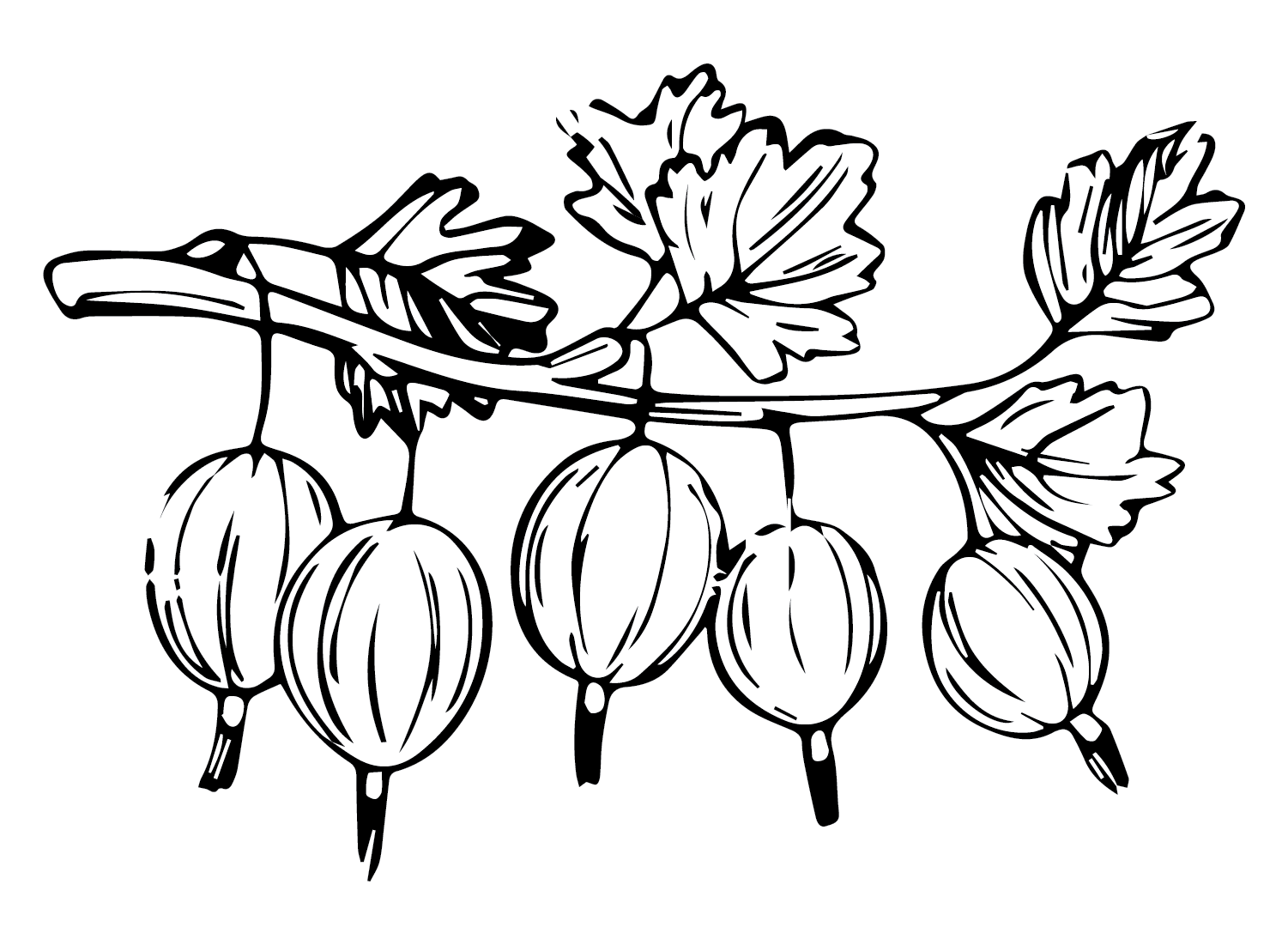
Free Gooseberry Coloring Pages: 23 printable PDF designs featuring classic portraits, branch and plant scenes, and printable sheets. Each page can be downloaded as a PDF to print or colored online in the browser.
Gooseberries belong to the genus Ribes within the family Grossulariaceae, the same genus as currants. Still, they’re easy to tell apart in the wild: gooseberry bushes have thorny stems and bear their fruit singly or in small groups of two or three, while currant bushes are thornless and grow their berries in long, hanging clusters. Native to Europe, northwestern Africa, and parts of Asia, gooseberries range widely in color from green and yellow to pink, red, and deep purple, depending on the variety and ripeness, and some types have thin, translucent skin that shows the seeds and veining underneath. One classic way to enjoy them is a “gooseberry fool,” a traditional British dessert made by folding sweetened, cooked gooseberries into whipped cream. Gooseberries are a good source of vitamin C, fiber, and antioxidants.
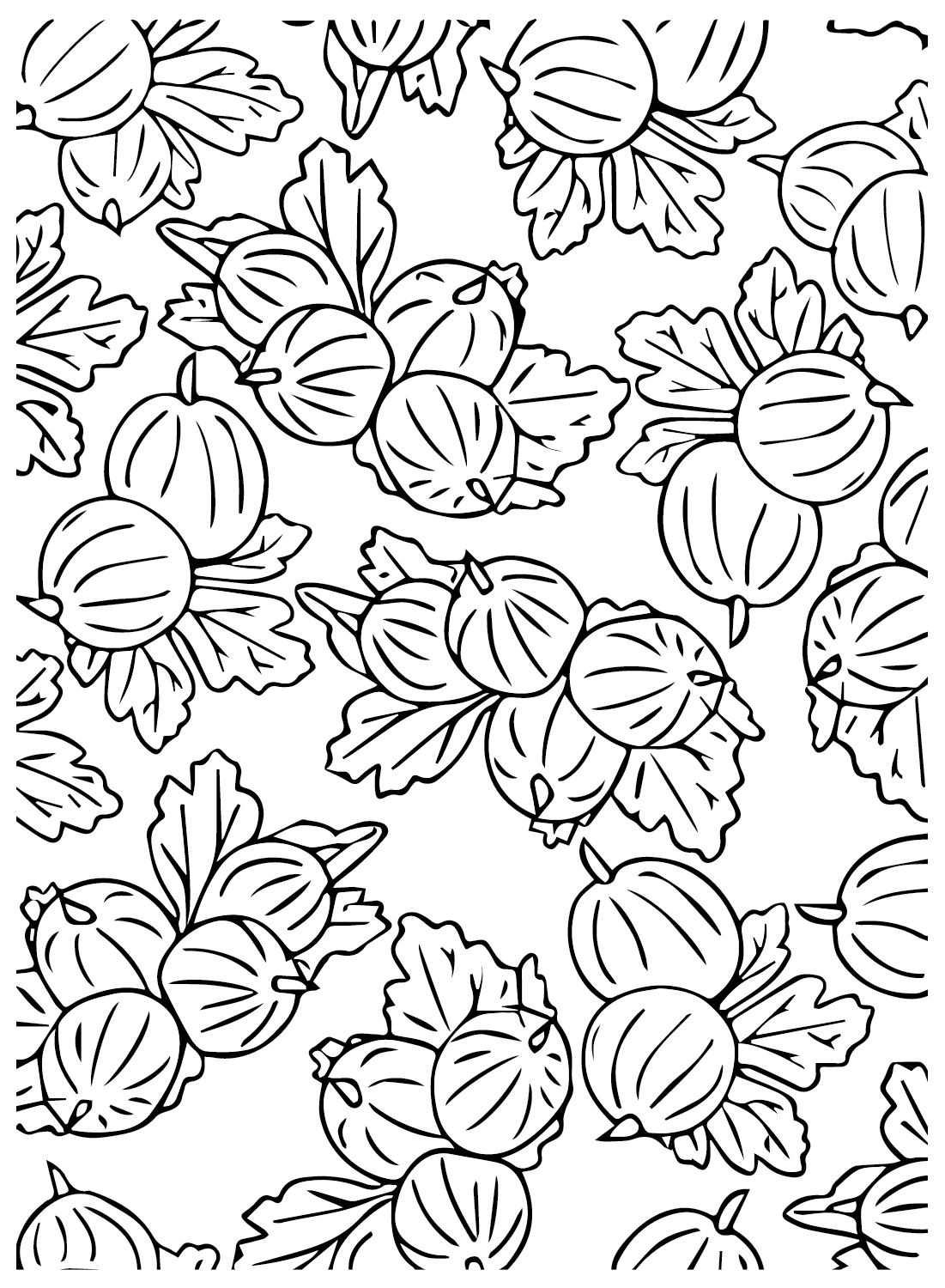
This collection spans 23 pages, grouped into classic portraits, branch and plant scenes, drawing-style and specialty designs, and printable sheets. The coloring angle ranges from simple standalone fruit to fuller bush and branch compositions.
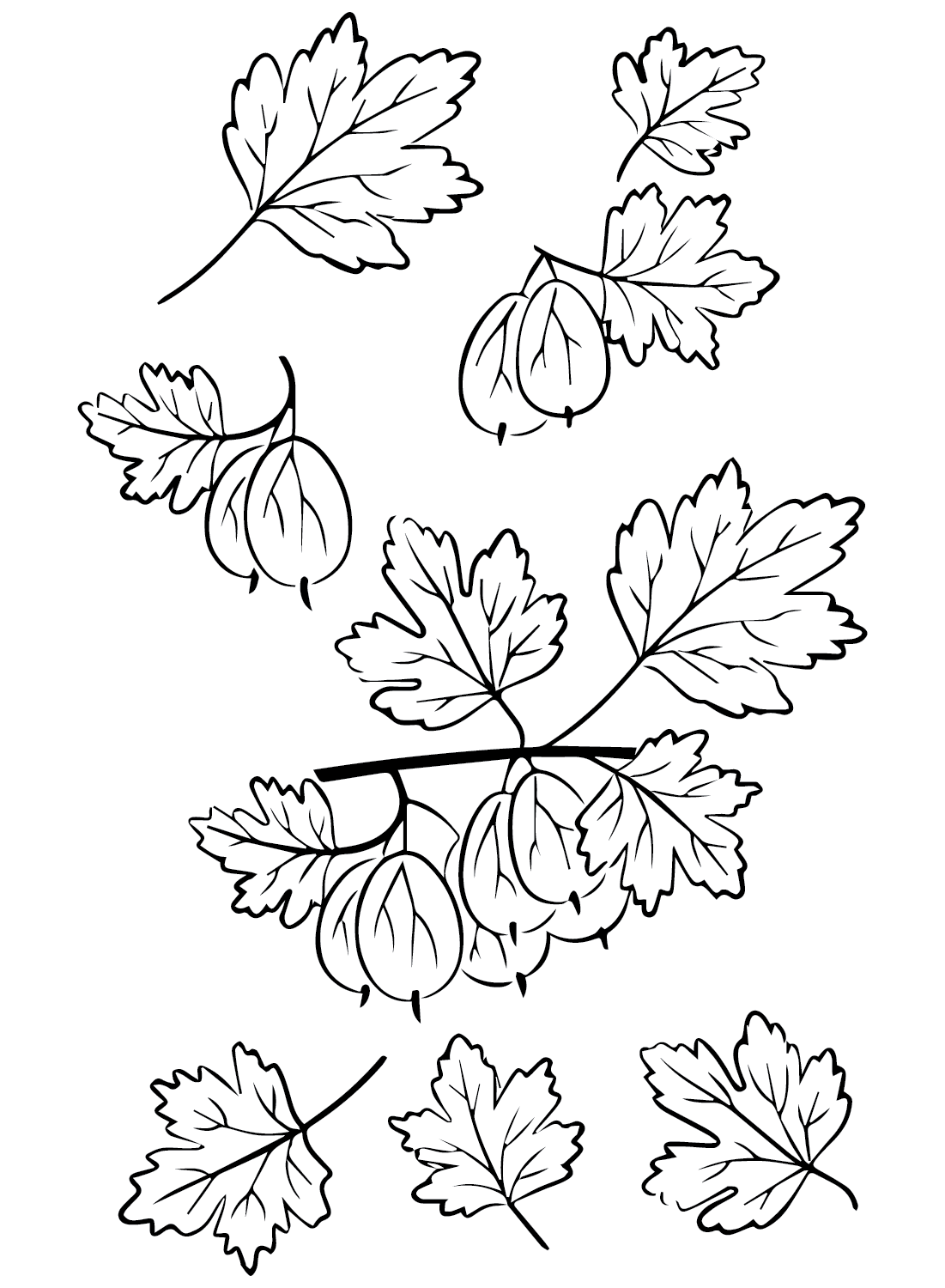

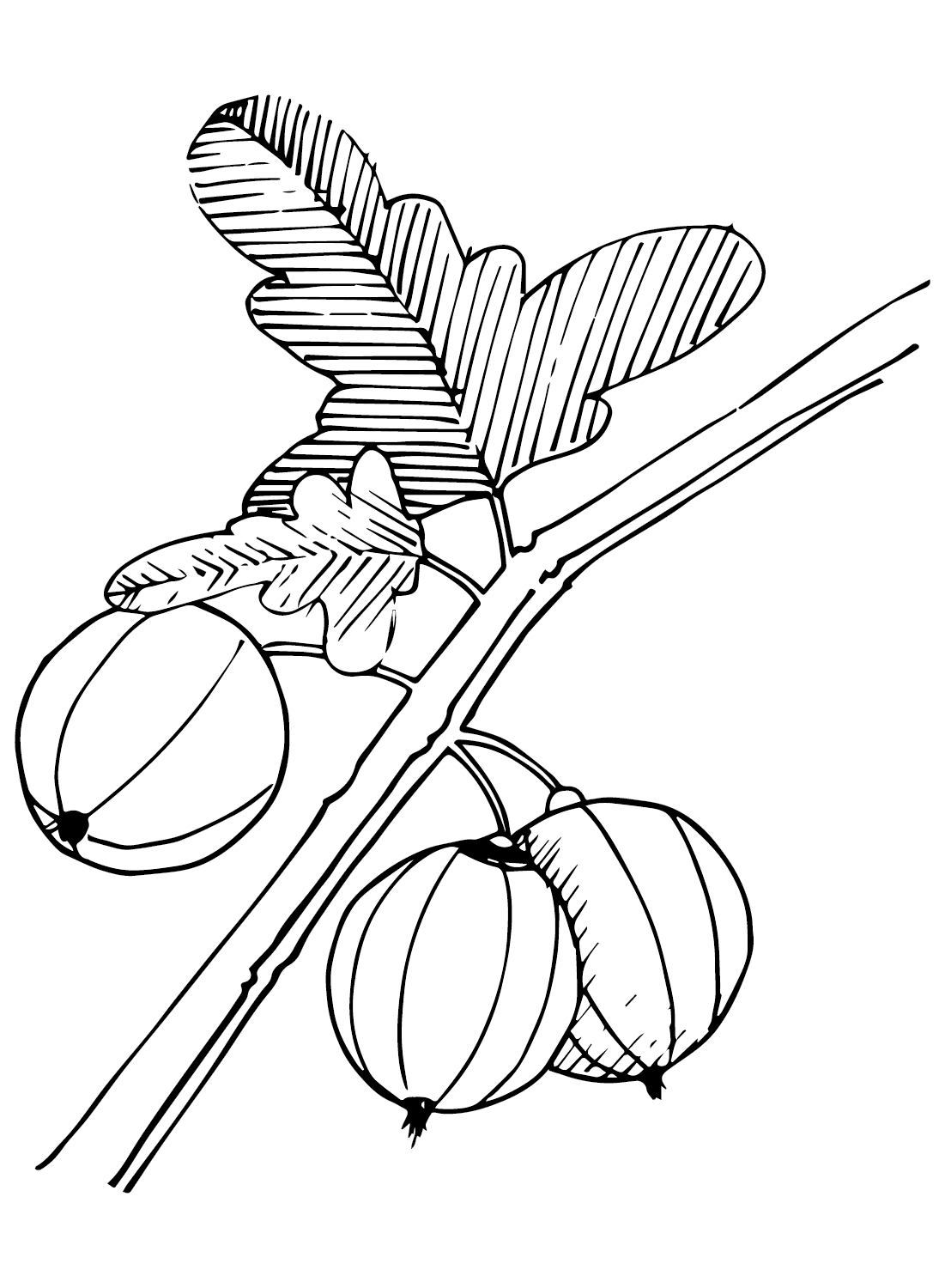
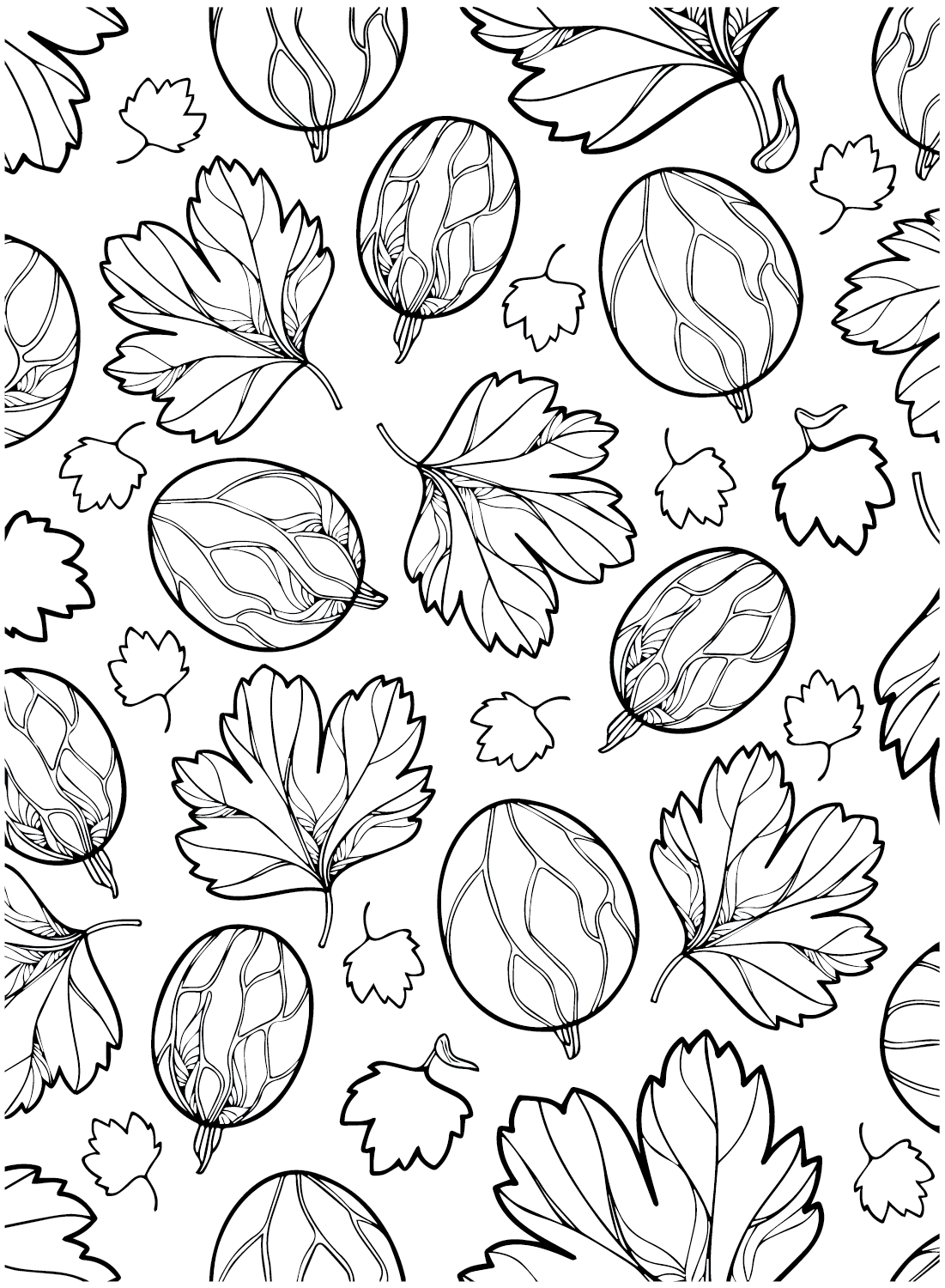
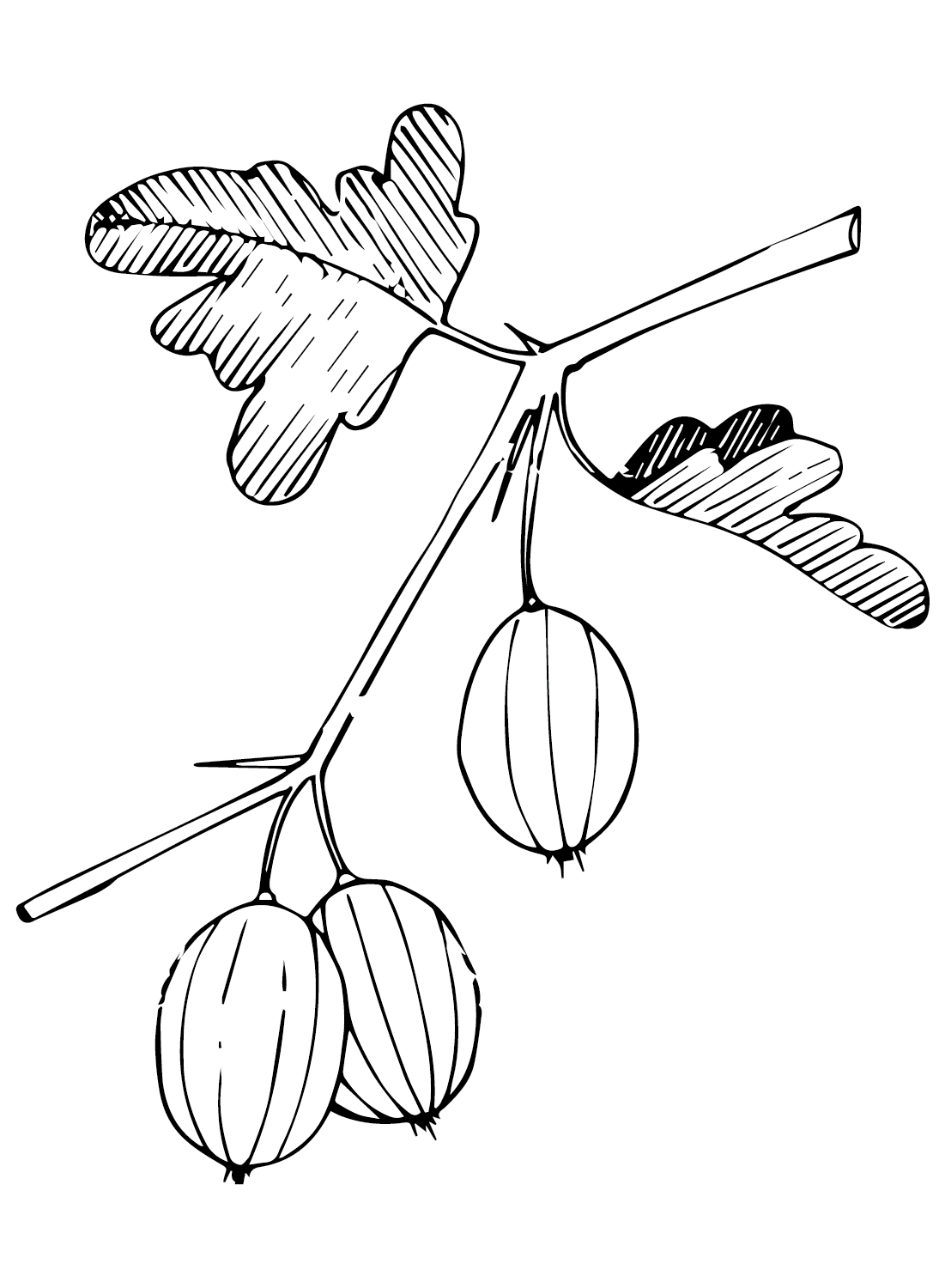

What Is Inside This Collection
The 23 designs group into four categories, from classic portraits to printable sheets.
Classic Portraits
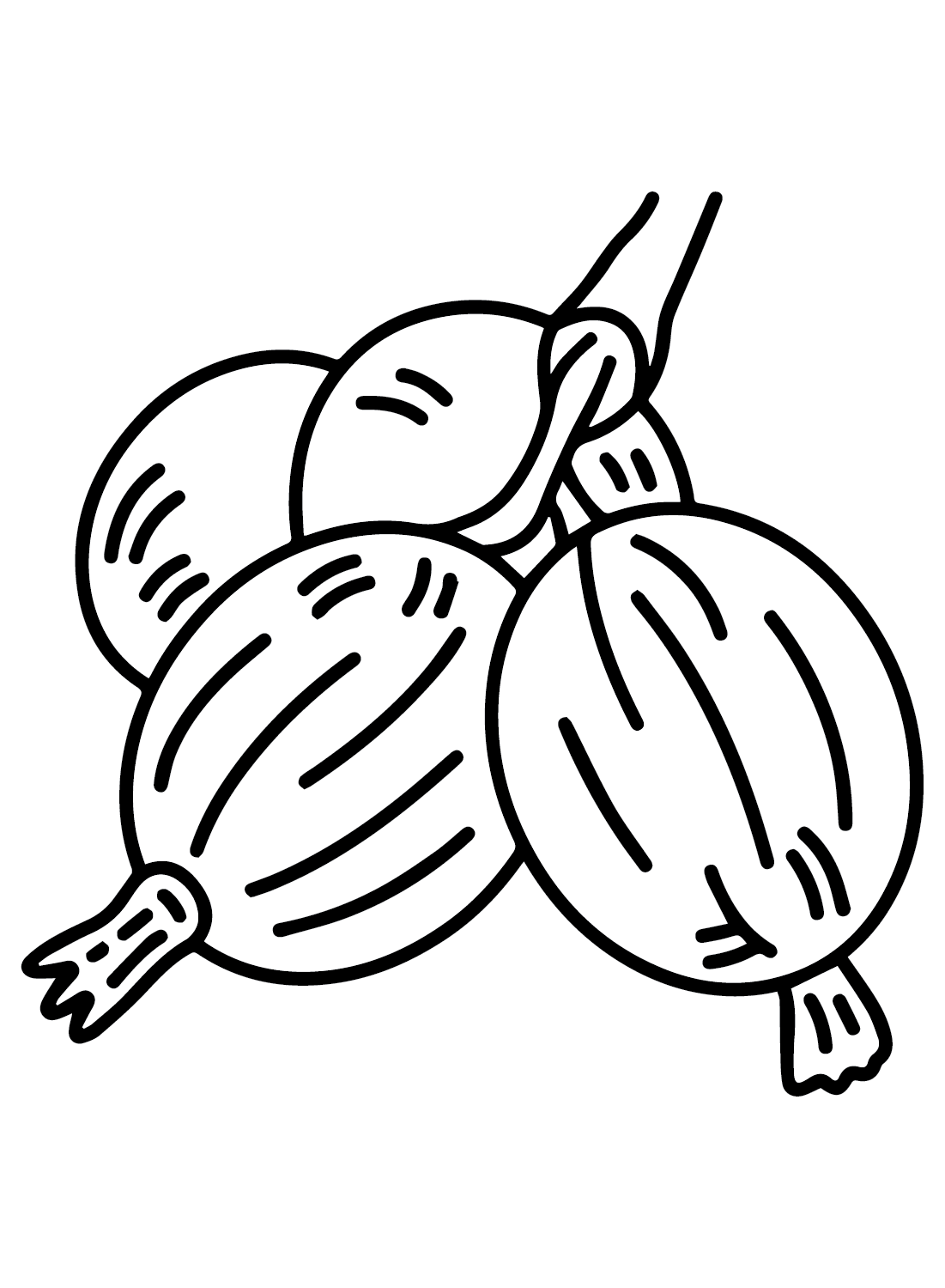
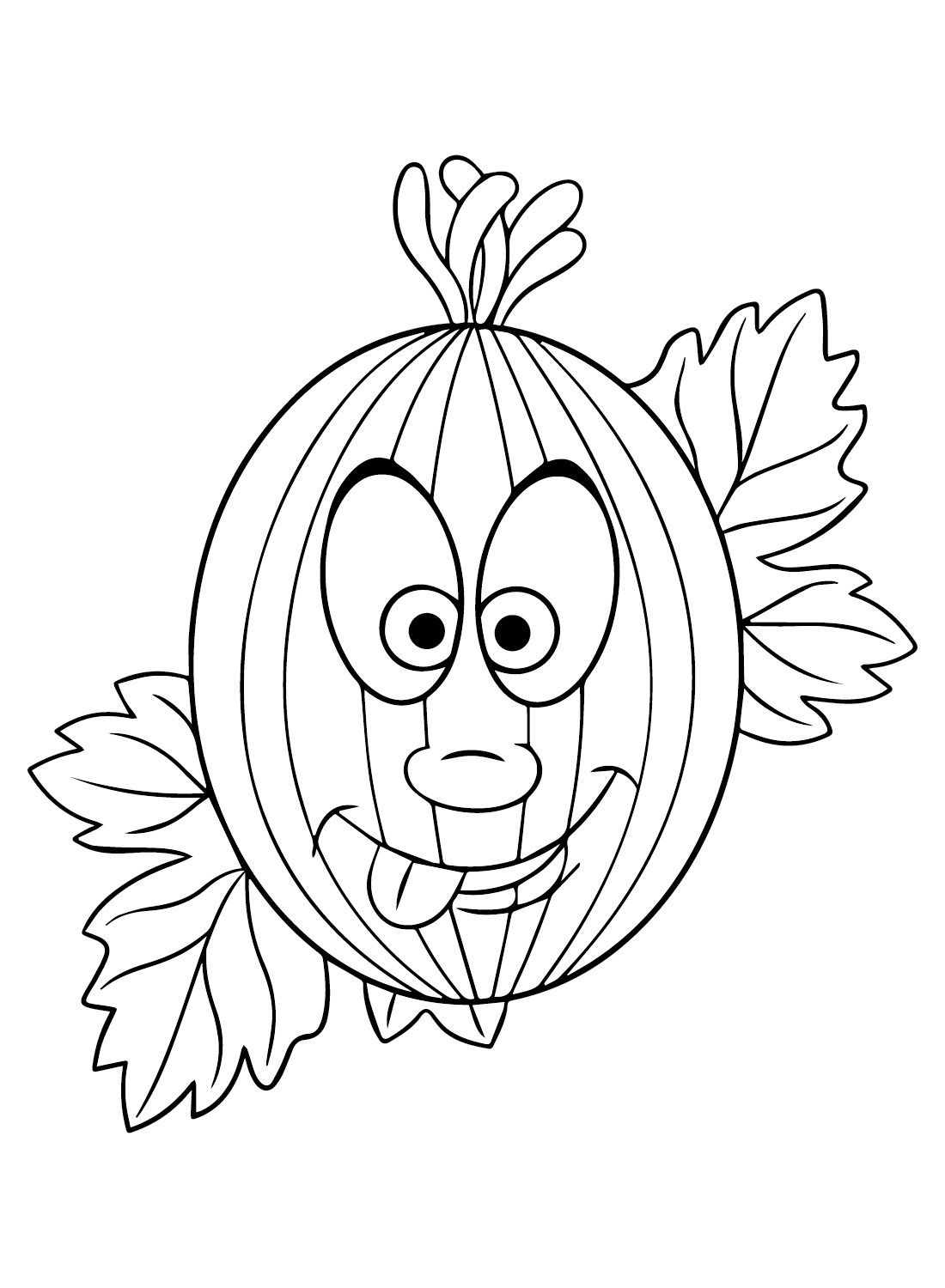
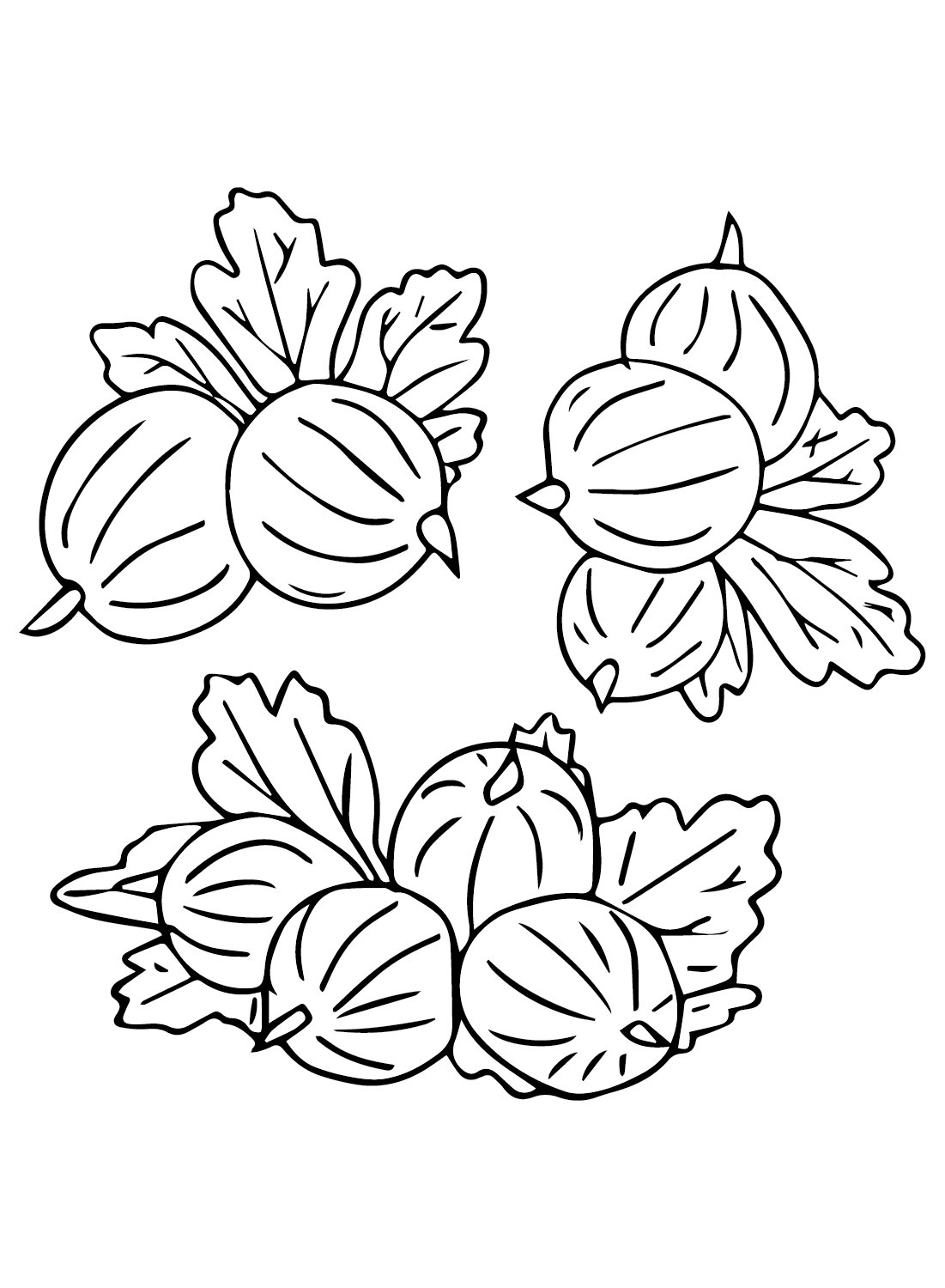
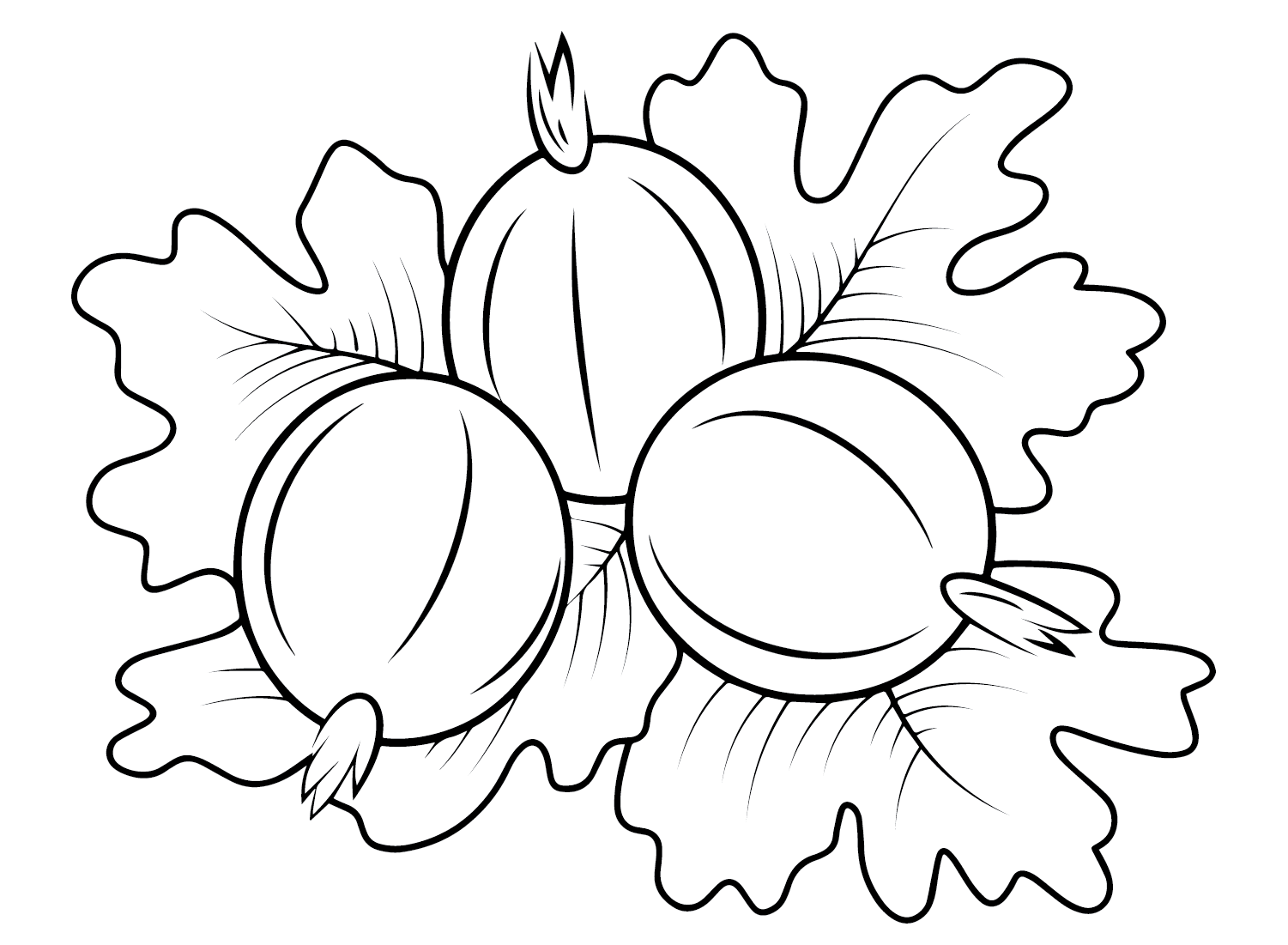
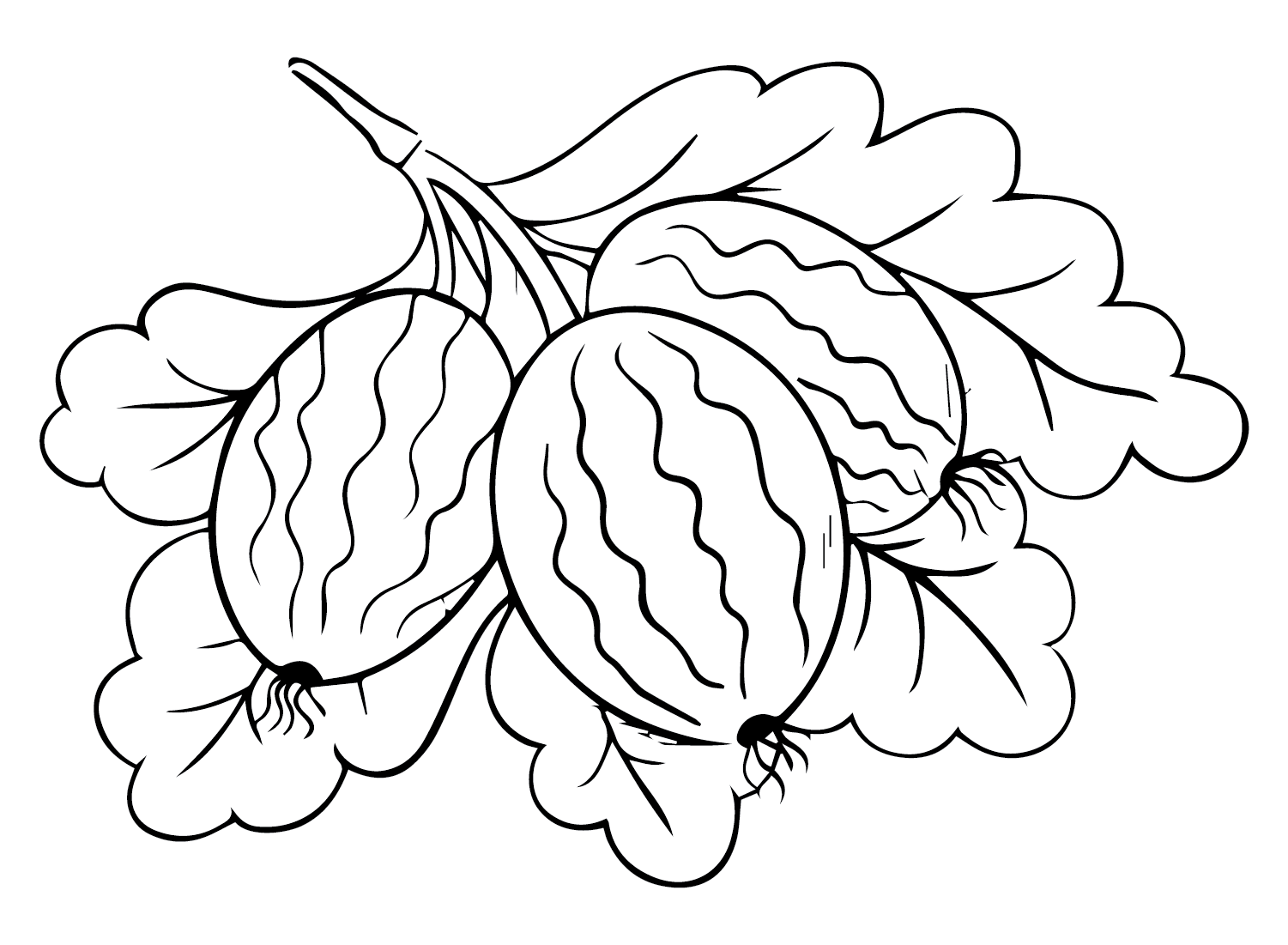
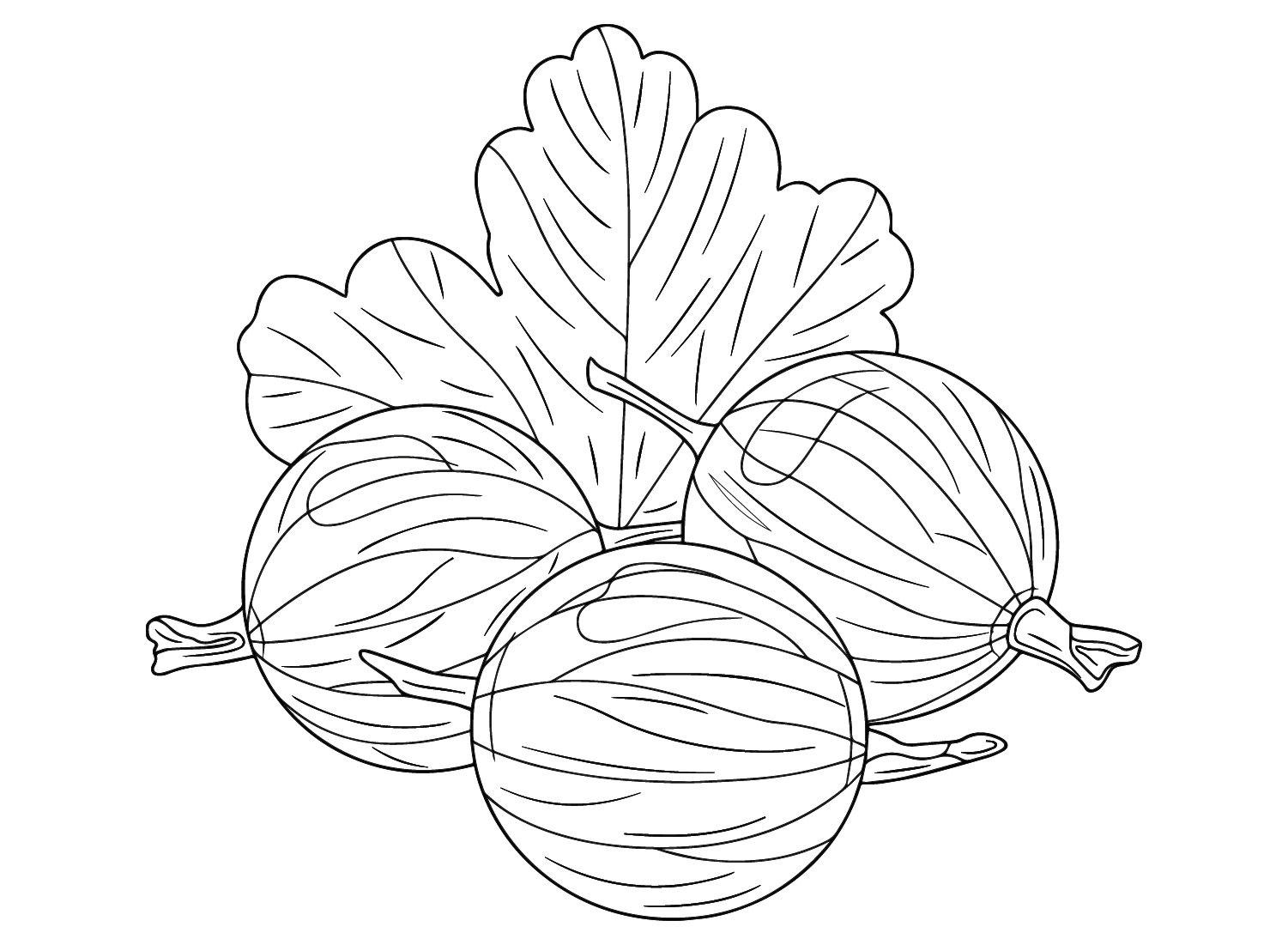
Four pages show a standalone gooseberry or small cluster, including cute, kid-friendly, and straightforward fruit renderings.
Branch and Plant Scenes
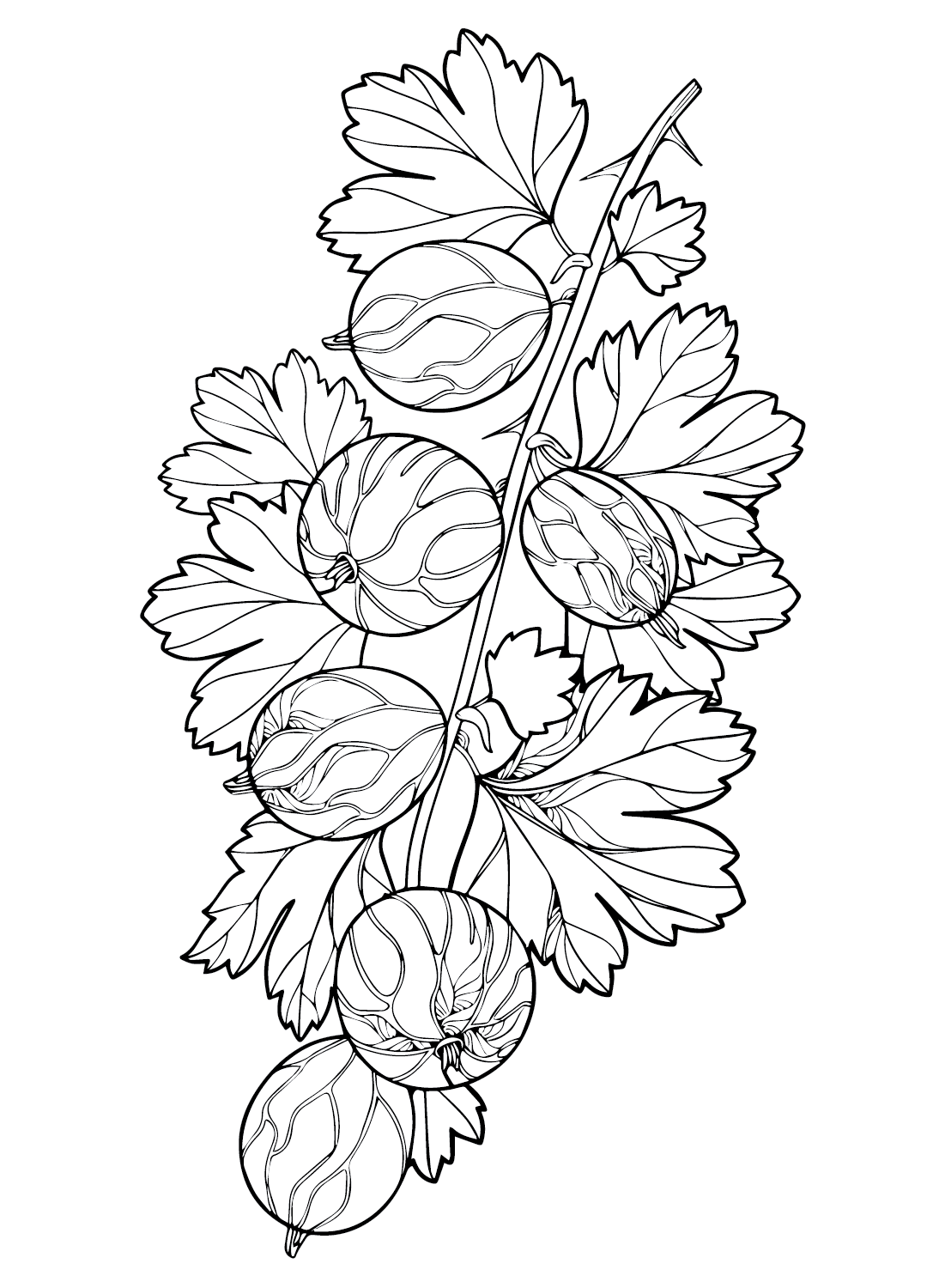
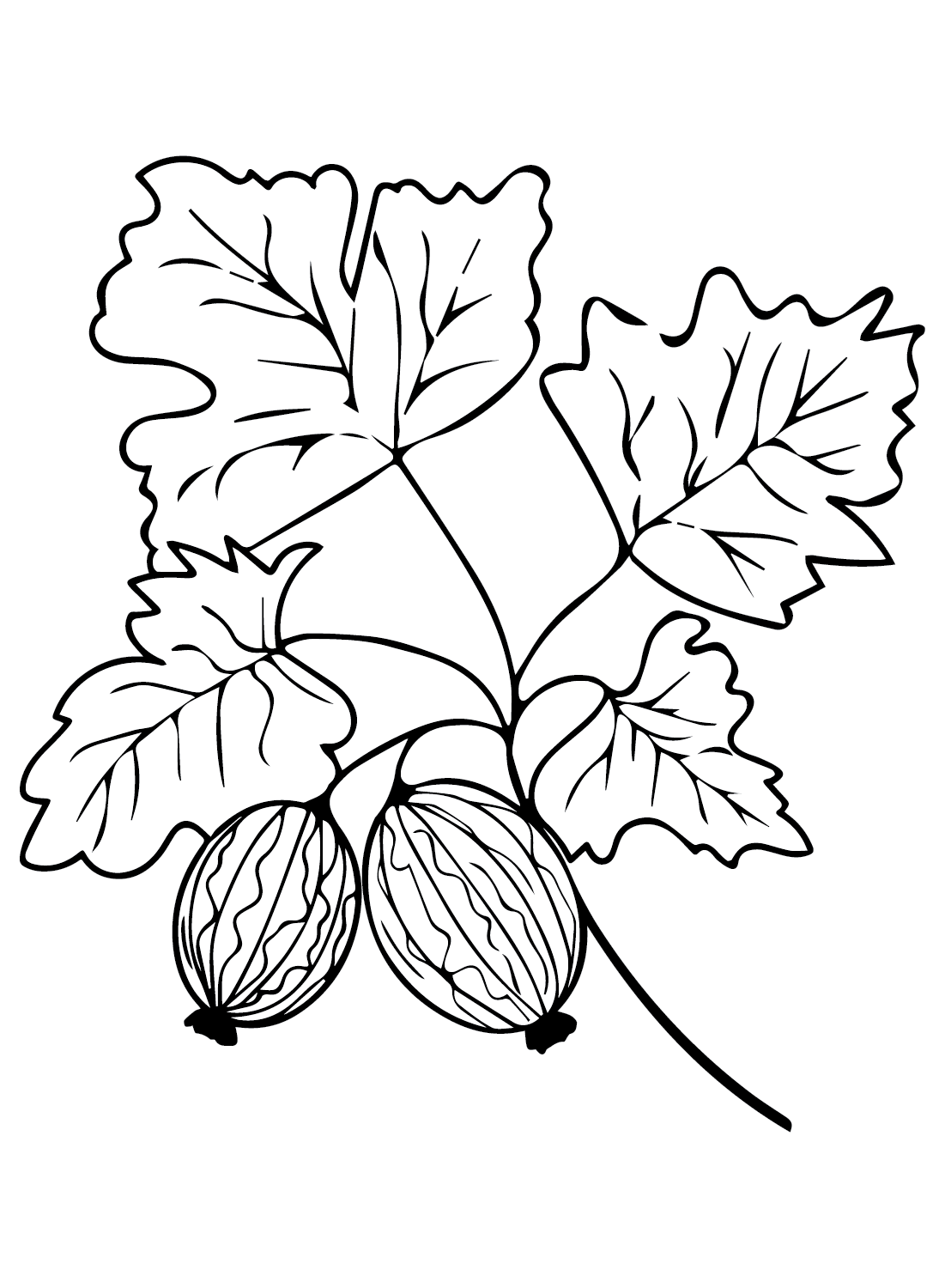
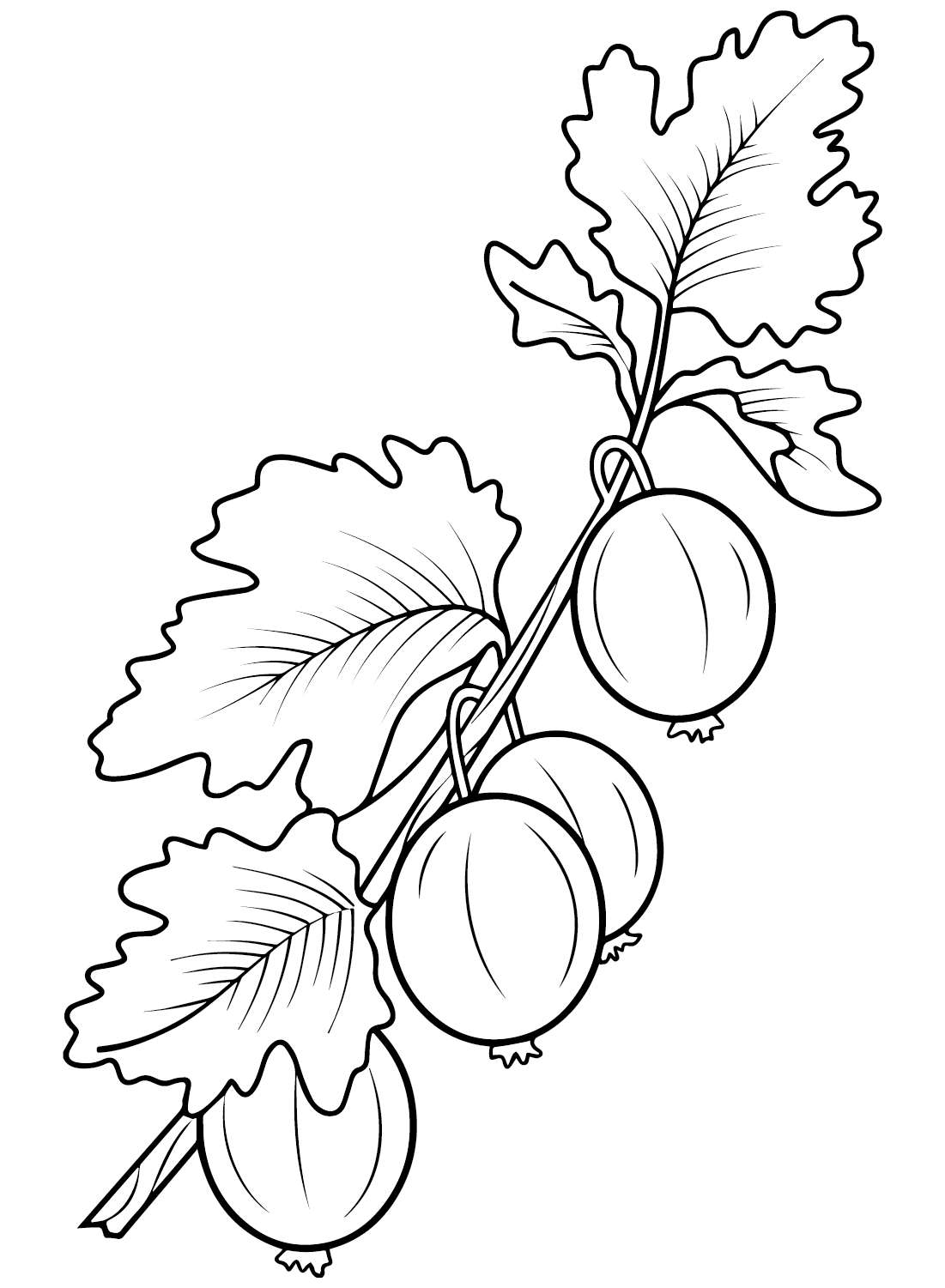
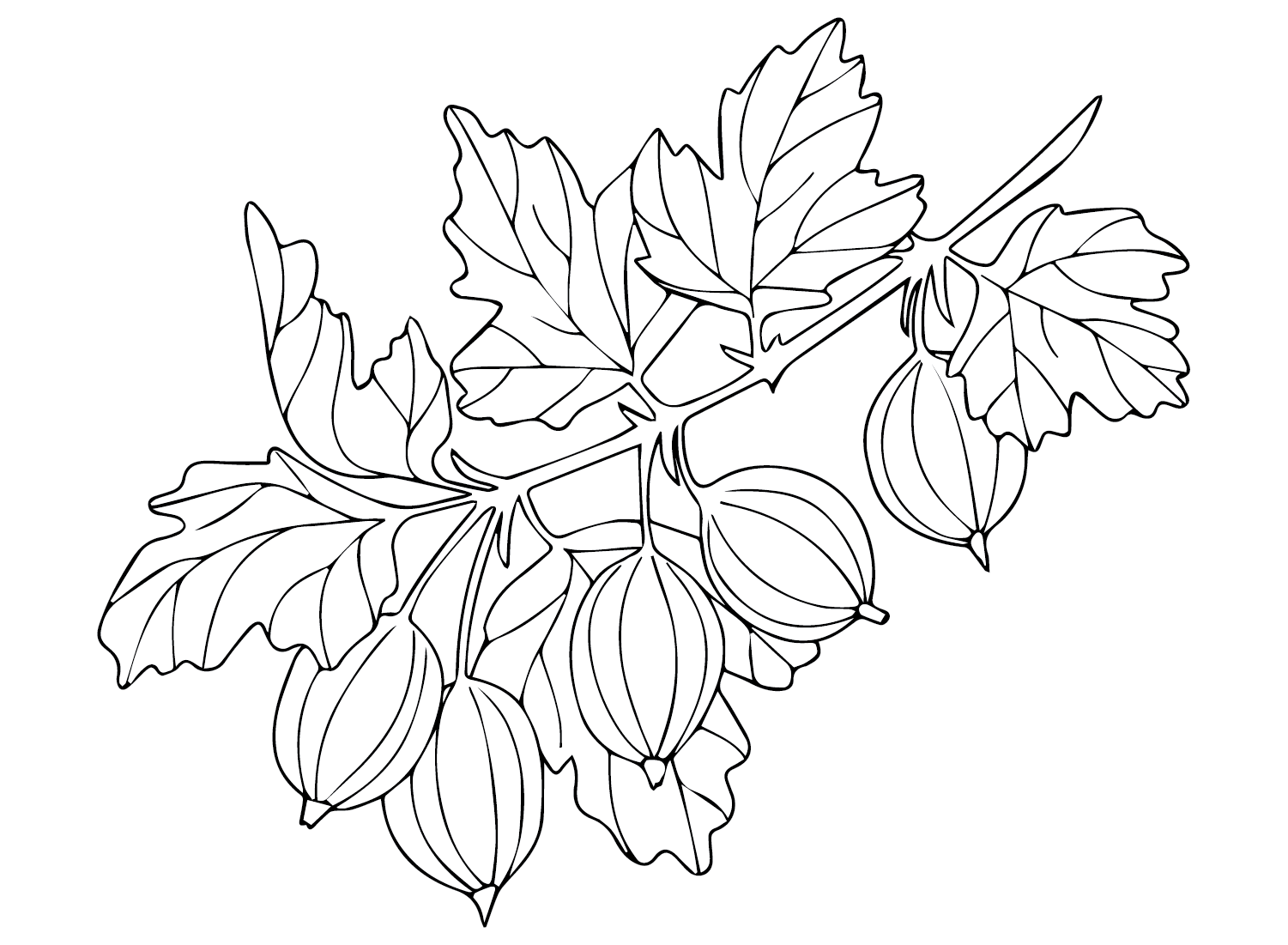
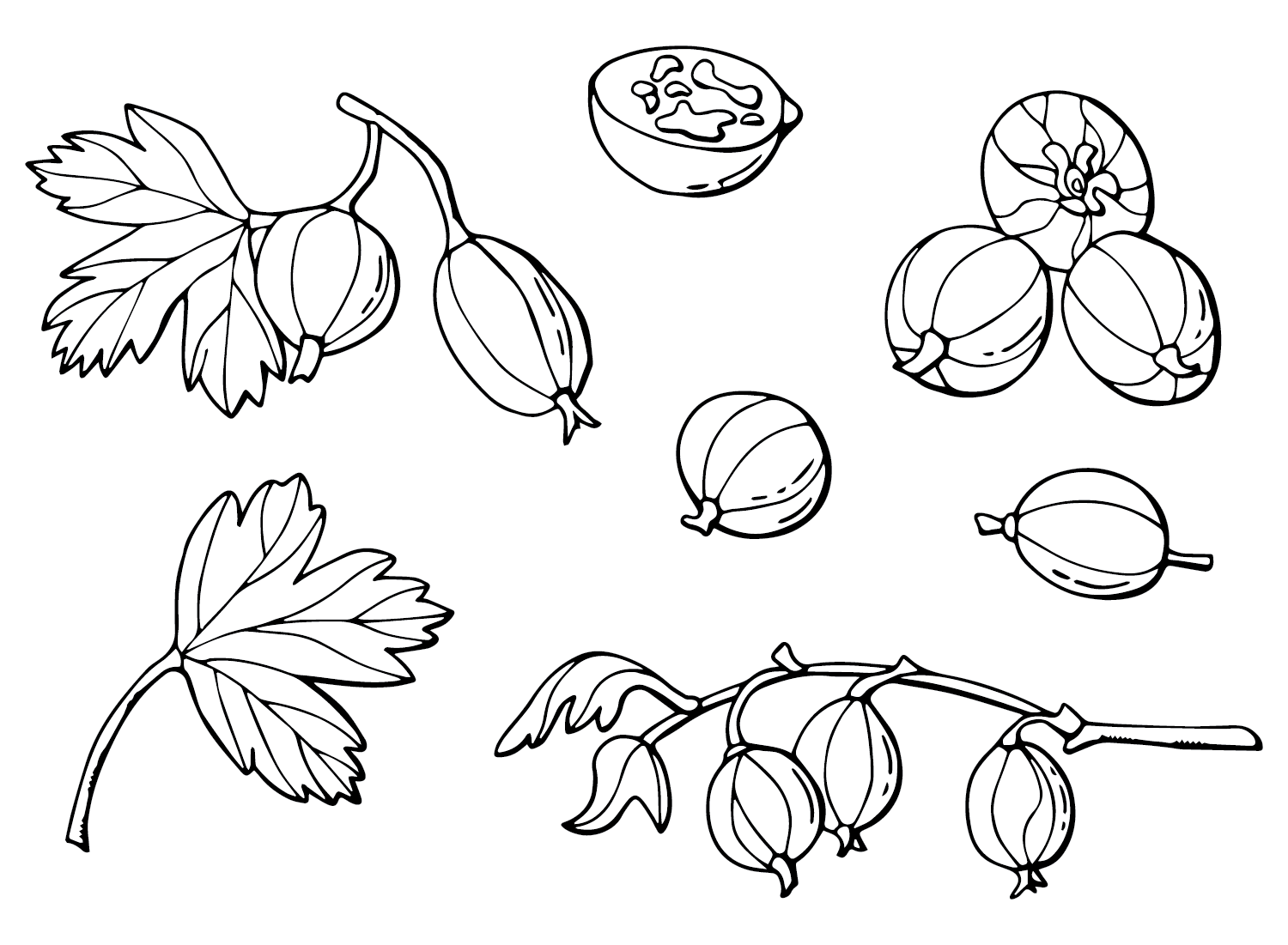
Four pages place gooseberries on their thorny branch or full bush, giving colorists a fuller composition that includes the plant’s distinctive spiny structure.
Drawing-Style and Specialty Designs
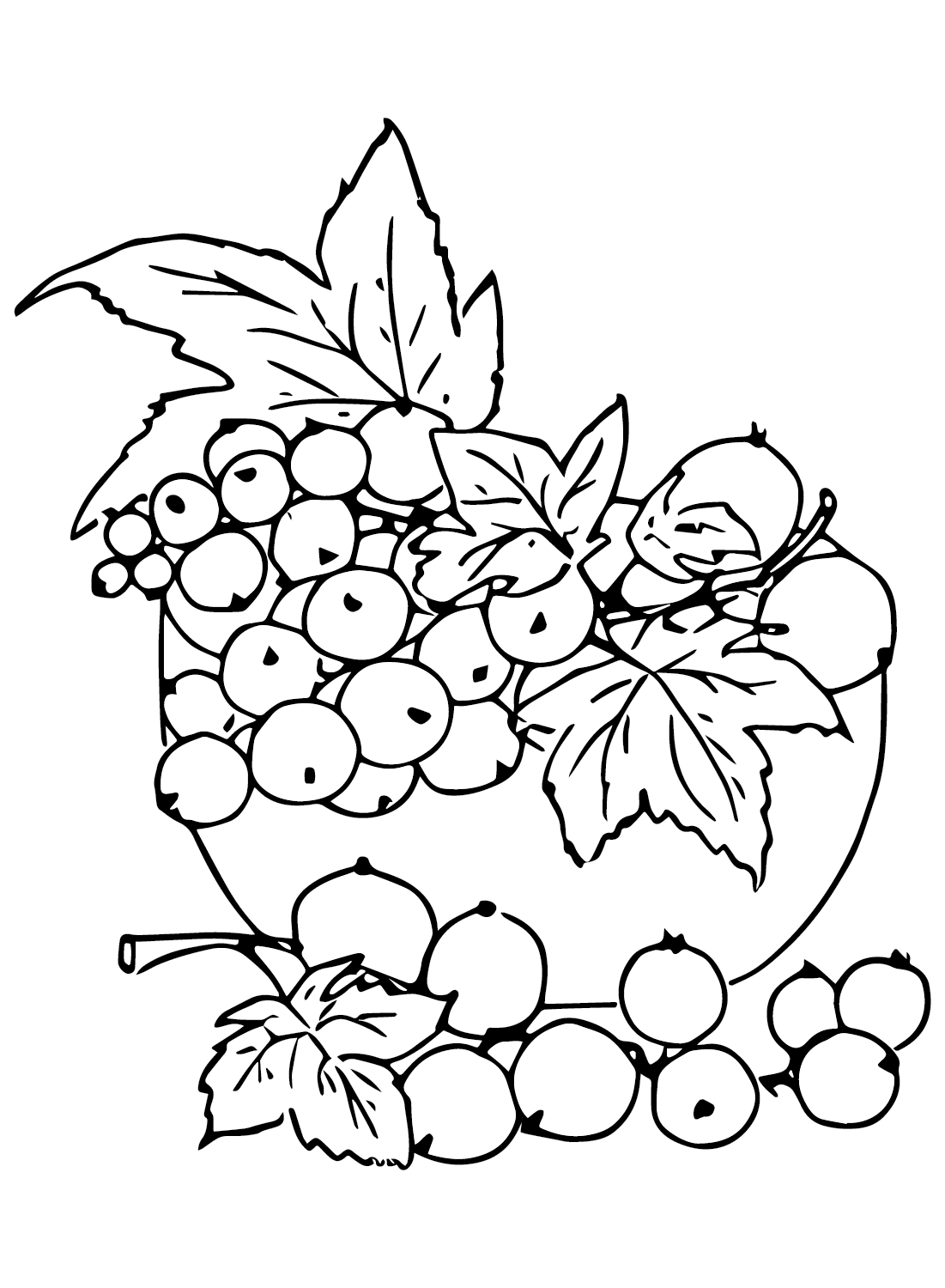
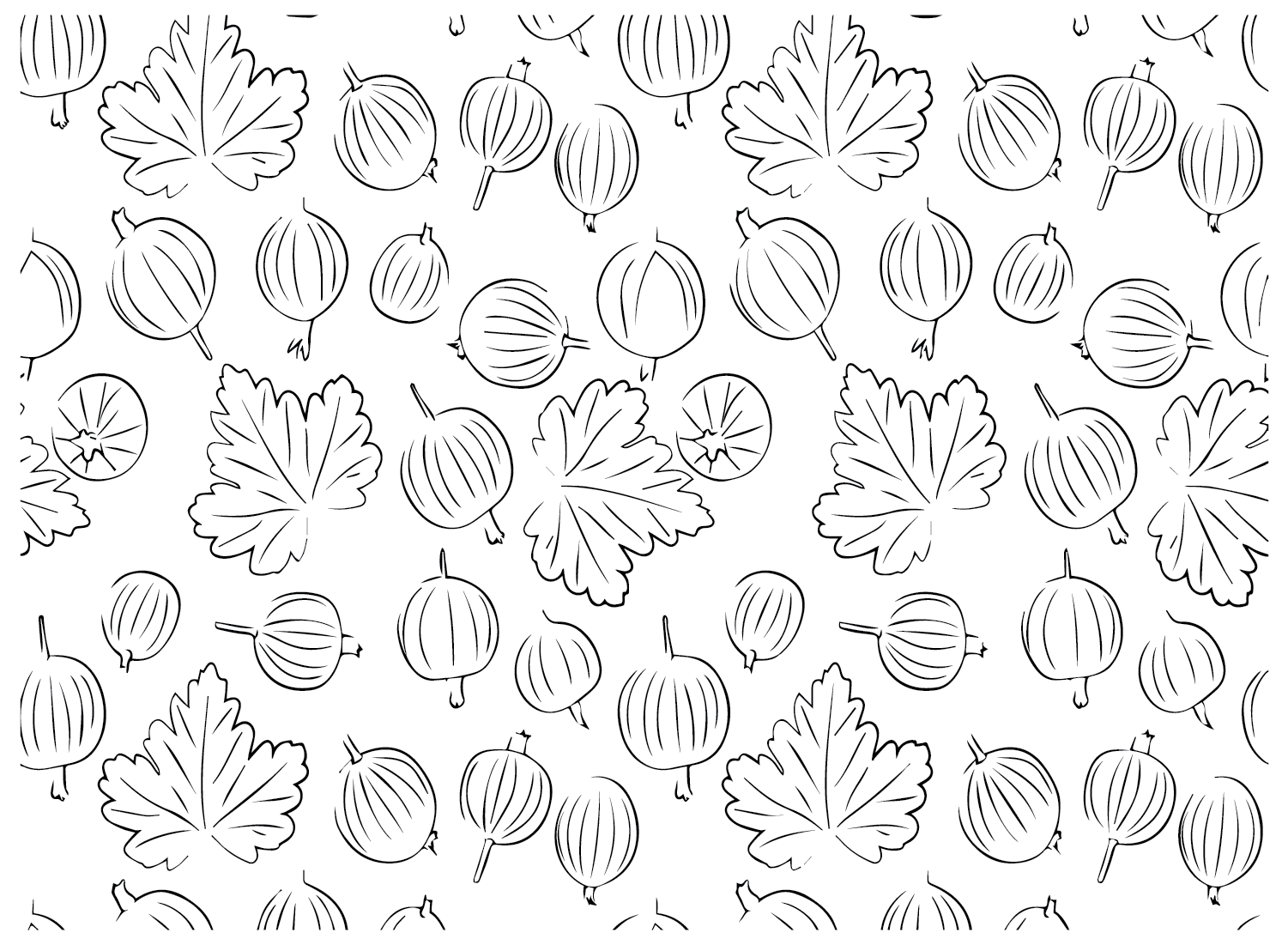
Five pages take a more specific approach, including sketch-style line drawings, a background-style design, and a “gooseberry fool” dessert page.
Printable and Free Sheets
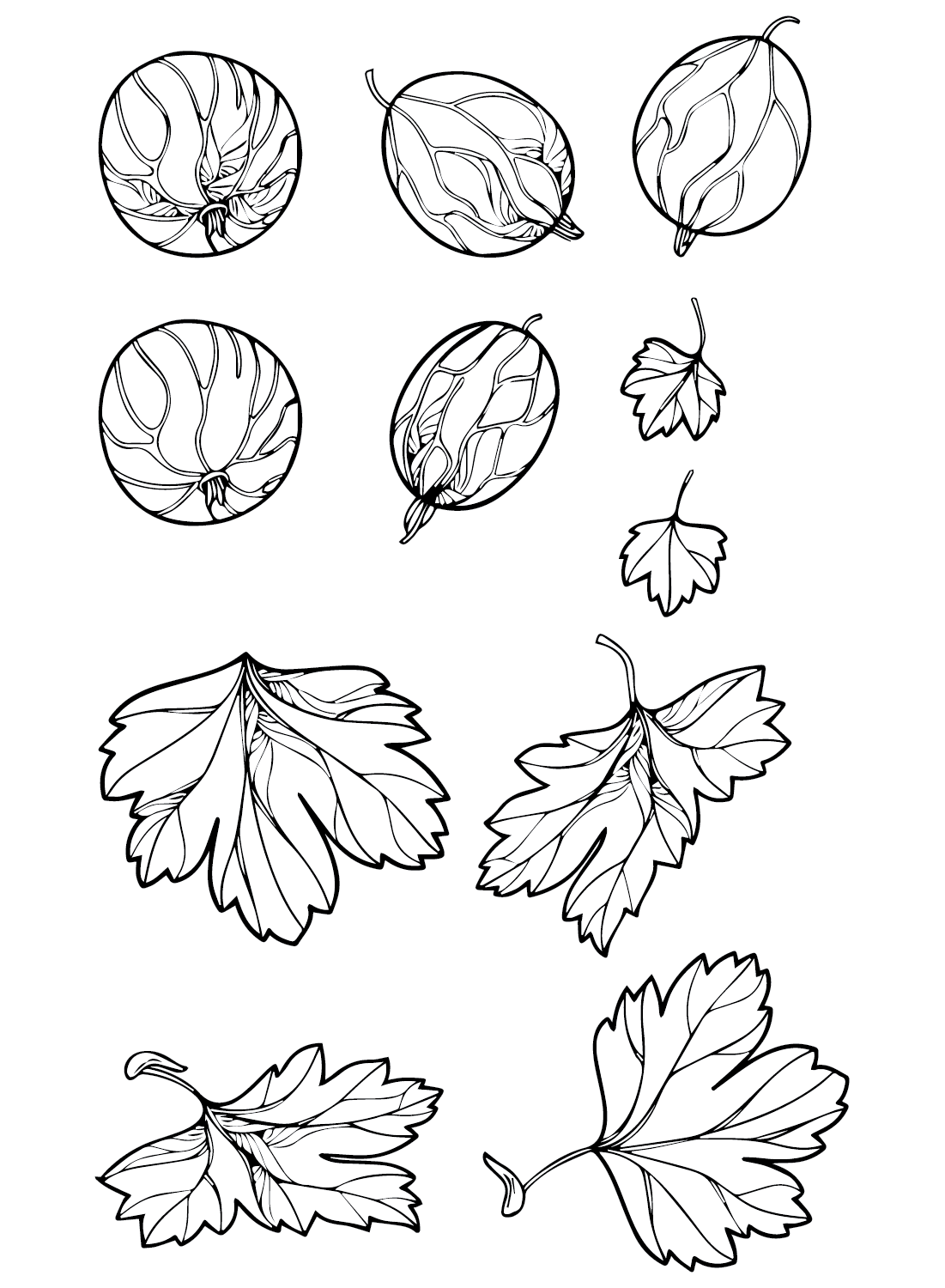
Ten pages are formatted as general printable sheets, making up the largest share of the collection and useful for a quick, single-session print at home or in the classroom.
What Gooseberry Coloring Pages Do
Skin that hints at what’s underneath. Some gooseberry varieties have thin, translucent skin with visible veining and seed shapes showing through, suggesting that subtle inner detail with light linework takes a more careful touch than filling in a solid, opaque fruit color. The American Academy of Pediatrics ties that kind of fine, deliberate detail work to fine motor skill development in children ages 2 through 7.
A real botanical clue is hiding in the branch. Because gooseberry bushes have thorny stems and bear fruit singly or in small groups, unlike their thornless, cluster-fruiting currant relatives, the branch and plant scenes in this collection give colorists a genuine, concrete detail to notice. Those small spines along the stem are what set a gooseberry bush apart.
A calming activity paired with a fruit that spans a whole rainbow. A 2005 study in the Art Therapy Journal found that structured coloring sessions produced measurable reductions in anxiety, and gooseberries offer an unusually wide, legitimate color range within a single fruit: green, yellow, pink, red, and purple, giving colorists real freedom to experiment without straying from something botanically accurate.
A dessert page with real culinary history. The “gooseberry fool” design connects directly to a genuine, centuries-old British dessert tradition, giving colorists a small taste of food history alongside the coloring itself.
How to Color Gooseberry Pages Well
- Unripe berries: Use bright Green as the base, since gooseberries typically start green before ripening further.
- Ripe berries: Use Yellow, Pink, Red, or deep Purple depending on the variety, since gooseberries genuinely ripen into a wide range of colors.
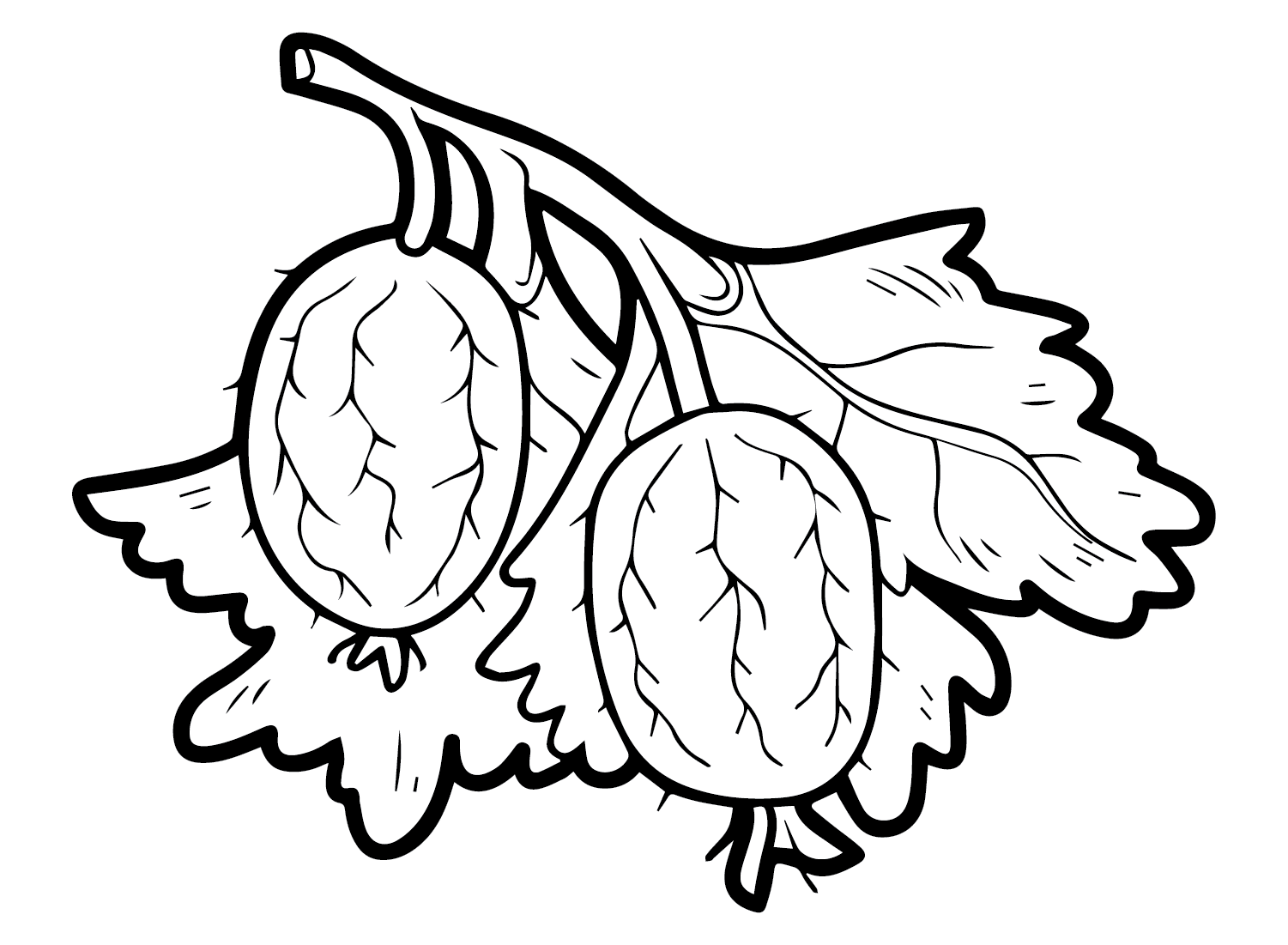
- Translucent-skin varieties: Add faint, lighter linework across the berry to suggest visible veining or seed shapes beneath a thin, semi-transparent skin.
- Thorny stems: Use light Brown or Tan for the branch, adding small pointed thorn shapes along its length to capture the plant’s real spiny structure.
- Leaves: Use a fresh, medium Green for the deeply lobed leaves, which grow in small clusters along the stem.
- Gooseberry fool designs: Use soft Cream or White for the whipped cream layer and a rich Green or Pink for the gooseberry filling folded into it.
5 Creative Craft Ideas With Gooseberry Coloring Pages
1. Garden Bush Diorama
Color a branch or plant-scene page, cut it out, and stand it up inside a small box decorated like a garden bed for a simple 3D scene.
2. Gooseberry Bookmark
Color a small gooseberry design, cut it into a bookmark shape, and use it to mark a place in a favorite book.
3. Greeting Card
Fold cardstock in half, glue on a colored gooseberry design, and write a message inside for a friend who enjoys gardening or baking.
4. Classroom Fruit Rainbow Poster
Color several gooseberry pages using different ripening colors and arrange them on a poster board for a classroom lesson about how fruit changes color as it ripens.
5. Paper Bookmark Set
Cut several small colored gooseberry designs into bookmark shapes for a matching set to share with friends.
Frequently Asked Questions
What are Gooseberry coloring pages?
Gooseberry coloring pages are printable line-art designs featuring this thorny-bush fruit in classic portrait, branch, and specialty artwork. This collection includes 23 free designs available as PDFs or online coloring.
What plant family do gooseberries belong to?
Gooseberries belong to the genus Ribes within the family Grossulariaceae, the same genus as currants.
How can you tell a gooseberry bush from a currant bush?
Gooseberry bushes have thorny stems and bear fruit singly or in small groups of two or three, while currant bushes are thornless and grow their berries in long, hanging clusters.
What is a “gooseberry fool”?
A gooseberry fool is a traditional British dessert made by folding sweetened, cooked gooseberries into whipped cream.
What colors can gooseberries be?
Gooseberries range from green and yellow to pink, red, and deep purple, depending on the variety and how ripe the fruit is.
What are the health benefits of gooseberries?
Gooseberries are a good source of vitamin C, fiber, and antioxidants.
Are Gooseberry coloring pages suitable for young children?
Yes. The simple portrait designs in this collection use bold, uncluttered outlines suited to preschool and early elementary colorists, while the branch and plant scenes offer more detail for older kids.
Where do gooseberries grow?
Gooseberries are native to Europe, northwestern Africa, and parts of Asia, and are now cultivated in gardens across many temperate regions worldwide.
Start Coloring
Download any page by clicking the design. No account, email, or payment is required. Pages print directly from the browser at full resolution or open in the online coloring tool for screen use. Share finished pages on Facebook or Pinterest with the share buttons at the top of each design page.