International Day of Human Space Flight Coloring Pages
 By:
Jennifer Thoa - Content Editor & Designer
Updated:
By:
Jennifer Thoa - Content Editor & Designer
Updated:
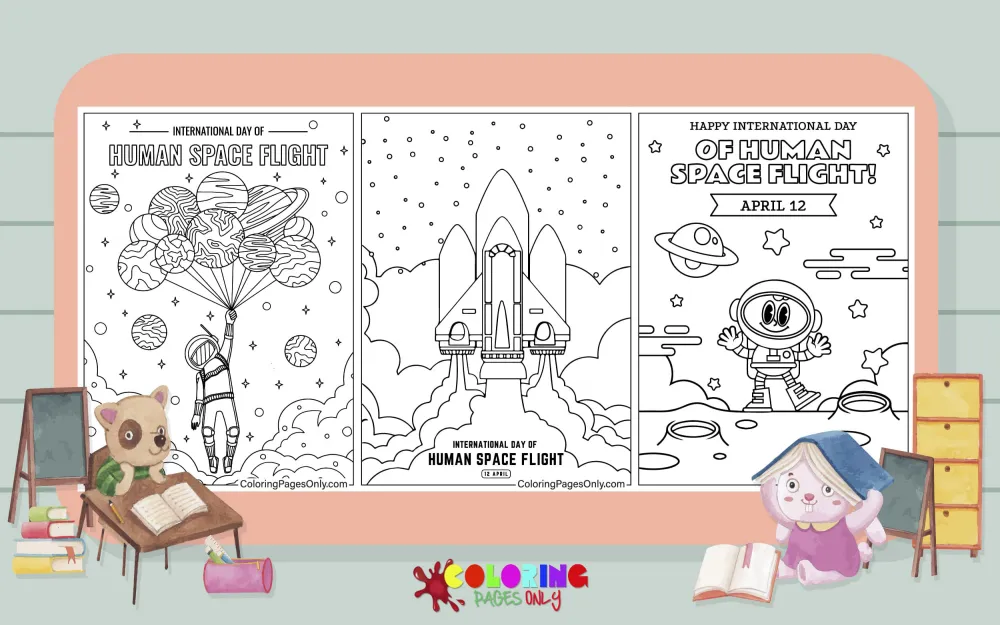
Free International Day of Human Space Flight coloring pages: 21 printable PDF designs covering astronauts, rockets, and space stations to mark the anniversary of the first human spaceflight. Every page’s PDF opens with one click for printing, and the online coloring tool holds the same design for anyone working without a printer.
With no specific mission or spacecraft named across the grid, the pages are divided by subject alone: an astronaut, a rocket, or the wider view of a space station or distant planet. The observance itself commemorates April 12, 1961, when Soviet cosmonaut Yuri Gagarin became the first human to travel into space, completing a single 108-minute orbit of Earth aboard Vostok 1. The United Nations General Assembly formally declared April 12 the International Day of Human Space Flight through resolution A/RES/65/271, adopted on April 7, 2011, fifty years after Gagarin’s flight. The day recognizes that first journey alongside the broader history of human space exploration that followed it.
Twenty-one pages spanning astronauts, rockets, and space scenery give this set enough range to mark the occasion with more than a single repeated image.
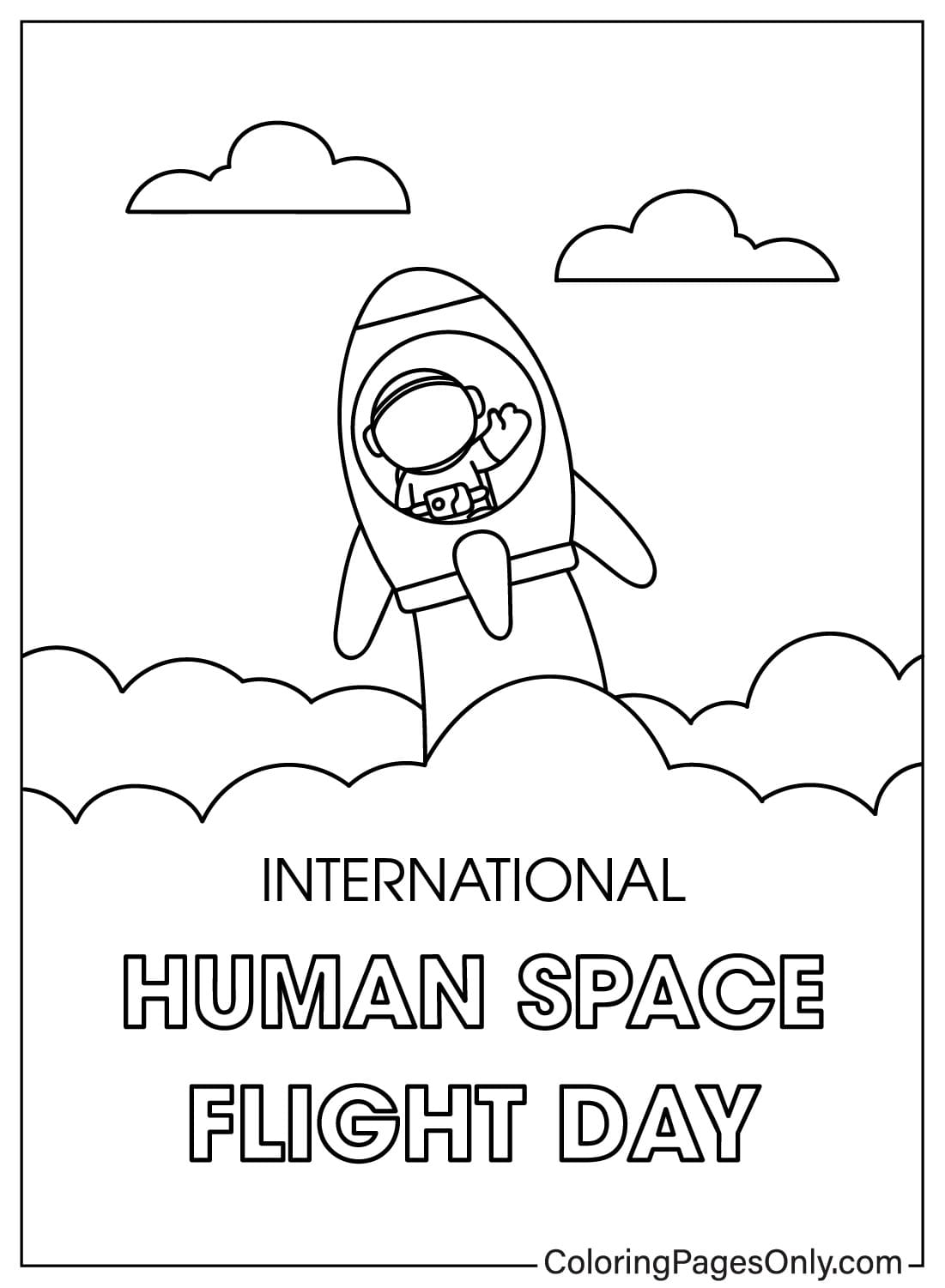
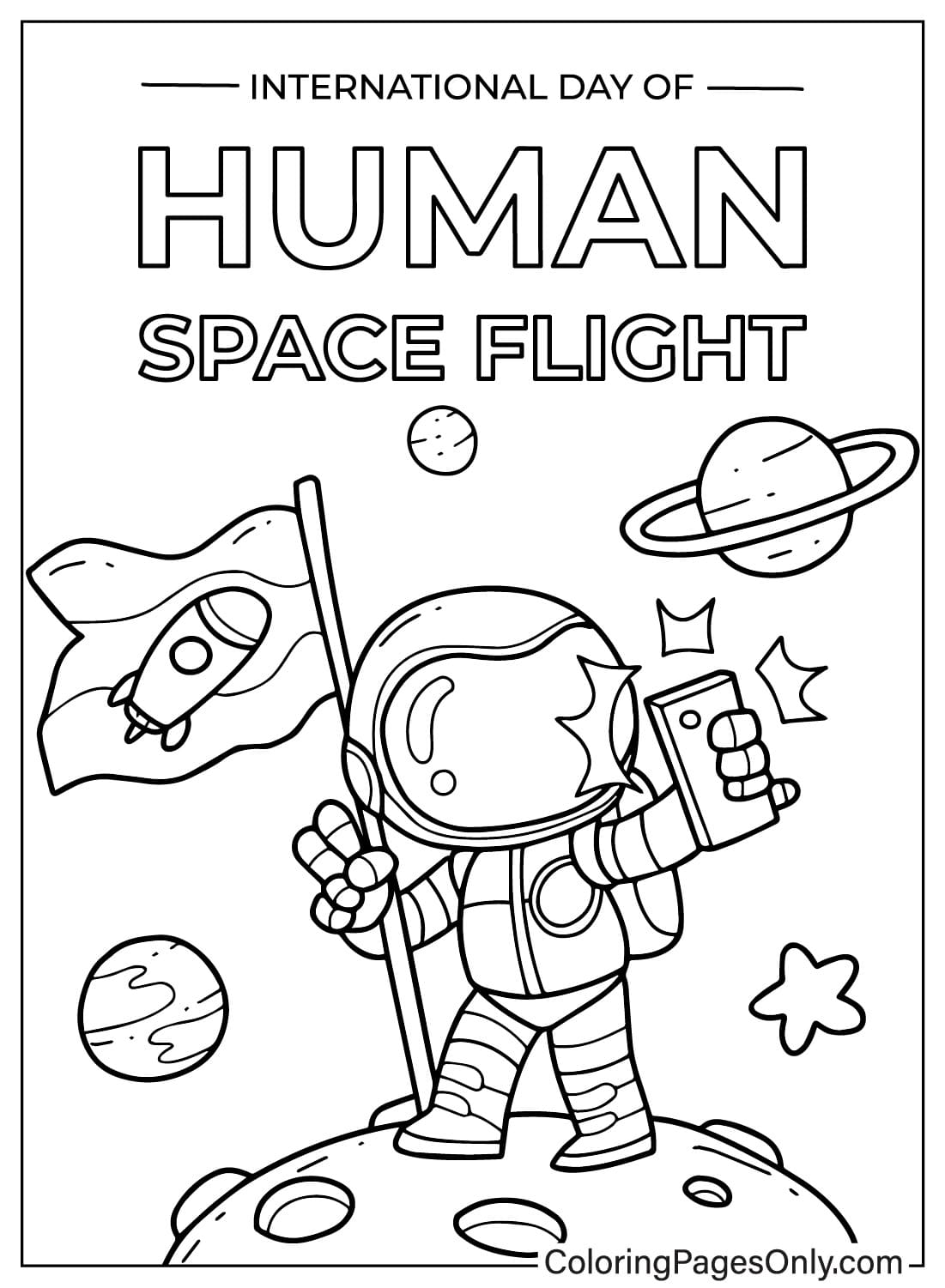
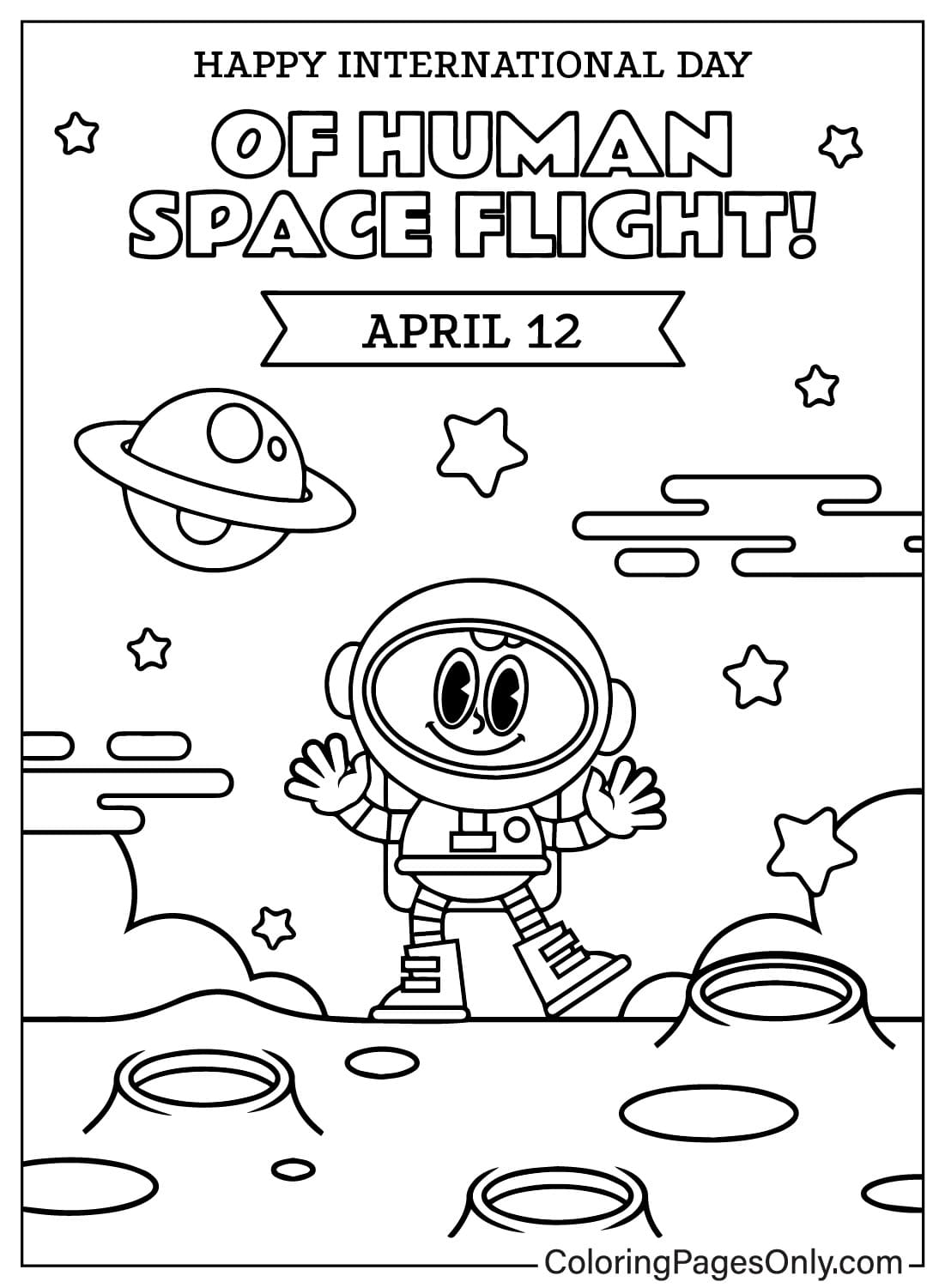
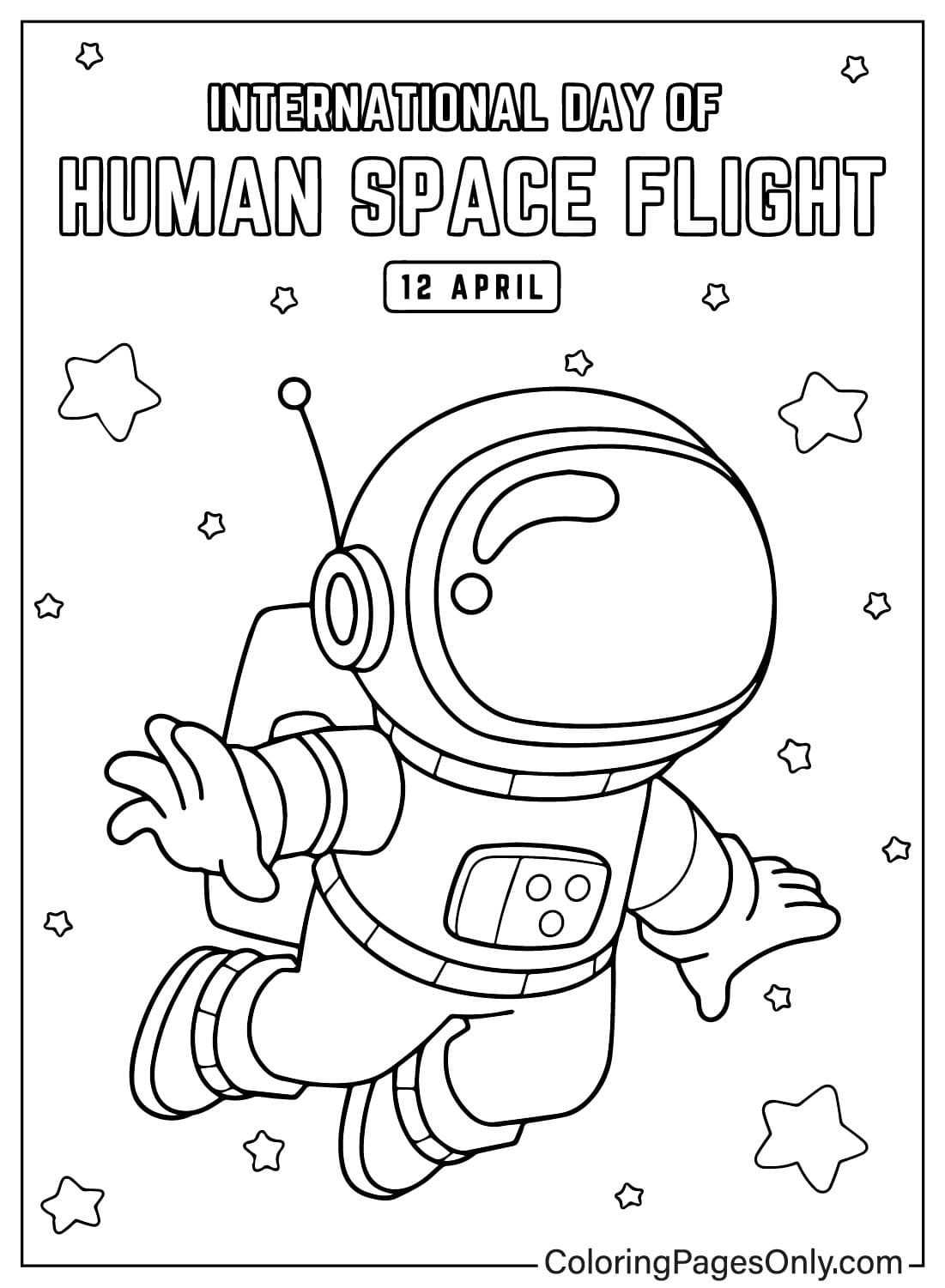
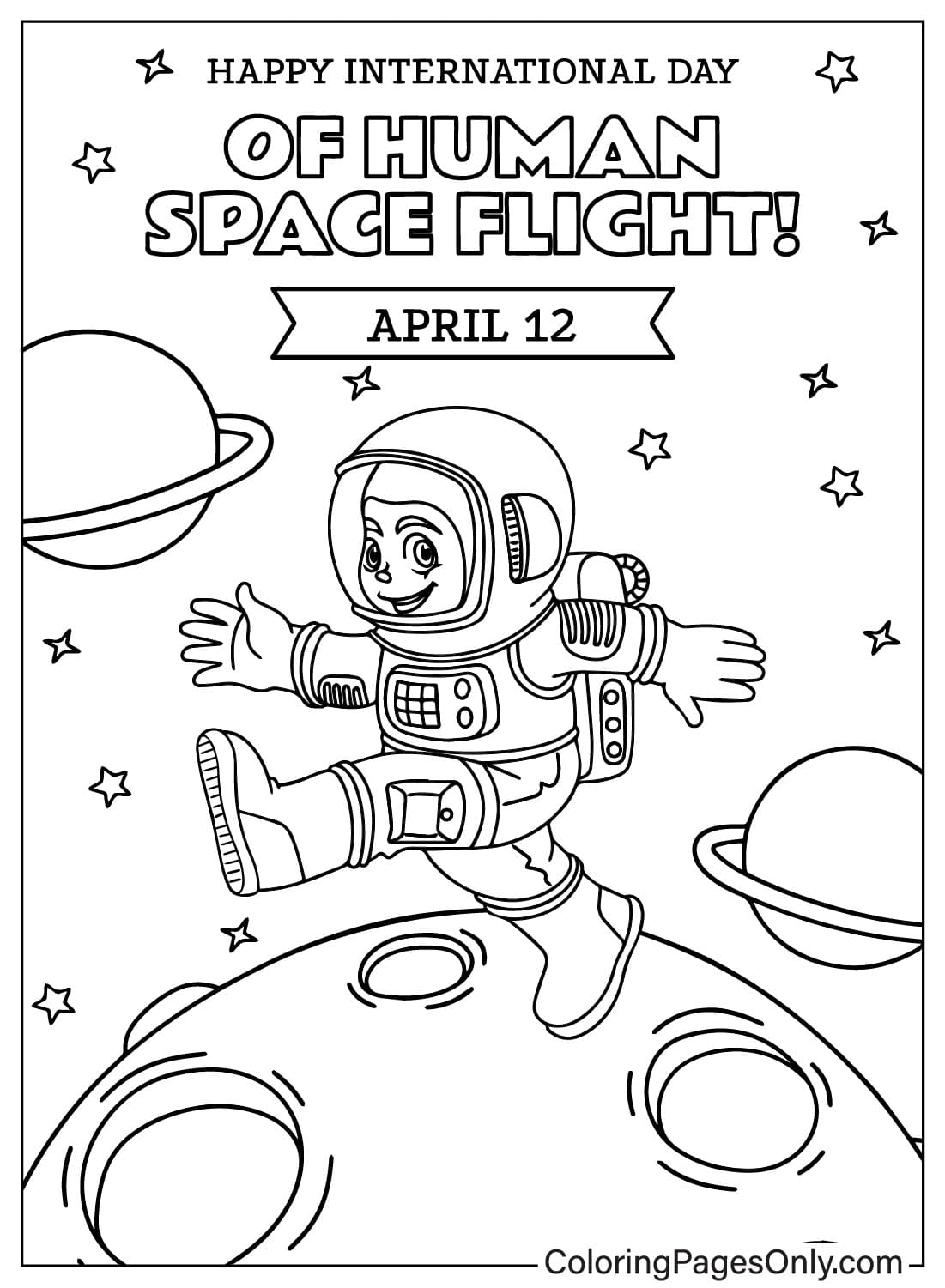
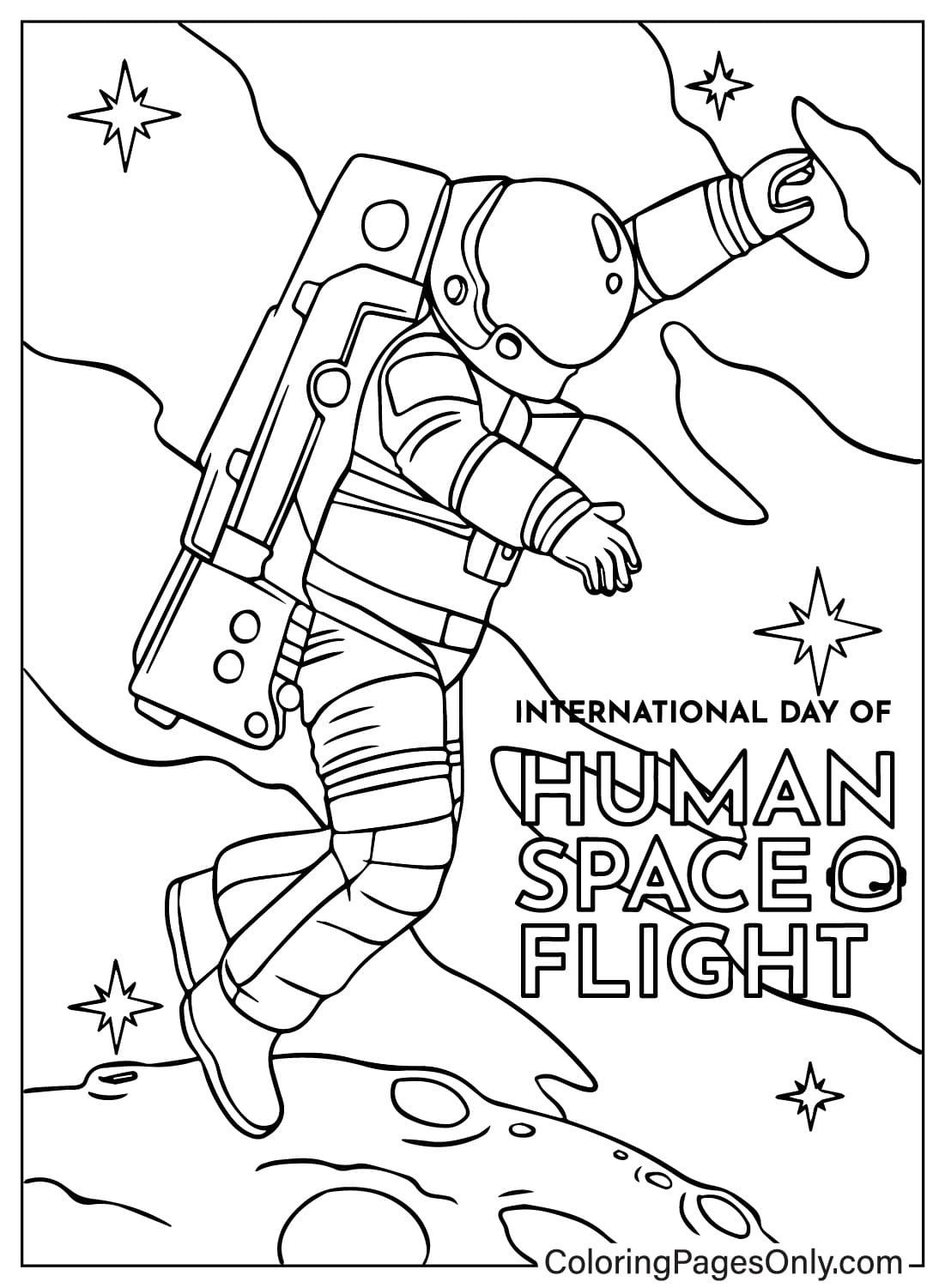
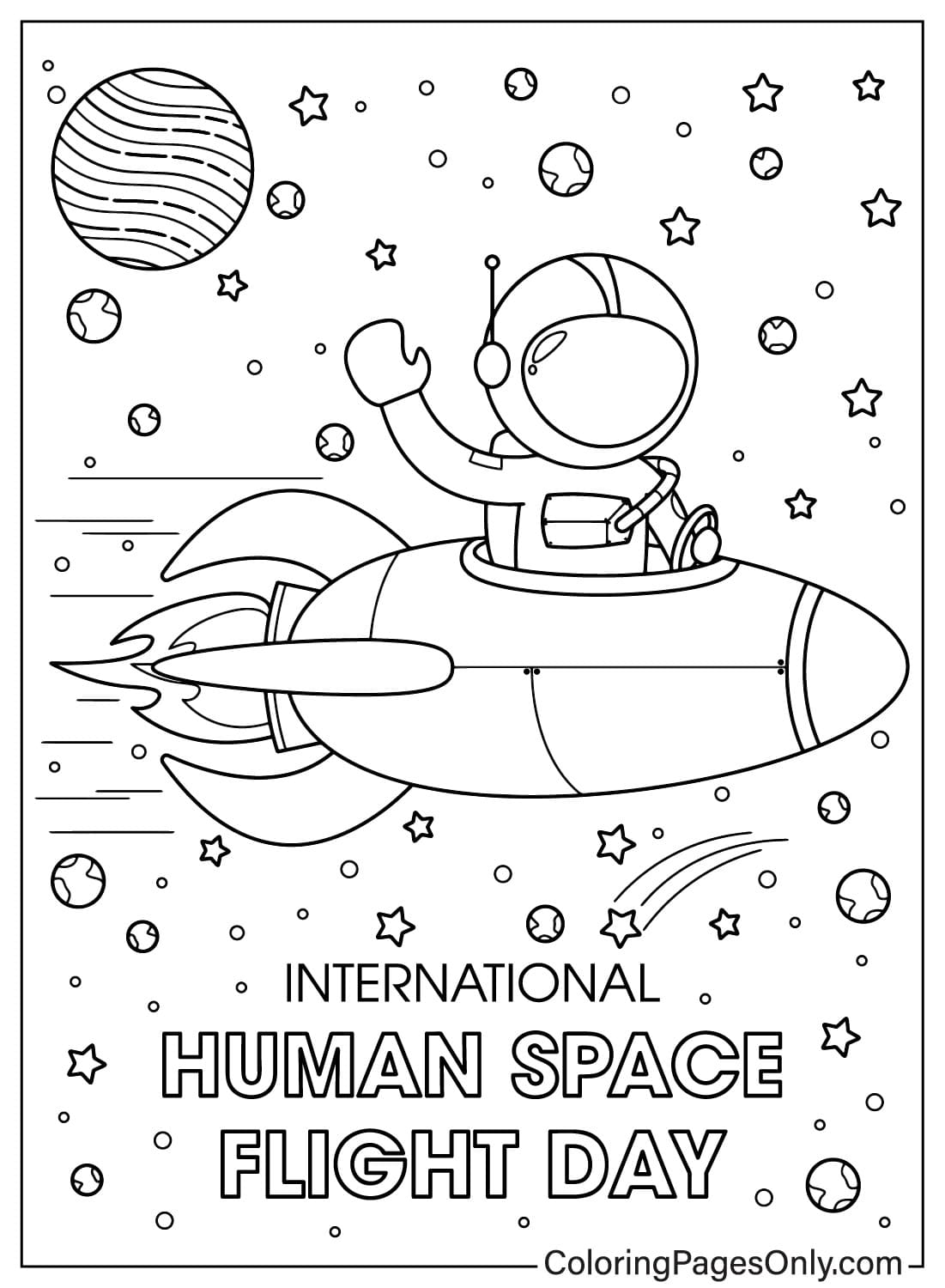
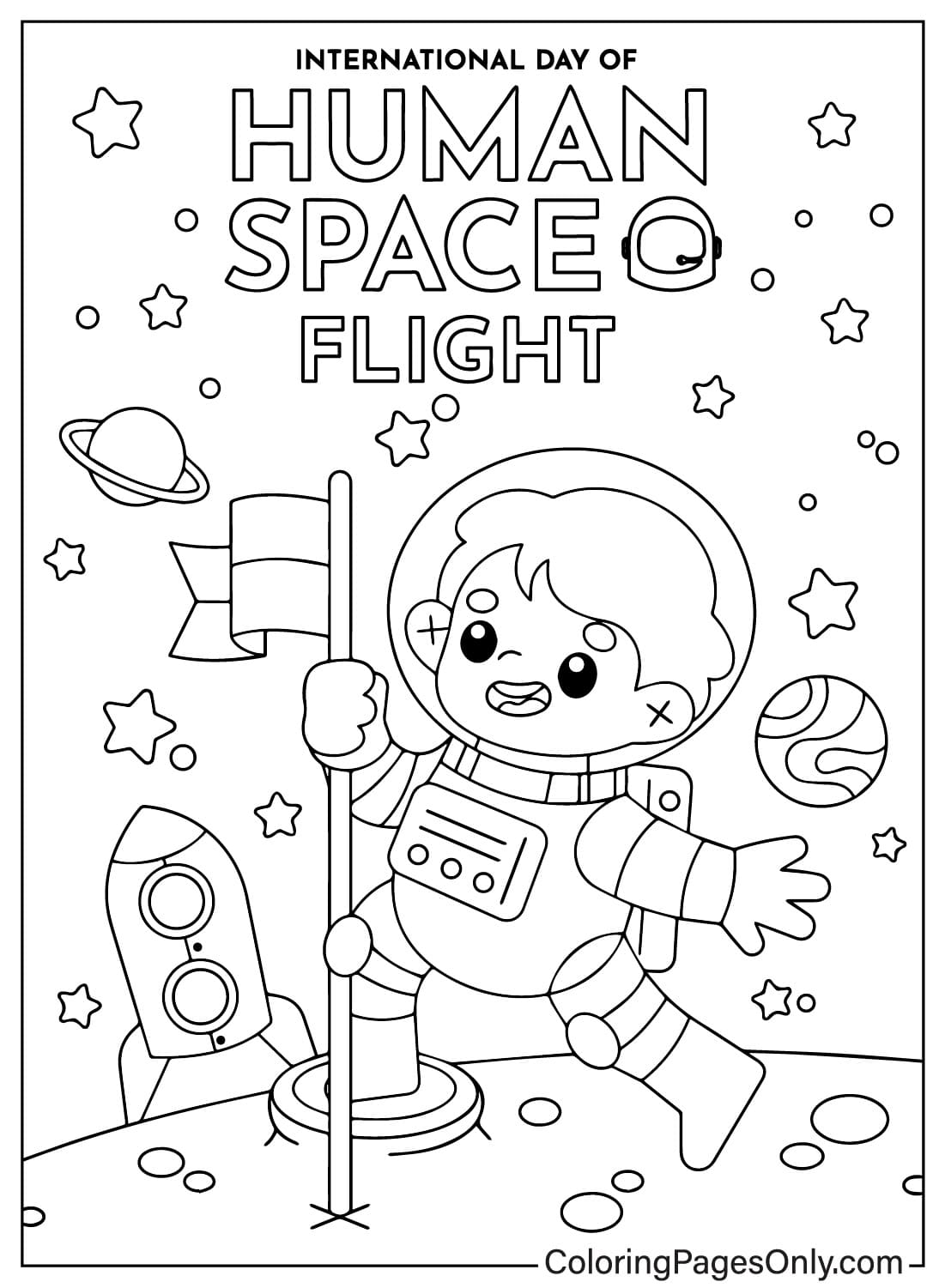
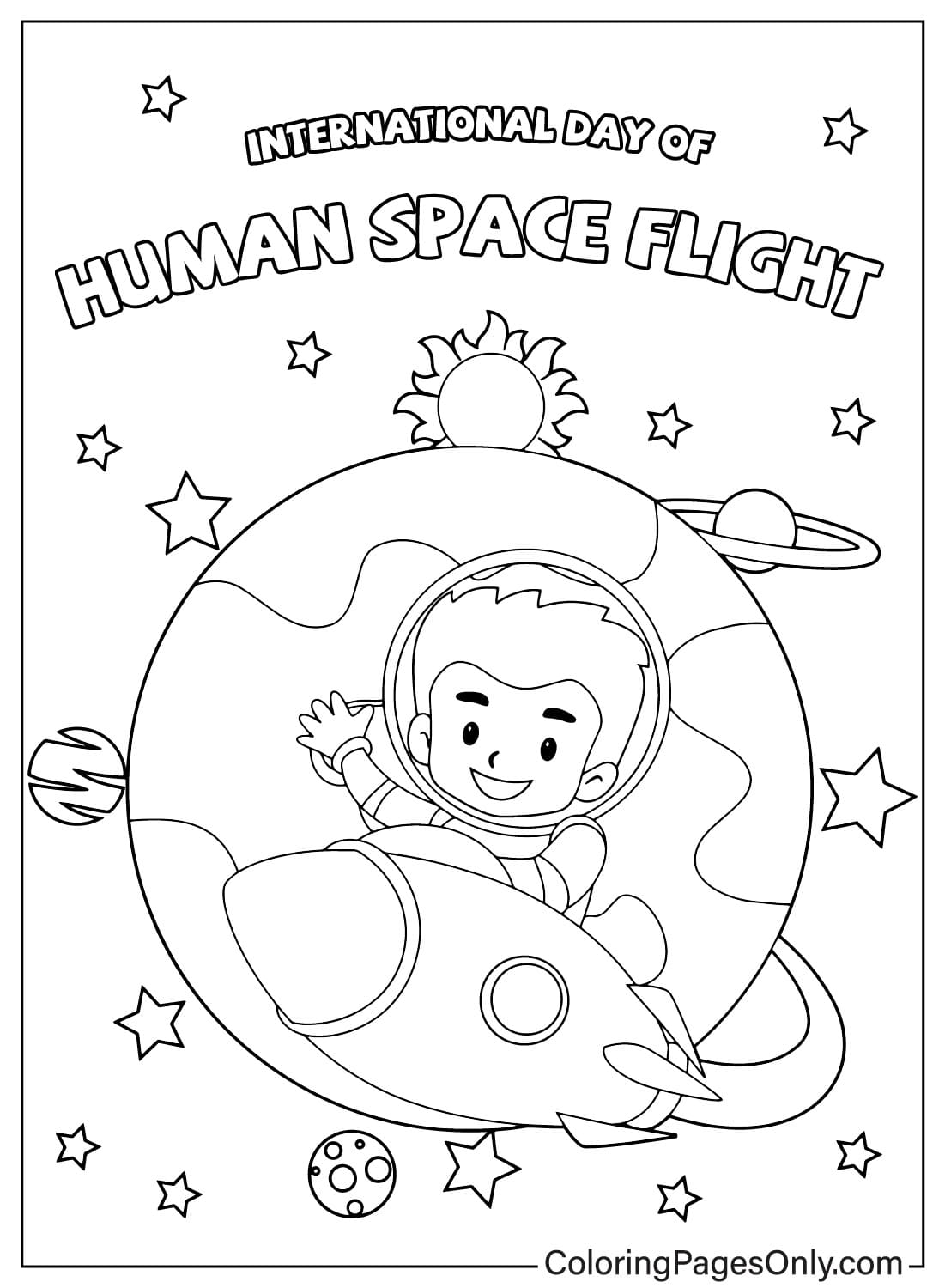
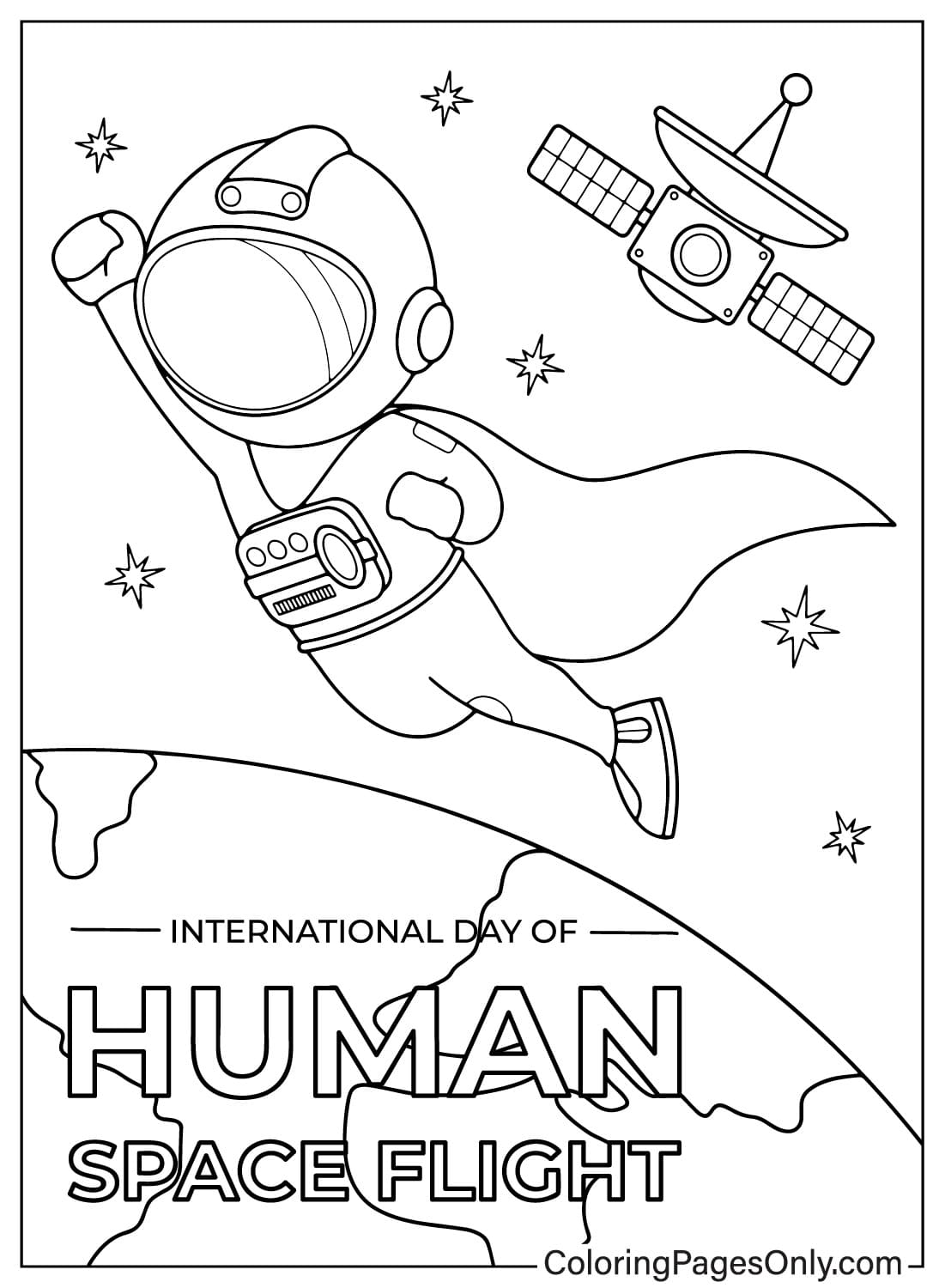
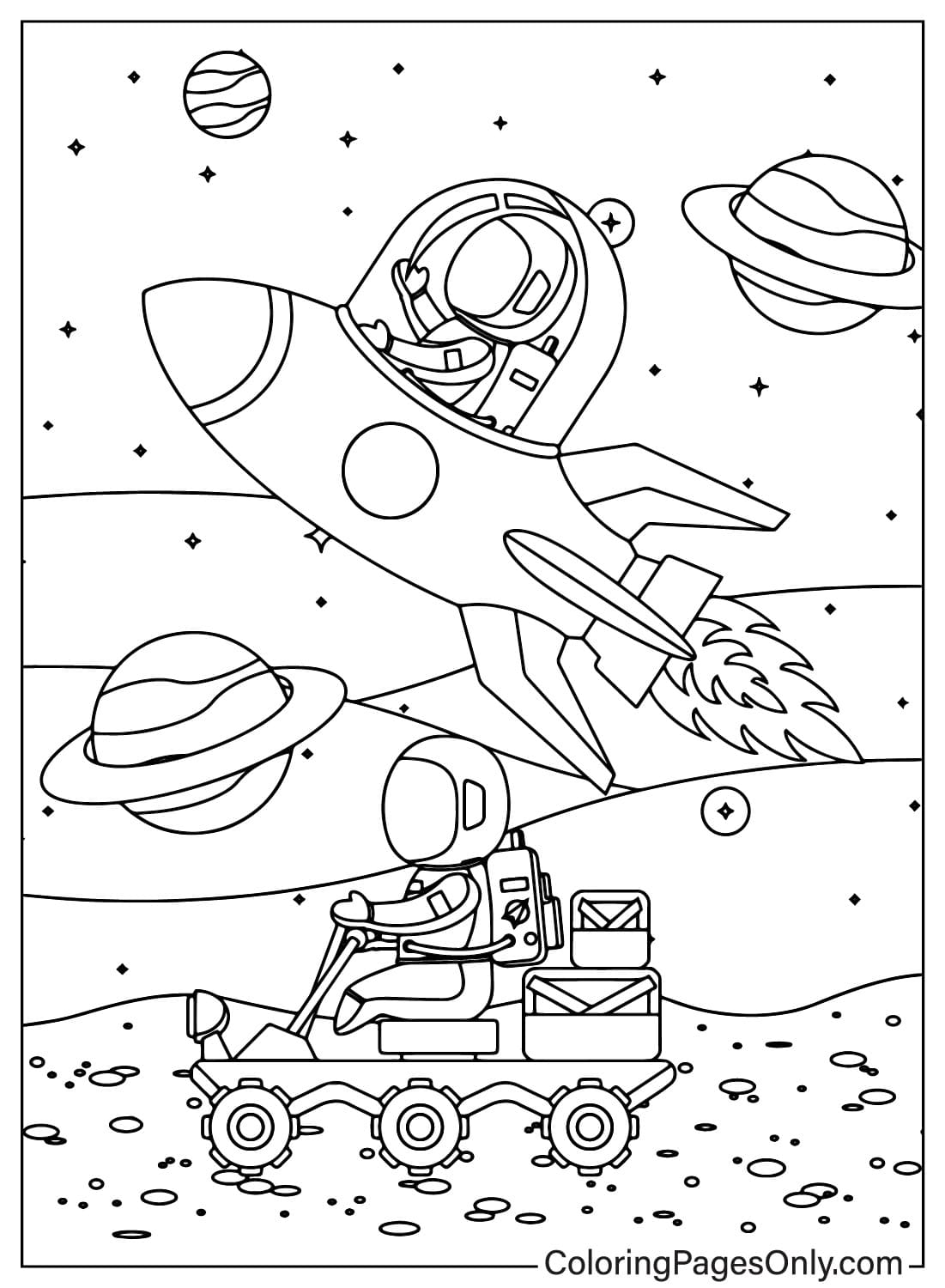
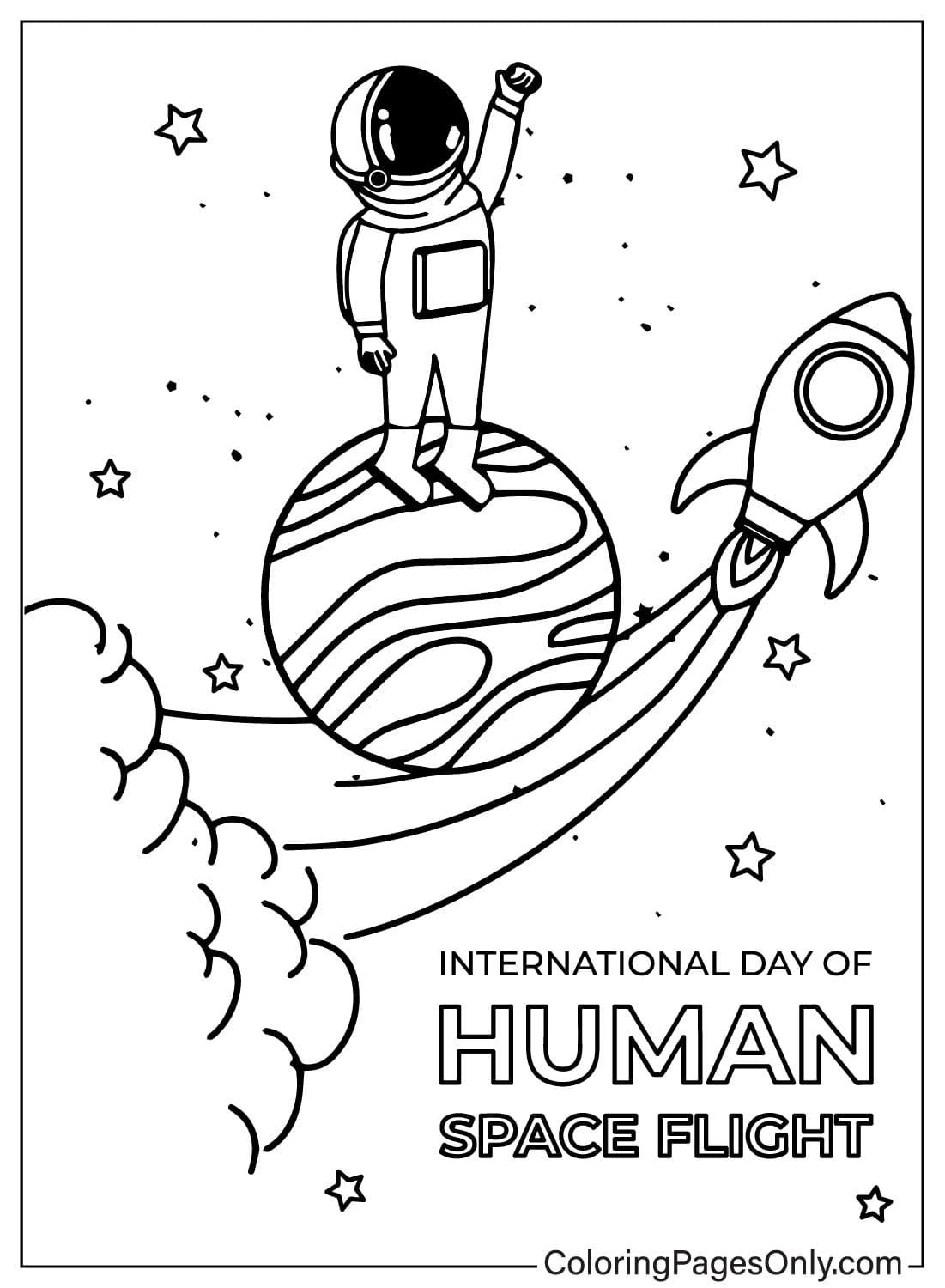
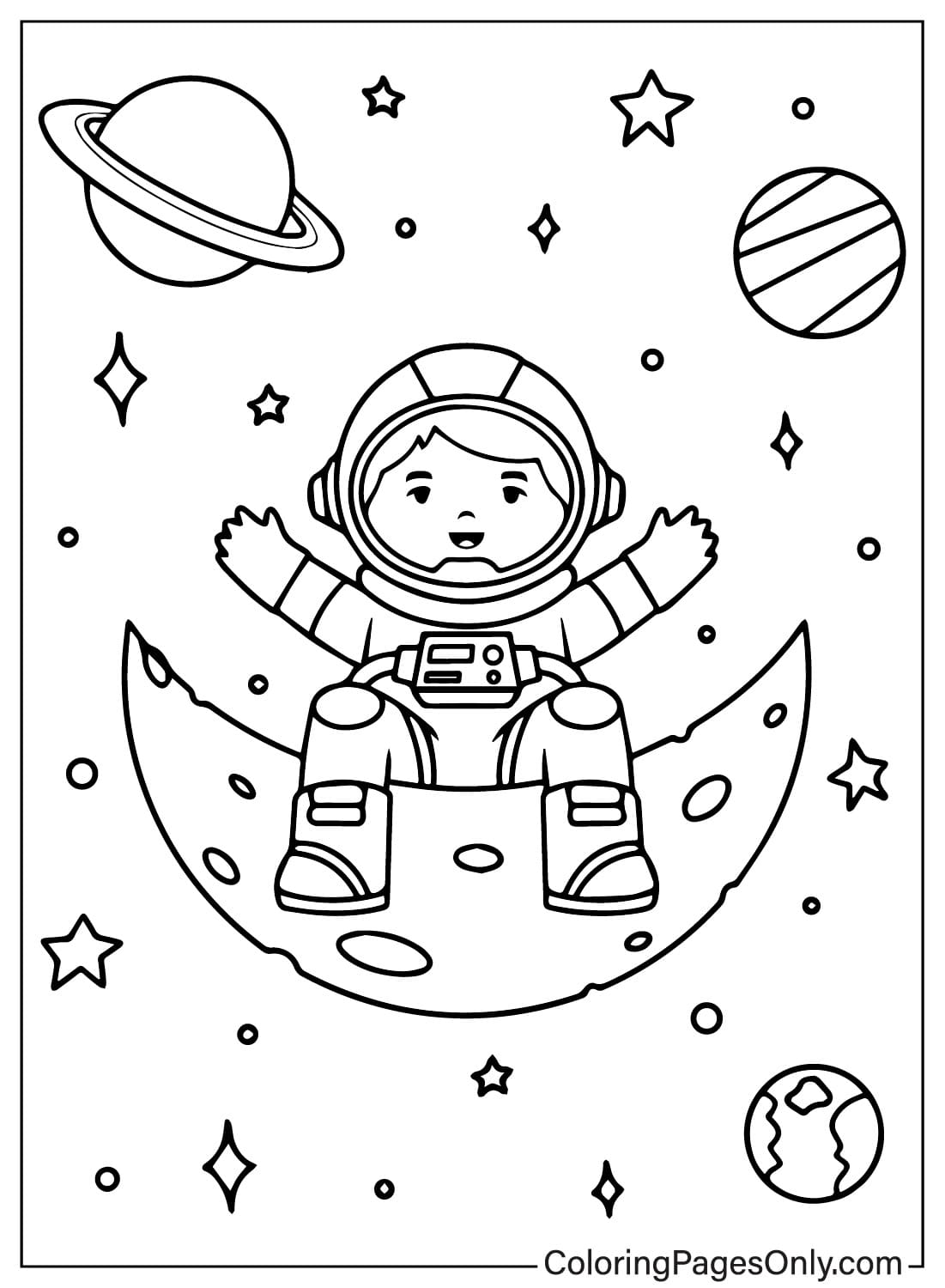
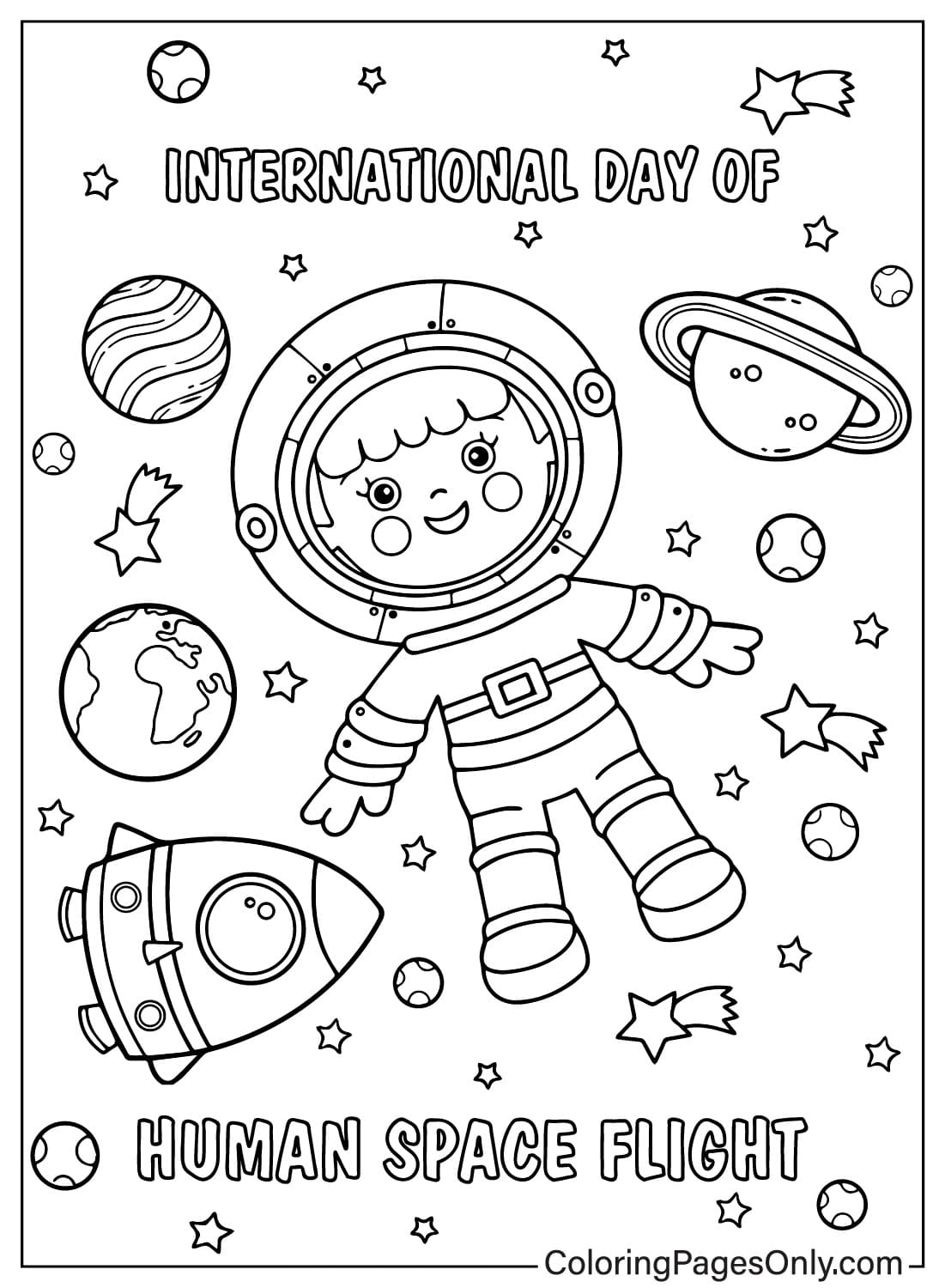
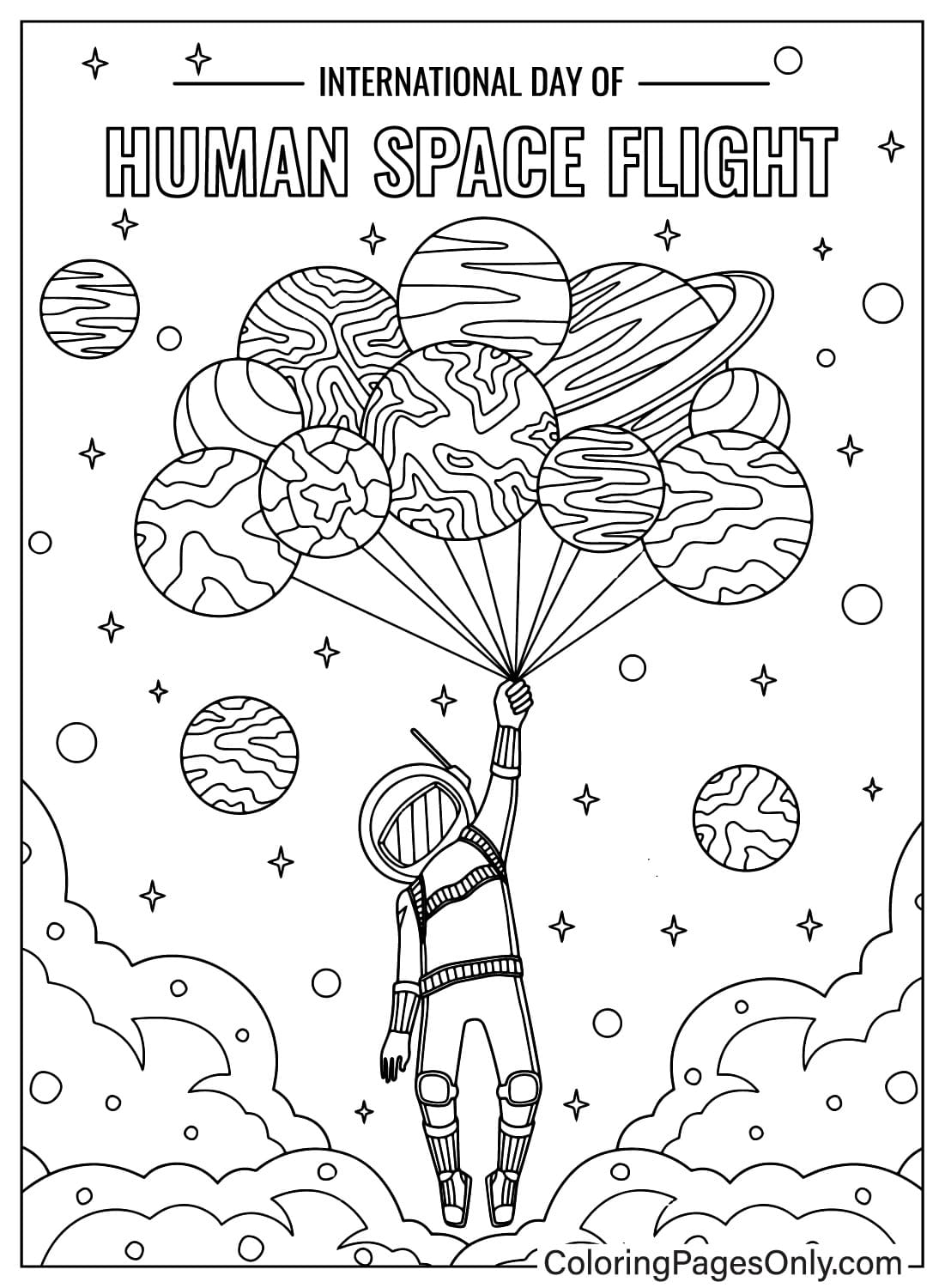
What Is Inside This Collection
Astronaut Portraits and Spacewalk Scenes
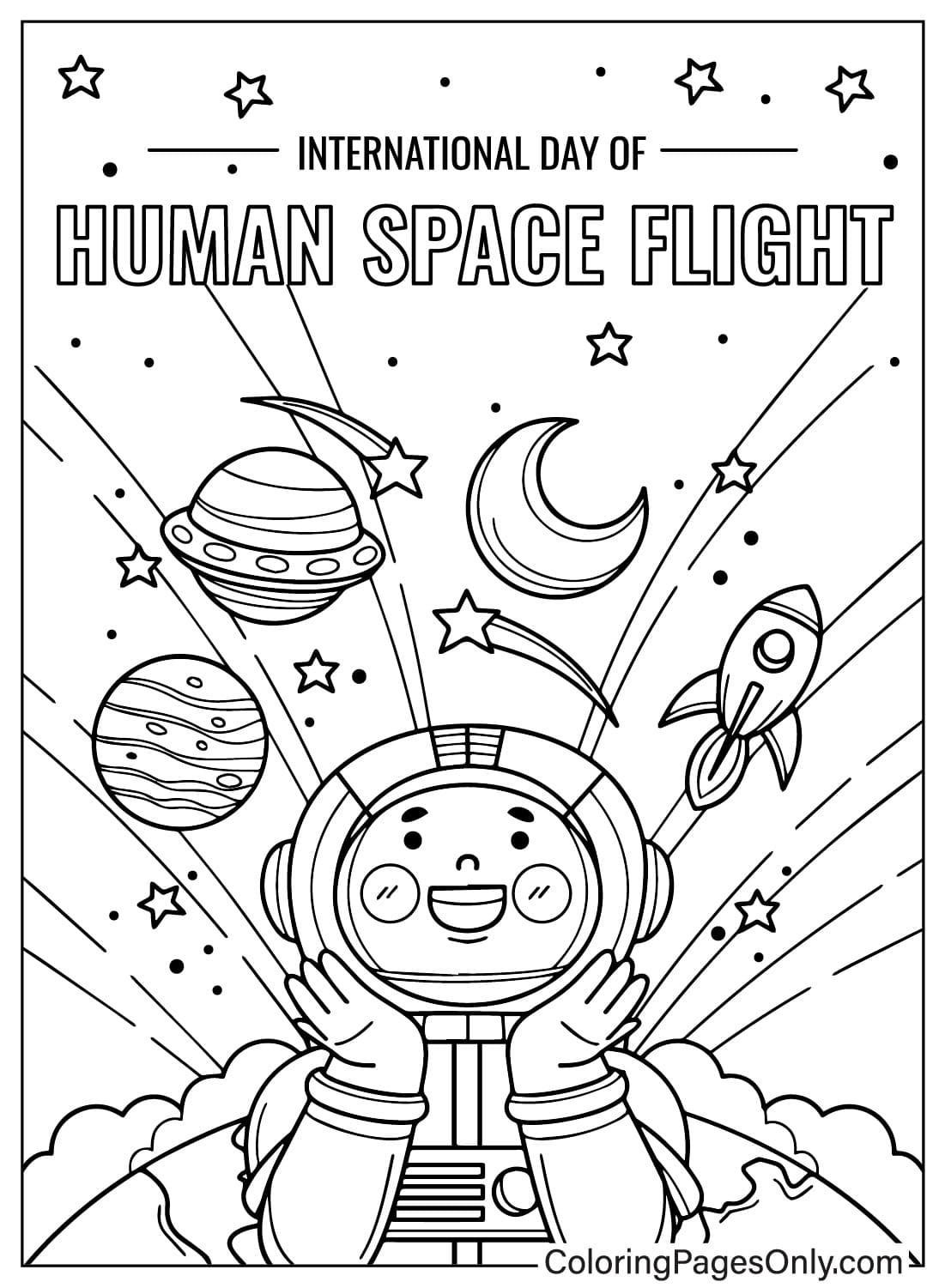
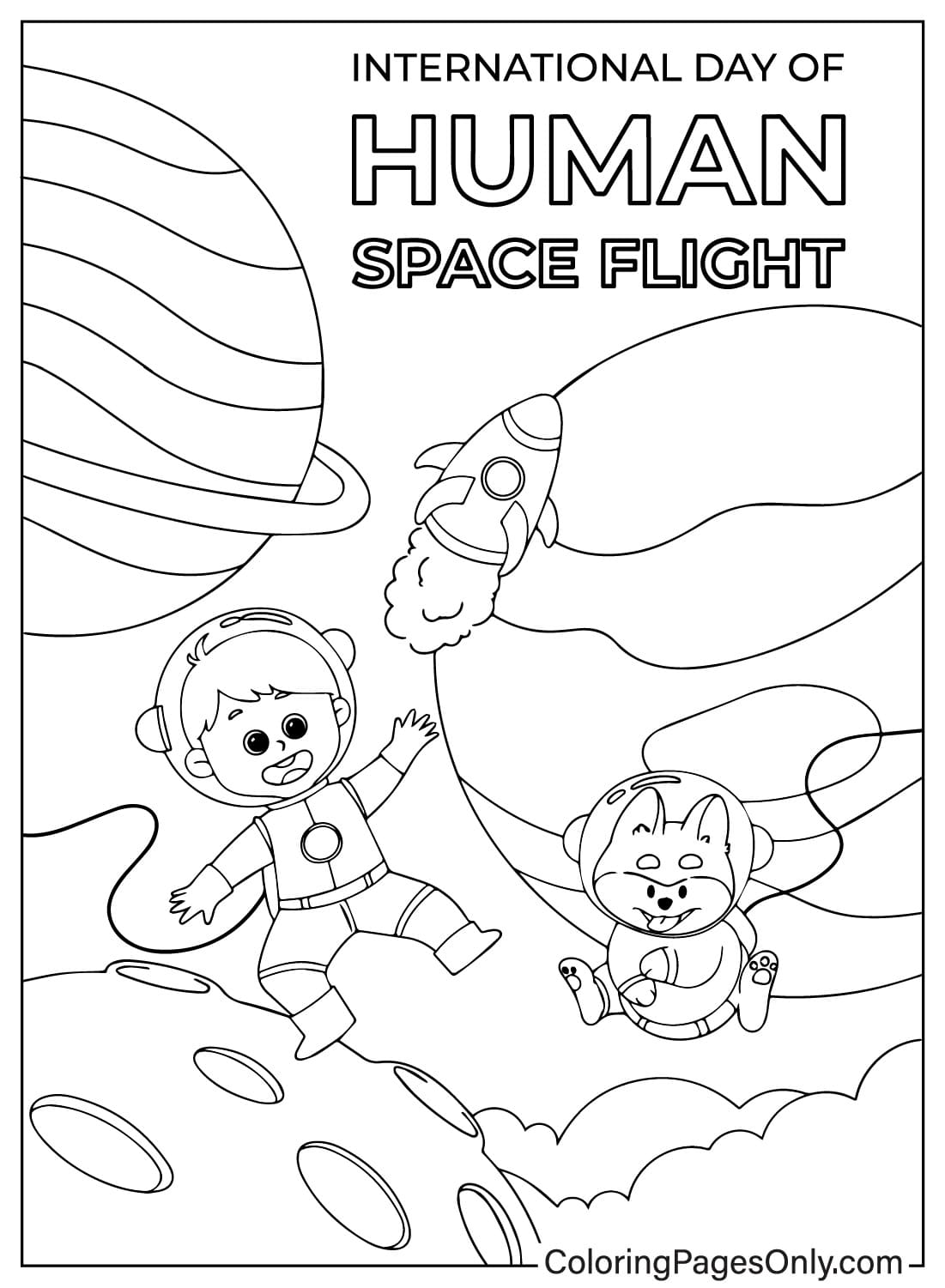
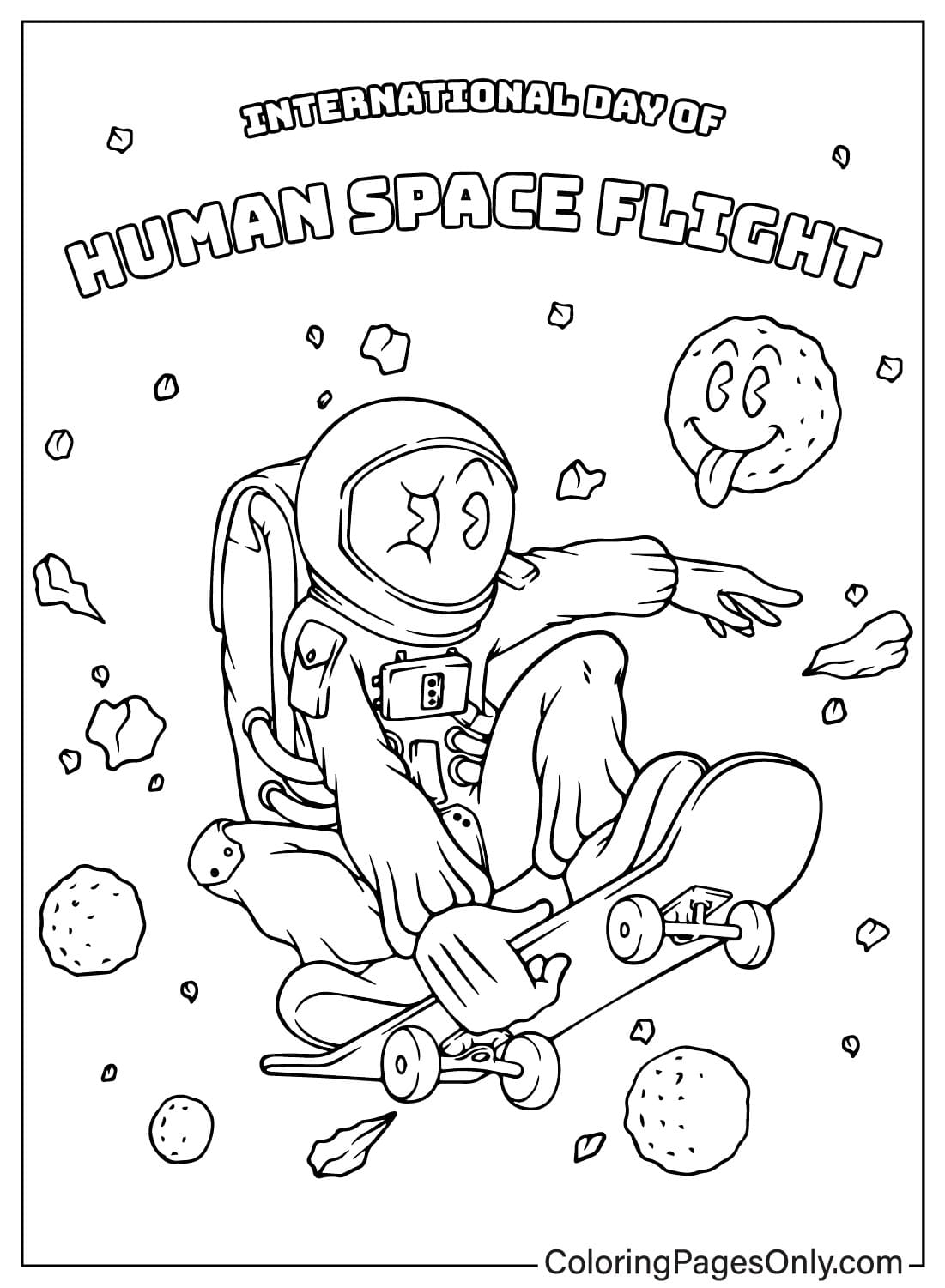
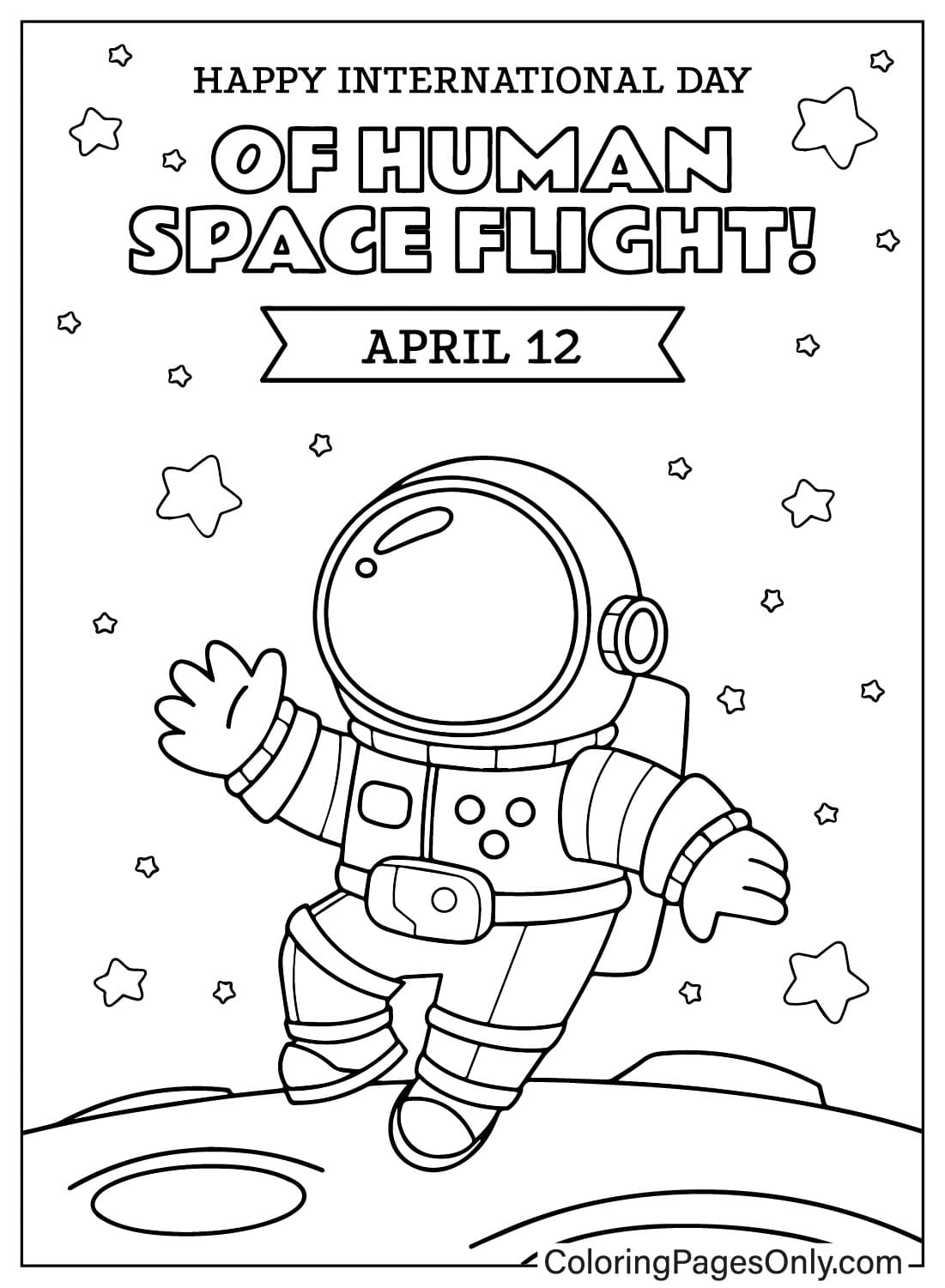
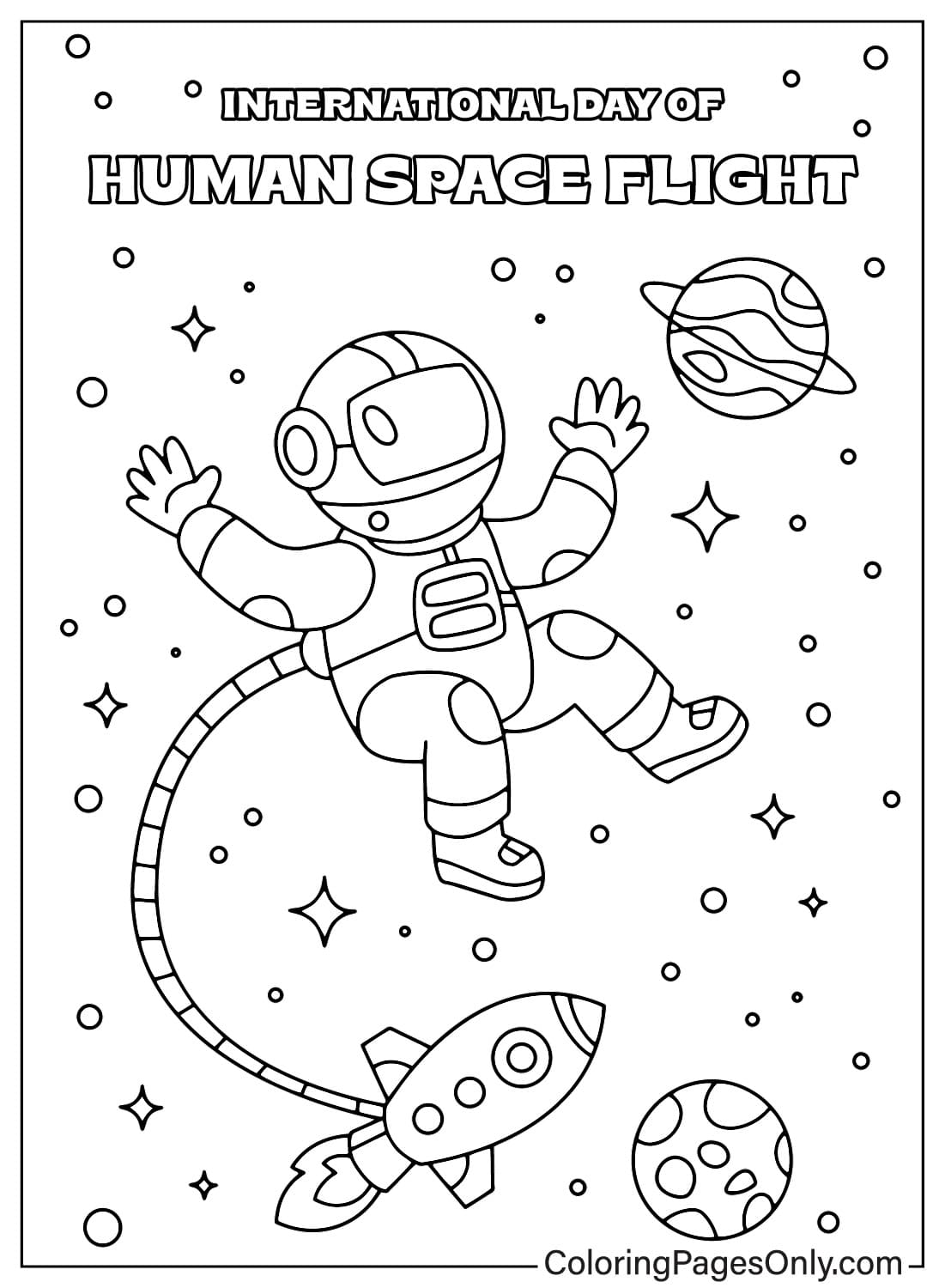
A group of pages centers on the astronaut figure itself, shown in a full suit and helmet, either standing alone or drifting weightlessly during a spacewalk.
Rockets and Spacecraft Launch Scenes
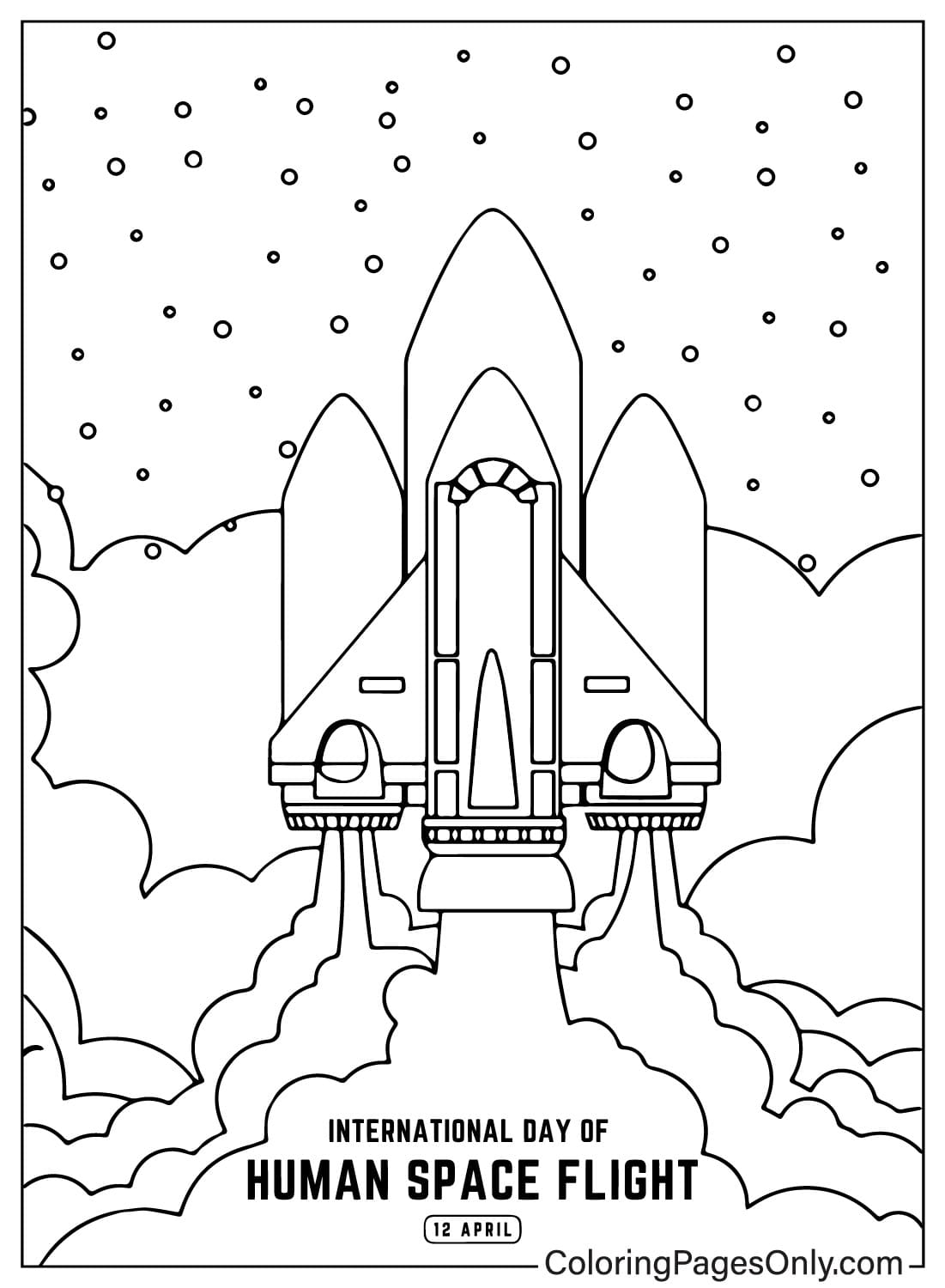
Another group focuses on the vehicles of spaceflight, rockets and spacecraft, shown either preparing for launch or already in flight.
Space Station and Distant Space Scenes
The remaining pages widen the view to a space station orbiting Earth or a broader scene of planets and stars further from home.
What International Day of Human Space Flight Coloring Pages Do
Fine motor development. The fine motor gains the American Academy of Pediatrics attaches to structured coloring in children ages 2 through 7 apply just as well to a page marking a single historic date as to any everyday subject, and the curved lines of a helmet visor or a rocket’s body give a young hand smooth, continuous shapes to follow.
A real historical anchor for the activity. Because the observance ties to an exact date and a documented event, a parent or teacher has a specific, verifiable fact ready to share the moment a child finishes coloring.
Anxiety reduction through focus. A 2005 Art Therapy Journal study tied structured coloring to a measurable easing of anxiety, and marking an actual date on the calendar with a coloring page gives that calming routine a once-a-year occasion to return to.
An entry point into space science curiosity. A page showing a space station or a distant planet gives a child a visual starting point for questions about what is actually out there, questions a parent or teacher can follow up on, however far the child wants to go.
How to Color International Day of Human Space Flight Pages Well
- Astronaut suits: Use Crayola White or Silver for the main suit, with a Crayola Sky Blue tint on the helmet visor to suggest reflective glass rather than a flat, opaque surface.
- Rockets: Alternate Crayola White and Scarlet in horizontal bands along the body, keeping the nose cone in a plain metallic Silver or Gray for contrast.
- Rocket flames and exhaust: Layer Crayola Yellow Orange near the engine with Crayola Red Orange further out, leaving the very tips of the flame in unshaded white or yellow for a hot, bright core.
- Space stations: Keep the main body in Crayola Silver or Gray, using Crayola Sky Blue for solar panels to suggest the reflective, glass-like surface of real panels in orbit.
- Night sky backgrounds: Use deep Crayola Midnight Blue or Navy Blue with scattered unshaded white dots for stars, since leaving small gaps unshaded reads more like starlight than filling every dot solid.
- Earth as seen from space: Blend Crayola Blue and Yellow Green for oceans and land, with soft white cloud patterns layered on top rather than a single flat color covering the whole planet.
5 Creative Craft Ideas With International Day of Human Space Flight Coloring Pages
1. Space Fact Poster
Color one of the astronaut or rocket pages and mount it on a sheet of paper. Write two or three real facts about Yuri Gagarin’s flight underneath, such as the date or how long it lasted. The finished poster pairs the coloring activity with a small history lesson.
2. Star-Shaped Bookmark
Color one of the simpler pages and cut it into a star or rocket shape. Laminate or cover with clear contact paper for durability. The finished bookmark makes an easy, small gift for another young space fan.
3. Hanging Space Mobile
Color four or five of the smaller pages and cut around each design. Attach each cutout to a length of string tied at different heights along a stick or hanger using craft glue or tape. The finished mobile turns flat pages into a small orbiting display.
4. Glow-in-the-Dark Space Picture
Color one of the space station or night sky pages using glow-in-the-dark paint over the stars or planets. Hold the finished picture under a bright light for a few minutes to charge it, then turn off the lights to see it glow. The activity adds a second layer of fun once the coloring itself is done.
5. Space-Themed Gift Tag
Color one of the smaller rocket or astronaut designs and cut it into a small tag shape. Punch a hole and attach with ribbon to a wrapped gift. The tag adds a fitting touch to a gift for a young space enthusiast.
Frequently Asked Questions
What are International Day of Human Space Flight coloring pages?
A free set of 21 printable designs covering astronauts, rockets, and space stations, created to mark the annual observance held each April 12.
What is the International Day of Human Space Flight?
It is a United Nations observance held every April 12 to commemorate the anniversary of the first human spaceflight, recognizing the beginning of the space era and the contributions of space science since.
Who was Yuri Gagarin?
Yuri Gagarin was a Soviet cosmonaut who became the first human to travel into space on April 12, 1961, completing a single orbit of Earth in 108 minutes aboard the Vostok 1 spacecraft.
When was this day officially established?
The United Nations General Assembly declared April 12 the International Day of Human Space Flight through resolution A/RES/65/271, adopted on April 7, 2011, fifty years after Gagarin’s flight.
What colors work well for a space-themed design?
White and silver suit astronaut suits and spacecraft bodies, warm orange and yellow work for rocket exhaust, and deep midnight blue with scattered white dots captures a night sky full of stars.
Can these pages be colored online instead of being printed?
Yes. Every design in the set opens in the browser-based coloring tool, so a page can be finished on a tablet or computer without printing anything first.
Are these coloring pages suitable for young children?
A single astronaut or rocket drawn plainly suits a child around age four. Scenes with a full space station or several small background details fit better with a child six or older.
Can this set be used for a science or history lesson?
Yes. The specific, documented facts behind the observance, the exact date, the length of Gagarin’s flight, and the UN resolution that created the day give a teacher or parent concrete details to pair with the coloring activity.
Start Coloring
Opening a page is free and immediate, no account needed at any point. The online coloring tool offers the same design to anyone finishing it on a screen. A completed page reaches Facebook or Pinterest through the share buttons above it.