Pyramids of Giza Coloring Pages
 By:
Jennifer Thoa - Content Editor & Designer
Updated:
By:
Jennifer Thoa - Content Editor & Designer
Updated:
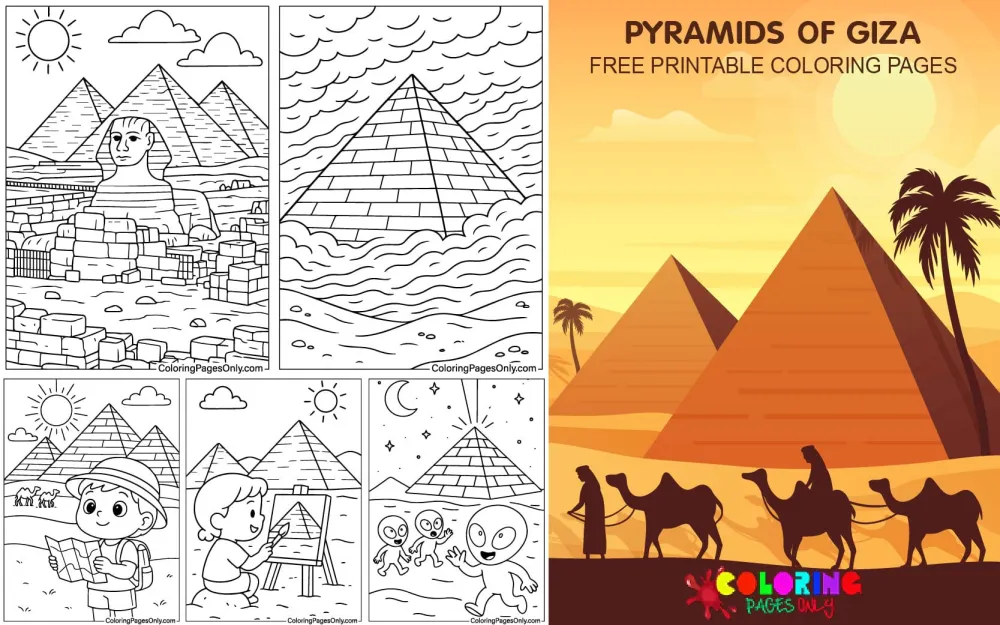
Free Pyramids of Giza Coloring Pages: 33 printable PDF designs covering the Great Pyramid, desert camel scenes, ancient Egyptian figures, and a handful of playful, imagined additions. Each page can be downloaded as a PDF to print or colored online in the browser, with no account required.
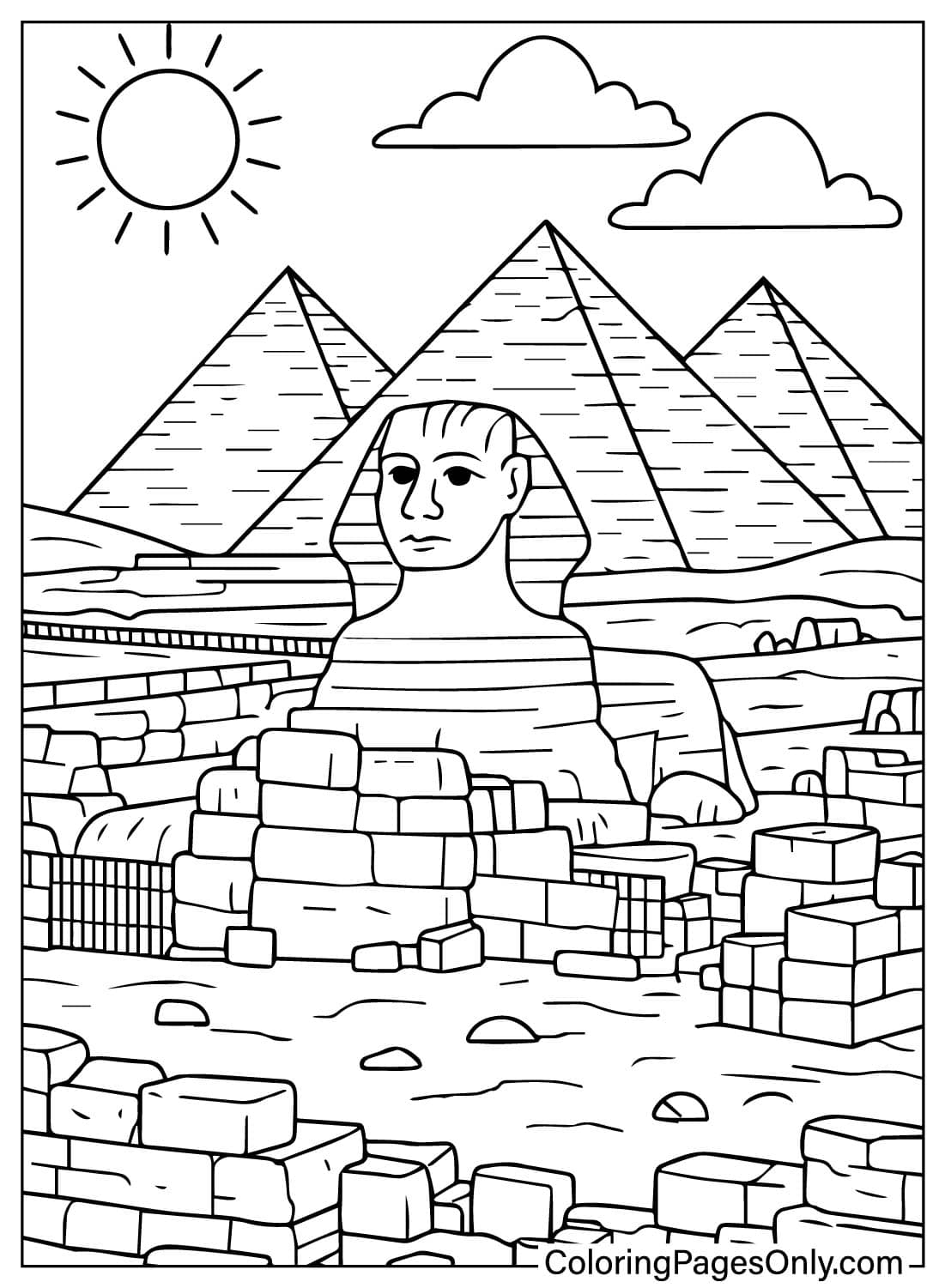
The Great Pyramid of Giza was built for Pharaoh Khufu around 2580 to 2560 BCE during Egypt’s Fourth Dynasty, making it more than 4,500 years old and the only surviving structure among the Seven Wonders of the Ancient World. Two smaller pyramids nearby were built for Khufu’s son Khafre and grandson Menkaure, and the Great Sphinx, carved from a single mass of limestone, sits close to Khafre’s pyramid.
The 33 pages in this set are split between grounded historical and desert scenes, kid-explorer designs, a small group of purely imaginative additions, and general scenic views, giving colorists both real history to learn from and a few lighter, purely fictional pages mixed in.
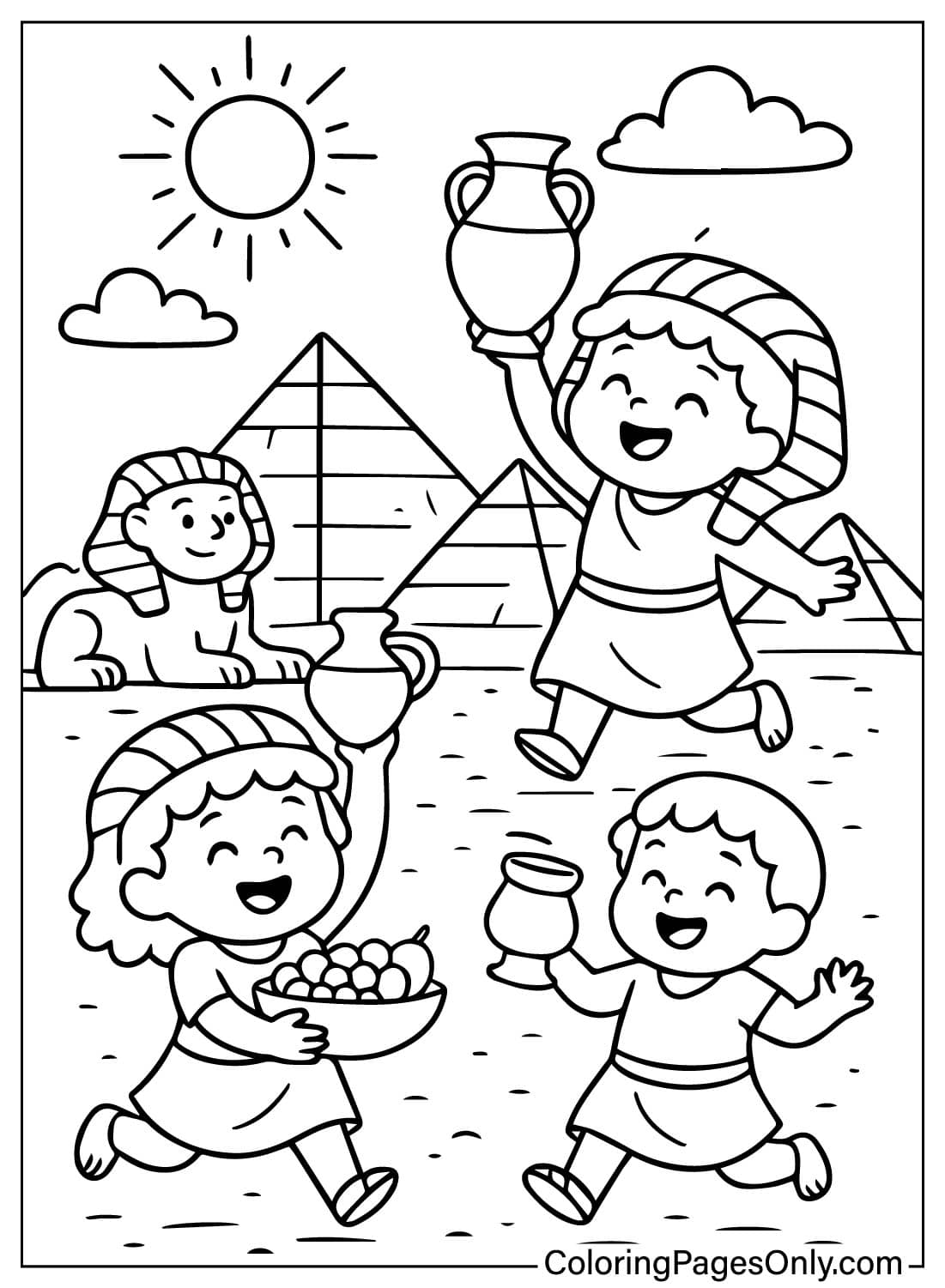
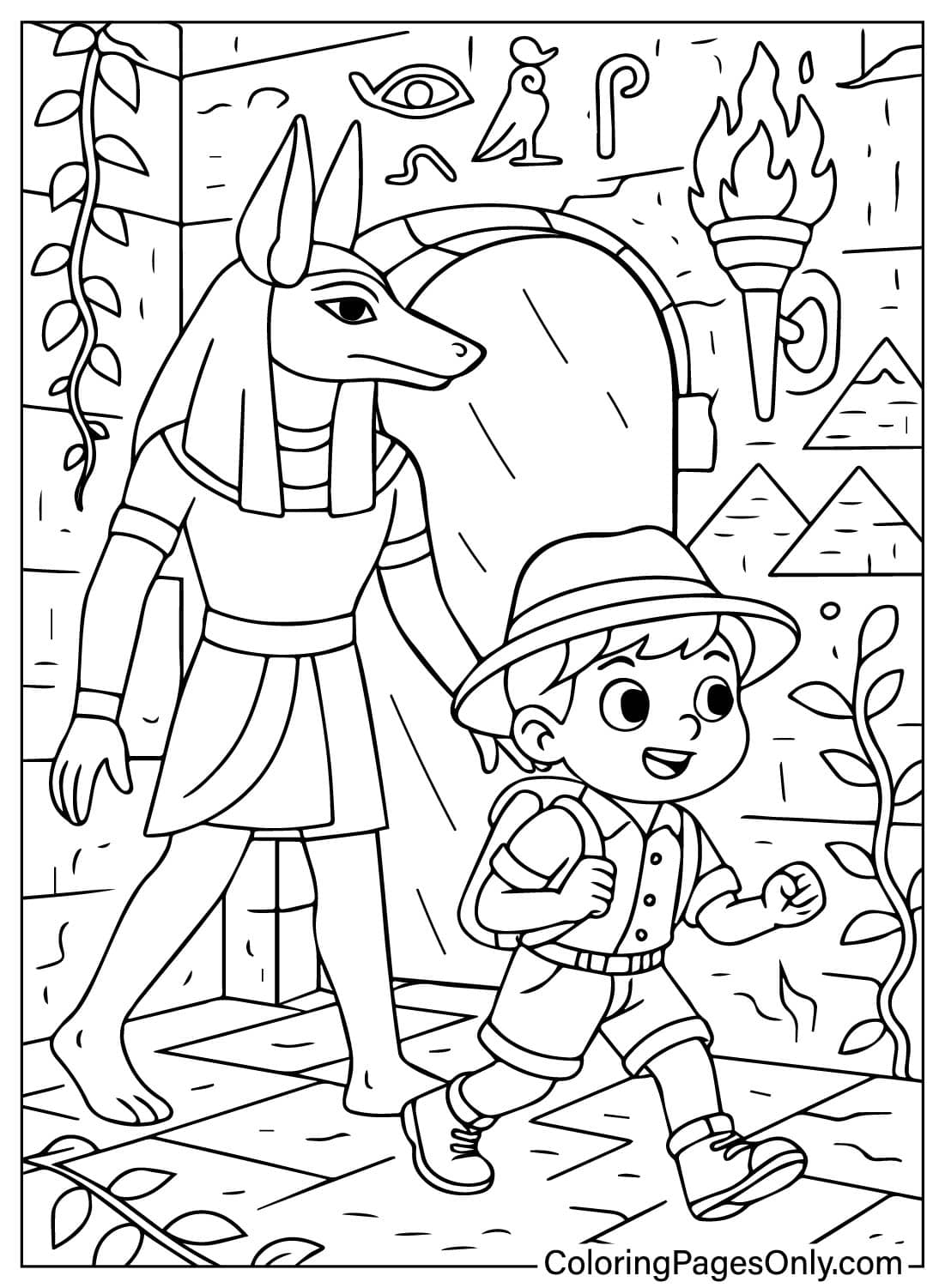
What Is Inside This Collection
The 33 pages fall into four groups by how closely each design sticks to real Ancient Egypt rather than by a single repeated scene.
Historical and Desert Scenes
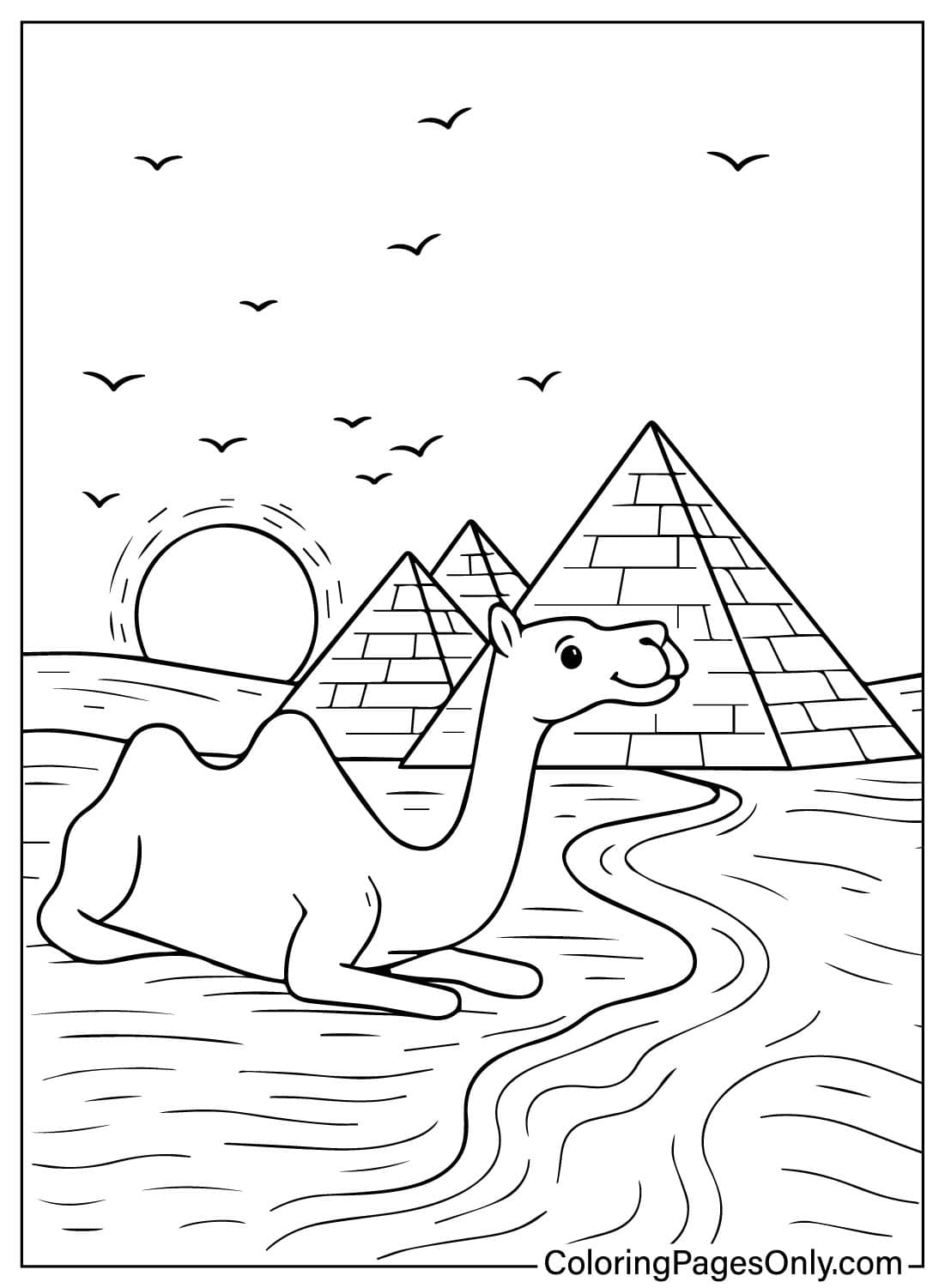
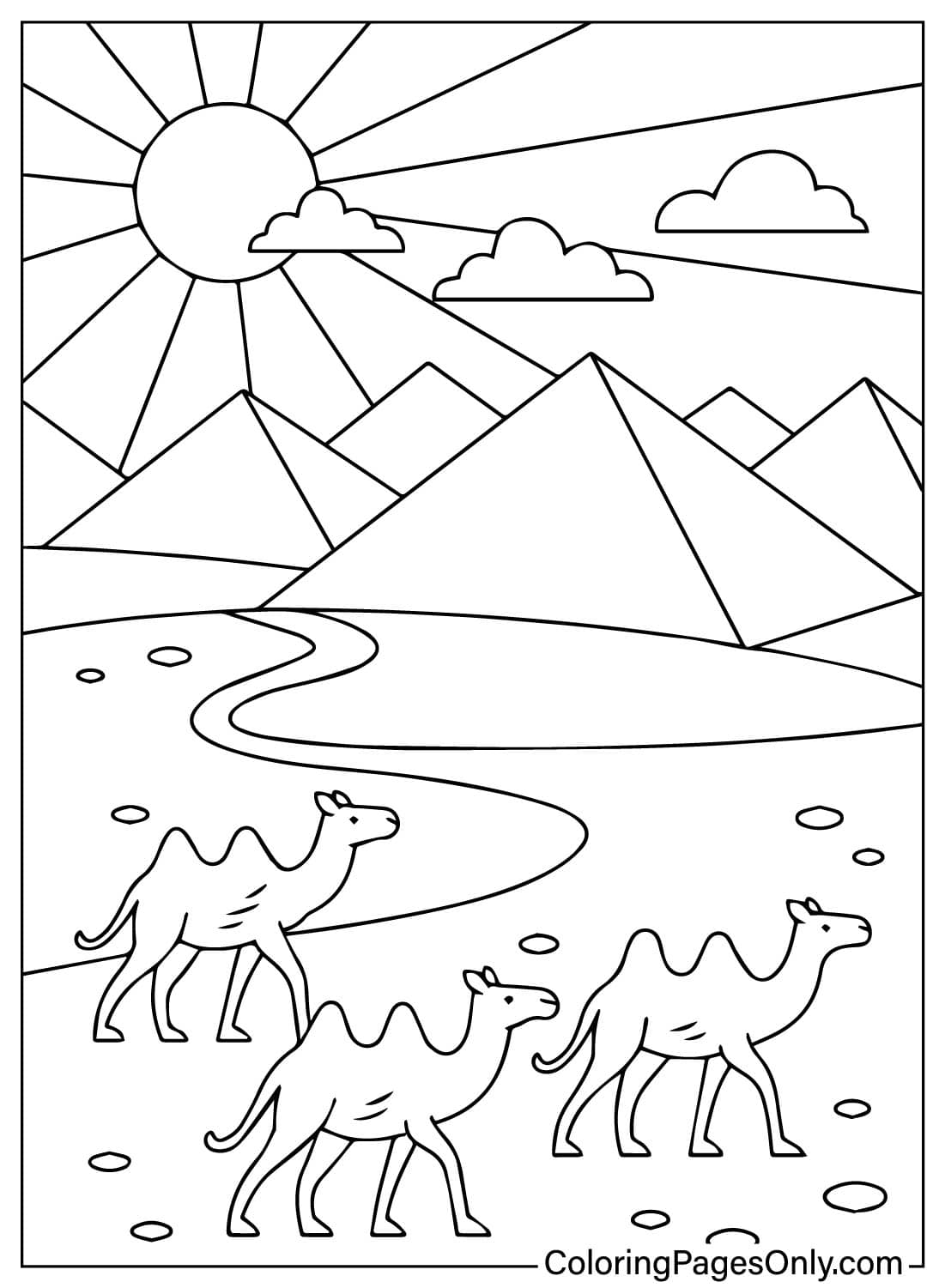
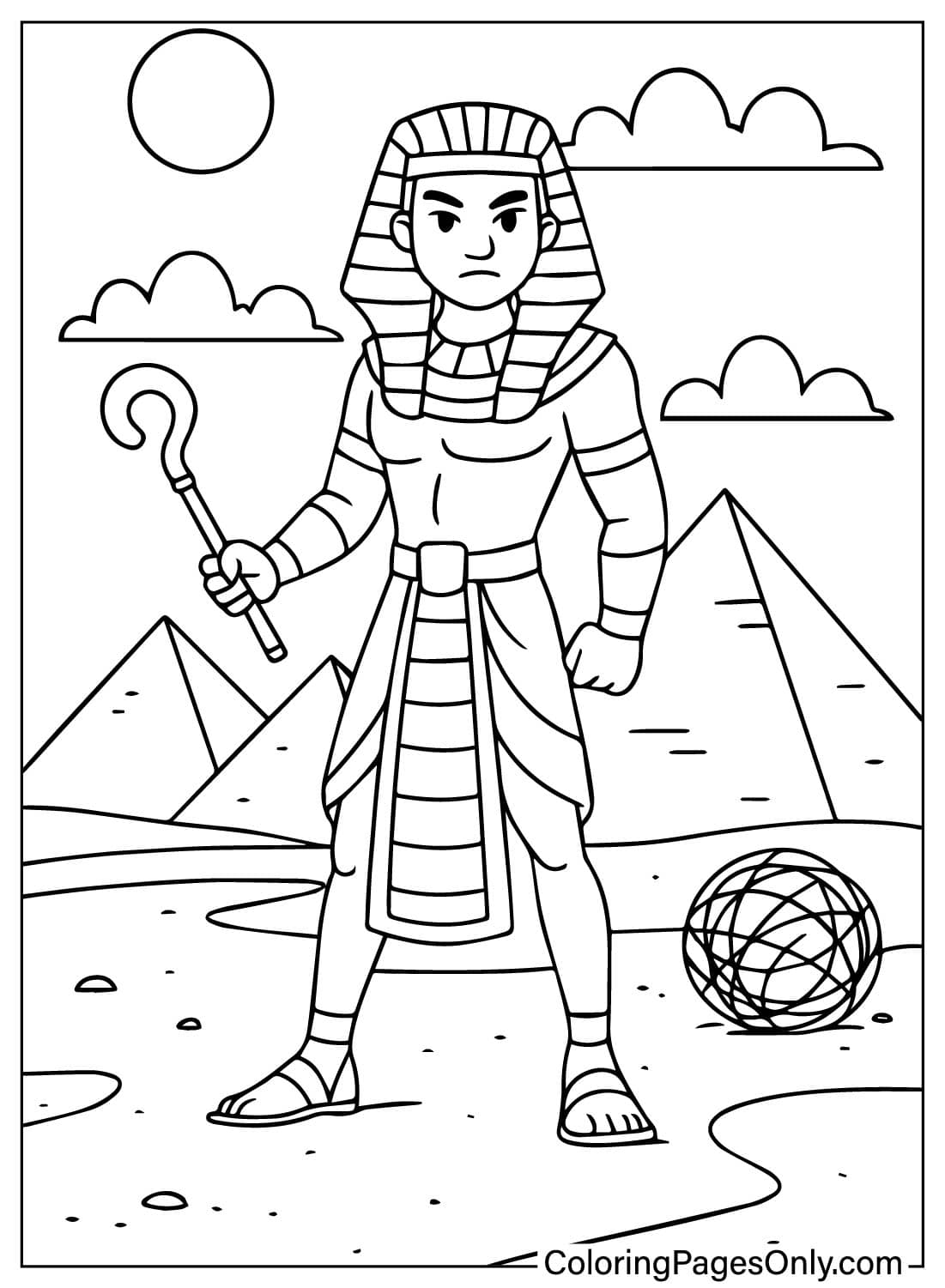
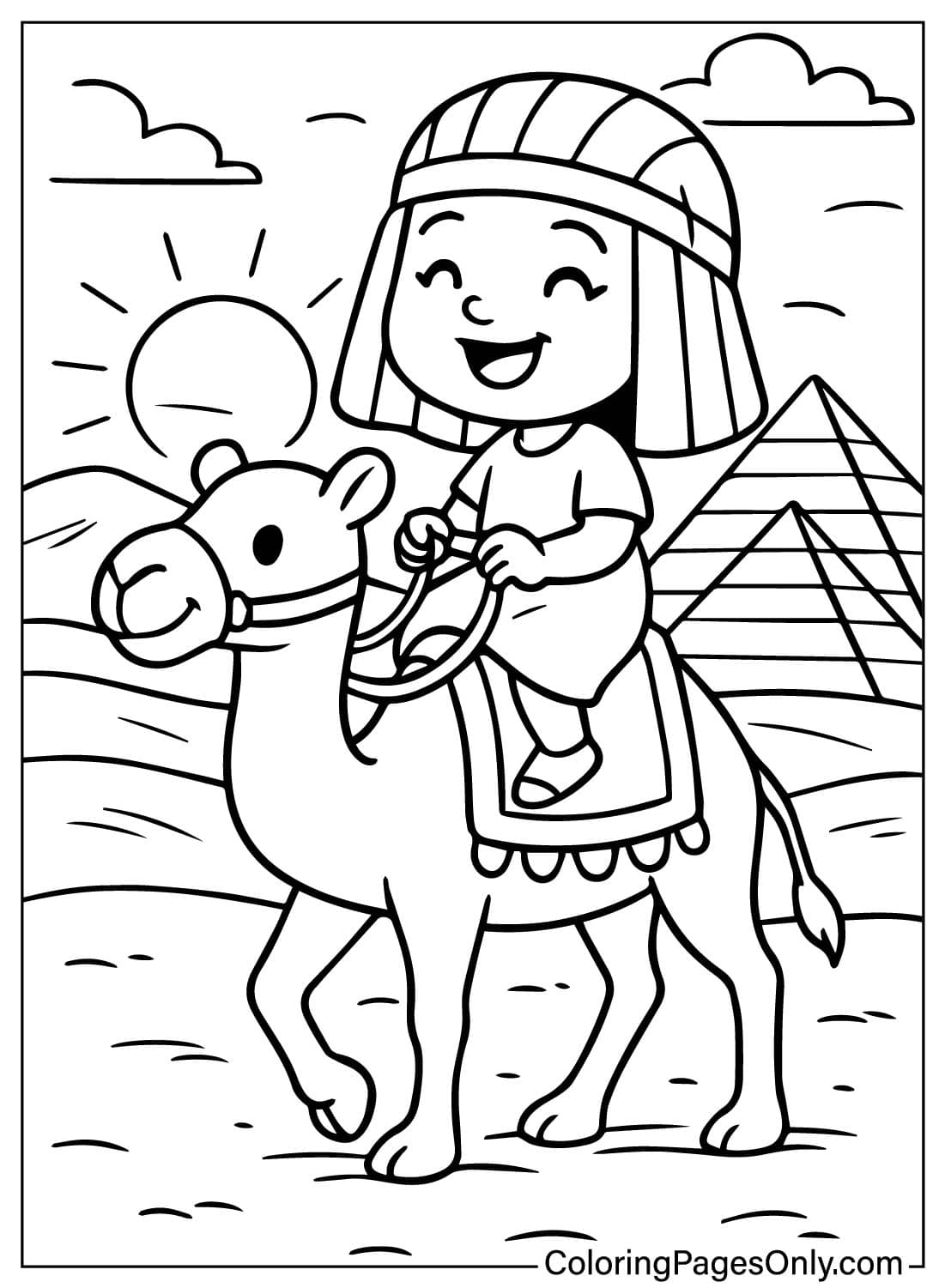
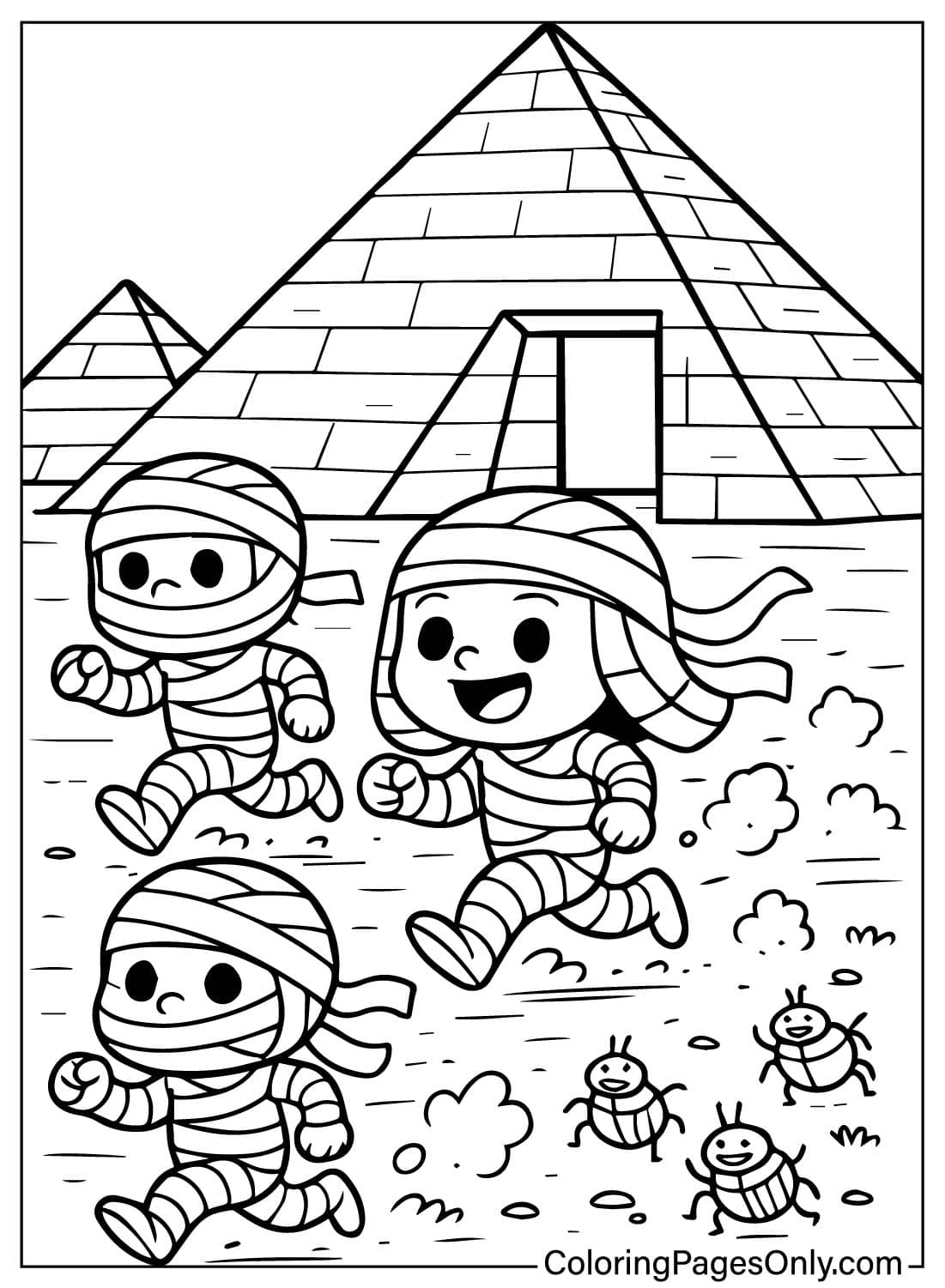
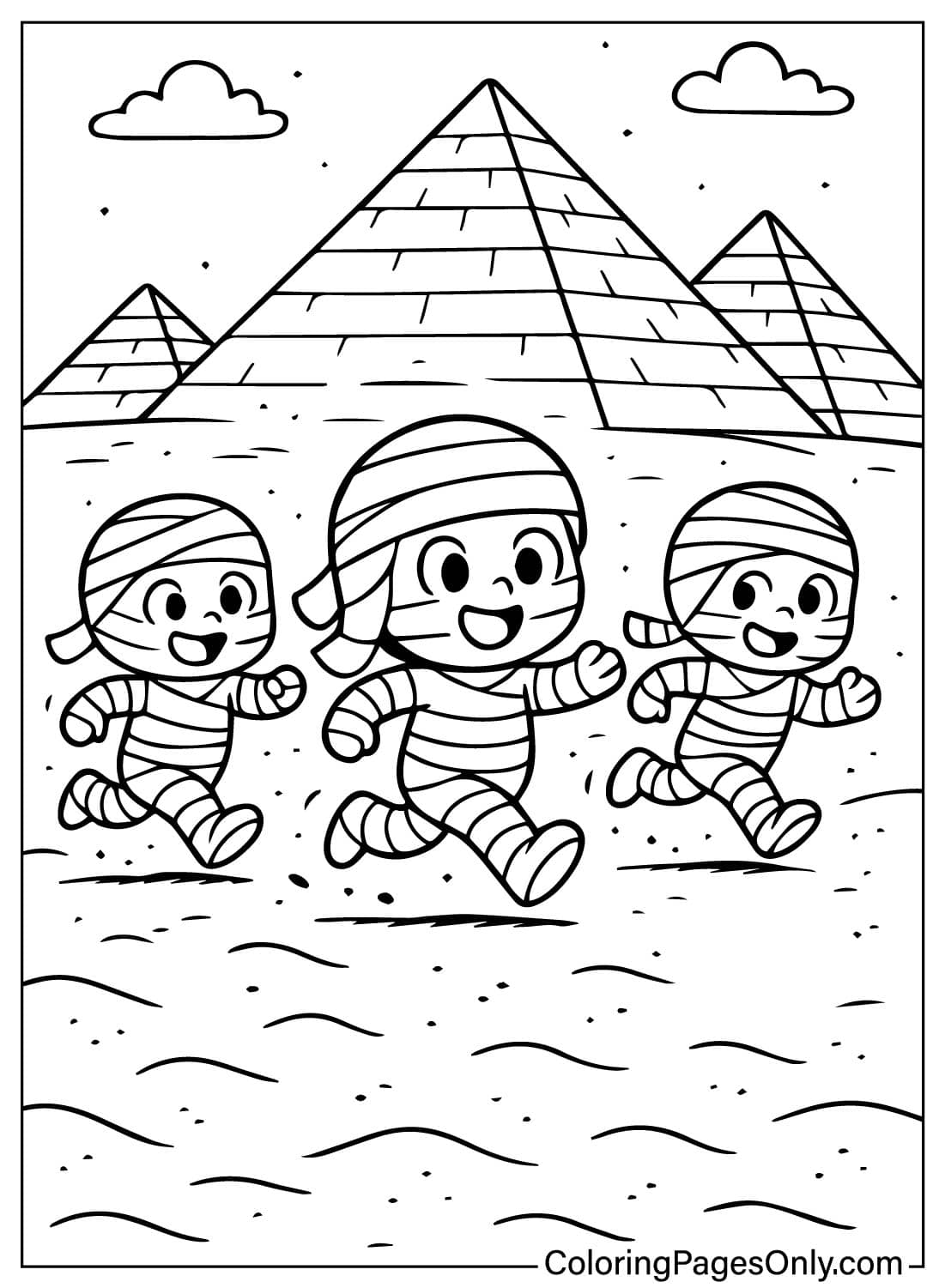
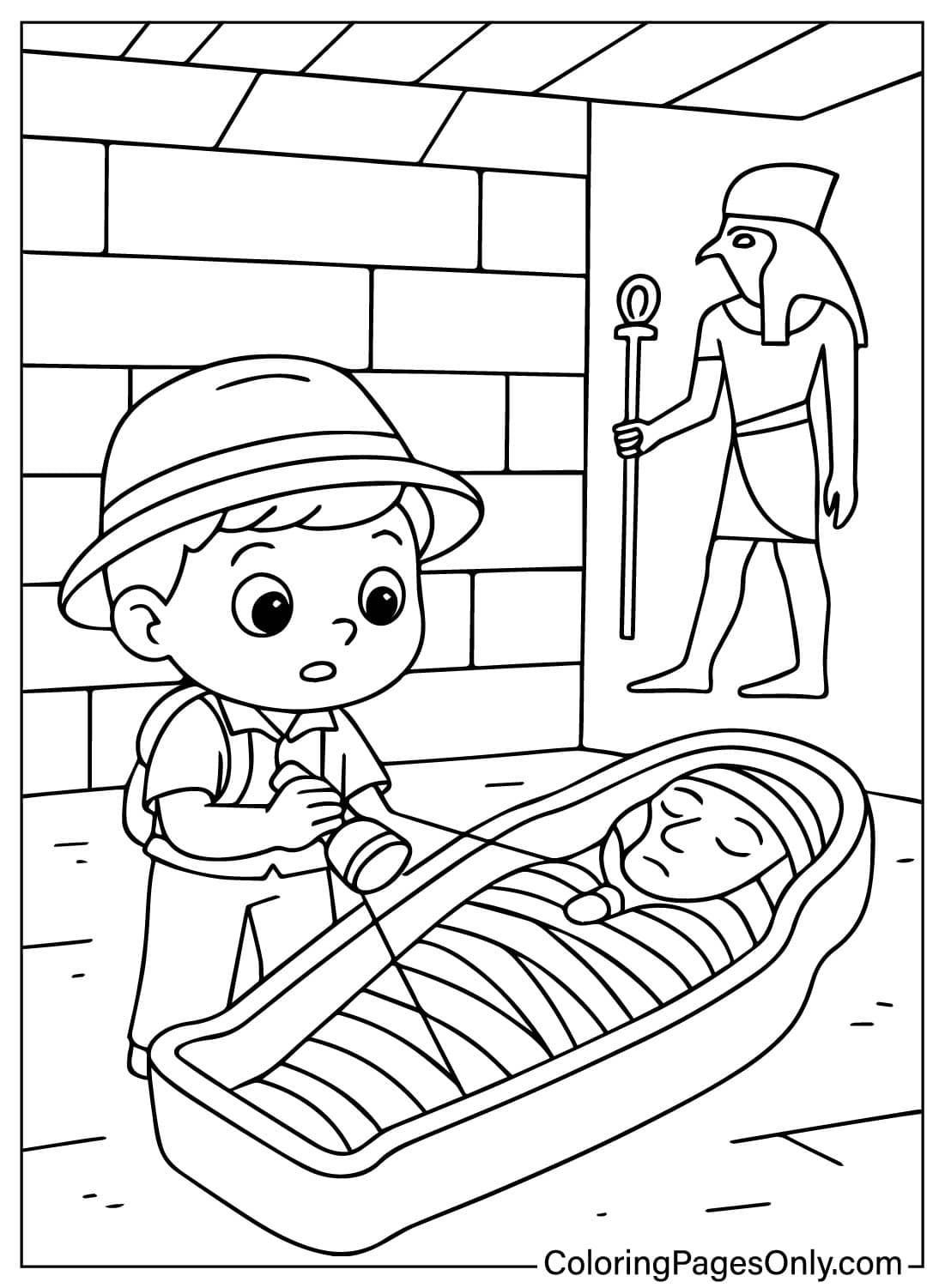
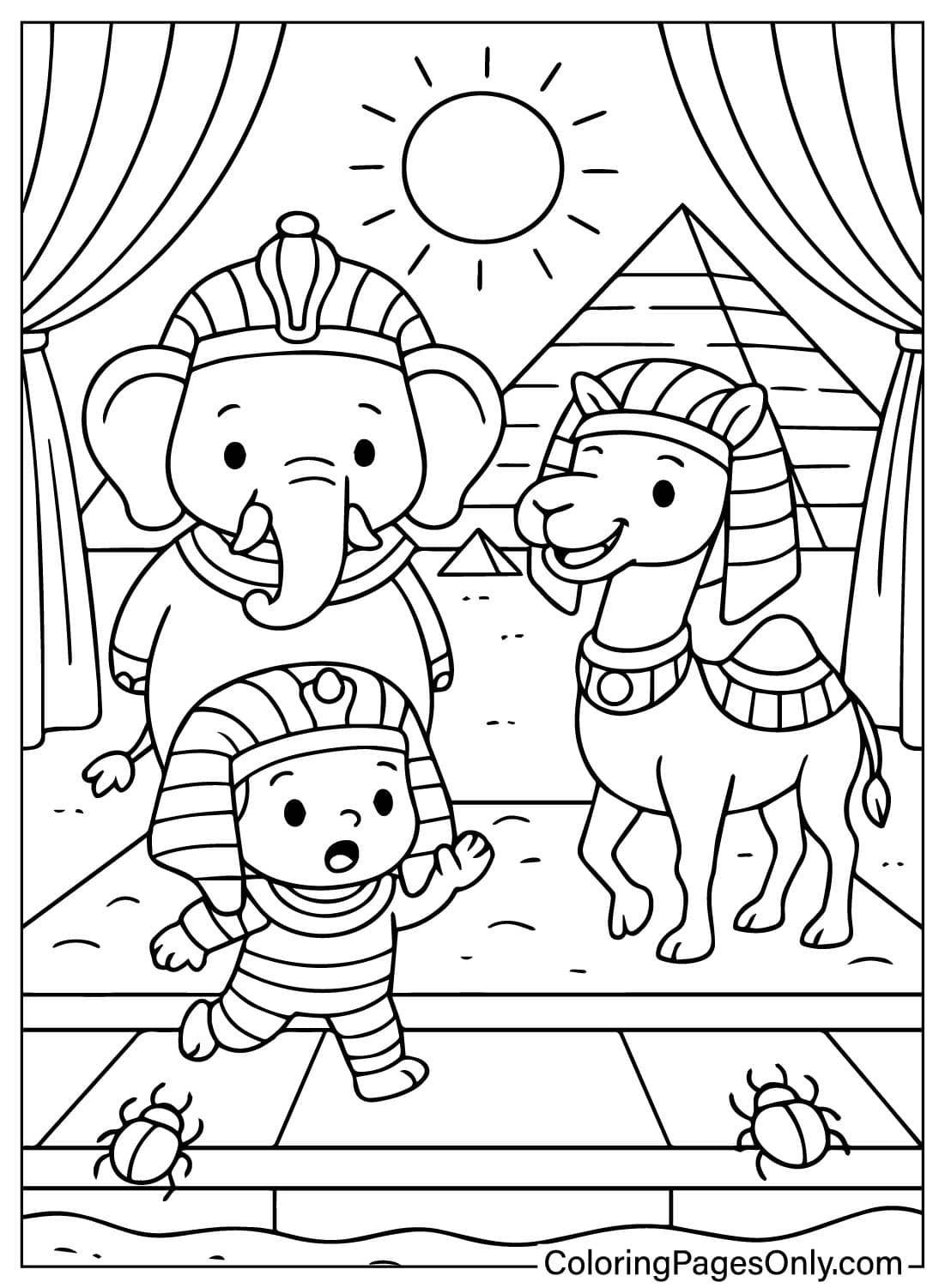
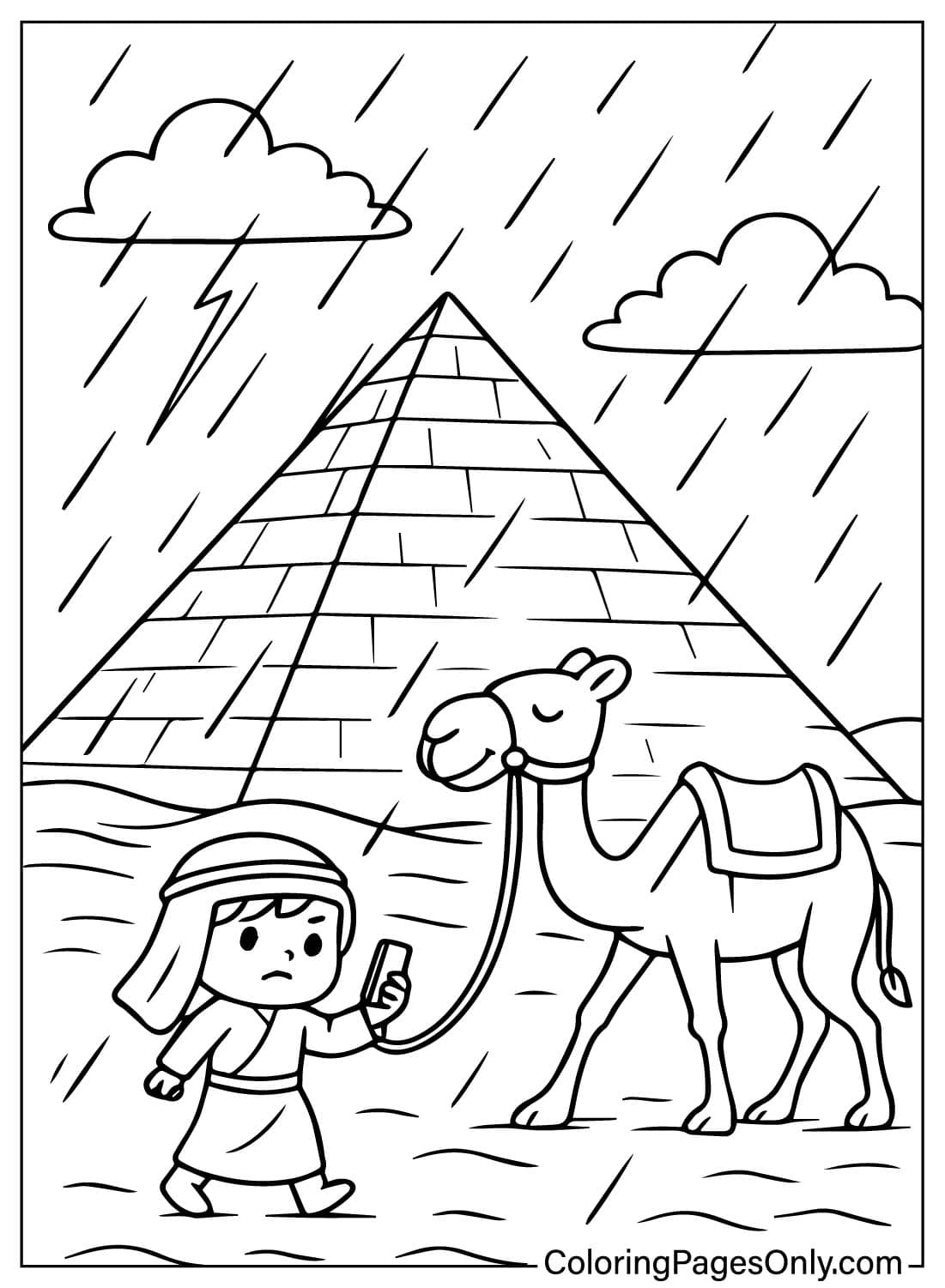
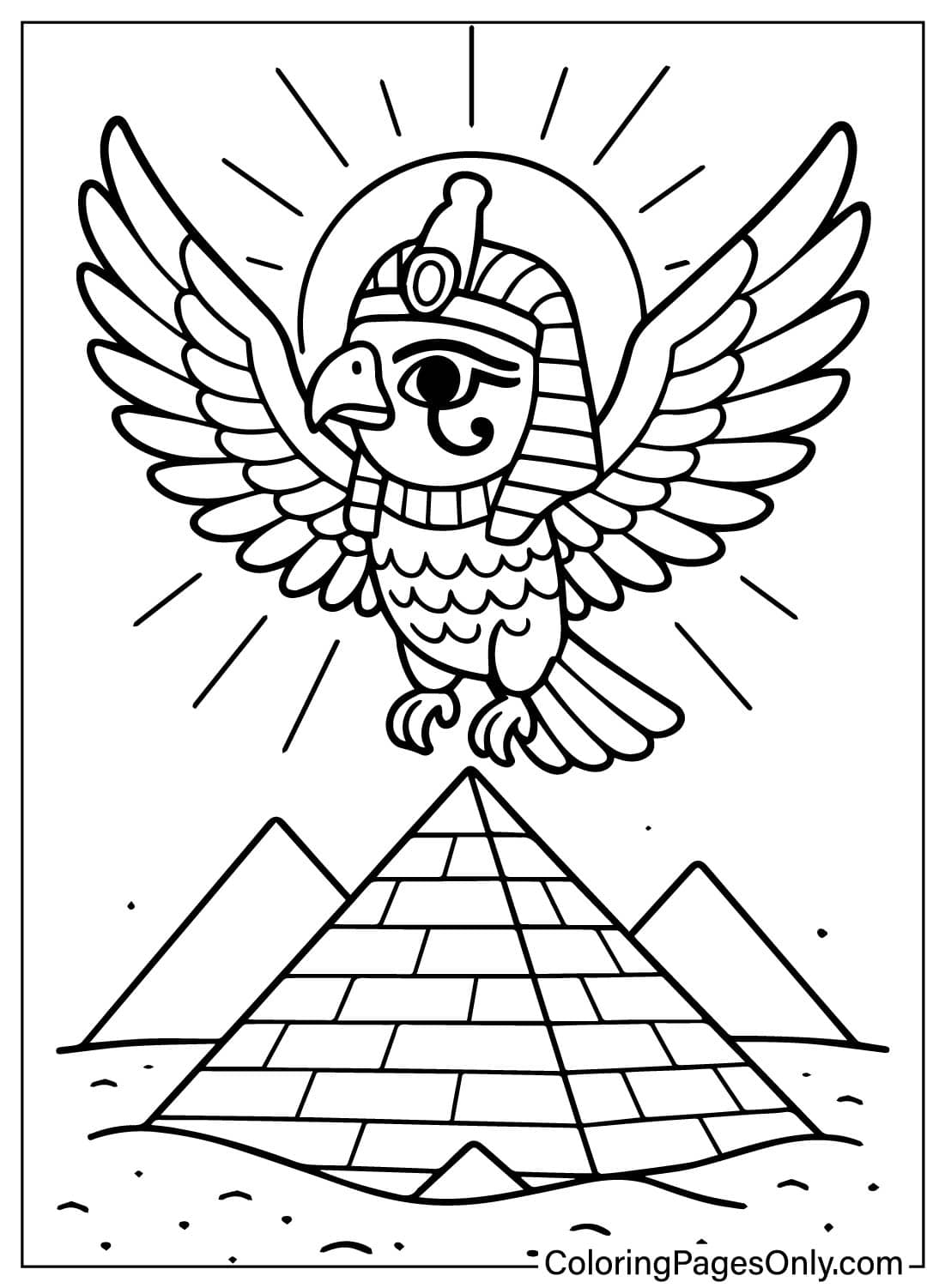
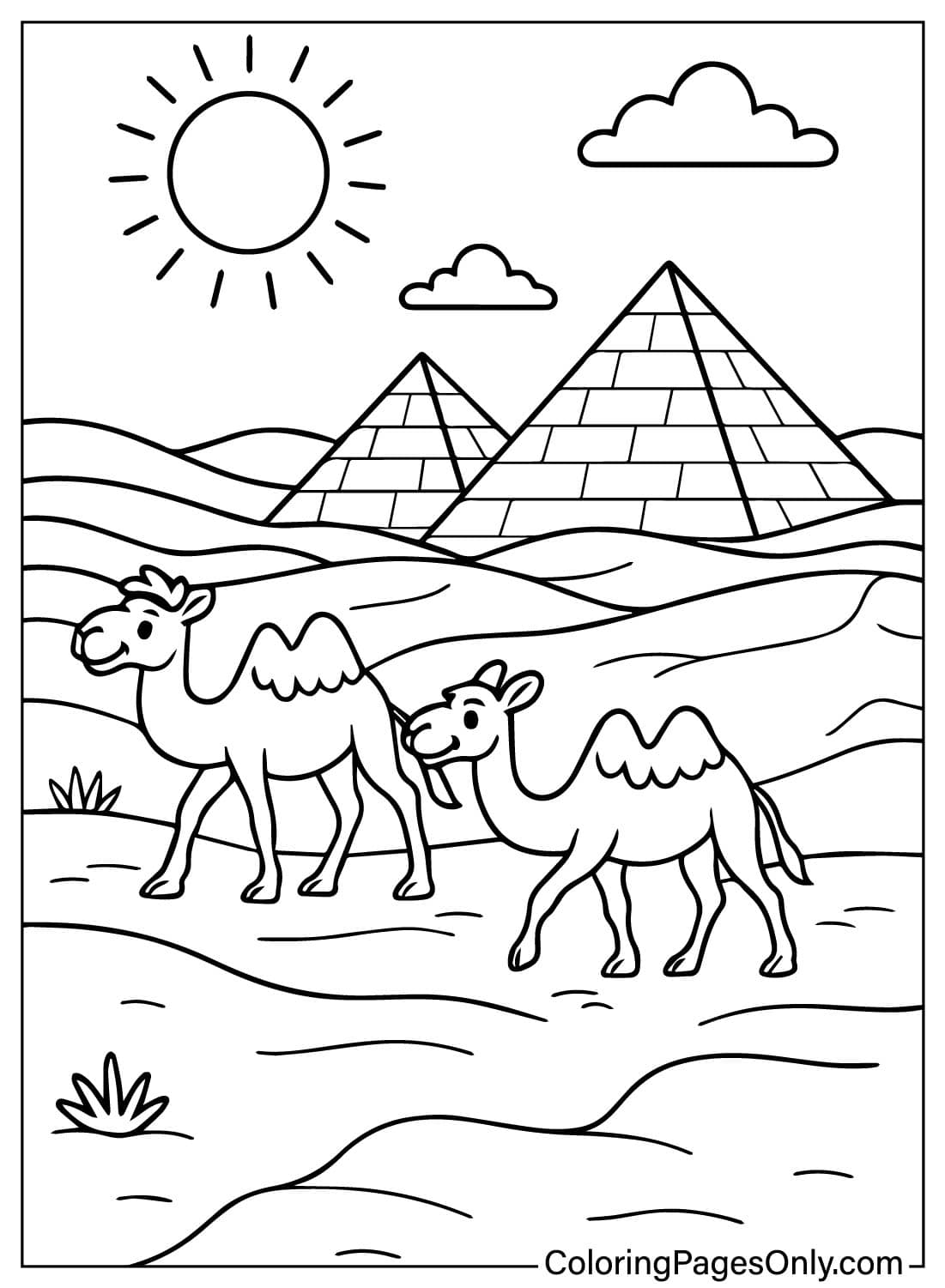
The largest group stays grounded in real subject matter: mummies, a coffin, camels crossing the desert, an ancient festival, and figures dressed in Egyptian style, including a page featuring Anubis, the jackal-headed god associated with mummification in ancient Egyptian religion. These pages suit warm Sand and Burnt Sienna tones for the desert, with Gold accents for jewelry and headdresses.
Kid Explorers and Discovery Scenes
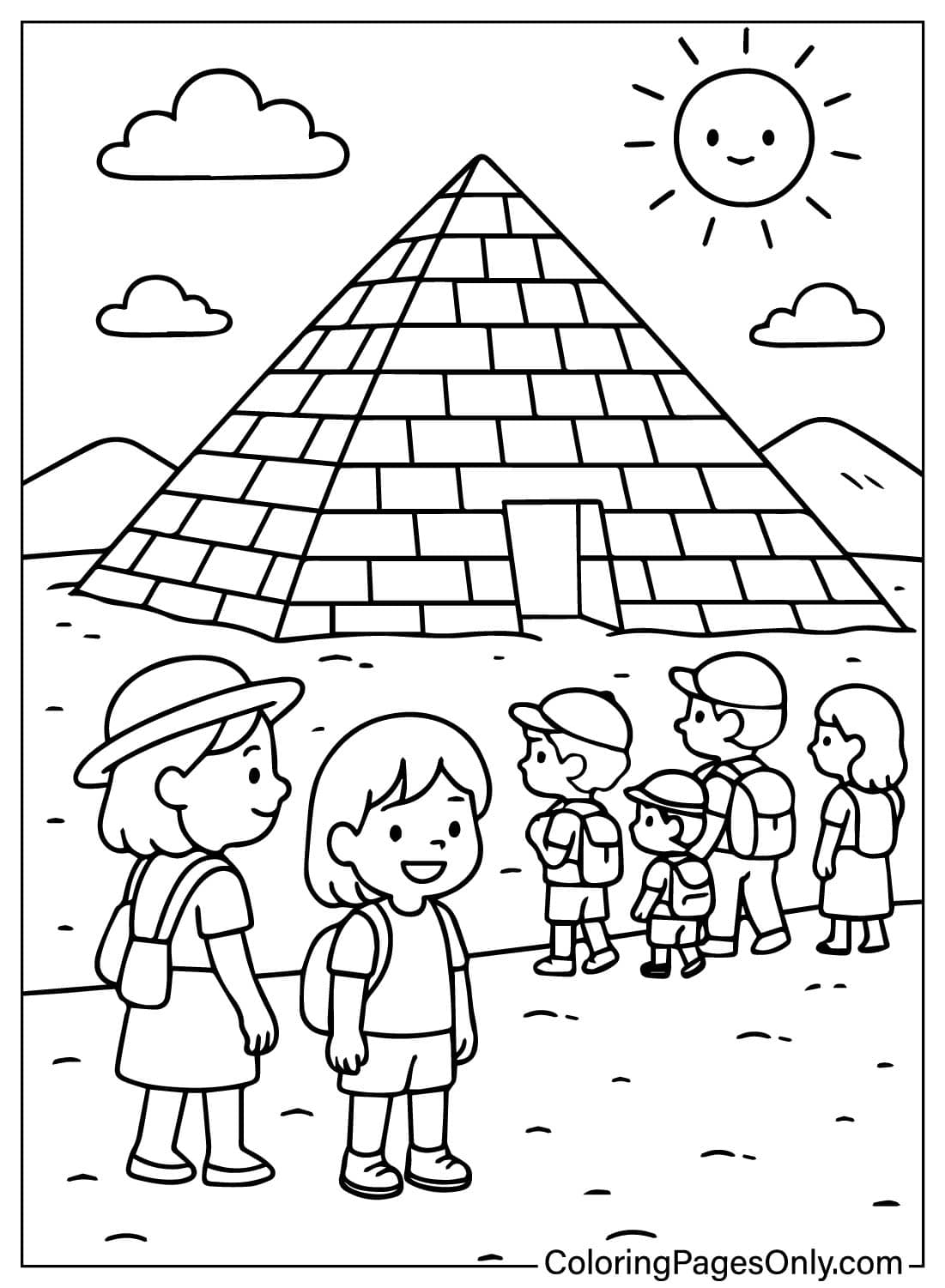
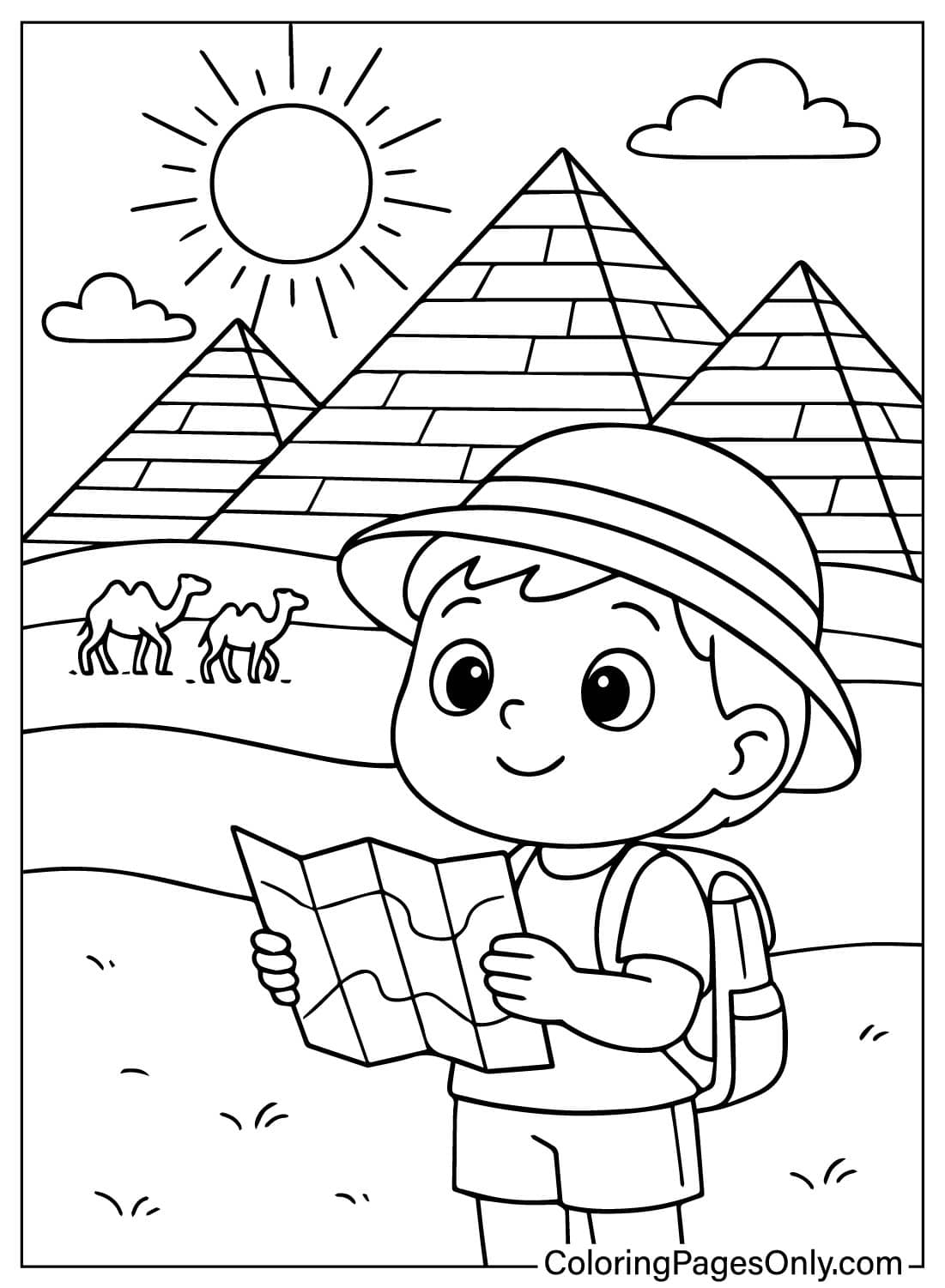
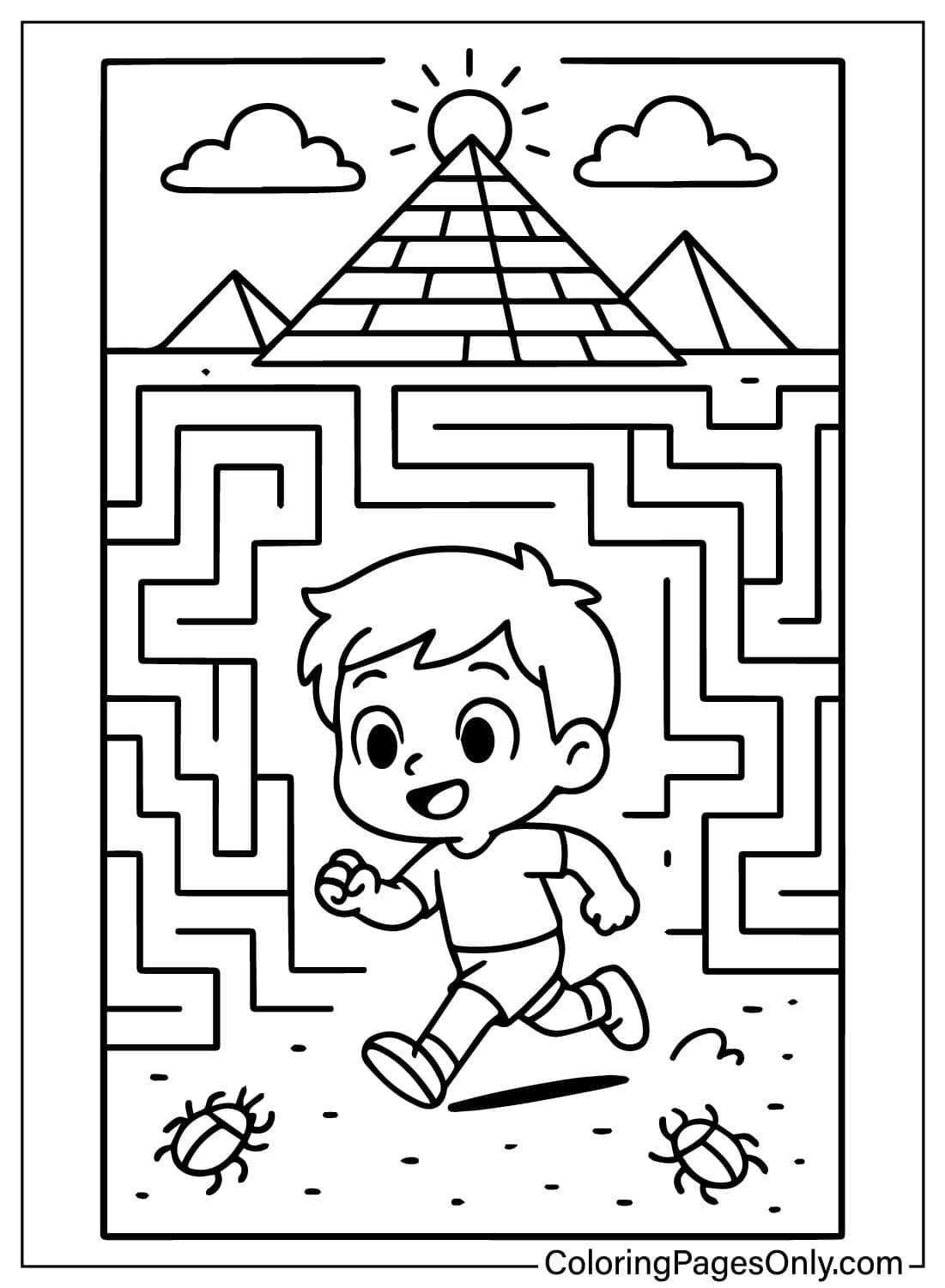
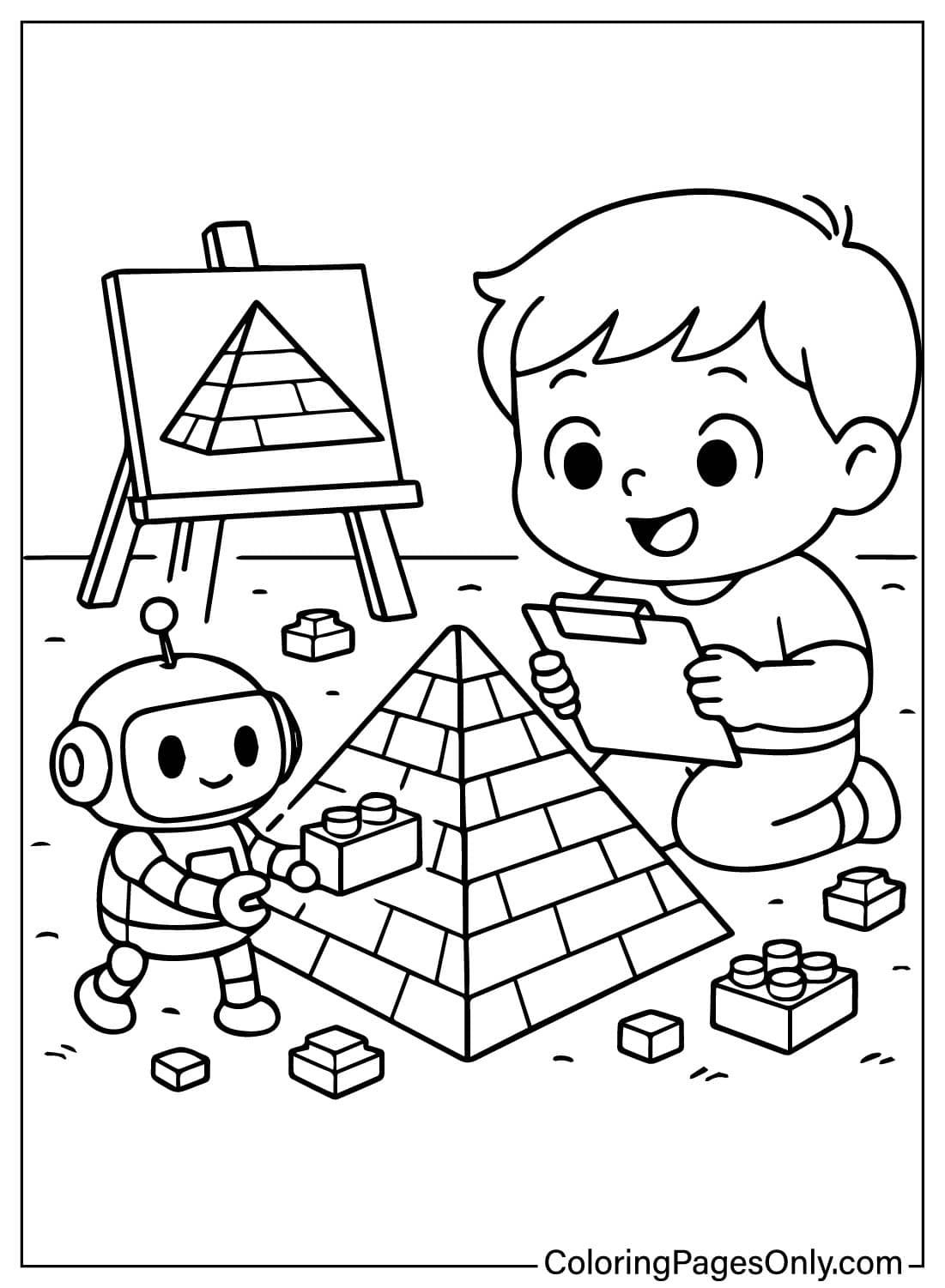
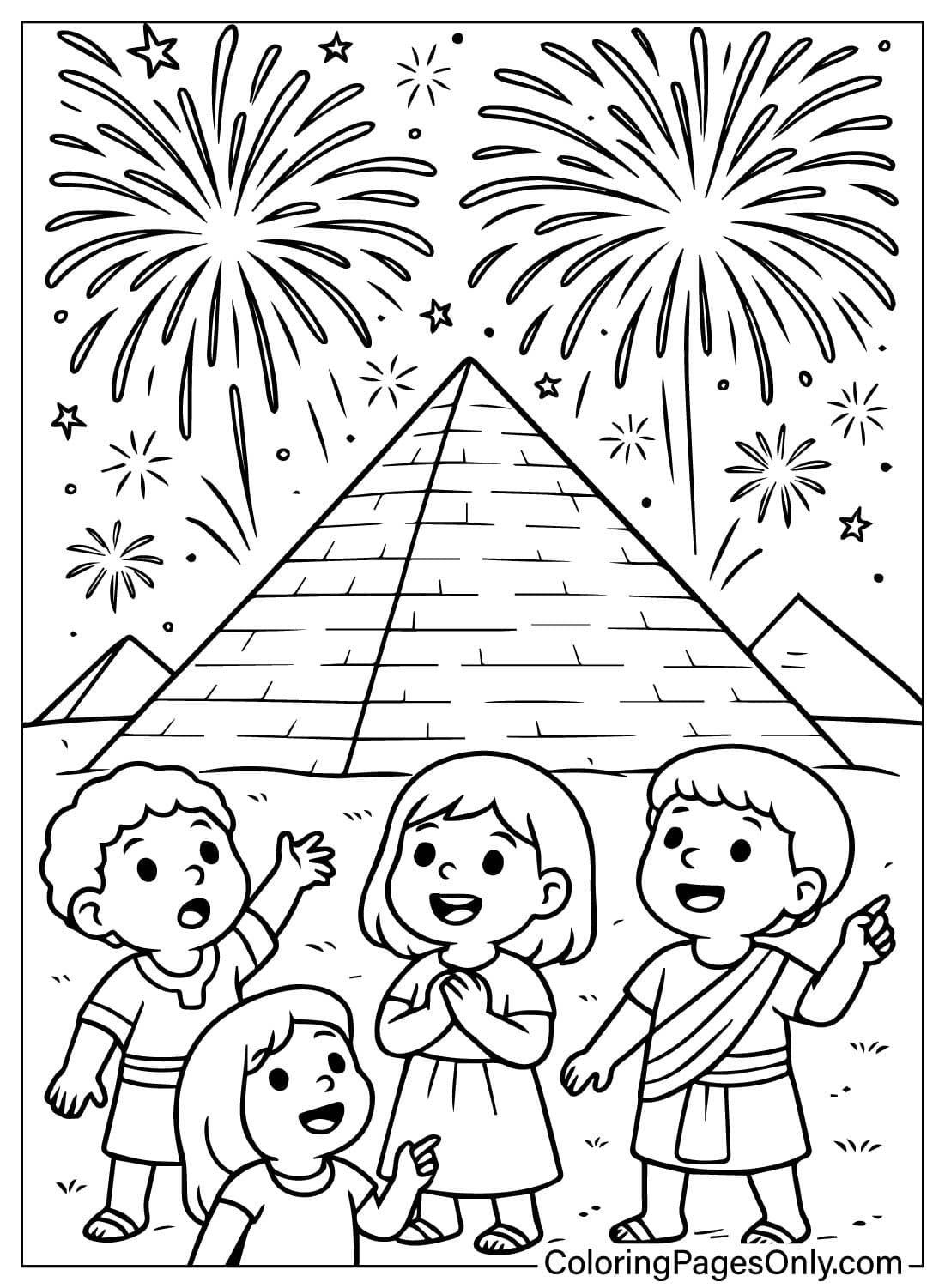
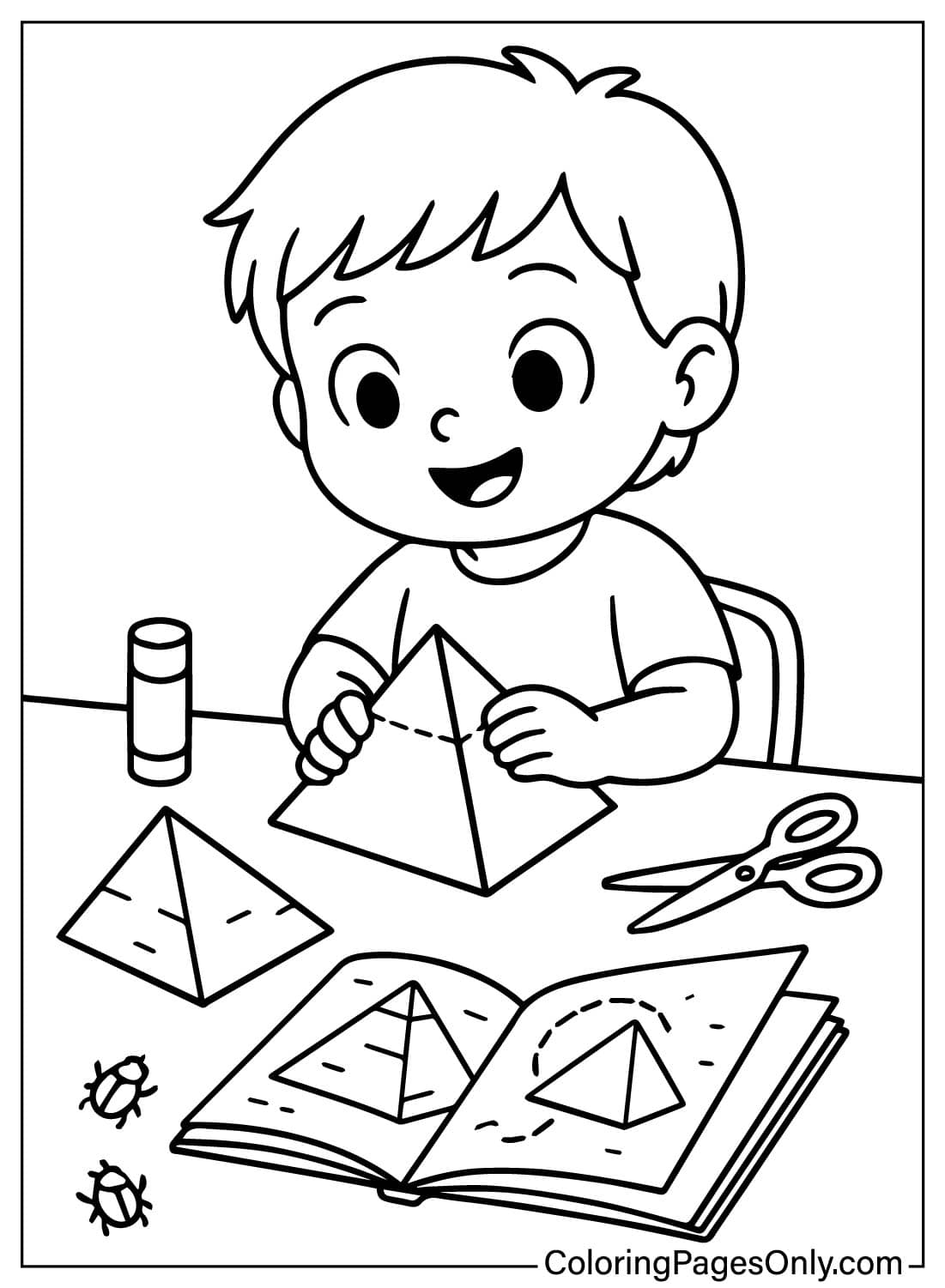
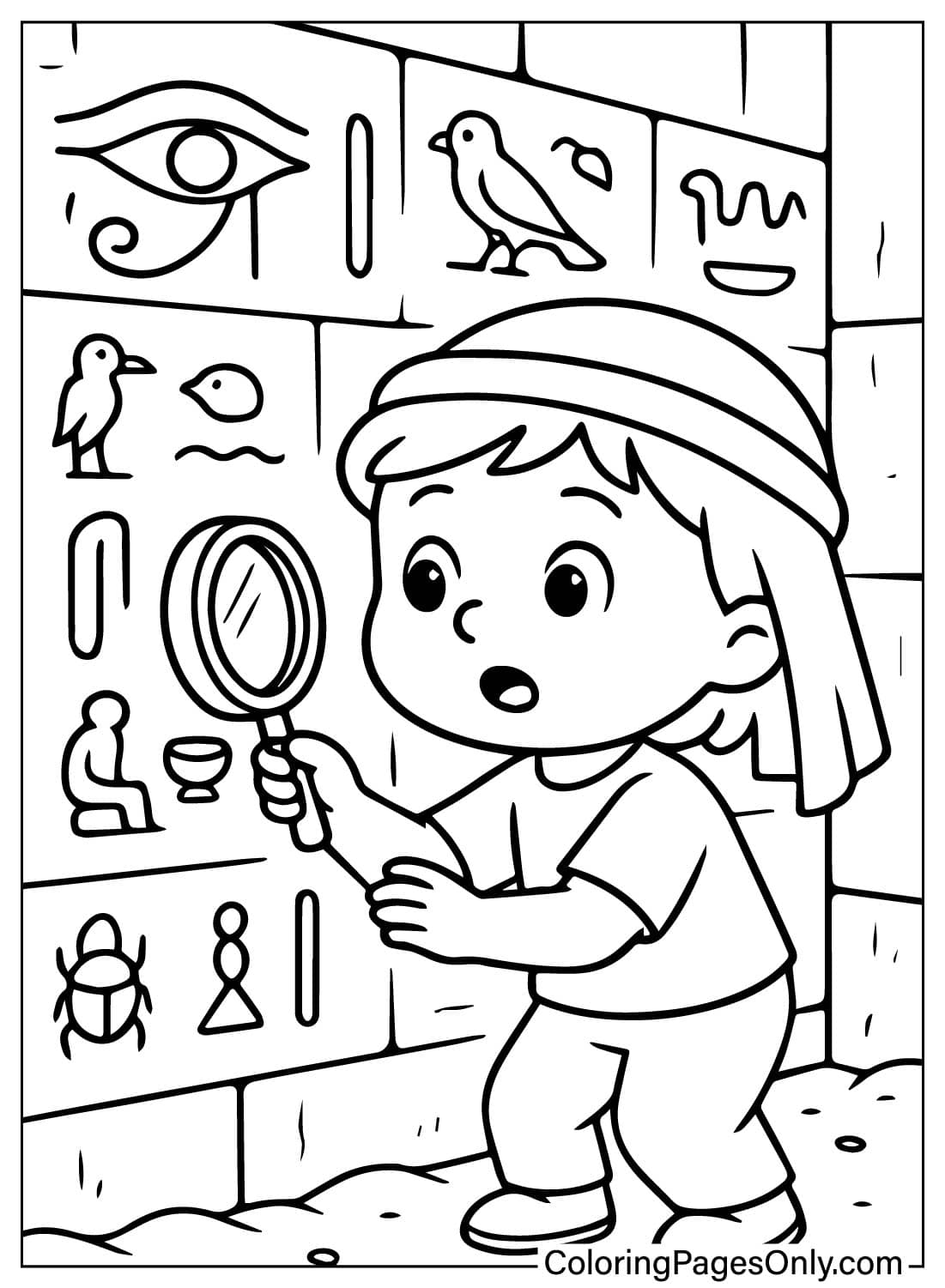
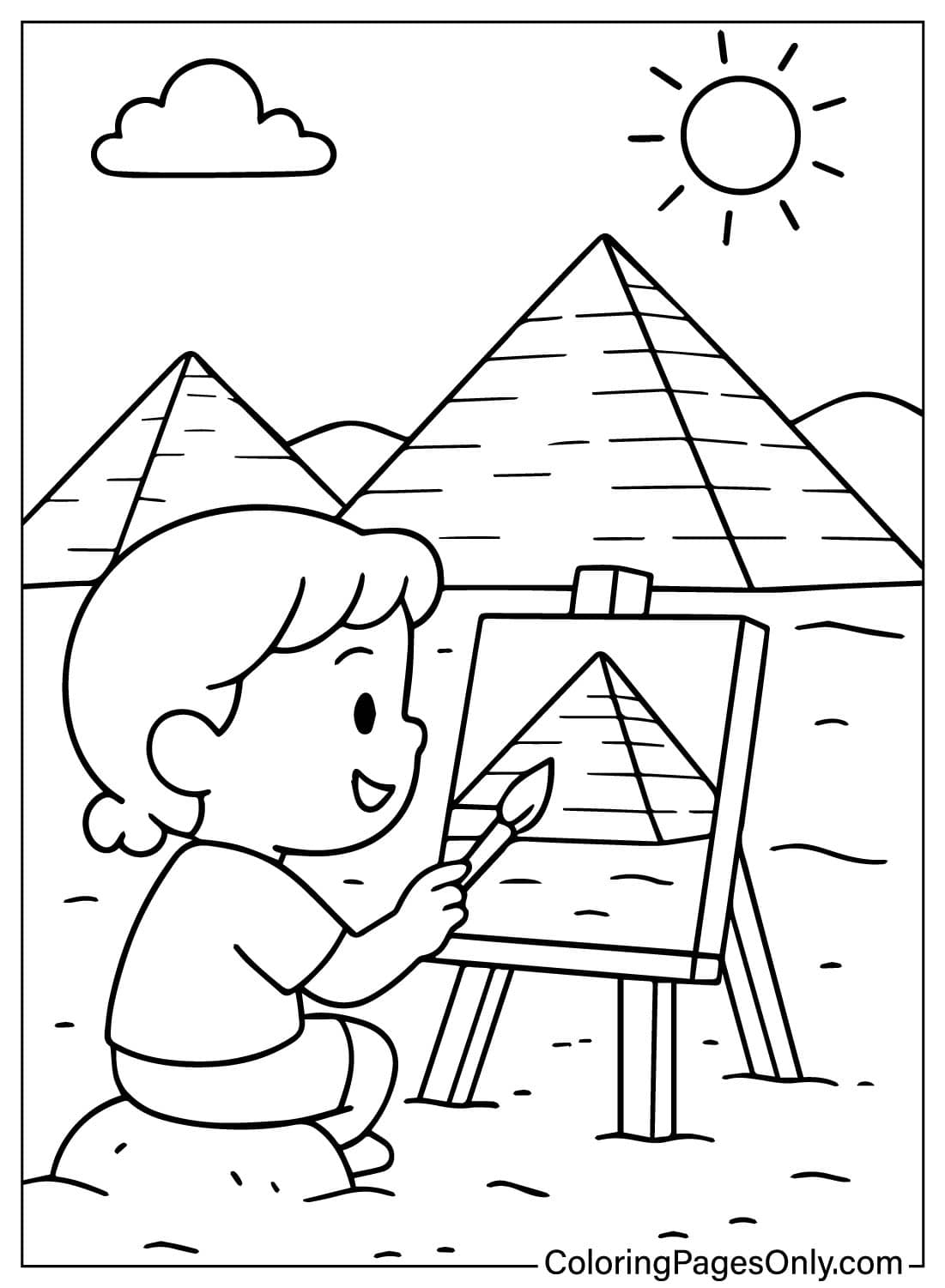
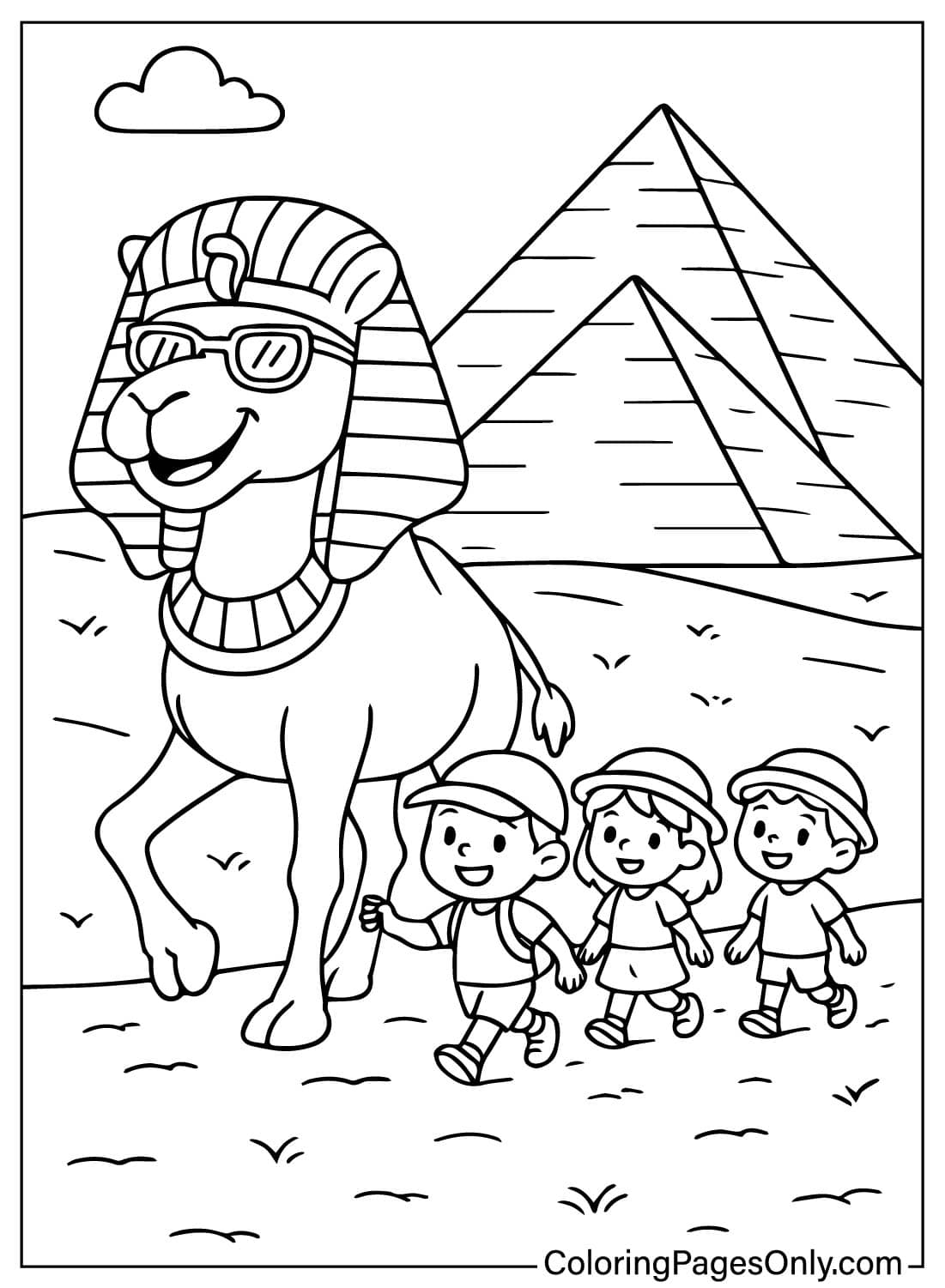
A smaller group shows a child character touring, building, or discovering the pyramids, including one page with a robot helper. These work well as a relatable entry point, since a child character exploring the site gives young colorists a stand-in for their own imagined visit.
Playful and Imagined Additions
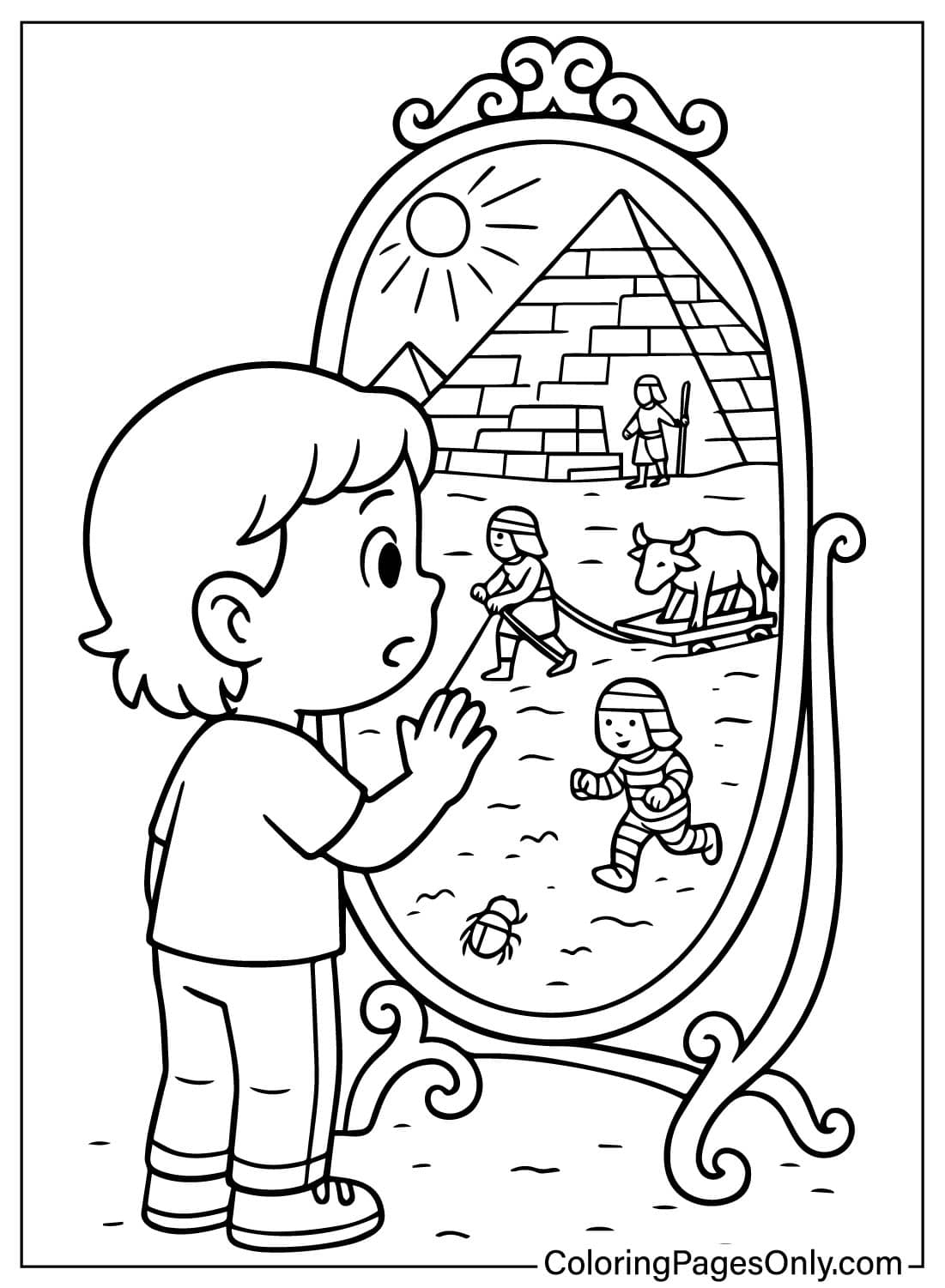
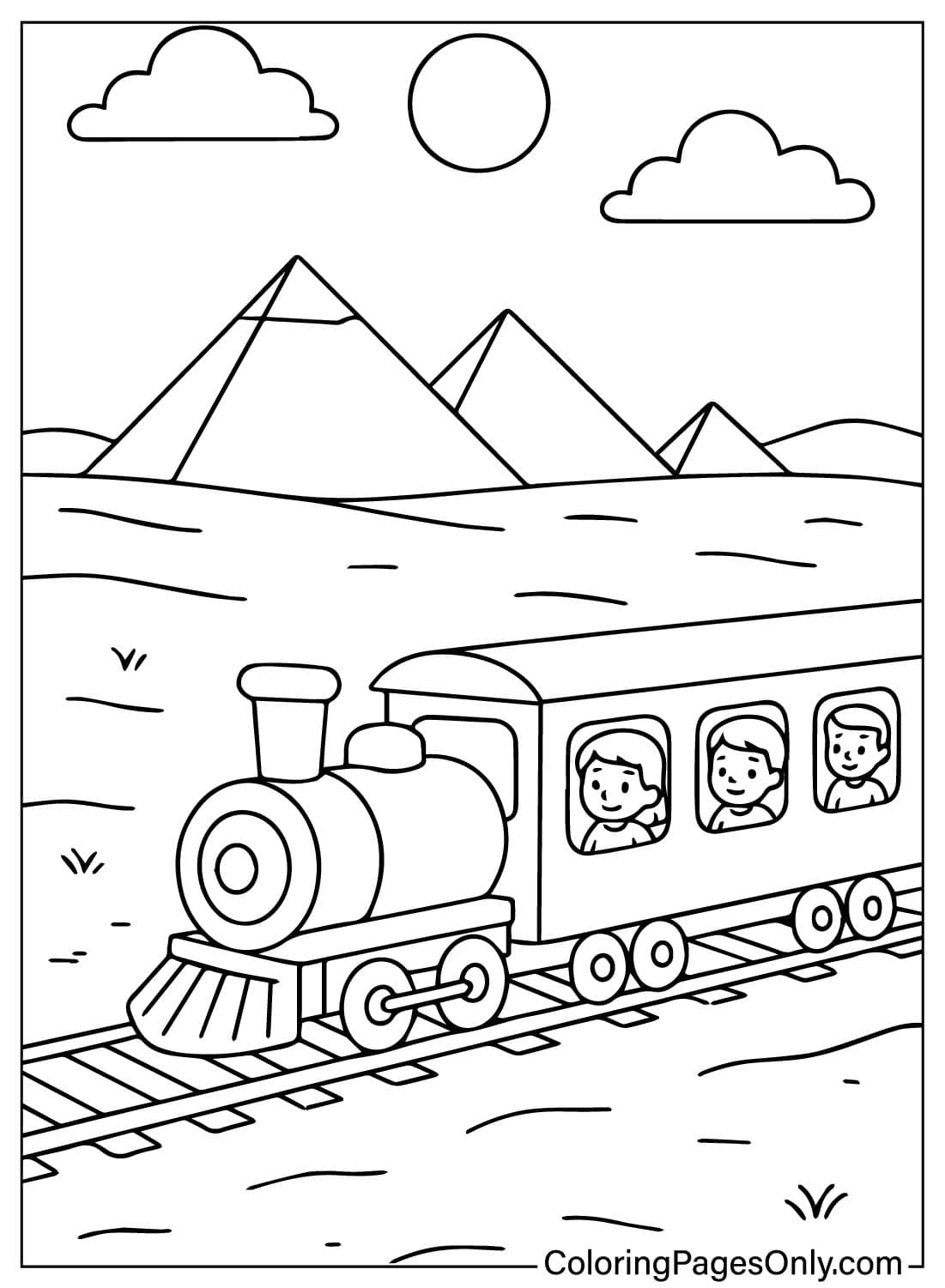
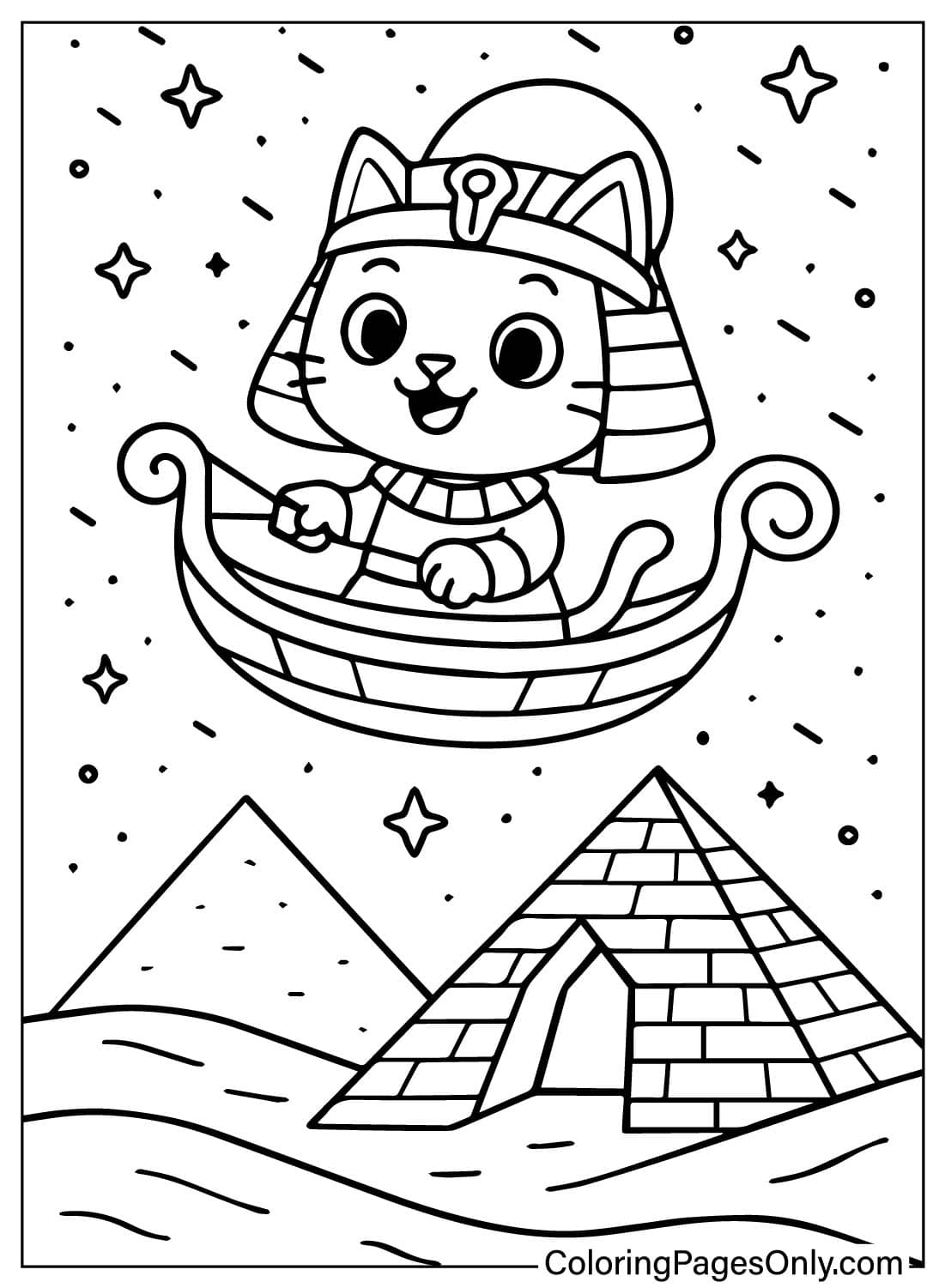
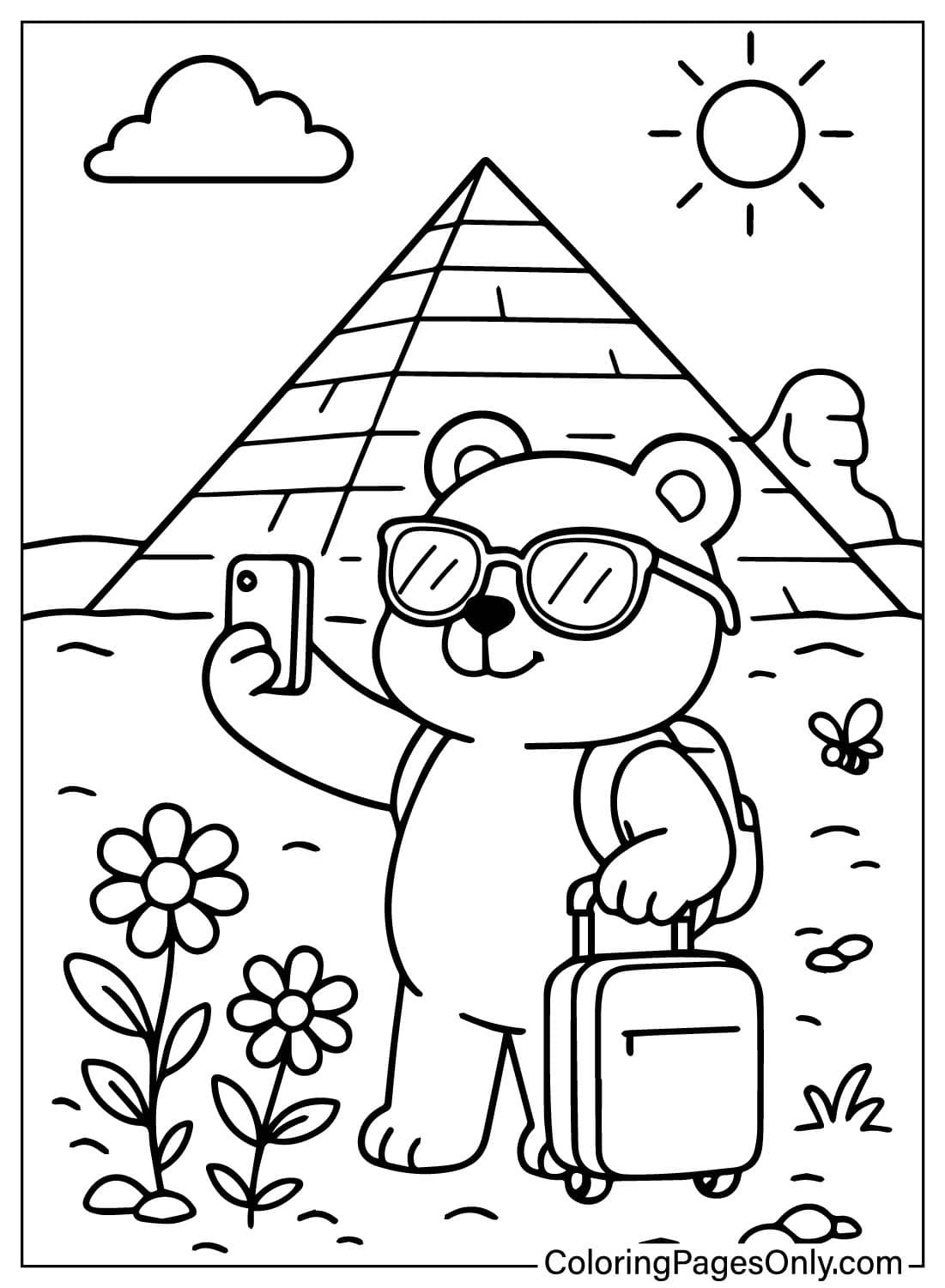
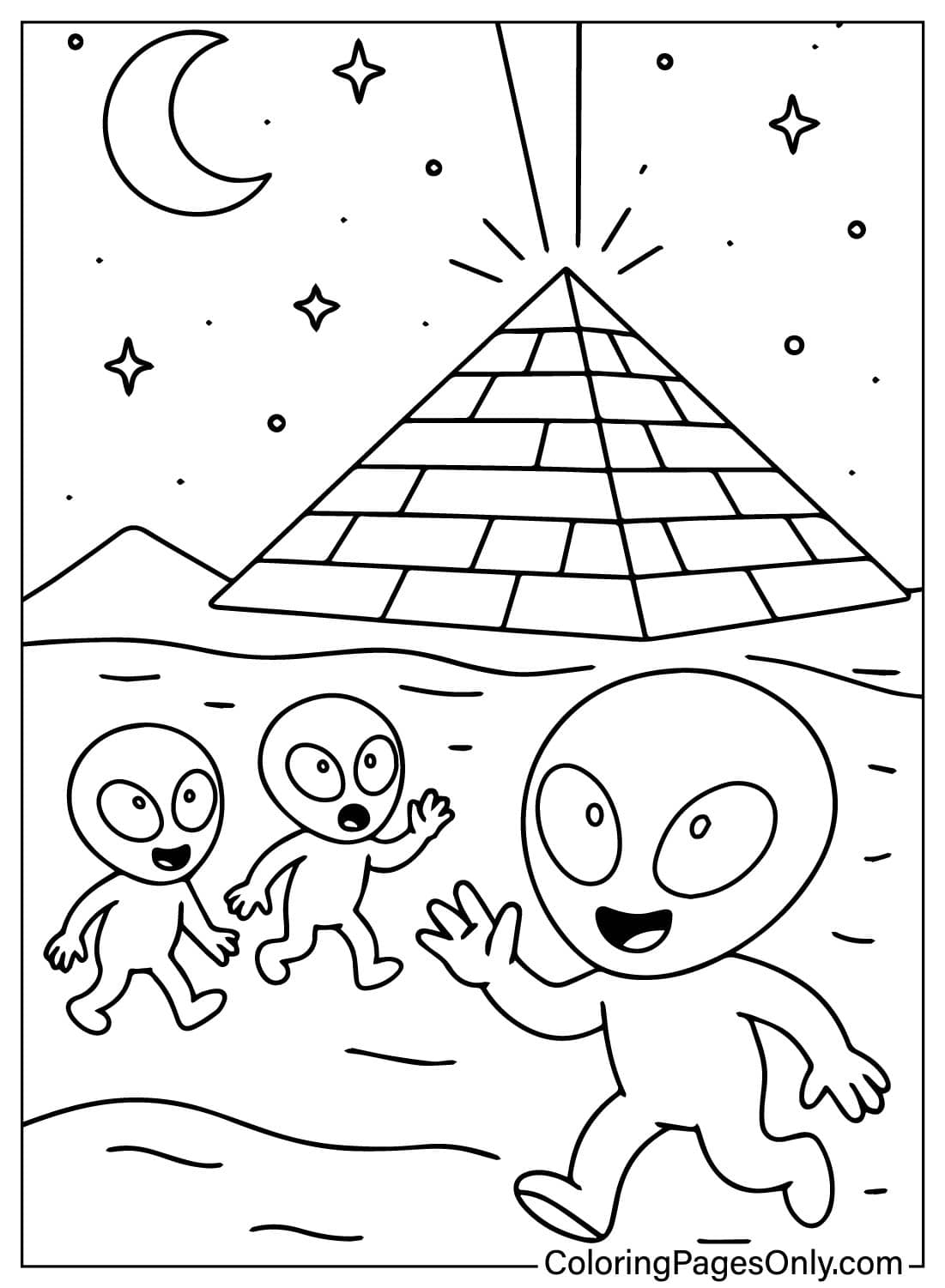
A distinct, smaller group is not historically grounded at all: pages featuring aliens, a magic mirror, a train, a touring bear, and a cartoon cat all appear at the pyramids. These are worth coloring honestly as fictional, fun additions rather than as accurate history, since nothing in the archaeological record connects the real Giza plateau to any of them.
General Scenic Views
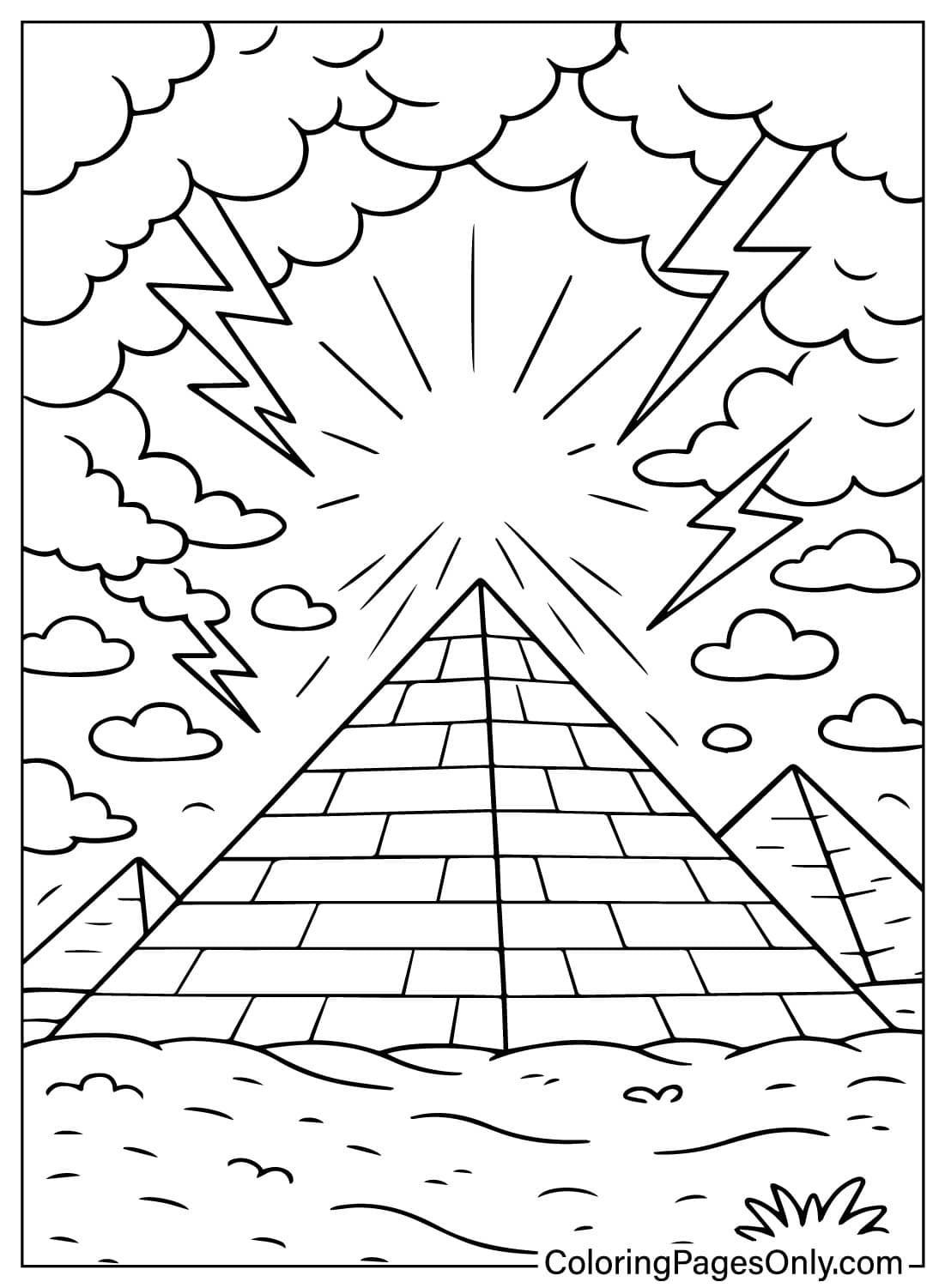
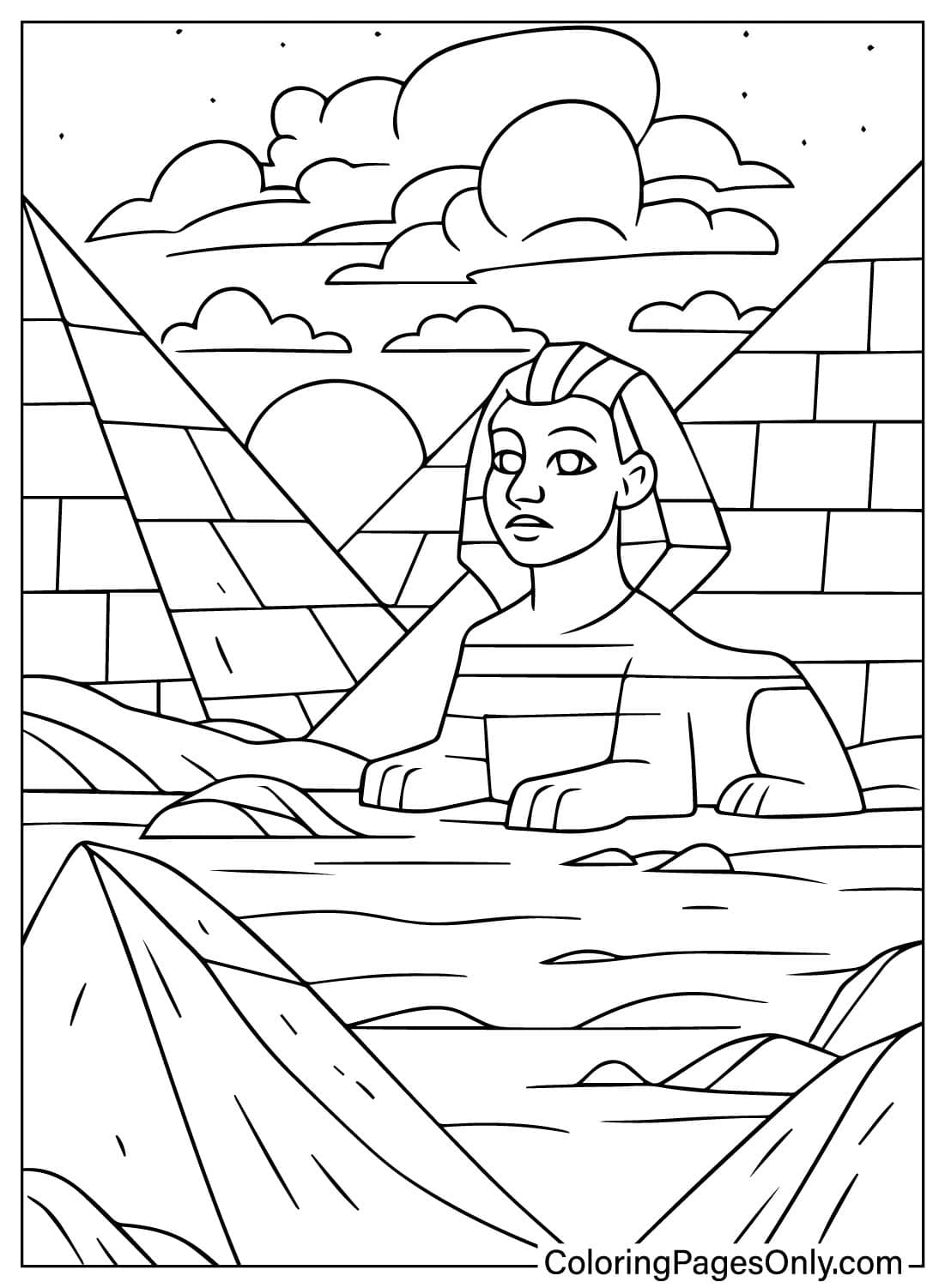
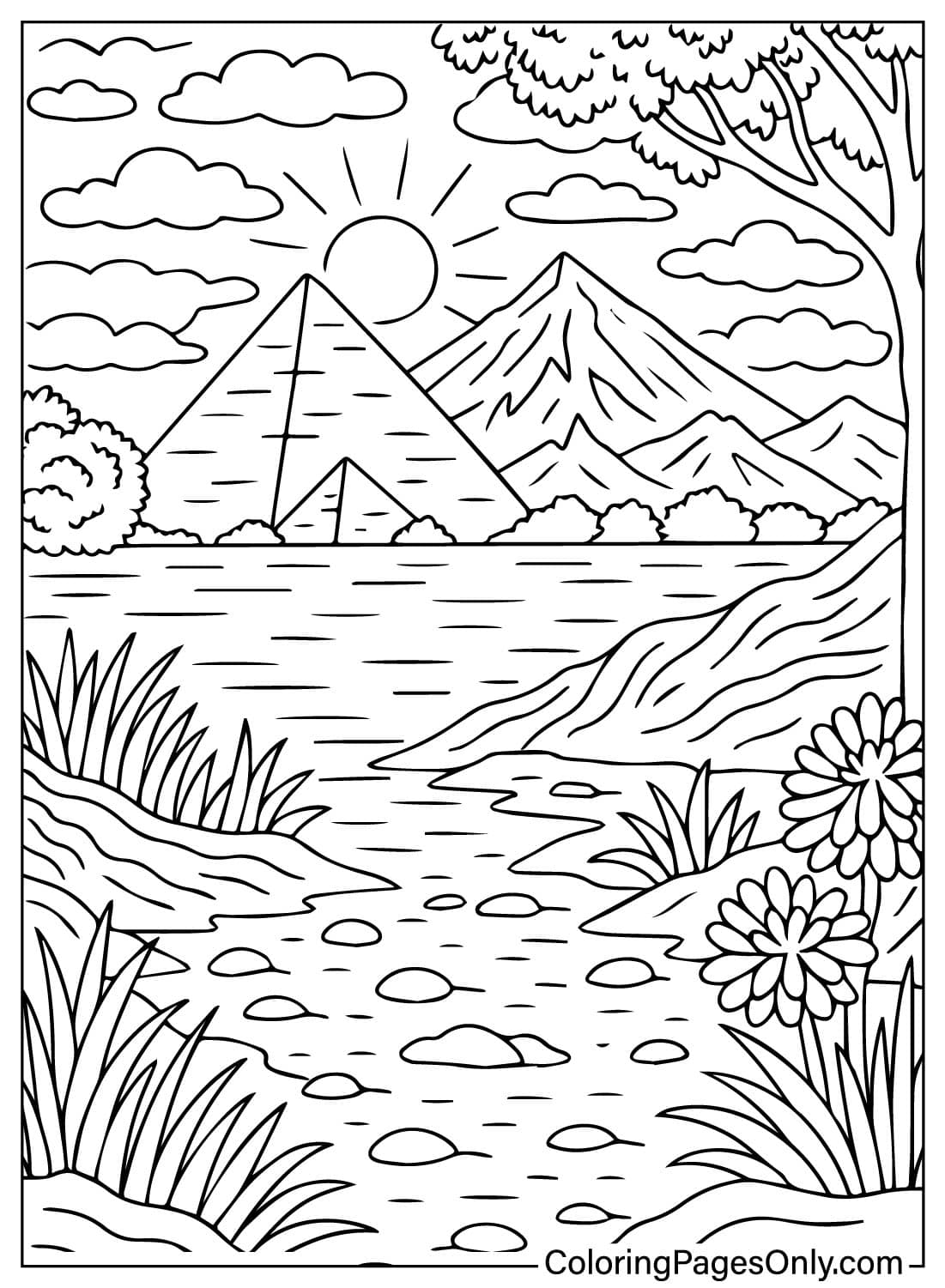
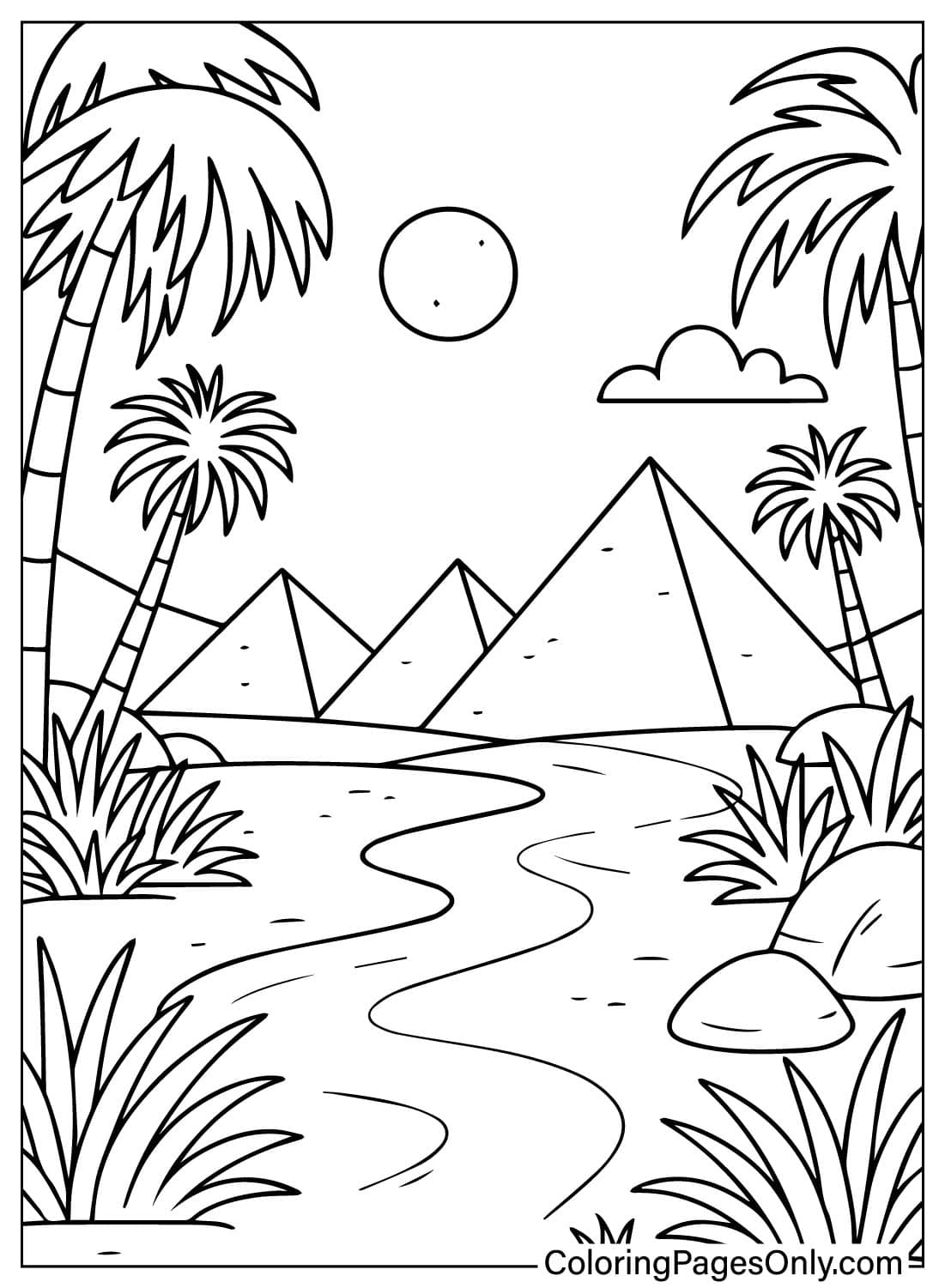
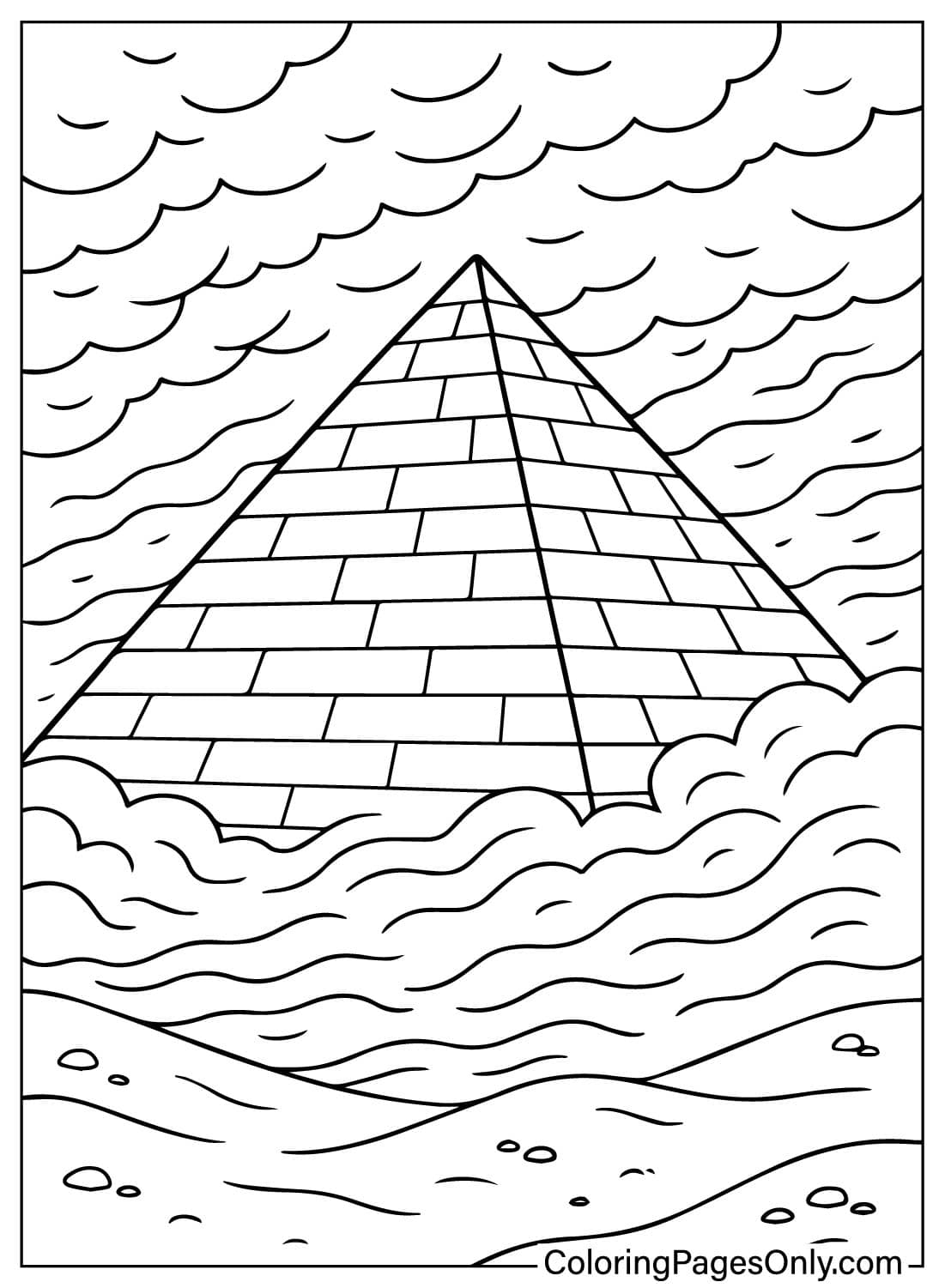
The remaining pages are simple, wide views of the pyramids themselves, including a couple of sunset scenes, without a specific character or story attached. These work well as a calm, straightforward warm-up before moving on to the more detailed historical pages.
What Pyramids of Giza Coloring Pages Do
A real engineering achievement to trace by hand. The American Academy of Pediatrics identifies fine motor skill development as a core benefit of structured coloring for children ages 2 through 7. The Great Pyramid’s straight, converging edges give that practice a genuinely different shape to work with than a rounded animal or character, since staying inside a clean triangular outline takes a steadier hand than filling in a curve.
A chance to correct a common historical myth. Many people still picture the pyramids as built entirely by enslaved workers. Still, archaeological evidence, including worker villages and burial sites found near Giza, points instead to a large, organized workforce of paid, free laborers. Coloring a building-scene page is a natural opening to share a more accurate picture rather than repeating the older, inaccurate story.
Calm, detailed shading through repeated stone-block patterns. A 2005 study in the Art Therapy Journal documented measurable reductions in anxiety following structured coloring sessions, and the many small, repeated stone blocks visible on a detailed pyramid page call for the same slow, one-section-at-a-time attention the study associated with that calming effect, rather than one large area filled in quickly.
An honest mix of real history and pure imagination in one set. Because this collection includes both historically grounded pages and purely fictional additions like aliens or a magic mirror, it offers a built-in, low-pressure way to talk with a child about the difference between a real historical site and a story made up around it, rather than presenting every page as equally factual.
How to Color These Pages Well
- Pyramid stone: Use Sand or Tan as the base, with a slightly deeper Burnt Sienna in the shaded side of each block to suggest the sun’s angle across the structure.
- Desert background: Blend Sand into a pale Yellow Orange for the ground, and keep the sky a clear Sky Blue with no clouds, since the Giza plateau sits in a dry, largely cloudless desert climate.
- Camels: Color the coat a warm Tan or Desert Sand, with a darker Brown along the back and legs to suggest the animal’s natural shading.
- Anubis and Egyptian figures: Use Black for Anubis’s jackal head, paired with Gold for any jewelry or headdress detail, matching the black-and-gold palette common in ancient Egyptian art.
- The Great Sphinx: Keep the body a weathered Tan or Sepia rather than bright yellow, since the real limestone structure has aged to a muted, sandy color over thousands of years.
- Fantasy pages: Feel free to use brighter, less historically accurate colors on the alien, magic mirror, or train pages, since these are meant as playful additions rather than historical reference images.
5 Creative Craft Ideas With Pyramids of Giza Coloring Pages
1. Pyramid Paper Fold
Color one of the simple pyramid-view pages, then cut and fold a piece of cardstock into a small triangular pyramid shape. Wrap or glue the colored design around the folded shape so the artwork becomes a real three-dimensional model.
2. Cartouche Nameplate
Look up a simple hieroglyph alphabet chart and use it to spell out a name inside a hand-drawn oval, which is the traditional cartouche shape used for Egyptian royal names. Color the cartouche in Gold and Black to match the palette of the Egyptian-figure pages in this set.
3. Desert Sand Art Jar
Color one of the desert or camel pages and set it next to a small, clear jar. Layer sand, or torn strips of tan and brown paper, inside the jar in wavy lines to mimic desert dunes, then display the jar beside the finished page.
4. Camel Caravan Wall Line
Color two or three of the camel pages, cut around each one, and tape them in a row along a wall or hallway to form a single caravan line. Space them slightly apart so the camels look like they are walking one after another across the desert.
5. Mini Museum Display
Color a small group of the historical pages, such as the mummy, Anubis, and camel designs, and lay them out on a table like museum exhibits. Write a short, handwritten fact label next to each one describing what it shows.
Frequently Asked Questions
What are the Pyramids of Giza coloring pages?
A free set of 33 printable PDF and online coloring designs covering the Great Pyramid, desert and camel scenes, ancient Egyptian figures, and a small group of playful, fictional additions. Every page downloads free or opens for online coloring, with no account required.
Who built the Great Pyramid of Giza, and when?
The Great Pyramid was built for Pharaoh Khufu around 2580 to 2560 BCE, during Egypt’s Fourth Dynasty, making it more than 4,500 years old and the oldest and largest of the three main pyramids at Giza.
Did enslaved workers build the pyramids?
Modern archaeological evidence, including nearby worker villages and burial sites, suggests the pyramids were built mainly by paid, free laborers organized into large work crews, rather than by an enslaved population as older accounts once claimed.
What is the Great Sphinx?
The Great Sphinx is a large limestone statue with a lion’s body and a human face, located near the pyramid built for Pharaoh Khafre, and it is generally believed to have been commissioned as part of his monument complex.
Who is Anubis?
Anubis is a jackal-headed figure from ancient Egyptian religion, associated with mummification and guiding the dead. He appears in this collection as a respectful reference to actual Egyptian belief rather than as a fictional monster.
Are all the designs in this collection historically accurate?
No. Most pages stay close to real history and setting. Still, a small group features purely imaginative additions, such as aliens, a magic mirror, and a touring bear, which are included as playful fiction rather than historical reference.
Are the Pyramids of Giza coloring pages appropriate for young children?
Yes. The general scenic views and simple explorer pages suit toddlers and preschoolers. At the same time, the more detailed historical and desert scenes work well for older children learning about Ancient Egypt in more depth.
Can this collection be used for a classroom lesson on Ancient Egypt?
Yes. The historical pages pair well with a lesson on the Great Pyramid’s construction and the correction of the enslaved-labor myth. In contrast, the fantasy pages offer a useful contrast for teaching the difference between history and imagination.
Start Coloring
Download any page by clicking the design. No account, email, or payment is required. Pages print directly from the browser at full resolution or open in the online coloring tool for screen use. Share finished pages on Facebook or Pinterest using the share buttons at the top of each design page.